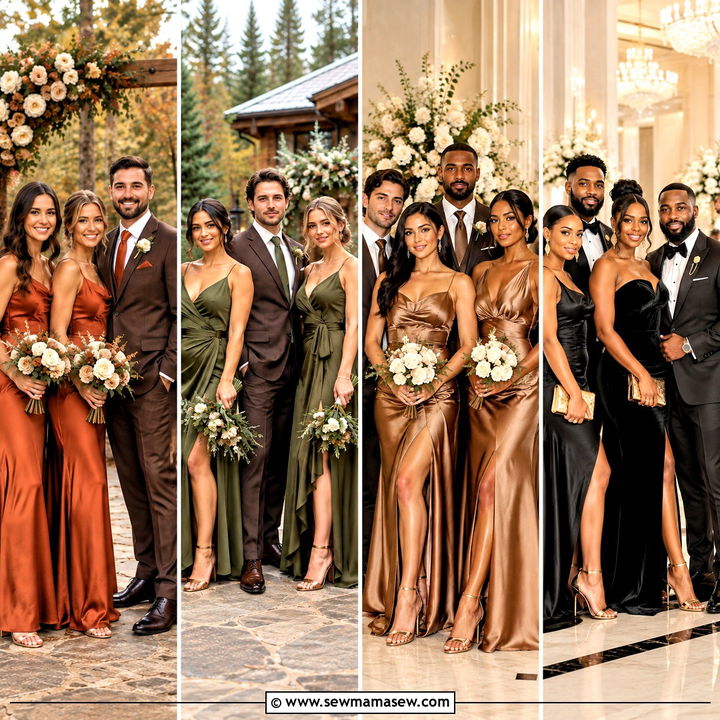
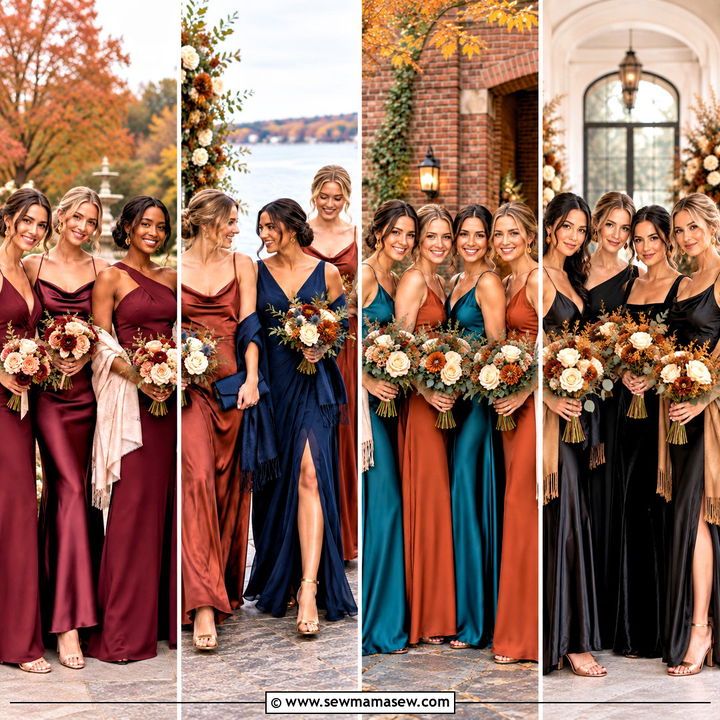
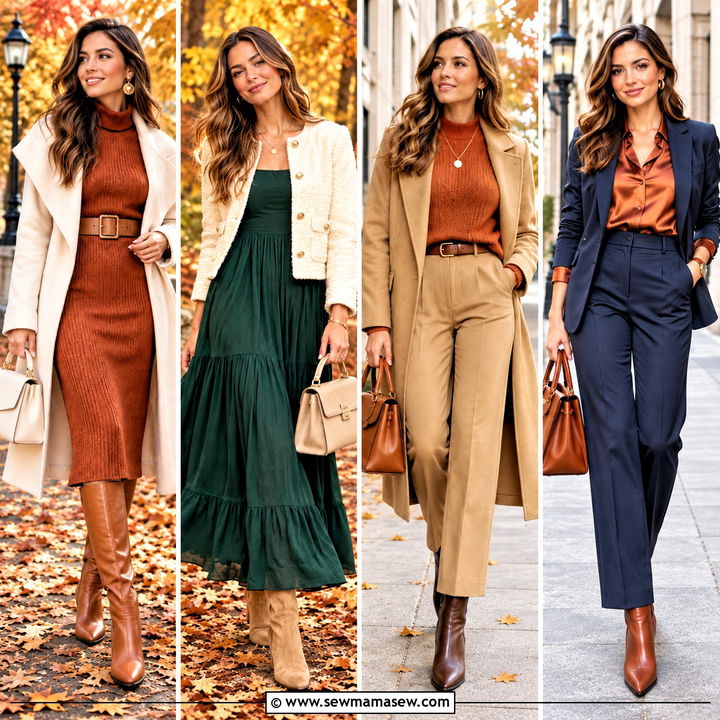
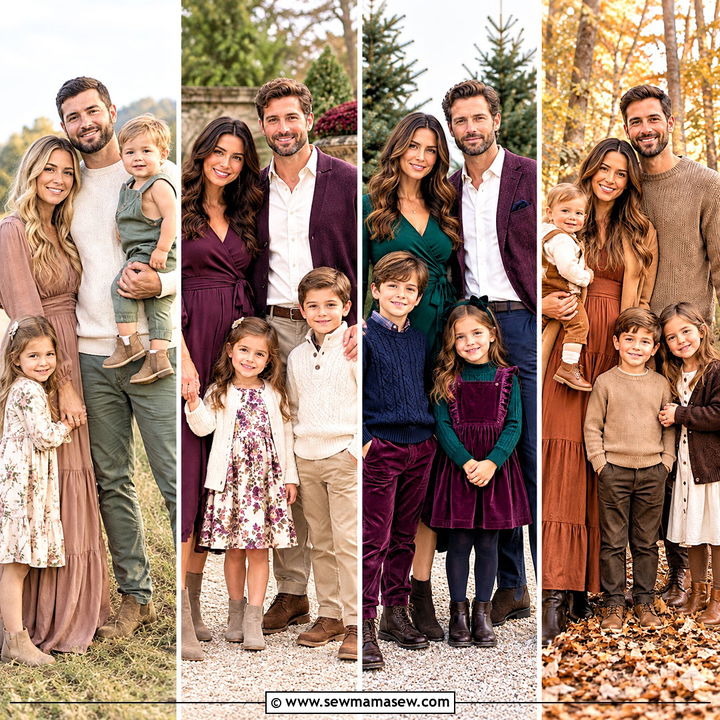
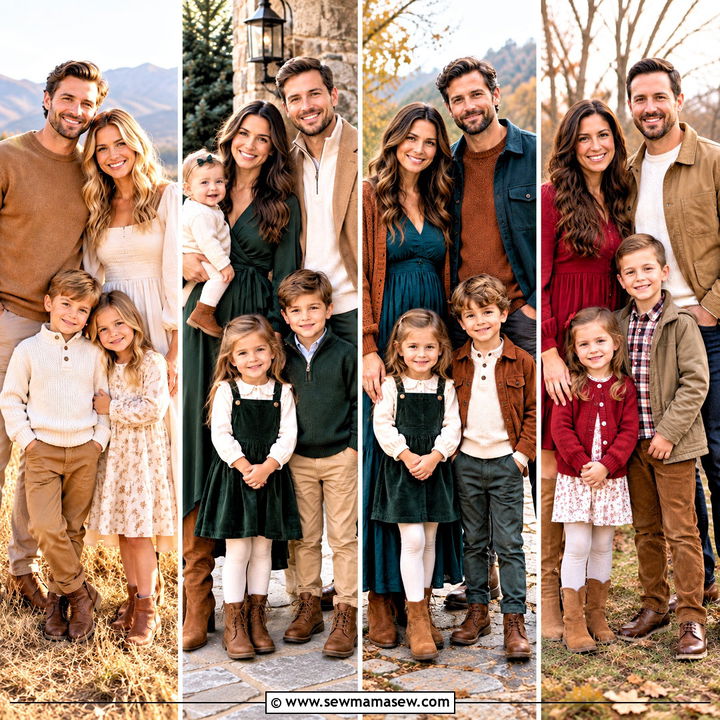
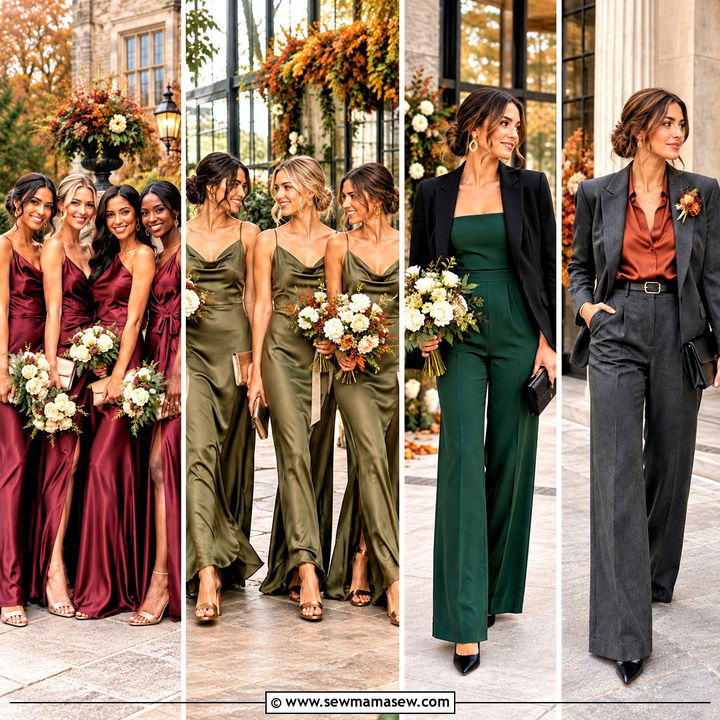
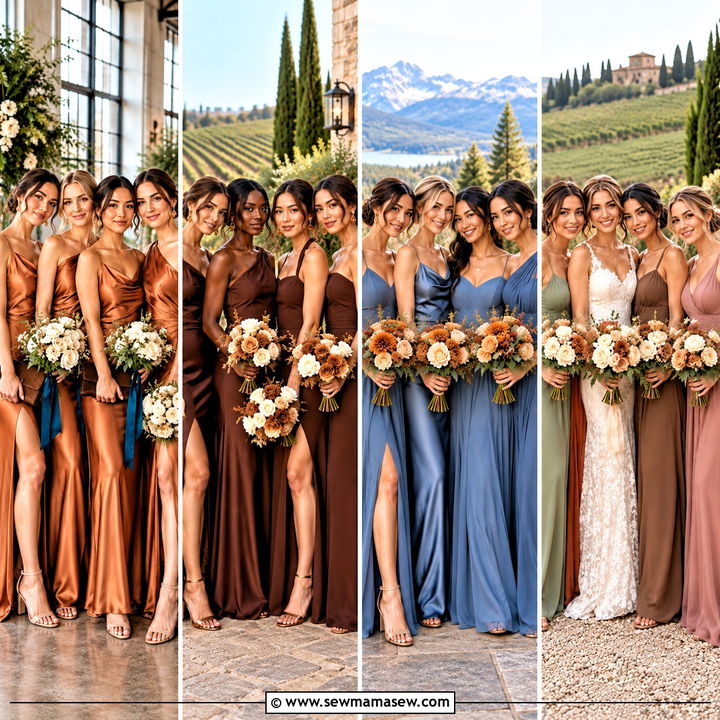
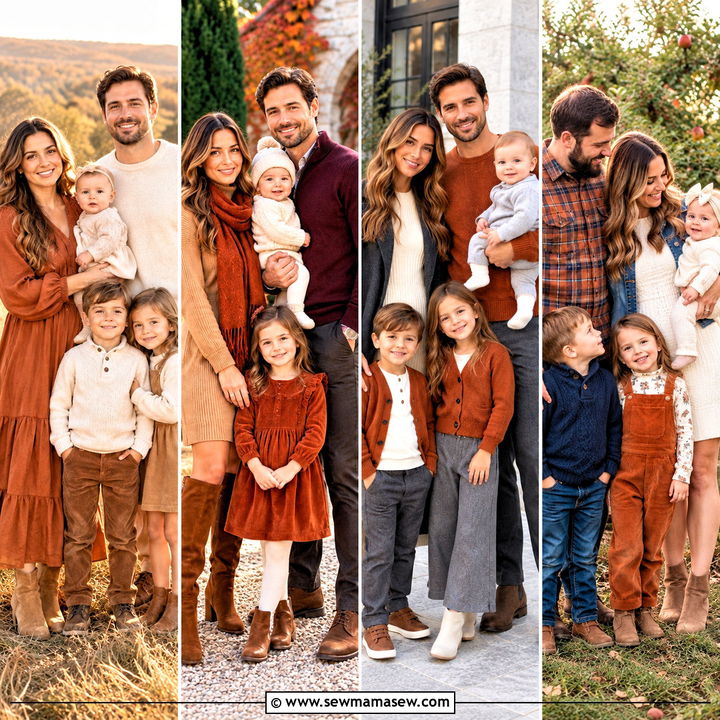
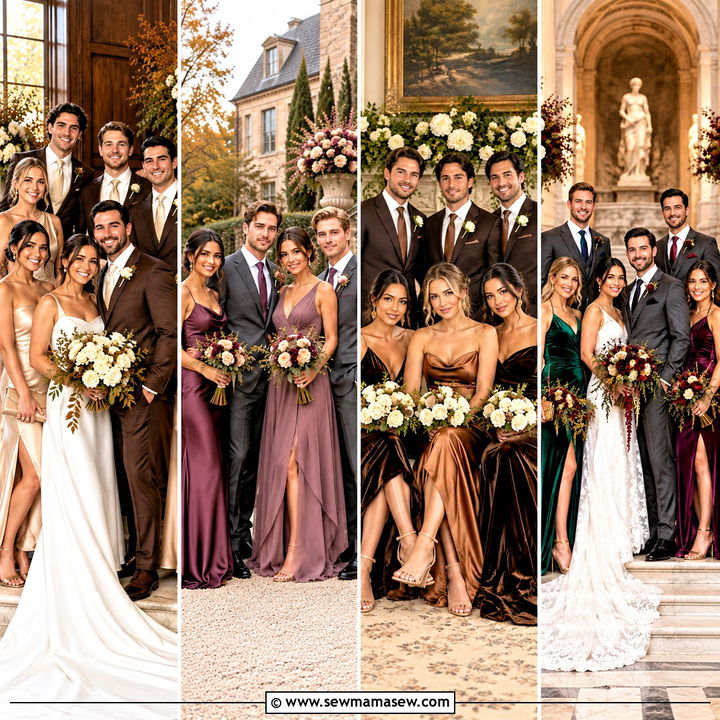
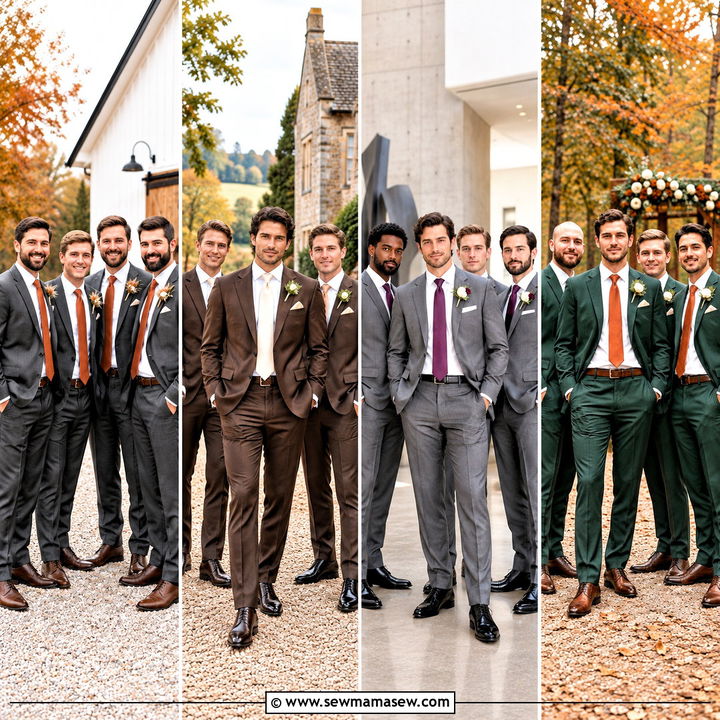
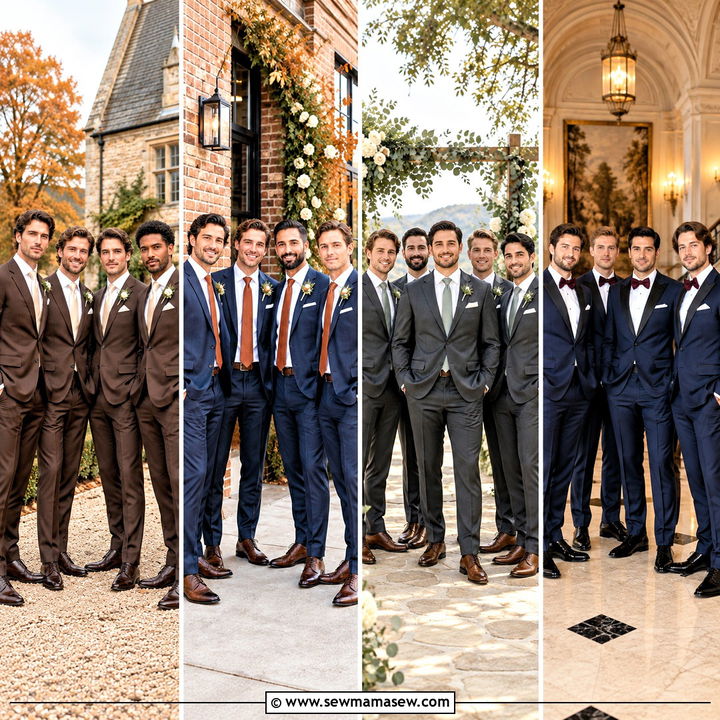
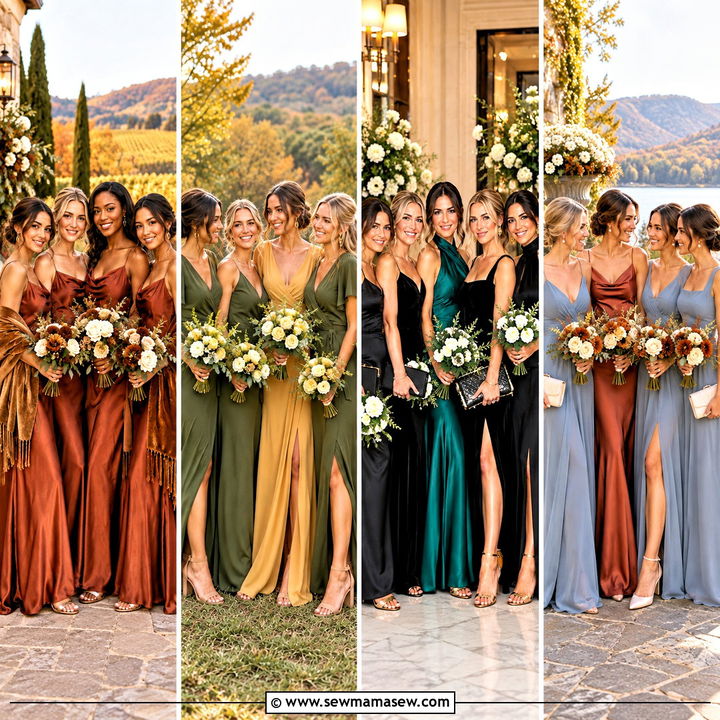
Fall makes rich color easy for a bridal party. Deep green, burgundy, espresso, terracotta and warm neutrals all fit the season, and a coordinated but mismatched lineup lets each attendant wear a cut that suits her. What I look at first is how a palette holds up across very different complexions and in two kinds of light: daylight at the ceremony and warm, dim light at the reception. Fabric shifts color too. Velvet deepens a jewel tone, satin throws light back, chiffon softens an earthy shade and wool suiting reads matte and solid. Each of the fifteen schemes below comes with its suit, shoe, jewelry and bouquet pairings.

One Palette Across Very Different Skin Tones
A bridal party is rarely one complexion, and the same shade can make one attendant glow and leave the next looking tired. I don't solve that by abandoning the palette. I solve it by choosing the right version of each color for each person.
Undertone first, then depth
Warm undertones usually look best in colors with yellow in them: rust, olive, terracotta, mustard, copper. Cool undertones suit colors with blue in them: cranberry, plum, emerald, navy, silver. Depth matters just as much. Very fair skin can be overwhelmed by the darkest shade on a card, while deep skin often looks richest in strong, saturated color and can look gray in dusty pastels.
Give every color a light and a dark option
Most bridesmaid ranges offer a color in two or three depths, such as a sage and a deeper olive, or a dusty rose and a plum. Offering both lets each person find her version while the lineup still reads as one family. Hold each option under the chin in daylight; if the shadows under the eyes get darker, try the other depth.
Where a color still fights someone's skin, move it away from her face. A tricky shade works as a skirt, a shoe or a bouquet ribbon long after it fails as a bodice.
1. Burgundy and Blush Bridal Party Attire
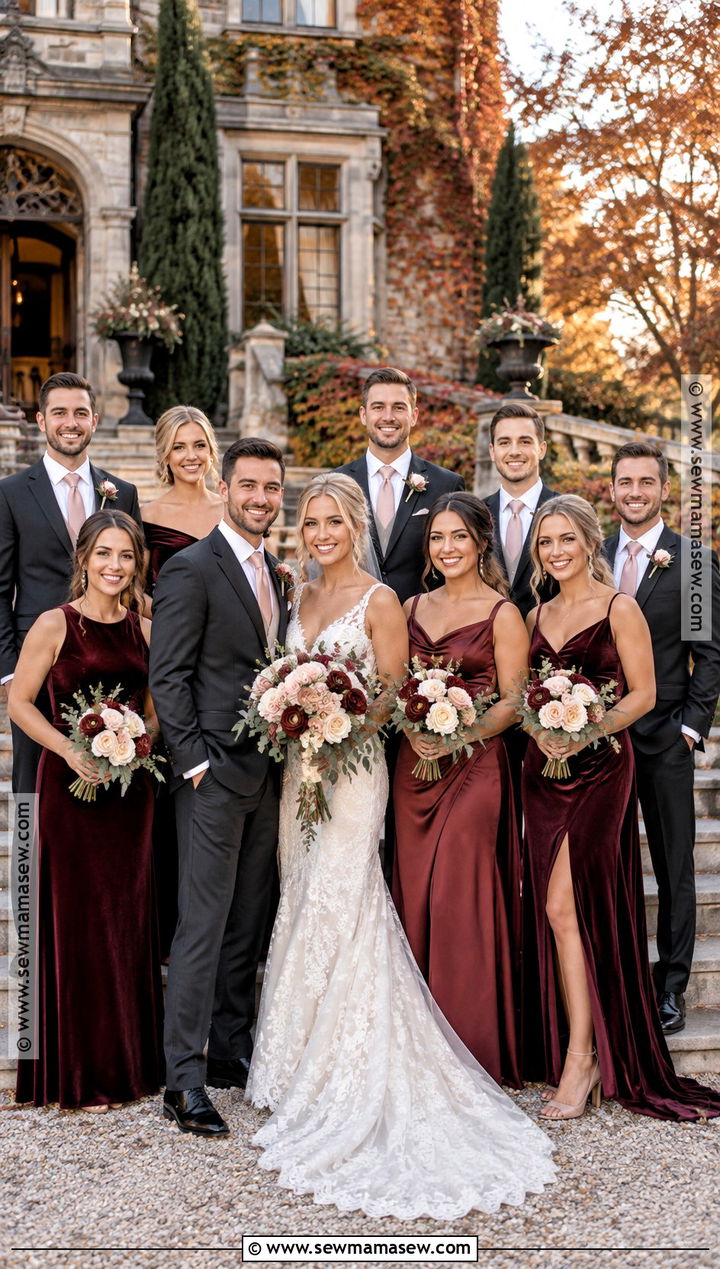
Burgundy flatters far more people than blush does, so I put burgundy on the bodies and keep blush mostly for flowers, ties, pocket squares and perhaps one or two dresses. Pale pink can wash out very fair skin and look flat against deeper skin in daylight, while a wine red holds its own on nearly everyone. Burgundy satin, velvet or chiffon all work, and a lineup of wrap gowns, sleeved maxis, a tailored jumpsuit and draped midis lets each person pick a shape she trusts. Charcoal or deep navy suits stop the pairing from turning sweet. Nude, burgundy or metallic shoes with simple gold jewelry are enough. It suits formal hotel rooms and candlelit indoor ceremonies, where burgundy goes richer as the light warms.
2. Terracotta and Sage Bridal Party Attire
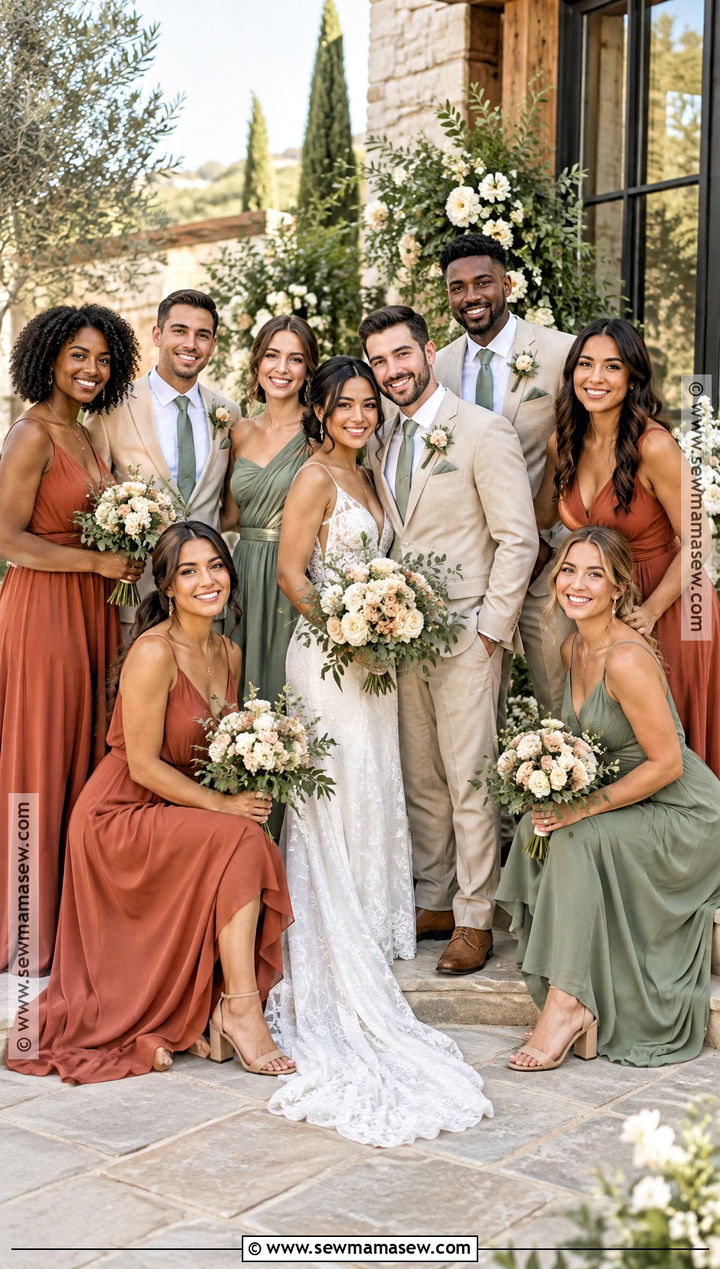
Terracotta is warm and sage leans cool, and that slight tension is why the pair looks right against stone, gardens and turning leaves. Terracotta dresses in satin, chiffon or crepe carry the color; sage goes into suits, ties, vests and flowers. You can also alternate both dress colors down the line. One thing I check: terracotta is a strong orange-brown that can make fair, pink-toned skin look ruddy, so I'd offer those attendants the sage dress instead. Olive or mid-brown shoes add warmth without weight. Suit wearers look right in warm beige with white shirts, sage ties and brown leather shoes. Loose bouquets of cream flowers, eucalyptus and rust keep the party looking relaxed rather than uniform.
3. Emerald and Champagne Bridal Party Attire
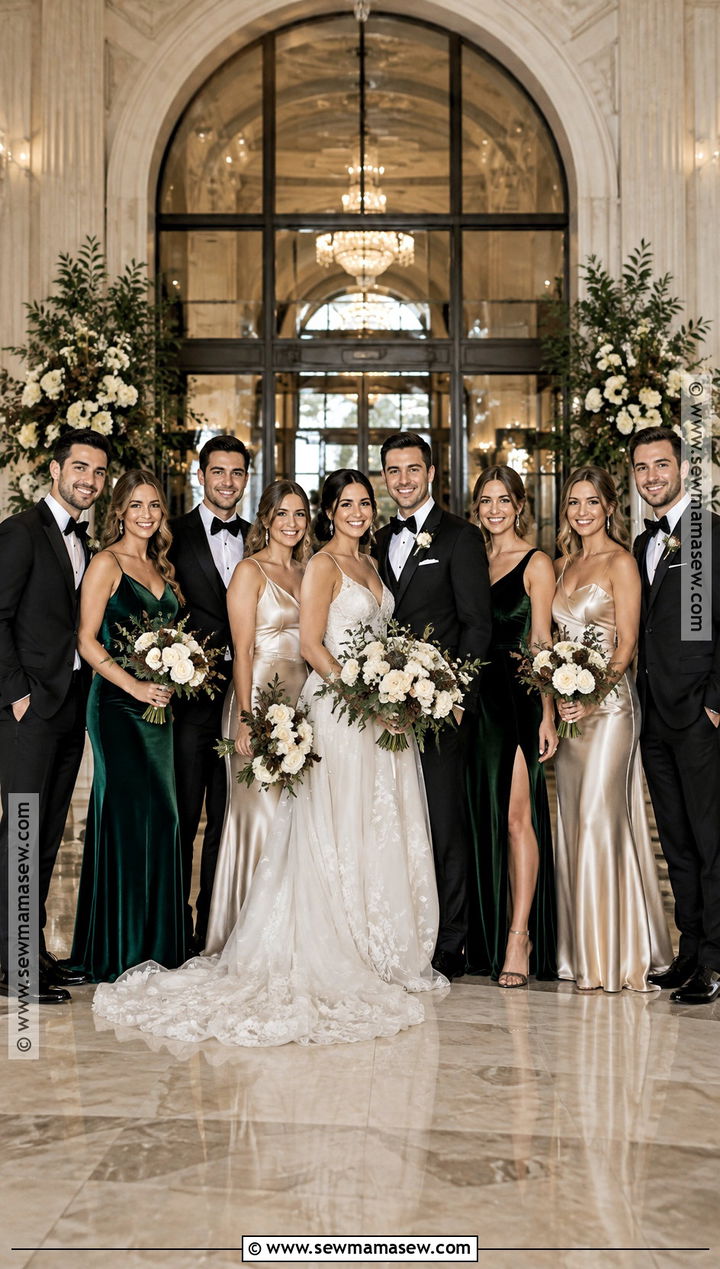
Emerald is one of the few jewel tones that suits nearly every complexion, which makes it a safe lead color for an evening party that wants to skip autumn red. In velvet it goes almost black in low light, while satin and structured crepe keep it brighter, so mix fabrics knowing that. Champagne comes in through ties, shawls, shoes and a few contrasting dresses. I'd avoid a champagne dress on anyone whose skin is close to that shade, because it can read as bare skin in photos. Let attendants choose between long sleeves, cowl-neck slips, wraps and wide-leg jumpsuits. Black tuxedos keep it formal; deep green or charcoal suits soften it. Gold jewelry and cream bouquets with dark foliage brighten the group in ballrooms and historic venues.
4. Espresso and Bronze Bridal Party Attire
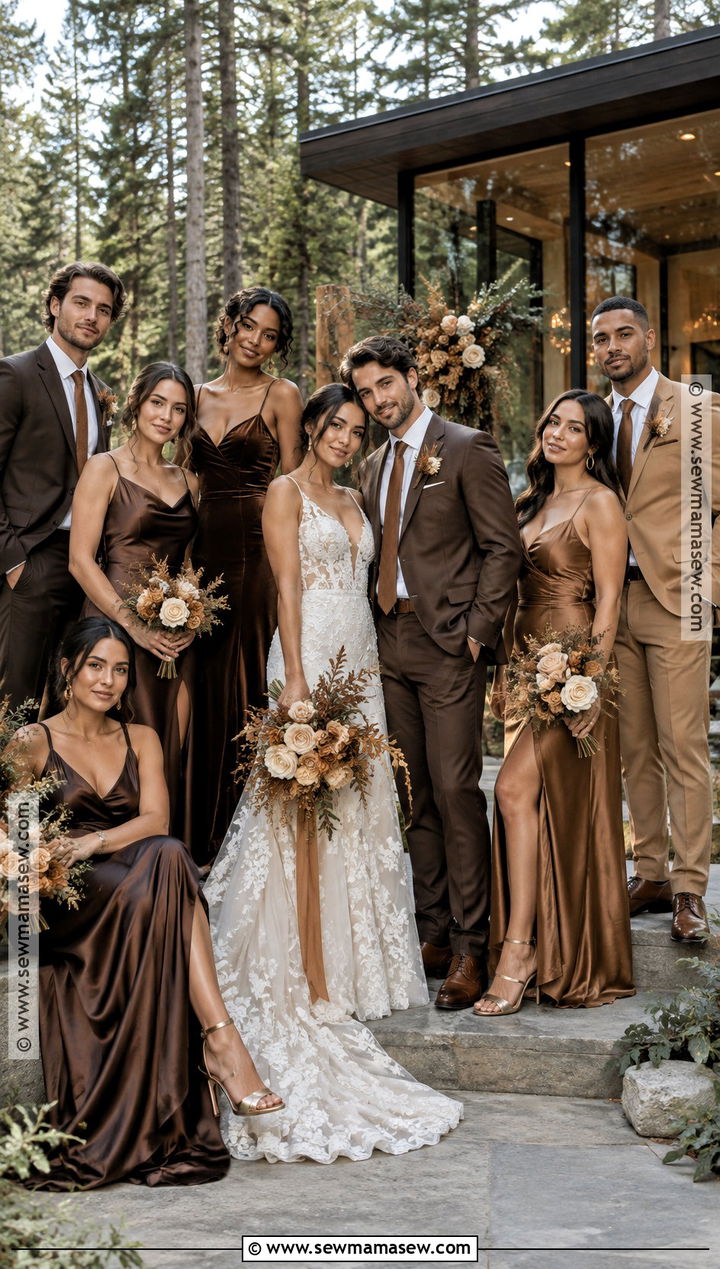
An all-brown party sounds risky until you see one, and the secret is texture. Chocolate satin, brown velvet and a bronze slip sit side by side without going flat, because each fabric reflects light differently. Brown is also kinder than black under warm reception lighting and on deeper skin, where black can swallow detail. Suit wearers take espresso, camel or dark brown tailoring with cream shirts and bronze ties, plus brown leather loafers or lace-ups. Brushed-gold earrings and neutral wraps handle the cold. Cream, caramel and rust flowers with muted greenery finish it. I'd use this in barns, lofts and woodland venues, or anywhere a couple wants something gentler than an all-black party.
5. Navy and Copper Bridal Party Attire
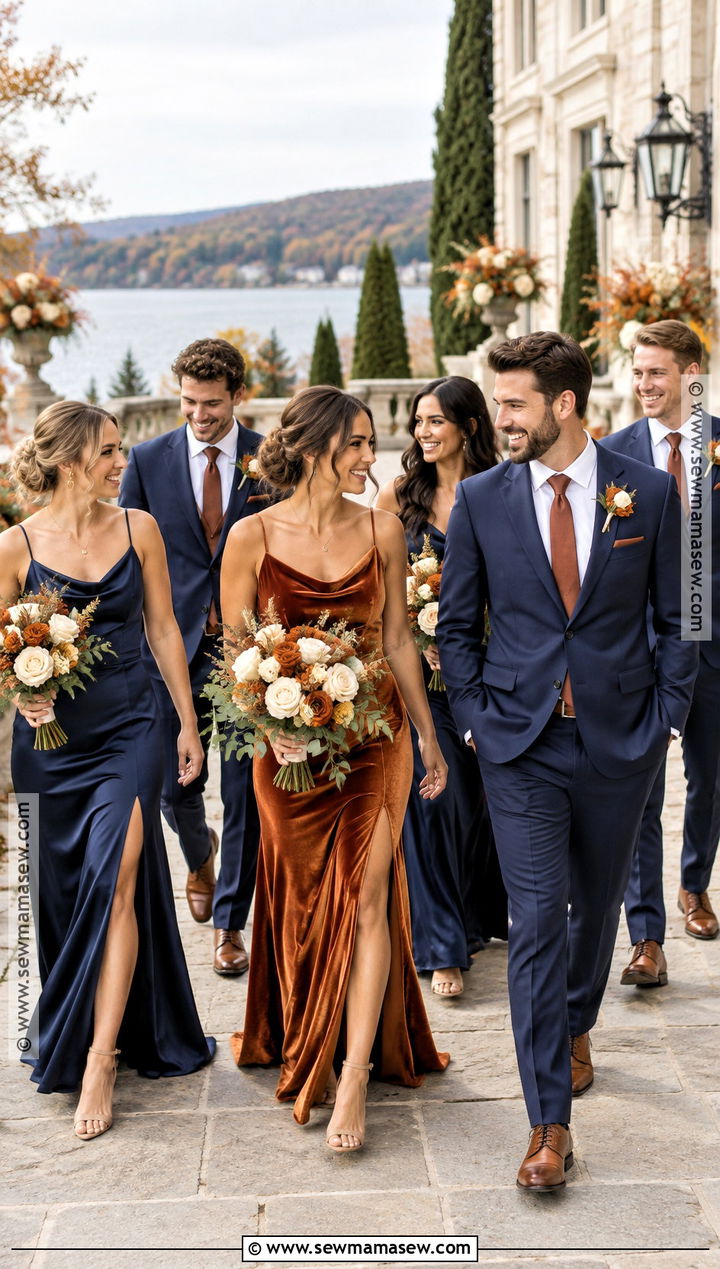
Navy is the neutral I trust most for a big group, because it reads as dark without the harshness black can have on pale skin. Copper supplies the seasonal note. Navy satin maxis, chiffon gowns, sleek jumpsuits or tailored separates form the base, and copper arrives through shoes, jewelry, hair pieces, flowers and a few dresses. A copper velvet dress is a good way to set the maid of honor apart. Navy suits make the whole party read as one block; mid-gray tailoring adds contrast if you want the two sides distinct. White shirts, copper ties and brown shoes finish the suits. Copper looks warmer by candlelight than in daylight, so judge the fabric both ways. Cream, burnt orange and deep green bouquets suit waterfronts, clubs and hotels.
6. Plum and Dusty Rose Bridal Party Attire
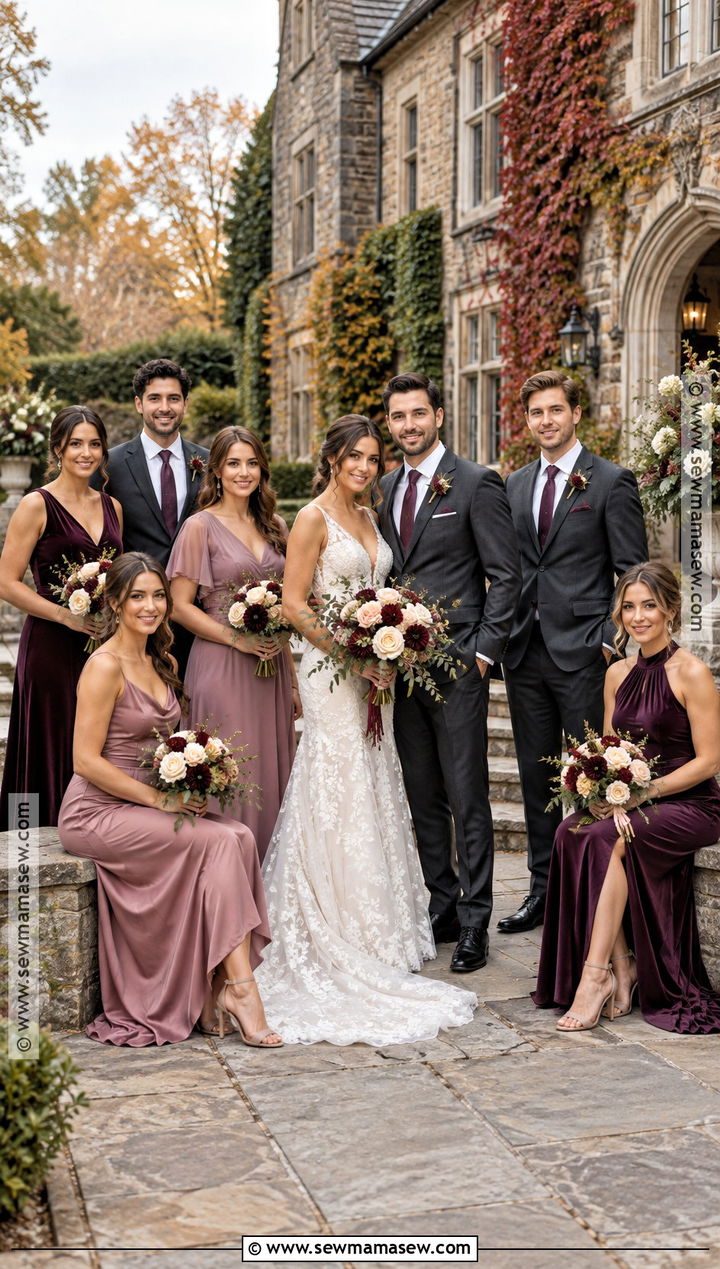
Plum and dusty rose are both cool, muted shades, so they blend into one soft fall gradient instead of clashing. Build the line from deep plum velvet, muted rose satin, mauve chiffon and berry crepe, and repeat each color at least twice so a large party looks planned. Muted shades are forgiving. They rarely overpower fair skin, and they don't go chalky on deeper skin the way pastel pinks can. Let attendants pick necklines and sleeves for a supportive fit. Charcoal suits with white shirts, plum ties and black or dark brown shoes ground the pinks, and rose-gold jewelry with taupe heels stays quiet. Cream and berry flowers with green foliage finish it for manor houses, gardens and small evening venues.
7. Olive and Mustard Bridal Party Attire
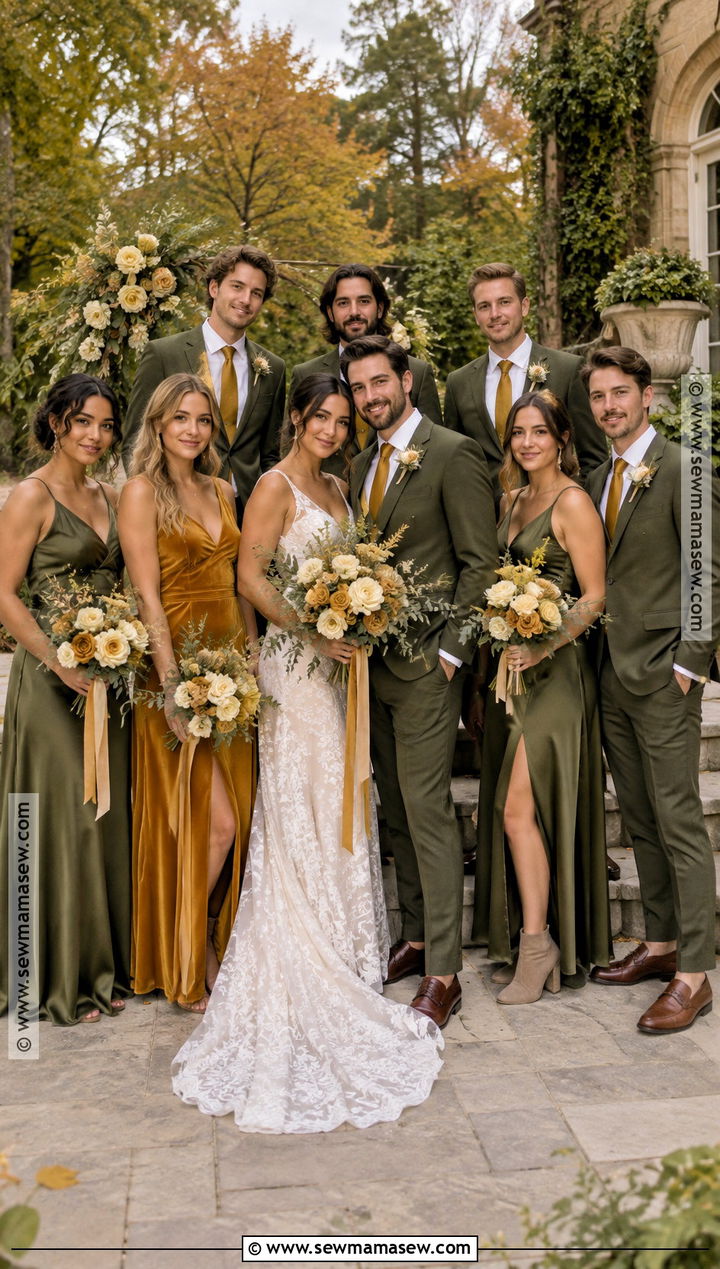
Mustard is the hardest color on this list to wear near the face. It suits warm and olive skin well, but on cool, pink-toned skin it can pull sallow, so I keep it to accents and the odd velvet dress. Olive leads through satin gowns, draped jumpsuits and tailored suits, and mustard comes in through ties, pocket squares, shoes or a shawl. That restraint is what keeps the pairing polished instead of loud. Cream shirts and brown shoes lift the darker olive, and antique-gold jewelry suits both colors. For outdoor ceremonies, ankle boots or block heels beat narrow stilettos on soft ground. Ivory and golden blooms with rust accents and textured greenery link it all for farms, forests and botanical gardens.
8. Rust and Dusty Blue Bridal Party Attire
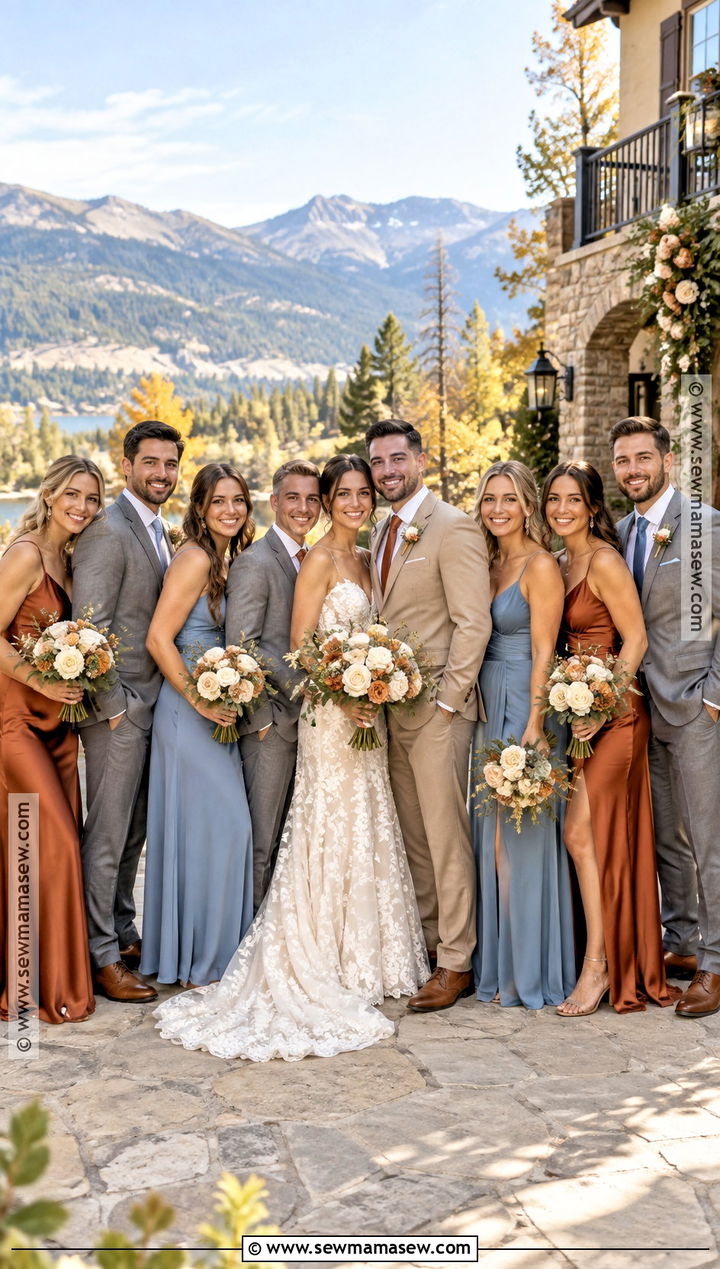
Rust and dusty blue sit nearly opposite each other on the color wheel, so each makes the other look stronger, and that contrast keeps a group photo clear against orange leaves. Rust leads in satin wraps, velvet maxis or structured one-shoulder gowns. Dusty blue shows up in chiffon dresses, tailored suits, ties and pocket squares. In a mixed line, scatter the two shades evenly rather than standing all the blues together. Tan or mid-gray suits bridge the pair and look good with white shirts and brown shoes. Dusty blue can turn gray under overcast skies, so pick a version with a little warmth in it. Gold jewelry, nude heels and ivory, peach and blue-gray flowers suit early fall estates, mountain venues and lakeside weddings.
9. Black and Ivory Bridal Party Attire
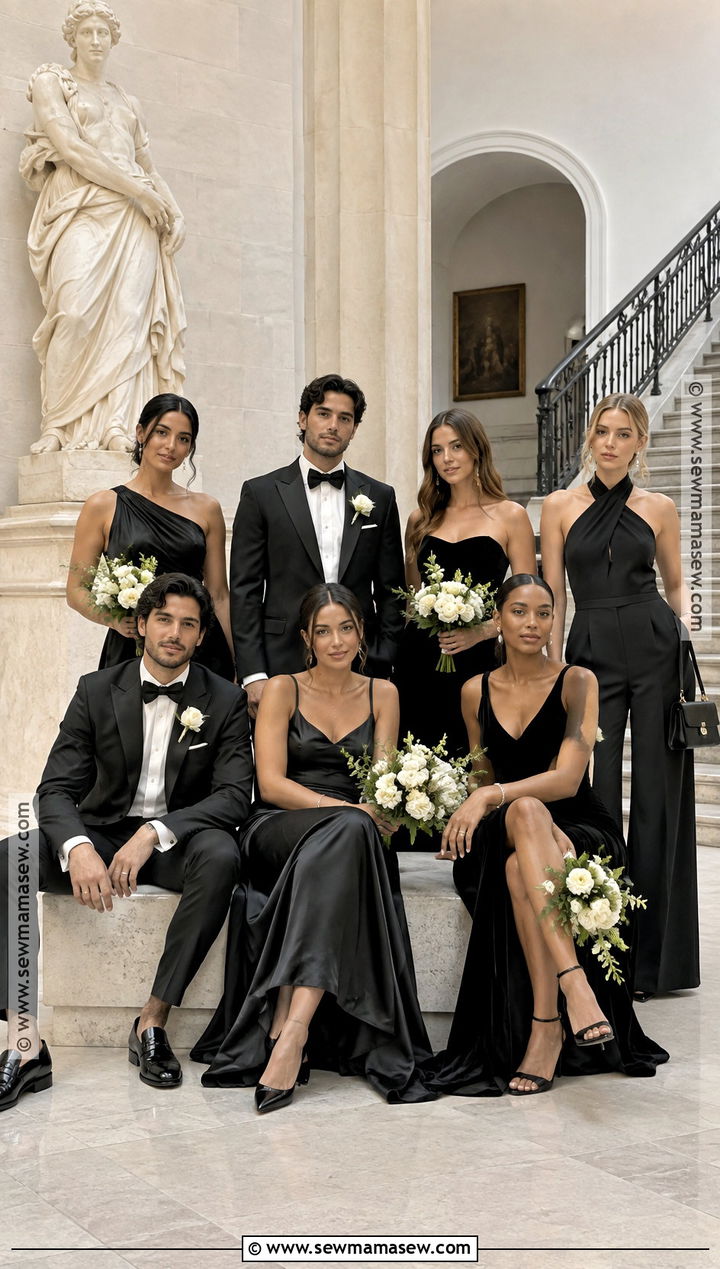
Black and ivory look clean and editorial, but the ivory needs managing. Keep it in shirts, bouquets, pocket squares and accessories so no attendant competes with the bride's dress. Black satin columns, velvet maxis, modern jumpsuits or long-sleeve midis suit the dress wearers, and suit wearers can go black tuxedo or tailored black suit with ivory shirts and slim black ties. My one caution: solid black right under the chin can deepen shadows on very fair or mature skin, so a V or scoop neckline that puts some skin between face and fabric helps. Black heels, polished loafers, pearl or silver jewelry and structured mini bags finish it. Ivory bouquets with green foliage separate each silhouette in photos, which matters in hotels, museums and lofts.
10. Forest Green and Taupe Bridal Party Attire
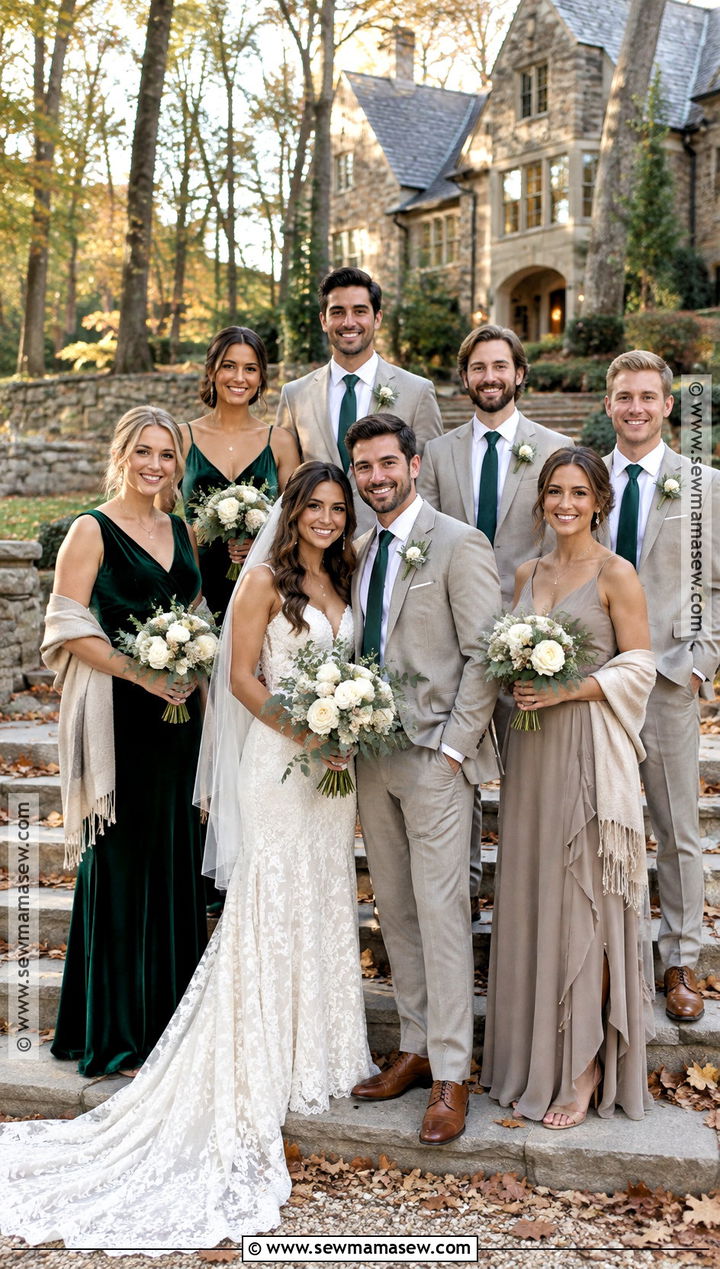
Forest green against taupe pairs a deep color with a soft neutral, and the neutral is what lets the green glow. Forest green gowns in chiffon, satin or velvet carry the palette, while taupe covers suits, shawls, shoes and a few contrasting dresses. Wraps, draped maxis, modest sleeved dresses and tailored jumpsuits give options for every size and coverage preference. A word on taupe: it ranges from pinkish to greenish gray, and two shops' versions rarely match, so compare every taupe piece from swatches side by side. Taupe or stone suits with white shirts, dark green ties and brown leather shoes sit well with the dresses. Nude or bronze block heels keep things practical for vineyards, woodlands and country estates.
11. Cranberry and Charcoal Bridal Party Attire
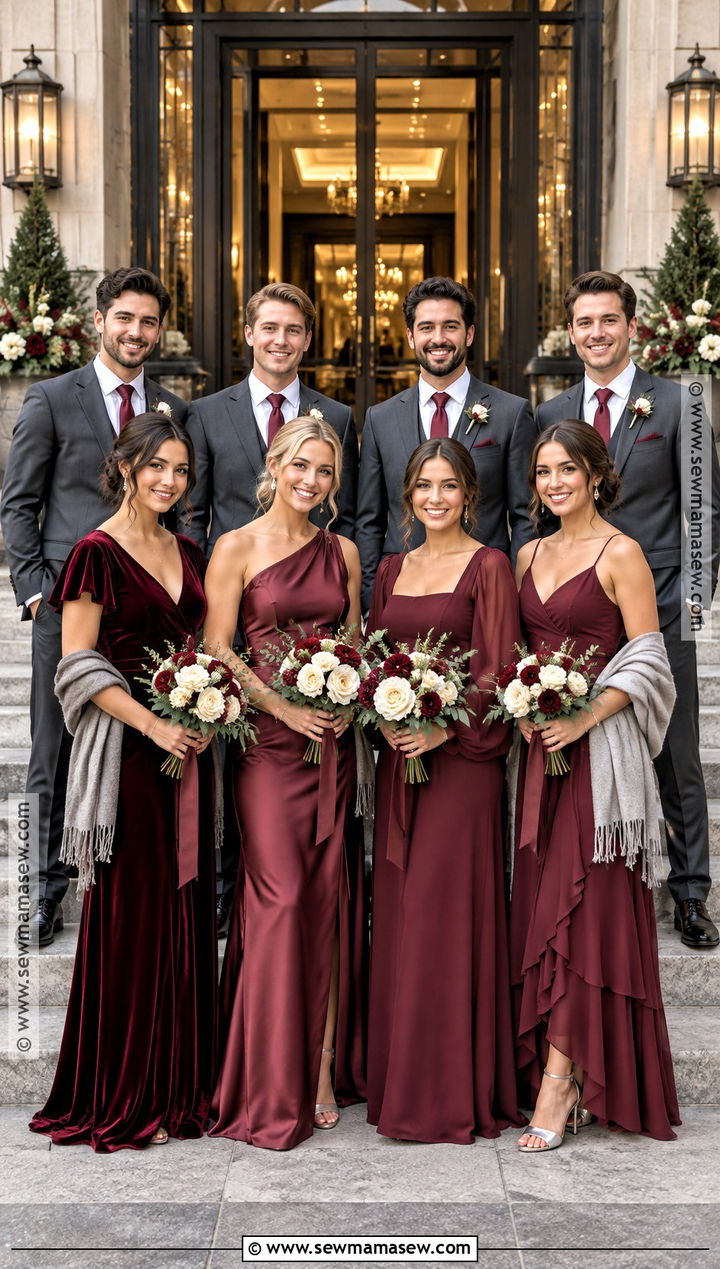
Cranberry is bluer and brighter than burgundy, and it's one of the most flattering reds for cool skin tones. Velvet, satin and layered chiffon all carry it. Mix fitted columns with A-lines, wraps and a jumpsuit or two so attendants choose shapes they feel good in. Charcoal suits give structure without the hard contrast of black, styled with white shirts, cranberry ties, matching pocket squares and polished black shoes. For the dresses, pewter heels, silver earrings and gray faux-fur wraps handle cold outdoor photos; silver suits cranberry better than yellow gold because both sit on the cool side. Cream and cranberry bouquets keep the deeper tones from looking heavy. I'd choose this for city venues, historic hotels and late fall evenings.
12. Mulberry and Silver Bridal Party Attire
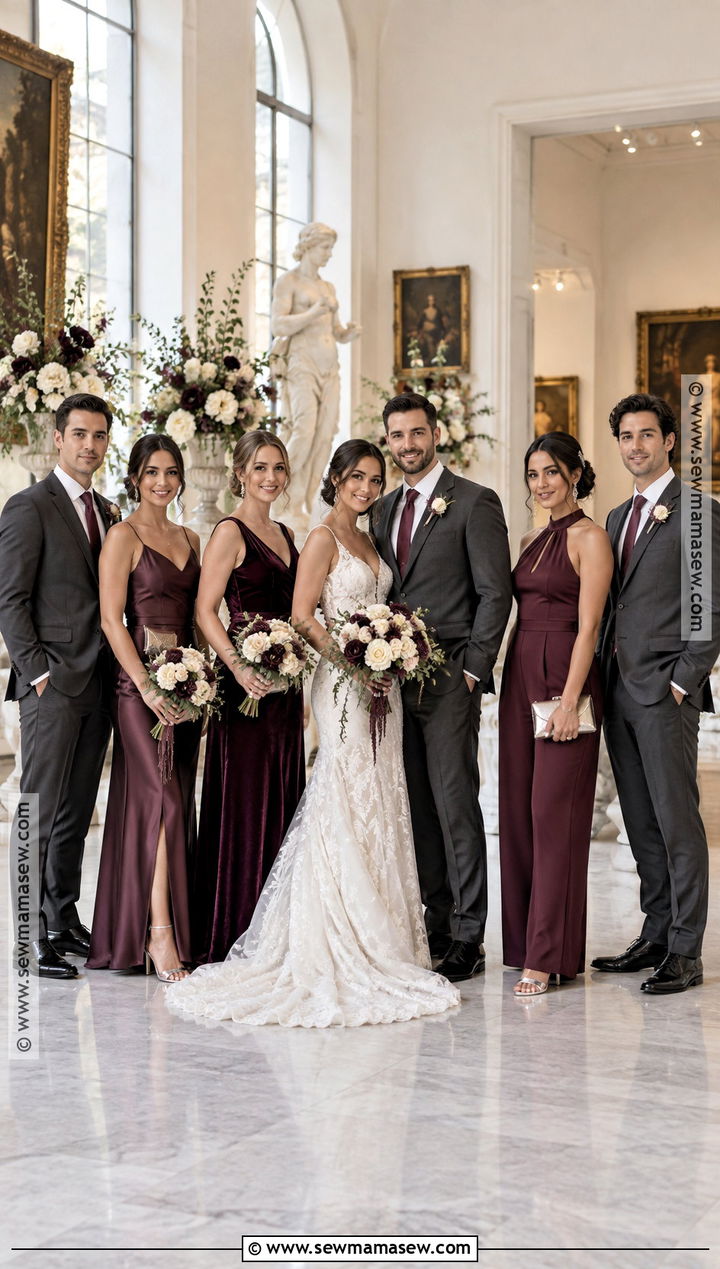
Mulberry is a deep berry with purple in it, and like plum it suits a wide range of skin tones. Dress attendants in mulberry satin gowns, velvet maxis or crepe jumpsuits, and vary the necklines so the line feels personal. Silver should stay an accent through heels, earrings, clutches, hairpins and a little beading. A fully metallic dress can bounce flash straight back and blow out to a bright glare in photos. Suit wearers look polished in charcoal or midnight with white shirts, mulberry ties and silver cuff links, and black shoes keep it formal. For depth, put the maid of honor in a lighter mauve or a patterned mulberry. Ivory, plum and silvery green flowers finish it for formal halls, theaters and galleries.
13. Cinnamon and Cream Bridal Party Attire
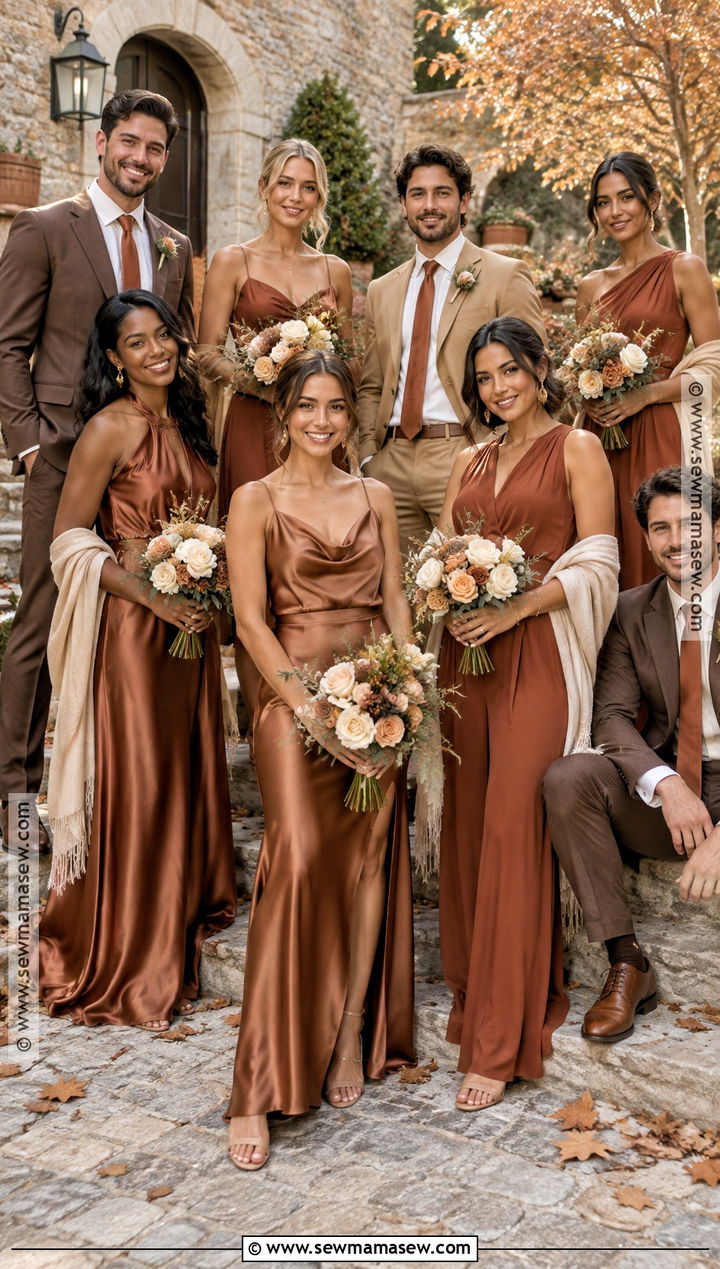
Cinnamon is softer and lighter than rust, so it brings warmth without the weight of jewel tones. Cinnamon satin dresses, rust-brown jumpsuits and coppery chiffon gowns form the line. Cream belongs in shirts, wraps, flowers and accessories, never in a full dress that might compete with bridal white. Warm oranges flatter golden and deeper skin especially well. For very cool, rosy complexions, I'd steer toward the deeper rust-brown, which sits less orange next to the face. Tan, camel or mid-brown suits feel less expected than navy, worn with cream shirts, cinnamon ties and brown leather shoes. Nude heels or bronze flats with gold jewelry finish the dresses, and ivory, peach and caramel flowers suit ranches, courtyards and sunlit rustic rooms.
14. Midnight Blue and Gold Bridal Party Attire
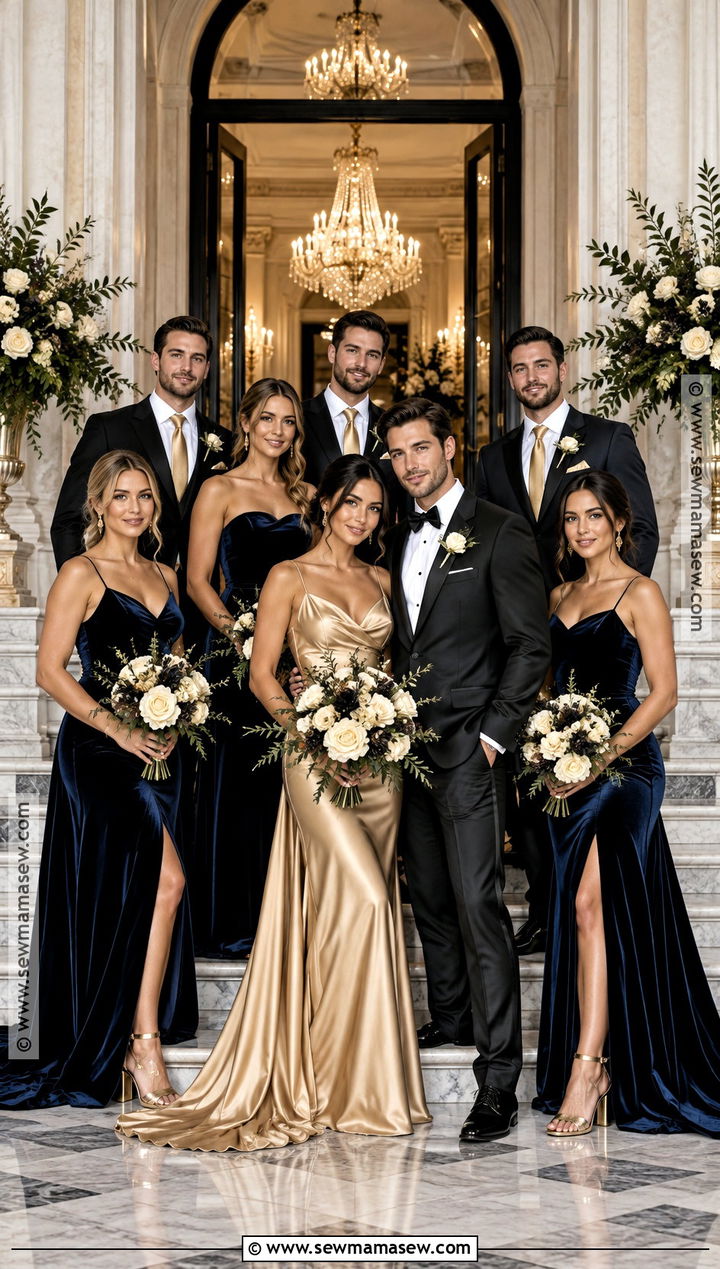
Midnight blue looks black indoors and blue in daylight, which makes it a gentler choice than black for a black-tie party. Use it for velvet gowns, satin slips, structured jumpsuits or matching tuxedos. Gold works best as a controlled accent in jewelry, heels, hair pieces, ties and pocket squares. For variation, put one or two attendants in a muted antique gold rather than bright yellow-gold fabric, which tends to look brassy under flash. Black or midnight suits with crisp white shirts and polished black shoes keep the line streamlined. Metallic block heels and small gold clutches finish the dresses, and cream flowers with dark foliage lighten the group for ballrooms and hotel evenings.
15. Mixed Jewel Tone Bridal Party Attire
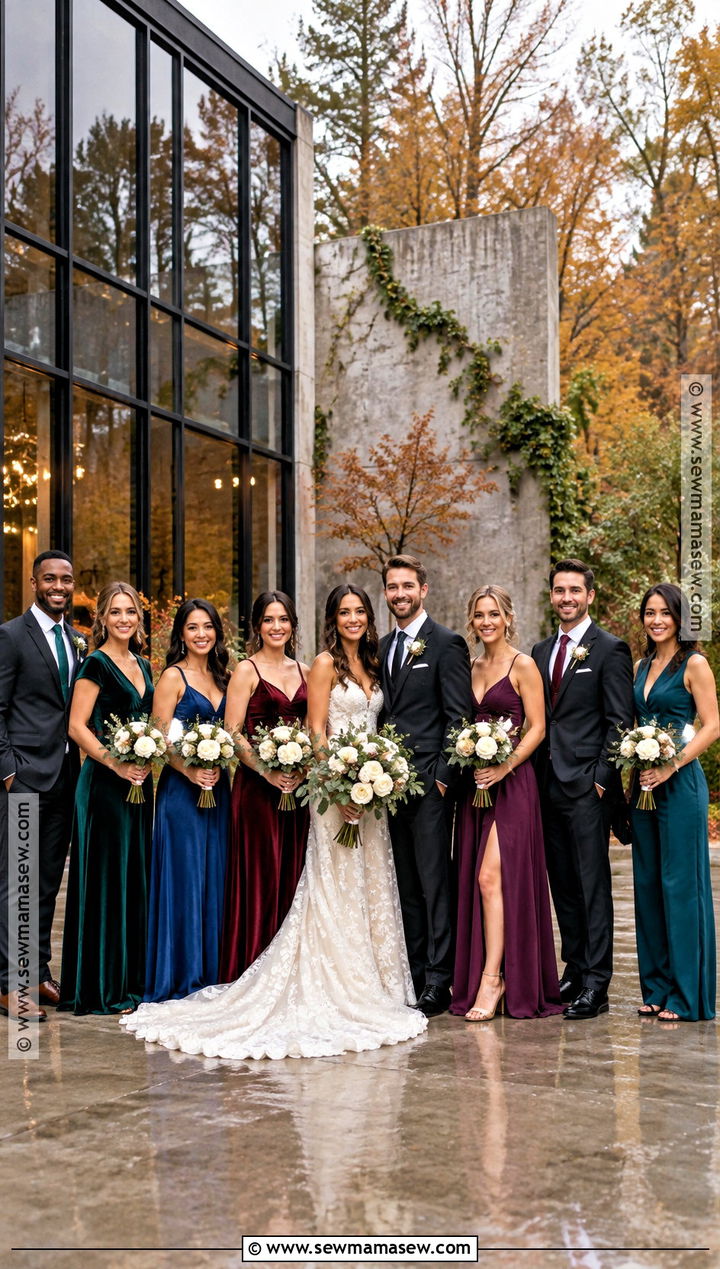
Mixed jewel tones only hold together when the colors share the same depth. Emerald, sapphire, plum, burgundy and deep teal are all saturated and dark, so none of them jumps out of the line; add one pastel and the effect breaks. Assign each attendant a color and let her pick the cut, from a wrap gown to a suit. Satin and velvet mix well, but repeat each texture a few times so a single velvet dress doesn't look like a mistake. Black or charcoal suits anchor the group, with jewel-tone ties echoing the dresses. Neutral shoes in black, bronze or gold stop it getting busy, and matching metal jewelry plus cream bouquets give everyone a shared detail. It suits large parties best, where every shade gets repeated.
Swatch Testing Before Anyone Orders a Dress
Color names mean very little across retailers. One shop's burgundy is another's wine, and a suit rental's navy may be lighter than the dresses. Testing physical swatches is the step that keeps a palette from falling apart on the day.
- Order swatches of every fabric in every chosen color, including the suit or tie fabric, from the actual suppliers you'll buy from.
- Lay them together on a white sheet and look at them by a window in daylight, then again under warm lamps in the evening. A color that only works in one of those lights will look off in half your photos.
- Take a phone photo with flash and one without. Satin and metallics often look much brighter on camera than in person.
- Order all dresses of the same color at once where you can. Dye lots vary, and two batches of the same shade can differ enough to notice side by side.
- Keep the approved swatches in an envelope and bring them when buying shoes, ties, ribbon and flowers, so every accent is matched to the real fabric rather than a screen.
Two Anchor Colors, and a Plan for Where They Go
Start with two or three anchor colors, then decide exactly where each one appears: dresses, suits, shoes, ties, jewelry, wraps and flowers. Order swatches before anyone buys, because velvet, satin, chiffon and wool show the same named color differently, and daylight and reception lighting shift it again. Then give attendants real choice in silhouette, sleeves and footwear, since a person who feels good in her dress looks better in every photo. Earthy neutrals, berries, navy or jewel tones can all look polished. What makes a group look intentional is that every color turns up in a planned place.
Related posts: