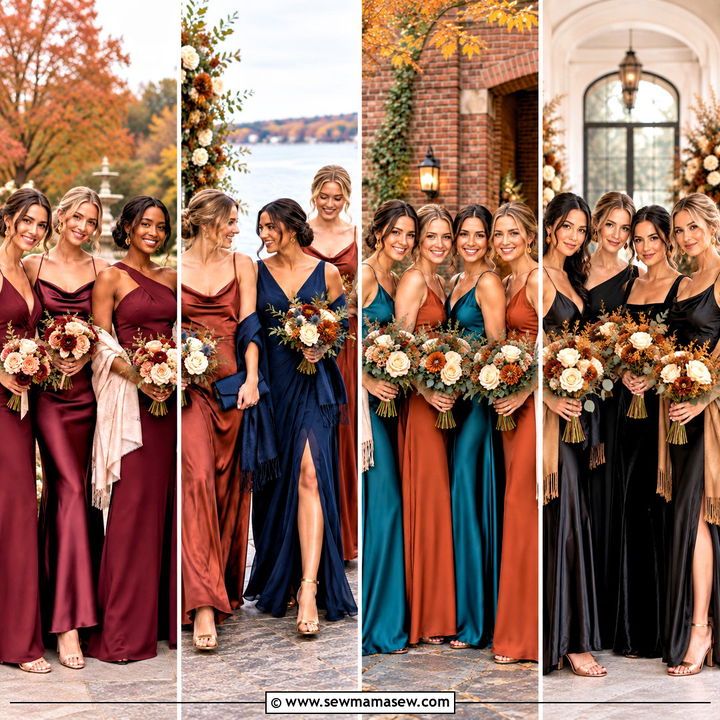
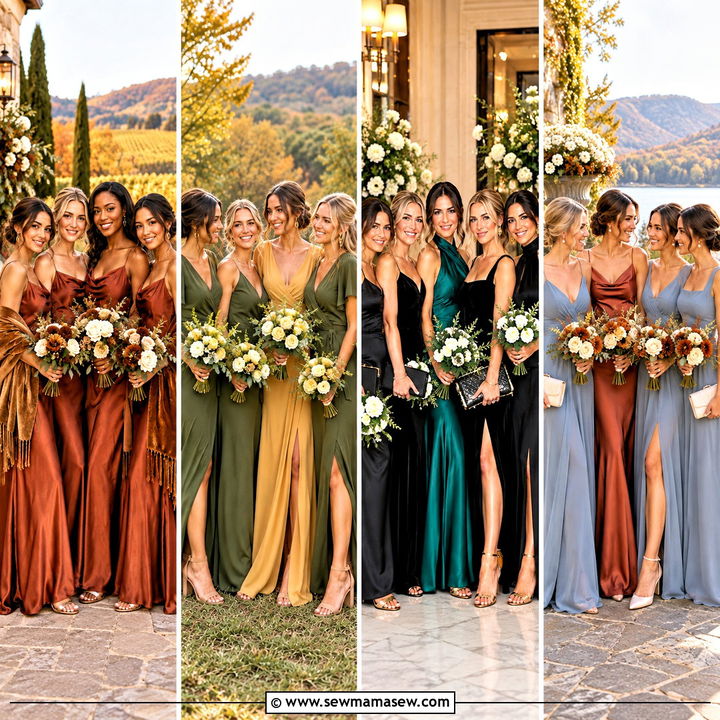
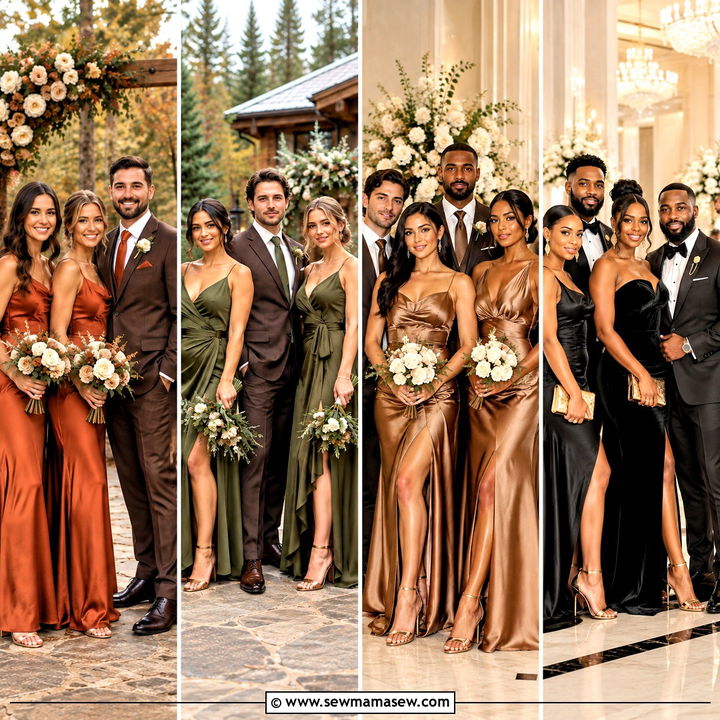
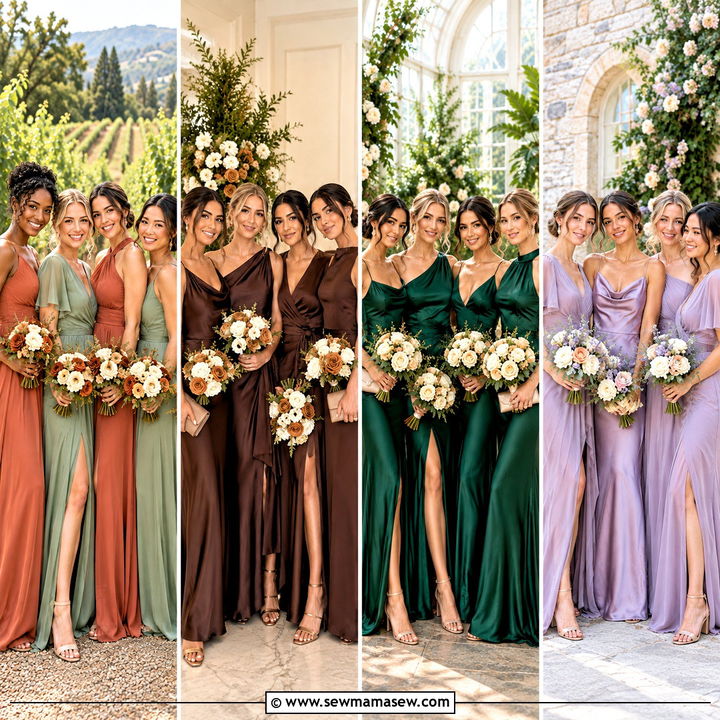
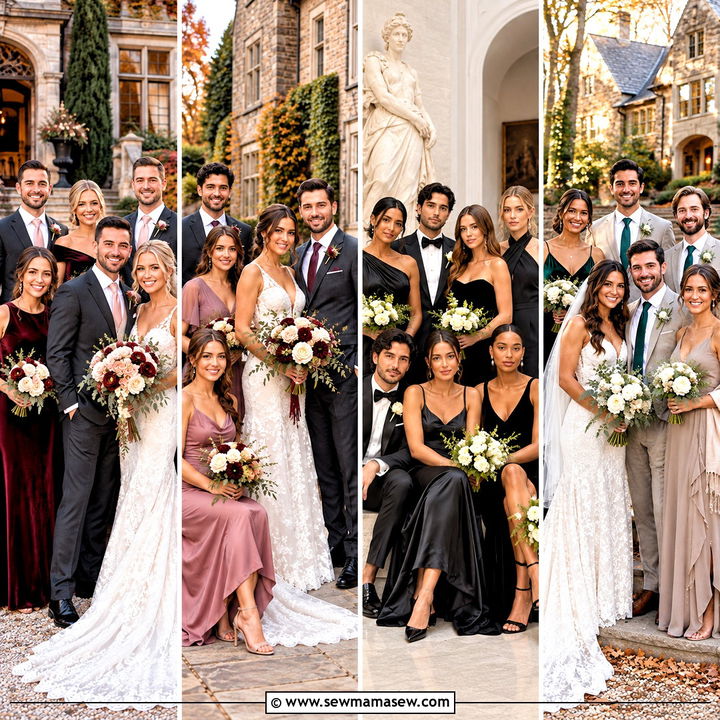
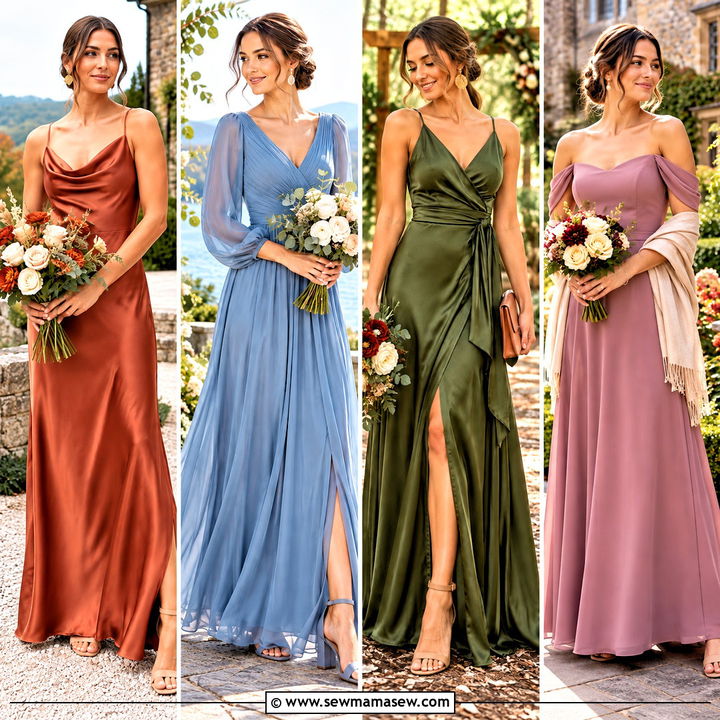
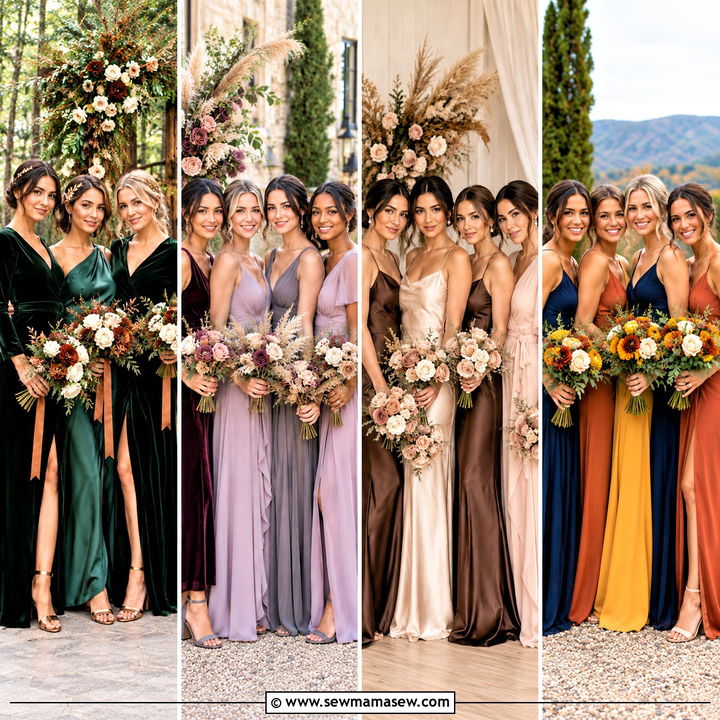
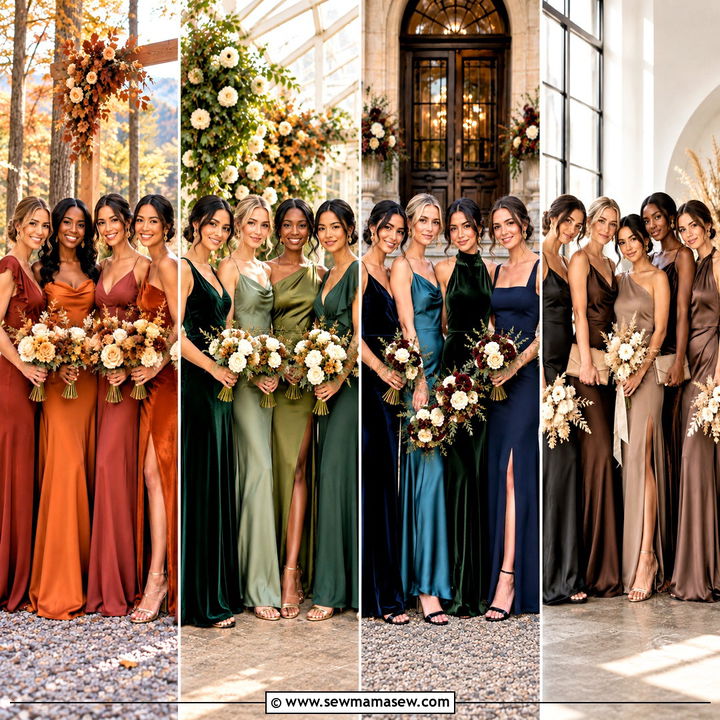
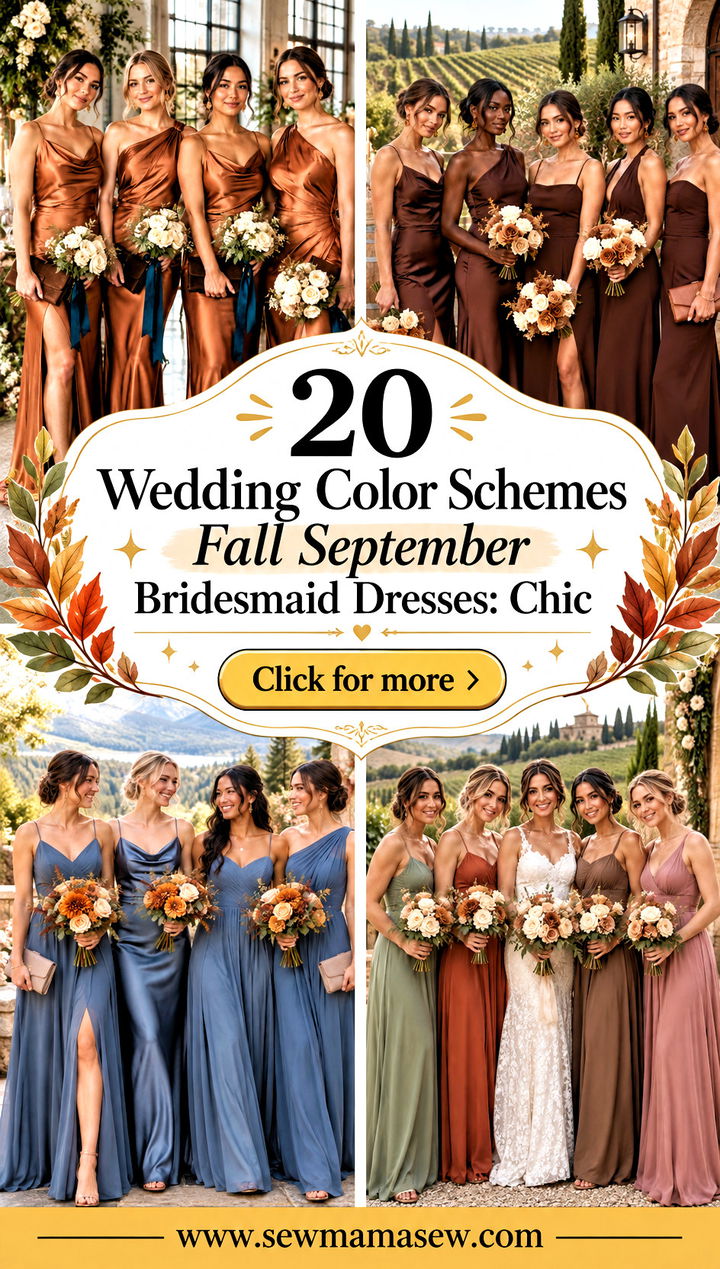
September weddings give you more room with color than almost any other month. The light is still summery, the leaves haven't fully turned, and you can pull from soft pastels or deep autumn shades without either looking out of season. When I plan a bridal party palette for this month, I think about three things together: the dress color, the fabric it comes in, and what the flowers will do next to it. Below are twenty palettes I'd happily put in front of a couple, each with the dress fabric, bouquet, shoes and jewelry I'd pair with it. Sage, terracotta, dusty blue, blush, espresso and burgundy all appear, and most suit gardens, vineyards, ballrooms and barns alike.
Heat, Humidity and Satin in Early September
In much of the country, an early September afternoon is still summer weather, while a late September evening can need a wrap. I plan the fabric around the ceremony time before I commit to a color.
- Chiffon breathes best and hides a bit of perspiration, which is why I default to it for outdoor afternoon ceremonies.
- Satin looks rich but shows sweat marks and water spots, especially in lighter shades like champagne and sage. It's happiest indoors or after sunset.
- Crepe sits in the middle: matte, comfortable and forgiving of creases from car rides and sitting through dinner.
- Velvet is lovely for a cold late-September evening and miserable in a warm tent. I only suggest it when the forecast is reliably cool.
Dark colors also absorb sun. A row of bridesmaids in burgundy or forest green standing for a twenty-minute outdoor ceremony at three in the afternoon will feel it, so either pick a lighter fabric or ask the planner about shade for the wedding party.
1. Sage Green Bridesmaid Dresses With Terracotta Flowers
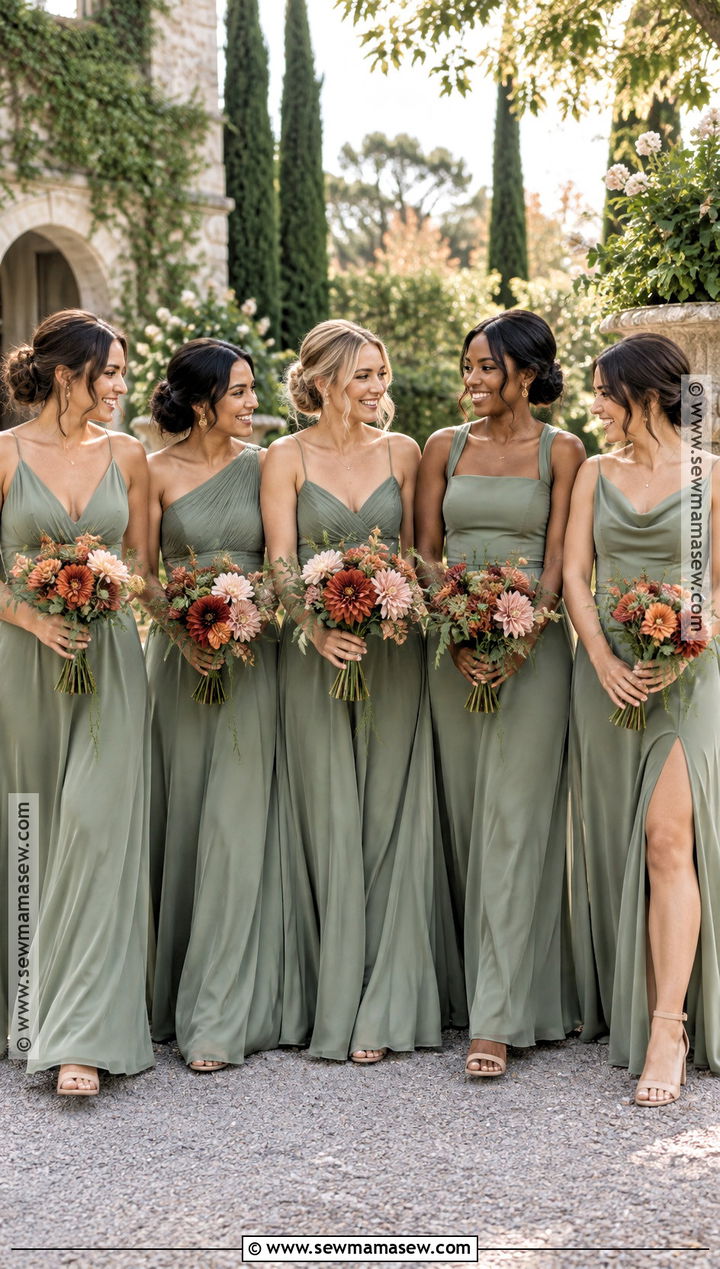
Sage is the color I suggest most when a couple wants something fresh that still nods to fall. In floor-length chiffon it moves well outdoors, and letting each bridesmaid pick her own neckline keeps everyone comfortable while the shared shade holds the group together. Terracotta dahlias, peach roses, cream lisianthus and eucalyptus give the bouquets warmth. Nude block heels sink less into lawn than stilettos, which matters at garden and vineyard sites. Gold earrings, small woven clutches and an ivory wrap for after sunset finish it. One caution: some sages turn gray under overcast skies, so I always look at the swatch outdoors before anyone orders. Cream linens and terracotta napkins carry the palette into the reception.
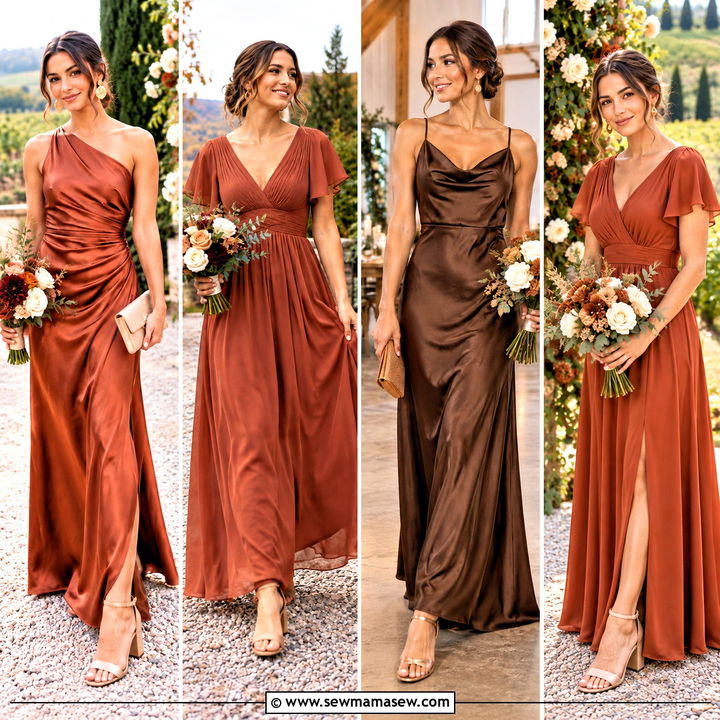
2. Terracotta Bridesmaid Dresses With Olive Green Accents
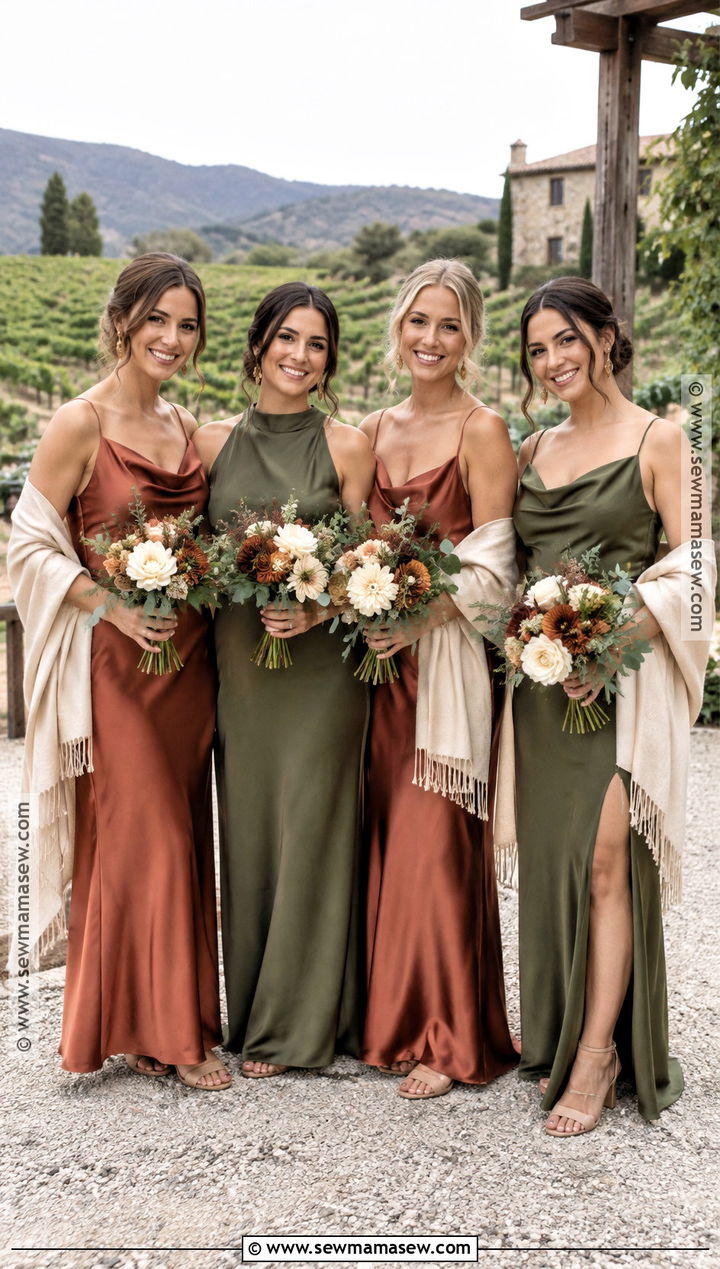
Terracotta is warm without being heavy, and in September sun it glows. I offer the bridal party two options: a satin slip for those comfortable with a body-skimming cut, and a crepe wrap for anyone who wants more coverage and an adjustable waist. Olive greenery, ivory roses, rust dahlias and a little dried grass give the bouquets texture. With a color this strong, the shoes should step back, so gold sandals or neutral block heels. Simple gold hoops and a cream shawl for the evening are all the accessories it needs. It suits barns, desert sites, woodland ceremonies and estates. Olive napkins and natural wood on the tables repeat the green.
3. Dusty Blue Bridesmaid Dresses With Peach Bouquets
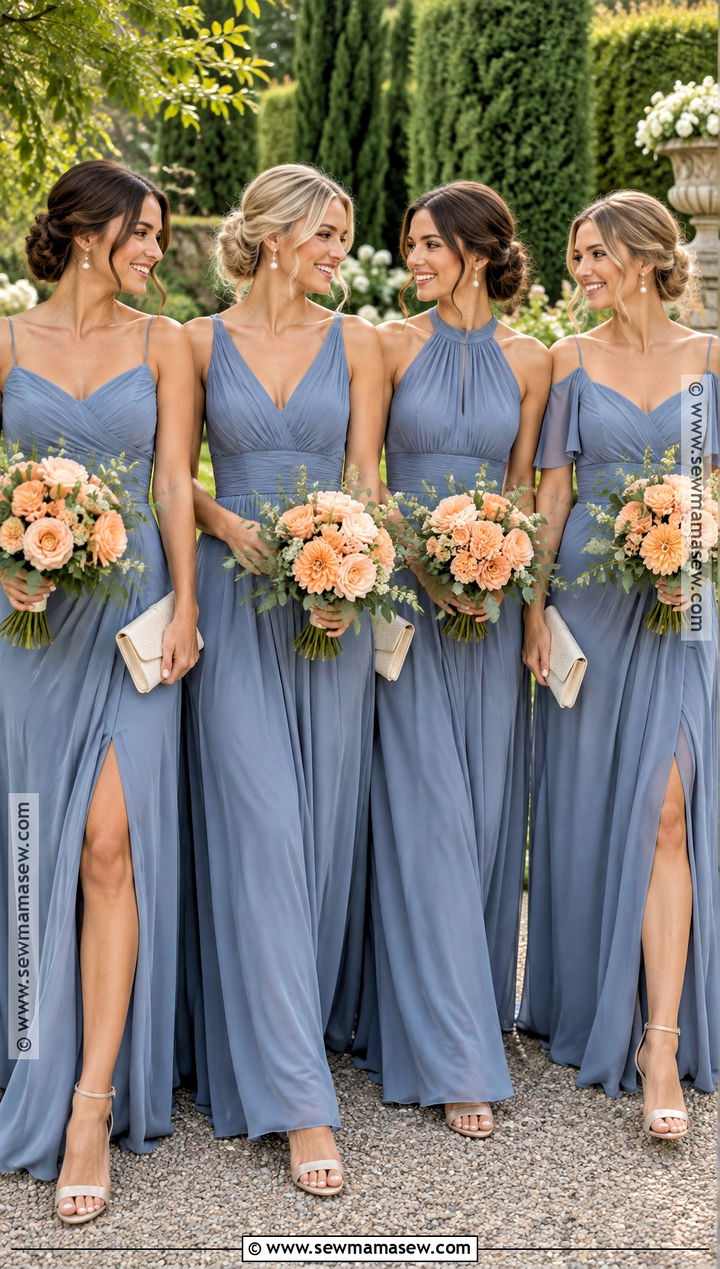
Dusty blue next to peach is one of the easiest pairings I know, because the cool dress and the warm flowers balance each other in photos. Chiffon or light crepe with a flowing skirt suits it, and bridesmaids can choose sleeves, straps or a halter. Peach garden roses, apricot dahlias, white ranunculus and pale greenery bridge late summer and early fall. Champagne heels, pearl drops and small ivory bags complete the look. Left on its own, dusty blue can read chilly in the evening, so I warm the room with cream linens and gold accents. Coastal venues, gardens and country clubs all suit it.
4. Dusty Rose Bridesmaid Dresses With Champagne Details
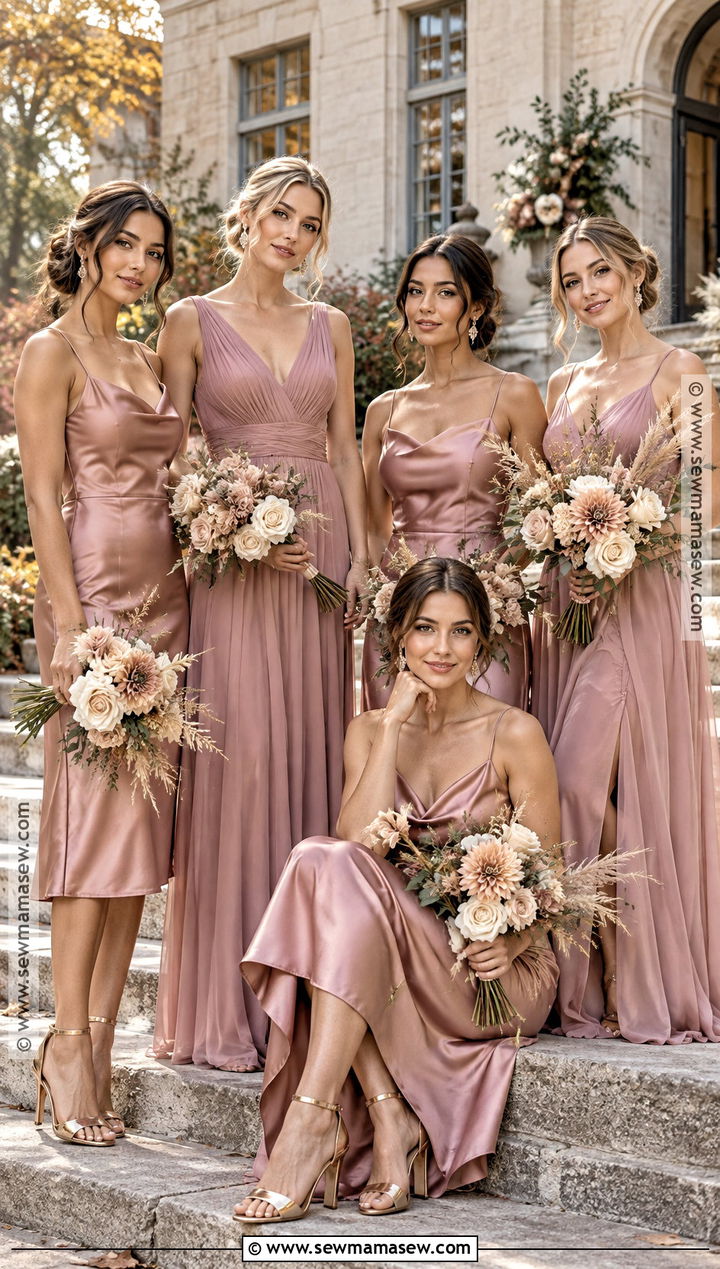
For couples who want fall without anything dark, dusty rose is my answer. Satin midis suit a semi-formal day; full-length chiffon reads more traditional. Champagne shoes, crystal earrings and metallic clutches add a soft sheen that stays quiet. The bouquets I'd build here use ivory roses, mauve carnations, blush dahlias and dried beige grasses tied with champagne ribbon. Dusty rose sits well against stone, greenery and neutral ballrooms, and because it's gentle, it forgives varied silhouettes in group photos. Repeat it on the napkins with champagne candleholders and ivory flowers.
5. Burgundy Bridesmaid Dresses With Blush Flowers
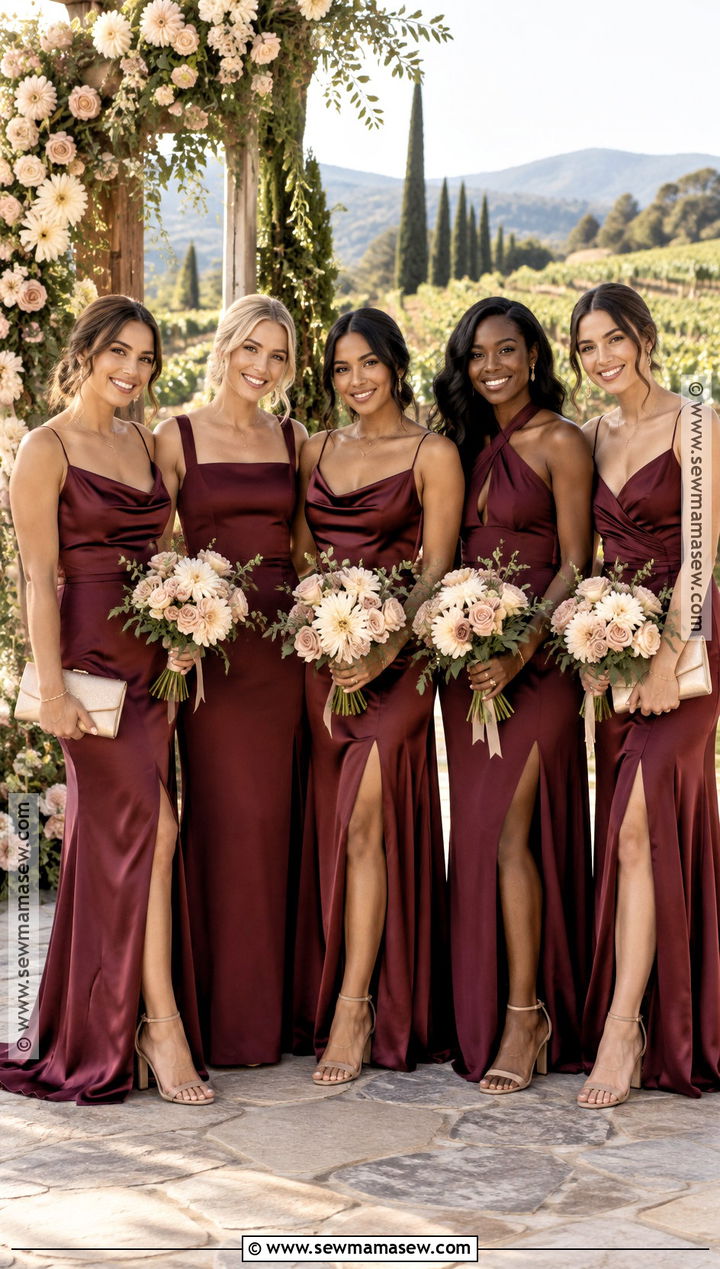
Burgundy reads as autumn immediately, which makes it a strong choice for the last weeks of September. Satin catches candlelight; matte crepe looks more formal and hides creases from the car ride better. The risk with a deep dress is that the whole party turns into a dark block in photos, so I balance it with pale bouquets: blush roses, cream dahlias, pink lisianthus and eucalyptus. Nude, taupe or muted gold heels help for the same reason. Delicate gold jewelry, a champagne clutch and a blush wrap for outdoor evenings finish it. Use burgundy sparingly elsewhere, on ribbons or menus, and let the softer blush lead the room.
6. Olive Green Bridesmaid Dresses With Rust Accents
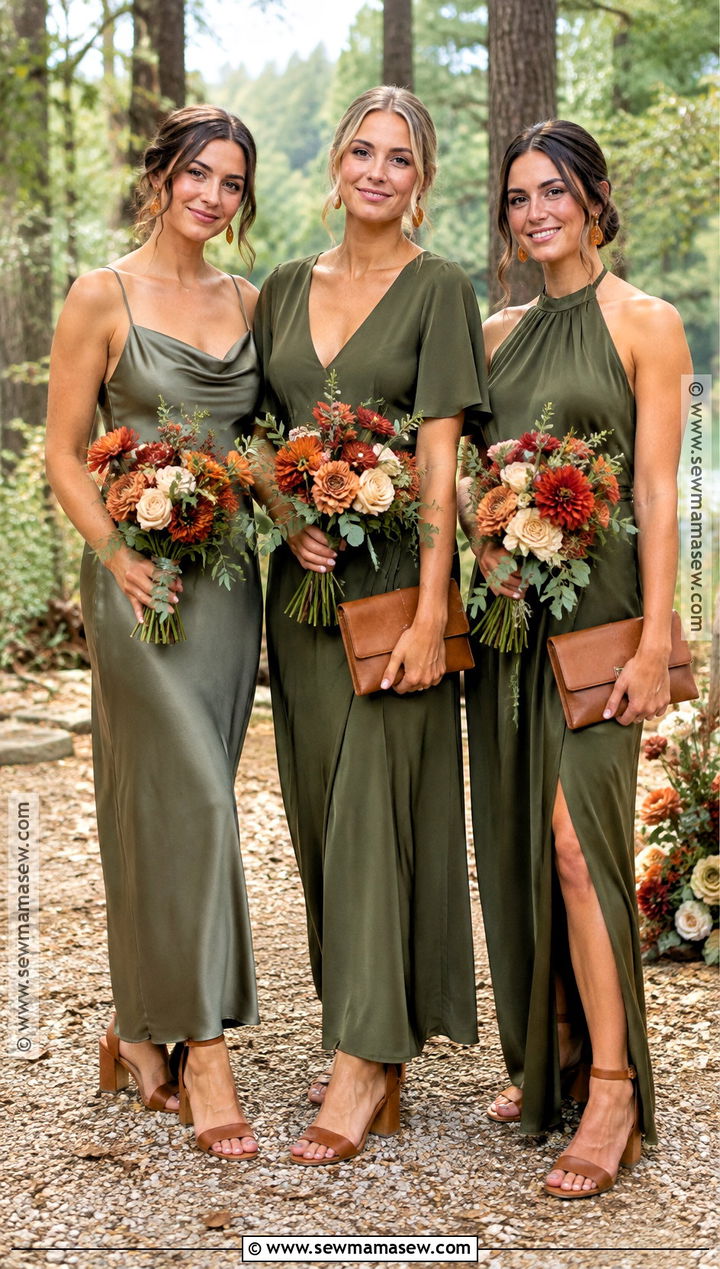
Olive is a grounded, earthy green that looks right when the trees are just starting to turn. Smooth satin suits a formal event; soft crepe is better for a relaxed outdoor one. Against the muted fabric, rust dahlias, peach roses, cream chrysanthemums and textured greenery really stand out. Cognac block heels, amber earrings and small tan clutches keep everything warm. Olive can look drab on very fair skin under flat light, which is one reason I'd consider sleeves or a pashmina in a lighter neutral near the face for evening. Forest lodges, farms, botanical gardens and vineyards suit it, with ivory linens and copper touches to brighten the reception.
7. Rust Bridesmaid Dresses With Cream Flowers
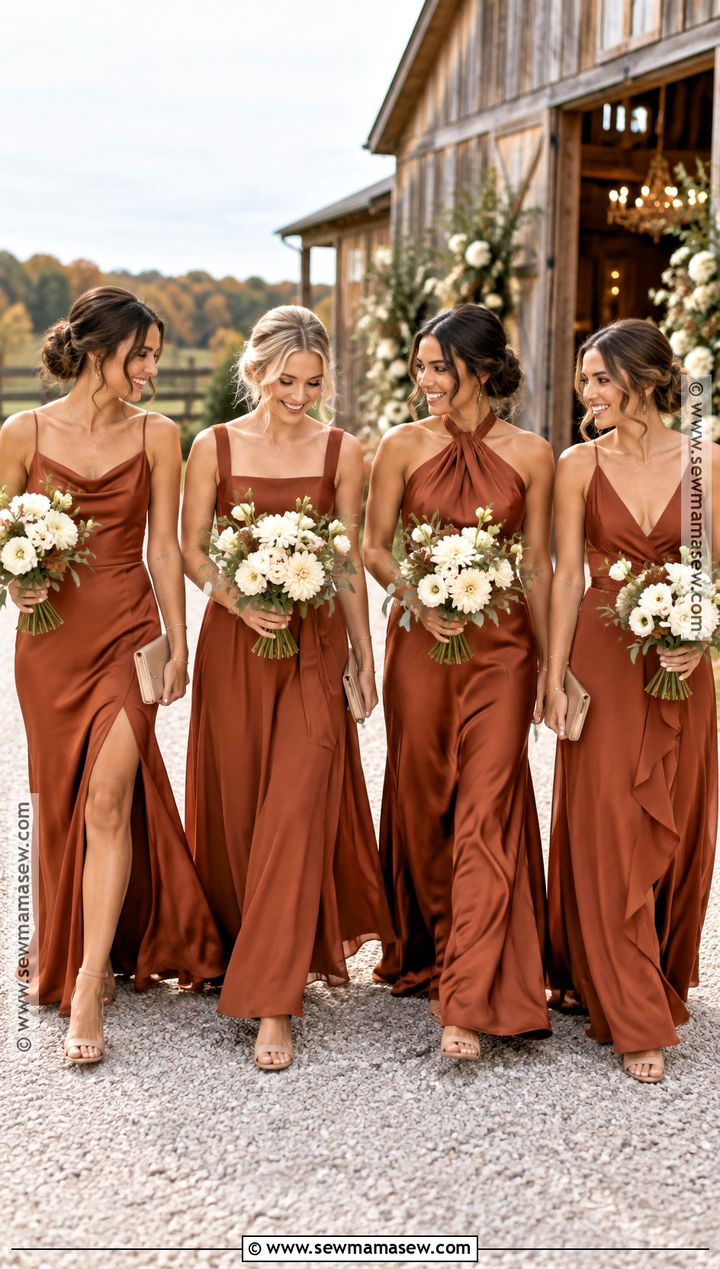
Rust is the color of turning leaves, and it photographs warmly as long as you calm it down around the edges. That's why I keep the bouquets pale: cream roses, white lisianthus, ivory dahlias and soft eucalyptus. Without them, a group in rust can look very orange in pictures. Floor-length satin makes it formal; crepe midis suit a daytime ceremony. Nude heels or tan ankle-strap sandals lengthen the leg and stay out of the way. Gold studs, slim bracelets and neutral clutches are enough. It suits converted barns, industrial lofts and vineyards, with cream tablecloths, rust napkins and brass candleholders inside.
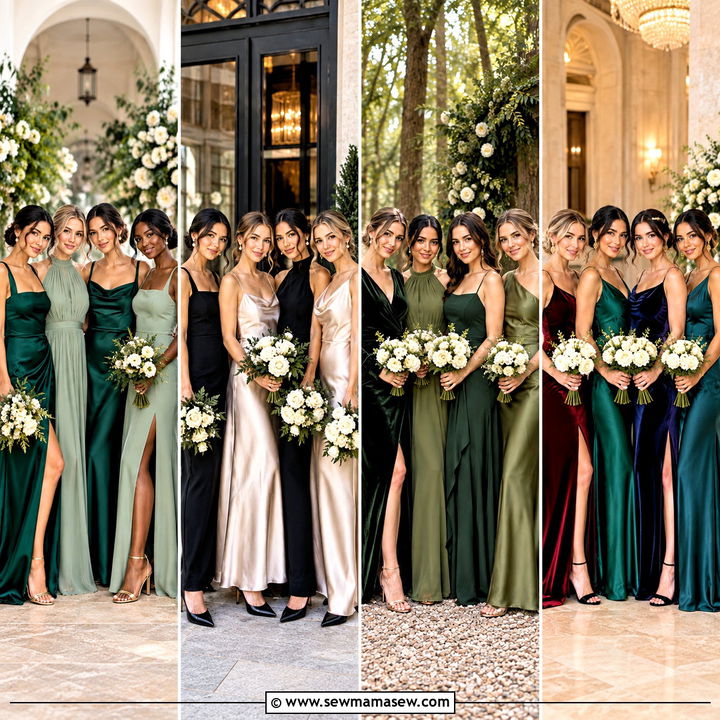
8. Emerald Green Bridesmaid Dresses With Gold Accessories
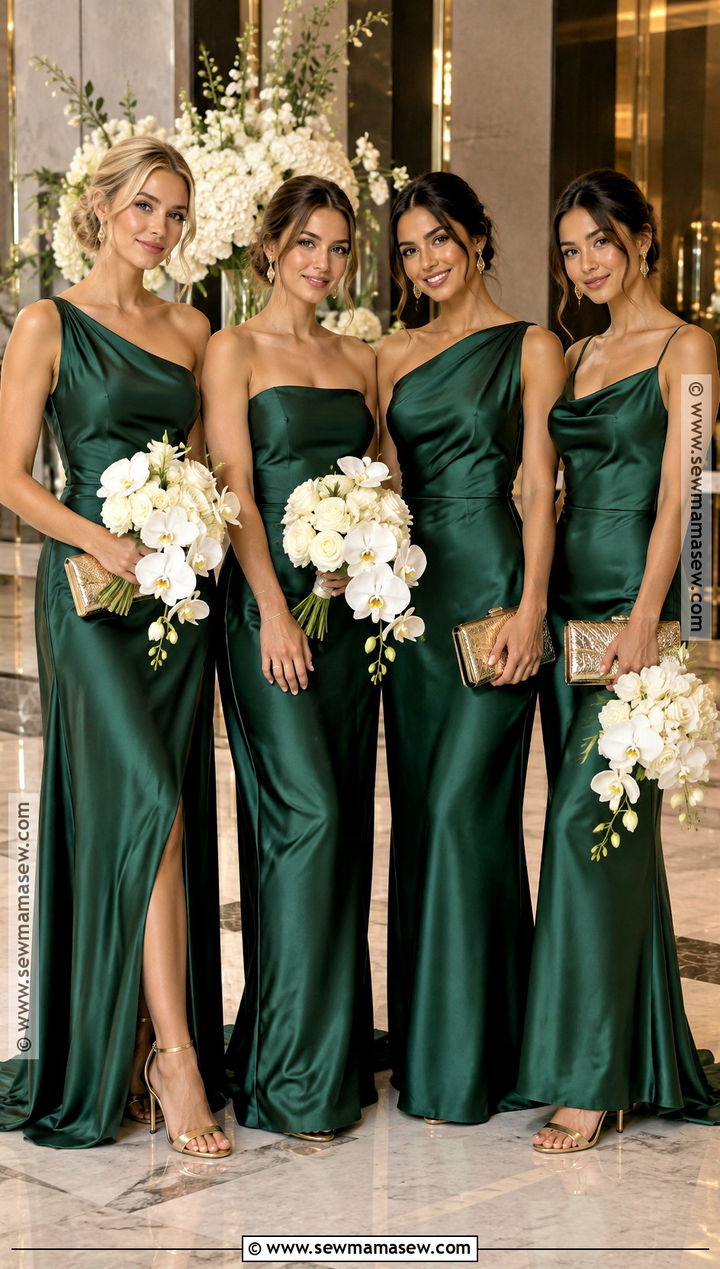
Emerald is my pick for a formal, evening September wedding. Satin columns, one-shoulder gowns and structured crepe all show off the depth of the green. Brushed-gold heels, drop earrings and metallic clutches suit it, and bouquets of ivory roses, white orchids, pale greenery and a few champagne blooms keep it bright. If the dresses are mismatched in style, insist on one fabric from one maker: emerald varies more than you'd expect between satins, and two slightly different greens side by side look like a mistake. Hotels, ballrooms, museums and historic venues suit it, with ivory linens and gold flatware so the room doesn't go dark.
9. Navy Blue Bridesmaid Dresses With Copper Accents
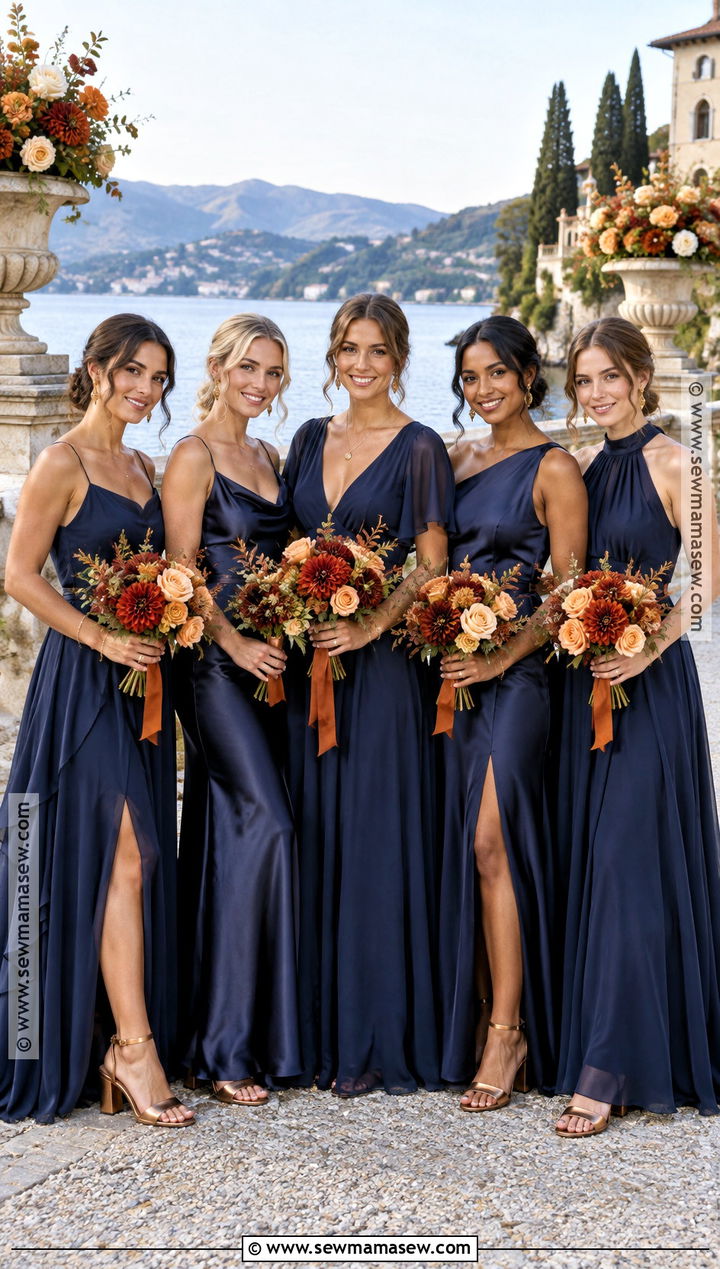
Navy is the safest deep color I work with. It flatters almost every skin tone and moves from afternoon ceremony to evening reception without looking out of place. Chiffon is softer; sleek satin suits black tie. Navy alone can feel cool, so I warm it with copper sandals, gold jewelry and small bronze clutches. Bouquets of burnt orange dahlias, peach roses, cream ranunculus and eucalyptus add a proper fall contrast. Varied necklines are fine as long as the shade and hem length match. Waterfront venues, country clubs and city celebrations all suit it, with copper candleholders and menus on an ivory base.
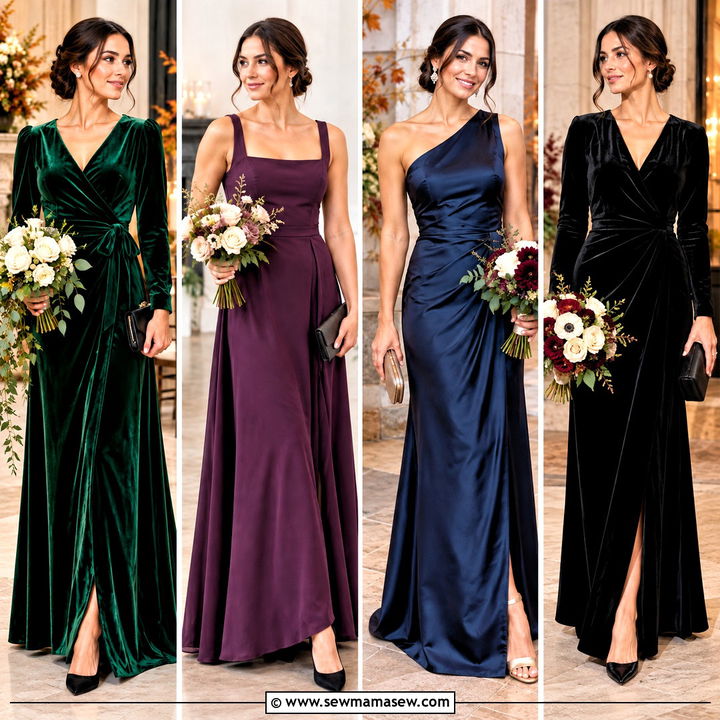
10. Plum Bridesmaid Dresses With Mauve Flowers
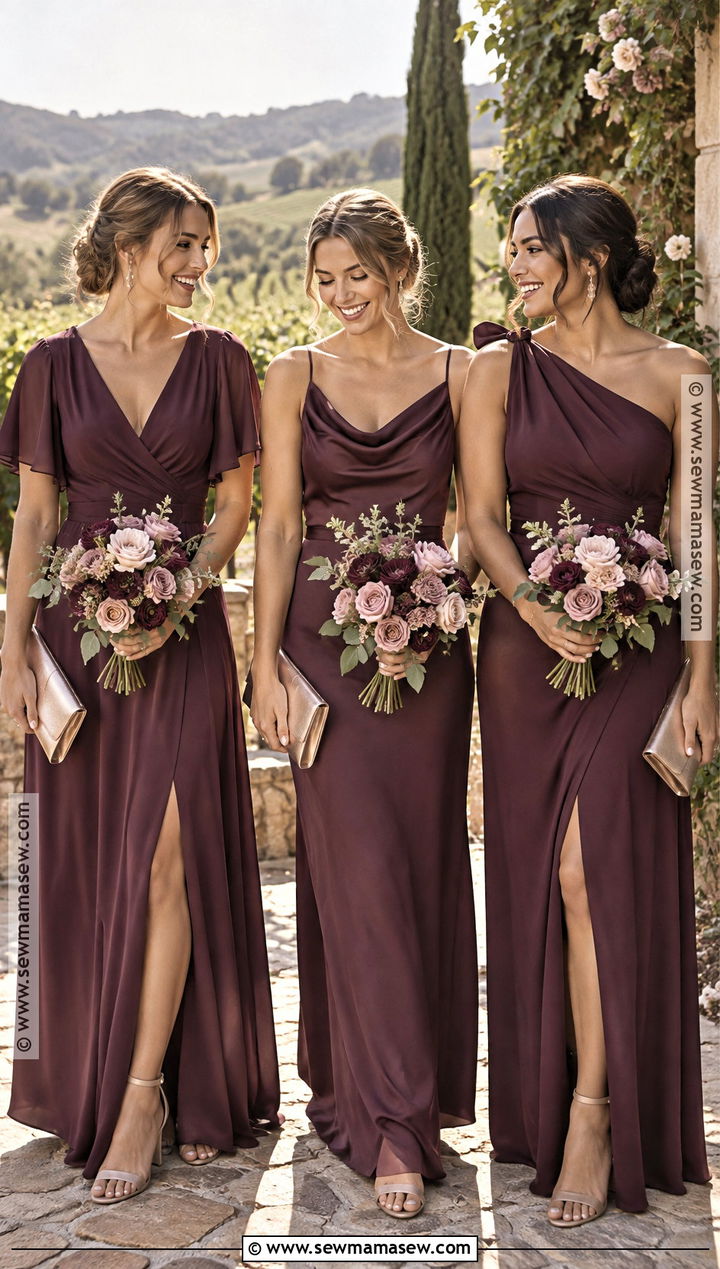
Plum is rich but softer than near-black, which makes it kinder in photos. I'd only use velvet for a cool late-September evening; in daytime warmth, satin or crepe is much more comfortable. Mauve roses, pale lavender lisianthus, ivory dahlias and silver-green eucalyptus pick up the purple without matching it exactly. Taupe heels, rose-gold earrings and muted metallic clutches keep the shine low. Wrap, cowl and one-shoulder cuts can mix, provided the fabric and dye are the same. Romantic gardens, historic houses and formal indoor venues suit it, with dusty mauve linens and plenty of candlelight.
11. Champagne Bridesmaid Dresses With Sage Green Accents
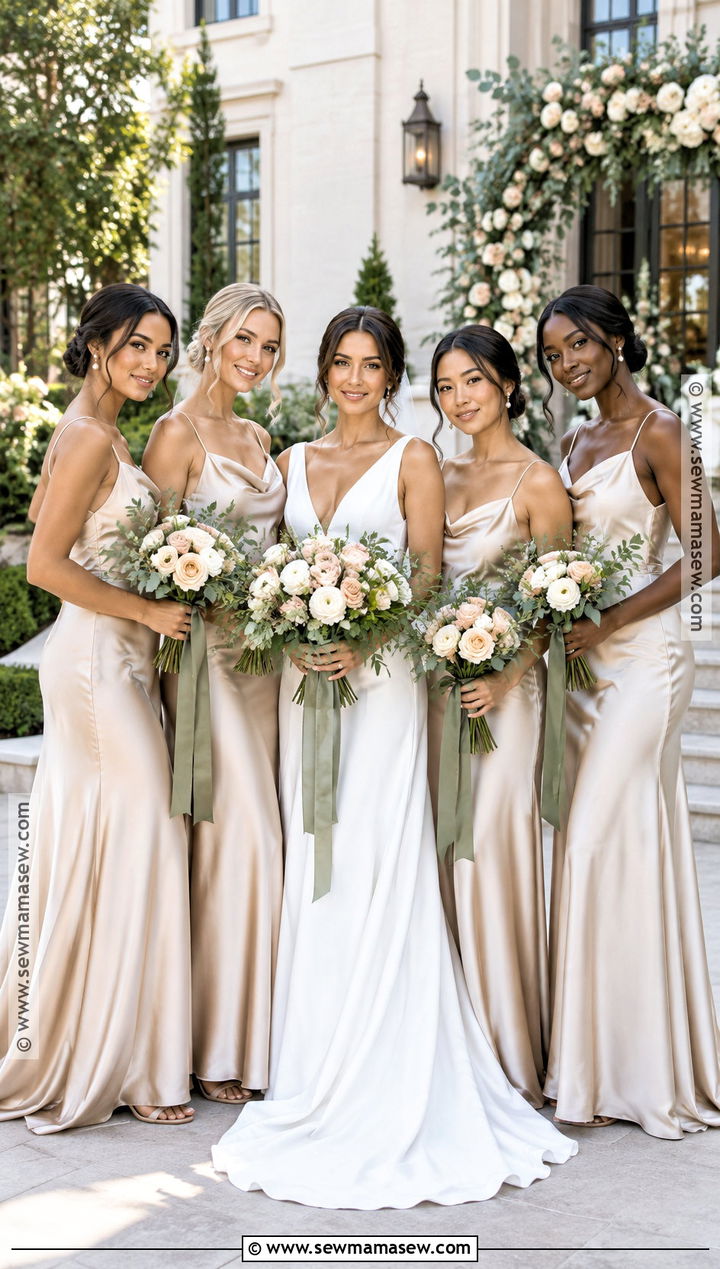
Champagne dresses feel light and expensive, but I'm careful with them. The shade has to be clearly distinct from the bride's gown, or the photos blur together, so I hold the swatch next to her dress fabric before anything is ordered. Satin shows the color best. Sage greenery, white roses, peach ranunculus and small terracotta flowers add depth to the bouquets, tied with sage ribbon. Nude heels and pearl earrings keep it quiet. Necklines can vary, but the undertone must not; a pinkish champagne next to a yellowish one is very obvious. It suits gardens, modern estates and hotels, with sage runners and gold candleholders.
12. Mocha Bridesmaid Dresses With Ivory Bouquets
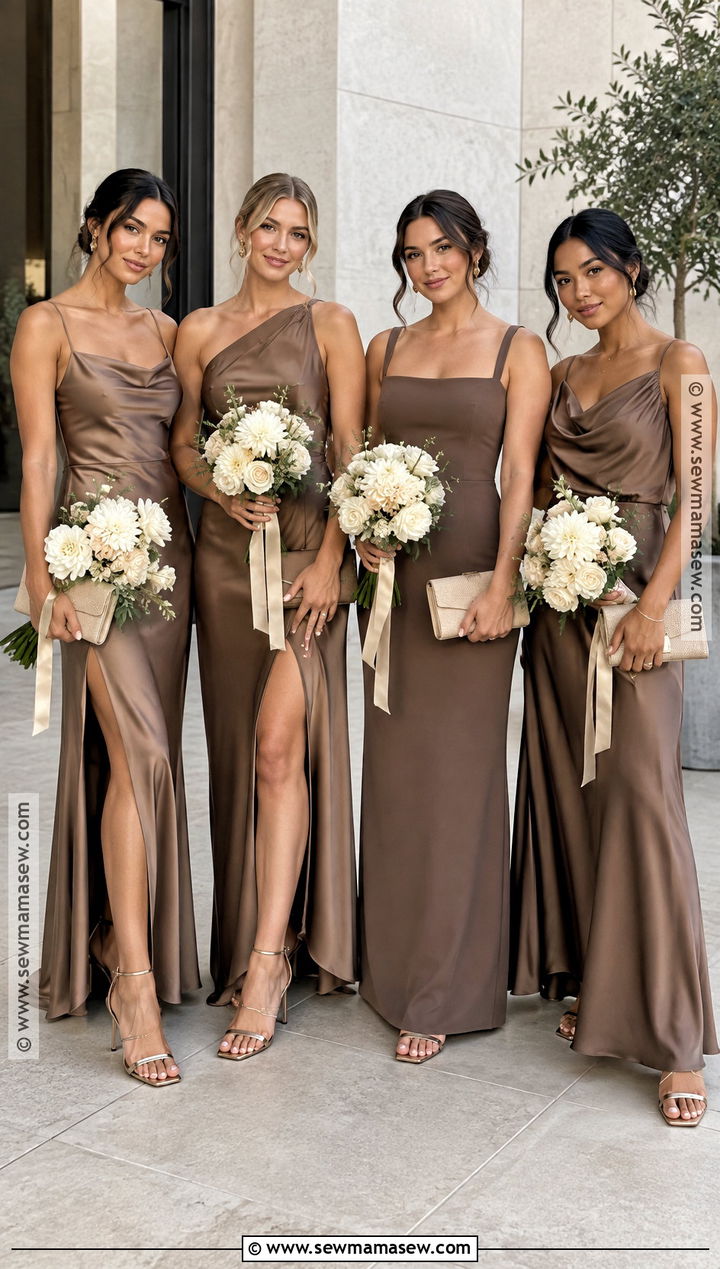
Mocha is the neutral I offer couples who find gray too cold. It's warmer and feels more seasonal. Satin slips look sleek in the evening, and draped crepe gives a matte finish that flatters in daylight. I keep the flowers restrained: ivory roses, cream dahlias, white lisianthus and a little greenery. Bronze heels, small gold earrings and structured beige clutches make it a tonal look. Brown is generous with body types, so a mixed group can choose different silhouettes in the same shade without losing cohesion. Modern hotels, lofts and minimalist outdoor venues suit it, with ivory linens and bronze details.
13. Cinnamon Bridesmaid Dresses With Dusty Pink Flowers
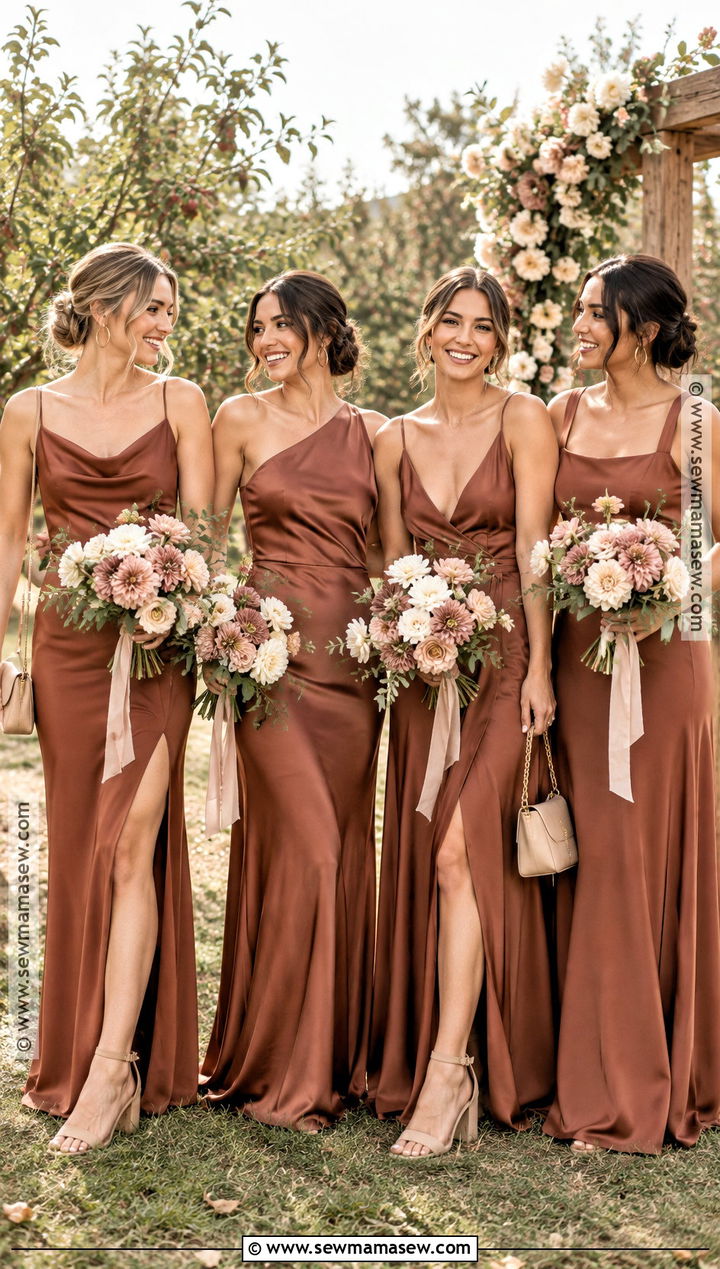
Cinnamon sits between orange, brown and red, and it changes noticeably with fabric. In crepe it looks soft; in satin it reads deeper and more formal. Dusty pink roses, blush dahlias, cream flowers and olive greenery make a romantic bouquet against it. Tan block heels, gold hoops and small neutral bags finish the outfits. For a relaxed wedding, coordinated midis are fine; for a formal one, I'd choose floor-length gowns with simple necklines so the color does the talking. Orchards, ranches, vineyards and gardens suit it. Repeat the shade on velvet ribbon or napkins, with ivory linens to keep things bright.
14. Mauve Bridesmaid Dresses With Eucalyptus Greenery
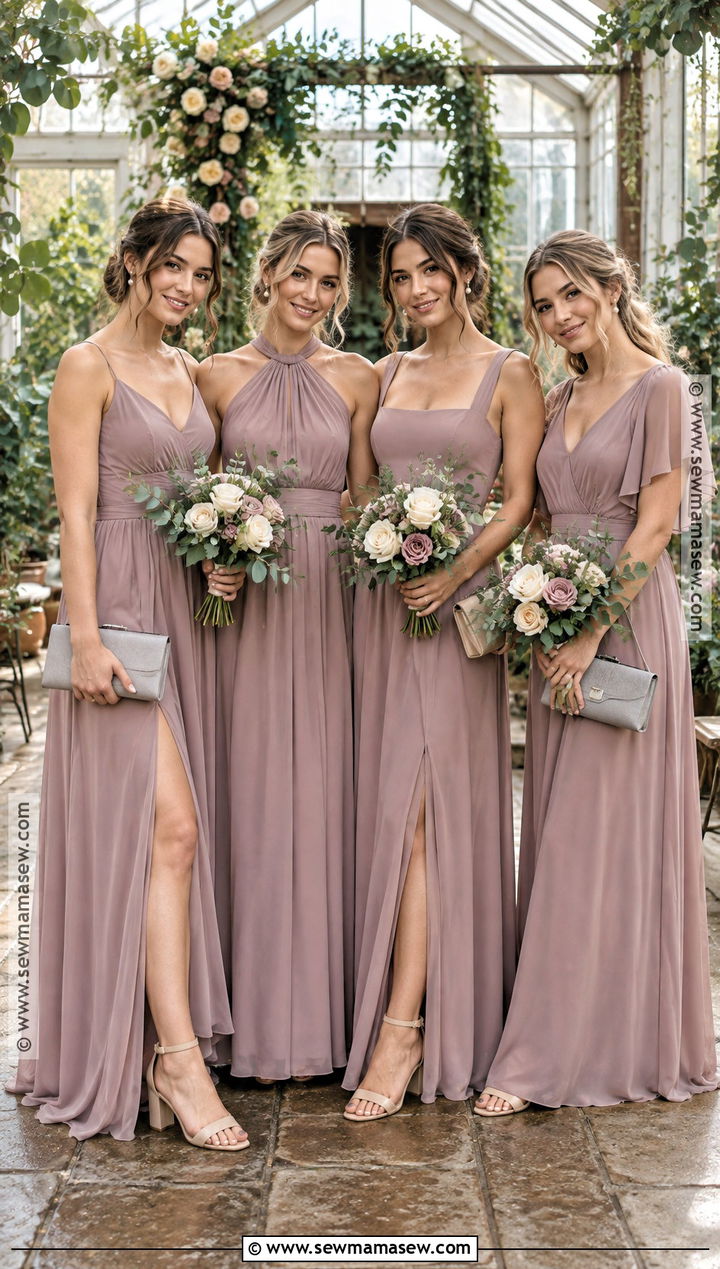
Mauve bridges summer and fall without trying hard, which is why couples who can't decide often land here. Light chiffon moves well outdoors; satin looks smoother indoors. Eucalyptus, ivory roses, dusty pink carnations and a few burgundy accents make the bouquets. Neutral block heels, pearl earrings and soft gray clutches keep attention on the dress. Varied necklines and sleeves are easy when all the dresses come from one fabric line, because the dye will match. Gardens, greenhouses, estates and ballrooms suit it. Eucalyptus garlands, mauve napkins and ivory candles make a calm, seasonal room without pumpkins or harvest props.
15. Forest Green Bridesmaid Dresses With Burnt Orange Flowers
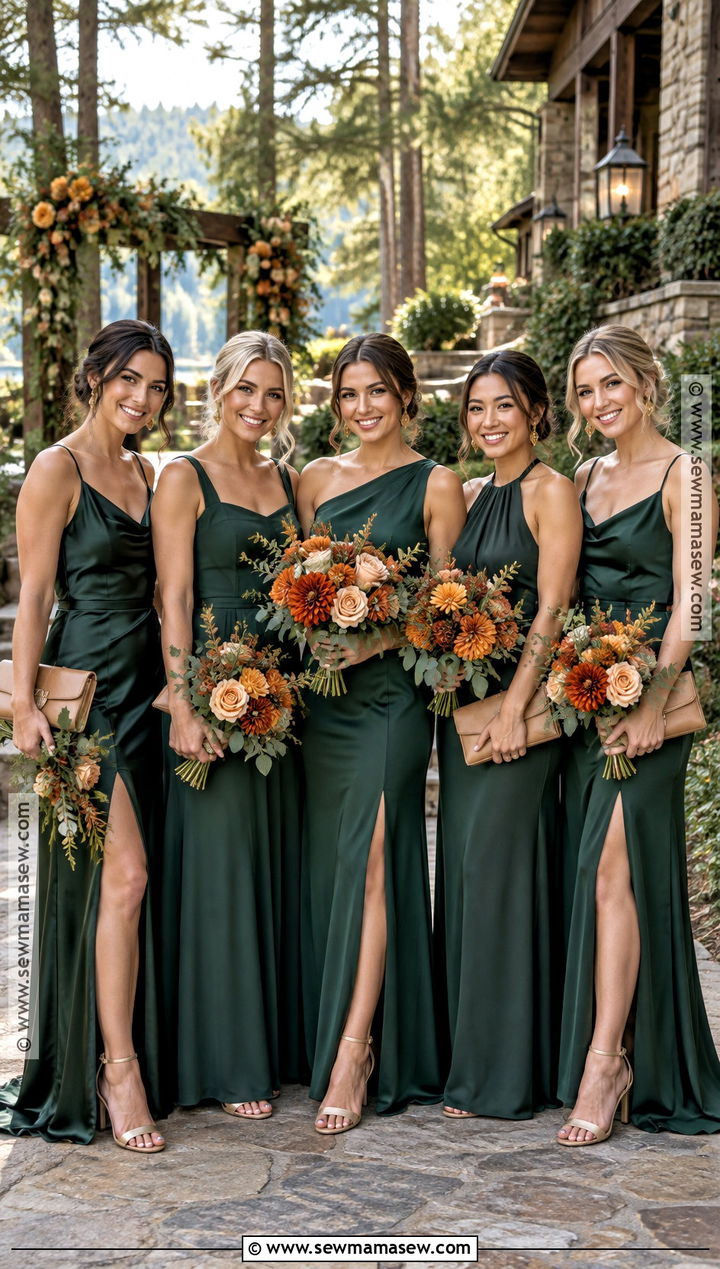
Forest green against ivory bridalwear is a strong contrast, and it holds up in photos even at a distance. Satin suits an evening celebration; structured crepe is better outdoors. Burnt orange dahlias, peach roses, cream chrysanthemums and eucalyptus warm up the deep green. Champagne heels, gold earrings and tan clutches finish the look. If the evening might turn cool, I'd give the party matching ivory or camel wraps rather than jackets, since jackets hide the neckline in every reception photo. Woodland venues, mountain lodges and formal barns suit it. Just don't bury the dresses in greenery; with too many green backdrops they disappear.
16. Copper Bridesmaid Dresses With Deep Teal Accents
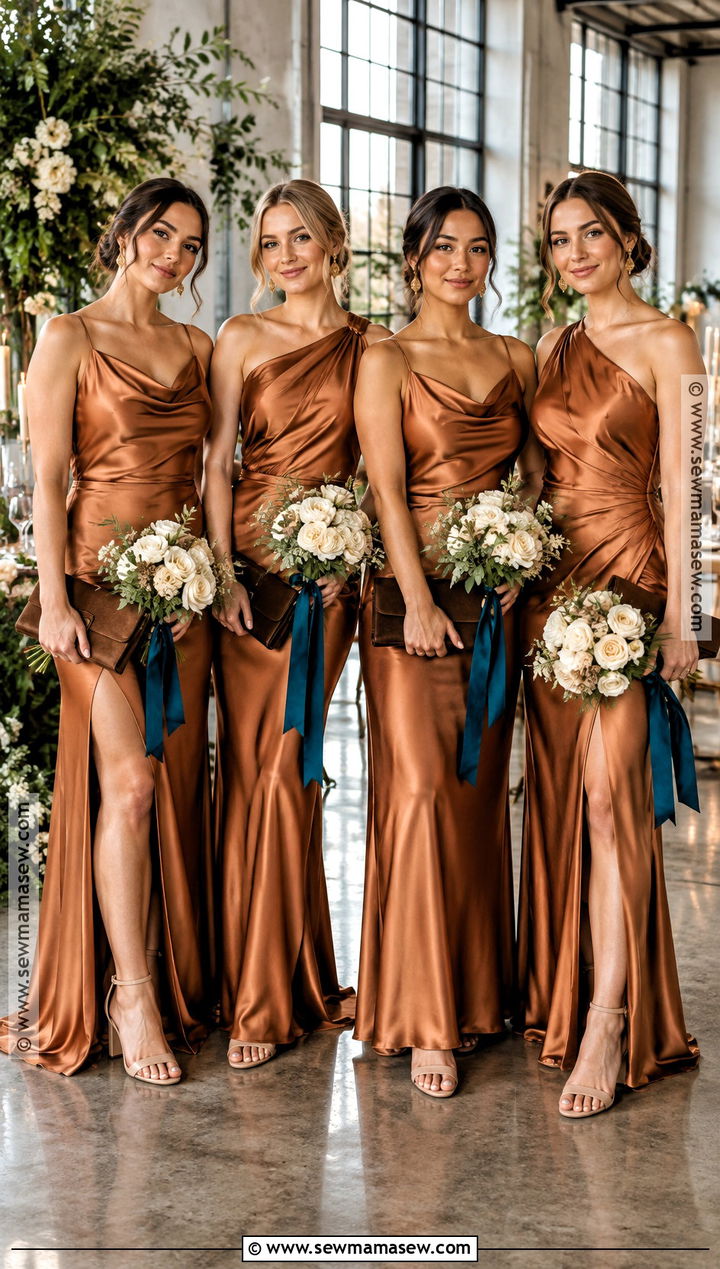
Copper satin is reflective, so it's at its best in the evening, when it picks up warm light. Clean shapes let the fabric speak: cowl necks, one-shoulder cuts and draped columns. I keep the bouquets mostly neutral, cream roses, rust dahlias and dark greenery, with teal ribbon as a small accent. Nude heels, gold drops and chocolate-brown clutches complete the outfits. Shiny metallic fabric shows every crease and water mark, so I'd ask bridesmaids to steam the dress on the day and keep drinks away from it. Industrial spaces, dramatic ballrooms and modern hotels suit it. Ivory linens keep the copper glowing instead of brassy.
17. Espresso Bridesmaid Dresses With Bronze Accessories
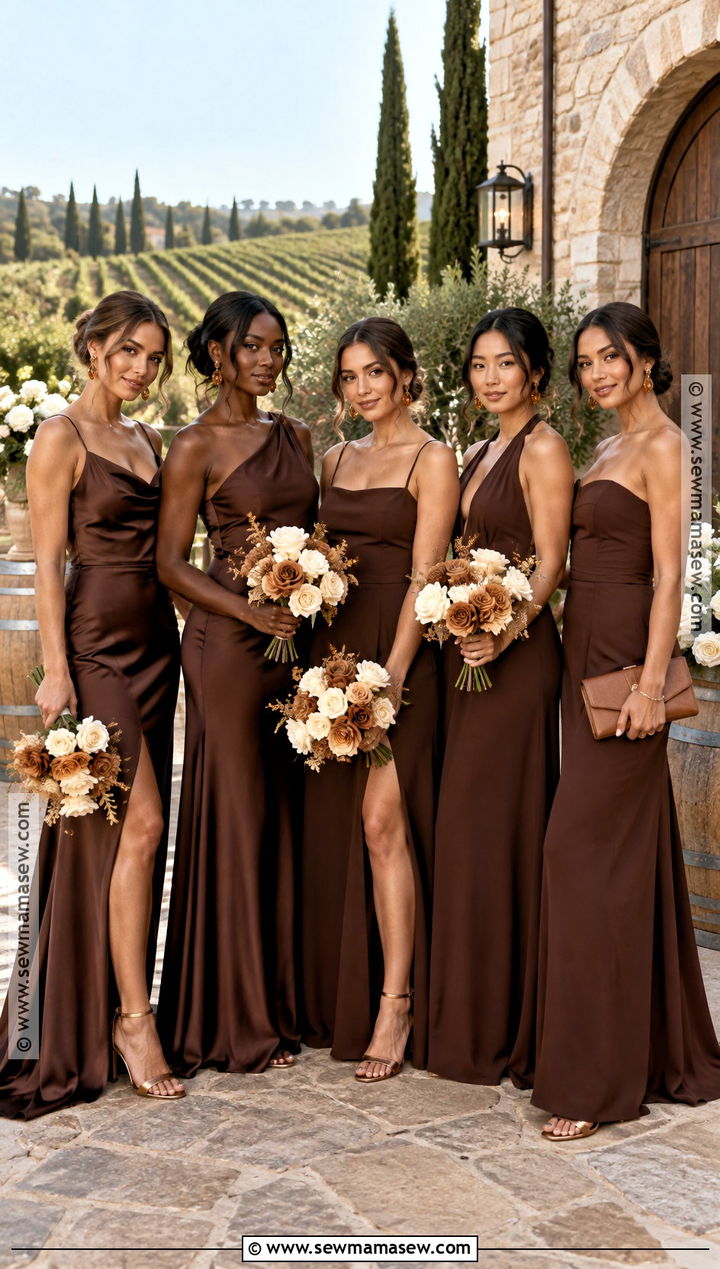
Espresso is a deep brown that looks refined rather than heavy. In satin it's formal; in crepe it's softer and more understated. Bronze heels, gold-and-amber earrings and caramel clutches keep it tonal, and bouquets of ivory roses, toffee flowers, pale peach dahlias and eucalyptus add a little contrast. Dark brown shifts in different light, so matching fabric matters if the silhouettes vary. I'd also check the shade against the groomsmen's suits, since espresso next to black can look like a near miss. Hotels, historic houses and wineries suit it, with ivory linens and bronze candleholders.
18. Mustard Yellow Bridesmaid Dresses With Burgundy Flowers
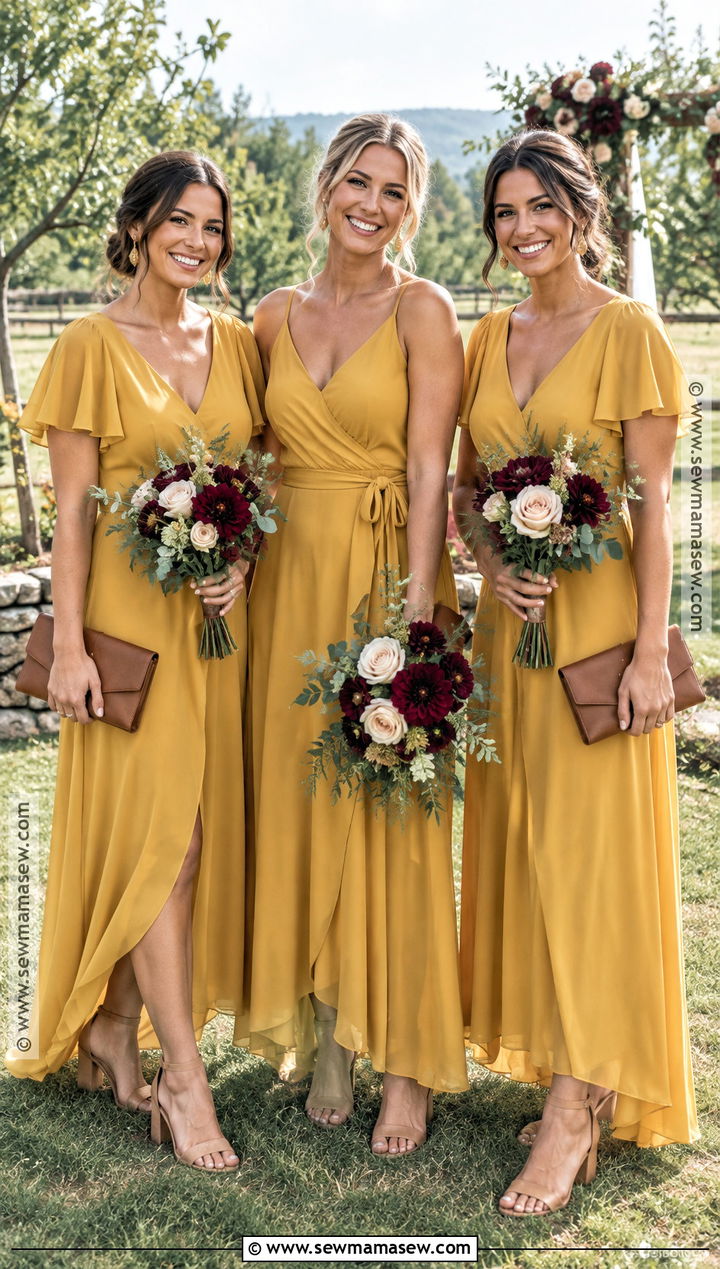
Mustard is the cheerful option, and it's harder to wear than it looks. I'd steer clear of shiny fabrics here; soft chiffon or matte crepe makes the yellow look rich instead of loud. It also suits some skin tones far better than others, so this is a palette where I'd have everyone try the swatch against their face. Burgundy dahlias, cream roses, rust flowers and olive greenery give strong contrast. Tan block heels, gold earrings and cognac clutches keep it warm. Simple wrap or sleeveless A-line cuts stop the bold shade from looking costume-like. Farms, orchards and barns suit it, with burgundy napkins and wood on the tables.
19. Slate Blue Bridesmaid Dresses With Amber Flowers
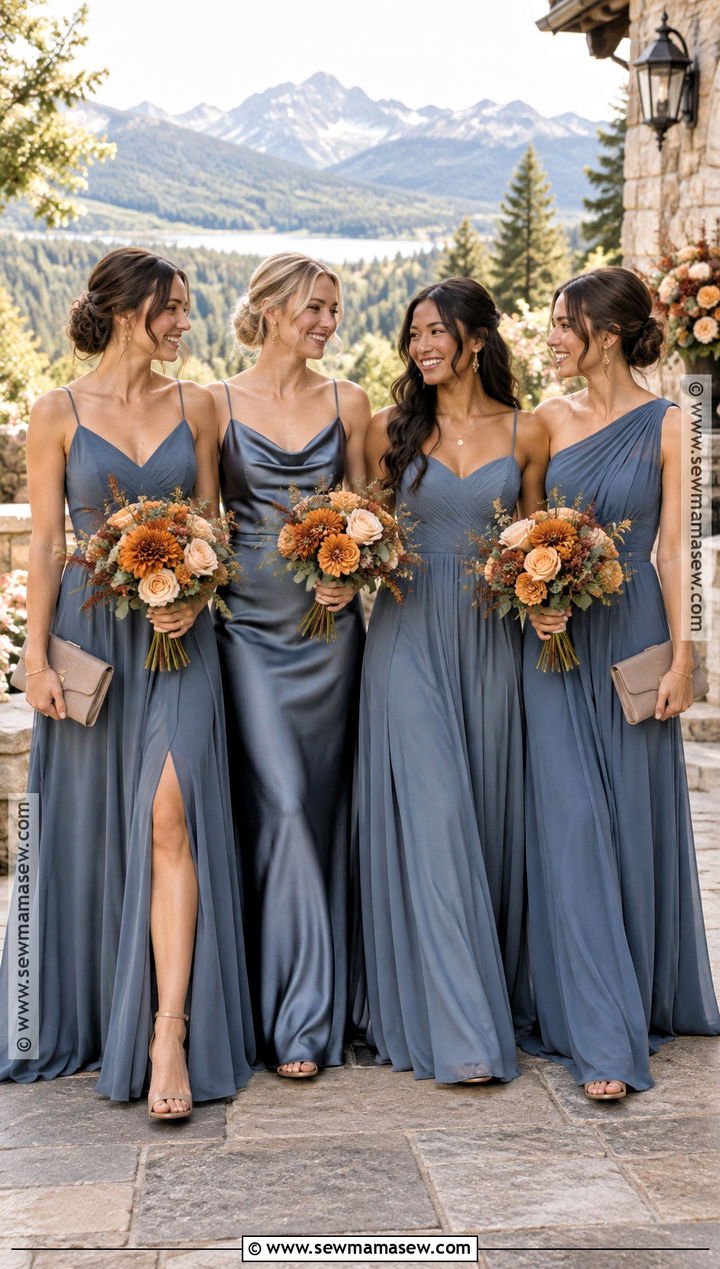
Slate blue has the softness of dusty blue with enough weight to feel like fall. Long chiffon is comfortable on warm afternoons; matte satin is dressier for the evening. Amber dahlias, peach roses, ivory ranunculus and muted greenery warm the cool fabric, as do champagne block heels, brushed-gold jewelry and taupe clutches. Keep the same color and floor-length hem across the party and let the necklines vary. Mountain venues, waterfront estates and gardens suit it. Slate napkins, amber glass vases and ivory linens carry it through the reception without adding unrelated colors.
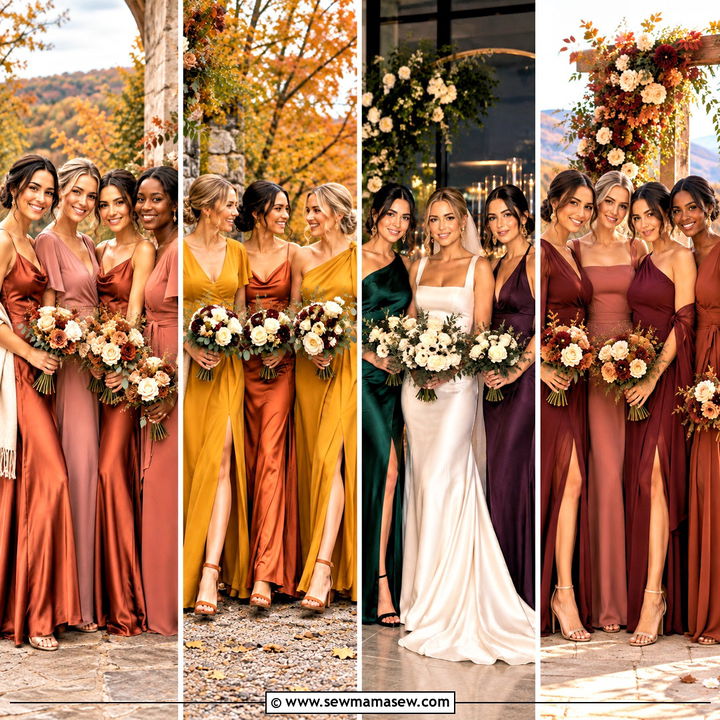
20. Mismatched Fall Bridesmaid Dresses In Earth Tones
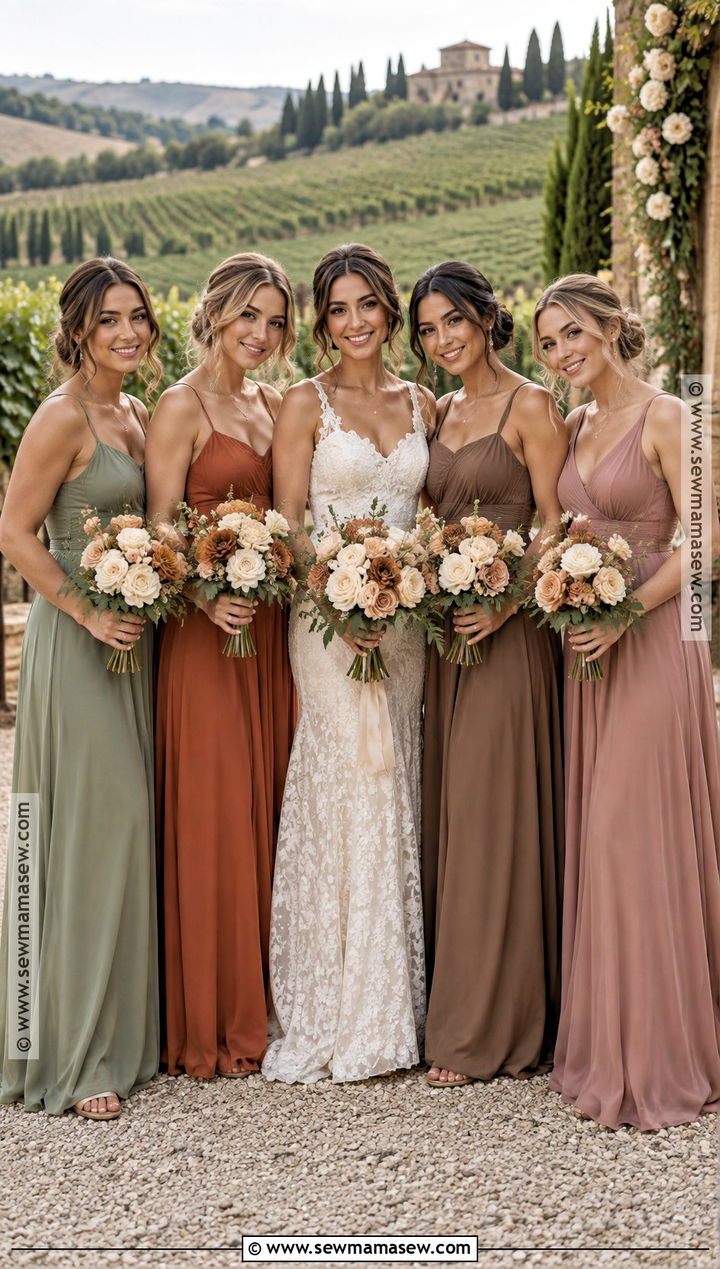
A mismatched earth-tone party can look planned or chaotic, and the difference is all in the rules you set. I start with fabric swatches and assign each bridesmaid her shade from a defined set, such as sage, terracotta, rust, mocha and dusty rose, rather than letting everyone shop on her own. Then I fix one element for all of them: the length, the fabric or a simple silhouette. Neutral heels, the same gold jewelry and identical bouquets of cream roses, peach dahlias, eucalyptus and muted burgundy pull it together. It's also kind to a mixed group, since each person can wear the shade that suits her skin. Vineyards, gardens and barns are natural fits, with ivory linens and wood behind the colors.
Dye Lots, Swatches and Ordering in Time
The most common color disaster I see isn't a bad palette. It's dresses in the same named shade that don't quite match, because they were cut from different dye batches or ordered weeks apart. A few habits prevent it.
- Order physical swatches of every shade you're considering and look at them outdoors in daylight and indoors under warm bulbs.
- Have all bridesmaids order at the same time from the same maker, so the dresses are cut from the same dye lot.
- Allow plenty of time. Made-to-order bridesmaid dresses commonly take a few months to arrive, and alterations need several weeks on top of that, though timelines vary by maker.
- If one person joins late, ask the maker whether the original batch is still available before she orders.
When a Shade Fights a Bridesmaid's Skin Tone
No single color flatters every person, and a bridal party usually covers a range of complexions. Muted mid-tones such as dusty rose, mauve, navy and mocha are the most forgiving across skin tones. Pale yellows, very light sages and some champagnes can wash out fair skin or look dull against deeper skin. If one shade clearly doesn't suit someone, it's easier to switch the whole group to a mismatched palette in the same family than to make her wear it, or to bring a flattering tone near her face with a wrap or the bouquet.
Hold the Swatch Up Outside Before Anyone Orders
The palette you settle on should suit the venue, the time of day and how warm September actually is where you're marrying. Sage, dusty blue, blush and champagne sit on the lighter side of the month; burgundy, forest green, espresso and plum bring depth; terracotta, copper, rust and cinnamon bridge both. Whatever you choose, look at the swatches in daylight and under the reception lighting before placing orders, because colors shift more than people expect. Matching shoes, jewelry, bouquets and wraps will make even mismatched gowns look deliberate, and comfortable bridesmaids always photograph better.
Related posts: