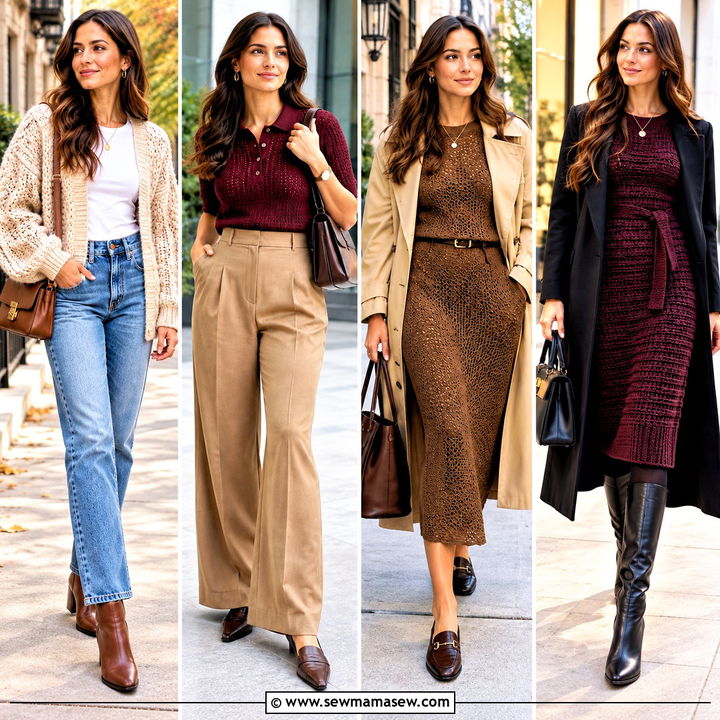
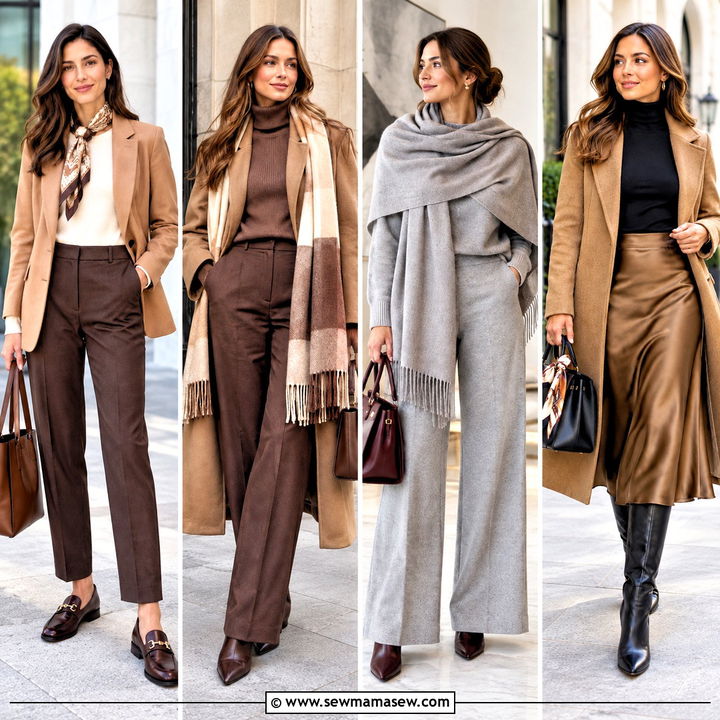
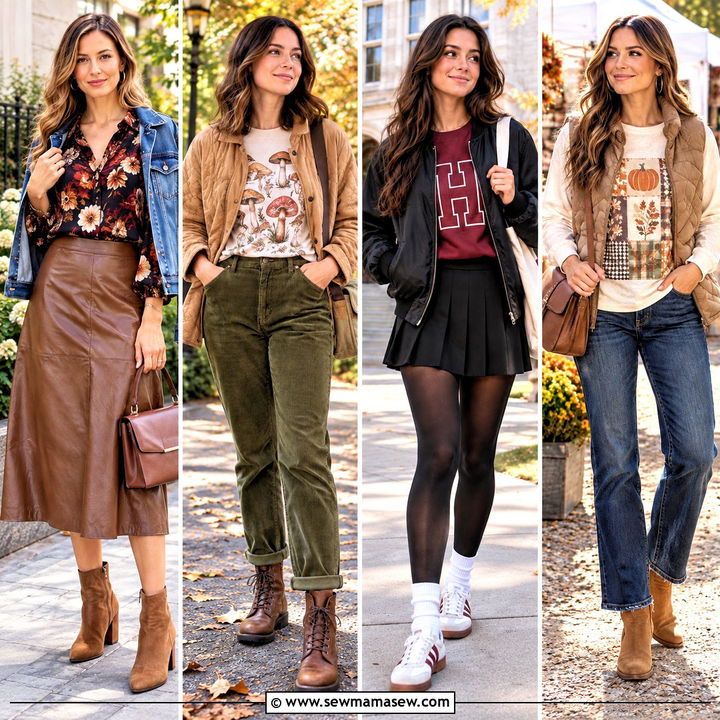
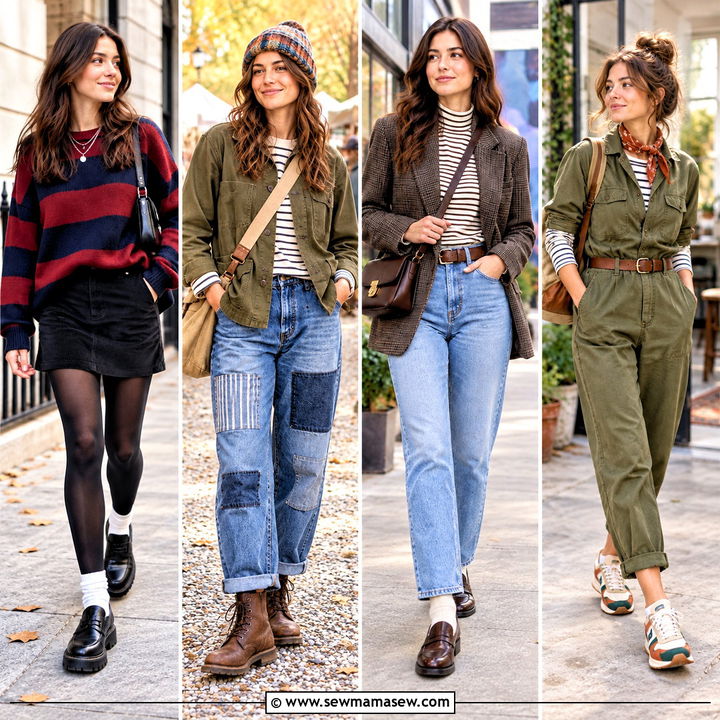
Crochet has moved well past beach cover-ups. In fall, thicker stitches and earthy yarn colors turn it into real layering, and handmade texture suits the season better than almost anything. What makes a crochet piece wearable in cooler months is what you put next to it. I balance open stitches with something solid and smooth: denim, leather, corduroy, wool or crisp cotton. That contrast stops the outfit looking like a craft fair and lets the stitch work show. Below are fifteen outfits built around cardigans, sweaters, vests, skirts, dresses and a few smaller layers, each with notes on coverage, proportion and what to wear underneath.
Yarn Fiber Decides How Warm It Really Is
Two crochet sweaters can look identical and feel completely different on a cold morning. The fiber is the reason, and the label tells you more than the stitch does.
- Wool and wool blends are the warmest and keep some warmth even when damp. They can feel scratchy against bare skin, so a layer underneath helps.
- Cotton crochet is breathable but heavy, and it has very little bounce. Long cotton pieces such as dusters and dresses tend to stretch downward under their own weight.
- Acrylic is light, easy to wash and usually cheaper. It pills faster, mostly under the arms and on the sides, and it doesn't hold warmth as well as wool.
- Alpaca and mohair blends are soft and very warm for their weight, but the fuzzy halo sheds onto dark clothes.
For early fall, cotton and cotton blends are fine. Once mornings turn properly cold, I'd move to wool or a wool blend and a closer stitch.
What Goes Under an Open Stitch
Crochet is full of small holes, so the layer underneath is part of the outfit. A layer close to your skin tone makes the stitch pattern look like lace and hides the fact that anything is there. A contrasting layer, such as black under cream, makes the holes into a pattern of their own and reads bolder. Either works; just decide on purpose. I keep a few thin fitted camisoles and a nude slip around for exactly this. Check the outfit outdoors or by a window before leaving, because indoor lighting hides how sheer some crochet really is.
1. Crochet Cardigan With Straight Leg Jeans
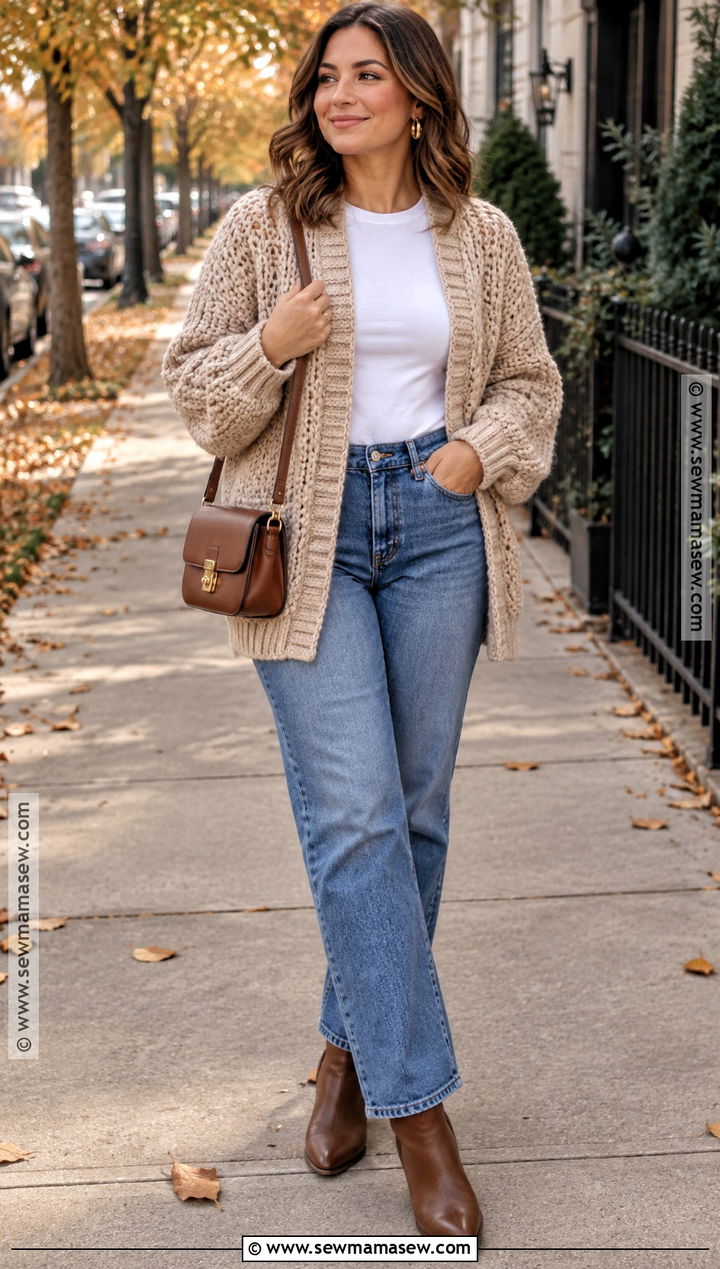
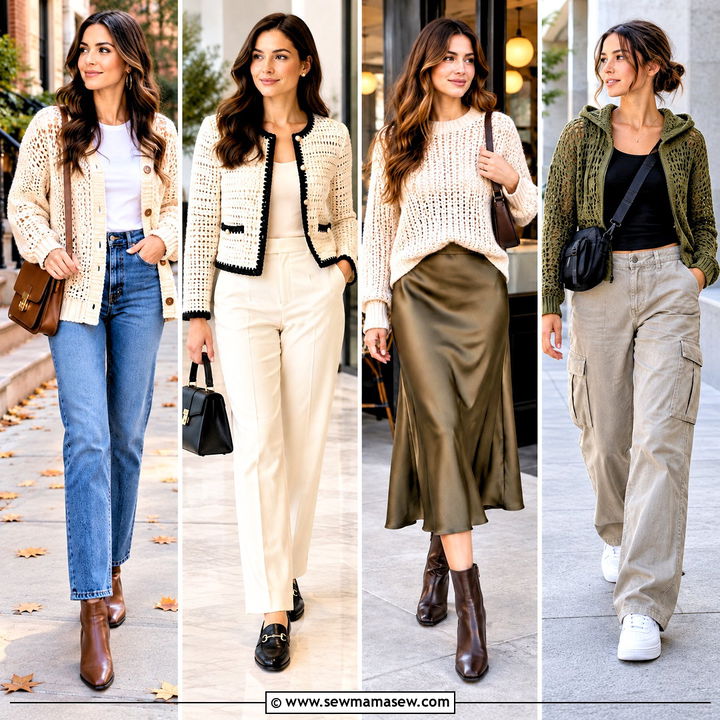
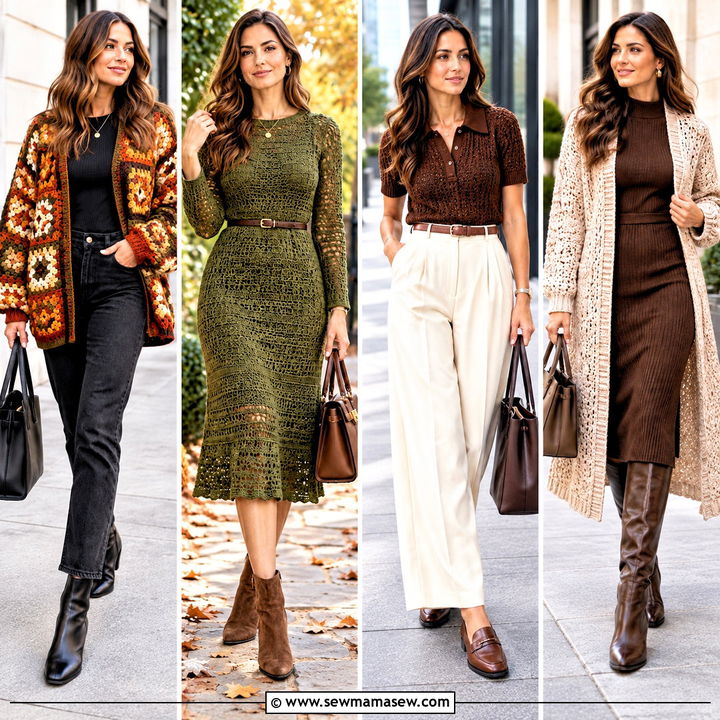
A chunky crochet cardigan over straight-leg jeans is where I'd start anyone new to crochet. Oatmeal, rust, olive or deep brown all bring warmth. Underneath, a fitted cotton tee or thin long-sleeve crewneck keeps the bulk where you want it, on the cardigan. Medium-wash jeans keep it from tipping into rustic. Brown ankle boots, a structured crossbody and small gold earrings finish it. Granny-square cardigans are busy, so keep everything else plain. Length matters with a thick knit: if you're petite, a waist-length cardigan won't swamp you, while a longer shape that clears the hip often suits taller or curvier figures better.
2. Crochet Sweater With Wide Leg Trousers
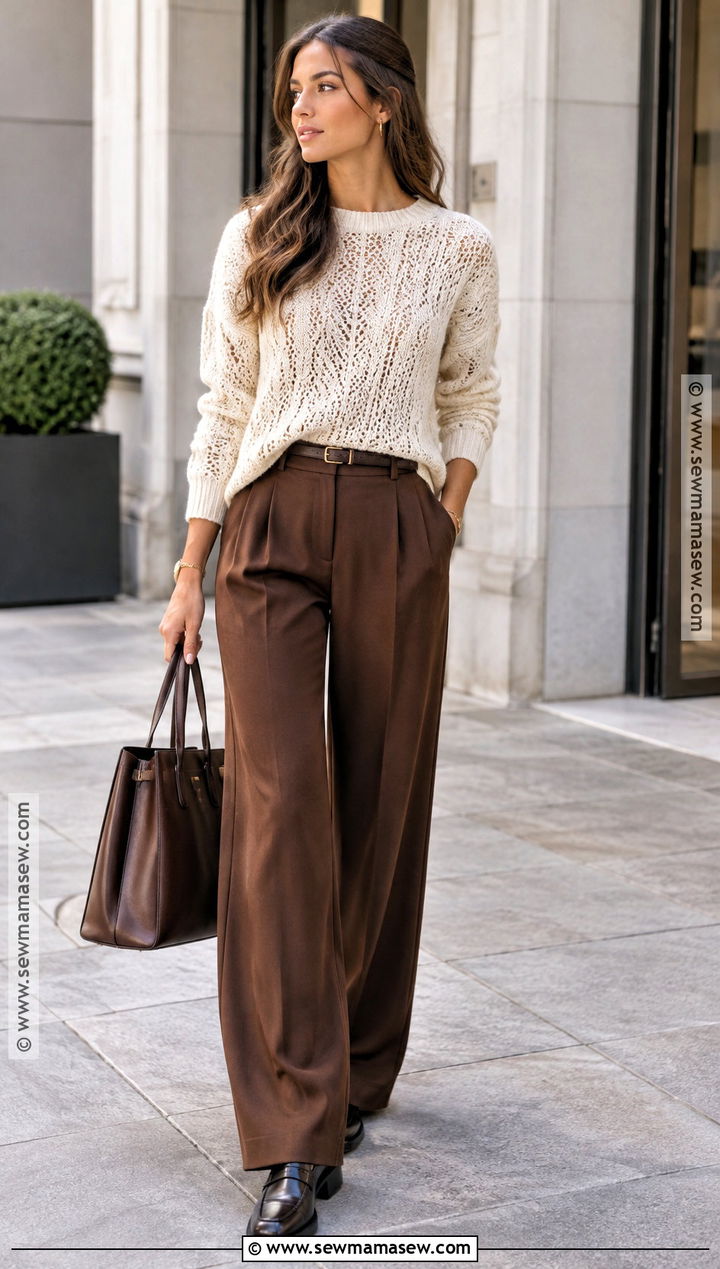
A dense-stitch crochet sweater with high-waisted wide-leg trousers is the polished version of this trend. Cream, camel, charcoal or burgundy for the sweater; black, chocolate or a subtle plaid for the trousers. I'd do a small front tuck, because a full tuck crushes the stitch texture and adds a lumpy ridge at the waistband. Loafers, a structured tote and a belt matching the shoes keep it neat. A fitted tank or thin thermal underneath adds warmth without bulk. Skip busy jewelry, as the stitch pattern already gives the eye plenty. It moves from the office to a weekend lunch without changing a thing.
3. Crochet Vest With Button Down Shirt
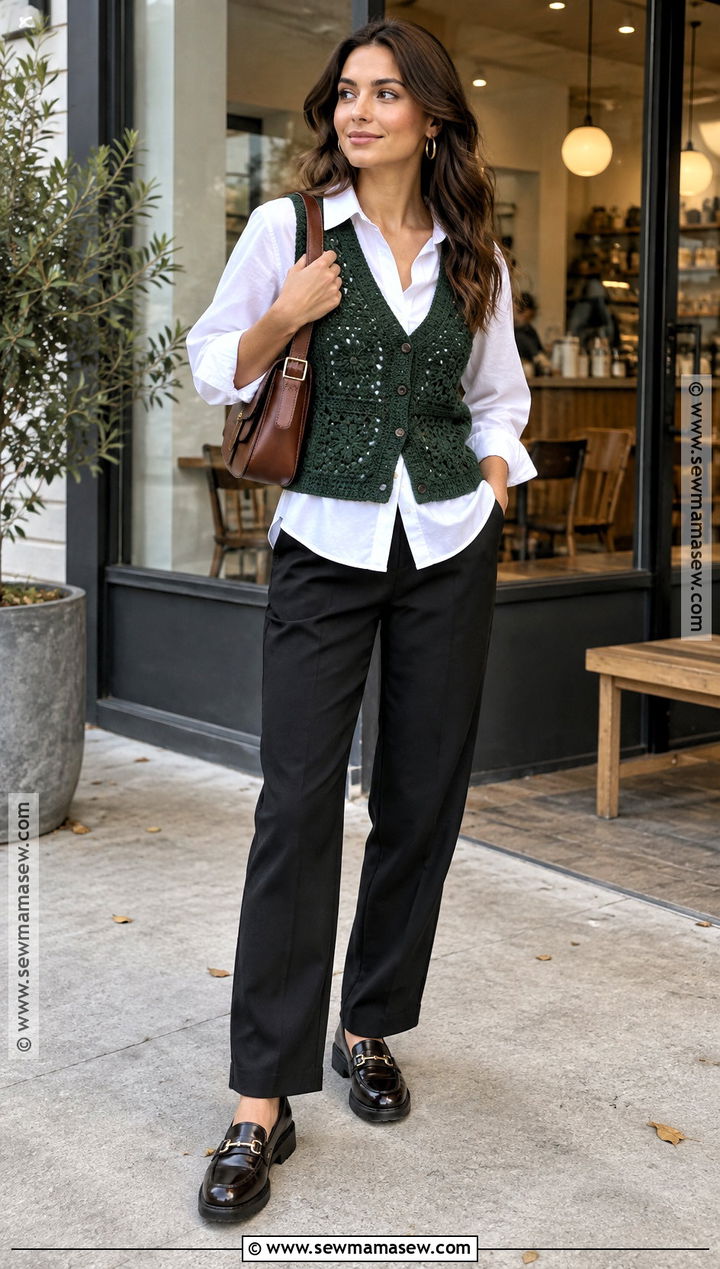
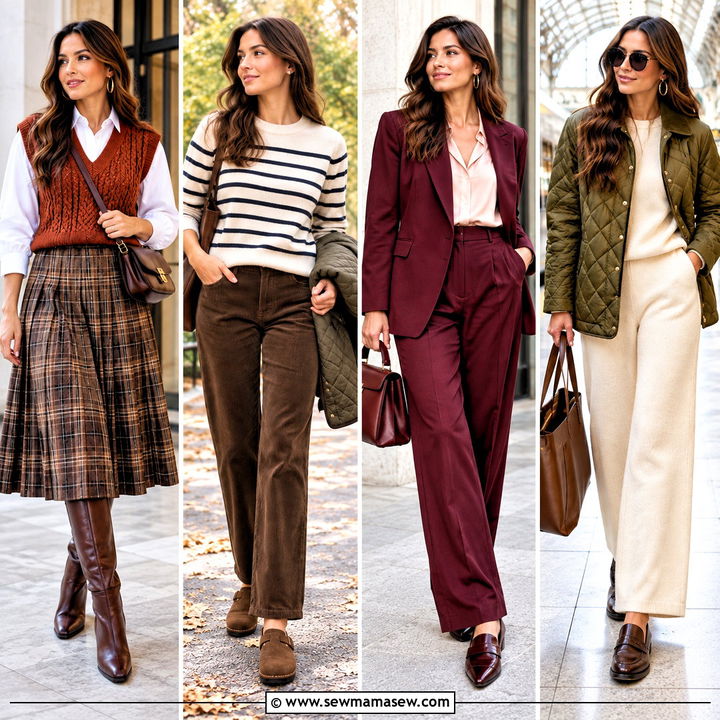
A crochet vest over a button-down gives you warmth at the core without sleeves bunching inside a coat. Start with a relaxed white, pale blue or striped cotton shirt, then add a vest in forest green, mustard, cream or rust. Leave the collar and cuffs showing so the layers read clearly. Straight-leg trousers polish it; dark jeans relax it. Loafers or sleek ankle boots, a leather shoulder bag and small hoops finish it. A patterned vest needs solid pieces under it. For proportion, a cropped vest wants higher-rise bottoms, and a longer vest sits better over slim trousers. It handles fall's swinging temperatures well because the vest comes off in seconds.
4. Crochet Midi Dress With Knee High Boots
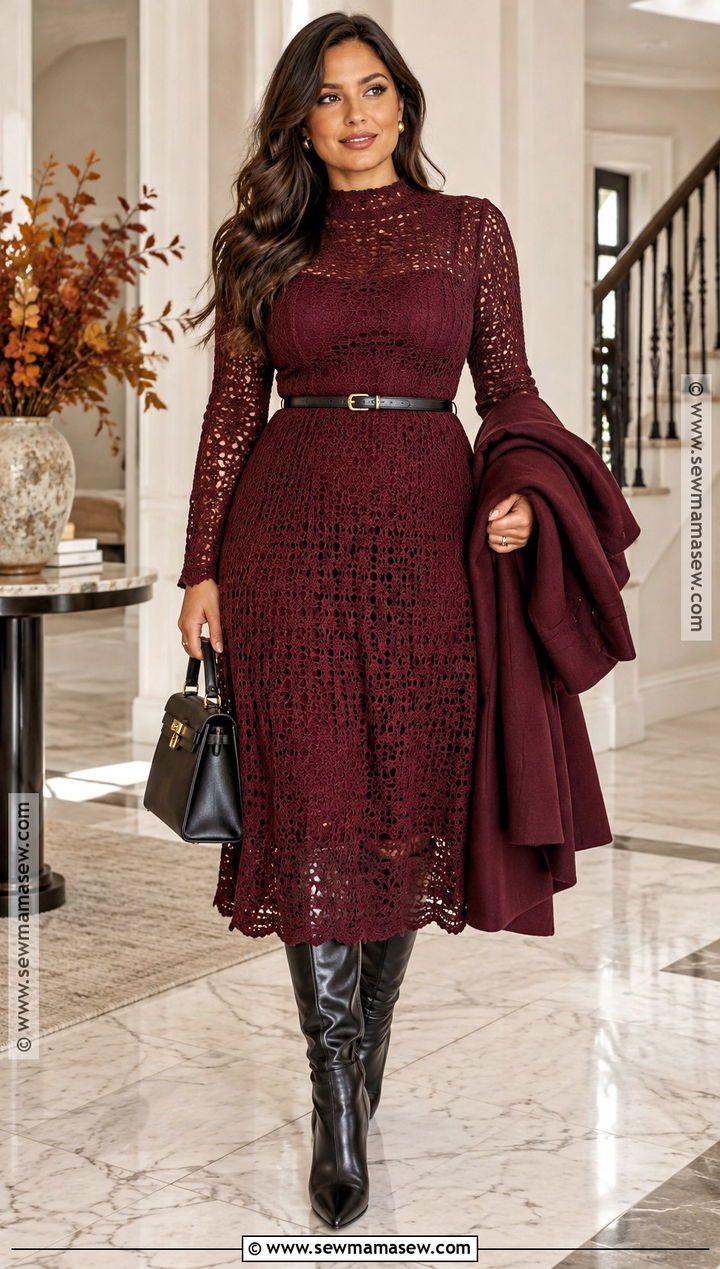
A long-sleeve crochet midi dress works in fall only when the coverage is sorted first. I check it against daylight before anything else. If it's unlined, add a fitted slip in a shade close to your skin or to the yarn, so open stitches don't turn see-through outdoors. Chocolate, burgundy, black, moss green and warm cream are the easiest colors to style. A narrow leather belt shapes a relaxed dress, and knee-high boots close the gap below the hem. Add a tailored wool coat when it's cold. Choose a dress with some give, because crochet has much less stretch than knitwear and a tight one will pull at the seams when you sit. I'd wear it to dinners and dressier daytime plans.
5. Crochet Skirt With Fitted Turtleneck
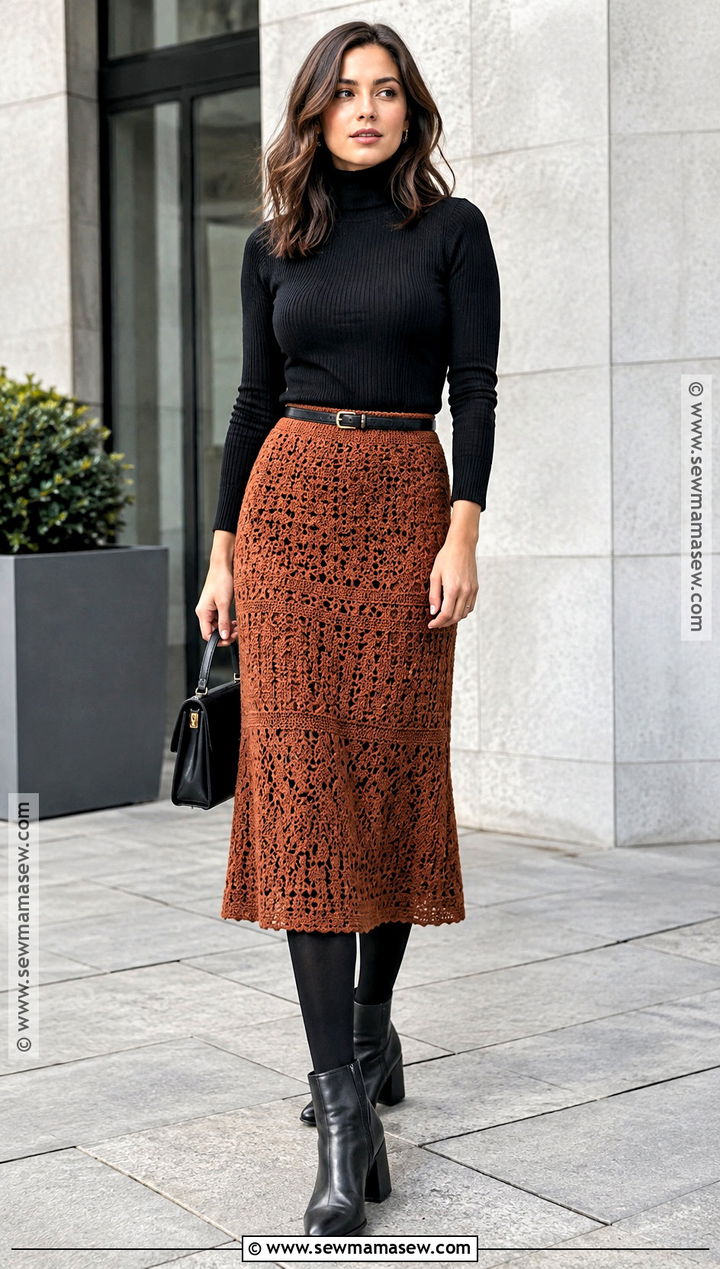
A crochet midi skirt needs a smooth, fitted top to calm it down. A black, cream or chocolate turtleneck does that well. Look for a lined skirt with a dense stitch, or wear a separate slip in matching color. Block-heel ankle boots handle the weight of the skirt better than delicate shoes, and a small top-handle bag keeps it tidy. On colder days, opaque tights and a long wool coat carry it further into the season. A straight or gently flared shape moves well and suits most bodies. Crochet skirts can grow longer as the yarn relaxes during the day, so try it on and walk around before settling on the hem.
6. Crochet Poncho With Leggings And Boots
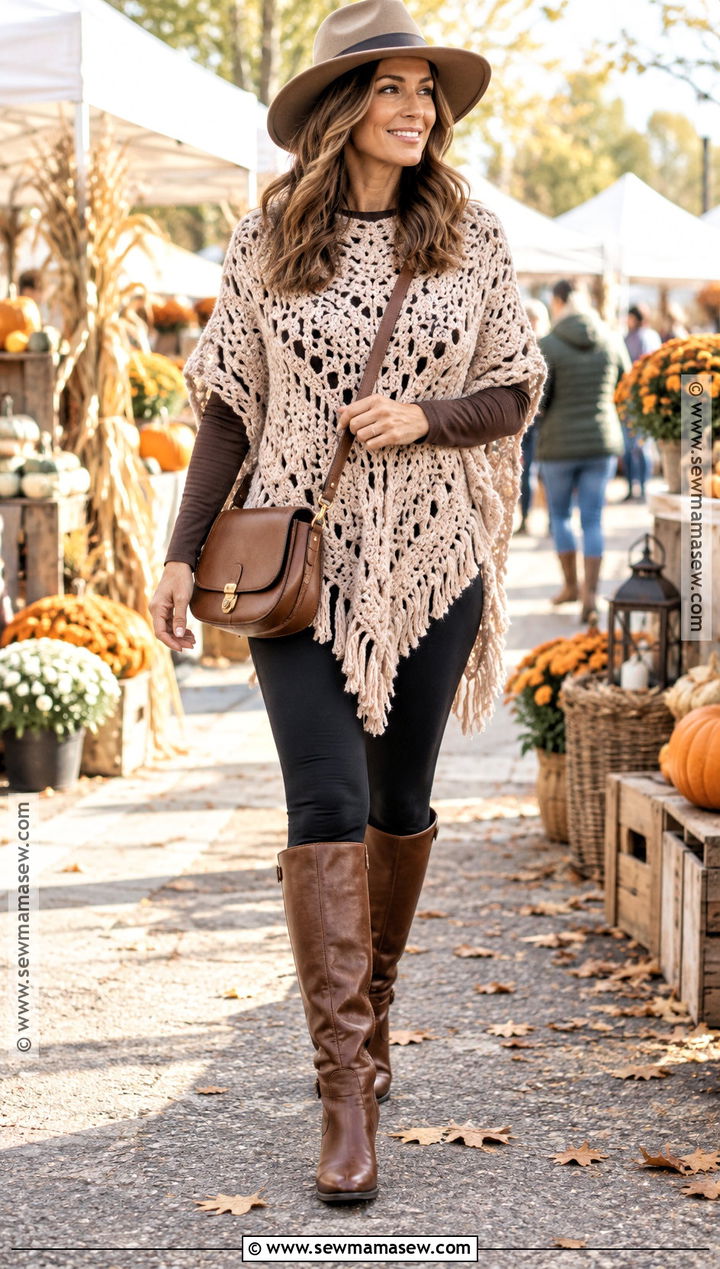
A crochet poncho over leggings is pure comfort. It's also the easiest outfit here to get wrong on proportion. Pick a dense stitch with enough body to drape over the shoulders instead of collapsing. Under it, a fitted long-sleeve top in a neutral, and thick black leggings or ponte pants to balance all that volume. Knee-high riding boots, a crossbody bag and, if you like, a felt hat finish it. Mid-thigh is the length I'd aim for. Petite women usually do better with a shorter asymmetrical cut, while taller frames carry a longer one. It's a good travel and market outfit, though ponchos get in the way when you're carrying bags.
7. Crochet Duster With Black Jeans
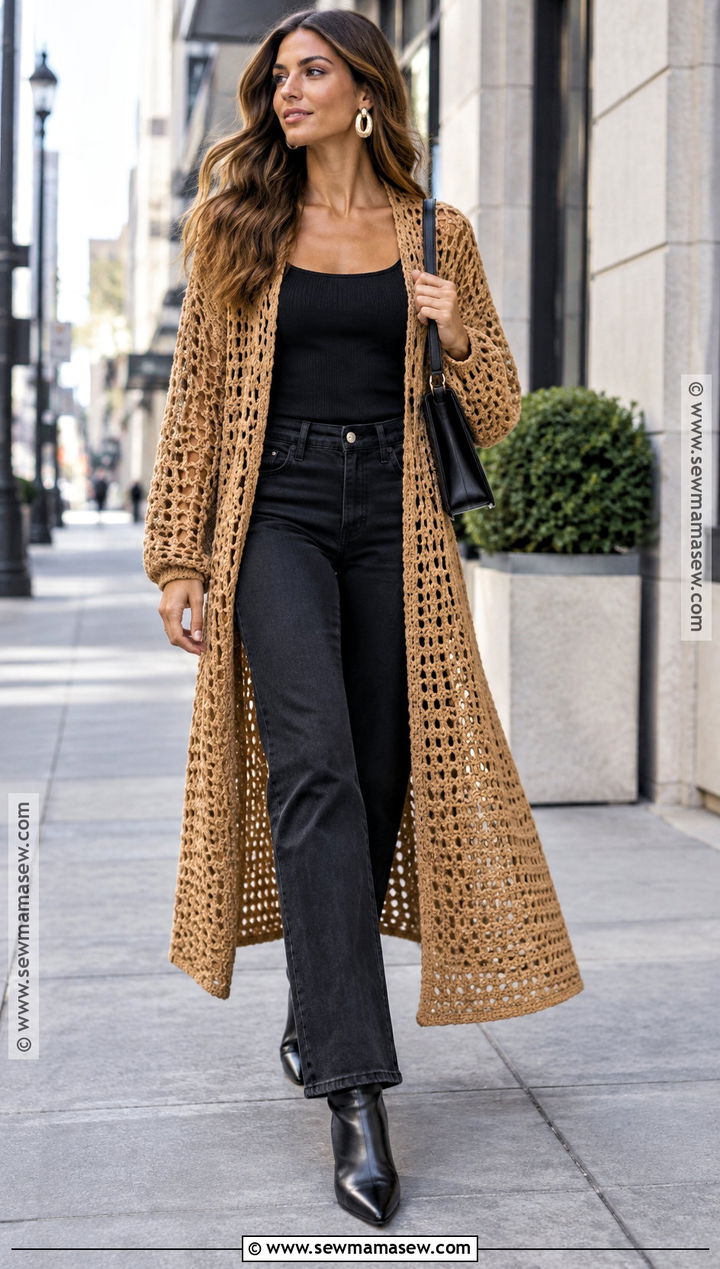
A long crochet duster adds movement to a very plain base. Camel, charcoal, cream or a muted multicolor over a fitted black top and black straight-leg jeans gives one long dark line, so the stitch pattern carries the outfit. Knee to mid-calf is the most wearable length. Pointed ankle boots, a structured shoulder bag and small metallic jewelry keep it sharp. Open-weave dusters aren't warm, so wear them on mild days, or layer one under a roomy coat later on. I'd steer clear of very wide trousers here, since the duster already floats and the two together get shapeless.
8. Crochet Pullover With Corduroy Pants
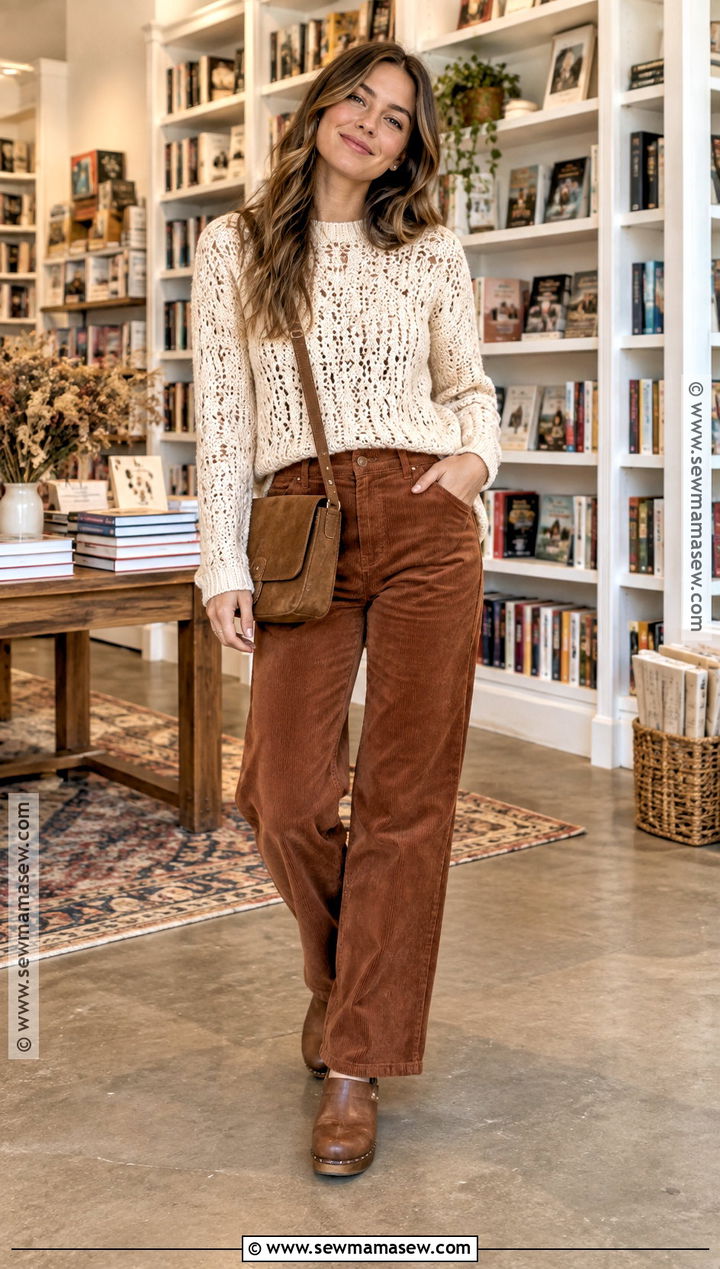
Corduroy ridges and crochet texture sit well together because both are matte and soft. Try a relaxed pullover in cream, navy, burnt orange or sage with high-rise corduroy pants in brown, tan, burgundy or deep green. A slightly cropped pullover with wide-leg cords keeps the waist visible; with a longer sweater, straight or tapered cords stay neater. Clogs, loafers or low ankle boots all suit it, plus a suede crossbody. Under open stitches, a cotton camisole adds coverage and stops scratchy yarn from bothering your skin. It's warm enough for errands and casual workplaces through most of fall.
9. Crochet Shrug With Slip Dress
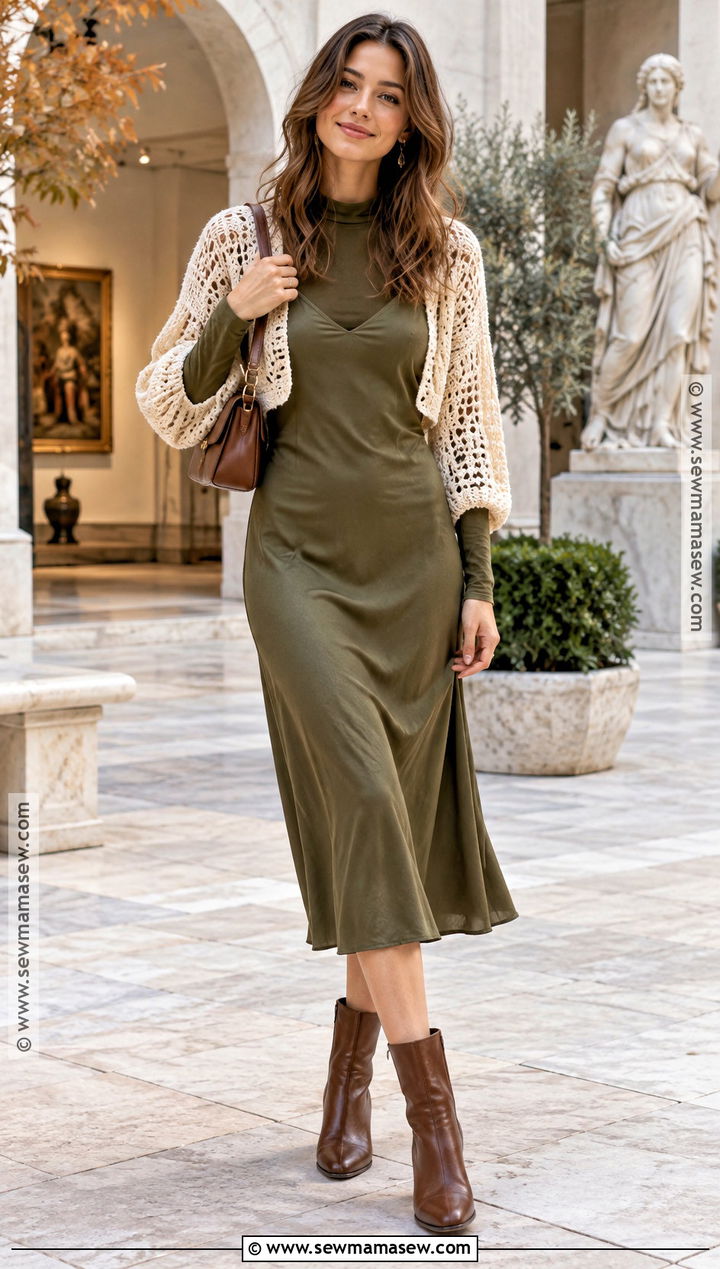
A crochet shrug is how I keep summer slip dresses in rotation into early fall. Choose a midi slip dress in black, olive, copper, chocolate or a quiet floral, add a fitted long-sleeve top underneath if it's cool, then a cropped shrug on top. The short layer marks the waist and softens the sheen of the slip. Cream or oatmeal lightens dark dresses; burgundy or forest green goes richer. Ankle boots, a small shoulder bag and delicate earrings finish it. Before buying, reach forward in the shrug. If it pulls tight across the back, it'll ride up all day.
10. Granny Square Jacket With Denim Skirt
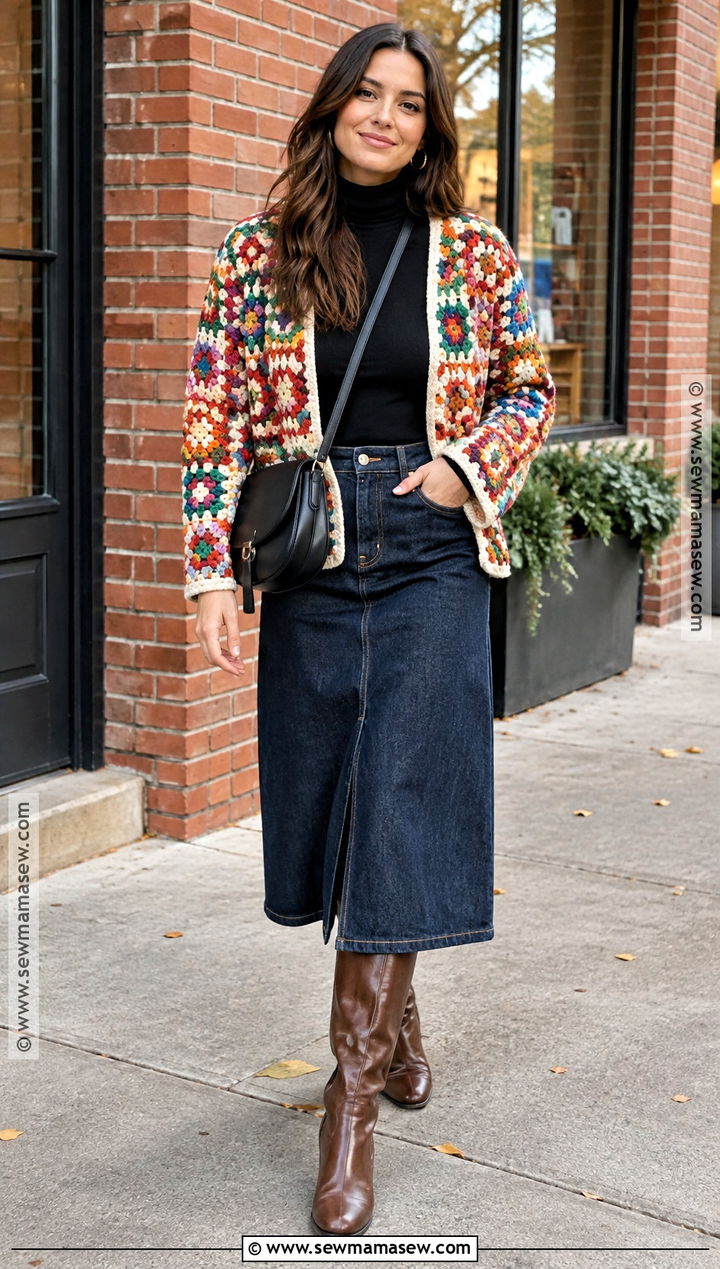
Granny-square jackets are cheerful, and the trick is keeping the color under control. I look for two or three repeated shades rather than a full rainbow. Wear the jacket over a fitted tee or light turtleneck in one color pulled from the squares, with a dark-wash midi denim skirt to ground it. Tall leather boots and a plain crossbody keep the rest quiet. A shorter denim skirt works with opaque tights. Hip length balances the long skirt best. Check the joins between squares before you buy; loosely joined squares stretch and gap after a few wears, especially at the shoulders.
11. Crochet Polo Top With Pleated Trousers
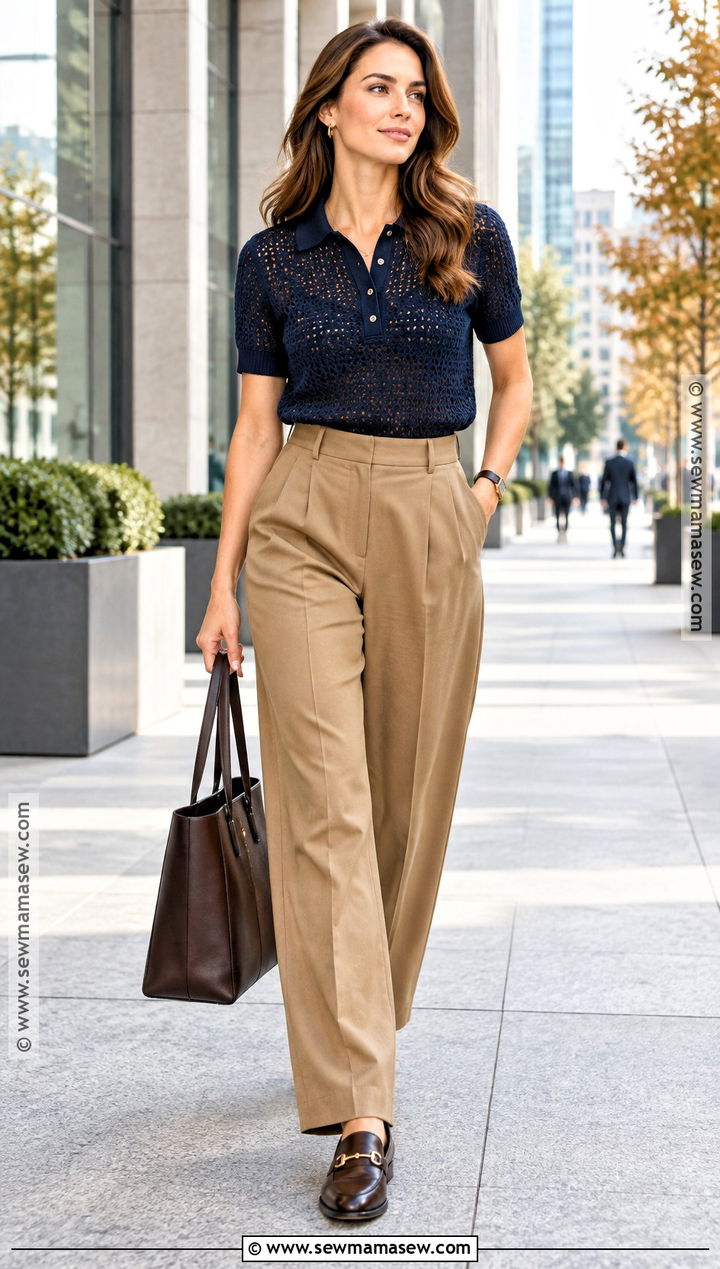
A collared crochet polo is the piece that convinces people crochet can go to work. Look for a dense, fine-gauge stitch in cream, navy, camel, burgundy or dark green, and wear a fitted camisole under it. Pair it with high-waisted pleated trousers that hang straight from the pleat. Tuck the polo fully for a clean shape, or pick a cropped one that meets the waistband. Loafers, a work tote and a simple watch finish it, and a long tailored coat covers colder mornings. Fine-gauge crochet holds its shape far better than chunky yarn, which matters when you're sitting at a desk all day.
12. Crochet Hooded Sweater With Cargo Pants
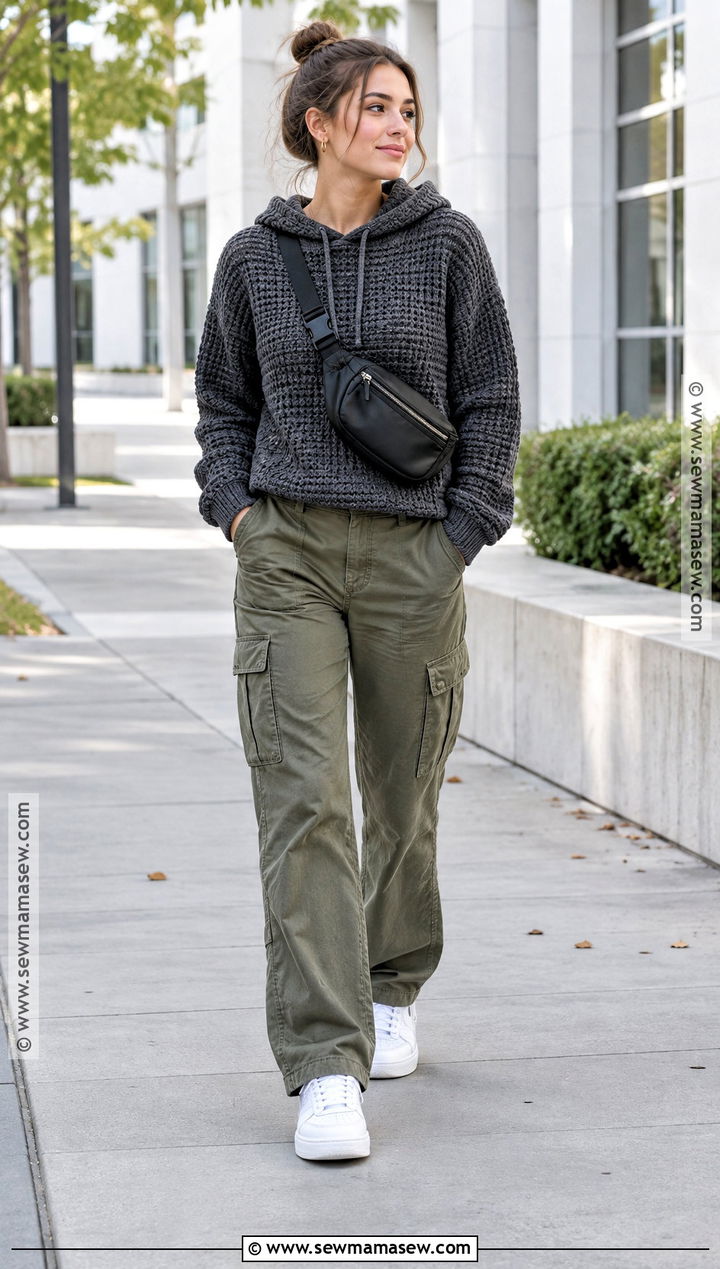
A crochet hoodie with cargo pants is as casual as this list gets. The hood is my first check, because loose crochet hoods stretch and sag after a few wears; a close stitch or a smooth lining around the hood keeps it in shape. Charcoal, olive, tan or cream works best, with contrast edging for a small handmade detail. Choose cargo pants with a straight or slightly tapered leg rather than a huge cut, so the outfit doesn't look like two oversized pieces stacked. Clean leather sneakers, a belt bag and small hoops finish it. A fitted long-sleeve shirt underneath adds warmth without bulk. I'd wear it for travel, campus or a long day of errands.
13. Crochet Bolero With Maxi Dress
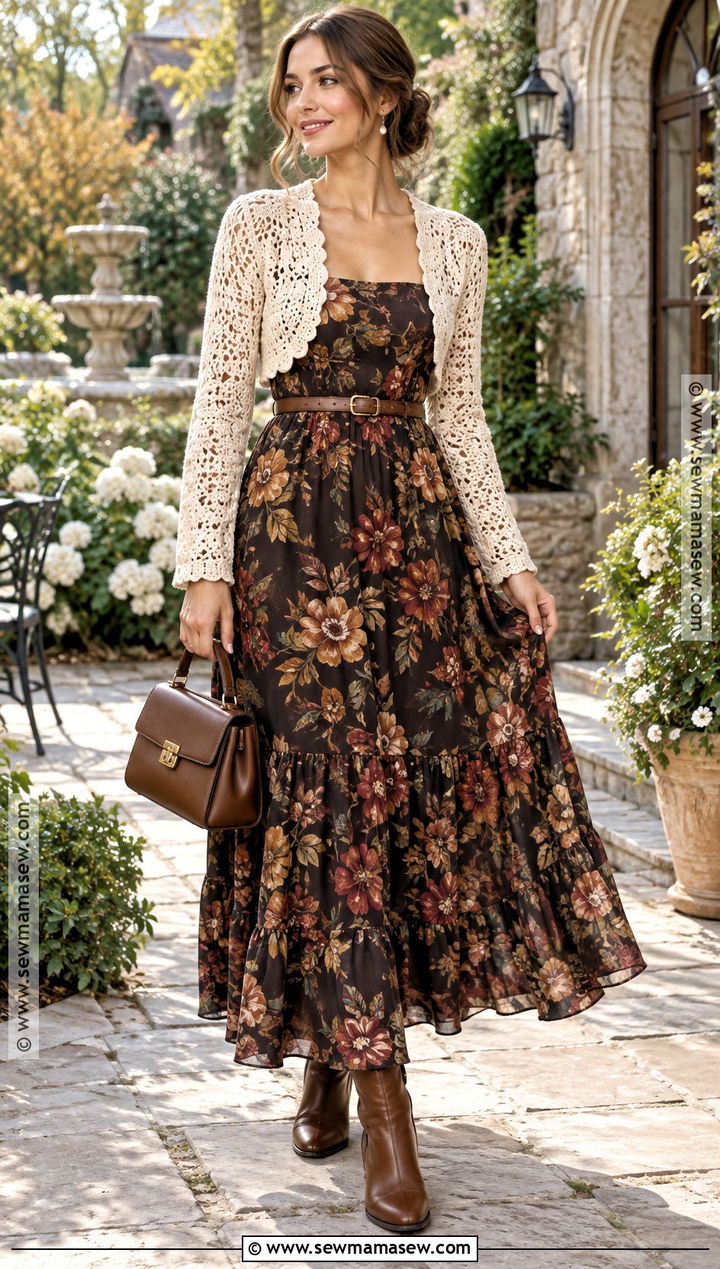
A cropped crochet bolero keeps a long fall dress from looking like one unbroken column. Choose a solid maxi in burgundy, navy, olive, chocolate or a dark floral, and a bolero in cream, black, camel or a tonal match. Long sleeves give more warmth; a tie front lets you adjust the fit. Heeled or flat ankle boots, a structured bag and small drop earrings finish it. A narrow belt under the bolero helps a loose dress. Pair a simple stitch with a printed dress, and save the decorative stitch for a plain one, so the two don't argue. It's my pick here for fall celebrations and dinners.
14. Crochet Coat With Monochrome Basics
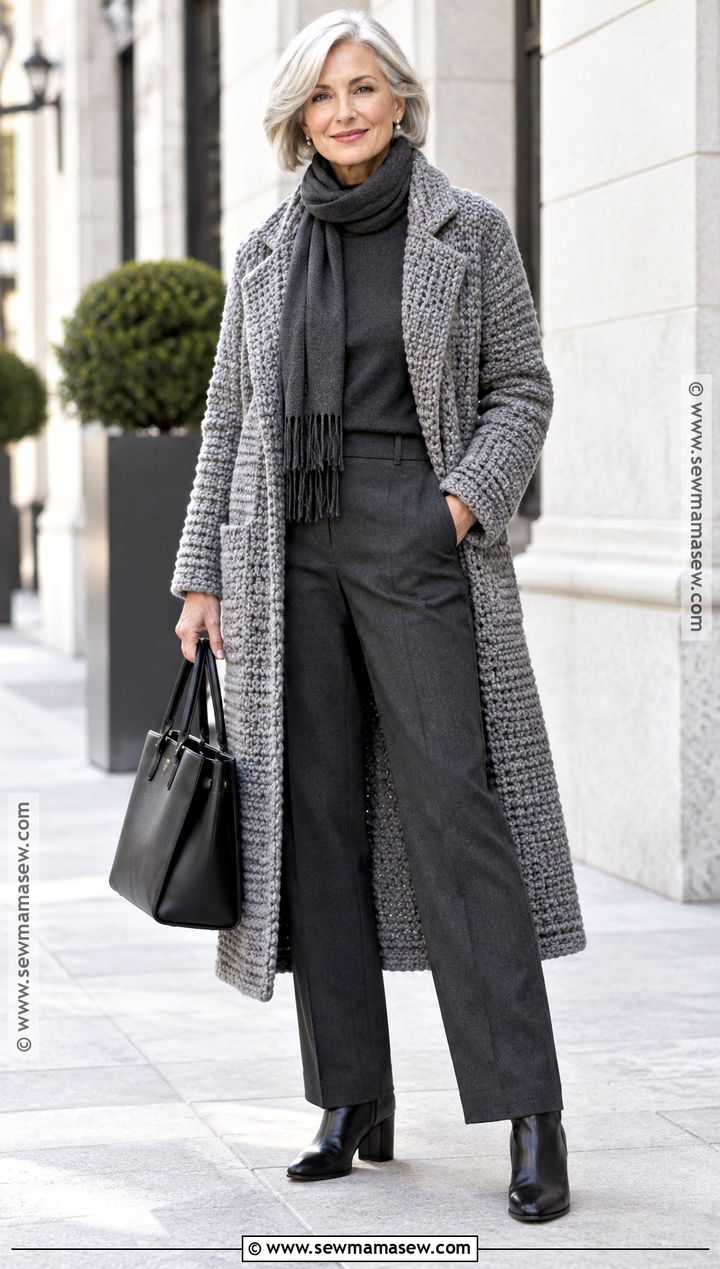
A crochet coat is heavy, and that weight is the thing to plan around. I'd only buy one made with dense yarn, reinforced shoulders and buttons stitched on firmly, since loose crochet coats stretch longer every time you wear them. Put it over a monochrome base in camel, gray, cream or black, a fitted knit with matching trousers, so the large stitches have room to show. Leather ankle boots and a structured tote add polish, and a scarf closes the gaps around the neck that crochet leaves open to wind. With a striped or patchwork coat, dress the base in one of its quieter colors.
15. Crochet Matching Set With Ankle Boots
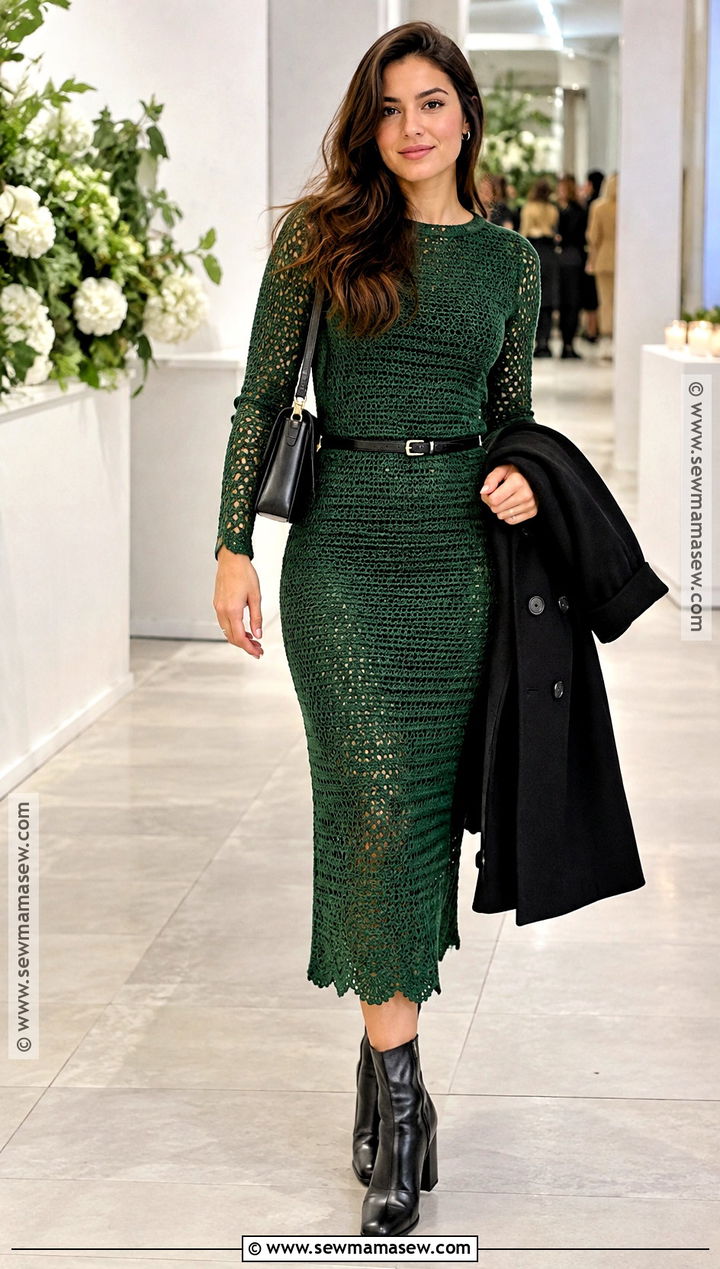
A matching crochet set does the styling for you. For fall, go for a dense stitch in burgundy, forest green, chocolate, navy or warm beige, with a long-sleeve top and lined midi skirt instead of a summer crop set. Close-fitting sets look more finished with a tailored blazer or long coat over them. Block-heel ankle boots suit the season, and a smooth leather shoulder bag contrasts with the yarn. A belt breaks up the set if you want more waist. The real value is that each piece also works alone: the top with jeans, the skirt with a turtleneck. It's dressy enough for an event and still comfortable indoors.
Crochet Grows on a Hanger
Crochet stretches when it hangs, and heavy pieces stretch the most. A cardigan or coat left on a hanger for a few weeks can end up longer in the body and pointed at the shoulders. Fold every crochet piece and store it flat in a drawer or on a shelf.
Washing Without Ruining the Shape
Hand wash in cool water with a gentle wool wash, press the water out without wringing, then roll the piece in a towel. Dry it flat and pat it back into shape while it's damp. Wool can felt and shrink with hot water or rough agitation, so keep it out of the machine unless the label says otherwise.
Snags and Pulled Loops
Never cut a pulled loop, because that can start an unravel. Gently ease the extra yarn back along the row with your fingers, or pull the loop through to the inside with a small crochet hook. Bag straps and rough jacket zippers cause most snags, so watch those when you layer.
One Crochet Piece Per Outfit Is Plenty
Handmade texture fits into an autumn wardrobe more easily than people expect, as long as something smooth sits next to it. Denim, tailoring, leather boots and simple base layers do that job. Before buying, look at the lining, the stitch density, the garment's weight and how it hangs on you. Open stitches suit early fall, and tighter stitches with layers underneath carry you later into the season. You don't need several crochet pieces in one outfit. One good piece gives the whole look character. Start in colors you already wear, then try bolder patterns once you know how crochet behaves on you.
Related posts: