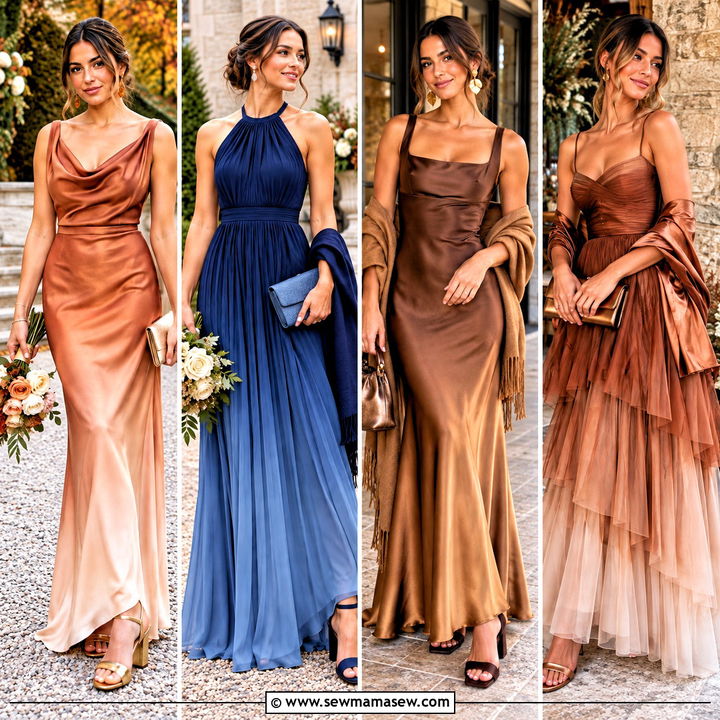
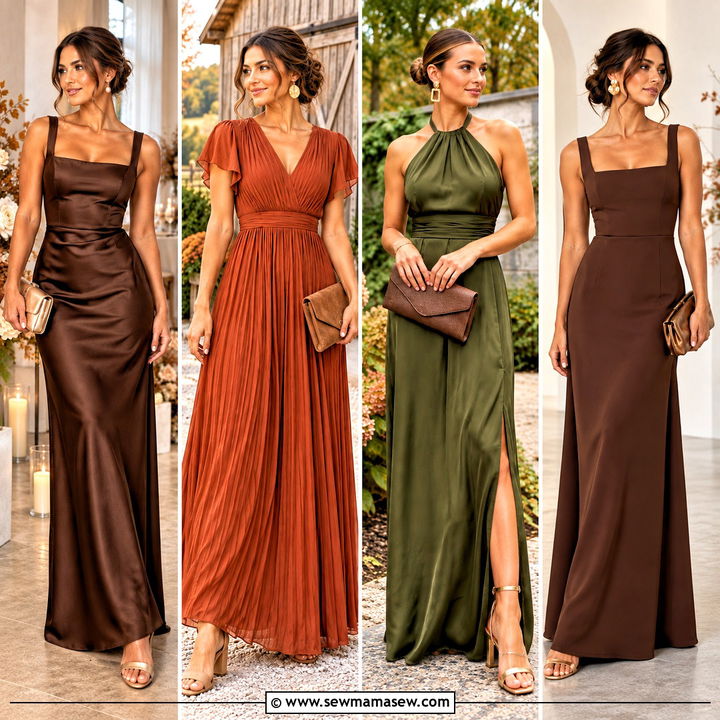
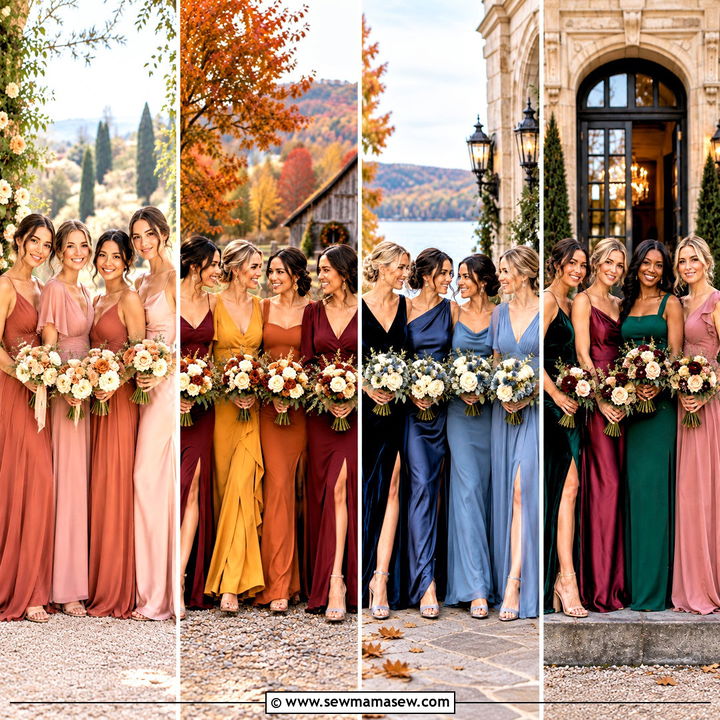
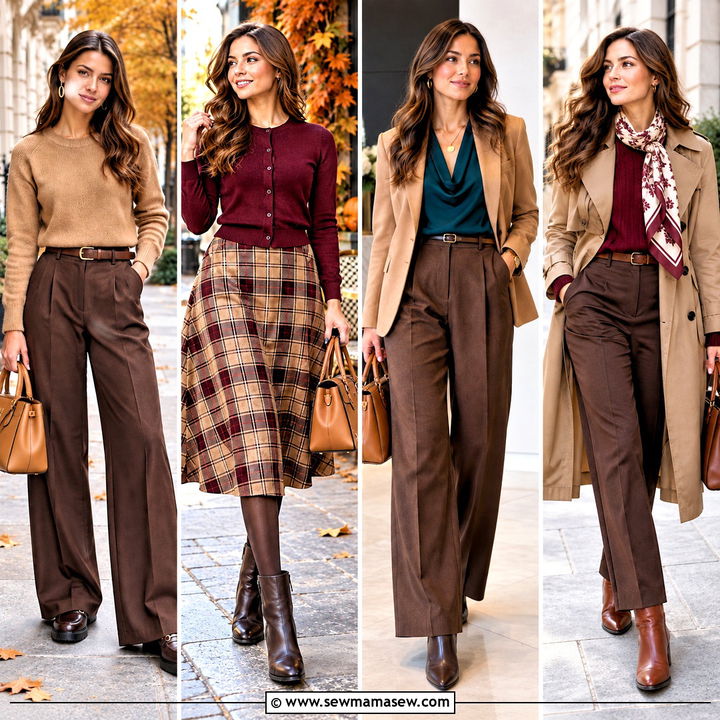
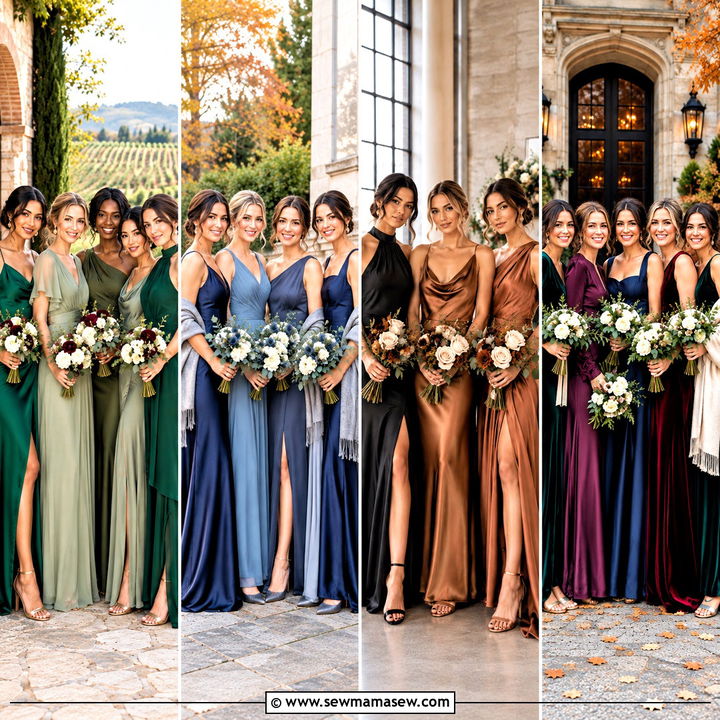
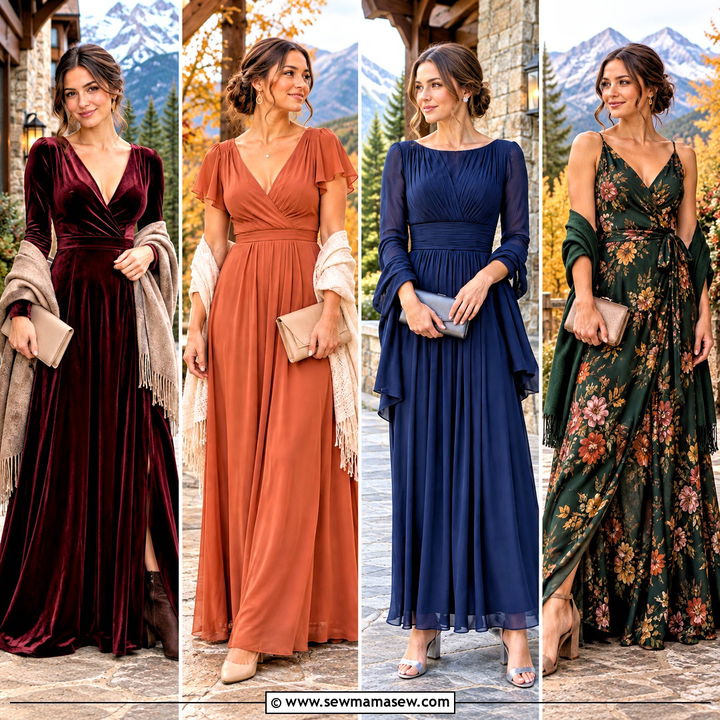
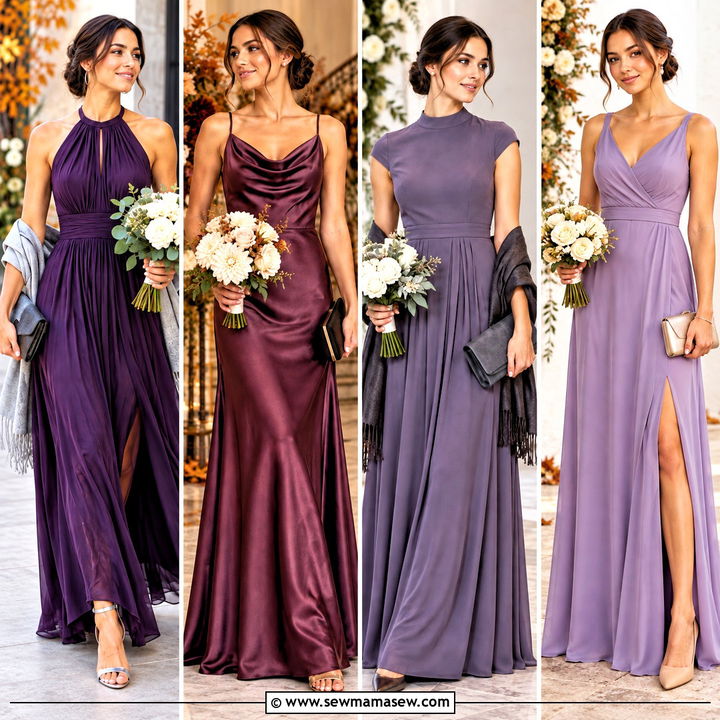
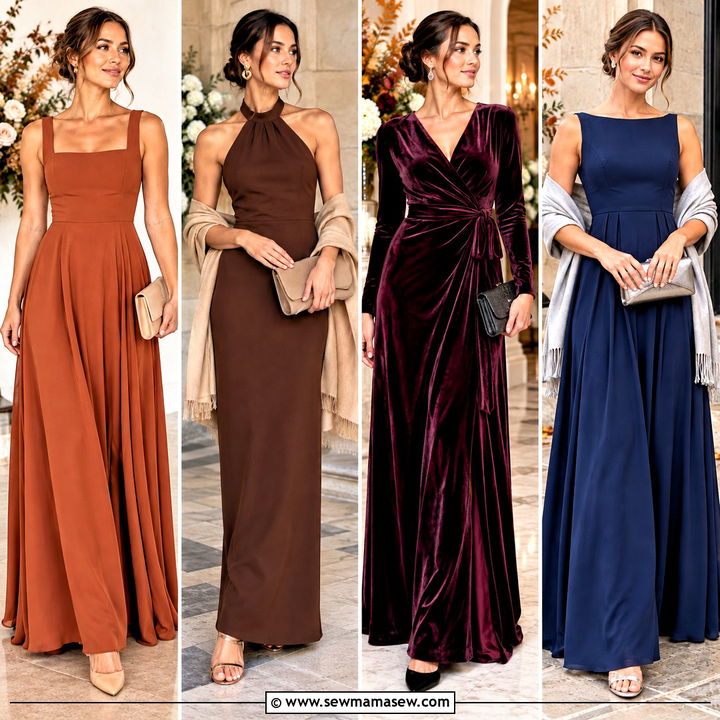
Autumn weddings give a bridal party more color options than any other season. Earth tones, burnished neutrals and deep jewel shades all sit comfortably against turning leaves and that lower, warmer light, and the fabrics widen too: fluid satin, structured crepe, airy chiffon, plush velvet. Burgundy and forest green remain dependable, while espresso, fern and rosewood pink feel newer. When I help a couple pick, we look at four things before color: the venue, the formality, the flowers and the likely temperature on the day. Shoes, jewelry, wraps and bouquets then tie each dress into the whole picture. The fifteen shades below work for a fully matched party or a carefully mixed one.
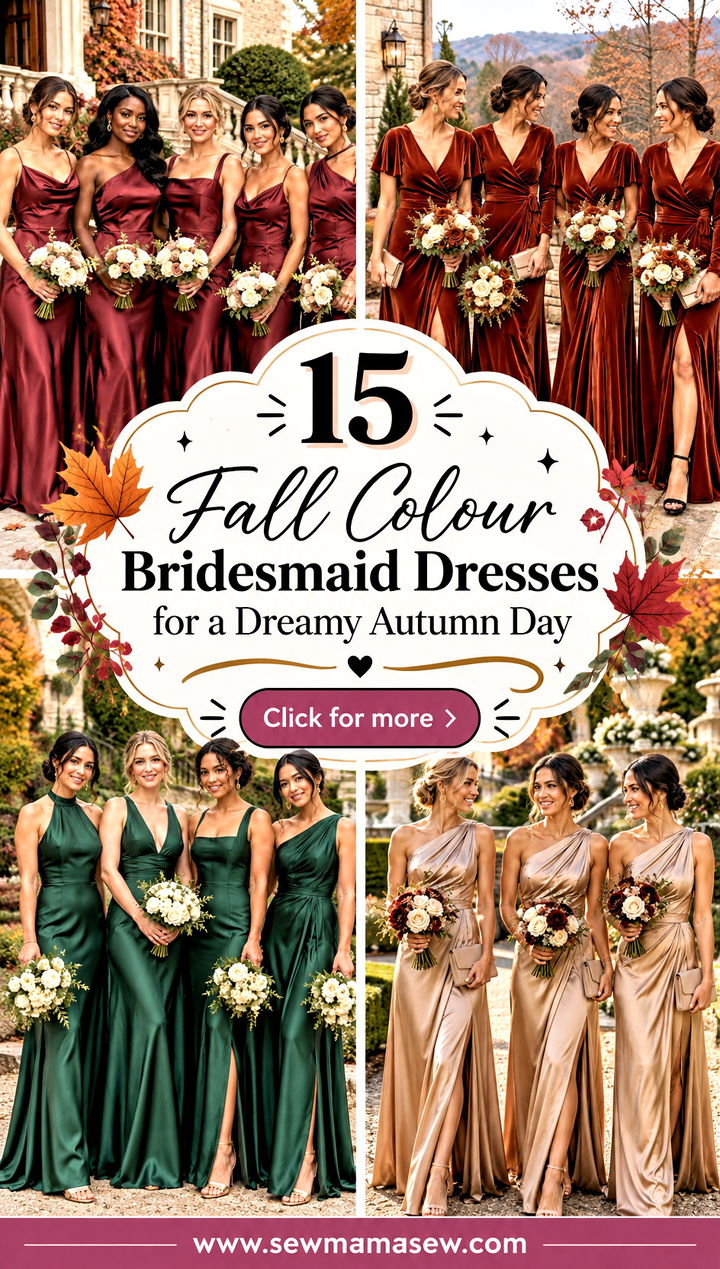
Velvet, Satin, Chiffon or Crepe for Your Wedding's Weather
Fall covers a lot of weather. A late September garden wedding can be warm enough to sweat in, and a November evening reception can be cold enough that bare shoulders become a problem. I pick the fabric for the temperature first and the color second, because a perfect shade in the wrong weight makes for a miserable day.
- Chiffon: breathable and light, best for early fall and anywhere the ceremony is outdoors in the sun. It moves in wind, which photographs well but needs a proper hem.
- Crepe: medium weight, matte and forgiving. It hides small creases and shows less of what's underneath, so it suits most body types and most of the season.
- Satin: formal and photogenic, but it shows sweat marks, water spots and every wrinkle from sitting in the car. Better for indoor or evening weddings.
- Velvet: warm and rich, made for late fall and cold venues. Expect it to feel heavy during a long outdoor ceremony in sunshine.
If your ceremony is outside and the reception is inside, choose for the ceremony. People can add a wrap indoors far more easily than they can cool down in velvet on a sunny lawn.
1. Burgundy Satin Bridesmaid Dresses
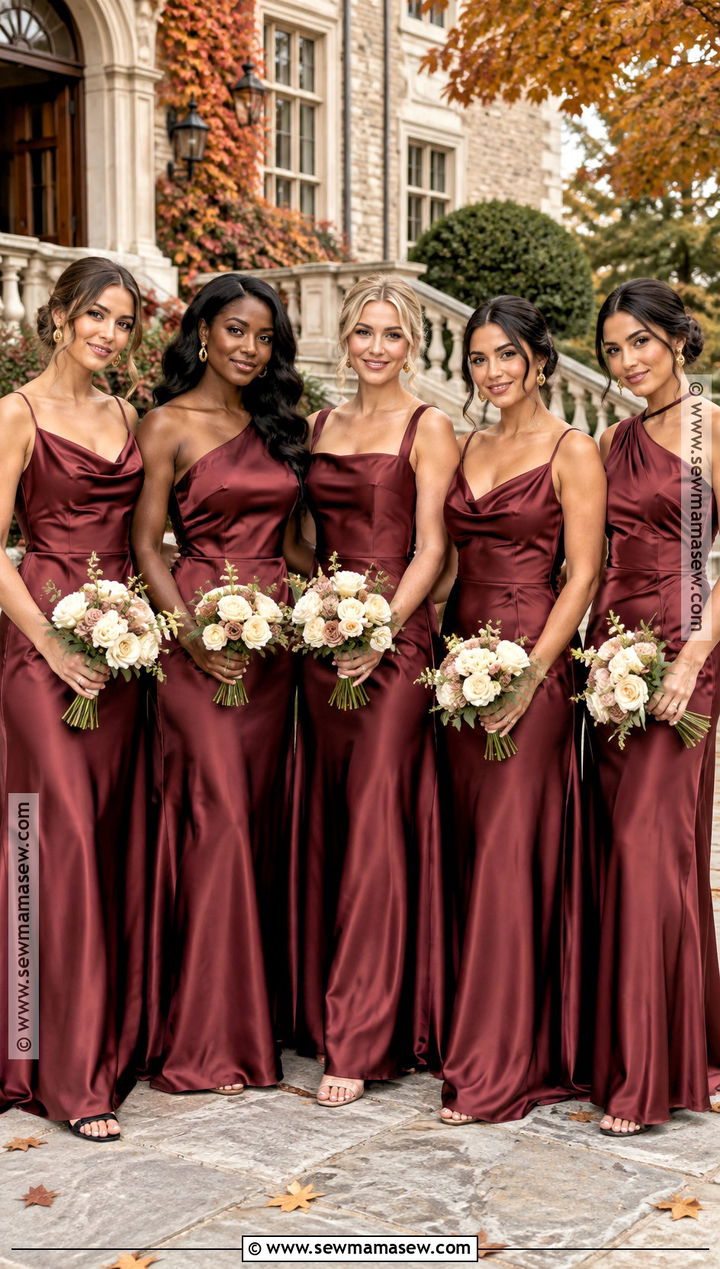
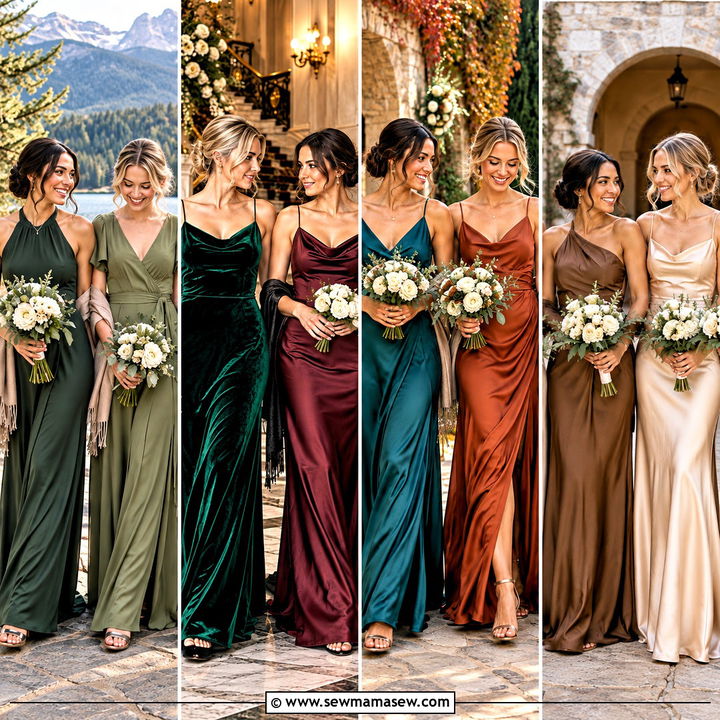
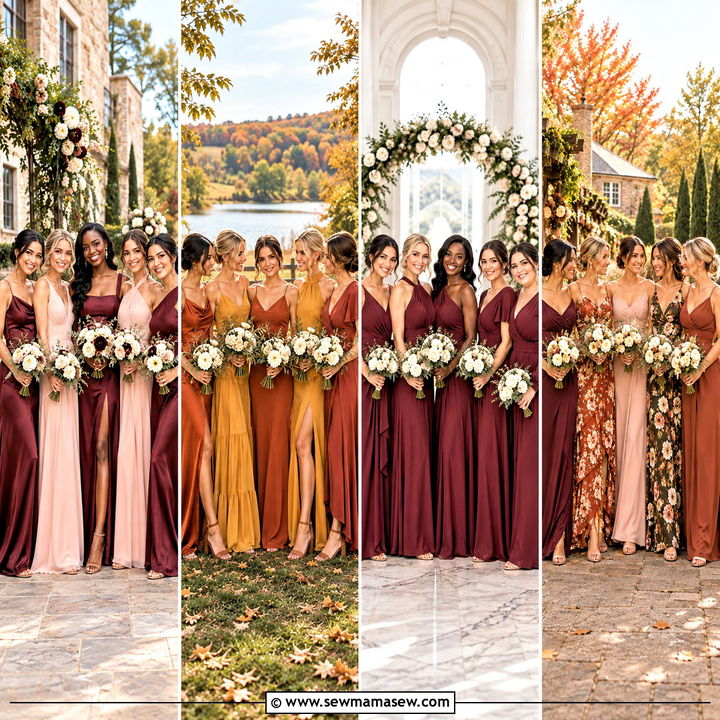
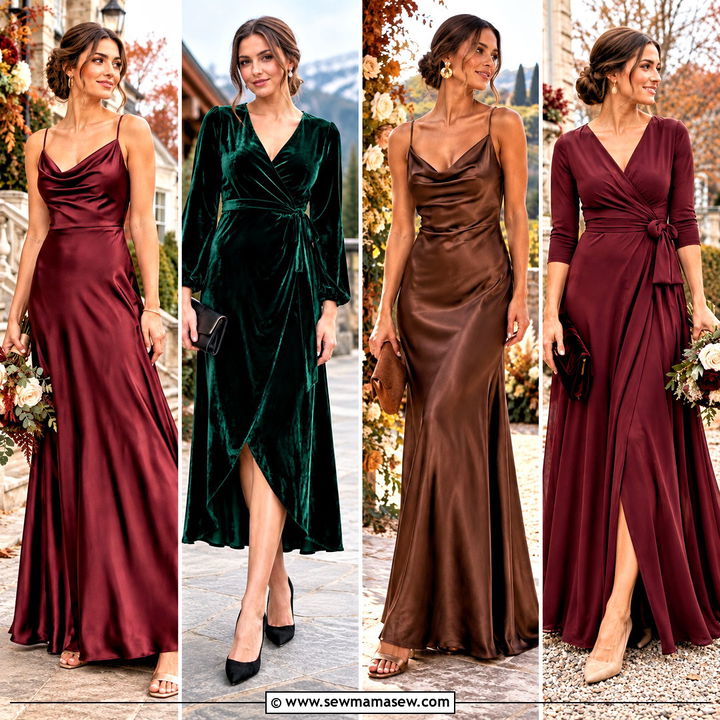
Burgundy satin is the classic for a formal ballroom, an estate or a candlelit reception, and it earns that spot. Satin reflects light, so the deep berry red shows highlights and shadows in photos instead of reading as one flat block. Floor-length slips or softly draped gowns with cowl, square or one-shoulder necklines all work, with black or nude block heels, small gold earrings and a structured clutch. Cream roses, eucalyptus and a touch of rust in the bouquets keep it seasonal. For an outdoor ceremony, plan matching neutral wraps that come off indoors. I always let each bridesmaid choose her own neckline here; satin is unforgiving over the bust, and support needs differ a lot across a group.
2. Terracotta Crepe Bridesmaid Dresses
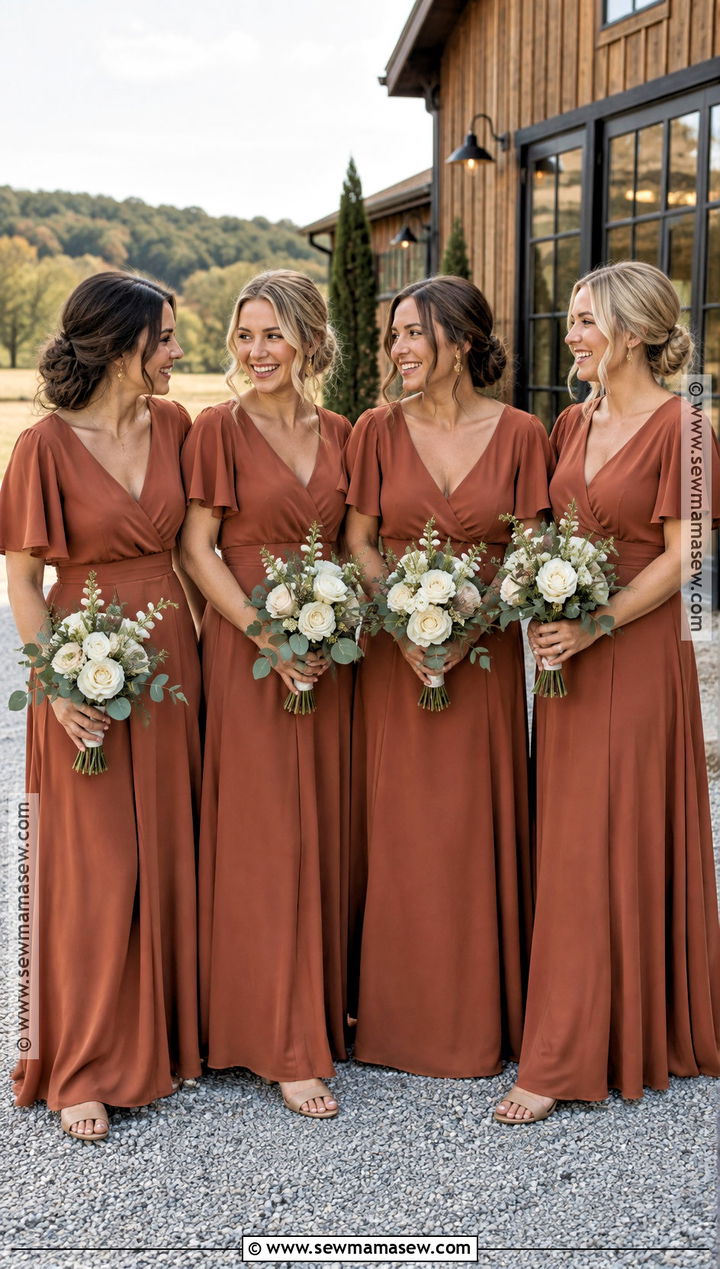
Terracotta crepe is the warm option for barn, garden, desert and countryside weddings that shouldn't look too bright. The orange-brown sits naturally beside dried grasses, ivory flowers and raw wood. Full-length dresses with wrap bodices, flutter sleeves or softly gathered waists keep it relaxed but finished. Tan block-heel sandals are stable on grass and gravel, and brushed gold suits the warm undertone. Caramel or taupe clutches look better than perfectly matched ones. Crepe is matte, which means it photographs the same in daylight and under reception lighting, and that consistency is why I like it for mixed silhouettes. If you go mismatched, vary the cut but keep everyone in this one terracotta fabric.
3. Rust Velvet Bridesmaid Dresses
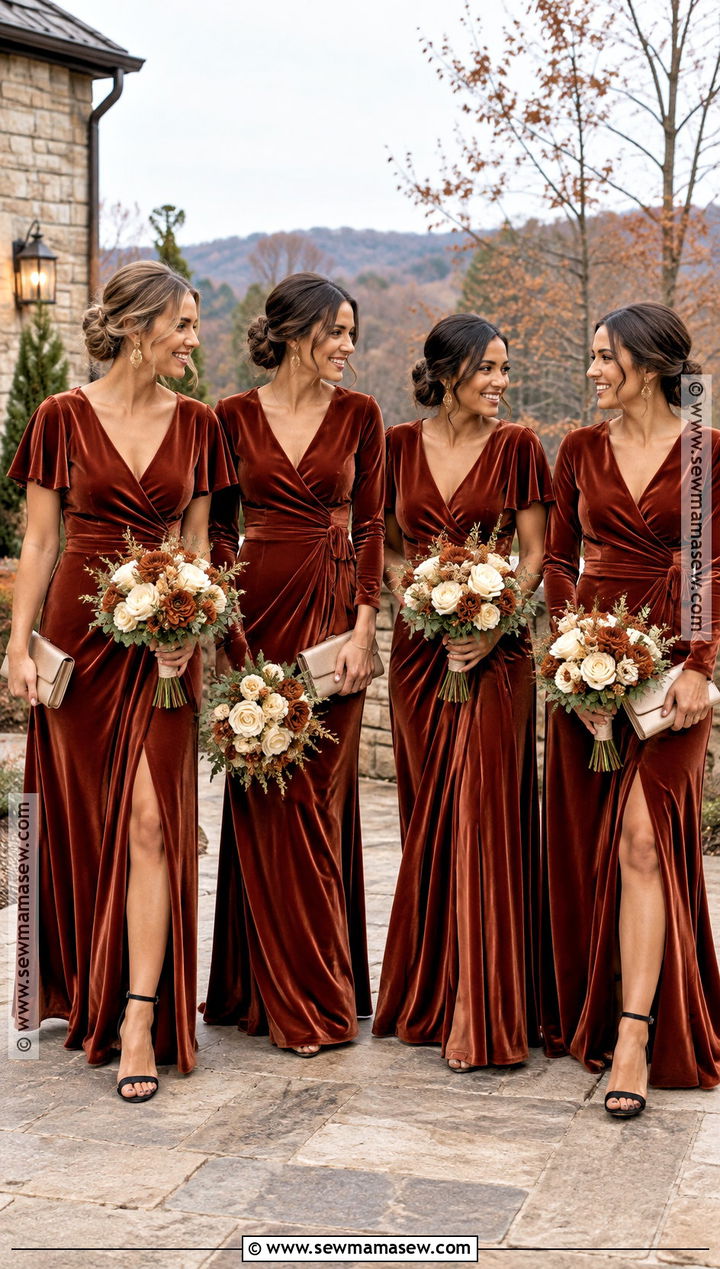
Velvet is a fabric I only recommend once evenings turn properly crisp, usually mid to late fall. The pile deepens rust to a richer reddish brown and gives texture without any beading. Column gowns, wrap dresses or A-lines with long sleeves, short sleeves or wide straps all suit it; dark brown heels, antique gold earrings and a compact suede-look clutch finish it. Ivory blooms, copper foliage and dark greenery carry the palette. Be honest about heat: velvet traps warmth, and a bridesmaid standing through a sunny outdoor ceremony will feel it. Simple hair, a low bun, loose waves or a sleek ponytail, lets the fabric lead. Velvet also crushes in a suitcase, so pack it rolled with tissue and steam from the back.
4. Forest Green Satin Bridesmaid Dresses
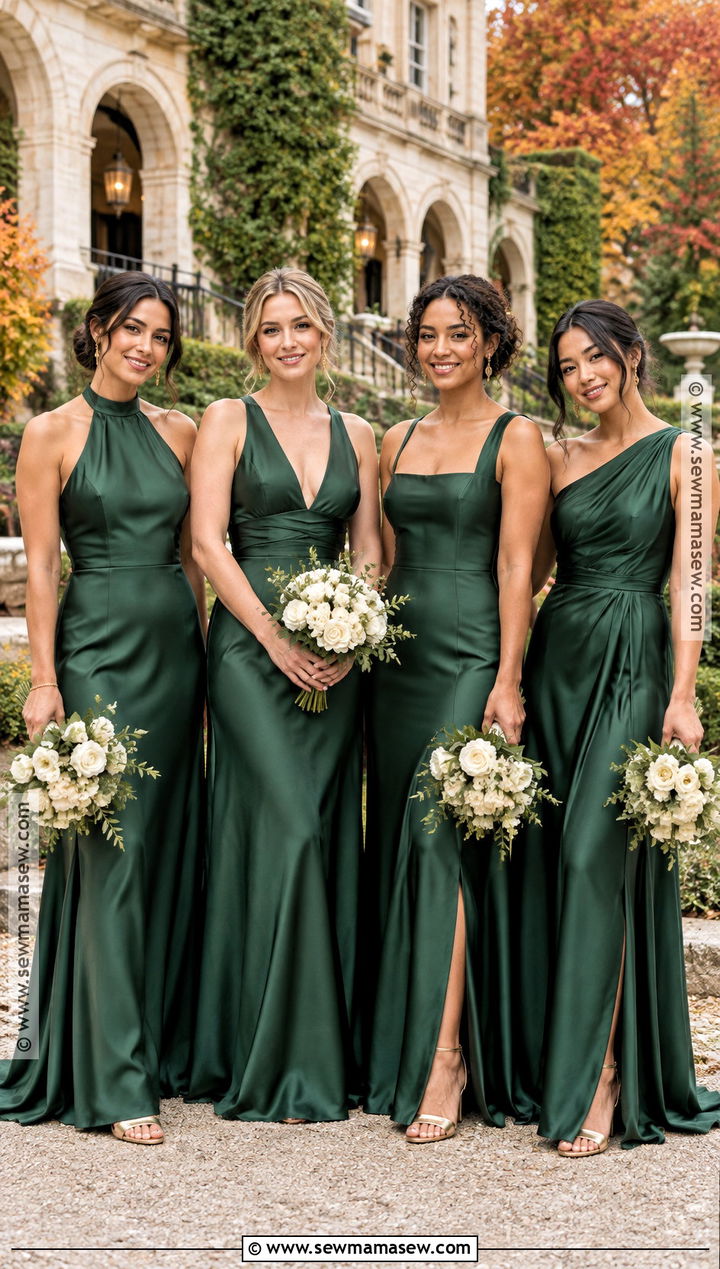
Forest green satin looks rich against autumn foliage and keeps looking right long after the leaves are gone, which bridesmaids appreciate if they plan to rewear. It suits black-tie venues, historic hotels, woodland ceremonies and formal indoor receptions. Floor-length gowns with draped necklines, fitted waists and flowing skirts are the strongest shape. Gold sandals, delicate drop earrings and small black evening bags work well, with white, cream and pale peach bouquets for contrast. For individual choice, I give a short approved list, such as halter, one-shoulder, V-neck and square-neck, all in one fabric. A coordinating black, taupe or forest wrap keeps outdoor group photos tidy when the temperature drops.
5. Olive Green Chiffon Bridesmaid Dresses
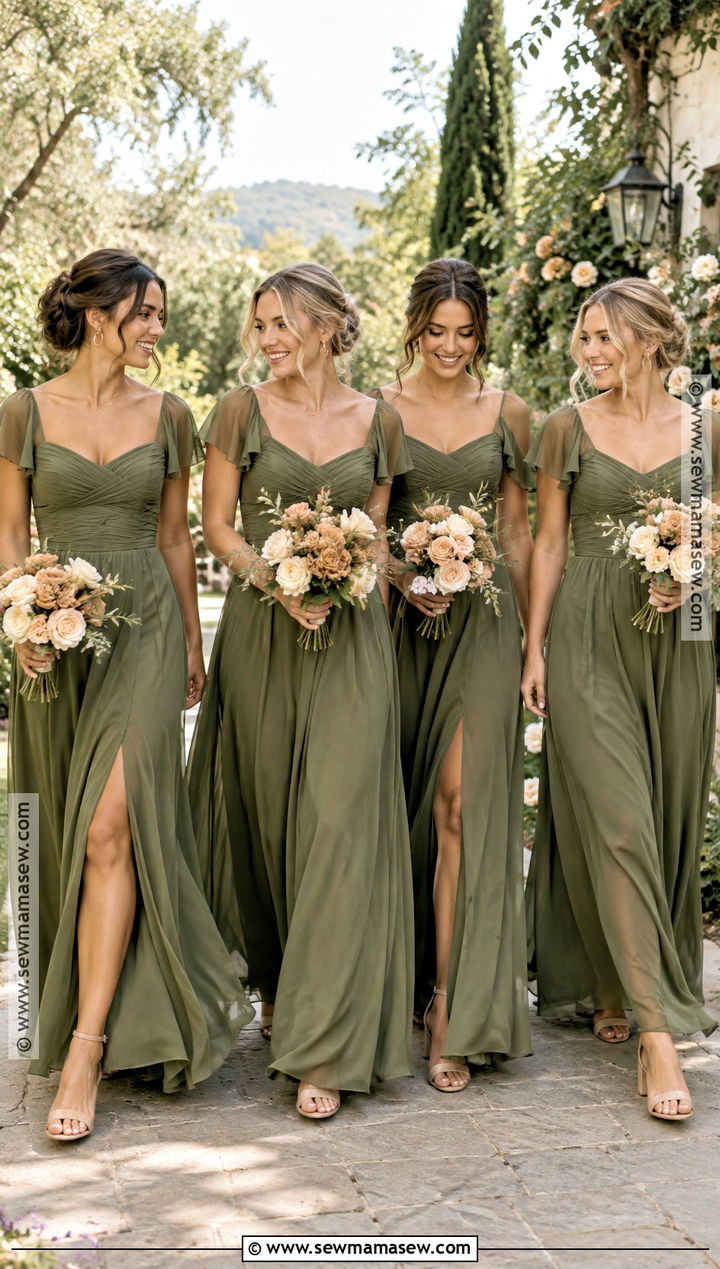
Early fall can still be warm in the afternoon, and olive chiffon handles that better than heavier fabrics. Olive is grounded and seasonal but lighter than forest or emerald, so it doesn't feel wintry in September. Flowing A-lines with gathered bodices, flutter sleeves or adjustable straps move well, and nude block heels, understated gold hoops and woven or matte neutral clutches keep everything soft. Cream flowers, sage leaves and muted peach suit the color. Chiffon is lovely for dancing and photographs with real movement in a breeze. It is also sheer in layers, so ask everyone to wear neutral undergarments, and hem it properly: lightweight chiffon catches on heels and picks up dirt from outdoor paths fast.
6. Espresso Brown Satin Bridesmaid Dresses
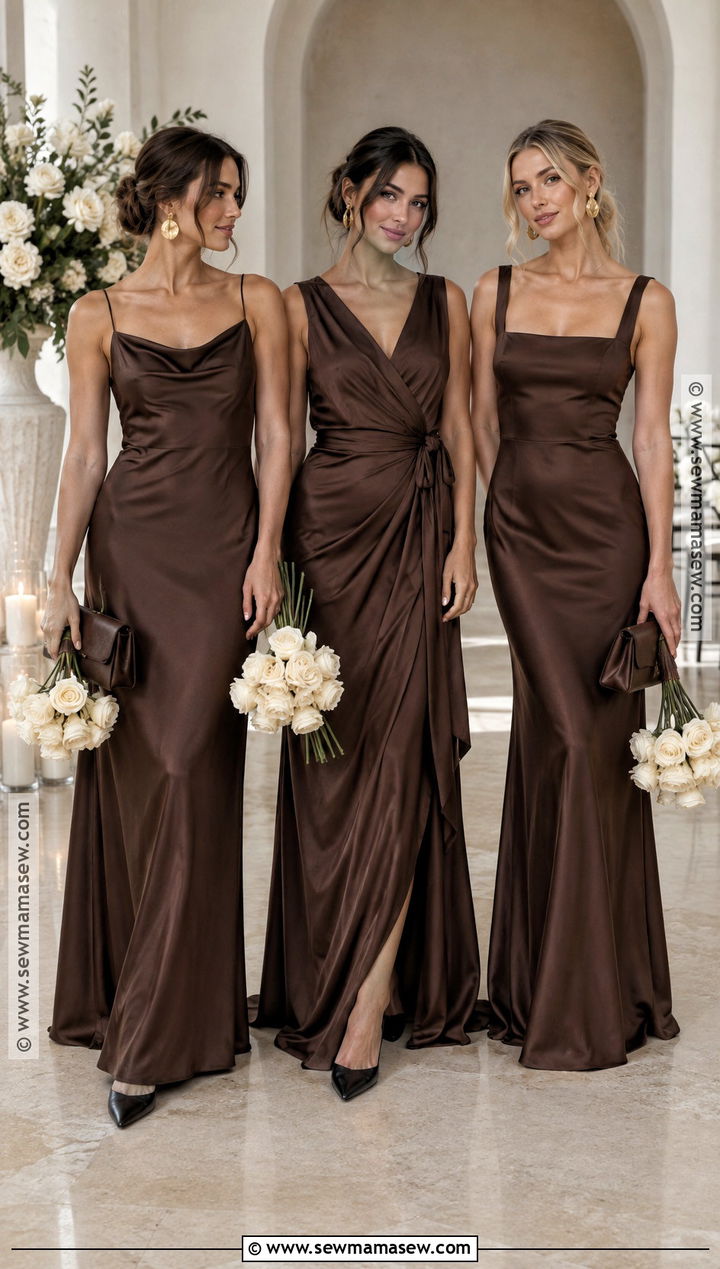
Espresso brown satin gives you the sleek formality of black with more warmth, and it's my favorite swap when a couple wants dark dresses that don't look severe. It suits minimalist venues, city weddings and palettes built on cream, bronze or greenery. Long bias-cut gowns, soft wrap dresses or clean square-neck shapes all work, with black pointed heels, sculptural gold earrings and a compact chocolate bag. Cream roses and textured green foliage stand out sharply against it. Espresso can also anchor a tonal mix with bronze, caramel and lighter browns. Order swatches first, every time. Deep brown satin can look warmer, cooler or almost black depending on the finish and the venue lighting.
7. Chocolate Brown Velvet Bridesmaid Dresses
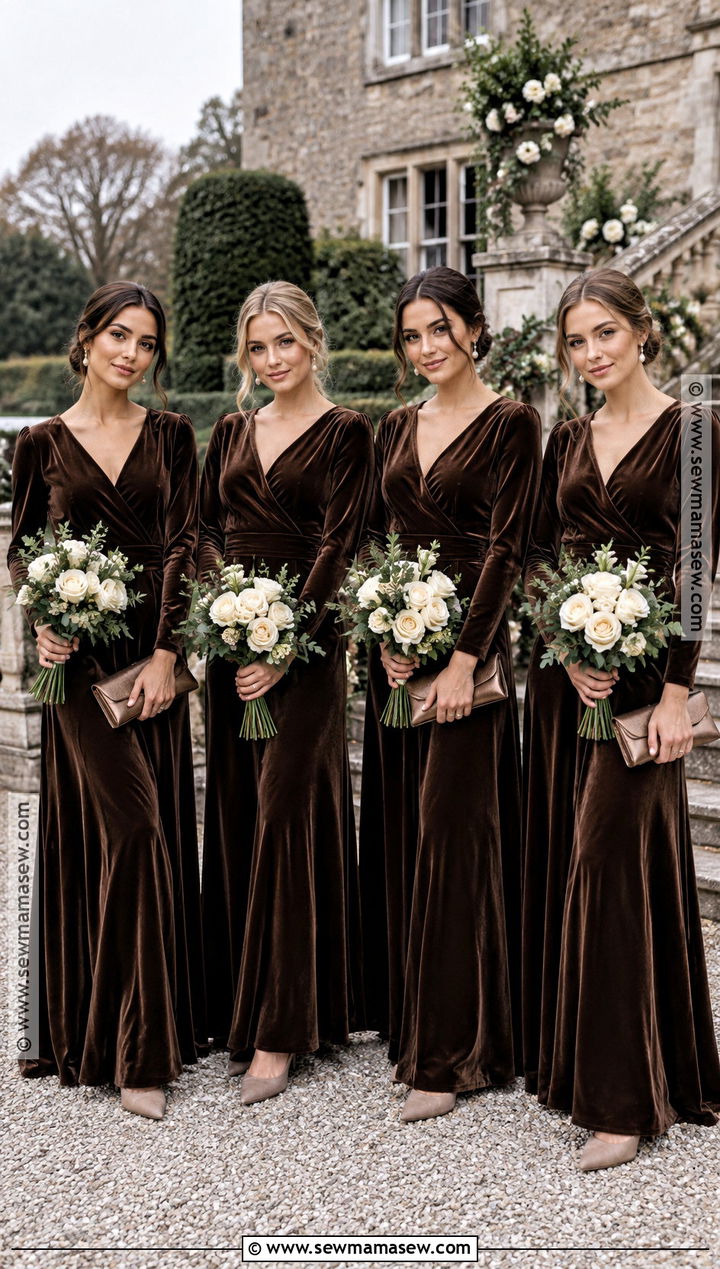
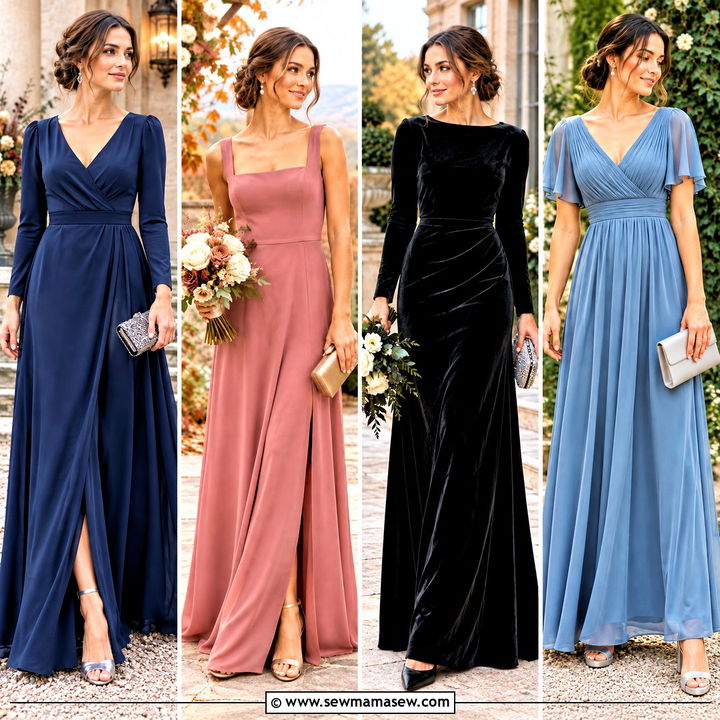
Chocolate velvet is warmer and softer than espresso, and it suits cool-weather ceremonies and evening receptions. It sits naturally with ivory, camel, copper and muted orange. Wrap gowns or fitted dresses with defined waists and gently flared skirts work best; closed-toe taupe heels, small pearl earrings and bronze clutches keep it from feeling heavy. Bouquets with ivory flowers, magnolia-style leaves and subtle rust round it out. Velvet already has plenty of depth, so skip the sequins and oversized jewelry. I steer groups toward stretch velvet and supportive bodices because rigid velvet can be hard to sit and dance in. Steam it carefully from the inside; pressing velvet flat with an iron leaves shiny marks.
8. Burnt Orange Satin Bridesmaid Dresses
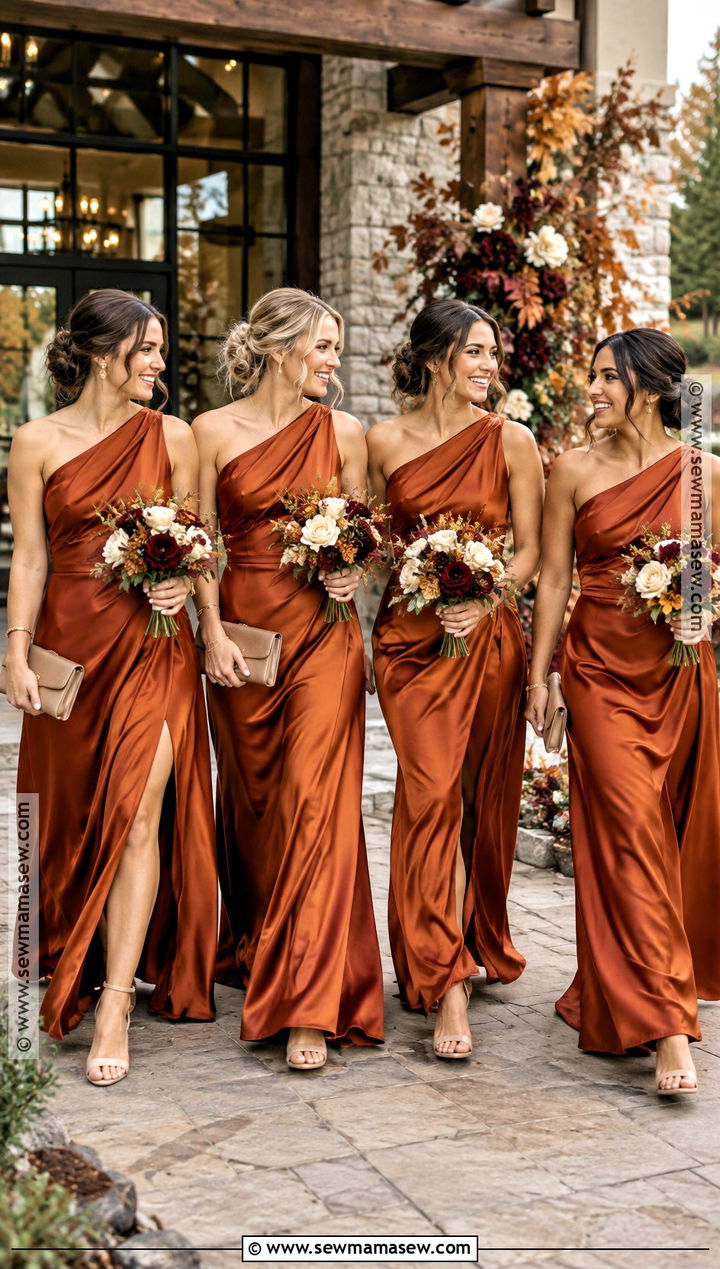
Burnt orange satin captures the energy of autumn leaves while still looking formal. It's especially good at sunset ceremonies, rustic-modern venues and weddings with warm flowers. Maxi dresses with one-shoulder bodices, softly pleated skirts or high necklines suit it, and beige heels, simple gold bracelets and caramel clutches complement the glow. Bridesmaids can carry cream, blush and burgundy flowers with dark green foliage. Orange varies enormously between makers, so I compare swatches outdoors before anyone orders. A deeper, brown-based burnt orange looks more refined and photographs more consistently than a saturated bright one, which can glare under a flash.
9. Plum Velvet Bridesmaid Dresses
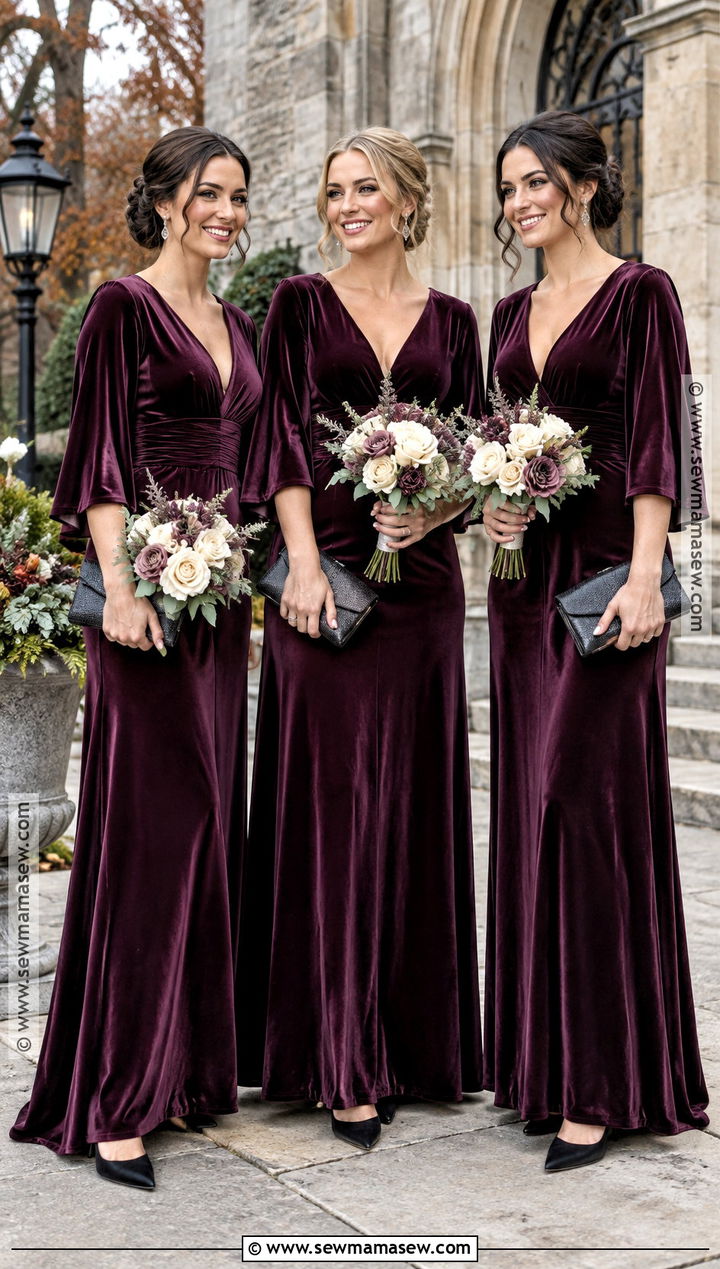
Plum velvet is the dramatic jewel tone for couples tired of burgundy. Deep purple works well at late-fall weddings, formal evening ceremonies and venues with dark wood or stone. Floor-length gowns with V-necklines, gathered waists or long sleeves are the strongest choices. Black closed-toe heels, silver drop earrings and small charcoal clutches keep the finish cool. Ivory flowers, mauve accents and eucalyptus soften the depth of the velvet, and plum pairs naturally with lighter mauve dresses for a tonal party. Makeup should stay fresh, maybe with a muted berry lip. Plum velvet can look almost black in a dim reception room, so I'd make sure the photographer knows the color is there.
10. Deep Mauve Crepe Bridesmaid Dresses
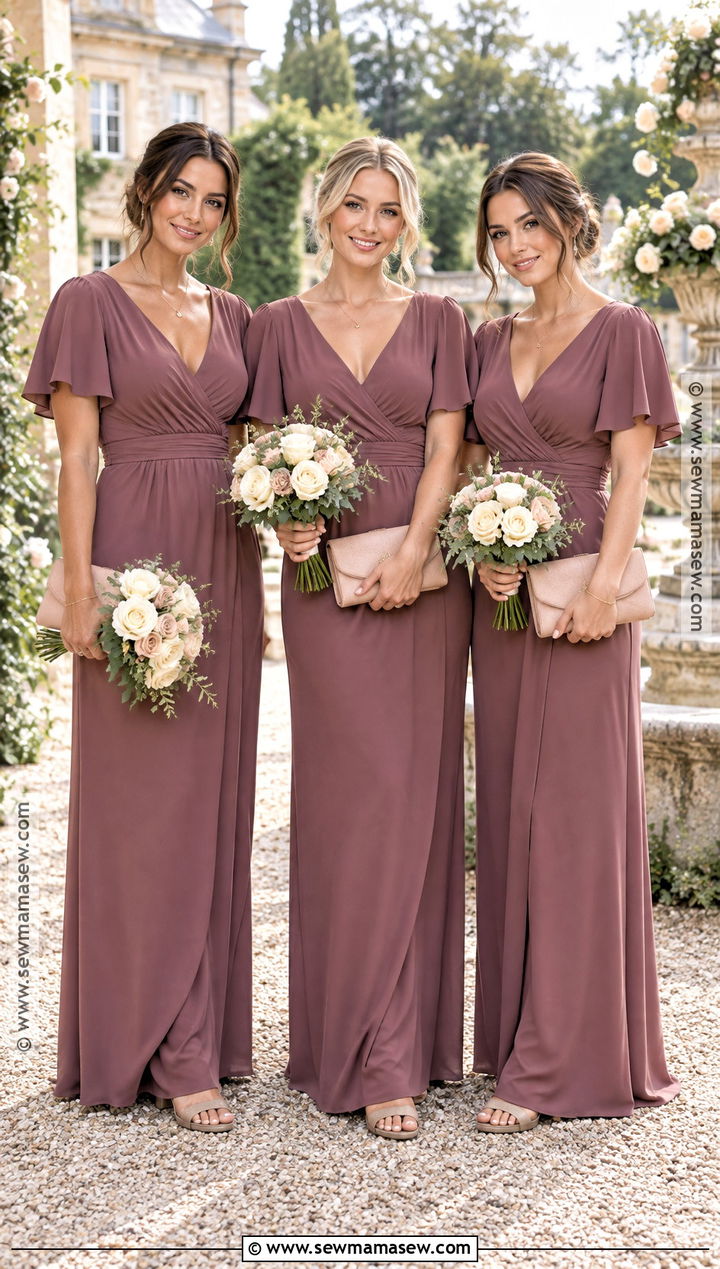
Deep mauve crepe is the softer route into fall color, still deep enough for the season. The muted purple-pink suits romantic gardens, modern estates and transitional September weddings. Full-length wrap dresses, gathered A-lines or columns with short flutter sleeves all look good, styled with taupe sandals, rose gold or gold jewelry and small dusty pink clutches. Cream flowers, pale roses and greenery make an elegant bouquet without tipping into pastel. Crepe's matte, structured surface keeps the color steady as the light changes from ceremony to reception. For a coordinated group, I hold the fabric and the hem length constant and let everyone choose neckline and sleeves.
11. Navy Blue Satin Bridesmaid Dresses
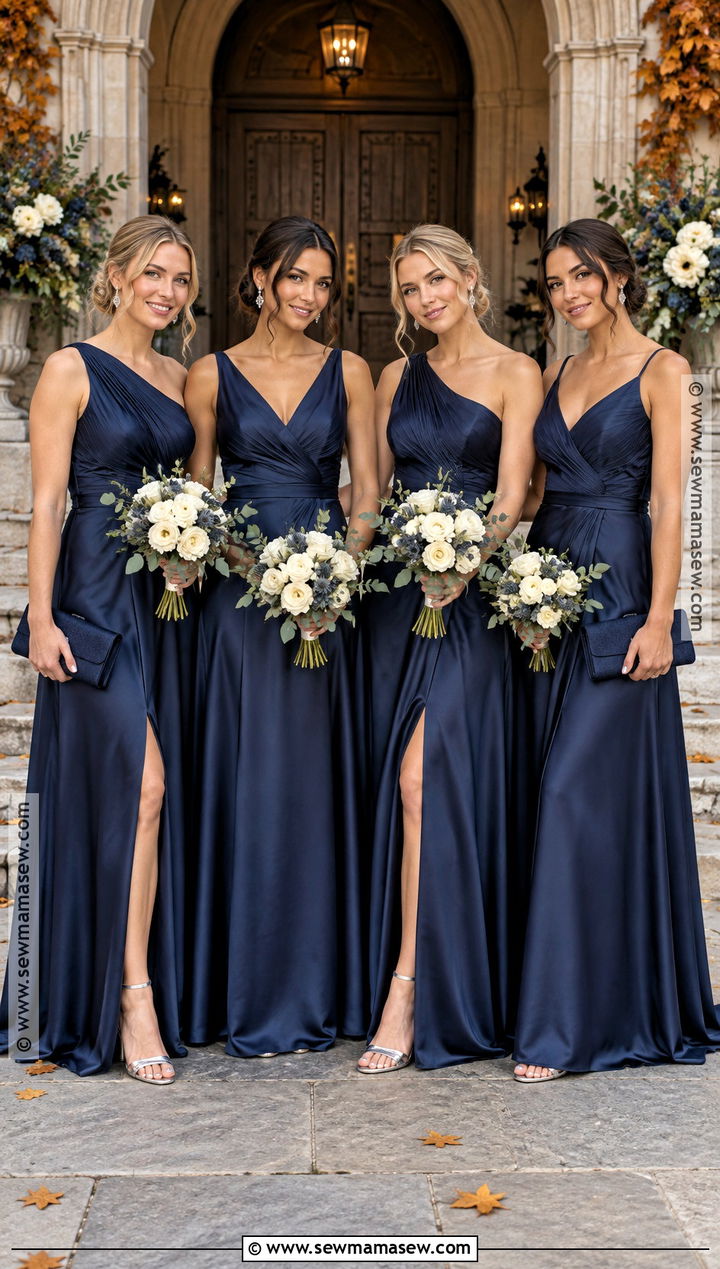
Navy satin suits couples who want a fall wedding that isn't rustic. It complements waterfront venues, formal hotels, country clubs and classic indoor ceremonies. Floor-length gowns with clean V-necklines, pleated bodices or asymmetrical shoulders are my picks. Silver sandals and crystal earrings bring a cool brightness; gold warms it toward autumn. Small black or navy clutches keep it uncluttered. Ivory blooms, blue-gray foliage and restrained peach accents stop the palette looking like winter. Navy also sits well next to dark suits, so a large wedding party reads as one group in photos. Satin in navy shows water spots, so keep a dry cloth handy if there's any chance of rain.
12. Dusty Blue Chiffon Bridesmaid Dresses
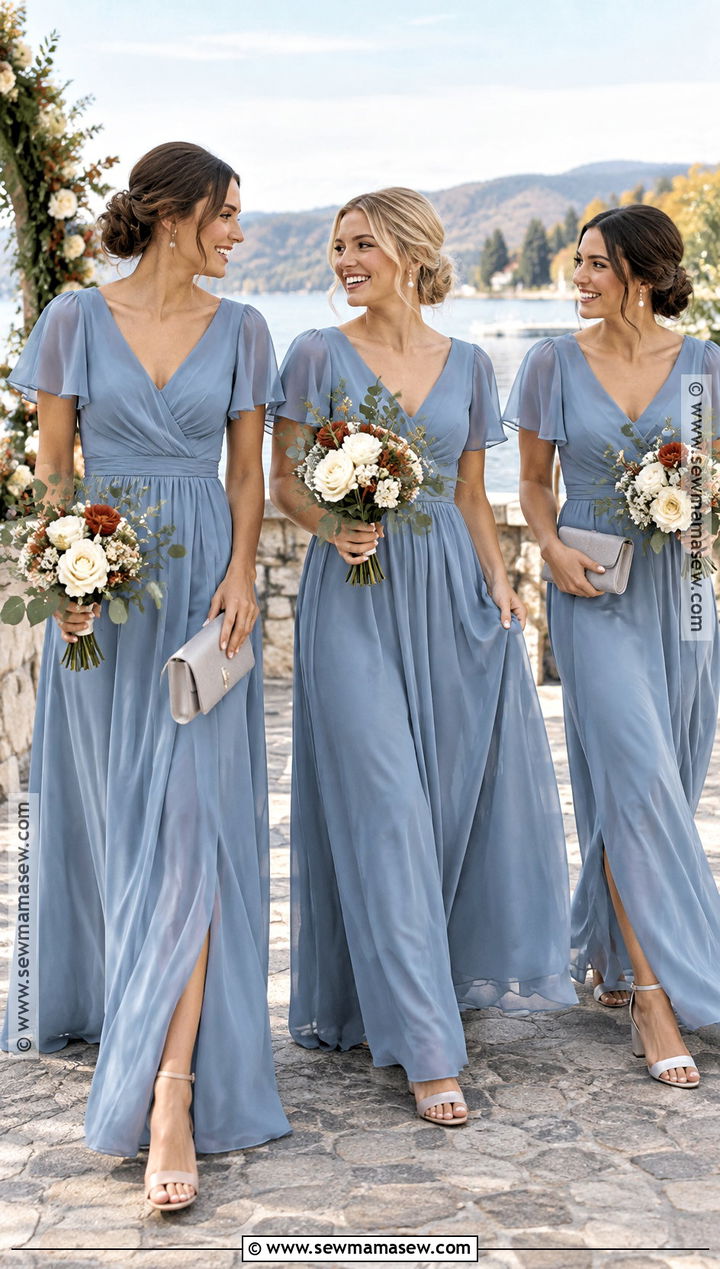
Soft blue in fall surprises people, but it works for early-season weddings near water or in airy gardens. Dusty blue has a gray undertone that feels calmer and more seasonal than bright pastel. Flowing maxis with wrap fronts, pleated skirts or flutter sleeves suit chiffon well; nude or silver block heels, small pearl earrings and light gray clutches finish them. Ivory flowers, eucalyptus and a touch of rust connect the cool dresses to the autumn setting. If the evening may turn chilly, plan coordinated gray or taupe wraps. I sometimes mix dusty blue with slate blue for depth, keeping both in the same chiffon so the group still reads as a set.
13. Copper Satin Bridesmaid Dresses
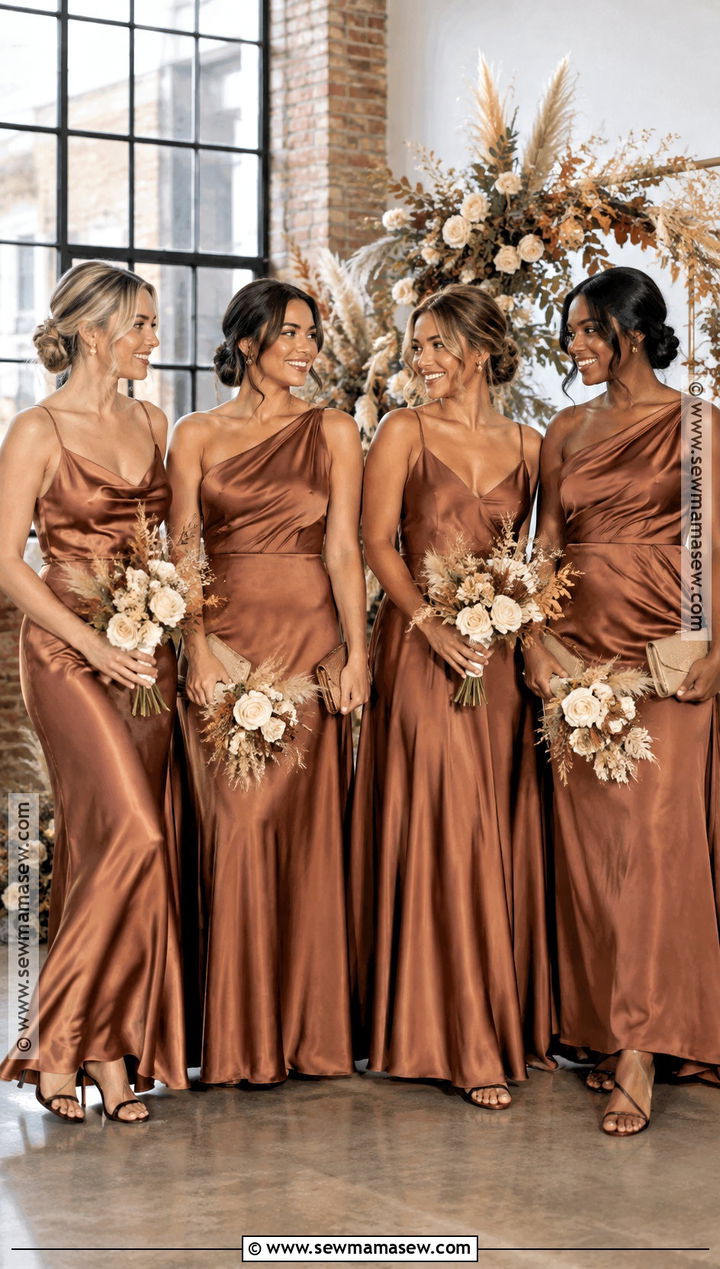
Copper satin glows in late-afternoon light and under warm reception lighting. The metallic orange-brown suits industrial venues, elegant barns, modern lofts and formal autumn parties. Keep the shapes simple, slip gowns, draped one-shoulders or clean A-lines, so the reflective fabric doesn't overwhelm. Dark brown heels, minimal gold studs and matte neutral clutches style it, with cream flowers, dried grasses and deep greenery around it. Shiny satin reveals every crease and fit issue, so quality lining, careful alterations and a professional steam are not optional. Copper mixes well with rust and bronze gowns as long as all three share a similar undertone and the same level of formality.
14. Champagne Satin Bridesmaid Dresses
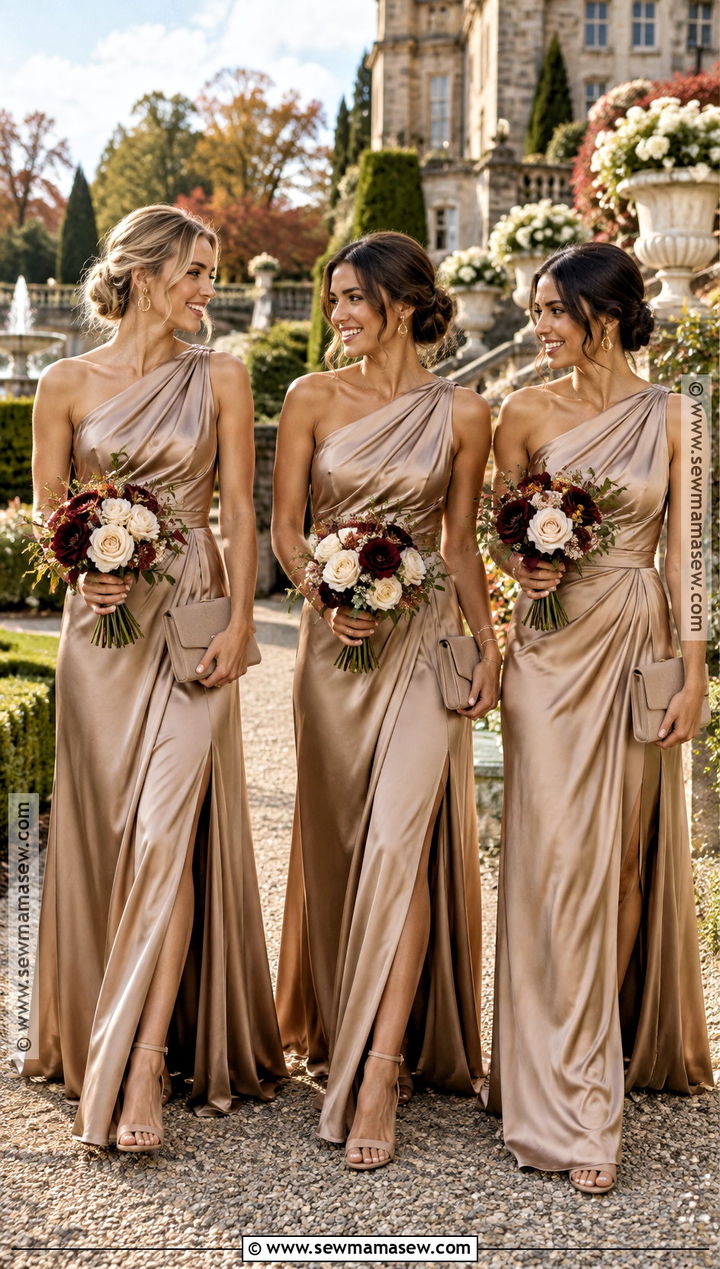
Champagne satin is a light contrast against dark autumn greenery and deeply colored flowers. It only works when the bride's gown clearly differs in tone, texture or silhouette; otherwise the bridesmaids start to look like a group of brides. Choose deeper beige-champagne rather than pale ivory. Draped necklines, one-shoulder bodices and softly pleated skirts give definition, with nude heels, small gold earrings and taupe clutches. Bouquets with burgundy, rust and forest green add seasonal depth. Champagne can carry pink, yellow, silver or beige undertones that look nothing like the website photo, so I ask every bridesmaid to hold a swatch against her skin in daylight before ordering.
15. Rosewood Pink Satin Bridesmaid Dresses
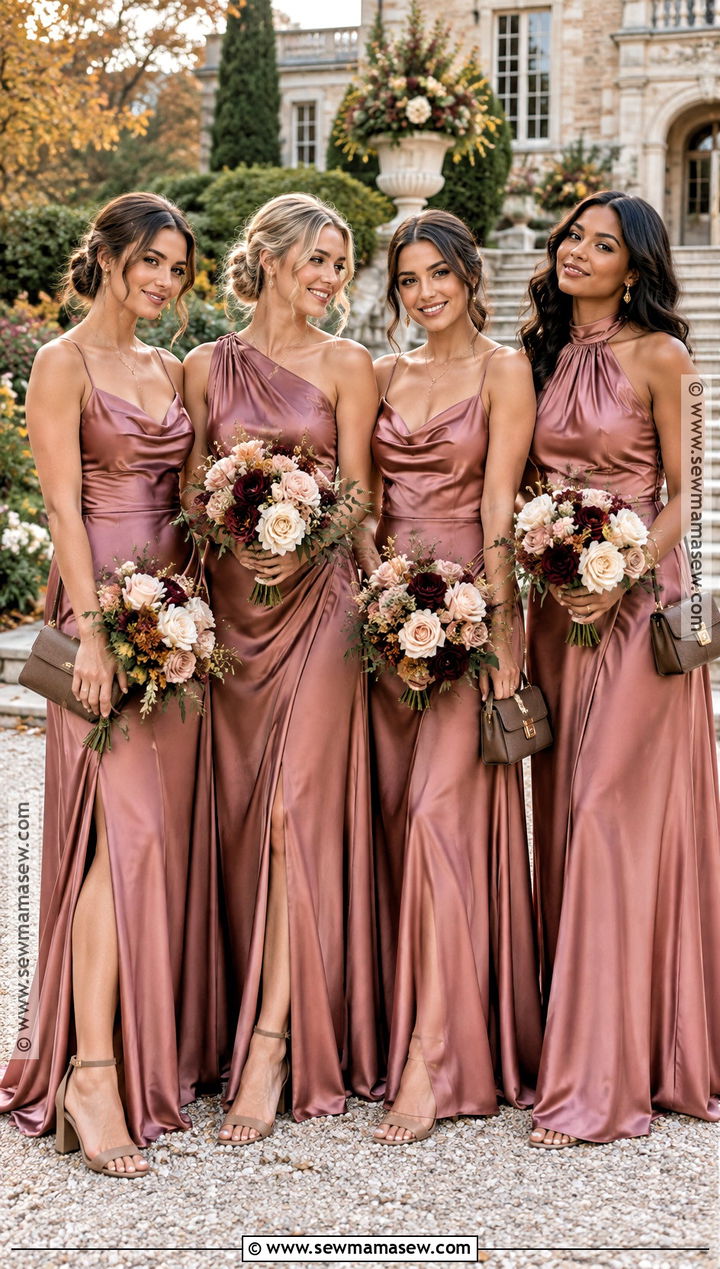
Rosewood mixes muted rose, mauve and brown, and it feels fresher than standard blush for fall. It suits garden estates, elegant barns and modern indoor venues. Satin maxis with softly draped bodices, fitted waists and fluid skirts are the shape I'd choose, with taupe block heels, delicate gold jewelry and small cocoa bags. Bouquets can combine ivory blooms, muted pink flowers, burgundy accents and eucalyptus. In a mismatched party, rosewood is the bridge between dusty pink and deeper berry. Keep every dress in the same undertone family and order swatches. Different fabrics can push rosewood noticeably pinker, browner or more purple under wedding lights.
Ordering Early Enough That Hems Are Done Before the Rehearsal
The most common bridesmaid problem I deal with isn't color. It's timing. Many bridesmaid dresses are made to order, and production plus shipping often takes a couple of months or more, depending on the maker. Alterations then need their own window, and seamstresses get busy in wedding season.
A Working Order of Events
- Order fabric swatches and check them in daylight and in light similar to the venue.
- Collect every bridesmaid's measurements taken by someone else, not self-measured, and order to the size chart rather than her usual street size.
- Place orders together so everyone's dress comes from the same dye batch, which matters most for satin and velvet.
- Book alterations as soon as dresses arrive, and bring the actual wedding shoes to the fitting so the hem is set at the right height.
- Have a final try-on a week or two before the wedding, then steam the dresses the day before or the morning of.
Mismatched parties need the same discipline. Different styles may come from different makers with different lead times, so I schedule around the slowest one.
Start With the Venue, Then Narrow the Shade
The right shade starts with the mood of the day. Burgundy, plum and forest green bring classic richness; espresso, copper and rosewood point somewhere more current; terracotta, rust and burnt orange tie straight into the scenery; dusty blue and champagne lighten the group when there are deeper flowers to balance them. Once you have a color, check swatches in daylight and indoors. Then think about the venue, the temperature, the dress code, the shoes and how comfortable each bridesmaid will be for a long day on her feet. Matching accessories and bouquets will hold everything together, even when necklines, sleeves and silhouettes differ.
Related posts: