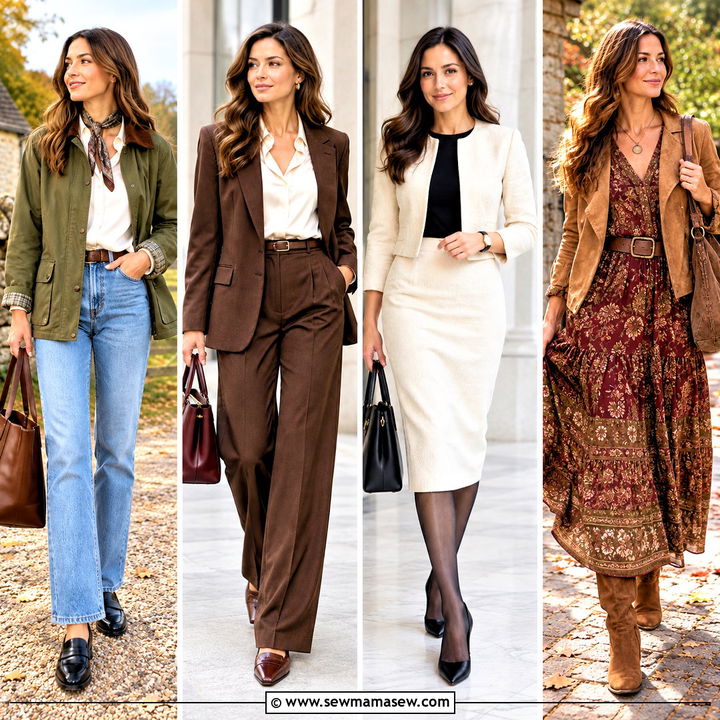
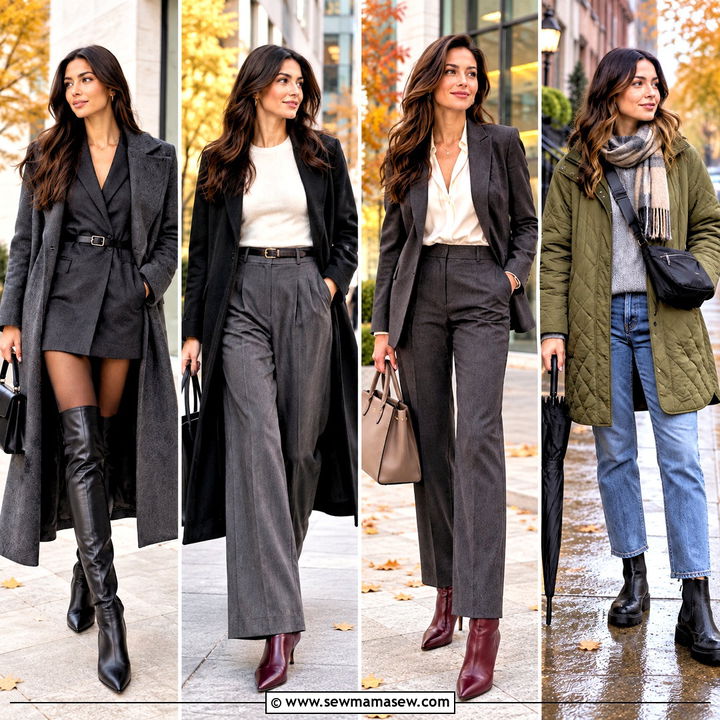
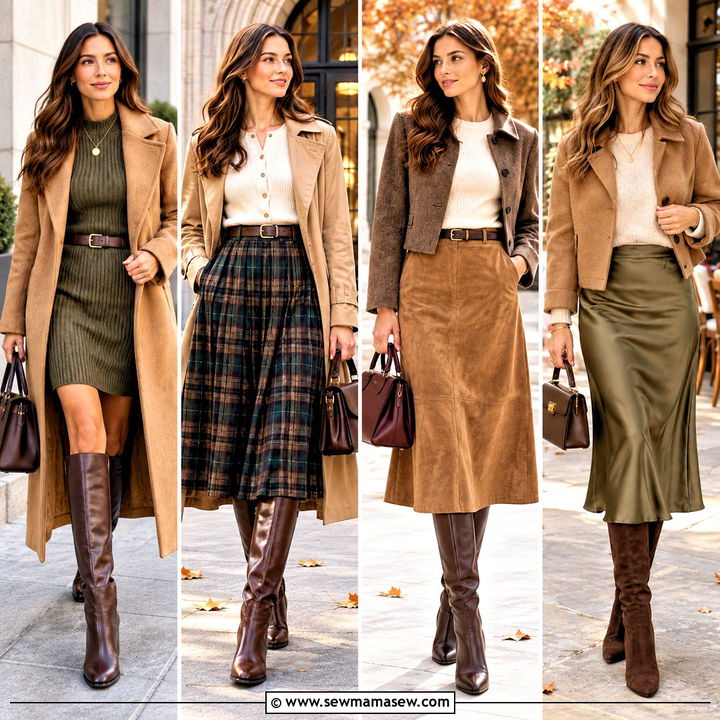
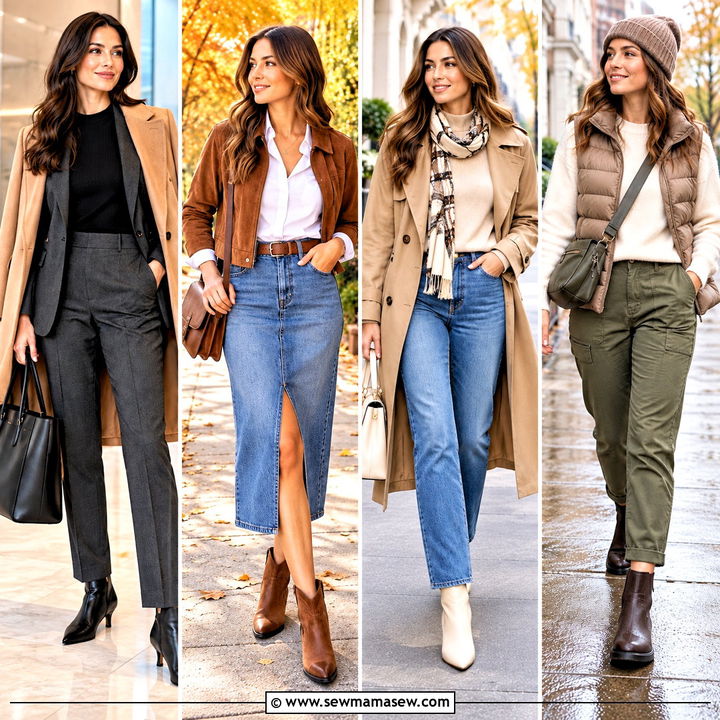
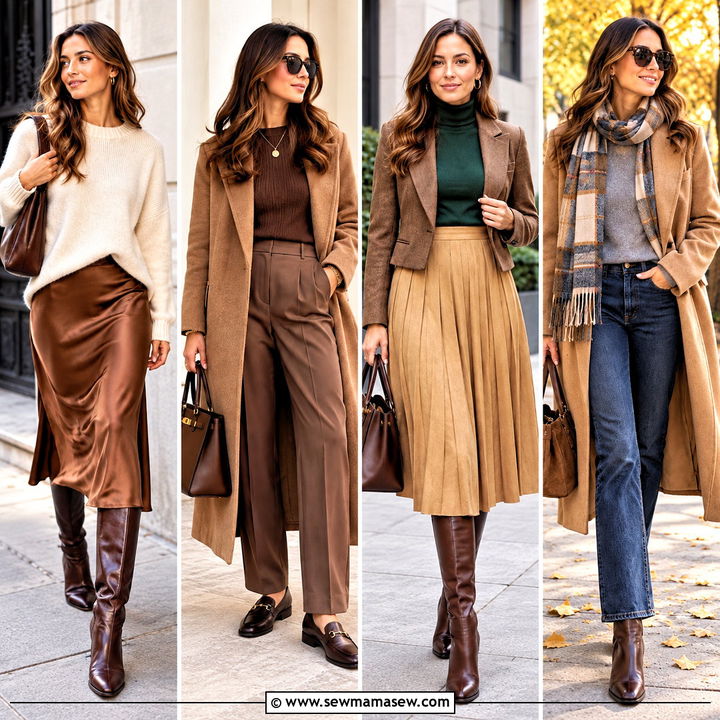
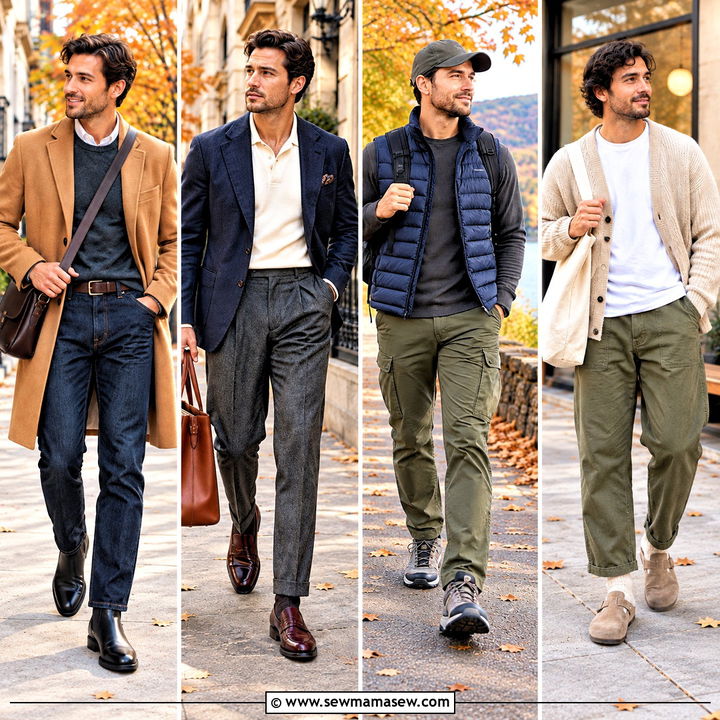
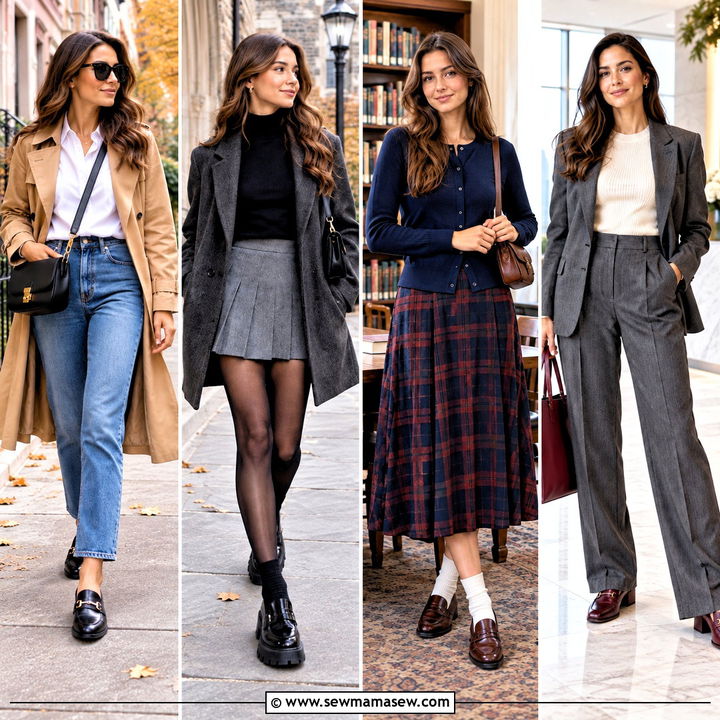
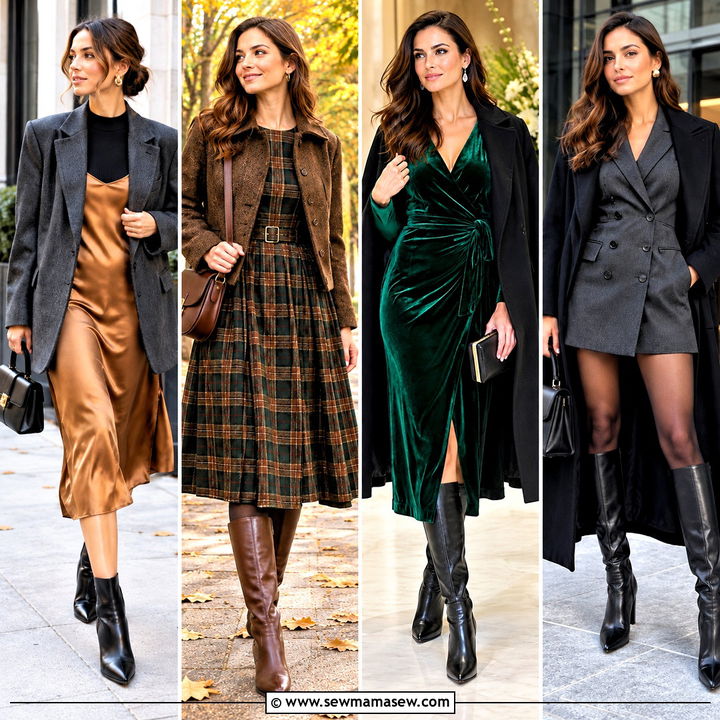
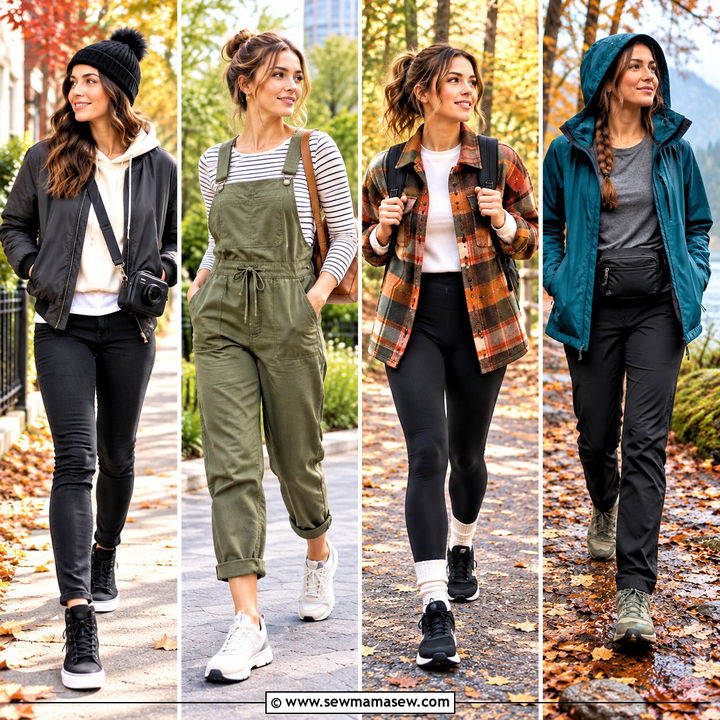
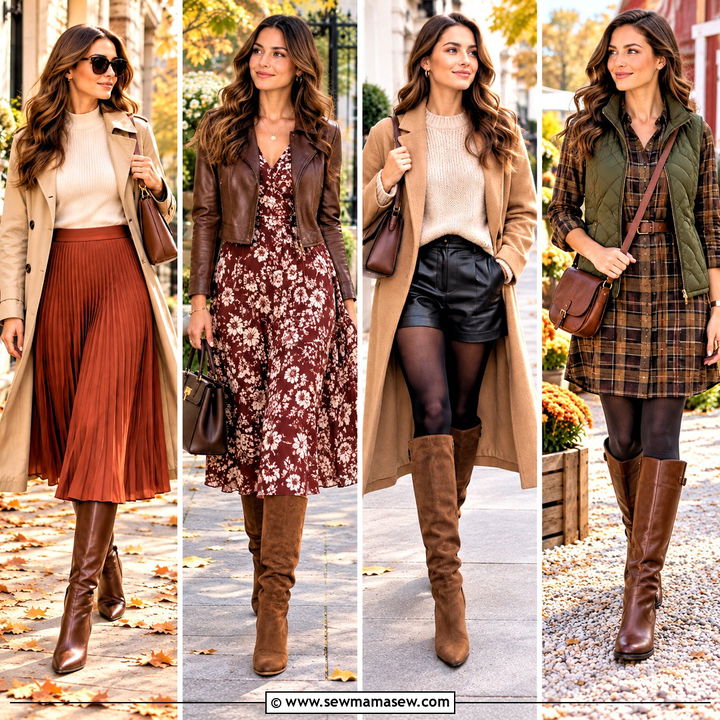
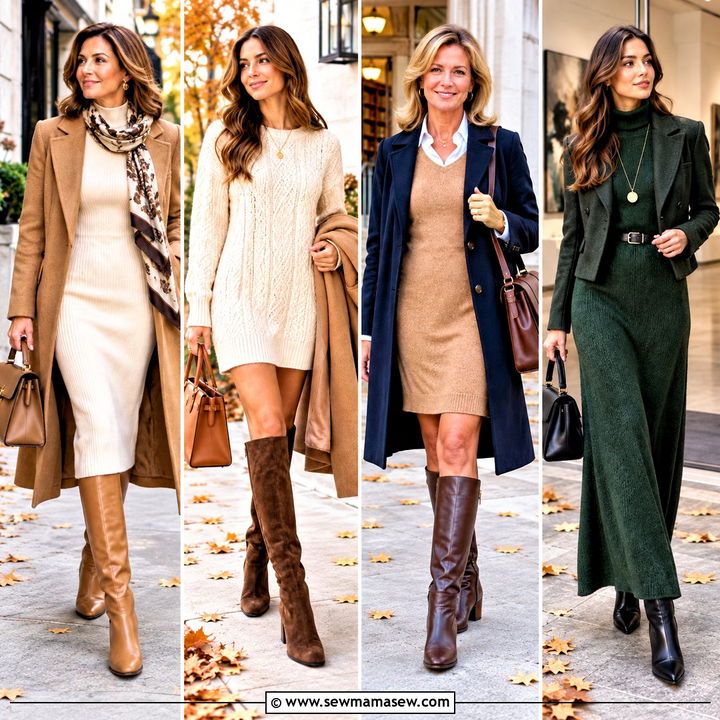
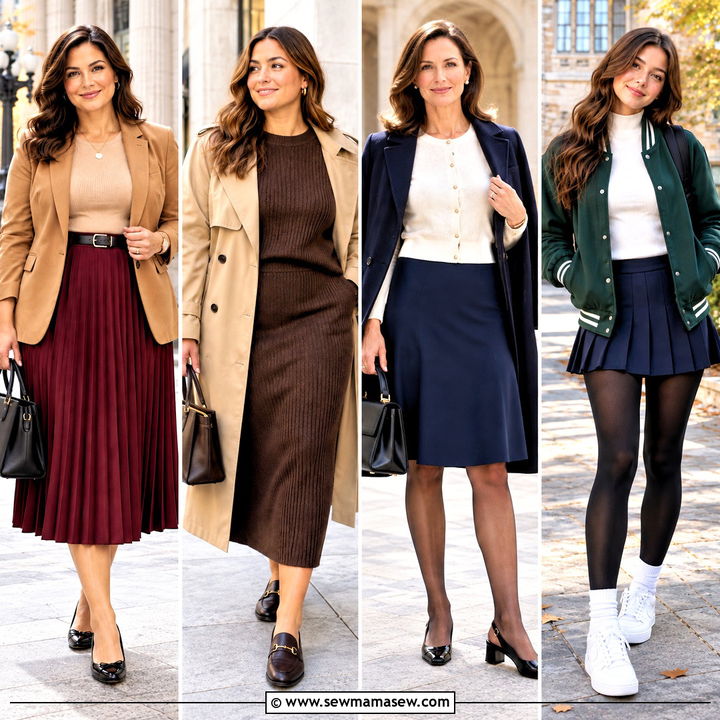
Fall 2026 asked for richer color and more texture, but most of what defined it was surprisingly wearable. Burgundy tailoring, chocolate leather, leopard print, heritage checks and sporty pieces worn with polish all showed up again and again, alongside midi dresses, wide-leg denim, chore jackets and capes. When I put these looks together for real wardrobes, I rarely start from a blank closet. Usually one new piece does the trend work and everything around it is something you already wear. The fifteen outfits below are built that way, and I've noted where fit, footwear or weather change what I'd recommend.
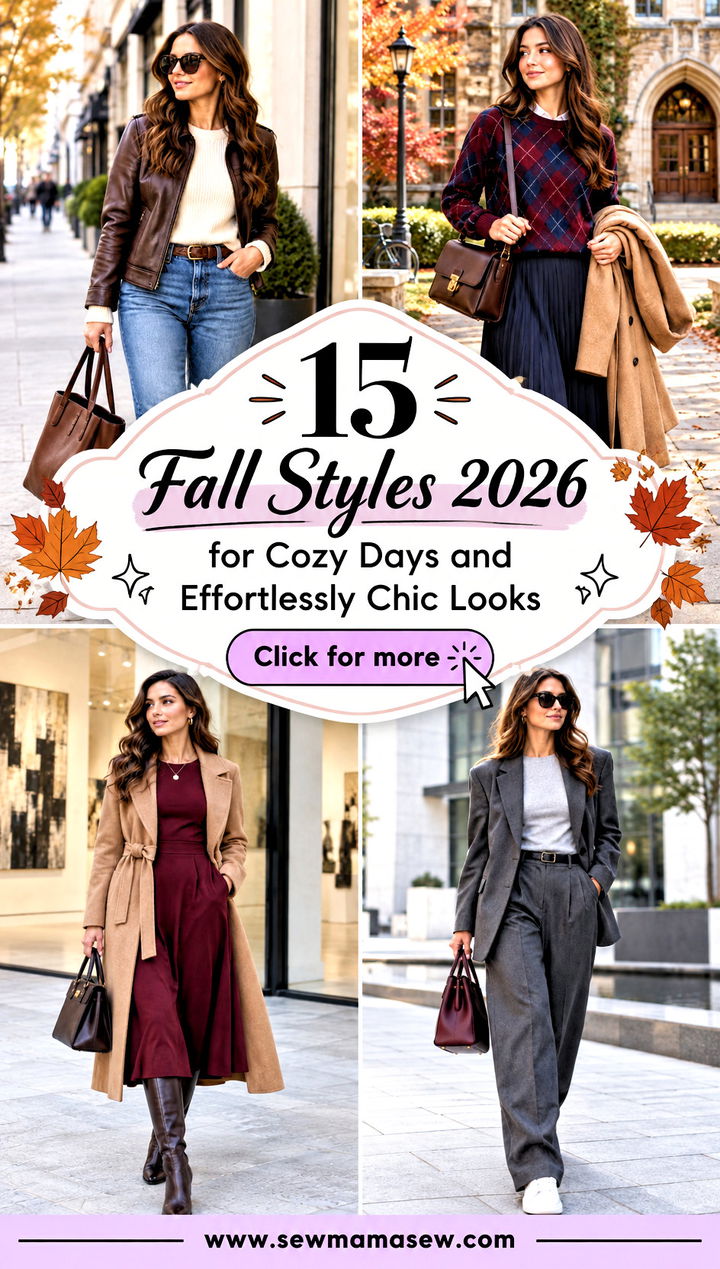
Mixing 2026 Trends Into a Closet You Already Have
Most of these outfits need one new piece at most. Before buying anything, I go through what's already there and sort it by role. The plain pieces do most of the work in fall: a dark straight jean, a black crewneck, a cream knit, a long wool coat and a pair of brown or black boots. If you have those, at least half of this list is already in your closet.
Then I pick the trend piece by how often it will actually be worn. A burgundy blazer or a chocolate leather jacket earns its place many times over a season. A sequin skirt or a cape is a lot of fun but gets far fewer wears, so I'd buy it second, or try borrowing or secondhand first.
- Color pieces (burgundy, chocolate) pair with nearly everything neutral you own.
- Texture pieces (suede, leather, bouclé) need a little care but last for years.
- Print pieces (leopard, argyle) want plain partners, so check you have them first.
- Statement shapes (capes, scarf coats) change your bag and layering habits, so try them on with your usual bag.
1. Boho Blouse With Wide Leg Jeans
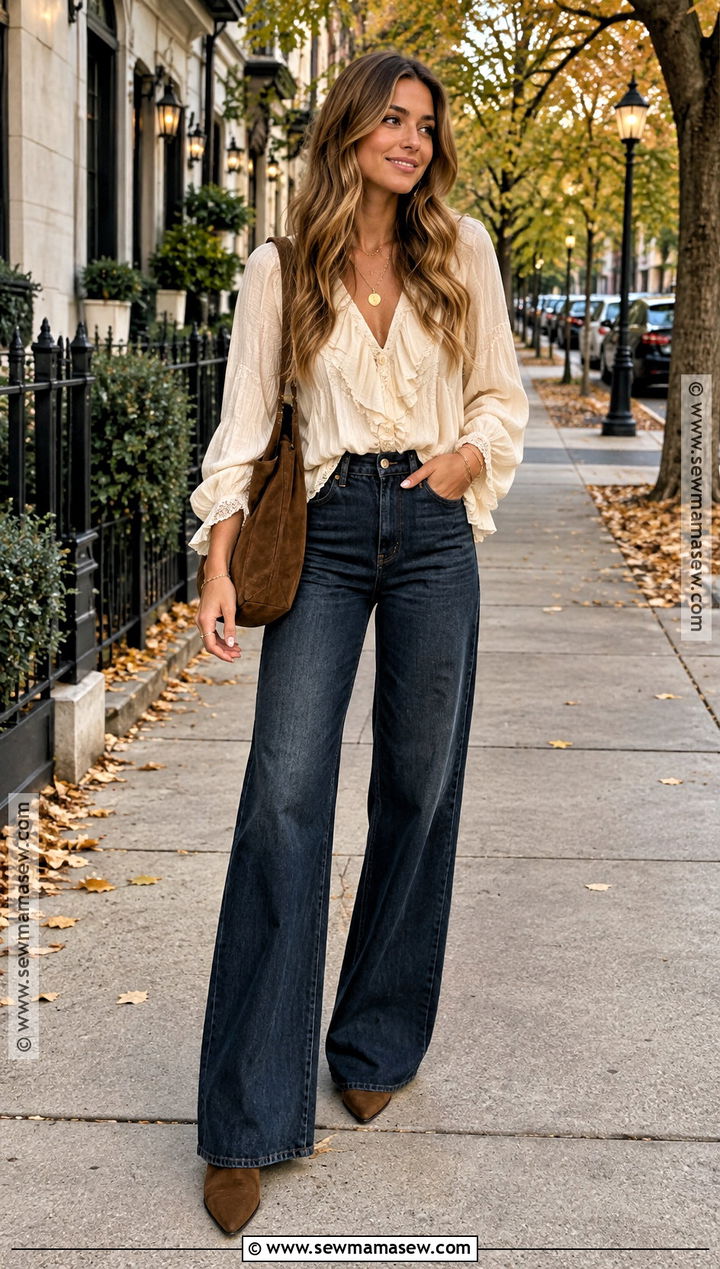
This is the outfit I reach for when someone wants softness without looking like they forgot to get dressed. A ruffled or pintucked blouse in rust or cream does the romantic part, and high-rise wide-leg jeans keep it grounded. The front tuck matters more than people expect: a full tuck turns the blouse into a balloon above the waistband, while tucking just the front few inches gives you a waist and lets the back fall loose. Dark denim reads sharper, faded denim reads vintage. I'd pair brown ankle boots on cold days and suede flats when it's mild, then add a long wool coat over the top, because a cropped jacket tends to fight the volume of both the blouse and the jeans.
2. Burgundy Blazer With Tailored Trousers
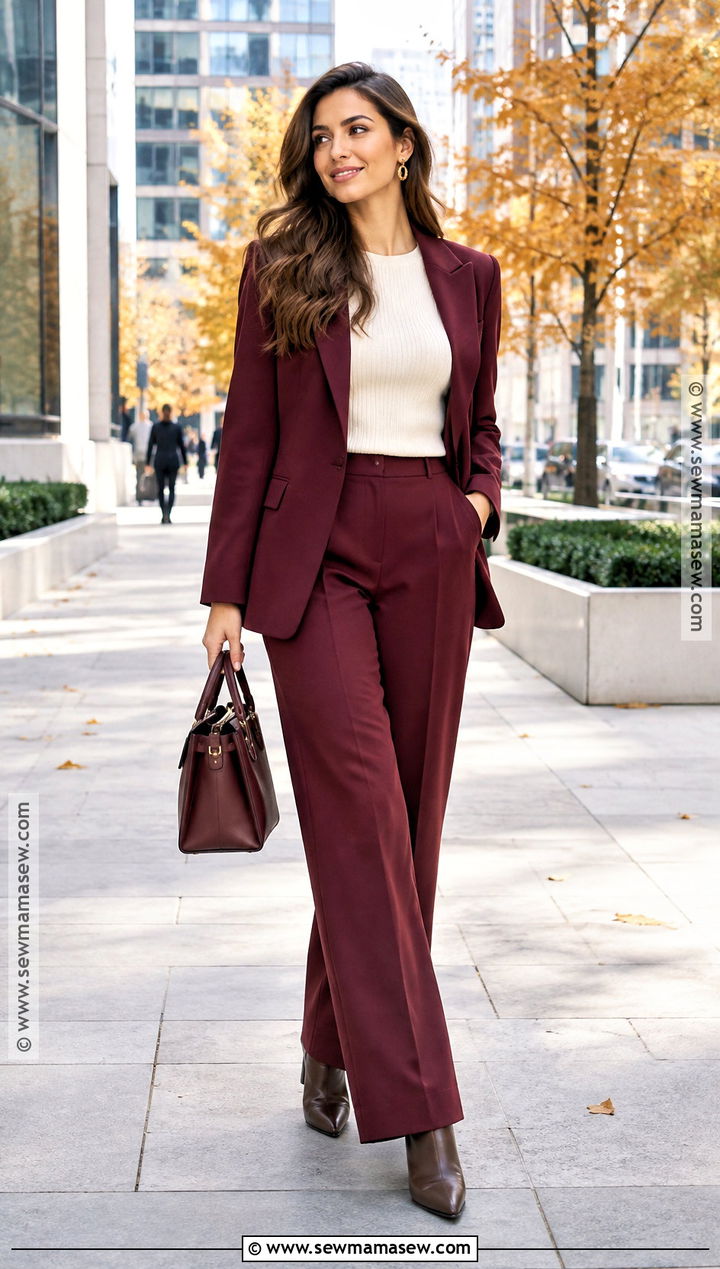
Burgundy is one of the easiest strong colors to wear because it behaves almost like a neutral next to brown, black and cream. I start with a structured burgundy blazer and either matching trousers or a shade slightly darker, then put something plain underneath, like a fine cream knit or a crisp white tee. Straight and wide-leg trousers both work; I choose by how the hem sits on the shoe, since a wide leg needs a bit of heel or a pointed toe to keep from swallowing the foot. Loafers suit daytime. A chocolate or oxblood bag keeps the palette closed. If a full suit feels too formal for your week, wear the blazer with dark jeans and you'll get far more use out of it.
3. Leopard Midi Skirt With Black Sweater
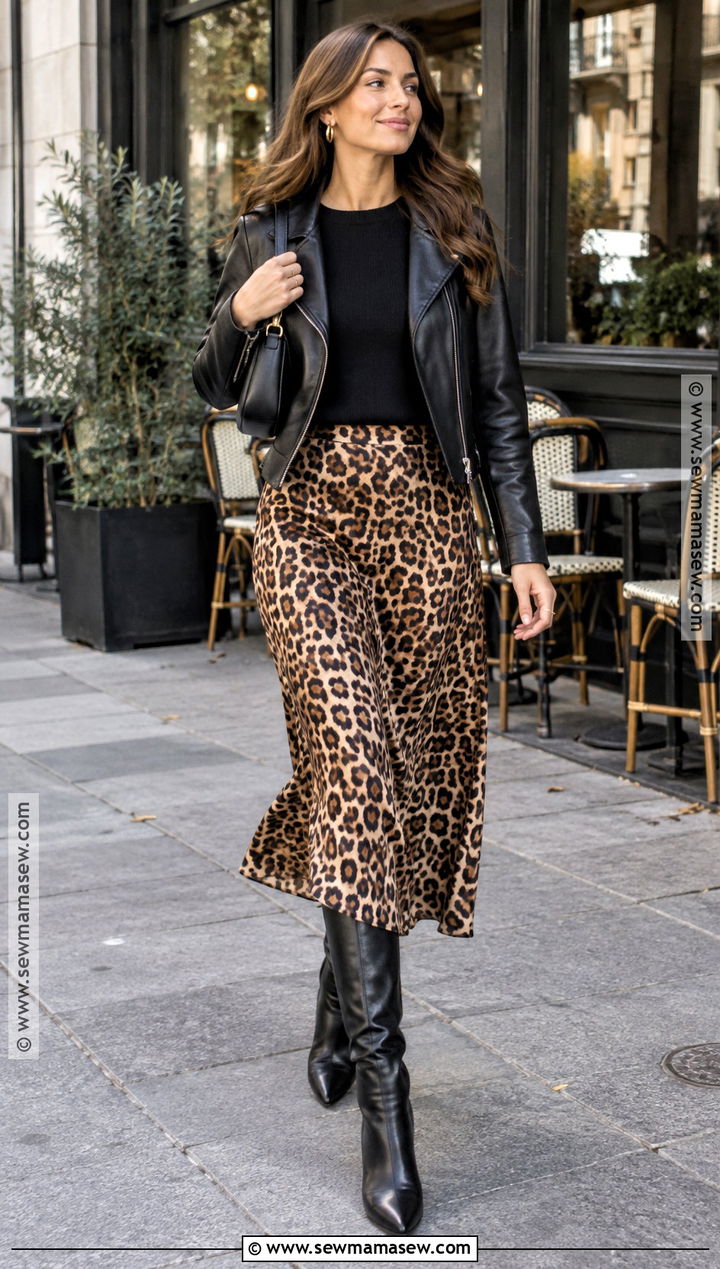
Leopard works when it's the only thing talking. I pair a fluid leopard midi skirt with a fitted black crewneck or mock-neck, because a slouchy top on top of a moving print loses the waist entirely. Bias-cut skirts are the most flattering version here, but they cling to anything underneath, so a slip helps. Black knee-high boots close the gap between hem and shoe in cold weather; in early fall, pointed flats let a little ankle show. Add a cropped leather jacket for edge or a long black coat for something calmer, and keep the bag plain black. A second pattern anywhere, even on a scarf, is usually where this look goes wrong.
4. Chocolate Brown Leather Jacket With Jeans
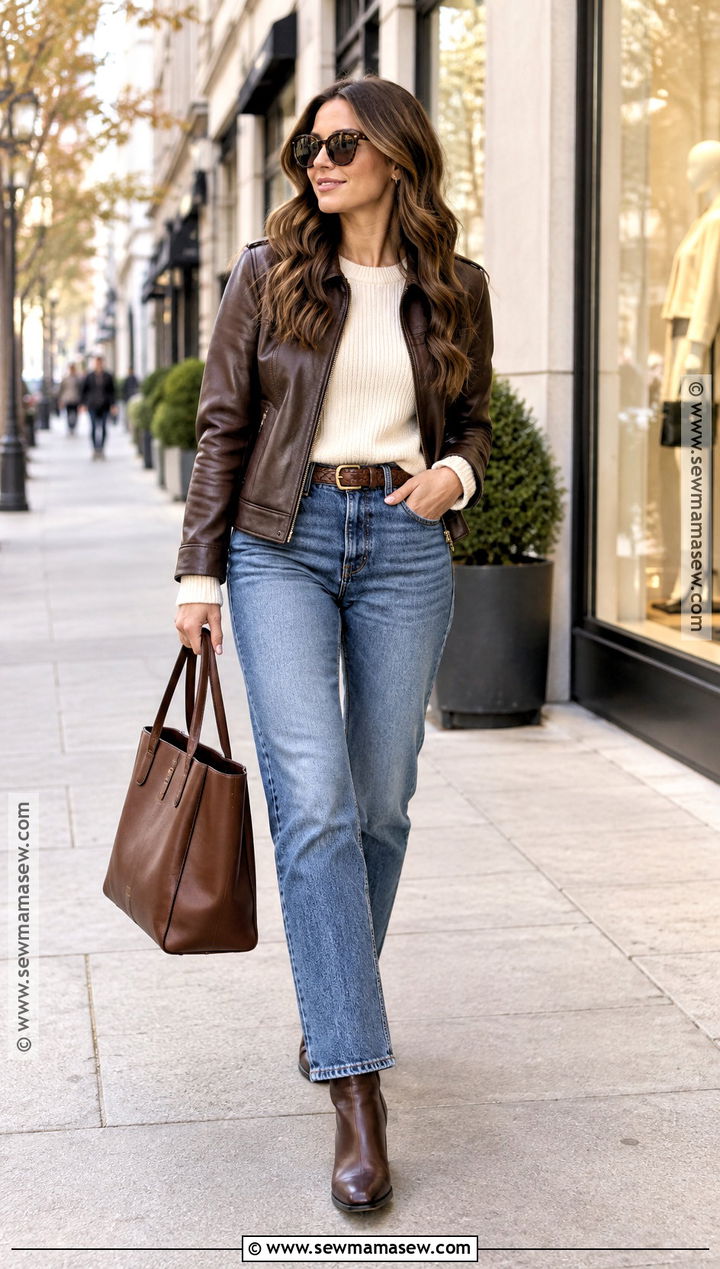
Chocolate brown leather is softer on most faces than black, especially for anyone with warm or muted coloring. I like it slightly oversized over an ivory knit with straight or relaxed mid-blue jeans. If the jacket is real leather, expect it to feel stiff for the first few wears and then mold to your shoulders and elbows; faux leather stays the same shape but can crack at the creases after a few seasons. Brown loafers or suede sneakers finish it, and a woven belt in a nearby brown ties the middle together. Gold hardware sits naturally on brown. On a colder morning, a thin turtleneck under the knit adds warmth without making the jacket tight across the back.
5. Chore Jacket With Straight Leg Pants
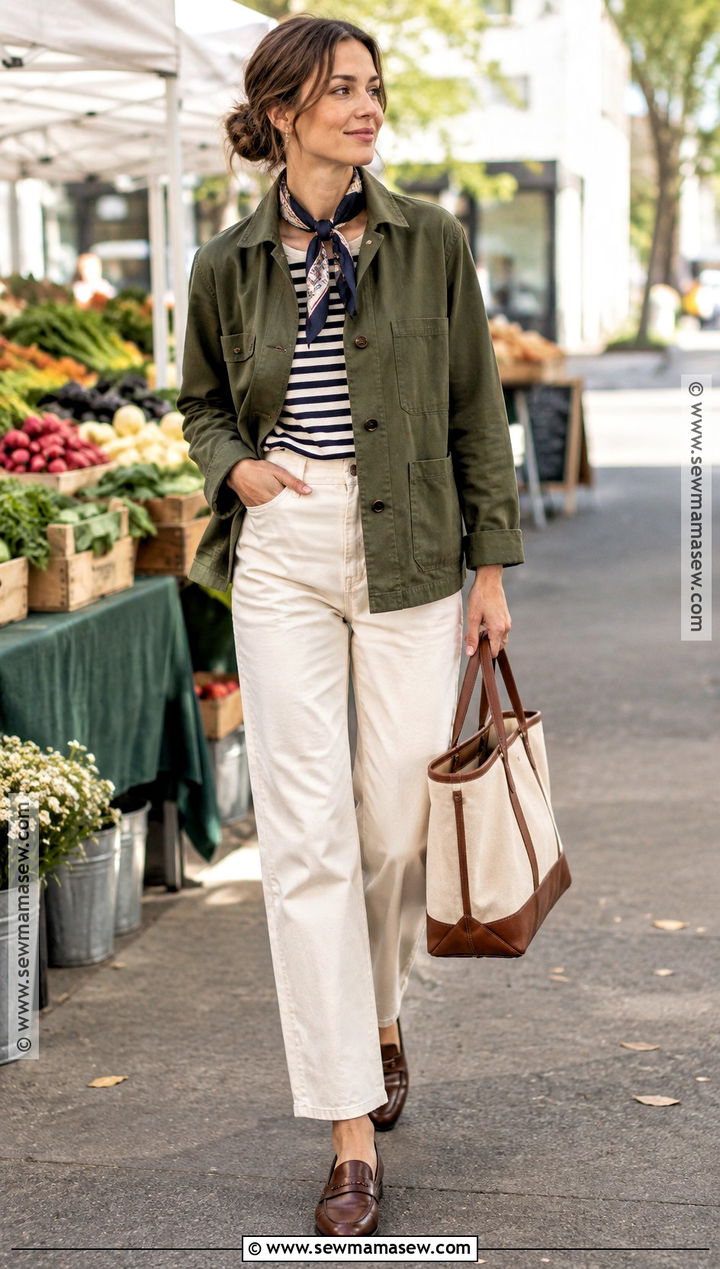
A chore jacket is one of the most hardworking layers I know for unsettled fall weather. Olive, camel, navy or faded brown all work over a striped shirt or a light crewneck. I pair it with straight-leg cream or navy trousers when I want it a little more grown-up than jeans, and with clean dark denim when I don't. Cotton canvas chore jackets soften with every wash, so a new one can look boxy at first. Rolling the cuffs once to show the shirt underneath is a small thing that makes it look deliberate. Lug-sole boots, loafers or plain sneakers all work, and the jacket comes off easily when the afternoon warms up.
6. Cape With Slim Trousers And Boots
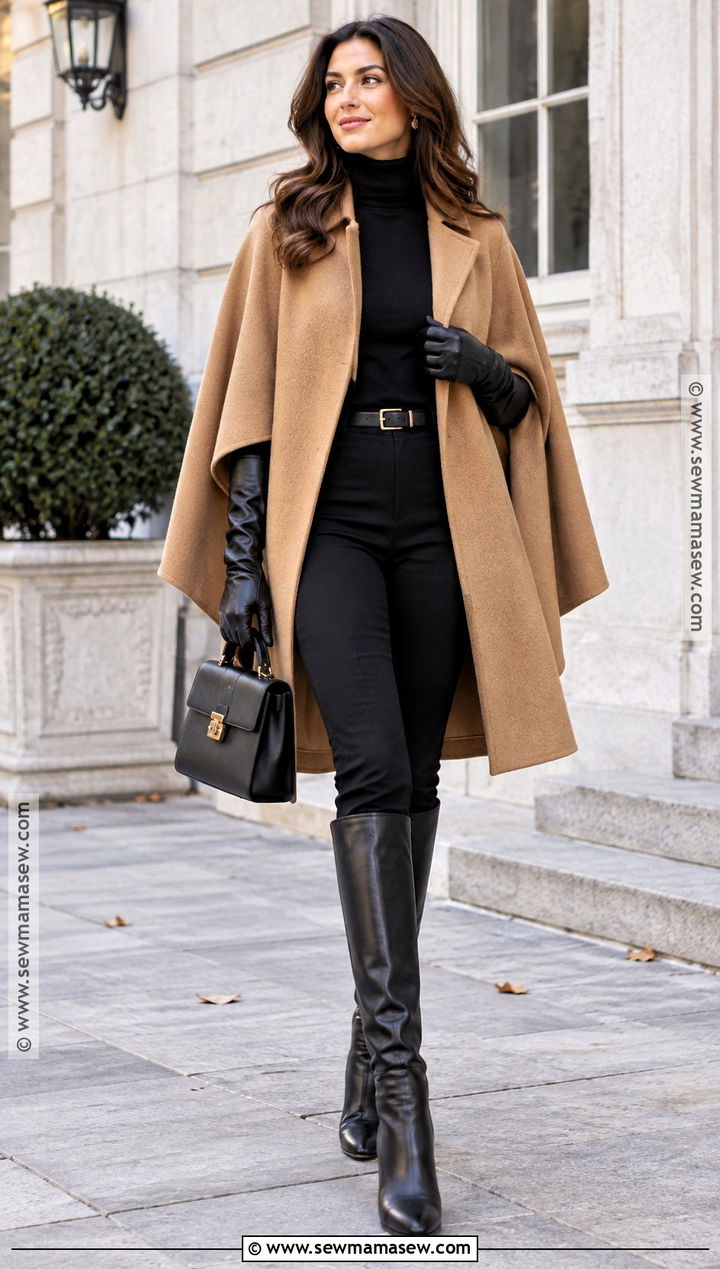
A cape has a lot of volume up top, so I keep everything below it narrow. A wool cape in camel or charcoal goes over a fitted turtleneck, then slim ankle trousers and knee-high boots, ideally in the same dark shade so the leg reads as one line. The arm openings are the practical catch: carrying a big tote under a cape is awkward and crushes the drape, which is why I always suggest a compact structured bag. Length is the other thing I check first. If you're petite, a cape that stops around the hip keeps you from looking swamped; taller women can carry a longer one. Gloves are worth adding, since your hands are more exposed than in a coat.
7. Argyle Sweater With Pleated Midi Skirt
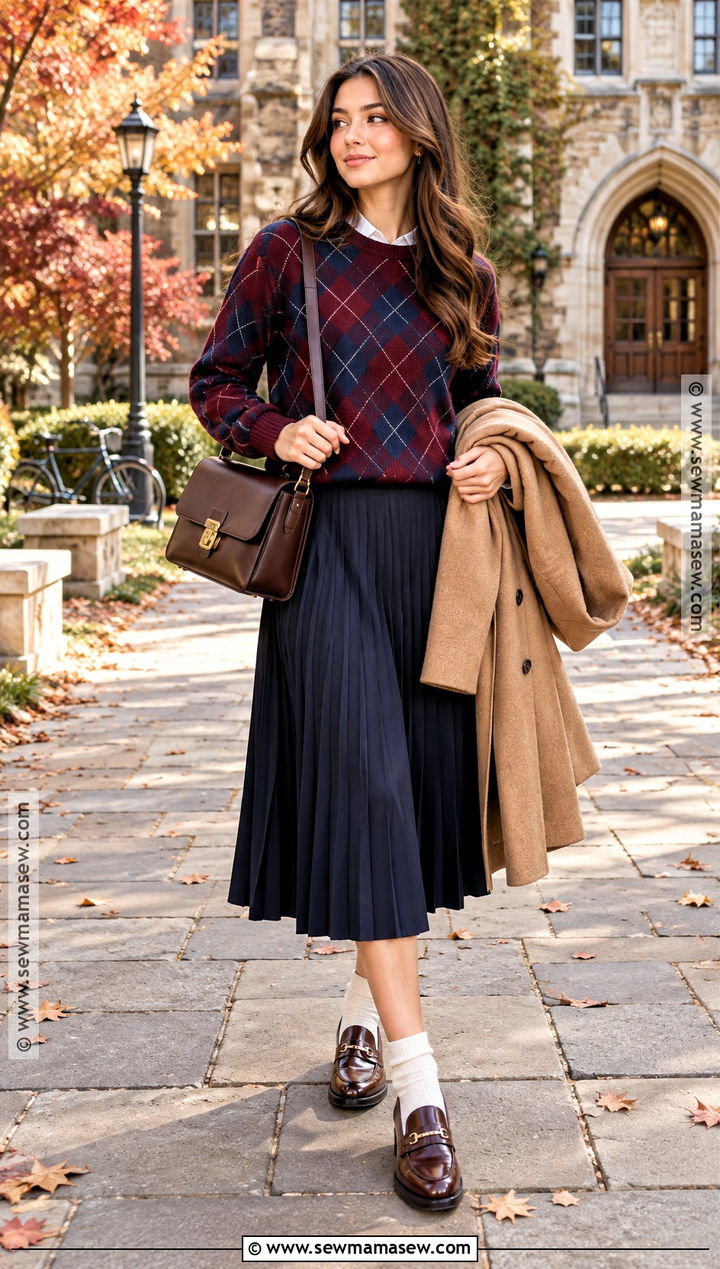
Argyle can tip into costume quickly, so I balance it with a skirt that is plain or very quietly checked. A slightly relaxed argyle sweater in burgundy, forest or navy over a pleated midi skirt is the version I find easiest to wear. Pleats need room at the hip to hang straight; if the skirt is too snug there, they splay open, and that's worth checking in a mirror from the side. A half-tuck or slim belt gives the sweater a waist. Loafers with socks lean preppy, and knee-high boots lean warmer. A satchel and a camel or navy coat finish it. Skip the matching beret and the plaid scarf together, because that's usually the tipping point.
8. Suede Jacket With Denim Midi Skirt
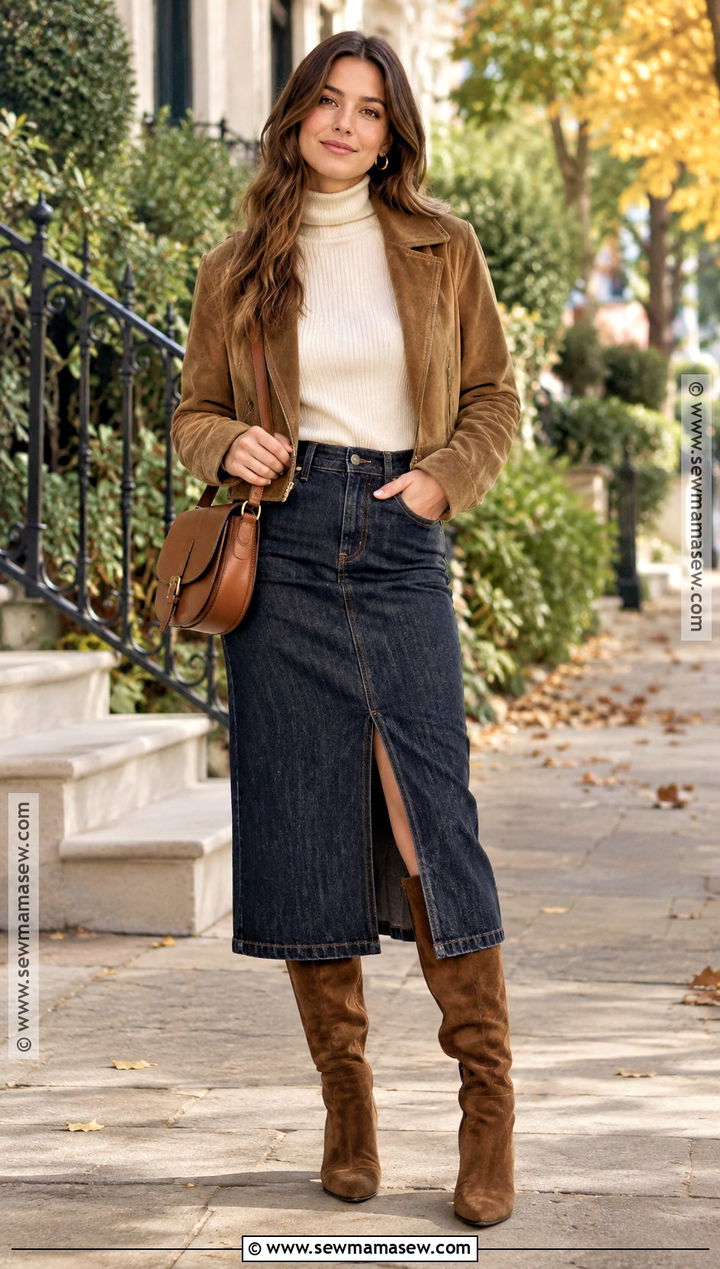
Suede and denim together give an outfit texture without any effort from color. I put a camel or tan suede jacket over a fitted cream turtleneck, then add a denim midi skirt with a front slit so you can actually walk. Suede is the piece to watch on wet days: rain darkens it in patches and leaves water marks, so I spray a new jacket with protector before the first wear and keep it home when the forecast looks doubtful. Tall brown boots keep the palette warm. A saddle bag nods to the 1970s feel. If you want more waist, a cropped jacket or a neat tuck does it; if you prefer less structure, swap the fitted top for a looser knit.
9. Midi Dress With Knee High Boots
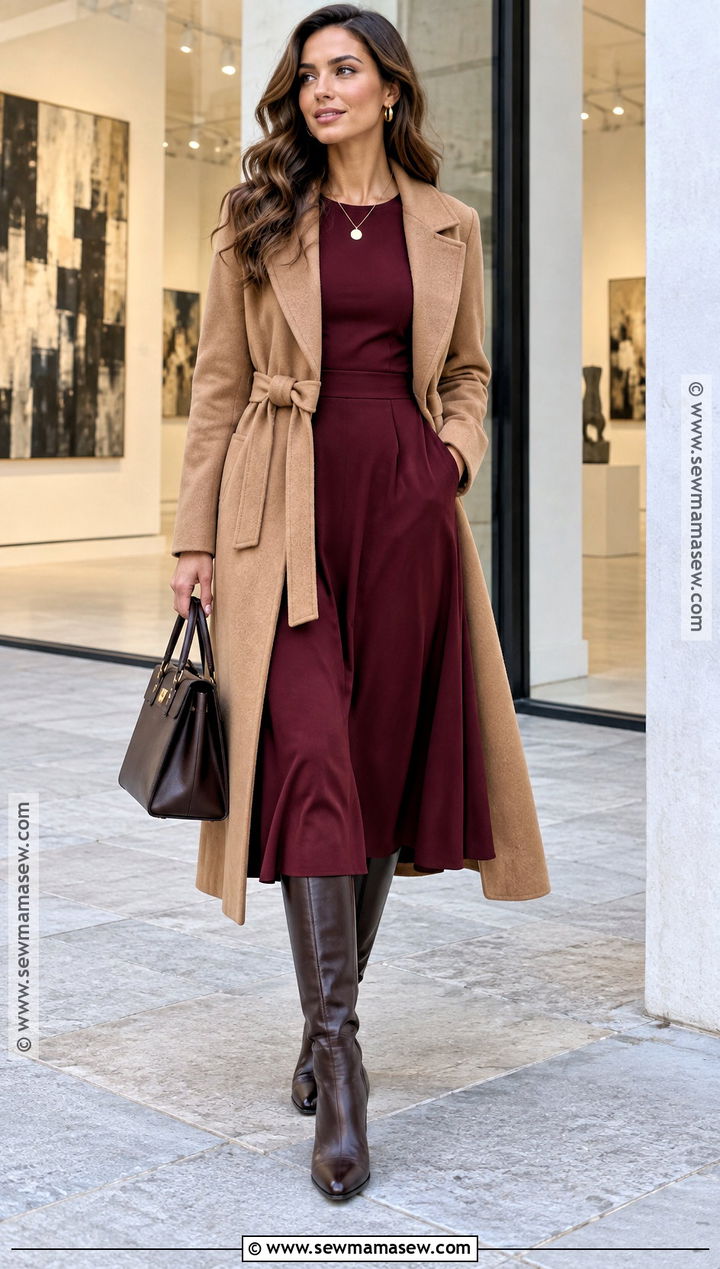
A long-sleeve midi dress is about the least effort a fall outfit can take. Burgundy, olive, navy or a quiet geometric print all work. What I check first is the gap between hem and boot: either the hem should overlap the boot shaft slightly, or there should be a clear few inches of leg showing. An inch or two of gap looks accidental. A belted wool coat adds warmth and still shows the waist. When it gets truly cold, a thin thermal layer under the dress beats piling a chunky cardigan on top, which adds bulk at the arms and spoils the line of the coat.
10. Denim Shirt With Wide Leg Jeans
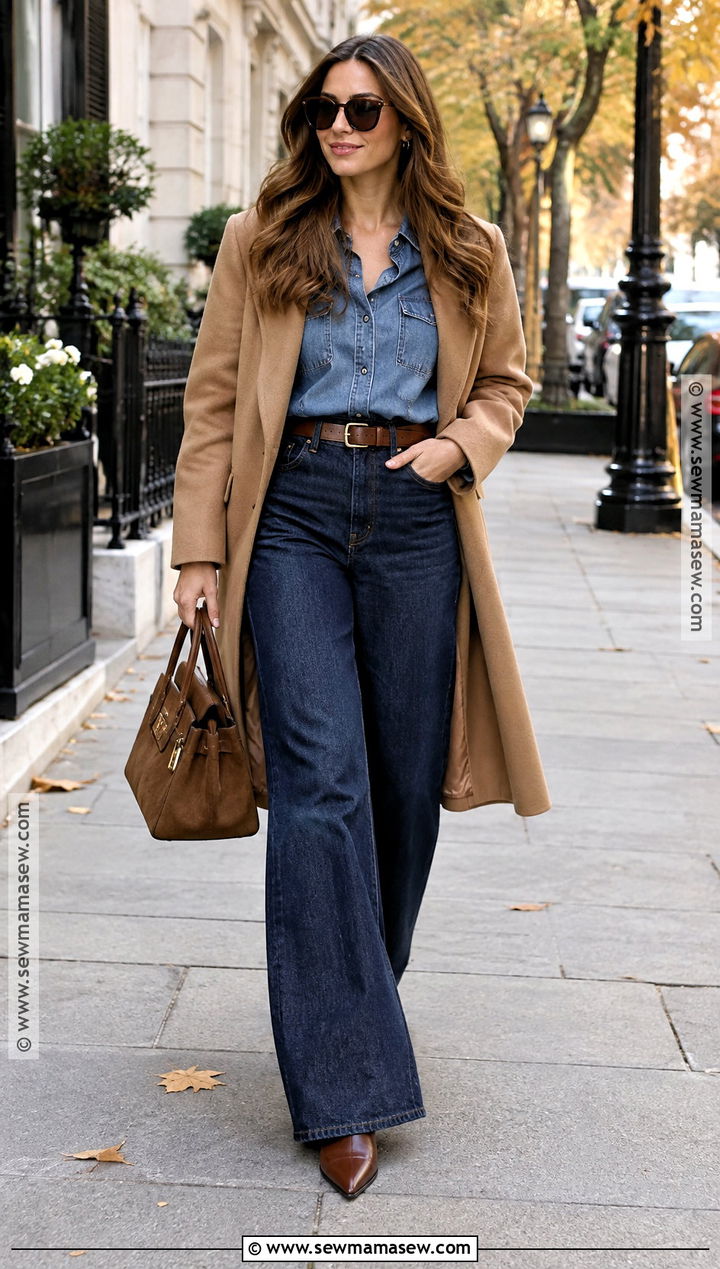
Double denim looks intentional when the washes are clearly different or clearly matched. Near misses are what look wrong. I'll tuck a medium-wash denim shirt into dark indigo wide-leg jeans, or put pale chambray with faded jeans for something softer. A brown leather belt breaks up the blue at the waist, which is the single most useful thing in this outfit. Wide legs need a pointed boot or heeled loafer underneath so they don't drag. A suede bag brings in fall texture, and a tailored camel coat over the top makes the whole thing read more polished. Raw denim can transfer dye onto a pale shirt, so wash it once before pairing.
11. Track Pants With Cashmere Sweater And Loafers
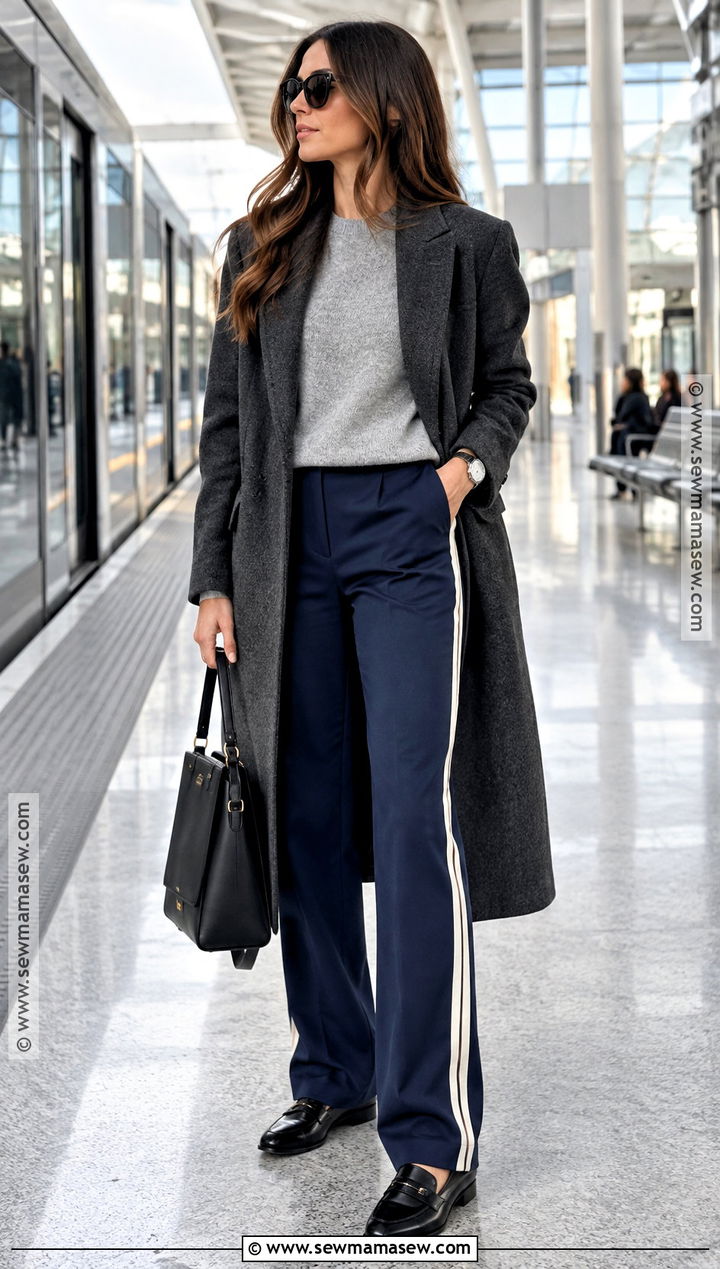
Can track pants look put together enough for a city day? Yes, if everything around them is refined. I look for a tailored pair with a straight or slightly wide leg and a neat side stripe, then add a cashmere or fine-knit crewneck. The loafers do most of the work here, so I'd never swap in running shoes, and a structured coat finishes it. Cashmere does pill under bag straps and at the underarms, so a fabric comb is worth owning if you wear this a lot. I suggest this one for travel days and long weekends, but not for an office where trousers are expected to have a waistband and a crease.
12. Lady Jacket With Jeans And Mary Janes
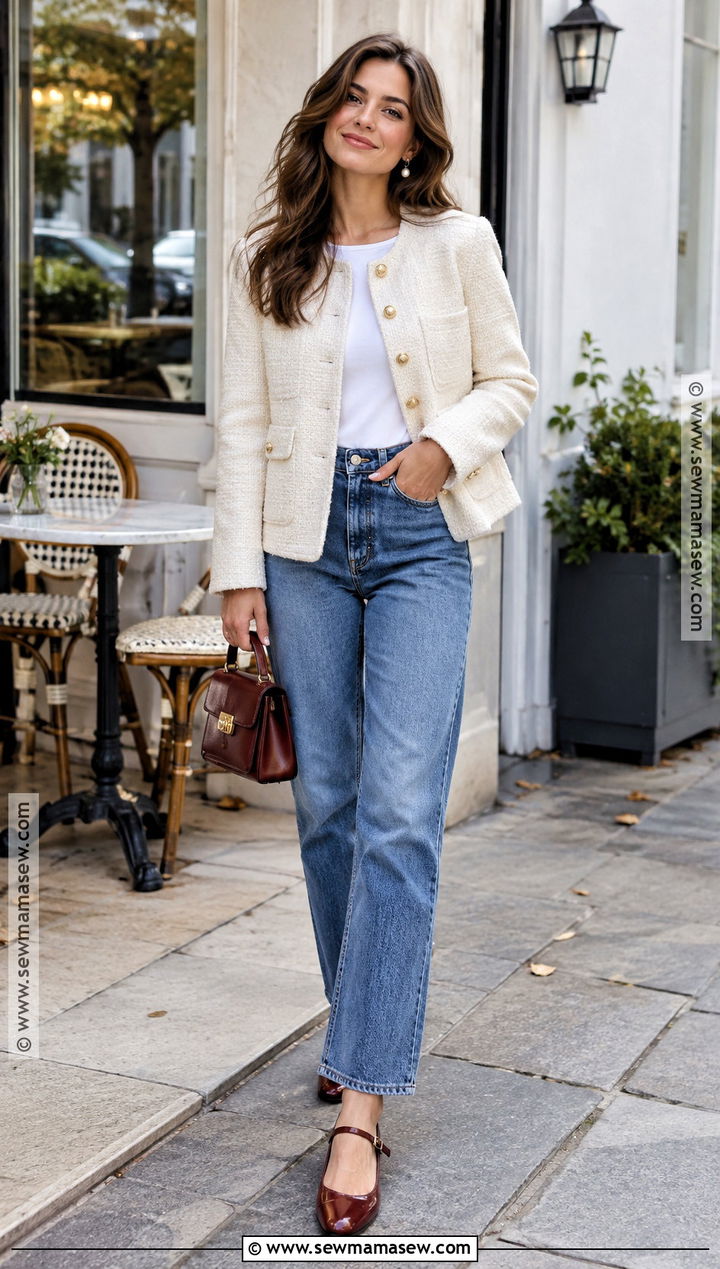
A collarless lady jacket in a textured weave instantly dresses up plain jeans. I wear it slightly cropped over a fitted tee or shell with high-rise straight-leg jeans, so the jacket hem lands near the top of the waistband. Mary Jane flats or low heels suit its sweetness and are easy to walk in. Bouclé and tweed snag on rough bag straps and chunky jewelry, so I keep earrings small and carry a top-handle bag. If the jacket already has contrast trim or gold buttons, keep everything else neutral. Curvy figures usually do best with a jacket ending just below the waistband, and petite frames with a shorter one.
13. Scarf Coat With Tall Boots
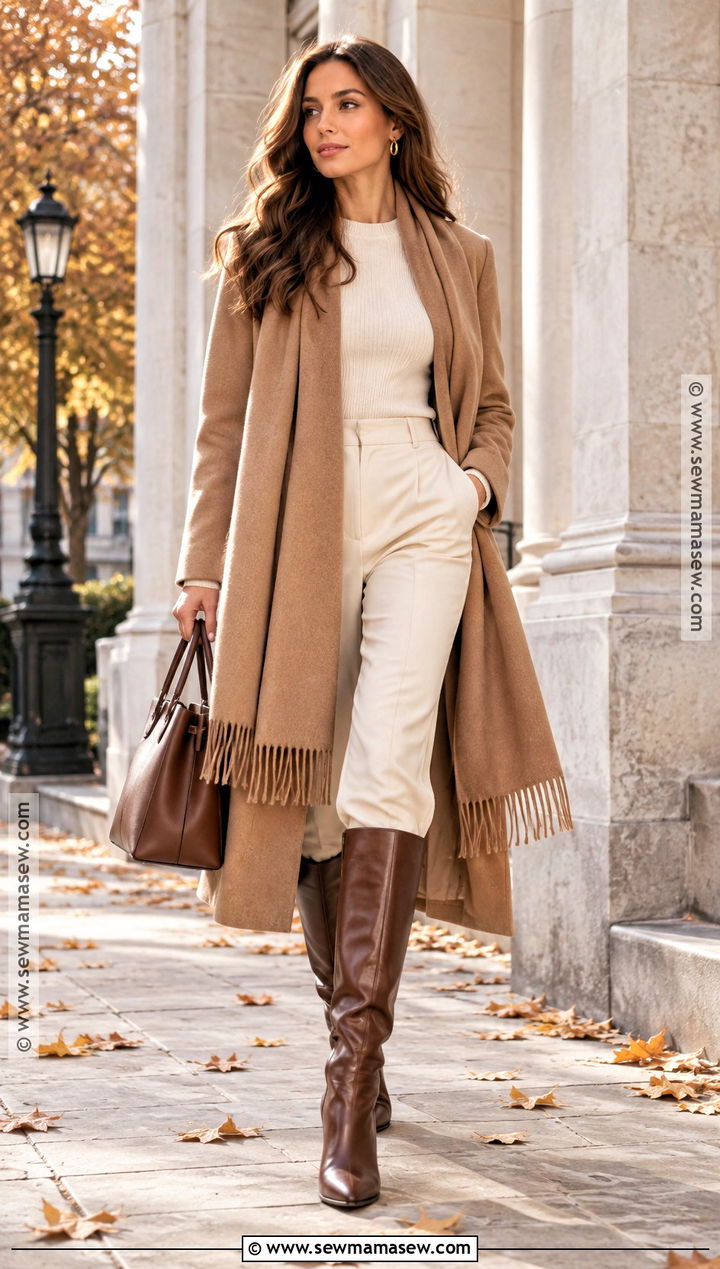
A scarf coat solves the problem of a scarf that keeps sliding off. Look for a wool coat with an attached scarf, or one that comes with a matching oversized wrap. Underneath I wear a fitted knit and straight trousers in the same color family, like camel and cream or charcoal and gray, which makes you look longer. Tall boots or sleek ankle boots depend on the trouser length. The draped neckline is the point, so I avoid a turtleneck or a hood underneath, since either crowds the scarf and makes the neck look short. For colder days, a thin base layer adds warmth without changing the shape.
14. Sequin Skirt With Crewneck Sweater
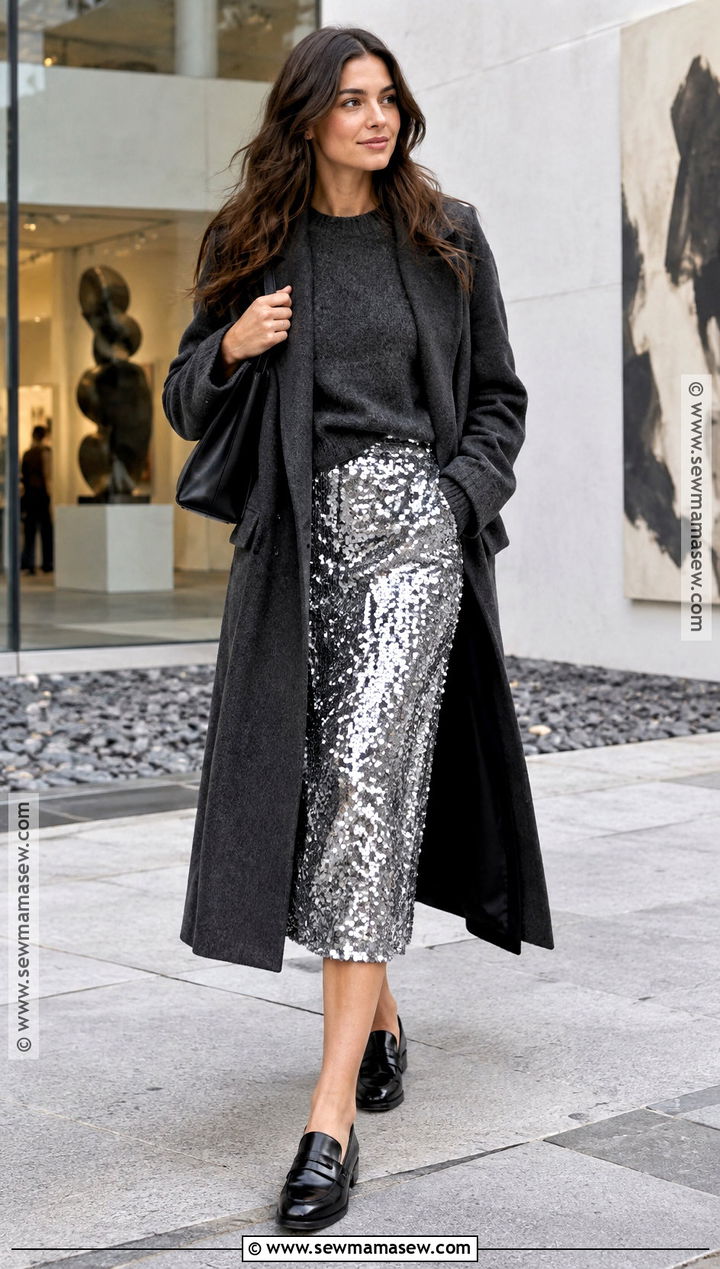
Sequins in daylight work best against something plain and matte. I pair a dark or metallic sequin midi skirt with a gray, cream or navy crewneck, tucked lightly at the front or cropped to meet the waistband. Sequins catch on knit fibers, so a smooth tight-knit sweater is a safer choice than a loose chunky one, which will snag and pill where it rubs the skirt. Loafers or low ankle boots keep it casual. Limit jewelry to one small piece. A wool coat makes it practical for a gallery afternoon or a lunch. Store the skirt folded flat or rolled; hanging it can stretch the waistband under the weight.
15. Monochrome Gray Suit With Sneakers
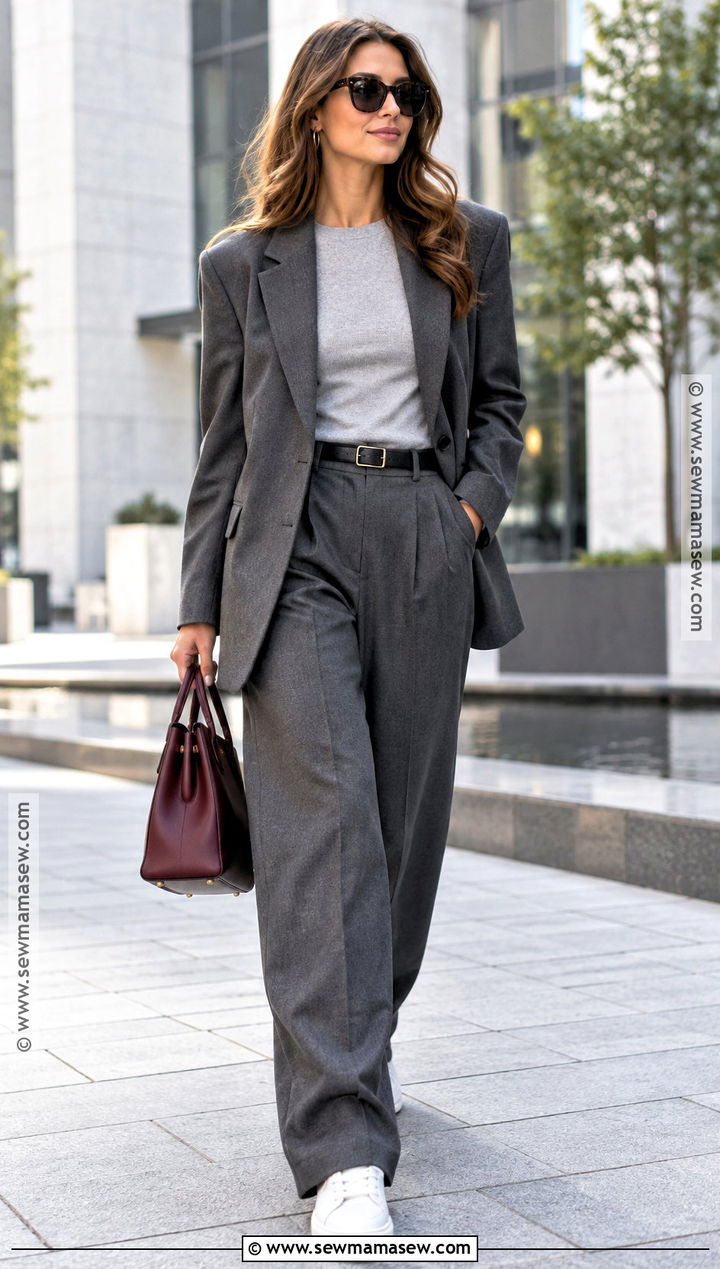
Head-to-toe gray only looks dull when every piece has the same surface. I start with a relaxed charcoal blazer and wide-leg trousers, then add a lighter gray tee or a fine knit, so there's a shift in both shade and texture. Heathered knit, smooth suiting and leather sneakers sitting together are what keep it interesting. White sneakers make it casual, and pointed boots make it sharper. A burgundy or silver bag gives the eye somewhere to land. Because it's really three separates, you'll wear the blazer with jeans and the trousers with a sweater far more often than as a set, which is where the value is.
Adjusting These Looks for Petite, Tall and Curvy Frames
The same outfit can look right on one person and slightly off on another, and it's nearly always about where lines fall on the body. These are the adjustments I make most often.
Petite
Midi lengths are the trickiest. A midi that hits mid-calf on a taller woman can land at the ankle on you, so I'd choose skirts and dresses that end just below the knee, or have them hemmed. Wide-leg jeans and trousers look best with a bit of heel or a pointed toe peeking out, and capes and long coats should be tried on before you commit.
Tall
Long-line pieces are your advantage here. A longer cape, an ankle-grazing coat and a true midi all sit in proportion. The usual problem is sleeve and inseam length, especially on track pants and cropped jackets, so check that wrists and ankles aren't showing by accident.
Curvy
A defined waist does a lot, so belts, front tucks and jackets that stop just below the waistband all help. Fluid fabrics like a bias-cut skirt or a soft blouse skim better than stiff ones. For double denim, a darker wash on the bottom half and a lighter shirt on top keeps the look balanced.
Caring for the Suede, Leather and Sequins on This List
Several of these outfits rely on materials that wear well only if they're looked after. Suede needs a protective spray before its first outing and a soft brush once it's dry; never put it near a heater to speed that up. Leather should be wiped and conditioned a couple of times a season, and stored on a wide hanger so the shoulders keep their shape.
Wool coats and capes do better brushed and aired than dry-cleaned after every wear. Cashmere pills at friction points, which is normal, and a fabric comb removes it. Sequins should be hand-washed or spot-cleaned and stored flat, away from knits they might snag.
One Statement Piece, Plenty of Quiet Ones
Every outfit here follows the same idea: one piece carries the season and the rest stays quiet. The boho blouse leans on plain jeans, the sequin skirt relaxes under a crewneck, and the track pants look deliberate because of the loafers and coat. If you're adding only one new thing this fall, I'd pick the color you'll wear most, which for many people is burgundy or chocolate brown, and build from what's already hanging in your closet. Adjust the layers to your local weather and the proportions to your frame. Fit and a clear focal point will always do more than chasing every trend at once.
Related posts: