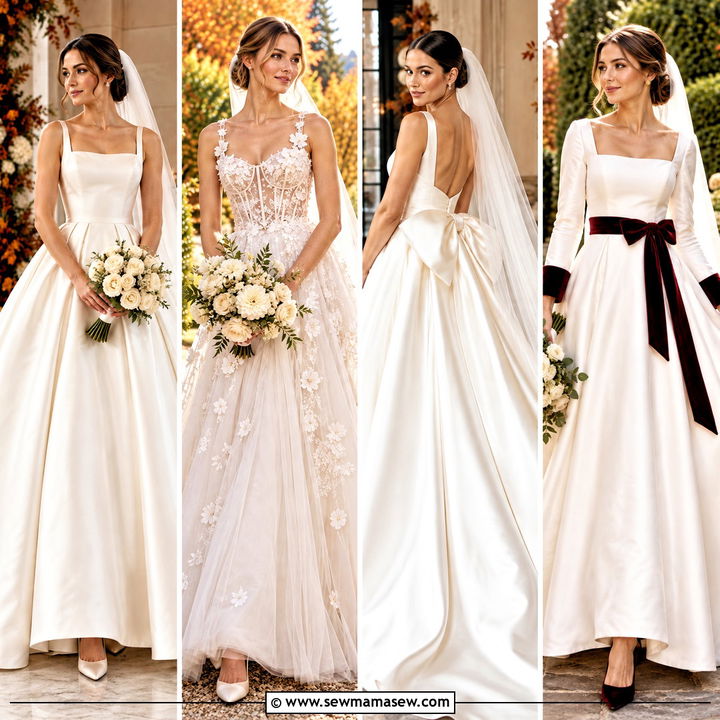
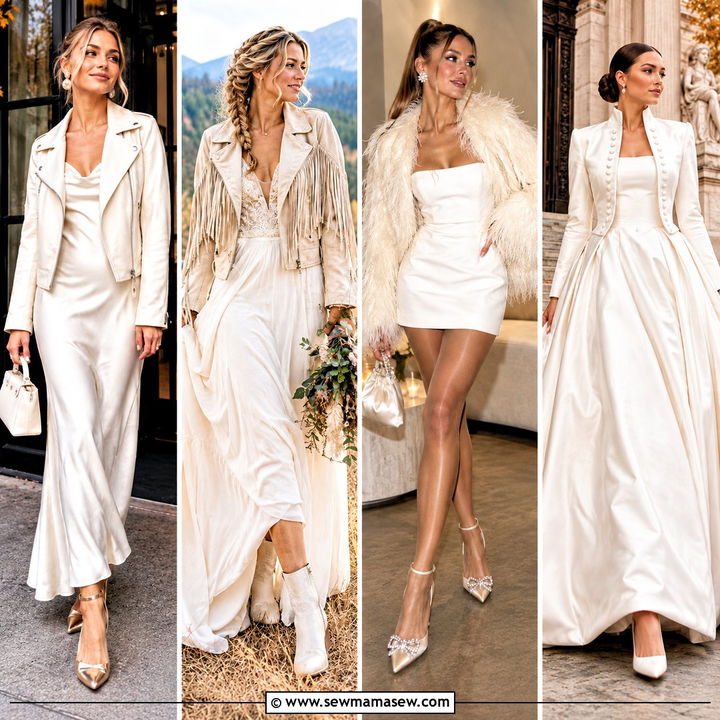
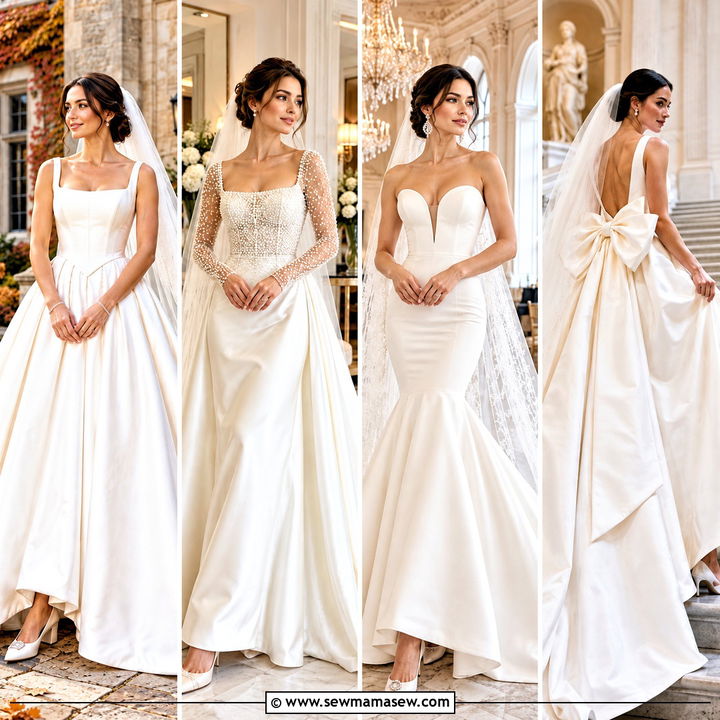
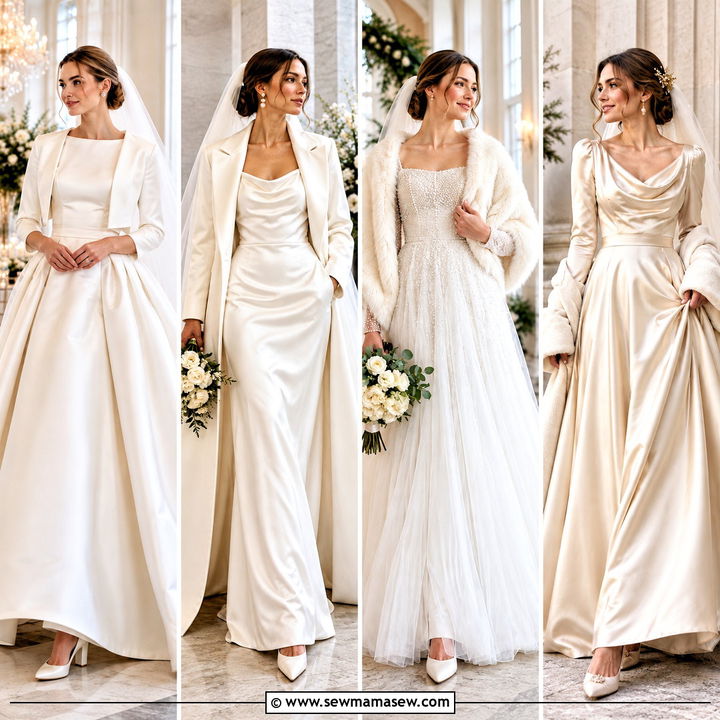
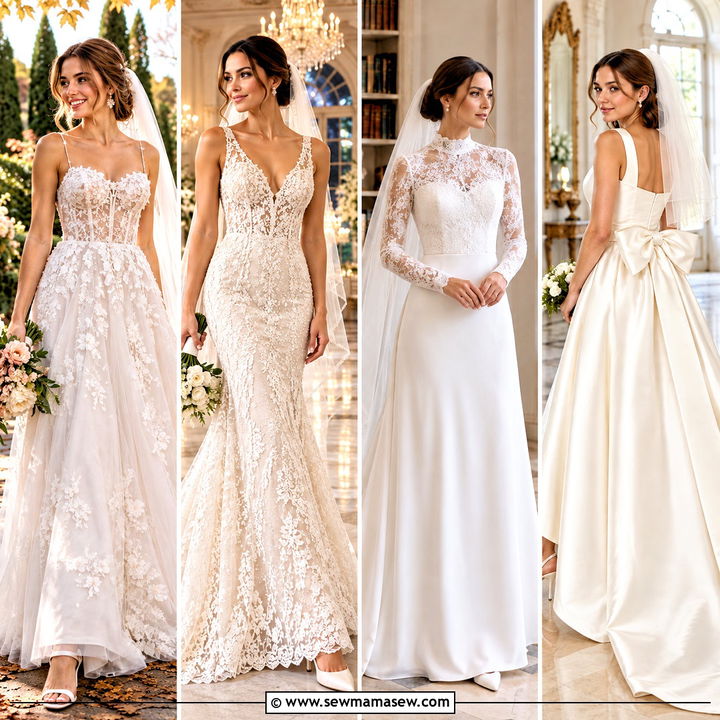
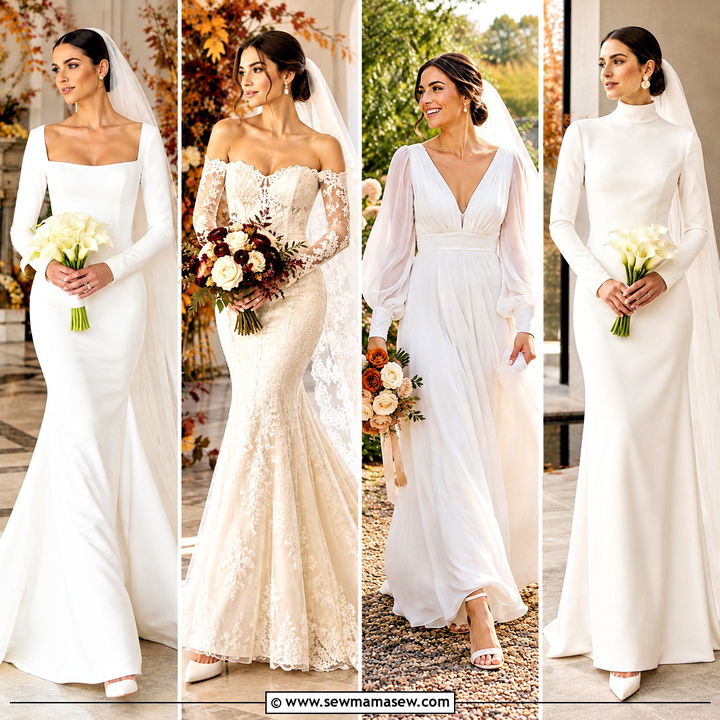
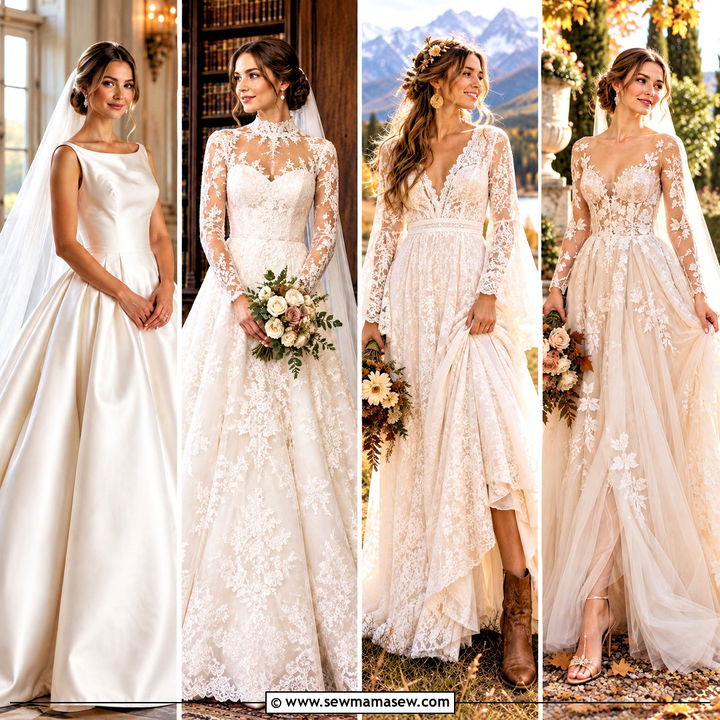
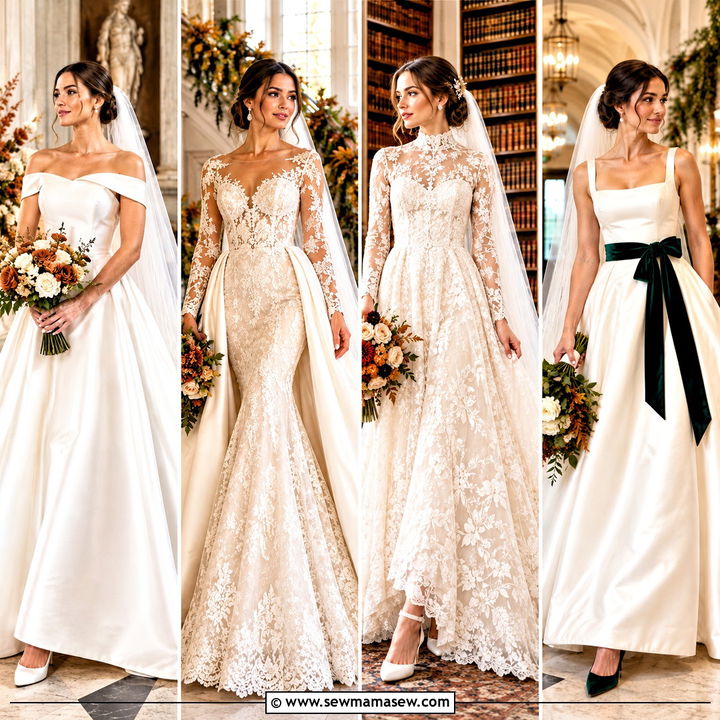
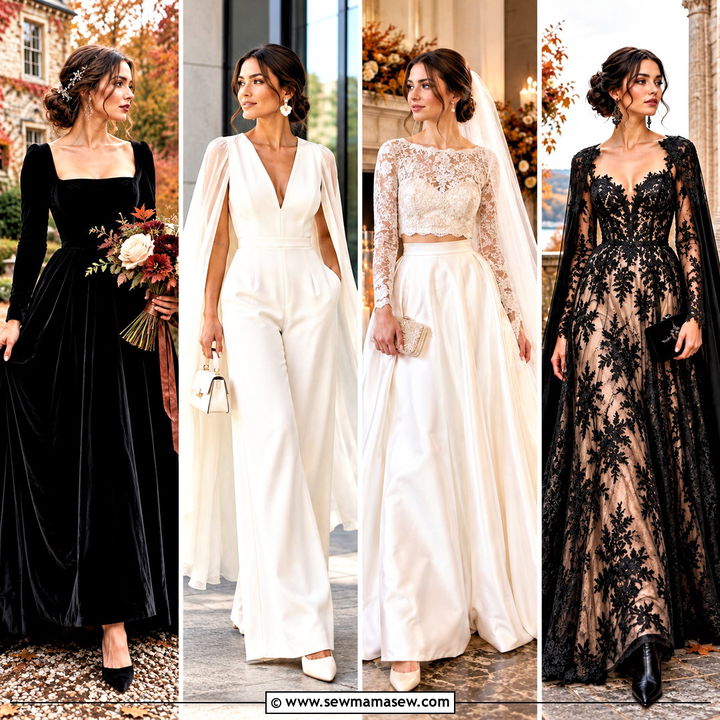
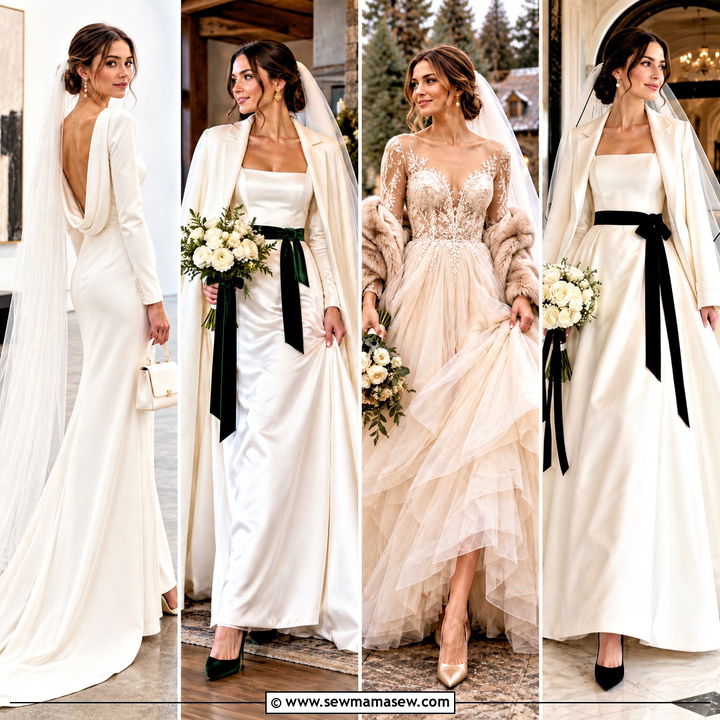
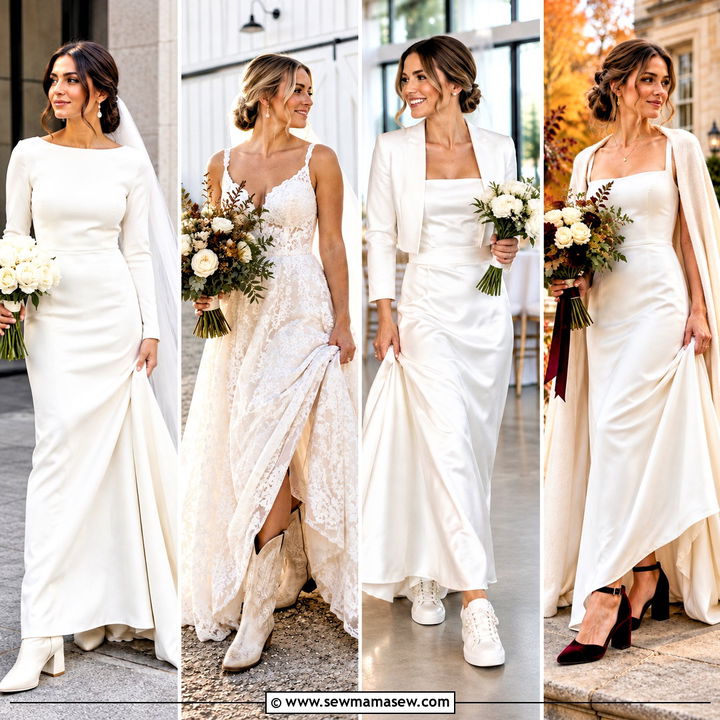
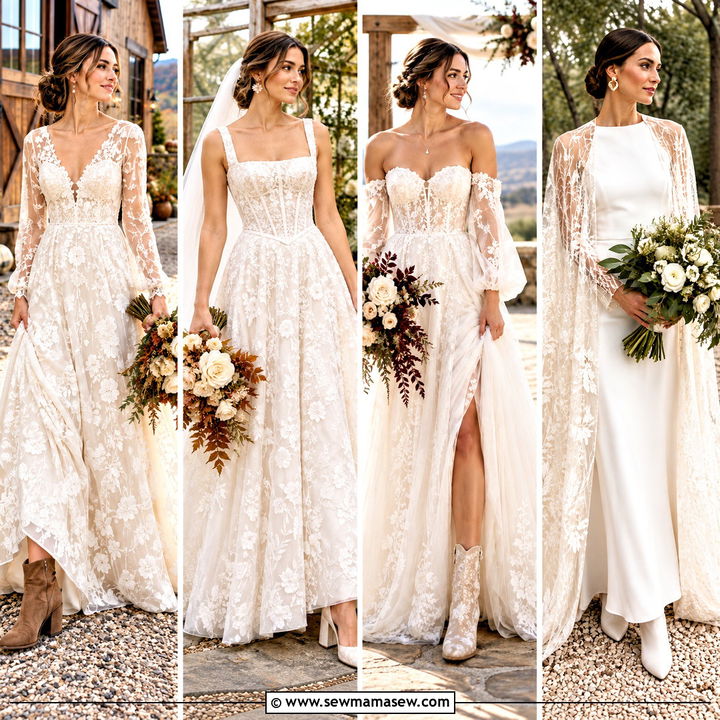
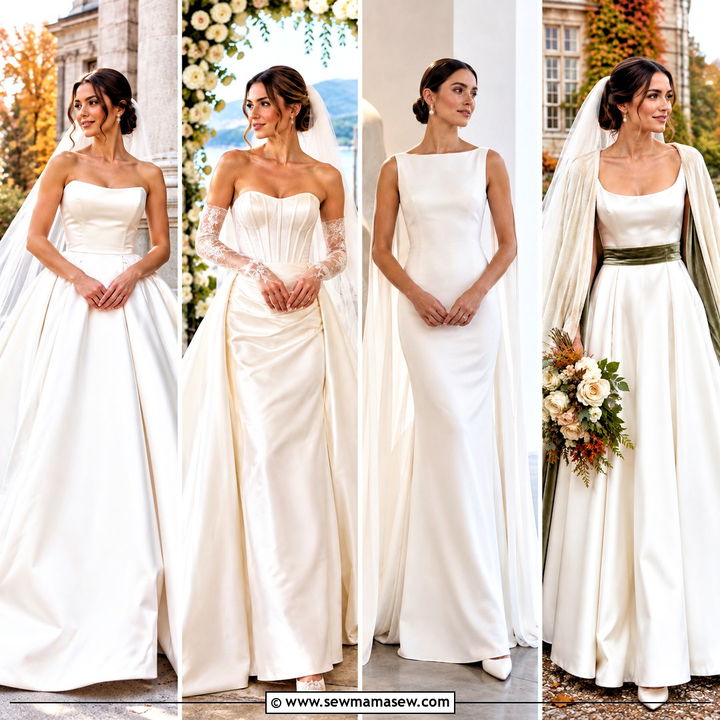
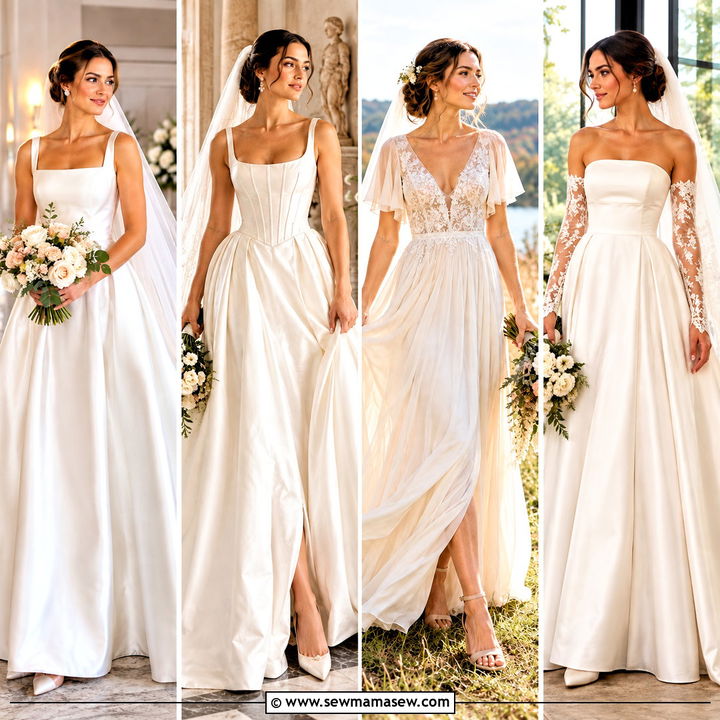
A fall ceremony gives you cool air and soft light, and it also gives you a bride who's cold by the time the portraits start. A good bridal coat solves that while working with the gown instead of hiding it. Before I suggest any style, I ask about four things: the expected temperature, the dress fabric, the neckline and how much skirt there is to cover. Ivory wool is the classic answer, faux fur brings texture, and a tailored trench handles rain. Capes and wrap coats leave room for full skirts and detailed sleeves. The fifteen options below run from cropped faux fur to long wool cloaks, with notes on which gowns each one actually fits over.
Fitting a Coat Over the Gown, Not Over Jeans
The most common mistake I see is a bride buying a coat in her everyday size and trying it on over street clothes. A wedding gown changes everything: a structured bodice adds width at the ribs, petticoats push the coat hem out, and lace sleeves need room in the armhole. A coat that fits over a sweater can refuse to close over a corset.
If the dress isn't ready yet, I ask brides to bring the gown's measurements and a similar silhouette to the coat fitting. Then I check these in order:
- Can she cross her arms and lift the bouquet to chest height without the back seam pulling?
- Does the sleeve end at the wrist bone with the dress sleeve underneath, not bunched above it?
- Does the front close over the bodice without creasing it, or does it need to be worn open?
- Where does the coat hem land against the skirt? A hem that stops mid-flare looks unplanned.
- Is the lining smooth enough to slide over lace, beading and tulle?
Capes, wraps and cropped styles forgive the most, which is why I steer brides with ball gowns toward them. Tailored wool coats look sharpest but need the most careful sizing, and a seamstress can usually let out side seams only a little.
1. Ivory Wool Wedding Coat
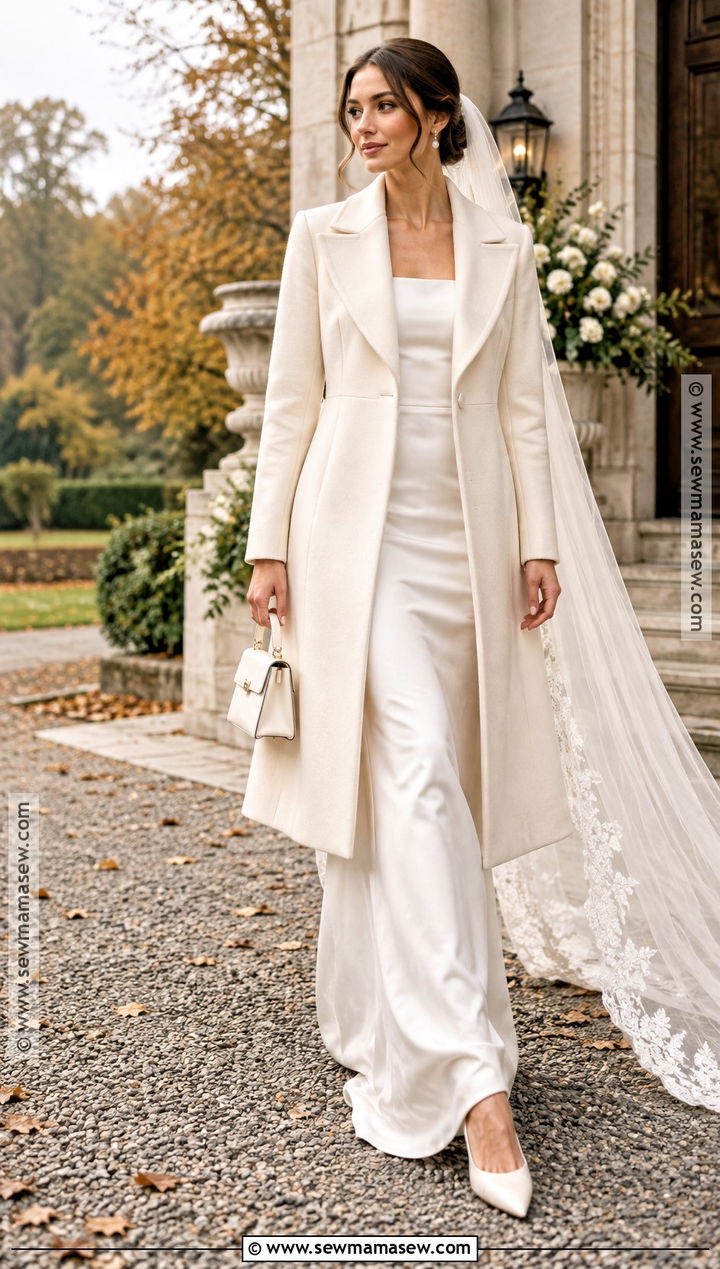
Ivory wool is the coat I recommend most, because it keeps a bride warm and still looks like part of the outfit. I'd choose knee or midi length with clean lapels, hidden buttons and a gently shaped waist. It sits smoothest over a satin column or a long-sleeve crepe dress; anything with a full skirt needs a size up or a flared hem, or the front won't close without crushing the tulle. Pointed ivory pumps, pearl earrings and a structured mini bag are all it needs. The detail people miss is undertone: cream wool beside warm ivory, bright white beside cooler fabrics. A low bun and a neat cathedral veil finish it.
2. Faux Fur Wedding Coat
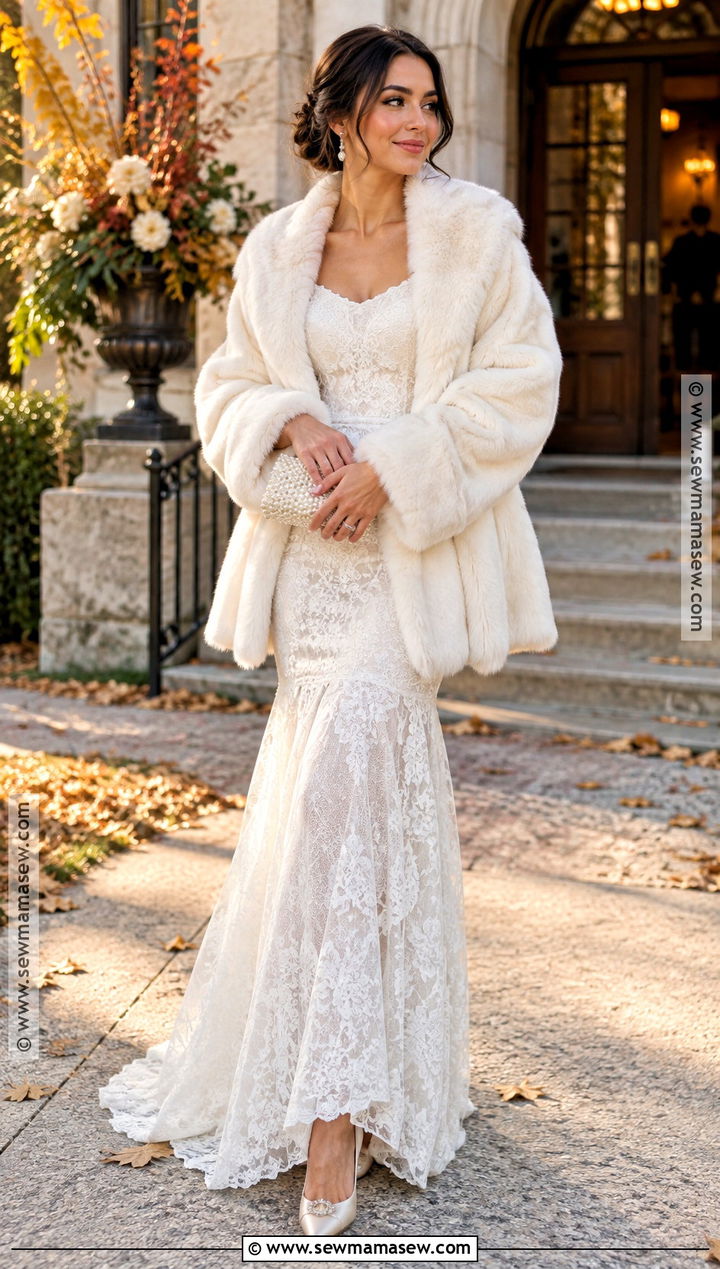
Faux fur gives a fall bridal look instant texture. A hip-length ivory version sits well over a fitted lace gown, a silk slip or a sleek trumpet shape, and it stops at the hip so the skirt line stays clear. Collarless reads modern; a wide shawl collar feels more traditional. Because it adds bulk at the shoulders, I keep accessories small: simple drop earrings, satin heels, a compact pearl clutch. It doesn't have to match the dress exactly, since the change in texture makes a slight color difference look deliberate. A full lining matters more than people think. Unlined faux fur can shed onto satin, and it's colder against bare arms during a late exit.
3. Hooded Wedding Cape Coat
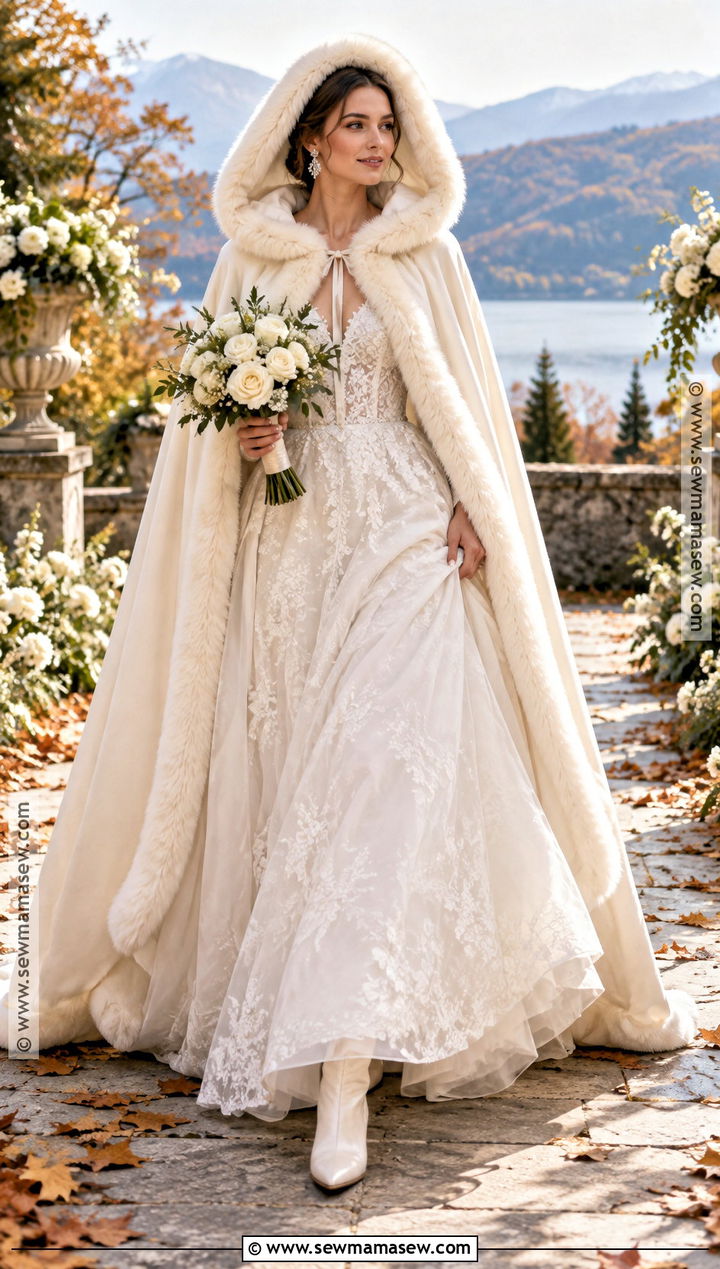
A hooded cape is the coat I'd pick for an outdoor ceremony with a long walk, because it moves in a way a fitted coat never does. Ankle-length ivory or cream in wool, a cashmere blend or soft bouclé suits it best, worn over an A-line gown with a simple bodice, pointed ankle boots and small crystal earrings. The open shape leaves the skirt room and makes a strong outline in walking photos. Lined wool-bouclé capes are a common choice for autumn and winter weddings for good reason. A hood can frame the face once the veil comes off, but test it with your hairstyle first, since a hood will flatten a full updo. Keep the bouquet compact against all that fabric, and decide between faux-fur trim for warmth or a clean edge for a simpler finish.
4. Cropped Faux Fur Bridal Coat
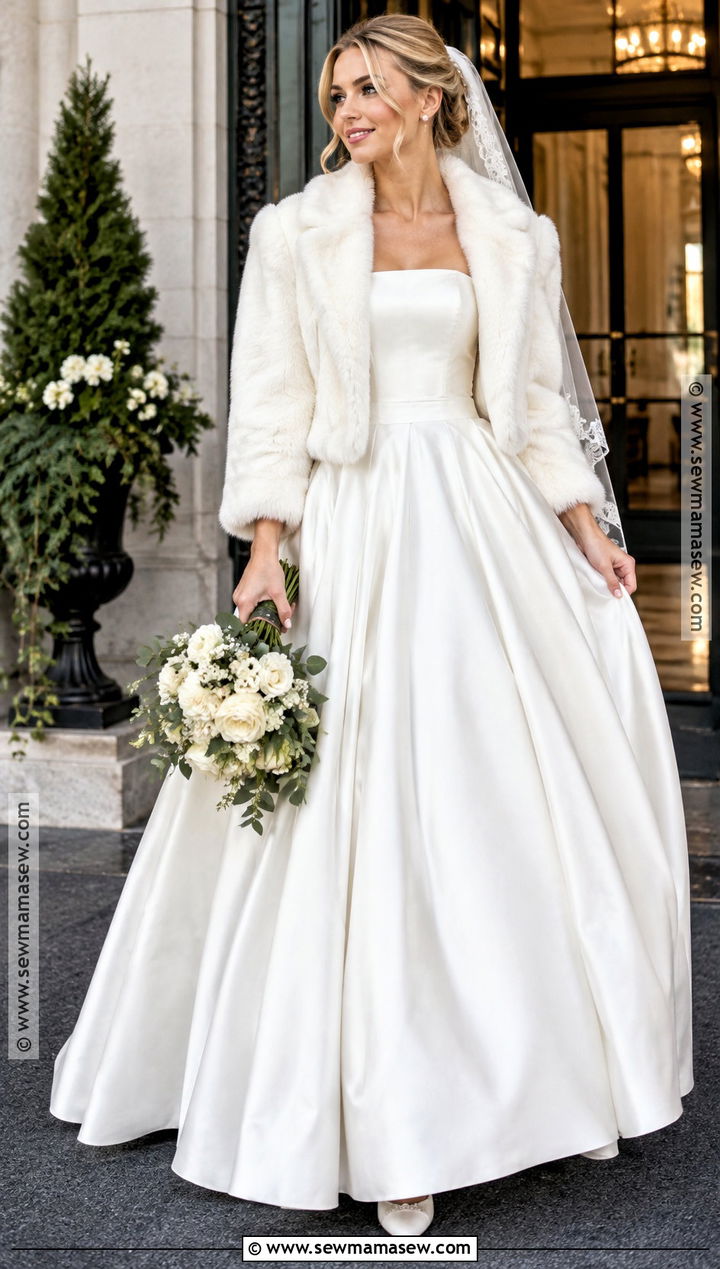
If you want warmth without hiding the shape of your dress, go cropped. A waist-length faux fur coat leaves a fitted bodice and full skirt in view, which is why I pair it with strapless ball gowns, an embellished belt, closed-toe pumps and pearl studs. The short length balances a big skirt instead of pressing it flat. Bracelet sleeves show off gloves or a sparkling bracelet. A concealed hook closure keeps the front clean, and a small collar gives it a vintage note. I like to repeat one texture from the gown nearby, a satin clutch or a lace-edged veil, so the coat looks planned. Ballrooms and crisp outdoor portraits suit it best.
5. Long White Wedding Coat
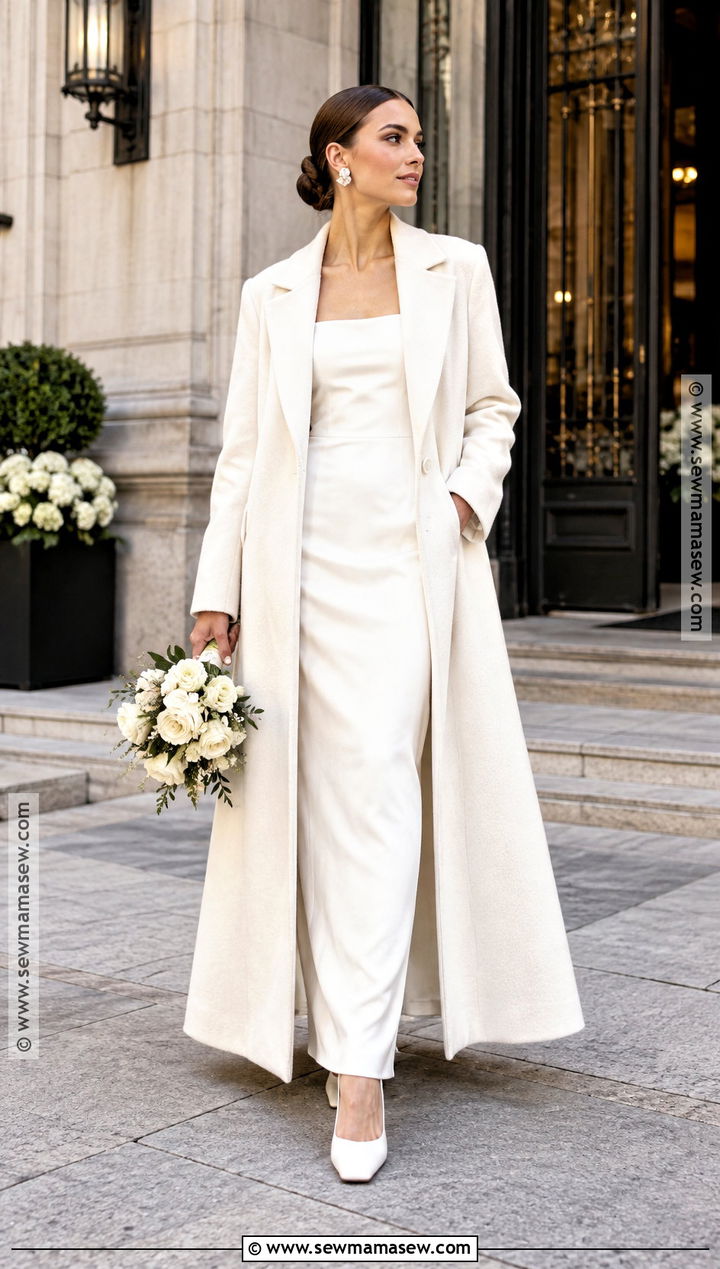
A long white coat draws one clean line from shoulder to ankle, and it's my pick for a minimalist bride in a sheath, square-toe heels, sculptural earrings and a smooth low bun. The key measurement is length: the coat should stop a little above the dress hem so the gown still shows when you walk. Single-breasted is the sleeker cut; double-breasted carries a menswear feel. For portraits, I have brides wear it open so the dress and the movement both come through. If warmth comes first, look for a lined wool blend with deep pockets and a back vent. Skip heavy belts over raised beading or lace, because pressure crushes and snags it. Tonal whites keep the textures reading as one outfit.
6. Belted Bridal Wrap Coat
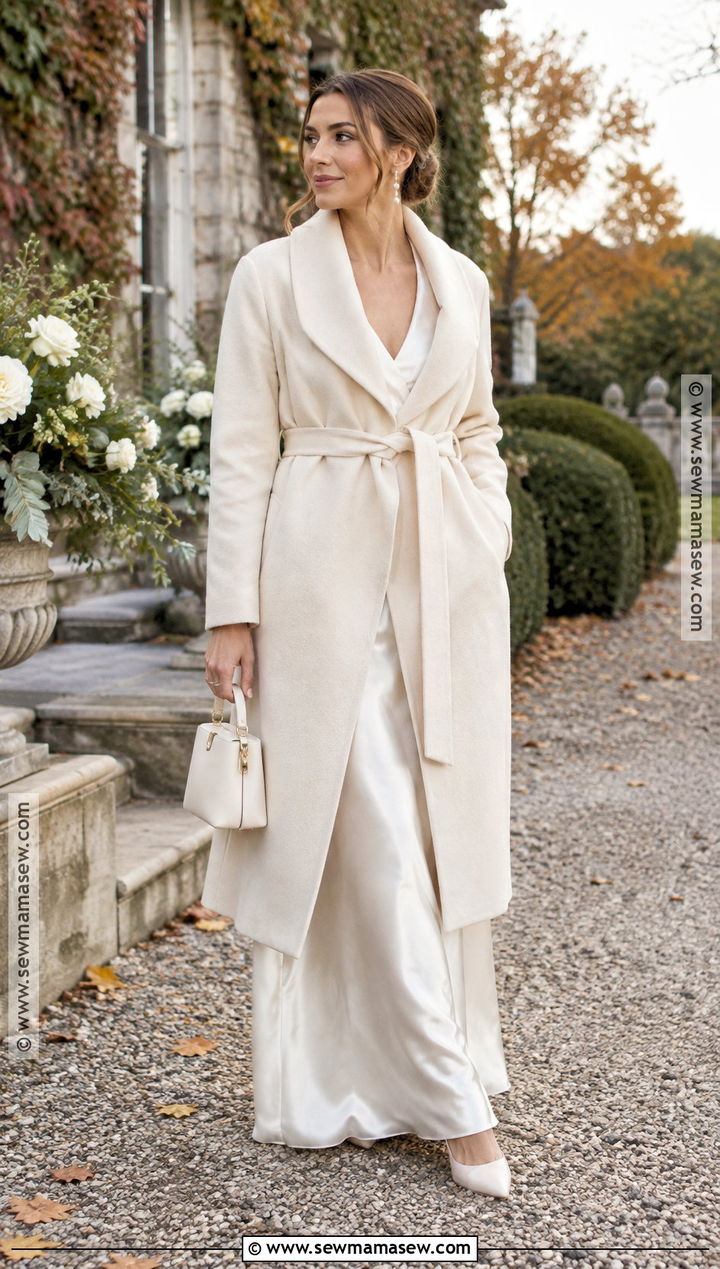
A wrap coat is softer than anything tailored, and it adapts to more gowns. I'd pick cream wool or a cashmere blend with a wide collar and a removable tie belt, layered over bias-cut satin with kitten heels, pearl drops and a small top-handle bag. Tie the belt loosely at the natural waist; pulled tight, it creases satin and flattens a skirt. Over a full or heavily beaded gown, leave the belt off and let it hang open. A smooth lining is non-negotiable here so the coat glides over lace and sequins rather than catching. In a midi length it also goes straight back into your everyday wardrobe. It suits intimate venues, garden celebrations and city hall ceremonies.
7. White Bridal Trench Coat
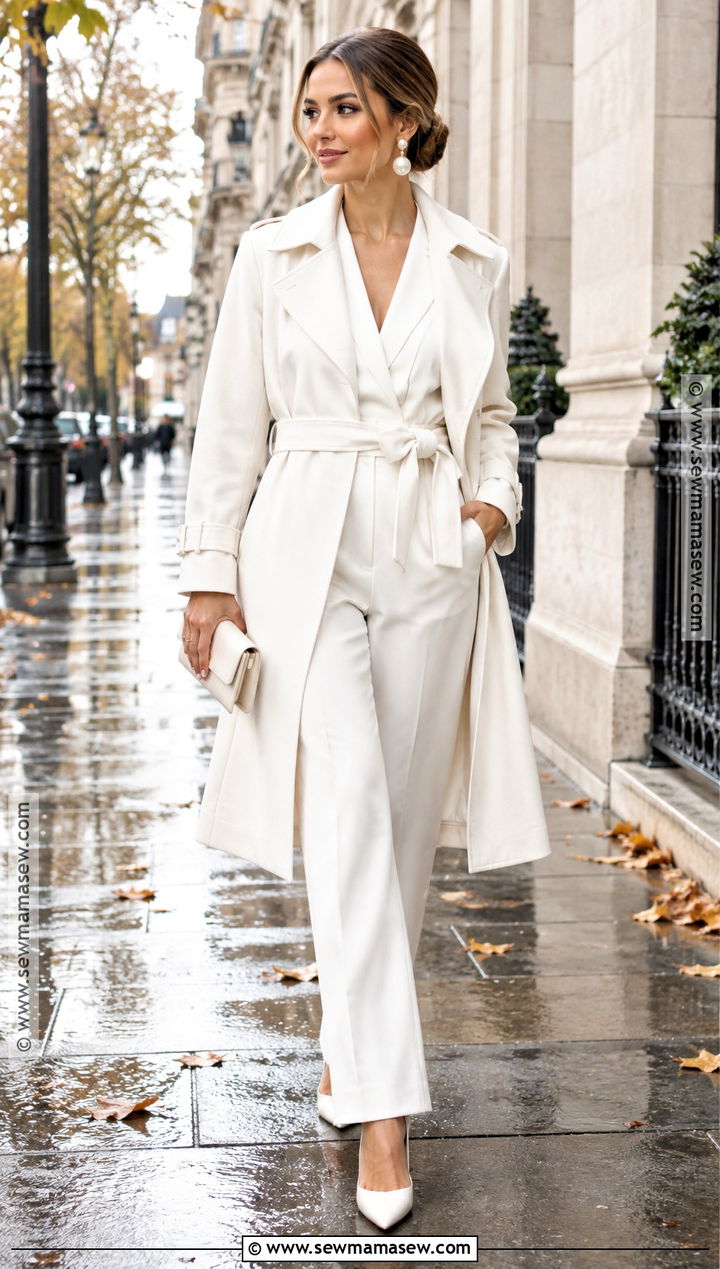
Light rain shouldn't ruin a fall wedding look, and a white trench is how I plan for it. The structured shape works over a short wedding dress or a tailored bridal jumpsuit with pointed pumps, a sleek clutch and bold pearl earrings. What I check first is the finish: a removable belt, a storm flap and a water-resistant fabric, since plain cotton trench cloth will spot in a real shower. Knee length is far easier to manage on damp ground than anything floor-length. Wearing it open? Tie the belt at the back so it doesn't swing. Keep the palette to white, ivory and silver. I reach for it for courthouse ceremonies, city weddings and days spent moving between venues.
8. Velvet Wedding Coat
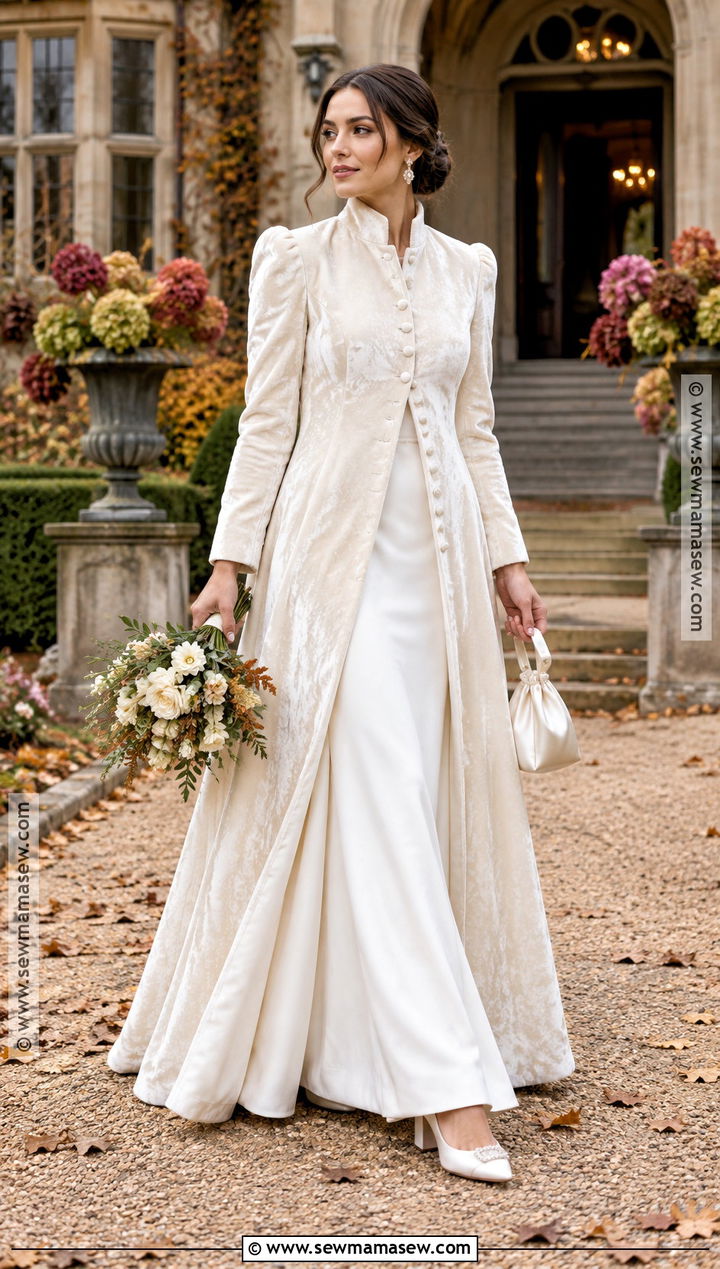
Velvet shows best in autumn's low light. An ivory velvet coat over a simple crepe gown, with block heels, vintage-style earrings and a satin bag, already looks rich, so I don't add much jewelry. A fitted knee-length cut suits a streamlined dress; a gently flared version suits an A-line. Covered buttons and a rounded collar keep it romantic. The thing I always test is color: velvet's pile looks darker from some angles, so hold it beside the dress in daylight before you buy, or the two ivories may not agree in photos. Light lining for a mild afternoon, quilted lining if you'll be outside after sunset. It suits historic estates, hotels and formal indoor rooms.
9. Bouclé Bridal Coat
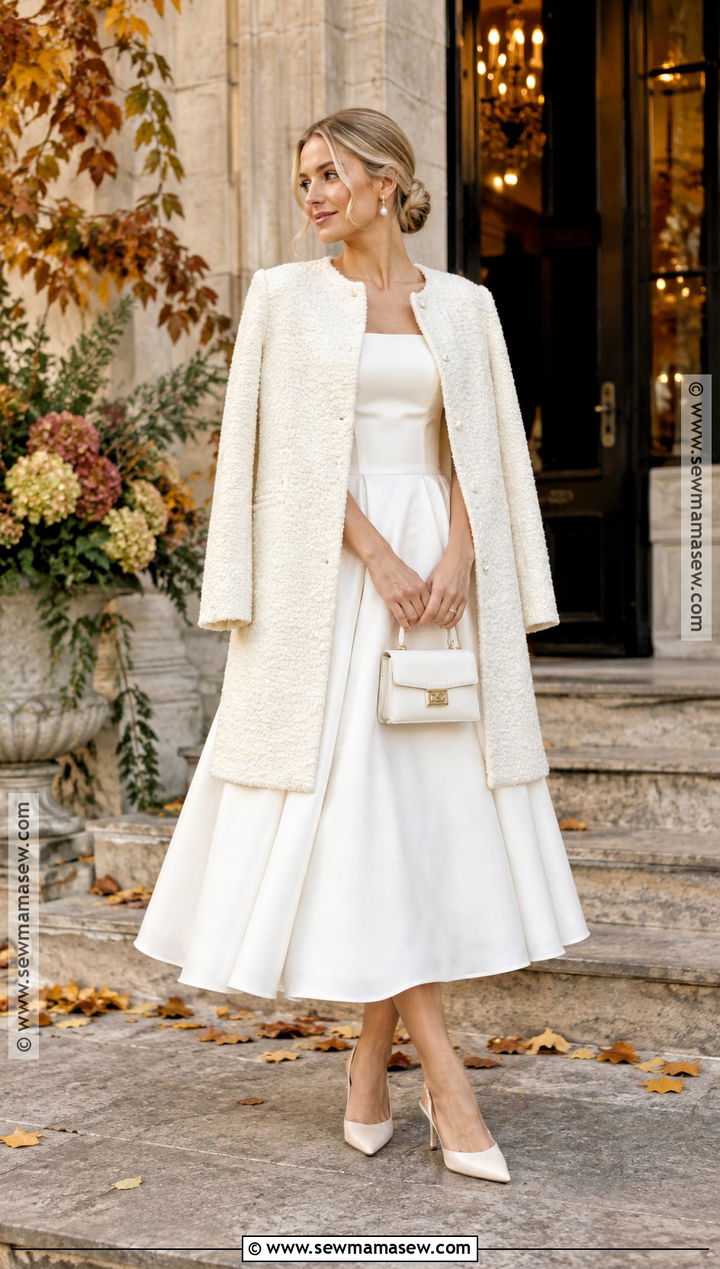
Bouclé is polished but friendly, and the texture photographs well up close. I'd go for an ivory bouclé coat with a collarless neckline, subtle metallic buttons and a hem just above the knee, over a tea-length dress with slingbacks, pearl earrings and a structured mini bag. With a shorter gown, the shoes and coat become part of the look instead of just practical layers. Many wool-bouclé bridal coats come fully lined, some with faux-fur trim for colder days. Scale is my main check: a dress with heavy lace or embroidery needs a small, tight, tonal bouclé, while clean satin or crepe can take a chunkier loop. One caution: the loops can catch on beading, so look closely at the sleeves where they brush the bodice.
10. Embroidered Bridal Coat
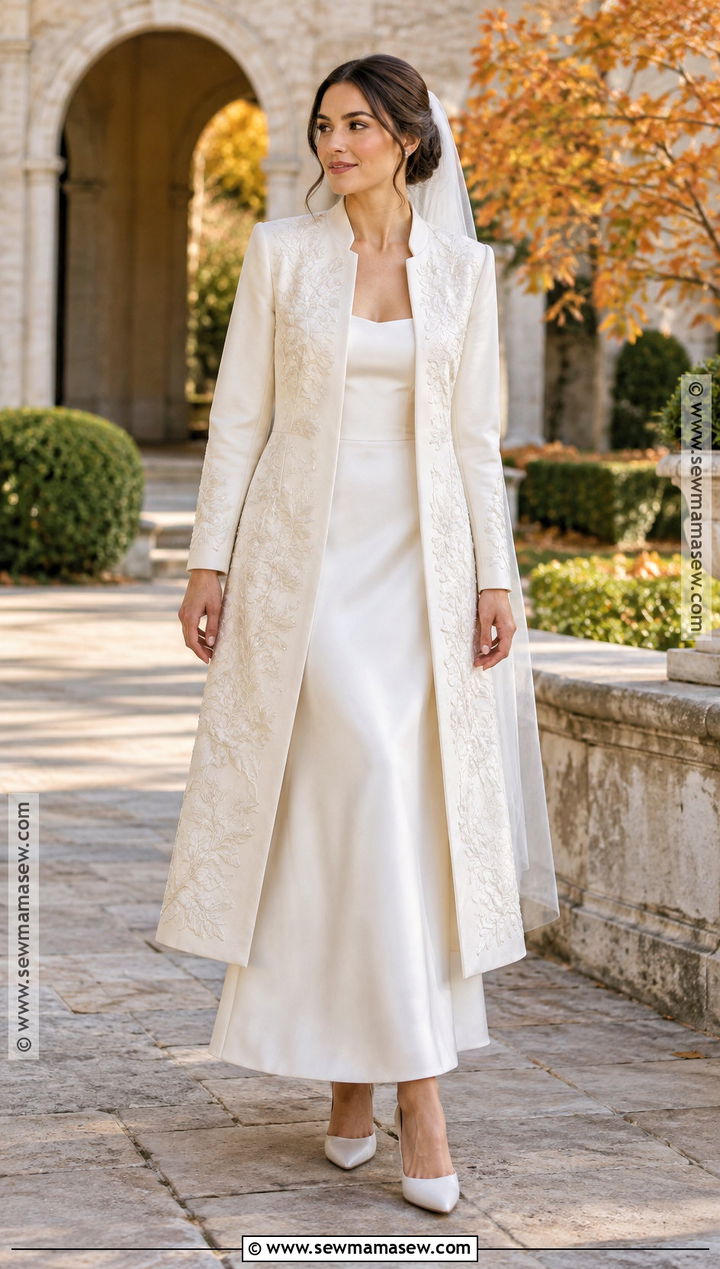
Embroidery turns outerwear into something worth keeping. Tonal floral stitching, delicate vines or light beadwork on the sleeves, collar or back all work, as long as the dress underneath is plain. I'd style it over a simple silk gown with understated pumps, crystal studs and a fingertip veil. Calf length gives a formal shape; shorter feels lighter and more modern. Custom stitching can carry the wedding date, initials or a flower from the bouquet. My advice is to keep it small. Fine details photograph far better than large lettering, which tends to look like a monogrammed robe from a distance. Pick smooth shoes and accessories so nothing competes. Indoors or out for fall portraits, it suits both.
11. Pearl Embellished Bridal Coat
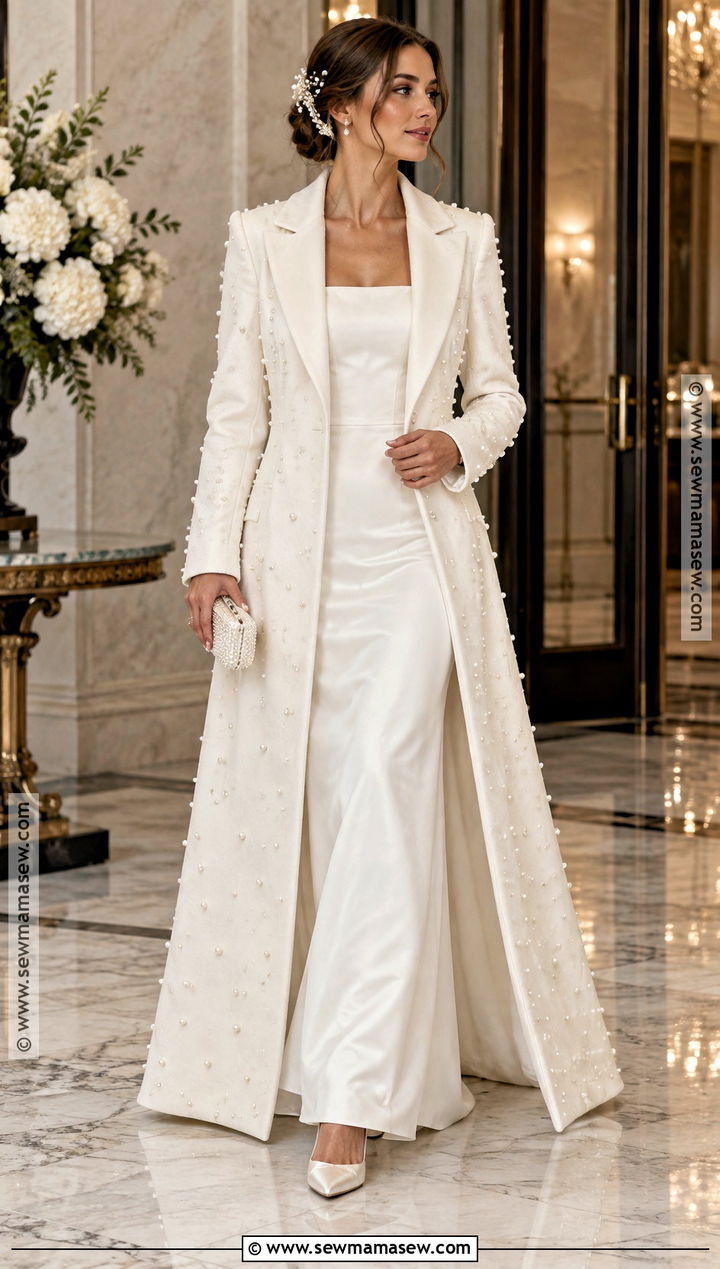
Pearls add depth to a bridal coat without bringing in another color. A fitted ivory coat with scattered pearls sits neatly over a square-neck gown with satin pumps, a pearl comb and a compact clutch. Concentrating the pearls on the collar or cuffs keeps it subtle; an allover design is bolder and needs a completely plain dress. Before a bride wears one, I run my hand across the inside of every embellished area. Prong settings and loose threads catch on tulle and veils, and a smooth inner lining is what protects the gown. Wear either pearl earrings or a bracelet, not a full matching set. Hotel weddings, restaurants and formal evening receptions suit it.
12. Feather Trim Bridal Coat
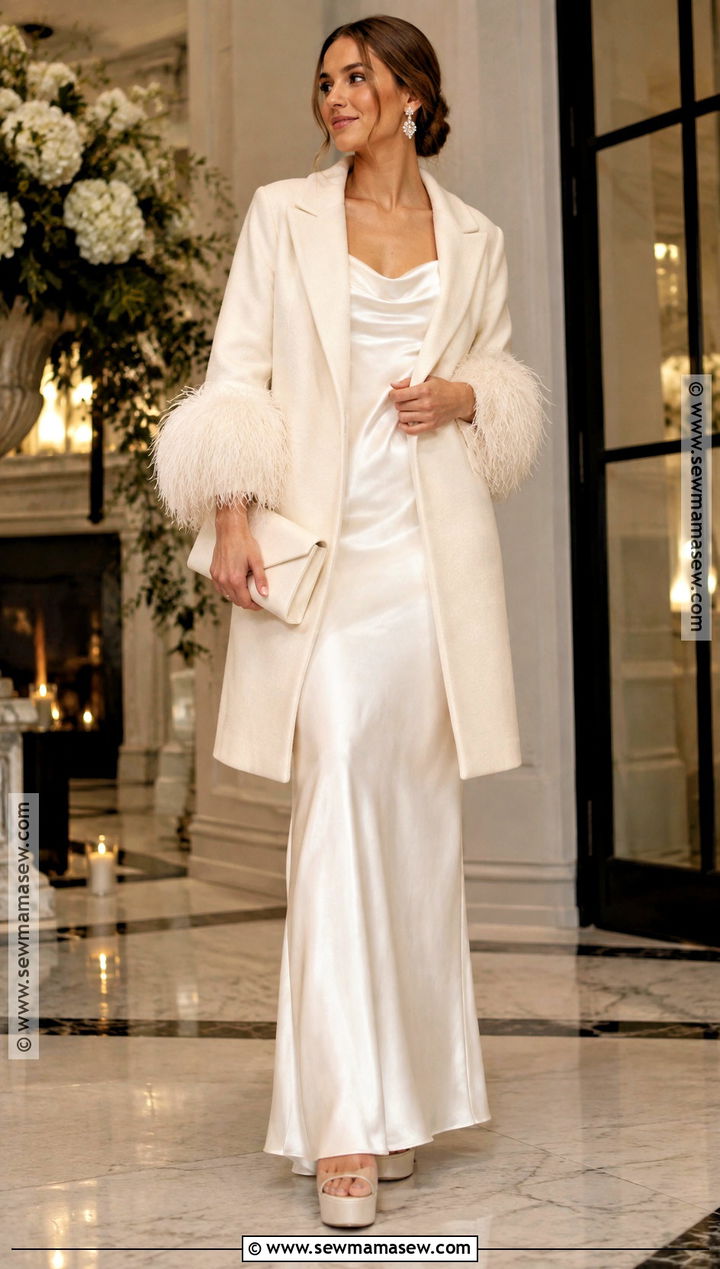
Feather trim is the most fashion-forward coat here, and it's best kept to one place. A white or soft ivory coat with feathered cuffs, a trimmed collar or a narrow border along the hem, worn over a straight satin gown with platform heels, small crystal earrings and an envelope clutch, gets the movement without overload. If your sleeves are detailed, choose collar or hem trim instead of cuffs, since feathers at the wrist will tangle with lace. Real feathers shed and hate damp air, so faux feather is my usual recommendation for a fall date. Skip a very long train or heavily textured veil with it. Modern indoor venues, rooftops and early fall evening ceremonies suit it.
13. Blush Wedding Coat
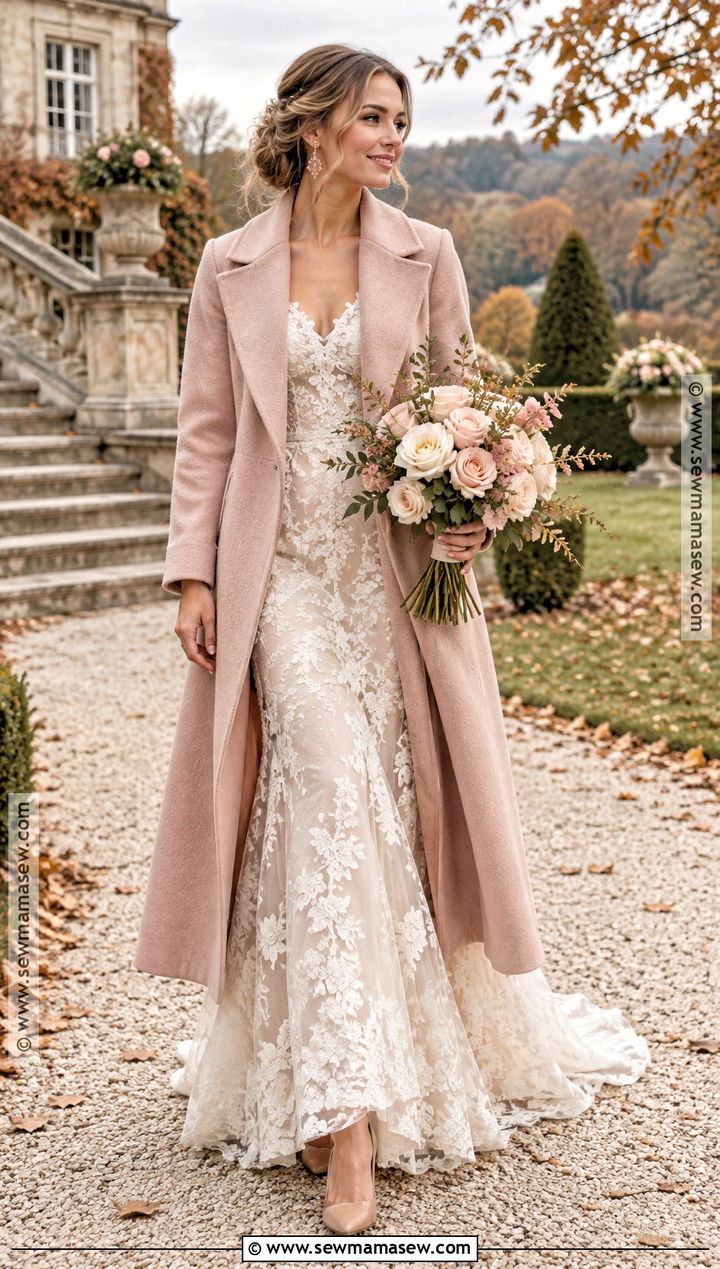
Blush adds a little color and still reads bridal. A dusty blush wool coat over an ivory lace gown, with nude pointed pumps, rose-gold earrings and a bouquet of muted pink and cream, is a soft, seasonal pairing. Tailored and knee-length or long and loosely belted both work, depending on how full the skirt is. Choose a pink with gray or beige in it, never a bright pastel, which looks more spring than October. I'd repeat the blush only once or twice, in a ribbon or a clutch, to keep it from feeling matched. Warm ivory dresses sit more naturally beside blush than stark white does. Garden venues, vineyards and estate weddings suit it best.
14. Camel Wool Coat For Bride
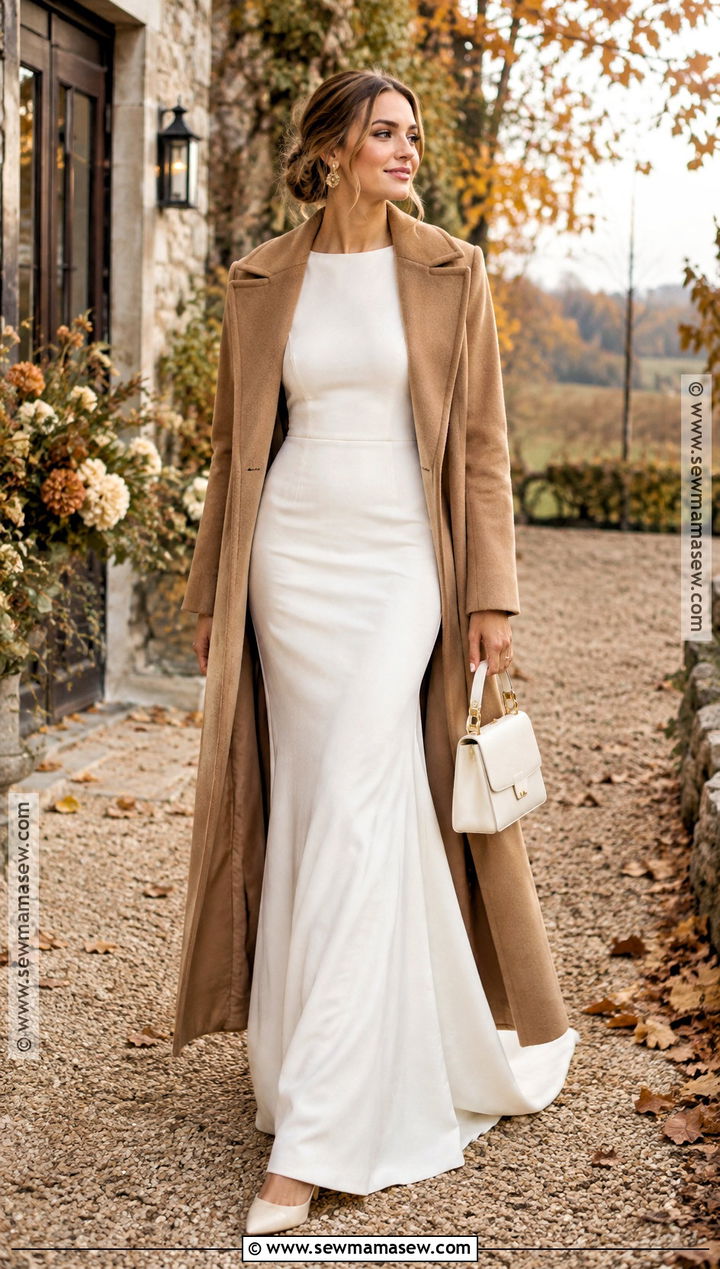
Not every bridal coat has to be white, and camel is the one I suggest to brides who want to wear their coat for years afterward. A long tailored camel coat contrasts with an ivory gown and looks right among fall foliage at rustic and outdoor venues. Layer it over a slip dress or fitted long-sleeve gown with cream pumps, gold earrings and a structured ivory bag. Wear it open in formal portraits so the dress stays the focus. Dark tan makes a bolder contrast; pale camel is softer. One practical check I never skip: brush the inside and rub a corner against a white cloth, because some wool blends shed colored fibers onto satin and crepe.
15. White Puffer Coat For Bride
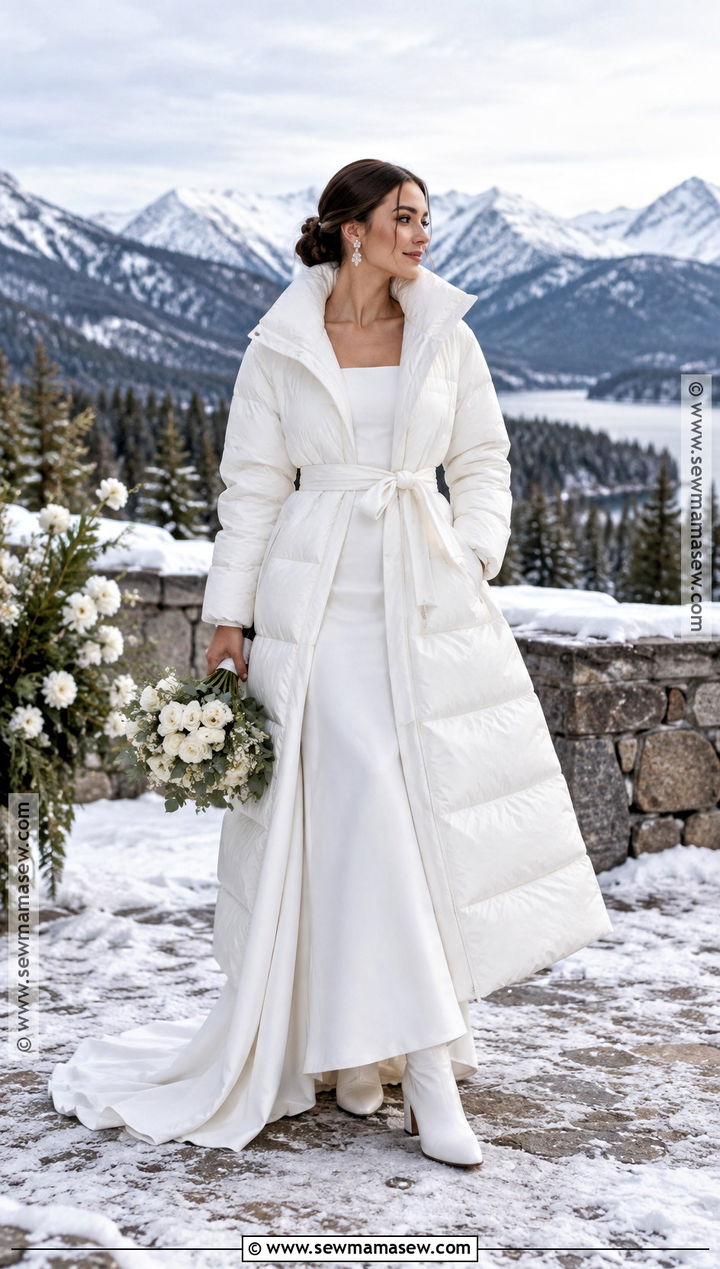
For a cold outdoor ceremony or mountain wedding, a puffer is the warmest option on this list. It only looks bridal if it's streamlined and matte, not an oversized technical jacket with logos and contrast zips. I'd pair it with a minimalist dress, waterproof white ankle boots, silver earrings and a sleek ponytail or bun. A belted puffer defines the waist; a cropped one leaves a full skirt visible. Take it off for indoor portraits and use it for travel, outdoor shots and the exit. Down compresses well, so it also packs into a tote for the car. Windy venues and late-fall elopements are where it earns its place, and a tonal palette keeps the sporty piece polished.
Who Holds the Coat During the Ceremony
A bridal coat spends half the day off the bride, and somebody needs to be responsible for it. I plan the coat into the timeline the same way I plan the bouquet.
Before and During the Vows
Most brides wear the coat for the walk from the car and the first look, then hand it to a bridesmaid or planner just before the aisle. Pick that person in advance and give her a padded hanger and a spot out of the rain. Faux fur and velvet crush if they're folded over a chair arm for an hour.
Portraits and the Exit
Tell your photographer which shots you want in the coat and which without. On a cold day, I suggest the coat goes back on between setups rather than for every frame, so the bride stays warm without the gown disappearing from the album. For the send-off, the coat stays on, and a lint roller in the bridal kit takes care of any fibers left on the dress.
Wear the Coat With the Veil Before the Wedding Week
The right coat keeps a cool ceremony comfortable and still looks like part of the bridal outfit. Wool, faux fur, capes, trenches and puffers each solve a different problem, so start with the gown's shape, fabric, embellishment and undertone, then let the venue and forecast decide length and warmth. Do one full rehearsal at home with the veil, shoes, jewelry and something bouquet-sized in your hands. That's when you'll find the sleeve that catches lace, the hem that hides the dress or the collar that fights the veil. Ivory, camel and blush can all work once you've seen them together.
Related posts: