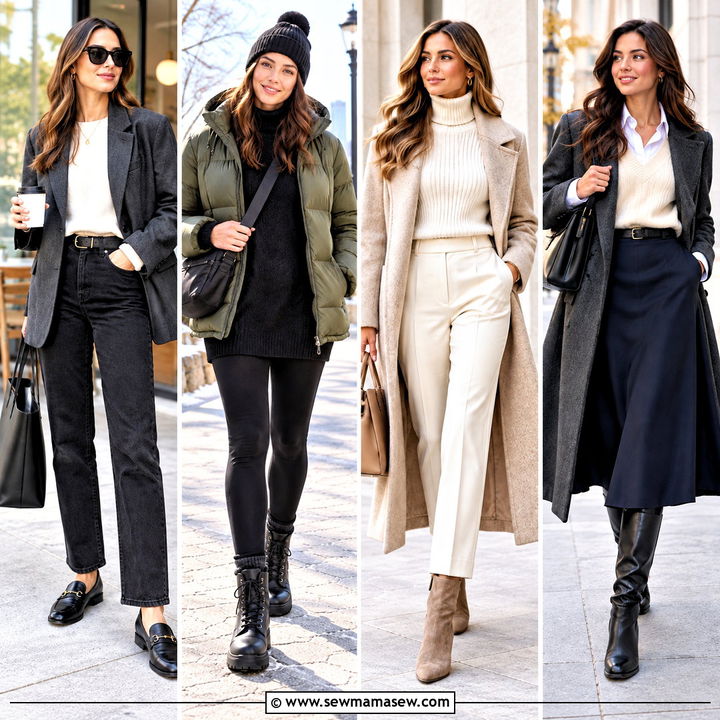
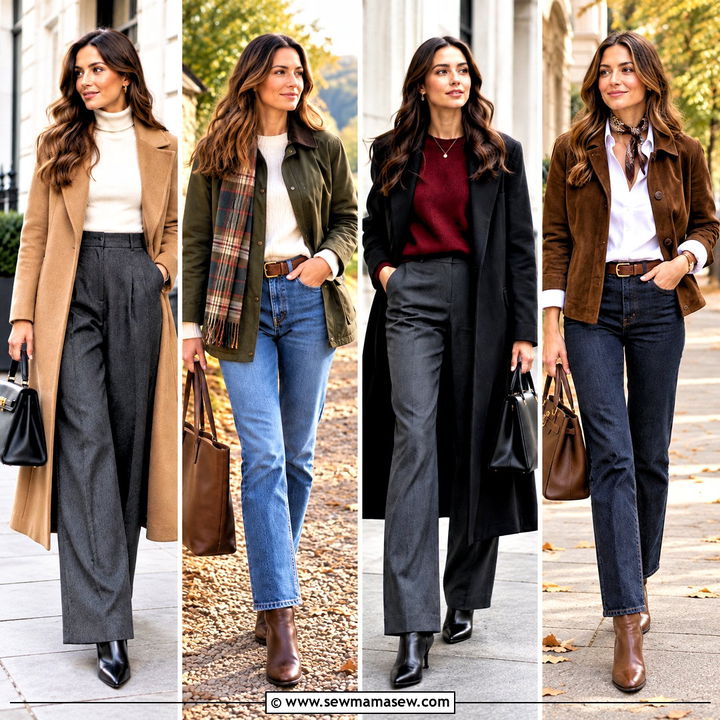
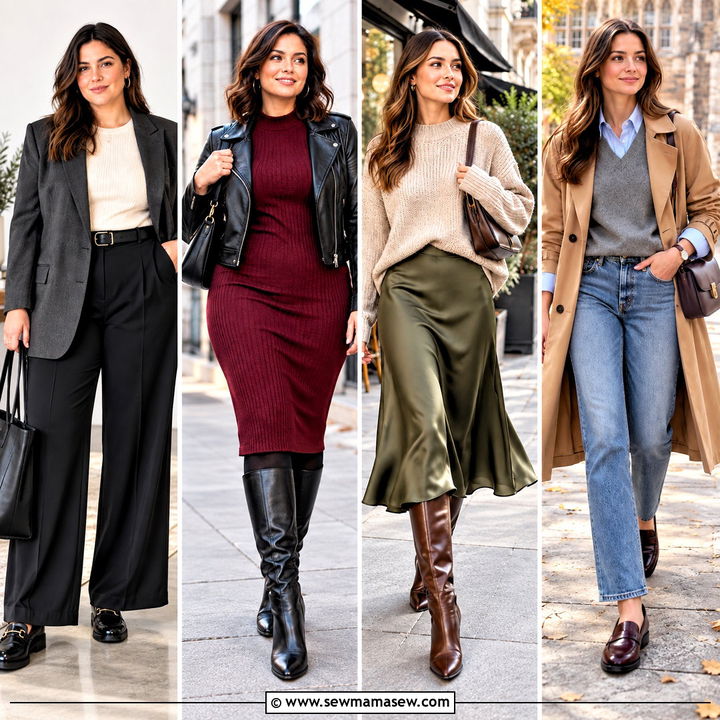
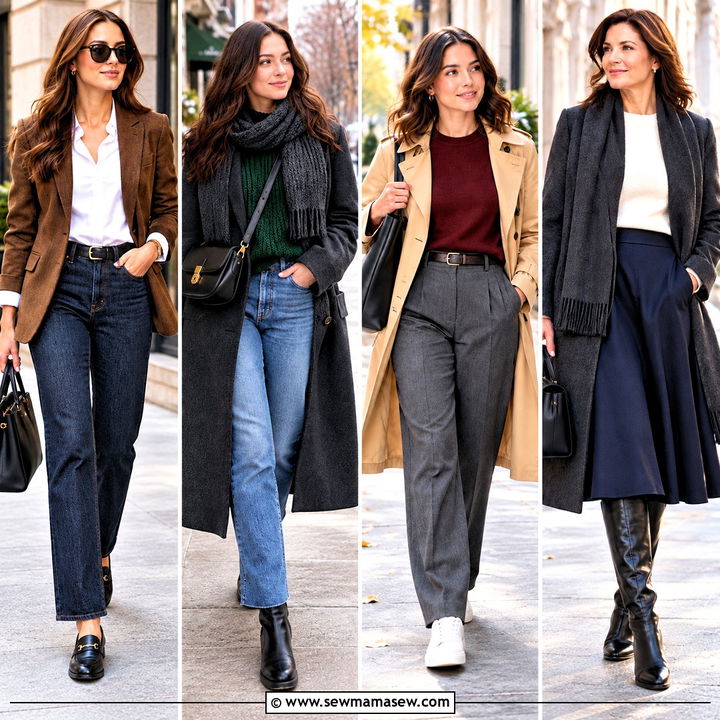
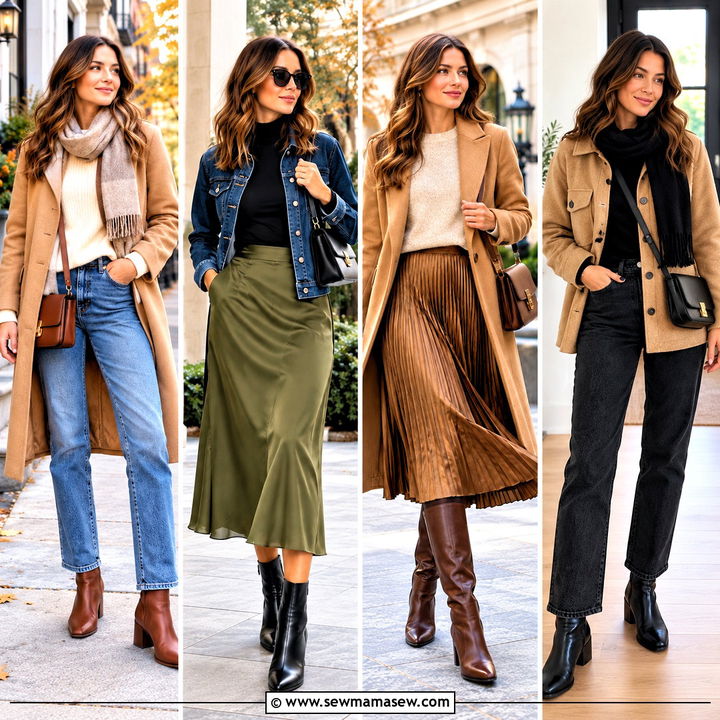
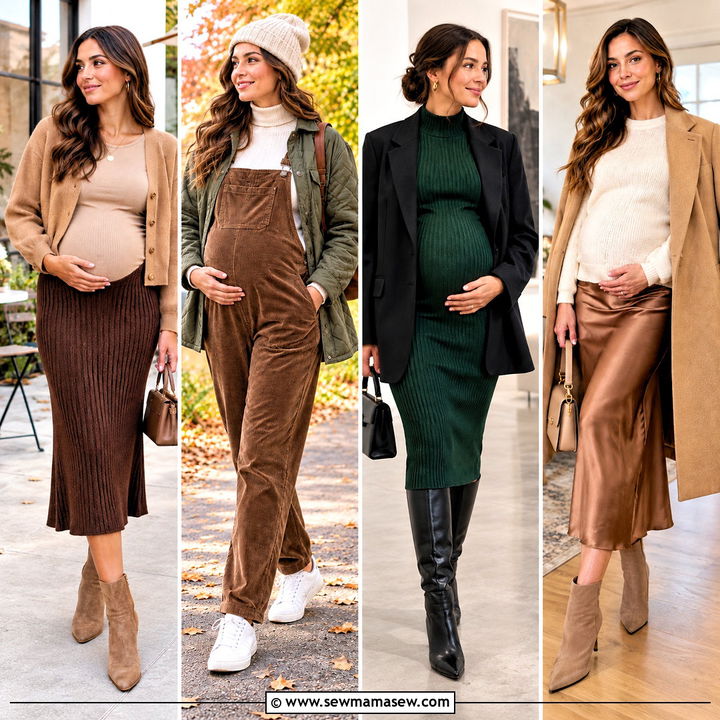
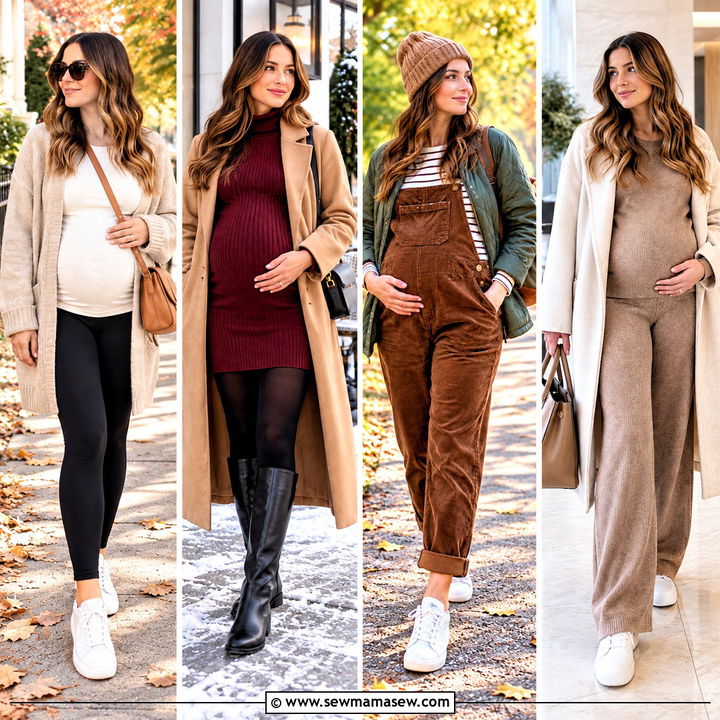
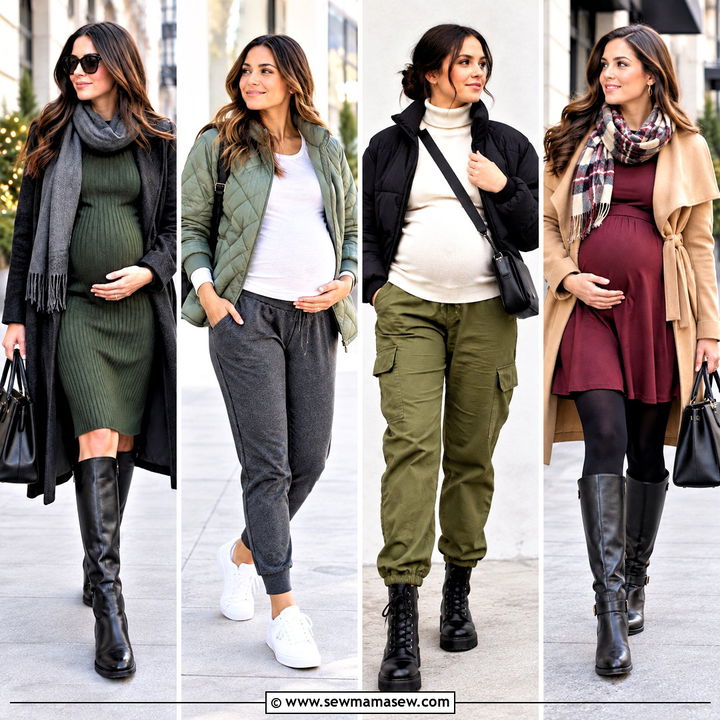
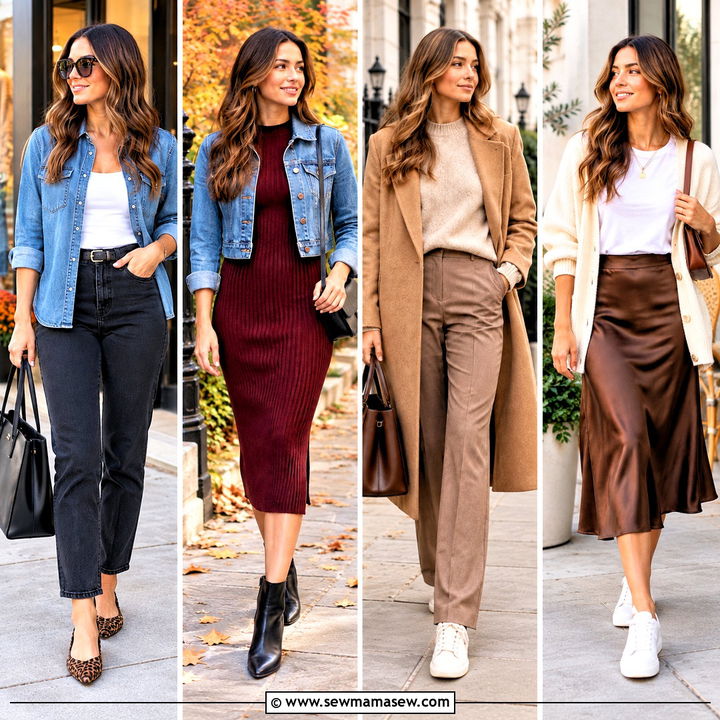
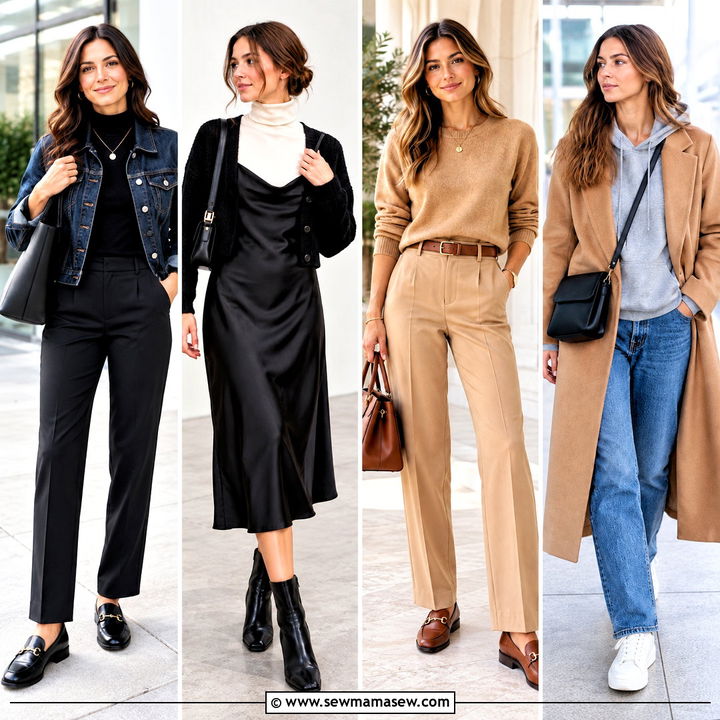
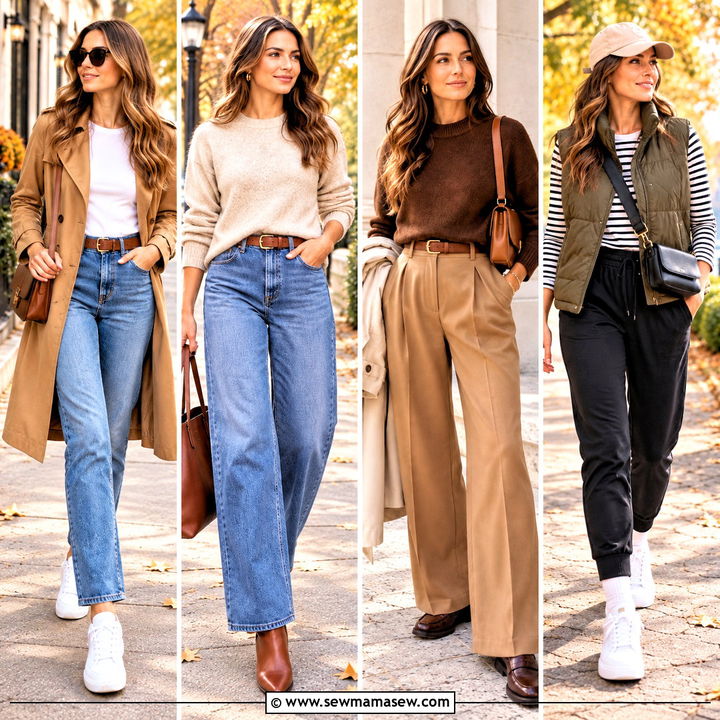
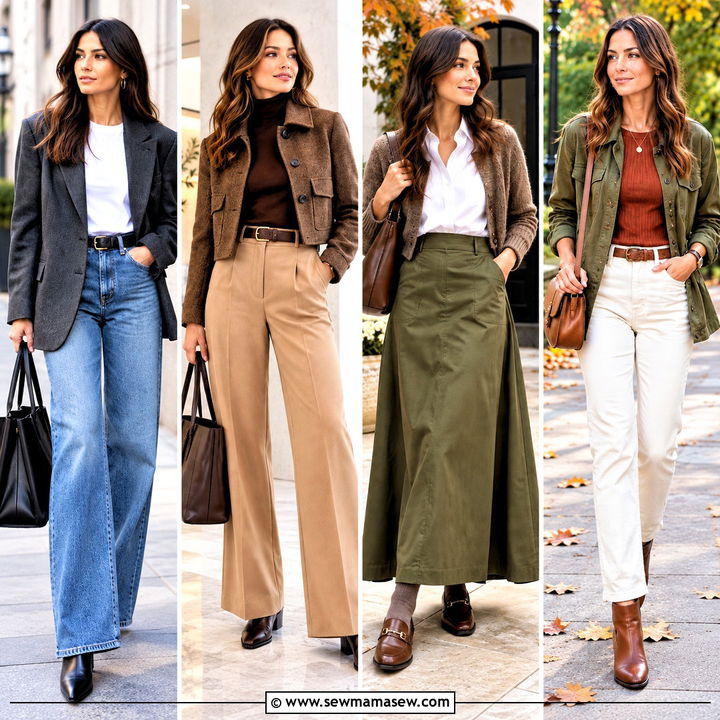
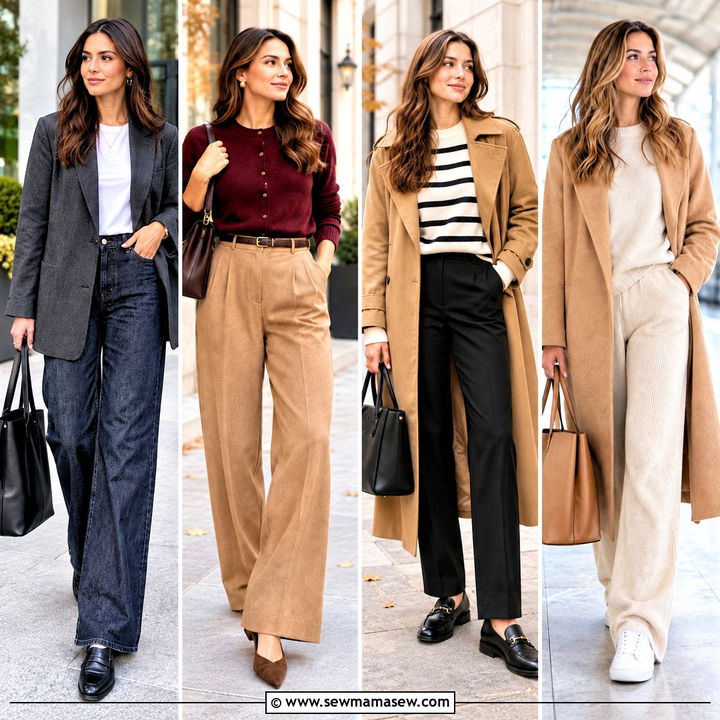
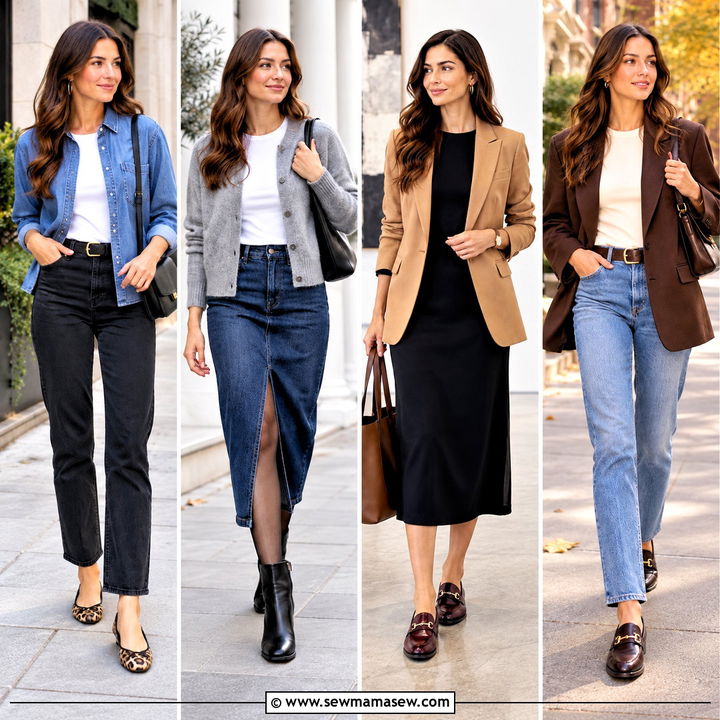
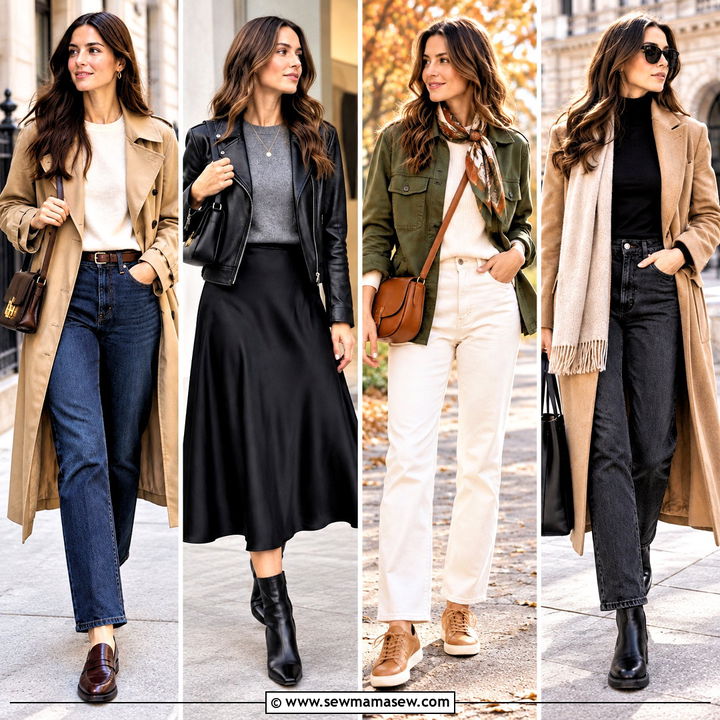
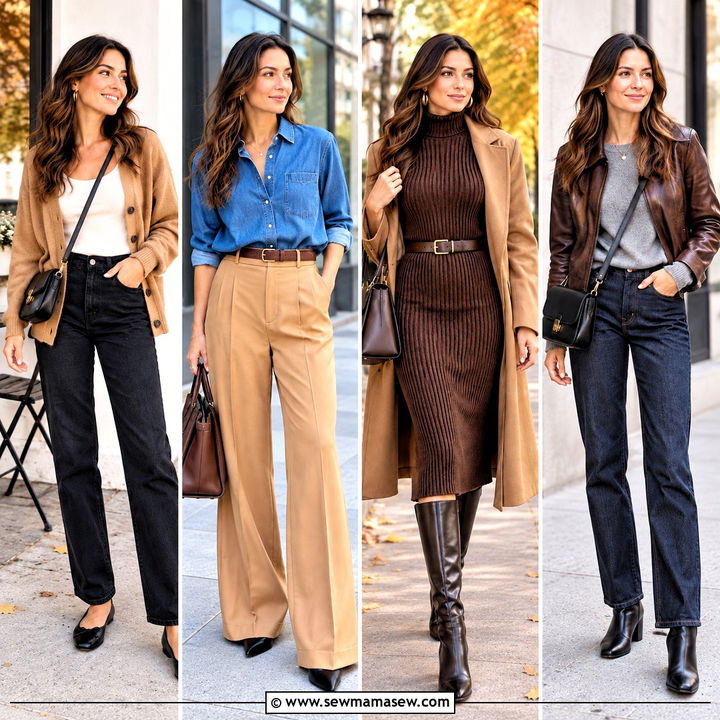
A capsule earns its keep in January, not October, when you're reaching for the same coat for the fourth week running and still want the outfits to feel different. The fall and winter capsules I build rest on a handful of dependable neutrals, then get their character from texture and two or three deeper colors. This season that means long coats, structured tailoring, soft knits, suede and a couple of dresses that take layers well. I usually anchor the palette in black, cream, camel, gray and dark denim, then add burgundy or chocolate for depth. My rule before anything goes in: it has to pair with at least three pieces already hanging there. The 15 outfits below show how those pieces turn into real days of dressing.
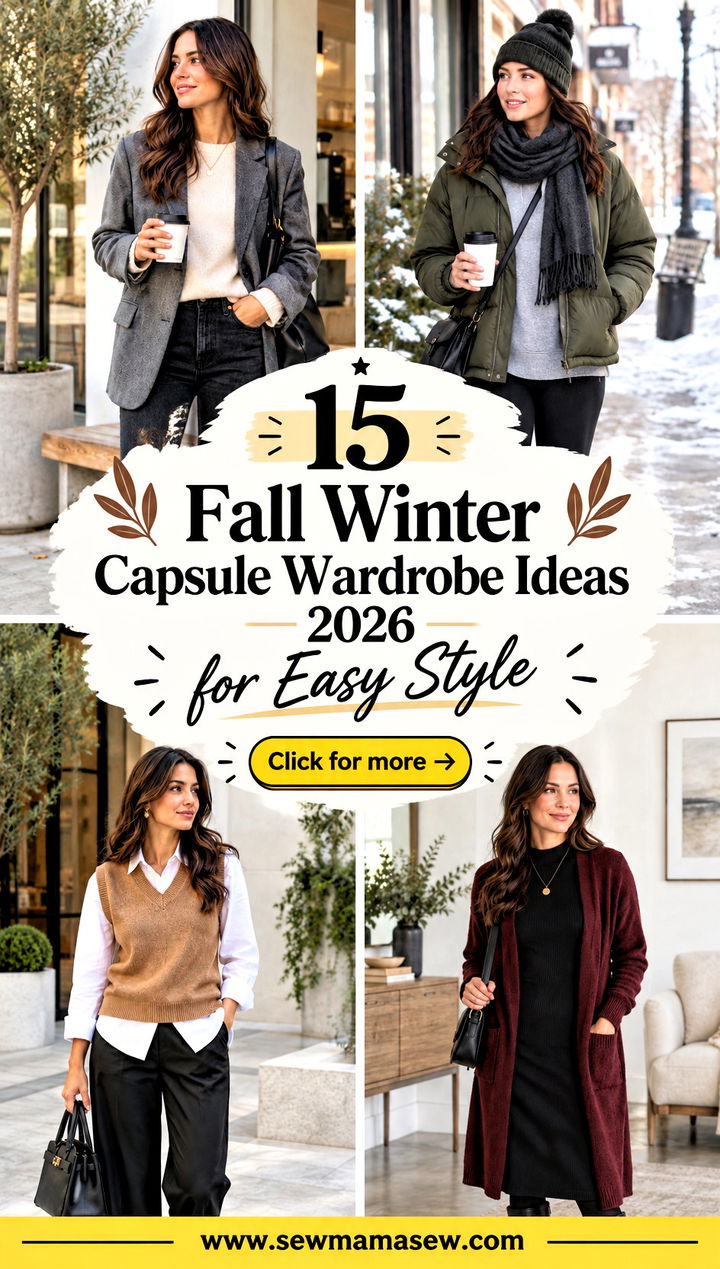
Counting the Pieces Before Counting Outfits
I plan a winter capsule on paper before I touch the closet. The outfits below come from roughly twenty pieces, and the split between categories matters more than the total.
- Outerwear: three layers for different weather, such as a trench for mild days, a long wool coat for cold ones and a puffer or barn jacket for rain and errands.
- Tops and knits: six to eight, mixing fine-gauge turtlenecks, one chunky sweater, a white shirt and a couple of plain tees for layering.
- Bottoms: four or five, usually dark straight jeans, black jeans, one tailored trouser and one skirt.
- Dresses: one or two that take tights and a coat, like a black midi and a sweater dress.
- Shoes: three or four pairs, and at least one of them waterproof.
Then I run a three-pairing test on every piece. Lay it on the bed and pull three other items that make a complete outfit with it. A printed skirt that only works with one sweater fails; a camel coat that goes over every bottom you own passes without effort. The pieces that fail are usually impulse buys, and they're the first I'd move out.
Keep the color math simple too. Pick one dark base, black or navy, and let your shoes and bags follow it. Wearing the two together is fine, but owning a full set of accessories in both doubles what the capsule has to hold.
1. Trench Coat and Straight Leg Jeans Outfit
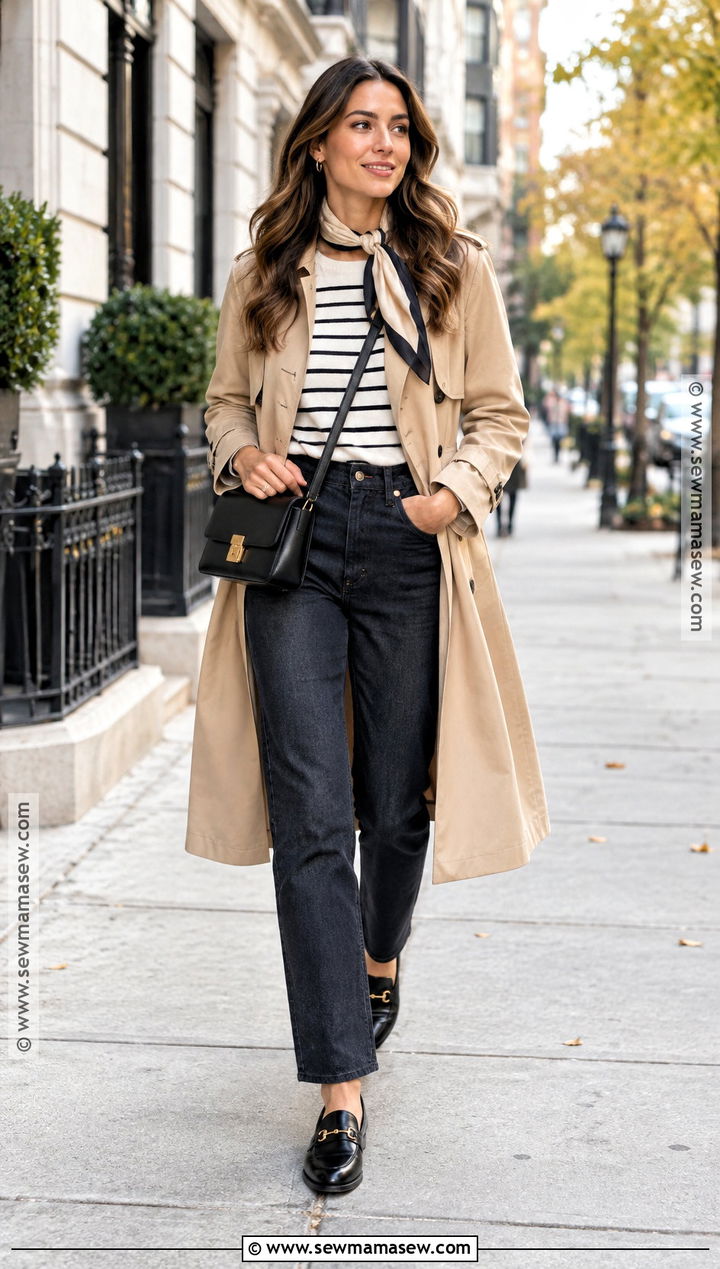
I start most capsules with a trench because it covers a wider temperature range than any other coat: open over a tee on a mild afternoon, belted over a crewneck when the wind turns. Beige or olive both work. Wear it over a fitted striped tee or a light sweater with dark straight-leg jeans, then pick black loafers to polish it or white leather sneakers to relax it. A structured crossbody, small hoops and a thin scarf are all it needs. The fit check I do first is the shoulder. Try the trench on over your thickest sweater, because one bought over a T-shirt pulls across the back by November. Too much room is its own problem, though: a boxy trench swallows dresses and bunches when you belt it.
2. Wool Coat and Wide Leg Trousers Outfit
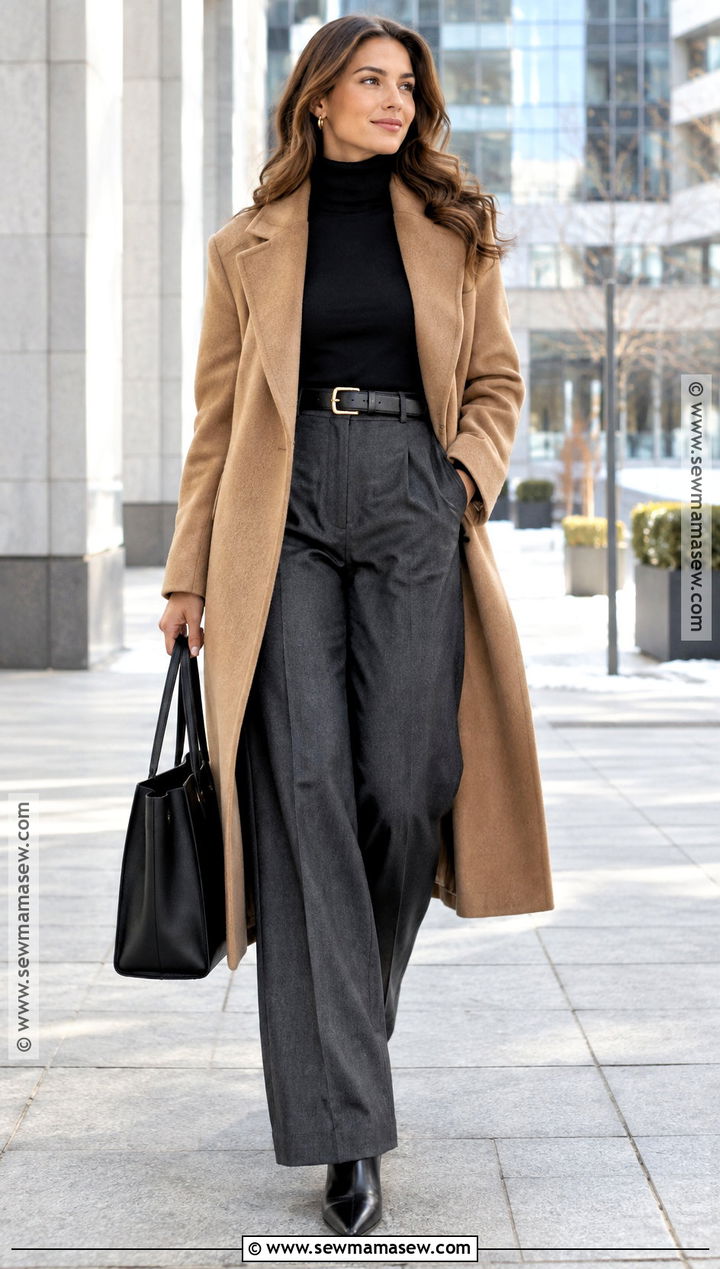
On a properly cold morning nothing beats a long wool coat, and the long line keeps you looking narrow even with a turtleneck underneath. I layer camel, charcoal or black over a fine-gauge turtleneck and tailored wide-leg trousers in a matching neutral. Wide trousers want a pointed ankle boot or a low block heel; a round, chunky toe makes the hem look like it's eating your foot. Carry a structured leather tote and keep the jewelry small. When I check a wool coat, I read the label before the price tag. A blend with a good share of wool holds its shape, while a coat that's mostly polyester tends to pill at the cuffs and under the arms within a season. Swap the turtleneck for a white button-down on meeting days, or the trousers for straight jeans on a Saturday.
3. Blazer and Dark Jeans Outfit
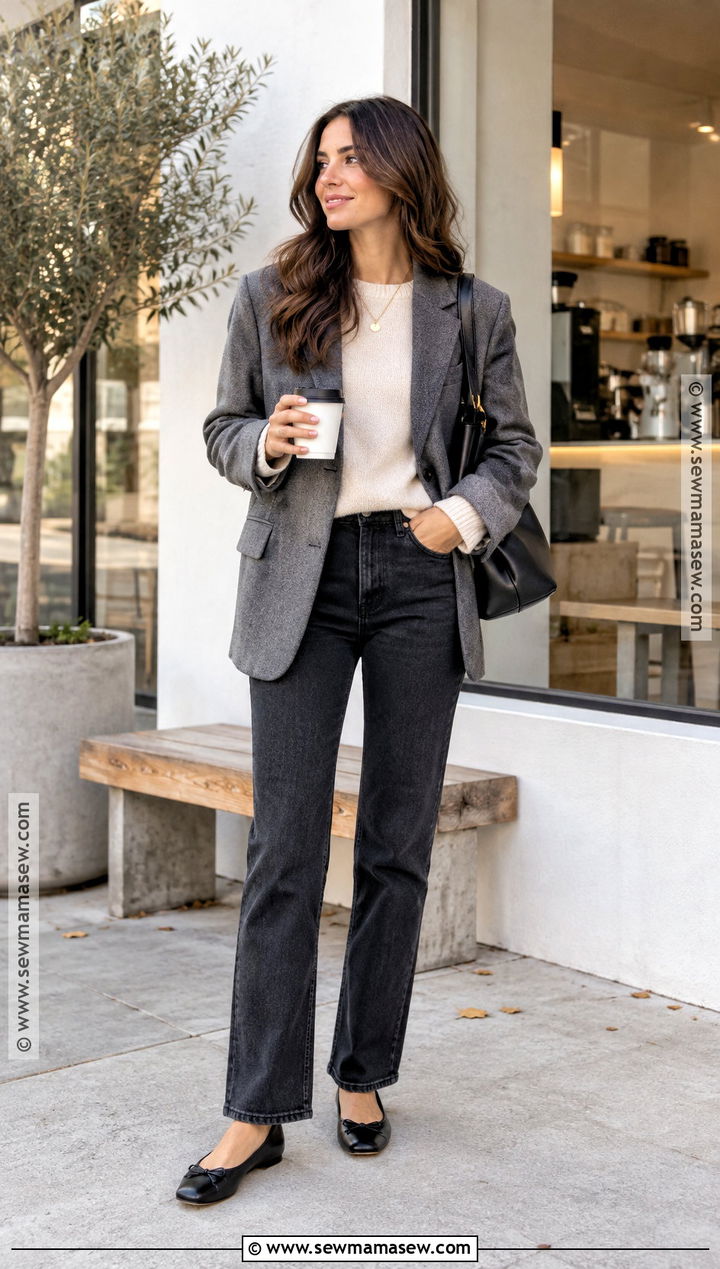
Most closets have a gap between the sweater that feels too casual and the suit that feels like too much. A relaxed blazer over a soft crewneck fills it. Black, navy, gray or brown all work, with dark straight or slightly flared jeans underneath. Loafers keep it traditional and ballet flats lighten it in early fall; add a medium shoulder bag and a simple necklace. Here's the check people skip: put the blazer on over your bulkiest sweater and reach forward as if you're grabbing a steering wheel. If it pulls across the back, size up or keep the knit thin. One blazer that passes covers office days, lunches and travel, and later in the season it gives a sweater dress some structure.
4. Leather Jacket and Midi Skirt Outfit
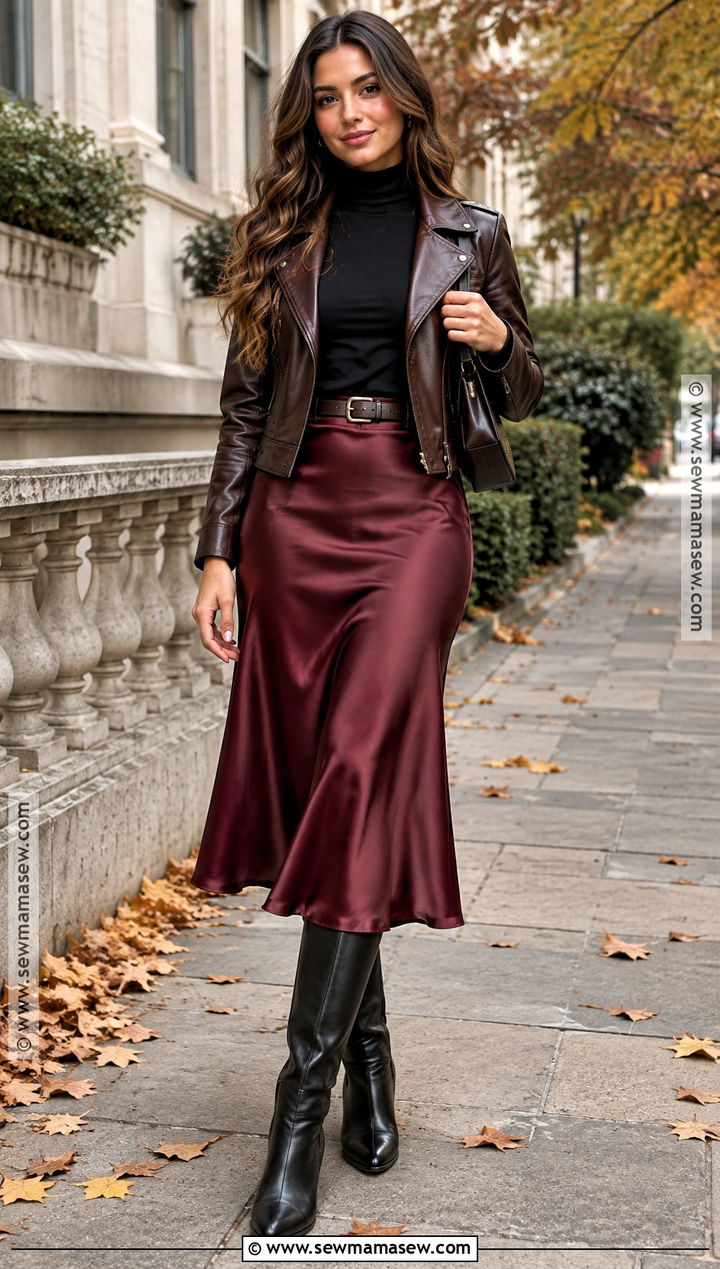
A short leather jacket over a fluid midi skirt is the kind of contrast that keeps a small closet from feeling repetitive. Black or chocolate leather goes over a fitted turtleneck or a plain long-sleeve top, and the skirt can be satin, knit or softly pleated. I steer people toward knee-high boots here, since the shaft disappears under the hem and you lose the cold gap at the shin that ankle boots leave. Keep the bag compact; a big tote fights the cropped jacket. One warning: satin midis crease easily and cling to tights. If you run cold and wear thermal tights, a knit or pleated skirt hangs better. The jacket goes back to denim on other days, and the skirt takes a cardigan or a wool coat just as easily.
5. Cardigan and Tailored Pants Outfit
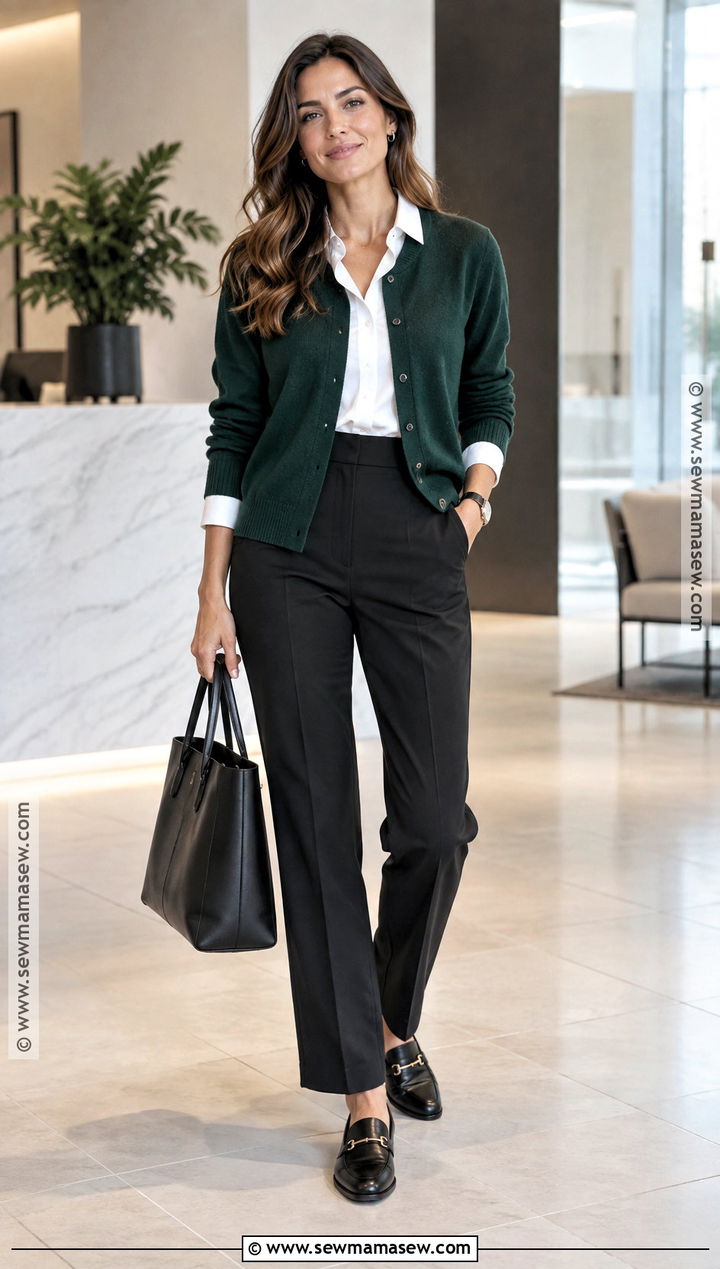
Knitwear reads polished when something crisp sits next to it, which is why I put a cardigan over a white cotton shirt and let the collar and cuffs show. Tailored pants in charcoal or navy go underneath, ideally straight or gently wide so they repeat across work and weekends. Loafers, a roomy tote and a watch finish it. Button the cardigan all the way and wear it as a top, leave it open, or throw it over your shoulders on a warm afternoon. Check the button placket before you buy. A thin, loose knit gapes between the buttons once there's a shirt underneath, and that gap is hard to fix. A deep shade such as forest green brings in the season without breaking the mix-and-match math, and jeans make the whole thing casual.
6. Sweater Dress and Knee High Boots Outfit
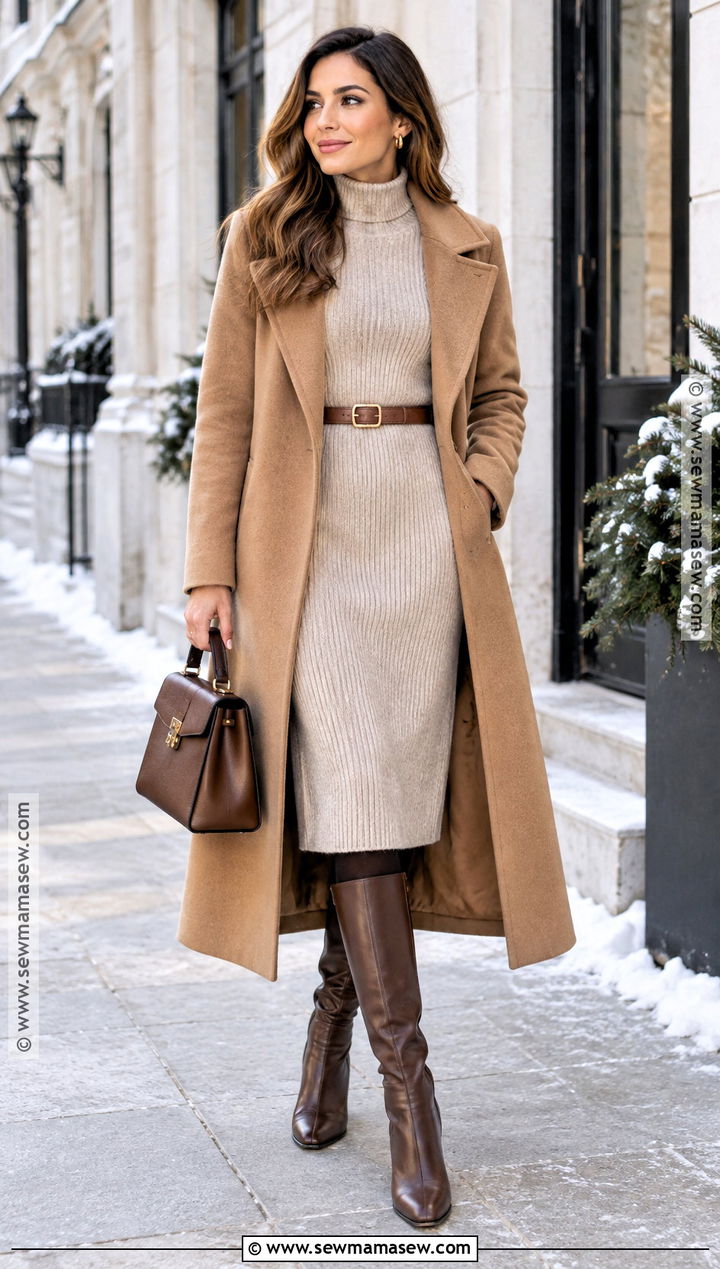
When I want one piece to do all the work, I reach for a sweater dress. Choose a midi length in black, oatmeal, gray or chocolate with room to move, then add knee-high leather or suede boots and, if you like, a slim belt. A long wool coat over the top keeps the line unbroken, and opaque tights take over once it's properly cold. A structured bag and small earrings are enough. The thing I watch is weight. A very heavy knit stretches and seats out at the back after a day of sitting, while a thin one shows every line underneath. I'd pick a dense, mid-weight knit and wear a thin thermal layer under it rather than buy the bulkiest dress on the rack. On other days it restyles with a cropped jacket or a long cardigan.
7. Denim Shirt and Black Jeans Outfit
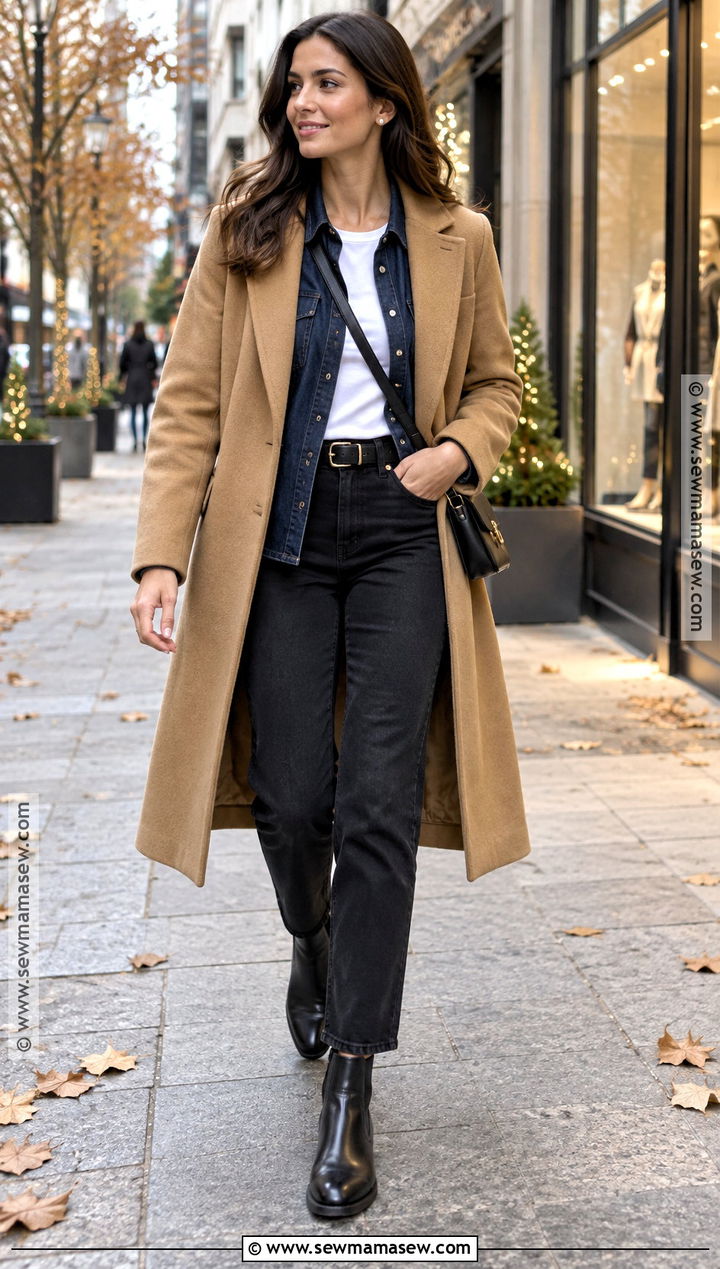
Denim on denim only goes wrong when the two washes try to match. I pair a medium or dark denim shirt with black jeans and let the contrast do the work. Wear the shirt buttoned, or open over a fitted white or gray tee, with black Chelsea boots that carry the dark line to the floor and lengthen the leg. When it turns colder, a camel coat or quilted jacket goes over the top. A leather belt, crossbody bag and stud earrings are plenty. Black jeans fade toward charcoal with washing, so I wash mine inside out in cold water to keep that contrast sharp. The shirt doubles as a light jacket on mild days, and the jeans go with nearly every knit in the capsule.
8. Puffer Jacket and Black Leggings Outfit
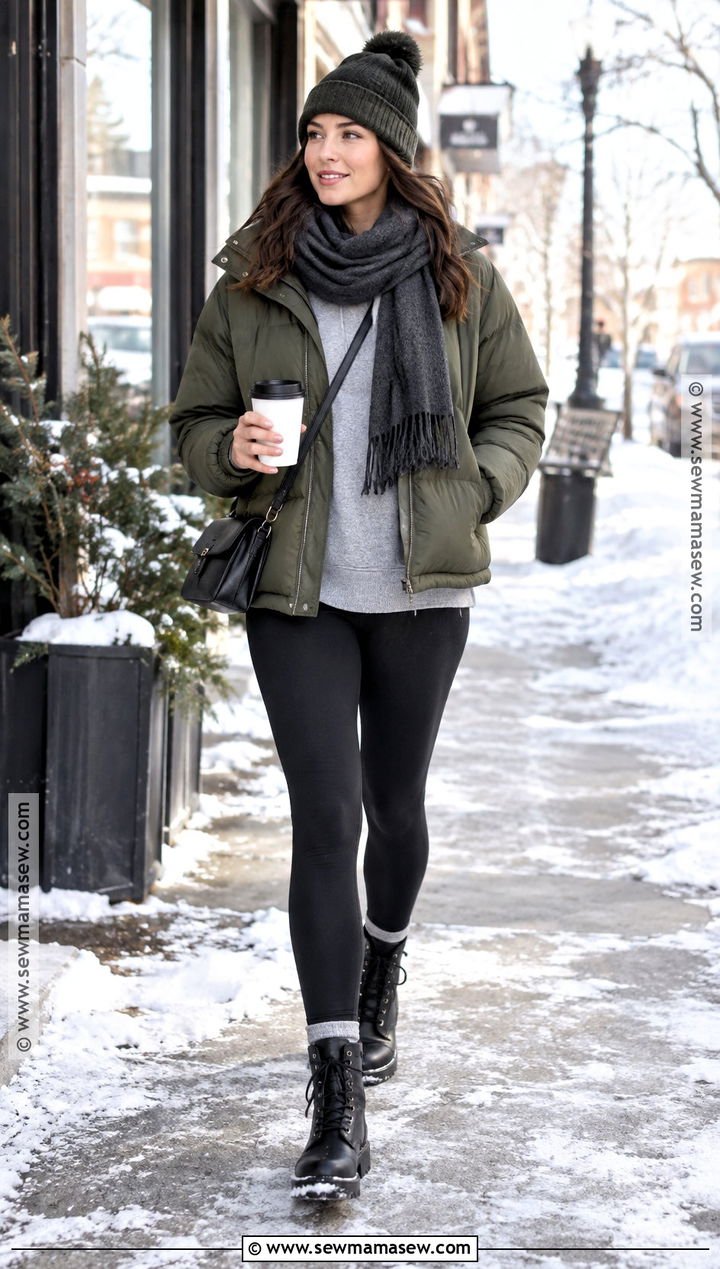
Some days the only brief is warm and dry. A hip-length or cropped puffer over a neutral hoodie or heavy sweatshirt, plus opaque black leggings with a supportive waistband, gets you out the door. Chunky sneakers are fine when it's dry, but for rain, slush or light snow I'd switch to waterproof lace-up boots, since mesh sneakers soak through fast. Add a crossbody, a ribbed beanie and a scarf. Hold leggings up to a window before you commit, because cheaper pairs go see-through when you bend. I buy the puffer in black, cream, olive or navy and keep everything else within two colors, which stops the outfit looking like gym clothes. The same jacket goes over jeans and sweater dresses.
9. Suede Jacket and Dark Wash Jeans Outfit
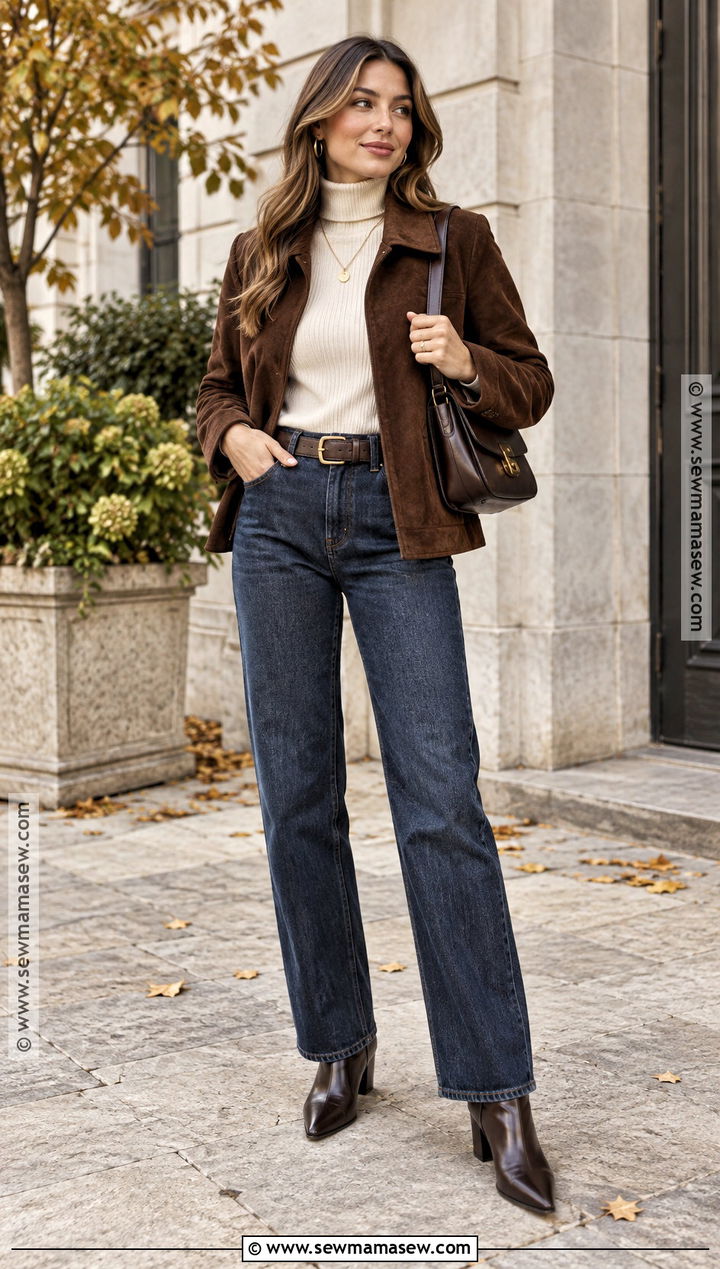
Suede gives plain basics seasonal texture faster than almost anything else. Layer a brown, tan or deep burgundy suede jacket over a cream turtleneck, with dark straight-leg jeans to keep it grounded. Pointed ankle boots, a leather shoulder bag and a belt in a similar brown complete it. Gold jewelry warms brown suede; silver suits cooler gray-brown shades. I'm honest with people about suede: rain darkens it and can leave water marks, so spray it with a protector before the first wear and keep a suede brush by the door. If your winters are mostly wet, a good faux suede is the sensible buy. Later in the season the jacket works over black trousers or a midi skirt.
10. Sweater Vest and White Shirt Outfit
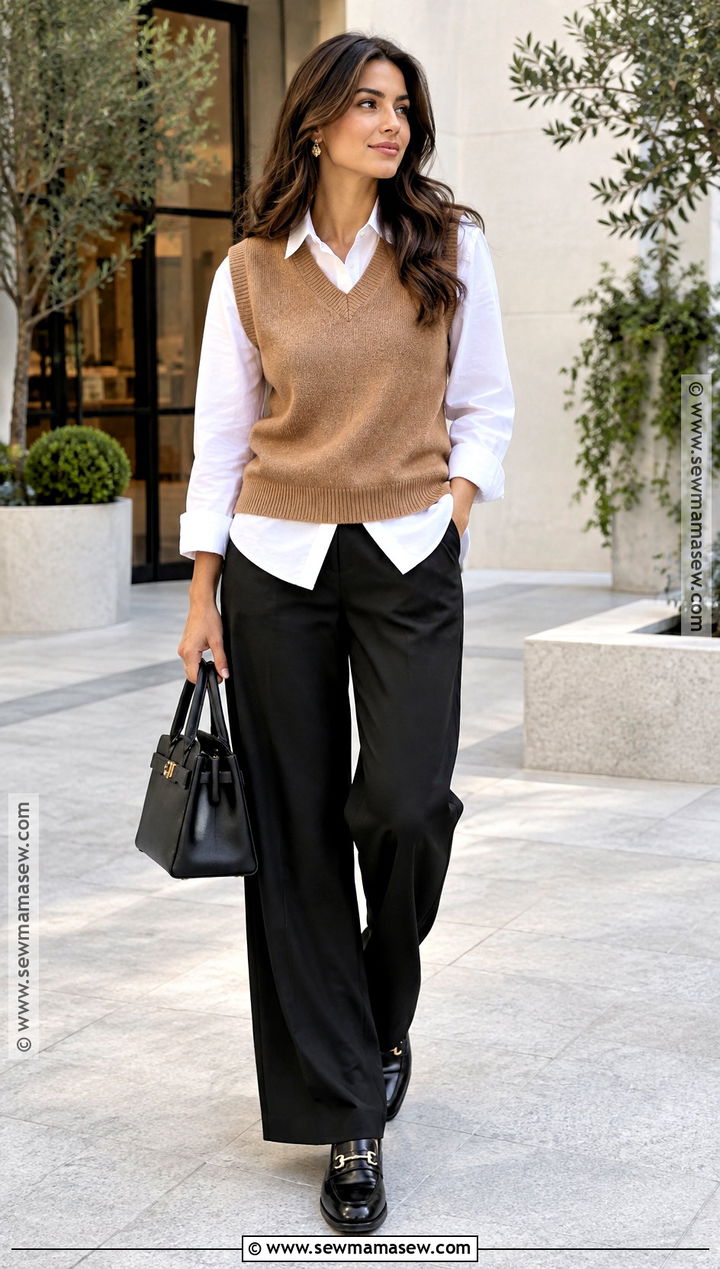
A sweater vest warms your core without adding sleeve bulk under a coat, and that's exactly why I keep one in a winter capsule. Cream, camel or a quiet pattern goes over a crisp white button-down, with high-waisted wide-leg trousers or straight tailored pants. Loafers, a structured bag and simple earrings finish it. Let the cuffs and a sliver of shirt hem show, but watch the proportions. If you're petite, a shorter vest that ends at the trouser waistband keeps your legs long; taller women can carry a longer, looser one. Dark jeans and sneakers turn it into a weekend outfit, and the vest worn alone under a blazer bridges fall into winter.
11. Monochrome Cream Winter Outfit
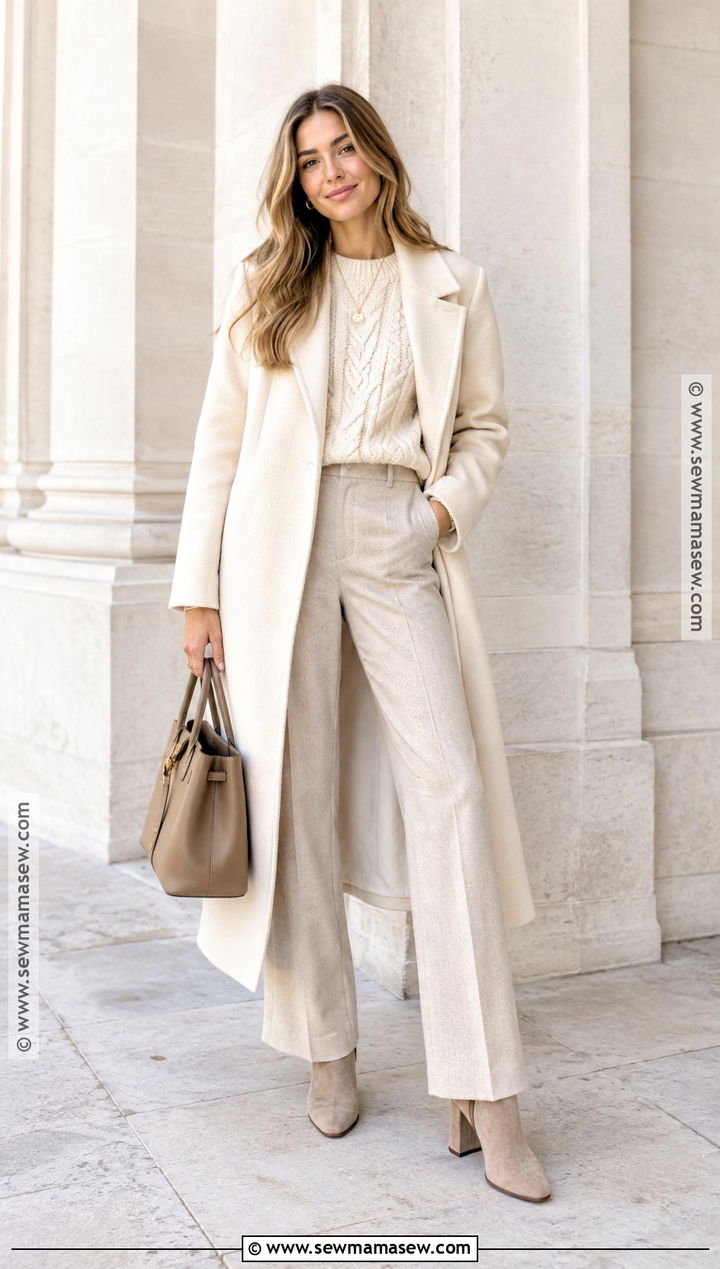
Cream from head to toe lifts a gray winter day, and you can pull it together from neutrals you probably already own. I start with an ivory turtleneck or cable knit, add oatmeal trousers and finish with a camel or off-white wool coat. Taupe ankle boots or clean neutral sneakers go on depending on the plan, plus a tan bag and minimal jewelry. Don't try to match the shades exactly. Ivory next to oatmeal next to camel gives the outfit depth, while identical whites look flat. Light colors show grime at the coat cuffs and trouser hems first, so I'd choose washable trousers and save the coat for dry days. Every piece splits back into the rest of the capsule with black, navy or denim.
12. Black Midi Dress and Long Cardigan Outfit
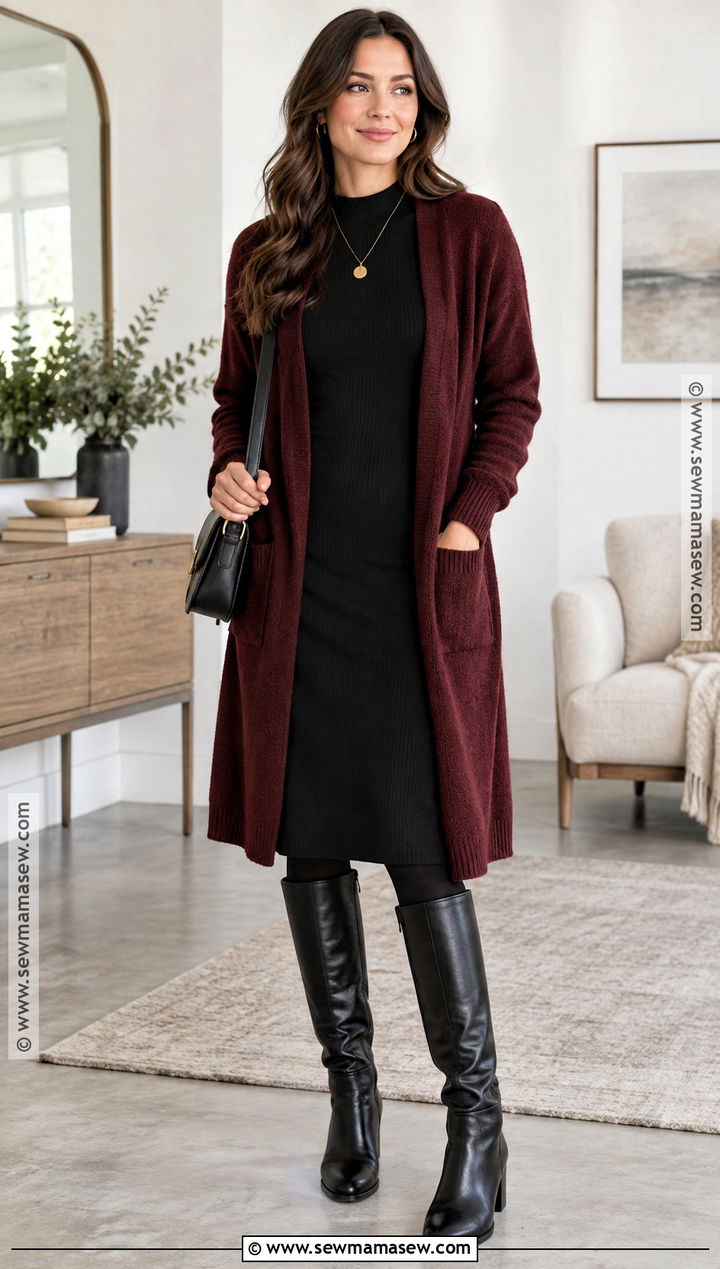
A plain black midi dress is the piece I'd least want to lose from a capsule. Long-sleeved or sleeveless, it should leave room for layers. Wear it with a soft gray or camel long cardigan, opaque tights and knee-high or ankle boots, a leather crossbody and a pendant or small hoops. Belt the cardigan over the dress for a waist, or leave it open for a long vertical line, which tends to suit shorter frames better. Before buying, I crush a fold of the fabric in my hand for a few seconds. If it creases badly, it won't survive a car ride or a suitcase. The dress also sits under a blazer or wool coat, and the cardigan goes straight back to jeans.
13. Barn Jacket and Relaxed Jeans Outfit
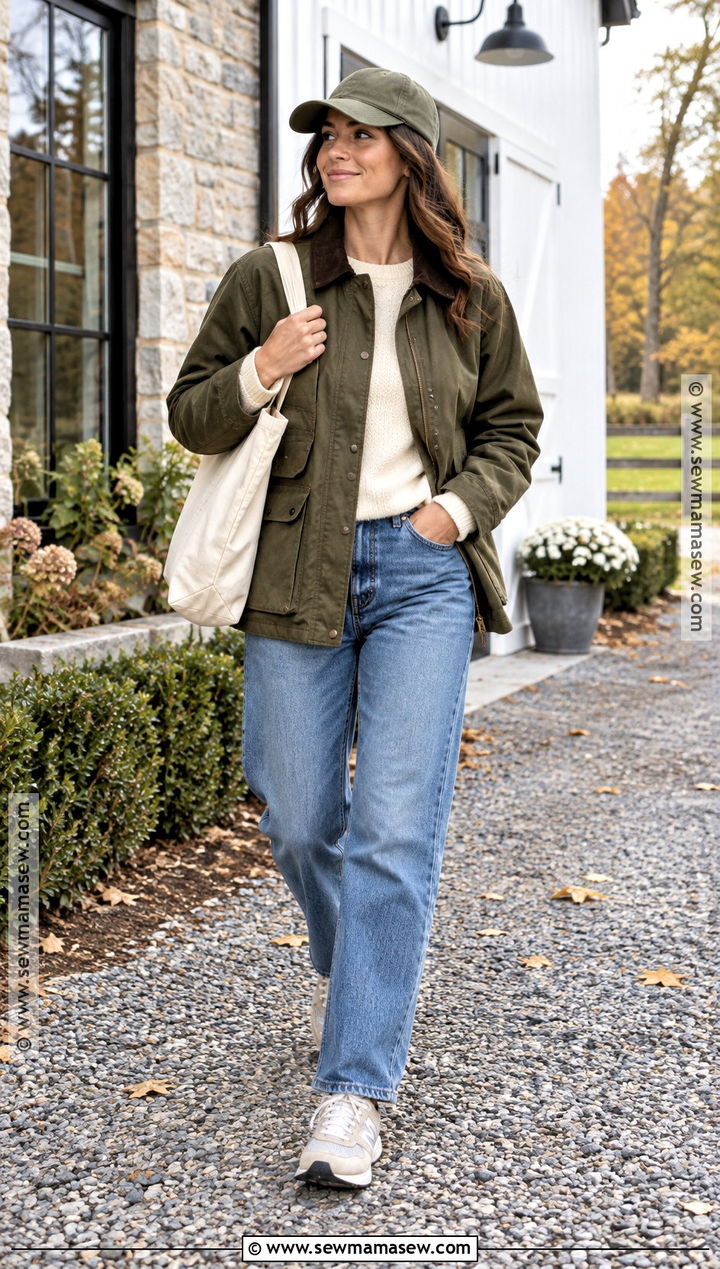
A barn jacket is my casual outdoor layer, and it covers more ground than people expect. Olive, tan or navy canvas goes over a crewneck sweater and a cotton tee, with relaxed straight-leg jeans either full-length or lightly cuffed. Retro sneakers or sturdy leather boots, plus a canvas tote, keep it practical. A baseball cap suits a mild fall day; a knit beanie makes the same outfit ready for winter. I look for a corduroy collar, secure pockets and enough room in the sleeve for a medium knit. Waxed-cotton versions shrug off drizzle but feel stiff at first and need re-waxing over time, so try one before you decide. On a weekday it also softens tailored trousers or a casual knit dress.
14. Matching Knit Set and Long Coat Outfit
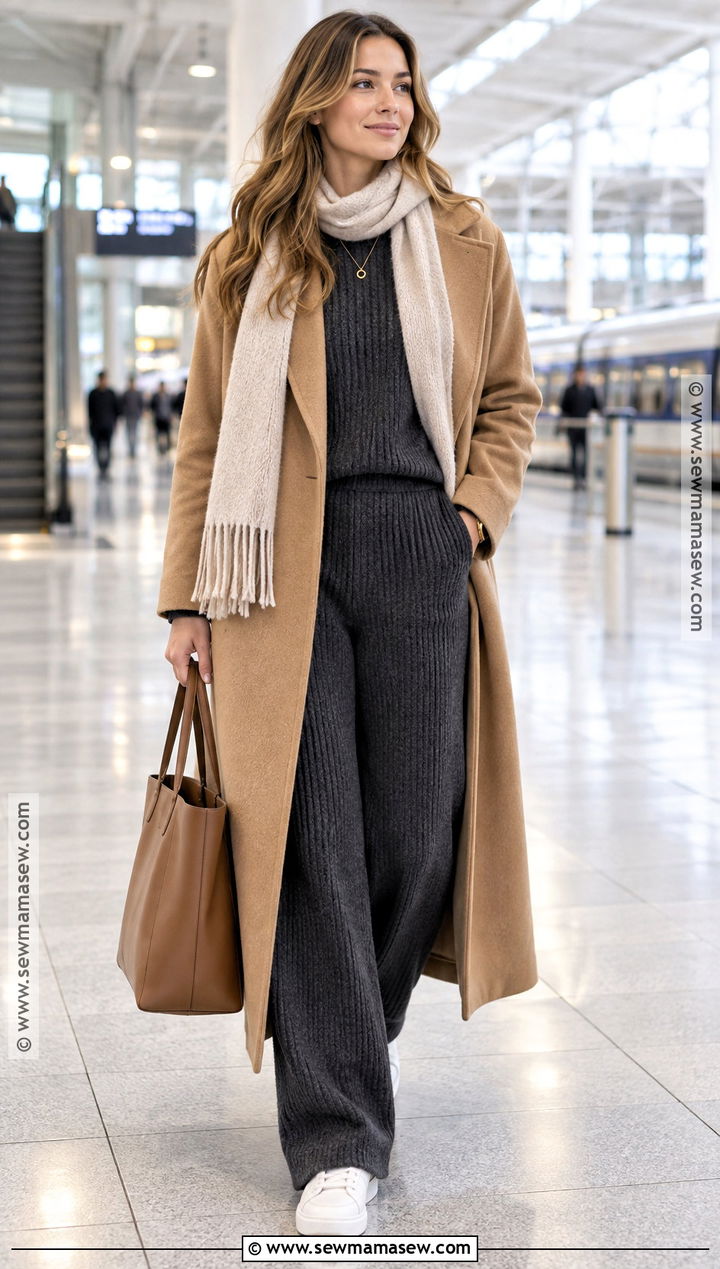
A matching knit set feels like loungewear and looks considered, which makes it one of my favorite travel outfits. A ribbed sweater with matching straight or wide-leg knit pants in charcoal or oatmeal gets sharpened by a long wool coat. Leather sneakers suit a travel day, and sleek ankle boots take it to lunch or a relaxed workday; add a structured tote and a scarf when it's cold. The set needs enough weight to hold its shape. Thin knit pants bag out at the knee within hours and cling to every bump. Worn together, it's a monochrome look. Split up, the sweater goes with denim and skirts, and the pants pair with button-downs and turtlenecks.
15. Tailored Suit and Fine Knit Outfit
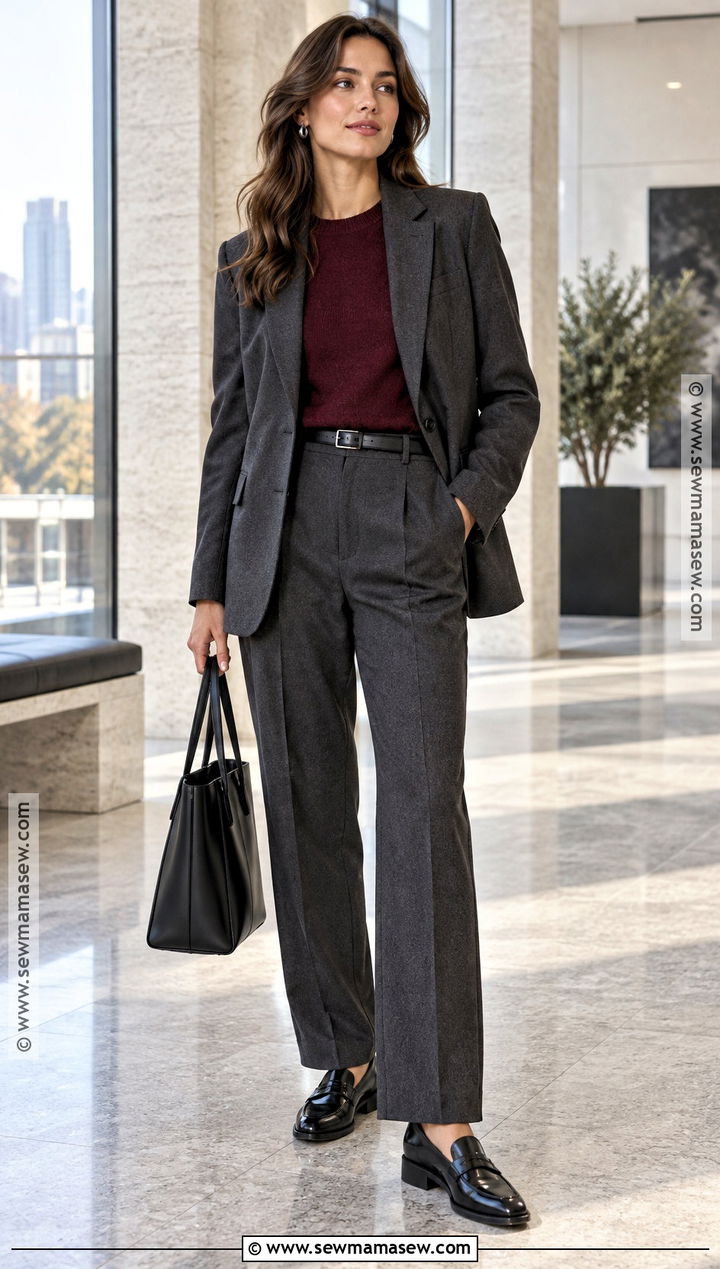
A relaxed suit is really two capsule pieces that happen to match. Pick a single-breasted blazer and trousers in charcoal, navy or brown, and swap the formal blouse for a fine crewneck or turtleneck. Loafers or slim ankle boots go underneath, with a structured tote for the office and a small shoulder bag when you want it less formal. Two fit checks matter: the blazer has to button over the knit without straining, and the trouser hem should be cut for the shoe you'll wear most, usually just brushing the top of a flat. Split the pieces on other days, blazer with jeans and trousers with a cardigan. If you buy only one suit, I'd make it charcoal, since it sits comfortably with both black and brown.
Keeping Wool, Suede and Knits Wearable Until March
A capsule gets worn hard. Each piece sees far more wear in one season than it would in a full closet, so care is part of the plan rather than an afterthought.
Wool coats
Brush a wool coat after wearing it with a soft clothes brush, working downward with the grain, and hang it on a wide, shaped hanger so the shoulders don't dent. Give it a day off between wears when you can, since wool recovers its shape as it airs out. I dry-clean coats once at the end of the season rather than every few weeks, because frequent cleaning wears the fibers.
Sweaters
Pilling shows up where knits rub: under the arms, at the hip where a bag sits, along the cuffs. A fabric shaver clears it in a few minutes. Fold sweaters instead of hanging them, because hangers push bumps into the shoulders and heavy cable knits grow longer on a hook.
Suede and leather
Treat suede with a protector spray before the first wear. If it gets soaked, blot it, let it dry away from the radiator, then brush the nap back up. Leather jackets need conditioning once or twice a season so they don't crack at the elbows, and boots get the same treatment, plus shoe trees or rolled paper to keep the shafts upright between wears.
Fifteen Outfits From Roughly Twenty Pieces
Getting fifteen outfits out of a smaller closet comes down to a handful of decisions: outerwear you can rely on, bottoms that repeat, shoes you can walk in and knitwear suited to your climate. Settle on two or three main neutrals, then bring in suede or one deep color for the season. Before you buy anything new, hold it against what you own and count how many pieces it goes with. If the answer is fewer than three, leave it in the shop. Fit and fabric care will matter more over a long winter than any trend. Treat these outfits as formulas, and adjust the layers and footwear to your body, your routine and your weather.
Related posts: