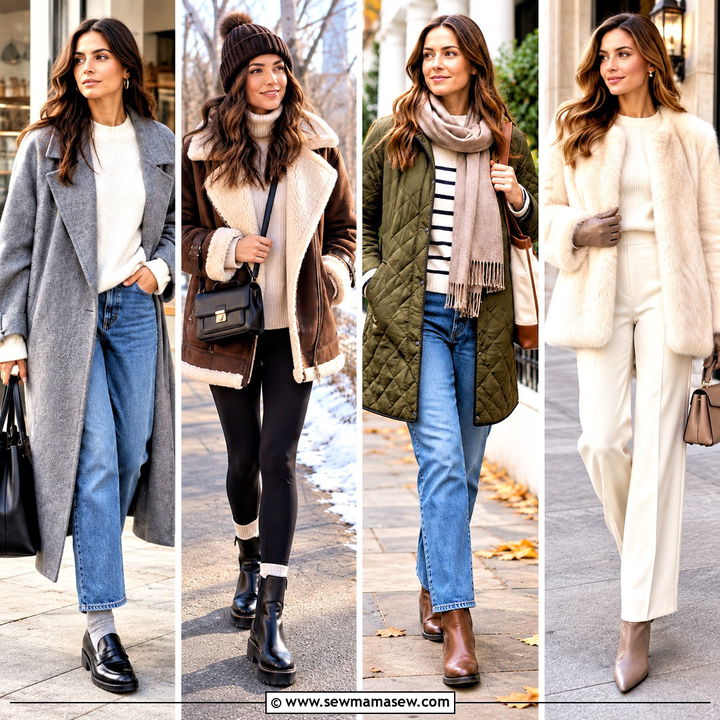
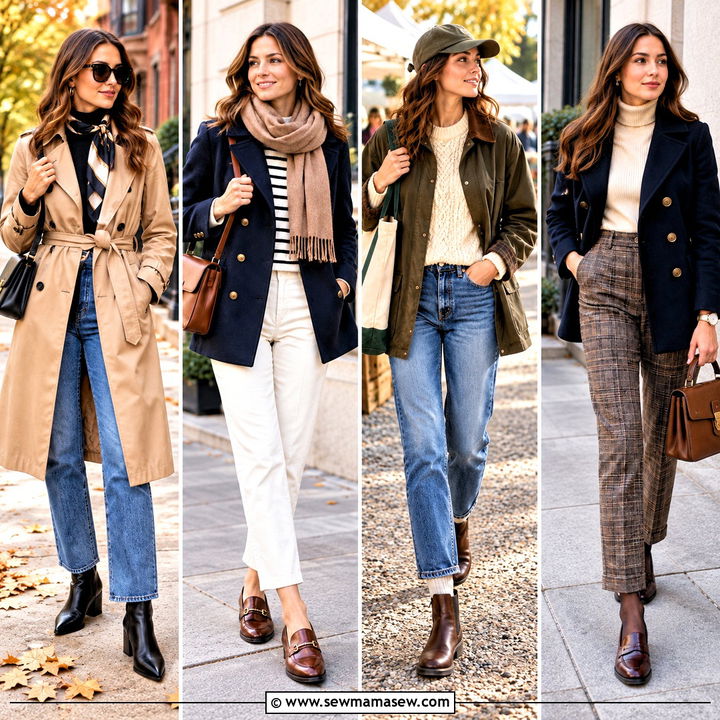
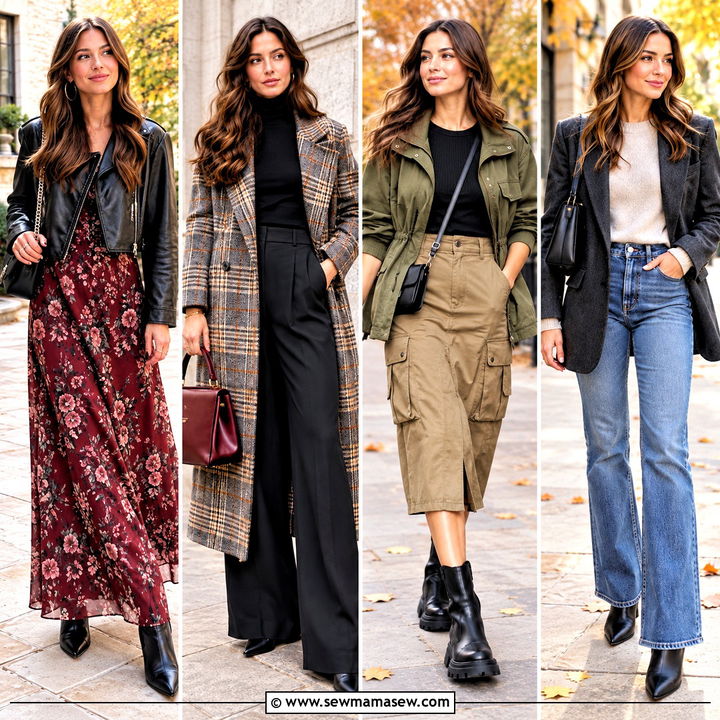
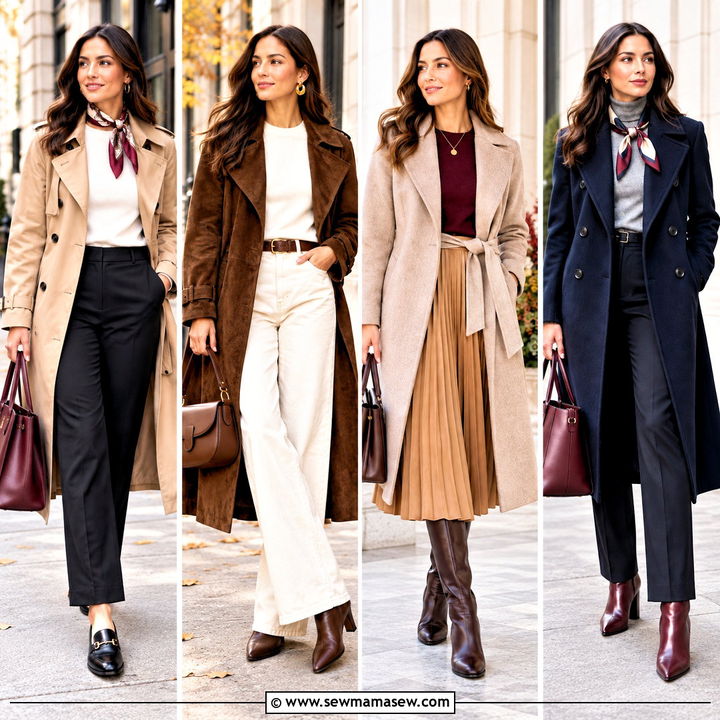
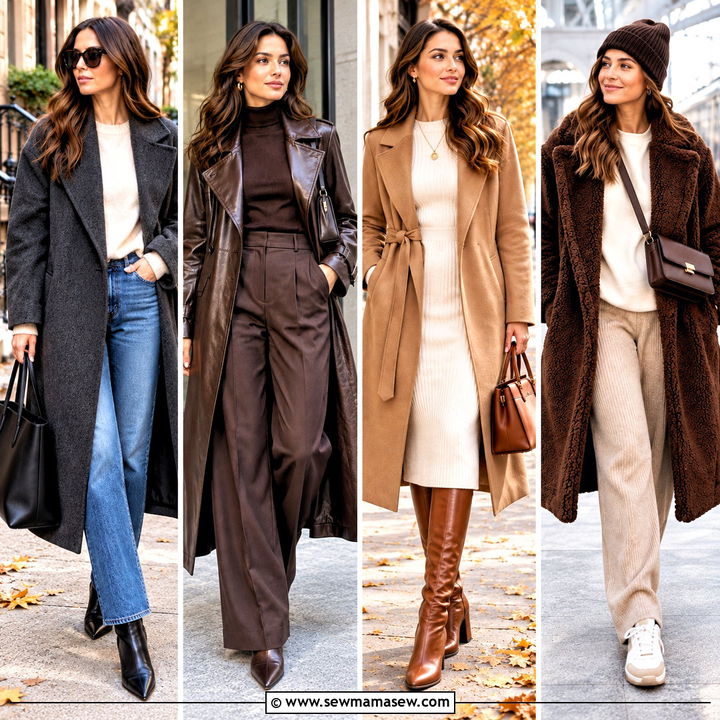
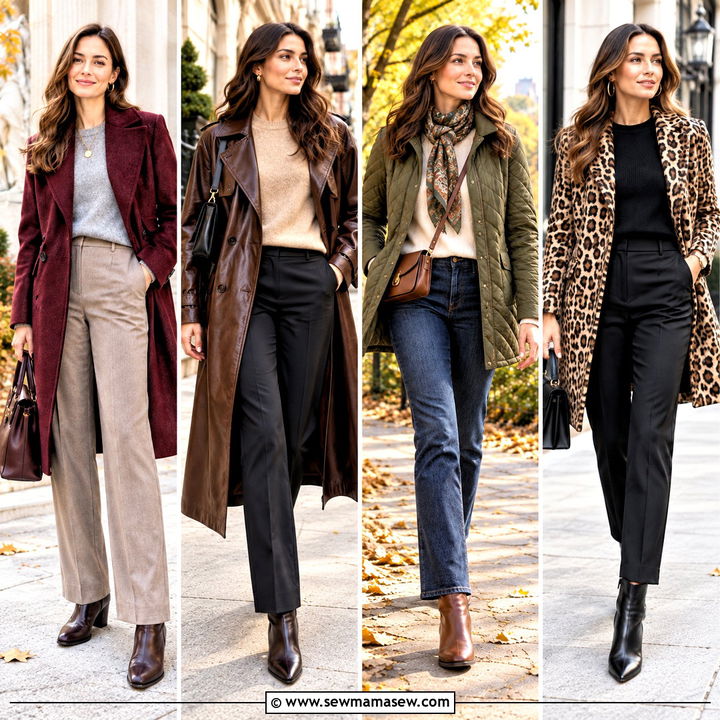
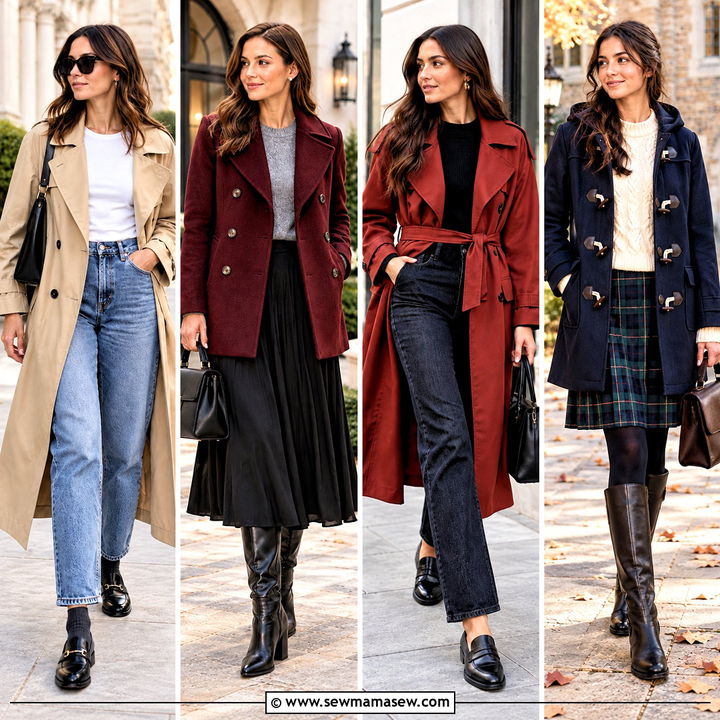
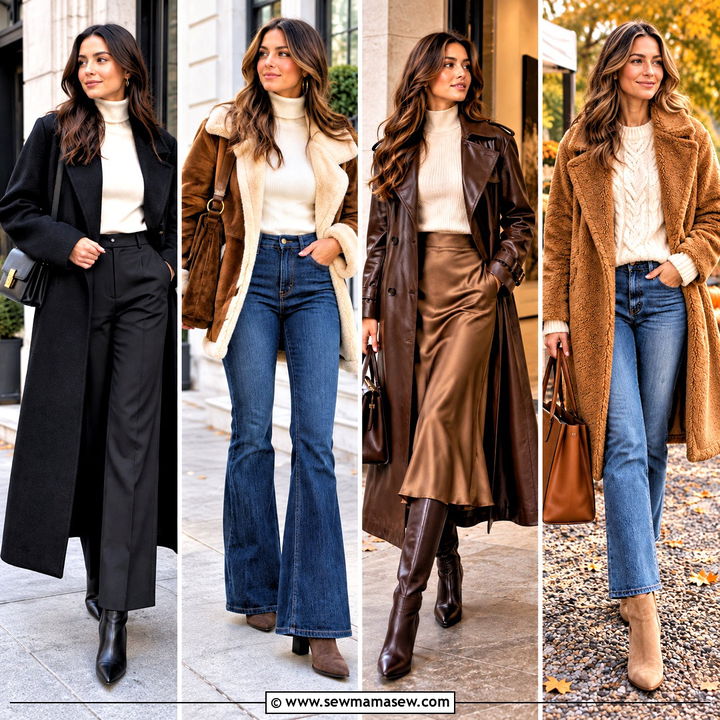
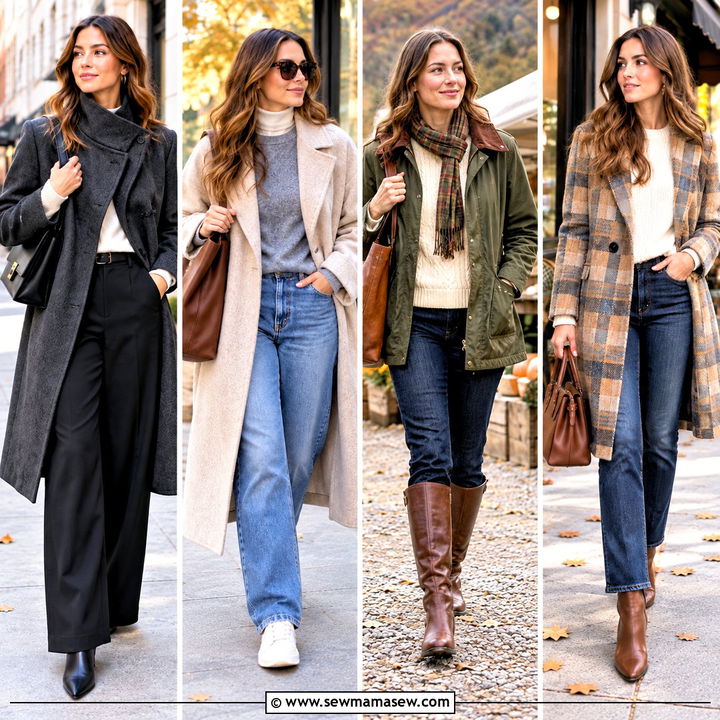
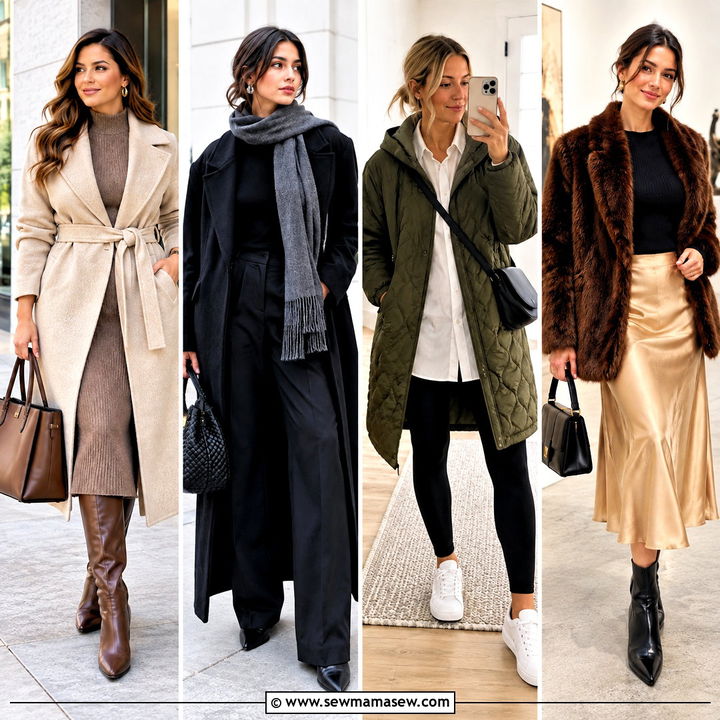
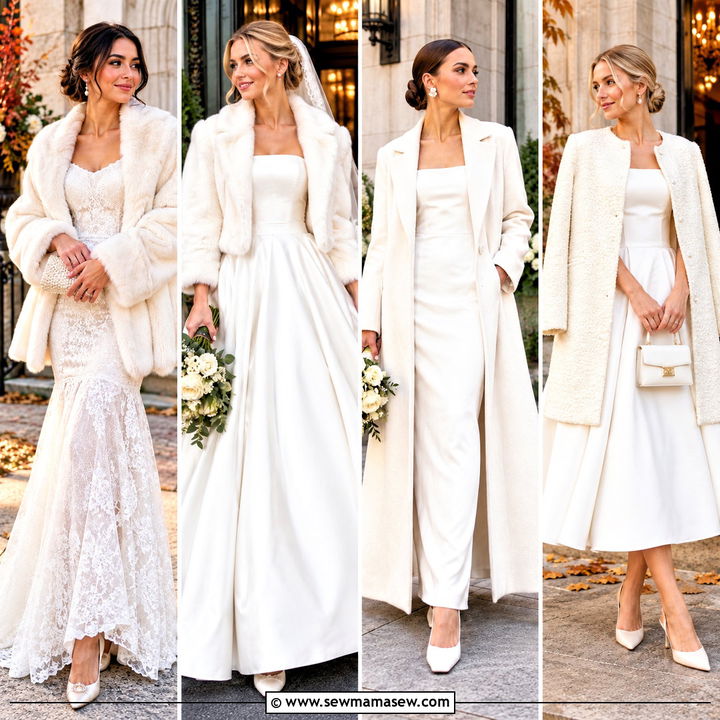
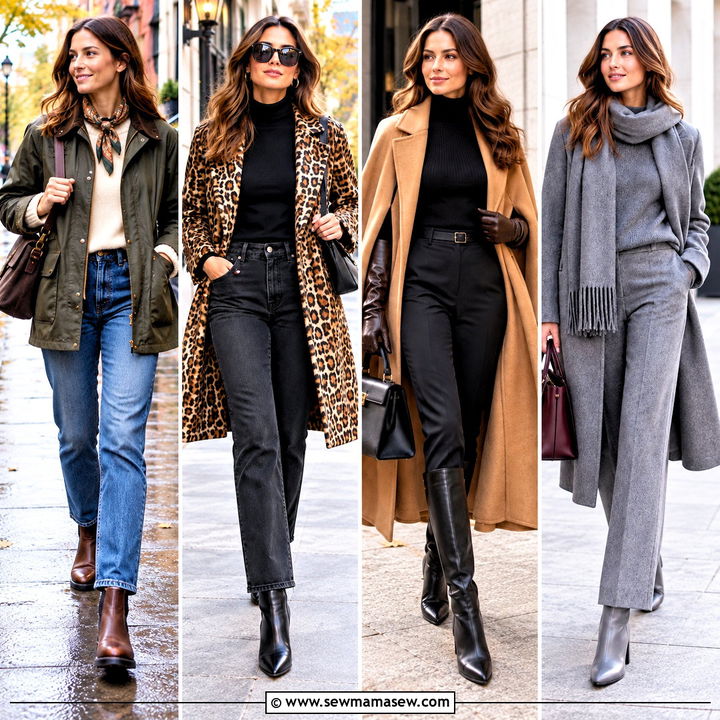
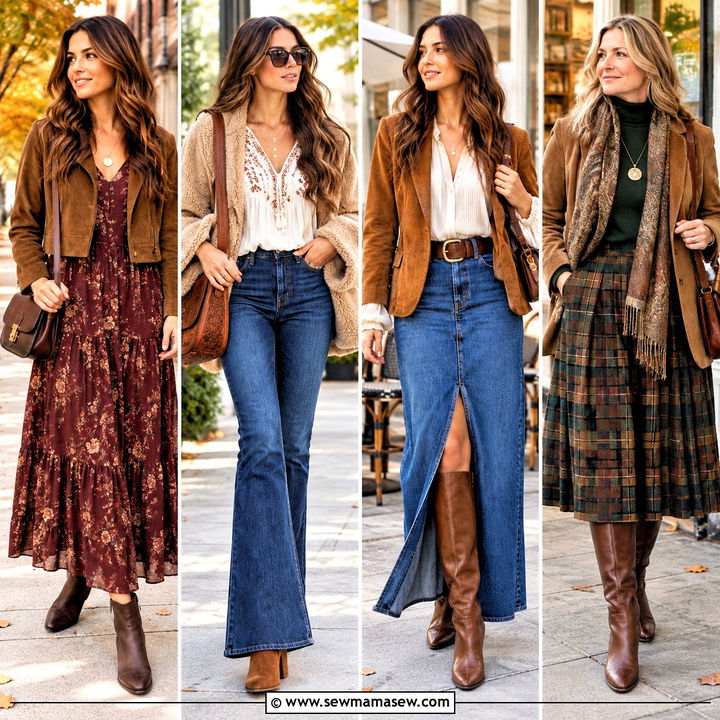
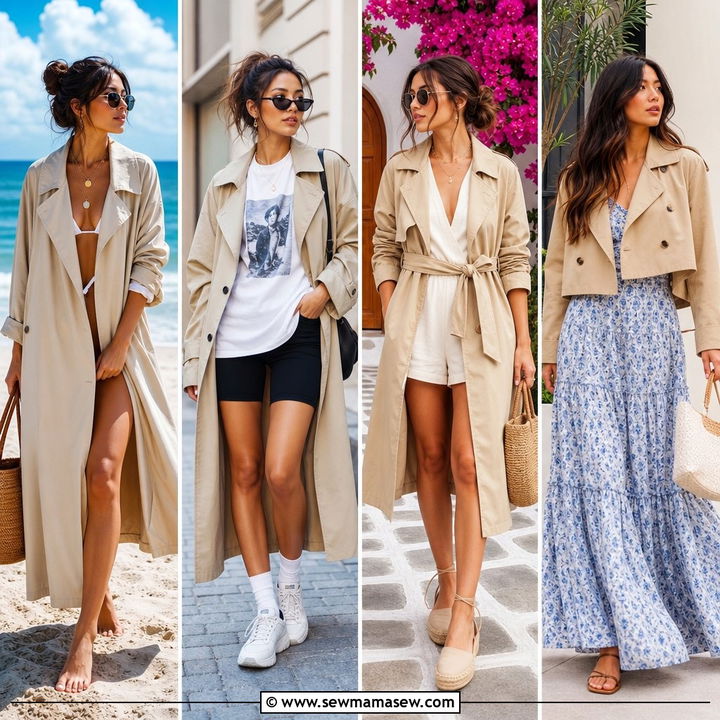
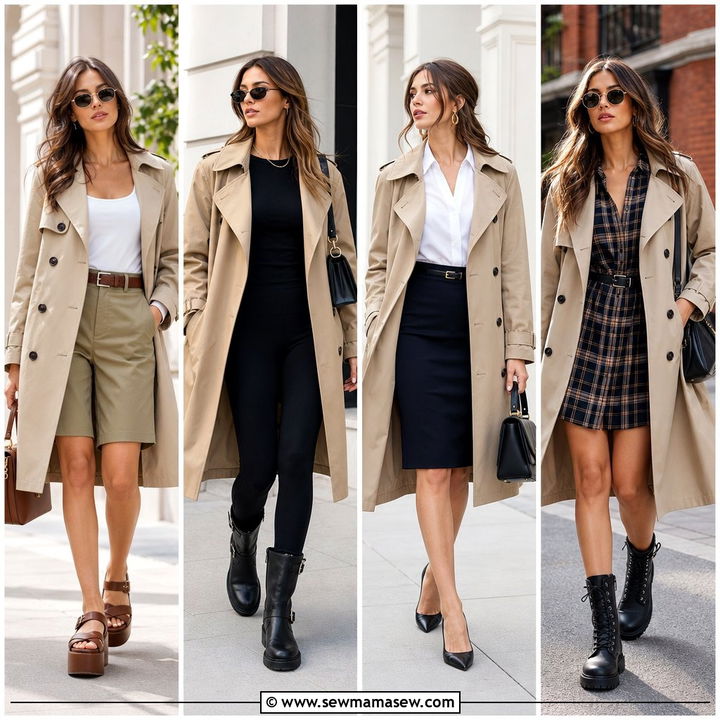
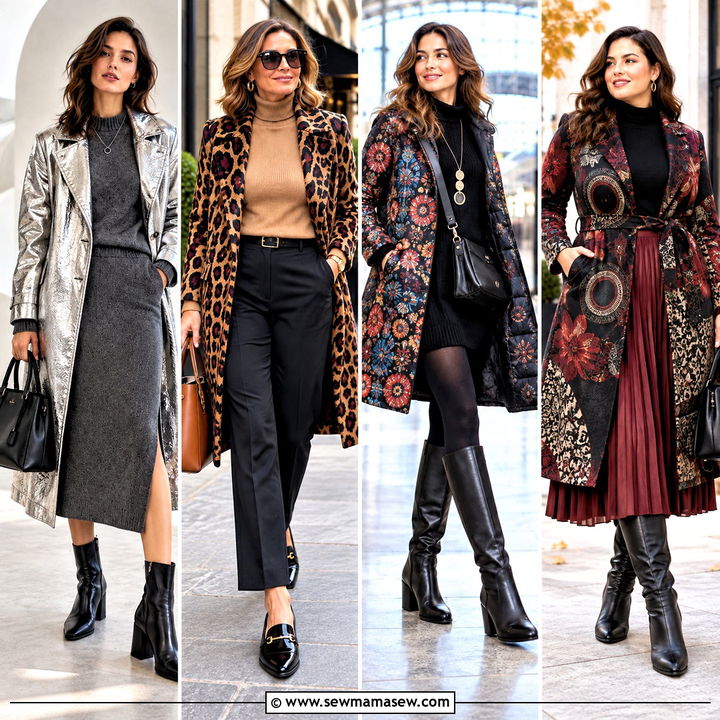
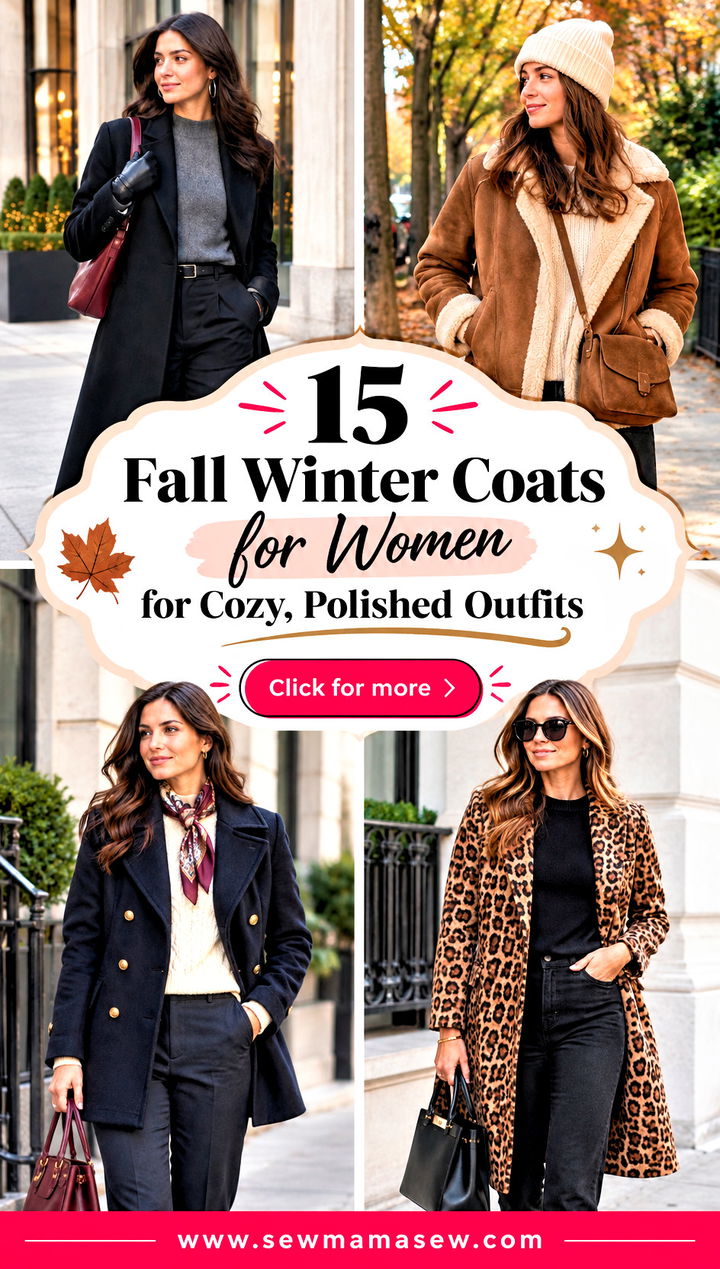
The coat is the piece people see more than anything else you wear from November to March, so I treat it as the starting point of every cold-weather outfit rather than the last thing grabbed on the way out. A good one has to keep you warm, fit over a real sweater and still go with most of your closet. This year's outerwear runs from classic wool tailoring to oversized trenches, shearling, long puffers, leather and a few bold prints. Before falling for any of them, I think about length, insulation, fabric and what the coat has to do on a normal weekday. Each outfit below builds a full look around one coat style, from office mornings to relaxed weekends.
Wool, Down or Shearling for the Winter You Actually Get
The first question I ask anyone shopping for a coat isn't about color. It's about what their coldest week looks like. A coat that's perfect for damp, windy forties is miserable at ten degrees, and the reverse is just as true.
Wool
Wool coats handle cool, dry cold and light drizzle well. Read the fiber label: the higher the wool content, the warmer the coat and the better it keeps its shape. Coats that are mostly polyester with a little wool look the same on the hanger but feel colder and pill faster. Dense, boiled or felted wool blocks wind far better than a loose, soft weave.
Down and synthetic fill
For real cold, nothing beats a puffer for warmth against weight. Fill power tells you how much a down cluster lofts, and higher numbers mean more warmth for less bulk. Down's weakness is moisture: once it's soaked it flattens and stops insulating. Synthetic fill keeps working when damp, which makes it the smarter choice for wet, slushy winters.
Shearling, leather and faux fur
Real shearling is very warm and wind-resistant but heavy, and it hates heavy rain. Leather blocks wind without insulating much, so it needs layers in deep cold. Faux fur traps air well around the body but often lets wind through at the seams and closures. These are wonderful second coats; I rarely suggest any of them as the only coat for a harsh winter.
1. Camel Wool Coat Outfit
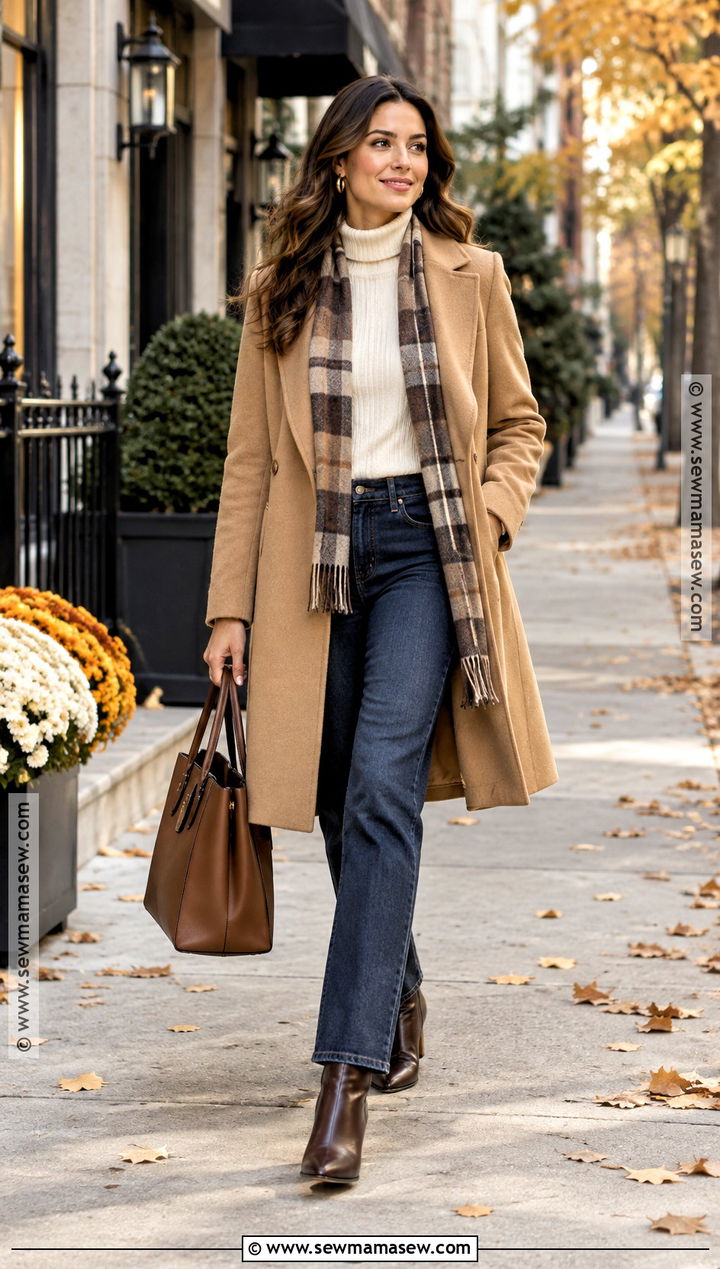
Camel is the coat color I recommend most for a first good coat, because it flatters most skin tones and sits comfortably next to black, navy, burgundy and denim. Wear a knee-length, single-breasted camel wool coat over a cream turtleneck and dark straight-leg jeans, then add chocolate ankle boots, a structured leather tote and a matching belt. Small gold earrings and a soft plaid scarf finish it when the temperature drops. If you want it looser, trade the fitted sweater for a slightly oversized cable knit. The one thing I always check is the button stance: close the coat over that cable knit and look at the chest in a mirror. If the fabric pulls into creases between the buttons, the coat is a size too small for winter, however good it looks over a T-shirt.
2. Black Maxi Coat Outfit
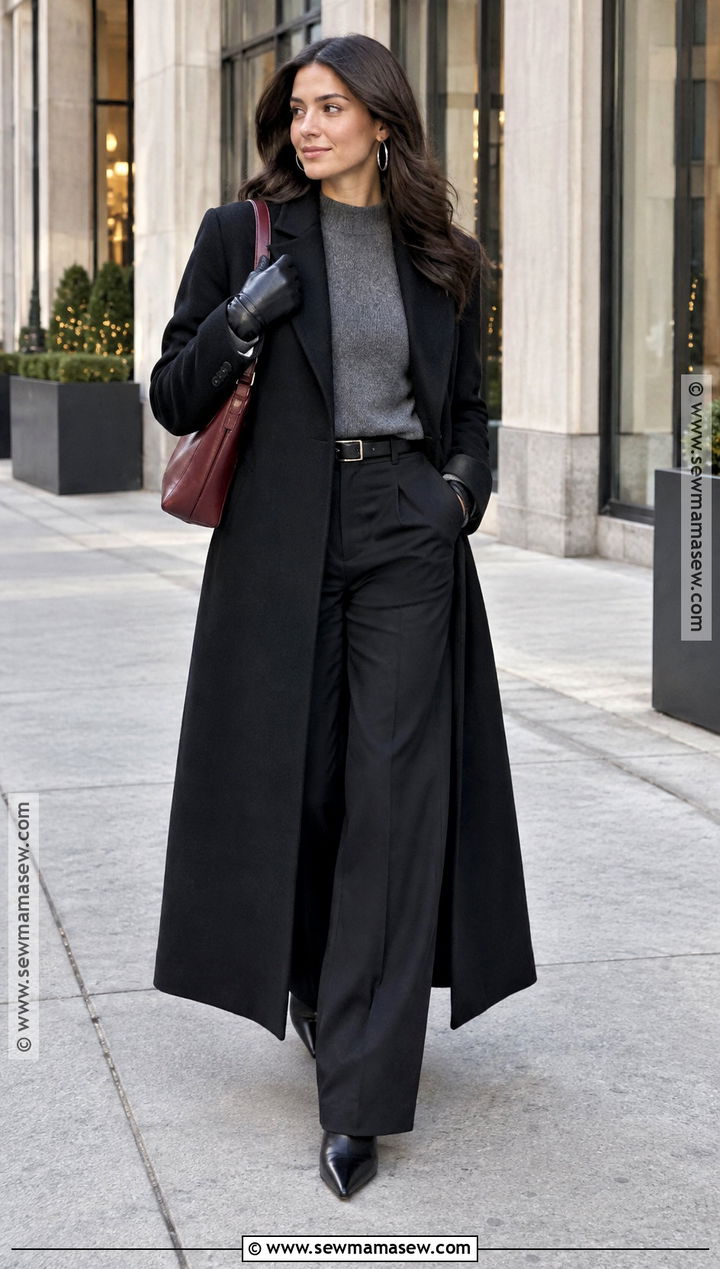
A black maxi coat gives you full coverage and still keeps a long, narrow line. Layer it over a fitted gray sweater and full-length black trousers so the dark column runs unbroken, then add pointed ankle boots and a burgundy shoulder bag for one rich accent. Silver hoops, leather gloves and a soft gray scarf are plenty. Length is where maxi coats go wrong. If you're petite, a hem that stops above the ankle bone keeps the coat from wearing you; taller women can go right down to the boot. I also look for a defined shoulder or a proper lapel, because a long coat with no structure at the top reads like a bathrobe. Leave a little room through the body so it swings over heavy knits when you walk.
3. Oversized Trench Coat Outfit
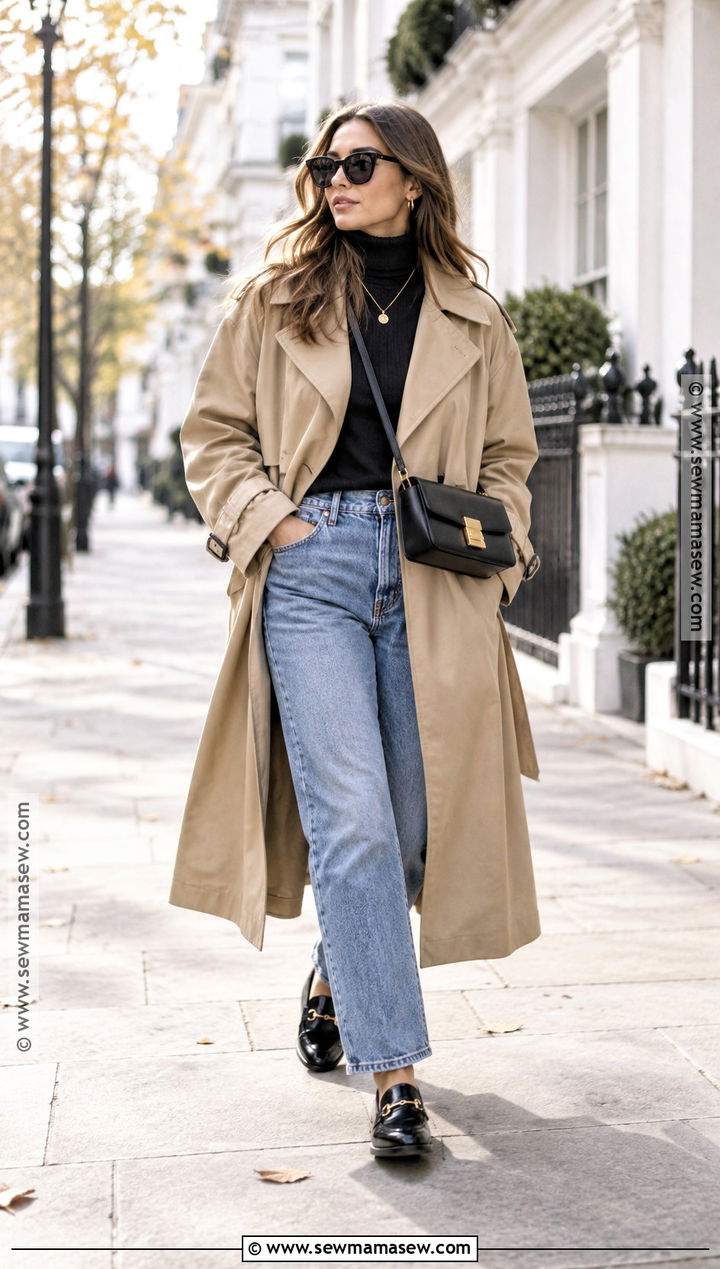
Oversized trenches earn their place in the unsettled weeks of fall, when mornings are cold and afternoons aren't. I start with a light black turtleneck, relaxed blue jeans and black loafers, then add a roomy beige trench with enough sleeve width for a layer underneath. A structured crossbody, sunglasses and simple gold jewelry keep the focus on the coat's volume. On colder days, slip a fine-knit cardigan between the turtleneck and trench and swap the loafers for weather-resistant ankle boots. Tie the belt loosely at the back to keep the shape open, or knot it at the waist if you want definition. Oversized doesn't mean any size, though: the shoulder seam can drop past your shoulder, but if the cuffs cover your knuckles, the trench is simply too big.
4. Long Puffer Coat Outfit
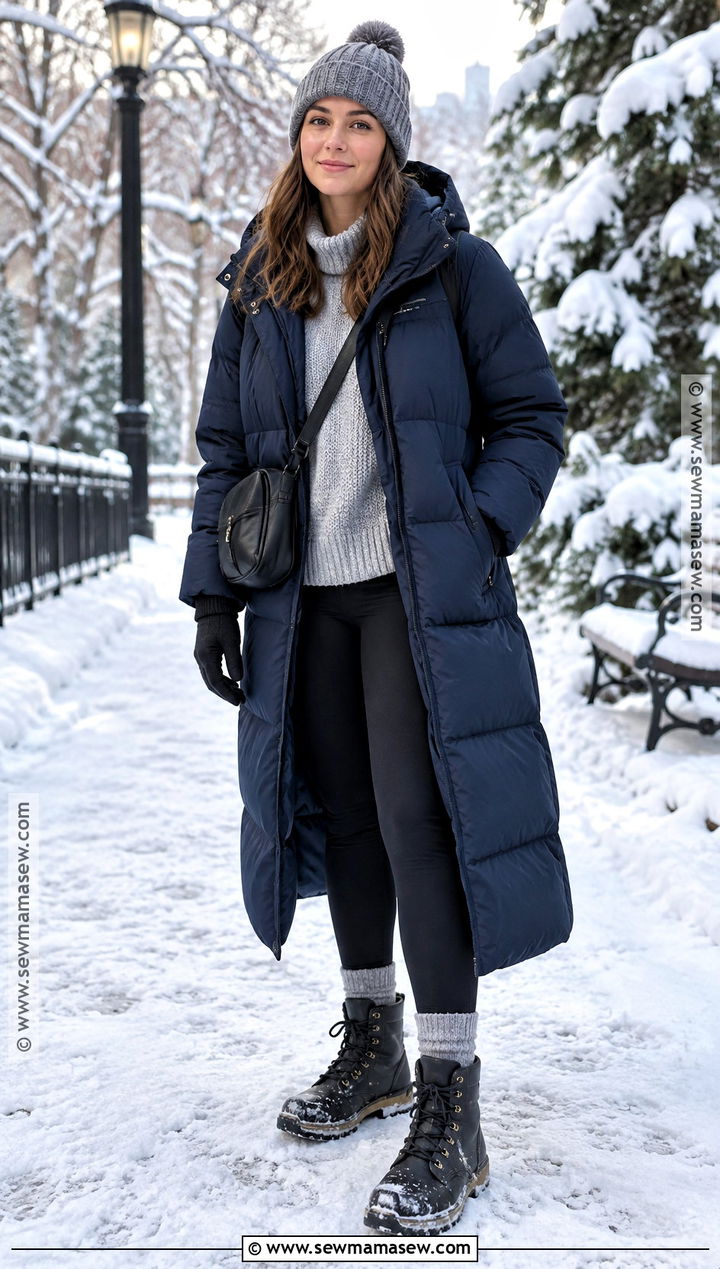
For cold, windy mornings, I'd rather put someone in a long puffer than any wool coat, since it protects the thighs and knees, not just the torso. A knee- or calf-length puffer in black, navy or deep brown goes over a merino sweater, fleece-lined leggings and thick crew socks. Weather-resistant lace-up boots give you traction and balance the coat's bulk. A knit beanie, insulated gloves and a compact nylon crossbody finish it. The detail I won't skip on a long puffer is a two-way zipper. Without one, you can't sit down or take a full stride without the coat riding up. If you regularly face snow or hard wind, look for adjustable cuffs and a hood that actually stays up when you turn your head.
5. Belted Wrap Coat Outfit
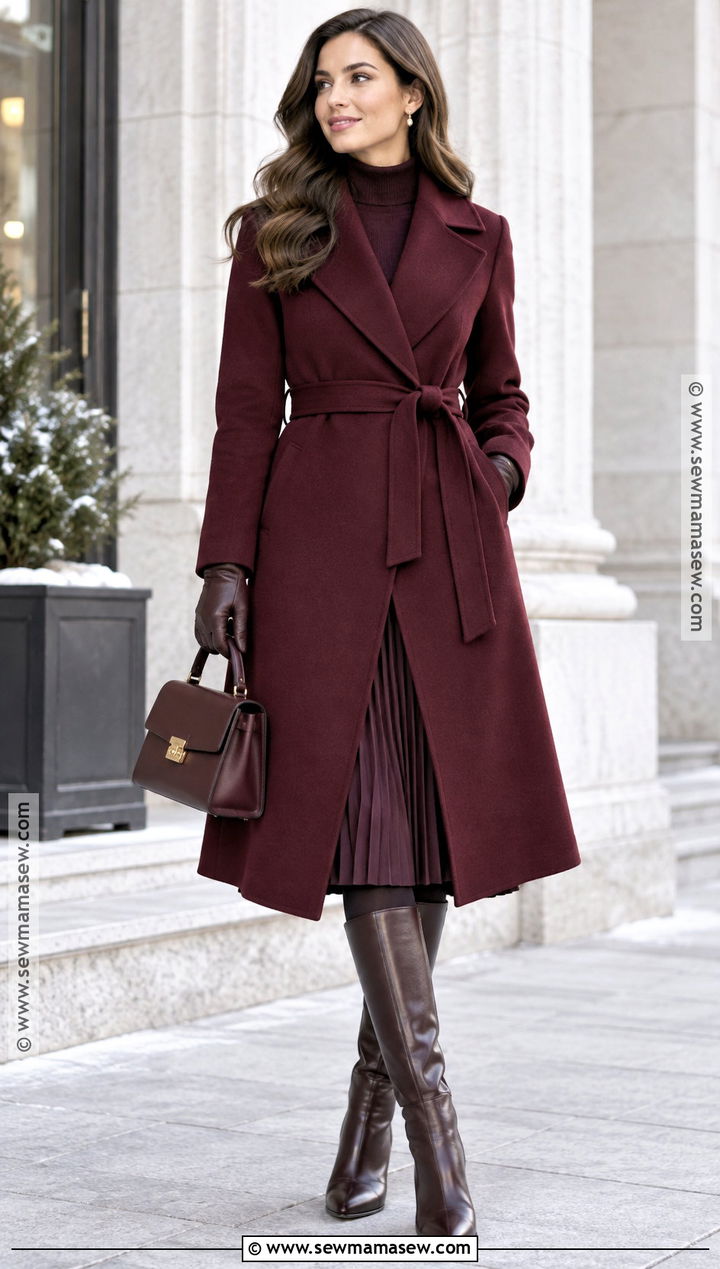
A belted wrap coat gives you a waist without squeezing the layers underneath. Style a charcoal or deep burgundy wrap over a fine mock-neck sweater and a pleated midi skirt, with opaque tights and knee-high leather boots so no skin shows between hem and shaft. A top-handle bag, small earrings and fitted leather gloves keep it polished. Here's a trick I use with shorter clients: tie the belt a little above your natural waist and the leg line looks longer. You can also knot it behind and wear the front open. Wrap coats leave the neckline exposed, so a cashmere scarf is not optional in real cold. I'd choose a lined version, since an unlined wrap coat lets the wind straight through the overlap.
6. Shearling Coat Outfit
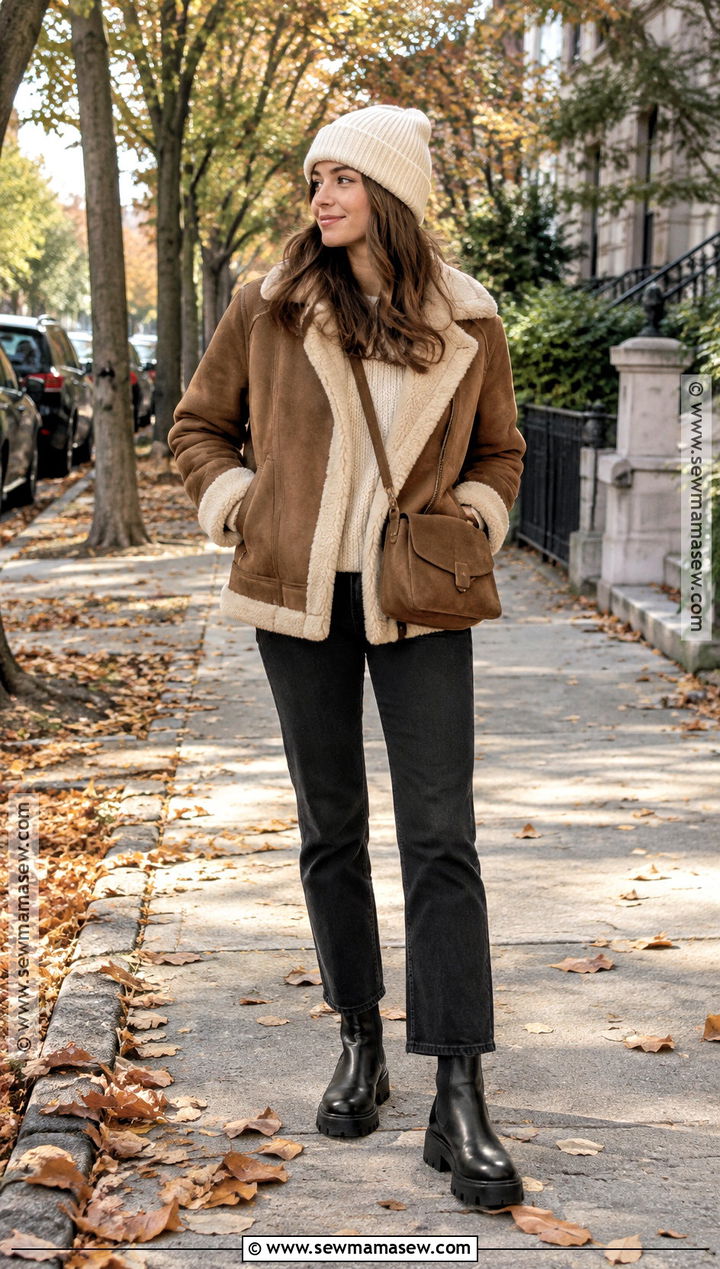
Shearling is the warmest coat on this list for its length, and the texture alone does a lot of styling work. Pair a brown hip-length shearling with an oatmeal sweater, straight black jeans and lug-sole ankle boots; the dark base keeps the cozy coat from looking sloppy. A suede or matte leather crossbody and a ribbed beanie in a soft neutral finish it. Keep other textures plain so the shearling stays the point. If the coat has a big collar, I'd skip the bulky scarf and wear a slim turtleneck instead, or you'll lose your neck entirely. Real shearling is heavy and doesn't like a soaking, so on rainy days I leave it on the hook. Cropped styles want high-rise bottoms; longer ones sit better over leggings or narrow trousers.
7. Faux Fur Coat Outfit
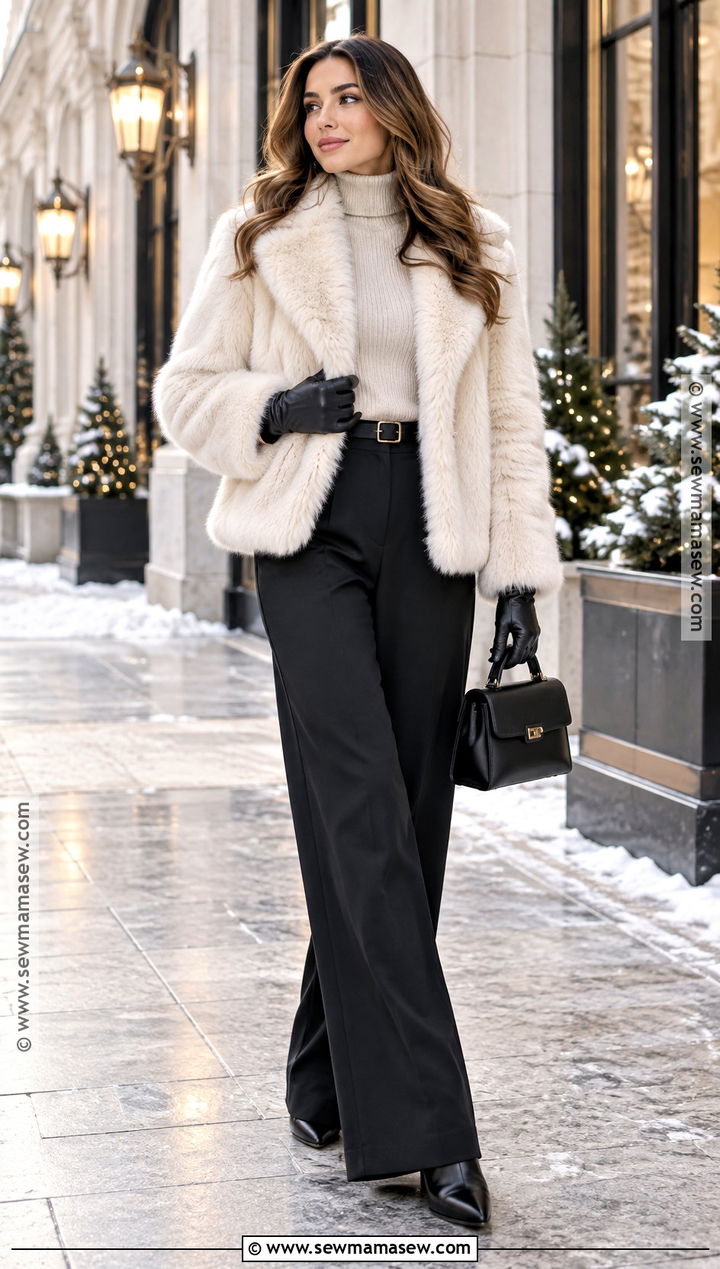
Faux fur turns the plainest basics into a dressed-up winter outfit. Wear a short cream, brown or black faux fur over a fitted crewneck and high-rise wide-leg trousers, and check the lining before you buy: a smooth, slippery lining lets the coat slide over knitwear, while a rough one catches and drags. Sleek pointed boots add structure under the fuller texture, and a small top-handle bag keeps the proportions in check. If you'd rather wear denim, choose dark straight jeans over distressed ones. Skip the fluffy hat and bag, since the coat is already doing plenty. Faux fur also mats where your bag strap rubs, so I carry a top-handle or clutch with it rather than a crossbody.
8. Leather Trench Coat Outfit
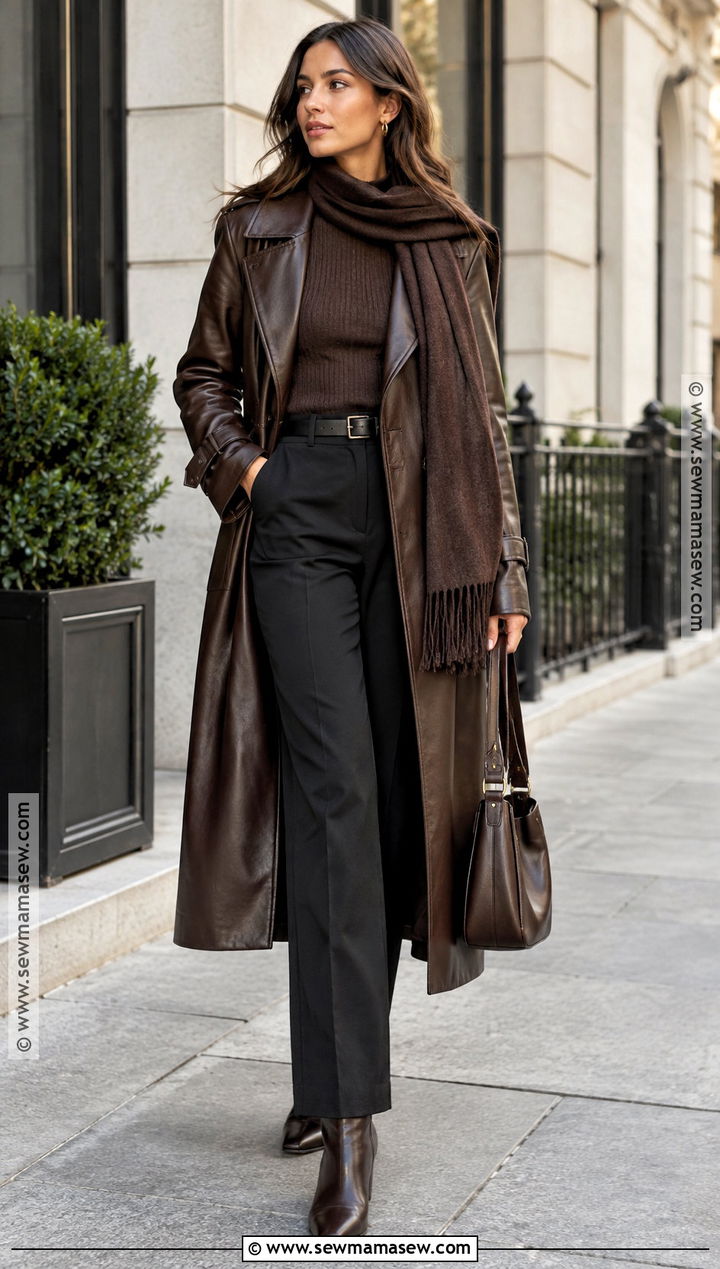
A leather trench gives cold-weather layers a sharper edge than wool ever will. Choose chocolate, oxblood or black and wear it over a fitted knit with tailored straight-leg trousers, plus heeled ankle boots that echo the coat's clean lines. A structured shoulder bag and small hoops are enough. Leather doesn't insulate much on its own, so when the temperature falls I add a thin thermal layer under the sweater and tuck a wool scarf inside the collar to block the gap at the neck. A midi-length leather trench looks strong belted and relaxed worn open. When you try one on, bend your elbows a few times. Supple leather moves with you; stiff, heavily coated leather creases sharply at the elbow and looks boxy for months.
9. Plaid Wool Coat Outfit
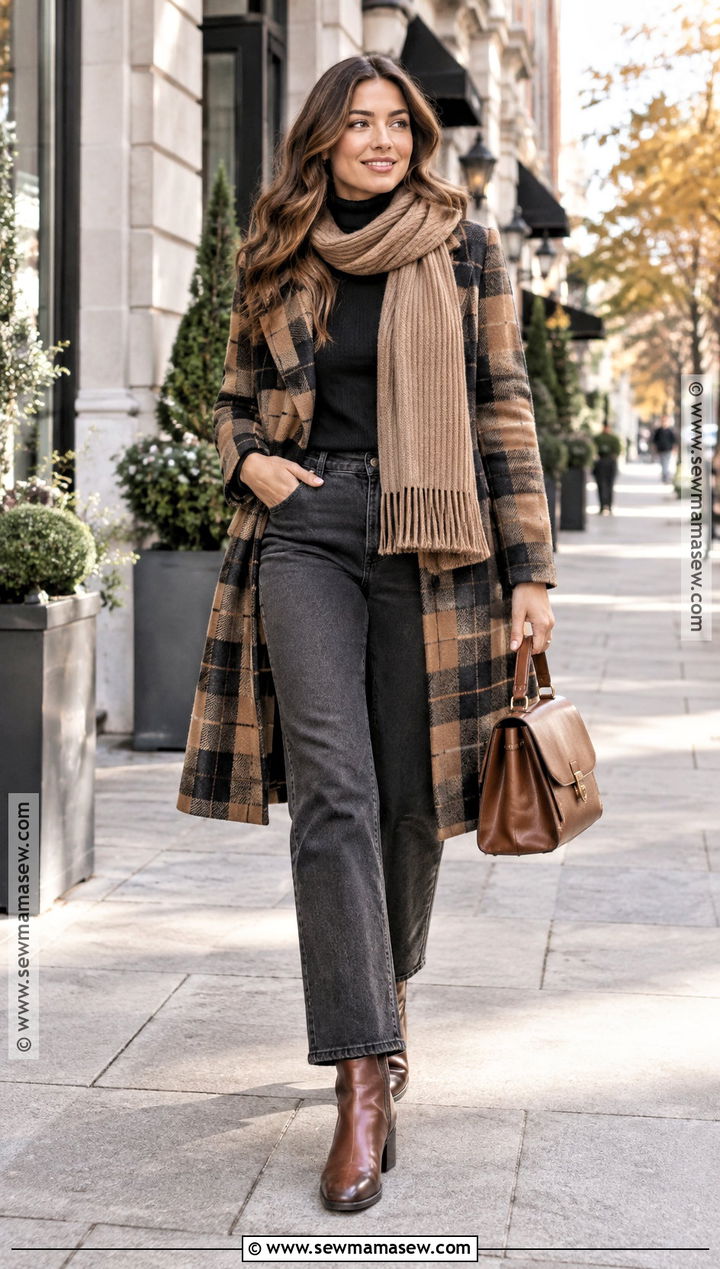
If you want pattern without the coordination headache, a plaid wool coat is the way in. Build the look on a black turtleneck, dark straight-leg jeans and brown or black ankle boots, and pick a coat with quiet checks in camel, charcoal, cream or navy so it goes with everything else you own. A solid leather satchel and a plain ribbed scarf keep it calm; a second pattern near the face starts to fight the plaid. I check that the coat covers the hem of my longest sweater, because a sweater peeking out underneath breaks the line. For work, switch to tailored trousers and a low block heel. Plaid coats suit a wide range of ages, which makes this one easy to recommend.
10. Barn Coat Outfit
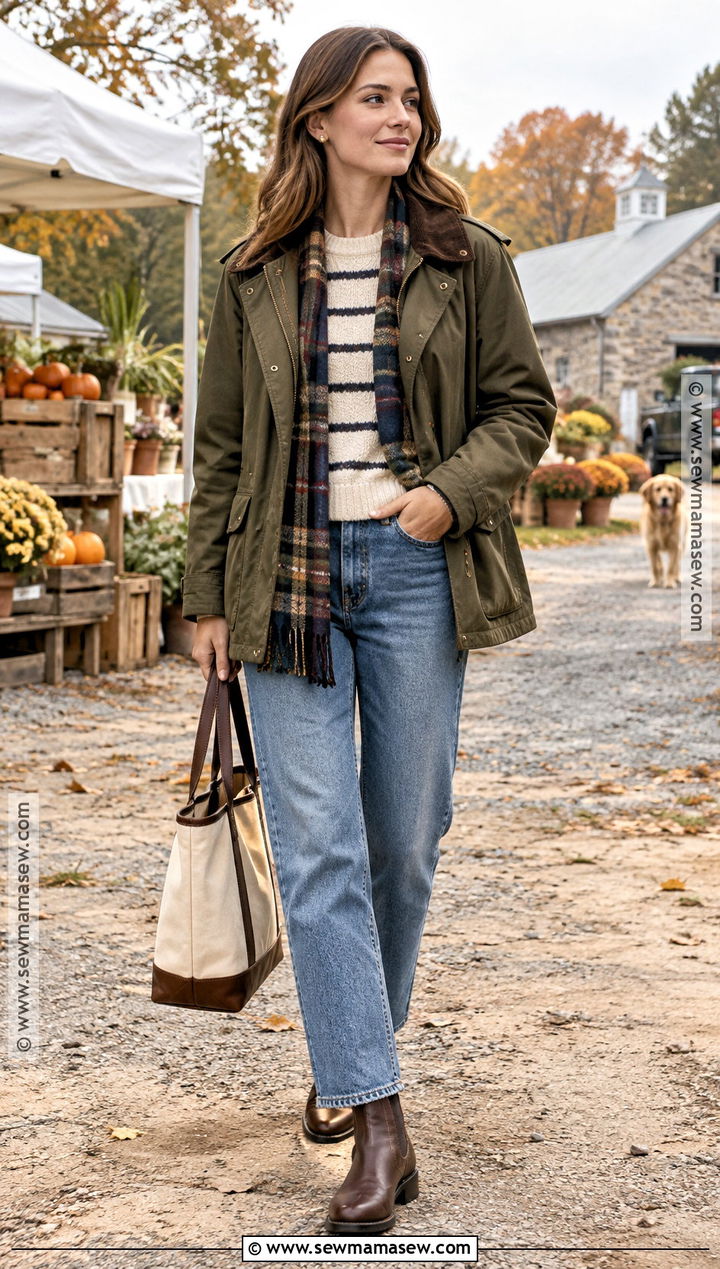
Barn coats are my pick for mild fall days and the first layered weeks of winter. Wear an olive, tan or navy cotton barn coat over a striped knit and relaxed straight-leg jeans, with brown leather Chelsea boots that look outdoorsy but still belong in town. A canvas-and-leather tote, stud earrings and a light plaid scarf round it out. The corduroy collar frames the face nicely and is worth looking for. A barn coat isn't warm on its own, so when it gets colder I put a quilted vest or slim wool cardigan underneath rather than one huge sweater, which bunches in the boxy body. That boxy cut also looks best over streamlined or softly relaxed bottoms, not very wide ones.
11. Teddy Coat Outfit
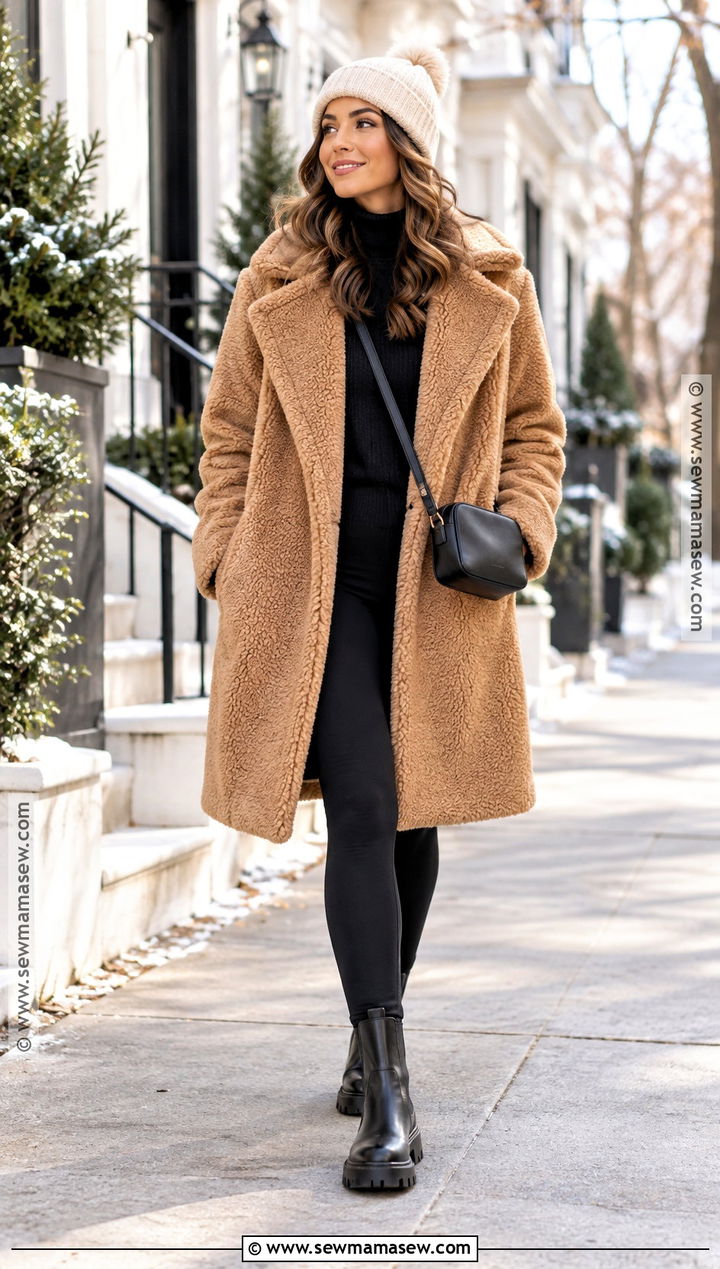
A teddy coat is about as close to wearing a blanket as outerwear gets. Choose a mid-thigh or knee-length one in cream, caramel or dark brown and wear it with a fitted turtleneck, black leggings and chunky leather boots, which you need to balance all that plush volume. A beanie and a compact crossbody keep your hands free. If leggings feel too casual, slim trousers or straight jeans work just as well. Leave room through the shoulders for layering, but don't go so big that you disappear. I usually suggest a single-breasted front, which sits flatter than a double-breasted one. Keep in mind that teddy fleece pills where the bag strap and arms rub, so check those spots after a few weeks of wear.
12. Peacoat Outfit
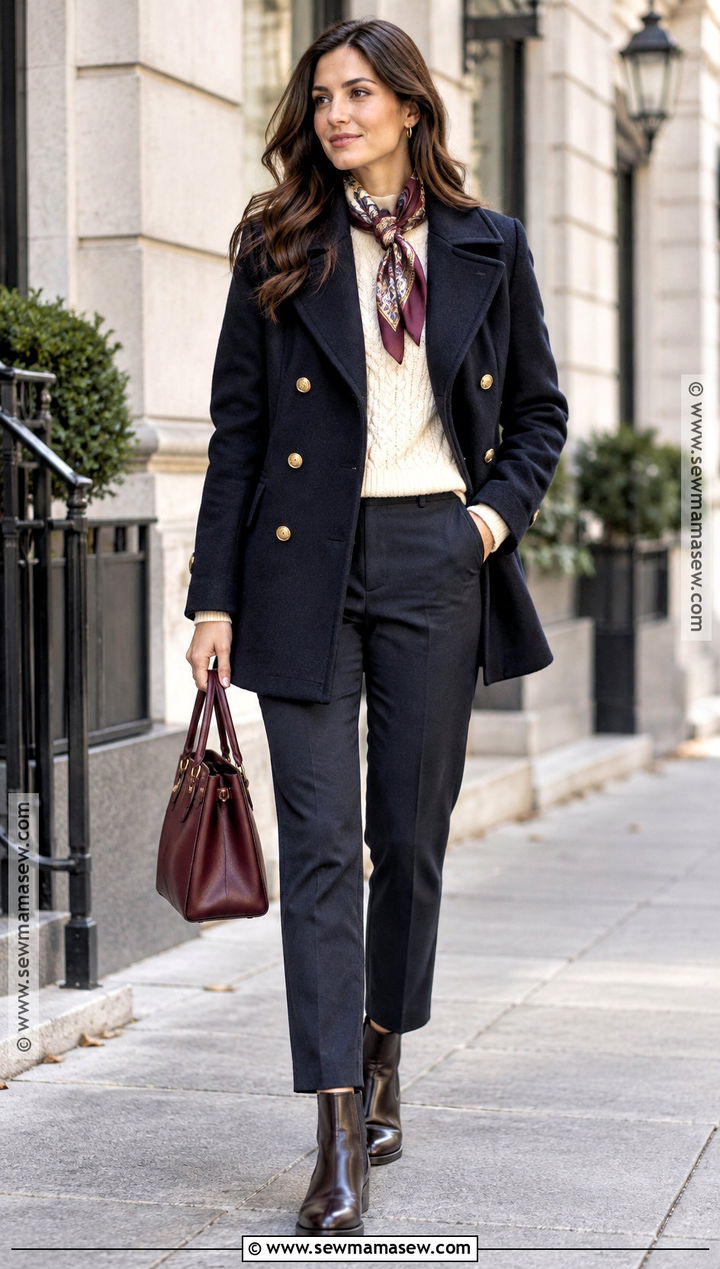
A navy peacoat suits late fall and milder winter days, and its structure tidies up casual clothes instantly. Layer it over a cream cable knit and ankle-length tailored pants, with leather loafers and socks in autumn and Chelsea boots once it's cold or wet. A burgundy bag adds a little color, and a printed silk scarf gives the neckline interest. Peacoats usually stop at the hip, so I pair them with high-rise bottoms; a low-rise jean leaves a gap of sweater between coat hem and waistband that cuts you in half. Button it over your thickest knit before you buy and look for gaping between the double-breasted buttons. It covers work, weekend city plans and travel with ease.
13. Quilted Coat Outfit
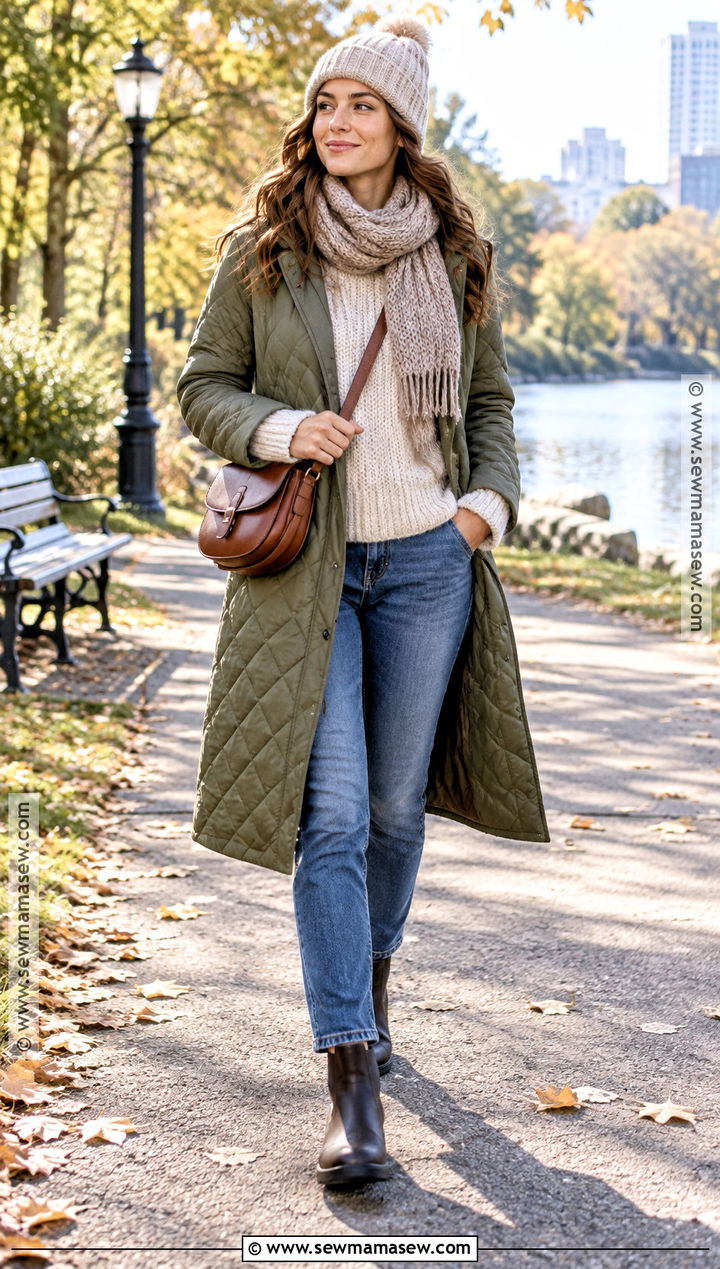
Quilted coats are the layer I reach for on in-between days when a puffer feels like overkill. A long olive or black quilted coat goes over a chunky oatmeal sweater, slim straight jeans and waterproof ankle boots. Take a canvas tote for errands or a leather crossbody when you want it a touch dressier, and add a knit scarf and beanie for warmth without weight. On a long quilted coat, look for side vents or snap openings; without them the hem pulls across your thighs when you walk or sit. If you like more shape, choose one with an adjustable waist or add a narrow belt. The flat texture pairs easily with denim, corduroy and wool trousers, so it covers school drop-offs, road trips and casual offices.
14. Leopard Print Coat Outfit
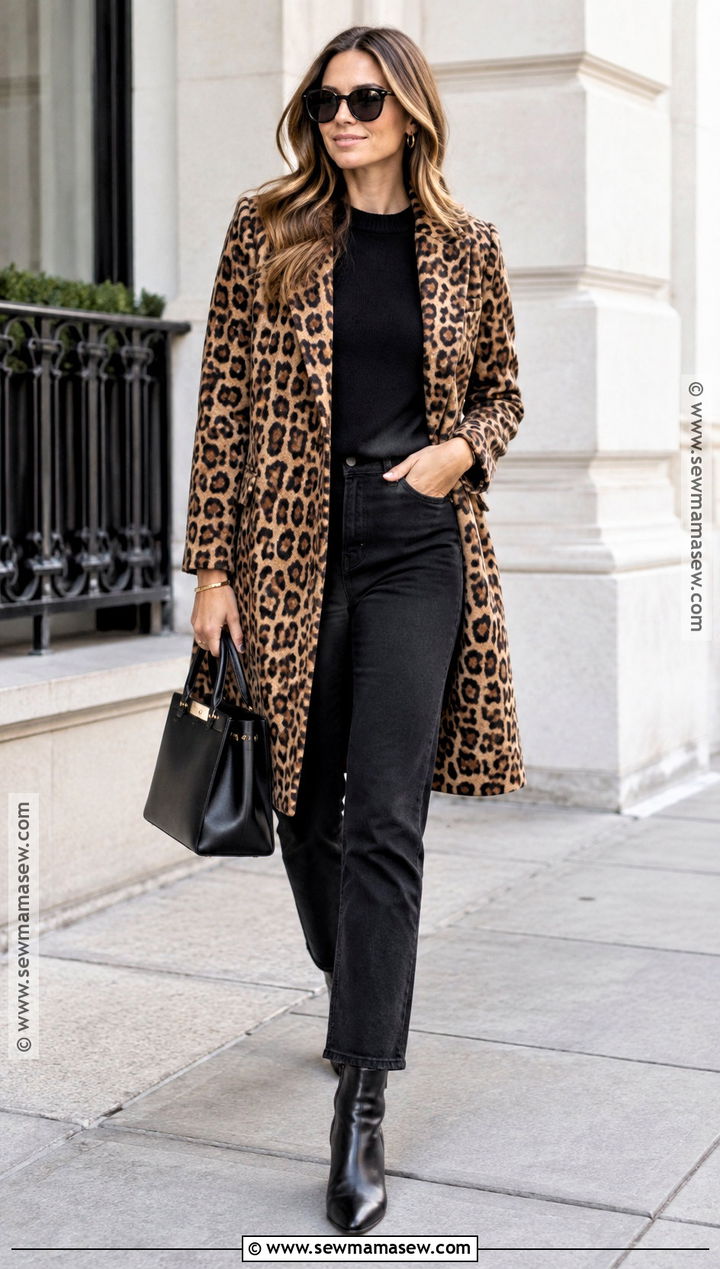
Leopard is easy to wear once you accept that it has to be the only loud thing in the outfit. Pair a knee-length leopard coat with a black crewneck, straight black jeans and sleek ankle boots, so the print sits on a plain dark background. A structured black bag and minimal gold jewelry are all it needs. For a softer palette, wear it with a cream knit, dark brown trousers and chocolate boots instead. Avoid other bold prints or bright accessories. Scale matters more than people think: a small leopard pattern reads almost like a textured neutral from a distance, while a large print is a statement every single time. If this is your first print coat, I'd go smaller.
15. Funnel Neck Coat Outfit
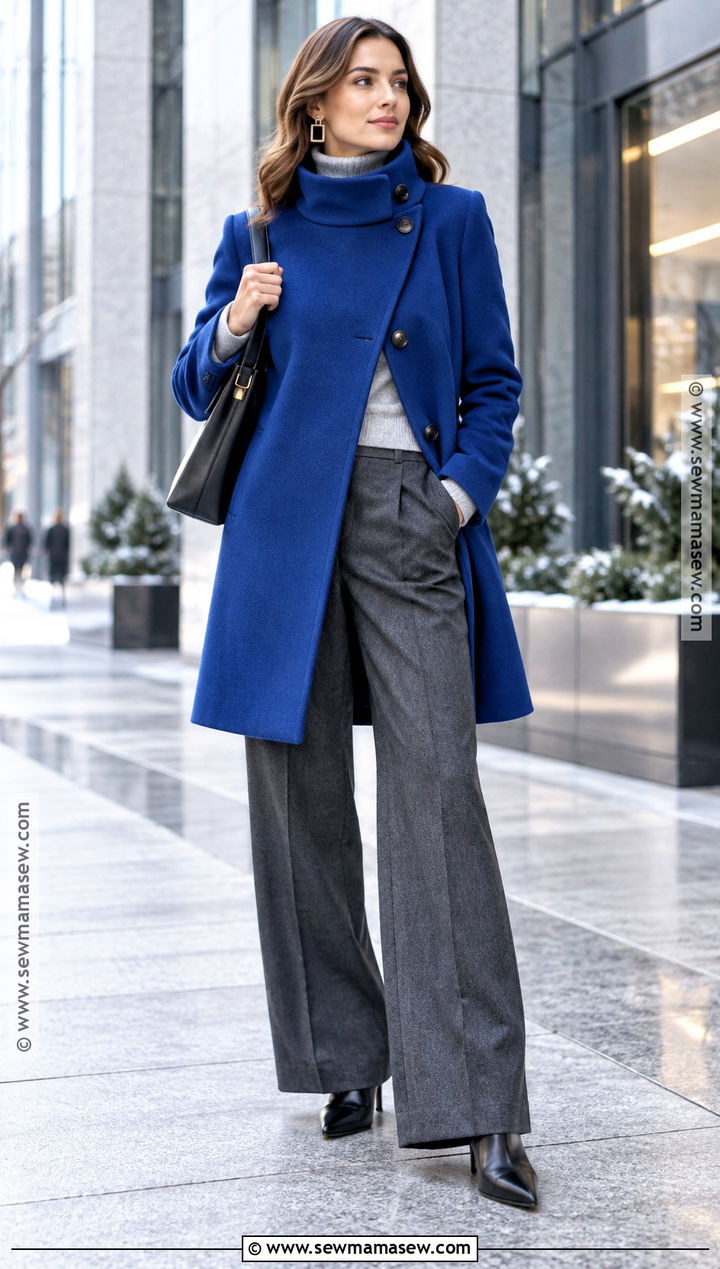
A funnel neck coat replaces the lapel with a raised collar that covers the neck, which makes it warmer than it looks and very clean in shape. Wear a charcoal, navy or cobalt funnel neck over a fine-gauge sweater and wide-leg wool trousers, with pointed leather boots on a stable heel so the toe shows under the hem. A smooth shoulder bag and geometric earrings suit the sculpted neckline. Because the collar already does the scarf's job, skip the bulky scarf; a thin cashmere one can tuck neatly inside if the wind is bad. Button it all the way for the sharpest shape, or open the top fastening to soften it. I'd steer anyone with a short neck toward a lower funnel, since a tall collar can make the head look sunk into the shoulders.
Five Minutes in the Fitting Room With a New Coat
Coats get returned for the same few reasons, and nearly all of them show up in a fitting room if you know what to test. Wear or bring your thickest sweater and run through this before you pay.
- Button or zip it fully over the sweater and look for pulling across the chest and gaping between buttons.
- Cross your arms and reach forward. If the back seam strains or the sleeves ride halfway up your forearm, size up.
- Let your arms hang. Sleeves should reach the base of your thumb so gloves tuck under them.
- Sit down. A long coat should open at the vent or slit instead of pulling tight across your thighs.
- Lift your arms overhead, as if reaching for a bus rail. The hem shouldn't jump up past your waist.
- Check the length against the boots you'll wear most; a hem that lands right at the boot top breaks the leg line.
Petite frames usually do best with coats that end above the knee or at mid-calf, rather than right at the knee, which can make the leg look short. Curvier figures often find a wrap or belted coat easier to fit than a straight, boxy cut, because the belt takes up the difference between bust and waist. If you're tall, check the sleeves first; they're the measurement most often too short, and a tailor can only let them out if there's spare fabric in the seam.
One Coat or Two for the Winter Ahead?
Start with your climate and your days, then look at the coats you already own. A wool coat or peacoat covers polished occasions, and a long puffer gives far better coverage for freezing commutes. Trench, barn and quilted coats carry you through the changeable weeks. Shearling, faux fur, leather, leopard and funnel neck styles add personality without asking you to rebuild your closet. Before paying for any coat, check the shoulder fit, sleeve length, closures, lining and room for a sweater. If you can only buy one this year, buy the one that suits the coldest month you dress for, and let boots, scarves and knitwear handle the variety.
Related posts: