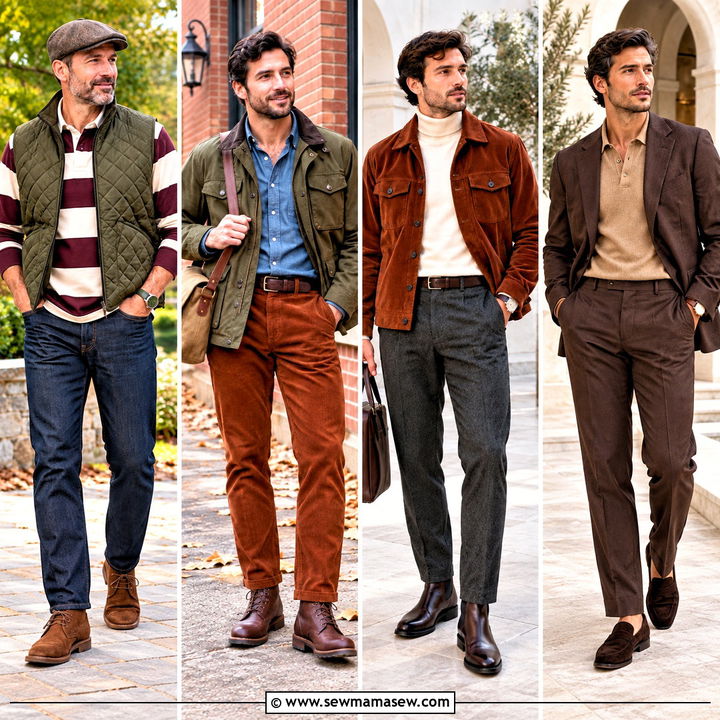
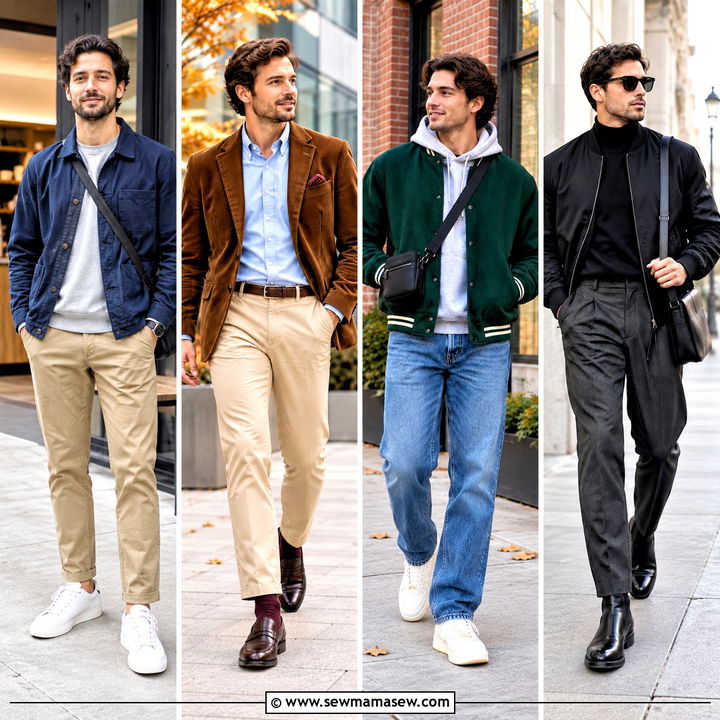
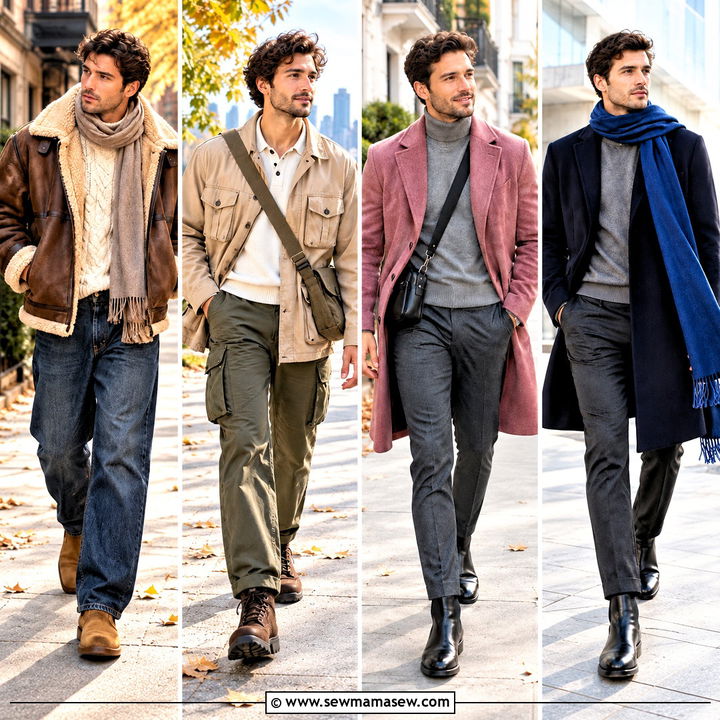
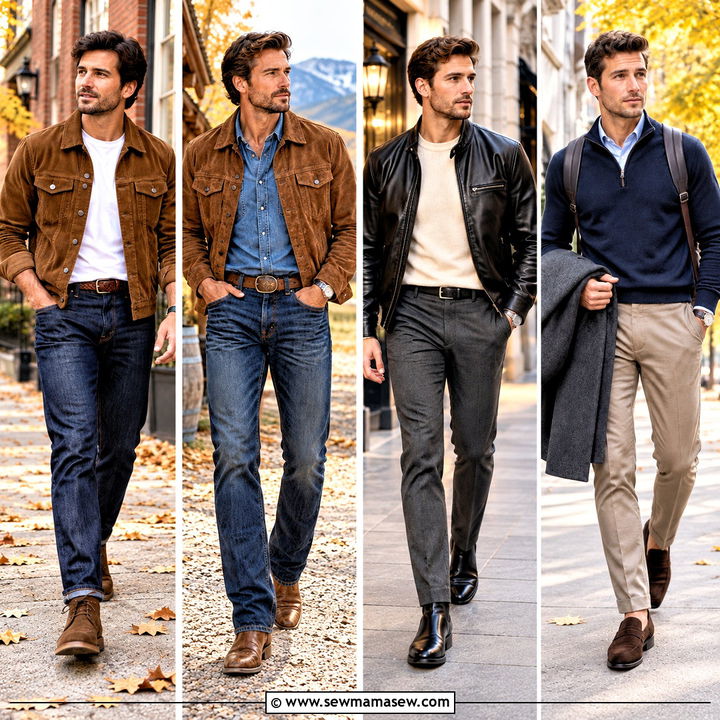
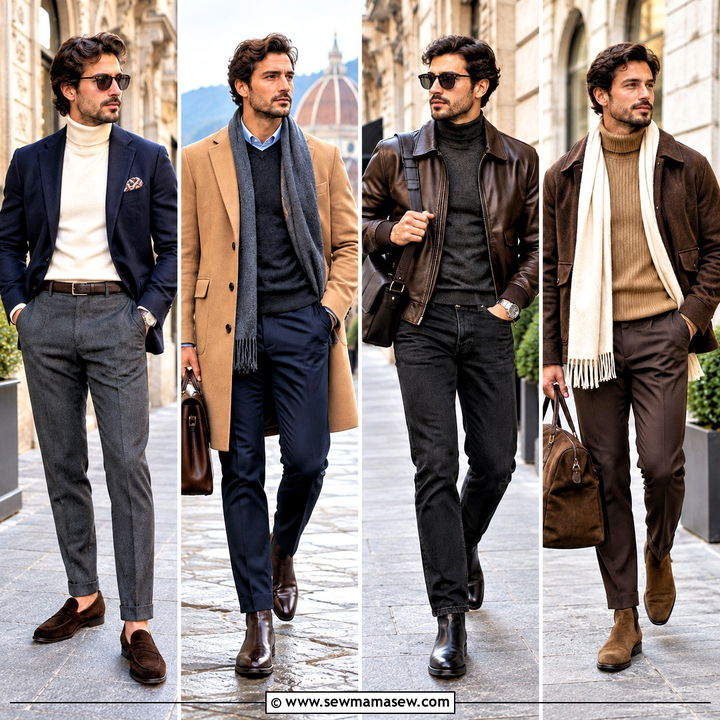
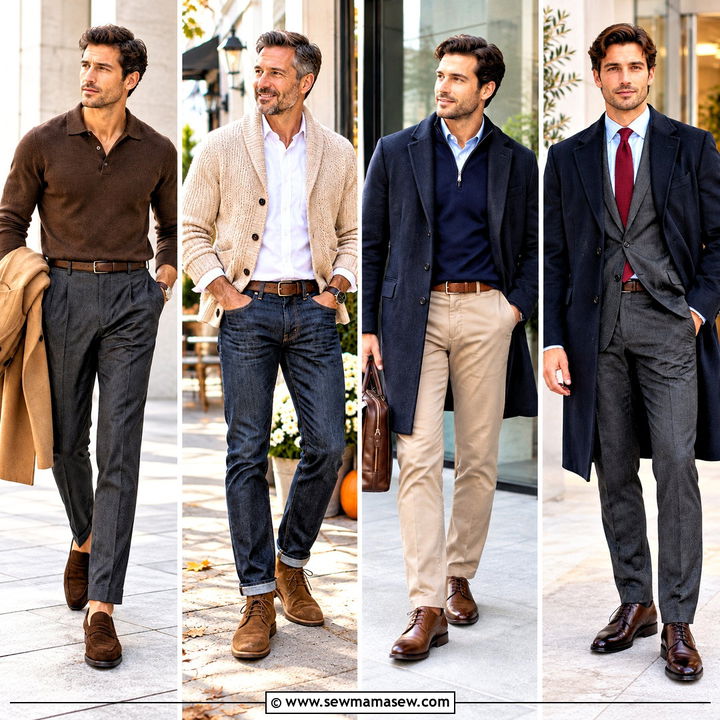
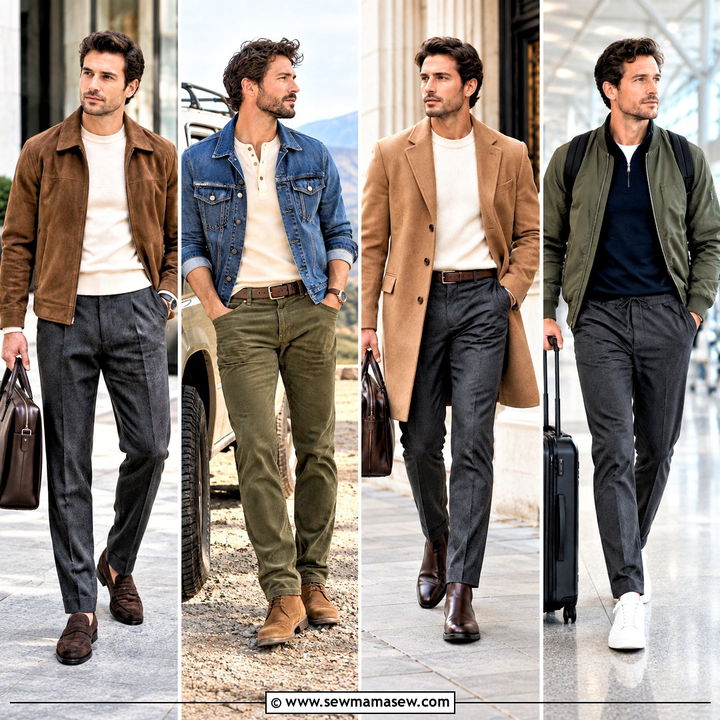
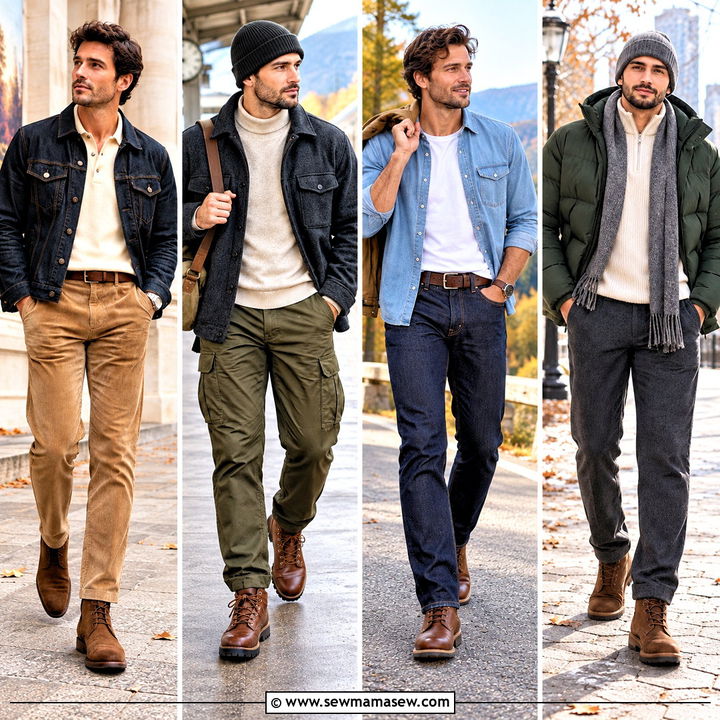
Good fall clothes shouldn't depend on fitting a narrow size range. When I dress bigger men for cooler weather, I'm not trying to hide anything. I'm looking for pieces that sit right across the shoulders and chest, close at the waist without pulling, and give the thighs room to move. Structured outerwear, midweight knits, straight or tapered trousers and shoes with a bit of heft do most of the work in the fifteen outfits below. A few cheap alterations can then make an off-the-rack piece look like it was cut for you. Casual, sporty or ready for the office, there's a starting point here for each.
Measure Chest, Seat and Rise Before Ordering
Most fit problems I fix for bigger men start with buying by the letter on the tag. Big and tall sizing isn't consistent between labels, and an XXL from one maker can be a full size away from another. A soft tape measure and five minutes save a lot of returns.
- Chest: measure around the fullest part, under the arms, with the tape level. Jackets and overshirts should leave a few inches of room beyond that number so you can layer.
- Stomach: measure at the widest point, which may sit above your belt line. This is the number that decides whether a coat or knit will button flat.
- Seat and thigh: trousers that fit the waist but strain across the seat are the most common complaint I hear. Compare your hip measurement to the size chart, not just the waist.
- Rise: the distance from crotch seam to waistband. A mid or higher rise sits on or above the stomach and stays put; a low rise tends to slide under it and needs constant hitching.
Labels sold as big add width, and labels sold as tall add length. If you're broad but not tall, a tall size will give you sleeves past your knuckles and jackets that hang too low. Check which one a brand means before ordering.
1. Fall Overshirt With Dark Jeans And Sneakers
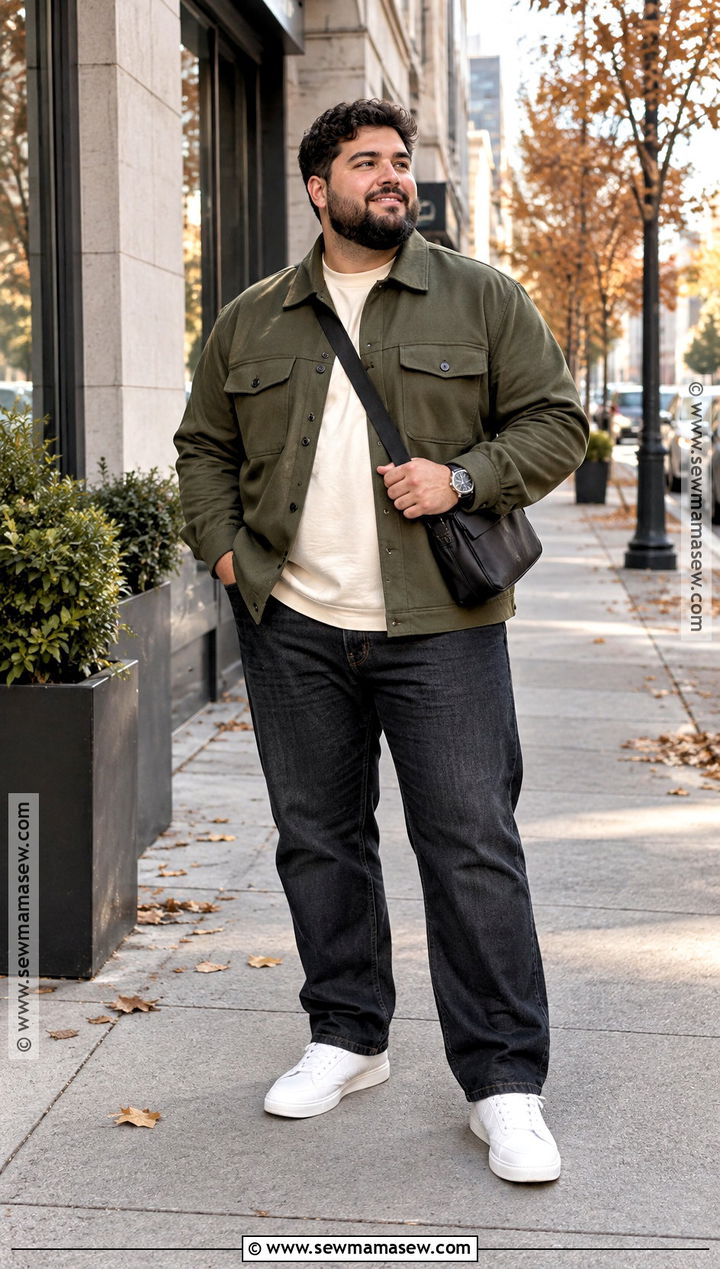
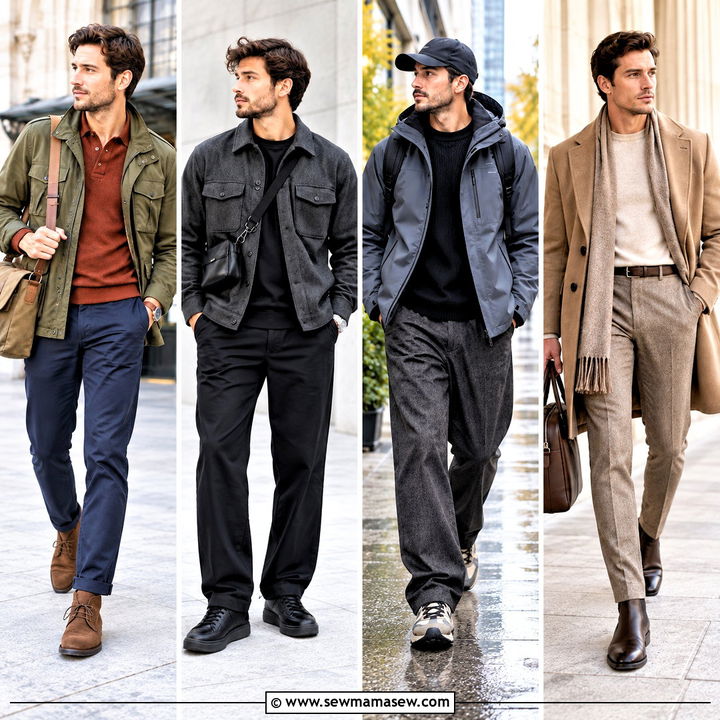
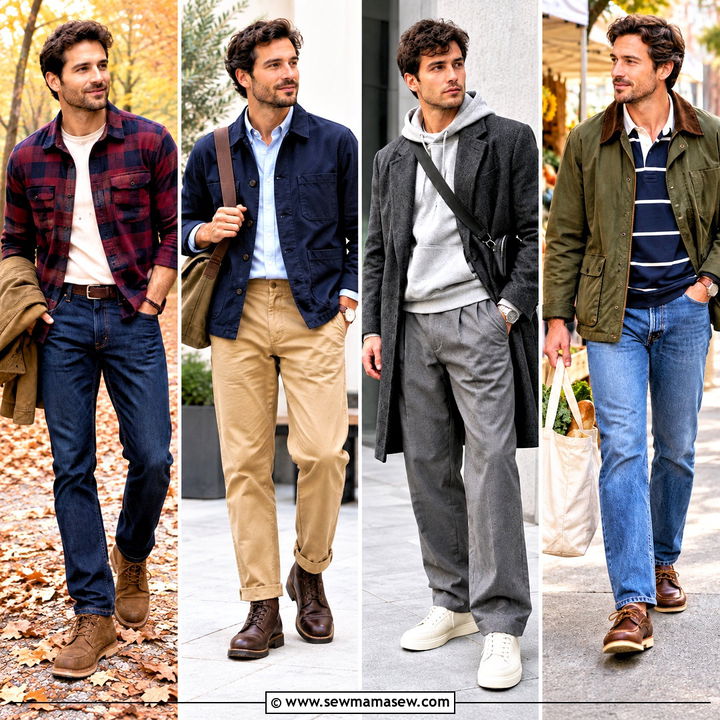
An overshirt is the first layer I reach for with a bigger client, because it adds shape without the stiffness of a jacket. Olive or navy over a heavyweight white tee is my default; thin tees cling and show every seam of what's underneath. Check the shoulder seam first. It should land at the edge of your shoulder, and the body should button without the placket gaping. Dark straight jeans that follow the leg without gripping the calf, plus clean leather sneakers, keep it relaxed but tidy. Worn open, the two front edges draw vertical lines down the torso, which is the most flattering thing this shirt does.
2. Fall Flannel Shirt With Henley And Chinos
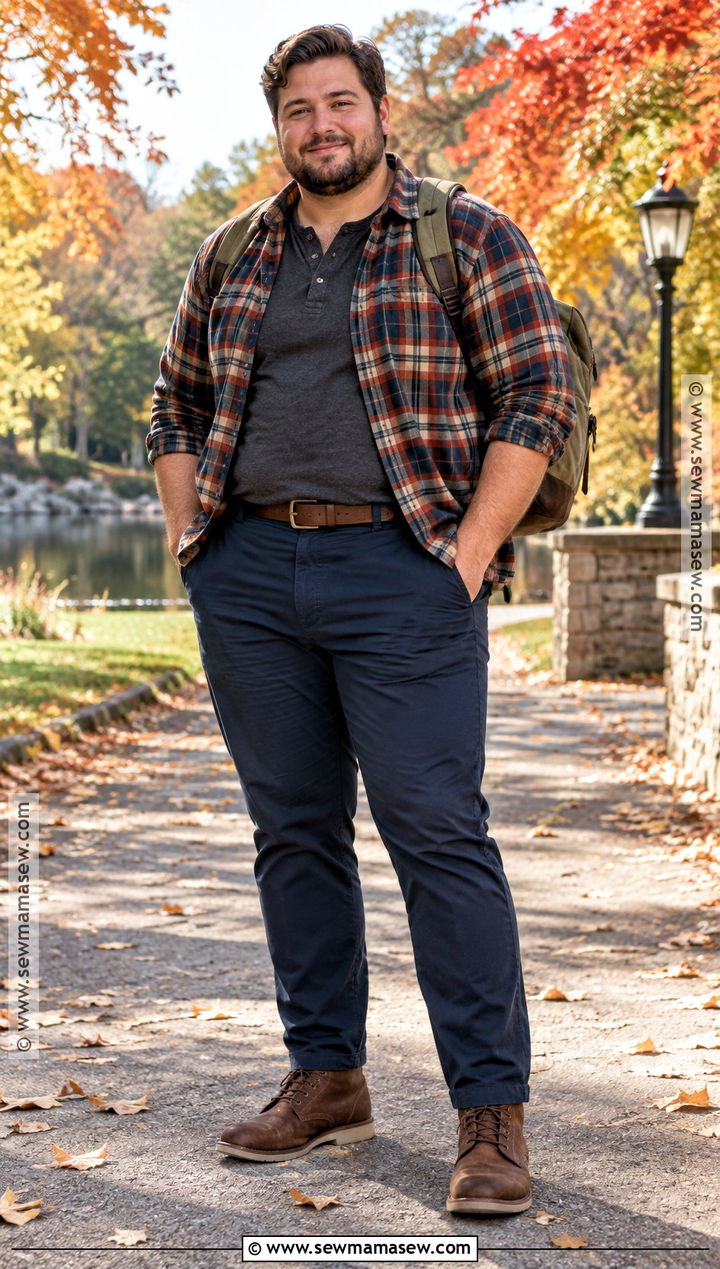
Flannel can tip into costume quickly, so I keep everything around it plain. A heather gray henley underneath, a regular-fit plaid on top, and chinos in dark olive with an athletic cut for room in the seat. Scale matters on a broad frame. A tiny check looks busy and shrunken, while a medium or large plaid sits in proportion. Brown lace-up boots and a leather belt finish it. Look for a curved shirttail hem; it falls neatly around the hips untucked, where a straight hem tends to flare out over the stomach.
3. Fall Bomber Jacket With Knit Polo And Trousers
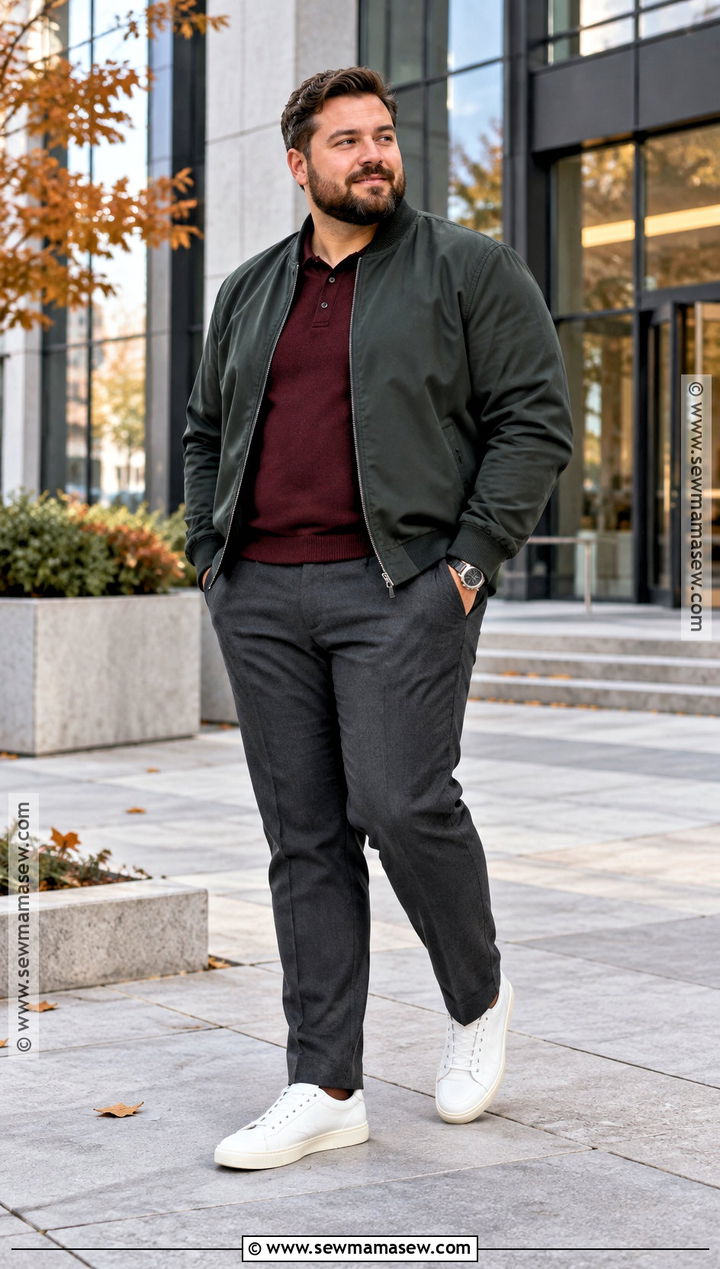
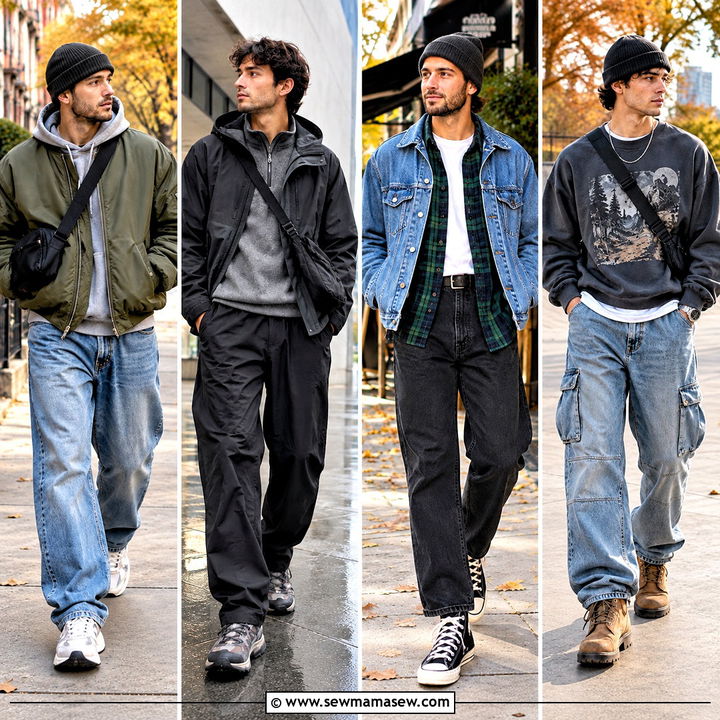
Want something smart that still feels like the weekend? A matte bomber, a fine-knit polo and tailored trousers get you there. I keep two of the three pieces neutral so a burgundy or deep green bomber has room to stand out. Length is where bombers go wrong on bigger men. It should stop at the hip; anything that rides up to the waist cuts you in half. The ribbed hem should lie flat rather than squeeze, so I always have clients sit down in it before deciding. Mid-rise trousers with a flat front and minimal leather sneakers keep it clean enough for a creative office or a dinner out.
4. Fall Denim Jacket With Hoodie And Cargo Pants
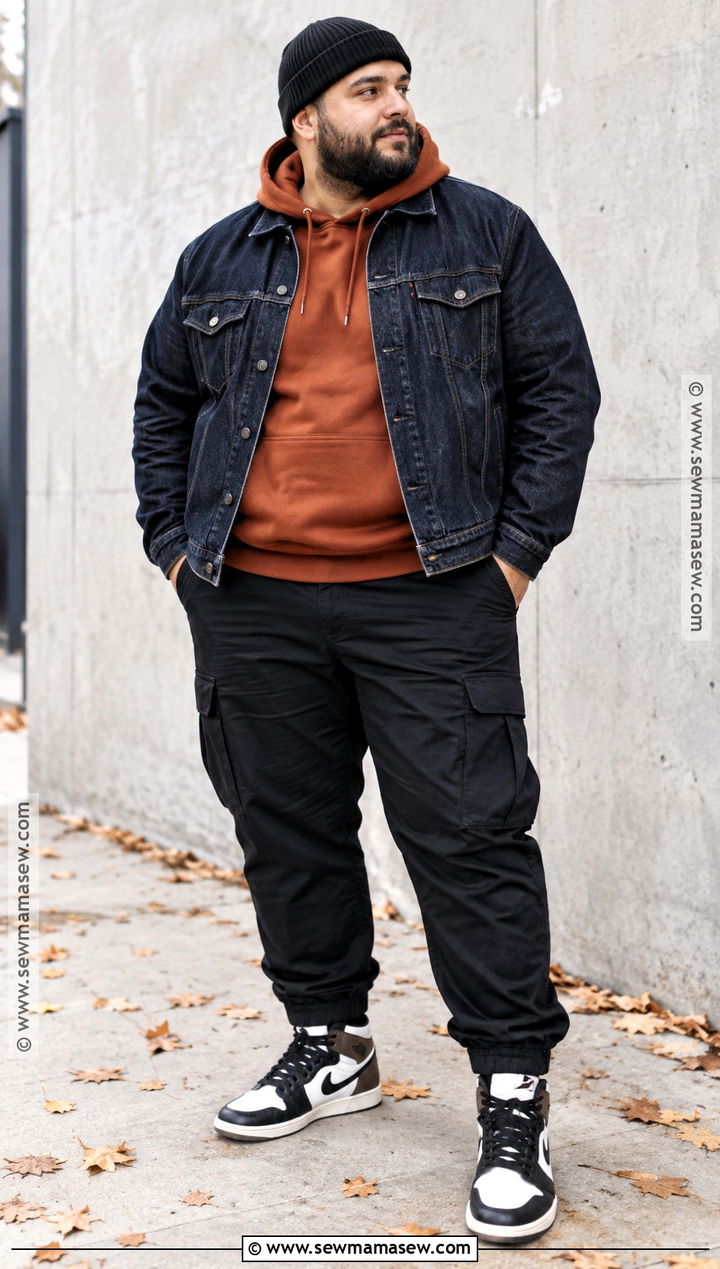
This is a streetwear combination, and the trick is getting two bulky layers to stack. Start with a lightweight hoodie, not a fleece-heavy one, then a dark-wash denim jacket over it. Raise your arms when you try it on. If the jacket binds at the armholes, size up, because rigid denim won't give. Relaxed tapered cargos balance the top half, but pick ones with flat pockets; the bellows kind sticks out from the thigh and adds width exactly where you don't want it. High-tops or sturdy trainers ground it. If the hoodie hangs past the jacket hem, you'll get an awkward strip of fleece, so check both lengths together.
5. Fall Cardigan With Oxford Shirt And Chinos
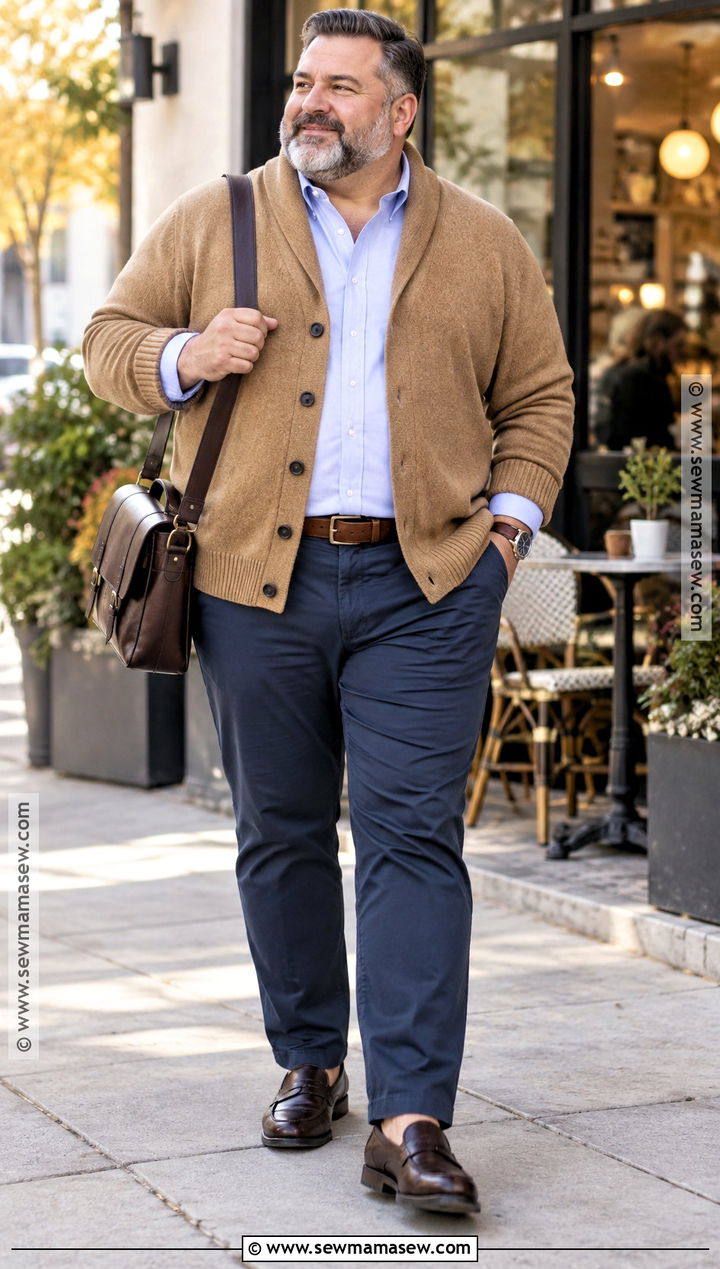
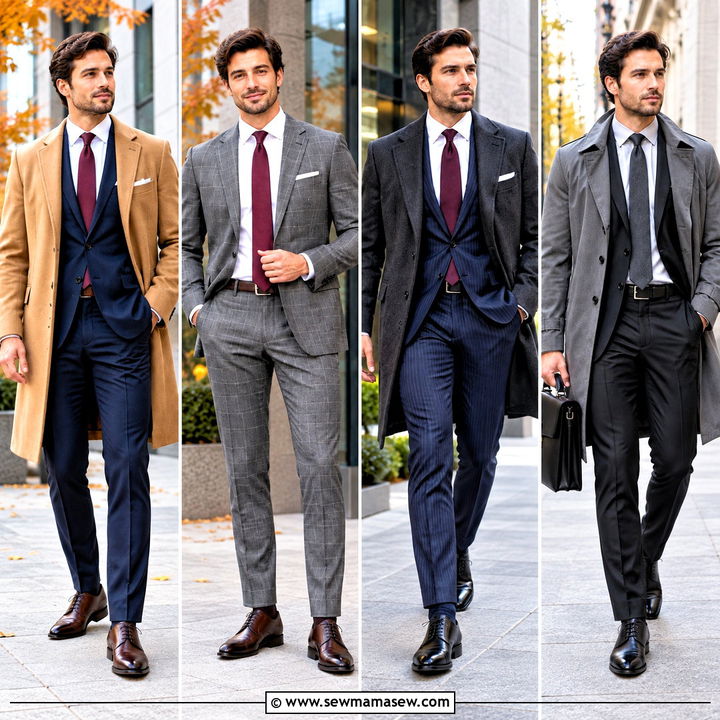
Soft knits look sharper next to something crisp, which is why I pair a cardigan with an Oxford shirt. A shawl collar adds a bit of structure around the face and chest, and a camel or charcoal knit goes with nearly any pale shirt. Open the shirt collar rather than buttoning it up. Straight mid-rise chinos with room to sit, then dark brown loafers or suede slip-ons, keep it office-ready without a tie. The fit point I check is the cardigan body: it should skim the torso. Too tight and the buttons pull into horizontal creases; too loose and it hangs like a robe.
6. Fall Chore Coat With Sweatshirt And Jeans
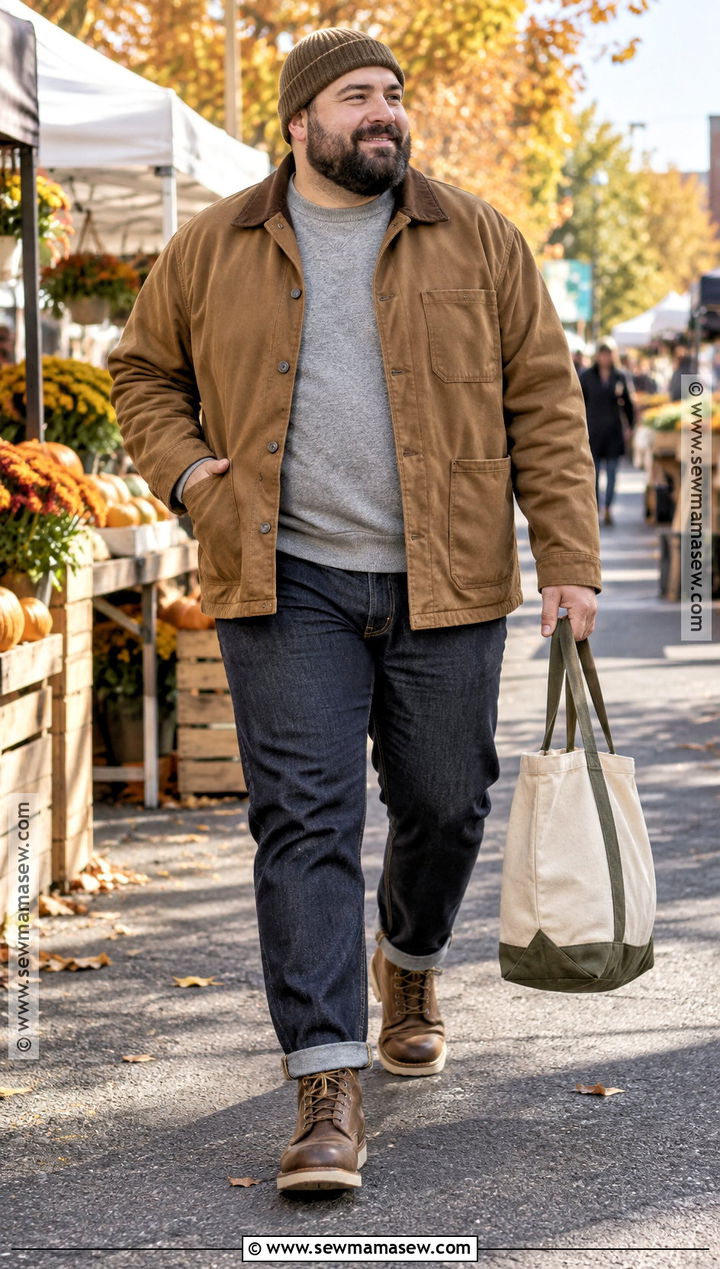
A chore coat is one of the most forgiving pieces I know for a fuller build. It's cut straight, so it adds definition without tailoring that fights your shape. Cotton canvas or twill in tobacco or olive, over a smooth medium-weight crewneck sweatshirt, then dark indigo jeans and lace-up work boots. Canvas starts stiff and softens with wear, so give it a few weeks. Even if you plan to wear it open, make sure it closes across the stomach; a coat that can't button sits wrong at the front. Keeping the sweatshirt and jeans close in color gives you one clean column under the contrasting coat.
7. Fall Leather Jacket With Turtleneck And Trousers
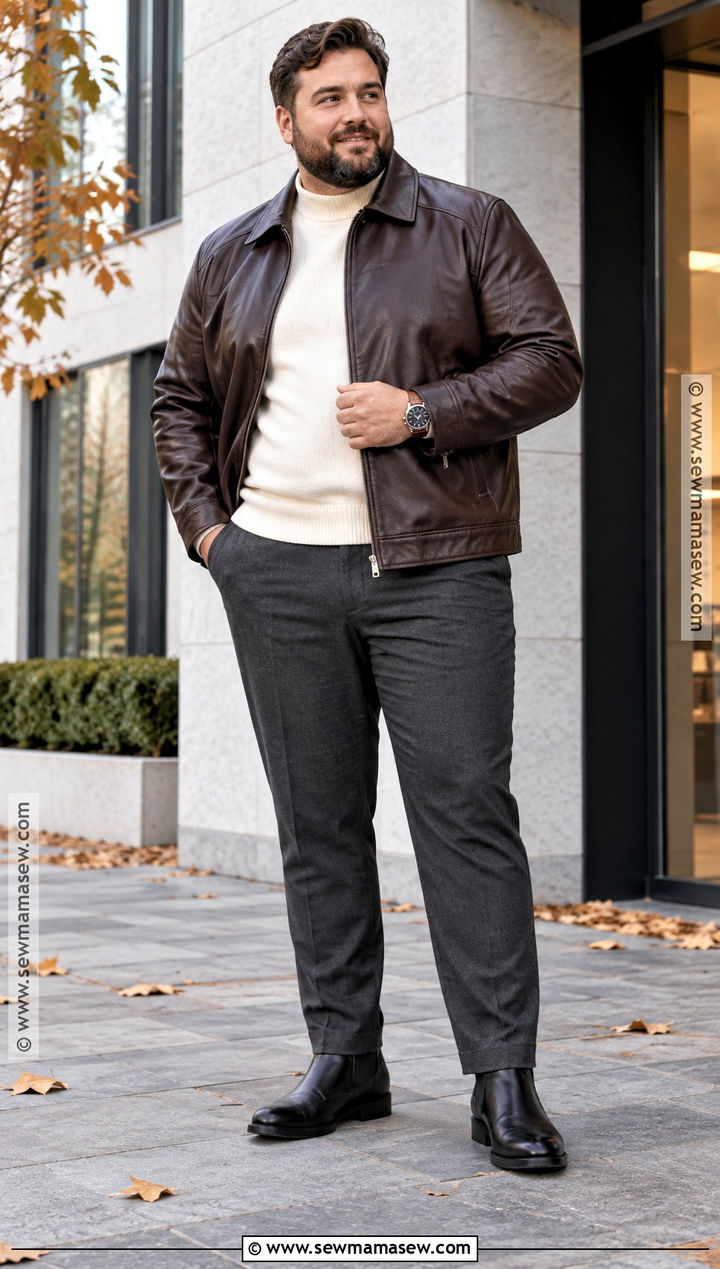
Leather over a soft turtleneck looks deliberate with almost no effort. The jacket has to fit the shoulders cleanly and let you reach forward, so I'd steer away from a rigid motorcycle cut and toward a softer leather or a style with stretch side panels. Underneath, a lightweight mock-neck works better than a chunky roll neck, which stacks folds under the chin. Straight tailored trousers in charcoal or navy and Chelsea boots keep the leg line unbroken. A leather strap watch is plenty. Expect new leather to feel snug at first; it relaxes at the elbows and shoulders as you wear it.
8. Fall Puffer Vest With Flannel And Jeans
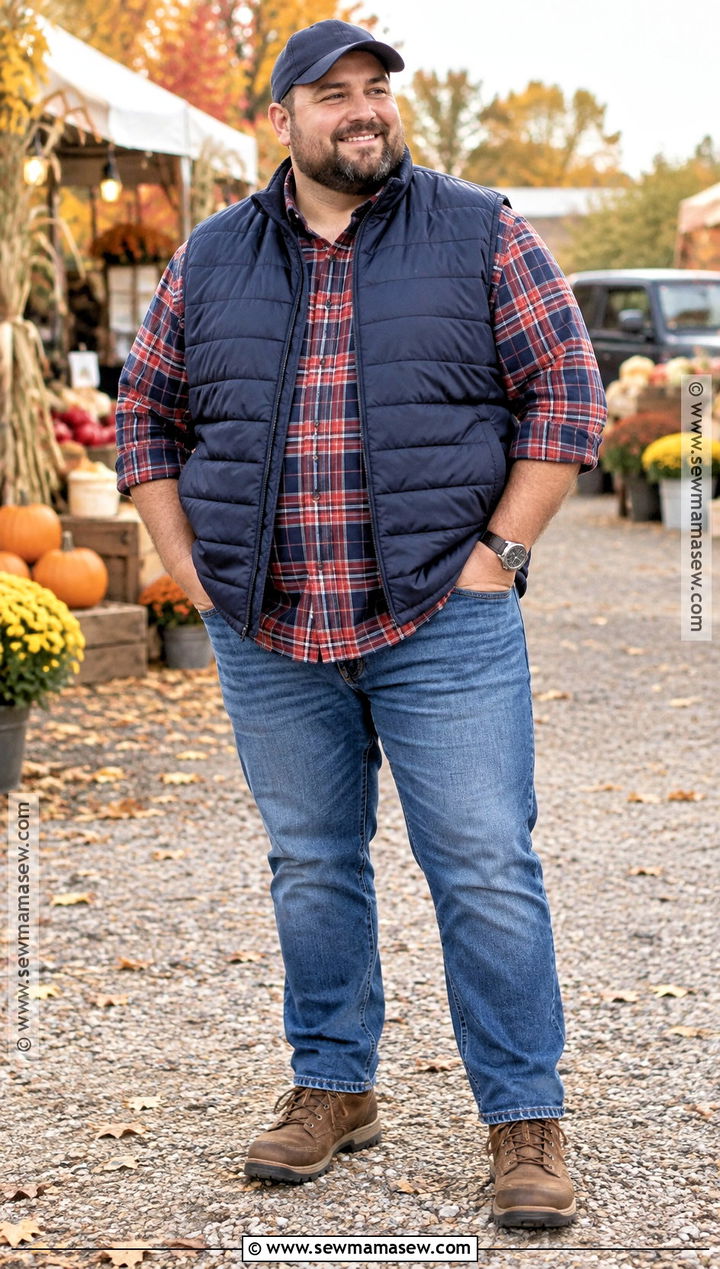
A puffer vest is the most practical layer for days that swing ten or fifteen degrees. I look for light insulation, because a thick, boxy vest adds volume around the middle without much extra warmth for the arms. Wear it over a brushed flannel with a pattern that complements rather than matches the vest color. Straight blue jeans and hiking-style boots give it weight at the bottom. Keep the jeans long enough to meet the boot without piling up at the ankle. On a colder morning, a thin thermal under the flannel adds more warmth than a heavier vest would. Zip it fully before buying; it should close over the flannel without strain.
9. Fall Trench Coat With Crewneck Sweater And Trousers
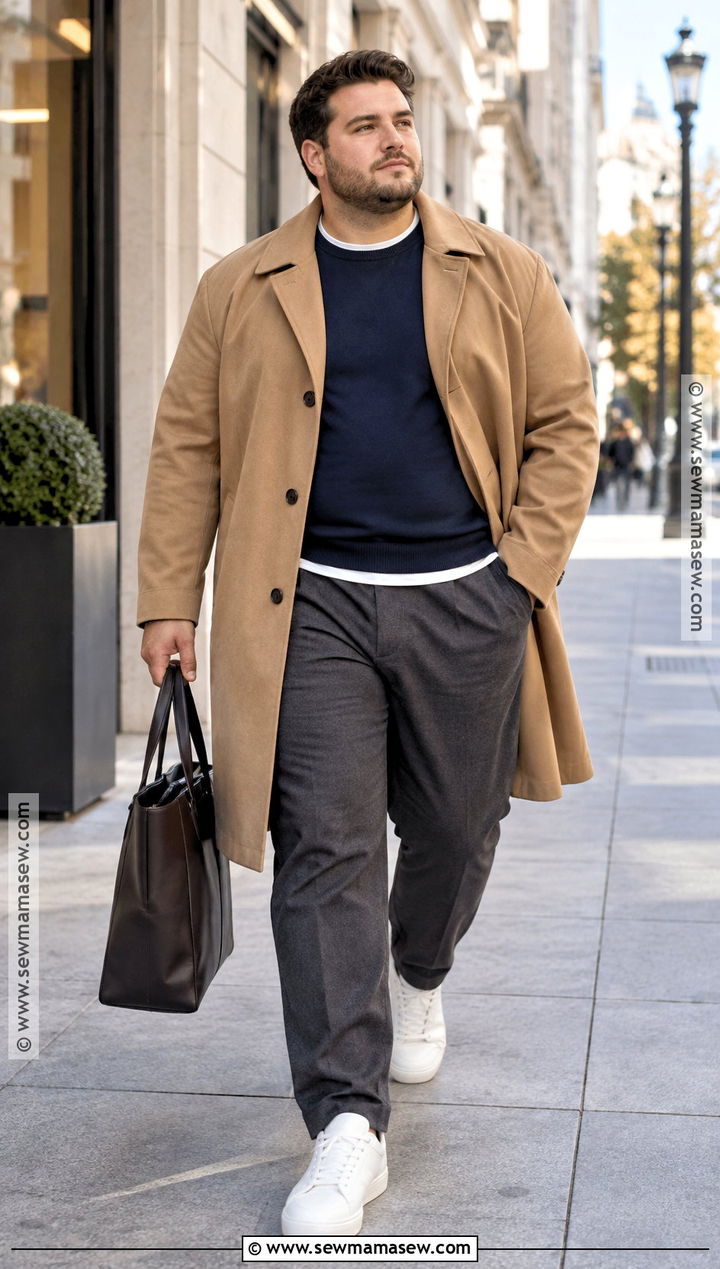
A trench brings length and structure without the weight of a wool coat. I prefer single-breasted on a bigger frame, because double-breasted adds a wide panel of fabric across the front. Sleeves should end at the wrist bone and the hem near the knee. Layer a fine-gauge crewneck over a cotton tee so you can peel off a layer indoors. Straight trousers with room in the thigh keep the line clean, with minimalist sneakers for weekends or leather derbies for work. Don't cinch the belt at the waist. Knot it loosely at the back or let it hang, so the coat falls straight.
10. Fall Corduroy Overshirt With Black Jeans And Boots
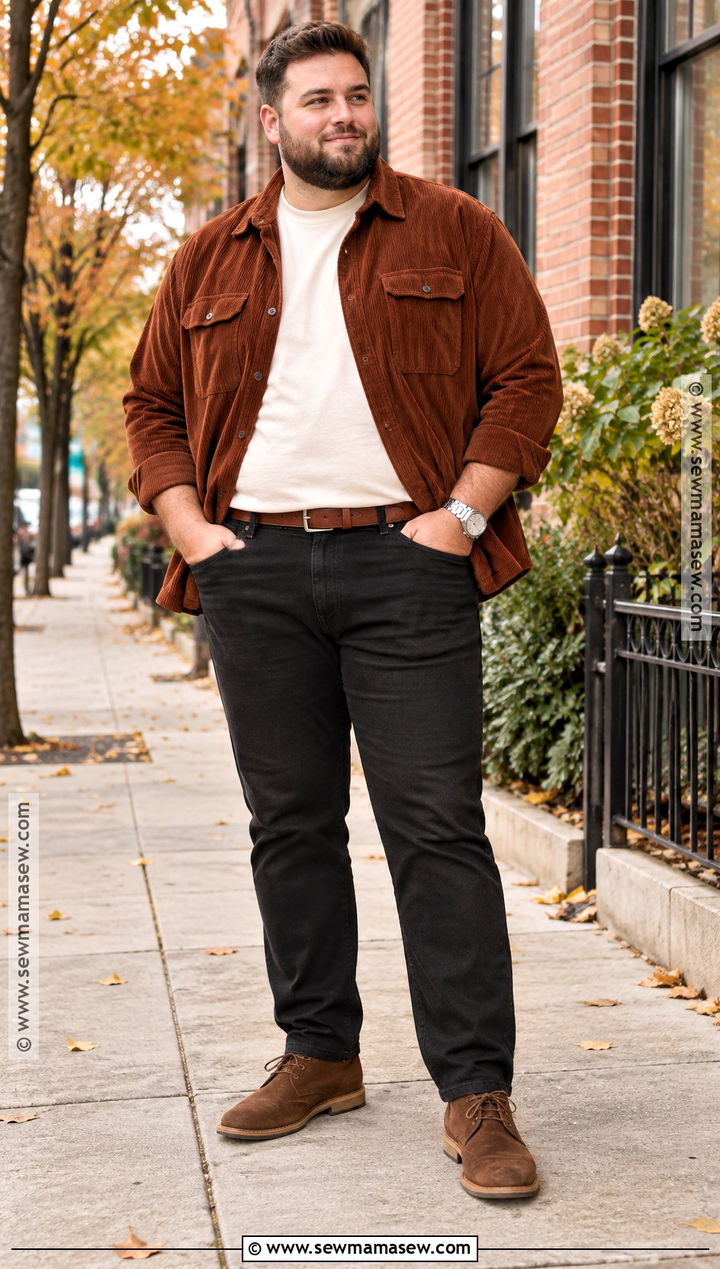
Corduroy gives you texture and an autumn feel even when everything else is plain. Medium wale is the sweet spot; wide wale adds visible bulk, while very fine cord reads more like a dress shirt. A rust or dark green overshirt over a plain crewneck tee, with straight black jeans, makes the cord the focal point. Suede desert boots or leather chukkas suit the texture. I always check this one both standing and seated, because corduroy has little give and broad shoulders or a fuller middle show any strain right away. It should hang open cleanly without looking stiff.
11. Fall Blazer With Knit Polo And Dark Jeans
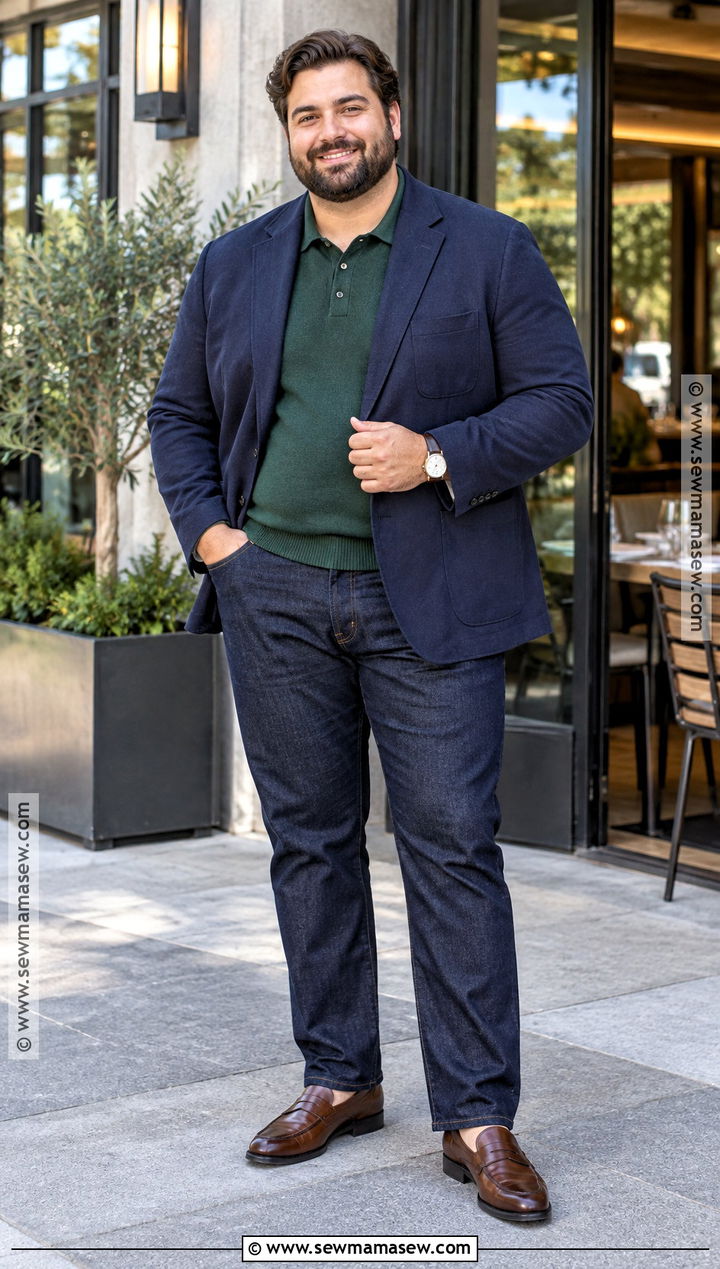
An unstructured blazer is how I get denim into places where jeans alone feel too casual. Knit or stretch blazers move with you and don't have the stiff canvas chest of a suit jacket, which matters if you're broad through the upper back. Wear it over a knit polo with an open collar and dark straight jeans without fading or rips. Loafers or Chelsea boots finish it. Button it in the fitting room and look at the back. If you see an X of creases pulling from the button, it's too small, no matter what the label says. A pocket square is optional; a decent watch is enough.
12. Fall Varsity Jacket With Sweatshirt And Chinos
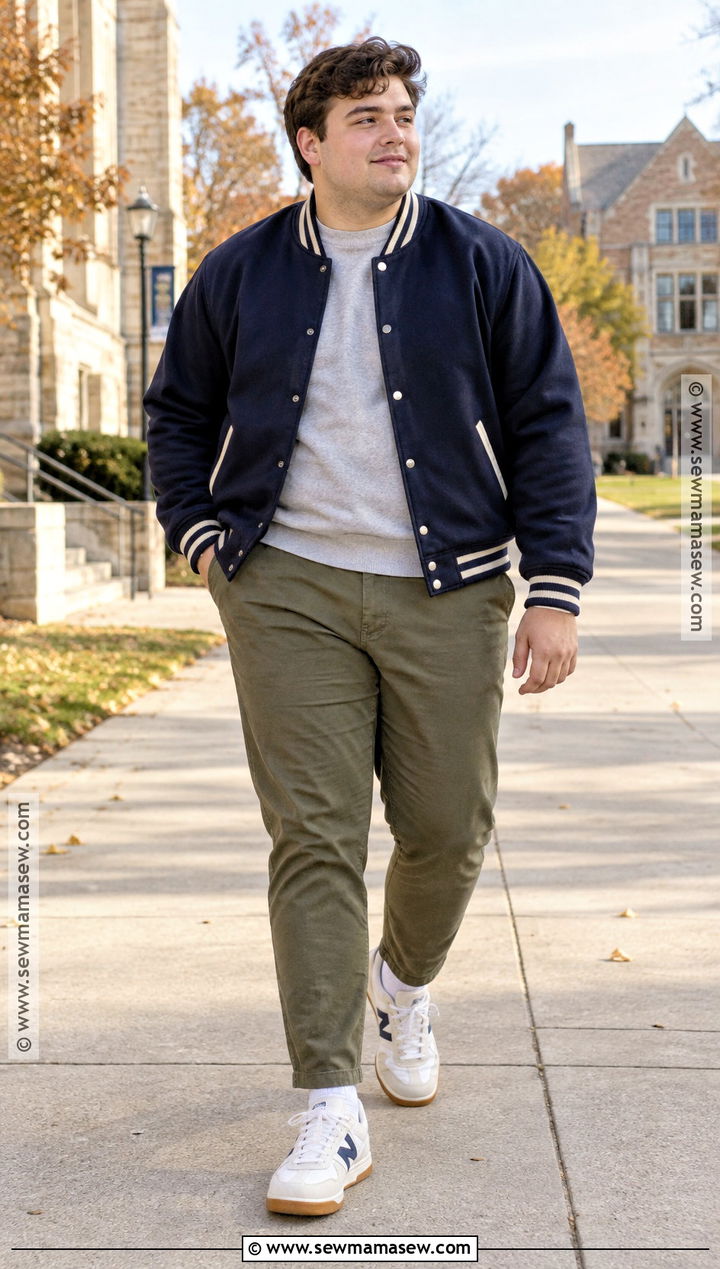
Varsity jackets can look like a teenager's uniform, so I keep the colors and logos quiet. Navy or forest green with low-contrast sleeves, a lightweight gray sweatshirt underneath, and relaxed tapered chinos that give the thighs room and narrow a little at the ankle. Retro sneakers and plain crew socks finish it. If the jacket has bold patches, everything else stays solid. Watch the ribbed waistband. It should rest at the hip, and if it rides up over the stomach every time you sit, the jacket is too short for you. It's a good step up from a hoodie for errands and casual plans.
13. Fall Field Jacket With Chambray Shirt And Corduroy Pants
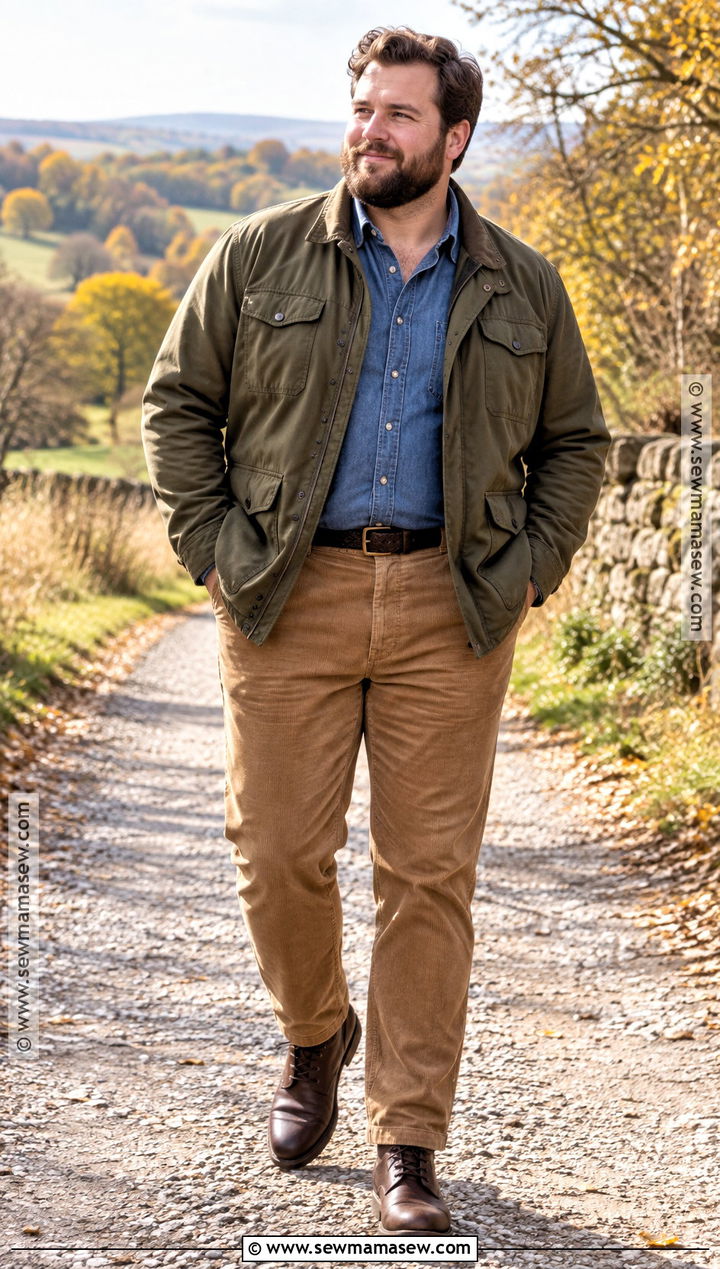
A field jacket is built for the outdoors, and I like it for bigger men because the four-pocket front breaks up a wide torso. Choose olive or brown with a defined shoulder and flat pockets. A blue chambray shirt underneath, top button open, then straight corduroy pants in tan or chocolate for texture instead of denim. Dark leather boots and a woven belt finish it. The common mistake is loading every pocket with keys, phone and wallet; it bulges the jacket and ruins the shape. On cold days, slip a thin thermal under the chambray. It's rugged but tidy enough for travel.
14. Fall Overcoat With Hoodie And Joggers
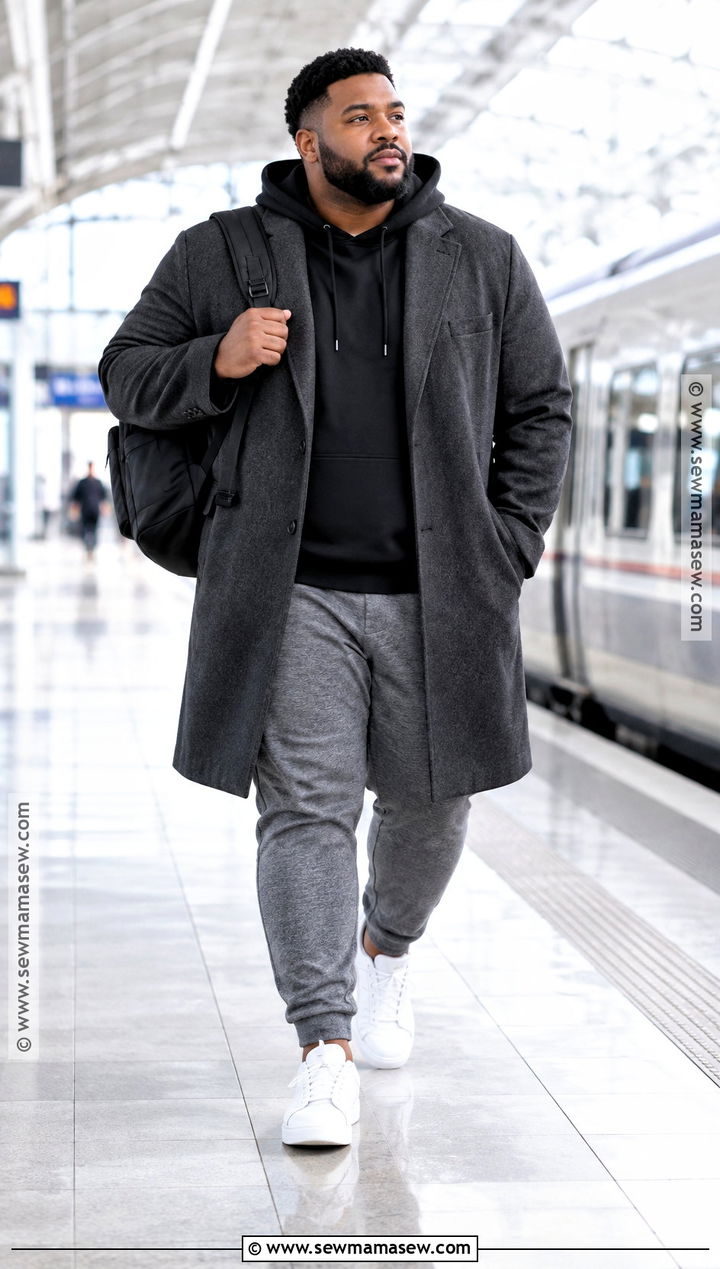
Mixing a tailored overcoat with athletic basics is the high-low look I suggest for travel days. A single-breasted camel or charcoal overcoat over a solid hoodie, with tapered knit joggers or stretch travel pants in a related neutral. The hoodie has to be fitted enough that the coat shoulders still sit smoothly; an oversized one pushes the coat out of shape. Crisp leather sneakers keep it from looking like gym wear. Skip joggers with tight elastic cuffs if your calves are full, because they bunch and pull the hem up. It handles flights, long drives and lazy Saturdays.
15. Fall Plaid Overcoat With Sweater And Trousers
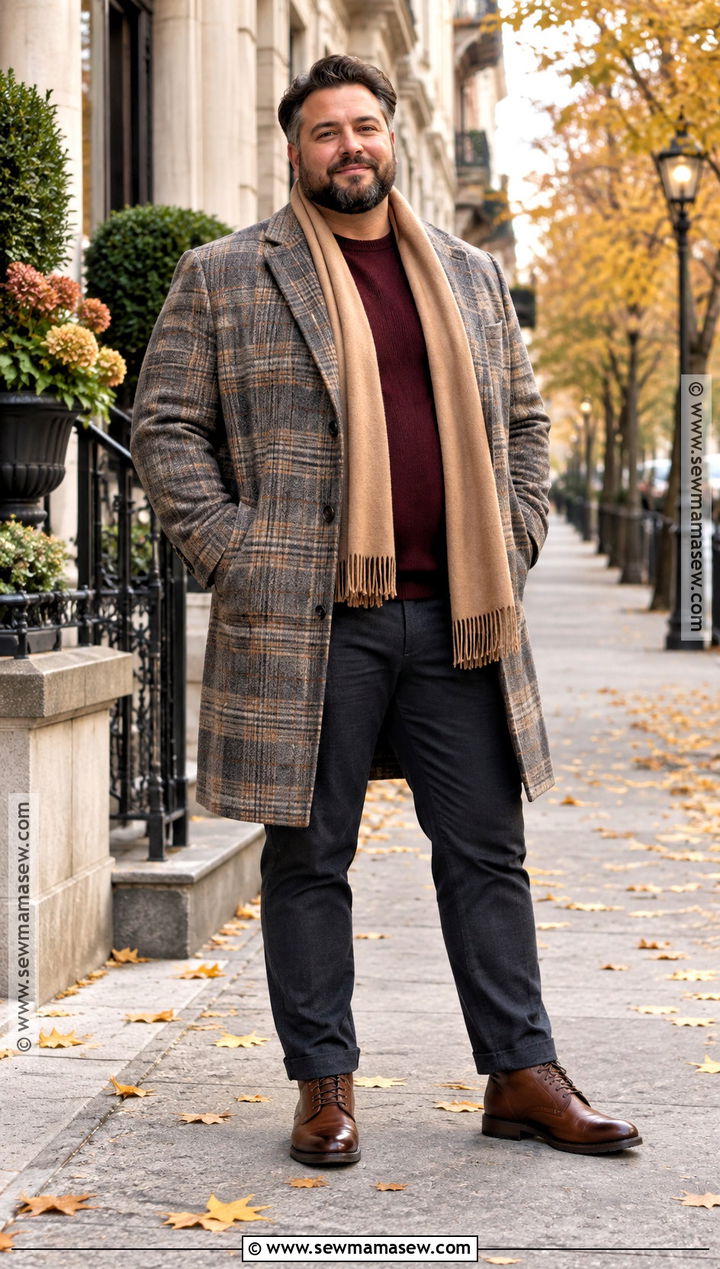
A plaid overcoat can be the one statement piece in an otherwise simple fall closet. On a broader frame, I go for a large, low-contrast check. Small, high-contrast plaids vibrate visually and make the coat look busier than it needs to. Underneath, a solid merino crewneck in one of the coat's quieter colors, dark straight trousers and leather lace-up boots. A single-color scarf adds warmth without a second pattern. Because patterned outerwear draws the eye, shoulder fit and sleeve length matter even more here. A tailor can fix the sleeves cheaply; the shoulders have to be right from the start.
What a Tailor Can Fix and What Stays Put
I tell every client the same thing: buy for the hardest part to alter, then let a tailor handle the rest. On jackets and coats, that hard part is the shoulders. If the shoulder seam hangs past your shoulder or pinches in, walk away, because rebuilding a shoulder costs more than the coat is worth.
Usually worth doing
- Shortening jacket and coat sleeves, so a little shirt cuff shows. It's simpler on sleeves with non-working buttons.
- Hemming trousers and jeans so they meet the shoe with little or no pile at the ankle.
- Letting out or taking in a trouser waist, as long as there's seam allowance at the back seam to work with.
- Tapering a trouser leg slightly below the knee, which tidies up wide pants without making them tight.
Usually not worth it
- Making a jacket bigger through the chest or back. There's rarely enough fabric hidden in the seams.
- Shortening a coat by more than a little, which throws off the pocket placement.
- Fixing a knit sweater that's too tight. Knits can't be let out.
Prices vary a lot by area and garment, so ask for a quote first. A sleeve and hem job is often the difference between clothes that look borrowed and clothes that look like yours.
Build From the Coat That Fits Your Shoulders
Every outfit here starts with fit: a jacket that sits right across the shoulders, trousers with room through the seat and thigh, and layers thin enough to stack. Get those right and the colors can be simple, because navy, olive, charcoal and brown do most of the work, with corduroy, suede and knits adding texture. I'd ignore the old advice that bigger men should hide in loose, dark clothes. It rarely looks better than something that fits. Pick one jacket from this list that fits you well today, have the sleeves and hems adjusted, and build the rest of your fall wardrobe around it.
Related posts: