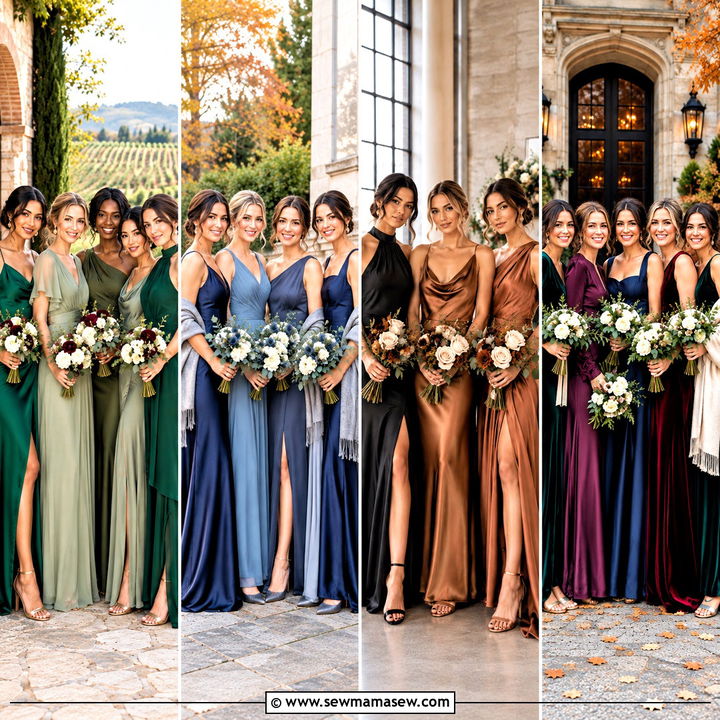
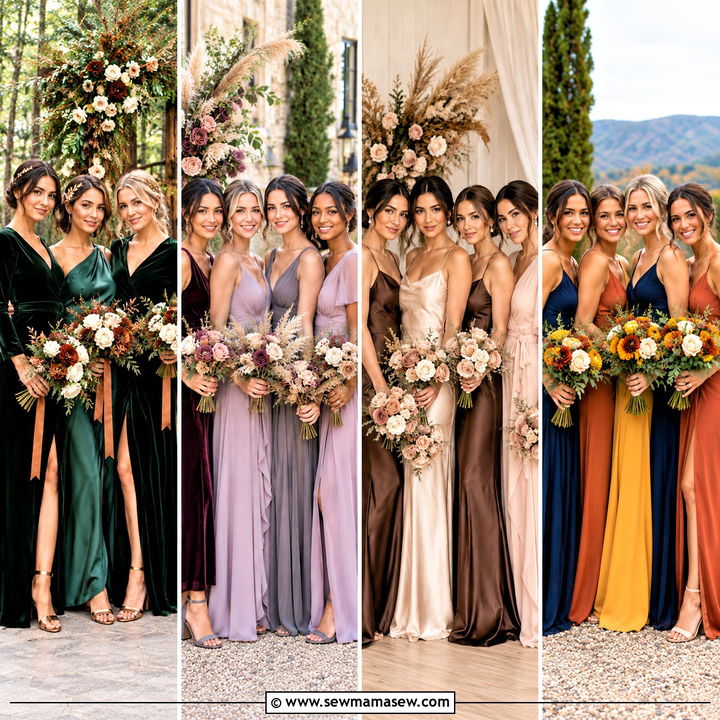
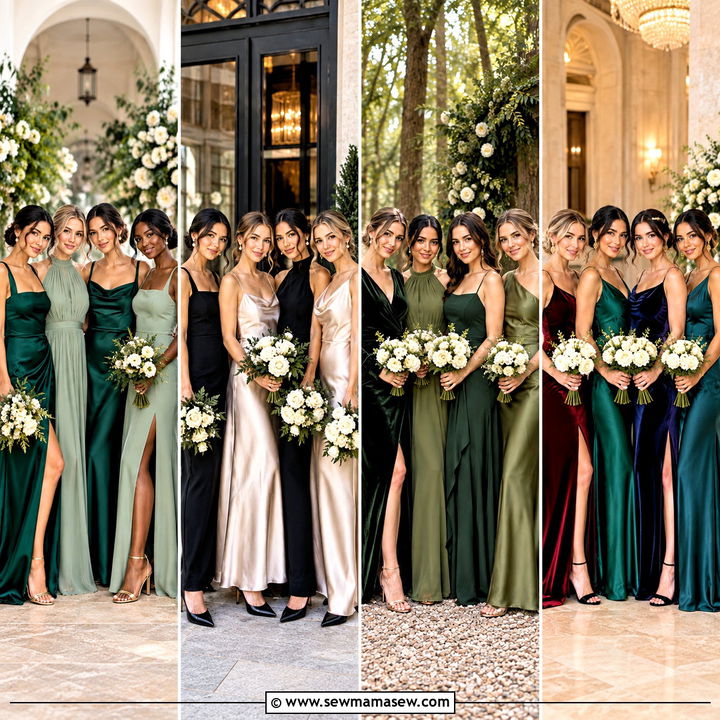
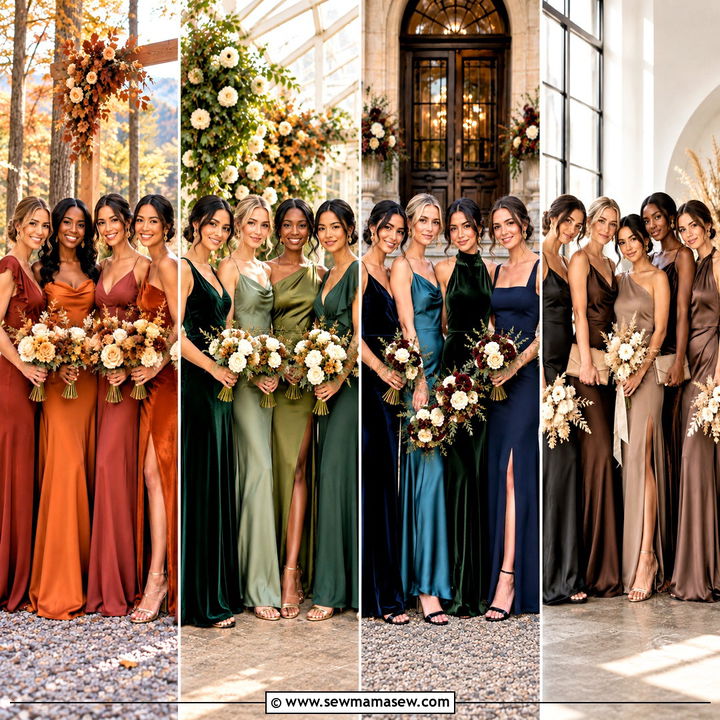
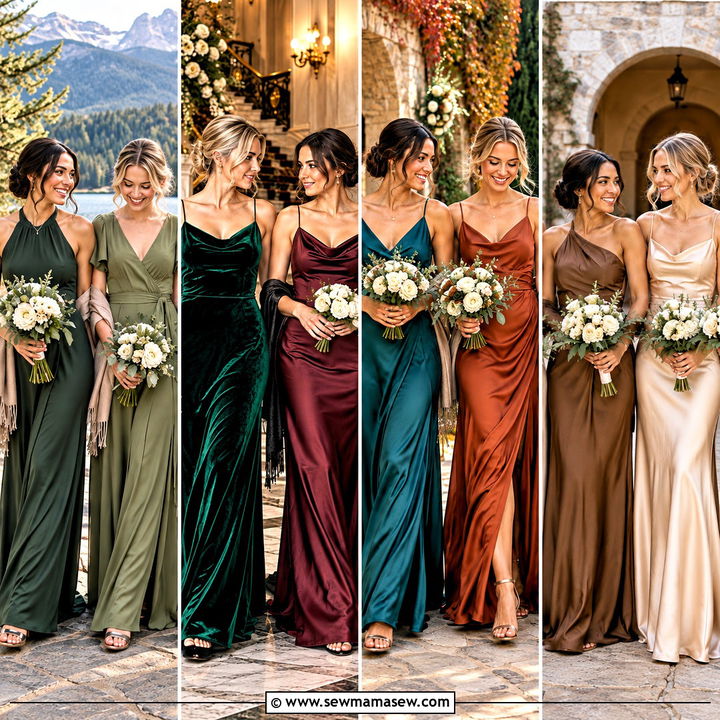
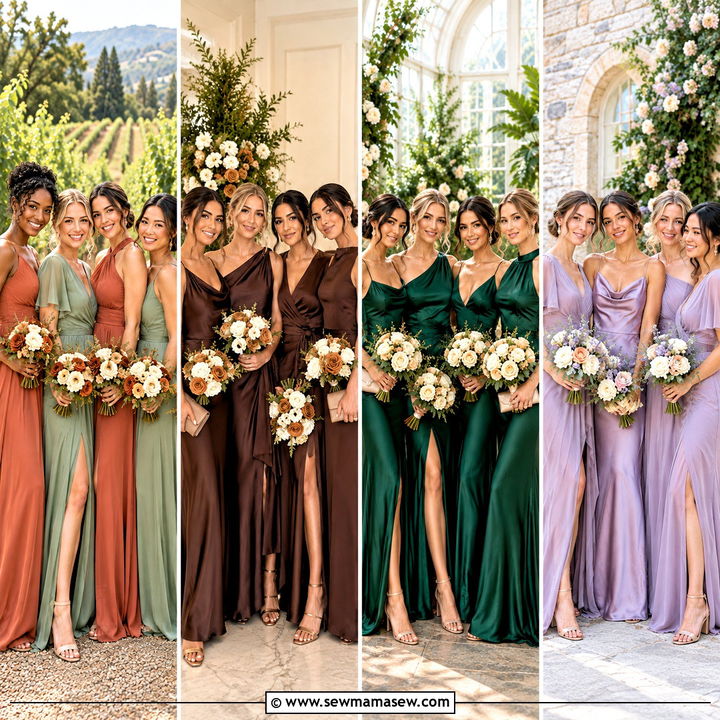
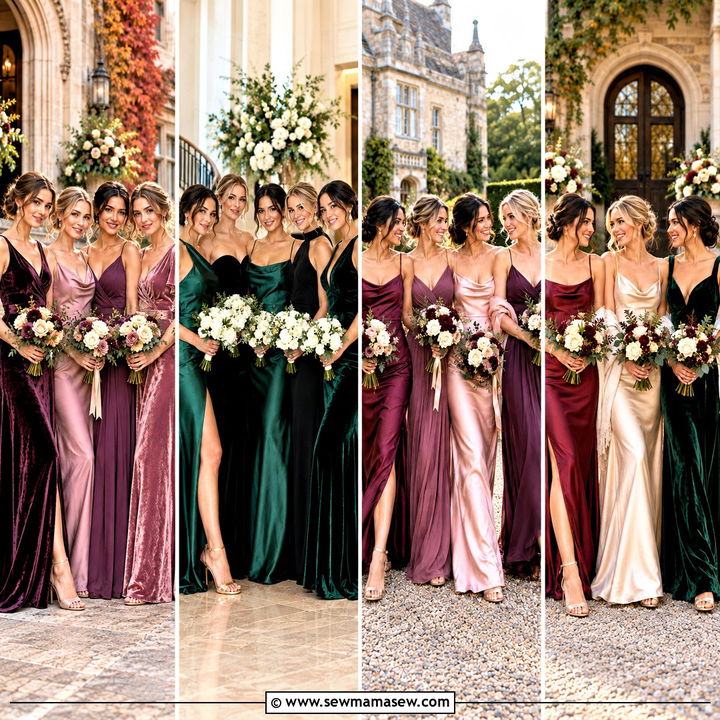
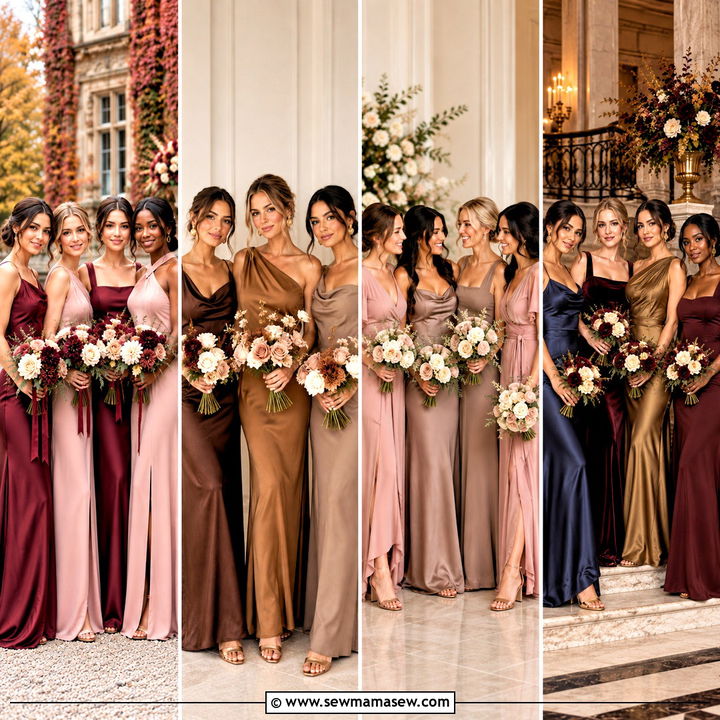
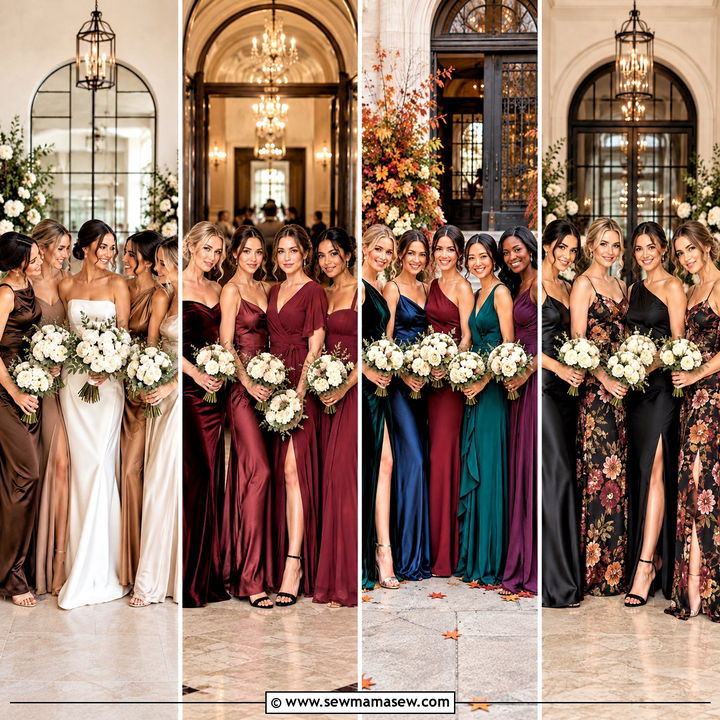
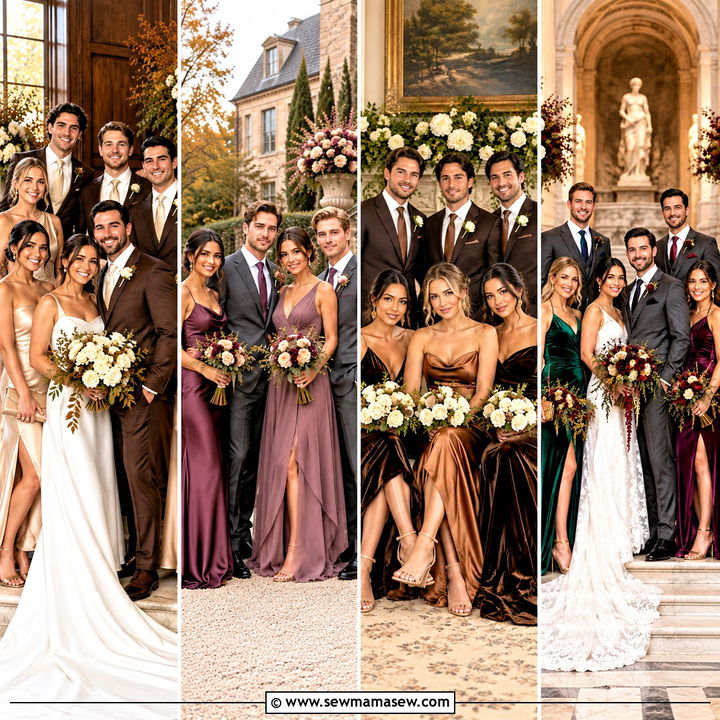
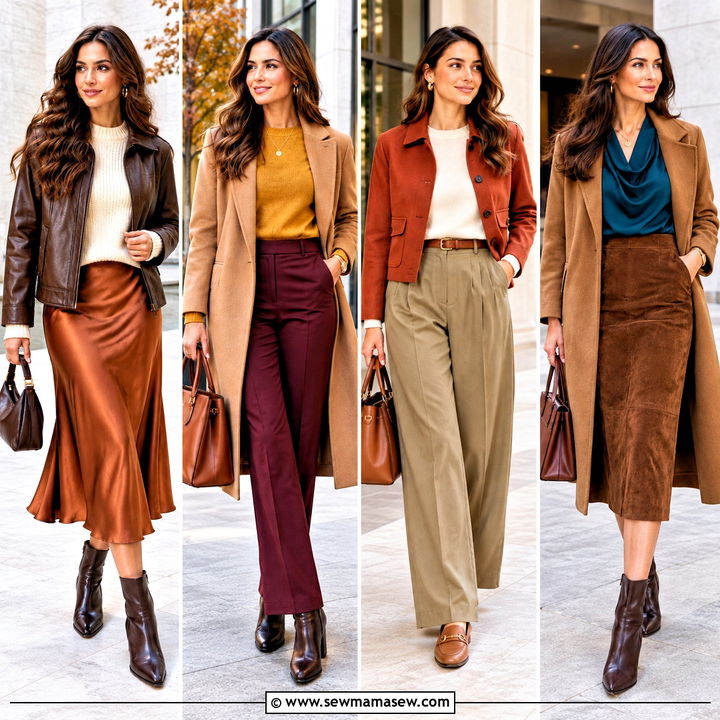
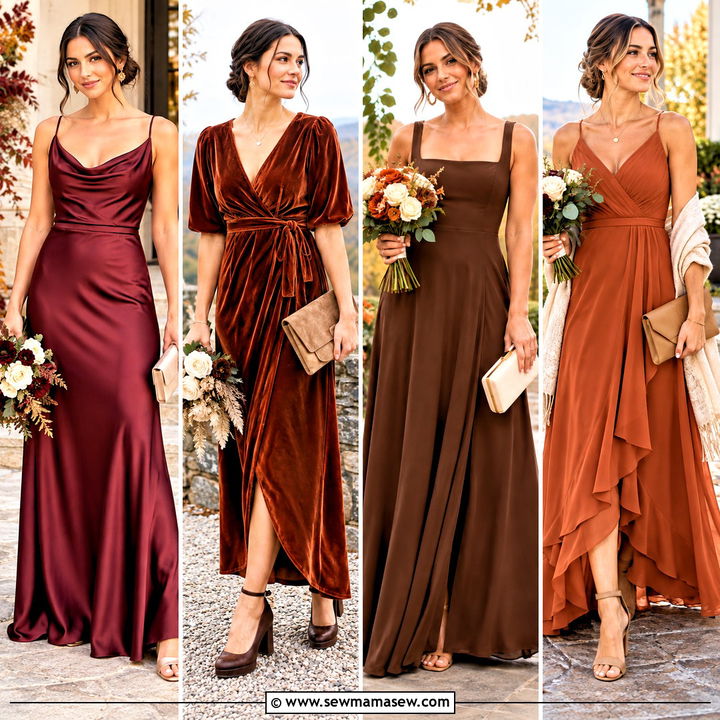
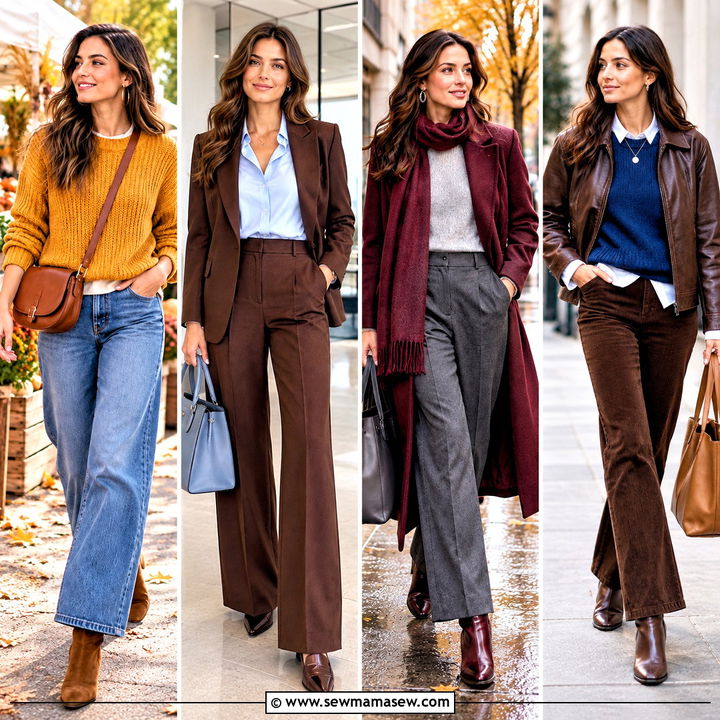
Mismatched bridesmaid dresses suit an autumn wedding better than any other season, because the landscape itself is already a mix of rust, olive, brown and gold. The palettes below run from earthy neutrals to jewel tones and smoky pastels, and they cover everything from a barn ceremony to a black-tie ballroom. The rule I give every bride before she picks one: cap the palette at three or four shades, look at swatches by a window rather than under kitchen lights, and repeat one metal in the jewelry across the whole party. Once those three things are fixed, each bridesmaid can choose the neckline and silhouette she actually feels good in, and the group still reads as one story.
Hand Out the Colors Yourself, Then Let Them Shop
The single biggest mistake I see with mismatched dresses is letting each bridesmaid pick her own shade from the palette. People choose what feels safe, so you end up with five women in the darkest color and one lonely champagne at the end. I'd rather the bride assigns shades first and lets the choosing happen inside that color.
A simple split that works for most parties of five to eight:
- About half the group in the lead color, the shade you want people to remember.
- A third or so in the supporting color, usually the darker or the more muted one.
- One or two in the accent, the lightest or most metallic shade, which works best near the middle of the line, not at the ends.
I also match shades to people where I can. Deep plum or espresso tends to flatter deeper skin tones and can overpower very fair, cool complexions; pale champagne and sage can wash out someone who is already fair. A quick swatch held under each woman's chin by a window settles most of it in a minute.
1. Terracotta Rust And Champagne Bridesmaid Dresses
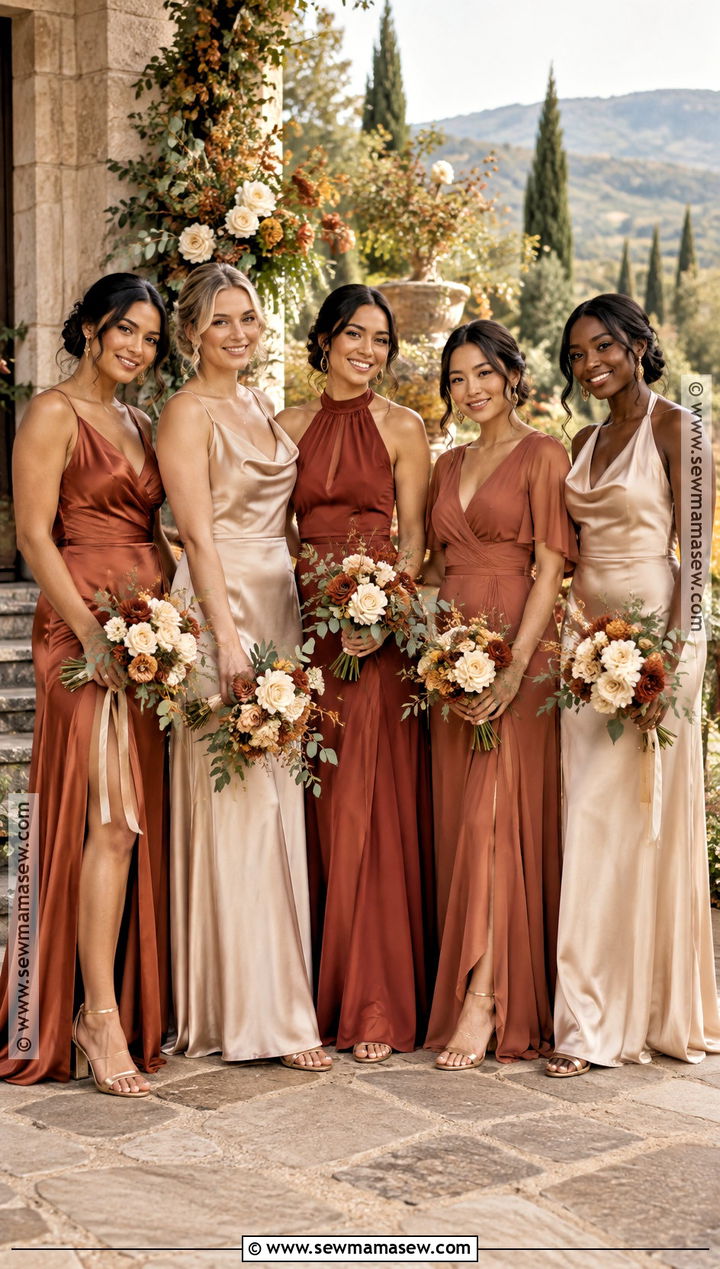
Rust, terracotta and a little champagne look right against turning leaves, and they forgive a lot of skin tones. I'd put the rust in satin, the terracotta in chiffon and keep champagne to one or two women, because a pale shade in a row of warm ones pulls the eye fast. Wrap, cowl, halter and off-the-shoulder bodices can all sit together as long as every hem hits the floor. Bronze sandals tie the colors without forcing anyone to buy identical shoes, and cream roses with dried grasses keep the bouquets in the same family. Barns and vineyards at golden hour are where this one shines; the low sun warms the rust even further.
2. Burgundy Mauve And Blush Bridesmaid Dresses
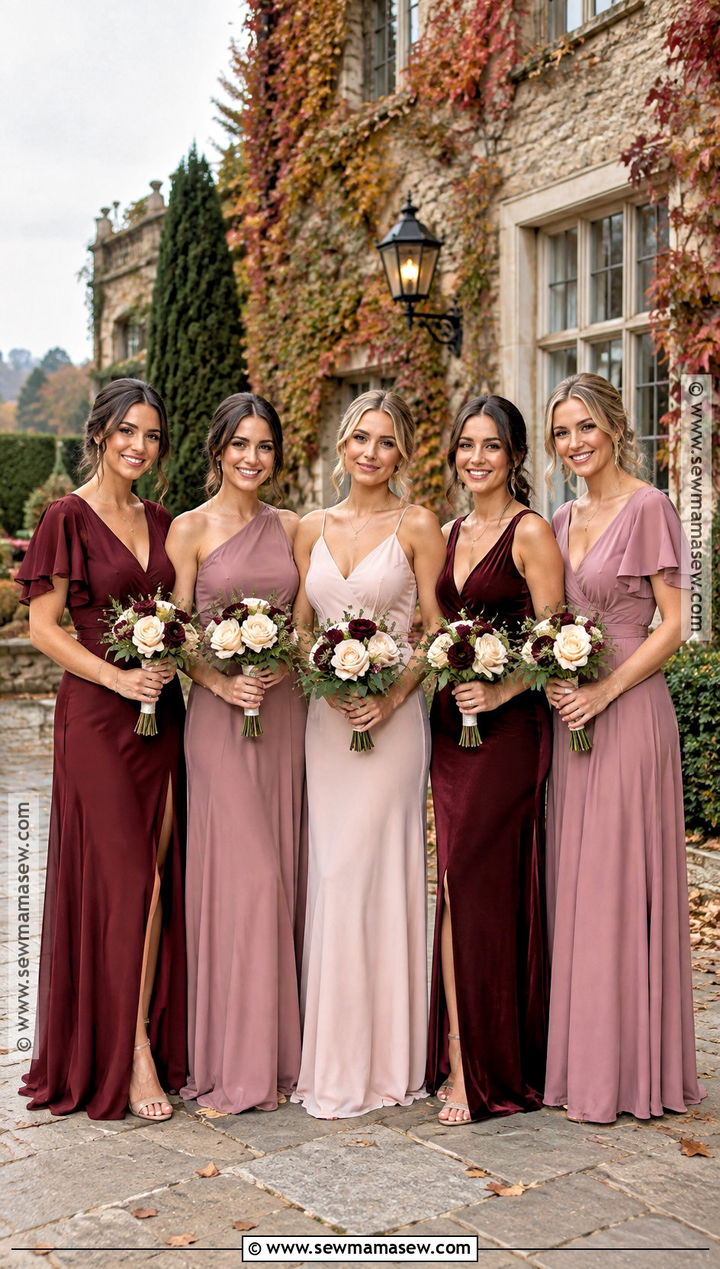
Blush on its own reads like spring. Put it next to burgundy and a dusty mauve and it suddenly belongs in October. I use burgundy satin for weight, mauve chiffon in the middle and a blush crepe as the light note, and I always spread the burgundy dresses evenly down the line so one end of the photo doesn't look heavier than the other. Flutter sleeves are fine for a mild afternoon; for a cold ceremony, long sleeves in the mauve chiffon are the easiest to source. Nude or soft gold heels and small hoops finish it. Garden estates and older venues with wood paneling suit this palette well.
3. Forest Green Olive And Sage Bridesmaid Dresses
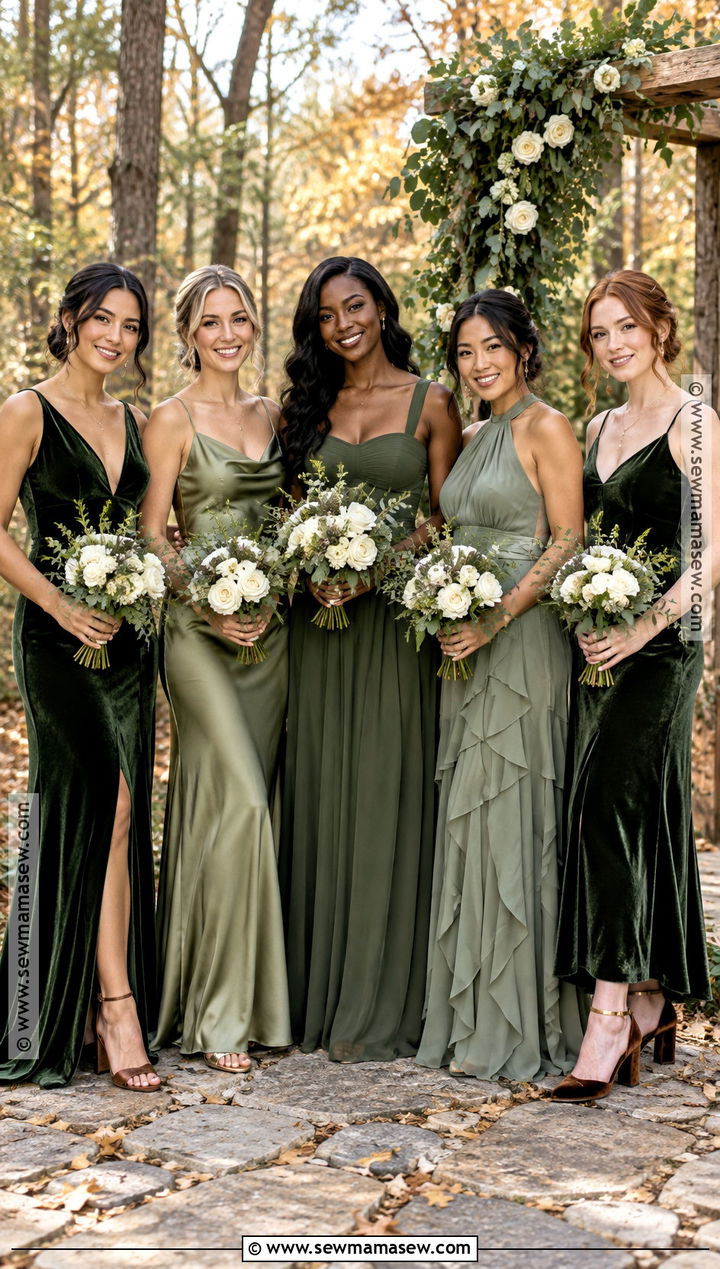
Not every fall wedding wants orange. Three greens, forest velvet, olive satin and a muted sage chiffon, give you a seasonal palette that feels botanical instead of harvest. The forest green anchors the group and the sage keeps photos from going too dark, which matters more than people expect once the sun drops behind trees. I let everyone pick a neckline with the support she needs, but I fix the hem length and ask for almost no beading. Chocolate brown or brushed gold shoes work under all three, and a few berry accents in the bouquets stop the greens blending into the foliage behind them.
4. Emerald Navy And Gold Bridesmaid Dresses
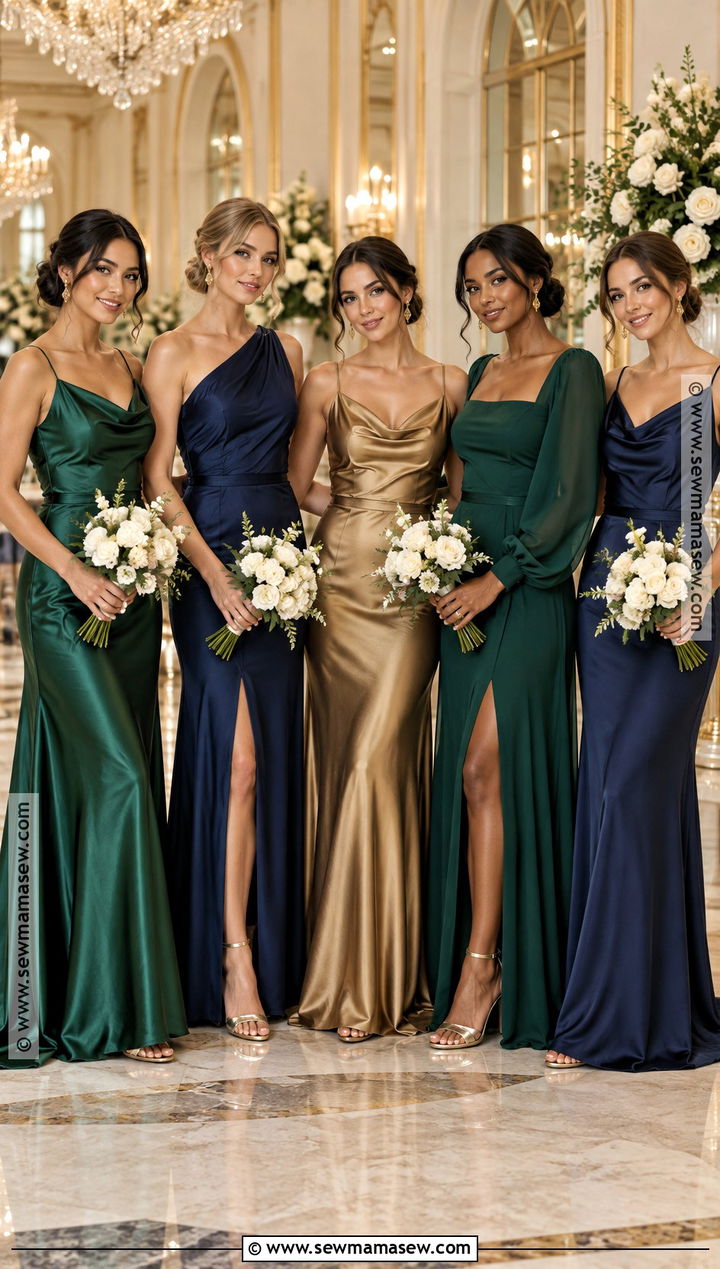
Emerald, navy and a muted antique gold are my go-to for an evening dress code. Alternate emerald satin with navy crepe or chiffon, then put just one or two women in the gold. Column, one-shoulder, cowl and long-sleeve wrap gowns all suit this mix because the colors carry the drama and the cut doesn't have to. The gold fabric is the one to watch: a mirror-bright lamé will flash under a photographer's strobe and look cheap, so I insist on matte or softly luminous gold. Black or gold heels, matching earrings and white roses with dark greenery keep it from sliding into heavy territory in a ballroom or hotel.
5. Espresso Chocolate And Bronze Bridesmaid Dresses
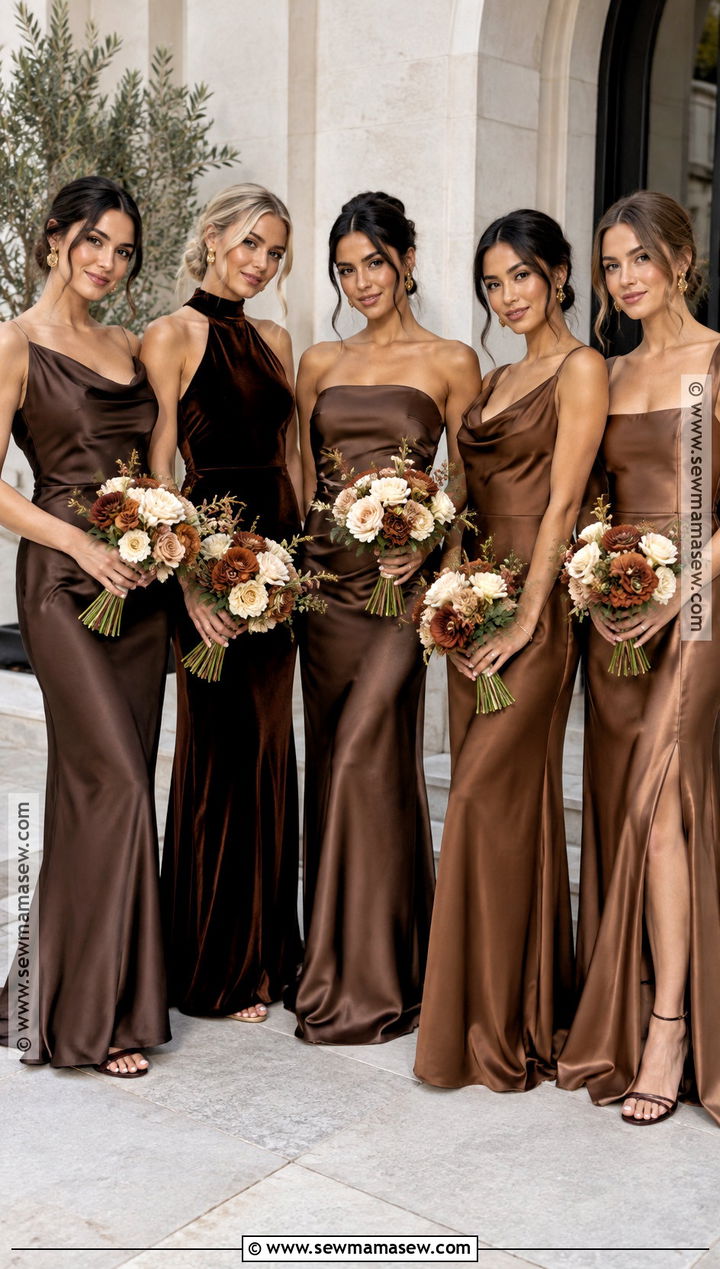
Brown has become a serious bridesmaid color, and it deserves to. Espresso satin, chocolate velvet and a warm bronze crepe are so close in tone that the group reads as one color in layers, which means necklines can vary a lot: high neck next to strapless next to square neck, all floor length. The thing I check first with brown is the undertone against each woman's skin, since a cool brown can make a warm complexion look gray. Bronze sandals or dark brown heels, sculptural gold earrings and cream flowers with olive greenery complete it. It suits modern hotels and industrial spaces where brick or concrete would swallow paler shades.
6. Plum Aubergine And Dusty Rose Bridesmaid Dresses
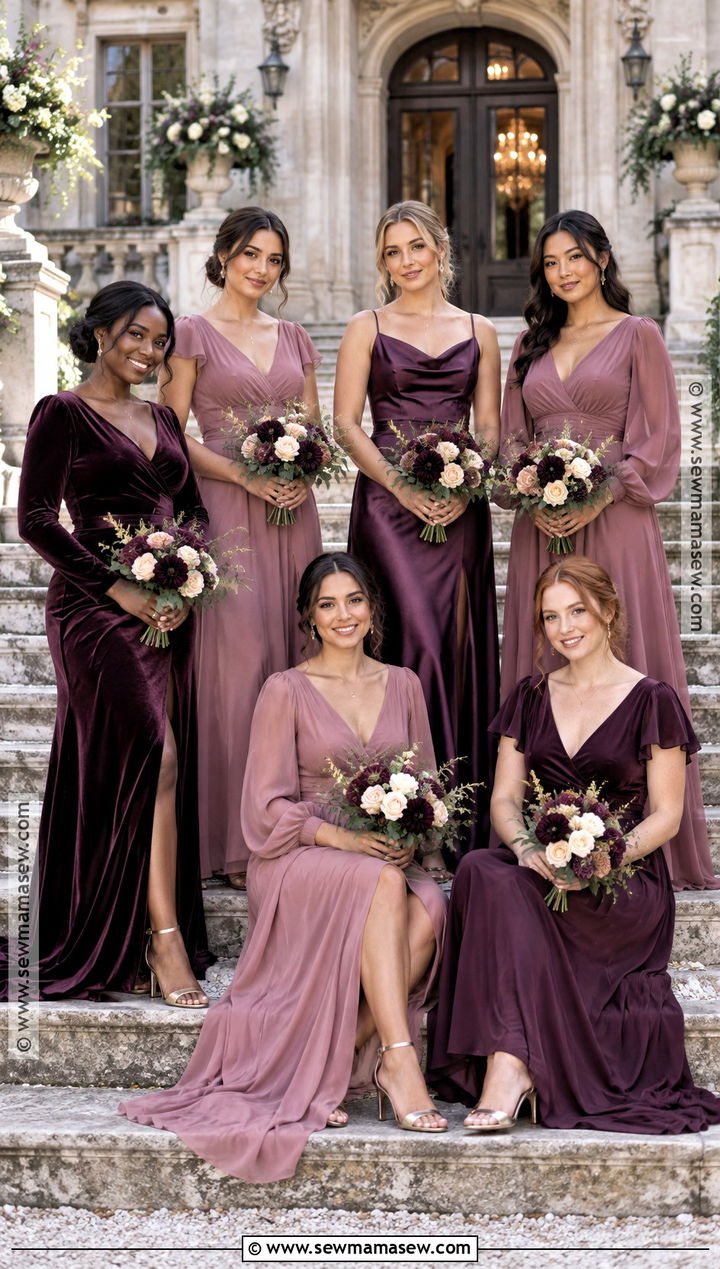
Plum and aubergine bring the depth, and dusty rose softens them so the line doesn't look funereal in a church. Aubergine velvet works as the darkest note, plum satin sits in the middle and dusty rose chiffon goes to whoever wants something lighter. Mix long sleeves, cap sleeves and supportive V-necks freely, but keep every dress at the same length and the same level of formality, otherwise the variety starts to look accidental. Pewter or black shoes disappear under these shades. Pearl or small gold earrings and eucalyptus in the bouquets work well in historic houses and late-fall ceremonies with dark florals.
7. Burnt Orange Mustard And Copper Bridesmaid Dresses
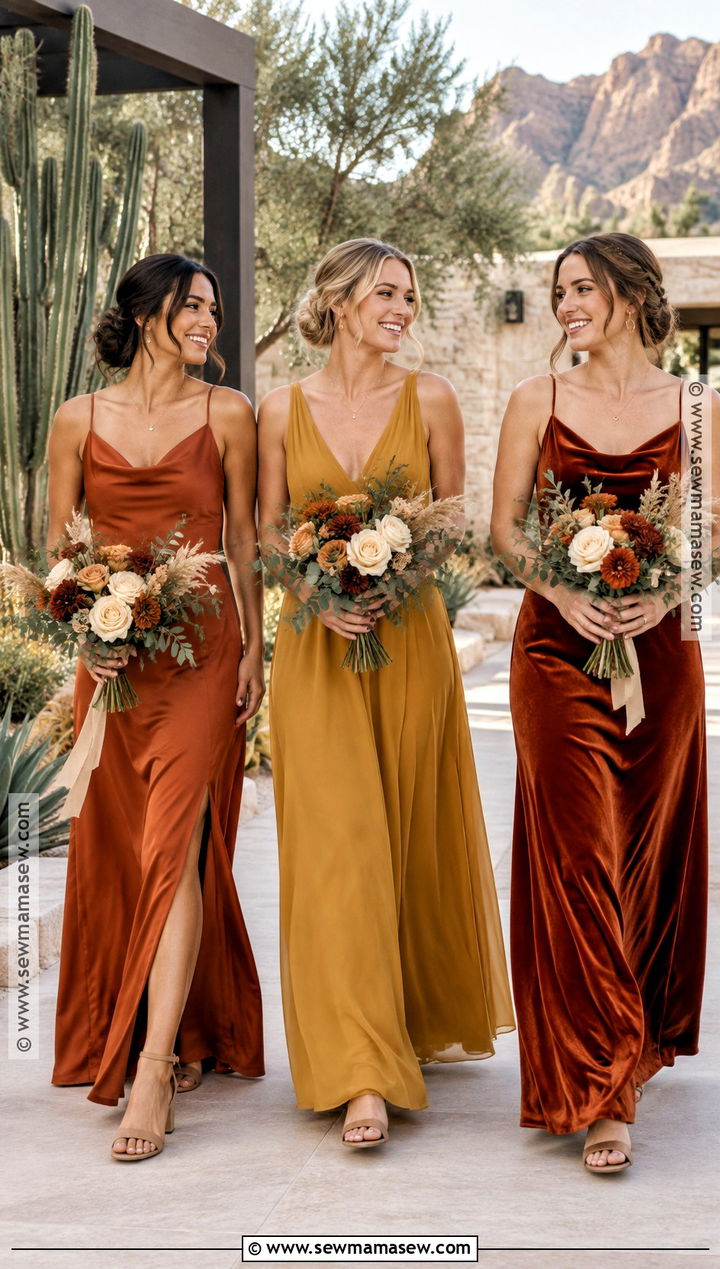
This is the bold version of autumn, and it needs a firm hand. I make burnt orange the dominant shade in satin, add copper velvet as the darker accent and give mustard chiffon to only one or two women. Equal amounts of all three look like a sports team; one lead color with small accents looks planned. Because the palette is loud, keep the cuts plain with no ruffles. Tan or bronze block heels are the kindest choice for grass or gravel, and dried grasses with deep green foliage in the bouquets calm everything down. Ranches and desert venues with warm natural scenery suit it best.
8. Slate Blue Navy And Silver Bridesmaid Dresses
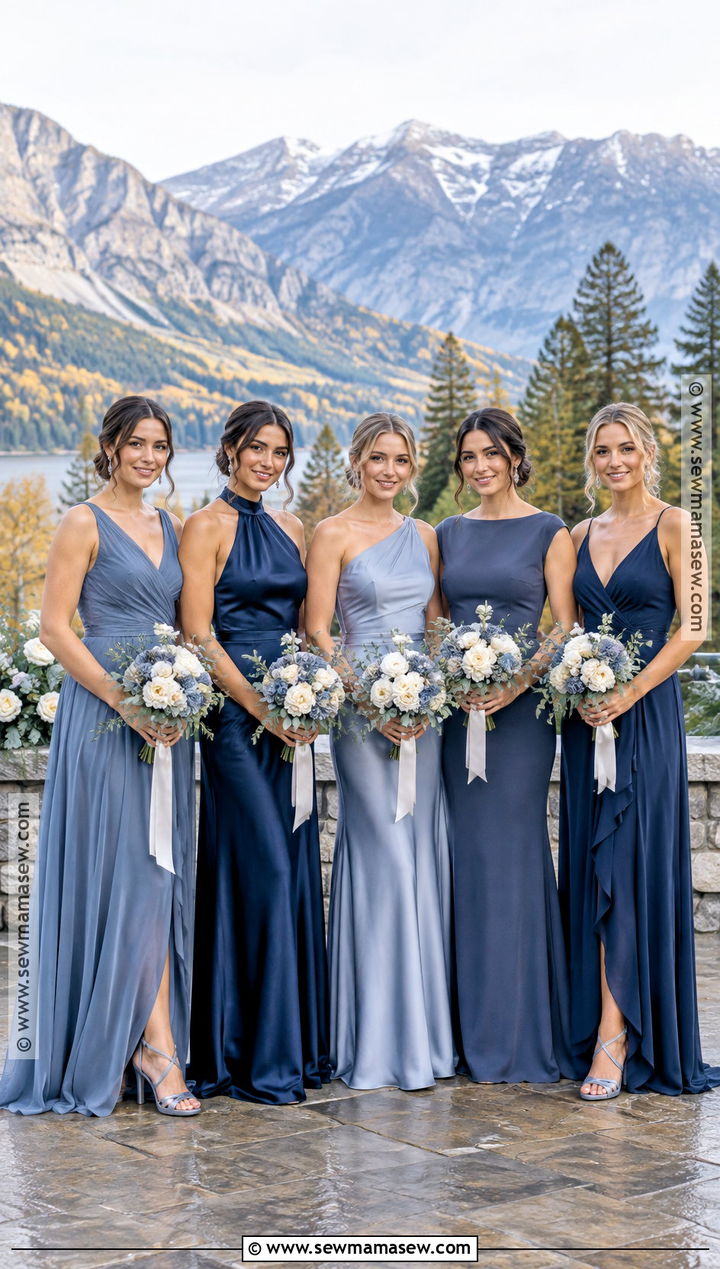
Plenty of couples don't want brown, orange or red at all, and slate blue, navy and soft silver answer that. Slate chiffon carries most of the line, navy satin grounds it, and one or two matte silver or blue-gray crepe dresses add light. Wrap, halter, bateau and one-shoulder gowns give enough variety while keeping it formal. I'm relaxed about shoes here: navy, pewter or silver, whatever the women already own, because cool metallics blend easily. Repeat silver earrings across everyone and use dusty blue accents in the bouquets. Waterfront and mountain venues, where harvest colors would feel forced, are the natural home for it.
9. Dusty Rose Taupe And Mocha Bridesmaid Dresses
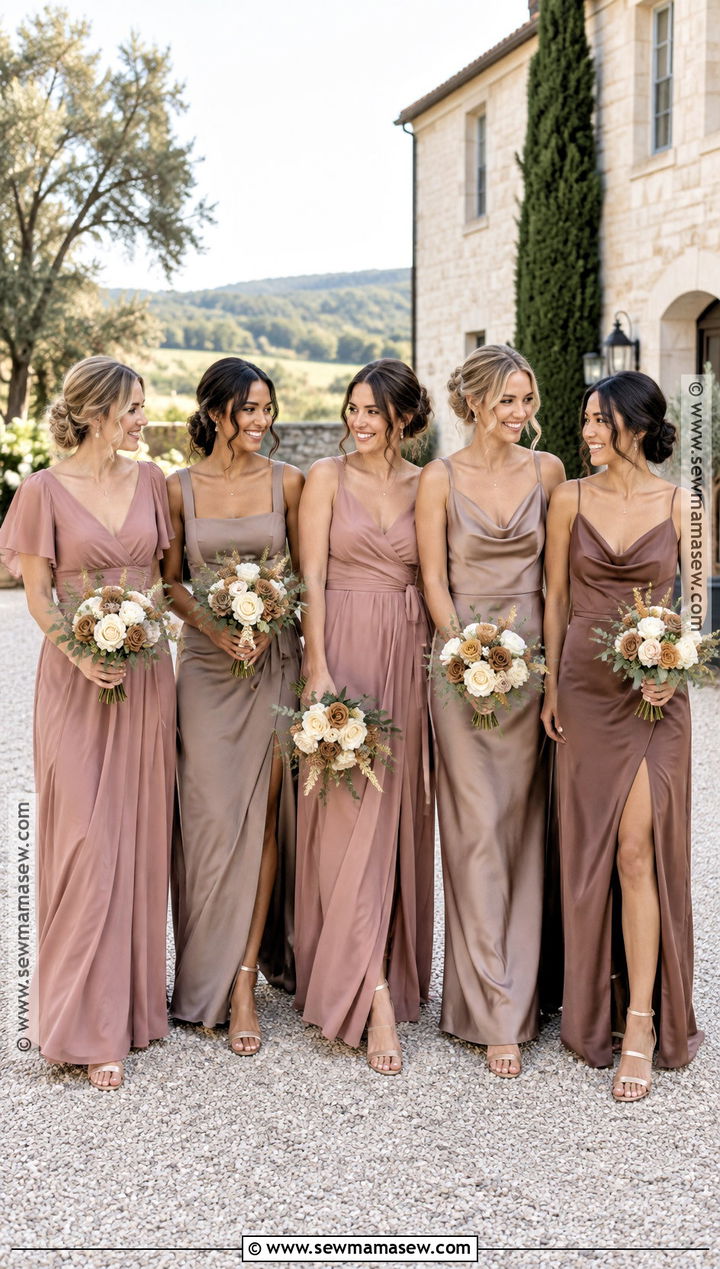
Dusty rose with taupe and mocha is the quietest palette here, and the easiest to coordinate with cream or brown décor. I'd order dusty rose in chiffon, taupe in crepe and mocha in satin, then mix flutter sleeves, square necks, wraps and cowls. The finish matters more than the cut: shiny fabric in these pinks starts to look like a summer wedding, so matte or soft-sheen is what I ask for. Nude or taupe shoes blend straight into the palette, and caramel-toned flowers bring the bouquets in line. Early fall ceremonies at countryside estates or small minimalist venues fit this one.
10. Black Champagne And Gold Bridesmaid Dresses
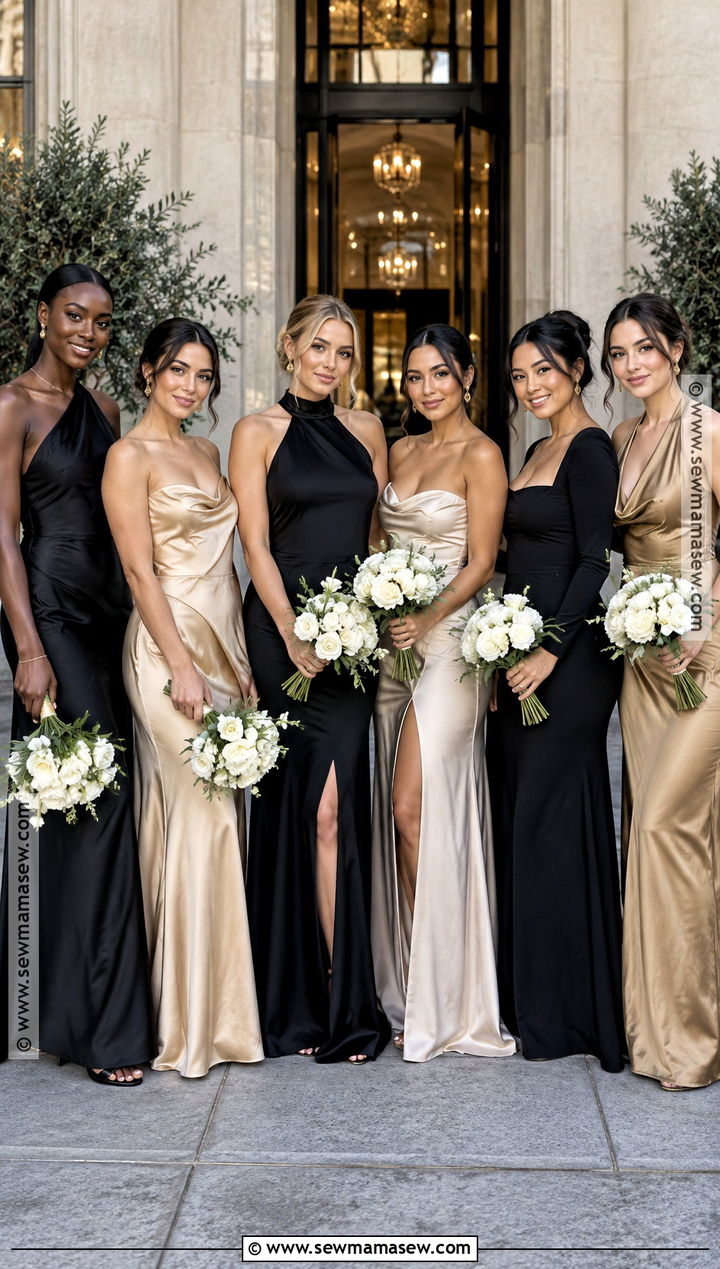
Black, champagne and gold is the formal city option. Most of the party wears black satin or crepe, champagne goes to a few, and one muted gold gown acts as the highlight. Strapless columns, long sleeves, halters and draped styles can all sit together because the matching floor-length hem does the unifying. Everyone can wear black heels, though champagne dresses also look good with soft gold sandals. One honest caution: black absorbs light, so if the ceremony is in a dim venue, talk to the photographer early about how they'll expose for both the black dresses and the bride's white. Galleries and hotels at night suit it well.
11. Cranberry Burgundy And Rose Bridesmaid Dresses
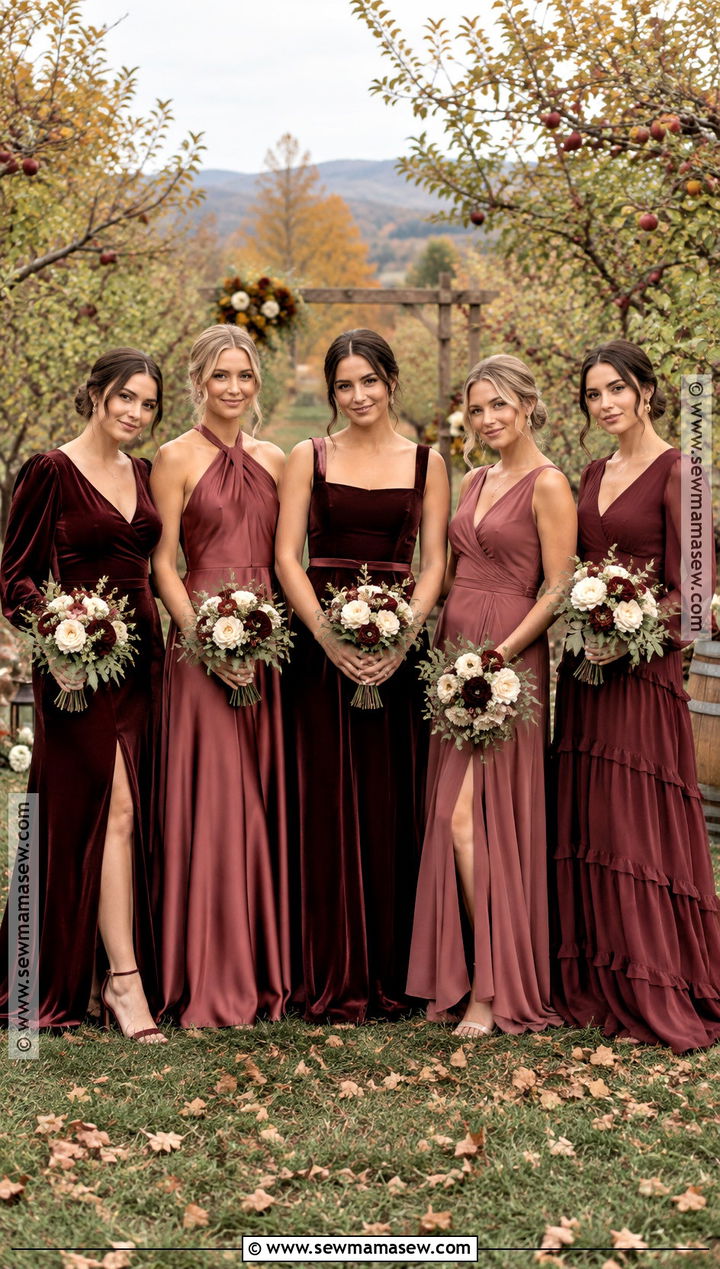
Cranberry, burgundy and a smoky rose look like late-fall berries, and they make a rich tonal group. Burgundy velvet anchors it, cranberry satin brings a brighter red, and rose chiffon adds the soft note. I assign the shades before anyone shops; left alone, half the group will drift to burgundy because it feels safest, and the balance is gone. Halter, wrap, empire-waist and square-neck gowns let different body types find support. Dark nude or burgundy shoes, small gold earrings and ivory roses with dark greenery finish it. Orchards and barns with warm wood interiors are a good match.
12. Teal Peacock And Emerald Bridesmaid Dresses
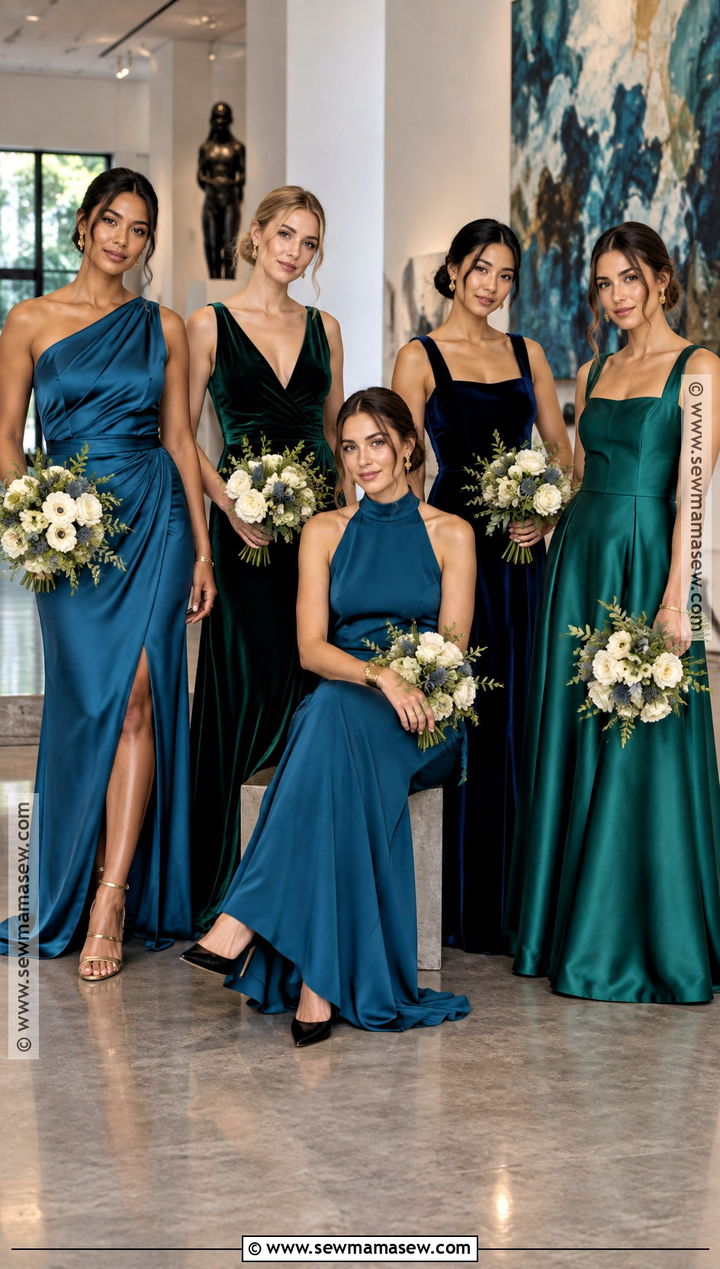
Teal, peacock and emerald sit close enough on the color wheel to look cohesive, but different enough to show real depth in a group photo. Teal crepe, peacock satin and emerald velvet give each color its own texture, which adds dimension even before you vary the cuts. Keep hems floor length and embellishment simple, then let each woman pick one-shoulder, V-neck, high neck or structured sleeveless. Black or navy heels support these saturated shades without competing. I'd save this palette for evening receptions in dramatic indoor spaces; jewel tones can look harsh in flat midday sun, but they glow under warm artificial light.
13. Cinnamon Clay And Sand Bridesmaid Dresses
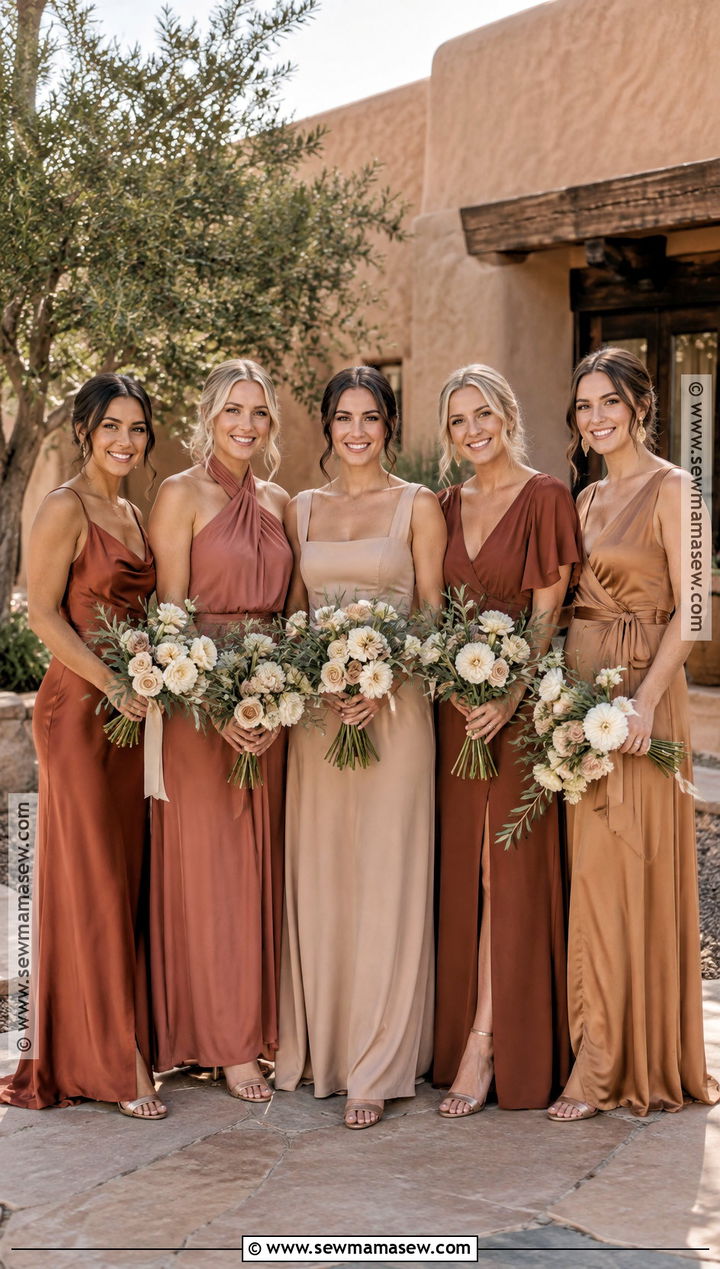
Cinnamon, clay and sand are warm without going full orange, which makes them easier to wear for women who don't love bright color. Cinnamon satin is the deepest note, clay chiffon the central shade and sand crepe the light contrast. Wraps, halters, square necks and modest flutter sleeves can all mix, but only if the swatches share the same undertone; a pinkish clay next to a yellow sand looks off in person. Tan block heels or bronze sandals and pampas grass in the bouquets suit this palette in natural daylight, at adobe venues or rustic weddings with stone and wood.
14. Lavender Plum And Charcoal Bridesmaid Dresses
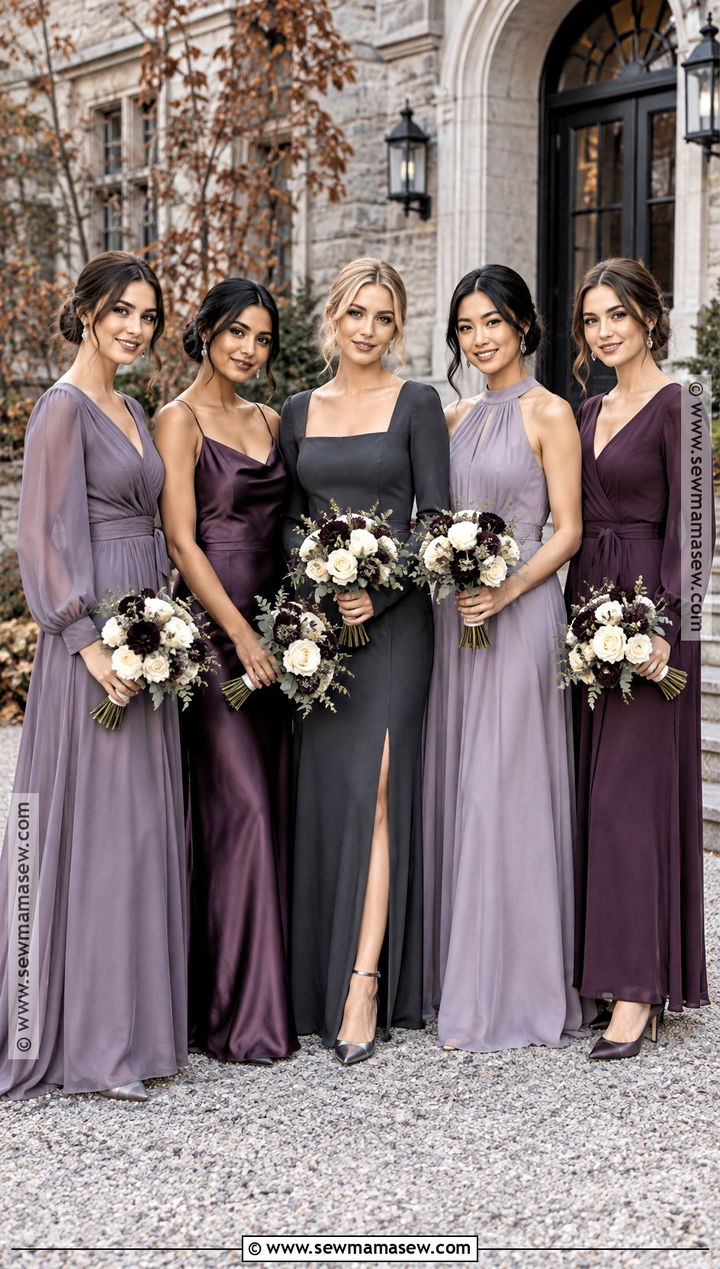
Smoky lavender, plum and charcoal give a cool palette with a slightly moody edge. The lavender must be muted; a bright pastel purple will look like Easter next to charcoal crepe. Plum satin sits between them. I keep the silhouettes formal with floor-length hems and a defined waist, and I'm happy to mix long sleeves with sleeveless if the fabrics match in weight. Charcoal or pewter shoes and silver jewelry suit all three. This is one of the few palettes that actually improves on an overcast day, which makes it a smart pick for stone buildings, mountain lodges and November dates.
15. Rust Olive And Antique Gold Bridesmaid Dresses
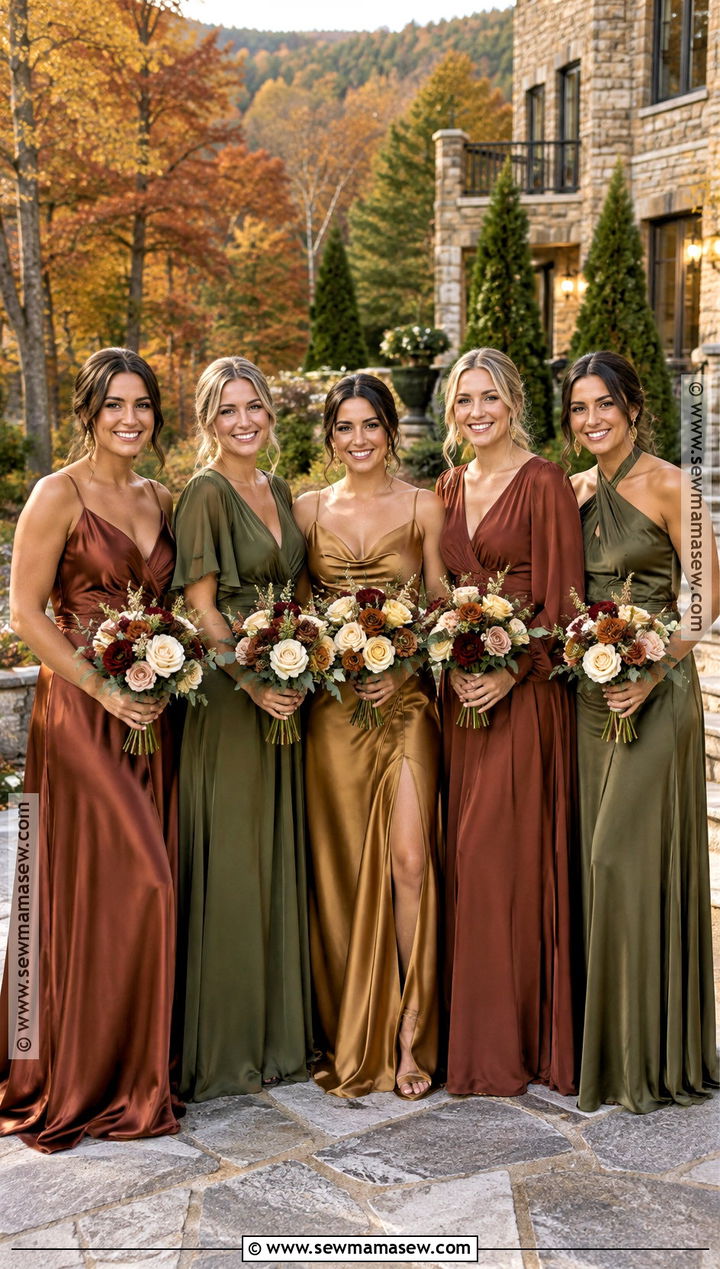
Rust, olive and antique gold are the colors of an actual autumn landscape, so they fit almost any fall setting. Rust leads in satin and chiffon, olive grounds a few women, and antique gold goes to one or two at most. I set clear rules on three things here: floor length, fabric sheen and embellishment, because those are what break the look when they vary, while necklines and sleeves can go wherever each woman wants. Bronze or dark brown shoes and matching gold earrings connect the group. It works for forest ceremonies and country clubs alike, especially near peak foliage.
Why Satin and Chiffon in the Same Shade Never Quite Match
Most of these palettes mix fabrics, and that is where brides get surprised. Satin reflects light, so the same dye looks lighter and brighter on its smooth face. Chiffon is sheer and usually layered over a lining, so it reads softer and a touch paler. Velvet does the opposite: the pile catches shadow and makes a color look deeper and richer, and it changes again depending on which way the nap faces the camera.
So a burgundy satin and a burgundy velvet from the same color card will not look identical, and that's fine if you plan for it. Treat each fabric as its own shade on the swatch board. Order a sample of every fabric and color you intend to use, lay them side by side on a white sheet by a window, then photograph them on your phone with the flash off and again with it on. If two of them only look right in one of those shots, swap one out.
Velvet in a Warm September, Chiffon in a Cold November
Fall weather is unreliable, and the fabric choice should follow the date more than the palette. Early autumn can still be properly warm, and a full-length velvet gown in an outdoor ceremony with no shade is miserable to stand in for half an hour. For September dates I keep velvet to the indoor reception or swap it for satin in the same shade.
Late November is the reverse. Single-layer chiffon with thin straps gets cold fast at an outdoor ceremony, and goosebumps show in close-up photos. Long sleeves, a lined skirt, or a coordinated wrap in the supporting color solve that without breaking the palette. I'd also tell everyone to bring a pair of flat shoes in a matching tone; grass, gravel and wet leaves are hard on stilettos, and a woman who's comfortable stands straighter in every picture.
Three Shades, One Metal, Every Neckline Welcome
A mixed lineup should look coordinated without anyone wearing a dress she hates. Pick three compatible shades, then lock down the fabric family, the length and the level of formality, and leave the neckline and silhouette to each bridesmaid. Order swatches before anything else, because undertones and finishes shift under different light more than any screen shows. Then repeat one thing across the whole party: the jewelry metal, the shoe family or the bouquet style. That single repeated detail is what makes very different dresses look intentional.
Related posts: