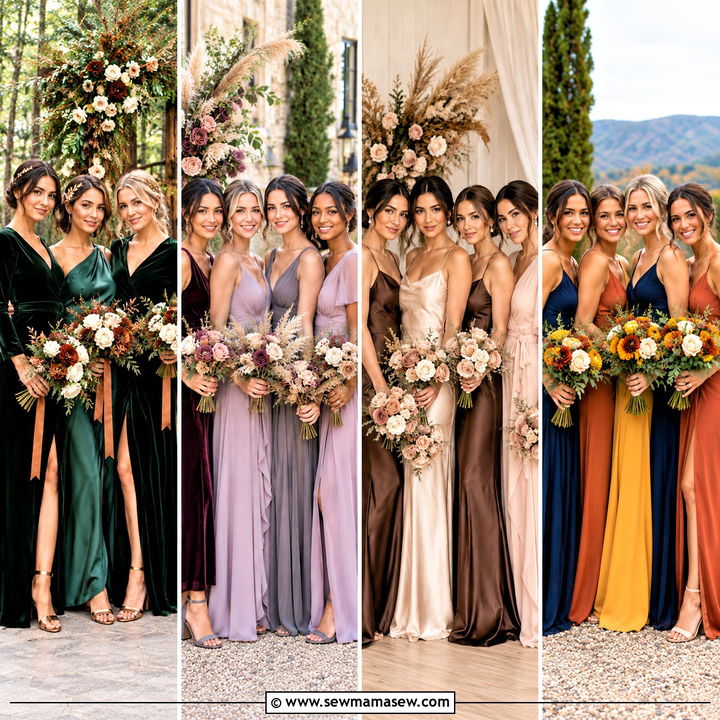
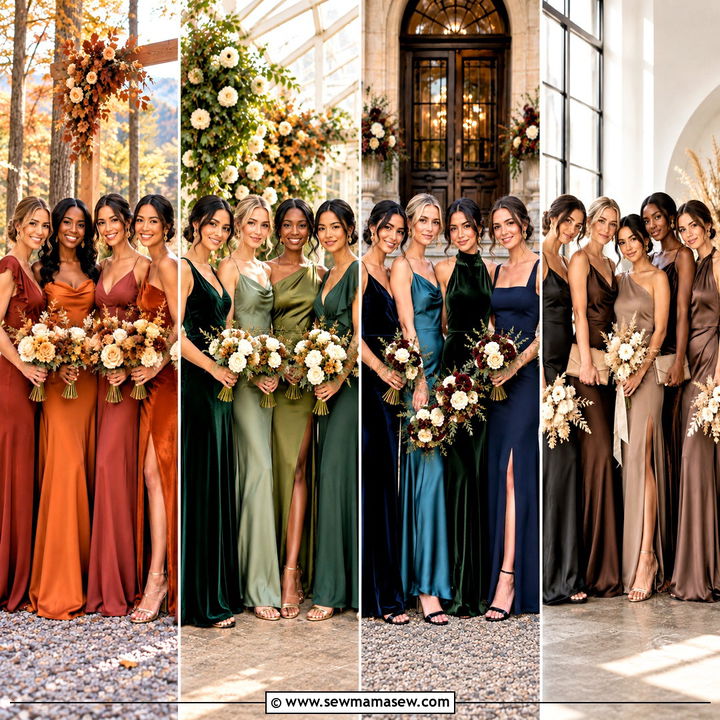
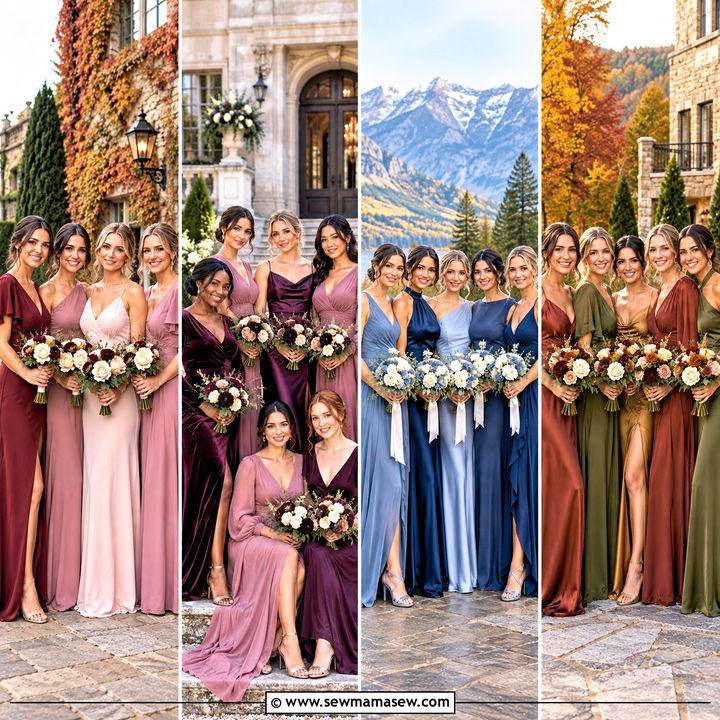
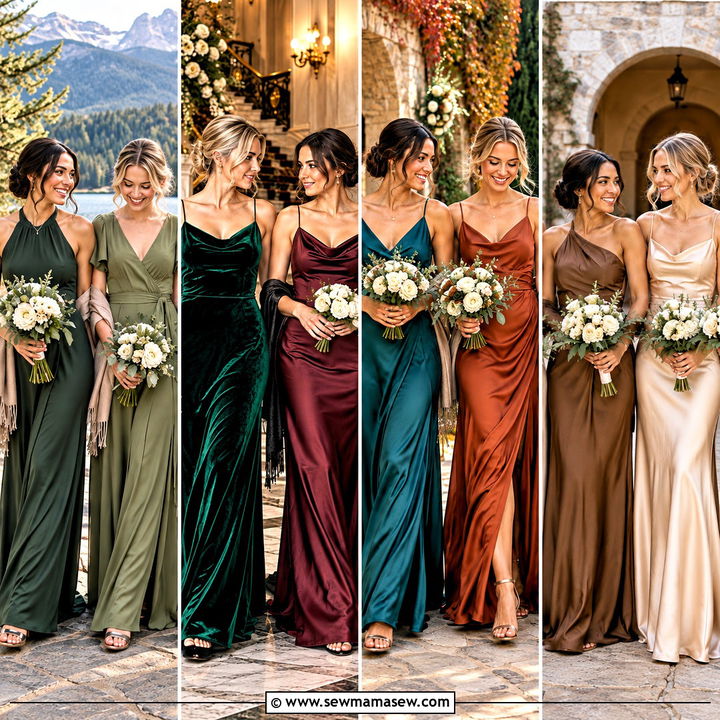
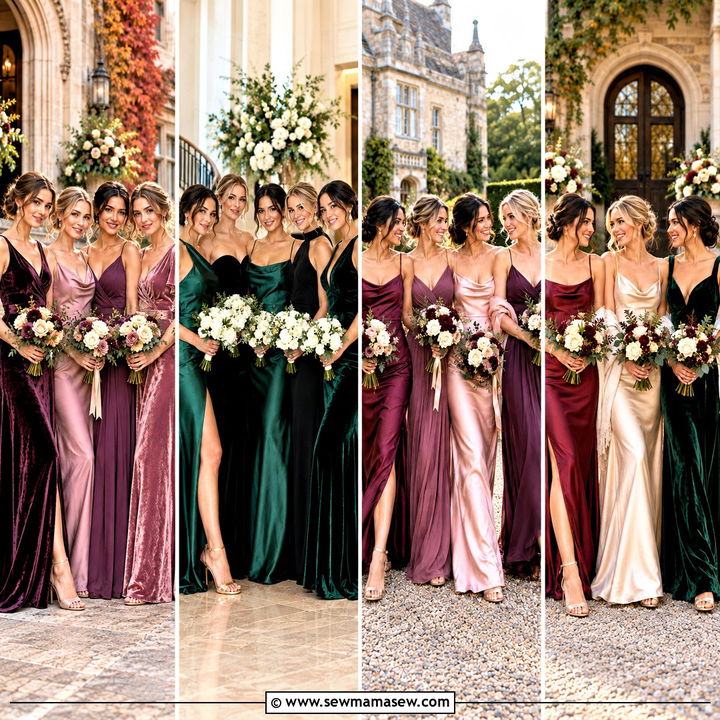
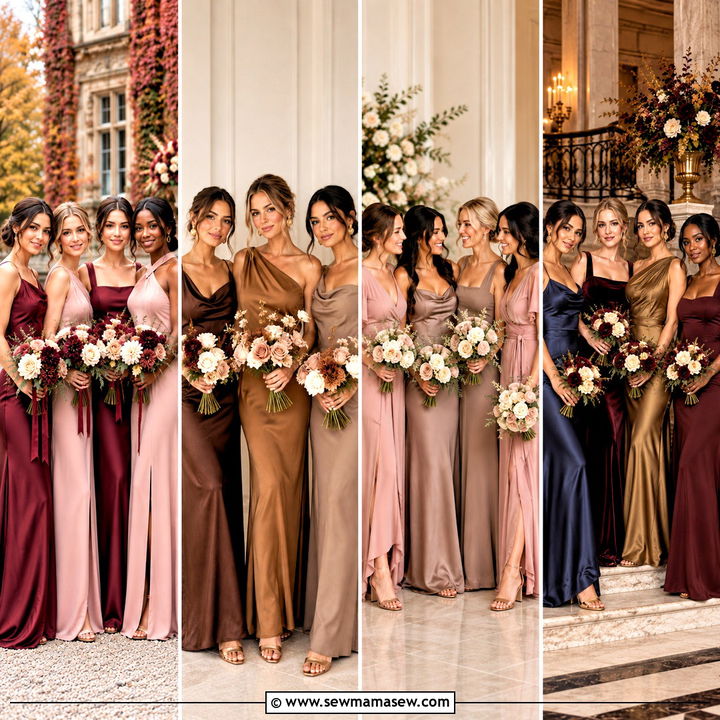
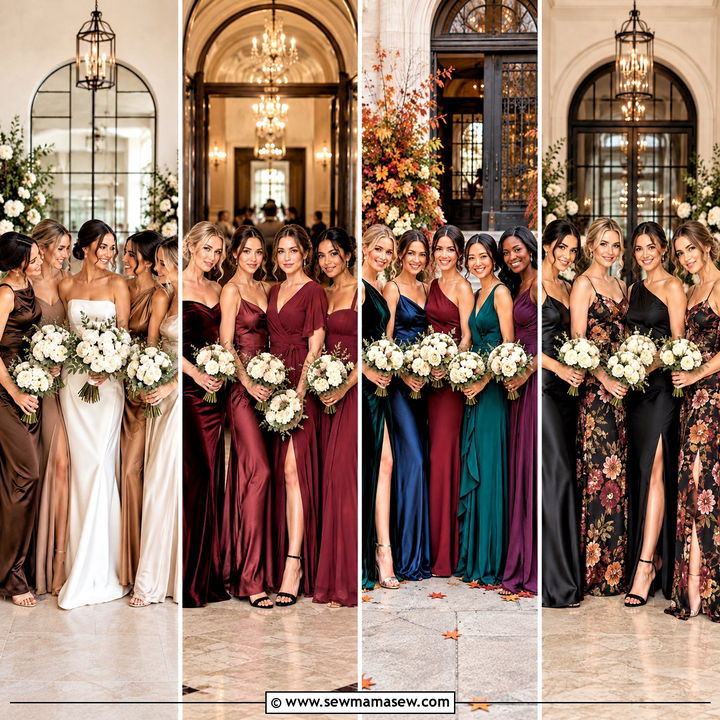
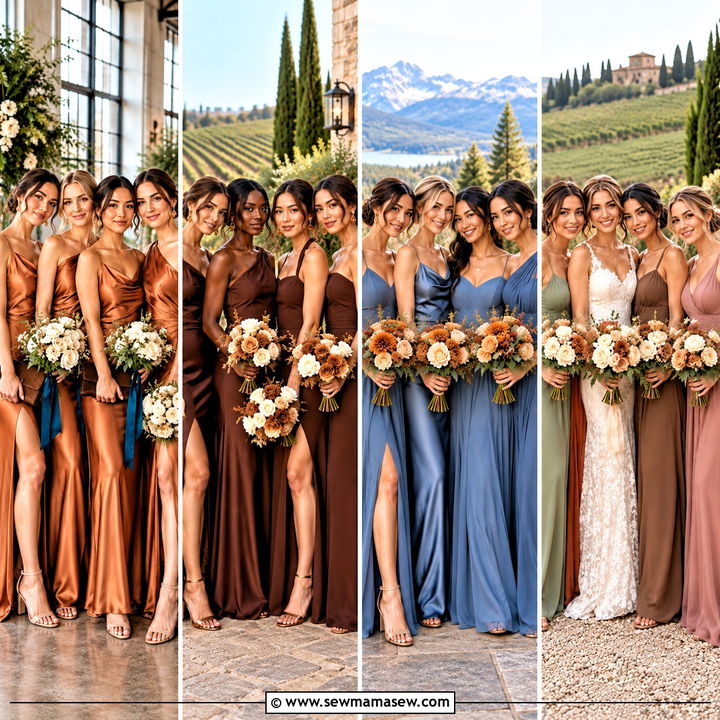
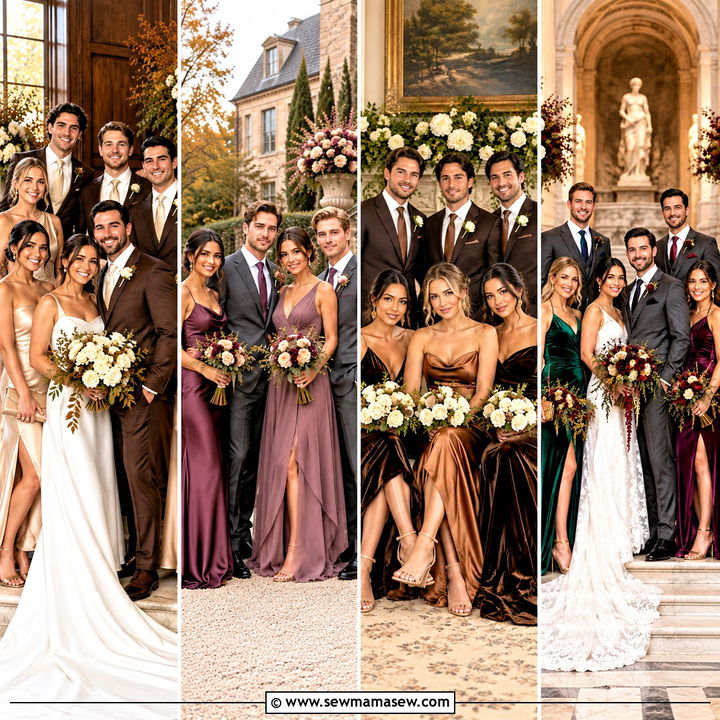
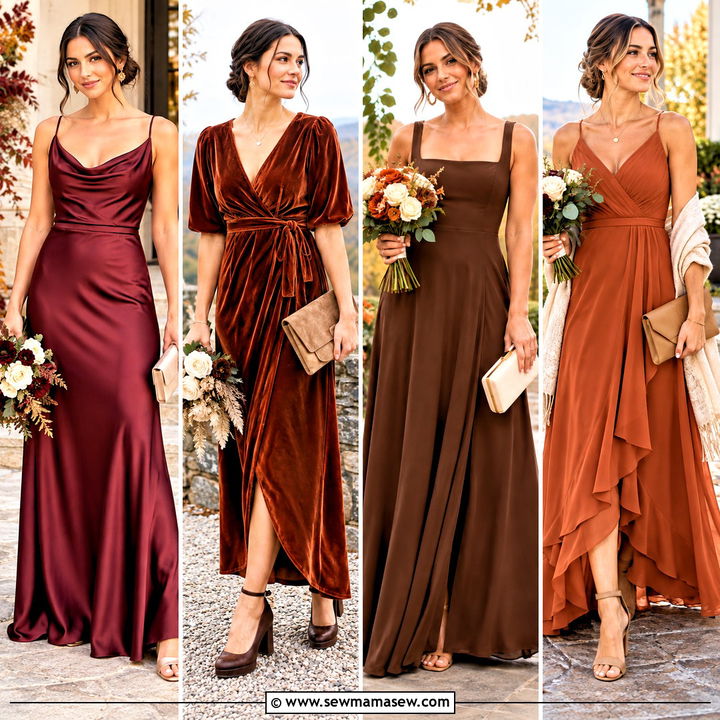
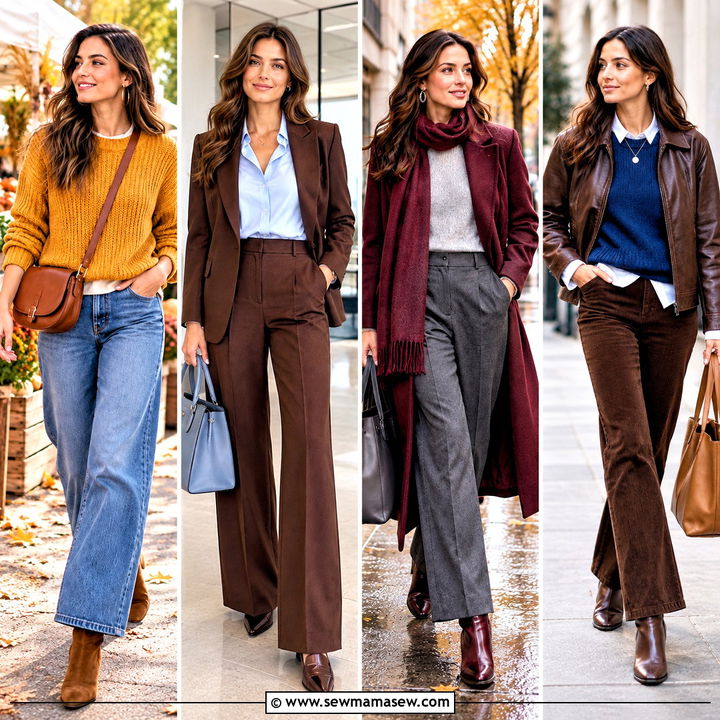
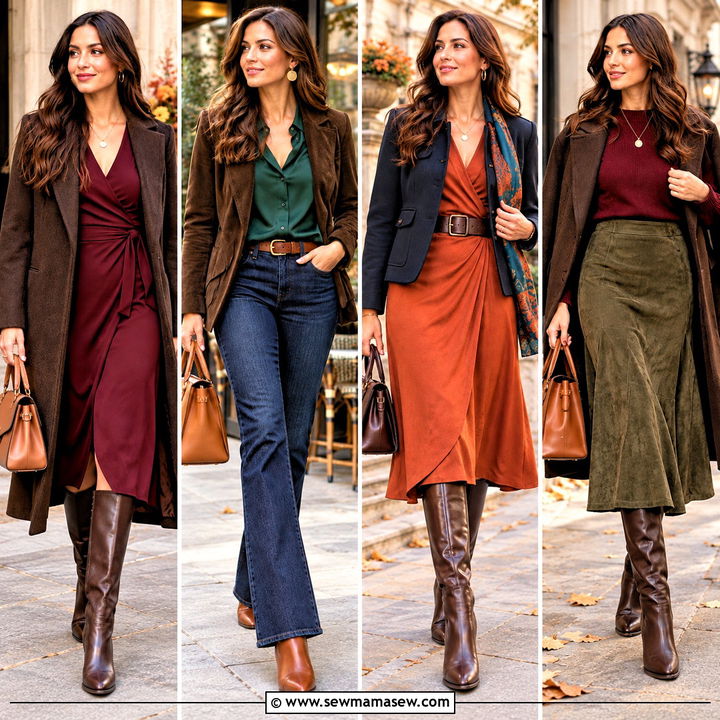
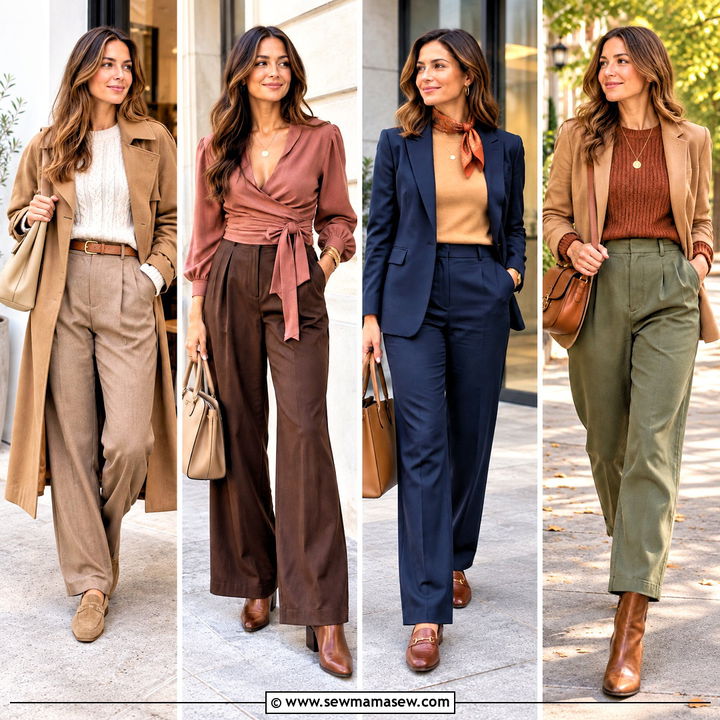
September is the most flexible month I get to style a bridal party for. The first week can still feel like summer, and the last week often feels like proper fall, so the color range runs from airy garden shades all the way to earthy neutrals, warm metallics and deep seasonal tones. Terracotta, olive, berry, copper, gold and brown feel right for fall right now, and September also leaves room for sage, dusty blue, peach, lavender and warm ivory. What decides the palette for any one wedding is the venue, the time of the ceremony, the formality and what's growing outside. Fabric matters as much as color: chiffon stays light on a warm afternoon, while satin and crepe look more finished. Below are fifteen palettes, each with the shoes, jewelry and flowers I'd put with them.

Early September and Late September Want Different Colors
I treat September as two months. In the first half, trees are still green, evenings are warm and light lingers, so softer palettes like sage, dusty blue, peach and lavender look natural. By the last week, leaves have often started turning, sunset comes earlier, and deeper colors like emerald, plum, espresso and burgundy suddenly make sense.
Ceremony time shifts it again. An afternoon outdoor ceremony in bright light washes out very pale shades, so I go a step deeper than the swatch looks indoors. An evening ceremony under warm bulbs makes dark colors look even darker, so I add sheen, metallic accessories or lighter flowers to keep faces from disappearing.
1. Sage Green And Terracotta Bridesmaid Dresses
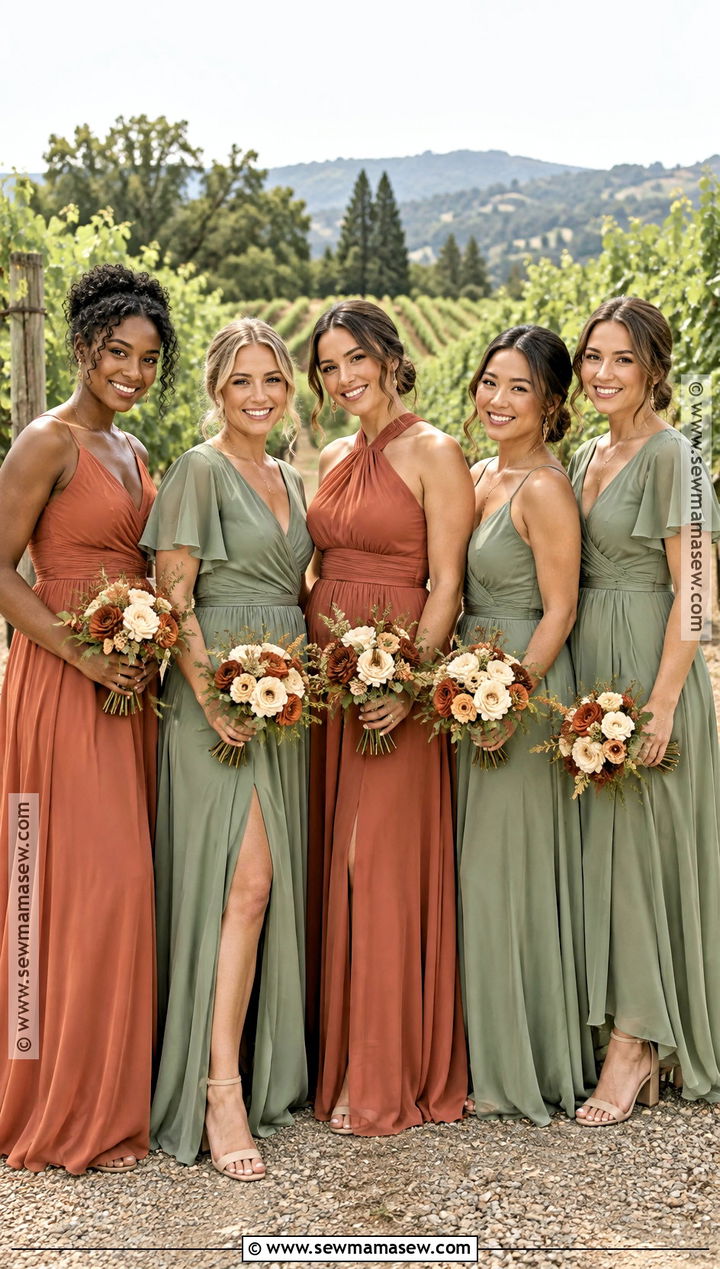
Sage with terracotta is the palette I suggest most for an outdoor September wedding, because sage sits quietly against greenery and terracotta gives it a pulse. Flowing chiffon or soft crepe in wrap, halter, one-shoulder and flutter-sleeve cuts lets each bridesmaid pick something she can actually wear. I keep terracotta in the details, dahlias, ribbon, a small bag or earrings, rather than as a second dress color. Nude block heels or tan flat sandals cope with grass, and brushed gold adds warmth. Cream flowers stop it all going too earthy. The sage itself is the trap: some sages lean gray-blue, some lean yellow, so check that every dress sits in the same undertone. It's at home in a garden or vineyard.
2. Dusty Rose And Warm Ivory Bridesmaid Dresses
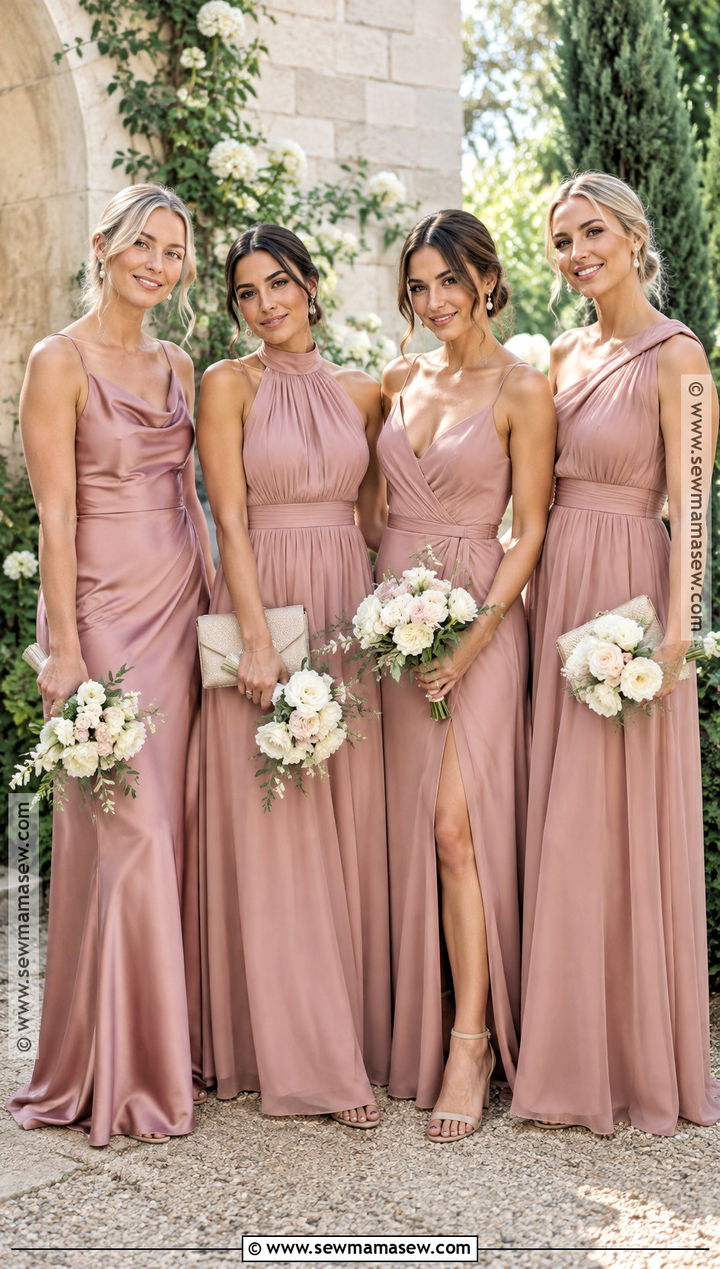
Dusty rose looks pretty next to warm ivory and muted camel, and it suits nearly every skin tone I've put it on. Satin slip gowns make it sleek and formal; chiffon wraps relax it for a garden ceremony. I let bridesmaids pick their own necklines but keep the fabric and the hem the same, which is what makes a mixed lineup read as planned. Champagne heels, pearl drops and small ivory bouquets tied in camel ribbon finish it. For the evening chill, a light neutral wrap that doesn't bury the dress. Dusty rose shifts toward pink, mauve or beige depending on the light, so I take swatches to the venue itself before anyone orders. Cream roses, pale blush flowers and dried grasses keep the bouquets in tune.
3. Dusty Blue And Peach Bridesmaid Dresses
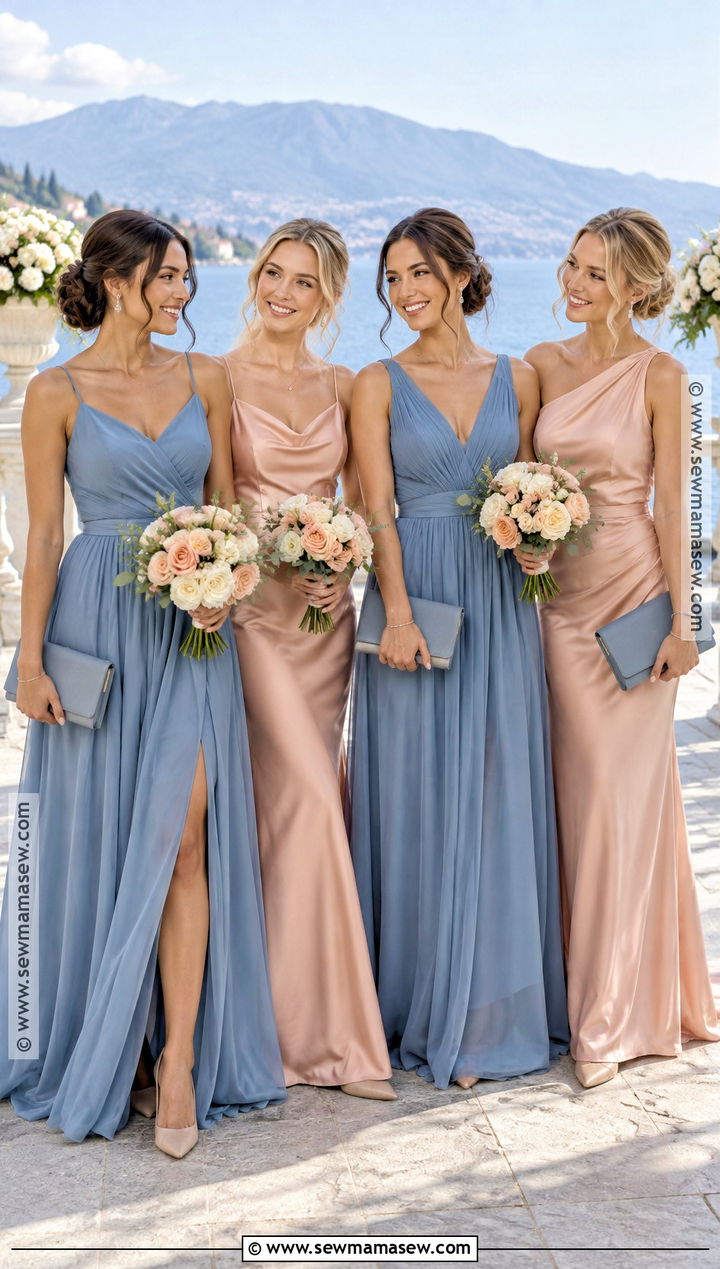
Dusty blue with peach and cream feels like September without looking like fall has arrived. Airy chiffon suits a daytime ceremony, matte satin an evening one. You can spread several blues across the party, from misty blue to muted slate, as long as they share the same soft, grayed saturation; one bright cornflower in the line jumps out in every photo. Nude pumps, silver or pale gold jewelry and peach bouquets with cream blooms keep it gentle, and small blue-gray clutches add nothing loud. Leave bright orange flowers out. Apricot, pale coral and soft peach sit with the blue instead of fighting it. I'd use it by water or on a terrace, or in a garden still in summer green.
4. Olive Green And Burgundy Bridesmaid Dresses
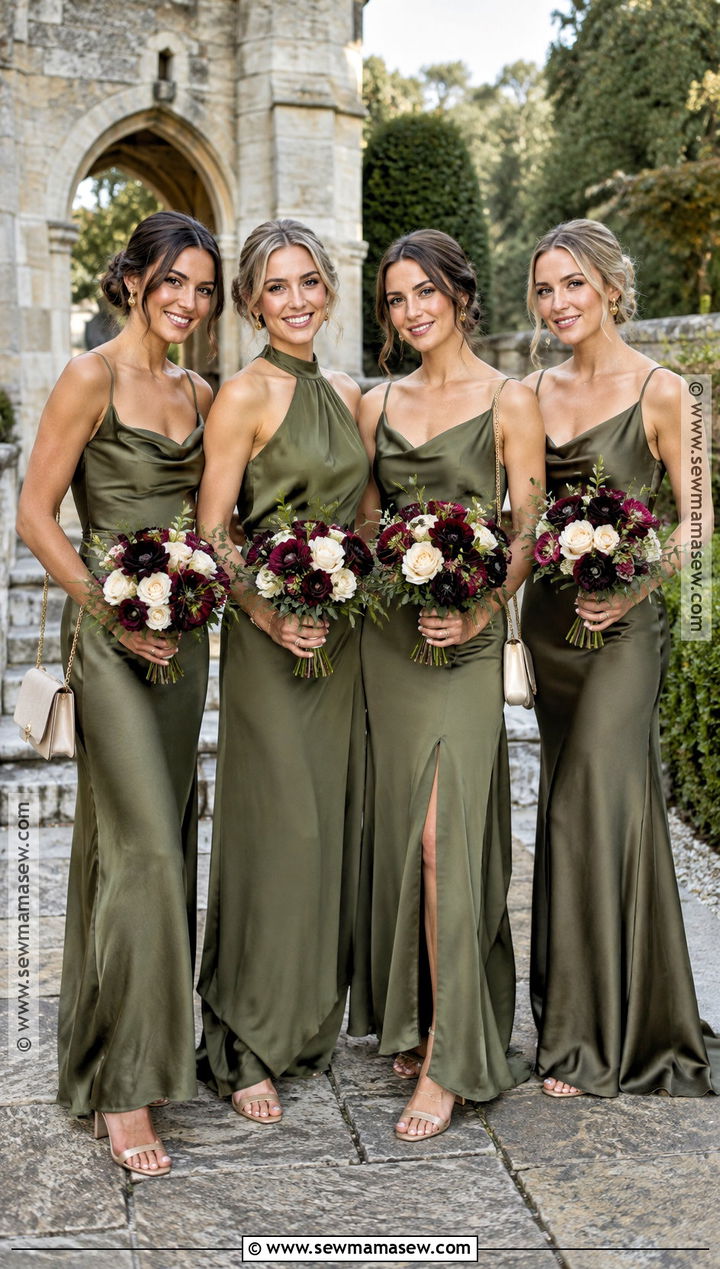
Olive with burgundy is how I give a late-September wedding real fall color without going dark. Burgundy flowers and champagne accessories bring the olive to life. Structured crepe, draped satin or floor-length wraps with clean lines all work. Champagne heels and fine gold jewelry lighten the deep shades, and burgundy dahlias or roses add the seasonal accent. Ivory flowers and olive foliage in the bouquets tie the colors together. If you're mixing dresses, keep olive as the main color and save burgundy for the maid of honor or the flowers; an even split of the two looks busy at the altar. Olive can turn khaki in flash photos, so pick a deeper, slightly green version. Stone walls and woodland settings bring out the olive.
5. Rust And Camel Bridesmaid Dresses
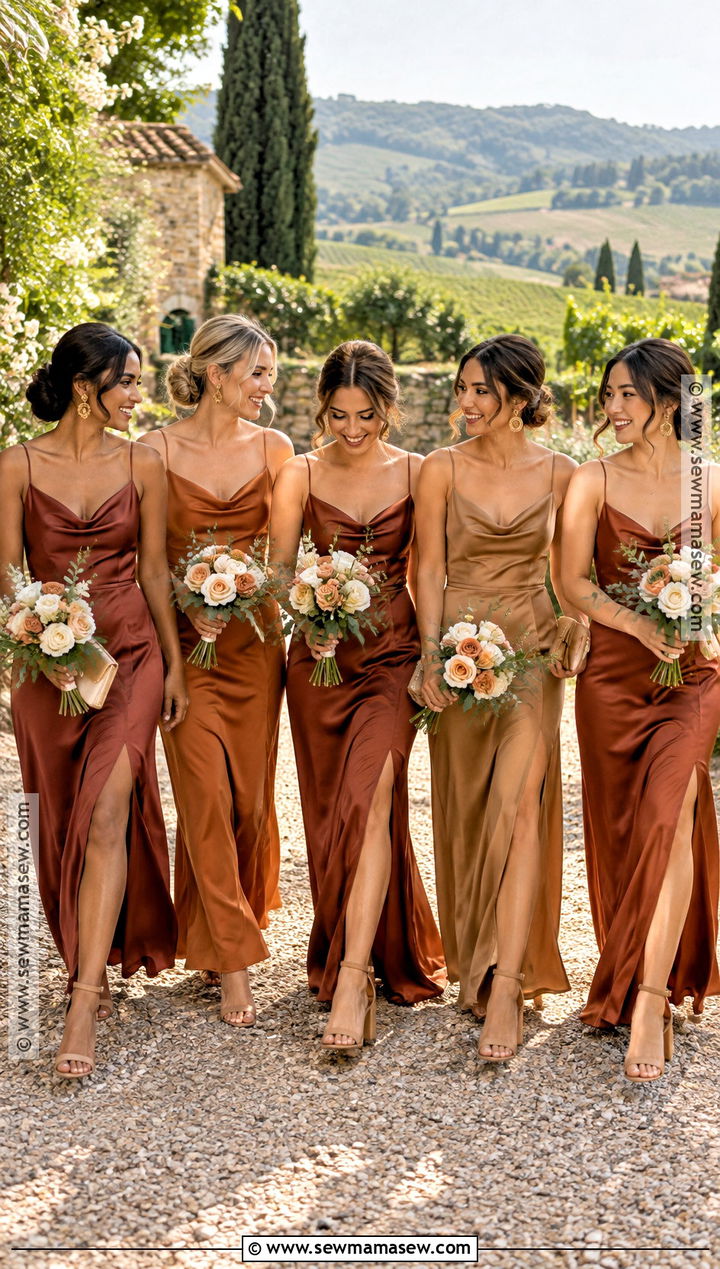
Rust with camel and antique gold is about as September as a palette gets. Fluid satin shows off the depth of rust; matte crepe makes it softer and quieter. Floor-length gowns with camel block heels, small tan bags and brushed gold earrings keep it warm and grounded. Cream flowers, muted peach and olive foliage in the bouquets keep the group bright enough for daytime photos. If you're using more than one rust, stay in the cinnamon to burnt sienna range; adding a bright pumpkin next to a red-orange makes the line look accidental. An ivory gown stands out clearly against all this warmth. Barns, vineyards, desert venues and countryside weddings need almost no extra decor with it.
6. Mauve And Plum Bridesmaid Dresses
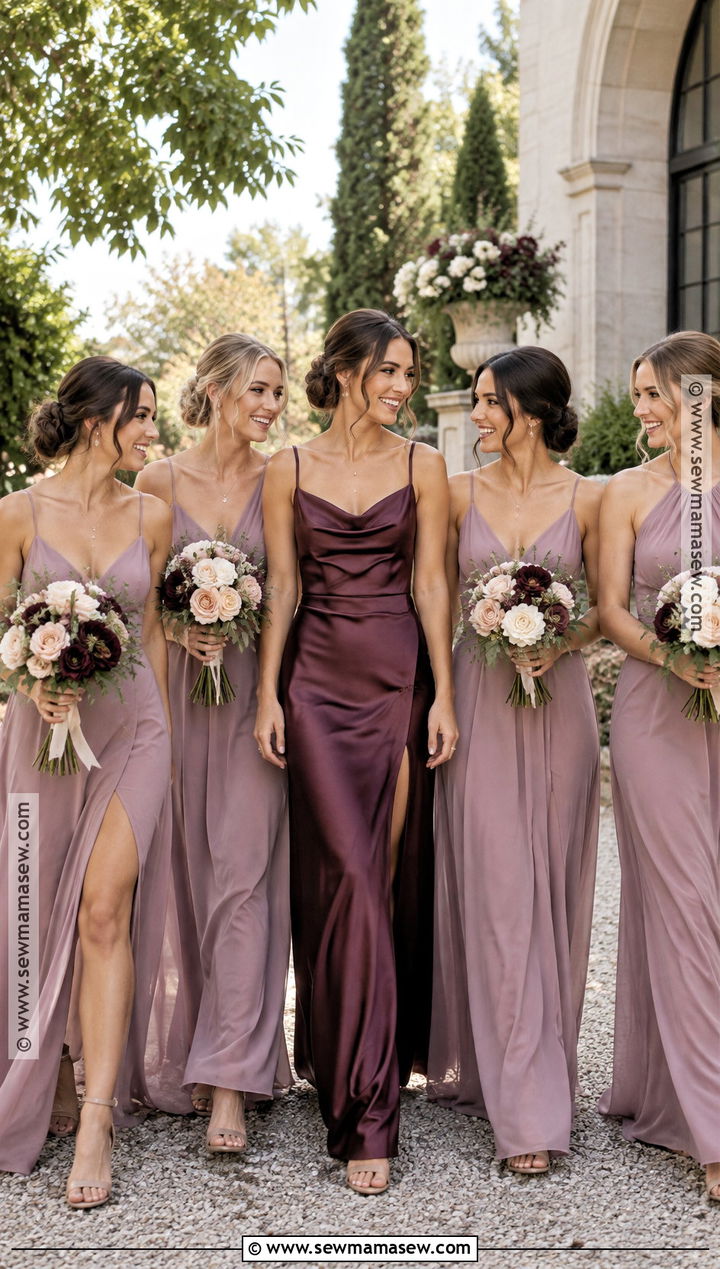
Mauve and plum give you a tonal palette with just enough contrast to tell the bridesmaids apart. My usual arrangement is dusty mauve chiffon or crepe for most of the party and a deeper plum satin for the maid of honor; spreading both colors evenly also works if every dress shares one fabric. Nude, taupe or soft metallic heels keep the dresses from feeling heavy. Fine gold earrings and bouquets of cream, blush, mauve and berry flowers finish it. Necklines can range from cowl and square to V-neck and off-shoulder so everyone gets the support she needs. Plum satin shows sweat marks under the arm more than mauve chiffon, so I steer the deeper shade toward a looser cut. It moves from an afternoon ceremony outside to a formal reception indoors without changing anything.
7. Navy Blue And Copper Bridesmaid Dresses
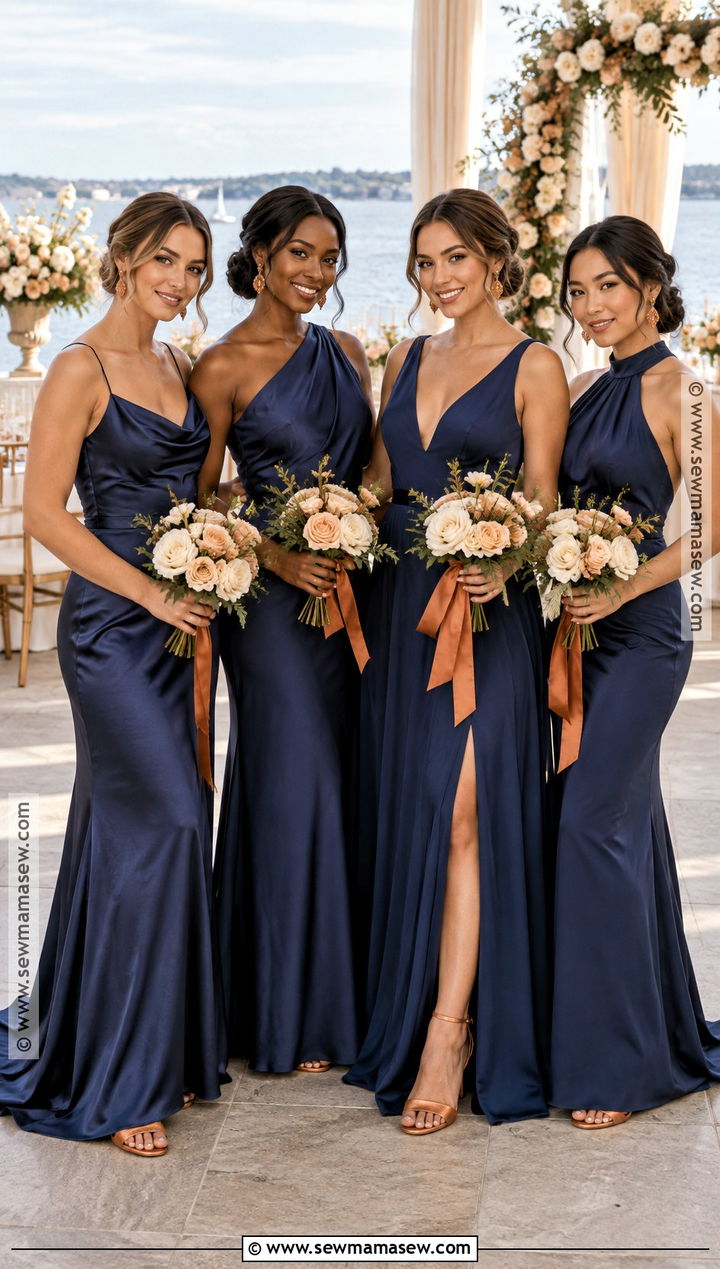
Navy is the safest base on this list, and copper is what keeps it from looking like a uniform. Light crepe for daytime, satin for an evening ceremony. You can put everyone in the same navy with different necklines, or use a tight range from deep marine to muted midnight. Copper heels, warm metallic earrings and cream bouquets tied in cinnamon ribbon finish it. I keep copper to one or two accessories per person; once it's on the shoes, bag and jewelry at once, it looks like a theme party. Navy works at waterfront venues, modern ballrooms and historic buildings alike. For softness, I'd fill the flowers with peach, ivory and muted rust rather than deep red, which looks almost black next to navy in photos.
8. Espresso And Bronze Bridesmaid Dresses
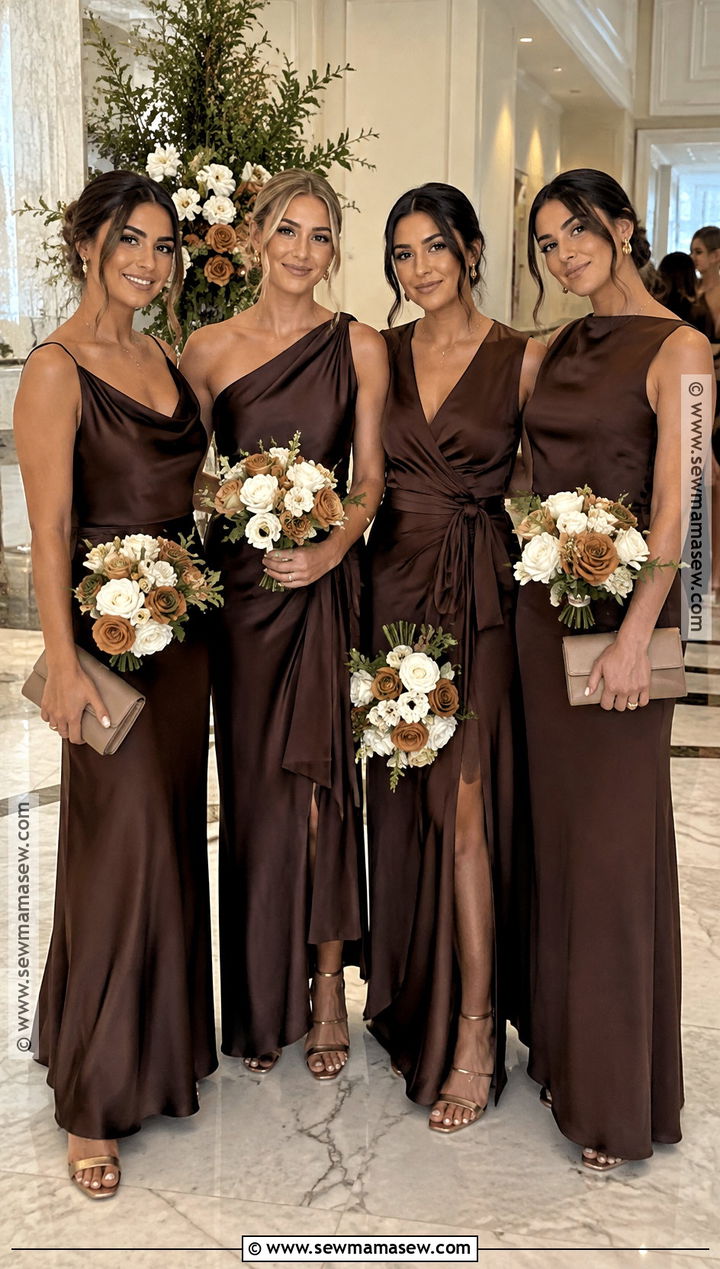
Espresso brown is the palette I suggest to couples who want something modern and warm instead of black. Satin shows the depth of the brown; crepe keeps it smooth and quiet. Column, wrap, cowl-neck and one-shoulder cuts in the same espresso fabric give each bridesmaid a choice. Bronze heels, sculptural gold earrings and bouquets of cream, caramel and muted apricot finish it, with a small taupe clutch. Brown varies more than any other color between dye lots and brands, so I compare actual samples against the bride's gown and the venue's wood and stone before anything is ordered. Espresso suits evening ceremonies and formal receptions. Ivory flowers and a bit of shine keep the group from disappearing in dim indoor light.
9. Emerald Green And Champagne Bridesmaid Dresses
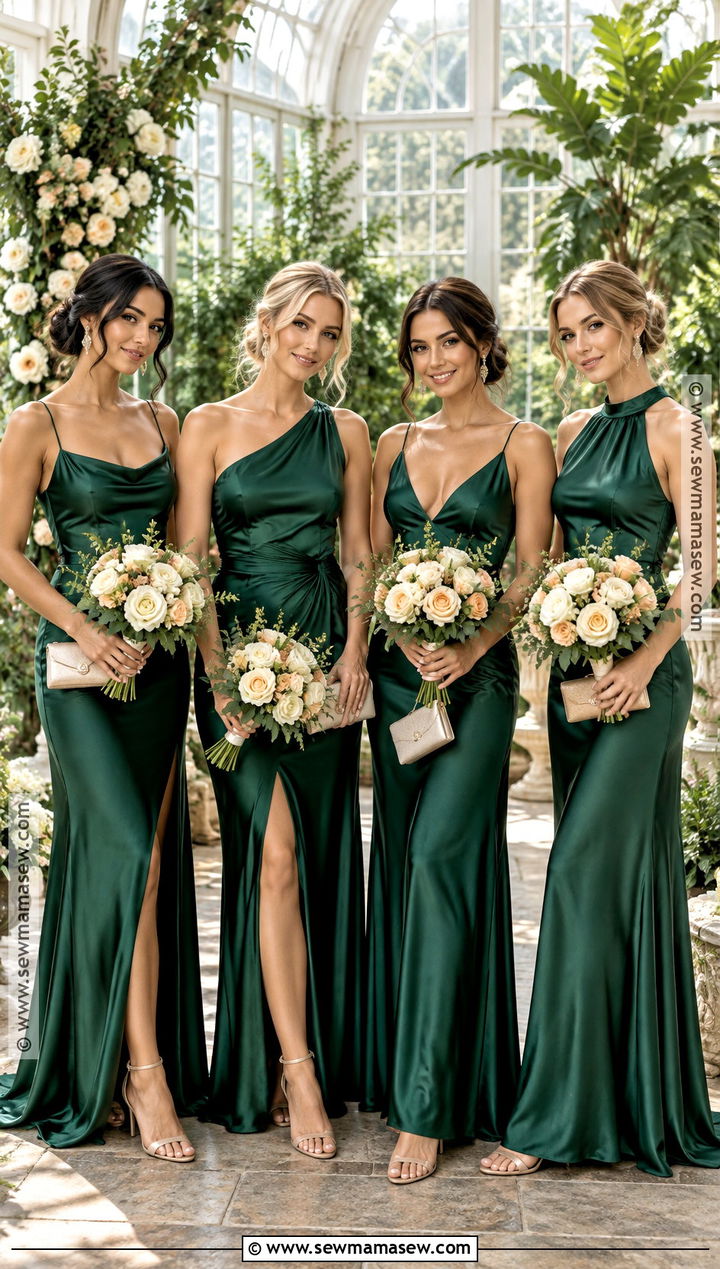
Emerald gives a late-September wedding rich color, and champagne details soften how hard a jewel tone can hit. Clean satin suits a formal celebration; matte crepe looks quieter and more current. Champagne heels, crystal earrings and small neutral clutches finish each look. I build bouquets of ivory roses, pale peach and structured greenery so the flowers separate from the dresses and from the trees behind them. Emerald is strong on everyone at once, so a good compromise is emerald for the maid of honor and a softer fern or eucalyptus green for the others. Streamlined shapes suit this color: cowl-neck columns, draped one-shoulder gowns, tailored wraps. Evening gardens and botanical venues are where emerald looks richest.
10. Lavender And Antique Gold Bridesmaid Dresses
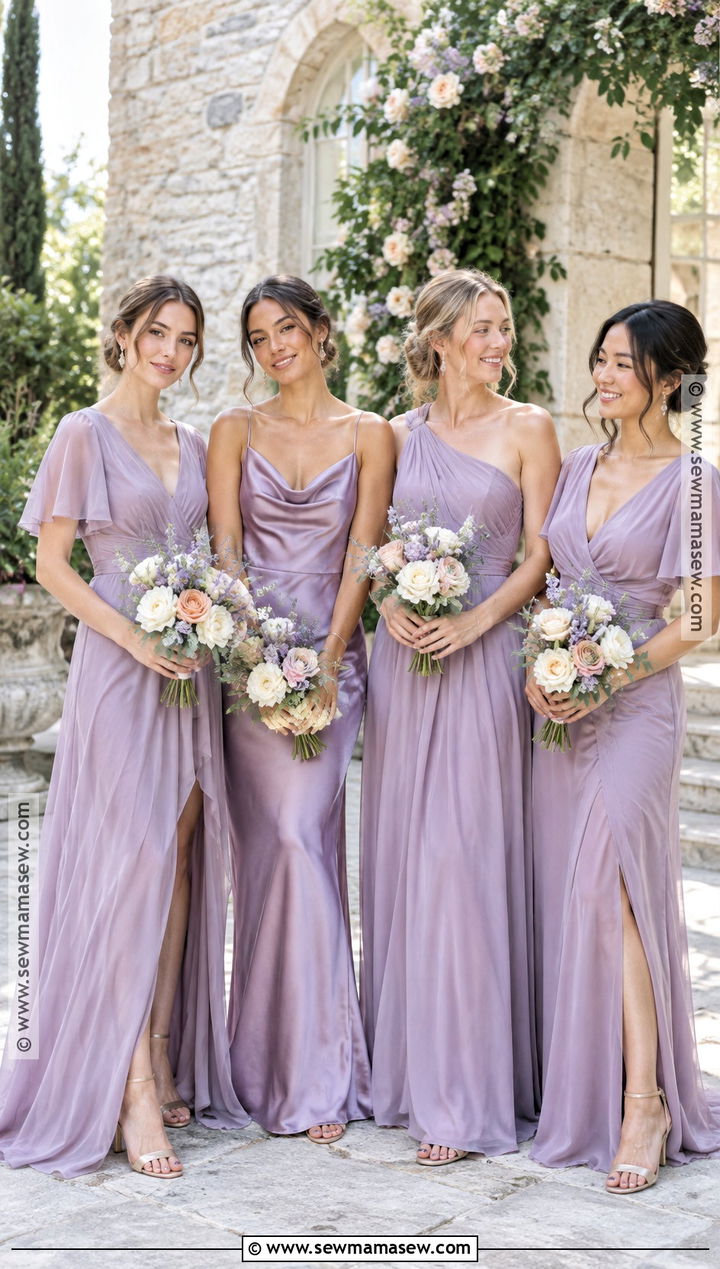
Lavender with antique gold and ivory is for couples who want to stay light into September. I'd use a muted lavender, not bright purple, which looks like spring. Chiffon with flutter sleeves suits an outdoor ceremony; a satin slip suits a modern indoor event. Pale gold sandals, fine earrings and ivory bouquets with touches of lavender and peach finish it. Warm metals matter here, because silver with lavender pushes the whole palette cold and springlike. If bridesmaids choose their own silhouettes, keep the shade and fabric identical. Lavender is one of the hardest colors to match across retailers, which is another reason to order together. Bring neutral wraps for the evening, when lavender can look chilly.
11. Cinnamon Rose And Terracotta Bridesmaid Dresses
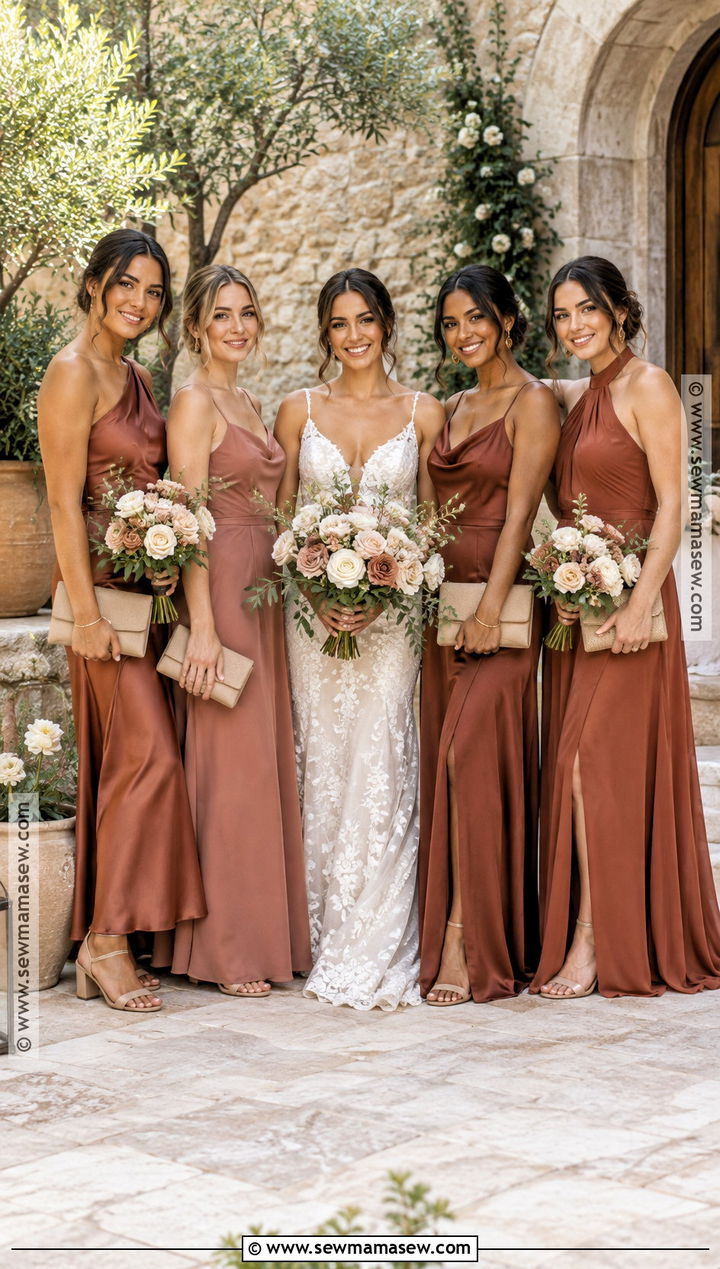
Cinnamon rose and terracotta make a soft gradient from pink through clay to muted orange. It's warmer than classic blush and gentler than a full rust bridal party. I'd put cinnamon rose in satin and terracotta in crepe or chiffon, spread evenly along the line. Nude block heels, brushed gold and sand-colored clutches tie the individual dresses together. Bouquets of ivory, dusty pink and soft peach repeat the tones without blending into the dresses. For the maid of honor, I change the neckline or go one shade deeper rather than bringing in an unrelated color. Mixing two fabrics this way works only if both are matte or both have sheen; one of each looks like a mistake. Picture it at a vineyard or courtyard with linen and ceramics on the tables.
12. Eucalyptus Green And Dusty Blue Bridesmaid Dresses
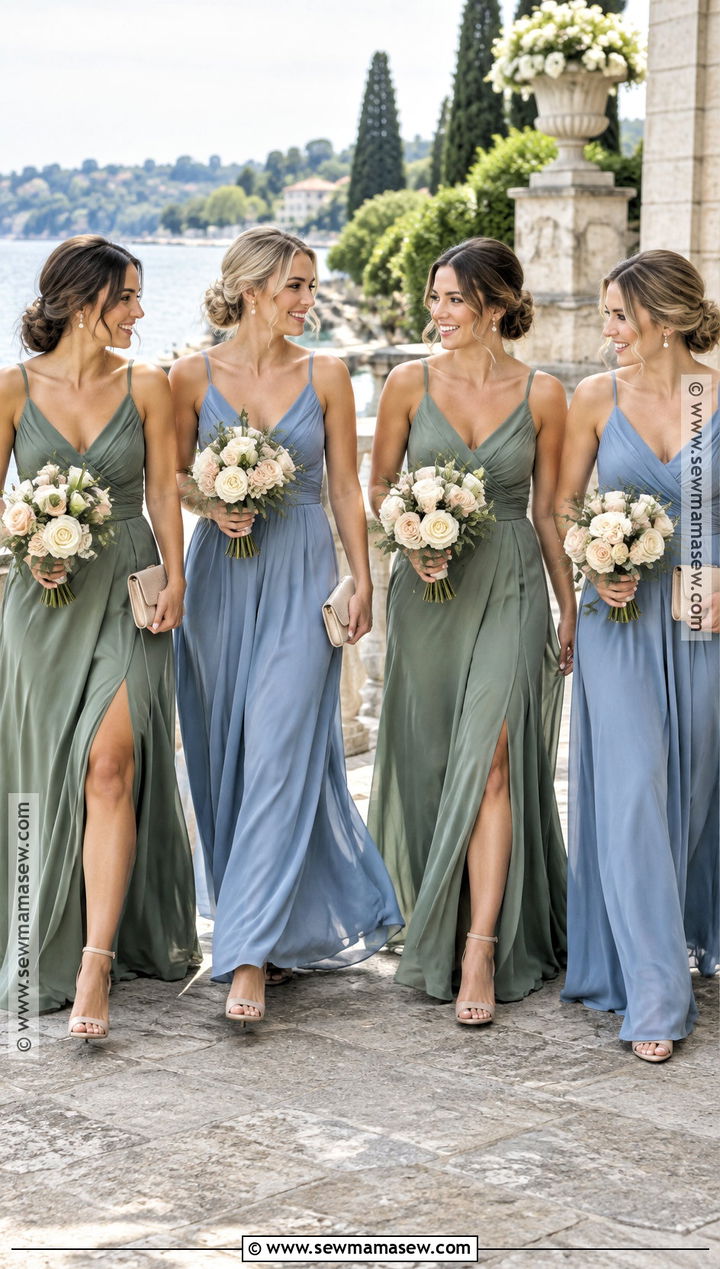
Eucalyptus and dusty blue give you a cool, calm palette for an early-September ceremony when the venue is still full of summer green but the couple wants something softer. Alternate green and blue chiffon gowns, or dress the bridesmaids in eucalyptus and the maid of honor in dusty blue. Silver, pearl or pale gold all work, but pick one metal for the whole group. Taupe heels and bouquets of ivory, pale peach and blue-gray flowers finish it. Both shades need to stay muted; a saturated blue next to eucalyptus looks like two different weddings. Flowing skirts keep it light. Greenhouses and modern concrete spaces give these two colors a clean backdrop.
13. Marigold And Olive Bridesmaid Dresses
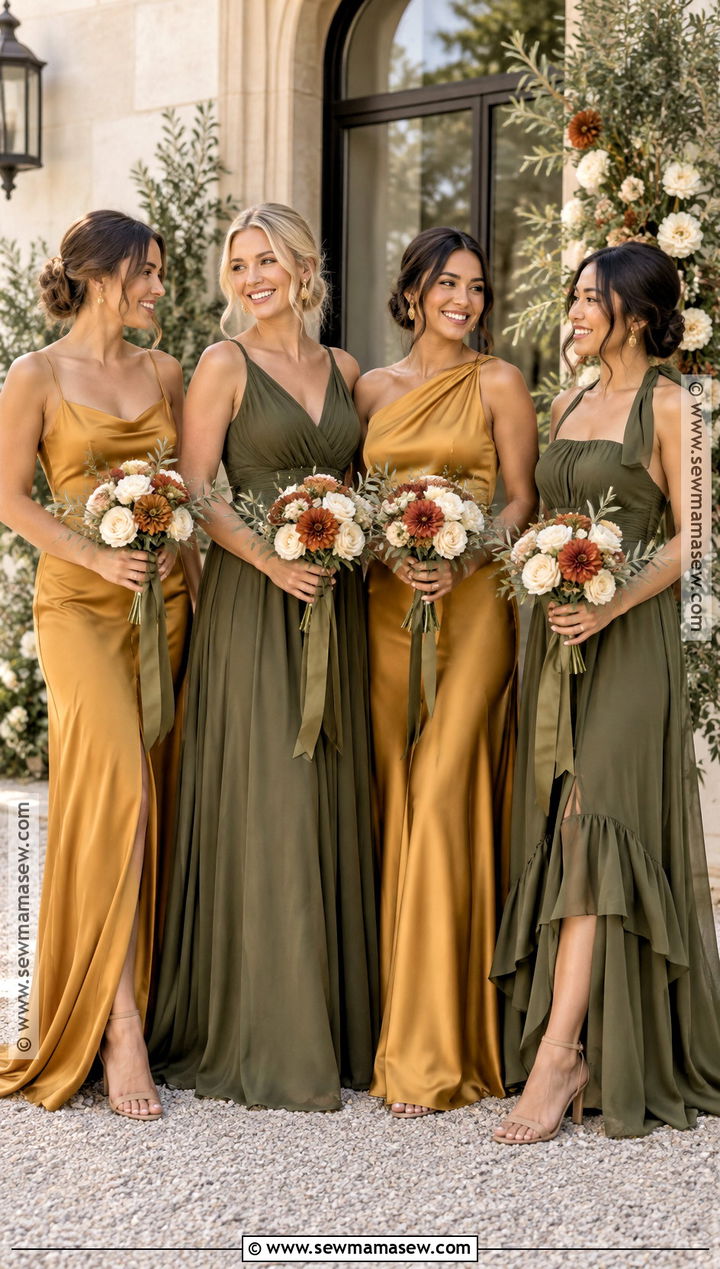
Marigold sounds risky and photographs better than people expect, as long as you avoid bright yellow. A muted gold with ocher or honey undertones is the shade I mean. Satin midi or floor-length dresses suit a modern wedding; chiffon wraps soften it for outdoors. Tan heels, simple gold earrings and bouquets of cream flowers, olive foliage and a little rust finish it. Olive can come in through ribbon, shawls or the maid of honor's dress. Marigold is loud on its own, so bags and jewelry stay small. Honestly, it's not kind to very fair, cool skin tones, and I'd test a swatch against each bridesmaid's face before committing. In daylight against neutral backgrounds, it's a warm alternative to burgundy and dark green.
14. Berry And Dusty Rose Bridesmaid Dresses
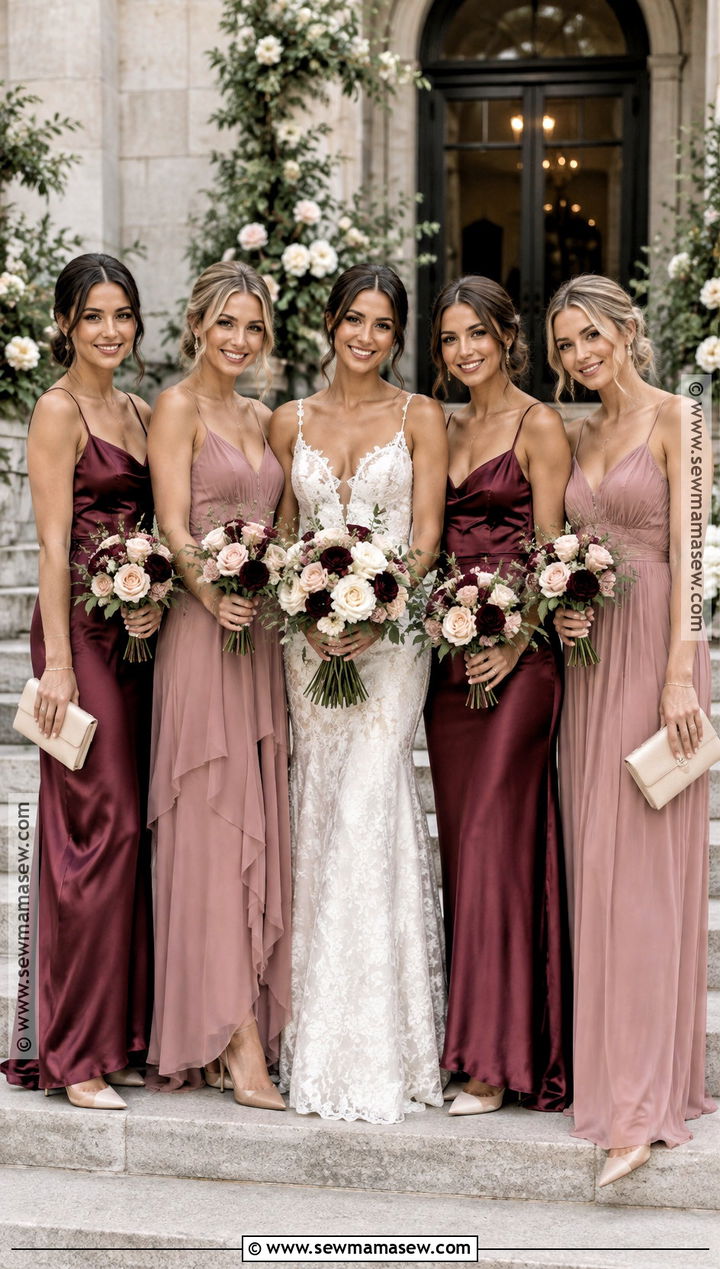
Berry and dusty rose make a layered pink palette that can go romantic or formal. Some bridesmaids in muted berry satin and others in dusty rose chiffon is one way; another is to dress everyone in one shade and put the second in the bouquets. Same hem length on everyone is what makes mixed fabrics and necklines look planned. Champagne pumps, small neutral bags and fine gold jewelry finish it. Bouquets need ivory, blush, berry and only a little greenery so they show up against both colors. When I line up a mixed party, I spread the berry dresses evenly instead of bunching them at one end, which makes the photos look lopsided. Against pale stone, it photographs especially well.
15. Champagne And Caramel Bridesmaid Dresses
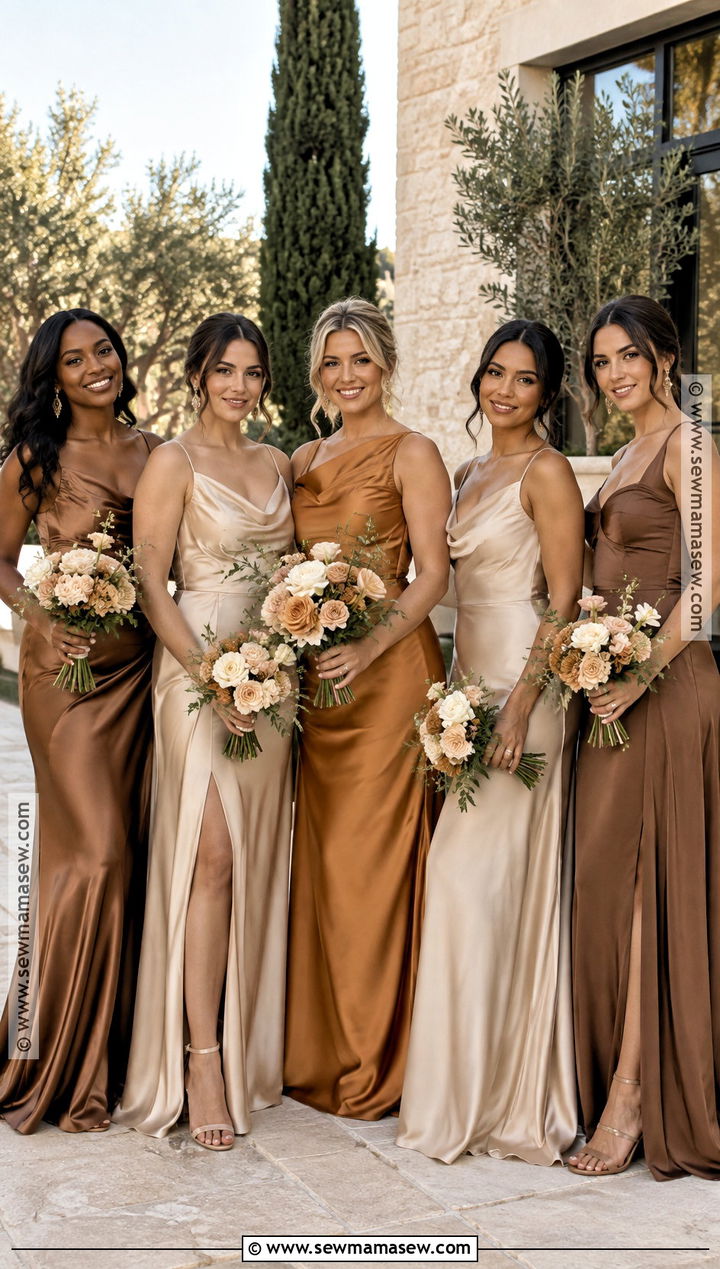
Champagne and caramel make a soft neutral palette that still feels warm enough for September. Champagne satin, caramel crepe or a careful mix of the two all work. The danger with pale neutrals is the bride: a light champagne can look almost identical to an ivory gown in photos. So I order swatches, hold them right next to the bride's gown, and choose a deeper champagne that's clearly a different color. Taupe or bronze heels, warm gold earrings and bouquets of cream, peach, cinnamon and soft greenery finish it. With such quiet colors, different silhouettes add interest and let each bridesmaid choose the support she needs. It needs some color around it, so a garden or a venue with warm wood gives it the backdrop it lacks.
Arranging Two Colors Along the Altar Line
A two-color palette only looks planned if the order is planned. Before the day, I write out the lineup on each side of the couple and decide who stands where, the same way you'd seat a dinner table.
- Mirror both sides: if the second bridesmaid on the left wears the deeper shade, the second on the right should too.
- Put the boldest color closest to the couple, or at the far ends, never in a random middle spot.
- With an odd number, the maid of honor's dress can be the one color that breaks the pattern.
- Check the group photo order as well as the ceremony order; they're often different.
Dye Lots, Swatches and Ordering in the Same Week
Even dresses from the same brand in the same named color can come out slightly different if they're cut from different dye lots. In a line of six, a dress that's half a shade off is the first thing anyone notices in the photos. The fix is simple: everyone orders at roughly the same time from the same place, so the dresses are more likely to be made from the same batch of fabric.
Swatches deserve more time than they usually get. Look at each one in three places: by a window in daylight, under ordinary indoor bulbs, and next to the bride's gown fabric. A color that looks right in only one of those three will look wrong in at least part of the gallery.
When One Shade Doesn't Suit Everyone
Not every color suits every face. When one bridesmaid looks tired in the chosen shade, I don't change the whole palette; I move her to the second color, or a slightly deeper or softer version of the main one. The lineup still reads as one group, and she gets to look like herself.
Hold Every Swatch Next to the Gown
A good September palette fits the setting, the gown, the flowers and the formality, and it lets every bridesmaid feel comfortable in what she's wearing. Light pairings like dusty blue and peach belong early in the month; emerald, plum, espresso and burgundy come into their own toward the end. Before anyone orders, look at real swatches in daylight and indoor light, because the same color shifts noticeably between chiffon, satin and crepe. Mixed necklines and silhouettes are fine as long as one thing stays fixed: the fabric family, the hem length or the undertone. Shoes, jewelry, bouquets and wraps are there to support the dresses, not compete with them. Pick the palette you love, then test it against the gown before anything else.
Related posts: