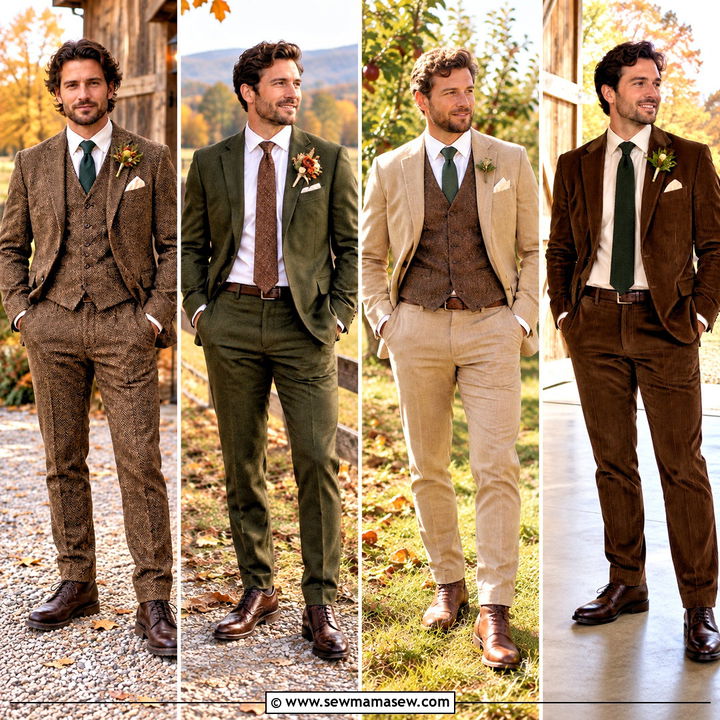
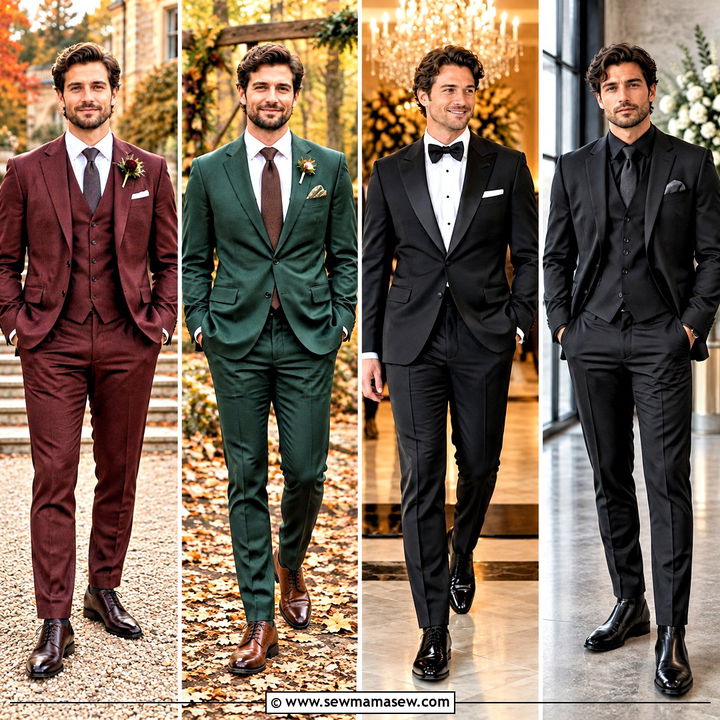
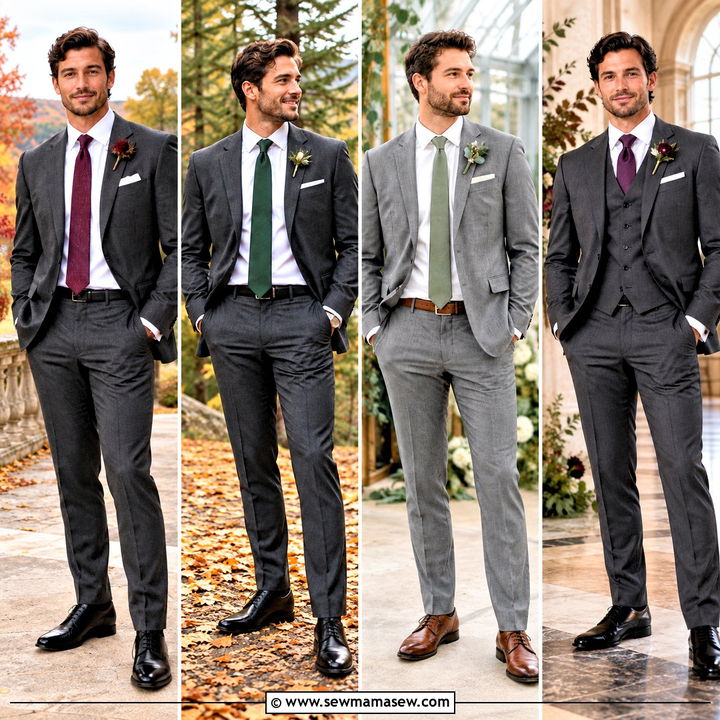
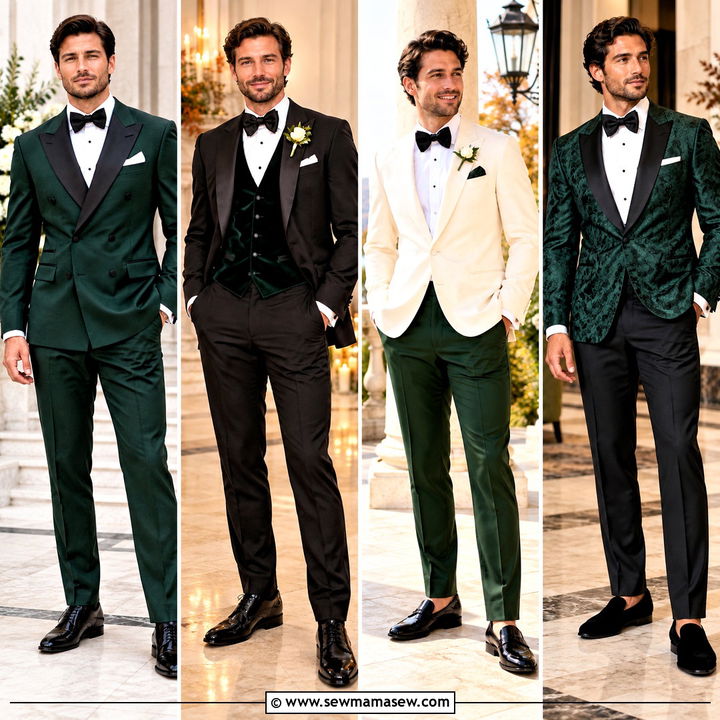
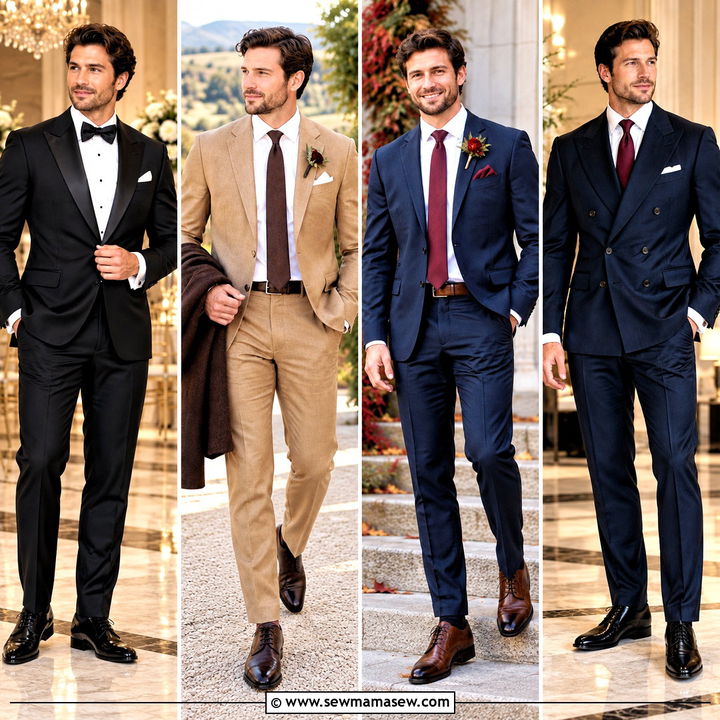
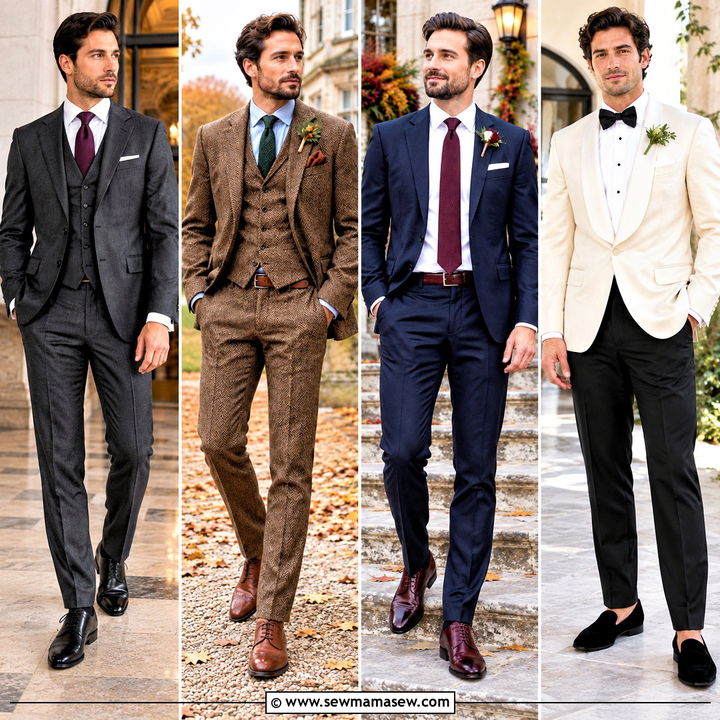
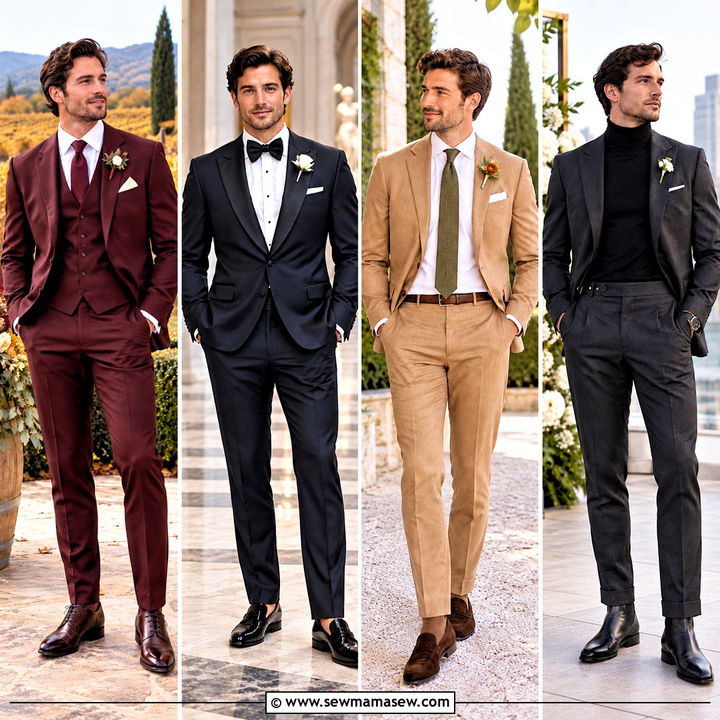
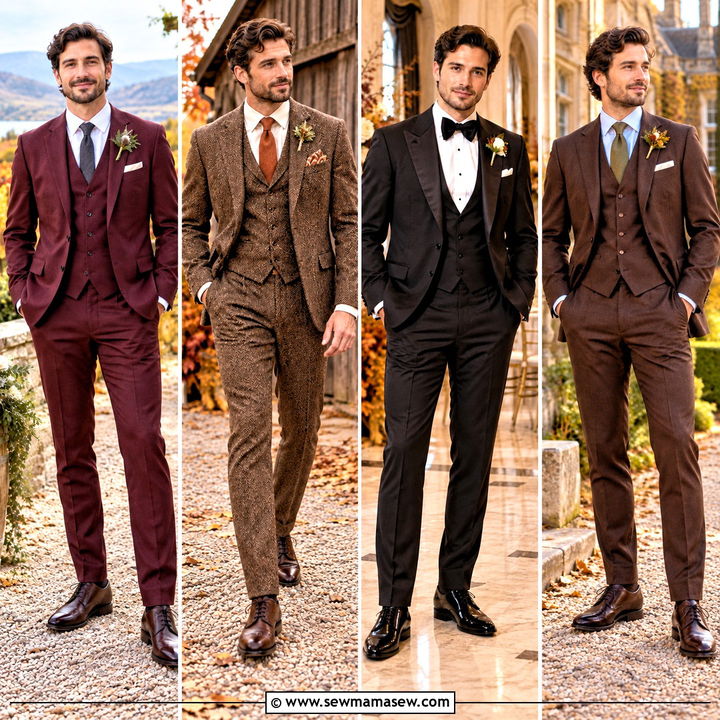
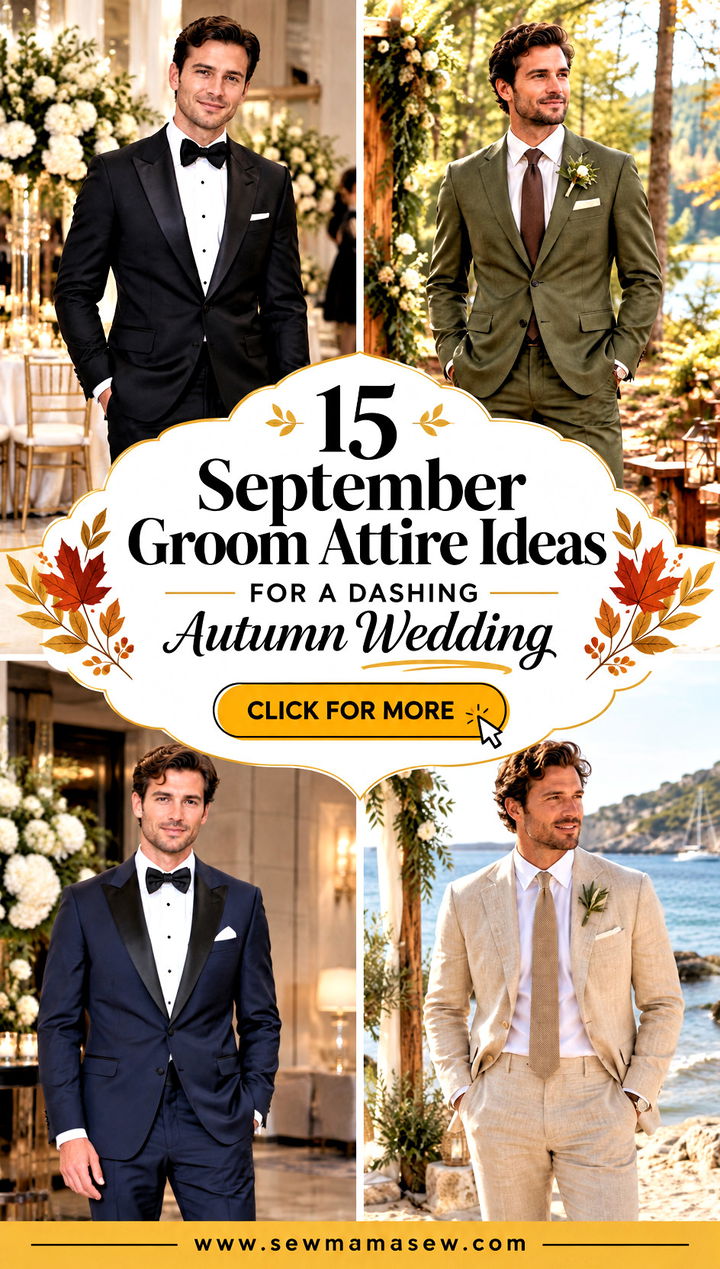
September gives a groom more options than any other month. It's warm enough for linen blends and light wool and, in cooler places, cool enough for tweed, flannel or velvet. I never choose a suit by the month alone, though. The dress code, the venue, the ceremony time and the local forecast decide it, because an afternoon ceremony in the sun and an evening reception can feel like two different seasons. Navy, tan, olive, brown, burgundy and charcoal all sit well against early-fall scenery without looking themed. Below are fifteen groom looks I'd put together for formal, rustic, garden, coastal and modern weddings, from the suit down to the shoes.
Wool Weights for a Warm Afternoon or a Cold Evening
The color gets all the attention, but the cloth decides whether the groom is comfortable. Suit fabric is described by weight, usually in ounces per yard, and that number tells you more than the label does.
- Light, sometimes sold as tropical wool, is for hot afternoons. It breathes, though it creases more.
- Midweight is the all-rounder. If I don't know the forecast, this is what I choose.
- Heavy cloth, including flannel and most tweeds, is for cool evenings, mountains and late-September dates up north.
Weave matters too. An open weave lets air through, which is why some light wools feel cooler than linen. A half-lined or unlined jacket is noticeably cooler than a fully lined one. If the ceremony is outdoors in sun, I'd choose a lighter cloth and a vest rather than a heavier suit, because you can always add a layer but you can't take off a jacket in the photos.
1. Classic Navy Groom Suit
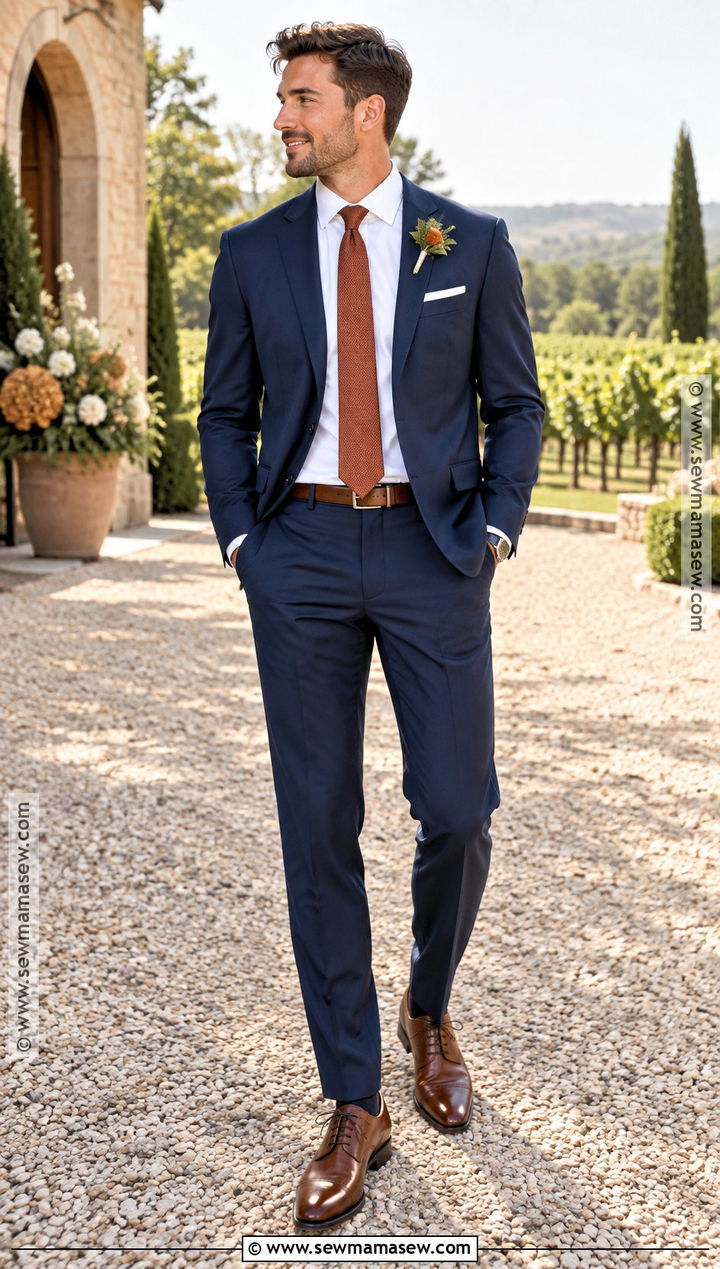
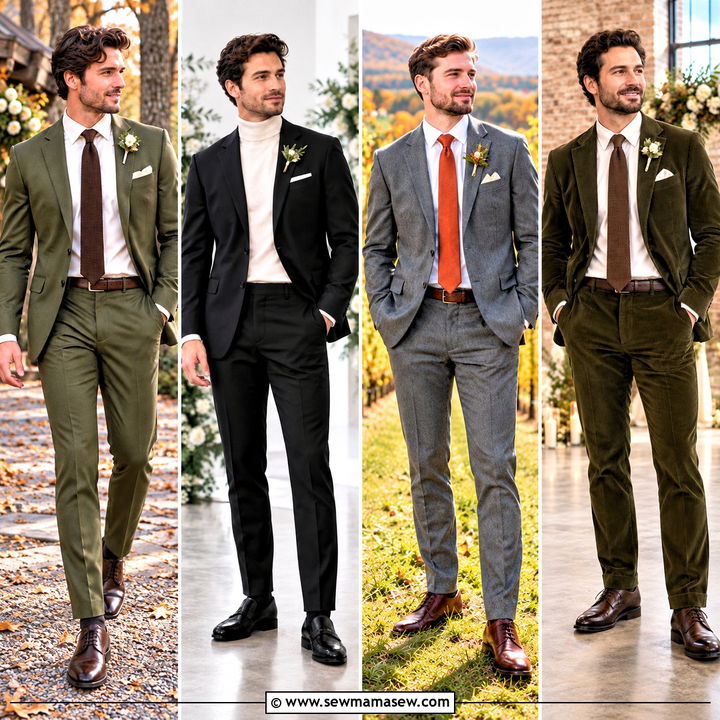
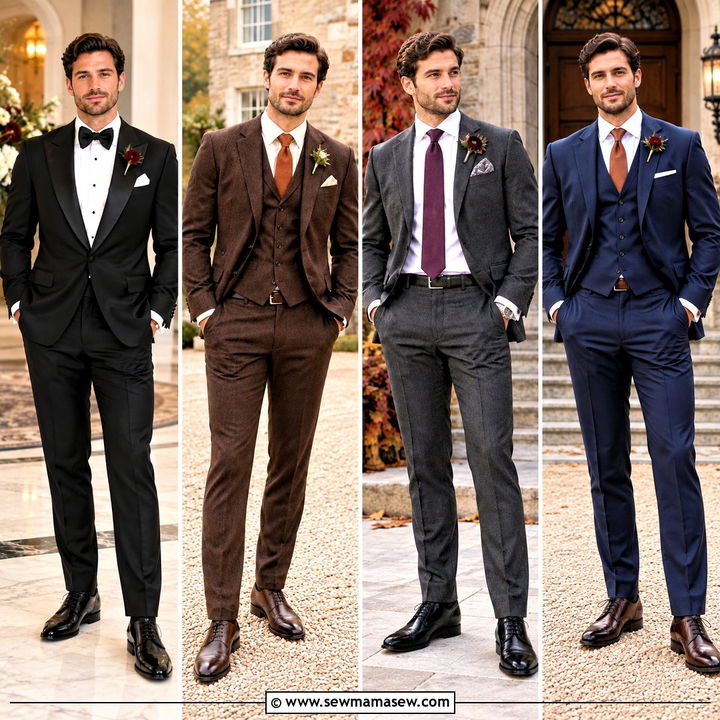
Navy is the suit I'd recommend to a groom who isn't sure what he wants, because it suits almost every complexion and every venue short of black tie. Choose lightweight or midweight wool depending on the forecast. A crisp white shirt and a textured tie in rust, copper or muted gold bring in the season; a knit or grenadine tie has more depth in photos than flat satin. Keep the pocket square subtle. Dark brown Oxfords with a matching belt and a leather-strap watch finish it. For the boutonniere, small white flowers with eucalyptus or burgundy foliage. It sits comfortably next to terracotta, dusty blue or neutral wedding colors.
2. Black Tie Groom Tuxedo
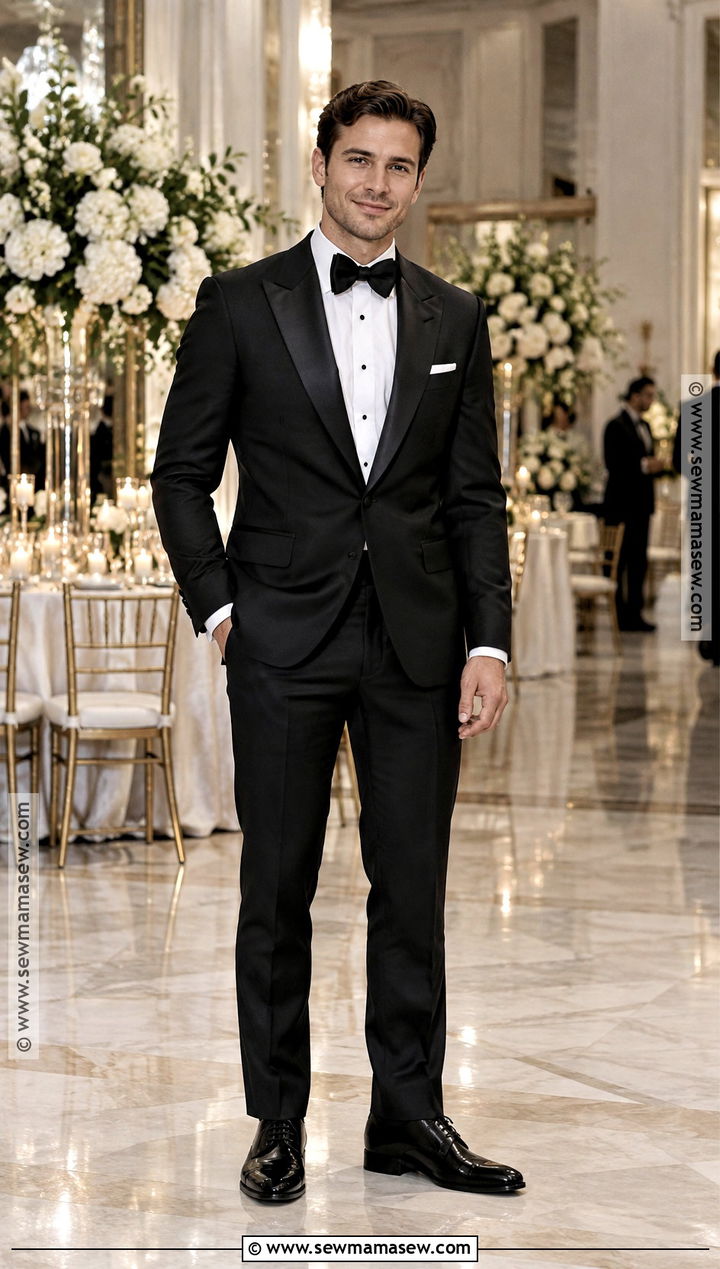
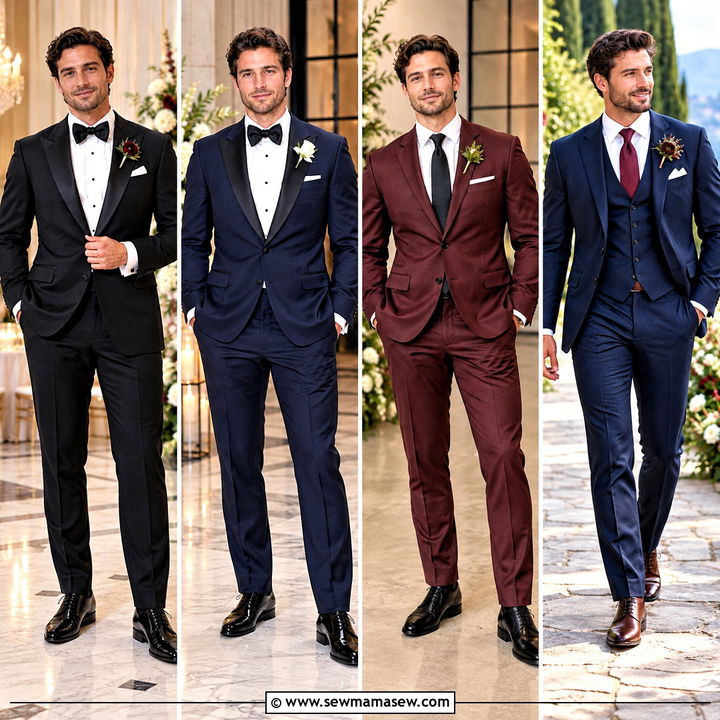
A black tuxedo is for evening, and I hold to that. Black tie traditionally means after six, so this is the look for indoor ceremonies, grand hotels and nighttime receptions. Look for peak or shawl lapels faced in satin or grosgrain, matching trousers with a stripe, a white dress shirt and a self-tie black bow tie. A pre-tied one sits too perfectly symmetrical and gives itself away up close. Patent Oxfords are the most formal; highly polished plain calfskin is the softer option. Add understated cuff links, a white pocket square and a small boutonniere. A cummerbund or low-cut waistcoat covers the waistband, which should never show.
3. Charcoal Gray Groom Suit
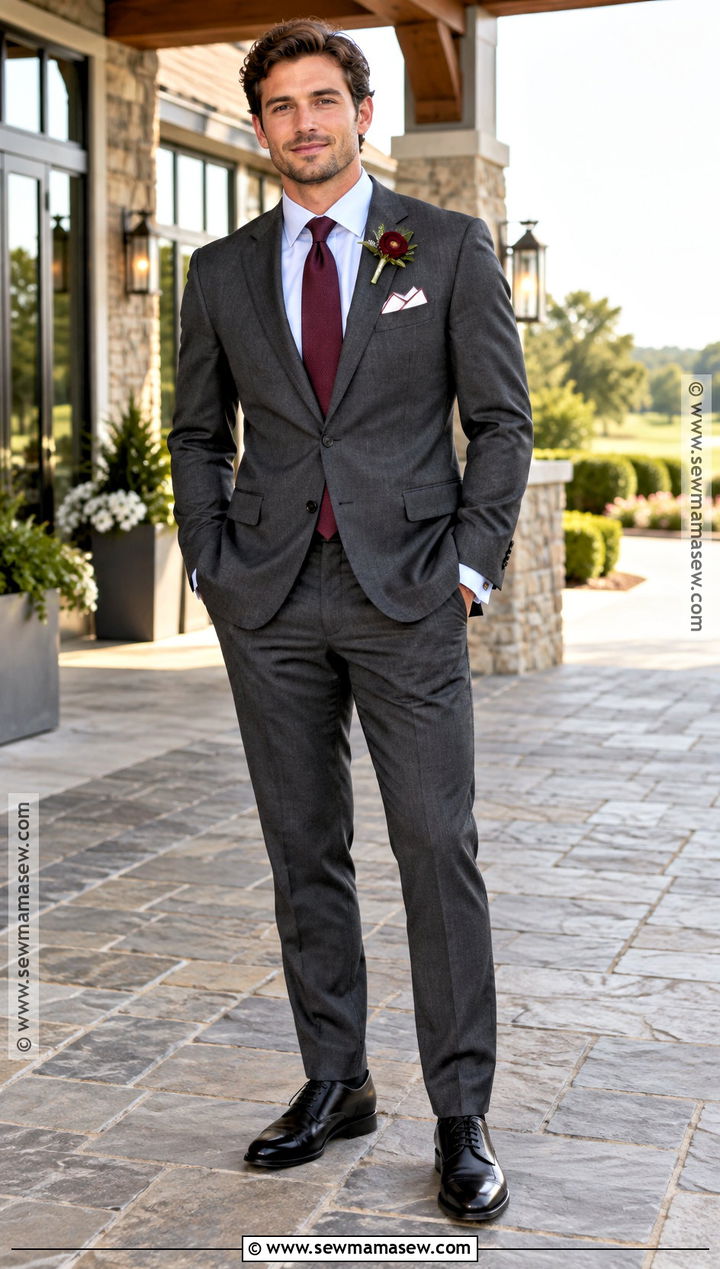
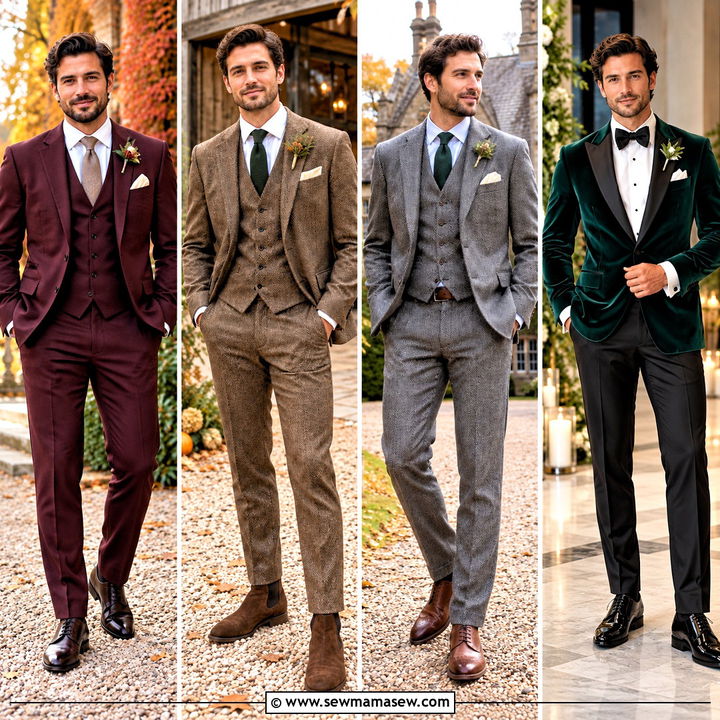
Charcoal is more formal than navy and less severe than black, so it works for a September wedding that sits between the two. I like a fine wool, two-button jacket with tapered trousers. A pale blue or white shirt keeps it fresh, and a burgundy, forest green or plum tie adds early-fall color. With charcoal, black Derbies are dressier, while dark brown Oxfords soften it for an afternoon wedding. Silver cuff links and a white pocket square with a thin colored edge finish it. A boutonniere with greenery and one deep red bloom separates the groom from his party. Charcoal suits city lofts, country clubs and formal gardens.
4. Olive Green Groom Suit
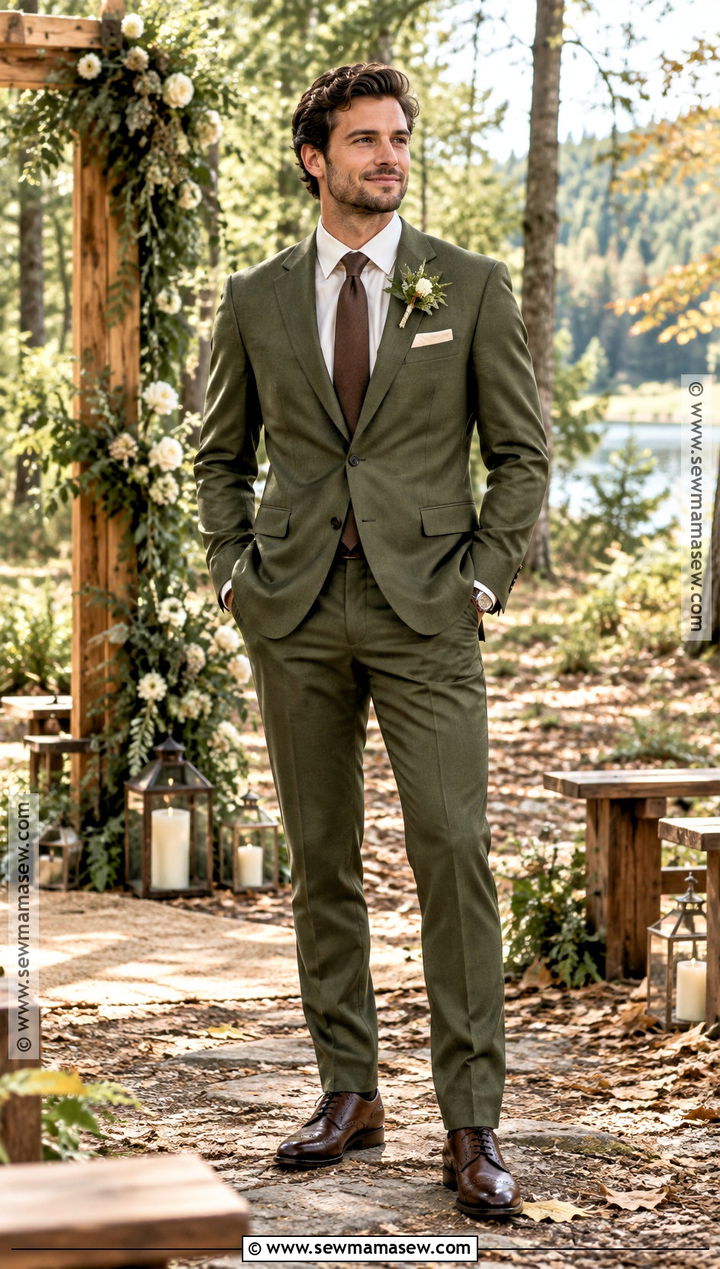
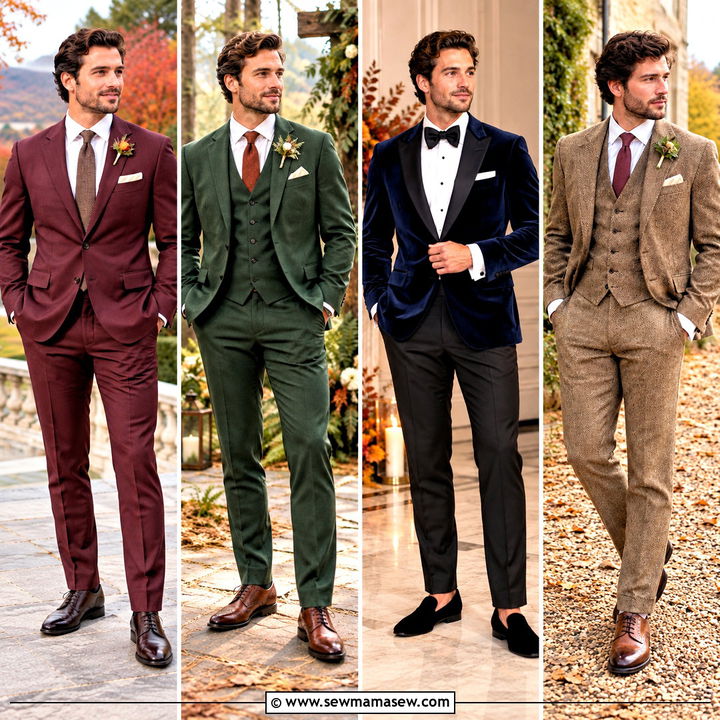
Olive is a groom's color I suggest more and more for outdoor September weddings. It's distinctive but quiet, and it looks right against wood, stone and turning leaves. Choose wool, wool-linen or a lightly textured cloth so the green has some depth; flat, shiny olive can look like a uniform. An ivory shirt softens it more than bright white would, with a chocolate or muted floral tie. Dark brown brogues, a matching belt and a warm-toned watch keep the palette earthy. A cream pocket square and a boutonniere of white flowers or herbs with a touch of rust complete it. Woodland, mountain and vineyard venues suit it well.
5. Tan Groom Suit
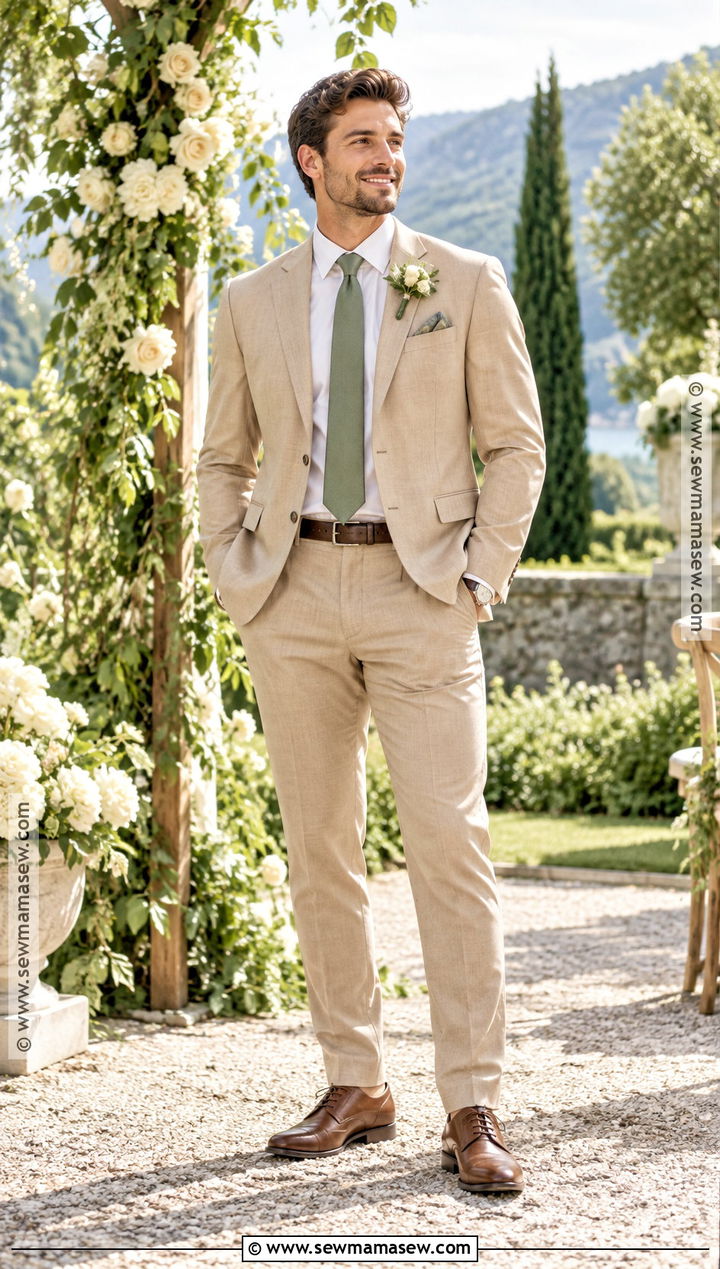
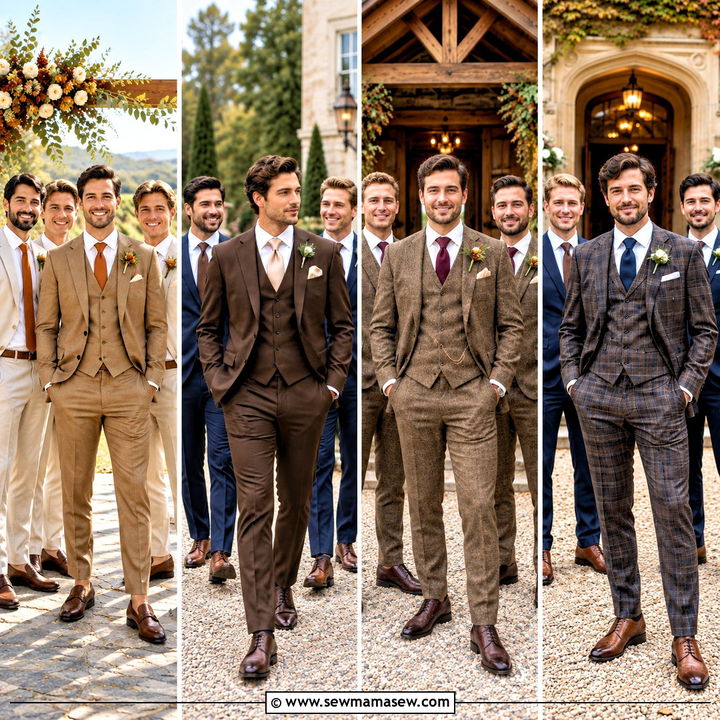
For a hot September afternoon, a dark fall suit is a mistake you'll feel by the first photo session. Tan in breathable wool, cotton or a linen blend keeps the structure without the heat. A white shirt with a brown, sage, dusty blue or terracotta tie suits it, and mid-brown loafers or lace-ups avoid the harsh contrast black shoes would create. A matching vest gives the groom something to stand out in once the jacket comes off. One thing I always check with light suits is the lining: an unlined or half-lined jacket breathes far better. Garden, ranch and coastal weddings are where tan belongs.
6. Brown Tweed Groom Suit
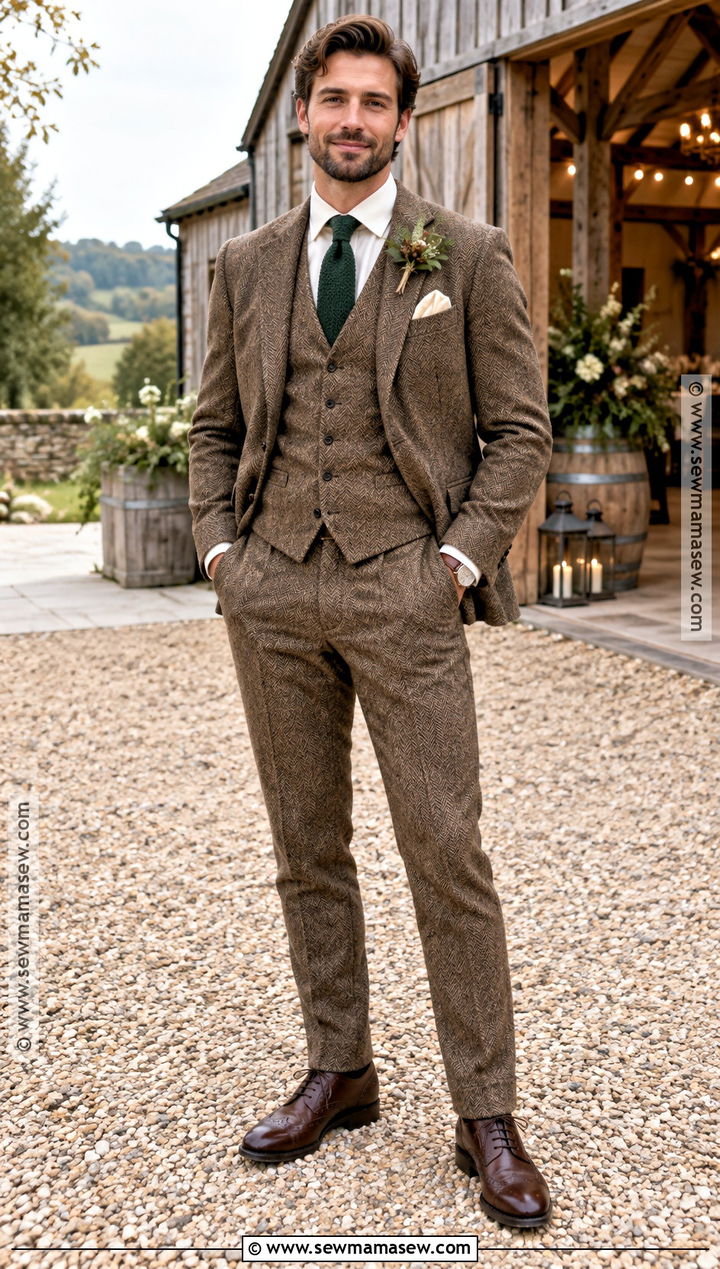
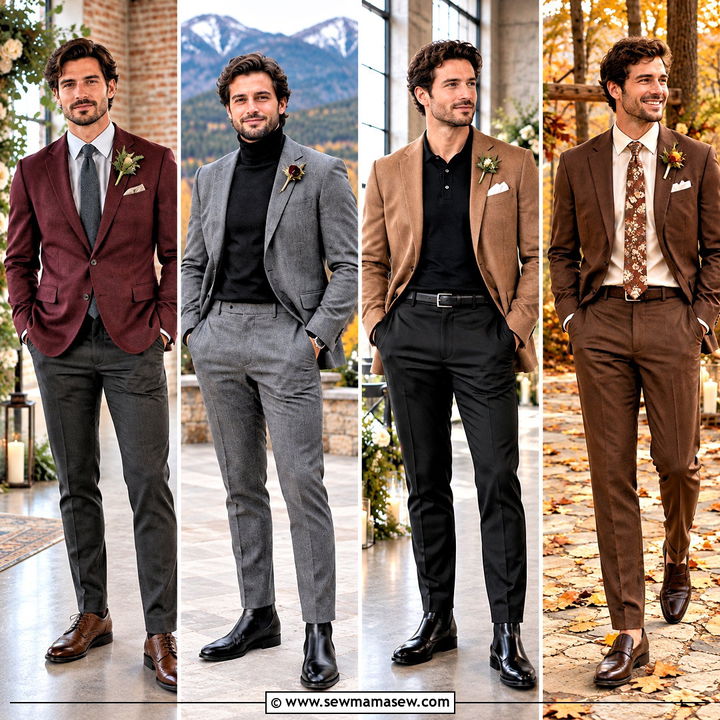
Tweed is a late-September or cool-climate choice. It's warm, and on a sunny lawn it'll have you sweating through the ceremony. For a lodge, barn or mountain venue on a crisp day, though, a three-piece in chocolate, tobacco or warm brown with herringbone or a small check looks like it belongs there. An ivory shirt and a knitted tie in forest green, burgundy or burnt orange suit the texture. Dark brown brogues, a leather belt and a vintage-style watch carry the country feel. Finish with a folded cream pocket square and a boutonniere with greenery or berries. Tweed is heavy, so I'd have the trousers hemmed with little or no break to keep them clean.
7. Burgundy Groom Suit
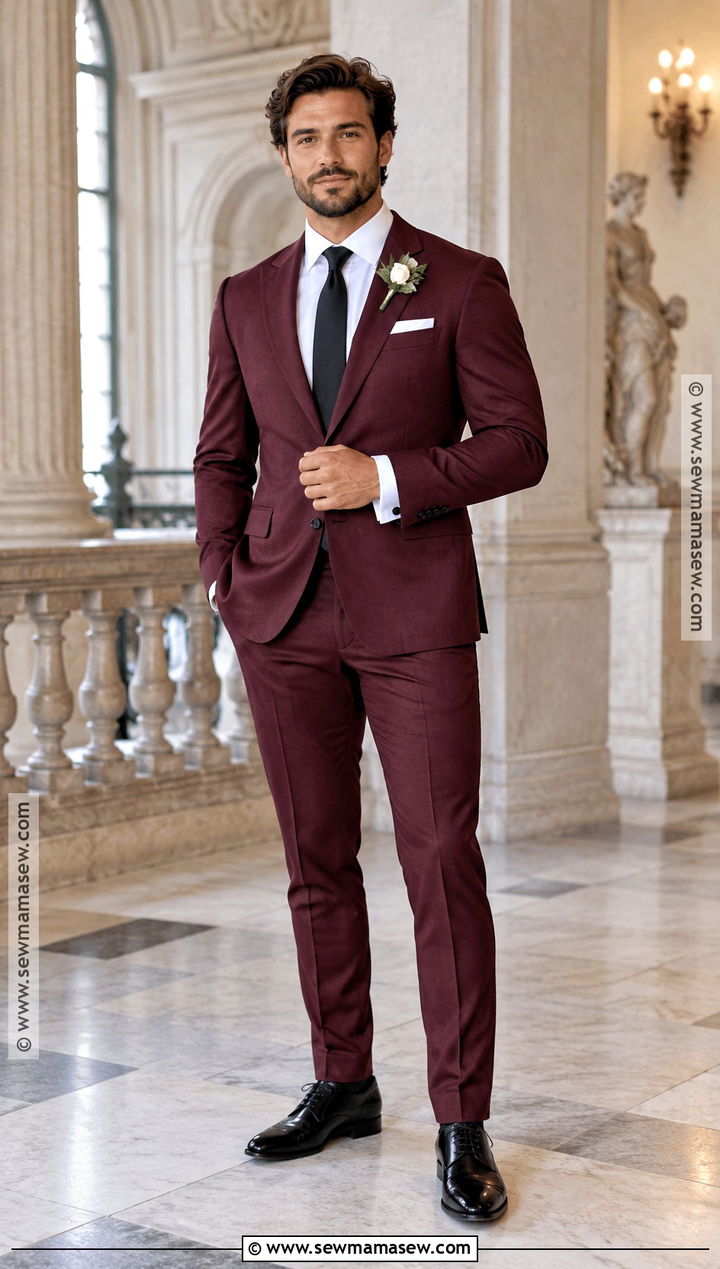
Burgundy is a suit for a groom who's comfortable being looked at. The rest of the outfit has to stay restrained, or it tips into costume. For a sleek formal version I'd use a white shirt, a black silk tie and black Oxfords; for something warmer, chocolate shoes, a brown tie and a matching belt. A white pocket square, simple cuff links and a small cream boutonniere are enough. Matte wool works for daytime. An evening wedding can take a jacket with velvet or satin lapels. It stands out against brick, old stone and venues decorated in cream and gold.
8. Midnight Blue Groom Tuxedo
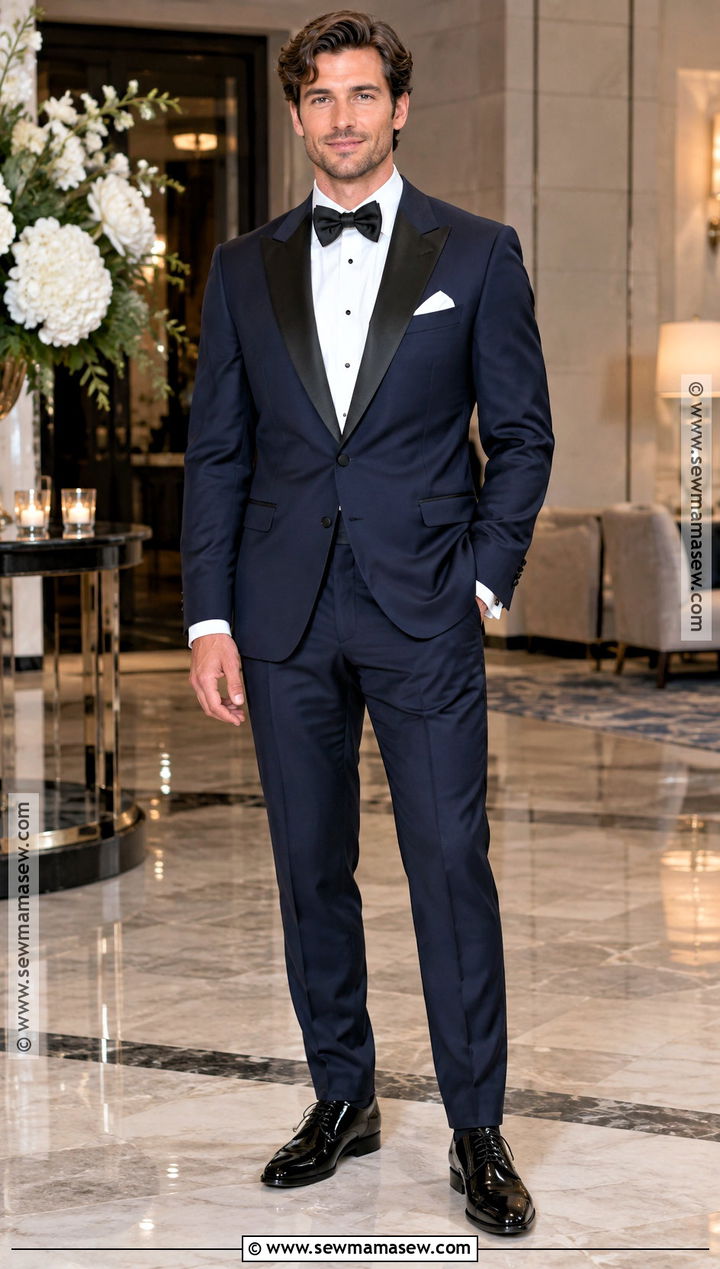
Midnight blue is the tuxedo color I steer formal grooms toward when they want to stand apart without breaking black-tie rules. Under warm evening lighting it reads as a rich near-black, and it can look even darker than black in some photos. Choose black satin peak lapels, matching trousers and a sharp fit. A white tuxedo shirt and a black bow tie keep it traditional. Black patent shoes, dark socks, silver cuff links and a white linen pocket square finish it, with one white or blue-toned bloom on the lapel. It works well when the groomsmen wear black, since the groom stands out only when he's in the light.
9. Ivory Dinner Jacket Groom Outfit
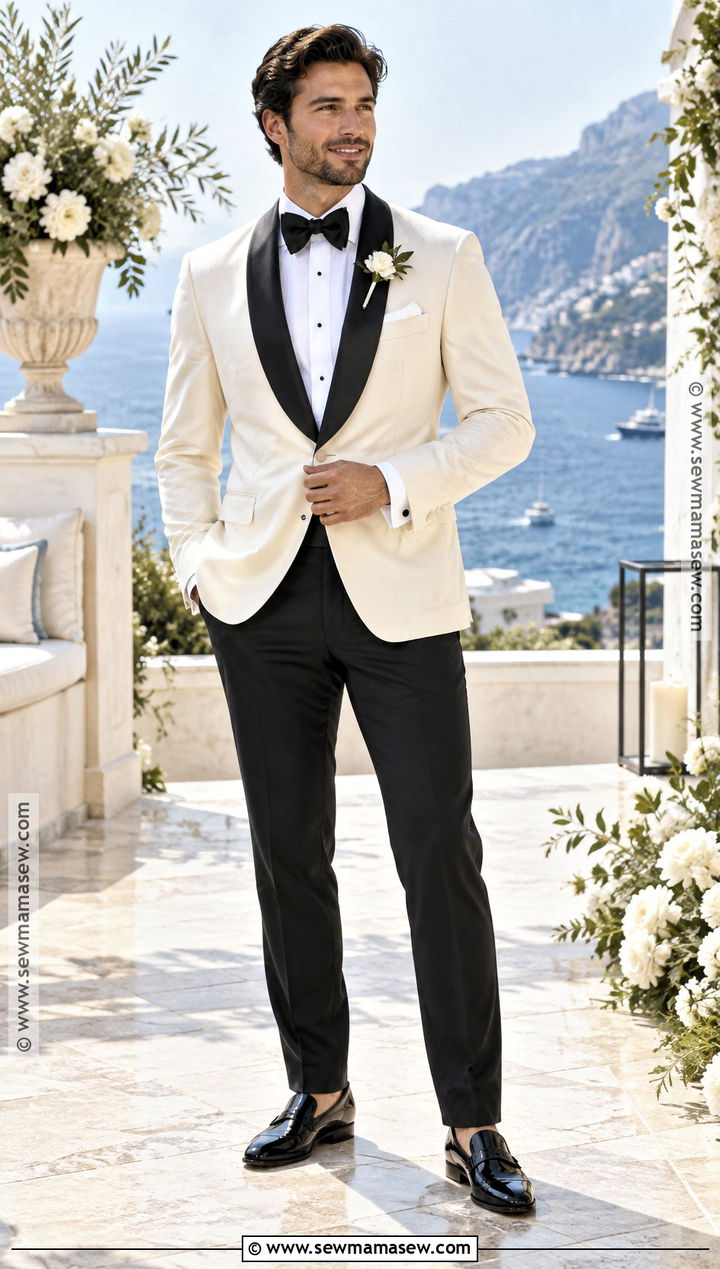
An ivory dinner jacket is warm-weather black tie, and it suits early September resort, coastal or country club weddings in hot climates. I choose a single-breasted jacket with black satin lapels, worn with black tuxedo trousers, a white formal shirt and a black bow tie. The ivory should be a true warm off-white; stark white jackets can look like a waiter's uniform. Black patent loafers or Oxfords, black socks and understated cuff links finish it. Keep the boutonniere to one small white bloom or a sprig of greenery. Against groomsmen in black, the groom is unmistakable.
10. Sage Green Groom Suit
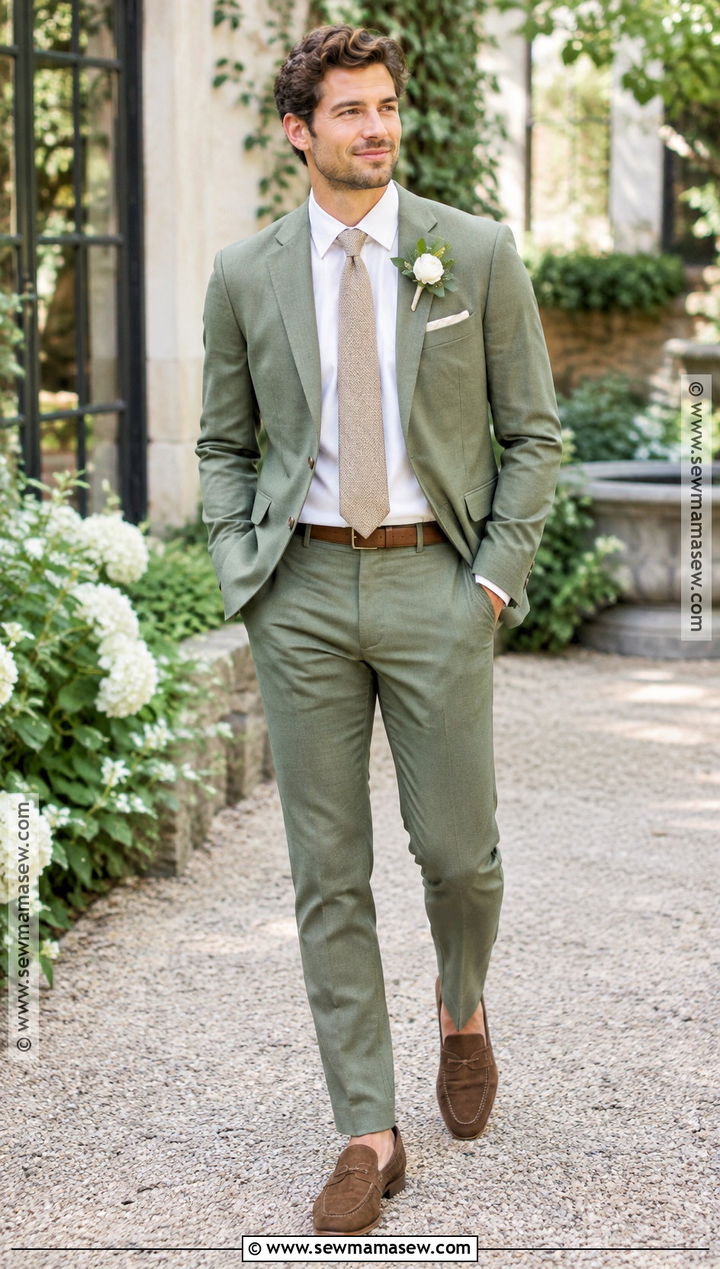
Sage is a light, natural color for garden and greenhouse weddings, but it's unforgiving of fit, since pale colors show every wrinkle and pull. I'd choose lightweight wool, cotton or a linen blend with minimal texture and have it tailored carefully. A white or cream shirt with a taupe, beige or dark green tie suits it. Brown suede loafers keep it relaxed; polished Oxfords make it formal. Add a brown belt, a neutral pocket square and a boutonniere of white flowers and greenery. If the groomsmen are also in green, the groom should wear a deeper shade or add a vest so he doesn't blend in.
11. Beige Linen Groom Suit
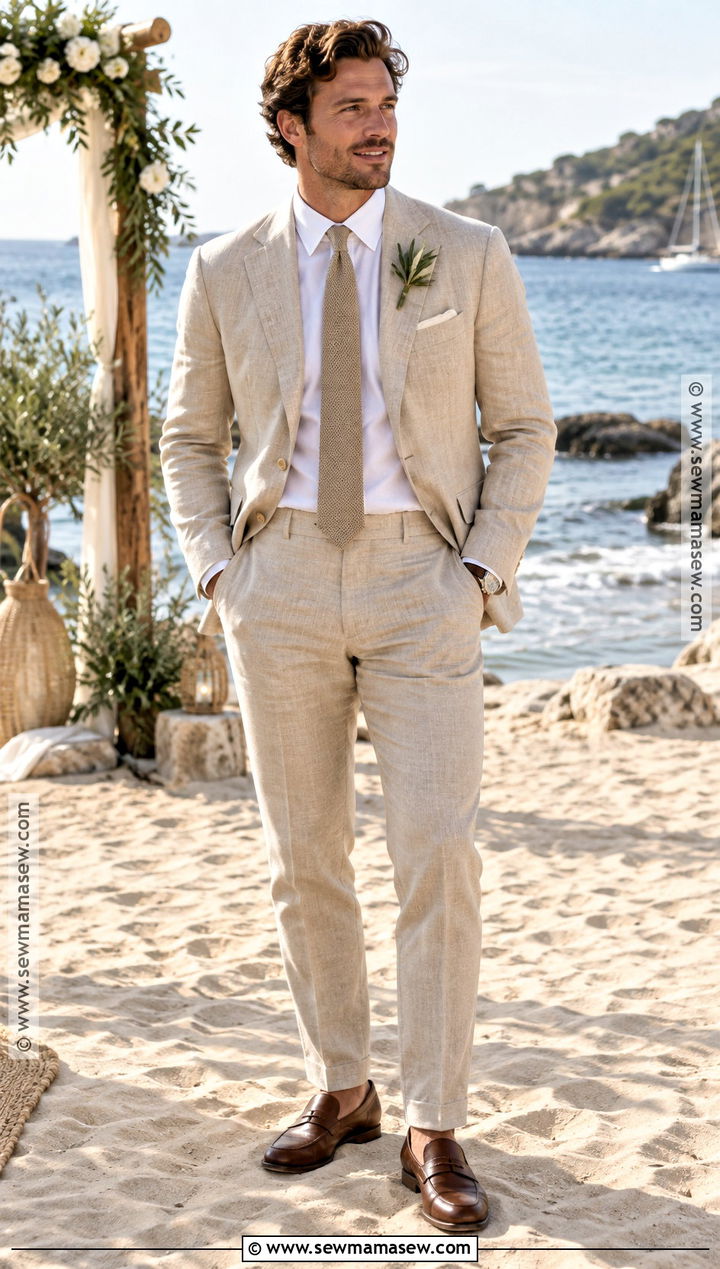
Linen is the honest answer for a beach, desert or tropical September wedding, and the first thing I tell grooms is that it will wrinkle. That's how linen looks; fighting it only makes you uncomfortable. A linen-blend suit wrinkles a bit less, and a partially lined jacket cuts bulk. A lightweight white shirt goes underneath, and I'd only drop the tie when the dress code is truly relaxed. A knitted tan tie and cream pocket square polish it. Brown leather loafers, woven shoes or clean suede shoes suit it; sandals only if the whole ceremony is barefoot-casual. Keep the watch and boutonniere simple.
12. Rust Groom Suit
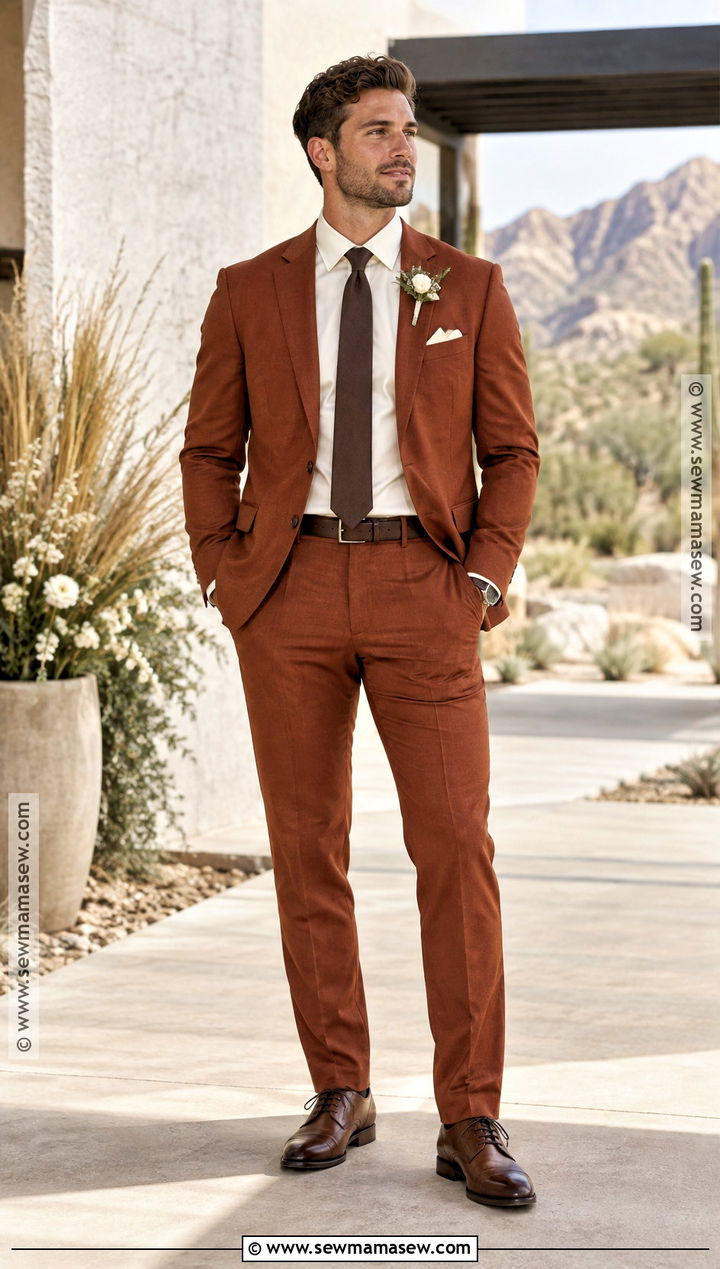
Rust makes the groom easy to spot in every photo, which is the point. Because the color already does a lot, the cut should be plain: matte wool or a refined wool blend, nothing shiny. An ivory shirt with a dark brown, black or muted green tie keeps it grounded. Chocolate Oxfords and a matching belt finish it, with a cream pocket square to add contrast near the face. Cuff links and a watch are all the jewelry it needs. I'd keep orange flowers off the lapel, choosing greenery and tiny white blooms instead, or the whole look turns orange. Desert settings, industrial lofts and venues with dry grasses suit it.
13. Navy Three-Piece Groom Suit
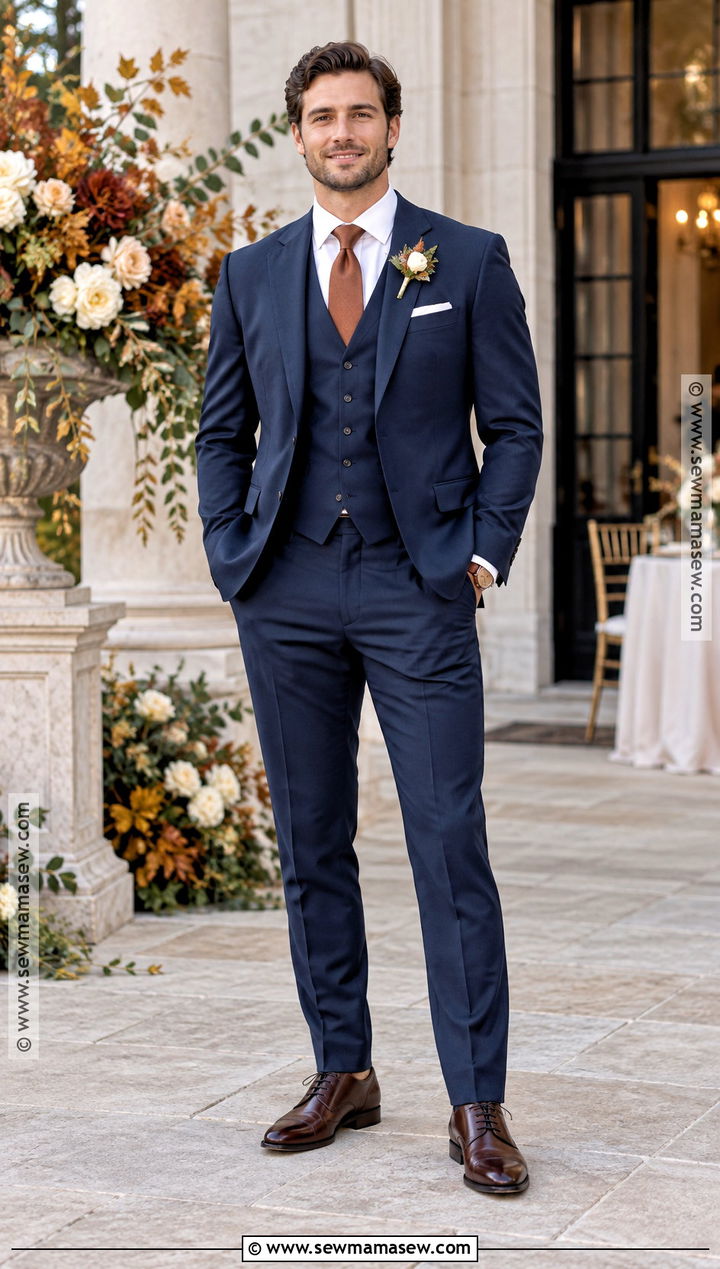
A navy three-piece gives the groom a layer he can shed. Once the jacket comes off for dinner or dancing, the vest keeps him looking dressed, which matters when September temperatures swing. Choose a matching jacket, vest and trousers in smooth wool, a white shirt and a tie in burgundy, copper, champagne or patterned navy. Dark brown cap-toe Oxfords, a matching belt and a refined watch complete it. The vest should cover the waistband entirely, and its bottom button stays undone. A white pocket square and a fuller boutonniere separate the groom from groomsmen in similar suits.
14. Black Groom Suit With Turtleneck
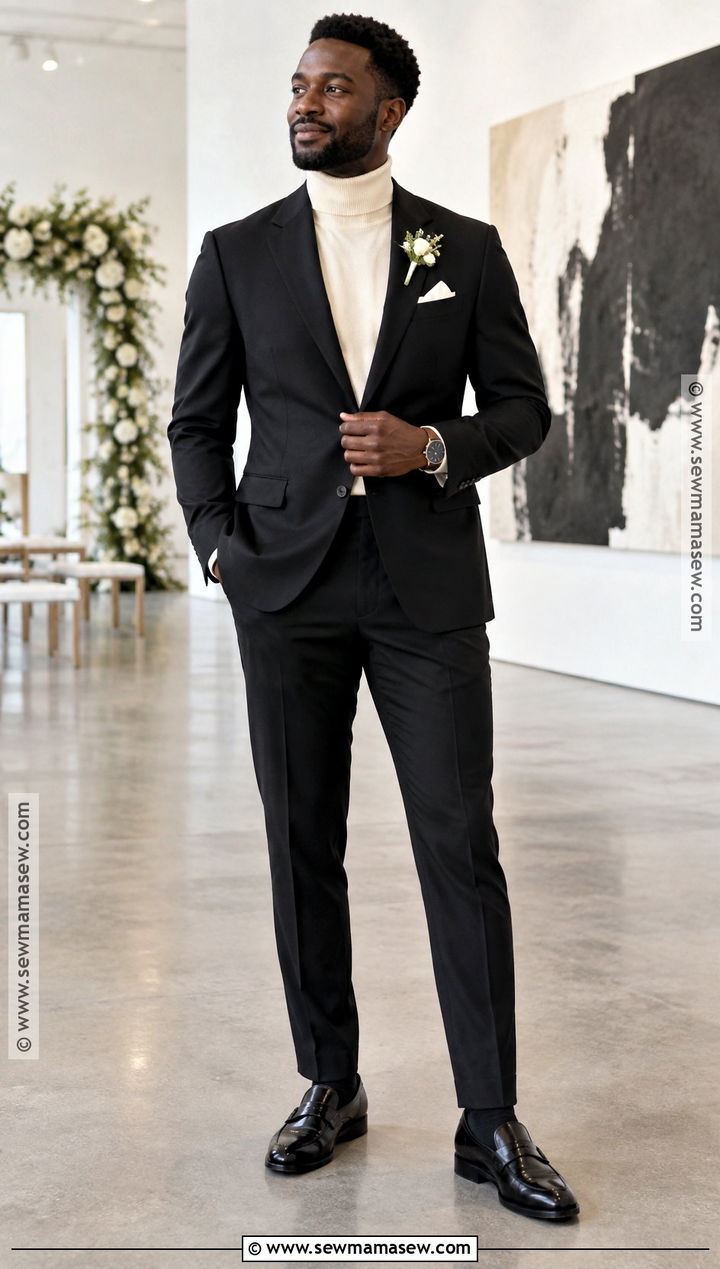
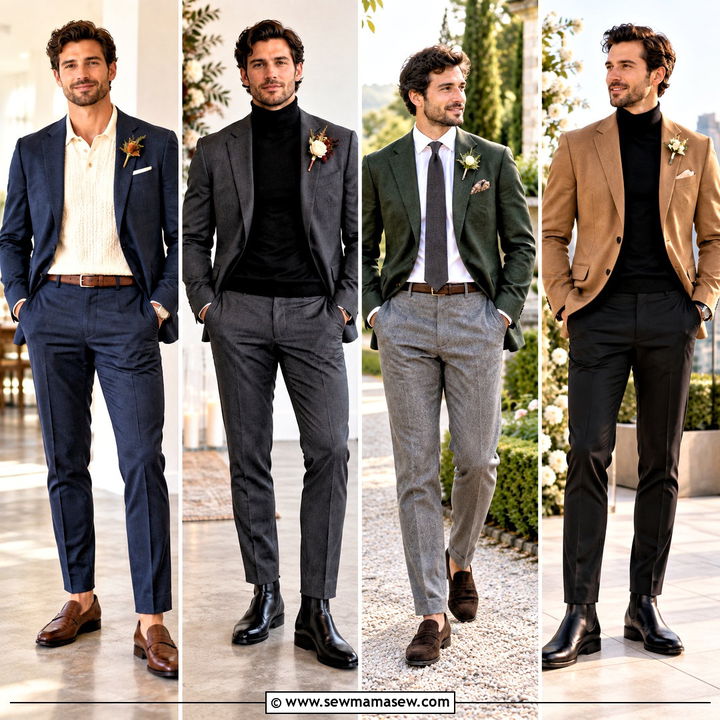
A black suit with a fine-knit turtleneck is for a modern, creative-formal wedding, not a traditional black-tie one. I choose a sharply tailored black suit and a lightweight merino turtleneck in black, ivory or charcoal. The knit has to be thin. A chunky knit bunches at the shoulders and makes the jacket pull across the chest. Polished black loafers or sleek Oxfords, dark socks and a minimal watch finish it. Skip the tie, and either skip the pocket square or use a plain white one. A small monochrome boutonniere keeps it reading as a wedding. Galleries, rooftops and modern hotels suit it.
15. Traditional Morning Suit Groom Attire
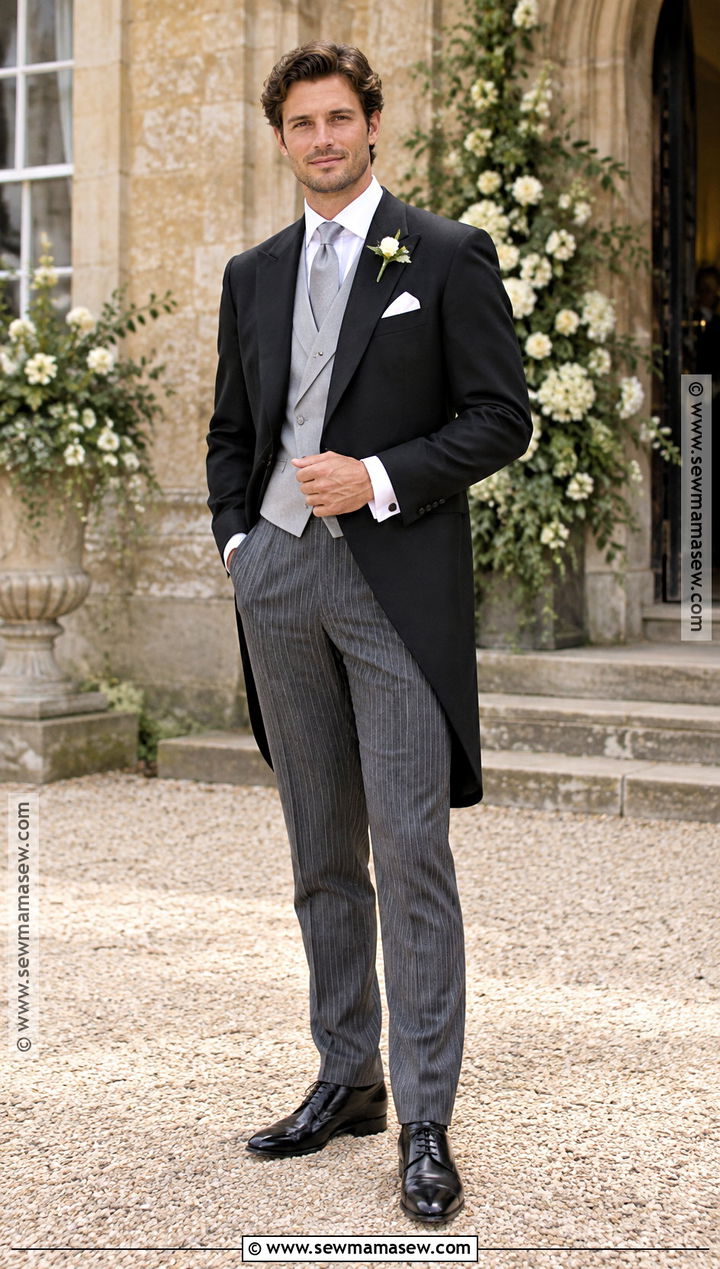
Morning dress is the traditional choice for a formal daytime wedding, the daytime counterpart to a tuxedo. The outfit is a black or gray morning coat, striped formal trousers, a light waistcoat, a white shirt and a silk tie, with black Oxfords, dark socks, cuff links, a white pocket square and a restrained boutonniere. I'd only add a top hat when the wedding's traditions call for it. Tailoring is everything here. The coat's long tails expose every proportion problem, and the trousers should be hemmed with almost no break. Grand historic venues and ceremonies with a clearly stated formal dress code are where it belongs.
Making the Groom Look Different From His Groomsmen
When everyone wears the same suit, the groom can disappear in group shots. I separate him with one or two changes rather than a whole different outfit: a vest the others don't wear, a different tie color or texture, a fuller boutonniere, or a jacket in the same color but a richer cloth. A midnight blue or ivory jacket among black tuxedos works the same way. What I'd avoid is changing everything, because then he looks like he came from a different wedding.
Leaving Enough Time for Alterations
A suit off the rack almost always needs some tailoring: sleeves, trouser hems and often the waist. I'd buy or order the suit at least two to three months before the wedding, allow several weeks for alterations, and book a final fitting a week or two before the day. Rentals should be reserved early too, since September is a busy wedding month. Wear the shoes around the house before the wedding so they're broken in, and bring them to the fitting so the trousers are hemmed to the right length.
Dress Code, Forecast, Then Fit
Start with the dress code and the forecast, then pick the cloth and the color. Navy and charcoal are always safe; olive, burgundy, rust and sage add personality. Tweed and three-piece suits handle cool outdoor days, while linen blends and tan suits handle heat. For formal evenings, choose a black or midnight blue tuxedo, or an ivory dinner jacket somewhere warm. Whatever you choose, spend on tailoring before anything else, wear shoes you've already broken in, and keep the accessories in support of the suit. A groom who's comfortable shows it in every photo.
Related posts: