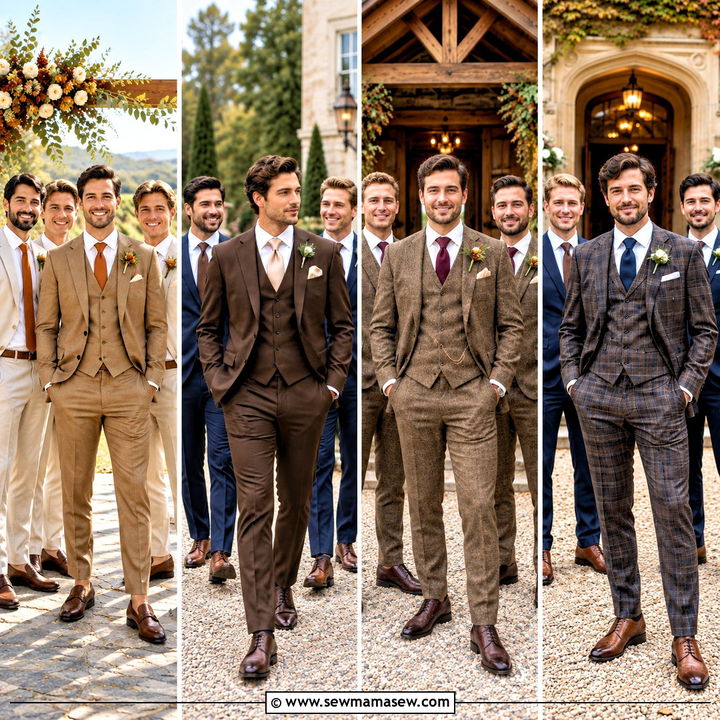
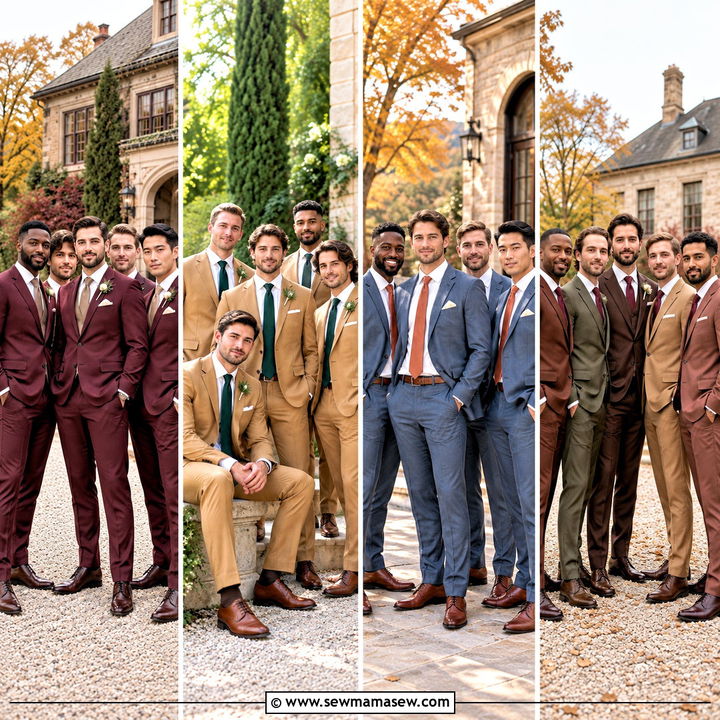
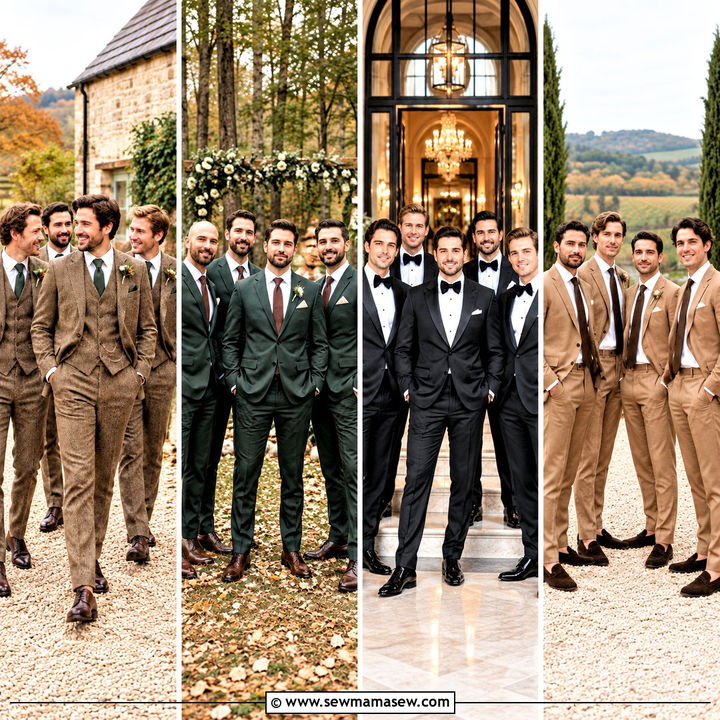
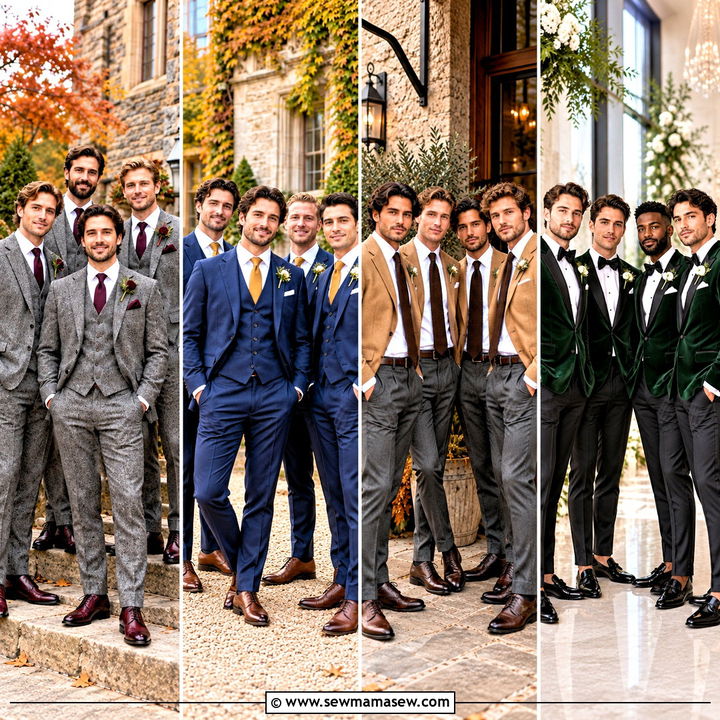
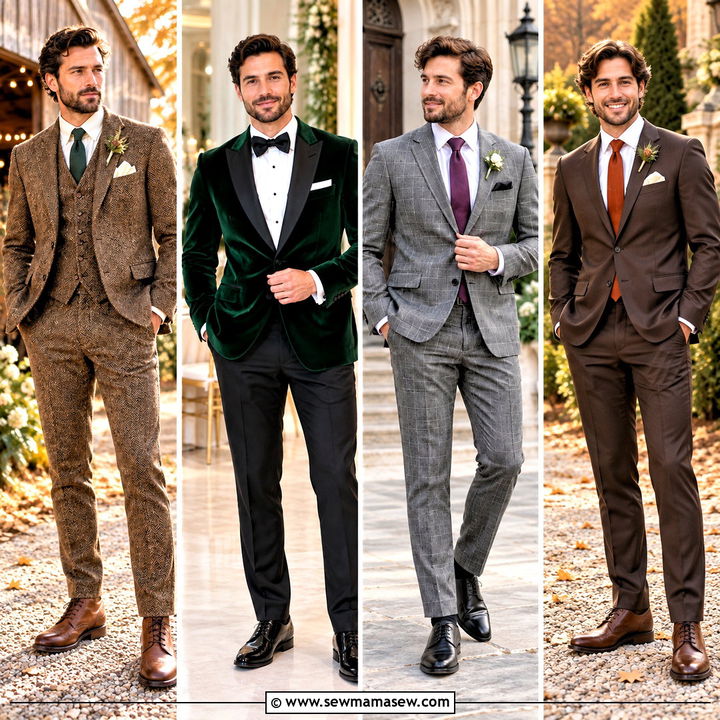
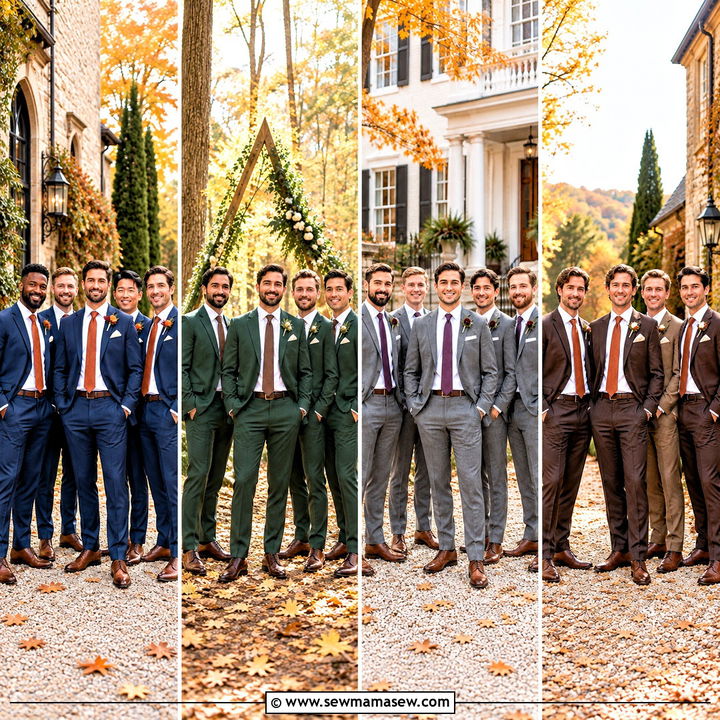
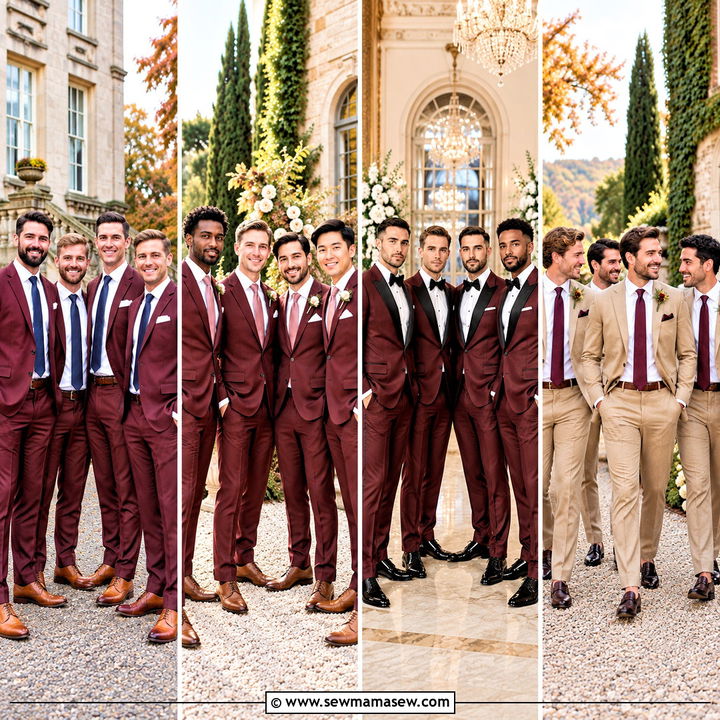
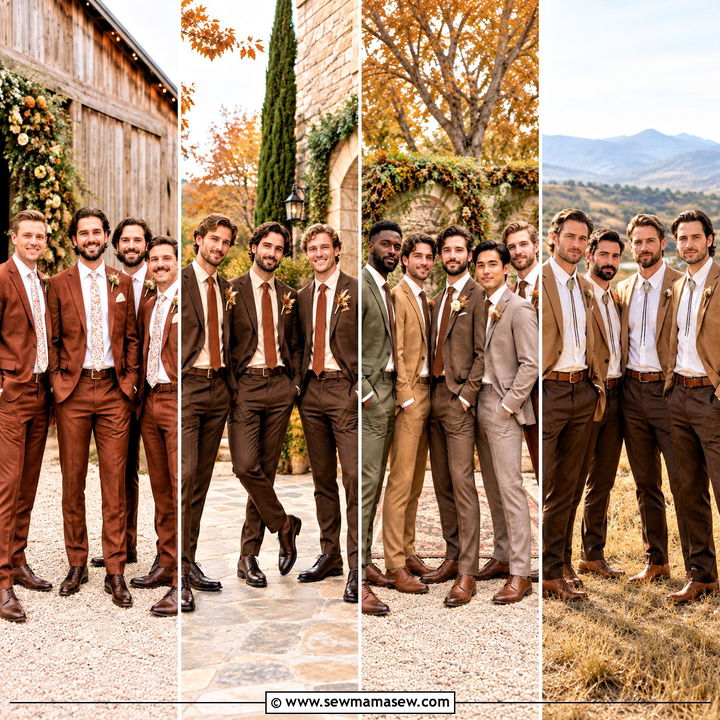
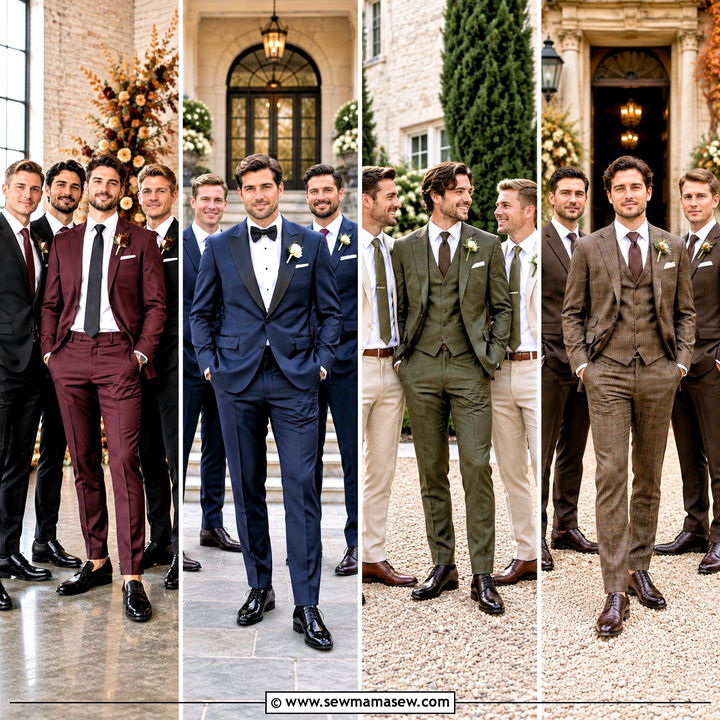
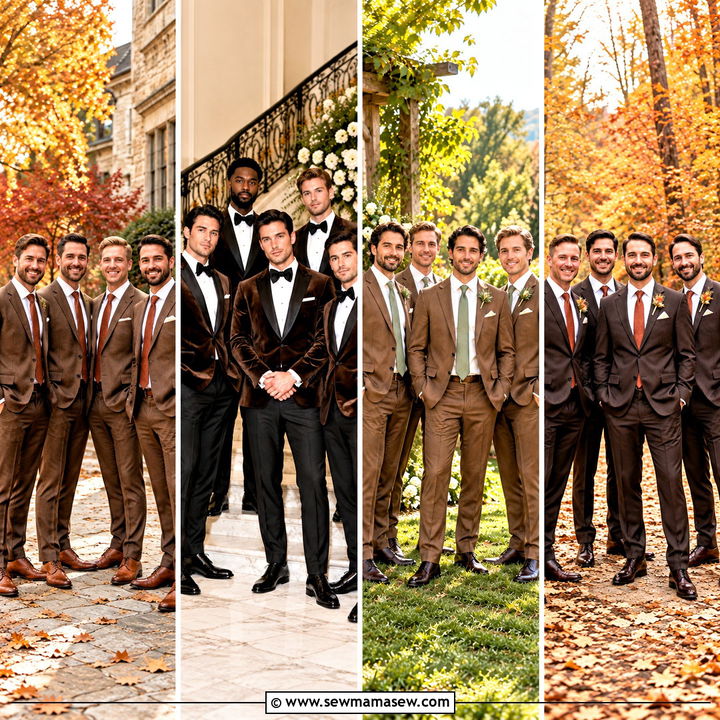
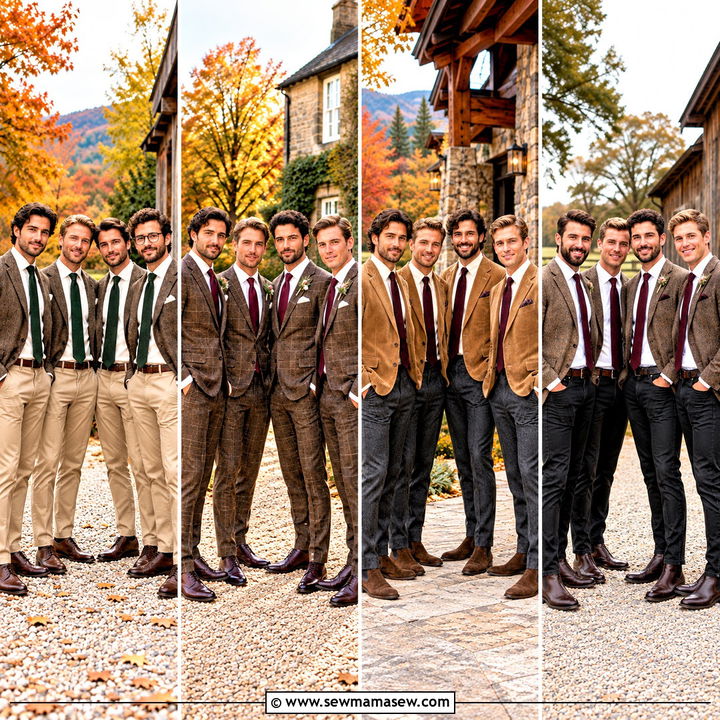
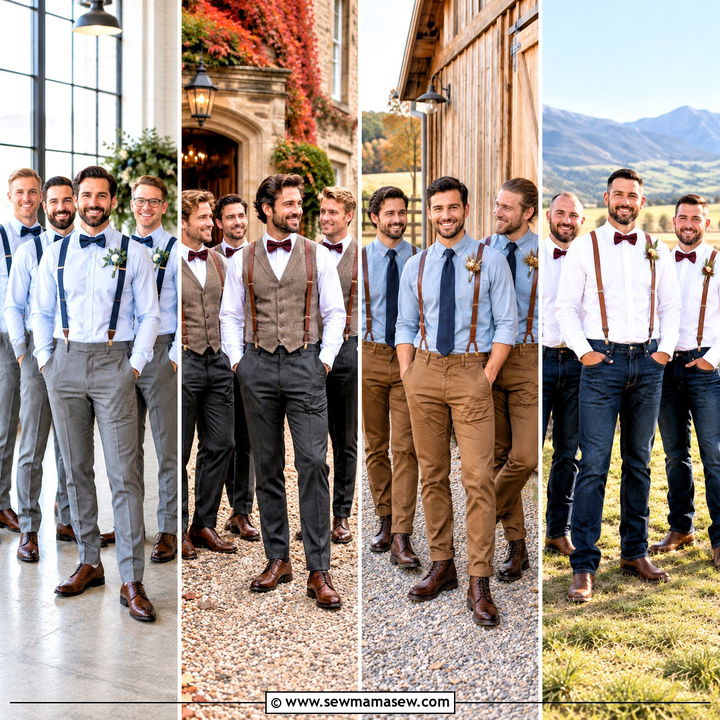
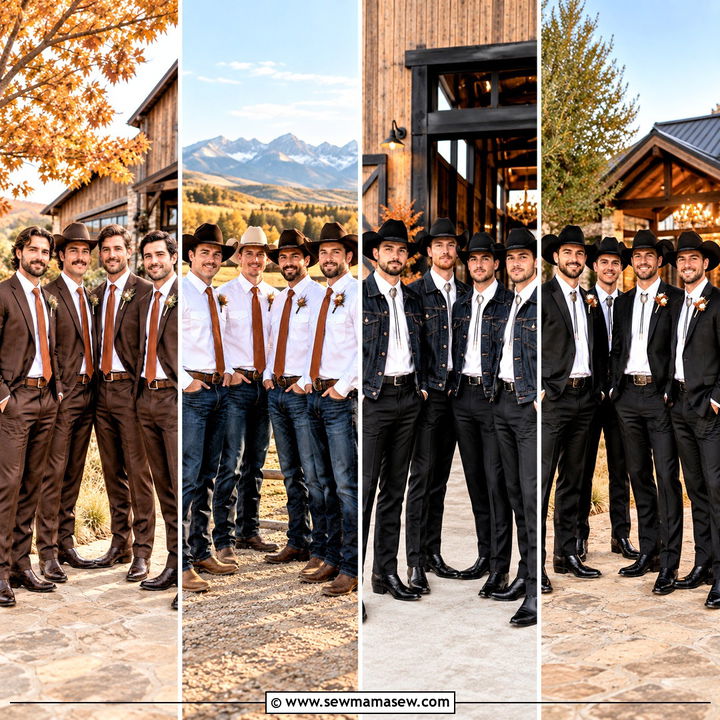
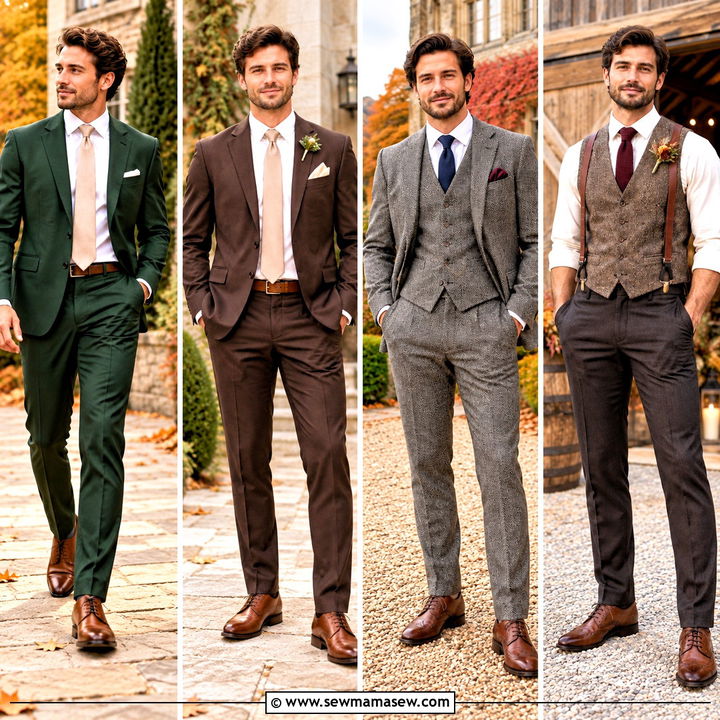
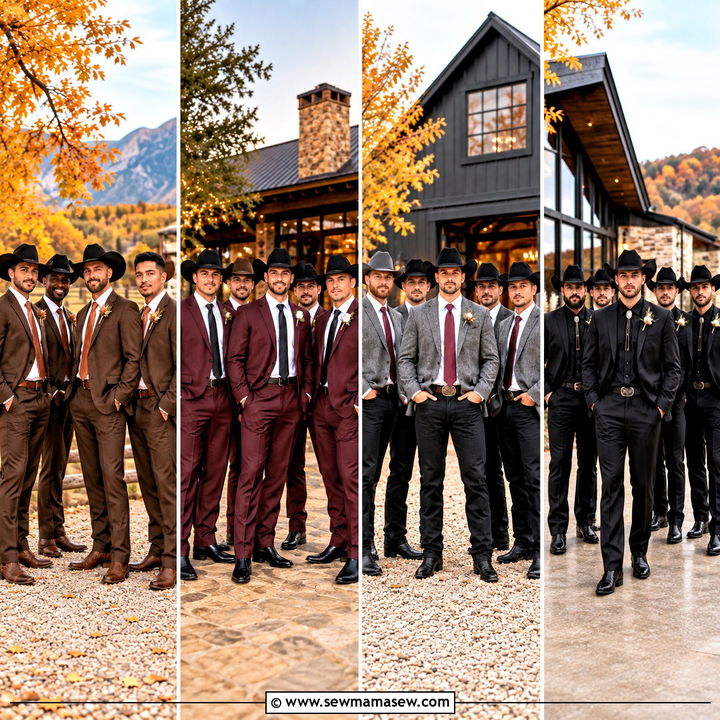
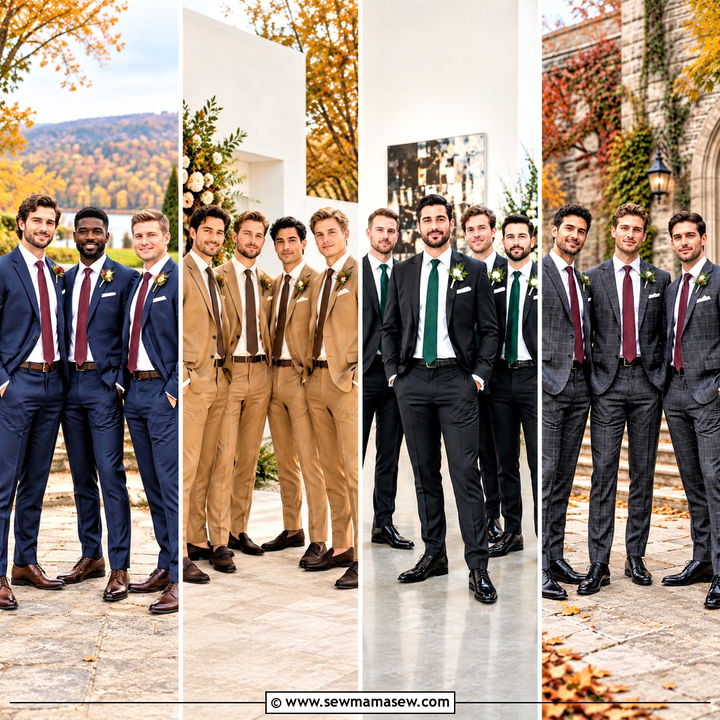
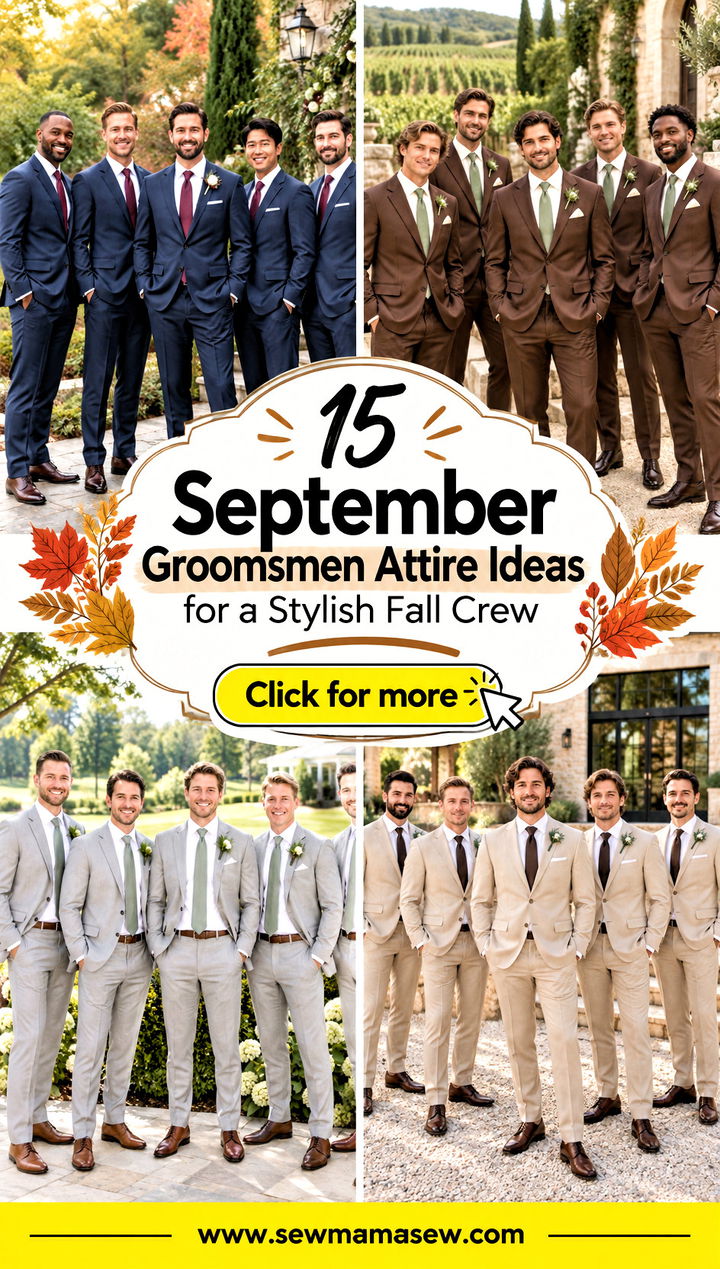
September is an awkward month to dress a wedding party. The afternoon can feel like August and the evening like October, and the groomsmen stand in the same clothes through both. When I plan a September crew, I settle the fabric weight first and the color second, because a handsome rust tie won't rescue a man sweating through heavy flannel at an afternoon ceremony. Navy, charcoal, brown, olive and beige all carry the season, while burgundy, rust or sage accents add autumn without tipping into a theme. Below are fifteen combinations with the shirts, ties, shoes and small details worked out, plus notes on which venue and dress code each one really suits.
Rent, Buy or Mix? Sorting Out the Suits Early
Colors are the fun part. What truly decides how the group looks in photos is logistics, and September weddings collide with back-to-school weeks and work travel, so groomsmen are often scattered across different towns.
Renting versus owning
Renting makes sense for tuxedos and for groups where nobody will wear the suit again. The catch is fit. Rental jackets come in set sizes, the adjustments a shop can make are limited, and a jacket that's wrong in the shoulders can't be rescued. Buying costs more up front but lets a tailor take in the waist, shorten sleeves and hem trousers properly. A middle path I like is buying every suit from one affordable collection, so the cloth matches exactly, then paying for individual alterations.
Measuring men who live far apart
Have each groomsman measured by a local tailor rather than with a tape at home. Self-measured chest and sleeve numbers are often off, and a jacket a size wrong across the shoulders is the one problem alterations can't fix. The order I'd follow:
- Fix the color and cloth with the couple first.
- Collect professional chest, waist, sleeve, inseam and shoulder measurements from every man.
- Order all suits and ties in one batch so the dye lots match.
- Book each alteration fitting as soon as the suit arrives, since tailors get busy in wedding season.
- Do a final try-on wearing the wedding shoes, because the trouser break depends on the heel.
1. Navy Groomsmen Suits With Burgundy Ties
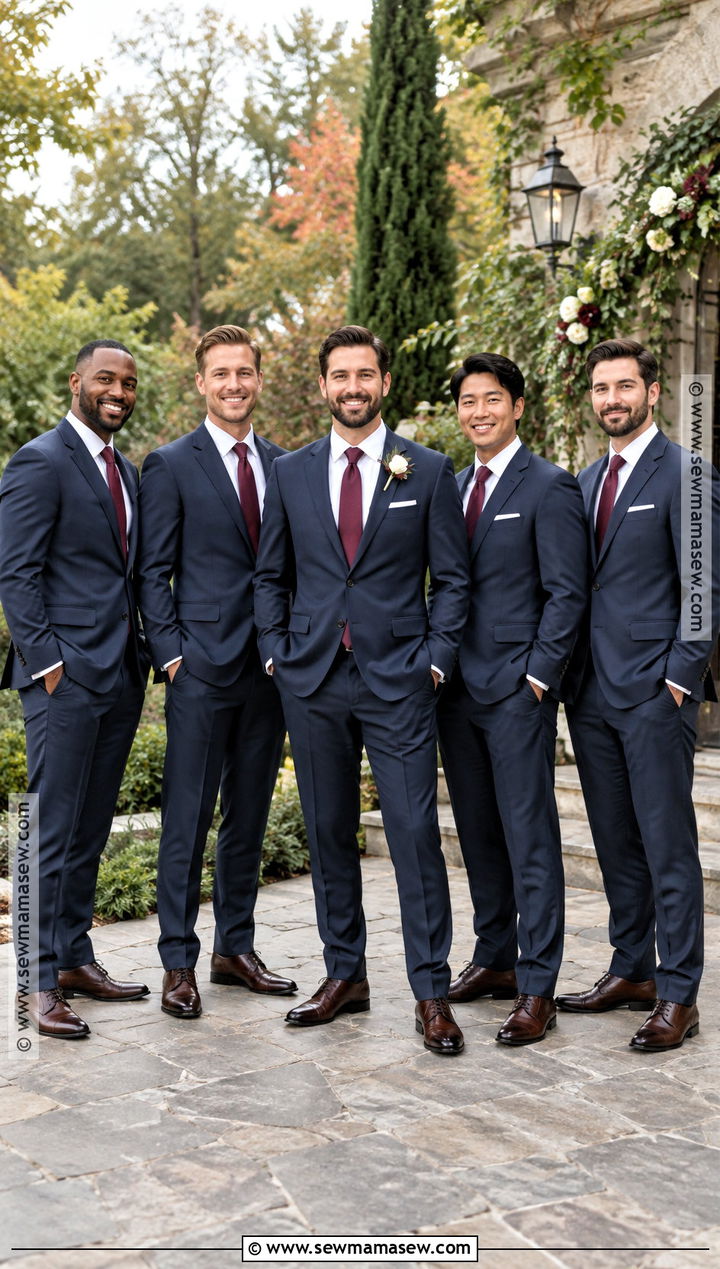
Navy is the suit I'd recommend when a couple can't agree on anything else. It sits comfortably in a ballroom or a garden, and it flatters almost every skin tone in the group, which matters when you're dressing six different men. Get it in a lightweight wool or wool blend; it breathes during outdoor photos far better than a polyester-heavy rental. White shirts, burgundy ties and dark brown oxfords with a matching belt finish it, and a white pocket square keeps the burgundy from repeating. For a daytime wedding I'd swap the silk tie for a grenadine or knit, which reads more relaxed. The groom can step apart in a three-piece or a patterned burgundy tie, and navy sits happily beside rust or berry bridesmaid dresses.
2. Charcoal Groomsmen Suits With Rust Ties
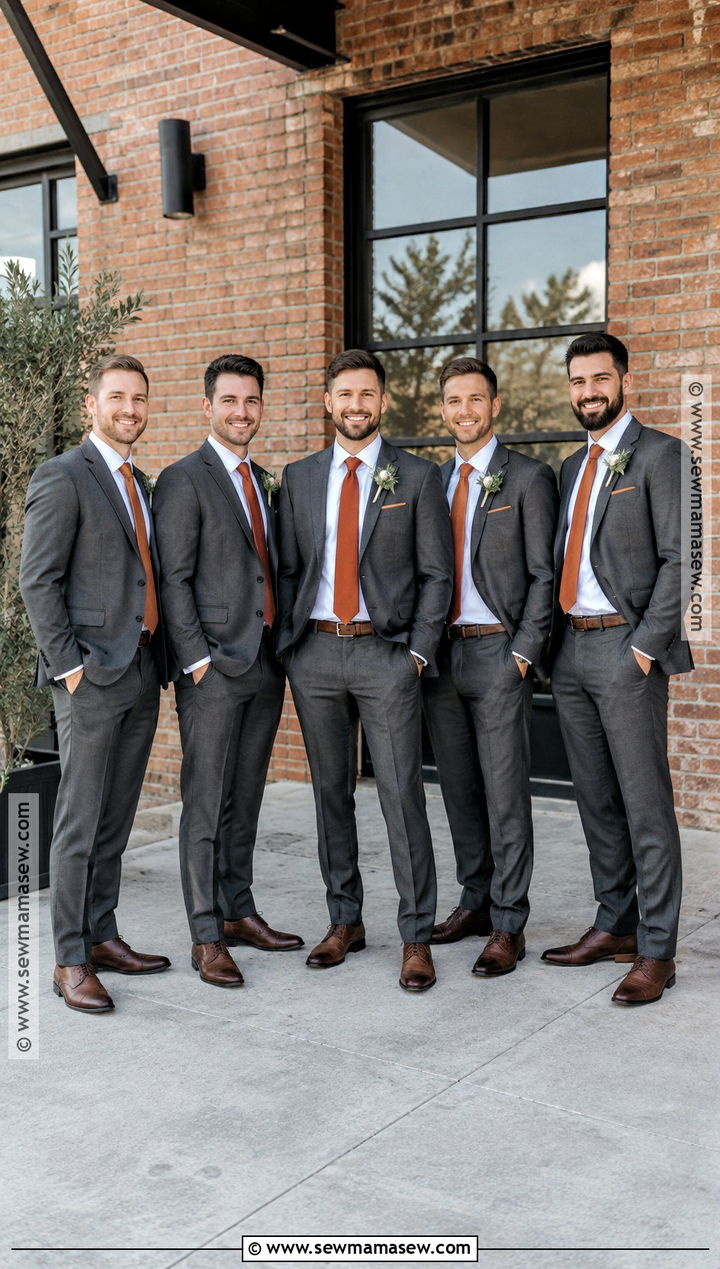
Charcoal is cooler than navy, and that coolness is exactly why a rust tie glows against it. Dress each groomsman in a two-piece charcoal suit, white shirt, rust tie and dark brown shoes with a brown belt. I'd resist the matching rust pocket square, since it makes the set look bought as a kit; white or cream is better. Boutonnieres with greenery and a muted orange bloom tie the suits to the flowers. Charcoal holds up well against brick, stone and old timber, so it's a natural pick for industrial spaces, historic buildings and formal barns. Choose medium-weight cloth for a cool location and tropical wool if the forecast runs warm, and mark out the groom with a waistcoat only he wears.
3. Olive Green Groomsmen Suits With Tan Accessories
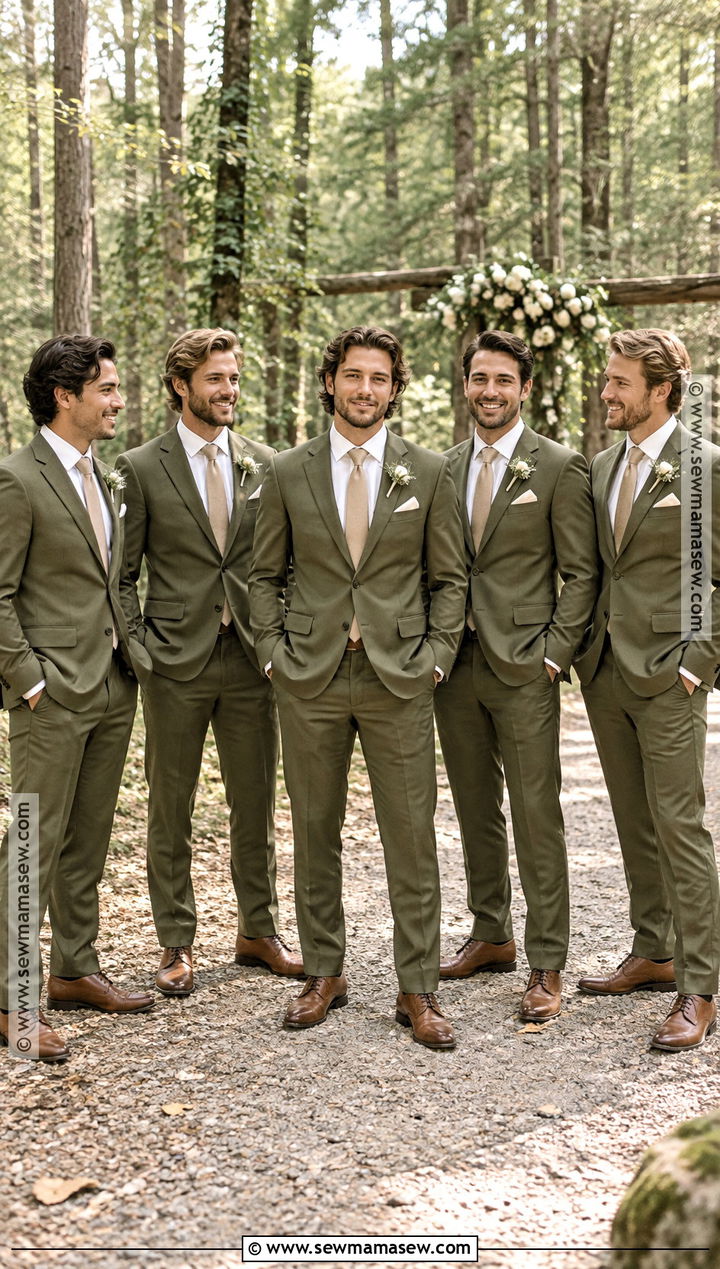
Olive gives a couple color without shouting, which helps when the families lean conservative. It belongs outdoors. Among trees and grass it looks deliberate, while under warm indoor lighting it can turn muddy, so I'd look at a swatch in the actual venue if you can. Ivory shirts, muted tan ties and medium-brown shoes with matching belts keep it calm, finished with cream pocket squares. Don't stack other strong colors on top; greenery boutonnieres or a small terracotta detail are plenty. If a full olive party feels like too much, put only the groom in olive and the groomsmen in navy or tan, or reverse it and give the groom a coordinating waistcoat.
4. Chocolate Brown Groomsmen Suits With Cream Shirts
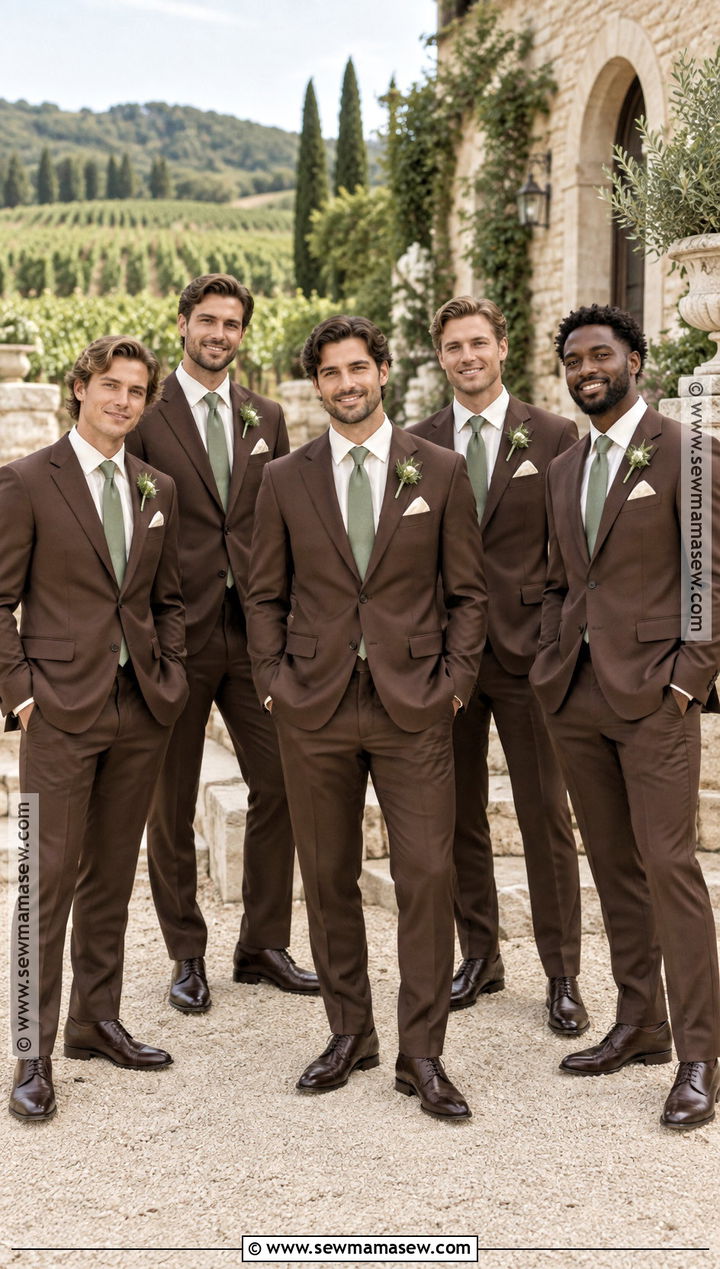
Chocolate brown is warmer and softer than navy, and it belongs to late September, when the leaves have started turning at vineyards, lodges and country estates. Cream shirts work better than bright white here. Stark white against dark brown creates hard contrast in photos, while cream reads as part of the same family. Dark brown derbies, matching belts and a muted sage or champagne tie finish it, with a plain ivory pocket square near the face. One practical warning: browns vary a lot between makers and even between production runs, so order every suit from the same collection at the same time. A three-piece for the groom and two-pieces for everyone else is all the distinction he needs.
5. Tan Groomsmen Suits With Terracotta Ties
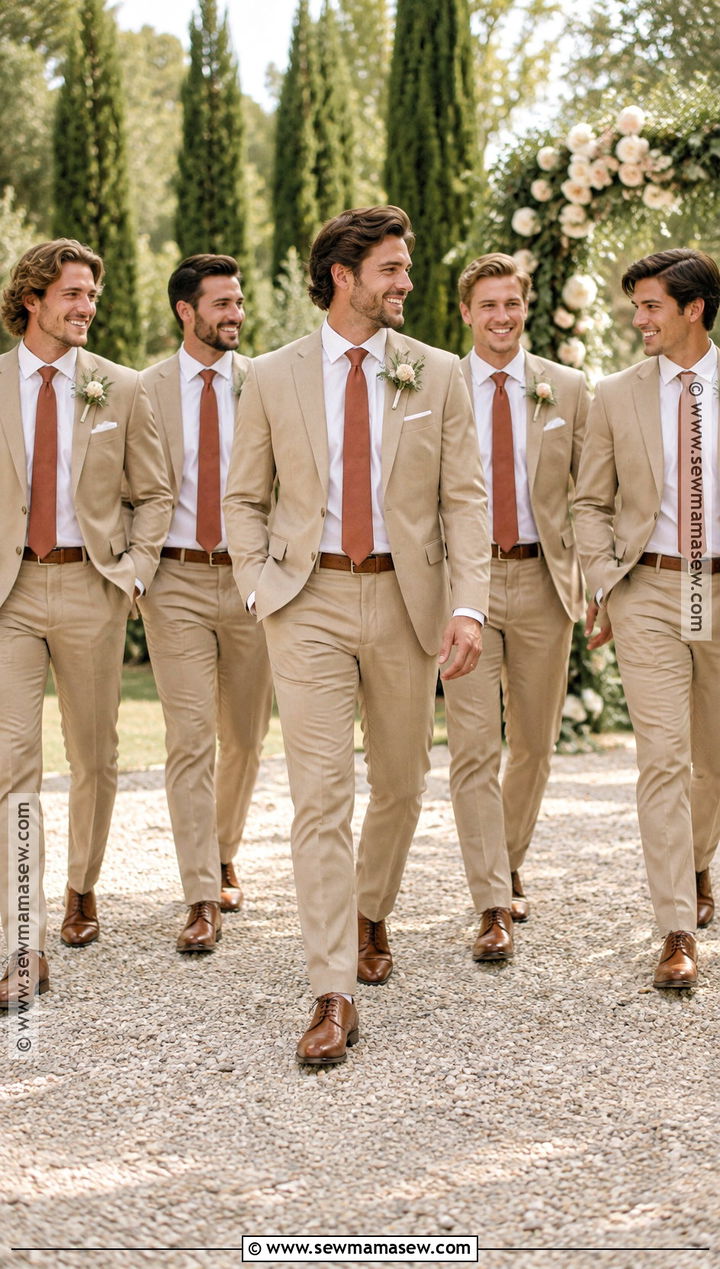
Tan is what I reach for when the ceremony is outdoors, in full sun, and still warm. It feels lighter than navy but still connects to early fall, especially with a terracotta tie. White shirts, medium-brown loafers or oxfords and coordinated belts complete it, and cream pocket squares stop the accessories from matching too neatly. Think daytime garden, ranch, coastal and destination weddings. For a semi-formal dress code I'd choose a structured cotton blend or light wool over pure linen, which creases the moment the groomsmen sit down. The groom can add a tan waistcoat or go a shade darker in brown, and tan sits easily beside rust or sage bridesmaids.
6. Black Groomsmen Tuxedos With Black Bow Ties
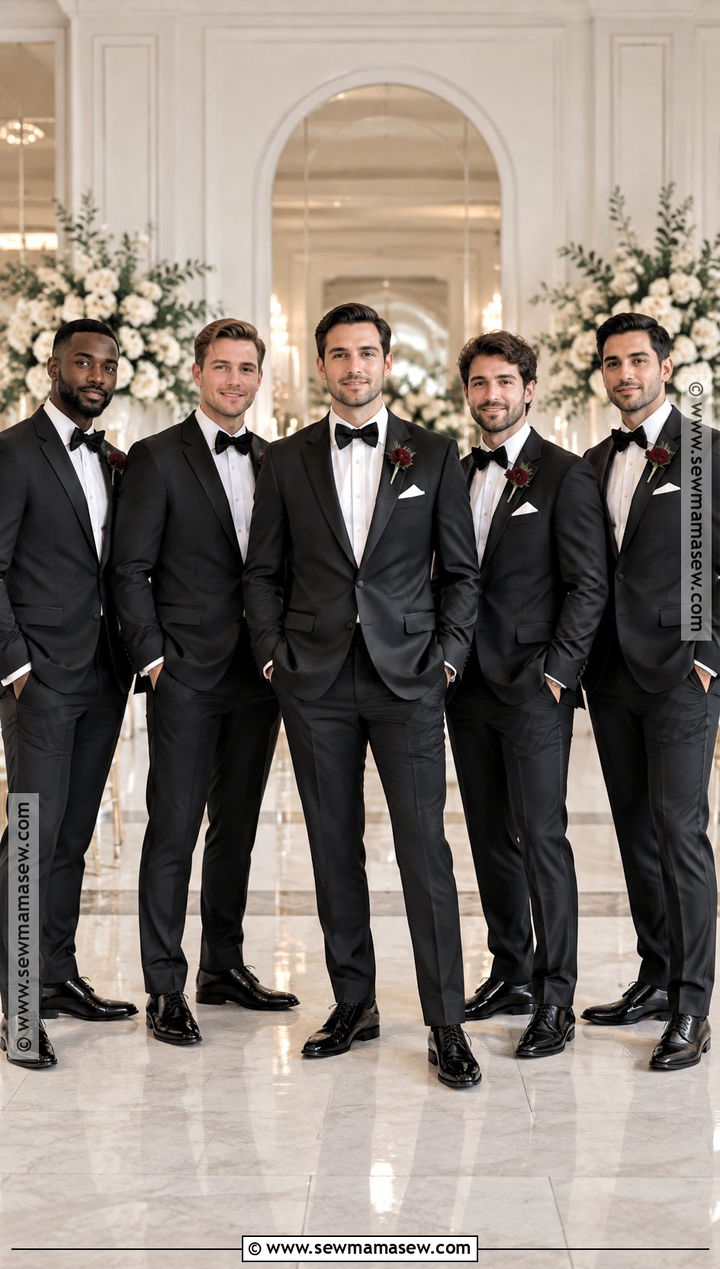
Black tie is the one dress code where I tell the groom to stop adding ideas. Matching single-breasted tuxedo jackets, black trousers, white formal shirts, black bow ties, polished black shoes, black socks and a white pocket square make up the whole uniform. Its strength is consistency, so let any seasonal color live in the boutonnieres, in burgundy, rust or greenery. The groom can differ with a waistcoat, a different lapel facing or an ivory bow tie. Tailoring matters more here than anywhere else on this list, because black cloth shows every ripple at the shoulder and every pooled trouser hem. Save this for evening ceremonies in ballrooms, hotels and museums.
7. Light Gray Groomsmen Suits With Sage Ties
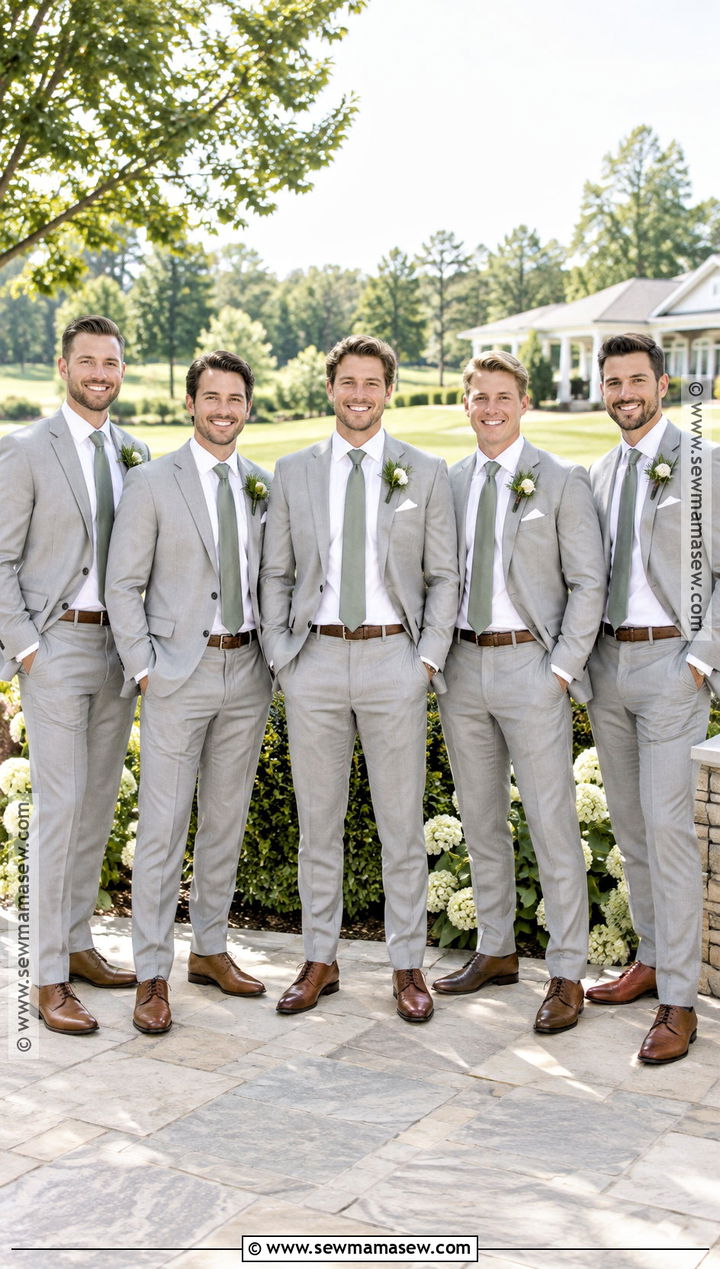
On a warm September afternoon, light gray is more comfortable to wear than any dark suit, and it bridges the two seasons neatly. White shirts, muted sage ties and brown shoes with matching belts make the outfit, while white pocket squares and greenery boutonnieres repeat the sage quietly. I always steer couples away from shiny silver-gray fabric, which catches the flash and looks dated in photos; a matte cool or neutral gray holds up for years. It fits gardens, lofts and country clubs. Spell out the exact shoe color and tie shade in writing, because light gray exposes a mismatched pair of brown shoes far more than a dark suit does. The groom can move to medium gray or add a waistcoat.
8. Forest Green Groomsmen Suits With Champagne Ties
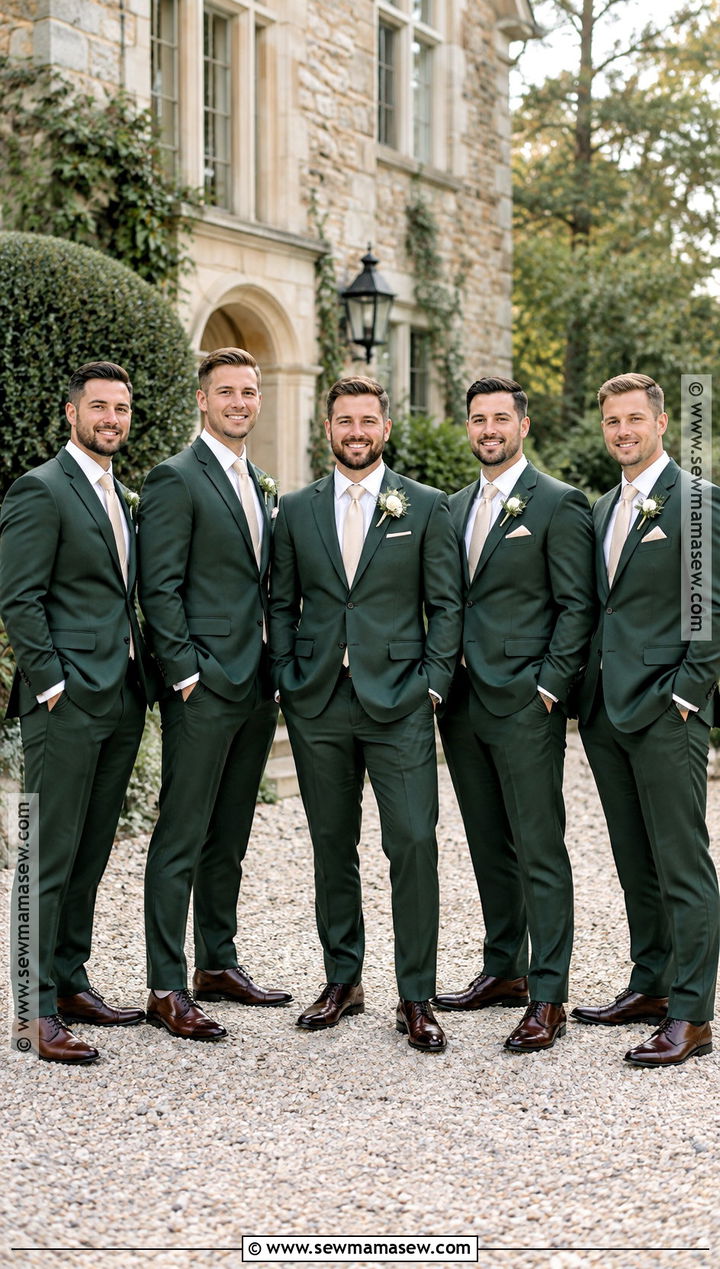
Forest green feels like the opening of autumn and photographs richly against stone and woodland. Ivory shirts, champagne ties, dark brown oxfords and matching belts suit it, with cream pocket squares and white-and-green boutonnieres. Green is the hardest suit color to order online. The same swatch can look nearly black indoors and close to teal in daylight, so I check any green under natural light before the group commits. Choose matte suiting, since shiny green turns theatrical quickly. The groom can wear the same suit with a patterned champagne tie or add an ivory waistcoat. Next to terracotta or burgundy bridesmaid dresses, green adds depth without anyone matching exactly.
9. Burgundy Groomsmen Suits With Neutral Accessories
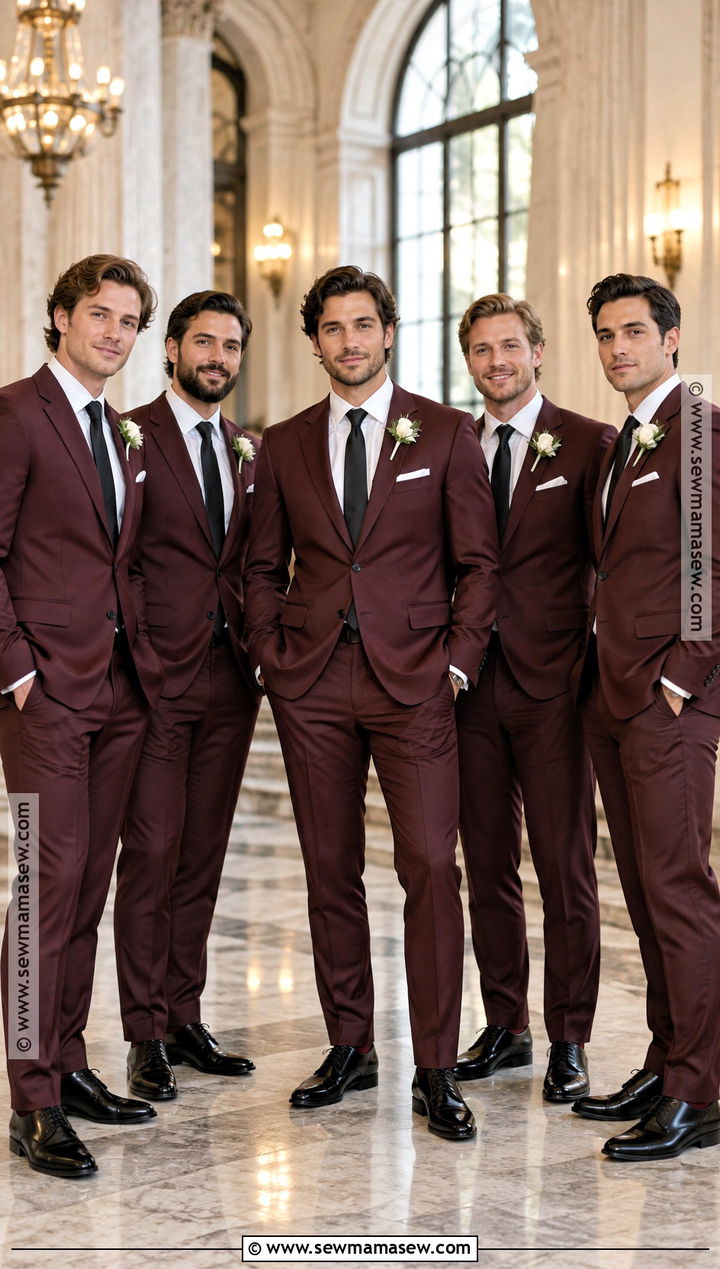
A burgundy suit already commands the room, so everything around it has to step back. For evening I'd use white shirts, black ties, black shoes and white pocket squares. For daytime, soften it with ivory shirts, taupe ties and dark brown footwear. What I'd never do is match a burgundy shirt or tie to the suit; that much of one color turns a wedding party into costumes. Historic venues and formal indoor rooms suit it best, especially with a neutral or jewel-toned palette. The groom can contrast in a black or ivory dinner jacket, or wear a burgundy three-piece while the others stay in two-pieces. Keep the boutonnieres small so they don't fight the tailoring.
10. Brown Tweed Groomsmen Suits With Knit Ties
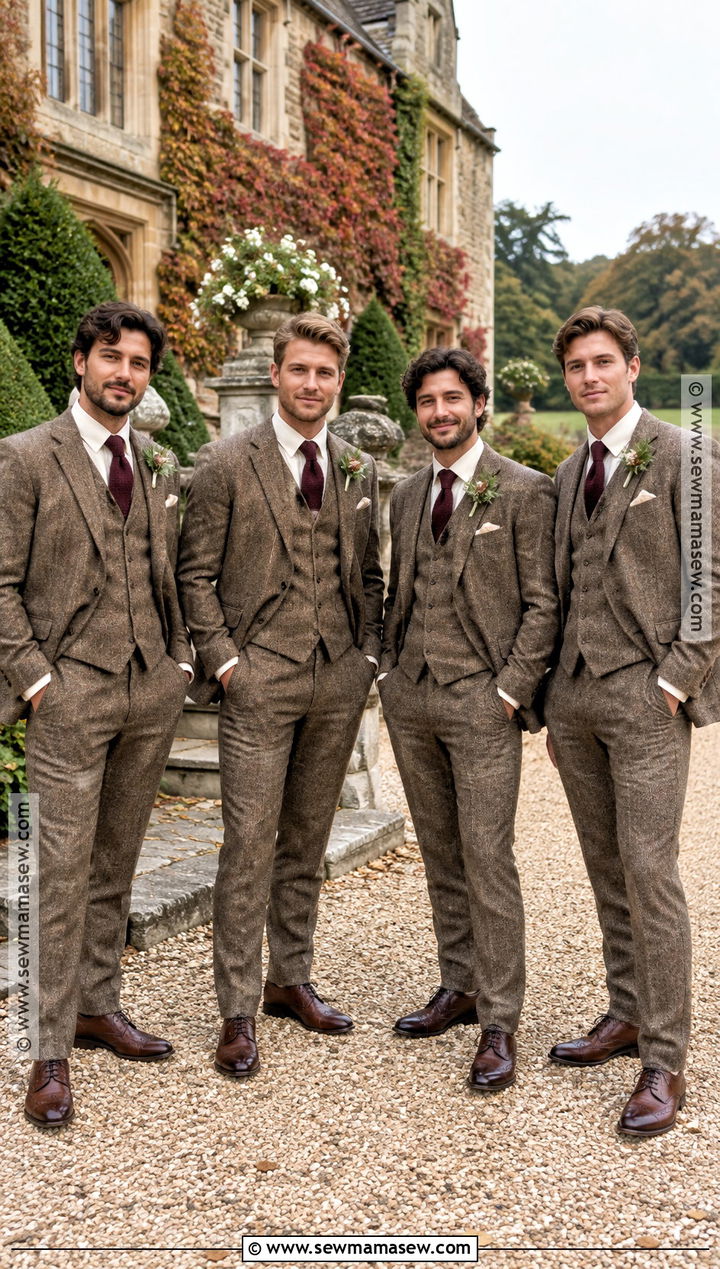
Tweed is for the cooler end of September: mountain lodges, barns, estates and evenings where the temperature truly drops. It carries more texture and visual weight than smooth worsted, so I keep everything else quiet with cream shirts, burgundy knit ties, dark brown brogues, leather belts, neutral pocket squares and small greenery boutonnieres. A subtle herringbone gives interest without the shimmer that very fine checks can produce on digital cameras. Be honest about the weather, though. Tweed in hot afternoon sun is miserable, so look up typical temperatures for that week before committing. The groom can add a matching waistcoat or wear a darker brown tweed.
11. Navy Three-Piece Groomsmen Suits With Copper Ties
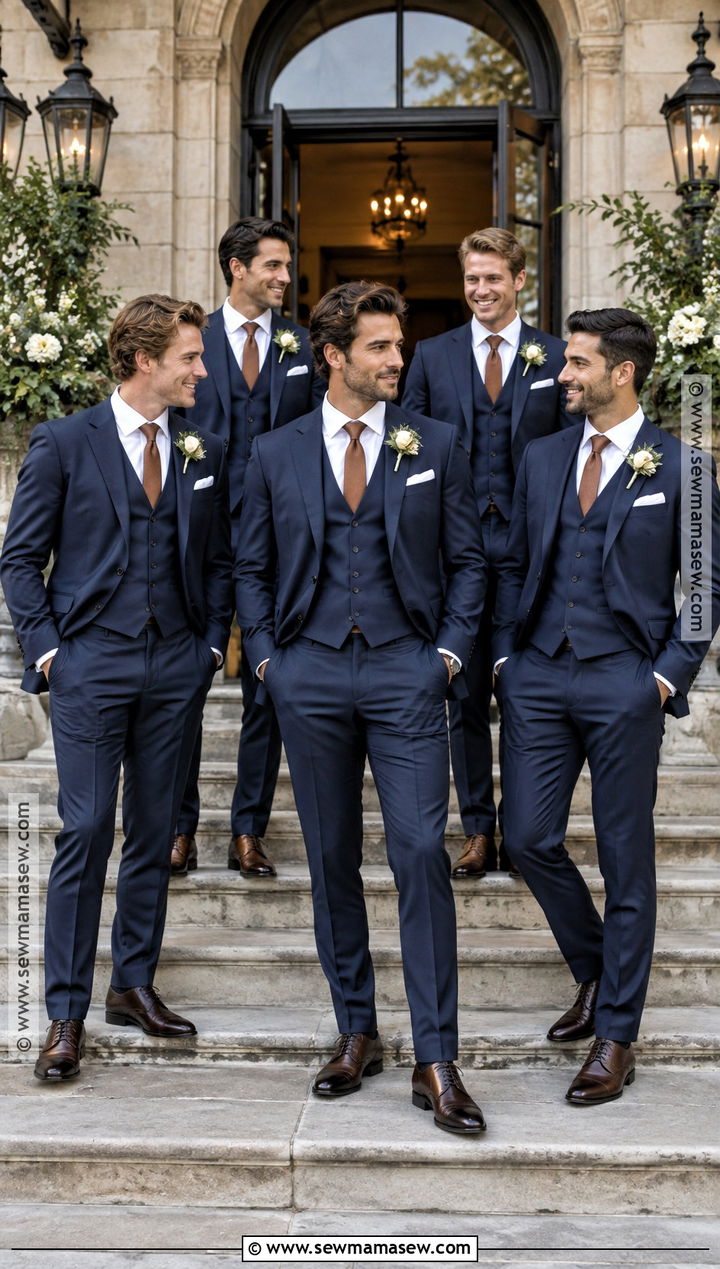
For a day with changing temperatures, the three-piece is the most practical suit here. The groomsmen wear jackets for the ceremony and formal photos, then take them off at the reception and still look finished in their waistcoats. White shirts, muted copper ties, dark brown oxfords and brown belts complete it. Pick a matte copper, because reflective satin in that shade starts to look like a prom tie. White pocket squares and cream boutonnieres stop the palette running too warm. It suits upscale barns, historic hotels and formal gardens, and the groom can take a patterned tie or a contrasting waistcoat. At fittings, I check that the waistcoat covers the trouser waistband with no shirt peeking between them, and that the trousers break neatly on the shoe.
12. Beige Groomsmen Suits With Dark Brown Accessories
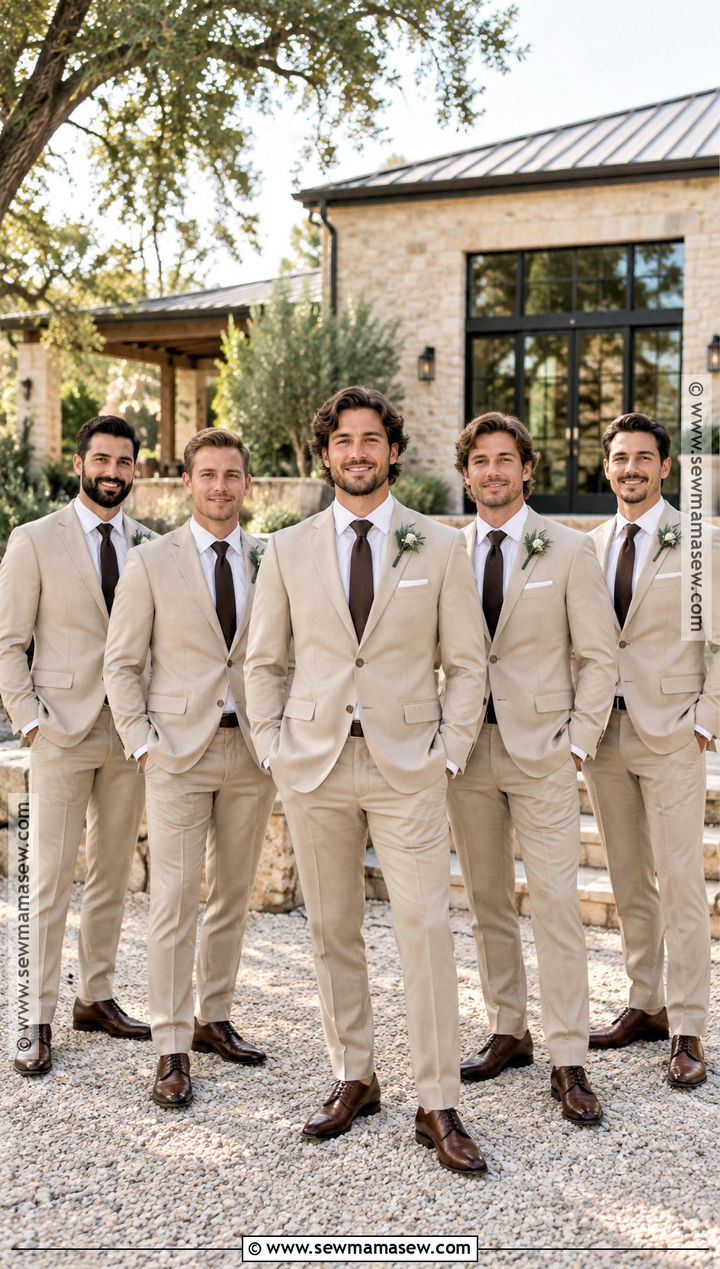
Beige keeps one foot in summer, which suits early September outdoors. The trick is grounding it. Matching beige two-piece suits go with white shirts, dark brown ties and dark brown shoes and belts, because without those dark accents beige drifts toward casual. Ivory pocket squares and minimal greenery finish it for outdoor estates, ranches, desert venues and daytime destination weddings. Pick a cloth with enough body that it doesn't collapse into creases after the ceremony. Before anyone buys, hold the swatch next to the bridesmaid colors in daylight; beige can lean yellow, gray, pink or green, and the wrong undertone makes one or the other look dingy. The groom can wear chocolate brown or a darker camel.
13. Black Groomsmen Suits With Gold Accents
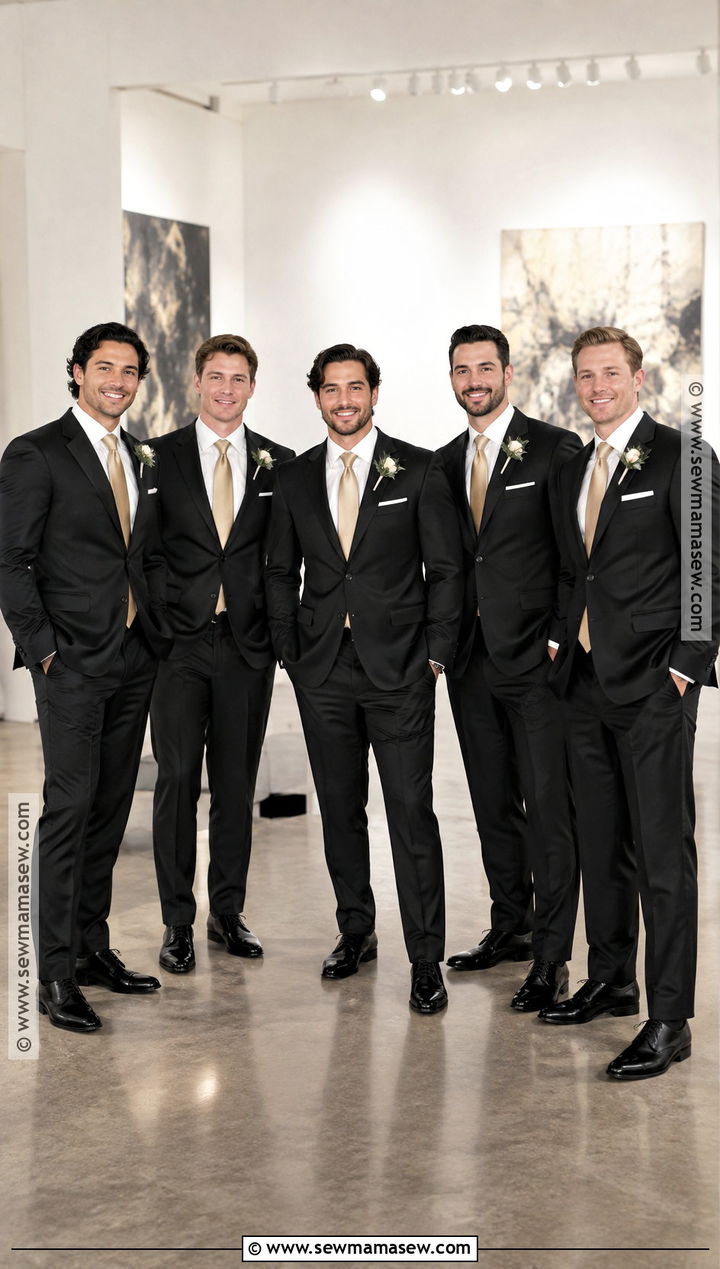
Black suits with gold accents give an evening wedding some of the drama of black tie without the tuxedo rental. Matching black two-piece suits, white shirts, black oxfords and black belts form the base, with muted gold or champagne ties instead of bright metallic ones. White pocket squares and small neutral boutonnieres keep it balanced, and it performs best at night in ballrooms, galleries, hotels or industrial spaces. The groom can wear a three-piece, an ivory dinner jacket or a subtly patterned tie. Gold is the accent most likely to go wrong when each man shops alone, since one tie turns out brassy and the next pale, so I always have the couple buy the ties together. The same goes for shoes: matte and patent black side by side look like a mistake.
14. Mixed Earth-Tone Groomsmen Suits
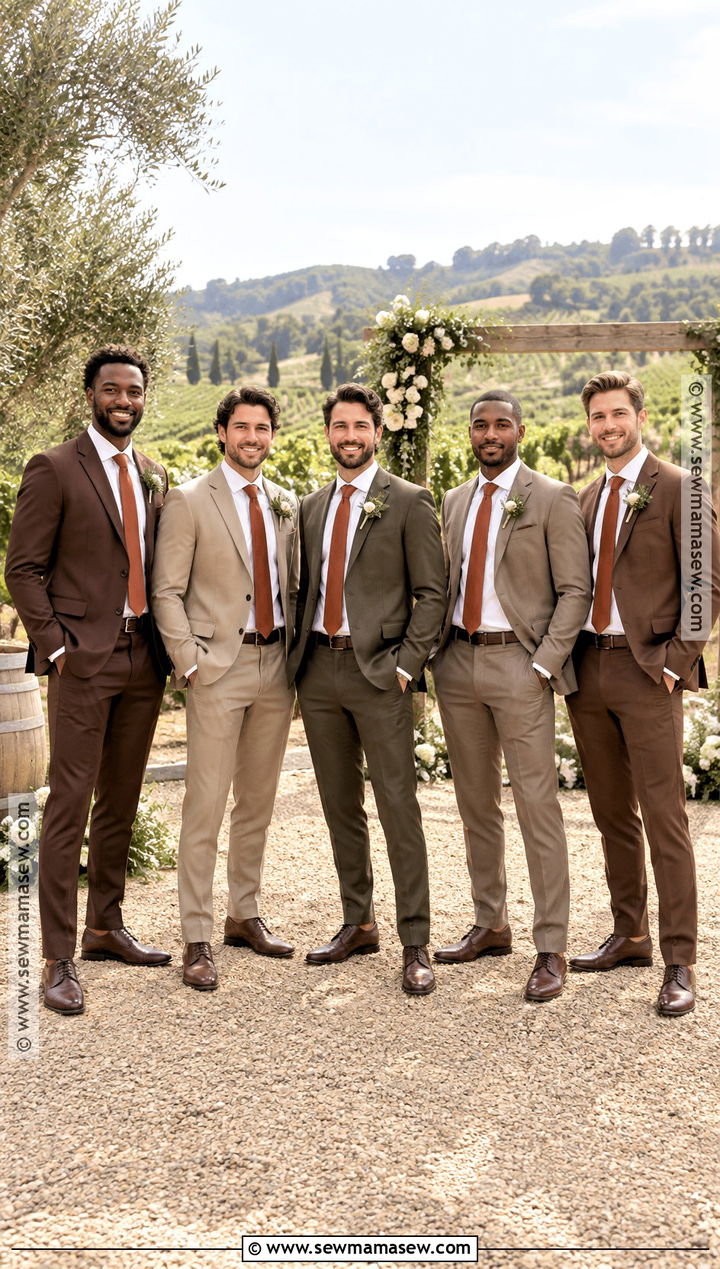
Mixed earth tones look modern when they're planned and chaotic when they aren't. I set a tight palette, such as chocolate, tan, taupe and muted olive, then hold everything else constant: white or ivory shirts, identical dark brown shoes and belts, and one shared tie color like rust or deep sage. Assign each man his suit color rather than letting the group choose, and lay the swatches out together in daylight before ordering. I also plan the lineup. Alternating light and dark suits along the row usually photographs better than clumping the pale ones at one end. The groom should wear the darkest or most structured suit, and identical boutonnieres and pocket-square folds make the variety read as intentional.
15. White Shirts With Suspenders And Dress Pants
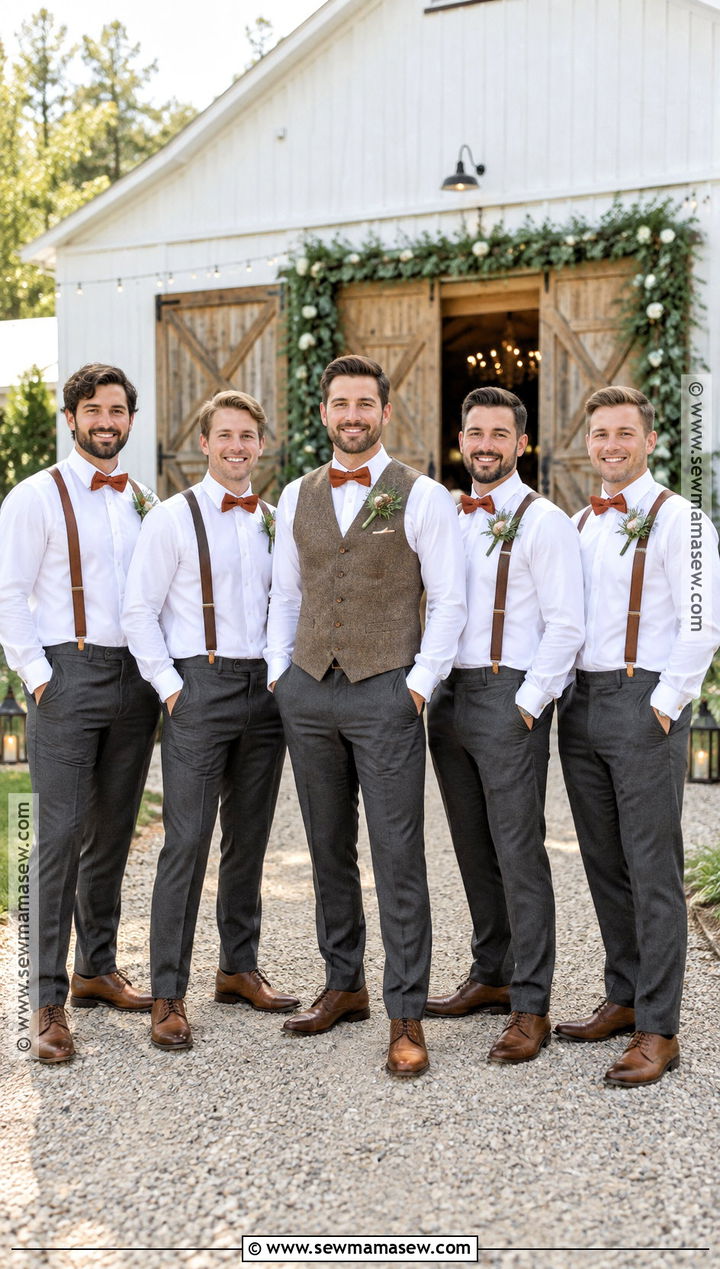
Not every September wedding needs a suit. For a relaxed barn, ranch or garden party, crisp white shirts with tailored charcoal or brown trousers, leather suspenders and polished brown shoes look coordinated, with muted rust bow ties or long ties and simple greenery boutonnieres. A belt and suspenders together is redundant, so only add a belt when the suspenders are clip-on and purely decorative; button-on braces need buttons sewn inside the waistband, which any tailor can do. Keep sleeves down through the ceremony and photos, then roll them neatly at the reception. This is wrong for a formal or black-tie dress code. With no jacket to hide anything, pressed shirts and properly hemmed trousers carry the whole outfit, and a vest or jacket sets the groom apart.
Wool Weight for a Day That Starts Warm and Ends Cool
Suit cloth is described by weight, and that number tells you more about September comfort than the color does. Lightweight tropical wools are open weaves that let air through; flannels and tweeds are denser and trap warmth. For an outdoor afternoon ceremony I aim for a light worsted and save flannel or tweed for high-altitude venues and evening-only celebrations.
Construction matters too. A half-lined jacket lets heat escape through the back, while a fully lined one holds it in, so ask about lining when you compare suits that look identical on a screen.
- A thin V-neck undershirt close to the wearer's skin tone absorbs sweat without showing through a white shirt.
- Poplin dress shirts breathe better than heavier oxford cloth.
- Jackets go on last, right before the processional, and come off between photo setups.
- Waistcoats keep the look finished once the jackets are hung up at the reception.
How Different Should the Groom Look?
Nearly every combination above offers the groom a way to stand apart, and the right amount is smaller than most couples expect. One change is enough: a waistcoat, a patterned tie or a different jacket color. Two or three changes at once start to look like he's dressed for a different wedding. In group photos the eye finds the man who differs immediately, so the change only needs to be visible from across the room. I usually pick the waistcoat, because it stays visible even after every other jacket comes off at the reception.
Settle the Fabric, Then the Color
If I were planning a September crew from scratch, I'd start with the venue and the ceremony time, then the fabric weight, and only then the color. Navy, charcoal and black are the safe foundations; olive, burgundy, chocolate and tan carry more autumn. Shirts, ties and shoes should support the suit rather than compete with it. Buy from one retailer or one fabric collection where you can, book alterations early, and send every groomsman a photo of exactly what he's wearing, down to the socks. A consistent fit does more for the photos than any accent color ever will.
Related posts: