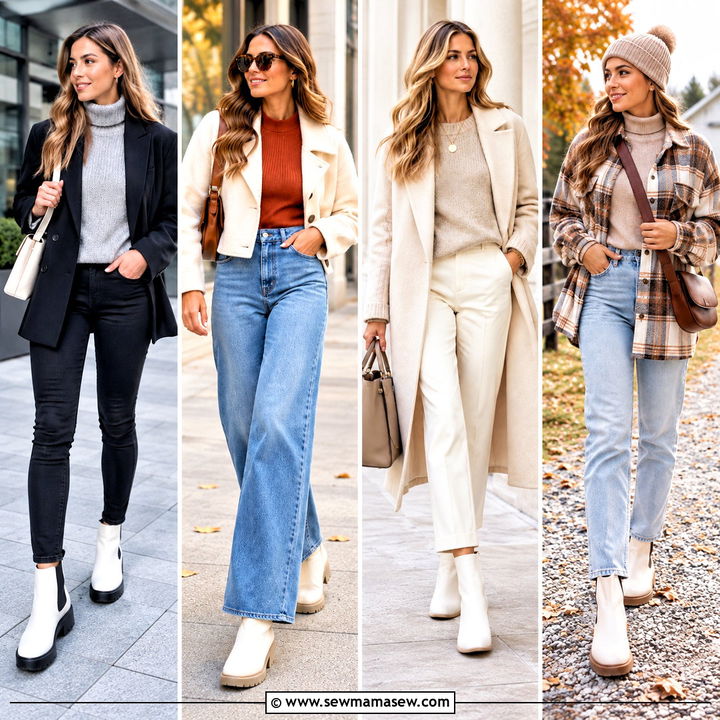
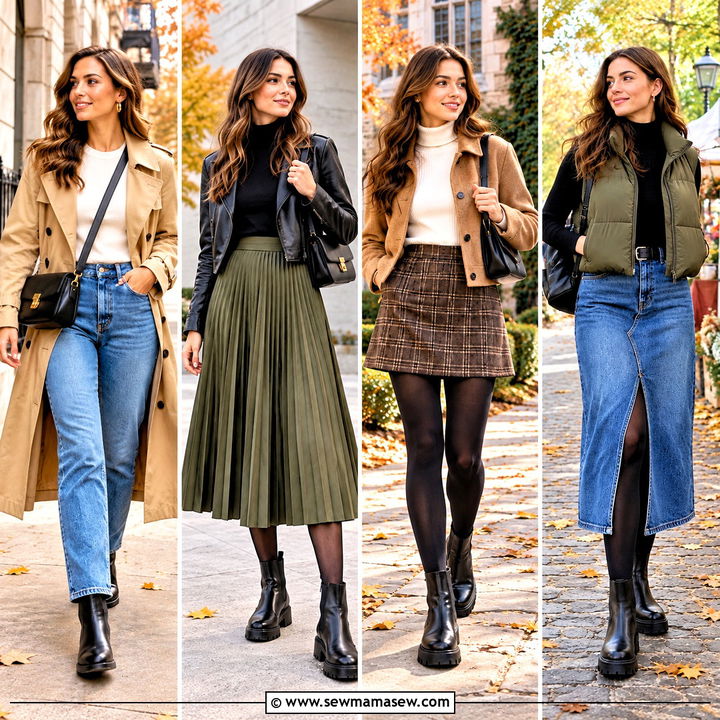
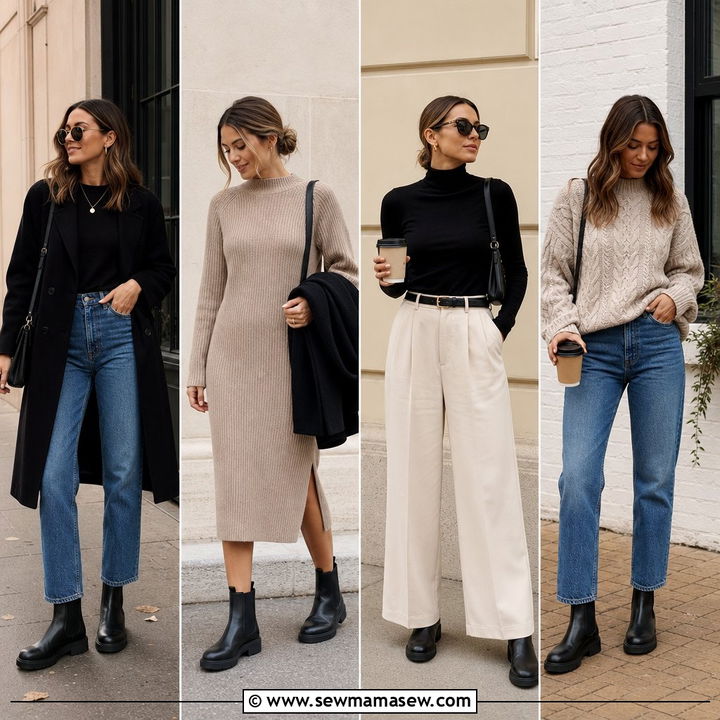
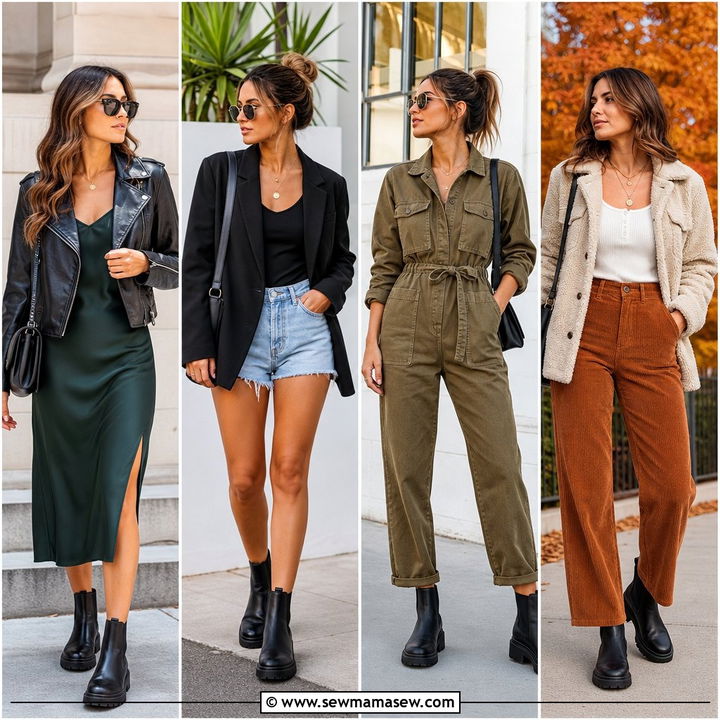
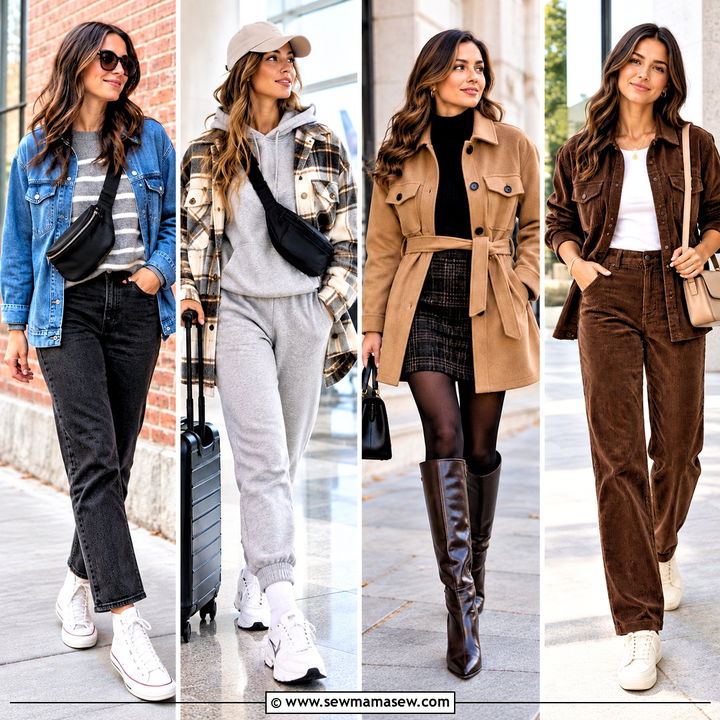
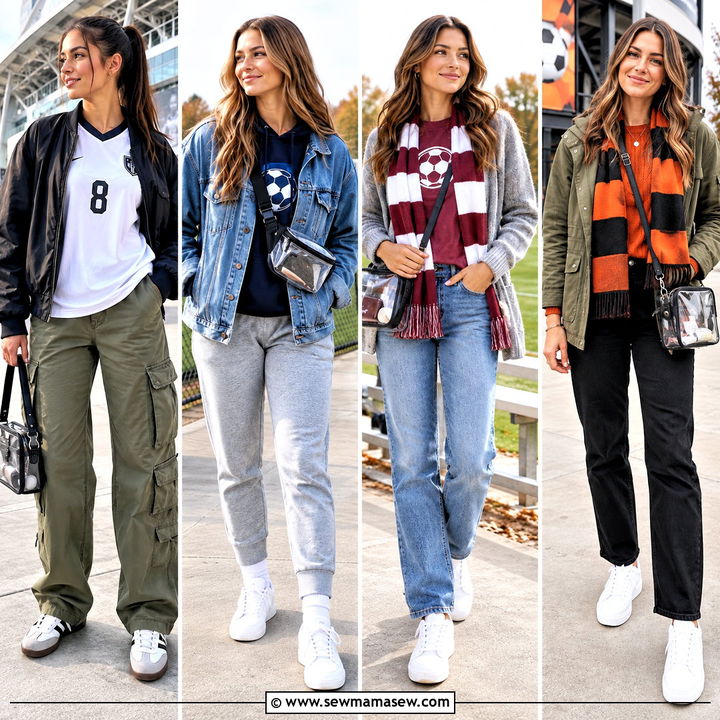
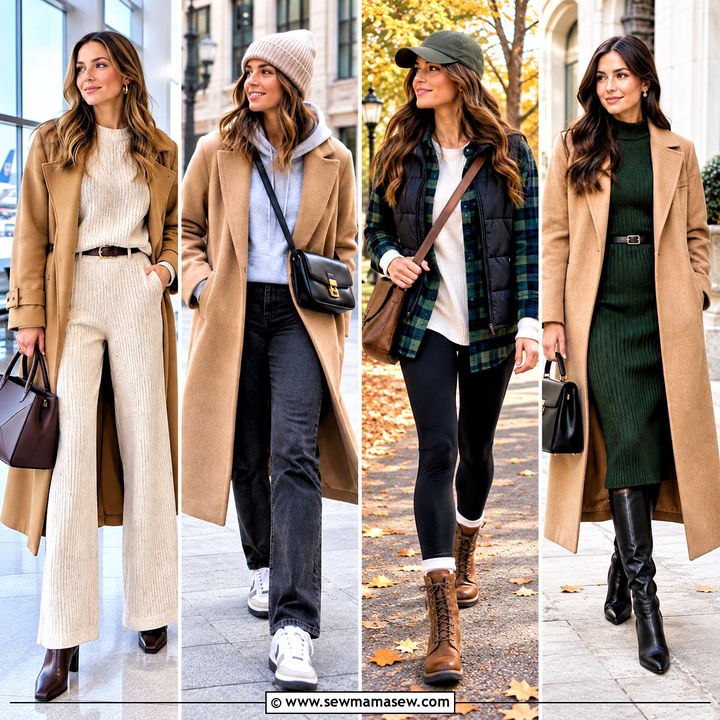
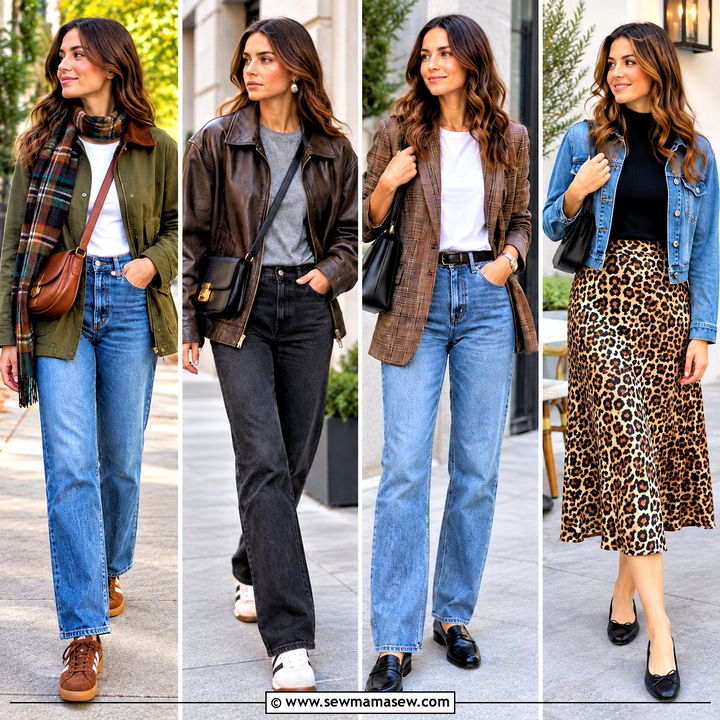
Chelsea boots are the pair I'd keep if I could only own one boot for fall. The elastic side panel lets them slide on and off, the low shaft sits under most hems, and they go with jeans, trousers, midi skirts and knit dresses. The part that takes practice is the hem. Most outfits that look off with Chelsea boots fail at the ankle, where denim bunches over the shaft or a cropped trouser stops at the wrong spot. The other thing to watch is weight: a chunky lug sole needs something with a little volume above it. The twenty outfits below cover both sleek leather and heavier platforms, with what I'd check on each one.

How a Chelsea Boot Should Fit Through the Instep
Because a Chelsea boot has no laces, the fit can't be adjusted after you buy it, so I'm stricter in the fitting room than with any other boot. The elastic gore should feel snug when you pull the boot on. It loosens with wear, and a pair that feels comfortable on day one often ends up sloppy by spring.
- Your heel should lift only slightly when you walk. A lot of slip at the back means blisters and a boot that flaps.
- The top of your foot should feel held, not pressed. Pressure on the instep usually gets worse, not better.
- Leave a thumb's width at the toe for thin socks, since you can't tighten the boot to make up for extra room.
- Try them on in the afternoon, when feet are slightly larger, with the socks you'll actually wear.
I'd also look at the shaft opening. A narrow one suits skinny jeans and tights, while a roomier one sits better under straight and wide legs.
1. Straight Leg Jeans And Black Chelsea Boots
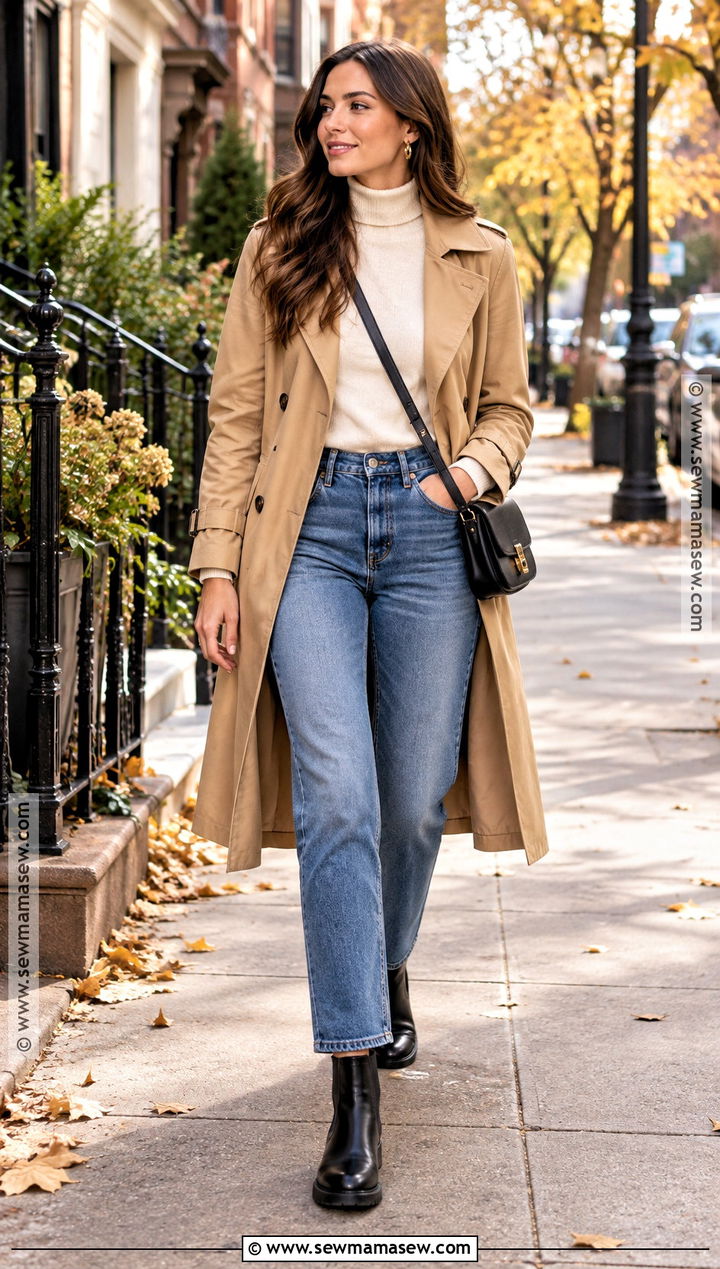
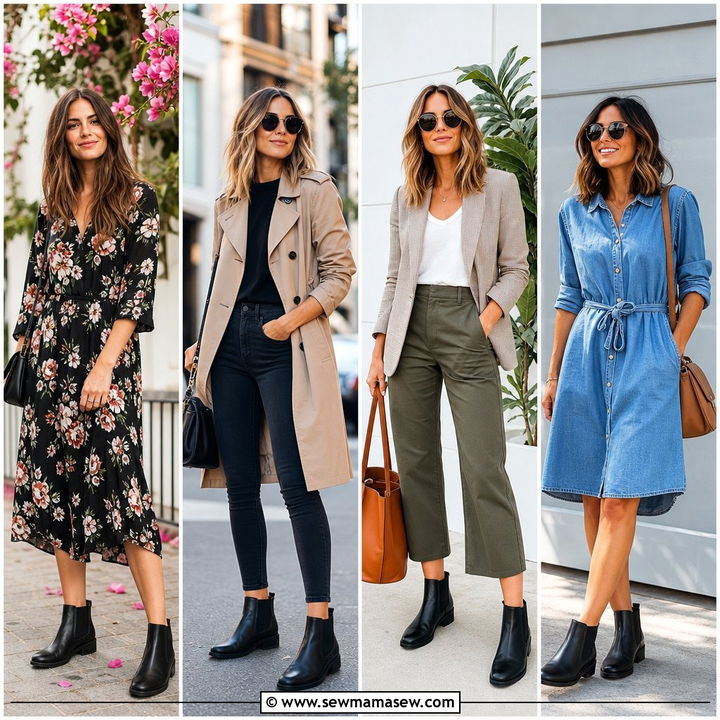
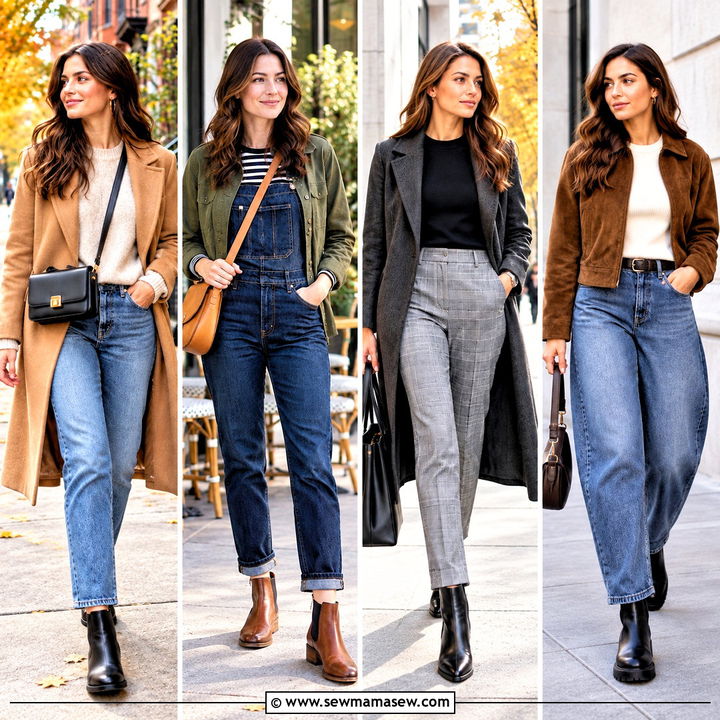
This is the pairing I'd start anyone on. Ankle-length straight jeans should end just above the boot or barely kiss the shaft; if they pile up, they're too long for this shoe. A fitted cream turtleneck balances the looser denim, and a camel trench adds structure on top. I match the crossbody to the boots in black leather so the outfit reads as one thought. Dark wash looks dressier, medium wash more weekend. With a chunky sole, go for a slightly wider leg opening so the boot doesn't look like it's swallowing the jeans. Add a plaid scarf when it gets cold.
2. Skinny Jeans And Brown Suede Chelsea Boots
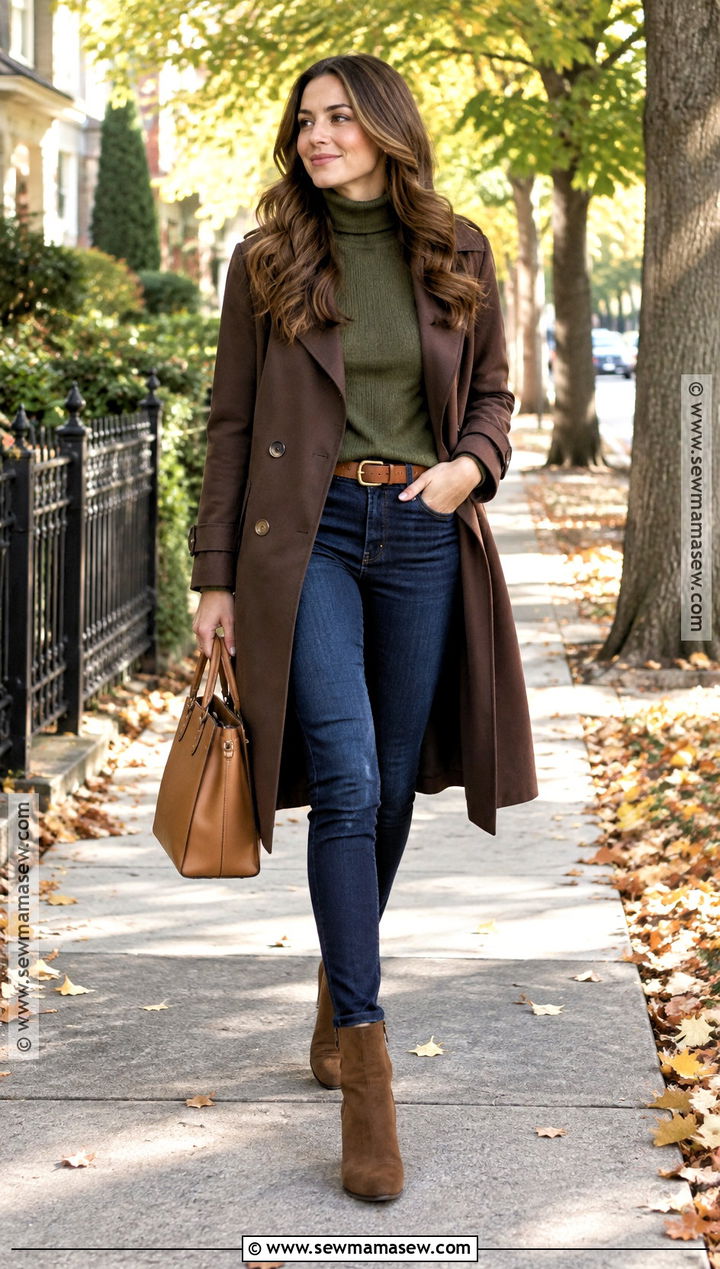
Skinny jeans tuck neatly into a Chelsea boot only if the shaft is slim; a wide shaft leaves a gap that shows the bunched denim. I'd pair dark indigo skinnies with brown suede boots, an olive turtleneck and a chocolate trench. Suede has a softer, napped surface, so it sits naturally next to knits and casual coats rather than sharp tailoring. Tie it together with a tan bag and a leather belt. For warmth, I wear thin merino socks; thick socks push against the elastic and stretch the boot out of shape over time.
3. Wide Leg Jeans And Platform Chelsea Boots
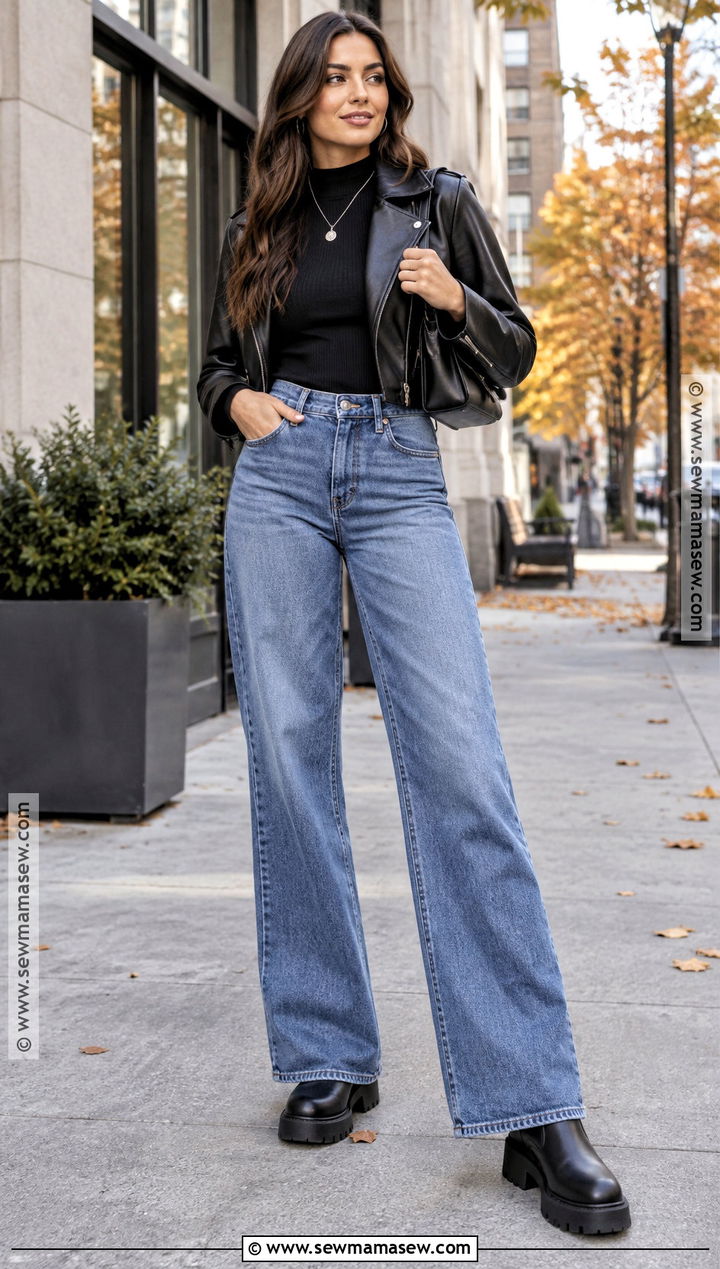
Wide-leg jeans and Chelsea boots do work together, as long as the boot has a platform to hold the hem off the ground. I check the length standing in the boots: the jeans should nearly skim the floor but never sit under the heel, where they'll fray within weeks. A fitted ribbed top marks the waist, and a cropped leather jacket stops above the hips so the volume stays in the legs. If you're petite, a moderate platform and a short jacket give you the longest line. Silver jewelry and a small shoulder bag suit black leather.
4. Black Jeans And Lug Sole Chelsea Boots
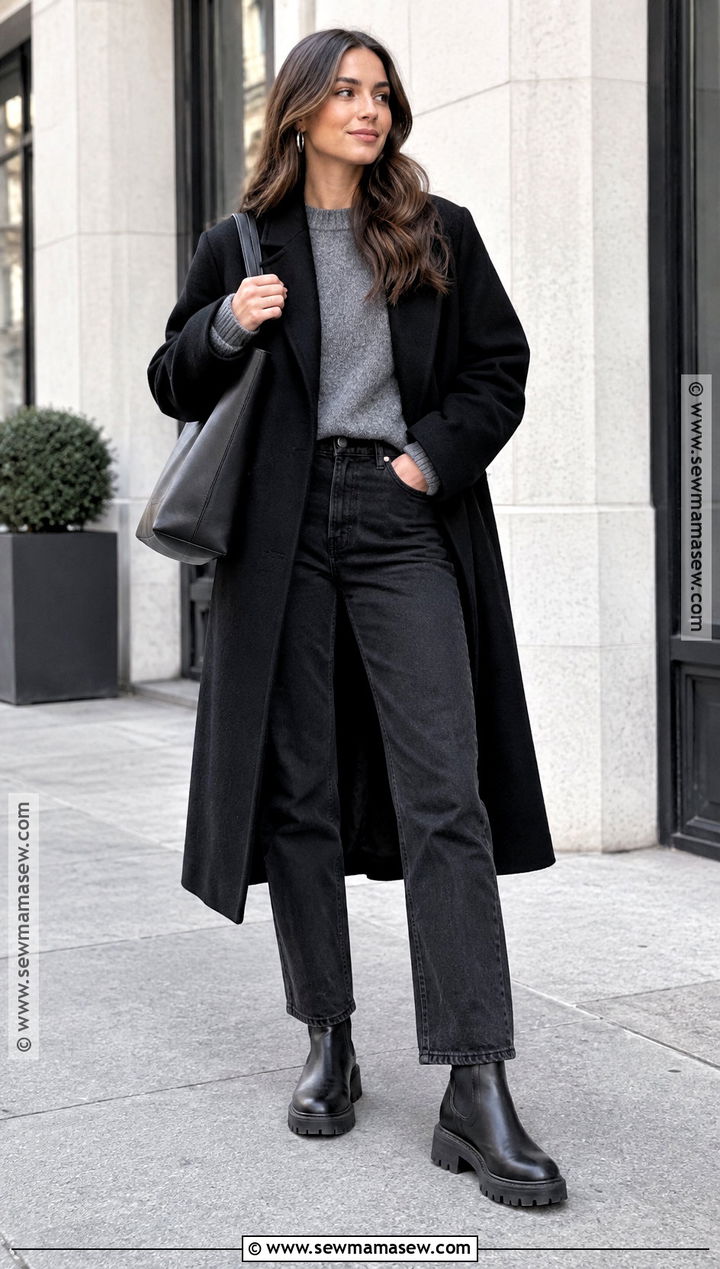
Lug soles look heavy on their own, but on black jeans they blend into one dark column, which is why I like them together. Slim or straight black jeans should leave a little of the shaft showing. A soft gray sweater adds contrast, with an oversized black wool coat over it. I keep a slight front tuck so the waist doesn't disappear under the long coat. Burgundy, forest green or deep blue can replace the gray if you want color. A charcoal tote and silver hoops keep the palette cool.
5. Leggings And Chunky Chelsea Boots
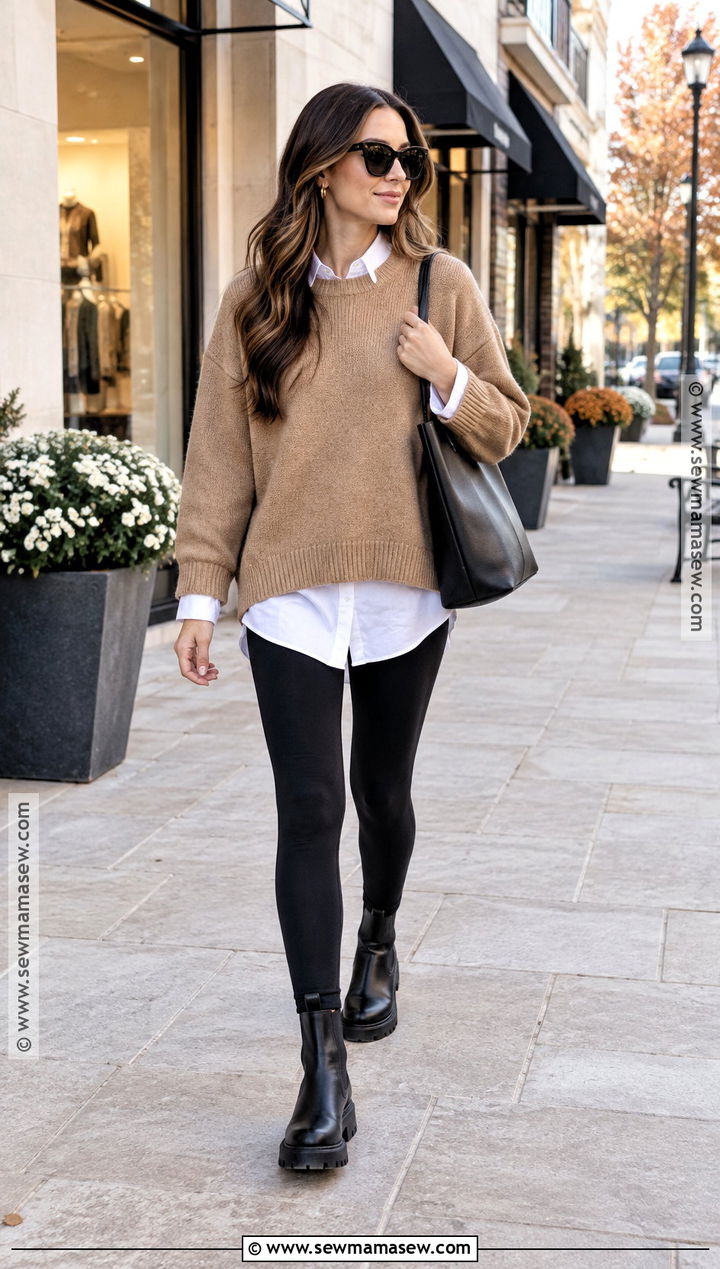
Leggings with chunky Chelsea boots only look finished if the top half covers the hips. I layer a long white button-down that falls past the seat, then an oversized camel sweater that ends a few inches higher, so the collar, cuffs and shirttail show. The leggings matter: thick, matte fabric looks like clothing, while thin shiny athletic leggings show every line and read as gym wear. Black lug-sole boots handle wet pavement well. A structured black tote, dark sunglasses and gold studs finish it.
6. Sweater Dress And Black Chelsea Boots
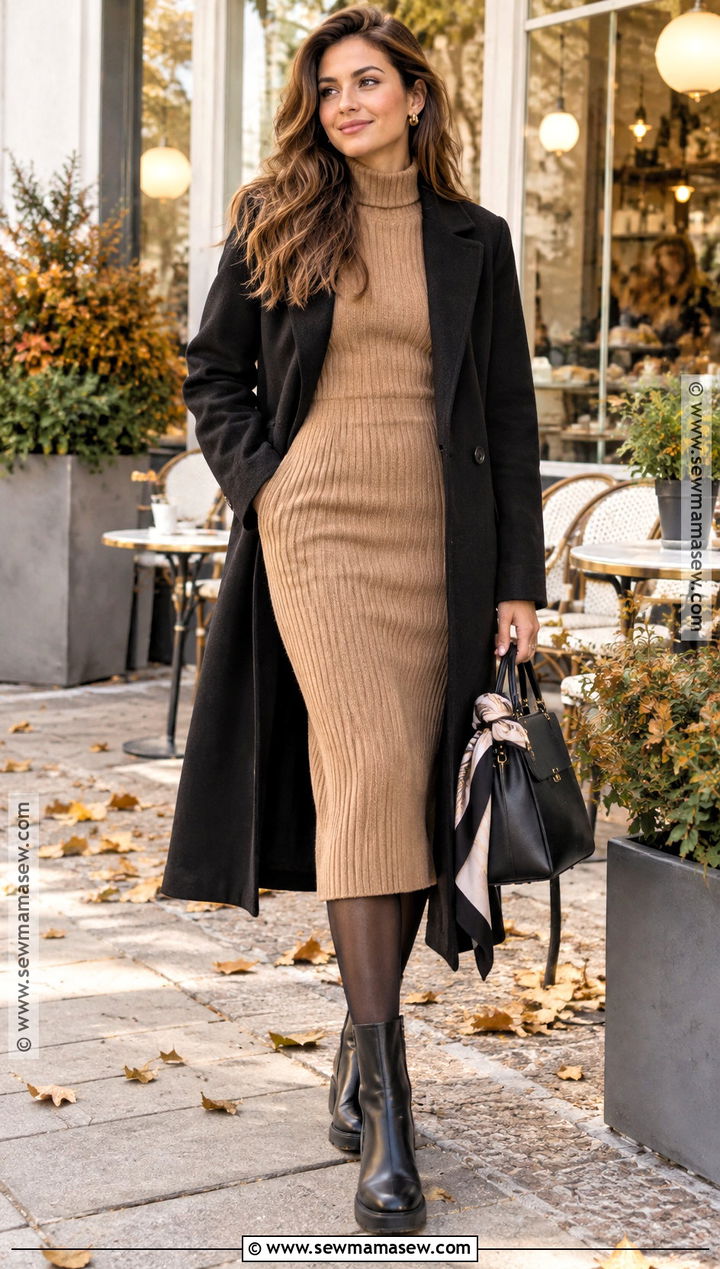
A ribbed sweater dress and black Chelsea boots is one of my favorite low-effort outfits, because it's two pieces and a coat. I'd go midi length in camel, oatmeal, burgundy or forest green. On cold days, black tights close the gap between hem and boot so the leg reads as one line. A long black wool coat adds height. With a fitted dress, a sleek boot keeps everything narrow; with a looser knit, a lug sole gives the outfit a sturdier base. A narrow belt is optional, and a light scarf and small earrings are enough.
7. Floral Midi Dress And Chelsea Boots
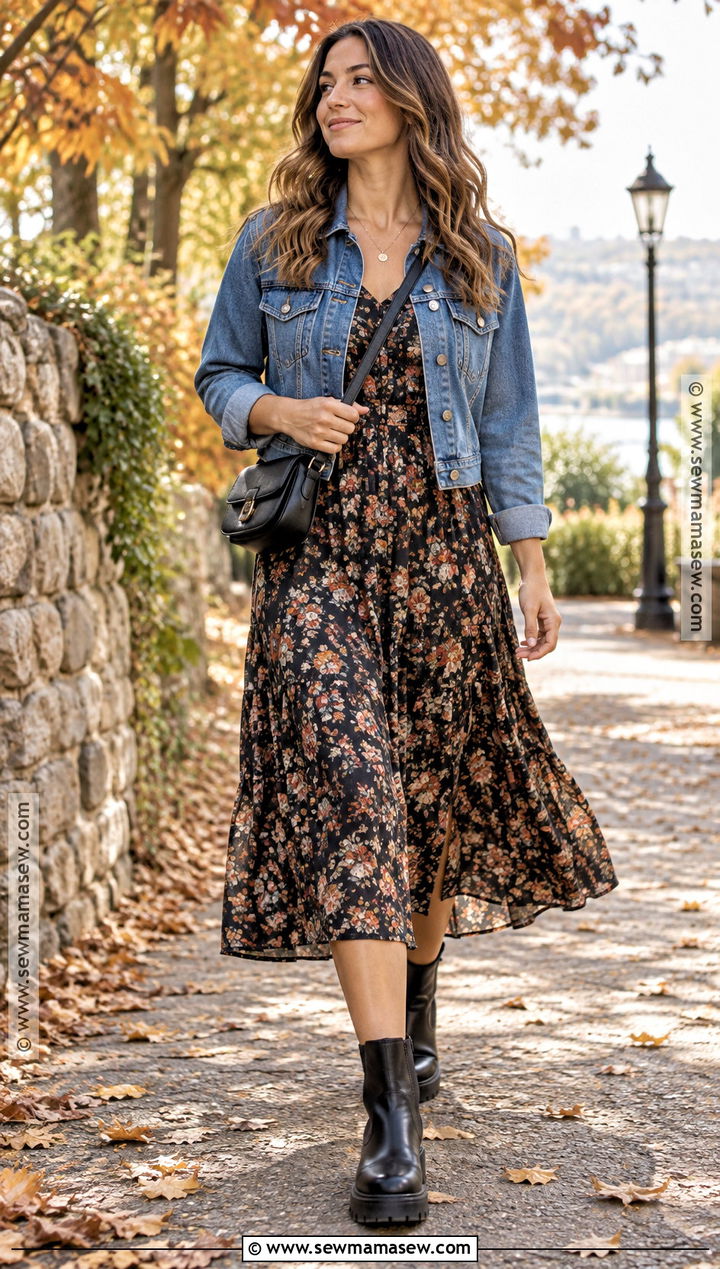
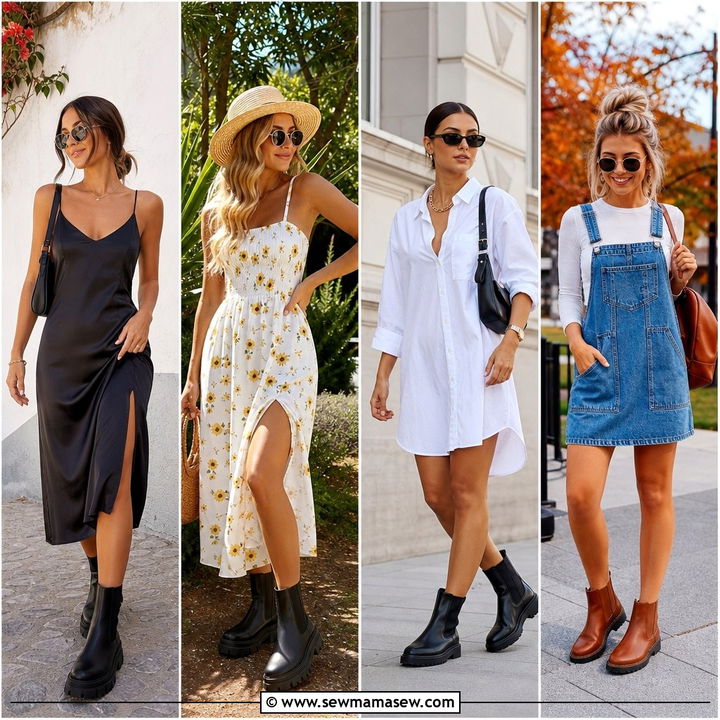
A dark floral midi dress makes the jump from late summer to fall easy. I pick long sleeves and a deep base color, navy, black, rust or green, so the print looks seasonal. With a floaty skirt, the boot needs some sole to it; a very slim boot under lots of fabric looks undersized. A cropped denim jacket stops the long hem from overwhelming a smaller frame. Once it gets colder, opaque tights and a wool coat take over. A compact crossbody and a simple pendant finish it.
8. Mini Skirt And Chelsea Boots With Tights
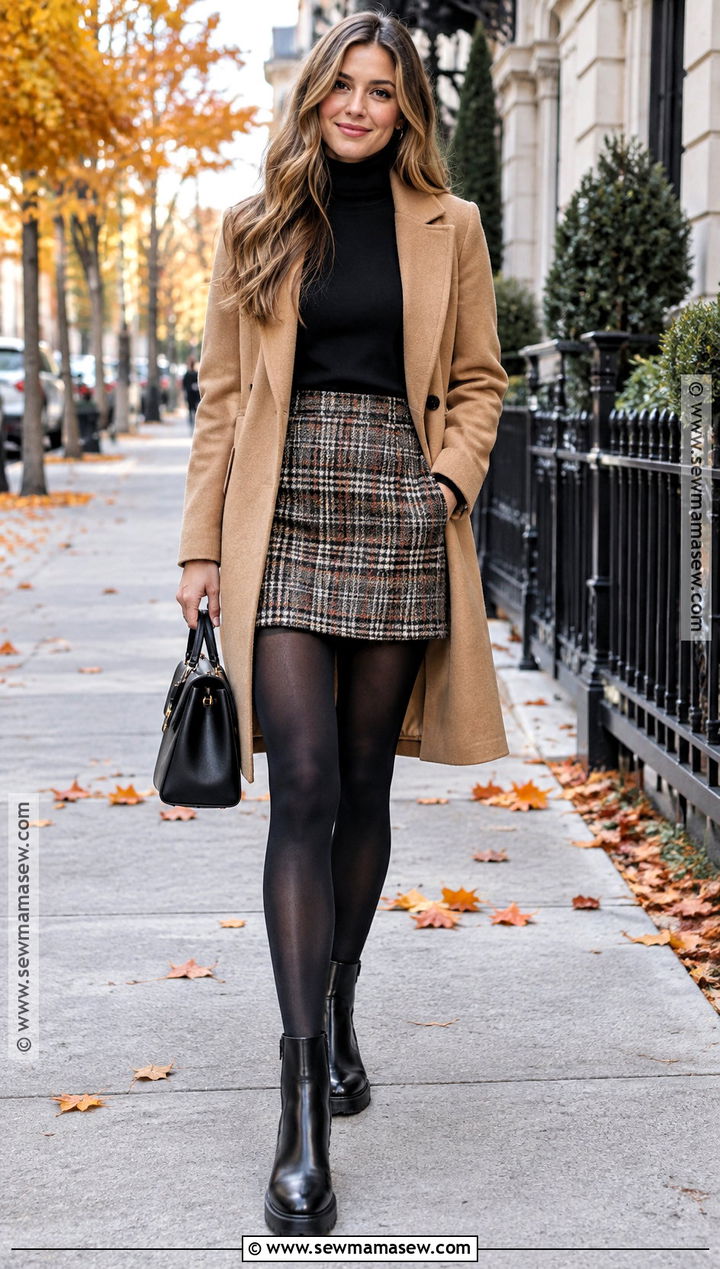
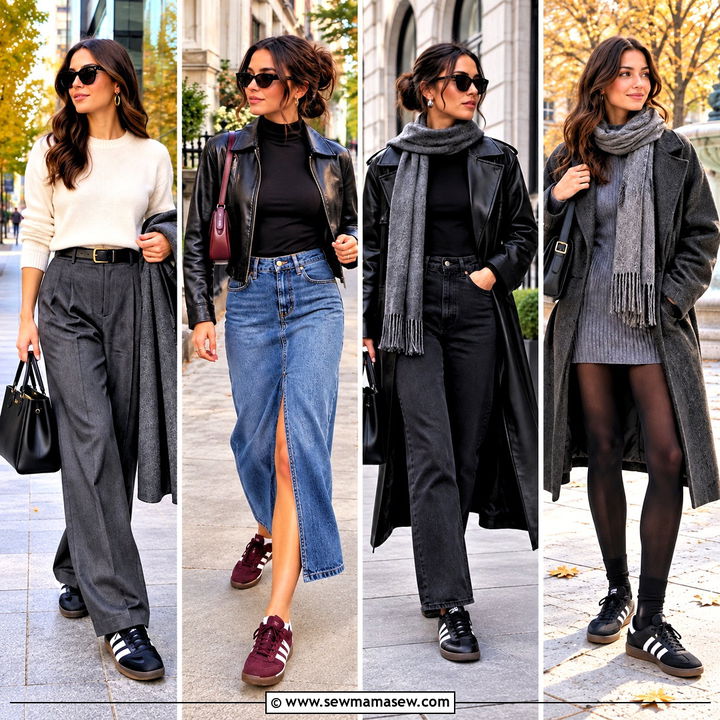
Mini skirt, tights and Chelsea boots is an old formula, and it still works at any age if you adjust the hem. I'd pick an A-line wool skirt, solid or plaid, with opaque black tights and sleek black boots. Matching tights to boots makes the leg read as one continuous line, which is the whole trick. A fitted black turtleneck and a tailored camel coat that falls past the skirt hem add coverage and balance. If very short feels wrong, a skirt that lands a few inches above the knee keeps the same look. A small top-handle bag keeps it polished.
9. Satin Midi Skirt And Chelsea Boots
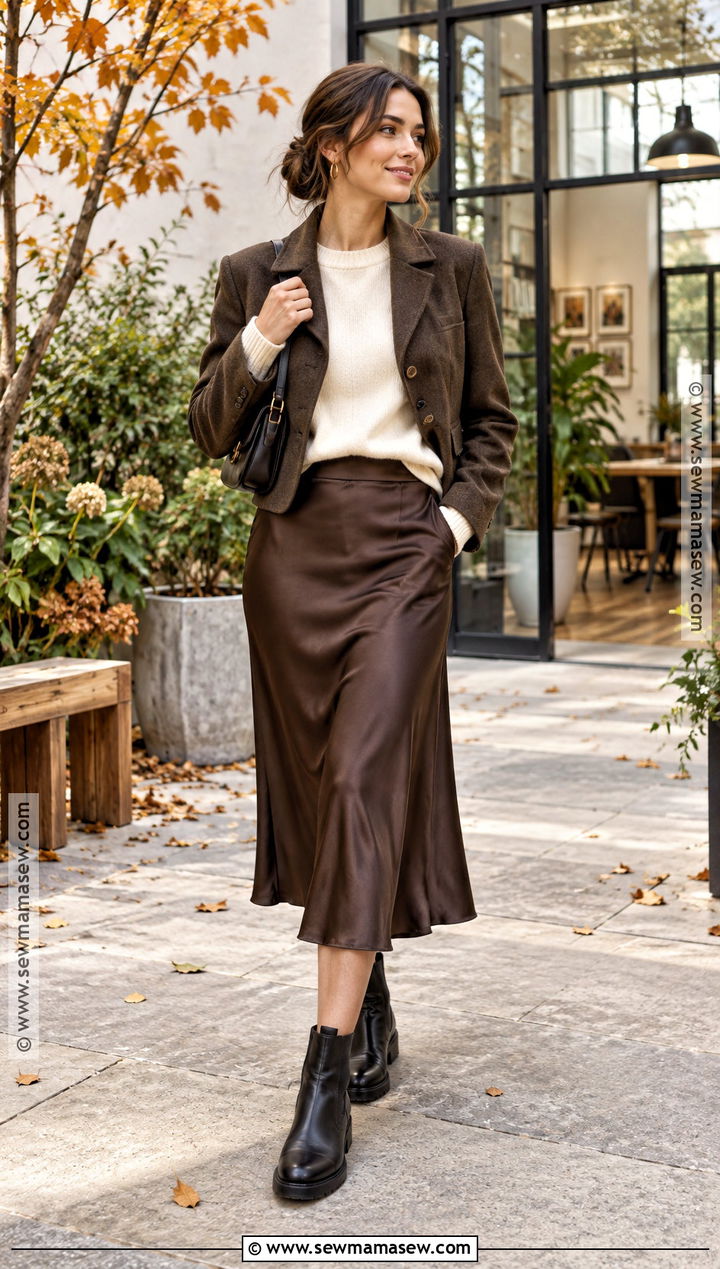
Satin and sturdy leather look like an odd pair until you see them together; the contrast is what makes it work. A bias-cut skirt drapes and moves, so I keep the boot clean-toed with a moderate sole rather than a heavy lug that would fight the fluid fabric. Chocolate, deep olive, charcoal or burgundy satin pairs well with a cream sweater, loosely front-tucked. A cropped black jacket or a blazer adds structure. Satin shows every line underneath, so smooth layers help. A compact shoulder bag and small hoops are enough.
10. Denim Midi Skirt And Chelsea Boots
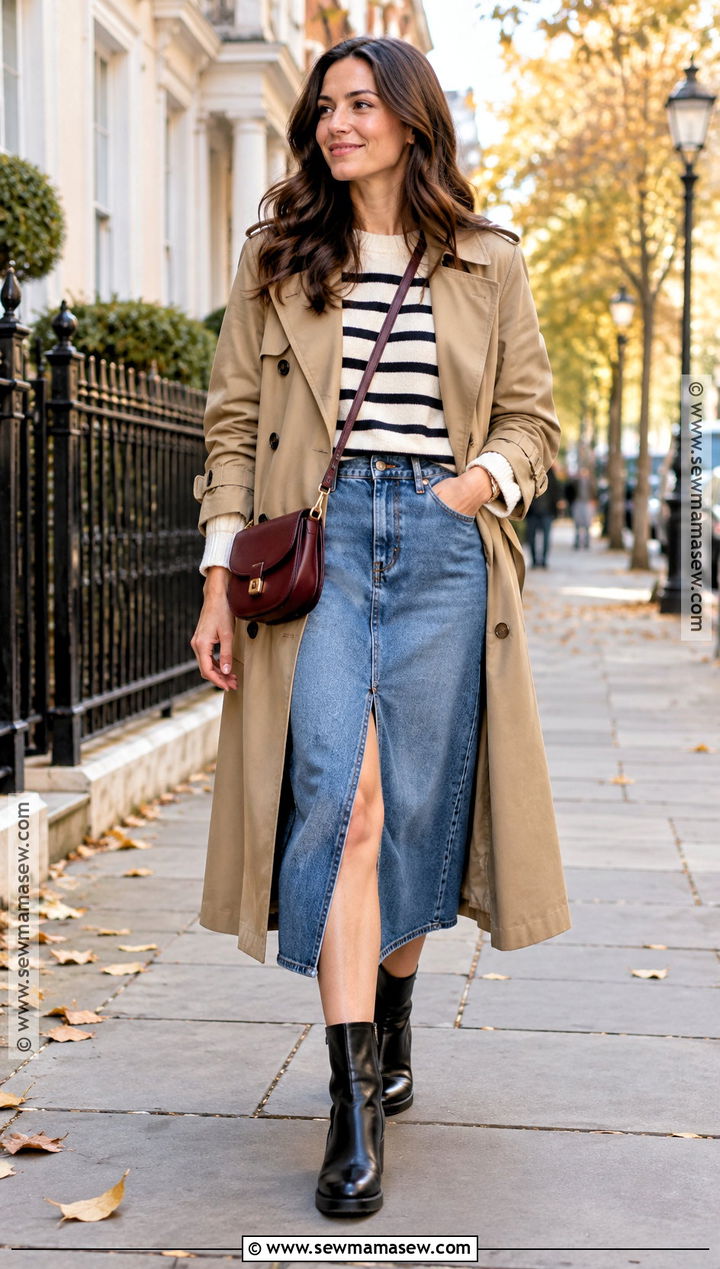
A denim midi skirt is my in-between when jeans feel too casual. I always check for a front or back slit, because a straight denim midi without one restricts your stride in ankle boots. A striped crewneck tucked into the high waist, black Chelsea boots and a khaki trench make a practical outfit, and a burgundy or dark green crossbody adds color. Sleek boots suit straight skirts; chunky boots suit fuller A-line shapes. On cold days, tights in the same color as the boots keep the line clean.
11. Tailored Trousers And Chelsea Boots
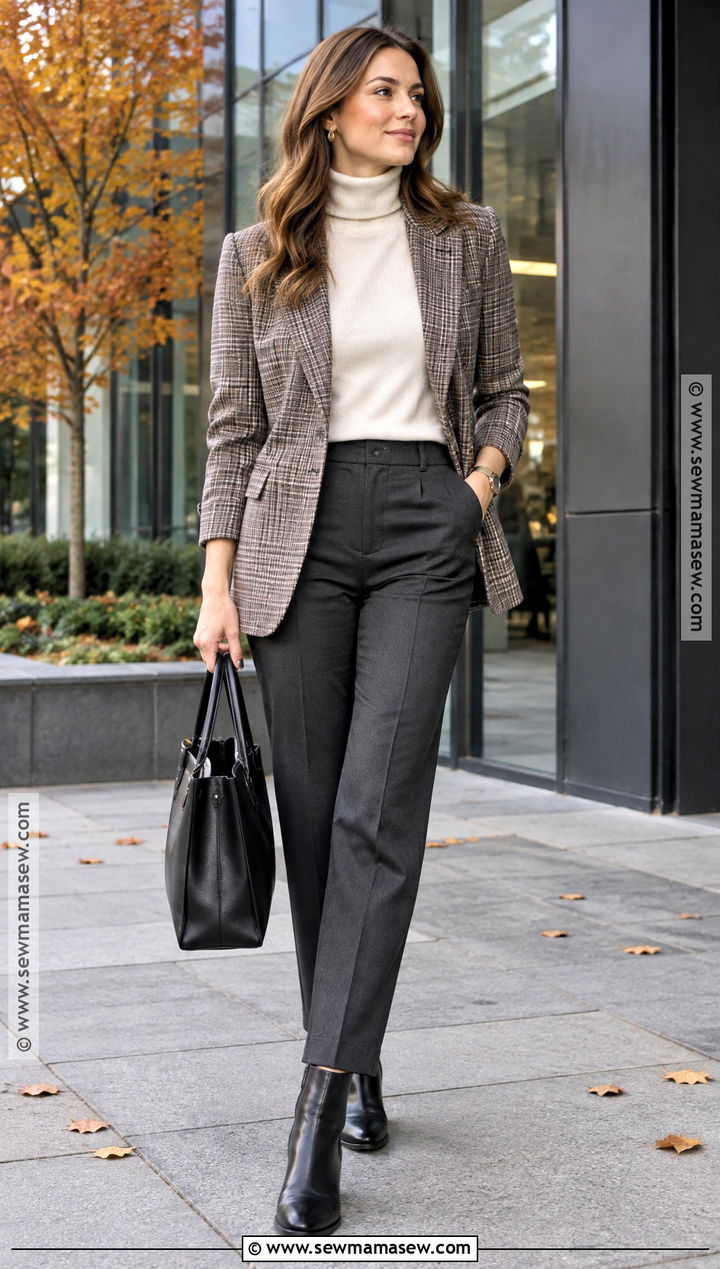
For work, I pair tailored ankle-length trousers with a slim leather Chelsea boot and a low heel. Black, charcoal or a subtle check all suit it, with an ivory or camel fine-knit turtleneck and a structured blazer. The detail I check in the mirror is where the trouser ends. If it stops at the widest part of the boot shaft, the leg looks cut in half; a narrow opening that falls just over or just above the boot looks deliberate. A medium leather tote, a watch and small earrings keep the outfit office-ready and comfortable for a long day on your feet.
12. Cropped Pants And Chelsea Boots With Trench Coat
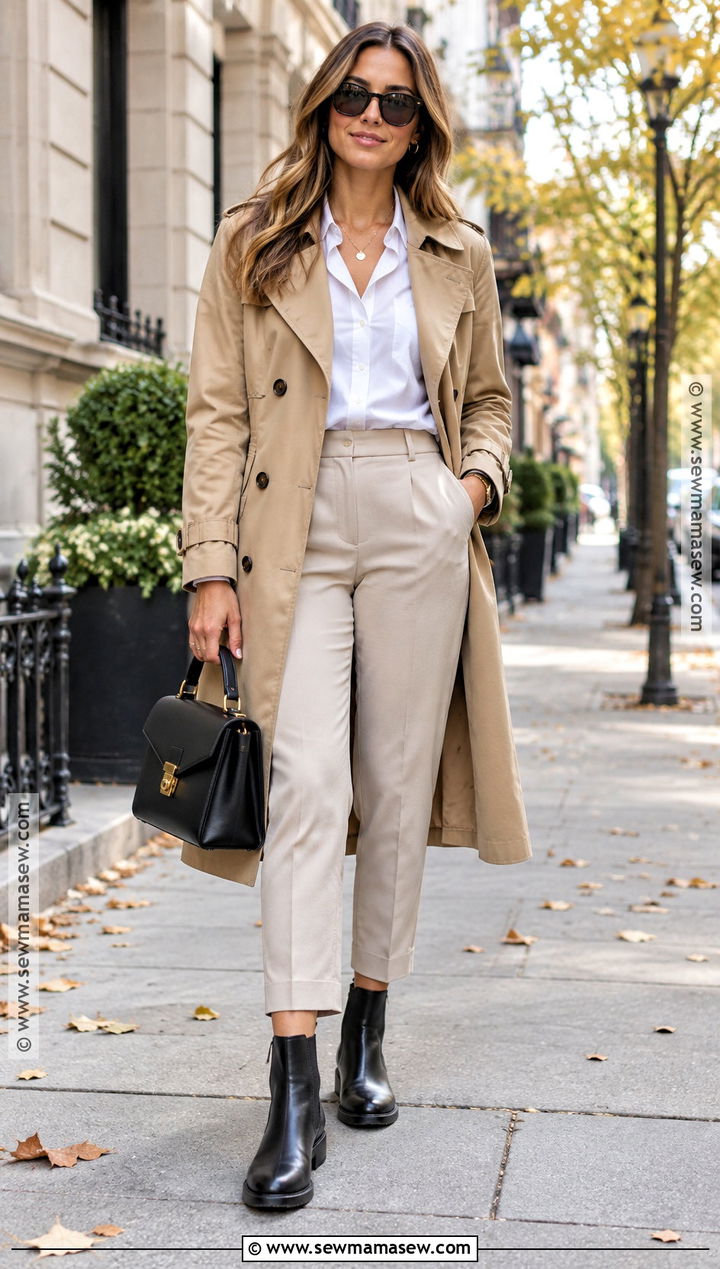
Cropped trousers are an early-fall choice, when the air is cool but not cold. I'd go straight cropped pants in beige, navy or olive with a tucked white button-down, a tan trench and black leather Chelsea boots. The hem should land close to the boot, leaving just a sliver of ankle; if you'd rather show none, thin socks in the pant or boot color hide it. Defined waist, ankle and outer layer make this one flatter most body types. A structured satchel and gold jewelry finish it, with the trench sleeves pushed up a little.
13. Leather Pants And Chelsea Boots
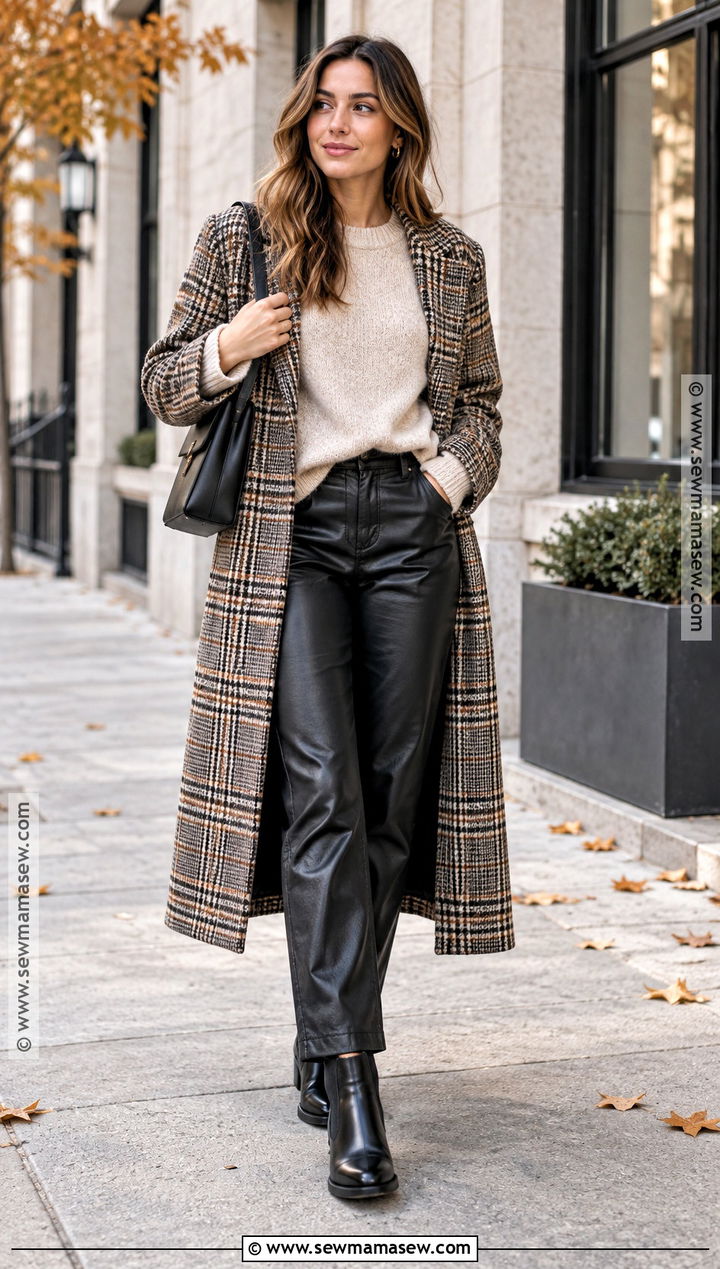
Leather pants and Chelsea boots can look severe, so I soften the top half. Straight or slim faux-leather pants in black or dark brown go with an oversized oatmeal sweater, front-tucked, and boots in the same color as the pants. A long plaid coat brings in pattern. The rule I follow is one shiny surface at a time: glossy pants look better with matte boots, or the other way round. If slim leather pants feel stiff, a straight leg with some give at the waist is more comfortable for a full day.
14. Corduroy Pants And Brown Chelsea Boots
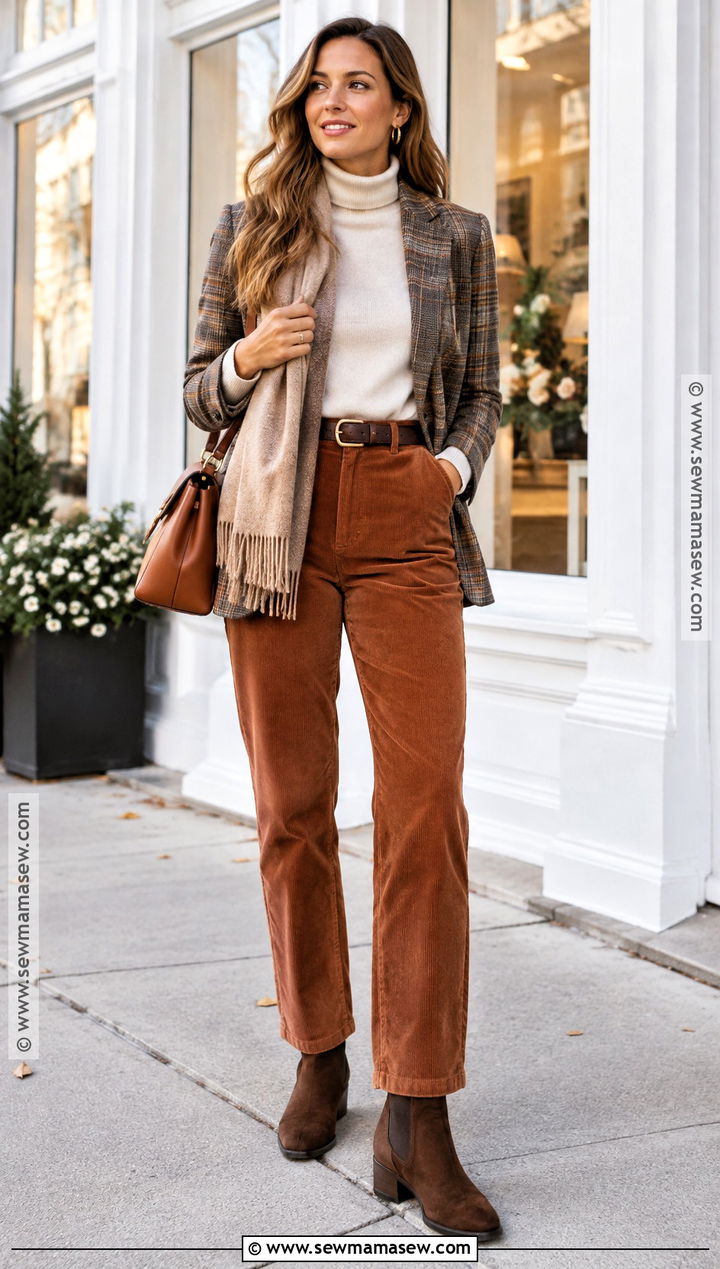
Corduroy and brown Chelsea boots feel like fall in fabric form. I'd choose high-rise straight-leg cords in rust, olive, camel or cream with dark brown leather or suede boots, an ivory turtleneck and a plaid blazer. The wale changes the mood: fine wale has a smooth, dressier look, wide wale is cozier and more casual. A cognac bag and belt can sit close to the boot color without matching exactly. A slight crop pairs neatly with a slim boot. Finish with gold earrings and a neutral scarf.
15. Cargo Pants And Chunky Chelsea Boots
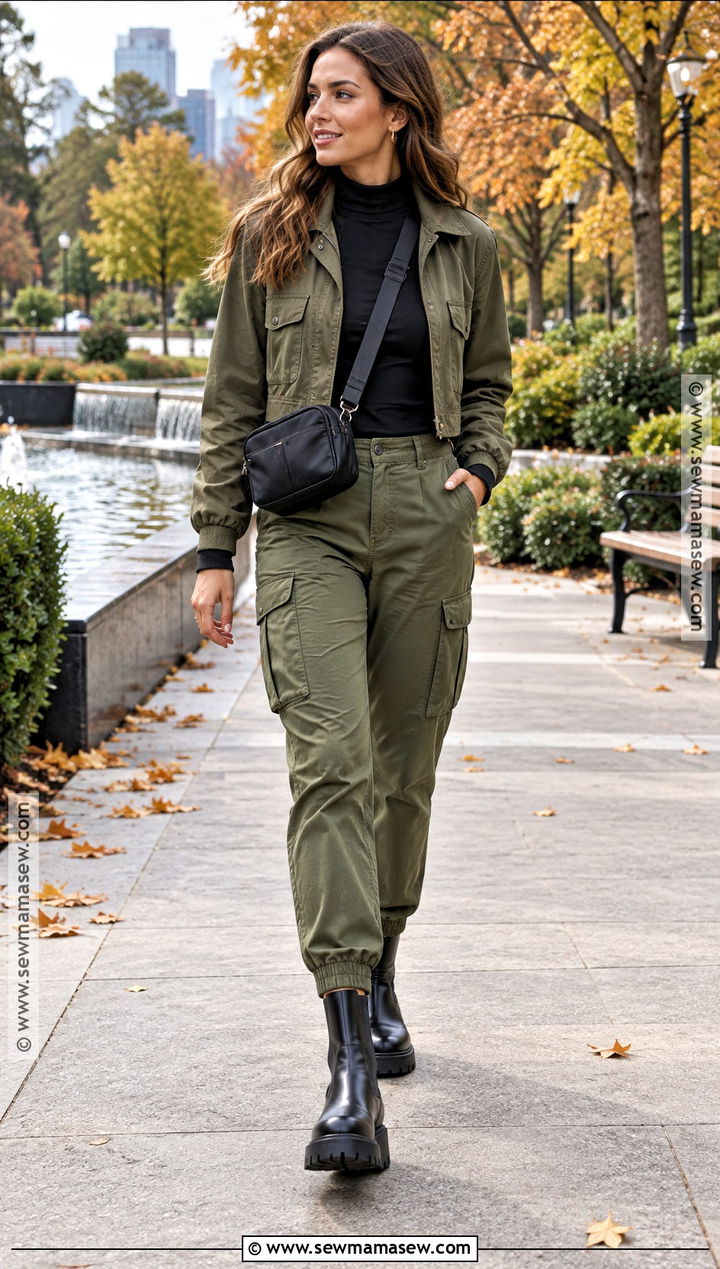
Cargos already carry a lot of bulk at the thigh, so I keep everything above them fitted. Olive, khaki or black cargos with a straight or tapered leg pair well with a long-sleeve top or bodysuit and a cropped utility jacket or bomber. Black lug-sole boots match the utilitarian feel. The hem can sit above the boot or tuck lightly behind the shaft, but heavy gathering at the ankle makes the whole outfit look sloppy. A nylon crossbody keeps your hands free, and small hoops or a cap finish it.
16. Monochrome Beige Outfit With Chelsea Boots
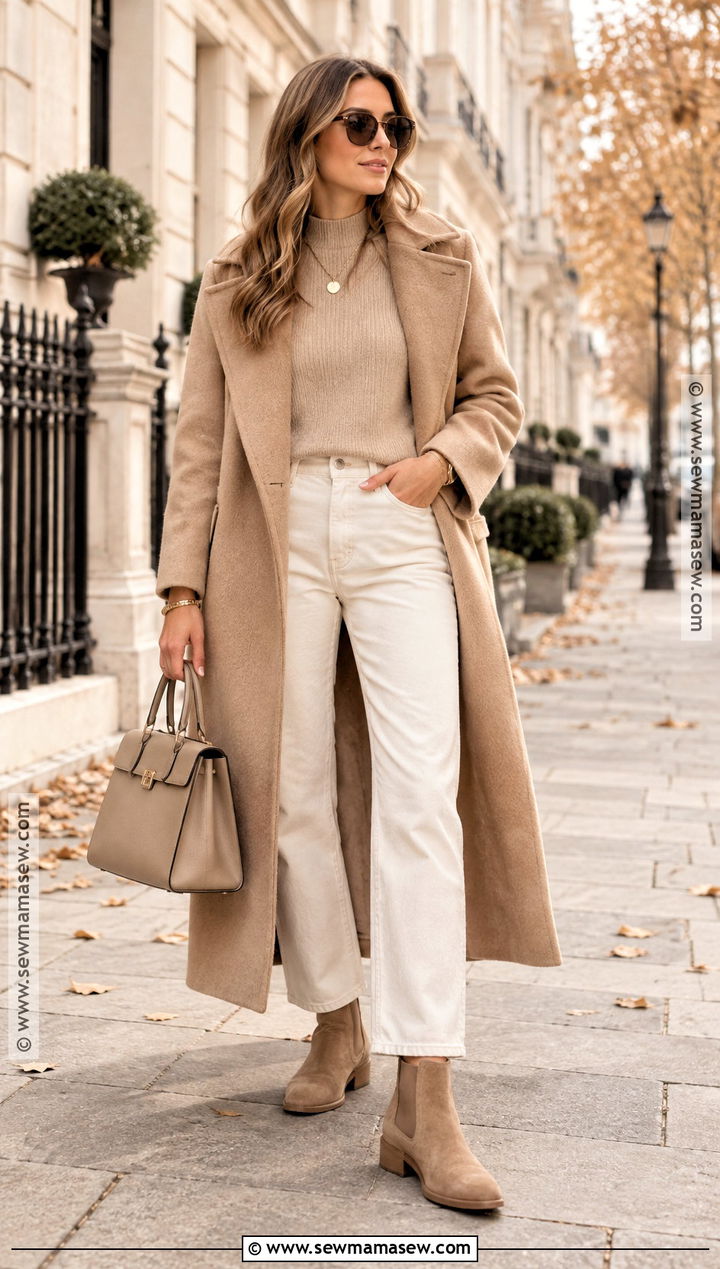
A beige monochrome outfit brightens a gray day, but tonal outfits only look rich when the textures differ. I'd mix cream straight jeans, a beige ribbed sweater, a brushed camel coat and tan suede Chelsea boots, so the eye sees denim, rib, wool and nap rather than one flat shade. Small shifts in tone look more natural than exact matches. Crop or narrowly cuff the jeans so the boots show. Light suede picks up dirt quickly, so I spray it with a protector before the first wear. A taupe bag and fine gold jewelry finish it.
17. Plaid Shacket And Chelsea Boots
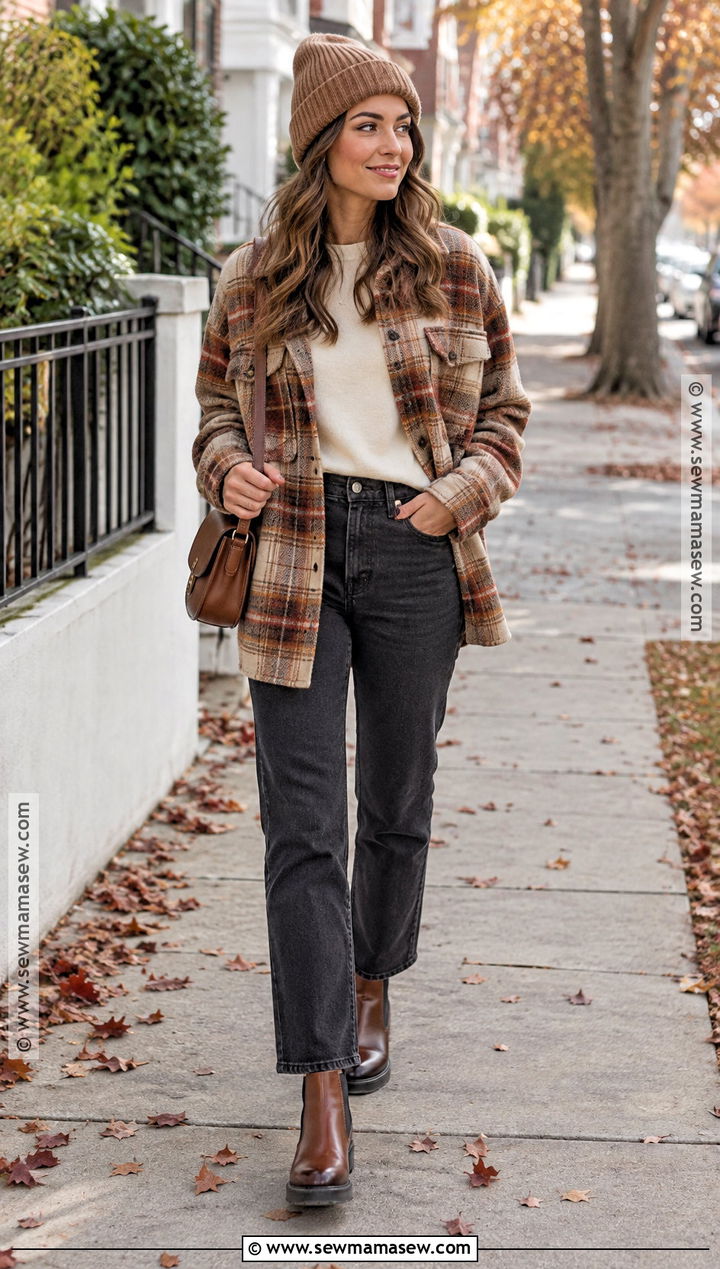
A plaid shacket covers the days when a coat is too much. Under it, a cream long-sleeve tee, dark straight-leg jeans and brown Chelsea boots. A roomy shacket needs a fitted base layer, or the whole top half looks shapeless. Push the sleeves back so a bit of the lighter tee shows. Brown leather or suede sits naturally with warm plaids in tan, rust, olive or burgundy. Medium-wash denim relaxes it, dark denim smartens it. A small crossbody and a beanie work for errands.
18. Puffer Vest And Chelsea Boots
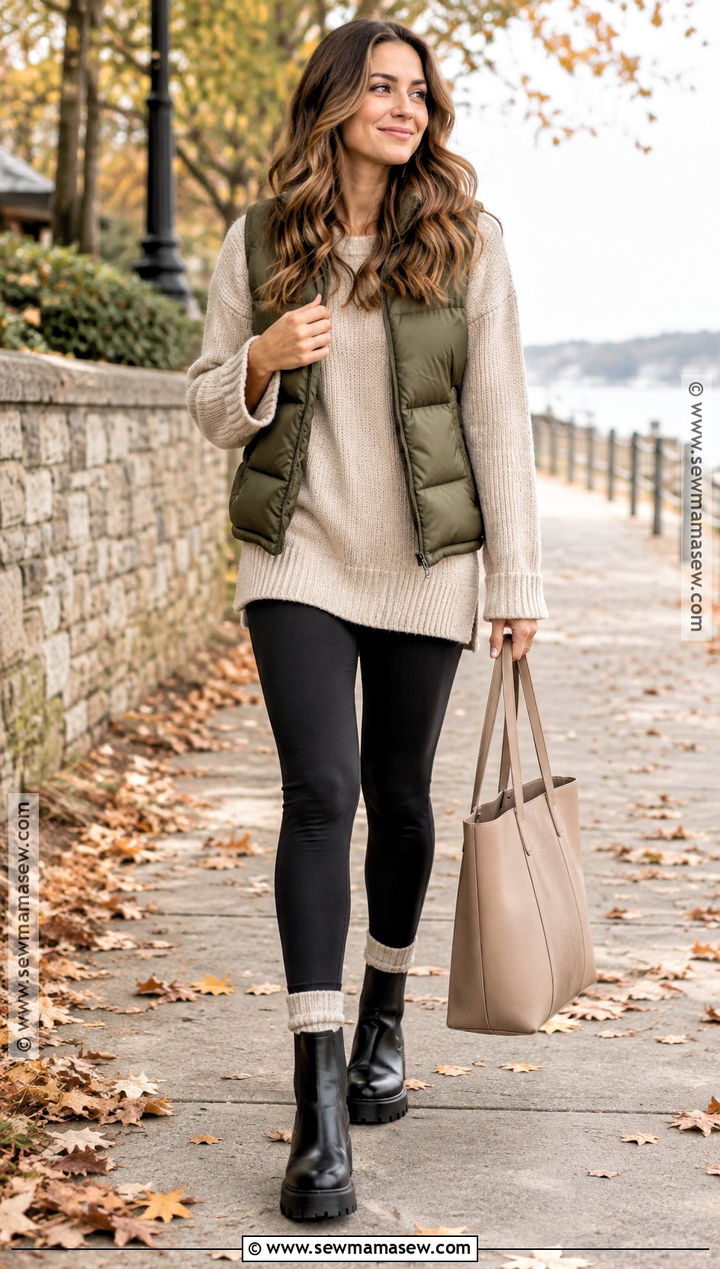
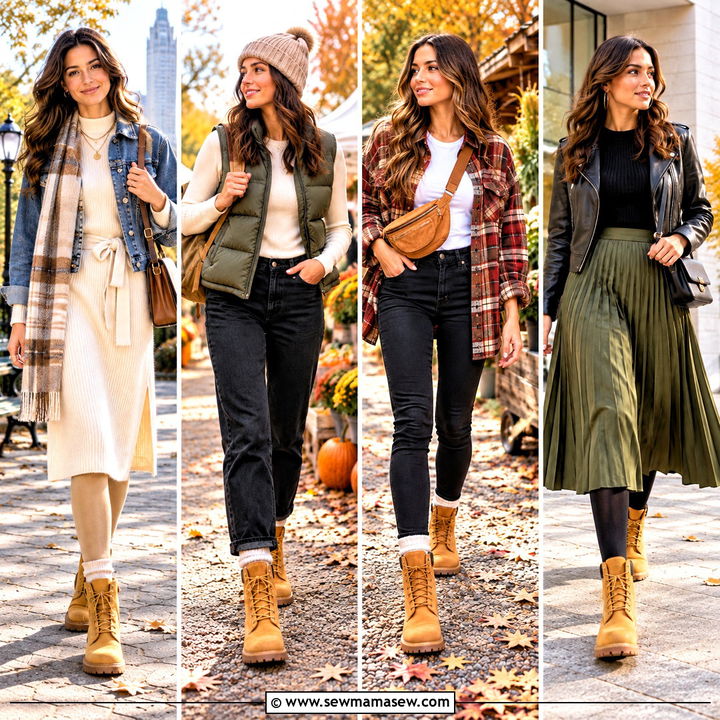
A puffer vest keeps your core warm and leaves your arms free, which makes it good for walking days. I'd wear black leggings or slim jeans with a long oatmeal sweater or cream sweatshirt, an olive, black or taupe quilted vest, and chunky Chelsea boots. A thin band of ribbed sock above the boot adds texture; more than an inch starts to look messy. Long vests suit slim bottoms, cropped vests suit straight jeans. Carry a roomy tote and it's ready for travel or errands.
19. Long Wool Coat And Chelsea Boots
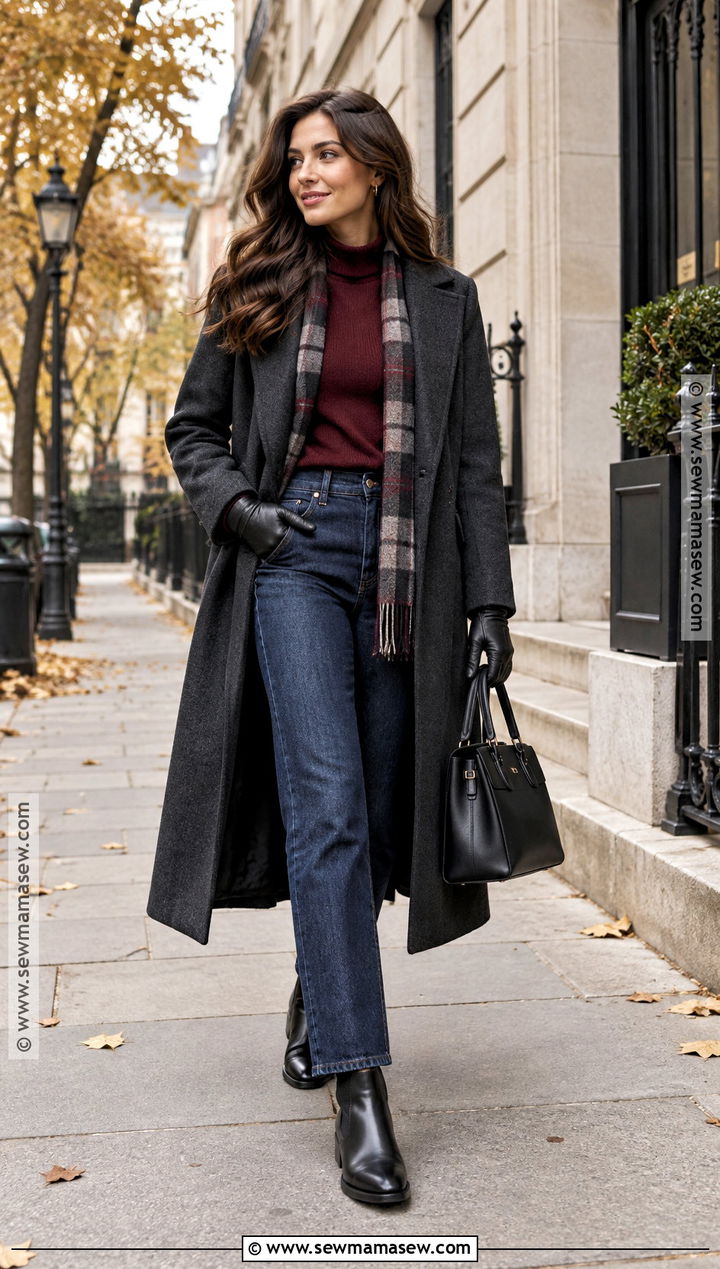
Jeans, a sweater, Chelsea boots and a long wool coat: I'd call it the most dependable outfit on this list. Dark straight jeans and a burgundy, gray or cream sweater go under a charcoal, camel or navy coat that lands at the knee or mid-calf, which gives a long vertical line. If you're petite, a knee-length coat won't swamp you; taller women can go longer. Keep the jean hem narrow enough to meet the boot without bunching. Leather gloves are worth adding, and a solid scarf looks cleaner than a check.
20. Shirt Dress And Chelsea Boots With Cardigan
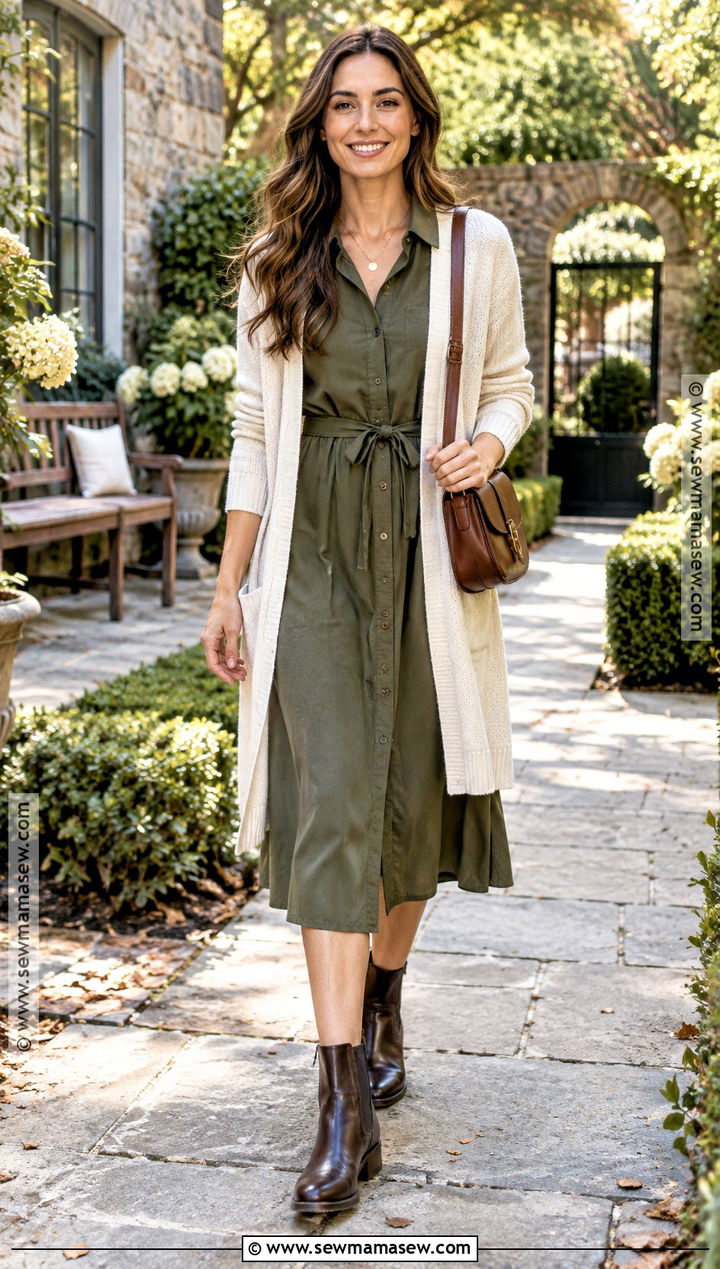
A belted shirt dress with Chelsea boots works well on mild fall days. I'd choose a midi in denim, olive, camel or a small print, belt it with its own tie and add sleek black or brown boots. A long cardigan worn open keeps the belt visible. Watch the gap between the hem and the shaft; if a strip of bare leg looks awkward, coordinating tights close it. If you want more shape, a cardigan that ends above the widest part of the hips helps, while a longer one follows the dress for a relaxed line. A crossbody and a pendant finish it.
Suede Versus Smooth Leather on a Wet Fall Day
Brown suede looks great in fall, but it's the most fragile pair you'll own. Water darkens the nap and can leave tide marks when it dries. I spray new suede with a protector, let it dry fully, and brush it with a suede brush once it's dry after a damp day. Salt from winter sidewalks needs to come off quickly with a damp cloth.
Smooth leather is far more forgiving. A conditioner every few weeks keeps it from cracking at the flex point, and a wax polish helps it shed light rain. If you live somewhere wet, I'd make your everyday pair black leather on a rubber lug sole, which grips slick leaves and wet pavement better than a smooth leather sole, and keep the suede for dry days.
When the Elastic Starts to Sag
The gore panels go first on a well-worn pair. Pulling the boots on by the back tab instead of stretching the sides makes them last longer. Once the elastic is slack, a cobbler can usually replace it, which is often worth doing on a pair whose leather is still good.
One Pair of Boots, Twenty Fall Outfits
One good pair of Chelsea boots can cover casual, office, dressy and practical days all season. Straight jeans and knits keep things easy; tailored trousers, satin skirts and sweater dresses take the same boots somewhere smarter. The detail that decides every outfit is where the hem meets the shaft, so check it standing up in the boots before you leave. Balance chunky soles with some volume or structure above them, and connect the boots to your bag or coat in color. Black leather goes with the most, and brown suede is softer with autumn colors. Start with these combinations and adjust them to your body, weather and routine.
Related posts: