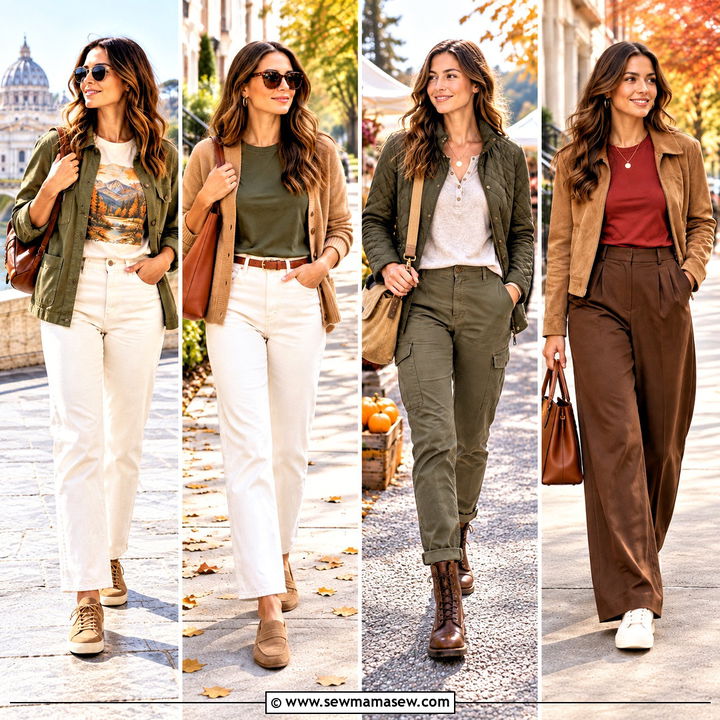
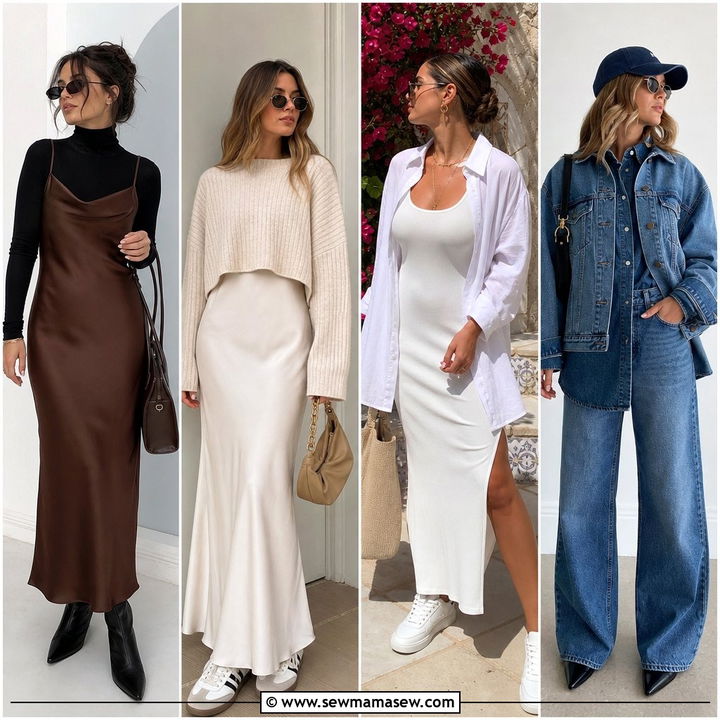
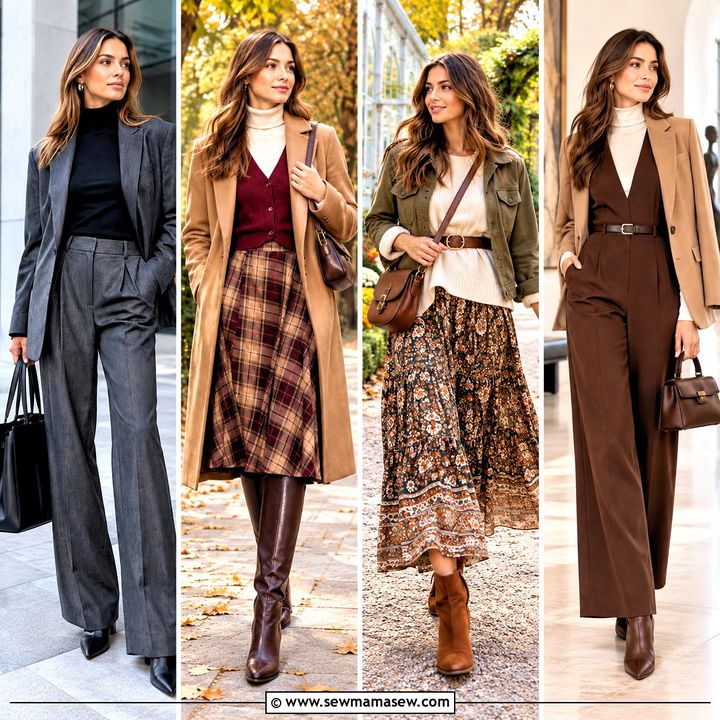
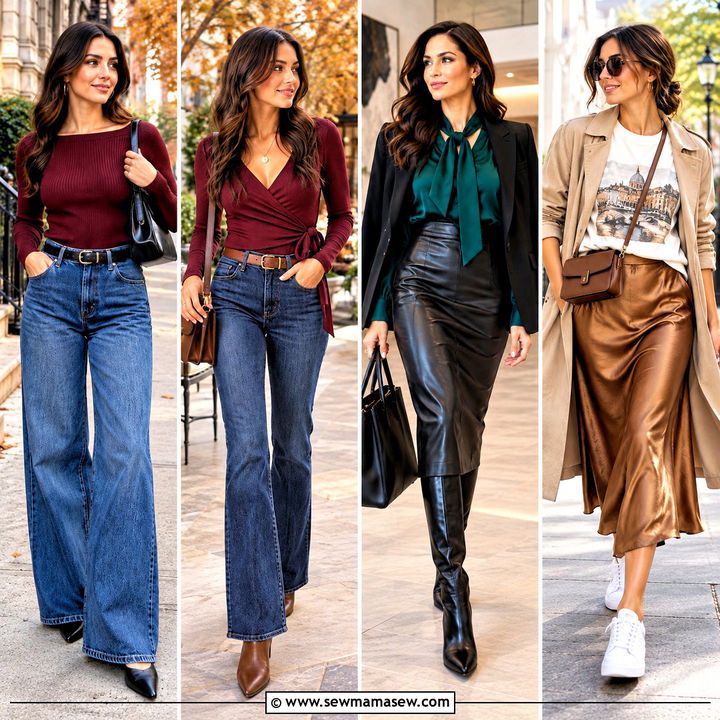
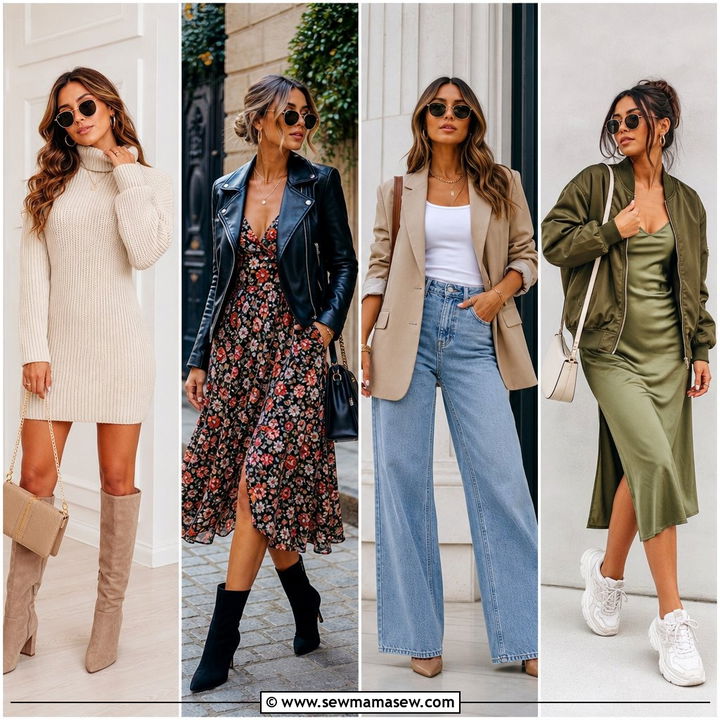
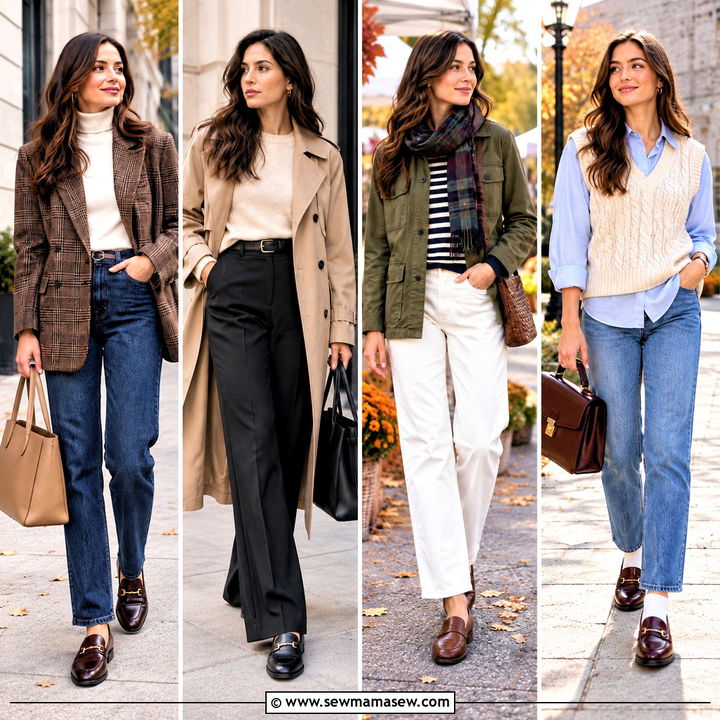
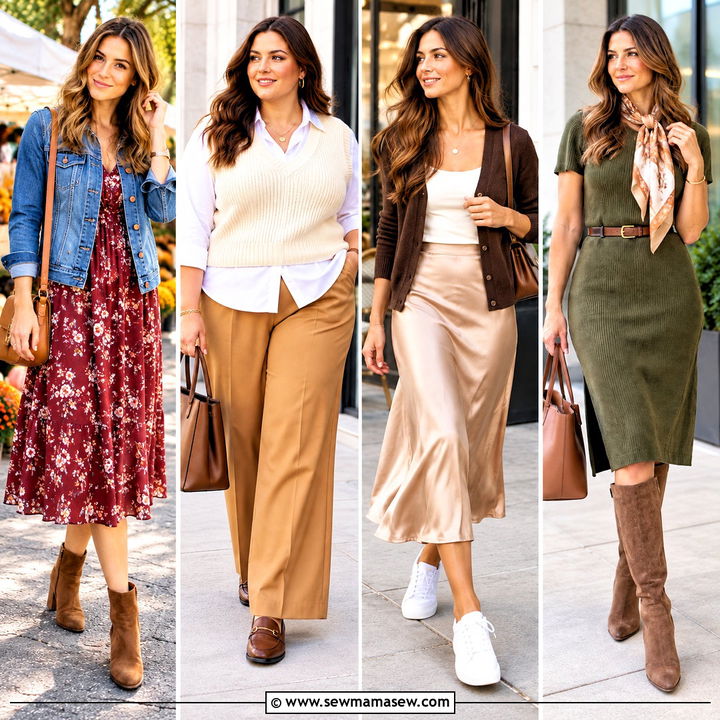
A shirt is the hardest-working layer in a fall wardrobe. It goes under a sweater on cold mornings, over a tank when the afternoon warms up, and under a blazer when you need to look sharp. In my closet edits, the shirts that earn their hanger space are the ones that work with at least three bottoms already in the wardrobe, so every look below is shown as a full outfit: flannels and denim button-downs, softer blouses, rugby shirts and satin. Read them for the pairing logic, not the exact pieces, and adjust fit and coverage to suit you.
Four Tucks, and the Shirts Each One Suits
Most of the outfits below say tuck, half-tuck or leave it out, and the choice changes the proportions more than the shirt itself. Here is how I decide.
- Full tuck: best for thin shirts like poplin, chambray and satin with high-rise trousers or skirts. Blouse the fabric slightly above the waistband so it doesn't pull when you sit.
- Front tuck: tuck only the center few inches. It shows the waist while the sides hang loose, and suits flannels, rugby shirts and Oxfords with jeans.
- Side tuck: tuck one side near the hip. It creates a diagonal line that works on a long shirt over straight jeans.
- Out: thick shirts like suede, corduroy and heavy flannel usually look better left out or worn open, because tucking them adds a ridge at the waist.
A quick test I use: sit down in the mirror. If a tucked shirt bunches into rolls over the waistband, the fabric is too heavy for that tuck.
1. Plaid Fall Shirt With Straight-Leg Jeans
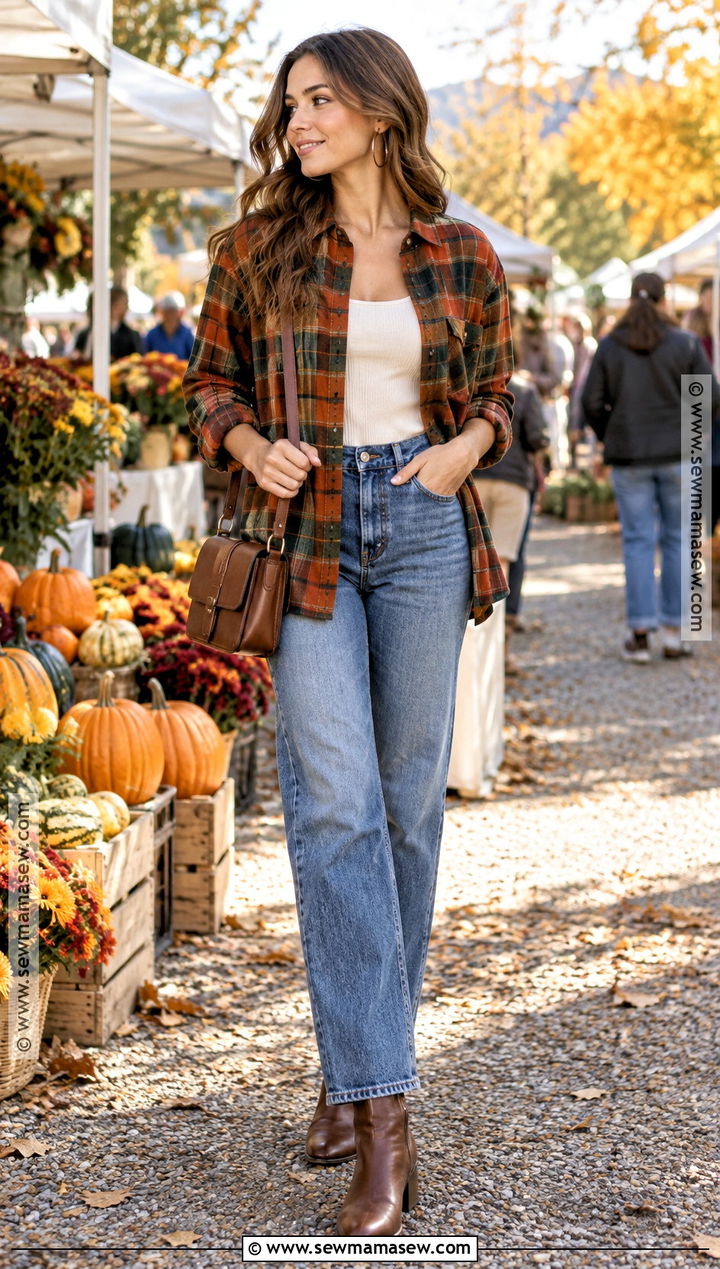
Flannel is cotton that's been brushed to raise a soft nap, which is why it feels warmer than a poplin shirt of the same weight. I like it in rust, forest green or navy, partly tucked into straight-leg jeans with a fitted tank underneath so you can leave a few buttons open. On a petite frame, roll the sleeves once or twice to stop an oversized flannel from swallowing you. Brown ankle boots and small gold hoops finish it. If the shirt is very boxy, a slim leather belt over the tuck brings the waist back.
2. White Fall Shirt With Wide-Leg Trousers
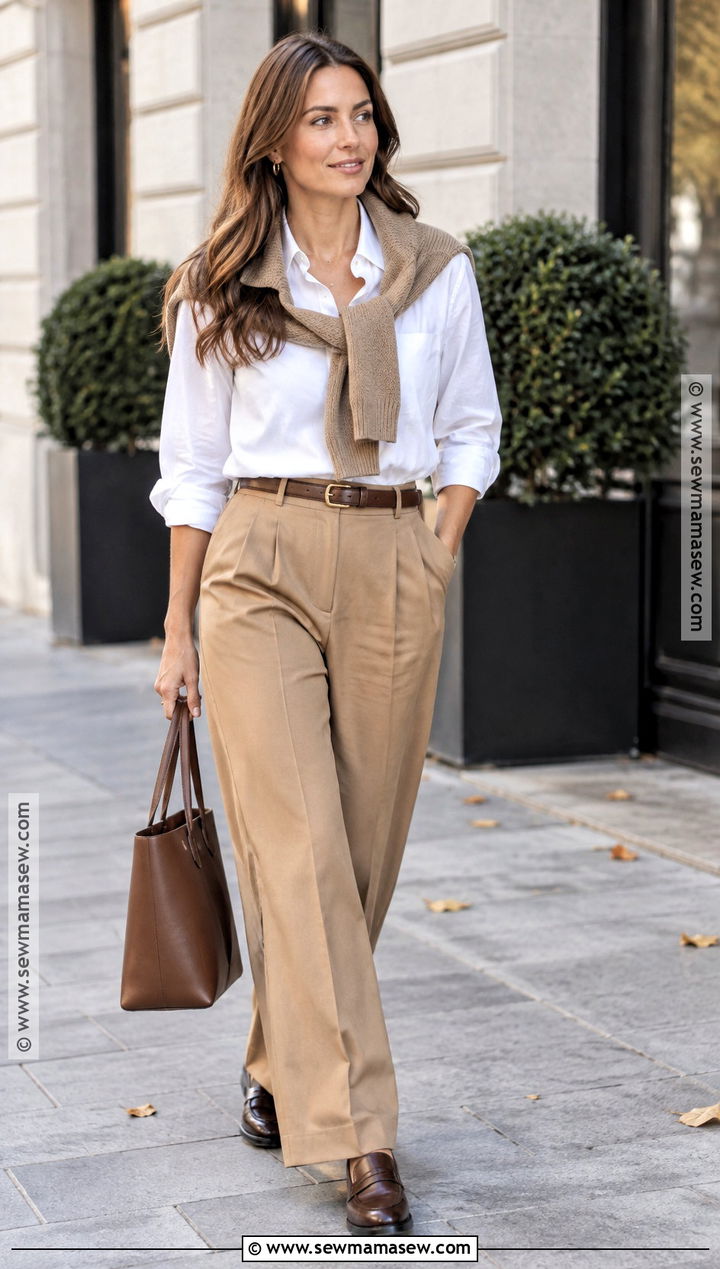
A white button-down with wide-leg trousers is clean and quick, but only if the shirt is opaque. Hold it up to a window before you buy; thin poplin shows every bra line. Tuck it fully into camel, charcoal or olive trousers and add loafers with a narrow belt in the same leather tone. For a fuller bust, I look for a concealed placket or size up and take in the waist, so the buttons don't pull. A fine knit draped over the shoulders handles a cool morning.
3. Striped Fall Shirt With Dark-Wash Jeans
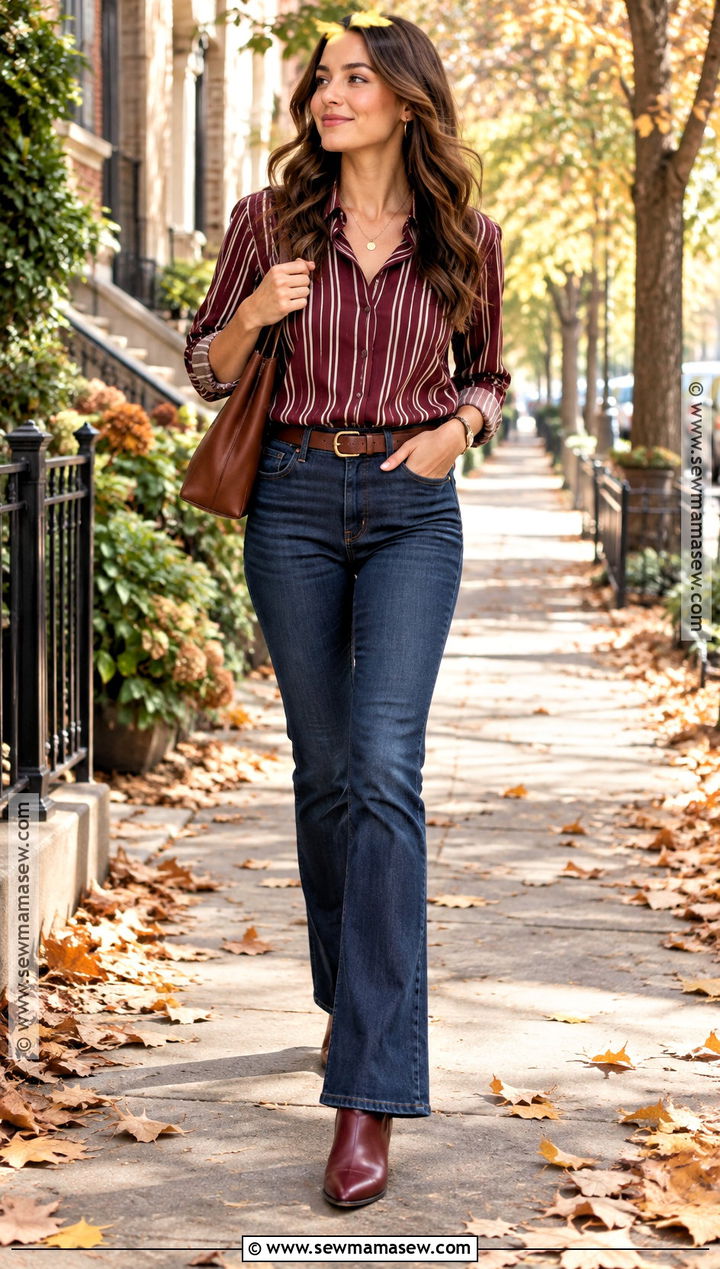
Stripes are my fix when a plain button-down feels too basic. Blue and white, burgundy and cream or brown and ivory stripes all pair with dark-wash straight or bootcut jeans. Leave the collar open, tuck the front loosely and add a leather belt. Vertical stripes draw the eye up and down, though a very wide stripe on a roomy cut can do the opposite, so I keep the stripe narrow if the shirt is oversized. Burgundy loafers or pointed ankle boots, then a tan trench once it turns cold.
4. Denim Fall Shirt With Black Pants
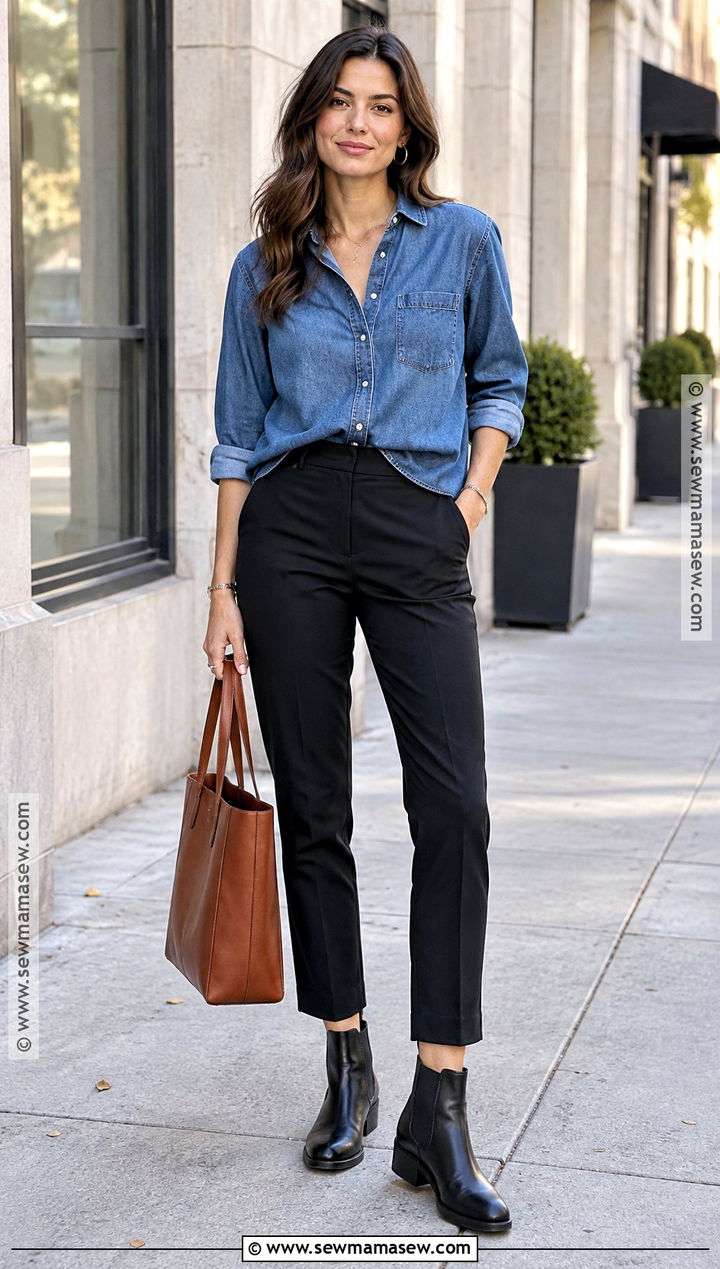
Denim against black is one of the easiest contrasts in a closet. A medium or dark denim shirt half-tucked into black ankle pants, ponte or straight jeans looks pulled together in about a minute. Watch the chest pockets: on a fuller bust, double flap pockets add bulk right where you don't want it, so a plain front is the better buy. Silver jewelry suits the cool blue; a cognac tote warms it up. Worn open over a fitted black tee, it becomes a light jacket for travel days.
5. Satin Fall Shirt With Tailored Trousers
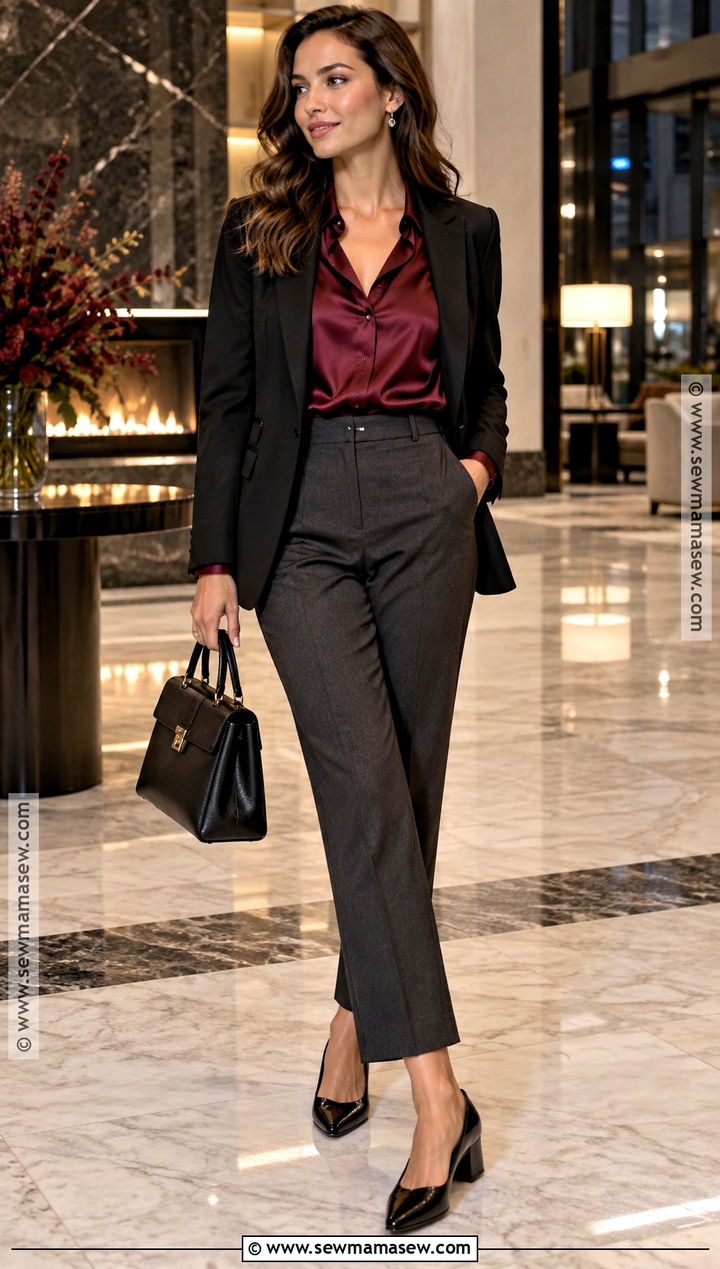
Satin catches light, so it reads dressier than its simple shape suggests. Deep shades like espresso, plum and forest green look richer in fall than pale ones, and they hide water spots better. I pair a satin shirt with high-rise charcoal or black trousers, pointed flats or a low block heel, and a fitted blazer for meetings or dinner. Satin shows everything underneath, so smooth undergarments are not optional. Polyester satin also builds static in dry heated rooms; a light mist of water on the hem calms it.
6. Corduroy Fall Shirt With Cream Jeans
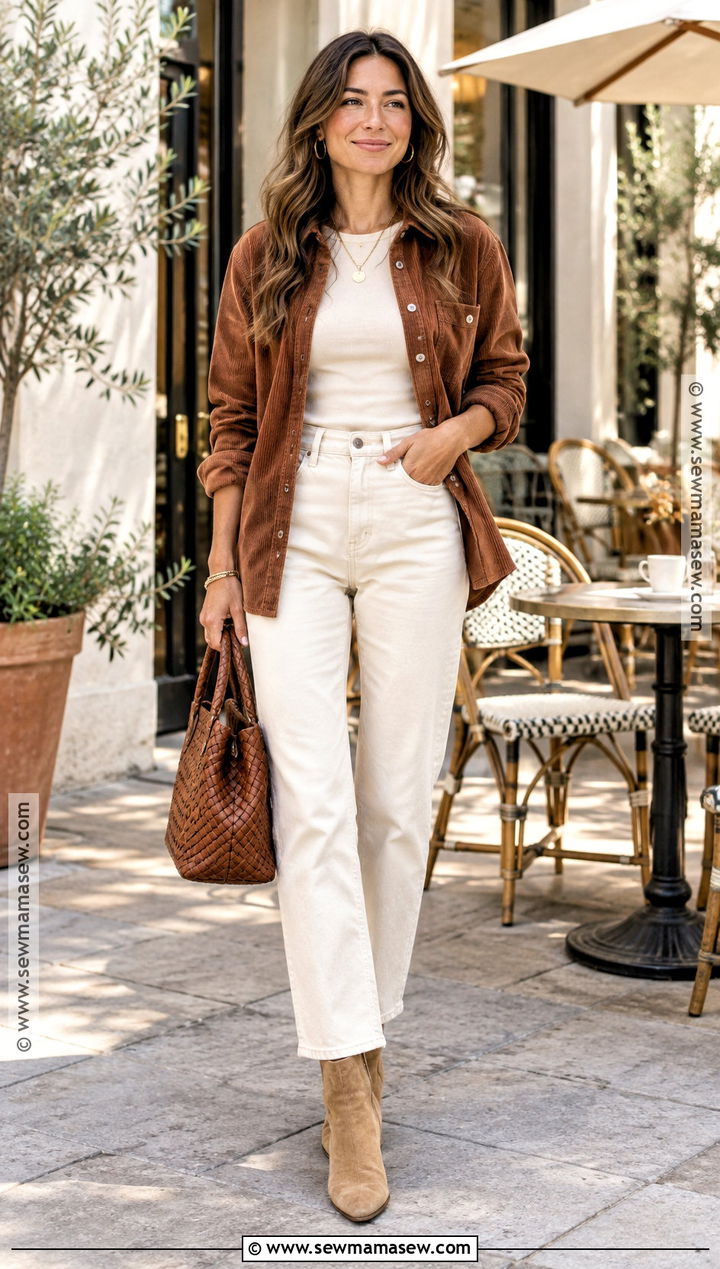
A lightweight corduroy shirt sits between a shirt and a jacket, and the ridges add texture to an otherwise plain outfit. I wear cinnamon or olive cord over a fitted cream tee with ecru straight jeans; the pale denim keeps the palette fresh rather than heavy. Worn open, the shirt makes a long vertical line. Buttoned and front-tucked, it gives more shape. Tan clogs or suede ankle boots keep it grounded for weekends and casual offices.
7. Floral Fall Shirt With A-Line Skirt
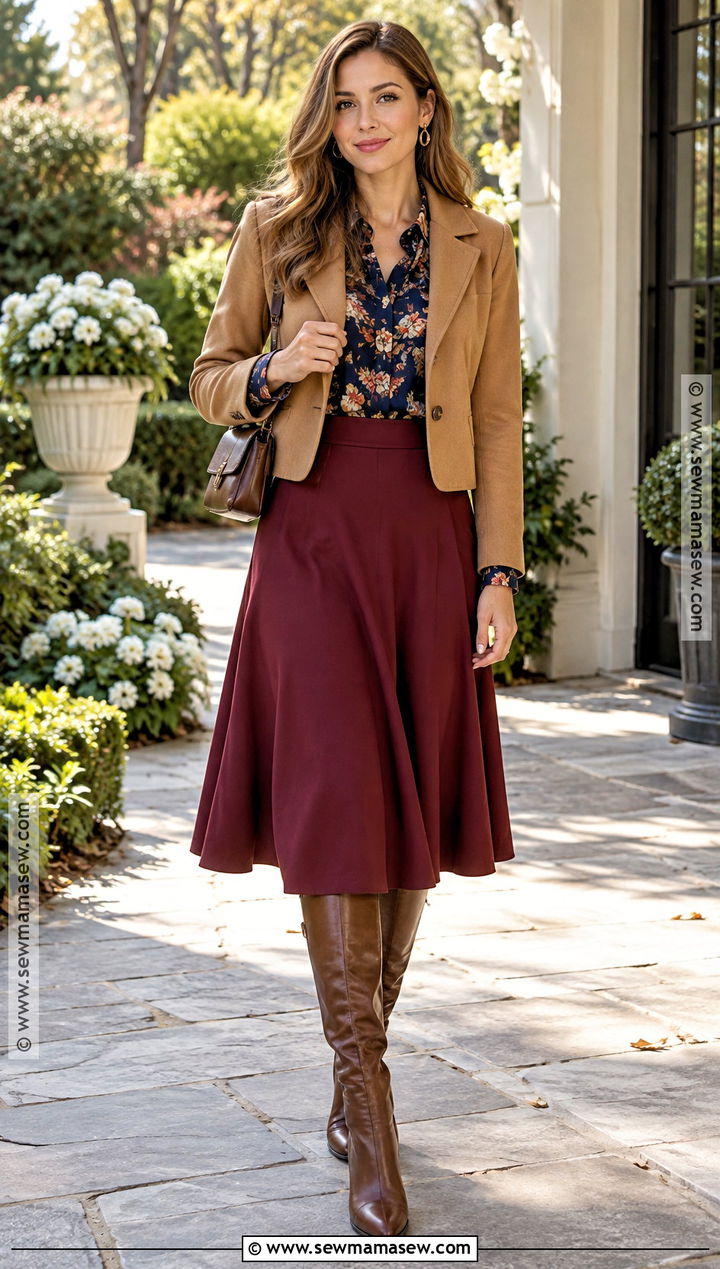
Florals move into fall when the background turns dark. A small print on burgundy, navy or black reads autumn; the same print on white still says July. Tuck a long-sleeve floral shirt into a solid A-line midi, then add knee-high boots so no leg shows between hem and boot shaft. If the print is busy, I keep every other piece in one neutral pulled from the print. A cropped jacket that ends at the waist keeps the skirt's shape visible.
8. Rugby Fall Shirt With Barrel Jeans
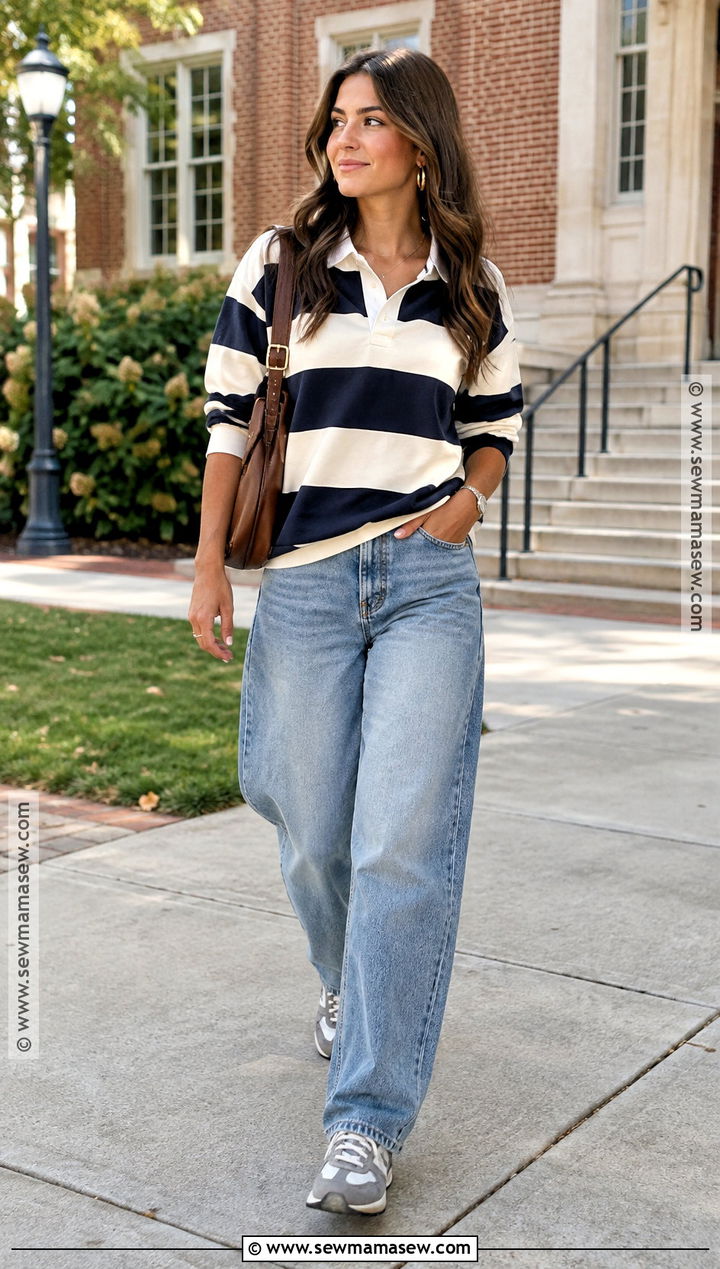
Rugby shirts are cut from heavy cotton jersey with a woven collar, so they hold their shape better than a regular polo. A slightly oversized one with mid-rise barrel jeans or relaxed straight jeans looks current, and retro sneakers keep it easy. Push the sleeves up to show the wrists; that small gap of skin keeps the boxy top from looking sloppy. If you're petite, narrower stripes and a hem that ends at the hip bone work better than a long, wide-striped version. Add a barn jacket on colder days.
9. Lace Fall Shirt With Brown Trousers
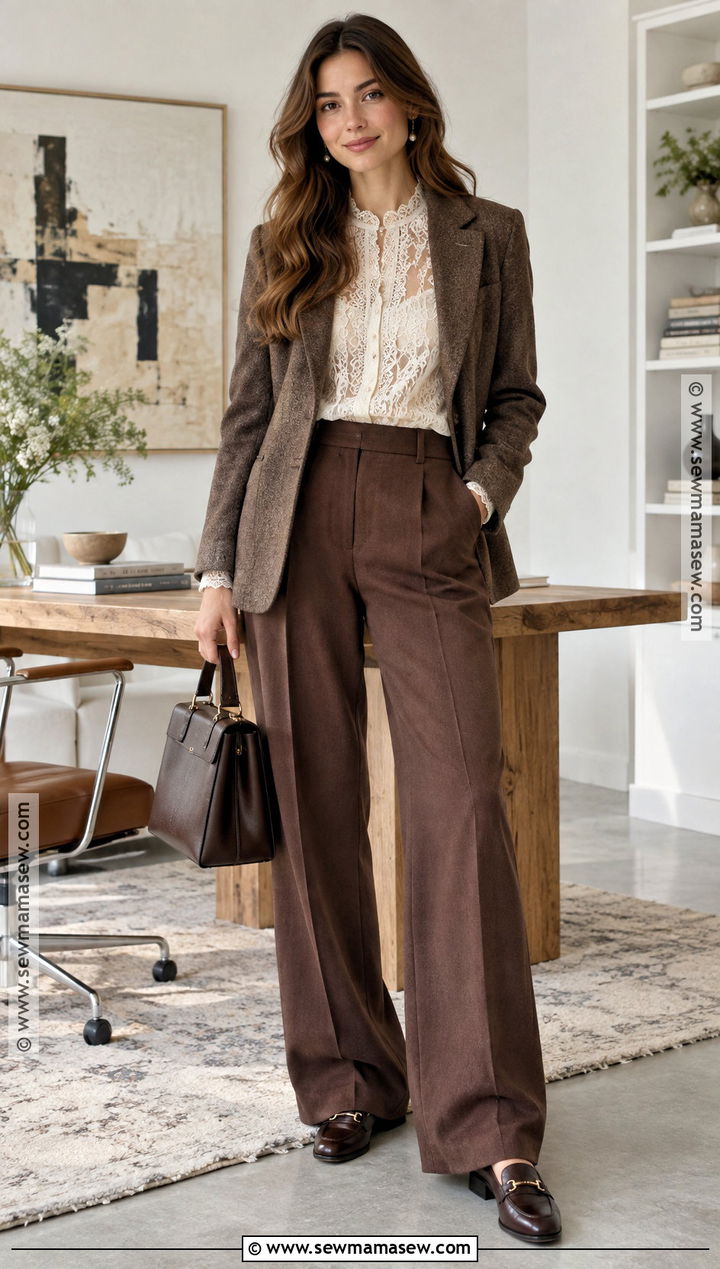
Lace needs warmer, plainer company in fall. I start with a cream or black lace shirt and a matching camisole underneath, then tailored chocolate trousers in a straight or wide leg. A shirt with lace panels rather than an all-sheer body is the easier daily buy. Leather loafers and a structured bag keep it from reading like evening wear. Skip extra jewelry; the fabric already carries the detail, and lace snags on clasps and rings.
10. Chambray Fall Shirt With Olive Pants
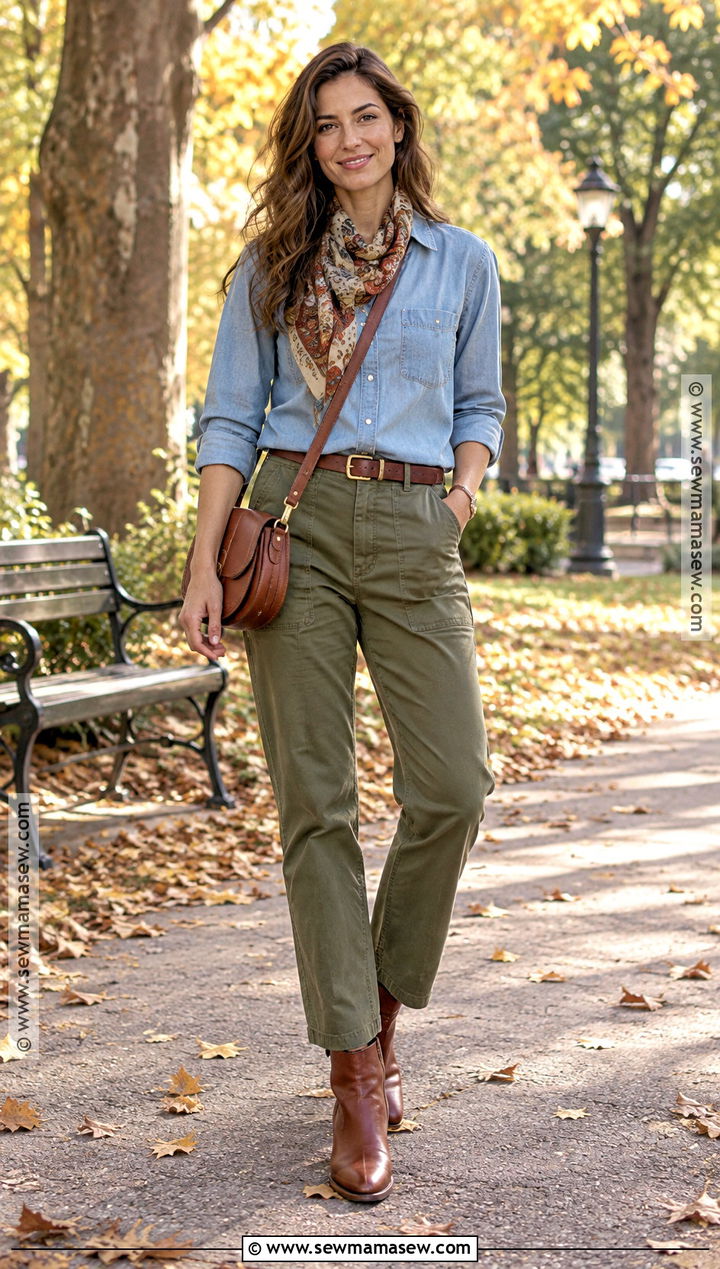
Chambray looks like denim but is lighter, a plain weave rather than a twill, so it tucks smoothly without adding bulk at the waist. That makes it one of the shirts I recommend most for tucking into olive utility pants or chinos. Leave it open over a white ribbed tee for a weekend version. Cargo pockets on the pants can add width, so a flat-front pant sits better under a full tuck. Brown ankle boots or white sneakers both work, and a patterned scarf brings in more fall color.
11. Henley Fall Shirt With Cargo Pants
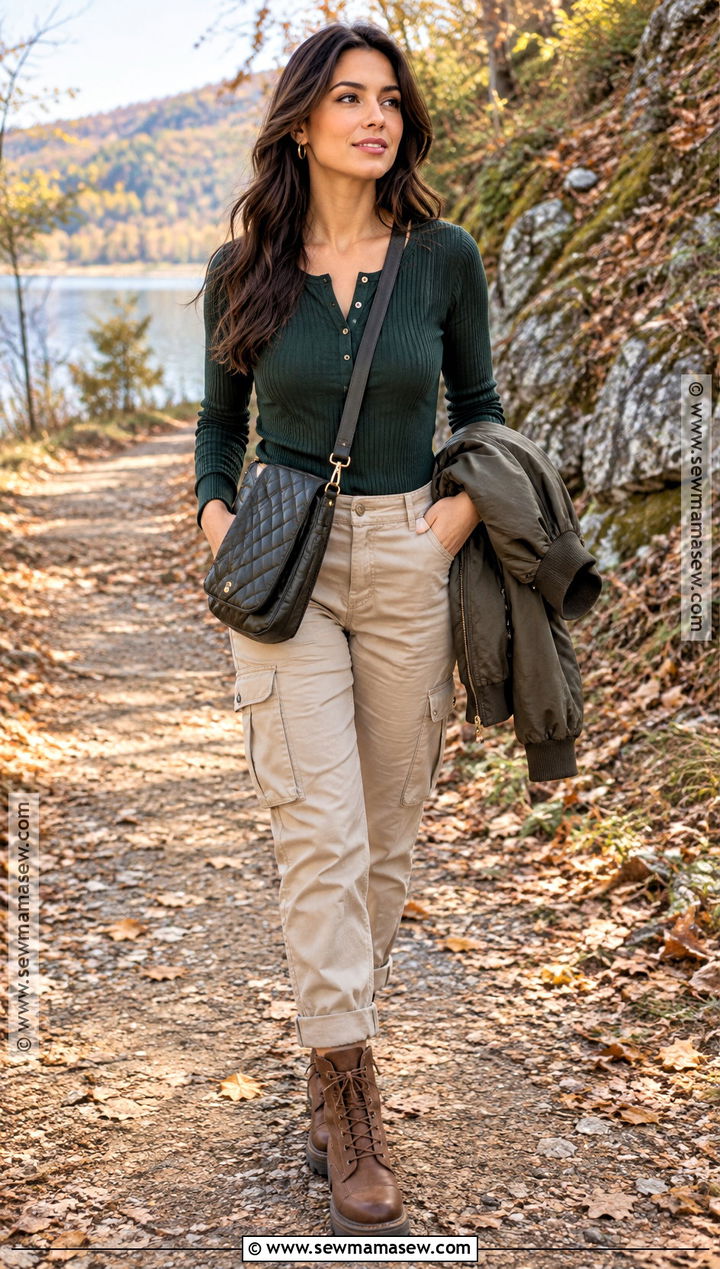
A henley is a tee with a few buttons, and those buttons are the point: open two for an easy neckline, close them under a jacket. Oatmeal, burgundy and charcoal versions all sit well with high-rise cargo pants, as long as the pockets lie flat. Lug-sole boots and a quilted crossbody keep it practical for travel and long walks. Waffle-knit henleys are warmer than smooth jersey but stretch at the cuffs over time, so I avoid pushing the sleeves up hard. A denim or bomber jacket covers the colder days.
12. Oxford Fall Shirt With Sweater Vest
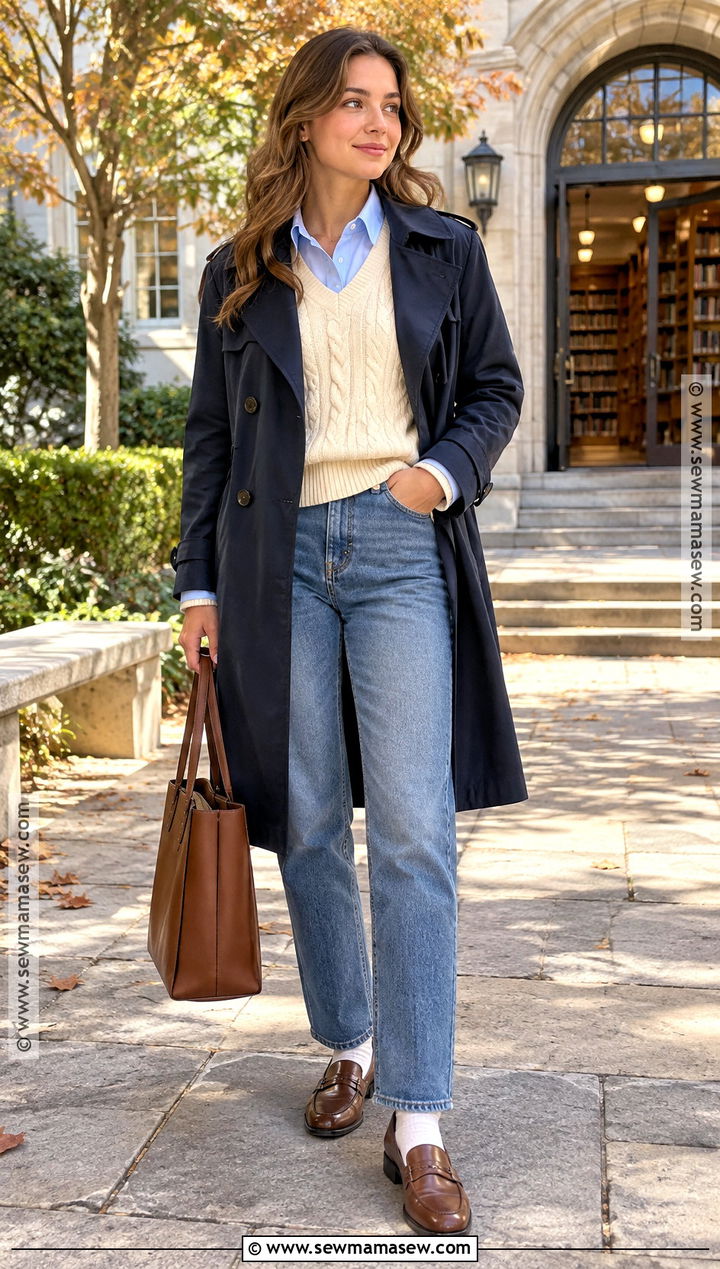
Oxford cloth has a slightly textured basket weave that softens with washing, which is why it looks good a little rumpled under a vest. Start with a white, pale blue or striped Oxford and add a cable or fine-knit vest. A V-neck vest leaves room around a fuller bust and lengthens the upper body. Pair it with straight jeans, tailored pants or a pleated midi, and loafers with ankle socks. Let the shirt hem show below a cropped vest, or tuck everything for a cleaner line.
13. Graphic Fall Shirt With Leather Jacket
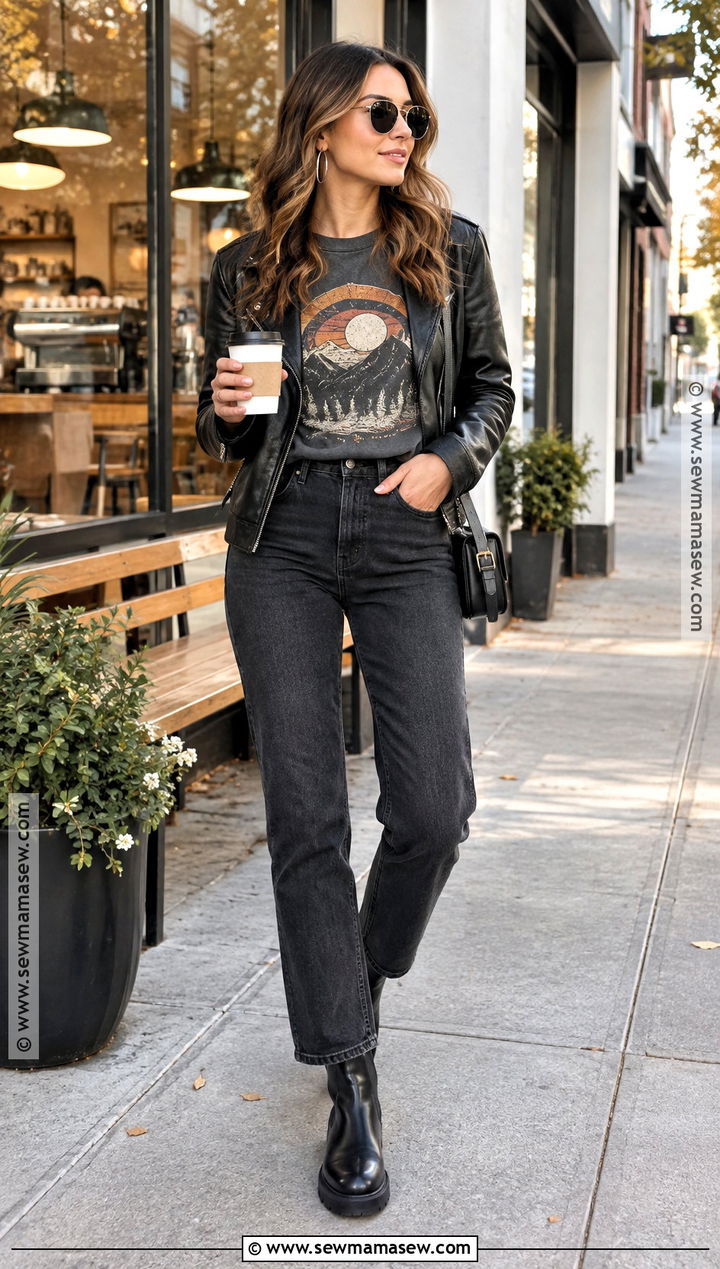
A graphic shirt works in a grown-up outfit when everything around it is plain. Choose a vintage-style tee with a limited color range, then add dark straight jeans and a black or brown leather jacket. I tuck just the front so the graphic sits above the waistband instead of folding into it. Chelsea boots and small hoops are enough. New leather jackets feel stiff at first and soften with wear, so if yours is rigid, it needs a few weeks before it drapes properly.
14. Ruffled Fall Shirt With Bootcut Jeans
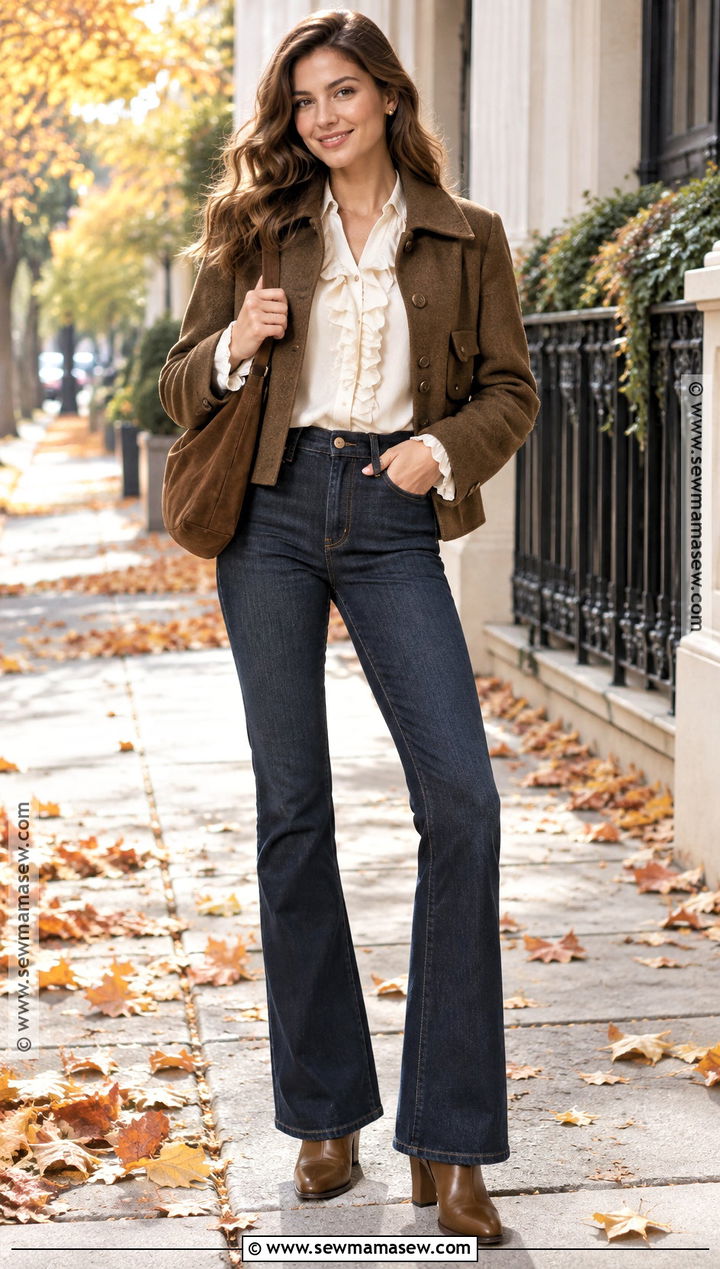
Ruffles on a shirt need sturdy company, and bootcut denim provides it. I look for restrained detail: a ruffled collar, gathered shoulders or a narrow trim along the placket. If you'd rather not add width at the shoulders, keep the ruffles vertical or close to the neckline. Tuck fully into dark high-rise bootcuts and wear heeled ankle boots so the flare covers most of the shoe and the leg looks long. A cropped wool jacket on top should leave the collar showing.
15. Peplum Fall Shirt With Slim Pants
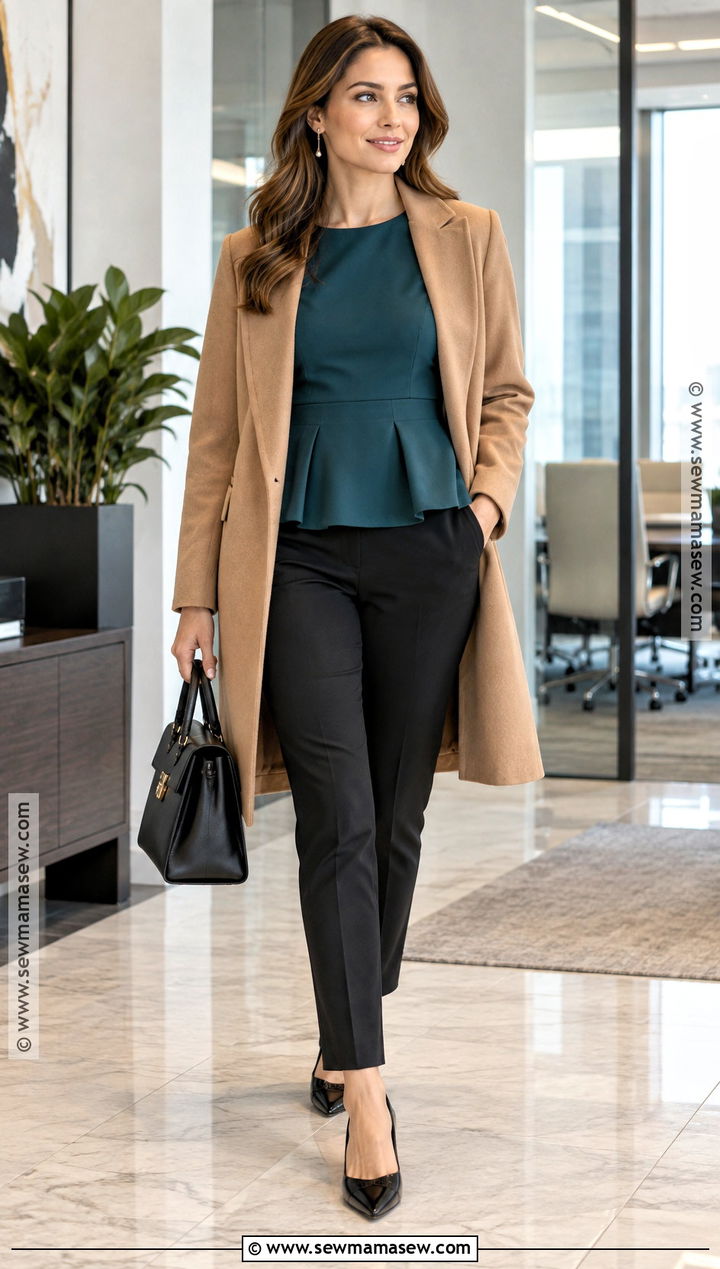
The first thing I check on a peplum is where the seam lands. It should sit at your natural waist; if it hits the hip, the flare adds width in the wrong place. Longer torsos often need an elongated cut, and petite frames a shorter hem. A solid rust, deep teal or berry peplum with slim straight or cigarette trousers balances the flare. Pointed flats or ankle boots and a top-handle bag keep it polished, and a collarless wool coat layers over the ruffle without crushing it.
16. Tuxedo Fall Shirt With Black Jeans
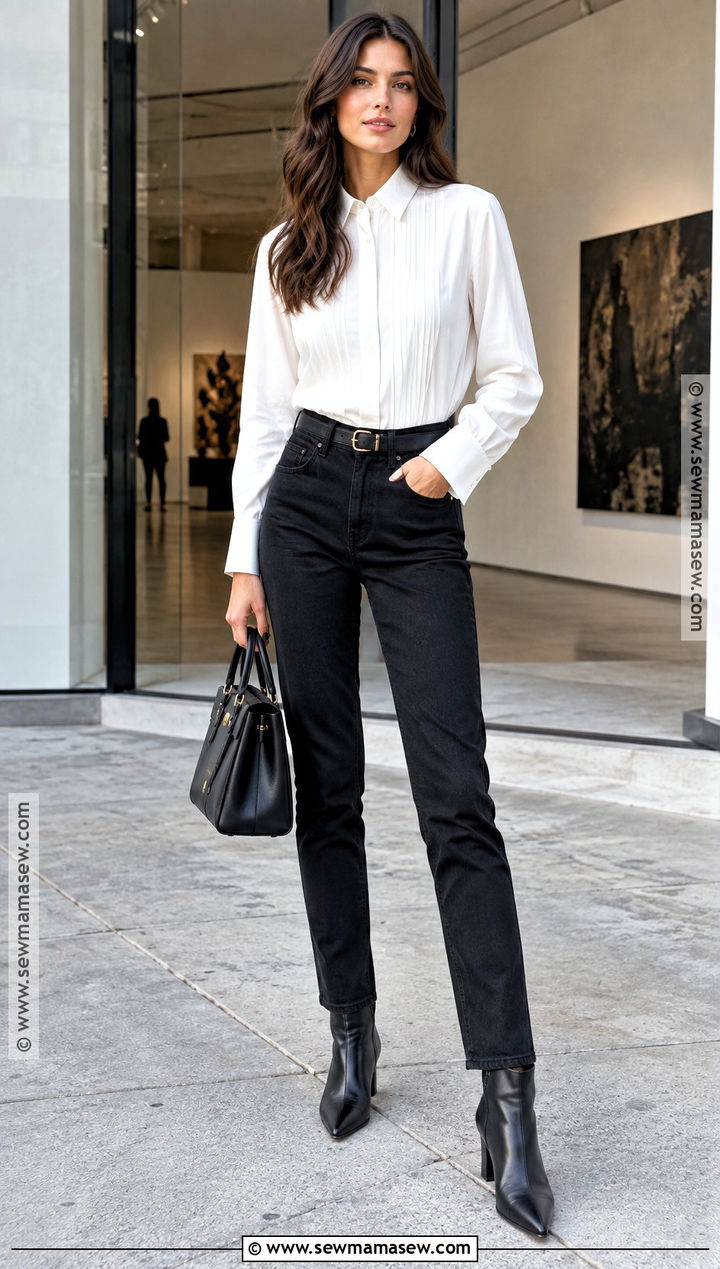
A tuxedo shirt has evening details, a pleated bib and covered buttons, so I put it with the most casual bottom I can: straight black jeans. Loafers or pointed ankle boots and a black belt with a small buckle keep the line clean. Fold the cuffs so the detailing shows below a blazer sleeve. Bright white can look stark against warm fall colors, and soft cream is easier to wear with camel and brown. Pleated bibs also need pressing after every wash to keep their crisp edges.
17. Suede Fall Shirt With Dark Denim
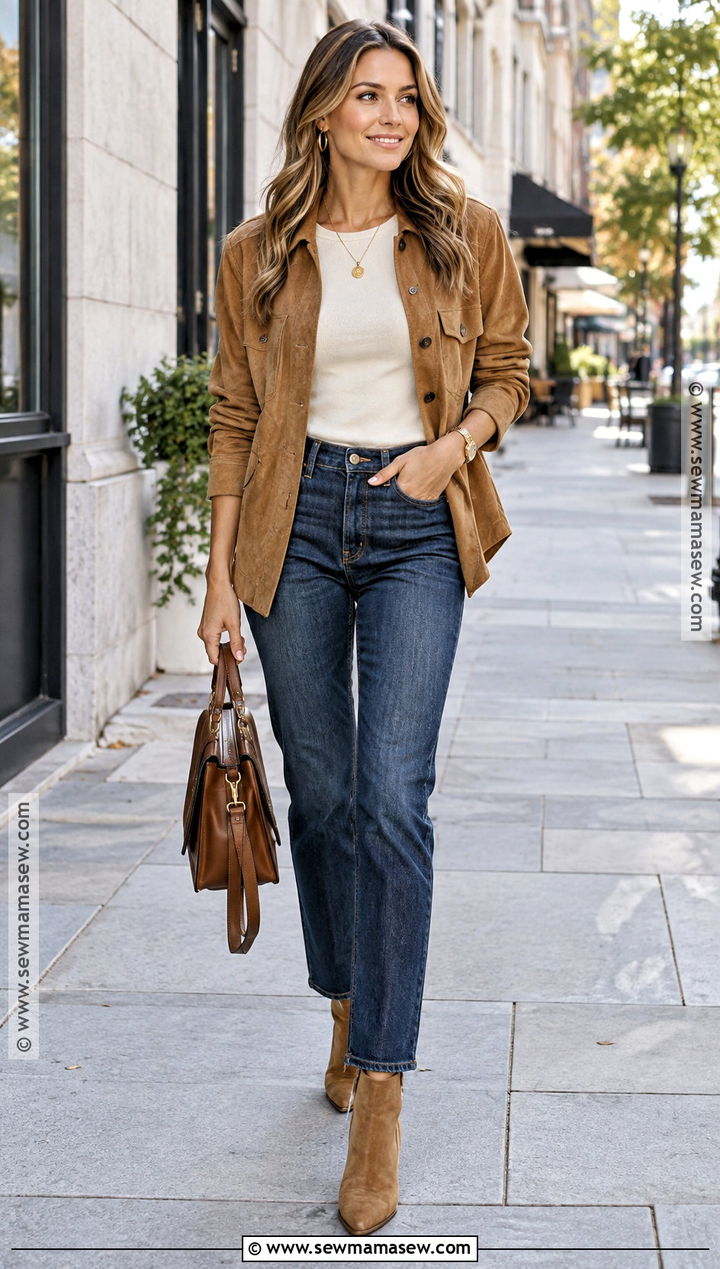
A suede shirt behaves more like a light jacket than a shirt. Warm brown, camel or olive versions look best buttoned over dark jeans for a tonal outfit, or open over a fitted cream top on a warmer afternoon. Real suede darkens and stiffens in rain, so I keep it for dry days or choose a faux version for unpredictable weather. Because suede has visual weight, slim jeans keep the proportions balanced. Check the sleeve room before you buy if you plan to layer a knit underneath.
18. Puff-Sleeve Fall Shirt With Midi Skirt
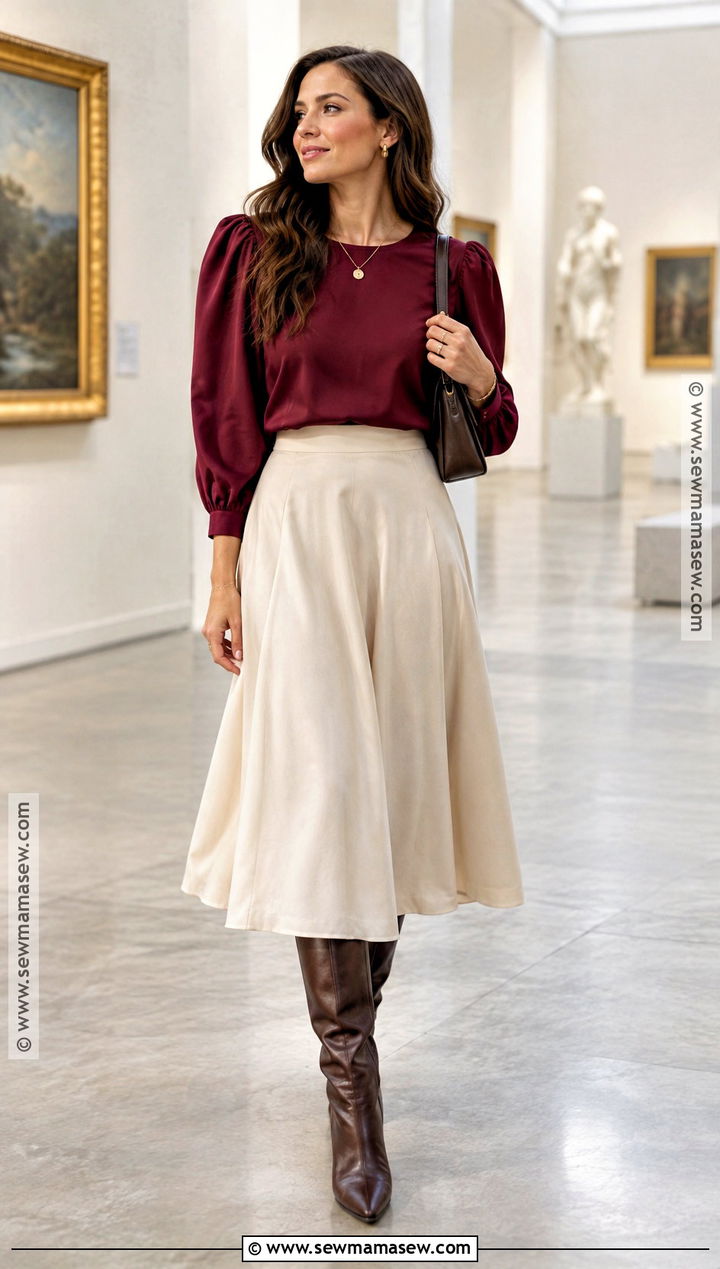
A puff sleeve makes the shoulders the focal point, so the bottom half should be simple. I tuck a cream, black or burgundy puff-sleeve blouse into a high-rise midi in a coordinating solid, then add sleek knee-high boots. If big sleeves feel overwhelming, look for soft gathering at the shoulder with a fitted cuff, which keeps the sleeve from catching on bag straps. A straight, pleated or flared skirt all work. Keep jewelry small so it doesn't compete with the sleeve.
19. Oversized Fall Shirt With Leggings
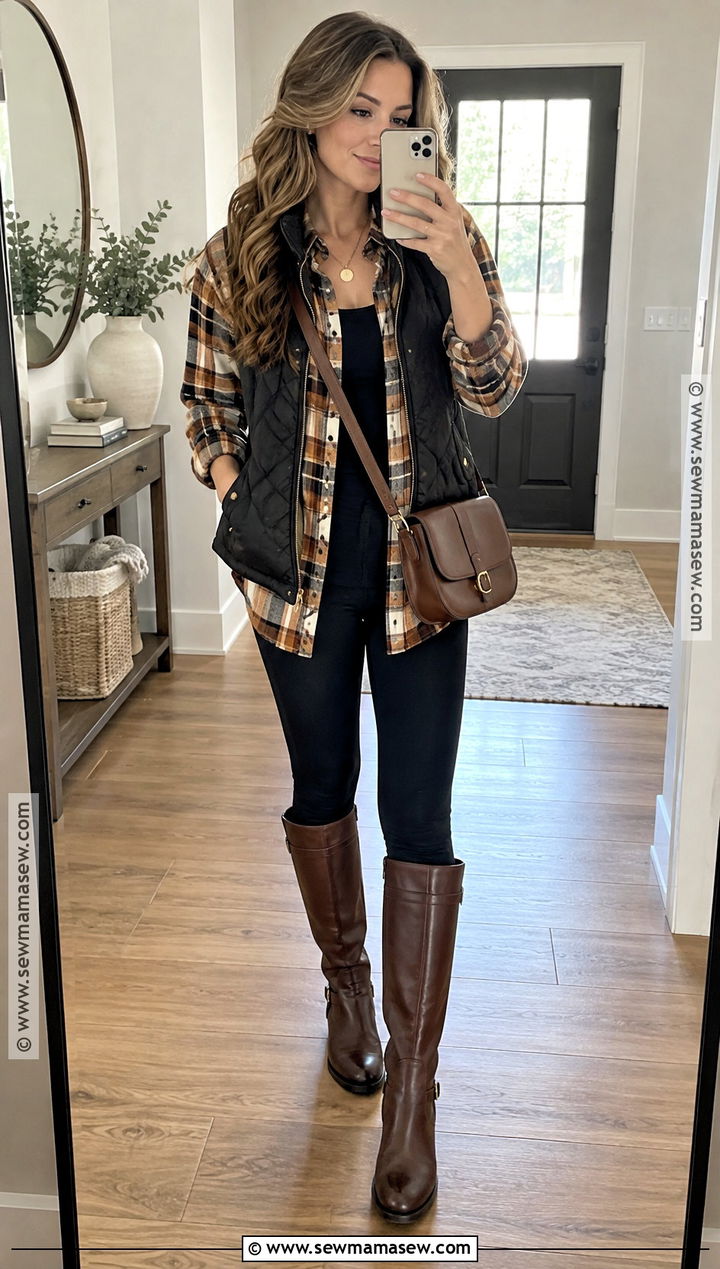
An oversized shirt over leggings needs length and weight to look intentional. I choose heavyweight cotton, brushed flannel or crisp poplin that covers the hips, with dropped shoulders or a curved hem that falls cleanly. Over a fitted tank, thick black leggings and tall riding boots, it reads as a tunic rather than borrowed pajamas. Fasten a few middle buttons for coverage or leave it open for a long line. A fitted quilted vest adds warmth without hiding the shirt.
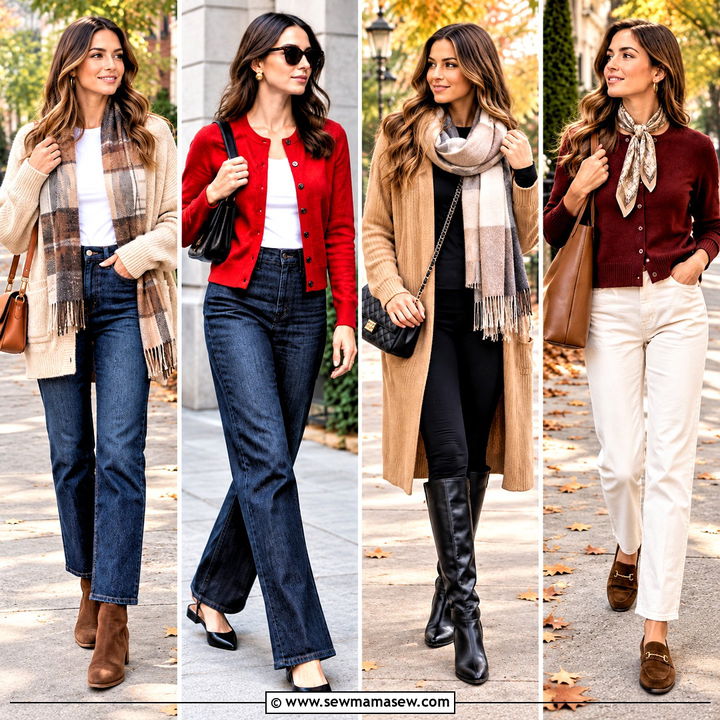
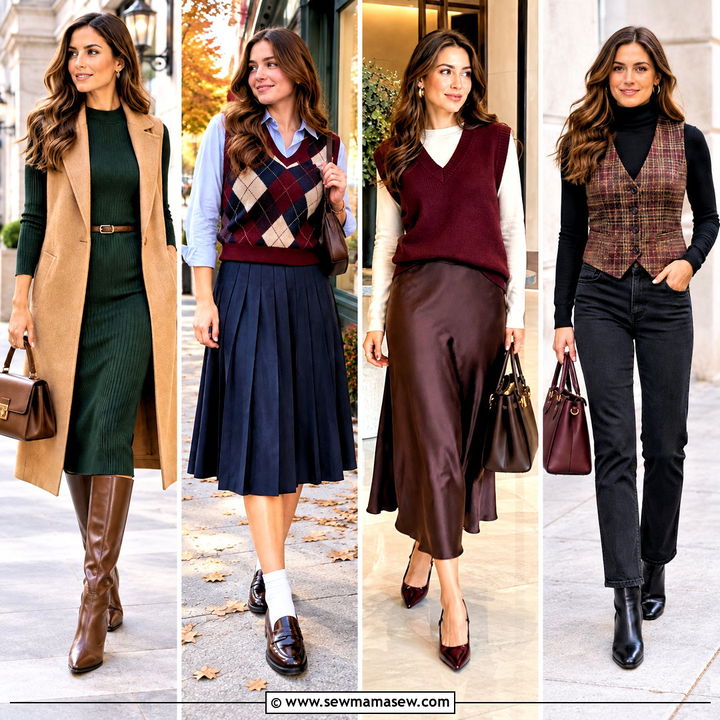
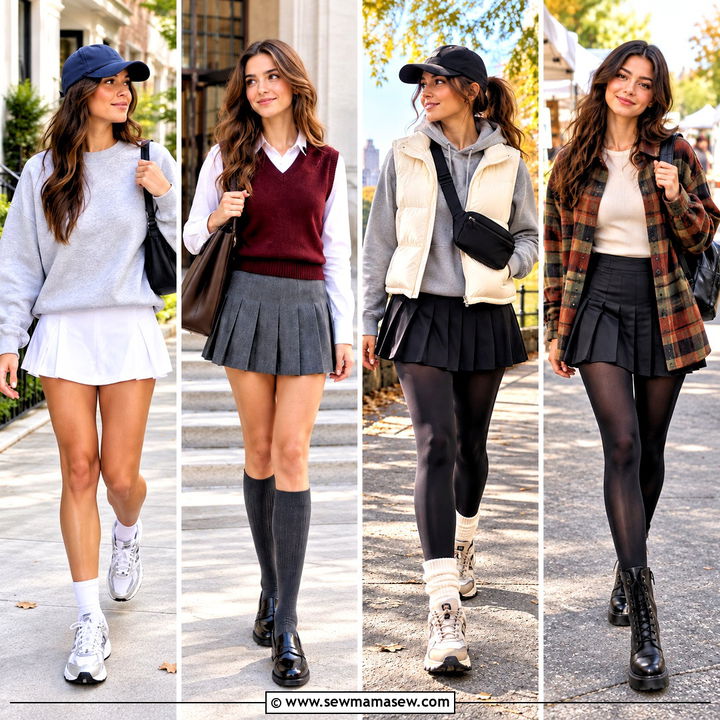
20. Brown Fall Shirt With Monochrome Pants
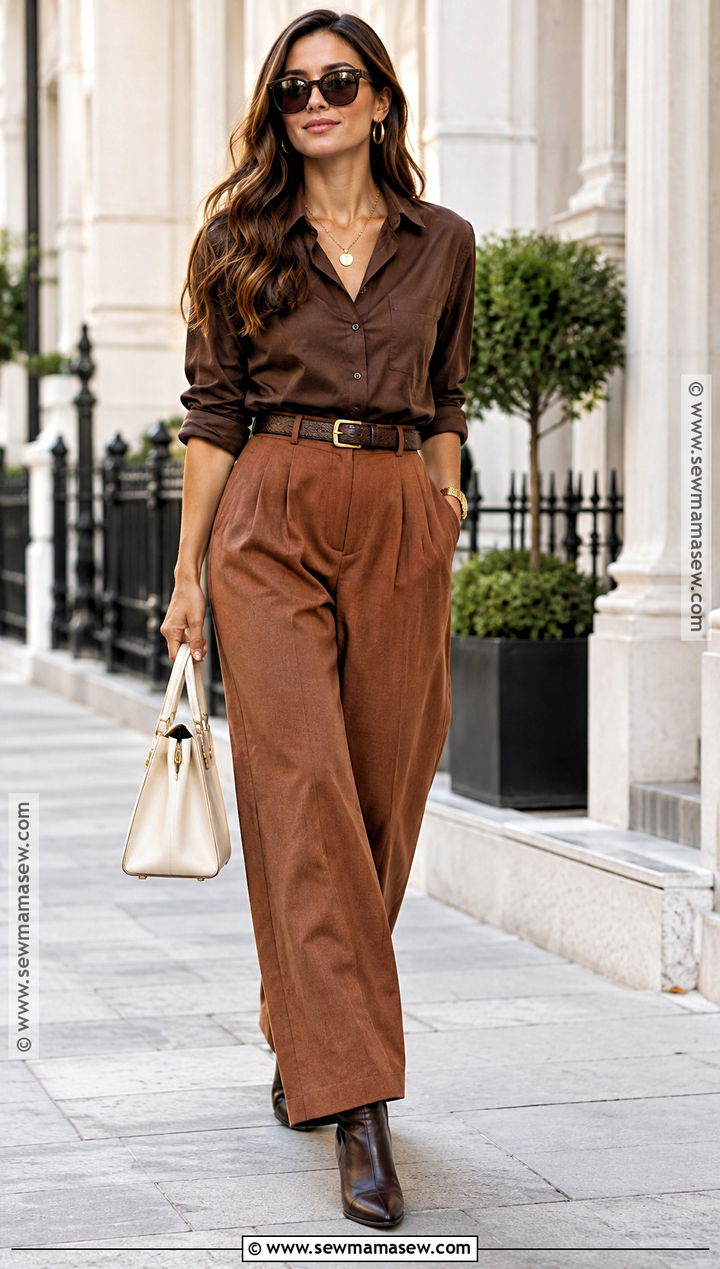
Monochrome brown works when two things vary: the shade and the texture. I put a chocolate or chestnut shirt with trousers a step lighter or darker, then mix materials, cotton with corduroy, satin with wool, so the outfit has depth instead of looking like one flat block. Brown near the face can drain some complexions; if that's you, leave the collar open over a cream layer. Tan loafers or dark-brown ankle boots and gold jewelry finish it for work or travel.
Flannel Against Poplin Against Satin on a Cold, Damp Day
The fabric decides how a fall shirt behaves once the weather turns. Brushed flannel traps air in its nap and is the warmest cotton shirt, but it holds water when soaked. Poplin and Oxford are breathable and layer neatly under knits, though poplin wrinkles quickly. Chambray stays light enough to tuck. Satin, usually polyester, feels cold against skin on a chilly morning and shows rain spots, so it belongs under a coat. Corduroy and suede shirts work as outer layers; real suede should stay home in rain.
Gaping Buttons and Other Fit Problems I Check First
Most shirts that never get worn fail on fit, not style. These are the checks I run in the fitting room.
- Reach forward with both arms. If the back strains or the cuffs pull far up your wrist, the shirt is too narrow across the shoulders.
- Look at the bust buttons from the side. Gaps between them mean you need a size up, a concealed placket or a small hidden snap sewn between buttons.
- Find the shoulder seam. On a fitted shirt it should sit at the edge of your shoulder bone; on an oversized one, a dropped seam is intended.
- Check the length against what you'll wear it with. A shirt meant to be tucked needs enough tail to stay in when you raise your arms.
A Shirt Carries More of the Outfit Than You Think
Every shirt here supports several bottoms, layers and shoes, which is what makes a small collection go far. Flannel, denim, corduroy and henleys carry the casual days; satin, lace, tuxedo and ruffled shirts take the dressier ones. Before buying, I check four things: fabric weight, length, shoulder seam position and whether the buttons gape. Then balance the shape, a roomy shirt with slim bottoms or a fitted one with wide pants or a skirt, and the outfit mostly builds itself.
Related posts: