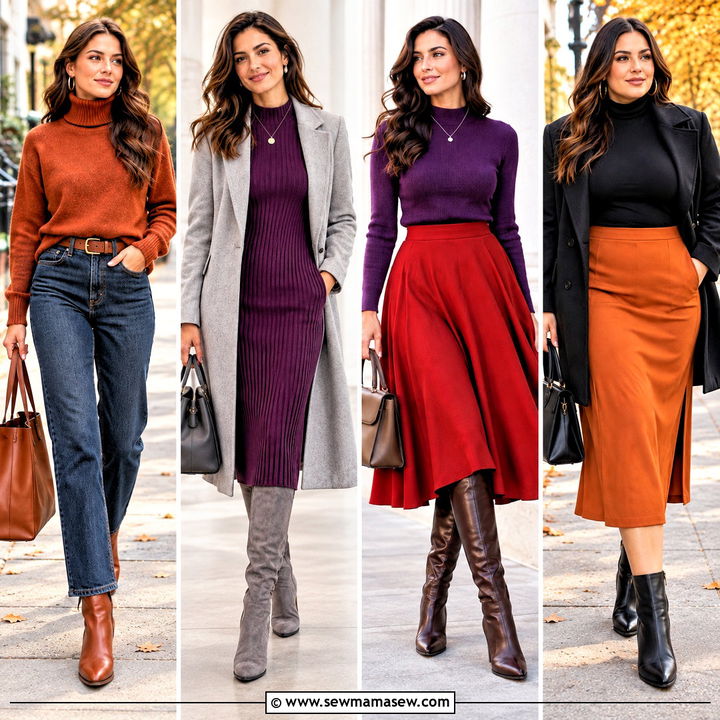
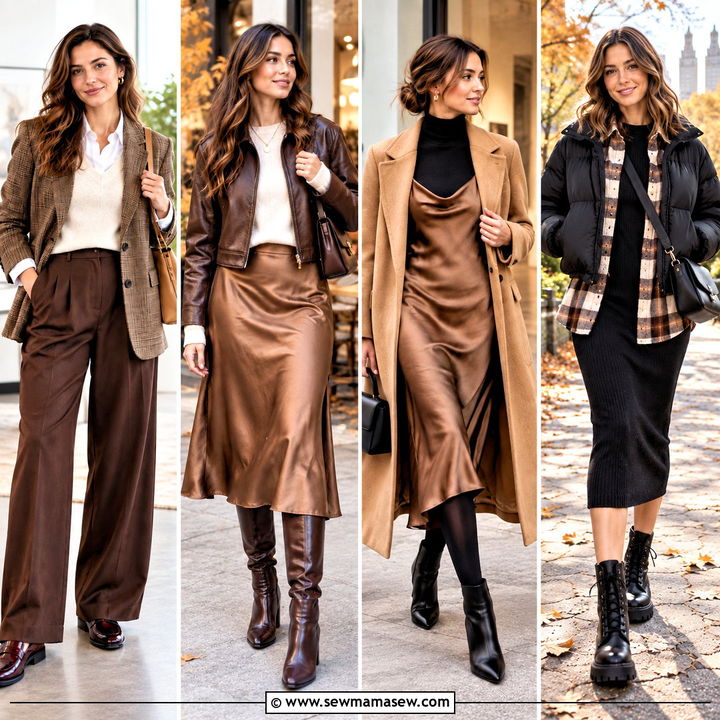
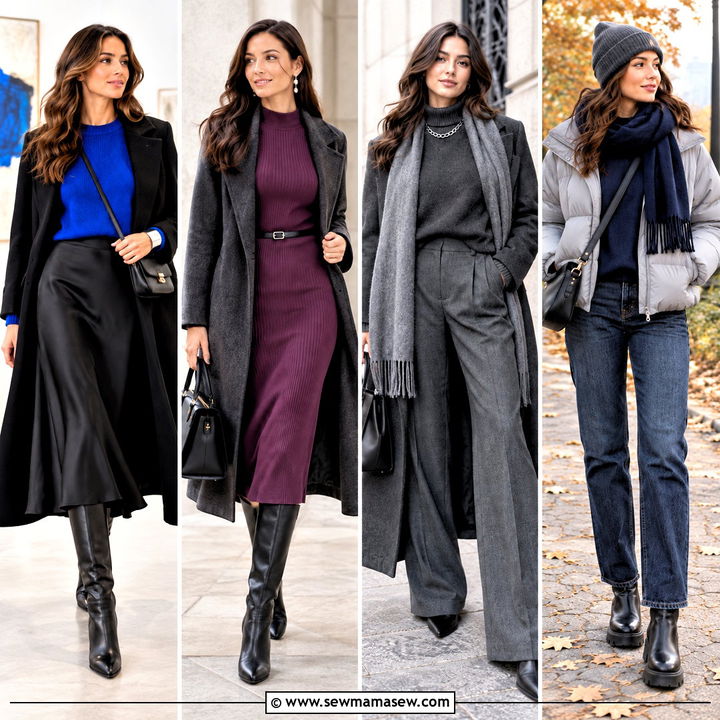
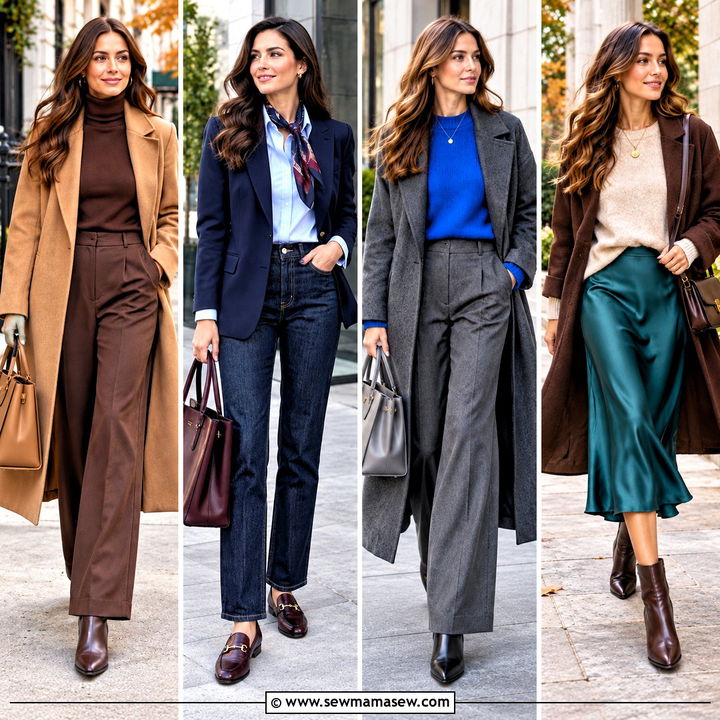
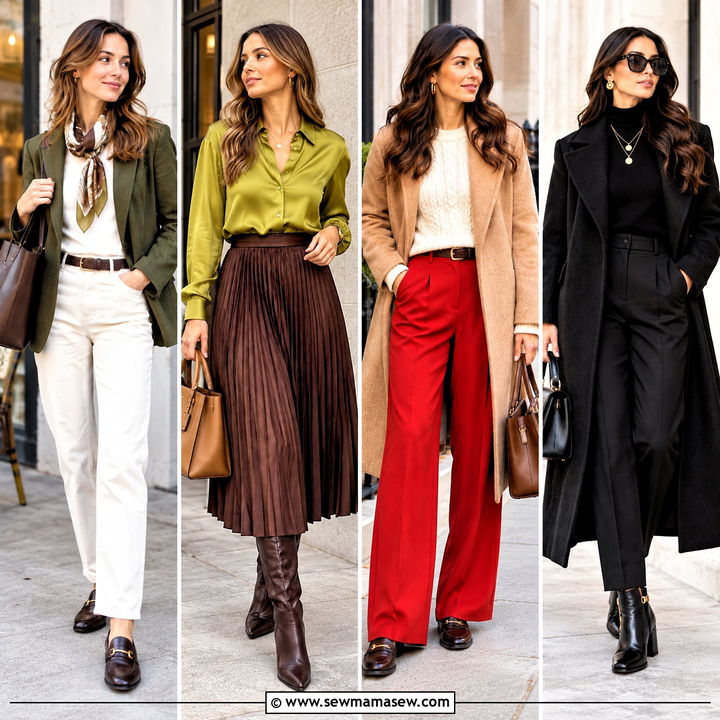
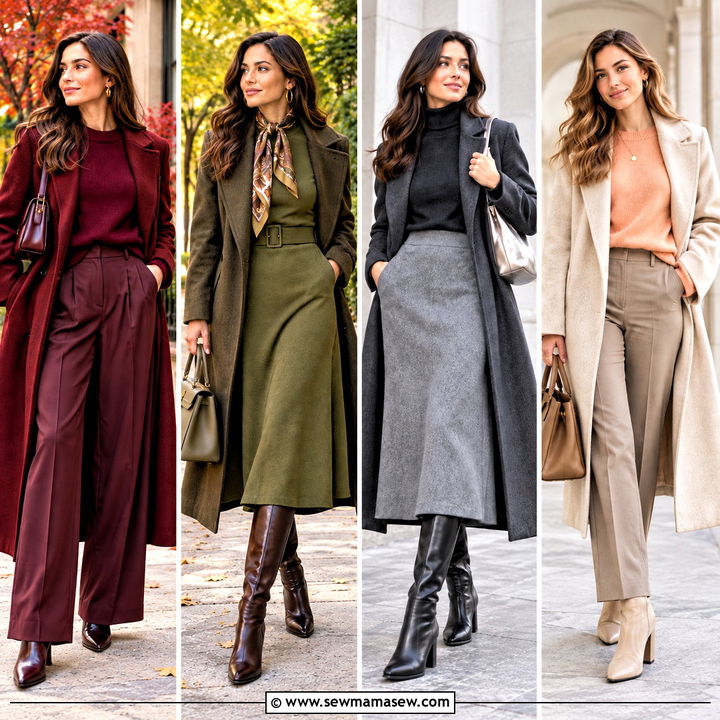
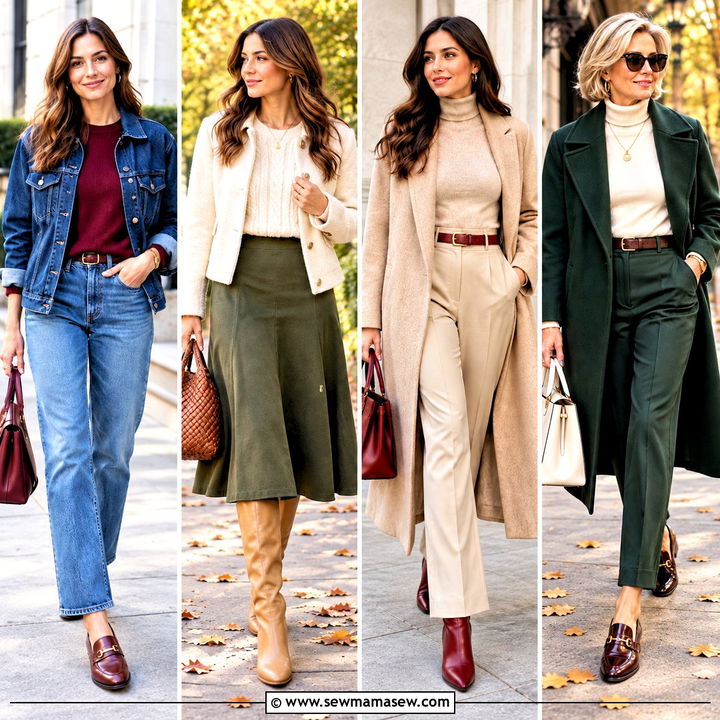
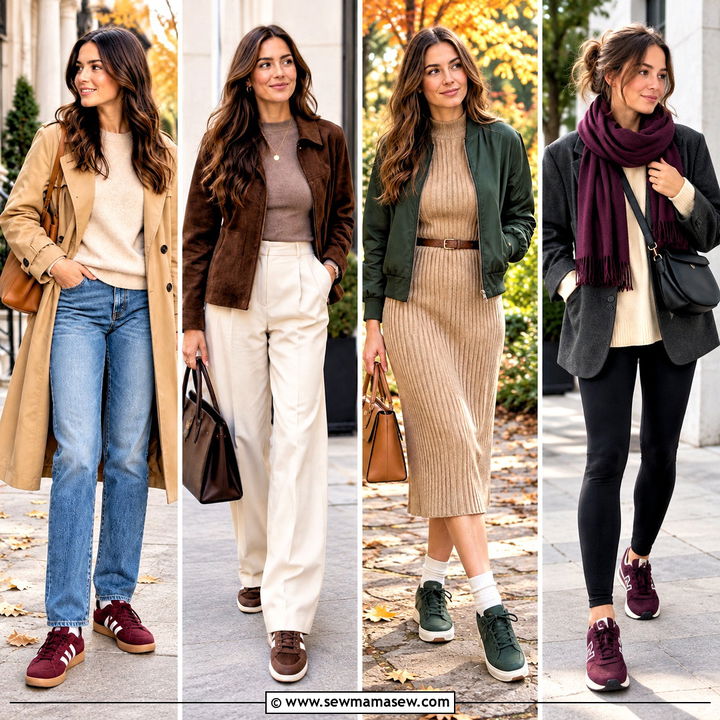
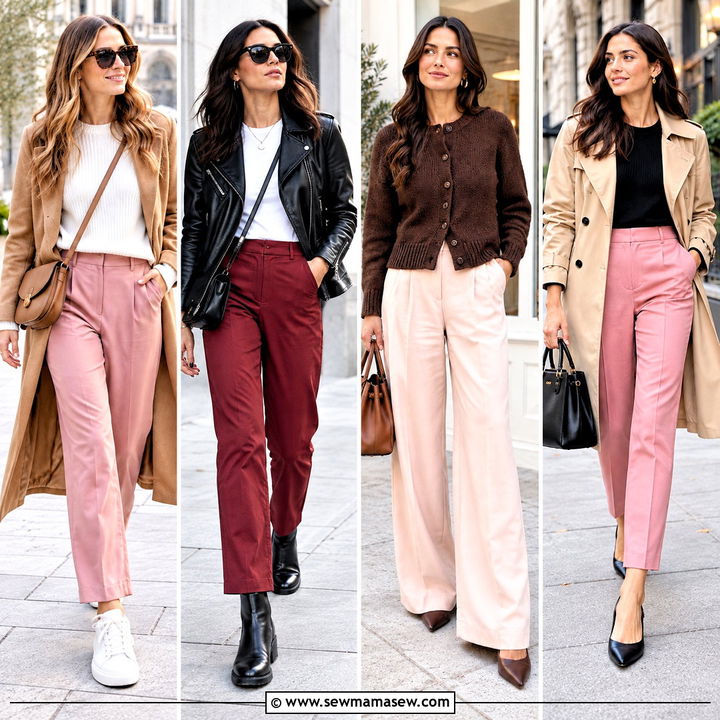
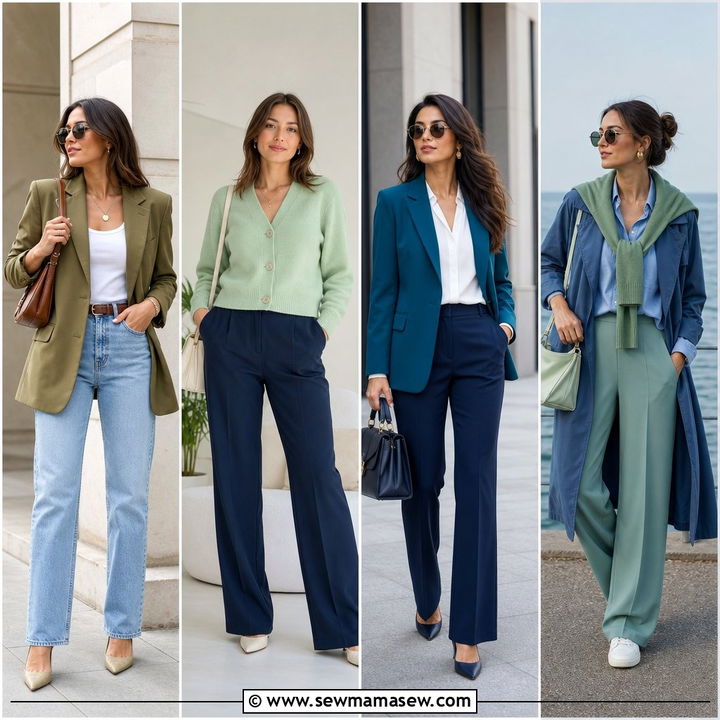
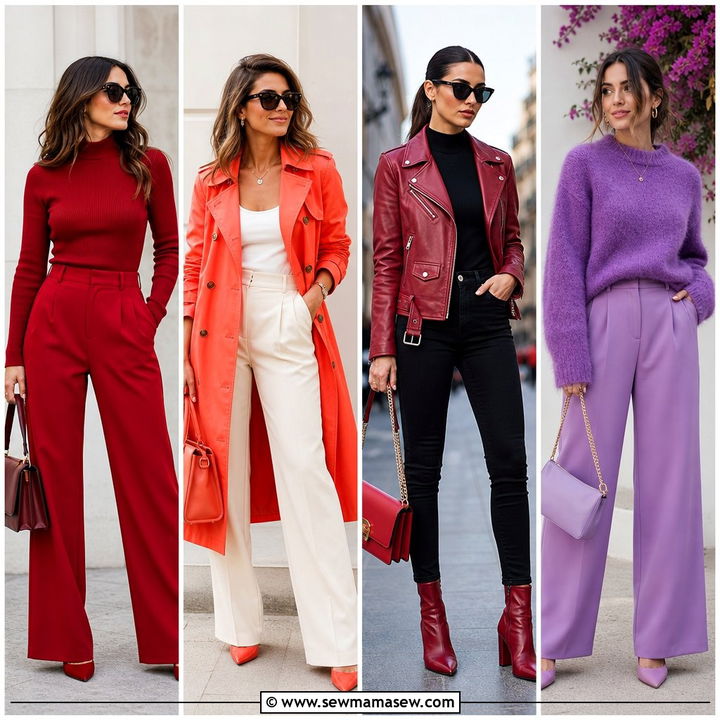
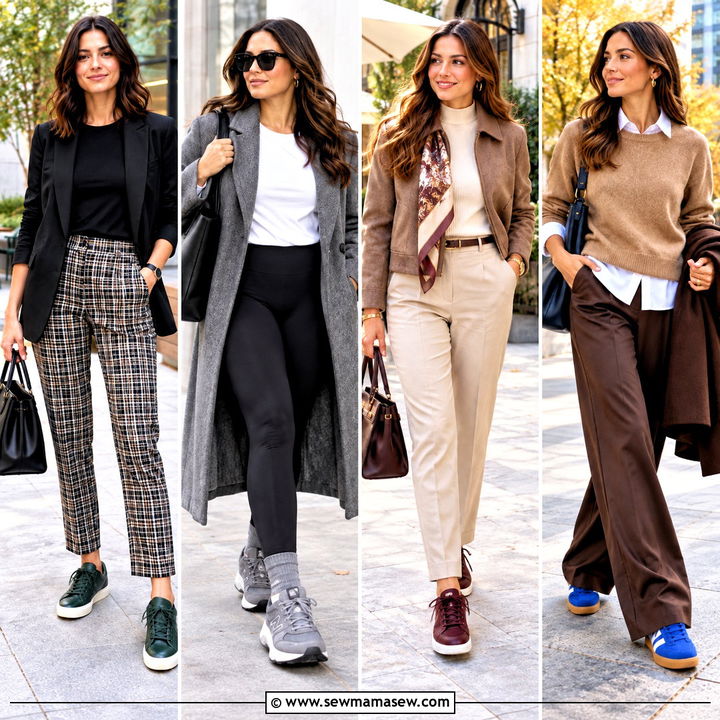
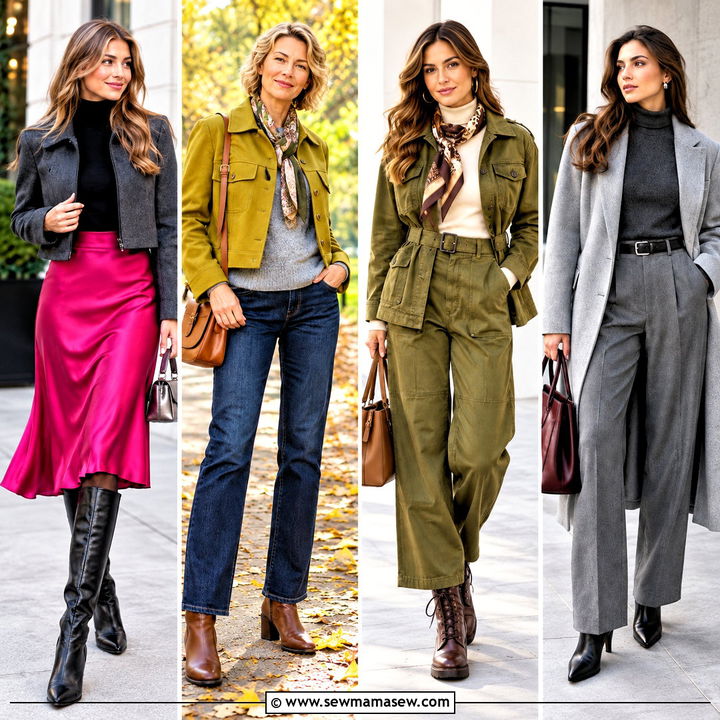
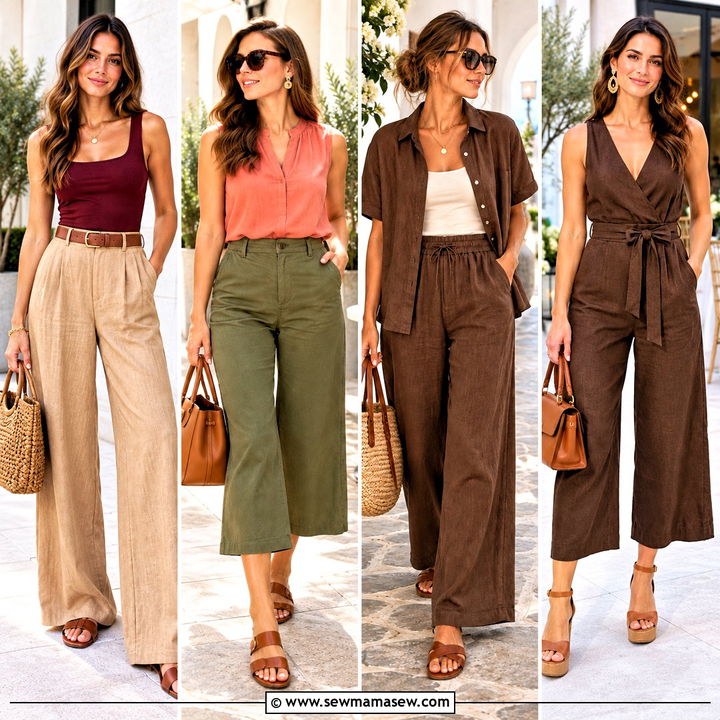
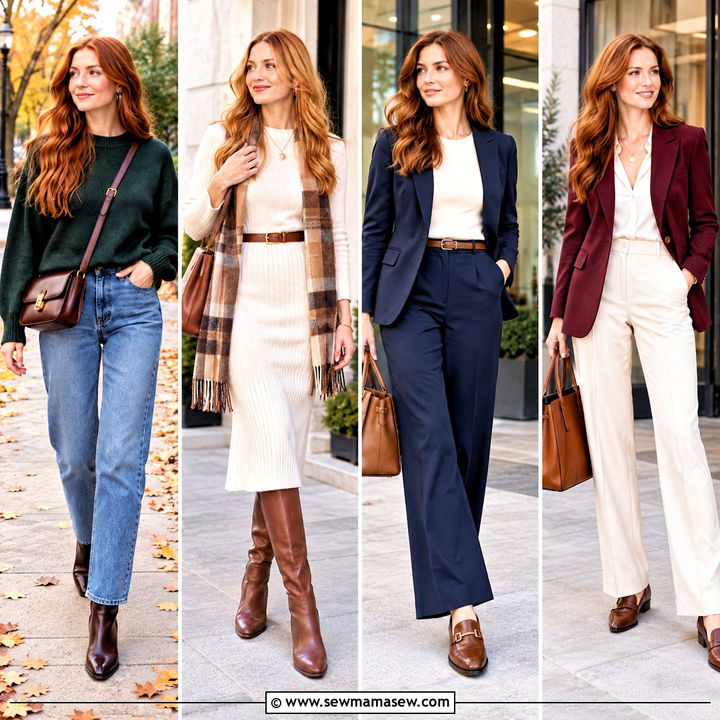
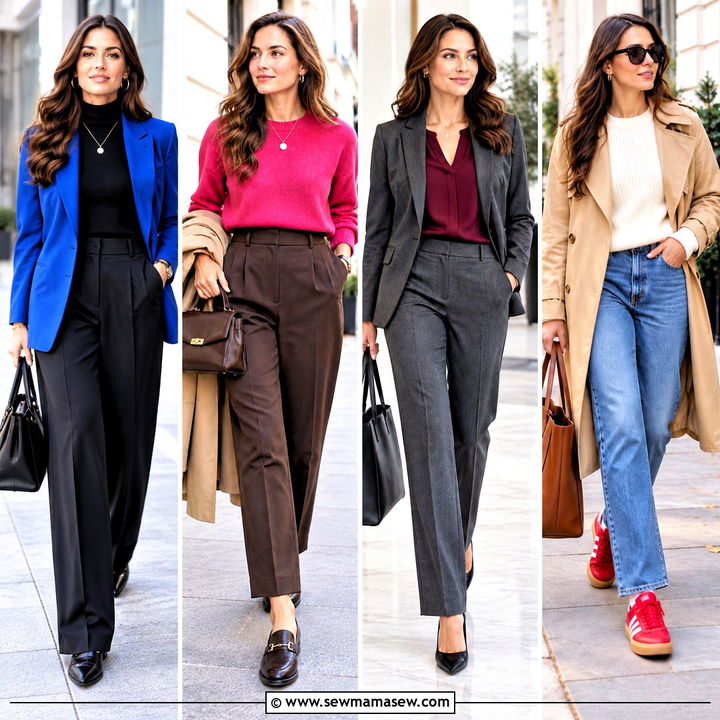
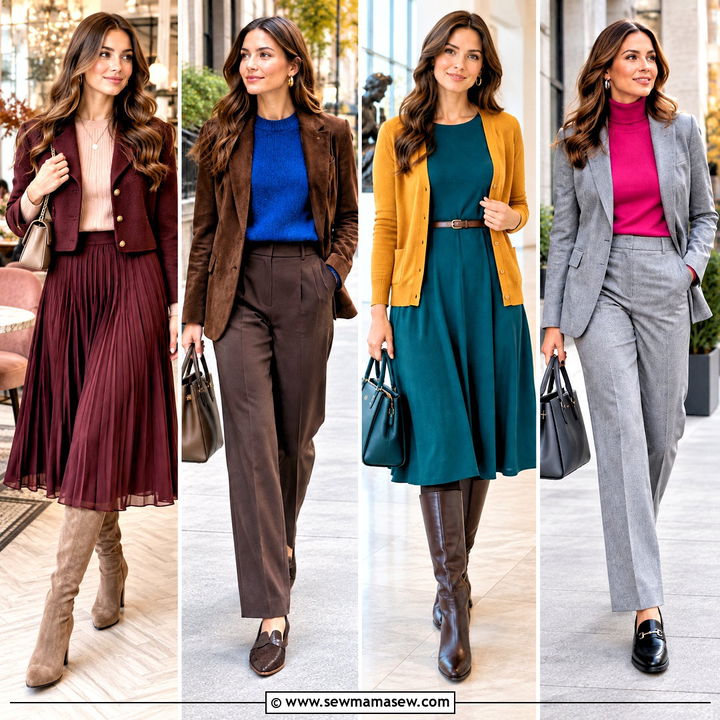
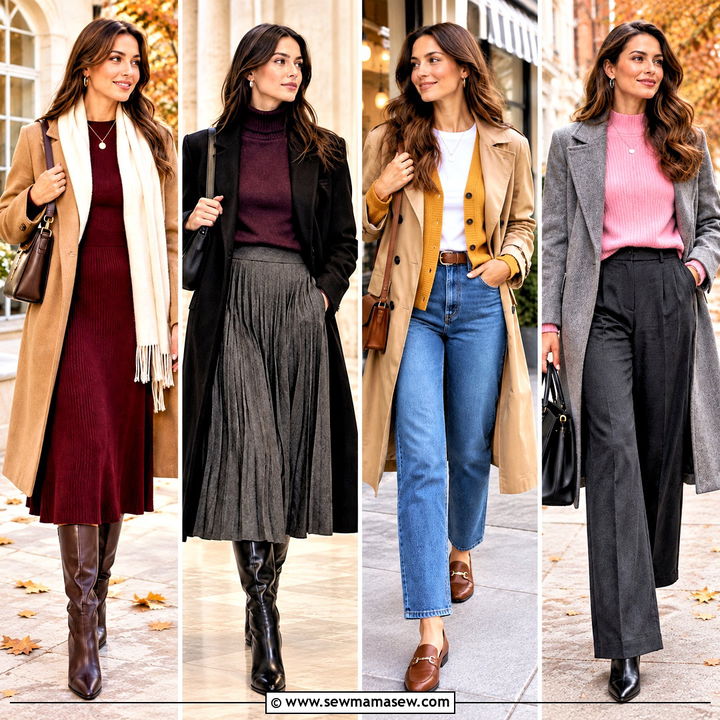
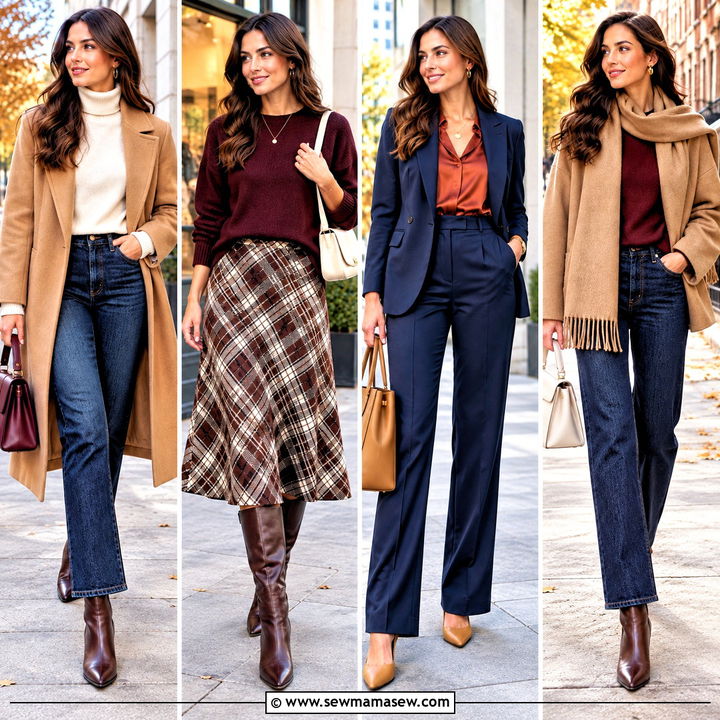
Most fall closets already hold the right colors. What they lack is a plan for which two go together. Below are twenty pairings I reach for when someone tells me their autumn outfits feel flat, from chocolate with cream to cobalt with camel, with a few riskier combinations near the end. Every look comes with its layers, bag and shoes worked out, and I've flagged where a shade tends to fight with skin tone or where a lighter neutral will save it. Start with a color you already own and add one new shade through a sweater, scarf or pair of boots before you buy anything big.
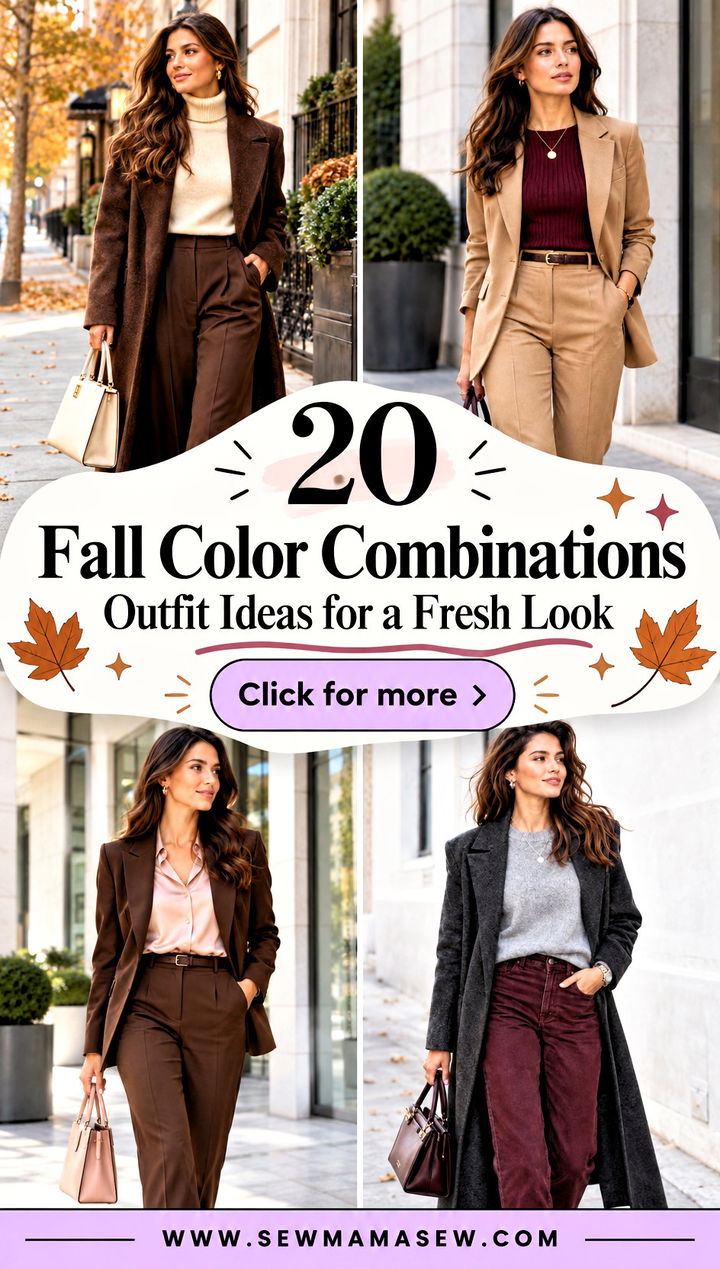
Hold the Color Under Your Chin First
Before deciding on any pairing below, I'd do the test I use in every color session. Stand by a window in daylight, no makeup, and hold the fabric just under your jaw. Then swap it for something white and compare. A shade that suits you makes skin look clearer and evens out redness. One that doesn't will deepen shadows under the eyes, make skin look gray or yellow, or seem to arrive before your face does.
Most people quickly fall into one of two groups. If gold jewelry, rust, olive, camel and cream look good on you, you lean warm. If silver, plum, navy, gray and blush suit you better, you lean cool. Plenty of people sit in between and can wear both, but the test still shows which version of a color to pick: an ivory or a bright white, a brick red or a berry.
- Strong color near the face: only shades that passed the test.
- Colors that failed: wear them below the waist, as trousers, skirts, boots or a bag.
- Unsure: put a collar, scarf or neutral layer between the color and your skin.
That last trick is why so many of the outfits here include a white shirt collar or a cream scarf. It lets you wear a shade you love without it sitting right against your face.
1. Chocolate Brown and Cream Sweater Outfit
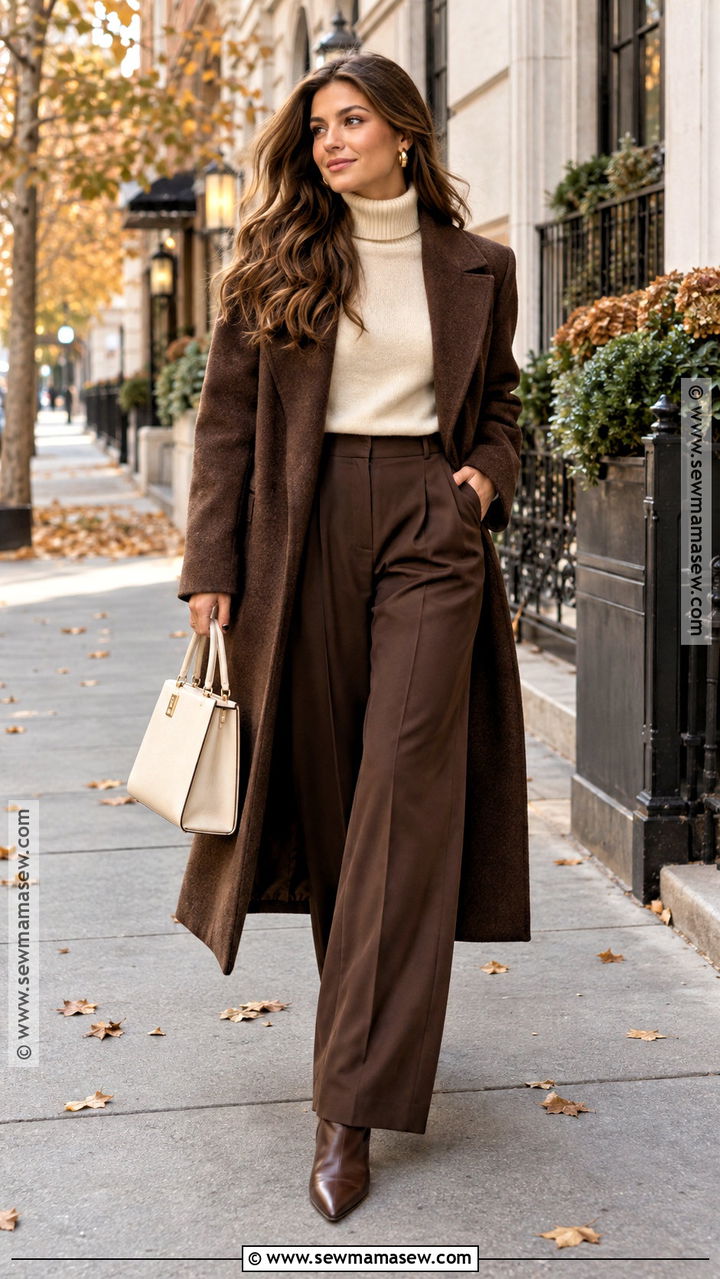
This is the pairing I suggest first to anyone nervous about color, because it barely registers as a risk. A cream turtleneck goes on top, near the face, where it bounces light upward; chocolate wide-leg trousers anchor the lower half. I put the light shade up and the dark one down on purpose, since the reverse pulls attention to the hips and leaves a pale face sitting on a heavy brown neckline. Brown loafers keep it relaxed, pointed ankle boots sharpen it. Watch the cream itself: a yellowish ivory against a cool, pink complexion can look dingy, so hold the sweater under your chin in daylight before you commit. A cocoa wool coat or beige trench, a brown belt and small gold earrings finish it.
2. Burgundy and Camel Blazer Outfit
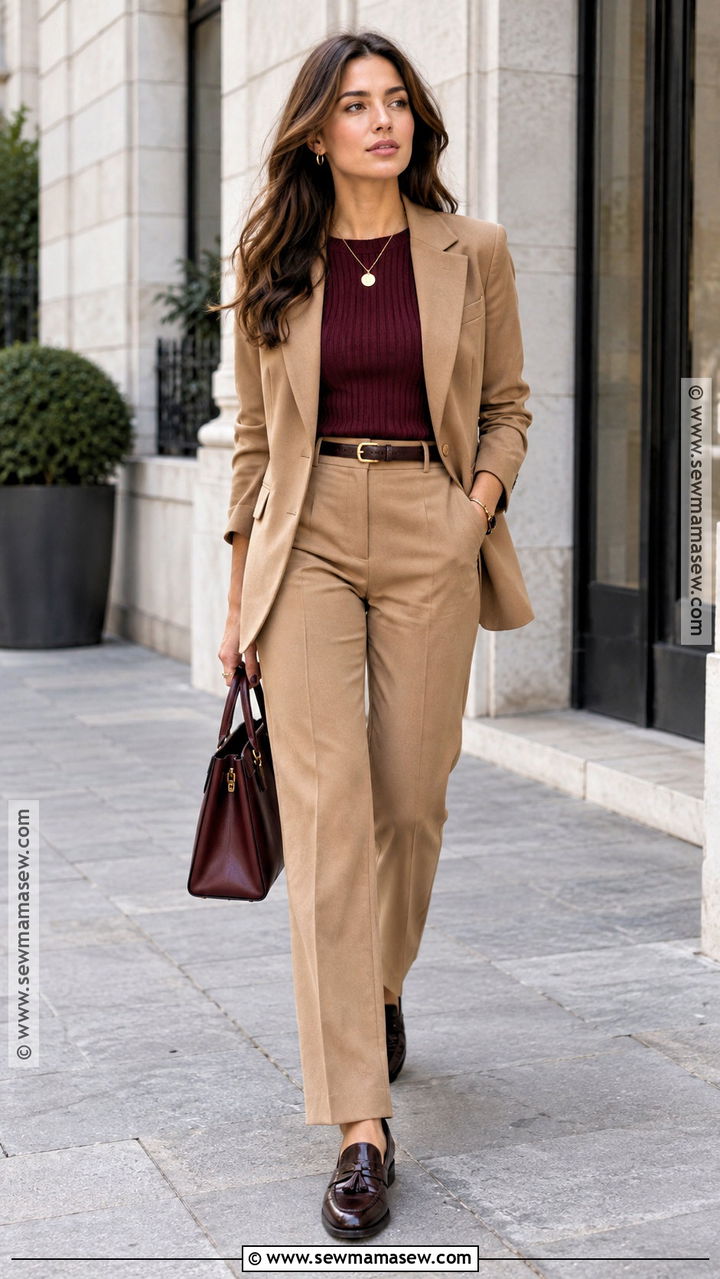
Burgundy reads richer against camel than against black, which can make deep red look almost brown in low light. I like a burgundy knit with camel tailored trousers and a matching blazer for the office. On weekends the trousers swap easily for straight camel jeans or a midi skirt. Dark brown loafers, a burgundy bag and fine gold jewelry keep the palette to two colors plus leather, and that restraint is what makes it look intentional. If the knit is thin, a cream camisole underneath stops it clinging. Suede accessories soften the whole thing; structured leather keeps it crisp.
3. Olive Green and Ivory Utility Jacket Outfit
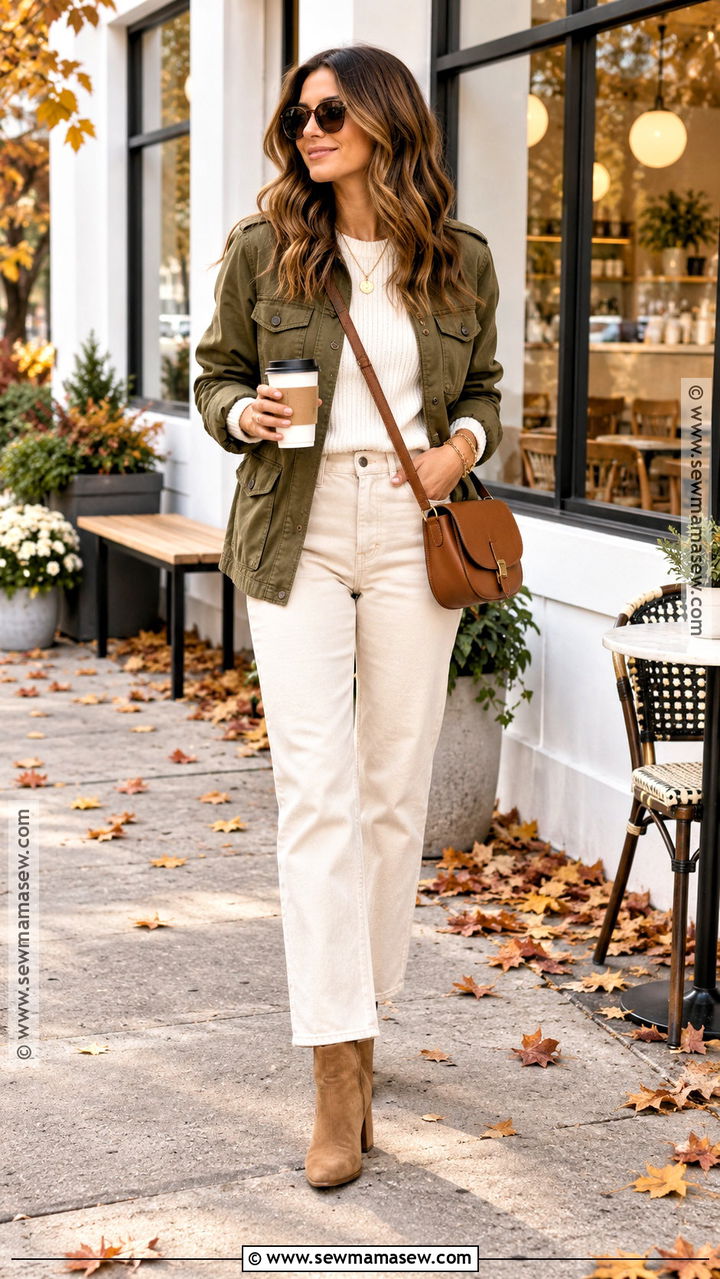
Olive is one of the friendliest greens for skin because it carries yellow and gray at once. Over an ivory ribbed sweater and ivory or ecru jeans, an olive utility jacket acts as a frame: the light column underneath makes you look longer, and the green sits only at the edges. Tan ankle boots, a cognac crossbody and plain gold jewelry suit the earthy feel. Pale jeans do pick up every splash on a wet day, so I'd switch to a medium wash for errands and keep the ecru pair for drier plans. Push the sleeves up an inch so the knit shows at the wrist; it repeats the ivory and breaks up the jacket.
4. Navy and Camel Coat Outfit
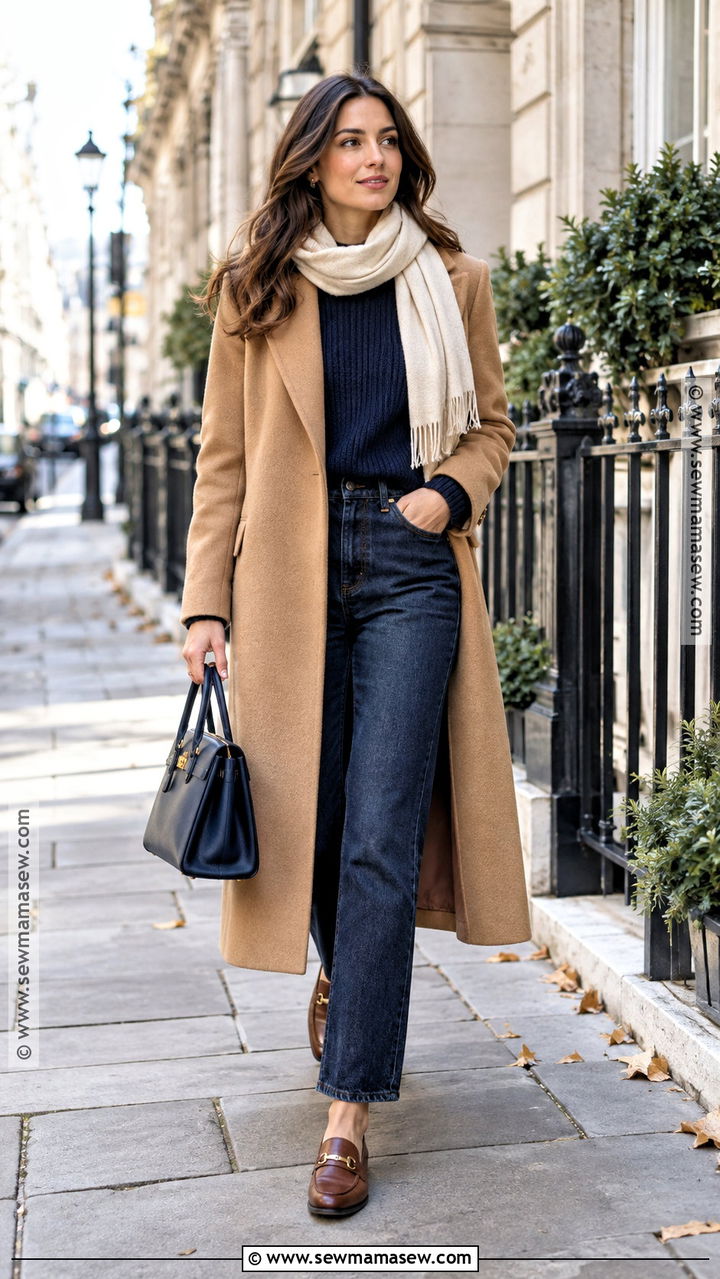
Navy is the answer for anyone who wears black every day and wants something gentler near the face. A navy sweater and dark straight jeans form a near-tonal base, and a long camel coat goes over the top for warmth and contrast. I check that the navy pieces are close in depth; a bright navy sweater against an almost-black denim looks like a mismatch rather than a choice. Cognac loafers or knee boots, a structured navy bag and a cream scarf to lift the complexion finish it. Trade the jeans for navy trousers and a finer knit for work. It moves from lunch to dinner without a change.
5. Rust and Denim Jacket Outfit
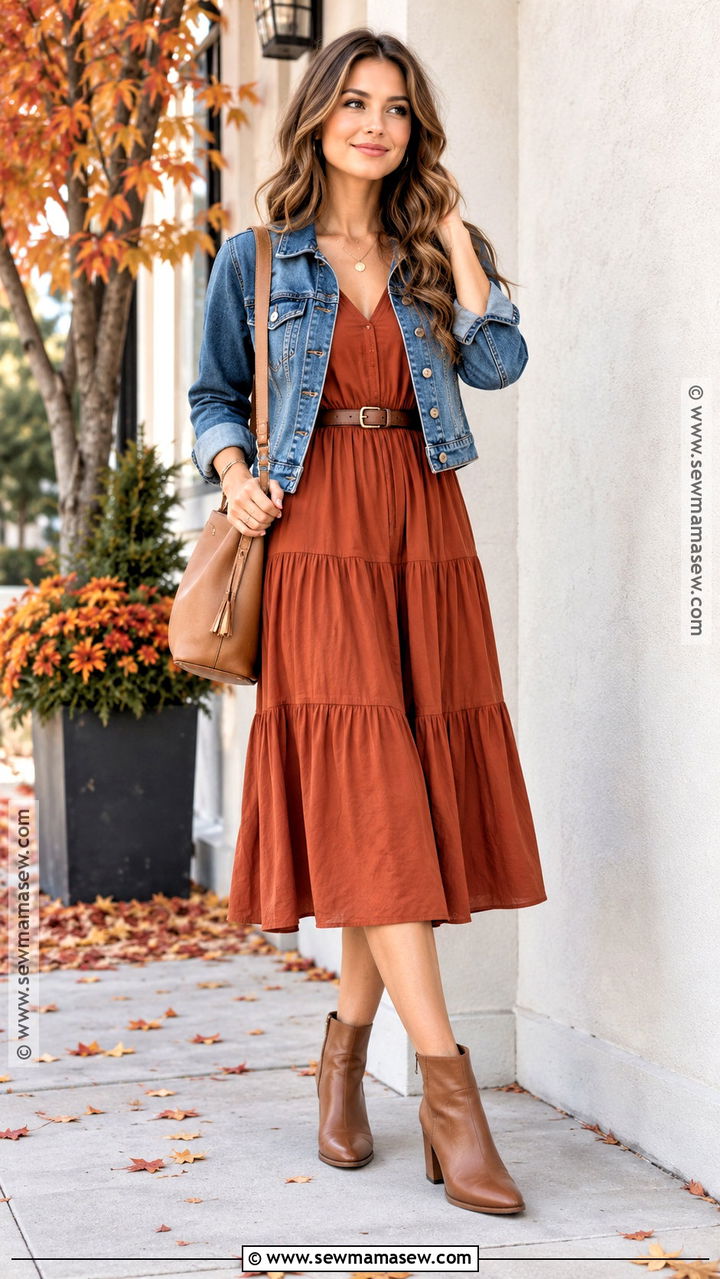
Rust carries more warmth than orange and less glare, so it suits more people than you'd expect. A rust midi dress under a medium-wash denim jacket is my easy weekday version. Cognac ankle boots pick up the dress color, and a tan shoulder bag keeps things light. A slim brown belt helps a loose dress, though I leave it off when the fabric is soft and drapey. In colder weeks, cream tights and a long camel coat go on top. One thing I always test: rust right at the neckline can make ruddy skin look redder, and a denim collar between them cools that down nicely. Gold jewelry leans into the warmth, silver plays it down.
6. Forest Green and Black Leather Jacket Outfit
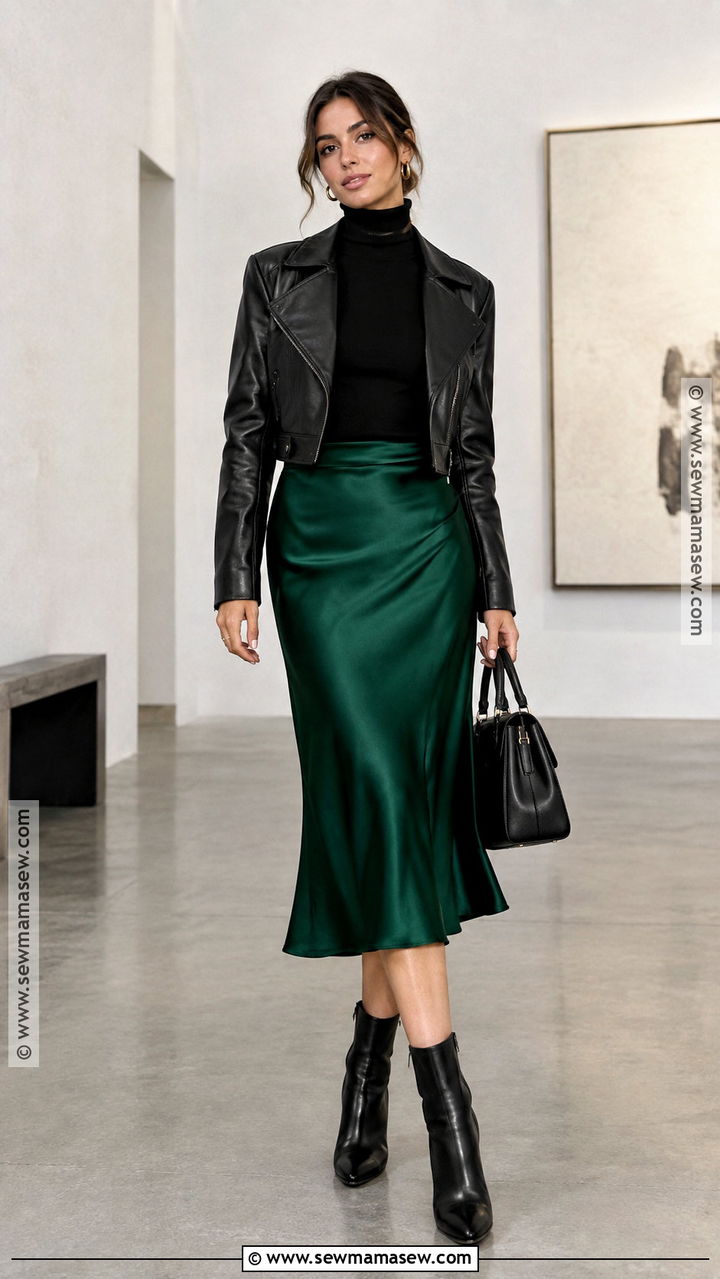
Black is hard on many complexions, and forest green is the color I use to soften it. Here a forest green satin or knit midi skirt goes with a fitted black turtleneck and a cropped black leather jacket. The jacket ends at the waist, so the longer skirt gets room and your legs don't look shortened. Black ankle boots continue the dark line downward, which lets the green be the only color in the frame. A structured black bag and hoops in either metal finish it. If skirts aren't your thing, green trousers do the same job. Satin creases where you sit, so I'd pick the knit version for a long desk day.
7. Mustard Yellow and Charcoal Gray Trouser Outfit
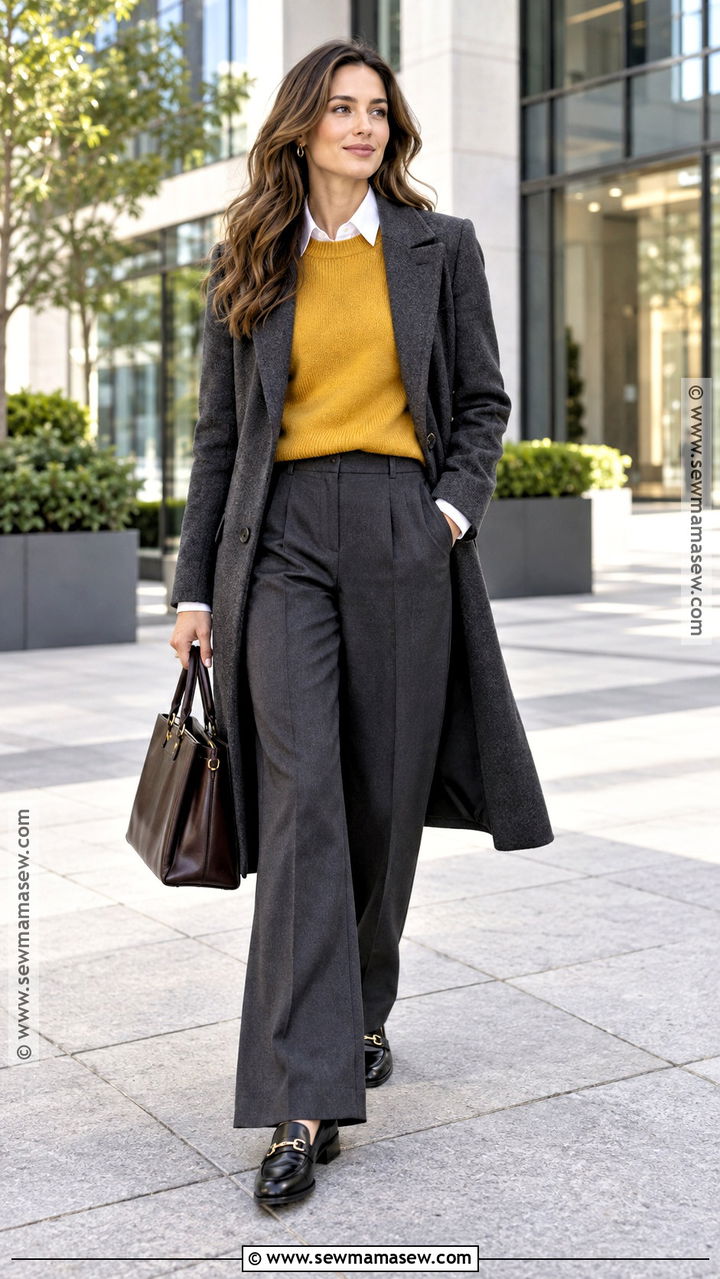
Mustard is the shade I warn people about most, because it turns many skin tones sallow when worn at the neck. Charcoal makes it manageable. A mustard crewneck with charcoal wide-leg trousers, a charcoal coat and black loafers keeps the bright color in a small, contained block. A white shirt under the sweater puts a crisp collar between mustard and skin, and that collar is often all it takes to make the color wearable. If it still drains you, move it down: a mustard skirt or bag with charcoal on top gives the same palette with no risk. Matte fabrics help; shiny mustard looks cheap fast.
8. Plum and Taupe Midi Skirt Outfit
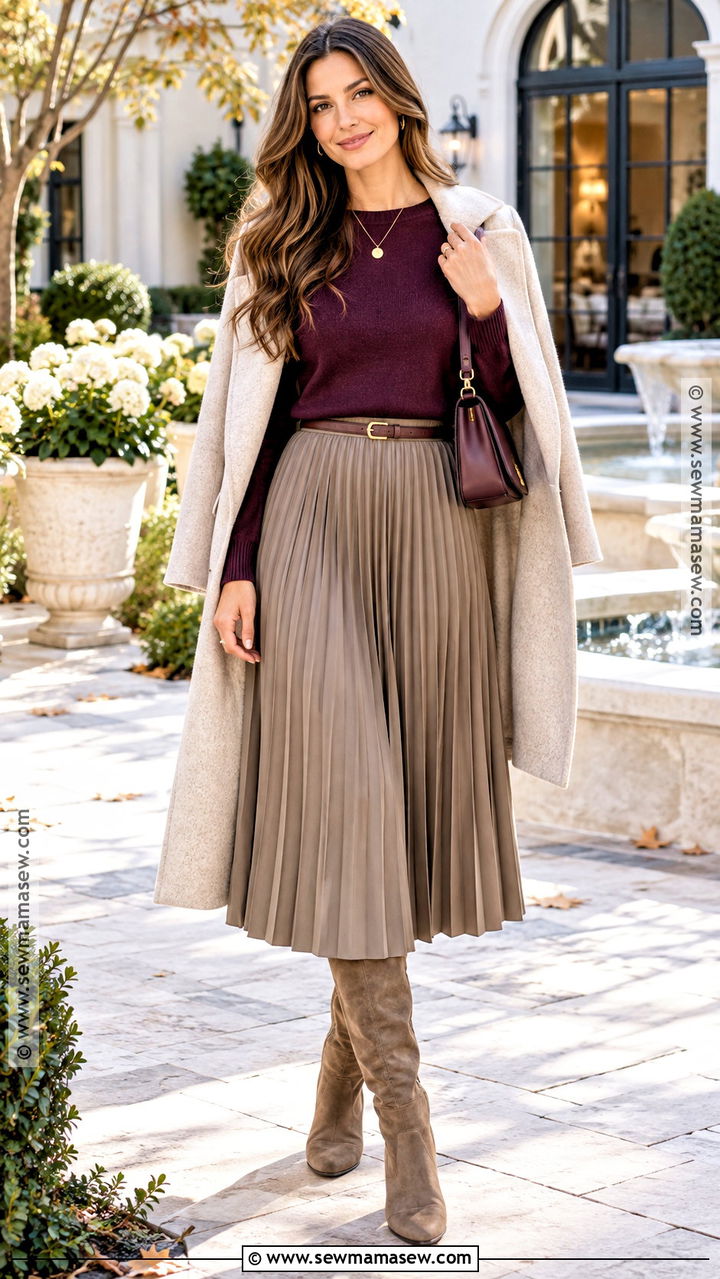
Plum and taupe sit close together in value, so the outfit feels soft rather than contrasty. I tuck a fine-knit plum sweater into a taupe pleated midi and add a slim brown belt. Taupe knee-high boots that meet the hem keep the lower half one continuous neutral, which lengthens the leg. The skirt hem should overlap the boot shaft slightly; a gap of bare tights between them chops the line. A plum bag adds a repeat of color, chocolate brown quiets it. An oatmeal coat and gold or pearl jewelry suit the muted mood. Plum also flatters cool undertones that struggle with orange and rust.
9. Teal and Chocolate Brown Pants Outfit
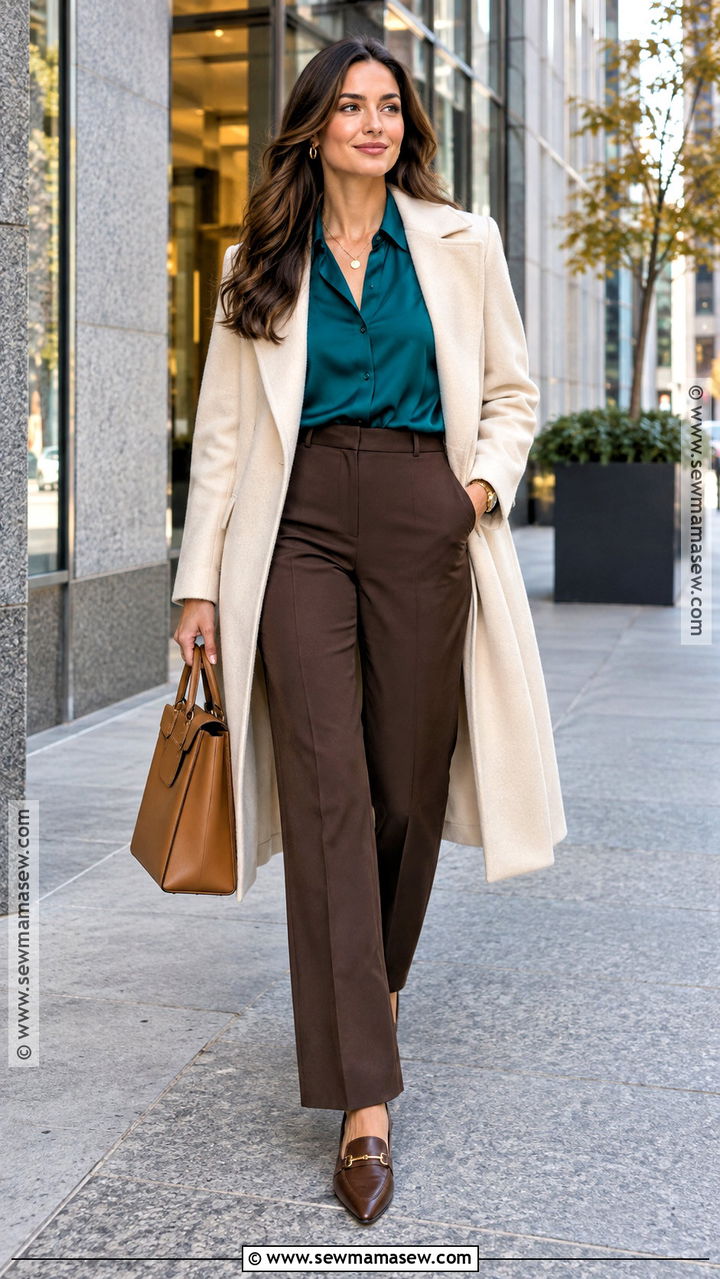
Teal on its own can feel loud, but chocolate brown calms it right down. A teal blouse or light sweater over brown tailored pants pulls the eye up toward the face, while the dark pants give it weight. Brown loafers or pointed boots and a teal or tan structured bag finish it. For cloudy days, a cream coat keeps the outfit from going too dark; for meetings, a matching brown blazer turns it into a near-suit. Gold hoops or a plain watch are plenty. In casual settings I'd switch to brown corduroy and suede sneakers. Teal is a good route for anyone who likes color but finds autumn orange unflattering.
10. Red and Purple Color Block Outfit
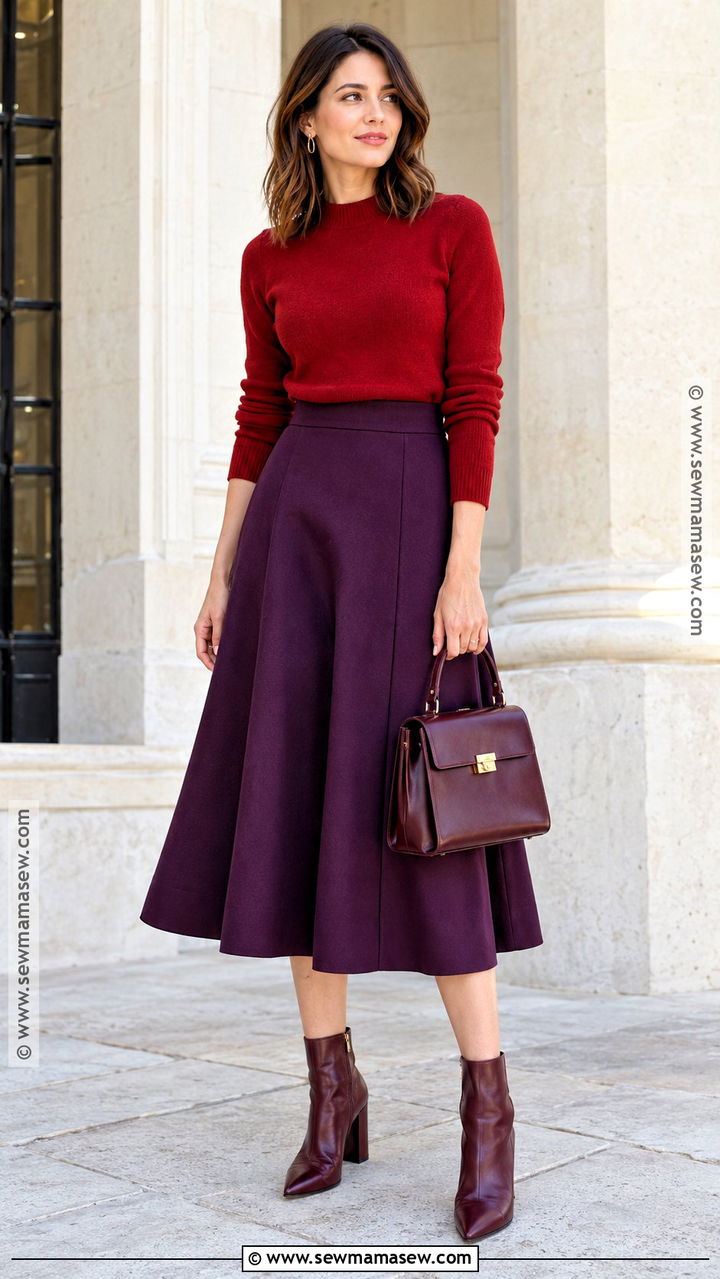
Red and purple sit next to each other on the color wheel, so they clash less than people think. The trick is keeping the shapes plain. A fitted crimson sweater over a deep purple A-line midi lets the colors do the talking, and burgundy pumps or ankle boots bridge the two shades at the feet. An oxblood or dark brown bag grounds it. Skip prints entirely; a pattern on top of two strong colors gets chaotic. For a quieter version I'd use plum trousers, a muted brick cardigan and a cream layer underneath. I'd keep the bold version for days when you actually want to be noticed.
11. Blush Pink and Chocolate Brown Blazer Outfit
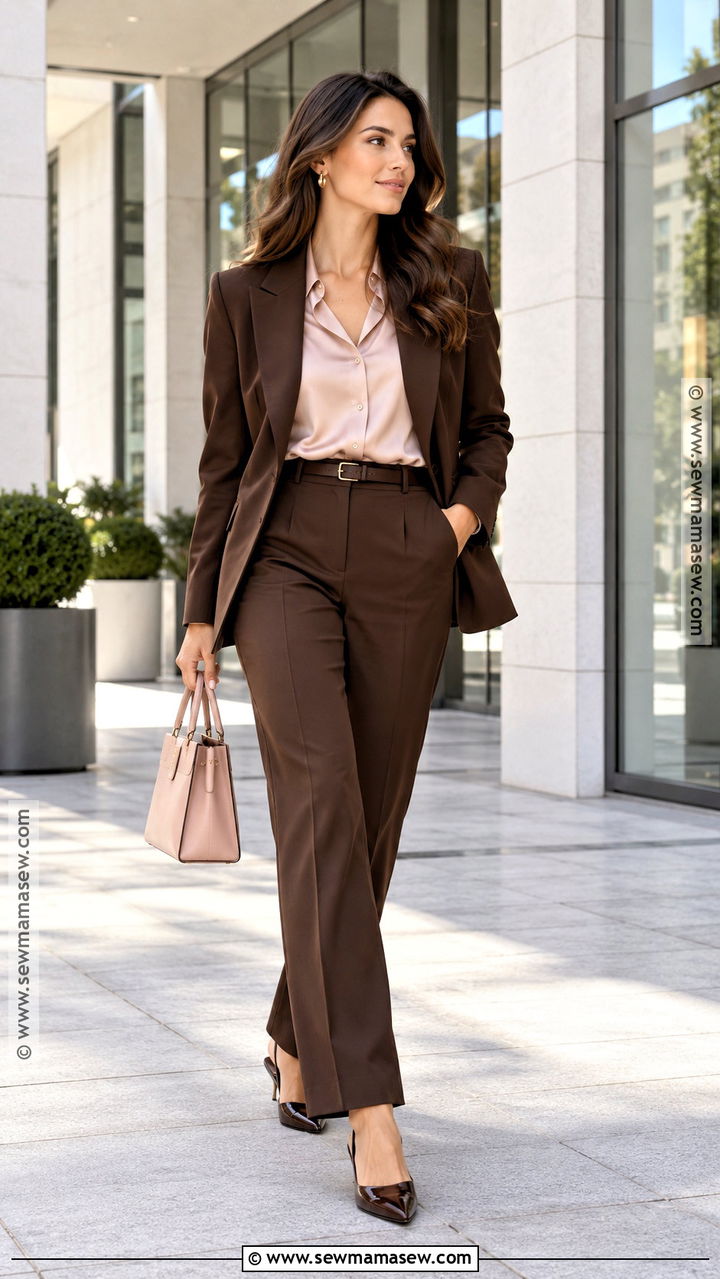
Blush is what makes chocolate brown look current instead of heavy. A chocolate blazer over a blush satin blouse, with dark brown straight trousers, gives you a softened suit. The pale blouse sits between two dark pieces and stops them merging into one brown block. I'd test the blush against your skin first: if it's too close to your own coloring you'll look washed out, and a slightly deeper rose usually fixes that. Loafers, slingbacks or sleek ankle boots depending on the day; a blush or cream bag; small gold earrings. Swap in dark jeans and wear the blazer open for weekends.
12. Cobalt Blue and Camel Trench Outfit
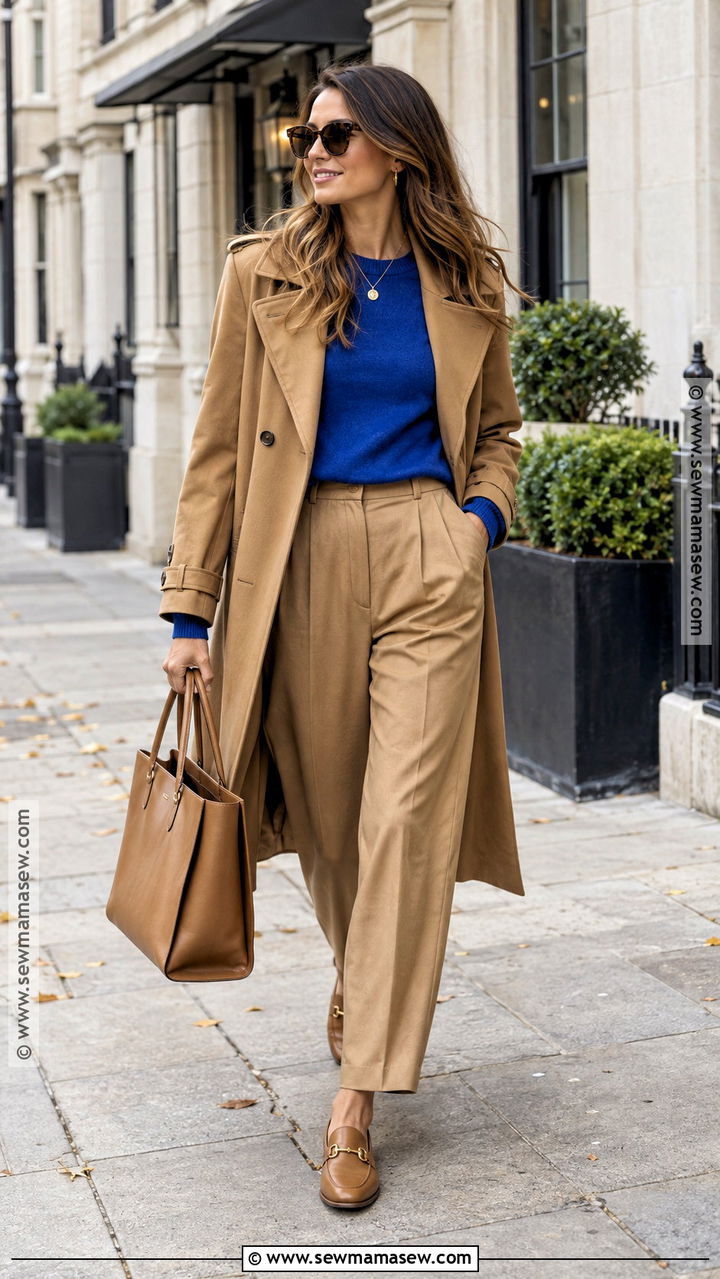
Cobalt and camel are near opposites on the color wheel, which is why the pairing feels so clean. A cobalt crewneck with camel pleated trousers and a camel trench is a good early fall outfit when you don't need heavy layers yet. Tan loafers, brown boots or white sneakers keep the feet neutral. Because cobalt is so saturated, I keep everything else plain: no prints, very little jewelry. A white shirt underneath with the collar out softens the blue near the face. Carry a camel tote for work or a small blue crossbody for errands. When it gets cold, a wool coat and thicker knit carry the same pair forward.
13. Burnt Orange and Olive Green Cargo Outfit
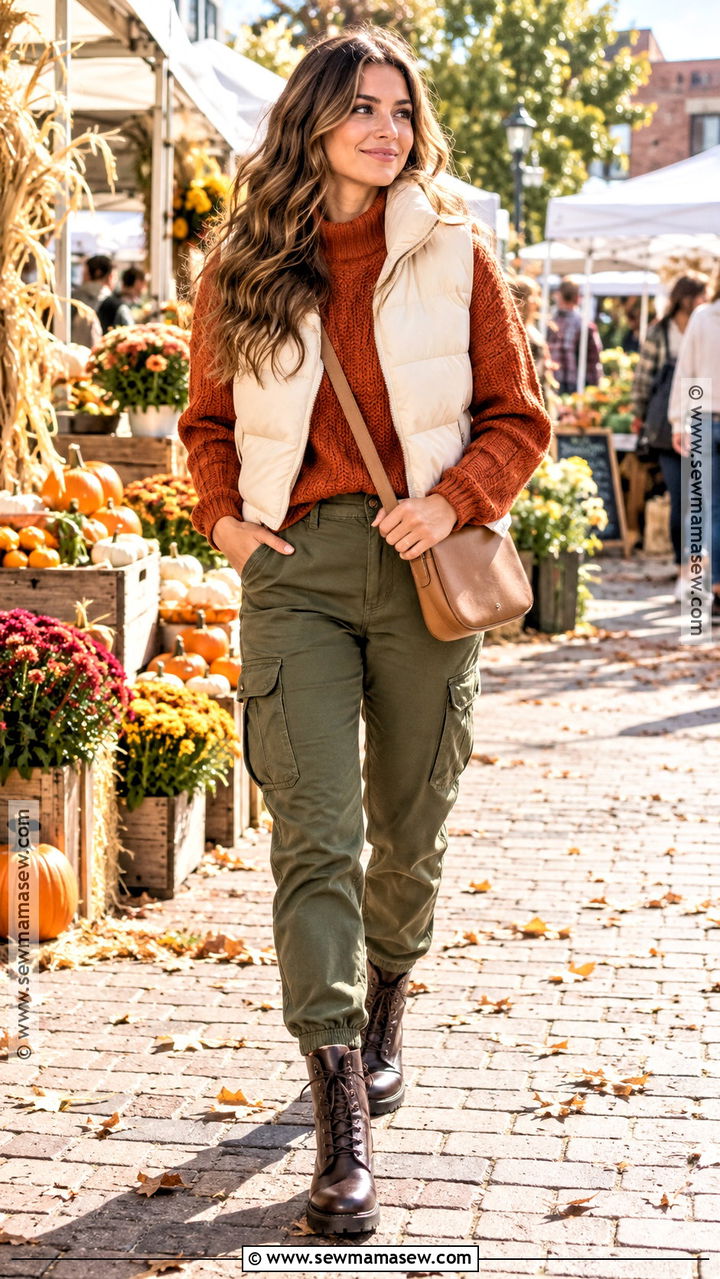
Burnt orange with olive is about as autumnal as color gets, and it suits warm and olive skin especially well. An orange knit with relaxed olive cargos or straight utility trousers is the base. Cream sneakers lighten it for daytime; dark brown combat boots handle cold, damp mornings better. A tan crossbody bag stays out of the way. A cream puffer vest over the knit keeps the orange showing at the sleeves. Cargo pockets add bulk at the thigh, so if that bothers you, choose a tapered leg and do a partial front tuck to mark the waist. Good for campus days, errands and road trips.
14. Burgundy and Navy Sweater Dress Outfit
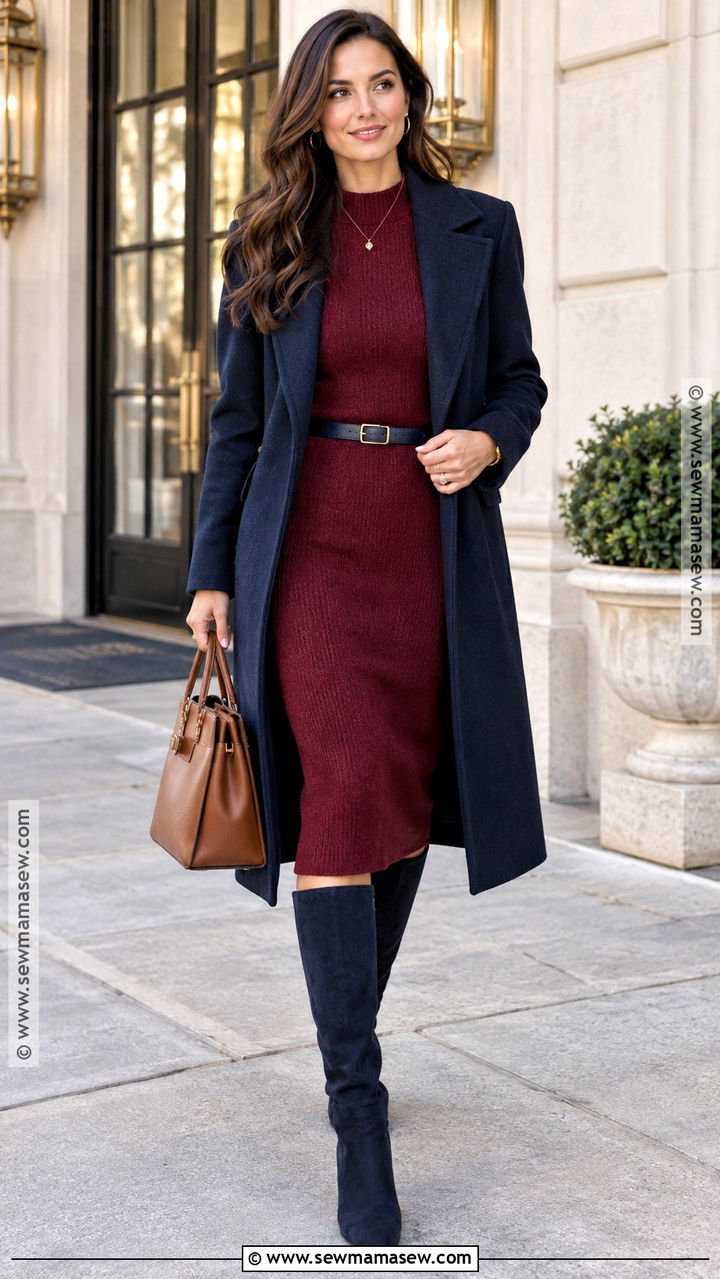
Burgundy and navy are both deep, so the contrast is quiet and grown-up. I start with a burgundy sweater dress, knee or midi length, under a tailored navy coat. Navy knee boots and sheer navy tights carry one color from the coat hem down, which makes the dress look longer. A cognac or burgundy bag adds warmth. A narrow navy belt helps if the knit hangs straight. Sweater dresses do stretch at the seat over a day of sitting, so a denser knit is worth the extra cost. Small gold jewelry brightens the dark palette. With flat boots, it's comfortable enough for a full day out.
15. Sage Green and Cream Cardigan Outfit
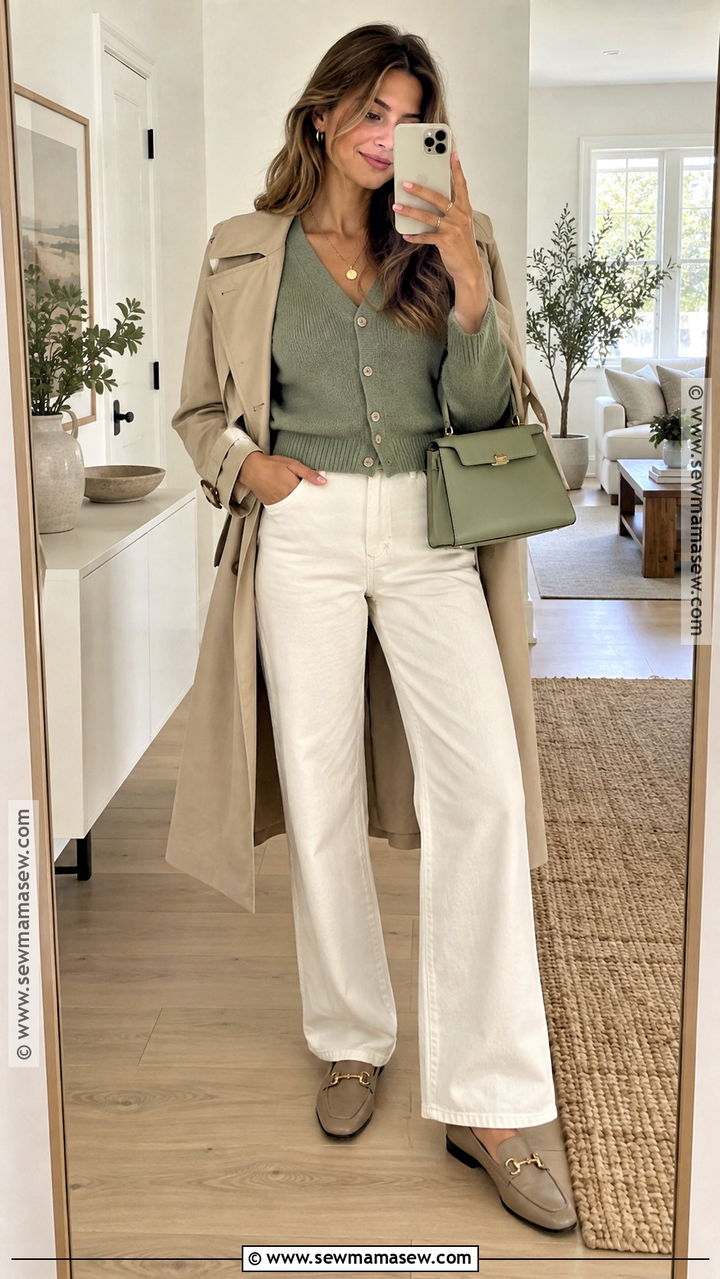
Sage is the pastel I recommend for fall because the gray in it keeps it from looking springy. A sage cardigan buttoned as a top with cream wide-leg jeans or trousers, a beige trench and taupe loafers gives a calm, light palette. A sage bag repeats the green; a tan tote is more practical. Oversized cardigans need shape, so tuck the front or add a thin belt. Pale outfits go flat without texture, which is why I mix ribbed knit, suede and brushed cotton here. This one is best for early autumn or mild climates. In rainy weather cream trousers are a gamble.
16. Gray and Burgundy Jeans Outfit
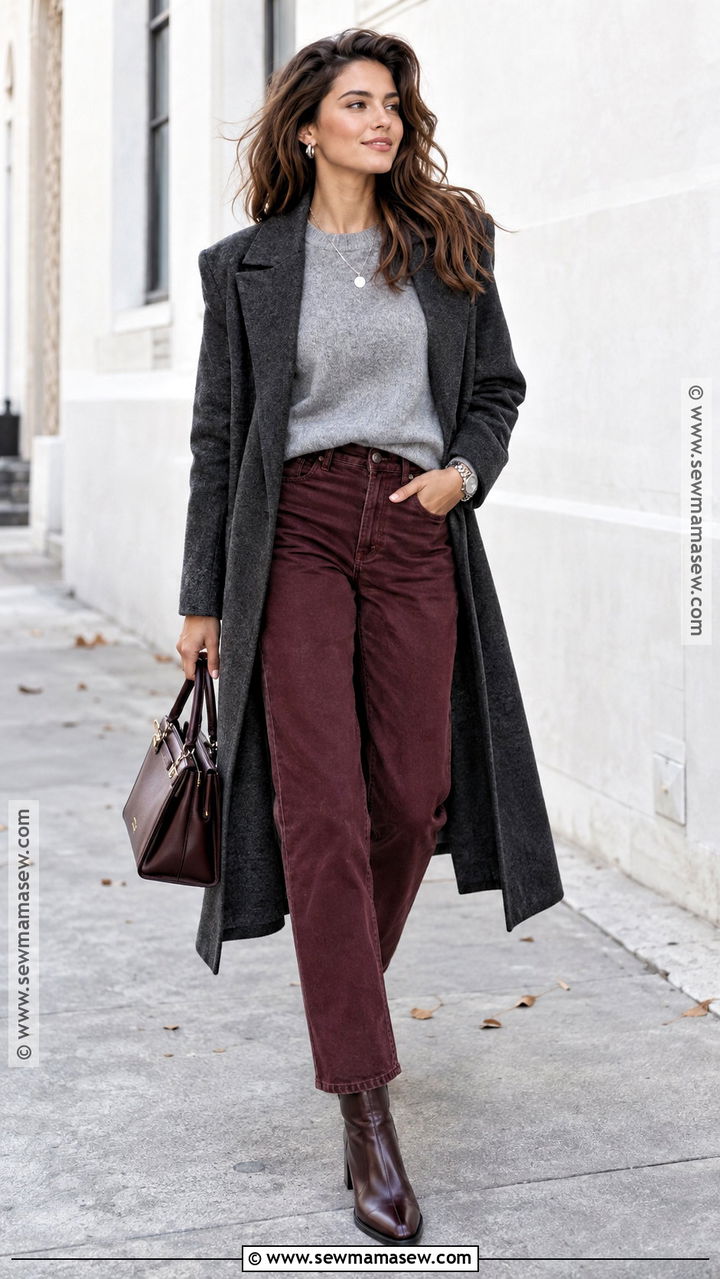
Gray is the neutral I suggest for cool undertones who find camel and brown draining. A heather-gray sweater with burgundy straight jeans, a charcoal wool coat and black or oxblood ankle boots puts the color low and keeps the gray near the face. A burgundy scarf or bag repeats the shade up top so the jeans don't look random. If burgundy denim feels like too much, flip it: gray jeans with a wine sweater. Silver jewelry stays cool with the grays; gold warms it a little. With one saturated color and several grays, every piece in the outfit supports the same idea.
17. Copper and Espresso Brown Skirt Outfit
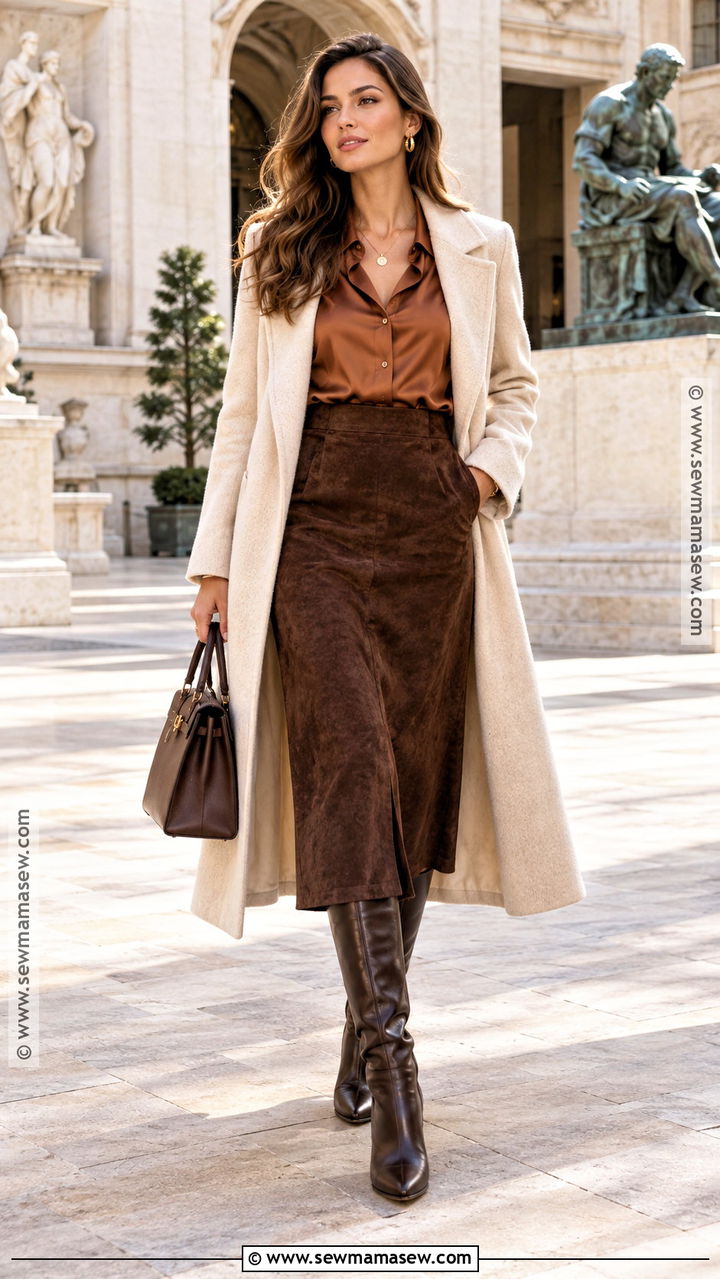
This pairing works as much through texture as color. A copper satin blouse tucked into an espresso suede or faux-suede midi skirt puts shine against nap, and the contrast does the decorating for you. Dark brown knee boots, a matching structured bag and simple gold jewelry are enough. Real suede marks easily and darkens in rain, so I'd brush it after wear and keep it home on wet days; faux suede is far more forgiving. A cream coat lightens the look, a chocolate cardigan deepens it. If satin feels too dressy, a copper knit gives you the same color for every day.
18. Dusty Blue and Brown Denim Outfit
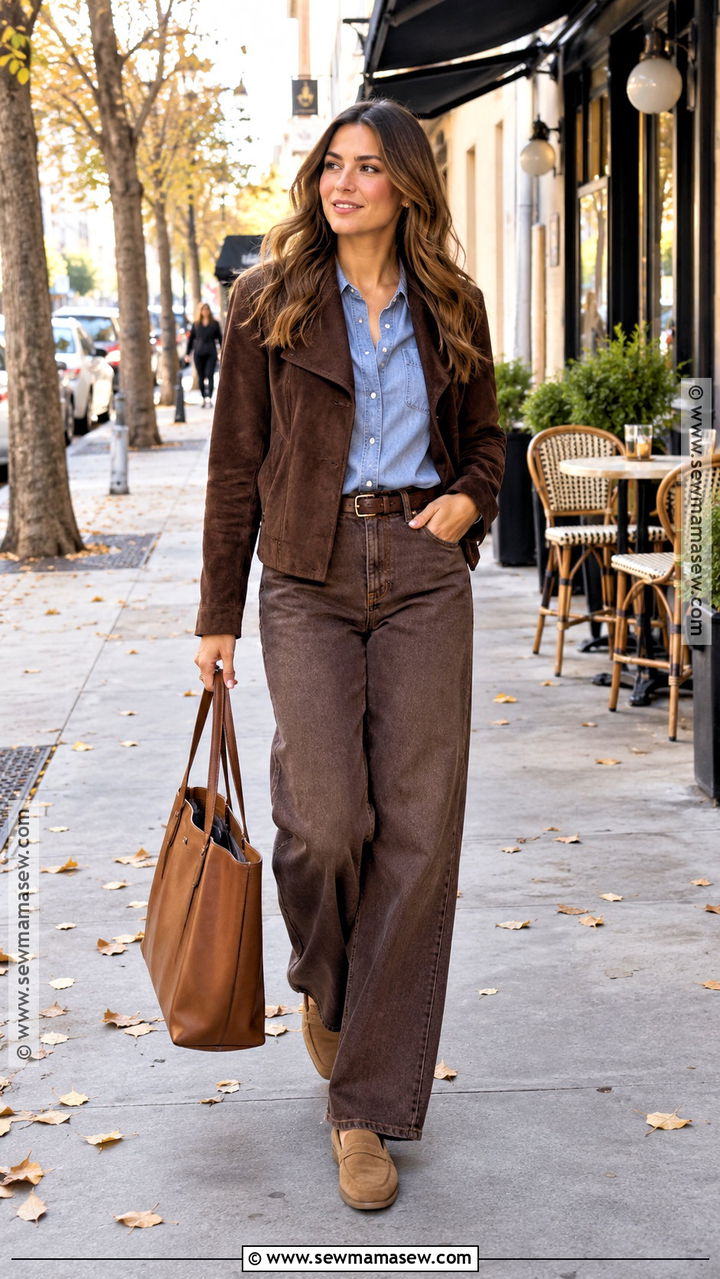
Dusty blue is my favorite bridge from summer into fall: a soft blue shirt still feels fresh, but with brown it reads as autumn. A light blue button-down with brown wide-leg jeans and a chocolate belt is the base. A brown suede jacket goes over it, with tan loafers or ankle boots below. Roll the shirt cuffs back over the jacket sleeves so the blue shows at the wrist. A blue-gray bag repeats the shirt color, while a cognac tote warms things up. When it turns cold, add a cream turtleneck under the shirt. Dusty blue is gentle on almost every complexion, which is rare.
19. Black and Camel Monochrome Outfit
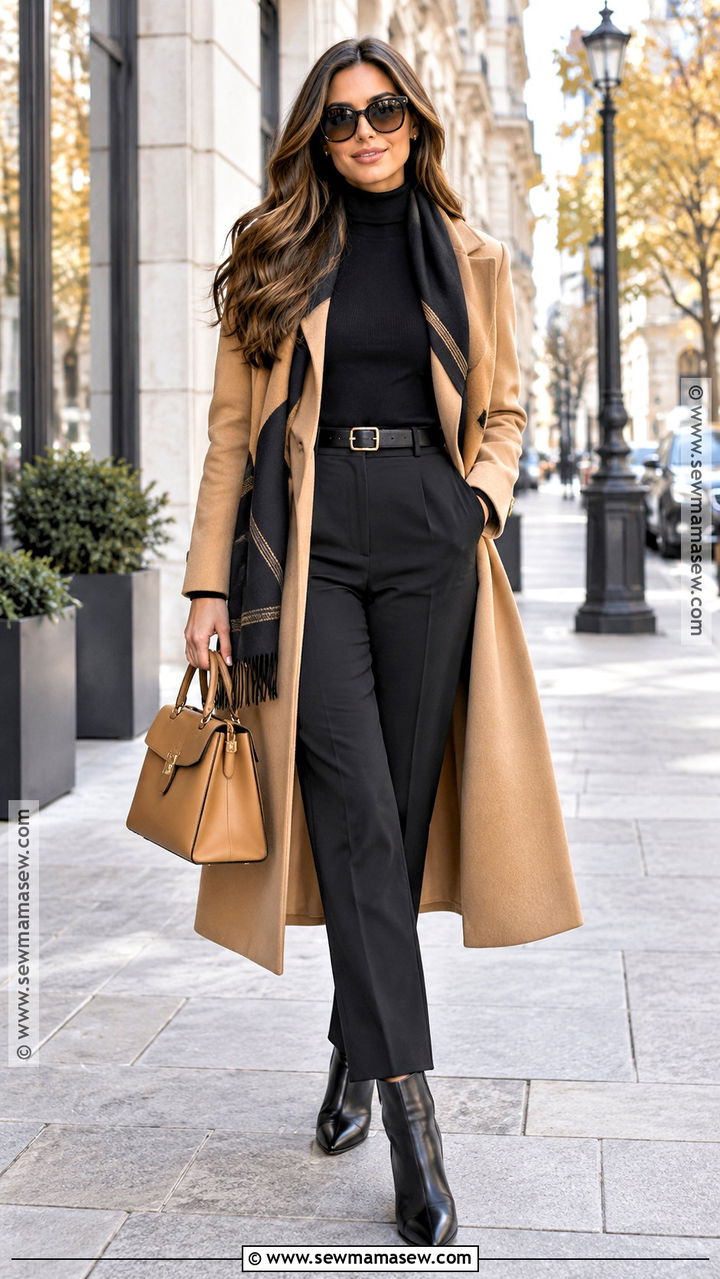
Black and camel give strong contrast with almost no planning. A fitted black turtleneck, straight black trousers and polished ankle boots make the base, and a long camel coat frames it. Add a camel bag and a black belt. If black at the neck makes you look tired, and it does for many fair or soft-toned people, put a cream shirt under the sweater so the collar sits between black and skin. A scarf that mixes both colors can tie it together, though a subtle pattern works better than a busy one. Dark indigo jeans soften the base for weekends.
20. Cream, Olive, and Burgundy Layered Outfit
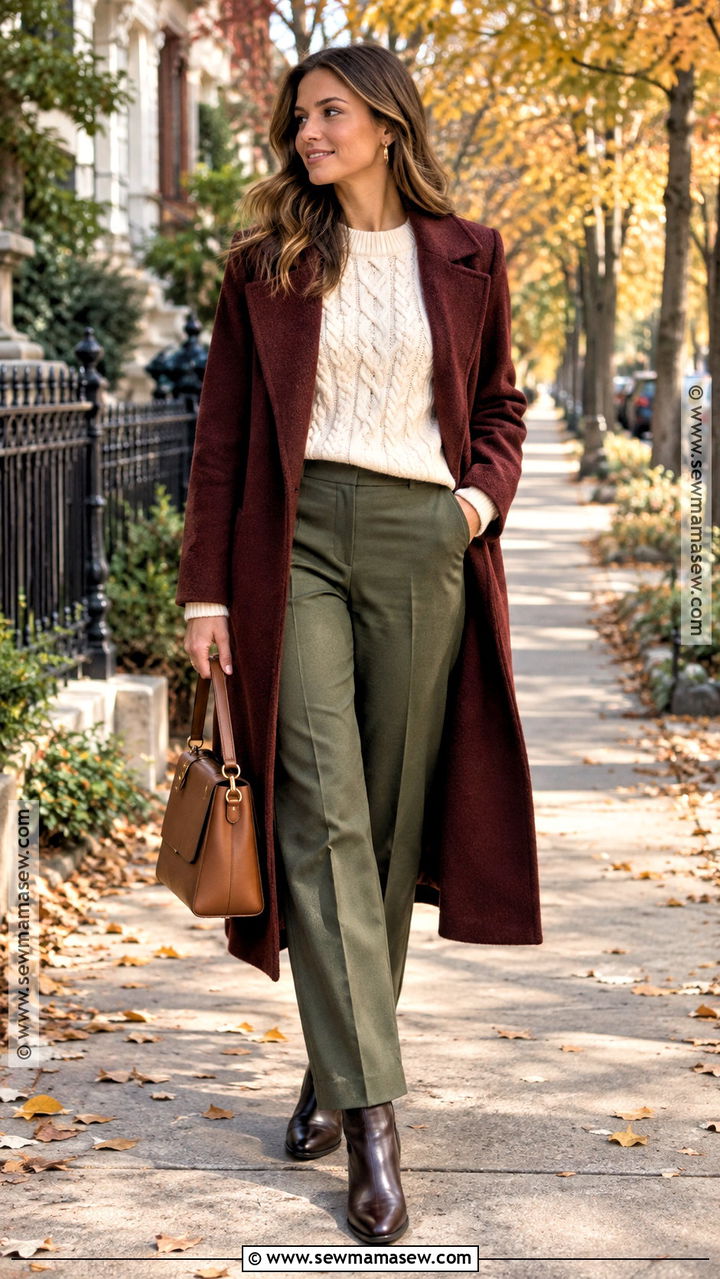
Three colors only work when one of them is a neutral that keeps the other two apart. Here a cream cable-knit sweater sits between olive straight trousers and a burgundy coat or long cardigan, giving the deep shades space. Dark brown loafers or ankle boots and a cognac bag ground everything. I'd stop the color there: one accent in the accessories at most, or the outfit starts to look like a costume. For casual days use olive jeans and a burgundy quilted jacket; for work, tailored trousers and a structured wool coat. Cable knit adds bulk under a fitted coat, so size the coat with the sweater on.
How Much of Each Color Goes Where
When a two-color outfit looks off, the cause is usually proportion rather than the colors. I aim for roughly two-thirds neutral and one-third accent. Equal amounts of both can look like a uniform, and an outfit cut exactly in half at the waist tends to shorten the body.
- Big pieces such as coats, trousers and dresses usually carry the neutral.
- The accent goes on one large piece or two small ones, never three scattered bits.
- Repeat the accent once, at a distance: a burgundy sweater and a burgundy bag, not a burgundy sweater, bag, scarf and shoe.
- Shoes and belt usually work best in a third, quieter tone like brown or tan leather.
Gray Days Change Every One of These Colors
Fall light is flat and cool for weeks at a time, and it changes how color reads. Soft shades like sage, dusty blue and blush lose some of their pigment under an overcast sky and can look faded or dull. Deep shades like forest, navy and espresso can drift toward black. Saturated ones like cobalt, mustard and rust hold up best, which is part of why they've become fall standards.
So if you're planning an outfit for photos, an outdoor event or a long gray week, pick at least one piece with enough depth or brightness to stay visible. And add texture. A cable knit, a suede skirt or a ribbed cardigan creates small shadows that keep a quiet palette from looking flat in pictures, even when the colors themselves have faded.
Two Shades, One Neutral, and Your Own Face
Every pairing above follows the same logic: one dependable neutral such as cream, navy, camel, gray, olive or chocolate, plus one richer shade added through knitwear, a coat, shoes or a bag. Nothing has to match exactly. Repeating one color twice and changing the textures looks more natural than a perfectly coordinated set. And whatever color you choose, check it against your face in daylight before you buy. That five-second test tells you more than any palette chart.
Related posts: