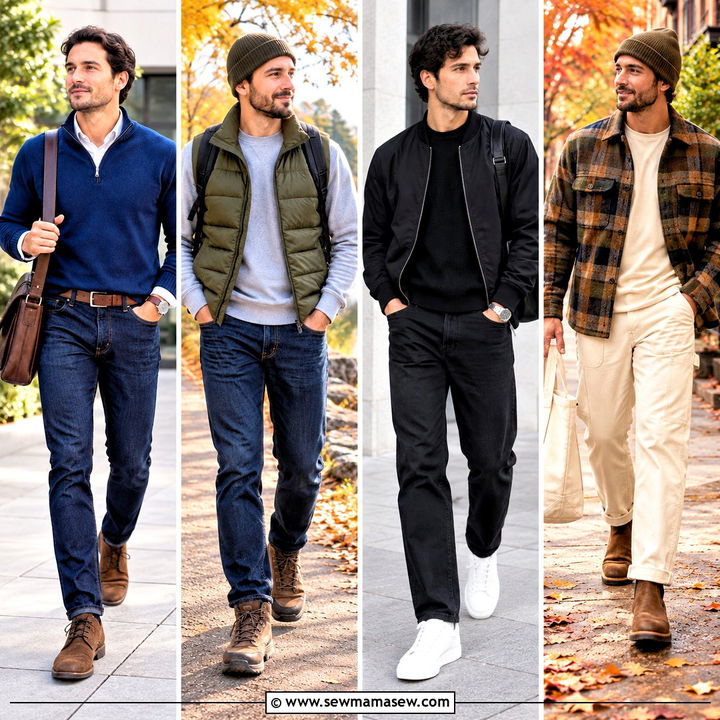
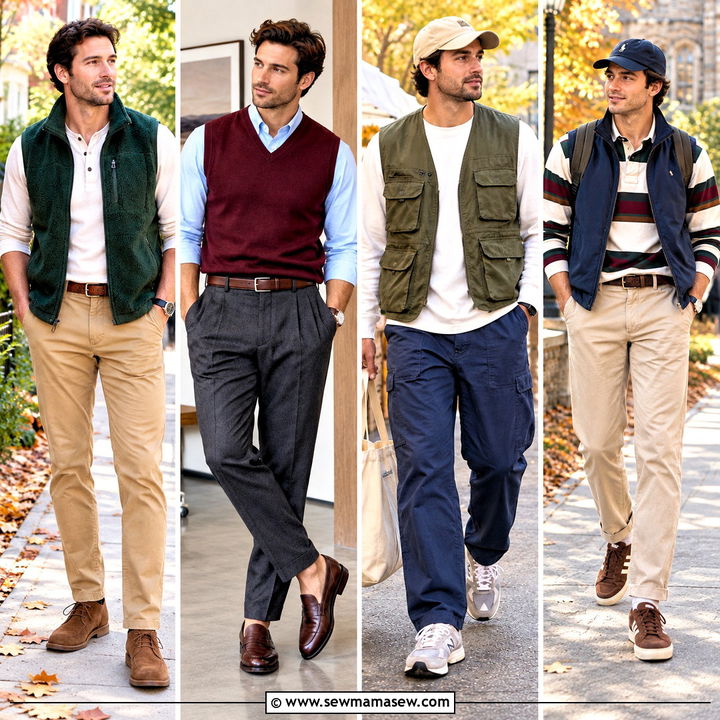
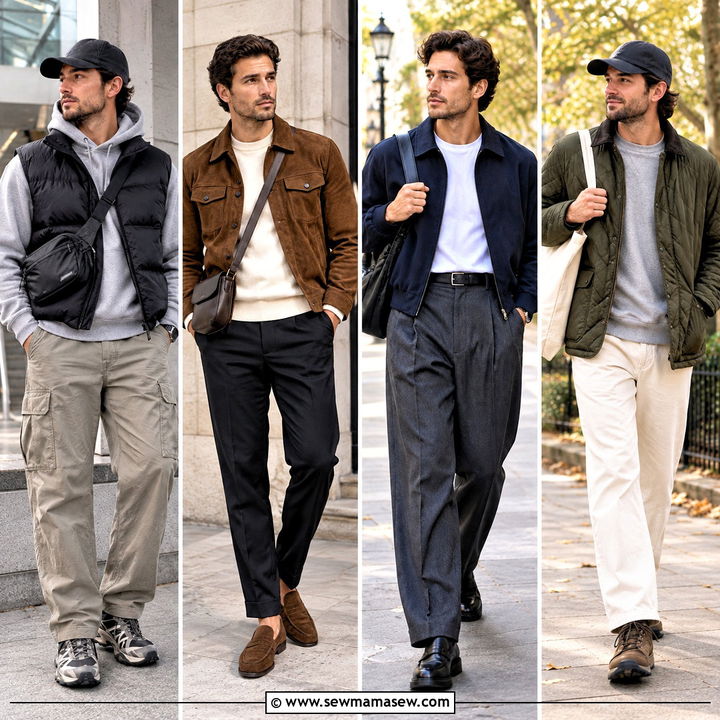
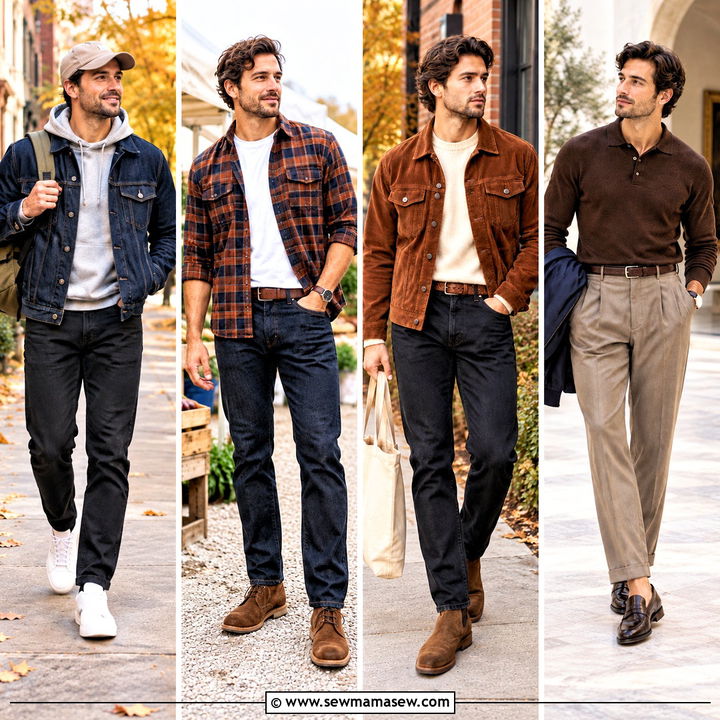
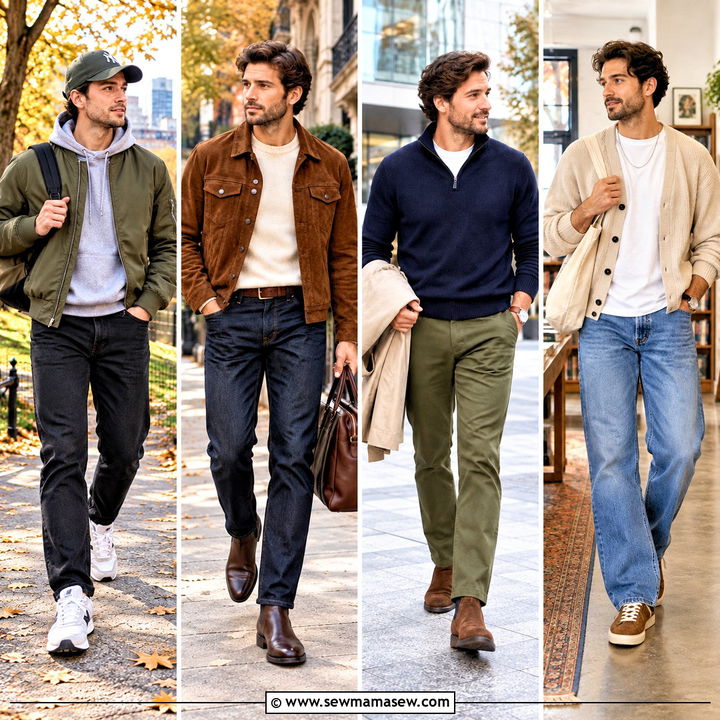
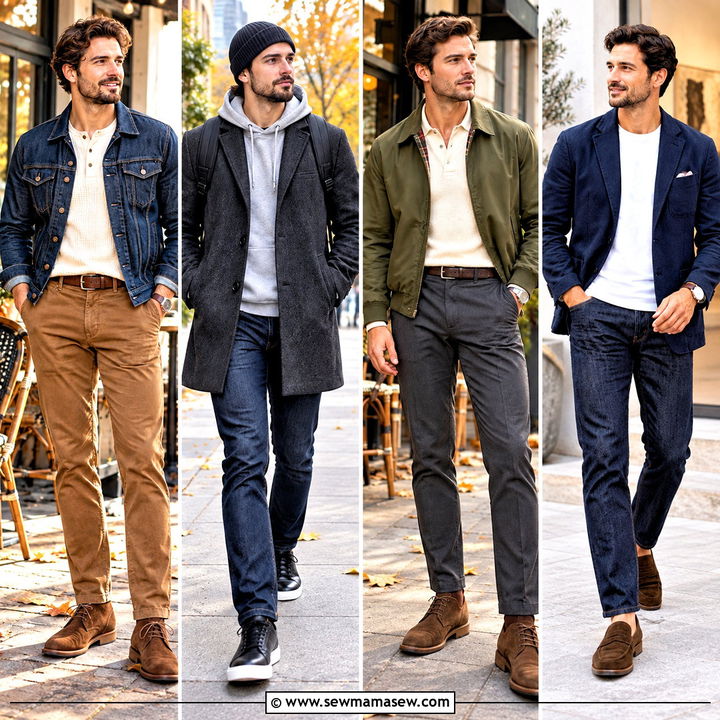
Most of the casual fall outfits I put together for men come from a short rack: straight jeans, a pair of chinos, a few plain tees, one or two sweaters and a jacket that can take a little rain. The interest comes from texture, not from buying more. Brushed flannel next to raw denim, suede next to corduroy, a heavy cotton tee under canvas. Mornings in fall are usually cooler than afternoons, so I build every look in removable layers and plan for the outer one to come off by lunch. The twenty outfits below follow that logic, and I've noted where each one tends to go wrong, what fit to check, and who should adjust it.
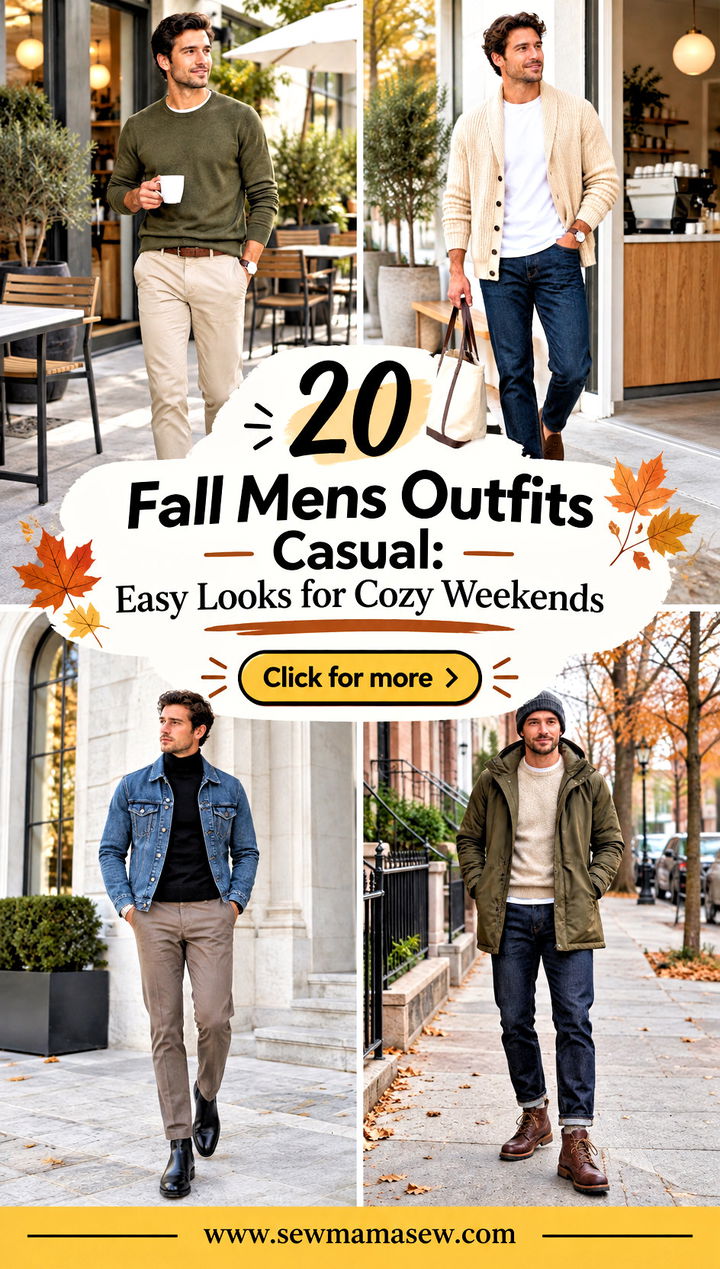
Thin Under Thick, the Order I Stack Fall Layers
Almost every outfit below has three layers, and they only work if each one is thinner than the layer over it. I think of it as base, middle and outer. The base is a tee or a thin henley, ideally cotton or merino, sitting close to the body. The middle is the warmth: a crewneck, a flannel, a cardigan. The outer layer blocks wind and light rain.
Reverse that order and you get trouble. A chunky knit under a fitted jacket pulls at the armholes and shoves the sleeves up your forearms. A thin tee under a heavy flannel is fine; a thick flannel under a slim bomber isn't.
- Check the hems stack shortest on the inside. A tee that hangs below a cardigan looks untidy unless it's clearly deliberate.
- Try outerwear on with the sweater you'll actually wear under it, not just a tee.
- On a day that starts cold and ends mild, make the middle layer the one that comes off. Carrying a flannel is easy; carrying a parka isn't.
If you run warm, drop the middle layer altogether and rely on a heavier overshirt. If you run cold, merino under the sweater adds heat without visible bulk.
1. Fall Flannel Shirt With Dark Jeans
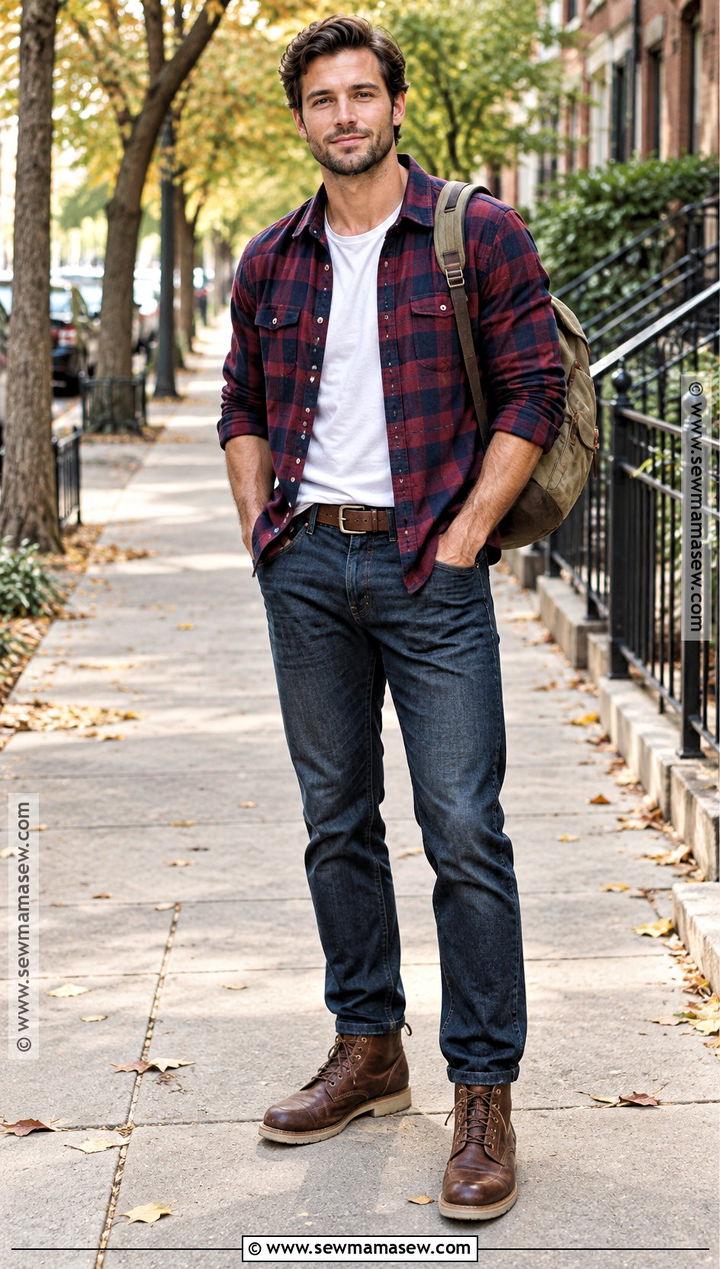
If a man owns only one fall outfit, I'd want it to be this. A fitted white or heather-gray tee goes on first, then a brushed plaid flannel worn open so it acts as a light jacket rather than a shirt. Straight dark-wash jeans without heavy fading keep it clean. Brown leather service boots handle damp sidewalks far better than canvas sneakers, and a plain leather belt finishes the middle. Plaids in burgundy or forest green read most seasonal. The one thing I check is the flannel's shoulder seam: it should sit at the edge of the shoulder, because a flannel worn open with drooping seams looks borrowed. When the afternoon warms up, take the flannel off and carry it over an arm.
2. Fall Crewneck Sweater With Chinos
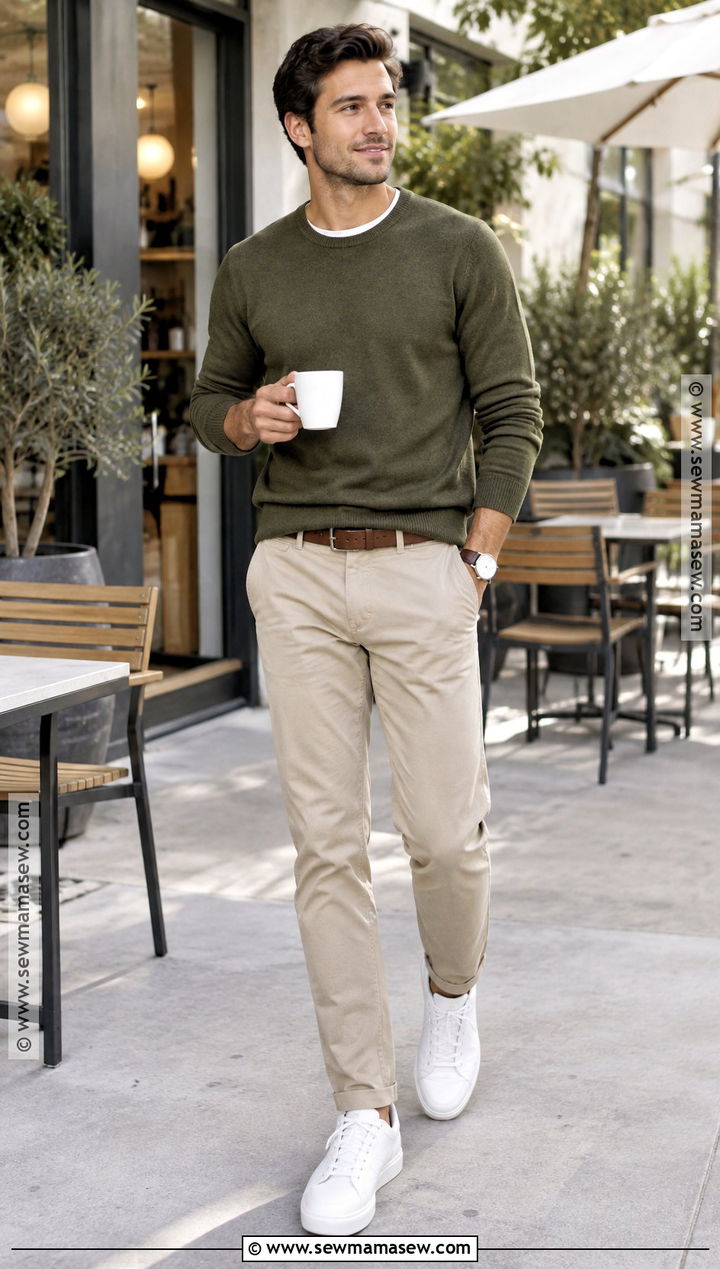
A medium-weight crewneck over tapered chinos is how I dress someone who wants to look tidy without a collar doing the work. Charcoal or oatmeal knits suit most complexions. Let a sliver of a white tee show at the neckline; it frames the face and breaks up a block of knit. Stone chinos and minimal leather sneakers keep it relaxed. Fit is the whole outfit here. The sweater should skim, not pull across the chest, and if the chinos strain at the thigh when you sit, size up and have the leg tapered rather than living with the pull. Roll the cuff once in early fall, then let it fall full length once thicker socks come out.
3. Fall Denim Jacket With Black Jeans
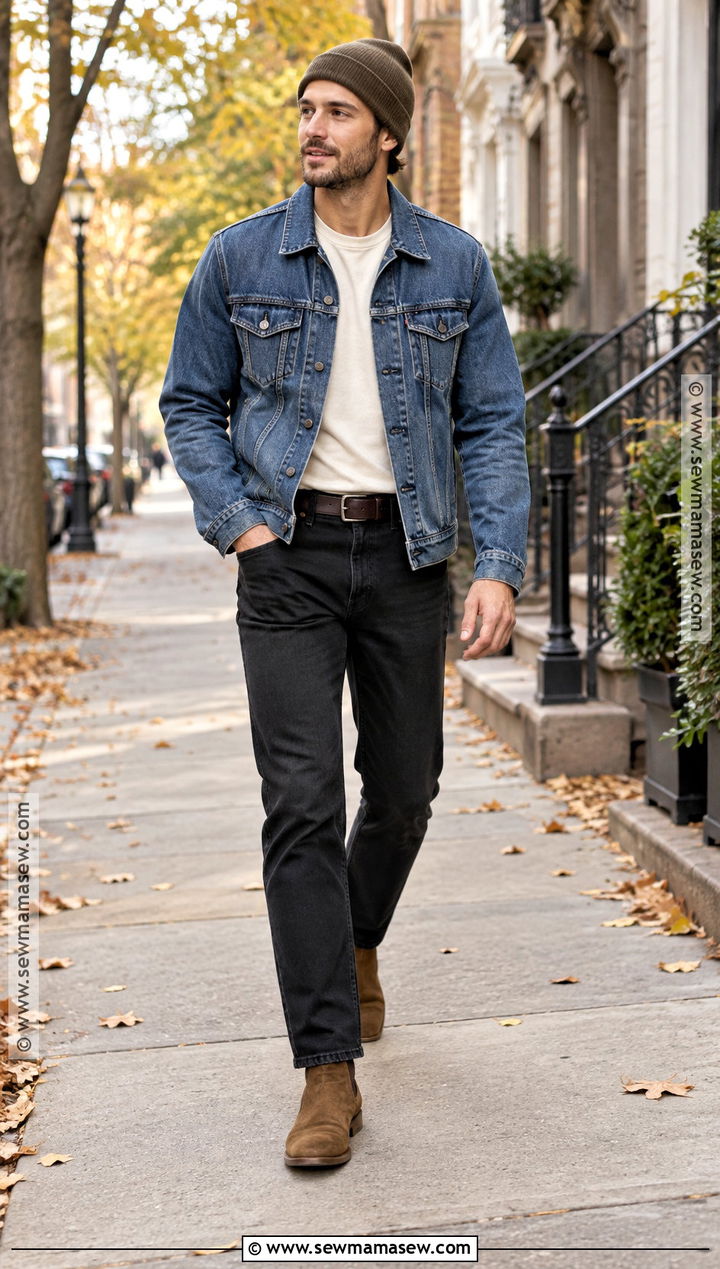
Double denim scares most men off, and black jeans are the easy way around it. Put a mid-blue trucker jacket over a cream or faded black tee, then straight black jeans so the two blues never have to match. White leather sneakers keep it daytime; brown suede boots make it rougher. I size a trucker so it buttons with a tee underneath and still closes over a thin knit, since that's how it gets worn by November. A neutral beanie is fine. What I'd skip is the same wash top and bottom, which reads as a uniform rather than a choice.
4. Fall Hoodie With Cargo Pants
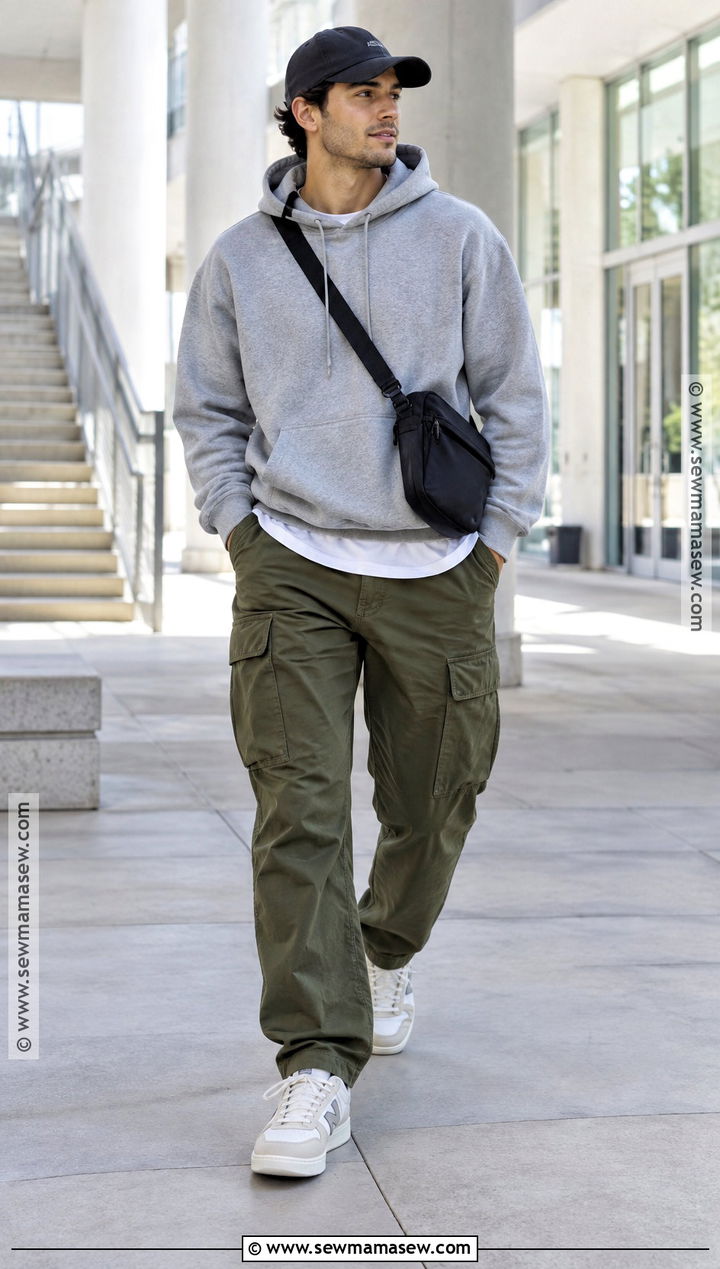
A heavyweight hoodie with relaxed cargo pants looks intentional only when both pieces are plain. Heather gray or muted green hoodies with little or no graphic, and a hood that stands up on its own, carry it best. Pick cotton cargos with flat, streamlined pockets; the tactical kind with straps and buckles tips it into costume. Off-white retro sneakers lighten all that dark cotton, and a white tee hem showing slightly below the hoodie adds a second layer at the hip. The common mistake is a hoodie that drops past mid-seat, which shortens the legs. I want the cargo hem to break once over the shoe, not stack up around the ankle. It's a great travel and campus outfit.
5. Fall Chore Jacket With Work Pants
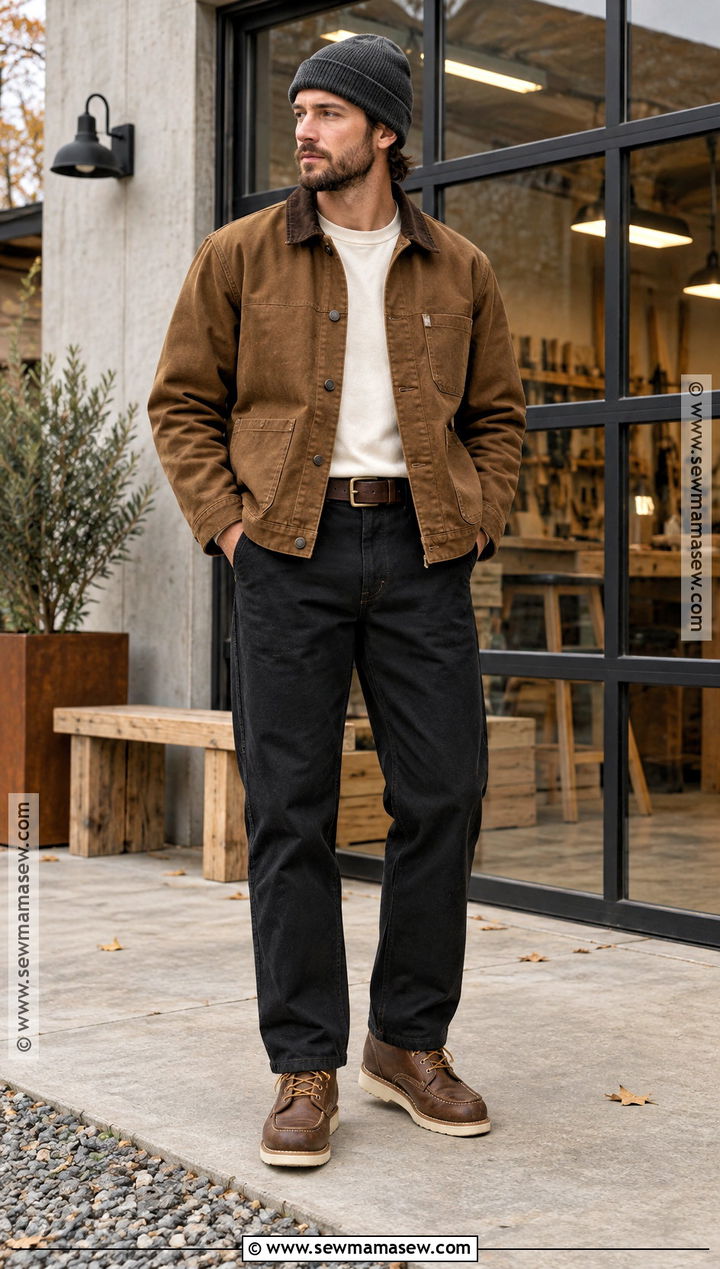
Canvas chore jackets were built for work, so they look right worn a little hard. A tobacco brown or navy jacket over a heavyweight cream tee, with straight black or dark brown work pants underneath, gives contrast between top and bottom without fuss. Moc-toe boots suit the workwear mood; sturdy leather sneakers are the softer version. Duck canvas starts stiff and breaks in over weeks of wear, the same way raw denim does, so don't judge the fit by the first day's boxiness. I leave accessories almost bare because the patch pockets already give the eye plenty to read. Buy it with room for a thin sweater underneath and it'll last from September to the first hard frost.
6. Fall Quarter-Zip Sweater With Jeans
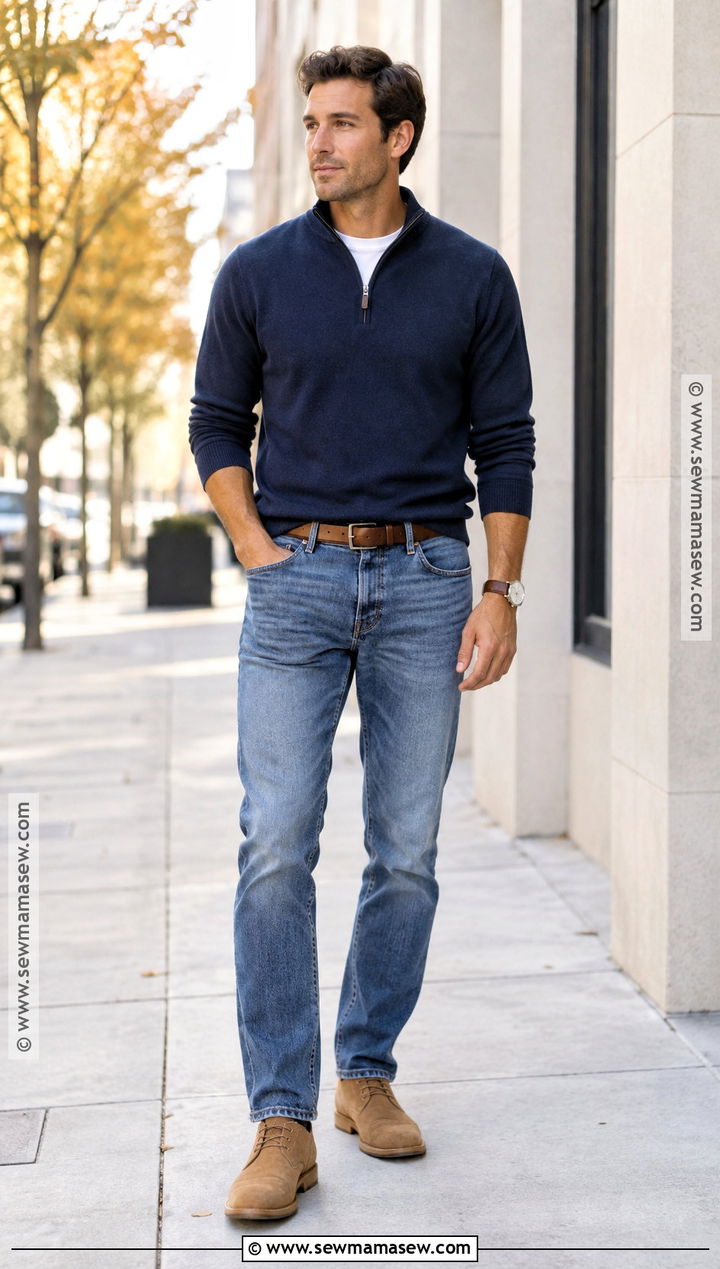
The quarter-zip is my shortcut for making jeans look like a decision. Choose cotton or merino in navy or camel, wear it over a white crewneck tee and leave the zip an inch or two open. Medium-wash straight jeans keep it casual; tan suede chukkas bring in a warm fall color. Match the belt to the boots and you're done. Thin, tight quarter-zips cling at the stomach and show every line of the tee below, so I look for medium-gauge knit that holds its own shape. Add a light field jacket on colder days. It's the outfit I'd suggest for a casual office or a family lunch where a hoodie feels too loose.
7. Fall Bomber Jacket With Neutral Trousers
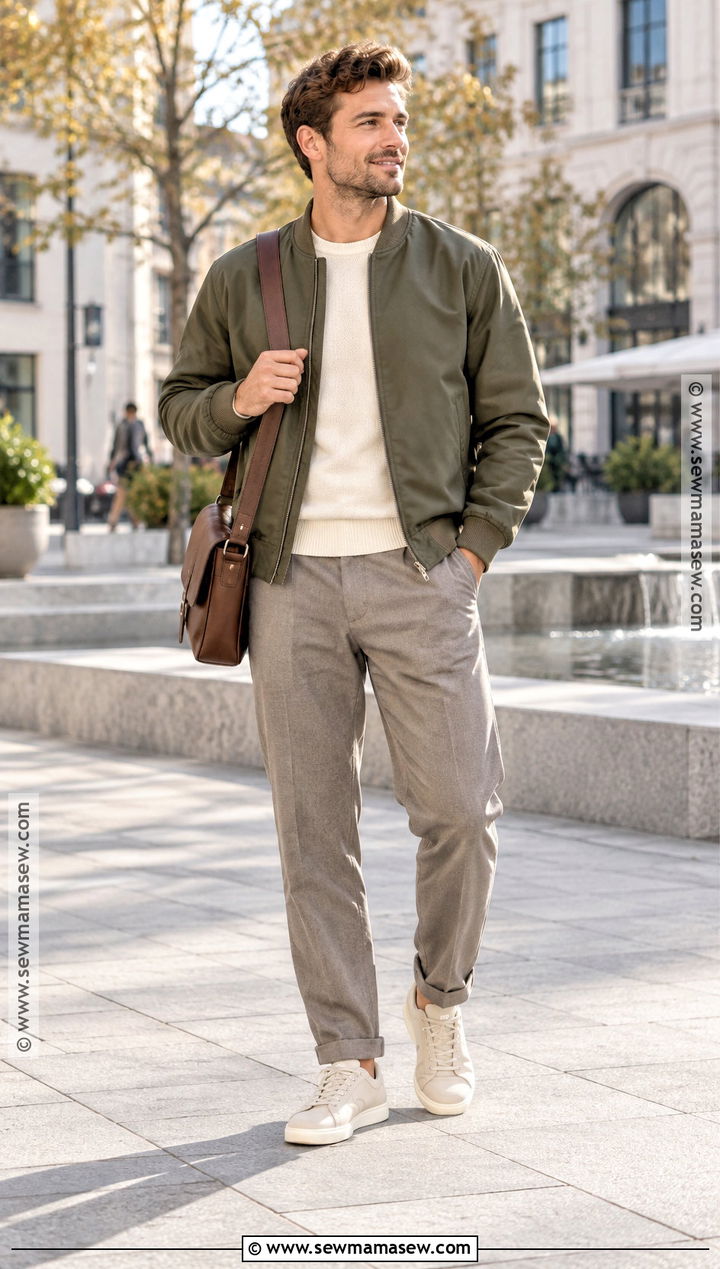
A bomber looks grown-up when everything around it is quiet. Go for an olive or navy one with no patches and matte hardware, over a cream long-sleeve tee or a fine-gauge crewneck. Relaxed taupe trousers soften the sporty jacket and are a welcome change from jeans. Clean white or beige sneakers finish it. Bombers end at the waist with a ribbed band, so the trouser rise matters: a low rise leaves a gap of shirt between band and belt that makes the torso look long. I also check that the trouser hem sits just above the shoe. If the bomber is roomy, keep the layer underneath close to the body.
8. Fall Leather Jacket With Gray Jeans
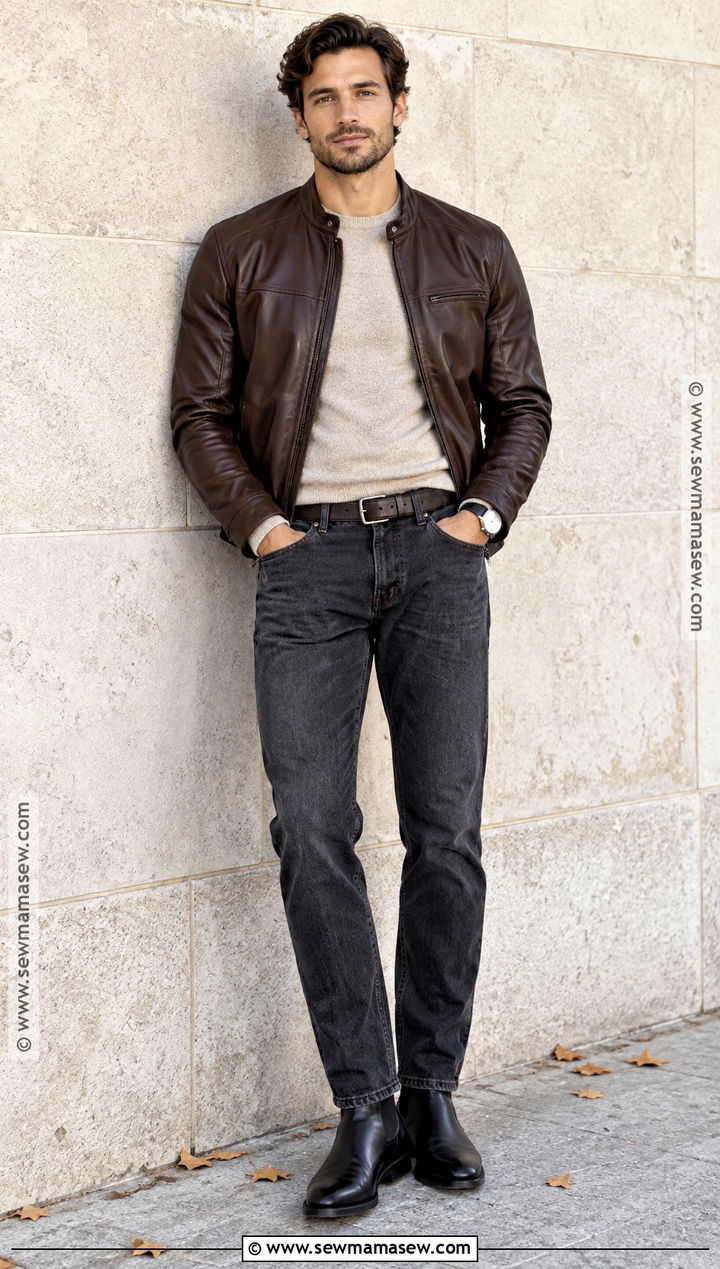
Leather jacket, soft knit, gray jeans. It's one of the oldest formulas there is and it still holds. A streamlined café racer in dark brown or black, worn over an oatmeal or light-gray crewneck, keeps the look from going all dark. Straight charcoal jeans continue the neutral palette, and black Chelsea boots with a matching belt finish it. Leave out distressed denim and graphic tees; the jacket should carry the outfit. When I fit leather, I check the shoulders first because they can't be altered cheaply, then the sleeve, which should stop at the wrist bone with the arms bent slightly. Genuine leather or a good alternative both work if that fit is right.
9. Fall Overshirt With Corduroy Pants
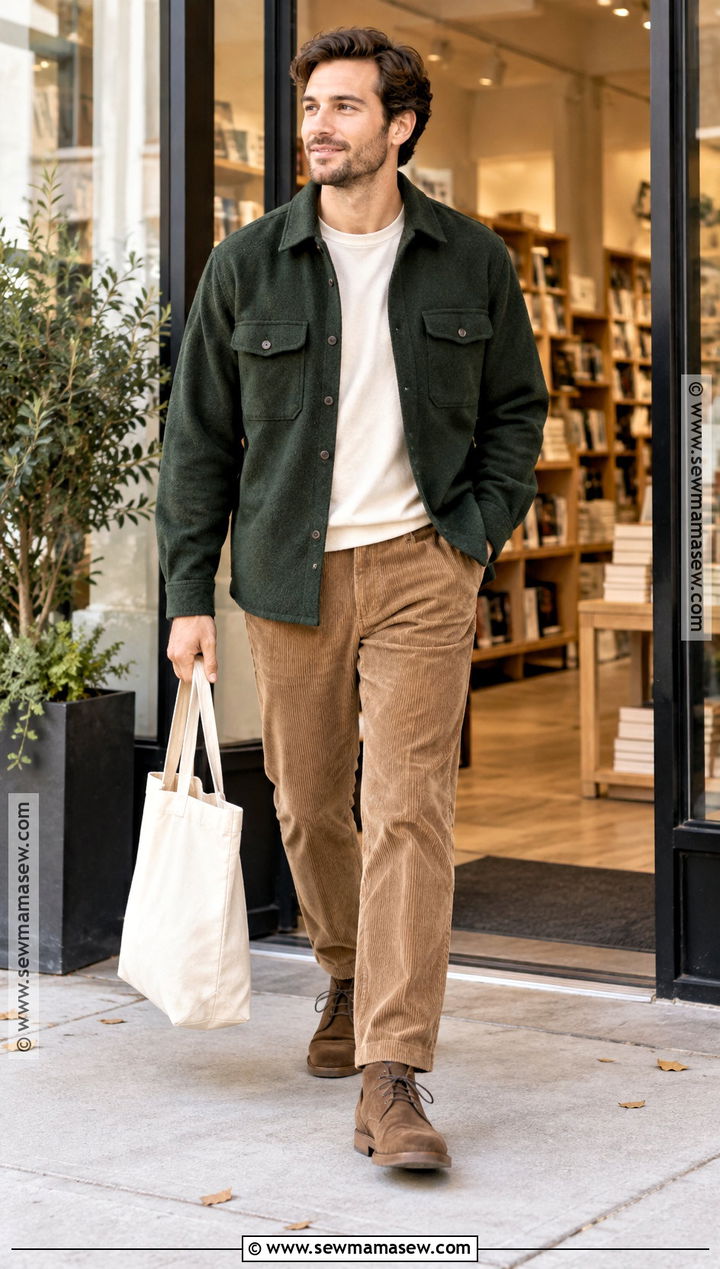
This is where texture does all the work. A wool-blend or brushed cotton overshirt in navy or rust, unbuttoned over a plain white tee, sits on top of brown or olive corduroy pants. Suede desert boots for a softer finish, leather sneakers for something cleaner. A canvas tote is plenty. I prefer fine or medium wale corduroy for everyday wear; wide wale is warmer but reads chunkier and can look dated in a slim cut. Keep the leg straight. Corduroy pile flattens at the knees and seat with wear, so I tell people to turn them inside out in the wash and skip the hot dryer.
10. Fall Rugby Shirt With Relaxed Jeans
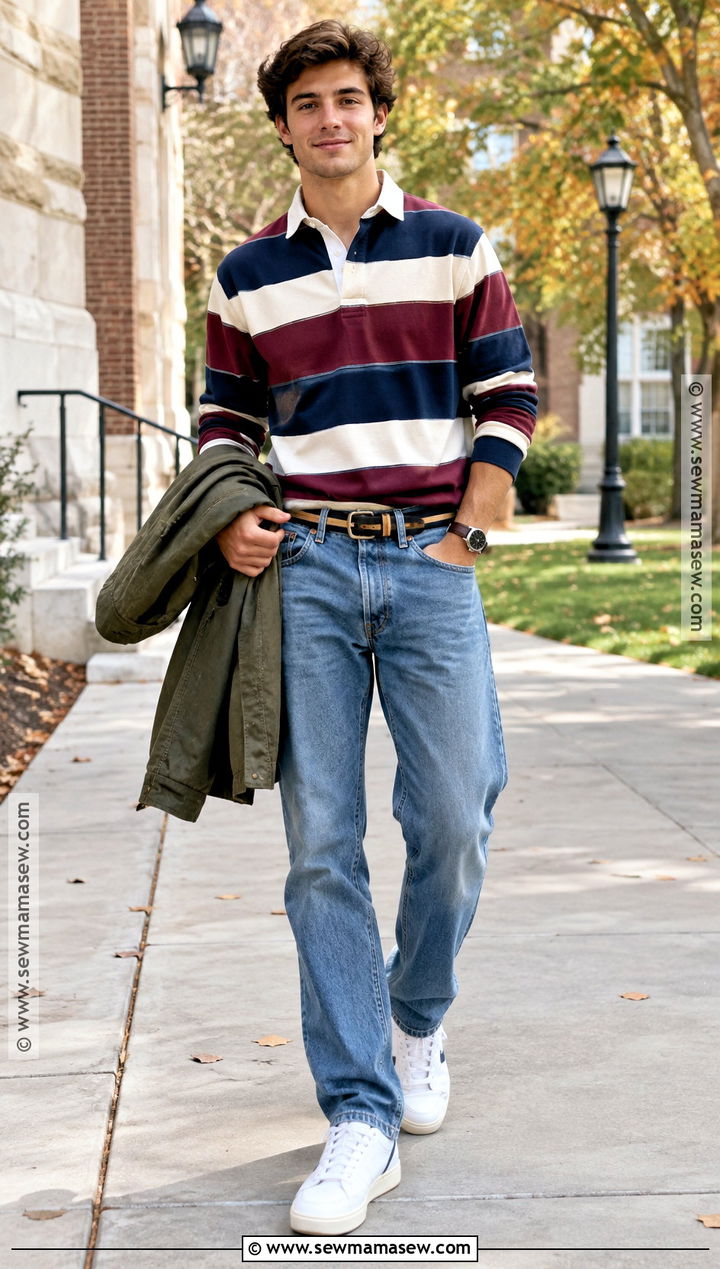
Rugby shirts have a collegiate, sporty feel, and the heavyweight cotton ones hold their shape far better than thin versions. Navy or burgundy stripes are the easiest to wear. The hem should land around the hip; a rugby that hangs low starts to look like a nightshirt. Pair it with relaxed medium-wash jeans and retro low-top sneakers, then add a canvas belt and a light field coat when the wind picks up. Because the shirt already has a contrast collar and bold horizontal stripes, I keep everything else solid. Horizontal stripes do widen the chest, which suits slim builds and less so broad ones; those men do better in narrower stripes.
11. Fall Cardigan With White T-Shirt And Jeans
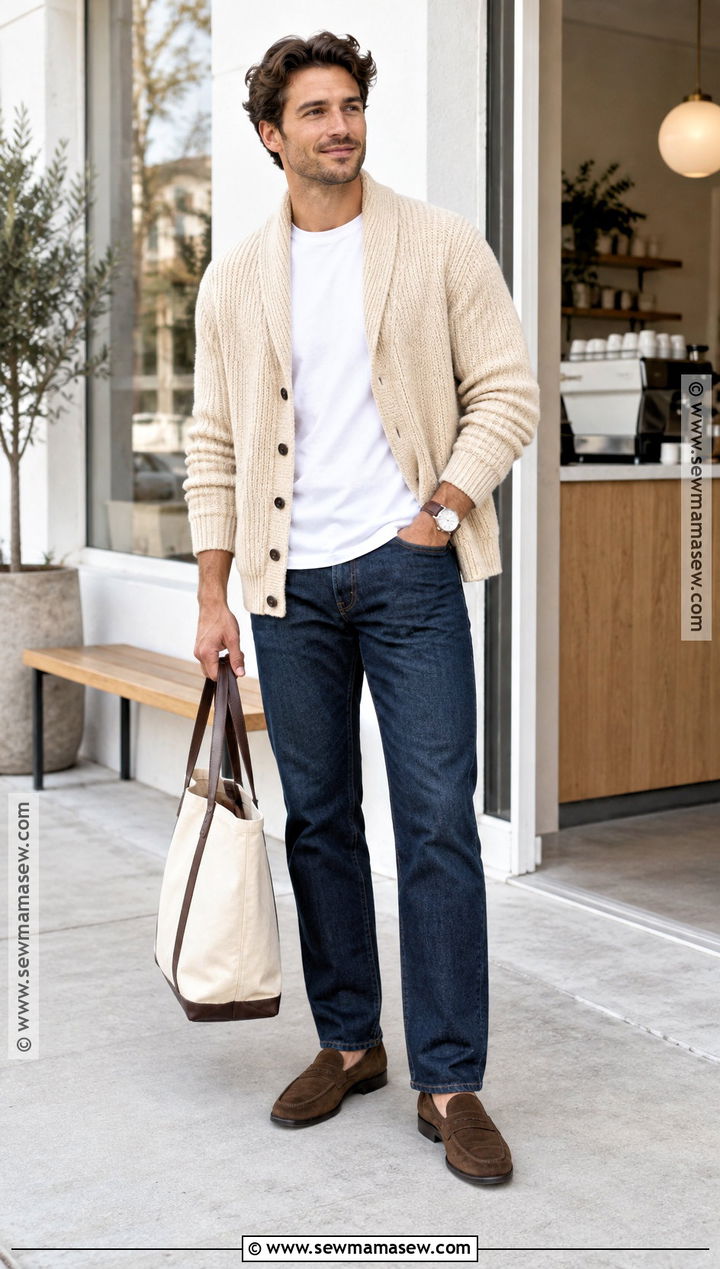
A chunky cardigan turns a tee and jeans into something warmer and a bit more considered. Oatmeal or deep green, worn open over a crisp white crewneck, with dark straight-leg jeans to anchor the texture. Brown suede loafers make it polished, plain leather sneakers keep it easy. Chunky knits add bulk fast, so the cardigan should stop around the hip, not drift toward mid-thigh. If you want more shape at the waist, fasten only the middle buttons. Keep accessories to a watch and a tote. It moves between home, a relaxed workplace and town without anyone noticing you've changed context.
12. Fall Field Jacket With Khaki Chinos
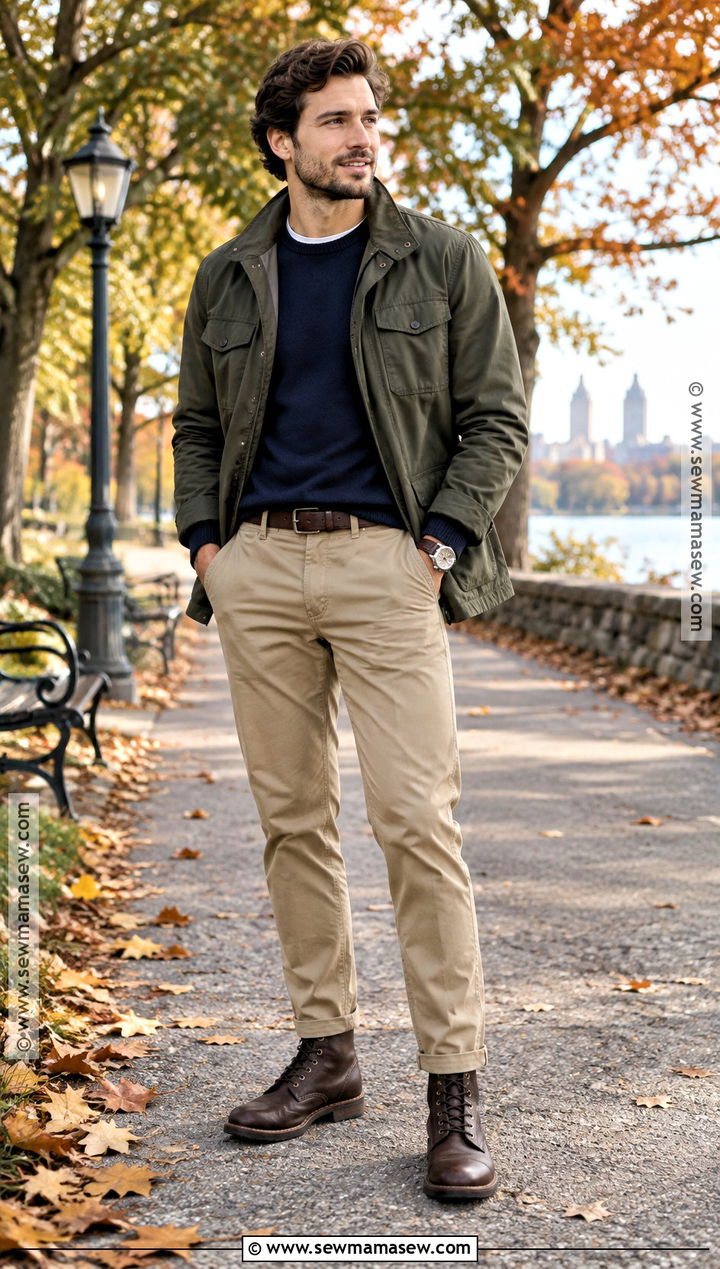
A field jacket is about the most useful single layer for unsettled fall weather, because those four front pockets and the hip length were designed for exactly that. Wear an olive or brown one over a navy crewneck with a white tee collar showing, and let khaki chinos brighten all the earth tones above. Dark brown lace-up boots give grip; a matching belt ties the leather together. Don't load every pocket with keys and a phone, or the front will bulge and lose its line. Straight or gently tapered chinos both work depending on build. It's a familiar outfit that suits men of any age, and it carries from yard work to a casual dinner.
13. Fall Puffer Vest With Henley And Jeans
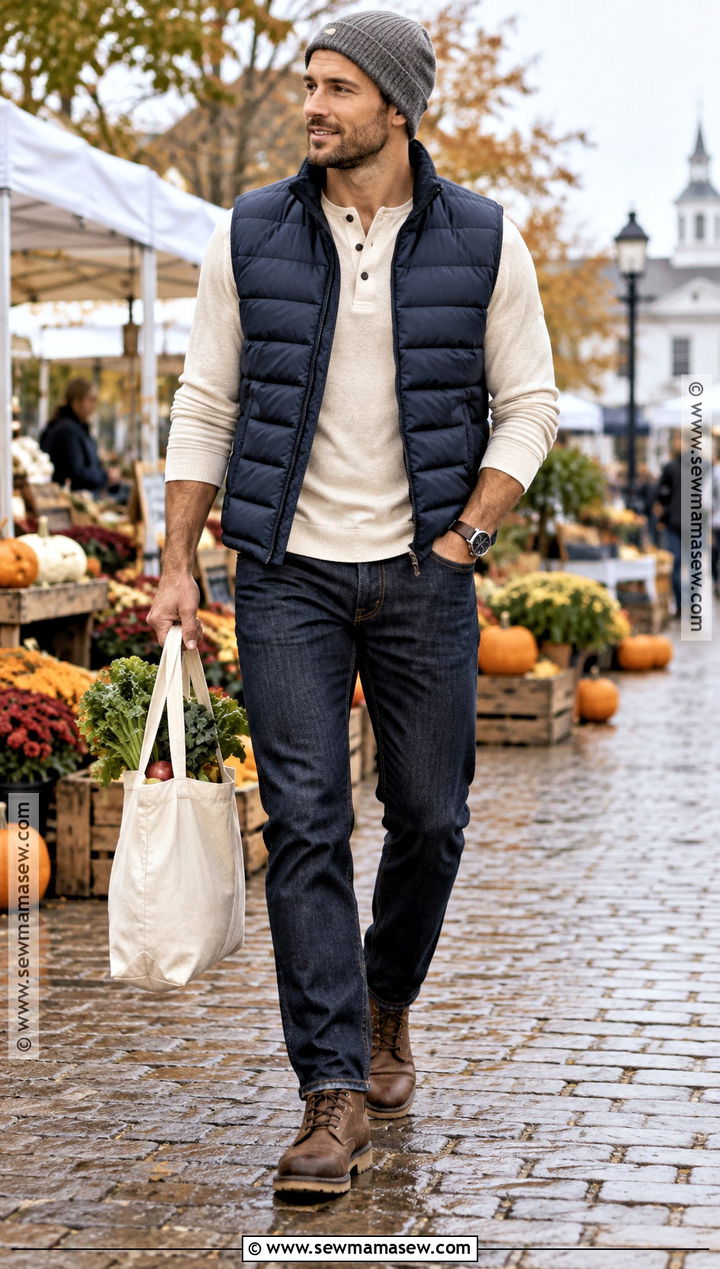
Early fall often wants warmth at the core with free arms, and that's what a quilted vest gives you. Put a navy or olive puffer vest over a long-sleeve thermal henley in cream or muted rust, then dark straight jeans and weather-resistant leather boots. A knit cap is enough extra. I'd pick a slimmer vest that sits close to the body; boxy ones balloon out at the sides and add width where most men don't want it. A matte shell looks less sporty than a glossy one and gets more wear. Good for morning walks, outdoor markets and days that warm up fast.
14. Fall Trench Coat With Sweatshirt And Trousers
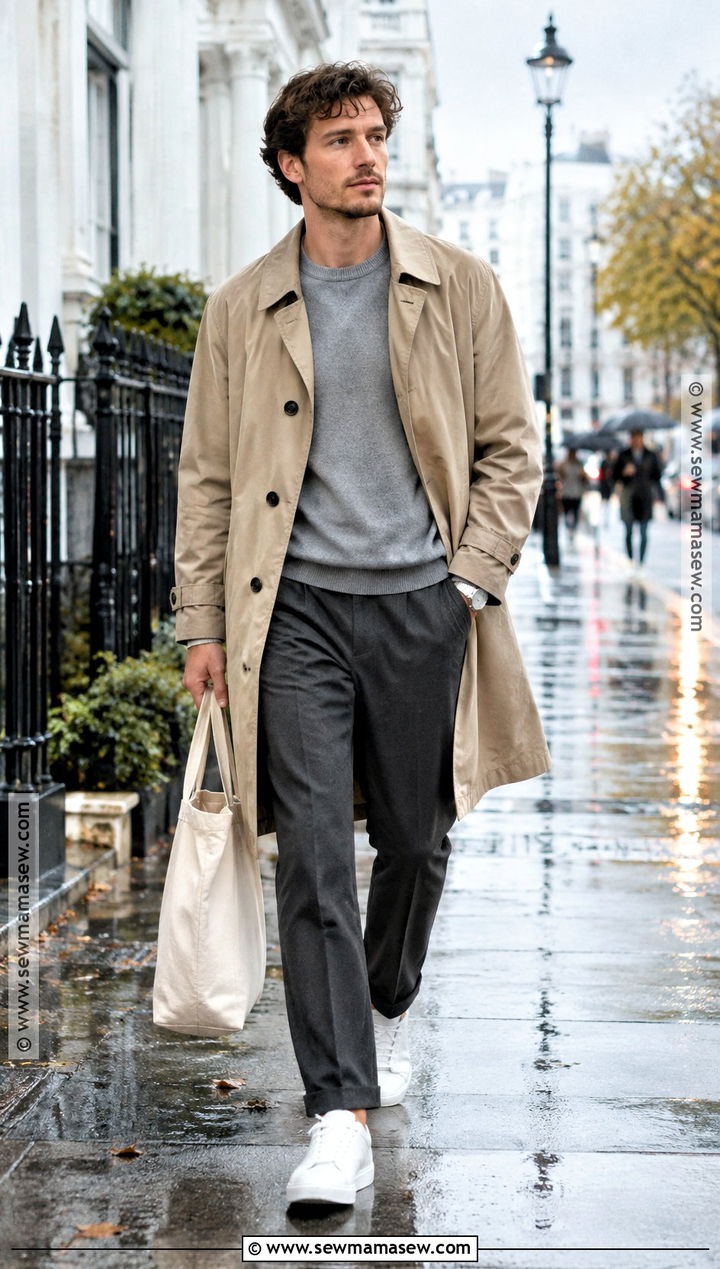
A trench over a plain sweatshirt is a high-low mix I like because the coat makes up for everything casual underneath. Choose a tan or stone trench in a simple knee-length cut, then a solid gray or navy crewneck sweatshirt with no logo. Straight black or charcoal trousers keep the line neat so the sweatshirt doesn't drift into gym clothes. Clean leather sneakers and a canvas tote finish it. The sweatshirt has to be heavy enough to hold its shape but not so thick that the coat's sleeves bind; I always check the armholes with the coat buttoned. Leave it open to walk, belt it loosely in wind. In rainy cities this one earns its keep.
15. Fall Harrington Jacket With Polo Shirt
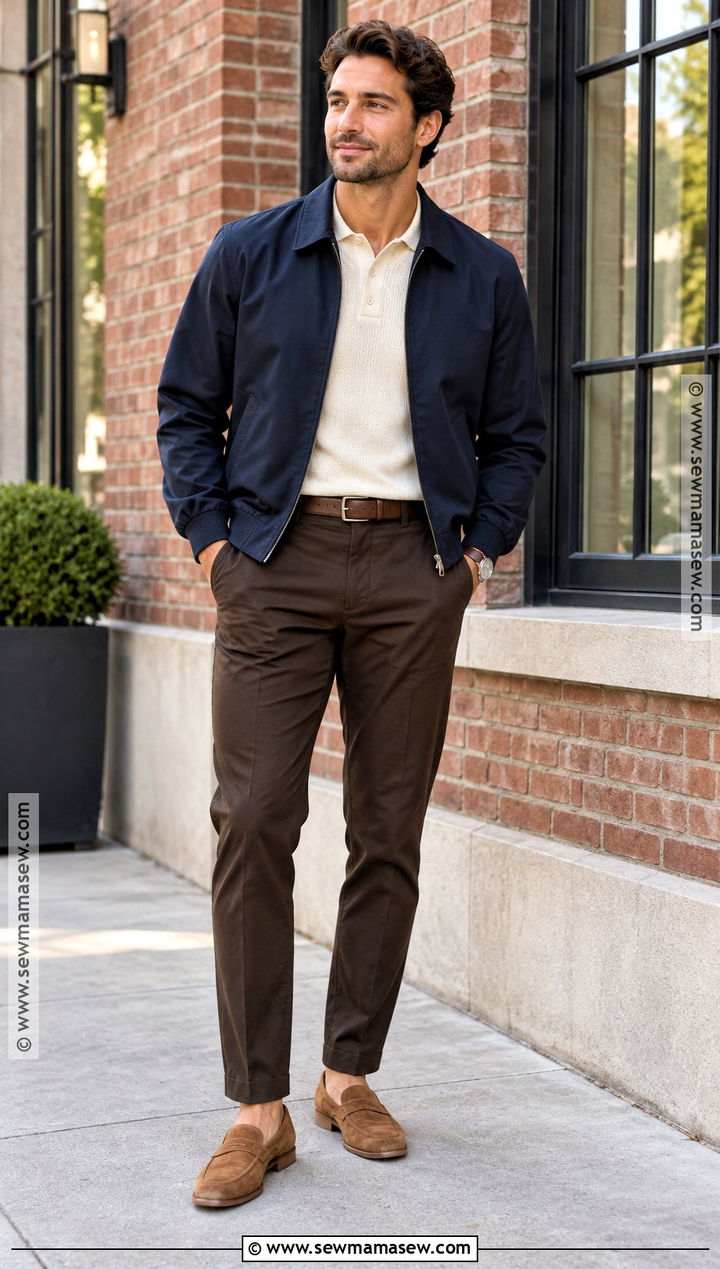
A Harrington is a short, light jacket with a tartan lining and a stand collar, and it's my pick for early fall mornings that turn mild by noon. Navy or tan over a knitted polo in cream is a combination I return to often, since the polo's collar sits neatly inside the Harrington's. Dark brown or charcoal chinos and suede loafers or low leather sneakers complete it, with nothing more than a belt and a watch. The jacket should end at the waist and close without pulling. Keep the trousers straight or lightly tapered so they echo that short, clean shape. It folds small enough to carry once the sun comes out.
16. Fall Shacket With Black T-Shirt And Jeans
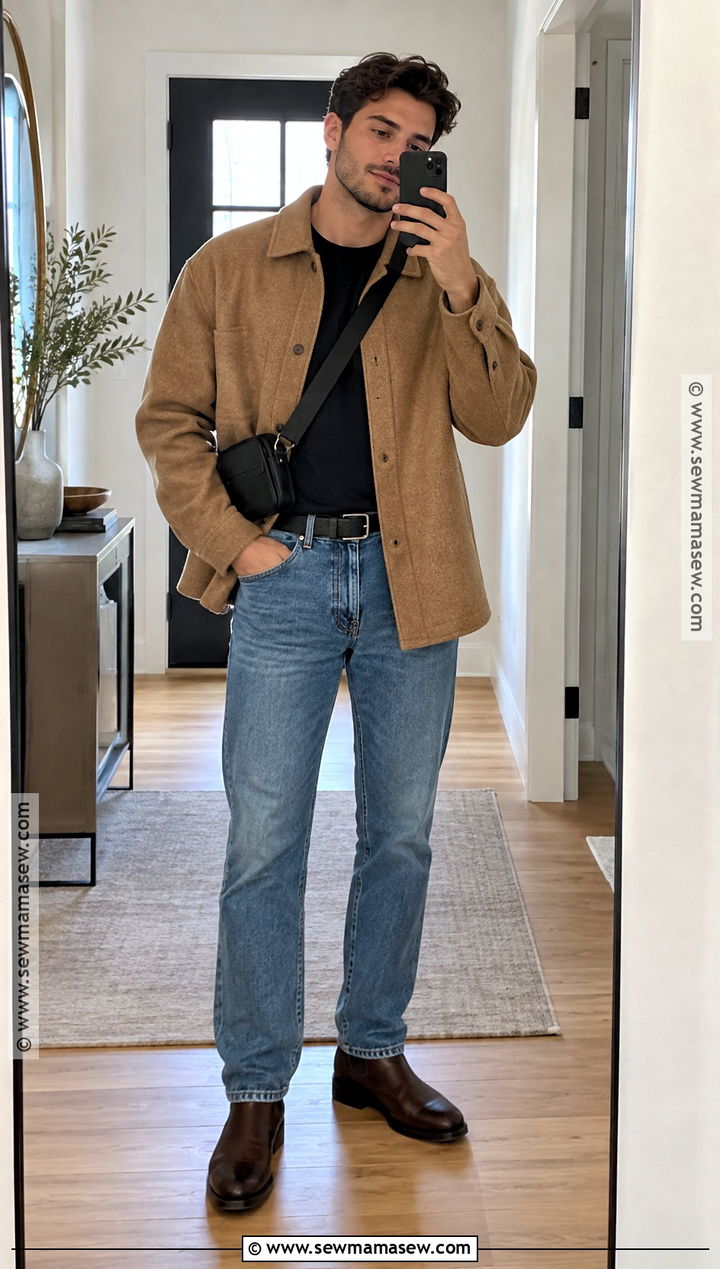
A heavyweight shacket sits between a shirt and a jacket, which is why it's so handy when the forecast keeps changing. Camel or charcoal, solid or a quiet check, worn open over a plain black tee for sharp contrast. Medium-blue jeans keep it casual, black or dark brown leather boots give it weight, and a black belt with a small crossbody finishes the look. My fit check: the hem should cover the belt and stop around mid-seat, never coat length. Slightly dropped shoulders are fine, but sleeves still need to end at the wrist, or the whole thing looks a size too big. Simple pieces let the layering do the talking.
17. Fall Turtleneck With Denim Jacket And Trousers
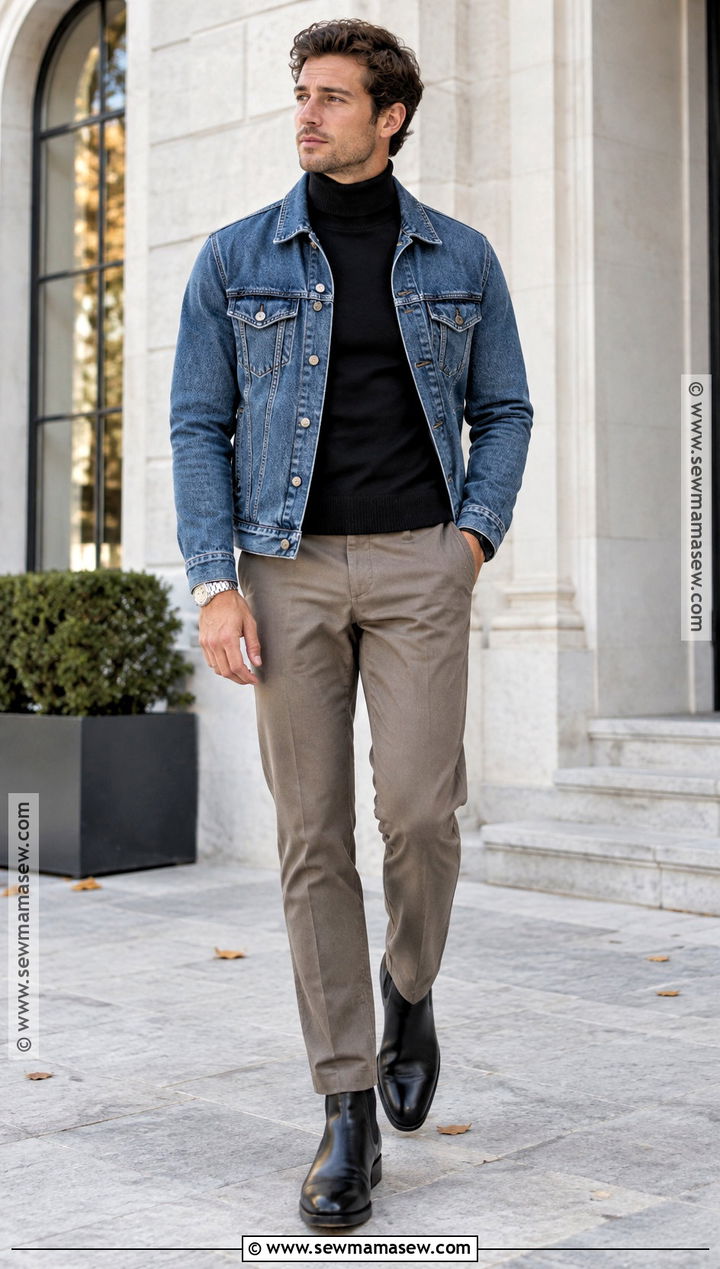
A fine turtleneck sharpens a denim jacket more than almost anything else I can put under it. Use lightweight cotton or merino in black or chocolate, then a medium-blue denim jacket over it. Swap jeans for straight taupe or gray trousers so the denim isn't fighting another blue. Black leather boots and a simple watch are enough. Thin merino turtlenecks fold neatly at the collar; thick ones bunch under the jacket's own collar and look messy, so I fold the neck once and check it in a mirror before leaving. The trousers should be relaxed everyday trousers, not suit pants. It's warm without bulk and noticeably dressier than a tee and jeans.
18. Fall Fleece Jacket With Hiking Pants
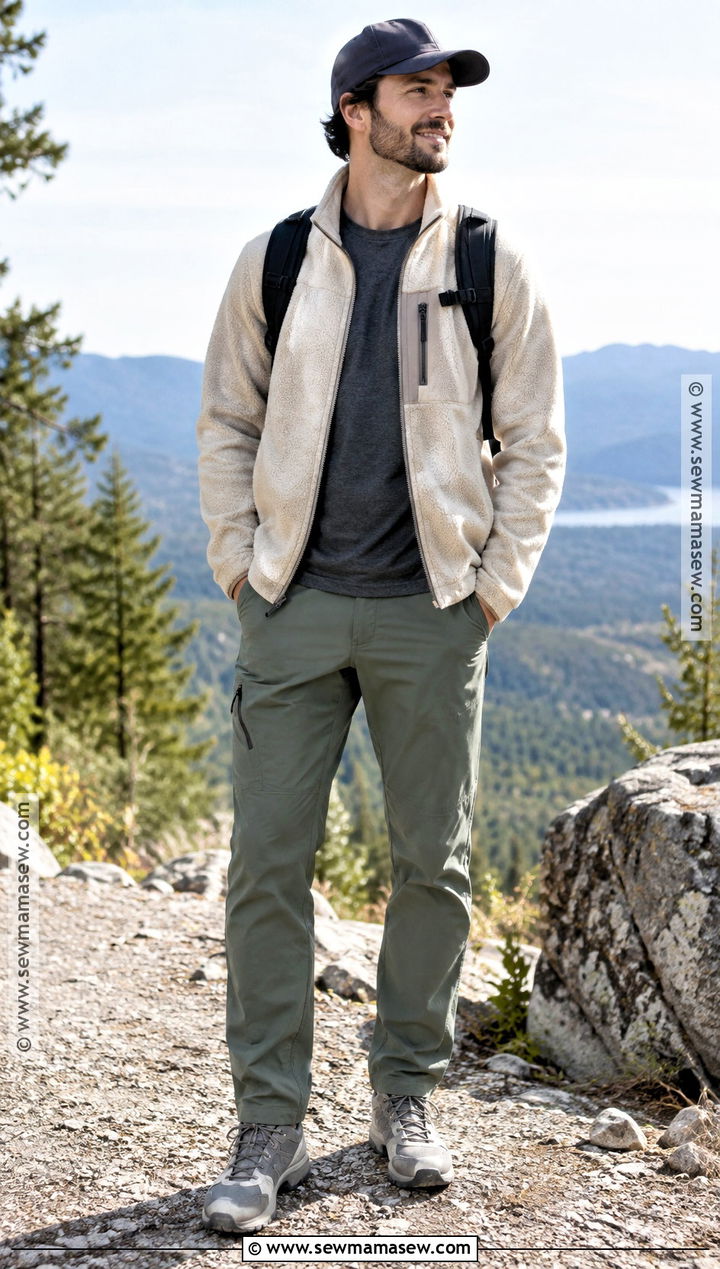
Some weekends start in town and end on a trail, and this outfit covers both. A textured fleece zip jacket in cream or olive goes over a moisture-wicking long-sleeve tee, with straight hiking pants in charcoal or muted green. Trail sneakers give support without the weight of full boots, and a light backpack carries the rest. Look for pants with discreet pockets and a matte finish so they pass as regular trousers in a café. Fleece is warm but wind passes straight through it, so I size it to fit under a rain shell for days the forecast turns. A coordinated palette keeps the look from reading as gym kit.
19. Fall Blazer With T-Shirt And Jeans
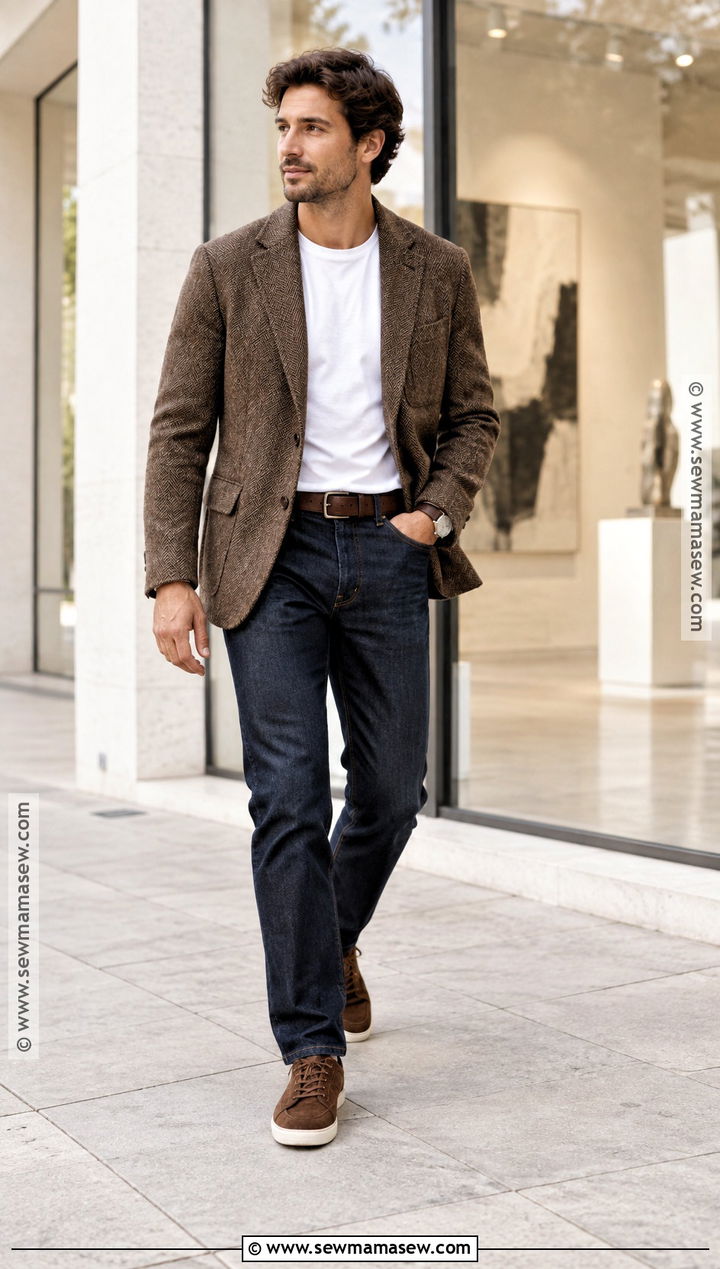
An unstructured blazer lifts casual basics without pushing them into formalwear, mostly because it has no padding to stiffen the shoulders. Choose brown, navy or a subtle herringbone and wear it over a good white or cream tee whose neckline lies flat. Dark straight jeans make the base, and brown suede sneakers or loafers keep it comfortable. Add a leather belt and a plain watch. I avoid shiny fabrics and matching suit trousers here, since the point is a relaxed outfit. Length check: the blazer should just cover the seat. It's what I'd suggest for a dinner, a gallery visit or anywhere a hoodie is too little and a suit is too much.
20. Fall Parka With Knit Sweater And Boots
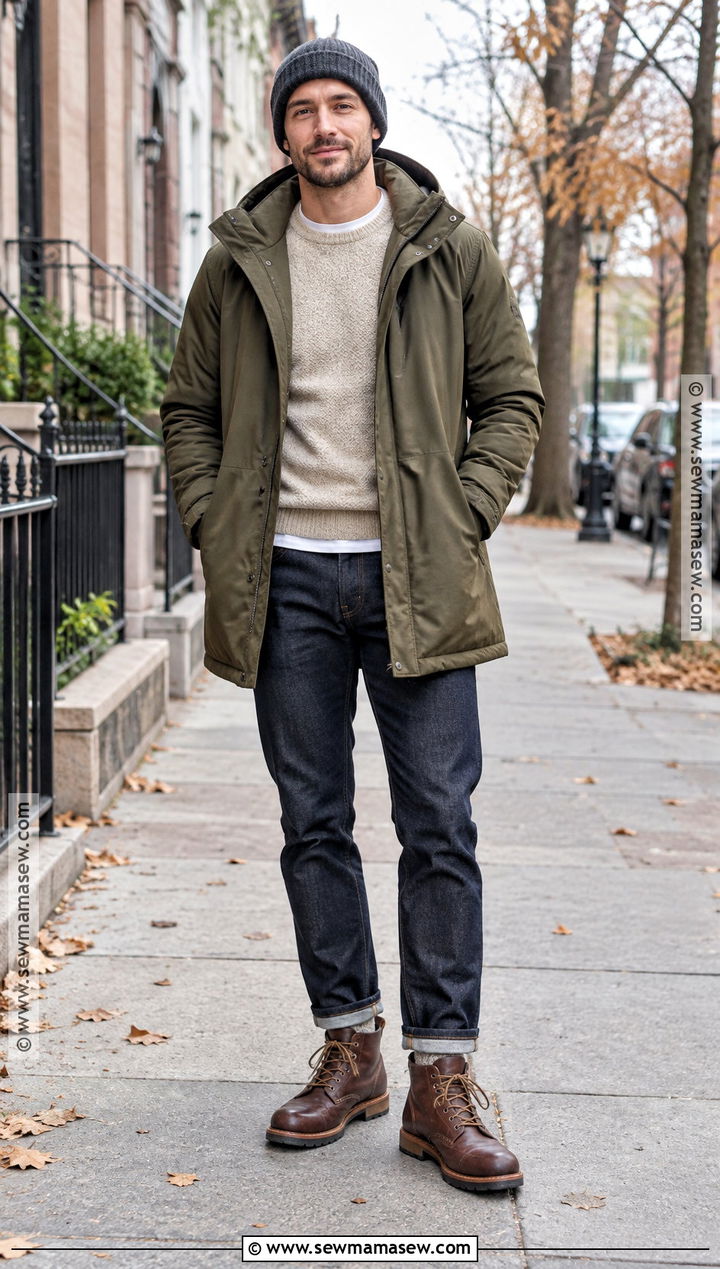
Late fall needs real warmth, and the trick is not looking like you're dressed for a blizzard. Start with a mid-length parka in olive or navy. Under it, a textured oatmeal crewneck over a cotton tee, then dark indigo jeans, which go with almost any parka color. Waterproof brown lace-up boots, thick socks and a ribbed beanie finish it. I buy a parka with enough room in the chest and arms that the sweater lies flat underneath; if you can't cross your arms comfortably with the sweater on, it's too tight. Minimal exterior branding keeps it wearable for years. It handles cold wind and light rain without losing the casual feel of the rest of the list.
Suede, Canvas and Leather After a Wet Weekend
Half of these outfits rely on brown leather boots, suede chukkas or a canvas jacket, and fall weather is hard on all three. A little care at the start of the season saves you replacing them by spring.
Suede
Suede darkens when it gets wet and can water-mark as it dries. Spray it with a suede protector before the first wear, and let wet pairs dry slowly at room temperature, away from a radiator. Once dry, brush the nap back up with a suede brush. I wouldn't wear suede chukkas on a day with steady rain; save them for dry, cold days.
Smooth leather boots
New leather boots need breaking in, so wear them around the house for a few evenings before a long walk. Wipe off mud while it's fresh, use cedar shoe trees to hold the shape and soak up moisture, and condition the leather a few times a season so it doesn't crack along the flex line at the toe.
Canvas and corduroy
Chore jackets and field jackets rarely need washing. Spot clean them and air them out instead, since every hot wash fades the color and softens the canvas. Corduroy and heavyweight cotton do best washed cold, inside out, and hung to dry.
Building Twenty Outfits From About a Dozen Pieces
Look back over the list and you'll see the same pieces turning up again and again: straight dark jeans, chinos, plain tees, a crewneck, a pair of brown boots. That repetition is the point. Get those right, then add outer layers that suit your climate, whether that means an overshirt, a denim jacket, a field jacket or a parka. Fit and texture will do more for you than any trend. Keep the palette mostly earthy and neutral so everything mixes, and allow yourself one richer color, like burgundy or rust, for personality. Then wear what actually suits your day and lets you move through it comfortably.
Related posts: