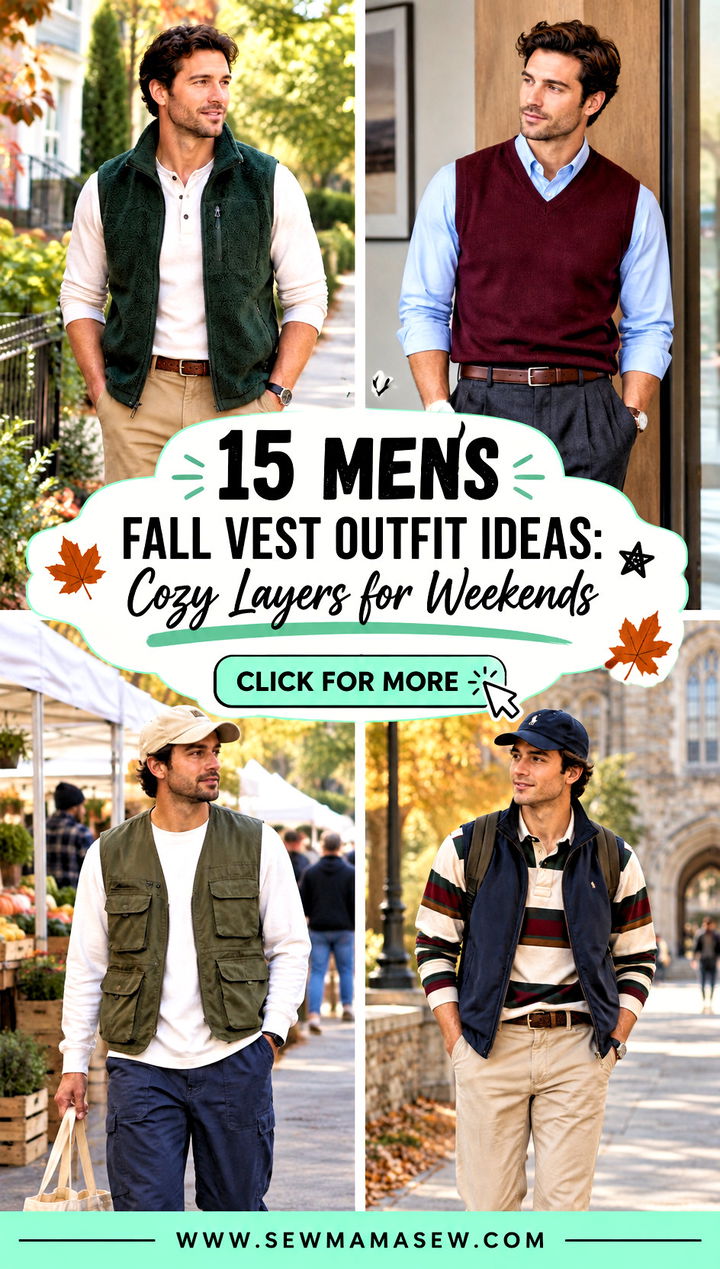
Why a Vest Often Beats a Jacket in October
I reach for a vest in fall more often than men expect, and the reason is simple. Most of the warmth you feel comes from keeping your torso covered. A vest does that while leaving your arms free, so you stay comfortable on a cool morning without overheating once the sun comes out or you start moving.
It also solves the indoor problem. You can walk into a shop, a car or a warm house and keep the vest on without sweating, where a full jacket would have to come off and be carried.
- Cool but dry mornings: a vest over a shirt or light knit is often all you need.
- Active days: walking, yard work or carrying things, when sleeves get in the way.
- Layering under a coat: a thin quilted or wool vest adds warmth without stiffening your arms.
- When it's not enough: wind and rain still hit your arms, so on a wet, windy day a proper jacket wins.
The fifteen outfits below cover every main vest type, from quilted and fleece to tailored wool and canvas, so you can see which one fits the way you actually spend your weekends.
1. Quilted Vest With Flannel and Jeans
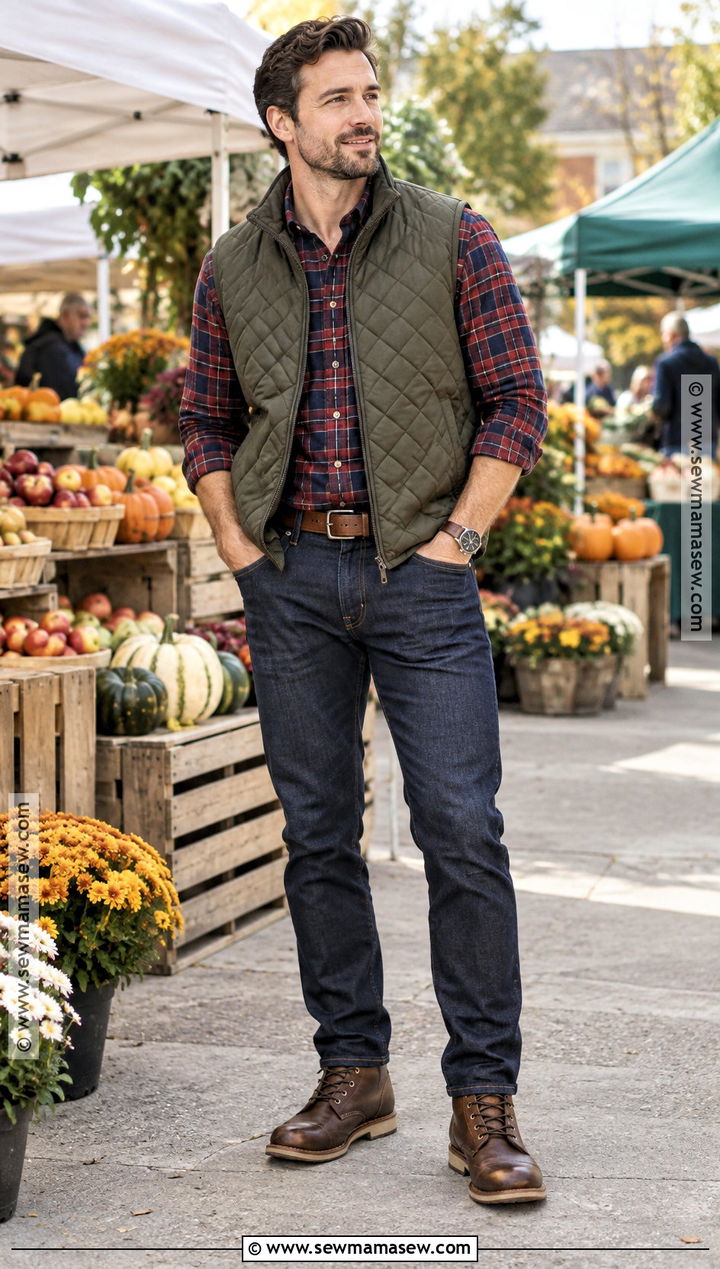
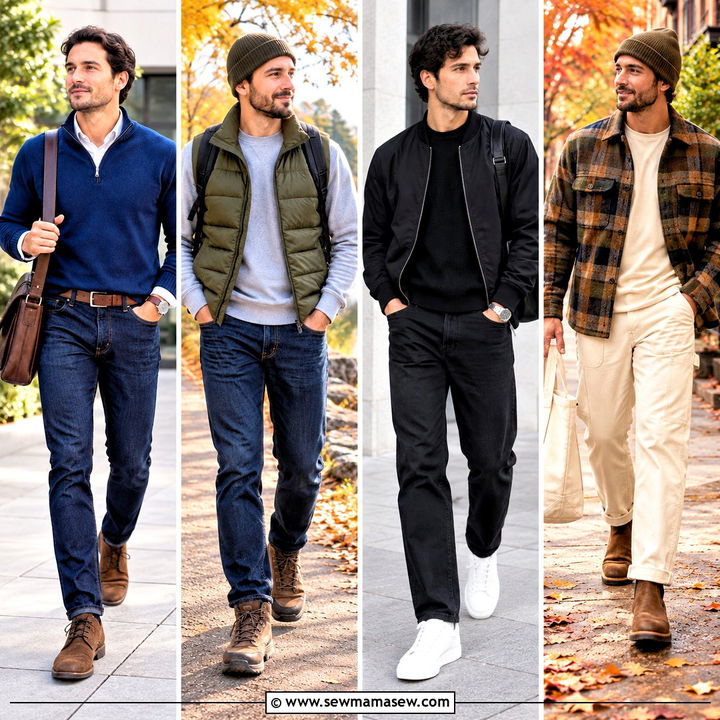
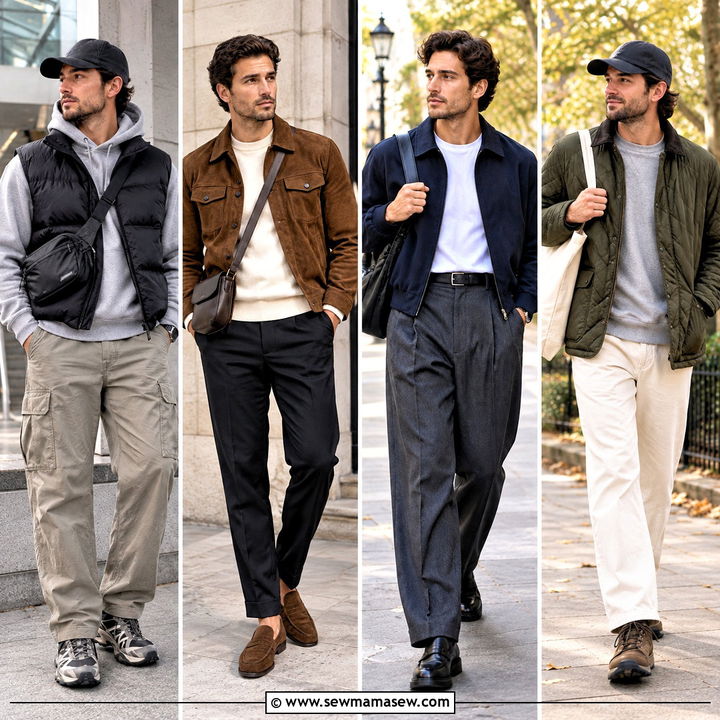
Quilted vest over flannel is the outfit I'd call the backbone of men's fall weekends. Pick an olive, navy or brown vest and a plaid flannel that already contains that color somewhere in the check, so the two look like they belong together. Straight dark jeans keep it clean without being tight. Brown leather service boots, a matching belt and a field watch finish it. Untucked reads relaxed; tucked is neater. The thing I check first is the flannel's sleeve: a thick shirt with full sleeves bunches up at the vest armhole and makes your arms look shorter, so pick one cut closer through the arm. A beanie covers the cold mornings.
2. Puffer Vest With Hoodie and Cargo Pants
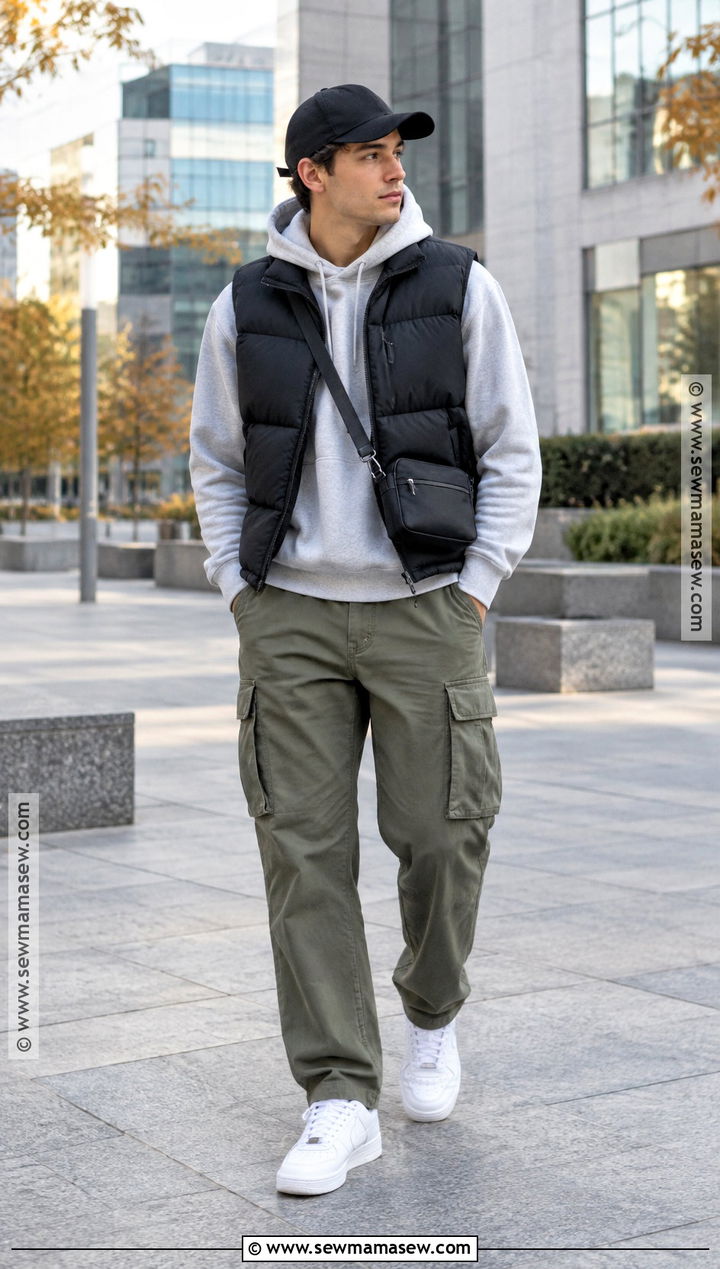
For days built around comfort, a light puffer vest over a plain hoodie and relaxed cargos does it. A black or charcoal vest looks sharp over heather gray, cream or muted green. Straight or gently tapered cargos keep the shape current without drowning you. Clean leather sneakers add some structure; retro runners make it sportier. Keep the hoodie on the thin side, since a heavy one fills the armholes and pushes the vest collar up around your ears. With the hood out over the vest collar, it lies flatter. A cap and small crossbody bag finish it. It's my go-to for travel days and errands when the temperature keeps changing.
3. Fleece Vest With Henley and Chinos
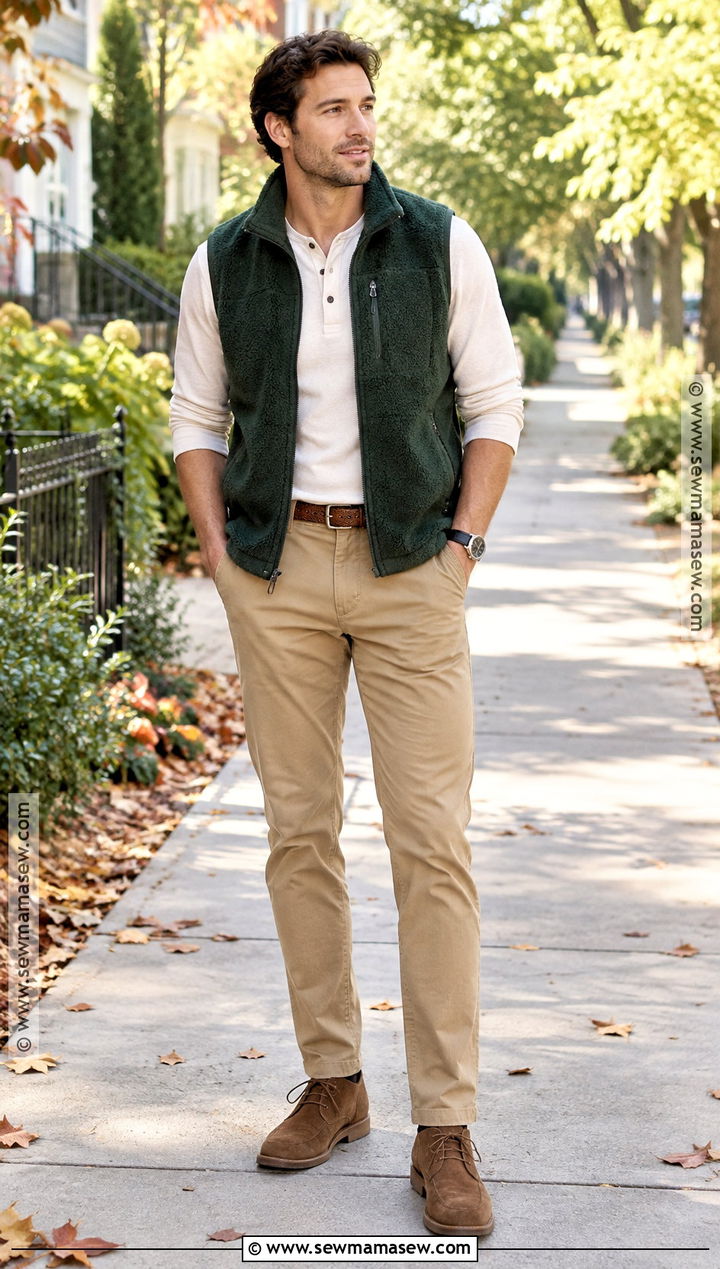
Fleece adds warmth and a soft texture without any fuss. A fitted cotton henley in cream, oatmeal or light gray underneath, a forest green, navy or rust fleece vest on top, and tan chinos to lighten the whole thing so it doesn't look like you're heading for a trail. Suede desert boots or low leather sneakers in brown finish it, with a woven belt and canvas watch. The henley can stay out, but only an inch or so below the vest. Around town I'd choose a trim fleece over a big technical one. Fleece picks up lint and pet hair like a magnet, so keep a lint roller near the door.
4. Sweater Vest With Oxford Shirt and Trousers
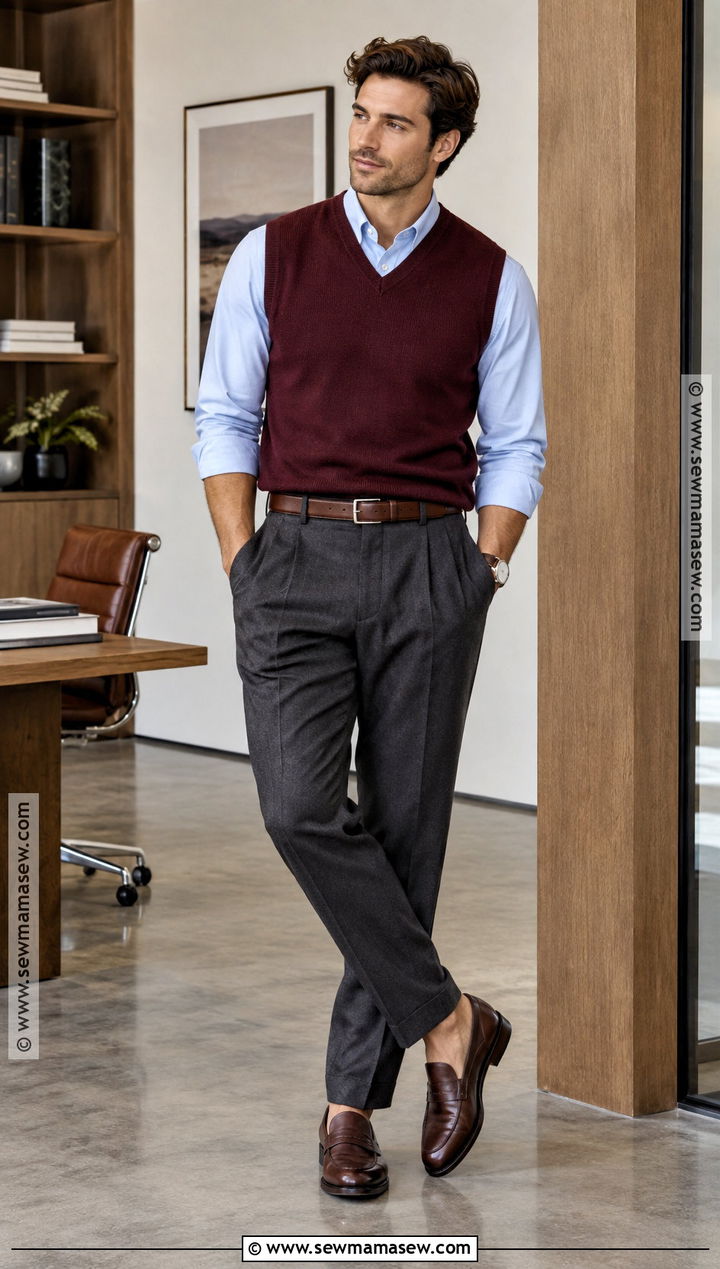
A sweater vest turns an ordinary button-down into something that looks considered. A textured navy, burgundy, camel or patterned knit vest over a white or pale blue Oxford, with relaxed pleated trousers below. Skinny pants under a boxy vest make you look top-heavy, so I'd keep the leg straight. Brown loafers polish it; minimal sneakers relax it. Let the collar fall naturally rather than pressing it flat, and roll the sleeves once on warmer days. A leather belt and a watch are plenty. The knit should end right at the waistband, covering the belt buckle but no more.
5. Utility Vest With Long-Sleeve T-Shirt and Fatigue Pants
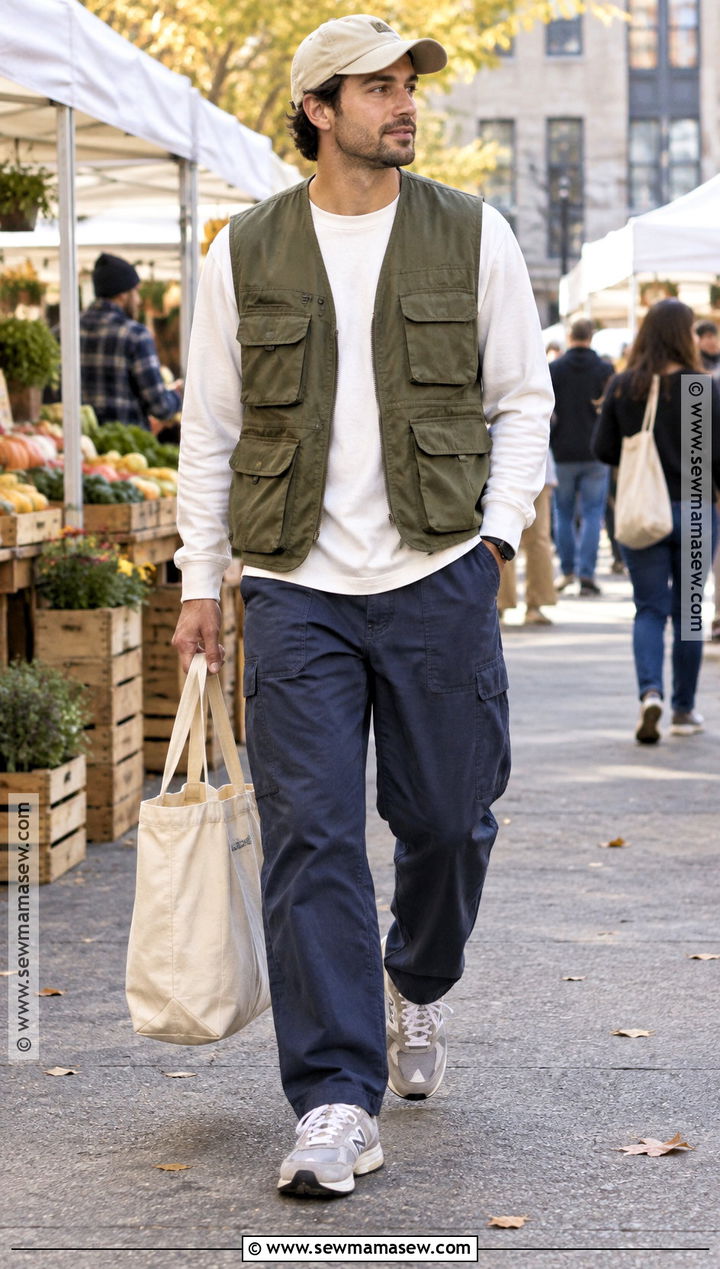
Utility vests bring pockets and a workwear edge, but they need a light hand. An olive or tan multi-pocket vest over a heavyweight white, charcoal or striped long-sleeve tee, with navy fatigue pants or relaxed canvas trousers. Retro sneakers keep it casual; moc-toe boots make it rugged. All those pockets are already detail, so skip extra accessories and patterns beyond a canvas cap and a plain tote. Length is the deciding point: a vest that ends near the waistband looks like clothing, while one that hangs to mid-hip looks like fishing gear. Don't fill every pocket either, or it sags forward.
6. Denim Vest With Flannel and Black Jeans
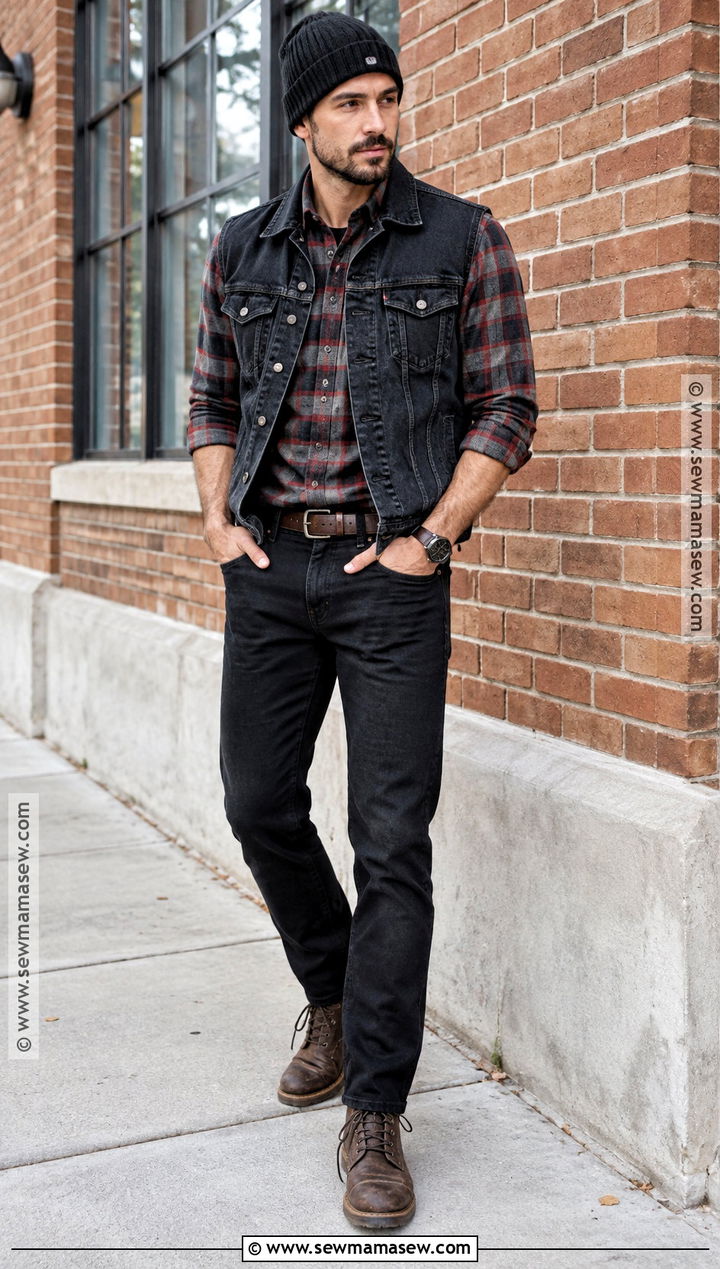
A denim vest looks modern when the pieces around it are plain. Medium or dark wash over a brushed flannel in black, charcoal or muted red, with straight black jeans so the two denims don't fight. Dark brown lace-up boots, a leather belt and a simple watch finish it. Unless you really want a matching set, never pair the same wash top and bottom; it almost always looks accidental. The flannel needs some weight, because your arms are on show and a thin shirt looks flimsy against stiff denim. A black beanie adds warmth without another color. Rigid denim vests soften a lot over the first few months of wear.
7. Suede Vest With Chambray Shirt and Dark Denim
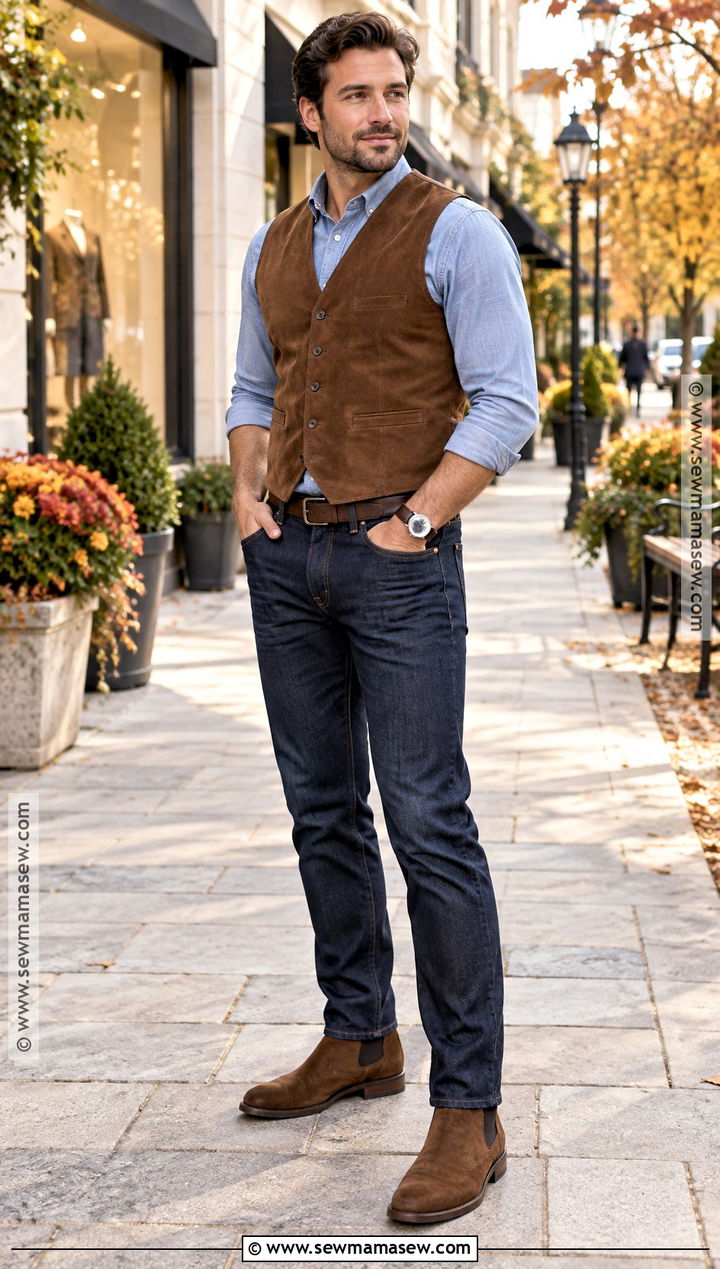
Suede and fall go together naturally. A tobacco, chocolate or tan suede vest over a soft blue chambray shirt, with dark straight jeans. Brown Chelsea boots slim down the bottom half and make the rugged materials look polished. Get the belt close to the boot color without chasing a perfect match. One roll on the shirt cuffs keeps it relaxed on mild days. The suede is already the feature, so look for a vest with simple seams and little hardware. A suede vest also sits right at the collar and armholes where your skin touches it, so it collects oil there; a suede eraser and brush lift it out.
8. Wool Vest With Turtleneck and Tailored Trousers
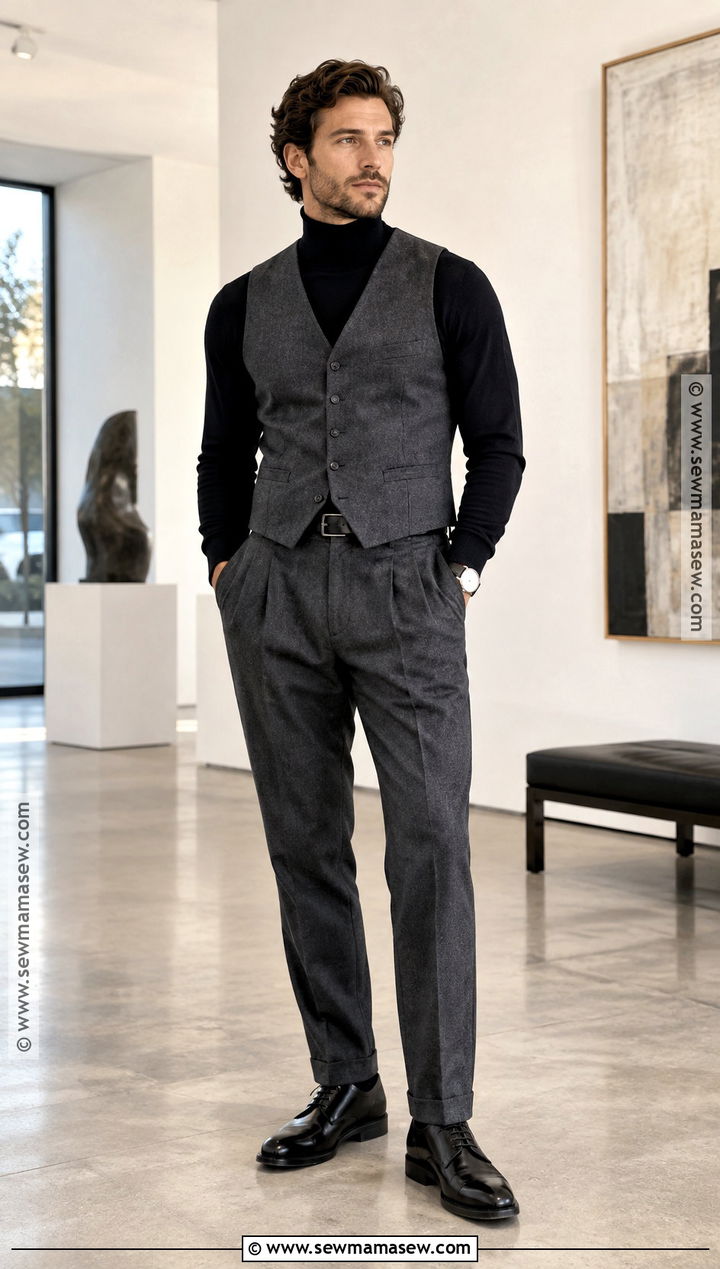
This is the dressiest vest look here. A tailored wool vest over a fine turtleneck, in charcoal, camel or deep brown, ideally with trousers in a related tone. Pleated wool trousers with a clean drape, then leather derbies or sleek Chelsea boots. The turtleneck has to be thin and close-fitting, or it rolls up and bulges at the vest opening. Add an overcoat when it's cold, but the outfit should still look finished with the coat off; that's the test I use. Tailored vests often have an adjustable strap at the back, and cinching it slightly keeps the front from gaping. Keep the watch and belt simple.
9. Black Vest With White T-Shirt and Gray Trousers
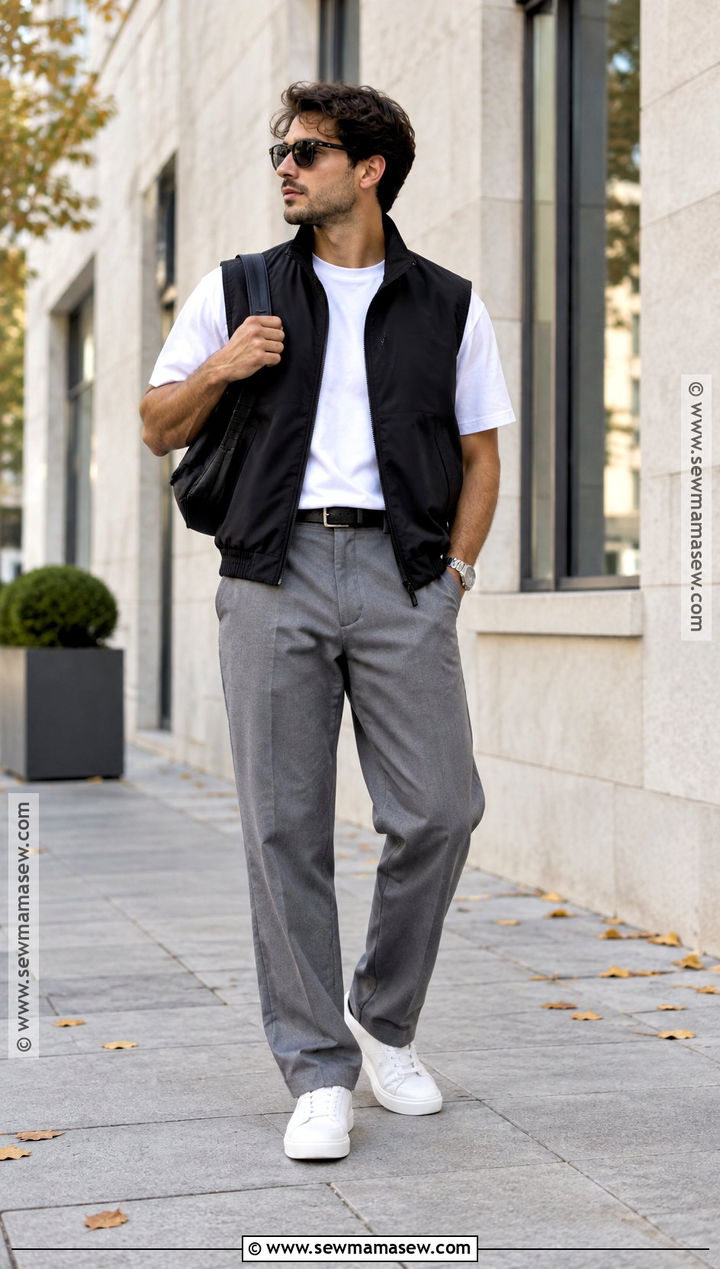
Black over white is the simplest contrast there is, and it works on a vest. A lightly padded or matte black vest over a heavyweight white crew-neck tee, with charcoal or medium-gray trousers in a straight, relaxed cut to sit between sporty and smart. White leather sneakers keep it fresh; black loafers dress it up. The tee sleeves need to fit neatly at the armhole, and the hem shouldn't hang far below the vest. Heavyweight cotton matters, because a thin white tee shows through at the shoulders and loses its shape by lunch. Swap to a white long-sleeve once it gets colder. A silver watch and black belt are enough.
10. Olive Vest With Crewneck Sweater and Corduroy Pants
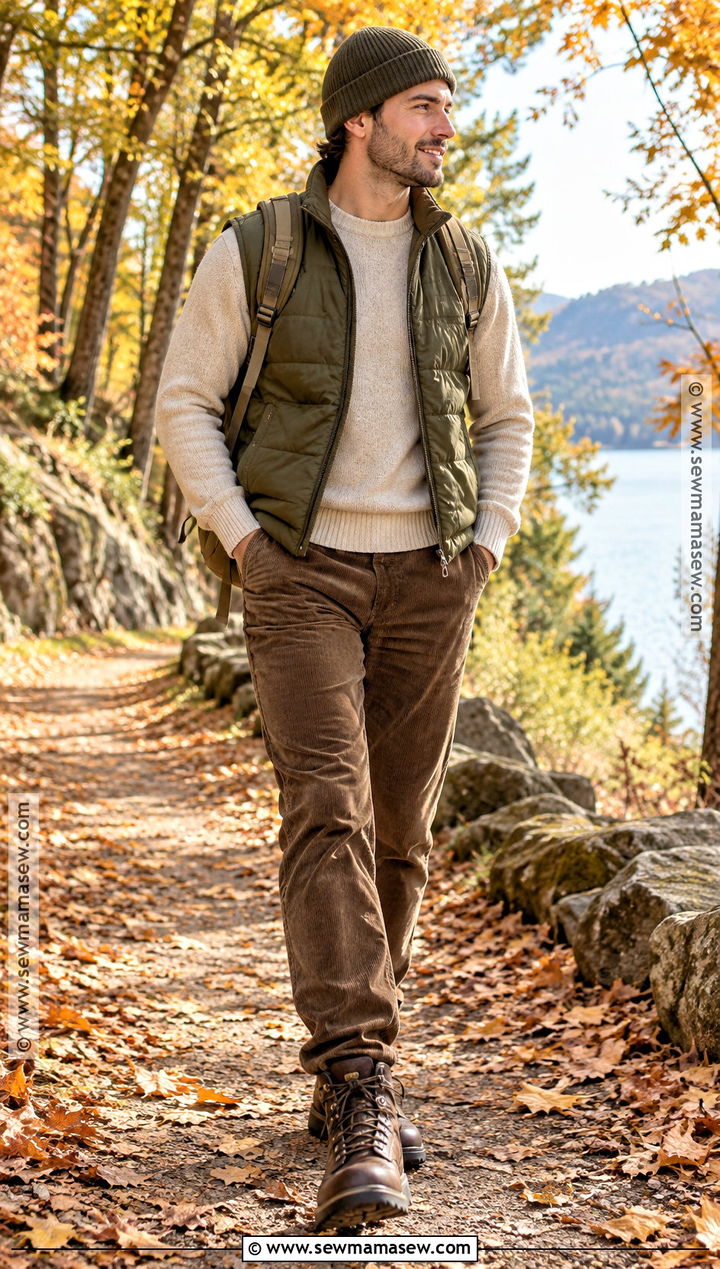
Olive, cream and brown look right the moment the leaves start turning. An olive quilted vest over a cream, oatmeal or heather gray crewneck sweater, with brown or tan medium-wale cords in a straight leg. Dark brown hiking-style boots or suede chukkas finish it. Let the sweater's collar and cuffs show, but not a long stretch of hem under the vest. A wool cap and canvas backpack lean outdoorsy without looking like you're about to climb something. A vest over a sweater is warmer than you'd think, since your core stays covered, so on a mild afternoon I'd swap the knit for a heavy shirt.
11. Navy Vest With Rugby Shirt and Chinos
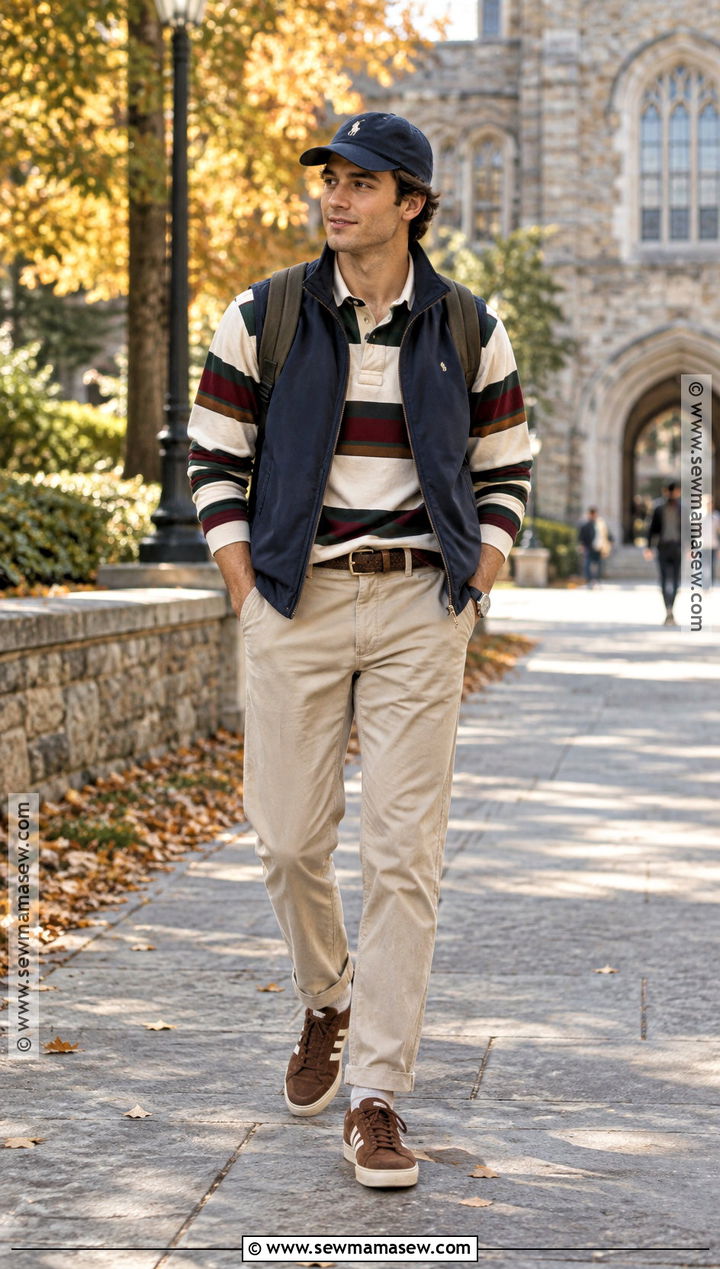
A striped rugby shirt gives a navy vest a sporty, collegiate feel. Choose one with cream, burgundy, forest green or pale blue stripes and keep the vest solid so the stripe stays readable. Stone or khaki chinos lighten the bottom half against the darker top. Retro suede sneakers or brown loafers finish it, depending on how sharp you want to look. Rugby collars are thick and sturdy, so lay it neatly over the vest instead of leaving it twisted. A canvas belt and cap fit the mood. Rugby shirts are heavy cotton and run warm, so this is a good pick for a cold game or a brisk brunch walk.
12. Brown Vest With Cable-Knit Sweater and Ecru Jeans
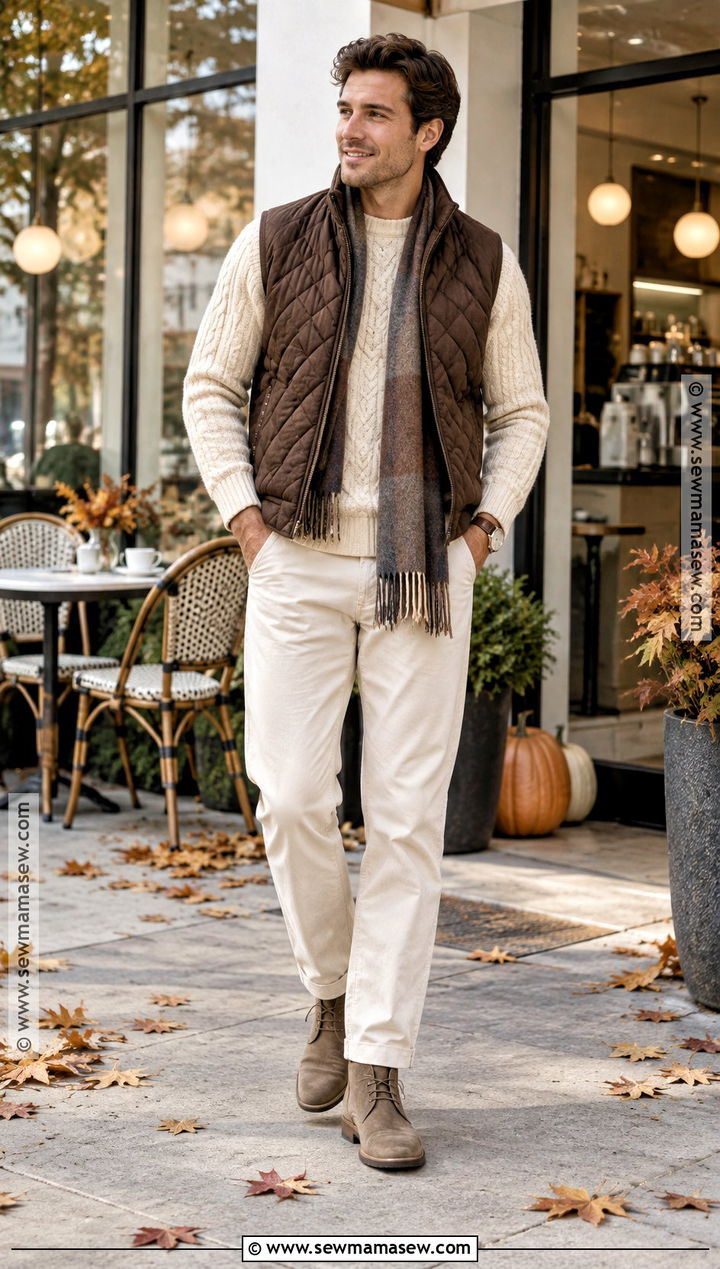
Cream with brown makes a quilted vest look fresh rather than hunting-lodge. A chocolate or chestnut vest over a cream cable-knit, with ecru or off-white jeans so the whole outfit stays warm and tonal. Straight denim with enough room balances the chunky cable texture. Taupe suede boots, brown chukkas or neutral leather sneakers finish it. Keep the vest plain; the cables are detail enough. A brown leather watch and a muted scarf help on colder days. Light jeans show every spill and splash, so I'd keep this outfit for lunches and family visits rather than a muddy walk.
13. Technical Vest With Merino Shirt and Cargo Pants
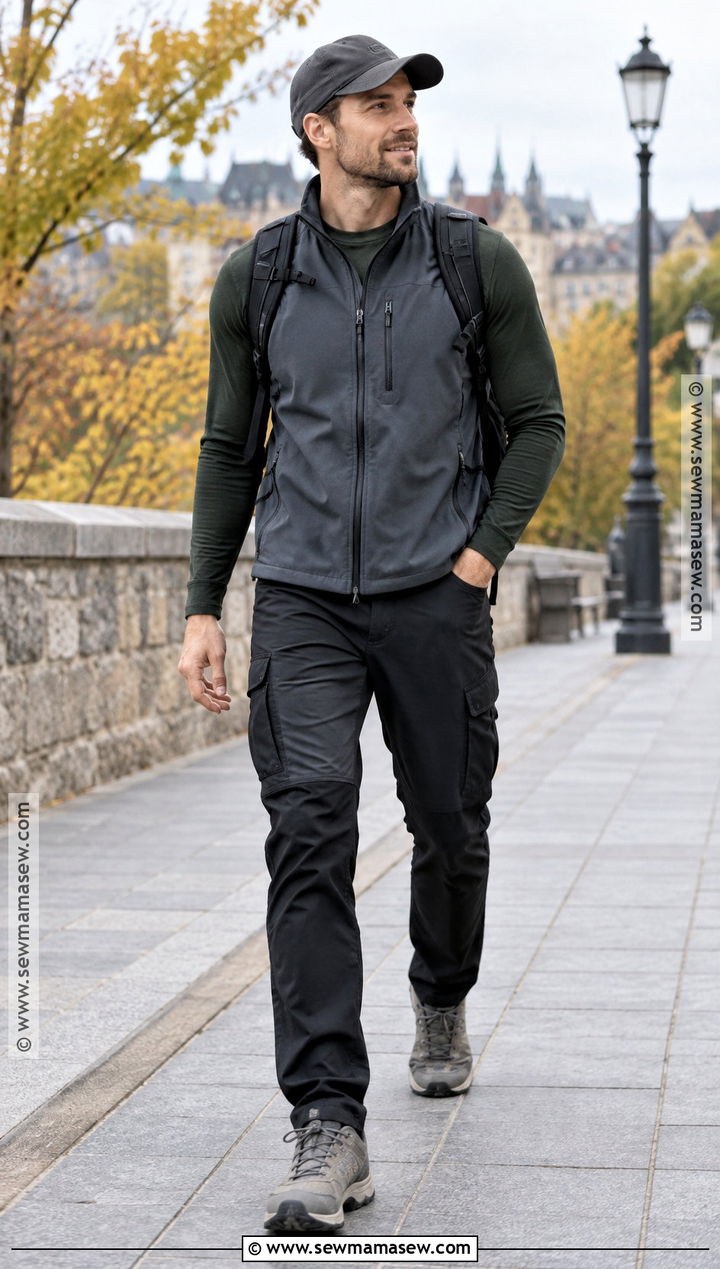
For changeable weather and busy days, a trim technical vest earns its place. A water-resistant vest in black, slate or dark green over a light merino crew-neck, with straight technical cargos with discreet pockets. Trail-inspired sneakers add grip, with a light cap and small backpack. Keep the colors narrow, all dark neutrals, so the performance fabrics look grown-up rather than gym-bound. The vest should let your arms swing freely but sit close enough to hold warmth at the torso. Merino under it is the smart move; it stays warm if you sweat and doesn't smell after a long day.
14. Canvas Vest With Denim Shirt and Carpenter Pants
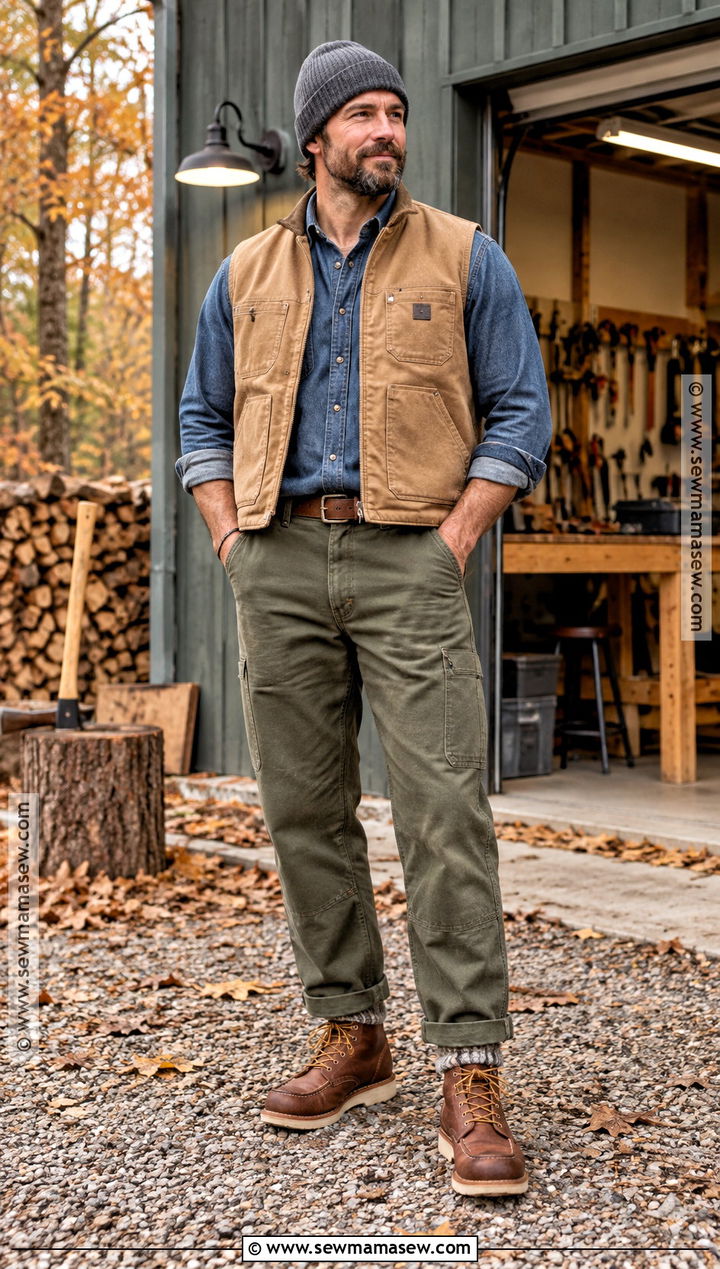
A canvas work vest is classic workwear that stands up to real use. Brown, tan or faded black over a medium-wash denim shirt, with olive carpenter pants or heavy duck-canvas trousers. Moc-toe boots, thick socks and a sturdy leather belt finish it. Keep the pants straight or slightly relaxed so they stack lightly on the boots. One roll on the sleeves, plus a knit beanie for warmth. Avoid going distressed on every piece; one worn item is character, three looks like a costume. New duck canvas is stiff as cardboard, and it takes a few weeks of wear and a wash or two to break in.
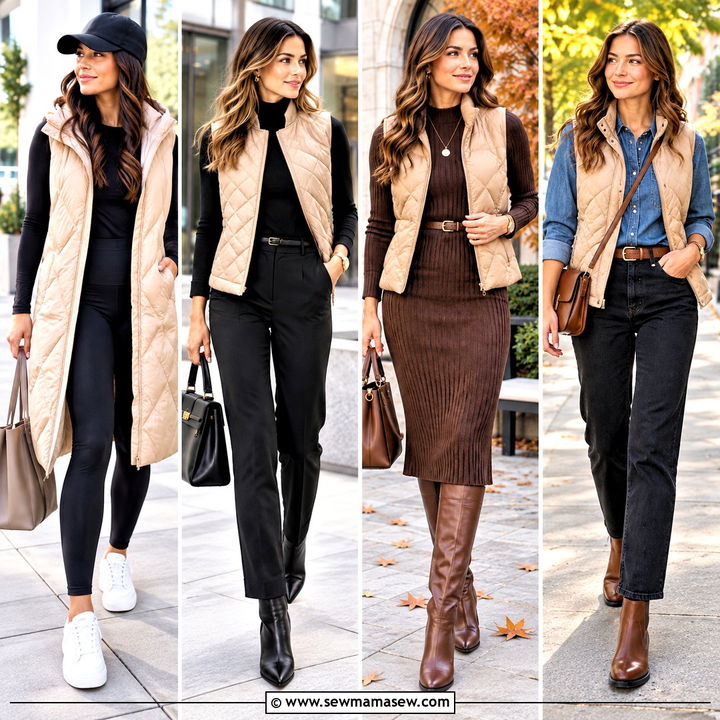
15. Charcoal Vest With Gray Knit and Black Pants
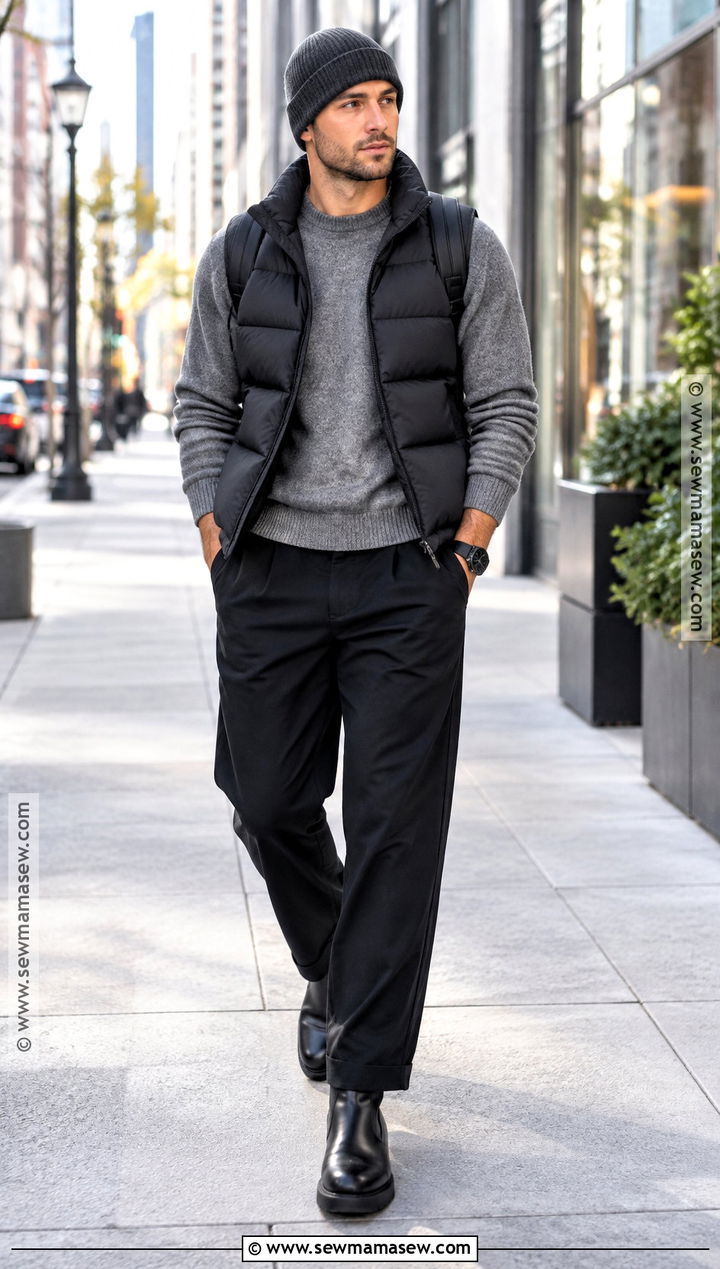
A gray-and-black palette makes layers look sleek and takes almost no thought in the morning. A charcoal puffer or wool-blend vest over a medium-gray crewneck, with relaxed black trousers or clean black jeans, then black leather boots or tonal sneakers. Texture keeps it from going flat, so mix matte nylon, soft wool and structured cotton where you can. The pants need enough width to balance the vest's volume without getting sloppy. A black watch, minimal backpack and charcoal beanie finish it. I'd wear this for airport days and offices, anywhere you want to look tidy without coordinating colors.
Armholes, Length and What Sits Underneath
A vest is a simple garment, but three fit points decide whether it looks right. I check them in this order every time.
- Armholes: wide enough that a shirt or sweater sleeve passes through without bunching, but not so deep that your sides show when you lift your arms.
- Length: for most casual vests, the hem should land at or just below your belt. Shorter looks cropped; much longer starts to look like a different garment.
- Chest: zip or button it while wearing your thickest planned layer. If it pulls, size up or plan to wear it open.
What you wear underneath matters as much as the vest. Shirts with a slimmer sleeve sit better at the armhole, and a long shirt or sweater hem peeking out more than an inch or so makes the outfit look unfinished.
Adjusting a Vest for Your Build
Vests change your shape more than most layers, because they add bulk to the torso only.
If you're broad or carry weight at the middle, a flat wool, fleece or thin quilted vest worn open is more flattering than a thick puffer, which adds a lot of width. If you're slim, a puffer or a chunky sweater vest fills you out nicely. Shorter men look taller in a vest that stops right at the belt and in pants that match the vest's darkness, which keeps the line long. Taller men can carry slightly longer vests and bolder contrast between top and bottom.
Vest Shapes for Every Kind of Weekend
A vest is the simplest way to add warmth and texture to the fall basics you already wear. Quilted and fleece styles cover casual weekends; sweater, suede and tailored wool vests handle smarter plans; utility, canvas, denim and technical vests bring a workwear or outdoor lean. Whatever style you choose, watch the proportions, the armholes and how the shirt sits underneath. Straight or relaxed pants usually look better under layered tops than very narrow ones. Olive, brown, burgundy, navy and charcoal mix easily, so start with one vest in those colors and see how many of these outfits you can make before buying a second.
Related posts: