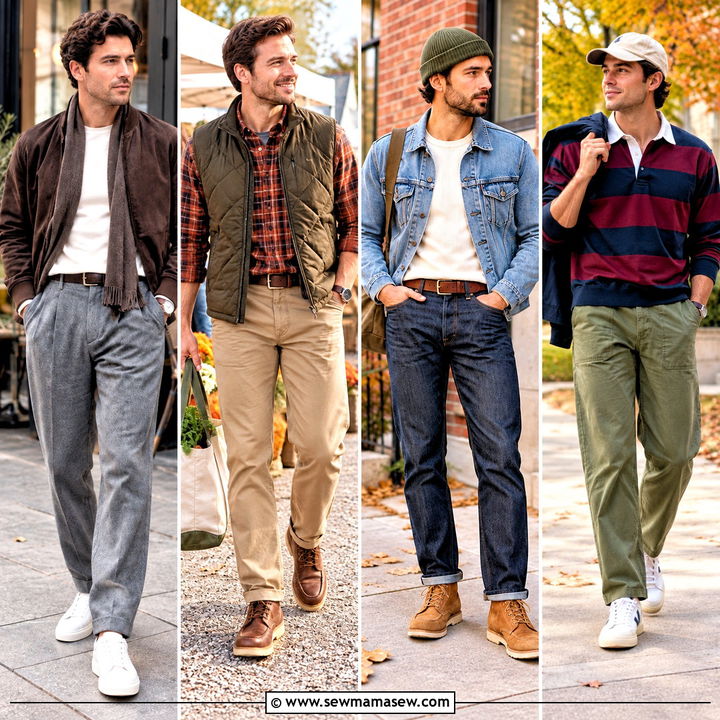
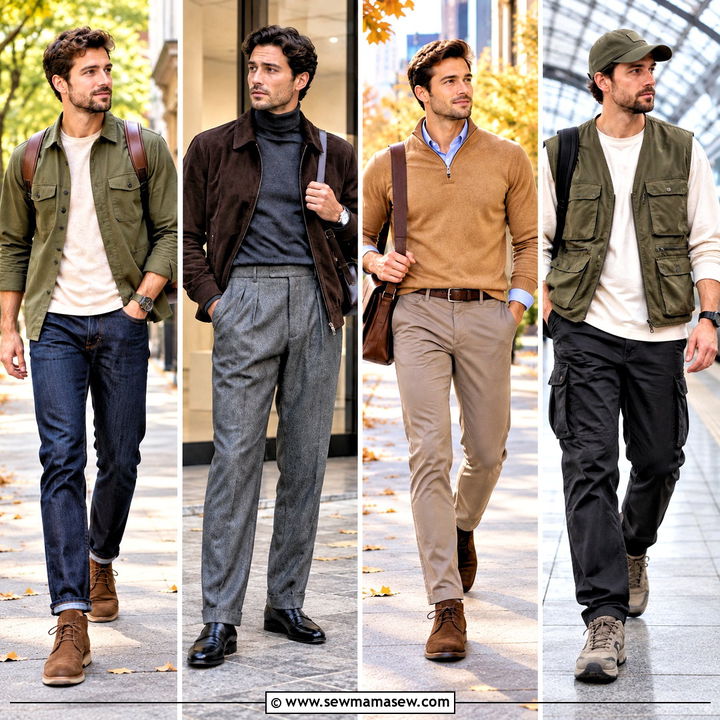
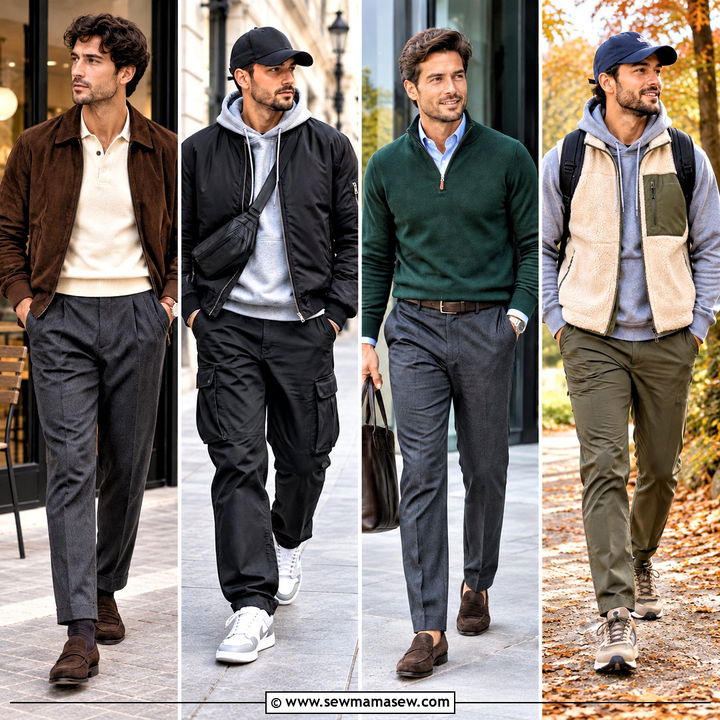
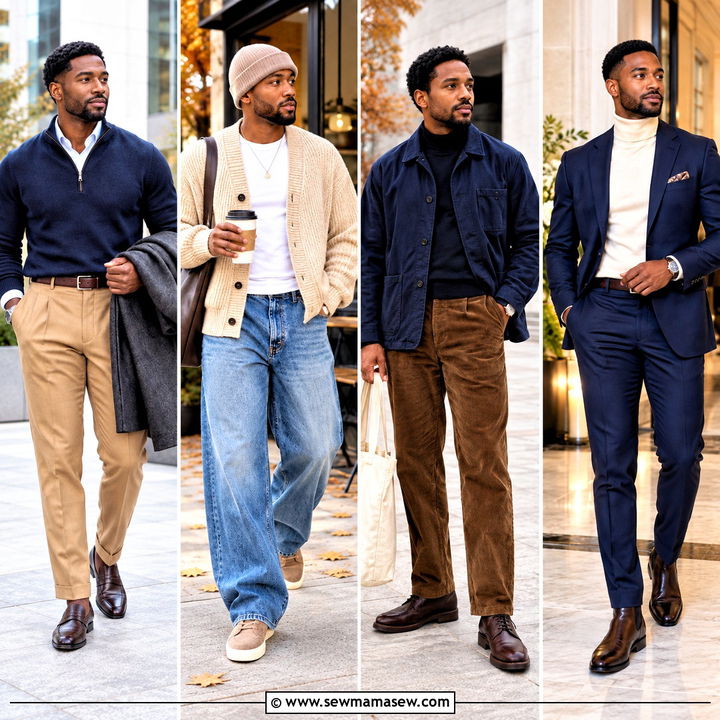
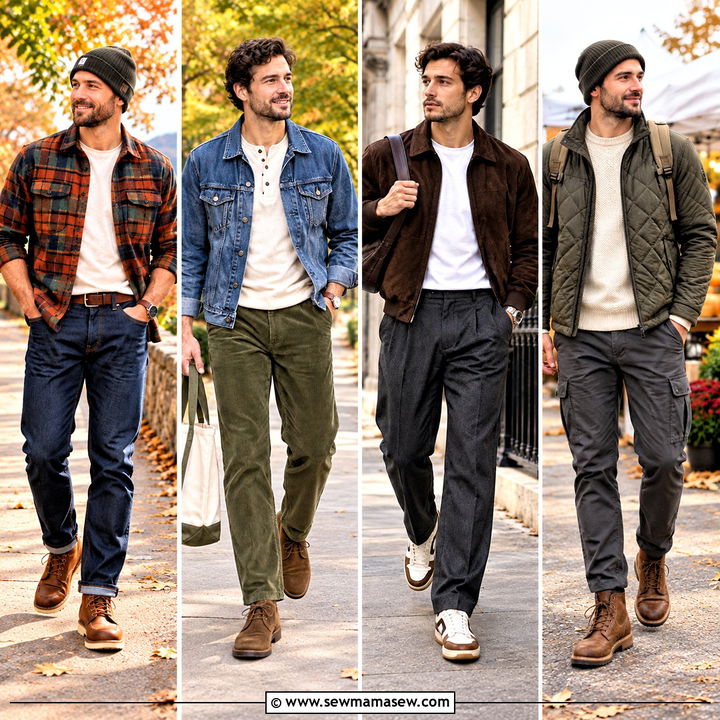
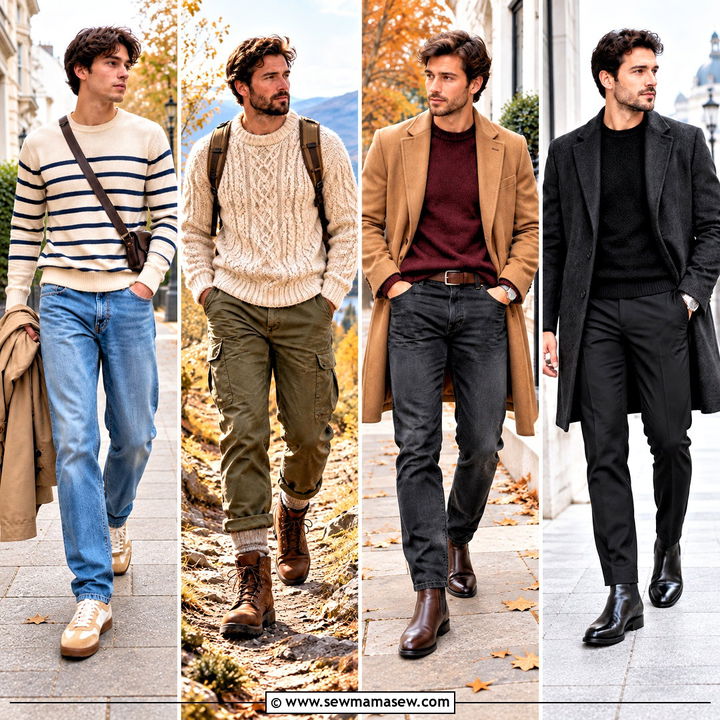
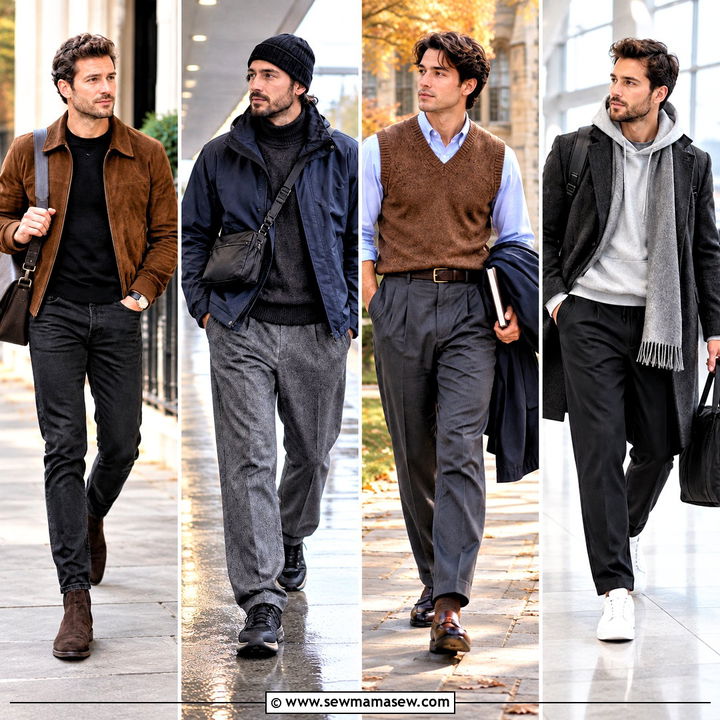
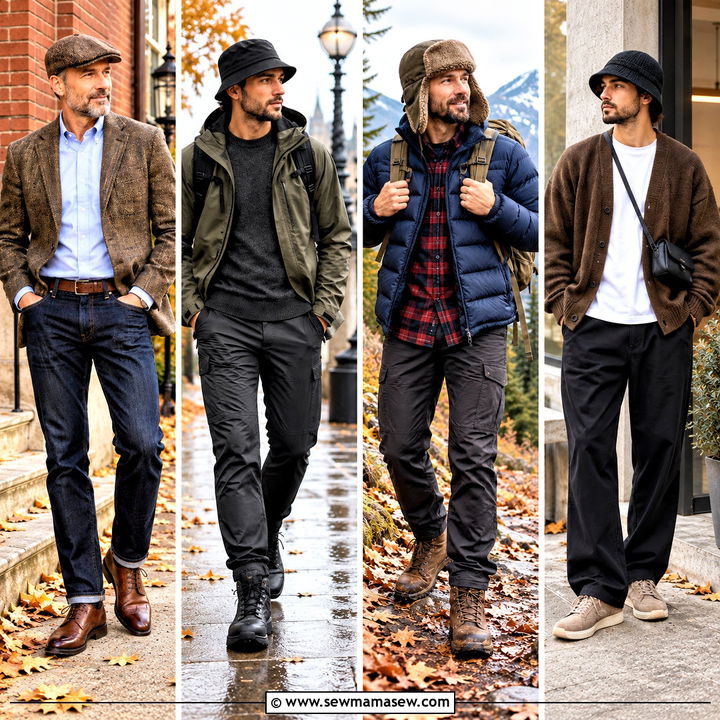
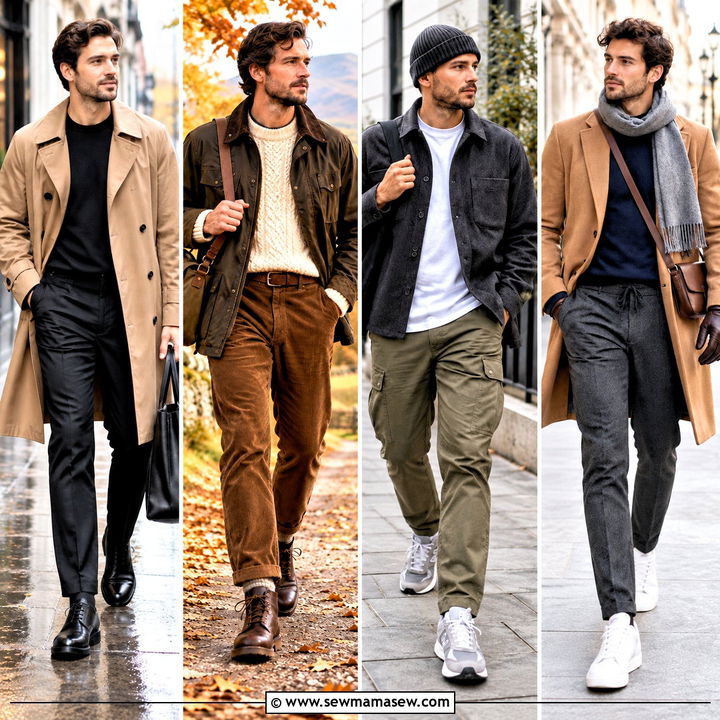
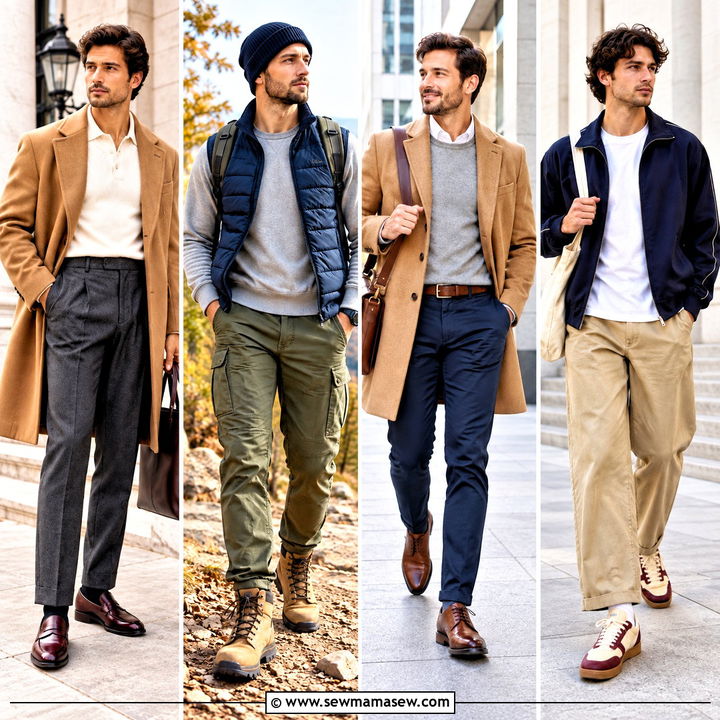
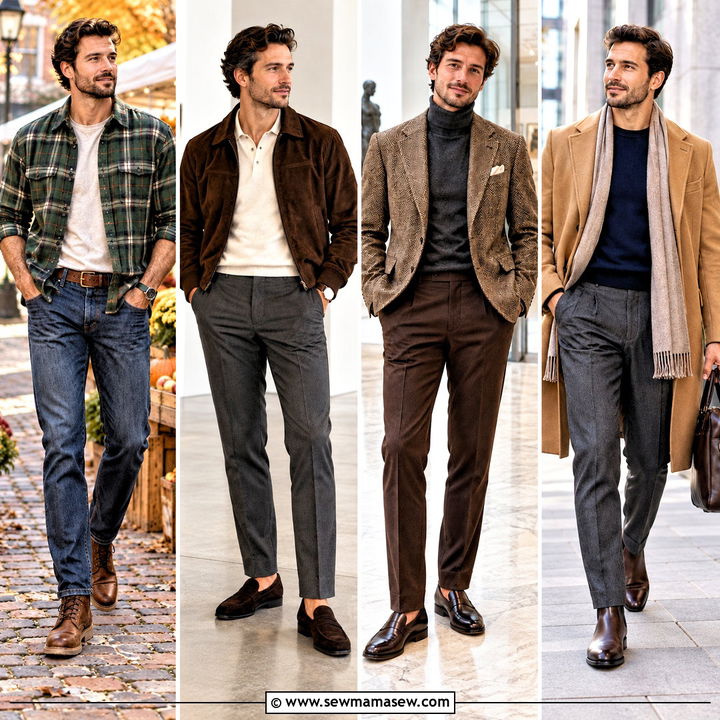
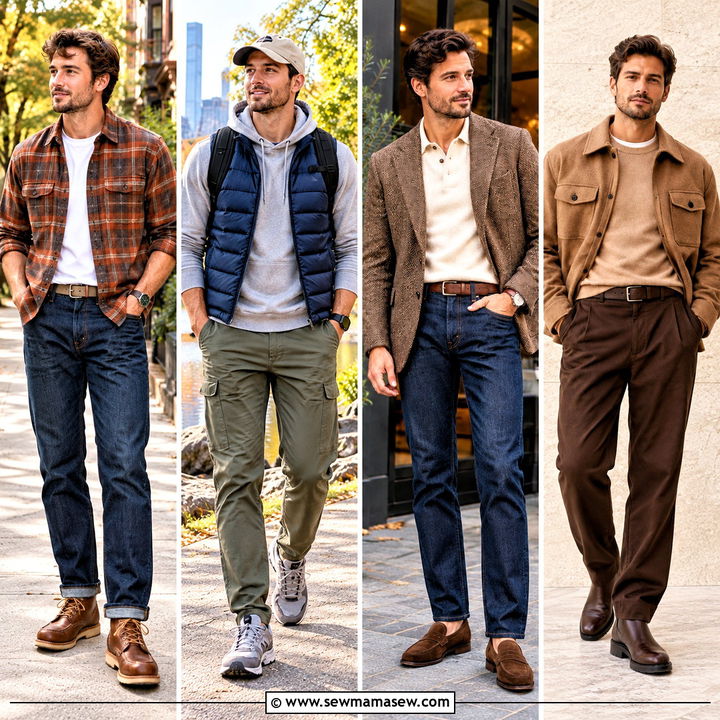
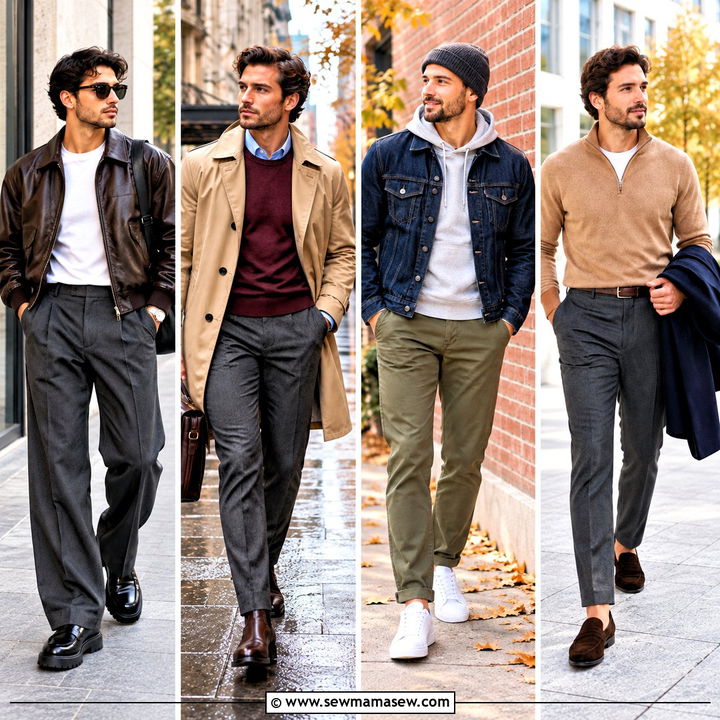
Most men already own the bones of a good autumn wardrobe: straight-leg jeans, chinos, an Oxford shirt or two, a plain sweater and a pair of boots. What changes the result is the layer on top and the fit underneath it. I put these 20 outfits together the way I'd build them with someone standing at their own closet, starting from the jacket and working down to the shoe. Suede, corduroy, wool and waxed cotton do most of the seasonal work, so the colors can stay quiet. Each look below is a full outfit you can copy as written or rebuild from what you have.
The Seven Pieces Behind Most of These Outfits
Before buying anything, I'd check what's already hanging in the closet. Read through the 20 looks below and you'll notice the same handful of pieces carrying most of them, with the jacket on top changing the mood. If you own these seven, you can build well over half the list with a single new layer:
- Dark straight-leg jeans with no heavy fading
- Charcoal or mid-gray wool trousers that sit at the natural waist
- A white or pale blue Oxford shirt with a soft collar
- A fine-gauge crewneck sweater thin enough to wear under a jacket
- A heavyweight plain T-shirt that holds its collar
- Brown leather boots, plus loafers if you work somewhere smart casual
- One textured jacket in suede, corduroy or waxed cotton
The gap I see most often is the sweater. Men tend to own chunky knits for weekends and nothing slim enough to layer, which is why blazers and trench coats end up feeling tight across the back. A merino crewneck in gray or navy solves that for most of these outfits at once.
1. Suede Jacket With Knit Polo and Trousers
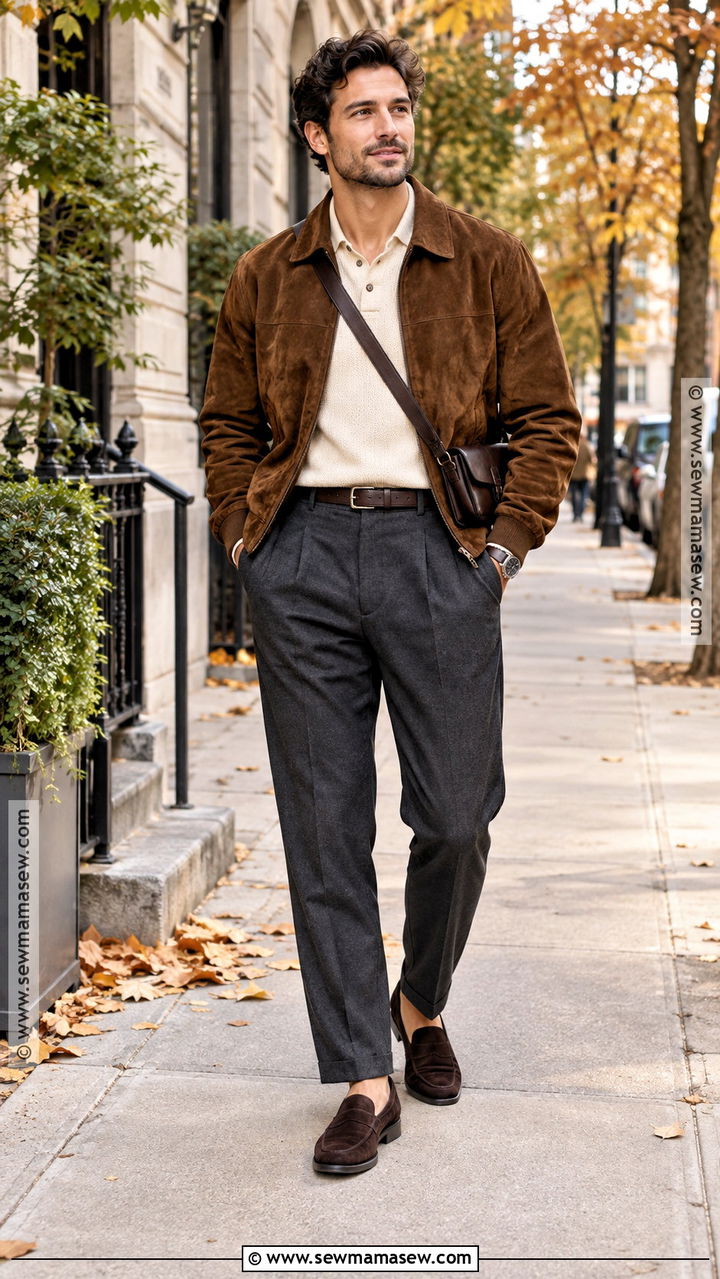
Suede is the texture I reach for first in early autumn, because it reads warm without the rugged weight of a leather biker. I put a brown suede jacket over a cream or muted green knit polo, which keeps a soft contrast right at the face. Charcoal trousers, straight or with a gentle pleat, hold the lower half steady, and dark brown loafers with matching socks finish it. Two things I check before anything else: the jacket should stop near the hip bone, and the trouser hem should touch the loafer with one clean break. Suede darkens and spots in rain, so I treat it with a protector spray before the first wear and keep this outfit for dry days. A plain leather belt and a watch are all it needs.
2. Chore Coat With Oxford Shirt and Jeans
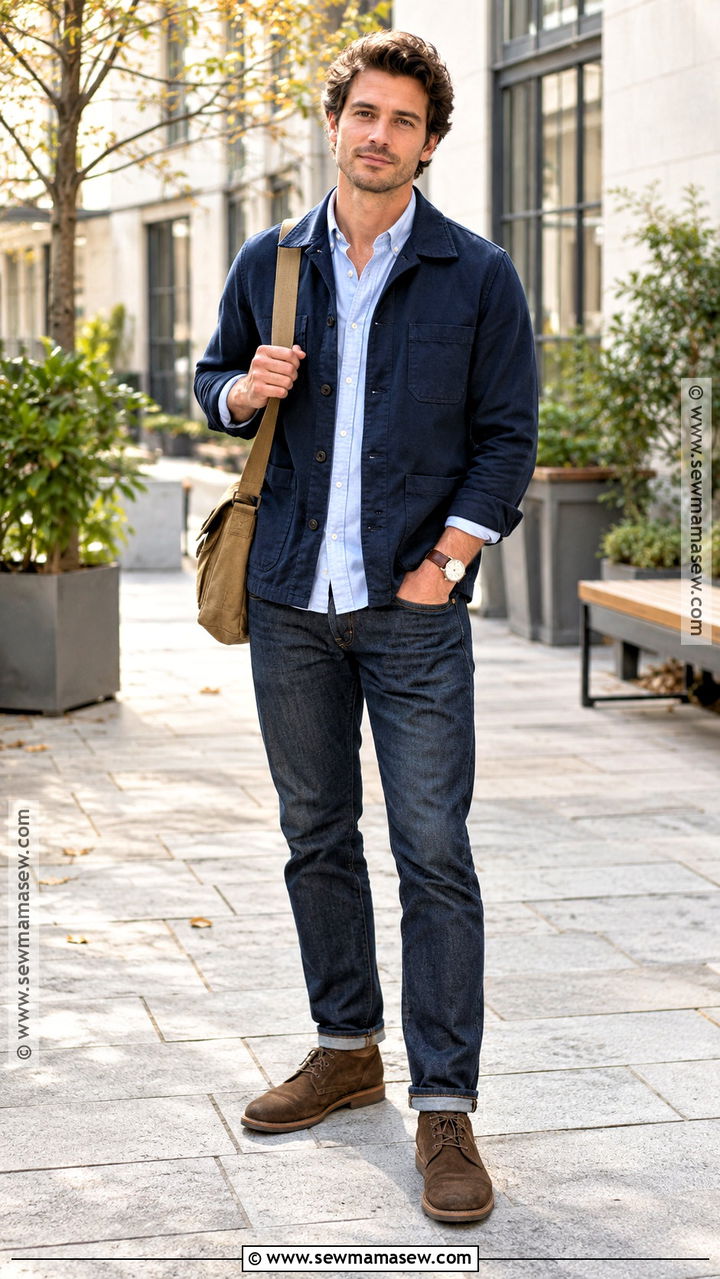
A chore coat is my answer for days that sit around cool but never turn cold. Its boxy cut and patch pockets give structure without a lining, so it layers over a white or pale blue Oxford shirt with room to spare. I keep the jeans dark and straight, since heavily faded denim pushes the whole thing toward workwear costume. Brown leather boots or suede chukkas finish it. Roll the shirt cuffs once so a strip shows below the coat sleeve; more than that and the wrists look busy. Canvas chore coats soften with every wash, so a stiff new one will look much better after a few months of wear.
3. Bomber Jacket With Hoodie and Cargo Pants
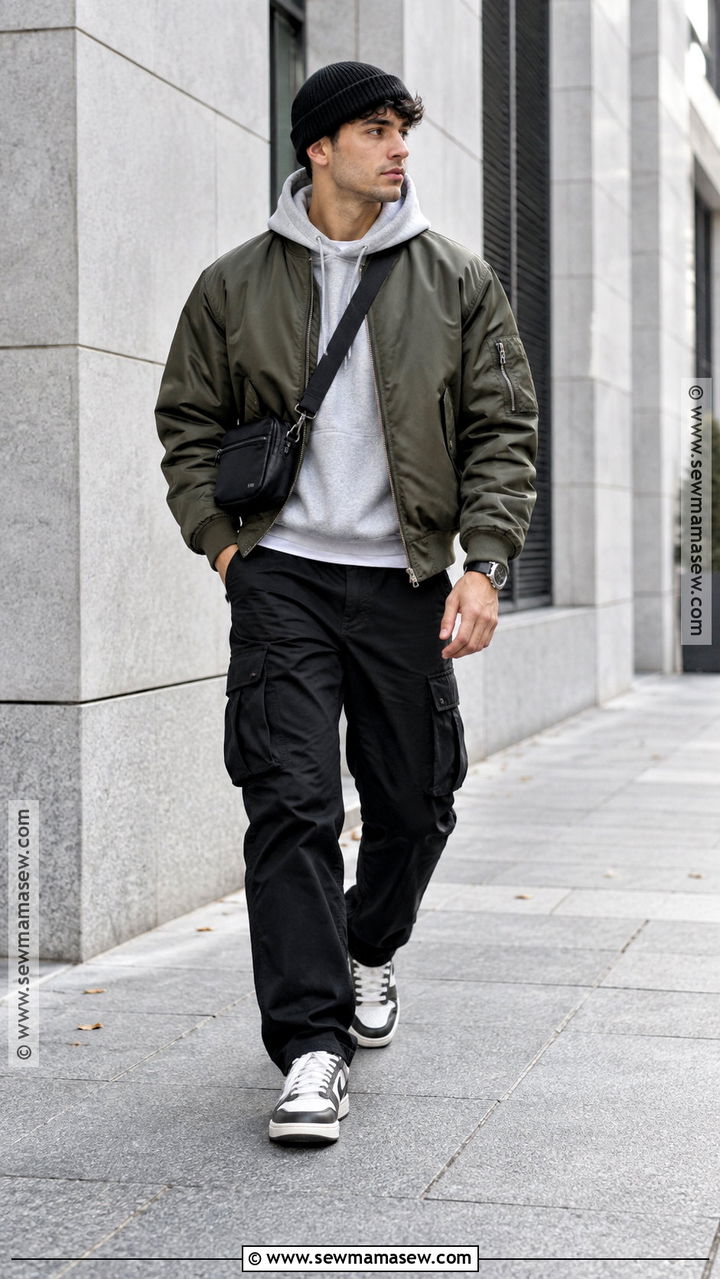
Here's the rule I give anyone pairing a bomber with a hoodie: one of the two has to be slim. I pick a matte black or olive bomber, never a shiny oversized one, and a lightweight gray hoodie with little or no branding. The hood sits outside the bomber's rib collar; tucked inside, it bunches against the neck. Cargo pants in black or stone work as long as the pockets lie flat. Bellows pockets packed with a phone and keys add width right at the thigh, the last place this outfit needs it. Leather sneakers or plain lace-up boots, a beanie and a small shoulder bag are enough.
4. Camel Overcoat With Turtleneck and Wool Trousers
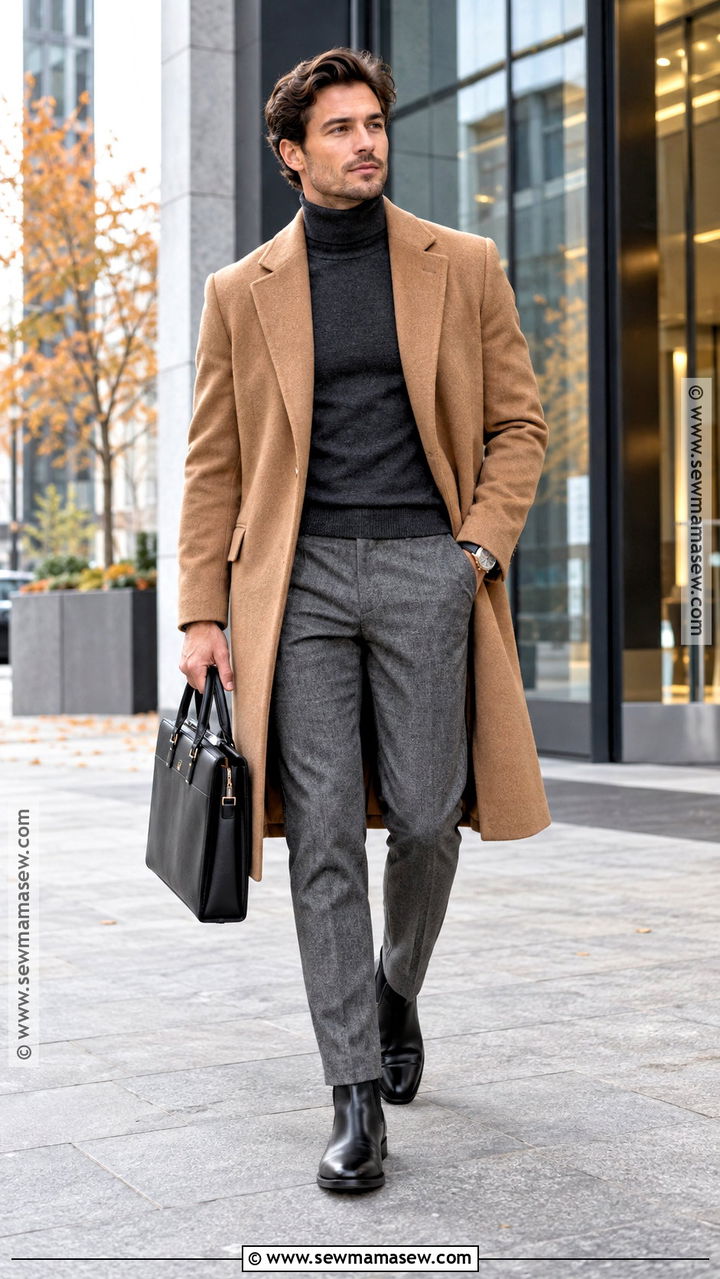
A camel overcoat over a dark turtleneck is one of the sharpest things a man can wear in autumn, and the reason is contrast. The pale coat needs a deep knit underneath, so I go charcoal or chocolate, then add charcoal wool trousers cut straight or softly tapered. Black Chelsea boots keep it sleek; dark brown boots warm it up. Coat length is where I spend the most time. On a shorter man, a coat ending at mid-thigh keeps the legs from disappearing, while a taller frame can carry one that falls just below the knee. Camel shows every mark at the cuffs and pocket edges, so a clothes brush after each wear earns its place.
5. Leather Jacket With White T-Shirt and Dark Jeans
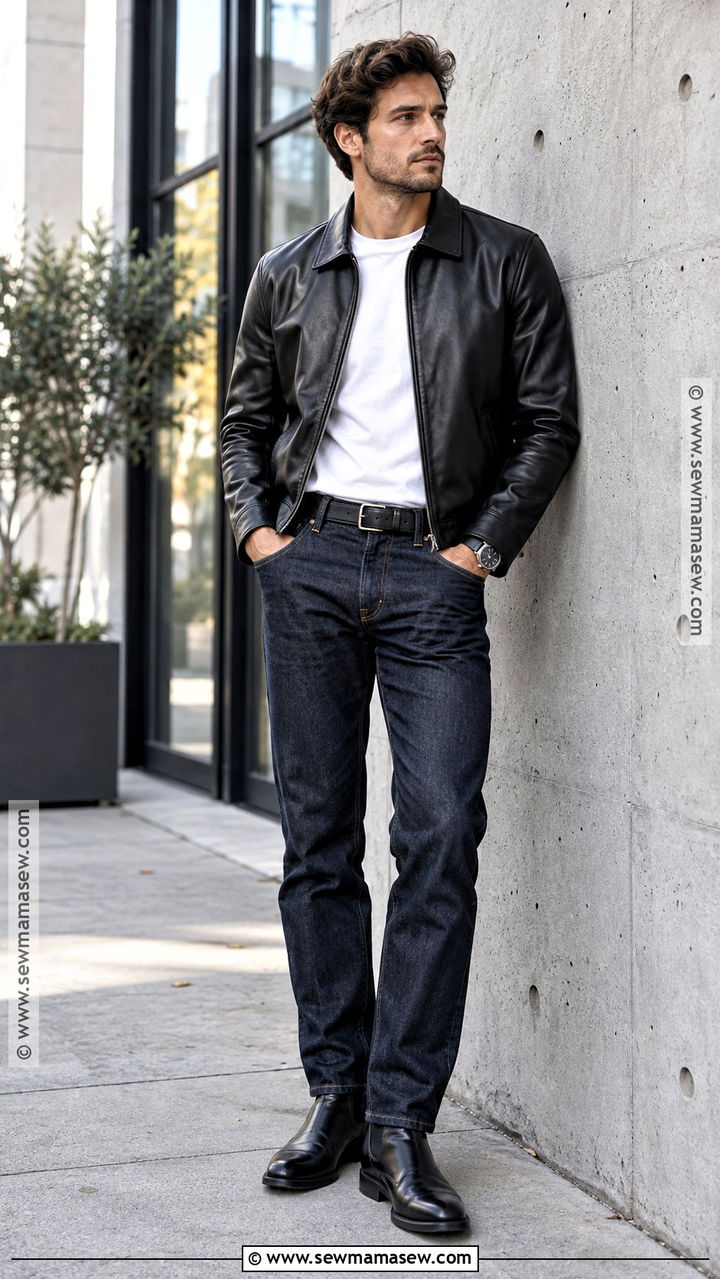
Leather jacket, white T-shirt, dark jeans. It lasts because nothing in it is decorative. I choose a black or dark brown jacket with little hardware, and I'm picky about the T-shirt: a heavyweight cotton crewneck keeps its collar flat under the jacket, where a thin one ripples and sags by lunchtime. Dark indigo or black straight-leg jeans keep the line balanced. Black boots make it cohesive and white sneakers make it lighter. Match the belt to the shoes, not the jacket. When the temperature drops, a fine-gauge merino sweater slides between the tee and the leather without changing how the jacket closes.
6. Corduroy Overshirt With Henley and Chinos
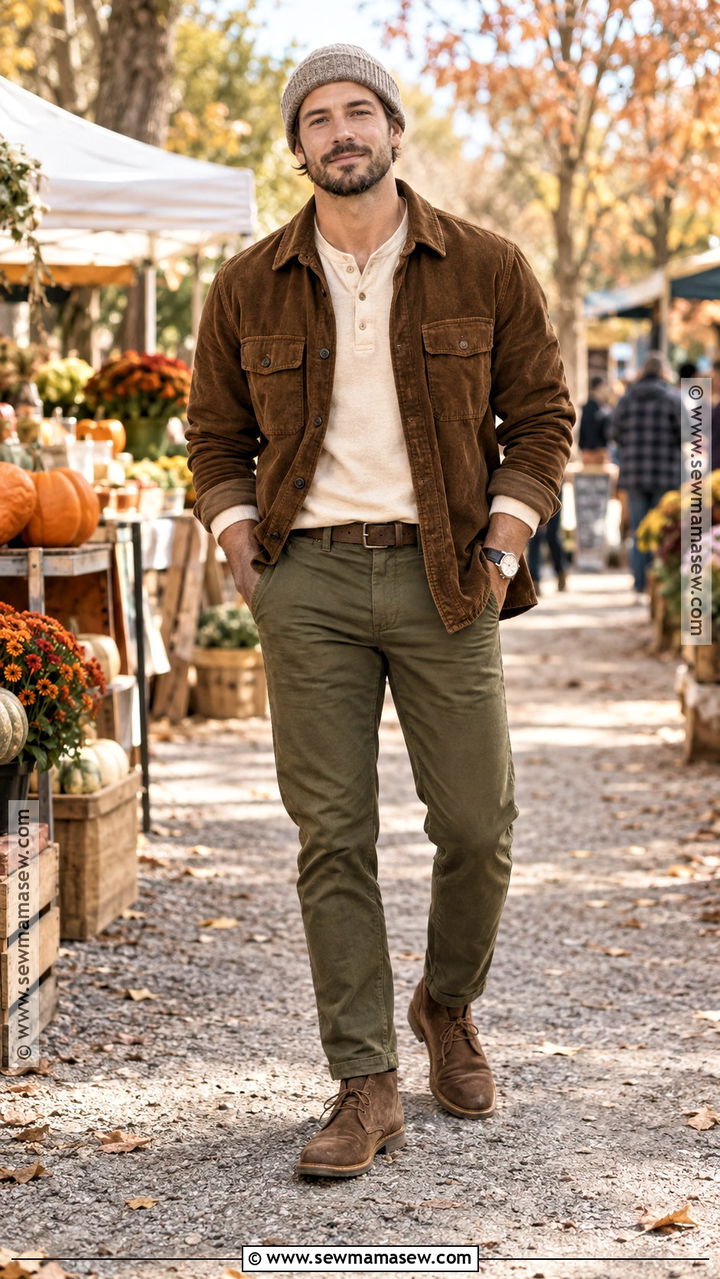
Corduroy gives a plain outfit depth in the most autumnal way. I wear a rust or tobacco overshirt open over a cream cotton henley, with tan or dark brown chinos cut straight. Suede desert boots are the natural pairing, and minimal leather sneakers make it more current. I size the overshirt with room for the henley, but I still look at the shoulder seam first: if it drops well past the shoulder bone, the outfit reads sloppy instead of relaxed. Wide wales look chunkier and more casual, while a fine needlecord passes for smart casual. A canvas belt and a beanie are all I'd add.
7. Navy Blazer With Crewneck Sweater and Gray Trousers
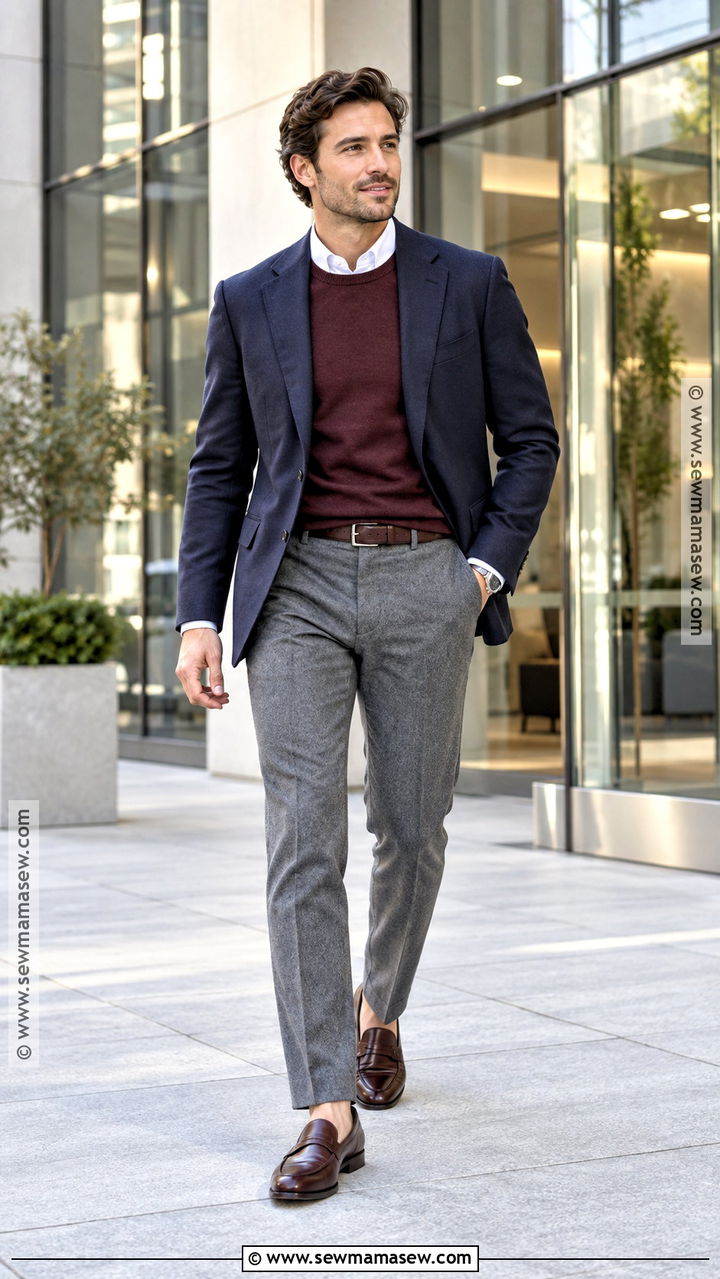
Swapping the dress shirt for a crewneck sweater is the fastest way I know to turn a navy blazer into weekend clothing. It only works if the blazer is unstructured and the sweater is thin. A chunky knit forces the lapels to bow and strains the button. Light gray or cream knitwear over mid-gray wool trousers gives a soft contrast; add a white T-shirt or Oxford underneath if you need warmth. Brown loafers or suede derbies finish it, and the trousers should sit at the natural waist. I leave the pocket square at home unless the occasion asks for one.
8. Denim Jacket With Flannel Shirt and Black Jeans
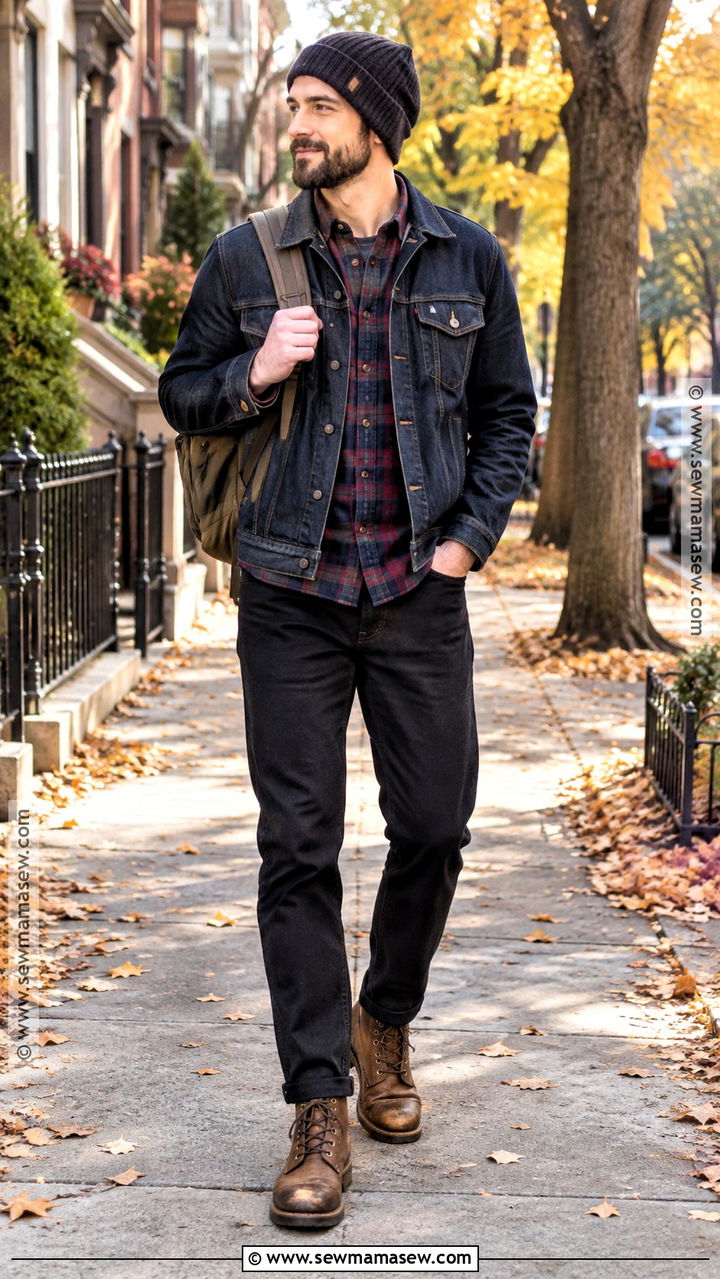
The trick with a denim jacket and flannel is dodging a full double-denim look, which is why the jeans here are black. I like a medium or dark-wash jacket over a plaid in restrained colors like navy and burgundy, since a loud plaid fights the denim's texture. Keep the jeans straight or slim-straight, never skinny. Brown service boots add a rugged edge; black leather sneakers keep it urban. Two collars stacked together can twist, so I either fold the flannel collar flat over the jacket's or tuck it fully under, never halfway. A plain thermal underneath stretches this outfit into colder weeks.
9. Field Jacket With Rugby Shirt and Corduroy Pants
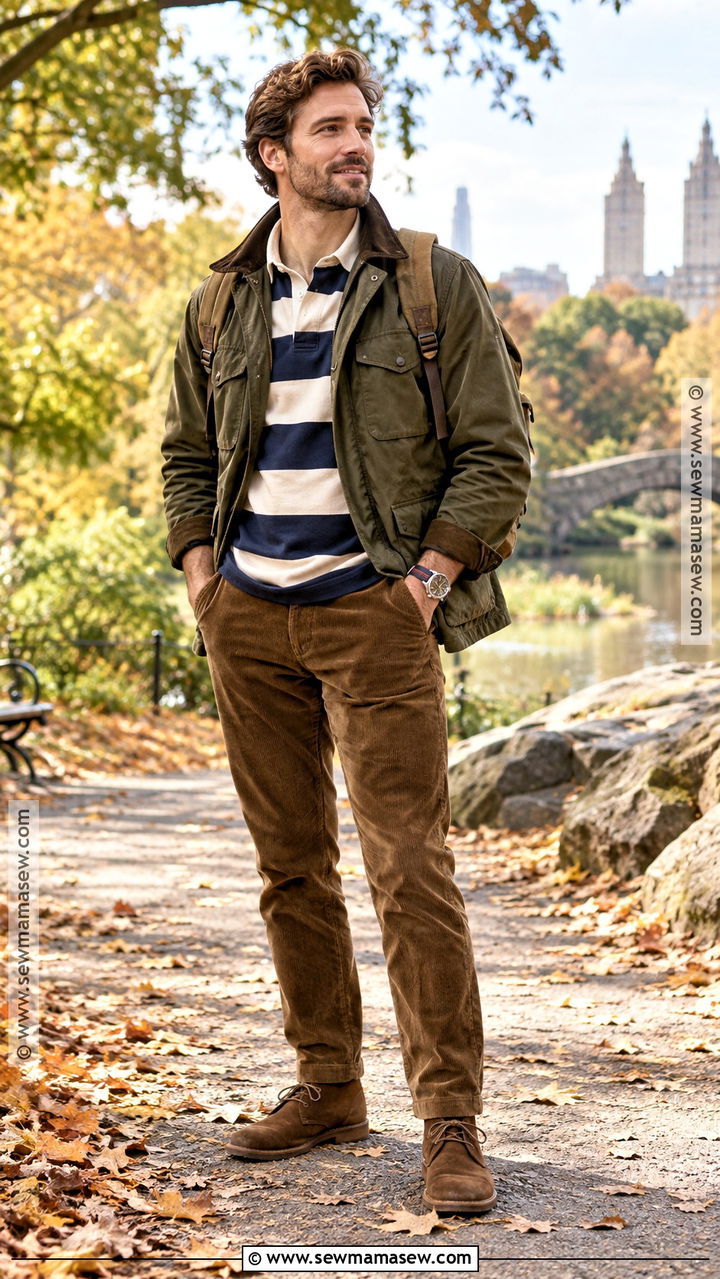
Military utility on top, classic sportswear underneath. That mix is what makes a field jacket with a rugby shirt more interesting than the usual jeans-and-jacket outfit. I pick an olive or khaki jacket with a structured but comfortable fit, then a striped or solid rugby in navy or cream. A rugby's thick cotton and woven collar hold their shape under a jacket far better than most knit polos. Brown corduroy pants carry the warmth into the lower half. Suede chukkas or dark lace-up boots finish it, with the hem resting lightly on the shoe. Field jackets have plenty of pockets, and I resist filling them; a practical backpack does that job.
10. Trench Coat With Sweater and Relaxed Trousers
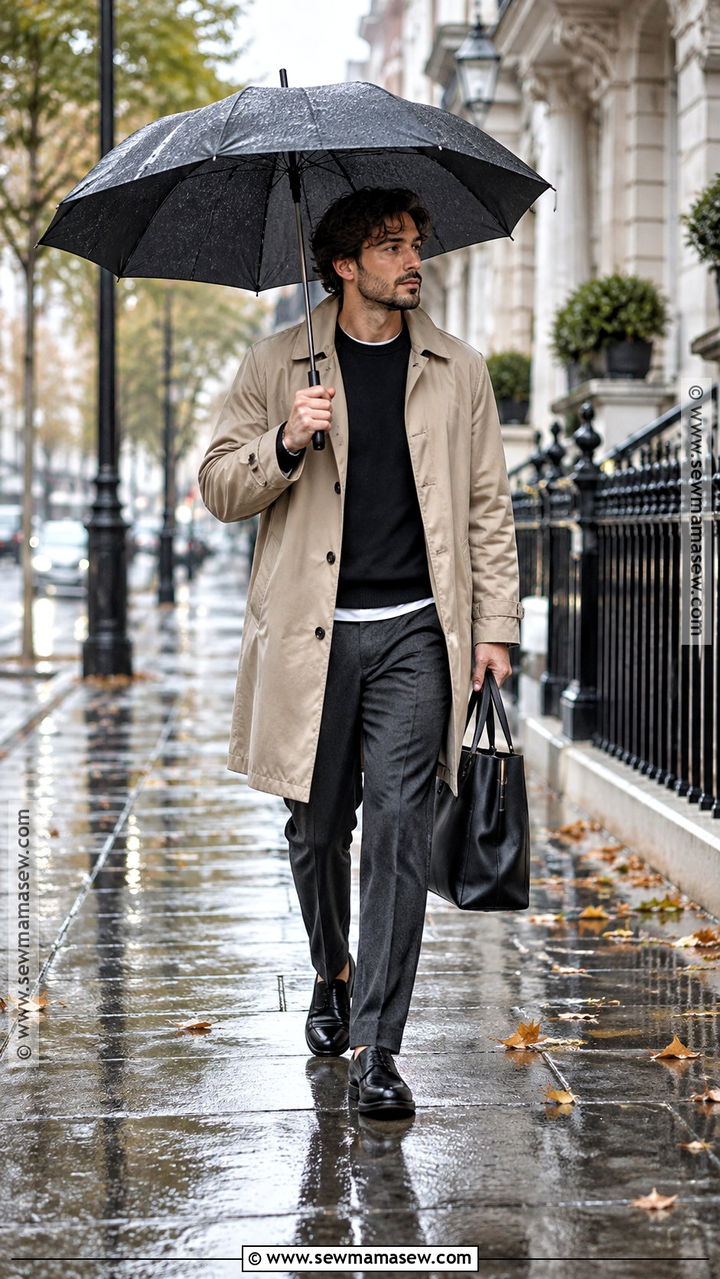
Rain is the reason this outfit exists. I wear a stone or navy trench over a fine-knit crewneck and a plain T-shirt, with relaxed tailored trousers in charcoal or deep brown underneath. The hem matters more than usual here: trousers that drag will wick water up the leg on wet pavement, so I'd rather have them a touch short with no break. Weather-resistant leather loafers or sleek boots handle a wet commute; canvas sneakers don't. Wear the trench open, or tie the belt loosely behind you so the front hangs clean. A cotton gabardine trench sheds a shower but soaks through in a long downpour, so the compact umbrella still comes along.
11. Quilted Vest With Oxford Shirt and Chinos
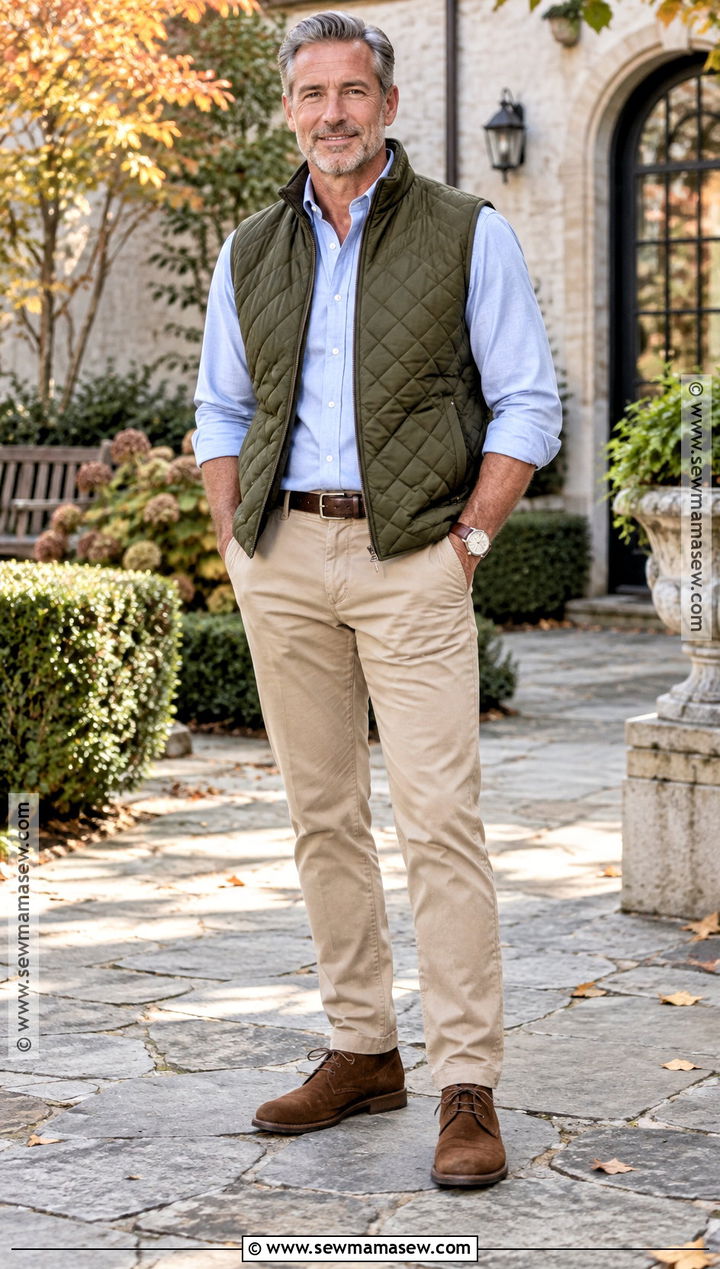
A quilted vest warms the torso and leaves the arms free, which is why I like it for active afternoons. I keep it slim, with minimal logos, in navy or olive over a blue or striped Oxford with the collar open. Tan or stone chinos lighten the outfit so the dark vest doesn't dominate. Brown suede boots or penny loafers suit it. Length is the detail that goes wrong most often: the vest should cover the shirt's waistband but end at the hip, because a longer one starts to look like a coat missing its sleeves. A thin crewneck between shirt and vest buys extra warmth on colder days.
12. Cardigan With T-Shirt and Pleated Trousers
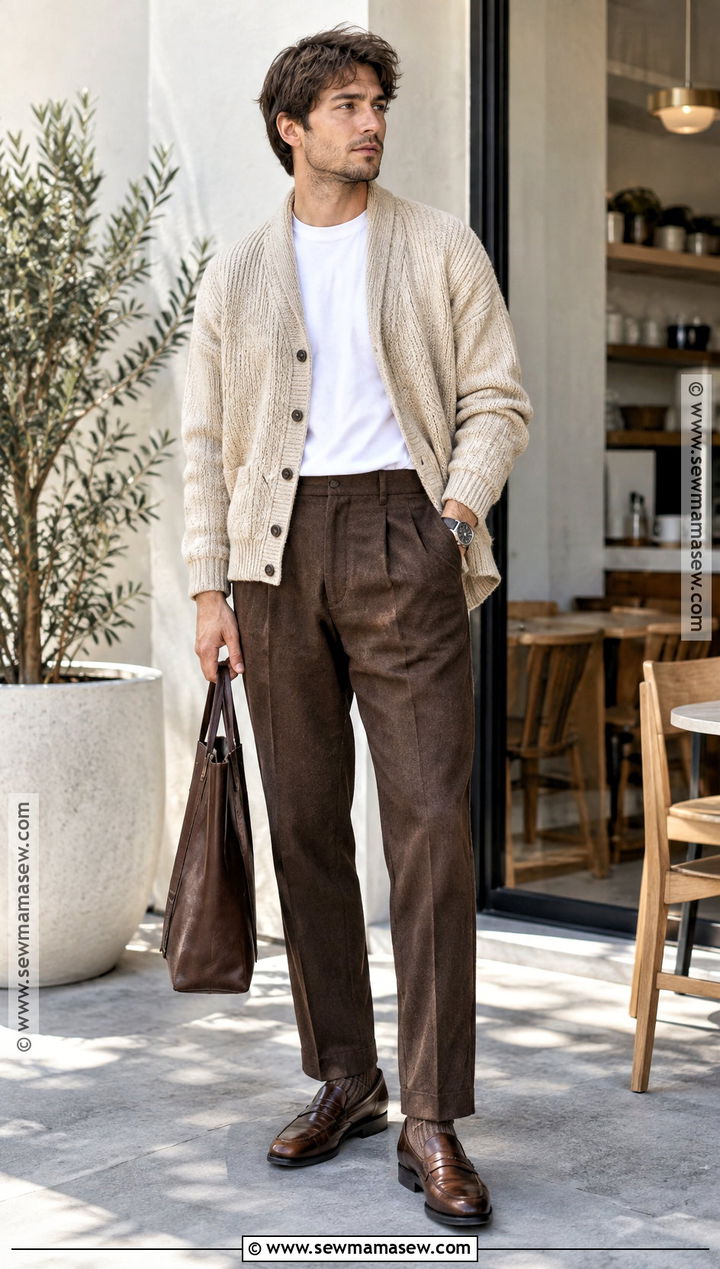
Soft knitwear over tailored pants is a contrast I use constantly, and a chunky cardigan with pleated trousers shows it most clearly. An oatmeal or charcoal knit over a heavyweight white tee keeps the top relaxed, while pleated trousers in dark gray or chocolate give the outfit shape. Pleats need a higher rise to open properly. If the trousers sit low on the hip, the pleats splay and the front looks rumpled. Tuck the tee neatly or try a small front tuck to mark the waist, then add loafers with ribbed socks or clean sneakers. One honest trade-off: chunky cardigans pill at the elbows and under the arms, so a fabric shaver belongs in the drawer.
13. Harrington Jacket With Polo and Jeans
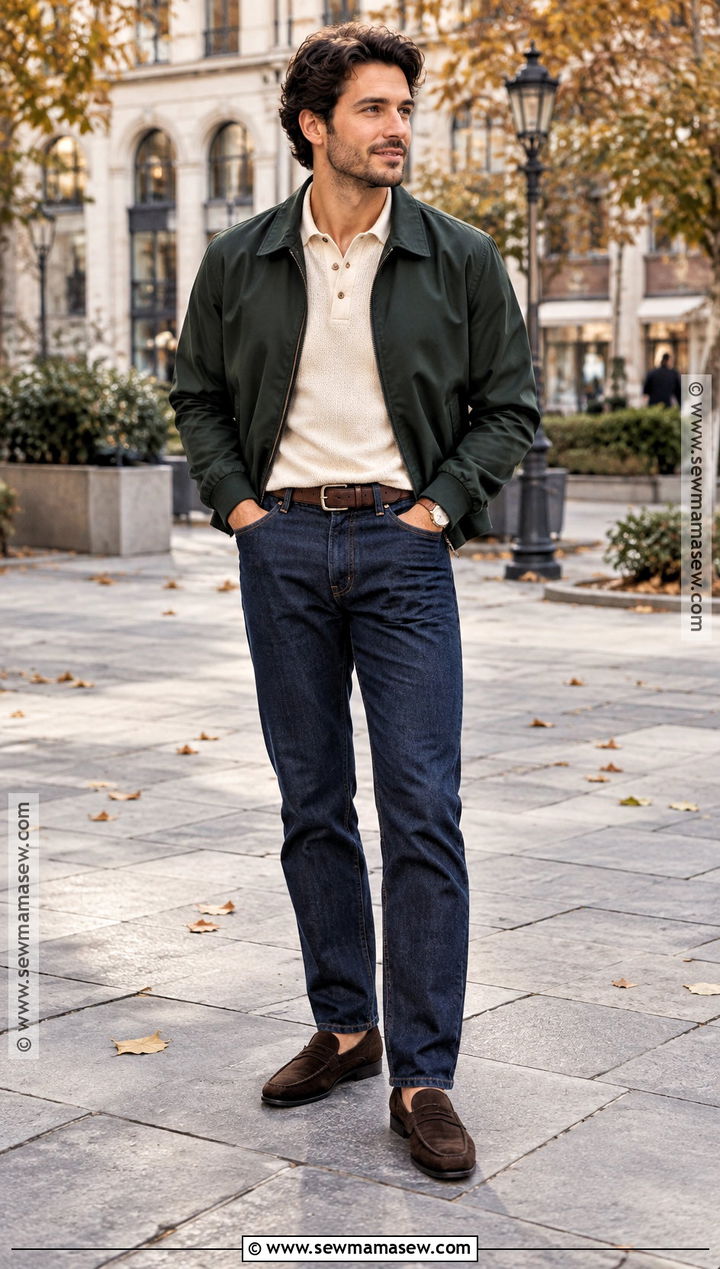
The Harrington is the lightest jacket in this lineup and covers the weeks when a coat is too much. I wear a navy or tan one over a long-sleeve knit polo in a coordinating neutral, with dark straight jeans underneath so the attention stays on the collar. Suede loafers or chukkas make it a little dressier; minimal sneakers keep it casual. The ribbed waistband should sit at the hips without pulling across the seat. If it rides up when you reach forward, size up. I stop at a leather watch, because the zip and collar already supply the detail.
14. Puffer Jacket With Sweatshirt and Wide-Leg Pants
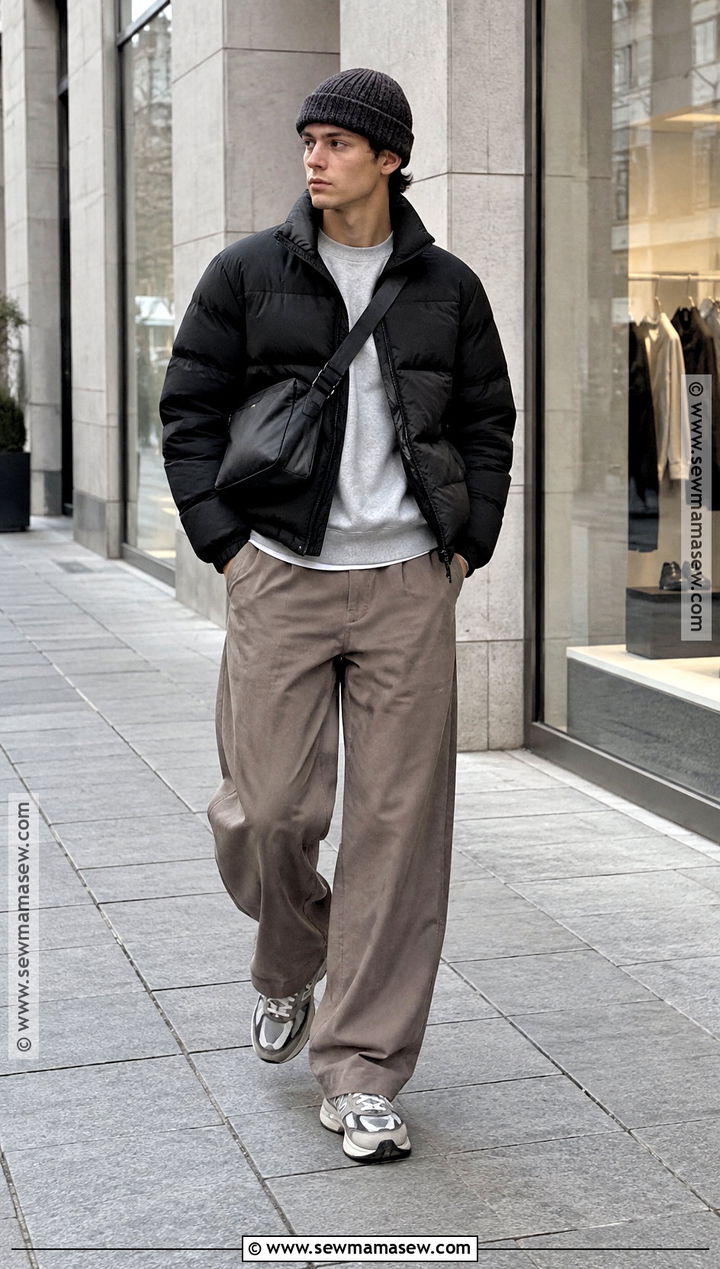
Short puffers are bulky by design, so everything under one has to be controlled. I start with a black or slate puffer over a plain gray sweatshirt and put wide-leg trousers in charcoal or taupe below it. Volume on top and volume below can look intentional, but only when the trousers fall cleanly instead of pooling at the ankle. Retro sneakers keep it athletic, and chunky leather shoes push it toward fashion. Let the sweatshirt hem peek out only slightly; anything longer splits the body into awkward thirds. A beanie and a crossbody bag handle the practical side on cold commutes later in the season.
15. Shacket With Hoodie and Work Pants
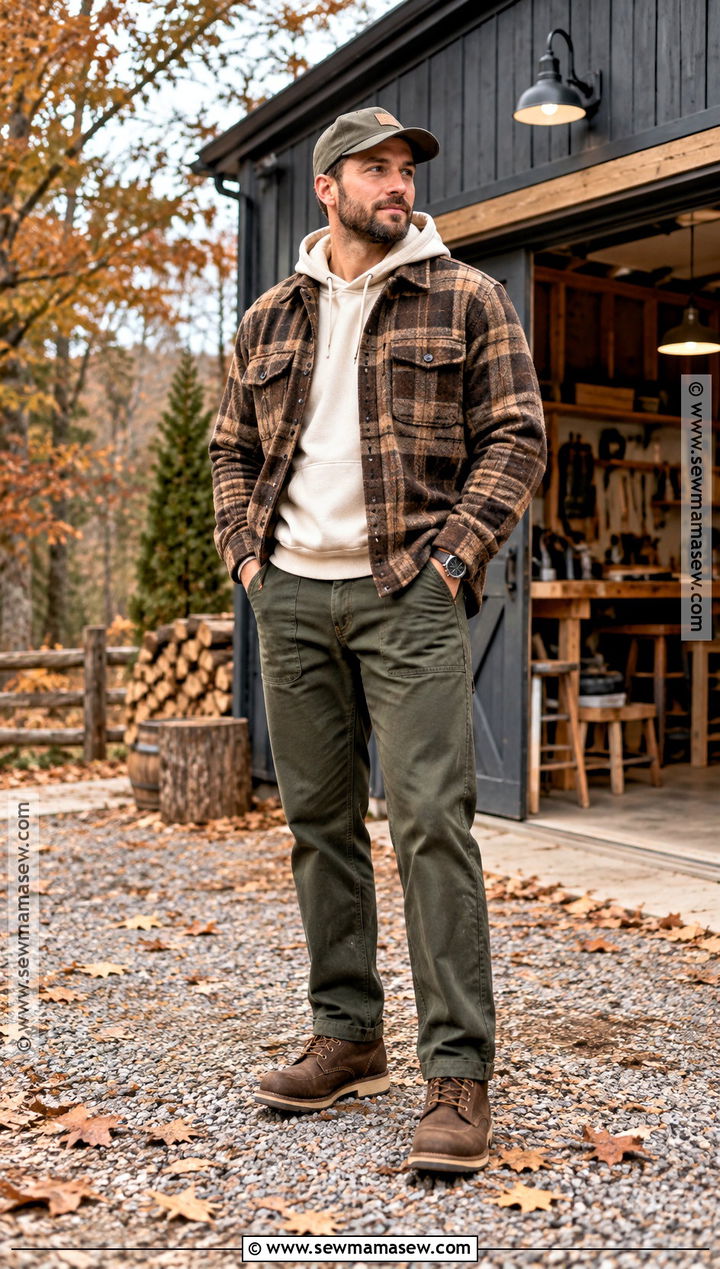
A heavyweight shacket over a lightweight hoodie is the outfit I'd wear for a morning of yard work followed by errands. A plaid or tobacco shacket has enough body to act as outerwear in mild weather. Keep the hoodie plain gray or cream so the layers stay organized, and add canvas work pants in brown or dark green with sturdy boots. Before buying a shacket for this, try it on over the hoodie you actually plan to wear. Plenty are cut close enough that the hood crushes the collar and the front won't button. Straight work pants balance the extra bulk up top.
16. Black Sweater With Black Trousers and Boots
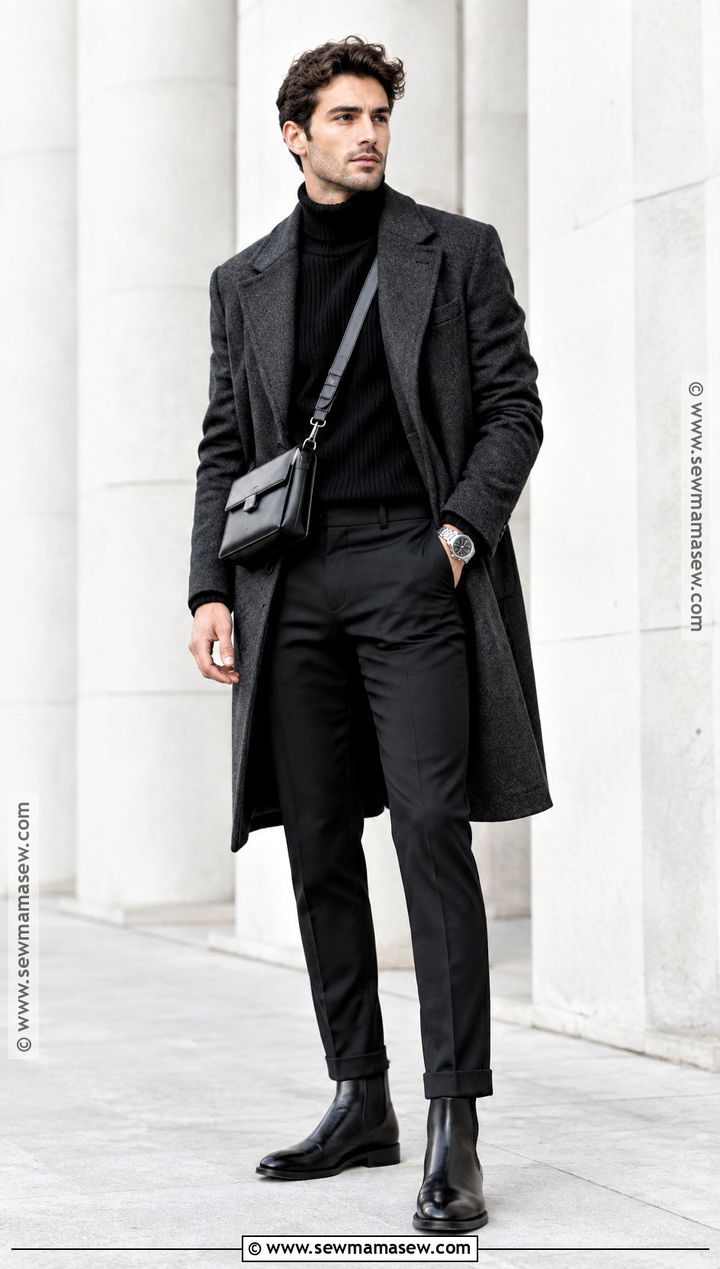
All black only looks flat when every piece has the same finish. I start with a textured sweater, ribbed or mock-neck, in wool or cotton, then add black tailored trousers with a smoother surface so the two read as separate pieces. Black Chelsea boots continue the line and lengthen the leg. Fading is the real enemy: a washed-out sweater next to newer trousers looks almost brown in daylight, so I wash black knits inside out in cold water. A charcoal overcoat or a silver watch adds just enough variation. The sweater should skim the body, not cling to it.
17. Burgundy Sweater With Brown Trousers and Loafers
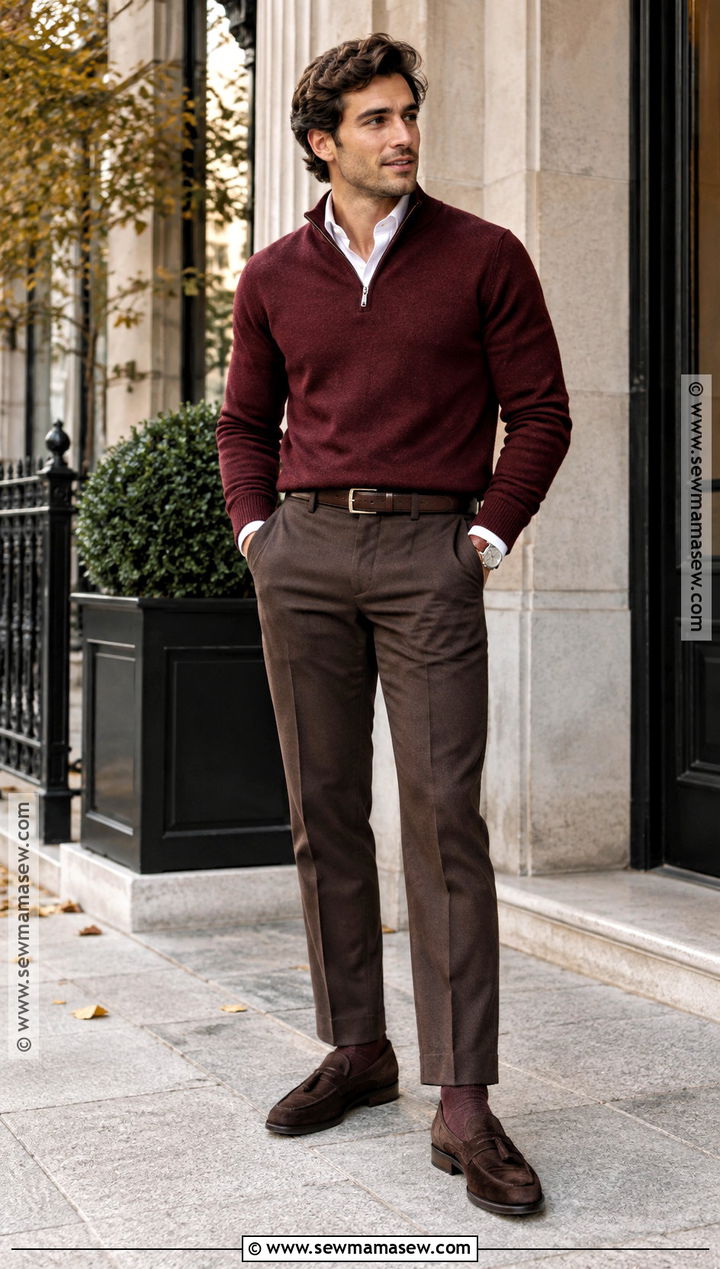
Burgundy and brown share a warm base, which is why they sit together so easily. I put a burgundy crewneck or half-zip over a light blue Oxford, letting only a little collar show, then add chocolate or taupe trousers in wool or brushed cotton. Dark brown loafers with coordinating socks continue the palette. The risk here is looking over-coordinated, so I keep every color muted rather than saturated. If it's cold, a navy peacoat breaks up the warm tones better than another brown layer would. Add a belt and a watch and stop there.
18. Olive Utility Jacket With Ecru Jeans and Boots
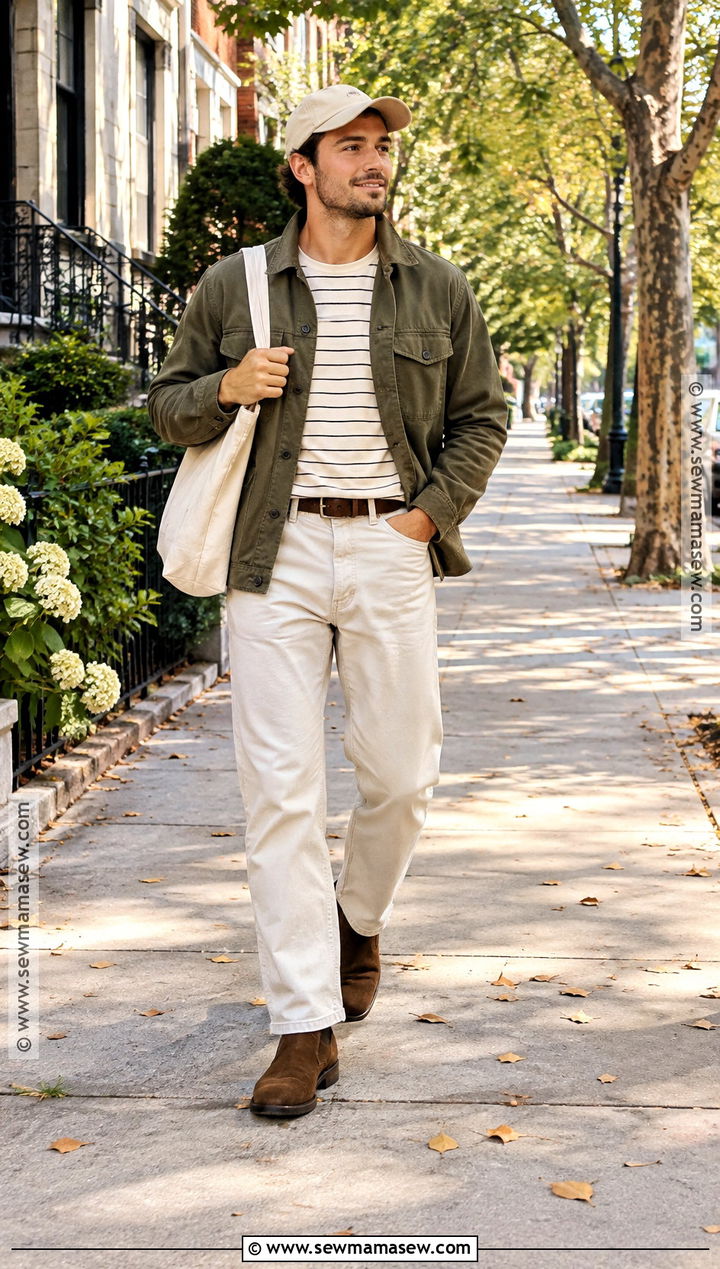
Ecru jeans are what keep this from being one more dark autumn outfit. An olive utility jacket over a cream or striped T-shirt looks fresher against off-white denim, and the pale jeans show off the jacket's pockets and military shape. I avoid bright optical white, which reads as summer, and I pick a denim with real weight, since thin light denim shows every crease and pocket outline. Brown suede boots keep it warm; black leather shoes sharpen it. Light jeans pick up dirt fast, so I save this one for dry days at the start of the season.
19. Gray Suit With Knit Polo and Loafers
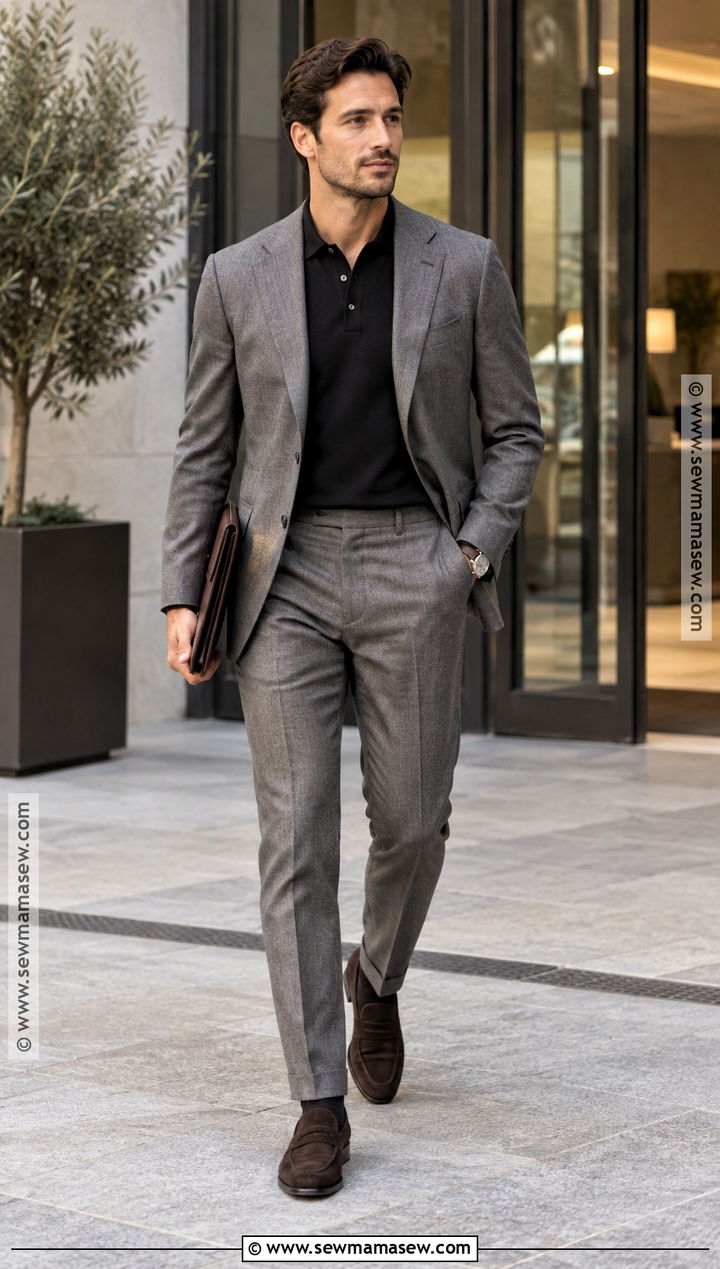
A knit polo in place of a shirt and tie moves a gray suit from the boardroom to a long lunch. I choose a soft, unstructured suit in mid-gray or charcoal and a polo in navy or cream. The knit has to be fine, close to shirt weight, so the collar sits flat inside the lapels; a chunky polo makes the collar curl up over them. Dark brown or black loafers with fine-gauge socks keep the trouser-to-shoe transition smooth. Later in the season, the jacket and trousers can split up and work as separates. A leather folio and a plain belt are enough for the office or a presentation.
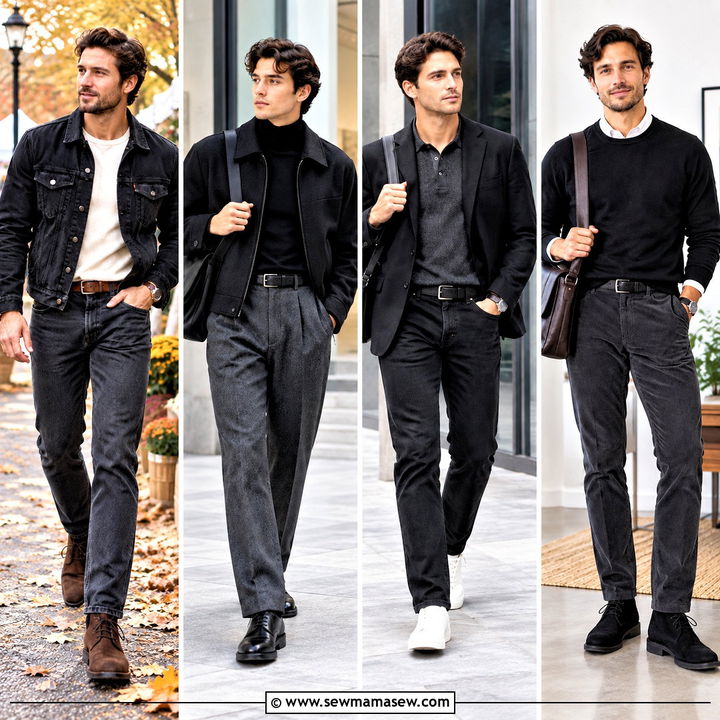
20. Peacoat With Scarf and Dark Denim
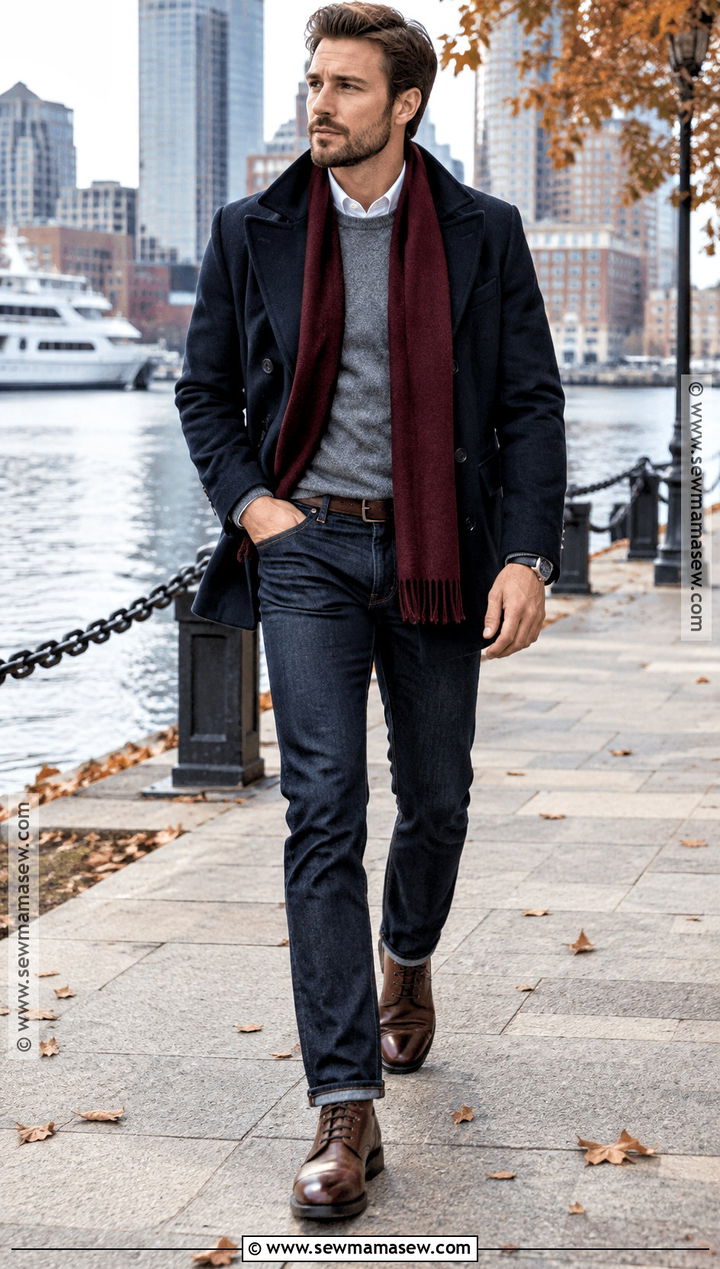
The peacoat is built for wind and the colder end of autumn, with its high collar and double-breasted front doing the work. I layer a navy or charcoal one over a gray crewneck and a white Oxford whose collar shows at the neck. Dark indigo jeans, straight or gently tapered with little fabric bunched at the boot, keep it casual, and brown leather boots and belt match. With the scarf, I keep the wrap to a single loop, because a big knot competes with that broad collar. Peacoats are cut short and boxy, so check that it covers your seat; on a tall man, a peacoat that's too short looks borrowed.
How a Jacket Should Fit Once a Sweater Goes Under It
Autumn is when fit problems show, because a jacket that was fine over a T-shirt in September gets a sweater added in October. I run the same quick checks on every coat and jacket in this lineup.
Shoulders and Sleeves
The shoulder seam should end at the edge of your shoulder bone, not past it. With a sweater on, lift your arms forward as if reaching for a steering wheel. If the back pulls tight or the sleeves ride up above the wrist bone, the jacket is too small for layering, and no tailor can add fabric that isn't there. Sleeves on an overcoat should cover the shirt or sweater cuff; on a blazer, a little cuff showing is right.
Length Against Your Height
Short jackets like the bomber and Harrington should end at the hip, never at the waist, or they cut you in half. Long coats are the opposite problem: on a shorter frame, anything below the knee swallows the legs. Hold your arms at your sides and look where the hem falls relative to your fingertips. For most men, a car coat or chore coat that lands near the knuckles looks balanced.
Wet Weather and the Fabrics on This List
Several of these outfits lean on materials that react badly to autumn rain, so it helps to know which ones to grab when the forecast turns. Suede is the most delicate. Water darkens it and can leave tide marks, so I spray it with a protector, let it dry away from a radiator if it does get wet, and brush the nap back up with a suede brush. Leather jackets and boots shrug off a shower but need conditioning a few times a season, or they crack at the creases.
Wool coats handle light rain better than people expect, since the fiber repels water for a while; hang them on a wide hanger to dry and they keep their shape. Corduroy and canvas simply soak through, so I keep the overshirt and chore coat for dry days and reach for the trench or a waxed jacket when the weather turns.
Texture Does More Than New Clothes Here
If you take one idea from these outfits, let it be that autumn variety comes from texture and layering more than from buying new things. Good outerwear, a few pairs of trousers, plain knitwear and shoes that pair with several looks will cover nearly all of them. From there, swap suede for corduroy or wool for waxed cotton and the same colors start to feel different. Fit still outranks everything: clean shoulder seams, trousers with a controlled width, and enough room under the coat for a sweater. Adapt each formula to your climate and your routine, and wear what you'll actually be comfortable in.
Related posts: