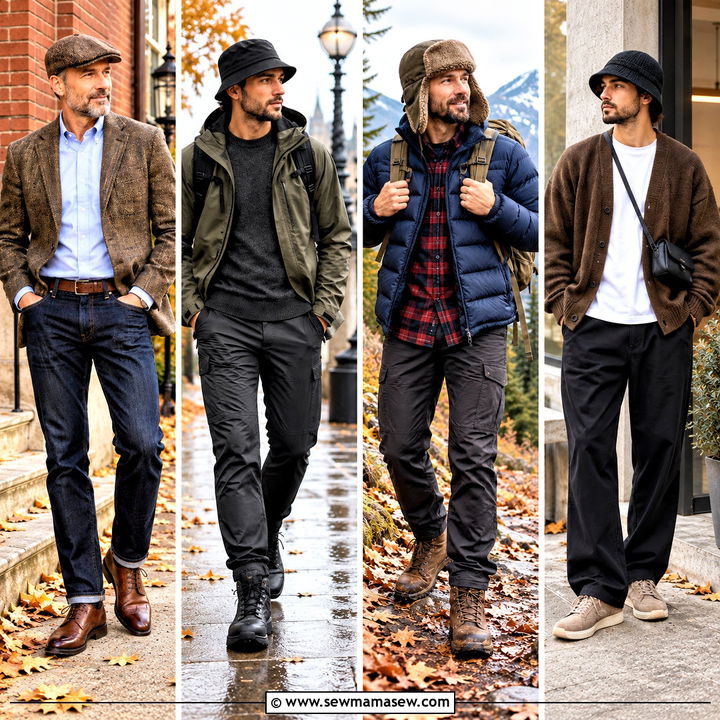
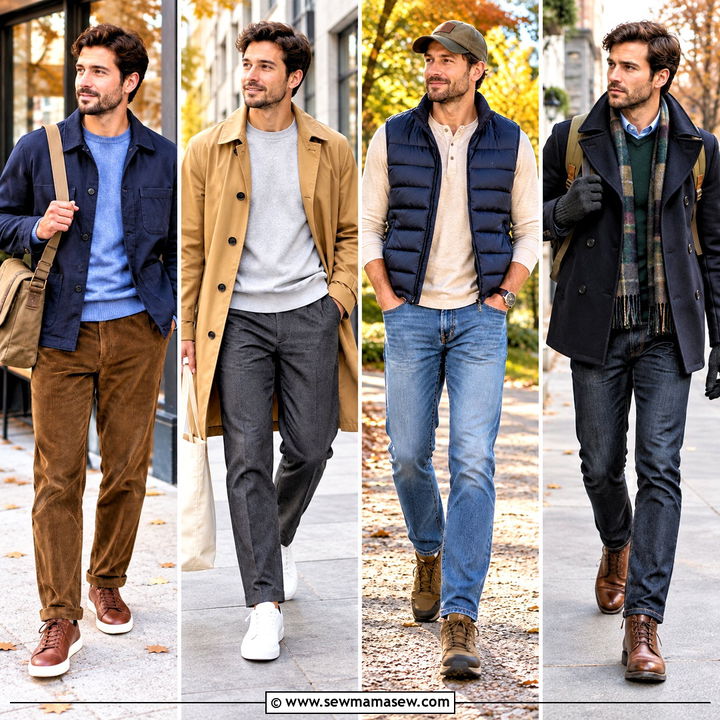
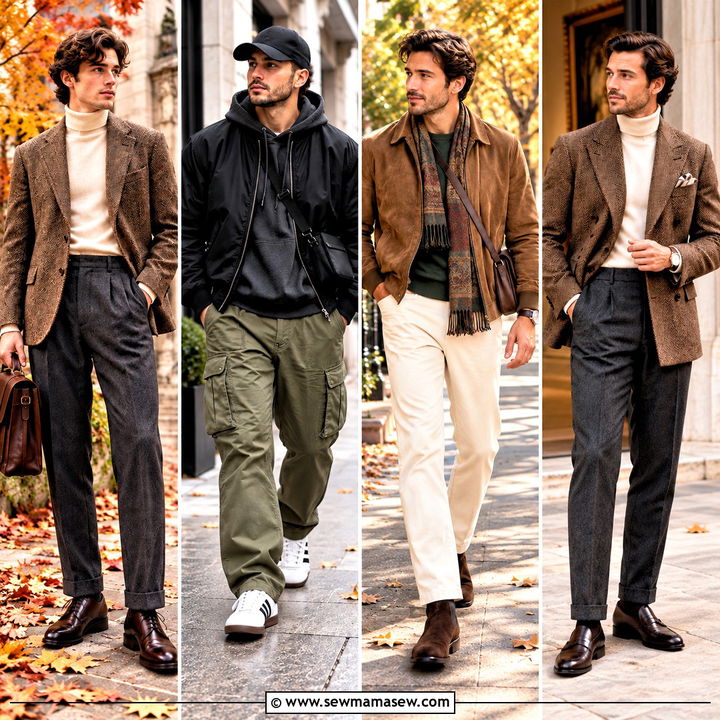
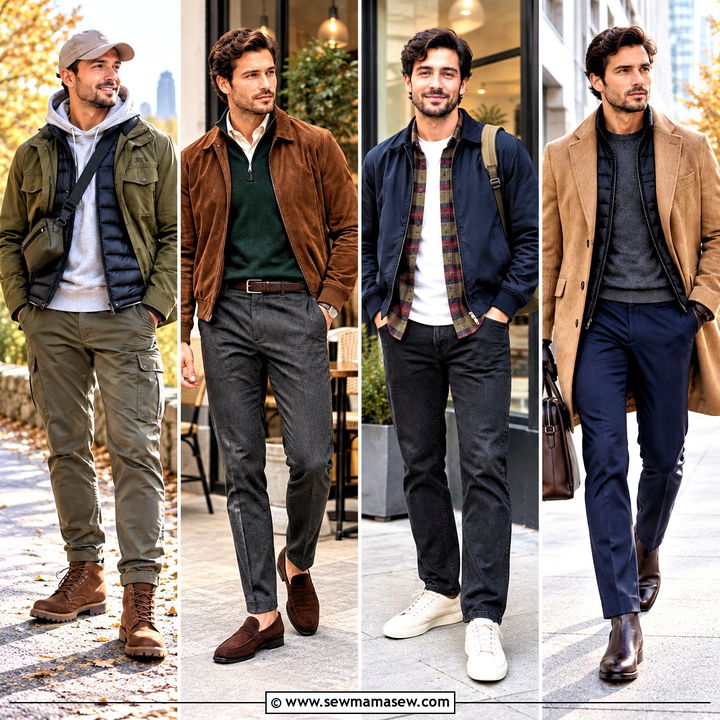
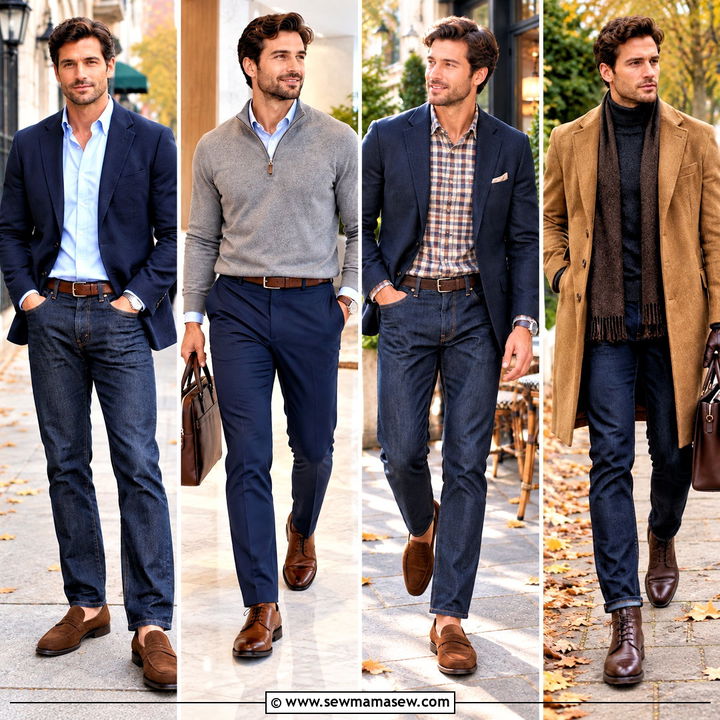
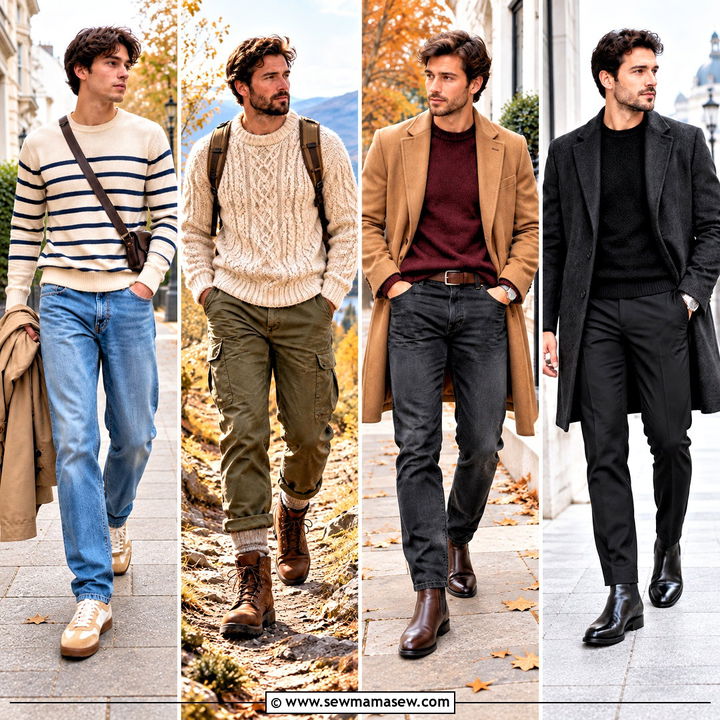
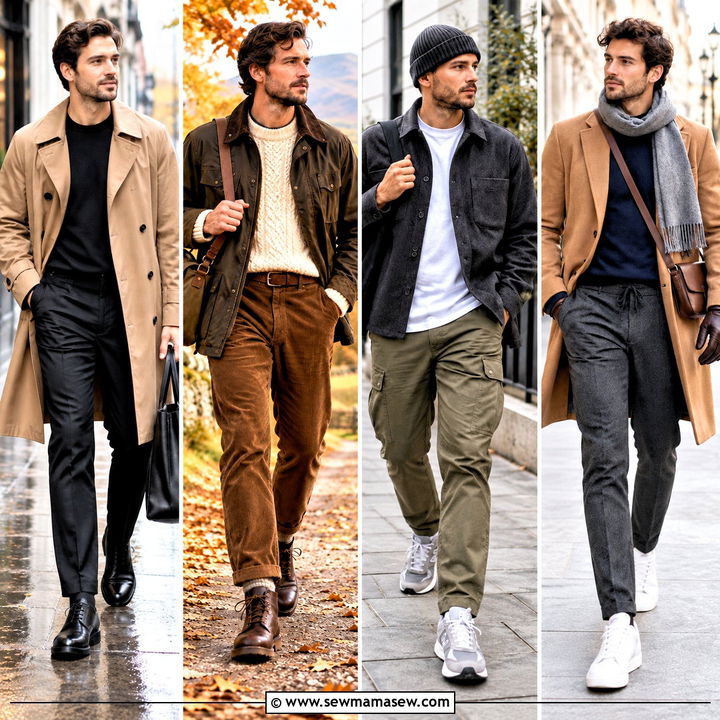
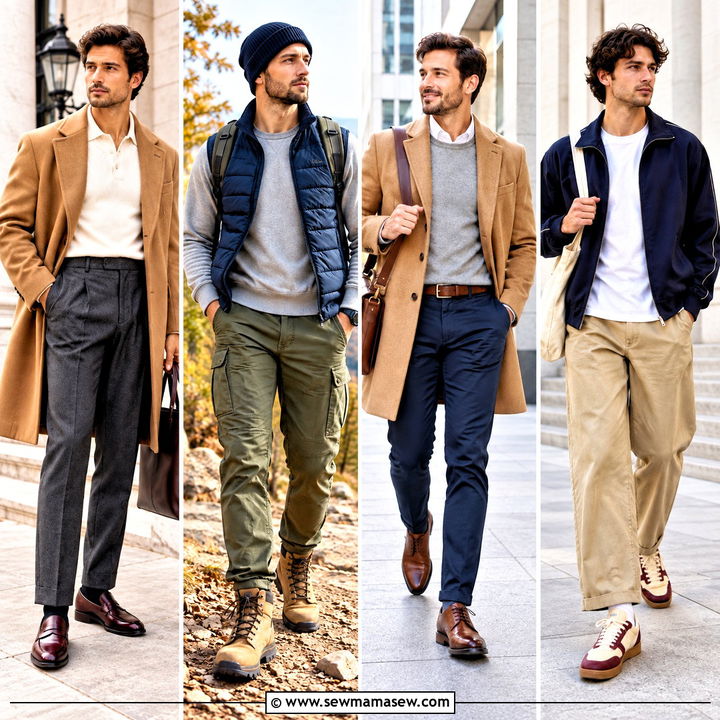
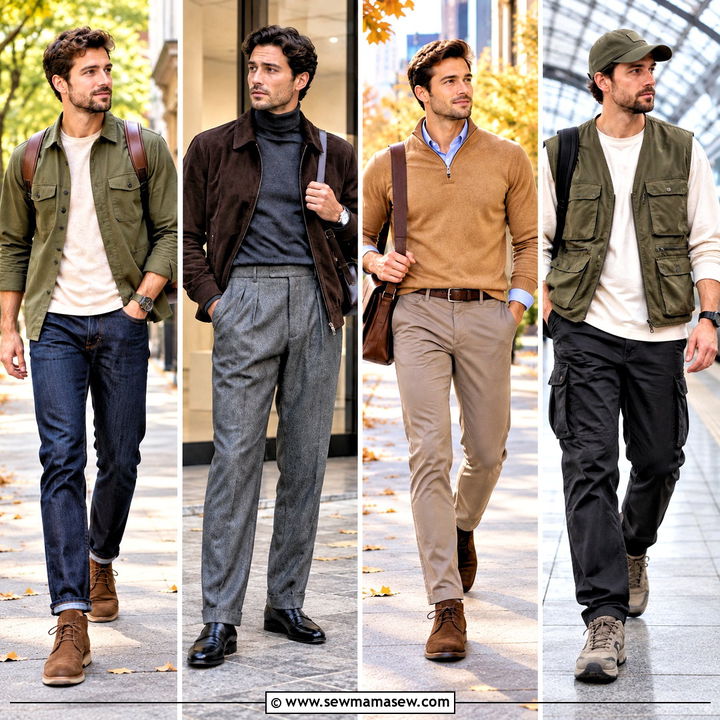
Most men own one autumn coat and wear it until the lining gives out, so it pays to pick the right one and know what goes under it. Below are fifteen coat outfits I put together for real autumn days: polished workwear, relaxed weekends, wet commutes and plain casual looks. Relaxed tailoring, dark denim, heritage cloths like herringbone and waxed cotton, and slightly bigger outerwear shapes all feel right this season. What I check first is room: the coat has to close over a shirt and a knit without pulling at the buttons. Get that right and the shoes and accessories are the easy part.
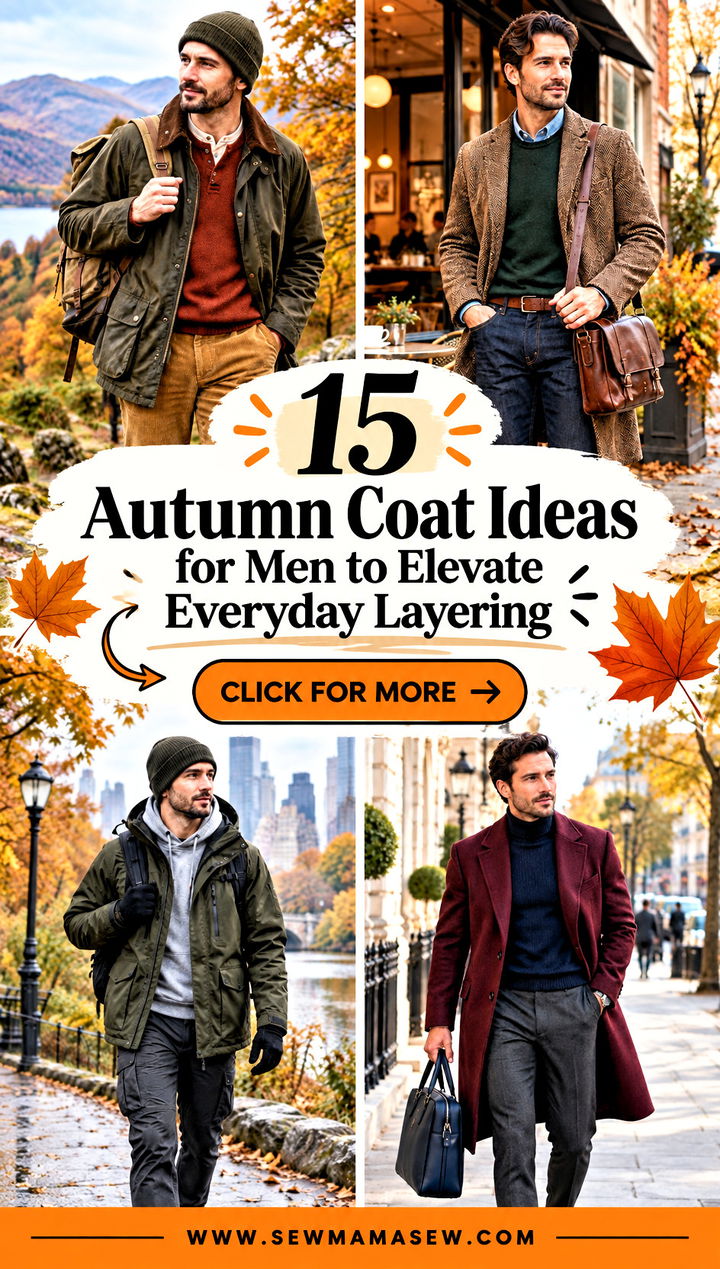
Fitting a Coat Over the Knit You'll Wear Under It
Almost every coat complaint I hear starts in the fitting room, where a man tries on a coat over a T-shirt and buys it. Then October arrives, he adds a sweater, and the buttons pull. Take your thickest autumn knit with you when you shop, or at least wear a shirt and sweater on the day.
- Shoulders: the seam should sit at the edge of your shoulder bone. A small drop is fine on a relaxed cut; a coat that's too narrow here can't be fixed by a tailor.
- Chest: button it and reach forward as if grabbing a steering wheel. If the fabric pulls into an X across the buttons, size up.
- Sleeves: they should cover your shirt cuff completely and end around the base of your thumb. Sleeves are the easiest alteration, so don't reject a good coat for long arms.
- Collar: it should lie against the back of your neck. A gap there means the coat was cut for a different posture.
Length depends on height as much as style. On shorter men, a coat that ends at mid-thigh or just above the knee keeps the leg looking long, while a calf-length overcoat can swallow them. Taller men can carry a below-knee hem easily, and it covers suit jackets fully. If you mostly drive, a shorter coat is also far more comfortable behind the wheel.
1. Camel Wool Overcoat With Black Trousers
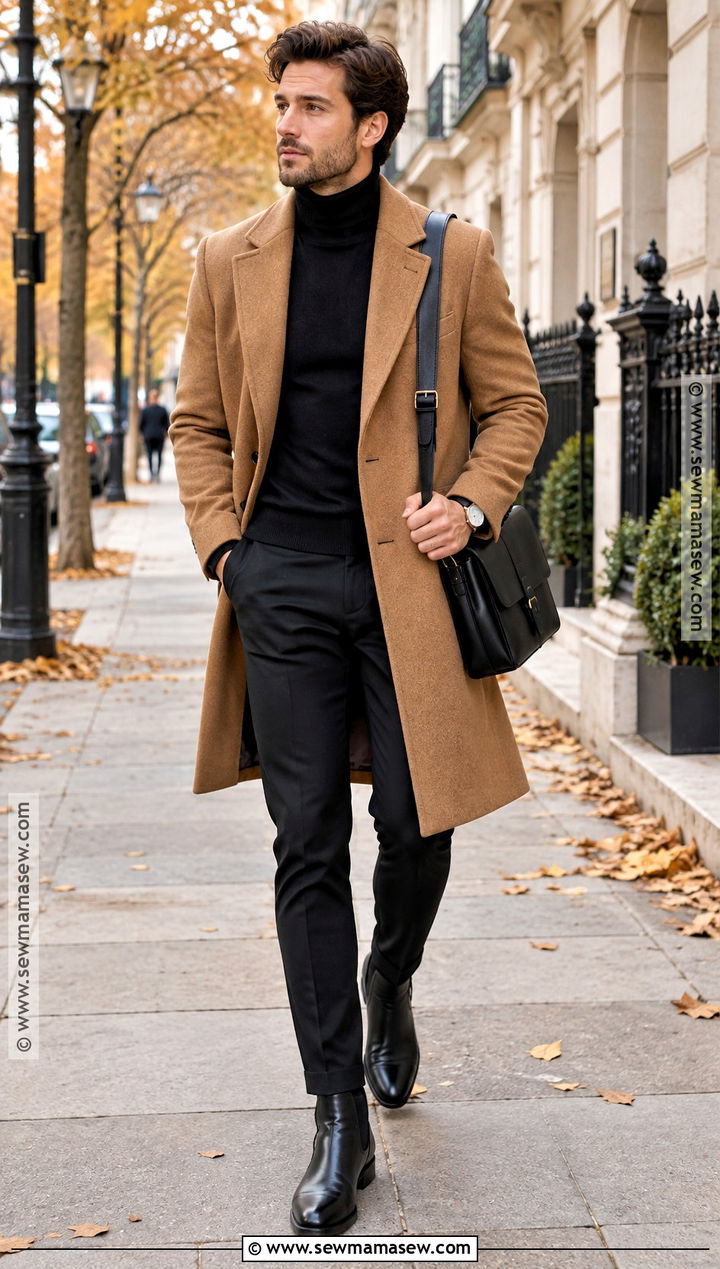
Camel over black is the first pairing I suggest to someone who wants to look put together without wearing a suit. Under the coat, a thin black turtleneck or fine-gauge crewneck keeps the neckline clean, and straight or gently tapered black trousers should break just once on polished black Chelsea boots. If camel feels too light for how you live, dark brown gives the same effect and hides dirt from a train seat far better. A leather messenger bag, a plain watch and a charcoal scarf are enough. The hem should hit around the knee, and I always have clients raise both arms in it while wearing a sweater; if the back seam strains, go up a size.
2. Navy Peacoat With Gray Jeans
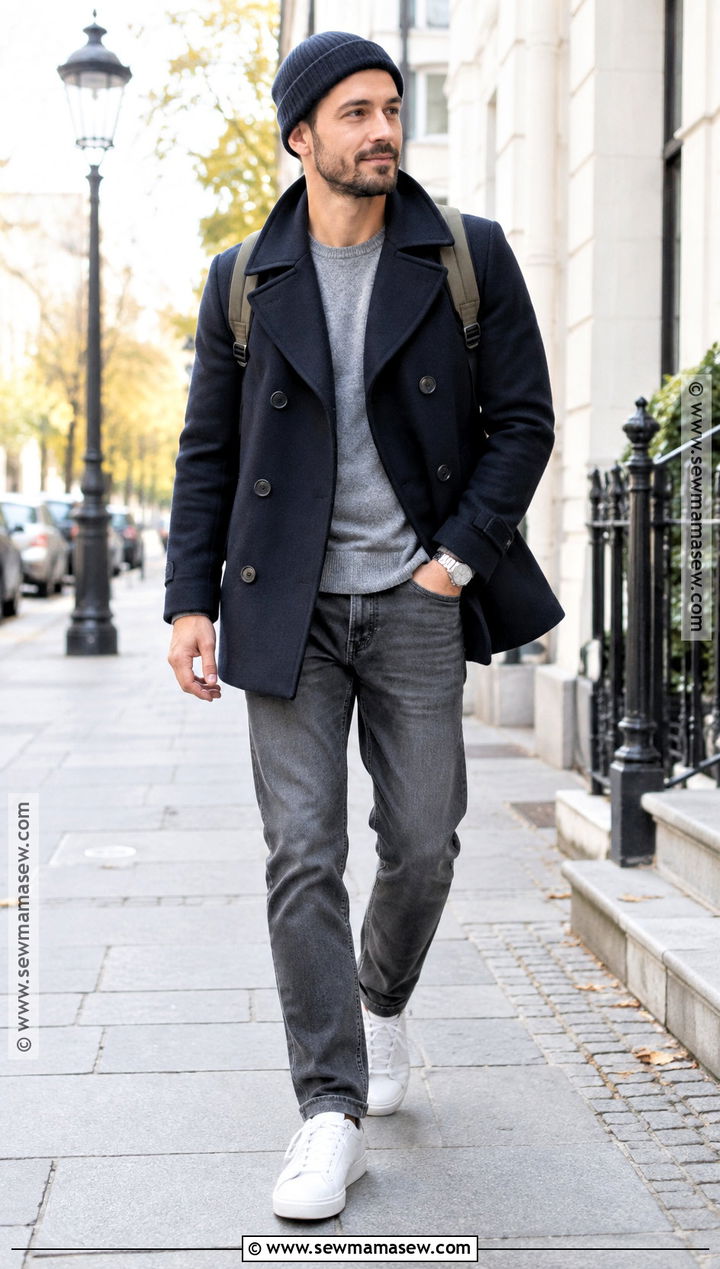
A peacoat is my pick for those cool mornings that never quite turn cold. It's short and double-breasted, so it traps heat across the chest without the weight of a long overcoat. Put it over a heather-gray sweatshirt or crewneck, with charcoal or faded gray straight-leg jeans. White leather sneakers keep it relaxed; dark brown lace-up boots make it tougher and better in puddles. The common mistake is buying a peacoat sized to a T-shirt, so the buttons pull into a fan of creases once a sweater goes under it. A navy beanie, a canvas backpack and a silver watch are plenty for errands, markets or a casual office.
3. Beige Trench Coat With Blue Jeans
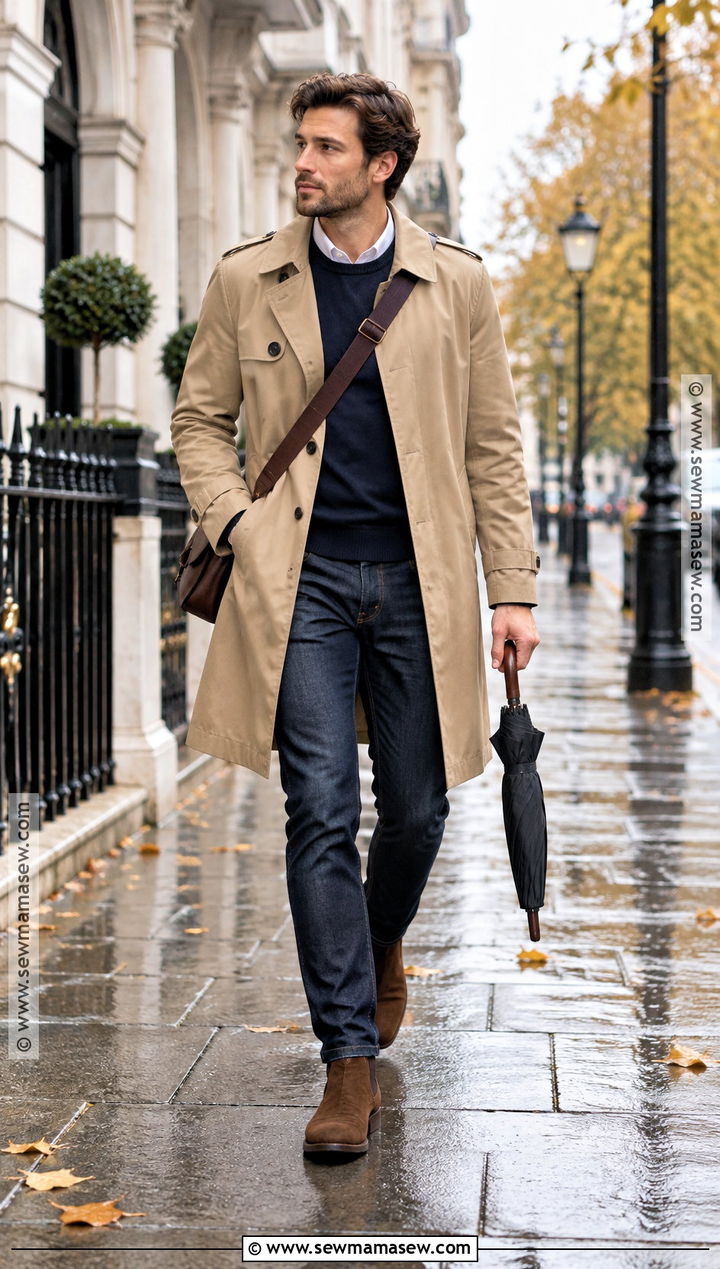
Nothing handles a day that might rain like a trench, and it gives plain basics some structure. I layer it over a white Oxford shirt and a fine navy sweater, letting the collar sit outside the knit. Dark blue straight-leg jeans stop it looking like office wear. Brown suede Chelsea boots are fine for dry days, but switch to leather loafers or leather boots when the forecast turns, because suede darkens and spots in rain. A compact umbrella and a brown crossbody bag cover the practical side. Wear it open when it's mild. When the wind picks up, button it and knot the belt loosely at the front instead of buckling it, which keeps the back from bunching.
4. Olive Waxed Coat With Corduroy Pants
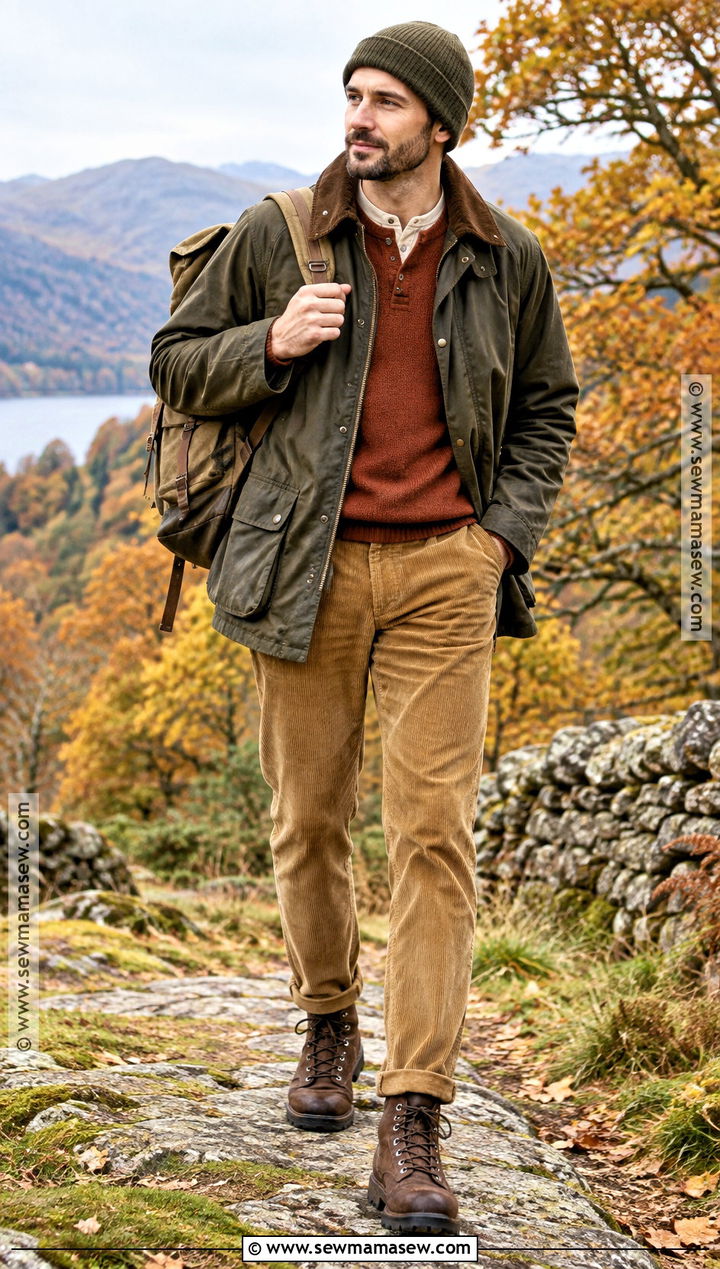
Wet paths and cold air are what waxed cotton was made for. Start with a cream henley or brushed cotton shirt, add a rust or oatmeal crewneck, then straight tan or chocolate corduroys. Lace-up leather boots with real tread give you grip and match the weight of the textures. I like a waxed coat with a corduroy collar; it's softer on the neck and looks better with age. One honest warning: new wax coats smell, feel slightly tacky, and can mark pale knits, so wear a darker layer under one for the first few weeks. Skip skinny pants with it, because the boxy cut needs a straight leg below.
5. Charcoal Overcoat With A Gray Suit
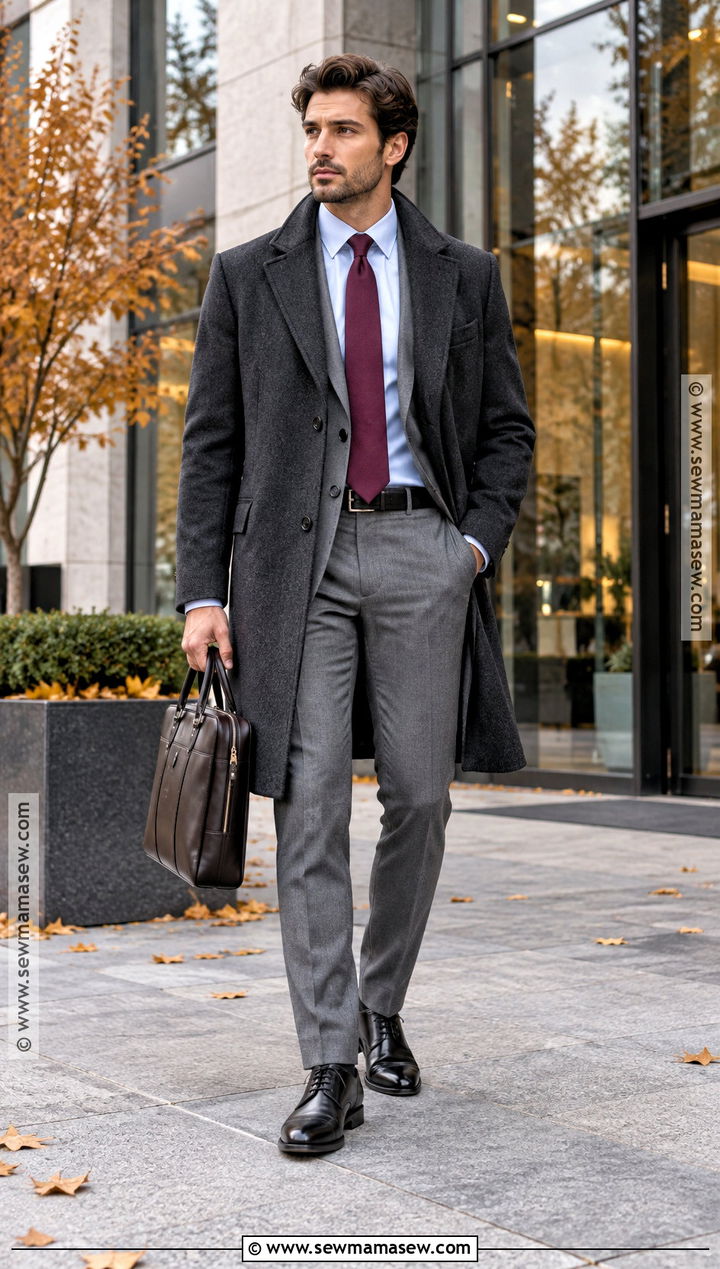
Need one outfit that handles the commute and the meeting? A charcoal wool overcoat over a medium-gray suit, pale blue shirt and burgundy tie does it. Black Derby shoes are the traditional finish; oxblood brings in a little autumn color. Match your belt to your shoes and carry a slim leather briefcase. The overcoat must be longer than the suit jacket by a few inches, and roomy enough in the back that the jacket underneath doesn't crumple. I steer people toward smooth wool or a wool-cashmere blend here, since heavy tweed fights a suit's clean line. In a less formal office, lose the tie and swap the shirt for a black fine-knit turtleneck.
6. Brown Herringbone Coat With Dark Denim
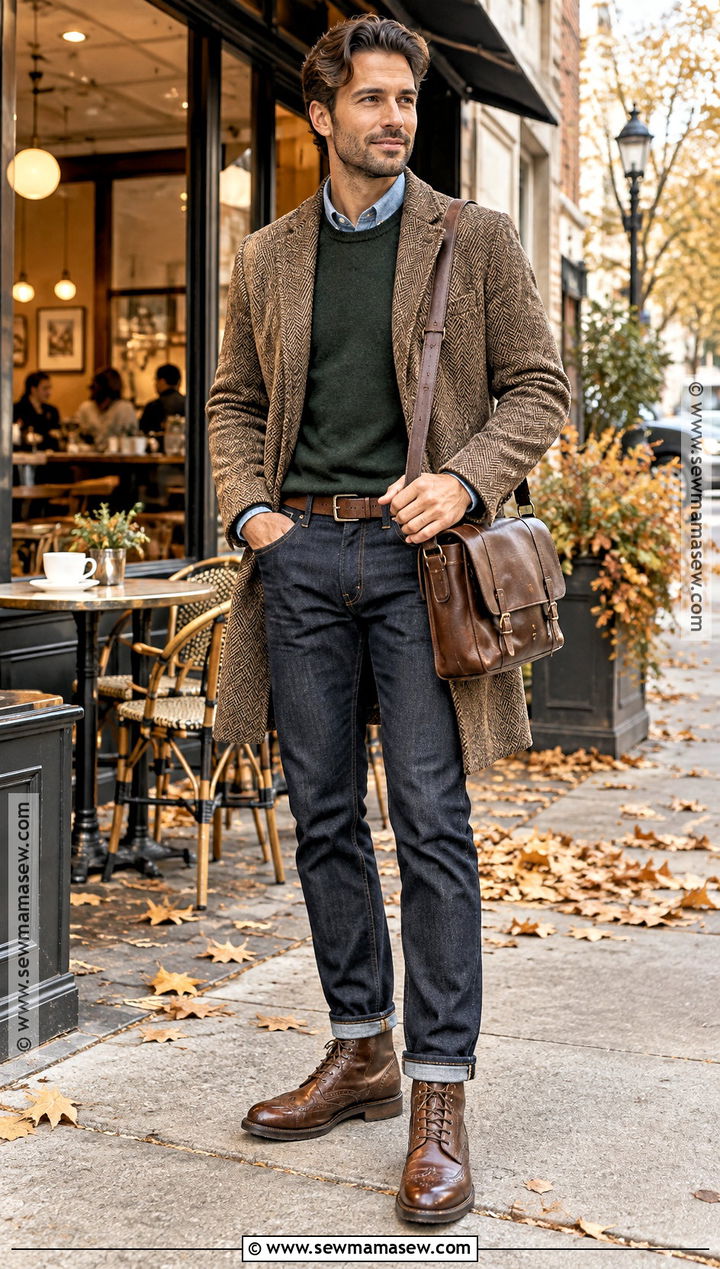
Herringbone gives you pattern without shouting, which is why I lean on it for men who usually wear plain coats. Under it, a light blue chambray shirt and a forest-green lambswool crewneck, then dark indigo jeans with almost no fading. Brown brogue boots, a matching belt and a structured satchel suit the coat's country feel. If the weave is bold, keep every other piece solid. Above the knee reads casual; below it covers more on a windy day. A single small cuff on the jeans is fine, but a fat roll sits on top of the boot and looks bulky.
7. Black Long Coat With Monochrome Layers
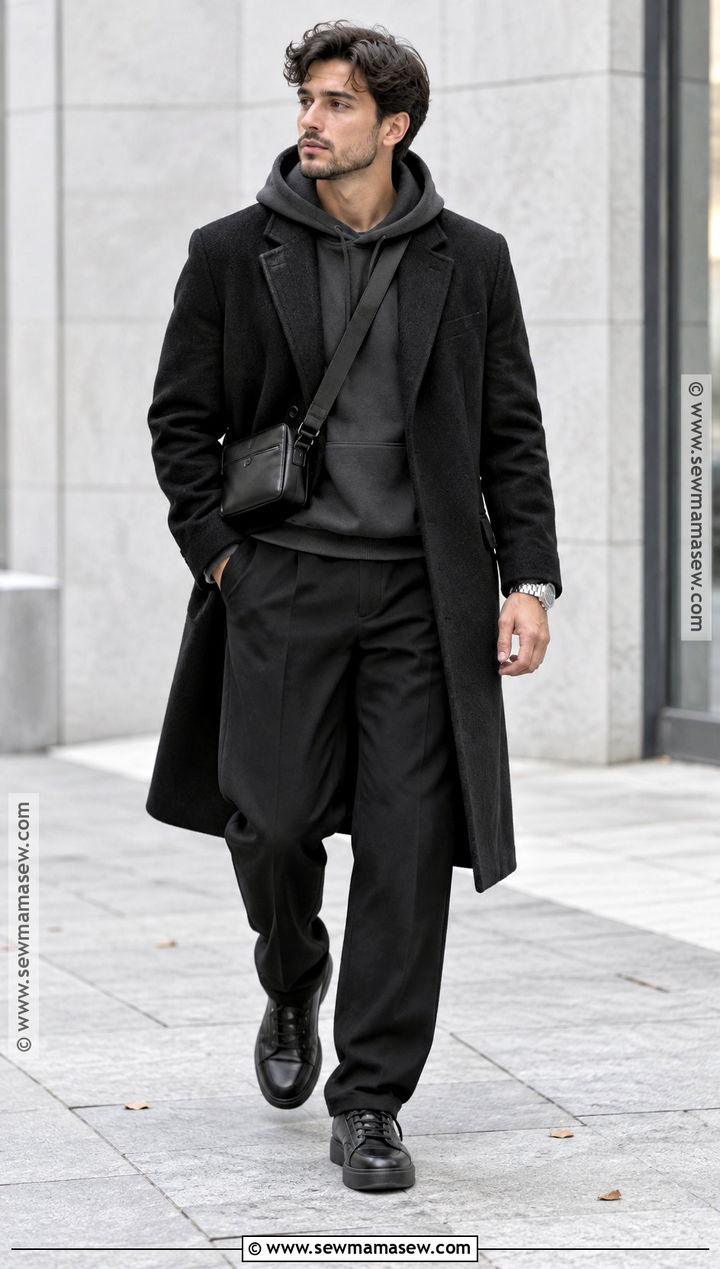
All-black only works if the fabrics differ, otherwise it reads as a flat silhouette in photos and in person. Wear a long black wool coat over a charcoal hoodie or heavy crewneck sweatshirt, with relaxed black trousers or clean black jeans and black leather sneakers or lace-up boots. The mix of brushed wool, cotton fleece, matte denim and polished leather catches light differently, so it doesn't read as a single block. Keep the extras to a black crossbody bag and some silver. A hood under a tailored coat needs room: pick one with defined shoulders but enough depth in the collar that the hood lies flat instead of pushing the lapels forward.
8. Khaki Car Coat With Chinos
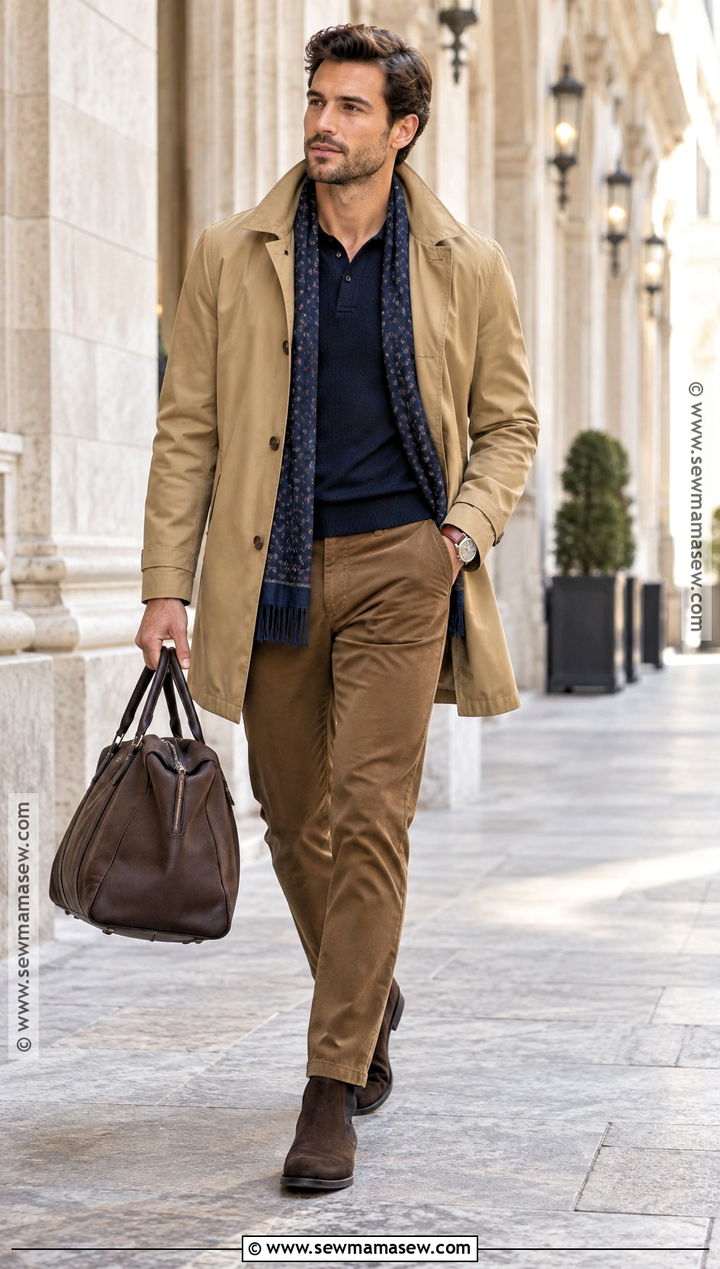
A car coat sits between a casual jacket and an overcoat, and it's the length I recommend most to shorter men. Ending at mid-thigh, it covers your seat in the cold without cutting your leg line in half the way a knee-length coat can. Wear it over a navy polo sweater or a textured quarter-zip, with stone or dark olive chinos in a straight fit. Brown suede loafers suit dry early autumn; rubber-soled Chelsea boots take over once it's colder and wetter. A leather weekend bag and a patterned scarf in navy or burgundy finish it. Leave it open when walking, button it over the knit when standing still.
9. Navy Duffle Coat With Relaxed Trousers
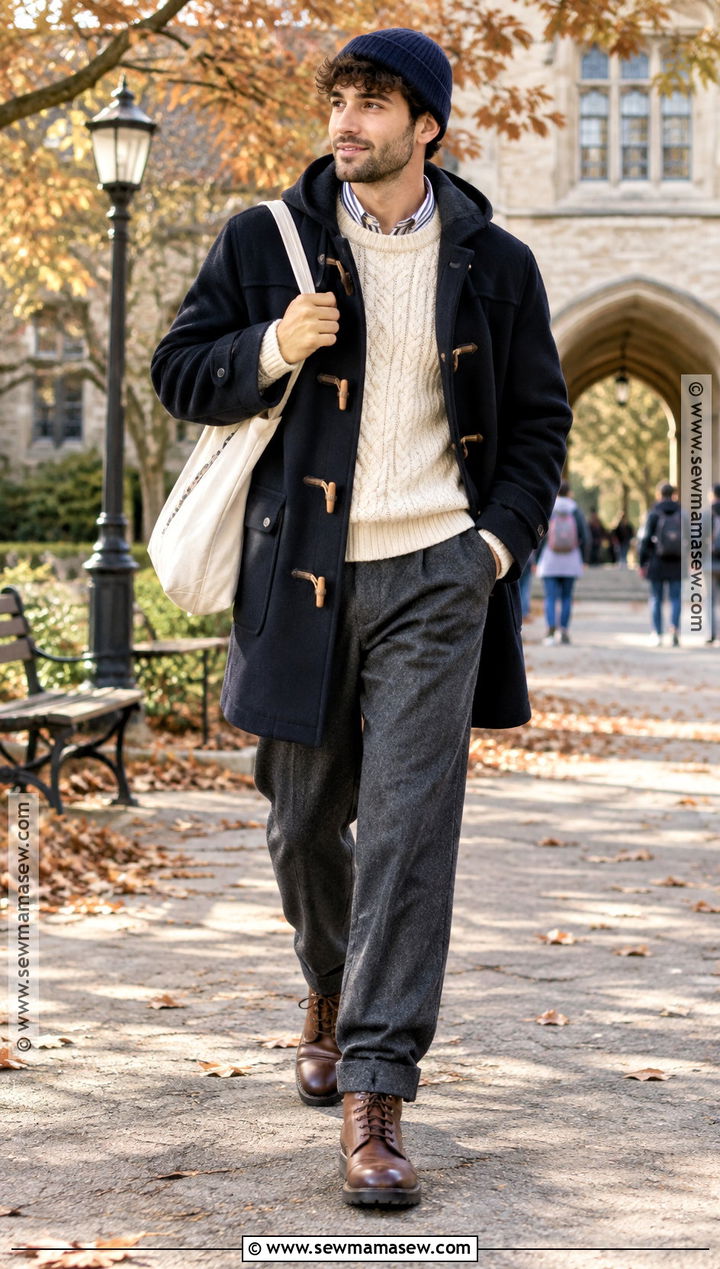
The toggles and hood already give a duffle coat plenty of character, so everything under it should stay quiet. I put it over a cream cable-knit and a blue-and-white striped shirt, letting only a sliver of collar show. Relaxed charcoal wool trousers or dark navy chinos, then chunky-soled brown lace-up boots to carry the coat's weight. A ribbed beanie and a canvas tote, nothing patterned. Duffles are cut roomy, which is great for a cable knit but swamps a slim frame; if yours hangs off the shoulder, size down rather than belting or pinning it. An above-knee hem is easier to walk and cycle in.
10. Chocolate Suede Coat With Cream Knitwear
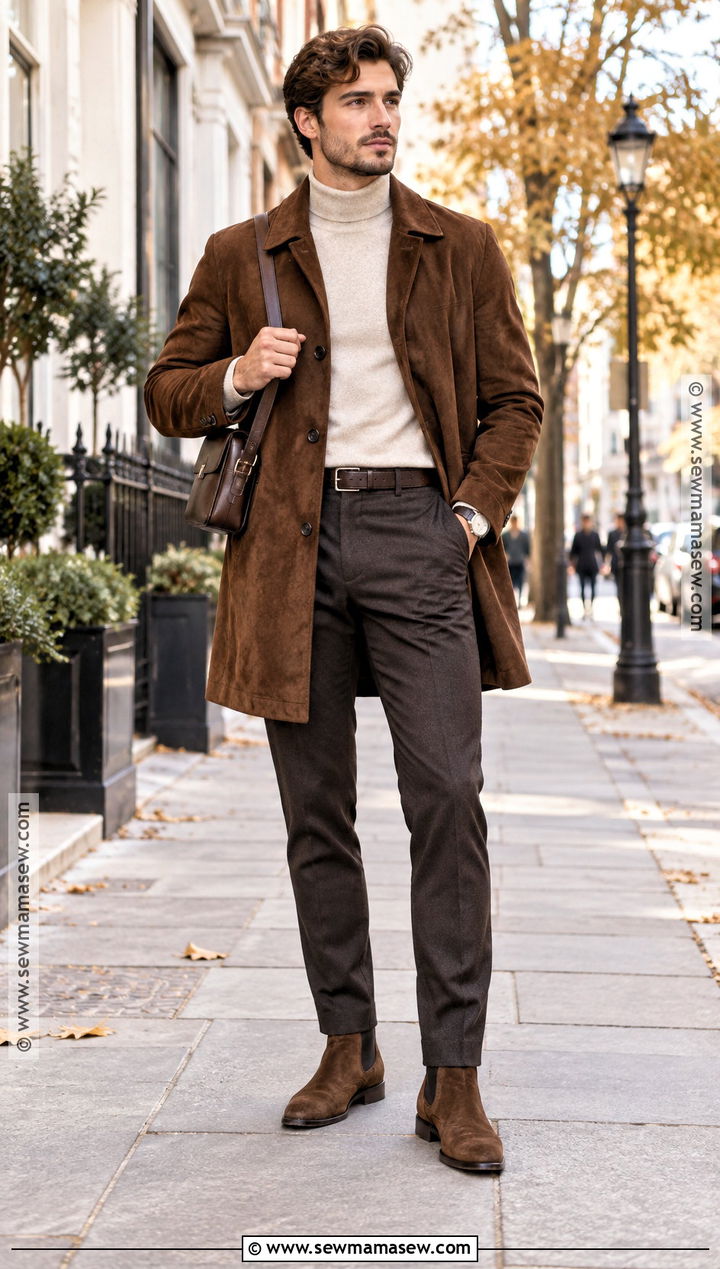
Chocolate suede next to cream knitwear is one of the richest color pairings autumn offers. I'd wear a mid-length suede coat over an oatmeal mock-neck in a fine or medium gauge, since a chunky knit makes suede strain at the armholes. Dark brown trousers or black straight-leg jeans go underneath, and suede Chelsea boots a shade lighter or darker than the coat add depth without bringing in another color. Keep the belt and watch simple. Be realistic about the weather: suede marks in rain, so this is a dry-day coat, and it needs a suede brush and a protective spray before its first outing. Sleeves should stop right at the wrist bone.
11. Plaid Overcoat With Neutral Basics
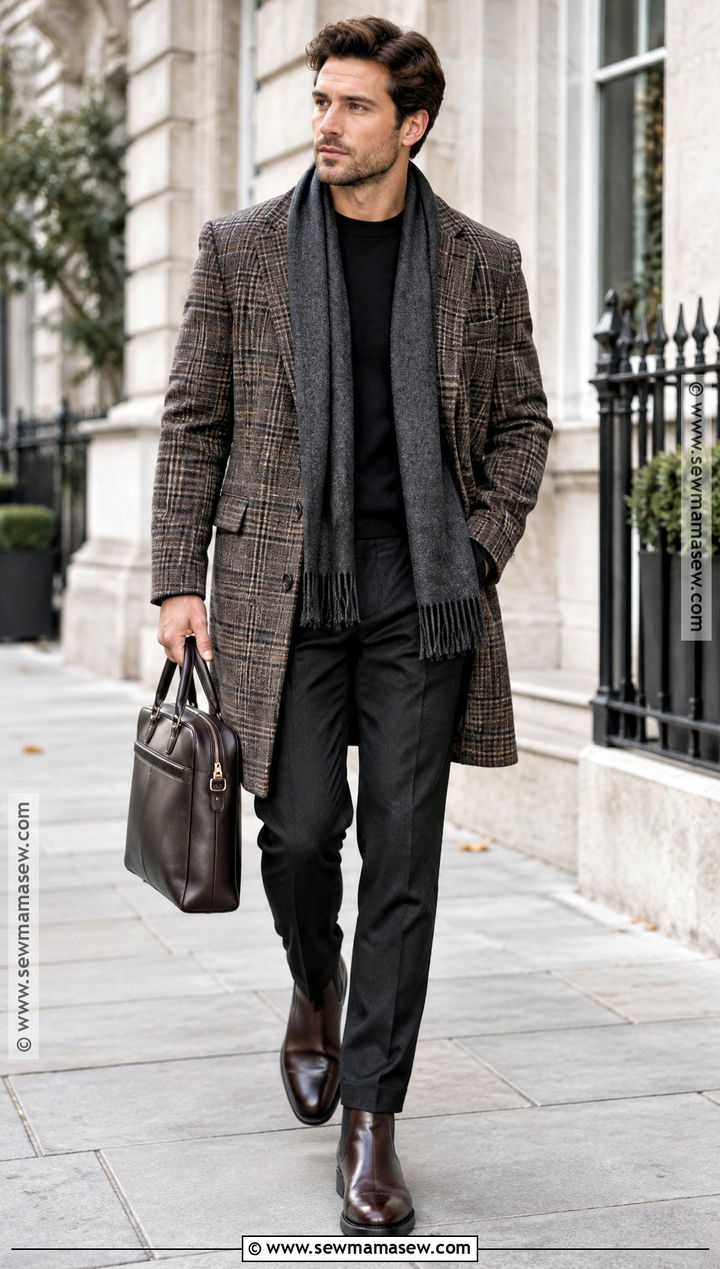
Plaid is the one coat that's allowed to do all the talking. Pick a brown, gray or navy check that already matches things you own, then keep everything else plain: a solid black or charcoal crewneck, straight black trousers or dark jeans, polished boots. A solid wool scarf and a leather bag support it. No other prints. Slightly oversized checks look current, but I check where the shoulder seam lands first; if it drops more than a finger past the shoulder bone, it looks borrowed rather than intentional. Plaid also shows up poor pattern matching, so look at the front placket and pockets before you buy.
12. Green Parka With Cargo Pants
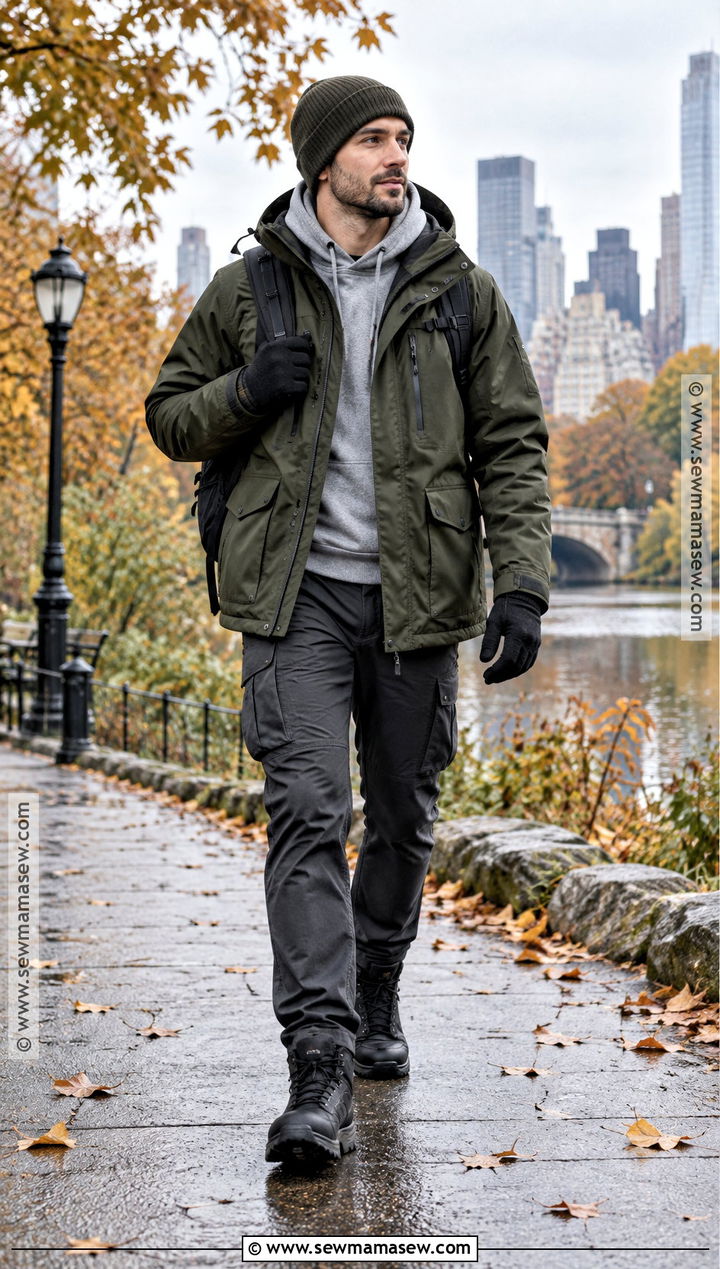
For wind and drizzle, a parka beats any wool coat. Choose a water-resistant dark green one with an adjustable hood and room to layer, then wear a gray hoodie or heavy waffle-knit under it. Black or charcoal cargo pants should be straight and fairly clean, not covered in pockets. Waterproof hiking-style sneakers or leather utility boots finish it, and gloves and a beanie go in the pocket for colder days. Mid-thigh length protects your hips without catching your knees when you walk. Hold the palette to green, gray, black and a touch of cream. I often see men pair a technical parka with dress shoes, and the mismatch is obvious.
13. Gray Belted Coat With Wide Leg Trousers
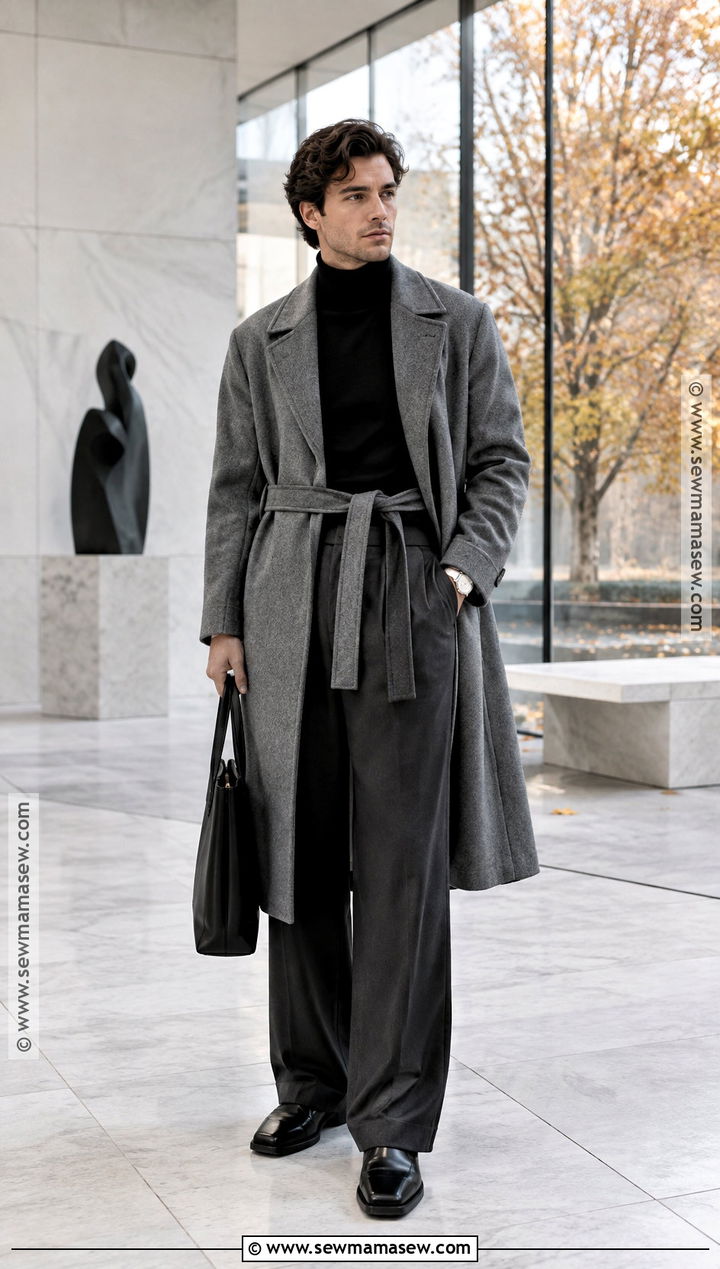
A belted wrap coat is softer than sharp tailoring, and it's the trickiest shape here to get right. Wear it over a close-fitting black mock-neck with wide-leg charcoal trousers pressed with a front crease. Black loafers suit mild days; square-toe boots are warmer. Tie the belt loosely so the cloth drapes rather than cinching into a dressing gown look. Proportion decides this one: a wide trouser needs a coat long enough to cover the top of the leg, and the knit has to be slim, or the whole figure turns into a rectangle. A slim leather tote and a plain metal watch are enough.
14. Brown Chore Coat With Matching Pants
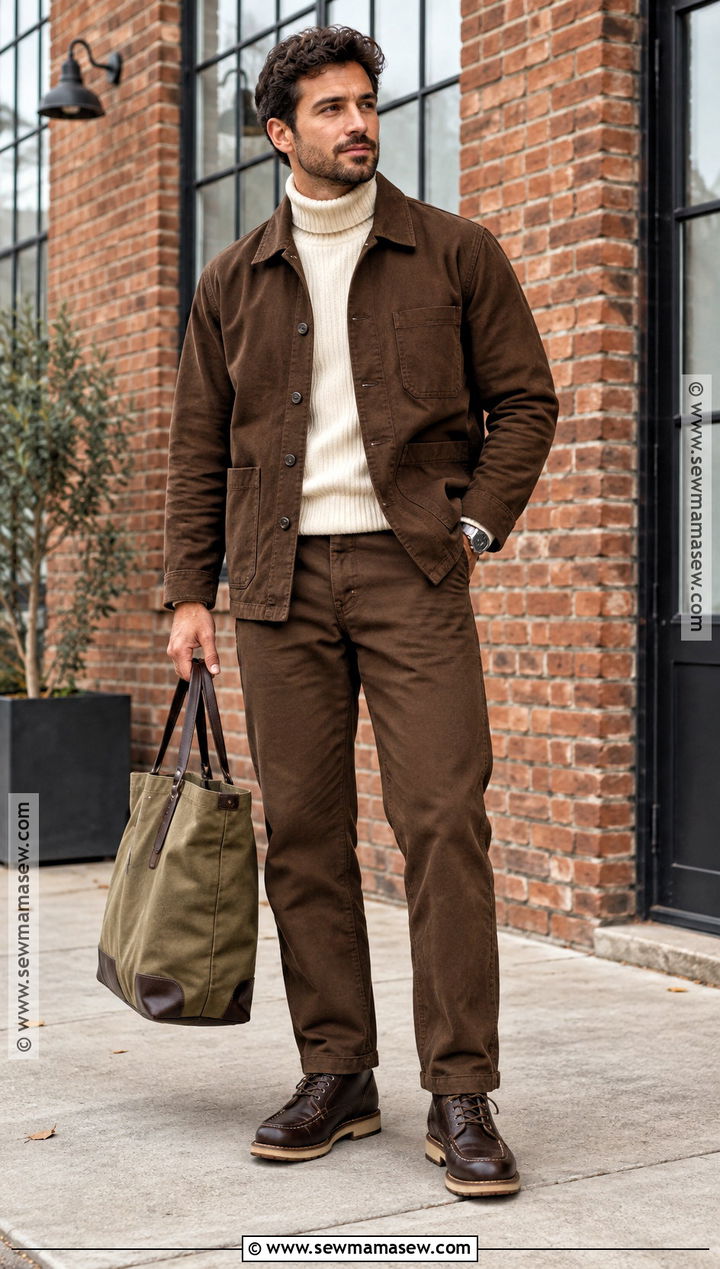
A matching chore coat and trousers give you the ease of a suit without any of its formality. Look for cotton twill, moleskin or soft corduroy in chocolate or tobacco. Moleskin is my favorite of those: it's dense, blocks wind well for a cotton, and softens with every wash. Wear a heavyweight white T-shirt under it early in the season, then a cream roll-neck as it gets colder, with dark brown moc-toe boots or suede sneakers. A canvas tote and a leather watch add detail without making it look like a uniform. Keep the fit loose but not baggy, and have the trousers hemmed to break cleanly over the boot.
15. Burgundy Overcoat With Navy Layers
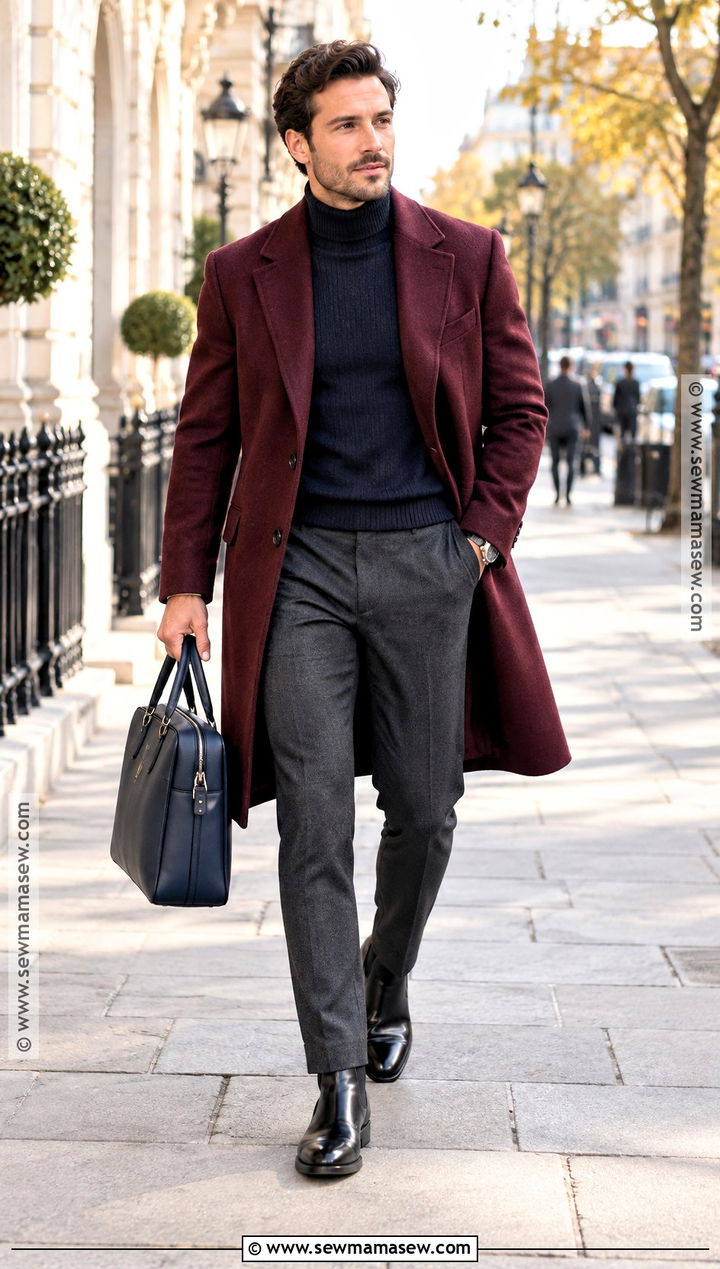
Burgundy is the easiest way into color for a man who has only ever owned gray and black coats. Put a burgundy wool overcoat over a navy roll-neck or brushed flannel shirt, with charcoal trousers for work or dark jeans for weekends. Black boots look crisp next to it; dark brown warms it up. Carry a navy or black bag and keep the rest understated. Burgundy only works as the single strong color, so don't add a red scarf or green trousers. Check the shade in daylight before buying, because some burgundies look brown indoors and almost purple outside.
What Wool, Wax and Suede Each Handle
The cloth matters more than the cut once the weather turns. Here's how I explain the main ones to clients who live with real rain and wind.
Wool and wool blends
Wool stays warm even when damp and sheds a light shower, but a long downpour will soak through. A tighter melton weave blocks wind better than a loose, soft cloth. Wool-cashmere feels lovely but pills at the cuffs and where a bag strap rubs, so a fabric shaver earns its place.
Waxed cotton and parkas
Both are the coats for wet climates. Waxed cotton needs re-proofing roughly once a year, and it should never go in a washing machine; wipe it with cold water instead. A technical parka handles steady rain best, but it never looks dressed up.
Suede and leather
Suede is a dry-weather coat, full stop. If it does get caught in rain, blot it, let it dry away from a radiator, then brush the nap back up. Smooth leather copes with drizzle better but cracks if it's left to dry out, so condition it before winter.
Whatever the fabric, hang every coat on a wide, shaped hanger. A wire hanger pushes two bumps into the shoulders by spring, and those are hard to steam out.
Camel, Navy or Olive for a First Autumn Coat
A good autumn coat comes down to three checks: it closes over your thickest knit, the shoulder seam sits on your shoulder, and the sleeve covers your shirt cuff. Every coat on this list, from the camel overcoat to the waxed jacket and the chore set, starts from those. If you're buying one coat this year, go for a neutral in camel, navy, gray, olive or brown, then let your knitwear and shoes change the mood. And be honest about your weather and your commute, because a suede coat in a rainy town will spend most of the season on a hook.
Related posts: