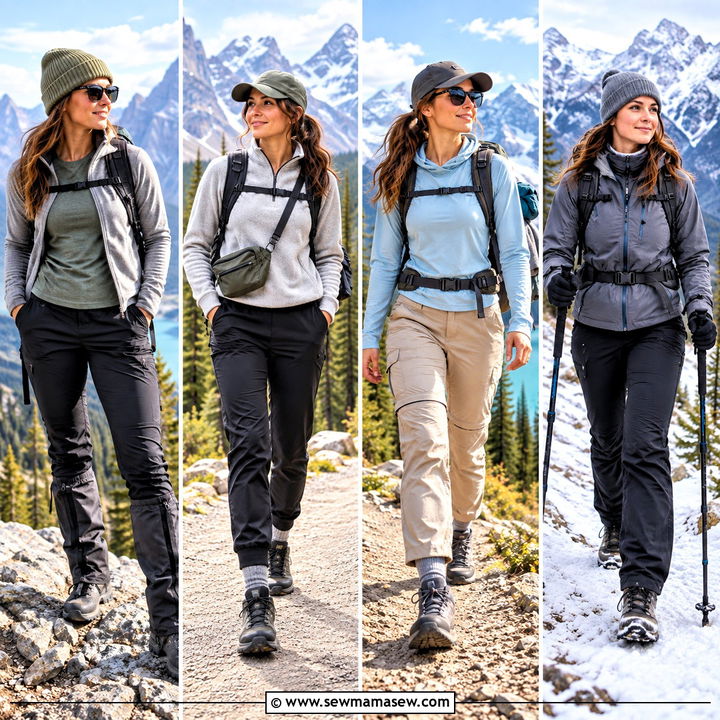
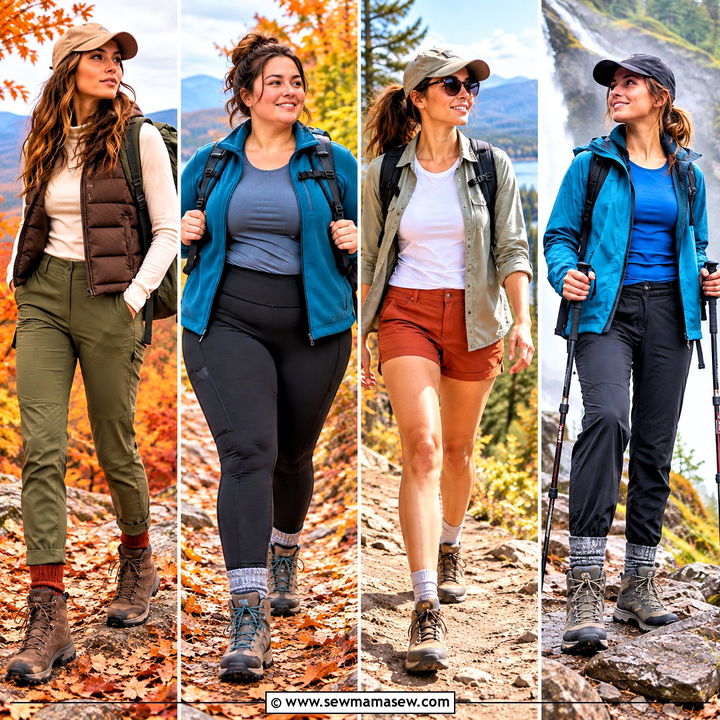
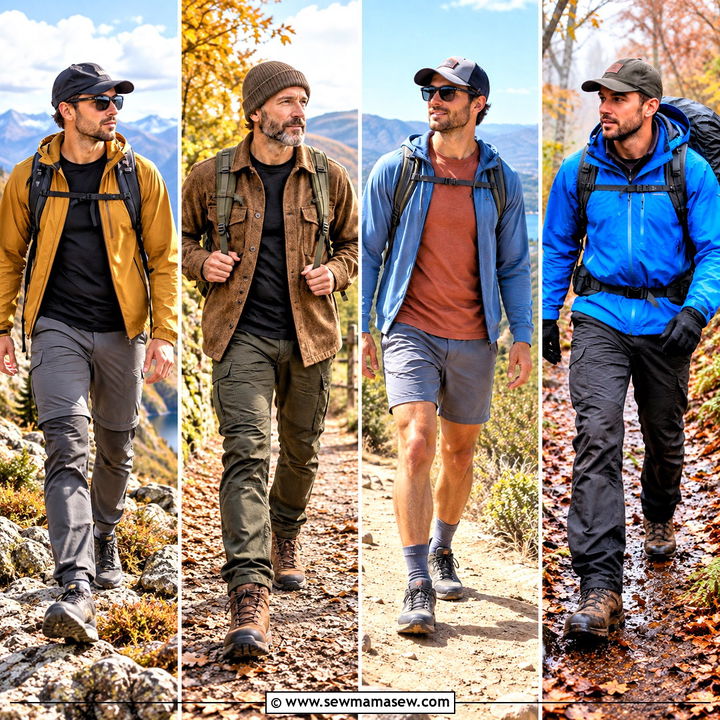
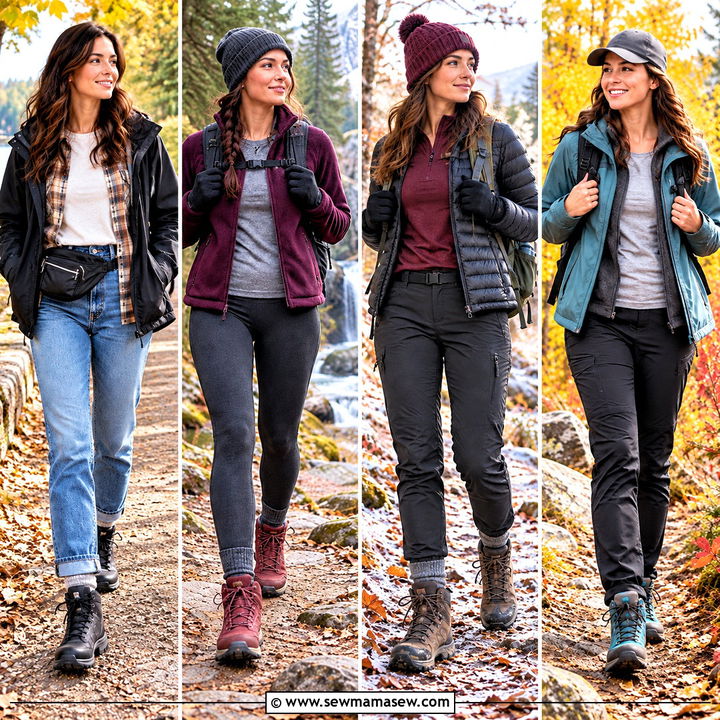
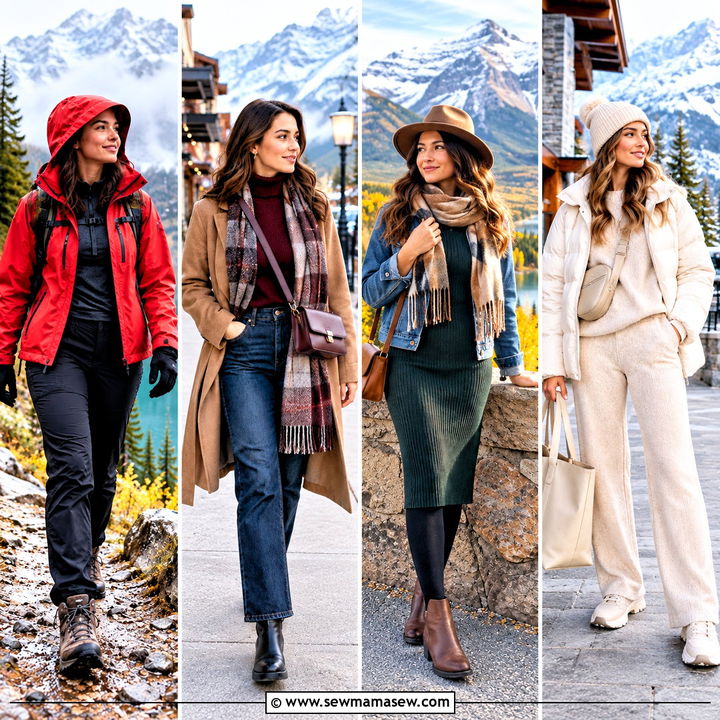
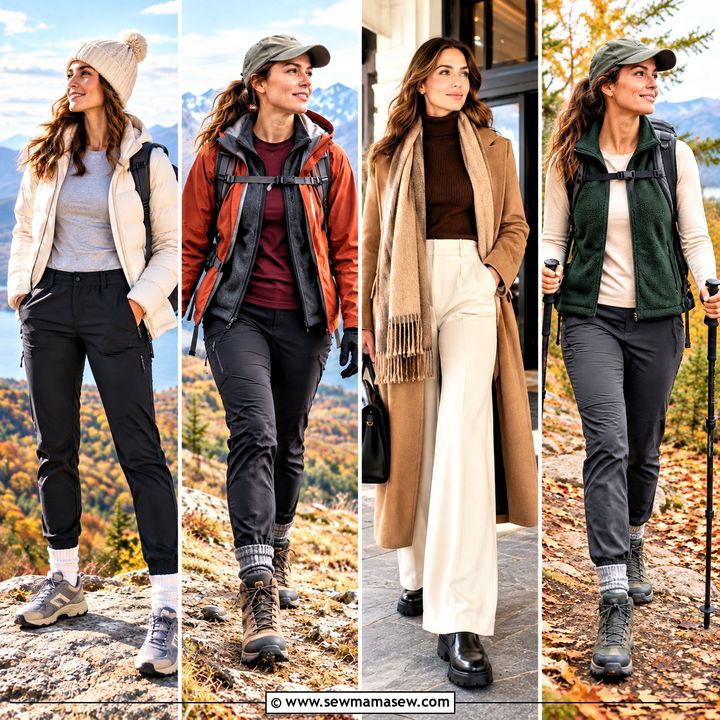
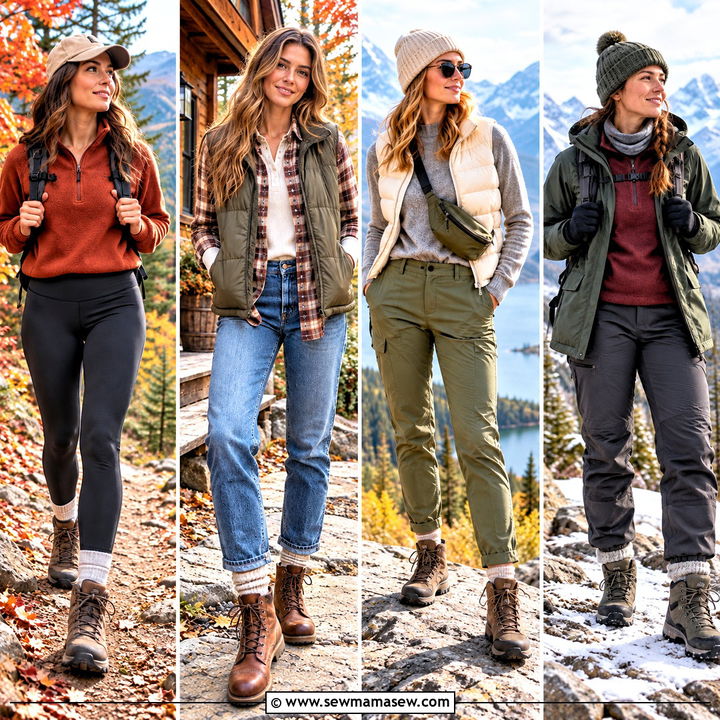
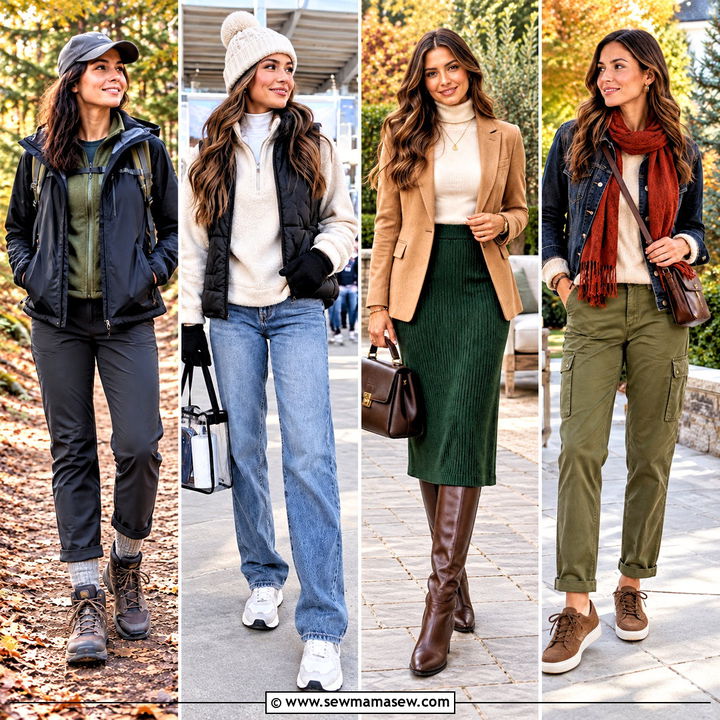
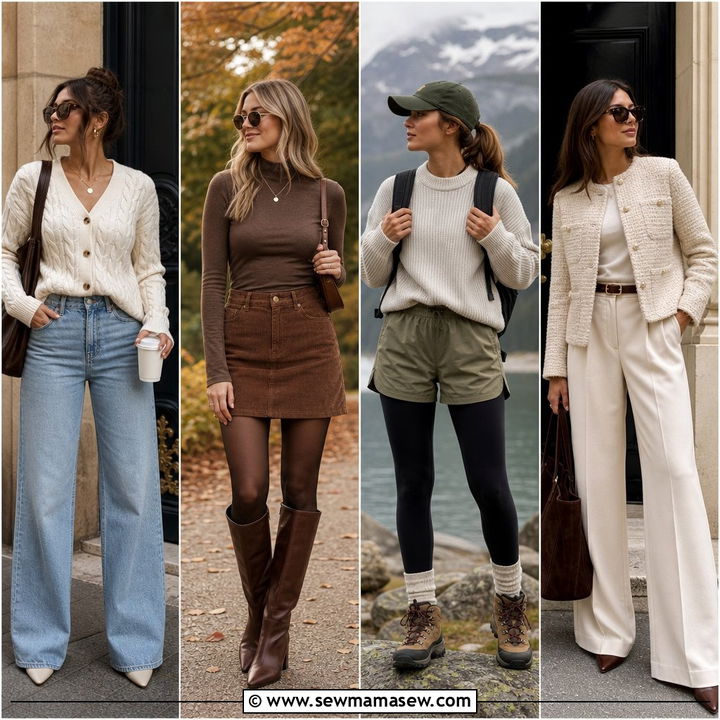
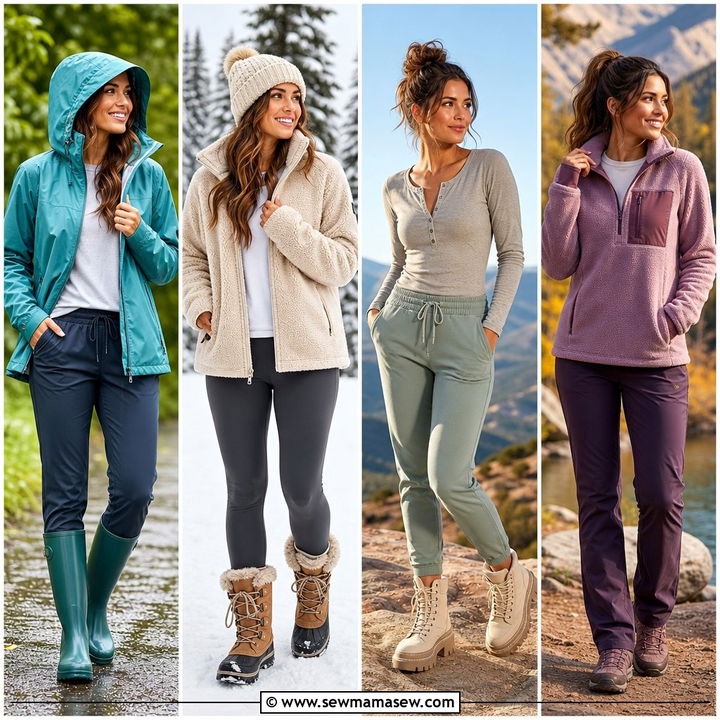
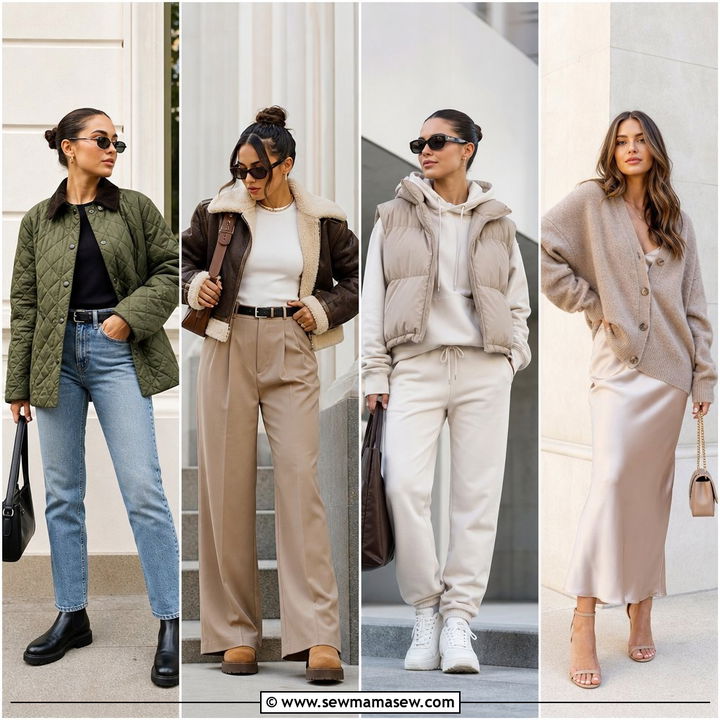
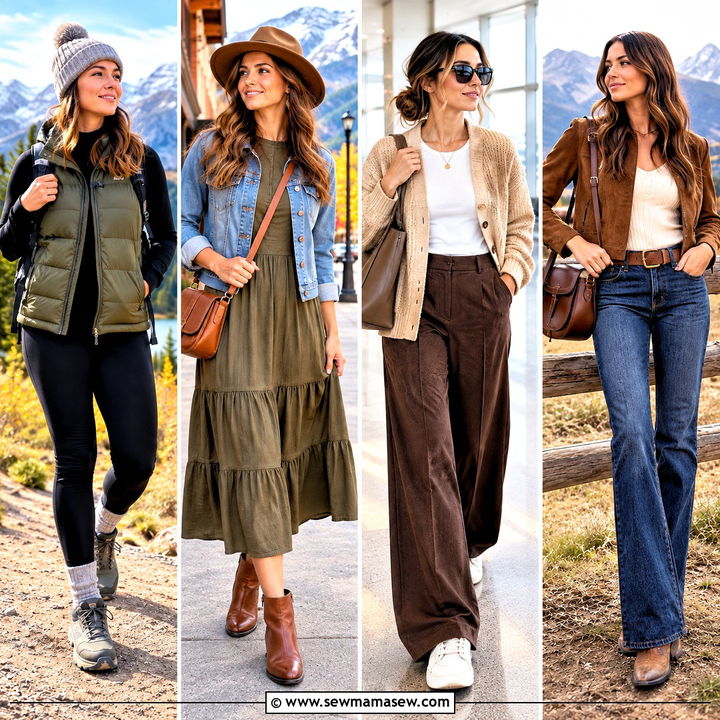
Mountains add one thing a woodland walk doesn't: the weather at the top is rarely the weather at the car. I plan a fall mountain outfit around that gap. You need something breathable for the climb, something warm to pull on when the trees end and the wind arrives, and a waterproof layer for the shower that wasn't in the forecast. The looks below run from warm early-season afternoons to properly cold late-fall summits, with a few gentle options for beginner trails. I've added notes on who each one suits and where I'd leave it at home.
Every Thousand Feet Up Feels Colder
Air cools as you climb, roughly three to five degrees Fahrenheit for every thousand feet of elevation, depending on how dry it is. A pleasant 60 degrees at a valley trailhead can be in the forties on a summit a few thousand feet higher. Add wind on an open ridge and it feels colder still.
So when I plan a mountain outfit, I look up two forecasts: the trailhead and the high point. Then I dress for the climb and pack for the top:
- Wear only what keeps you comfortable while moving uphill, usually a base and maybe a thin fleece or vest.
- Pack the warm layer and the shell for the summit, where you'll stop, eat and cool down.
- Remember the descent. You produce less heat walking downhill, and the afternoon may be colder than the morning.
The outfits below are roughly grouped by how cold a day they suit, so match your summit forecast to the right end of the list.
1. Fleece Jacket And Hiking Pants Fall Mountain Outfit
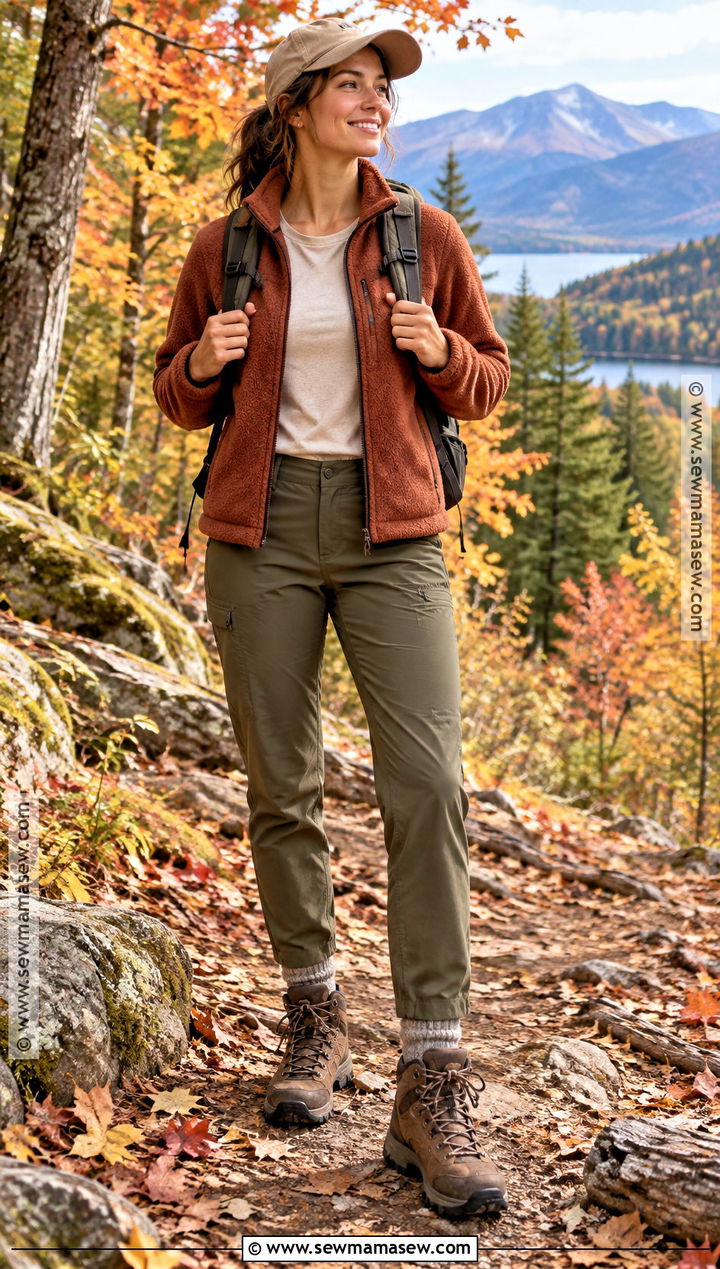
A zip fleece over a wicking tee is my default for a cool mountain morning, because the front zip lets you vent without stopping. Straight-leg hiking pants in olive, charcoal or taupe with zip pockets keep keys and phone secure on scrambles. A rust, cream or forest fleece brings in fall color. Waterproof boots, cushioned wool-blend socks, a light pack, a cap and sunglasses cover the rest. One habit I push: keep the rain shell inside the pack, not tied around your waist, where it catches on branches and bangs against your legs on every step down.
2. Puffer Vest And Leggings Fall Mountain Hiking Outfit
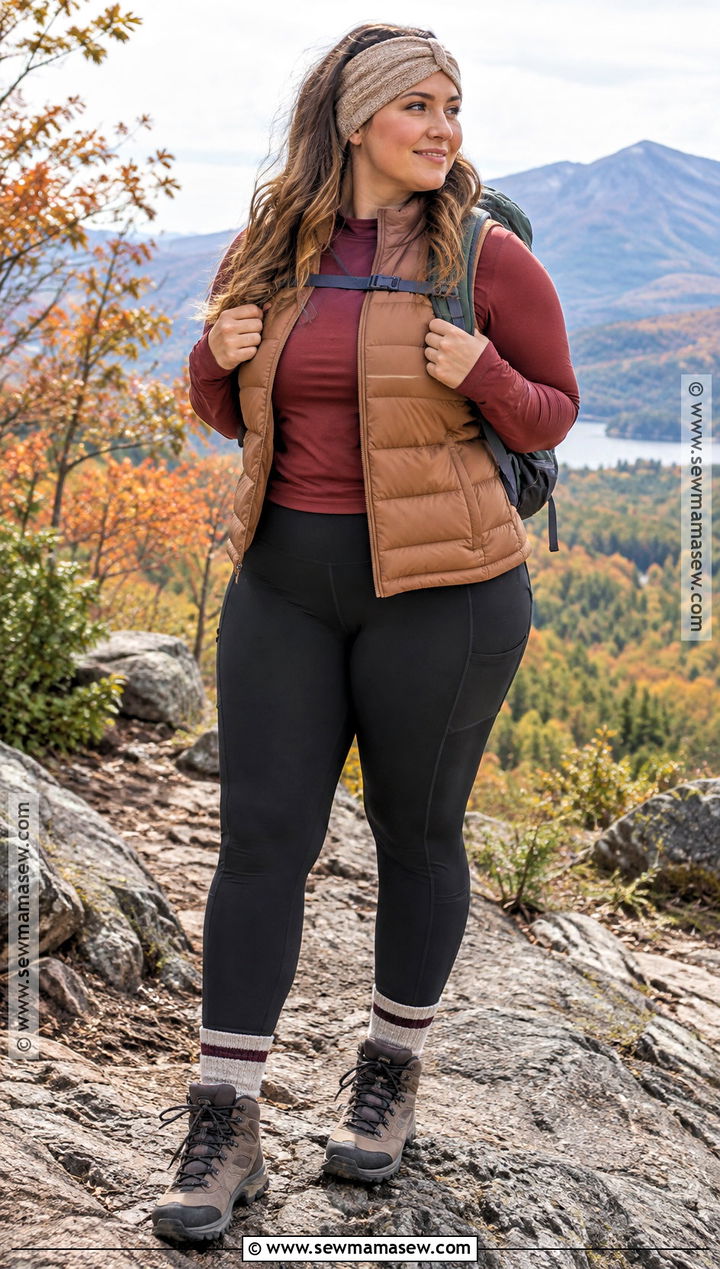
On a steady uphill, a puffer vest is often warmer than you'd expect and cooler than a jacket, which is the balance you want. Wear burgundy, navy or plum long sleeves under a clay or golden-brown vest, with thick, opaque black leggings that have side pockets and reinforced seams. Waterproof mid boots, ribbed socks and a small technical pack finish it. I'd swap the beanie for a fleece headband on a climb; it covers your ears but lets heat escape from the top of your head. Near the summit, when the wind picks up, the shell from your pack goes on over the vest.
3. Rain Jacket And Cargo Pants Fall Mountain Hiking Outfit
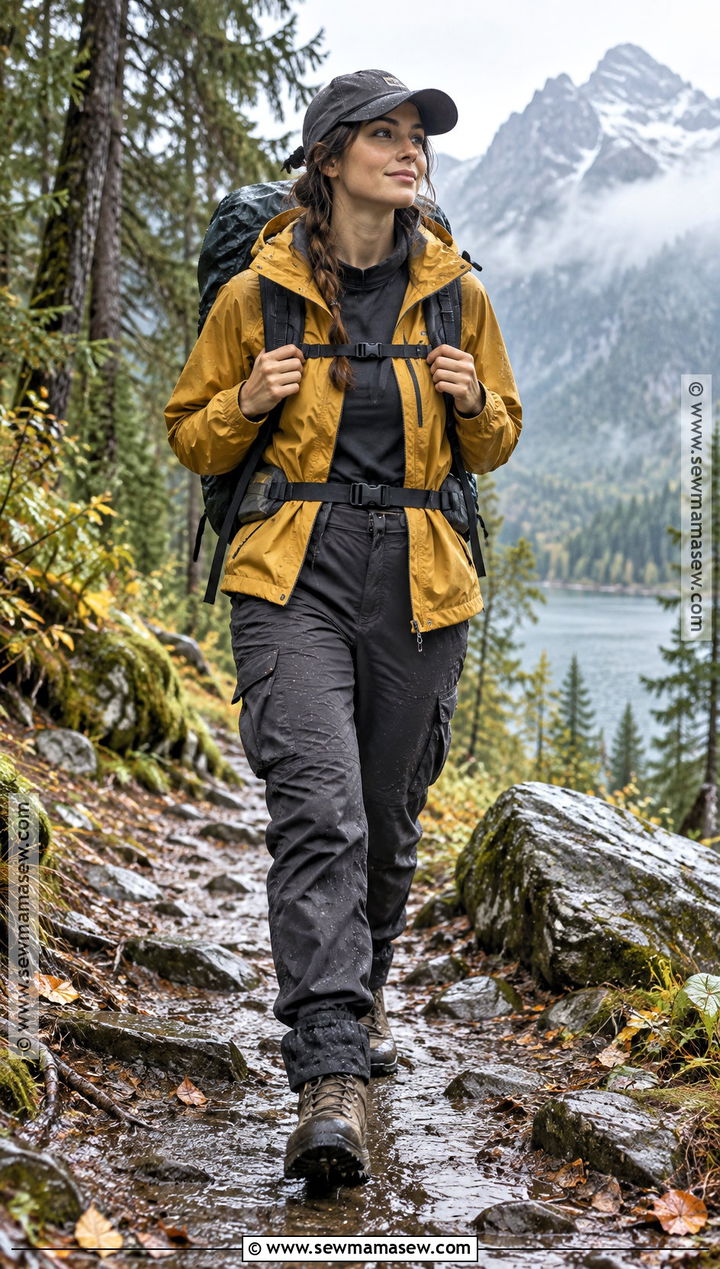
Wet mountain days are where cotton becomes a real problem, so I build this one from the shell inward. Teal, mustard or deep red rain jacket, synthetic base top, and stretch cargo pants, which shrug off brush and wet rock better than thin leggings and give you pockets for gloves and a map. Pick a tapered leg so the hem stays out of the mud. Waterproof boots with grippy soles, wicking socks and low gaiters close the gap at the ankle. A brimmed cap under the hood keeps rain off your face, and a pack cover keeps the spare layer dry.
4. Quarter-Zip Top And Trail Leggings Fall Hiking Outfit
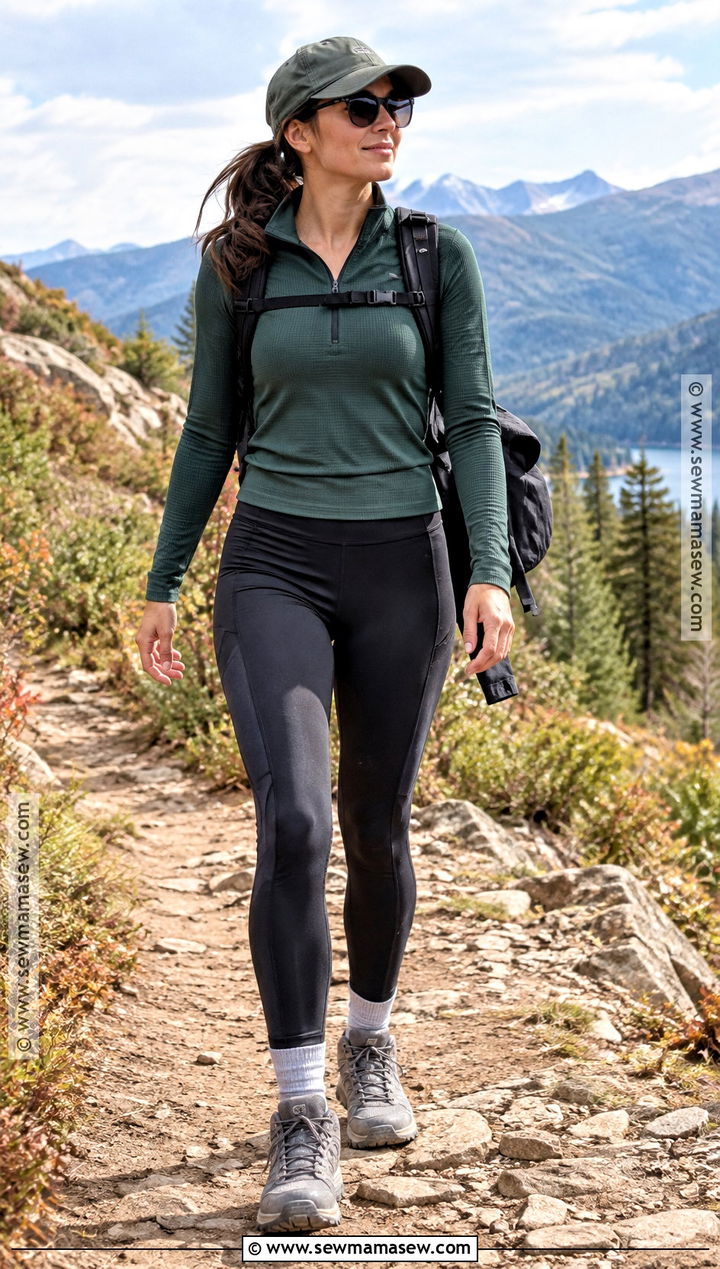
The quarter-zip is underrated. You get a fitted top that vents at the neck, so on a steep pitch you pull the zip down and in shade you close it up. Pair it with high-waisted trail leggings in black, dark brown or deep green, and check that the waistband sits flat under a hip belt, since a narrow one folds over and digs in. Trail runners are fine on dry, well-kept paths; switch to waterproof boots on rock or mud. A windbreaker rides in the pack for the ridge. Wool-blend socks, a ponytail cap and good sunglasses finish this early-fall look.
5. Flannel Shirt And Hiking Pants Fall Mountain Outfit
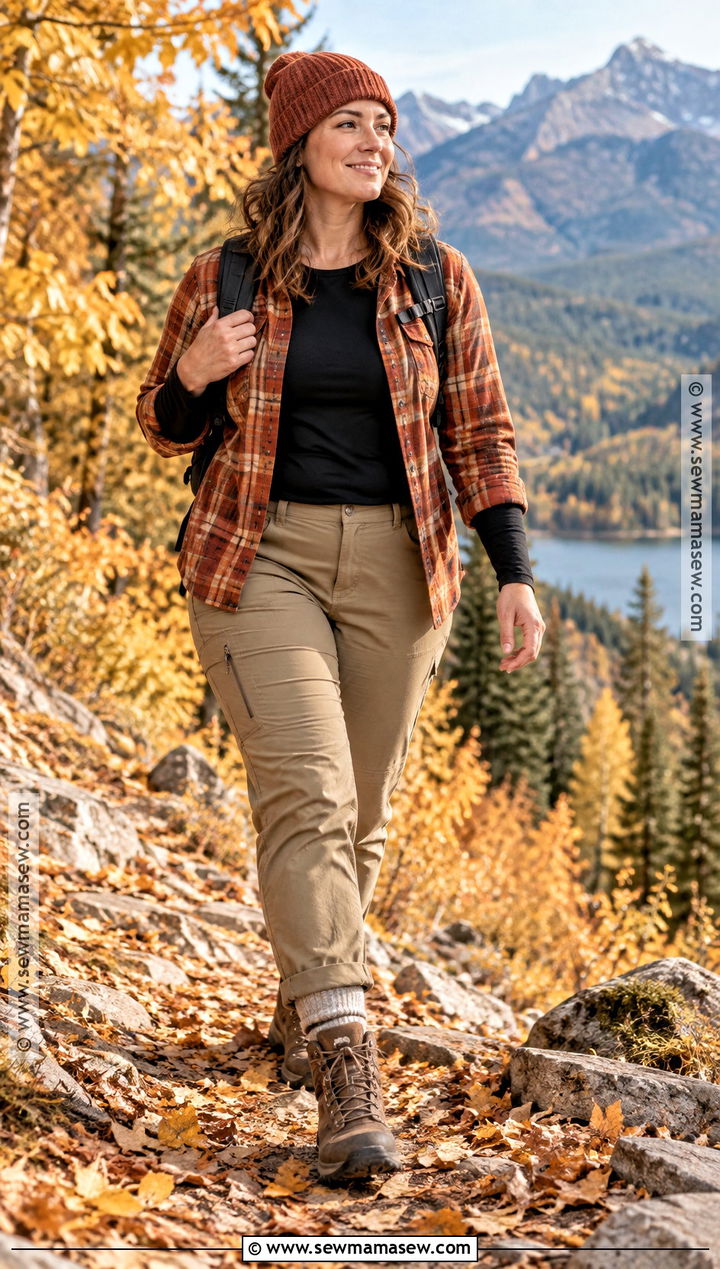
For a demanding route I swap the classic cotton flannel for a synthetic or wool-blend one. It looks the same in photos, but it dries much faster after a sweaty climb. Wear it open over a short- or long-sleeve base and pair it with black, khaki or dark olive pants and brown waterproof boots. Roll the sleeves going up, button it when the trail goes into shade. A rust beanie and canvas-look pack bring out the fall colors. Check that your rain shell fits over both the base and the shirt before you leave. This is a good outfit for leaf-peeping on easier mountain trails.
6. Softshell Jacket And Trekking Pants Fall Hiking Outfit
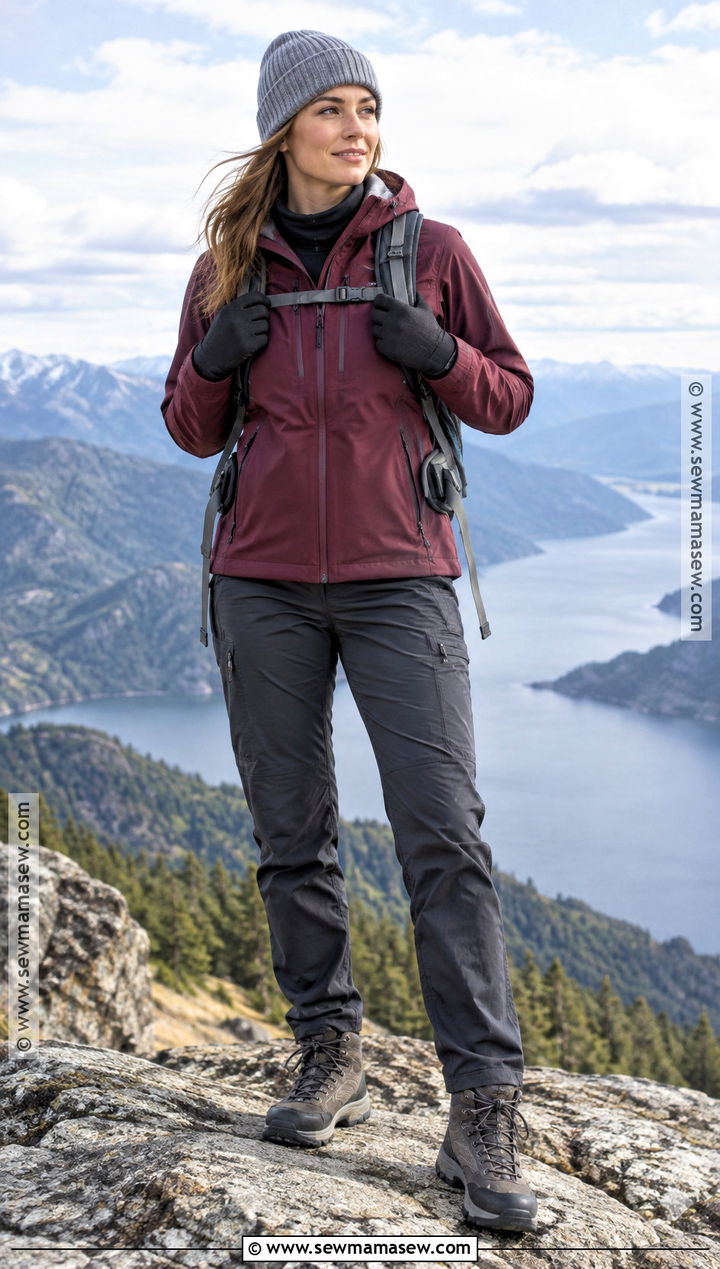
Above the treeline it's the wind, not the temperature, that chills you, and softshell is built for that. It stretches, breathes better than a rain jacket and blocks most of a breeze. Put a thin merino or synthetic crewneck underneath, and wear articulated trekking pants so a high step onto a boulder doesn't pull at the knee. Charcoal pants with a berry, blue or burnt-orange jacket give contrast without being loud. Supportive boots, crew wool socks, light gloves and a close beanie finish it. Use a real daypack with a hip belt; a fashion backpack swings and pulls your shoulders forward on uneven ground. Softshell isn't waterproof, so pack a shell for steady showers.
7. Hoodie And Joggers Easy Fall Hiking Outfit
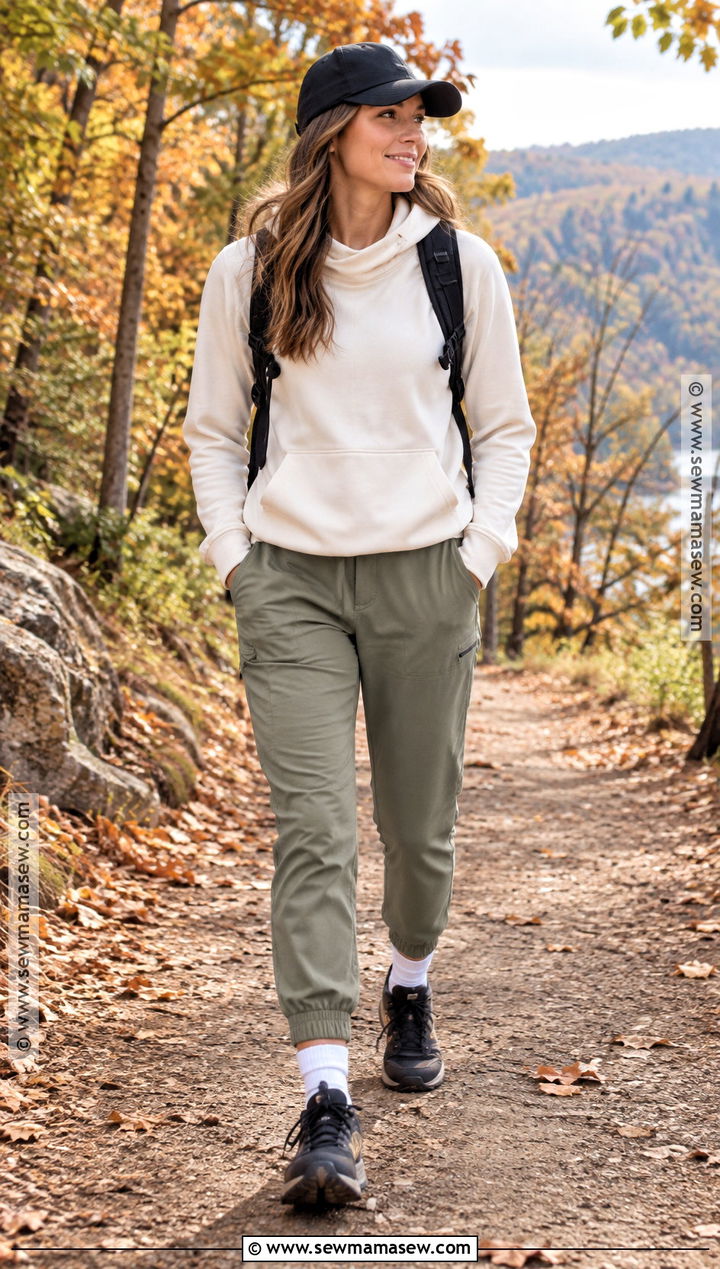
Joggers and a light hoodie belong on short, well-kept trails, and on those they're comfortable and look put together. A wicking tank goes underneath, then a thin performance hoodie that's relaxed but not baggy. Tapered joggers should stretch and have zip pockets. I like charcoal with black, or sage joggers with a cream hoodie. Textured trail sneakers handle dry paths; hiking shoes are better if the ground gets rough. Leave the fleece sweatpants at home; they're heavy and hot once you get moving. A windbreaker covers the viewpoint.
8. Merino Top And Hiking Tights Fall Mountain Outfit
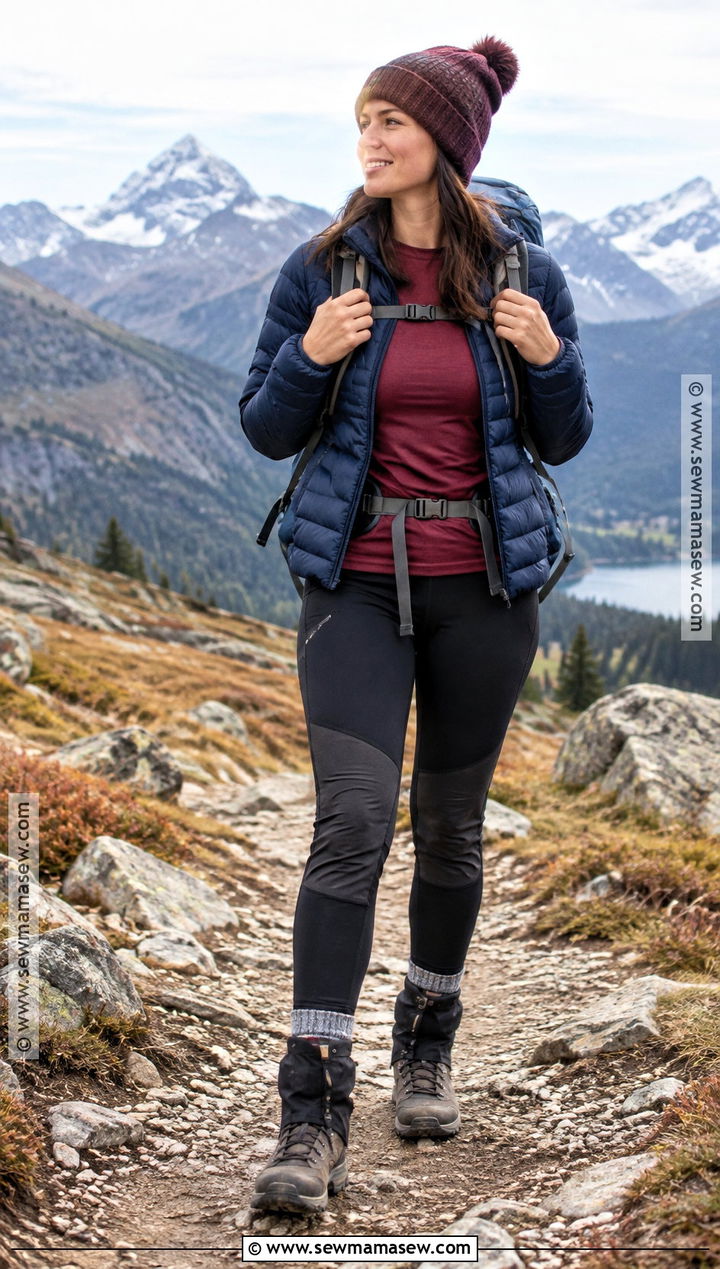
A long-sleeve merino top over durable hiking tights is a close-fitting base that layers under anything without bunching at the shoulders or waist. Wine, spruce or navy hide trail dust better than pale colors. A packable insulated jacket rides in your pack through the hard sections and comes out at stops. Mid boots, wool-blend socks and simple gaiters protect the ankles, with a knit beanie, light gloves and a proper pack. Before a long route, I check three things on tights: no see-through when you bend, a tough face fabric, and a waistband that doesn't roll under the hip belt.
9. Puffer Jacket And Hiking Pants Cold Fall Mountain Outfit
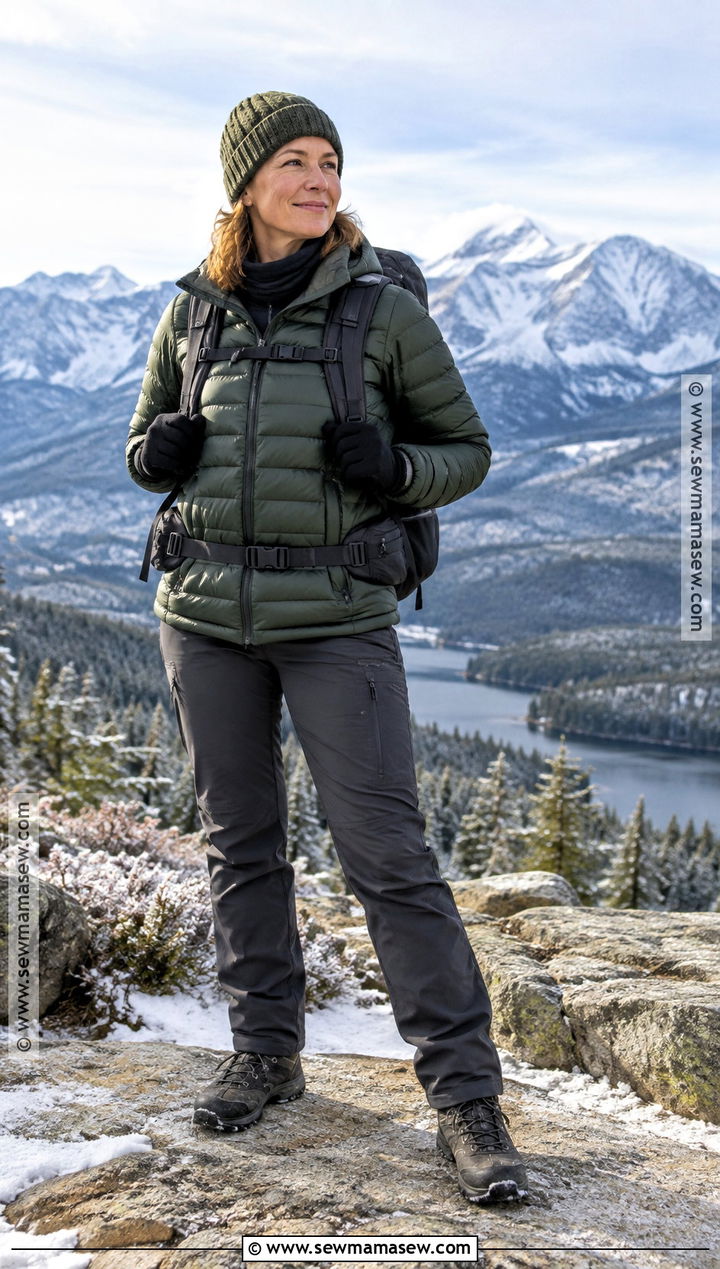
A frosty trailhead tempts you into a big coat, and that's usually a mistake. You'll be hot twenty minutes in. A packable puffer over a wicking long-sleeve and lined pants in charcoal, navy or black gives you plenty of warmth and fits into the pack once you're moving. Waterproof boots, wool-blend socks, a fitted beanie and touchscreen gloves cover the extremities, with a gaiter at the neck. Vent or remove the puffer before you start to sweat. A shell goes in the pack if rain is possible, because most puffers aren't built for steady wet.
10. Fleece Pullover And Cargo Leggings Fall Hiking Outfit
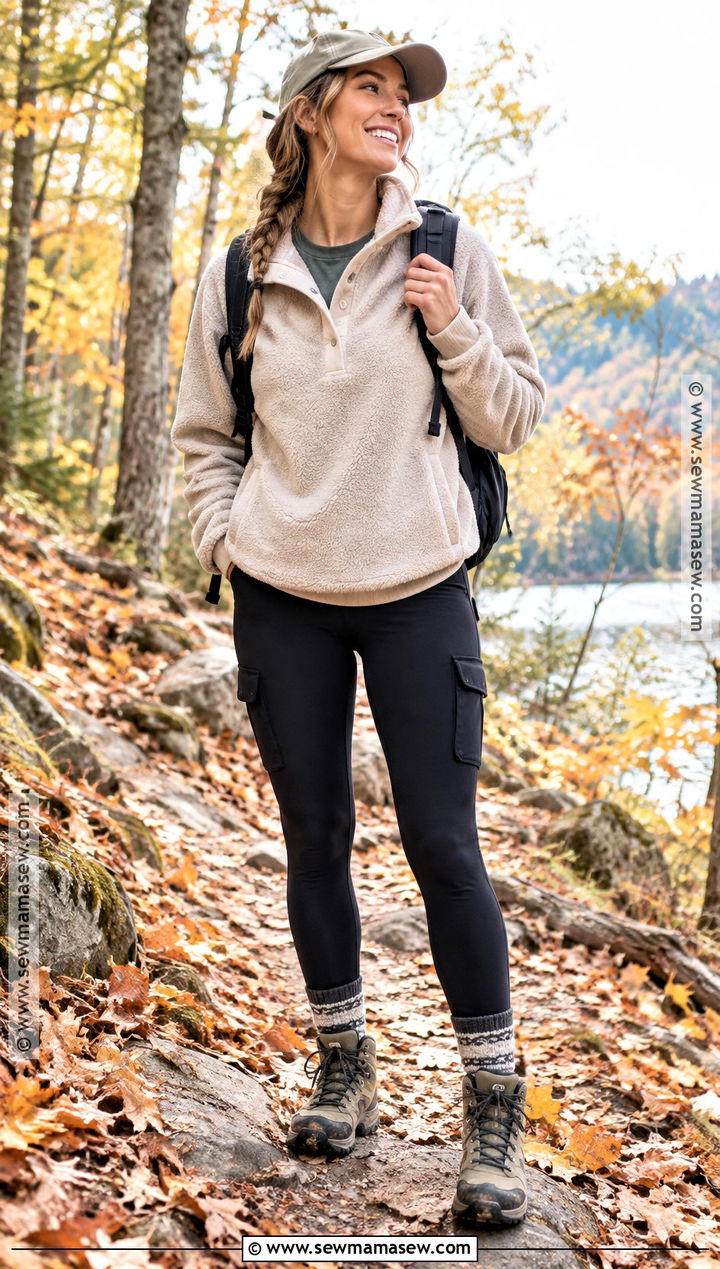
A half-snap or half-zip fleece pullover looks neater than a full jacket and has fewer zips to fiddle with. Oatmeal, rust, forest green or a color-blocked neutral all work. Under it goes a thin performance tee that can stand alone if the afternoon warms up. Cargo leggings with thigh pockets keep your phone where you can grab it for a photo. Waterproof shoes or boots, patterned wool socks and a black pack ground the colors, with a cap or beanie as the weather decides. The fleece should give you room to move without hanging loose enough to snag.
11. Windbreaker And Hiking Shorts Early Fall Mountain Outfit
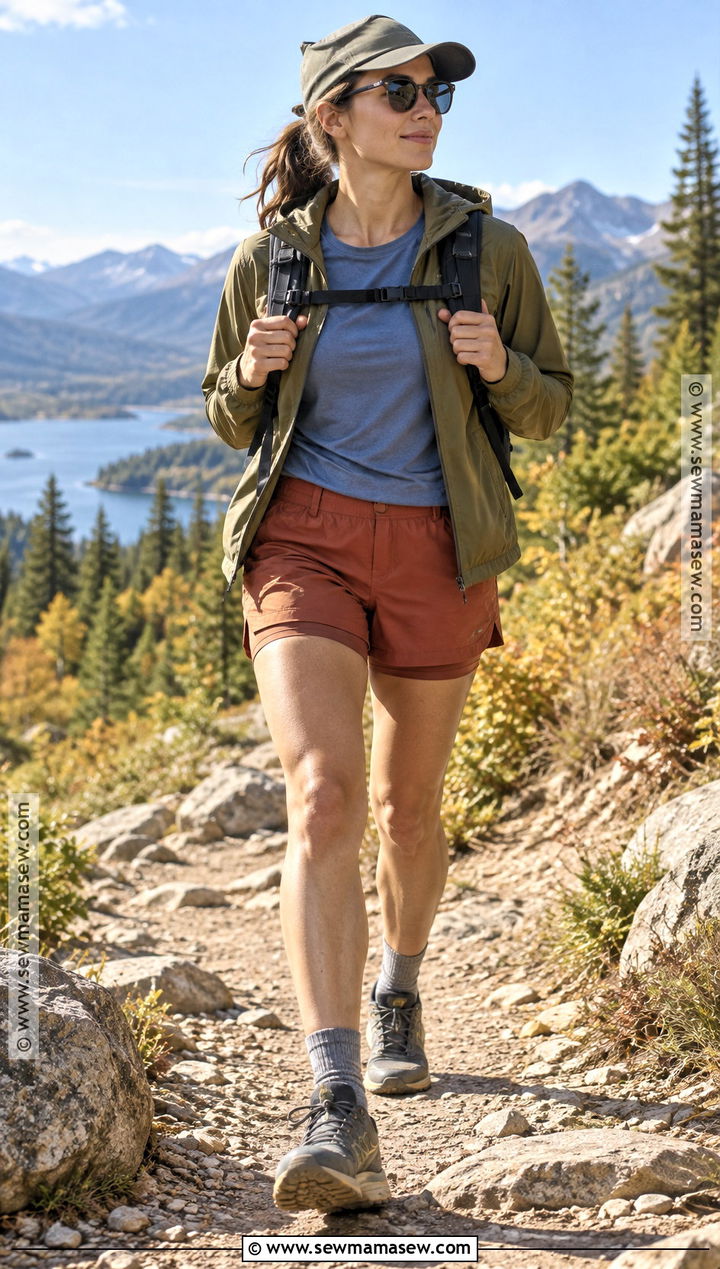
Shorts make sense in early fall on sunny, low trails, as long as you plan for the walk back down in cooler air. Mid-thigh technical shorts with a breathable long-sleeve top or fitted tee, plus a packable windbreaker for the cold start. If your shorts are loose, a bike-short liner stops thigh rub. Crew socks, grippy trail runners, sunglasses and a breathable cap round it out. Pack light leggings in case the afternoon turns. Clay, olive, sand and muted blue give the fall palette. I wouldn't wear this outfit up an exposed peak, where wind and cold can arrive fast.
12. Sherpa Fleece And Straight-Leg Hiking Pants Outfit
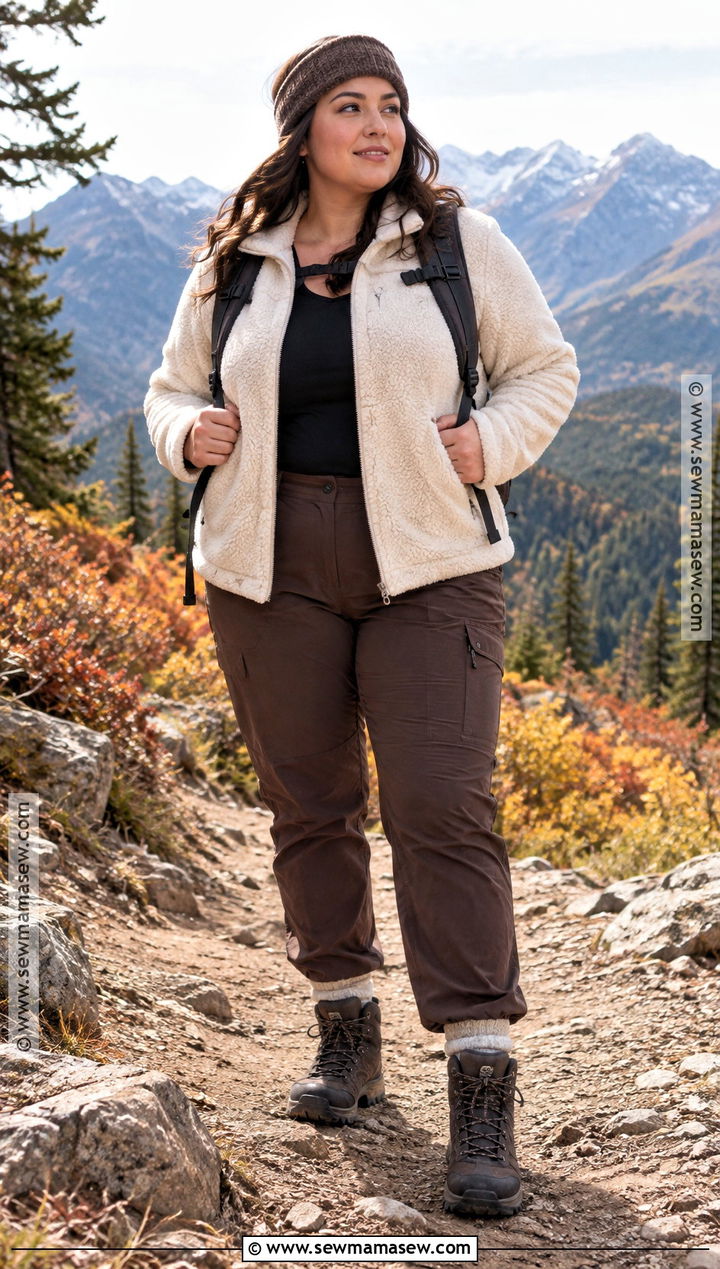
Sherpa fleece is warm and textured, and it photographs well. The catch is that thick pile overheats on a climb, so I'd only pick the technical, lighter version with a full zip you can open. Layer it over a synthetic crewneck with stretch straight-leg pants. Cream sherpa looks fresh with dark green or chocolate pants, and black accessories keep it modern. Leather-look waterproof boots, ribbed wool-blend socks and a small structured pack finish it. A knit headband covers your ears and flattens your hair less than a beanie. Sherpa pile catches burrs and pills, so keep it for easy, open trails, and pack a thin shell.
13. Long-Sleeve Shirt And Hiking Skort Fall Trail Outfit
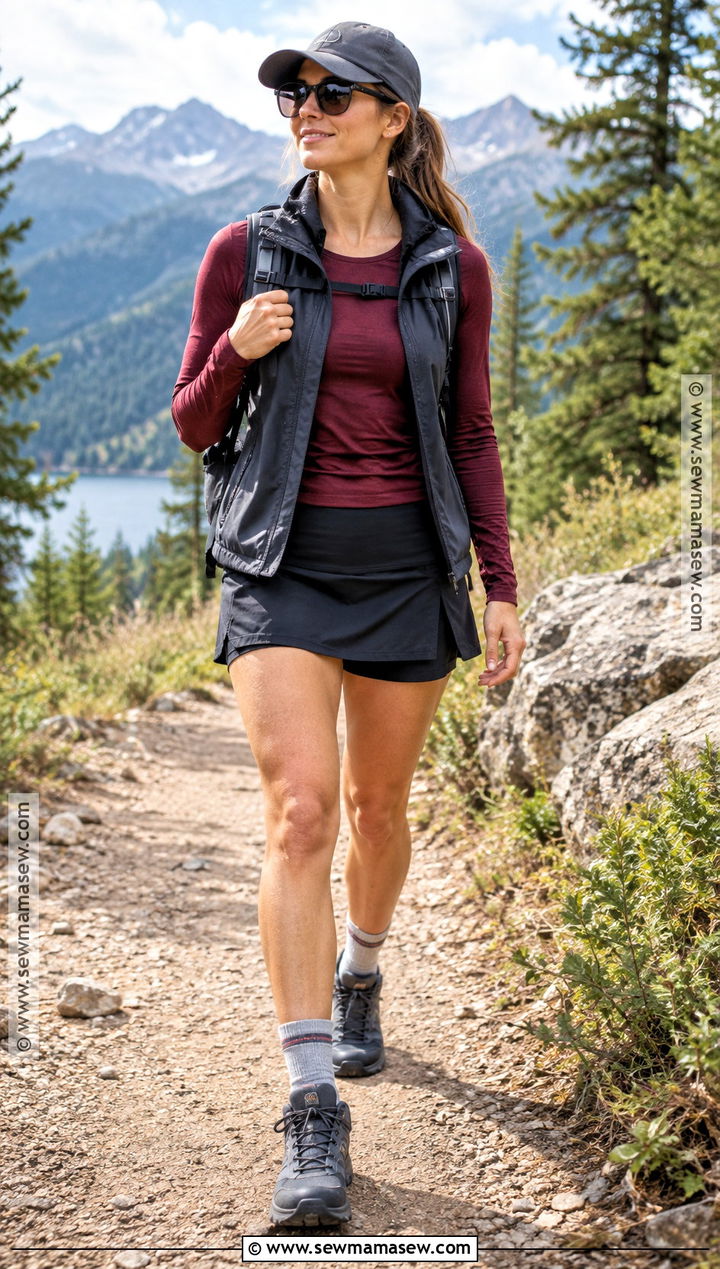
A skort gives you the freedom of shorts with a little more coverage. What makes or breaks one is the built-in short: it needs to stay put on a high step and dry quickly. Pair it with a long-sleeve performance shirt in maroon, navy or muted green, crew socks and supportive trail shoes, which balance the shorter hem. A light vest handles the cold morning and packs away later. A cap, sunglasses and small stud earrings keep it neat. Carry full-length leggings if the forecast could turn. This one is for mild days on groomed or park trails, not brushy or rocky routes.
14. Insulated Vest And Hiking Pants Mountain Outfit
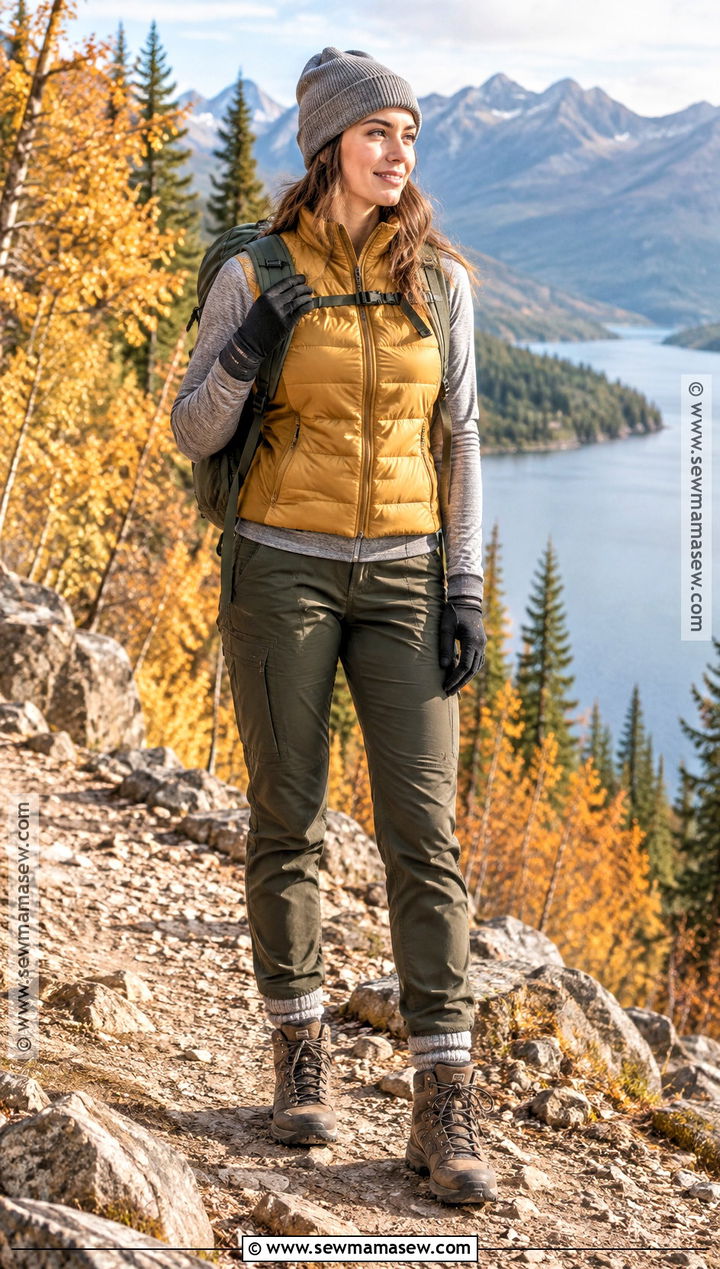
An insulated vest with full-length pants suits a cool, dry day when a puffer jacket would feel too warm while you're moving. A fitted long-sleeve base in cream, black or heather grey goes under a quilted vest in berry, mustard or dark green. Stretch pants with articulated knees handle steep steps. Add waterproof boots, wool-blend socks, light gloves and a close cap or beanie, with a medium pack holding a shell and a warm layer for long breaks. Try the vest on with your pack: some high collars rub against the shoulder straps and push up into your chin.
15. Rain Shell And Leggings Wet Fall Hiking Outfit
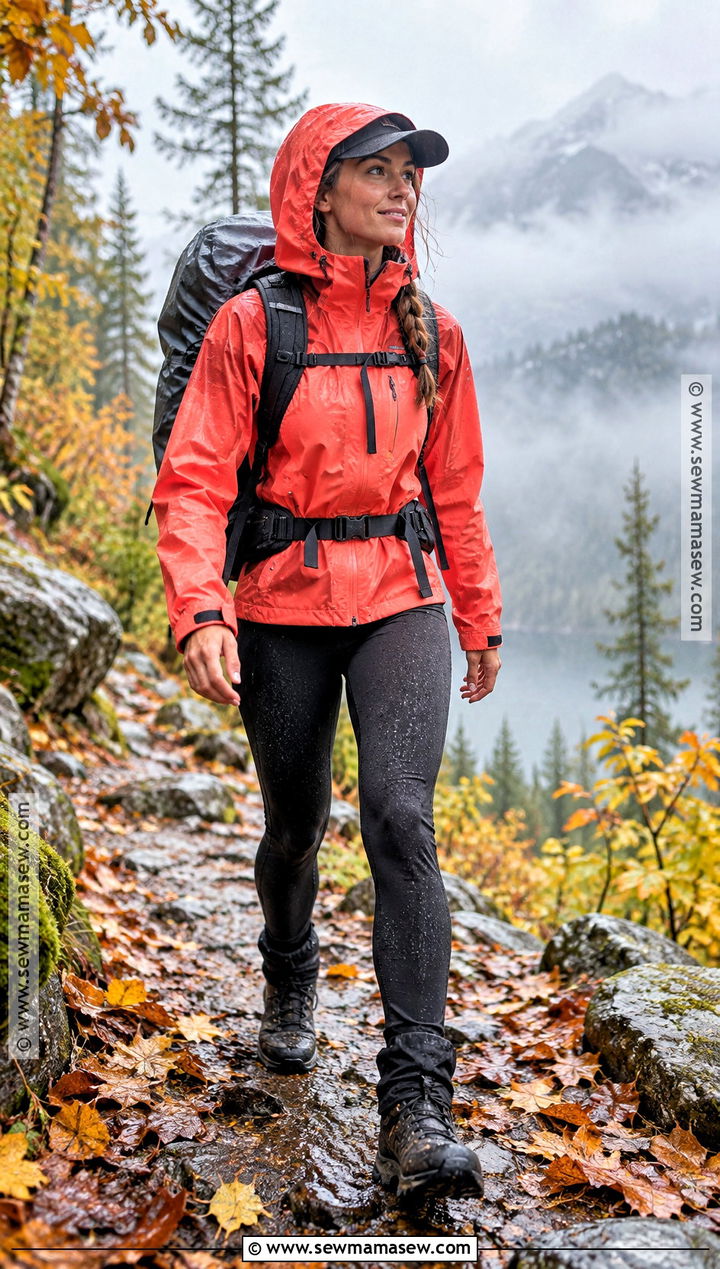
In mountain mist, a good shell does most of the work. I look for a hip-length jacket with an adjustable hood, zipped pockets and room for a fleece underneath. Below it, water-resistant hiking leggings or slim softshell pants hold up far better than cotton-blend leggings, which soak through and cling. Dark bottoms hide splashes, and a coral, blue, yellow or red shell keeps you visible on a grey day. Deep-lug waterproof boots, cushioned socks and ankle gaiters handle mud and wet grass. A brimmed cap under the hood, dry bags inside a covered pack, and no long scarf to get soaked.
16. Base Layer And Convertible Hiking Pants Outfit
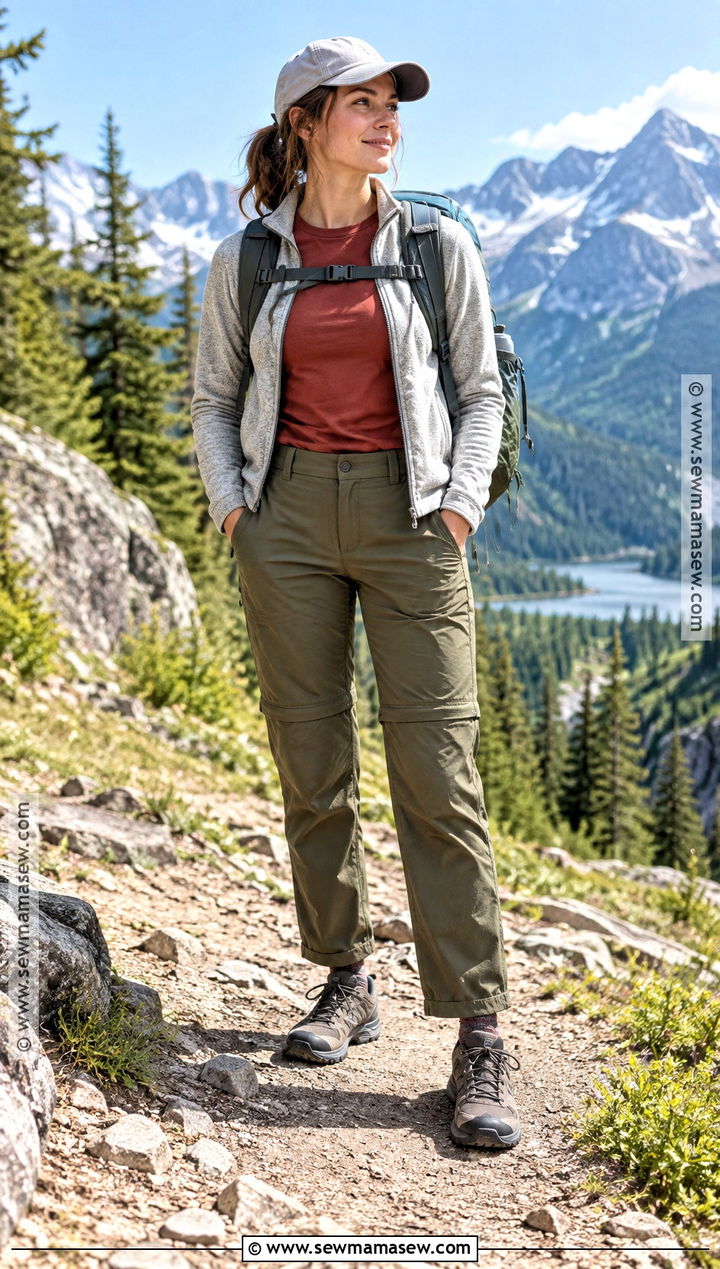
Convertible pants are for the long day that starts in a cold valley and ends on a sunny, sheltered slope. Zip off the lower legs when it warms up, and put the pieces somewhere secure in your pack; they're easy to lose. Wear them with a wicking crewneck and a thin grid fleece, which vents well on climbs. Khaki, grey or olive pants with a deep blue or brick top look good together. Trail shoes for dry paths, waterproof boots for mud and stream crossings. Merino-blend socks, a sun cap and a technical daypack round it out. The zips can rub above the knee, so try them on and walk around before a long route.
17. Plaid Overshirt And Trail Pants Fall Hiking Outfit
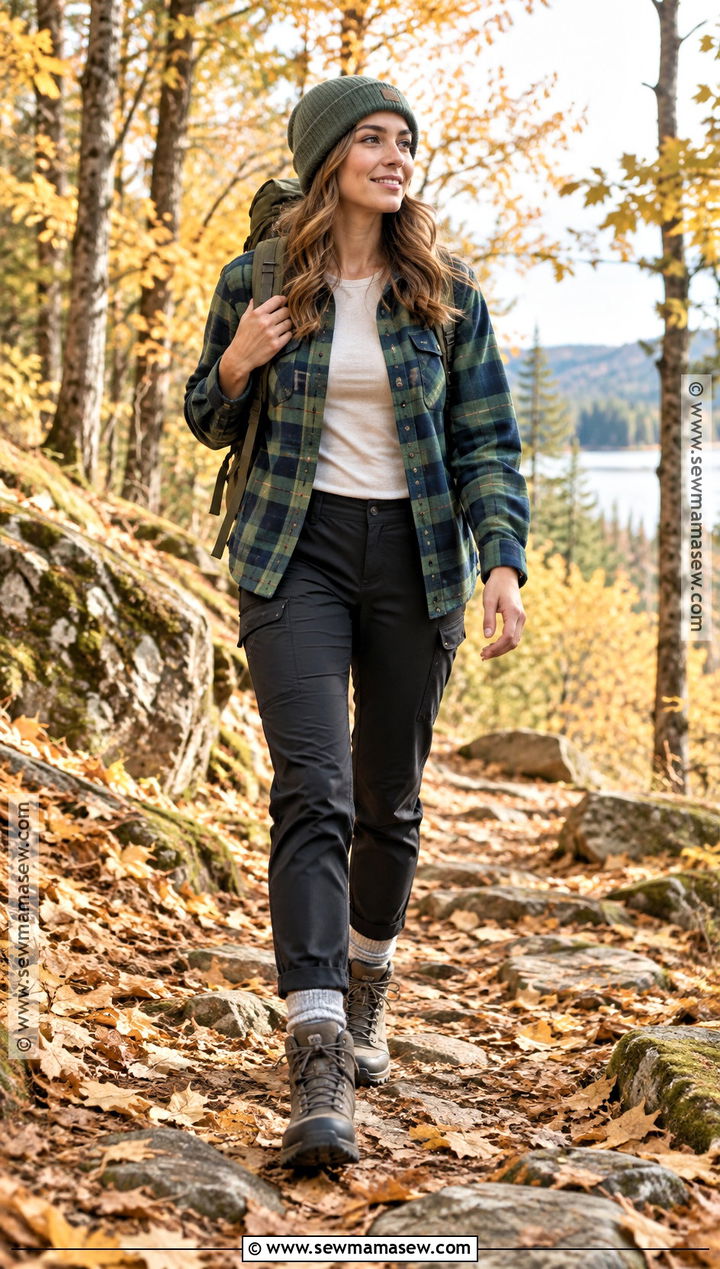
A plaid overshirt makes a gentle hike feel relaxed, and the performance kind works as a real midlayer. Wear it over a wicking tee with tapered trail pants that stretch and shrug off scrapes. Red-and-black, green-and-navy or brown plaid all go naturally with black or olive. Waterproof boots, thick crew socks and a beanie finish it. Carry a small daypack rather than a shoulder bag; a bag swinging at your hip throws your balance off on uneven ground. On exposed sections, you'll need a windproof, waterproof shell over it.
18. Quilted Jacket And Hiking Leggings Mountain Outfit
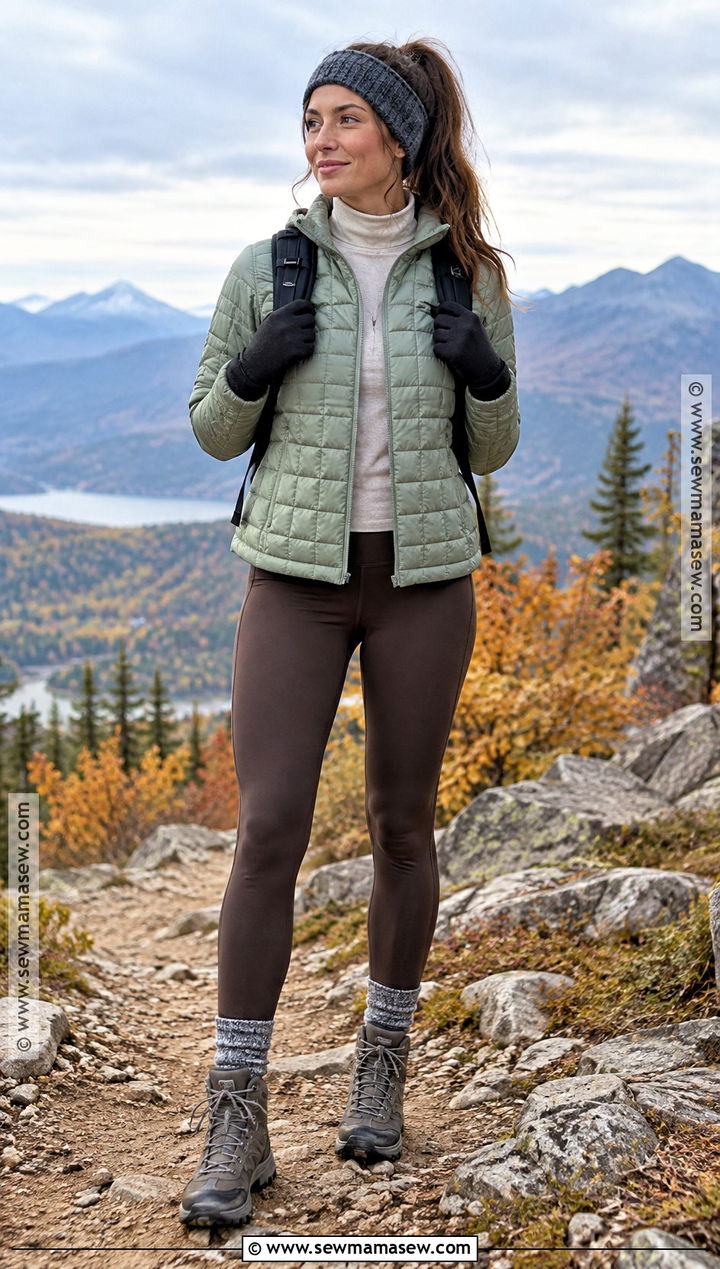
A thin quilted jacket adds warmth without the bulk of a winter coat, and it compresses into a pack better than most people expect. Layer it over a breathable mock-neck or crewneck with high-rise leggings in black or espresso. Sage, burgundy, navy or warm beige keep the palette clean. Waterproof mid boots and marled socks look rugged, and a fleece headband and thin gloves fit in a pocket. Raise your arms and swing them before buying: the jacket should move with your shoulders and sit flat under pack straps. In strong wind or steady rain, the shell goes on top.
19. Fleece Vest And Thermal Top Fall Mountain Outfit
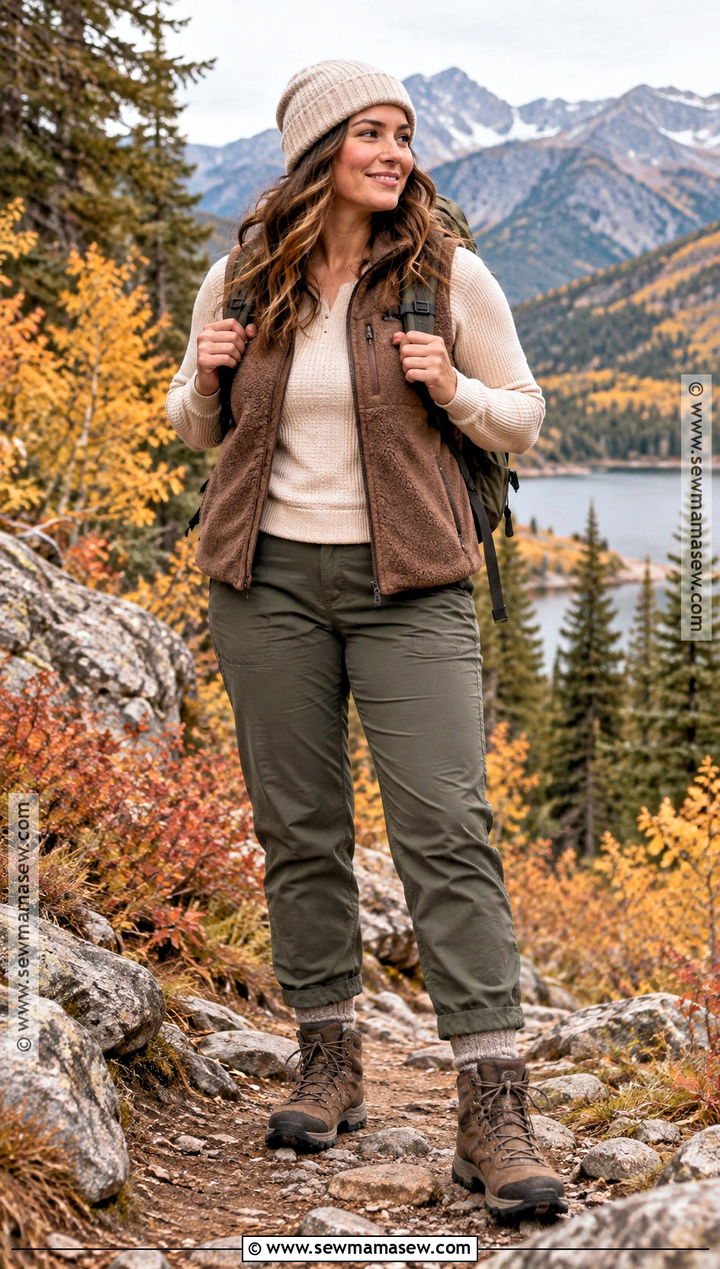
A waffle-knit thermal top with a fleece vest suits a long, steady climb on a cool day. The waffle texture traps a little warm air while still moving sweat, and the vest warms your torso without trapping heat in your sleeves. I prefer straight or gently tapered pants to leggings here, because brushy mountain trails scratch up thin fabric. Waterproof boots, wool-blend socks, a neutral beanie and a pack with reachable side pockets finish it. Olive pants, an oatmeal top and a brown vest make an easy earthy set. Pack a windproof rain jacket for the viewpoint.
20. Three-Layer Cold Weather Fall Hiking Outfit
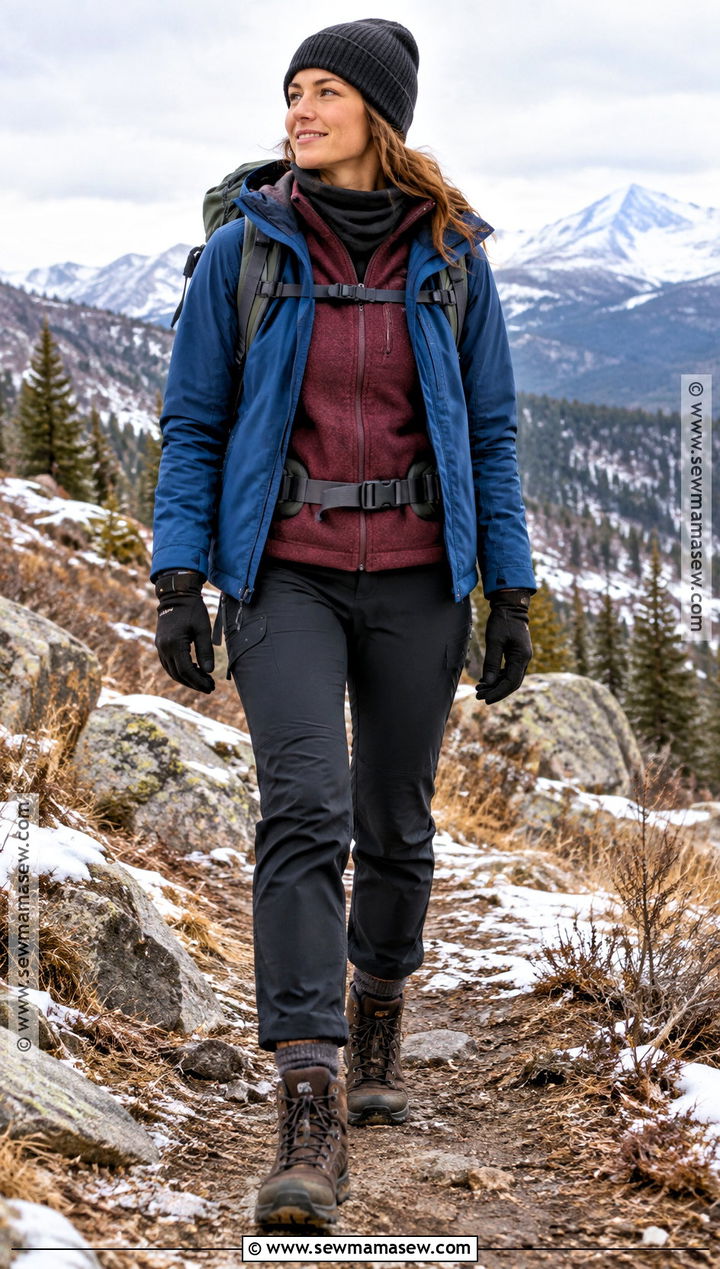
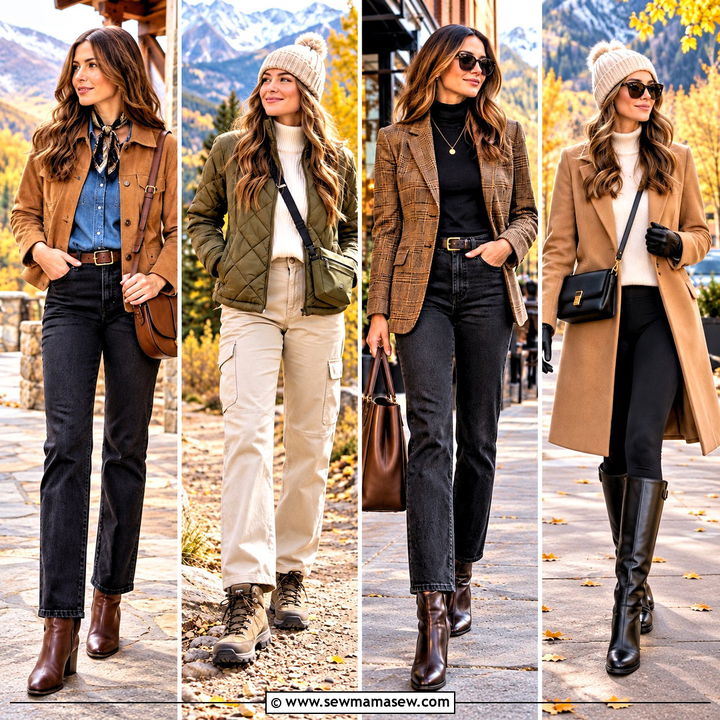
For a properly cold late-fall summit, I use all three layers and make each one adjustable. A merino or synthetic base, a breathable fleece, and a waterproof, windproof shell on top. For legs, use lined softshell pants or thin thermals under regular hiking pants. Hands, head and neck lose heat fastest, so insulated waterproof boots, wool-blend socks, gloves, a beanie and a neck gaiter all come along. Black pants, a berry fleece and a light grey or deep blue shell keep it cohesive. Pack spare socks and an extra warm layer in a weather-resistant bag. Even this warm outfit needs to vent easily, or you'll arrive at the top damp.
Cold Fingers and Ears Arrive Before a Cold Core
Exposed fingers and ears get cold long before your core does, and once your hands are numb, zips and buckles become a struggle. I keep a small kit that weighs very little:
- Thin liner gloves for the climb, plus a warmer or windproof pair for the summit. Two light pairs are more flexible than one heavy pair.
- A headband for climbing and a beanie for stops.
- A neck gaiter, which can be pulled up over the ears or nose and doesn't have loose ends to catch wind.
Where Hiking Clothes Rub, and How to Stop It
On a long mountain day, chafing comes from repeating the same movement thousands of times rather than from a bad fit. Hip belts rub over thick waistbands, pack straps rub over collar seams, and inner thighs rub in loose shorts. Try your full outfit with your loaded pack on a short walk first. Flat seams, a low-profile waistband and fitted bike-short liners prevent most of it. If you feel a hot spot on your foot, stop and deal with it straight away; a few minutes of tape or a sock change saves the rest of the hike.
The Summit Layer Is the One to Pack First
Mountain clothing can be practical and still look like you put thought into it. Start with fabrics that breathe, add warmth you can remove, and carry a shell sized for the route and forecast. Fit your shoes to the ground you'll walk on, and don't skip socks, gloves, a hat and gaiters when it's cold or wet. Mountain weather changes faster than valley weather, so spare layers matter more up high. Colorful shell, classic fleece or sleek leggings, the right outfit is the one that lets you move freely all day.
Related posts: