When I edit someone's fall wardrobe, the shirts are usually the most underused thing in it. A button-down will cover a cold morning, a warm afternoon and a chilly evening if you change what goes over it, and it pairs with almost every bottom you own. Below are twenty shirt outfits I'd actually put together for a client: crisp cotton, flannel, denim, satin and relaxed overshirts, worn with wide-leg jeans, trousers, midi skirts and boots. For each I've explained how I'd tuck it, what fabric weight suits the season, and who the shape works for. Swap the coat or the fabric weight to suit your own climate.
Four Ways to Tuck a Button-Down
Nearly every outfit below says tuck it, half-tuck it or knot it, and each version changes the shape of the whole look. These are the four I use, and when I reach for each.
- Full tuck: the whole shirt goes into a high-rise waistband. It gives the cleanest waist, so I use it with wide-leg trousers, skirts and anything already full below. Pull the shirt down at the back and side seams, then bend forward once so the fabric loosens and doesn't look vacuum-packed.
- Front tuck: only the section around the button placket goes in, and the back hangs free. It shows the waist without the formality of a full tuck and suits straight jeans. Keep the tucked section narrow, about the width of your hand.
- Side tuck: one front panel goes in at the hip and the other hangs loose. It's a casual, slightly asymmetric line that I like on longer shirts with barrel or wide jeans.
- Knot: undo the bottom two or three buttons and tie the front panels at the natural waist. It works best on soft cotton or chambray over a full skirt; stiff oxford or heavy flannel makes a bulky knot.
If tucking leaves you with a lump at the waistband, the shirt is probably too long or too thick for that bottom. Choose a shorter, lighter shirt rather than forcing it.
1. White Shirt With Wide-Leg Jeans
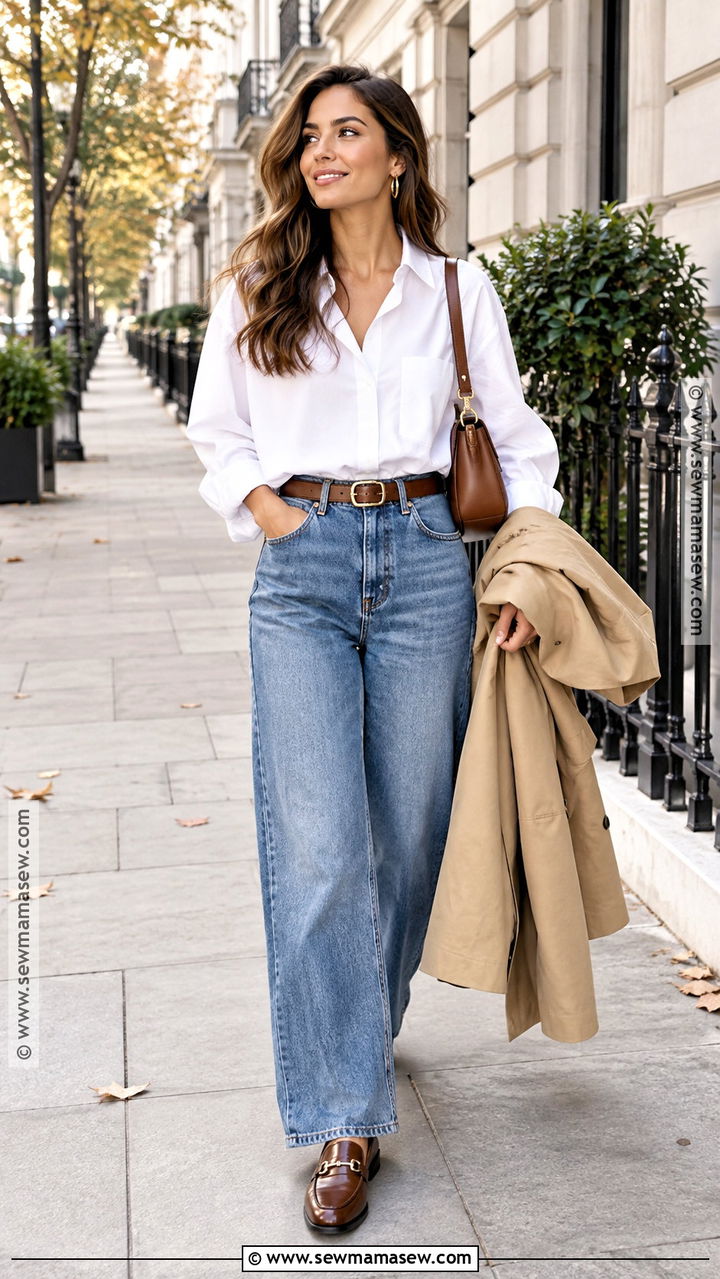
A white shirt with wide-leg jeans is the outfit I build first in nearly every closet edit, because it tells me what fits. I prefer a slightly oversized cotton shirt fully tucked into high-rise denim, which gives a clean waist against all that leg volume. For a looser feel, undo the bottom button and tuck just one side. A camel belt and brown loafers warm up the blue and white. Petite women usually look better in a cropped wide leg that shows the shoe; taller women can let the hem almost cover it. On colder days a beige trench or brown blazer goes straight over the top.
2. Blue Striped Shirt With Barrel Jeans
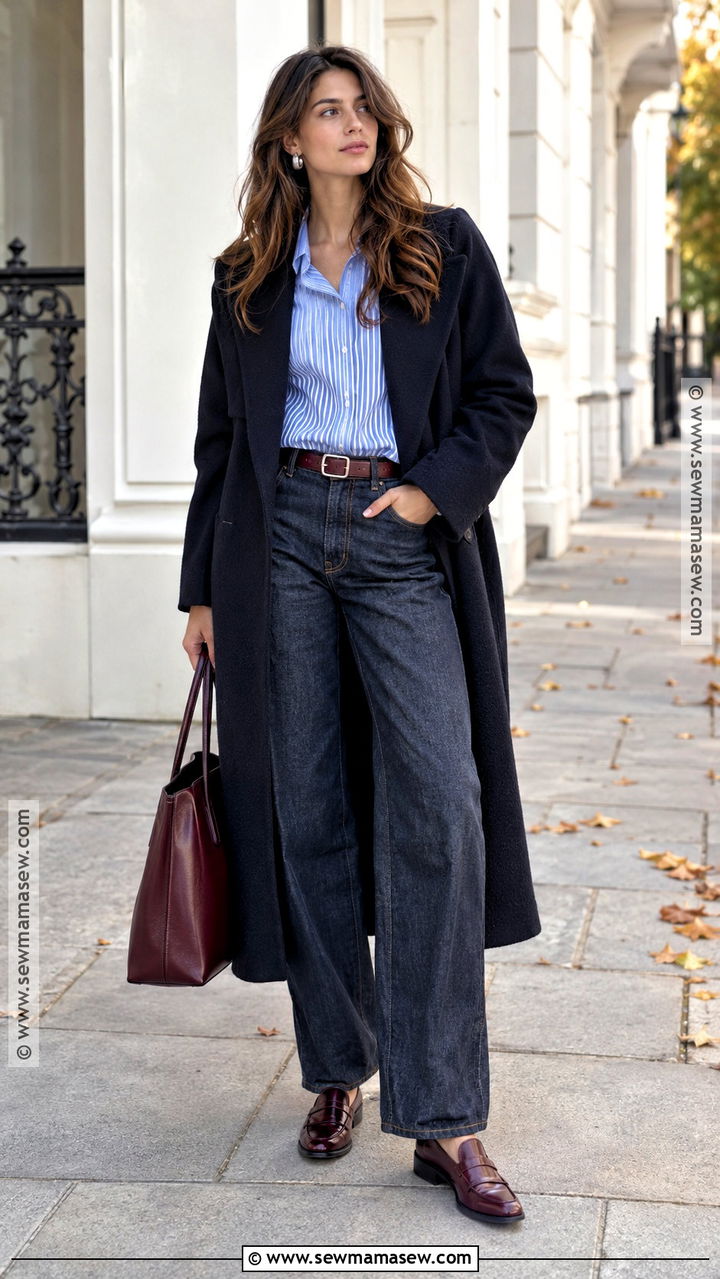
Barrel jeans can look like a costume if the top is equally loose, and a striped shirt is a good way to steady them. The vertical stripes add length and calm the curved leg. I'd keep the shirt close to the body and either leave it untucked with neat rolled cuffs or tuck the front into a high rise to show the waist. If a full barrel shape feels like too much, a gentle curved cut gives the same idea with less volume. Burgundy loafers and a matching belt pick up a warm accent, and a navy wool coat keeps the colors simple.
3. Plaid Shirt With Black Straight-Leg Jeans
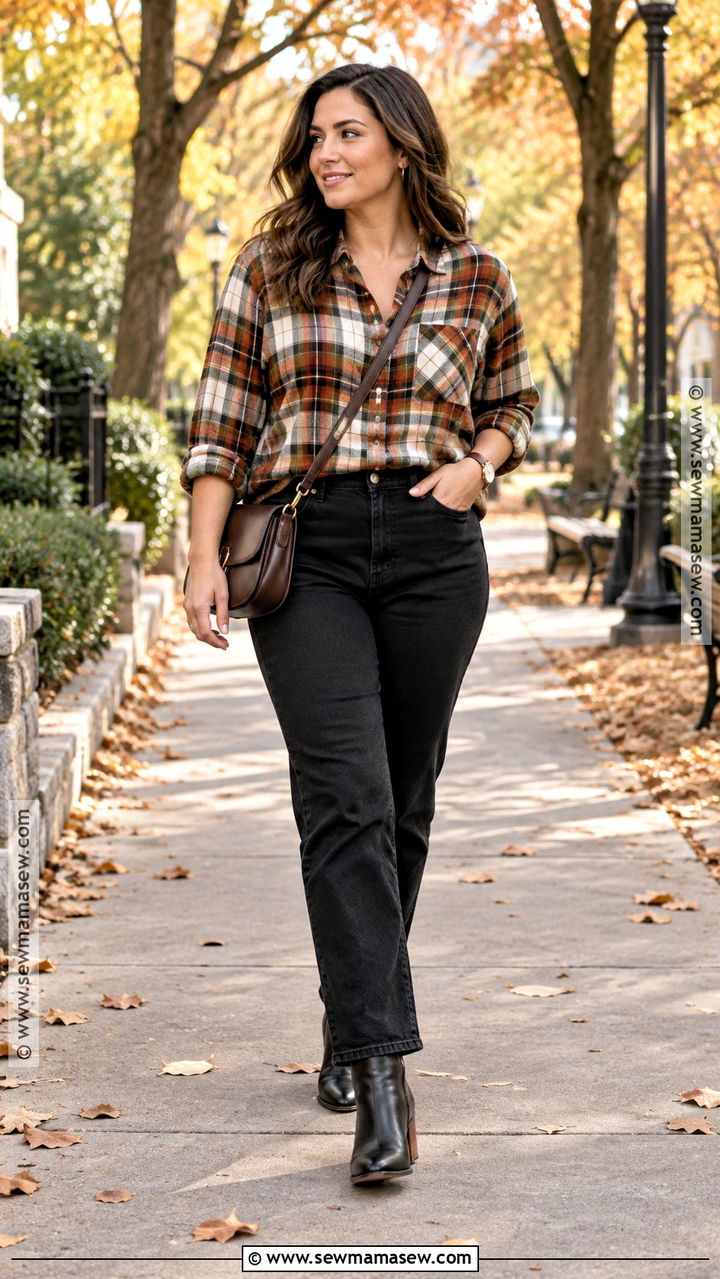
Flannel and black jeans is about as autumnal as a casual outfit gets, and black denim makes a loud plaid easier to wear. I'd look for a check in rust or olive with no more than three colors in it, so it doesn't fight with everything else. Buttoned and loosely tucked, it looks put together; worn open over a fitted black long-sleeve tee, it gives you a warmer layer you can take off. A leather belt helps if you want more shape at the waist. Black block-heel ankle boots and a dark brown crossbody keep it practical, and a light scarf is enough when the temperature drops.
4. Denim Shirt With Corduroy Pants
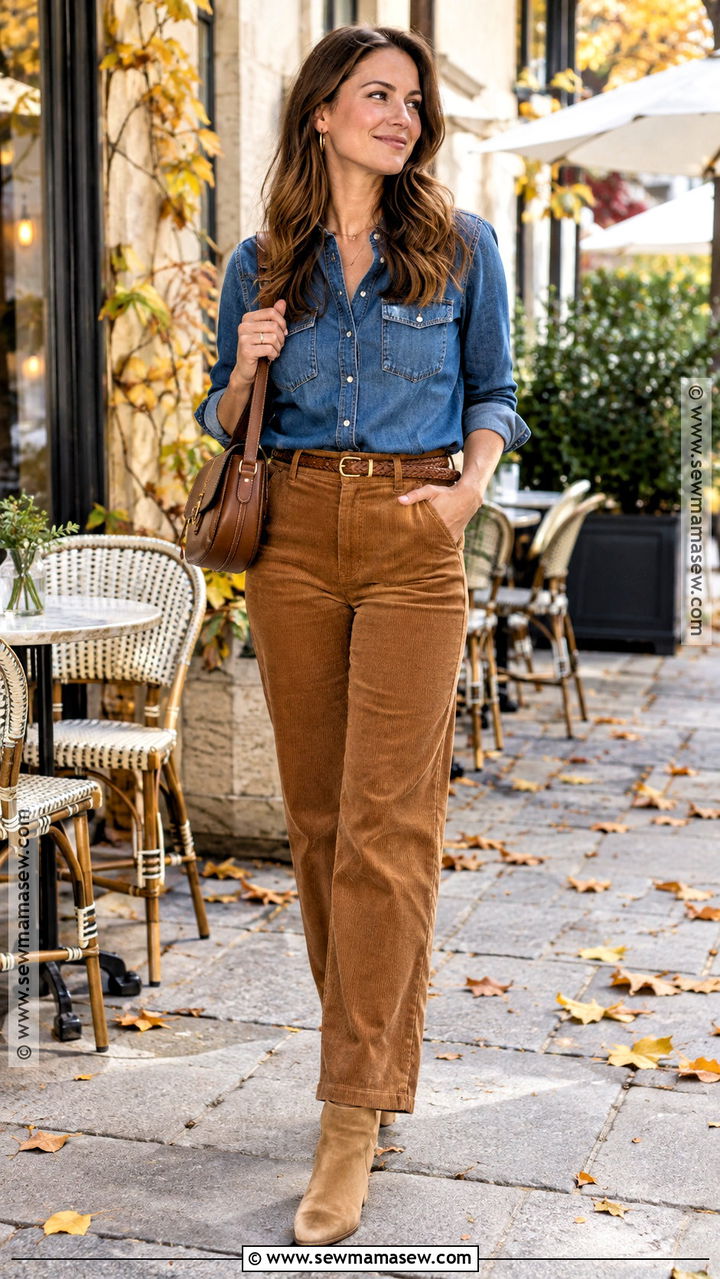
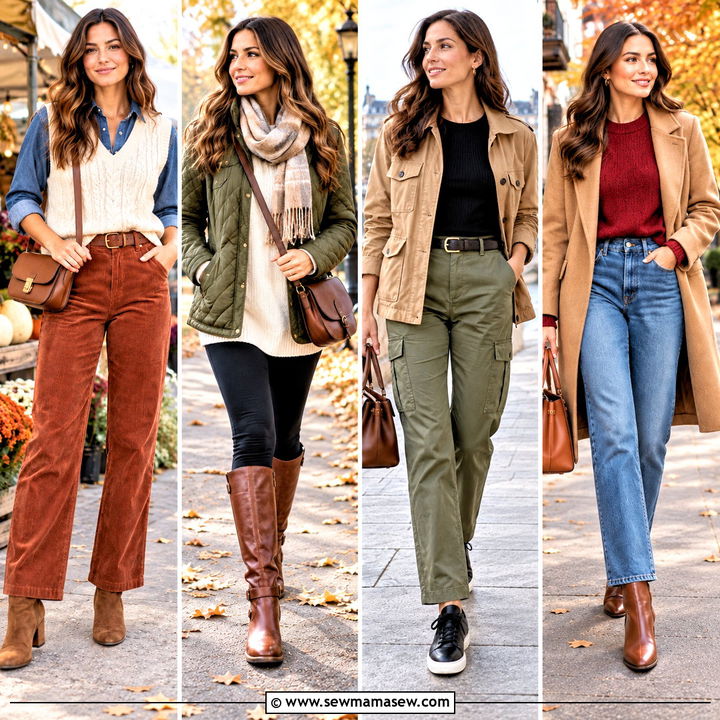
Denim and corduroy are both sturdy, textured fabrics, so the trick is to keep them visibly separate. A woven brown belt between a medium-wash shirt and camel or forest green cords does that job. A slim or straight leg balances a relaxed shirt. One honest warning: corduroy wears shiny at the knees and seat over time, and a thicker wale shows it sooner, so I'd go for a medium wale if you plan to wear these often. Suede ankle boots and a saddle bag finish it. For a softer version, pull a cream crewneck over the shirt and let the collar and cuffs show.
5. Satin Shirt With Leather Midi Skirt
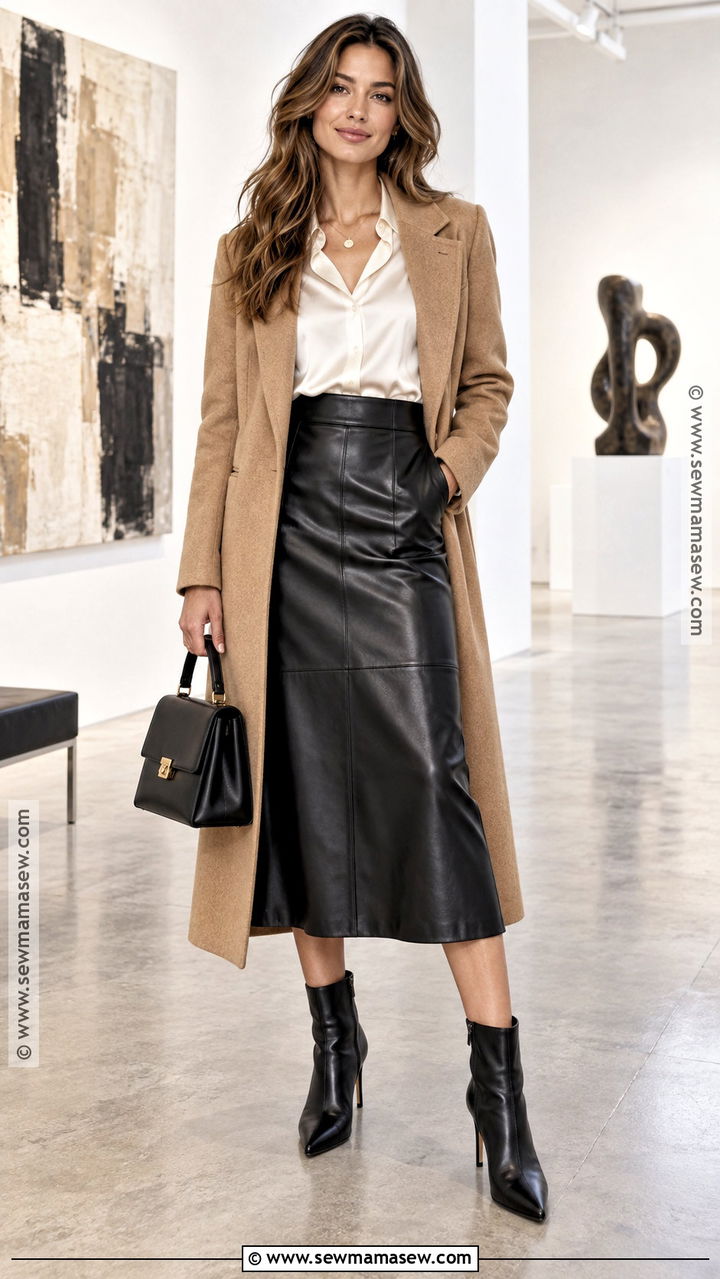
Satin over leather is a dressy texture contrast, so the accessories need to stay quiet. A fluid satin shirt in burgundy or cocoa, tucked into a high-waisted leather or faux-leather midi, already has plenty of shine. I leave the top button undone so the neckline softens. Satin creases where it's tucked, so I'd give it a light steam right before you leave and choose a skirt with a smooth, flat waistband. Pointed ankle boots lengthen the line, a top-handle bag keeps it polished, and a camel or black wool coat covers the walk to dinner or an evening event.
6. Chambray Shirt With Pleated Midi Skirt
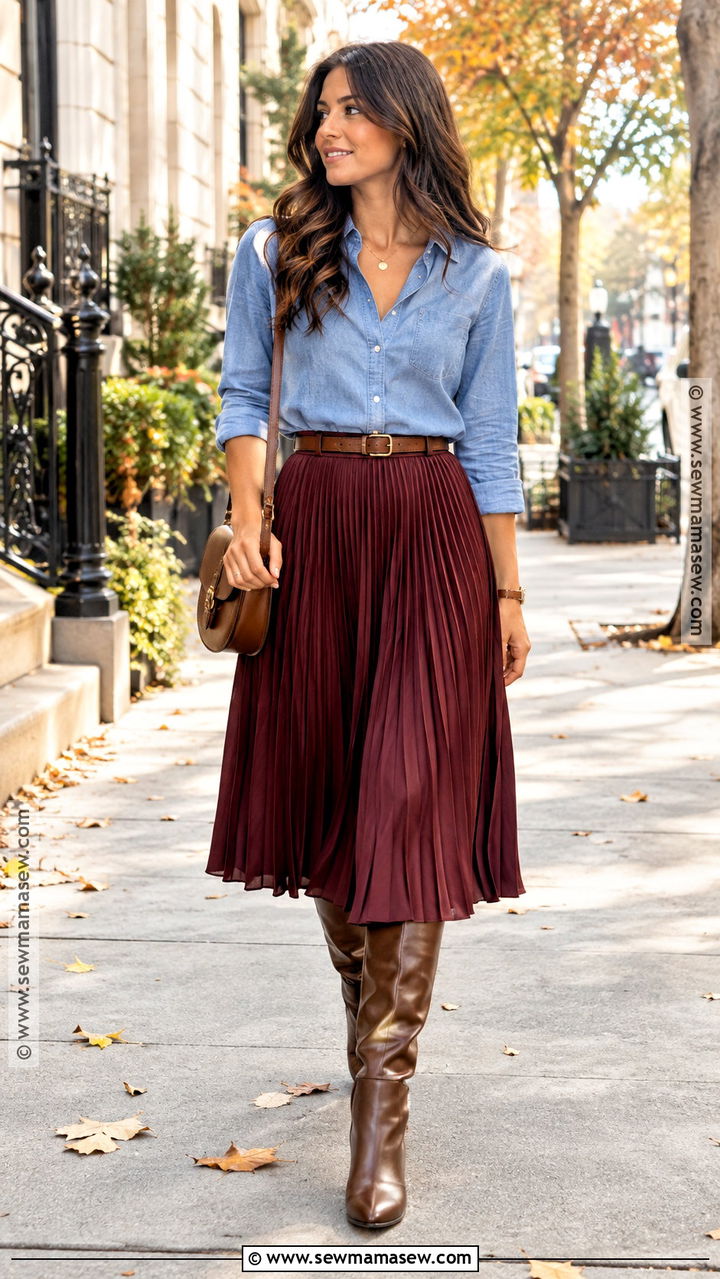
Chambray has the look of denim without the stiffness, which is why it suits a pleated skirt. A soft blue shirt tucked into a burgundy or olive pleated midi gives you structure on top and movement below. I'd use a slim belt rather than a wide one, since a wide belt flattens the pleats at the hip. Knee-high boots that slip under the hem keep your legs warm. If you're on the shorter side, pick a skirt that ends just below the knee so there's some space between hem and boot. When it cools down, a cropped cardigan or fitted blazer goes over the top.
7. Oversized Shirt With Leggings And Trench Coat
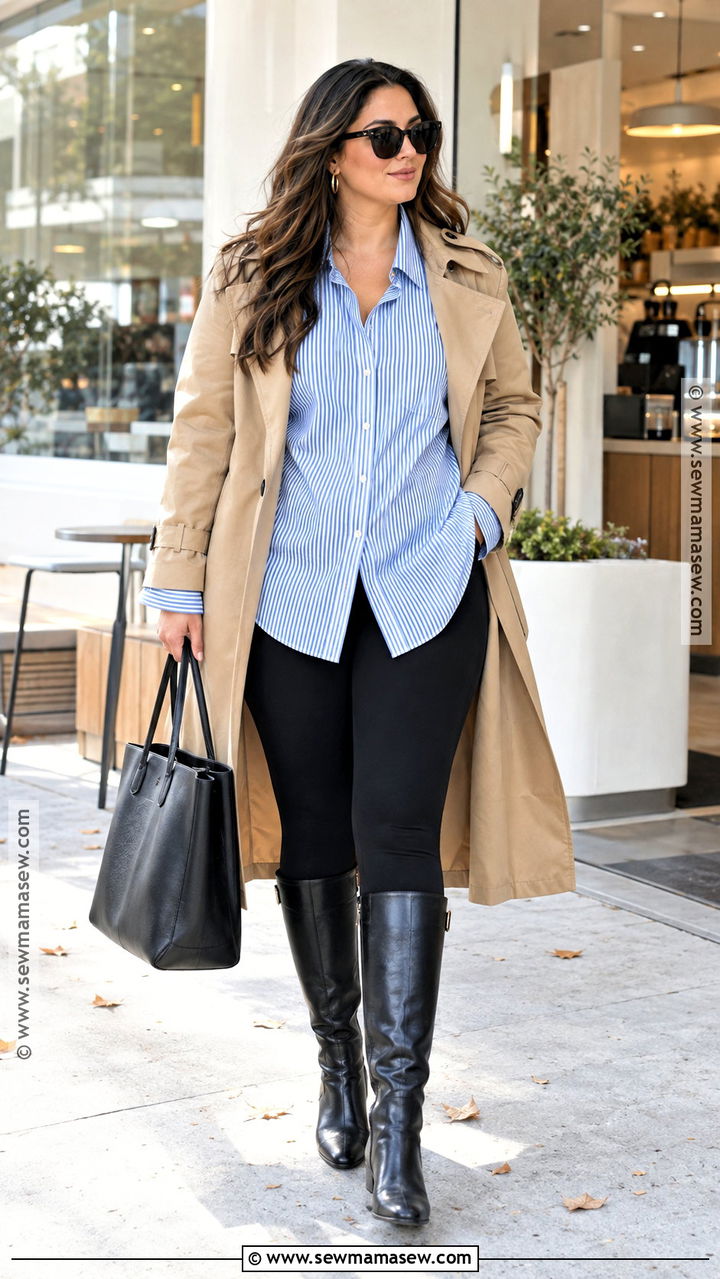
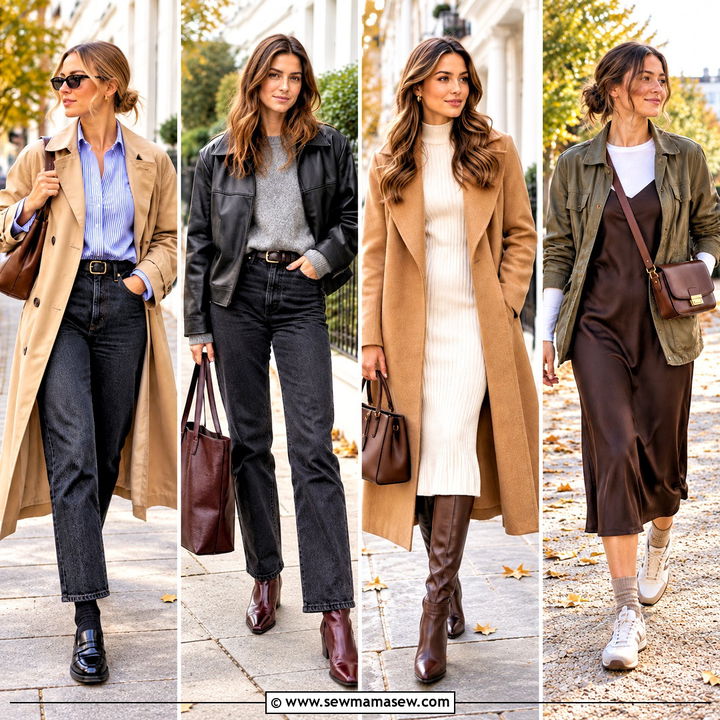
An oversized shirt over leggings only looks intentional if the shirt has a proper collar and firm cuffs. A soft, limp shirt slides into pajama territory. I'd choose a long white or striped button-down that covers the seat, with thick, fully opaque black leggings; thin leggings show every line under a pale shirt. Leather riding boots, or chunky loafers with tall socks, add weight at the bottom. A beige trench left open shows off the layers. Drape a fine-knit sweater over your shoulders for warmth on errands, school runs and travel days.
8. Oxford Shirt With Tailored Trousers
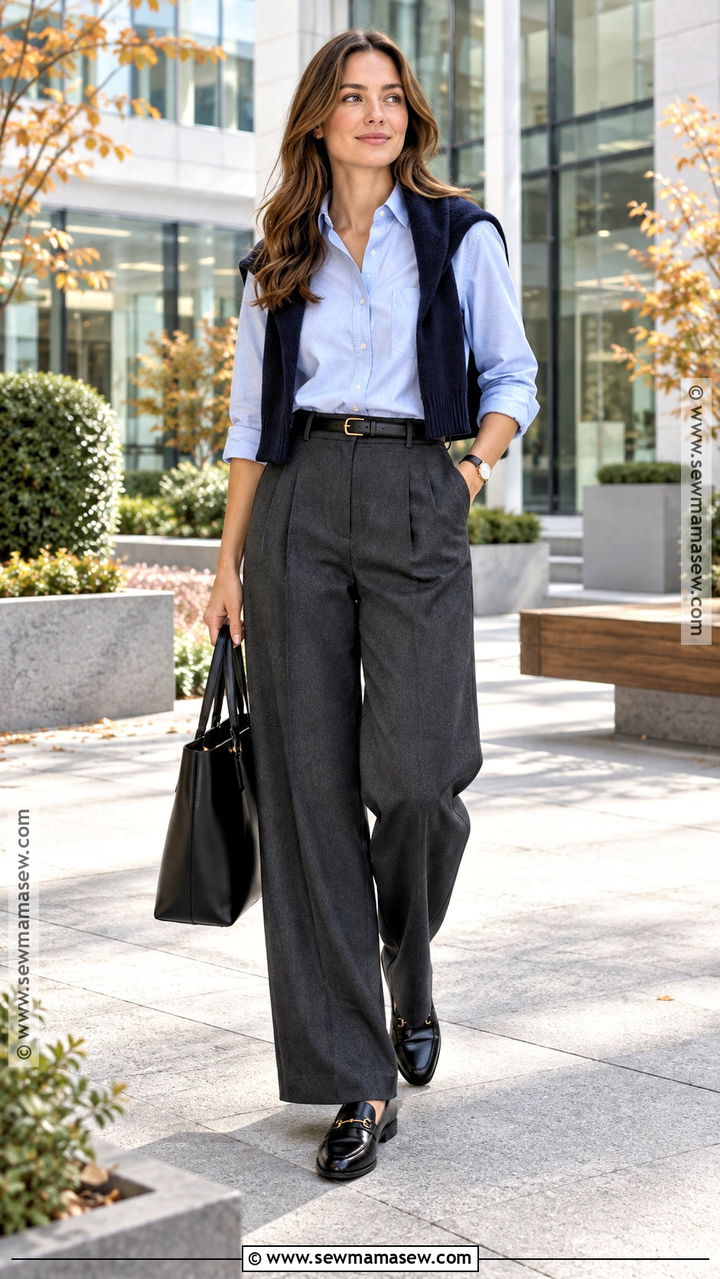
Oxford cloth has a slightly heavier basket weave than poplin, so it keeps its collar standing all day. That's exactly why I suggest it for workwear. A pale blue or white oxford in a high-rise charcoal or navy trouser is a dependable office outfit, and a straight or gently wide leg keeps it current. Roll the sleeves once if the office is relaxed. If a full tuck feels uncomfortable when you sit, use a neat front tuck and choose trousers with a firm, flat waistband. Leather loafers, a matching belt, and a fine knit over the shoulders or a single-breasted blazer cover cooler days.
9. Flannel Shirt With Straight Jeans And Boots
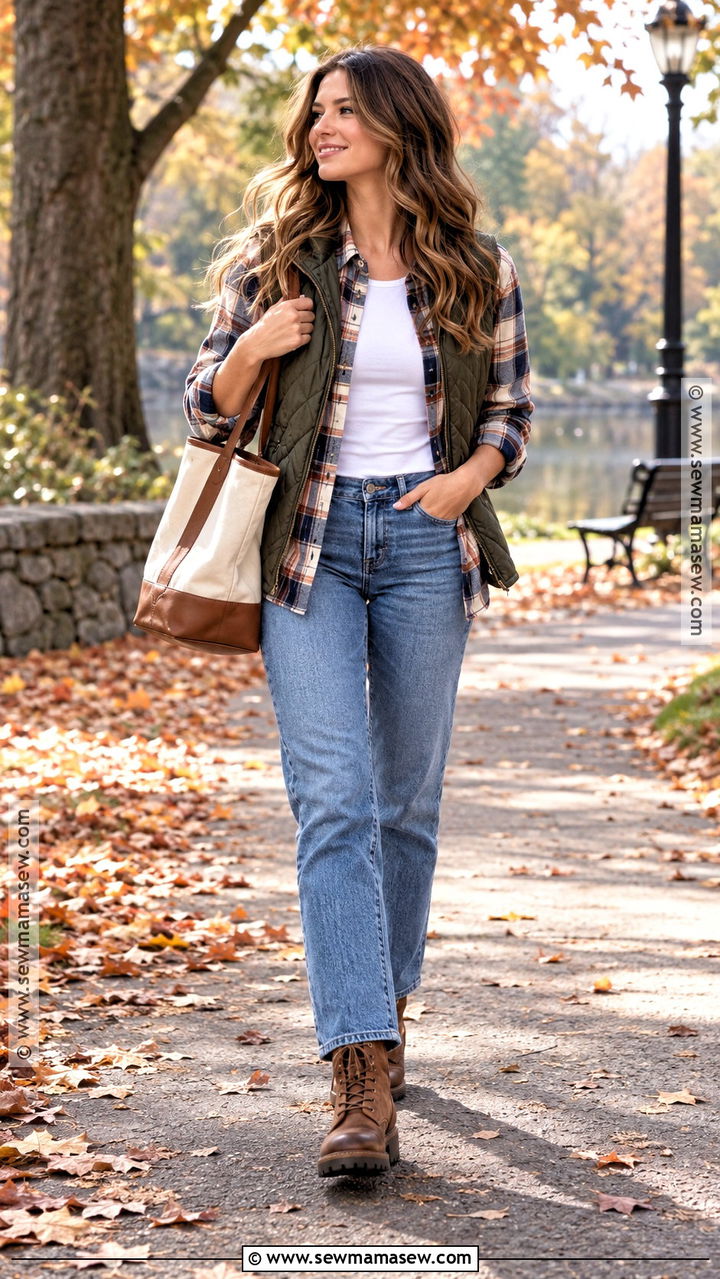
Weekend flannel works best as a layer rather than a top. I wear it open over a fitted white or gray tee so it can come off as the day warms up. A plaid with cream, navy and rust in it is easy to match with medium-wash straight jeans. Brushed flannel holds warmth well but sheds a little lint on the first few washes, so I'd wash it separately before wearing it with dark denim. Brown lug-sole boots give grip on wet leaves. For more shape, button the middle and loosely tuck one side, and add a quilted vest if the morning is really cold.
10. Black Shirt With Camel Trousers
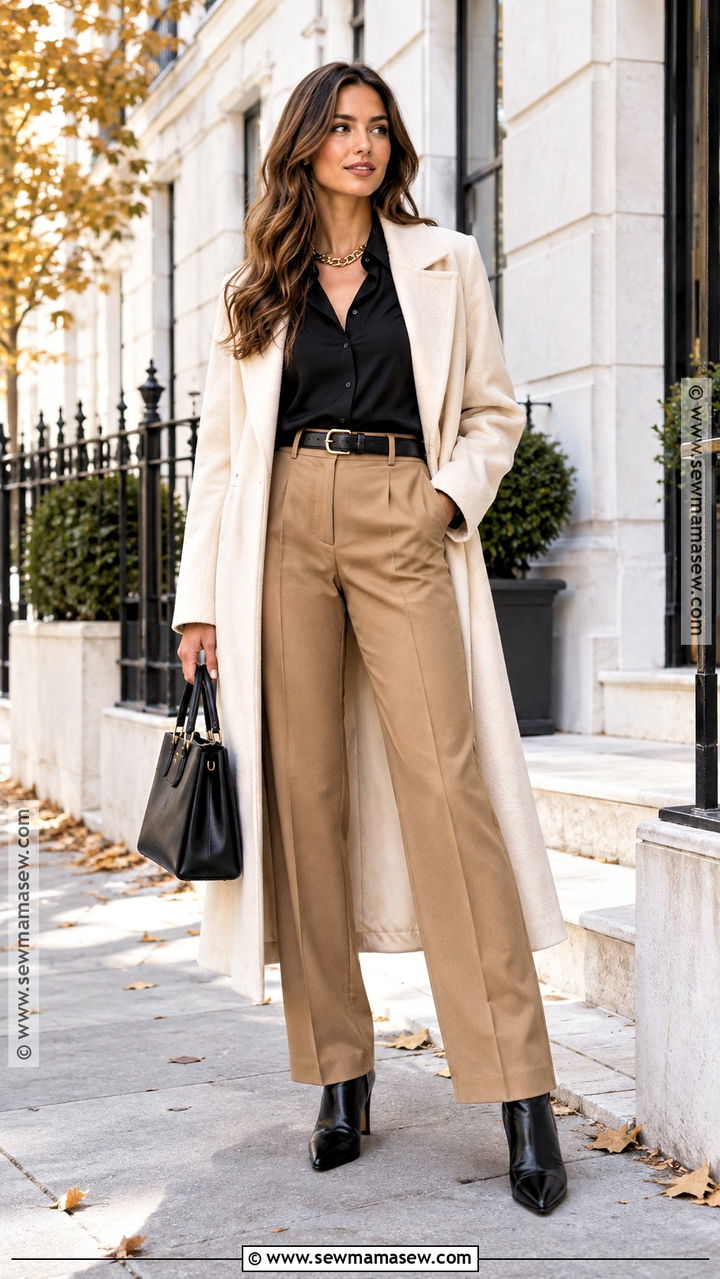
Black and camel is one of the easiest strong color pairings for fall. A soft black button-down in crepe or cotton, tucked into high-rise camel trousers, looks deliberate without any effort. Pick the shoe for the setting: pointed flats, heeled ankle boots or loafers all sit well with it. Black can look harsh near the face for some complexions, especially fair, warm-toned skin. If that's you, choose a draped shirt, leave the collar open, and add a warm-toned scarf or a long cream coat to soften it. Gold earrings or a fine chain near the collar finish the neckline.
11. Corduroy Shirt With Cream Jeans
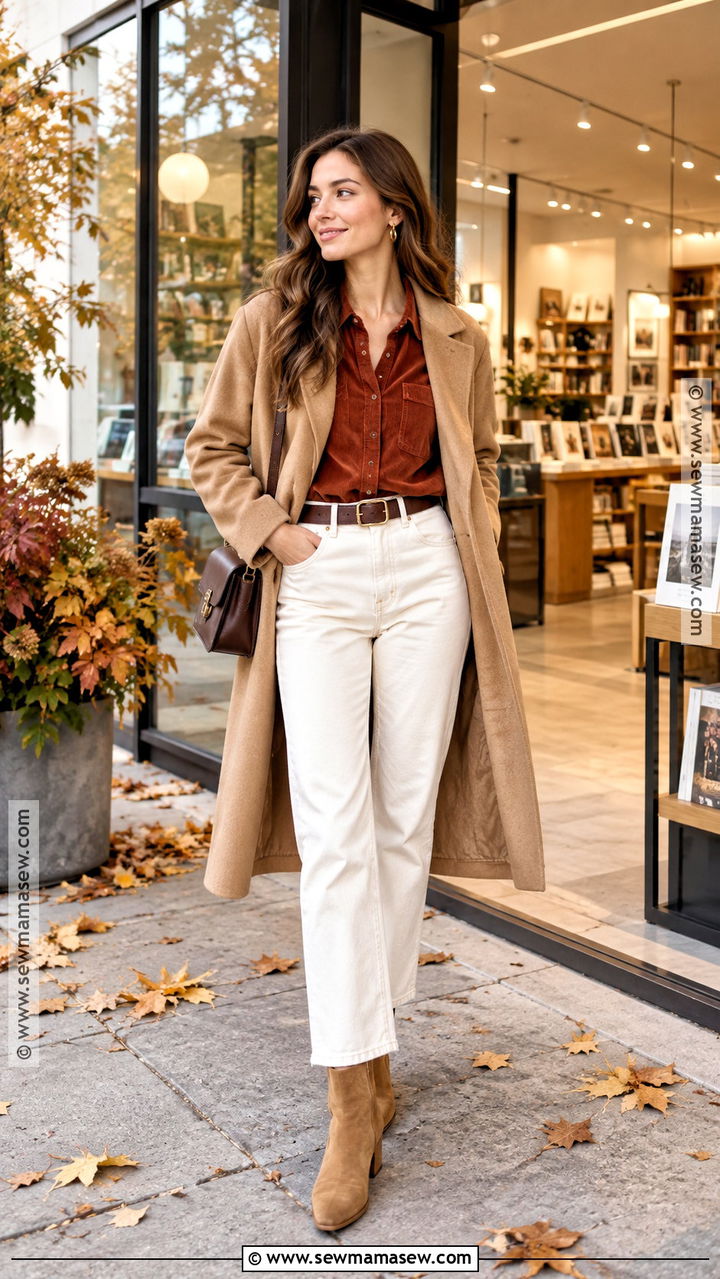
Fine-wale corduroy is the version I recommend for a shirt, because the thinner ribs drape like a heavy cotton instead of standing stiff like a jacket. In rust or olive with cream jeans, it feels fresh rather than rustic. Cream is easier than bright white in fall, since it sits better with warm colors. Wear it buttoned and tucked into straight-leg denim, or open over a neutral tank during warmer weeks. If the cut is oversized, roll the sleeves and keep the jeans streamlined. Tan suede boots, a dark brown belt and a light wool coat make it office-friendly on casual days.
12. Satin Shirt With Dark-Wash Jeans
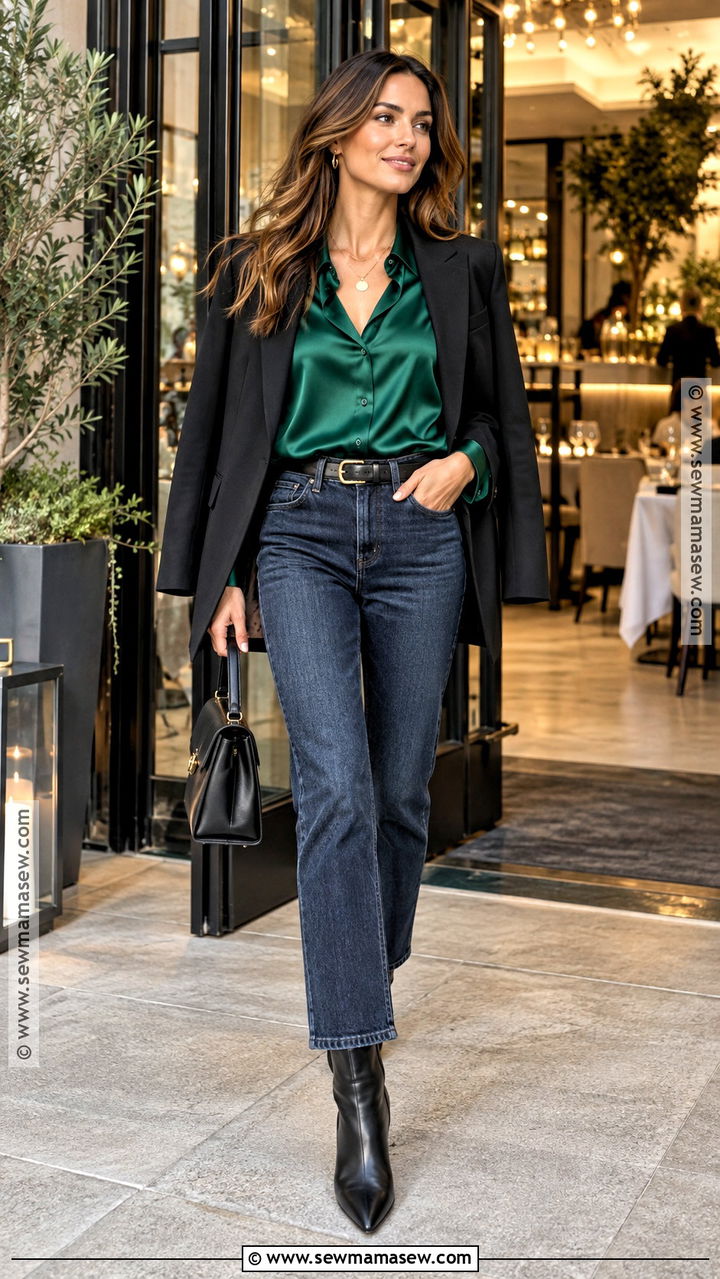
A jewel-toned satin shirt is the fastest way I know to make dark jeans dinner-ready. Emerald or plum against an even, unfaded dark wash reads polished; heavy distressing undoes it. Straight, slim or a subtle bootcut all work. Tuck the shirt fully and add a slim leather belt. Satin can show the bra through the fabric under strong light, so I'd wear a smooth camisole underneath, which also helps it hang better. Pointed pumps are sharper, heeled ankle boots more practical for cold pavements, and a black blazer or long wool coat sits well against the sheen.
13. Utility Shirt With Cargo Pants
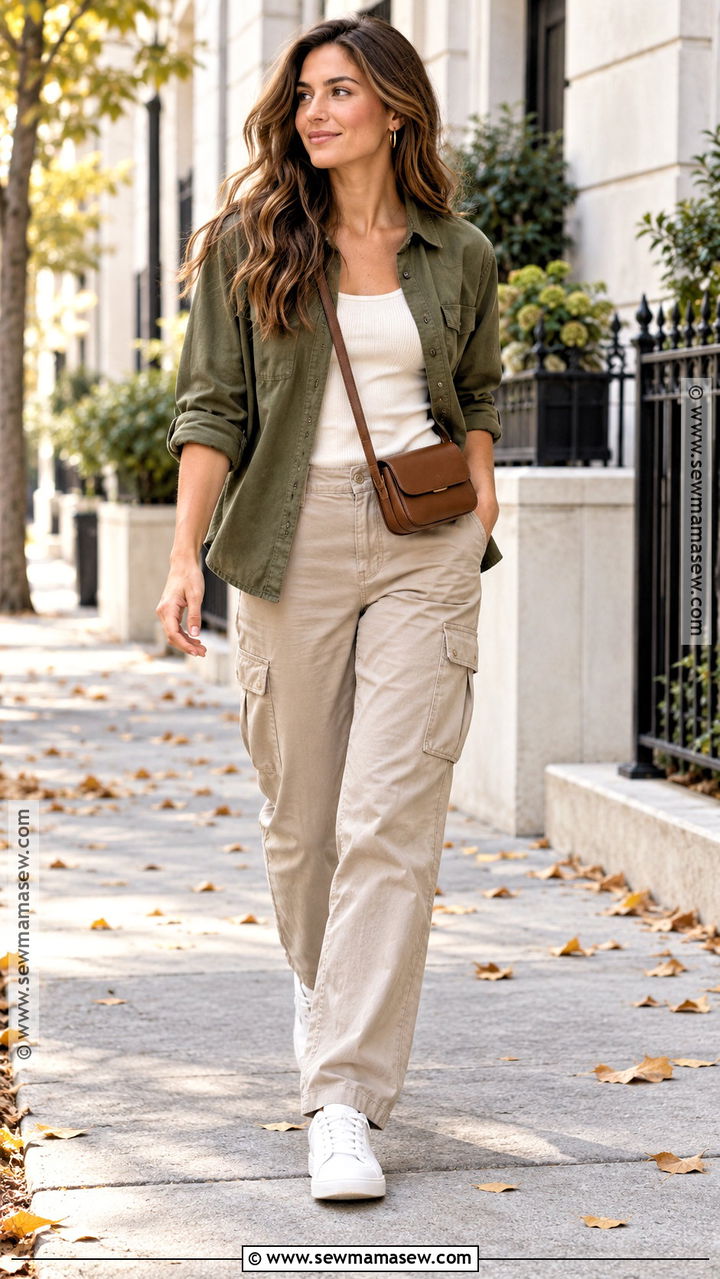
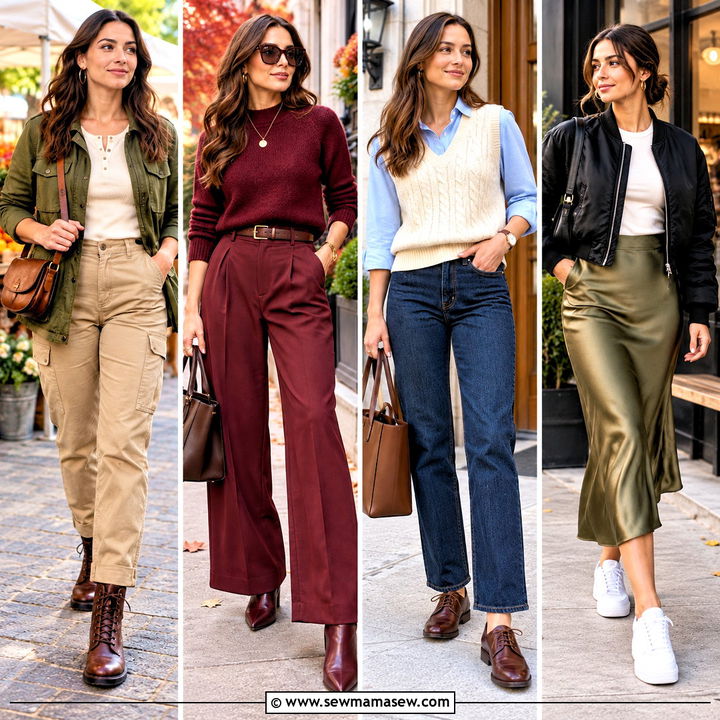
Utility shirts and cargo pants in one exact color can look like a jumpsuit, which is fine if that's what you want, but it's usually not. I mix two related shades instead: olive with stone, or khaki with dark brown. A fitted tank underneath lets you leave a few buttons open. Rolling the cuffs to show the wrist breaks up all that heavy fabric. Shoes depend on the weather: white sneakers on dry days, sturdy leather boots when it's wet. A compact crossbody keeps your hands free, and a fitted bomber in the same earthy palette covers a colder afternoon.
14. White Shirt With Sweater Vest And Trousers
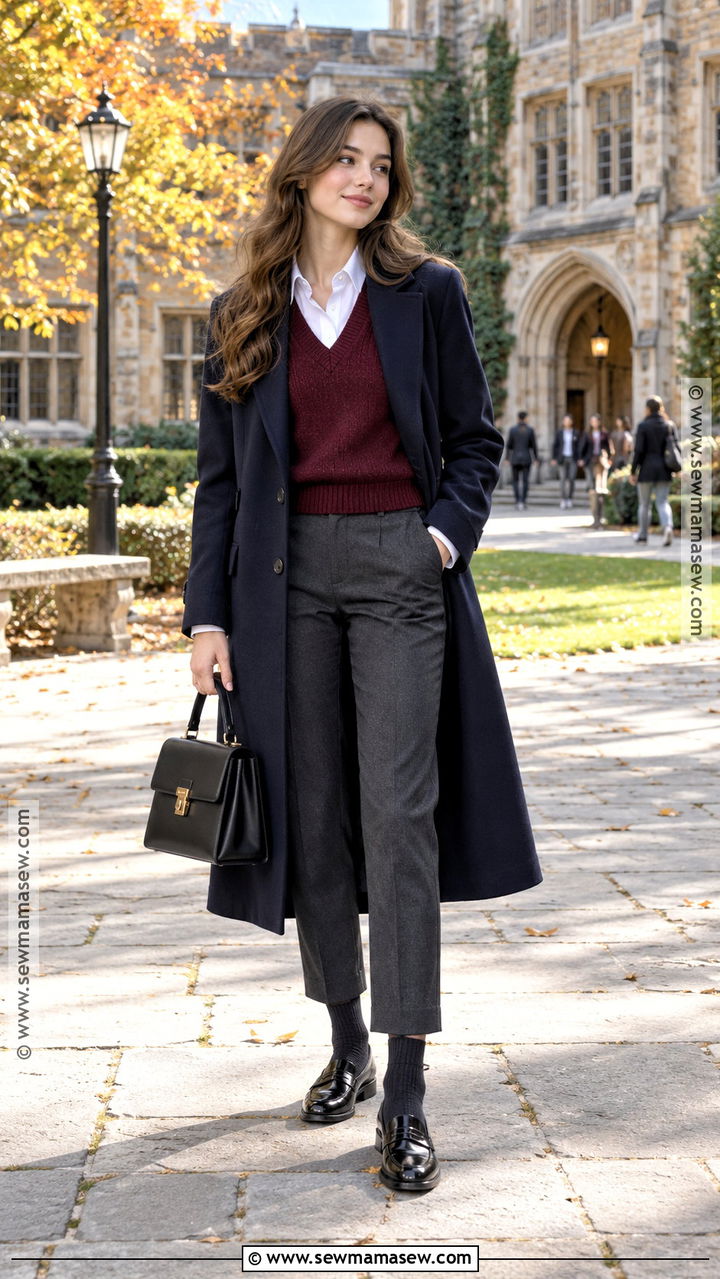
A sweater vest over a white shirt keeps the collar and sleeves visible while adding warmth across the chest. I'd choose a fine-knit vest in gray or navy, because a chunky one adds bulk exactly where you don't want it under a blazer. Pair it with ankle-length tailored trousers in a coordinating neutral. If both pieces are relaxed, let the shirt hem show slightly below the vest; for a cleaner office version, tuck the shirt in and pick a shorter vest. Women with a fuller bust usually look better in a V-neck vest than a crew. Loafers with ribbed socks and a structured bag suit work or study.
15. Striped Shirt With Black Midi Skirt
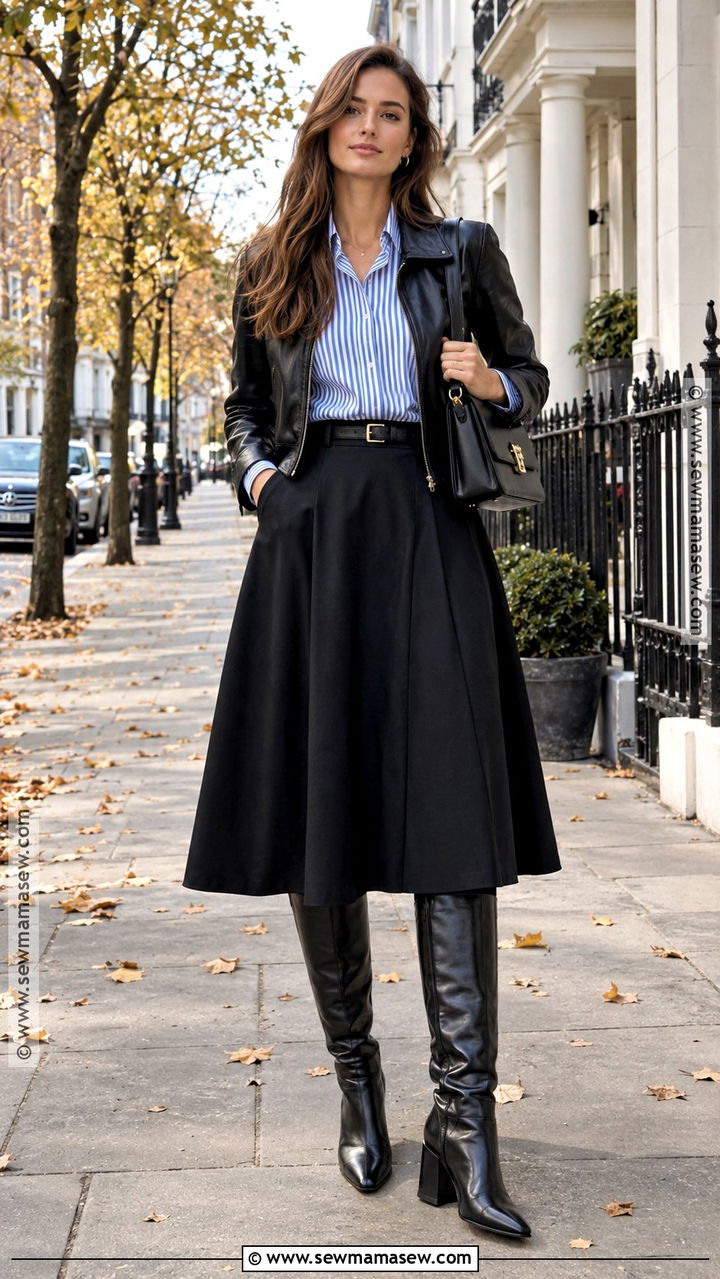
A striped shirt with a black midi skirt is my alternative to jeans when someone wants to look more pulled together on an ordinary weekday. Tuck a blue-and-white or brown-and-cream stripe into a high-rise A-line or straight skirt. If the shirt is oversized, the skirt should be smooth and fairly narrow, otherwise both halves fight for volume. Black knee-high boots continue the dark lower half and keep you warm. Leave the collar open and roll the sleeves. A cropped leather jacket gives it some edge; a wool blazer takes it to the office.
16. Denim Shirt With Black Wide-Leg Trousers
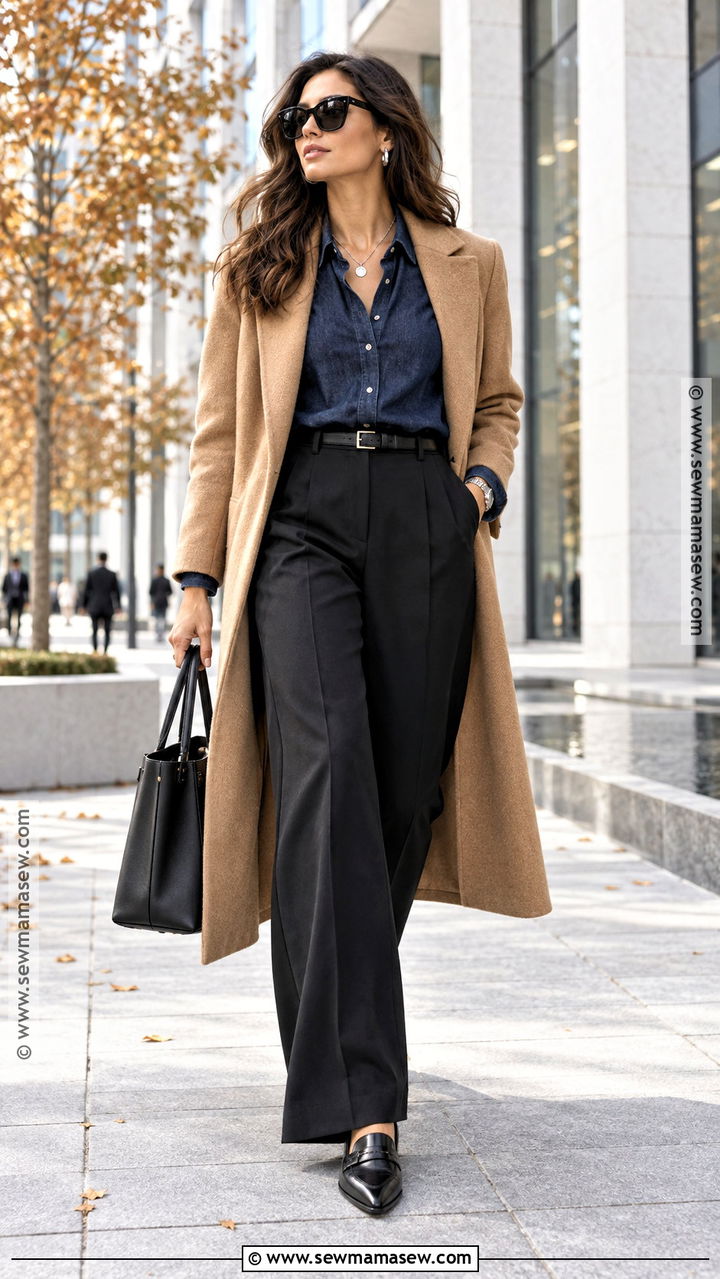
Denim usually reads casual, but a denim shirt without heavy fading, contrast stitching or chunky pockets looks surprisingly sharp with black wide-leg trousers. A lightweight chambray or dark wash is the one to pick. I tuck it into a high rise and add a narrow black belt, which makes the leg look longer. If you'd rather not pull it tight, blouse it slightly at the waist instead. Black pointed boots or loafers and a structured black tote keep the base clean, and a gray or camel coat covers colder days. It's a good choice for office days that end with travel or errands.
17. Checked Shirt With Slip Skirt
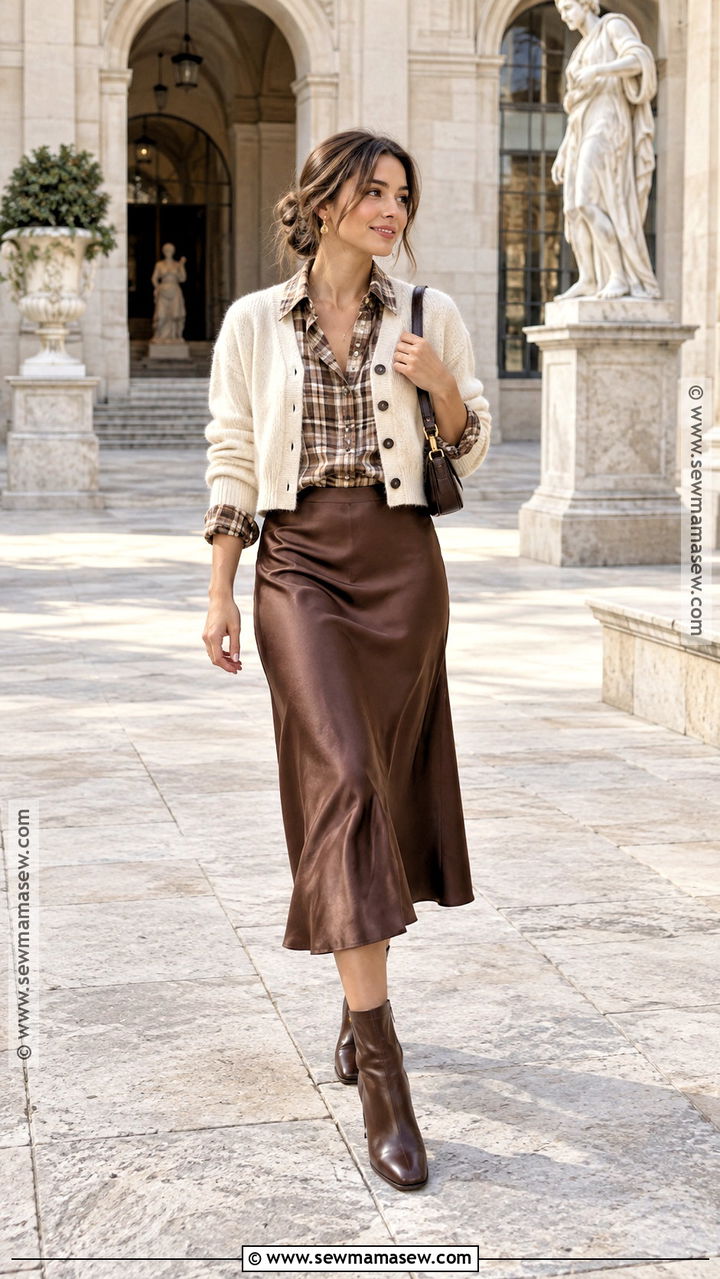
The checked shirt is what keeps a silky slip skirt from looking like evening wear. A soft brown or muted green check over a solid bias-cut midi is the balance I'd aim for; two patterns together is too busy. Tuck it loosely, knot it at the waist, or wear it open over a fitted tank. Bias-cut skirts cling, so if you'd rather they didn't, choose a heavier satin or add smooth slip shorts underneath. Ankle boots and a cropped cardigan make it autumnal without hiding the skirt. A small shoulder bag and minimal jewelry are plenty for lunch or a museum afternoon.
18. Brown Shirt With Blue Bootcut Jeans
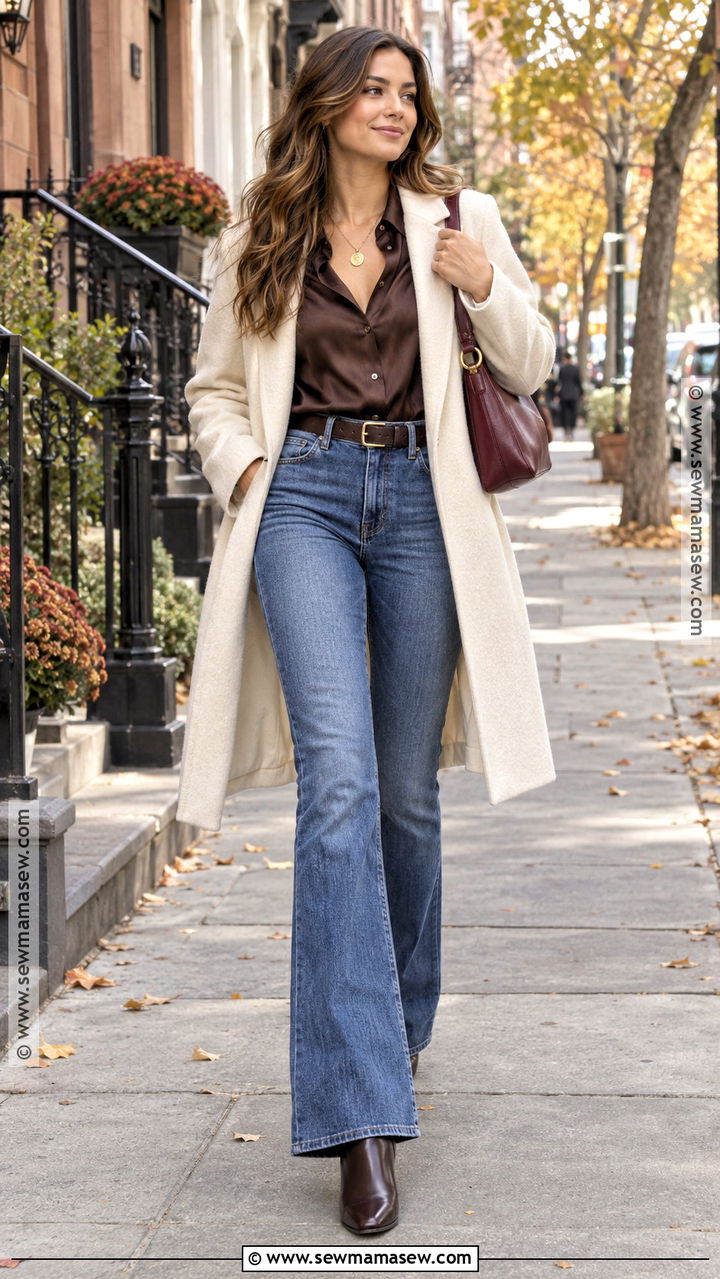
Brown against blue denim is a color pairing I return to every fall. A chocolate or chestnut shirt, in cotton or a suede-effect fabric, tucked into high-rise bootcut jeans with a brown leather belt, looks warm and finished. The flare only works at the right length: the jeans should nearly reach the floor with heeled ankle boots on, with just the toe of the shoe showing. Have them hemmed with those exact boots, since a flat shoe changes everything. A tan or burgundy bag adds a small shift in color, and a cream wool coat or fitted suede jacket handles the cold.
19. Printed Shirt With Neutral Trousers
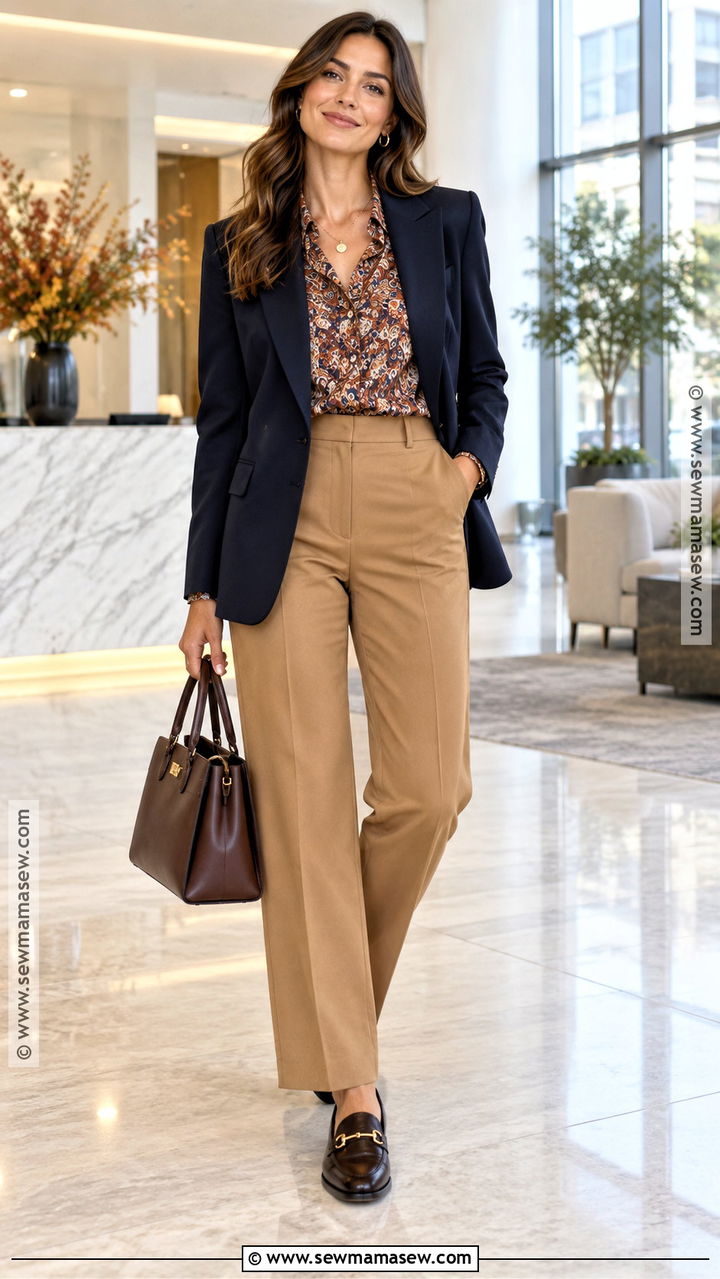
Printed shirts are easier to wear than people think, as long as the trousers repeat one color from the print. I look for small florals, paisley or geometric motifs in rust, navy or olive, then pull camel or charcoal trousers from that same palette. If a bold print feels overwhelming, a small motif on a dark background is far quieter. Leaving the collar open gives some breathing room near the face. Jewelry should stay minimal so it doesn't compete with the pattern. Loafers or pointed ankle boots and a neutral bag work, and a solid blazer frames the print for the office.
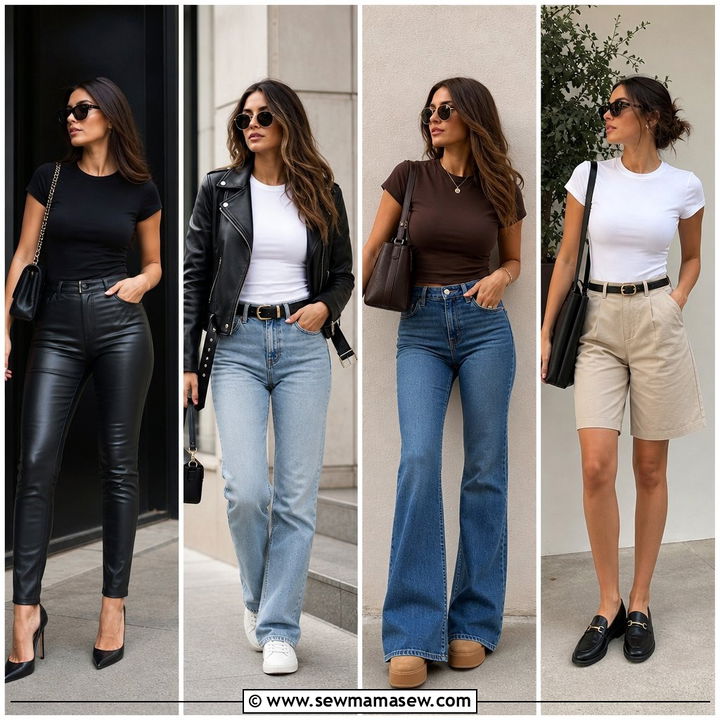
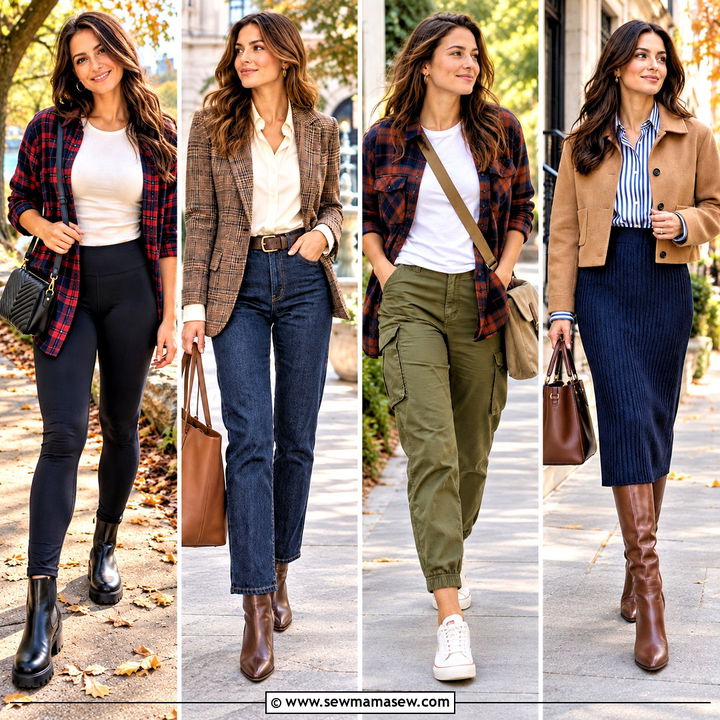
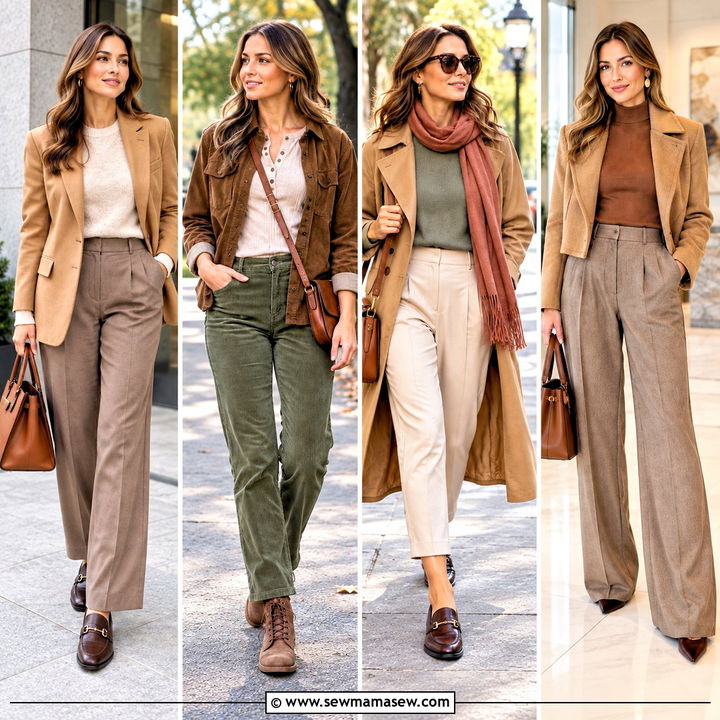
20. Overshirt With T-Shirt And Relaxed Jeans
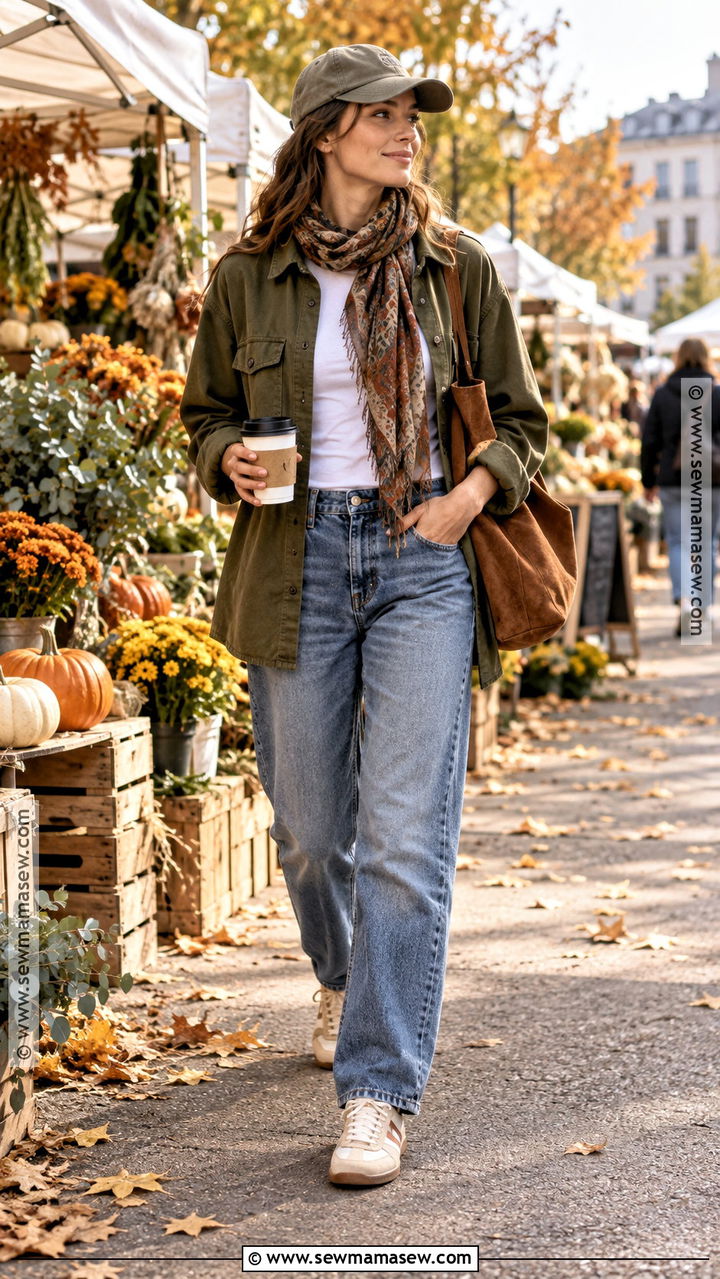
An overshirt is the layer I suggest for days that start cold and end warm, because it comes off without anyone noticing you've changed. A wool-blend or brushed cotton one in camel or olive over a white tee and relaxed blue jeans is a reliable weekend outfit. Length is the thing to check: it should end around the upper thigh. Any longer and it starts to act like a coat and swamps the legs. Wear it open and roll the cuffs once. Retro sneakers, lug-sole boots or clogs all work with it, and a roomy tote and a cap make it practical for busy weekends.
When a Shirt Gapes, Pulls or Swamps You
Most of the shirts I clear out of closets were never worn because they didn't fit in one specific spot. These are the problems I see most and what I'd do about each one.
- Gaping between buttons across the bust means the shirt is sized to the shoulders, not the chest. Buy to fit the bust and have a tailor take in the waist darts, or wear a relaxed cut open over a fitted tank.
- On a fitted shirt, the shoulder seam should sit right at the edge of your shoulder bone. On an oversized shirt it's meant to drop, but if it falls below the curve of the upper arm the whole shirt looks borrowed.
- Sleeves should reach the wrist bone with your arms at your side. Too long is fine on an overshirt you'll roll; on a work shirt it looks sloppy under a blazer.
- A collar that collapses by lunchtime is a fabric problem. Poplin and satin are soft; oxford and twill hold their shape better if you like the collar up.
Less Ironing and Cleaner Collars
Cotton shirts wrinkle most when they sit in a hot dryer. I wash them on a cool cycle, give each a firm shake, and hang it on a shaped hanger to dry with the top button done up so the collar keeps its line. A quick steam is usually enough after that. Flannel and corduroy should go inside out to protect the surface, and satin shirts are safer washed by hand or in a mesh bag, because the fibers snag easily. Treat the inside of the collar before washing, since that's where marks build up first on white shirts.
The Shirt Fabrics That Carry You Through Autumn
One good shirt can anchor a surprising number of fall outfits, and the shirts in this list cover casual denim, office trousers, skirts and layers for changing temperatures. When I edit a closet, I look at proportion first, then shoes that will survive the weather, then colors that work with what's already there. Crisp cotton gives structure, flannel and corduroy add warmth, and satin dresses things up. Change the coat, the shoe or the shirt fabric and each outfit becomes something new, without buying an entirely new wardrobe.
Related posts: