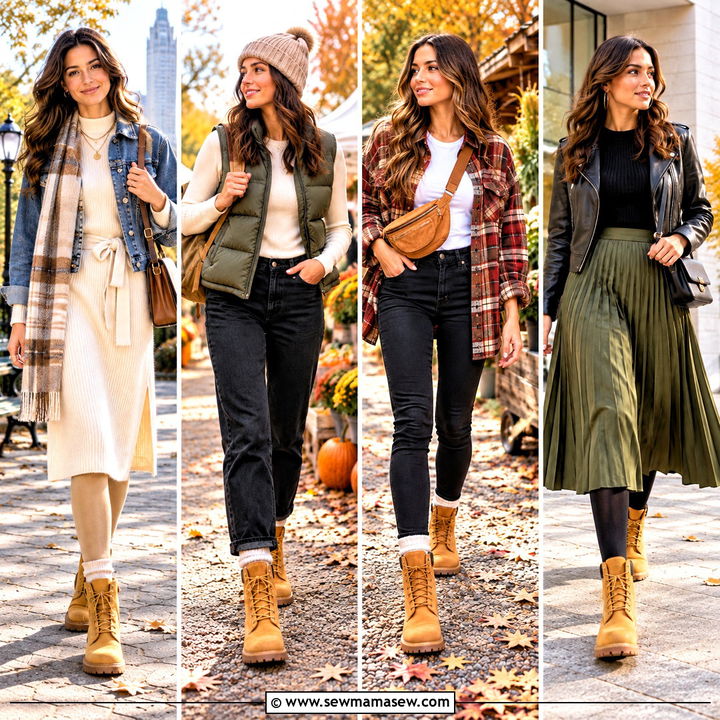
Timberlands are heavy boots, and most of the styling questions I get about them come down to that weight. A six-inch lace-up with a lug sole sits low and wide, so anything thin or fussy above it looks top-heavy in reverse. The classic wheat nubuck is warmer and easier than people expect, sitting comfortably beside olive, cream, burgundy and brown, while black pairs disappear into darker outfits. What I adjust most is the hem. Jeans that pool on the boot make the leg look short; jeans that stop cleanly above it look deliberate. The twenty looks below run from leggings and cargos to midi skirts and blazers, with the details I'd fix on each.

Tuck, Cuff or Stack Your Jeans Over a Work Boot
With a lace-up work boot, the pant hem decides more about the outfit than the top does. I give clients three options and choose based on the cut of the pant.
- Tuck: for skinny jeans, leggings and slim faux leather. Smooth the denim flat against the leg, pull the tongue up, and lace firmly over it. Loose fabric bunches inside the shaft and pushes the boot open.
- Cuff: for straight, mom and relaxed jeans. One or two neat rolls landing just above the padded collar. Wider cuffs add bulk at the ankle, which a chunky boot doesn't need.
- Stack: for baggy jeans and cargos. Let a little fabric rest on the boot, but stop before it covers the toe or touches the ground. Hems that drag on a lug sole fray fast.
Petite women look better with tucked or cuffed hems and tonal socks, since a stacked baggy jean over a big boot can swallow the lower leg. Taller women can carry stacking and wide legs more easily.
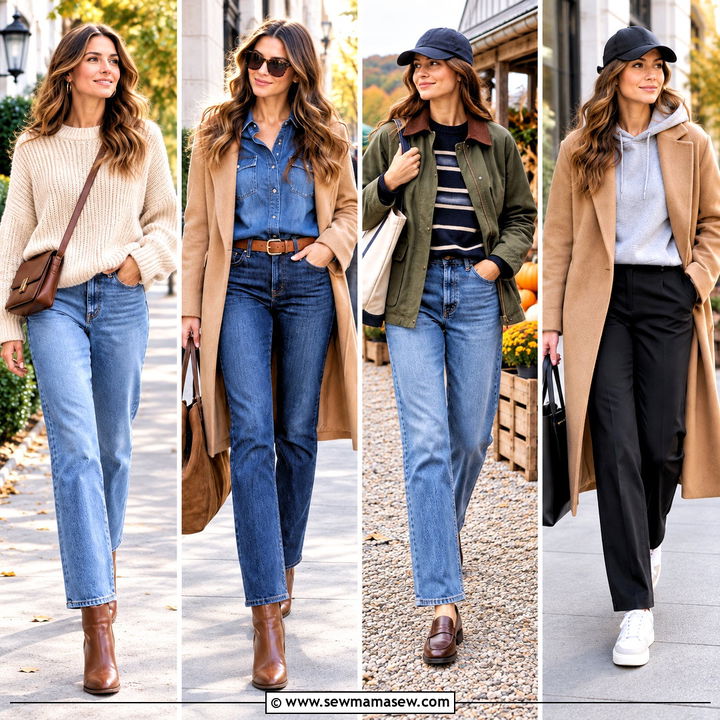
1. Timberland Boots With Straight-Leg Jeans And Chunky Sweater
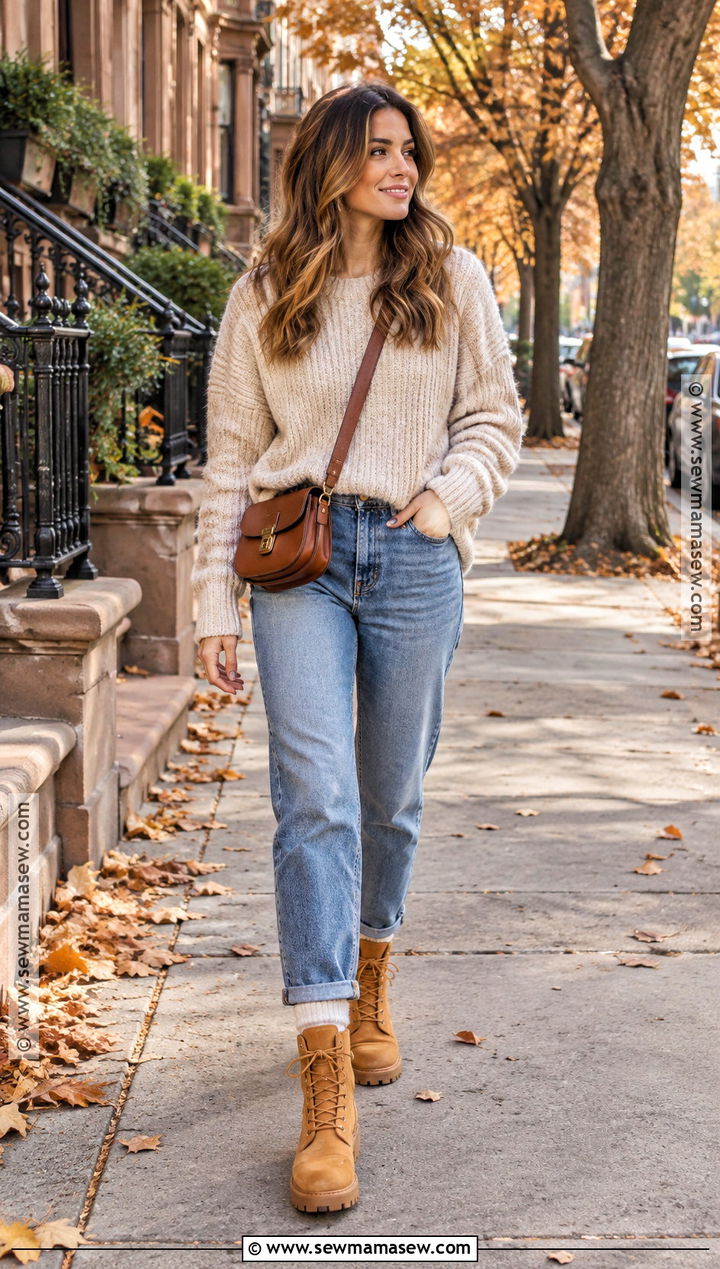
Straight-leg jeans and a chunky knit are where I'd start anyone new to wheat boots. The hem should just touch the boot's padded collar, not swallow it. If the jeans are long, one neat cuff fixes it. A cream, rust or forest-green sweater softens the boot's ruggedness; a loose front tuck keeps the waist from disappearing under all that knit. Let a thick neutral sock show a half inch above the collar. Add a brown crossbody and a wool coat for colder days.
2. Timberland Boots With Black Leggings And Puffer Jacket
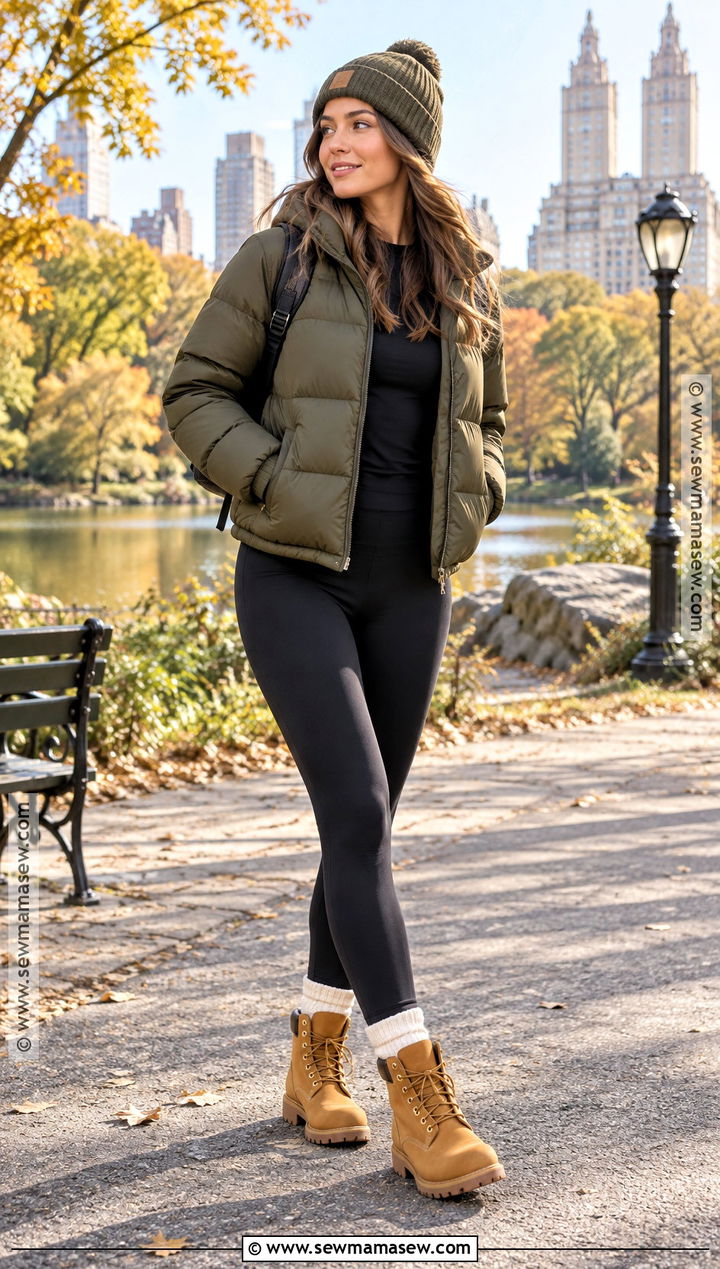
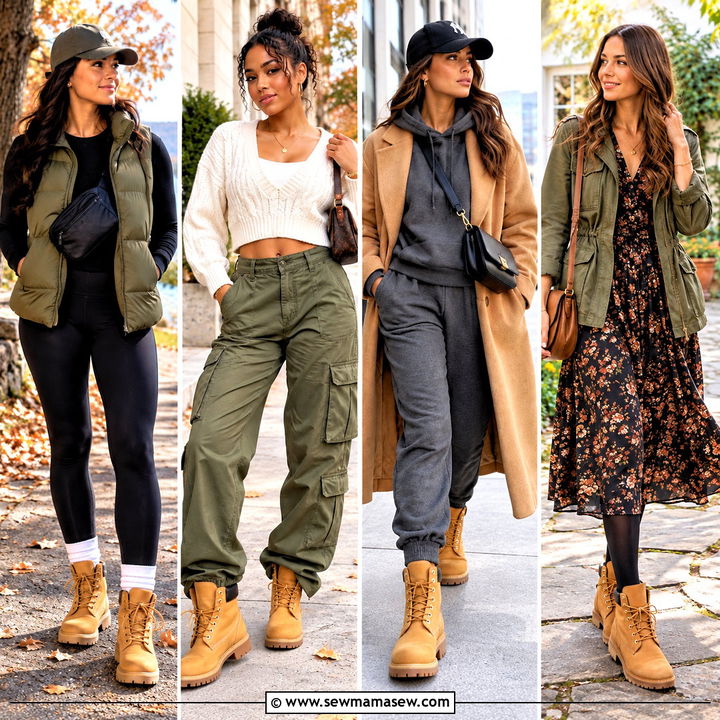
Leggings and a puffer are cold-morning clothes, and the boots are what make them look chosen rather than grabbed. Keep the base dark, thick black leggings and a fitted long-sleeve top, then a hip-length puffer in black, olive or chocolate. The wheat boot breaks up all that black. A ribbed crew sock in cream or gray bridges legging and boot better than a bare ankle, which looks oddly thin above a chunky sole. If you want more coverage, go for a puffer that falls past the hips. A beanie and a small backpack finish it.
3. Timberland Boots With Cargo Pants And Cropped Hoodie
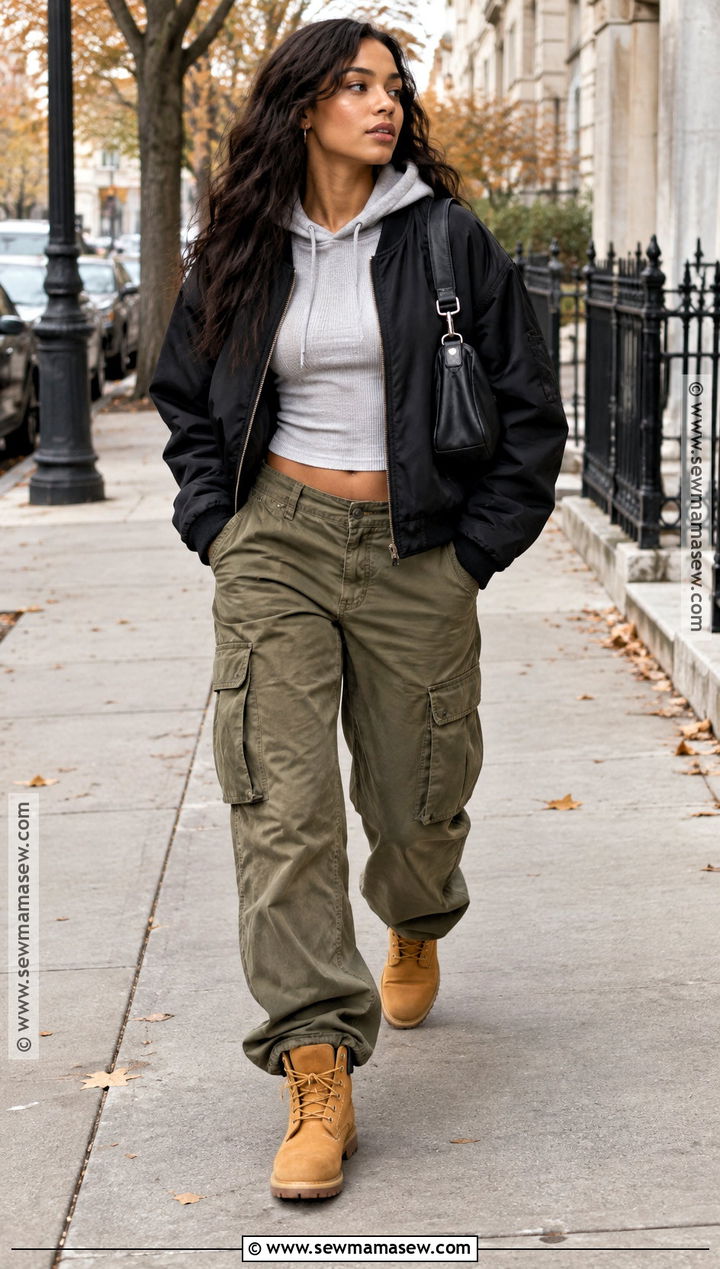
Cargo pants and Timberlands share the same workwear roots, so they sit together naturally. Olive, khaki or black cargos with a cropped hoodie that meets the waistband, plus a thermal or fitted tank underneath for warmth. The hem is the decision here. Let straight cargos rest lightly on the boot, or use the ankle toggles many cargos have to pull them in and show the whole boot. I prefer the toggles, since a loose cargo hem over a lug sole catches on the heel. A light bomber covers windy afternoons.
4. Timberland Boots With Denim Skirt And Black Tights
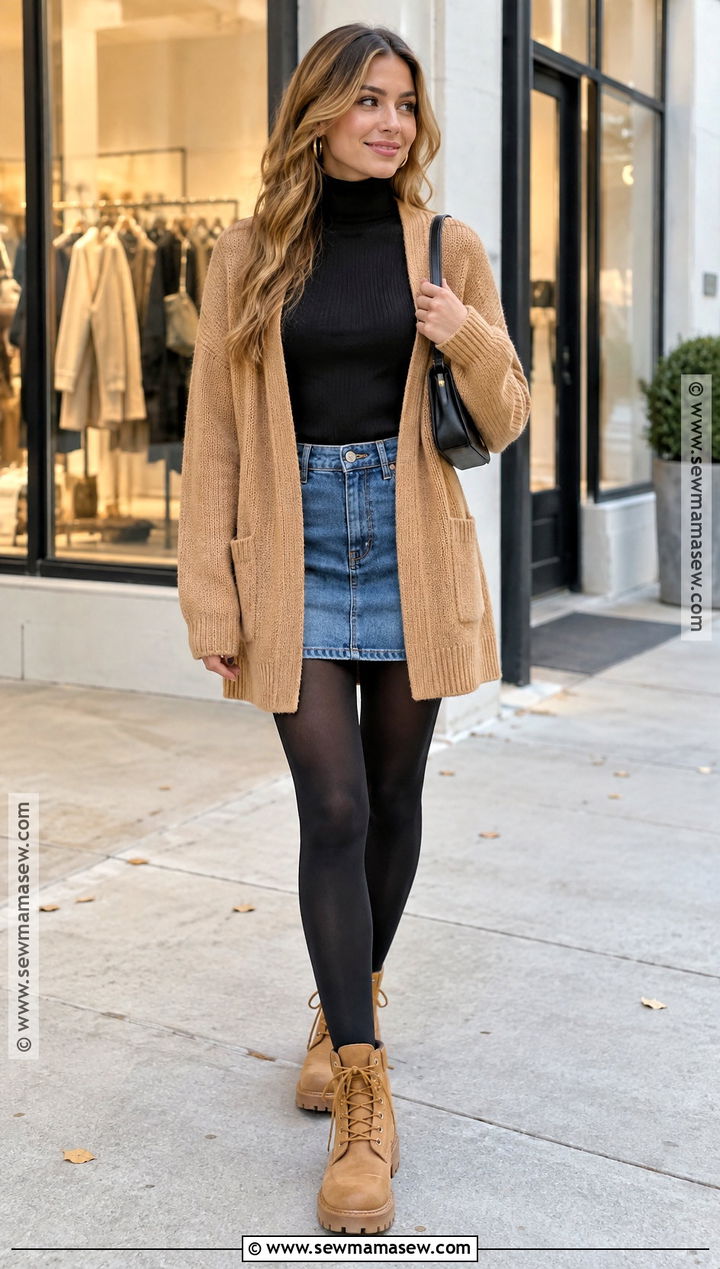
Opaque tights are the reason a denim skirt works with a heavy boot. Without them, there's a bare gap between a short hem and a chunky collar that makes the legs look thin. With them, the leg reads as one dark line ending in the boot. Choose a structured mini or above-knee skirt, add a black turtleneck, then a camel or burgundy cardigan on top. A long wool coat handles real cold. I'd keep accessories small, since the boot is already carrying the visual weight.
5. Timberland Boots With Midi Skirt And Leather Jacket
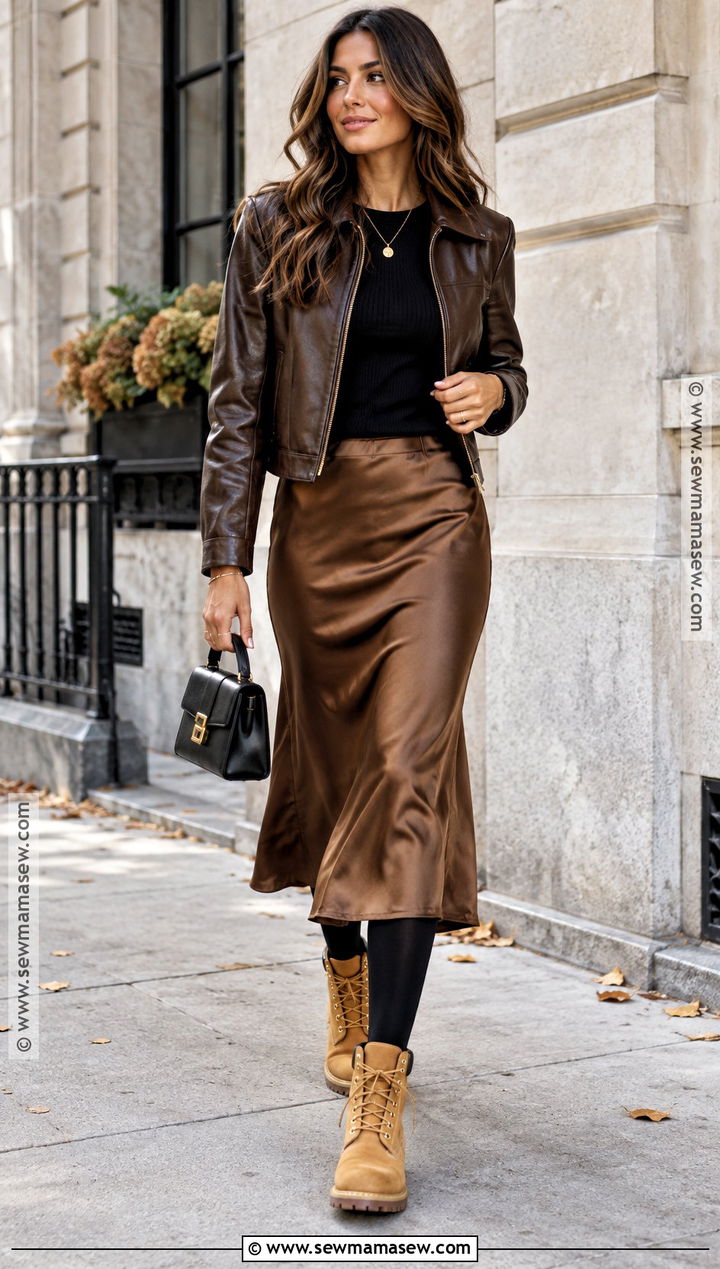
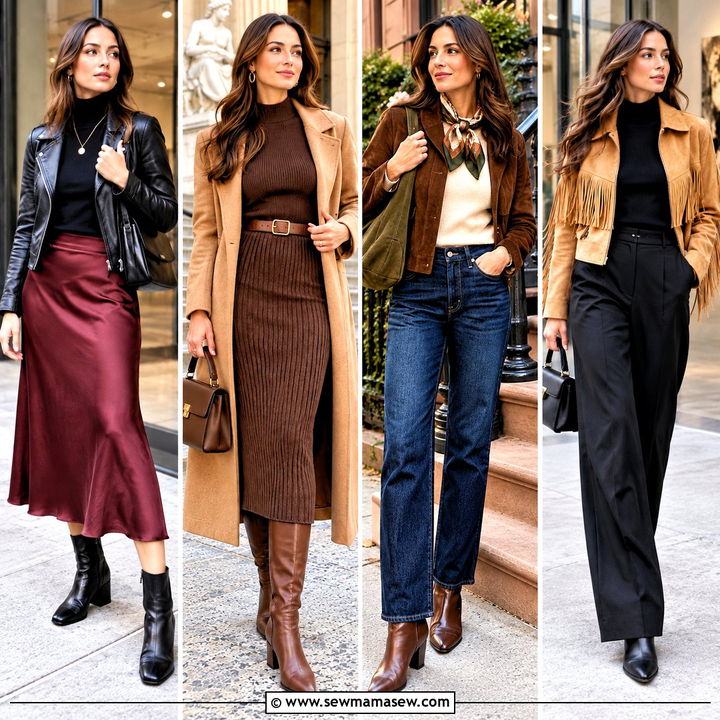
A satin or fluid midi skirt against a lug-sole boot is a contrast I like a lot, but the skirt length is critical. If it lands mid-calf, it can look like the boot is cutting off your leg. I aim for a hem that sits a few inches above the boot collar or falls just low enough to graze the ankle, so there's a clear gap. Chocolate, black or deep olive skirts suit wheat boots best. A cropped leather jacket and a fitted knit keep the top neat. Sheer black tights help on cold days.
6. Timberland Boots With Wide-Leg Jeans And Turtleneck
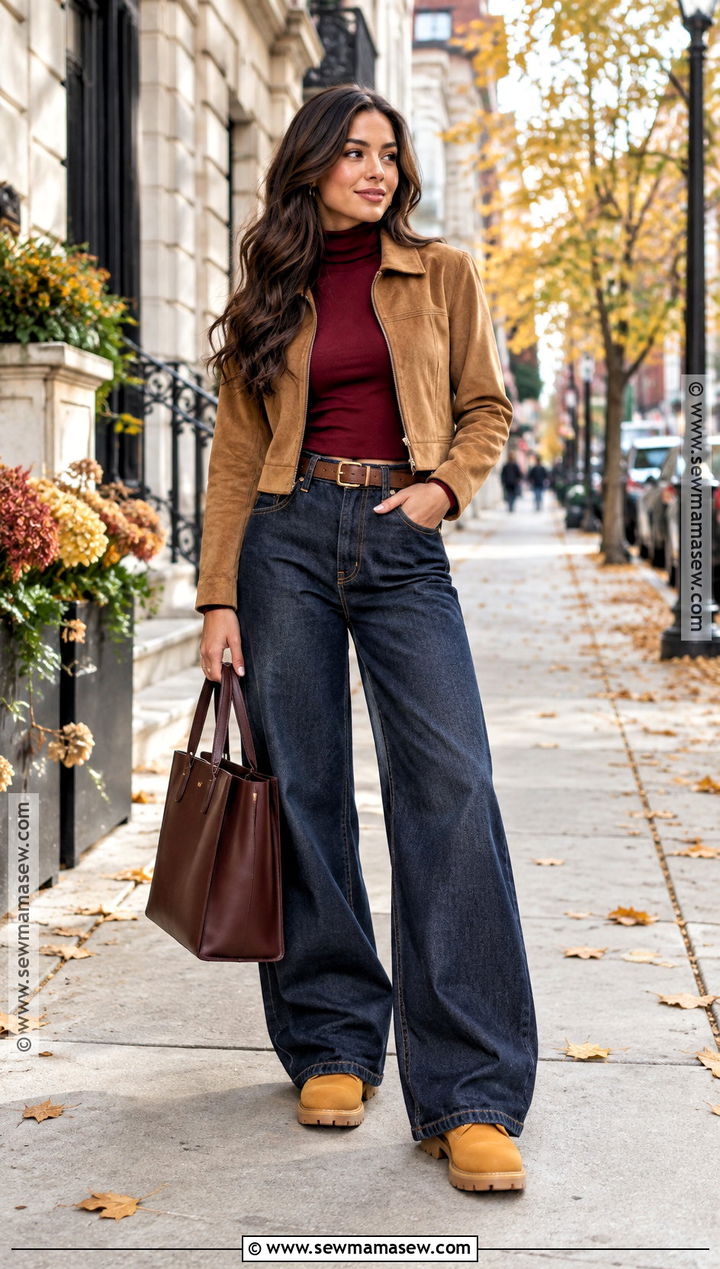
Wide-leg jeans are the hardest cut to get right with Timberlands. The jean should graze the top of the boot's toe box and not touch the ground. Too long and the hem drags on the lug and frays within weeks; too short and the boot looks enormous below a wide flare. Once the length is right, add a fitted turtleneck and a cropped jacket or waist-length puffer to balance the wide leg. Wheat boots look best with mid or dark blue denim; black boots suit washed gray.
7. Timberland Boots With Mom Jeans And Flannel Shirt
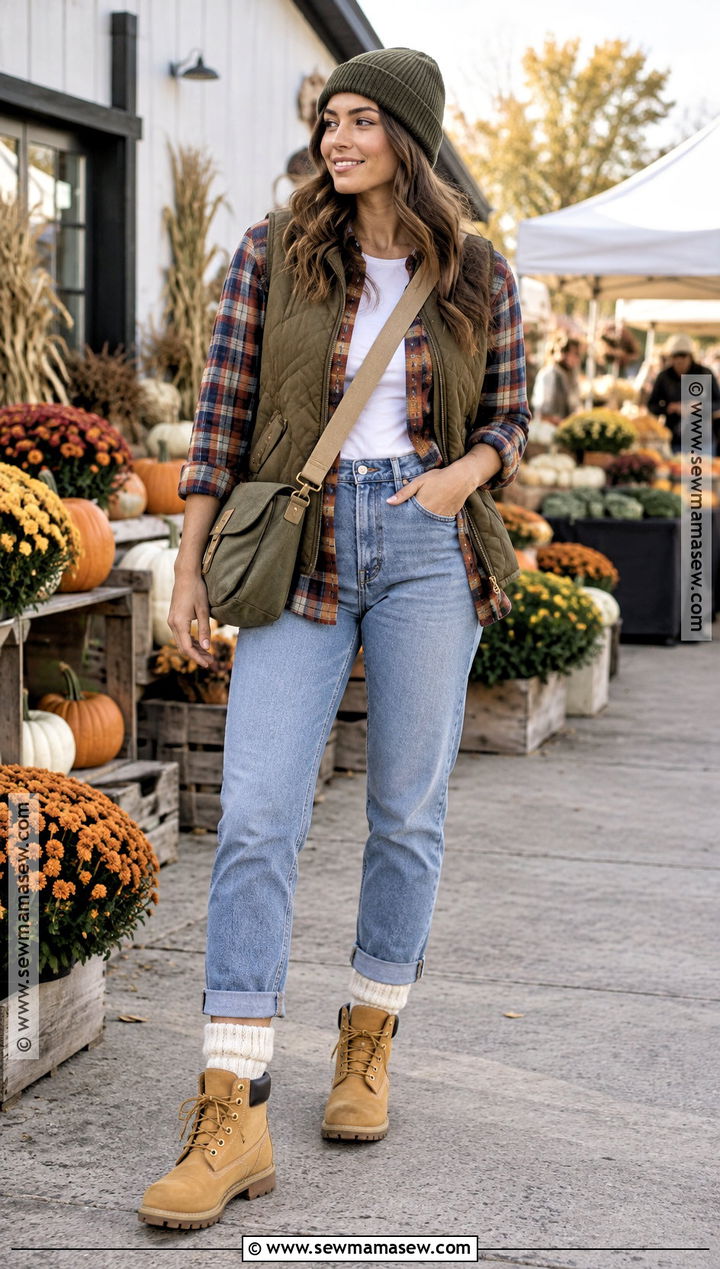
Mom jeans and flannel is the most familiar outfit in this list, and it stays popular because it's easy. High-rise mom jeans in a mid wash, cuffed once or twice so the hem sits above the boot, then a plaid flannel open over a white or black tee. Pick a plaid with tan, rust or olive in it, and the boot color repeats naturally. A quilted vest over the flannel adds warmth when the sun goes in. A canvas crossbody and a beanie fit the outdoorsy feel.
8. Timberland Boots With Black Jeans And Trench Coat
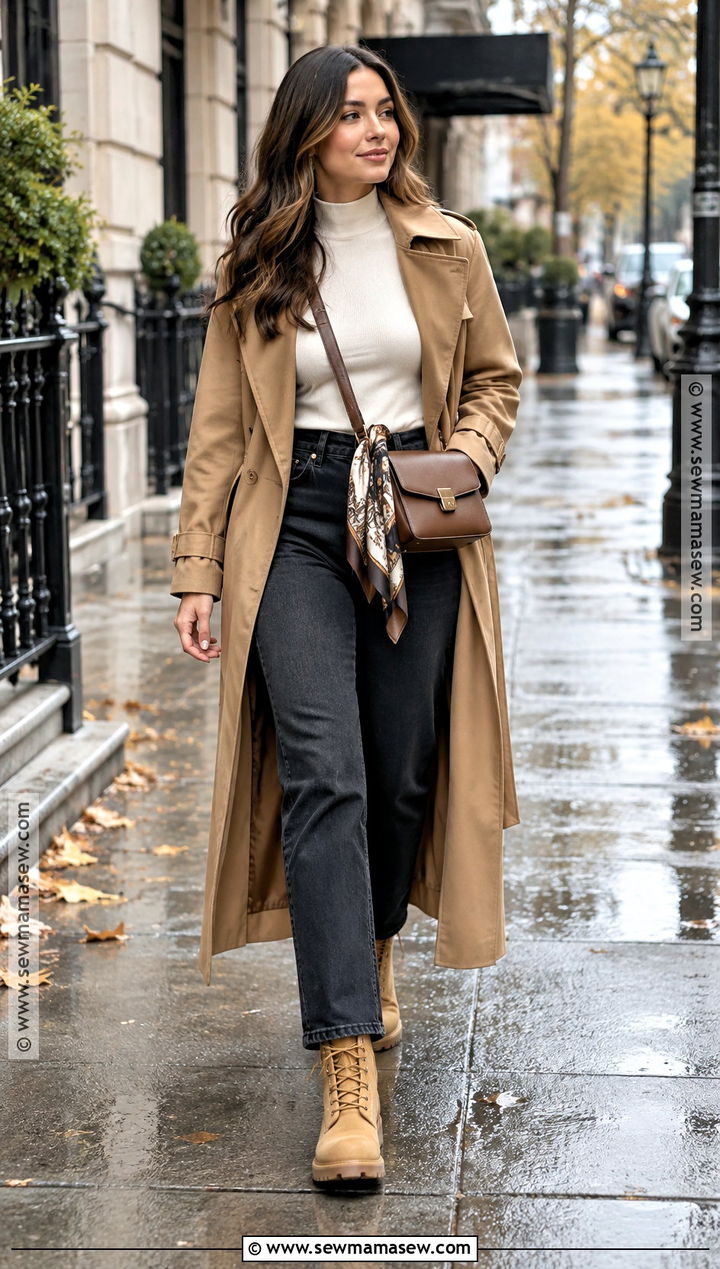
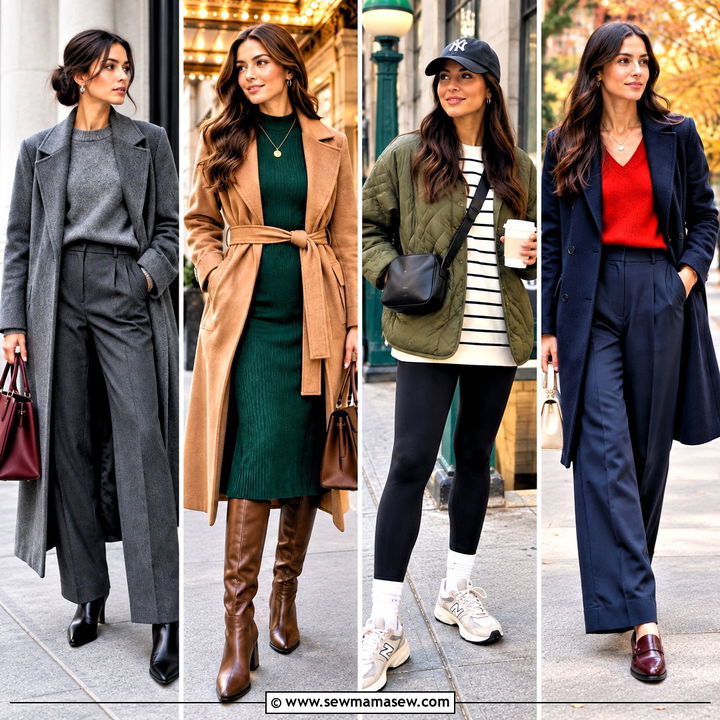
A trench coat drags a work boot somewhere smarter. Slim or straight black jeans go underneath with a white tee or fine knit, then a camel or olive trench over everything. The long coat line balances the heavy shoe. With slim jeans, I tuck them into the boot and lace snugly over the denim; with straight jeans, I cuff just above the collar instead. Black Timberlands keep the leg continuous from hip to toe. Wheat pairs bring warmth. Either works for a wet commute, since nubuck boots with a waterproof rating hold up better in rain than most fashion boots.
9. Timberland Boots With Sweater Dress And Tights
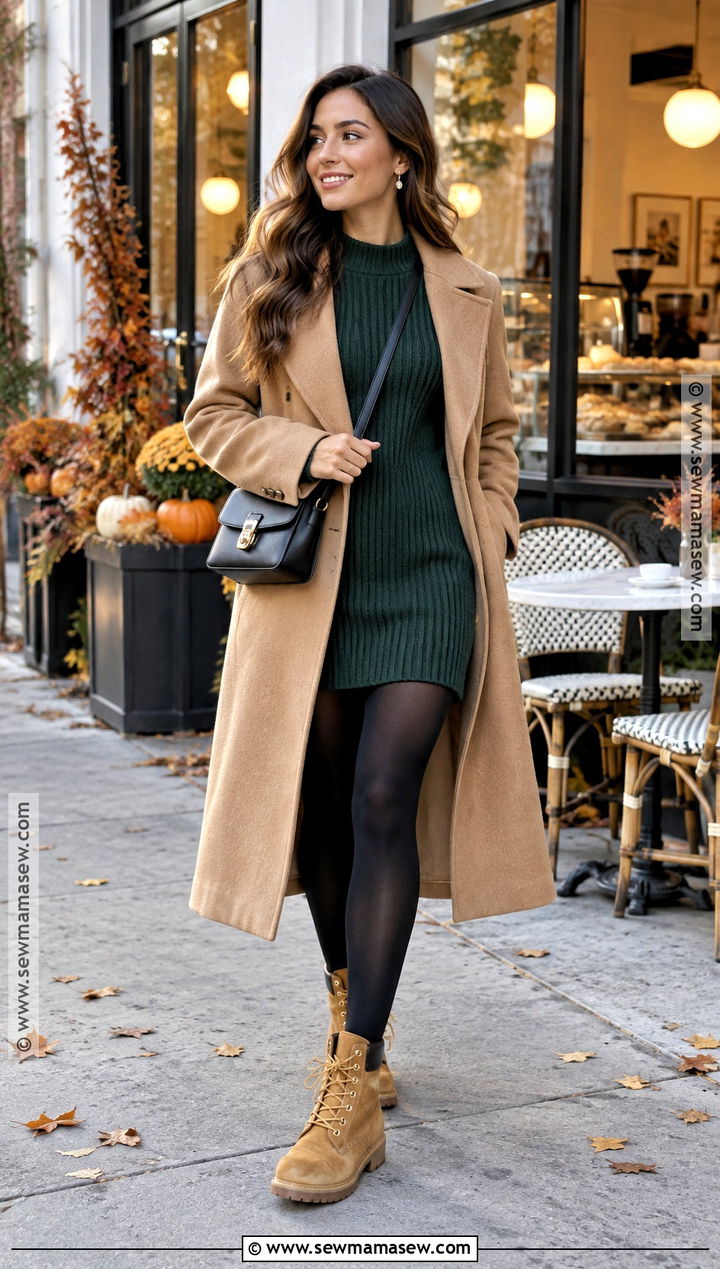
Sweater dress and work boots is a pairing that surprises people. It does work, as long as the tights are opaque. A ribbed sweater dress ending mid-thigh, black tights, then wheat boots: the dark tights link dress to boot so there's no bare stretch of leg. Belt an oversized knit if it hides your shape. Cream, camel, charcoal and burgundy dresses all suit the tan boot. A long wool coat makes it polished; a cropped puffer makes it sporty.
10. Timberland Boots With Plaid Shacket And Leggings
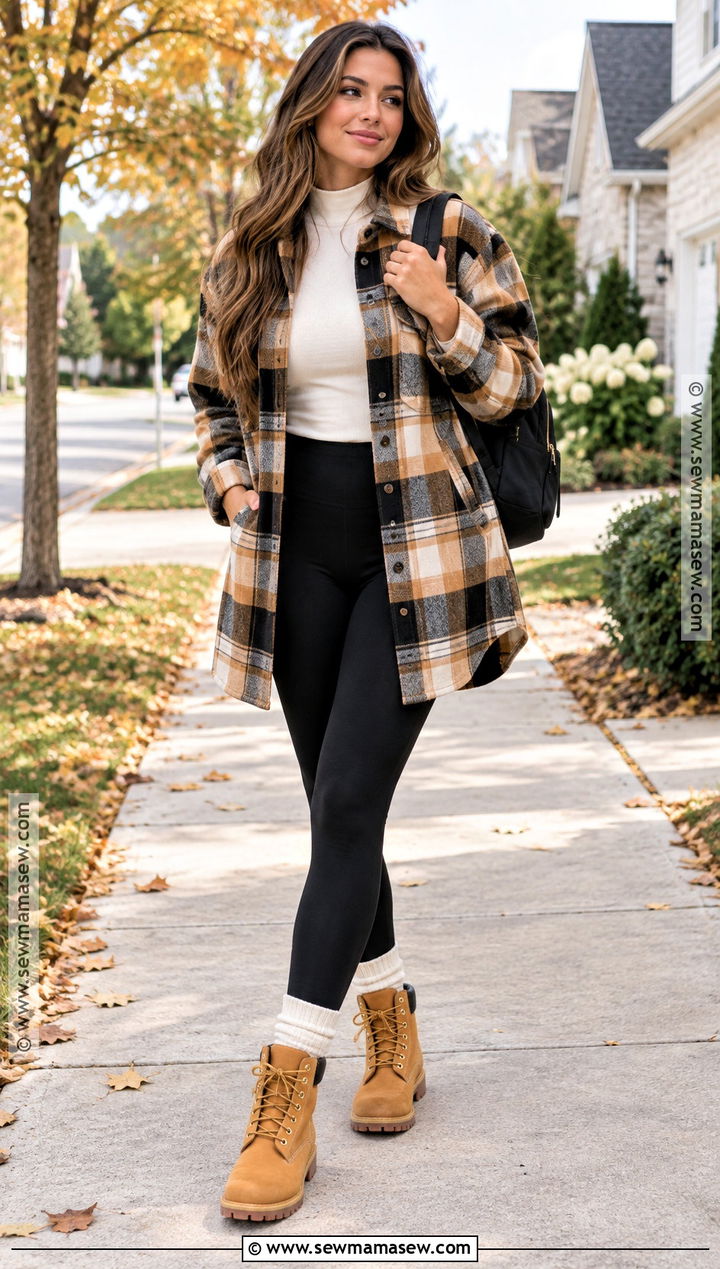
Shackets give leggings enough cover that the outfit doesn't feel like gym clothes. A longline plaid shacket over a mock-neck or heavy tee, black leggings, and wheat boots. Choose plaid with cream, camel or rust in it so it ties to the boot. I'd show a cream boot sock above the collar here, which softens the jump from black legging to tan nubuck. If your shacket stops above the hip, move up to thicker ponte leggings for coverage. A belt bag or small backpack keeps your hands free.
11. Timberland Boots With Leather Pants And Oversized Sweater
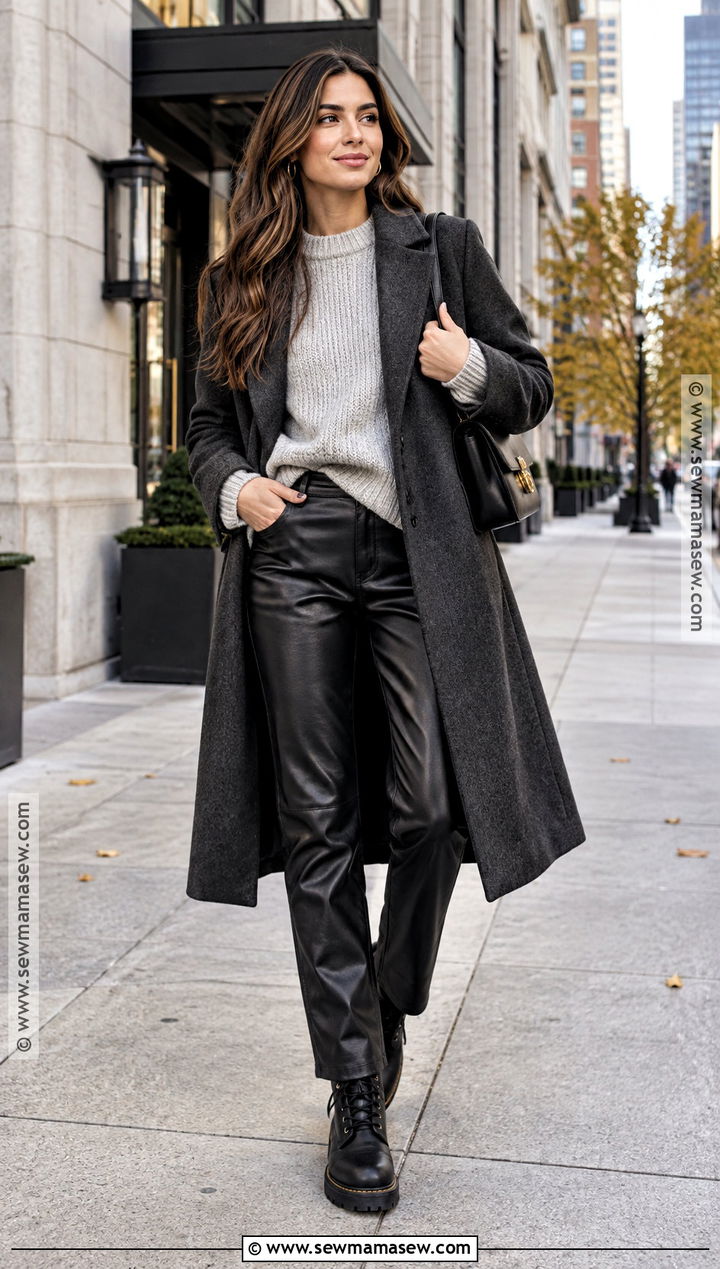
Faux leather pants are slick, and the matte nubuck of the boot balances that shine. Straight or slim black pants with an oversized sweater in cream, taupe or light gray; a partial tuck shows the waist. Black boots continue the pant line unbroken. Wheat boots give a bolder contrast. One practical point: faux leather doesn't stretch, so slim pants tucked into a laced boot can pull at the knee when you sit. Straight pants that rest over the collar are usually more comfortable.
12. Timberland Boots With Denim Overalls And Thermal Top
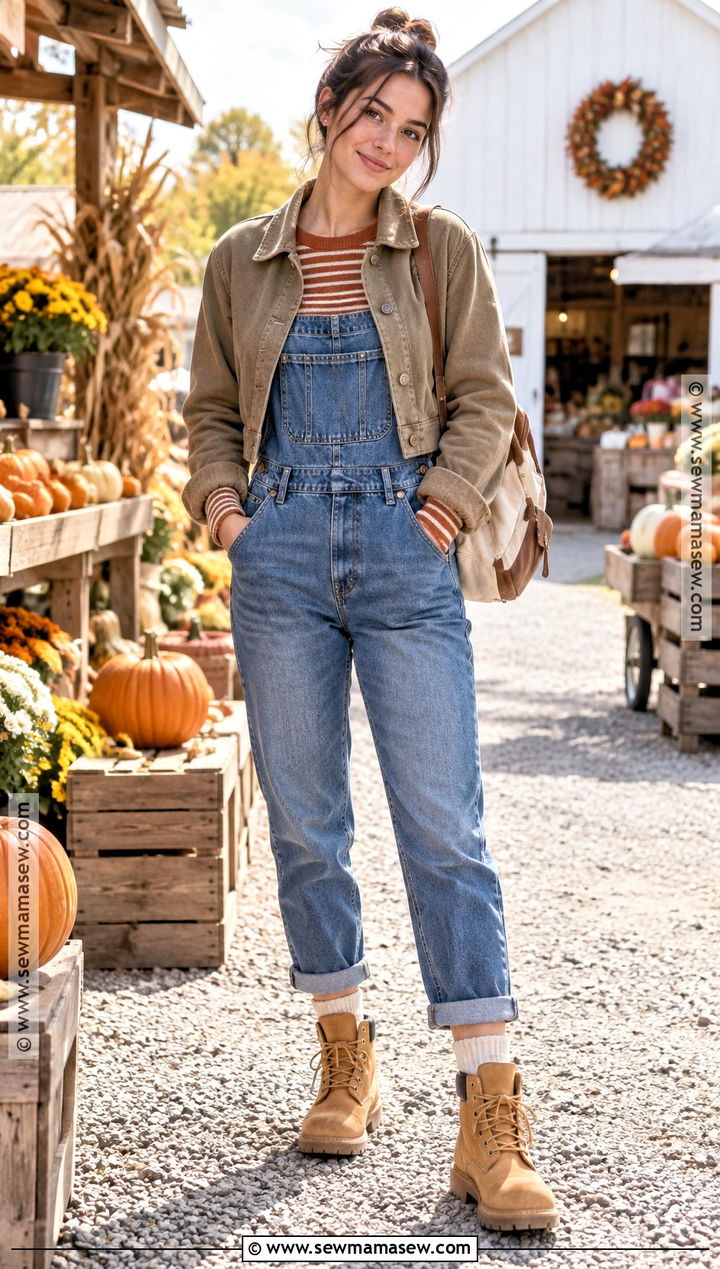
Overalls are relaxed and a bit playful, and Timberlands suit that. Straight or slightly relaxed overalls in mid or dark denim, with a striped thermal underneath. Roll the hems so the boot collar and a strip of ribbed sock show. Rust, olive or burgundy stripes keep it seasonal. A canvas jacket or cropped cardigan handles cooler hours. I'd keep the layers under the overalls thin, since denim bibs add bulk at the chest and any thick sweater beneath makes the whole thing look padded.
13. Timberland Boots With Utility Jumpsuit And Belt
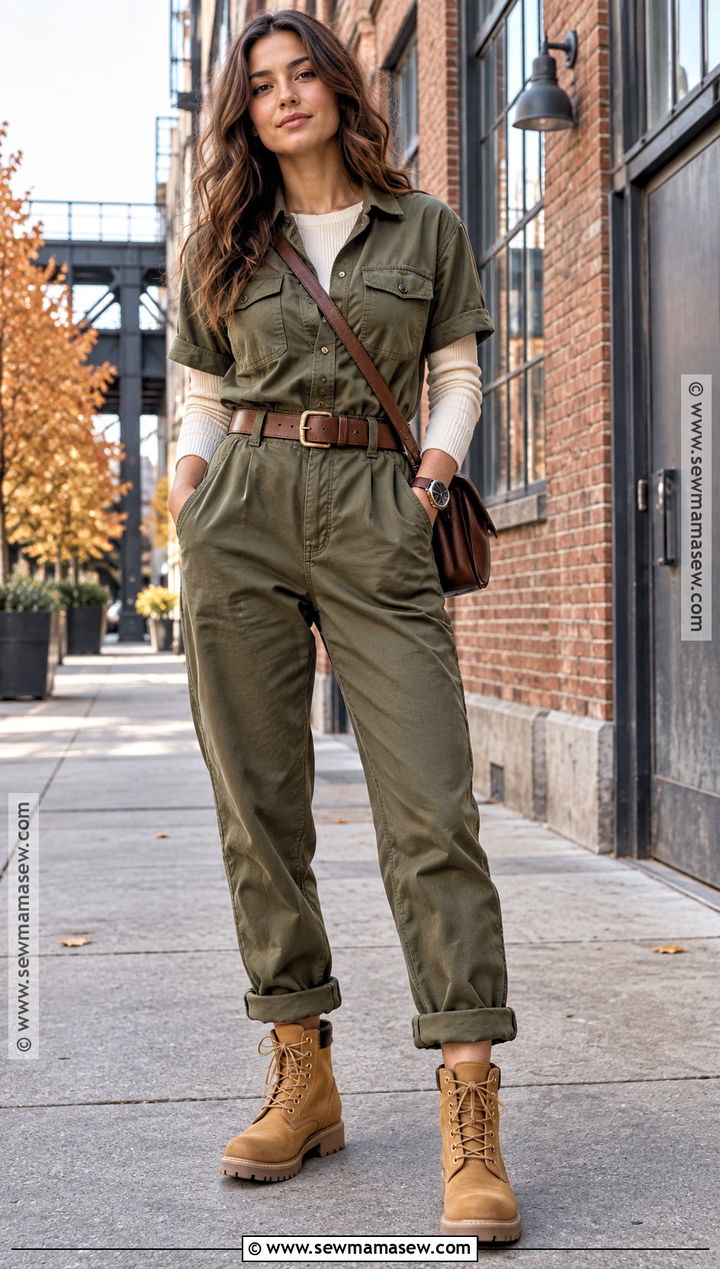
A utility jumpsuit is one decision instead of three. Cotton or canvas in olive, navy or brown, with the matching belt or a leather one to keep the waist from vanishing. Roll the sleeves and cuffs so the boots show clearly. A fitted thermal underneath adds warmth without spoiling the clean shape. Wheat boots lean into the workwear origin; black boots make it read more city. Test the torso length by sitting and reaching before you buy, because a short torso on a jumpsuit pulls uncomfortably all day.
14. Timberland Boots With Maxi Skirt And Denim Jacket
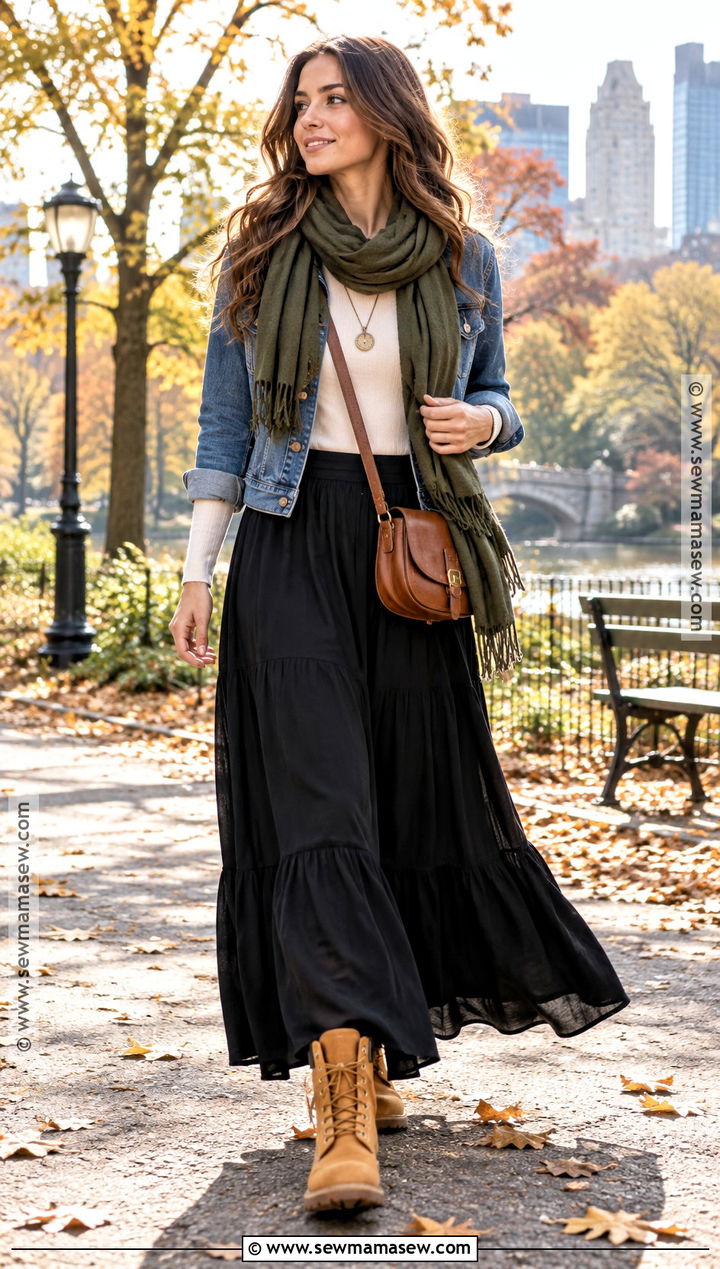
A maxi skirt with work boots has a bohemian edge, and it only works if the skirt clears the boot when you walk. Too long and the hem catches on the lug sole and frays. Pick a solid black, olive or brown skirt, or a soft fall floral, a fitted long-sleeve top and a cropped denim jacket. Thermal tights underneath are invisible and warm. A pendant and a leather crossbody suit it. I'd skip a long coat with this one, since three long lines over a heavy boot gets shapeless.
15. Timberland Boots With Cream Jeans And Neutral Sweater
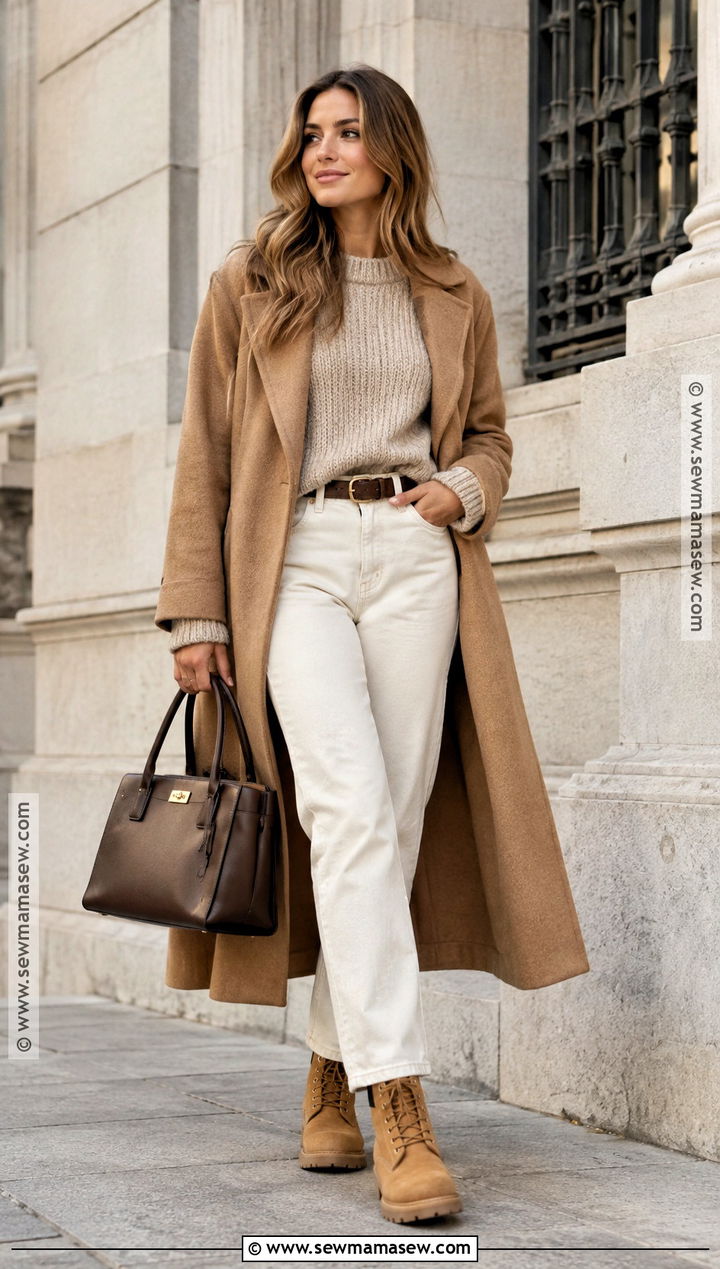
Wheat boots are a light warm tan, and in an all-neutral outfit they act like part of the palette rather than the focus. Cream or ecru straight jeans, an oatmeal or beige sweater, and a camel coat or beige quilted jacket. Use slightly different shades and textures so it doesn't look flat. A chocolate belt and bag give some definition. The boots add weight to a palette that could otherwise look delicate. Light jeans show dirt kicked up from the boot, so cuff them above the collar on wet days.
16. Black Timberland Boots With All-Black Outfit
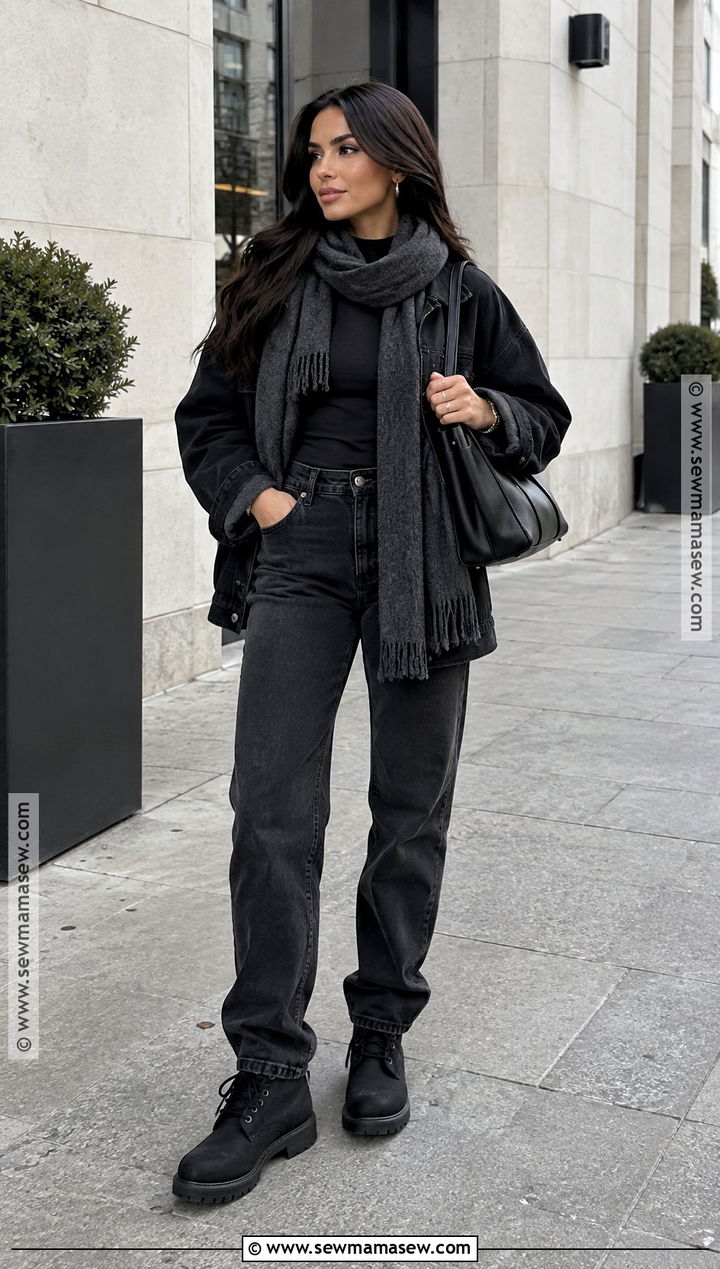
Black Timberlands are the version I'd suggest to anyone who finds the wheat boot too loud. With straight black jeans or tapered cargos, a fitted black top and a black denim jacket, bomber or wool coat, the outfit becomes about shape and fabric rather than color. A charcoal scarf or gray bag adds a little contrast. Slim pants tuck into the boot; straight pants rest on the collar. Black nubuck shows salt marks and scuffs more than wheat does, so it needs brushing more often.
17. Timberland Boots With Baggy Jeans And Varsity Jacket
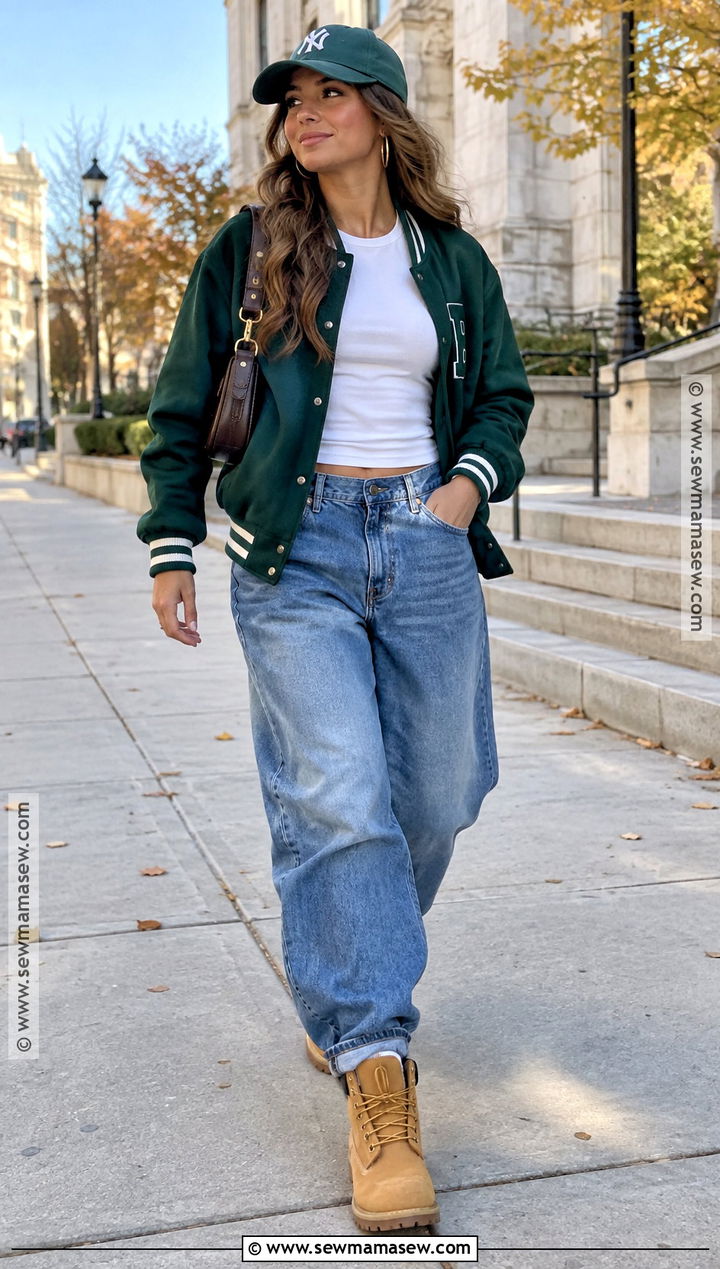
Baggy jeans, a varsity jacket and wheat boots is a streetwear formula with very clear proportions: big on the bottom, fitted underneath the jacket. The jeans should fall loosely but stop before bunching heavily on the boot; some stacking is fine, a pile of fabric on the toe is not. A baby tee or fitted crewneck goes under a black, forest or burgundy varsity jacket. White crew socks above the boot give a clean break. A cap and a small shoulder bag keep it sporty.
18. Timberland Boots With Blazer And Turtleneck
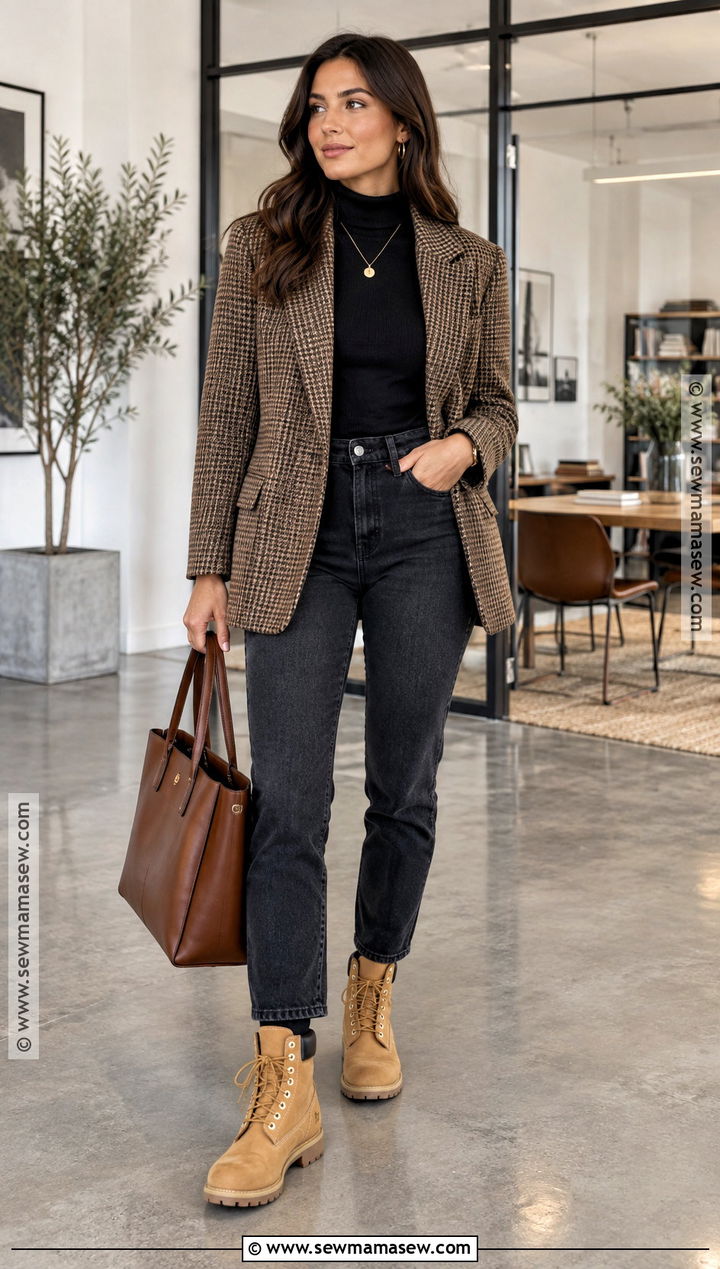
A blazer is the easiest way to make Timberlands look like they belong in a smart-casual setting. Straight blue or black jeans, a fitted turtleneck, then a relaxed blazer in houndstooth, camel or a dark plaid. The blazer needs some structure in the shoulder, otherwise the heavy boot outweighs it. Cuff the jeans or choose an ankle length so the boot shows. Black boots push this toward business casual; wheat keeps it relaxed. A structured tote finishes it.
19. Timberland Boots With Joggers And Quilted Vest
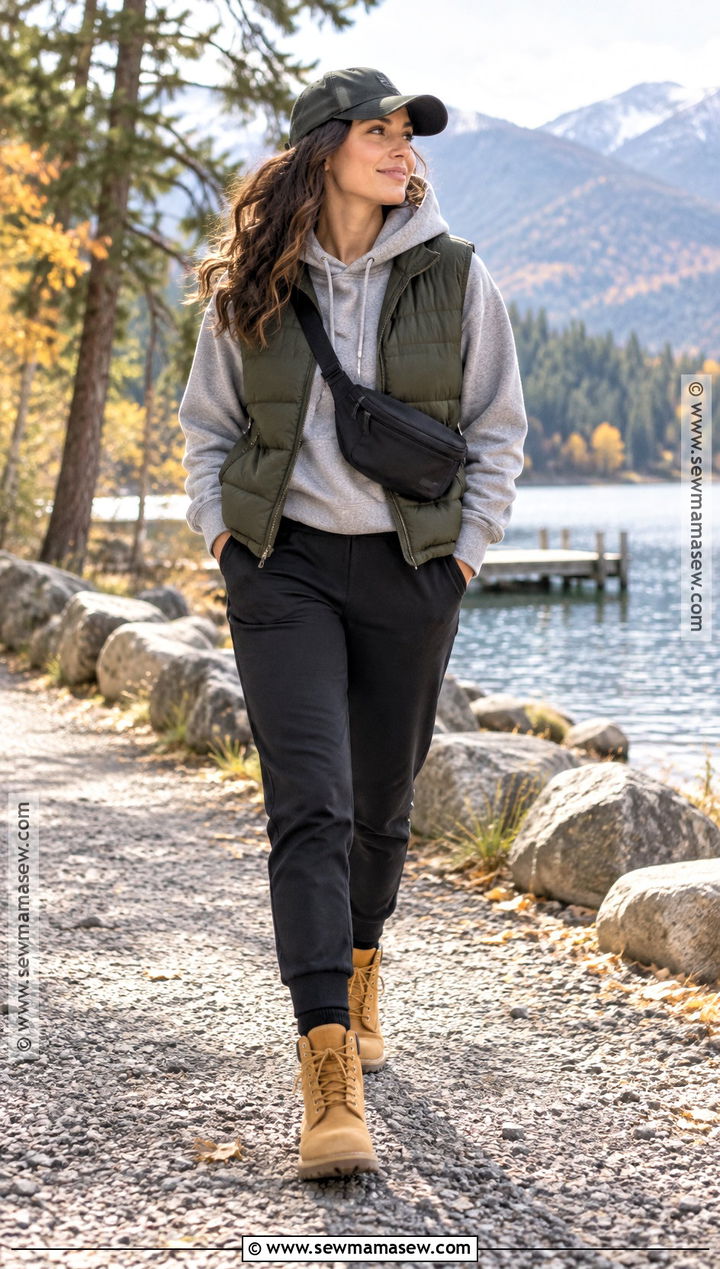
Joggers and a quilted vest are travel-day clothes, and the boot detail that matters most is the cuff. Joggers with a fitted ankle cuff sit cleanly above the boot collar, while loose joggers bunch inside and look messy. A cream, gray or muted green hoodie goes under an olive or navy vest that ends near the hip. Match the sock to either the joggers or the boot so the ankle isn't broken into stripes. A cap and belt bag are all you need.
20. Timberland Boots With Corduroy Pants And Barn Jacket
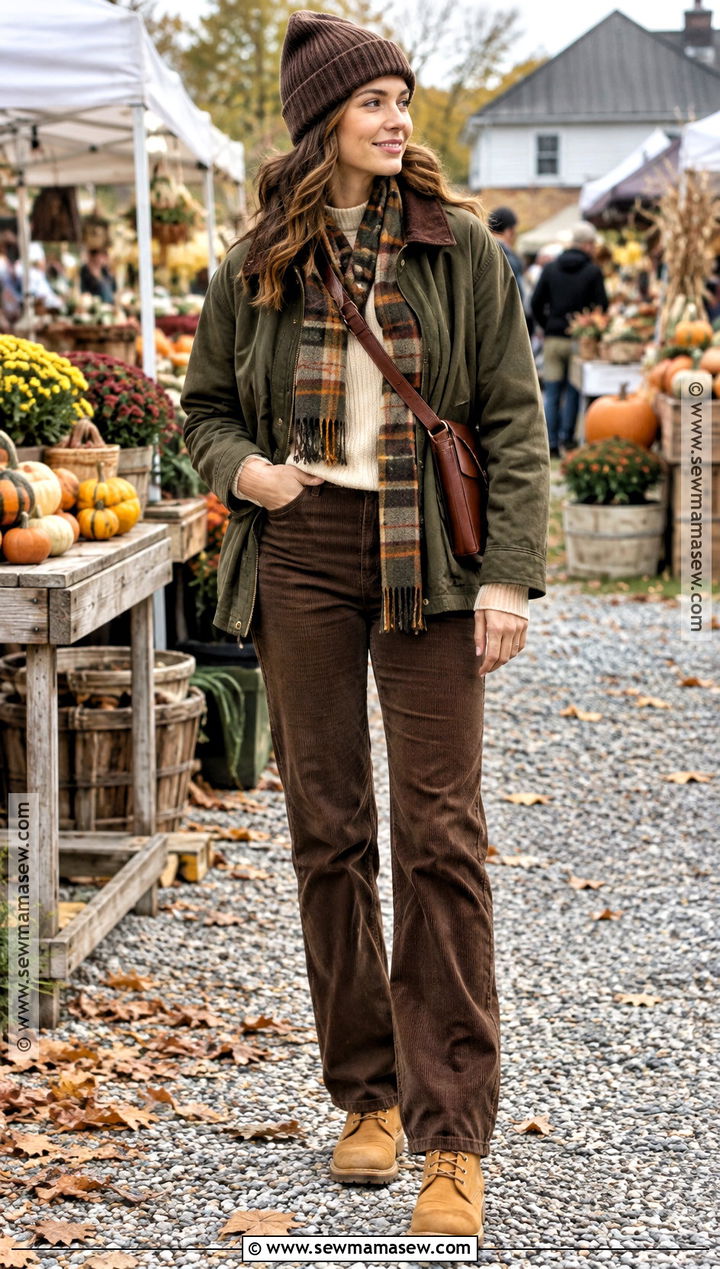
Cords and a barn jacket are the countryside version of these boots. Straight-leg corduroy in chocolate, olive or rust, a cream thermal or thin sweater, then a canvas barn jacket with a contrasting collar. Roll the cords once if they collect around the boot; corduroy is thicker than denim and stacks more. Keep the fit relaxed but not oversized everywhere, or the outfit turns heavy. A plaid scarf and a ribbed beanie suit country walks, outdoor markets and cool weekends away.
What Wheat Nubuck Needs Through a Wet Season
The classic tan boot is nubuck, leather that has been sanded to a soft velvety surface. It's tougher than suede, but it marks. Water darkens it temporarily, and road salt leaves white tide lines that won't brush off once they set.
- Brush the boots with a nubuck brush after muddy days, once they're dry. Brushing wet nubuck pushes dirt deeper into the nap.
- Treat them with a nubuck-safe water and stain protector at the start of the season and again every few weeks when it's wet.
- For salt lines, wipe with a cloth barely dampened in a mix of water and a little white vinegar, then let them dry at room temperature.
- Keep them away from radiators and heaters. Fast drying stiffens the leather and can loosen the sole bond.
The First Two Weeks in Stiff Lace-Up Boots
New work boots are rigid at the ankle collar and across the toe flex point, and they rub until the leather softens. Wear them for a few hours at a time around the house before a full day out. Thicker socks help, both for cushioning and for filling the volume that a chunky boot often has. If they pinch at the heel, lace them looser through the lower eyelets and firmer at the top so the foot is held back without pressure on the instep.
Getting the Proportions Right Around a Heavy Boot
Timberlands go much further than jeans and a sweatshirt, as long as you respect the weight of the boot. Sort the hem first: tucked, cuffed or resting on the collar, never dragging on the sole. Then balance the bulk with a defined waist or a coat with structure. Wheat boots warm up neutral and earthy palettes; black pairs fade into monochrome. You don't need new clothes to start. Try the boots with the jeans and knits you already wear, adjust the hem, and build from there.
Related posts: