
What do you wear to a night where dancing is compulsory, every aunt has a phone up, and at least three cousins have rehearsed a routine in secret? The sangeet ceremony is the most physical function of an Indian wedding, and the outfit has to survive it. When I dress someone for a sangeet, the first question isn't color. It's how much they plan to move, and for how long. Lighter fabrics, jewel tones, pre-draped sarees and Indo-western cuts all earn their place below, and I've noted where each one helps on the dance floor and where it fights you.

Testing a Lehenga for Movement Before the Night
Most sangeet wardrobe problems show up in the first fast song, not in the fitting room mirror. I run every outfit through the same short test at home, in the exact shoes and jewelry that will be worn on the night.
- Raise both arms straight above your head. If the blouse rides up or digs at the armhole, it needs letting out, because choreography puts your arms up again and again.
- Spin twice on a smooth floor. A lehenga hem should just clear the floor in your heels; any longer and your heel will catch the inside edge mid-turn.
- Sit on a low chair and then on the floor. Corsets, slits and heavy can-cans all behave differently when you sit, and sangeets often seat guests low for the performances.
- Walk up a few stairs holding the skirt in one hand. If you need both hands, plan on someone helping you onto the stage.
Heavy can-can underskirts are worth a mention. They give a lehenga its round volume, but they add weight and trap heat. For a long night of dancing, I'd ask for a lighter single-layer can-can or a soft net lining instead of a stiff, multi-layer one.
Pinning a Dupatta So It Stays Through Choreography
A dupatta that slips once is annoying; one that slips during a group routine pulls the whole formation off. I secure it at three points with small safety pins hidden on the inside: at the back of the shoulder seam, at the front of the blouse, and at the waistband. On sheer fabrics, a tiny piece of matching tape behind each pin stops it tearing. If the routine has floor work or lifts, I'd take the dupatta off for that number and put it back on afterward. Nobody notices, and the photographs look better.
1. Red Bridal Lehenga for Sangeet

A red lehenga at the sangeet is usually the bride's call, and I'd steer guests away from it unless the family has said otherwise. For the bride, I like a lighter version than the wedding-day piece: georgette or crepe in the skirt, with the zari and sequin weight concentrated on the choli where it doesn't drag. A cape-style dupatta or a single-shoulder drape keeps both hands free for the dance. Gold kundan earrings, a bangle stack and embellished juttis finish it, and juttis matter more than people think when the floor is polished marble.
2. Cape Lehenga for Sangeet Night

Why wrestle a dupatta all night? A cape lehenga moves the drama to your back, where it trails behind you instead of slipping off your shoulder mid-spin. The cape can be sheer net or heavily worked with crystal and zari; I check that the cape seams are tacked to the blouse at the shoulder, not just hooked, because a loose cape twists during fast turns. Emerald or sapphire reads strongly under stage lights. Skip the necklace and let chandbali earrings carry the jewelry, then add a sleek bun and metallic heels.
3. Sequin Lehenga for Sangeet Ceremony

Sequins throw light back at every camera in the room, which is why this one shows up in so many sangeet albums. Blush, champagne and midnight navy are the shades I reach for. The practical catch is the inside of your arms: a fully sequined choli scratches after an hour of dancing, so I look for a soft lining or a sheer sleeve that keeps sequin edges off the skin. Pair a high-waisted skirt with a sweetheart choli and a sequin-edged dupatta, keep jewelry to studs and one ring, and choose block heels or embellished flats.
4. Mirror Work Lehenga for Sangeet

Mirror work has a handmade, festive feel, and every tiny glass piece flashes when you twirl. It is also heavier than it looks. Before I commit to a full mirror skirt, I lift it by the waistband: if it pulls hard, I keep the mirrors on the border and the choli instead. Fuchsia, orange and turquoise all suit the technique. A plain choli lets the skirt lead, and oxidized silver jhumkas, a maang tikka and loose curls give it a bohemian lean without losing the occasion.
5. Velvet Lehenga for Winter Sangeet

Winter sangeets held in open lawns get cold after sunset, and velvet is the honest answer. Wine, emerald and deep purple velvet absorb light rather than reflect it, so the color reads rich in photos. I pair a paneled skirt with a long-sleeved brocade blouse for warmth. One warning: velvet crushes where you sit, so if there's a long seated performance before the dancing, stand up and smooth the pile now and then. Polki jewelry, a structured clutch and pointed-toe heels suit the weight of the fabric.
6. Crop Top with Lehenga Skirt Outfit

A crop top over a lehenga skirt is the easiest fusion move, and bridesmaids love it because nothing needs pinning. I look for a crop top with mirror or sequin detail and set it against a contrasting pastel or metallic skirt. A belt at the waist replaces the dupatta and stops the skirt from shifting when you jump. Check the gap between top and skirt with your arms raised above your head, since that's where choreography puts them. Metallic heels and a potli bag finish it.
7. Sharara Suit for Sangeet Function

Sharara pants flare from the knee, so they swing during a performance without the bulk of a lehenga. Pick a three-piece sharara set in a jewel tone with gota patti or zari work, with a short kurti on top. The thing I check is the hem: sharara legs are wide, and if they pool on the floor, a heel will catch the inner edge during a quick step. Hem them to just clear the floor in the shoes you'll actually wear. An organza dupatta on one side, a choker and a low bun complete it.
8. Gharara Set for Sangeet Night

Gharara sets fit closer through the thigh and break into a gathered flare at the knee, often with a joined band of fabric marking the seam. That structure gives a slightly retro, Lucknowi line. Ivory, mustard and deep green with heavy embroidery suit it, alongside a short kurti and a sheer dupatta. The fitted upper leg is easier to dance in than people expect, but only if the knee seam sits at your actual knee. Pearl chokers, jhumkas and khussas keep it grounded. I'd suggest it for a sister or cousin of the bride.
9. Pre-Draped Saree with Belt for Sangeet

Love sarees but hate redraping one between songs? A pre-draped saree has the pleats stitched in and a belt to hold the waist, so it stays put. Satin or metallic crepe gives it evening shine. The blouse is where you can modernize it, with a halter, off-shoulder or corset cut, though I'd keep the corset for someone comfortable in boning for five hours. Strappy heels, a slim clutch and drop earrings are enough. I always ask clients to do one practice spin at home, because even stitched pleats can twist if the belt sits too loose.
10. Sequin Saree for Sangeet Party

For a late-night sangeet, a sequin saree in tulle or georgette catches light without the weight of a heavy silk. Champagne, rose gold and silver are the safe bets. A seedha pallu over one shoulder keeps the drape neat, and a fitted sequin blouse with a high neck and sheer sleeves balances the shine. I tell people to choose crystal studs and a cocktail ring rather than a necklace, because sequins plus a heavy necklace snag on each other. Metallic heels and a clean-lined clutch finish the look.
11. Cape Gown for Sangeet Function

Gowns are now an accepted sangeet choice, and a cape gown keeps an Indian feel through the embroidered layer. A strapless or sleeveless base in ruby or midnight blue, with a sheer cape worked in zari or florals, gives you the movement of a dupatta without having to manage one. My one fitting rule here: strapless only works if the bodice is boned and fitted at the ribcage, not the bust, or it will slide down during a dance. Metallic heels, a maang tikka and a sleek updo pull it together.
12. Indo-Western Gown for Sangeet

An Indo-western gown works when the embroidery is traditional and the cut is western. Look for crepe or satin with chikankari, zardozi or gota patti along the bodice and hem. Emerald, plum and navy hold up well in low light. A thigh slit gives your stride room, but I check how high it opens when you sit, since sangeets involve a lot of floor and low-chair seating. Chandelier earrings, a side part and embellished heels suit it, and a dupatta pinned at one shoulder adds tradition.
13. Shimmer Co-Ord Set for Sangeet

Shimmer co-ords suit bridesmaids and younger guests, especially in a group routine. A sequined crop top with high-waisted palazzos, or a metallic peplum with a flared skirt, reads as one unit in group photos. Rose gold, champagne and powder blue keep the palette fresh. If six of you are wearing them, agree on one metal tone, because silver and gold sequins side by side look like a mistake in pictures. A light chiffon dupatta, strappy heels and minimal jewelry are enough.
14. Anarkali Suit for Sangeet Function

An Anarkali gives you a fitted bodice and a full skirt that swirls on every turn, with more coverage than a lehenga. Silk or georgette with resham or zari work in mustard, deep pink or sage suits a sangeet. The panel count drives the flare: more panels mean more swing, and also more fabric to lift on stairs. Some newer cuts add a front-slit jacket or a sheer overlay. Statement jhumkas, a small bindi and embellished sandals are all it needs.
15. Dhoti Kurta Set for Sangeet

Tired of seeing twenty lehengas in one room? Dhoti pants are a sharp alternative. The draped, pleated front tapers at the ankle and gives a structured shape. Raw silk or brocade holds the pleats; softer fabrics collapse. Pair it with an embellished choli or a short peplum kurta, add a belt and a sheer dupatta pinned at the shoulder. Because dhoti pants taper, they show your shoes, so I'd choose metallic heels you're happy to have photographed. Layered bangles and a bold lip finish it.
16. Corset Lehenga for Sangeet Ceremony

A corset lehenga uses a boned bodice to shape the waist, while the skirt supplies the volume. Pearl or crystal work in lilac, mint or baby blue reads soft; a jewel-tone corset reads bolder. Boning restricts bending, so I fit the corset with the client seated and leaning forward, not only standing, because that's how she'll eat dinner. Drape a light dupatta from the waist or leave it off. Strappy heels, a delicate choker and soft waves complete it.
17. Metallic Lehenga for Sangeet Night

Metallic lehengas in gold, bronze, rose gold or silver glow under warm event lighting in a way matte fabrics can't. Tissue and chiffon versions are light enough to dance in. I like setting a metallic skirt against a velvet or brocade blouse, so the texture contrast stops it reading as costume. Tissue creases sharply, so hang it the night before rather than folding it into a suitcase. Sleek hair, kundan studs and clear-heeled sandals keep the rest quiet.
18. Organza Lehenga for Sangeet Function

Organza is crisp, so it holds a tiered or ruffled skirt in shape without heavy layers underneath. Lavender, powder blue and soft pink with floral embroidery or pearls give a light, romantic result. The trade-off is that organza doesn't breathe much against the skin, so I always want the skirt lined in cotton or a soft crepe. Pair it with a simple sleeveless blouse and a scallop-edged organza dupatta. Pearl drops, a half-up style and crystal heels suit a summer or monsoon sangeet.
19. Pastel Lehenga for Sangeet Ceremony

Pastels are the softer route for anyone who doesn't want bright pink or orange. Mint, peach, butter yellow and lavender all photograph well in daylight; under yellow indoor lighting, the palest shades can look washed out, so I'd pick a mid-tone pastel for an evening hall. Silver or rose-gold threadwork on net or georgette keeps the skirt full without weight. A tonal or contrasting choli, a delicate maang tikka, crystal earrings, nude heels and a pearl clutch finish it.
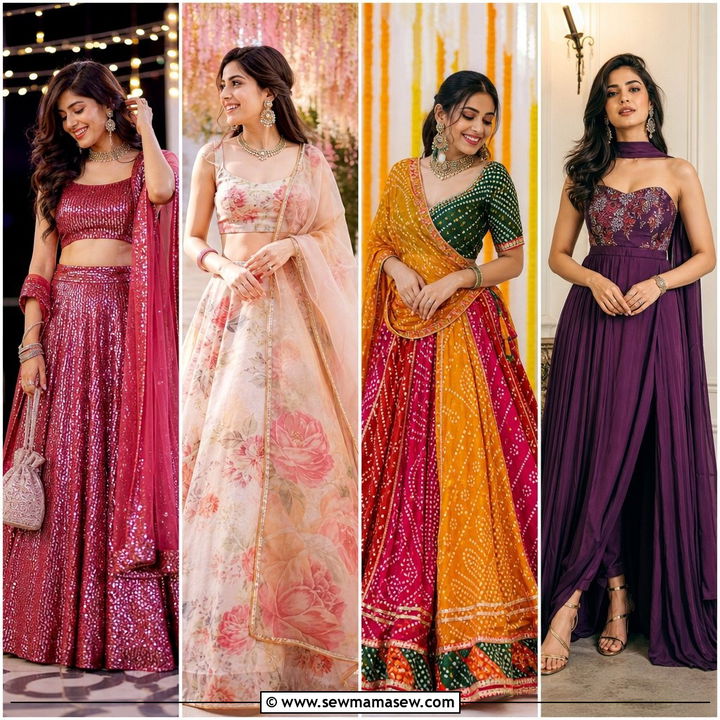


20. Bandhani Lehenga for Sangeet Night

A bandhani lehenga carries a tie-dye craft that's been practised for generations, and the dotted patterns in red, yellow, green and blue feel festive straight away. Because the print is busy, I keep the choli solid and let an embroidered dupatta do the decorating. Real bandhani fabric has a crinkled texture from the tying; it relaxes with steam, so don't press it flat with a hot iron. Oxidized silver earrings, a statement necklace, stacked bangles and mojari flats suit the craft.
21. Jacket Lehenga for Sangeet Function

A long embroidered jacket over a lehenga stands out in a room full of choli-and-dupatta combinations. Ivory, gold or pastel silk and brocade with zari or resham work give the jacket weight. Keep the lehenga and inner blouse plain so the jacket stays the focus. Worn open, it shows a hint of the blouse; belted, it looks more structured. I'd pick this for a cooler evening, and I'd check the armholes, since jackets cut close at the armpit limit how high you can raise your arms.
22. Ruffled Saree for Sangeet Ceremony

A ruffled saree gives you saree drape with built-in movement, because the ruffles sway when you walk. Pre-stitched or pre-draped versions in a solid jewel tone or a metallic mean no pleating at all. I pair it with a structured corset or off-shoulder blouse so the ruffles have something firm to contrast with. Ruffled hems are bulkier at the ankle, so a heeled strappy sandal helps keep them off the floor. Statement earrings and a metallic clutch finish it.
23. Ombre Lehenga for Sangeet Party

Ombre lehengas shift from light to dark across the skirt, and the gradient draws the eye downward, which lengthens the figure. Peach to coral, lavender to purple, and ice blue to navy are the common pairings. Match your choli to either the lightest or darkest end of the gradient, never the middle, or the top looks like a separate outfit. A sheer dupatta with a slim border keeps attention on the skirt. Crystal accessories, a sleek ponytail and metallic heels finish it.
24. Saree Gown for Sangeet

No pleating, no tucking, no pins. A saree gown keeps the pallu and drape of a saree but stitches it onto a single gown base, so you step in and zip up. Georgette or satin with embroidered borders and a belt at the waist gives it shape. It suits someone who's never worn a saree for six hours and doesn't want to start at a dance party. Statement earrings, a cocktail ring and block heels you can actually dance in complete it.


25. Ball Gown for Sangeet Night

When the invitation suggests grandeur, a ball gown fits the mood. A structured bodice with a full skirt makes a big silhouette, so I'd root it in Indian craft with zari borders, gota patti florals or crystal work. Burgundy, royal blue and antique gold suit an evening venue. Volume has a cost: you'll need help on stairs and space on the dance floor, which is why I'd suggest it for the bride-to-be or close family rather than a guest. Add a maang tikka, a soft updo and metallic heels, and leave the dupatta off.
26. Off-Shoulder Blouse Lehenga for Sangeet

An off-shoulder blouse with a classic lehenga is modern without losing the occasion. The detail that decides whether it works is the sleeve: it needs elastic or boning at the top edge, or it will slide every time you raise your arms. Pair it with a flowing net or georgette lehenga in bottle green, maroon or mustard, and pin a light dupatta at the back. A statement neckpiece fills the open neckline; with it, I'd go lighter on earrings than the original look suggests.
27. Printed Lehenga for Sangeet

Not every sangeet lehenga needs embroidery. Printed lehengas in silk, cotton-silk or crepe are lighter and easier to dance in, and digital or block prints look youthful. A high-waisted printed skirt with a plain matching choli and a contrast dupatta keeps it tidy. Add oxidized silver jewelry, comfortable juttis and a braid. I'd save this for a daytime or outdoor sangeet; under evening lights, a print without shine can look flat next to embroidered outfits.
28. Silk Lehenga for Sangeet Ceremony

Pure silk has a natural sheen and enough weight to give a lehenga skirt a clean fall. Traditional pairings such as mehendi green, rani pink or deep mustard with woven zari borders always read as occasion wear. Silk also shows sweat marks, especially lighter shades, so I suggest dress shields in the blouse for a hot venue. A brocade or silk blouse, an embroidered dupatta, temple jewelry, a bun with fresh flowers and embellished kolhapuri heels finish it.
29. Georgette Lehenga for Sangeet Night

If you're in three choreographed numbers, georgette is the fabric I'd pick. It's light and breathable and drapes well, so the skirt follows you without dragging. Choose a georgette lehenga with all-over sequin or mirror work in flamingo pink, turquoise or royal purple. Georgette frays easily at the hem, so check that the edge is properly finished before buying. A sleek choli, statement earrings, a metallic potli and block heels for stability keep it practical.


30. Palazzo Suit Set for Sangeet

A palazzo suit is the polished, more covered option, and the wide pants stay in place however energetic the bhangra gets. A straight embroidered kurta over silk or crepe palazzos creates long, clean lines. Go monochrome in a jewel tone or try two tones with a contrast dupatta. I often suggest this to mothers and aunts who'll be hosting all evening, since nothing needs adjusting. Statement earrings, a potli bag and embroidered sandals are enough.
31. Peplum Top Lehenga Set for Sangeet

A peplum top gives the waist definition without a corset. The flare sits over the hip, and its short length leaves the skirt fully on show. Choose an embroidered peplum in a metallic or pastel shade over a fitted lehenga skirt in a matching tone, with a narrow sheer dupatta. Where the peplum starts matters: it should begin at your natural waist, because if it starts lower, it widens the hip line. Danglers, metallic heels and a clutch finish it.
32. Embroidered Kurta Sharara Set for Sangeet

An embroidered kurta with sharara pants needs almost no styling decisions, which is why it suits a busy guest. Threadwork, beadwork or sequins on the kurta, with pants in the same or a contrasting tone, make a complete set. A hip-length kurta reads traditional; a short structured one, more modern. Shorter kurtas show more of the sharara flare, which looks good in motion. A bordered dupatta, chandbali earrings, a bangle stack and khussas finish it.
33. Gold Lehenga for Sangeet Night

Gold is always appropriate at a sangeet. Champagne gold is quieter; antique gold is richer. Under warm lighting, both glow against most Indian skin tones. A gold tissue or brocade lehenga with light embroidery stays elegant, and a contrasting maroon, emerald or navy choli breaks up the metal so you don't vanish into a gold backdrop. Kundan jewelry, a low bun with gajra and metallic sandals are all it needs.
34. Jewel Tone Lehenga for Sangeet

Emerald, sapphire, ruby, amethyst and deep teal suit almost everyone, which is why jewel tones appear at every sangeet. A single-color lehenga with light sequin or zari work stays refined. If you're not sure of your undertone, emerald and sapphire are the forgiving ones; ruby can pull pink on some complexions in flash photos. A choker, matching earrings, a center part, a dark lip and a potli bag are all you need.
35. Floral Print Lehenga for Sangeet

Florals suit a spring or summer sangeet, especially a daytime one outdoors. Large digital or hand-painted prints on crepe or organza give a soft, garden feel. A high-waisted floral skirt with a solid choli and a sheer floral dupatta coordinates without matching too exactly. Keep the print scale in proportion: tiny florals on a petite frame, larger blooms if you're tall. Dainty pearls, a half-up style and pastel heels finish it.
Matching the Outfit to Your Role at the Function
The same lehenga can be right for one person and wrong for another, depending on where they stand in the wedding. Here's how I'd think about it.
The bride
This is the bride's night to wear something lighter and more playful than the wedding outfit. Red, gold and heavy embellishment are hers if she wants them. I'd still keep the heaviest work on the blouse and border so she can dance the opening number without fighting the skirt.
Sisters, cousins and bridesmaids
If you're performing, choose the outfit after you've seen the routine. Co-ords, crop tops with lehenga skirts and shararas handle jumps and spins better than a full can-can. A shared palette with each person picking her own cut photographs better than identical outfits.
Mothers, aunts and guests
Hosts are on their feet greeting people for hours, so comfort beats drama. Palazzo suits, Anarkalis and saree gowns all handle that well. As a guest, I'd avoid bridal red and skip anything that competes with the bride, and check with the family if you're unsure whether black or white is welcome, since customs differ between families and regions.
Dressing for the Dance Floor, Not Just the Stage Photo
Every outfit here has to do two jobs: look right in the family photographs and let you dance for hours. Start from your role at the function and how much you'll move, then pick the silhouette, and only then the color. A pre-draped saree, a sharara, a co-ord or a ball gown can all be right for different people. Try your choreography in the full outfit once at home, shoes included, and you'll know before the night whether it works.
Related posts:


