
A court reporter dresses for a job nobody is supposed to notice, and that is the brief I work from. You sit near the bench, write for hours, and haul a machine, a laptop and a tripod through security, so the clothes have to look serious and still let you move. I build these looks on navy, charcoal, black and soft neutrals, with closed-toe shoes and necklines that stay put when you lean toward your keys. The same rules carry from a formal trial to a laid-back deposition or a hybrid hearing on camera; only the amount of tailoring changes.

Dressing Around a Steno Writer and a Tripod
Most workwear advice assumes a desk. A reporter works at a writer on a tripod, usually set close to the body and often between the knees, with wrists hovering over the keys for long stretches. That changes what I look for in every piece before style even comes up.
- Sleeves: cuffs that end at the wrist bone, or push up and stay there. Bell sleeves and loose cuffs drag across the keys.
- Skirts: a pencil skirt above the knee makes sitting behind a tripod awkward. A knee or midi length with a vent, or an A-line, gives your legs room.
- Jewelry: bracelets clack against the machine and can be heard on a recording. Studs, a short necklace and a watch you can take off are safer.
- Waistbands: anything that digs in while standing will hurt by midafternoon. Sit down in the fitting room before you buy.
Then there's the haul. The machine, laptop, cords and tripod usually travel in a rolling case, so shoes need to handle ramps, long corridors and the walk in from the parking garage. I tell reporters to choose the shoes first and dress up from there, which is why nearly every look below sits on a low, stable heel or a flat.
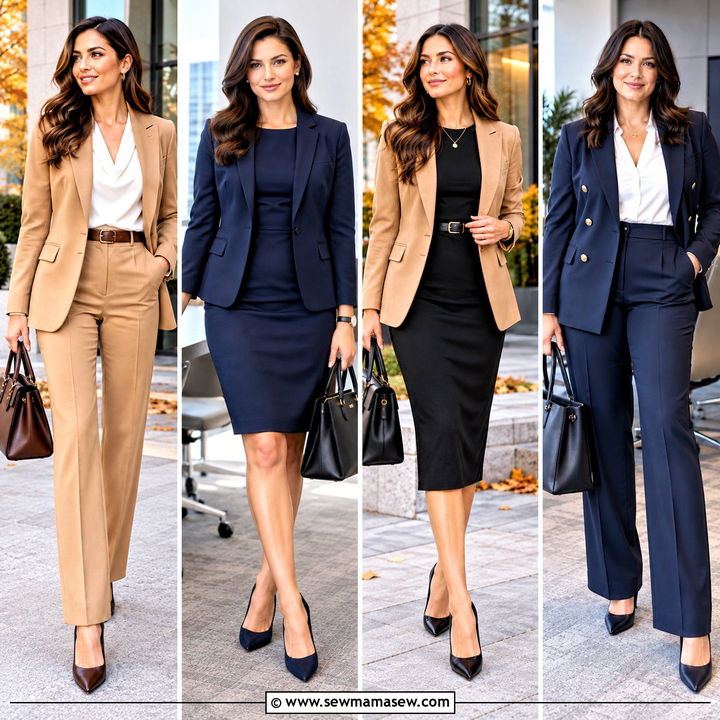
1. Classic Navy Pantsuit With White Button-Down

When someone asks me for one outfit that clears every courtroom, I hand them a navy pantsuit. Wool or a good wool blend in a single-breasted cut, with straight or slightly tapered trousers that break once over a low pump. I tuck a white point-collar shirt all the way in and leave out bows, since a floppy tie gets in the way when you lean over a steno writer. Navy leather pumps with a low block heel, a black or cognac tote, pearl studs and a watch finish it. Before you buy, sit down in the trousers: if the waistband digs in after a few minutes in the fitting room, it will hurt by the afternoon recess.
2. Charcoal Gray Skirt Suit With Silk Shell

Charcoal is softer than black under fluorescent courtroom lights, which is why I like it for a skirt suit. Look for a blazer with a slight nip at the waist and a pencil skirt that ends at the knee; anything shorter rides up once you sit with a tripod in front of you. An ivory or blush silk shell keeps the gray from looking severe. Suede pumps with a low heel are quieter on tile than hard leather soles, and sheer hosiery, a black top-handle bag and a thin silver chain are all the extras it needs.
3. Black Sheath Dress With Cropped Blazer

On mornings when the docket is long and the clock is short, I reach for a black sheath dress. Ponte or a wool blend that skims rather than clings, a crew or bateau neckline, and sleeves that cover the shoulders. A cropped black blazer ending at the waist keeps the shape from reading boxy. Add sheer black tights, pointed flats or a low kitten heel, and a slim crossbody so your hands stay free for equipment. A single strand of pearls softens all that black without adding noise. One honest warning: thin ponte bags out at the seat after a day of sitting, so check the fabric weight before you commit.
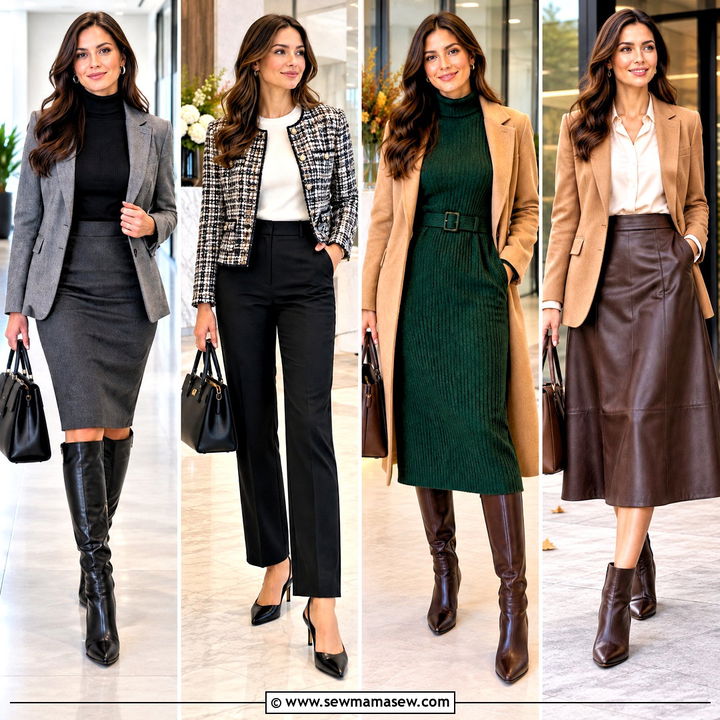
4. Tweed Blazer With Tailored Black Trousers

Tweed is the one texture I'll put in a courtroom without hesitation, as long as the pattern stays small. A fitted blazer in black-and-white tweed or a quiet gray herringbone sits well against smooth black suiting trousers. Underneath, a black knit shell or a fine crewneck keeps the bulk down; a chunky sweater under tweed makes the jacket strain at the buttons. Cushioned black loafers, a satchel with a crossbody strap, small gold knot earrings and a leather-strap watch round it out. Tweed does snag on rough table edges and case zippers, so check the sleeves now and then for pulled loops.
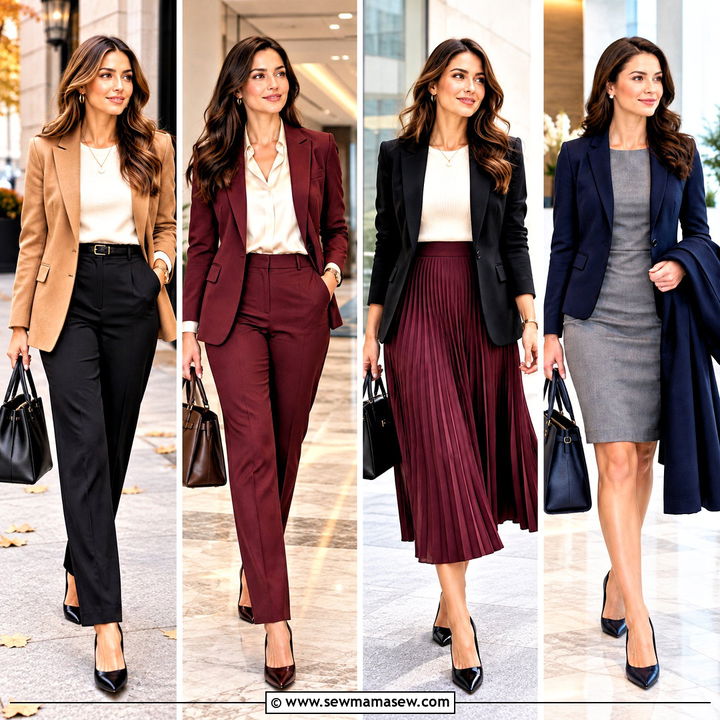
5. Burgundy Blazer With Black Straight-Leg Slacks

Burgundy is how I add color for reporters who are tired of navy but can't afford to look trendy. A single-breasted blazer in deep burgundy or oxblood goes over a cream round-neck blouse in matte crepe, and black straight-leg slacks with a pressed crease anchor it. Pointed black ankle boots with a low heel keep it modern. Pick a structured tote big enough for your steno accessories and a tablet, and keep jewelry minimal. I'd hold this one for ordinary hearing days rather than a high-profile trial, where the quietest color in the room is usually the right one.
6. Monochrome Gray Column Outfit

Head-to-toe gray gives you one long line from shoulder to shoe, and it removes the matching problem on a rushed morning. I start with a light gray fine-gauge crewneck, add medium gray straight-leg trousers, then a charcoal longline blazer for structure. Gray suede flats or low block pumps keep the column going, and a slim gray belt joins top and bottom. The trick with tonal dressing is to vary the shade by a step or two, because three pieces meant to be the exact same gray rarely match in daylight and end up looking accidental. Silver studs, a simple bangle you can slide off before you write, and a charcoal bag.
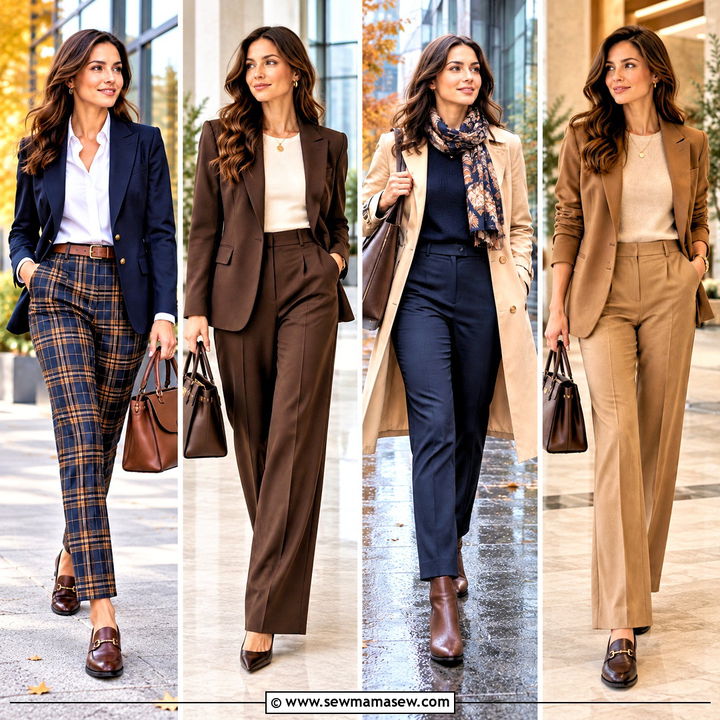
7. Camel Blazer With Navy Slim Trousers

Camel and navy is my default when someone wants something warmer than a dark suit. A camel wool blazer with notch lapels and a single button goes over a navy silk shell tucked into navy slim trousers. Hem length depends on the shoe: ankle length with loafers, full length with a low block heel. Cognac loafers and a brown structured bag carry the camel down the outfit, and small gold hoops keep the warm palette consistent. Camel shows coffee and pen marks quickly, so I keep a stain pen in the bag on days I wear it.
8. Plaid Blazer With Solid Black Separates

Plaid works in court when the pattern is quiet and everything around it is solid. I look for glen plaid, windowpane or a faint check in gray, navy or forest green, then put it over a black lightweight turtleneck. Smooth black trousers with a clean hem steady the pattern. Driving loafers or low Chelsea boots, a black tote and silver jewelry keep the rest calm. Skip large-scale tartans and bright plaids; from across a courtroom they read as weekend wear. I like this one most in the cooler months, when the wool feels right.
9. Ponte Knit Midi Dress With Long Cardigan

For deposition days or a relaxed court, I pair a ponte midi dress with a long cardigan. The dress should fall below the knee in navy, charcoal or forest green; the cardigan, in heather gray or oatmeal, should reach the knee or lower so it reads as a coat layer rather than loungewear. A thin leather belt over the cardigan gives the waist back. Wear opaque tights in winter, bare legs in summer if the office allows, plus suede ballet flats or a low wedge. Long cardigans catch on chair arms and tripod legs, so belt it on days you're setting up in tight spaces.
10. Crisp White Button-Down With Navy Pencil Skirt

A white shirt and a navy pencil skirt is the plainest combination here, and plain is the point. Choose a wrinkle-resistant cotton blend, because all-cotton poplin creases at the elbows within an hour of writing. The skirt should hit at or just below the knee and have a back vent or some stretch, or sitting becomes a negotiation. Add a thin black belt, navy pointed flats or low pumps, a black structured bag and pearl studs. Check the shirt for show-through in bright light; a nude camisole underneath solves it.
11. Fine-Knit Sweater With Wide-Leg Trousers

Wide-leg trousers look current and still professional if the fabric is weighty enough to fall straight. I go for charcoal or black wool blend with a high waist, then a fine-gauge sweater in cream, camel or soft gray with a front tuck. A cropped blazer or structured knit jacket in a matching neutral keeps the top from disappearing over all that leg. Closed-toe pointed flats or low block heels, a black tote, small gold jewelry. Hem the trousers to the shoes you'll actually wear: a wide leg that drags picks up floor grit on courthouse stairs within a week.
12. Double-Breasted Blazer With Straight-Leg Trousers

A double-breasted blazer adds instant structure, but only if it buttons flat without pulling into an X across the front. Go for navy or charcoal with defined shoulders, worn open over an ivory or champagne camisole or crewneck shell, and matching straight-leg trousers to turn it into a suit. Low, sturdy pointed pumps handle marble floors; a slim briefcase-style bag, a metal-band watch and small gold hoops do the rest. I'd steer very busty or short-waisted reporters toward single-breasted instead, since the extra overlap of fabric across the chest adds bulk right where they don't want it.
13. Three-Piece Suit With Matching Vest

A three-piece suit is the most formal choice on this list, and I keep it for courtrooms that run formal or days you want armor. Charcoal or deep navy, with a slim vest that lies smooth over a white or pale blue shirt, fully tucked and pressed. Straight-leg trousers with a crease, dark gray or navy low pumps, a black structured bag and subtle silver. The vest earns its place in over-cooled courtrooms, since you can take the jacket off and still look finished. Have the vest fitted while seated; one that's fine standing can gape at the hem once you lean forward to write.
14. Longline Blazer With Cropped Ankle Trousers

This is my first suggestion for petite reporters. A longline blazer that ends below the hip and cropped trousers that stop just above the ankle bone stretch the frame, as long as jacket and trousers are close in color. Black, charcoal or camel for the blazer, with a knit shell or fine-rib turtleneck in a matching tone underneath. Closed-toe slingback flats or low block mules, and a crossbody so your hands are free. Taller women with long torsos should try the jacket on first, because on some frames a very long blazer cuts the leg in half.
15. Navy Midi Shirt Dress With Structured Tote

A shirt dress gives you the collar of a button-down with the speed of a dress. I like navy or charcoal, midi length below the knee, and long sleeves that can be pushed up when the room warms. A self-tie belt shapes the waist. Wear low-heel knee boots in cooler months and closed-toe block pumps in warm ones, with a thin cardigan or cropped blazer for cold rooms. Check the gap between buttons at the bust while sitting; that's where shirt dresses fail, and a small sew-on snap inside fixes it.
16. Olive Green Blazer With Beige Trousers

Olive is a neutral I wish more reporters used. A fitted olive blazer with notch lapels sits easily with beige or stone trousers and a cream knit shell, and tan loafers or low pumps, a brown tote and simple gold keep the earthy palette together. It's a welcome break from navy in spring and fall. Make sure the beige trousers are fully opaque and resist hard creasing; stone-colored pants show lap wrinkles far sooner than navy does.
17. Black Turtleneck With Gray Pleated Midi Skirt

In cold months a black fine-gauge turtleneck is the most useful layer a reporter owns. Tuck it into a gray pleated midi skirt in wool blend; pressed pleats move when you walk and lie flat when you sit, which a gathered skirt won't. Add a belt with a small gold buckle, opaque black tights and low block-heel ankle boots, with a gray or black wool coat for the commute. Watch the knit itself: fine merino stays smooth, while cheaper acrylic pills under the arms and at the wrists, right where you rest against the machine.
18. Pinstripe Pantsuit With Soft Blouse

Pinstripes have a long history in legal dress, and a fine stripe still reads as authority rather than costume. Pick navy with a white stripe or charcoal with ivory, single-breasted, with matching trousers. A soft ivory or blush blouse with a small tie-neck or round neck keeps it from feeling stiff. Navy or charcoal low pumps, a black tote that doesn't introduce a second pattern, pearl studs and a watch. If you'll be on video, choose a widely spaced stripe; very tight stripes can flicker on a webcam.
19. Soft Pastel Blazer With White Wide-Leg Trousers

A pastel blazer is a spring and summer option, mostly for depositions and less formal courts. Dusty pink, soft lavender or pale sage goes over white wide-leg trousers that are fully lined, with a white shell underneath. Nude pointed flats or low slingbacks, a beige or taupe structured tote and rose gold jewelry suit the soft colors. Pastels look casual fast if the tailoring is loose, so this only works when the blazer fits at the shoulder and the trousers are freshly pressed. I'd also leave white trousers at home on days you'll be wheeling equipment through a parking garage.


20. Classic Black Leather Loafers With Ankle Pants And Blazer

Start with the feet on this one. Polished black loafers are a court reporter essential if you walk between courtrooms all day, and the rest of the outfit is built to suit them. Black cropped ankle pants that show a little ankle, a white or cream silk blouse loosely tucked, and a gray or camel single-breasted blazer. Choose loafers with a cushioned insole and a rubber sole that doesn't click. A leather backpack or crossbody carries the small things while your hands manage the case, and simple gold studs finish it.
21. Wrap Dress With Low Block Heels

A wrap dress suits a lot of bodies, but in court it lives or dies on the neckline. Choose a knee or midi length in burgundy, navy or forest green with three-quarter sleeves, and test the crossover by leaning forward in the mirror; if it opens, add a snap or skip it. Low block-heel pumps in black or nude give you stability in hallways, and a cropped cardigan or thin blazer handles aggressive air conditioning. A small black top-handle bag and delicate gold drops are enough. Jersey wraps cling more than crepe ones, so pick crepe if you want the dress to sit away from the body.
22. Cardigan Over Button-Up With Midi Skirt

A long open cardigan over a button-up and a midi skirt is a softer route through a court dress code. I'd use a white or pale blue cotton shirt tucked into a navy, gray or camel A-line skirt at mid-calf, then a fine-knit cardigan in heather gray, oatmeal or black. A thin belt over the cardigan keeps the shape. Black ballet flats, a roomy tote and small earrings. It suits older courthouses with uneven heating, since the cardigan comes off without leaving you underdressed.
23. Crepe Blouse With Tailored Black Trousers And Statement Necklace

Here the blouse does the work, so everything else has to stay out of its way. I pick crepe de chine or matte silk in emerald, wine or sapphire, with a modest neckline and elbow sleeves that won't brush the keys. Slim straight black trousers with a crease and black pointed flats or low heels sit under it. One piece of jewelry near the face, such as a short pearl strand or slim gold chain, plus plain studs. Silk shows underarm marks on stressful days, so a lightly lined blouse or a sweat-guard liner is worth having for trials.
24. Utility Blazer With Dark Wash Straight-Leg Jeans

Denim belongs only in deposition rooms, school board meetings and other business-casual settings, and only after you've confirmed the court or firm allows it. When it is allowed, a structured utility blazer in olive, navy or black keeps jeans in work territory. The jeans need a uniform dark indigo wash with no fading, whiskering or distressing, in a straight or slim-straight leg. Add a white crewneck tee or knit shell, black loafers or clean white leather sneakers where permitted, a leather crossbody and minimal gold. New dark indigo can rub off onto pale upholstery and light bags, so wash a new pair once before wearing it to work.
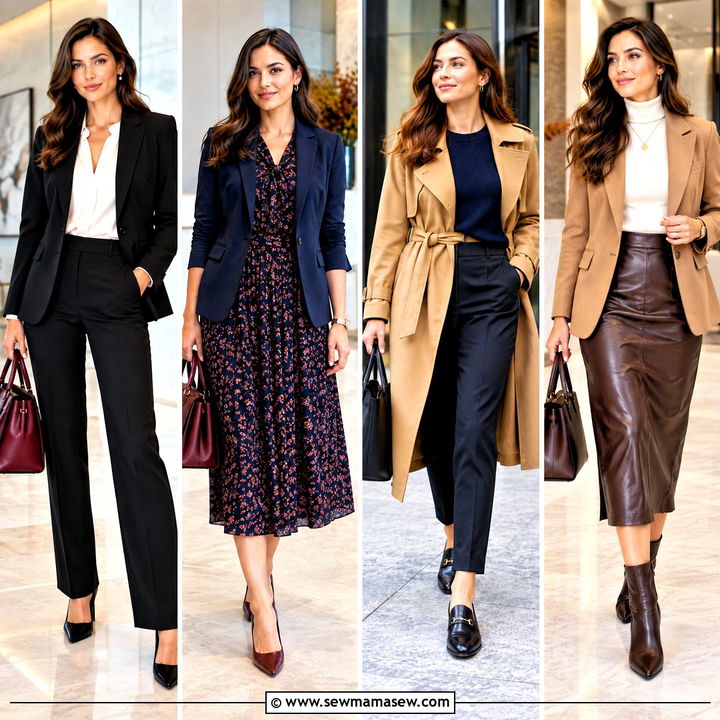
25. Crewneck Knit With Faux-Leather Trousers

Matte faux-leather trousers can pass in a deposition room if the rest of the outfit stays classic. Straight or slim black with little hardware, then a cream or camel crewneck in wool or cashmere blend with a front tuck. A black tailored blazer or wool coat covers some of the shine and makes the texture mix look deliberate. Low pointed ankle boots, a black tote and silver finish it. Faux leather doesn't breathe, though, so in a warm room after a few hours of sitting it turns clammy. I'd keep it for cold days and more creative settings.
26. Cape Blazer Over Slim Sheath Dress

A cape blazer adds a little drama to courtroom attire without pulling eyes. I choose black or charcoal with clean arm slits, worn over a slim sheath in the same color with a knee-length hem and a crew or jewel neckline. Opaque tights and low pointed pumps keep the line long. Test it at your machine before a trial day: some capes restrict how far your arms reach forward, and that matters more than the mirror. When it fits, it makes a good signature piece for judges who run a formal room.
27. Subtle Printed Blouse With Solid Blazer And Trousers

A small print under a plain suit is the easiest way to add something personal without breaking dress code. Tiny dots, faint paisley or a muted floral in navy, ivory or dusty blue goes under a solid black or charcoal blazer and tailored black trousers. Black low pumps or loafers and a black tote that matches the trousers. My test is distance: step back across the room, and if the print reads as texture instead of pattern, it's right for court.
28. All-Black Tailored Look With Silver Accessories

All black fails only when the pieces don't fit, so spend on tailoring here. A black single-breasted blazer in wool blend, black straight-leg trousers with a pressed crease, and a black silk shell or fine knit with a little sheen to break up the matte. Low pointed pumps keep the column unbroken. Silver accessories stop it going flat: a slim watch, small hoops and a thin chain. Blacks from different makers rarely match exactly, so I buy jacket and trousers together or compare them in daylight. Lint shows on black wool, so keep a roller in the bag.
29. Beige Suit With Brown Accessories

A beige or stone suit is the warm-weather swap for dark neutrals. Choose a single-breasted blazer with matching straight or slightly cropped trousers in a medium-weight wool blend or cotton suiting that resists creasing, with a white or ivory sleeveless crepe shell underneath. Brown leather warms it up: cognac low pumps, a mahogany tote, a slim brown belt, plus small gold knot earrings and a fine chain bracelet. Stand by a window before you wear it to court. If light shows through the trousers, have them lined.
30. Forest Green Suit With Cream Blouse

Forest green is deep enough to behave almost like a dark neutral, which makes it my favorite way to bring color into a suit rotation. Wear a matching forest green blazer and straight-leg trousers with a cream silk or crepe blouse, modest at the neck with three-quarter sleeves, to brighten things near the face. Tan or brown low pumps and a matching brown bag, small gold hoops and a plain chain. Green flatters many skin tones in most seasons, and it stays well inside conservative courtroom dress codes while giving you something other than navy.
31. Navy Blazer With Tan Chinos For Business Casual Days

For business casual deposition days, school board meetings or CART assignments, a navy blazer over tan chinos is relaxed but still competent. I choose an unstructured cotton or light wool blazer so the shoulders move freely, and pressed slim-straight chinos in clean khaki. A white or light blue button-down tucked in gives it backbone. Brown driving loafers or oxfords with a belt that matches them, a canvas-and-leather tote and a leather-strap watch. Chinos bag at the knee over a long session, and a pair with a little stretch in the weave recovers better by afternoon.
32. Printed Silk Scarf With Simple Blazer And Trousers

A silk scarf is the cheapest way I know to make a basic suit feel new. Keep the base neutral with a black or navy blazer, a white or ivory blouse and black trousers, then add a muted scarf in a small paisley or geometric print in navy, burgundy and cream, tied loosely at the neck or tucked into the lapel. Black low pumps, a structured black bag and just studs, so the scarf stays the focus. Tie it so the ends sit inside the blazer; long loose ends drift onto the keys when you lean in to write.
33. Short-Sleeve Sheath Dress With Collar

A collared short-sleeve sheath borrows the neatness of a shirt and keeps the line of a dress. Navy, gray or black in a crease-resistant ponte or suiting fabric, to the knee. Sheer nude hosiery and low pointed pumps, a thin patent belt at the waist, a structured black handbag and pearl or gold studs. It's the warm-weather piece I recommend most, because it covers well without trapping heat. Short sleeves pass in most courts, but keep a light blazer at your station for a cold room or a judge who expects arms covered.
34. Cropped Blazer With High-Waist Wide-Leg Trousers

A cropped blazer over high-waist wide-leg trousers is a strong proportion, and it suits taller reporters or anyone balancing broad shoulders. The blazer, in black or navy, should stop just above the natural waist, and the trousers should sit high and fall nearly to the floor, with only the toe of a low pointed pump showing. A fitted white or silk camisole fills the gap so no skin shows when you reach forward. A slim bag and minimal jewelry are plenty. Petite women can wear it too, but only with a heel and trousers hemmed for that exact shoe.
35. Classic Black Dress With Pearl Jewelry And Low Pumps

A black dress becomes court-appropriate through its details. I look for a knee length, at least elbow-length sleeves, a round or square neckline and a cut that's tailored without pulling. Heavy ponte, wool crepe or lined jersey hold their shape through a long day better than thin knits. Sheer black tights and low pumps with a pointed or almond toe go with it, and pearls, single or double strand, suit the legal setting. A black top-handle bag with a shoulder strap and pearl studs finish it. I'd keep this one on a hanger at the office for depositions called at the last minute.
A Small Rotation That Covers Two Weeks of Court
You don't need thirty-five outfits in your closet. Most of the looks above come from a small group of pieces that mix with each other, and this is the order I'd buy them in.
- A navy or charcoal suit you can wear as a set and split apart.
- A second pair of trousers in black, so the blazer gets a new partner.
- A dark sheath or shirt dress for the mornings you can't think.
- Three tops: a white shirt, an ivory shell and a fine black knit.
- One color piece in burgundy or forest green, as a blazer or a blouse.
Split the suit across days, rotate the tops and bring in the dress twice, and you get ten workdays without an exact repeat. Buy the suit in a wool blend with a little stretch, which recovers from long sitting better than stiff polyester, and keep shoes, belt and bag in one leather color so every piece talks to every other.
What Reads Well on a Remote Hearing Camera
Remote and hybrid proceedings put you in a small box on someone's screen, and different things matter there. Solid mid-tones like navy, teal, burgundy and soft blue come through clearest. Bright white can glow and pure black can lose its shape against a dark background, so I'd put a colored blazer over either one.
Fine stripes, tight checks and small houndstooth can shimmer on video, so save those for in-person days. Keep earrings small and still, raise the camera to eye level, and look at yourself in the preview window before the hearing starts, under the same lamp you'll be using.
Quiet Clothes for Long Days on the Record
Your clothes should be the least interesting thing in the room, and in this job that's a compliment. Modest cuts, fabrics that survive hours of sitting, closed-toe shoes and a palette built on navy, charcoal, black and soft neutrals leave plenty of space for a scarf, a green suit or a favorite blouse. Start with the pantsuit or the sheath, add one piece of color or texture at a time, and you'll have a wardrobe that carries you from the security line to the last page of the transcript.
Related posts:


