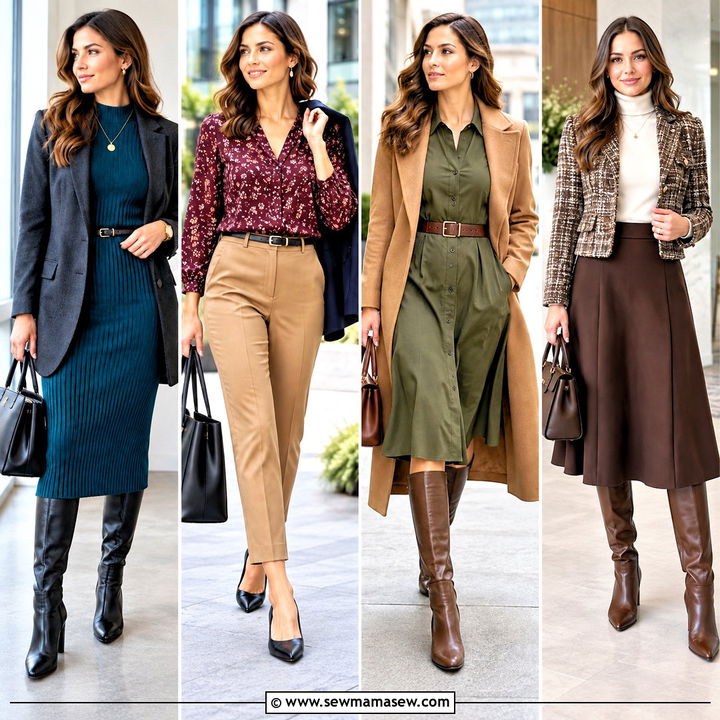
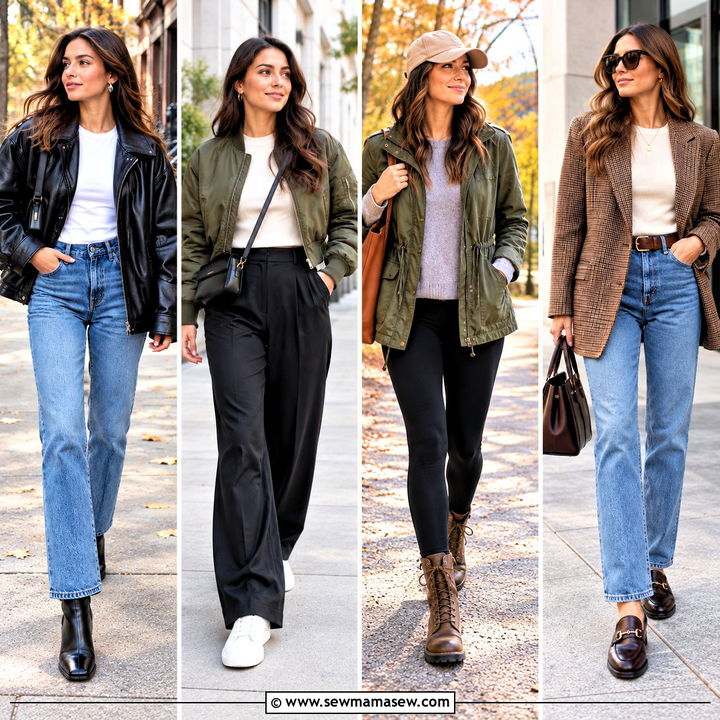
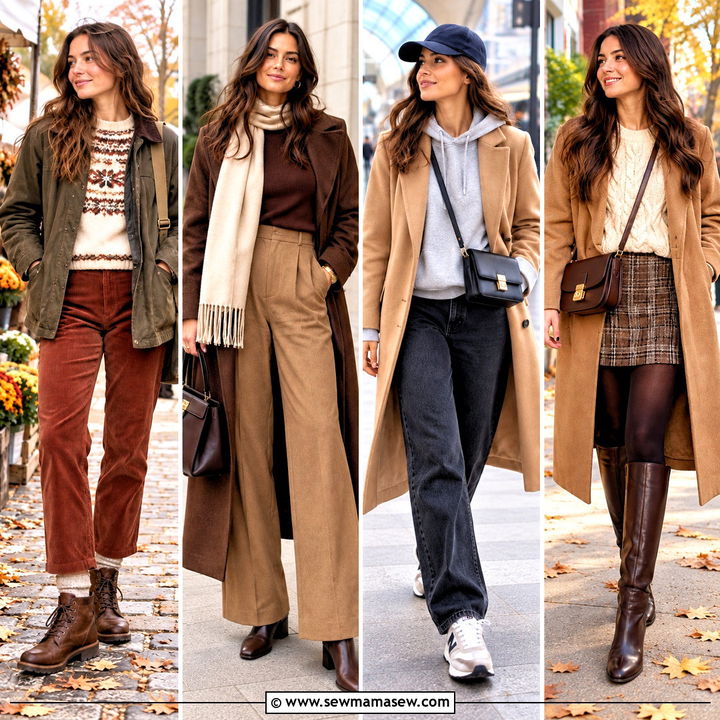
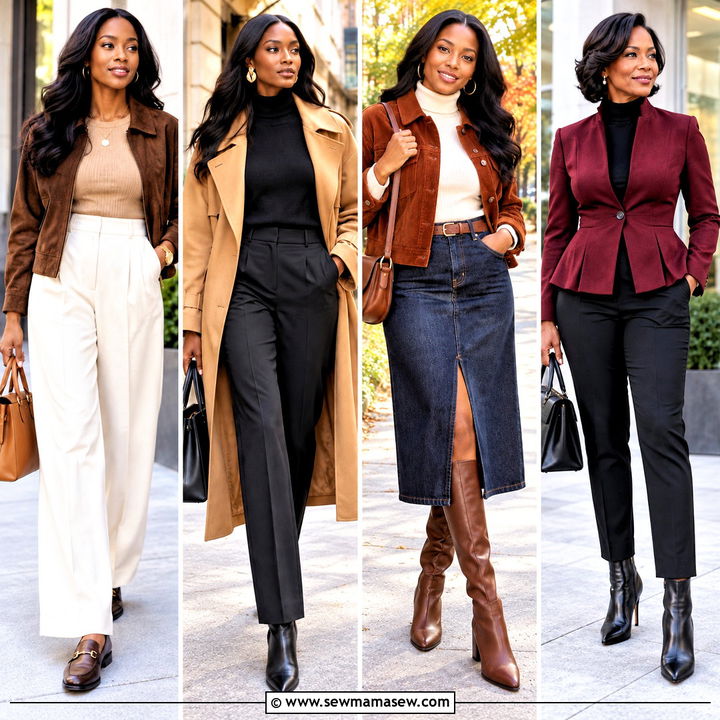
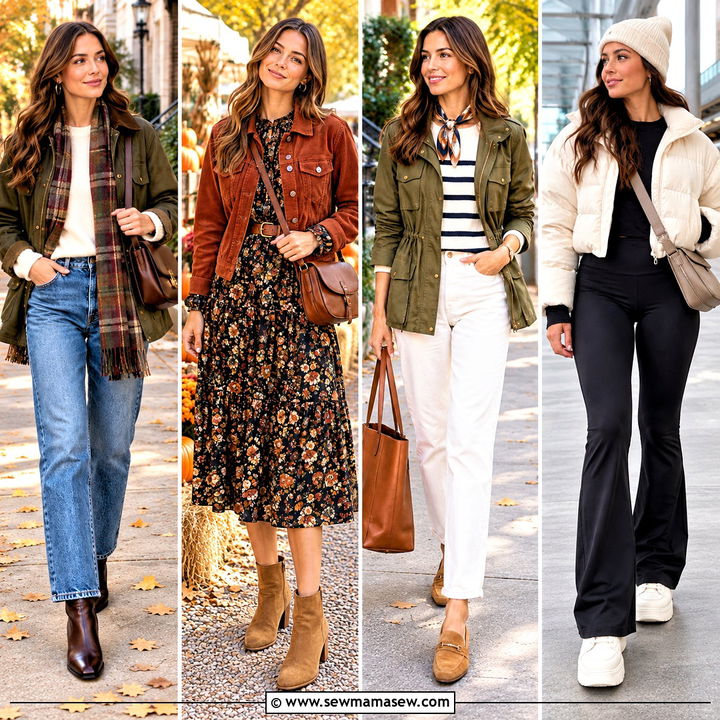
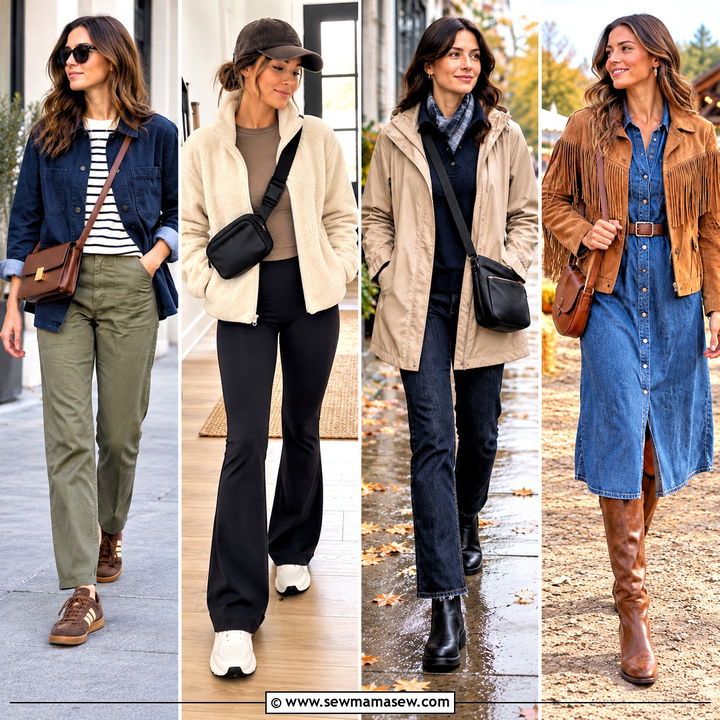
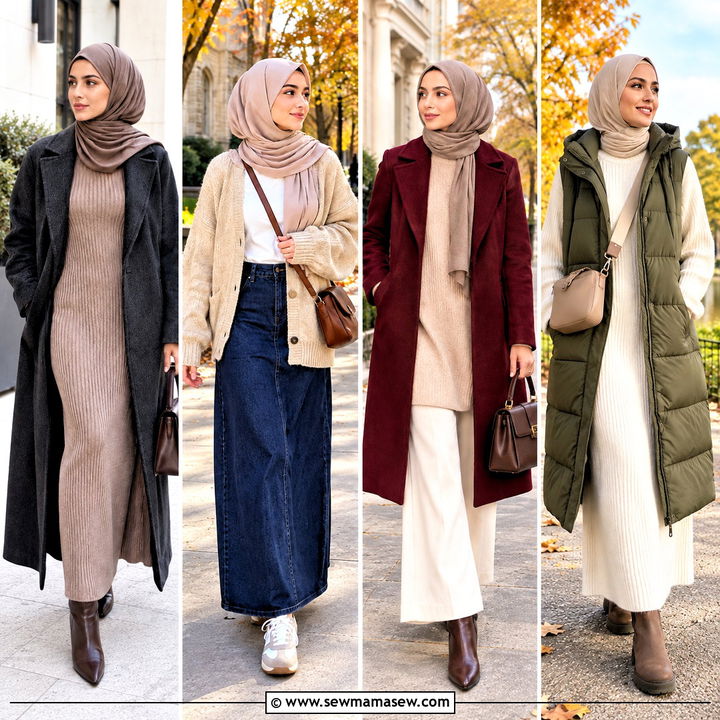
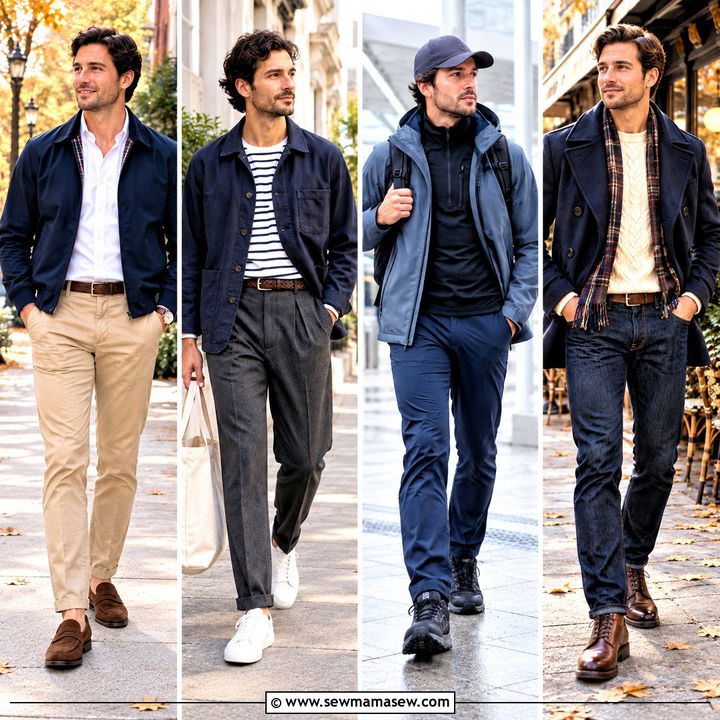
A jacket is the piece people see first on a cold morning, so it ends up deciding most of the outfit. This season's jackets lean toward practical layers, relaxed tailoring, roomy proportions and plenty of texture: leather bombers, structured tweed, oversized blazers, moto jackets and long wool cuts. I've built each one into a full outfit with the jeans, skirts, trousers, dresses and shoes I'd actually put with it. The jacket stays the lead, and everything else is chosen to make it easier to wear on an ordinary day.
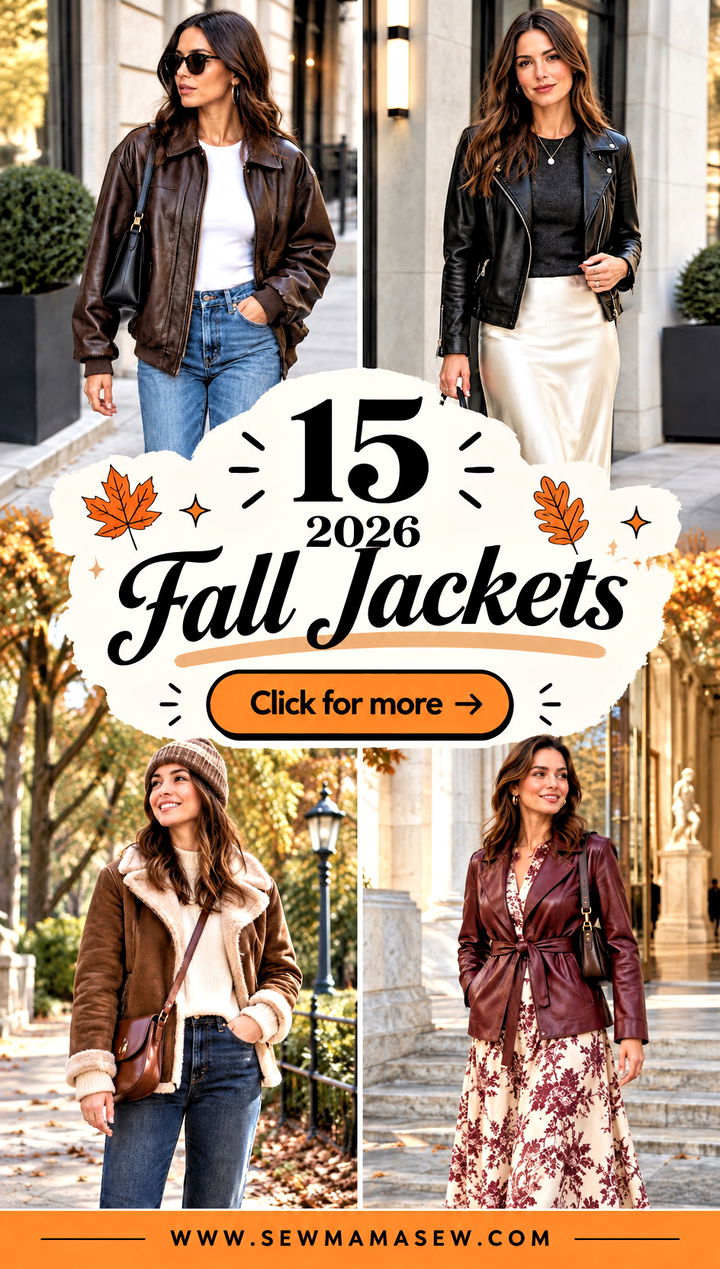
Matching Jacket Weight to the Morning Temperature
Fifteen jackets is a lot, and most people only need three or four. The easiest way to choose is by the temperatures you actually dress for. These are the rough bands I use; your own cold tolerance will shift them a few degrees either way.
- Around 60 to 68 degrees: denim, a tweed jacket, an unlined blazer or a light utility jacket over a tee.
- Around 50 to 60 degrees: leather bombers, moto jackets, suede, quilted jackets and varsity jackets, with a thin knit underneath.
- Around 40 to 50 degrees: a cropped or waist-length puffer, a lined aviator or a long wool jacket over a sweater.
- Below 40 degrees: shearling or a properly insulated coat, plus a hat and scarf.
Wind changes everything. A leather or nylon shell blocks it, while open weaves like tweed and loose knits let it straight through, so a tweed jacket that feels fine on a still 58-degree morning can feel cold at the same temperature on a gusty one. If your mornings are breezy, lean one band warmer.
1. Leather Bomber Jacket With Straight-Leg Jeans
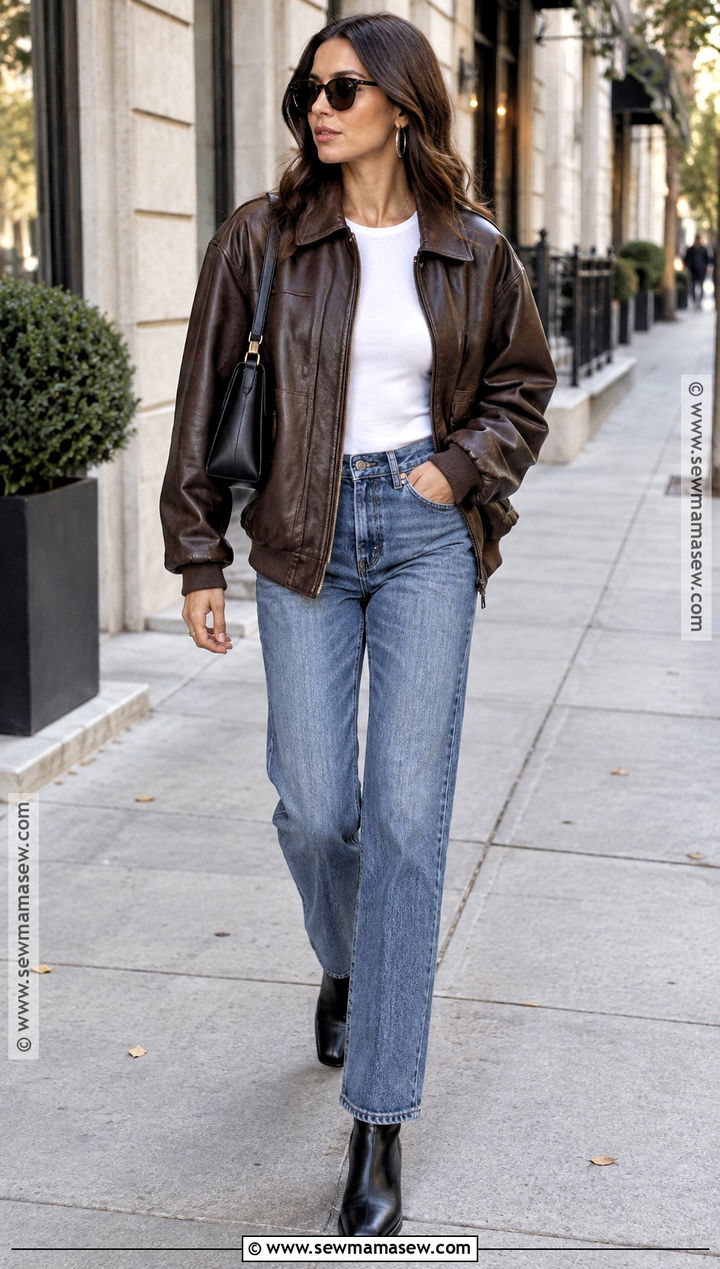
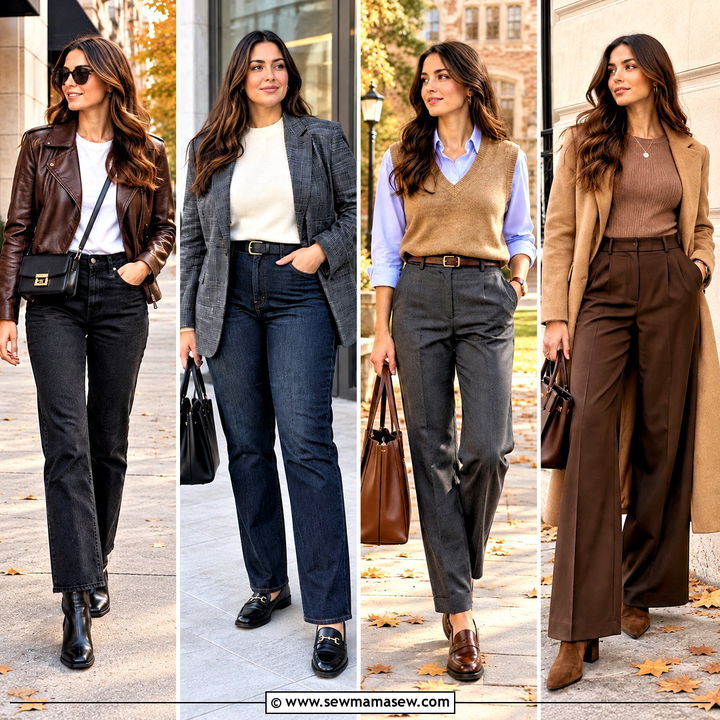
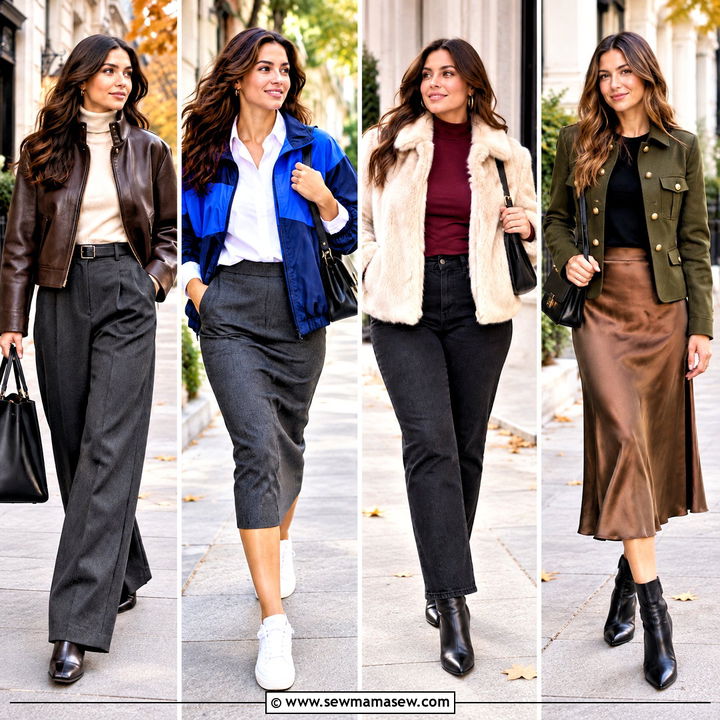
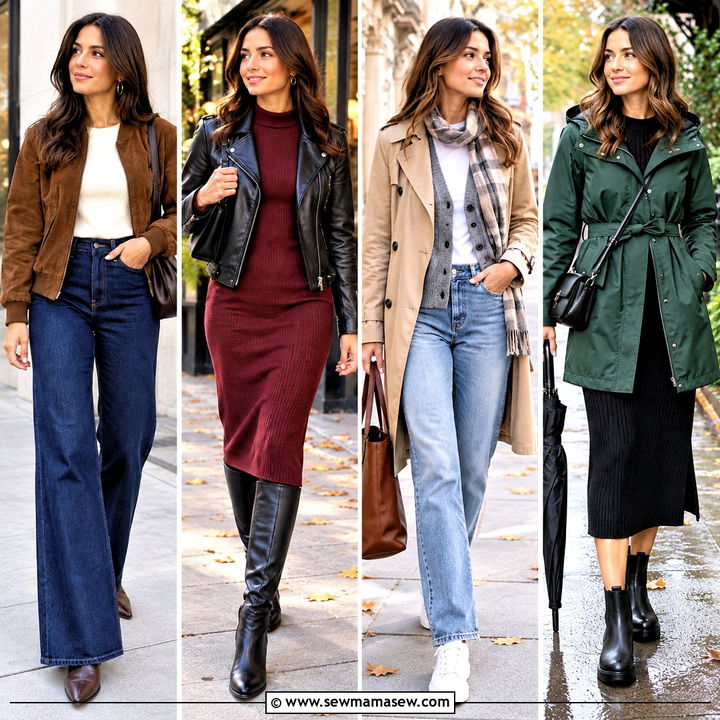
An oversized leather bomber gives you relaxed proportions without looking sloppy, as long as the rest stays slim. Black, espresso or a worn chocolate goes over a fitted white tee or thin crewneck, with straight blue jeans underneath. Real leather is stiff when new and softens to your shape over a few weeks of wear, so I'd judge the fit by the shoulders and sleeve length, not by how the body feels on day one. Leather ankle boots, a structured shoulder bag and hoops finish it. Petite? Stop the hem at the hip. Taller women can go longer and roomier.
2. Moto Jacket With Satin Midi Skirt
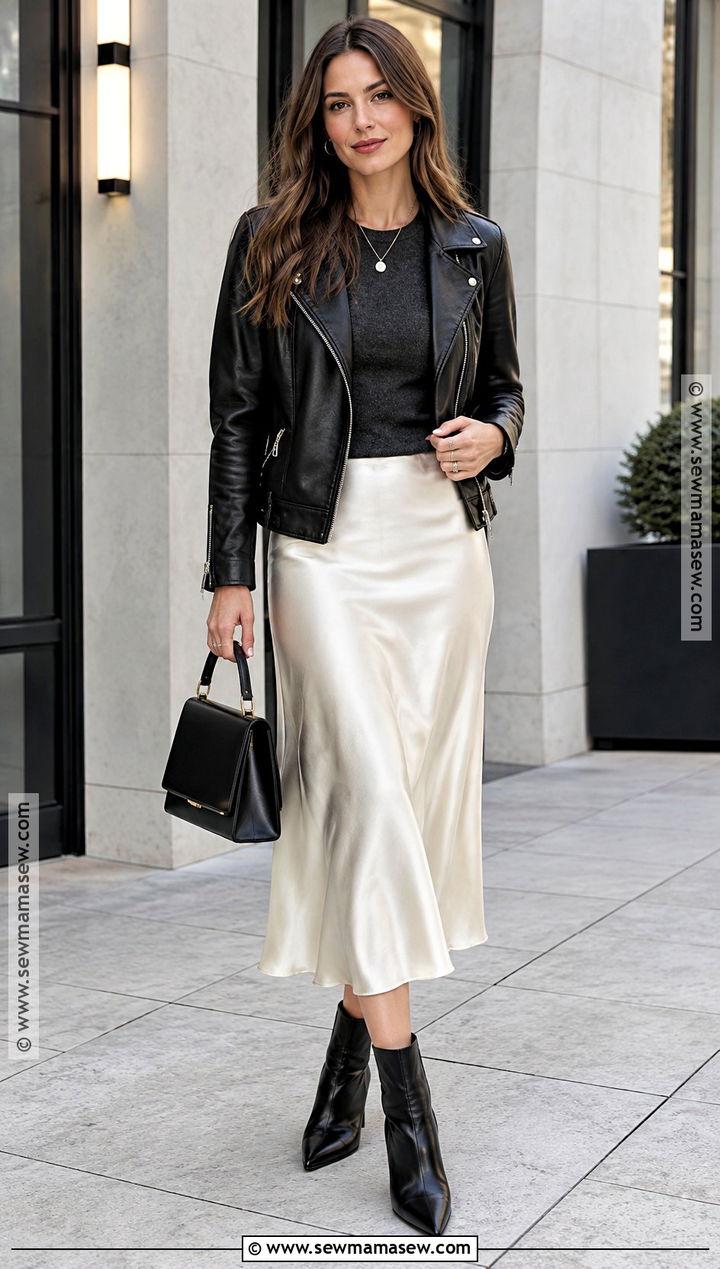
Tough leather against fluid satin is a contrast I come back to every fall. Start with a black or burgundy moto jacket that has clean hardware; a jacket covered in zips gets busy fast next to a soft skirt. Add a cream, charcoal or olive satin midi and a fitted knit tucked into the waistband. The cropped moto hem should land at or just above that waistband, which is what makes the waist read clearly. Pointed ankle boots lengthen the leg; loafers are the daytime swap. Keep the bag small and the jewelry minimal.
3. Tweed Jacket With Relaxed Jeans
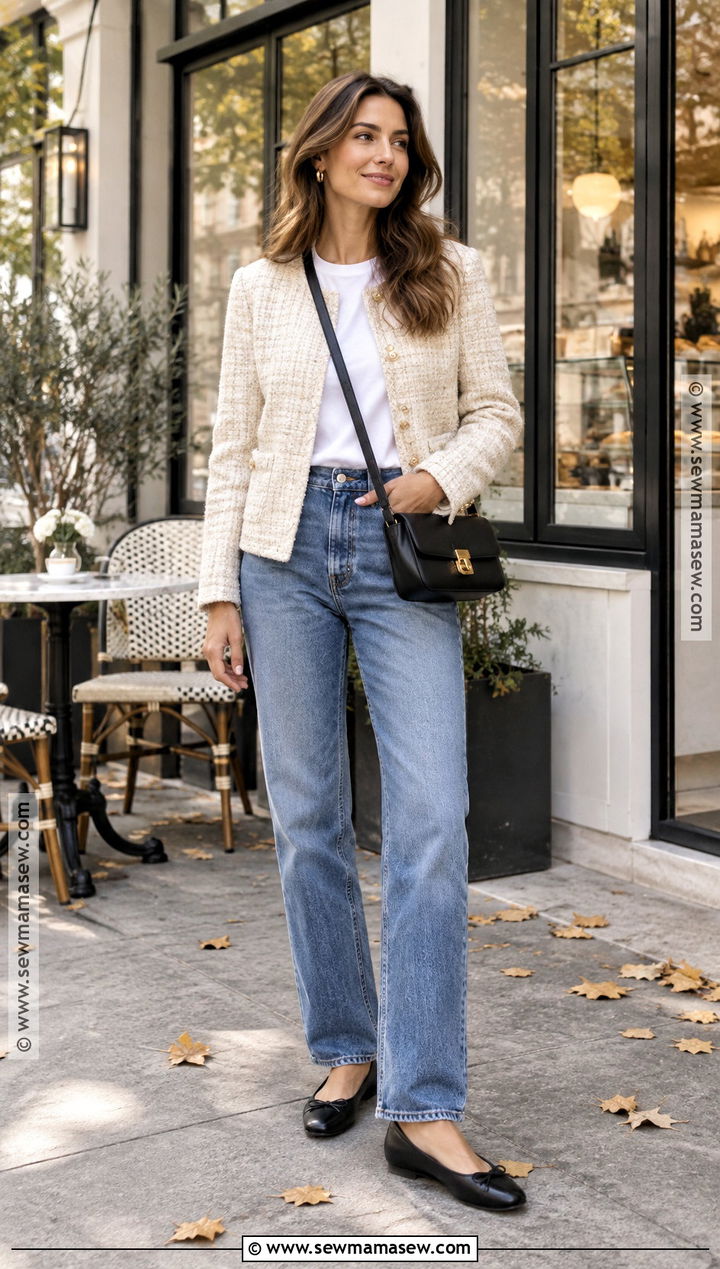
Collarless tweed does more for plain denim than almost any other jacket. I look for a slightly boxy cut in cream, navy, black or a quiet weave, and I check the inside before anything else. Loosely woven tweed snags on rings and bag straps, and a full lining keeps it from catching on your knit and helps it hang straight. Wear it over a crewneck tee with relaxed medium-wash jeans. Ballet flats make it softer; loafers make it work-ready. Open, it lengthens you. Buttoned at the middle, it shows your shape.
4. Cropped Puffer Jacket With Cargo Pants
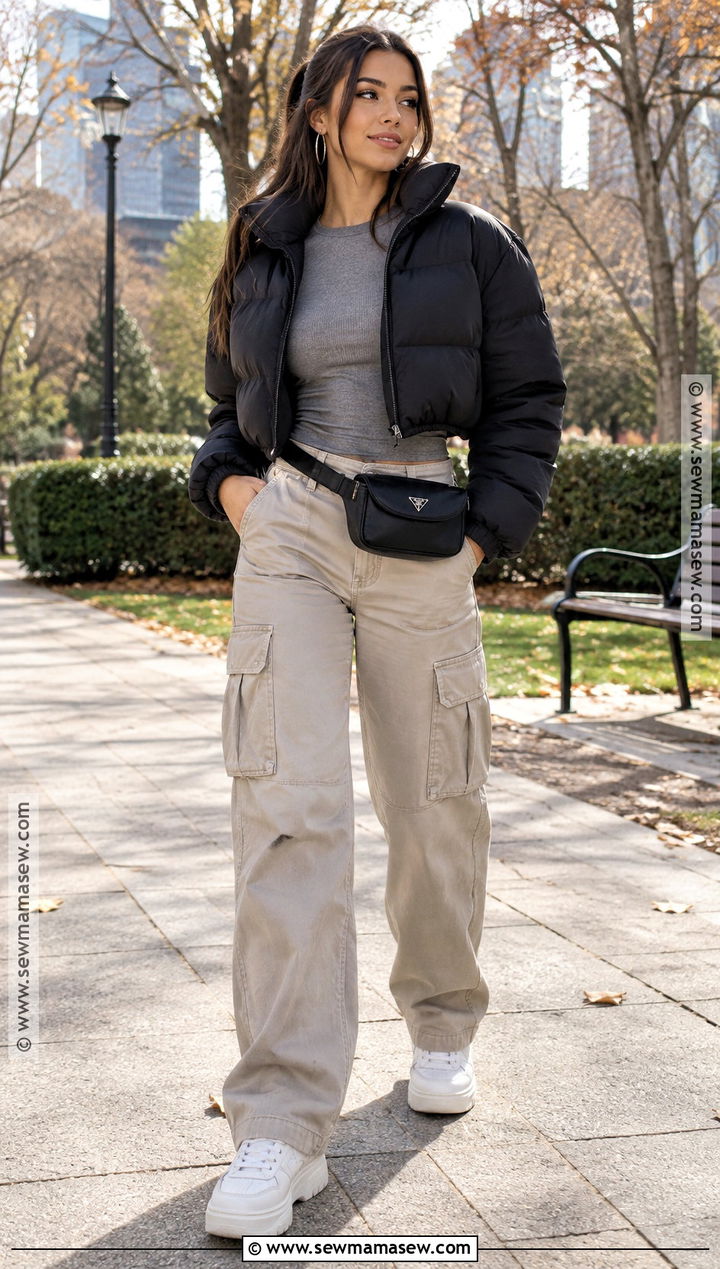
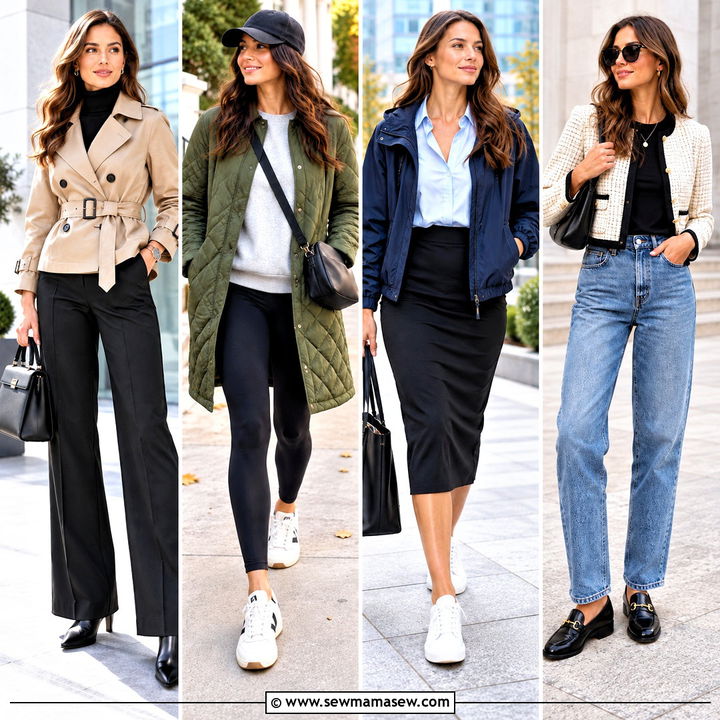
Cold mornings call for warmth that doesn't swallow your outfit, and a cropped puffer does that. Pair it with high-rise cargo pants and a fitted long-sleeve top or ribbed turtleneck. Here's the trade-off: a cropped puffer leaves your lower back exposed when you bend or sit, so it's warmer on a walk than on a cold bench. I'd go tonal, olive over khaki, or contrast with a black puffer over stone. Chunky sneakers and a belt bag keep it sporty. Not sold on cropped? A waist-length puffer with a drawcord hem gives similar shape with more cover.
5. Oversized Blazer With Wide-Leg Trousers
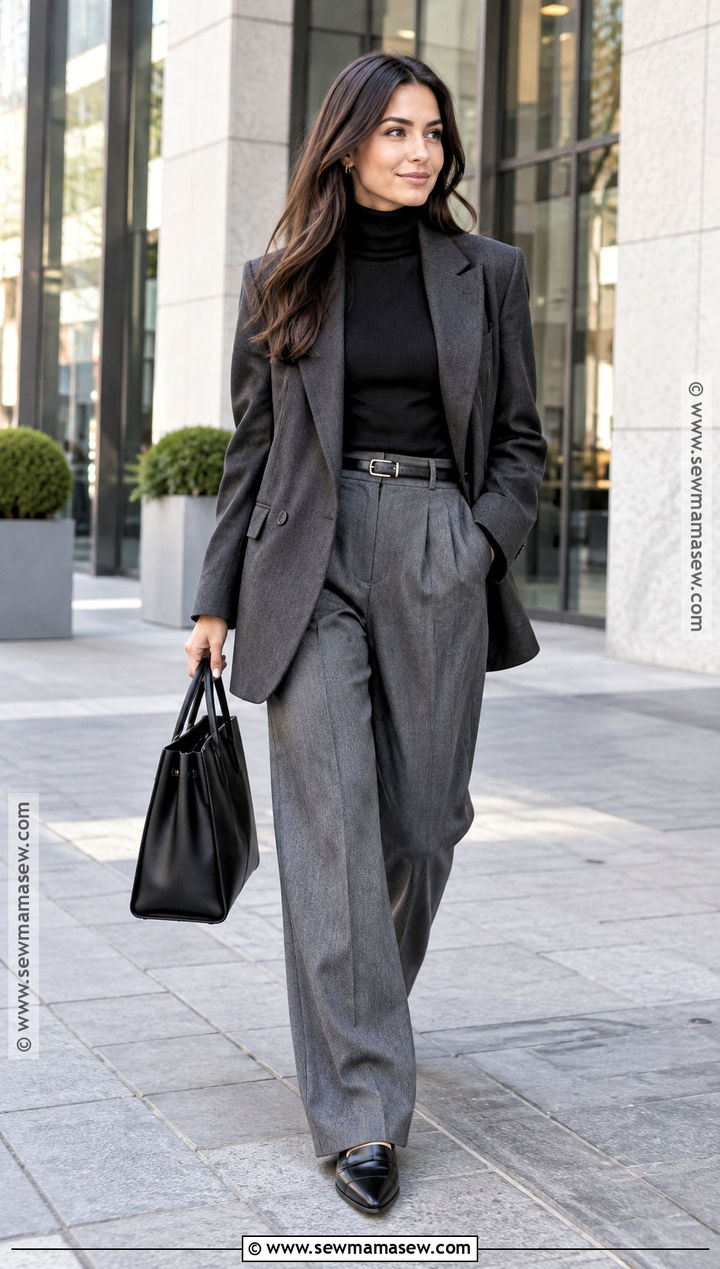
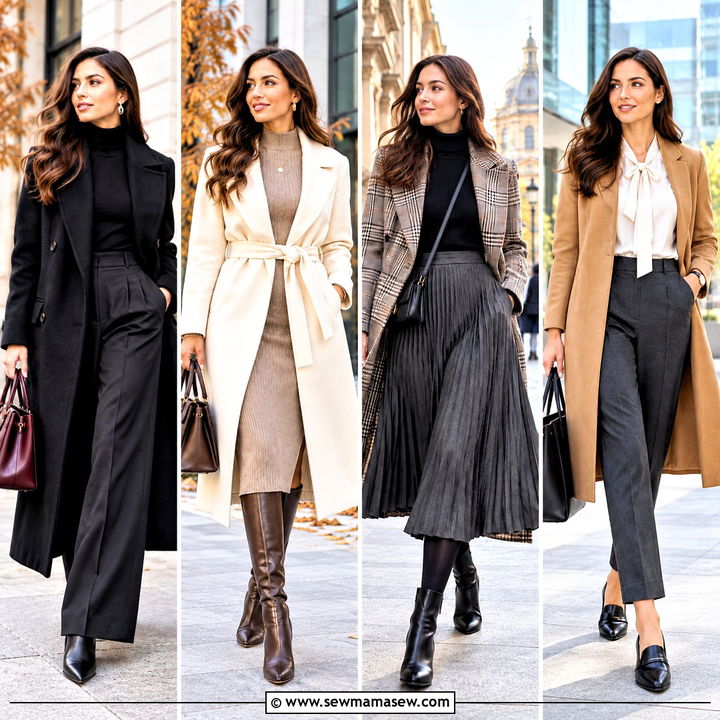
An oversized blazer is the easiest way into this season's strong tailoring. Pair a charcoal, camel or checked blazer with high-waisted wide-leg trousers; they don't need to match, but the colors should sit in the same family. The one thing I check is the shoulder seam. On an intentionally oversized blazer it can drop slightly past your shoulder, but if it hangs halfway down the upper arm, the jacket is simply too big. Underneath, a turtleneck, bodysuit or cotton shirt. Pointed loafers keep the trouser line long. Roll the sleeves a turn if the proportions feel stiff.
6. Denim Jacket With Knit Maxi Skirt
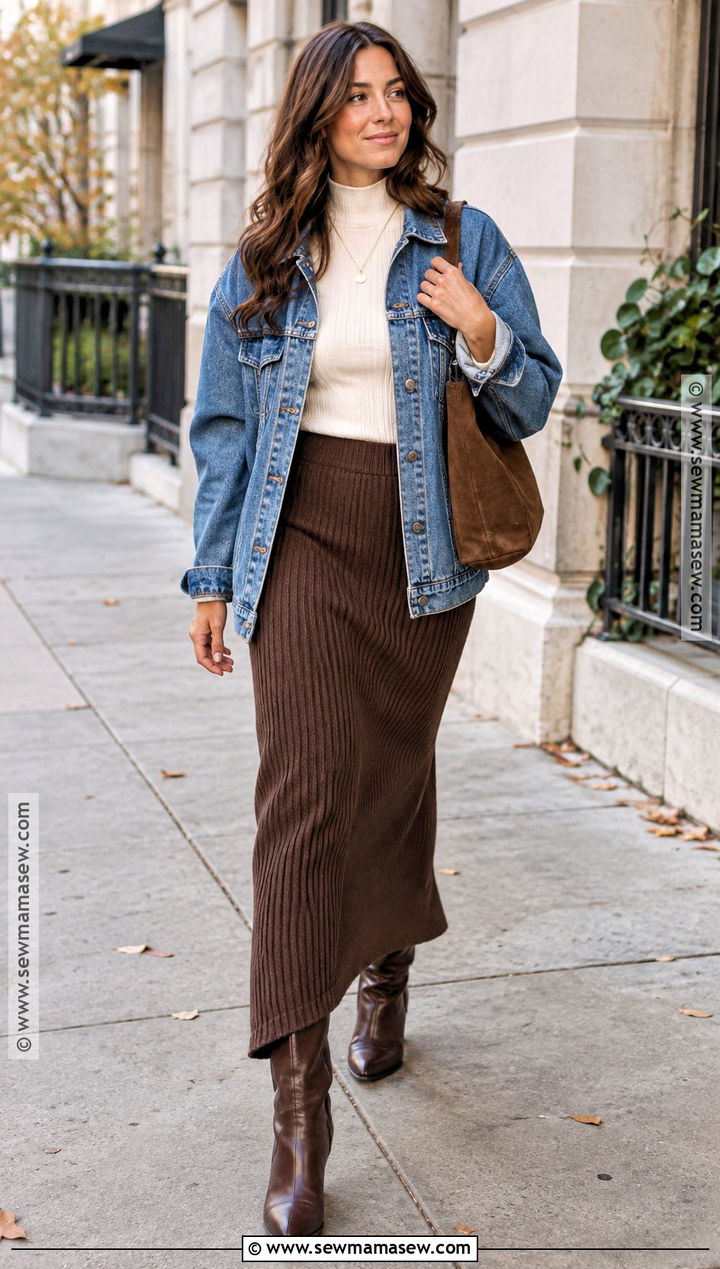
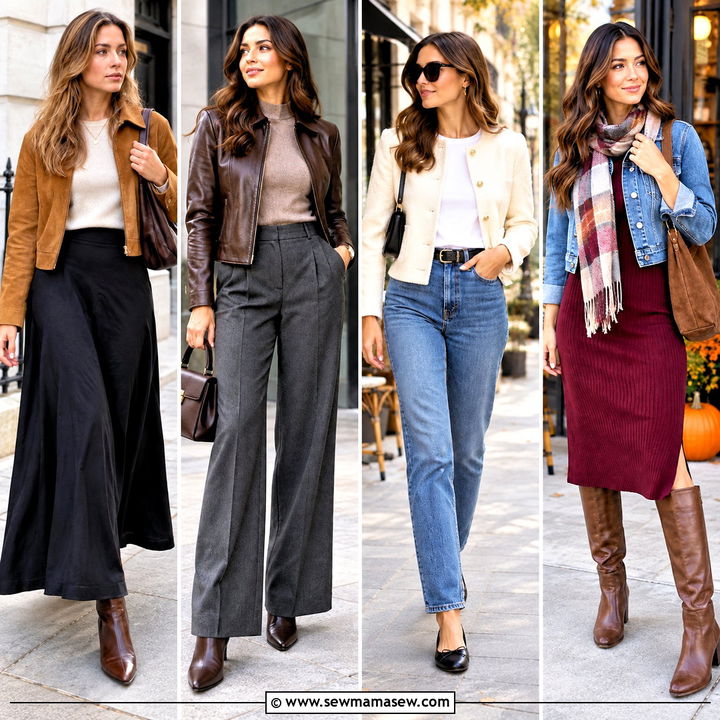
Denim feels like summer until you put it with knit. Layer a slightly oversized medium-wash jacket over a fitted mock-neck, then add a ribbed knit maxi skirt in chocolate, charcoal, rust or deep green. Knee boots underneath add warmth that no one sees. I'd skip heavily flared knit skirts here: they add volume at the hem while the boxy jacket adds it at the shoulder, and you lose your shape in the middle. A straight skirt and an open jacket with the top tucked in fixes that. A suede shoulder bag suits the soft textures.
7. Varsity Jacket With Pleated Skirt
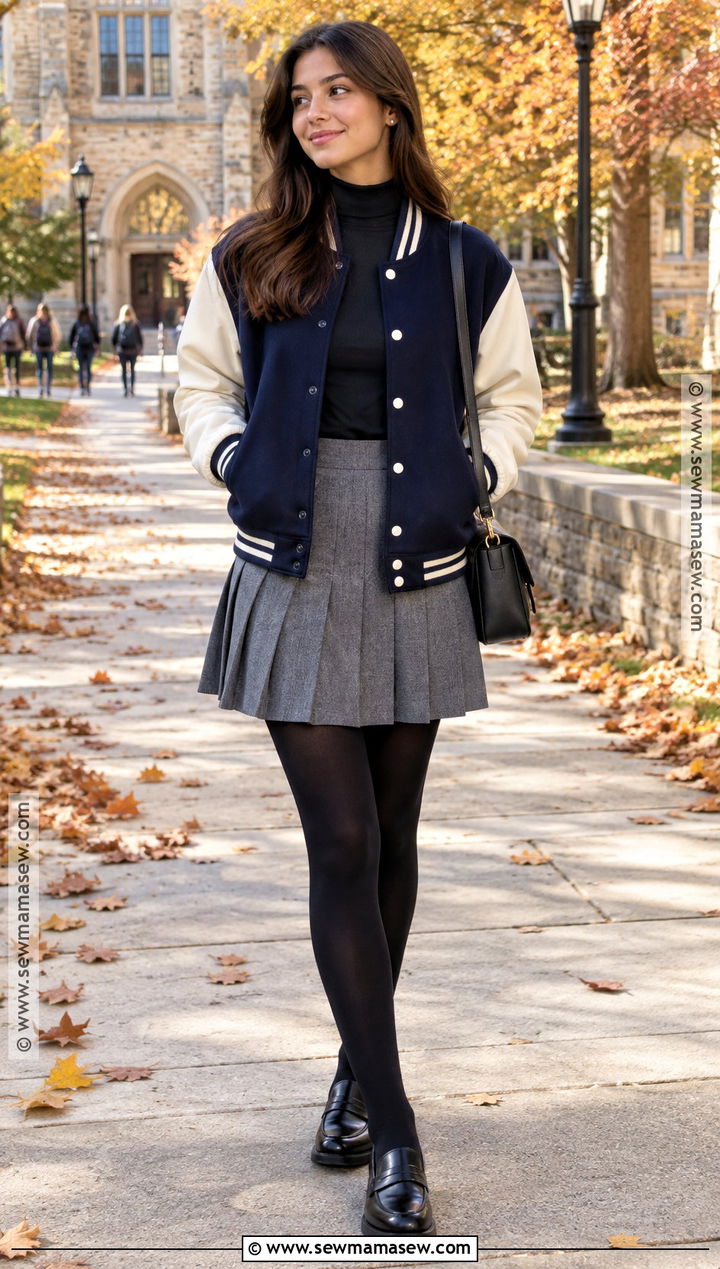
Varsity jackets give preppy outfits a sporty edge, and the less graphic the jacket, the more grown-up the result. I choose a clean two-color design and wear it over a fitted turtleneck with a knee-length pleated skirt, which moves more easily and reads less like a uniform than a short hem. Wool-bodied varsity jackets are warmer than they look, so this works well into October. Add opaque tights when it cools, plus loafers or low ankle boots. If you'd rather not wear a skirt, wide-leg tailored trousers with the same jacket and shoes work just as well.
8. Aviator Jacket With Black Leggings
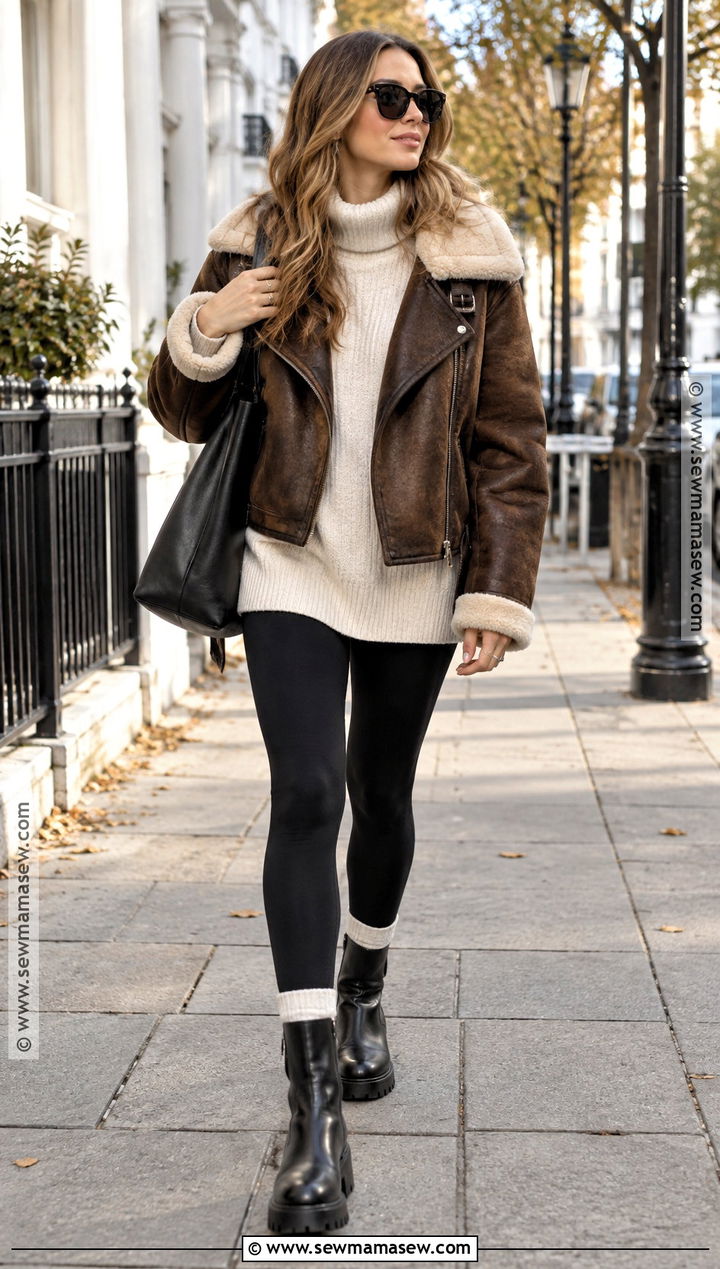
A lined aviator over black leggings is about as cozy as an outfit gets. Choose brown, tan or black with a shearling-style collar, and add a long cream sweater or fitted knit underneath. Collar shape matters more than people think: a big flat collar adds width at the shoulder, which balances wider hips well but can overwhelm a small frame. Thick, opaque leggings keep the lower half simple. Lug-sole boots with ribbed socks and a roomy tote finish it. Want more coverage? Let the sweater fall past the hip. For a sharper version, use slim black trousers instead.
9. Utility Jacket With Sweater Dress
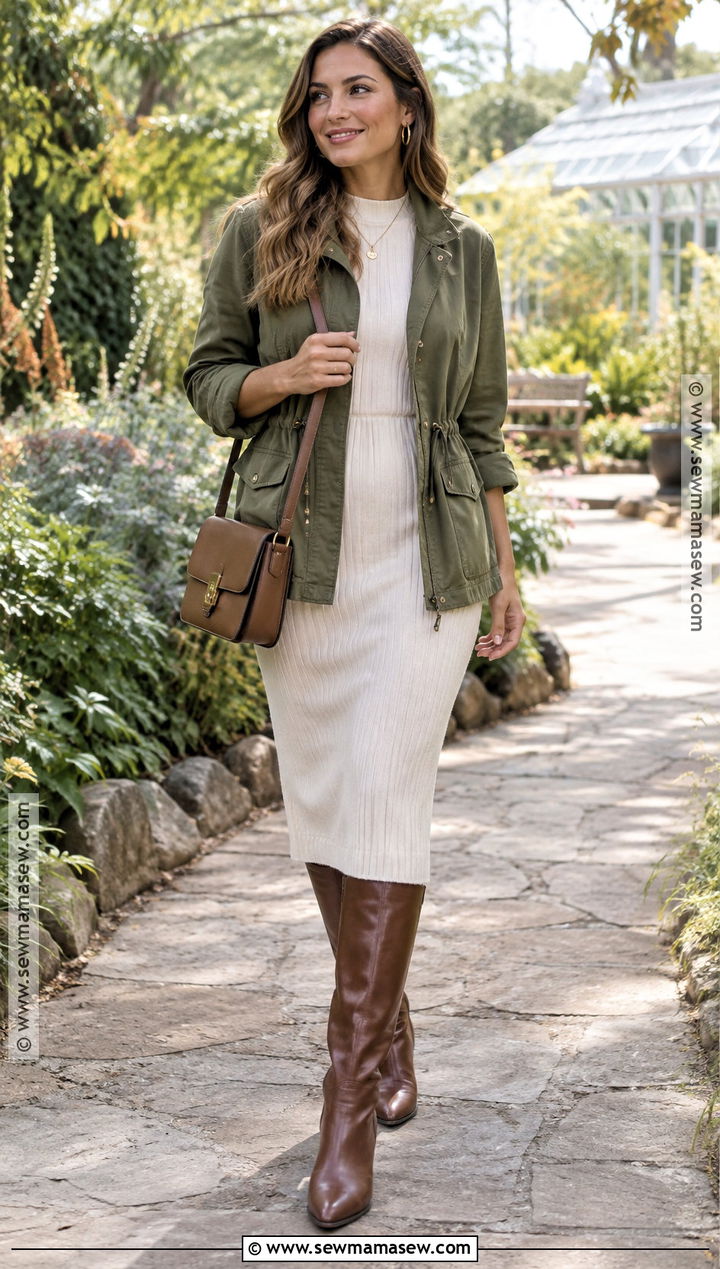
A utility jacket gives a soft sweater dress some structure and a lot of pockets. Olive, khaki or navy with a drawstring waist goes over a simple ribbed midi in cream, brown or black. I pull the drawstring just enough to show the waist; pulled tight, it gathers the fabric into a bulky ring. Knee boots and a crossbody bag keep your hands free. Gold hoops brighten the earthy colors. Because the jacket comes off in seconds, it's a sensible outfit for a day that starts cold and warms up.
10. Quilted Jacket With Corduroy Pants
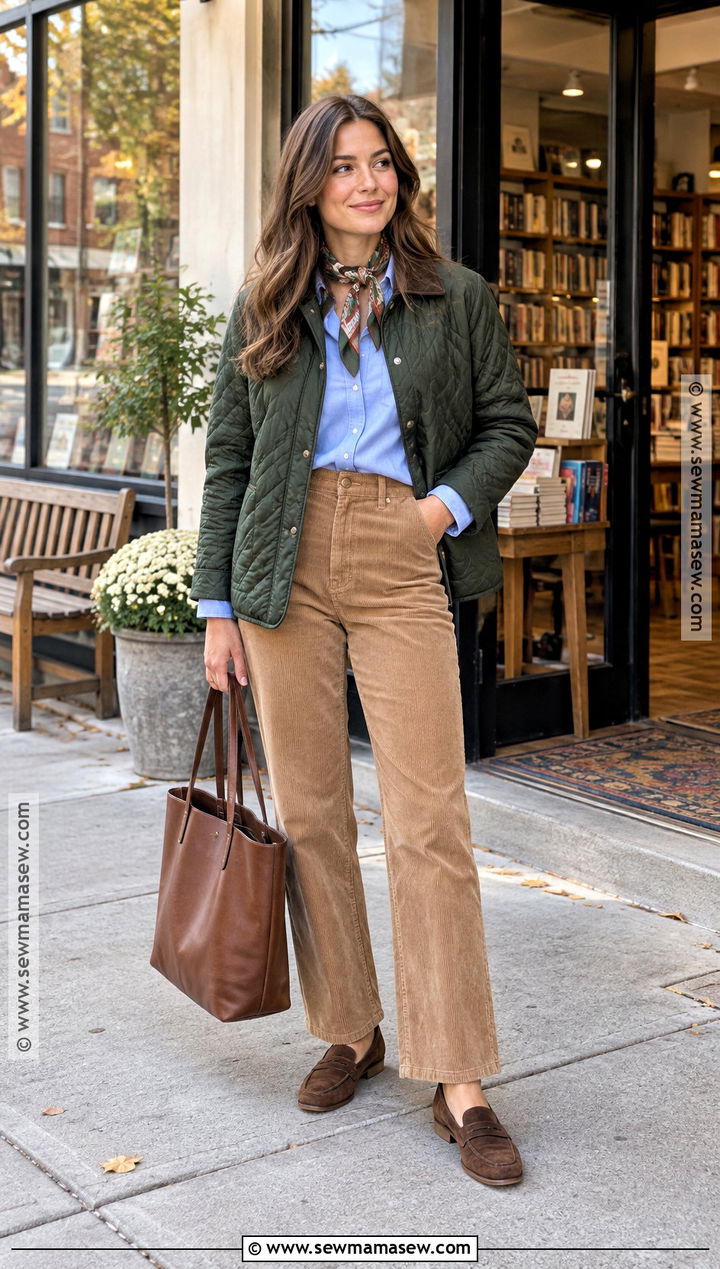
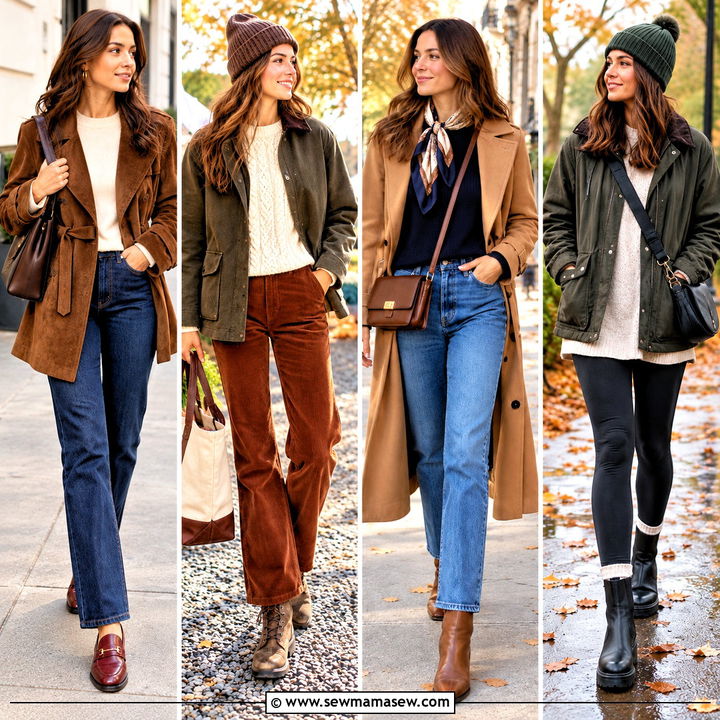
Texture does the work here, so the colors can stay classic. A light quilted jacket goes with straight corduroy pants and a soft cotton button-down. Forest green, navy, camel and burgundy feel traditional; cream and pale blue keep it lighter. Corduroy wale changes the effect more than you'd expect. Fine pinwale reads almost like a trouser fabric, while wide wale adds visible bulk to the thigh, so I steer most people toward the finer cord. Suede loafers or Chelsea boots and a leather tote fit the country feel. A scarf on the bag handle is plenty.
11. Cropped Suede Jacket With Flared Jeans
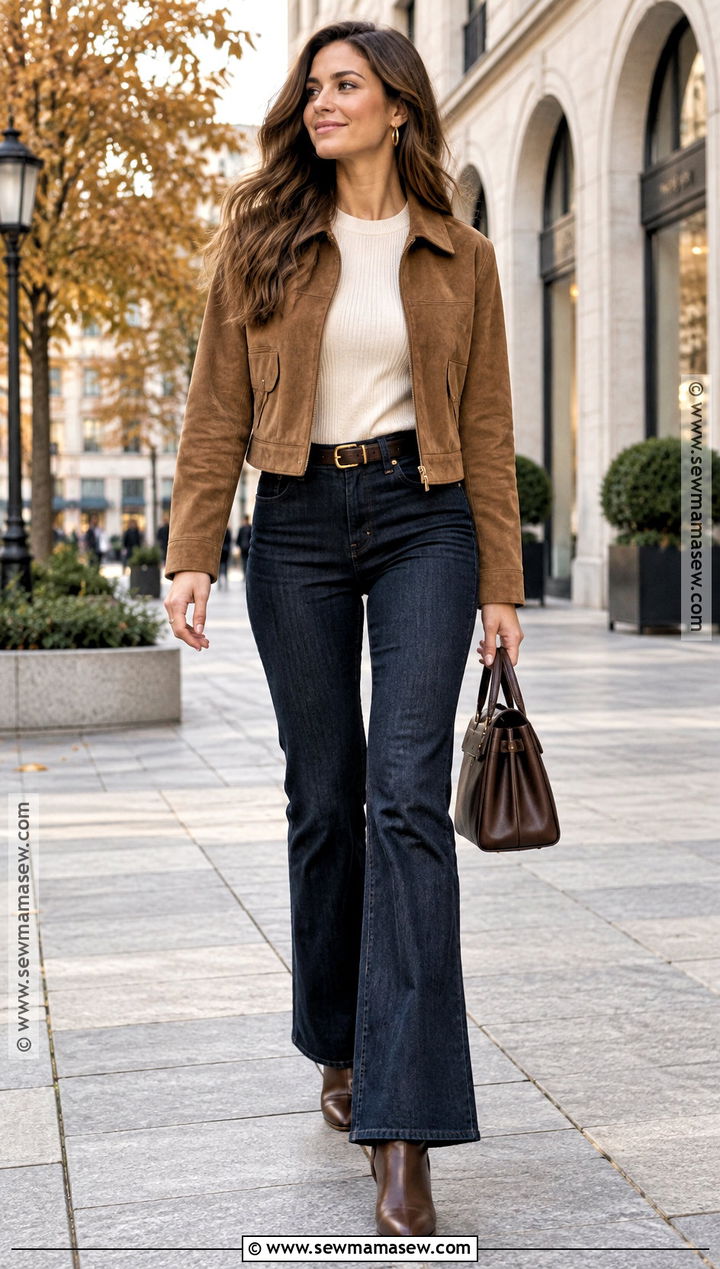
Suede and flared denim give a quiet seventies feel that still looks current. Choose a cropped suede jacket in camel, chocolate, rust or olive over a fitted cream knit, with high-rise flares and heeled ankle boots underneath. The heel matters: flares should nearly touch the floor in the shoes you'll wear, so I hem them with the boots on. Pick a structured bag rather than fringe to keep it from looking like a costume. Curvy women do best with a jacket that follows the body without gripping it. Petite women can choose a shorter flare with a moderate opening.
12. Shearling Jacket With Dark-Wash Jeans
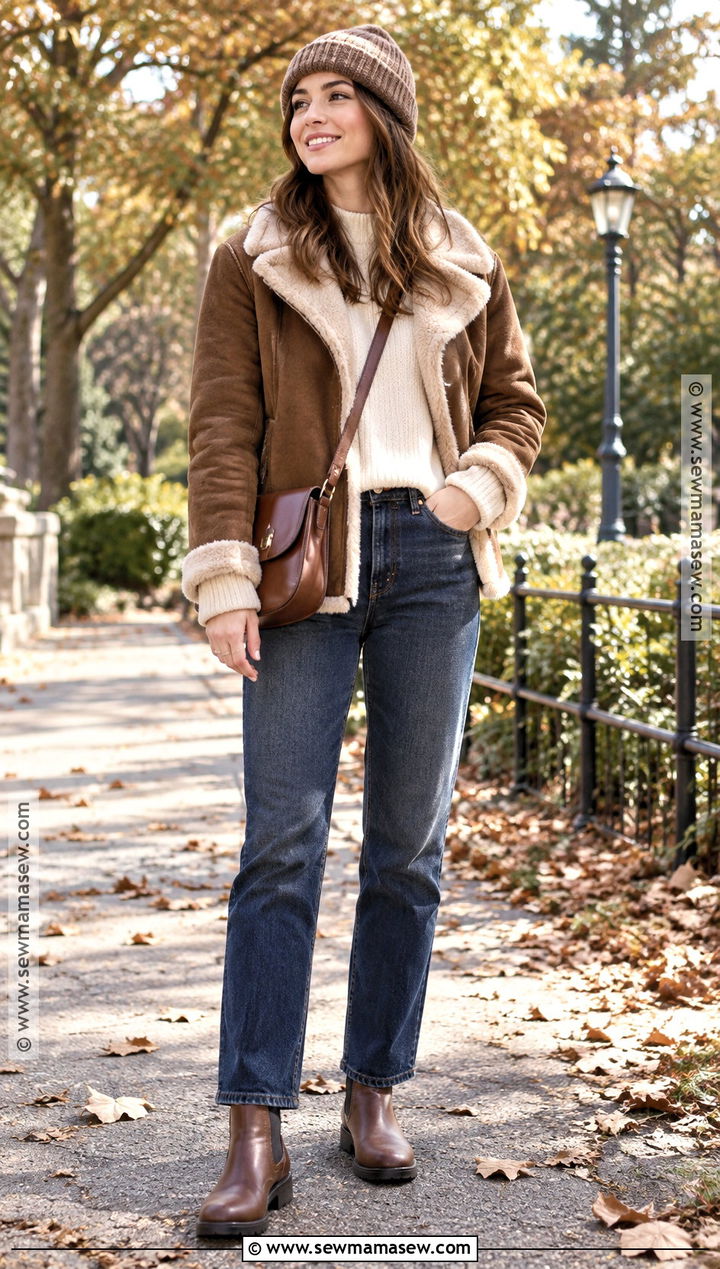
On a properly cold day, a shearling-style jacket carries the whole outfit. I go for a hip-length cut with a plush collar and a fairly slim body, since a boxy shearling plus a thick sweater adds a lot of width. That's why a thin merino goes underneath, with dark straight jeans. Chelsea boots, a crossbody and a knit beanie add practical warmth. Brown shearling suits cream and indigo; black looks sharper. Keep the jeans long enough to meet the boot top without a stack of fabric at the ankle.
13. Belted Jacket With Midi Dress
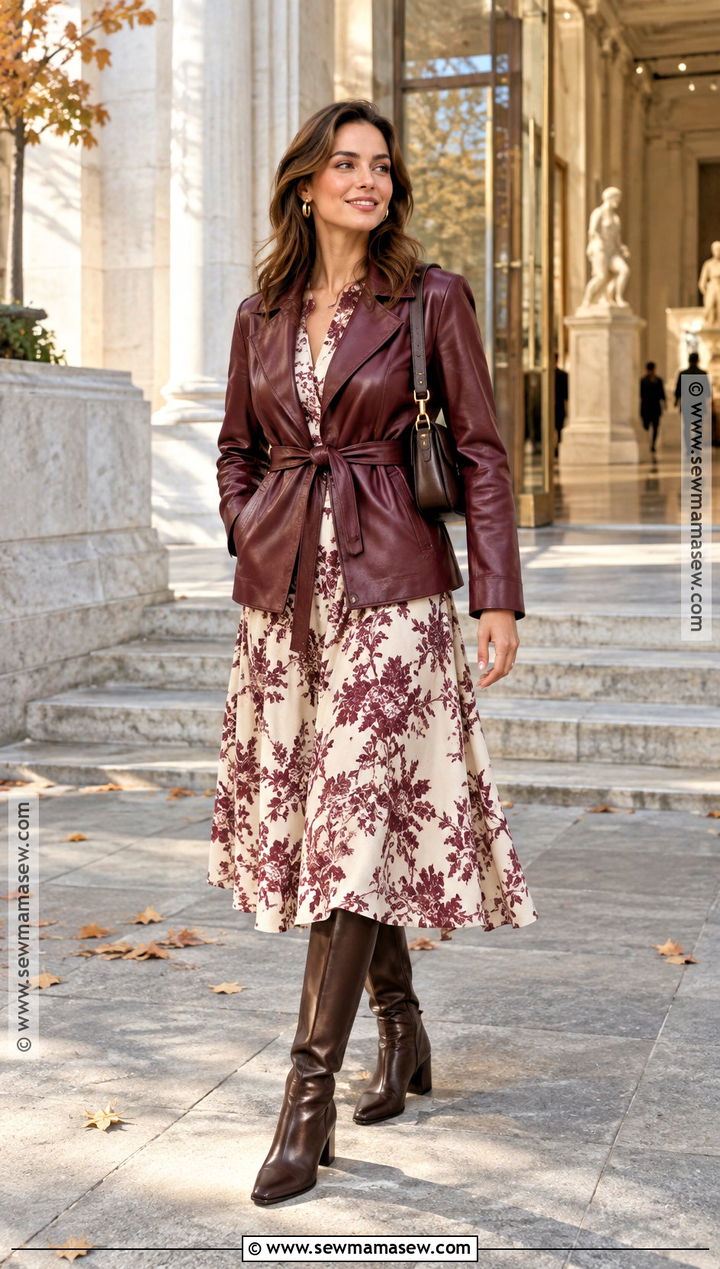
A belted jacket shapes the waist and lets a flowing midi dress show below. Structured leather, faux leather or wool blend in black, camel or burgundy all work. I tie the belt loosely at the natural waist rather than buckling it tight, because a hard cinch over a dress pulls the skirt fabric up and wrinkles it. Underneath, a printed or solid midi with a simple neckline. Knee boots finish the line. If the dress is patterned, keep the jacket neutral; if it's plain, a richer jacket color can lead. It's a comfortable choice for dinners and smart-casual office events.
14. Longline Wool Jacket With Knit Set
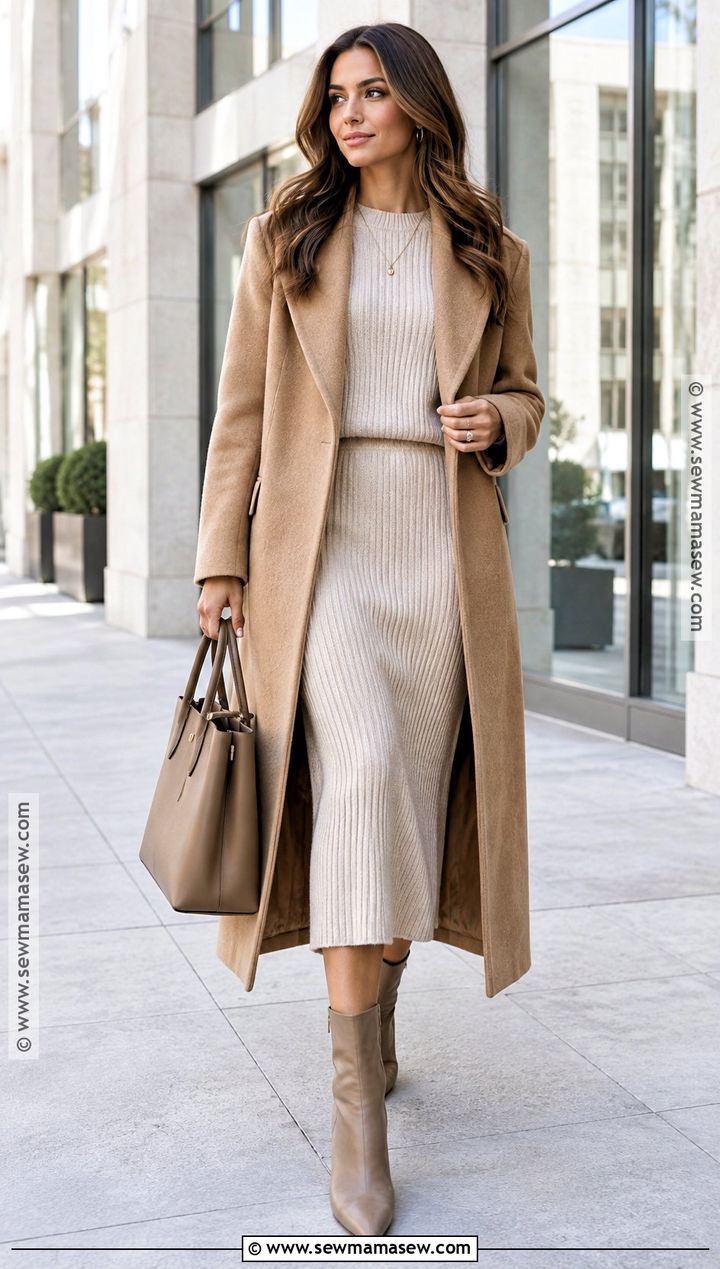
A matching knit set is a comfortable base for a long wool jacket. Start with a ribbed sweater and matching midi skirt or wide knit pants in oatmeal, gray or chocolate, then add a tailored wool jacket that reaches the upper thigh or knee. Long jackets have been a big part of this season, and they're kinder than cropped ones to anyone who wants coverage over the hip. Pointed ankle boots stop the soft pieces looking like loungewear. Nearby shades, rather than an exact match, give a richer tonal effect. Keep jewelry minimal and let the long line do the talking.
15. Red Jacket With Monochrome Basics
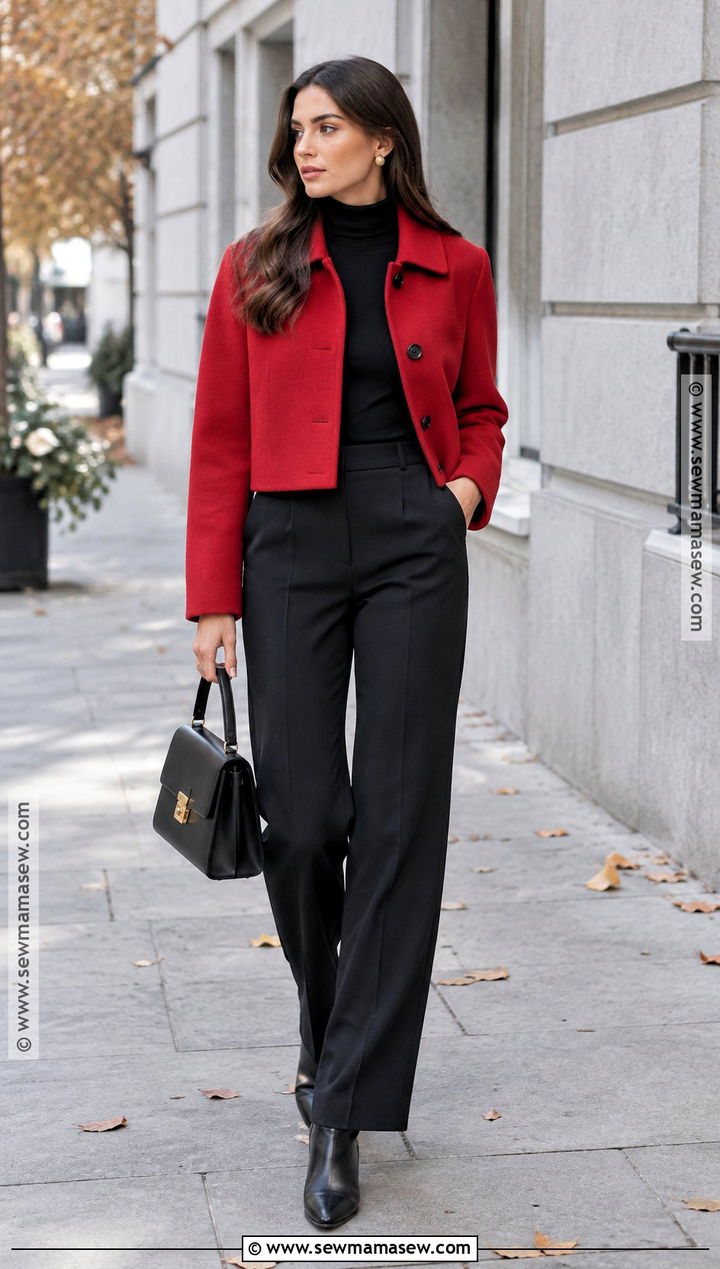
A red jacket turns plain basics into an outfit people remember. Cherry, tomato, garnet or crimson in a bomber, blazer or cropped wool cut goes over a black turtleneck and straight black trousers, which give the color a clean background. Black ankle boots and a structured bag keep it sleek. I'd stick to one strong red layer; red head to toe has been around this season, but a single red jacket is far easier to repeat. For a softer version, pair it with cream denim and a beige knit.
What Each Jacket Fabric Does in the Rain
Fall weather turns quickly, and some of these jackets handle a shower far better than others. Knowing which is which saves a ruined jacket.
- Smooth leather sheds light rain. If it gets soaked, let it dry slowly at room temperature, away from radiators, then condition it so it doesn't stiffen.
- Suede marks and darkens when wet. A protective spray before first wear helps, but I'd still leave suede at home when rain is forecast. Once dry, a suede brush lifts the flattened nap.
- Nylon puffers and quilted jackets cope well with drizzle, and most can go through a gentle wash. Down fill needs thorough drying, ideally with a couple of dryer balls, or it clumps.
- Wool, tweed and wool-blend jackets resist a little moisture and smell like wet wool when damp. Hang them on a shaped hanger to dry so the shoulders keep their form.
- Denim soaks through fast and stays cold and heavy, so it's a dry-day jacket only.
Shearling, real or faux, should never go near direct heat to dry; the backing shrinks and cracks. Blot it, then leave it to air dry flat or on a broad hanger.
Two Jackets I'd Buy Before Any of the Others
If I were building a fall closet from scratch, the oversized blazer and the leather bomber would come first, because each one handles a dozen outfits. The others are worth adding as your days demand: a puffer or shearling for real cold, tweed or suede for polish. In every case the jacket only looks right when the proportions underneath support it. Oversized jackets need slim lower halves, cropped jackets need high waists, and long ones need a clean line from shoulder to shoe. Start with what you already own and change the length, fit or footwear until it suits your routine.
Related posts: