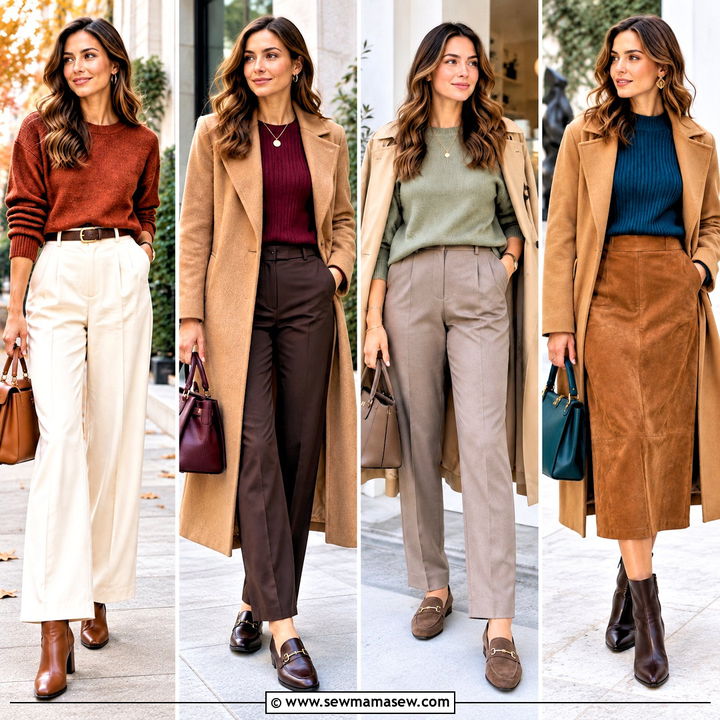
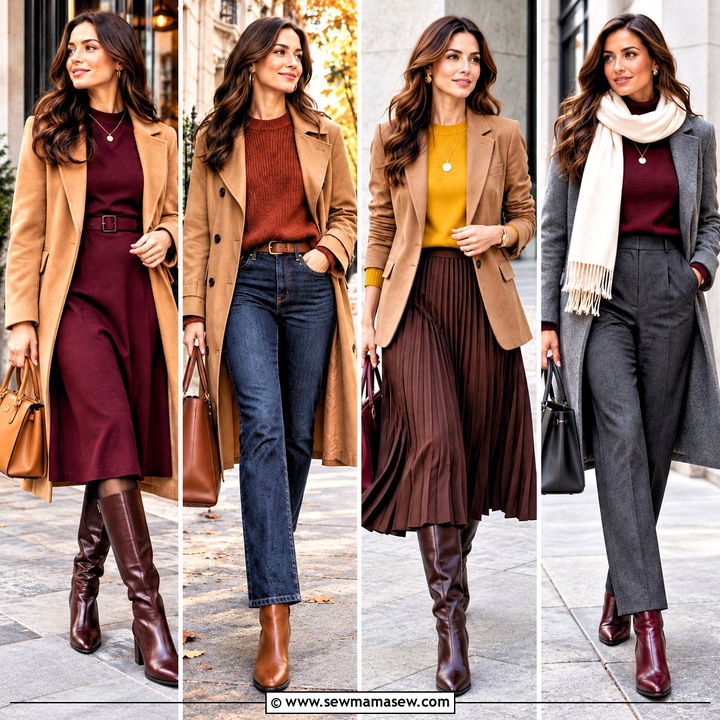
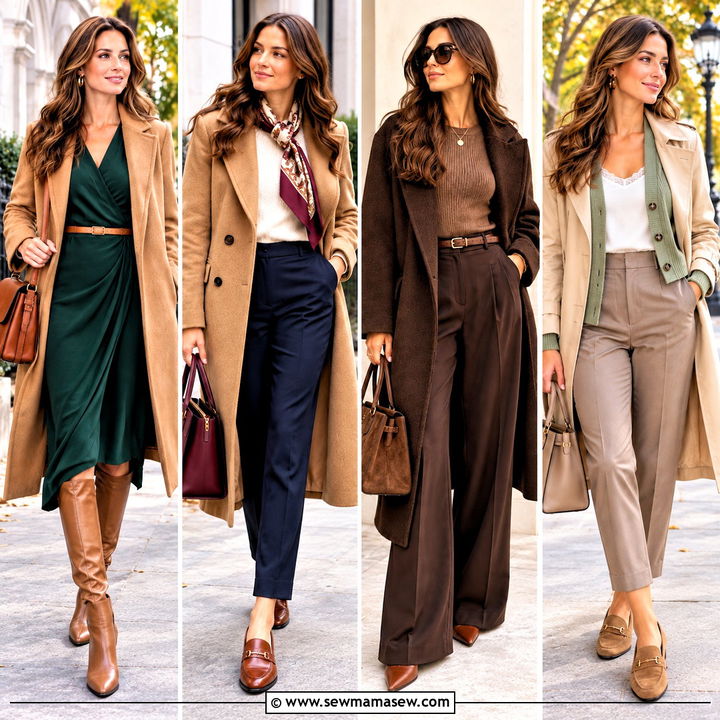
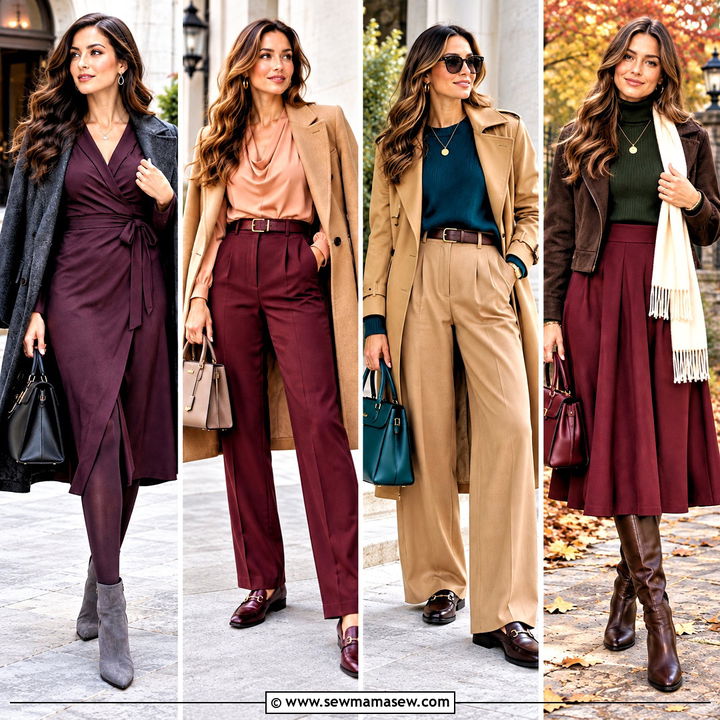
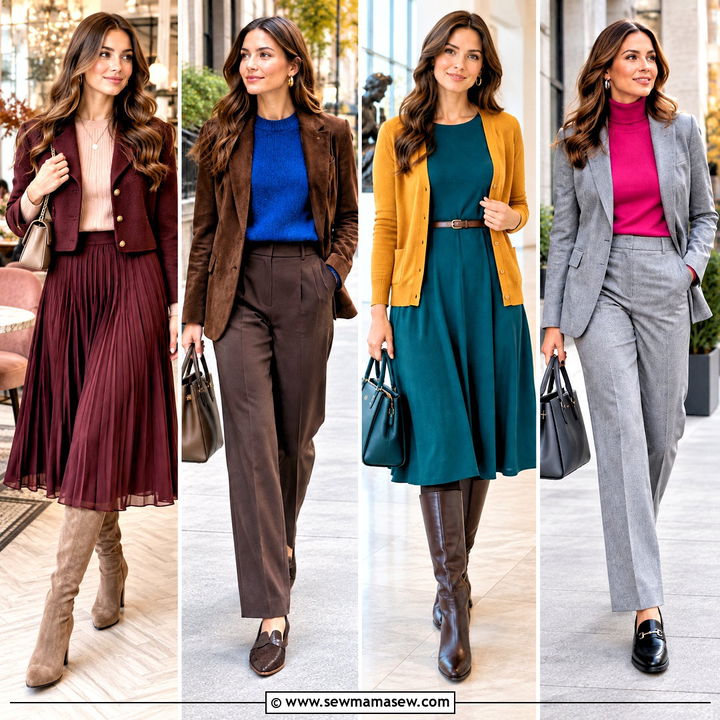
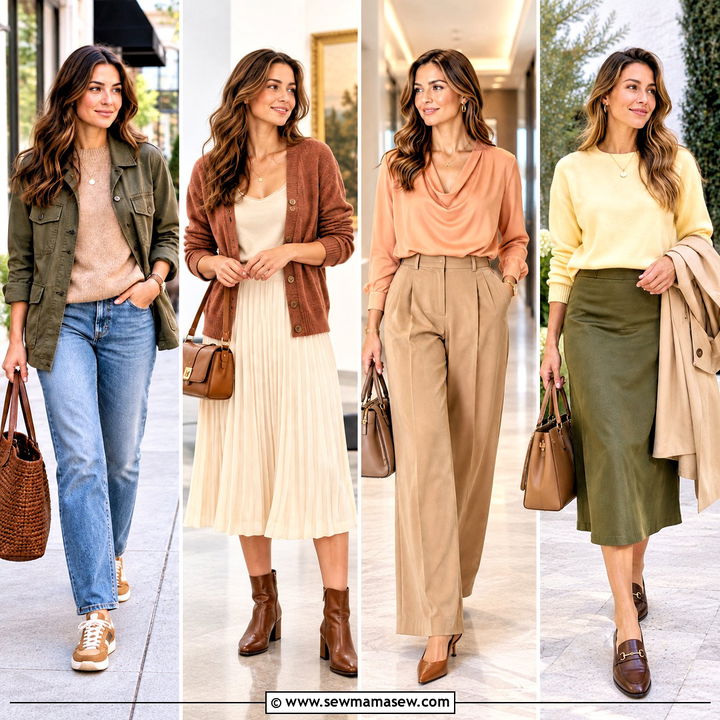
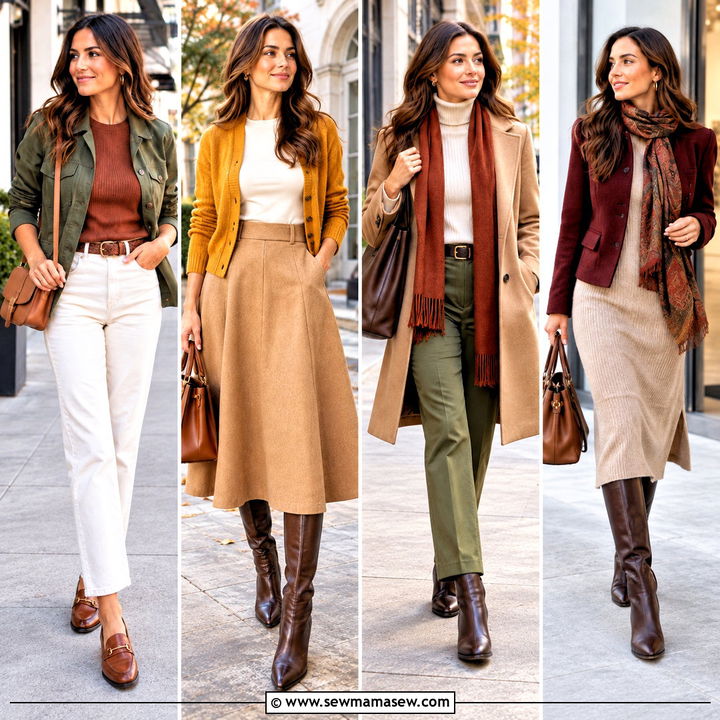
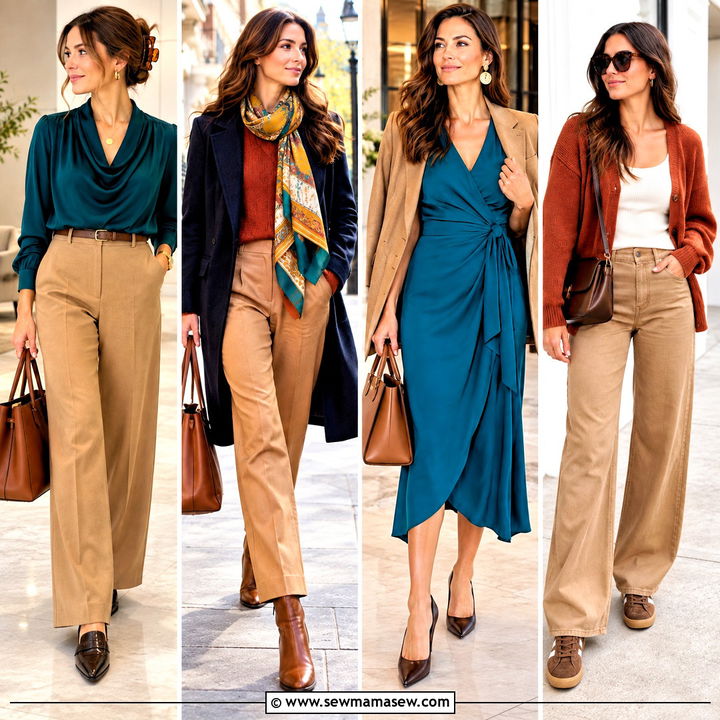
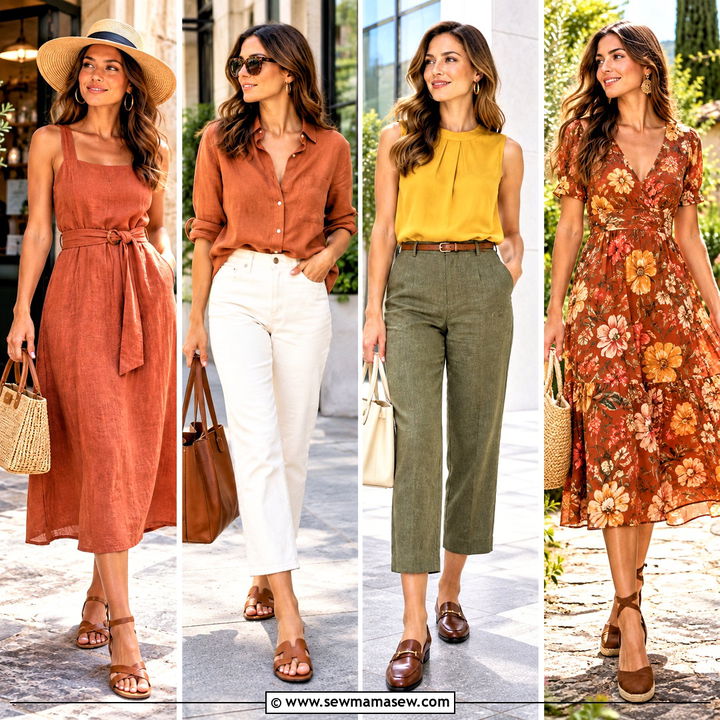
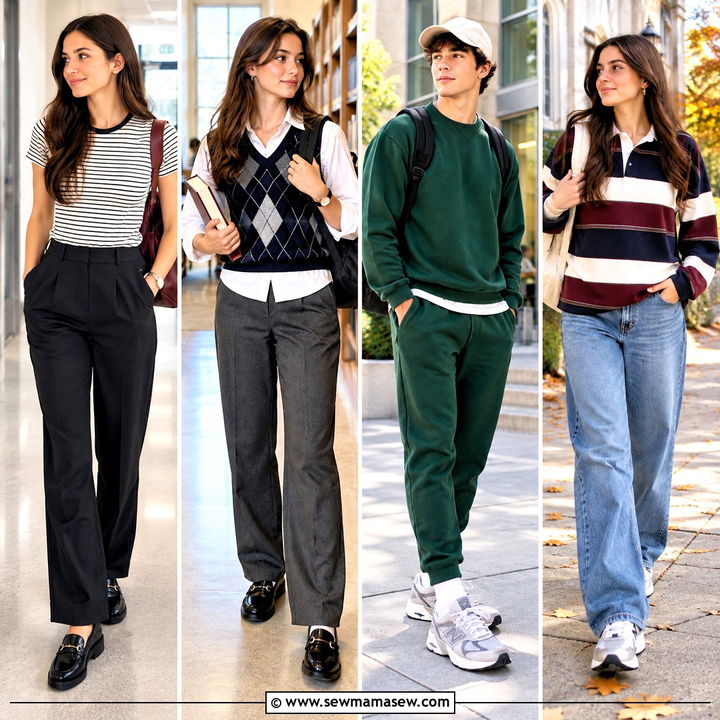
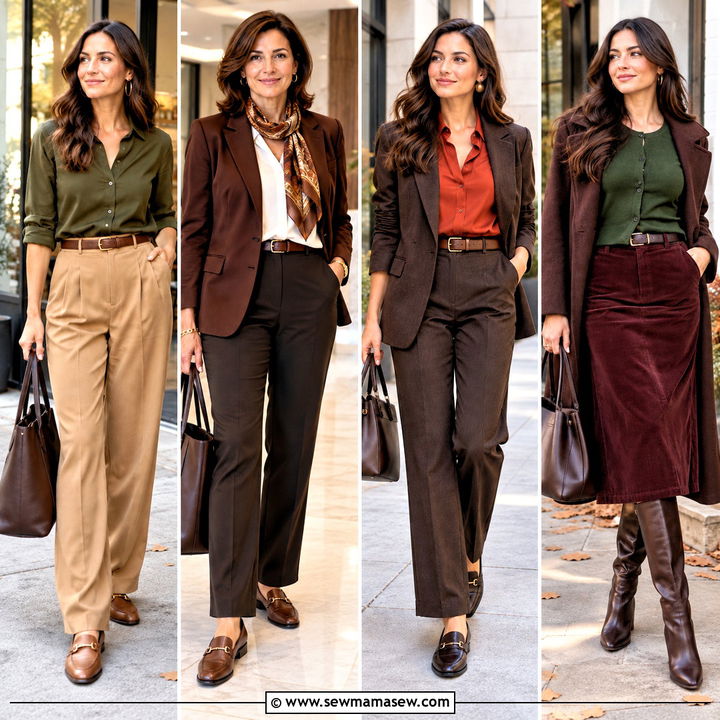
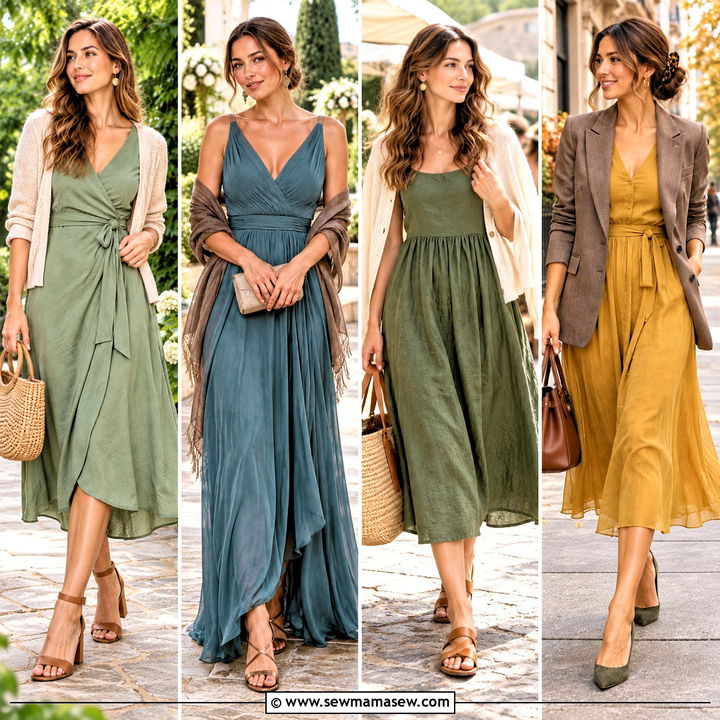
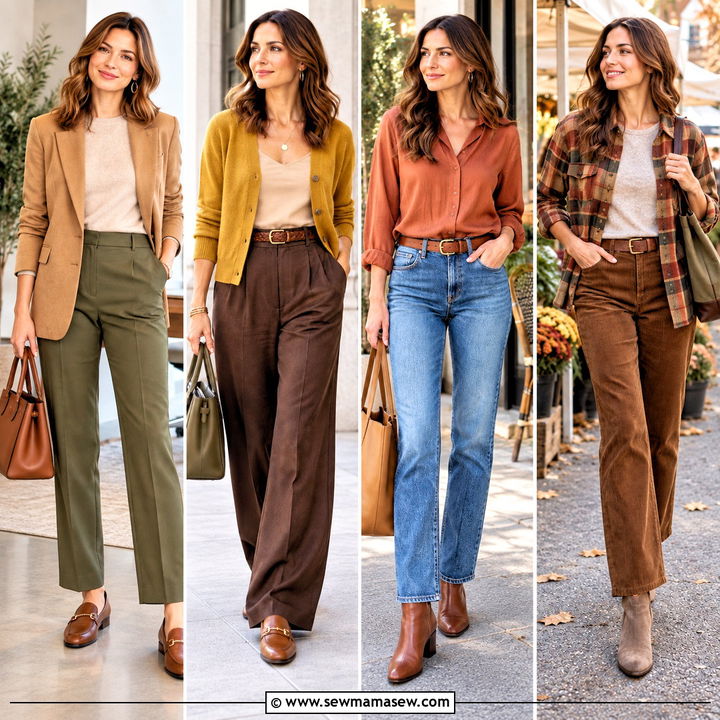
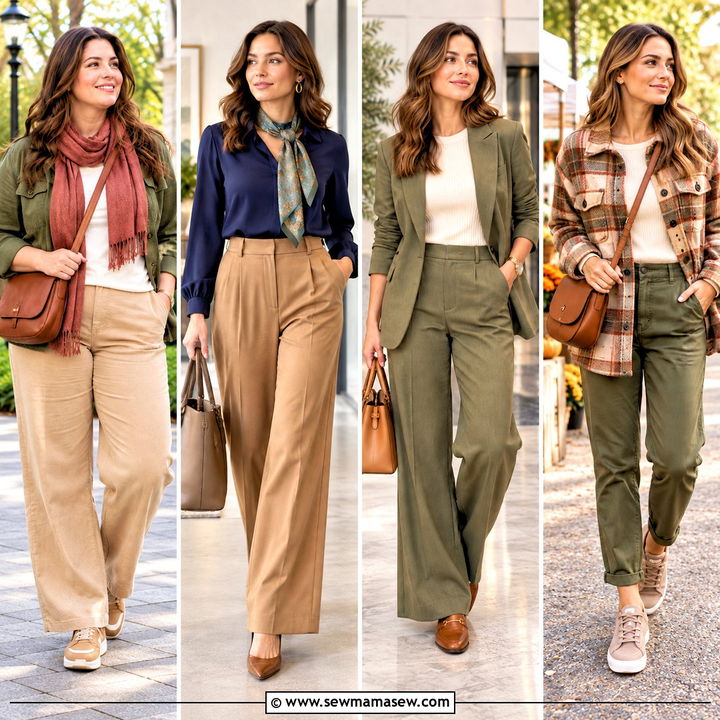
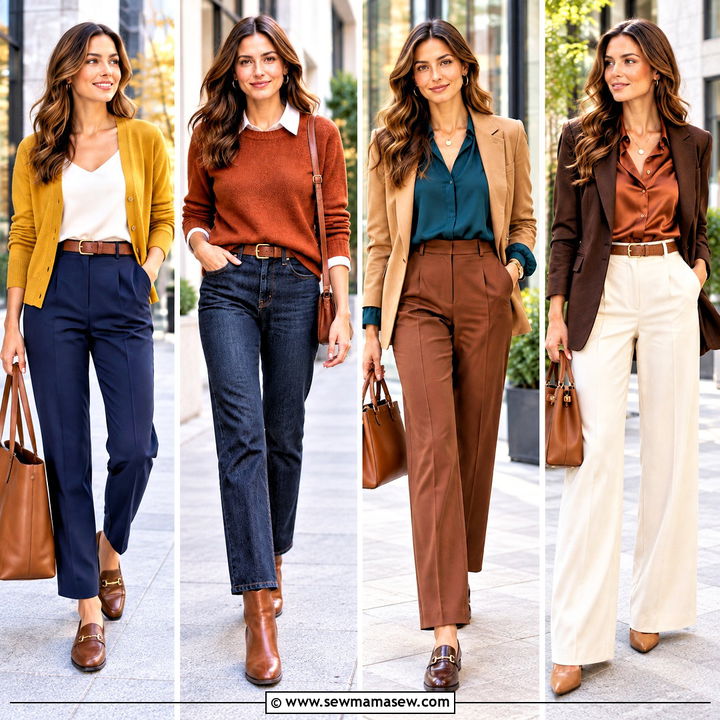
Autumn colors are the easiest palette I work with, because camel, olive, rust, burgundy, mustard, chocolate and deep teal all share a warm, slightly muted base. That shared undertone is why they mix so freely: you can pull a rust dress and an olive jacket from opposite ends of the rail and they still agree. When I put these looks together, I limit each one to two or three colors and let texture do the rest, since a brown knit next to brown suede reads richer than two flat cottons in the same shade. Everything below can be adjusted for your proportions or your weather, and most of it can be built from what's already hanging in your closet.
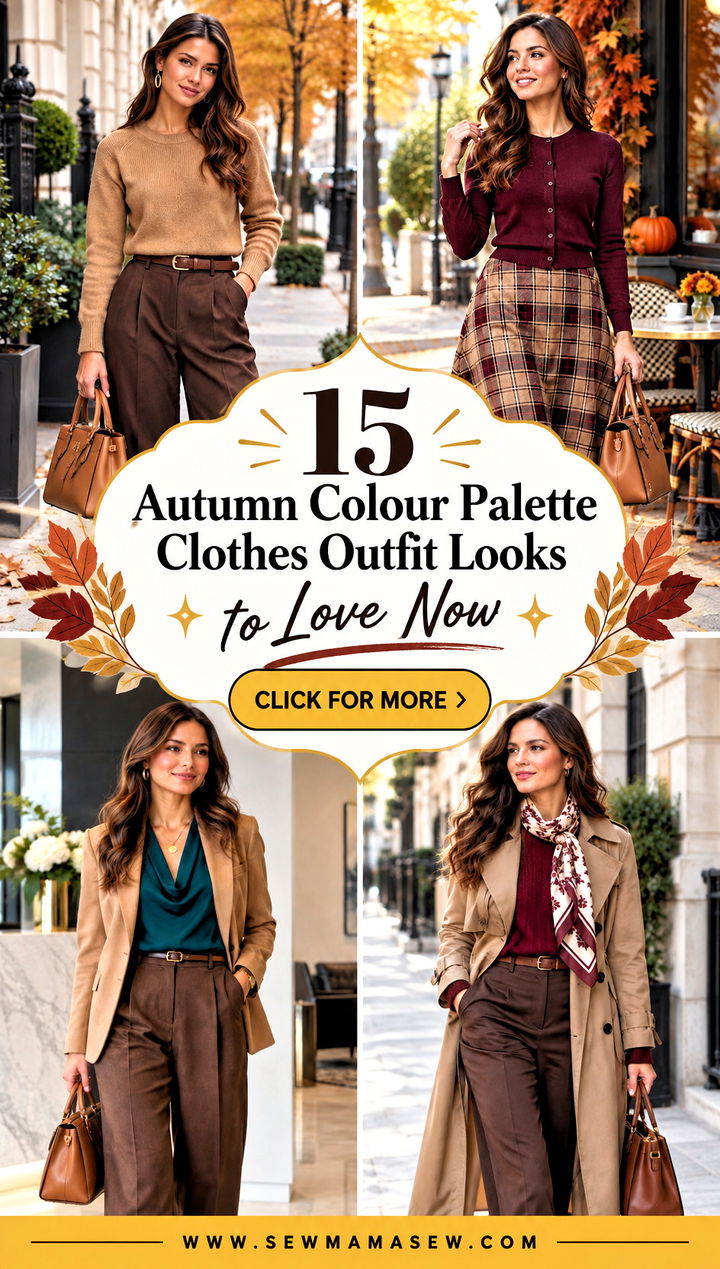
Testing Warm Shades Against Your Face in Daylight
Not every autumn shade suits every autumn wardrobe, and the quickest way to find out is a daylight test. Stand by a window, not under a ceiling bulb, and hold each color just under your chin. A shade that suits you makes the skin look even and the eyes clearer. One that doesn't will deepen shadows under the eyes, make the skin look sallow or gray, or show up redness around the nose.
If camel, mustard and burnt orange all fail that test, you probably have a cooler undertone, and that's fine. The deeper, cooler end of this palette tends to work better for you:
- Burgundy and aubergine in place of rust and orange
- Deep teal and forest green in place of mustard
- Taupe and cocoa in place of golden camel
- Silver or mixed metals if gold jewelry looks brassy on you
You don't have to give up the warm shades entirely. Wear them below the waist, as trousers, skirts, boots or a bag, where they sit far enough from your face that their effect on your complexion barely registers.
1. Camel Sweater With Brown Trousers
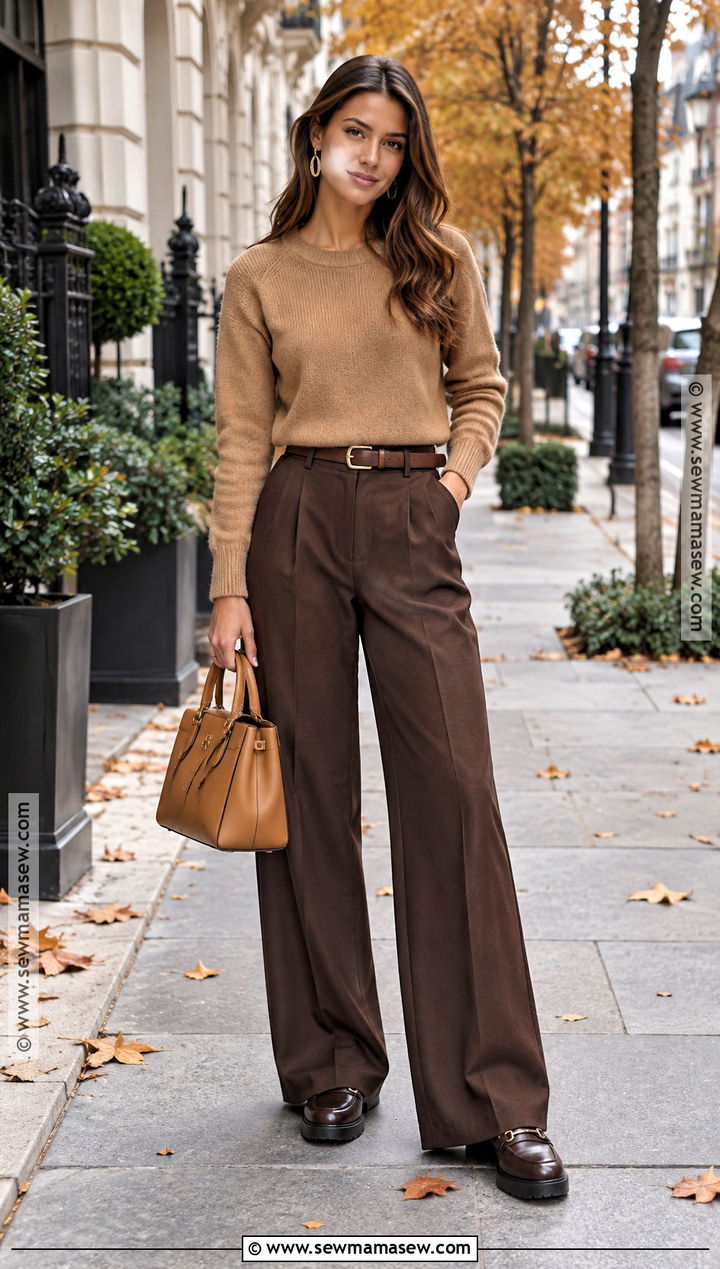
Camel against chocolate is the pairing I reach for first when someone tells me brown makes them feel drab. The secret is contrast in value: camel is light enough that the brown trousers look deliberate rather than muddy. I prefer a fine-gauge crewneck here, because a chunky knit tucked into high-rise wide-leg trousers bunches at the waistband and adds bulk exactly where you want definition. A front tuck is enough. Dark brown loafers carry the line down, a structured tan bag adds one small step of contrast, and gold jewelry sits naturally against both shades. On colder mornings I slip a cream shirt underneath and pull the collar out. If you're petite, a cropped trouser that clears the ankle keeps you from being swallowed; if you're tall, let the hem nearly graze the shoe.
2. Olive Jacket With Cream Jeans
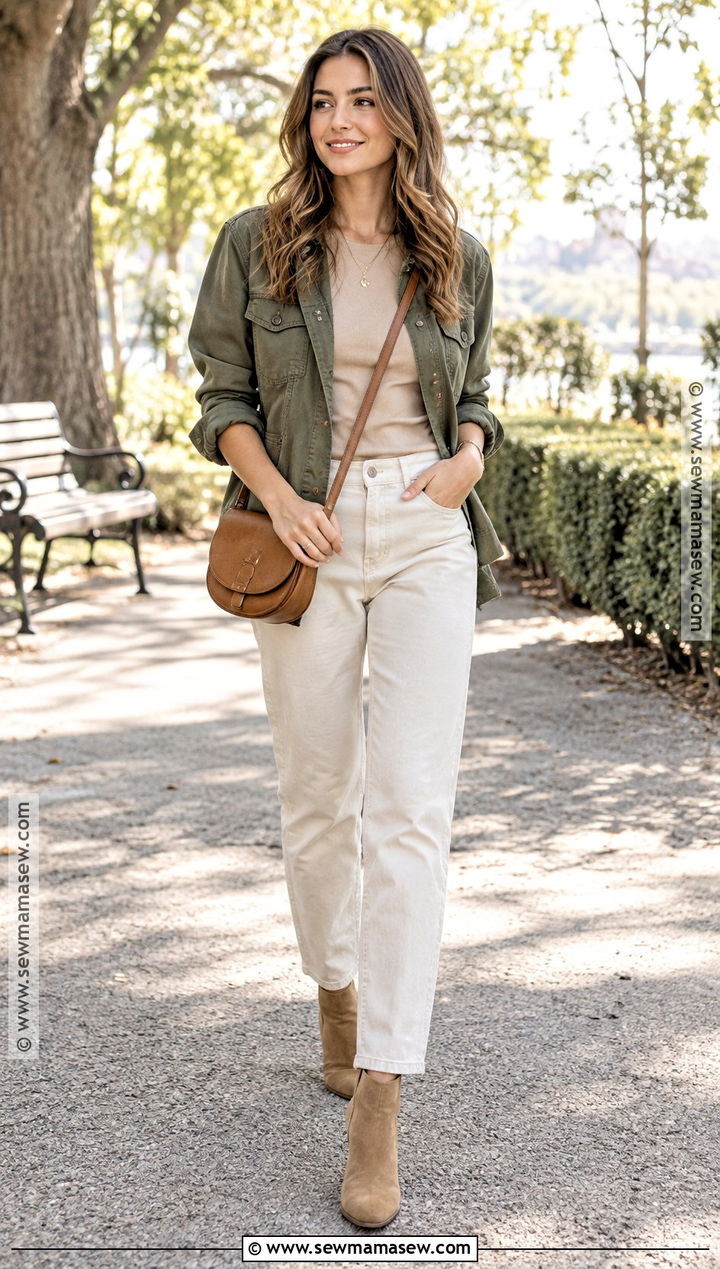
Olive can look heavy on its own, and cream denim is what lightens it. I build from the inside out: a warm-white or beige tee, straight-leg cream jeans, then the olive utility jacket for structure. Pure optic white tends to fight olive's yellow base, so look for ecru or cream rather than bright white. Tan ankle boots, a cognac crossbody and small gold pieces finish it. A drawstring waist or slim brown belt gives shape if the jacket hangs boxy; worn open with the sleeves rolled once, it reads more relaxed. One honest warning: cream jeans show every scuff from a car door or a wet curb, so I save them for days without a long commute. Ecru wide-leg trousers make a dressier swap, and the whole outfit copes well with early autumn days that start cool and finish warm.
3. Rust Midi Dress With Tan Boots
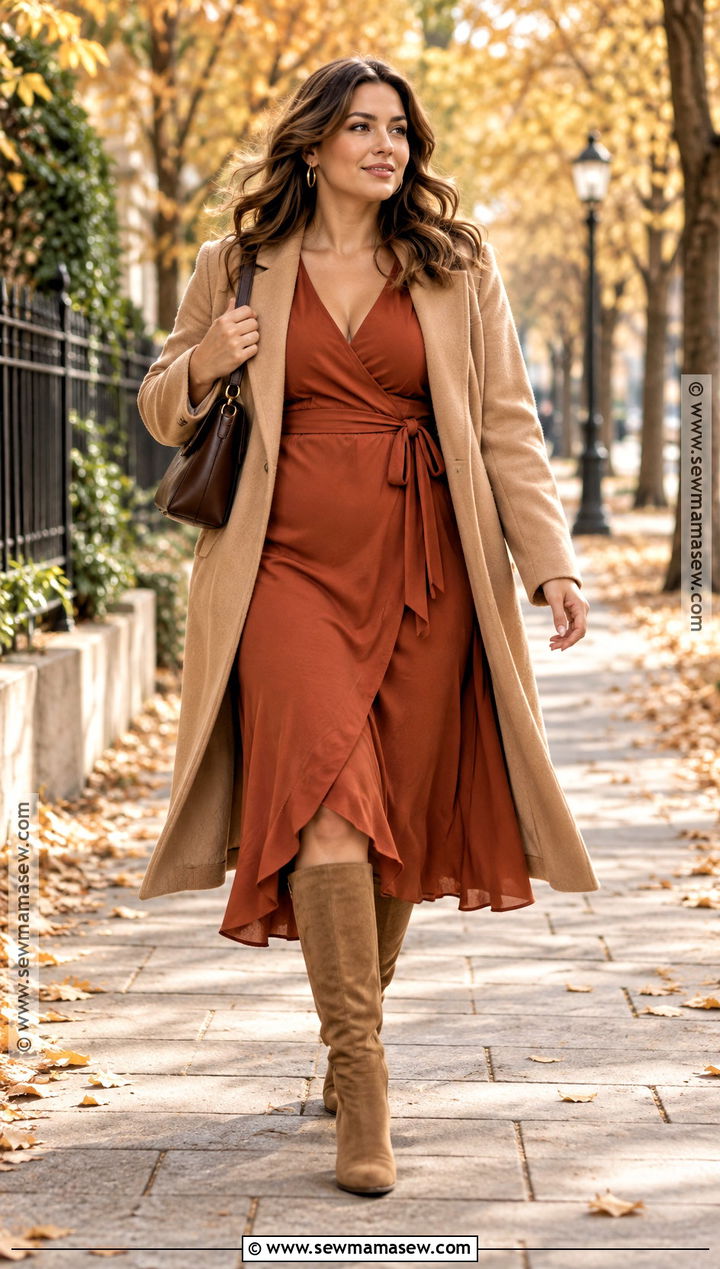
Rust is the shade I'm most careful about near the face. On warm and deep complexions it glows, but on cooler, fair skin it can pull redness into the cheeks, which is why the cream scarf in this look is more than decoration. Pick the dress shape by how much structure you like: wrap, shirt or softly fitted. A defined waist with a skirt that moves walks better than a straight tube. Tan knee-high boots should disappear under the hem, and I check that overlap sitting down, not just standing, because a strip of bare knee breaks the line. Layer a camel wool coat or cropped suede jacket when it turns cold, then add a dark brown shoulder bag and gold hoops. If rust feels too bright, cinnamon or copper gives the same warmth with more depth.
4. Burgundy Cardigan With Plaid Skirt
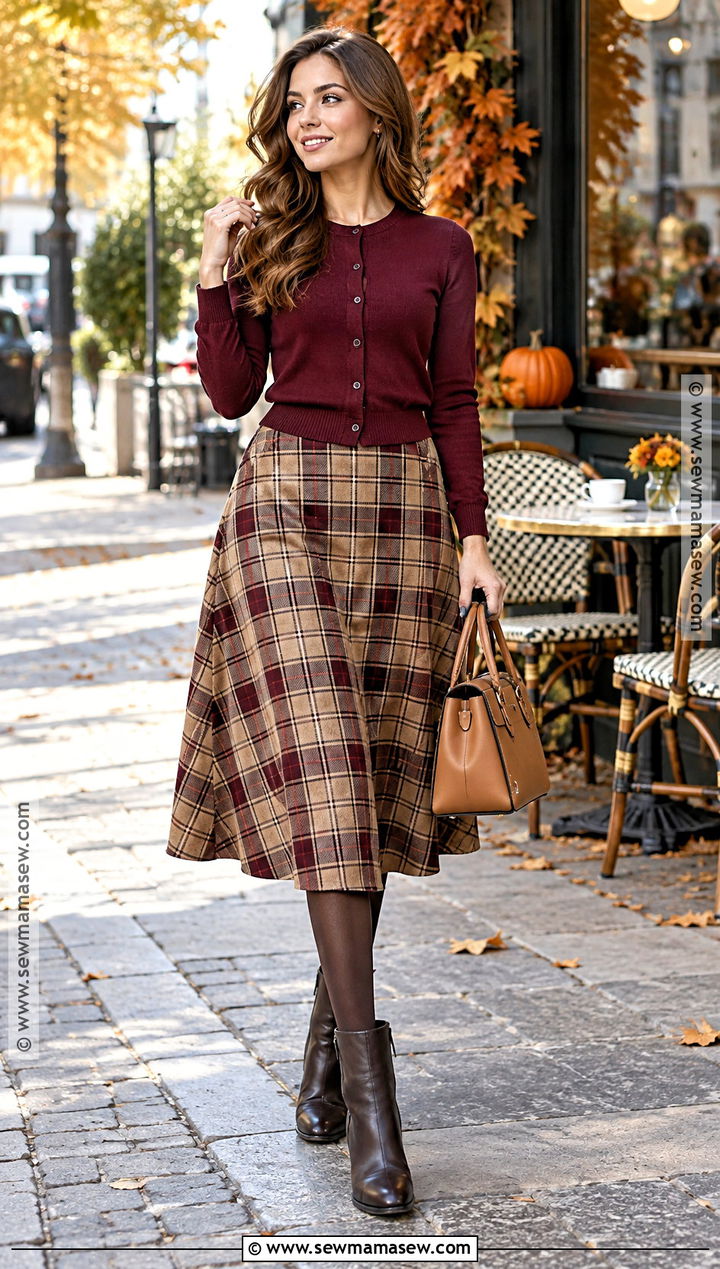
Plaid is where color matching really matters, because the skirt sets the palette for everything else. I pick a plaid that already contains burgundy plus one or two of camel, brown, olive or cream, then match the cardigan to the burgundy thread in the check. A cardigan that's one step too pink or too purple beside the plaid is the most common mistake I see with this outfit. Button it as a top for a neat line, or wear it open over a fitted cream tee. Brown ankle boots and opaque brown tights ground the print on cold days, and the bag should repeat a color from the skirt. A cropped cardigan suits a high-rise skirt; a longer one needs a small front tuck. Keep jewelry quiet so it doesn't compete with the pattern.
5. Mustard Sweater With Dark Denim
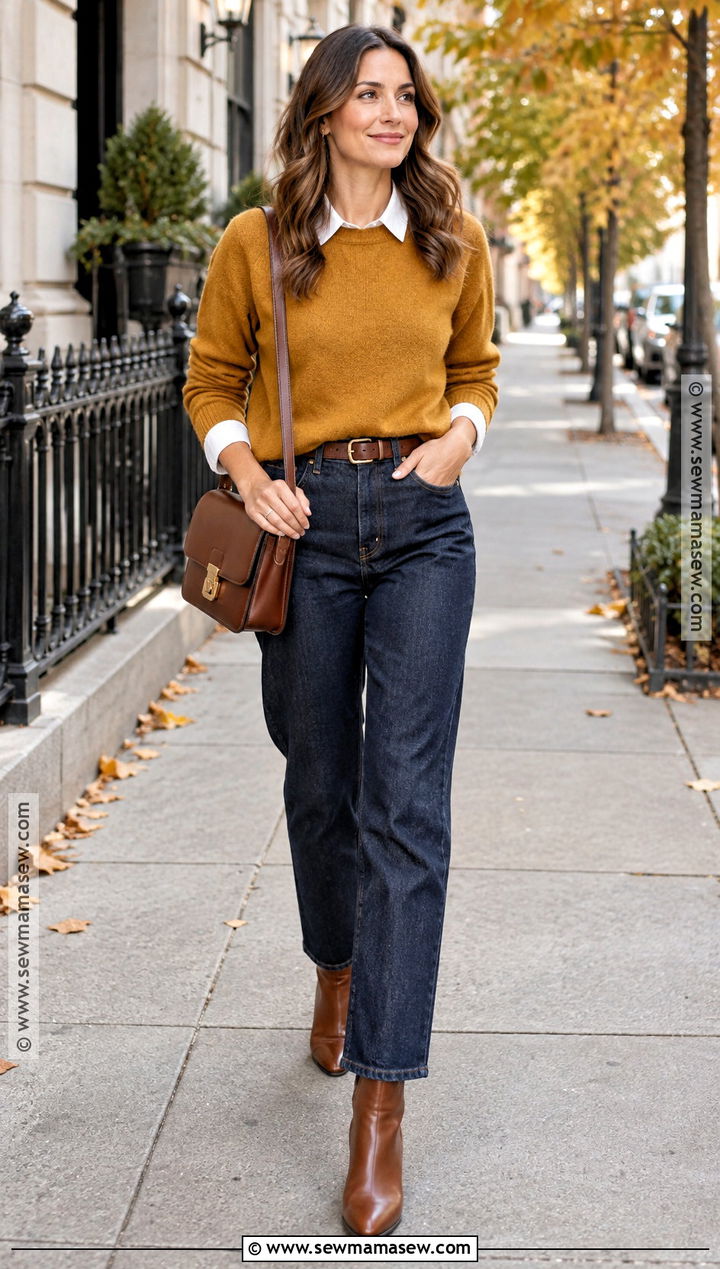
Mustard has a reputation for being hard to wear, and right under the chin it often is. Dark indigo denim is what makes it manageable, since deep blue sits nearly opposite mustard on the color wheel and calms the brightness instead of competing with it. I start with a soft mustard crewneck or mock-neck and dark straight-leg jeans, then add cognac loafers or ankle boots, a medium brown belt and a small structured crossbody. If the yellow turns your skin sallow, wear a cream collared shirt underneath so a lighter shade sits between the knit and your face. A longer sweater should be half-tucked so it lands at the hip bone, while a cropped knit simply meets high-rise jeans.
6. Chocolate Brown Monochrome Outfit
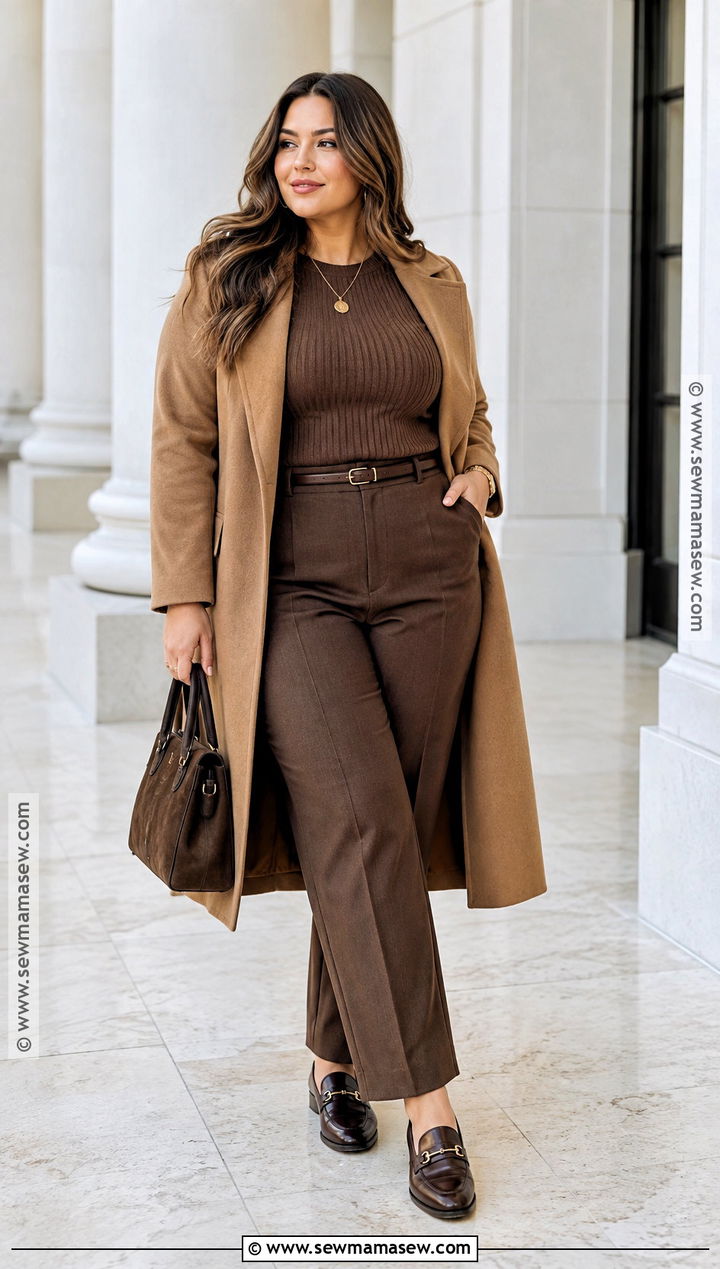
Head-to-toe brown succeeds or fails on shade and texture, not on the pieces themselves. I deliberately mix two or three browns, such as a cocoa ribbed knit, darker tailored trousers and espresso loafers or pointed ankle boots, so the eye reads layers instead of one solid block. Then I pair matte with smooth: ribbed knit, flat-weave trousers, a suede bag. Two pieces that are almost the same brown look like a mismatch, while clearly different shades look planned. A slim belt adds structure, or go softer with a relaxed knit over flowing wide-leg pants. A camel coat brings gentle contrast, and gold jewelry with tortoiseshell sunglasses puts a little light up near the face.
7. Forest Green Blazer With Camel Pants
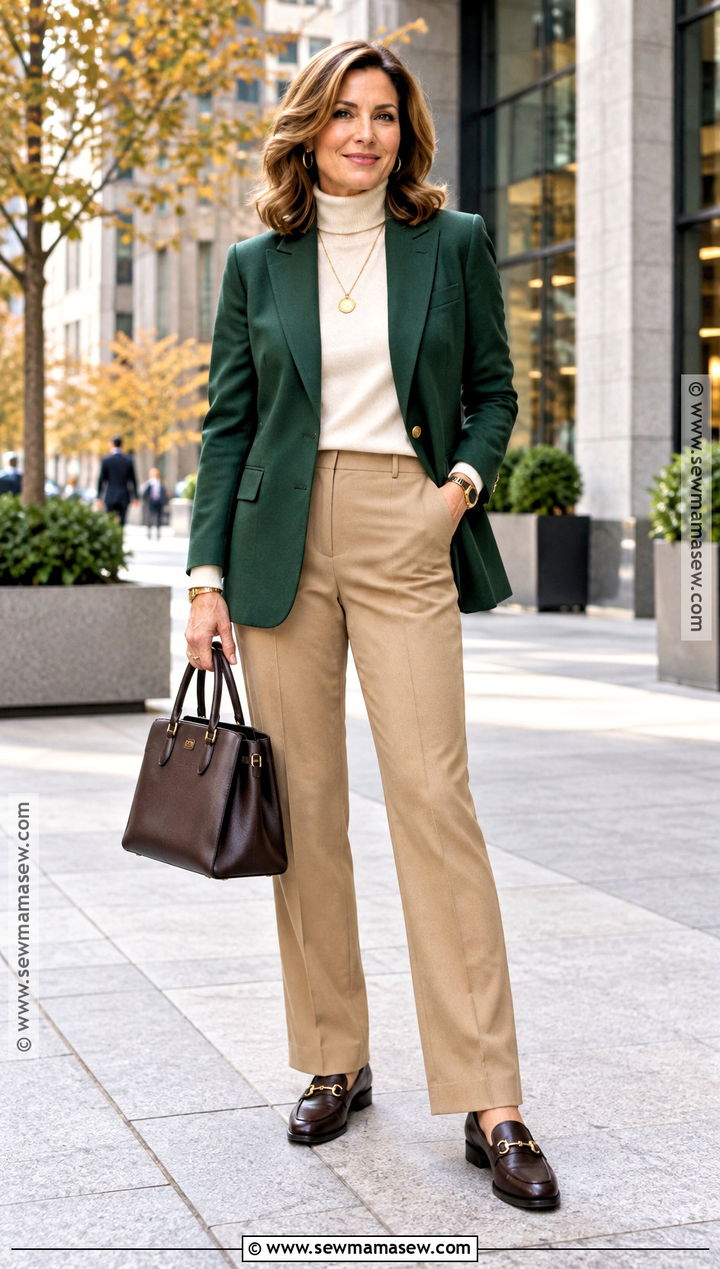
Forest green and camel are both mid-to-deep shades, so I always put something light between them: a cream shell, a fitted tee or a thin turtleneck. Without that break, the blazer and trousers can merge into one dark mass, especially in photos. Tailored camel trousers keep it office-ready, and camel chinos turn it into a weekend outfit. Dark brown loafers or block-heel boots match the weight of a blazer better than very delicate flats, though sleek flats are fine when comfort comes first. If an oversized blazer swallows your shoulders, choose a lightly shaped one that ends at the hip. On a curvier figure, a single-breasted style worn open draws a long vertical line down the front. I suggest this one to anyone tired of black tailoring who still wants something easy to coordinate.
8. Burnt Orange Sweater With Suede Skirt
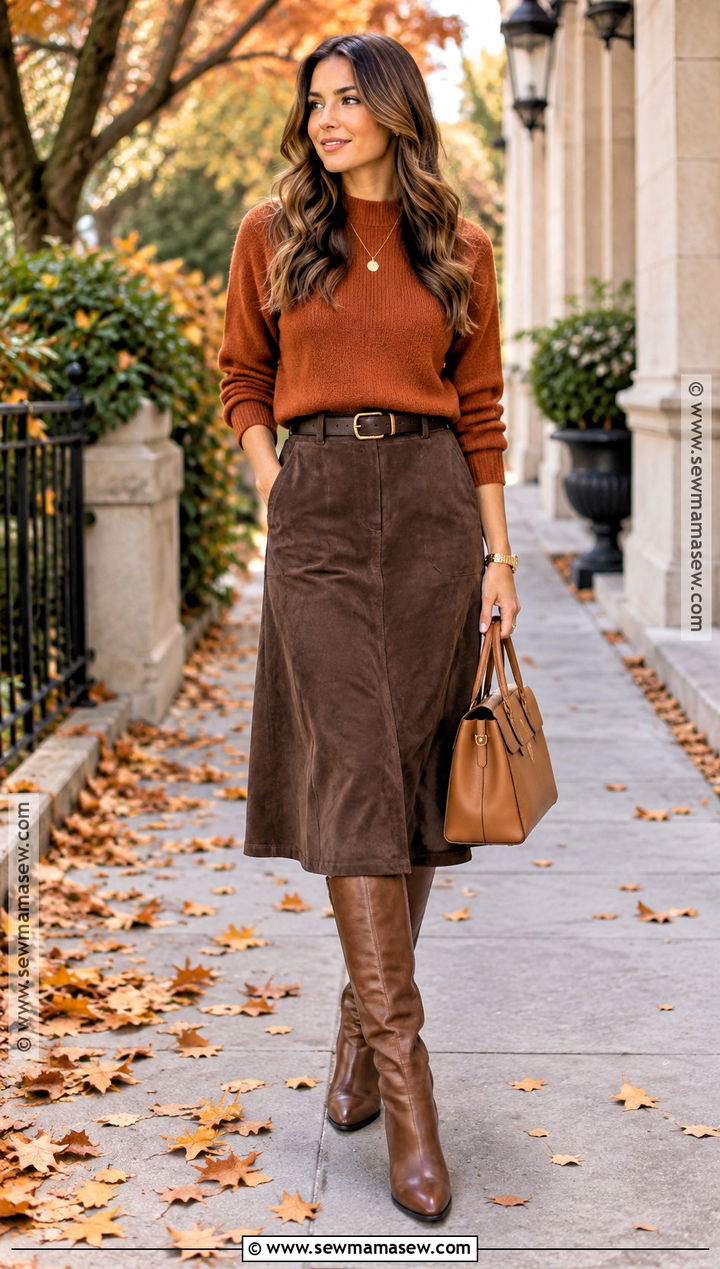
Burnt orange gets softer next to suede, which absorbs light instead of bouncing it back. I pair a relaxed orange sweater with a chocolate or camel faux-suede midi skirt and tuck it fully or just at the front. When both pieces have volume, a belt is the fix; without it the outfit looks shapeless from the side. A fitted knit balances an A-line skirt on its own. Tall brown boots slide under the hem and keep your legs warm. Faux suede handles a light shower better than real suede, but it still marks where a crossbody strap rubs at the hip, so I give it a quick pass with a soft clothes brush after wearing. A tan structured bag, small gold jewelry and a cream coat on colder days finish it.
9. Cream Knit With Camel Midi Skirt
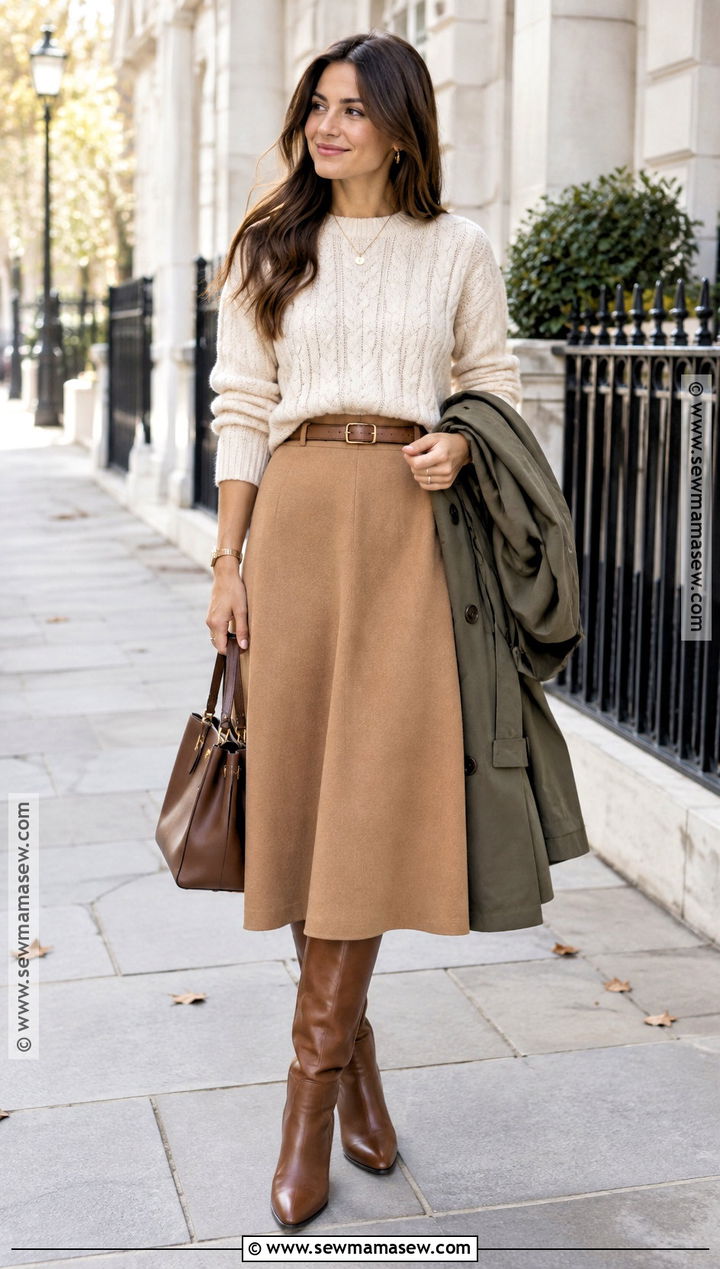
Two pale warm neutrals together can look washed out, so the chocolate bag in this look is doing a real job. I start with a cream cable-knit or a fitted rib, add a camel midi in wool, knit or structured cotton, and connect them with a tonal belt. Watch the fabric pairing: a textured sweater tucked into an unlined knit skirt tends to cling and ride up, while a lined woven skirt sits smoothly under it. Cognac knee-high boots give the classic finish, cream sneakers the casual one. For a top layer, I'd go with an olive trench or a warm taupe coat. A column skirt lengthens the line, and an A-line gives the hips room to move. A patterned silk scarf adds interest without breaking the soft palette.
10. Deep Teal Blouse With Brown Trousers
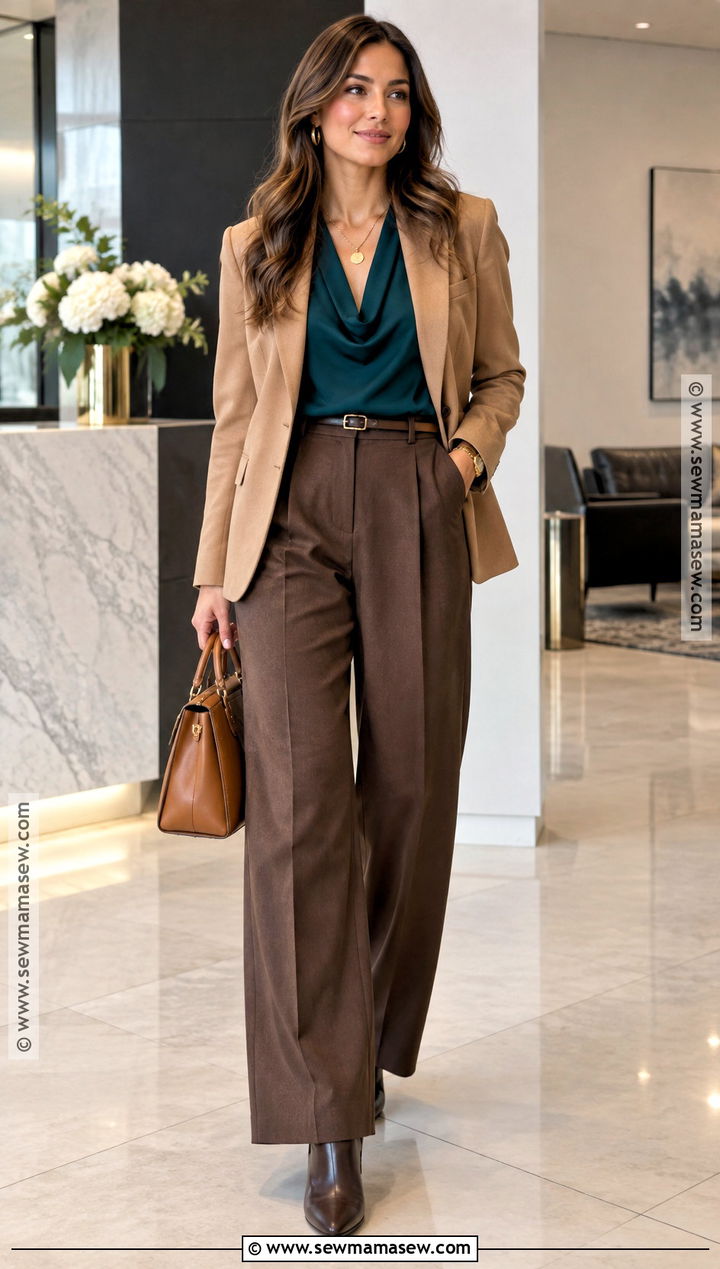
Deep teal is the blue I recommend most to people who suit autumn colors. Its green undertone keeps it in the warm family, whereas a bright cobalt would clash with all that brown. Pair a teal blouse with chocolate trousers in a straight or wide leg; a draped blouse reads soft, a button-down reads tailored. Dark brown loafers or heeled ankle boots, a cognac bag and gold jewelry near the face complete it. If you need a layer, take a camel blazer or a warm beige cardigan. A cool gray jacket drains the warmth out of the whole look. Tuck the blouse into high-rise trousers to show the waist, or leave a longer style out for easy coverage.
11. Aubergine Dress With Chocolate Accessories
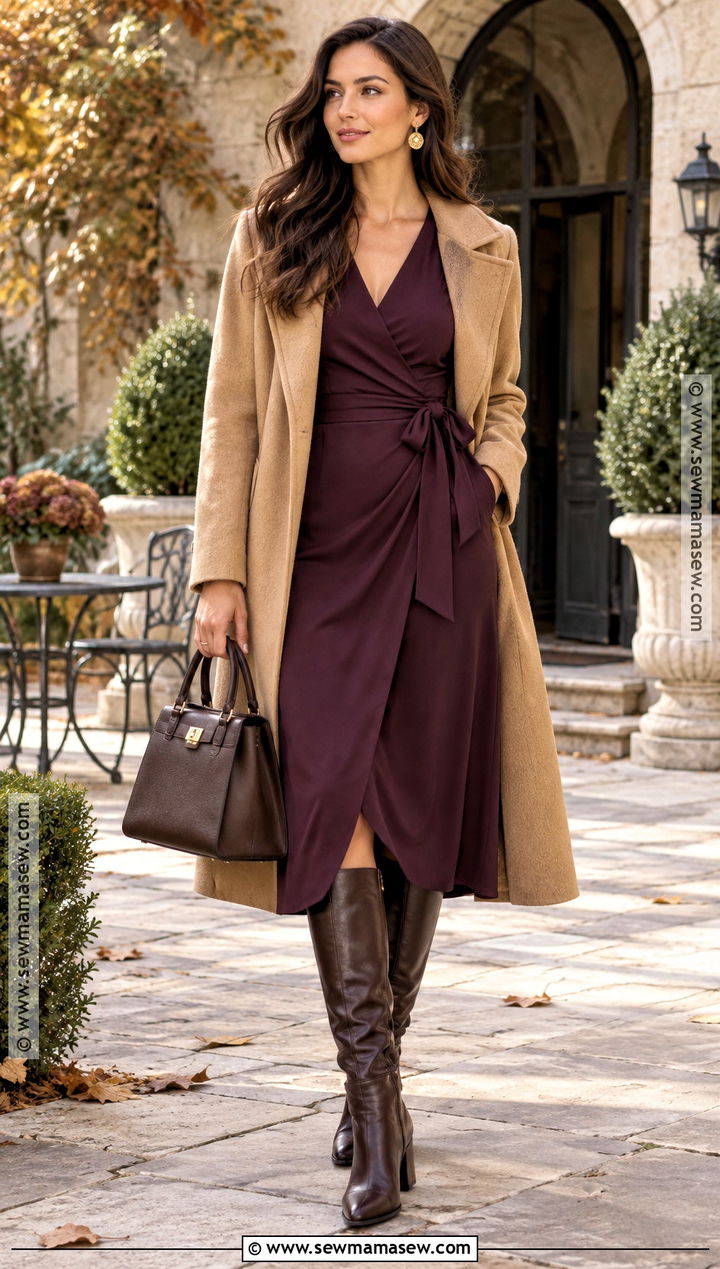
Aubergine is my usual substitute for black when someone wants depth without harshness. It keeps a red-purple warmth that reads softer than flat black, particularly under indoor lighting. Choose the midi dress by fit: a wrap front, a defined waist or a gently flowing shape. Chocolate brown boots and a matching bag hold the warm undertone, and a camel coat lightens the whole thing for daytime. If the neckline is high, skip the necklace and let the color carry it; a V-neck can sit over a warm beige camisole for coverage. I find antique gold earrings sit more quietly against plum than bright yellow gold. In real cold, deep plum tights extend the column of color from hem to boot.
12. Warm Navy Coat With Rust Knitwear
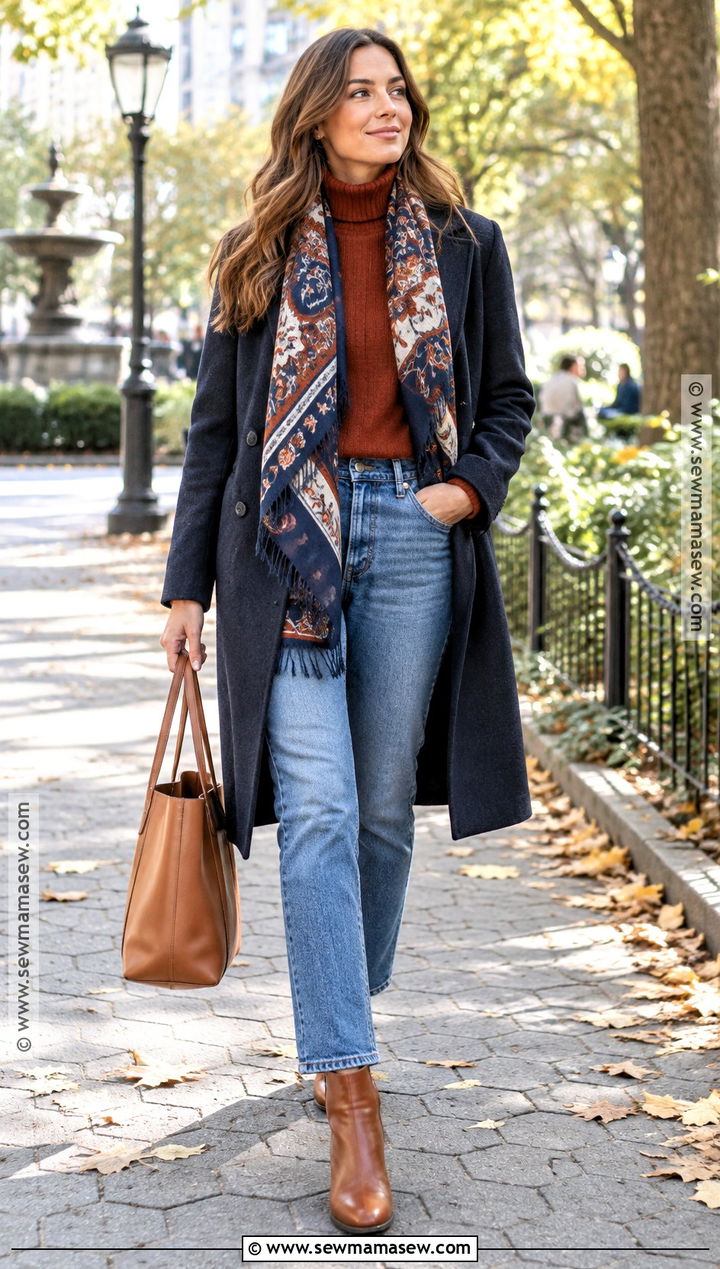
Navy is the right base for anyone who prefers blue to brown, but the exact shade matters. An inky, cool navy makes rust look loud; a slightly softened, warmer navy lets the two sit together comfortably. I start with a rust turtleneck or crewneck and medium-wash straight jeans, then add the navy wool coat. Cognac ankle boots and a tan tote bridge the bright knit and the dark coat, and a scarf in navy, rust and cream ties everything together. Wear the coat open on mild days so the rust shows; buttoned up, the neckline alone carries the color. Wool pills wherever a bag strap rubs, so I switch the tote between shoulders or carry it by hand.
13. Terracotta Cardigan With Olive Pants
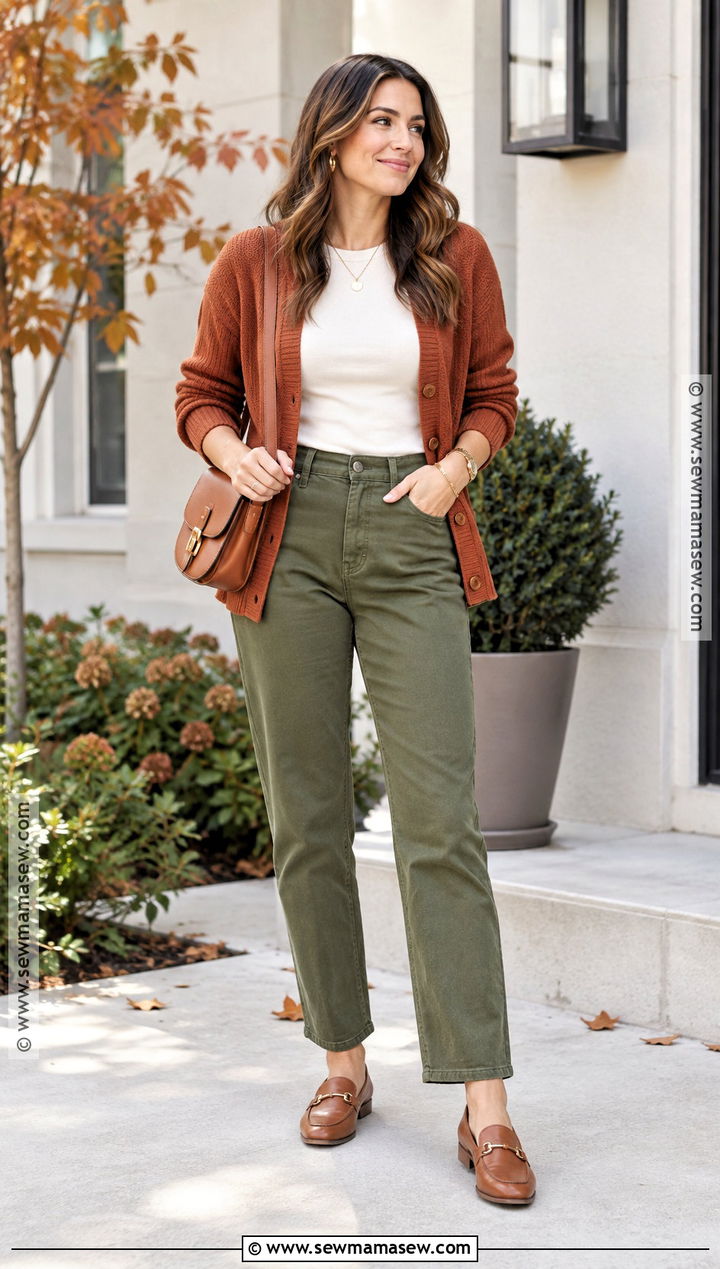
Terracotta is a muted, clay version of orange, which makes it gentler than rust beside olive. I button the cardigan over a cream tank or plain tee and pair it with high-rise olive trousers, straight-leg for a clean line or cargo style for weekends. Tan loafers, brown ankle boots or cream sneakers all suit it, along with a cognac crossbody and brushed gold. To show the waist, tuck in the base layer and leave the cardigan open. With fuller trousers, a cropped cardigan stops the top half from sinking into the volume below. A camel trench covers cooler days. Each piece goes back into rotation with plain basics on its own, which is why I like this pairing for anyone starting an autumn palette.
14. Copper Satin Skirt With Brown Sweater
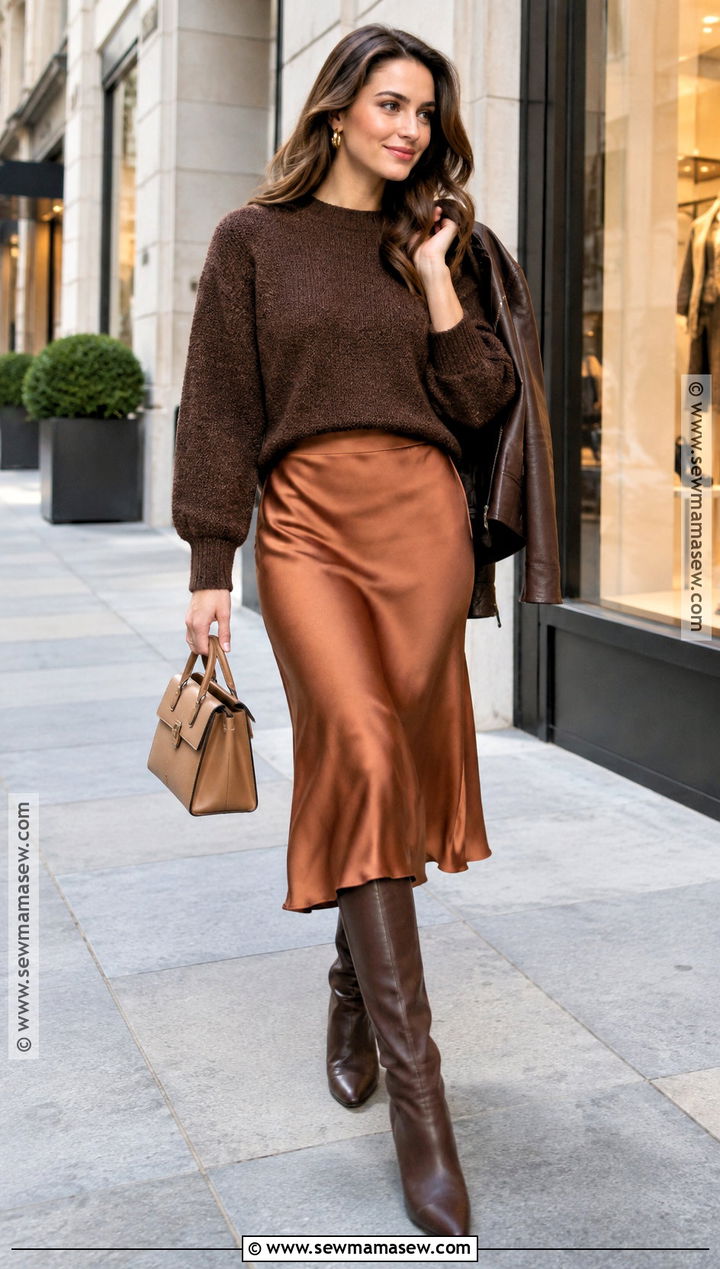
Copper satin catches the light, so I balance it with the opposite surface: a matte, textured chocolate sweater. Satin shows creases and can snag against a very chunky knit at the waist, so keep the tuck light or choose a slightly cropped sweater that just meets the waistband. Dark brown knee-high boots keep the lower half continuous. A structured camel bag breaks up the deep tones, and a slim brown belt works if the skirt has a defined waistband. For daytime, add a cream trench or a brown jacket. If shine isn't for you, a pleated or brushed copper skirt gives you the color without the gloss. It looks dressed up yet feels like a sweater and skirt, and that's the appeal.
15. Taupe Trench With Burgundy Knit
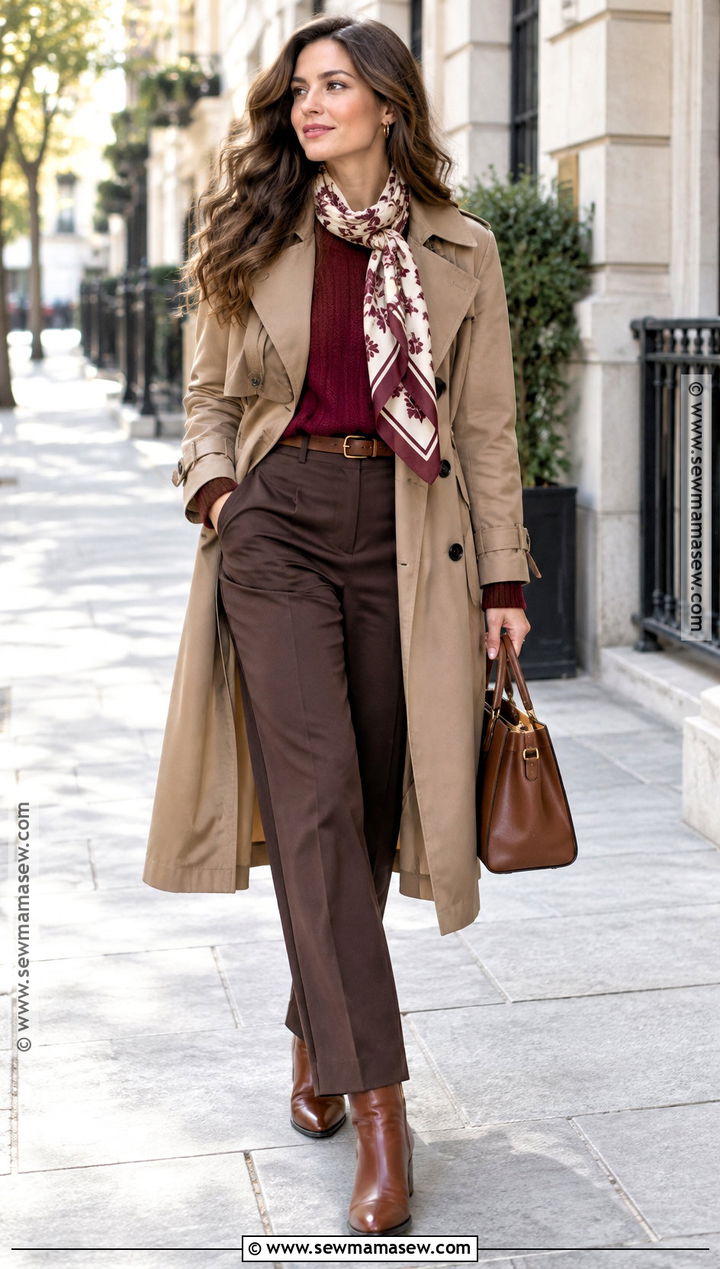
Taupe is a grayish brown, and that hint of gray is what keeps a burgundy knit from feeling too rich. I wear the knit with dark brown straight-leg jeans or tailored trousers and throw the trench on loosely. The dark lower half anchors everything, cognac ankle boots and a structured brown bag finish it, and a scarf in cream, burgundy and olive adds pattern when you want it. Belt the trench to mark the waist or leave it open for a long line. Length is the fit detail I watch most here: on a petite frame, a trench ending above the knee keeps proportions right, while a tall frame can carry a longer cut. A cotton gabardine trench also shrugs off light drizzle, so this is my pick for unpredictable days.
Getting Fifteen Outfits Out of a Dozen Pieces
Look closely and you'll notice the same pieces keep coming back across this list. That's deliberate. When I build an autumn palette for someone, I start with a handful of anchors and add color slowly, because one well-chosen shade multiplies the outfits you already own.
- Two pairs of trousers: one chocolate, one camel or olive.
- Dark straight-leg jeans and one lighter pair in cream or ecru.
- One midi skirt in a solid warm shade or a plaid that repeats your palette.
- Three knits: a cream base, one mid shade such as camel, and one accent like rust or burgundy.
- One coat in camel or taupe, which sits comfortably over almost every color here.
- Brown ankle boots, knee-high boots and loafers, all in a similar brown so they move between outfits.
Add accent colors one at a time and check each new piece against at least three things you already own before keeping it. If a teal blouse only works with one pair of trousers, it's an outfit, not a palette piece.
Why Two Browns Sometimes Clash
Brown isn't one color. Some browns lean red, like chestnut and cognac; some lean yellow, like camel and tan; some lean gray, like taupe and mushroom. Put a red brown right next to a gray brown and they can look like they came from two different outfits.
The fix is either distance or a bridge. Keep the clashing browns apart, say boots and coat rather than sweater and trousers, or slip a cream or ecru layer between them so the eye reads separation instead of a near miss. Sheen counts too. A shiny leather belt beside a matte brown knit reads lighter than it really is, so I always compare browns in the same light before deciding they match.
Camel Coat or Brown Boots First?
Every look here follows the same rule: a short color story of two or three warm shades, held together by texture and one repeated accessory color. Start with what's already in your closet, then look for the one or two shades that would connect the most pieces and fill those gaps first. In my experience, a good camel coat or a pair of chocolate boots ties together more outfits on this list than any single trend piece could. Adjust each formula to your proportions and your climate, and test any new shade against your face in daylight before it earns a place in the rotation.
Related posts: