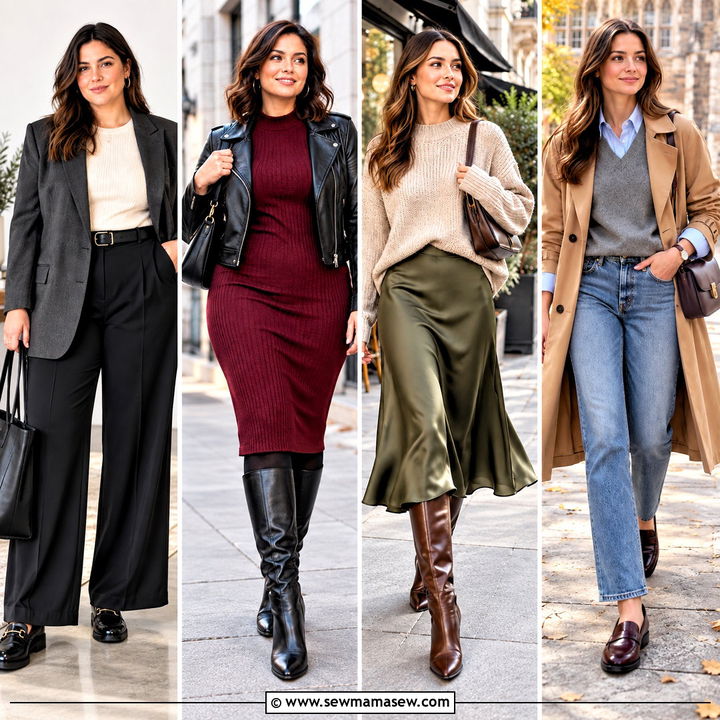
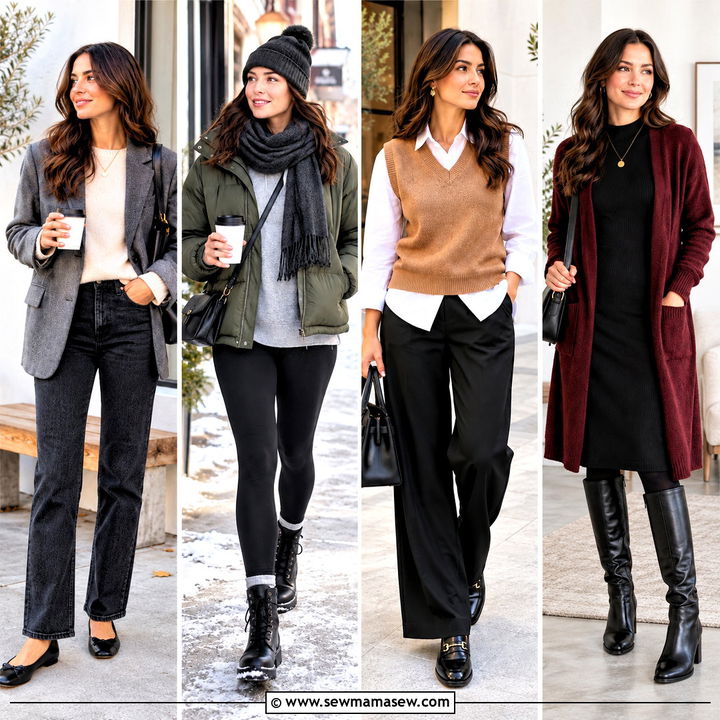
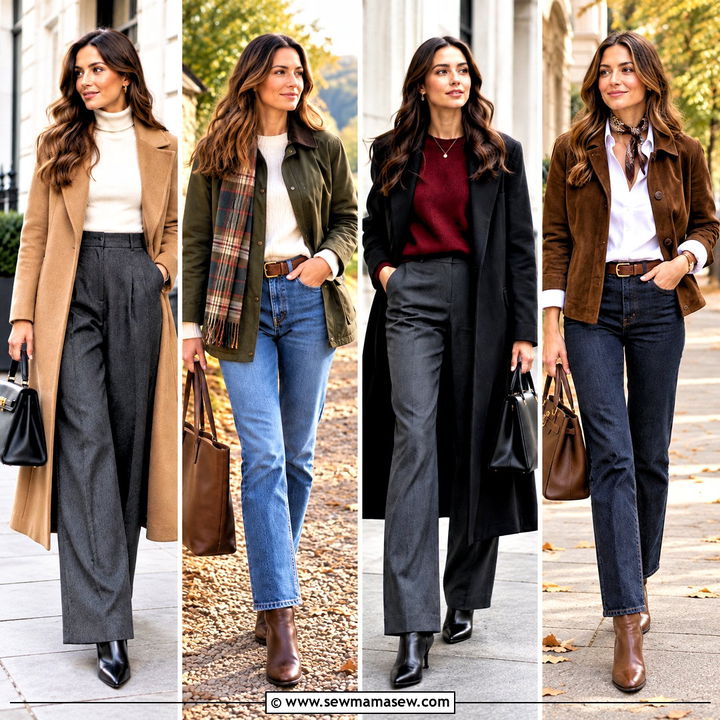
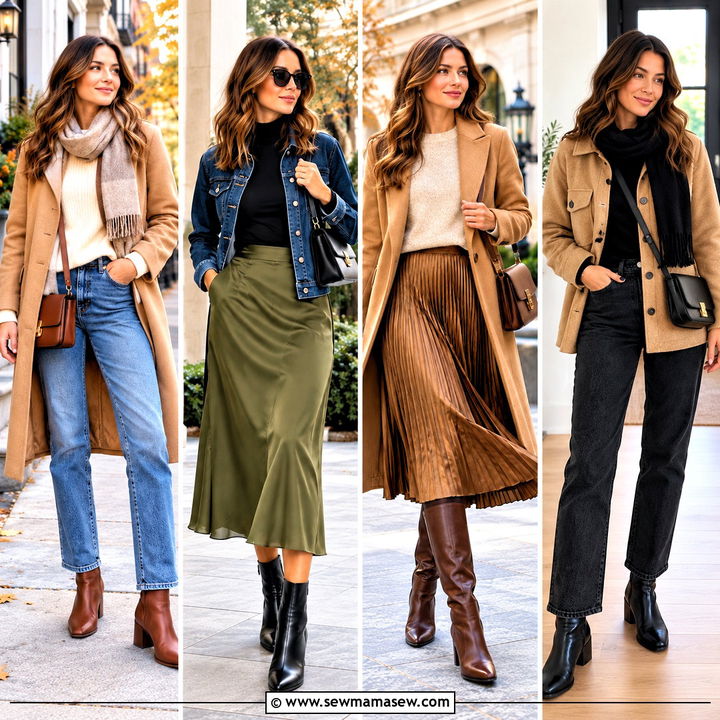
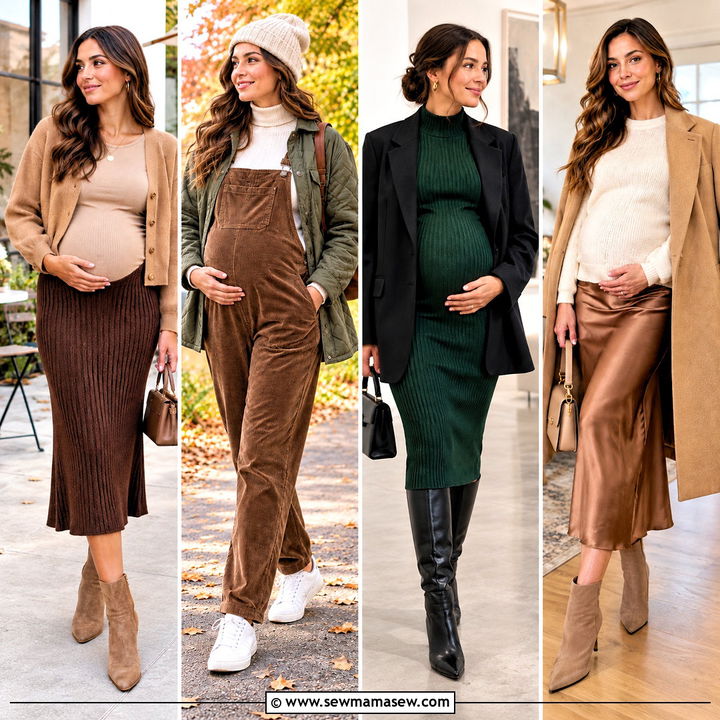
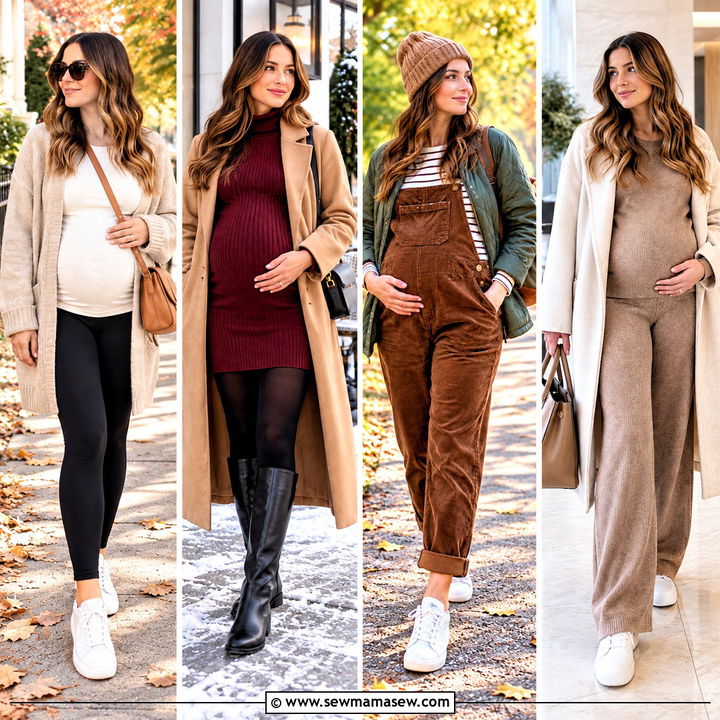
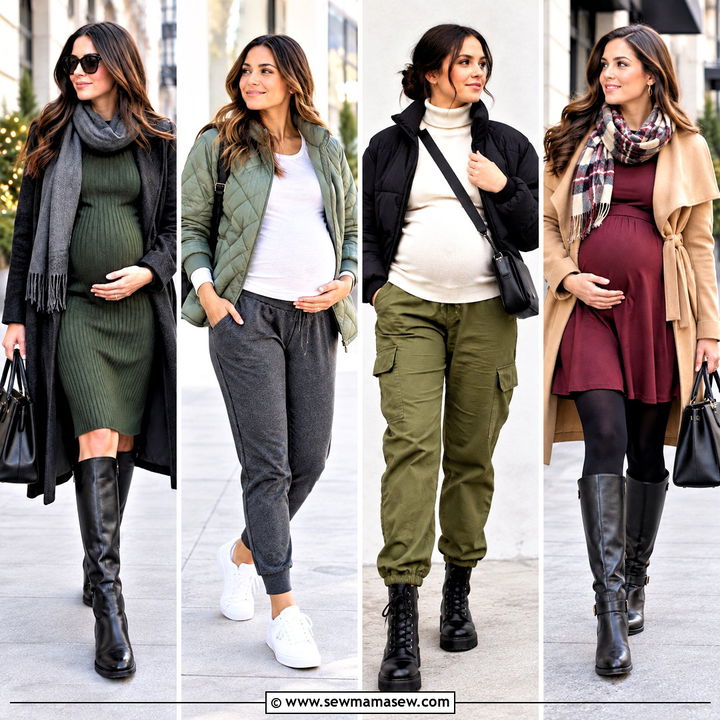
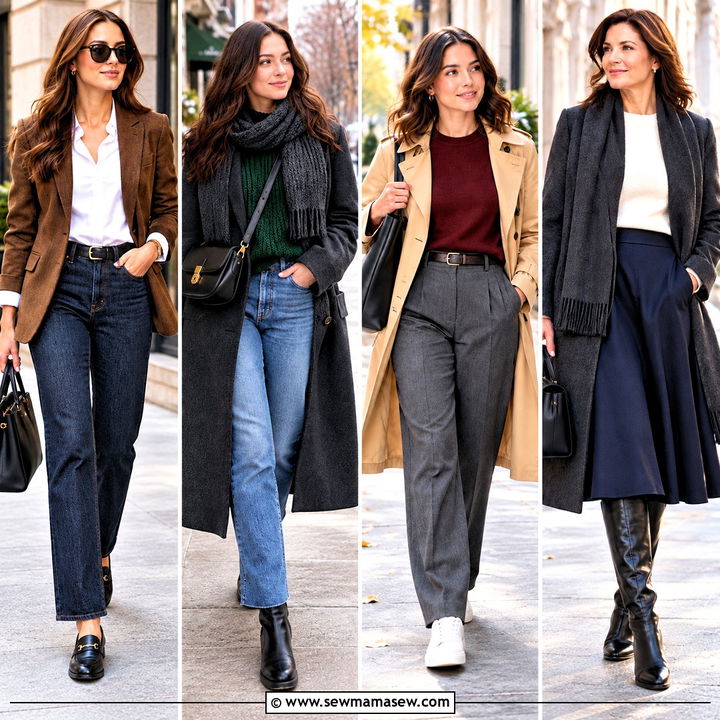
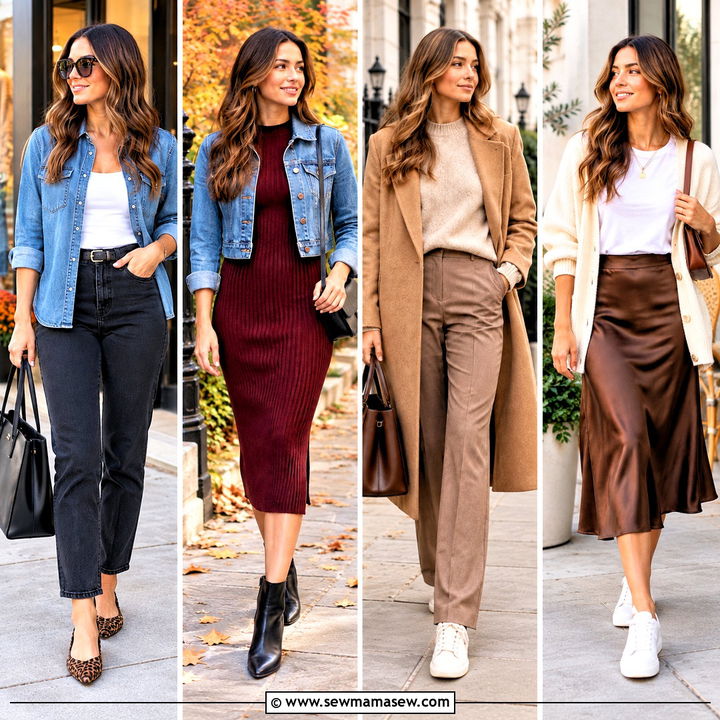
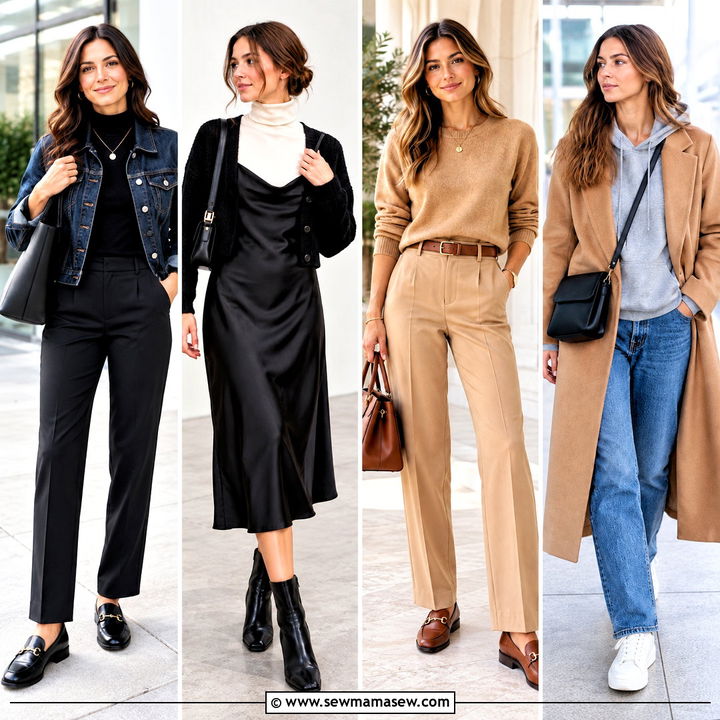
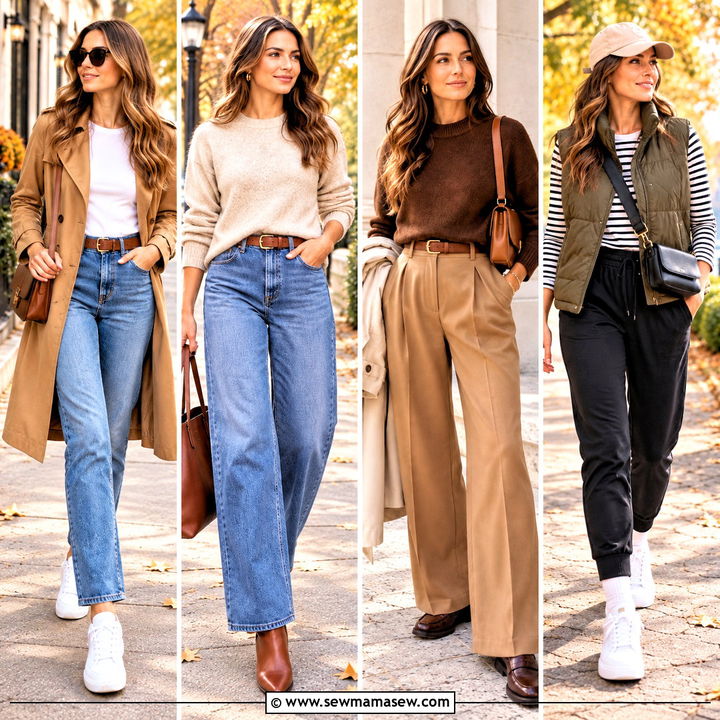
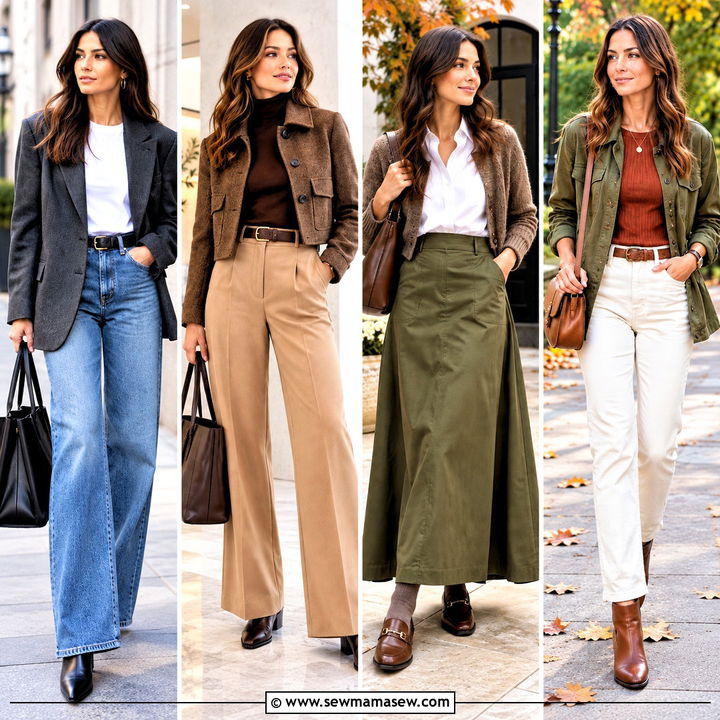
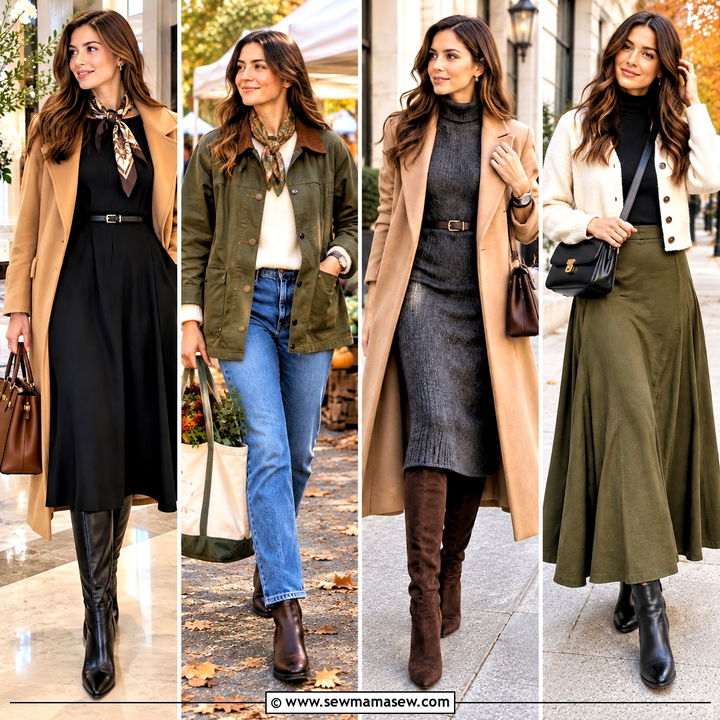
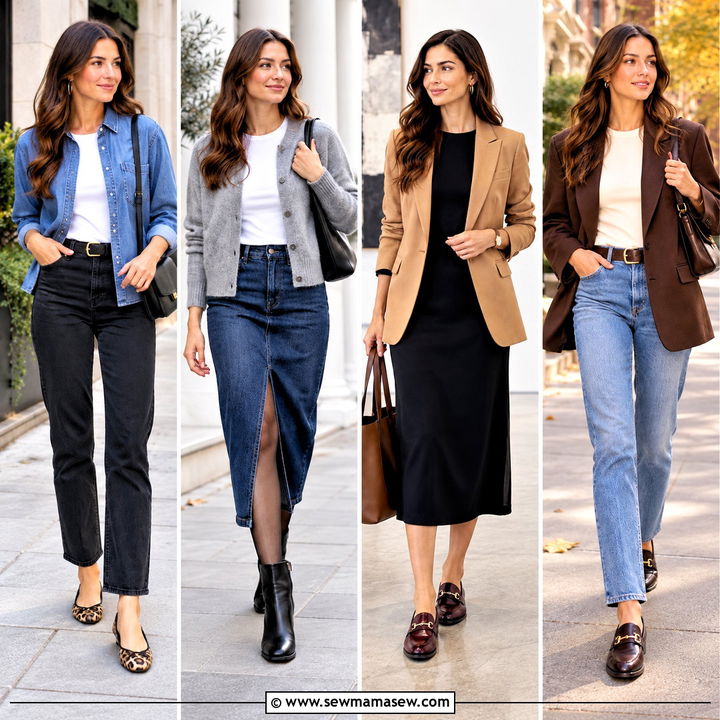
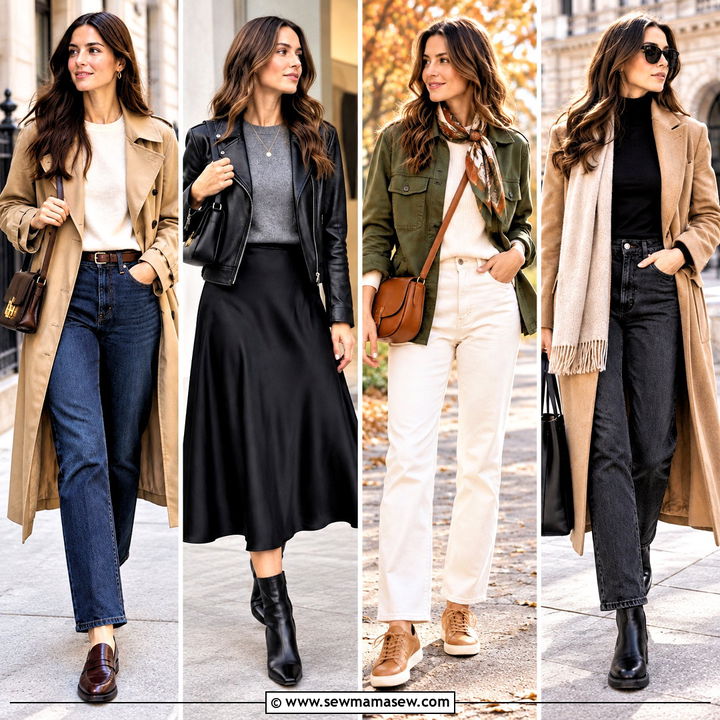
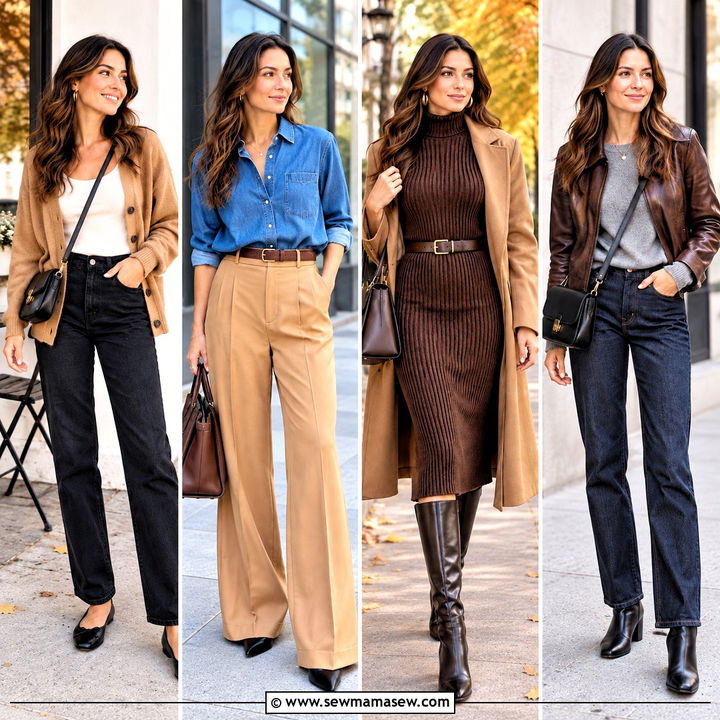
A capsule only earns the name if the same pieces keep turning up in different combinations, and that's how I've built these 15 fall and winter outfits. The base is plain on purpose: straight-leg jeans, tailored trousers, fine knits, a handful of coats, boots and simple accessories. Burgundy, olive, camel and soft gray carry the seasonal color so the neutrals never feel flat. Before you buy anything, pull out whatever you already own that resembles each piece. Most closets have more of a capsule hiding in them than people expect, and the layers can be adjusted for your own winters and the way your weeks actually run.

Eight Jackets Is Not Where a Capsule Starts
Count the outer layers below and you'll find a lot of them: a trench, a long wool coat, two blazers, a leather jacket, a puffer, a plaid shacket and a utility jacket. Nobody needs all of those in the first season. I'd let your climate decide which come first.
- Mild, wet autumns: start with the trench and one solid blazer, then add the utility jacket if you spend a lot of time outdoors.
- Proper winters with snow or ice: the long wool coat and the puffer come first, and the trench becomes a spring and early fall piece.
- Office most days: one blazer and the wool coat cover nearly every outfit on this list.
Then look at what you already have. An old denim jacket can stand in for the shacket while you find out whether you miss it, and a cardigan you love can do the blazer's job on casual days. Coats are the big purchases, so I buy them one at a time and wear each for a few weeks before deciding what's still missing. The knits, jeans and trousers are cheaper to fill in and get worn far more often.
1. Trench Coat With Striped Shirt And Straight-Leg Jeans
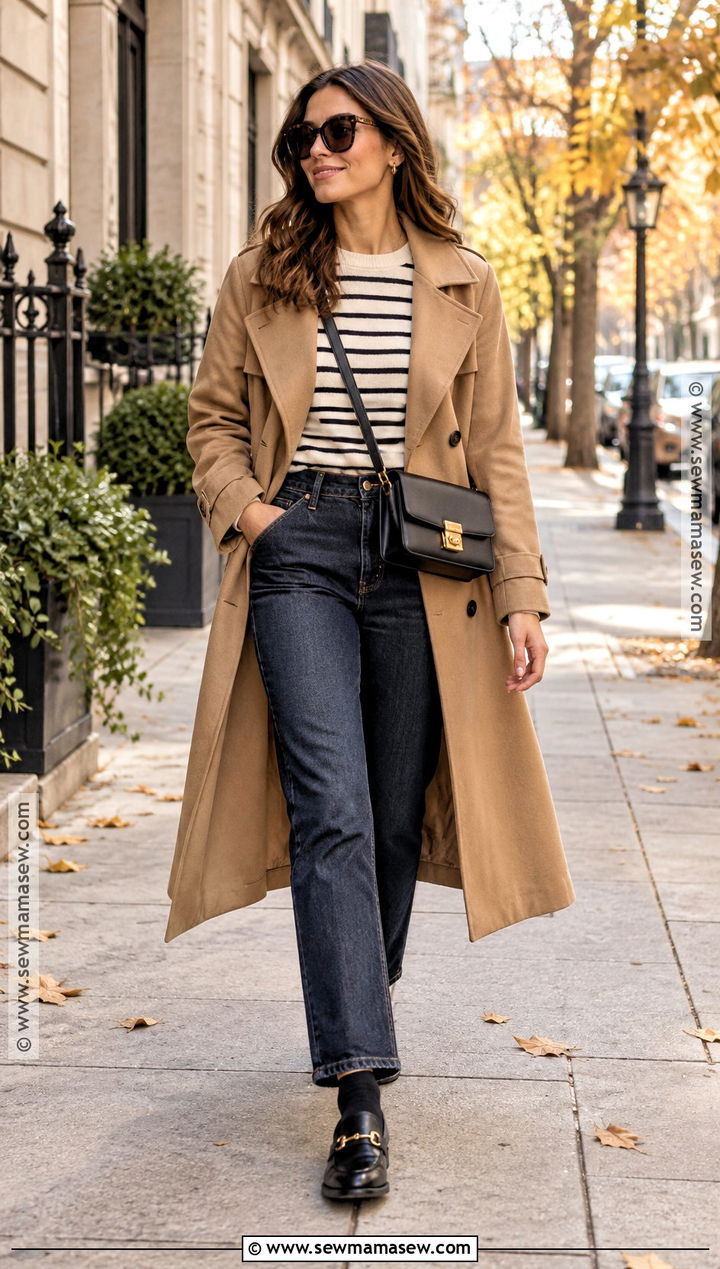
A trench is the coat I reach for first in a capsule, because it handles a cool morning and a mild afternoon without overheating you. Here it goes over a cream-and-black striped long-sleeve shirt and dark-wash straight-leg jeans. On dry days I'd wear black leather loafers with matching socks; once the pavement is wet, streamlined ankle boots are the safer call. A structured crossbody keeps it tidy, and small gold earrings with a light scarf in camel or burgundy add the seasonal note. When you try trenches on, wear your thickest sweater underneath. If the back pulls across the shoulder blades, size up now, because you'll be layering under it by November.
2. Wool Coat With Turtleneck And Wide-Leg Trousers
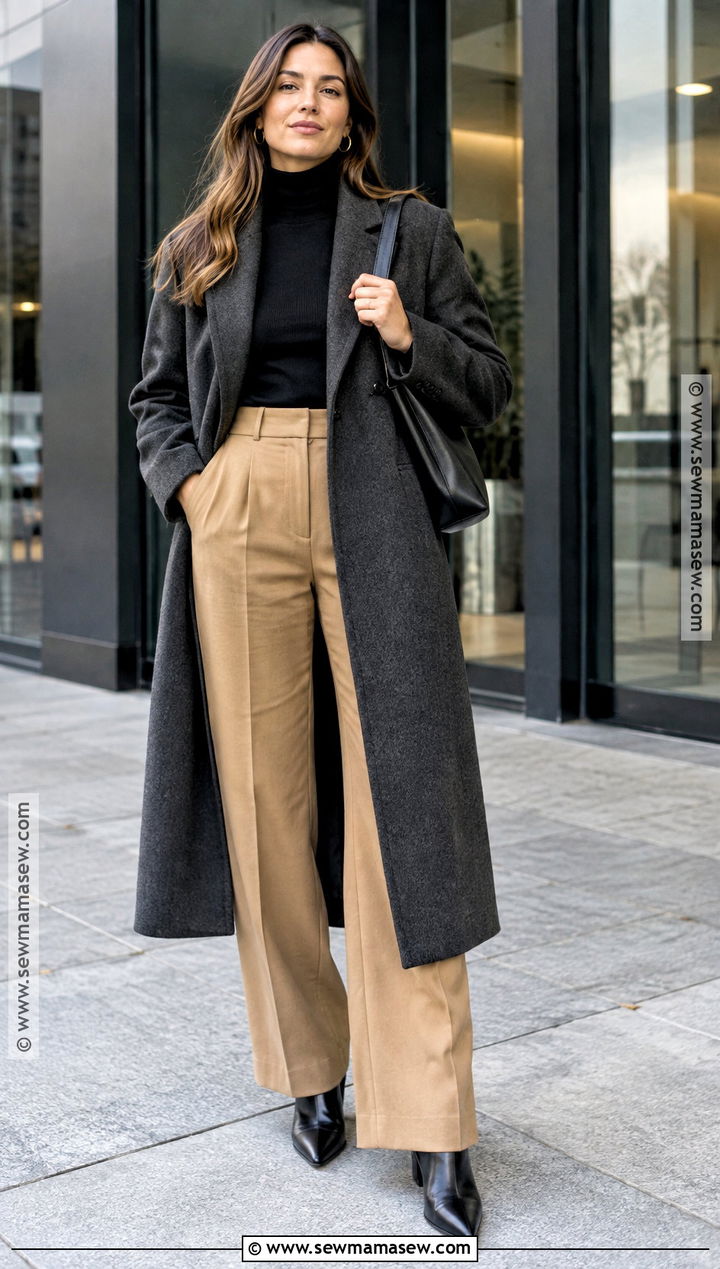
Once real cold arrives, a long wool coat keeps you warm and still reads clean and tailored. Under it: a fitted black or charcoal turtleneck and camel wide-leg trousers. Pointed ankle boots matter more than they seem, since a rounded toe peeking out from a wide hem can make the leg look short. Add a leather shoulder bag and small hoops. If you run cold, a thin thermal under the turtleneck and wool socks in the boots do more than a bulkier sweater would. I keep the coat and trousers in neighboring neutrals so each can go off with denim or a white shirt on other days, from meetings to errands. Check that the coat hem clears the widest point of the trousers, or the two fabrics fight every time you walk.
3. Blazer With Fine-Knit Sweater And Black Jeans
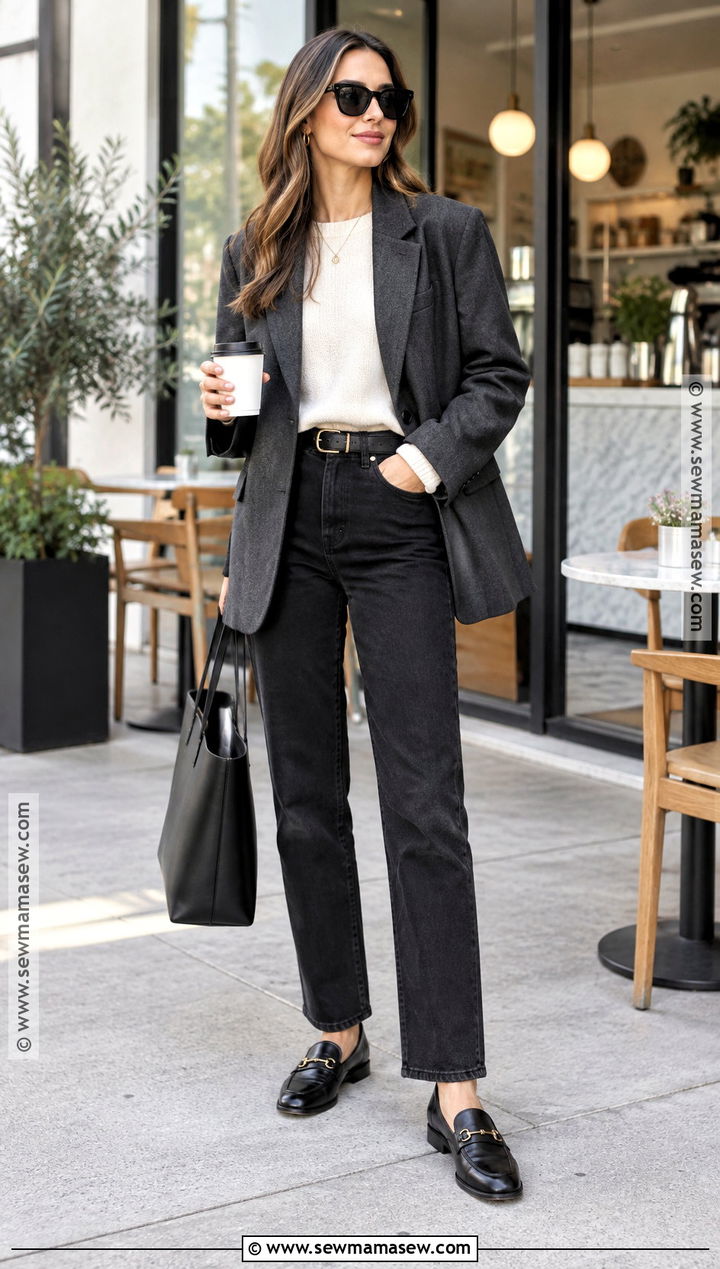
This is my answer for days that sit between casual and work. A lightweight crewneck in cream or heather gray goes under a relaxed blazer with room through the shoulders, over black straight-leg jeans. Loafers keep it sharp; ankle boots take over when it's colder. A structured tote holds work things without dragging the blazer off one shoulder, and a slim belt quietly ties the shoes and bag together. Blazer length and jean rise are what I adjust most for different bodies: hip length suits most heights, while a longer cut can swamp a petite frame. Buy the blazer solid, because a check is hard to repeat three times a week.
4. Cardigan With Button-Down Shirt And Blue Jeans
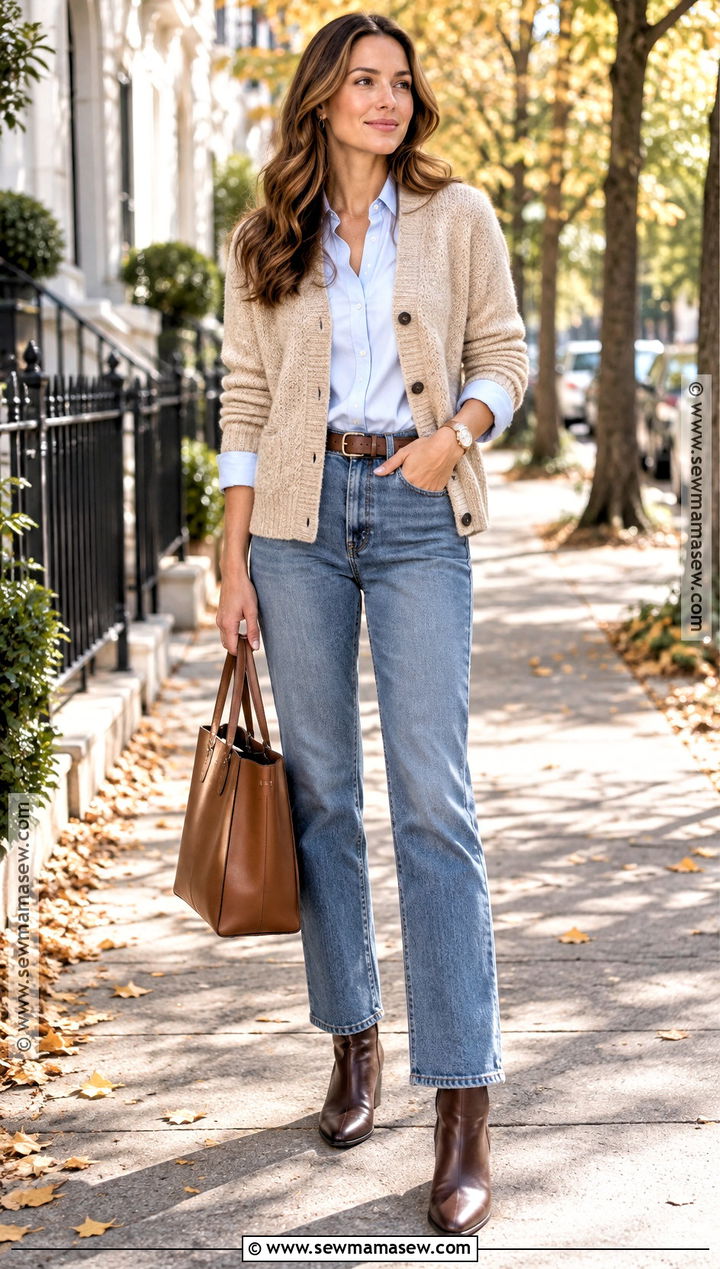
Two thin layers are warmer than one thick one, and a shirt under a cardigan proves it. Start with a white or pale blue button-down and a slightly relaxed cardigan in oatmeal or deep red, then let the shirt hem show below. Medium-wash straight-leg jeans keep it casual. I'd wear loafers or ballet flats in early fall and switch to brown ankle boots later, with a medium tote, a watch and a narrow belt to finish. The cardigan should end near the hip. Any shorter and the shirt tail looks accidental; any tighter and the shirt bunches into ridges under the knit. That button-down is one of the hardest workers you'll own, since it also goes under blazers and sweater vests.
5. Leather Jacket With Turtleneck And Midi Skirt
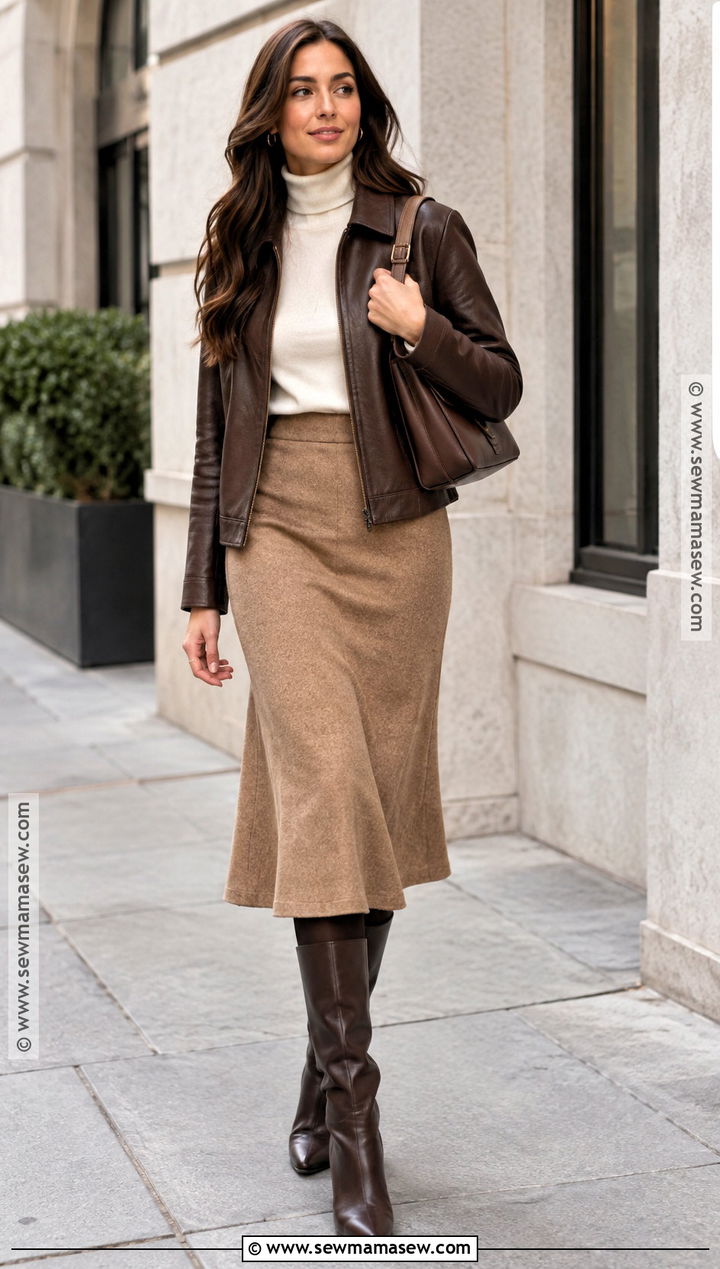
Leather gives softer winter pieces an edge they don't have on their own. A black, brown or burgundy jacket goes over a fitted neutral turtleneck and a midi skirt in wool, denim or a heavy knit. Knee-high boots are the right length here because the skirt hem overlaps the shaft and no bare leg shows. Keep the bag plain and the jewelry minimal so the leather against knit stays the point, and add opaque tights and a thin thermal on colder days. I'd skip jackets covered in zips, studs or buckles. They look great once and then everyone remembers them. A plain collar and modest hardware will carry you from casual offices to weekend lunches for years.
6. Puffer Jacket With Sweater And Black Leggings
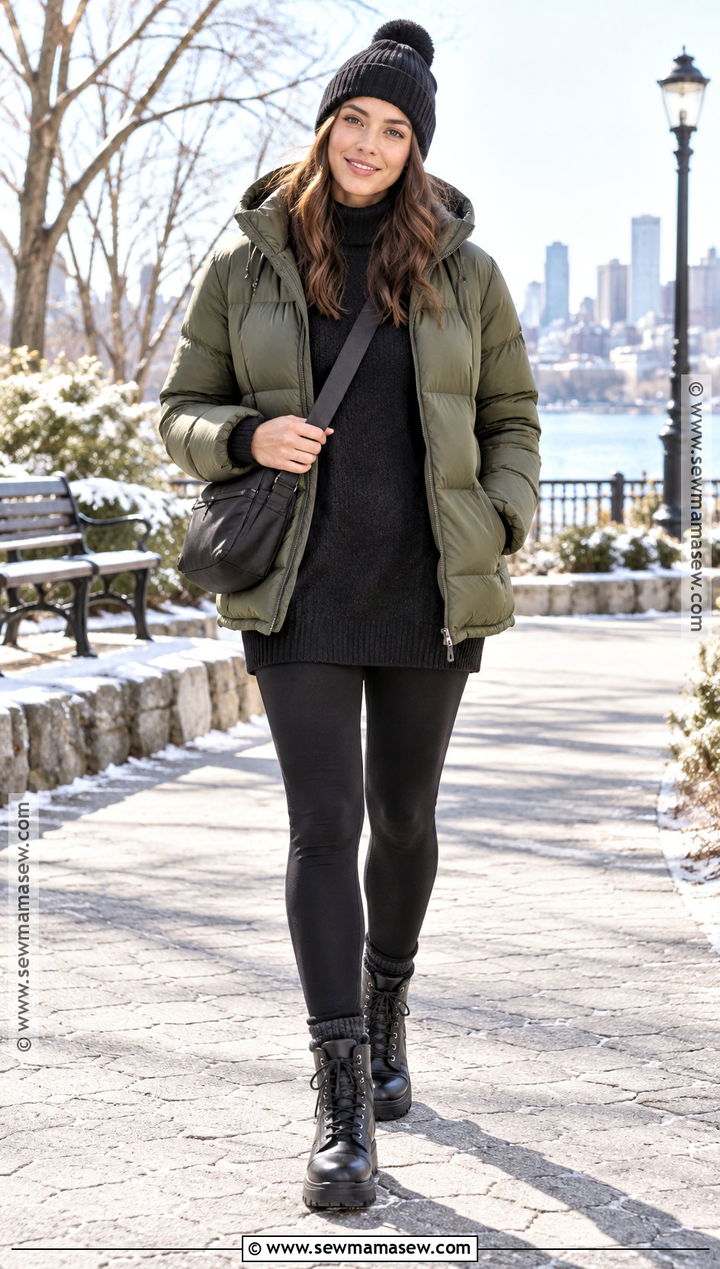
On rushed winter mornings, this is what I'd actually put on. A longline sweater or sweatshirt covers thick black leggings to the hip, and a hip-length or slightly longer puffer goes over the top in black, navy, taupe or olive. Clean leather sneakers handle dry, mild days; lace-up boots with real tread are better once there's ice or slush. A crossbody leaves your hands free and a ribbed beanie keeps the heat in. Leggings are where cheap shows. Stretch them in front of a window, and if light comes through, they'll go see-through when you bend. Matching dark shoes to dark leggings keeps the line long, and school runs, airports and weekend walks are where this one earns its place.
7. Knit Dress With Long Coat And Knee-High Boots
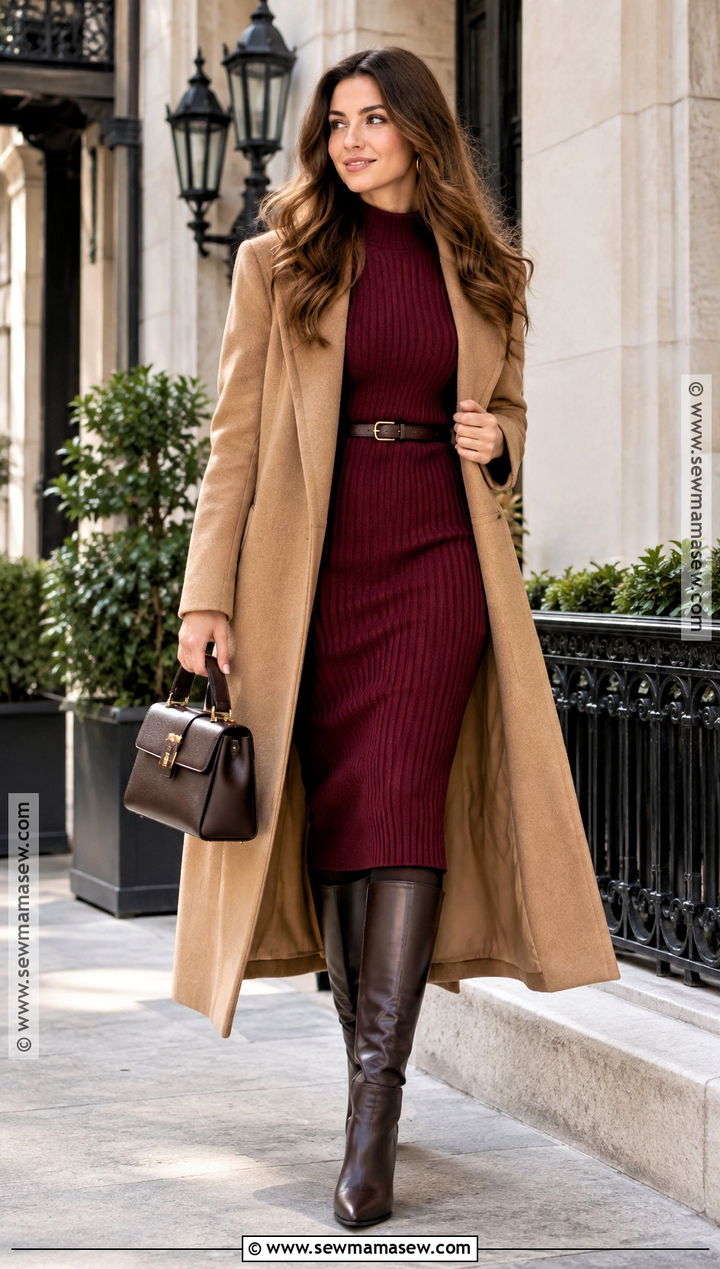
A knit dress under a long coat is about as close to a one-step outfit as winter gets. I'd pick a ribbed midi that follows the body without clinging, in black, charcoal, chocolate or deep burgundy, then add a tailored wool coat and knee-high leather boots with a block heel or flat sole. The belt is optional: without one the dress reads long and simple, with one you get a defined waist, so try both in the mirror. A structured top-handle or compact shoulder bag keeps it polished. Opaque tights, a thin base layer and a big scarf handle the cold. Watch the seat and elbows of ribbed knits, which can bag out after a long day of sitting. The dress later goes with a leather jacket, cardigan or puffer, which is why I'd choose it over a heavily detailed seasonal one.
8. Trench Coat With Denim Shirt And Black Jeans
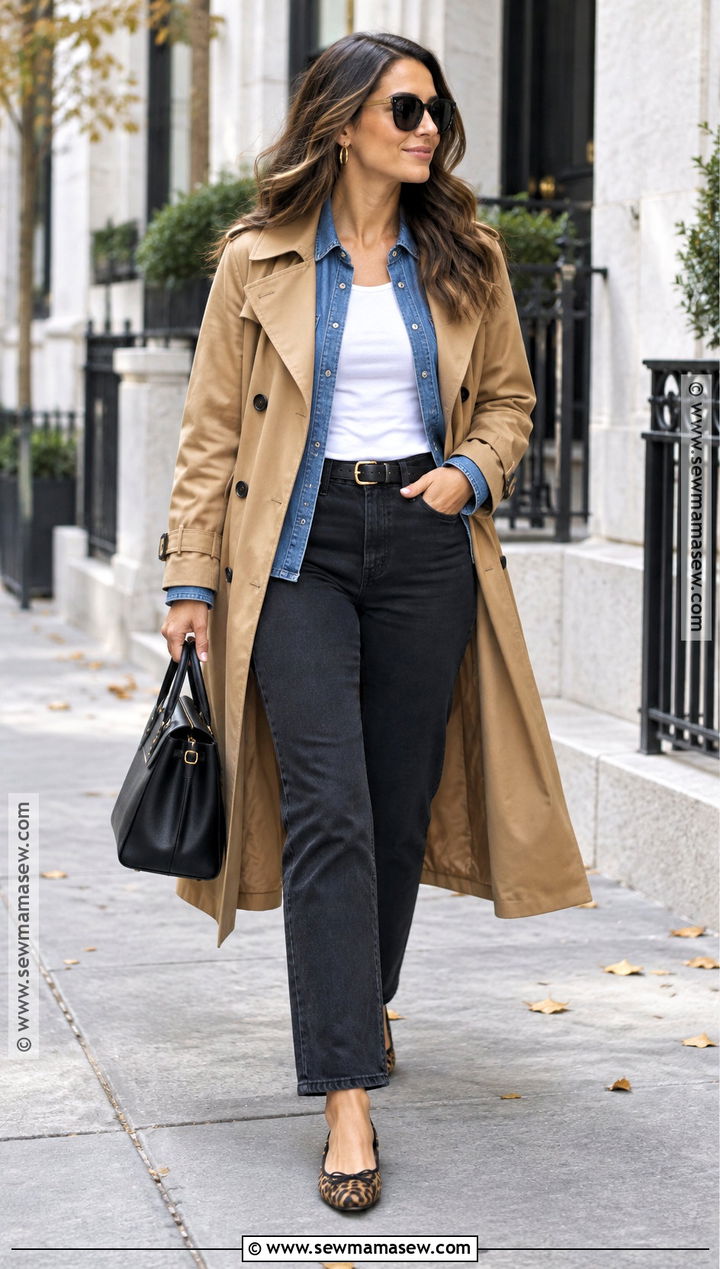
Double denim works when the two shades are clearly different, and mid-blue against black is about as clear as it gets. Wear a mid-blue denim shirt open over a white fitted tee, with black straight-leg jeans. A camel or stone trench breaks up the denim and lightens everything. Leopard flats add a little pattern; black loafers keep it fully neutral. Finish with a structured black bag, a simple belt and small hoops, and when it turns cold, button the shirt and put a thermal under it. I like a denim shirt in a capsule because it doubles as a light jacket in unpredictable weeks. Just avoid a wash within a shade or two of your jeans, since a near-match looks like a mistake rather than a choice.
9. Oversized Sweater With Satin Midi Skirt And Boots
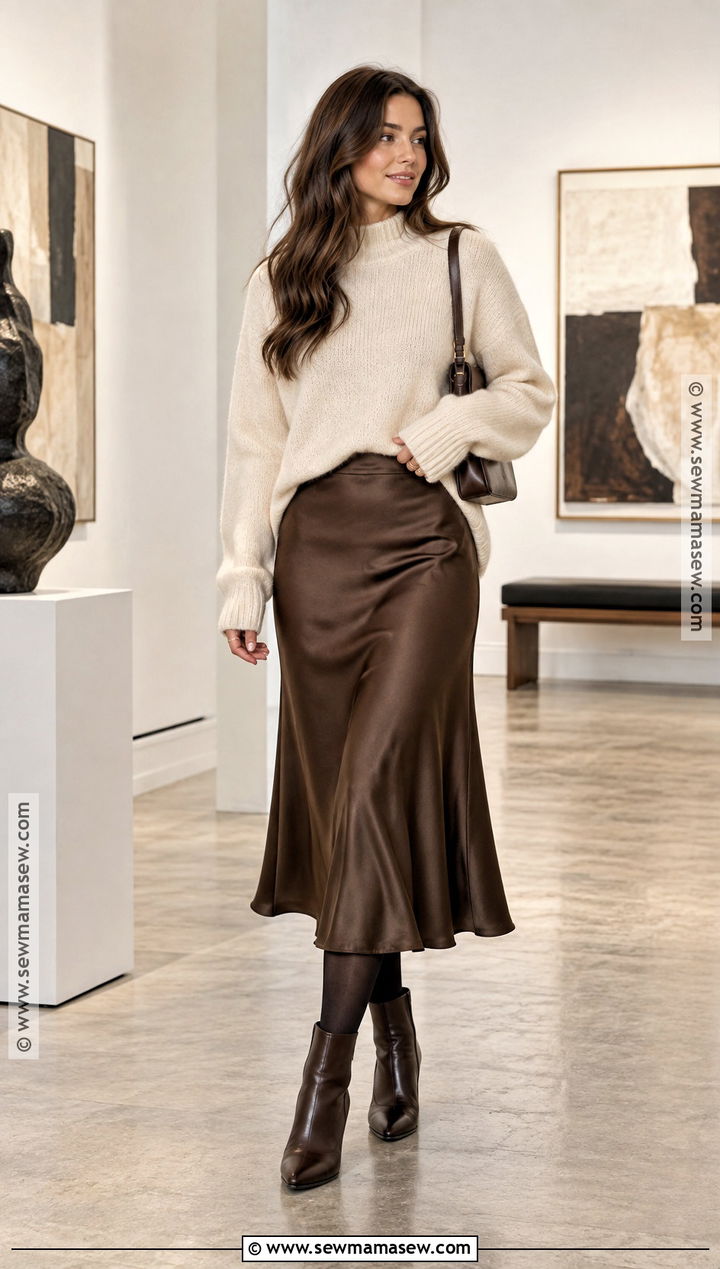
Chunky knit against fluid satin is one of my favorite contrasts, because each fabric makes the other look better. Pair an oversized crewneck in cream or camel with a satin midi in black, chocolate, olive or burgundy, and half-tuck the front if you want to see your waist. Add low-heeled ankle boots, a compact leather shoulder bag and opaque tights. The sweater is where this goes wrong. A thick knit stuffed into a satin waistband makes a lump the slippery fabric shows immediately, so I'd choose a finer gauge, or wear a belt underneath and fold the excess over it. Satin also water-spots, so keep it away from rainy commutes. The skirt goes with turtlenecks, blazers and button-downs too, which makes it a practical stand-in for a dress at work or dinner.
10. Plaid Shacket With Thermal Top And Straight-Leg Jeans
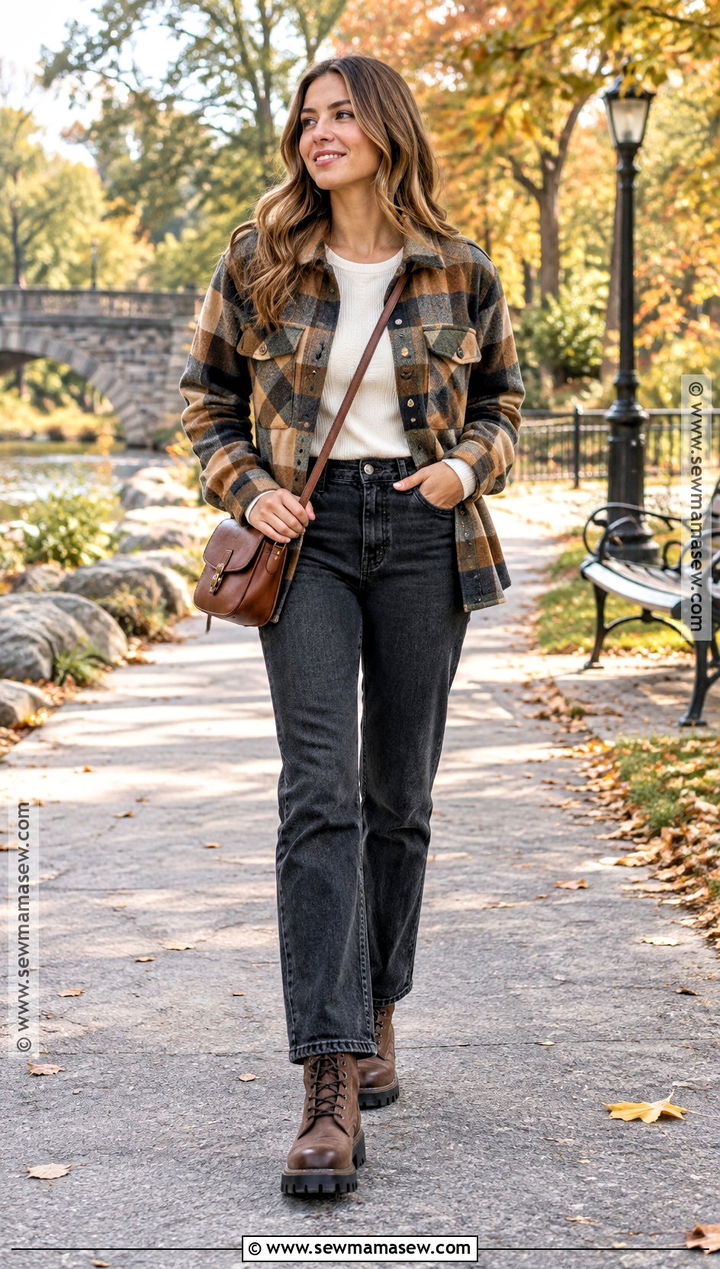
A plaid shacket is a weekend piece for walks, leaf raking and coffee runs. Wear it over a fitted thermal or thin turtleneck in cream, black or brown, with dark straight-leg jeans and lug-sole boots that don't mind mud. A small backpack or crossbody keeps it casual. The plaid has to contain colors you already own, like camel, charcoal, olive or navy, or it will only ever go with one pair of jeans. When it gets colder, I slip a thin puffer vest underneath, or swap the shacket for the wool coat entirely. Try it on over a sweater before you buy. A very oversized shacket won't fit under a winter coat, and that leaves you with a jacket you can only wear for a few weeks of the year.
11. Winter White Sweater With Trousers And Coat
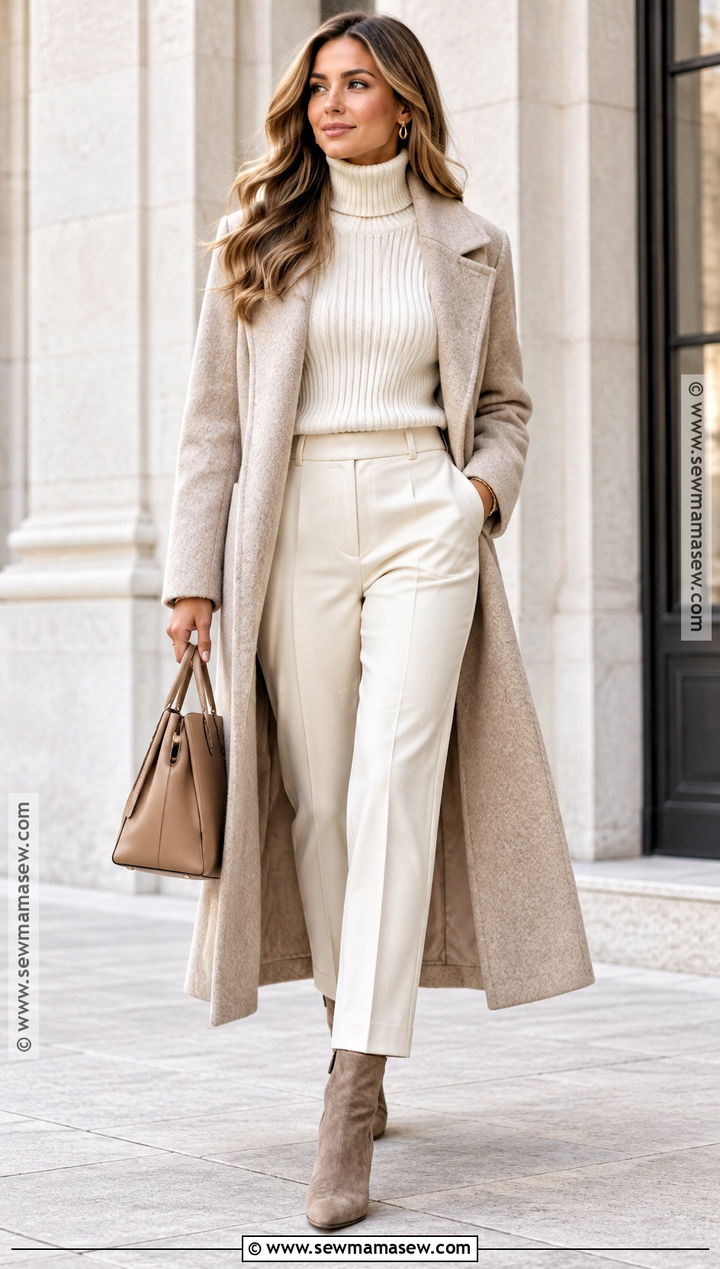
Winter white is the outfit that makes a gray January look lighter. Combine an ivory turtleneck or crewneck with cream tailored trousers in a substantial fabric, then add a beige or light camel coat so the shades step gently instead of matching exactly. Taupe ankle boots keep the line long, and a structured tan bag with gold jewelry finishes it. Pale fabrics can turn sheer, so I always check trousers by a window in daylight and wear smooth underlayers close to your skin tone, which disappear better than white ones. Mix ribbed knit, brushed wool and leather, or the outfit goes flat. Each piece also slots back into the darker outfits on its own, though cream picks up coffee and road splash fast, so a stain pen in your bag helps.
12. Burgundy Sweater With Gray Trousers And Loafers
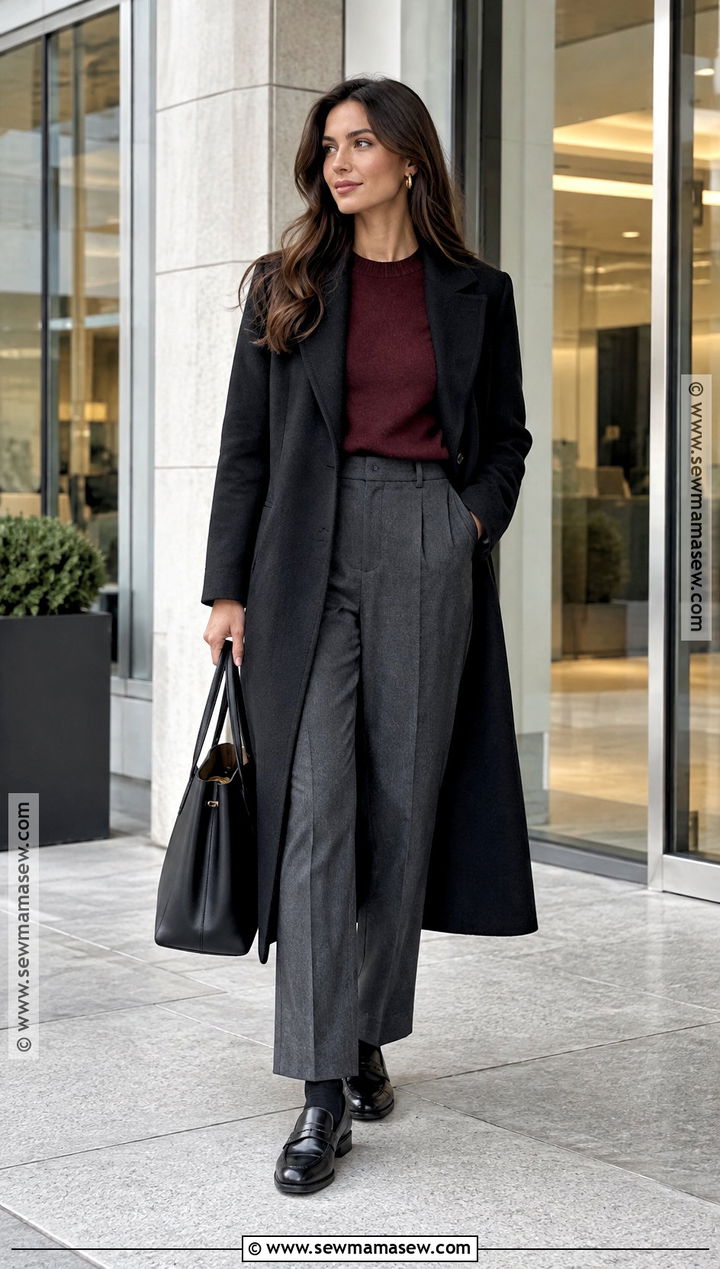
Burgundy is the easiest seasonal color to fold into a neutral capsule, since it sits comfortably next to gray, black, camel and navy. Wear a fine-knit burgundy sweater with charcoal or mid-gray tailored trousers, black leather loafers and dark socks that show a little at the ankle. A black wool coat and a structured tote make it office-ready; a relaxed cardigan replaces the coat indoors. Silver and gold both work, so use whichever metal you already own most of. If burgundy doesn't flatter you close to your face, move it down to a bag, scarf or shoes and wear a neutral sweater instead. The gray trousers also go with white shirts, stripes and blazers, which makes them one of the most useful pairs in the set for work and travel.
13. Sweater Vest With Button-Down Shirt And Midi Skirt
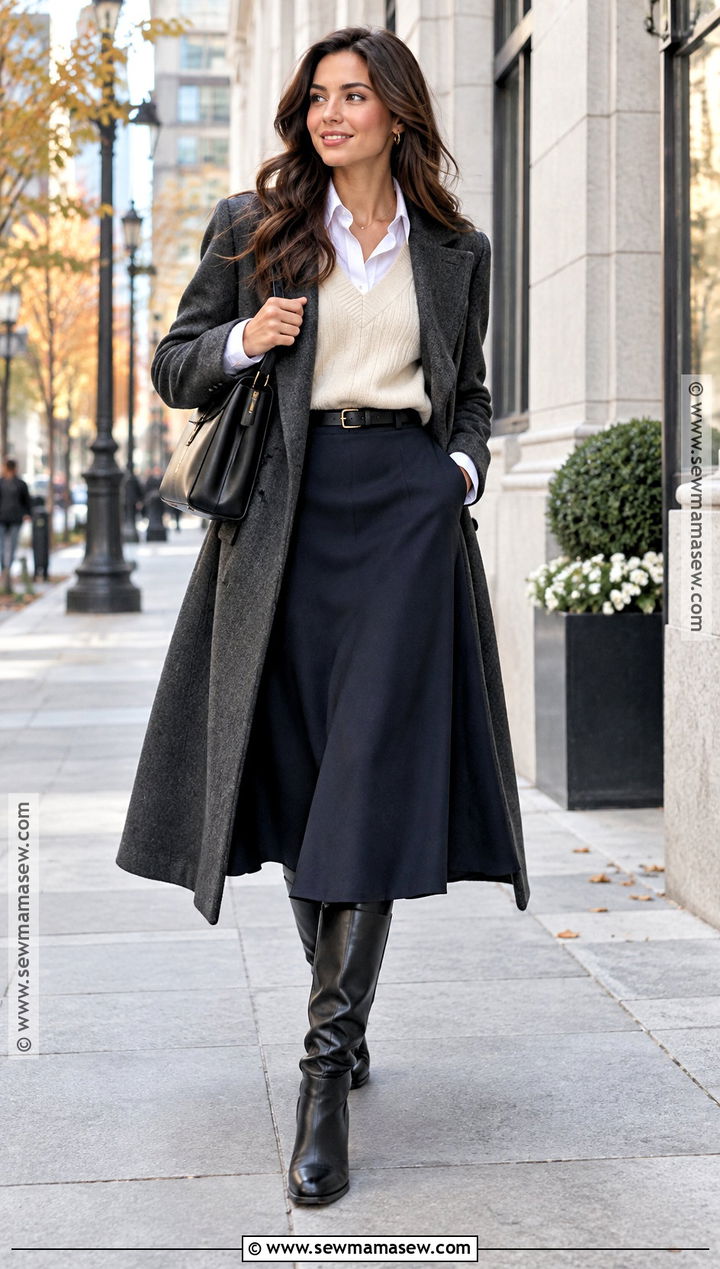
A sweater vest gives you knit warmth across the chest without bulk in the sleeves, which matters under a fitted coat. Put a cream, gray or navy vest over a crisp white shirt, then add a dark A-line midi skirt and knee-high boots. A slim belt defines the waist and a structured shoulder bag keeps it neat. Let the collar and cuffs show; that line of white is what separates the layers. For a looser feel, leave the shirt untucked and pick a slightly shorter vest so the shirt hem shows evenly all the way around. Add tights and the long wool coat when it gets colder. Every piece here works in other outfits too, which is the whole argument against one-piece looks in a capsule.
14. Utility Jacket With Knit Top And Dark-Wash Jeans
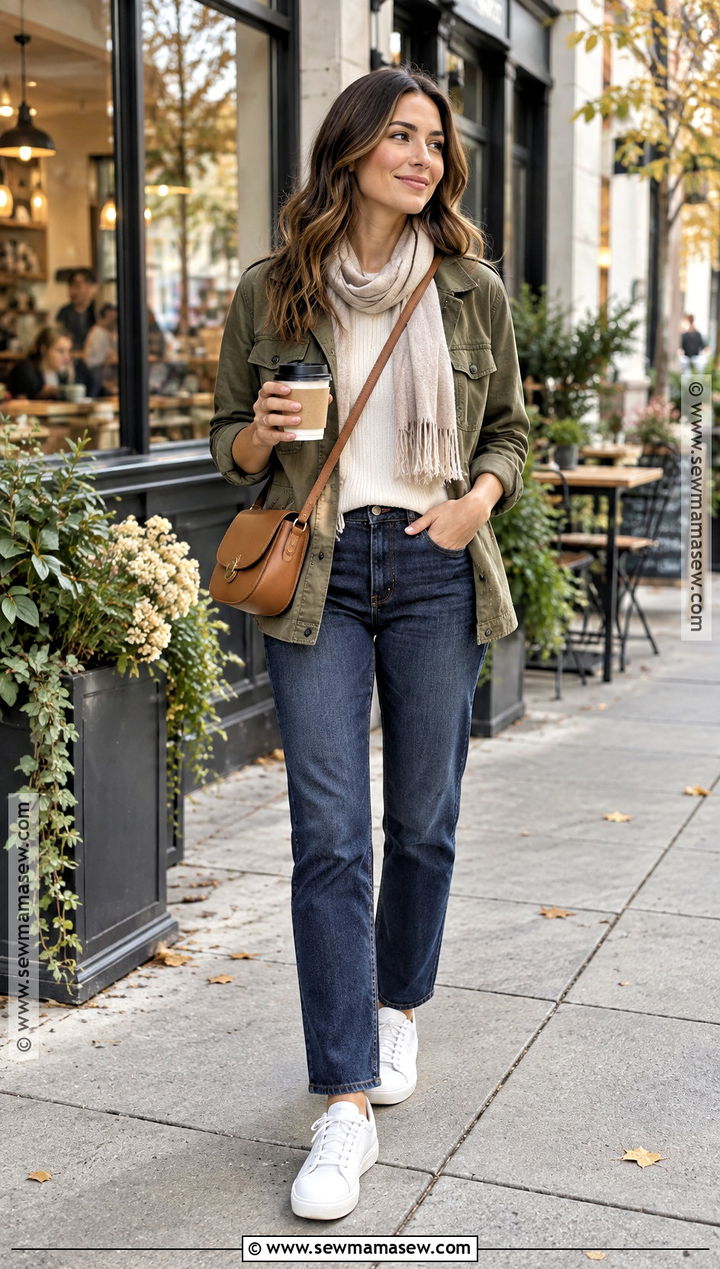
Some mild fall days need something heavier than a cardigan but lighter than wool, and an olive utility jacket fills that gap while adding an earthy color. Layer it over a cream ribbed knit, then add dark-wash straight-leg jeans and clean white leather sneakers. A tan crossbody softens the palette, and a light scarf helps on cooler mornings. I roll the cuffs once or twice so the knit shows at the wrist. In colder climates, swap the sneakers for brown ankle boots and add a thermal. Look for cotton twill in a simple shape with working pockets, and pass on heavily patched or embroidered versions. A plain one goes with black jeans, leggings, skirts, casual dresses and even tailored trousers.
15. Black Blazer With Turtleneck And Tailored Trousers
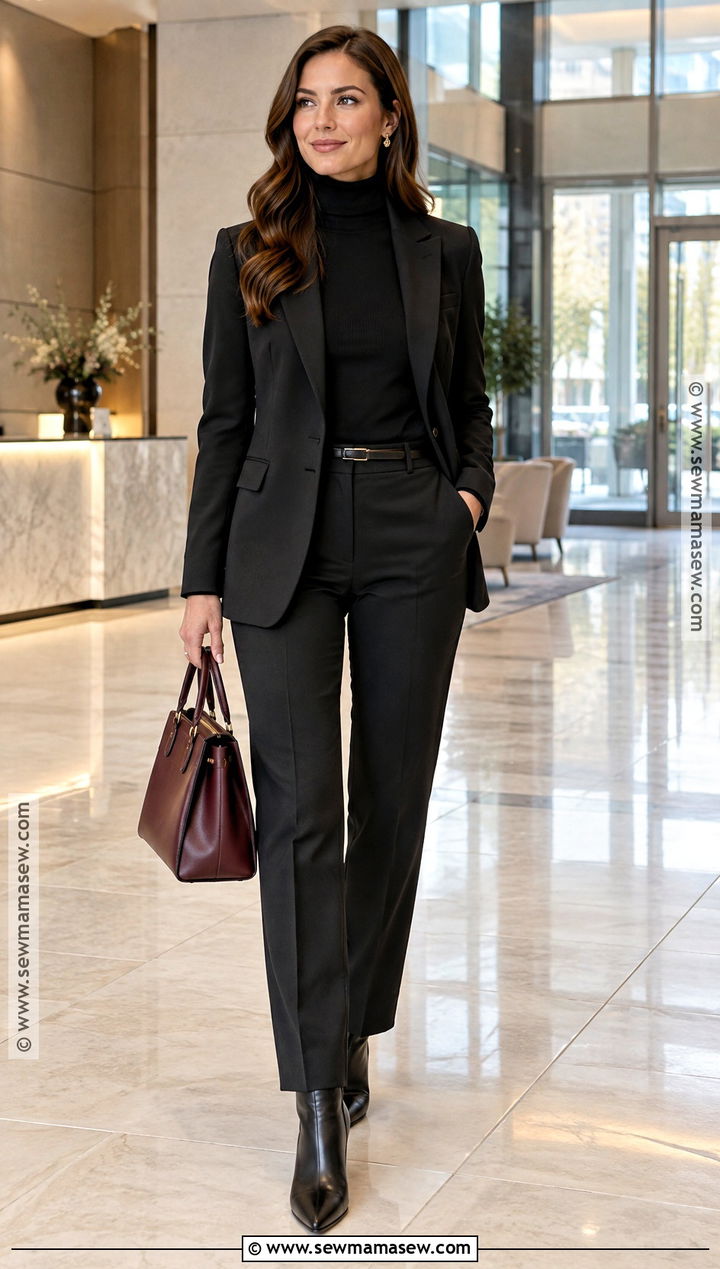
All black is my fallback for days when I need to look put-together in five minutes, but it only works when the textures differ. Wear a fitted black turtleneck with straight or slightly wide tailored trousers and a single-breasted black blazer, so you get soft knit, woven trousers and a structured jacket together. Blacks rarely match exactly across fabrics, and that's fine as long as the difference looks intentional. Pointed ankle boots or low block-heel pumps finish it, depending on the weather. A burgundy or camel bag breaks up the black without costing you versatility, and a slim belt with simple earrings adds quiet detail. For a more relaxed day, switch to black jeans or put a white tee under the blazer. These core pieces support more combinations than anything else in the closet.
Sweater Fibers That Hold Up to Three Wears a Week
In a capsule, each sweater gets worn much more often than it would in a full closet, so the fiber matters more than usual. Here's how the common ones behave once they're in heavy rotation.
Merino
Fine, soft against the skin and warm for its weight. It's my pick for the turtlenecks and crewnecks that go under blazers and coats, because it adds almost no bulk. Expect a little pilling at the underarms and wherever a bag strap rubs, especially in the first few weeks.
Lambswool and chunkier wools
Warmer and more textured, so they suit the oversized sweater. They're bulky under tailoring and can feel scratchy at the neck, which is why I keep them for outfits where the sweater is the top layer.
Cotton and acrylic blends
Easy to wash and usually cheaper. Acrylic pills quickly and doesn't hold heat the way wool does, while cotton knits are comfortable in early fall but tend to stretch at the cuffs and hem over a season.
Care is what makes any of them last. Let a sweater rest a day between wears so the fibers recover, fold it instead of hanging it so the shoulders don't stretch, and clear pills with a fabric comb before they spread. Wool rarely needs washing after every wear; airing it overnight usually does the job.
Test Every New Piece Against Three You Already Own
The most useful capsule isn't the smallest one. It's the one that fits your actual schedule, weather and comfort. Coats, knits, denim, trousers, skirts and sensible shoes can cover a whole season without constant shopping, as long as they share a palette. Start with consistent neutrals, add one or two seasonal colors you genuinely like, and repeat fabrics that layer comfortably. Before buying anything new, make sure it goes with at least three things already in your closet. From there, accessories, proportions and warmer base layers do the adjusting, and getting dressed stops eating your mornings while there's still room for personality.
Related posts: