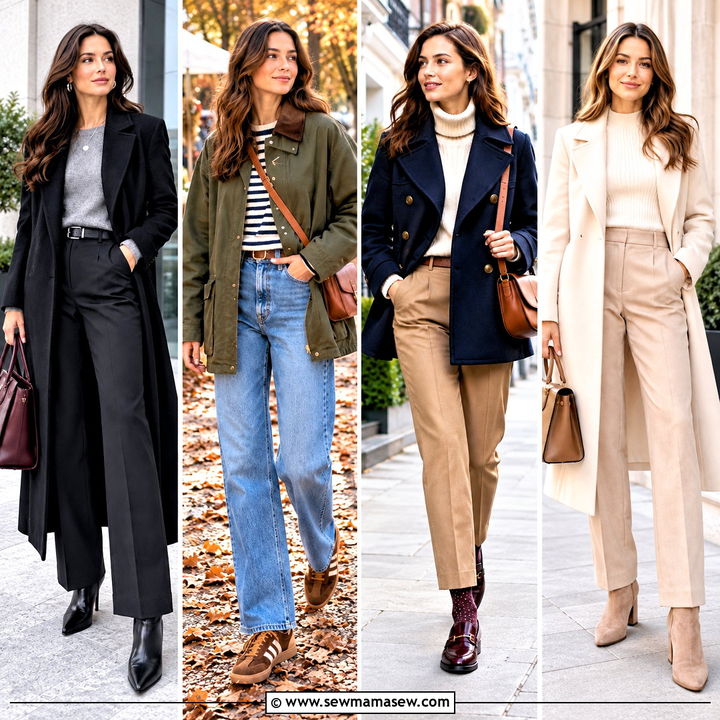
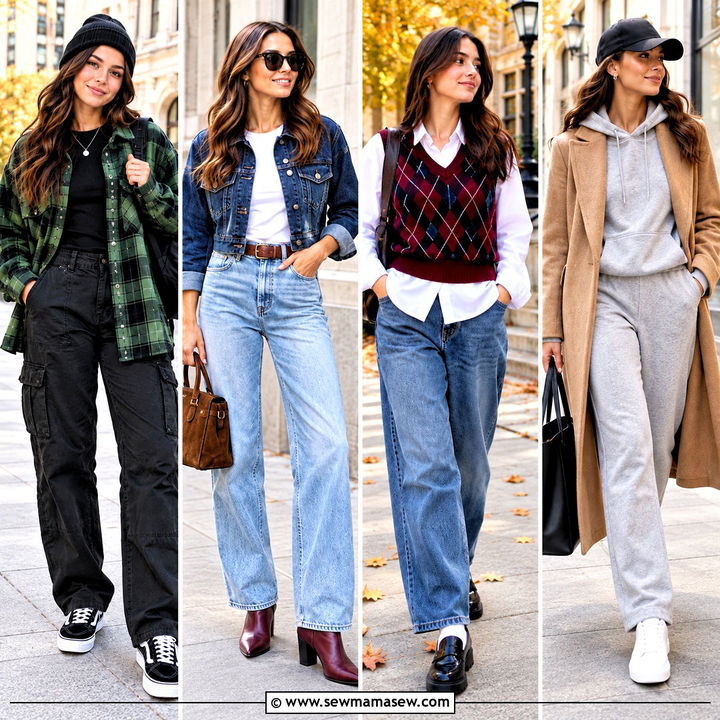
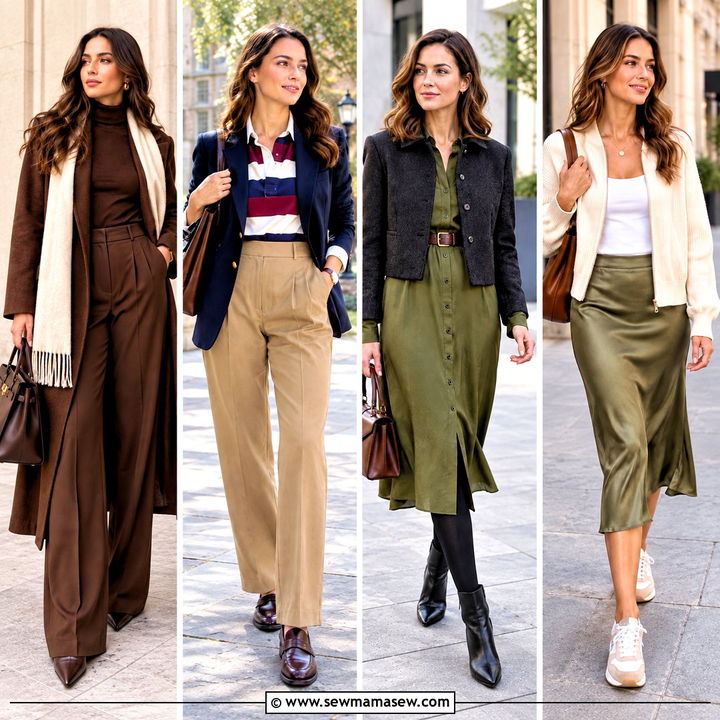
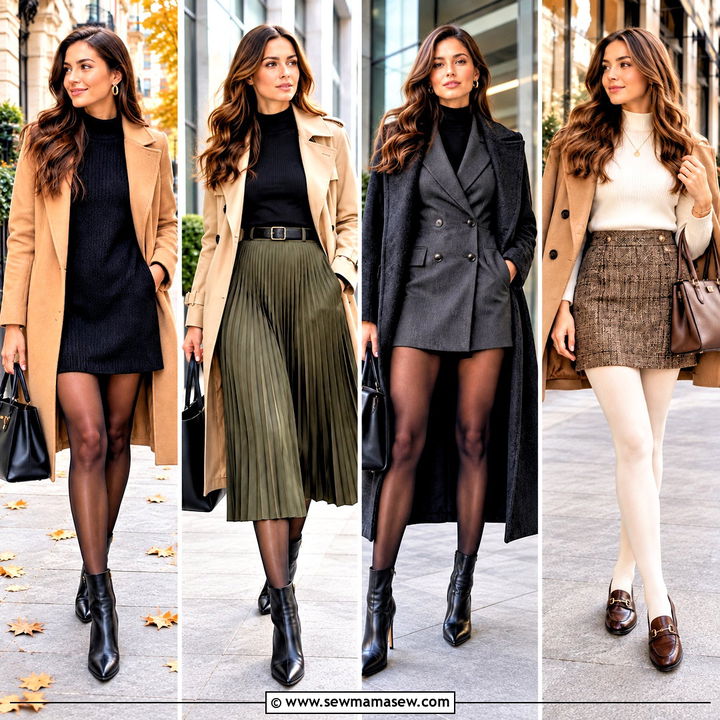
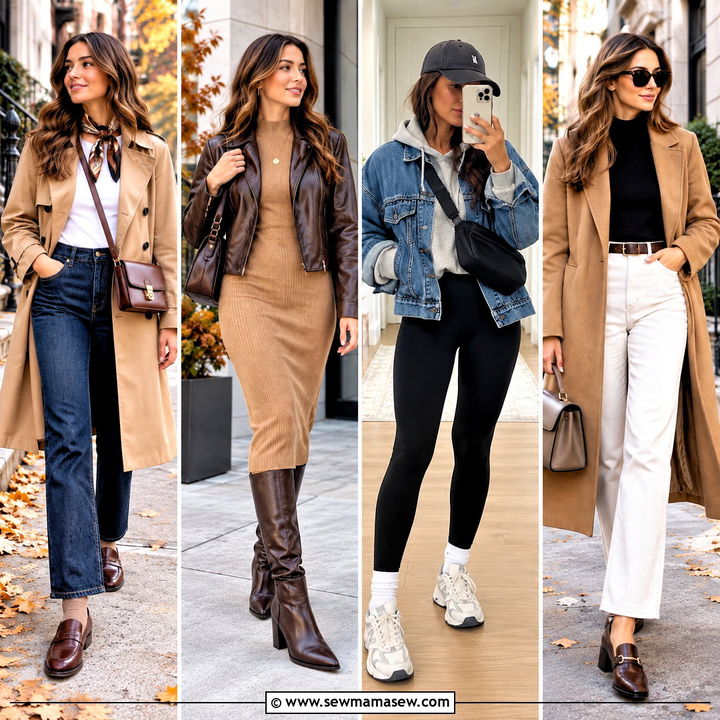
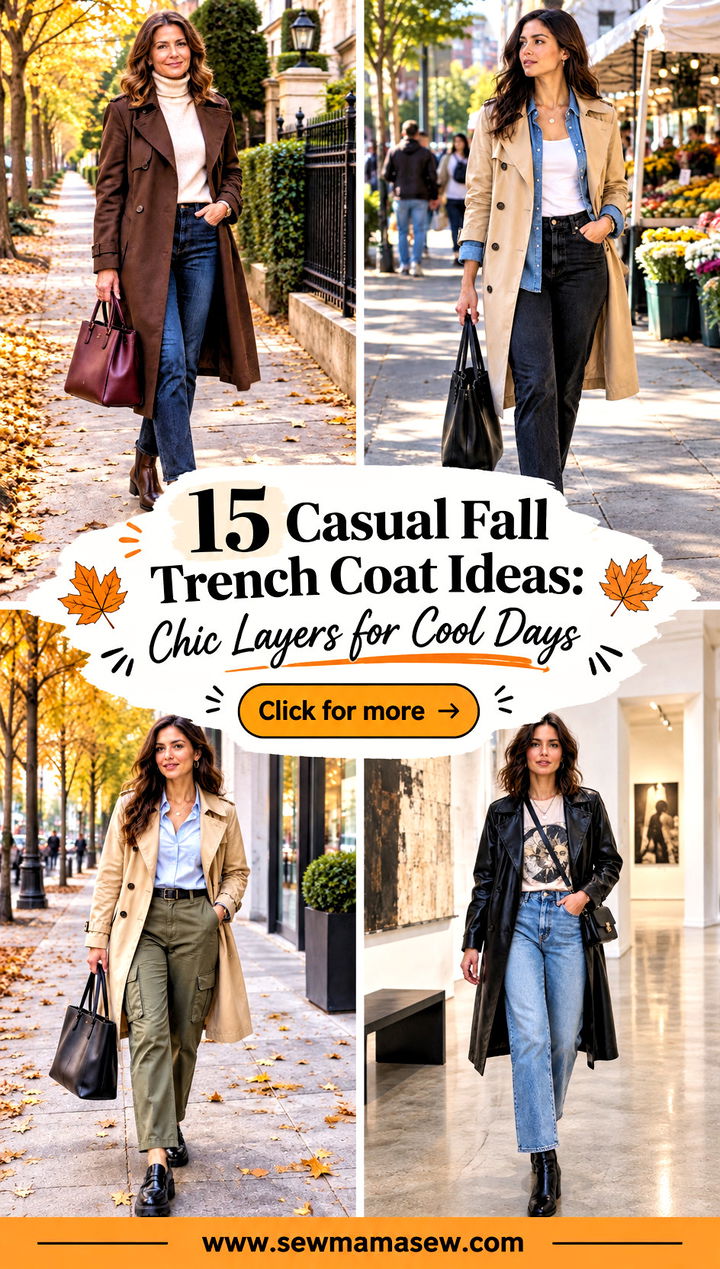
A trench is the coat I reach for when a fall day can't decide what it wants to be. It handles a damp morning, it looks finished over a plain T-shirt, and it doesn't ask you to buy a new wardrobe to go with it. Below are the casual combinations I actually build with one: jeans and tees, sweatpants, knit dresses, cargo pants, even a hoodie. Most use the classic beige coat, but I've included cropped, oversized, olive, brown, navy, black and leather versions too, along with the small fixes I make for height, warmth and comfort. Wear the coat open, knot the belt at the back, or button it over a thin knit when the wind picks up. Treat each outfit as a starting formula and swap in what you already own.
Sizing a Trench to Fit Over a Sweater in November
Most trench mistakes happen in the fitting room in September, when people try the coat over a T-shirt and buy the size that looks sharpest. Then it's November, a sweater goes underneath, and the buttons pull. I always try a trench on over the thickest knit I plan to wear with it.
- Shoulder seam: it should sit at your shoulder bone or just past it. Oversized cuts drop it on purpose, but a standard cut with the seam hanging down your arm is simply too big.
- Arm test: cross your arms and reach forward as if you're driving. If the back pulls tight or the sleeves ride up past your wrist bone, size up or try a roomier cut.
- Sleeve length: the cuff should cover your wrist with your arm relaxed. Sleeves are an easy alteration, so a little long is fine.
- Buttoned check: fasten it fully. Gaps between buttons across the chest mean there's no room left for layering.
- Length: knee length is the easiest all-rounder. On petite frames, a coat that hits mid-calf often looks heavy, while a cropped or above-knee version keeps your legs in proportion.
Cotton gabardine, the traditional trench fabric, has very little stretch, so a coat that is tight in the shop stays tight. Polyester blends give a touch more, but they also tend to crease less nicely and show shine at the elbows over time.
1. Beige Trench Coat With Straight-Leg Jeans
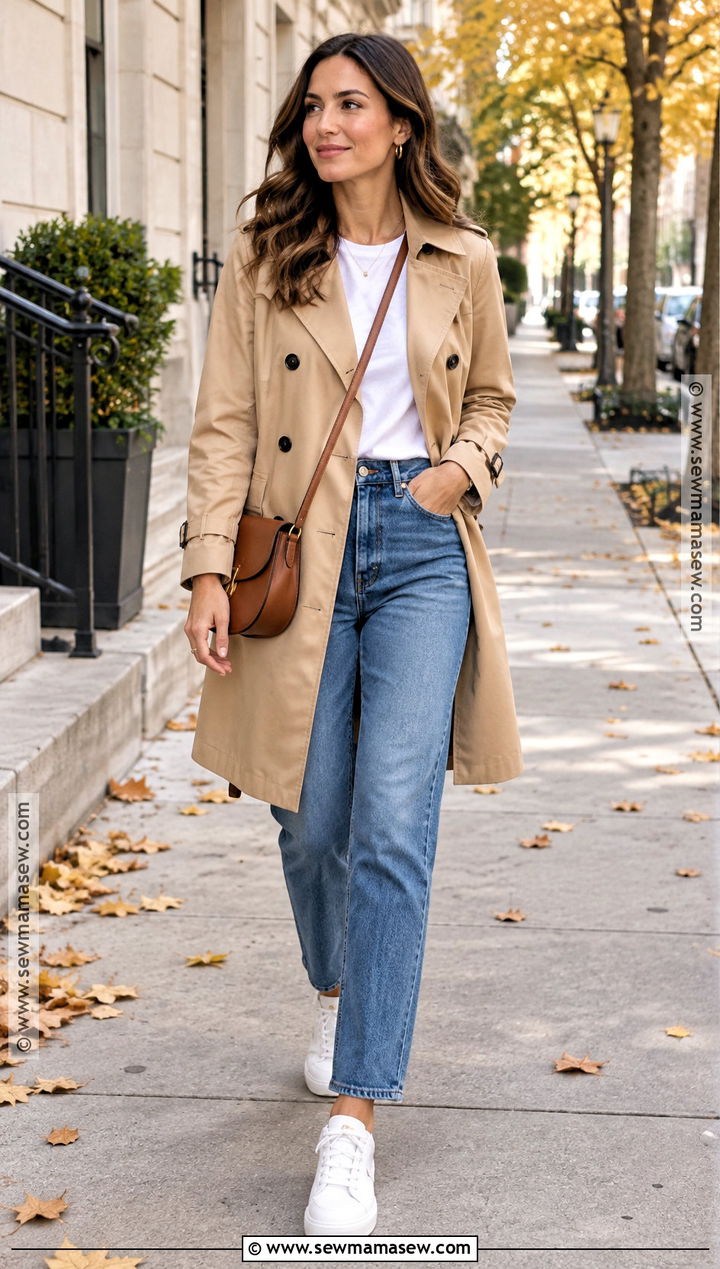
This is the pairing I start almost everyone with: beige trench, white crewneck tee, straight-leg blue jeans and white leather sneakers. A knee-length coat sits well over straight denim because the coat hem and the jean line both fall straight, so nothing fights. I add a brown crossbody for warmth and, on a cold morning, a light neutral scarf and gold hoops. Worn open, the coat gives you one long vertical line; tie the belt loosely if you want the waist back. If you're petite, ankle-length jeans stop fabric pooling at the shoe. Taller women can carry a longer coat with full-length denim.
2. Oversized Trench Coat With Striped Tee And Wide-Leg Jeans
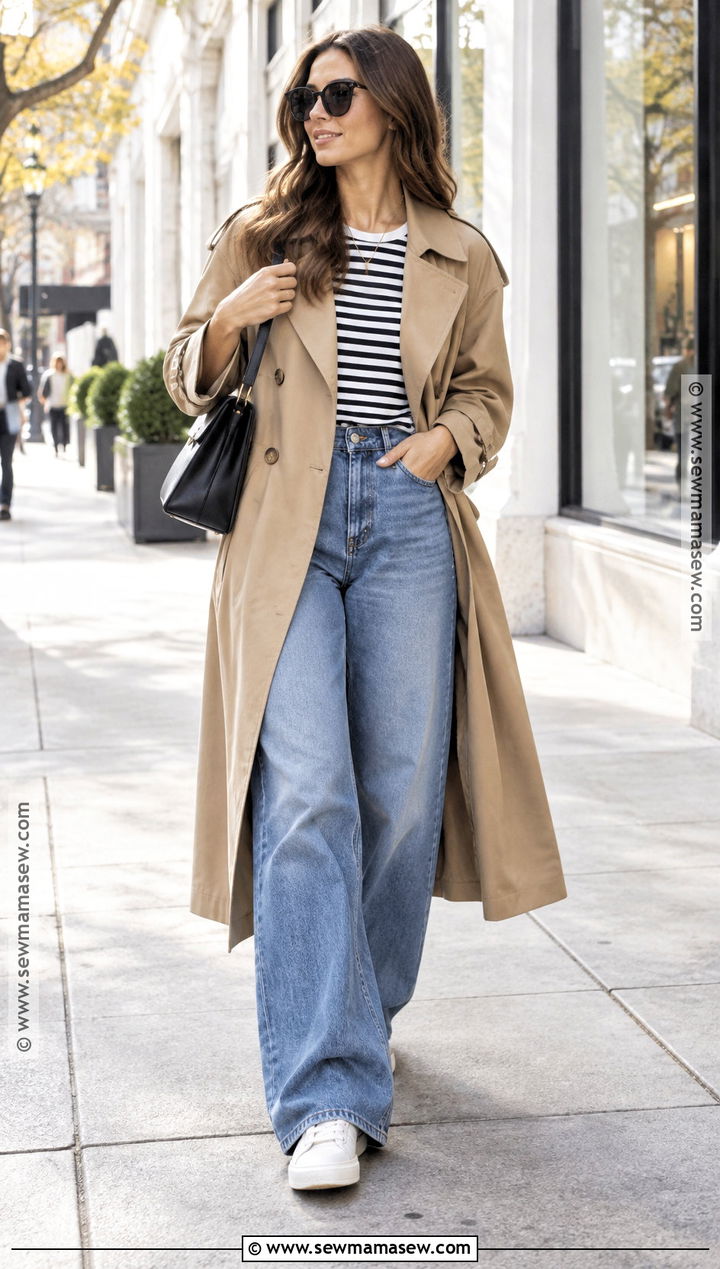
An oversized trench over a striped tee is mostly a proportion exercise. Two loose pieces plus wide-leg jeans can swallow you, so I keep the tee fitted or tucked and let only the coat and the jeans carry the volume. High-rise wide legs in a medium or dark wash, white sneakers or retro trainers, and a black shoulder bag for some structure. Pushing the coat sleeves up to show the stripes at the wrist makes the whole thing look lighter. With a very long coat, I want the jeans nearly grazing the shoe so the line doesn't break twice. I like this one for weekend shopping, travel days and long walks.
3. Cropped Trench Coat With Black Trousers
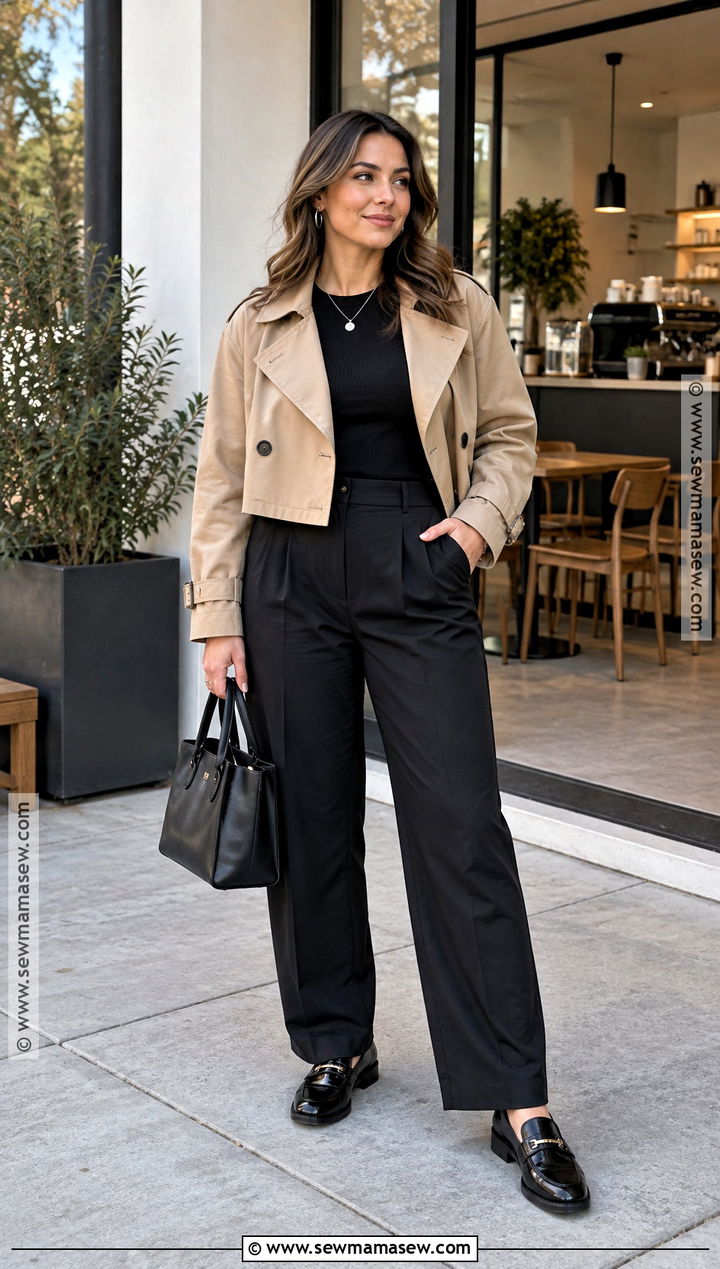
A cropped trench solves the problem of a long coat feeling too formal or simply too much fabric on a smaller frame. I'd wear a camel or stone version over a fitted black knit with relaxed black trousers, straight or slightly wide. Loafers, white sneakers or low ballet flats all work, so pick by how far you're walking. The catch with cropped outerwear is that the hem stops right at the waist and hip, which draws the eye there. High-rise trousers fix that by giving the jacket somewhere clean to land. A compact tote, quiet silver jewelry and a slim leather belt on the trousers finish it, and the coat can stay unbuttoned on warmer afternoons.
4. Brown Trench Coat With Turtleneck And Dark Jeans
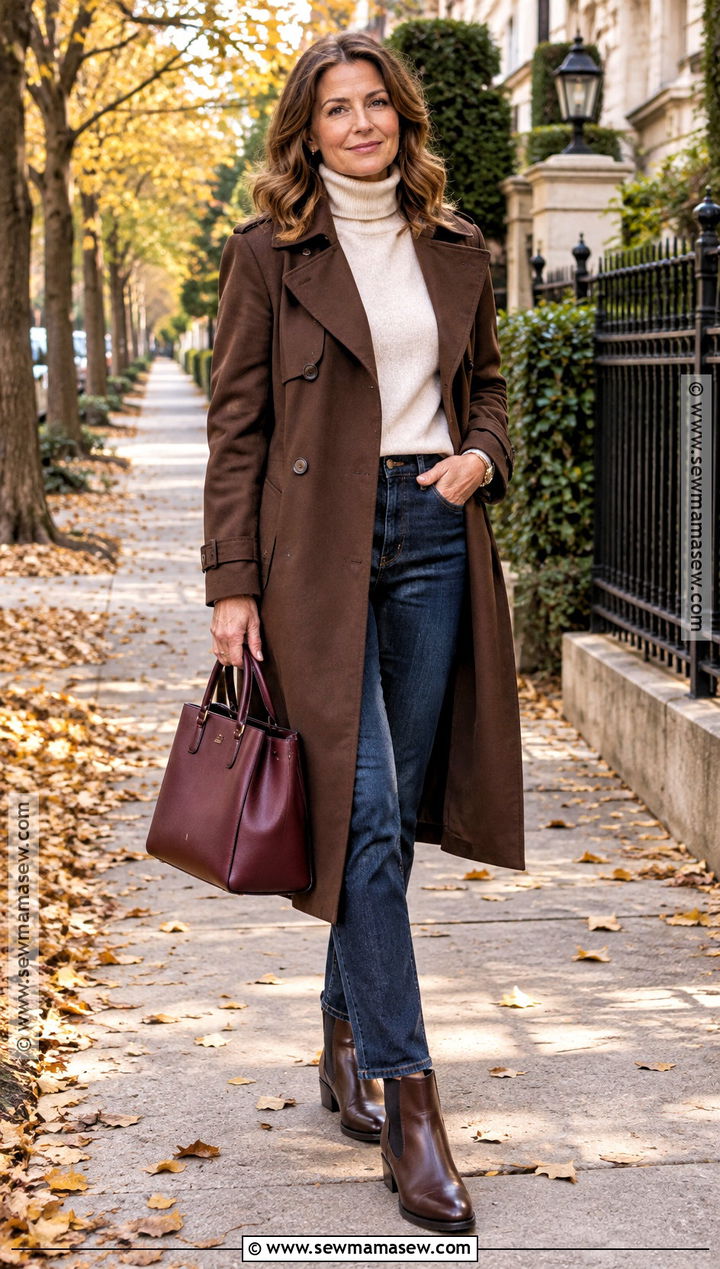
Brown outerwear looks right in fall in a way beige sometimes doesn't, because it sits next to the season's darker colors instead of against them. I layer a chocolate or chestnut trench over a cream turtleneck and dark straight-leg jeans, then add brown Chelsea boots and a tan or burgundy bag. The knit matters: a fine-gauge turtleneck lets the coat close across the shoulders, while a chunky one strains the buttons and bunches at the armhole. When it's colder, I add wool socks and a scarf in oatmeal or rust. Open shows off the cream; belted keeps you warmer. Every piece here is simple, which is why it suits pretty much any age.
5. Black Trench Coat With Gray Sweatpants
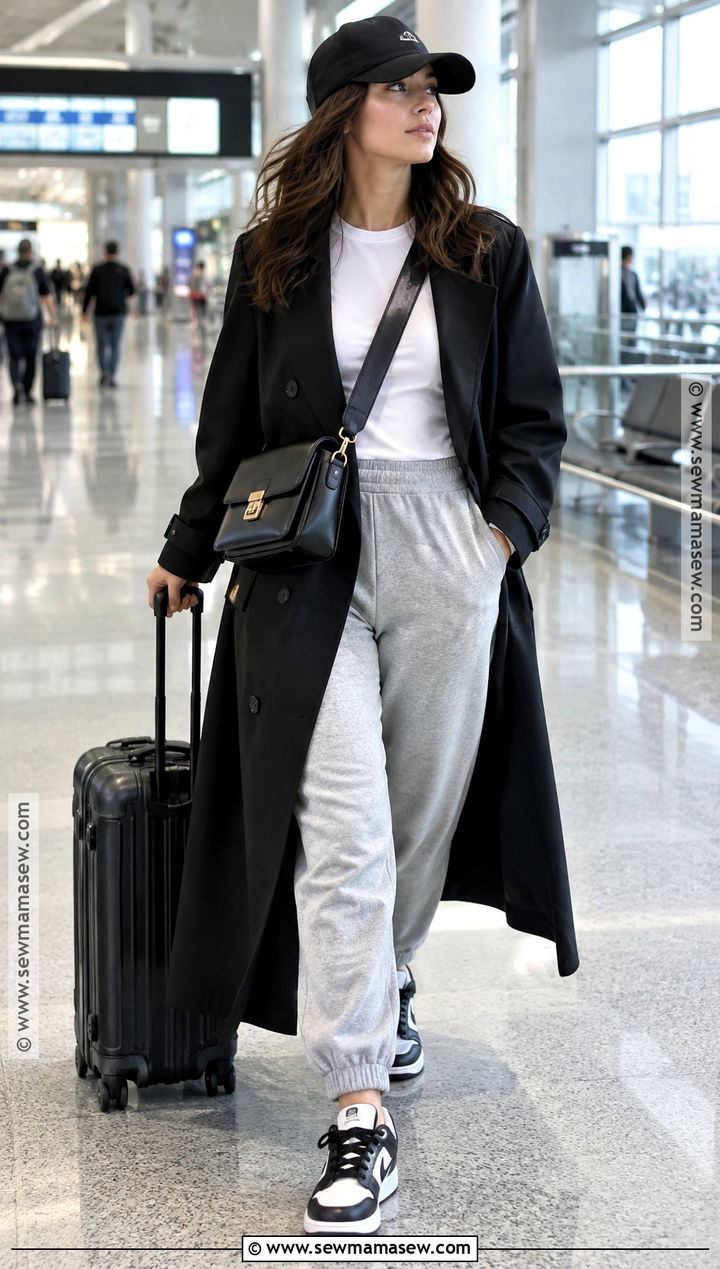
Can sweatpants go under a trench? Yes, if the coat is doing the sharpening and everything underneath stays neat. I use tapered or straight gray sweatpants, a fitted white tee or light crewneck sweatshirt, a black trench and clean black-and-white sneakers. A structured crossbody tells people this was on purpose; a baseball cap keeps it sporty. Where this goes wrong is baggy on baggy under an oversized coat, which reads as pajamas. A sweatshirt that stops near the waistband keeps your shape visible. It's a good outfit for the airport or school drop-off, comfortable underneath with a long dark line on top.
6. Olive Trench Coat With White Tee And Barrel Jeans
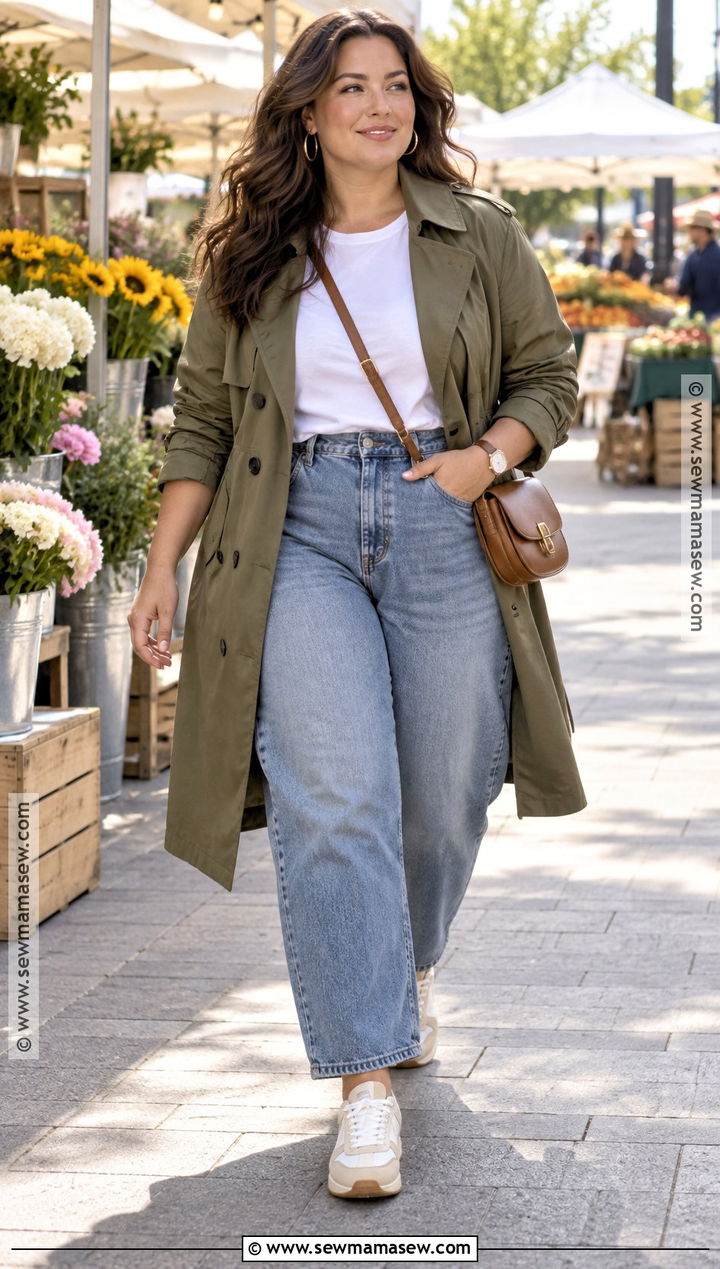
Olive is the color I suggest to people who own a lot of neutrals and feel bored by them. It still goes with everything, but it has more depth than beige. I wear it over a crisp white tee with medium-wash barrel jeans and retro sneakers in cream or muted green, plus a cognac crossbody. Barrel jeans balloon through the knee, so the top has to stay close or tucked. I also check where the coat hem lands: right across the widest part of the jeans is the one spot I avoid, because it stacks two volumes at the same height. One sleeve roll lightens the coat for early fall.
7. Trench Coat With Hoodie And Leggings
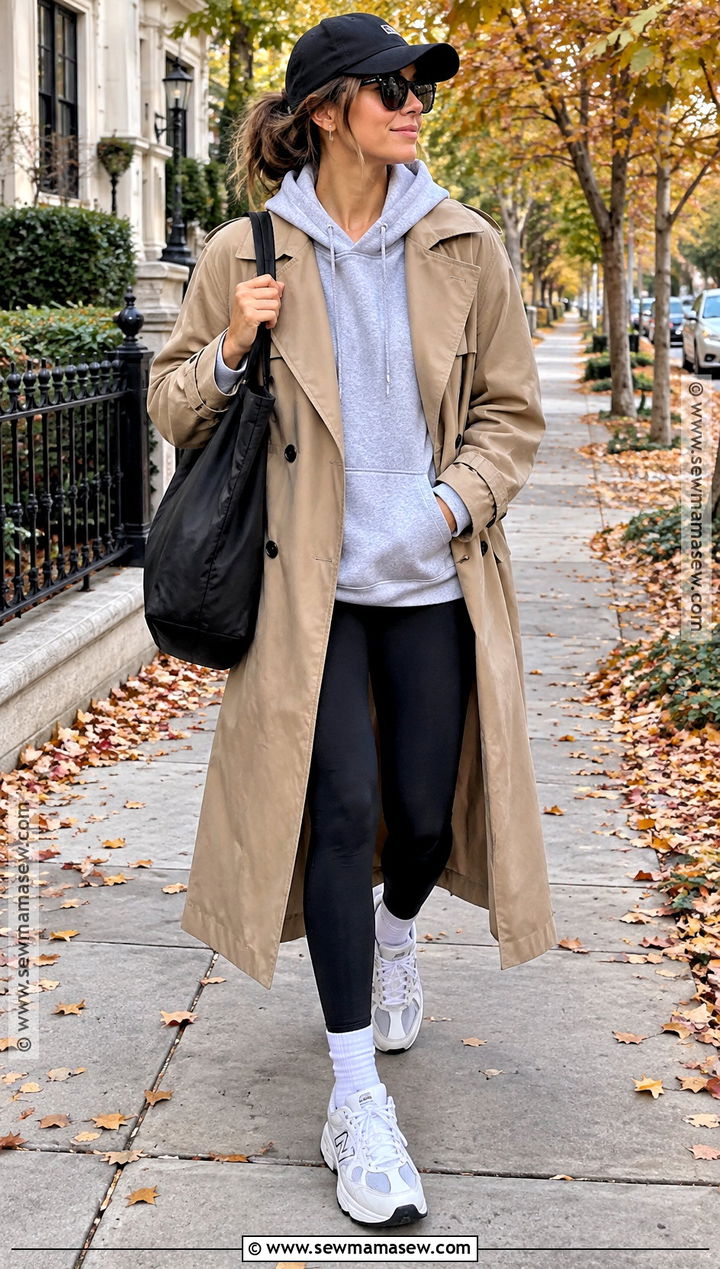
On a cold morning when you need to be out the door fast, this is the outfit: a beige, taupe or olive trench over a soft gray hoodie and black full-length leggings, with chunky sneakers and crew socks. The hoodie needs to be light. A thick fleece hood bunches against the coat collar and pulls the back seam, so I'd rather add a fitted long-sleeve underneath for warmth than another heavy layer. Look for a trench with a relaxed cut through the back for the same reason. A roomy nylon tote, sunglasses and a cap make it look deliberate instead of thrown on.
8. Trench Coat With Knit Dress And Knee-High Boots
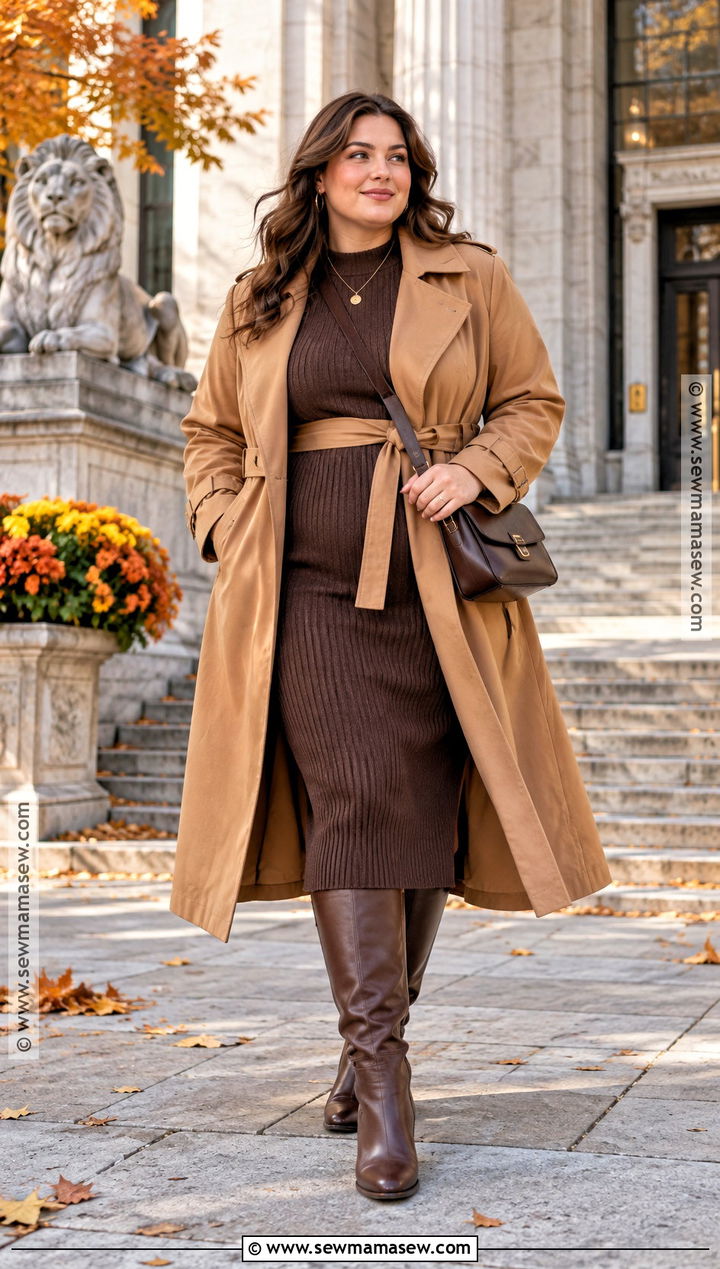
A ribbed knit midi dress under a camel trench is soft and structured at once. I choose a body-skimming dress rather than a tight one, because rib knit clings and shows every line once a coat is moving over it. Flat or low-heeled knee-high boots in brown or black close the gap between hem and boot, and opaque tights take over when it gets colder. Tie the belt at the front for a waist, or knot it behind and leave the coat open for a longer column. That column flatters a lot of body types and balances a long coat well. A crossbody keeps your hands free on museum days or long lunches.
9. Trench Coat With Denim Shirt And Black Jeans
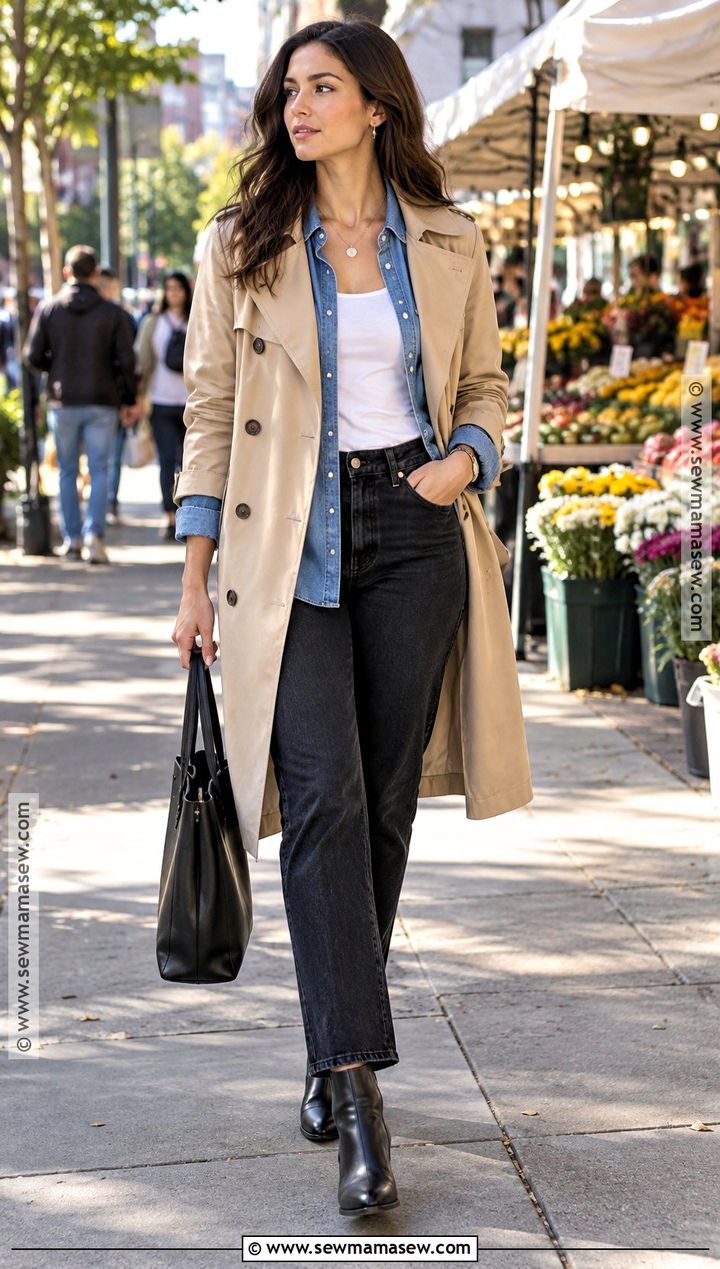
Denim under a trench is two hard-wearing fabrics that age the same way, which is why I like it. A medium-wash chambray or light denim shirt over black straight-leg jeans gives contrast without adding a third color. Black ankle boots and a leather tote keep it grounded. When the afternoon warms up, I unbutton the shirt over a white tank; when it's colder, I button it to the top and add a camel or burgundy scarf. Under an oversized coat, the front tuck is what stops the shirt from looking shapeless. Silver picks up the cool denim, while gold warms it.
10. Trench Coat With Sweater And Midi Skirt
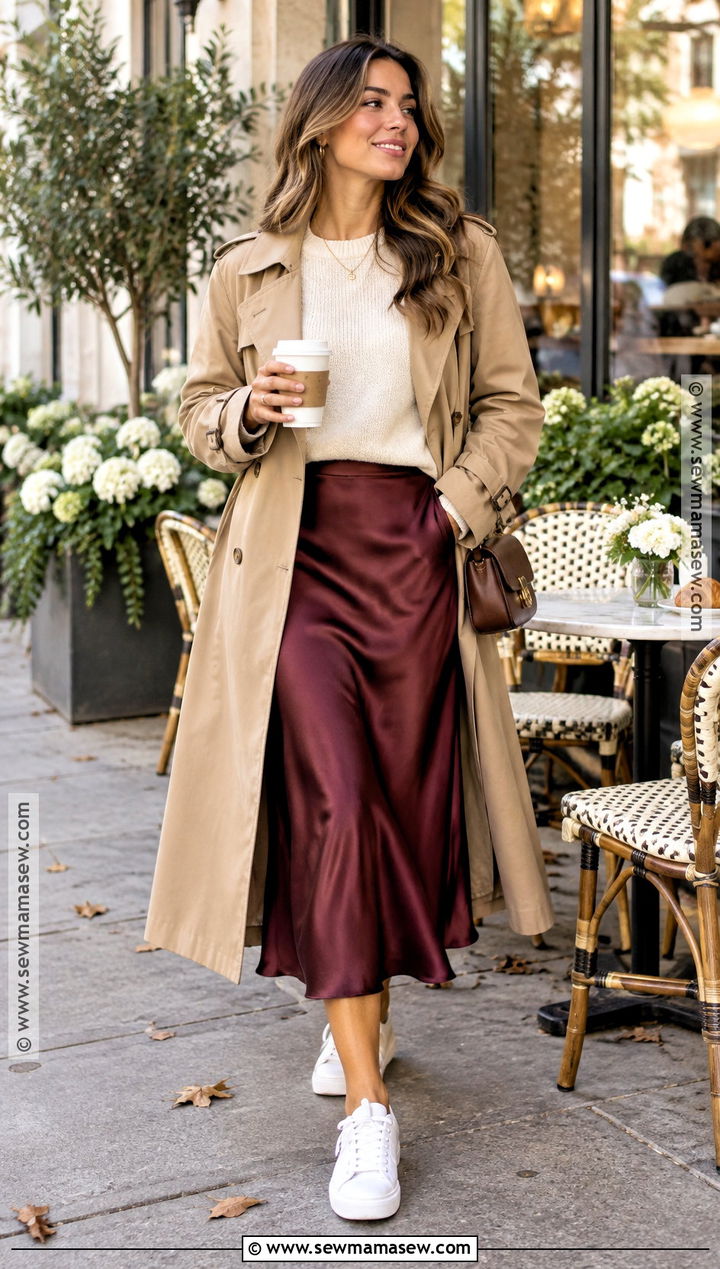
Sweater, midi skirt and trench mixes three different textures, and I like how the coat's crisp cotton plays against a soft knit. Start with a light crewneck in cream, gray or burgundy, then add a flowy printed skirt or a satin midi in a deep neutral. Low sneakers keep it casual. Tuck just the front of the sweater so the waist shows without a thick roll of knit at the hips. The detail I check in the mirror is where the coat stops: near the skirt hem or clearly above it looks planned, but an inch or two below it looks like the wrong length. Add ankle socks or sheer tights as the weather turns.
11. Trench Coat With Button-Down Shirt And Cargo Pants
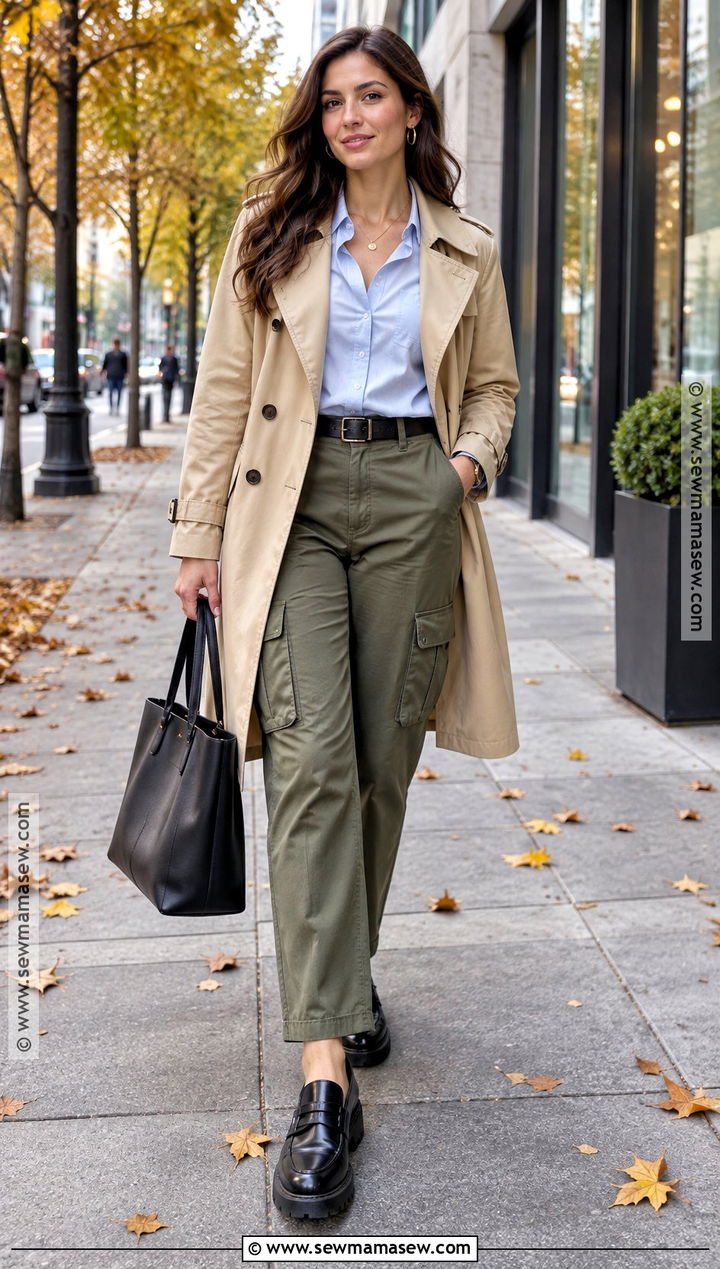
The trench started life as a utility coat, so cargo pants feel at home under it. I'd pair a relaxed white or pale blue button-down with olive, khaki or black cargos and a medium-length beige trench. Chunky loafers dress it up a little; sneakers keep it loose. Pocket construction matters more than people expect. Bellows pockets stick out and widen the thigh, while flat patch pockets keep the leg slimmer. Roll the shirt cuffs over the coat sleeves for a casual finish. Add a simple belt and a structured tote, and you have pockets, easy movement and enough polish for a casual office.
12. Trench Coat With Plaid Shirt And Relaxed Jeans
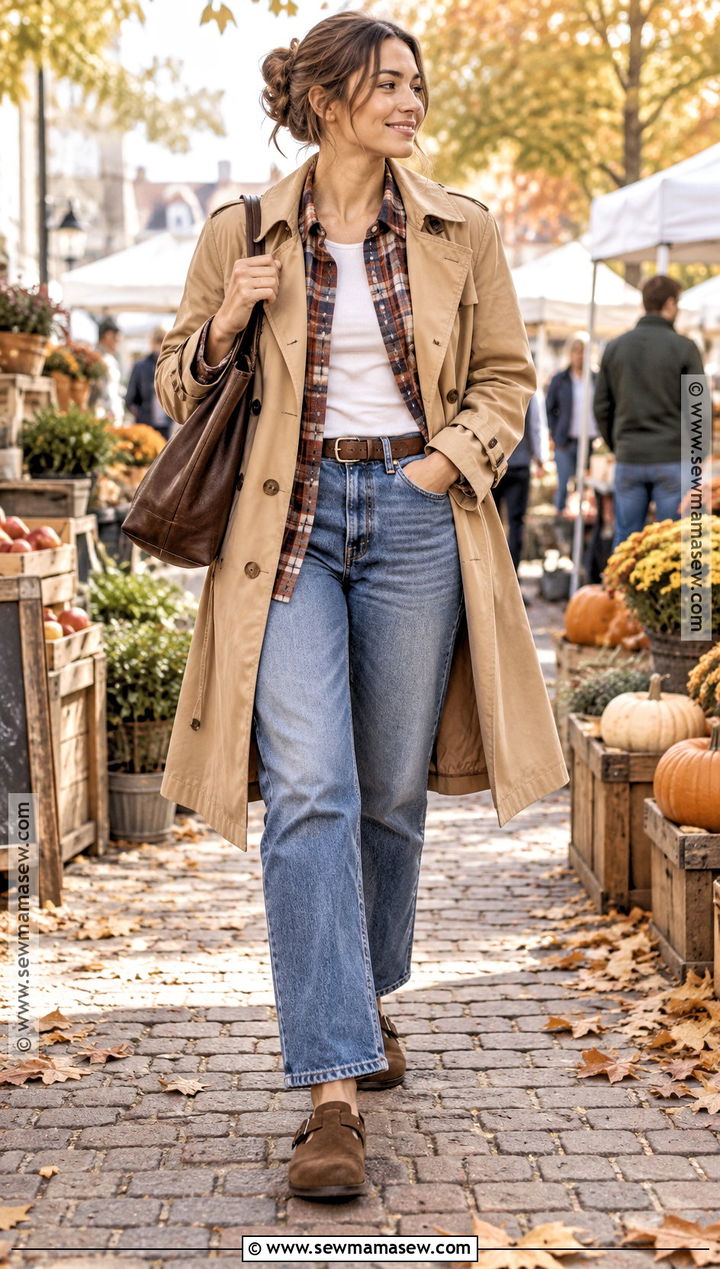
A plaid shirt brings fall color under a classic trench without much effort. I stick to plaids built from two or three muted shades, like rust with navy and cream, because a busy multicolor check fights the coat's clean lines. Wear the shirt open over a fitted tee with relaxed straight jeans, then add suede clogs or ankle boots and a slouchy leather bag. Tan outerwear goes with almost any plaid; navy or olive makes the palette richer. Keep the shirt thin. A heavy flannel under a trench makes the sleeves tight and the coat hard to close. A small cuff at the jean hem shows off the shoes on an apple-picking day.
13. Navy Trench Coat With Cream Sweater And White Jeans
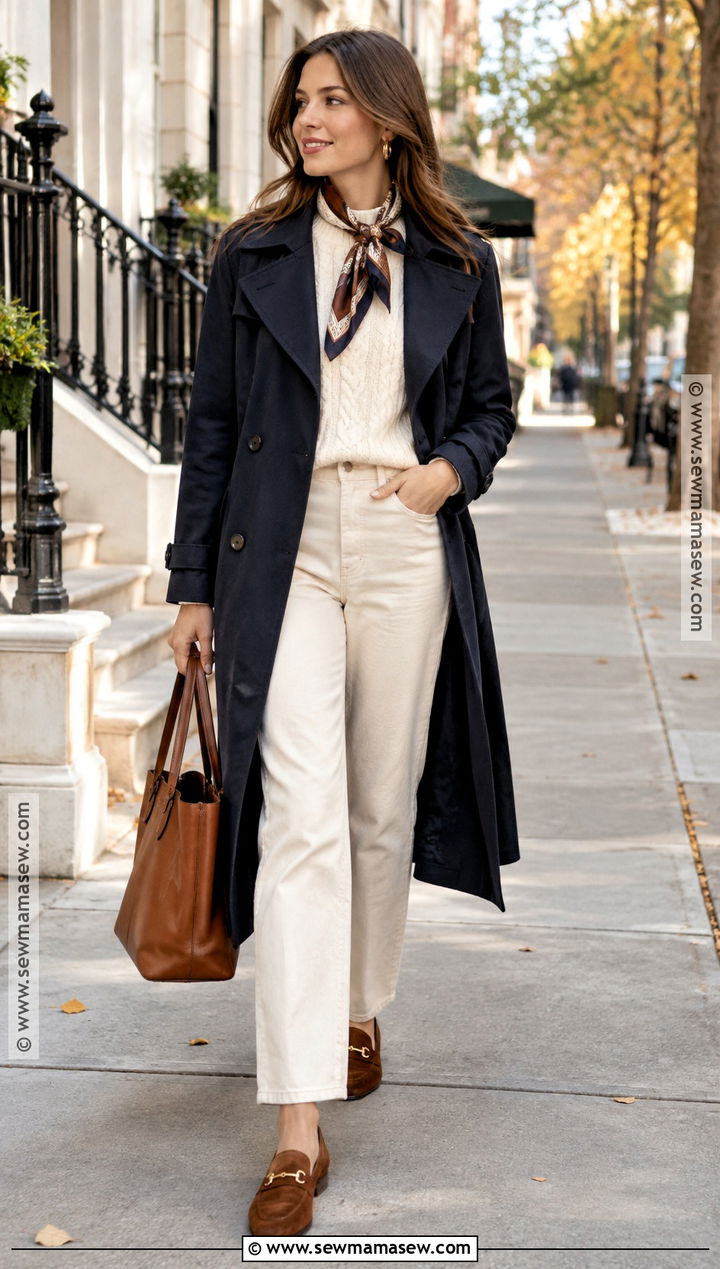
White jeans still work after summer. They just need warmer company. I put them with a cream cable or ribbed sweater and a navy trench, and if bright white looks too July, ecru or ivory denim softens it. Brown loafers or suede sneakers bring warmth, and a cognac tote links the light and dark halves of the outfit. Keep the sweater moderately fitted; a cable knit adds real bulk under a coat. Gold jewelry suits navy, cream and brown well. On a cool day, a patterned scarf that carries all three shades ties the outfit together.
14. Leather Trench Coat With Graphic Tee And Jeans
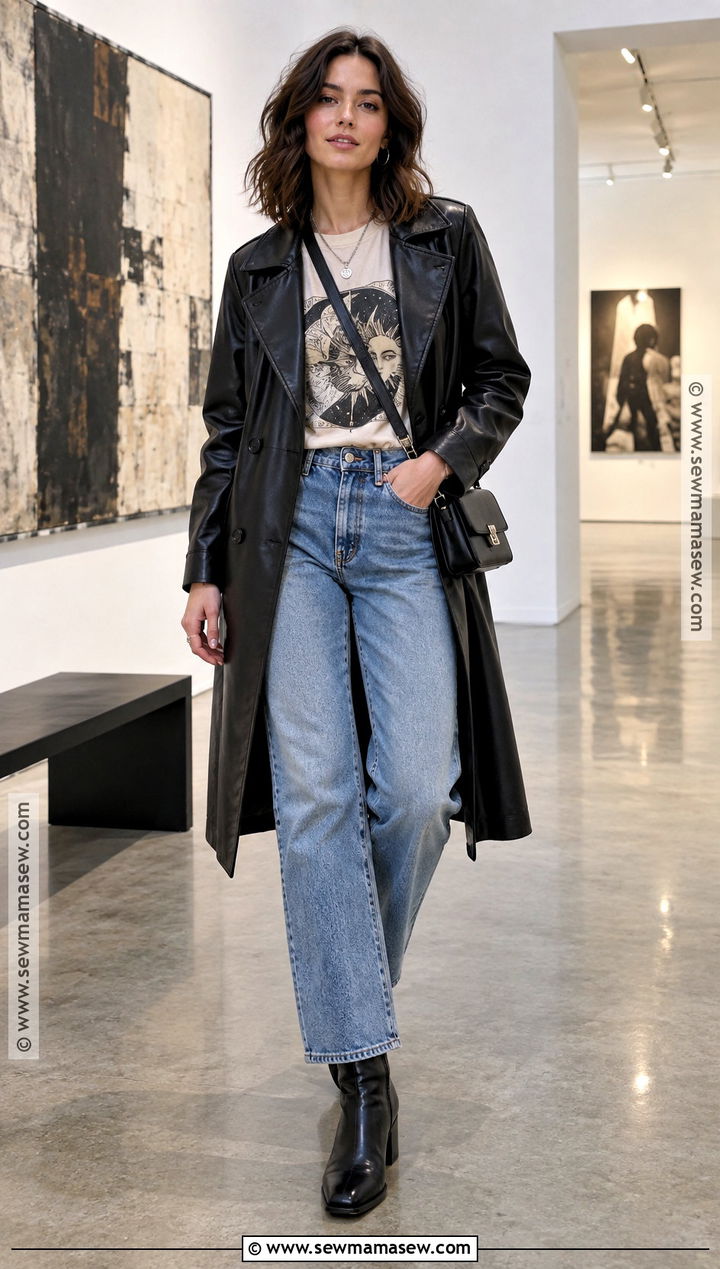
A leather or faux-leather trench reads tough on its own, so I calm it down with ordinary pieces: a graphic tee, relaxed blue jeans and black ankle boots or retro sneakers. Pick a graphic with only a couple of colors, because a loud print next to a shiny leather surface gives the eye nowhere to rest. If full-length leather feels too dramatic, a knee-length, slightly oversized cut is easier to wear. Leather is heavy, so I tuck the tee and wear jeans that sit neatly at the waist to keep some shape underneath. Real leather also stiffens in the cold and softens with wear, so expect the first few outings to feel rigid. A thin long-sleeve underneath handles colder nights out.
15. Trench Coat With Matching Knit Set And Sneakers
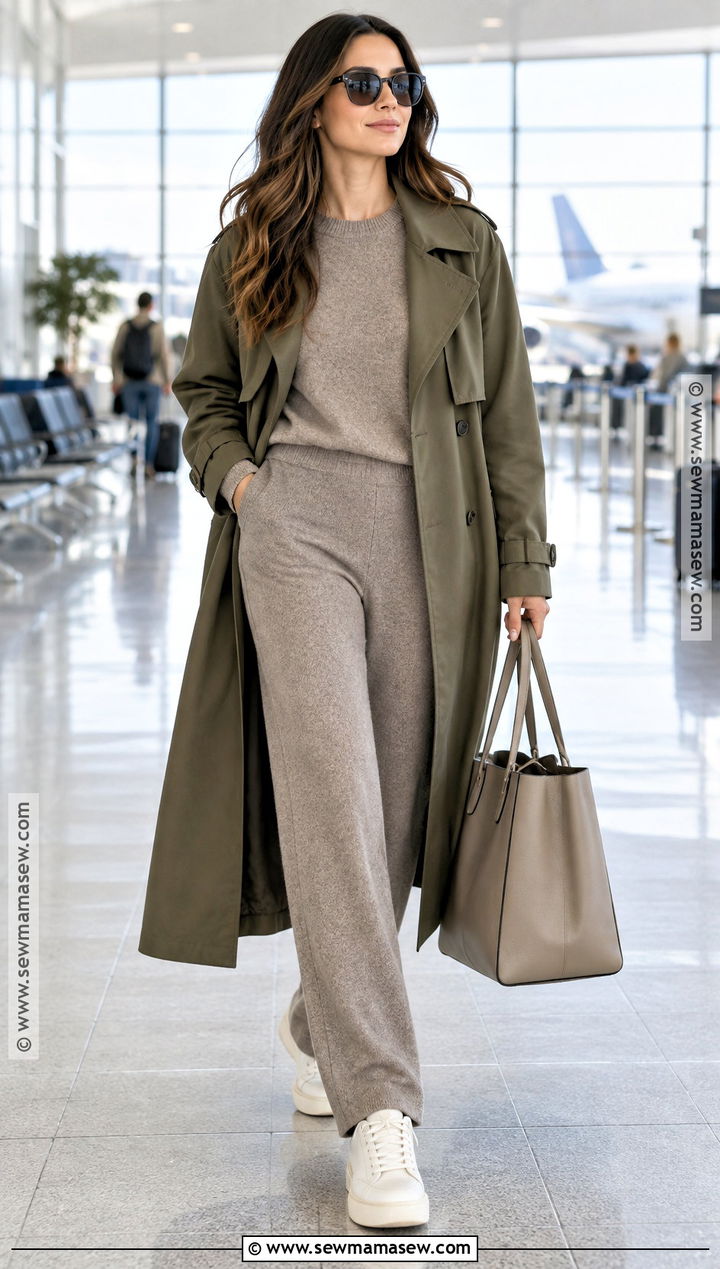
When comfort comes first, I start with a matching knit set: relaxed knit pants plus a crewneck, half-zip or cardigan in gray, taupe or cream. A beige or olive trench goes over it, with clean leather sneakers and a roomy tote. Straight or slightly wide knit pants hang smoothly under the coat, while a skinny jogger cuff cuts the line at the ankle. If the sweater is oversized, I leave the trench open, because belting over thick knit bunches at the waist. One color from neck to ankle reads as a long line, which is why this works for airports and road trips. Knit sets can bag out at the knees, so I'd fold the pants rather than hang them.
Cotton Gabardine in a Real Downpour
A cotton trench is water-resistant, not waterproof. The tight twill weave sheds a light shower well, but in steady rain the shoulders and the back of the coat soak through first, which is exactly why the classic design has the storm flap and back yoke there. If you live somewhere with long rainy spells, keep an umbrella anyway or look at a coat with a laminated or coated finish.
When it does get soaked, hang it on a wide hanger at room temperature and let it dry slowly. A radiator or dryer can shrink cotton and leave the fabric stiff. Most trenches can be refreshed with a fabric reproofing spray once the water stops beading on the surface. Always test on an inside seam first, since some sprays darken pale beige. Check the care label before washing. Many trenches are dry-clean only because the lining, interfacing and fabric can shrink at different rates.
Belt Knots That Don't Look Fussy
The belt is the part people fiddle with most, so here is how I handle it on casual outfits. For a clean front, I tie it in a single loose knot rather than threading it through the buckle; the buckle looks more formal and puts a hard ridge at the waist. When the coat is open, I knot the belt behind me so it pulls the back in slightly and the ends don't swing around. Over chunky knits, I usually leave it unbelted, because cinching thick wool just adds a ring of bulk.
Keep the belt in its loops when you hang the coat. Loose trench belts are the first thing to go missing, and a replacement rarely matches the original fabric's color after a few seasons of wear.
One Coat, Fifteen Different Underlayers
A good trench carries a whole season of outfits without a closet overhaul. Every look here starts from basics you probably own: jeans, a sweater, leggings, trousers, a knit dress, comfortable shoes. Get the coat's length and fit right for your frame first, then let texture, color and accessories do the rest. Beige is the easiest to wear, but brown, olive, navy, black, cropped and leather versions all earn their place. My honest advice is to buy one coat that fits well and change what goes under it, which is how most of these outfits were built anyway.
Related posts: