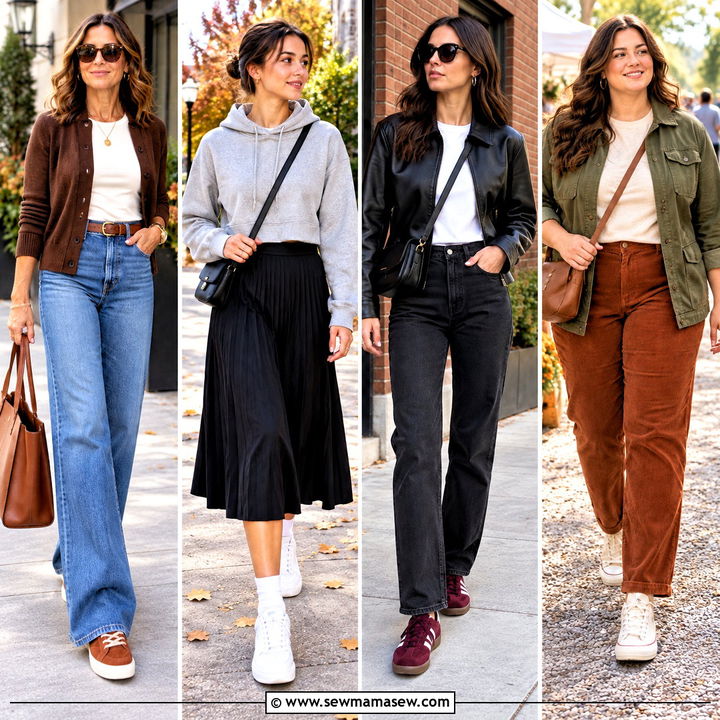
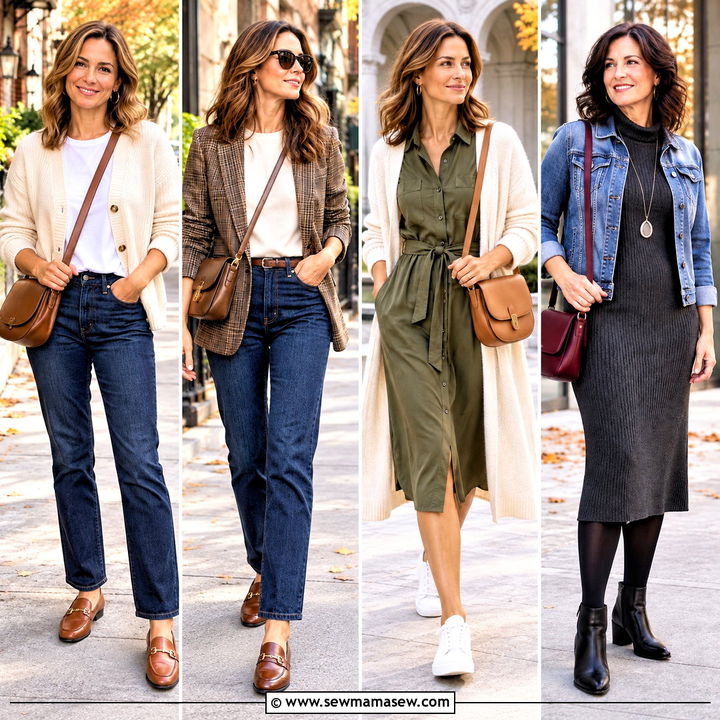
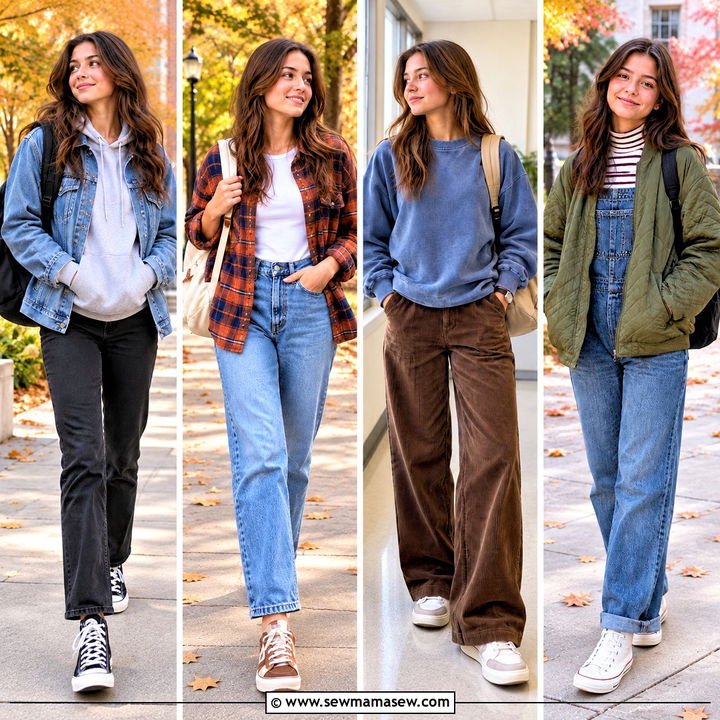
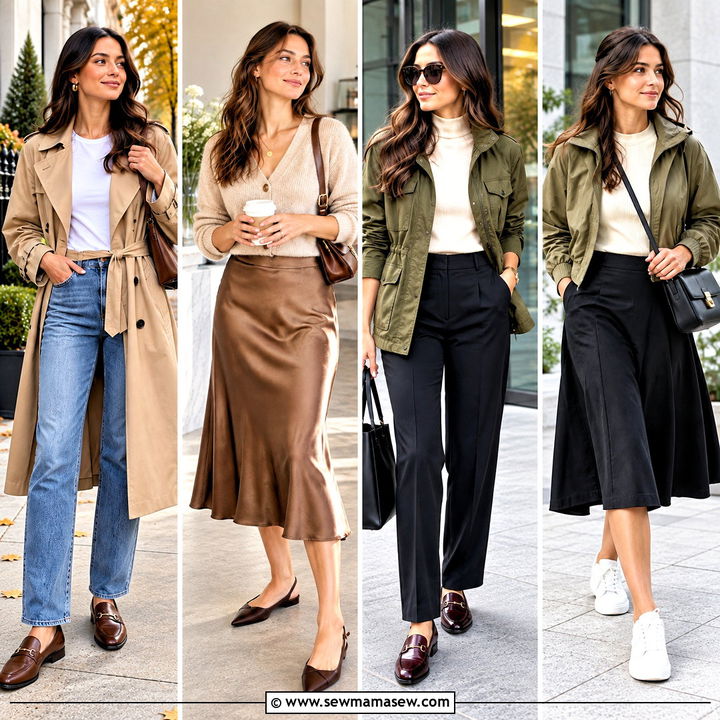
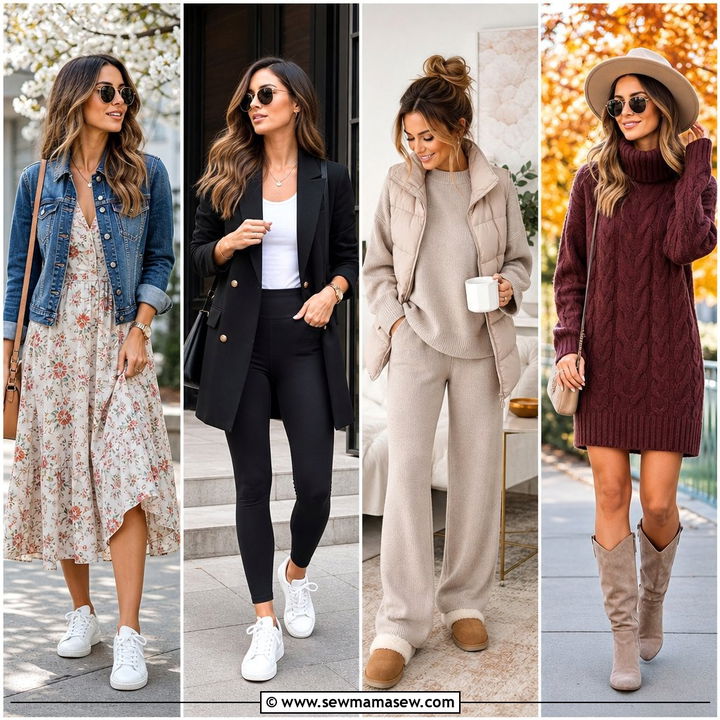
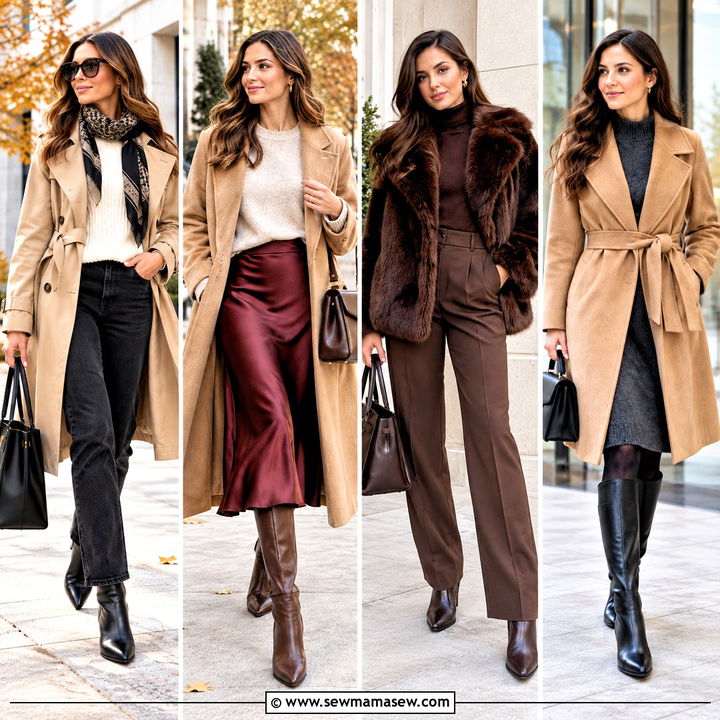
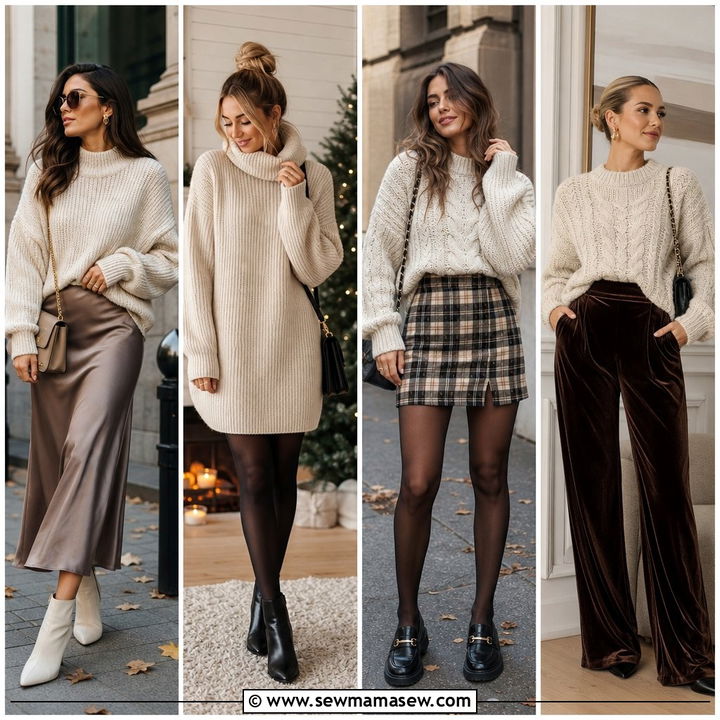
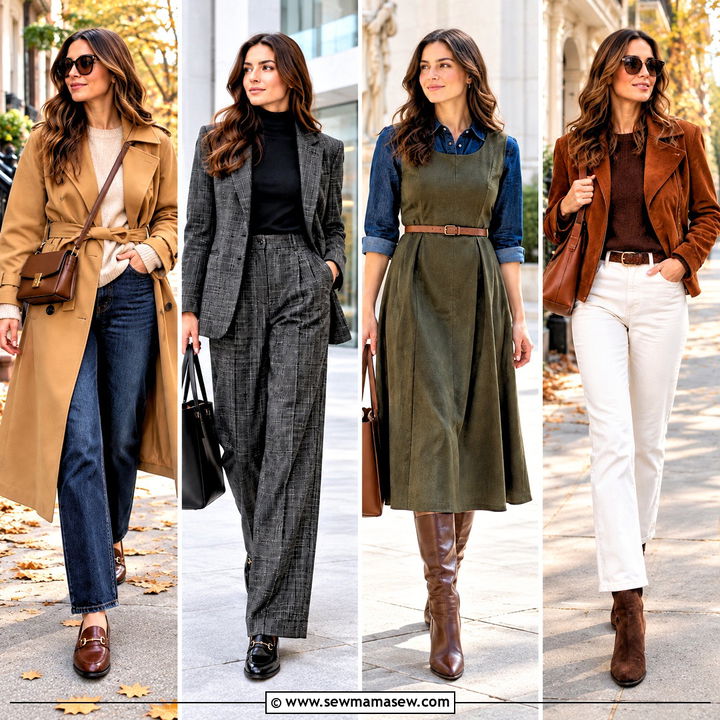
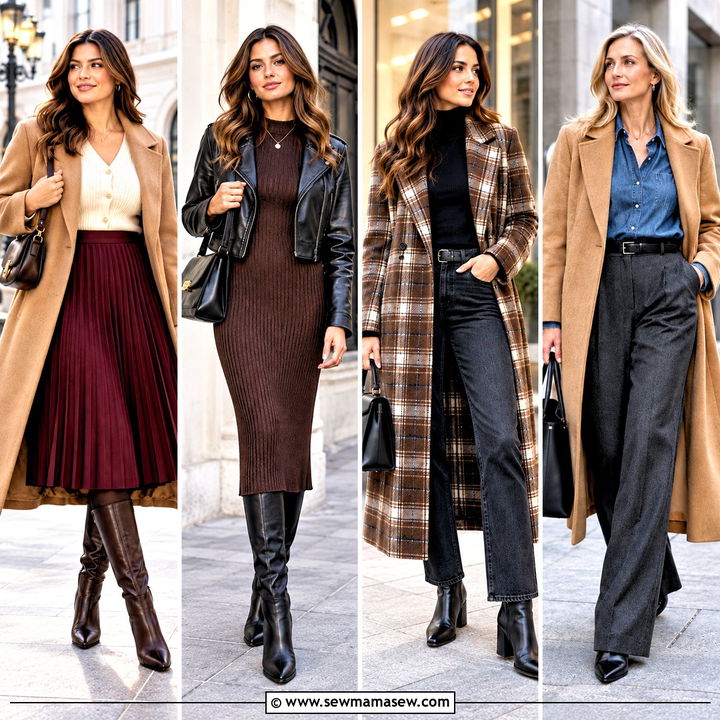
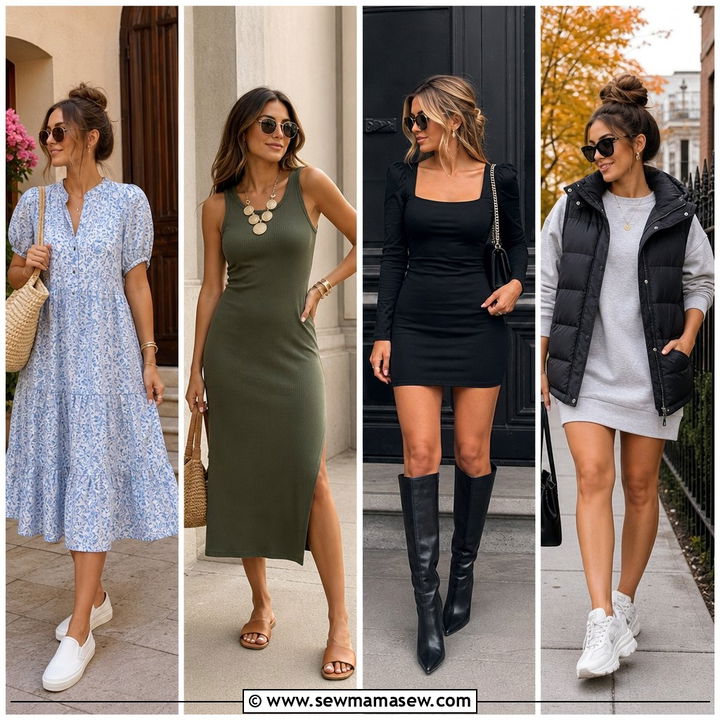
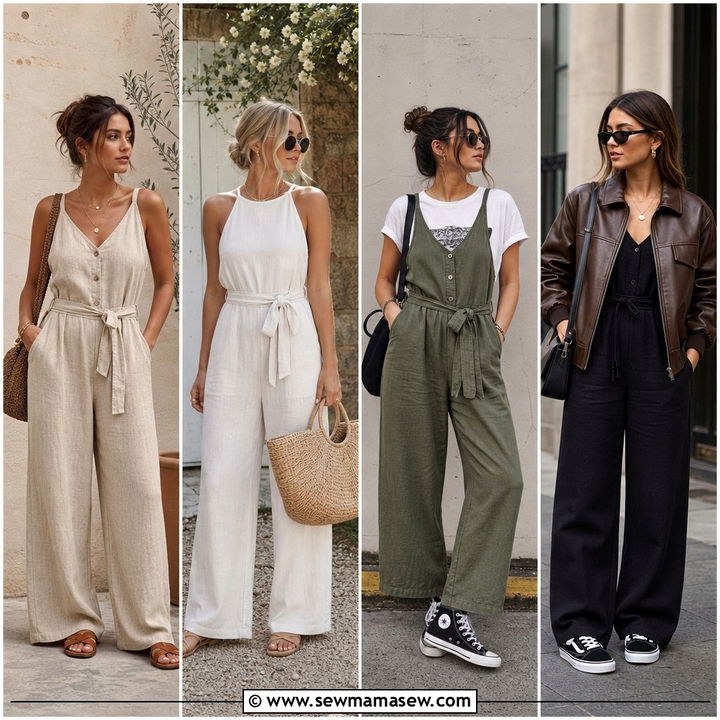
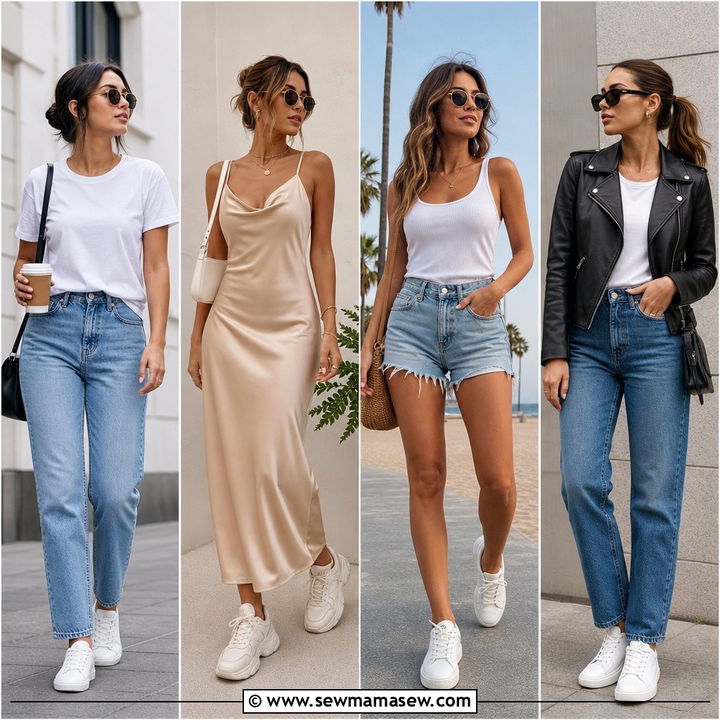
Cold-weather dressing goes wrong in two directions: you either pile on so much that you overheat the moment you walk into a shop, or you dress for how things look and spend the day cold. The outfits I build for fall into winter avoid both by using a few comfortable basics and layers you can add or take off. Think relaxed jeans under a wool coat, leggings under a long sweater, corduroy with a quilted jacket. Color helps more than people expect. Cream, camel, chocolate, burgundy, charcoal and olive all mix with each other, so pieces combine without much thought. Every look below is meant for real days: errands, a casual office, school pickup, travel and weekends, from crisp October afternoons into properly cold January ones.
Base Layers Do More Work Than the Coat
When a client tells me she's always cold, the problem is usually under the sweater, not the coat. Warmth comes from trapping still air between layers and keeping moisture off your skin, and the layer touching your body makes the biggest difference.
- Merino wool stays warm even when you sweat a little, doesn't hold odors and is thin enough to sit under a fitted sweater. It's my first choice for a base layer.
- Synthetic thermal tops dry quickly and cost less, which makes them good for active days. They can hold on to smells after a few wears.
- Cotton feels soft but holds moisture against your skin. If you walk fast to the train and then stand outside, a damp cotton tee will chill you.
- Two thin layers trap more warm air than one thick one, and you can remove one when you get indoors.
Keep the base layer fitted. A loose thermal bunches under knitwear and pulls at the sleeves, which is why so many people give up on layering.
1. Sweater and Straight Leg Jeans Outfit
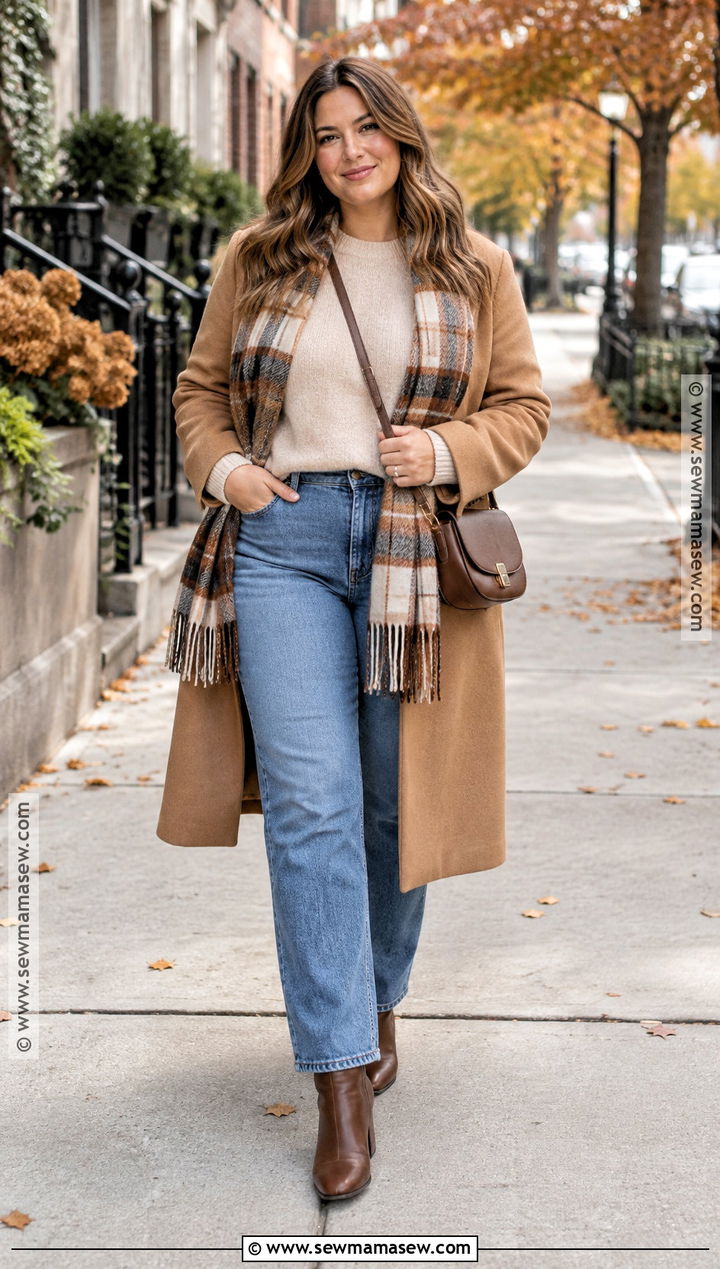
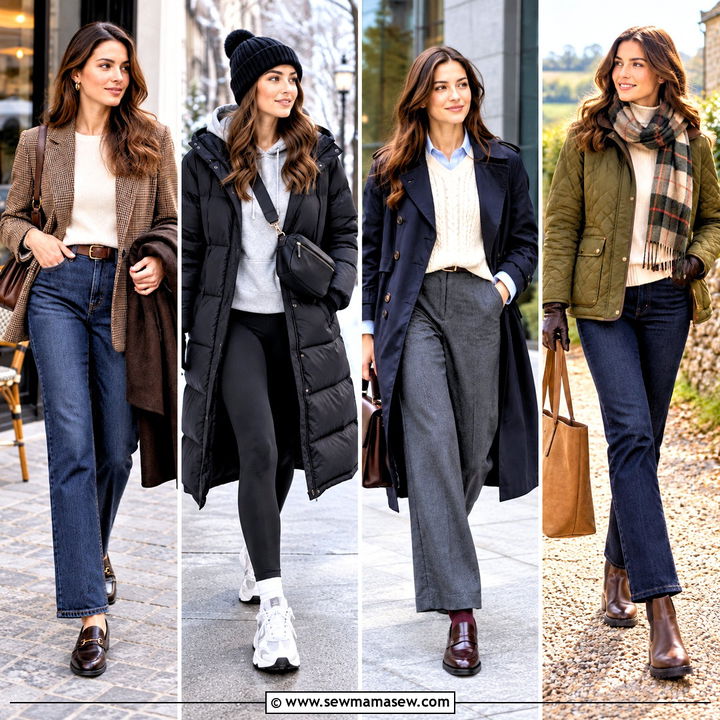
A crewneck sweater and straight-leg jeans is the outfit I'd build a cold-weather wardrobe around. Choose a cream, oatmeal, burgundy or forest green knit, then decide on the wash: medium for fall, dark for winter, when it looks a bit sharper. Leather ankle boots with a walkable block heel and a matching crossbody keep it practical, and a camel wool coat goes over the top. On a cold day I add a thin thermal top under the sweater rather than a thicker knit, because it keeps the sweater sitting smoothly. If you're petite, ankle-length denim stops fabric bunching over the boot; taller women can go full length.
2. Oversized Cardigan and Black Leggings Outfit
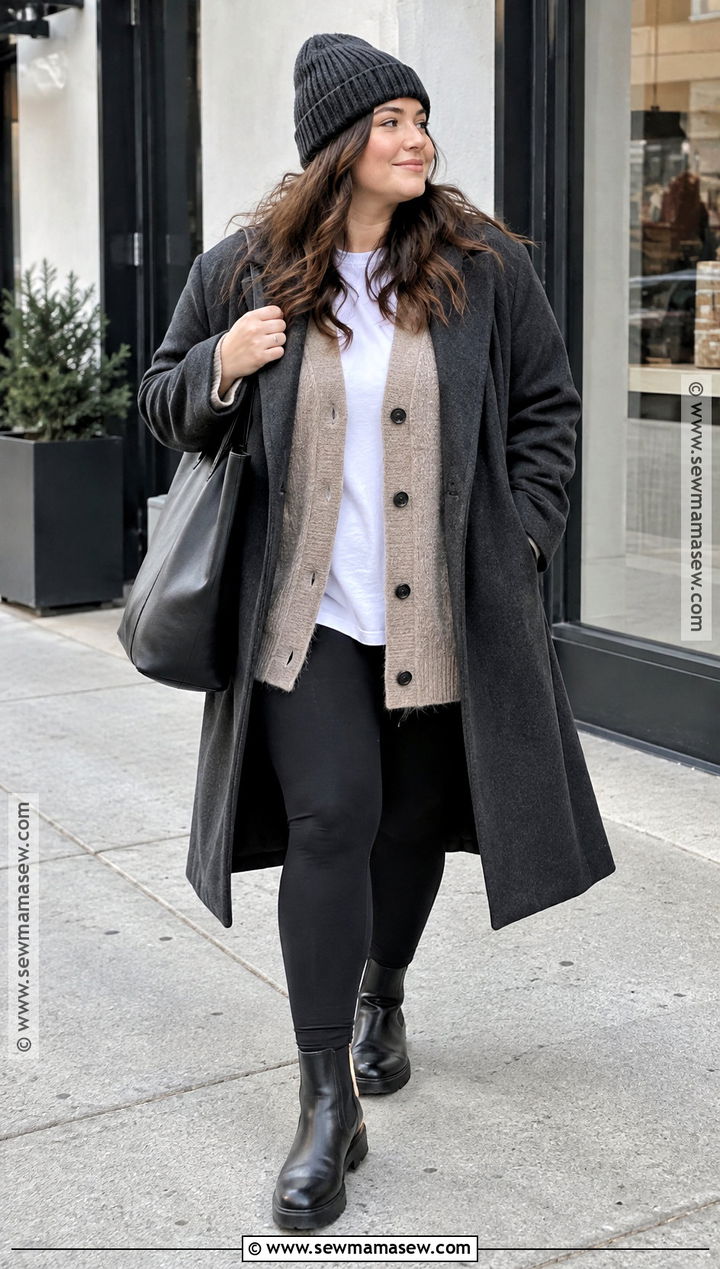
On a cold morning when you want comfort but still look dressed, start with black leggings and a long white tee or fitted black base layer. An oversized cardigan in chunky gray, taupe or camel should cover your hips, which is what keeps leggings from looking like gym wear. Sleek Chelsea boots give more structure than running shoes, and a longline coat goes over everything as it gets colder. I keep the cardigan and coat in the same color family, since two clashing bulky layers look twice as heavy. The leggings need to be thick and opaque with a wide waistband; thin ones go see-through when you bend.
3. Turtleneck and Wide Leg Jeans Outfit
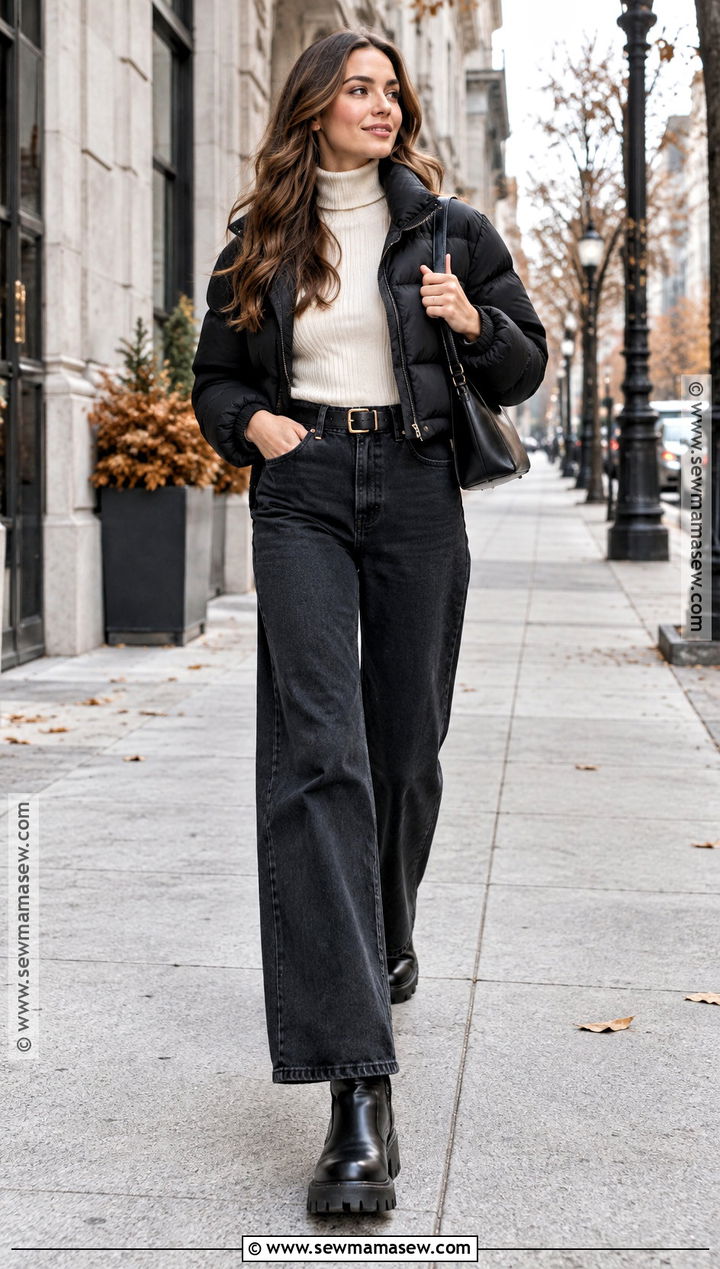
Wide-leg jeans need a slim top, so I pair dark or medium denim with a fitted ribbed turtleneck in black, ivory or rust, tucked in to show the waist. Above that, either a cropped puffer or a waist-length wool jacket. A long coat over wide legs works too, but the cropped jacket keeps the proportions clearest. Platform sneakers suit mild fall days; lug-sole boots take over in winter. Hem length matters more than usual with wide legs, because a hem that drags on wet pavement soaks up water and grime up to the ankle. Thin thermal leggings fit easily under the loose leg on cold days.
4. Plaid Shirt and Puffer Vest Outfit
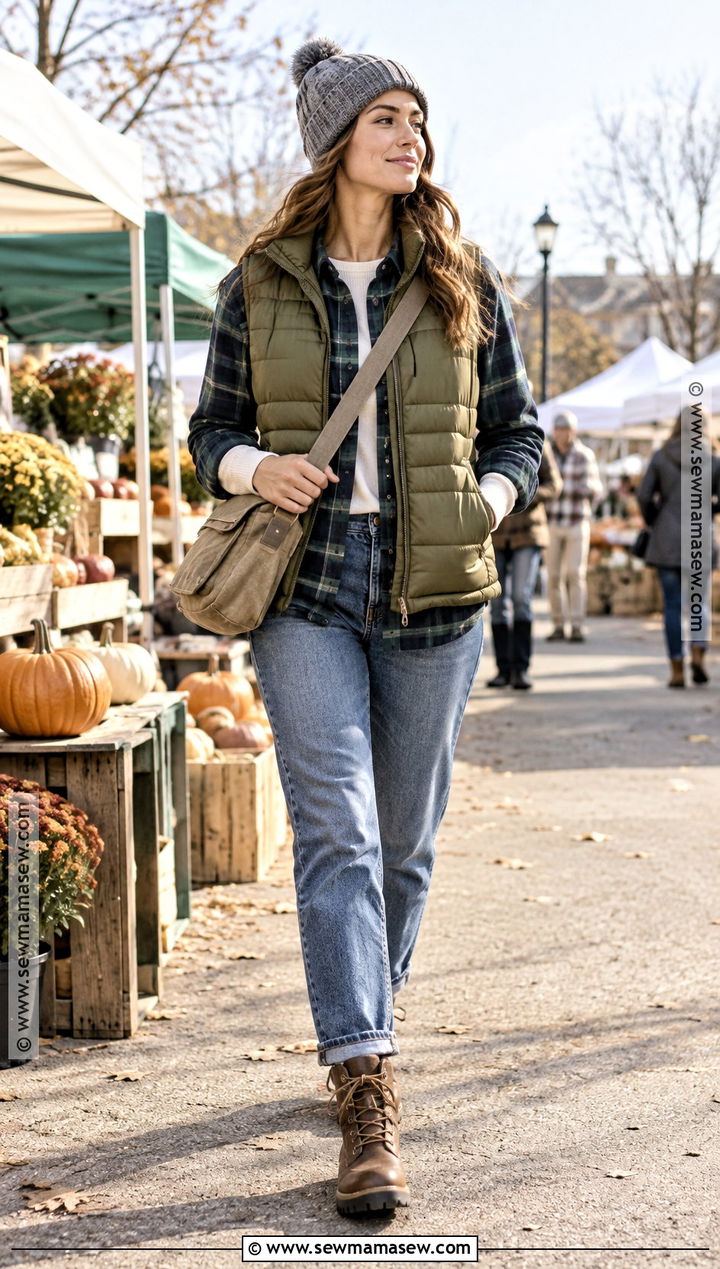
Plaid flannel, a puffer vest and jeans is a classic for good reason. Pick a soft flannel in brown, navy or muted red, worn over a fitted long-sleeve tee so you can open it when a shop is warm. Straight or slim jeans, a lightweight quilted vest and suede or hiking-style boots make it ready for markets and long walks. A vest keeps your core warm while leaving the arms free, which is why it's so comfortable for active days. If the shirt has a bold check, keep the vest solid. Leave the bottom buttons open and roll the sleeves a little so the layers don't look stiff.
5. Sweatshirt and Trench Coat Outfit
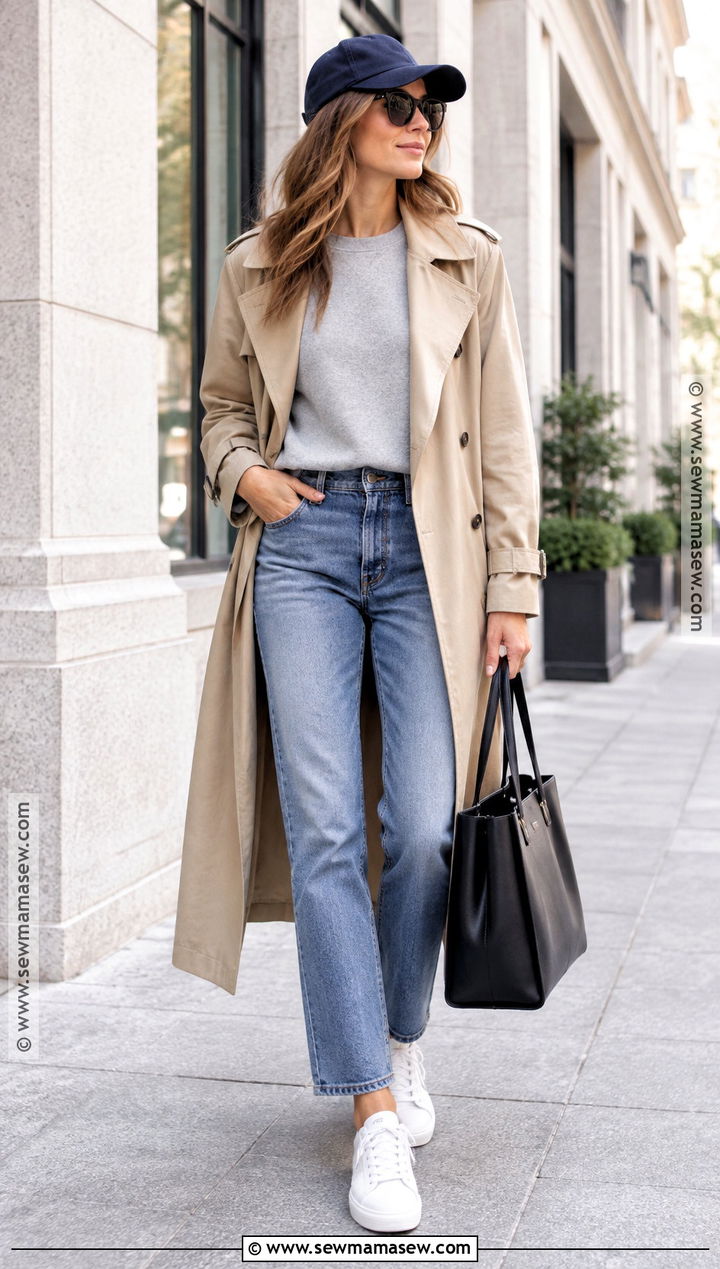
Can a sweatshirt look polished in the city? Yes, under a good coat. I pair a gray, navy or cream crewneck sweatshirt with straight blue jeans and a beige trench. The sweatshirt collar should sit neatly under the coat, and the hem shouldn't hang long enough to bunch at the hips. White leather sneakers keep it relaxed; suede sneakers add fall texture. A cap, sunglasses and a structured tote make it intentional. Keep in mind that a trench is a mid-season coat. It blocks wind and a light shower but has little insulation, so on cold days you'll need a thermal underneath and crew socks.
6. Knit Dress and Knee High Boots Outfit
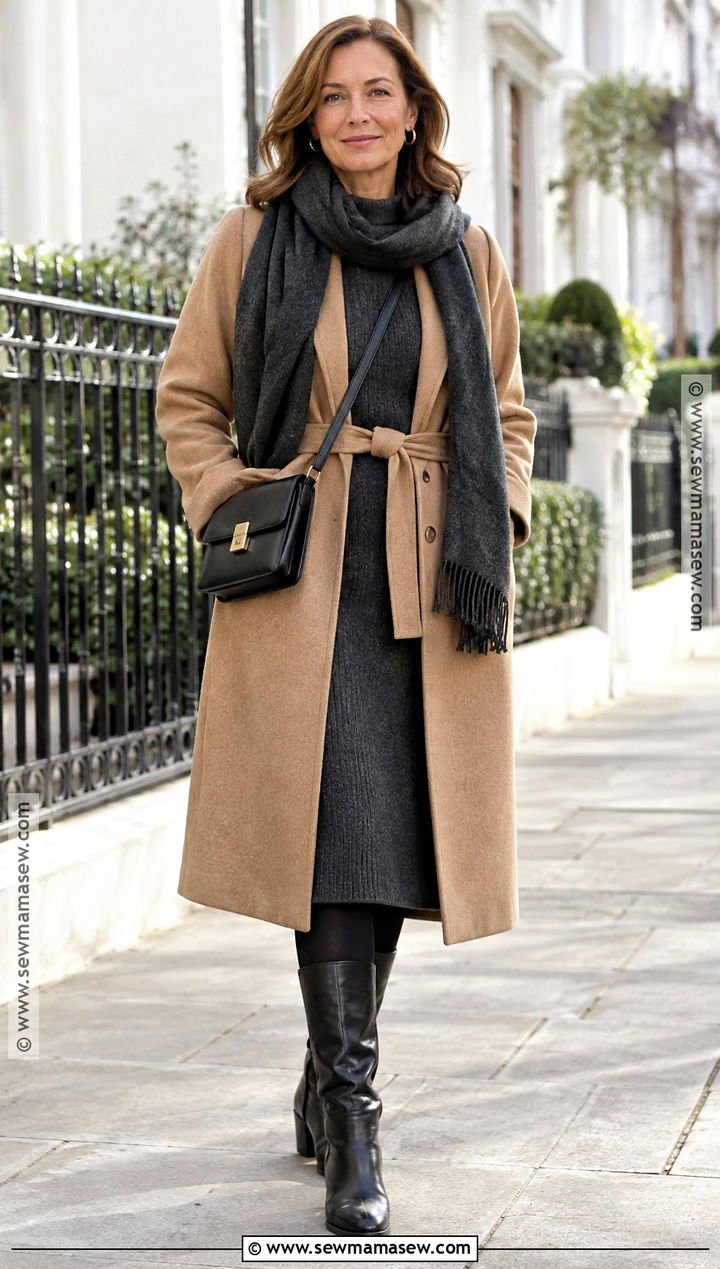
A knit dress is the simplest cold-weather outfit there is: one piece, then tights and boots. I choose a ribbed or softly structured midi with room to move, in charcoal, chocolate or heather gray. Opaque tights and flat or low-heeled knee-high boots keep the legs warm. A belted wool coat defines the waist, while a straight-cut one gives a looser shape. Knit dresses can look shapeless on their own, so I either add a slim belt or pick one with waist seaming. Thick tights also pill where the boot rubs the inner calf, so it's worth buying a heavier denier that lasts longer.
7. Hoodie and Wool Coat Outfit
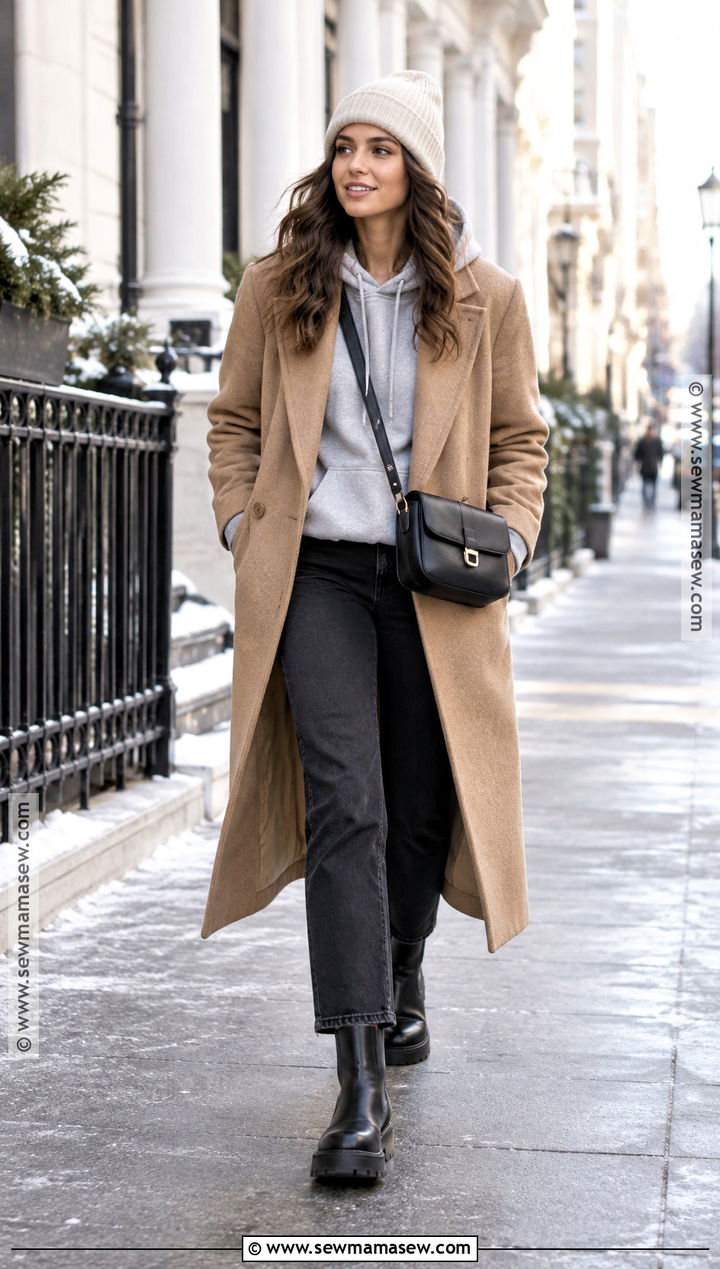
A hoodie under a tailored wool coat is comfortable and looks finished, as long as the hood is managed. I keep it outside the coat collar and lying flat; stuffed inside, it bunches against the neck and pulls the coat back. Choose a solid hoodie in gray, black or cream under a long camel, charcoal or navy coat. Straight jeans keep the shape balanced, though slim jeans tuck more easily into winter boots. Clean sneakers in dry weather, chunky Chelsea boots when it's colder. A crossbody worn close to the body and a knit cap finish it, and it suits travel days and casual commutes.
8. Corduroy Pants and Chunky Sweater Outfit
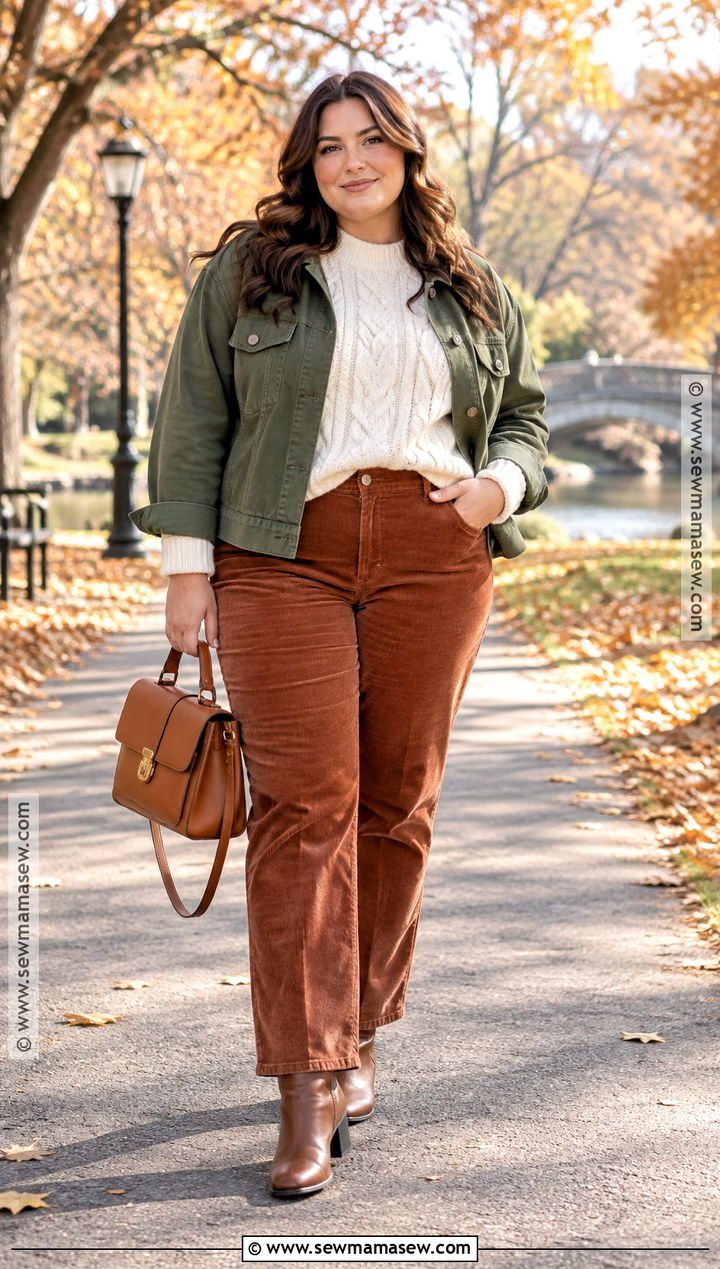
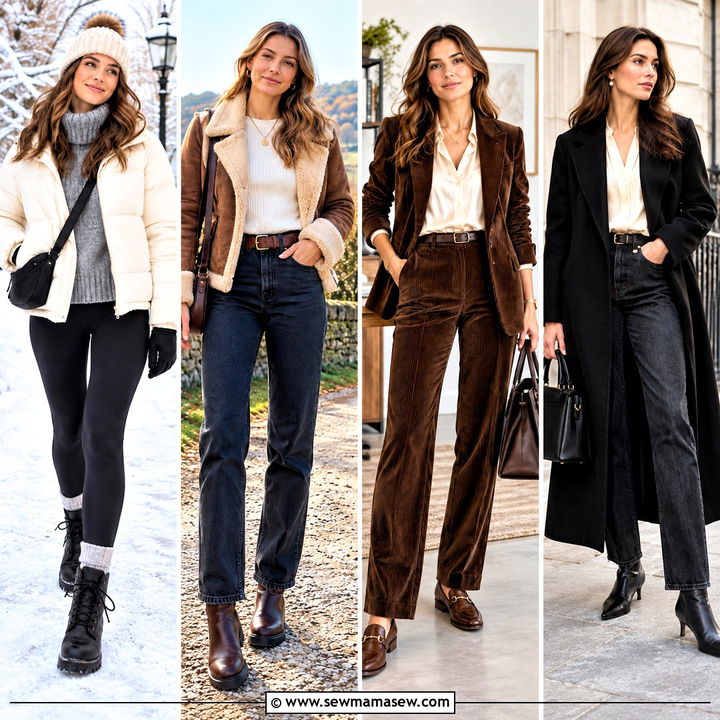
Corduroy is my favorite swap when jeans start to feel repetitive. High-rise straight or wide-leg cords in brown, camel, burgundy or olive go well with a chunky sweater in cream or rust. A small front tuck shows the waistband and stops the sweater from swallowing you. Loafers with socks work in early fall; ankle boots take over as it cools. Top it with a cropped utility jacket or a mid-length wool coat. Both chunky knits and cord are heavily textured, so I keep patterns out completely. Cord can also go shiny where it rubs, particularly on the inner thigh, so turn it inside out to wash.
9. Denim Shirt and Black Jeans Outfit
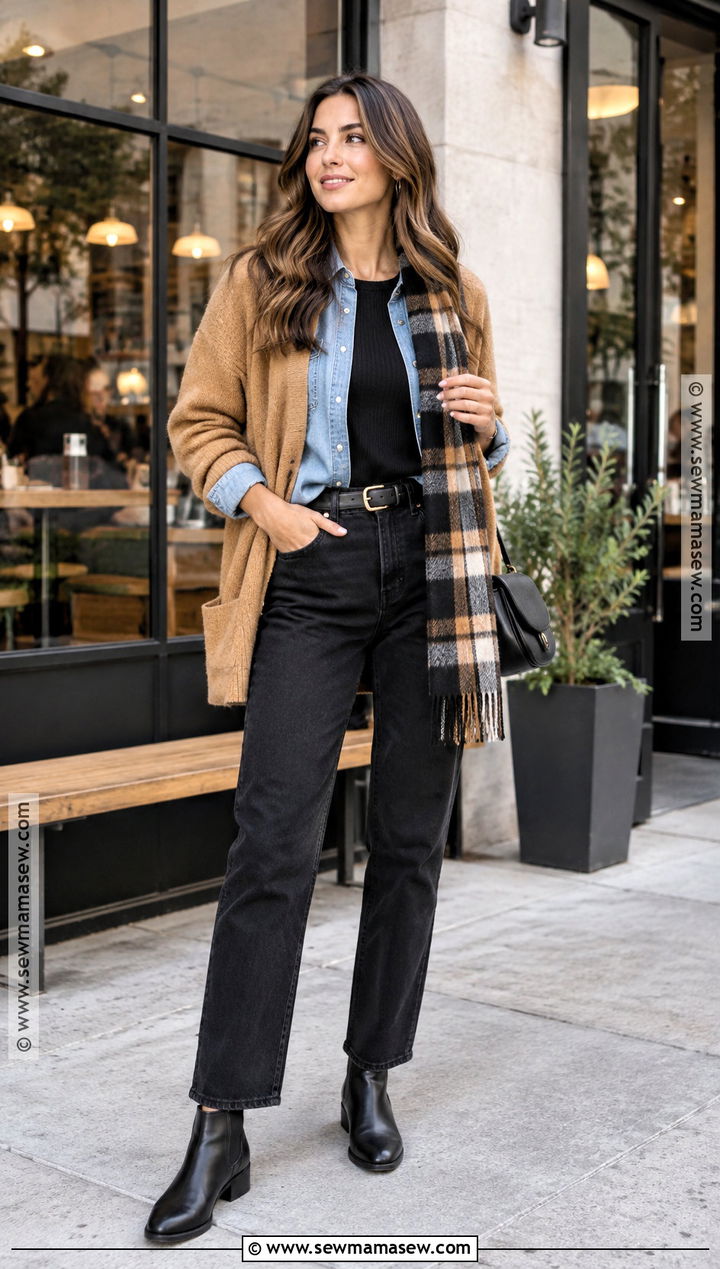
Double denim works when the two pieces are clearly different shades. I put a light or medium denim shirt over black straight jeans, with a fitted thermal tee underneath and a few buttons open. A camel cardigan or brown suede-look jacket warms up the cool blue. Black Chelsea boots, a leather belt and a crossbody finish it, and in winter a long puffer and a plaid scarf go over the same base. If you're curvy, a denim shirt with a curved hem sits better over the hip than a straight one. Anyone wanting more waist can try a partial tuck.
10. Puffer Jacket and Joggers Outfit
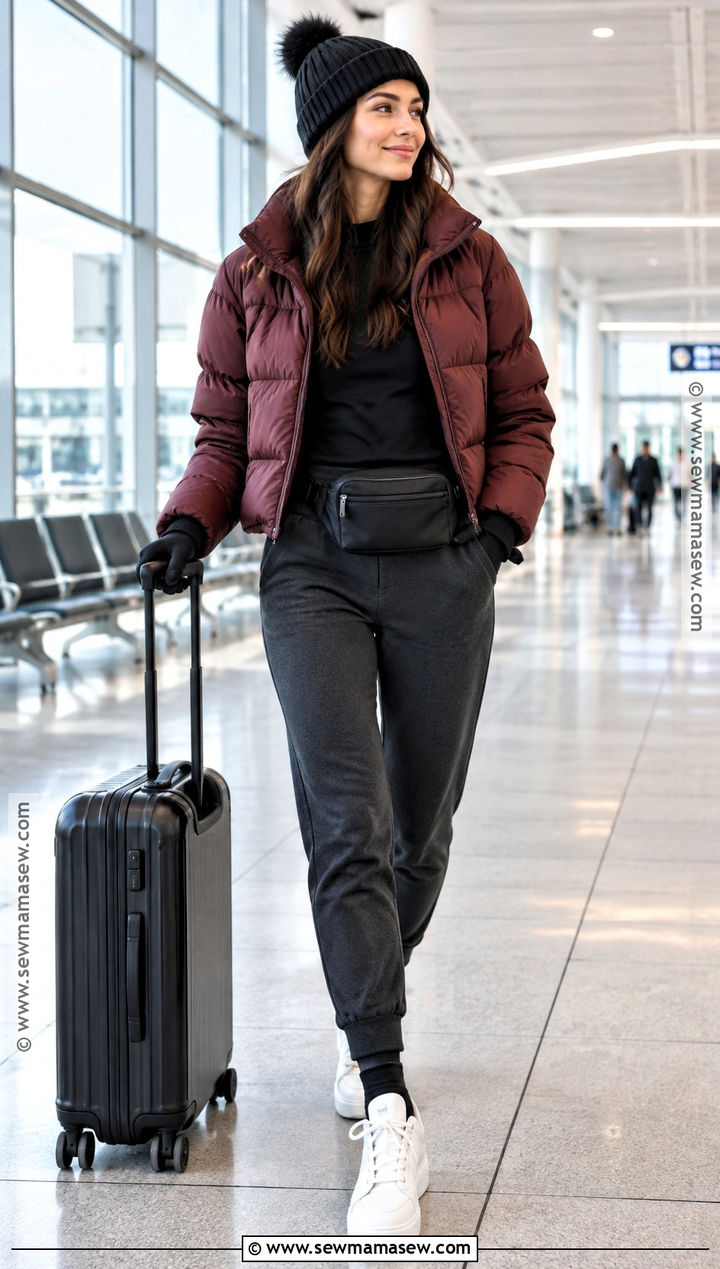
Athleisure looks deliberate when every piece is smooth and fitted. I choose tapered joggers in black, charcoal or navy with a fitted long-sleeve top or fine sweater, then a short puffer in a neutral or a rich burgundy. Leather sneakers look cleaner than gym shoes; insulated ankle boots are better for real cold. Crew socks cover the gap at the ankle cuff, which is where a cold wind finds you first. A belt bag, beanie and gloves keep it functional. Look for joggers in a smooth fabric with a firm waistband and minimal logos, since thin sweatpant fleece bags at the knee quickly.
11. Midi Skirt and Pullover Sweater Outfit
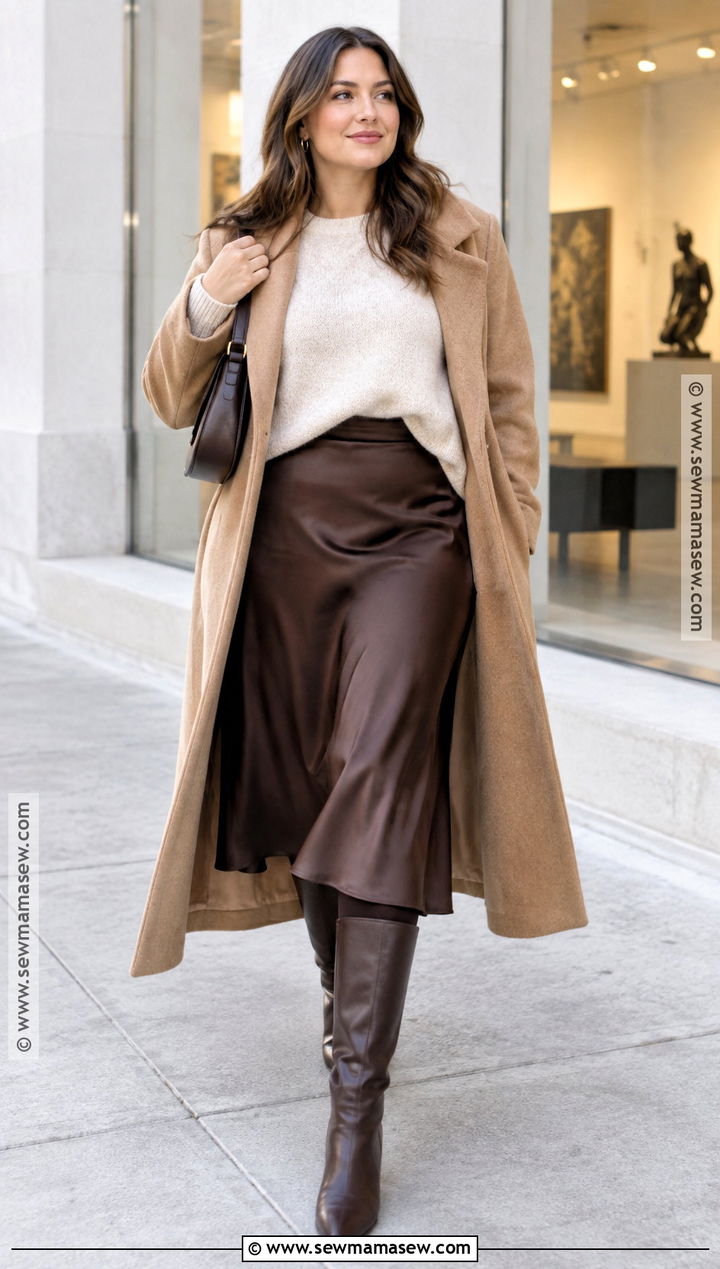
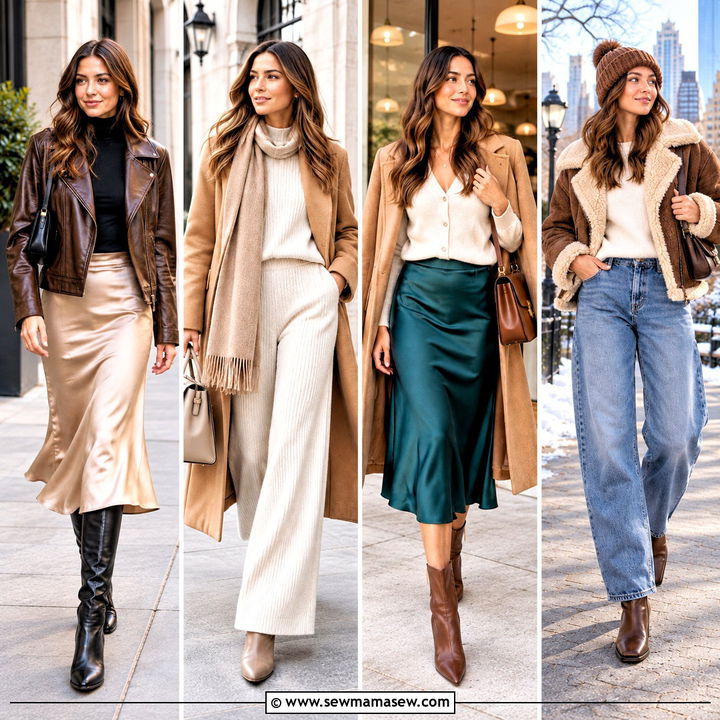
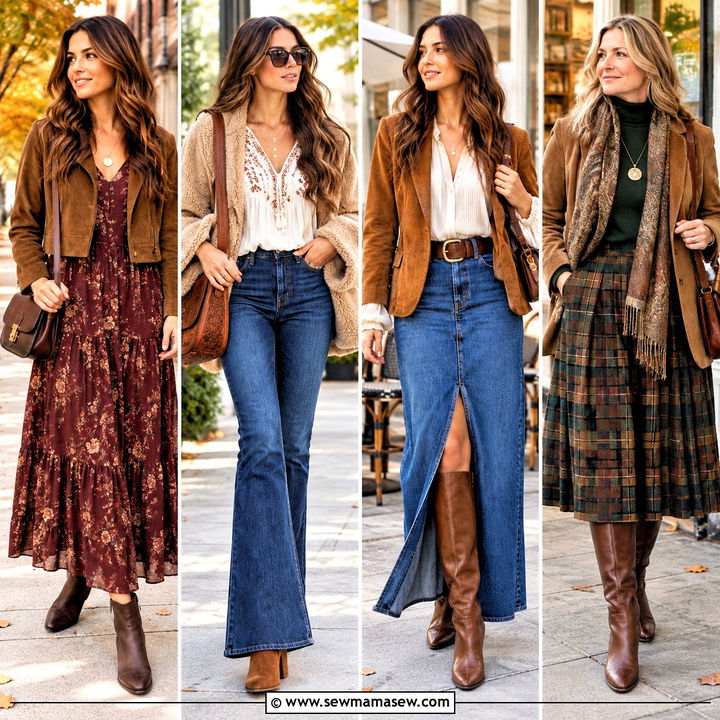
A midi skirt doesn't have to go away when summer ends. Satin, pleated, knit or printed versions all work under a slightly relaxed pullover. Tuck the front of the sweater, or belt underneath the knit to create a shorter top half. Opaque tights and knee-high boots cover the legs in winter; ankle boots are fine in early fall. The coat length is what I check first: one that falls near or below the skirt hem gives a smooth line, while a coat ending just above it leaves a strip of skirt that looks unplanned. A small shoulder bag and fine jewelry finish it.
12. Shacket and Relaxed Jeans Outfit
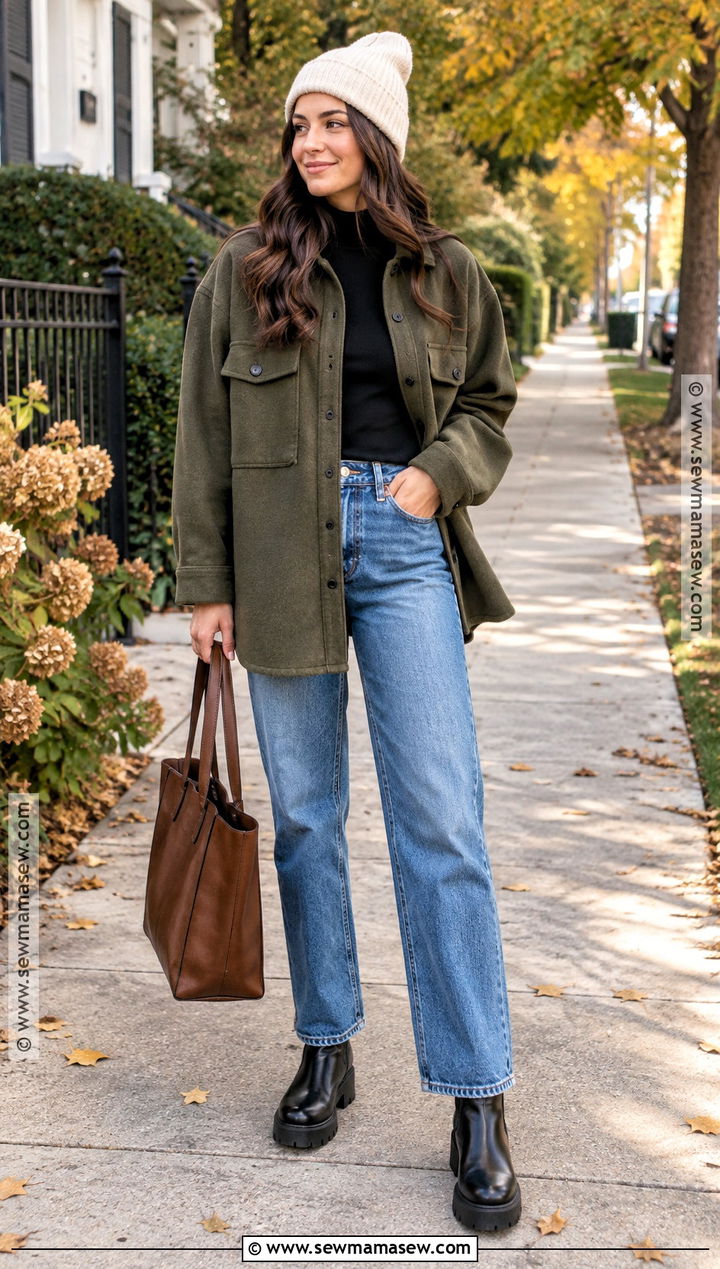
For weather that's between warm and truly cold, a shacket gives you just enough weight. Wear a solid or plaid shirt jacket over a fitted turtleneck or cotton long-sleeve tee, with relaxed straight jeans and lug-sole boots. Look for one that reaches the upper thigh and has room in the shoulders for a base layer; reach your arms forward in the fitting room to check it doesn't pull across the back. Cream, camel, olive and brown all go with denim. A beanie and a medium tote finish it, and a roomy puffer goes over everything in winter. Keep the inner top fitted, or the oversized layers swallow your shape.
13. Turtleneck and Quilted Jacket Outfit
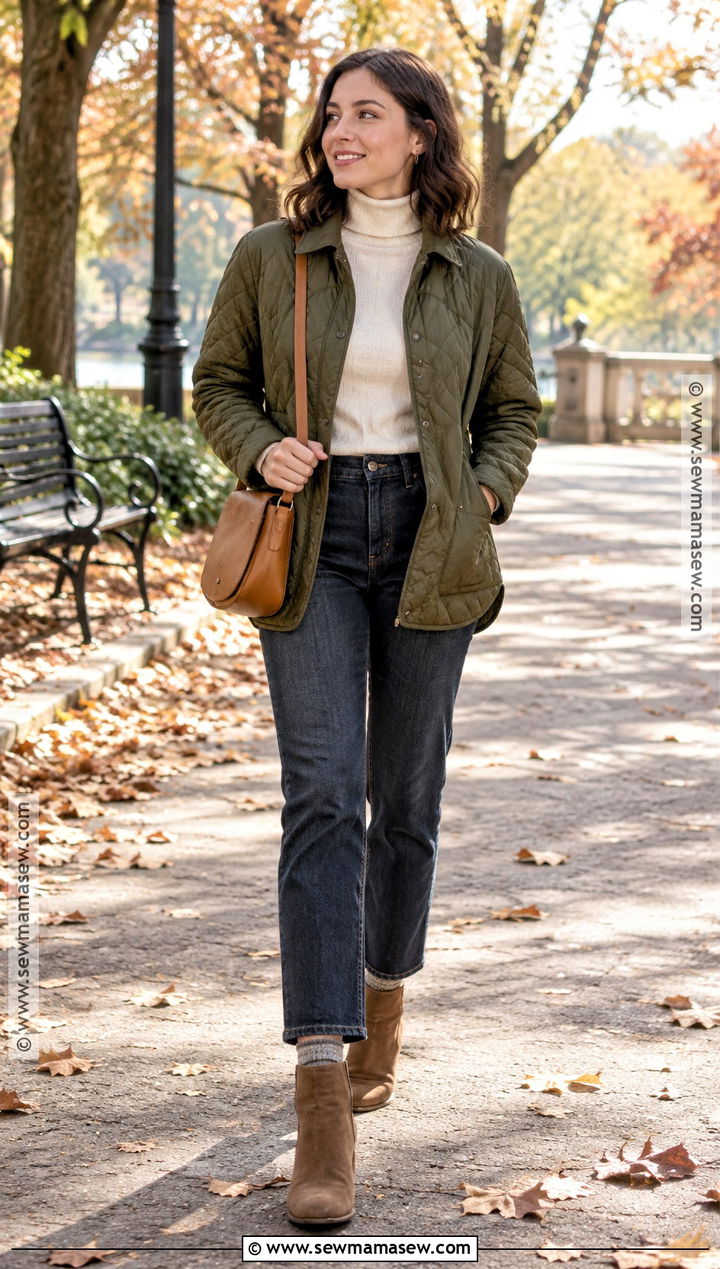
This is my answer for a day that starts at freezing and ends mild: a thin turtleneck, dark straight jeans and a lightly insulated quilted jacket. Olive, navy, rust or cream jackets add color and still go with everything neutral. Suede ankle boots or loafers with visible socks, and a small backpack or crossbody to keep your hands free. A jacket with curved side vents or a drawcord waist gives more shape. When winter properly arrives, the quilted jacket fits under a roomier coat as a mid-layer, which is why I consider it such a useful piece to own.
14. Sweater Vest and Button Down Outfit
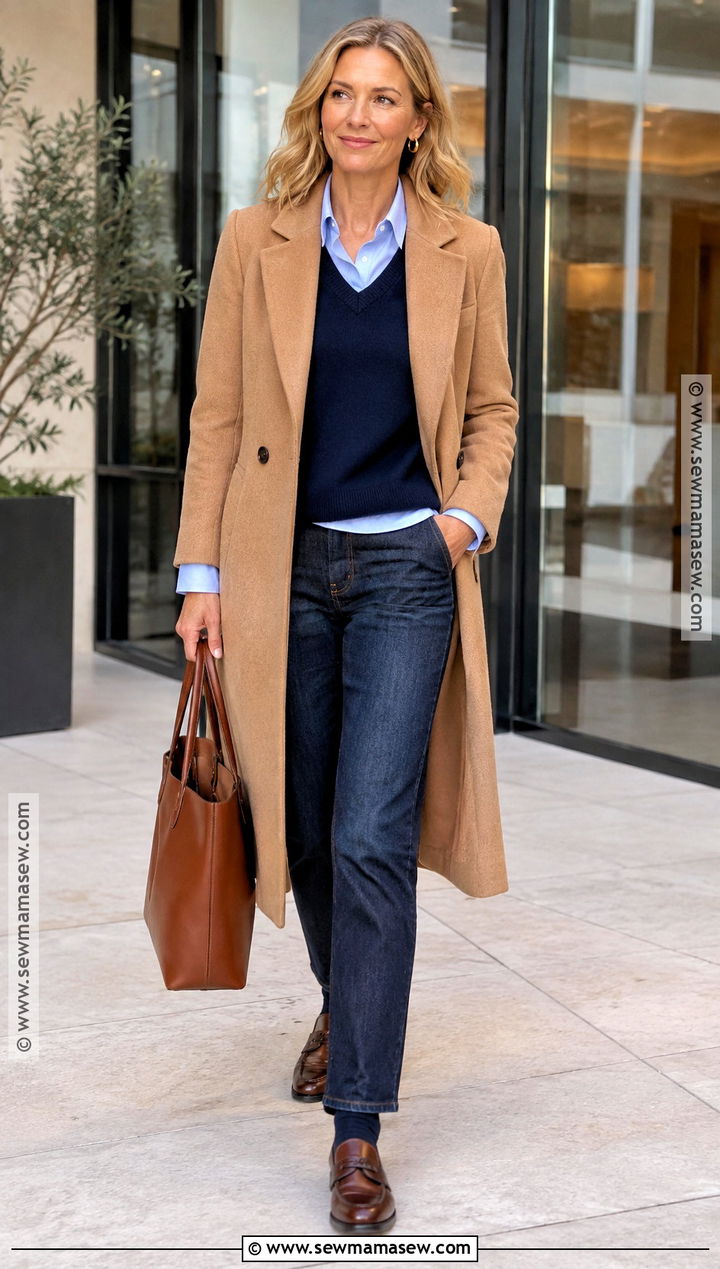
A sweater vest over a button-down keeps your body warm while your arms move freely. Start with a crisp white, pale blue or striped shirt and a solid knit vest in gray, camel or navy. Straight jeans keep it relaxed; tailored ankle pants make it office-ready. Loafers and socks in fall, Chelsea boots when it's colder, and a trench or wool car coat on top. A little shirttail below the vest looks right, but a long shirt hanging well past it breaks up your proportions. Pressing the collar flat before the vest goes on keeps it from curling under the knit. It's a preppy look that suits most ages and routines.
15. Long Puffer Coat and Winter Boots Outfit
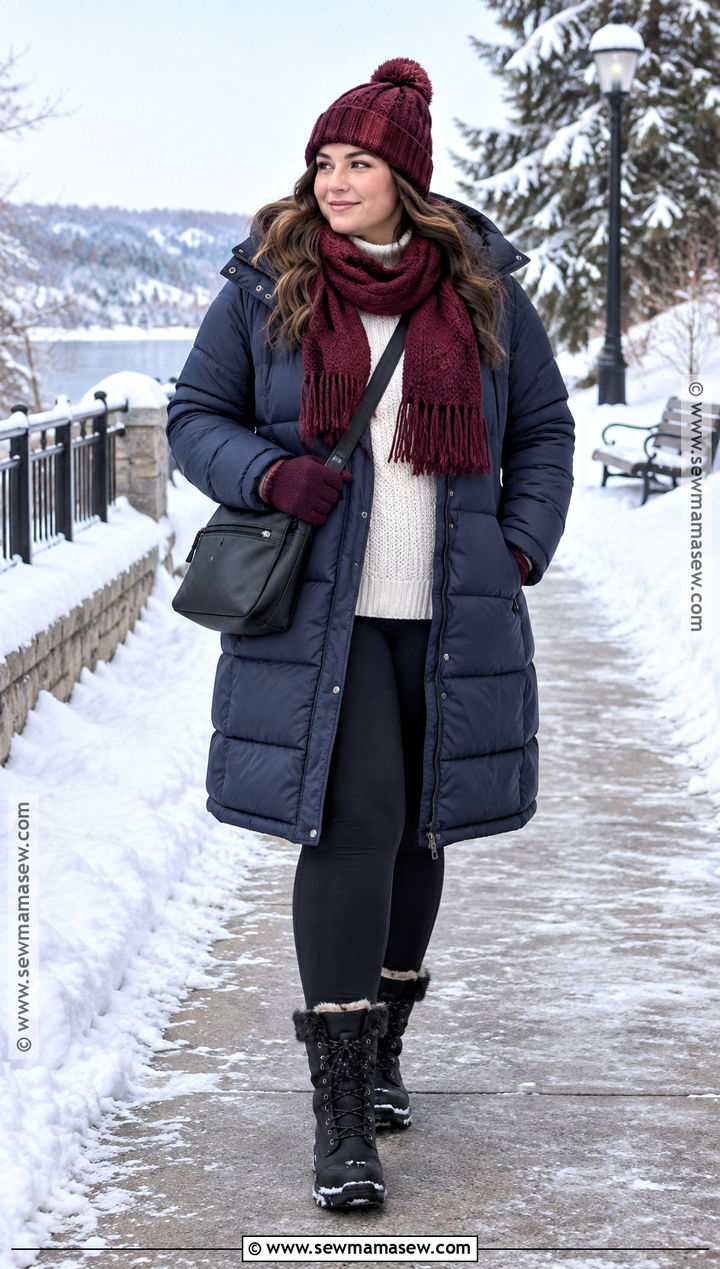
For truly bitter days, the coat does the heavy lifting. Underneath, I layer a fitted thermal top, a thick crewneck and either straight jeans or fleece-lined leggings. A knee-length puffer needs room through the shoulders for all of that, so size up if you're between sizes. Waterproof boots with deep, grippy soles are the only sensible choice for snow, slush and ice. Fashion boots with smooth soles are genuinely slippery on frozen pavements. Match the boots to the pants for a long lower half and bring in color through a scarf, beanie or gloves. A high collar and an adjustable hood keep wind off your neck.
Overheated Shops and Freezing Bus Stops
Winter days swing from cold sidewalks to hot shops, offices and trains. The outfits that cope best are the ones you can open up rather than strip off. Cardigans, shackets, zip-up quilted jackets and open flannels all let you cool down without carrying an armful of clothes. A thick pullover is the hardest piece to manage, so on days with a lot of indoor time I'd swap it for a thin knit plus an open layer.
Getting Boots and Hems Through Slush Season
Salt and slush ruin more winter clothes than wear does. Water-resistant boots handle damp pavements, but only boots described as waterproof, usually with sealed seams, keep feet dry in standing slush. Treat leather and suede with a protector before the first snow and again through the season.
- White salt marks on leather usually lift with a cloth dampened in a mix of water and a little white vinegar. Wipe, then let them dry.
- Dry wet boots at room temperature with paper stuffed inside. Putting them next to a heater can crack leather and warp soles.
- Wide-leg and long hems wick up slush. On messy days, wear straight or cropped pants, or tuck slim jeans into boots.
- Wash salt-crusted jean hems sooner rather than later; dried salt stiffens denim and leaves a line.
A Small Pile of Basics Covers Both Seasons
Every outfit here starts from comfortable basics and layers that each have a job. Jeans, leggings, corduroy, midi skirts, knit dresses and joggers give a realistic range for the season. Sweaters, turtlenecks, cardigans, shackets and hoodies then mix with a trench, a puffer or a tailored wool coat. Choose shoes for the weather first and looks second, especially in rain, snow and ice. Adjust each formula to your proportions, your climate and your routine. When your colors work together and pieces do more than one job, a fairly small wardrobe covers months of cold days without anyone noticing you're repeating.
Related posts: