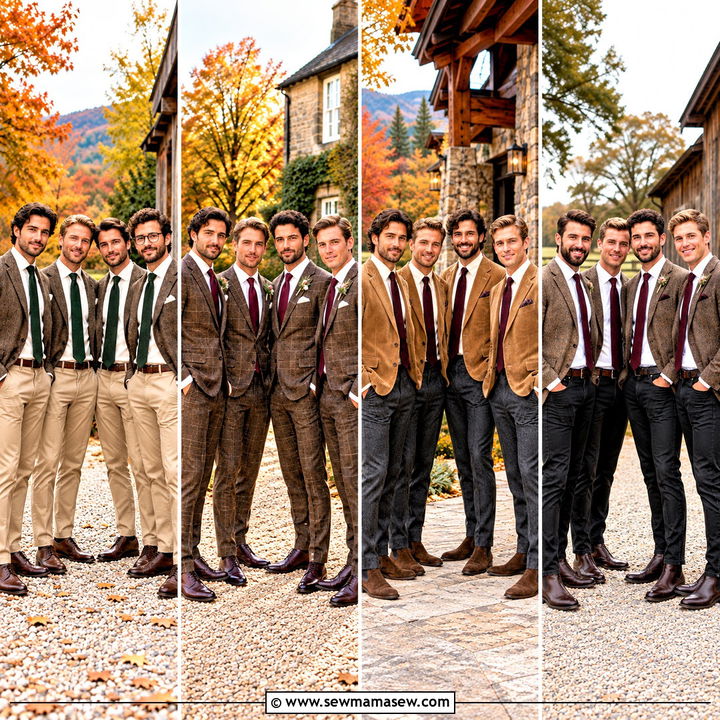
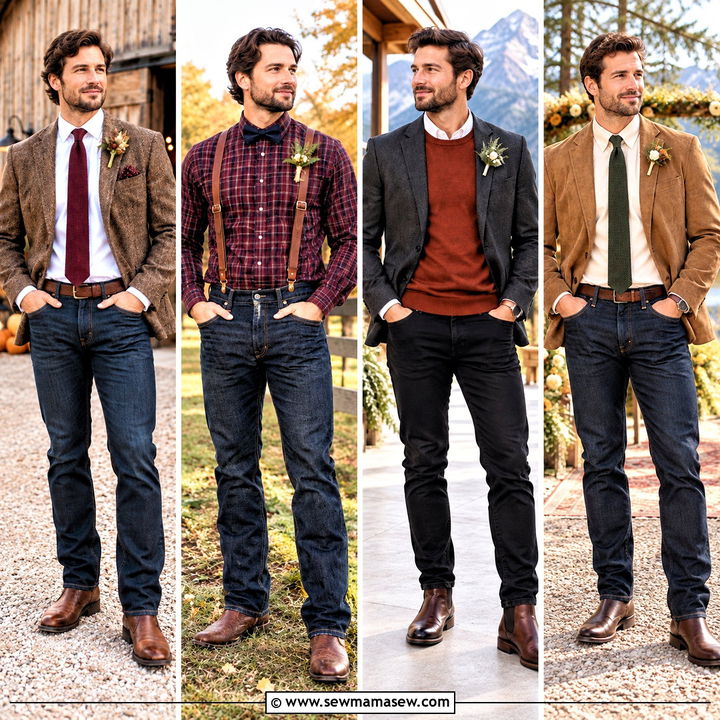
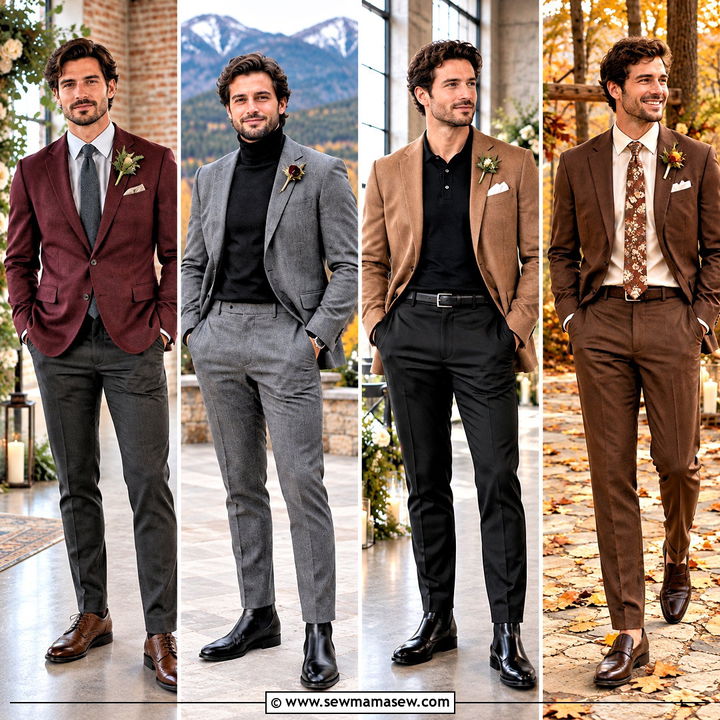
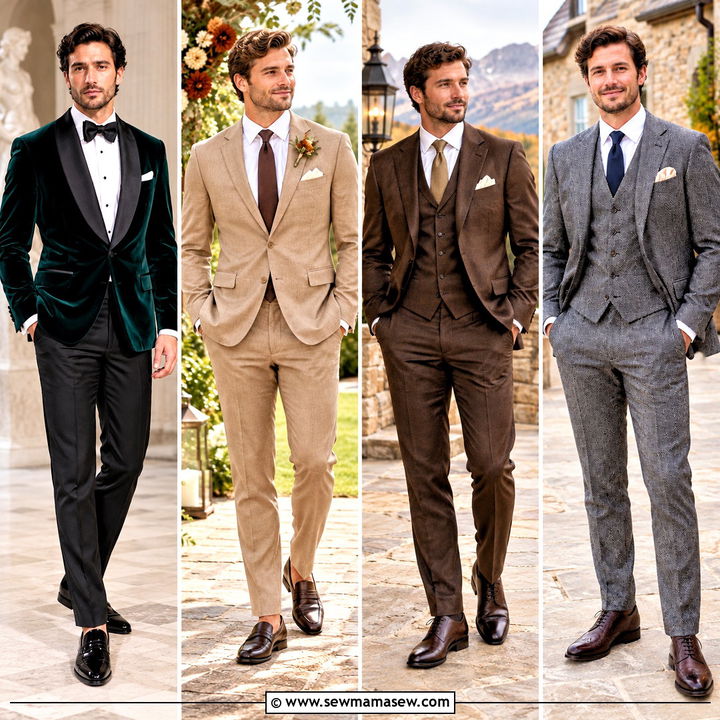
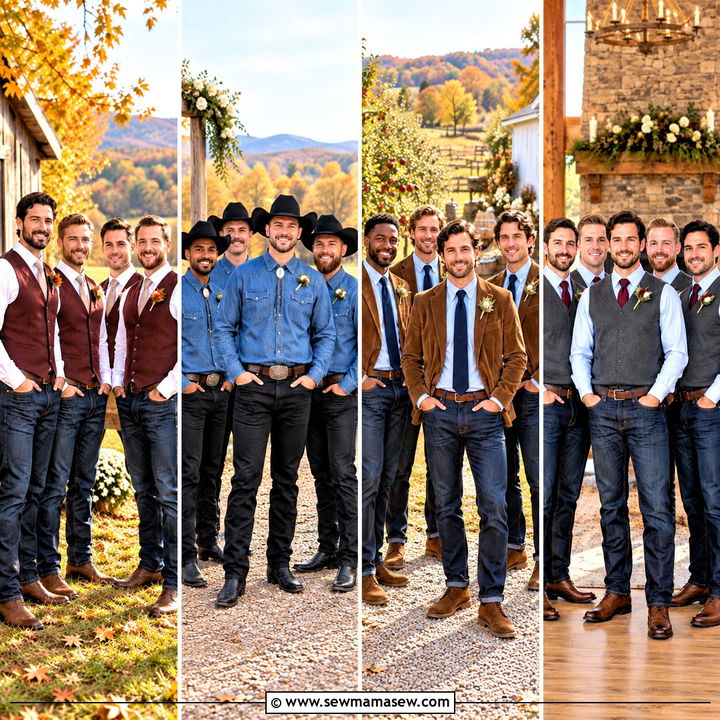
A barn in October asks something different of a groom than a hotel ballroom does. The floor might be gravel, the doors might stay open to a cold field, and the light is usually warm wood rather than white walls. That's why I steer rustic grooms toward earth tones, wool with visible texture and brown leather, and why a black tuxedo rarely looks at home there. Tweed, plaid, waistcoats and boots all have a place, but only once you know how formal the couple wants the day to feel and what the forecast says. A tailored suit fits a dressy barn reception; dark jeans with a wool vest fits a family-farm ceremony. The fifteen looks below run from one end of that scale to the other.
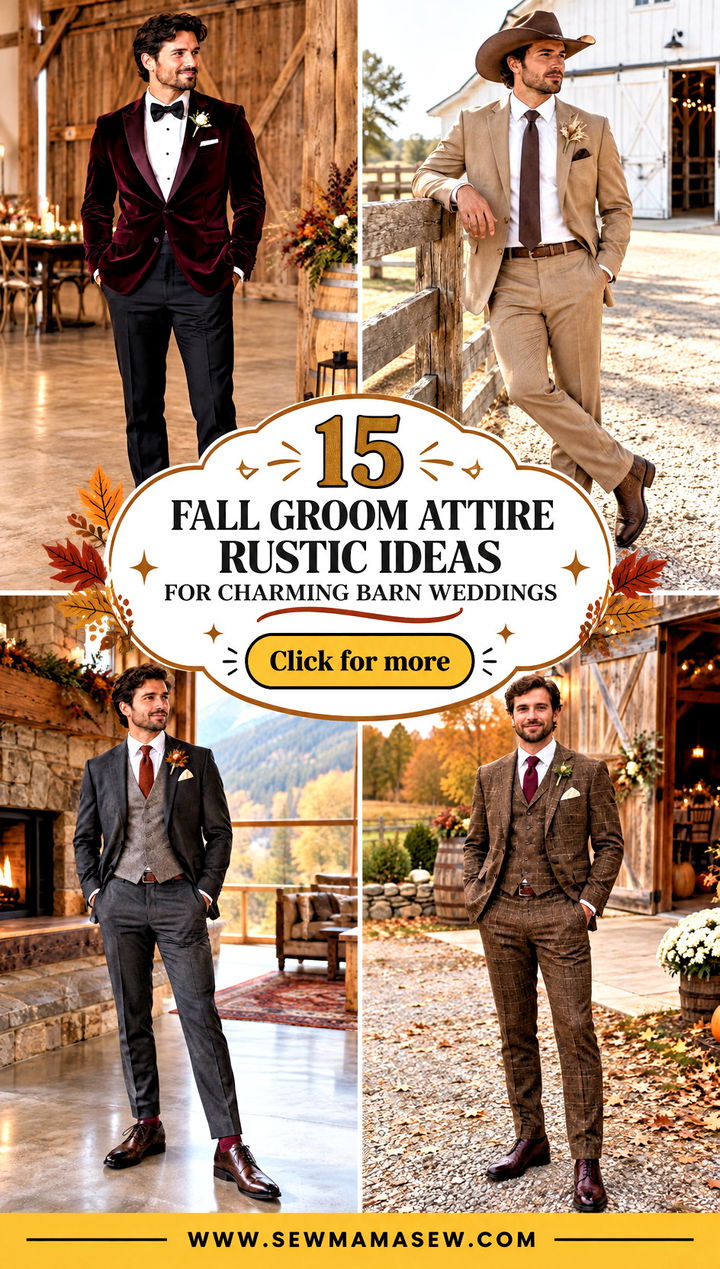
Reading How Dressy the Barn Really Is
Rustic covers a huge range, and the first thing I ask a couple is what the guests are being told to wear. The invitation wording, the time of day and the reception setup tell me more than the word barn ever does.
- Evening, plated dinner, chandeliers in the rafters: treat it as a formal wedding. A three-piece, a velvet jacket or a dark suit with a proper tie.
- Afternoon ceremony, buffet or family-style meal: a full suit still fits, but separates like a plaid blazer or a forest green jacket work too.
- Backyard, ranch or farm with picnic tables: this is the only level where vests without jackets, chambray or dark denim feel right.
- Guests told cocktail attire: the groom should sit one step dressier than his guests, never level with them or below.
Once that's settled, I check the forecast range for the date. A ceremony at three and a reception ending at eleven can cross twenty degrees in fall, and that gap decides whether tweed is a comfort or a burden by nightfall.
1. Brown Tweed Three-Piece Fall Groom Attire
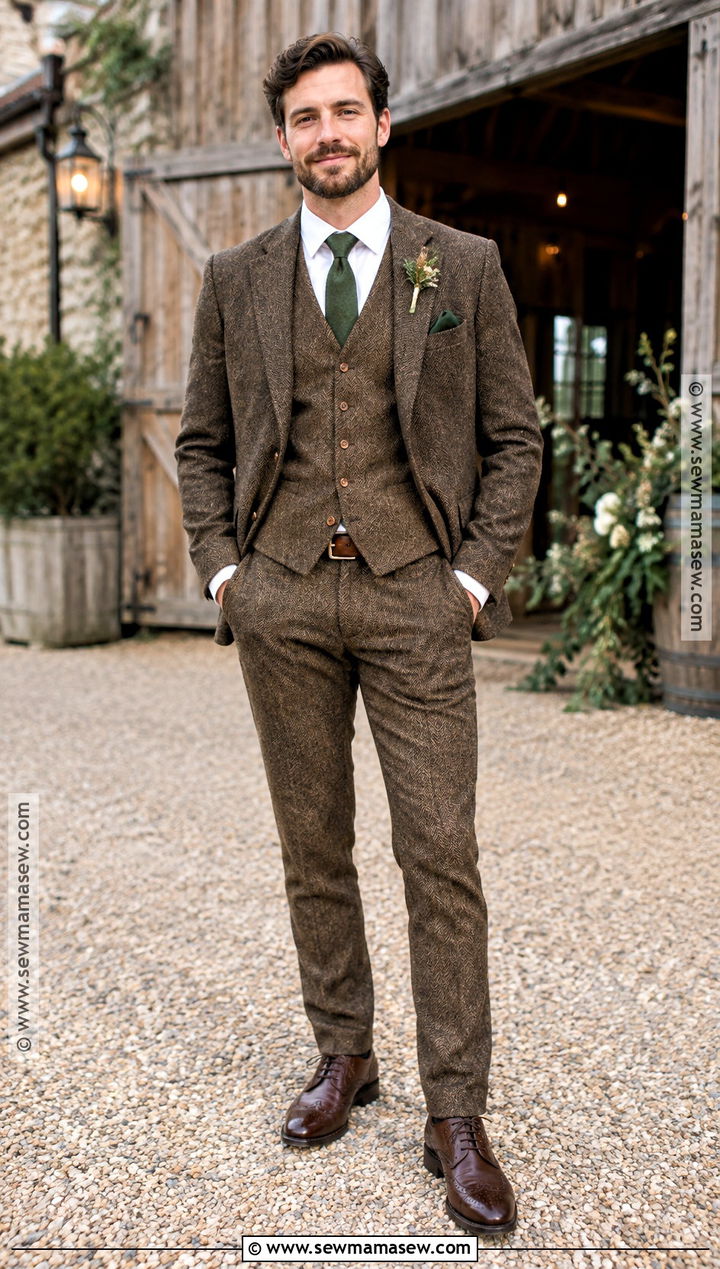
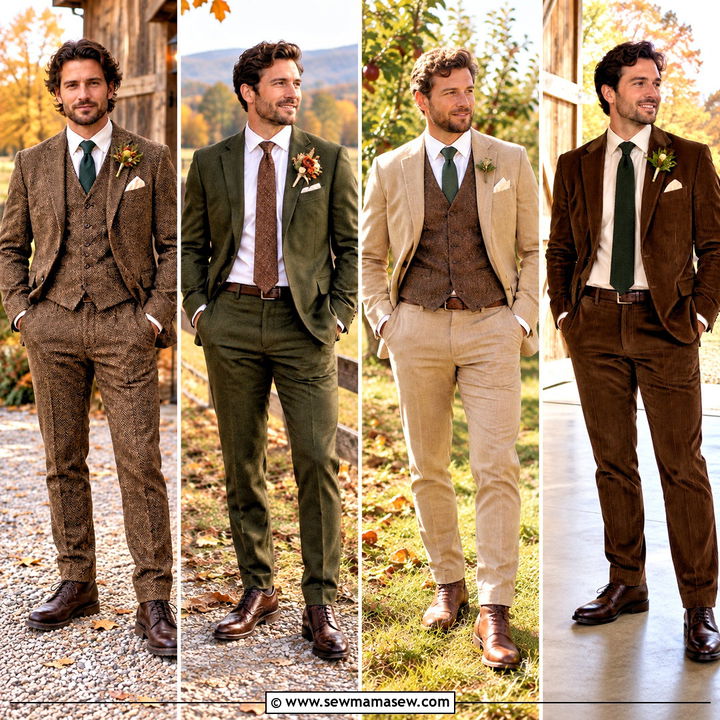
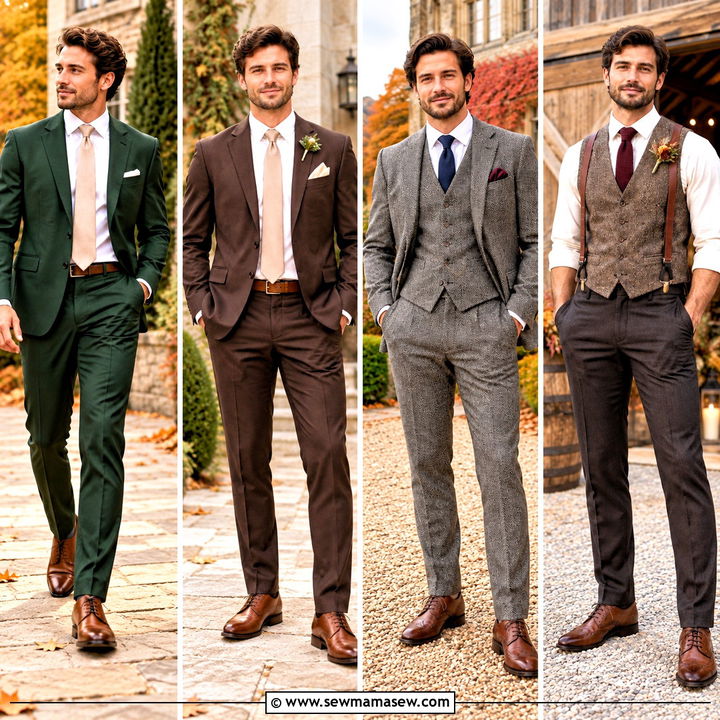
Brown tweed in three pieces is the look I reach for when a groom runs warm in spirit but the ceremony is outdoors in real cold. Herringbone in chocolate or tobacco reads as texture from across a field, which plain worsted never does. An ivory shirt softens all that brown better than bright white, and a forest green or burgundy tie gives the season one clear note. Dark brown brogues and a matching belt keep the lower half quiet. The thing I check first is the shoulder: tweed is thick, so a jacket that's even slightly too big looks like a blanket. Have the tailor take in the waist of both jacket and waistcoat, and expect the fabric to feel warm indoors once the dancing starts.
2. Olive Green Suit Fall Groom Attire
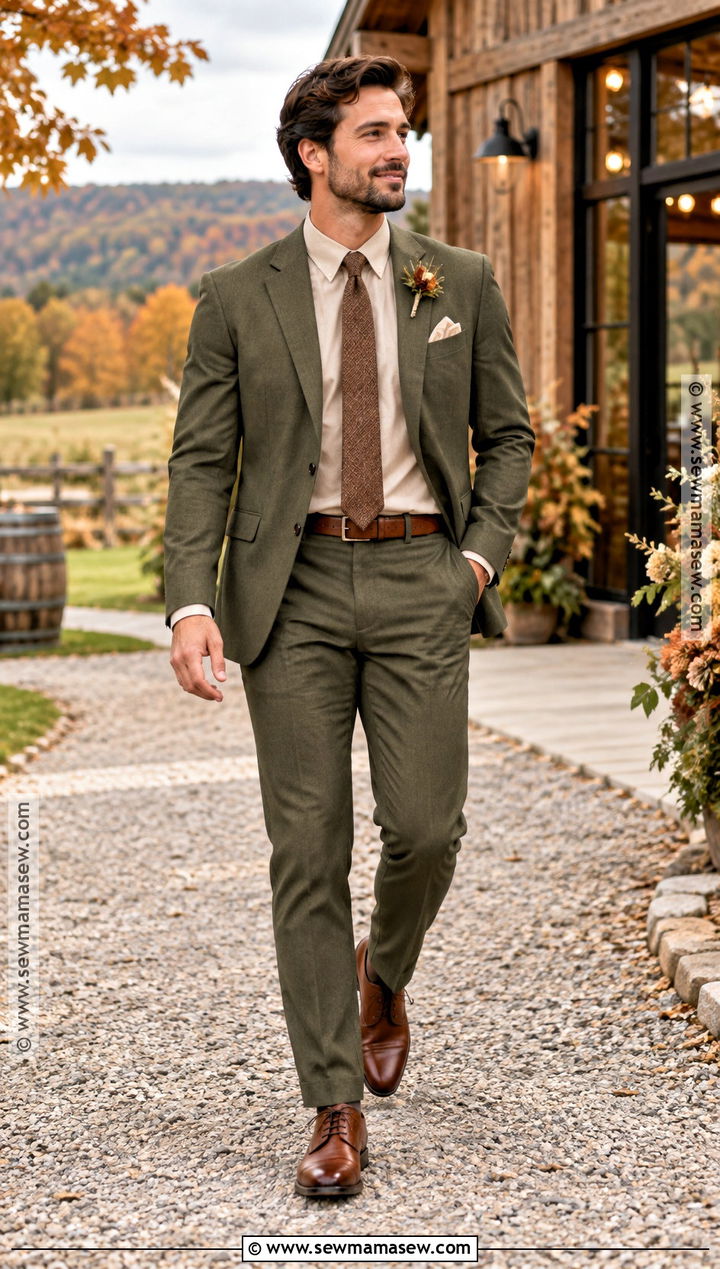
Olive is my favorite way to give a groom color without making him look like he borrowed a costume. The shade matters more than anything: a deep, muted olive photographs as a rich neutral, while a bright green turns yellowish under warm barn lights. I pair it with a white or light beige shirt and a textured brown tie, then let cognac derbies, a matching belt and a brown watch strap carry the warmth. A cream pocket square and a rust and eucalyptus boutonniere finish it. Add the matching waistcoat if the vows are outside; skip it for an indoor ceremony where it only adds heat. Olive sits comfortably next to terracotta, champagne or dusty rose on the bridesmaids, which makes the palette conversation with the couple easy.
3. Burgundy Velvet Jacket Fall Groom Attire
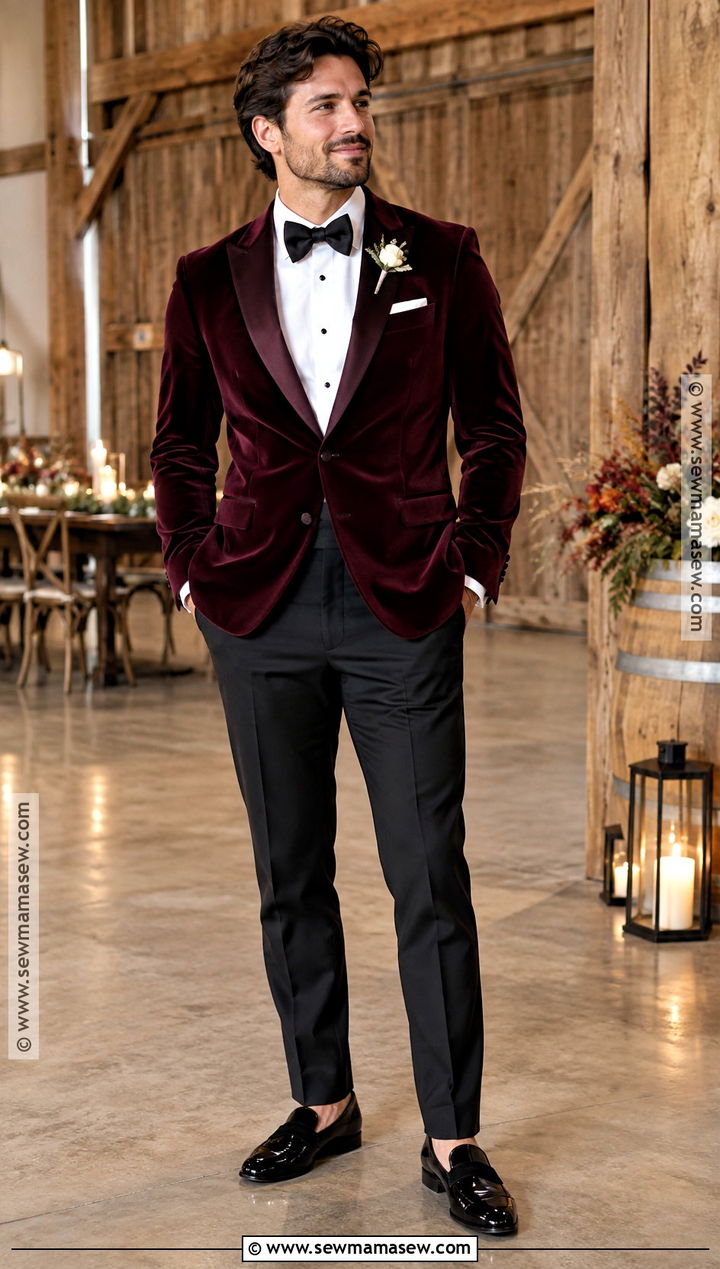
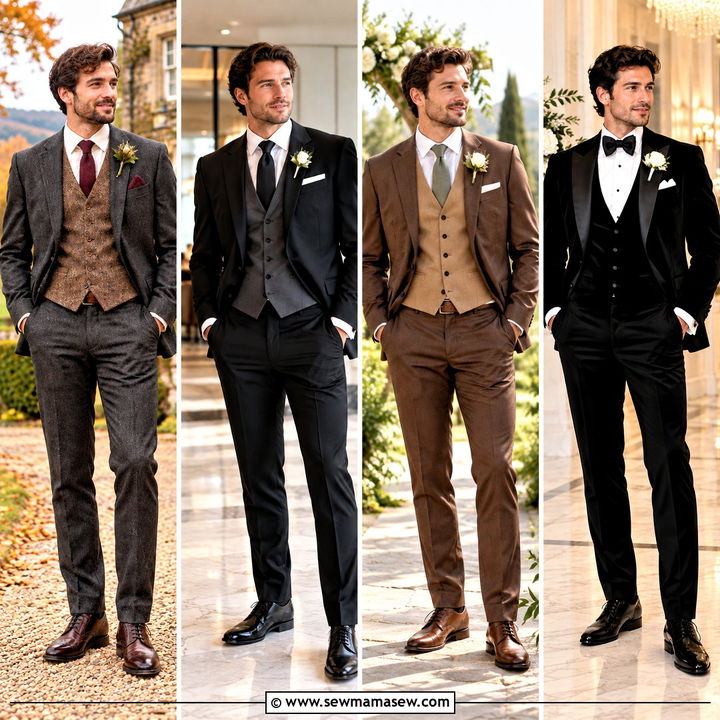
Burgundy velvet is an evening jacket, full stop. In a restored barn or lodge after dark, the pile catches candlelight and looks rich; at a noon ceremony in a field it can look out of place. Keep everything else plain: tailored black trousers, a smooth white shirt, black loafers or lace-ups, black socks and a folded white square. A black bow tie pushes it formal, while a dark floral tie relaxes it. I always warn grooms that velvet crushes, so the jacket should travel on a wide hanger and never be sat on folded. Fit across the chest matters more here than in any other fabric, because pulling at the button shows up as a shiny stress line in every photo.
4. Tan Suit With Cowboy Boots Fall Groom Attire
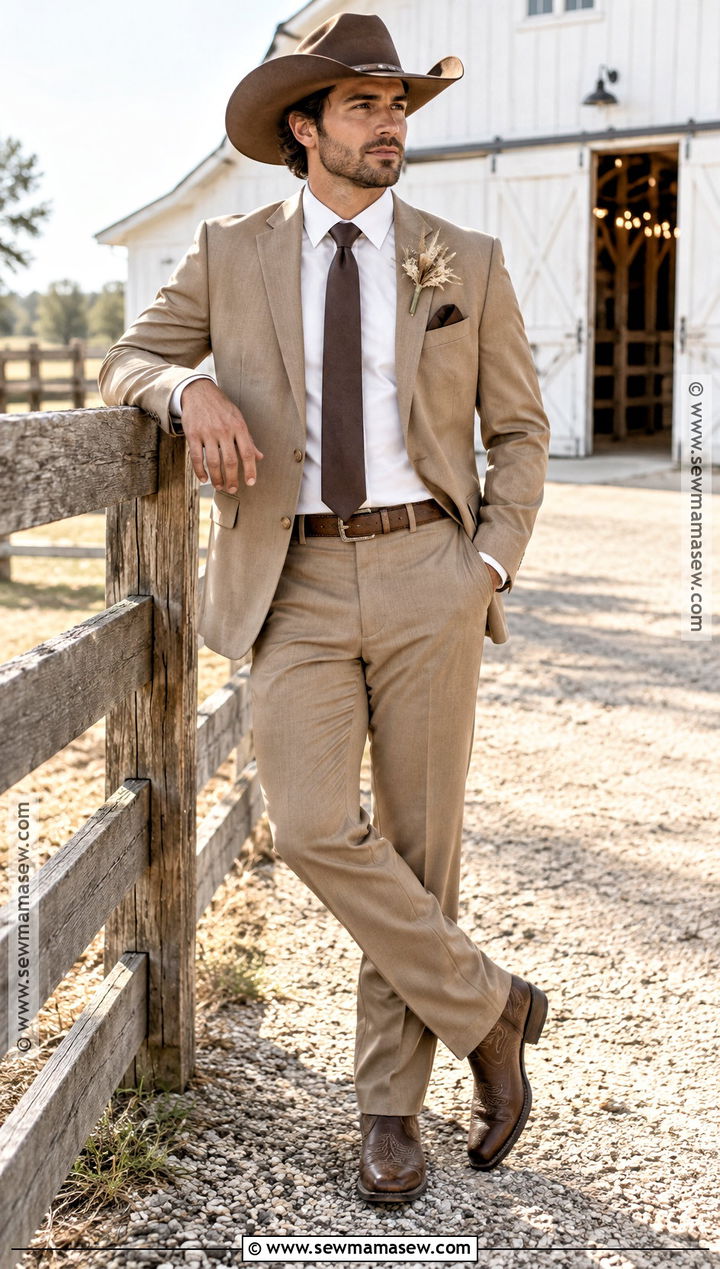
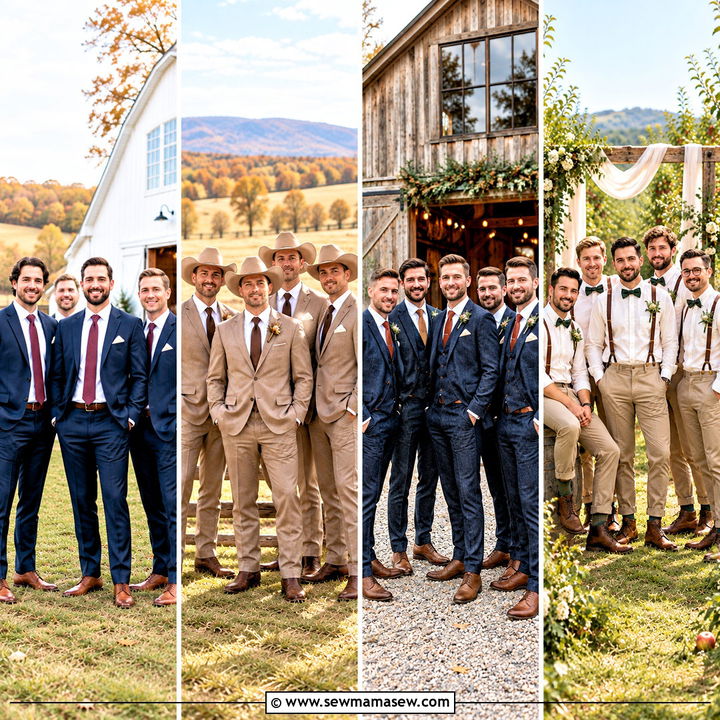
For a ranch or working-farm wedding, a tan suit with cowboy boots feels honest rather than themed. I prefer brushed cotton or a matte wool blend in medium tan; shiny fabric fights the boots. Wear it with an ivory shirt and a deep brown or rust tie. Boots and belt should be close in shade, and the boots need conditioning a few days before, not the morning of. The trouser hem is where this outfit succeeds or fails: it has to fall over the boot shaft with a single soft break, which usually means a slightly wider leg opening than a standard slim suit. A felt hat suits the Western direction, though I'd plan to take it off for the ceremony itself. Cotton does crease at the knee after sitting, so a quick steam before photos helps.
5. Charcoal Suit With Rust Tie Fall Groom Attire
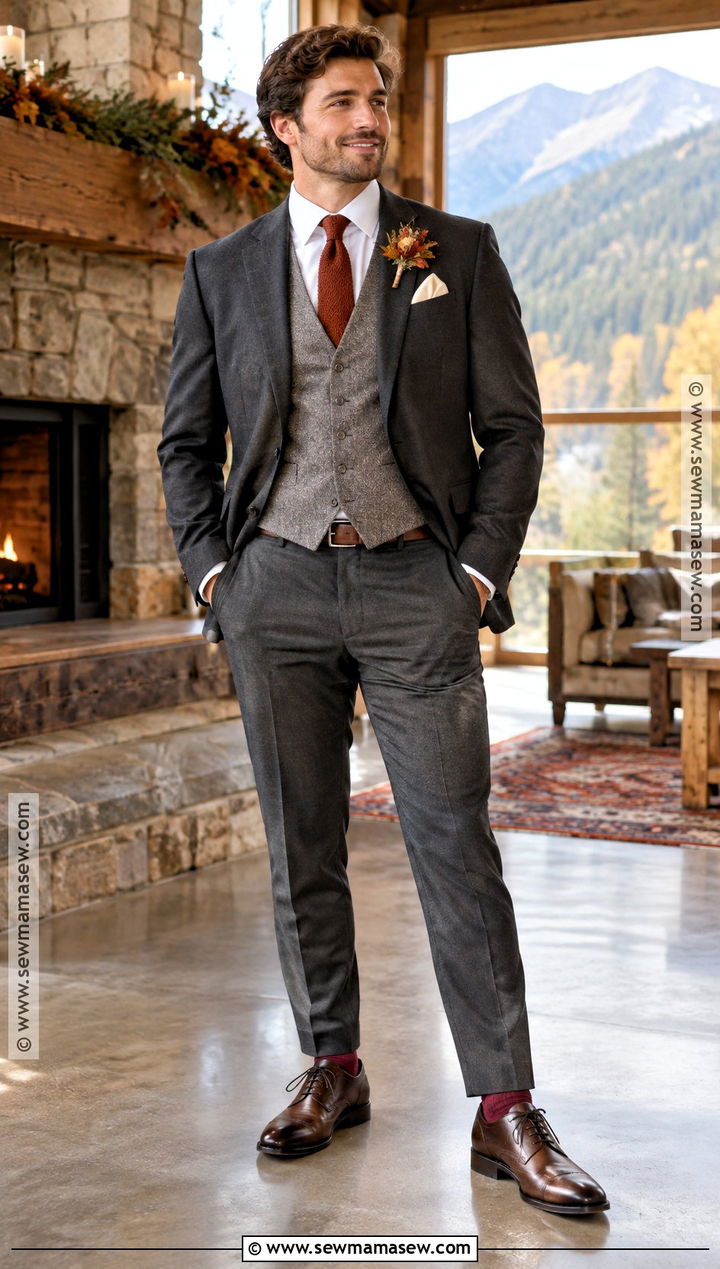
Charcoal is the safe bet I'm happy to recommend, because it does two jobs at once. It looks formal in photographs yet softer than black, and it takes warm color well. A white shirt with a rust knit or wool tie gives the fall accent; dark brown cap-toes, a matching belt and burgundy socks continue it quietly. If the ceremony is outdoors and the temperature drops into the forties, I add a gray or brown tweed waistcoat rather than an overcoat, since a vest stays on in photos and a coat usually doesn't. A boutonniere with dried foliage and one rust bloom ties back to the tie. On cut, I'd rather a groom choose comfort over the slimmest fit. A long day of hugging and dancing exposes a jacket that's too tight.
6. Navy Suit With Brown Leather Fall Groom Attire
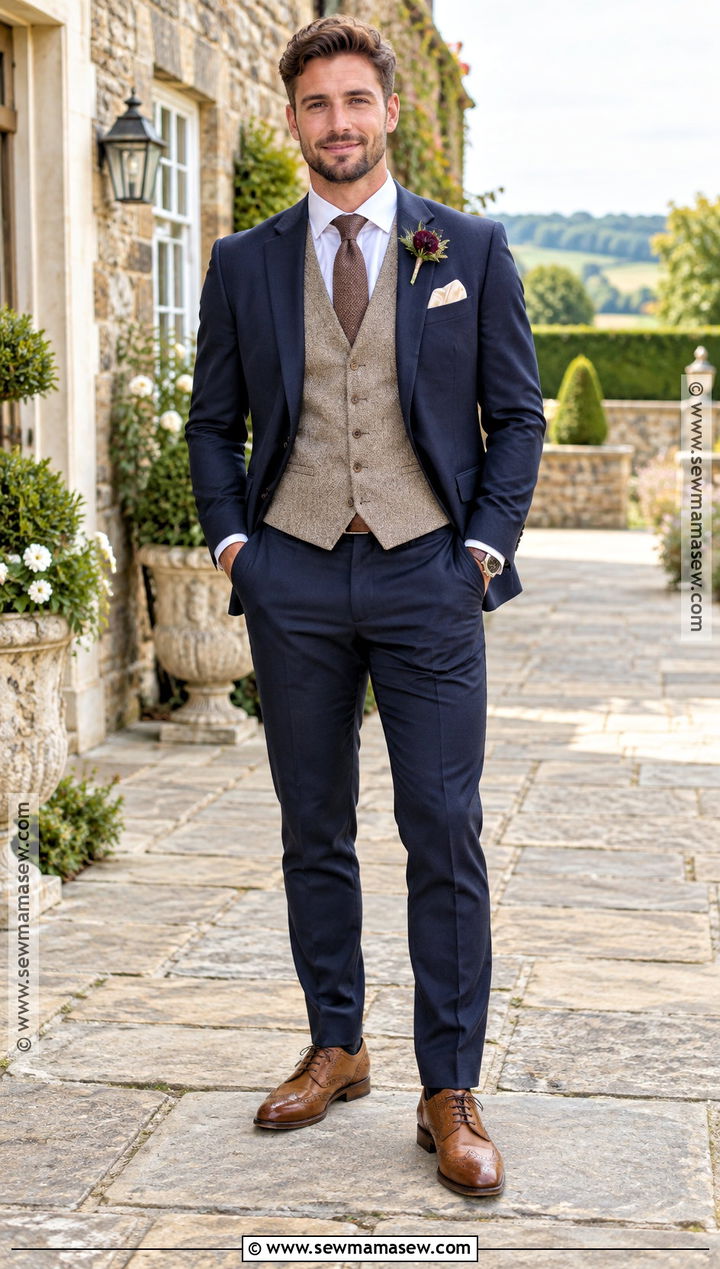
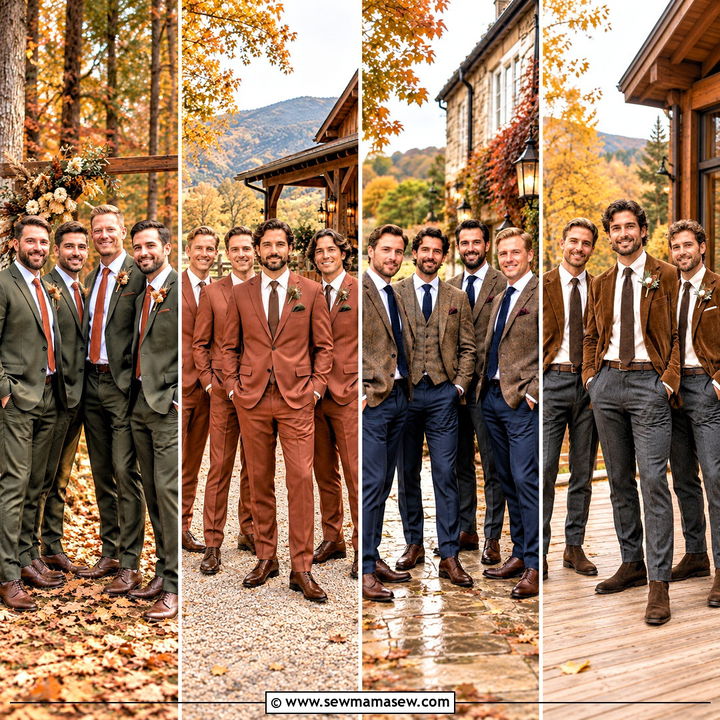
Navy and brown leather is a pairing that very rarely goes wrong. The navy keeps it classic for older relatives, and cognac brogues with a matching belt and leather watch strap bring in the barn warmth. Start with a well-fitted two-piece and an ivory or pale blue shirt, then add a brown textured tie or a small pattern that mixes navy, tan and burgundy. If the groomsmen are also in navy, a tan tweed waistcoat on the groom alone separates him at a glance without changing the group palette. An ivory square and a greenery boutonniere with one small burgundy flower finish it. This is the outfit I suggest when the ceremony is outdoors in the afternoon and the reception moves somewhere more traditional at night.
7. Plaid Blazer And Chinos Fall Groom Attire
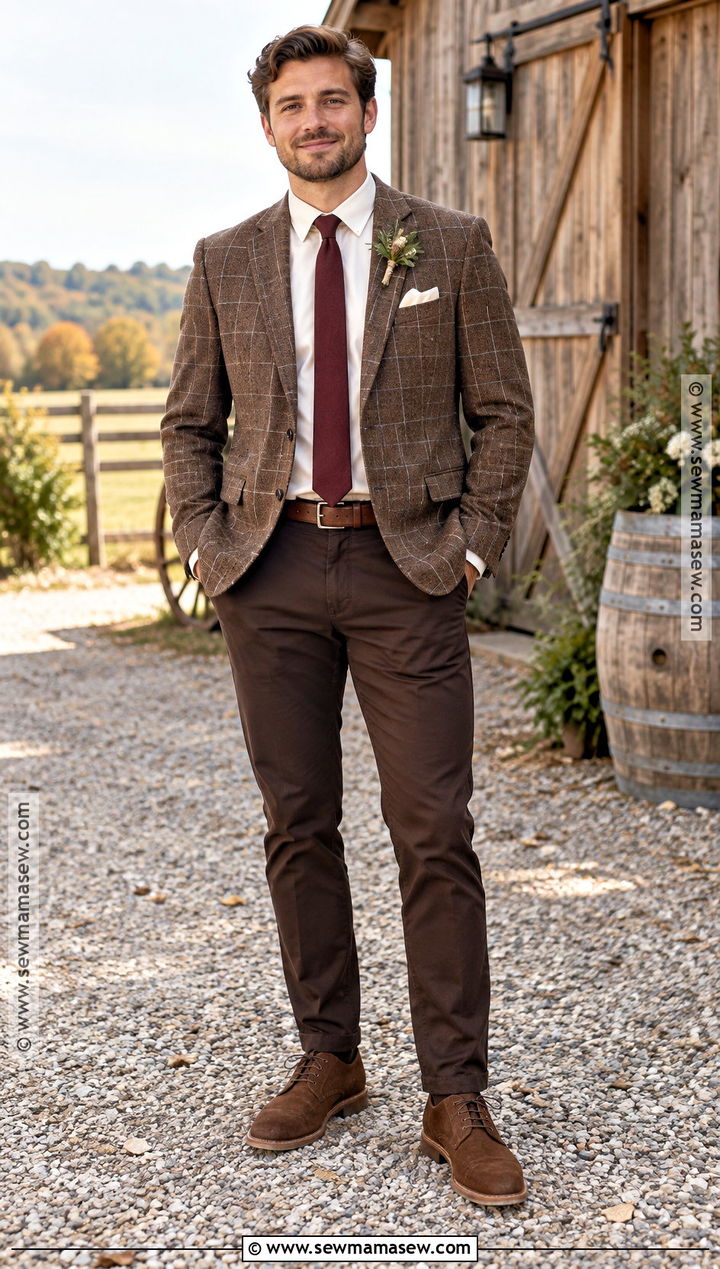
What if a full matching suit feels too formal for the venue? A brown or gray plaid blazer over tailored chinos still looks planned, provided the check is small. I keep grooms to a subtle windowpane or tight check, because a large plaid dominates photos and can make the shoulders look wider than they are. Under it go an ivory shirt, dark brown chinos and a solid burgundy or forest green tie. Brown suede derbies give the outfit more polish than you'd expect from separates, though suede and a dewy lawn don't mix well, so a protective spray beforehand is worth the effort. Match the belt to the shoes, add a cream square, and keep a wool waistcoat on hand for when the sun goes down. It suits daytime barns and backyard ceremonies best.
8. Tweed Vest And Dress Pants Fall Groom Attire
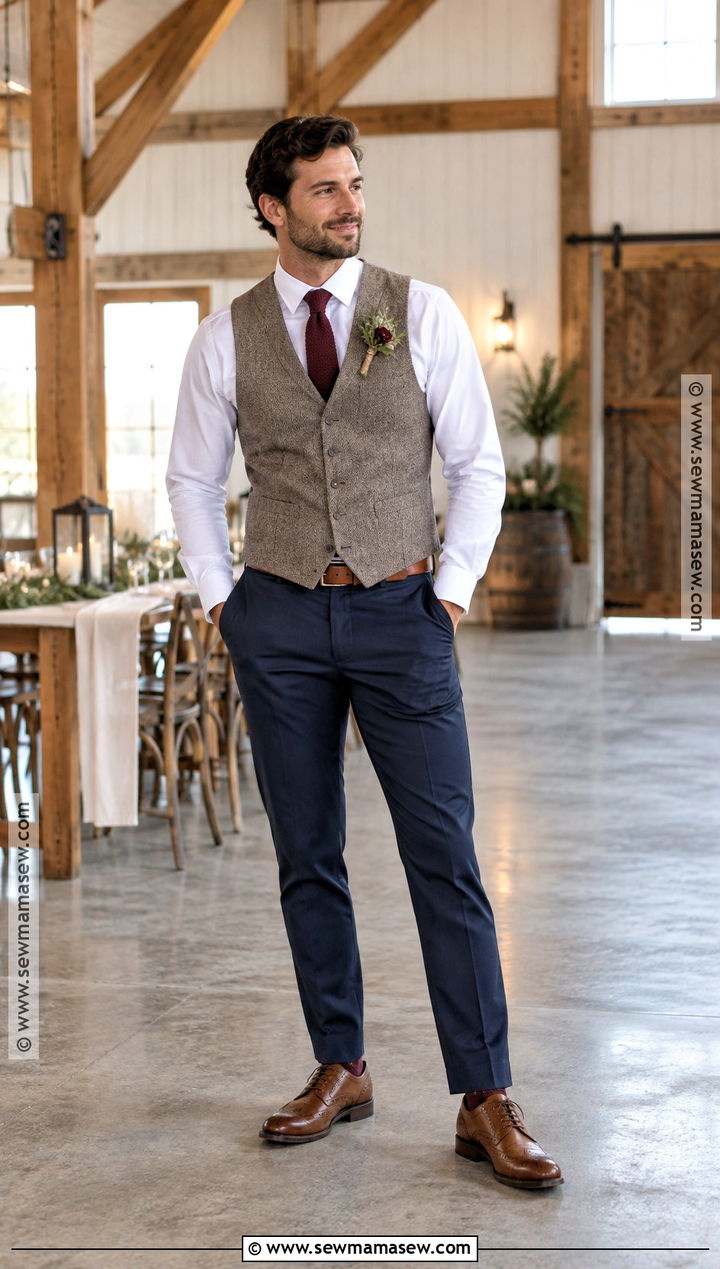
Plenty of grooms tell me they'll take the jacket off the minute the ceremony ends. If that's you, design the outfit around the vest from the start. A fitted brown or taupe tweed waistcoat over a white or chambray shirt, with navy or chocolate trousers, looks finished on its own. A knit tie or patterned bow tie in burgundy or rust adds the wedding note, and brown brogues with a matching belt keep it together. The two fit checks I make: the vest has to cover the waistband with no shirt showing between, and it must lie flat when he sits. Sleeves stay buttoned for portraits and get rolled neatly for the reception. In early fall, this is cooler and more comfortable than a full wool suit.
9. Dark Jeans And Wool Vest Fall Groom Attire
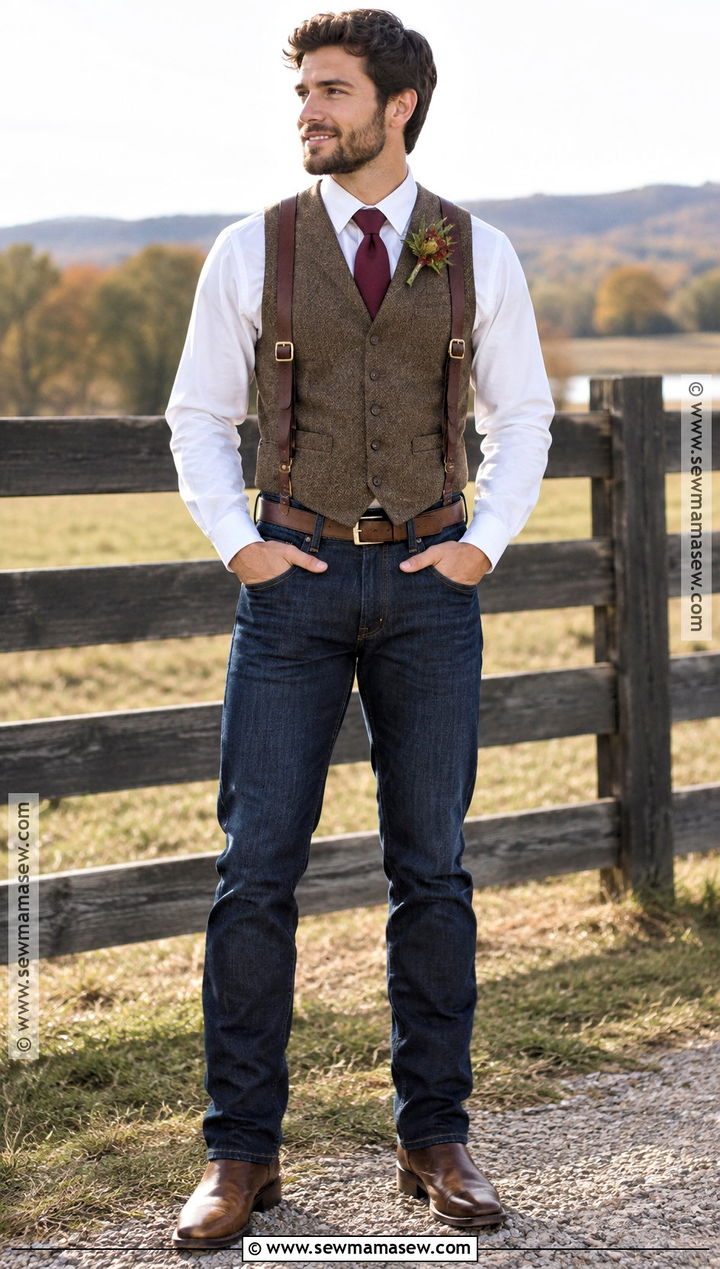
Denim at a wedding works only when nothing about it looks worn. I ask for a dark, unwashed indigo or solid black jean with no fading, whiskering or contrast stitching, fitted cleanly through the seat. Over a white button-down goes a tailored brown or charcoal wool vest, and the groom's role is marked by a burgundy tie, leather suspenders or a restrained bolo. Polished brown boots and a matching belt finish it. Here's my honest limit: this belongs at an informal ranch or backyard ceremony, not an evening event with a printed invitation. Raw denim can also bleed dye onto light fabric, so I'd wash or at least test the jeans before they sit next to a bride in ivory.
10. Rust Suit Fall Groom Attire
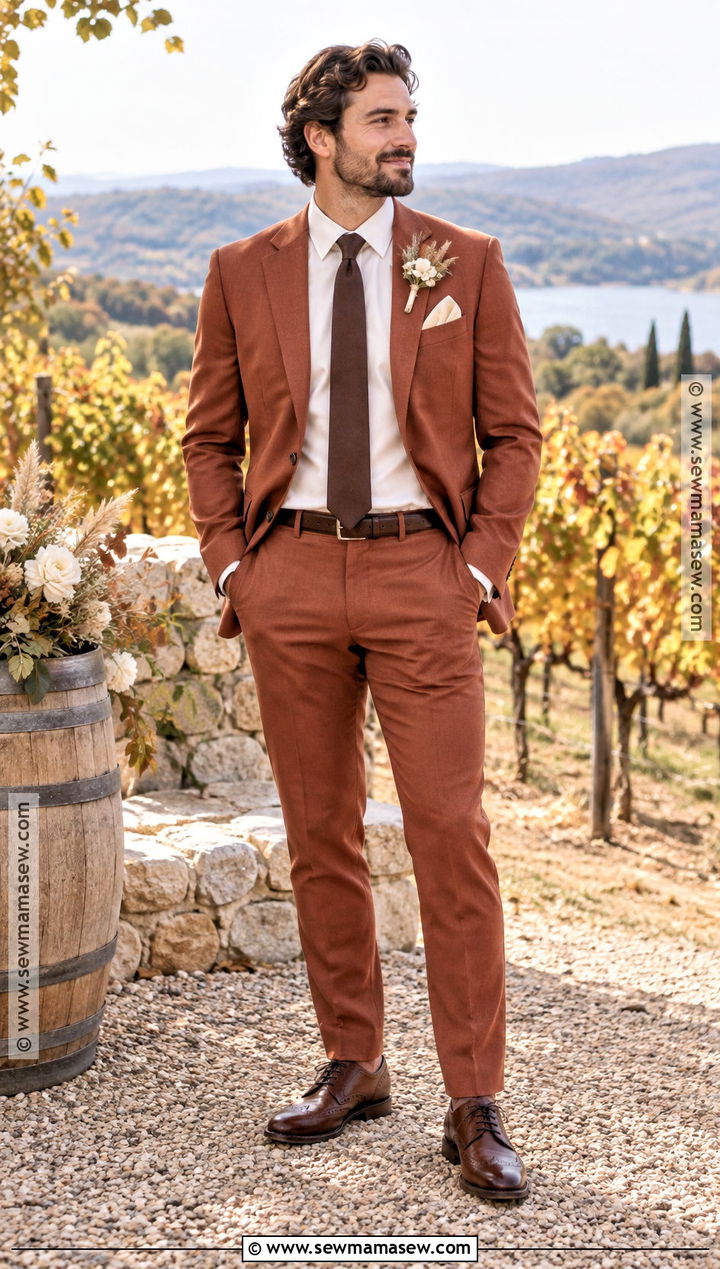
A rust suit is a bold move, so I keep everything around it calm. The shade should be muted clay or copper; true burnt orange can read loud in photographs and clash with a warm sunset. Pair it with an ivory shirt and a dark brown or black tie, and let chocolate loafers or brogues with a matching belt anchor the color. A plain cream square and a boutonniere of white flowers, dried grasses and dark greenery finish it without competing. No loud patterns and no second statement accessory. I'd recommend this mainly for grooms who are already comfortable in color; if he fidgets in it at the fitting, he'll fidget in it all day. When the tailoring is sharp, it looks deliberate in a vineyard, barn or open field.
11. Forest Green Blazer Fall Groom Attire
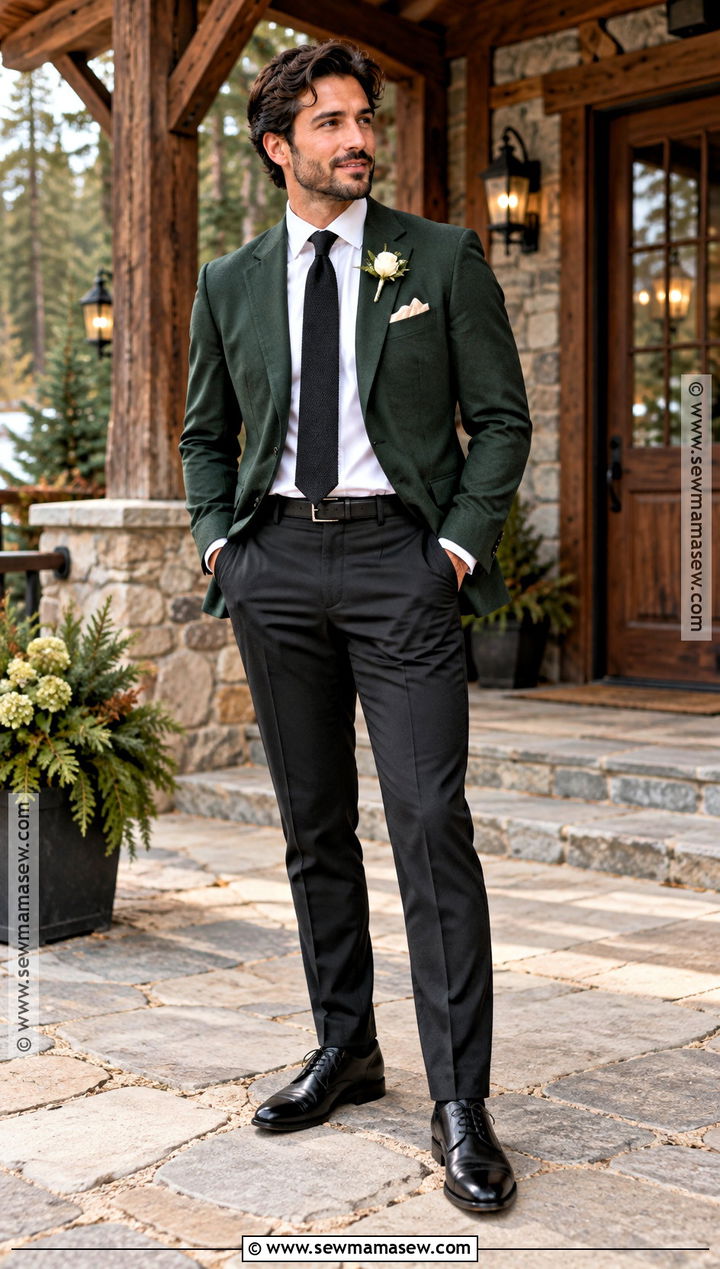
Forest green blazer, black trousers: the contrast here is strong, so I let the fabric decide the formality. Wool or brushed cotton suits a daytime woodland ceremony, while velvet moves it toward an evening lodge reception. A white shirt with a black knit tie or a muted floral that picks up green and burgundy works well, and black derbies with a matching belt keep the lower half sleek. Swapping in dark brown trousers and brown brogues softens it considerably. Keep the pocket square and boutonniere neutral so the jacket stays the focus. Odd-jacket outfits look accidental when the trousers are a near-match rather than a clear contrast, so make sure the black is truly black and the hems are tailored.
12. Brown Windowpane Suit Fall Groom Attire
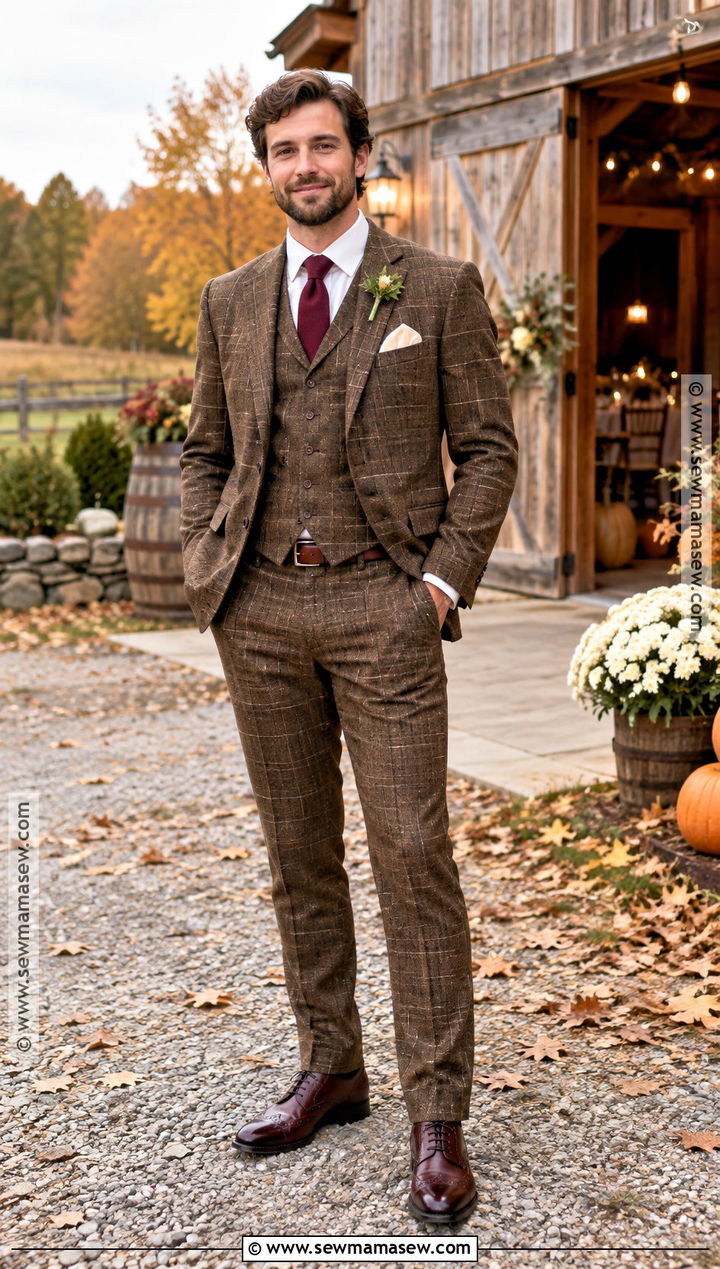
Windowpane is a pattern that rewards restraint. In a brown suit with a faint check in taupe or warm gray, it gives texture that suits an old barn without losing the structure a groom needs. The rule I follow is one pattern loud, everything else plain: an ivory shirt, a dark brown knit tie or a solid burgundy, and a solid pocket square. Oxblood or chocolate brogues with a matching belt complete it. Adding the waistcoat makes it right for a more formal ceremony; the two-piece feels easier. When I fit this suit, I check that the check lines meet at the shoulder seam and across the front; a good maker matches them, and mismatched lines are the first thing a sharp-eyed guest notices up close.
13. Chambray Shirt And Suspenders Fall Groom Attire
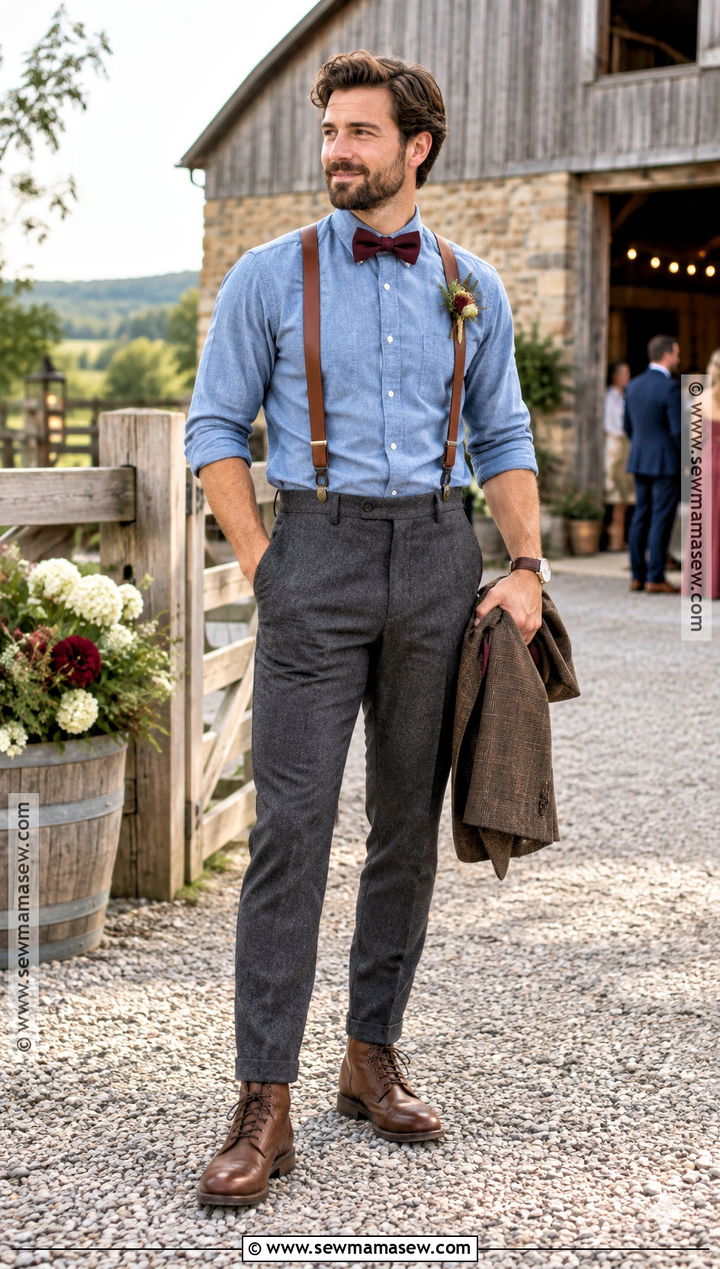
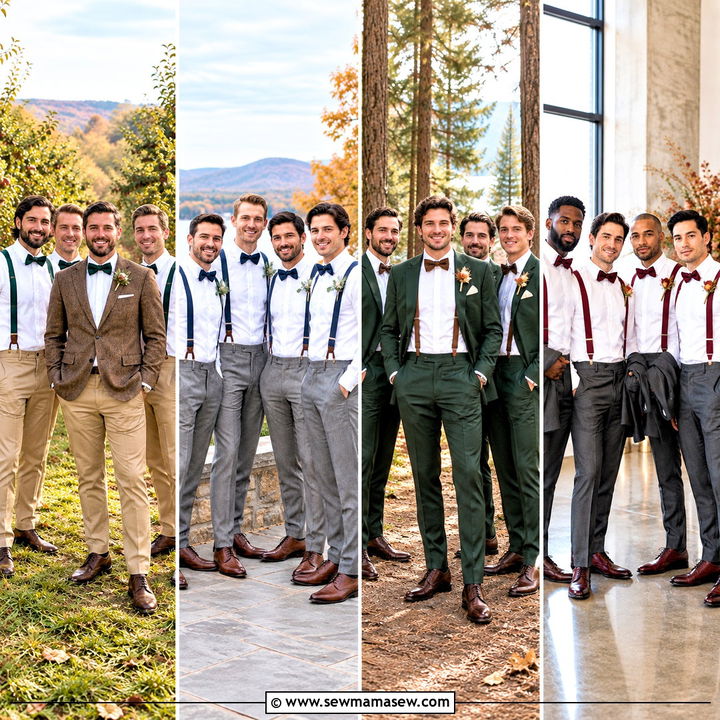
Chambray has a farm-friendly ease that suits an informal barn, but the shirt needs to be the dressy kind. Heavy workwear chambray looks like a day off; a smooth, fine weave reads as wedding. Pair it with brown or charcoal wool trousers and leather suspenders, and a burgundy bow tie or dark navy knit tie. Brown lace-up boots or brogues, matching socks and a leather watch keep it grounded. I insist on button-on suspenders rather than clips, because clips slip on wool and pop off during dancing. A tweed jacket can go on for the ceremony and come off later, and the boutonniere can be pinned to the suspender strap once it does. Without properly tailored trousers, though, the whole look slides toward casual.
14. Cream Knit Sweater Fall Groom Attire
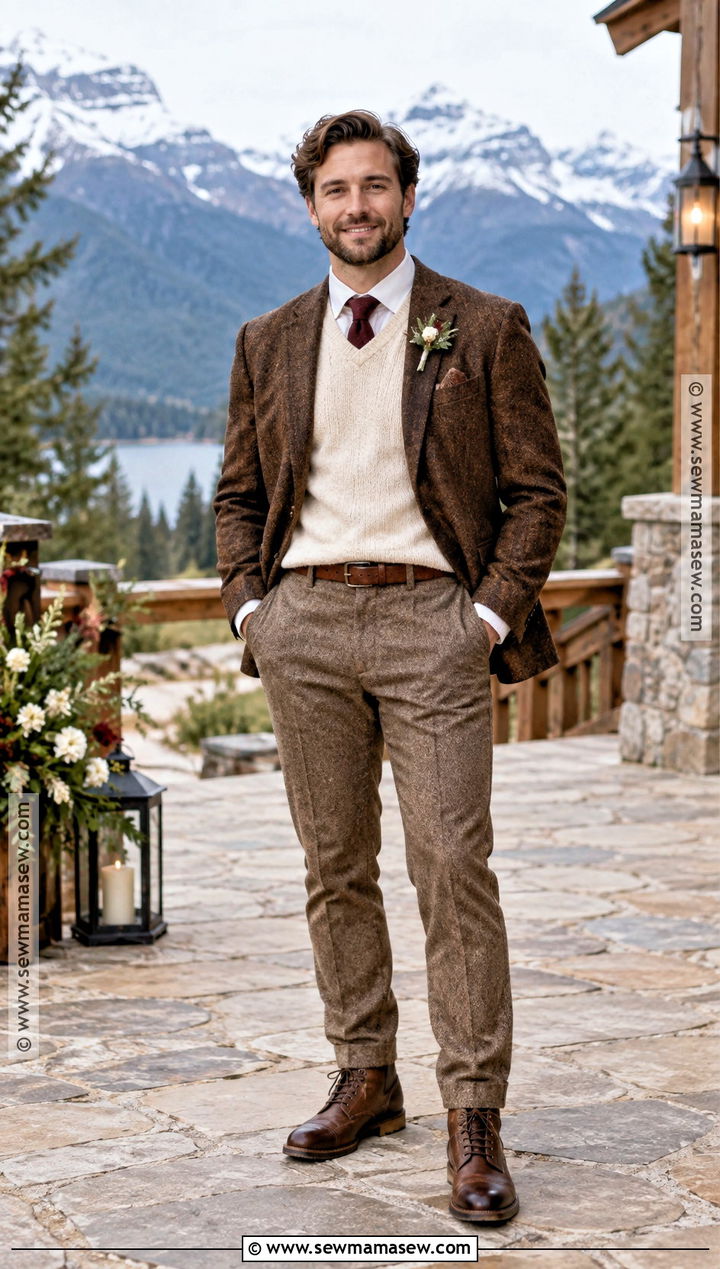
Late fall outdoors, a shirt and jacket alone can leave a groom shivering through the vows. My fix is a fine-gauge cream crewneck over a white collared shirt, worn under a tweed blazer with brown tweed trousers. Fine gauge is the important part: a chunky knit bunches under the jacket and hides his shape in photos. A burgundy tie can sit neatly beneath the sweater, or skip it and leave the collar open for a casual elopement. Dark brown boots, a matching belt and wool socks finish it. Pin the boutonniere to the blazer, never the knit, since a pin pulls loops in fine wool. I'd suggest this for a mountain lodge or a woodland ceremony where the cold is a given rather than a possibility.
15. Black Suit With Western Accessories Fall Groom Attire
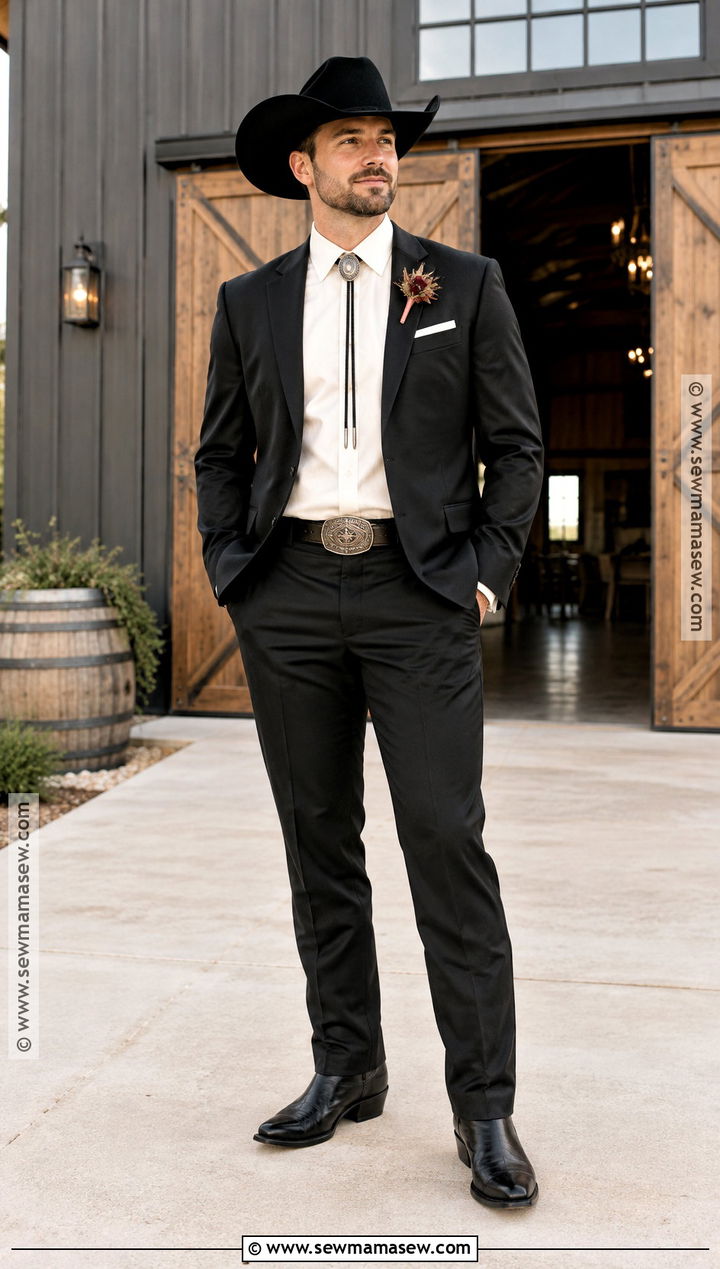
Black can work in a barn, but only when the Western touches are few and plain. Start with a matte black two-piece and an ivory shirt, which is kinder to most skin tones than stark white next to black. A simple silver-and-black bolo replaces the tie, or a black necktie keeps it quieter. Polished black cowboy boots with minimal stitching and a matching belt follow. A black felt hat is lovely for outdoor portraits or a ranch entrance. Finish with a white square and a boutonniere of dried greenery, wheat and one burgundy bloom. Once you add fringe, a big buckle and a patterned shirt, it tips into costume. I'd keep this for an evening barn wedding with a moodier palette.
Gravel, Wet Grass and Hay: Shoes for a Barn Day
Groom shoes at a rustic venue get more abuse than at almost any other wedding. I walk the route in my head: parking area, ceremony spot, photo field, barn floor. Then I pick shoes for the worst surface on that list.
- Smooth leather soles slide on wet grass and polished barn boards. A cobbler can add a thin rubber half-sole in a day or two, and it's invisible from above.
- Suede marks with water and darkens in dew. Spray it with a protector well ahead and keep a suede brush in the getting-ready bag.
- Boots of any kind need to be broken in. Wear new ones around the house for an hour at a time over a couple of weeks, with the socks he'll wear on the day.
- Gravel scuffs toe caps. A tin of matching polish and a soft cloth handed to a groomsman saves the close-up photos.
Leaving Enough Time for Tweed and Wool Alterations
Heavier fall fabrics are slower to alter than a summer suit, and tailors get busy in the run-up to October. I tell grooms to have the suit in hand around two to three months out, so the first fitting can happen with time to spare.
Bring the actual shoes, belt and shirt to every fitting. Trouser length over a cowboy boot is very different from length over a brogue, and a waistcoat can only be judged against the real waistband. The final fitting should be a week or two before the wedding, close enough that nothing changes and far enough that a small fix still fits in.
One more thing I check with wool in particular: sit down, raise both arms and reach forward as if hugging someone. If the jacket lifts off the collar or the trousers pull at the thigh, ask for more room now. A groom spends the day doing exactly those movements.
Settle the Venue's Formality, Then the Fabric
Every outfit above comes down to three decisions: how formal the day is, how cold it will be, and what the groom will be standing on. I start with one main color or texture and build the shirt, tie, shoes, belt and boutonniere around it. Fit still matters at a relaxed country wedding, maybe more, because heavy fall fabrics show every bit of excess. From a dressy barn to a backyard with hay bales, there's a groom look here that fits the place and the season without feeling like a theme.
Related posts: