Retail clothes have a harder job than most office clothes. They need to look tidy at the register, then survive an hour of crouching in the stockroom, reaching to top shelves and walking the floor on concrete. When I build a work wardrobe for a shift job, I test every piece against those movements before I think about color. Tailored trousers with stretch, easy knits, loafers and flats, and dresses you can bend in all pass that test. Every look below still has to fit your store's dress code, the temperature on your floor and any footwear rules, so treat these as formulas you can adjust rather than uniforms.
Your Feet Decide the Rest of the Outfit
Every retail wardrobe I put together starts with the shoe, because a shift spent standing on a hard floor punishes the wrong pair within a few hours. A shoe can look professional and still be the reason you're limping by the end of the day. Here's what I check before anything else goes on the list.
- Cushioning plus support: soft foam alone isn't enough. The shoe should resist twisting when you wring it, and the heel counter at the back should feel firm.
- Room for swelling: feet expand over a long shift. Try shoes on later in the day, and leave a little space at the toes.
- Grip: stockrooms have dust, spills and slick concrete. A rubber sole with some tread beats a smooth leather sole every time.
- A low, wide heel: a small lift can be easier on the calves than a completely flat sole, but anything narrow or high is a fall risk on a step stool.
If you work several shifts a week, two pairs you alternate will last longer than one pair worn daily, because the cushioning gets time to recover and the lining dries out fully. Check the insoles every few months too. Once the foam has flattened under the ball of the foot, a replacement insole can bring an otherwise good shoe back.
1. Blazer, T-Shirt, And Black Pants Retail Work Outfit
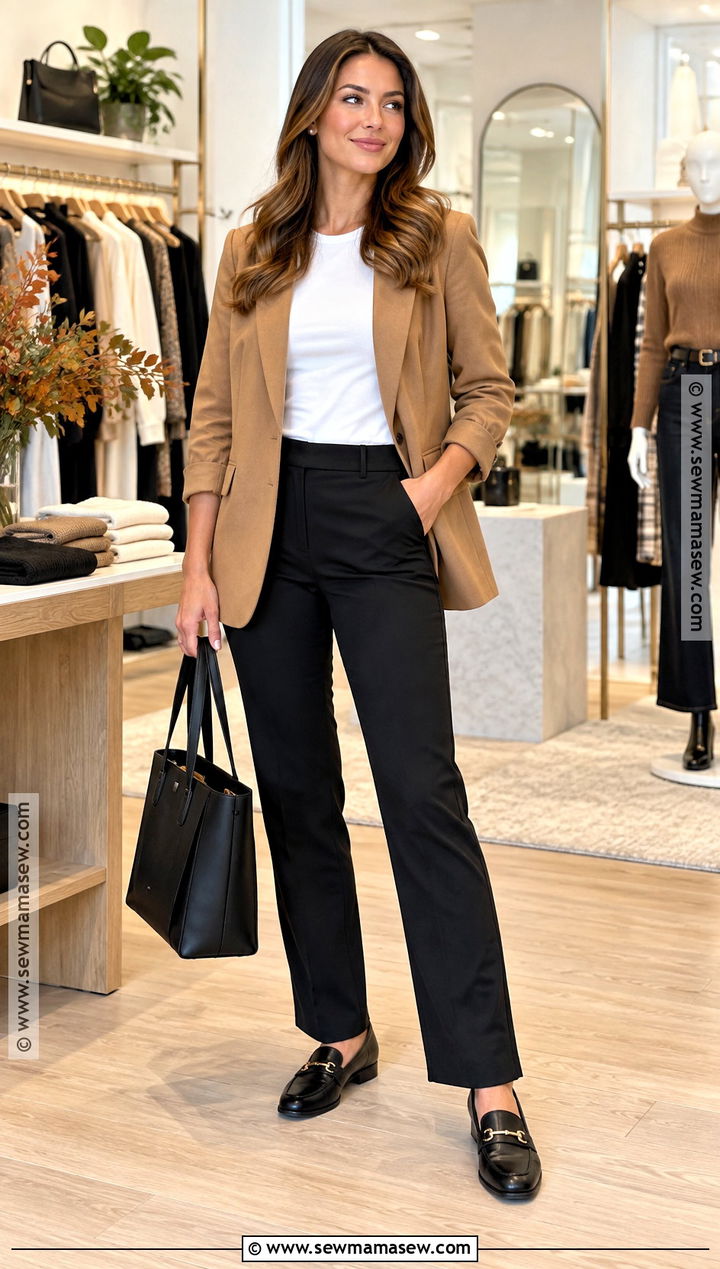
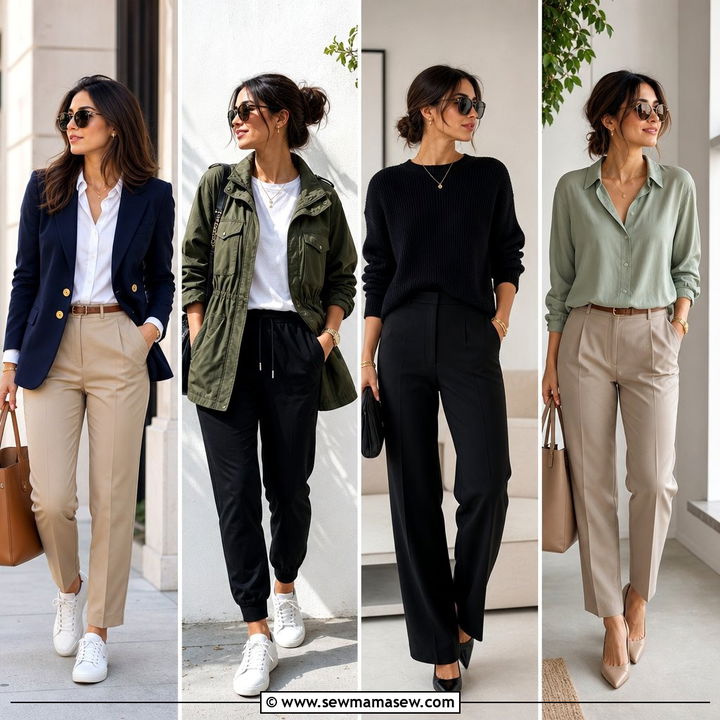
An unstructured blazer is the quickest way to make a tee and black pants look like work clothes. Unstructured matters: no stiff shoulder pads, so you can reach a shelf without the whole jacket riding up to your ears. I raise both arms over my head in the fitting room before buying one. Underneath, a fitted cotton or moisture-wicking tee in white, cream, gray or your store's color. Straight-leg ponte pants stretch but still look tailored. Cushioned loafers, small studs and a light crossbody for the commute finish it. A camel, olive or burgundy blazer adds a fall note without distracting customers.
2. Cardigan, Button-Down, And Ankle Pants Retail Work Outfit
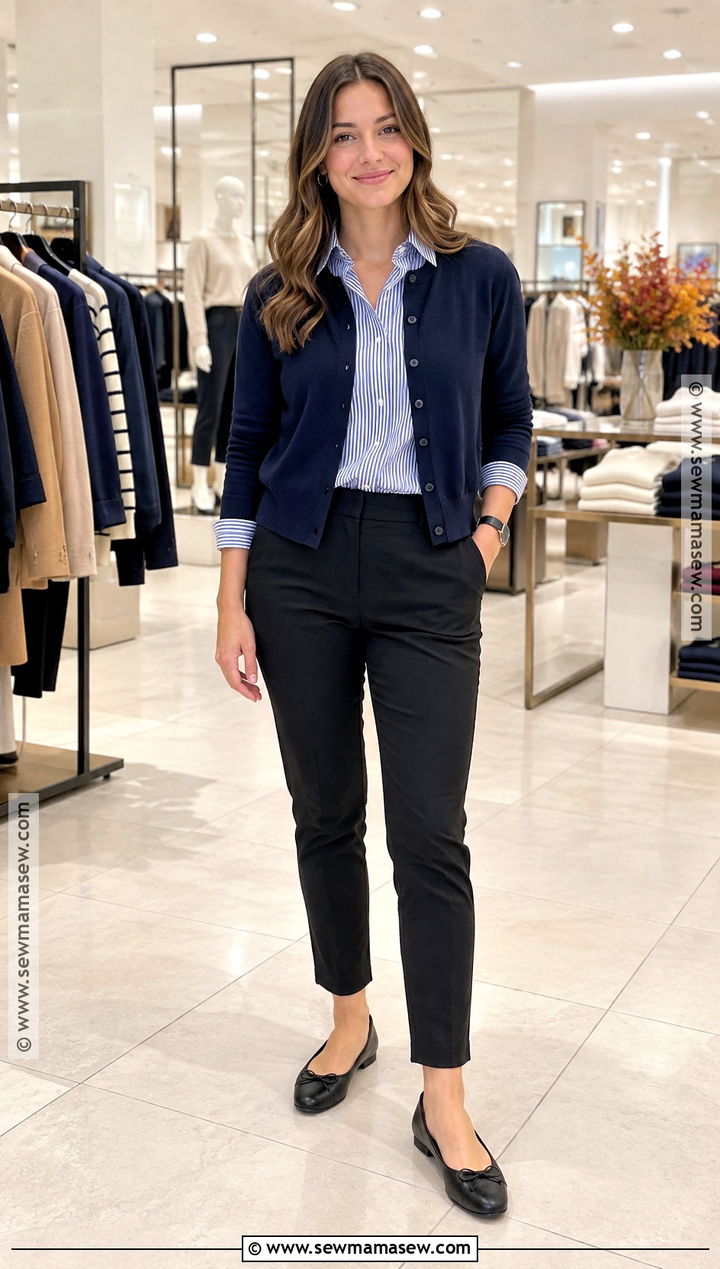
Stockrooms run cold and sales floors run warm, so a removable layer is not optional. Start with a breathable striped or solid button-down and add a lightweight cardigan that stops at the waist; longer ones catch on fixtures when you squat. Wear it open for a relaxed look or button the middle to define the waist. Stretch ankle pants should stay put without hitching up every few minutes. Clean leather sneakers or supportive ballet flats handle long standing. Navy, cream, rust and chocolate make an easy fall palette. If you wear a name tag or lanyard, keep the collar flat so the tag sits straight instead of twisting.
3. Knit Polo And Wide-Leg Trousers Retail Work Outfit
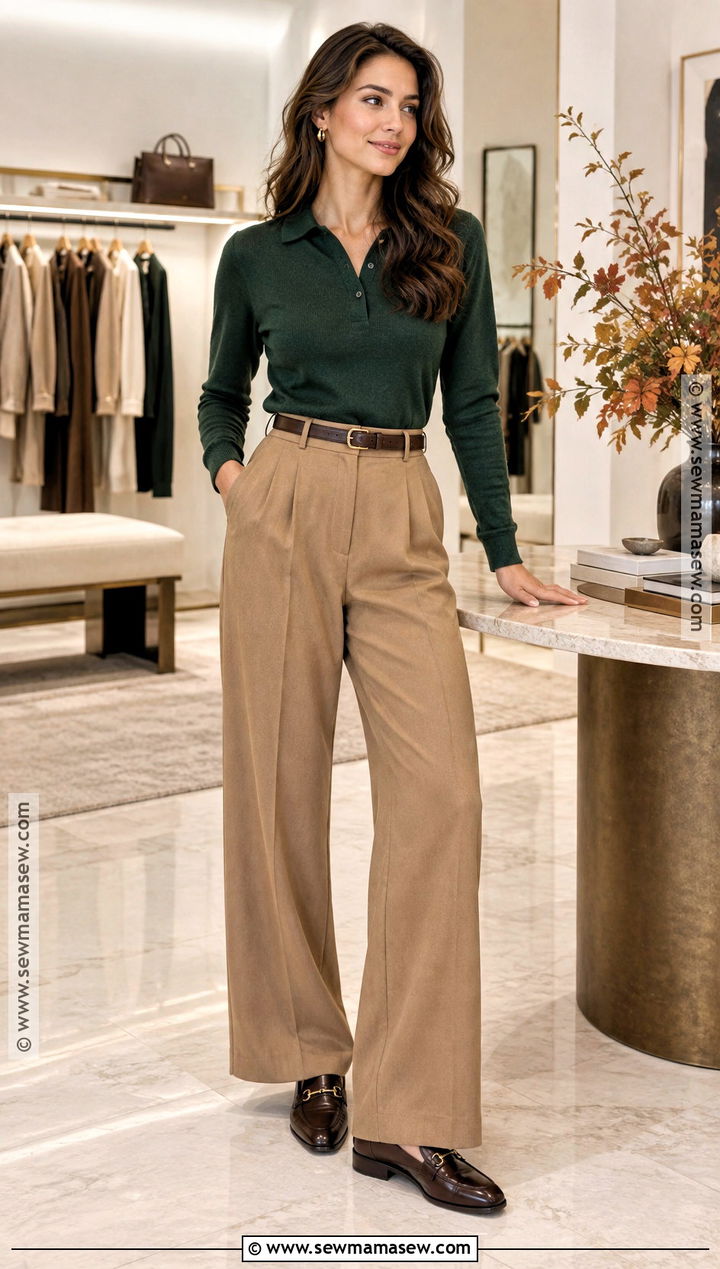
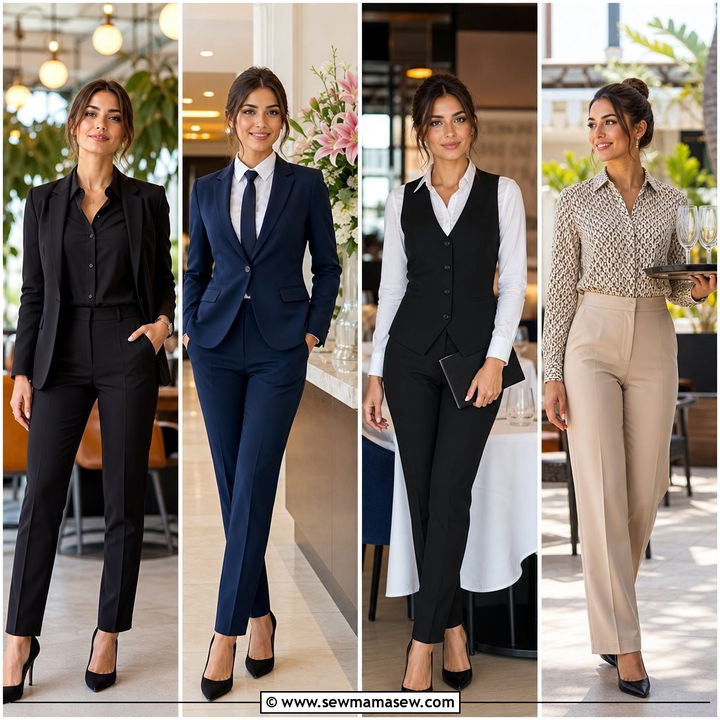
A knit polo has a collar's neatness and a sweater's comfort. Pick a fine-gauge knit; a chunky one turns into a sauna on a busy Saturday when the doors keep opening. Tuck it into high-rise wide-leg trousers with a flexible waistband and room through the hip and thigh. Hem length is a safety issue on a shop floor: the trousers should clear the floor by a finger's width in your work shoes, or the heel will catch the hem on a step stool. Low loafers or cushioned Mary Jane flats, a slim belt and small earrings complete it. Forest green, burgundy, camel and navy read as fall without looking costumey.
4. Sweater Vest, Oxford Shirt, And Straight Jeans Retail Work Outfit
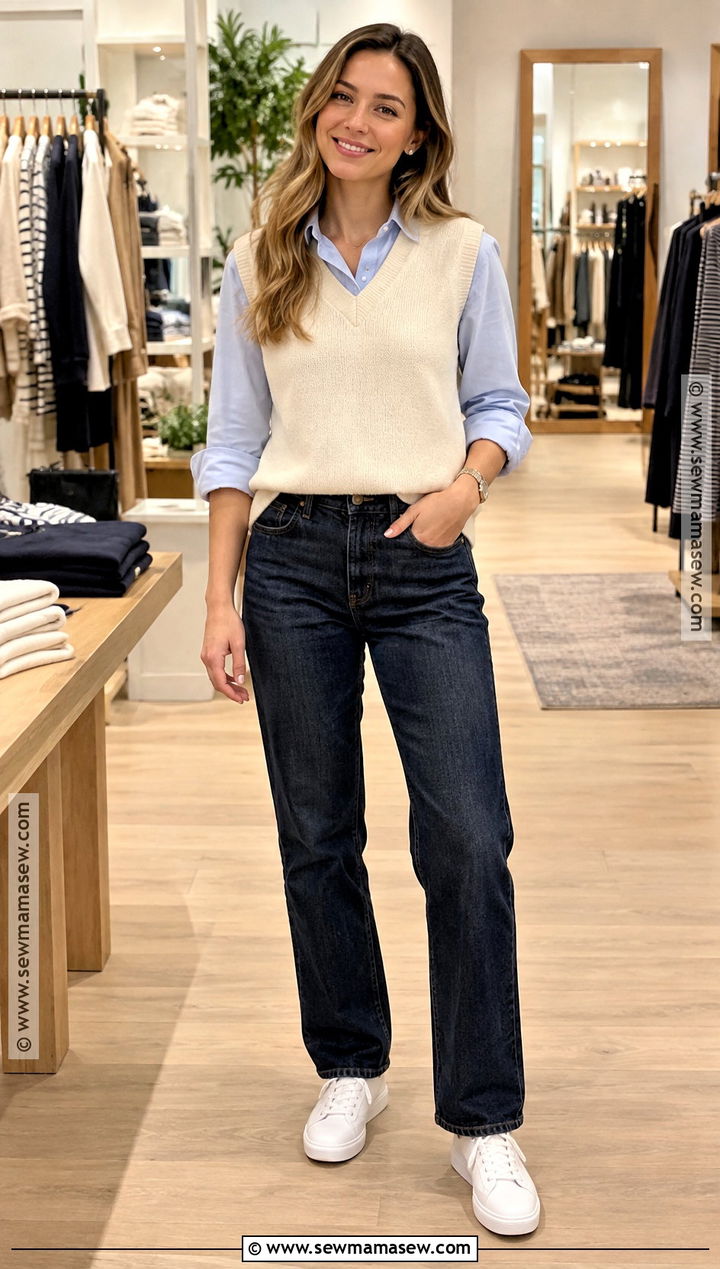
If your store allows denim, straight-leg jeans with an Oxford shirt and sweater vest look approachable without sliding into weekend. Dark indigo or clean black reads as work denim; anything ripped does not. A sweater vest is a clever layer for retail because it warms the core and leaves the arms completely free. Choose one with a bit of ease so it doesn't pull across the back when you reach. Roll the Oxford cuffs once if allowed. White leather sneakers, loafers or supportive lace-ups, depending on the rules. Oxford cloth softens with every wash and resists wrinkling better than poplin, which matters when you're folding all day.
5. Midi Shirt Dress And Ankle Boots Retail Work Outfit
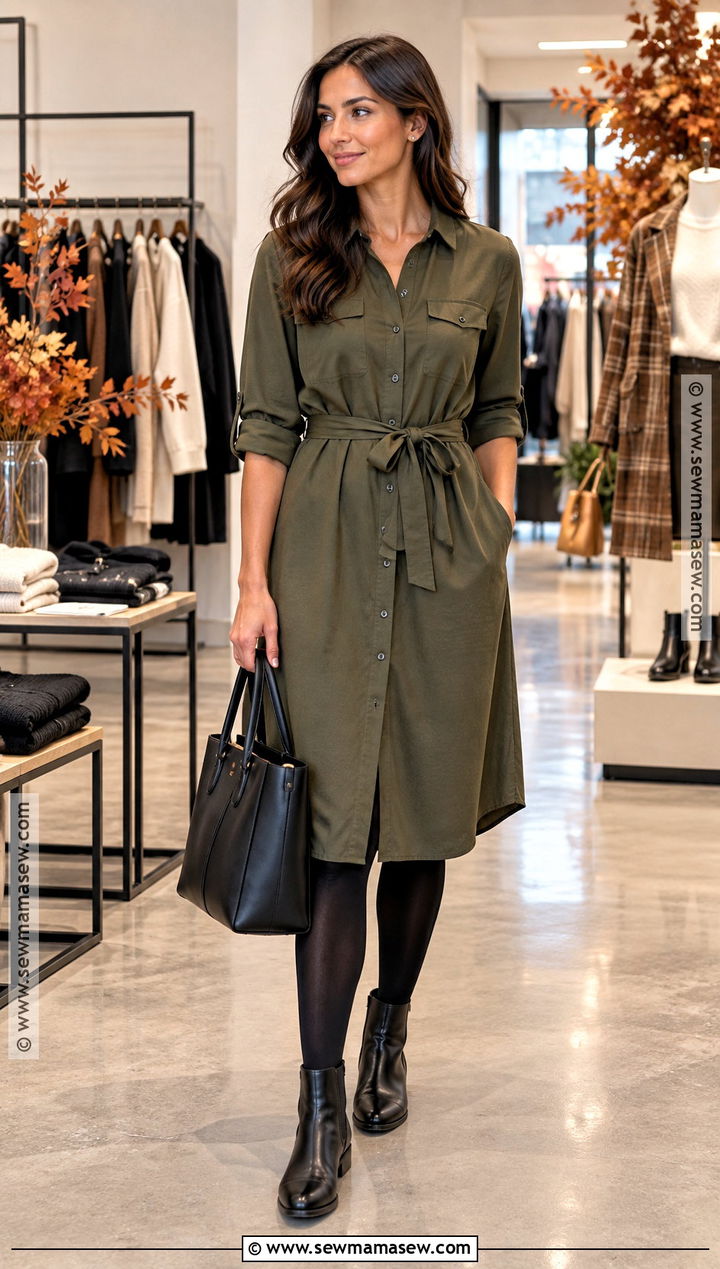
A midi shirt dress is the one-piece answer for mornings when there's no time to think. Before I recommend one for retail, I check three things: machine washable, a little stretch, and a skirt wide enough to take a full stride. The tie belt is optional. If the neckline gaps when you lean over a counter, layer a fitted camisole underneath. Opaque tights and flat or low-heeled ankle boots with cushioned soles handle colder days. Olive, navy, rust and small geometric prints hide minor marks from boxes better than solids. Bend and reach in front of a mirror to confirm the hem and sleeves suit your dress code.
6. Denim Shirt And Black Trousers Retail Work Outfit
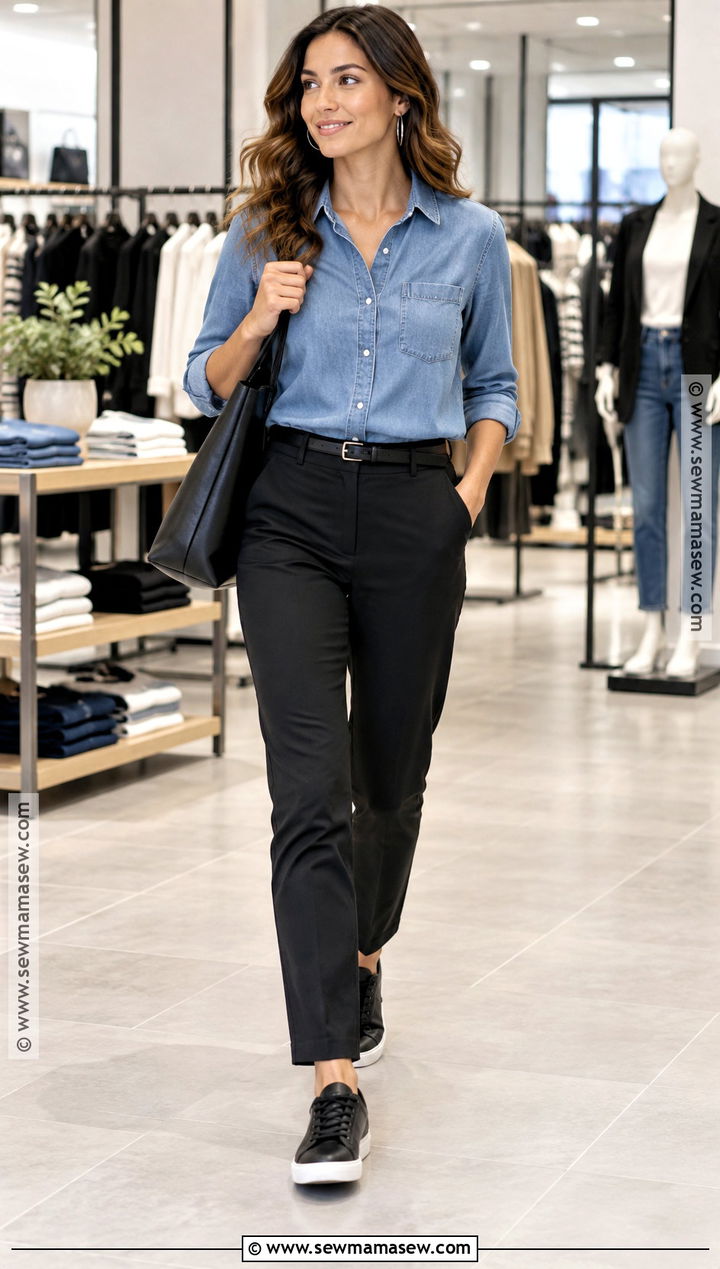
A denim shirt looks professional when everything around it is clean and tailored. Choose a light chambray or dark denim button-down with no distressing, bulky pockets or heavy hardware. Tuck it into black stretch straight-leg trousers and add a simple belt. Black loafers, polished sneakers or slip-resistant work shoes keep the lower half consistent. Chambray is lighter than true denim, so it breathes better if your floor runs warm. I like this pairing for workers who want to rotate fewer pieces, since blue and black can be repeated with different shoes and layers all week. Add a cardigan as the weather cools.
7. Turtleneck And Midi Skirt Retail Work Outfit
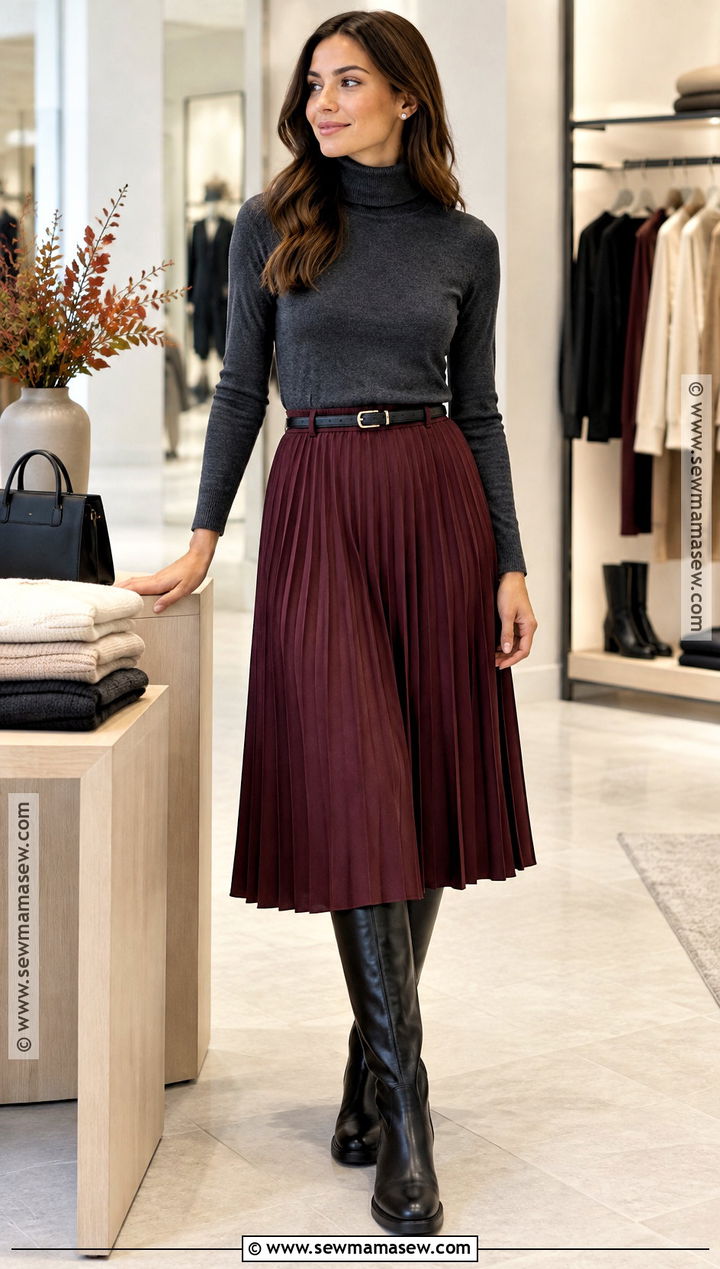
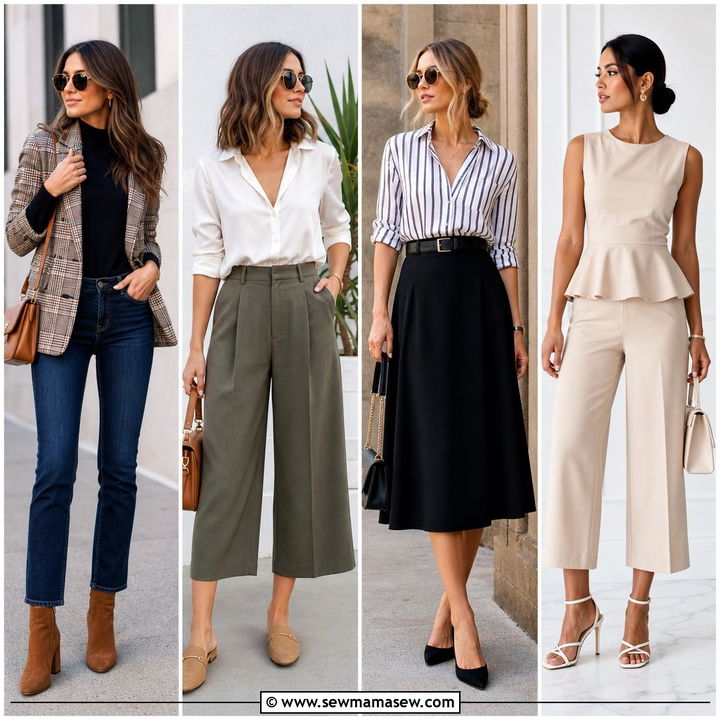
A fitted turtleneck with a flowing midi skirt is warm without bulk, which is ideal on a drafty floor near the doors. The turtleneck should be lightweight and breathable; a thick knit around the neck is miserable by noon. An A-line or softly pleated midi with an elastic or side-zip waist gives you room to walk fast and climb a ladder. I check stair safety on any midi: if you have to hold the skirt to climb, it's too long or too narrow. Flat knee-high boots give streamlined coverage. Keep jewelry to studs or a short necklace. Chocolate, charcoal, burgundy and deep green suit fall.
8. Utility Jacket, Knit Top, And Ponte Pants Retail Work Outfit
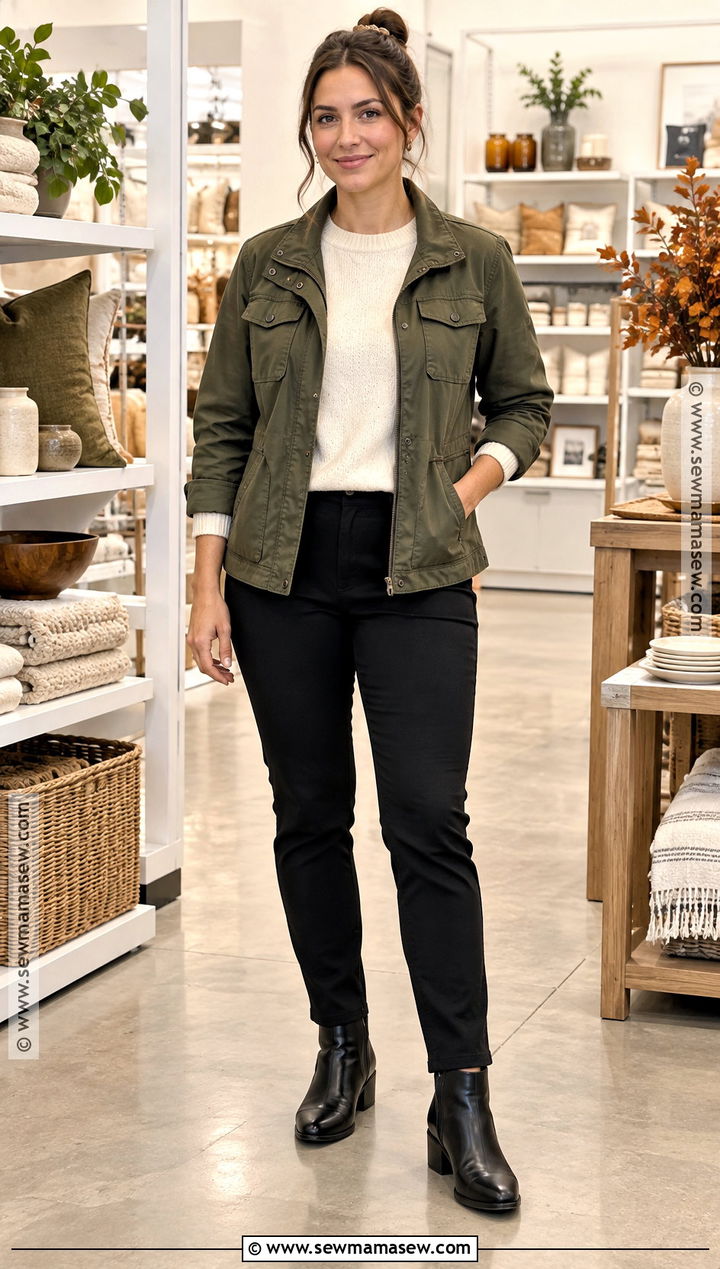
A light utility jacket is a useful third layer in a casual store, but check the details first. Loose drawcords, dangling toggles and big zipper pulls catch on displays and hangers. A tidy shape and flat, secure pockets avoid that. Wear it over a soft crewneck knit in cream, black or muted rust with black ponte pants, which stretch for stocking and folding yet hold a crease-free line. Low-heeled ankle boots or supportive work sneakers finish it. Olive is the classic fall jacket color, though navy or tan work just as well. You'll likely take it off once the floor warms up, so make sure the top underneath looks finished alone.
9. Monochrome Sweater And Trousers Retail Work Outfit
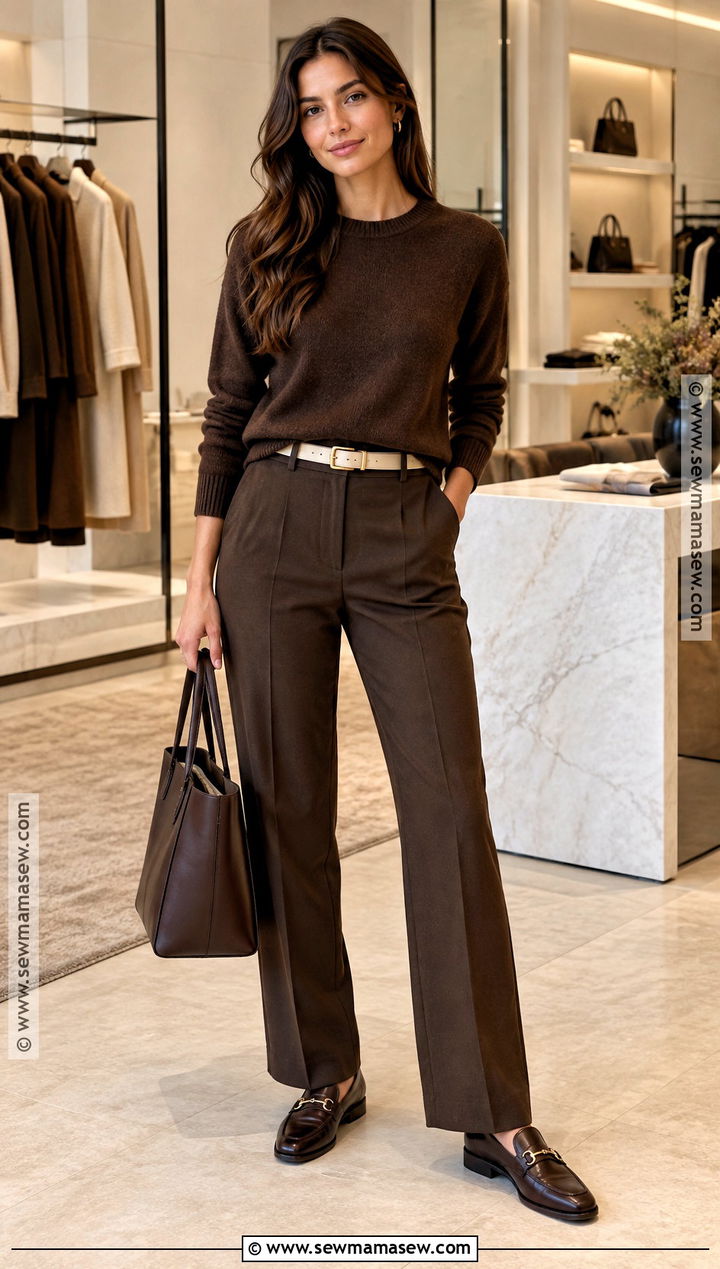
One color family head to toe makes basic pieces look deliberate. Choose chocolate, charcoal, navy or black for the sweater and trousers; they don't need to match exactly, and a slight shift in tone adds depth. A medium-weight sweater tucks at the front without a lump at the waistband. Straight or gently tapered trousers stay polished but move freely. Loafers in the same family, then one contrast point, such as a cream belt or tote. I suggest this to anyone who struggles to get dressed before an early shift, because there's nothing to coordinate. A continuous column of color also makes the body read longer, whatever your height.
10. Plaid Blazer, Mock-Neck Top, And Dark Jeans Retail Work Outfit
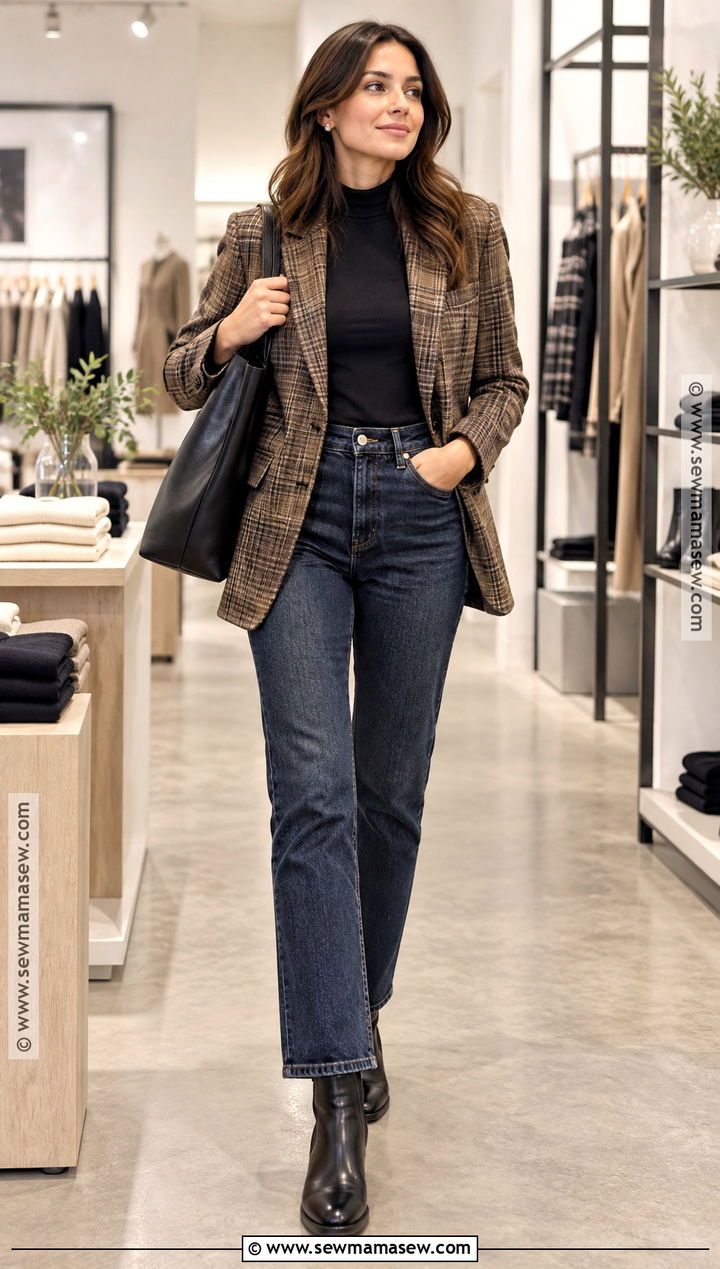
Plaid brings fall into an outfit without bright color. Layer a soft plaid blazer over a fitted mock neck in black, cream or a shade from the pattern, with dark straight jeans where denim is allowed. Fit across the back is the deal breaker: raise your arms and reach forward, and if the seams strain between the shoulder blades, size up or skip it. Chelsea boots with cushioned insoles give support and coverage; loafers are lighter for mild days. A medium-scale plaid looks professional, while a tiny check can look busy and a huge one overwhelms a smaller frame.
11. Cardigan And Midi Dress Retail Work Outfit
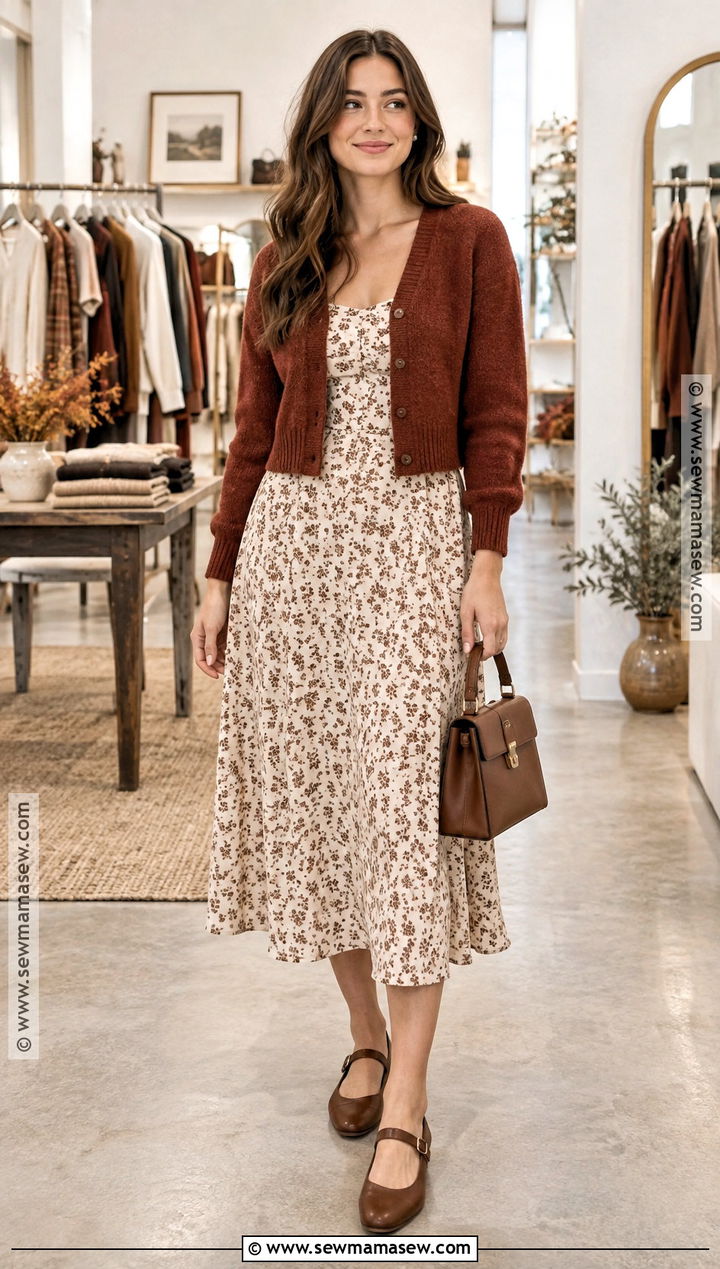
A plain midi dress gets far more versatile with a cropped or waist-length cardigan over it. For work, I look for a neckline high enough for leaning over a counter, sleeves or wide secure straps, and a skirt that swings when you walk. A solid ribbed dress is the cleanest base; a small floral or geometric print hides wear. Button the cardigan as a top or leave it open when the floor warms up. Supportive Mary Janes, loafers or low ankle boots handle the walking. Neither piece should need tugging all shift. Stretchy ribbed knits like this also adapt well to pregnancy and changing body shapes.
12. Barn Jacket, Button-Down, And Chinos Retail Work Outfit
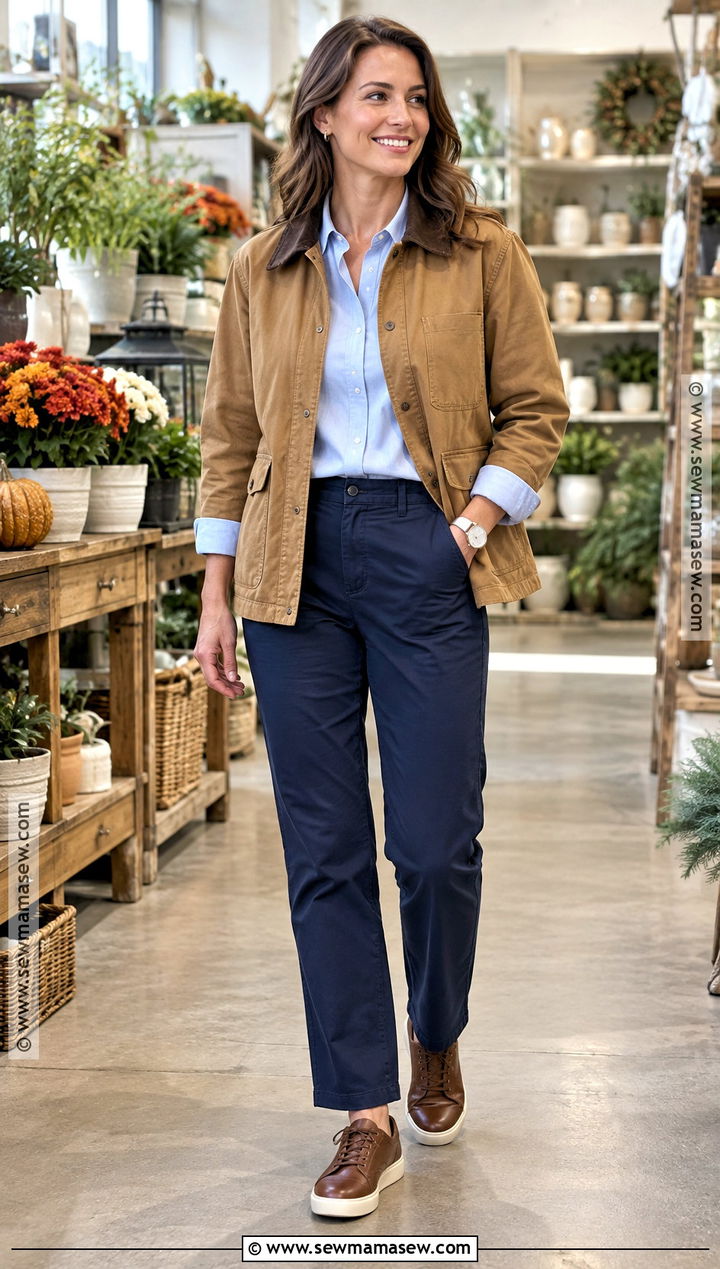
A clean barn jacket gives a button-down and chinos a practical fall layer, and it suits jobs that move between indoors and outdoors, like garden centers or home stores. Pick a lightweight one with a structured collar and smooth pockets. Underneath, a wrinkle-resistant button-down in white, light blue or a fine stripe, with straight chinos in tan, navy, olive or black. Leather sneakers, loafers or supportive lace-ups that meet the footwear policy. Cotton twill chinos get shiny and soft at the knees if you kneel often, so a pair with a little stretch holds up better on stock days. Keep the jacket open indoors.
13. Crewneck Sweater, Collared Shirt, And Pleated Trousers Retail Work Outfit
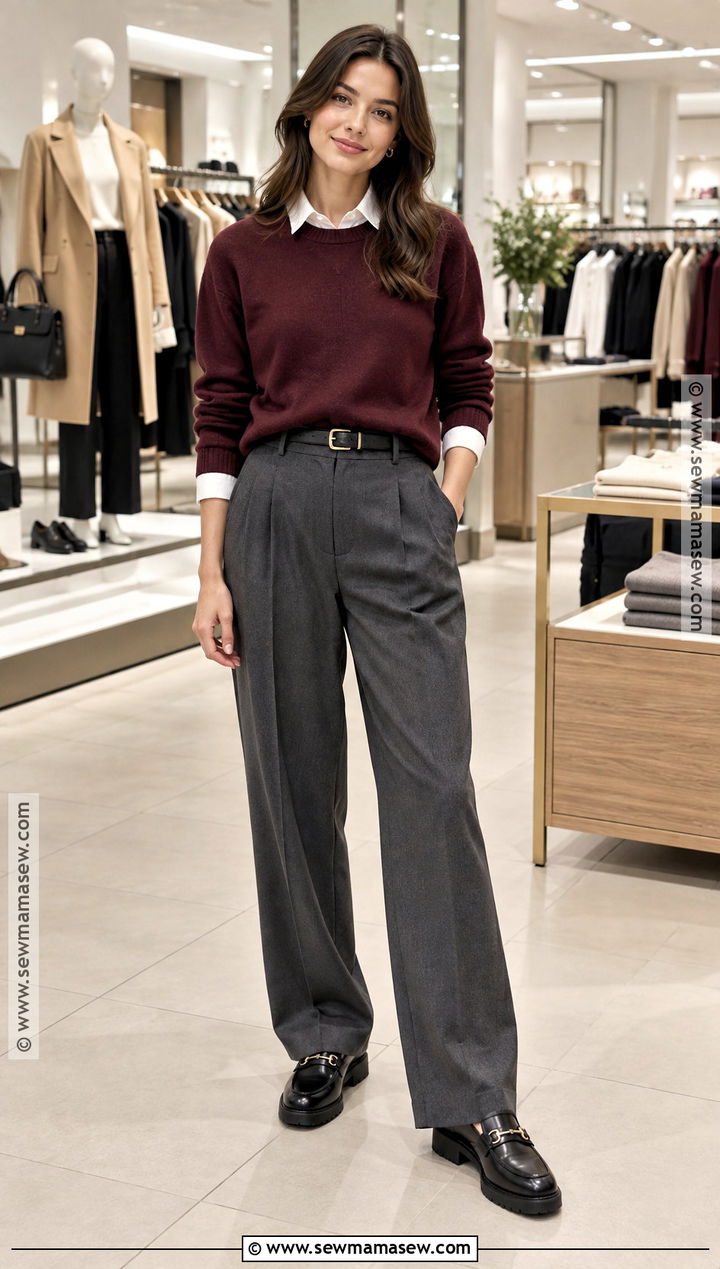
A collar under a crewneck sweater is a classic for cold shifts, but only if the shirt is thin. A heavy shirt bunches in the armpits once the sweater goes on, and that's uncomfortable after a few hours of reaching. Let the collar and cuffs show, then add softly pleated trousers; pleats give extra room through the hip when you squat. A high rise with an elastic back panel is kinder over long hours. Cushioned loafers and a narrow belt finish it. Navy with light blue, burgundy with white and camel with cream are easy fall pairings. A waist-length sweater avoids the bulk of a tucked hem.
14. Matching Knit Set And Clean Sneakers Retail Work Outfit
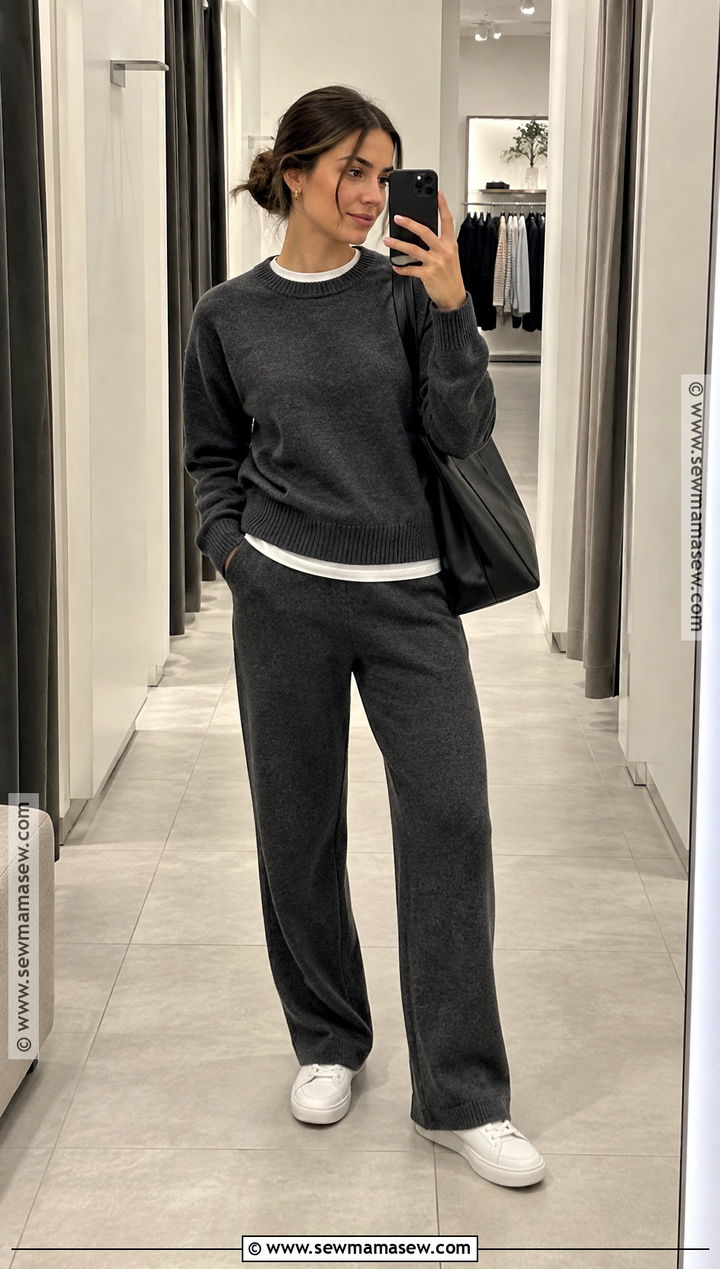
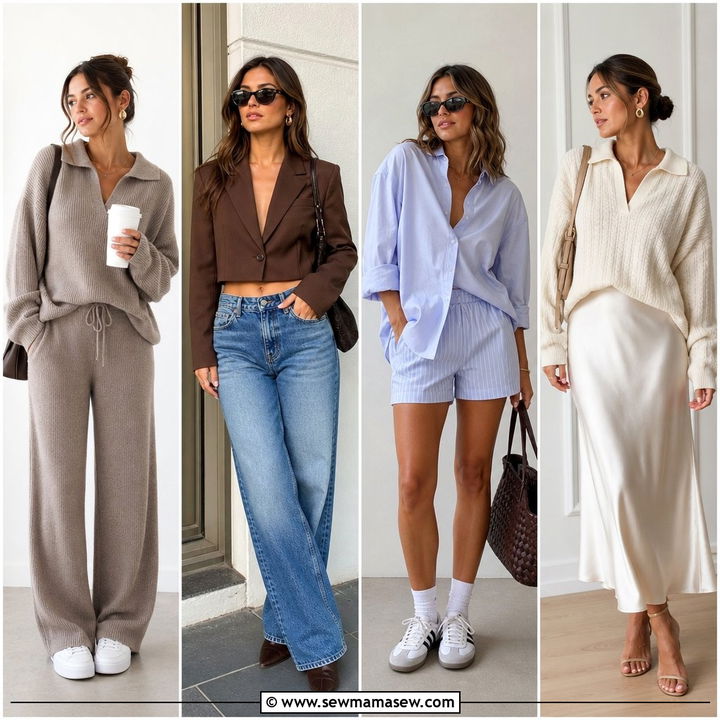
A matching knit set takes the thinking out of a work morning. Choose a structured sweater and straight or wide knit pants, not a thin lounge set, because the pants need to hold their shape and not bag out at the knee after the first crouch. Thicker, tightly knit fabric resists that; loose, soft knits stretch within an hour. Layer a fitted tank underneath so you can shed the sweater. Leather sneakers suit active shifts, while loafers dress it up. Camel, charcoal, navy and deep olive all look seasonal. Check that your store allows knit pants and that the hems clear the floor.
15. Jumpsuit, Cardigan, And Loafers Retail Work Outfit
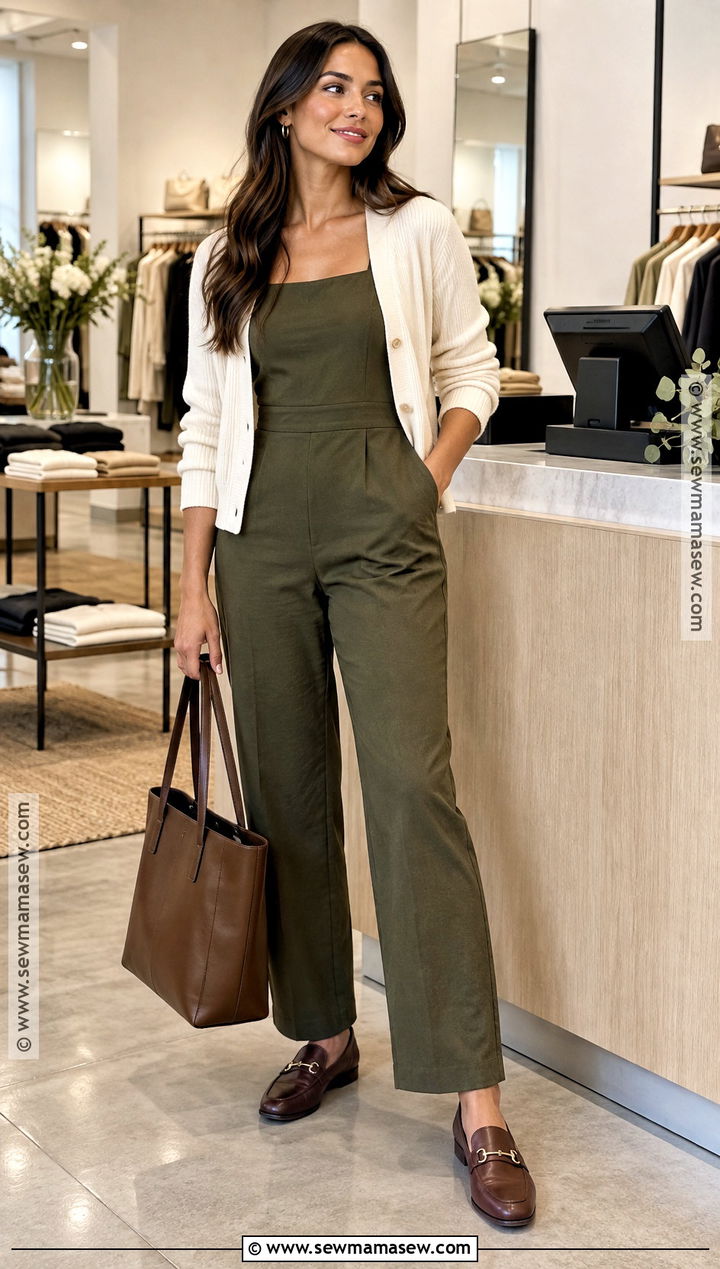
A tailored jumpsuit gives more coverage than a dress with the same no-decisions ease. For a retail shift, I look for sleeves, a secure neckline, real pockets for a pen and a box cutter, and a relaxed straight leg. Stretch fabric matters most in the torso; a rigid jumpsuit pulls at the crotch and shoulders every time you bend. A defined waist keeps it from looking shapeless. Layer a light cardigan over it for cold mornings or air-conditioned stores. Cushioned loafers, supportive flats or low sneakers, depending on the dress code. The practical test is fastenings: a side zip or simple buttons make restroom breaks quick, and a long back zip does not.
Turning These Looks Into a Week of Shifts
Nobody needs fifteen separate work outfits. What helps more is a small rail of pieces that mix with each other, so you can dress for an opening shift in five minutes without thinking. This is roughly how I'd build it from the looks above.
- Two pairs of stretch trousers in black and a dark neutral, plus dark jeans if your store allows denim.
- Three tops that work alone: a fitted tee, a fine knit polo and a button-down.
- Two warm layers: a waist-length cardigan and an unstructured blazer.
- One dress or jumpsuit for days you want a single piece.
- Two pairs of supportive shoes in neutral colors you can alternate.
That's about ten pieces, and it covers a full week with no repeats of the same full outfit. Keep the colors in one family, such as navy, camel and cream, or black, rust and olive, so every top works with every bottom.
Two habits make the rotation easier. Lay out the next day's outfit after a shift, while you still remember whether the floor was cold. And wash knits inside out on a gentle cycle; the friction from folding and carrying boxes already makes them pill faster than everyday wear, so there's no need to add a rough wash on top.
Clothes That Bend, Reach and Still Look Neat at Closing
A good retail wardrobe comes down to clothes you can move in, layer and repeat. Flexible trousers, breathable tops, easy dresses and shoes built for standing form the base; cardigans, blazers and light jackets handle the temperature swings between stockroom and floor. These combinations suit boutiques, department stores, showrooms and bookstores alike. Check your employer's rules on denim, sneakers, skirt lengths, colors and visible logos before you buy anything new. Repeat your best pieces in different pairings, and you'll save time and money while still looking like you thought about it.
Related posts: