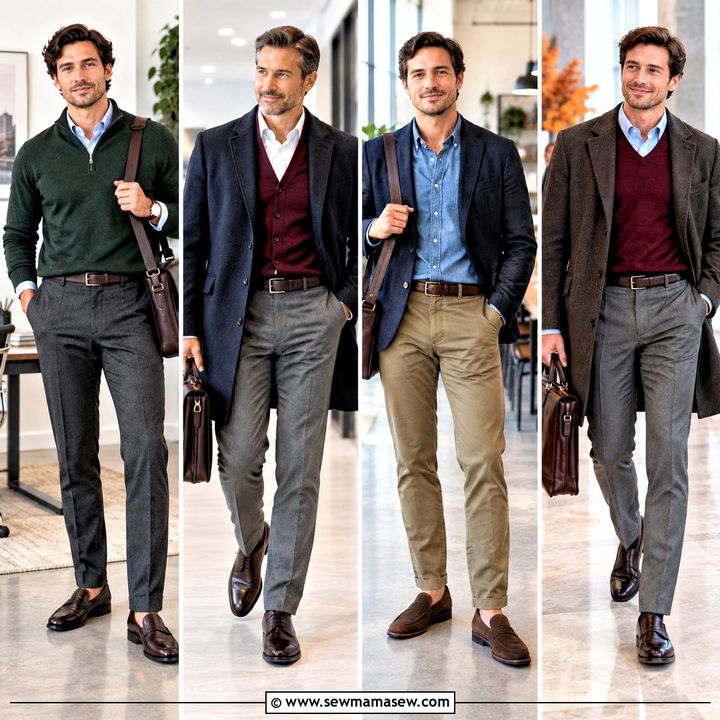
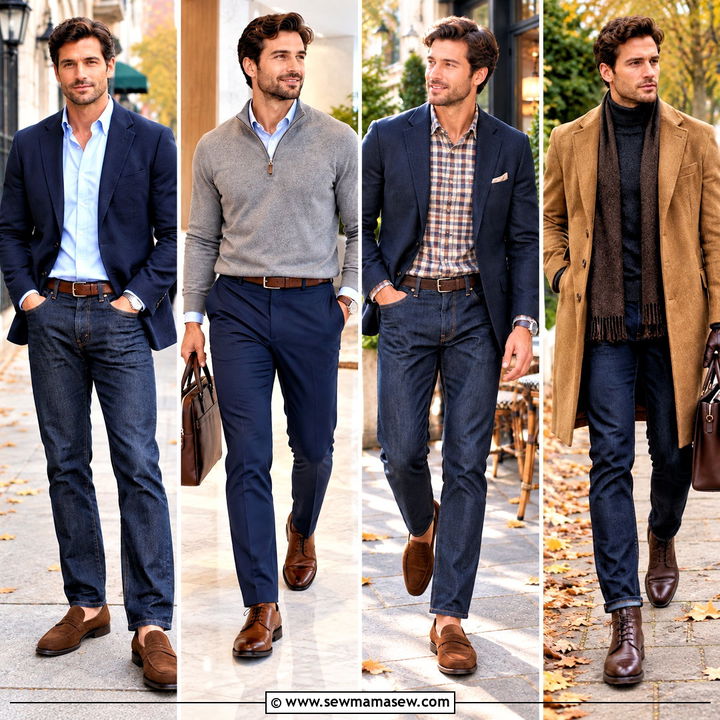
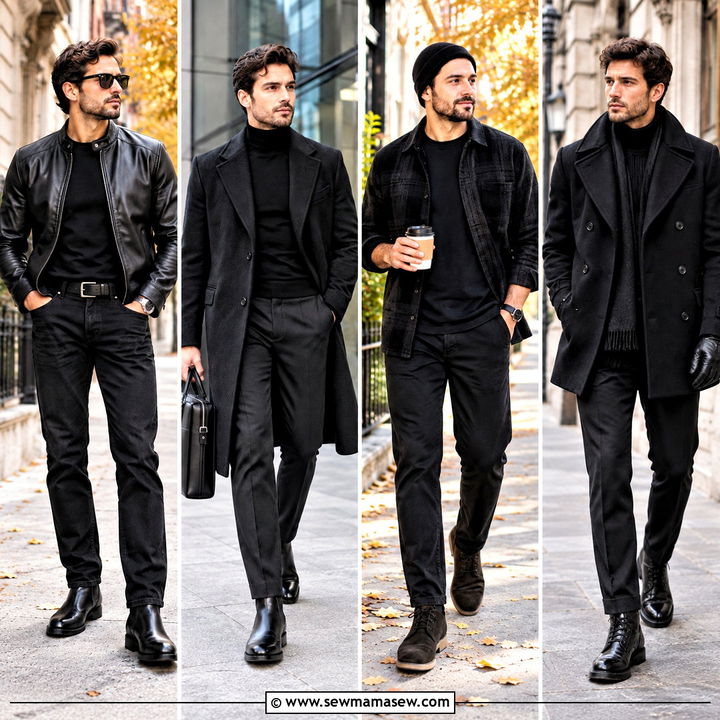
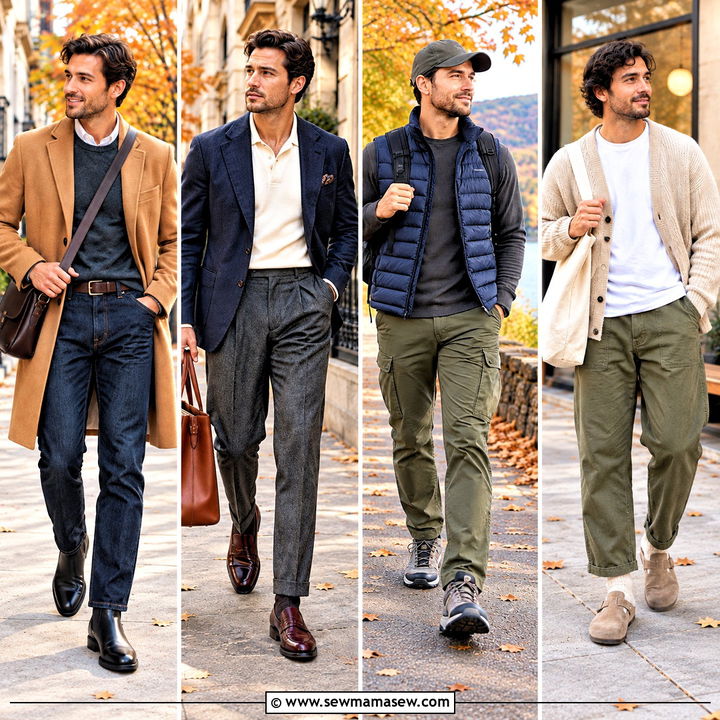
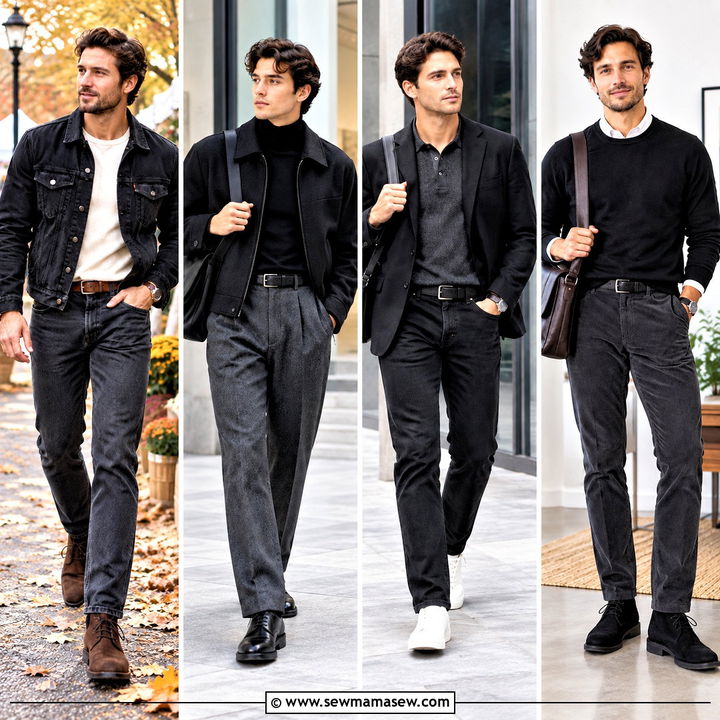
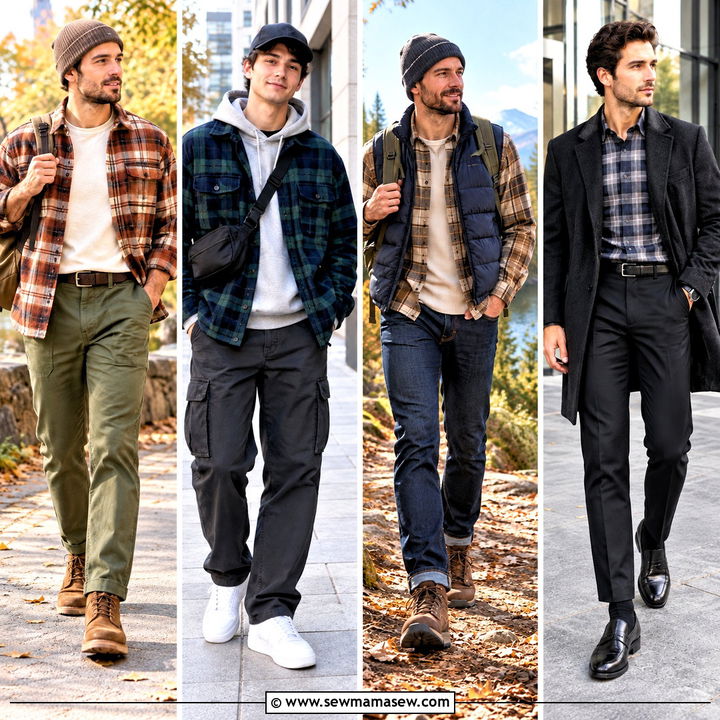
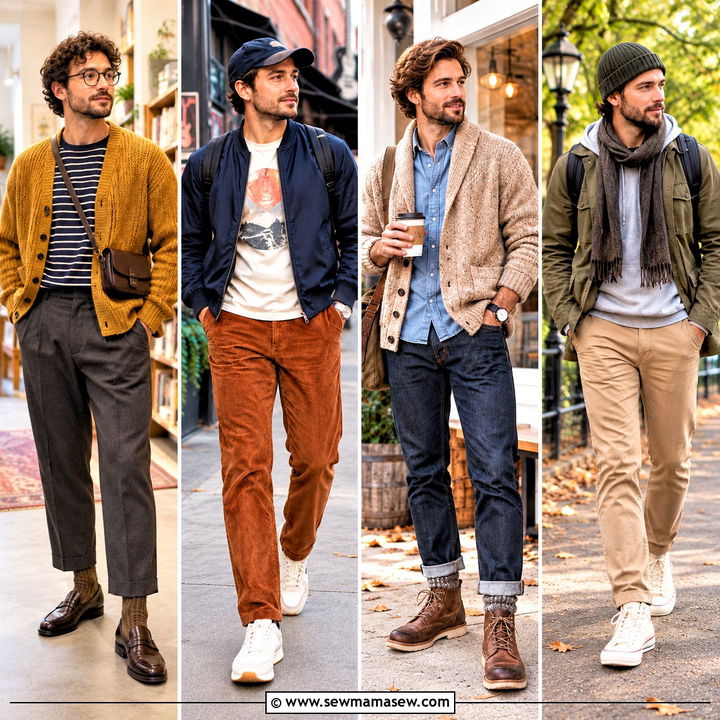
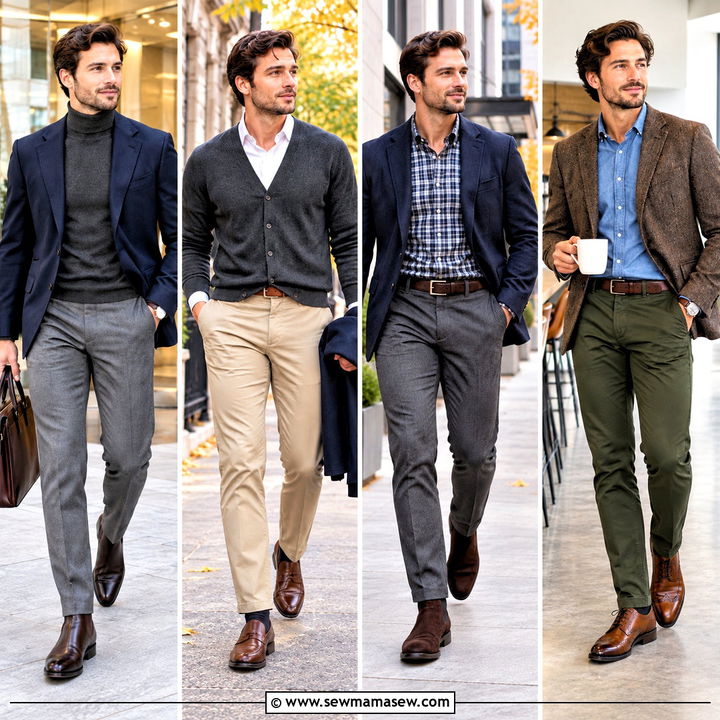
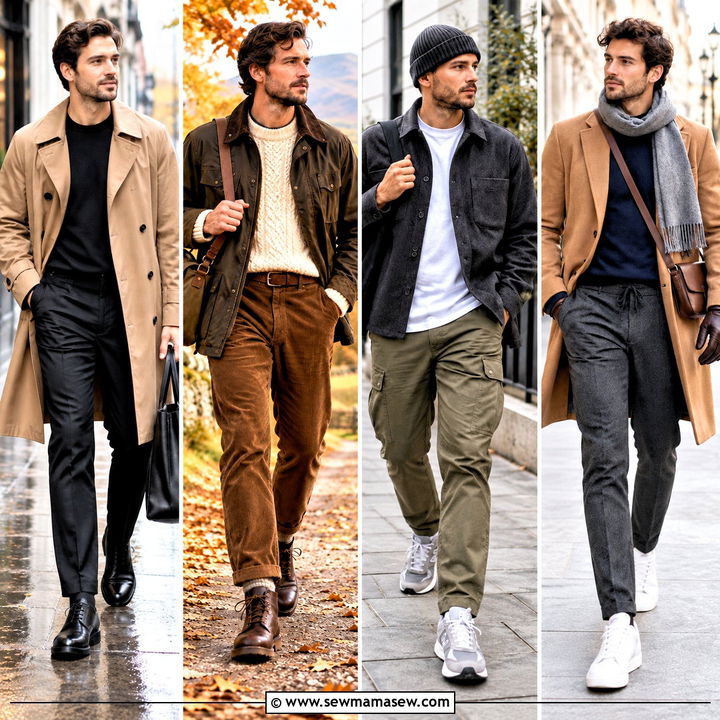
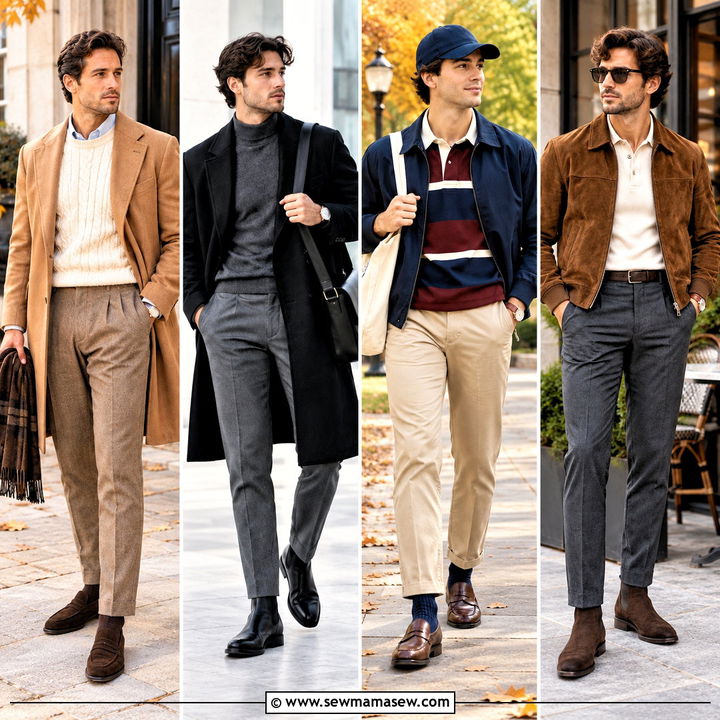
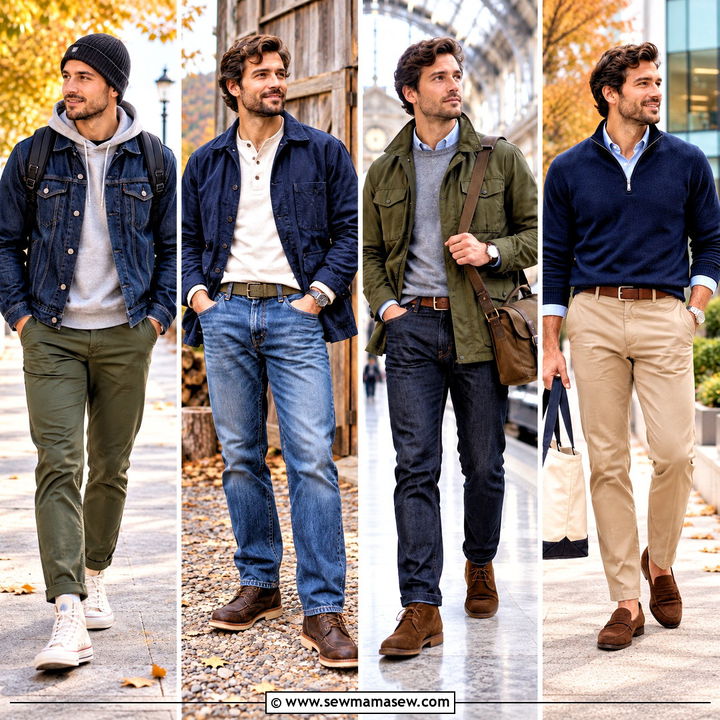
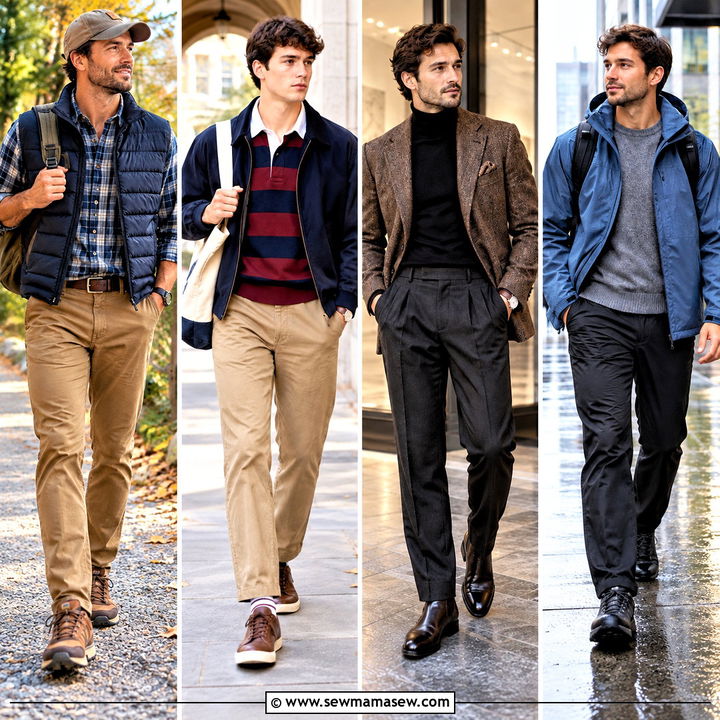
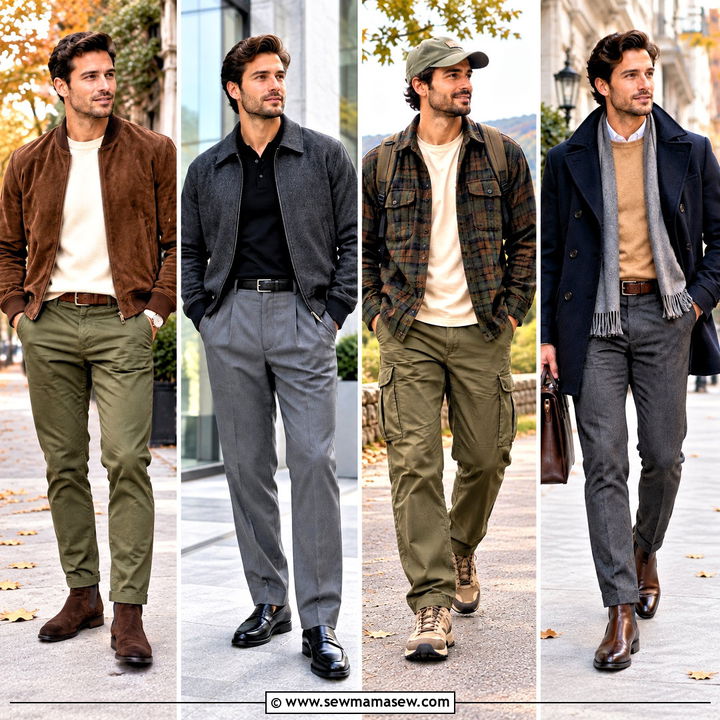
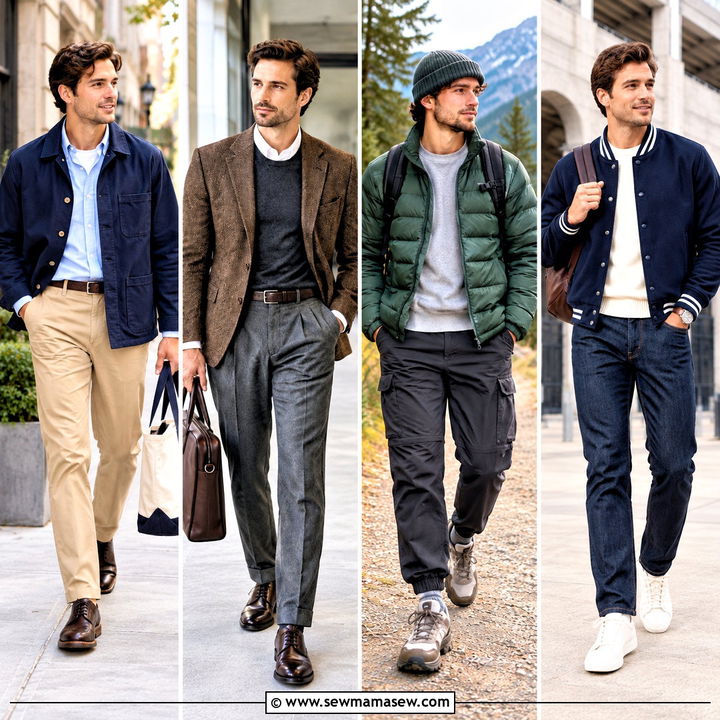
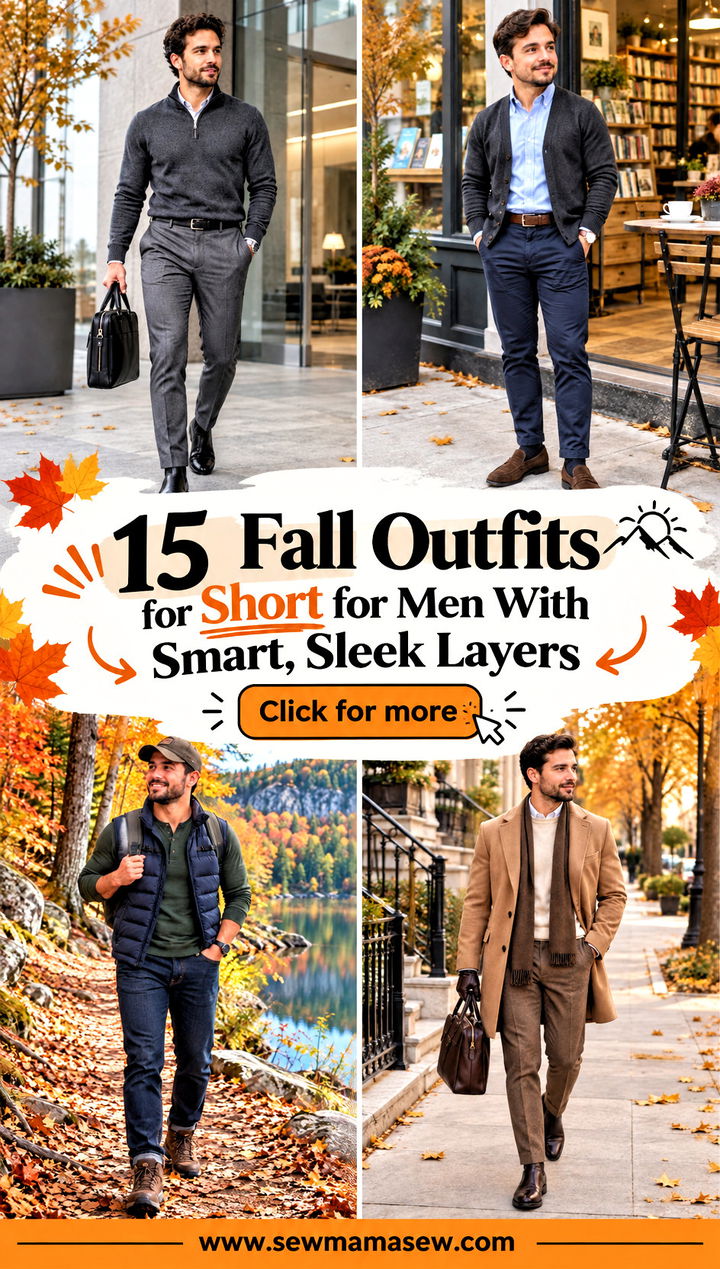
Most off-the-rack menswear is graded on a fit model close to six feet tall, so if you're shorter, jackets fall past the hips, sleeves swallow the wrist and trousers pile up on the shoe. None of that is really about height. It's about lengths landing in the wrong place, and nearly all of them can be fixed. The fall outfits below are built around the proportions I check first on a shorter frame: a jacket that stops near the waistband, a rise that sits at or just under the navel, and a hem that meets the shoe cleanly. You'll see shorter outerwear, low-contrast color runs and footwear that continues the trouser line instead of cutting it off, across casual weekends and office days alike.
Three Lengths I Check Before Color or Fabric
On a shorter man, three measurements decide whether an outfit looks tailored or borrowed. I check them in this order every time, because a great color can't rescue a jacket that hangs to the thigh.
Where the jacket stops
A casual jacket should end at the waistband or around the top of the hip bone. Tailored jackets go a little longer, just enough to cover the seat of the trousers. Past that point, every extra inch of jacket is an inch taken from the leg.
Where the sleeve ends
Sleeves belong at the wrist bone. Extra fabric bunches at the wrist and makes the arms look short, which drags the whole frame down. Under a blazer, a small sliver of shirt or knit cuff should show.
How the trouser meets the shoe
I prefer no break or a slight break on a shorter leg, meaning the hem just grazes the top of the shoe. A full break piles fabric at the ankle and visually removes length. Combine that with a rise at mid level or higher, so the leg appears to start at the waist rather than at the hip.
- Stand naturally in front of a full mirror, not just a waist-up one.
- Look at the side view; that's where a long jacket or a stacked hem shows most.
- Sit down once in the trousers to make sure a higher rise is still comfortable.
1. Short Bomber Jacket With Black Jeans
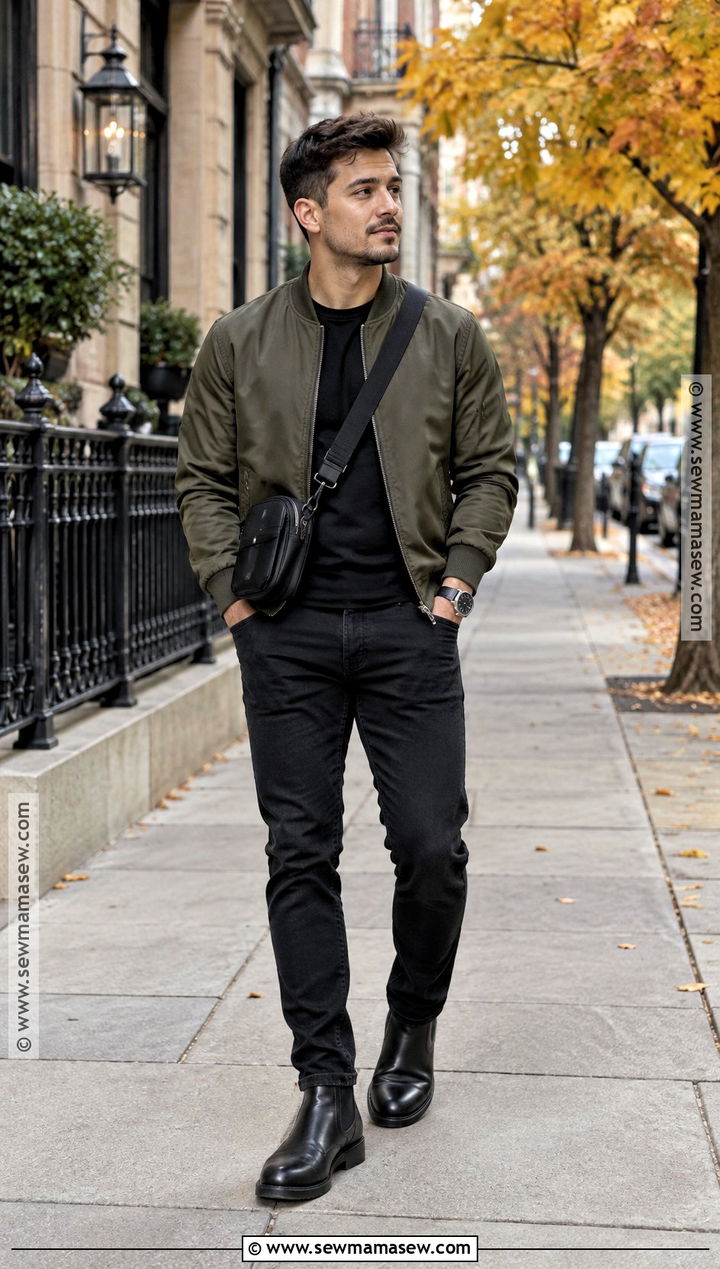
The bomber earns the first spot because its ribbed hem does the work for you. It gathers at the waist, so the jacket can't drift down over your hips. I look for one with slim sleeves and flat pockets in olive or navy, since heavy padding widens the torso fast. Under it goes a plain crewneck tee in a similar shade, then mid-rise slim-straight black jeans with little or no stack at the ankle. Black leather Chelsea boots carry the jean color down without a break. Raise your arms once in the fitting room: if the rib band rides up into your ribs, the body is too short for you. A watch and a small crossbody are plenty for errands or a relaxed office in mild weather.
2. Denim Jacket With Dark Wash Jeans
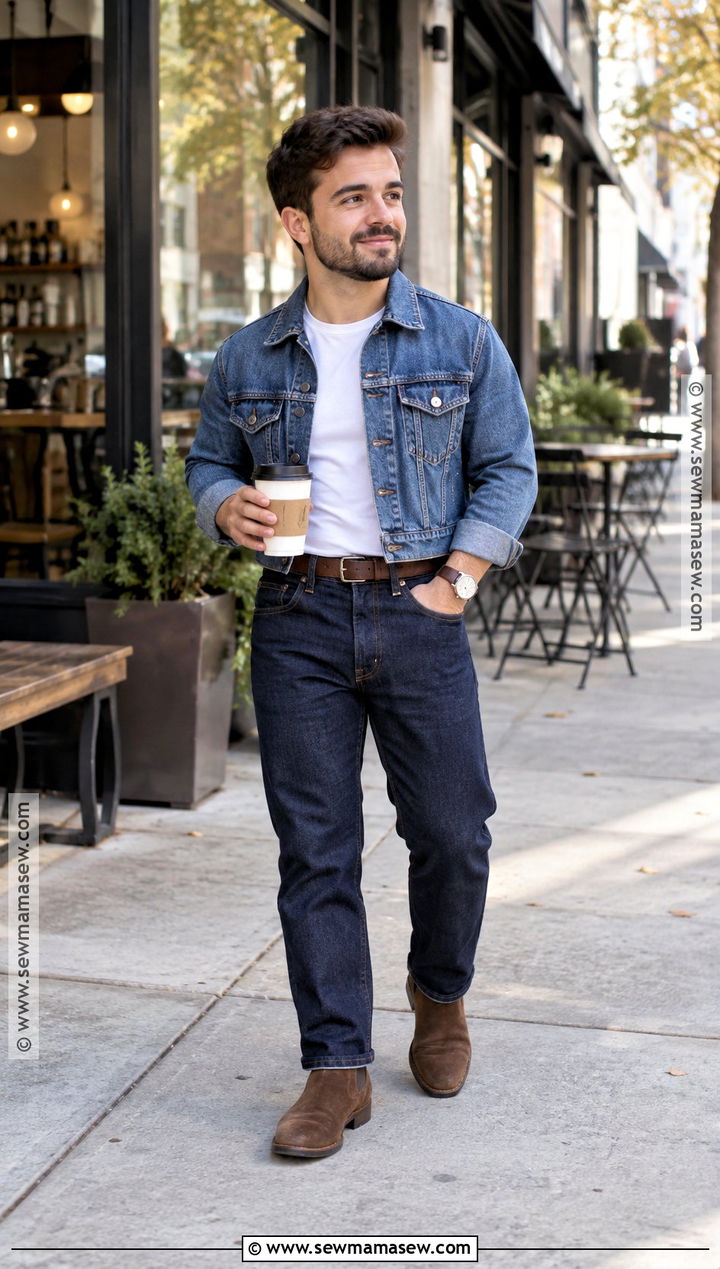
Double denim gets a bad name mostly because people wear two identical washes. Split them. A cropped medium-wash jacket that ends at or just below the waist goes over dark indigo jeans in a straight or gently tapered cut, so the darker leg grounds you and the jacket reads as a separate piece rather than a set. The white tee underneath has to be shorter than the jacket. A shirt tail peeking out below the denim cuts the torso into three short bands, which is the opposite of what you want. Brown suede boots, a narrow belt and a plain watch finish it. Rigid denim jackets stay stiff for weeks, so for a jacket this short I'd pick one that has already been washed and softened.
3. Crewneck Sweater With Tailored Chinos
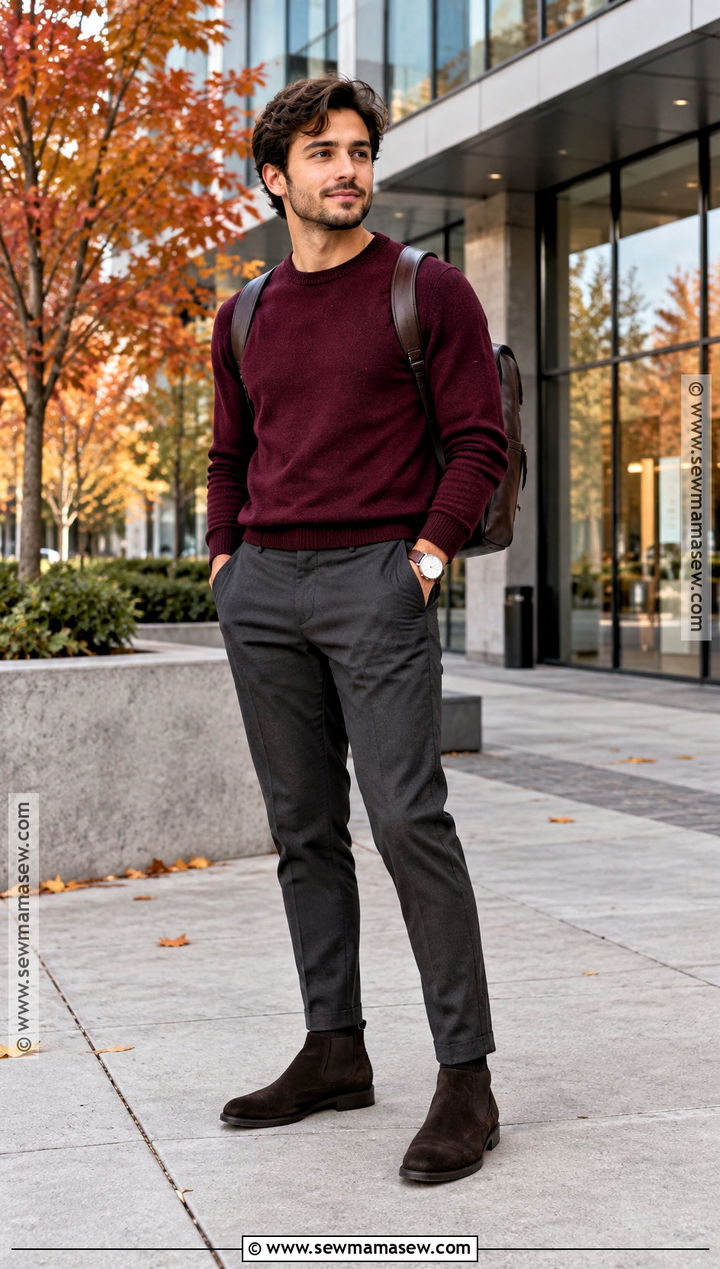
Low contrast is the quiet trick here. A fine-gauge crewneck in burgundy or charcoal over mid-rise chinos in a close tone, navy with charcoal or olive with dark brown, gives the eye one long run from collar to ankle. The knit should skim the body. Too tight and it shows every fold of the shirt beneath; too loose and it puffs out over the waistband, which shortens the torso. I ask for a slight break or none at all on the chinos, then match the socks to the trousers so the leg doesn't visually end at the ankle bone. Slim leather sneakers or suede Chelsea boots both work, and a compact backpack keeps the shape tidy on a workday.
4. Flannel Shirt With Tapered Jeans
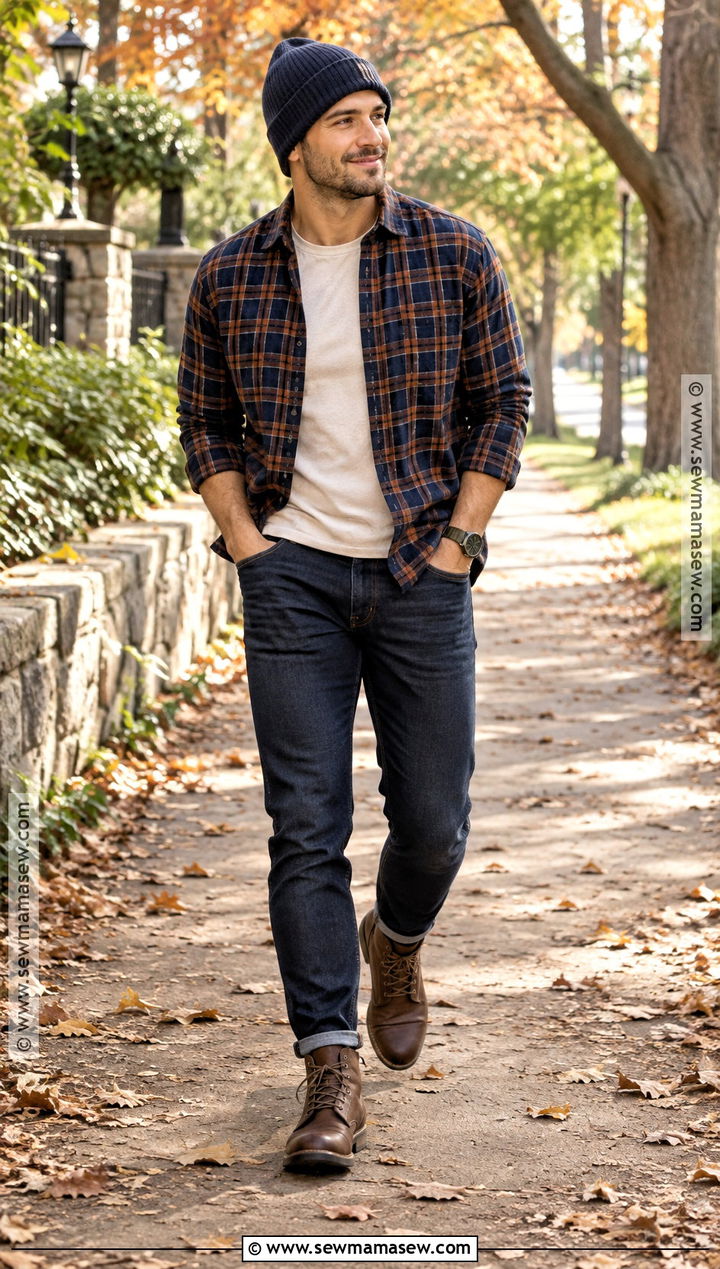
Plaid scale matters more on a smaller frame than most men expect. A big buffalo check can make the chest look boxy, so I reach for a small-scale plaid in navy or rust. Buttoned, it reads tidier. Worn open over a fitted solid tee, it creates a vertical stripe of color down the middle, which helps too. Flannel is thick, and most flannel shirts are cut long enough to tuck, so this is often the first shirt I send for hemming if it's going to be worn loose. Untucked, the hem shouldn't fall much past the jean pockets. Dark tapered jeans with a rise near the natural waist, low-profile leather sneakers or lace-up boots, and a beanie for a sharp morning. Easy for weekends and outdoor plans.
5. Chore Jacket With Straight-Leg Pants
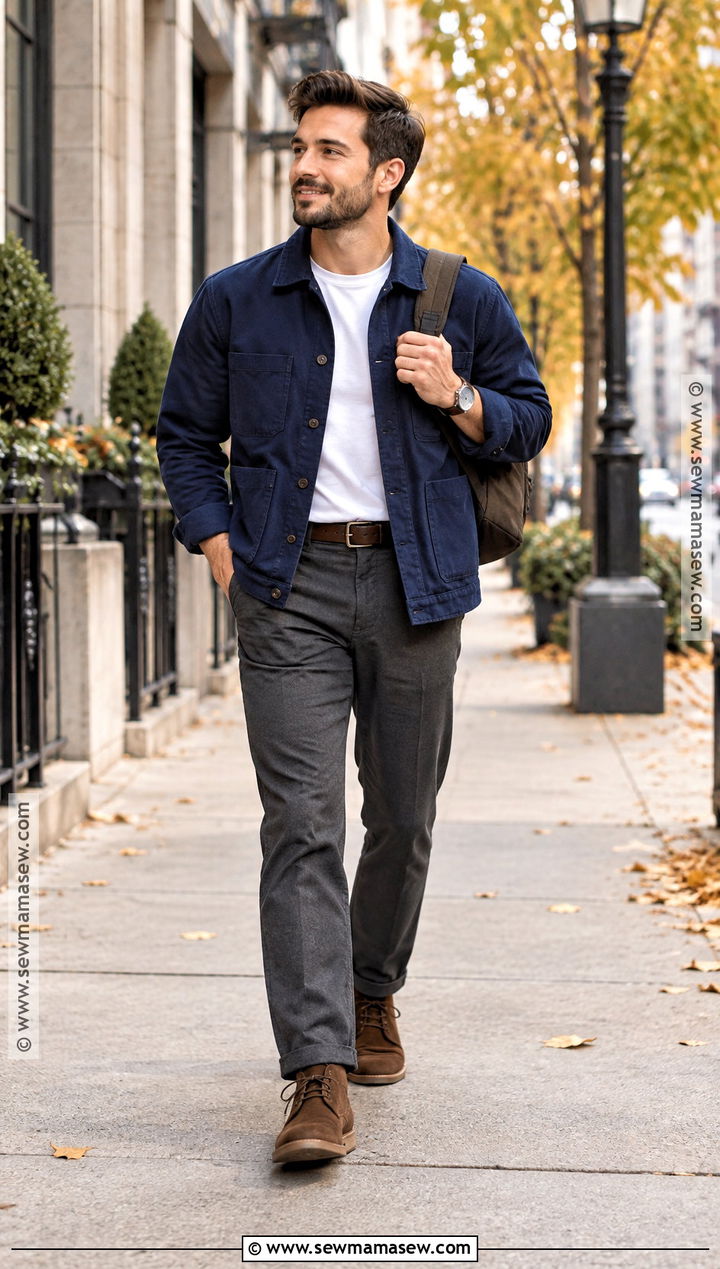
What should you wear when a blazer feels too formal but a hoodie seems too relaxed? A short chore jacket fills that gap. Navy canvas is my default, though brown corduroy is warmer once October turns. The cut matters more than the fabric: it should end around the upper hip, and the patch pockets should sit high enough that they don't land on your thighs. Big, low pockets are the giveaway that a jacket was proportioned for a taller body. Layer it over a tucked white tee or a lightweight henley, then straight-leg charcoal pants with a medium rise, hemmed so nothing collects above the shoe. Canvas softens with wear, so expect some stiffness at first. Suede desert boots and a leather belt suit errands and a casual workplace.
6. Harrington Jacket With Navy Chinos
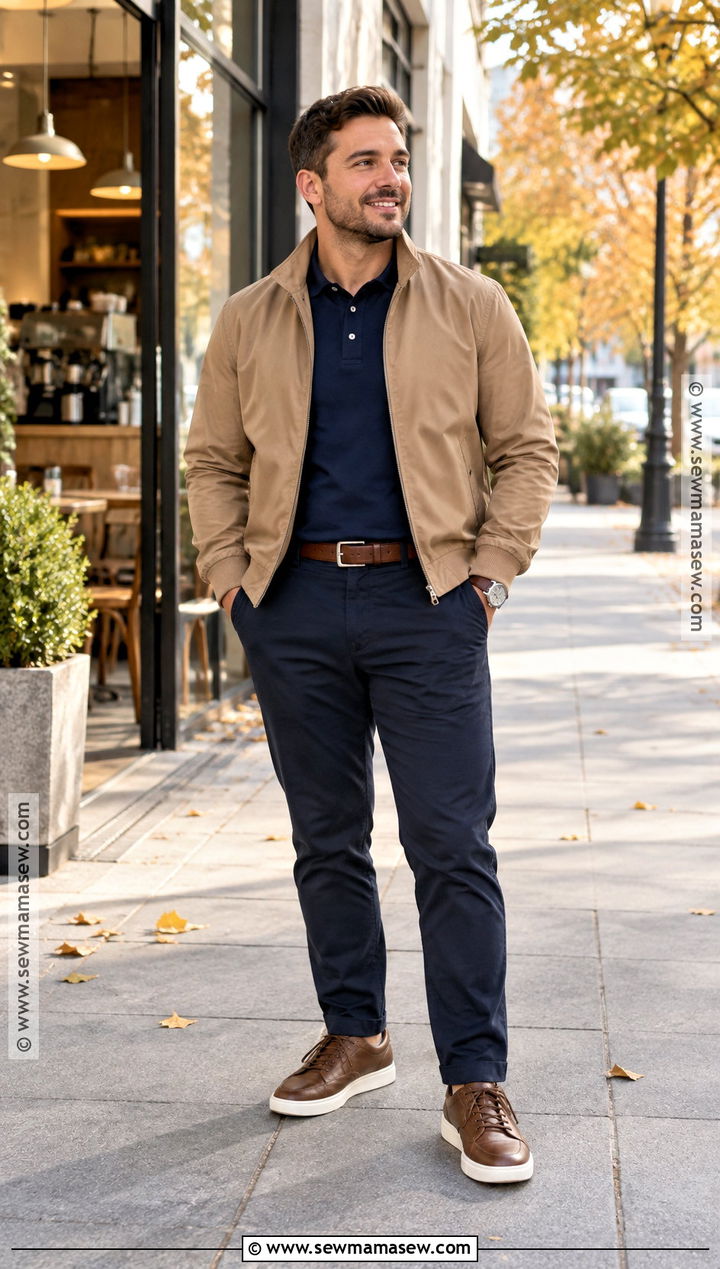
A Harrington is lighter than most fall jackets, so it adds no bulk, and its elasticated hem and cuffs keep it from sliding past your waist. The hem should meet the top of your trousers. I pick tan when the chinos are navy so the jacket doesn't merge into the pants. Under it, a lightweight polo or tucked crewneck tee. Mid-rise navy chinos with a gentle taper and minimal break give a neat vertical line. Wear the jacket open or zipped halfway so the center of the outfit stays visible; zipped to the collar, the whole top half becomes one solid block. Brown leather sneakers or slim suede boots, plus a belt that matches them, carry it through a casual office, a train ride or a full day around town.
7. Quarter-Zip Sweater With Wool Trousers
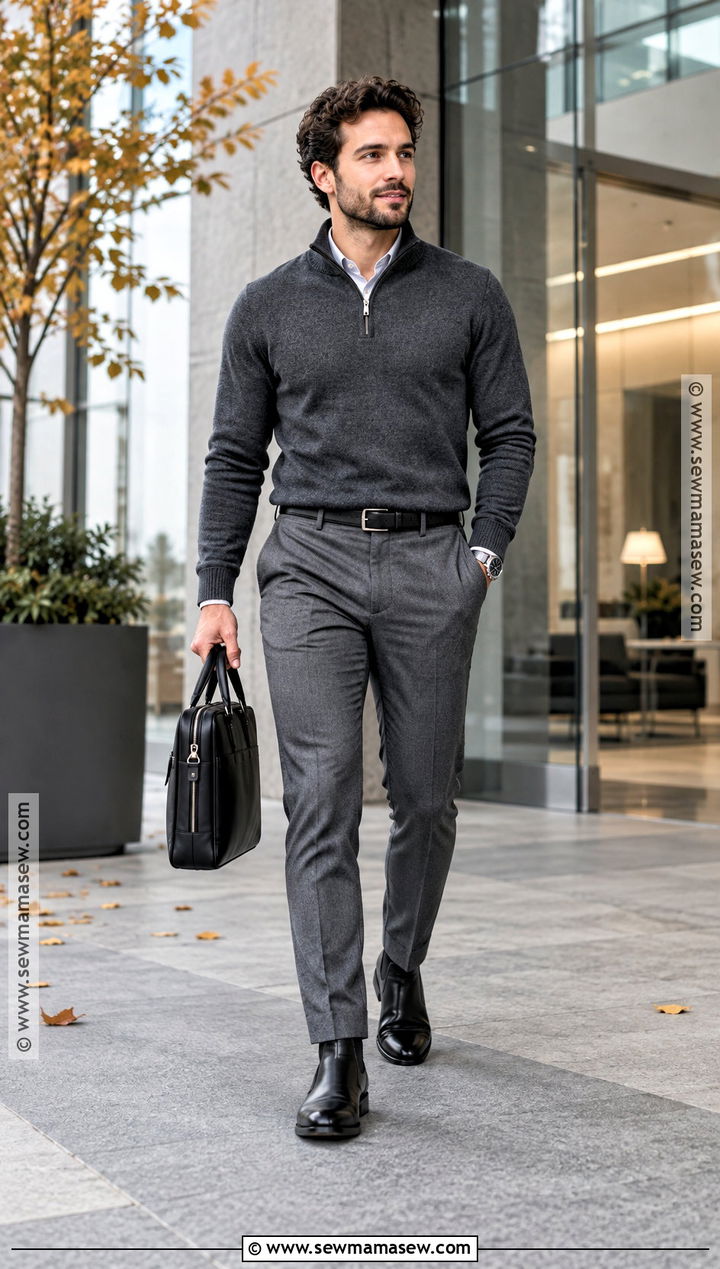
This is my business-casual answer for a shorter man who wants to skip the blazer. A fitted merino quarter-zip in charcoal goes over a light crewneck shirt, with mid-rise wool trousers in a slim-straight or tapered leg. Gray trousers under a charcoal sweater make a smooth step from top to bottom. I prefer merino over chunky lambswool here because it stays thin and lies flat; a thick knit adds visible inches to the chest. Fold the collar down and keep the zip no lower than the collarbone. The trouser hem should just touch the shoe. Dark leather loafers or dress boots with matching socks, a narrow belt and a short topcoat on colder days will cover offices, dinners and presentations.
8. Leather Jacket With Monochrome Black Outfit
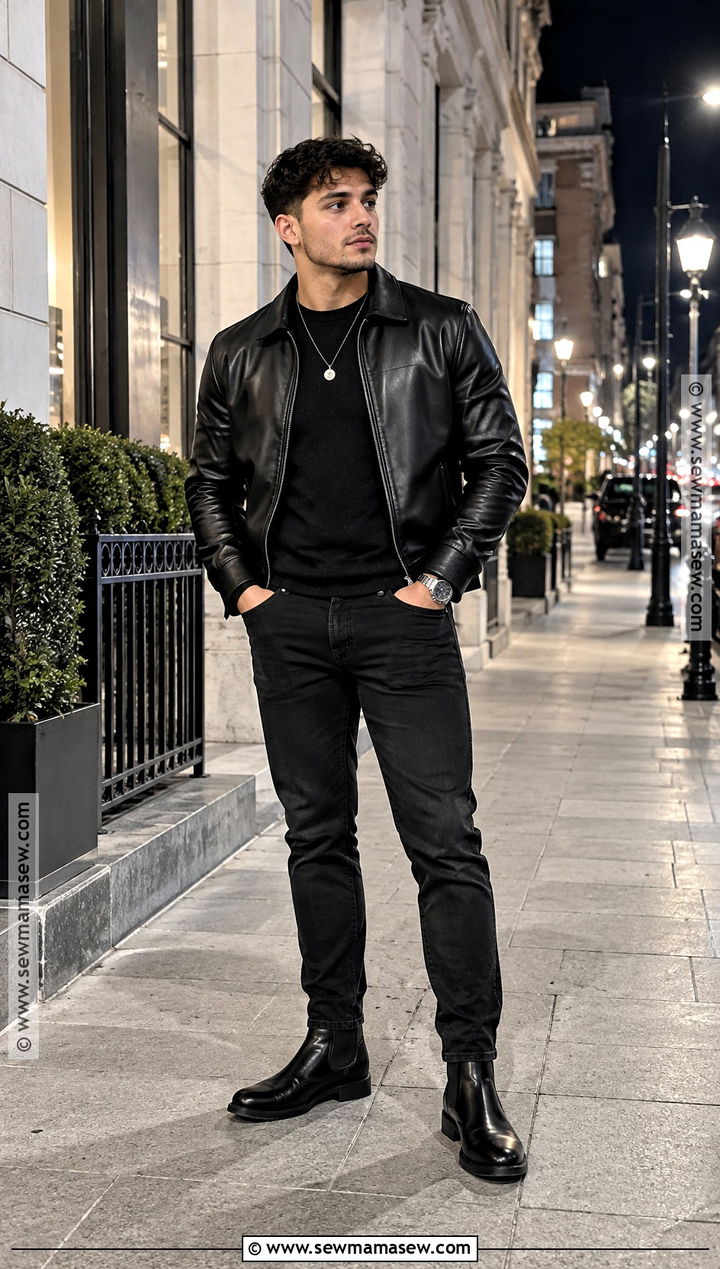
All black is about the easiest way to get a long, unbroken line, and a leather jacket keeps it from looking flat. Pick a fitted leather or faux-leather jacket that finishes at the waistband. Long biker styles with belts and oversized hardware add clutter exactly where you want things clean. Then a plain black crewneck tee, mid-rise black jeans in a tapered or slim-straight cut, and black Chelsea boots. With everything one color, texture does the talking: matte cotton, worn denim, the sheen of the leather. Real leather feels stiff and a bit boxy when new and softens as it molds to you, so give it a few weeks. Hem the jeans so they meet the boots without heavy stacking, add a silver watch, and it's ready for a concert or a night out.
9. Oxford Shirt With Cardigan And Chinos
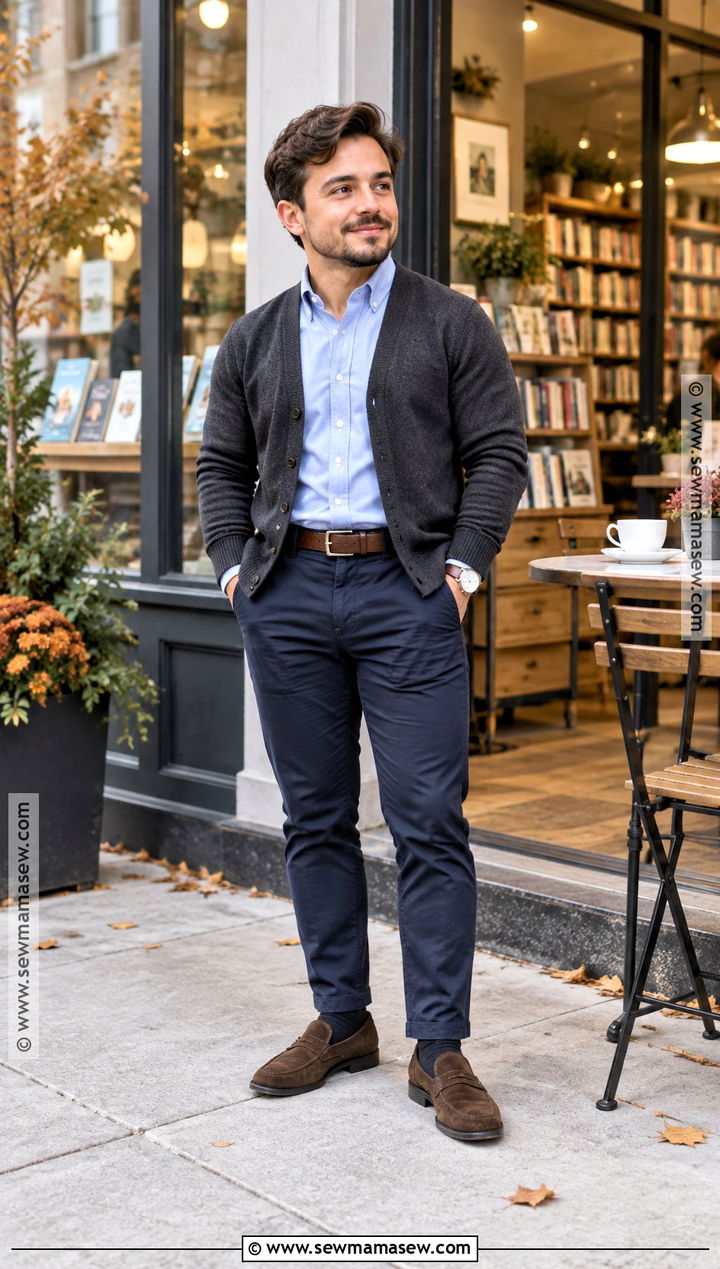
Cardigans can look sloppy on anyone, and on a shorter frame the risk is a knit that hangs to mid-thigh. The fix is a fine-gauge cardigan that ends at the belt line, worn open over a fitted white or pale blue Oxford tucked into mid-rise chinos. The open front draws a vertical line down the middle of the body. Keep the chinos in a related color, a navy cardigan over gray chinos for example, to avoid a hard horizontal break at the waist. Fine merino or cotton holds its shape far better than a loose chunky knit, which stretches out at the pockets within a season. Brown loafers or suede derbies, socks matched to the trousers and a belt close to the shoe color make it right for the office, classes or a family lunch.
10. Corduroy Jacket With Dark Trousers
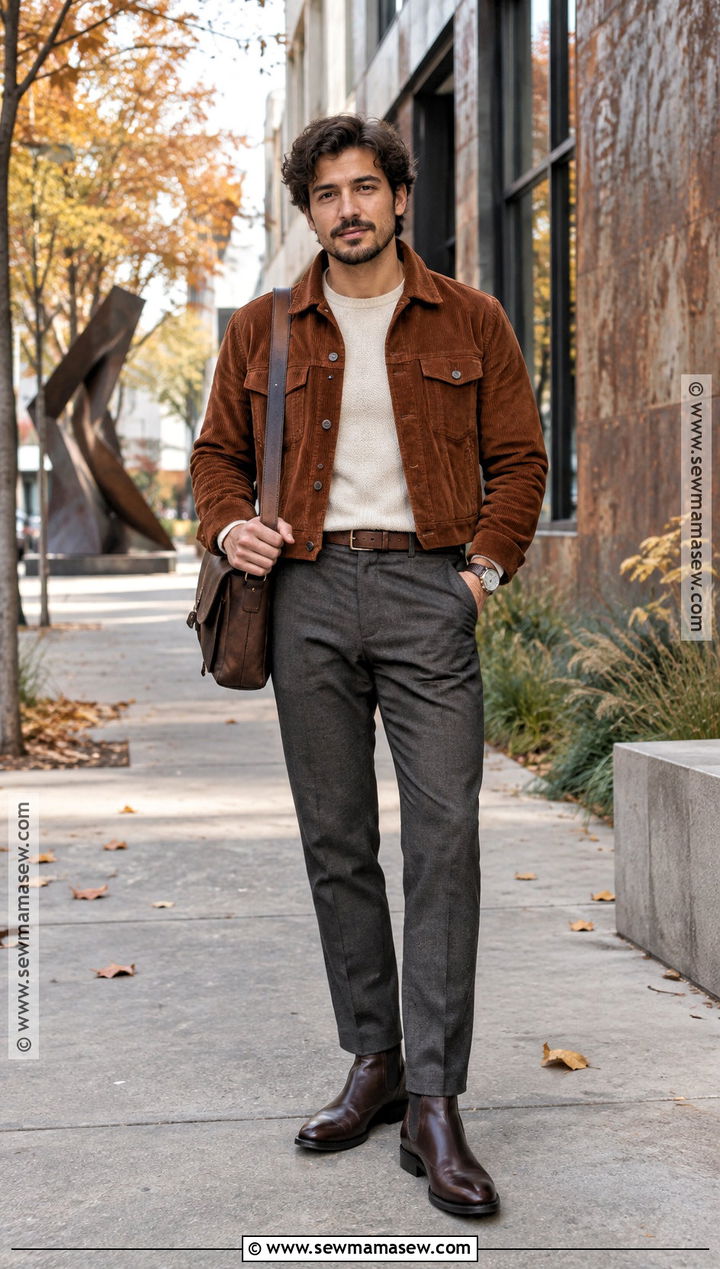
Corduroy brings texture to a fall wardrobe without pattern or loud color. The one thing I watch is wale width. Wide-wale cord is chunky and reads heavy on a smaller man, so a fine or medium wale is the safer pick. Choose a fitted trucker-style cord jacket in camel or rust that ends near the waistband and follows the shoulders cleanly. A thin cream sweater goes underneath, then dark charcoal trousers or black jeans, which make the leg look longer against the warmer jacket. Brown boots go with camel or rust, black boots with darker cord. Don't pair cord with more cord or with bulky pants; too much texture swamps the frame. Cord also flattens where it rubs, so brush it along the nap after wearing. Weekend trips and creative offices are its natural home.
11. Turtleneck With Cropped Wool Jacket
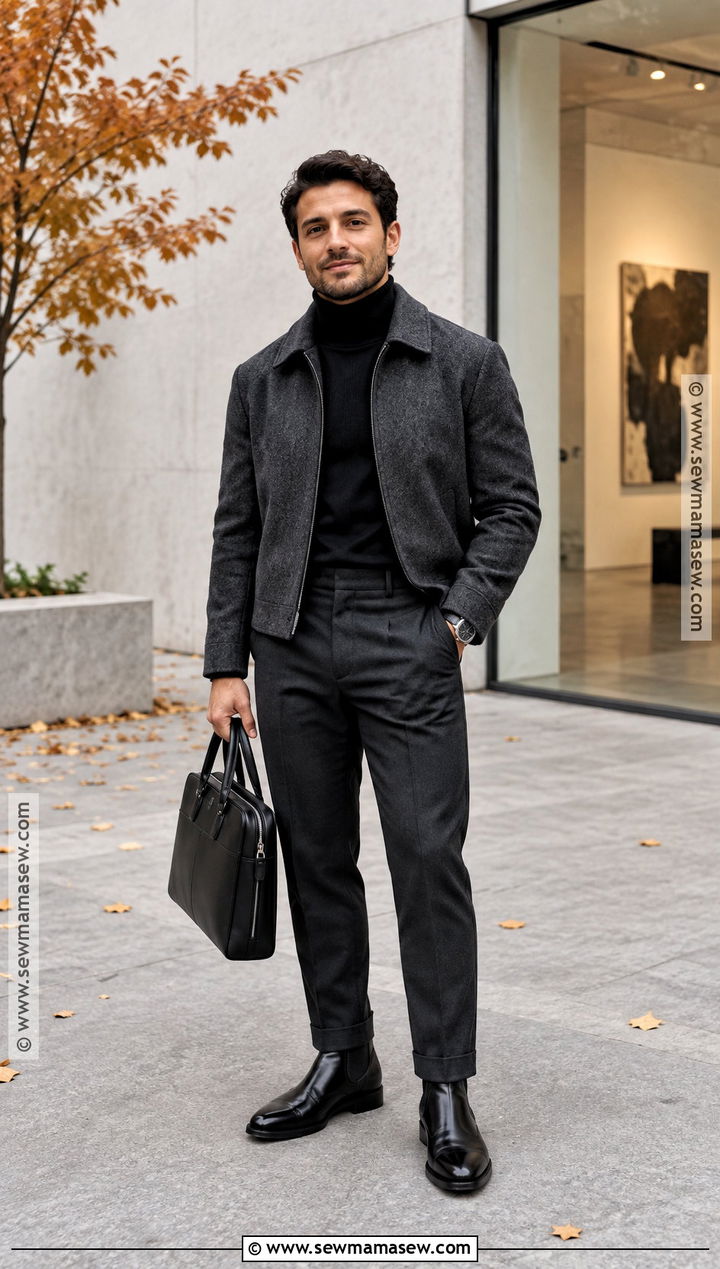
A turtleneck runs the line from chin to chest without a collar break, which is why I like it under tailoring on shorter men. Go for a slim merino one in black or chocolate, with the neck folded once so it sits neatly rather than bunching. Over it, a cropped wool jacket or short peacoat that ends around the upper hip. Tailored trousers in a similar dark tone, with a mid or high rise and a gently tapered leg, keep the line going. One caution: if your neck is short, a full roll neck can crowd it, and a mock neck gives the same effect with less fabric. Polished Chelsea boots, socks that disappear into the trousers and a slim watch make it warmer than a shirt alone and right for a smart dinner or an office event.
12. Puffer Vest With Henley And Jeans
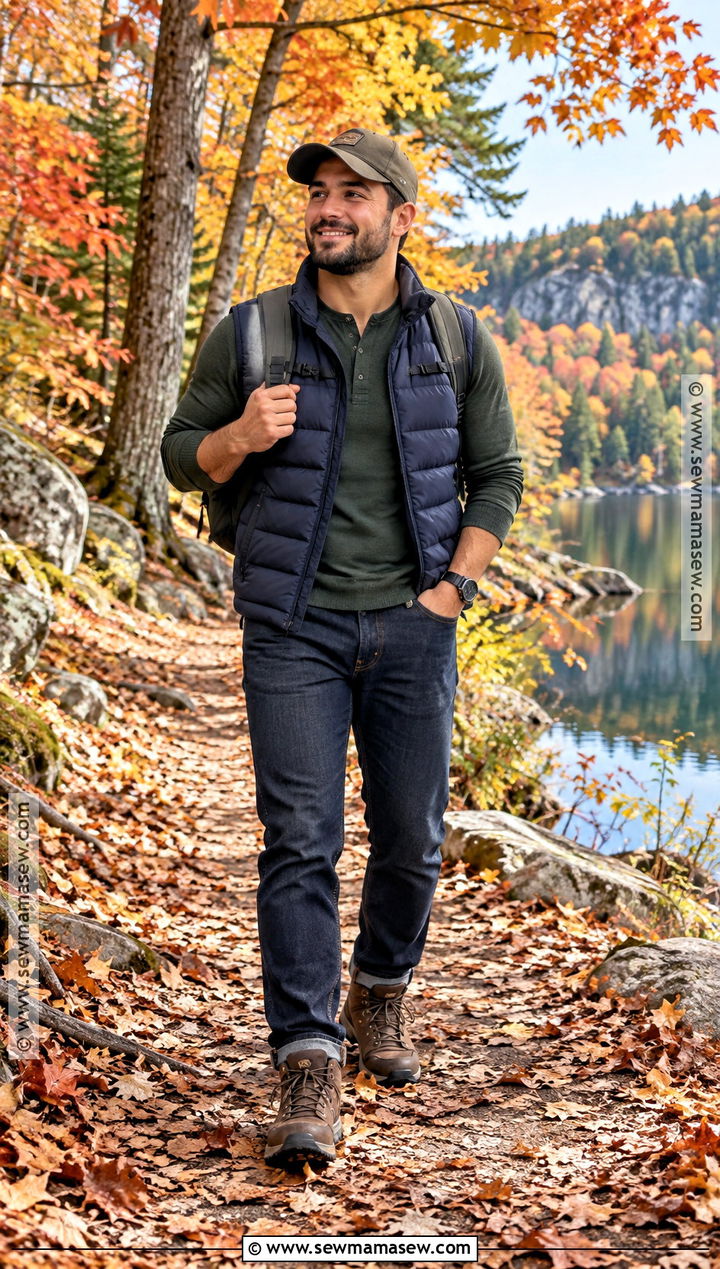
A vest is one of the best early-fall layers because it keeps your core warm and leaves your arms free, but a heavily baffled one makes the torso look wide. I look for a low-profile vest with narrow quilting that sits close to the body. Underneath, a long-sleeve henley in cream or forest green that ends near the top of the hips. Dark straight-leg jeans with a medium rise and minimal fading finish the base, and keeping vest and jeans in similar dark tones gives a more continuous shape. Down loses much of its loft when it gets wet, so a synthetic fill is the better choice if your fall is rainy. Brown hiking-inspired boots or streamlined sneakers and a simple cap make it ready for a farmers market or a road trip.
13. Blazer With Turtleneck And Dark Jeans
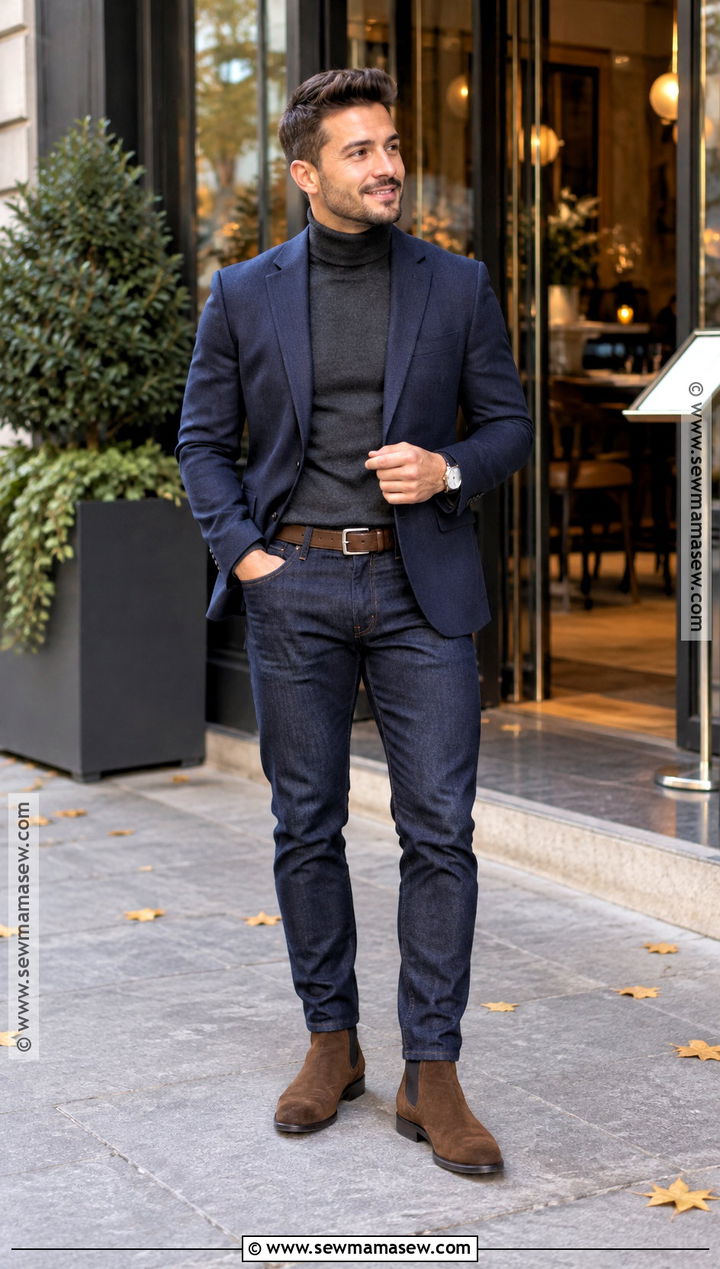
The blazer is where a shorter man most often gets swamped, and the culprit is usually length. A jacket should just cover the seat of the trousers; anything reaching toward mid-thigh shortens the legs noticeably. Choose a single-breasted blazer with a shorter body and narrower lapels, with the sleeves taken up to show a little cuff. A fitted charcoal turtleneck underneath and dark indigo or black jeans with a mid rise and little distressing keep it approachable. Suede loafers or sleek Chelsea boots finish it, and a watch with a matching belt is enough. Shortening sleeves is routine work for a tailor, but shortening the body of a blazer rarely looks right because the pockets end up too close to the hem. Buy the right length instead. It moves easily from a creative workplace to dinner.
14. Trucker Jacket With Sweater And Chinos
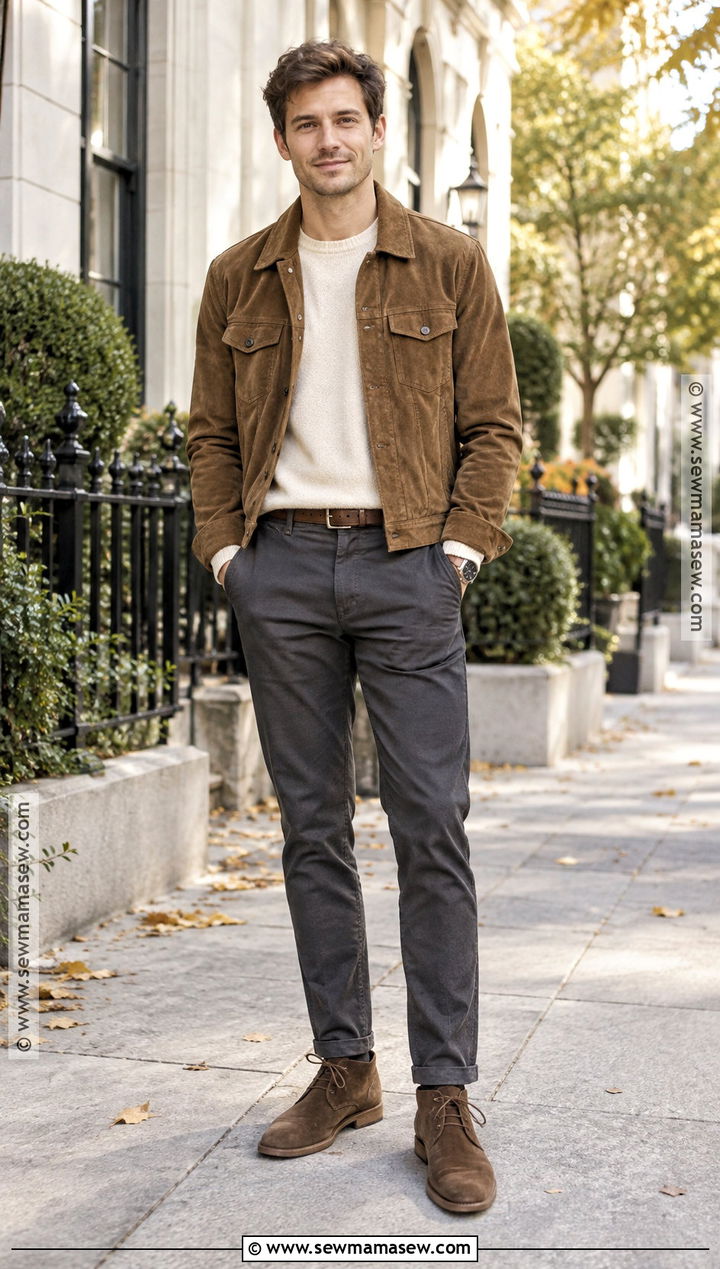
A trucker jacket gives clear definition at the waist because its hem stops above the hips by design. For fall my pick is tobacco suede or olive canvas. A fitted crewneck sweater in cream or light gray goes under it, putting a lighter tone near the face. Mid-rise chinos in charcoal or dark brown with a tapered leg and a precise hem complete the base. If the jacket is suede, treat it with a protector spray before the first wear and keep it out of heavy rain, because water spots and darkens it. The sweater must stay tucked or short enough not to hang below the jacket. Suede desert boots in a shade near the jacket's work for casual office days and local outings.
15. Short Topcoat With Tonal Fall Layers
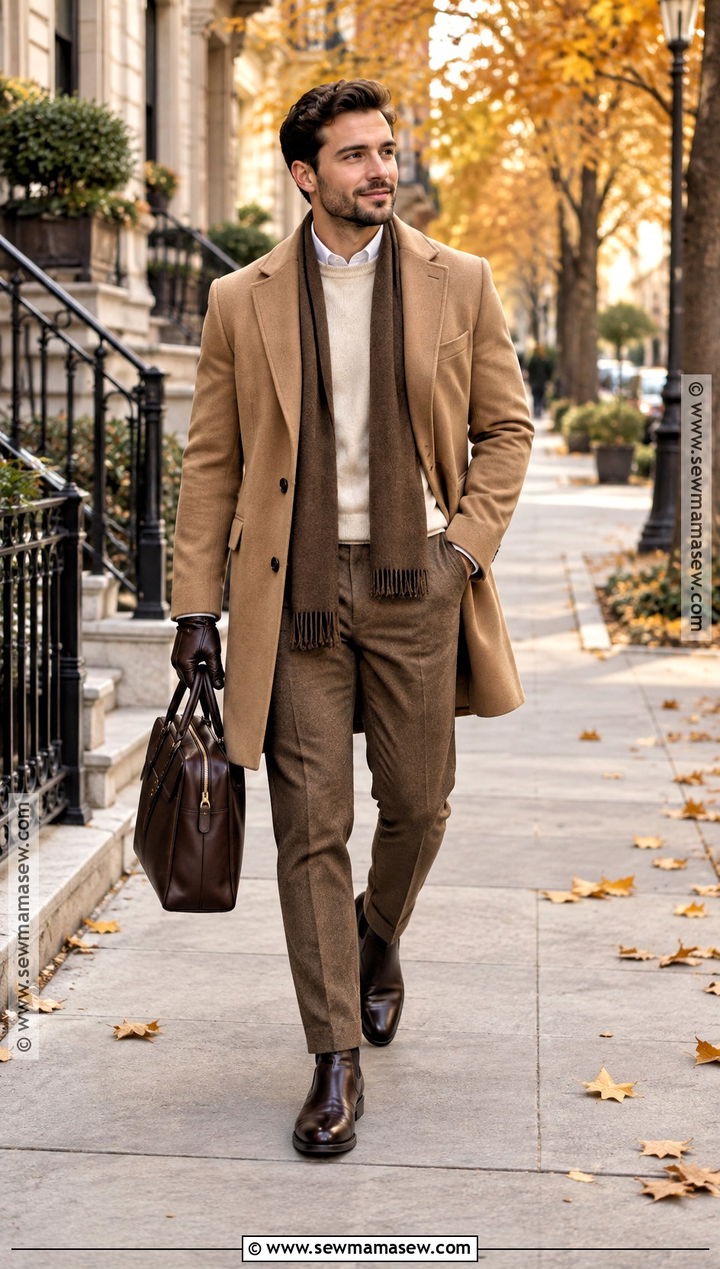
Late fall is when the coat problem shows up. A standard overcoat that falls below the knee cuts a shorter man's leg in half, so I go for a single-breasted topcoat that ends around mid-thigh or just above it. Charcoal or camel is the easiest to wear. Under it, a fitted sweater over a tucked Oxford and mid-rise wool trousers in a similar tone, so there are no visual breaks from shoulder to shoe. Try the coat on over the sweater, not just a shirt, and check that the shoulders still lie flat and the sleeves stop at the wrist bone. Streamlined leather dress boots, matching socks and a narrow scarf looped once instead of wound into a bundle get you through commutes, meetings and cold-weather travel.
What a Tailor Can Change, and When to Walk Away
Almost everything off the rack needs some work on a shorter frame, so I shop with alterations in mind. Some changes are routine and inexpensive. Others cost more than the garment is worth. Prices vary widely between shops and towns, so always ask for a quote before you hand anything over.
- Trouser hems: the easiest fix and the one with the biggest payoff. Jeans with a factory hem can be shortened with an original-hem method if you want to keep the worn edge.
- Shirt and jacket sleeves: routine, unless a jacket has working buttonholes at the cuff, which limits how much can come off.
- Taking in a waist or tapering a leg: straightforward on most trousers.
- Shortening a jacket body: usually a pass, because the pockets and buttons end up crowding the hem.
- Shoulders that hang past your shoulder bone: walk away. That's the one fit problem no tailor fixes affordably.
If you only budget for one alteration this fall, make it trousers. Clean hems change how an outfit reads more than any new jacket will.
Footwear for a Longer-Looking Leg
Shoes finish the line the trousers start. On a shorter man I steer toward slim, low-profile shapes in a color close to the trousers. A sleek Chelsea boot is the most useful single pair, since the elastic side panels leave nothing to break up the ankle and the boot slides neatly under a clean hem.
What I'd skip: chunky soles that read as a separate block, bright white sneakers under dark trousers, which stop the eye at the floor, and very long pointed toes, which make the foot look oversized at the end of a short leg. A modest boot heel is normal and fine. Lift inserts are a personal call, but fix your hems first, because that does more for the silhouette.
Proportion First, Personality Second
Fit beats every other rule in this list. Get the three lengths right, with jackets near the waist, a mid to high rise, and hems clean at the shoe, and most remaining choices come down to taste. Tonal color, smaller patterns and slim footwear help, but they're tools rather than laws. If you own something you love that's simply too long, take it to a tailor before you give up on it. Then wear what makes you feel sharp, denim on a Saturday or wool trousers on a Tuesday, and let the fit carry the outfit.
Related posts: