Fall shoes deserve a setting that feels seasonal without burying them. When I style a shoe display, the props are the easy part. The real work is in spacing, height and light, because those decide whether anyone notices a boot's stitching or a loafer's shape. Pumpkins, leaves and plaid set the mood, but the moment they start hiding a heel or a toe, they're working against you. Every idea below uses varied heights, clear gaps and focused light to pull the eye to boots, loafers and sneakers, and each one scales from a boutique window or showroom down to a closet, a content studio or a home entryway.

Prepping Shoes Before They Go Out on Display
Display shoes get looked at more closely than people expect, often from a foot away. Before I place a single pair, every sample goes through the same quick prep.
- Stuff toes with tissue and put shapers in tall boots so nothing slumps or creases.
- Wipe smooth leather with a soft cloth and brush suede in one direction to even out the nap.
- Clean the soles, especially the edges. A dusty welt shows on a raised riser at eye level.
- Peel off sticker residue and remove any stray tags or packing paper visible inside.
- Lace boots and sneakers evenly, with bows tied or tucked the same way across the whole display.
If a sample has a scuff that won't polish out, I pull it rather than hide it behind a prop. One worn shoe makes a whole display look neglected.
1. Rustic Crate Fall Shoe Display
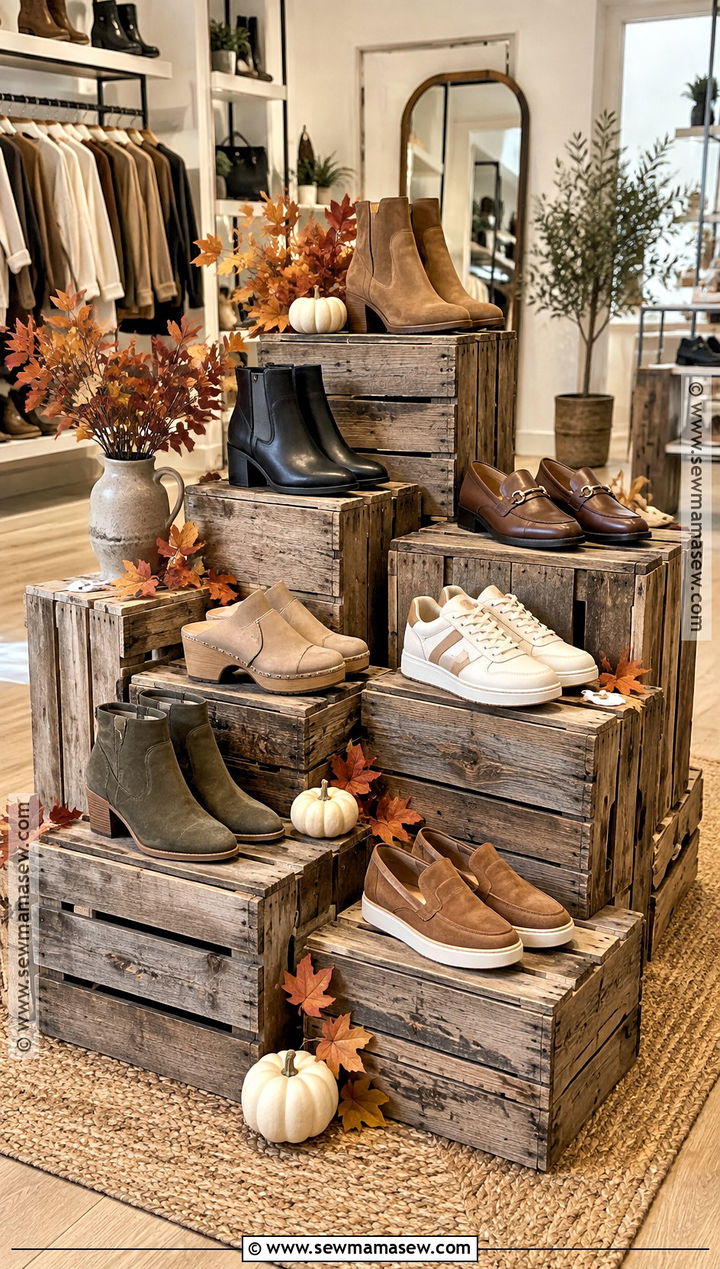
Wooden crates are the cheapest way to build levels, and they suit ankle boots, clogs, loafers and casual sneakers. Turn some on their sides and stand others upright, with the tallest stack at the back. Hero shoes go up high, and supporting pairs sit on the lower row. Weathered or lightly stained wood looks right beside brown, olive and burgundy leather. Before any shoe touches a crate, I sand rough edges or lay down a strip of felt, because raw pine scratches a polished toe and snags suede. A few faux leaves or small gourds can fill corners, never in front of a shoe. A neutral rug underneath defines the area. Angle each shoe slightly outward and leave space between pairs so the toe, profile and heel all show.
2. Fall Boot Wall Display
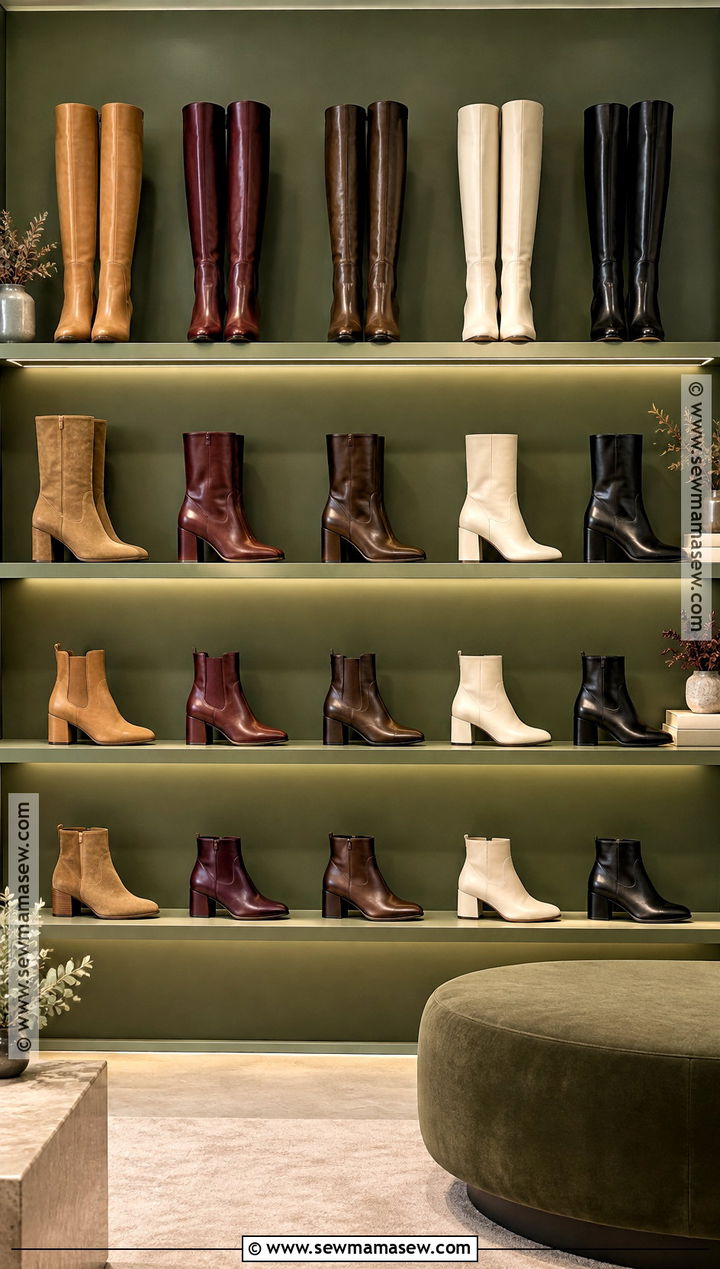
A boot wall lets people compare tall, mid-calf and ankle shafts at a glance. Narrow floating shelves in even rows work well, with extra height left for knee-highs. I organize by shaft height first, then color, so dark leather moves gradually into tan suede and cream. Display one boot from each pair at a slight angle, with sizes or the box close by. Tall boots slump on a shelf, which creases the leather at the ankle and makes them look tired, so every tall boot on my walls gets a shaper or rolled tissue inside. Discreet shelf lighting picks up buckles and stitching. A muted rust or forest-green wall sets the season, and one plain sign above is all the decoration it needs.
3. Autumn Leaf Shoe Window Display
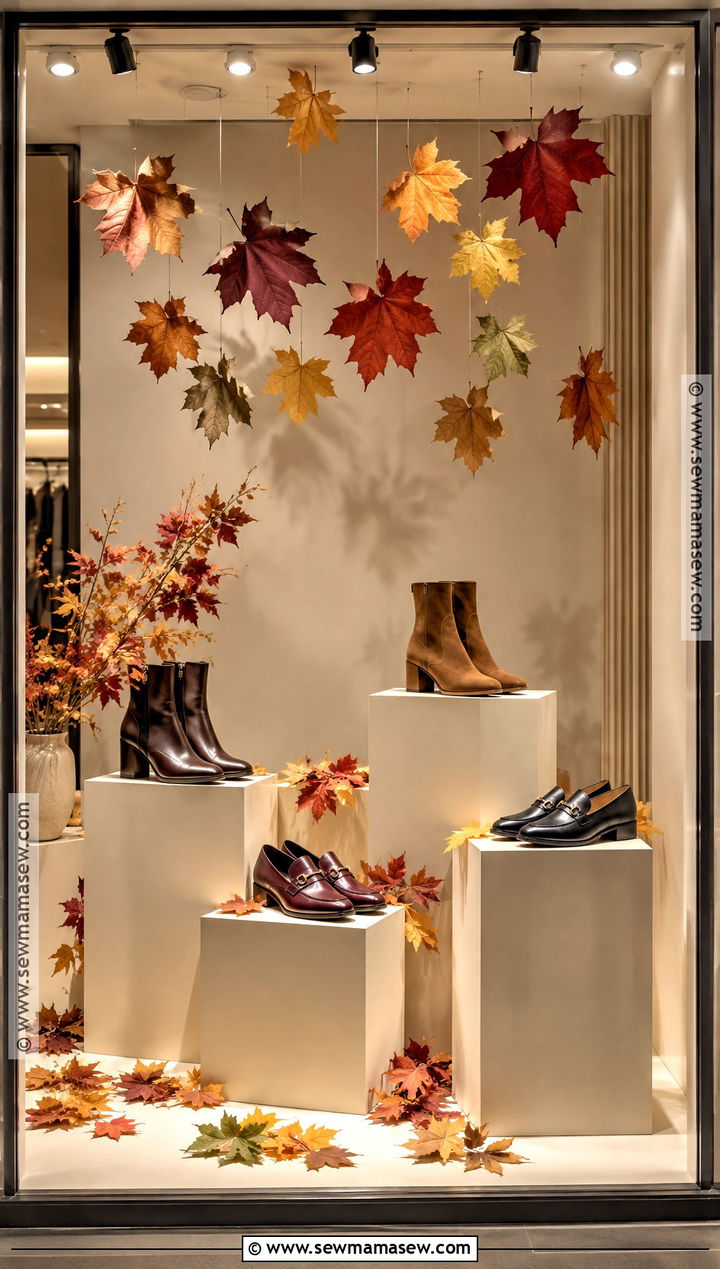
A leaf window works when the leaves frame the footwear instead of covering it. Start with a clean cream or soft gray background and hang light paper leaves at different heights in rust, gold and muted green. Boots and loafers sit on simple pedestals beneath them. In a small window, three to five shoes is enough; empty space is what lets each one register from the sidewalk. Put the tallest boot at or just off center and step shorter styles down from it. Small directional spotlights from above do most of the work. Keep leaves clear of price cards and the door. Fishing line twists over a few days, so I check the hanging leaves each morning and straighten any that have spun sideways.
4. Pumpkin Patch Shoe Display
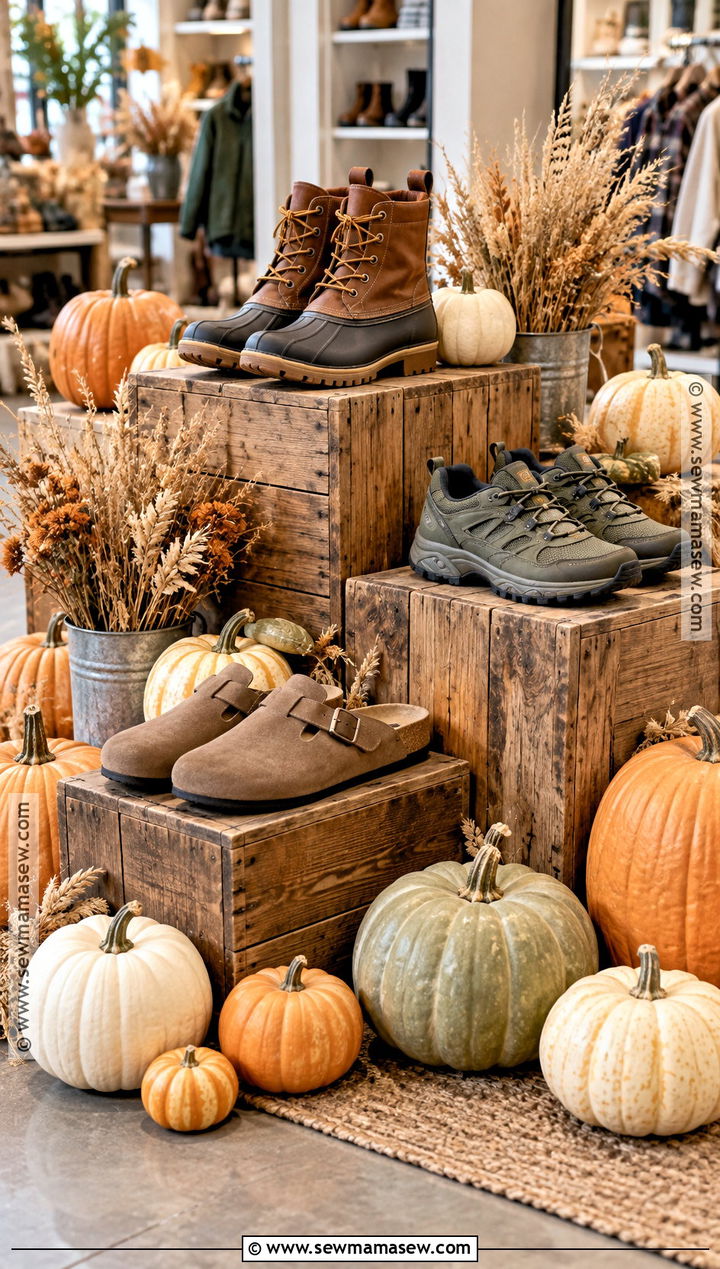
A pumpkin patch scene is playful and quick to set up. Pale orange, cream and sage pumpkins coordinate better with brown and olive footwear than bright orange ones do. Boots, weather-resistant sneakers and outdoor shoes go on sturdy wooden platforms, not down among the decorations. Vary the platform heights so it reads like a small landscape, with the feature pair at the top. Tuck dried grass or faux vines around the bases and keep walkways clear. Real pumpkins sweat and eventually soften, and that moisture stains suede and leather, so I use faux ones near merchandise or keep real ones well apart. It works best when the shoes share one practical story, like weekend walking or market mornings.
5. Minimal Fall Shoe Shelf Display
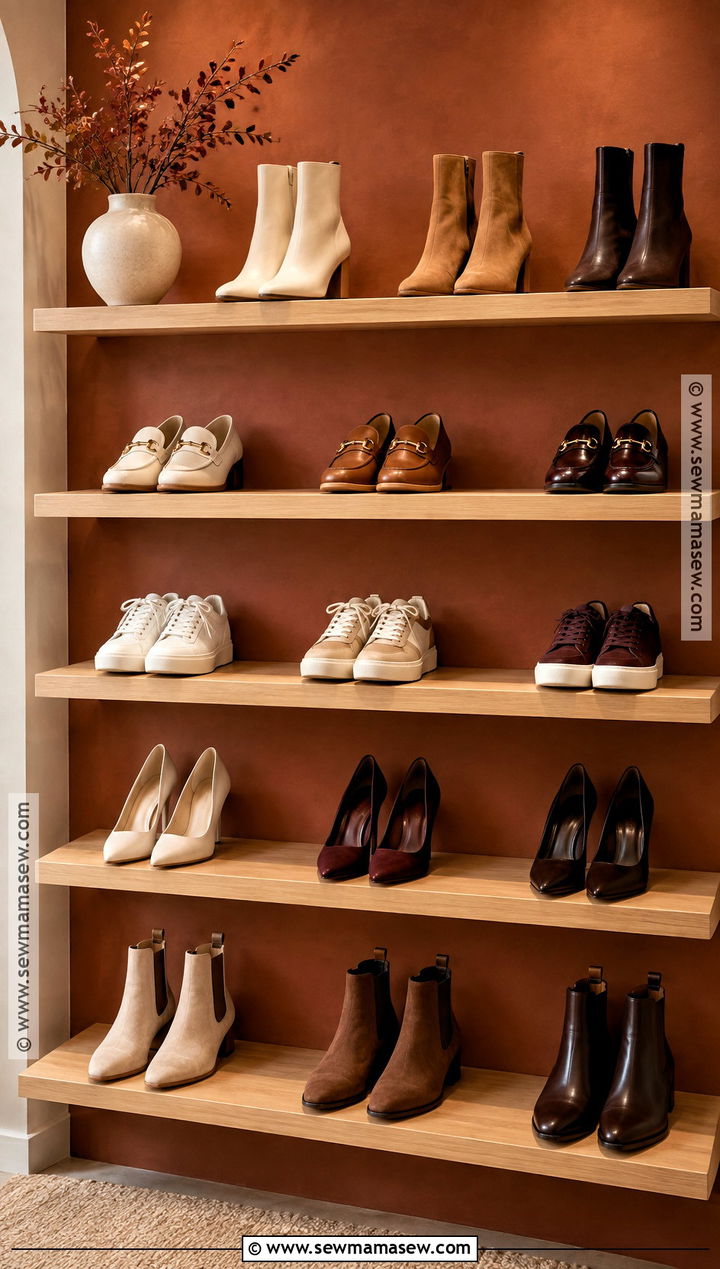
Clean shelving is the calm alternative to a heavily decorated display. White, light oak or matte black shelves with one shoe per level, spaced evenly, let each style stand on its own. The season comes through a rust backdrop, a small ceramic vase or one branch of preserved leaves. Grouping by color makes it easy to read: cream and camel first, then cognac and burgundy, then chocolate and black. Tags tuck beside or under each sample. Bright shelf lighting shows texture and shape. Because nothing here is tied to Halloween or harvest, it stays relevant from September into early winter, and I only swap the branch.
6. Vintage Suitcase Shoe Display
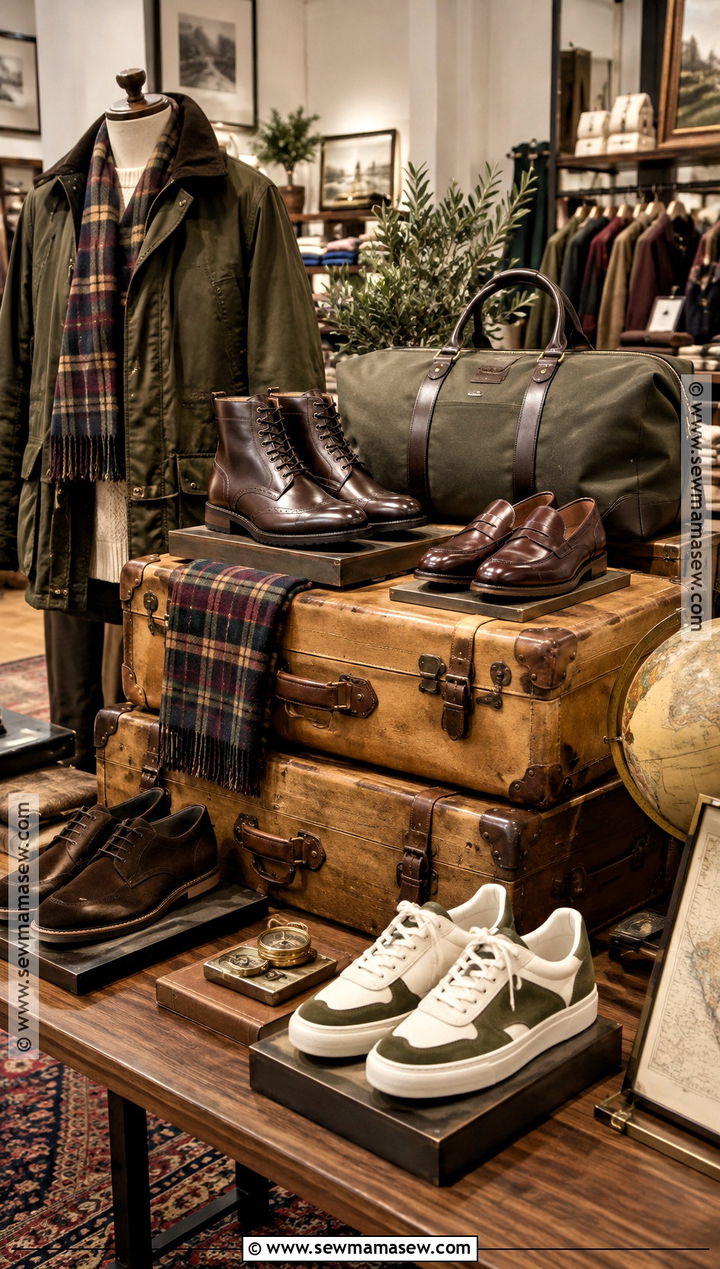
Vintage suitcases give fall footwear a travel story. Stack two or three hard-sided cases securely and open the top one to frame a featured pair. Loafers, lace-up boots or heritage sneakers sit on clean risers inside rather than on the old lining, which is often dusty and can pass a musty smell into leather. Around it, a folded plaid scarf, a simple map or a weekender bag suggests a getaway. Keep the palette to tan, olive, burgundy and cream. I check every case for loose hinges and sharp corners first, and I wipe the interior before anything goes in. It suits windows, entry displays and photo shoots with a classic autumn feel.
7. Plaid Backdrop Fall Shoe Display
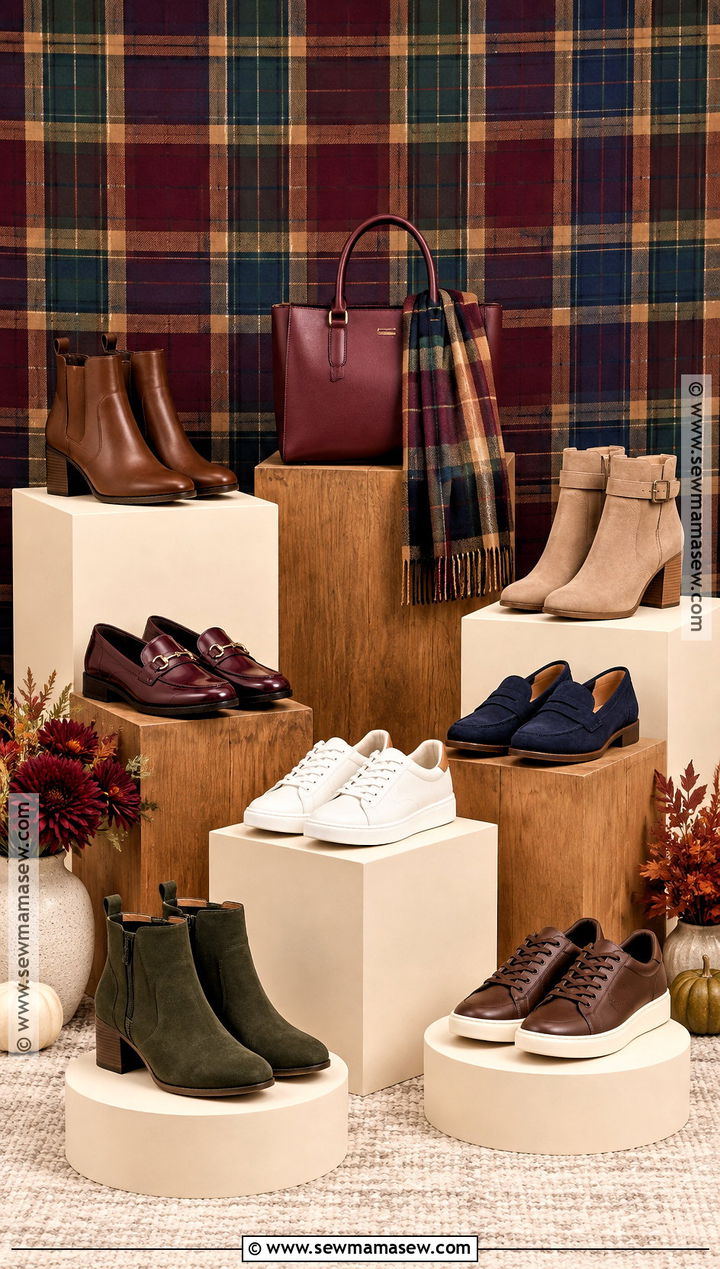
Plaid brings in fall color quickly, but it should stay in the background. One large panel of tartan, buffalo check or windowpane fabric behind the display is enough. Pick a pattern that repeats colors already in the shoes, like camel, deep green or burgundy. Neutral pedestals sit in front, with boots, loafers or sneakers at varied heights, and solid platforms keep it from getting busy. One matching accessory, a handbag or a scarf, strengthens the story. Steam the fabric and pull it taut, since wrinkles in a check pattern show from across a room. Bright white lighting keeps the footwear colors accurate, which matters because dark plaid under warm bulbs can make brown leather look muddy.
8. Woodland Fall Shoe Display
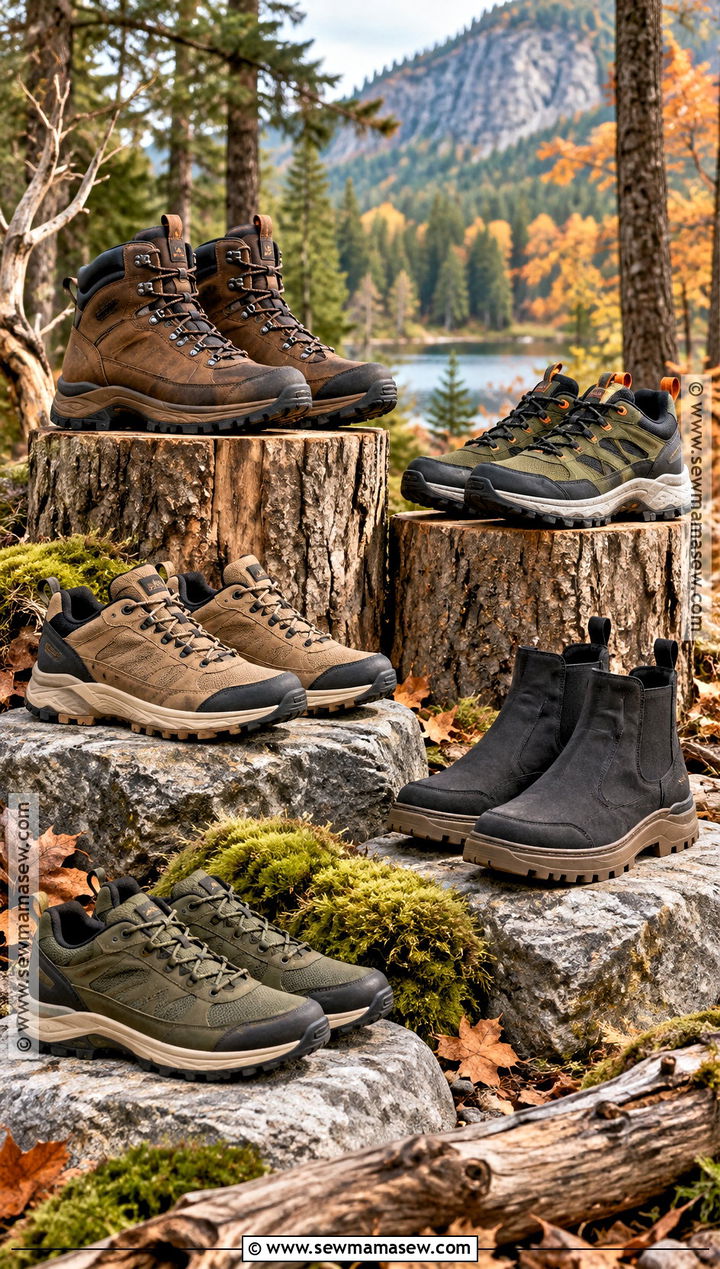
A woodland scene suits hiking boots, lug soles and weatherproof sneakers. Build it with clean wood slices, faux moss, branches and stone-look platforms. Every natural element has to be dry, stable and separated from the shoes; real moss and bark shed dirt and hold damp, which marks suede and pale soles. Put the strongest boot on a central stump-style riser with supporting styles lower down. Forest green, brown, charcoal and muted orange keep the palette together. A photographic woodland backdrop adds depth without using floor space. Leave gaps instead of filling every corner. Small cards can point out traction, insulation, waterproofing or cushioning, which is what someone buying a trail boot actually wants to know.
9. Color Gradient Fall Shoe Wall
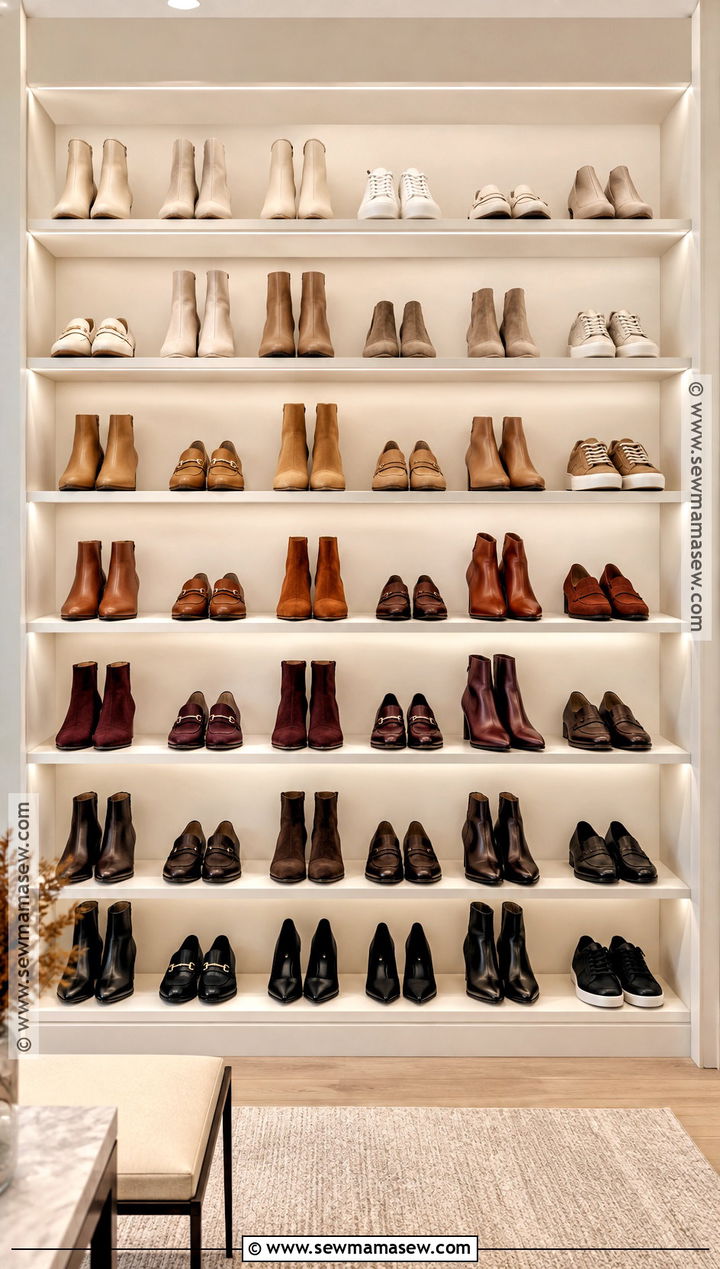
A color-gradient wall turns a mixed collection into something orderly. Start with ivory, oatmeal and beige, then move through camel, cognac, rust, burgundy and chocolate to black. Keep shelf spacing consistent so color is the main thing the eye follows. If there are several categories, repeat a simple sequence of ankle boot, loafer, sneaker and heel across the wall, which gives rhythm while still showing range. A neutral background won't compete, and small labels won't break the flow the way big signs do. Popular and new styles belong in the band between a shopper's waist and eye level, where they're easiest to see and reach.
10. Fall Entry Table Shoe Display
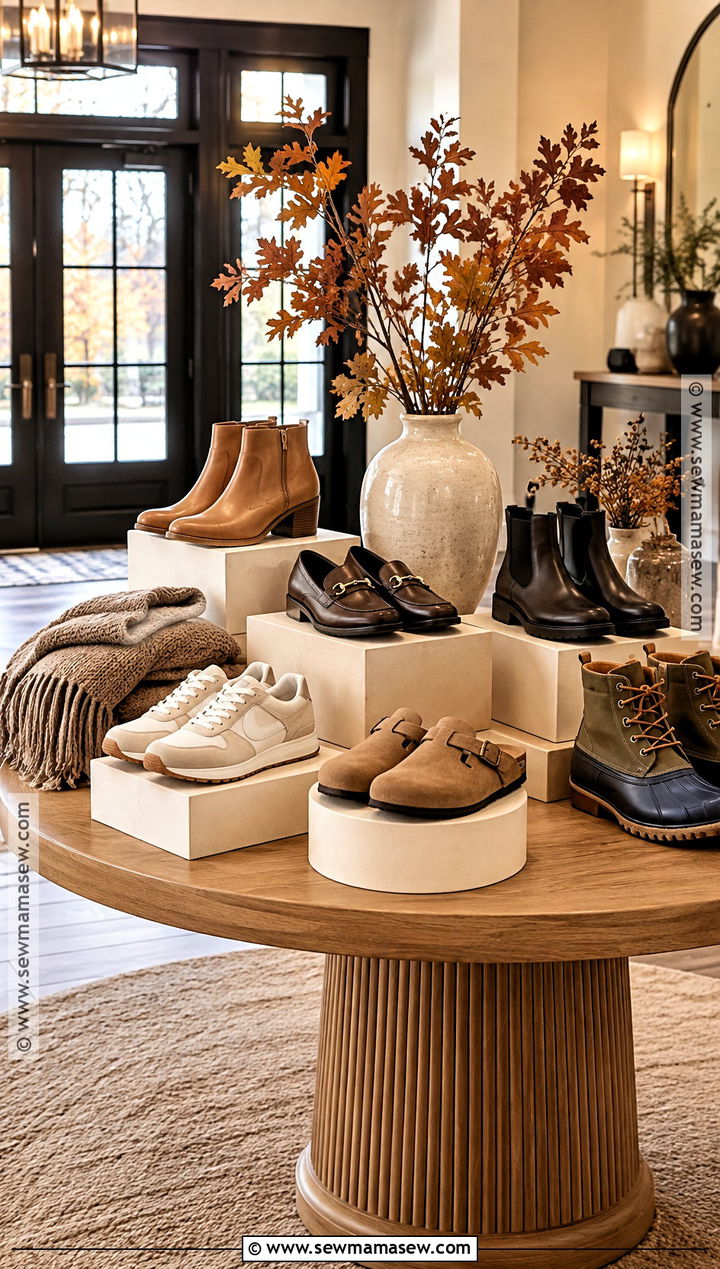
An entry table has a few seconds to say what the season and the collection are. Choose three to seven styles that cover the key categories: ankle boots, loafers, sneakers, clogs and something weather-ready. Low risers add height without blocking the view into the store. A folded knit throw, a ceramic vase and a few preserved branches soften it. Arrange the shoes in an uneven triangle with the tallest boot at the back. Add a short collection sign and make prices easy to find. Entry tables get handled more than any other display, so I check them every morning for shifted shoes, fingerprints on patent and smooth leather, dust and missing tags.
11. Industrial Fall Shoe Display
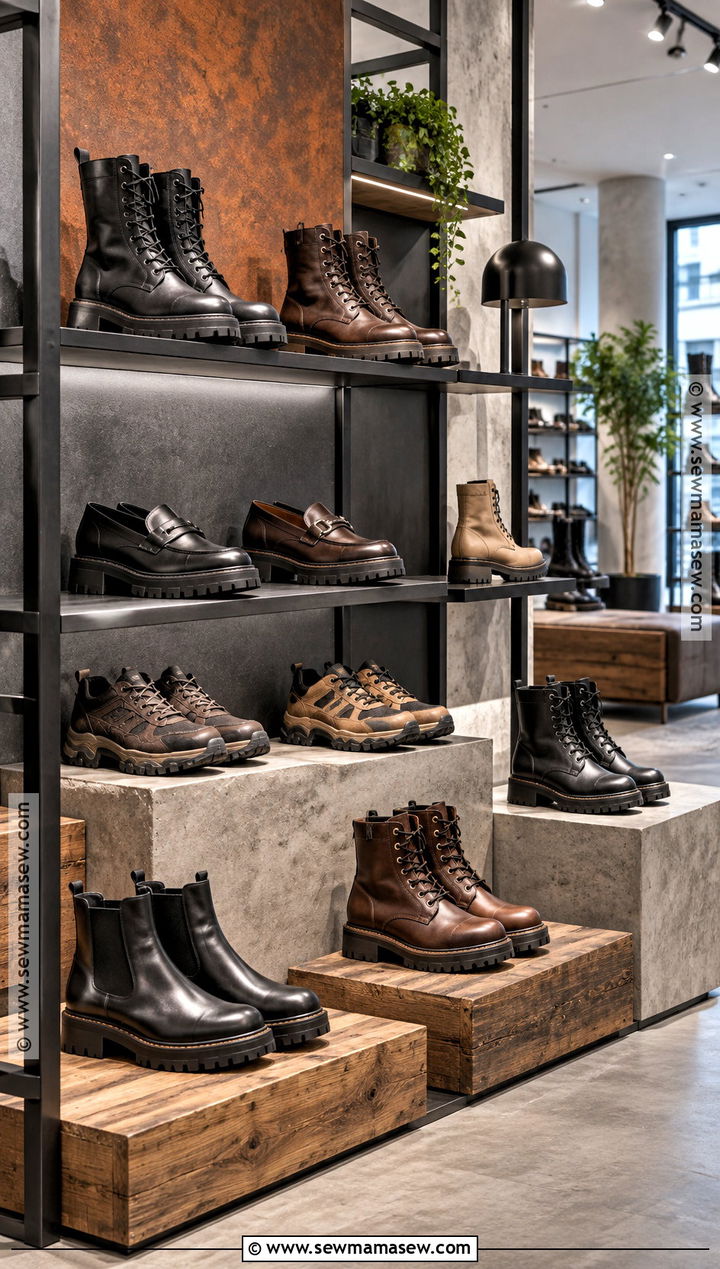
Metal frames, concrete-look risers and reclaimed wood make an industrial setting for rugged footwear: combat boots, work-inspired styles, chunky loafers and dark leather sneakers. Black metal shelving is the frame, while wood platforms and a little rust or camel add warmth. Exposed bulbs suit the theme, but bright white light still has to show the product accurately. Hard materials make a display feel crowded fast, so give each shoe extra room. One metal sign or graphic panel can tell the story. Avoid rusty or sharp objects near merchandise, and test every shelf with the heaviest boot first. Lug-sole work boots are heavy, and a thin metal shelf will bow under a full row of them.
12. Cozy Cabin Shoe Display
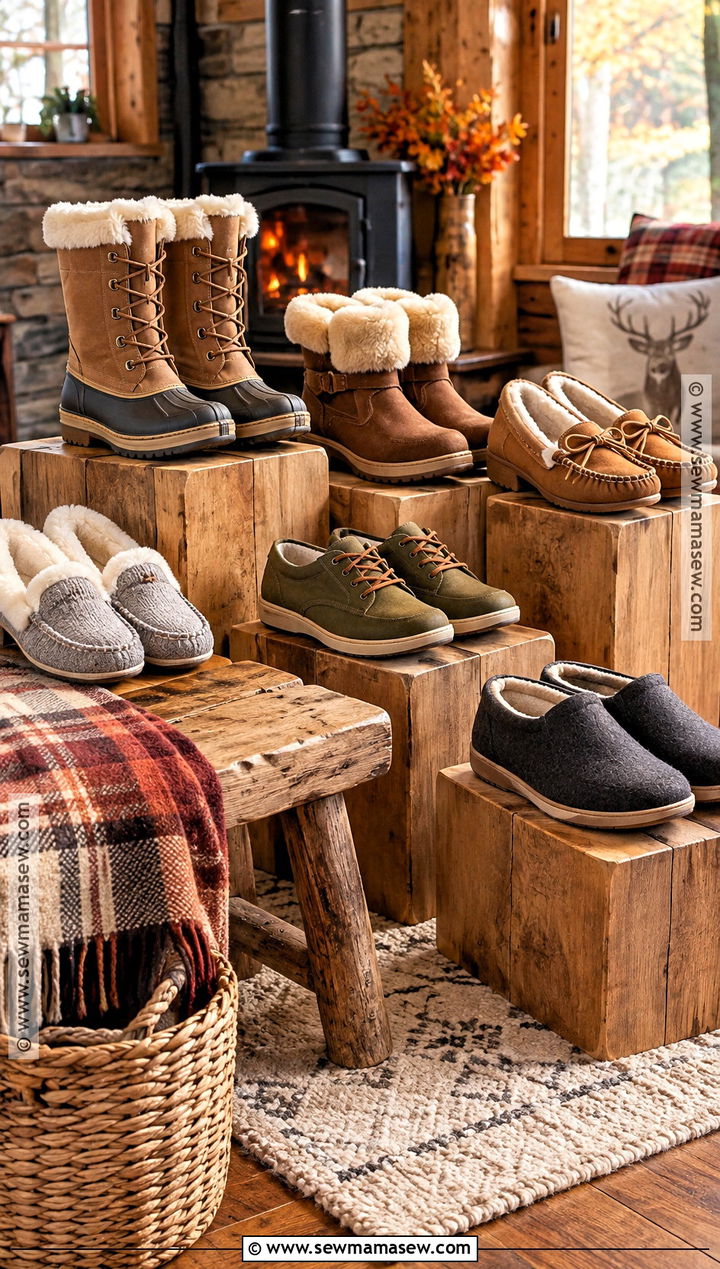
A cabin setting suits fleece-lined boots, moccasins, slippers and soft everyday shoes. Start with a small wood bench, a plaid rug or a light timber platform, and add one folded knit blanket and one woven basket. Shoes go on clean raised blocks, not buried in blankets, because shearling and fleece linings pick up lint from knit throws. Warm colors can set the mood, but bright white light keeps brown footwear from blending into brown wood. A simple cabin wall graphic adds context without clutter. Arrange it as if someone just set out their favorite pair for a cold morning. That sense of real use is what makes comfort features land with the person looking.
13. Floating Shelf Fall Shoe Display
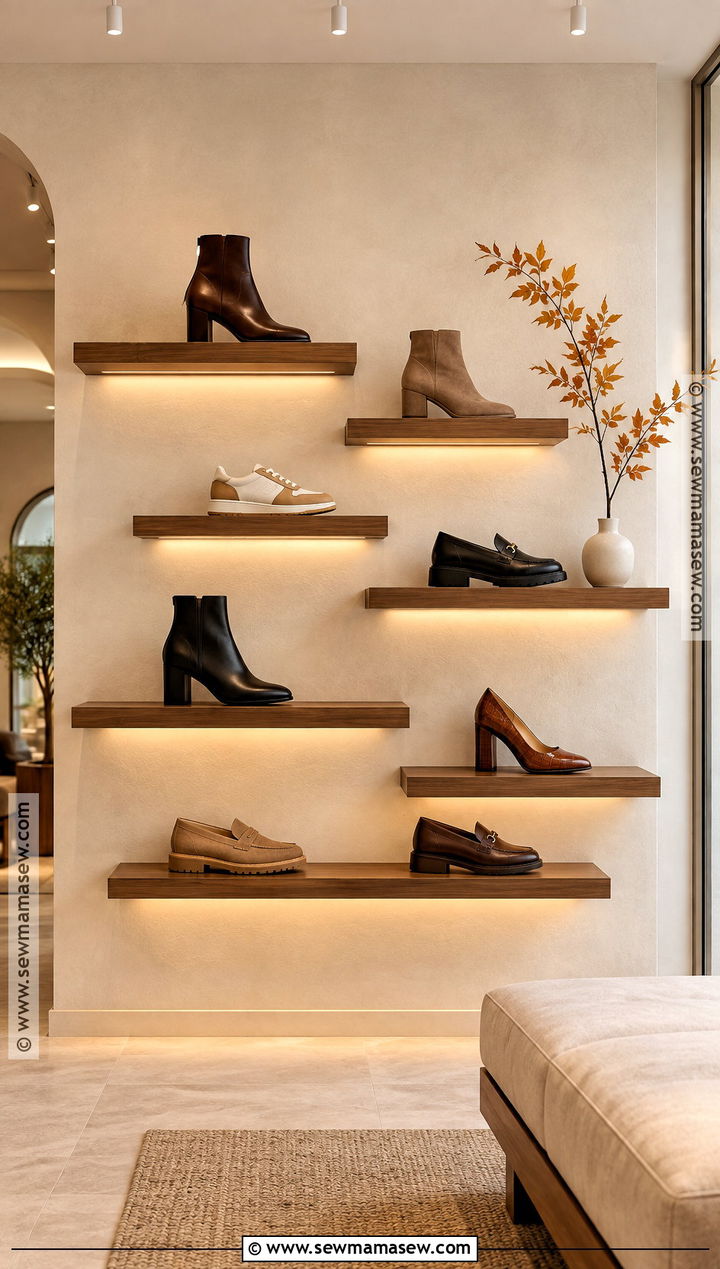
Floating shelves make a small collection look spacious and keep attention on each design. Stagger them into a gentle diagonal or a balanced grid. One shoe, one pair or a tiny coordinated group per shelf is the limit; more than that and the clean effect is gone. Pick oak, walnut, white or matte black to match the room. Add autumn accents only where there's space, like one small vase, a dried branch or a ceramic pumpkin. Important styles go near eye level, with concealed lighting to show materials and construction. Floating shelves need to go into studs or proper anchors, and I check the rated load before boots go on them. They suit narrow boutiques, home collections and pop-ups where floor space has to stay open.
14. Fall Shoe Display With Accessories
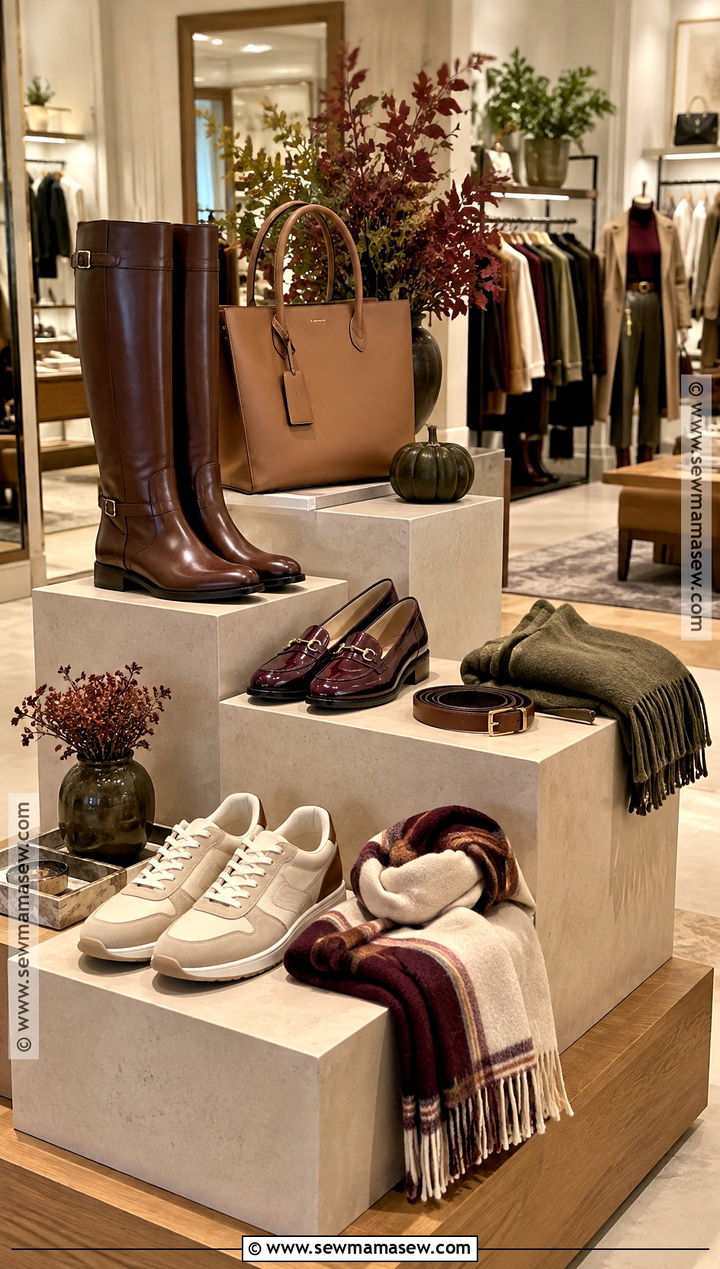
Accessories help people picture shoes as part of an outfit. Pair riding boots with a structured tote and folded scarf, or set loafers beside a slim belt and a polished shoulder bag. Keep each grouping to one color story or one use, such as work or weekend, so it doesn't look like a random pile of products. The shoes stay the largest and most visible thing, with accessories behind, beside or slightly below, never in front. Two or three supporting pieces per grouping is plenty. Neutral risers keep it tidy, and small cards can suggest work, travel or outdoor use. When the belt leather matches the shoe leather in tone, the pairing reads instantly, and that's often what gets someone to pick up both.
15. Fall Shoe Pedestal Display
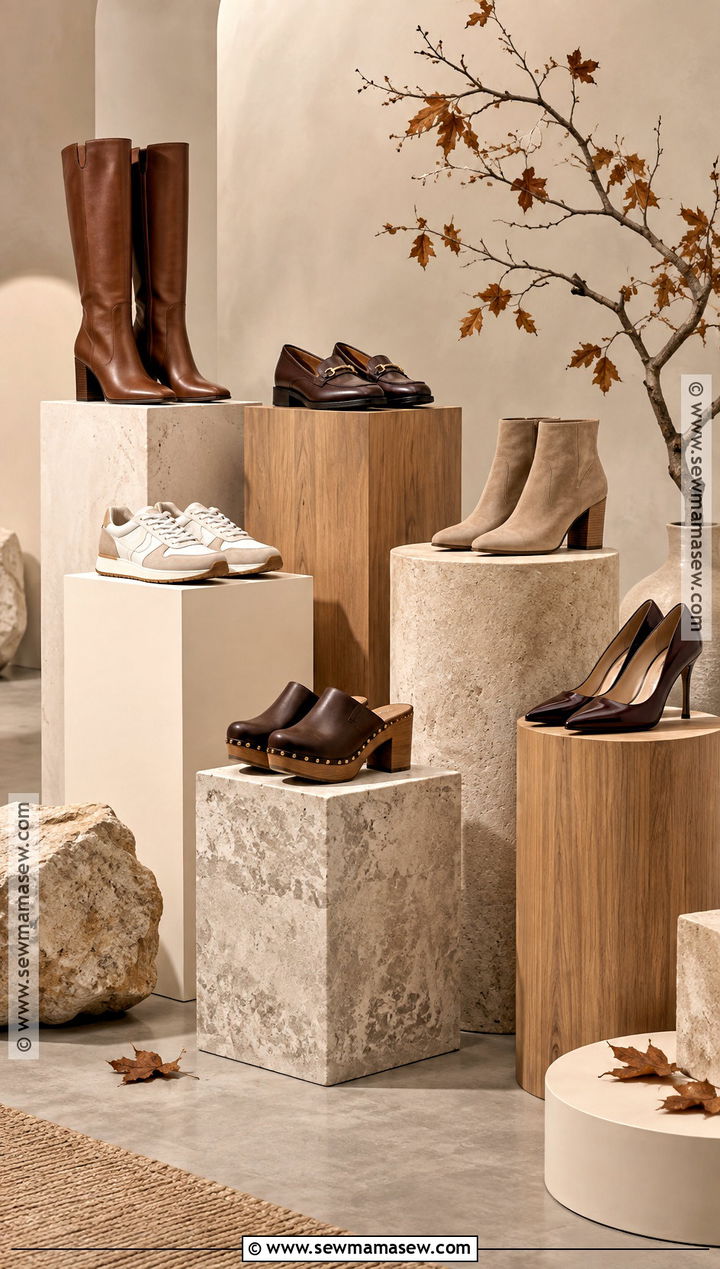
Pedestals give a shoe collection a gallery feel. Use three to five columns in different heights, grouped loosely with enough room to see each shoe from several angles. White, cream, wood or stone-look finishes suit most footwear colors. The newest or most distinctive design goes on the tallest pedestal, with complementary styles below. Bring in fall through a muted backdrop, a few paper leaves or one sculptural branch rather than decorating every column. Each top must be broad and steady, since a tall boot on a narrow plinth tips at the first bump. Directional lighting picks up leather, suede, hardware and sole detail. It suits windows, launches, showrooms and product photography.
Window Light and Spotlight Heat on Leather
A sunny window is great for the street and hard on leather. Strong daylight fades dyed leather and suede over a few weeks, and pale suede can yellow. I rotate samples in a sunny window every week or two and keep the best stock out of direct afternoon sun. If the window faces south or west, a UV-filtering film on the glass helps.
Lighting matters too. Older halogen spotlights run hot enough to dry leather out when aimed close for hours, while LED spots stay much cooler, so they're the better choice near shoes. Keep candles, fresh flowers and damp natural props away from merchandise for the same reason.
Scaling It Down for a Home Entryway
Most of these ideas translate to a home entryway with one change: home shoes come in wet and muddy. Keep the styled part for pairs you're not wearing this week, on a floating shelf or a small bench with risers, and put a rubber boot tray right by the door for daily shoes. Wet leather should dry at room temperature, stuffed with paper, never beside a radiator, where it stiffens and cracks.
Airflow matters as well. Closed cabinets trap moisture and smells, so open shelves or slatted racks are kinder to leather. A small seasonal touch, like a branch in a vase or a folded plaid throw on the bench, gives the entry the same fall feel as a shop window without cluttering the floor.
Keep the Shoes in Front of the Props
A good seasonal display makes footwear easier to notice, compare and buy. The ideas here cover small shelves, boutique windows, large walls, entry tables, personal collections and product photography. Pick the concept that suits the shoes, the space and the feel of the store or home. Then build it with balanced heights, clear gaps, coordinated colors, steady fixtures and bright light on the product. Autumn props set the mood, but the shoes stay in front. Rustic crates or polished pedestals, the rule doesn't change: a focused arrangement makes the whole fall collection feel organized and easy to shop.
Related posts: