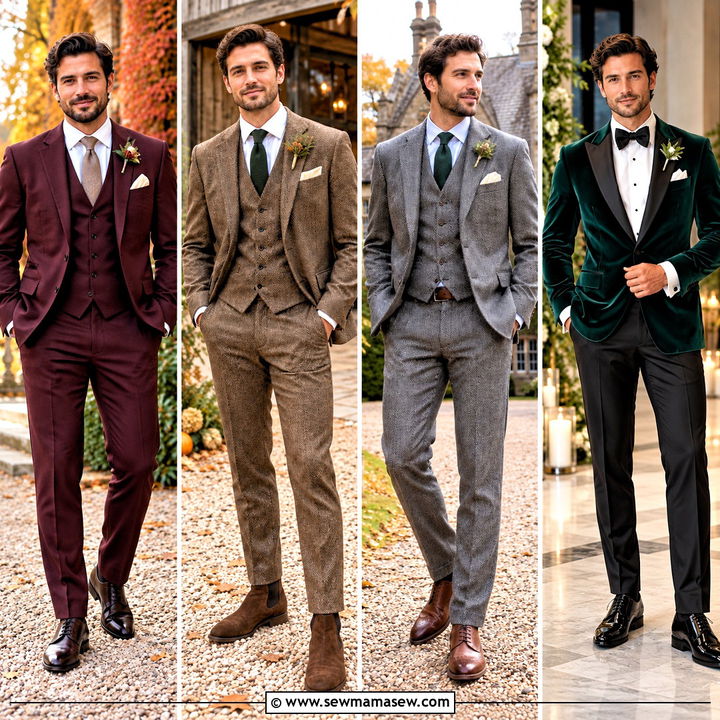
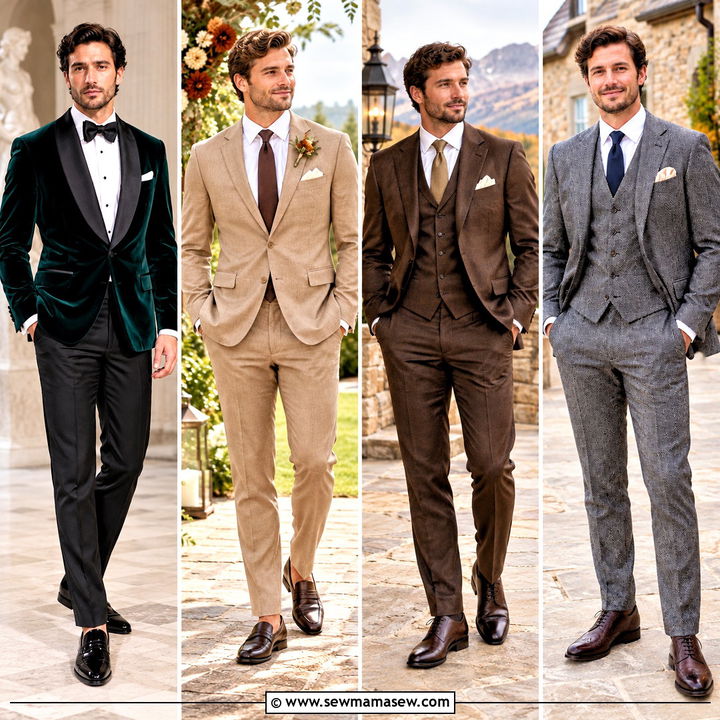
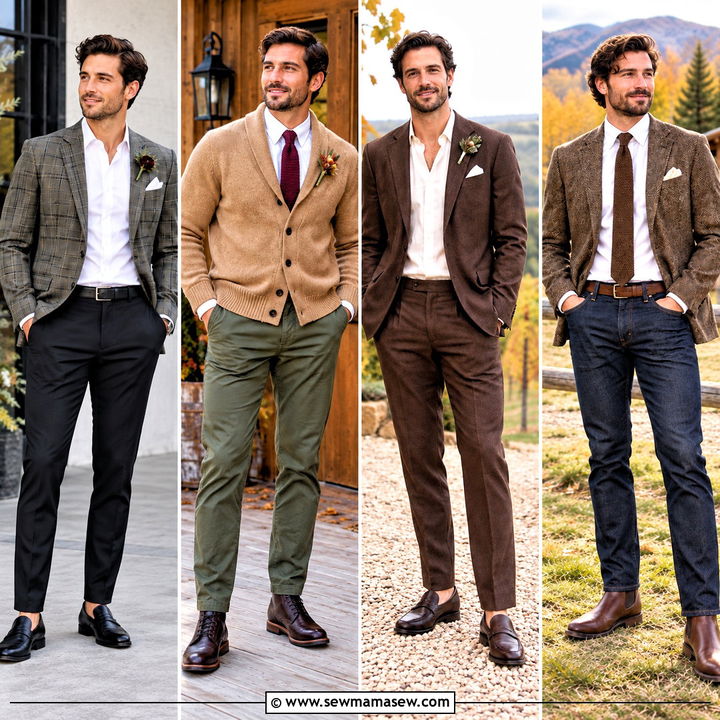
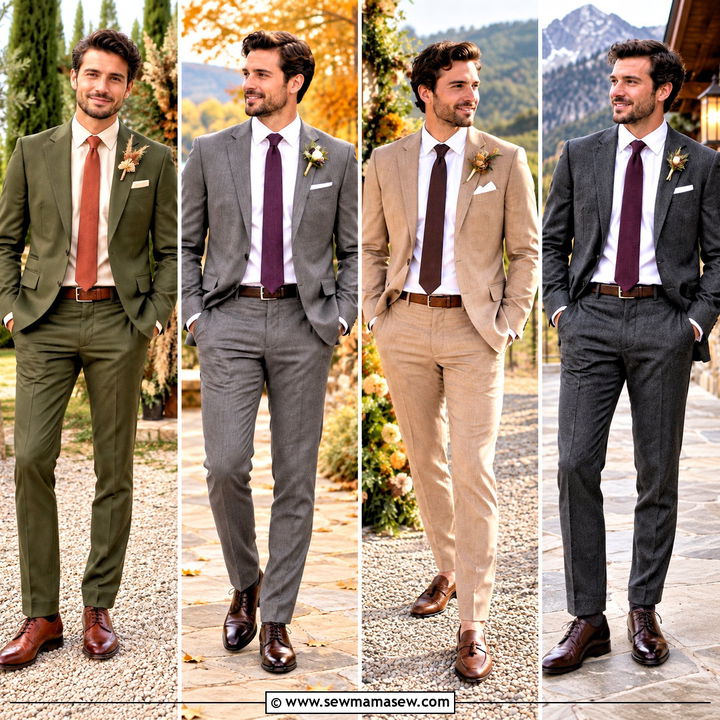
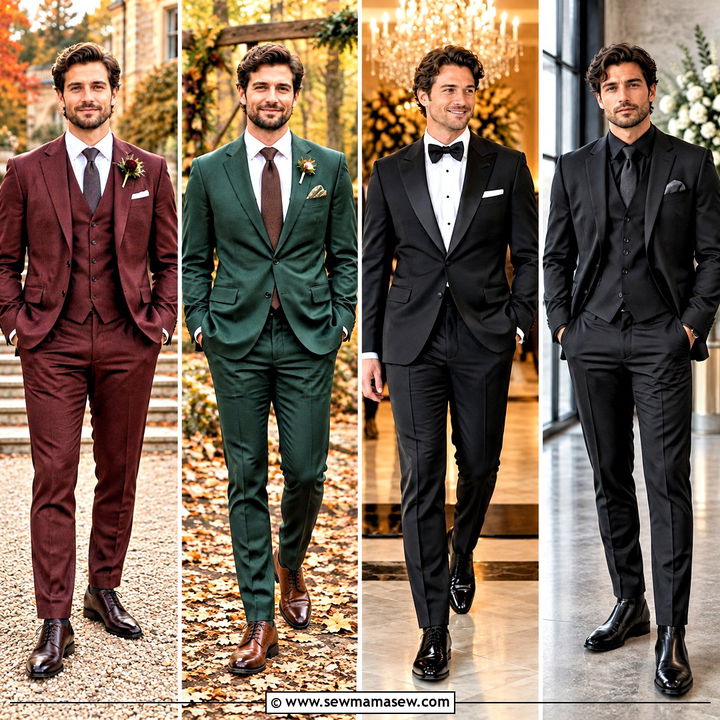
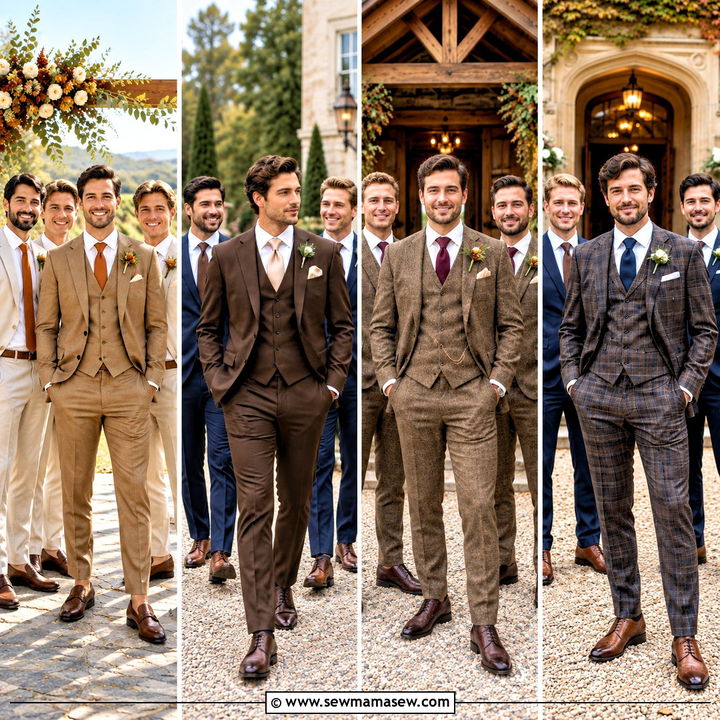
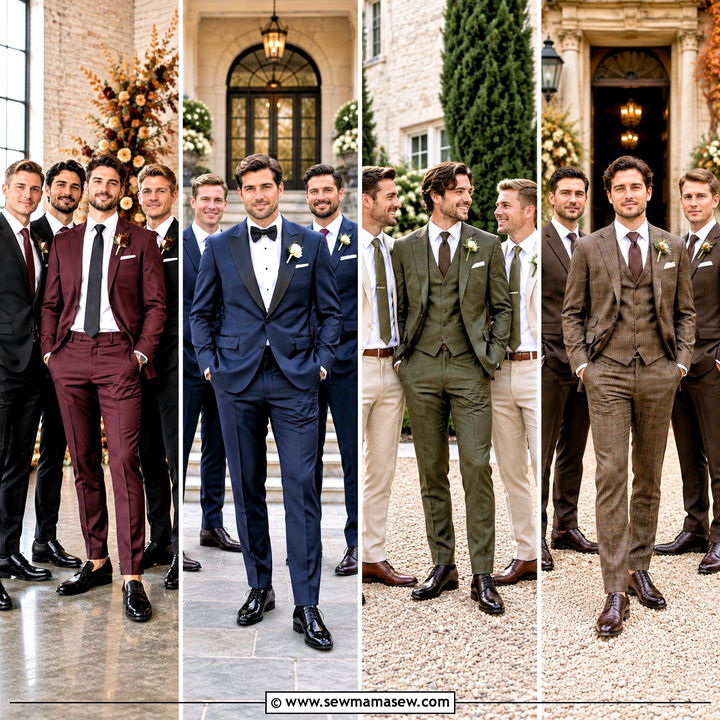
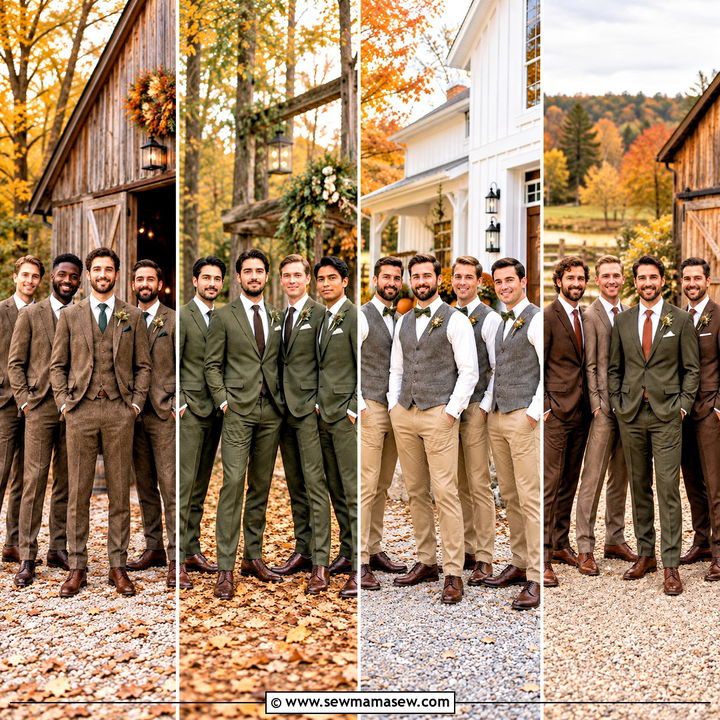
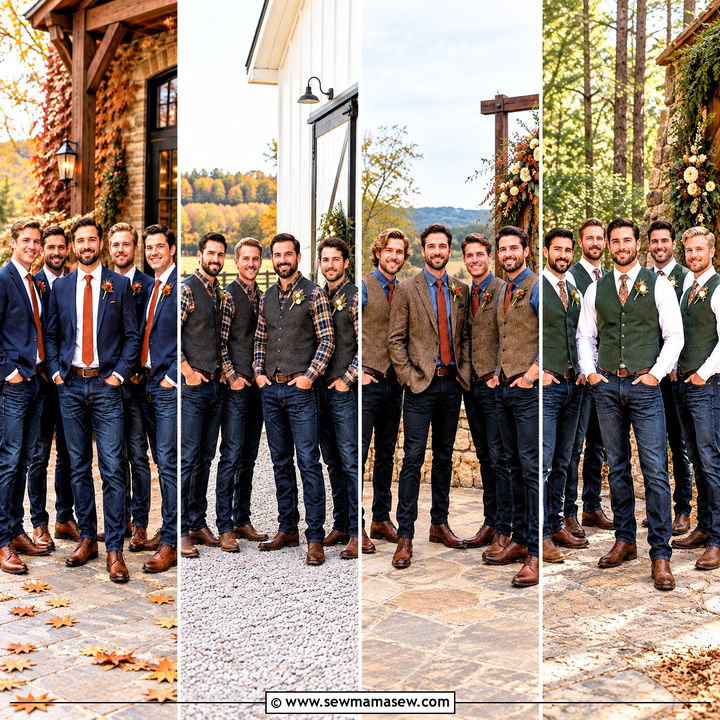
Fall is the season when menswear for a wedding finally gets to have some weight to it. Flannel, tweed and velvet all make sense, the palette can move into brown, burgundy, forest green and deep navy, and a three-piece suit stops feeling like a costume because the waistcoat actually keeps someone warm on an exposed hillside. When I dress a wedding party, the two questions I settle first are how formal the day is and how the groom will read as the groom from across the room. Everything below is built around those two answers. Each idea is a full combination, from jacket to shoes, and the list runs from black-tie tuxedos down to relaxed separates for a barn ceremony.
Rent or Buy, and When the Measurements Need to Be In
The color decision gets all the attention, but the timeline is what actually goes wrong. Fall is a busy wedding season, and rental stock in popular shades like brown, olive and burgundy can run thin. I tell grooms to lock in the look about three to four months out and to have every groomsman measured soon after.
- Renting makes sense for tuxedos and unusual colors a groomsman will never wear again. Fit is limited, so expect sleeves and hems to be close rather than perfect.
- Buying makes sense for navy, charcoal and brown suits, since each man walks away with something he will wear to interviews and other weddings. Budget for a tailor on top of the suit price.
- Have measurements taken by a professional, not a friend with a tape. Self-measured chest and inseam numbers are the most common reason a rented suit arrives wrong.
- Schedule a final try-on one to two weeks before the wedding, with the actual shoes. That leaves time to swap a jacket size or re-hem trousers.
Out-of-town groomsmen are the usual weak link. Get their measurements early, ship their suits to arrive with enough margin for a local alteration, and ask for a photo of each man wearing the full outfit.
1. Brown Three-Piece Groom And Groomsmen Suits
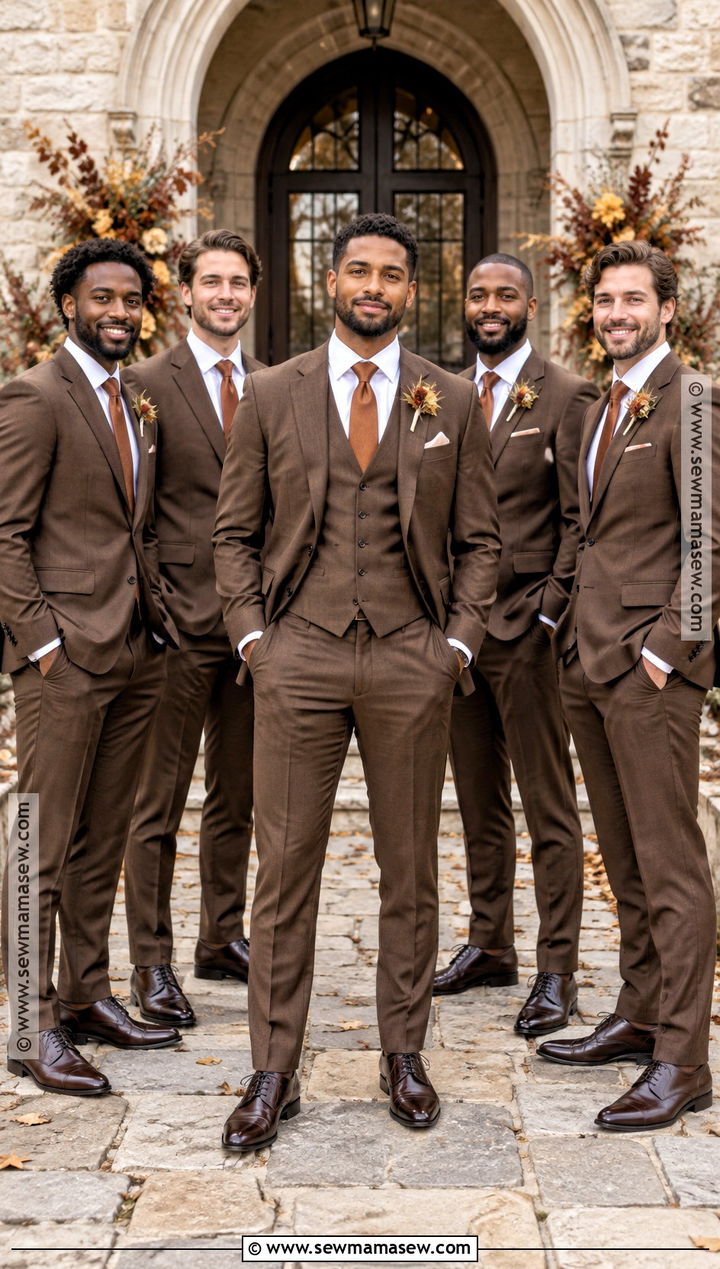
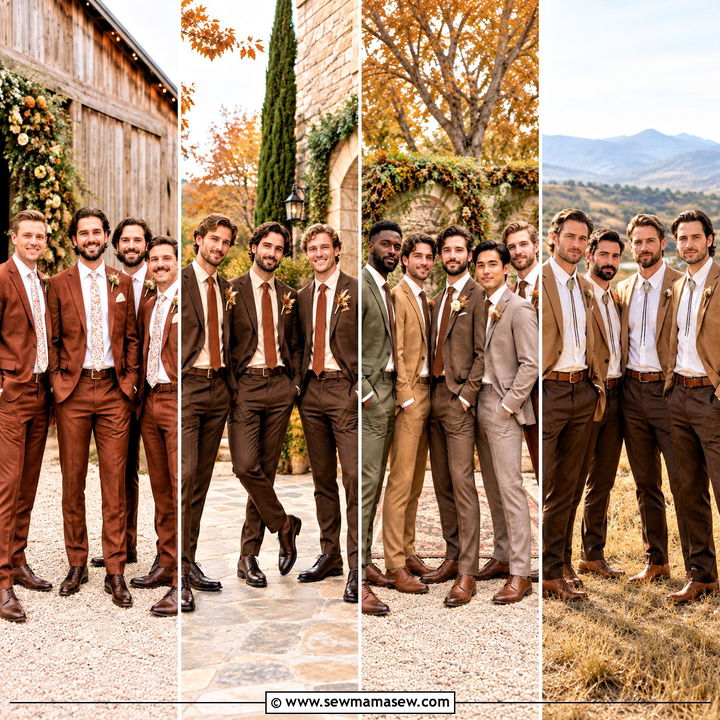
Brown used to be the color men were told never to wear to a wedding, and in the fall that rule simply doesn't hold. I go medium brown for a September ceremony and chocolate once November arrives, because the deeper shade looks right next to bare branches and grey skies. Give the groom the matching waistcoat, a cream tie and a seasonal boutonniere; the groomsmen drop the waistcoat and wear muted copper ties. A crisp white shirt is what keeps brown from tipping into rustic. Dark brown Oxfords, belts that match them and plain pocket squares finish it. I'd steer anyone with a very warm, ruddy complexion toward the darker brown, since mid-browns can pull redness up into the face.
2. Forest Green Groom Suit With Tan Groomsmen Suits
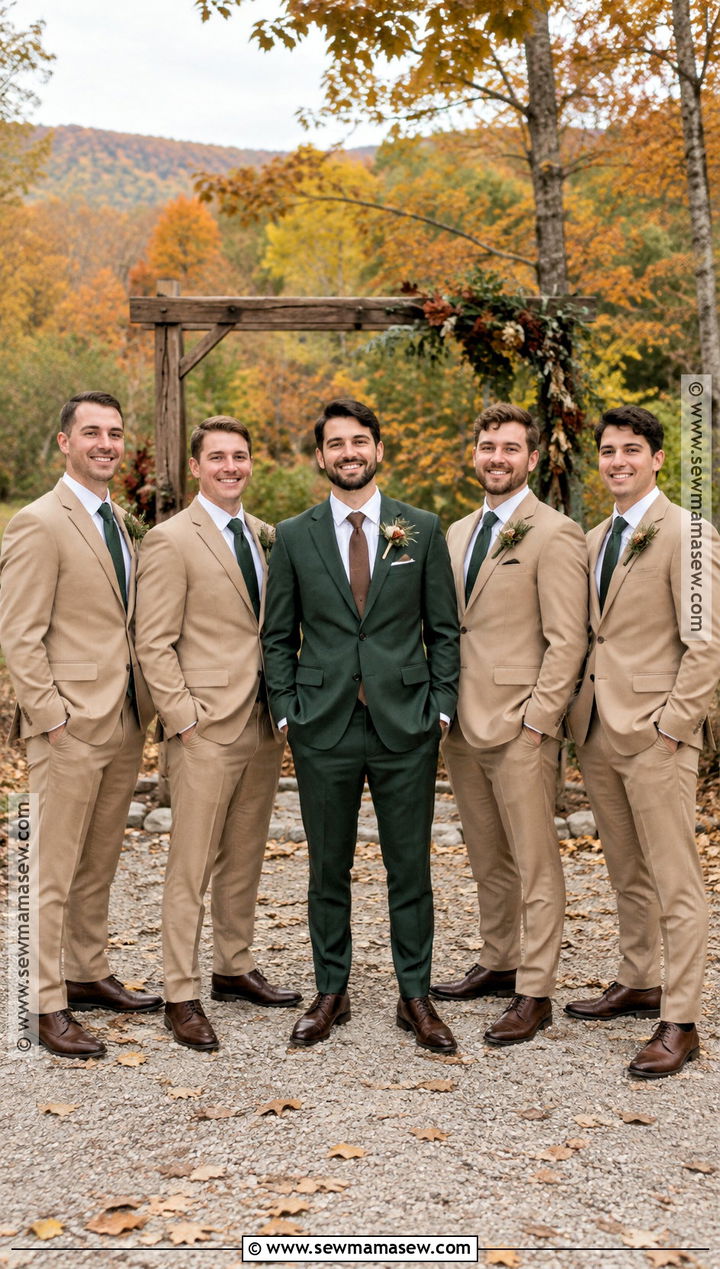
If the groom wants color, forest green is the shade I reach for first. It reads as deliberate without looking loud next to the bride. Put him in a deep green suit with an ivory shirt, a textured brown tie and polished dark brown shoes, then dress the groomsmen in tan or light brown with forest green ties so the two looks talk to each other. Cream pocket squares and small greenery boutonnieres carry it through. This one is at its best in daylight, outdoors, against turning leaves. A wool blend with some heft handles a cool ceremony, but keep the shirts breathable for the reception. The single rule I won't bend: everyone in the same shoe color, or two different suit shades will make the lineup look split in half.
3. Navy Tuxedo Groom And Groomsmen Look
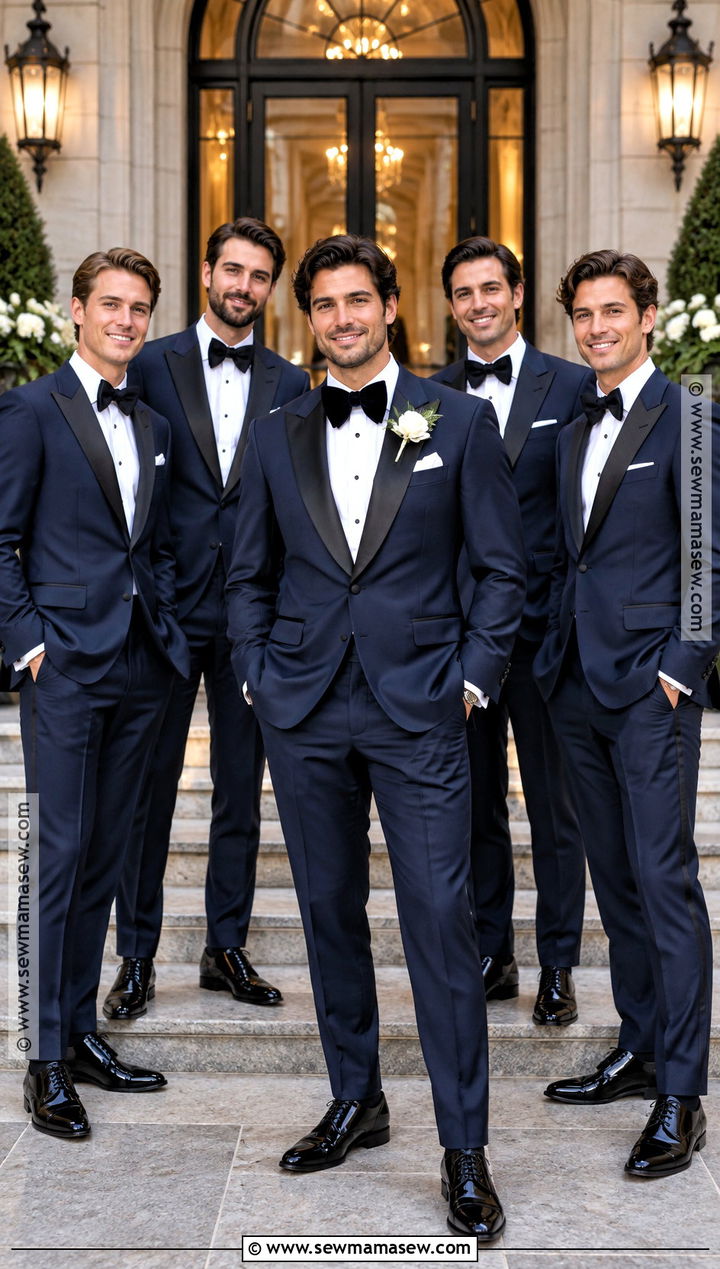
Midnight navy is what I suggest when a couple wants black tie without black. Under evening light it can actually look darker and richer than black does. The groom wears the navy tuxedo with black satin lapels, a white tuxedo shirt, a black bow tie and patent shoes; the groomsmen match the tuxedo but switch to standard white shirts and matte bow ties. His distinction can be as small as a velvet bow tie or a patterned pocket square. Before anyone walks down the aisle, I check two things on every man: the trouser hem sitting cleanly on the shoe with no pooling, and roughly a half inch of shirt cuff showing past the jacket sleeve. Consistent tailoring like that matters more than identical cuts.
4. Burgundy Groom Suit With Charcoal Groomsmen Suits
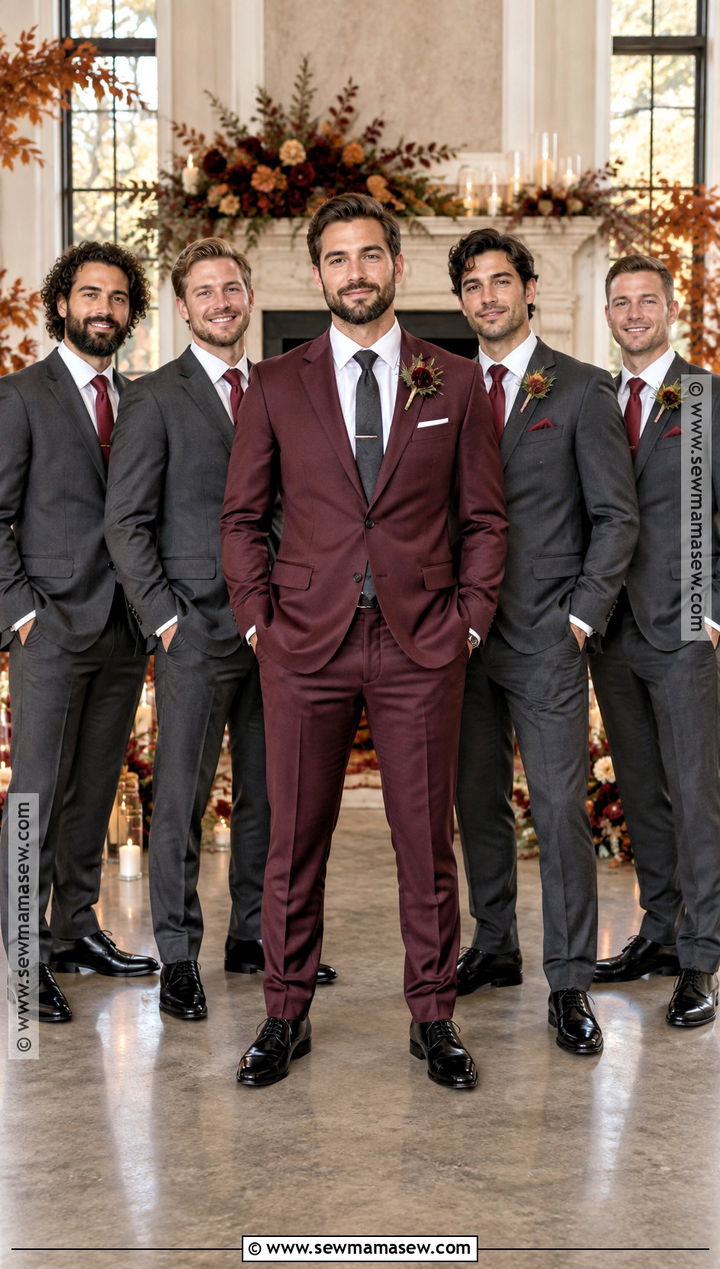
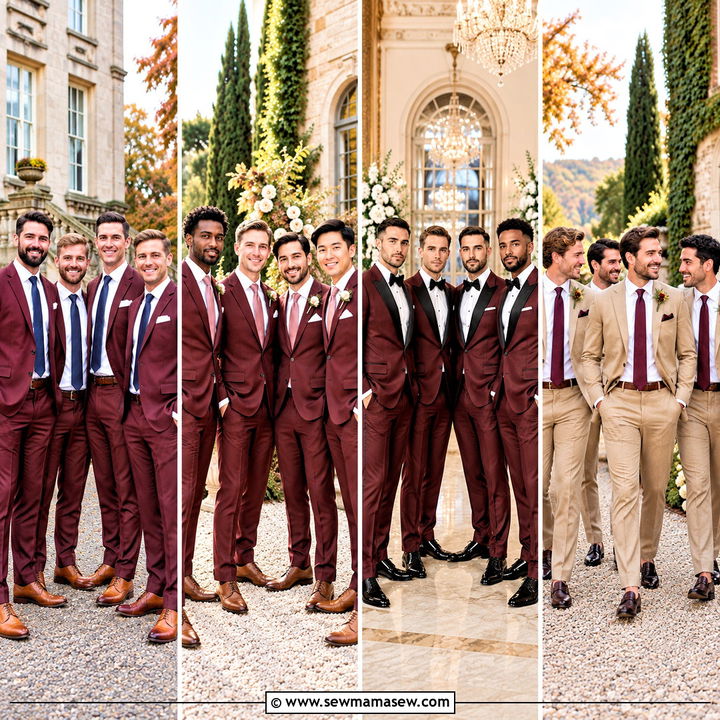
Burgundy on the groom and charcoal on everyone else is one of the easiest ways to get a seasonal color into a wedding party without asking six men to wear it. His burgundy suit goes with a white shirt, a charcoal tie, black leather shoes and a plain white pocket square. The groomsmen flip it: charcoal suits, burgundy ties, black shoes. I like this most for formal indoor weddings and late-afternoon ceremonies. Look for a matte burgundy cloth, since anything with sheen starts to read as a prom suit in photos. And stop adding colors at two; neutral shirts and socks are what let the pairing stay clean.
5. Charcoal Flannel Groom And Groomsmen Suits
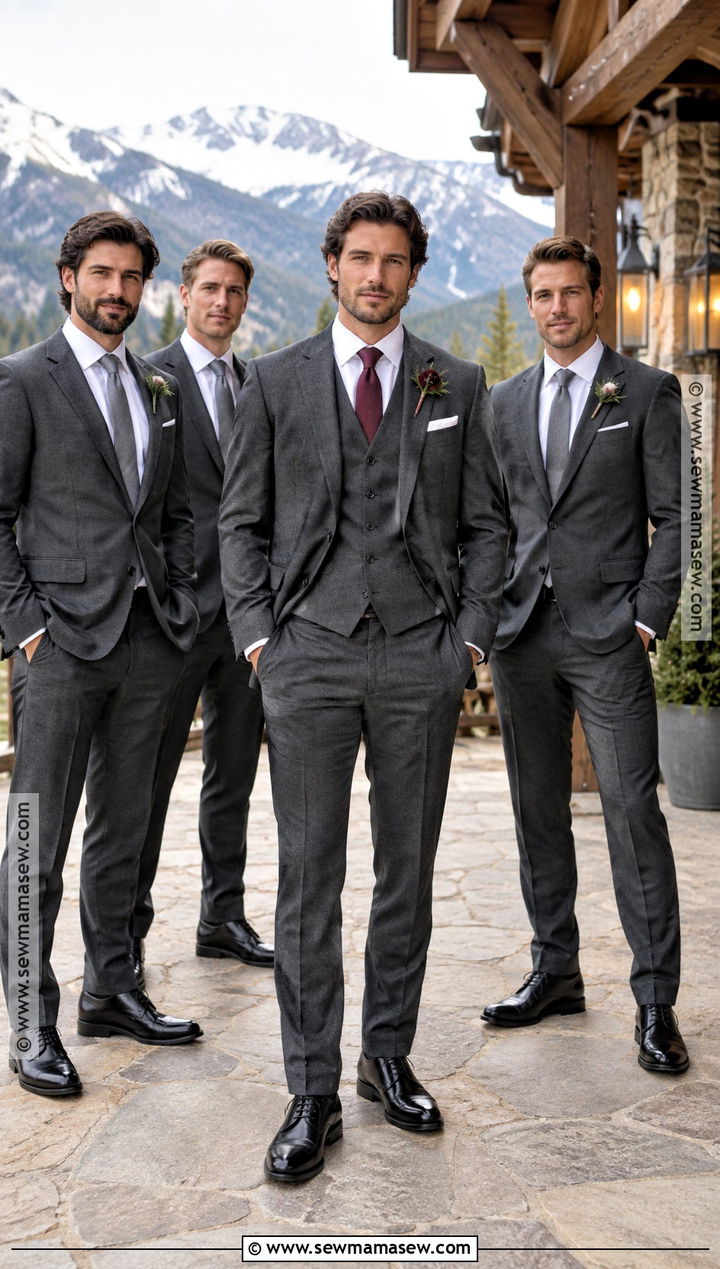
Flannel is my favorite cold-weather suiting, full stop. The brushed surface soaks up light instead of bouncing it back, so charcoal flannel looks deep and soft in photos where a smooth worsted can look flat and shiny under a flash. It is also noticeably warmer. The groom gets a three-piece with a burgundy tie; the groomsmen wear two-piece versions with muted grey ties. White shirts, black Derby shoes, dark socks and folded white pocket squares round it out, and it works from a city hotel to a mountain lodge. The trade-off is bulk. Flannel is a thicker cloth, so shoulders need to fit precisely and jackets need to button without any pull across the front, or it starts to look heavy.
6. Black Velvet Groom Jacket With Black Tuxedo Groomsmen
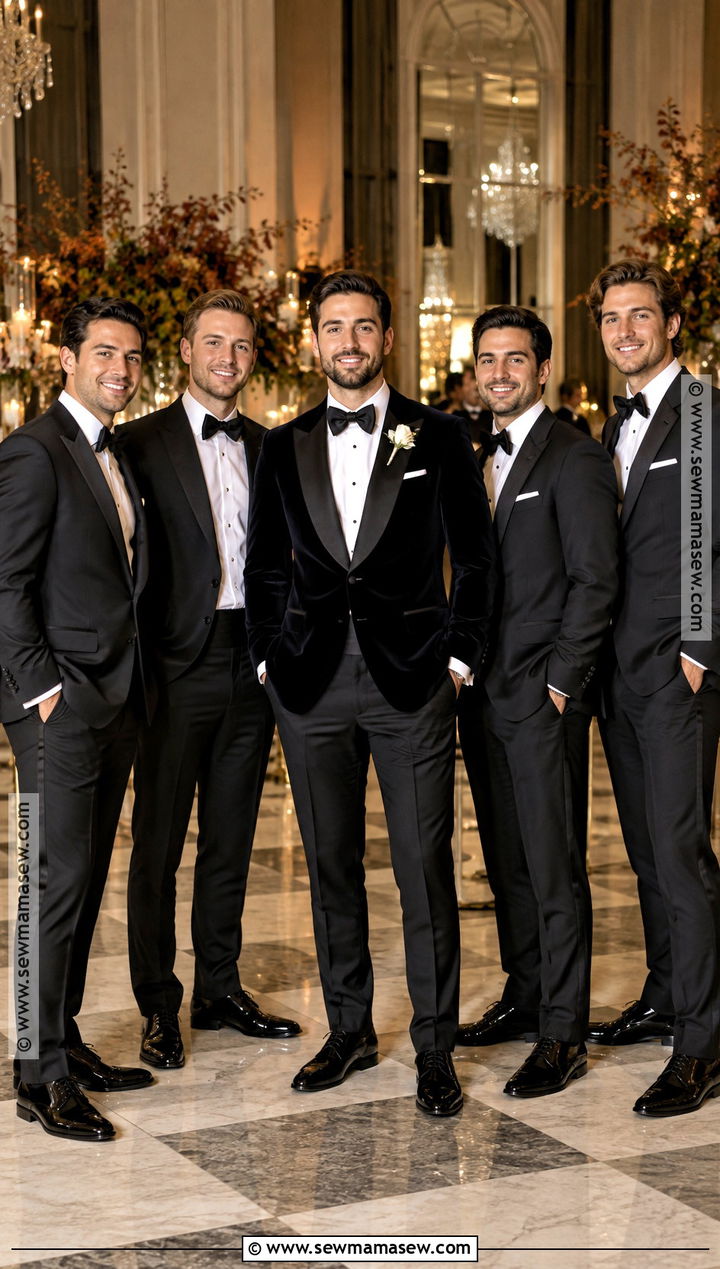
A black velvet dinner jacket is the most dramatic thing a groom can wear while still following black-tie rules. Pair it with black tuxedo trousers, a white pleated shirt, a silk bow tie and polished black loafers or Oxfords. The groomsmen stay in classic black tuxedos with satin lapels, white shirts, black bow ties and matching shoes, so the shared palette holds the group together and the jacket's texture does the work of setting him apart. Save this for evening, a ballroom or a candlelit reception. Velvet carries plenty of visual interest on its own, so I keep everything else to a white pocket square and one boutonniere. Shoulder fit is where velvet gets unforgiving; the pile adds thickness, and a jacket that is even slightly wide there looks bulky in profile.
7. Olive Green Groom And Groomsmen Suits With Rust Ties
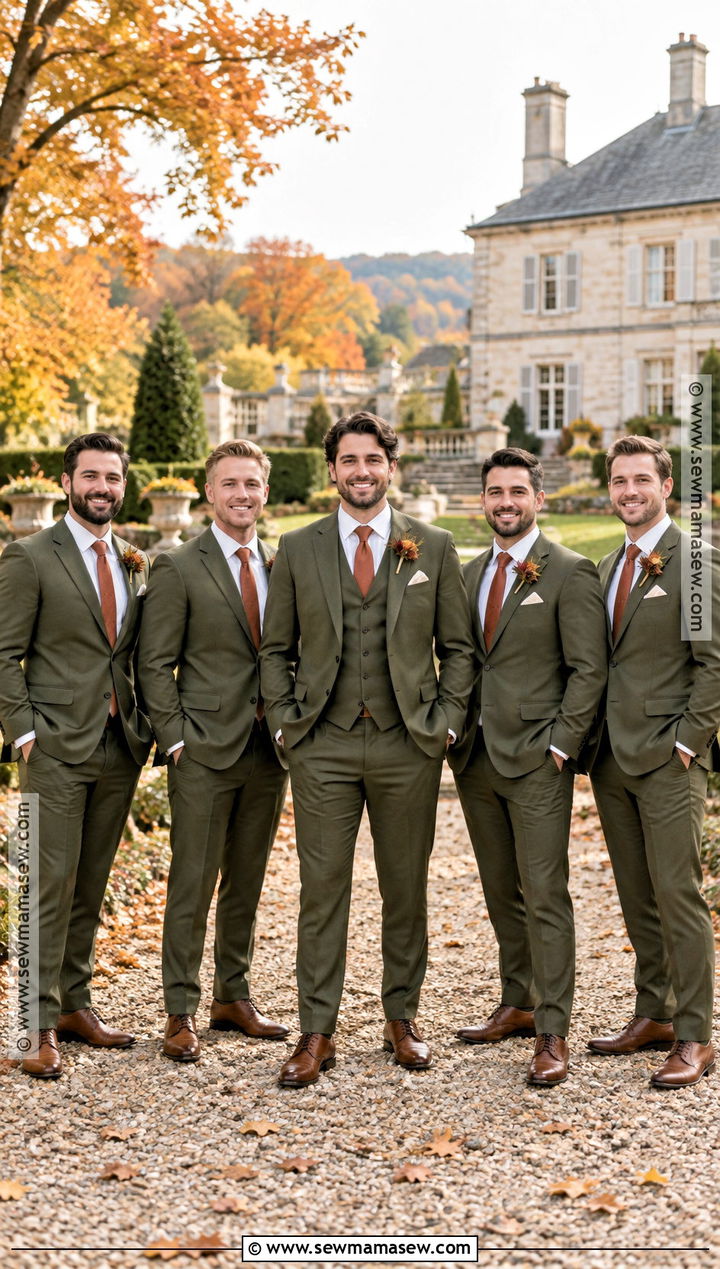
Olive is the gentler cousin of forest green, and it sits more easily in a barn, garden or estate setting. Dress the groom in a three-piece olive suit with a white shirt, a rust tie, brown cap-toe shoes and a cream pocket square. The groomsmen wear the matching two-piece with a slightly lighter rust tie and the same brown shoes. That one shade of difference in the tie is enough to mark the groom. I always look for a muted, greyed olive rather than anything close to military green, which drags the whole thing casual. Brown belts, neutral socks and simple boutonnieres finish it. Go easy on orange elsewhere; rust ties plus orange flowers plus orange socks is where autumn turns into a theme party.
8. Camel Groom Suit With Chocolate Brown Groomsmen Suits
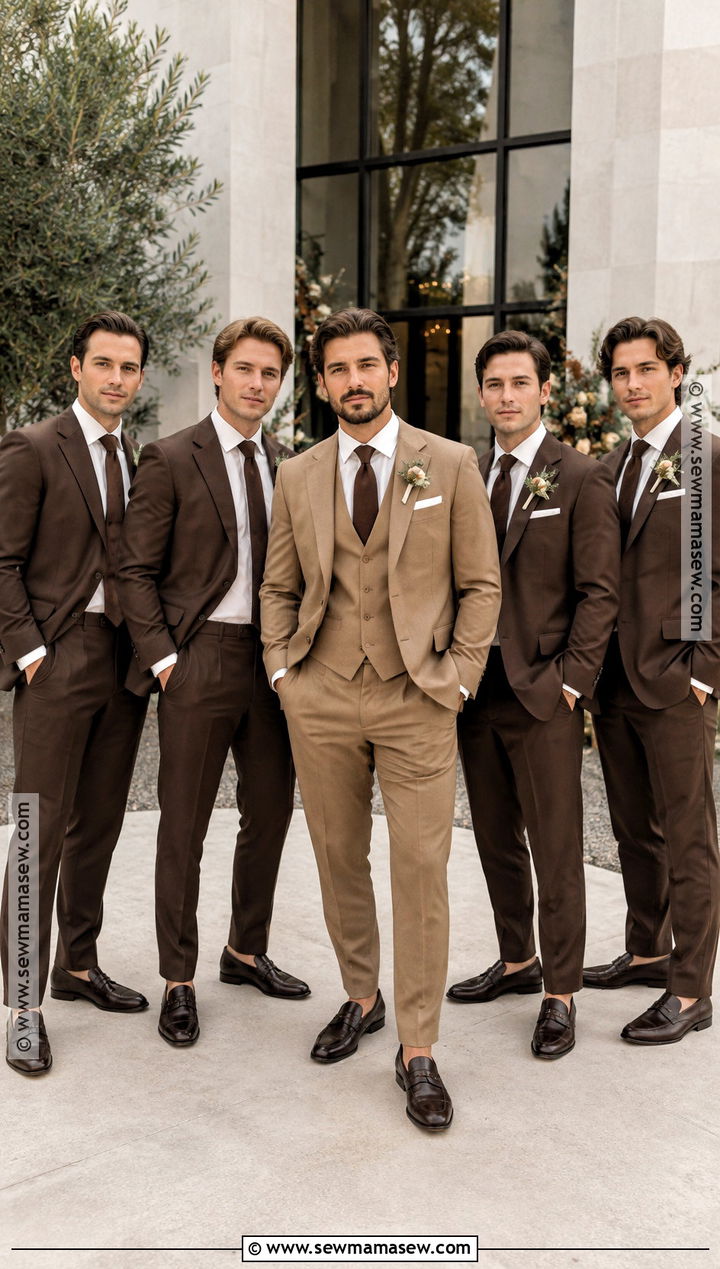
Camel on the groom against chocolate on the groomsmen is a tonal look I like for couples who are tired of navy and grey. His camel suit takes an ivory shirt, a chocolate tie, dark brown loafers and a pocket square that carries both colors. The groomsmen wear chocolate suits with cream shirts, camel ties and the same dark brown shoes. It suits daytime weddings in bright venues with neutral decor. One warning from experience with this color: camel shifts a lot depending on light, looking golden in late sun and almost grey in shade. I'd hold the fabric swatch up at the actual ceremony hour before ordering anything. Keep both suits in a similar weave so the contrast reads as planned.
9. Brown Tweed Groom And Groomsmen Suits
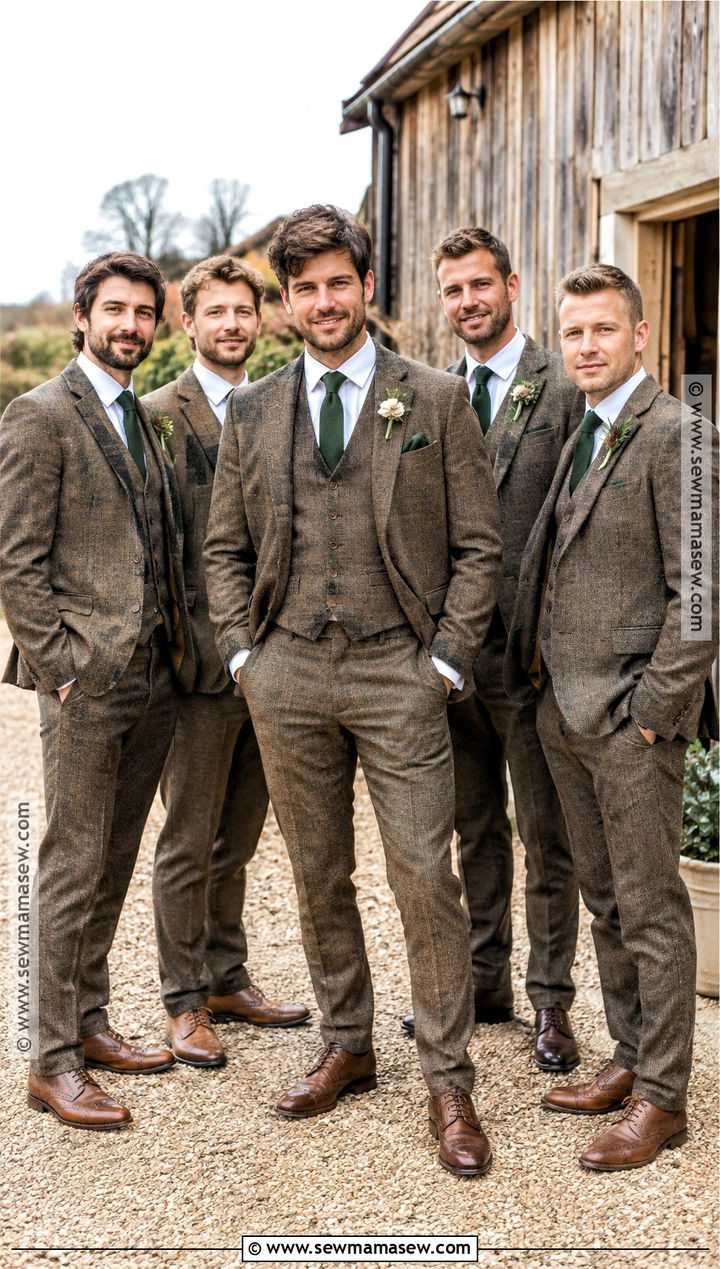
Can a rustic wedding still look tailored? Tweed proves it can, provided every piece fits. The groom wears a brown herringbone three-piece with a cream shirt, a deep green tie, leather brogues and a coordinating pocket square; the groomsmen wear the matching jacket and trousers without the waistcoat, with solid green ties and the same brogues. Tweed is genuinely warm, which makes it the practical pick for a chilly outdoor ceremony. Choose a small herringbone or fine check, because big bold patterns shimmer and distract in group photos taken from a distance. Tweed jackets are stiffer than worsted ones, so I size for a little more room through the chest and shoulders. Nobody should feel the seams pull when he hugs his mother.
10. Ivory Dinner Jacket Groom With Black Tuxedo Groomsmen
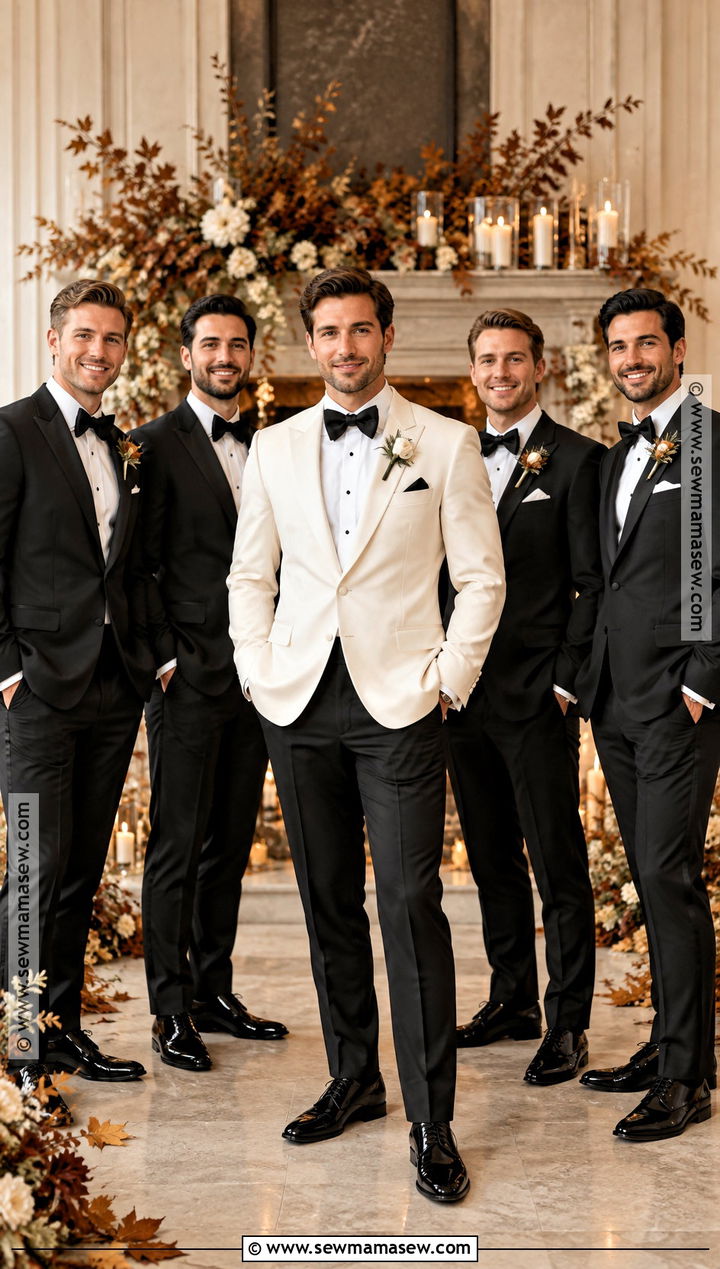
An ivory dinner jacket on the groom with black tuxedos on the groomsmen is the clearest possible way to mark who is getting married at a formal evening wedding. He wears it with black tuxedo trousers, a white dress shirt, a black bow tie, black patent shoes and a crisp pocket square. The groomsmen wear black jackets, matching trousers and bow ties, white shirts and polished black shoes. Traditionally the white dinner jacket was a warm-weather piece, so for fall I always push ivory or off-white over bright optical white; it looks softer and less like a summer cruise. Black buttons and dark lapels help tie his jacket back to his trousers and to the rest of the party.
11. Plaid Groom Suit With Solid Groomsmen Suits
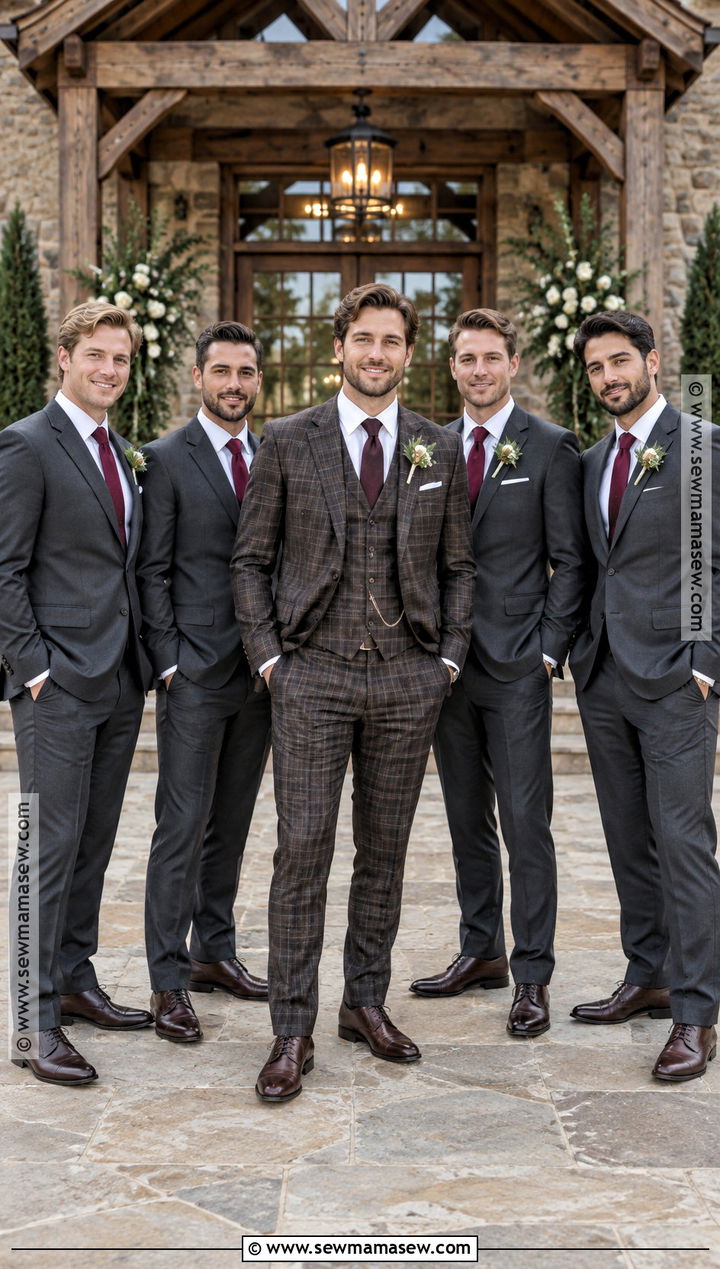
A restrained plaid suit gives the groom personality, and solid suits on the groomsmen keep that from becoming noise. I'd choose charcoal or brown plaid for him, with a matching waistcoat, a white shirt, a solid burgundy tie and dark leather shoes. The groomsmen wear plain charcoal suits, burgundy ties, white shirts and the same shoe color. The shared palette unites them while his pattern stays easy to pick out. Look for a windowpane or small check; I check plaids by stepping back across the room, because a pattern that looks quiet up close can turn busy at twenty feet. This suits cocktail, semi-formal and polished rustic weddings. Once the suit has a pattern, the tie and shirt don't get one.
12. Navy Groom And Groomsmen Suits With Copper Accents
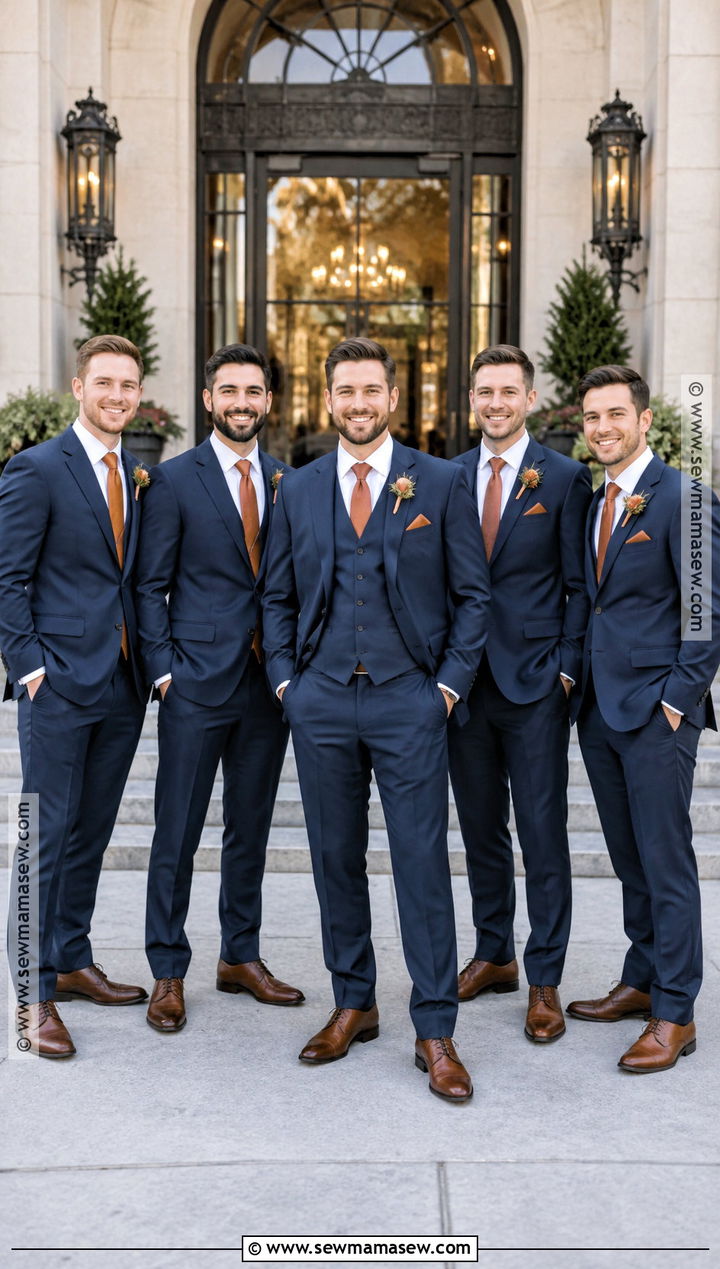
Navy is the suit most men already own or can borrow, and copper accessories make it unmistakably autumn. The groom wears a navy three-piece with a white shirt, a copper tie, brown leather Oxfords and a softly patterned pocket square; the groomsmen wear navy two-piece suits with solid copper ties, matching brown shoes and white pocket squares. It is the easiest color to find in a wide range of cuts, which helps when the party includes very different builds. The catch is that navy varies wildly between makers. Two suits that look the same in a fitting room can photograph as royal blue and near-black side by side, so I ask everyone to buy or rent the same cloth if at all possible. Keep the copper matte, never shiny.
13. Espresso Double-Breasted Groom And Groomsmen Suits
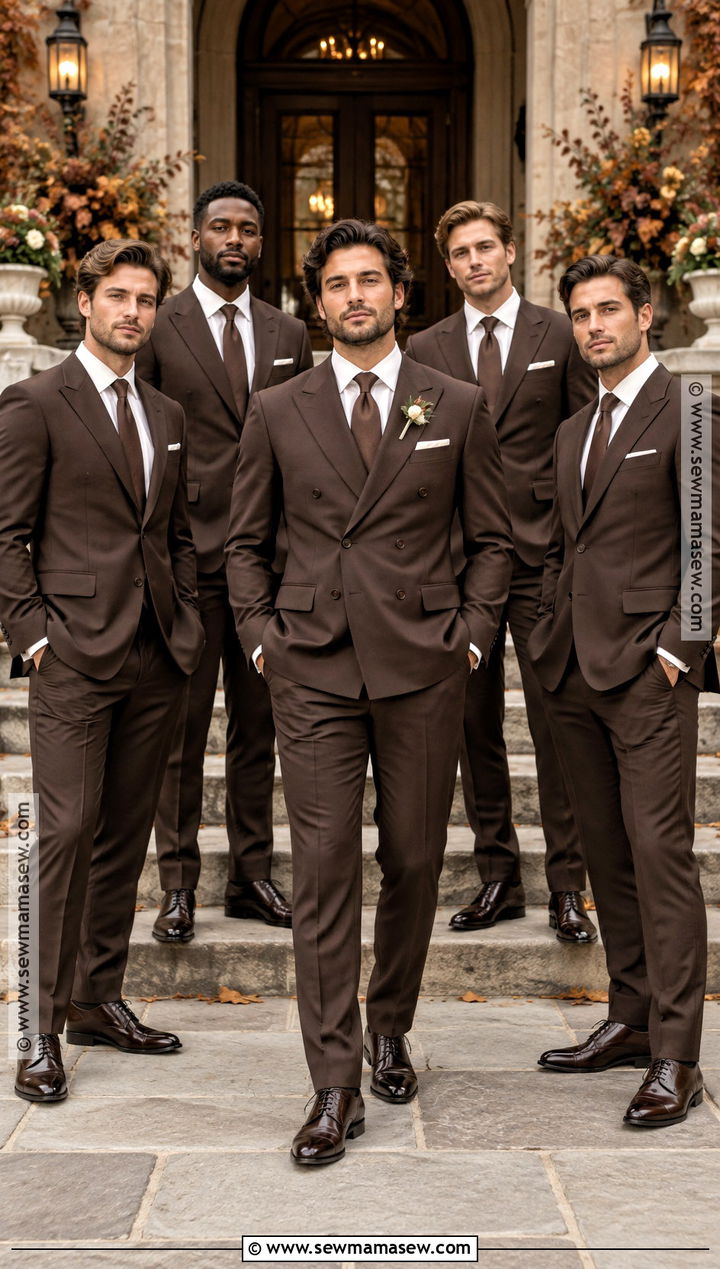
A double-breasted espresso suit gives the groom a strong, structured silhouette that suits a formal fall wedding. He wears the six-button jacket with matching trousers, an ivory shirt, a dark brown tie and polished Oxfords, while the groomsmen wear single-breasted jackets in the same espresso cloth, ivory shirts and slightly lighter brown ties. Matching shoes, belts, pocket squares and boutonnieres connect the two jacket styles. I'm honest with grooms about double-breasted: it flatters a man with some height and a flat front, and it can make a shorter, broader frame look boxy. The jacket must lie flat across the chest when buttoned. Double-breasted jackets are also meant to stay buttoned while standing, which is worth reminding him before photos.
14. Taupe Groom And Groomsmen Suits With Sage Accents
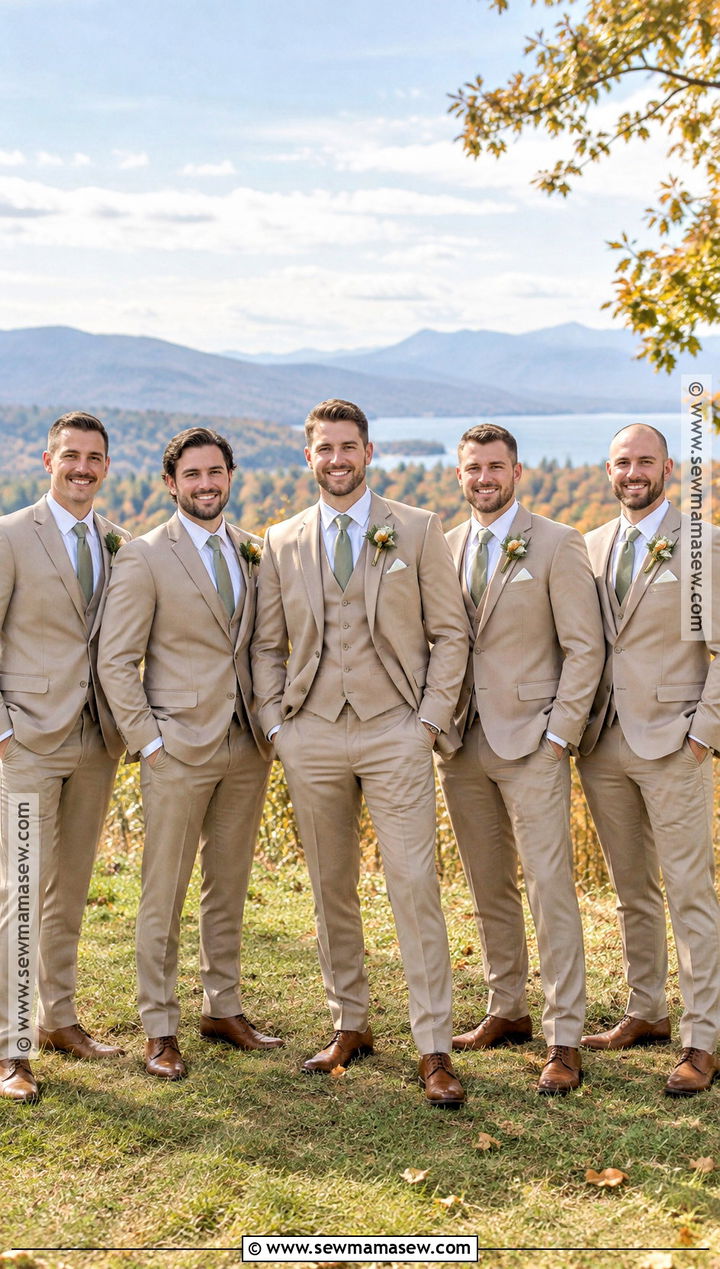
September weddings are where dark fall suits can feel too heavy. Taupe with sage accents keeps a seasonal feel without the weight, and it suits warmer climates too. The groom wears a taupe three-piece with a white shirt, a sage tie, medium brown shoes and a textured cream pocket square; the groomsmen wear the matching two-piece with sage ties and coordinated brown shoes. A darker sage boutonniere is a neat way to mark the groom. It looks right in bright outdoor light and in minimalist venues. I'd pick a midweight wool blend over linen here, because linen wrinkles within an hour and pale colors show every crease. Pale suits also show poor tailoring more than dark ones do, so sleeve and hem lengths need to be exact.
15. Brown Blazers And Charcoal Trousers For Groomsmen
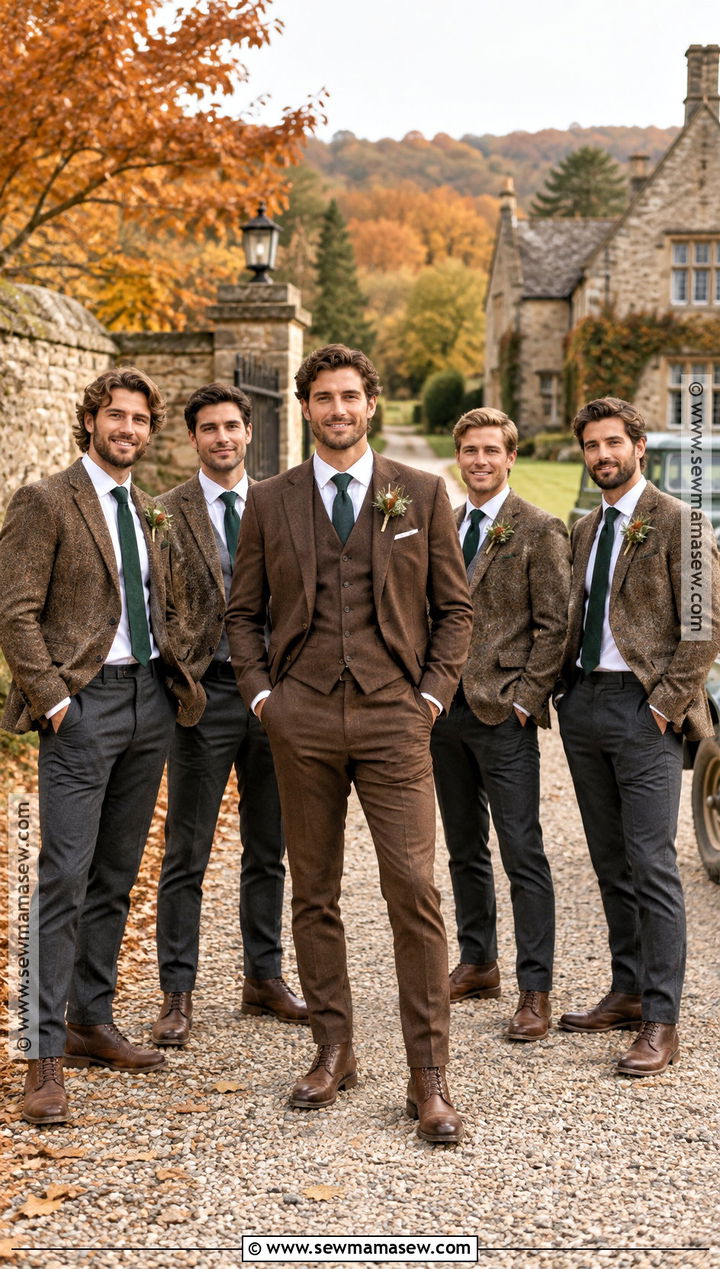
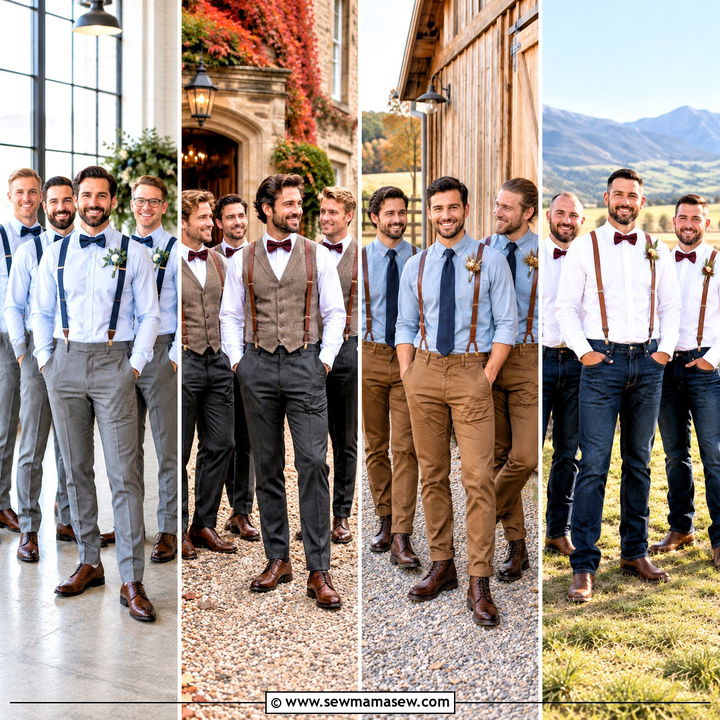
Not every fall wedding needs matching suits. For a casual estate, barn or outdoor ceremony, I put the groom in a full brown three-piece with a white shirt, a dark green tie and brown leather boots, and the groomsmen in textured brown blazers, charcoal wool trousers, white shirts, the same green ties and similar boots. Repeating the shirt, tie and footwear is what makes separates look like a plan rather than whatever was in each closet. Keep the blazers within one brown family and limit patterns to one man at most. Boots deserve a word: new leather boots are stiff for the first several wears, so anyone buying a pair for the day should start breaking them in weeks ahead. Pressed trousers and polished boots keep relaxed from looking careless.
Cold Ceremony, Warm Dance Floor: Picking the Cloth Weight
Fall weddings have a temperature problem built in. The ceremony might be outside at fifty degrees, and two hours later the reception room is packed and warm. Suit cloth is described by weight, and that number tells you more than the label on the color swatch.
- Lightweight worsted wool, roughly 8 to 10 ounces, is a year-round weight. Comfortable indoors, a little thin for a windy hillside.
- Midweight wool, roughly 10 to 12 ounces, is what I'd choose for most fall weddings. It holds a crease, resists wrinkling and keeps the chill off without overheating anyone.
- Flannel and tweed, often 12 ounces and up, are genuinely warm and look rich in photos, but men who run hot will be taking jackets off early in the evening.
- Velvet is warm and heavy too. It belongs at an evening event in a heated venue, not an outdoor afternoon ceremony.
A waistcoat is the most useful layer here. It keeps the groom looking finished once the jacket comes off for dancing, which is one reason three-piece suits suit autumn so well.
Dressing Groomsmen Who Don't Share a Build
Very few wedding parties are six men of the same height and shape, and the same suit does not sit the same on all of them. The goal is for them to look matched, which is not the same as identical.
Taller men need longer jacket lengths so the seat of the trousers is covered, and tall sizes exist in most ranges for that reason. Shorter men look better in a jacket that ends a touch higher, with trousers hemmed with little or no break. Broader men usually do best in single-breasted, two-button jackets with a slightly lower button point, which lengthens the line of the torso. If one groomsman simply can't get a good fit in the chosen cut, I'd rather let him wear a different model in the same cloth and color than force him into the wrong shape. Nobody looks at lapel widths in the photos. They look at whether the suits fit.
One Clear Groom, One Connected Wedding Party
Every look on this list comes down to the same structure. Pick a level of formality that matches the venue and the hour, choose a cloth heavy enough for the weather, and give the groom one obvious difference: a waistcoat, a pattern, a different jacket color or a special accessory. Then tie the groomsmen together with the same shirts, ties, shoes and boutonnieres. If you're still undecided, start with the shoes and the fabric weight. Get those right and almost any color on this list will look intentional on the day.
Related posts: