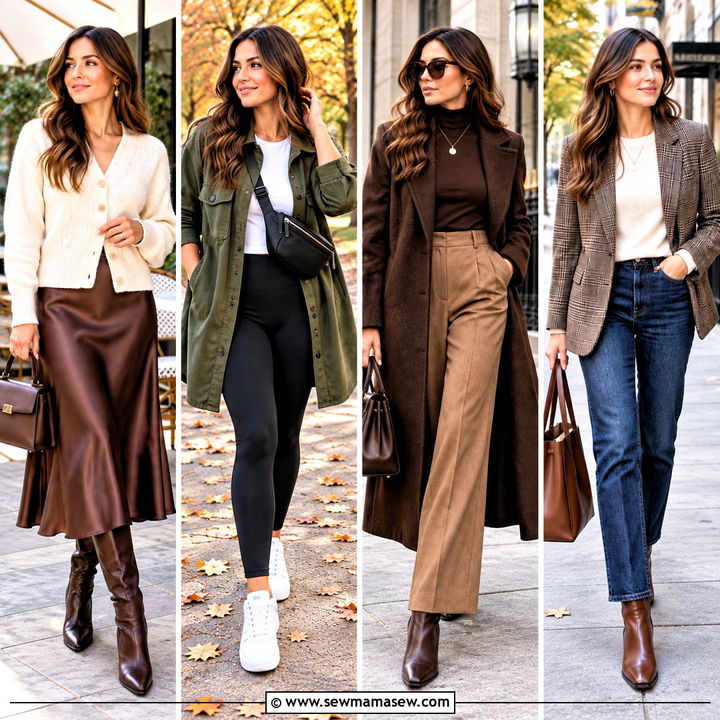
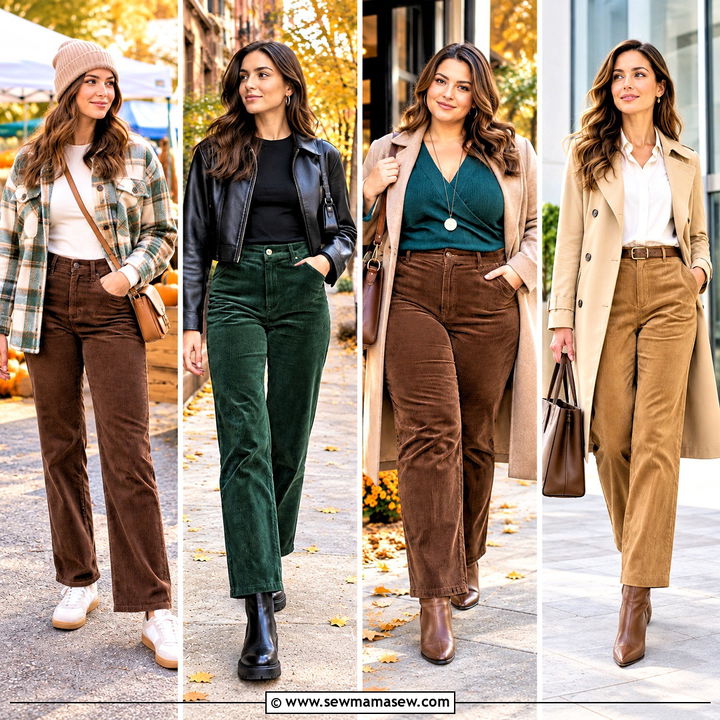
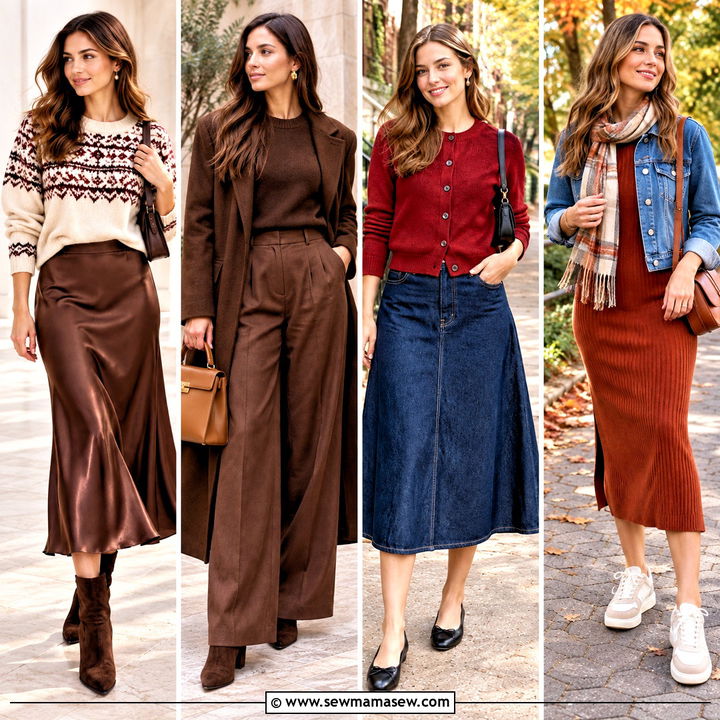
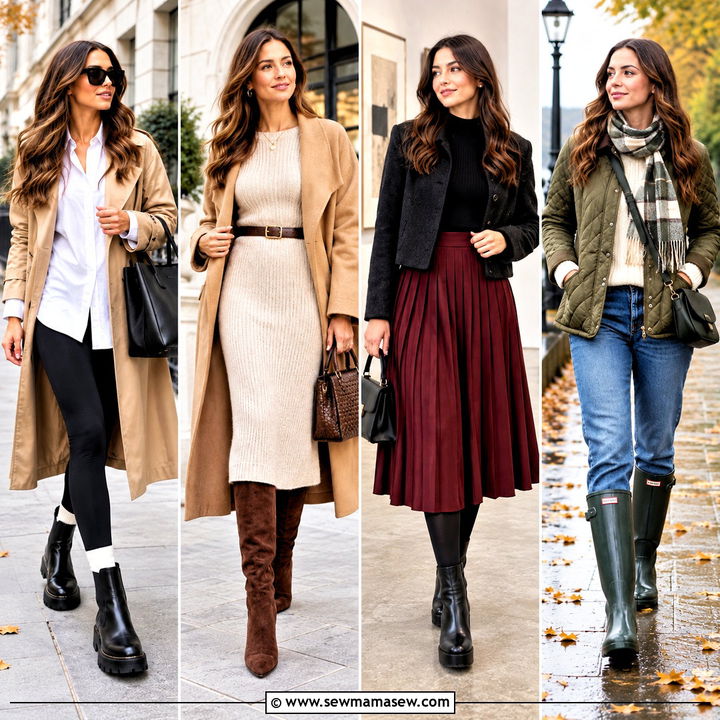
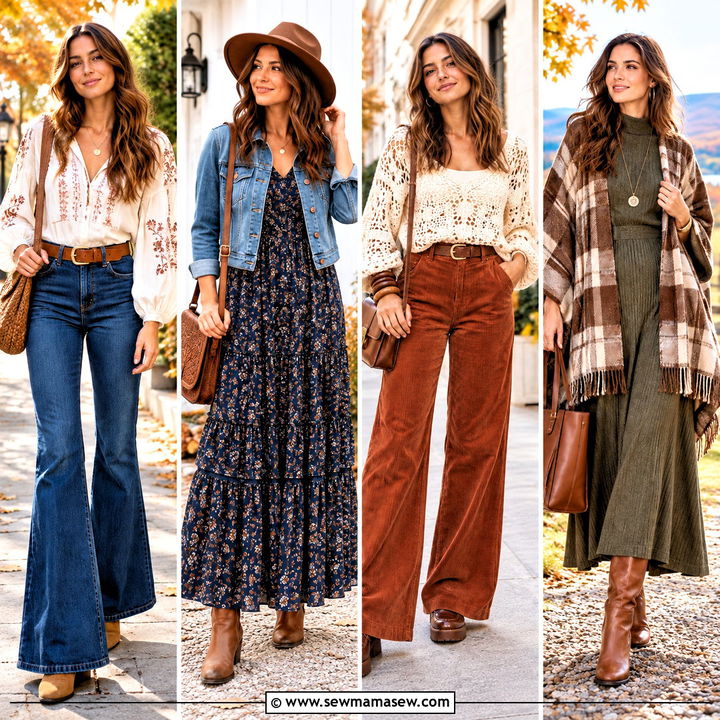
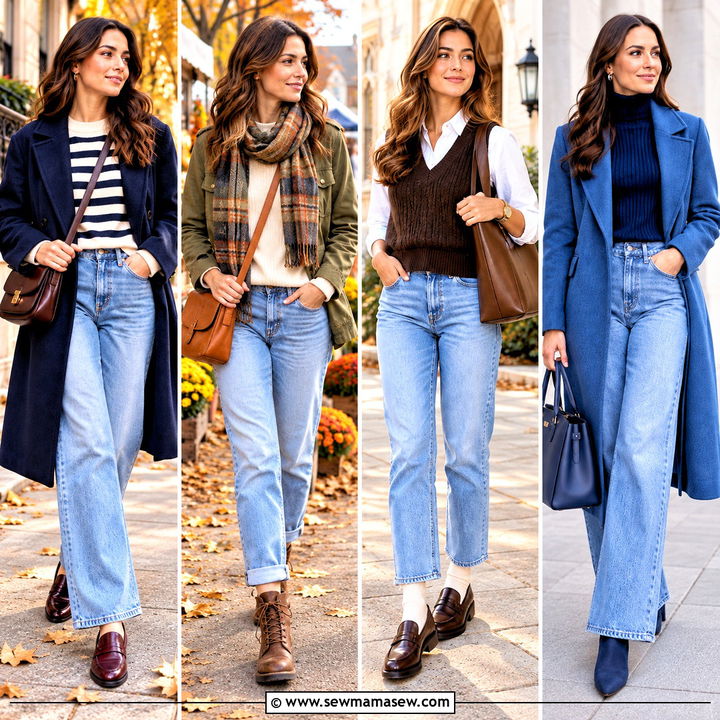
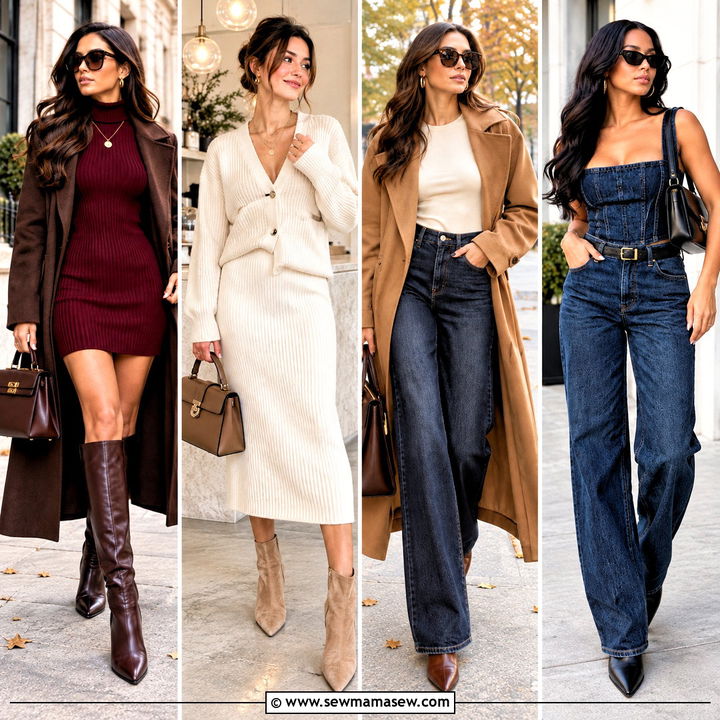
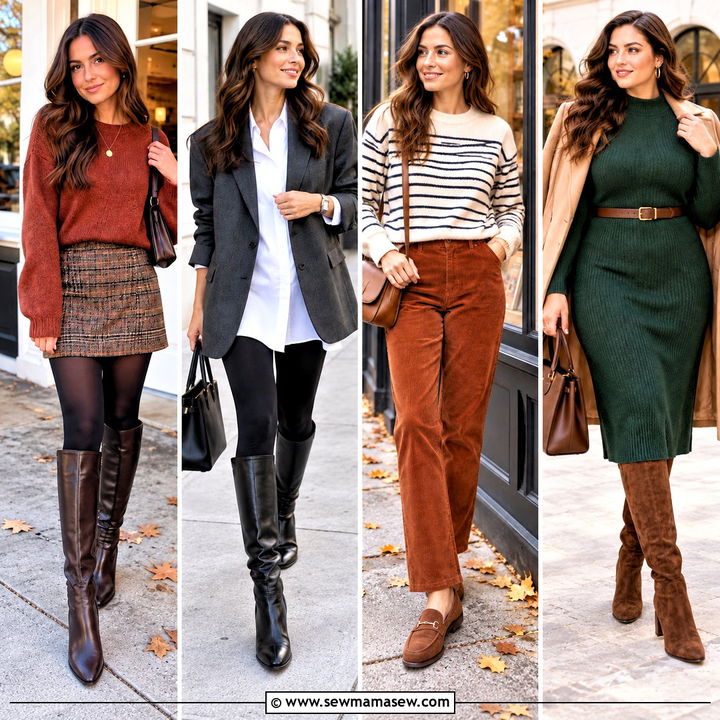
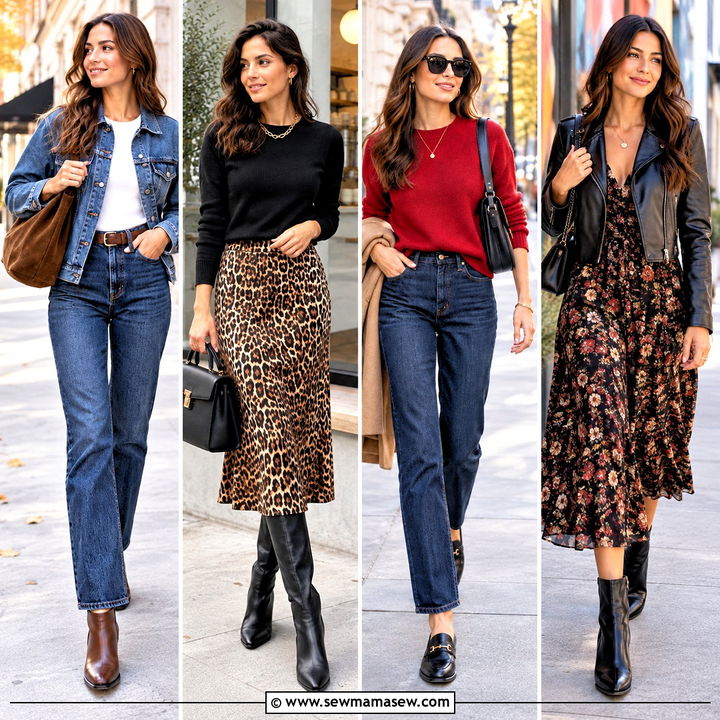
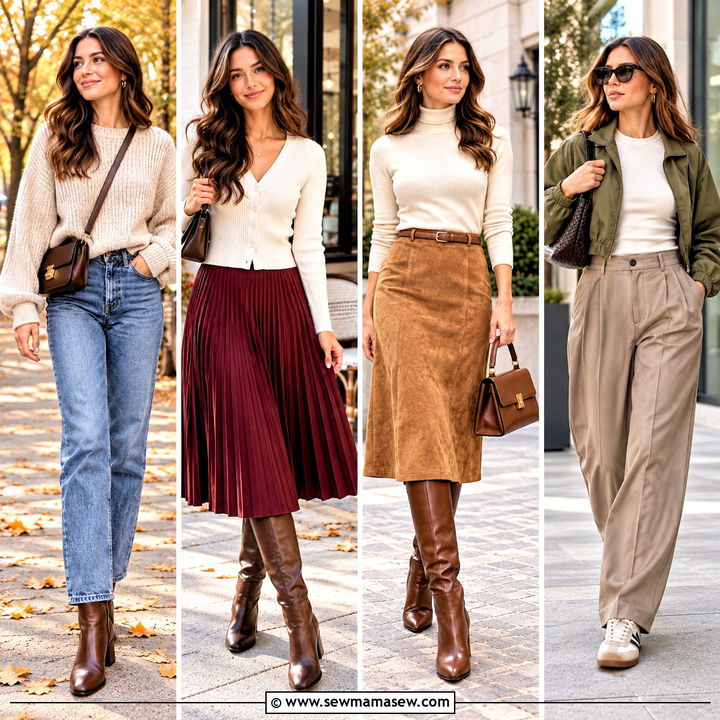
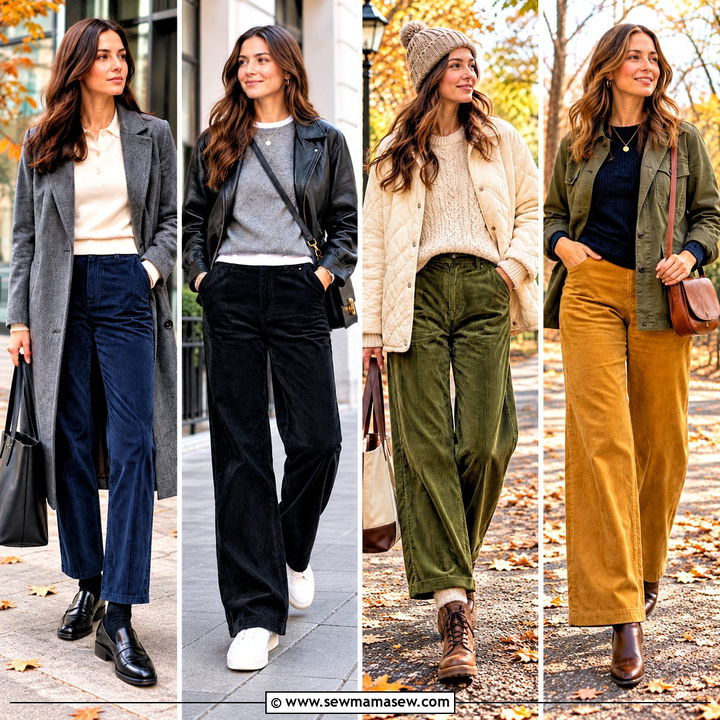
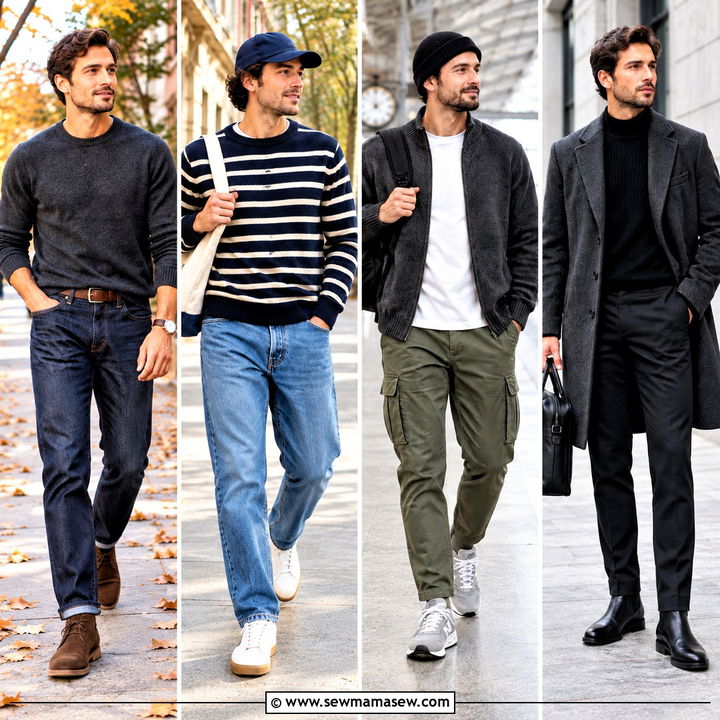
An Indiana fall day rarely stays the same from breakfast to dinner. A frosty start can turn into a sunny 65 by two o'clock and drop back into jacket weather the minute the sun goes behind the trees, so I dress for the swing rather than the forecast high. The outfits below are the ones I'd actually put together for a Midwest autumn: a Saturday downtown, a long campus day, a festival on a courthouse square, a muddy state park trail, an office week. Each one starts with a base you can live in all afternoon and adds layers that come off without wrecking the look. Where proportions matter, I've said how I'd adjust the fit for a shorter or taller frame.

Dressing for a Morning in the 40s and an Afternoon Near 70
Through October, a typical Indiana day can open in the low 40s and climb past 65 before dropping again after dark. That gap is the real problem to solve, and it's why I build every outfit in this list from the skin out in three thin layers rather than one thick one.
- The base is what you'll wear at 3 p.m., so it has to look finished on its own: a tee, a fine knit, a fitted turtleneck. If you'd be embarrassed to take off your jacket, the base is wrong.
- The middle is the removable warmth: a cardigan, a flannel, a quilted vest. It should fold small enough to fit in your bag.
- The outer layer handles wind and wet: a trench, a barn jacket, a shacket, and later a wool coat. This is the piece that actually comes off at lunch.
I test this with clients by having them take off each layer in front of the mirror. If the outfit only works with the coat on, it fails on a sunny afternoon. If the base is too heavy, you'll sweat through it at a festival and freeze once the sun goes down.
Where Early September Differs From Late November
The first few weeks of fall still feel like summer, so the middle layer is often all you need, carried rather than worn. By mid-November, highs often sit in the 40s and 50s with wind, and the base turns into a thermal, the middle into a real sweater, and the outer into wool. Same structure, heavier fabric at every step.
1. Indiana Fall Jeans And Cardigan Outfit
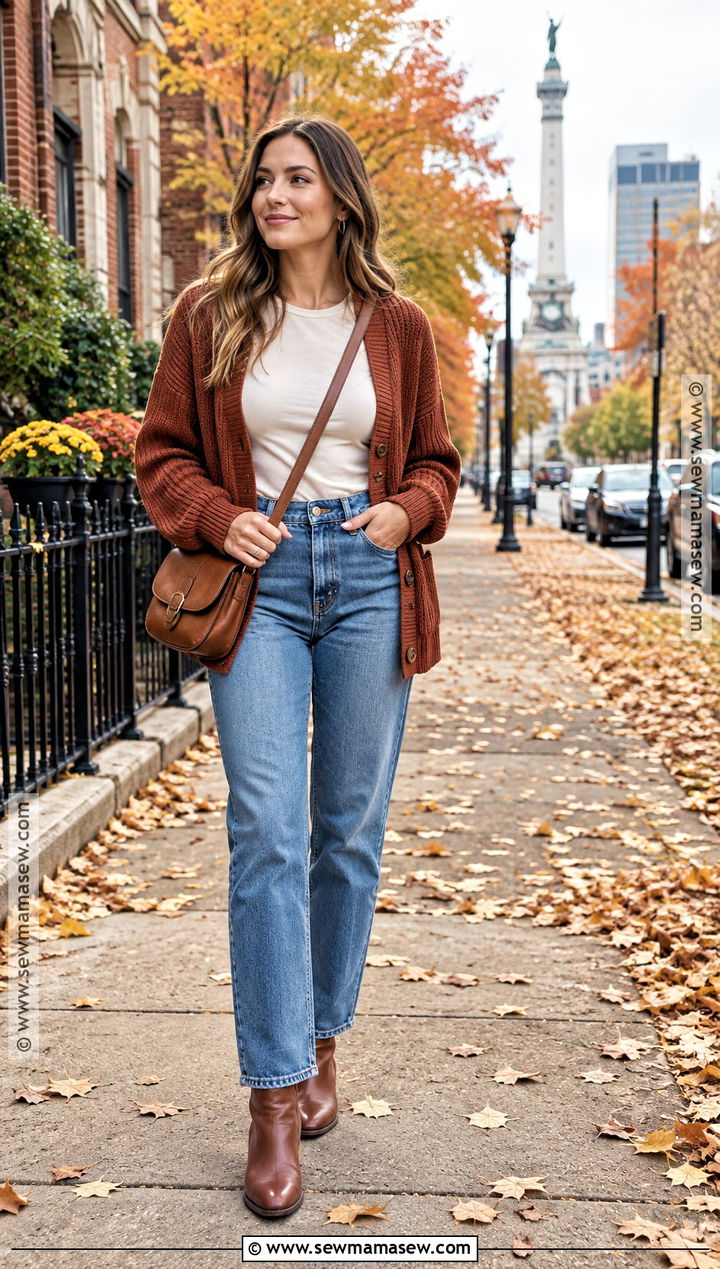
This is the outfit I hand people for those mild September weeks when a sweater is too much by noon. A fitted tee, straight-leg jeans and a fine-gauge cardigan in rust or camel give you color without looking like a seasonal display. I steer clients toward cotton or merino for the cardigan because a chunky knit can't be draped over the shoulders or rolled into a bag when the afternoon warms up. Medium-wash denim keeps it relaxed; switch to a dark rinse if you're heading to a casual office. Leather ankle boots, a crossbody and small hoops finish it. Check that the cardigan ends at or just below the hip bone, since a longer one starts to swallow the jeans.
2. Indiana Fall Flannel And Black Jeans Outfit
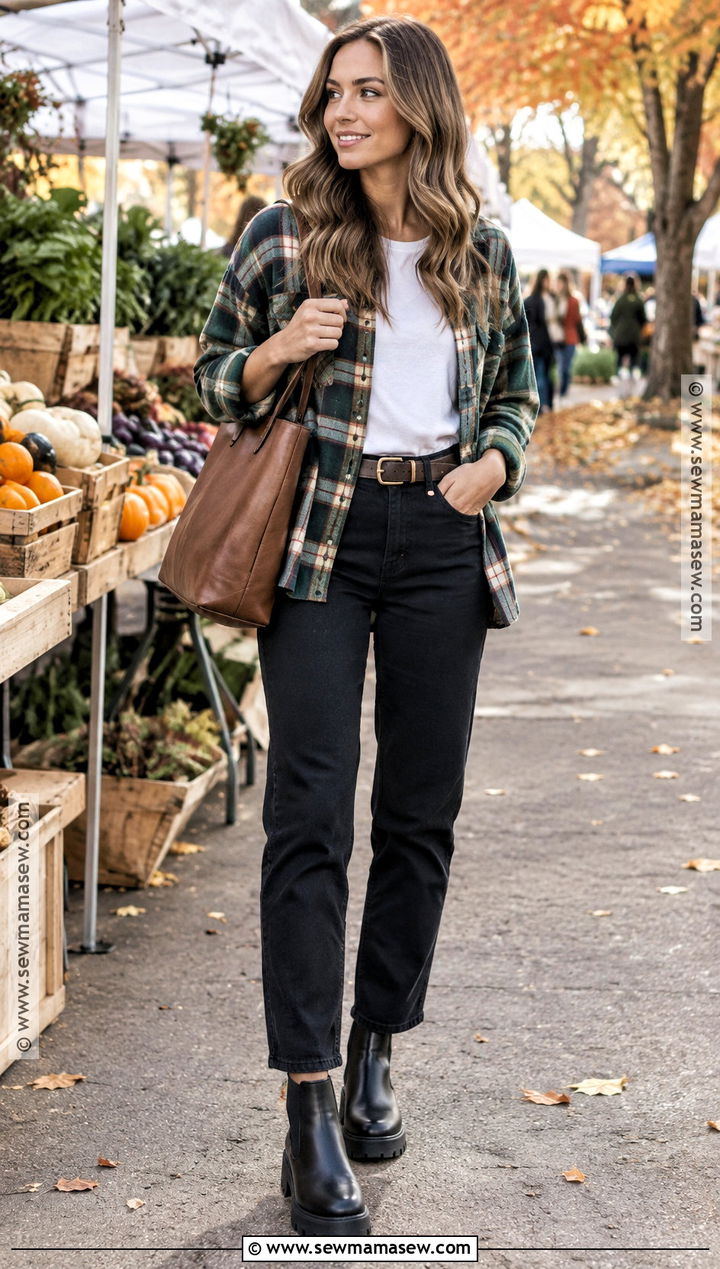
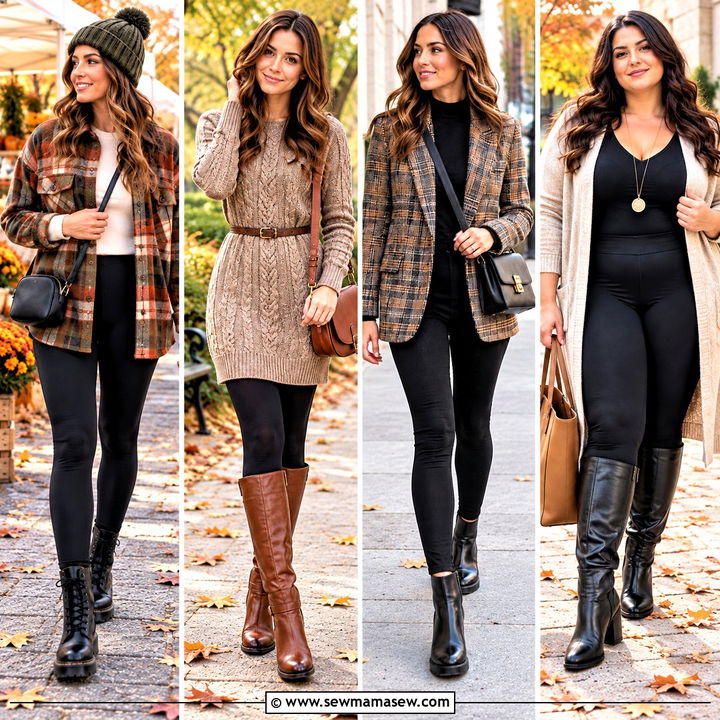
Flannel with black jeans is my go-to for a crisp Indiana weekend, and the trick is wearing the flannel as a jacket rather than a shirt. Put a plain white or cream tee underneath so you can leave the plaid open in the afternoon and button it up once the temperature slides. Black straight or slim jeans make a rustic layer look modern instead of borrowed from a barn. I usually roll the sleeves twice and do a loose half-tuck at the front, which lands just at the hip and shows a waist without a belt doing all the work. Lug-sole ankle boots handle gravel parking at a farmers market, and a roomy tote carries the flannel when you finally take it off.
3. Indiana Fall Sweater Dress And Knee-High Boots Outfit
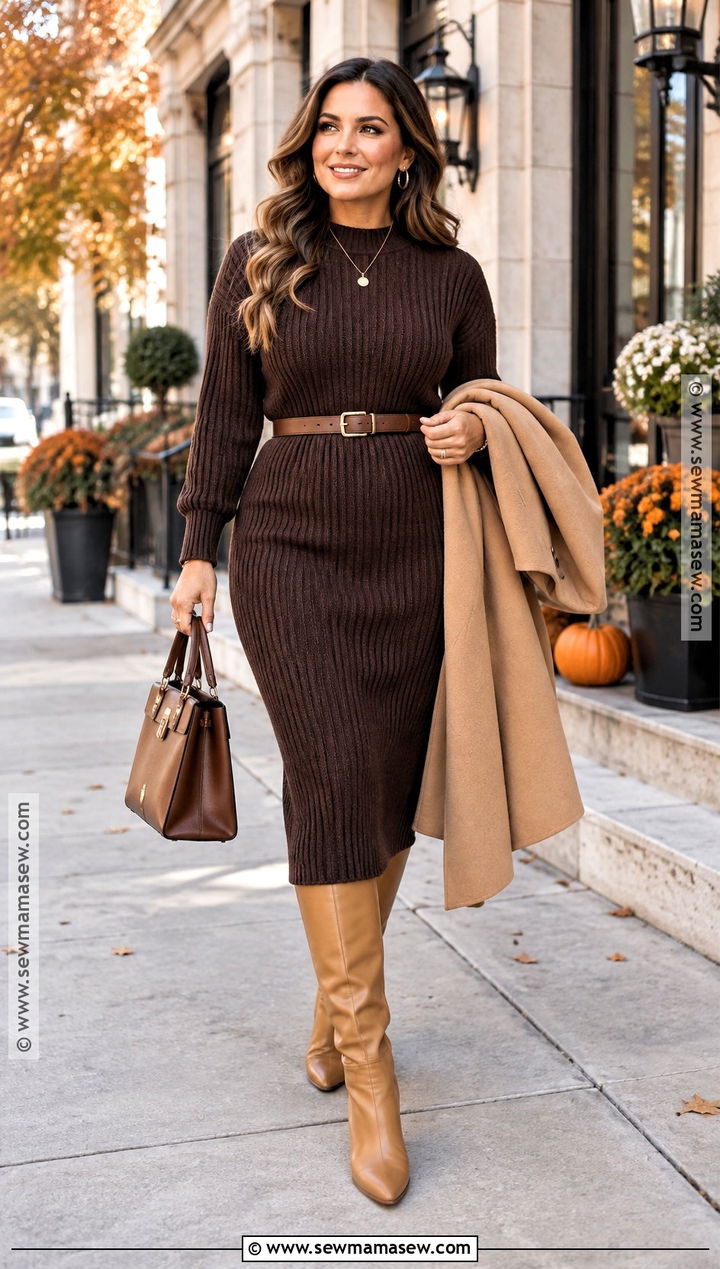
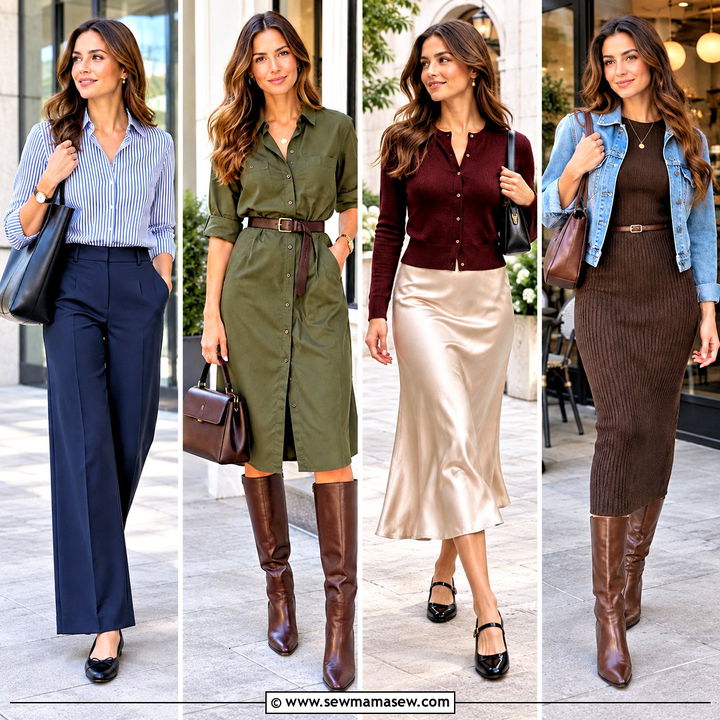
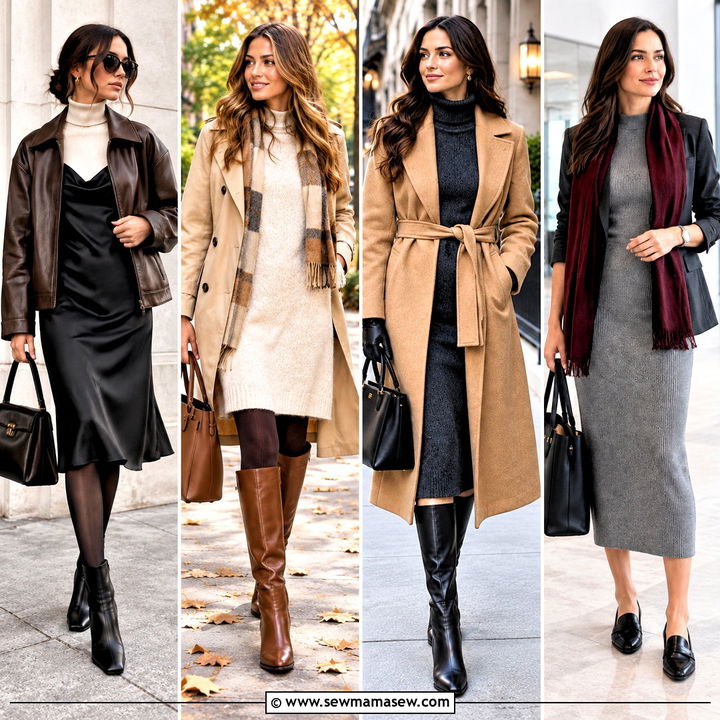
A ribbed sweater dress with knee-high boots is the least effort for the most polish, which is why I lean on it for office days and family dinners. Pick a midi in chocolate or charcoal; the rib draws one long vertical line down the body. I'd size for a slightly relaxed fit, because a ribbed knit pulled tight shows every seam underneath and stretches out at the seat after a few wears. A narrow belt is optional. The boot shaft should disappear under the hem with no skin showing between them on a cold morning, so I always check the gap while the client is sitting down. Add a structured shoulder bag, plain gold jewelry, and a long wool-blend coat once November arrives.
4. Indiana Fall Denim Jacket And Midi Dress Outfit
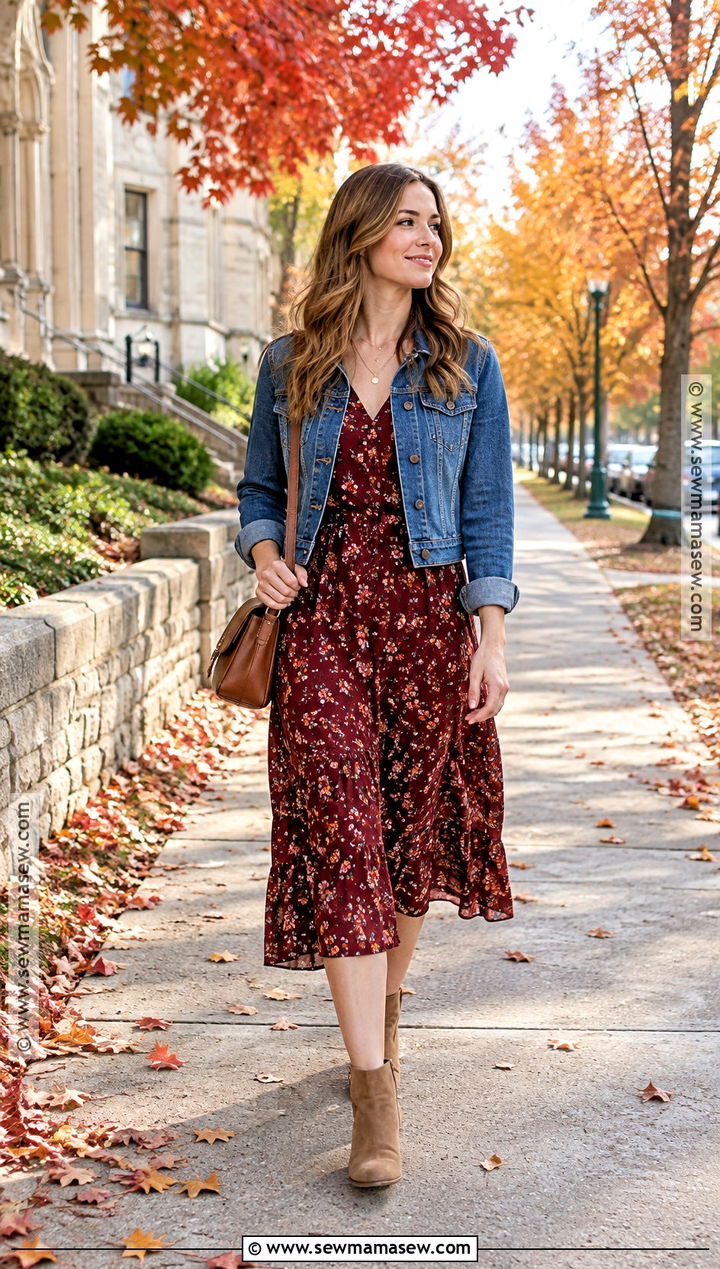
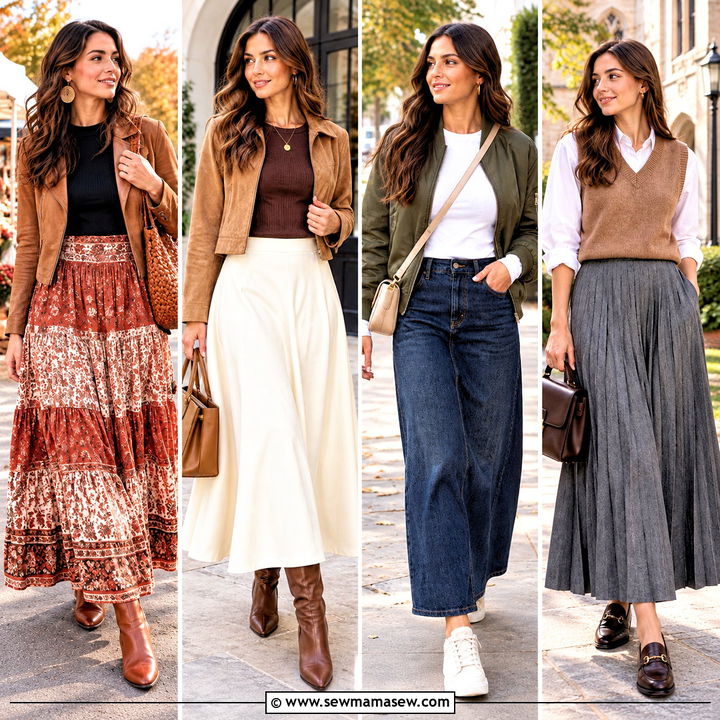
I don't retire a good midi dress in September. A dress with burgundy or mustard in the print picks up the color of the trees, and a medium-blue denim jacket over it makes it feel like fall instead of a leftover from July. Swap sandals for tan ankle boots or clean leather sneakers, and slip on sheer tights if the morning is sharp; they don't change the look much at all. Jacket length is where I fuss. On petite clients I go cropped, ending at the natural waist, so the dress doesn't look like it starts halfway down the leg. Taller women can carry a longer, relaxed jacket. Delicate layered necklaces and a crossbody are all it needs for brunch or a museum afternoon.
5. Indiana Fall Blazer And Wide-Leg Trousers Outfit
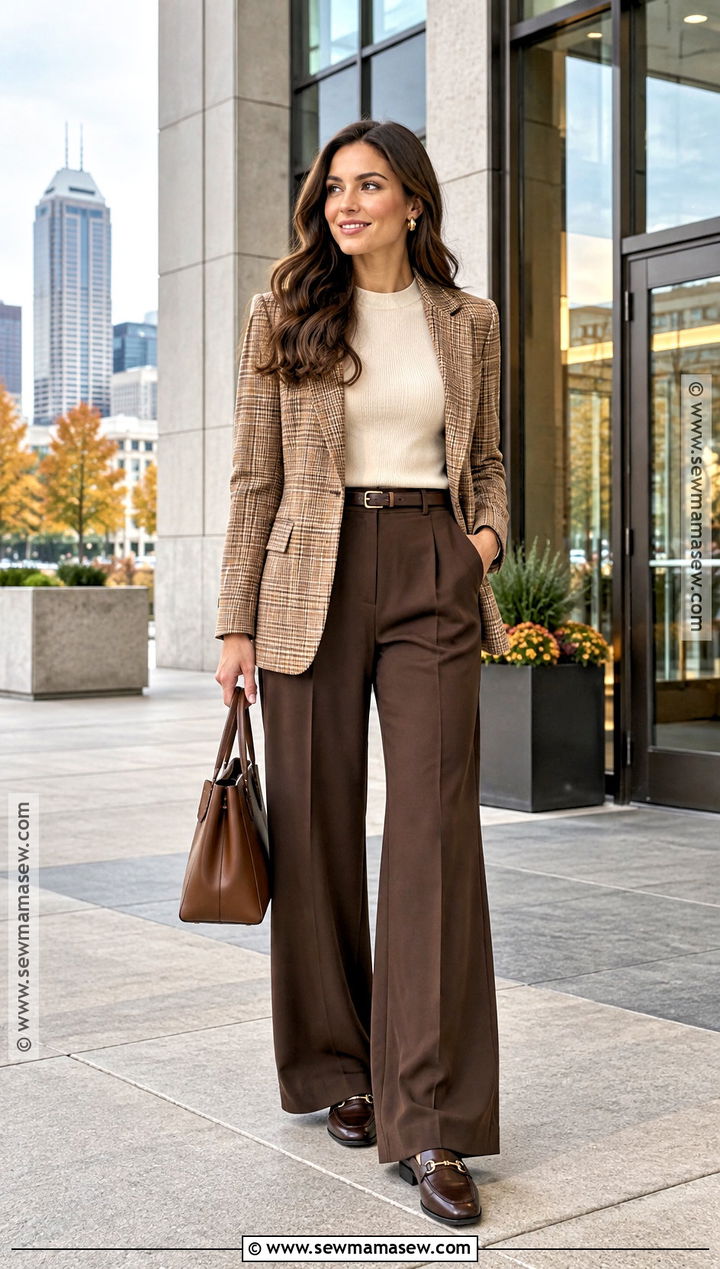
Wide-leg trousers and a blazer are my answer when someone needs to look put-together at work but refuses to be cold or stiff. Start with a thin crewneck knit in cream or soft gray, then add trousers and a plaid or camel blazer. The hem is the fitting point I care about most: it should skim the floor in the shoe you'll actually wear, touching the top of the foot without pooling. That means hemming for loafers or for low block-heel boots, not both. Tucking the top keeps all that fabric from making you look boxy. A structured tote, a slim belt and simple earrings carry you from a morning meeting to dinner without a change.
6. Indiana Fall Hoodie And Puffer Vest Outfit
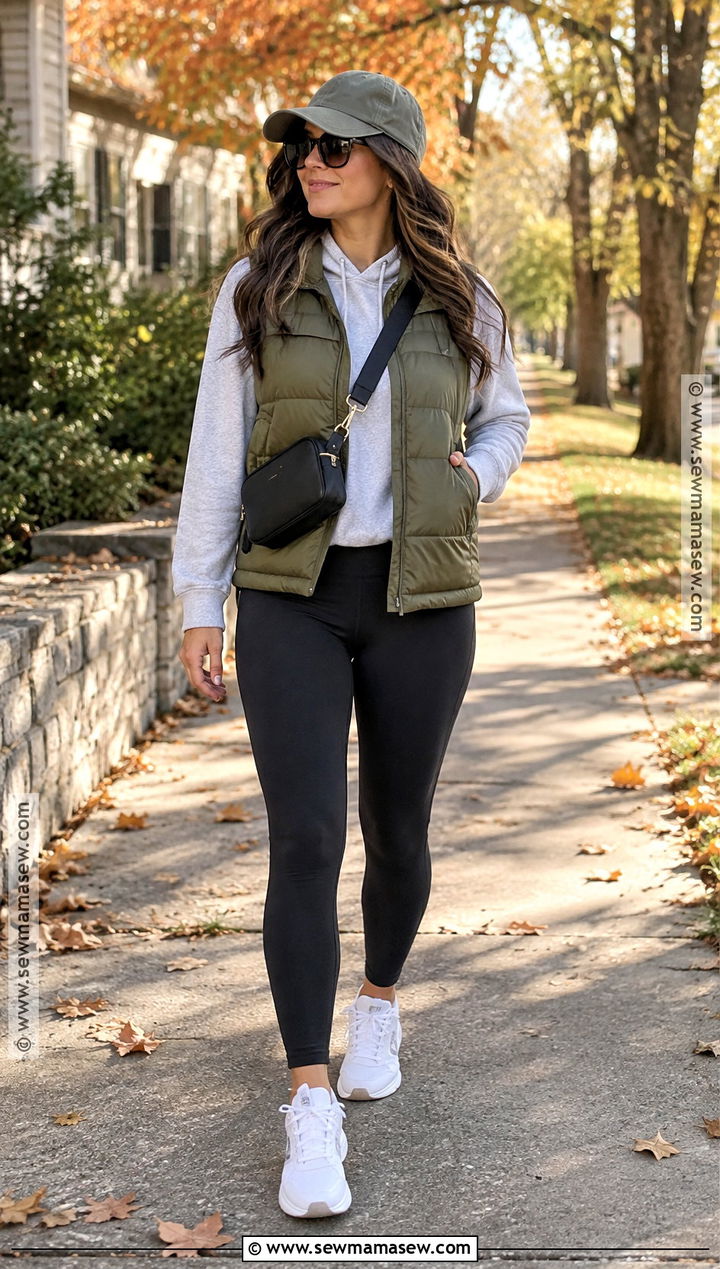
For a cold start to an active day, a quilted puffer vest over a hoodie keeps your core warm while your arms stay free. I like the vest in olive or cream against a neutral hoodie, with black leggings or relaxed joggers underneath. Thin quilted vests pack down small, so if the afternoon hits 65 it goes in a backpack instead of being carried around all day. With leggings, I always do the bend test in the fitting room: thicker, opaque fabric and a high waistband that stays put. Cushioned socks and supportive sneakers matter more than they look, especially for youth soccer sidelines or a long neighborhood walk. A cap and sunglasses round it out.
7. Indiana Fall Barn Jacket And White Jeans Outfit
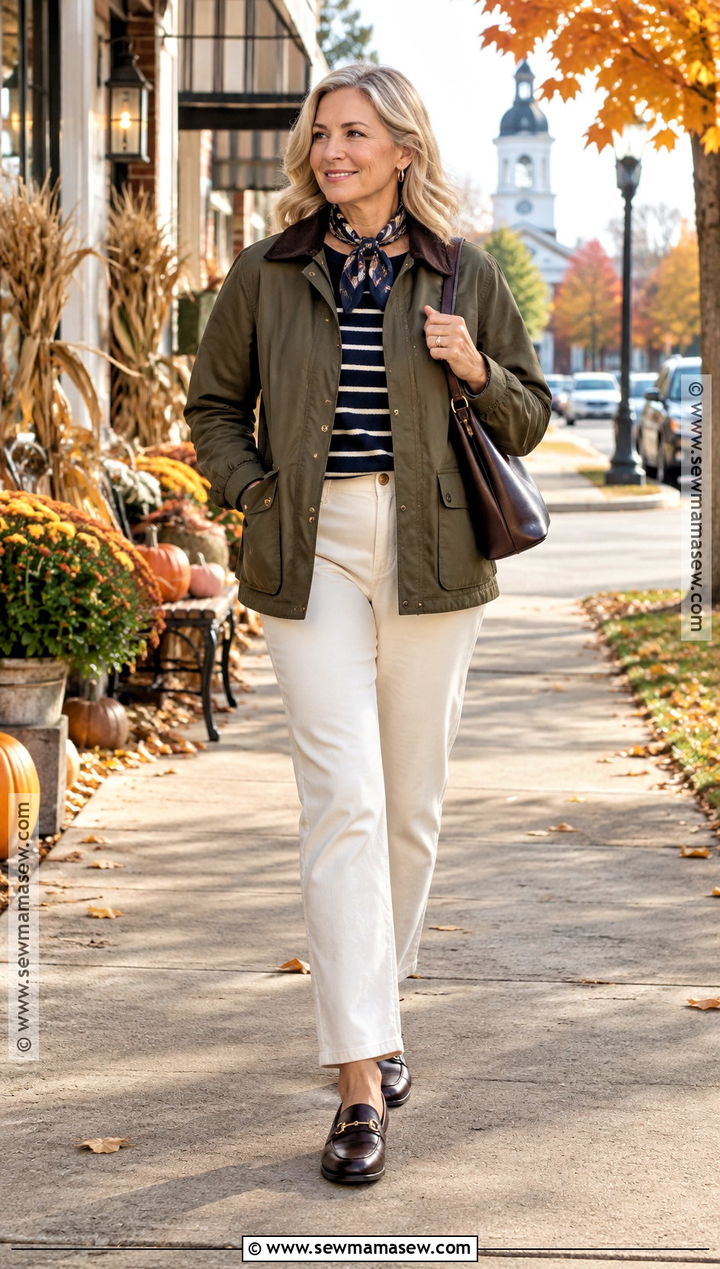
White jeans in October only look odd when everything else is summery. Put ecru denim with a striped knit or a lightweight turtleneck, add a brown or olive barn jacket, and suddenly they read as fall. The canvas or waxed cotton of a barn jacket has real body, so it gives the light jeans something solid to sit against. I almost always suggest off-white over bright white; it's kinder against camel, rust and brown leather, and it shows mud splashes a little less. Dark brown loafers or ankle boots, a leather shoulder bag and a patterned scarf finish it. Just know that light denim from a foliage drive will need a wash before it goes back on.
8. Indiana Fall Corduroy Skirt And Turtleneck Outfit
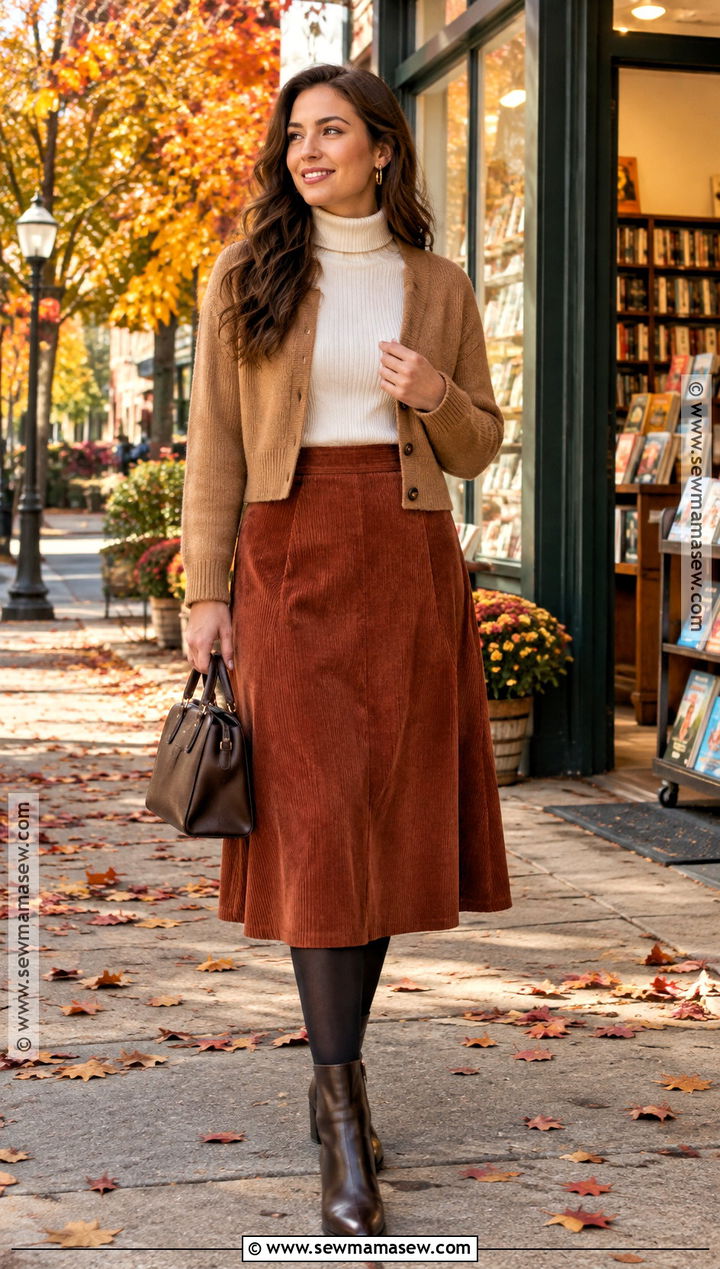
Corduroy is underrated for everyday wear because the ridges, called wales, give a plain outfit texture without adding a single accessory. I pair an A-line midi skirt in rust or forest green with a fitted turtleneck so the top stays narrow against the fuller skirt. Wider wales look cozier but add visual bulk at the hips; fine-wale cord is the safer choice if that's where you'd rather not draw the eye. Once temperatures drop, opaque tights and ankle boots take over from loafers and socks. If you add a cropped cardigan, keep it short enough to show where the skirt starts at the waist. Fair warning: corduroy can wear shiny where it rubs against a bag strap.
9. Indiana Fall Shacket And Leggings Outfit
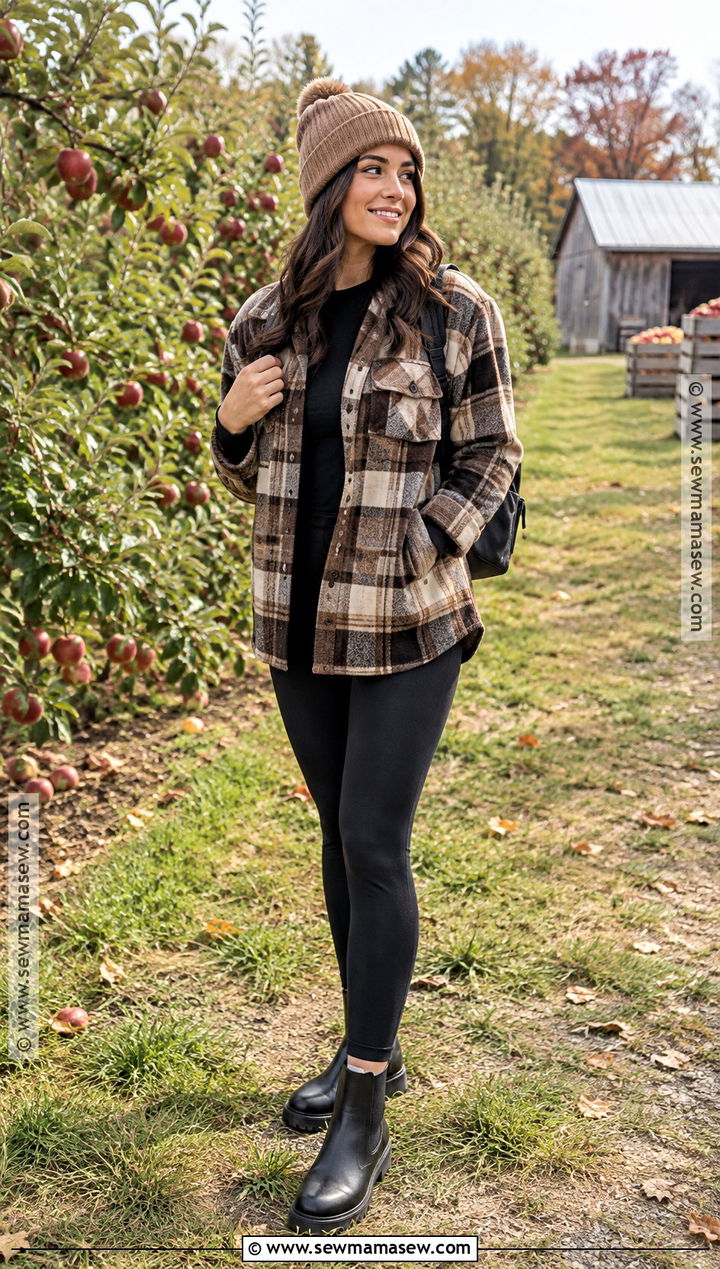
A shacket sits between a shirt and a coat, heavy enough for a breeze across an orchard but light enough to wear open. I put an oversized plaid one over a fitted long-sleeve top and thick black leggings, then add Chelsea boots or clean high-top sneakers. Hip-length or a little longer gives the most coverage with leggings. On petite frames I size down or choose a shorter cut, because an oversized shacket that hits mid-thigh can make the legs look stubby. Keep the base layer thin, since this is the piece that comes off at noon, and add a beanie only for the early hours. A small backpack frees your hands for cider and apple bags.
10. Indiana Fall Trench Coat And Straight-Leg Jeans Outfit
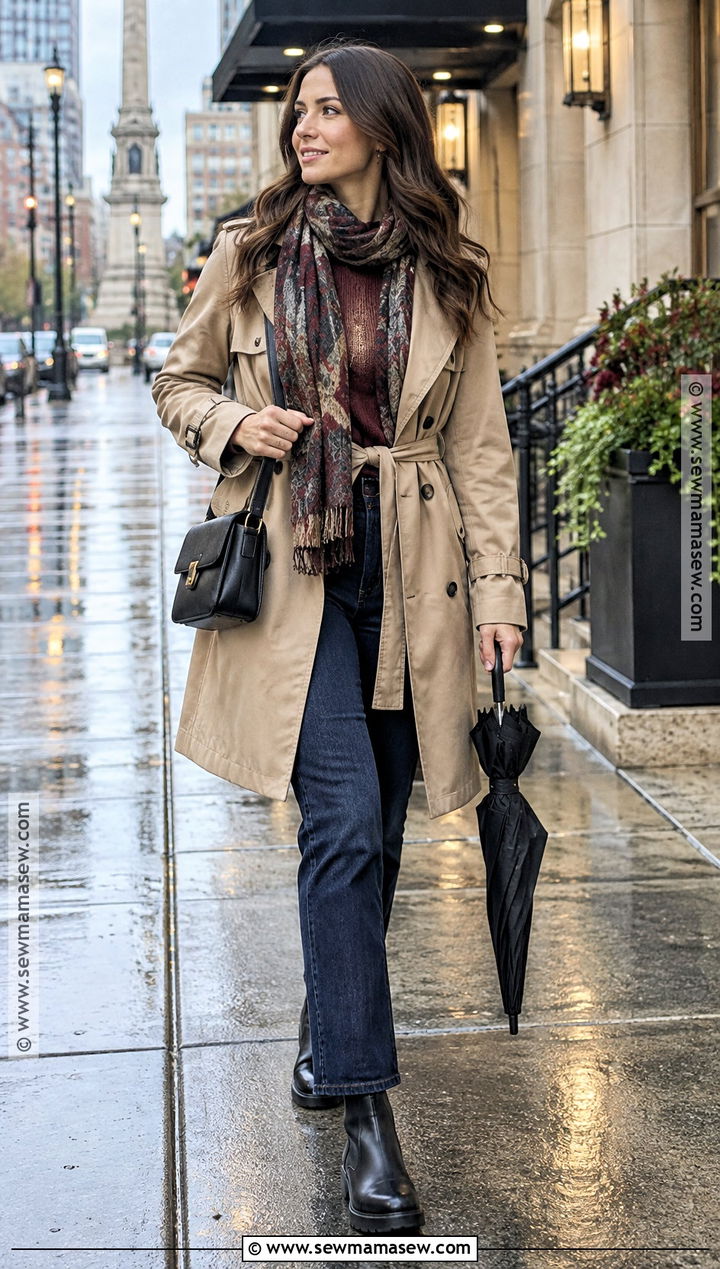
Wet, windy fall days are why I tell nearly every client to own a lightweight trench. Wear a stone or olive one over a thin sweater and dark straight-leg jeans; anything thicker underneath strains the shoulders and the buttons. Most trenches are cotton gabardine, which sheds a passing shower but will soak through in a steady rain, so it's a drizzle coat, not a storm coat. Waterproof Chelsea boots beat suede or canvas here. I always have jeans cropped or cuffed to clear the boot, otherwise the hem wicks water up from the sidewalk. Tie the belt for shape or leave it open, and add a structured crossbody and a compact umbrella.
11. Indiana Fall Football Game Outfit
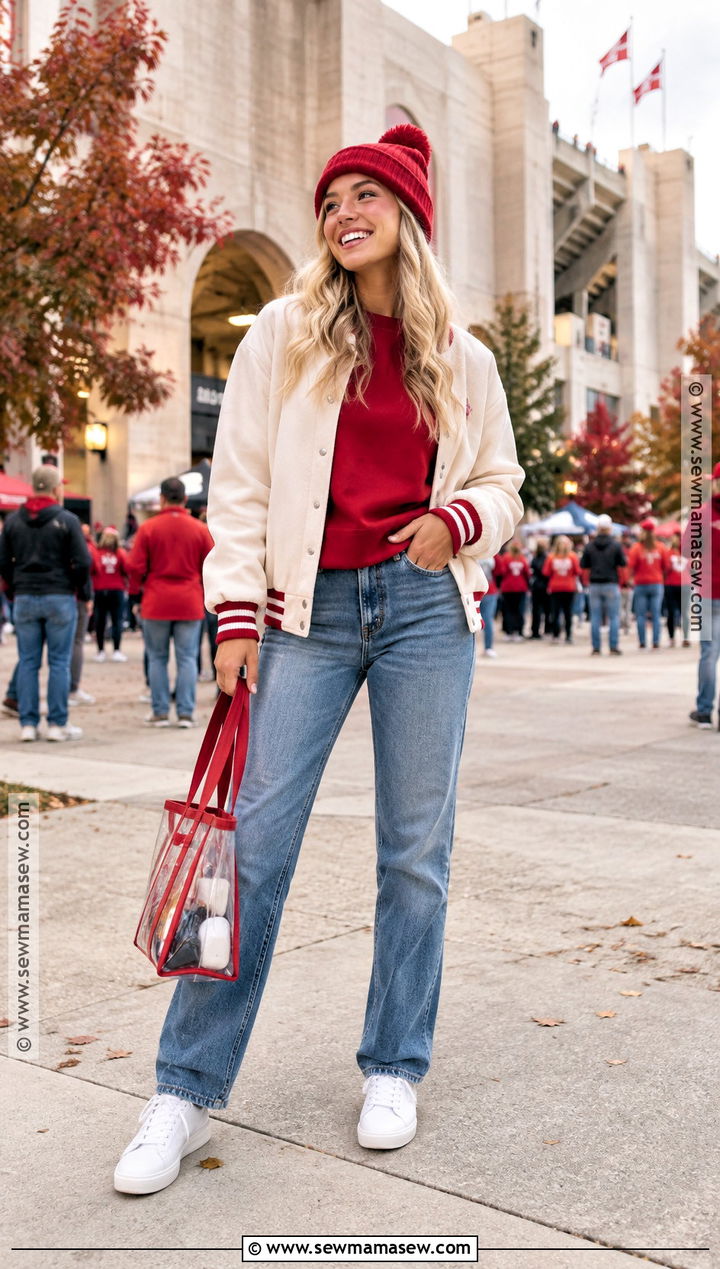
Game-day dressing is mostly about stairs, crowds and the drop in temperature after the sun goes down. A fitted team tee or sweatshirt, straight-leg jeans and a lightweight bomber cover an afternoon kickoff. I'd skip the heavy coat early in the season; packed bleachers trap body heat, and you'll end up holding it. For night games, a thin thermal under the sweatshirt is warmer than one bulky layer and doesn't change your silhouette. White leather sneakers or weather-resistant ankle boots handle concrete steps far better than heels. Check the venue's bag policy before you go, since many stadiums only allow clear bags, and tuck a beanie into a pocket for the fourth quarter.
12. Indiana Fall State Park Hiking Outfit
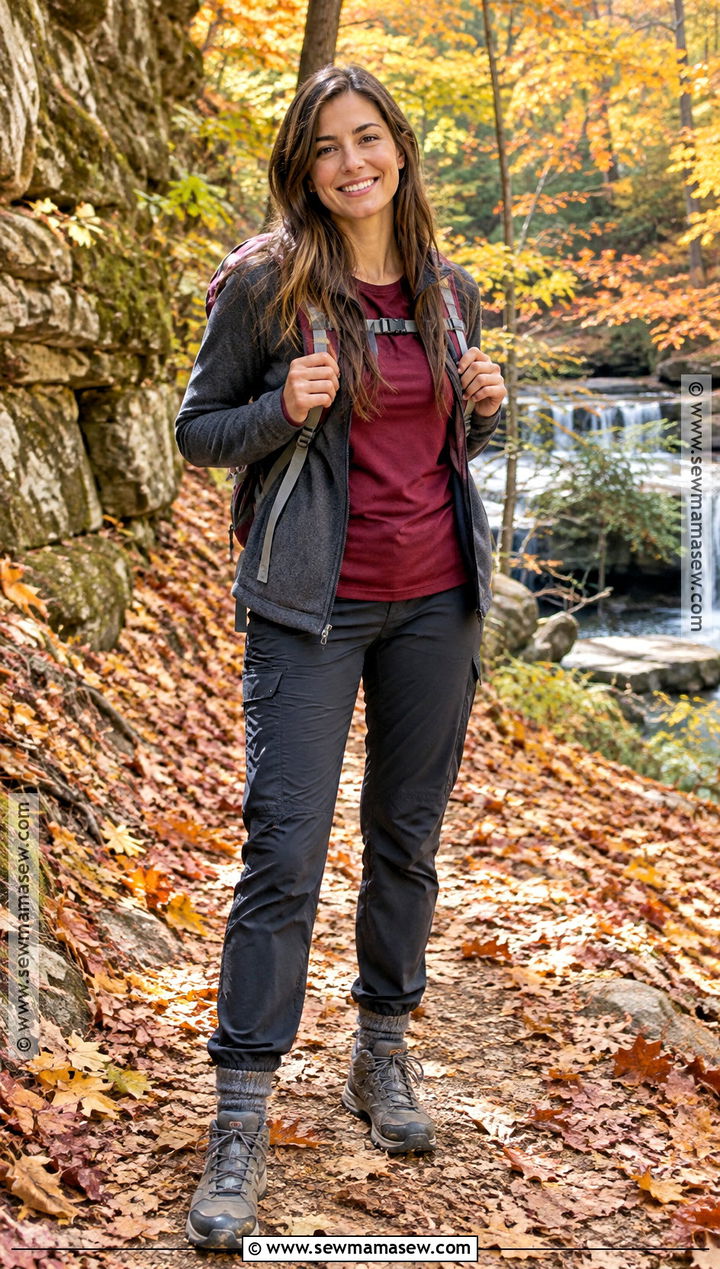
Trails in Indiana's state parks in fall mean damp ground, slick leaves over rock, and shade that's noticeably colder than the parking lot. I build hiking outfits in thin layers: a moisture-wicking long-sleeve top, flexible hiking pants or sturdy leggings, a lightweight fleece, and a packable rain shell in the pack. Cotton is the one fabric I'd leave at home, because once it's damp with sweat it stays cold. Footwear matters more than anything else here. Waterproof trail shoes with real lugs grip wet leaves; fashion boots with smooth soles do not. Wool-blend socks, a cap or beanie and a small daypack finish it, and the route and forecast should decide how much rain gear you carry.
13. Indiana Fall Leather Jacket And Midi Skirt Outfit
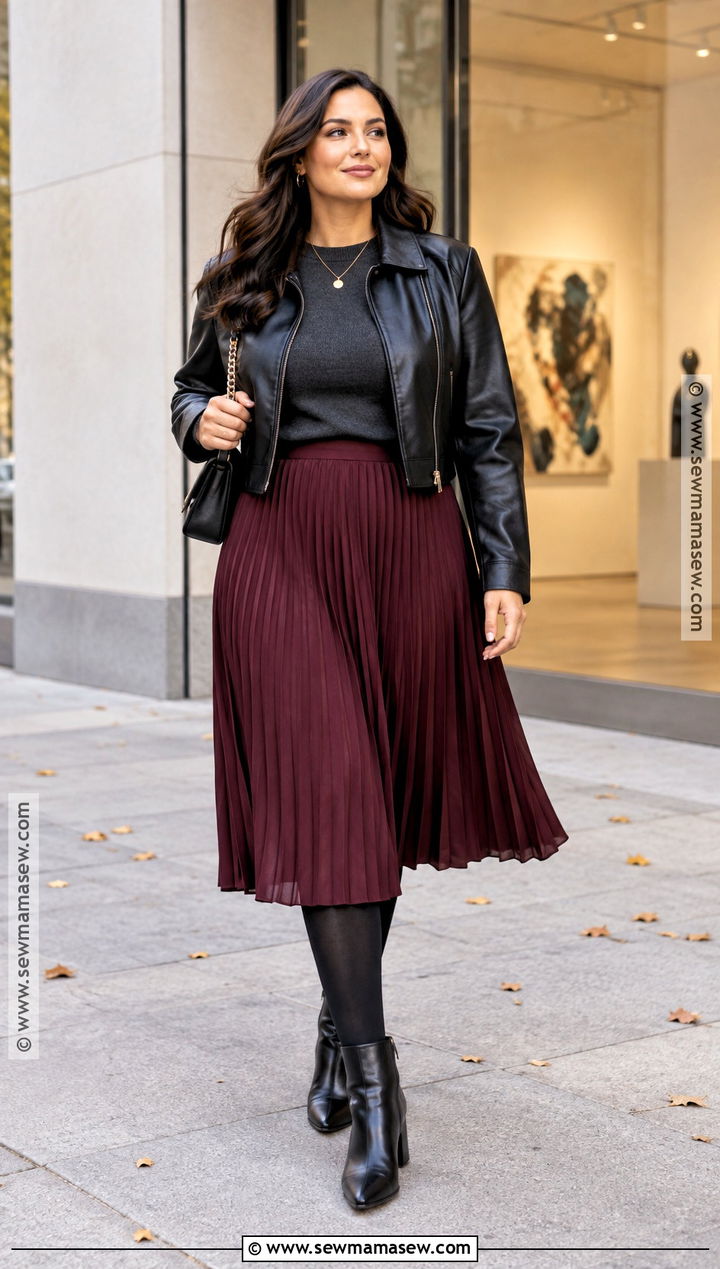
A leather or faux-leather jacket over a flowing midi skirt works because the hard and soft textures balance each other out. I pair a fitted crewneck sweater with a pleated or printed skirt in a deep seasonal shade, then black ankle boots with a block heel you can stand in for hours. The jacket should be cropped to the waist. A hip-length jacket cuts the skirt in a strange spot and makes the whole lower half look heavier. Satin-look skirts show static cling with tights, so a quick anti-static spray or a slip underneath saves the drape. Opaque black or dark brown tights add coverage, and a compact shoulder bag takes it from a gallery to dinner.
14. Indiana Fall Monochrome Knit Outfit
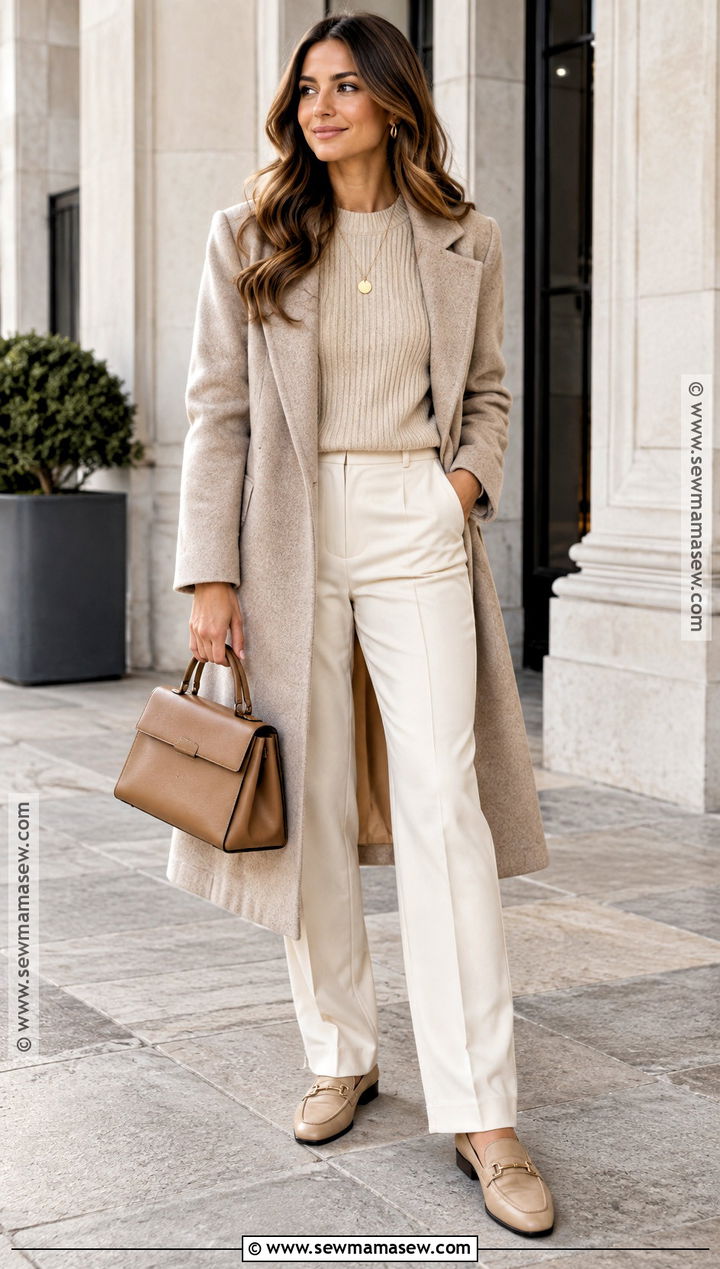
Dressing in one color family is the fastest way I know to make basic knitwear look deliberate. Try a cream sweater with oatmeal trousers, beige loafers and a taupe coat, or go deeper with chocolate and espresso and dark brown boots. What keeps it from going flat is texture, so I mix a ribbed knit with smooth trousers, suede-look shoes and a structured leather bag. Pale tonal outfits can wash out on a gray November afternoon, which is when I'd move a client to the darker version. Play with trouser rise and sweater length until the tuck or drape sits where you like it. A pendant necklace is the only jewelry it needs.
15. Indiana Fall Wool Coat And Jeans Outfit
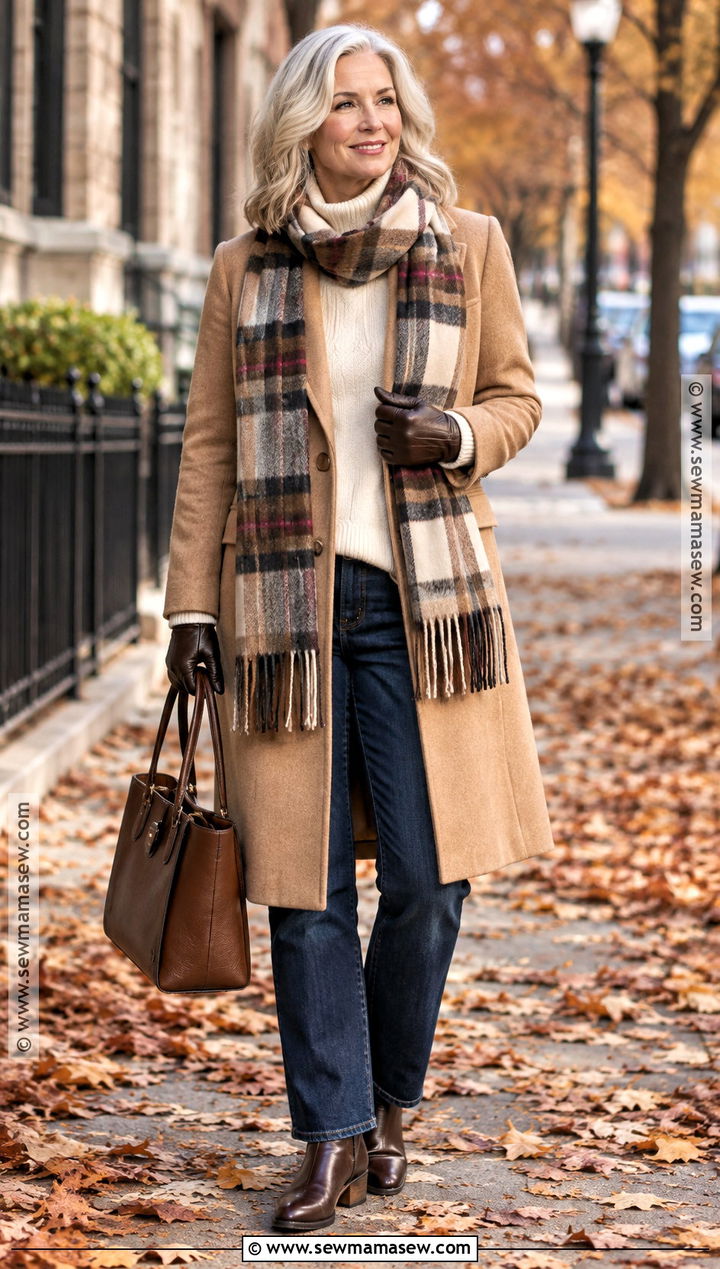
By late November a jacket stops being enough, and a knee-length wool coat earns its closet space. I build underneath it thin rather than thick: a fitted thermal, a medium-weight sweater and straight-leg jeans. A chunky knit under a tailored coat bunches at the armholes and pulls the front open, so that's the mistake I see most often. Camel, charcoal or navy all work in wool or a wool blend; the higher the wool content, the better it holds warmth when the wind picks up. Add low-heeled leather boots, a big scarf, a structured tote and lined gloves. It's the outfit for holiday shopping and cold outdoor events.
What Holds Up in Midwest Rain, Mud and Wind
Indiana falls are wetter than people pack for. A bright Saturday can come with soggy pumpkin patch rows, leaf-slick sidewalks and a wind across open farmland that cuts through loose knits. Here's how the fabrics in these outfits actually behave when the weather turns.
Fabrics That Shrug Off a Shower
Wool keeps some warmth even when it's damp, which is why I'd pick a wool coat or merino sweater over cotton any day there's rain in the forecast. Waxed cotton and tightly woven gabardine shed light rain. Fleece dries fast. Plain cotton sweatshirts and hoodies are the weak spot: they soak up water, get heavy and stay cold for hours.
Suede, Leather and Mud
Suede darkens and stiffens when it gets wet, and mud stains it fast, so I keep suede boots for dry city days and spray them with a protector before the first wear. Smooth leather copes better and wipes clean, though new leather boots need a few short wears to break in before a festival day. For orchards, corn mazes and anything with grass, a lug sole with a waterproof upper is the only thing I'd trust.
Wind Changes What Counts as Warm
An open-knit cardigan feels toasty indoors and useless in a breeze, because air moves straight through the loops. On a windy day, put a tightly woven layer on the outside, such as a trench, a barn jacket or a shell, and the same sweater underneath suddenly feels twice as warm. A scarf that closes the neckline does more than another layer on the body.
Start With the Layers You Can Peel Off
A good Indiana fall wardrobe comes down to layers that work across a 25-degree day and shoes that cope with wet grass. Cardigans, flannels, a trench, a puffer vest and a wool coat will take you from early September to the first hard frost. You don't need a new wardrobe to get there. Begin with dependable jeans, a few thin knits, one pair of boots you can walk in and one or two jackets, then bring in color with burgundy, olive or rust. Check the forecast for the evening, not just the afternoon, and dress for where you'll be standing at sunset.
Related posts: