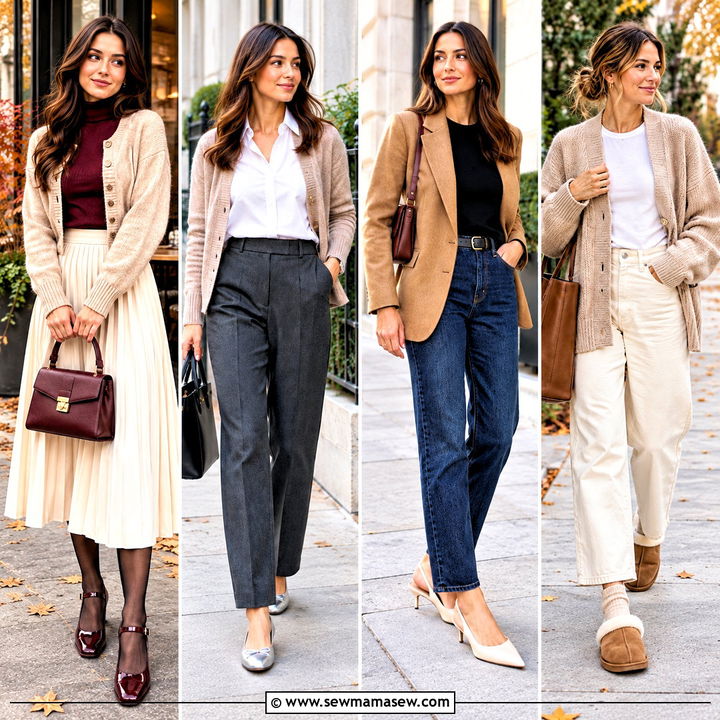
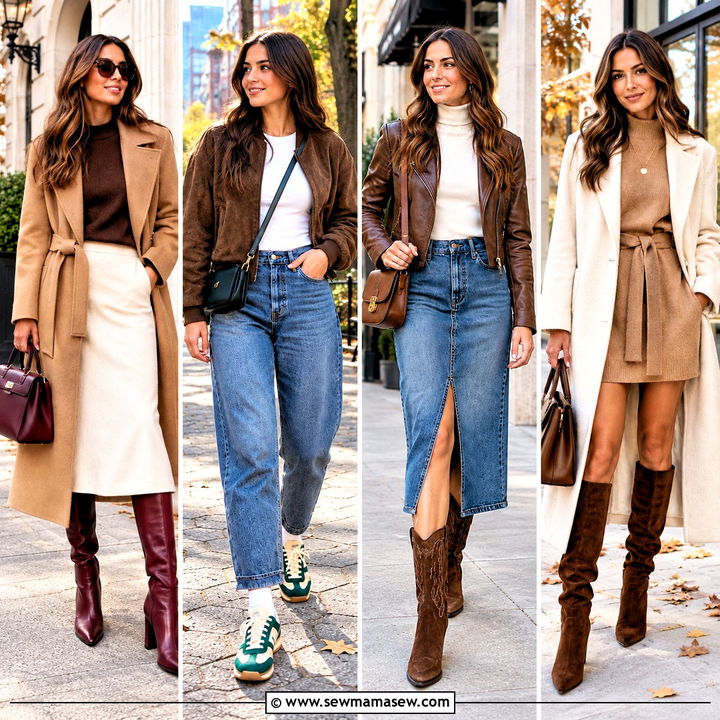
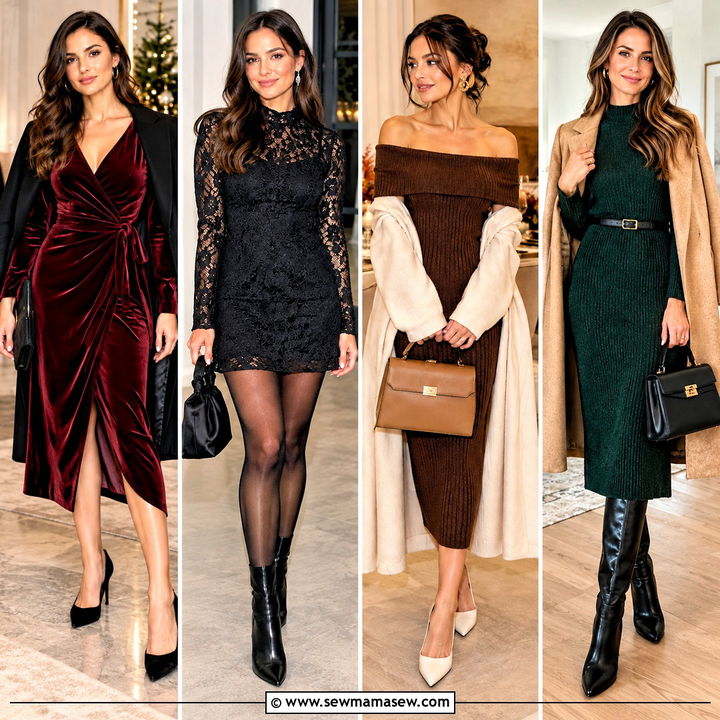
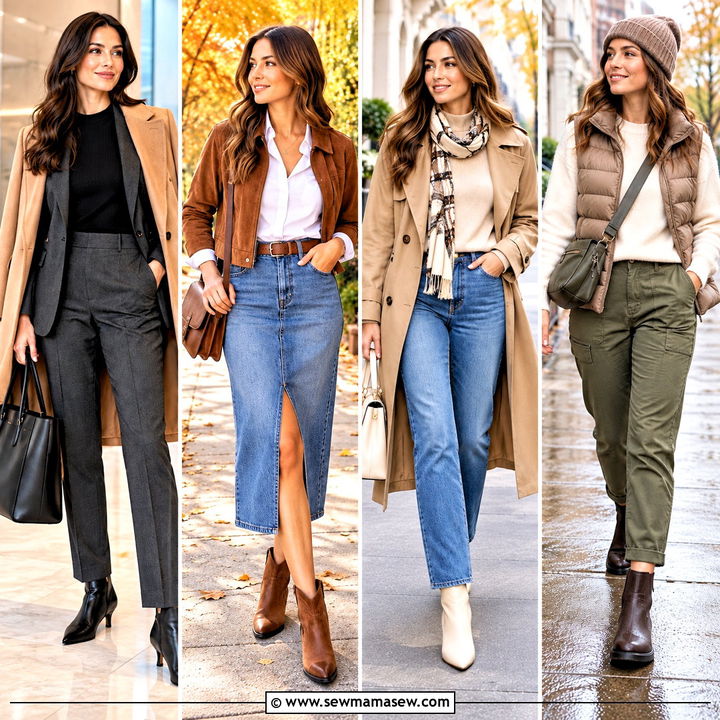
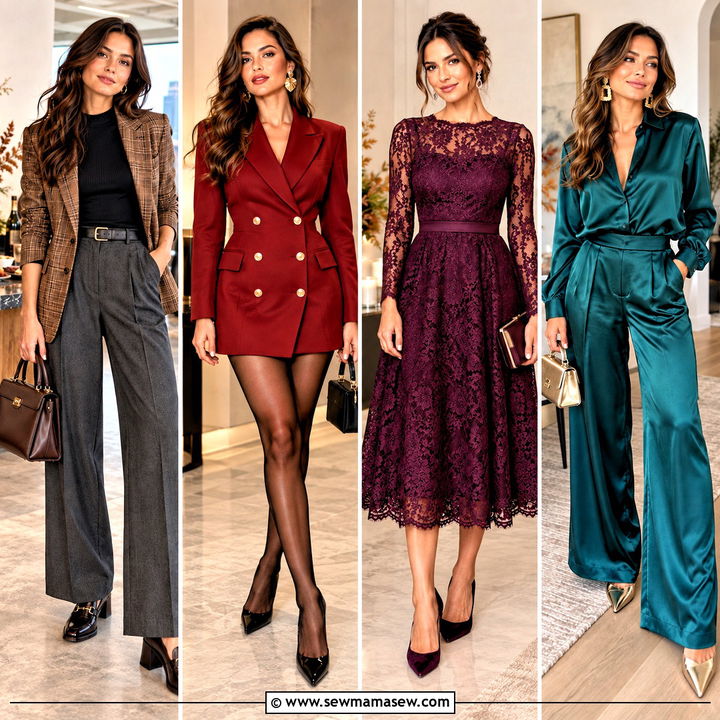
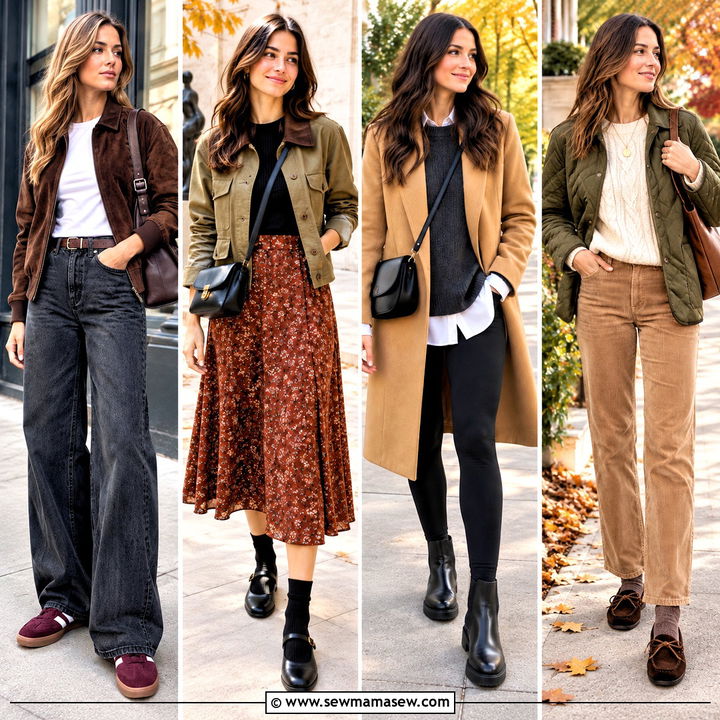
A midi dress ends somewhere between the knee and the ankle, and that leaves a stretch of leg the shoe has to deal with. Get the shoe wrong and the whole outfit looks cut in half. When I style one for fall, I look at three things before color: how close the boot shaft comes to the hem, how heavy the sole looks next to the fabric, and whether the shoe can survive the day's weather. Boots handle the cold and the wet. Loafers, flats and pumps keep things lighter for the mild weeks of September and early October. Below are fifteen pairings I'd actually put together, with notes on who each one suits and where it tends to go wrong.
Measuring the Gap Between Your Hem and the Boot
Midi is a loose word. One brand's midi stops just below the knee, another's brushes the ankle, and the right shoe changes with it. Before I suggest a boot, I stand the client sideways to a mirror and measure from the floor to the hem. Then I measure the boot shaft. If the shaft ends at or above the hem, you have overlap and a clean line. If there's a gap of more than a hand's width, it starts to look like a stripe.
Sit down as well. A skirt rides up several inches when you sit, so a boot that met the hem while standing can suddenly leave a band of bare knee. That's fine for ankle boots, where the gap is expected, but annoying with tall boots, where the whole point is coverage.
- Hem just below the knee: tall boots should reach the knee, or switch to ankle boots and show the calf on purpose.
- Hem at mid-calf: the hardest length. Choose a slim boot that tucks under, or a low shoe with tights in a matching shade.
- Hem near the ankle: almost any shoe works, but a heavy sole can look like the dress is sitting on it.
1. Knit Midi Dress With Knee-High Boots
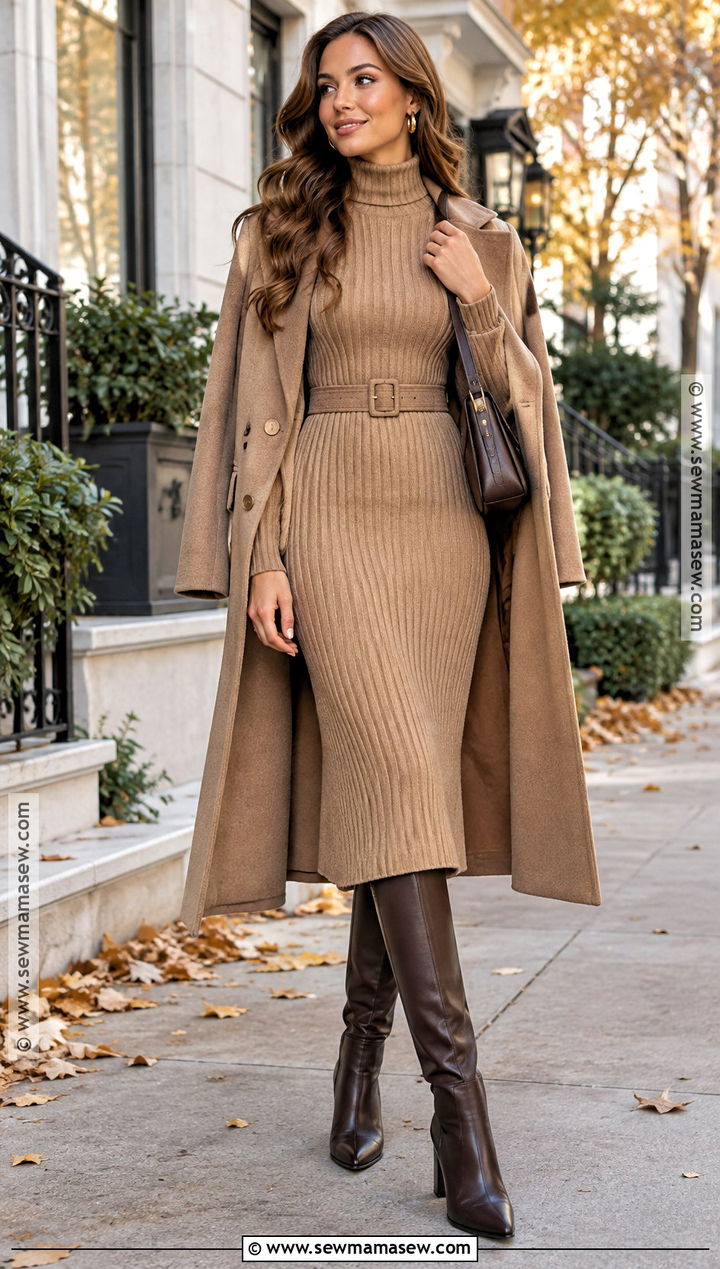
Knee-high boots are the easiest answer for a knit midi dress once the mornings turn cold. The one thing I check first is overlap: the hem should cover the top of the shaft by a couple of inches when you're standing, so no strip of leg shows when you sit down and the skirt rides up. A ribbed camel or charcoal dress over smooth leather boots is my default. Flat riding boots for long days, a low block heel when you want it dressier. If you're petite, an almond toe keeps the line running from hem to floor instead of stopping short at a round, blunt toe.
2. Floral Midi Dress With Ankle Boots
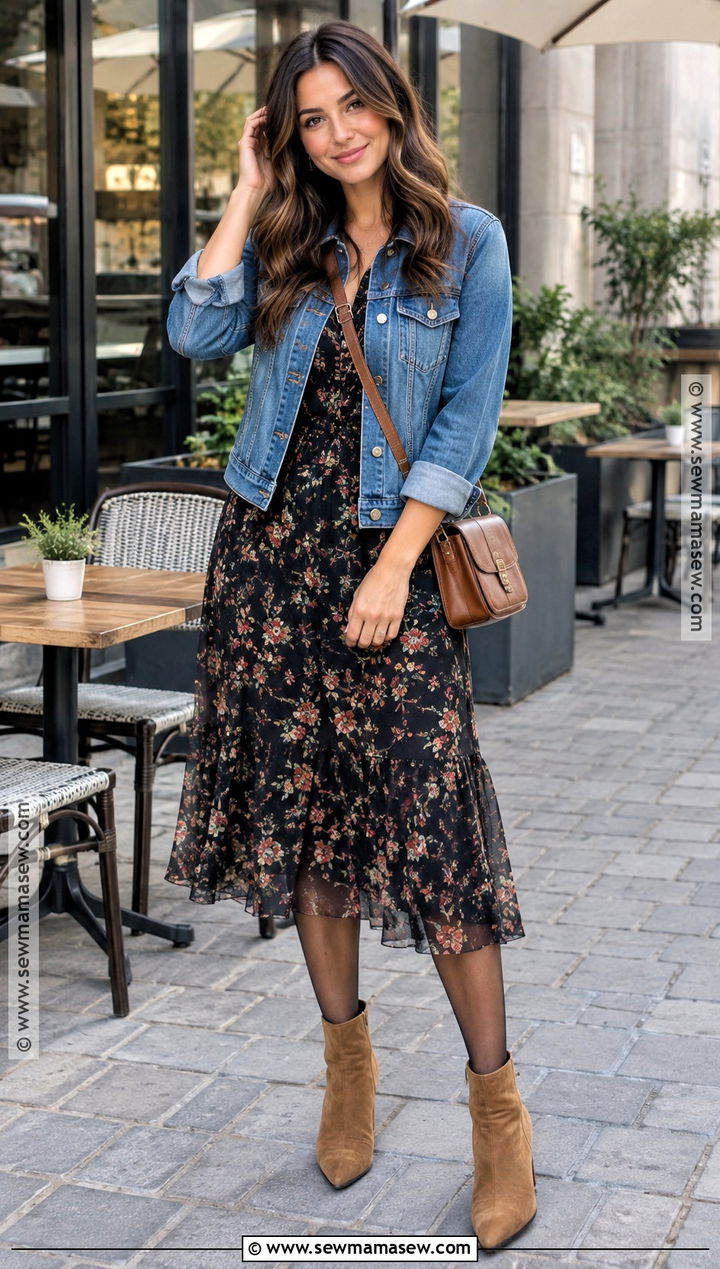
Ankle boots under a floral midi are where I see the most awkward gaps. A wide shaft flaps around the leg and makes the calf look heavier, so look for a boot that sits close to the ankle bone. Tan suede suits warm, sunny prints; black leather looks better with dark botanicals. On the first mild days I add a cropped denim jacket. Once bare legs feel cold, sheer tights in your own skin tone keep the gap between hem and boot from reading as a stripe of contrast.
3. Sweater Midi Dress With Chelsea Boots
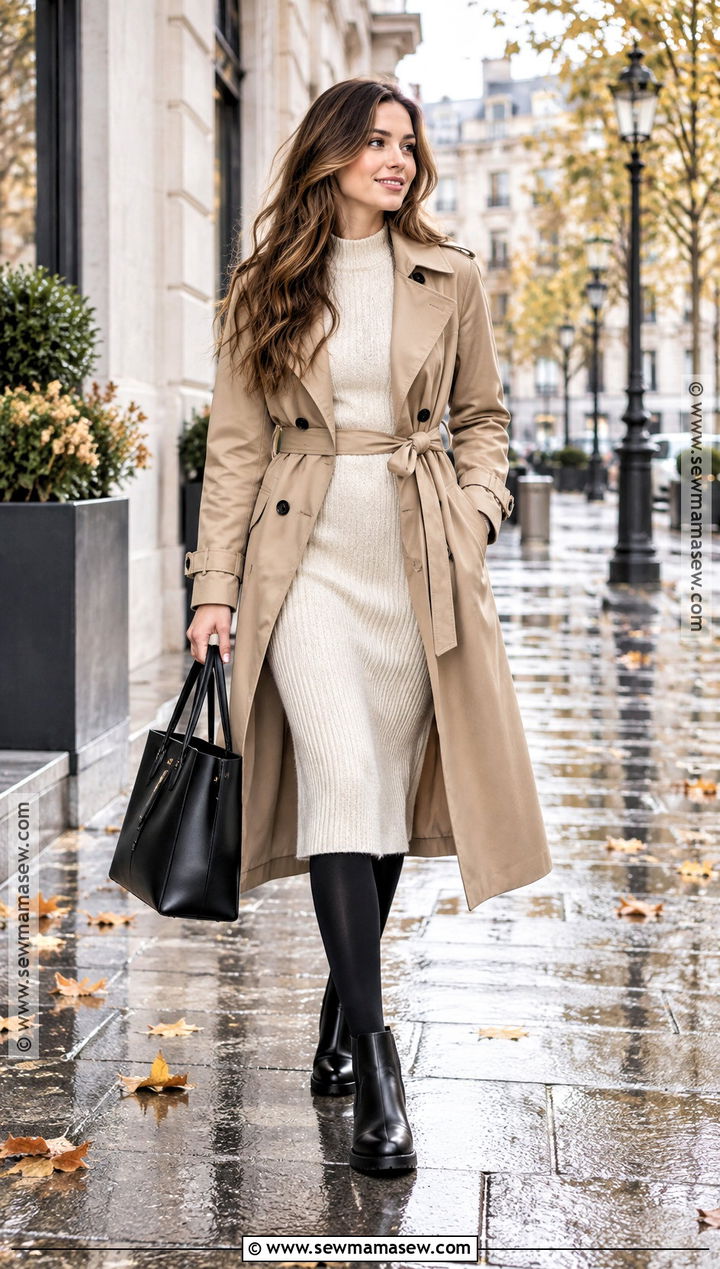
Chelsea boots are what I reach for on wet days. No laces to soak through, and the elastic side panel means you can pull them on in ten seconds. They do look sturdy, so pair them with a sweater dress that has a straight or slightly flared skirt, which gives the boot something to balance against. Black leather reads sharper with gray or cream; brown is gentler next to camel and rust. One warning: a thick lug platform under a thin, clingy knit makes the feet look oversized. A moderate sole keeps the proportions honest, and opaque tights take over once the temperature really drops.
4. Shirt Midi Dress With Leather Loafers
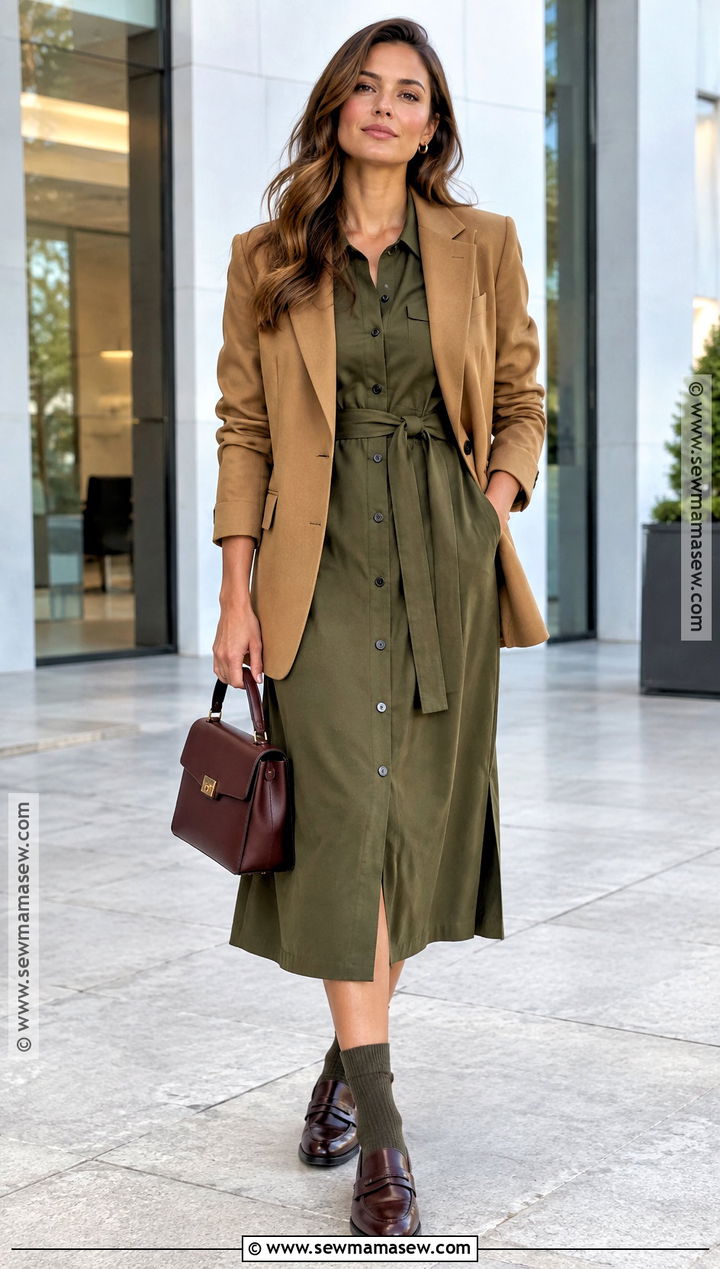
Loafers and a shirt dress share the same tailored DNA, which is why this pairing feels right for an office or a classroom without any effort. A belted navy or olive shirt dress with dark brown or oxblood loafers is the version I'd buy first. Keep the hardware small; a big horsebit buckle competes with the dress buttons. No-show socks for the warmer weeks, fine ribbed socks later in the season. If the skirt is very full, a slightly pointed loafer stops the bottom half of the outfit from looking wide and square.
5. Satin Midi Dress With Kitten-Heel Pumps
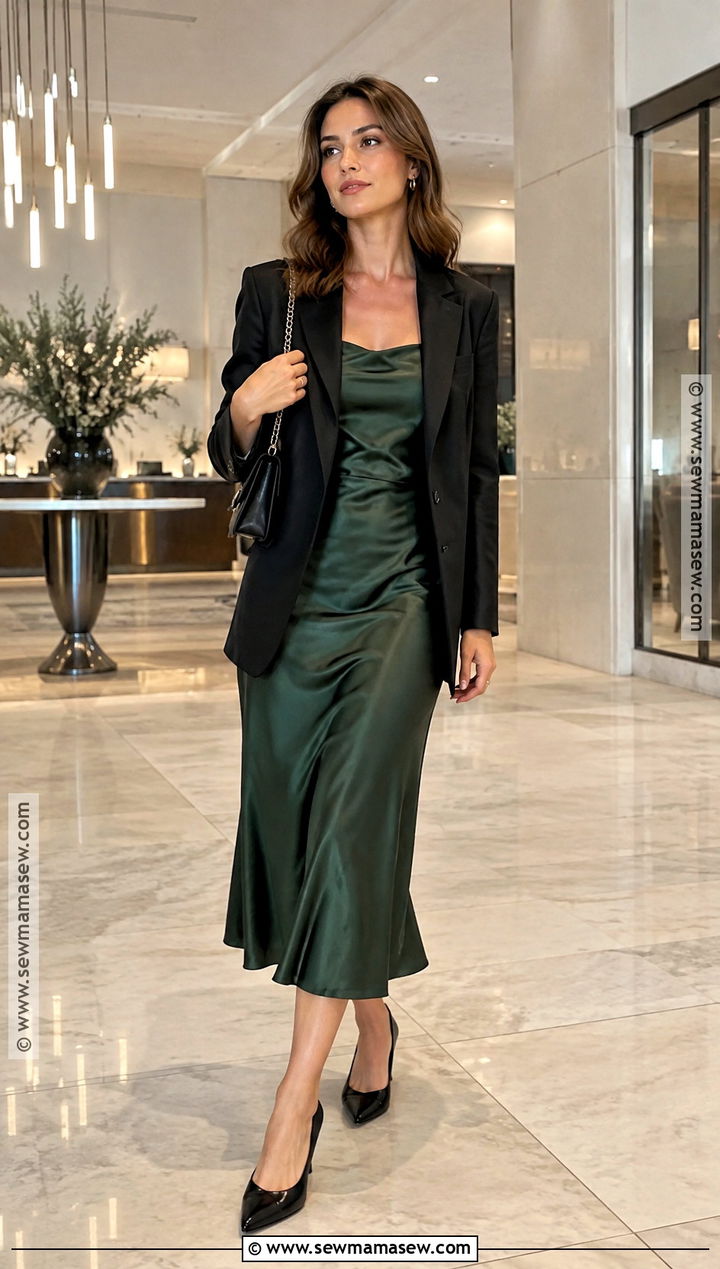
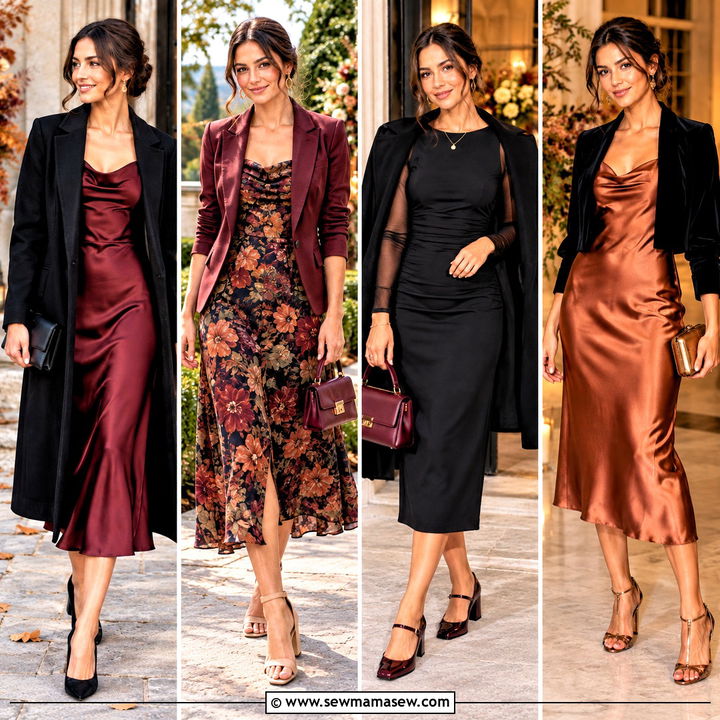
Satin is a summer fabric until you close the toe. A kitten-heel pump in black or a shade near the dress turns a navy or forest green slip of satin into something you can wear in October. The low heel matters: satin shows every wobble, and you'll walk more steadily on an inch and a half than on three. A pointed toe peeking from under the hem lengthens the leg nicely. If the straps are thin, put a fitted long-sleeve top underneath for daytime and throw a wool coat over the lot. I'd wear this to dinners and evening events, though I'd carry flats if the night involves much standing.
6. Denim Midi Dress With Western Boots
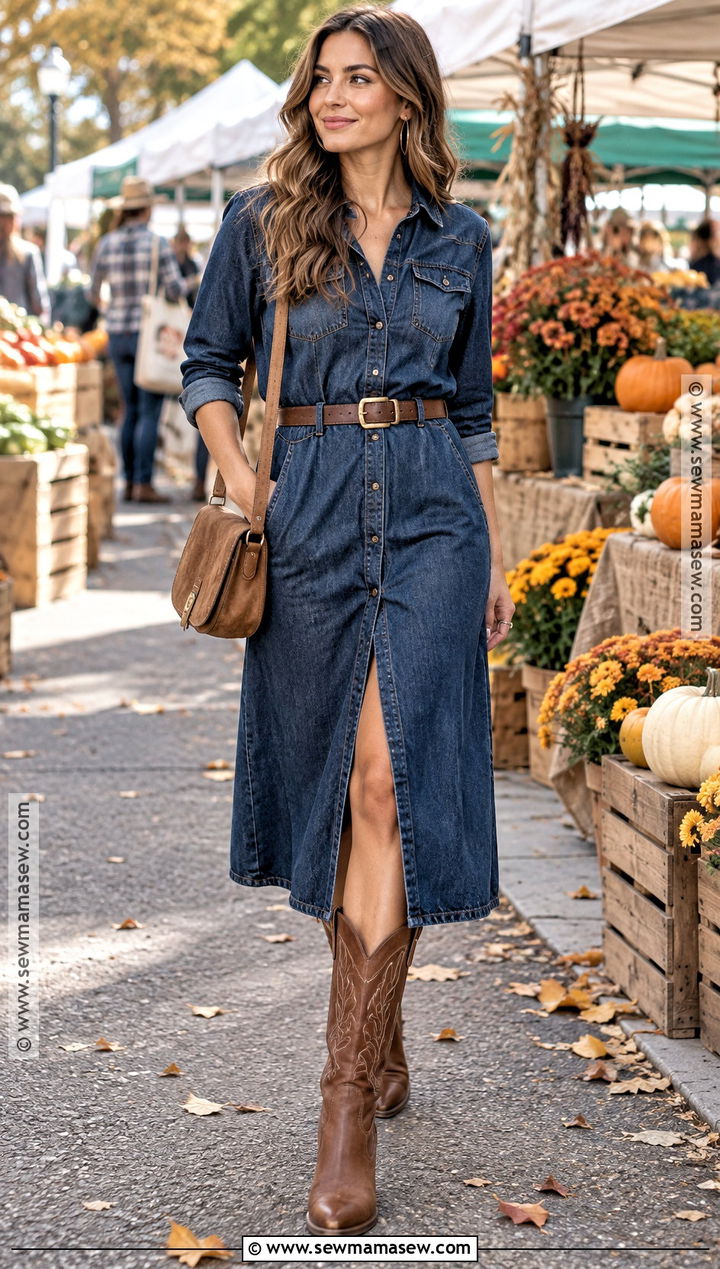
Western boots carry a lot of personality, so the dress should stay plain. A structured dark-wash denim midi gives them a sturdy partner, and a front slit shows just enough of the shaft. I look for a medium shaft height, a walking heel and a toe that's pointed but not exaggerated. Brown or tan leather is the easy match. The common mistake is piling on the theme: fringe bag, big belt buckle, hat. Let the boots carry it, and keep a belt at the waist so the denim doesn't look boxy above all that leather. It's a good choice for farmers' markets and weekend drives.
7. Wrap Midi Dress With Ballet Flats
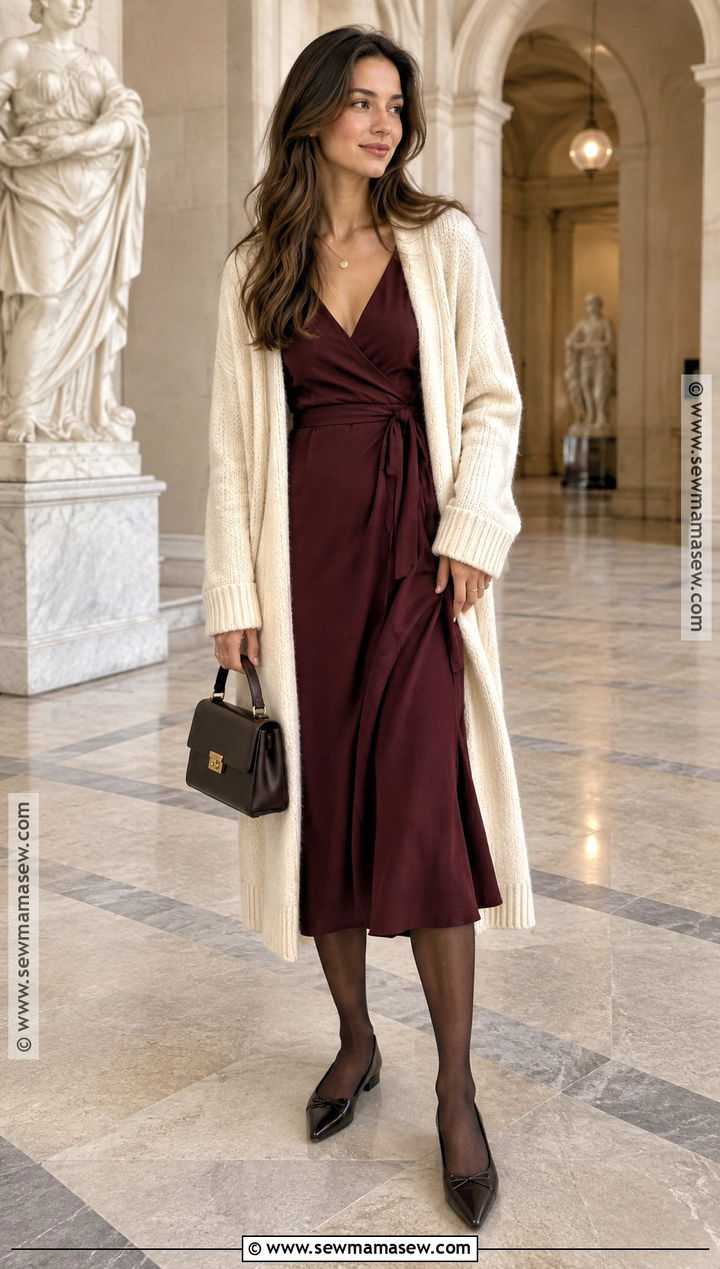
A wrap dress and ballet flats suit anyone who doesn't want heels but still wants a defined waist. Under a midi hem, a round-toe flat can look a little childlike, so I steer people to a pointed, square or high-vamp shape. Dark colors like burgundy or chocolate give a printed dress some weight at the bottom. Flats offer almost no cushioning, so if you're on your feet all day, a thin gel insert helps. On cooler days add sheer tights and a long cardigan, but make sure its hem lands well above or below the dress hem rather than right next to it.
8. Casual Midi Dress With Retro Sneakers
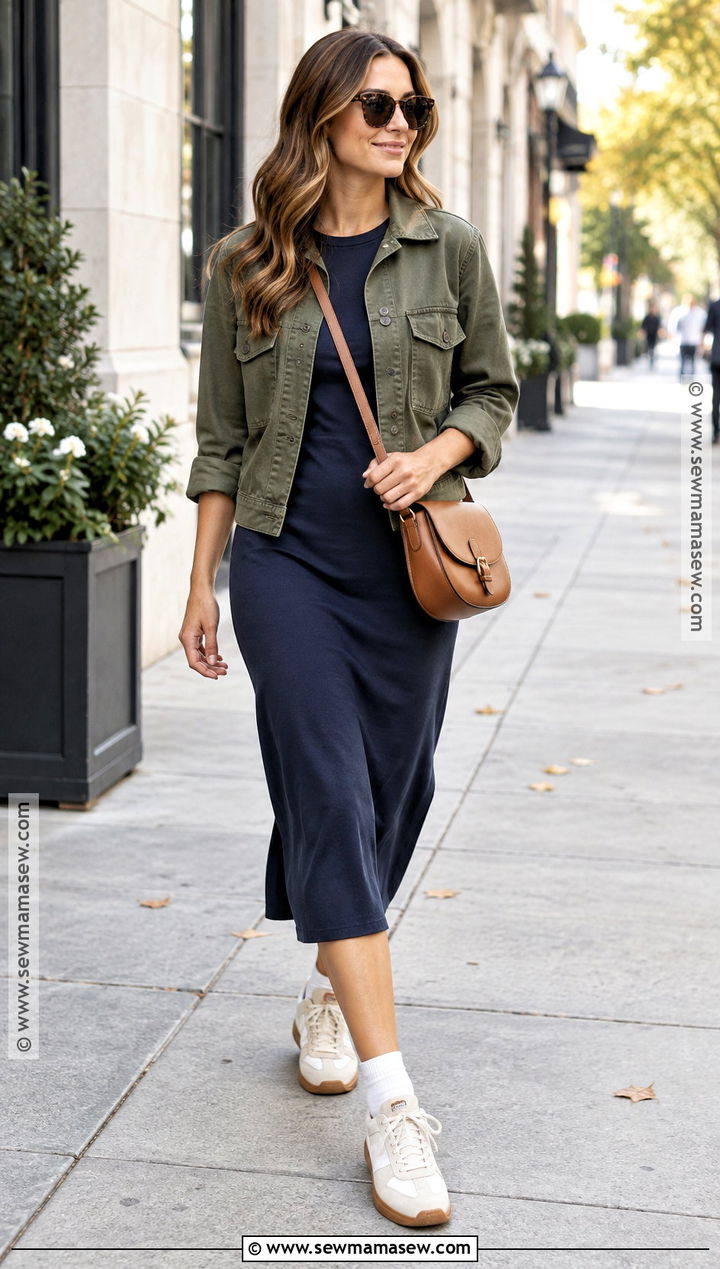
Sneakers under a midi dress only work if the sneaker is slim. A chunky running shoe makes a long skirt look like it's been paired by accident, while a low-profile retro style keeps the line light. Start with a jersey or cotton knit dress in navy or heather gray and pick a sneaker in cream or a muted color. Clean soles matter more here than anywhere else in this list, because a scuffed white edge is the first thing people see. A cropped utility jacket shows the waist and gives the soft dress some structure for errands and sightseeing. Socks should either match the shoe or pick up a color from the dress.
9. Black Midi Dress With Mary Jane Flats
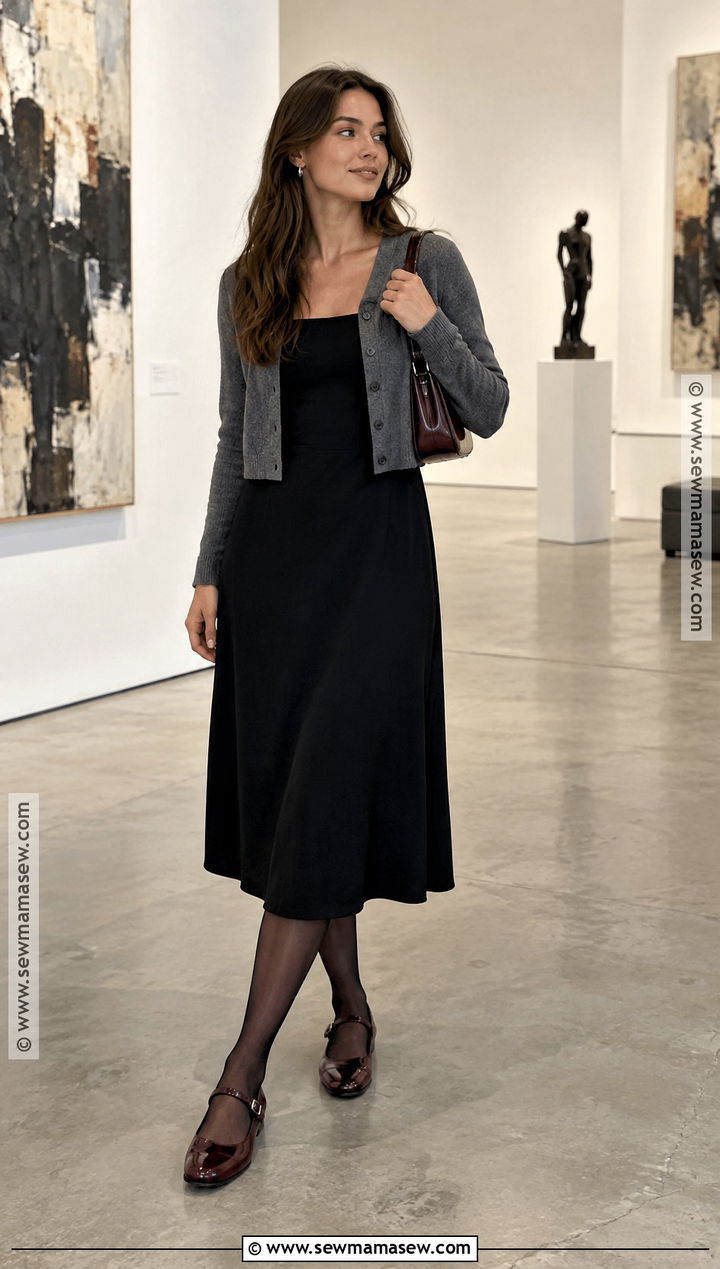
A black midi dress lets the strap on a Mary Jane flat do all the talking. I like them in burgundy or chocolate leather for daytime and velvet for evening. A softly squared toe looks current; a very round toe pushes the outfit toward schoolgirl. Add a cropped cardigan or short tailored jacket so the upper half has shape. If you wear socks with them, keep the sock close to the shoe or tights color. Contrast socks with Mary Janes is a strong look that suits some people and swallows others. This is the pair I'd pick for an office day that runs into an afternoon event.
10. Pleated Midi Dress With Block-Heel Pumps
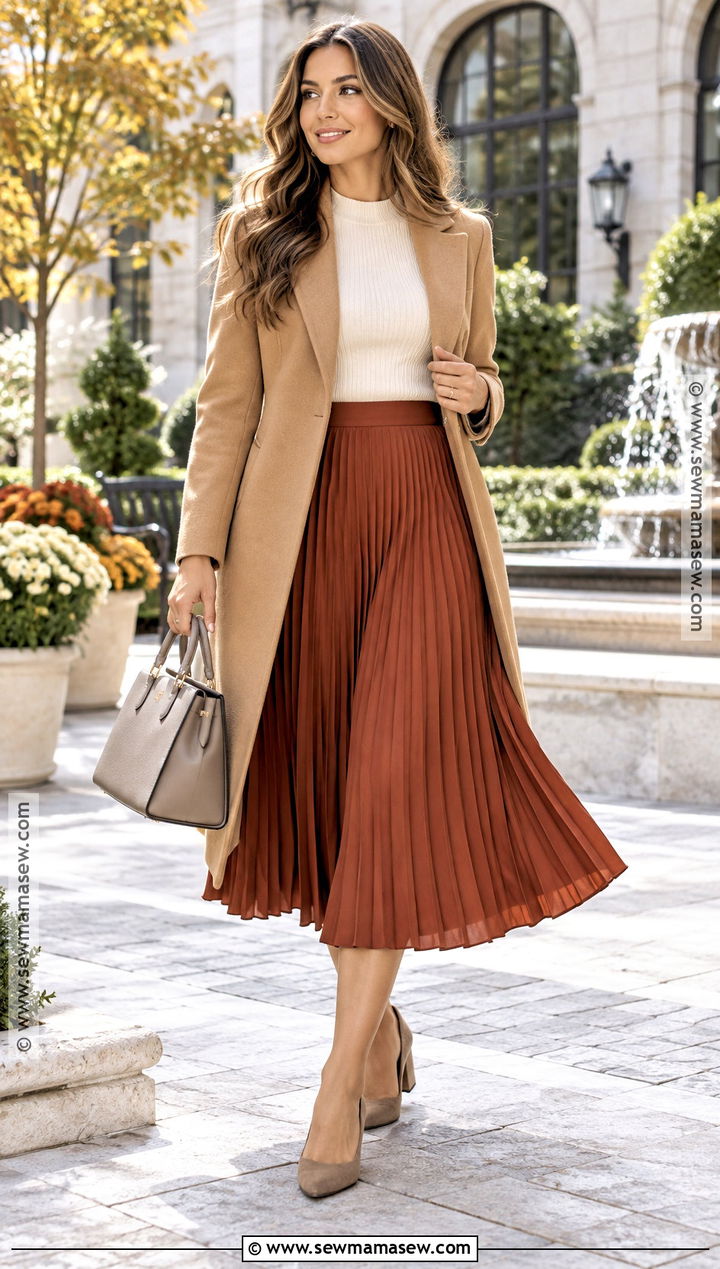
Pleats need a stable heel. They swing as you walk, and a narrow stiletto under all that movement looks precarious. Closed block-heel pumps in black, taupe or bronze keep the skirt grounded. Around two inches is plenty to lift the hem off the ankle without making the outfit formal. If the dress is printed, I match the pumps to the darkest color in the print, which ties the bottom of the outfit to the skirt rather than letting the shoe float on its own. A tailored coat and structured bag finish it for work or a daytime celebration.
11. Long-Sleeve Midi Dress With Combat Boots
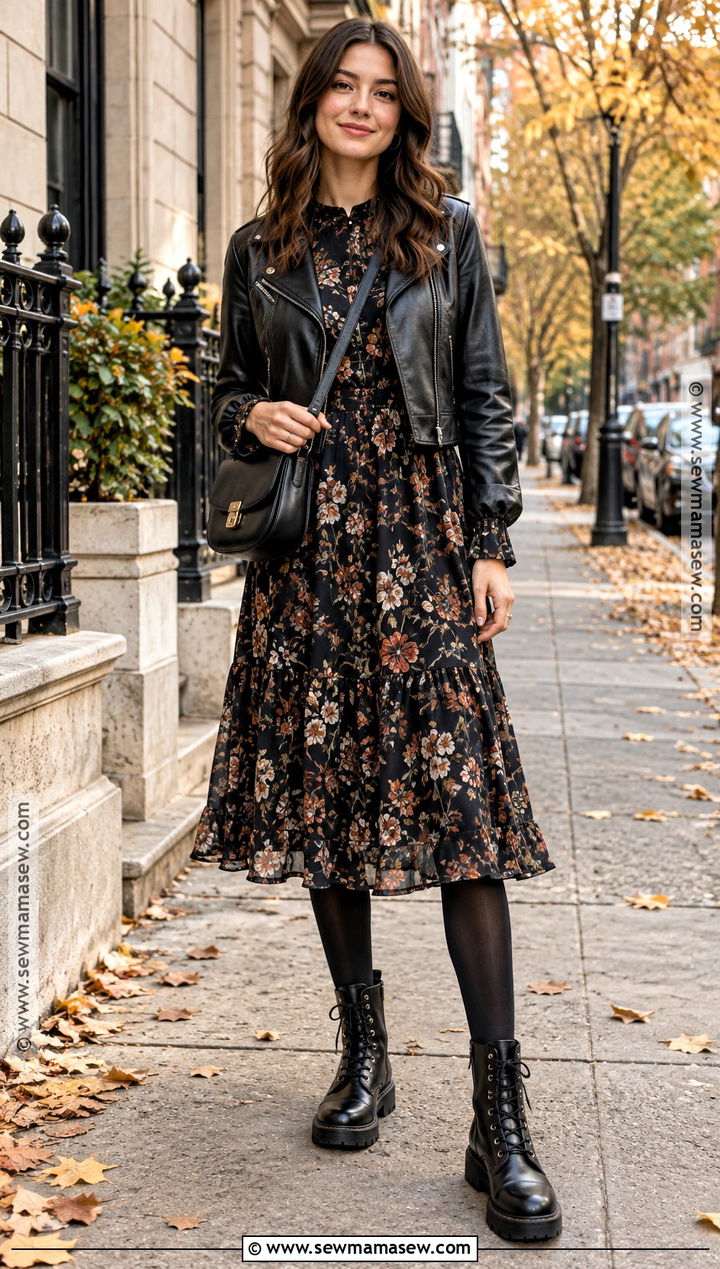
Combat boots toughen up a dress that might otherwise feel too delicate for fall, like a tiered floral or a soft black long-sleeve midi. I keep the sole moderate. Extreme platforms under a midi hem make the legs look short. Black boots give the most contrast; dark brown is easier with warm prints. You can leave a few inches of leg showing or switch to opaque tights for a continuous line when it's cold. New lace-up boots usually stiffen at the ankle for the first few wears, so break them in at home before a concert or a long walking day.
12. Slip Midi Dress With Slingback Heels
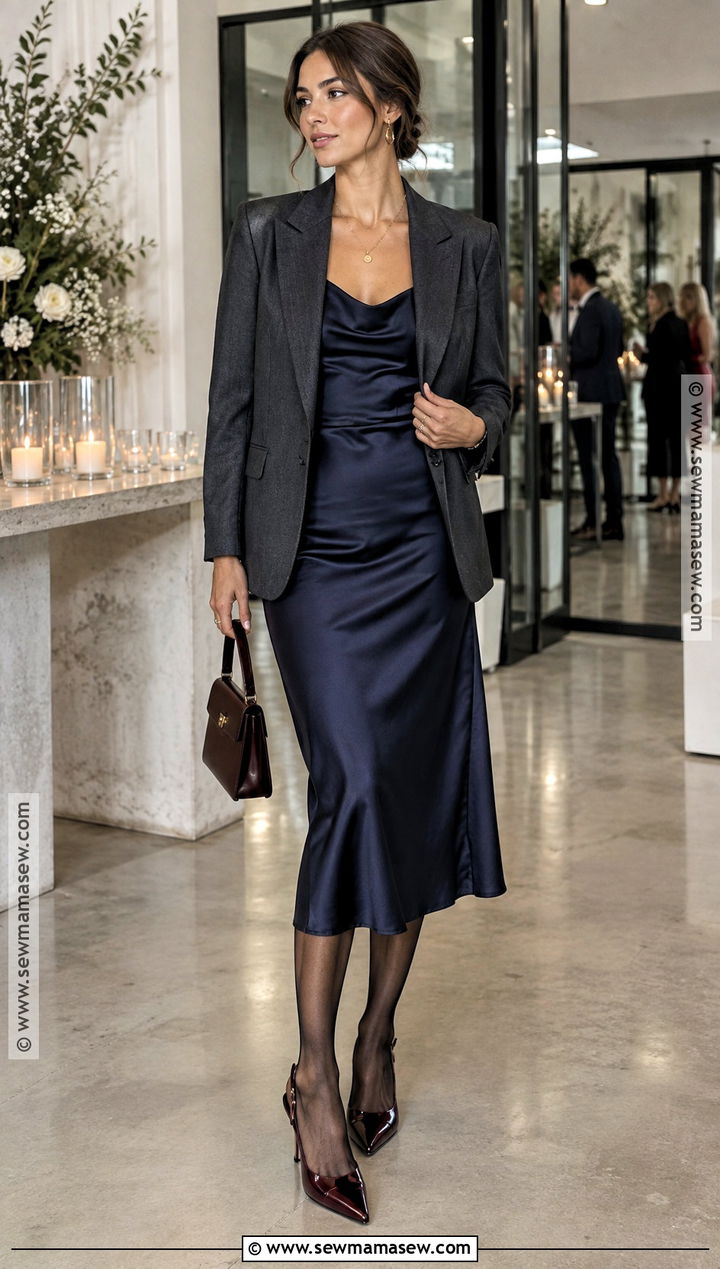
Slingbacks are my pick for dressier fall evenings when sandals feel wrong but a full pump feels heavy. The closed pointed toe covers the foot; the open back keeps the shoe light. Choose a low or medium heel you can stand in for hours. Black or burgundy suits jewel-tone satin, and taupe is kinder to soft neutrals. You can wear sheer tights with them if the dress and shoe are dark, but check the strap grips. Nylon is slippery and loose slingbacks slide down the heel. Keeping the shoe close to the dress color gives an unbroken line from shoulder to toe.
13. Ribbed Midi Dress With Suede Clogs
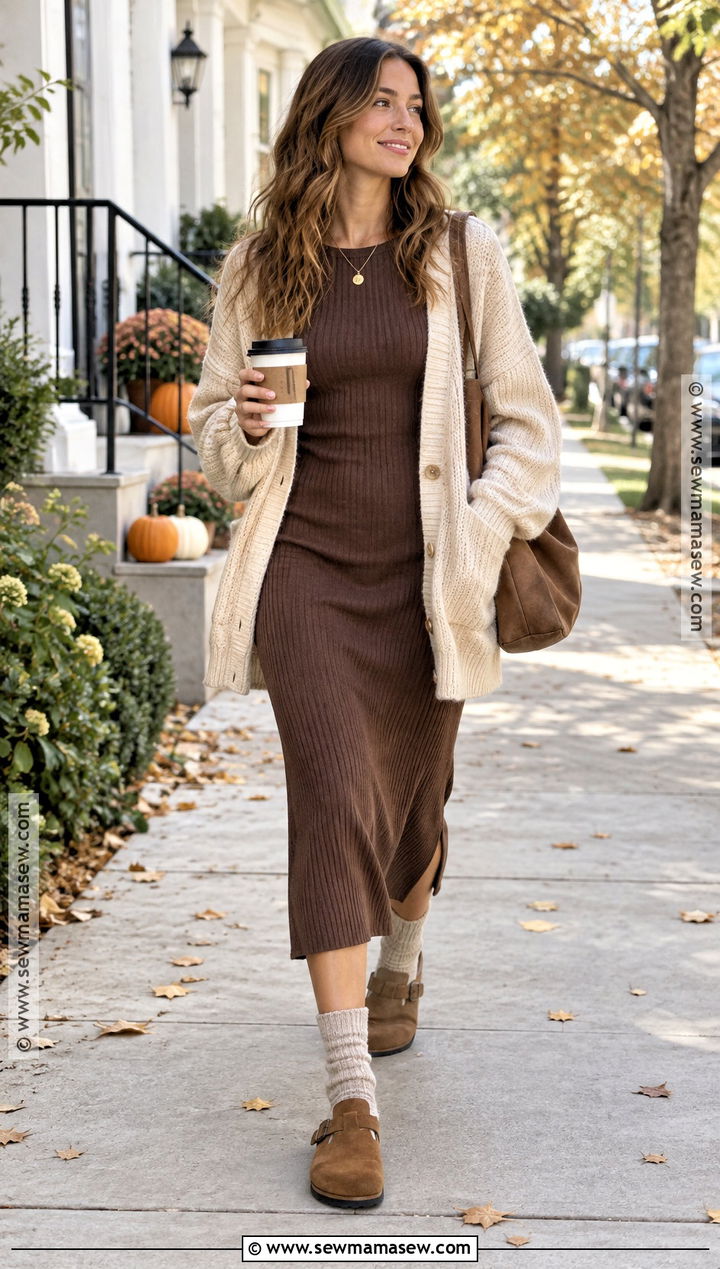
Clogs are bulky by nature, so I only put them under a ribbed dress with a straight or column shape. A full skirt plus a heavy clog makes the whole figure look wider at the bottom. Taupe or chestnut suede is my usual choice, with the color repeated in a belt or bag so the shoe doesn't feel random. Keep the platform low. Suede clogs mark easily with water, so I'd treat them with a protector spray before the first rainy week. Knit socks in a coordinating shade are fine once it's cold; they suit the relaxed, weekend feel of the outfit.
14. Printed Midi Dress With Oxford Shoes
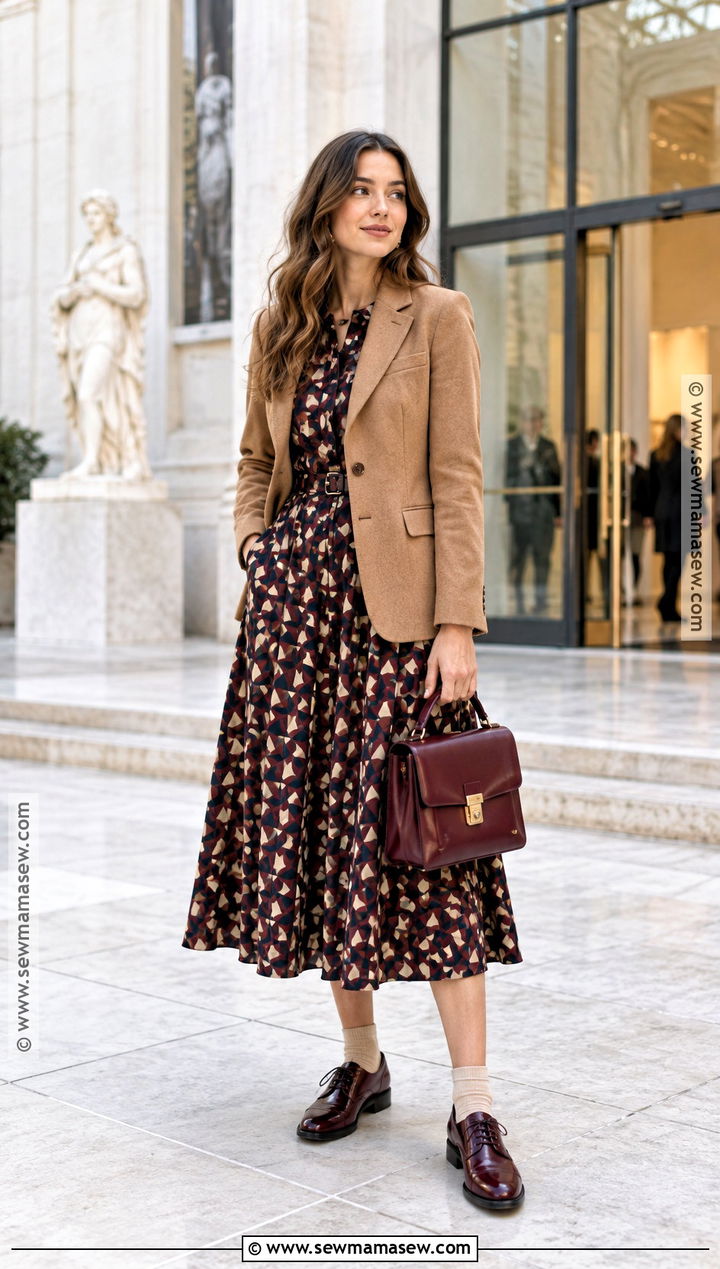
Oxfords give a printed midi a smart, slightly bookish finish, and they're far more supportive than ballet flats. The shape matters: a slim Oxford with an almond toe sits nicely under a moving skirt, while a wide, rounded one looks clumpy. Black suits cool prints. Cognac works with warmer autumn colors. A fine ankle sock makes the preppy edge deliberate, or wear tights for a smoother line. Since the print and the laces already provide detail, I keep jewelry minimal. It's a strong option for campus, creative offices and long gallery days.
15. Bodycon Midi Dress With Sock Boots
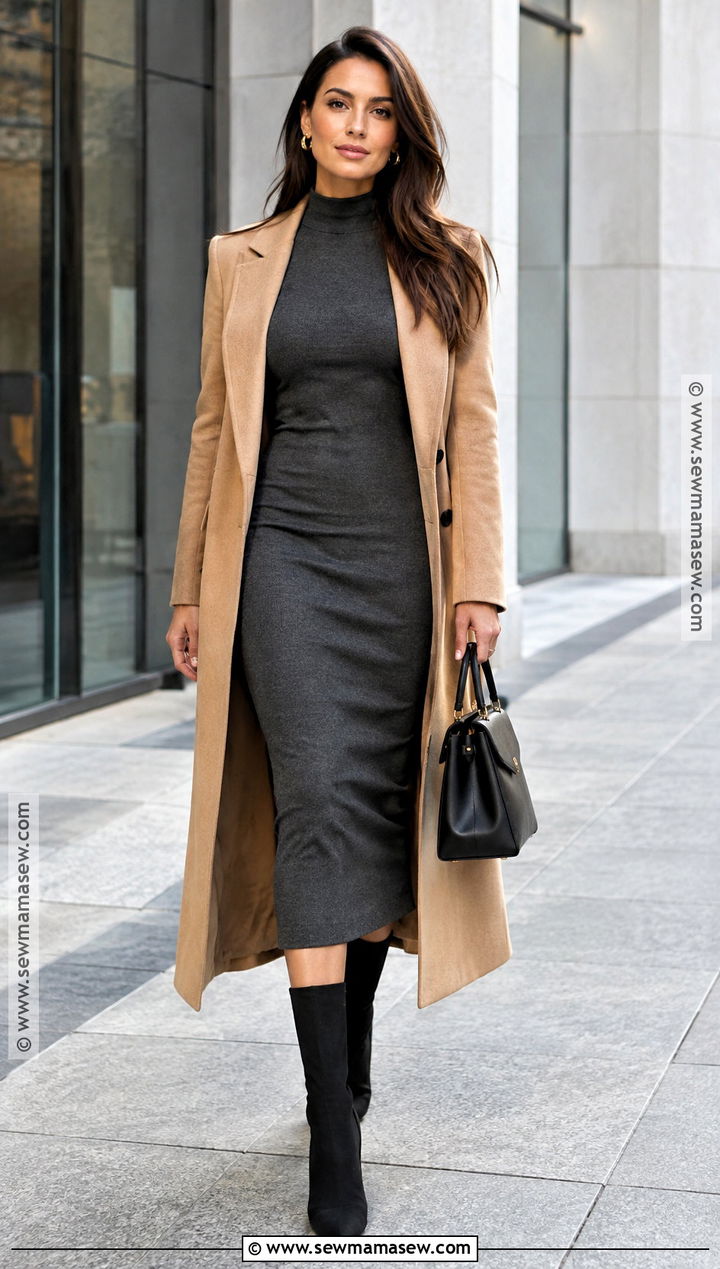
Sock boots solve the gap problem neatly because the stretchy shaft hugs the ankle and disappears under the hem. That makes them a natural match for a bodycon midi, which shows every bulge a stiffer boot would create. I prefer an almond toe and a modest block or kitten heel; a stiletto sock boot is hard to wear all day. Black covers most colors, and taupe softens a tonal knit. To stretch the leg further, match the boots to your tights or to the dress itself. Add a long coat over the fitted shape, and the outfit is ready for work dinners.
Rain, Wet Leaves and What Each Material Tolerates
Fall shoes take more abuse than summer sandals ever do. Suede is the most fragile: water darkens it and can leave a tide line as it dries. I spray suede boots and clogs with a protector before their first outing and reapply every few weeks. If they do get soaked, stuff them with paper and let them dry away from a radiator, then brush the nap back up.
Smooth leather copes far better, though salt and slush leave white marks that need wiping off the same day. Leather soles on loafers and Oxfords are slippery on wet pavement and leaf-covered steps, so a cobbler can add a thin rubber half-sole for very little money. Satin and velvet pumps don't belong in the rain at all; carry them and wear something sturdier on the walk.
Tights as the Bridge Between Dress and Shoe
Tights do more styling work in fall than most people give them credit for. Opaque black tights with black boots make the boot look taller and the gap disappear. Sheer tights in your skin tone keep the bare-leg look while blocking the wind. Colored tights are harder; I only suggest them when they pick up a shade already in the dress.
The thing to watch is denier. Thick tights under a thin satin dress can make the skirt cling, and bulky ribbed tights can make a sleek sock boot feel tight around the ankle. Try the full combination at home before you head out.
If I Could Keep Only Four of These Pairs
If I had to trim this list to four pairs for a whole fall, I'd keep knee-high boots for the cold, Chelsea boots for the rain, loafers for work and a low pump for evenings. Those four cover almost every midi dress in a typical closet. The others are worth adding once you know which dresses you actually reach for. Before buying anything, try the shoes on with the dress itself, sit down and walk across the room, and check the gap from the side in a mirror. That small test tells you more than any rule.
Related posts: