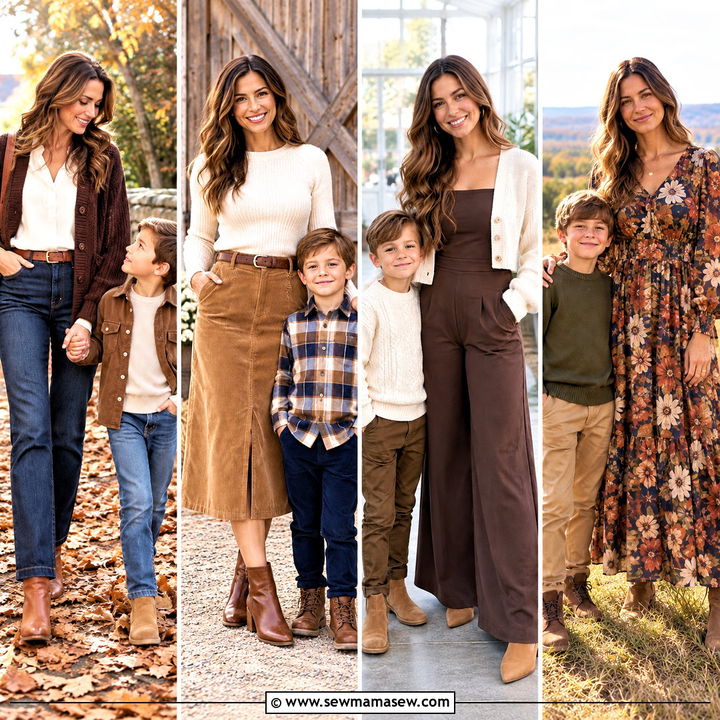
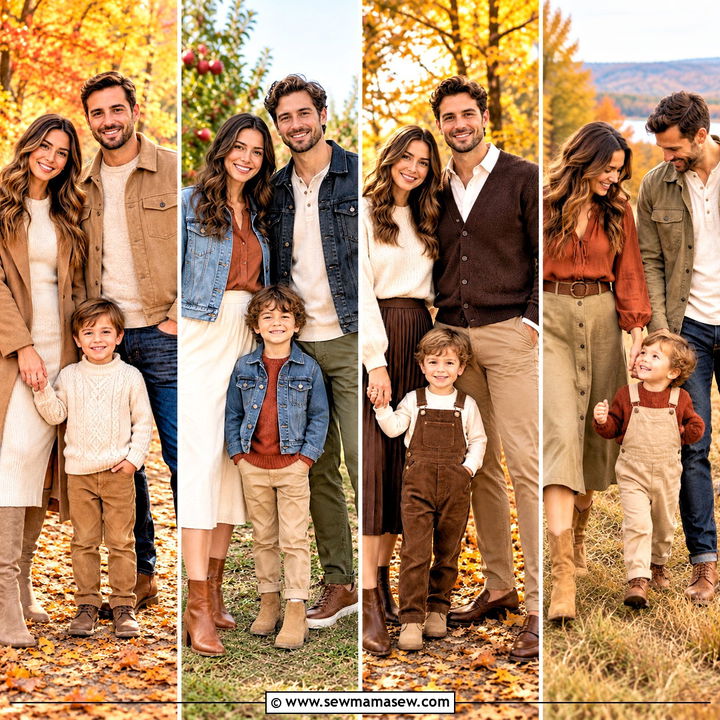
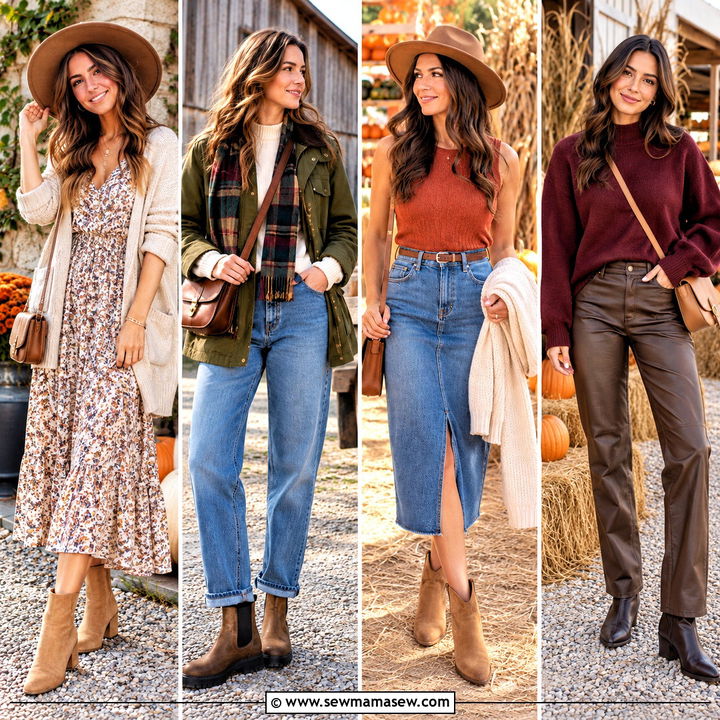
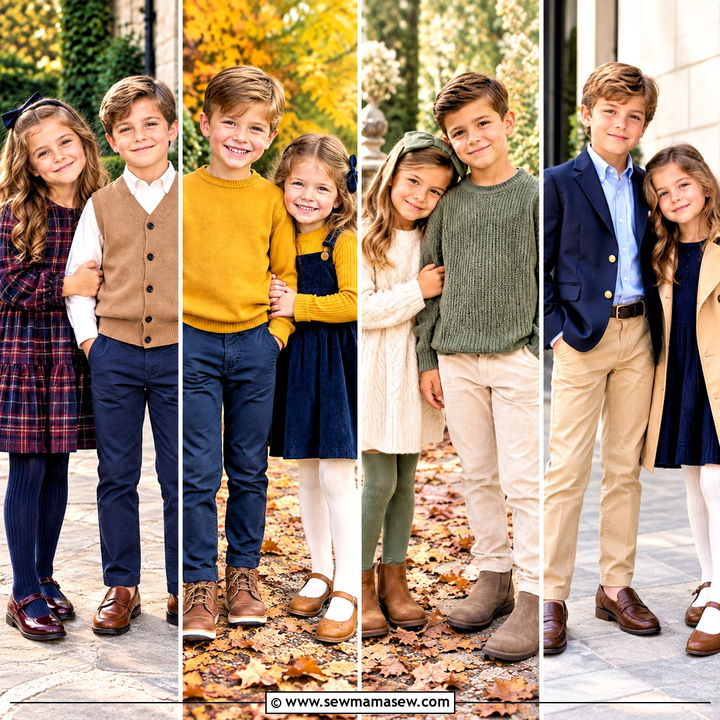
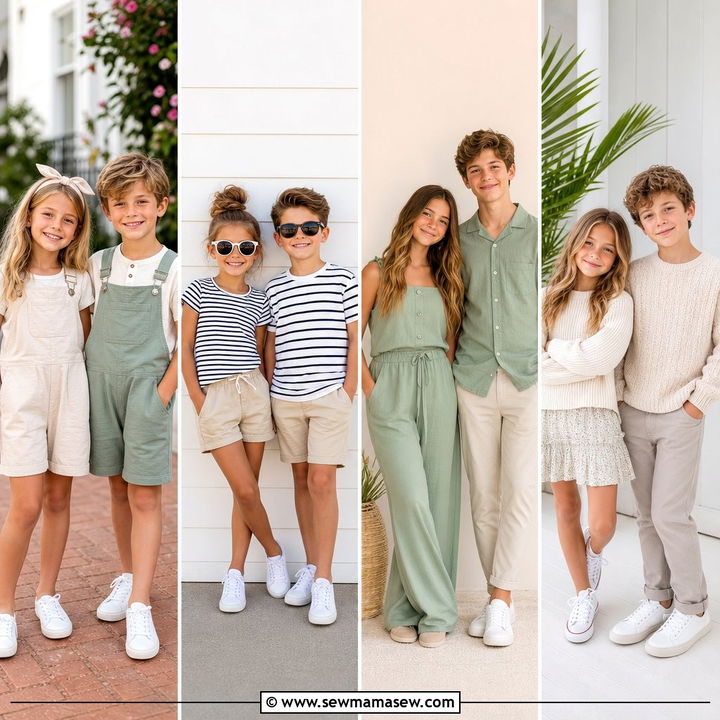
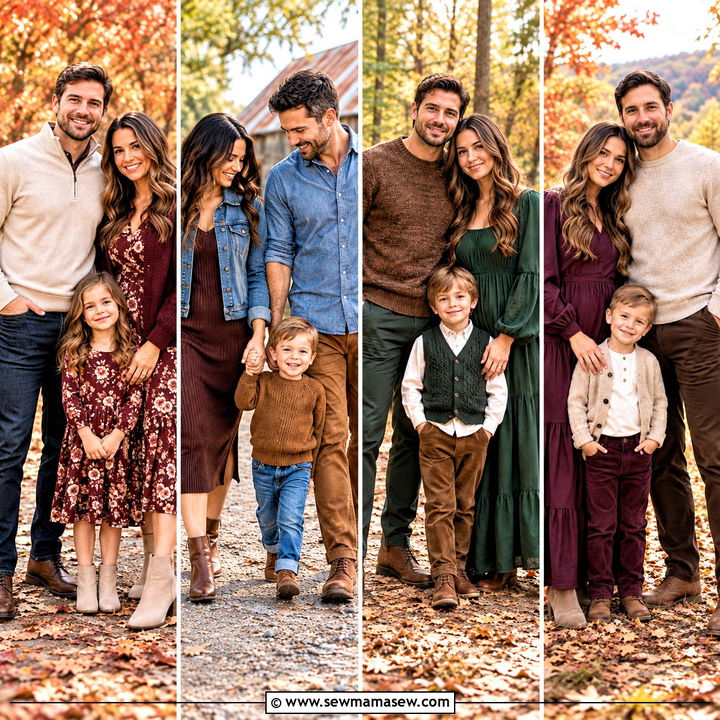
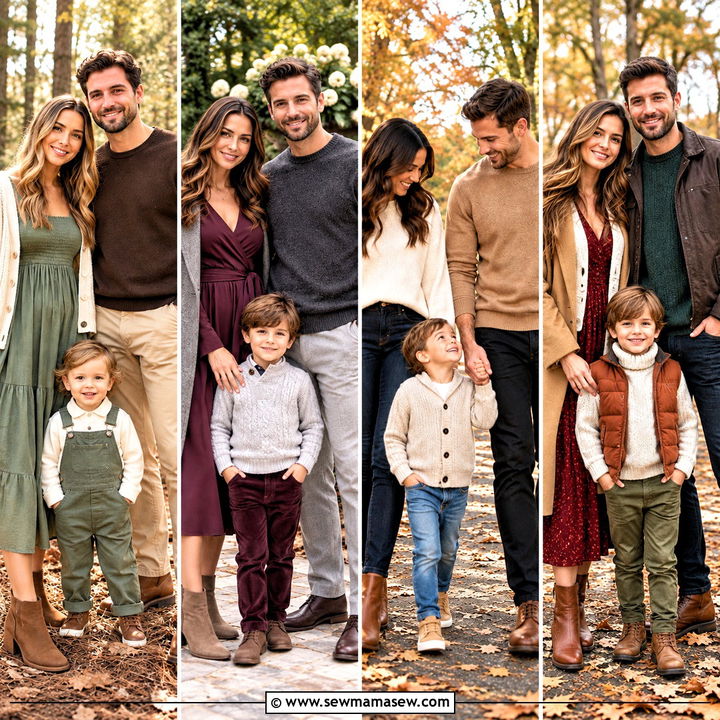
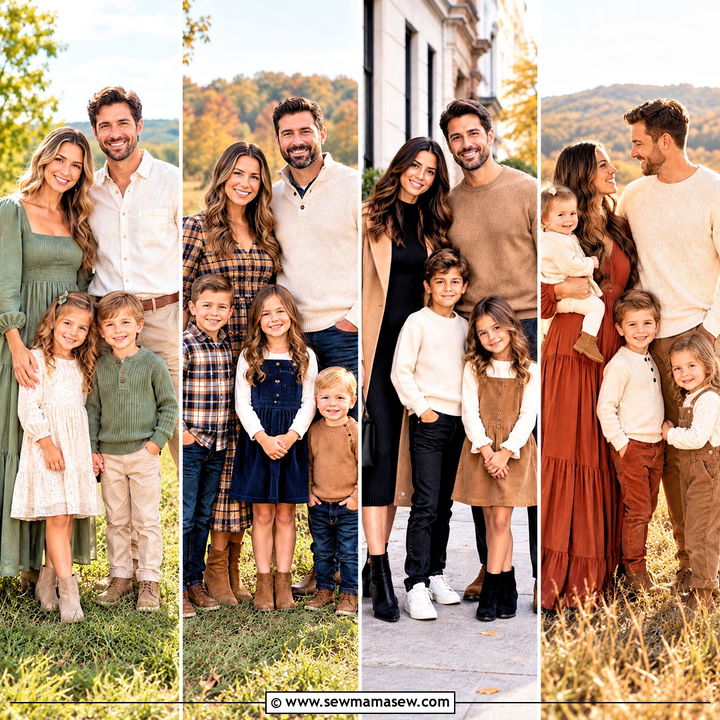
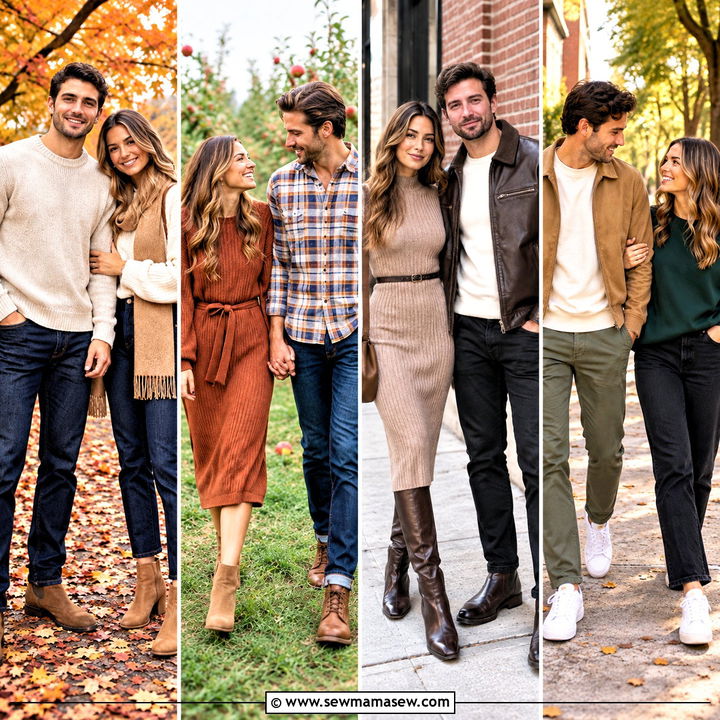
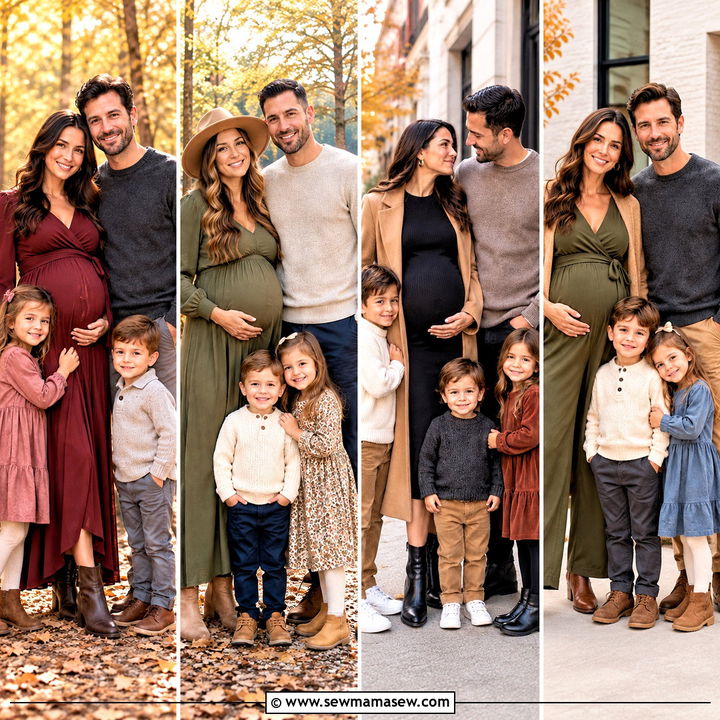
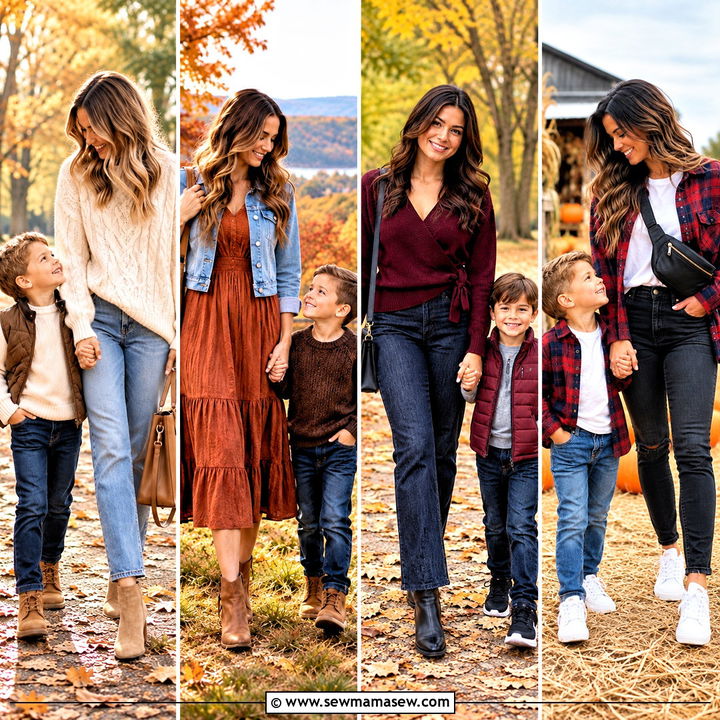
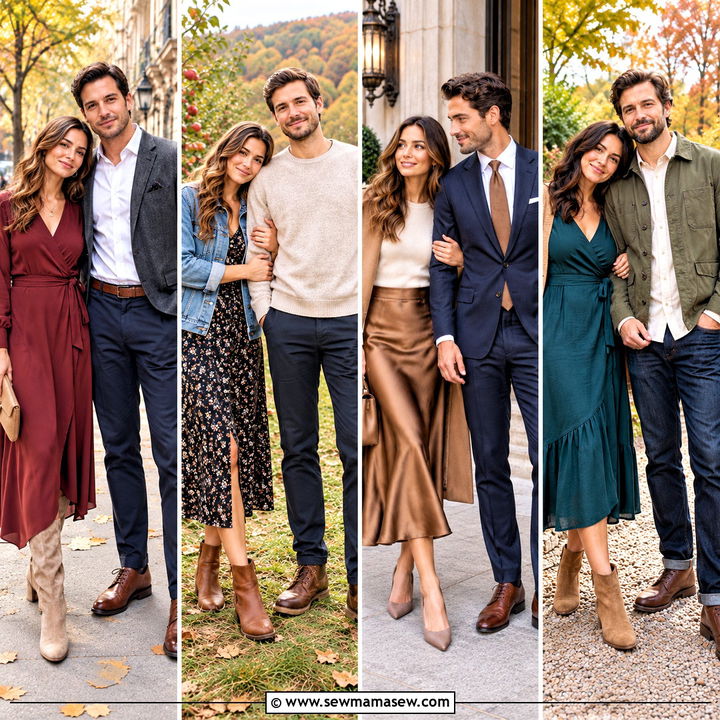
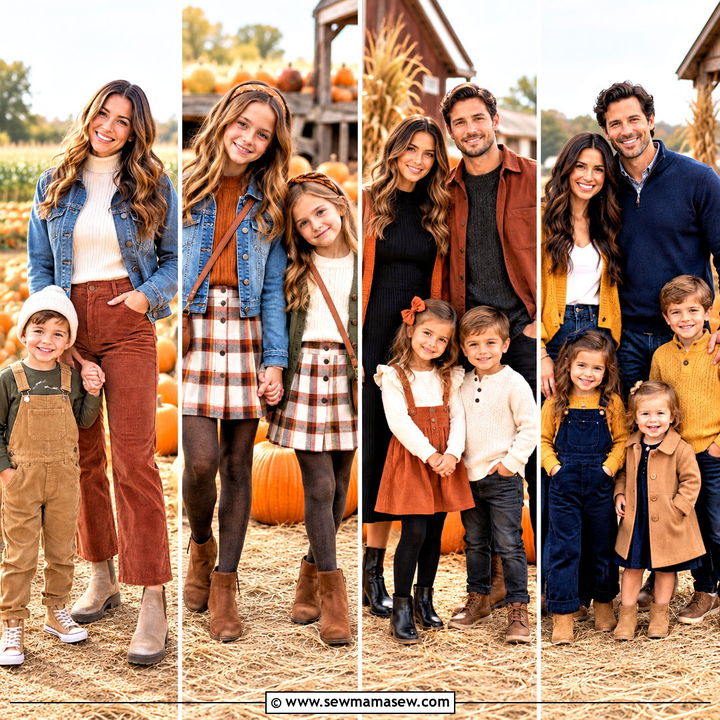
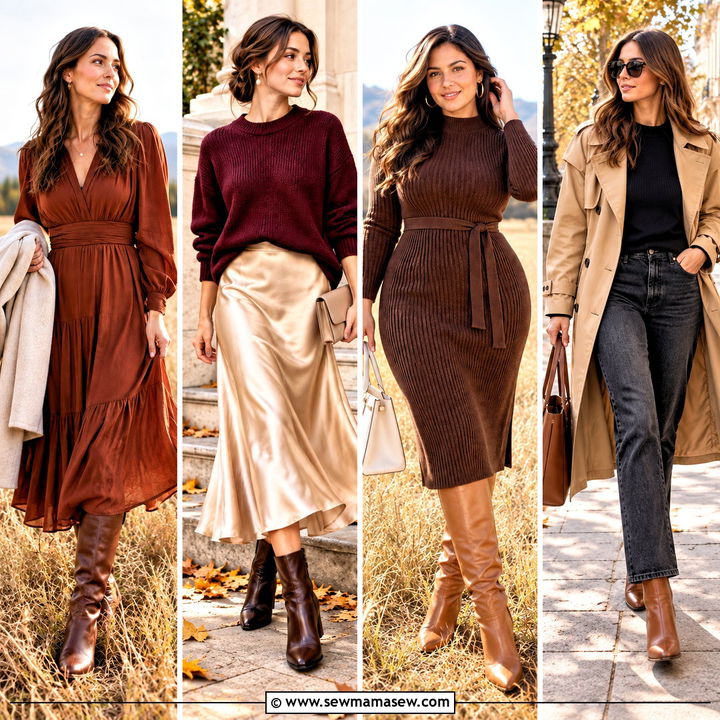
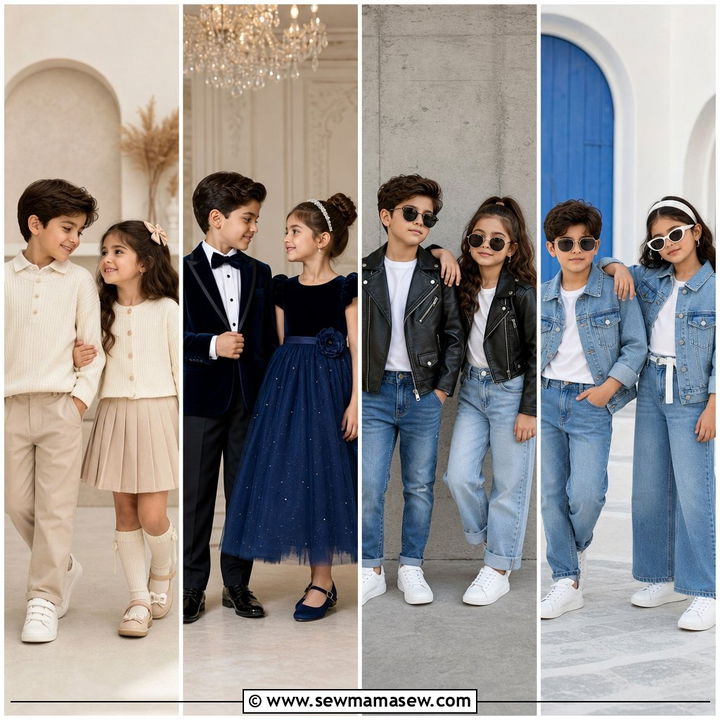
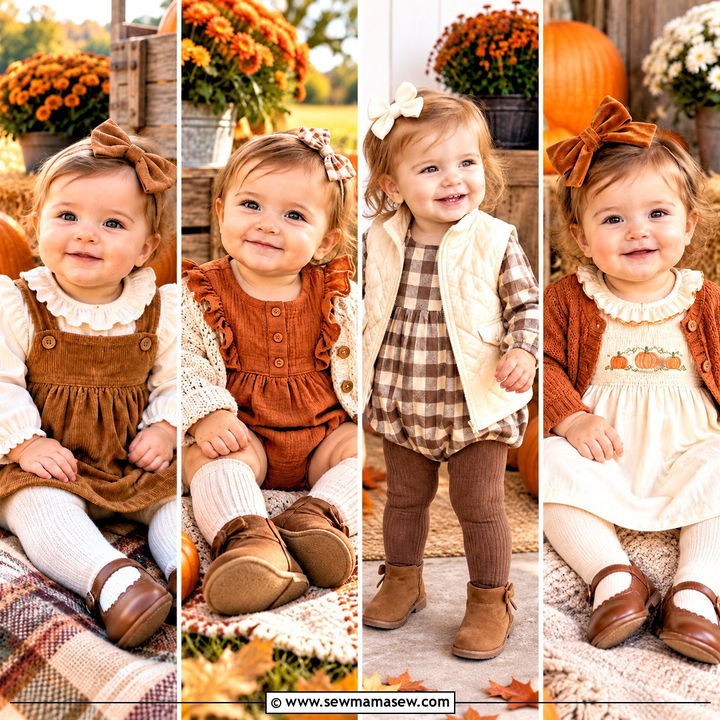
The sibling photos people keep are the ones where the children look connected and still look like themselves. My method is simple: two or three main colors plus one neutral, then each child wears them in different amounts. A knit next to corduroy next to denim gives the picture depth even when the palette is tight. Coordinating works better than matching sets, and that matters even more when the ages are far apart, since a sailor-style set that suits a four-year-old embarrasses a twelve-year-old. I also check that every outfit lets a child sit on the ground, walk and be hugged without someone tugging at a hem. The fifteen looks below run from earthy neutrals to deeper jewel shades.
Matching the Palette to Where You're Shooting
The background is part of the outfit. A palette that looks great in your living room can disappear completely in front of the wrong trees. I ask families where the session is before we talk about colors.
- Peak orange and red leaves: go cooler or softer, such as sage, dusty blue, cream or plum, so the children don't merge into the foliage.
- Green trees early in the season: rust, mustard and burgundy stand out well.
- Golden grass and dry fields: navy, forest green and chocolate give contrast without looking harsh.
- Brick, stone or city streets: black and camel or navy and cream look clean.
- A plain studio wall: almost anything works, so this is where bolder colors and velvet are easiest.
If you don't know the exact spot yet, choose mid-tone colors. They're the safest because they show up against both light and dark backgrounds.
1. Cream Sweaters And Denim Sibling Outfit
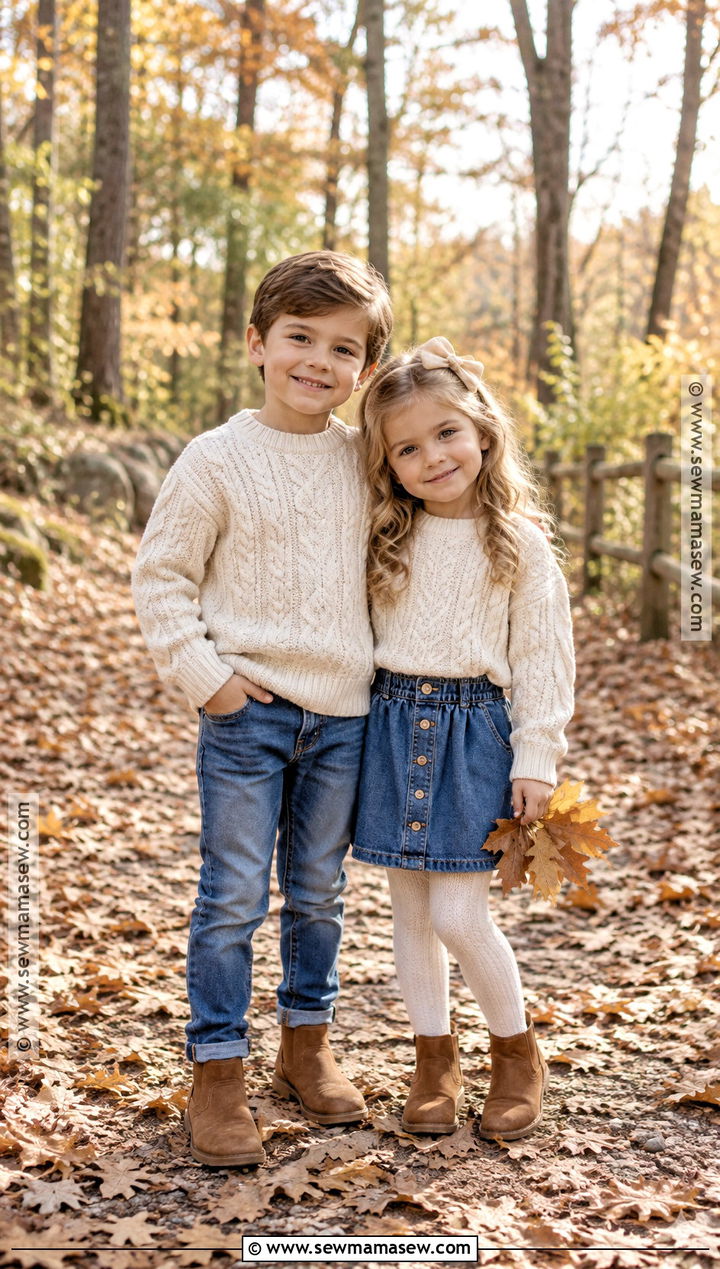
Cream knits with blue denim suit almost any age gap, which is why I suggest them to families who can't agree on anything else. One child in an oatmeal cable-knit, straight jeans and brown ankle boots; the other in a lighter cream cardigan over a plain top, a denim skirt, tights and cognac boots. Two brothers can vary the knit pattern and the denim wash. Two sisters might split it as one sweater dress and one pair of jeans. I hand-feel every knit near the neck for younger children, because wool that seems soft on the hand can itch a toddler's skin within the hour. Cotton or a cotton blend is the safer choice for them.
2. Rust And Olive Sibling Fall Outfit
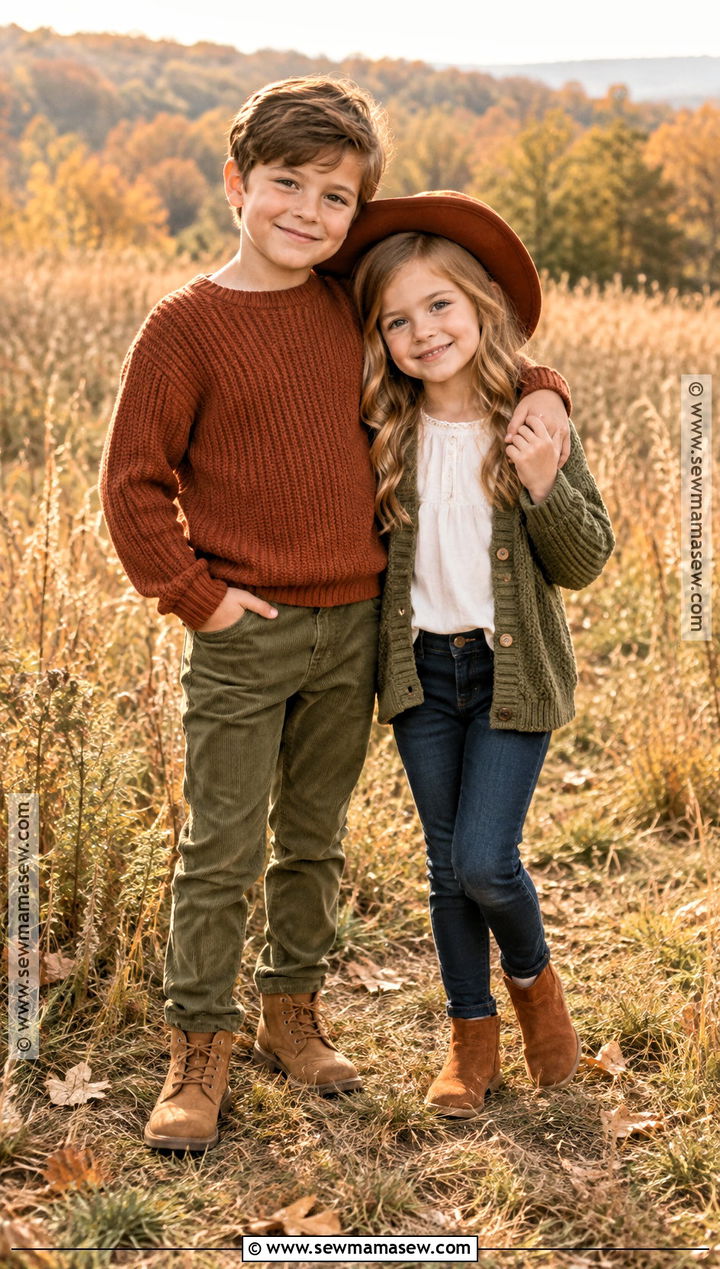
Rust and olive sit inside the fall scenery without disappearing into it. A rust sweater with olive cords and tan lace-up boots for one sibling, an olive cardigan over a cream shirt with dark jeans and a rust accessory for the other. A girl could also wear a rust midi dress with an olive jacket and brown boots. Both colors should lean muted. When they're too saturated, the clothes pull attention away from faces. Skip anything with a big logo or printed slogan, since those date a portrait faster than anything else. Golden grass and green trees suit this palette best.
3. Burgundy And Navy Sibling Photoshoot Outfit
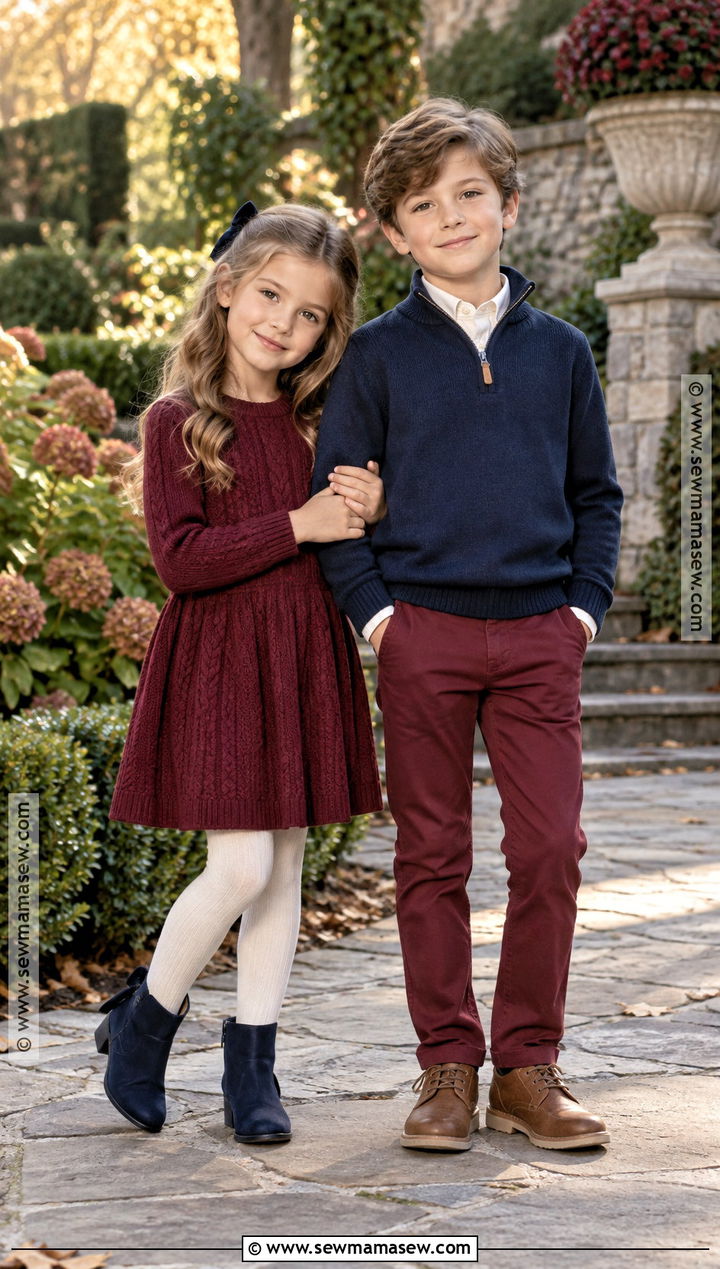
Burgundy and navy are the dressier route, and they skip brown entirely. A burgundy knit dress with cream tights and navy flats or ankle boots; a navy quarter-zip over a white or cream collar with burgundy chinos and brown shoes. Older children can wear a burgundy blouse with dark jeans beside a navy blazer, knit top and tailored trousers. Both colors are dark, so I bring cream in at the neckline to lift the faces. Keep everything solid. Burgundy and navy patterns on several children turn a group shot into noise. Formal gardens, old buildings and plain studio backdrops all suit it.
4. Mustard And Brown Sibling Fall Outfit
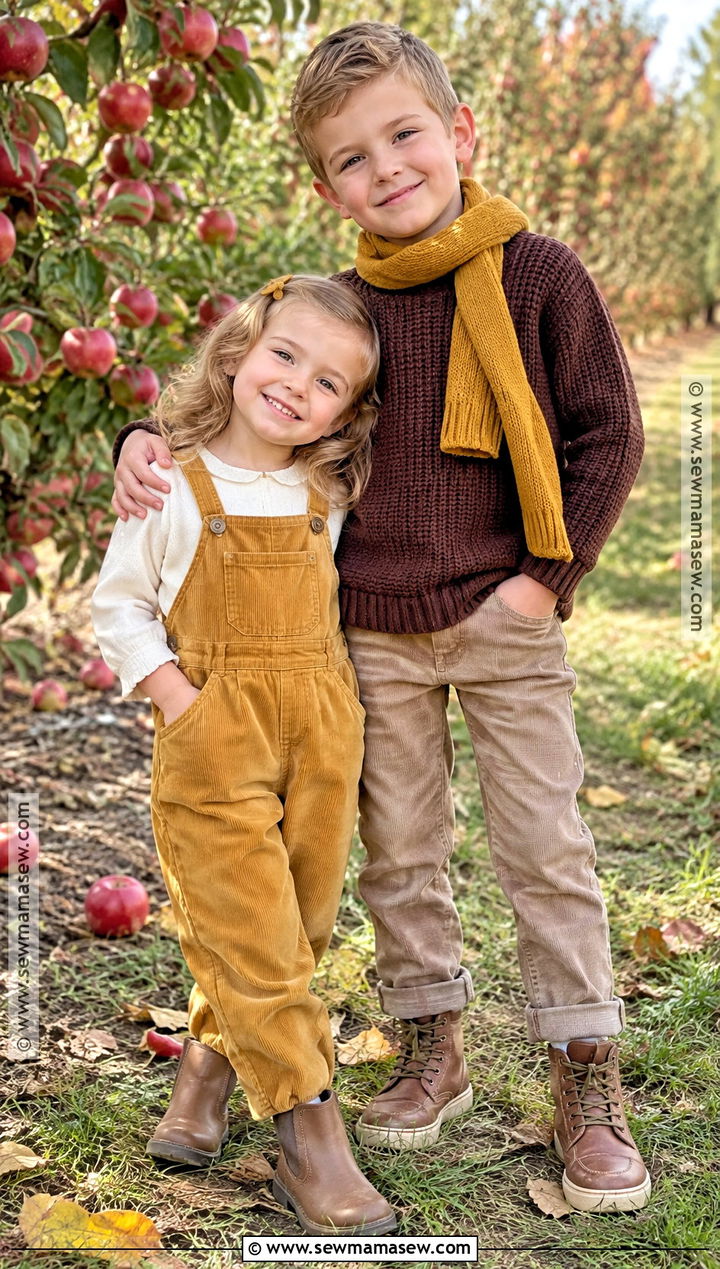
Mustard is cheerful, but a little goes a long way. My rule is one large mustard piece in the group plus one or two small touches. A younger child in mustard corduroy overalls over a cream long-sleeve with brown boots; an older one in a chocolate sweater, tan trousers, mustard socks and loafers. Sisters could do a mustard knit dress with a brown cardigan next to a cream blouse and brown corduroy skirt. Mustard varies a lot between brands, from greenish to almost orange, so buy the pieces together or compare them in daylight before the session. It shines at orchards and farms with green or straw-colored backgrounds.
5. Sage Green And Beige Sibling Outfit
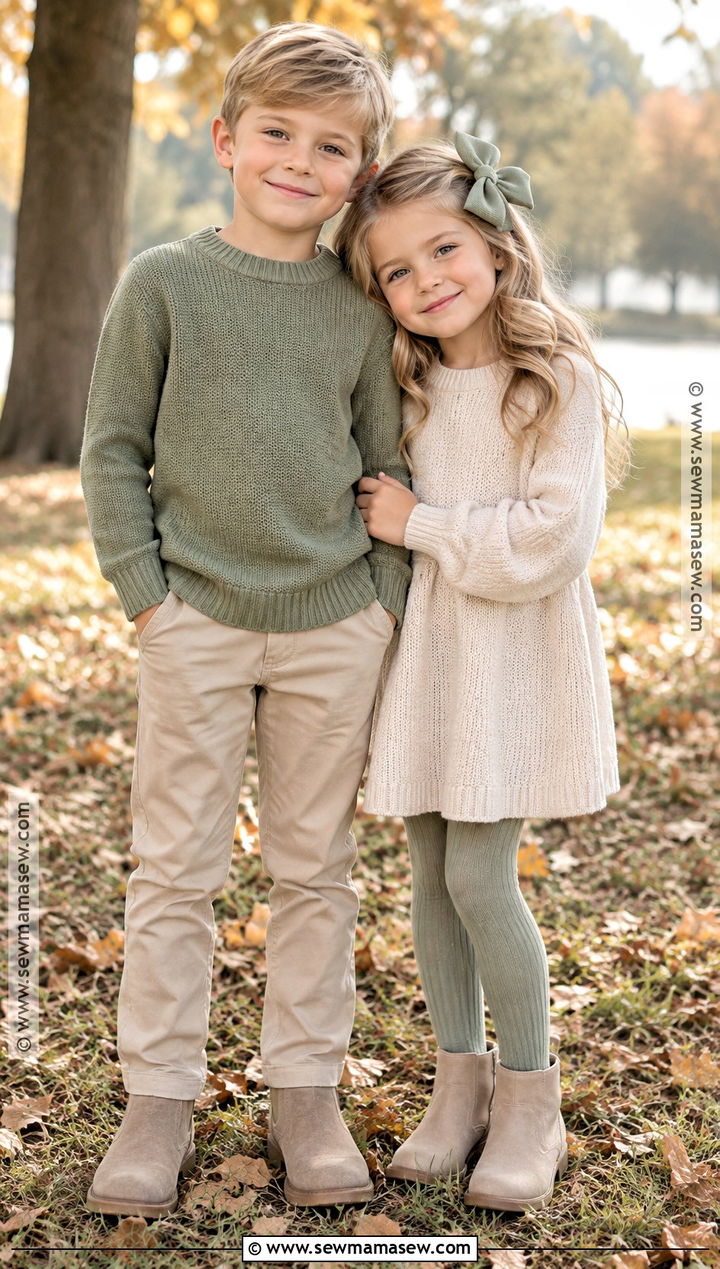
Sage and warm beige make the lightest palette here, and I recommend it when the leaves are already loud. A sage sweater with beige chinos and taupe sneakers or boots for one; a beige sweater dress, sage tights, a matching bow and neutral boots for the other. For a baby, a sage romper over a cream bodysuit pairs with a big sibling's beige overalls and knit shirt. Bring in texture with ribbed cotton, brushed knits or corduroy instead of prints. Sage is also kind in a white studio, where darker fall colors can feel heavy.
6. Plaid Dress And Solid Knit Sibling Outfit
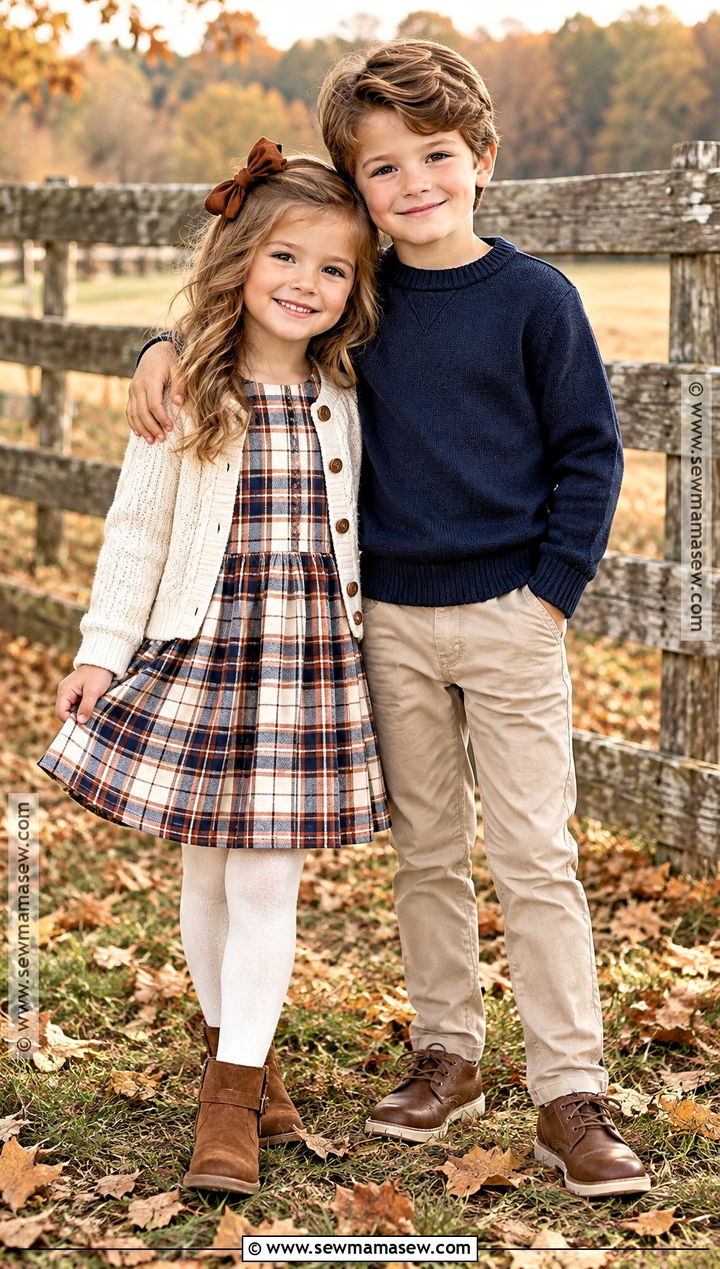
One plaid dress can set the colors for everyone. Choose a plaid with cream, rust, navy or olive in it, and add tights, simple boots and a cardigan if it's cool. The second child wears a solid sweater in one shade from the plaid, with neutral trousers and brown shoes. With a third child, take another solid color from the same plaid rather than adding a second check. I pick a medium-scale plaid: tiny checks blur at a distance and huge ones overwhelm a small child. Wooden fences, orchards and old bridges are natural settings for it.
7. Corduroy Overalls And Knit Sibling Outfit
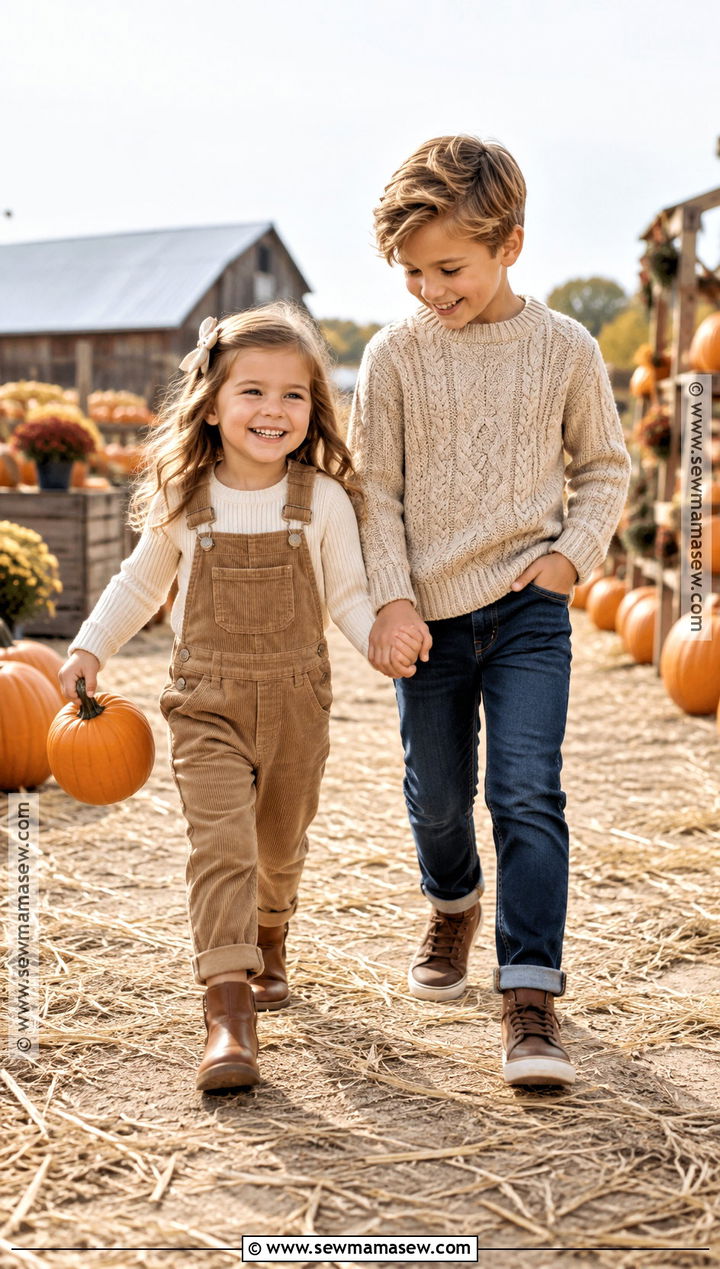
Corduroy overalls are made for children who won't sit still. Camel or rust overalls over a cream ribbed shirt with brown boots for one; a matching cable-knit, dark denim and casual leather sneakers for the other. A baby can wear a soft corduroy romper next to an older child in corduroy trousers of the same color family. Fit is where these go wrong. Overalls bought two sizes up sag at the bib and pool at the ankle, and a neat cuff can only hide so much. If the straps are already at their shortest setting, they're too big for photos. Pumpkin patches and backyard sessions suit them.
8. Floral Dress And Neutral Sibling Outfit
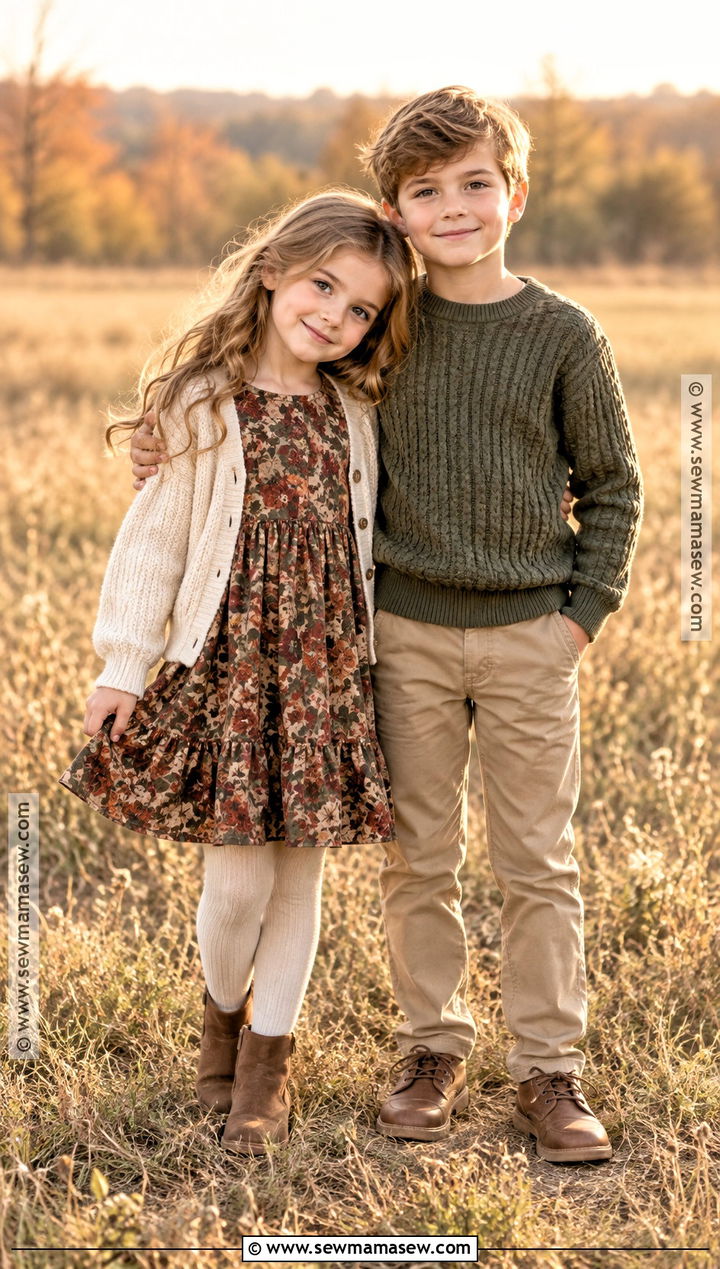
A fall floral dress is an easy place to begin for any group. Look for muted dusty rose, olive, cream, plum or rust, then add a simple cardigan, tights and ankle boots. The other children pull one color each from the print into a solid top, with khakis, dark jeans or a corduroy skirt. Shoes stay neutral and accessories stay small so the floral is the only pattern. If the dress has ruffles or full sleeves, keep the other outfits plain and straight; two busy silhouettes side by side make the picture hard to read. Gardens and fields fit it well.
9. Chambray And Camel Sibling Fall Outfit
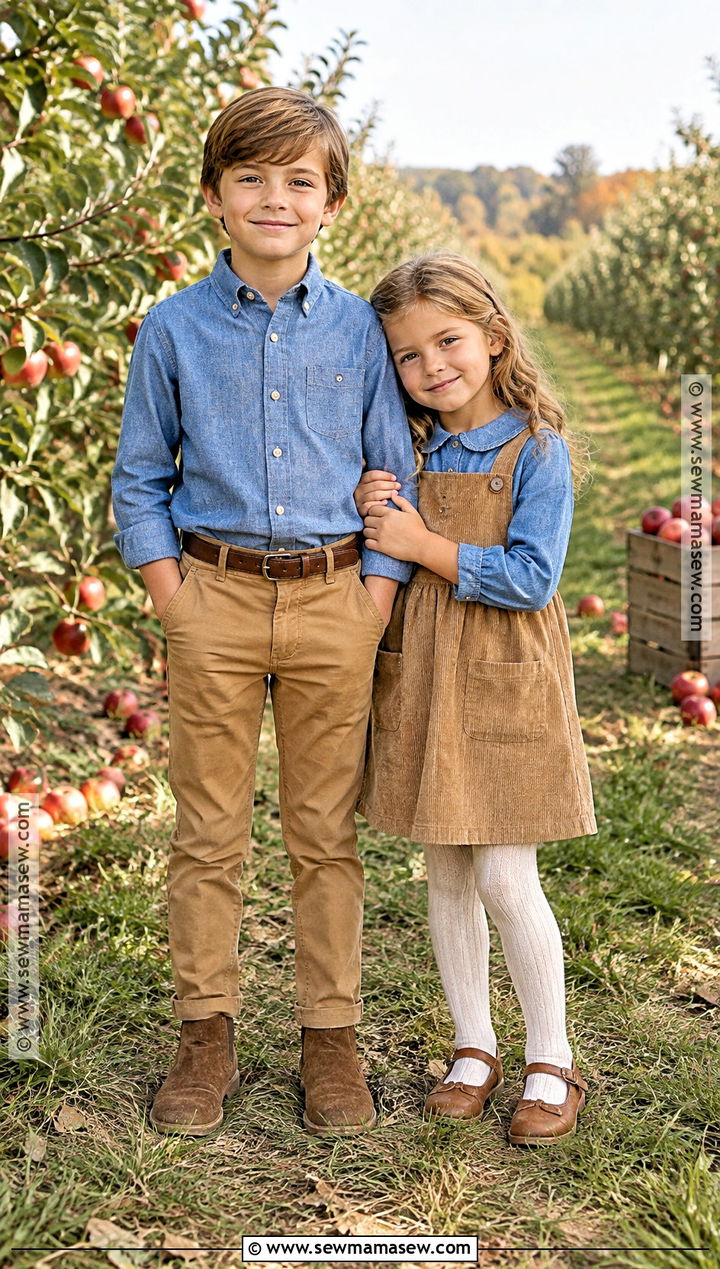
Chambray stops camel from feeling heavy, which is useful early in fall when it's still warm. A chambray button-down with camel chinos, a brown belt and suede boots for one sibling; a camel jumper dress over a chambray blouse with cream tights and brown Mary Janes for the other. For a casual version, a light denim shirt with tan cords beside a camel cardigan and medium-wash jeans. Keep the blue soft and slightly faded. Chambray is also a forgiving fabric for kids: it's lighter than denim, it softens with each wash, and it doesn't show creases from the car seat as badly as crisp cotton.
10. Dusty Blue And Rust Sibling Outfit
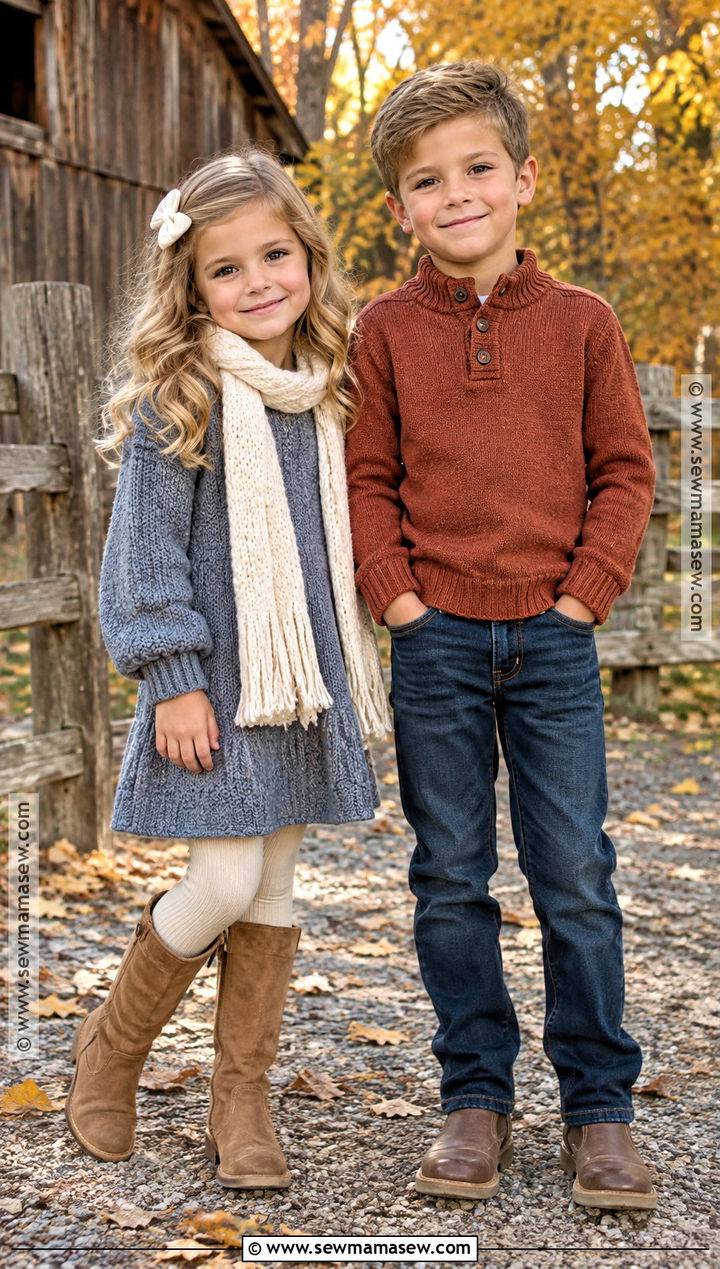
Dusty blue against rust balances cool and warm. One child in a dusty blue sweater or knit dress with tan boots and cream accessories; the other in a rust pullover, dark jeans and brown shoes. Younger children could swap to a blue romper and rust cardigan, with an older sibling in a rust skirt and pale blue blouse. I use each color only once or twice and let neutrals sit between them. Bright orange is the thing to avoid; it takes over the photo and makes the blue look cold. Both colors stay visible against yellow leaves, old wood or evergreens.
11. Chocolate Brown And Blush Sibling Outfit
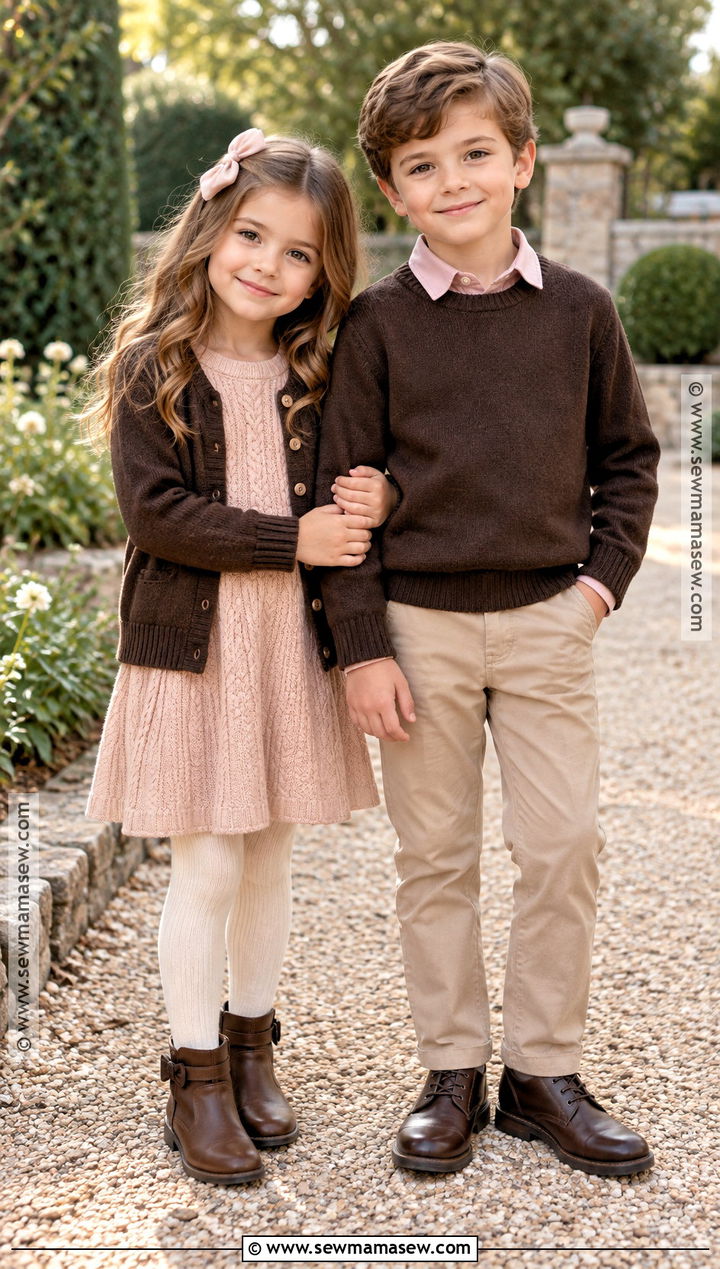
Blush pink with chocolate brown is the fall palette for families tired of orange. A blush knit dress, chocolate cardigan, cream tights and brown boots for a girl; a chocolate sweater, beige trousers, a blush shirt and dark brown shoes for her brother. Two sisters can swap the main colors between them, and boys can carry blush in a button-down, scarf or fine stripe. Choose a dusty blush, never a candy pink, which reads as spring. Suede boots and textured knits add depth without clutter.
12. Forest Green And Tan Sibling Outfit
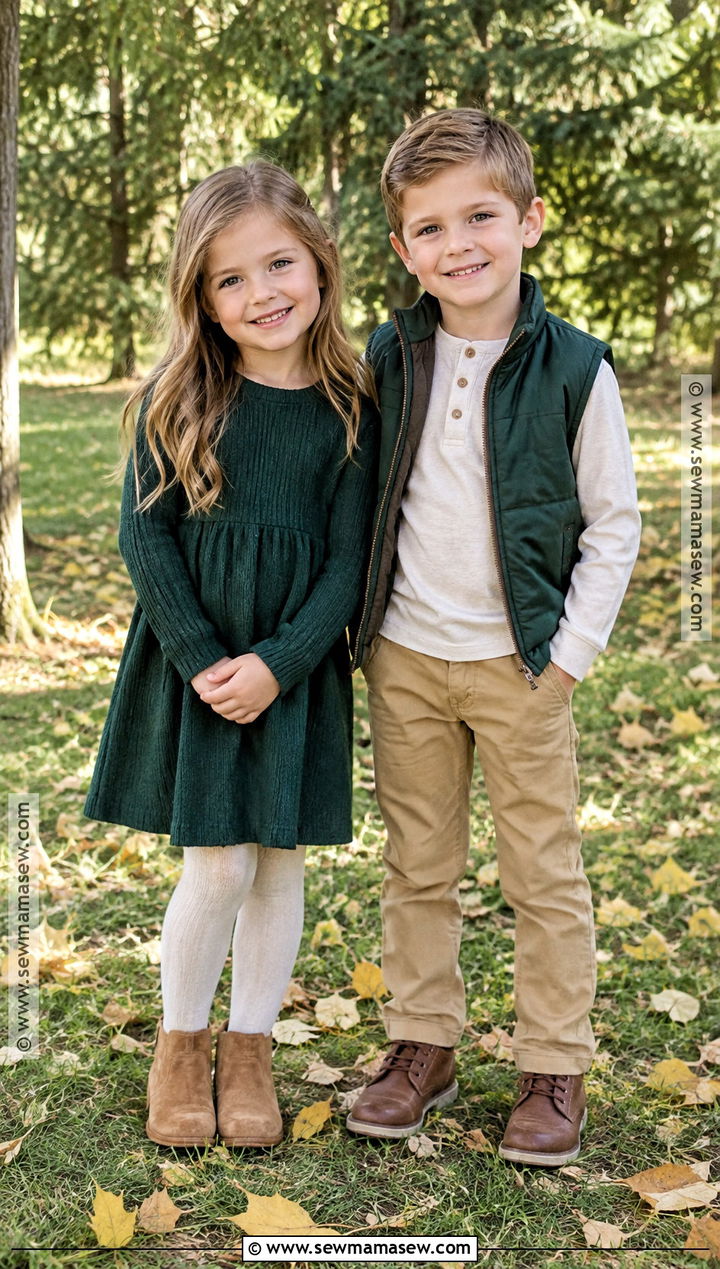
Forest green looks rich next to tan, cream and medium brown. A green sweater dress with cream tights and tan boots; a cream henley under a forest green vest with tan chinos and brown shoes. Teens could wear a green midi skirt and fitted knit top beside a tan overshirt, dark jeans and clean leather sneakers, which lets them feel grown up while staying in the family palette. Greens vary in undertone, some blue and some yellow, so I check them side by side before the day. A green headband or beanie can repeat the color for a younger child. It suits evergreens and simple studios.
13. Black And Camel Sibling Photoshoot Outfit
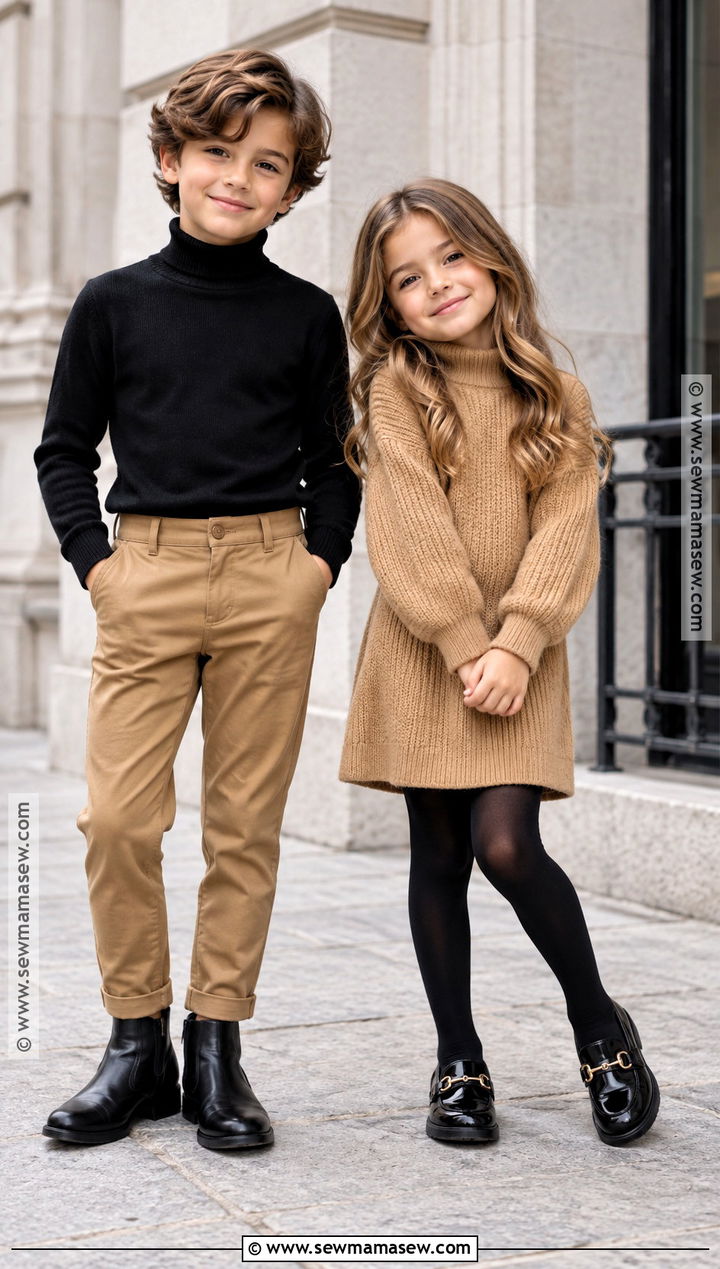
Black and camel give the group a cleaner, dressier look. A black turtleneck with camel trousers and black ankle boots for one; a camel sweater dress, black tights and polished loafers or boots for another. A casual version uses black jeans, a camel cardigan and cream tops to soften the contrast. With so few colors, texture carries everything, so mix ribbed knit, brushed wool, corduroy and smooth cotton. Don't put every child in head-to-toe black. In open shade, black loses all its folds and outlines, and the children end up looking like cut-out shapes. Black also shows lint and pet hair badly.
14. Denim Jackets And Earth Tone Sibling Outfit
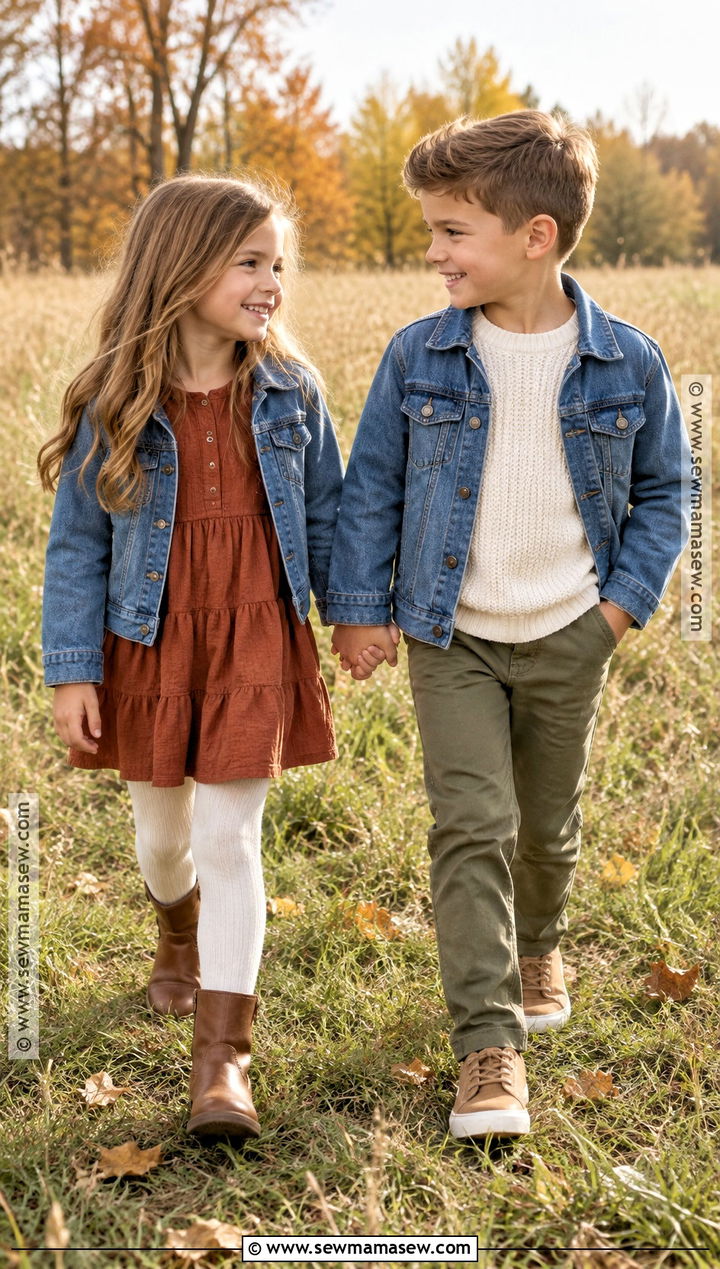
Denim jackets tie together outfits built from different earth tones, and they're easy for active kids. A denim jacket over a rust dress with tights and brown boots for one; a cream sweater, olive chinos, a denim jacket and tan sneakers for the other. If both wear denim, change the wash slightly or wear one buttoned and one open. I'd pick jackets with little distressing and no patches. Kids' denim is often stiff when new, so wash it a couple of times before the session; a stiff collar stands up and frames the face badly. Underneath, the earth tones keep the fall feel when jackets come off.
15. Cream And Plum Sibling Fall Outfit
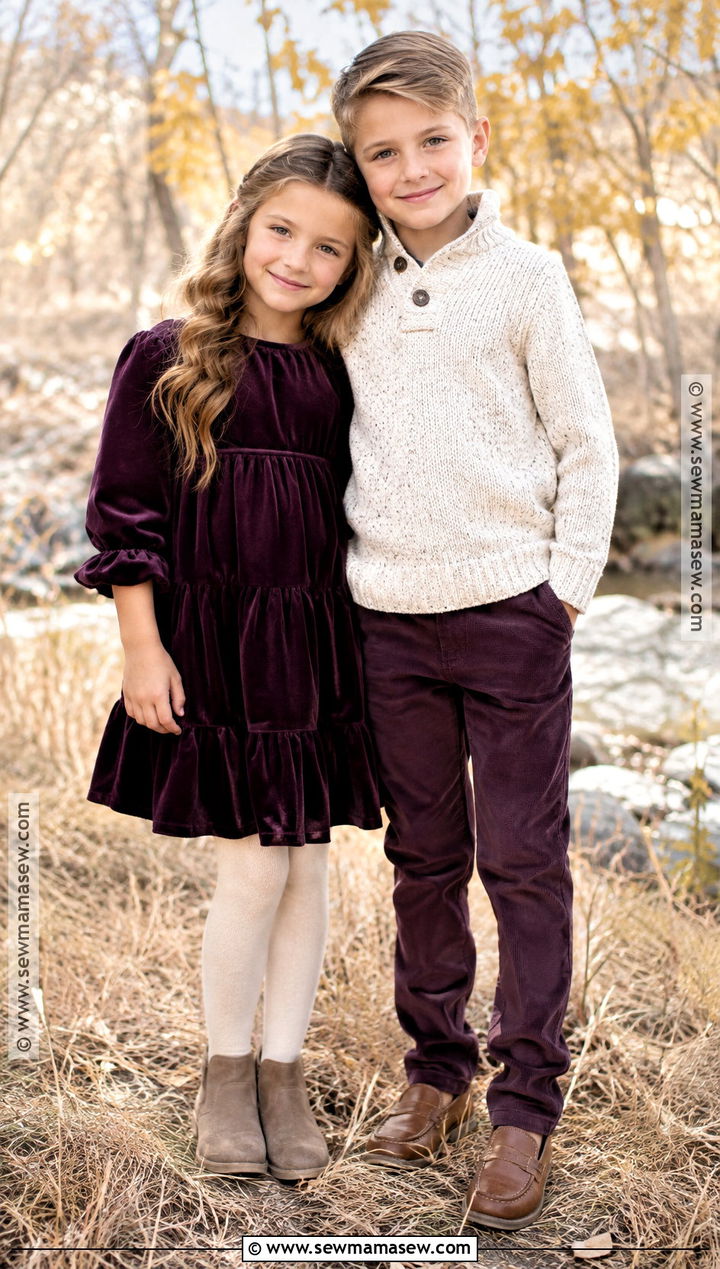
Cream and deep plum suit late fall, when the leaves have thinned. A plum velvet or knit dress with cream tights and taupe boots for one child; a cream sweater with plum trousers or a quiet plum shirt and brown loafers for another. A third child can wear soft gray or oatmeal as a bridge between the two. Velvet shows every crush mark, so I hang it in a steamy bathroom the night before and never fold it into a bag. Keep jewelry and hair clips small so the plum stays the accent. Pale grass and stone buildings make good backgrounds for it.
A Teenager and a Baby in One Frame
Wide age gaps are the hardest families to dress, because the clothes that suit one end look wrong on the other. A teenager will rarely smile in overalls or a big hair bow. A baby looks lost in adult tailoring. So I dress each child in the style that fits their age and let the colors do the coordinating.
For teens, give them a say. Let them pick one piece within the palette, perhaps their own jeans, boots or a jacket they already wear. They look more relaxed in clothes they chose, and it shows in their posture. Keep their outfit simple and close to what they wear every day.
For babies, soft and stretchy wins every time. A knit romper or a cotton bodysuit under overalls lets them be held, laid down and bent without fabric bunching under the chin. Skip stiff collars, belts and anything with buttons down the back, since babies spend most of a session lying back or held against a shoulder. Bring two outfits for anyone in diapers.
Making the youngest and oldest look linked
Put the main color on the oldest and youngest, and the supporting color on anyone in between. When the two ends of the age range share a color, the whole row of children reads as a set, even when their clothes look nothing alike.
Lay Every Outfit Out Together in Daylight
Sibling outfits that work have a short palette, clothes the children can move in, a mix of textures, and a bit of each child's personality. Instead of identical clothes, let each child wear a different mix of the same few colors. Start from one anchor piece, a floral dress, a plaid shirt or a textured sweater, and build the rest around it. Have every child sit, walk and play in their outfit a day or two before the session. Then lay all the outfits side by side near a window. Clashing undertones, distracting prints and missing colors show up straight away, and you still have time to swap something.
Related posts: