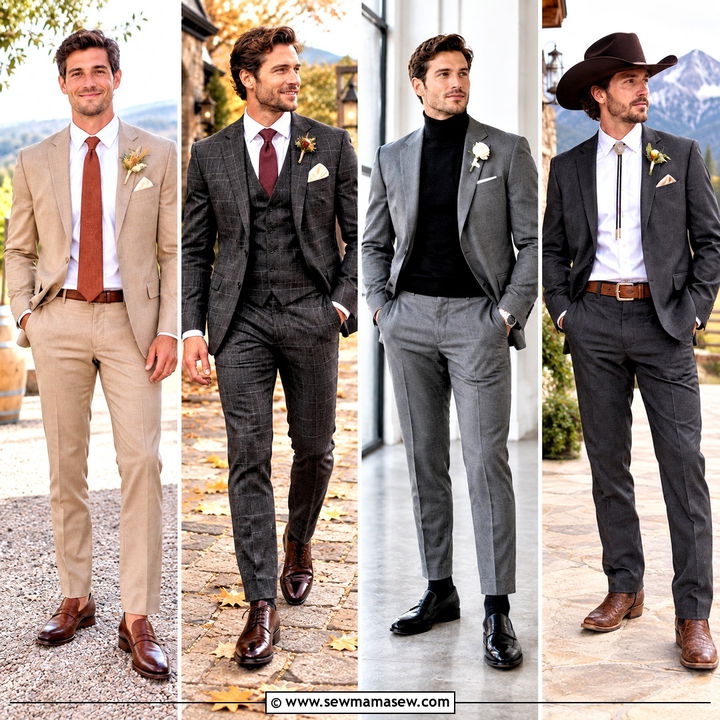
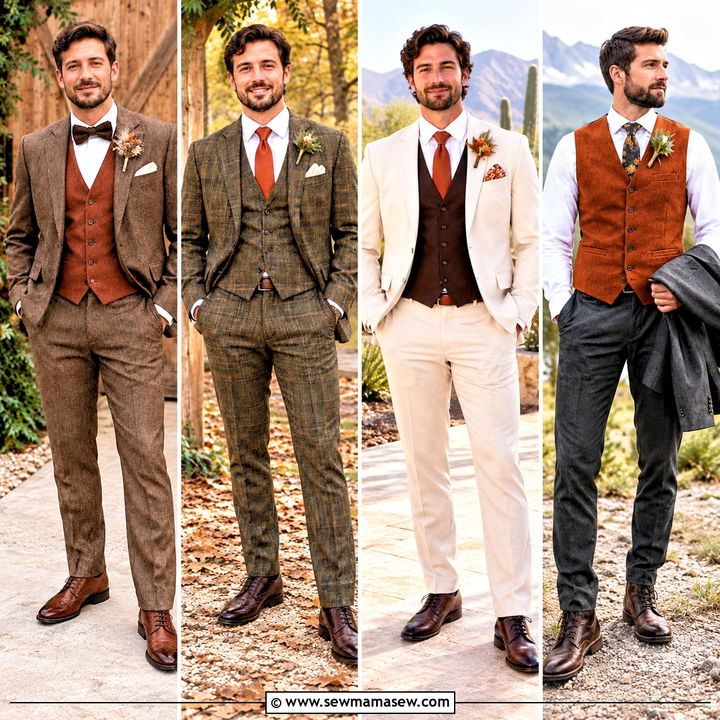
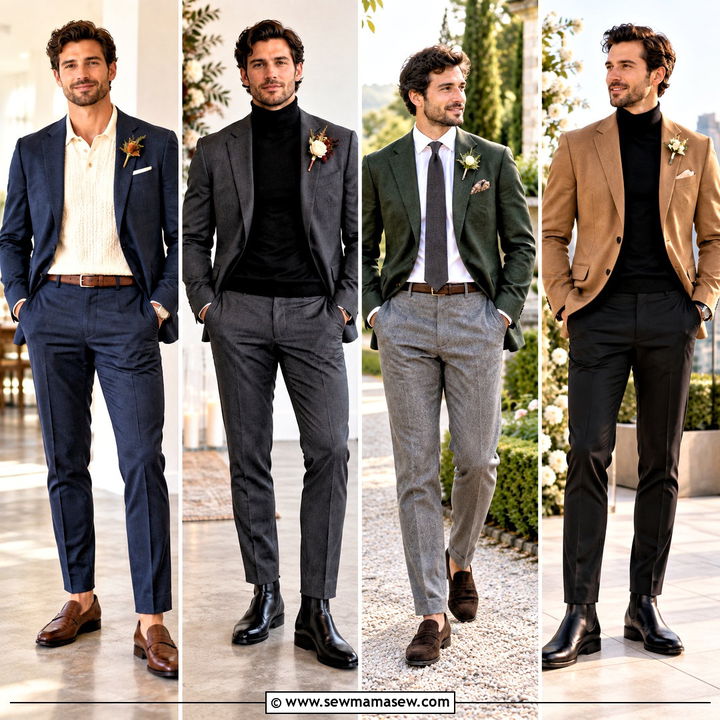
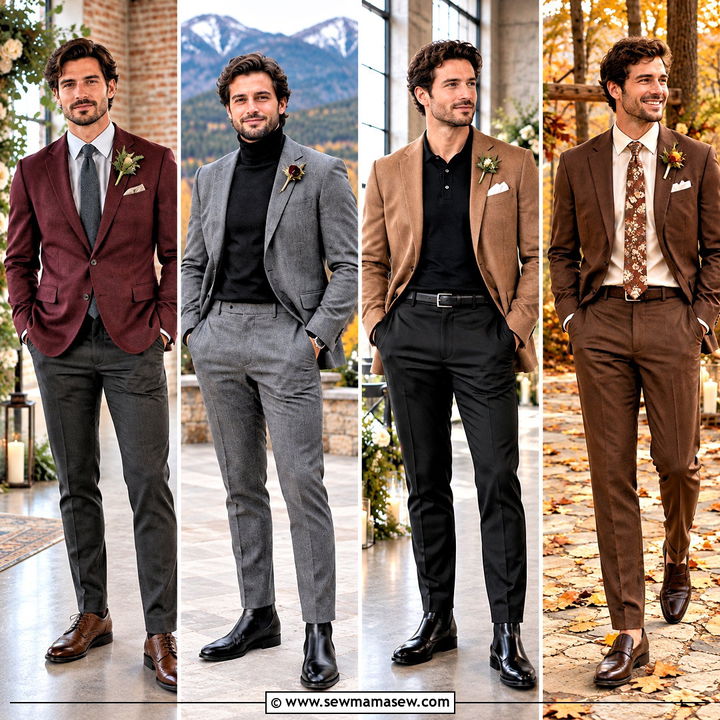
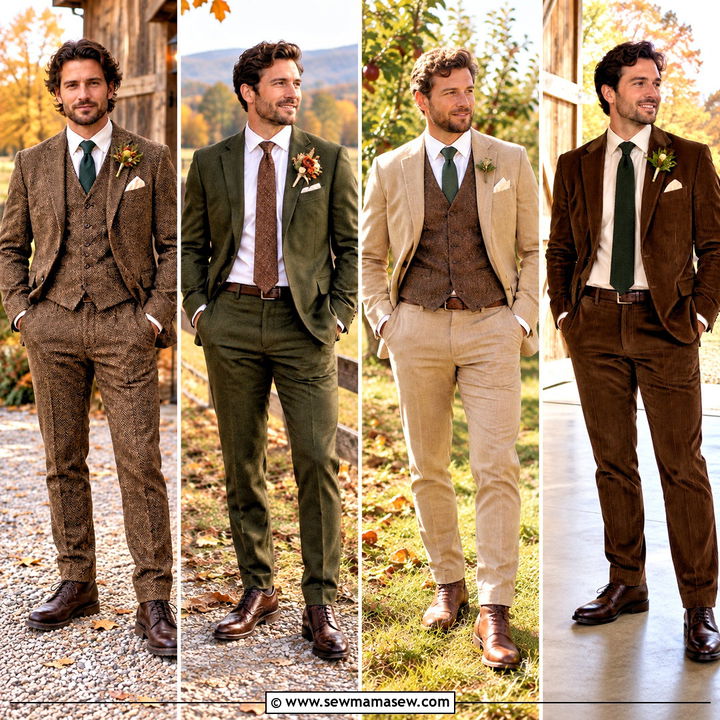
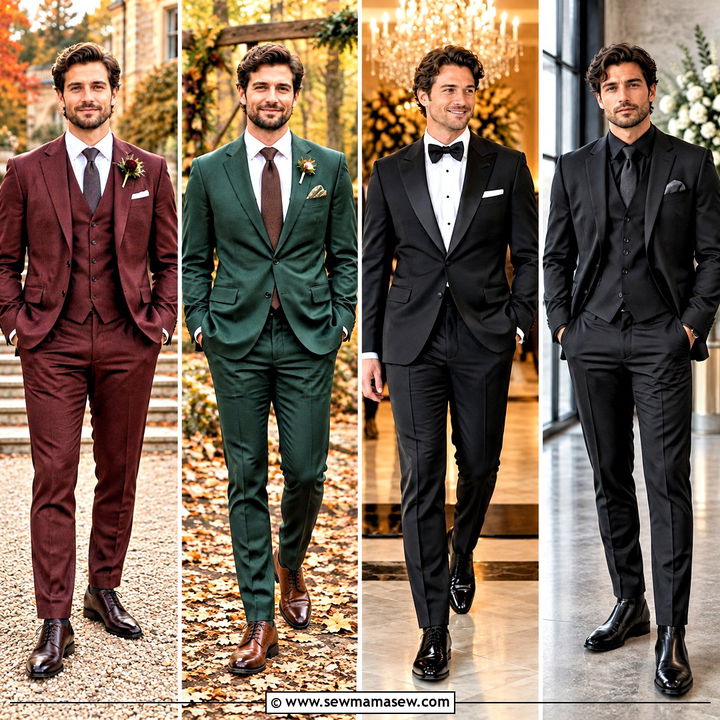
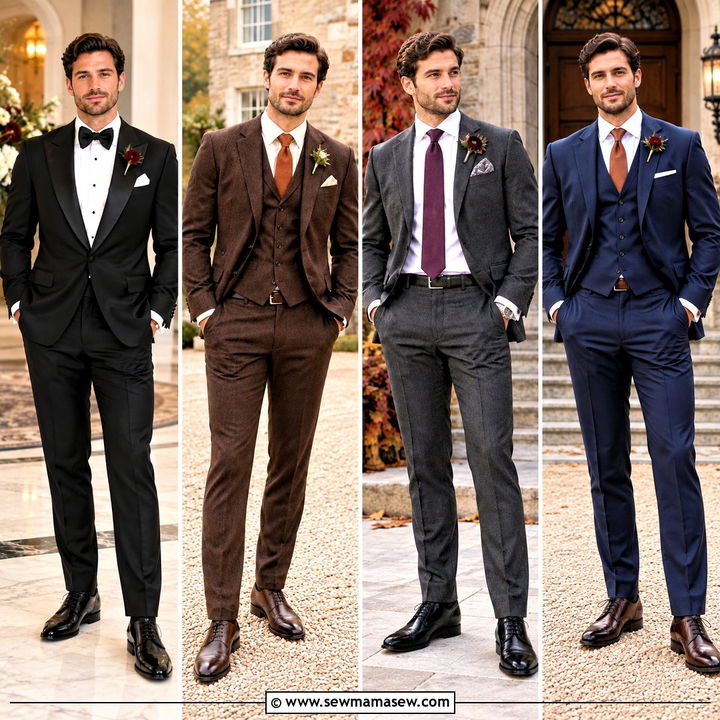
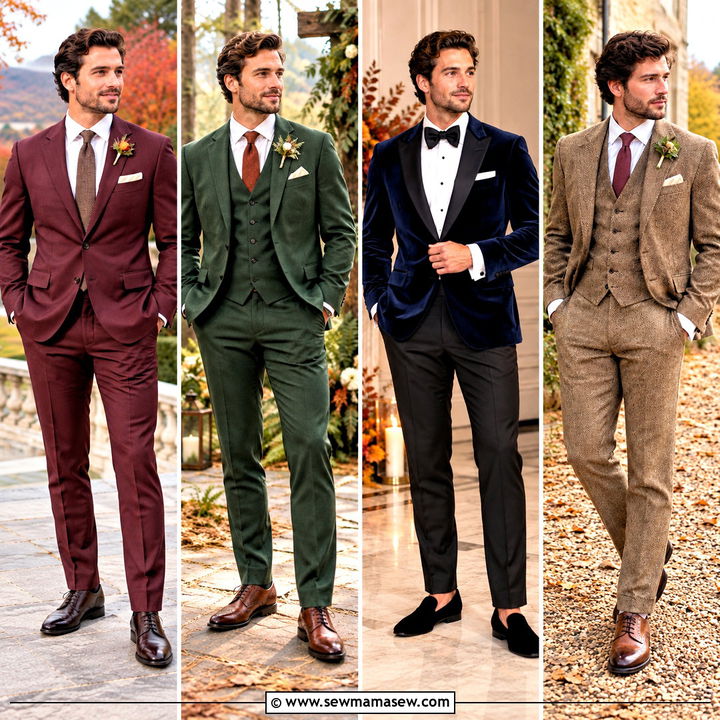
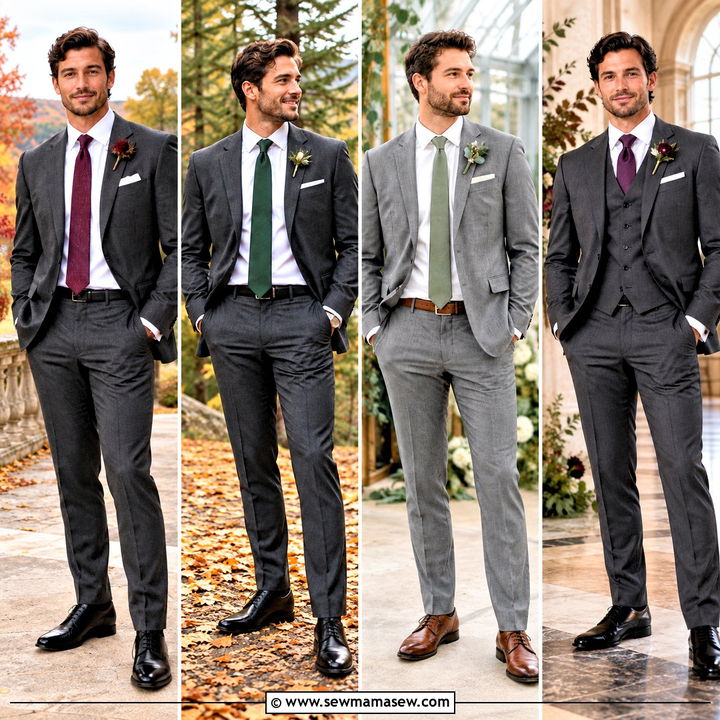
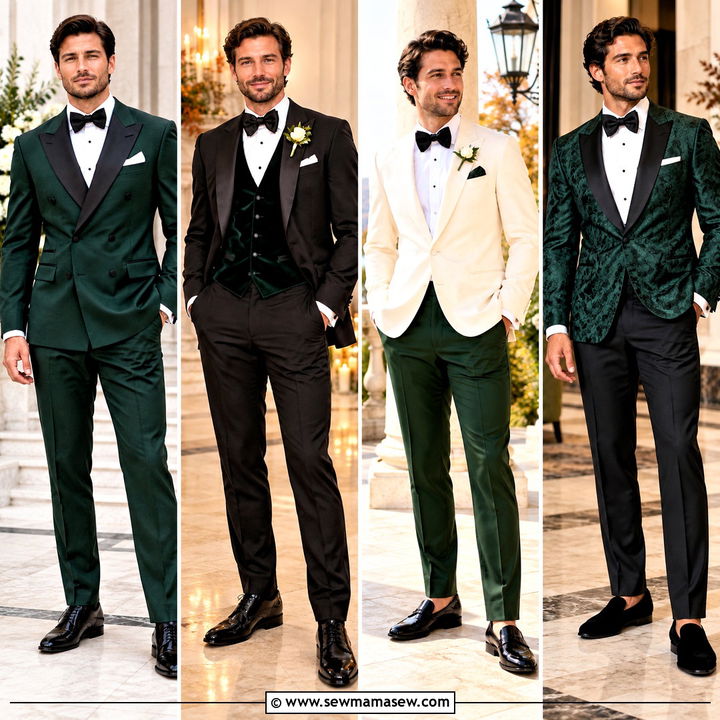
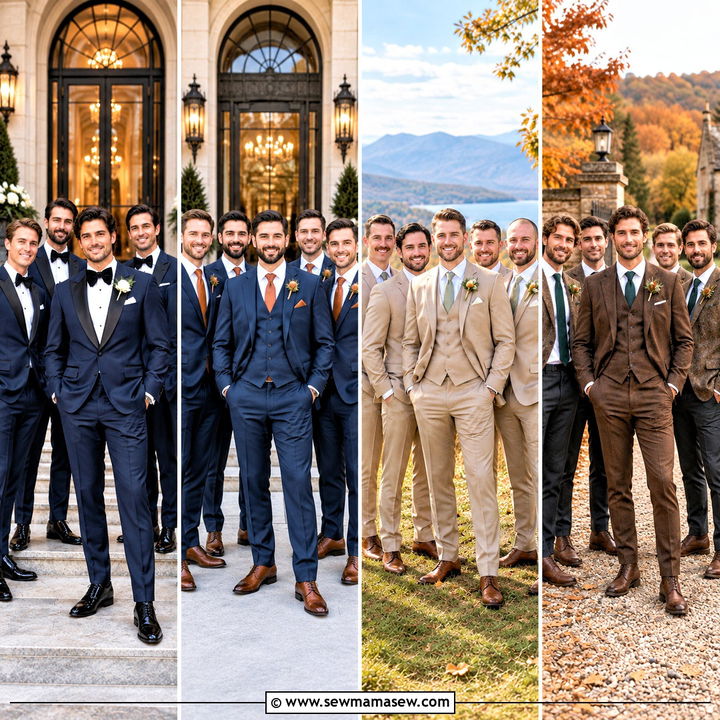
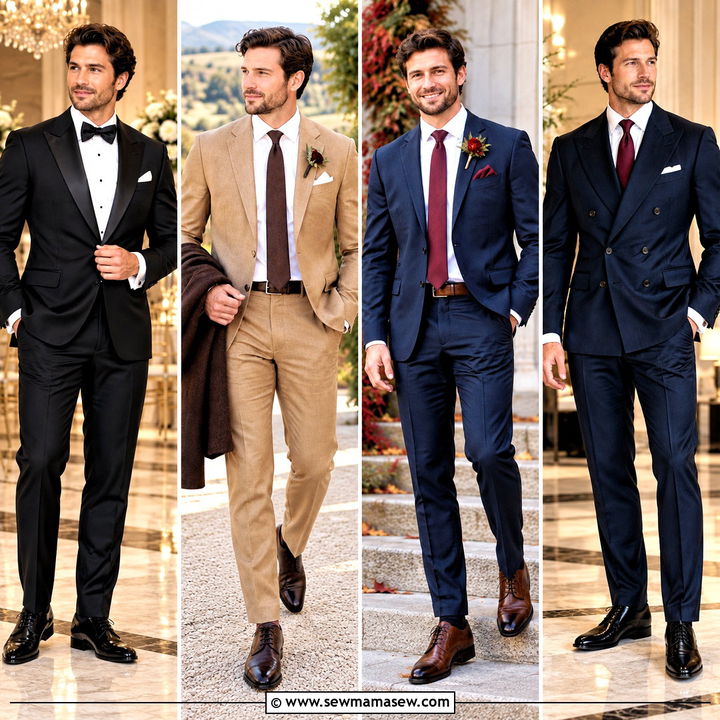
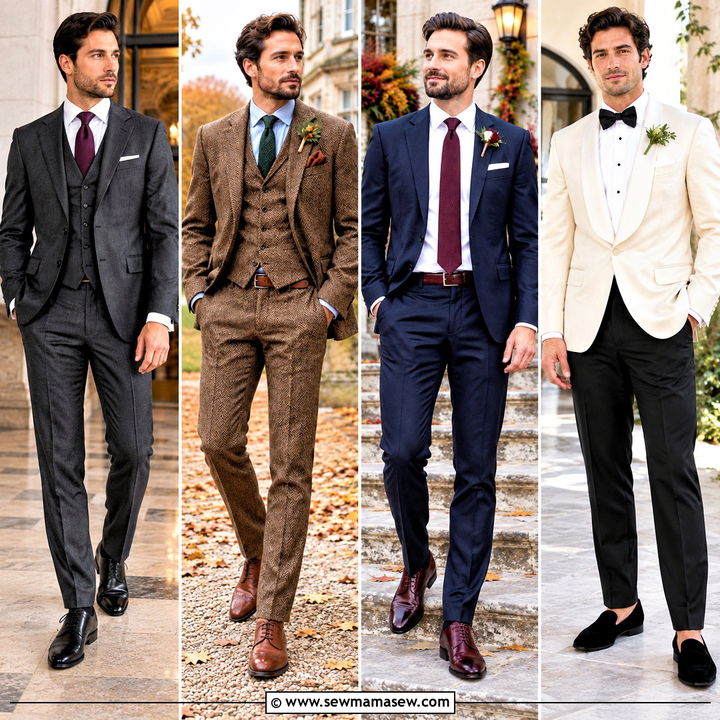
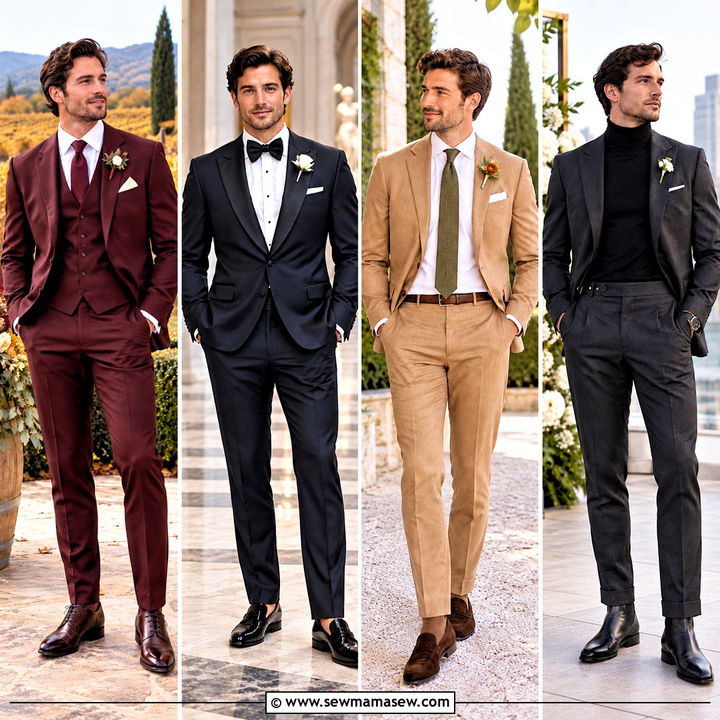
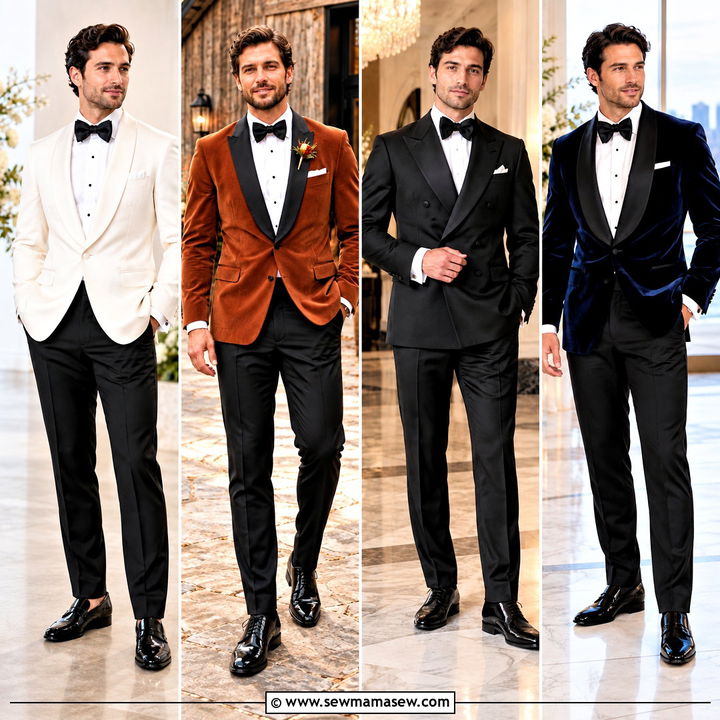
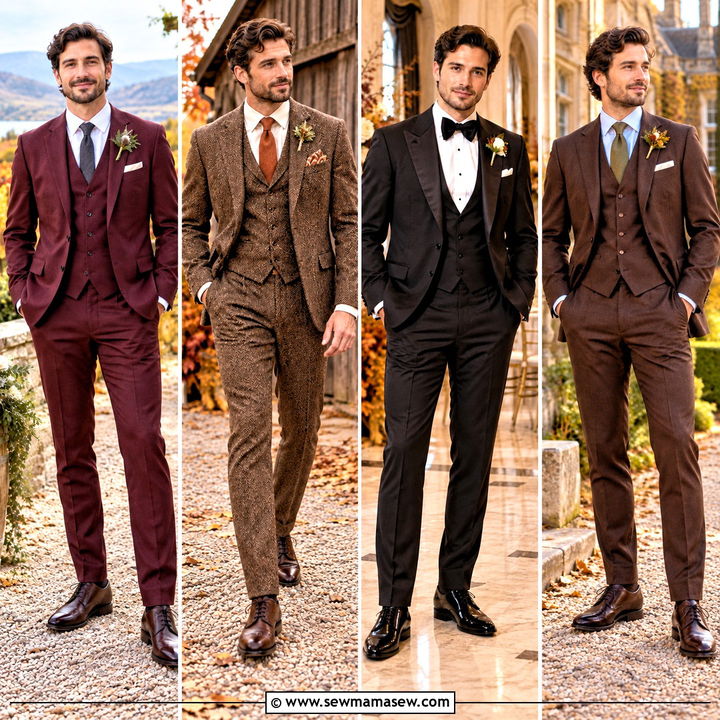
A fall wedding gives a groom more room than any other season: deeper colors, heavier cloth and layers that would be miserable in July. The suits below run from burgundy wool and forest green to brown tweed, velvet dinner jackets and the plain black tuxedo. I'd always start with the dress code and the venue, then the color, and only then the accessories. A knit tie belongs at a barn ceremony; satin lapels and patent shoes belong in a ballroom after dark. Whatever you pick, the fit will matter more than the shade, and every look here assumes the suit has been properly tailored.
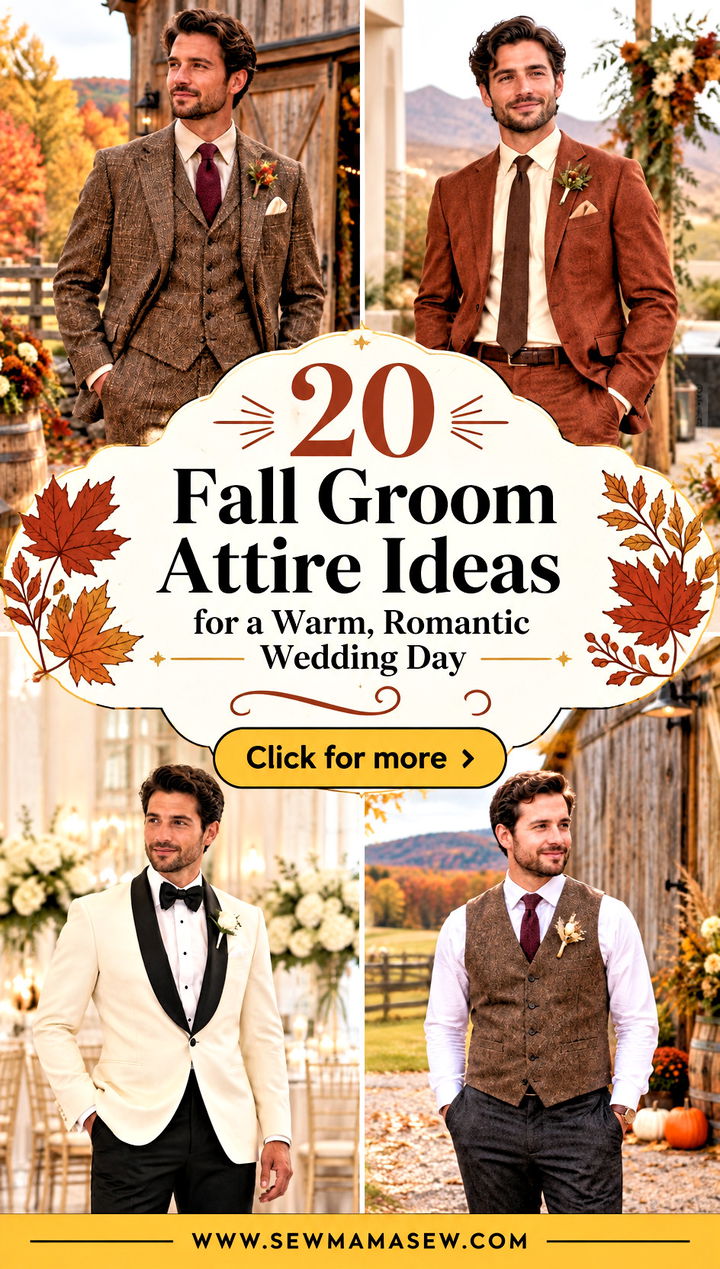
Leave Time for Two Fittings Before the Wedding
Whatever color you pick, the schedule is what most often goes wrong. Grooms tend to order late, and then the tailoring gets rushed. This is the timeline I work to.
- Three to four months out: decide on the formality and color, and order. Made-to-measure suits commonly take several weeks to arrive, and delivery times stretch in the busy fall season.
- Six to eight weeks out: first fitting with the shirt and shoes you'll actually wear. Trouser length can't be set properly without the shoes.
- Two to three weeks out: second fitting to check the changes. Sleeve length, jacket waist and trouser break are the usual adjustments.
- The final week: collect the suit, try everything on once more and leave it hanging in a breathable cover.
Rented tuxedos follow a shorter schedule, but book the fitting appointment early anyway, because autumn is a busy wedding season and the good sizes go first.
One more habit worth keeping: if the groom is training for the wedding and expects to lose weight, tell the tailor at the first fitting. Taking a jacket in is simple; letting it out is limited by how much seam allowance the maker left, and some ready-made suits have very little.
1. Burgundy Groom Suit With Brown Dress Shoes
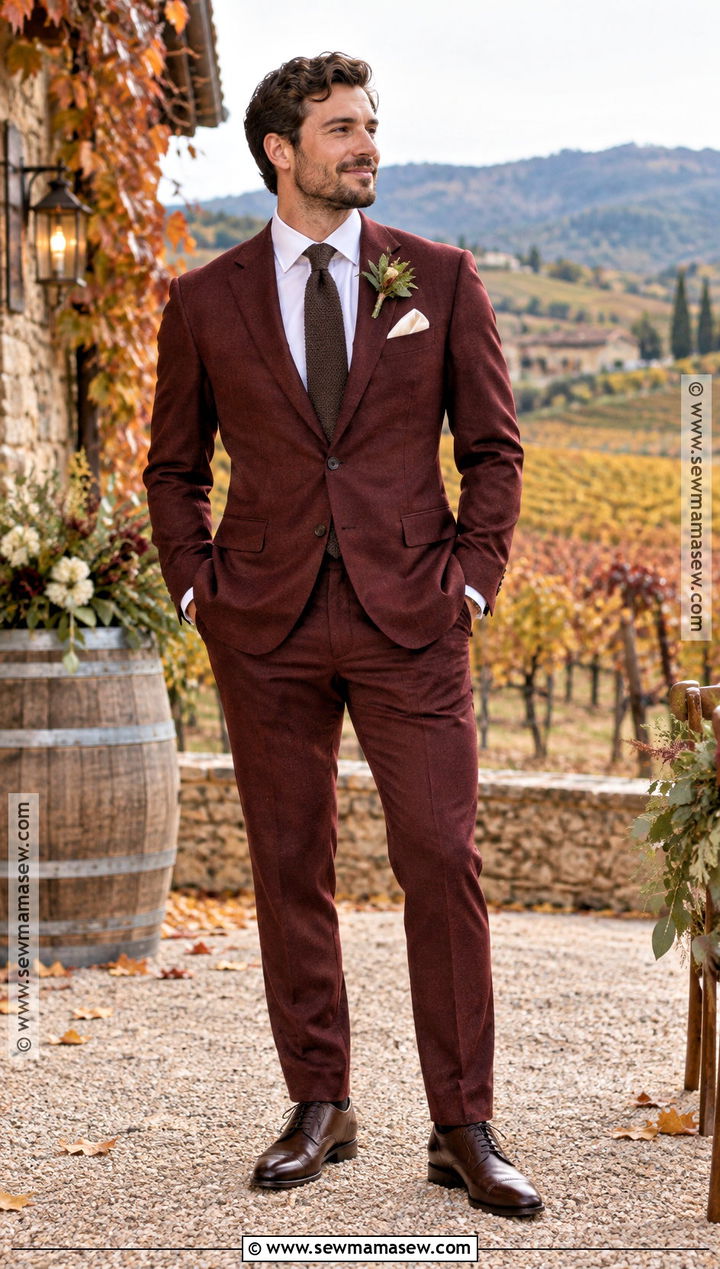
Burgundy is the color I suggest to grooms who want something seasonal without wearing anything that looks like a costume. A wool or wool-blend suit with a plain white shirt keeps the red in check, and a chocolate woven tie adds texture rather than another color. Dark brown cap-toe Oxfords and a matching belt finish it, with a cream pocket square and a greenery boutonniere. Put the groomsmen in charcoal, navy or mid-brown so the groom stands apart. The mistake I see is red everywhere else too: a burgundy suit is already the focal point, so one red flower is plenty.
2. Forest Green Groom Suit With Cognac Brogues
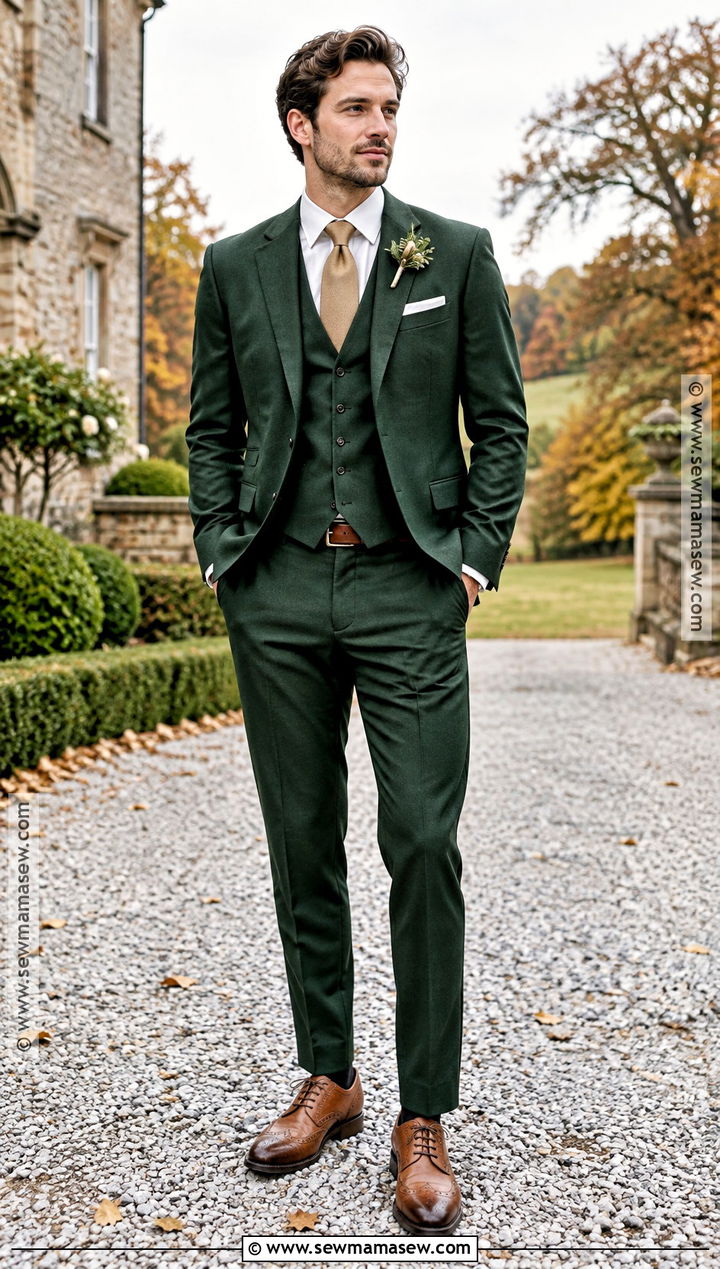
Forest green surprises people at first and then looks obvious once they see it against autumn trees. I like it as a three-piece, because the waistcoat keeps the groom looking dressed when the jacket comes off for the first dance. An ivory shirt, a muted gold tie and a pocket square with small flecks of cream or brown work with it. Cognac brogues warm up the dark cloth. For a daytime ceremony, stay with a deep green; a bright emerald in full sun can look loud. A brown leather watch and a foliage boutonniere are all the extras it needs.
3. Brown Tweed Groom Suit With Burgundy Tie
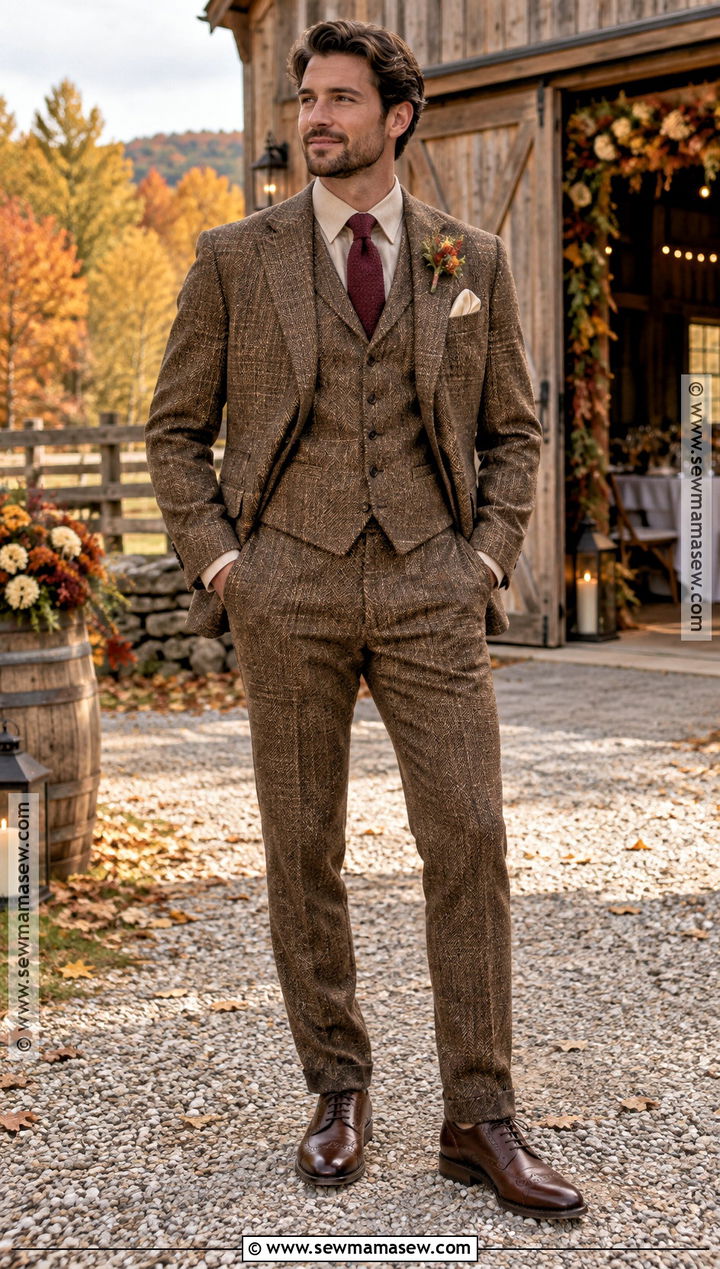
Tweed belongs in the countryside and in cold air, and it looks wrong anywhere else. Go for a tailored three-piece with a small herringbone or a flecked weave rather than the boxy heritage cut, and pair it with a white or pale beige shirt, a burgundy knit tie and a folded cream square. Dark brown brogues are the traditional finish; suede Chelsea boots relax it. Tweed is thick and stiff, so any slack at the shoulder, sleeve or trouser shows straight away. I always take a tweed suit in a little more than I would a worsted, and keep the jewelry minimal because the cloth already has plenty going on.
4. Navy Velvet Groom Jacket With Black Trousers
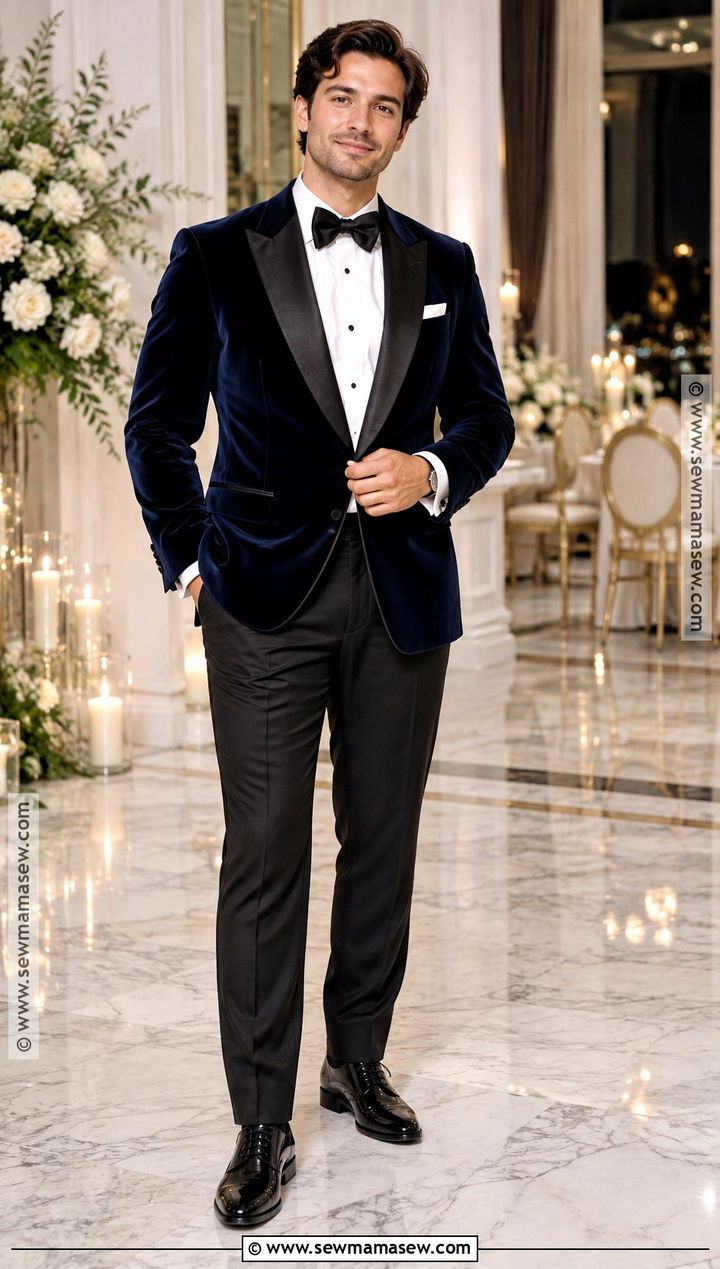
Navy velvet is the evening jacket I recommend to grooms who find a black tuxedo too expected. It goes with black tuxedo trousers, a white pleated or bib-front shirt and a black velvet bow tie, plus patent Oxfords or polished loafers. I'd pick black satin shawl or peak lapels, which separates the groom from guests wearing ordinary navy suits. Velvet crushes and shines where it rubs, so hang it on a wide hanger and steam it rather than pressing it. It suits a ballroom or candlelit hotel, and it gets warm, so I'd avoid it for a hot or packed room.
5. Chocolate Brown Groom Suit With Black Tie
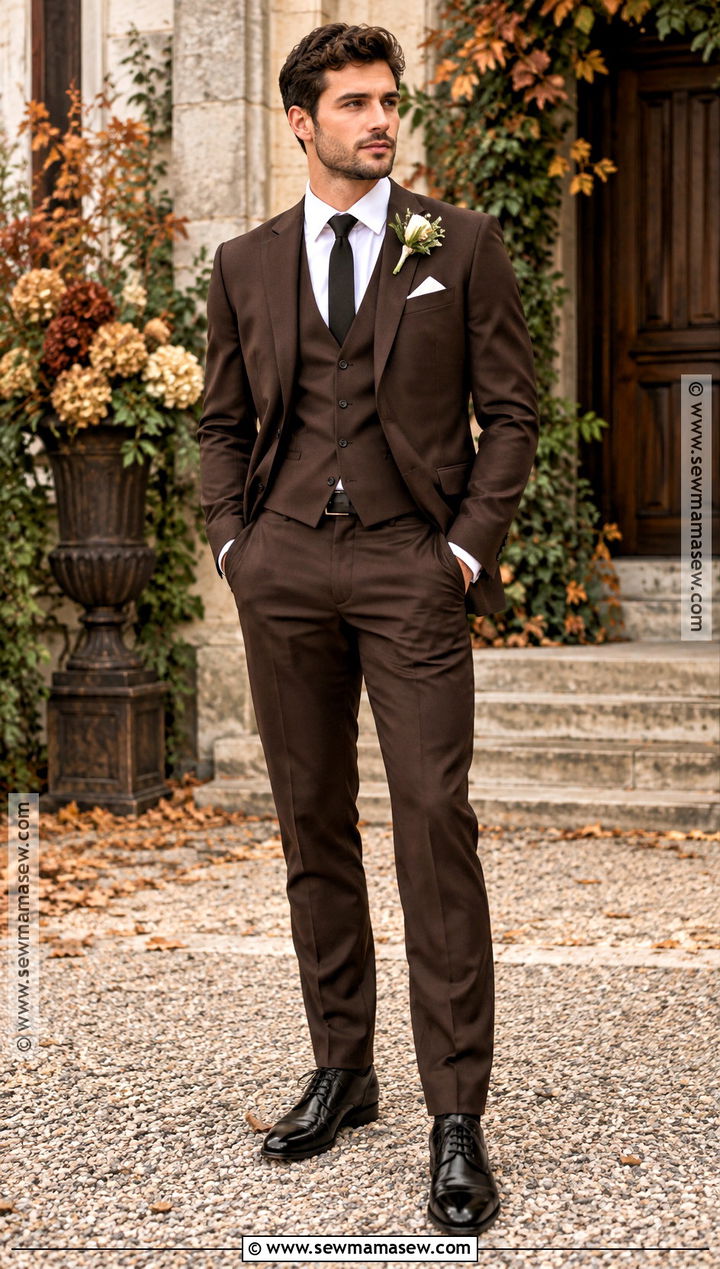
Chocolate brown has come back into tailoring, and it sits naturally against fall color. A structured wool suit, two- or three-piece, wants a bright white shirt for contrast. Black accessories, a slim black tie and black Oxfords make it more formal than you'd expect from brown. If you want it softer, switch to espresso leather and a cream textured tie. Brown works with champagne, rust, olive or muted rose bridesmaid dresses, so it's easy to plan around. For a late-season outdoor ceremony, choose a heavier wool and you'll be grateful for it after sunset.
6. Charcoal Flannel Groom Suit With Rust Tie
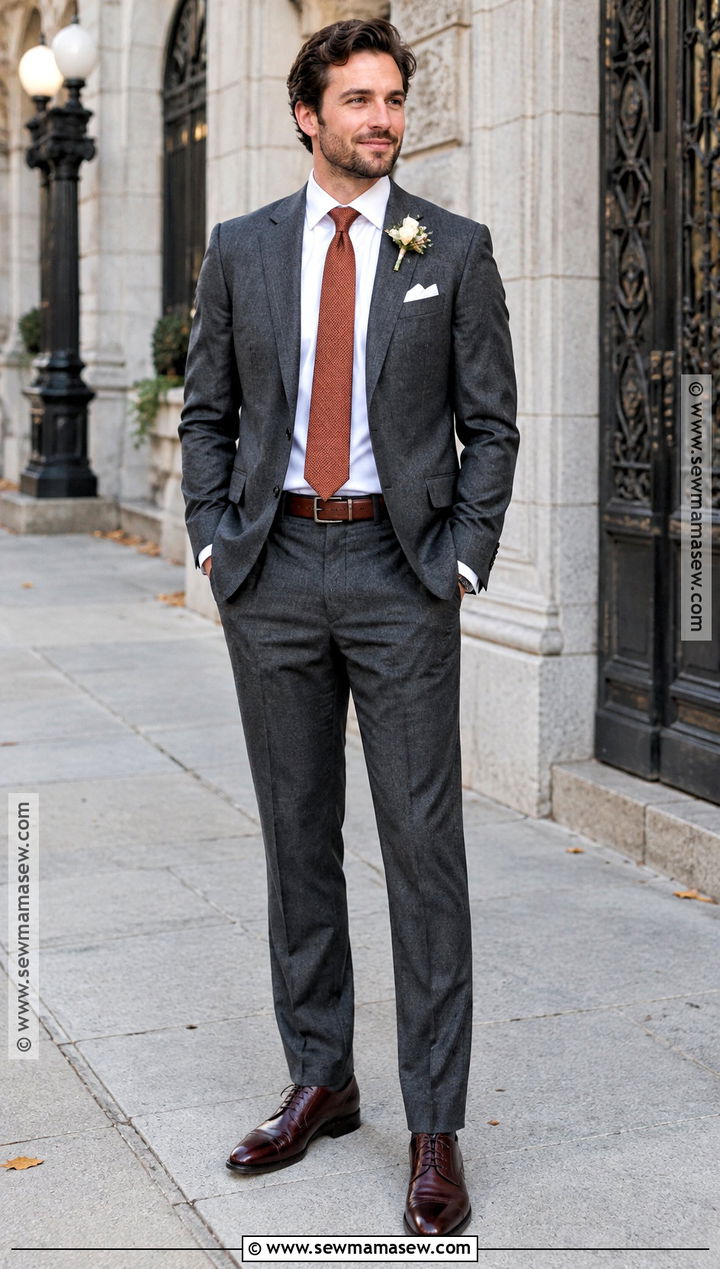
Flannel has a brushed, slightly soft surface that photographs warmer than a smooth worsted, and charcoal flannel is less rustic than tweed. I pair it with a white spread-collar shirt and a rust silk or grenadine tie. Black cap-toe Oxfords keep it formal; oxblood shoes bring a little seasonal color. Silver cuff links, a white linen square and a cream-and-dark-green boutonniere finish it. Groomsmen in lighter gray sit well alongside. Check the cloth weight: heavy flannel is lovely outdoors and stifling at an indoor reception, so a medium weight is usually the safer choice.
7. Black Tuxedo With Burgundy Velvet Bow Tie
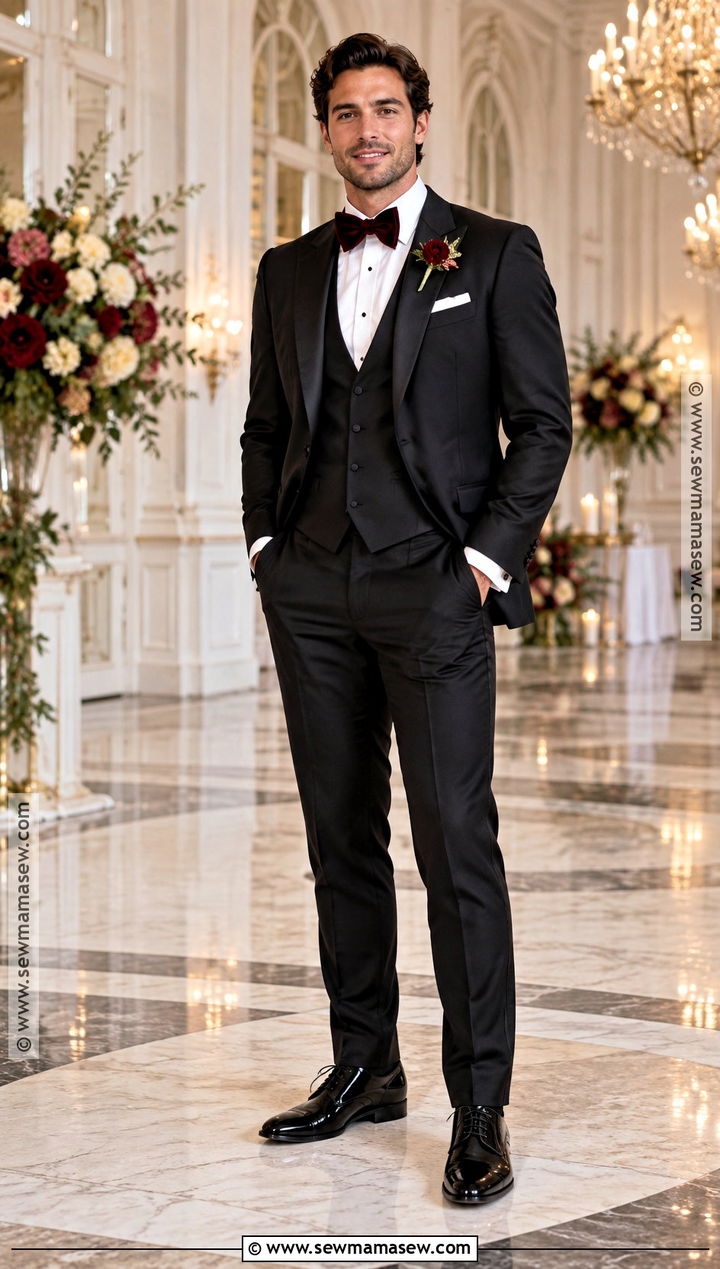
Nothing beats a black tuxedo for a formal evening, and a burgundy velvet bow tie is all the seasonal change it needs. Wear it with a white French-cuff shirt, patent shoes and either a cummerbund or a low-cut evening waistcoat, which covers the shirt where it meets the trousers. A straight white square and one boutonniere are enough. The details I check at the final fitting: the trousers should touch the shoe with little or no break, and about a quarter to half an inch of shirt cuff should show below the sleeve. Good tailoring does more for a tuxedo than any accessory.
8. Olive Groom Suit With Beige Shirt
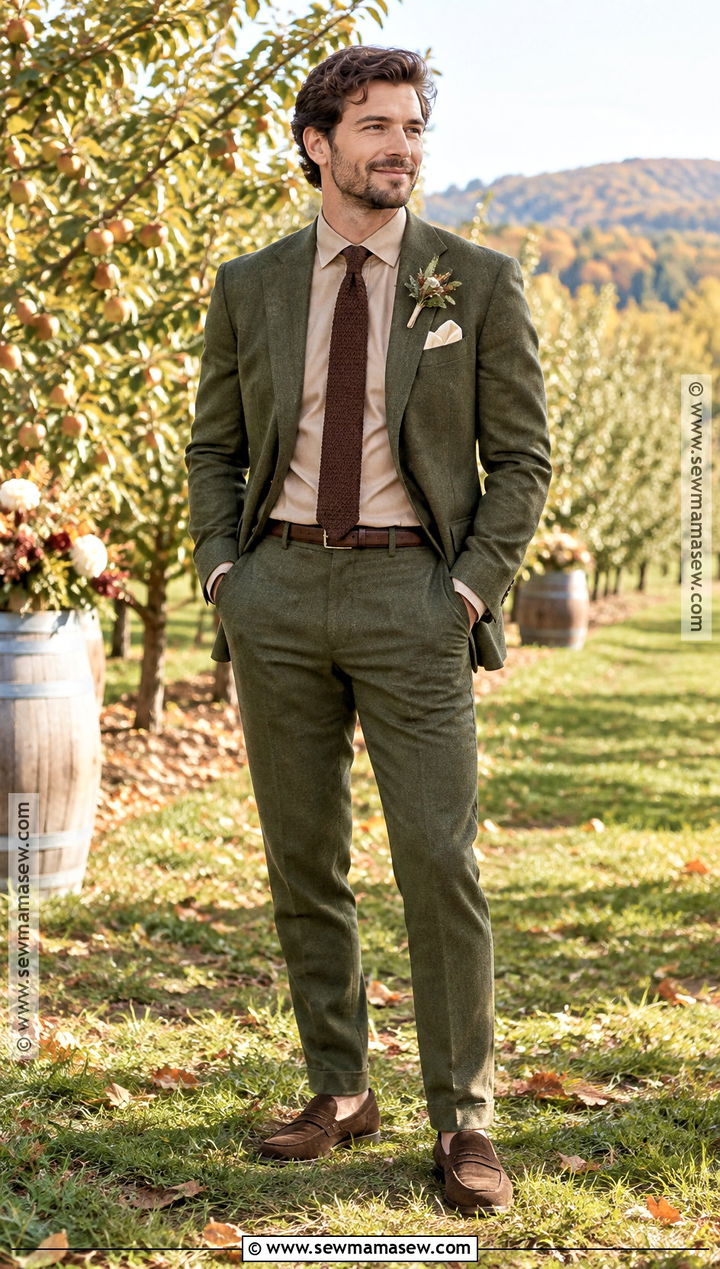
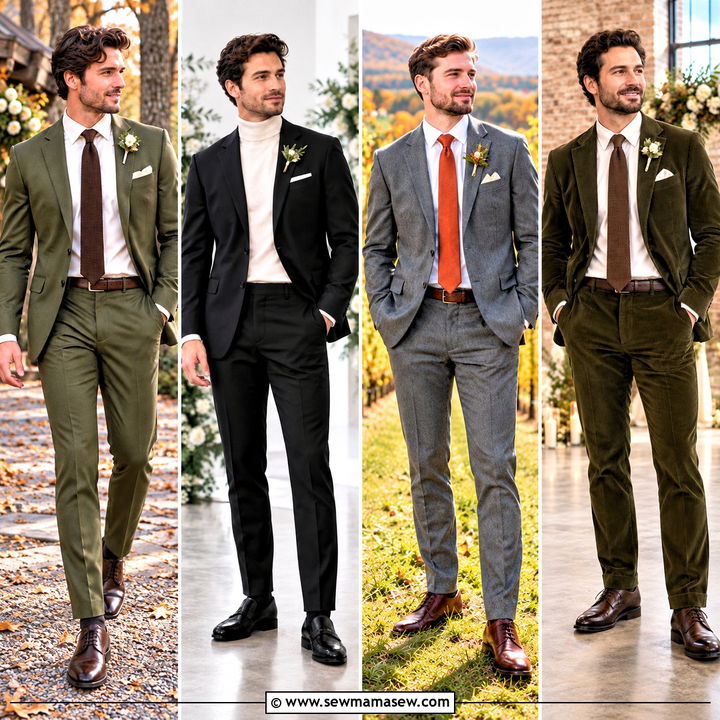
Olive is the softer cousin of forest green and blends straight into a fall landscape. A streamlined olive suit in wool, brushed cotton or light flannel goes with a beige shirt, a dark brown knit tie and a cream square for a warm, tonal palette. Brown suede loafers suit an early-fall date; leather brogues are better once it's cold or wet. The thing to watch is contrast. A shirt too close to the suit color goes flat in photographs, so I make sure it's clearly lighter. A brown leather watch and a boutonniere with dried grasses or olive leaves finish it.
9. Camel Groom Suit With Forest Green Tie
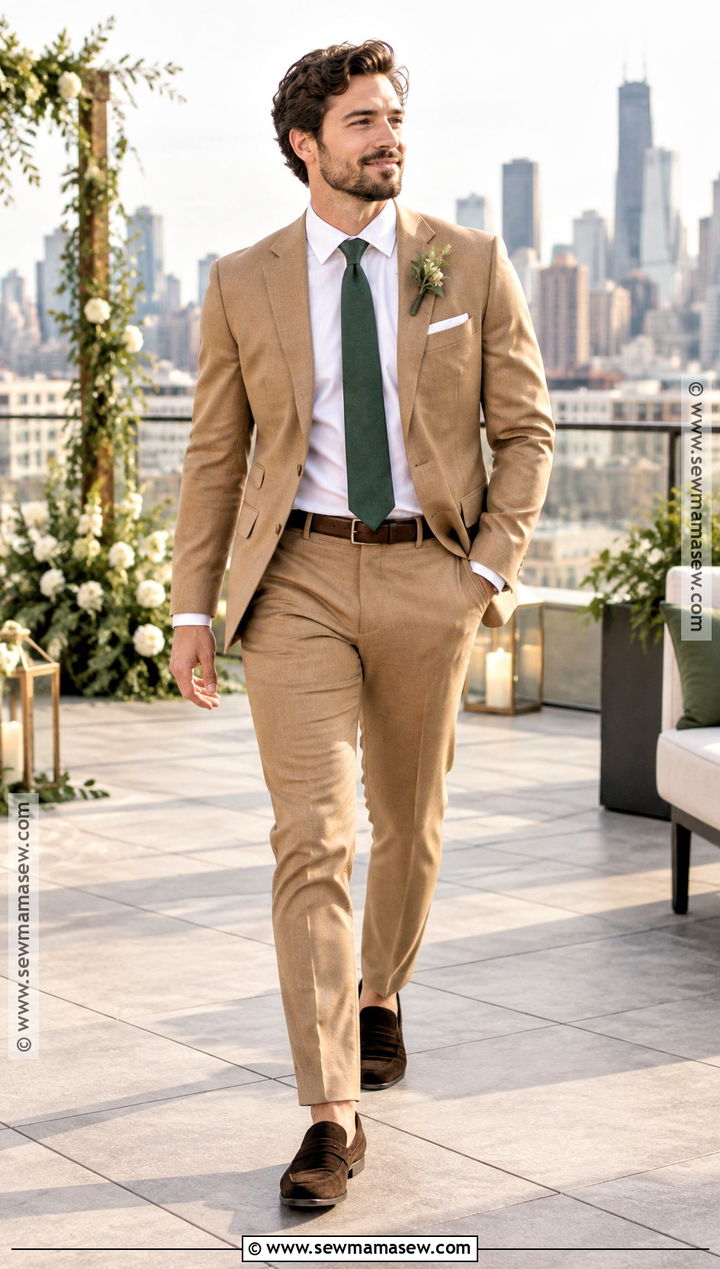
Camel is a warm-weather fall color, best for September and early October while the days are still mild. A white shirt and a forest green tie give it the contrast it needs, and dark brown suede loafers with a matching belt keep it approachable. The light suit stands out well against dark trees and wood interiors, and it suits a rooftop or a modern barn. Hold fabric swatches up in daylight: camel with a brown undertone looks rich, while one with a yellow cast can look washed out. A chocolate waistcoat adds definition, and groomsmen in darker brown or navy keep the groom distinct.
10. Navy Groom Suit With Burgundy Tie
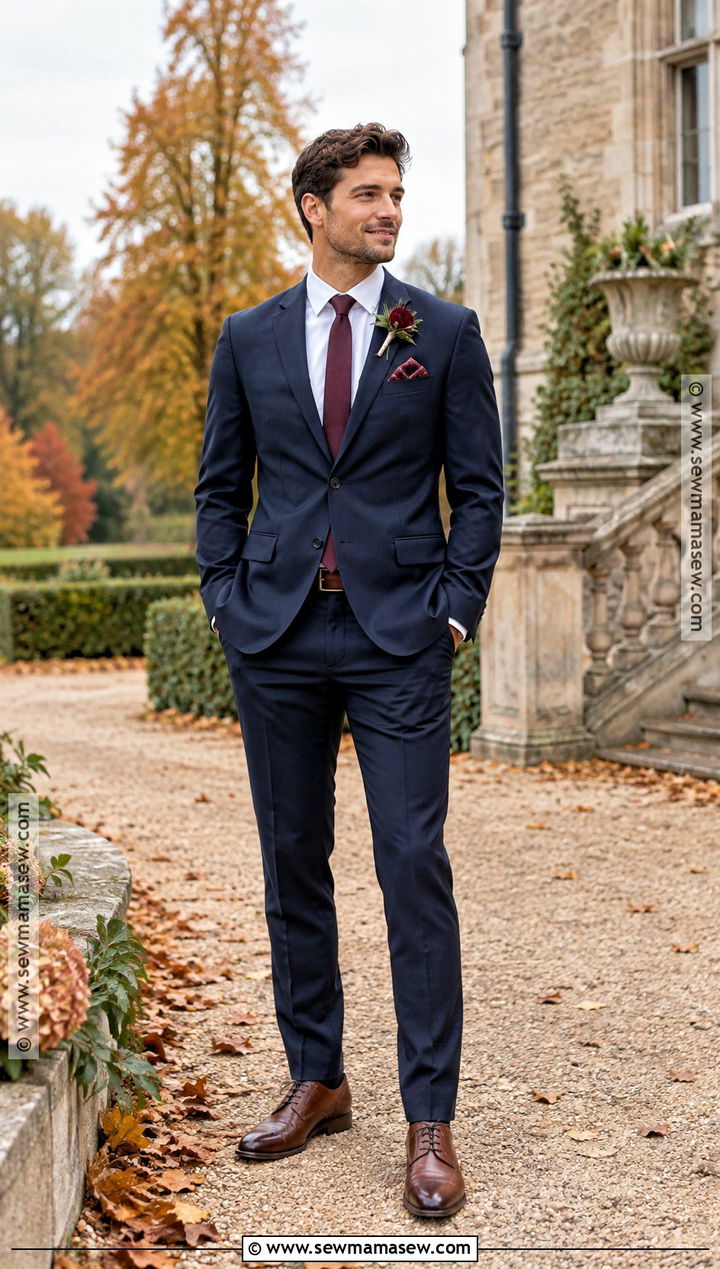
Navy is the most adaptable base for a groom, and it takes on fall color through the accessories. A dark navy wool suit, a white shirt and a burgundy tie with a coordinating patterned square are the backbone. Brown Oxfords and a brown belt make it warmer and less severe than black. A navy waistcoat turns it into a formal three-piece; an open collar and pocket square relax it. For photos, I'd put the groomsmen in lighter blue or medium gray, or in the same navy without waistcoats, so the groom still reads as the groom.
11. Gray Herringbone Groom Suit With Oxblood Shoes
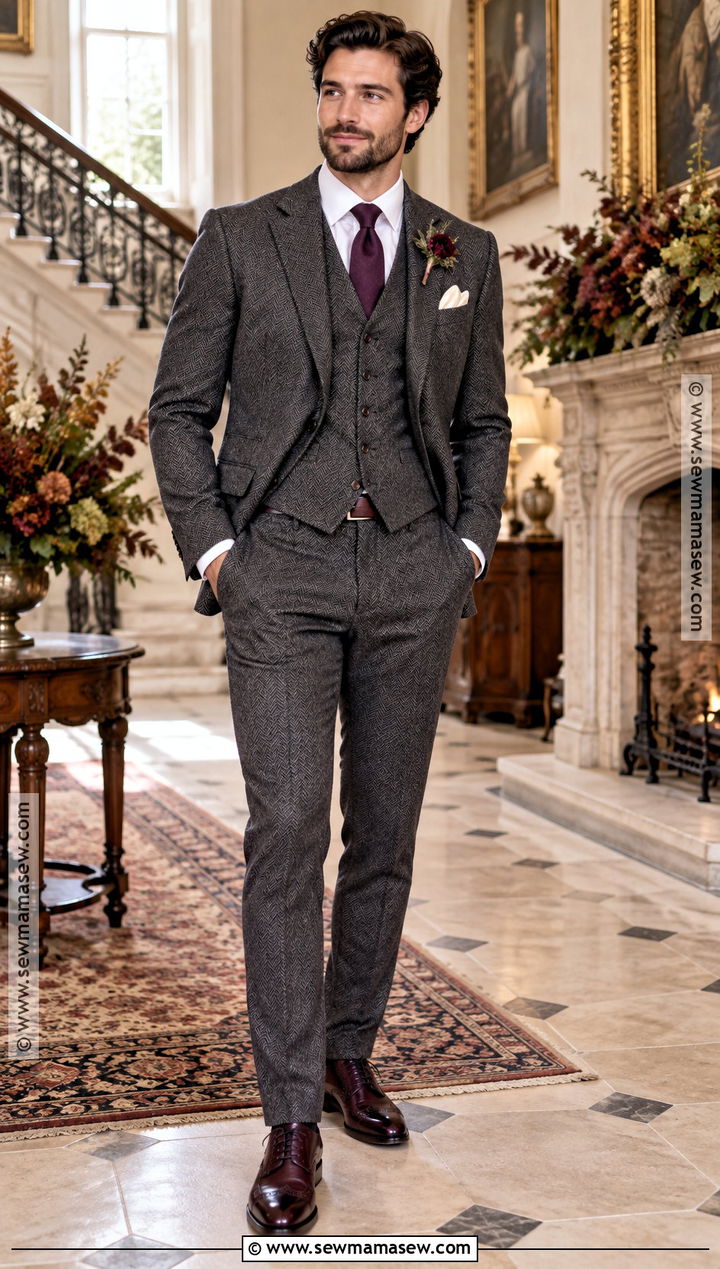
Herringbone adds depth to gray when you're close to it and reads as a smooth, plain suit from across the room, which is why it photographs so well. A medium or charcoal three-piece goes with a white shirt and a plum or burgundy tie. Oxblood brogues bring warmth to cool gray. Keep the shirt and tie plain; a patterned tie on a patterned weave starts to shimmer, especially on camera. I fit the waistcoat closely, but the groom should be able to sit and reach for a glass without the buttons pulling.
12. Emerald Velvet Groom Jacket With Black Trousers
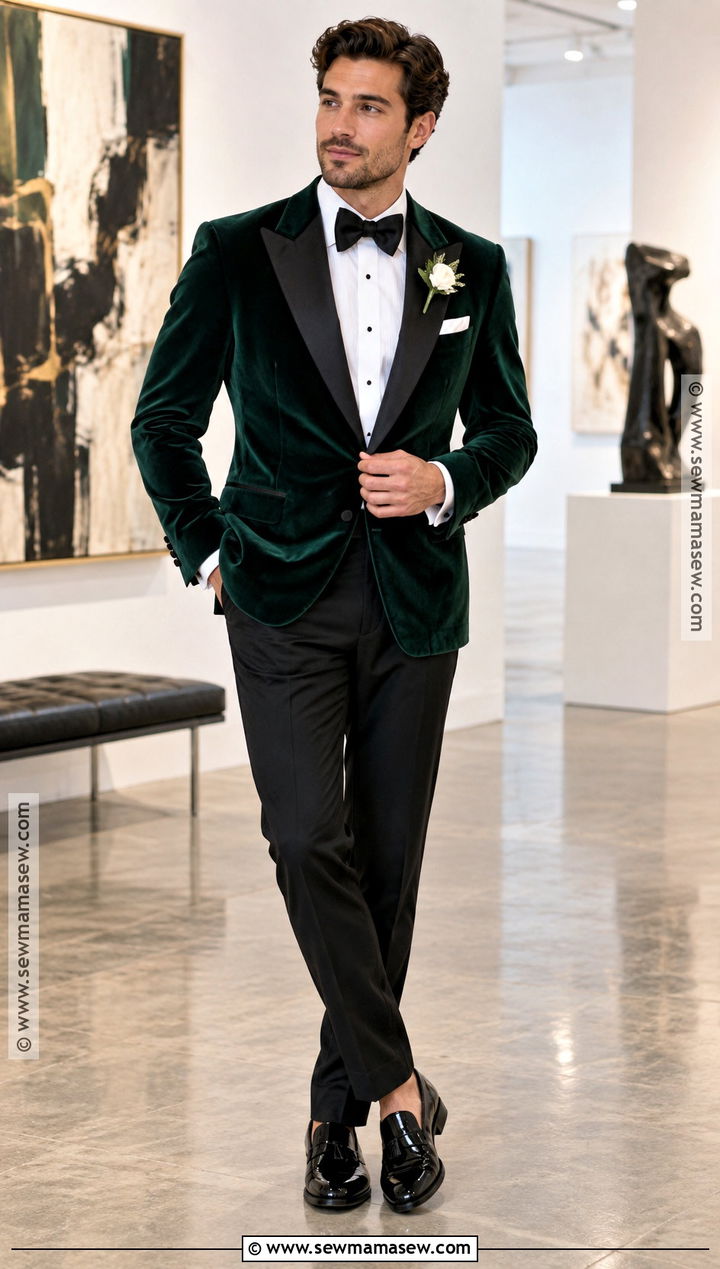
Emerald velvet is a confident choice for a glamorous evening wedding, and it needs a calm frame around it. Black tuxedo trousers, a white formal shirt, a black satin bow tie and polished black loafers or patent Oxfords give it that. I'd go with black peak lapels to sharpen the shoulders. A white square and a cream boutonniere are enough extras. Velvet is warm, so I save it for indoor receptions in cool weather, and I'd never add green shoes or a matching green tie, which makes the whole outfit look overly coordinated.
13. Brown Plaid Groom Suit With Solid Tie
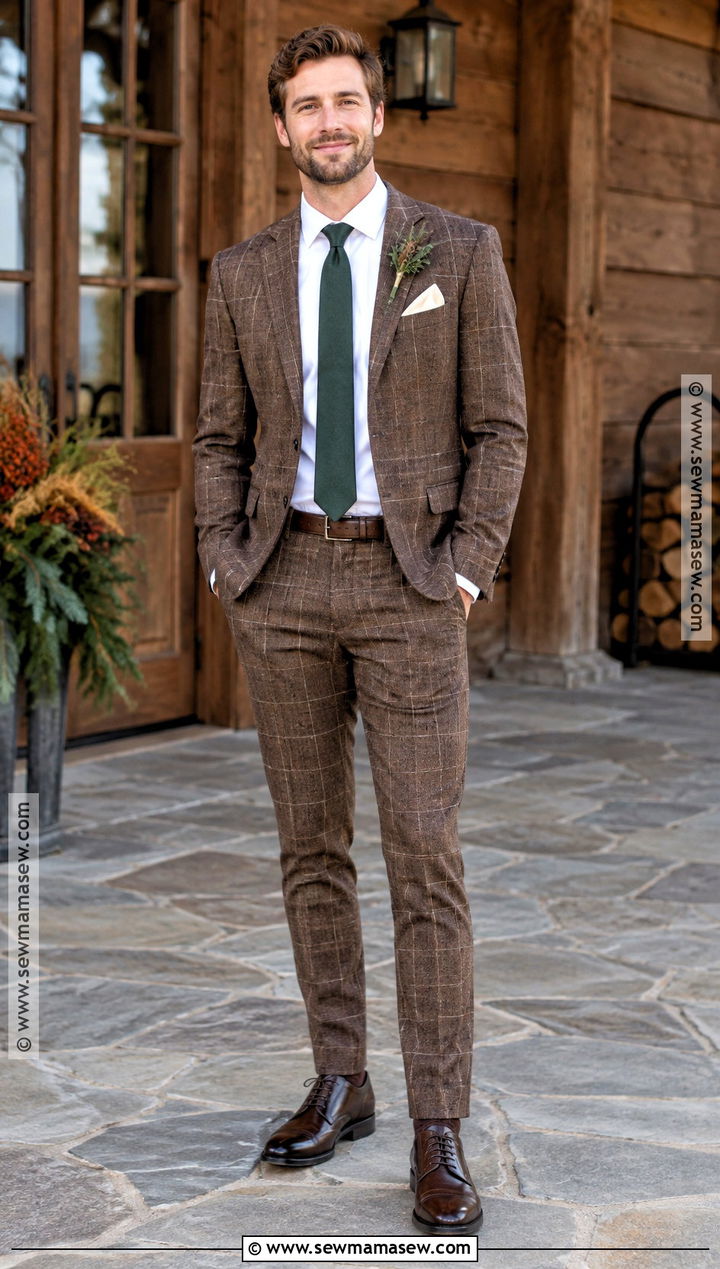
A brown plaid suit shows personality without leaving wedding territory, as long as the check is small. Windowpane or a quiet check works; a large, high-contrast plaid starts to look like a costume. Pair it with a plain white shirt, a solid forest green tie and dark brown Derbies. Patterned suits expose bad tailoring, because the lines show if the shoulders are loose or the seams don't line up, so the fit has to be close. I keep the groomsmen in solid brown, tan or charcoal so there's only one pattern in the lineup.
14. Tan Tweed Groom Jacket With Dark Brown Trousers
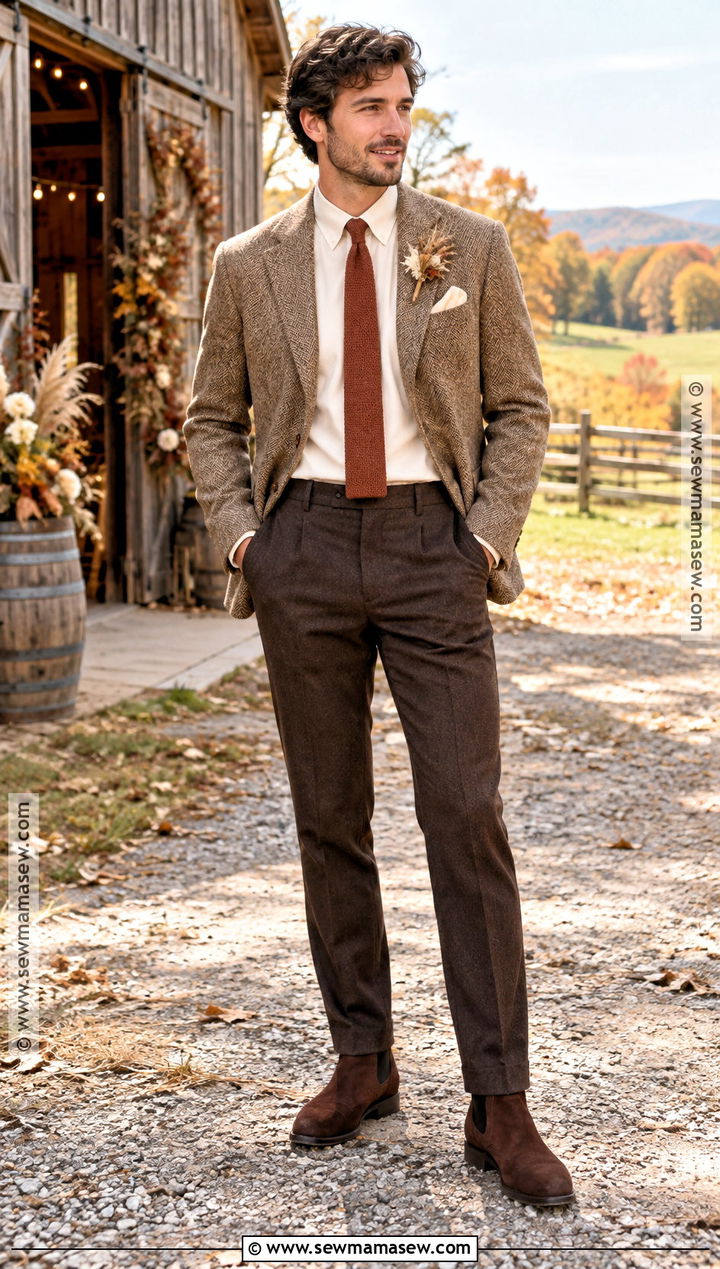
A matching suit isn't required, and for a casual wedding I often prefer odd pieces. A tan tweed jacket over dark brown wool trousers, with an ivory shirt, a rust knit tie and a cream textured square, looks planned without looking stiff. Brown suede Chelsea boots handle grass and gravel better than thin-soled dress shoes. Choose tailored trousers rather than chinos, or the groom ends up looking like a guest. A dark brown waistcoat adds a layer for cold evenings, and a boutonniere of dried grasses or cream flowers fits the barn or cabin setting this outfit is made for.
15. Rust Groom Suit With Cream Shirt
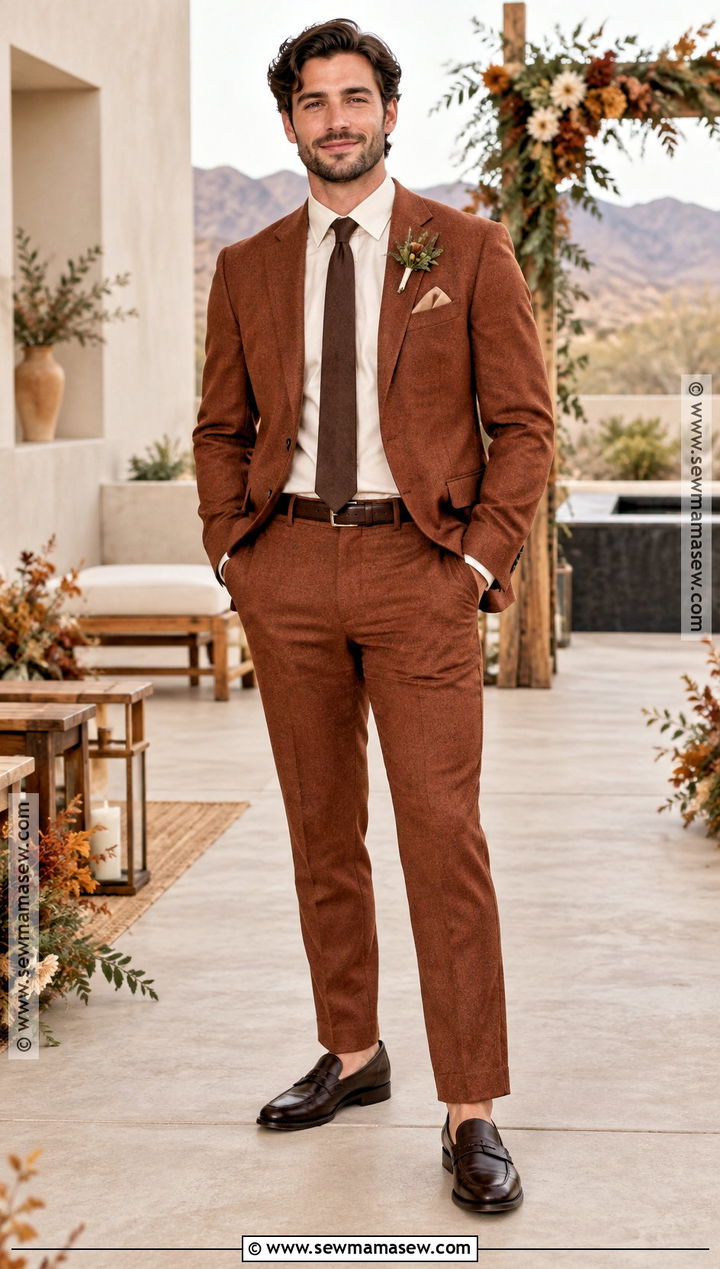
Rust is bold, so I steer grooms toward a muted burnt orange or copper brown rather than anything truly orange. A cream shirt, a dark brown tie and espresso loafers or Oxfords suit it, with a tan square and a greenery boutonniere to ground the warmth. It looks right at a desert wedding or among terracotta decorations. Because the color draws attention, keep the shirt plain and the accessories quiet. If bridesmaids are in a similar shade, make the groom's suit the darker or more structured one. A sharp taper in the trousers keeps it from looking theatrical.
16. Dark Teal Groom Suit With Brown Accessories
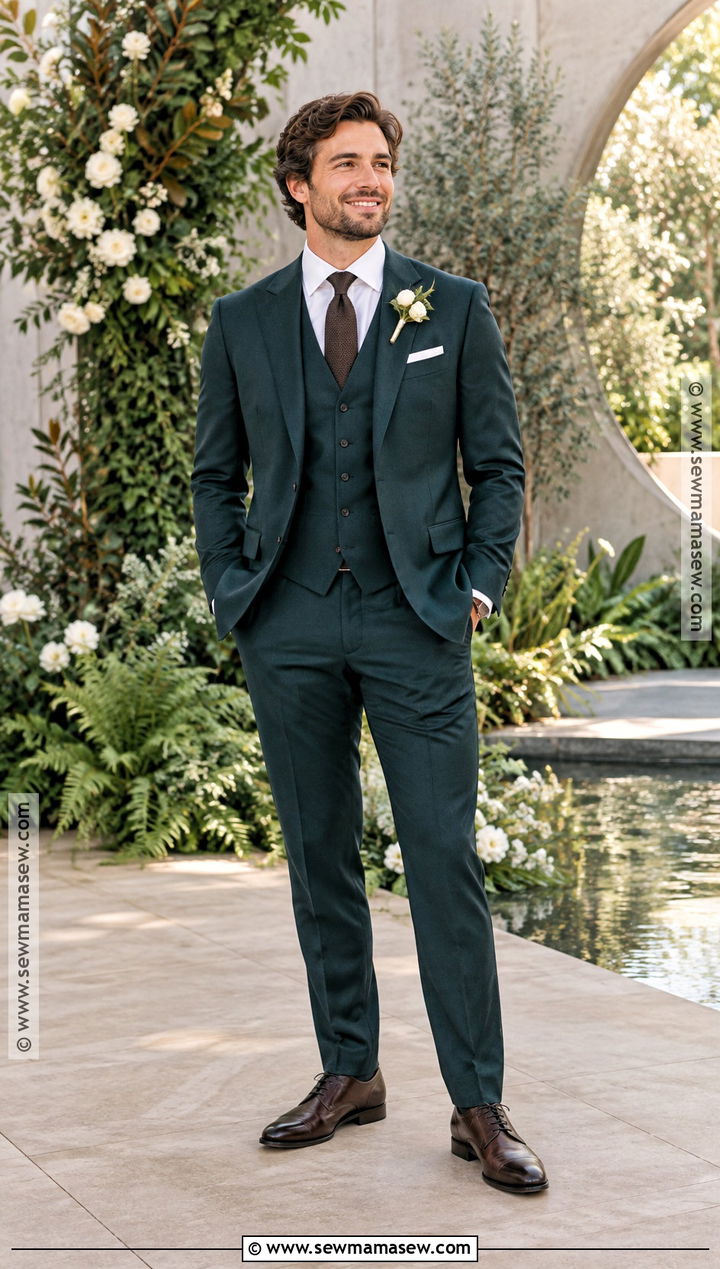
Dark teal sits between navy and green and feels less predictable than either. I'd go with a deep, muted teal in matte wool; shiny fabric in this color can look cheap under artificial light. A white shirt and a chocolate grenadine tie suit it, with dark brown Oxfords, a matching belt and a cream square. A boutonniere of white flowers and eucalyptus complements the suit without echoing its color too exactly. One easy way to set the groom apart: he wears the matching waistcoat and the groomsmen don't.
17. Corduroy Groom Suit With Knit Tie
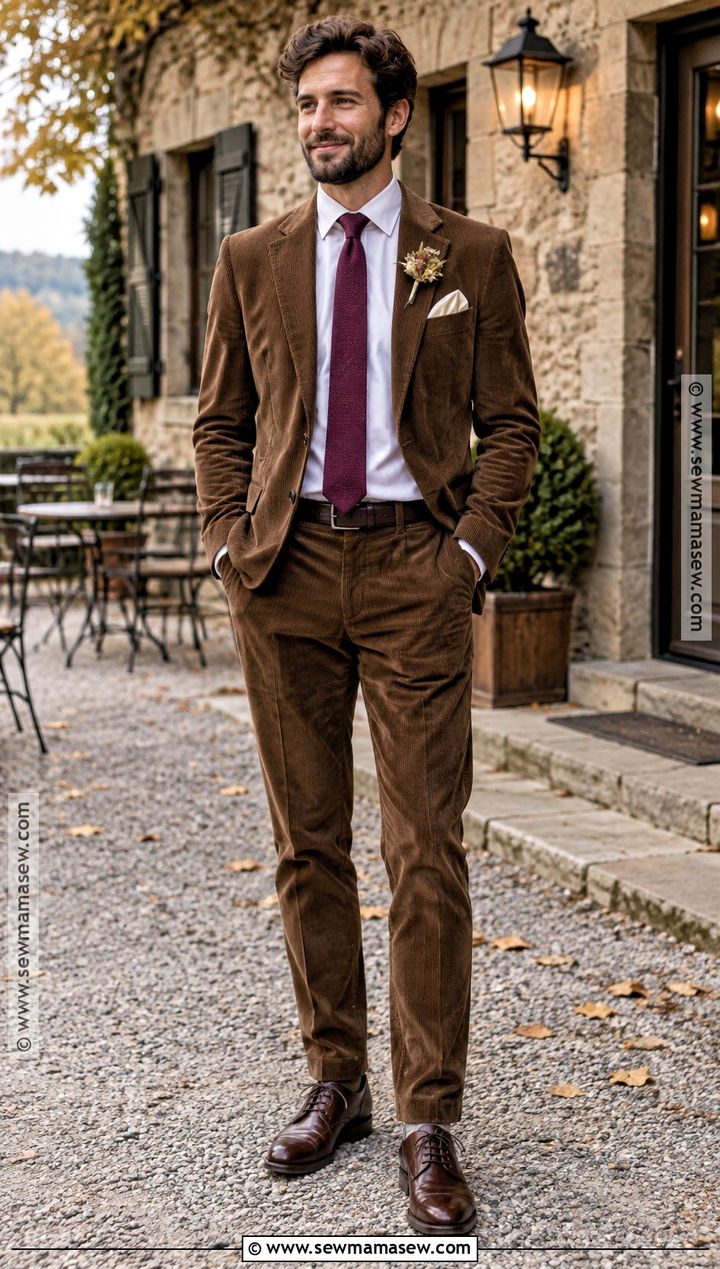
Corduroy is warm and soft, and it's casual by nature, so keep it away from black-tie. For a groom, I'd choose fine-wale cord in tobacco, olive or deep tan, which looks cleaner than the wide ridges you see on trousers. An off-white shirt, a burgundy knit tie and brown Derbies go with it, plus a cream square and a dried-flower boutonniere. Cord marks where you sit and crushes at the elbow, so steam it the morning of the wedding. A lighter weight suits September; a heavier cotton cord suits November.
18. Ivory Groom Jacket With Black Trousers
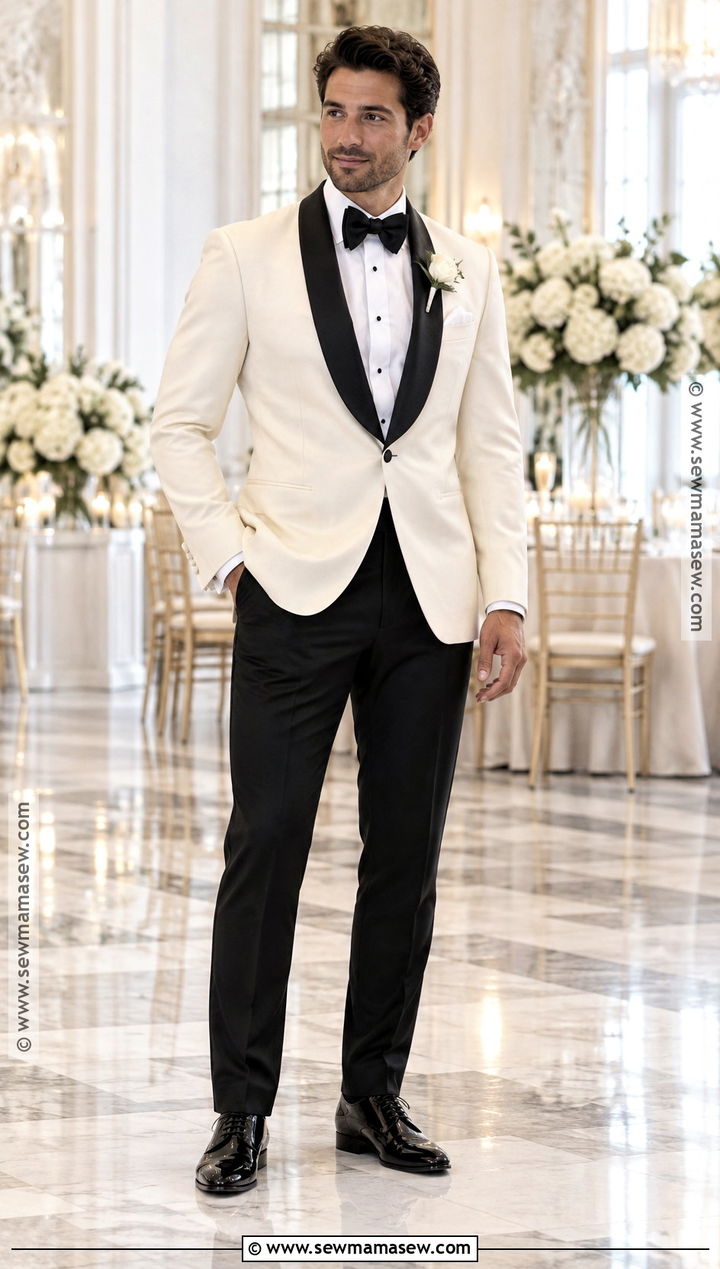
An ivory dinner jacket is a classic warm-weather evening option, so I'd keep it for early fall rather than a cold November night. It goes with black tuxedo trousers, a white formal shirt, a black satin bow tie and patent shoes. Black shawl or peak lapels suit a formal reception; self-faced lapels soften it for cocktail attire. Ivory sets the groom apart from groomsmen in black tuxedos instantly. It also shows every mark, so I'd keep a stain pen in a groomsman's pocket and limit the boutonniere to a single white flower.
19. Black Groom Suit With Black Turtleneck
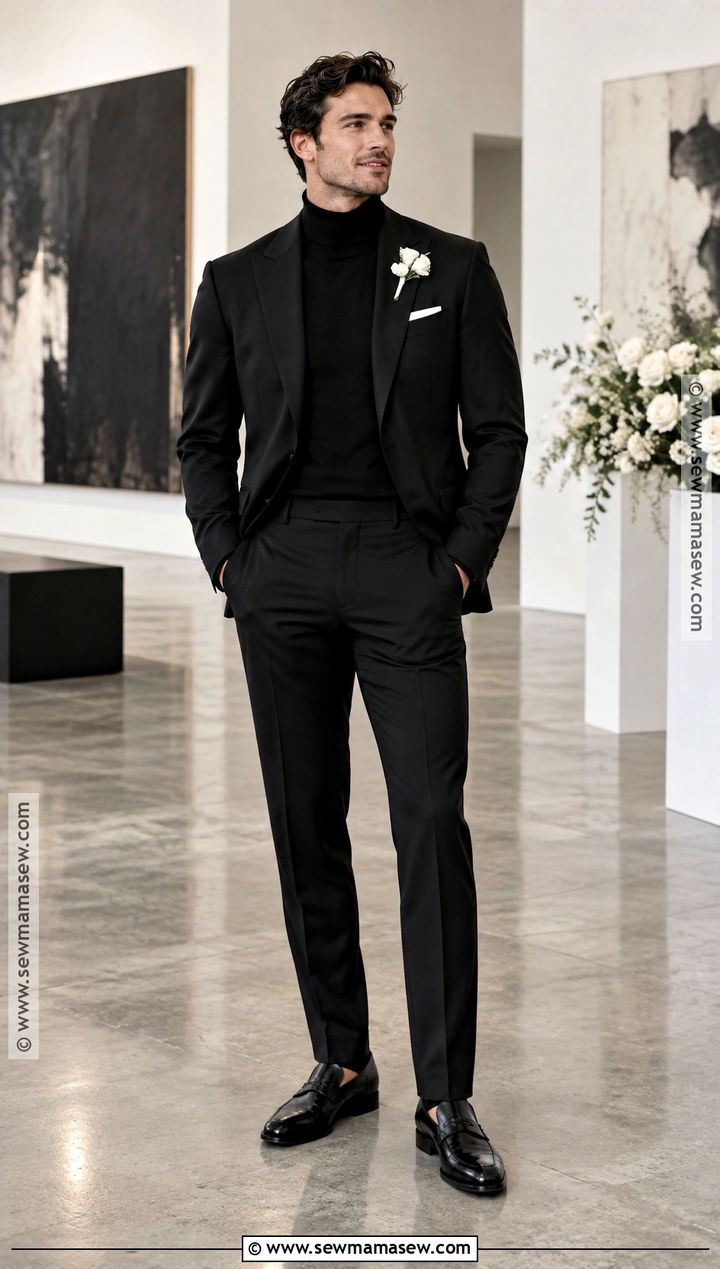
A black suit with a fine black turtleneck is the modern option for a gallery, loft or courthouse wedding, and it needs no tie at all. A sharply tailored wool suit, a slim merino turtleneck and polished black loafers or whole-cut Oxfords are the whole outfit. Add a white square for a little contrast or skip it. I'd only do this for cocktail or nontraditional dress codes, not black-tie. The turtleneck must be fine-gauge: a chunky knit bunches at the shoulders and makes the jacket sleeves too tight.
20. Tweed Groom Waistcoat With Wool Trousers
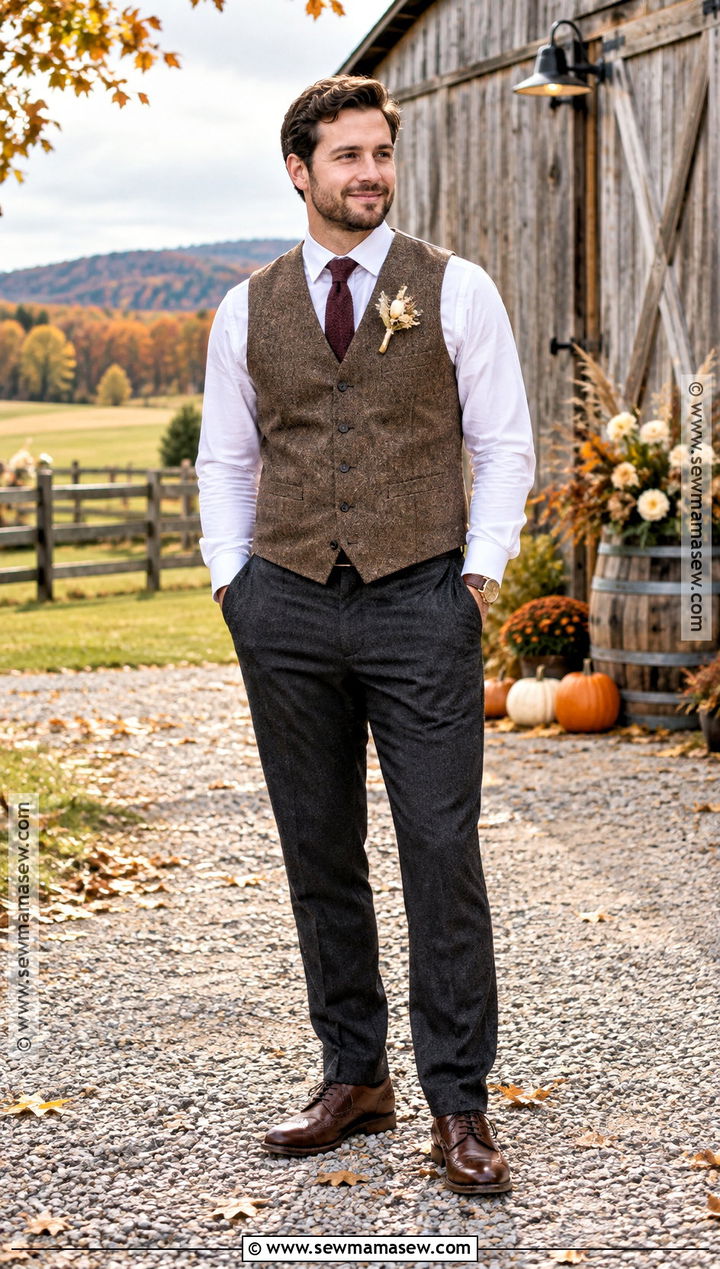
On a mild early-fall day at a barn or outdoor ceremony, a tweed waistcoat can stand in for the jacket. I pair a brown or olive waistcoat with a crisp white shirt, charcoal wool trousers and a burgundy knit tie, plus dark brown boots or brogues. Suspenders can go underneath, but they shouldn't fight with the tie. With no jacket, the waistcoat has to fit closely and the shirt has to be pressed, sleeves included. A simple leather watch is enough detail. Keep a matching tweed jacket nearby, because temperatures drop quickly after sunset.
Cloth Weight Matters as Much as Color in October
Two suits in the same color can feel completely different at a wedding, because the weight of the cloth decides how warm the groom will be. Fabric weight is usually quoted in ounces or grams per meter, and a tailor can show you swatches across the range.
Lighter cloth for heated rooms
A mid-weight worsted wool is what most year-round suits are made of. It suits an indoor ceremony followed by a crowded reception, where a groom can be on his feet and dancing for hours.
Heavier cloth for outdoor ceremonies
Flannel, tweed and corduroy are noticeably heavier and much warmer. They're ideal for a hillside ceremony in late October, and they make sense if the photos will be taken outside after sunset. Inside a packed barn with heaters running, they can be too much.
If the day moves between both, I'd choose the lighter cloth and add warmth with a waistcoat, which can come off, and a topcoat for the outdoor photos. It's far easier to add a layer than to cool down in heavy tweed.
Let the Venue Decide the Formality, Then Pick the Color
The decision starts with the dress code, the venue, the weather and the wedding palette, in that order. Evening and formal celebrations call for tuxedos, velvet dinner jackets and black patent shoes; barns and outdoor estates leave room for tweed, corduroy, earthy colors and suede. Wherever it is, put tailoring first. Correct sleeve length, clean trouser hems and a jacket that fits at the shoulder will make any color look good. Then finish with shoes that coordinate, a quiet pocket square and a boutonniere chosen with the florist, and the groom will look like himself on his own wedding day.
Related posts: