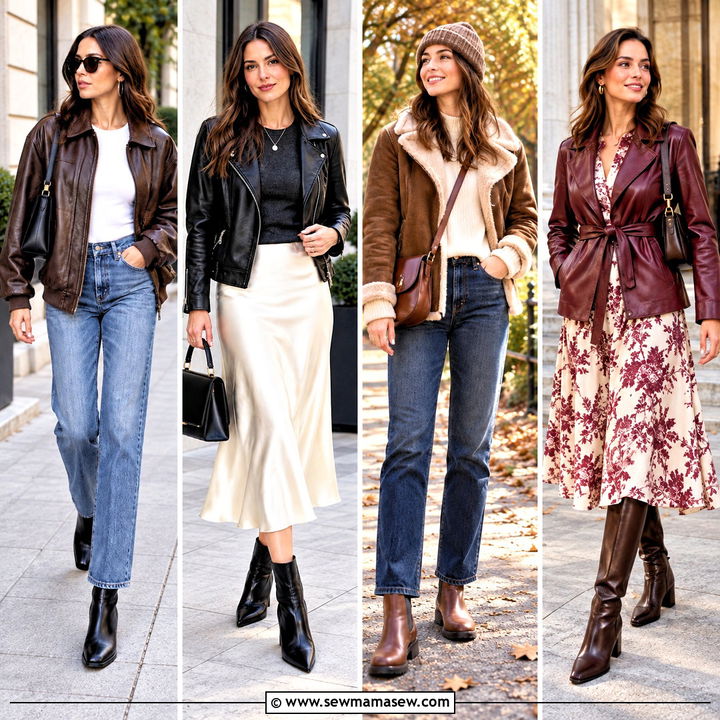
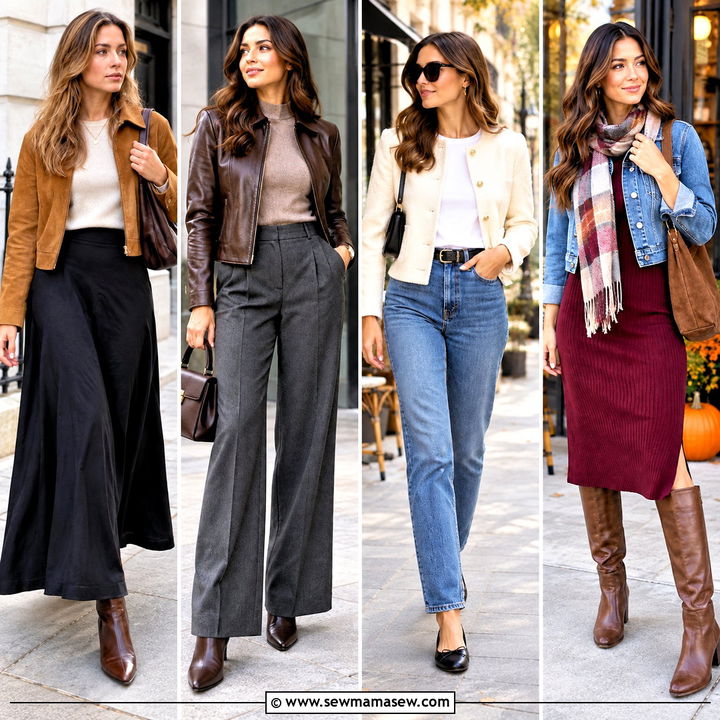
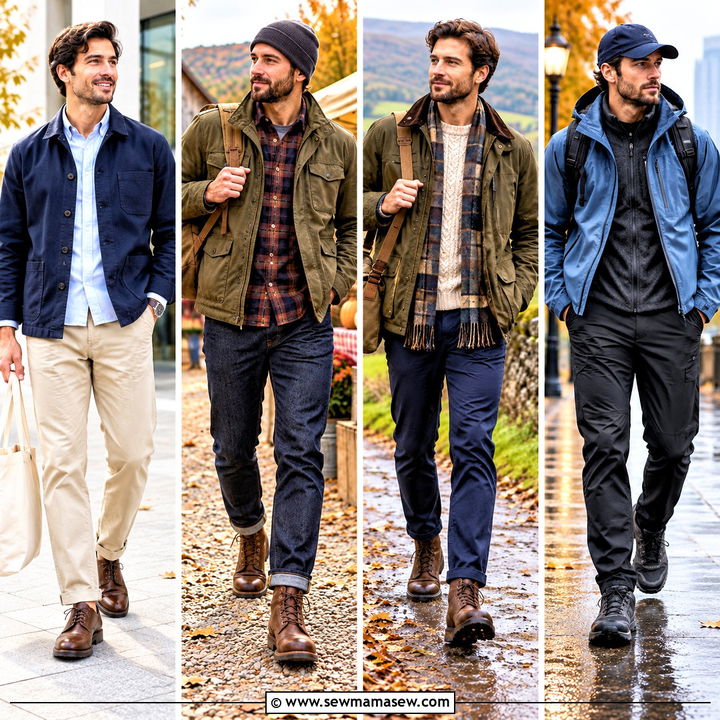
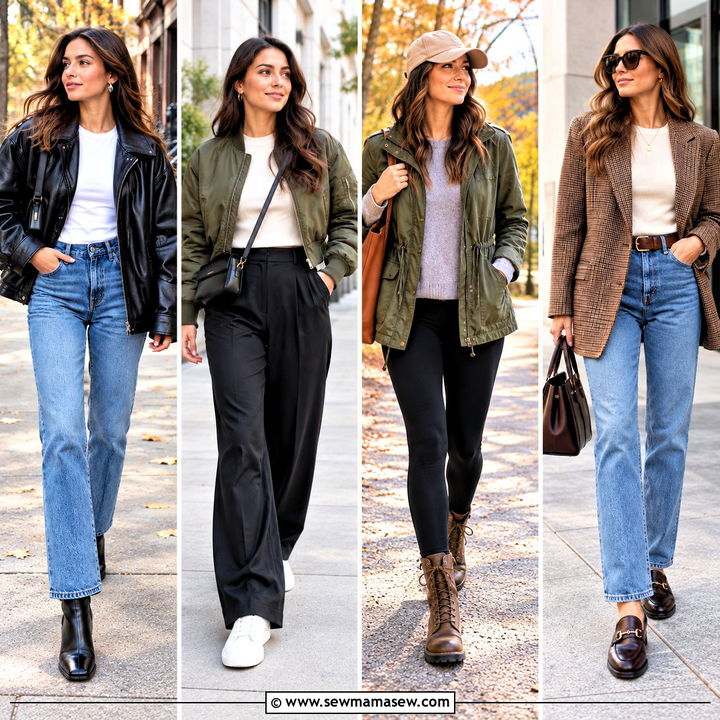
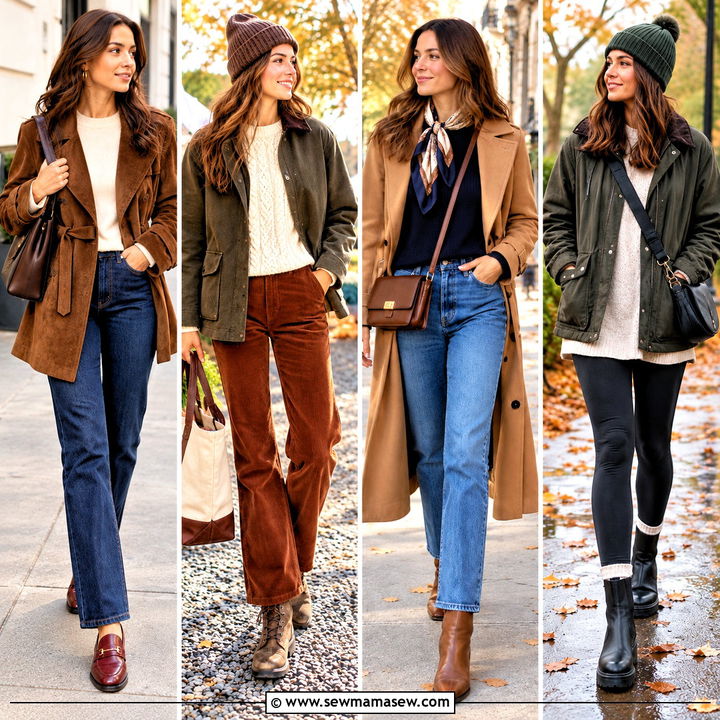
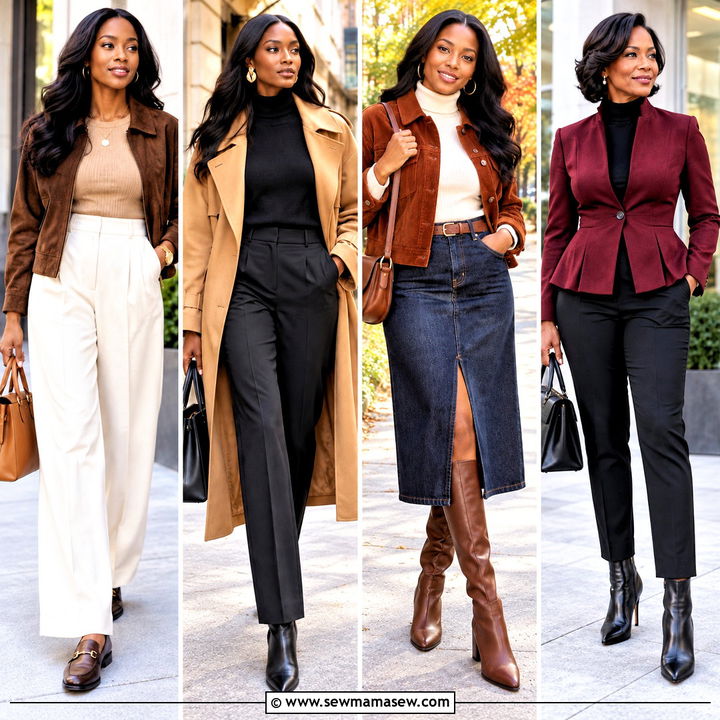
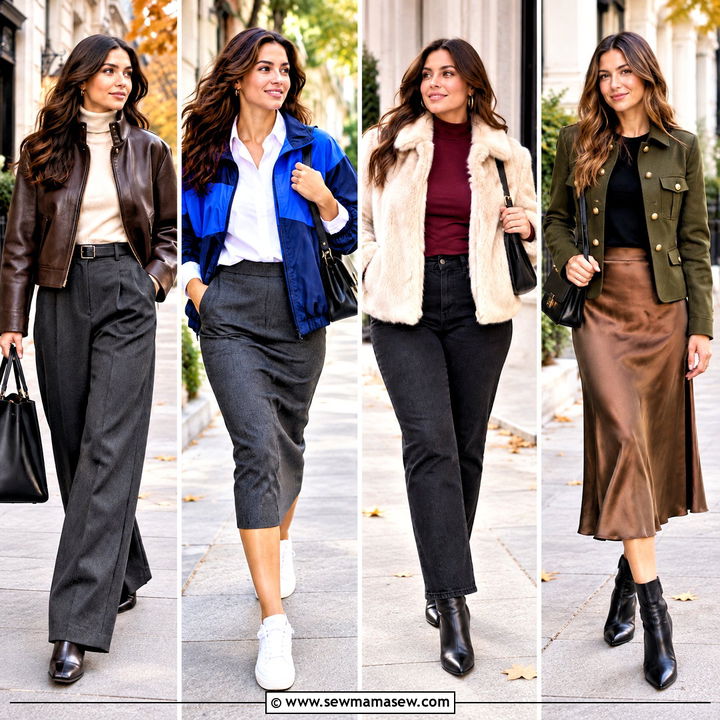
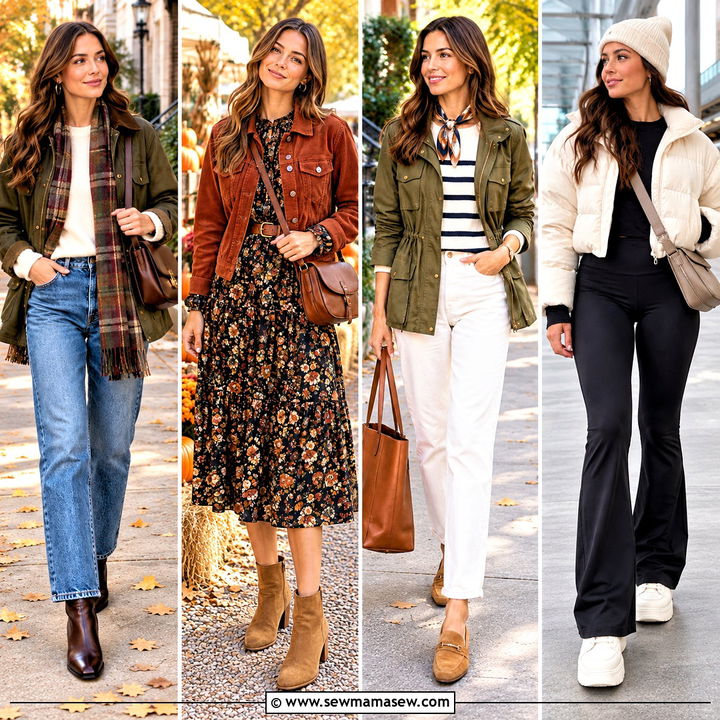
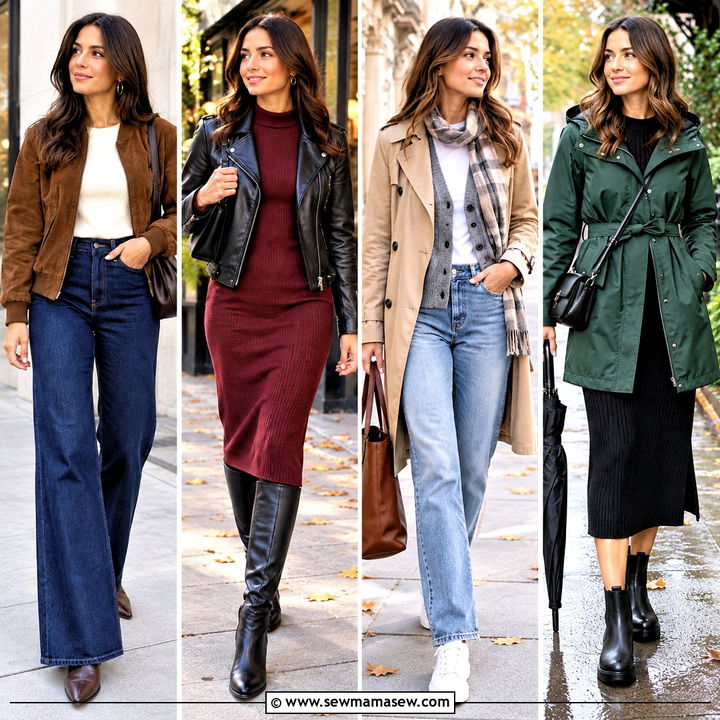
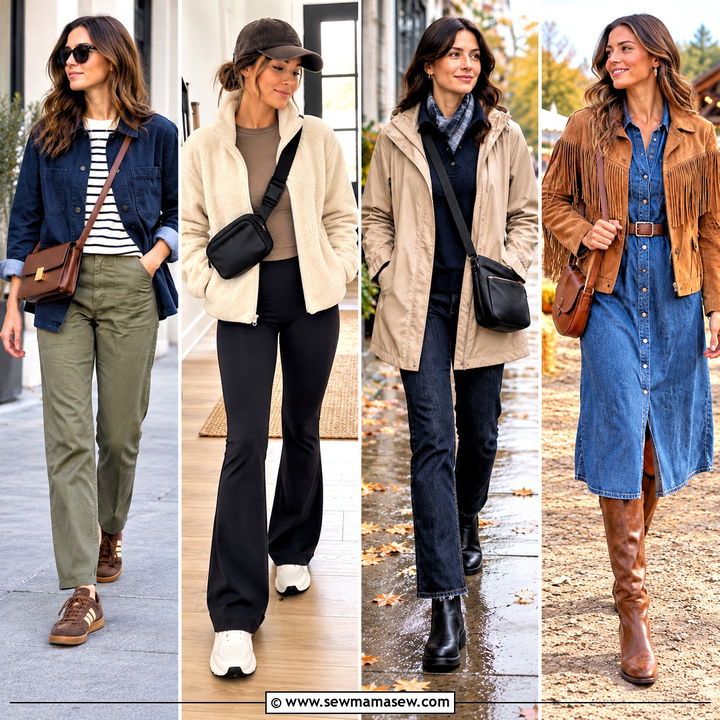
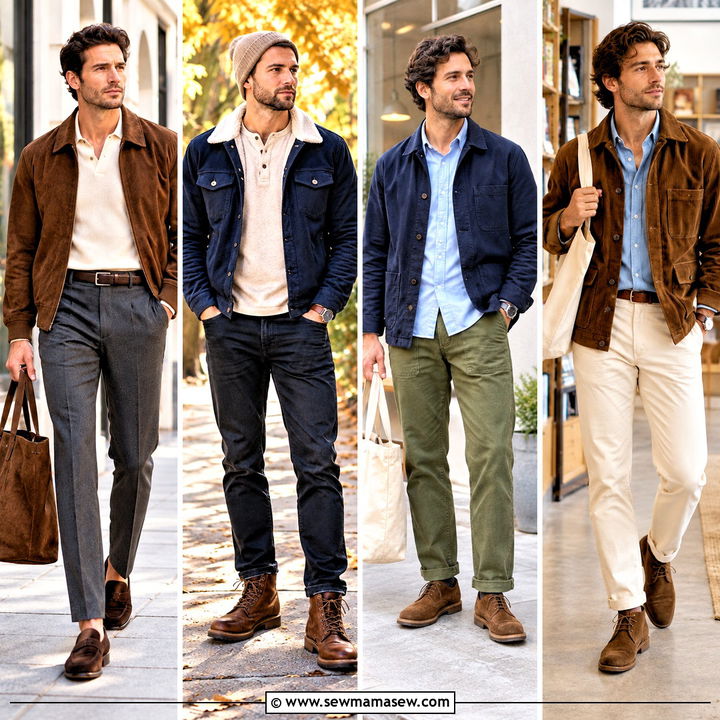
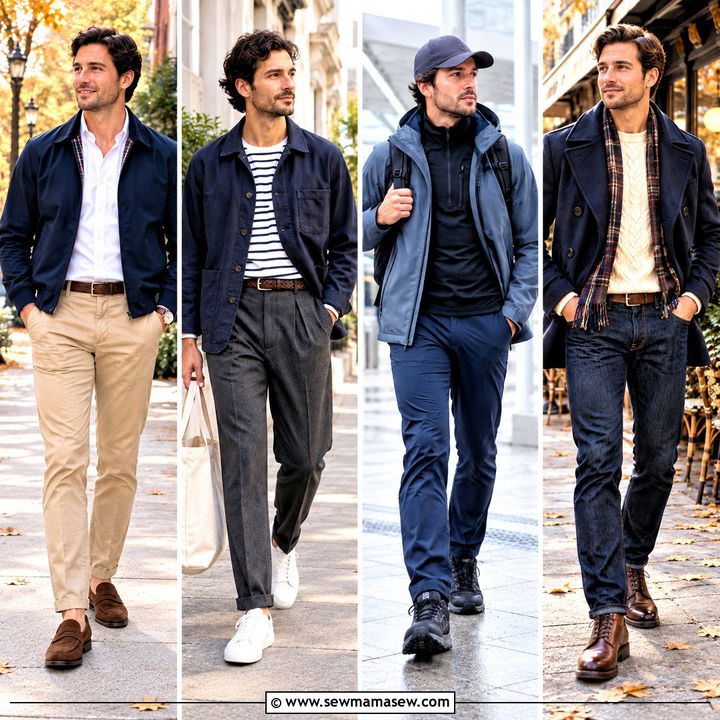
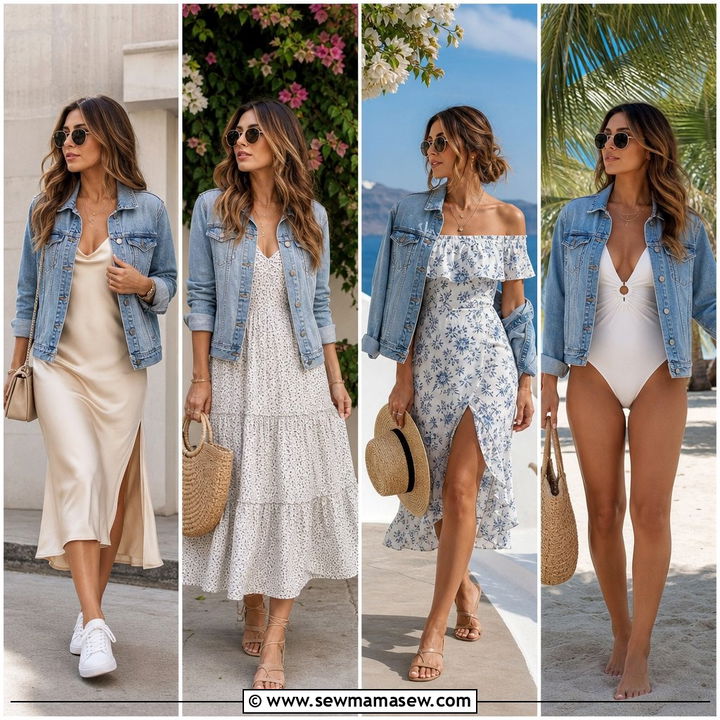
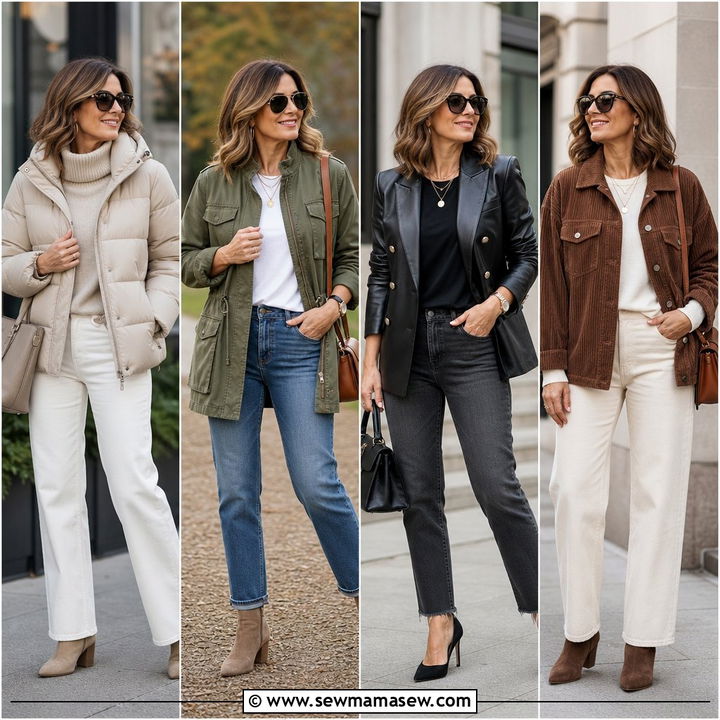
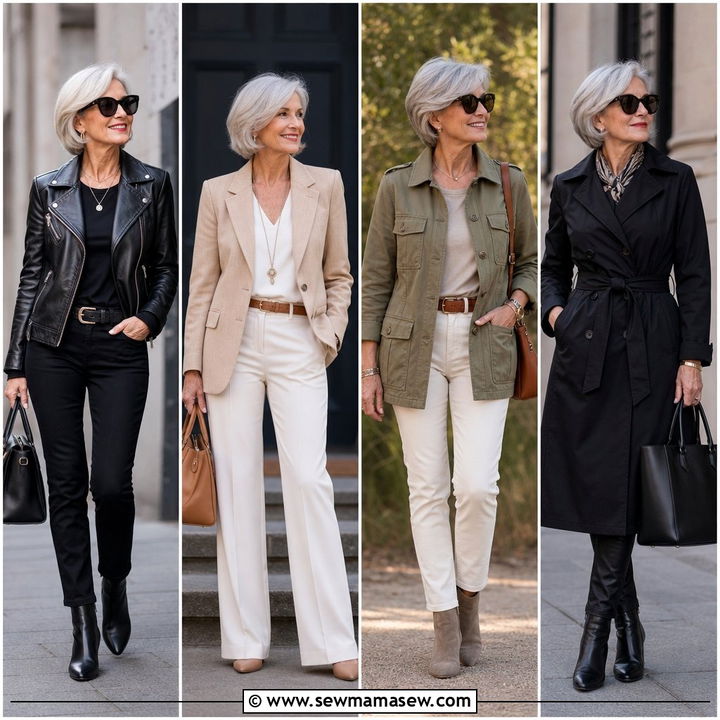
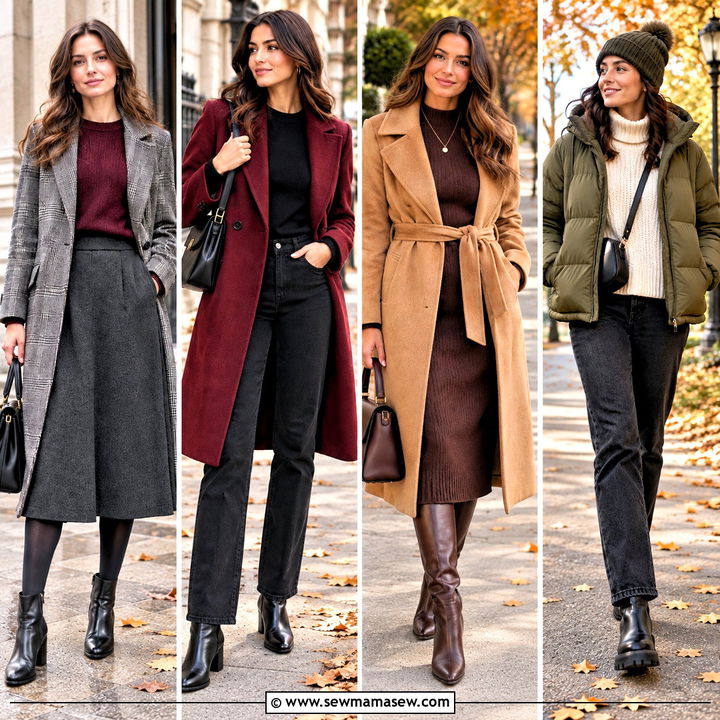
In fall, the jacket is usually the first thing people see and the last thing you think about. I plan it the other way round: decide the jacket, then build the outfit under it. This season gives plenty to work with, from barn jackets, suede and leather bombers to blazers, windbreakers and collarless cuts, and each one refreshes the jeans, trousers, midi skirts and knit dresses you already own. What makes them work is proportion and a short color story from collar to shoe. I've explained where each jacket should end and what goes underneath, and you can swap the shoes and base layer as the temperature moves around through the season.

Where a Jacket Should End Against Your Hemline
Most jacket outfits that look slightly off are a length problem. The jacket ends at the same point as something else, or at the widest part of your body, and the eye stops there. I use a simple rule when I put these looks together: the jacket and the bottom half should never be the same length, and one of them should be clearly longer.
- Cropped to the waist (moto, bomber, short wool, varsity): best over fuller skirts, wide trousers and high-rise jeans. It shows off the waist and lets the bottom half take up space.
- Hip length (barn, utility, field, quilted): the most forgiving. Works over straight jeans and leggings, and covers the seat if you prefer that.
- Below the hip (oversized blazer, shirt-jacket, long puffer): needs a slimmer or shorter bottom, like cropped jeans or straight trousers, so the outfit doesn't turn into one big rectangle.
If you're petite, cropped and hip-length jackets almost always look more balanced than long ones. Taller women can wear the longer cuts with wide trousers without being swallowed.
Buy the Jacket Wearing Your Thickest Sweater
A fall jacket has to fit over whatever you'll wear in November, not just the thin tee you tried it on with. I always ask people to bring, or wear, their bulkiest knit when they shop. Then I check that the shoulder seam still sits at the edge of the shoulder, that the sleeves don't ride up when you reach forward, and that the front closes without pulling.
If the jacket only fits over thin layers, it's an early-fall jacket and you'll want something else by the time it's cold. That's fine, but know it when you buy. Oversized blazers and barn jackets are usually cut with room built in. Moto jackets and cropped wool jackets usually aren't.
1. Barn Jacket With Straight-Leg Jeans
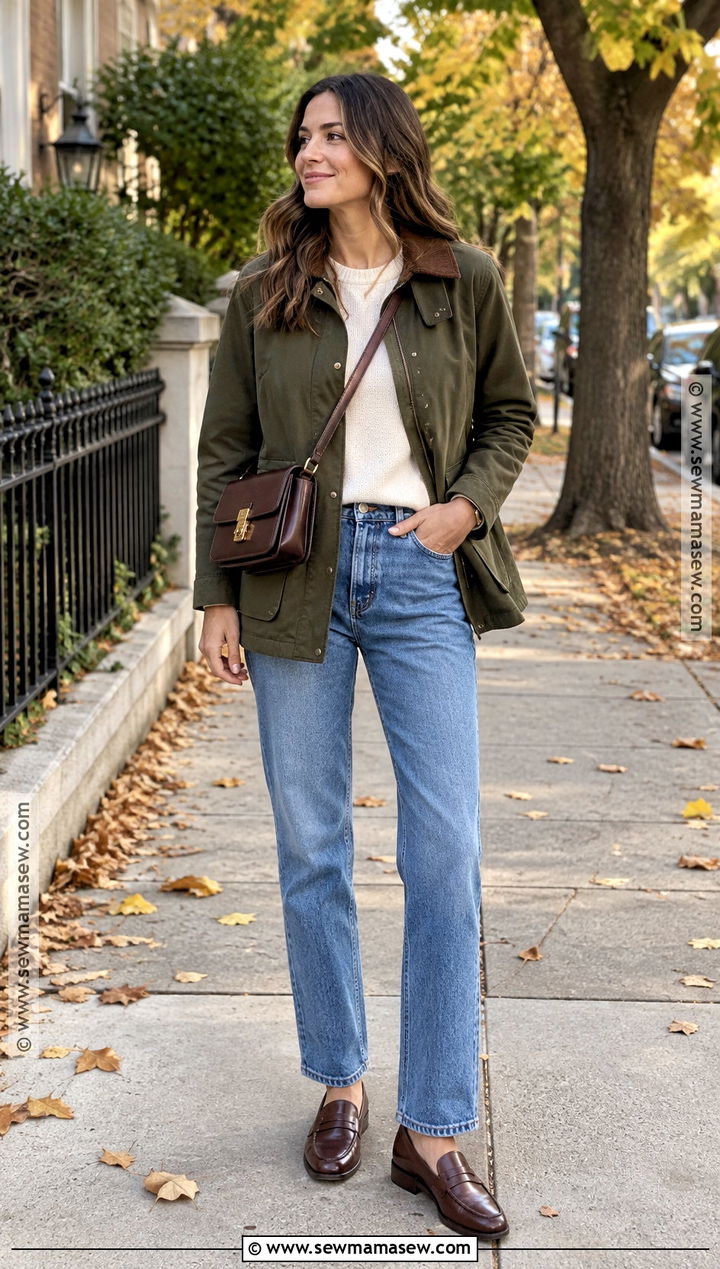
Barn jackets are cut roomy on purpose, so a sweater fits underneath, and that's what makes them so useful in changeable weather. I'd choose olive, tan or chocolate with a contrasting corduroy collar, and put a cream crewneck or fitted long-sleeve tee under it to lift all those earthy shades. Medium-wash straight jeans keep it relaxed; dark denim makes it a touch smarter. Brown loafers, ankle boots or retro sneakers all suit it. Most barn jackets are cotton canvas, which shrugs off wind and light drizzle but soaks through in a real downpour unless it's waxed. A structured crossbody stops it looking like farm clothing.
2. Suede Bomber Jacket With Wide-Leg Trousers
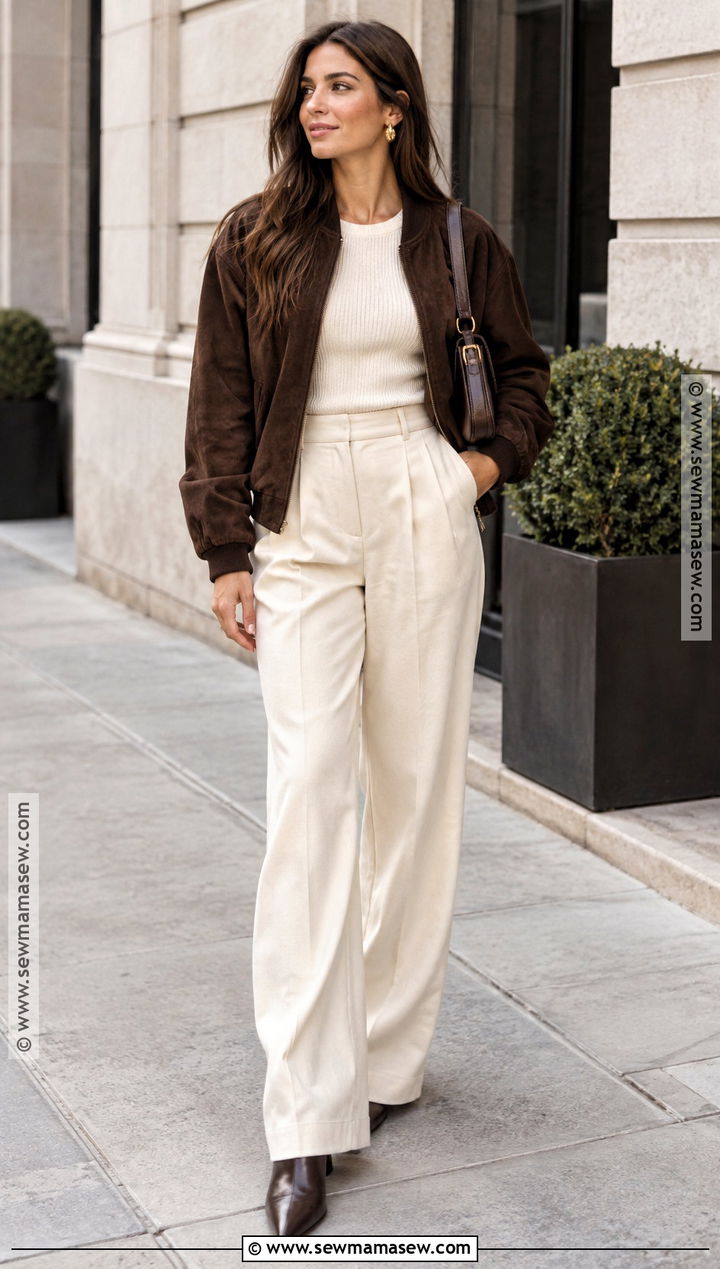
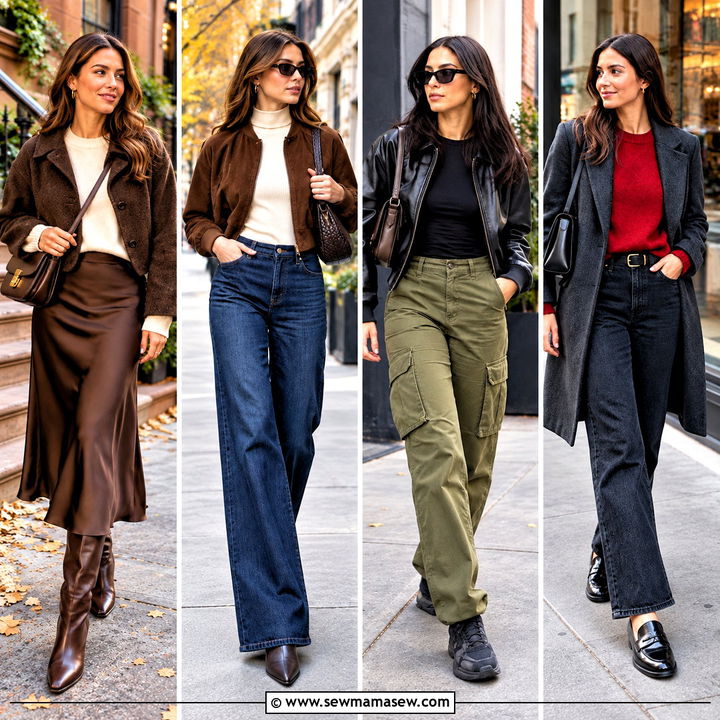
Brown suede gives an outfit depth that flat fabrics can't. A relaxed suede bomber over a fitted ivory knit and high-waisted wide-leg trousers is the version I like best. Cream, camel or dark chocolate trousers keep it tonal; charcoal gives sharper contrast. Hip length is right here, because a longer bomber plus wide trousers turns into a lot of volume. Pointed ankle boots under the hem and a slim belt define things. Suede already reads heavy, so I keep the knit smooth and the tailoring clean and let the jacket be the texture. It's a lunch and polished-weekend outfit, not a rainy one.
3. Leather Moto Jacket With a Midi Skirt
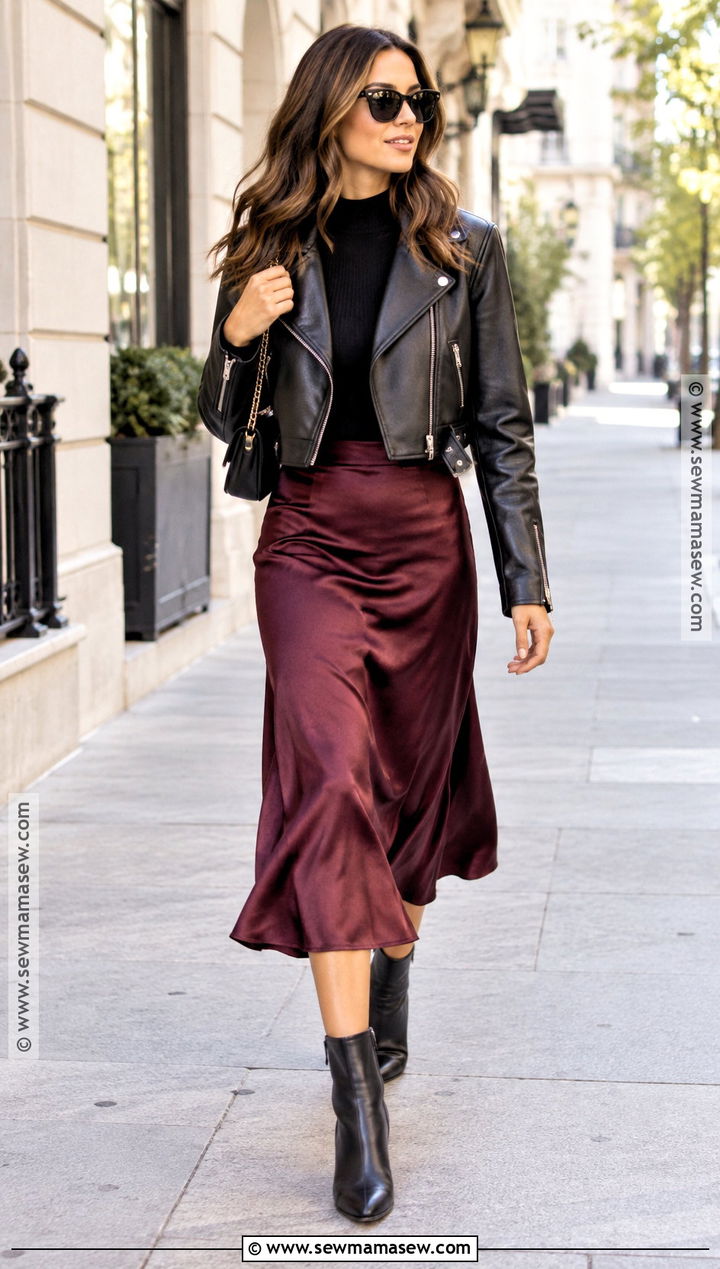
Pairing tough leather with a fluid skirt is one of my favorite contrasts. A black leather moto jacket over a fitted knit, with a satin, pleated or softly draped midi skirt in burgundy, deep olive, gray or a quiet fall print. The jacket must stop at the waist or upper hip, since anything longer chops the skirt in half and you lose its movement. Black ankle boots keep it cohesive early in the season; tall boots take over when it gets colder. One compact bag and understated jewelry are enough, because the leather is already the strong piece in the outfit.
4. Oversized Blazer With Cropped Jeans
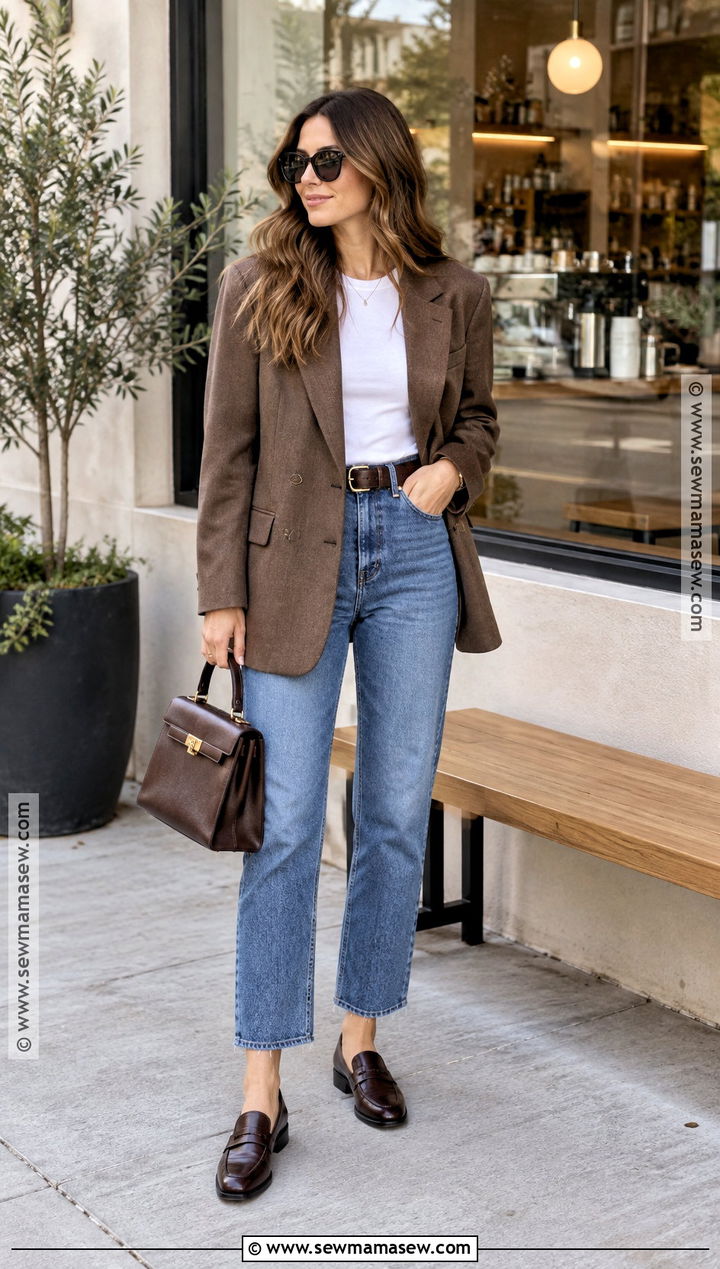
An oversized blazer over cropped jeans is a formula I come back to constantly. Start with cropped straight jeans and a light crewneck or fitted white tee, then a roomy brown, charcoal, navy or checked blazer that falls below the hips. The long jacket brings structure; the short jeans show ankle and stop the outfit sinking. Loafers suit mild days, sleek ankle boots cover more when it's cold. If the blazer has strong shoulders, the base layer has to stay close to the body or the top half doubles in width. A brown blazer, cropped denim and loafers is comfortable and quietly smart, and it isn't going anywhere.
5. Trench Jacket With Black Trousers
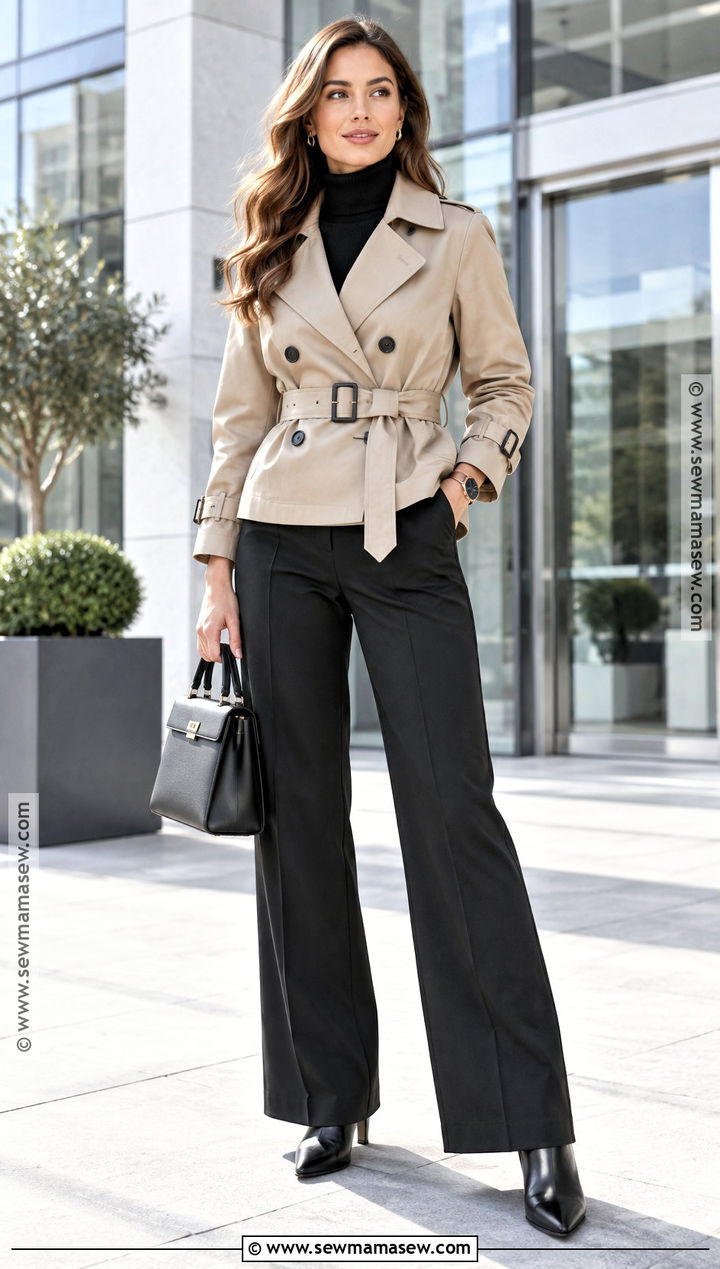
A short trench gives you the look of the classic coat without the length, which is helpful for petite frames and casual outfits. Layer beige, khaki or stone over a black turtleneck and black tailored trousers; the dark base forms one column and the light jacket stands out against it. Straight or gently wide trousers both work. Black pointed flats, low boots or loafers keep it refined. On rainy days, switch to water-resistant ankle boots. Wear it open, or tie the belt loosely at the waist. I'd tie, rather than buckle, a trench belt; buckling looks stiff and tends to sit crooked.
6. Denim Jacket With a Knit Maxi Dress
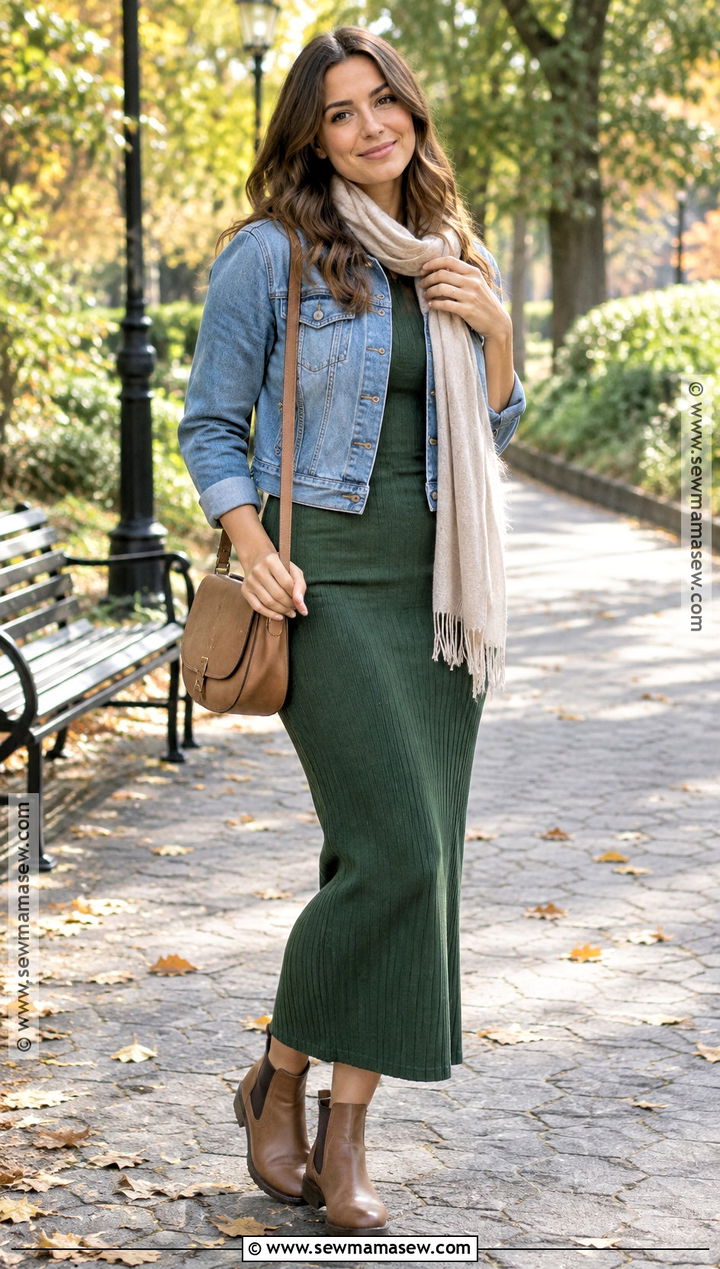
A ribbed knit maxi and a denim jacket is the outfit for those first cool mornings of early fall. Choose a dress in black, rust, forest green, taupe or heather gray, and a medium-wash jacket to break up the long line. Cropped jackets show the waist; slightly oversized ones are more weekend. White leather sneakers, Chelsea boots or low Western boots all suit it. Knit maxis can cling and pull at the hips, so I size so there's a little ease rather than a body-hugging fit. Make sure the hem shows the shoe. For more shape, leave the jacket open and add a narrow belt over the dress.
7. Utility Jacket With Cargo Pants
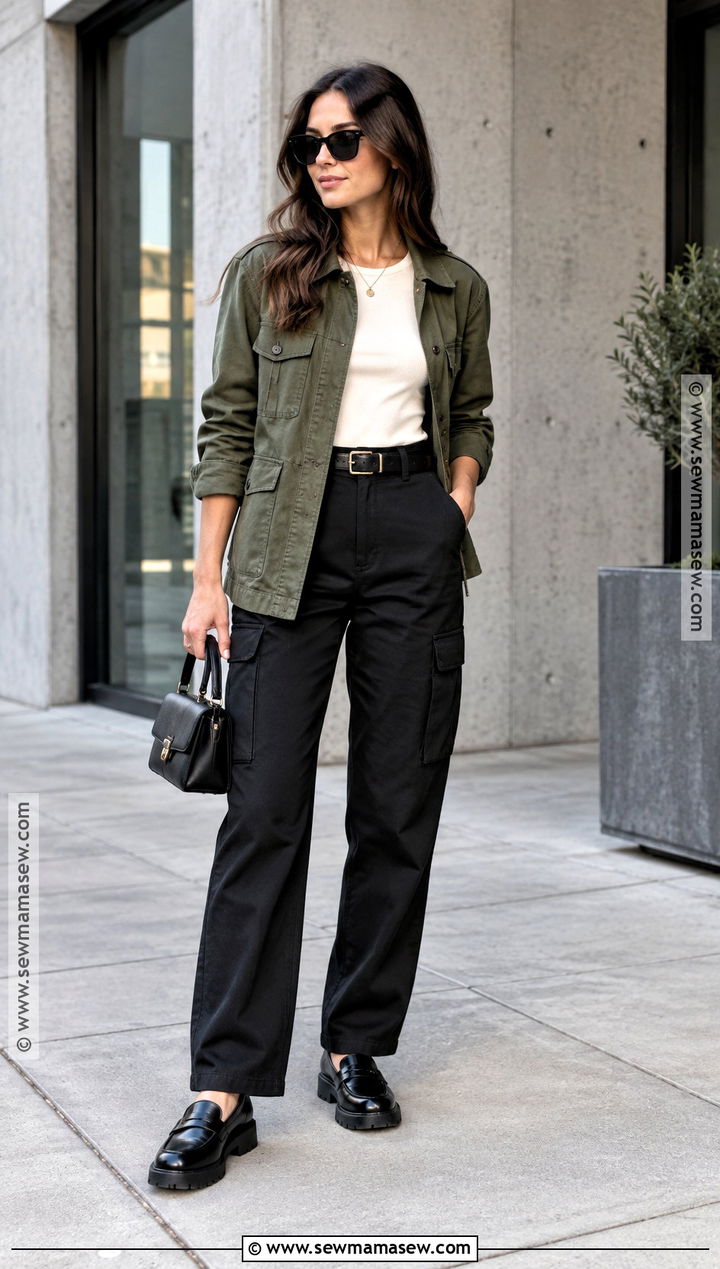
Can a utility outfit look polished? Yes, when every piece fits cleanly and the colors don't all match. An olive utility jacket, a fitted black or cream top and tailored cargo pants with flat, streamlined pockets. Black, stone or chocolate trousers sit well against olive without creating a uniform. Sleek sneakers for a casual day; lug-sole loafers for a sharper finish. A small structured bag adds contrast to all the practical fabric. When both the jacket and the pants are loose, I tuck the top or add a leather belt, because two roomy pieces with nothing at the waist just hide your shape.
8. Cropped Wool Jacket With a Midi Dress
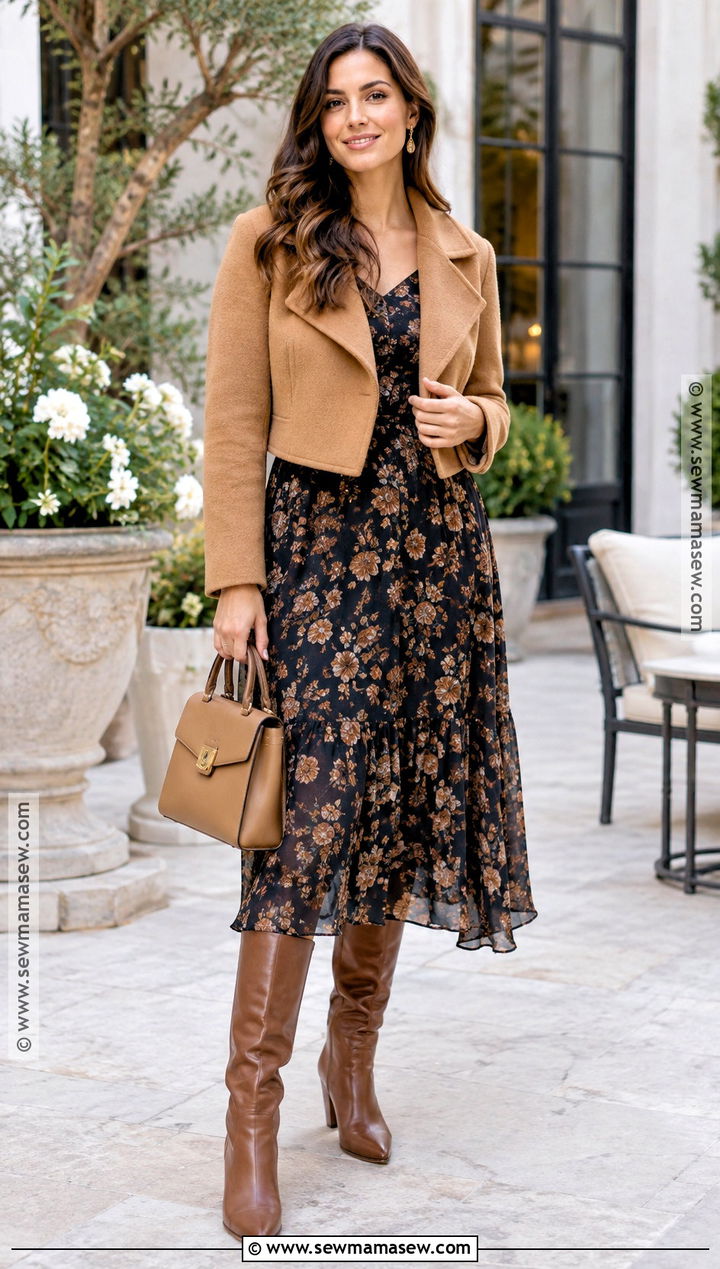
A cropped wool jacket keeps a midi dress warm without hiding its shape, which a long coat would. I look for a collarless or softly structured cut in camel, navy, charcoal or winter white, and put it over a printed midi or a solid knit dress with a defined waist. Knee-high boots handle cold days and close the gap between hem and shoe. Match the bag to either the jacket or the boots, not both. Because this jacket ends at the waist, it's at its best over fuller skirts and fit-and-flare dresses. With a straight shift dress it can look as if the jacket shrank.
9. Quilted Jacket With Leggings and Sneakers
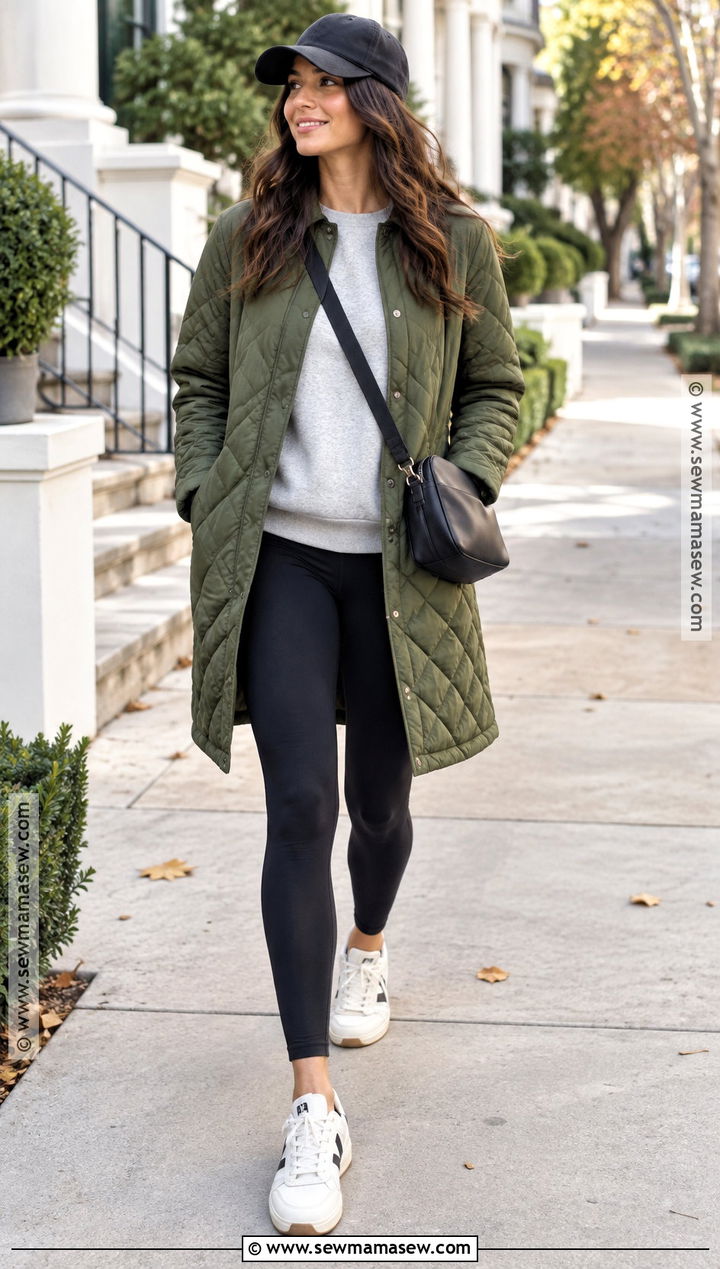
Some fall days are purely about comfort. A light quilted jacket, black leggings and supportive sneakers are what I'd wear for errands, school runs or travel. Pick a jacket that covers the upper hips and fits a sweatshirt underneath. Olive, black, navy and warm beige are easy colors. Leggings should be matte and opaque, because thin ones look shiny and see-through against quilted nylon. Retro sneakers or running-style shoes keep you comfortable without looking careless. Side snaps, a drawstring waist or curved seams on the jacket help it keep some shape instead of hanging straight.
10. Windbreaker Jacket With a Pencil Skirt
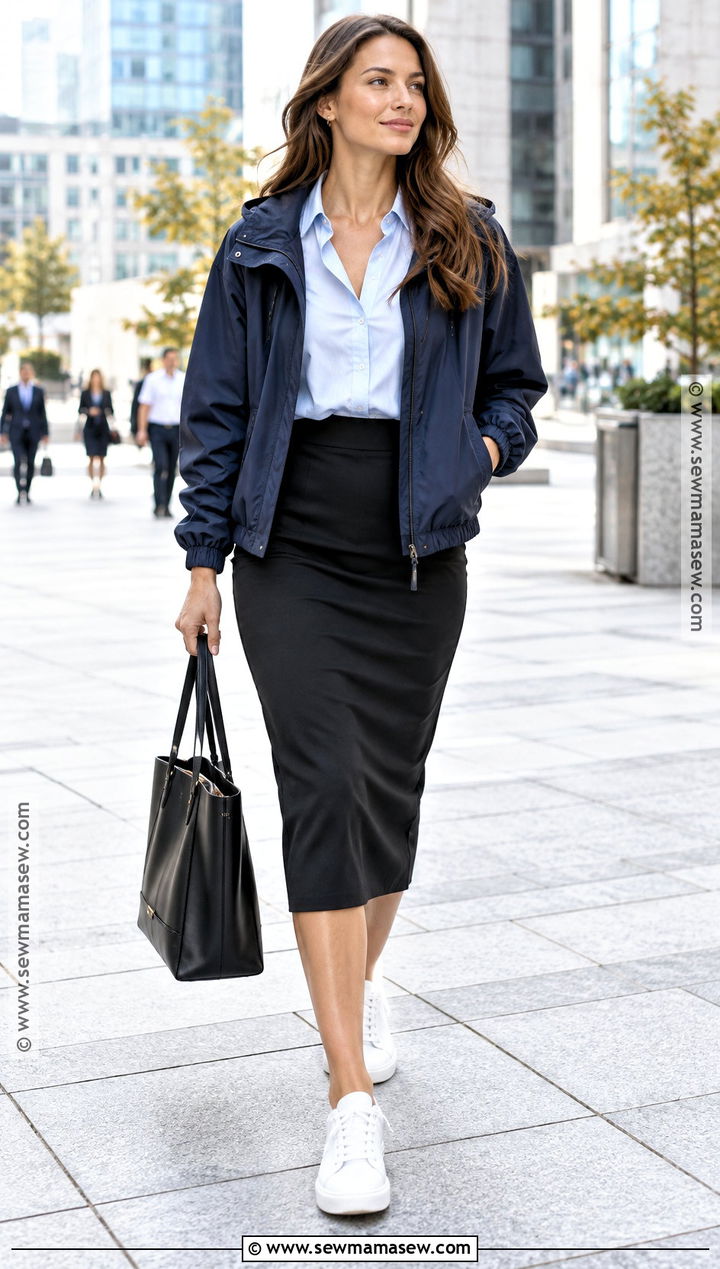
Windbreakers look surprisingly polished over tailoring. Put a light color-blocked or solid windbreaker over a crisp button-down and a knee-length or midi pencil skirt. Black, navy, burgundy or olive keep it away from gym clothing. Slim sneakers make it street style; low pumps or loafers make it office-ready. I keep the windbreaker relaxed but not huge, particularly over a close skirt, or the top swamps the bottom. A structured tote bridges the sporty and smart pieces. Practical note: most windbreakers block wind well but aren't fully waterproof, so they're for blustery days, not steady rain.
11. Shearling Jacket With Flared Jeans
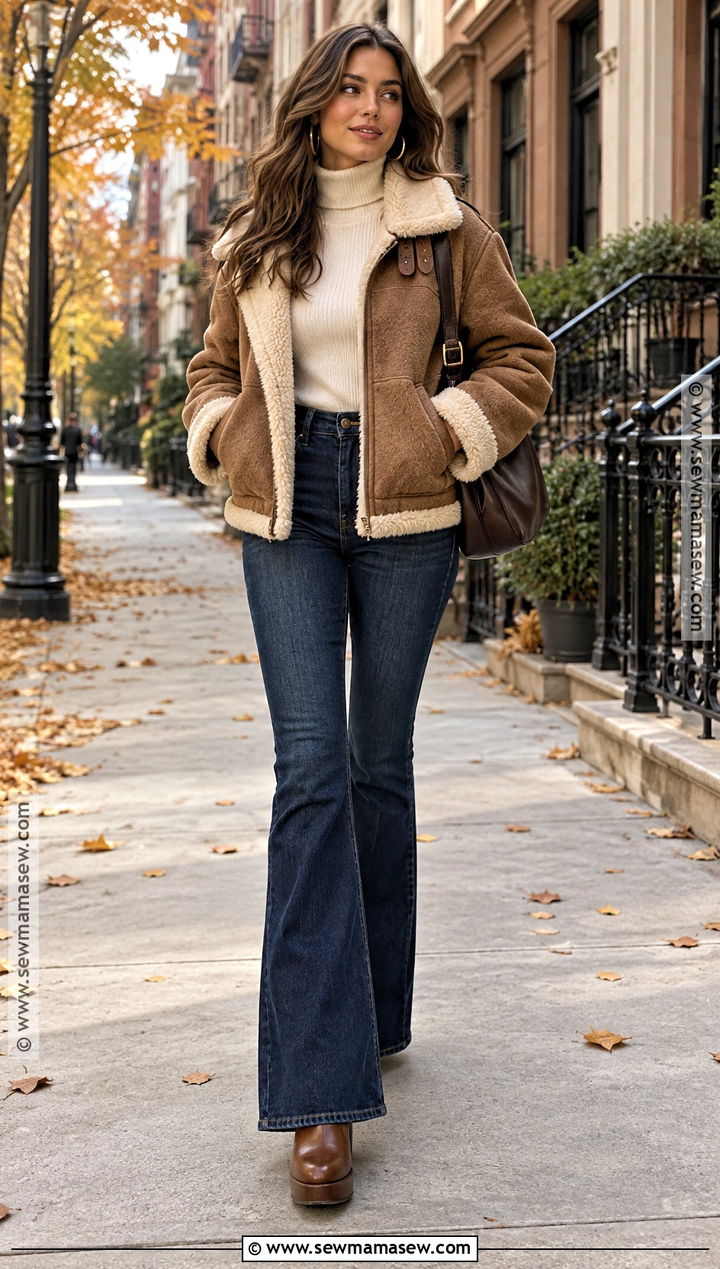
A shearling aviator with flares has a definite seventies feel. Choose a cropped jacket in tan, dark brown or black with a faux-shearling lining, and keep the layer under it thin, since a fitted turtleneck is plenty. Shearling is warm enough that a chunky sweater makes you overheat indoors and look bulky outside. High-rise flares balance the substantial jacket and lengthen the leg. Platform ankle boots or heeled clogs give the wide hem the height it needs. If the collar is big, skip the scarf. Dark denim looks polished; faded blue jeans make it a casual weekend outfit.
12. Collarless Jacket With Tailored Trousers
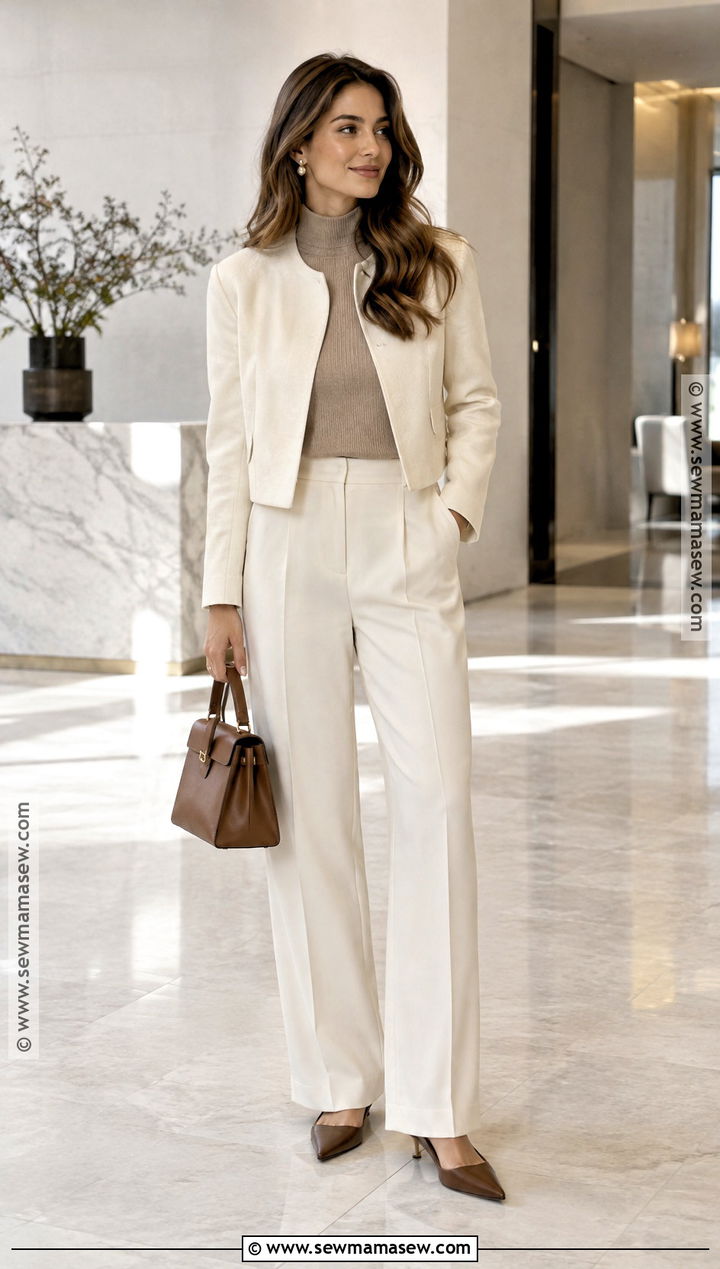
Collarless jackets look clean and modern because there's nothing at the neck to fuss with. Wear a cropped black, cream or textured gray one over a fine-gauge mock-neck, with high-waisted tailored trousers in a coordinating neutral for a long, uninterrupted line. Straight or gently tapered trousers suit the jacket's neat shape. Pointed flats, low slingbacks or polished loafers finish it. With such a simple neckline, small statement earrings or a short necklace have room to show. The shape has had a strong moment recently, but its plain construction means I'd expect to wear one for many years.
13. Peplum Jacket With a Column Skirt
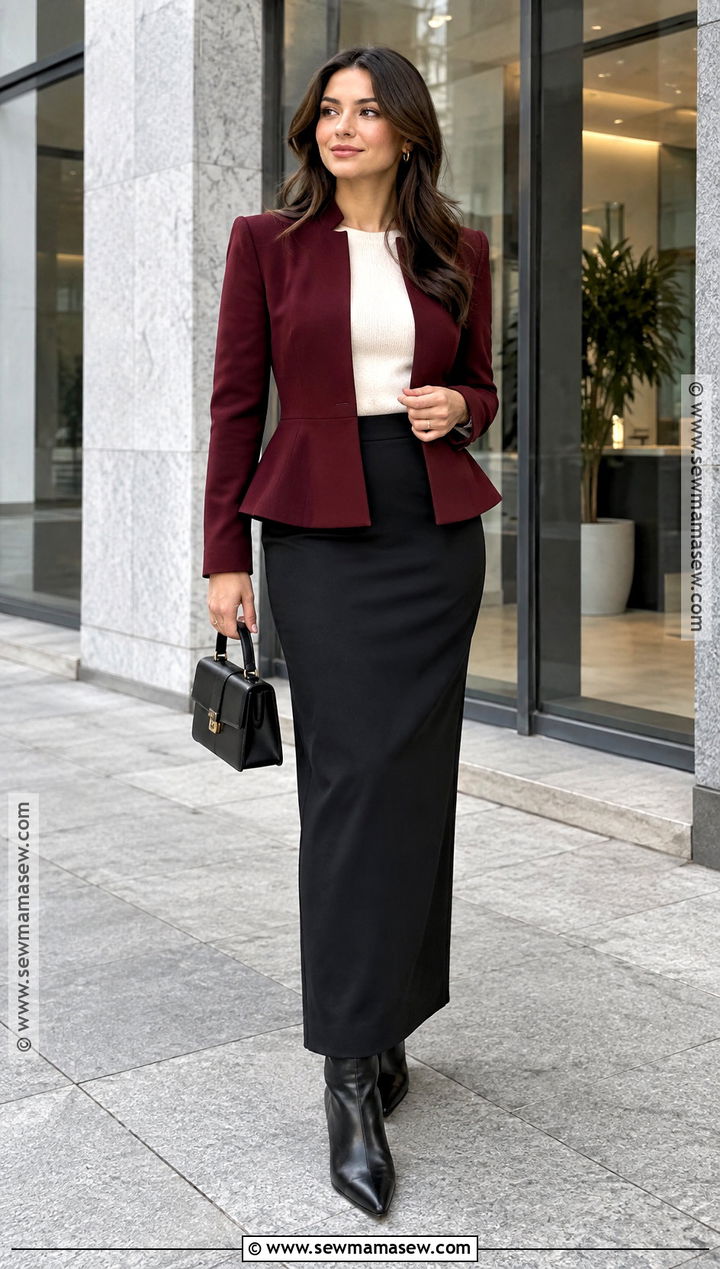
A peplum jacket defines the waist for you, so pair it with a skirt that does nothing but fall straight. Choose a fitted jacket in black, burgundy, olive or deep brown over a camisole or thin knit, and a column skirt that drops from the hip to below the knee or to the ankle. Pointed ankle boots or low heels and a compact rectangular bag keep it sleek. Skip the wide belt; the peplum already does that job, and the two together look crowded. If you'd prefer less structure, choose a subtle flared hem over a dramatic ruffle. It suits work, presentations and dinner.
14. Corduroy Jacket With Dark-Wash Jeans
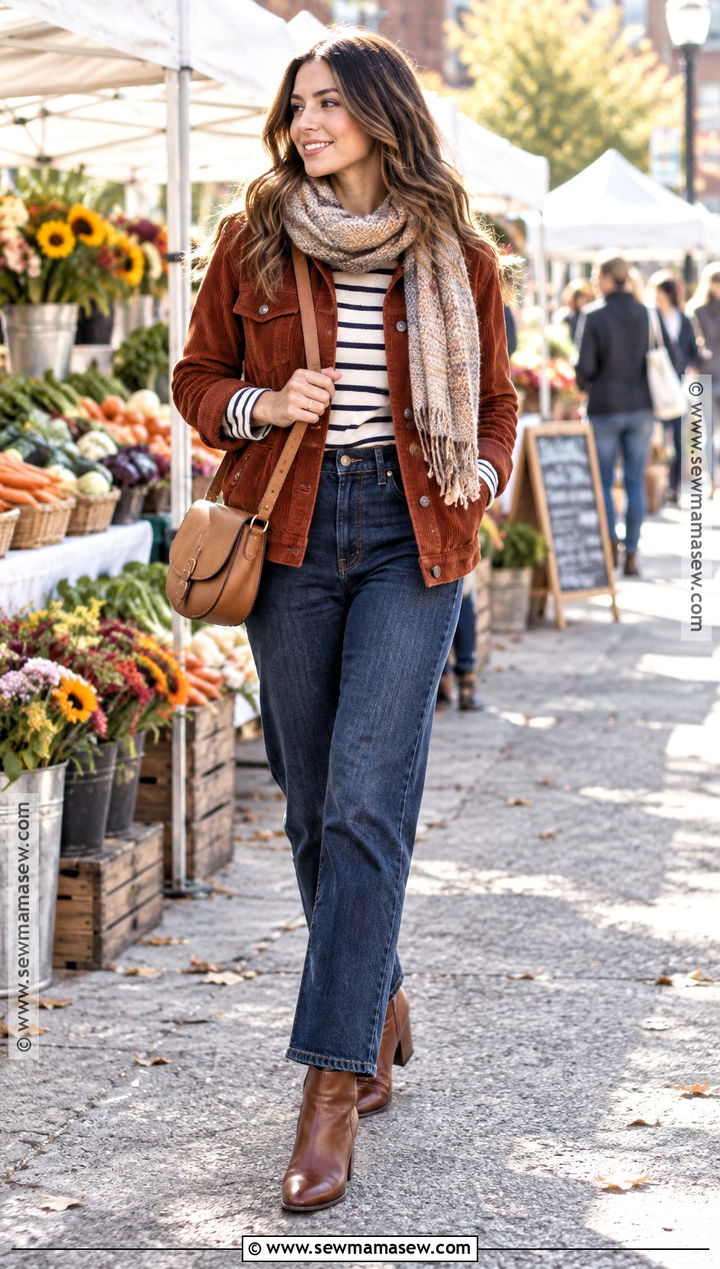
Soft corduroy in a warm earthy color is the most casual jacket fabric on this list. Pair a rust, camel, forest-green or chocolate cord jacket with a striped long-sleeve tee and dark jeans. Straight, slim or gently bootcut denim all work, as long as the jacket and jeans aren't both loose. Brown ankle boots keep it autumnal; cream sneakers lighten it. I'd usually steer people to fine-wale cord for a jacket, because it layers flatter and looks neater than thick, wide-wale fabric. Keep the stripe neutral so it doesn't argue with the jacket. A woven scarf on cold mornings.
15. Plaid Jacket With a Sweater Dress
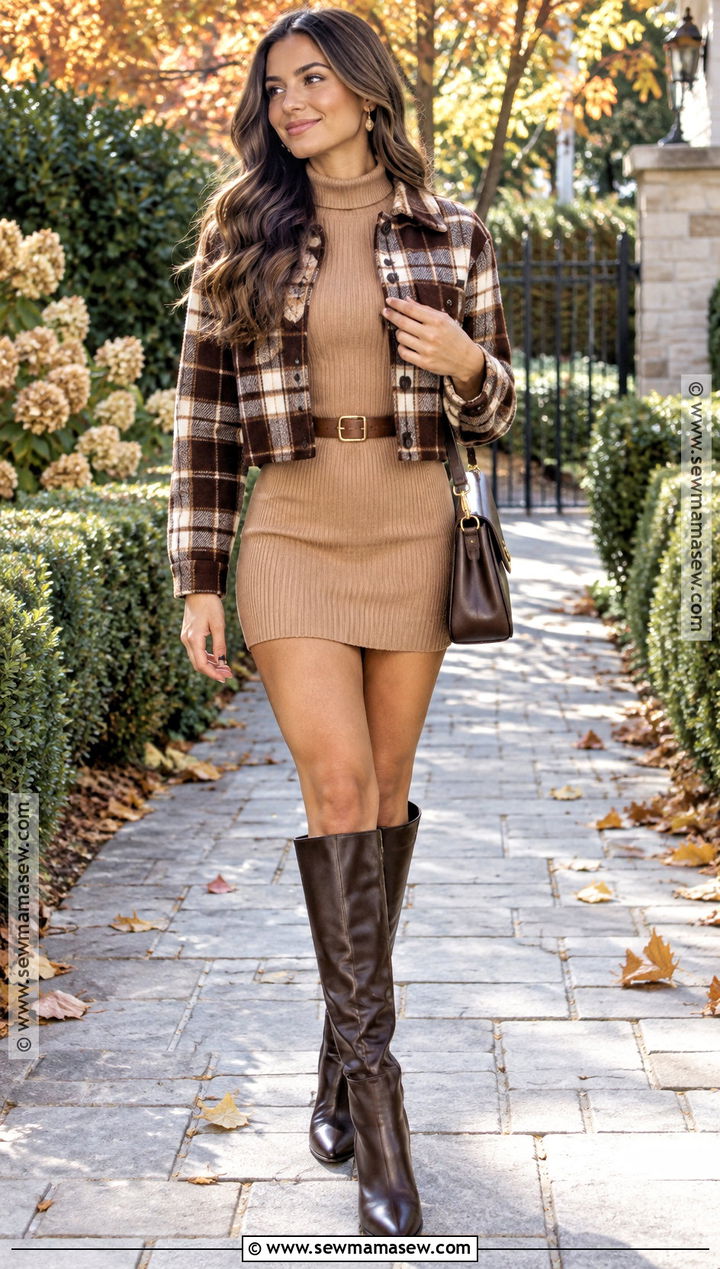
Plaid over a plain sweater dress adds pattern without any complicated layering. Start with a solid knee-length or midi knit in black, cream, camel or burgundy, then a plaid jacket that contains at least one color from the dress so the two clearly belong together. Cropped jackets define the waist; a longer shirt-jacket is more casual. Knee-high leather boots and a structured bag finish it. With a large or colorful plaid, keep jewelry small and avoid any second print. A belt on a loose dress should sit under the open jacket. Knit dresses stretch at the seat after long sitting, so I'd choose one with some recovery.
16. Varsity Jacket With a Pleated Skirt
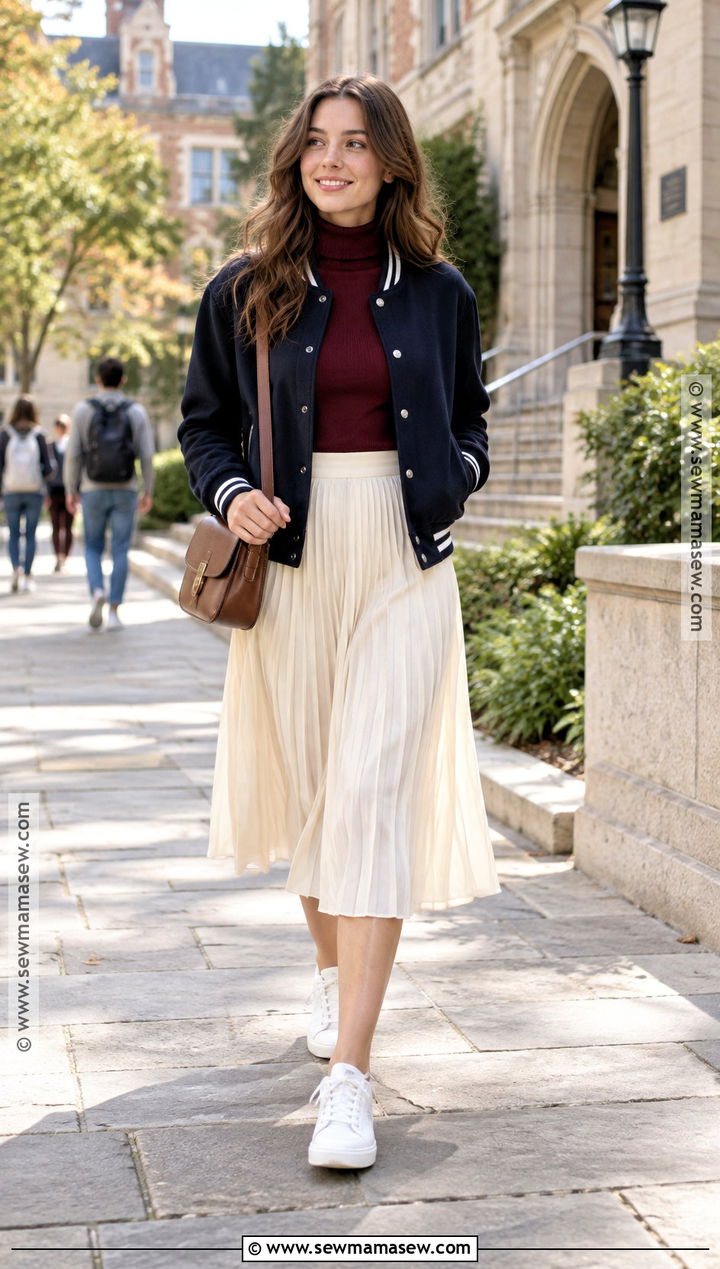
Varsity jackets look grown-up when the colors are restrained and the lettering is minimal. Choose black, navy, burgundy or a neutral, and layer it over a fitted turtleneck and a pleated midi skirt. Satin pleats add a little shine; wool-blend ones add warmth. Streamlined sneakers keep it casual and ankle boots make it dressier. The skirt has to start at the natural waist, since a varsity jacket is short and boxy and a low-slung skirt leaves an awkward band of sweater in between. Push the sleeves up in mild weather so the knit shows at the wrist.
17. Field Jacket With White Jeans
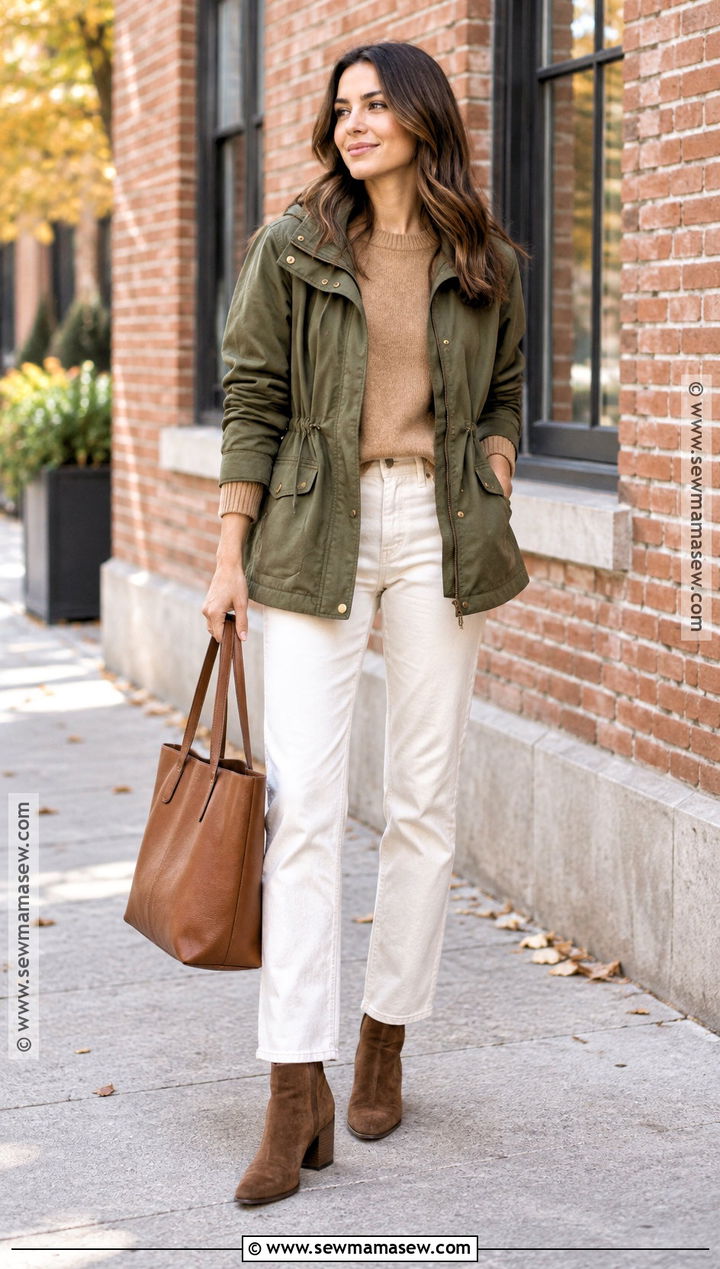
White jeans can stay out after summer. Pair them with an olive or brown field jacket and a camel sweater, striped knit or fitted charcoal tee. What makes white denim look seasonal is substantial footwear like brown loafers, suede ankle boots or retro sneakers, rather than sandals. A cognac tote connects the light jeans to the earthy jacket. If optic white feels too summery, I'd choose ecru, which looks warmer against fall colors. A drawstring field jacket adds shape; a boxy one wants a tucked or fitted top. Best for warm September days and mild climates.
18. Belted Jacket With a Knit Skirt
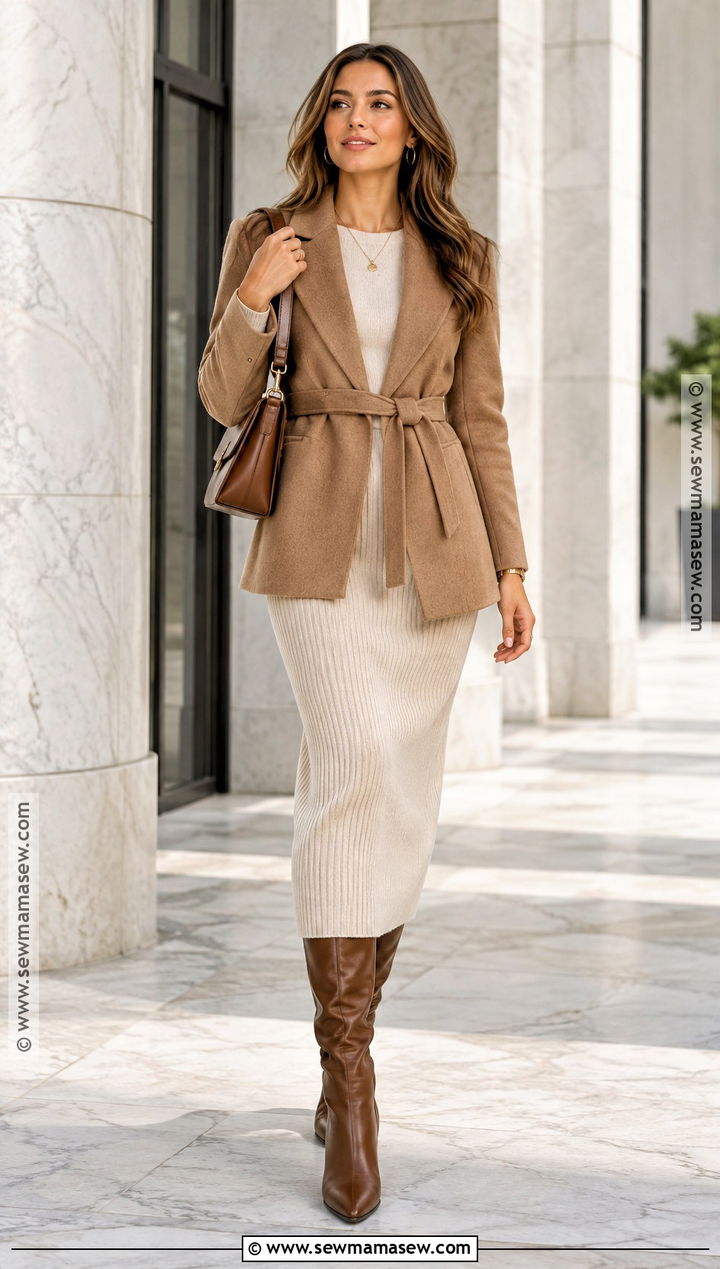
A belted jacket gives shape to soft layers instantly. Wear a wool-blend or structured cotton jacket in camel, gray, olive or navy with a fitted long-sleeve top and a coordinating knit midi skirt. I tie the belt slightly off-center and not too tight, which defines the waist and still lets you sit and reach comfortably. Tall boots disappearing under the skirt hem give a continuous line. For a fuller bust, a lower neckline and adjustable belt position keep the jacket from straining at the front. Petite wearers usually look best in a jacket ending at the upper hip.
19. Tweed Jacket With Relaxed Jeans
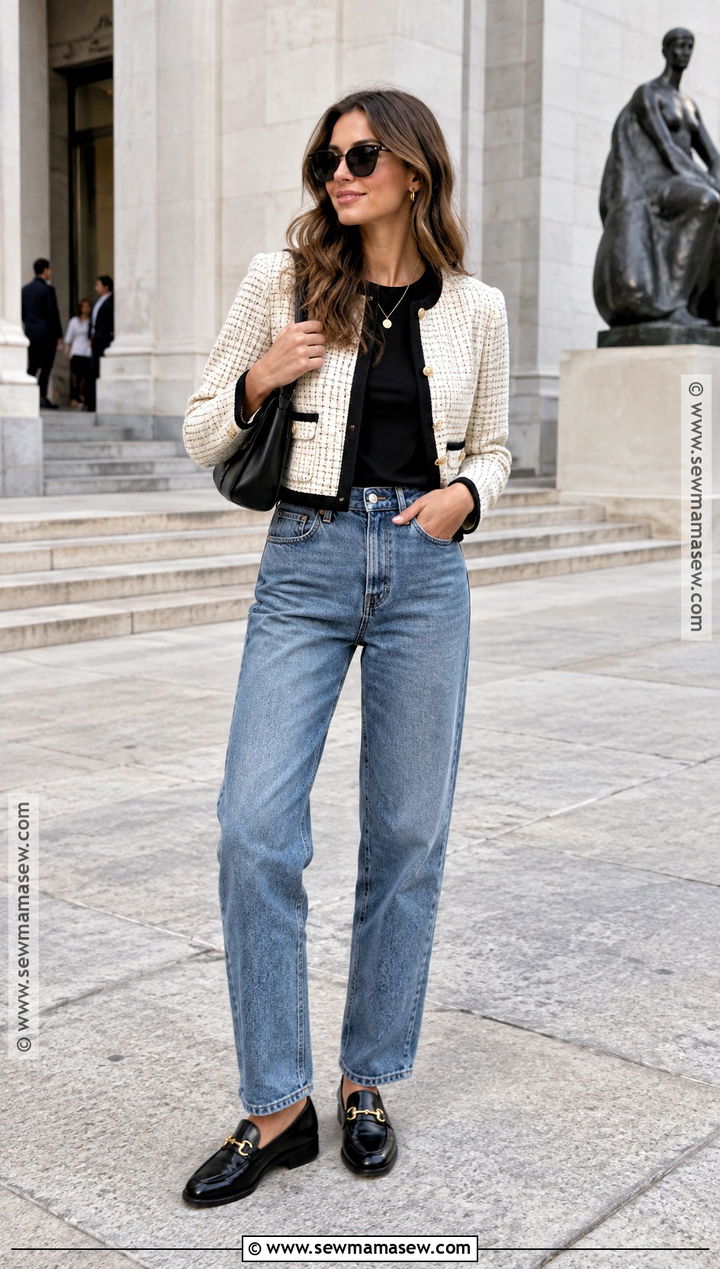
Tweed with matching formal separates can feel old-fashioned. With relaxed jeans it doesn't. Wear a cream, black, brown or multicolor tweed jacket over a plain cotton tee or thin turtleneck, with relaxed straight jeans that have a clean hem and minimal distressing. Ballet flats, loafers or low block heels give a neat counterpoint. If the tweed has metallic threads, skip shiny accessories. Cropped tweed works with high-rise jeans; longer cuts want a fitted base. Tweed snags on rough bag straps and velcro, so I'd carry a smooth leather shoulder bag with this one.
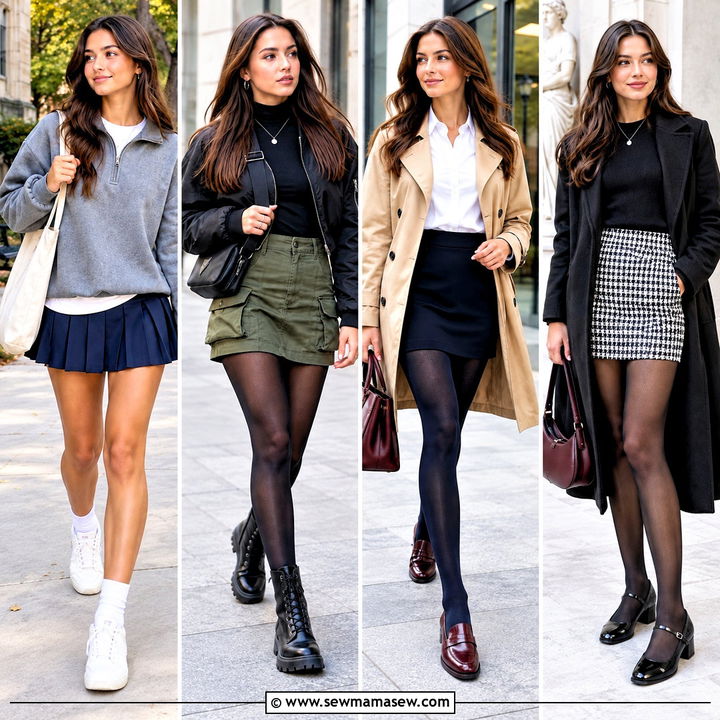
20. Puffer Jacket With Wide-Leg Jeans
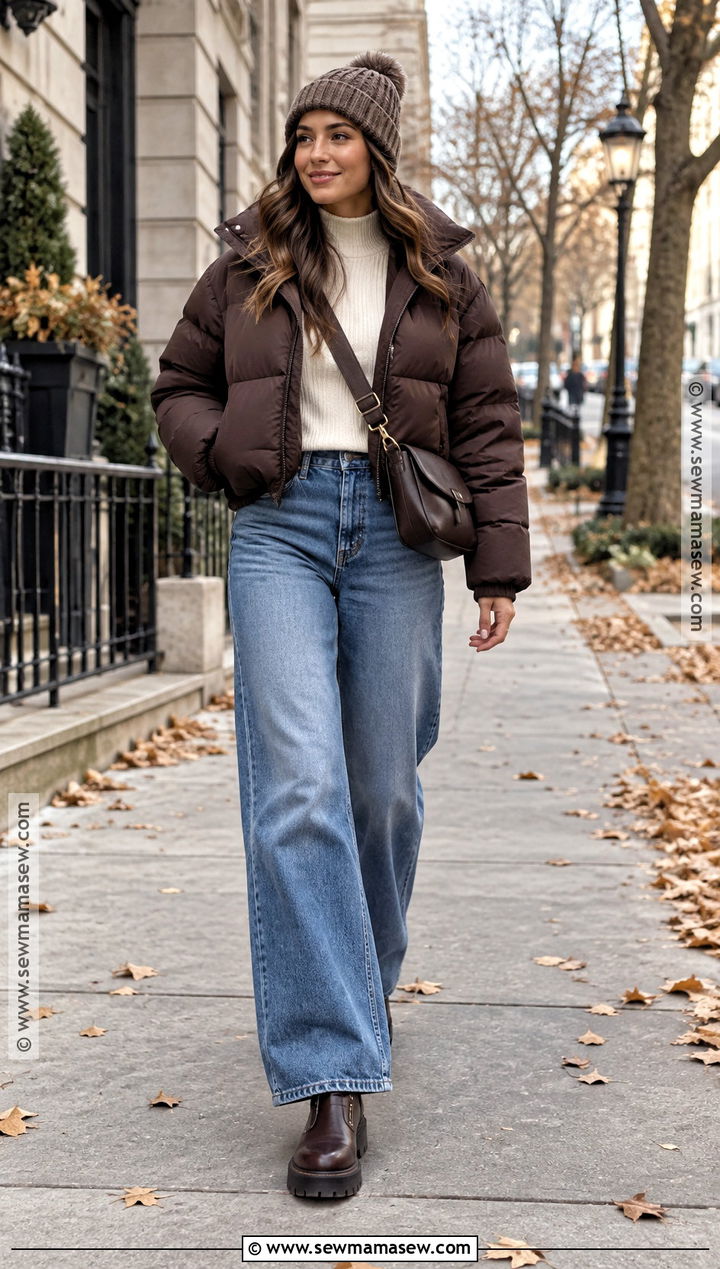
Once late-fall temperatures settle in, a puffer becomes the practical choice. Choose cropped or hip-length in cream, black, chocolate, burgundy or muted green, and wear it over a fitted ribbed sweater so the top half doesn't balloon. High-rise wide-leg jeans balance the jacket and give the outfit a modern shape. Lug-sole boots handle wet or cold days; leather sneakers are fine when it's dry. A knit beanie and crossbody bag finish it. If your puffer is long, switch to straight-leg jeans so the layers don't overwhelm your frame. I prefer matte puffers to glossy ones; they look less sporty with everyday clothes.
What Each Jacket Fabric Can Handle
These twenty jackets behave very differently once the weather turns. Here's what I tell people before they reach for one on a gray morning.
- Smooth leather: blocks wind well and copes with light rain if wiped down afterward. Let it dry at room temperature, never on a radiator, which makes it stiff and cracked.
- Suede and shearling: darken and spot in rain. A protector spray helps, but these are dry-day jackets. Brush suede gently once it's dry to lift the nap.
- Cotton canvas, corduroy and denim: fine in wind and drizzle, heavy and cold when soaked. Waxed cotton is the exception and sheds water well.
- Wool and tweed: warm even when slightly damp, but they pill where a bag strap rubs. A fabric shaver keeps them neat.
- Nylon (windbreakers, quilted jackets, puffers): the best choice for blustery and wet days. Check the label, because water-resistant isn't the same as waterproof.
If you can only own two fall jackets, I'd make one of them weather-proof nylon or waxed cotton and the other whatever you love looking at. That way the nice one never has to face a storm.
Plan the Jacket First, Then Dress Under It
Every outfit here starts by treating the jacket as part of the look rather than something thrown on at the door. Think about where you're going, how cold it is and how dressed you need to be, then pick the jacket and balance its shape with the bottom half. Roomy jackets want fitted layers; cropped jackets want high-rise bottoms and longer hems. Neutral colors give the most mileage, and suede, plaid, corduroy and leather bring in the season's texture. From a barn jacket to a tailored blazer or a puffer, wear the ones that suit your climate and how you actually spend your days.
Related posts: