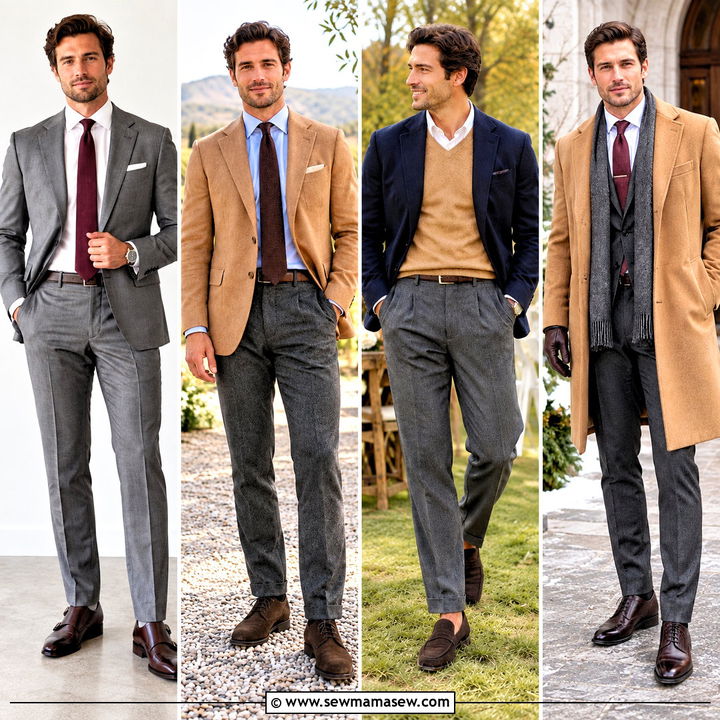
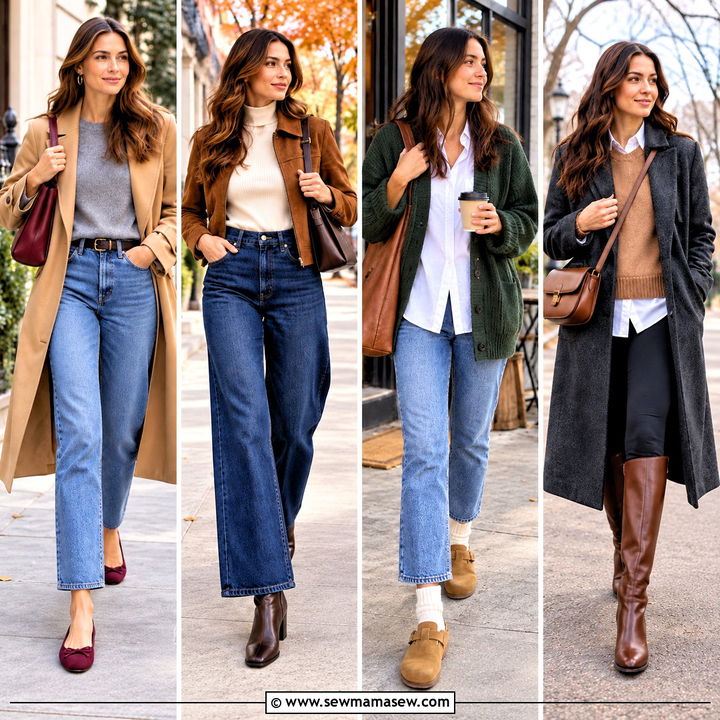
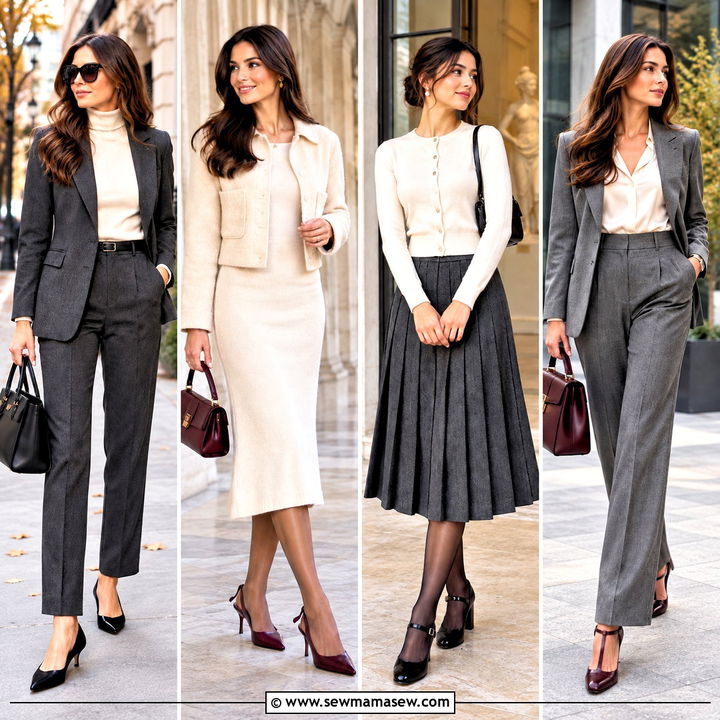
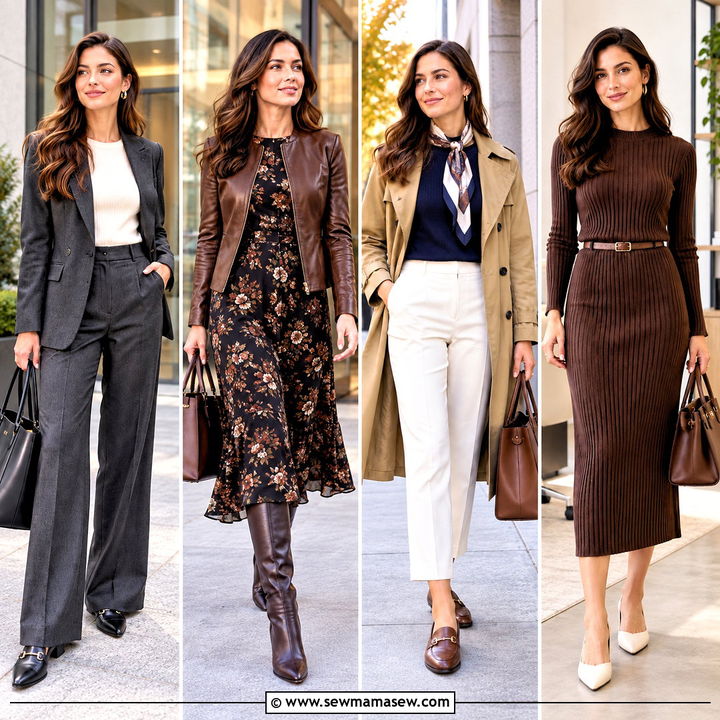
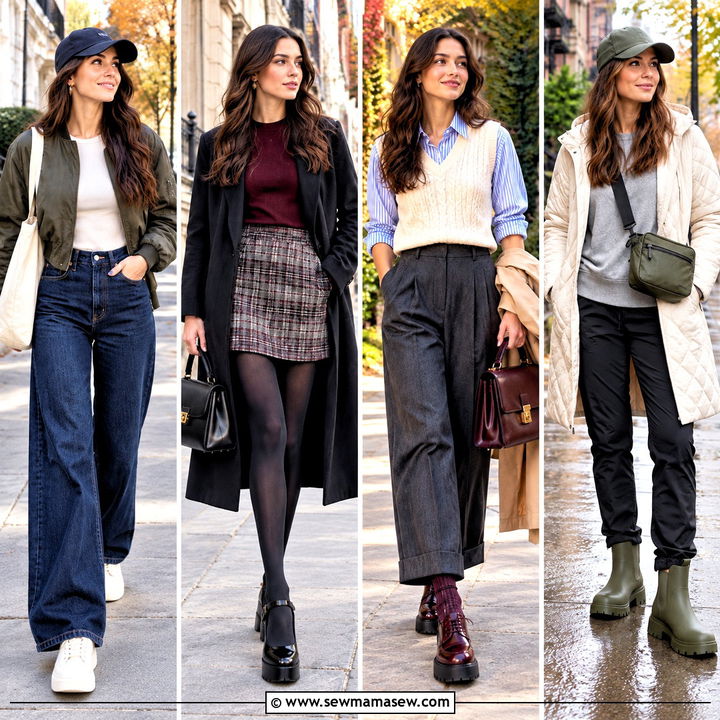
Fall is the season where men's clothes finally get interesting, because you're wearing two or three layers instead of one. That's also where it goes wrong: a jacket that's too short over a sweater, trousers that pool over boots, colors that fight. The twenty outfits below run from workwear to tailoring, and they all lean on the same short palette of navy, olive, charcoal, brown, cream and burgundy. Texture does the rest. Suede, corduroy, flannel and knitwear make plain colors look considered. As you read, pay attention to three things I check on every client: where each layer ends, how wide the trouser is, and how heavy the shoe looks next to it.
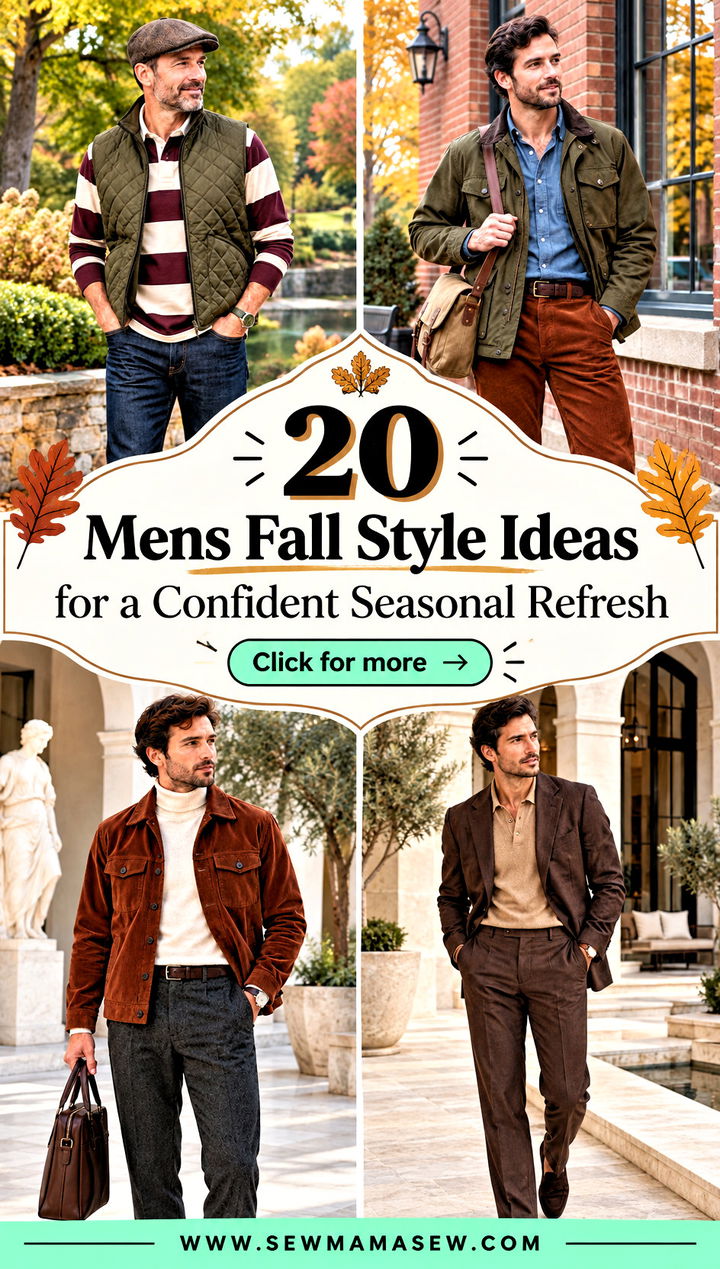
Twenty Outfits From About a Dozen Pieces
Nobody needs twenty separate outfits' worth of clothes. Look closely and these looks share most of their parts: the same dark jeans, the same chinos, the same brown boots and white sneakers turn up again and again. When I build a fall wardrobe with a client, I start from what's already in the closet and only fill the gaps.
- Lay out every jacket and coat you own. Keep the ones that fit over a sweater, and note which roles are missing: a rain layer, a smart layer, a casual layer.
- Pick two trousers that work with nearly all of them. Dark straight jeans and stone or olive chinos cover more of this list than anything else.
- Check your shoes. One brown boot and one clean sneaker handle well over half of these outfits.
- Add knitwear last. A cream crewneck, a gray sweatshirt and one fine-knit polo slot under almost every jacket here.
- Only then buy the missing outer layer. It's the piece people see first, so it's worth the most thought.
Work this way and a dozen well-chosen items will give you more combinations than you'll wear in a season, without a closet full of single-use pieces.
1. Chore Jacket With Jeans And Suede Boots
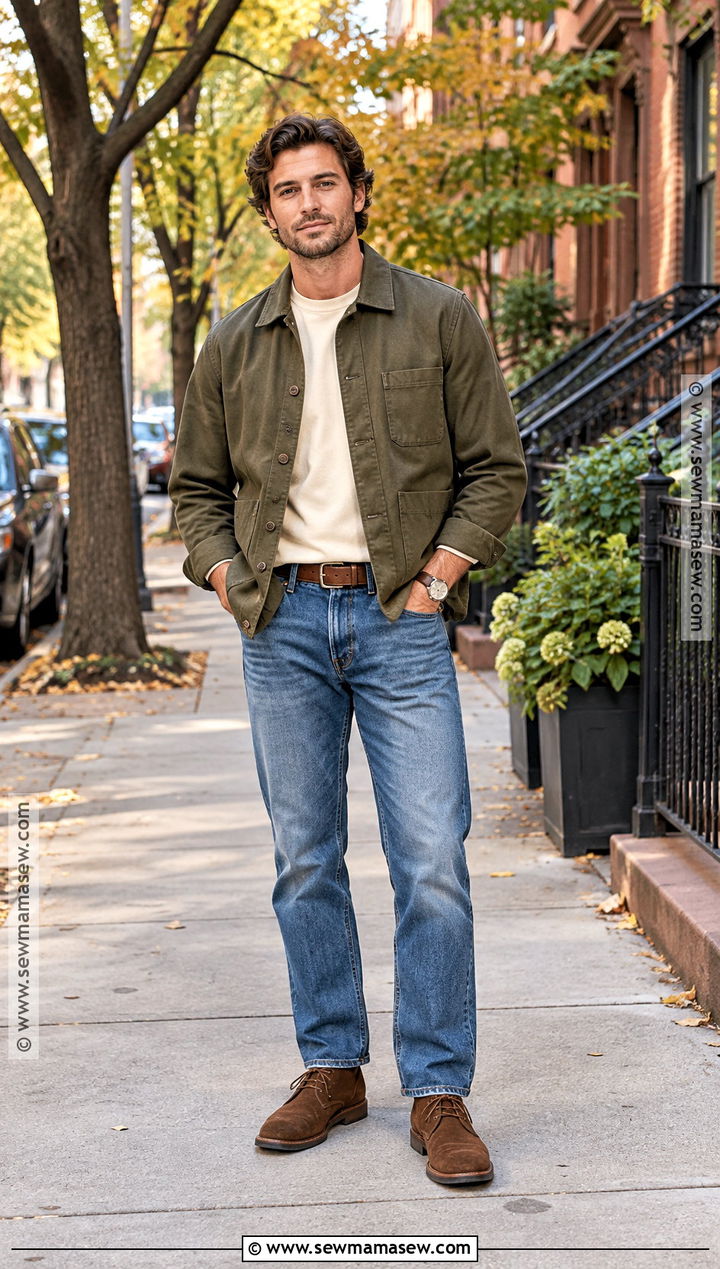
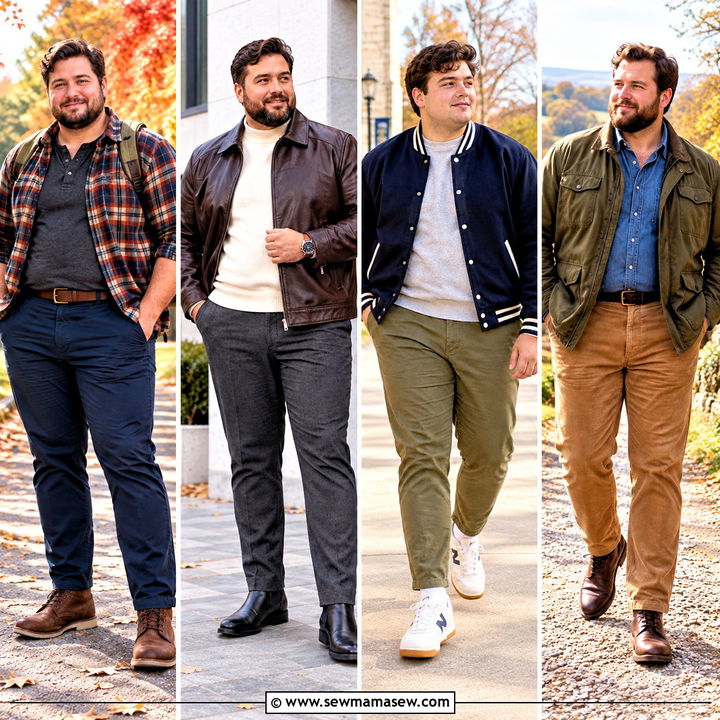
If you only buy one new layer this fall, I'd make it a chore jacket. Olive, tobacco, navy or dark brown over a heavyweight white or cream tee, with straight medium-wash jeans and brown suede boots, a leather belt and a simple watch. It looks rugged without looking like you're heading into the woods. Size it so a light knit still fits underneath, but no bigger; canvas doesn't drape, so extra room just stands away from the body. Shorter men do best with a hem near the hip, and taller men can carry a longer cut. On cold days, swap the tee for a waffle henley or a fine crewneck and leave everything else alone.
2. Bomber Jacket With Knit Polo And Chinos
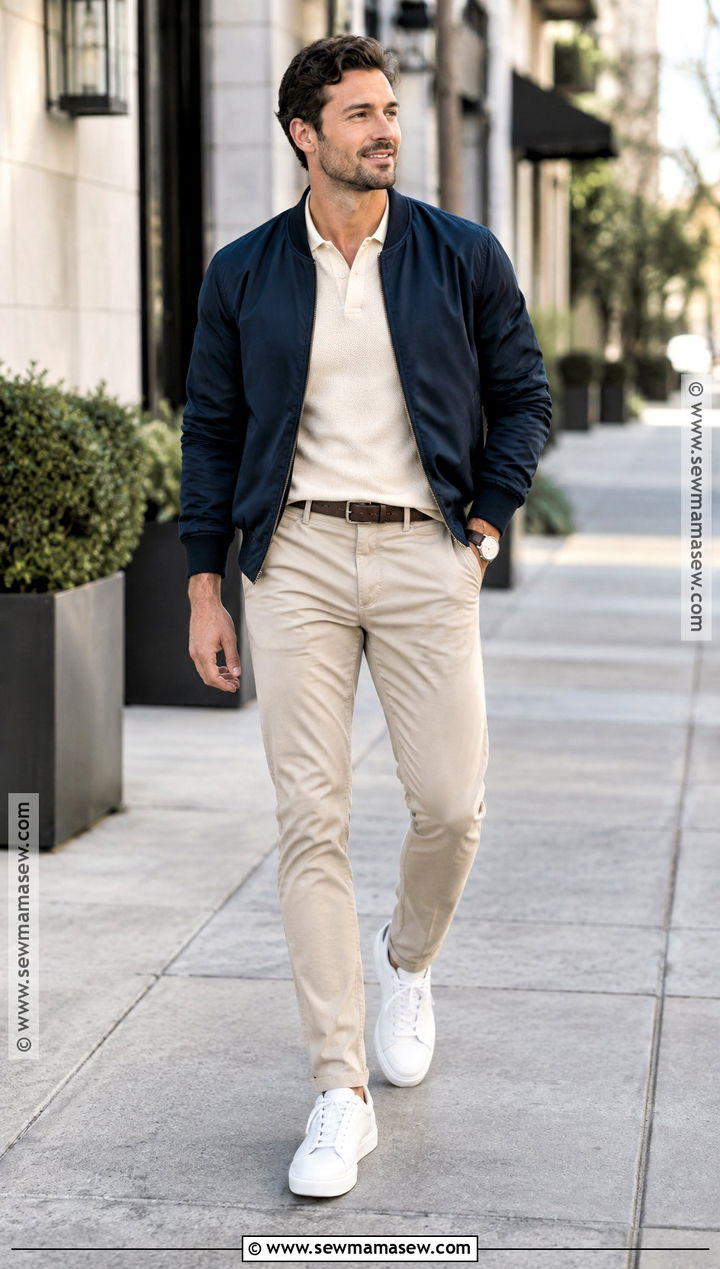
Can a bomber pass for work or a dinner out? Yes, if what's under it is sharp. I pair a navy, chocolate or deep green bomber that sits neatly at the waist with a fine-knit polo in cream, gray or burgundy, the kind with a collar that holds its shape. Straight or gently tapered chinos keep the line clean. White leather sneakers make it modern; dark brown loafers dress it up. Hardware and logos should be close to invisible. For broad-shouldered men I pick an unpadded, lightweight bomber, because the padded versions add width right where you don't need it. A slim belt, quiet watch and a structured tote or messenger bag finish it.
3. Flannel Overshirt With Henley And Dark Jeans
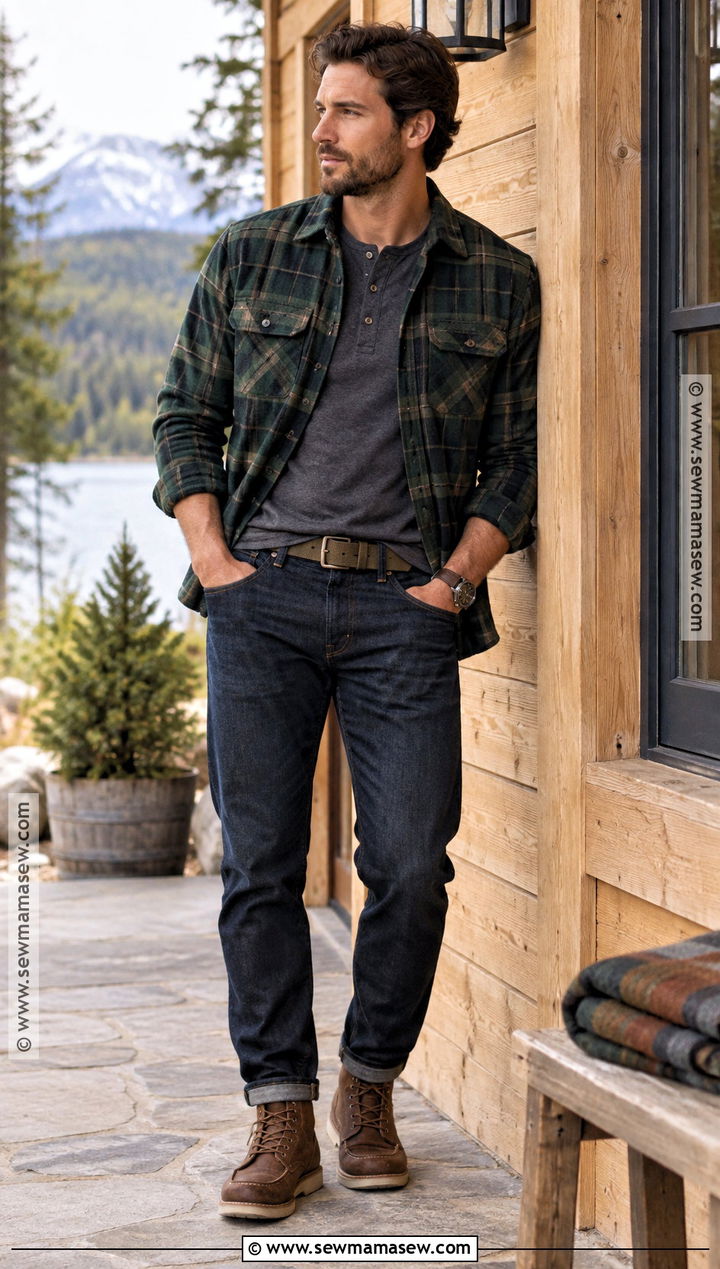
This is the outfit for a morning that starts cold and warms up. A plaid flannel overshirt goes over a fitted cotton henley, with dark indigo jeans and brown moc-toe boots. Plaids built on forest green, rust, navy or charcoal sit easily beside neutrals. Wear it open for weekends, or button the middle two buttons when you want a neater shape. Jeans should land on the boot with only a soft fold at the ankle. If plaid feels too rustic for you, a brushed solid flannel gives the same warmth with less noise. Add a canvas belt and a field watch, and you're dressed for errands or a backyard fire.
4. Cardigan With Oxford Shirt And Pleated Trousers
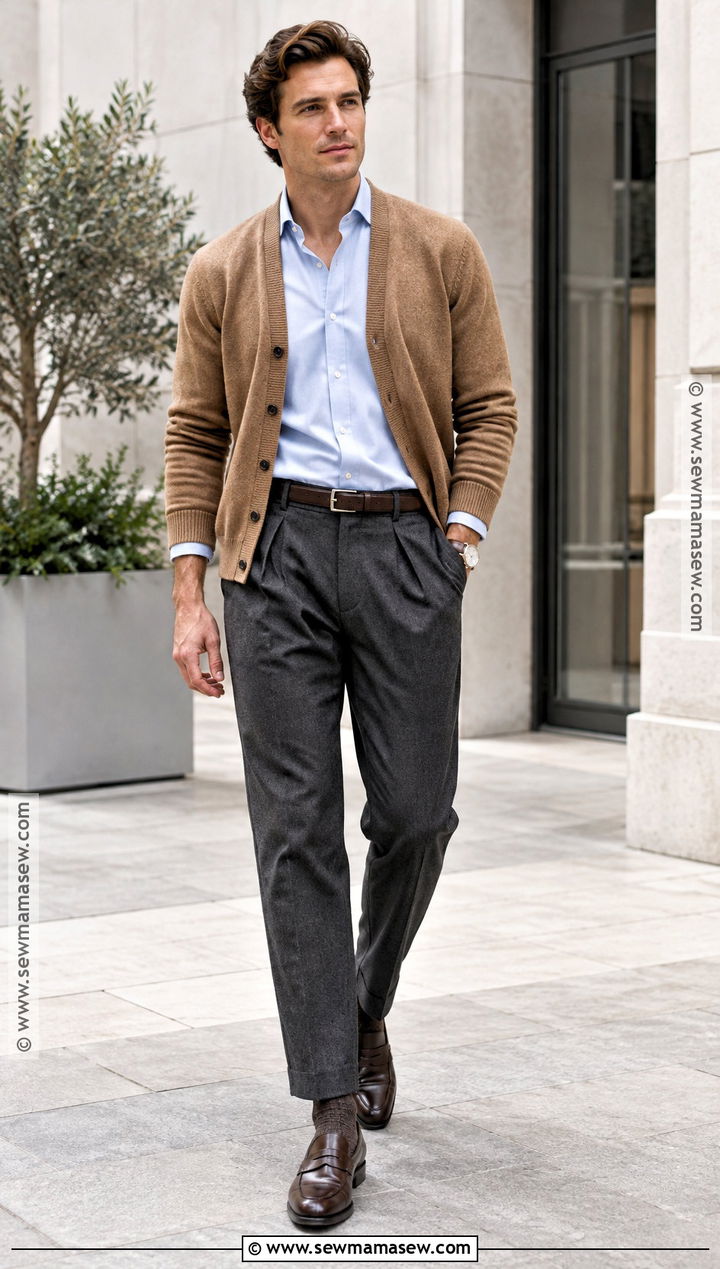
A cardigan over an Oxford shirt gives you tailoring without the stiffness of a suit. Blue or white Oxford, cardigan in charcoal, camel or burgundy, pleated trousers in gray, brown or navy with a straight, comfortable leg, then dark leather loafers or derbies. Textured socks can bring in a little color. Buttoned, it's traditional; open, it relaxes. The length of the cardigan matters more than people expect. One that ends at the top of the trouser waistband makes the legs look longer, while a long one only suits taller men. I keep accessories to a belt and a watch here, because the knit is already doing the decorating.
5. Leather Jacket With Sweatshirt And Black Jeans
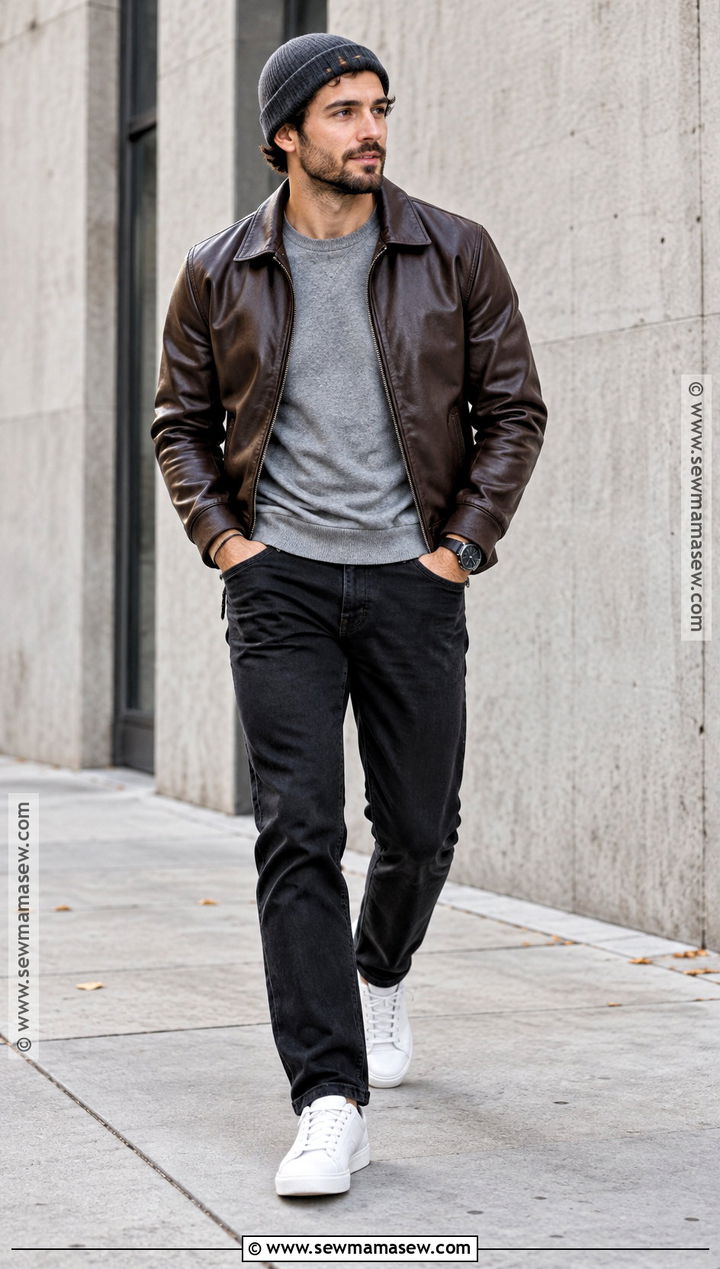
Leather gets friendlier when it sits on top of plain athletic basics. A black or dark brown jacket over a heather-gray crewneck sweatshirt, straight black jeans, low-profile leather sneakers. The sweatshirt is the part I fuss over. A thick, fleecy one bunches inside the leather sleeves and makes your arms look stuffed, so choose a midweight. Clean jeans with no distressing keep it current. White sneakers give contrast, black ones keep it all one color. If you'd rather not wear leather, waxed cotton holds a similar structure and copes better with rain. A beanie or a watch is enough on top.
6. Trench Coat With Turtleneck And Tailored Trousers
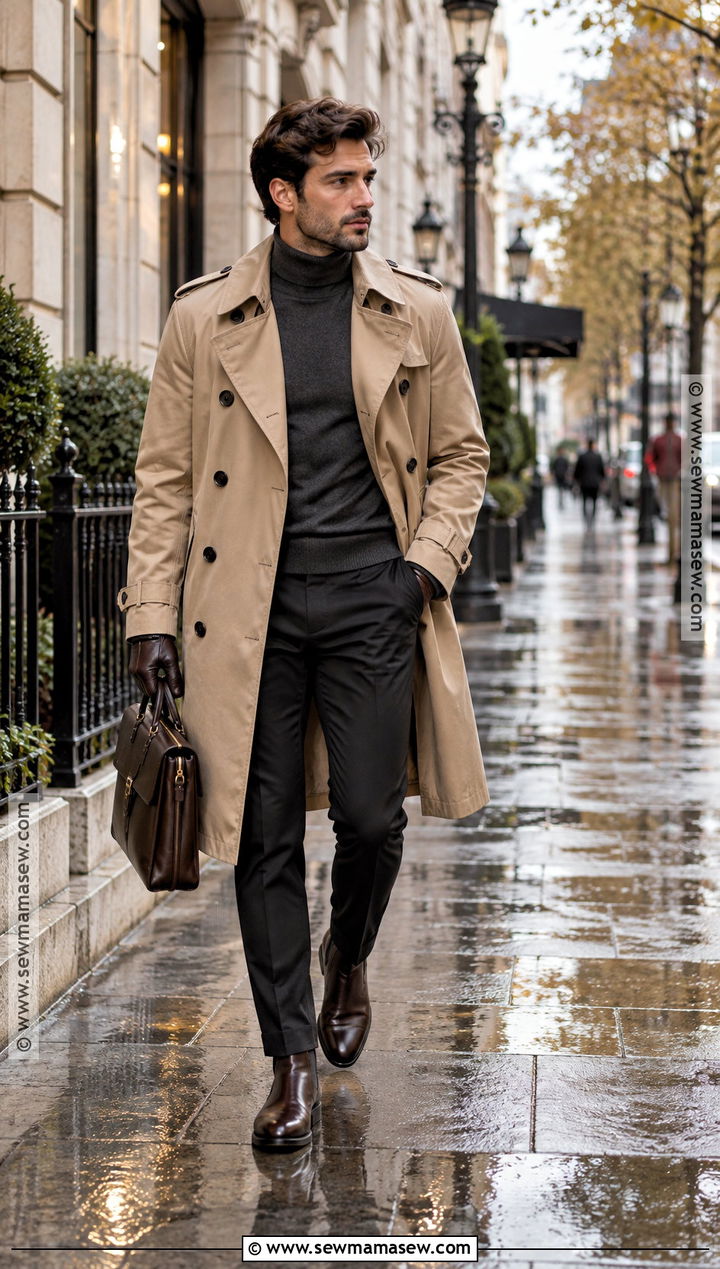
A trench was made for wet streets, and this version treats it seriously. Tan, olive, stone or navy over a thin black or charcoal turtleneck, tailored trousers in a related neutral, polished Chelsea boots. The coat should land around the knee with room in the shoulders to reach for a rail on the train. Belted, it shows a waist; open, it hangs in two long lines. Shorter men usually look better with a hem just above the knee. Keep the trousers straight, since slim ones look spindly under all that coat. A structured briefcase, leather gloves and a plain watch make this a weekday office outfit.
7. Denim Jacket With Hoodie And Cargo Pants
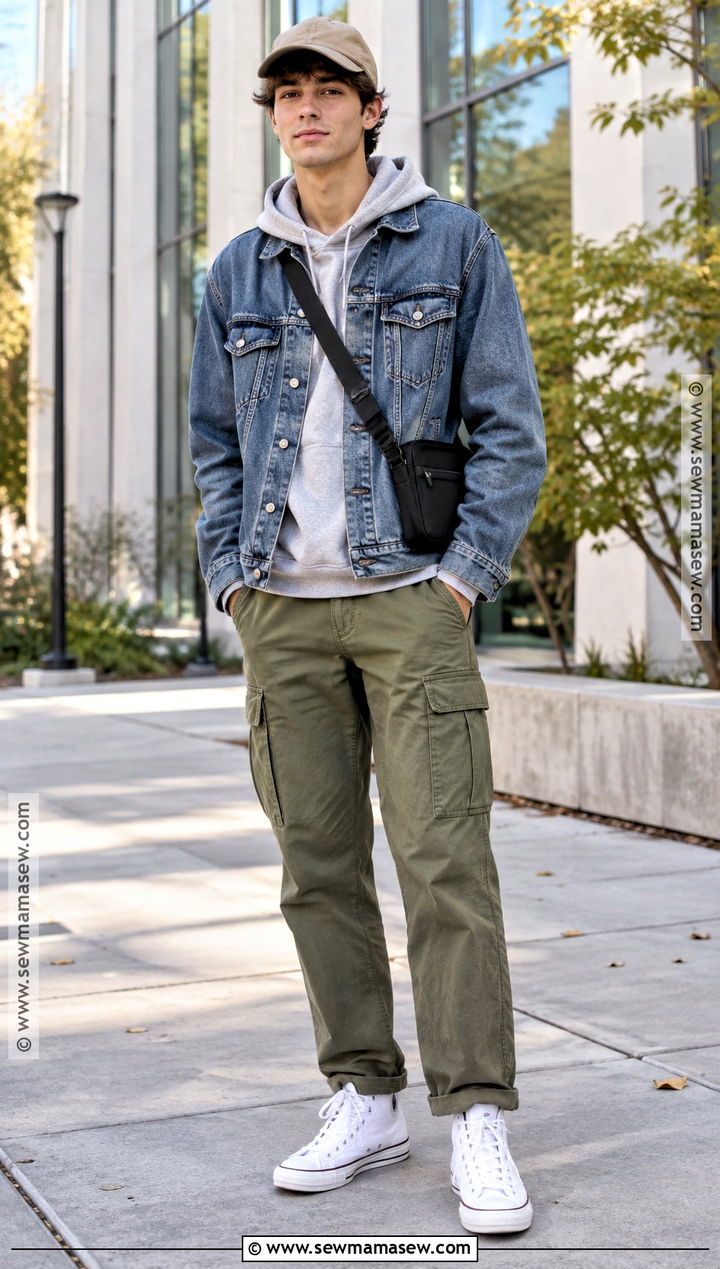
Denim over a hoodie is the most relaxed outfit here, and still useful. A medium or dark-wash jacket goes over a plain gray, cream or muted green hoodie, with straight cargo pants in black, olive or tan and retro sneakers or clean high-tops. I avoid cargos with big bellowed pockets, which add bulk at the thigh. The hoodie hem can peek out below the jacket a little, not by a hand's width. On larger builds I steer toward a denim jacket with some stretch and a clean front rather than heavy fading, because rigid denim pulls across the back when you reach. A canvas cap or a small crossbody handles the practical side.
8. Quilted Vest With Rugby Shirt And Jeans
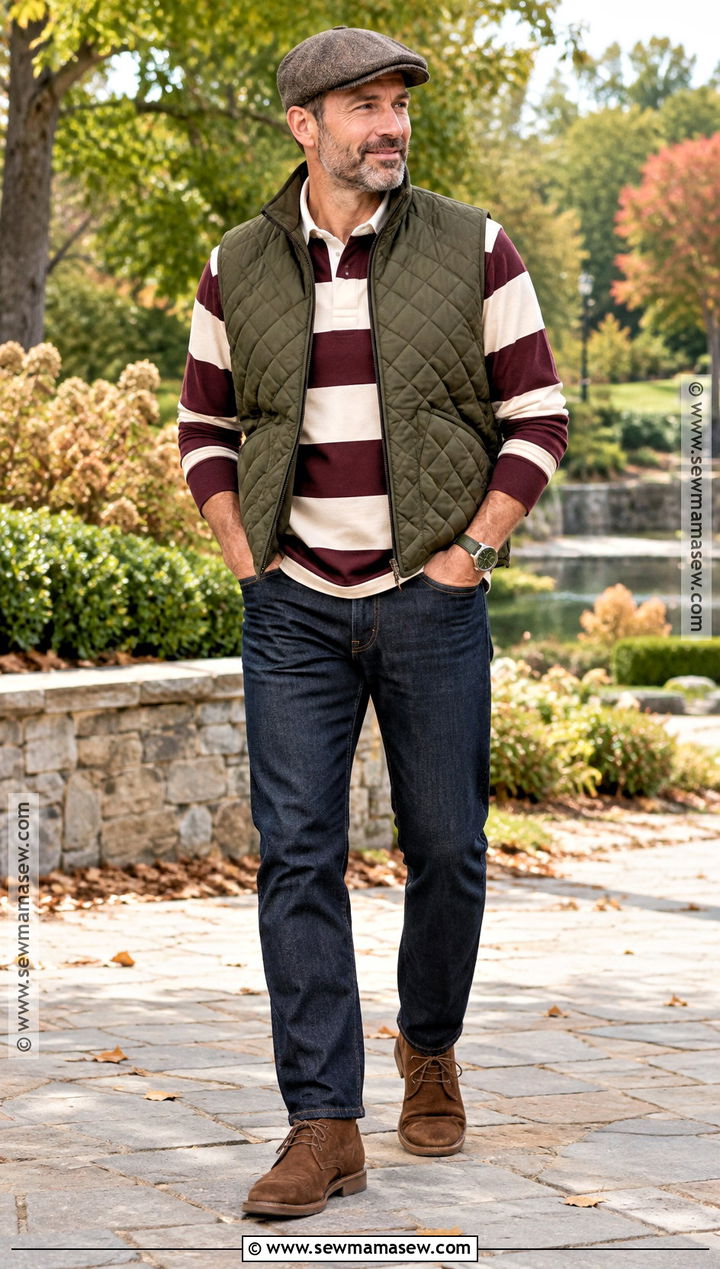
A quilted vest keeps you warm while letting a striped rugby shirt stay the main event. Navy, olive or brown vest with almost no branding, worn over a heavyweight rugby in cream, burgundy, green or blue. Straight jeans in a medium or dark wash, then retro court sneakers, suede chukkas or sturdy leather shoes. The vest needs to follow the torso without pulling across the chest; if the snaps strain, size up. Open, it draws a long line down the front, and half-zipped it handles a cold start. Thick rugby cotton under a vest is warm enough for most mild fall days without a coat at all.
9. Wool Overcoat With Sweater And Chinos
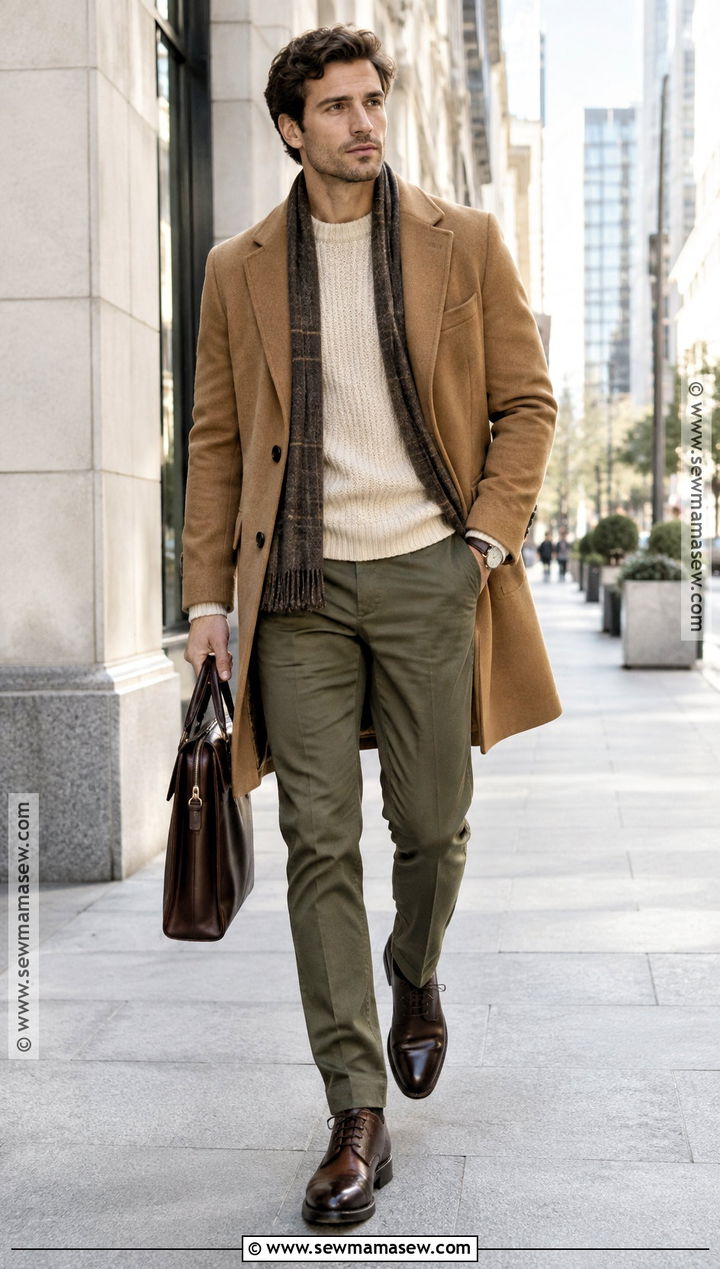
A wool overcoat makes ordinary basics look planned. Charcoal, camel or navy over a soft crewneck and tailored chinos: cream knit with olive chinos reads warm, a gray knit with navy chinos reads quieter. Dark brown derbies, Chelsea boots or minimal leather sneakers all work. The coat should end between mid-thigh and knee and sit cleanly on the shoulders, with enough room inside for that sweater. A coat fitted over a shirt alone will pull at the buttons over knitwear, so I always try coats on with a knit. If you add a scarf, keep its pattern quiet, since the coat and the knit already bring texture.
10. Field Jacket With Chambray Shirt And Corduroy Pants
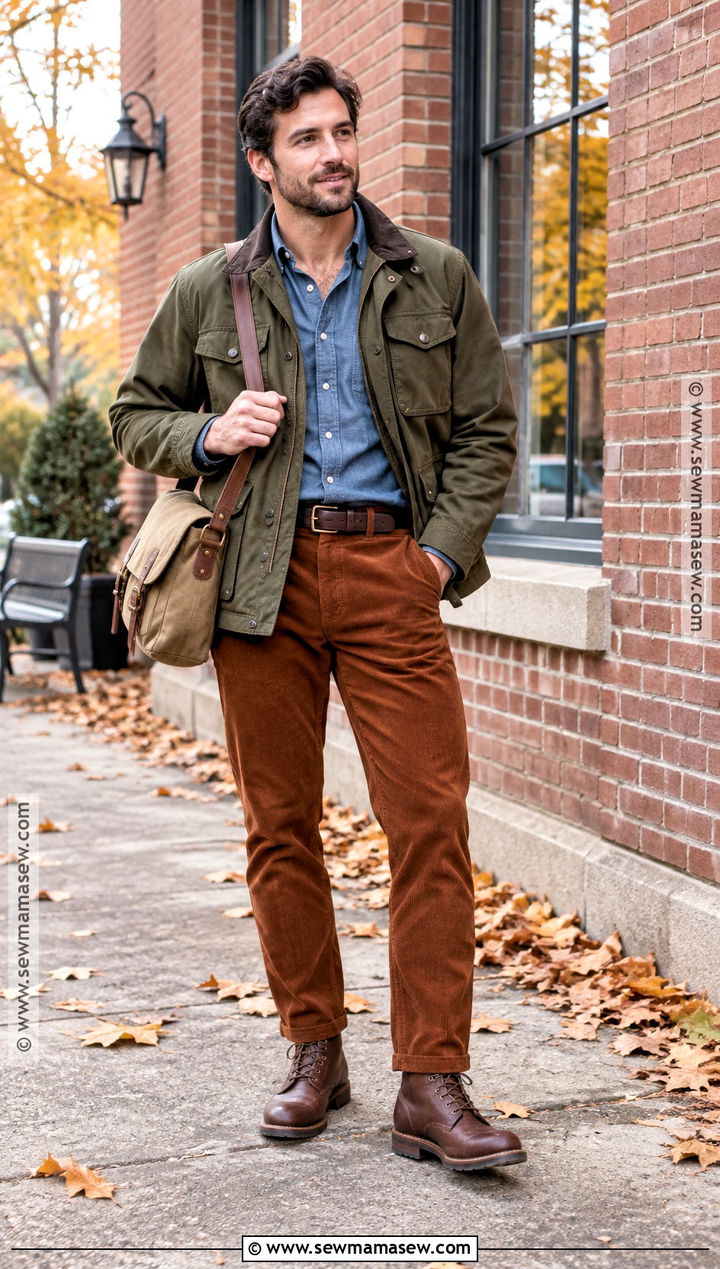
Field jacket, chambray shirt, corduroy pants. Every piece is tough and earthy, which is why this works in fall. Olive or dark tan jacket over a blue chambray, straight cords in rust, chocolate, navy or camel, leather service boots. Tuck the shirt for a cleaner shape or leave it out for a weekend. Corduroy brings a lot of texture, so I choose a plain field jacket without extra patches or chunky hardware. A dark brown belt connects trousers to boots, and a canvas or leather bag fits the practical mood. Each piece has structure without restricting movement, which is why it suits most builds.
11. Suede Jacket With Cream Sweater And Trousers
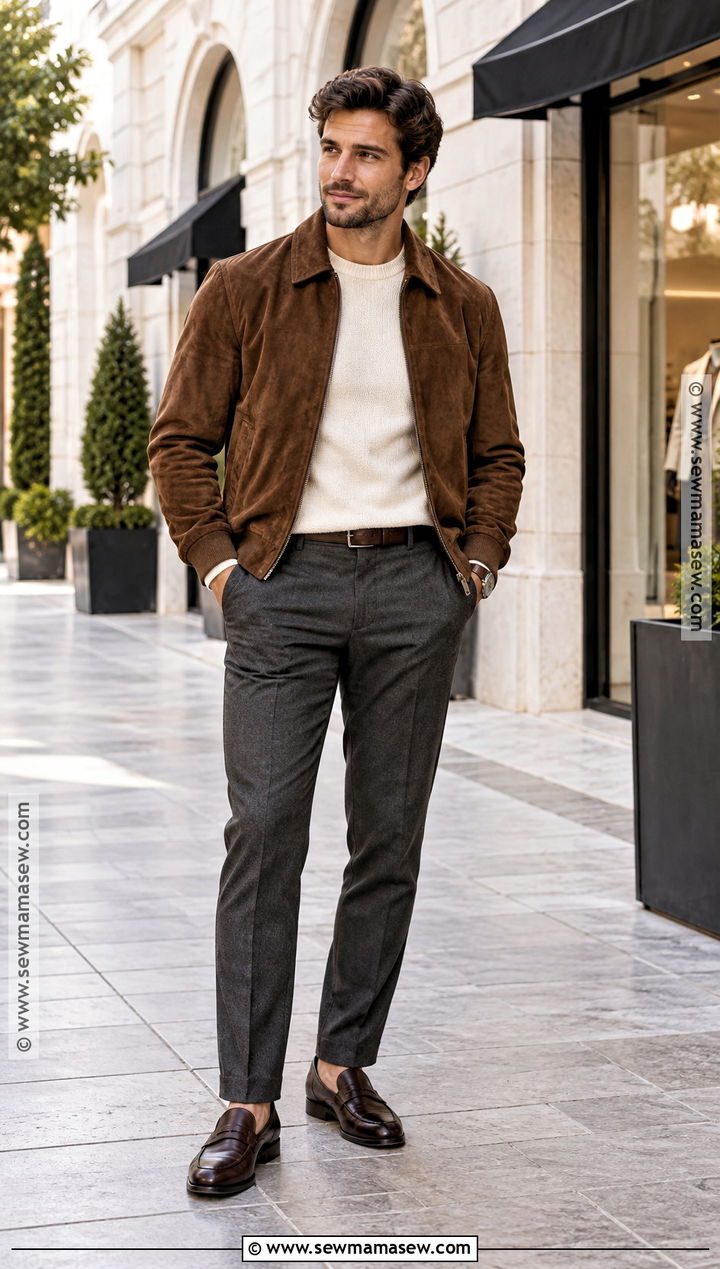
Suede is the fabric I most associate with this time of year. A tan, tobacco or chocolate suede jacket over a cream crewneck, with charcoal, navy or dark brown trousers cut straight or gently relaxed. Suede loafers keep it tonal; polished leather boots give contrast and cope better if the weather turns. Spray the jacket with a protector before you wear it and keep it out of heavy rain, because water darkens suede and can leave a tide mark. Tucked, the sweater shows your waist; untucked, it needs to end right at the belt line. A matching belt and a minimal watch are all it needs for a dinner or a smarter weekend plan.
12. Blazer With Crewneck Sweater And Dark Jeans
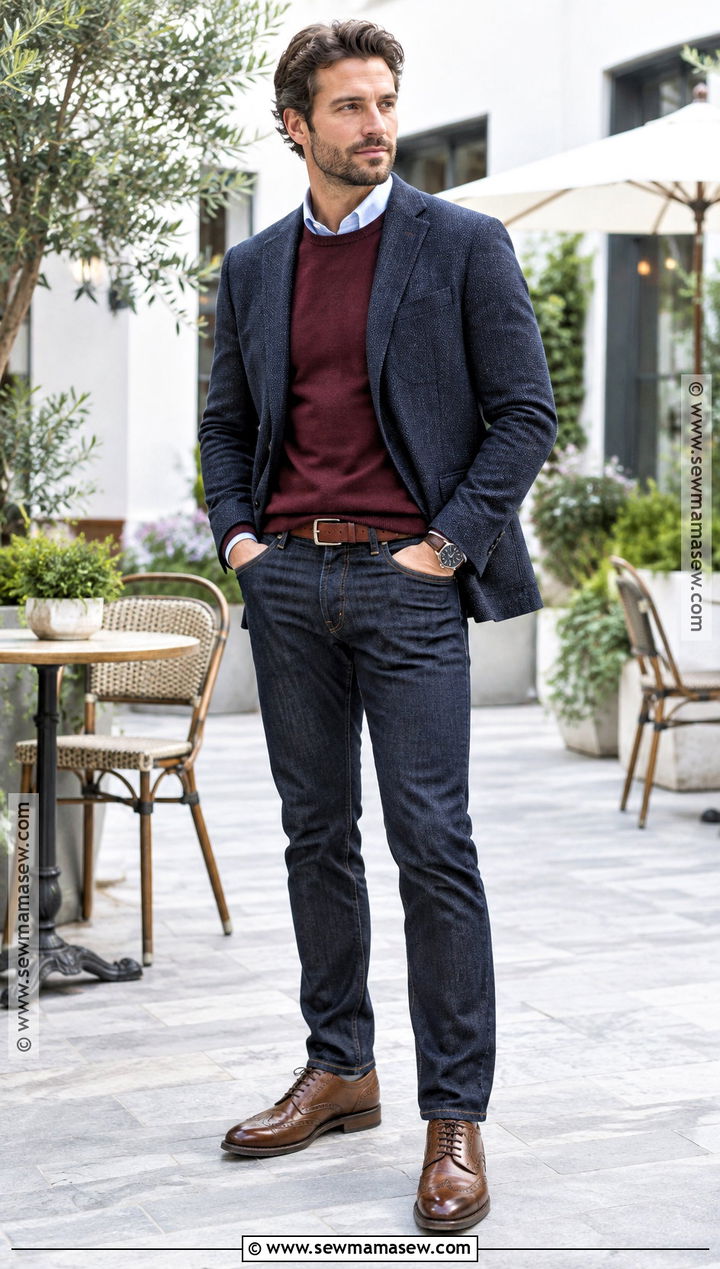
A relaxed blazer over knitwear and clean denim is smart-casual in its simplest form. Navy, charcoal or brown textured blazer over a lightweight crewneck, dark indigo or black straight jeans, then brown brogues, suede loafers or streamlined leather sneakers. Soft shoulders matter here; a structured suit jacket over a sweater looks like you forgot your trousers. The knit must be thin enough that the blazer sleeves don't strain. Jeans should be free of fading and rips. Broader men look longer with the blazer worn open. A light blue shirt collar under the sweater adds polish when you need it, and a pocket square only if the occasion asks for one.
13. Shacket With T-Shirt And Fatigue Pants
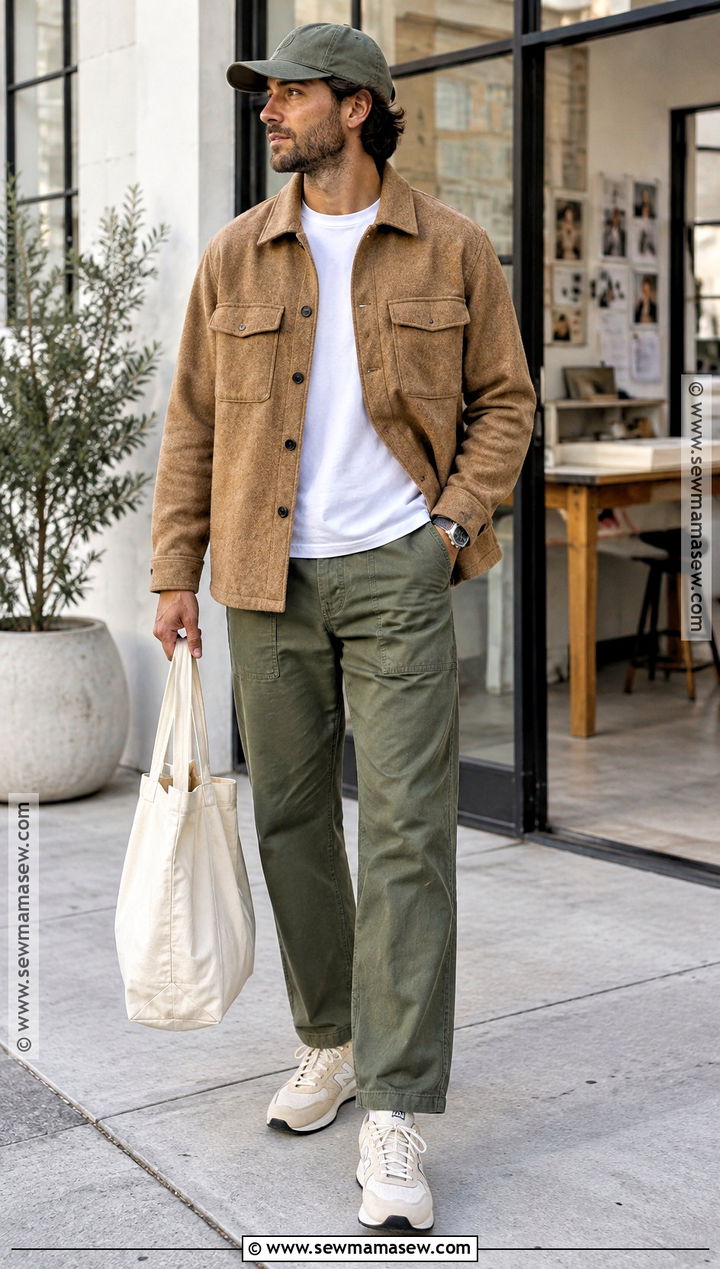
The shacket bridges shirt and jacket, which is exactly what early fall needs. Charcoal, camel or olive over a heavyweight white tee, with straight fatigue pants and retro sneakers. Keep top and bottom in different neutrals so it doesn't look like a uniform: brown shacket with olive pants, or olive with navy. The tee should fit neatly at the shoulder and end around the middle of the fly. On warm afternoons, roll the shacket sleeves a couple of times. Because a shacket is usually brushed or flannel-weight cotton, it shows lint and pilling at the cuffs, so a quick pass with a lint roller keeps it sharp. A canvas tote, cap and plain watch complete it.
14. Puffer Jacket With Knit Sweater And Cargo Pants
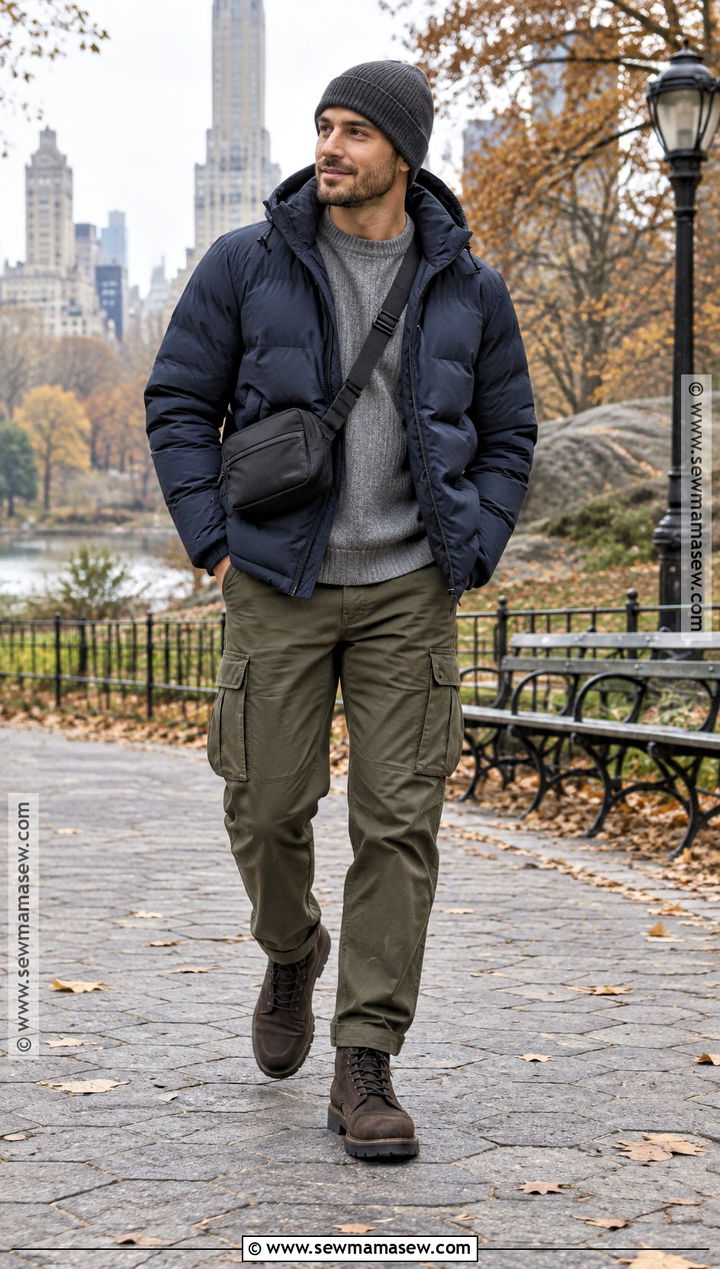
Cold, windy days need insulation, but a puffer doesn't have to look like a sleeping bag. Choose matte black, navy, forest green or rust with moderate volume, over a ribbed crewneck, with straight cargo pants and weather-ready boots. Slightly relaxed trousers balance the jacket far better than skinny jeans, which make the top look twice your size. A coordinated set, say navy puffer, gray sweater, olive pants and brown boots, keeps it tidy. Shorter men should pick a hip-length puffer with narrow baffles; wide baffles look bigger on a small frame. A fitted beanie and compact crossbody finish it for outdoor commutes or a cold game.
15. Double Denim With T-Shirt And Leather Boots
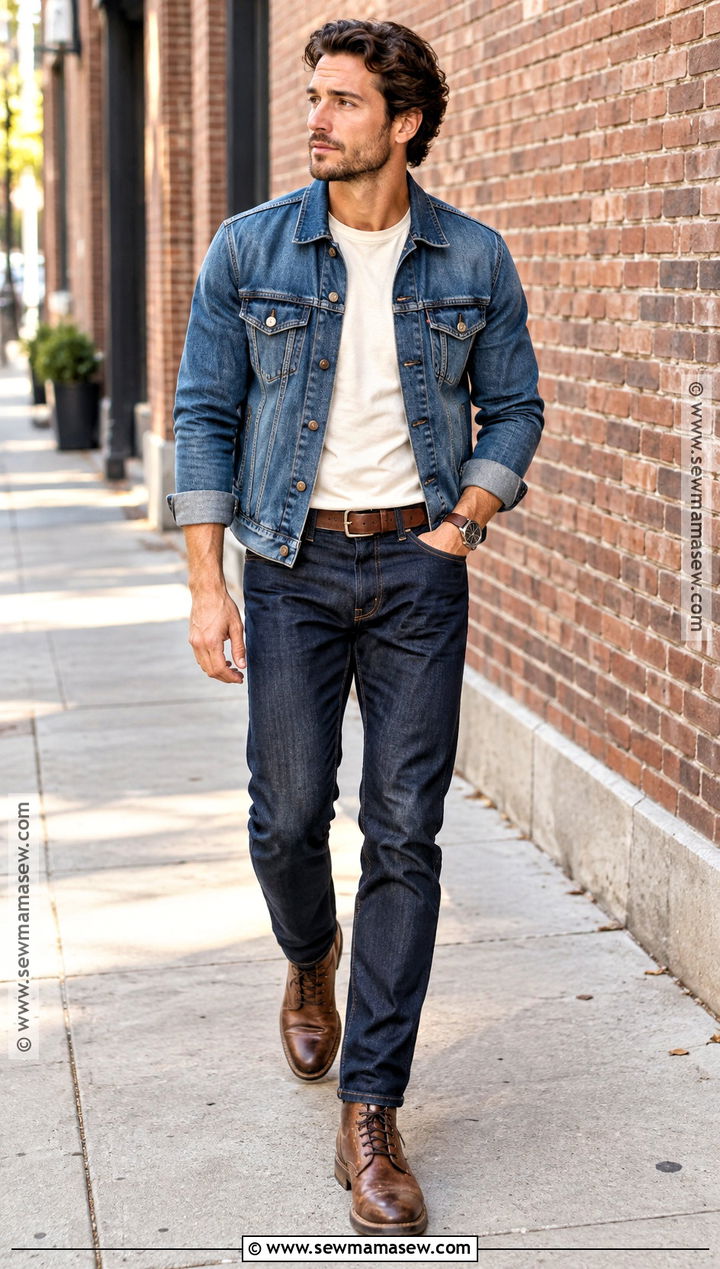
Double denim only works when the washes are clearly different. Medium-wash jacket with dark indigo jeans, or reverse it with a dark jacket and faded straight-leg jeans. A plain tee in white, cream, gray or burgundy separates the two and keeps the eye moving. Brown leather boots and a matching belt give it a fall base. Identical washes top and bottom read as a matching set, which is a different look entirely. I want the jacket ending near the hip and the jeans breaking cleanly just above the boot. A light scarf or a watch is enough detail.
16. Harrington Jacket With Polo And Chinos
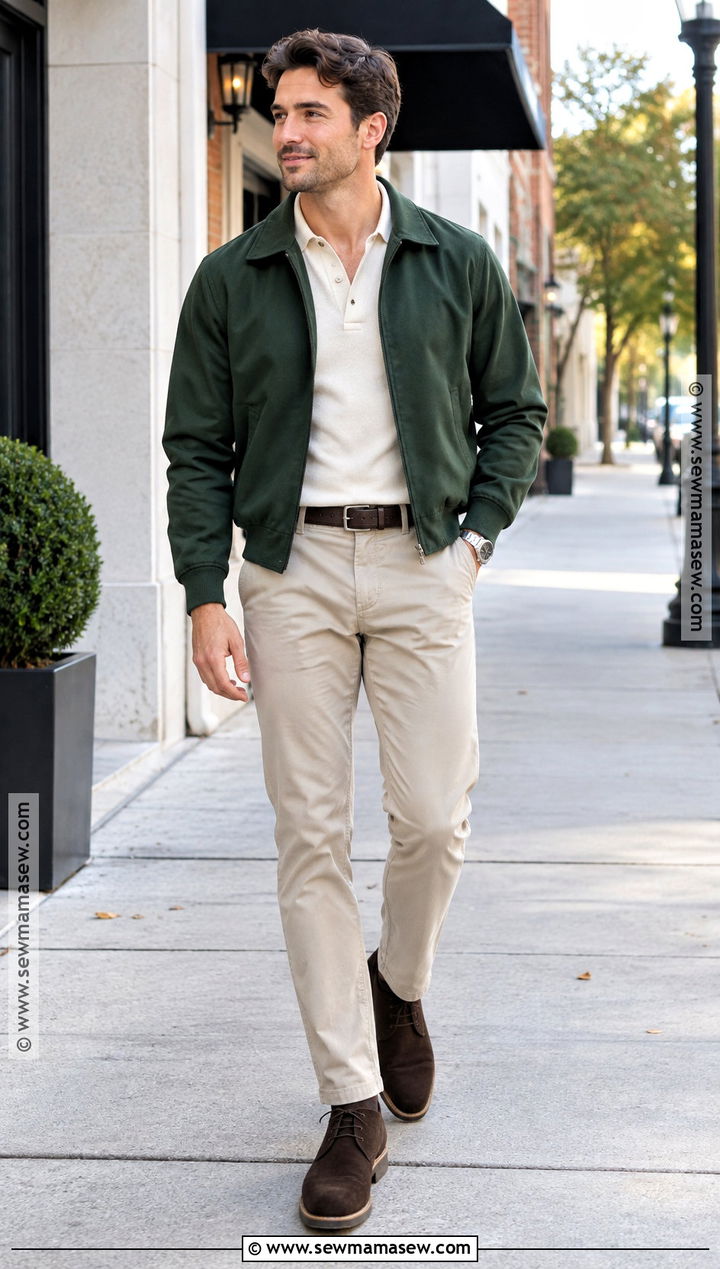
The Harrington is for men who want clean, uncomplicated fall clothes. Navy, tan, burgundy or forest green over a knit polo or long-sleeve piqué, with straight chinos in stone, charcoal or dark brown. Leather sneakers, suede loafers or desert boots depending on the day. Watch the elastic hem: it should sit at the waistband and stay there, and if it rides up when you lift your arms, the body is too short for you. Keep the polo collar inside the jacket collar so they don't fight. Shorter men suit the traditional cropped cut, and taller men may want a slightly longer body. A belt and watch are all the hardware it wants.
17. Corduroy Jacket With Turtleneck And Wool Pants
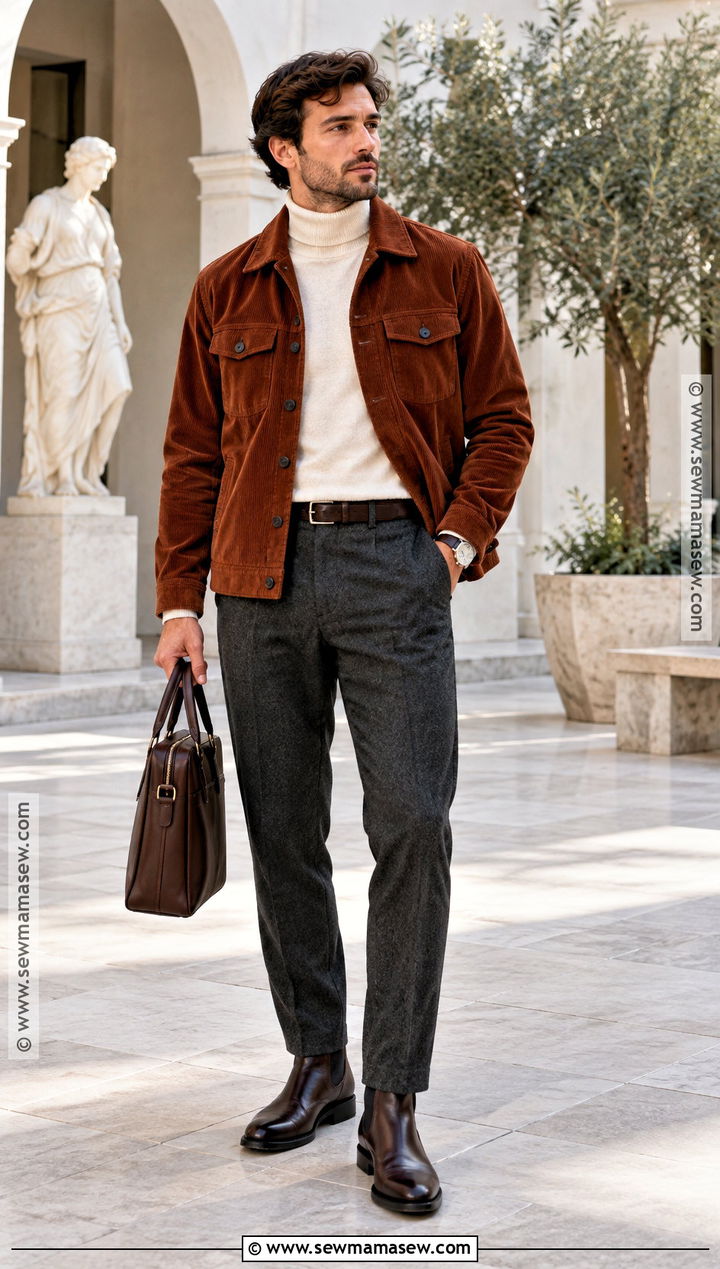
This outfit is all about texture. A brown, rust, navy or olive corduroy jacket over a thin turtleneck in cream, gray or black, with straight charcoal wool trousers and dark leather loafers or Chelsea boots. For a professional setting, I choose fine or medium wale, since wide wale reads more casual and adds bulk. The wool trousers should drape and move rather than cling. With corduroy and wool both carrying texture, I keep patterns out entirely and stop at a leather belt, classic watch and structured bag. One maintenance note: corduroy shines at the elbows with wear, so hang the jacket rather than folding it.
18. Technical Jacket With Fleece And Relaxed Pants
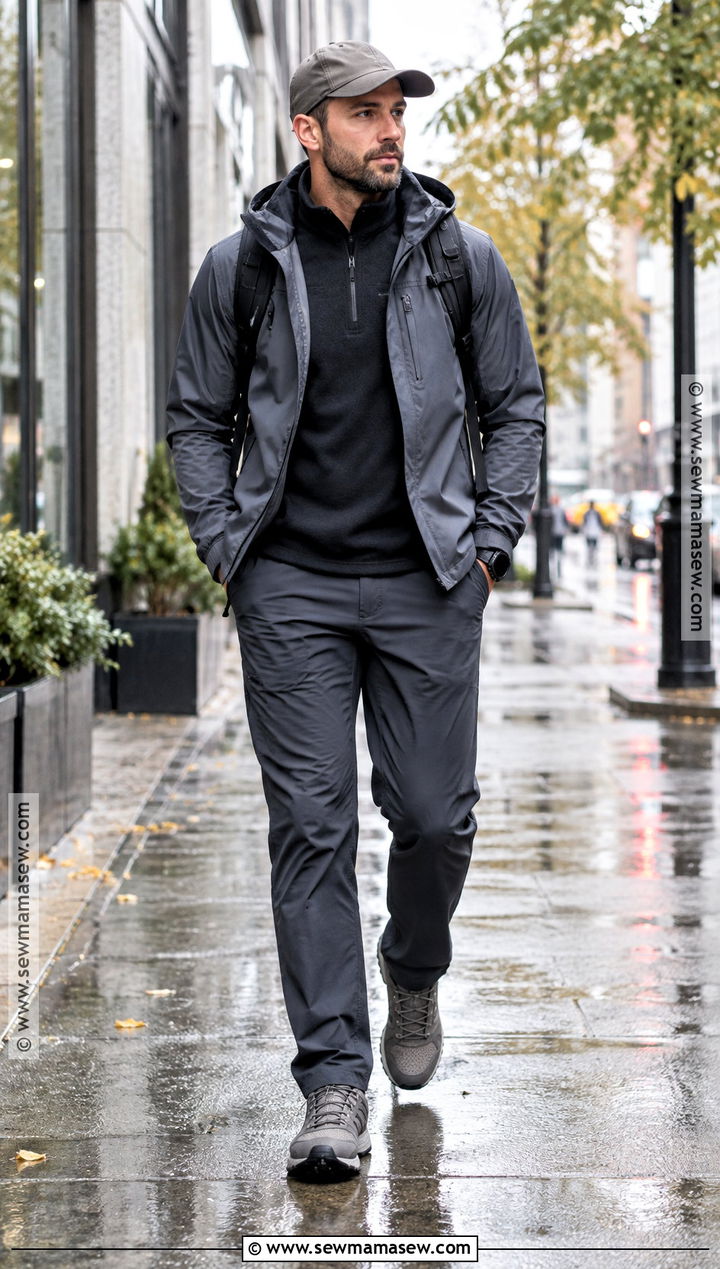
Outdoor gear can make a strong city outfit if you keep the colors under control. A light technical shell over a quarter-zip fleece or a plain sweatshirt, relaxed nylon pants or straight performance trousers, trail-style sneakers. Black, charcoal, slate blue and muted green work together and avoid that highlighter look. The shell should have room for the fleece but still follow your shoulders. Use the cuff tabs and hem cord to pull it in neatly; left loose, a shell flaps and looks oversized. A compact backpack, cap and practical watch suit wet commutes and long walking days.
19. Varsity Jacket With Hoodie And Chinos
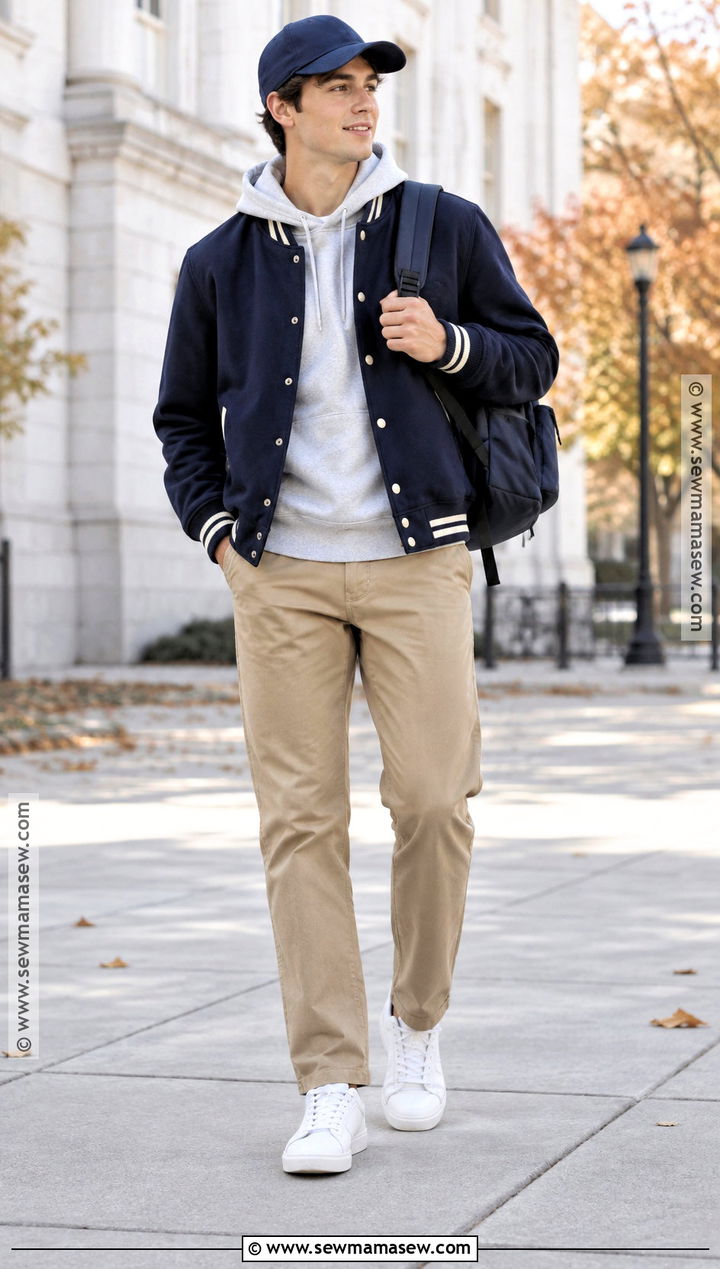
The trick to wearing a varsity jacket past college age is restraint. Navy, black, burgundy or dark green, with few patches and little branding, over a gray or cream hoodie, then straight chinos in tan, charcoal or olive. White sneakers give contrast; dark leather sneakers keep it low-key. The hoodie must be lightweight, because a varsity jacket has wool body and leather or vinyl sleeves that don't stretch, and a thick hoodie makes them tight. Chinos should be relaxed but tidy to balance the volume up top. Skip any other athletic graphics or it starts to look like a costume.
20. Relaxed Suit With Knit Polo And Loafers
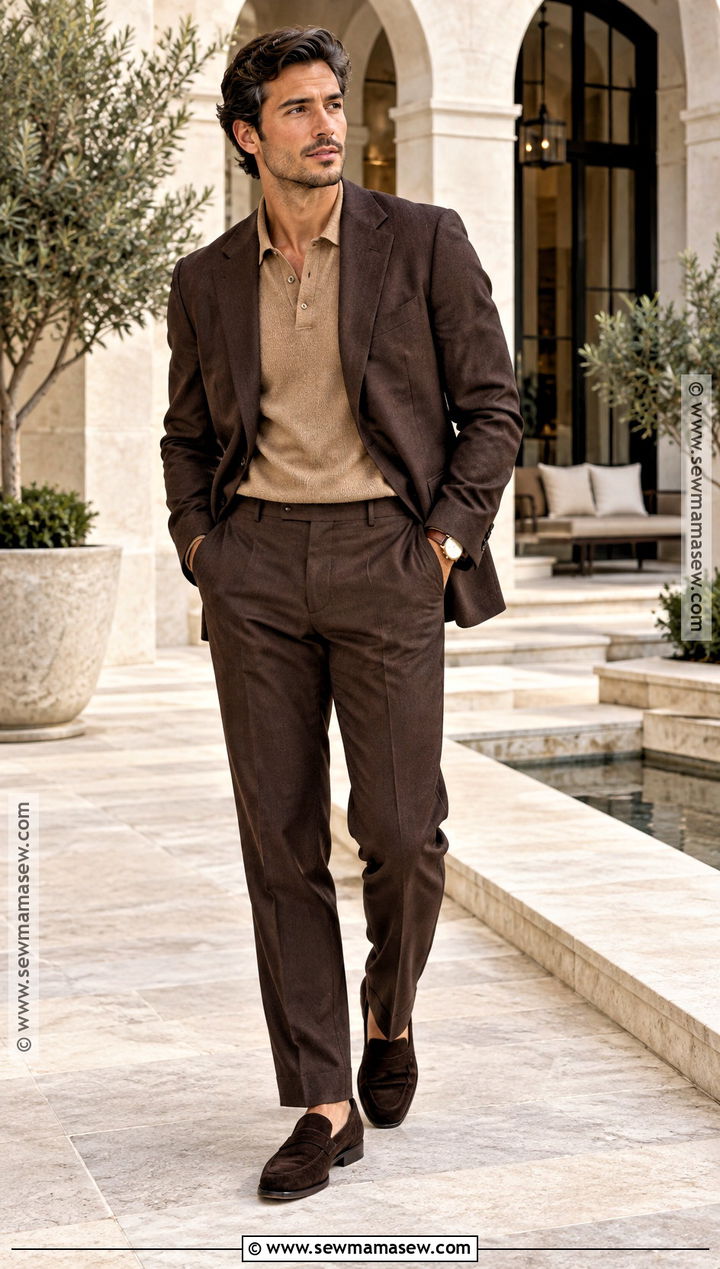
Fall tailoring doesn't have to be stiff. I'd choose a softly structured suit in charcoal, chocolate, deep olive or navy, and swap the dress shirt for a fine-knit polo. Dark leather loafers or suede derbies keep it refined and comfortable. The jacket should follow the shoulders without pulling across the back when buttoned, and the trousers can be straight or gently relaxed. Tonal pairings, like a brown suit with a tan polo, look rich in autumn light; a cream polo under a dark suit gives more contrast. Many relaxed suit trousers have side adjusters, in which case leave the belt off entirely. Keep the watch simple.
Adjusting These Looks for a Shorter or Broader Build
The outfits above are styled on a fairly average frame. A few small changes make them work on other builds, and none of them means giving up a look you like.
If you're on the shorter side
Keep jacket hems at or just below the belt, choose coats that end above the knee, and match your trouser color to your shoes where you can, because one continuous line from waist to floor adds visual height. Narrow quilting on puffers and fine wale on corduroy also suit a smaller frame better than chunky versions.
If you're broad or carry weight in the middle
Wear jackets and blazers open so the shirt or knit makes a vertical stripe down the front. Choose smooth, flat fabrics near the stomach, like fine merino rather than chunky cable knit, and avoid ribbed hems that sit tight at the waist. Straight trousers with a bit of room in the thigh balance a wide upper body far better than a taper.
If you're tall and slim
You can carry the longer coats, bulkier knits and wide-wale cords that overwhelm other frames. Layering helps you here, so a vest over a rugby shirt or a cardigan under a blazer adds useful width.
Buy the Coat Before the Fourth Sweater
A good fall wardrobe is one where each purchase works in several outfits, and this list covers weekends, offices, wet commutes, travel and dressier nights. I'd build it in this order: one solid outer layer, two pairs of trousers that fit properly, shoes you can walk in all day, then lighter layers to add and remove. After that, texture and seasonal color make the basics feel fresh. Fit will always matter more than any trend, so buy what sits comfortably on your build. You don't need to copy these exactly. Treat them as formulas, adjust for your weather, and keep wearing your favorite pieces in new combinations.
Related posts: