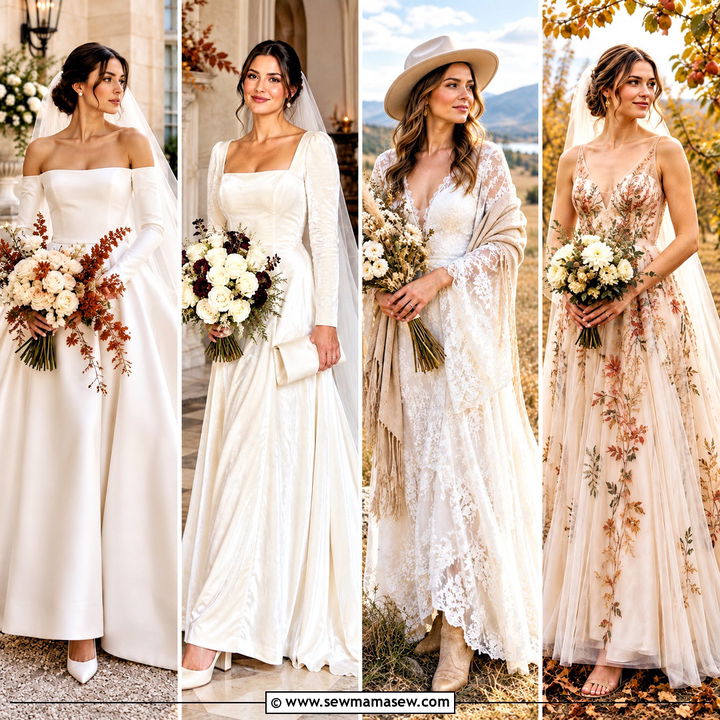
Most fall weddings involve at least one cold moment: a breezy ceremony, a walk between venues, or golden-hour portraits after sunset. So when I style an autumn bride, I plan the gown and the layer over it together. The A-line makes that easy. Its fitted bodice and gradually widening skirt sit comfortably under a cape, a cropped jacket or a long coat, and they move freely without the weight of a ball gown. Below are fifteen complete looks, from lace sleeves to a minimalist crepe dress with a bridal coat, with the shoes, veil, hair and flowers I'd choose and the fitting points I'd check.
Cape, Coat, Jacket or Stole for an Autumn Gown
Several looks below come with a layer, and each one changes the dress in a different way. Here's how I match them up.
- Cape: the most forgiving over a full skirt, since it hangs from the shoulders and doesn't fight the waist. A floor-length chiffon cape is light coverage; a wool or crepe cape is real warmth.
- Cropped jacket: right over a fitted bodice when you want the waist to show. It should finish at the natural waist, never at the hip.
- Long coat: the warmest option and the one most likely to swallow an A-line. Cut it with some flare, or wear it open.
- Stole or wrap: easy to bring for evening photos, but it slips off your shoulders whenever you raise your arms, so it's best for short outdoor stretches.
Whatever you pick, bring it to at least one fitting. Shades of ivory vary between makers, and a jacket that looks white on its own can look gray next to a warm ivory satin.
1. Long Sleeve Lace A Line Wedding Dress
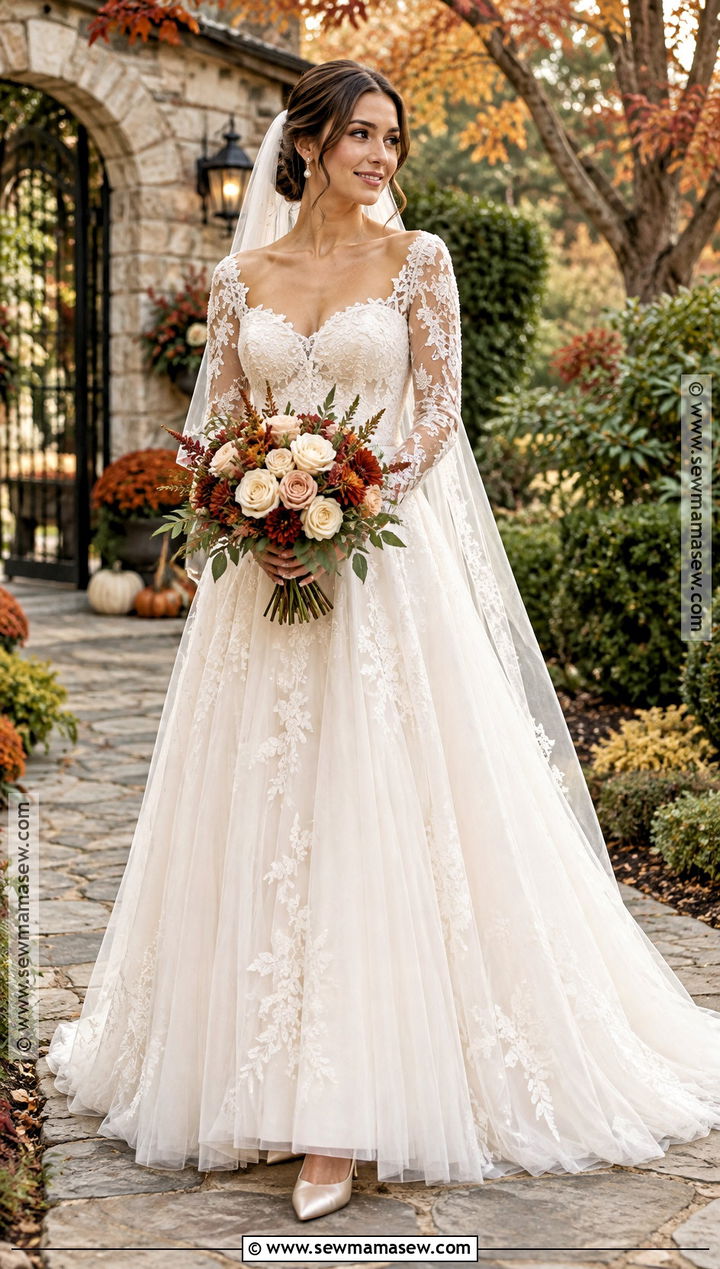
With illusion lace sleeves, the fit at the wrist and armhole matters more than the lace pattern. Too tight and you can't hug anyone; too loose and the sheer tulle wrinkles. I'd pair them with a lined sweetheart or V-neck bodice for support and a soft tulle skirt so the dress doesn't look heavy. Pearl drops and closed-toe satin pumps keep it classic. For an outdoor ceremony I'd choose a cathedral veil over a fingertip one, because the length shows off the wind and the leaves behind you. A low chignon leaves the lace at the shoulders visible, and cream roses with rust ranunculus add color without going rustic.
2. Satin A Line Wedding Dress With Square Neckline
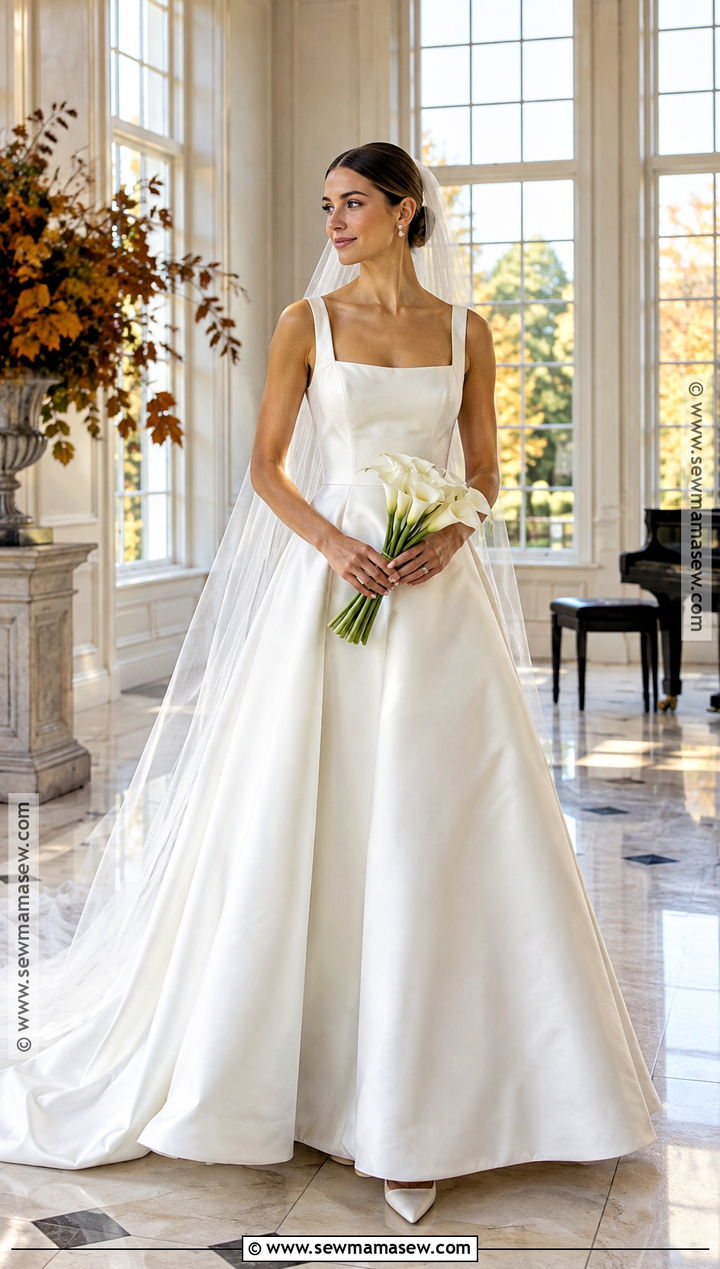
Satin and a square neckline both like straight lines, so this pairing looks sharp and architectural rather than soft. Wide straps hold the neckline flat; narrow ones let the corners gape. Satin shows light well in an afternoon gallery or estate, and it also shows creases, so I steam the skirt after the car ride and again before the ceremony. Pointed ivory heels, pearl studs and a plain chapel veil keep the look clean. A sleek bun suits the neckline better than loose curls. If the temperature drops, a cropped wrap or structured cape covers you for outdoor photos, and calla lilies echo the gown's clean shape.
3. Off The Shoulder A Line Wedding Dress
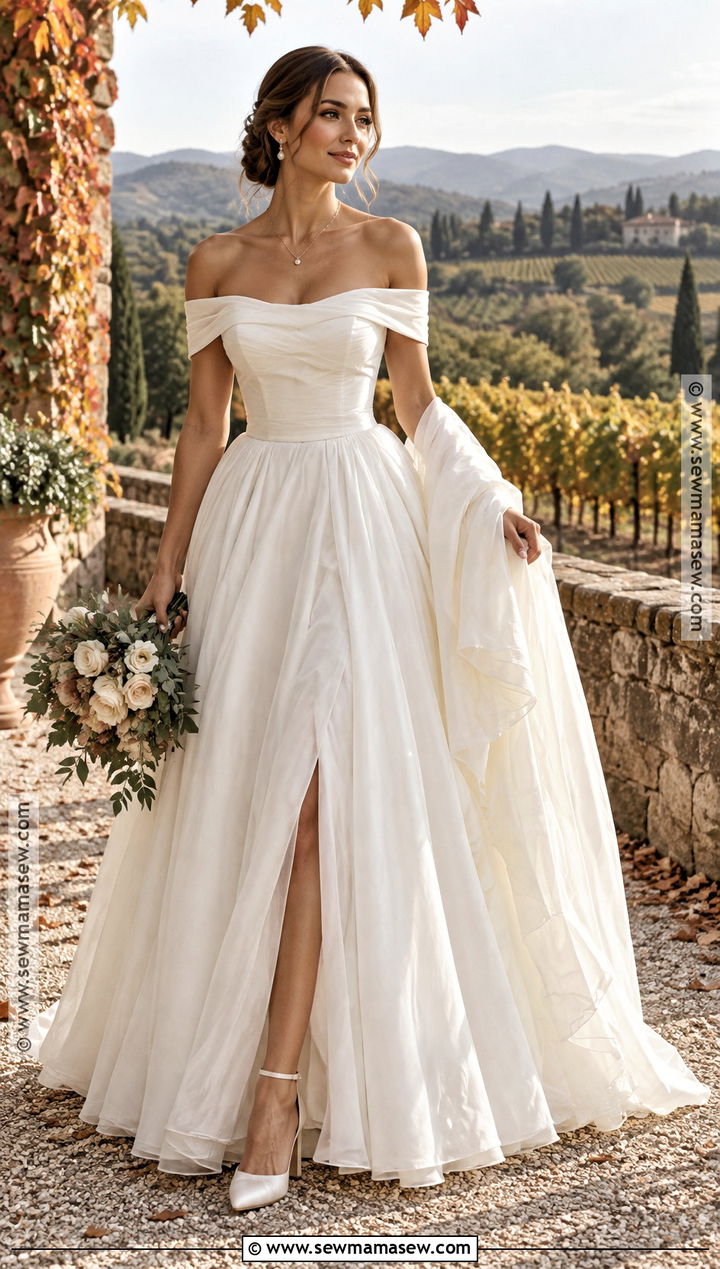
I keep off-the-shoulder gowns for September and early October, when the evenings are cool but not cold, because bare shoulders chill quickly once the sun drops. The bodice needs a firm corset structure underneath, since the sleeves don't hold anything up; they just rest on your arms. An organza or tulle skirt keeps the movement light. A half-up style combed back leaves the collarbone clear, and block heels give you some stability on a vineyard path. Have a cape or a faux-fur stole ready for after sunset. Faux fur sheds onto dark suits, so keep a lint roller handy for the groom's side.
4. High Neck A Line Wedding Dress
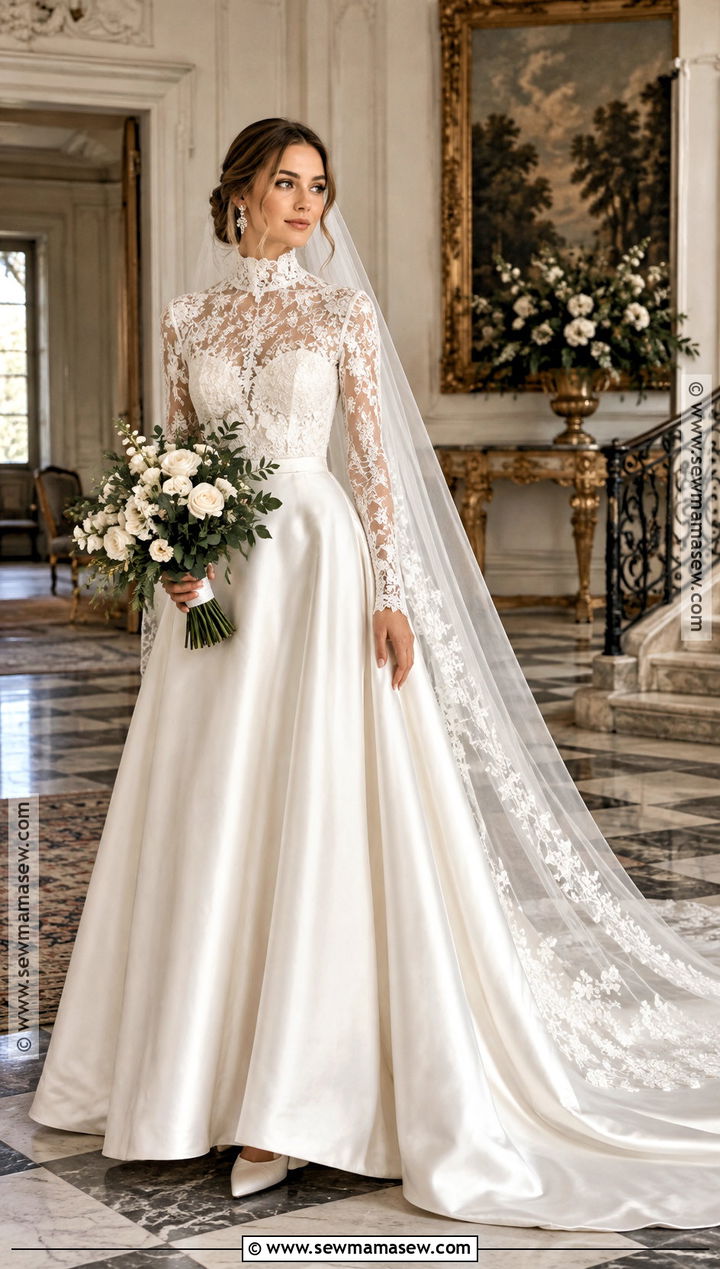
A high lace neck over a lined bodice suits brides who want coverage with a vintage feel. Because the neck is so busy, everything below should be quiet: a plain satin or crepe skirt and no necklace. Small crystal studs work; long earrings hit the collar. Set the embroidered cathedral veil beneath the low bun so the back buttons stay on show as you walk away from the guests. Ivory pointed pumps finish it. One thing I check: a high illusion neck can feel scratchy where the lace edge meets your skin, so ask for the edge to be bound or softened at fittings.
5. Basque Waist A Line Wedding Dress
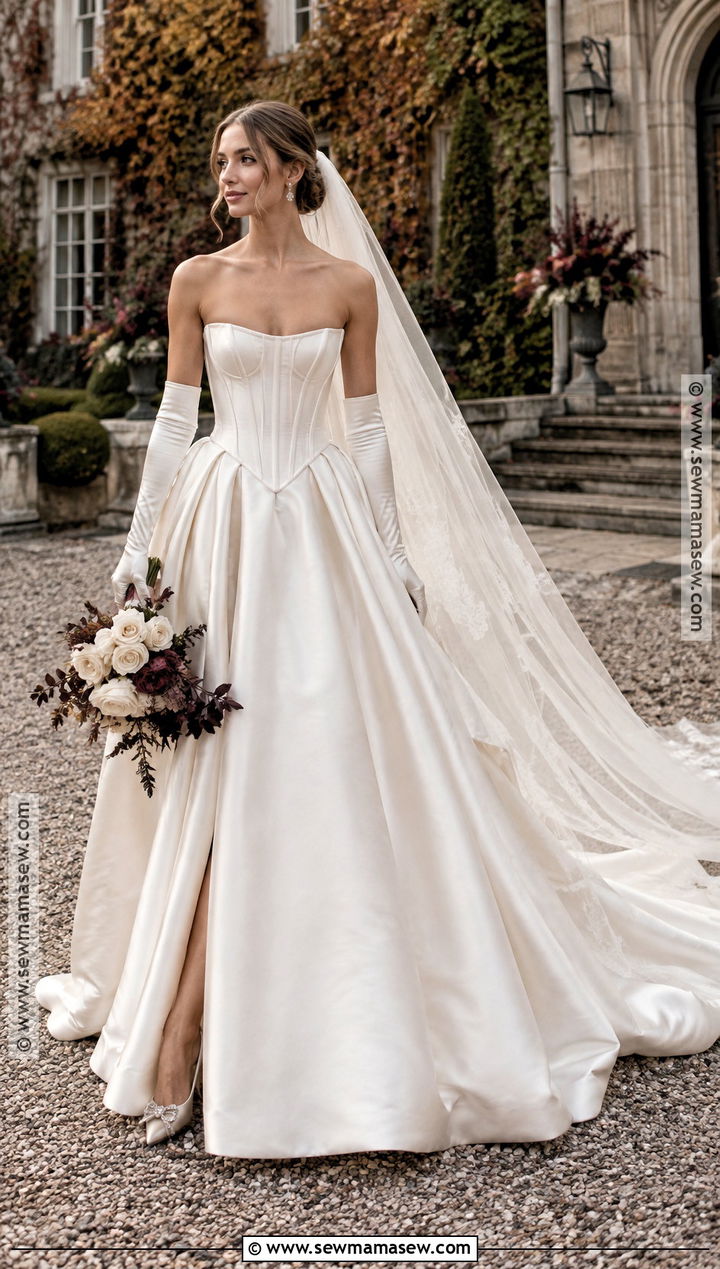
A basque waist dips to a point at center front. It makes the torso look longer and the skirt fuller, which is why it pairs so well with a strapless or softly scooped corset bodice and a full satin skirt. The A-line skirt keeps the drama wearable; you can still sit and dance comfortably. Opera gloves add ceremony coverage and come off before dinner. A sheer cathedral veil, crystal drops, ivory slingbacks and a smooth updo show the bodice clearly. I'd bring fall color in through the bouquet, with ivory roses and muted plum, rather than adding colored trim to the gown itself.
6. Floral Applique A Line Wedding Dress
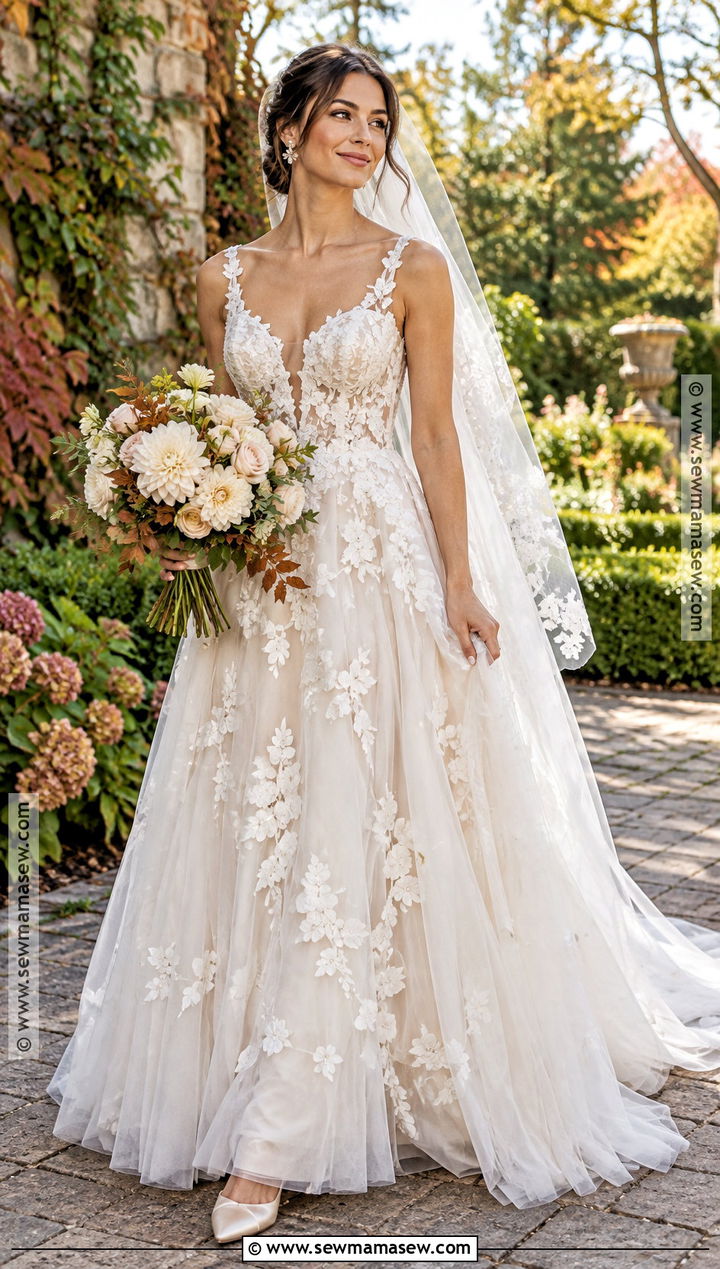
Appliquéd flowers clustered on the bodice and scattered down a tulle skirt look like a garden without tipping into rustic. Ivory-on-ivory is subtle; a pale champagne lining behind them makes each flower stand out in photos. Because the gown already has plenty of texture, the styling has to calm down. Plain satin pumps, small floral studs, and a veil with only a little embellishment. A loose low bun or a polished ponytail reads modern. Cream dahlias, peach roses and eucalyptus suit it. Skip a sparkly belt; it breaks the line of the flowers.
7. Chiffon A Line Wedding Dress With Cape
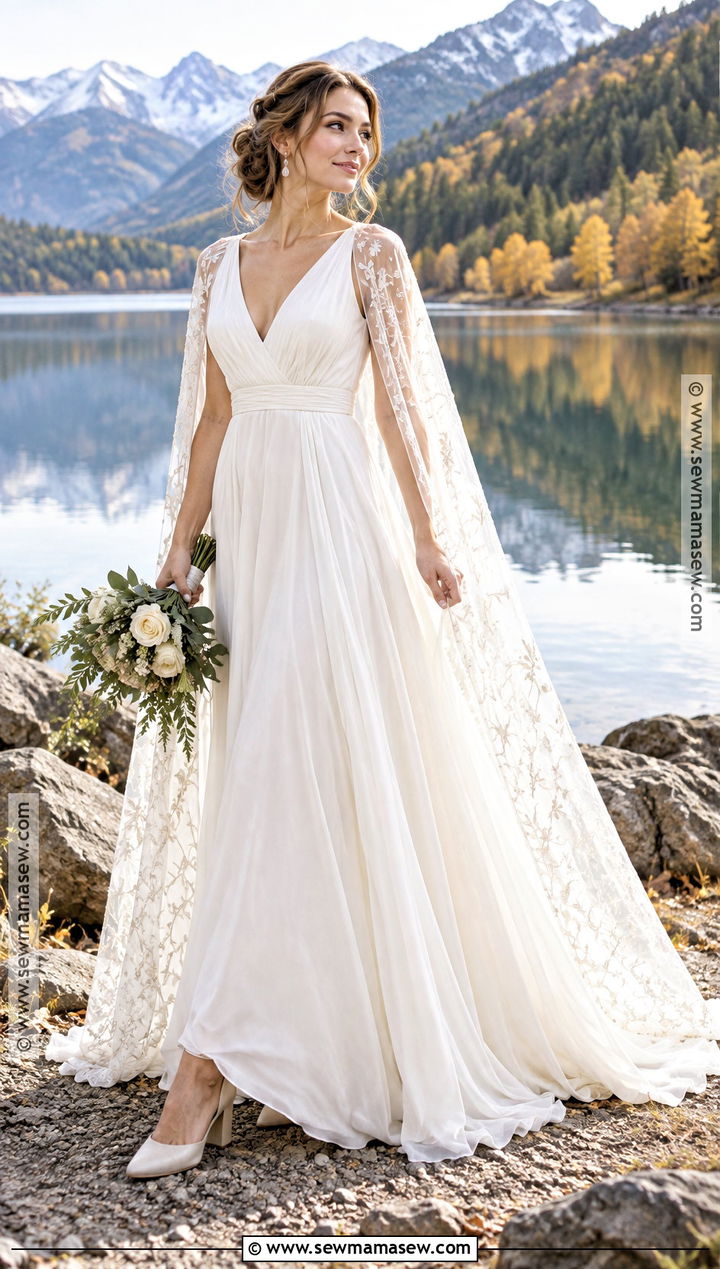
This is where a floor-length cape replaces the veil, and in chiffon it gives you light coverage and plenty of movement without any weight. Chiffon catches every breeze, which looks lovely in photos but can wrap around your legs while you walk; a narrow satin edge on the cape adds just enough weight to calm it. I'd pair it with a V-neck gown, a fitted waistband and a lightly gathered skirt. Block heels, small drop earrings and a loose twisted updo. A narrow bouquet keeps the waist visible. It suits a mountain, lakeside or woodland ceremony, where a stiff structured gown would look out of place.
8. Mikado A Line Wedding Dress With Pockets
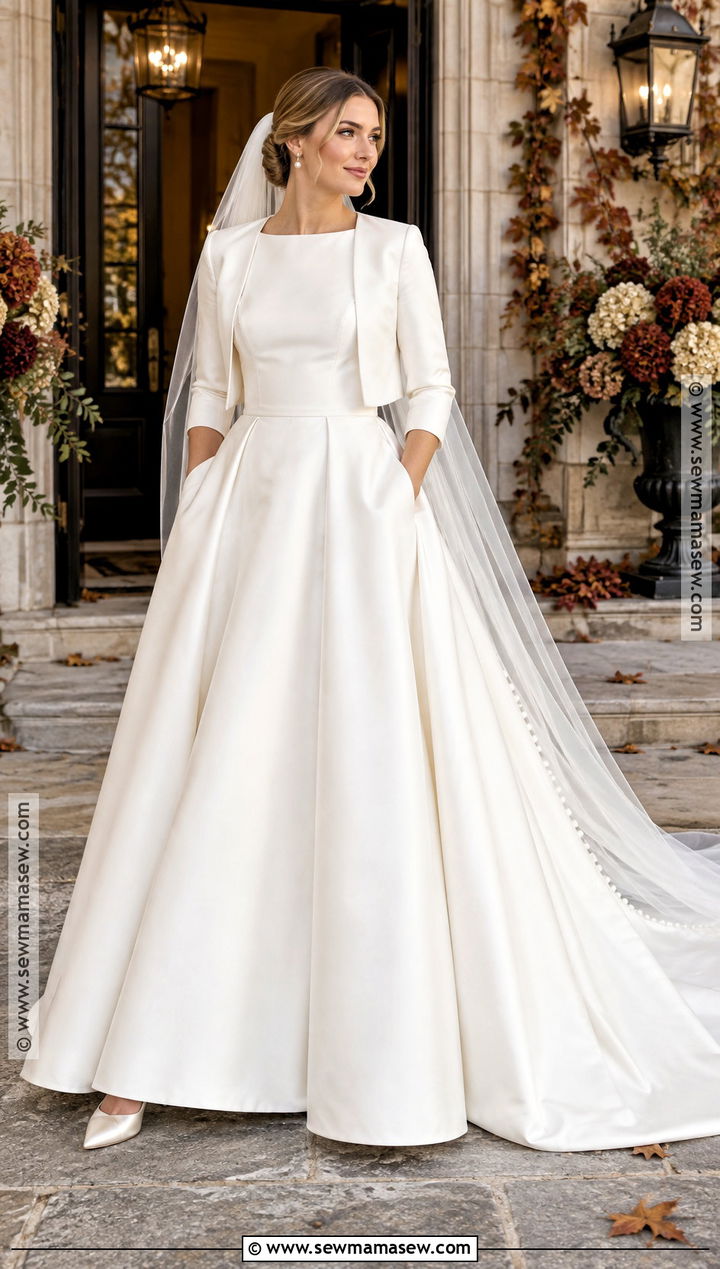
Mikado is woven densely enough that the skirt keeps its A shape without heavy petticoats, and on a chilly day you'll appreciate that weight. Side pockets give your hands somewhere to go in candid photos, but ask the seamstress to anchor them so they don't flare out when you put something inside. A bateau, scoop or soft V-neck, a fitted waist and covered buttons running into a chapel train keep it classic. Pearl drops, a smooth bun, a plain cathedral veil and pointed satin heels finish it. For outdoor portraits, a jacket that ends right at the waist keeps the pockets and proportions on show.
9. Boho A Line Wedding Dress With Bishop Sleeves
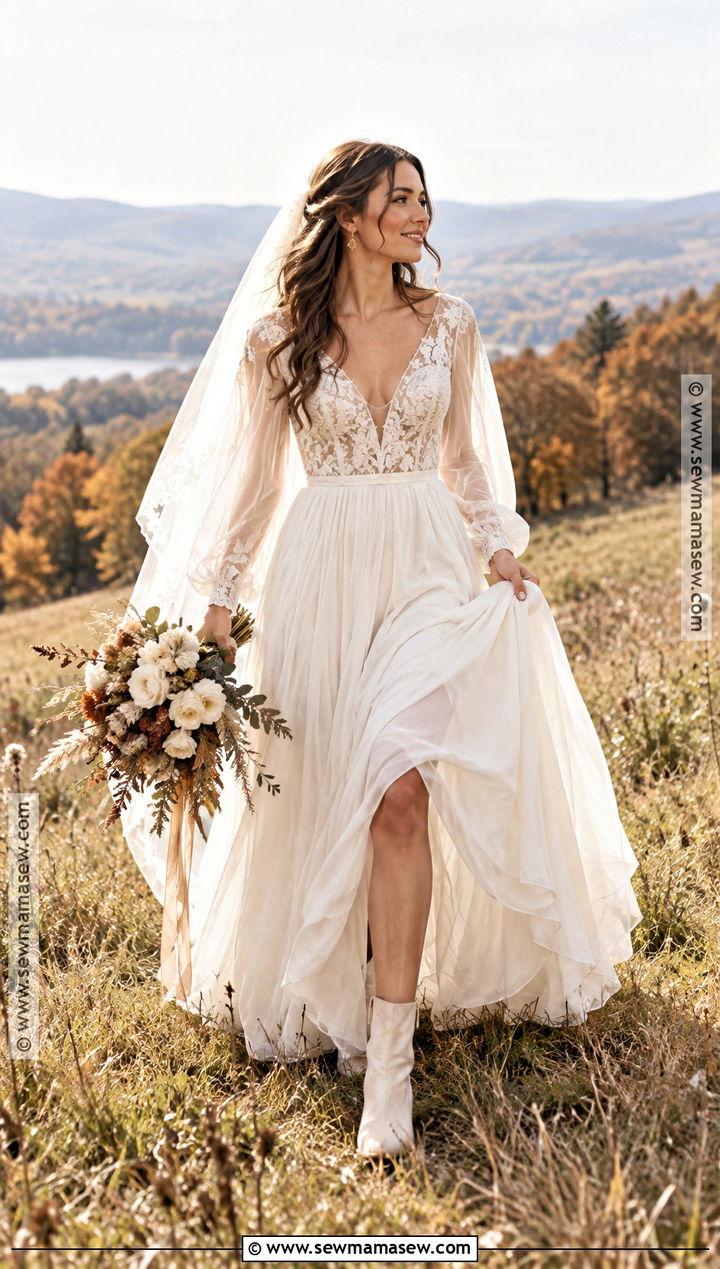
Bishop sleeves are full through the arm and gathered at the wrist. They give a boho gown real coverage and move with every gesture. The catch is that full chiffon sleeves trail into things at dinner, so a firm elastic or button cuff matters. A lace-trimmed V-neck and a skirt that falls loosely from the waist keep it soft; heavy fringe or beading fights the movement. Ivory ankle boots with a slim heel are a smart choice for a barn or meadow, provided they're broken in before the day. A small floral comb or fingertip veil and cream flowers with dried grasses suit this relaxed look.
10. Tea Length A Line Wedding Dress
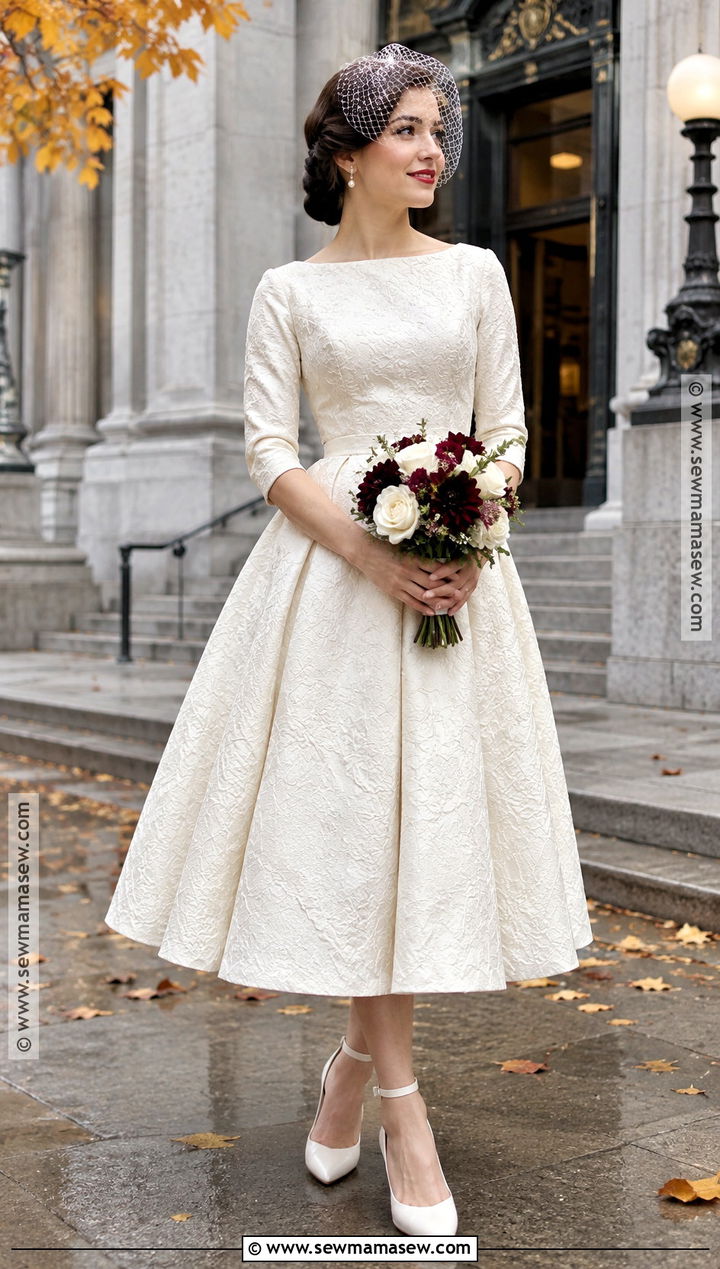
A tea-length hem lands between the knee and ankle, so your shoes become part of the look. That's my favorite thing about it for a small courthouse or restaurant wedding. Structured satin or jacquard holds the flared shape at that length; a soft fabric just hangs. Three-quarter sleeves or a bateau neck add coverage. Ivory pumps with a sculpted low heel or an ankle strap, pearl earrings, a short birdcage veil and a polished updo finish it. Check the hem in the mirror from the side: it should clear the widest part of your calf, or the leg can look shorter. A small bouquet of cream roses with burgundy suits the scale.
11. Plus Size Corset A Line Wedding Dress
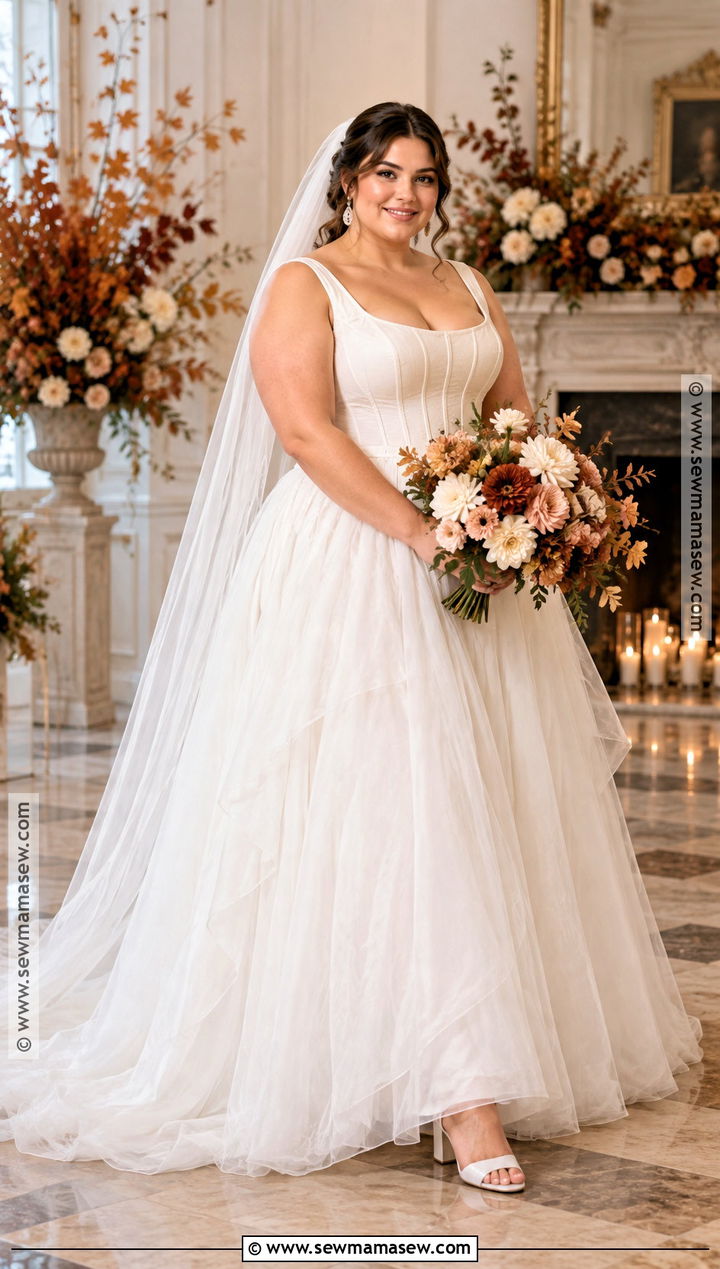
For a plus-size bride I care far more about how the corset is built than how it looks on the hanger. Internal boning, a lace-up or adjustable back and wide straps or detachable sleeves let the seamstress shape the support to you. A lace-up back can be adjusted on the day if you bloat a little. A scoop neck frames the face, and matte satin or layered tulle gives a smooth line through the hips. Supportive block heels, medium drop earrings and a chapel veil under a low updo. Ask for a lined bodice if sheer corsetry isn't for you. At each fitting, sit, walk, raise your arms and take a deep breath; nothing should shift or press.
12. Crepe A Line Wedding Dress With Bridal Coat
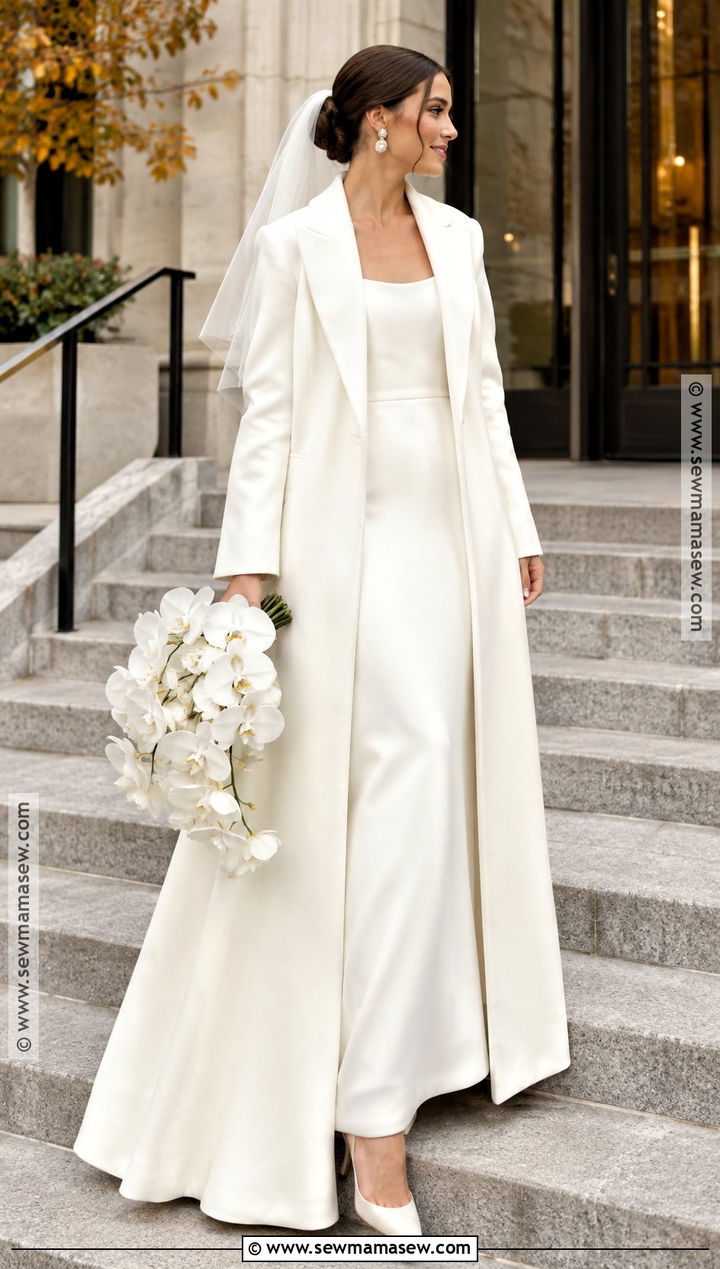
A full-length bridal coat over a plain crepe gown is the most practical cold-weather look here, and the coat is where I spend the fitting time. It has to follow the line of the skirt without adding bulk, so a coat cut in an A-line or left open from the waist down works better than a straight one. Crepe underneath stays smooth and creases less than satin under a layer. Pointed pumps, sculptural pearl earrings, a sleek bun and a short tulle veil keep the outfit modern. Take the coat off at the reception to reveal the simple dress. White orchids or calla lilies suit the clean lines.
13. Tulle A Line Wedding Dress With Detachable Sleeves
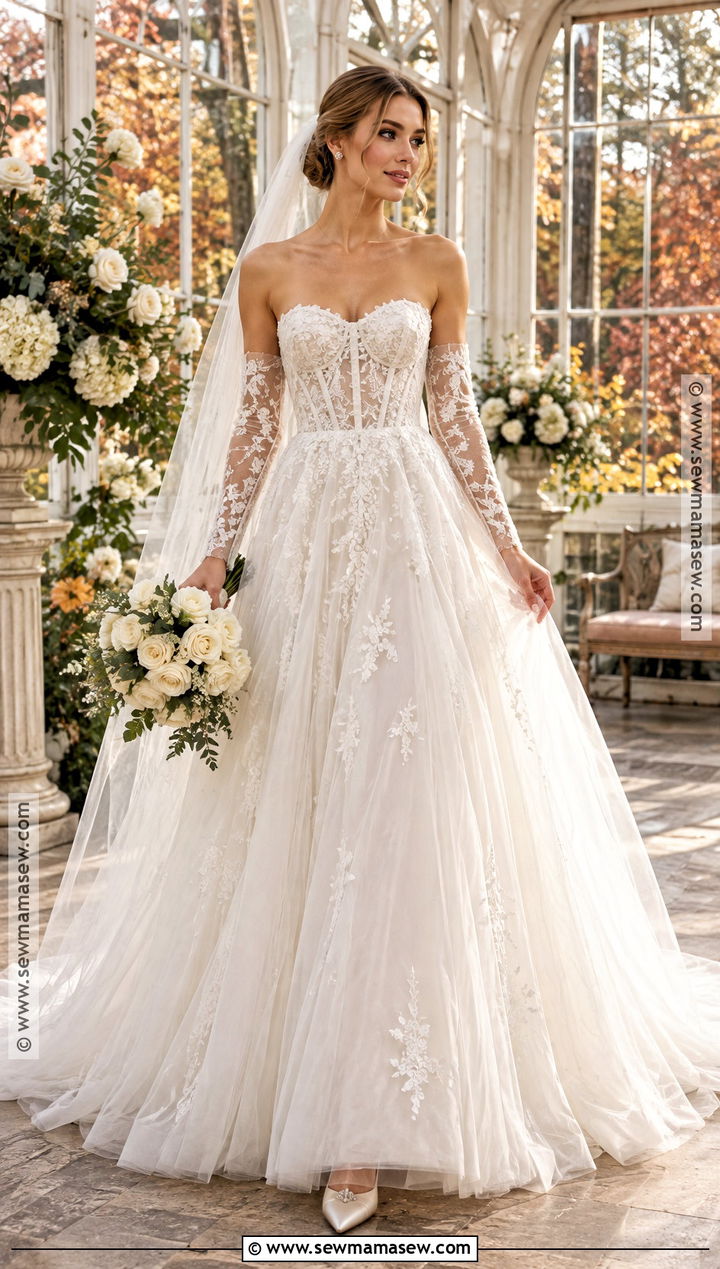
Detachable sleeves on a strapless tulle gown give you a covered ceremony look and a lighter reception look without an outfit change. The sleeves should be made for that exact dress, because the attachment points need to sit on the bodice's seams to stay secure and hidden. Fitted illusion sleeves suit the lace appliqués on the bodice. Practise removing them before the day. Crystal studs, satin pumps and a fingertip veil keep things simple, and soft Hollywood waves or a low textured bun suit both versions. White roses with muted greenery keep the bouquet neutral.
14. Champagne A Line Wedding Dress
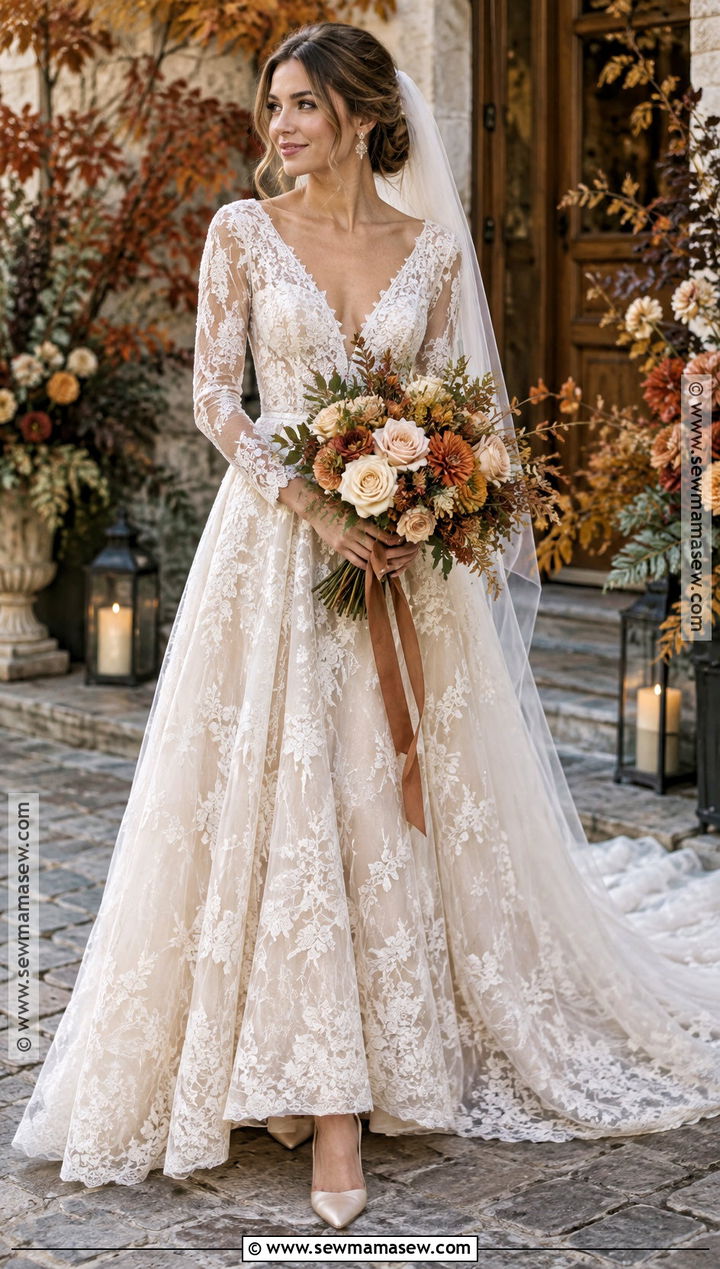
Champagne under ivory lace gives a warm glow through the overlay and looks especially good against fall leaves. Match the veil and accessories to the lace on top, not to the lining underneath; otherwise the veil looks yellow next to the bodice. A V-neck, fitted waist and sheer long sleeves keep the look romantic. Neutral satin heels and antique-style earrings complement it. See the gown by a window and under warm bulbs before choosing anything else, since champagne tones shift between daylight and indoor lighting. Cream, peach and terracotta flowers echo the dress without looking matched.
15. A Line Wedding Dress With Bridal Jacket
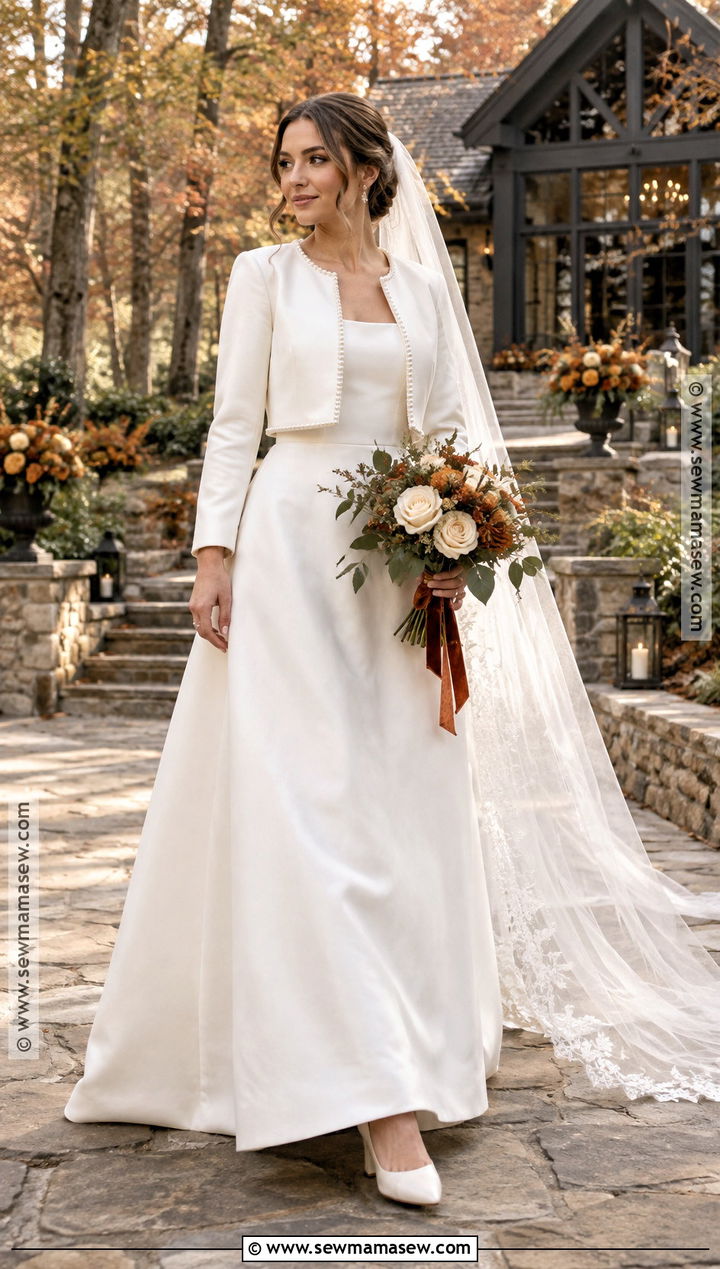
A cropped jacket over a sleeveless gown is my go-to fix for a bride who loves a simple dress but is getting married in November. Where it ends is everything: at or just above the natural waist, so the skirt starts flaring below it. A hip-length jacket hides the waist and makes the torso look boxy. Lace, pearl-trimmed or plain tailored all work over satin or crepe. Buy one made for bridalwear, because everyday ivory jackets are rarely the same shade as a gown. Block heels, small earrings and a chapel veil for the ceremony, then take off the jacket and veil for the reception. Ivory flowers with rust accents suit both looks.
Adjusting the A-Line for Petite, Tall and Curvy Brides
The silhouette flatters most bodies, but the details make the difference, and these are the ones I adjust most often.
Petite
Keep the skirt volume moderate, because a full tulle skirt can overpower a short frame. A V-neck or a basque waist adds length to the torso. A chapel train is usually a better scale than a cathedral, and a tea-length dress can work well if the hem lands below the knee.
Tall
Check the bodice length before anything else, since off-the-rack waist seams often sit too high on a long torso. Tall brides can carry heavy Mikado, long coats and cathedral veils without being swamped.
Curvy
Look for support built into the dress: boning, cups and a lace-up or adjustable back. Matte fabrics such as crepe or Mikado skim the hips more smoothly than shiny satin, which picks up light on every curve.
Leave Room for Fittings Before an October Date
Most brides need two or three fittings, and seamstresses are busiest in late summer and early fall. Book the first fitting roughly two to three months before the wedding and the last one a week or two before. Bring the real shoes, the real bra or shapewear, and any jacket or cape to every appointment so the hem and bustle are set for the outfit you'll actually wear.
Dressing for the Ceremony and the Cold Walk After It
A good fall bride's look includes the dress, the layer over it and the shoes under it, and all three should suit the venue. Lace sleeves give you romance, satin and Mikado give you structure, and chiffon and tulle give you movement. Capes, coats, jackets and detachable sleeves keep you warm without hiding the gown. Judge each dress from the back and side as well as the front, and try it with the shoes and layer you plan to wear while you walk, sit and turn. Once that's right, the veil, hair and flowers fall into place around it.
Related posts: