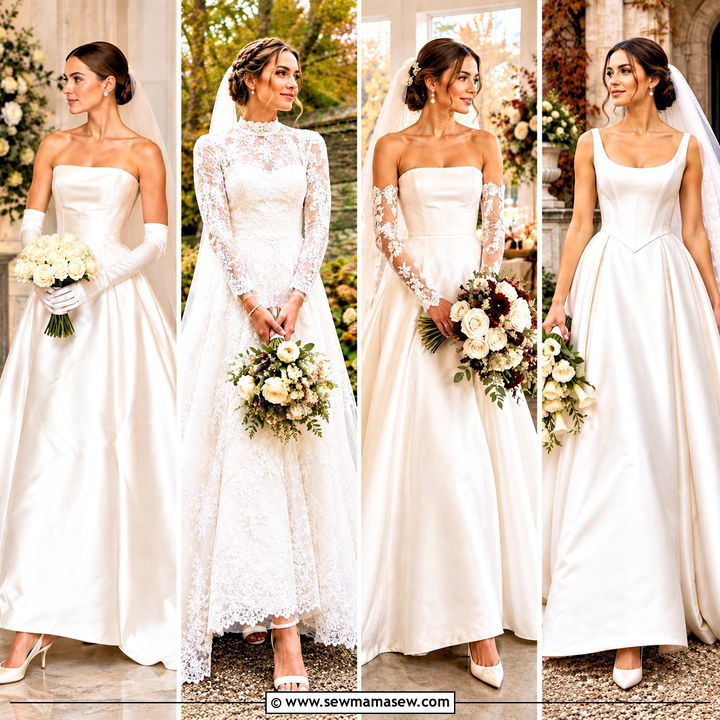
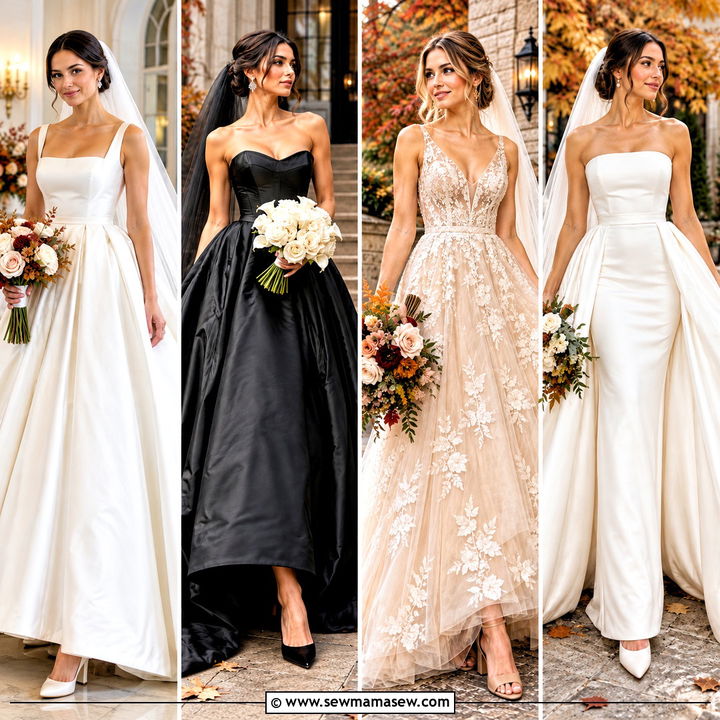
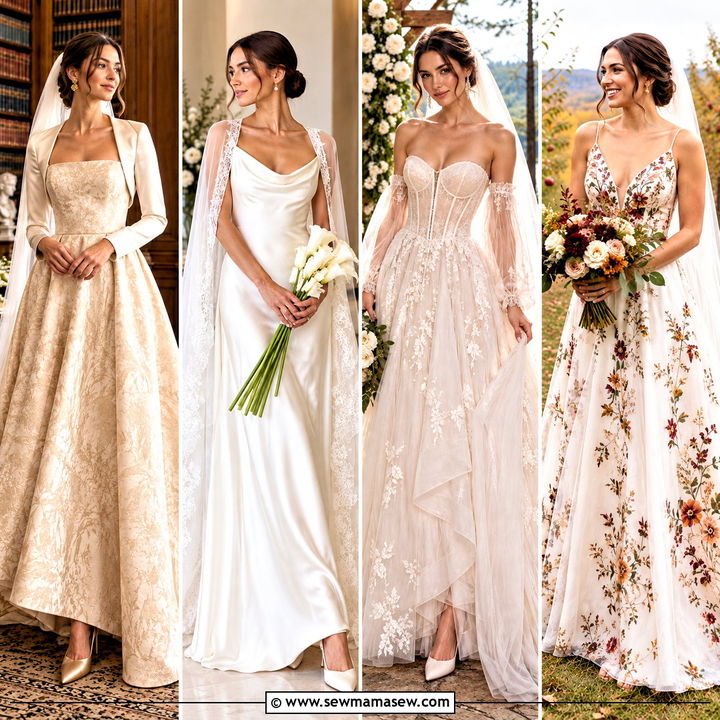
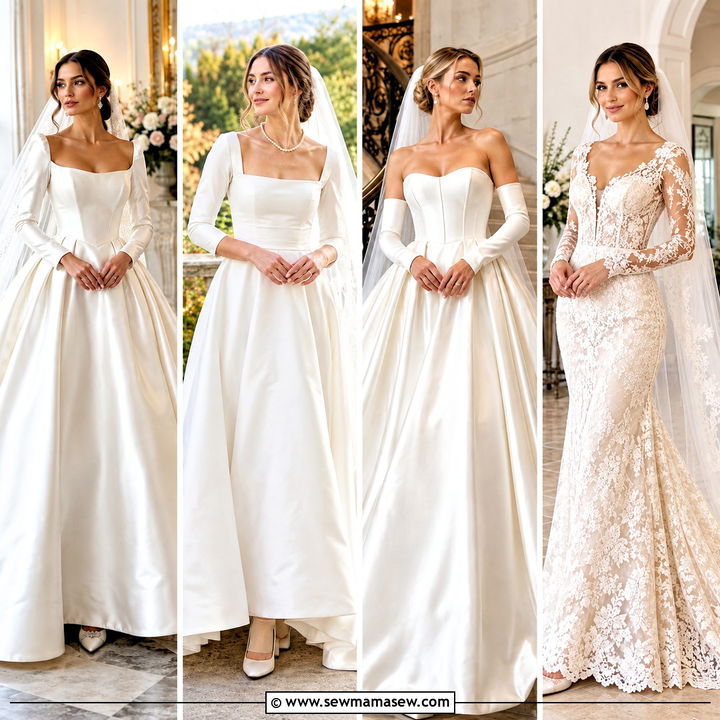
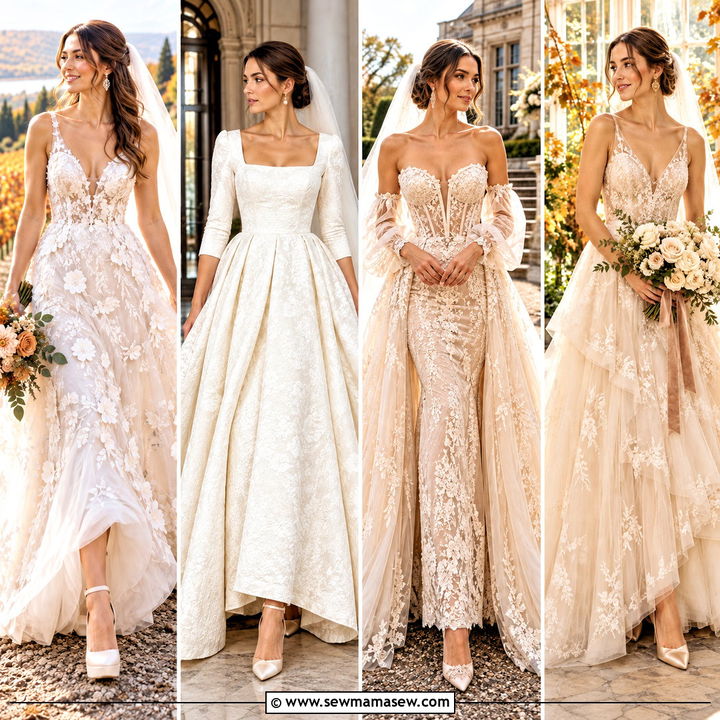
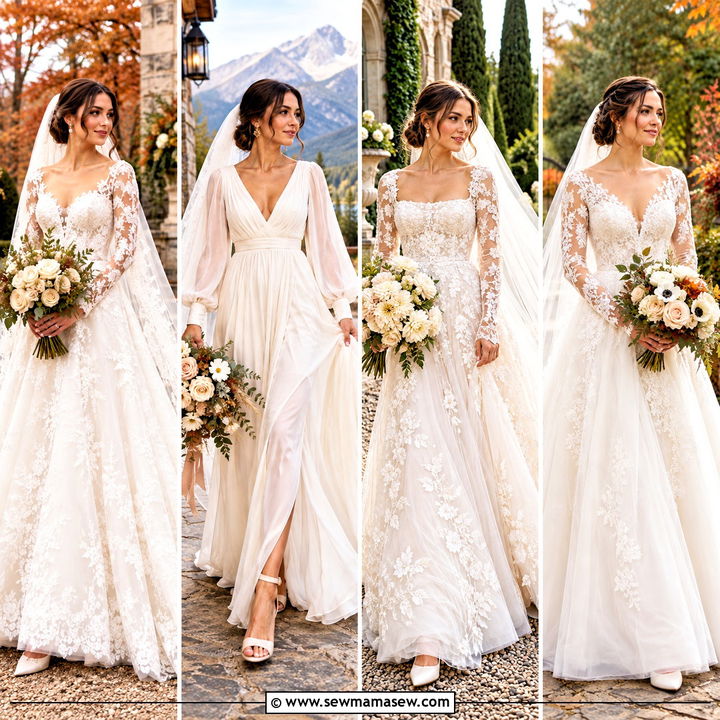
An A-line is the silhouette I suggest most often to fall brides who aren't sure where to start. The fitted bodice and gradually widening skirt flatter a wide range of figures, and the shape works in almost any fabric, from heavy satin to airy chiffon. Autumn adds its own requirements: cooler air, uneven ground at outdoor venues, and the wish for some coverage. Lace, structured satin, basque waists and corset bodices are all strong this year. Below are fifteen versions with the veil, shoes, jewelry and outer layer I'd pair with each, and a note on what the setting asks of the dress.
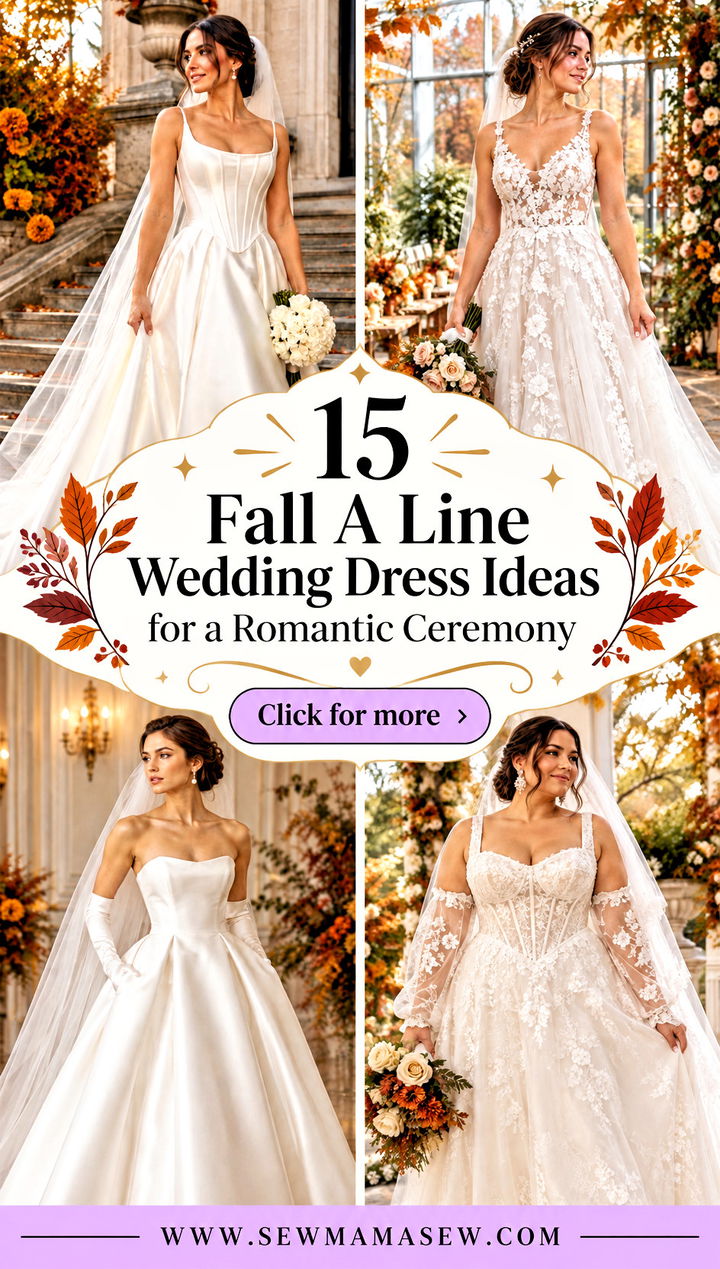
How an A-Line Differs From a Ball Gown or Fit-and-Flare
Brides often use these terms interchangeably, and it causes confusion in fittings. An A-line is fitted through the bodice and widens gradually from the waist to the hem, like the capital letter. A ball gown flares sharply right at the waist into a very full skirt, usually with a petticoat underneath. A fit-and-flare hugs the hips and only opens out around mid-thigh or the knee.
That gentle flare is why the A-line works for so many bodies. It skims the hips rather than gripping them, it doesn't add the bulk of a ball gown, and it's easy to walk, sit and dance in. It's the shape I'd steer someone toward if they want a classic bridal look but dislike feeling restricted.
Where it can fall flat is in a very soft, thin fabric on a petite frame, because the skirt has nothing to hold its line and simply hangs. For shorter brides, a little structure in the skirt or a waist set slightly high keeps the proportions balanced.
1. Long Sleeve Lace A Line Wedding Dress
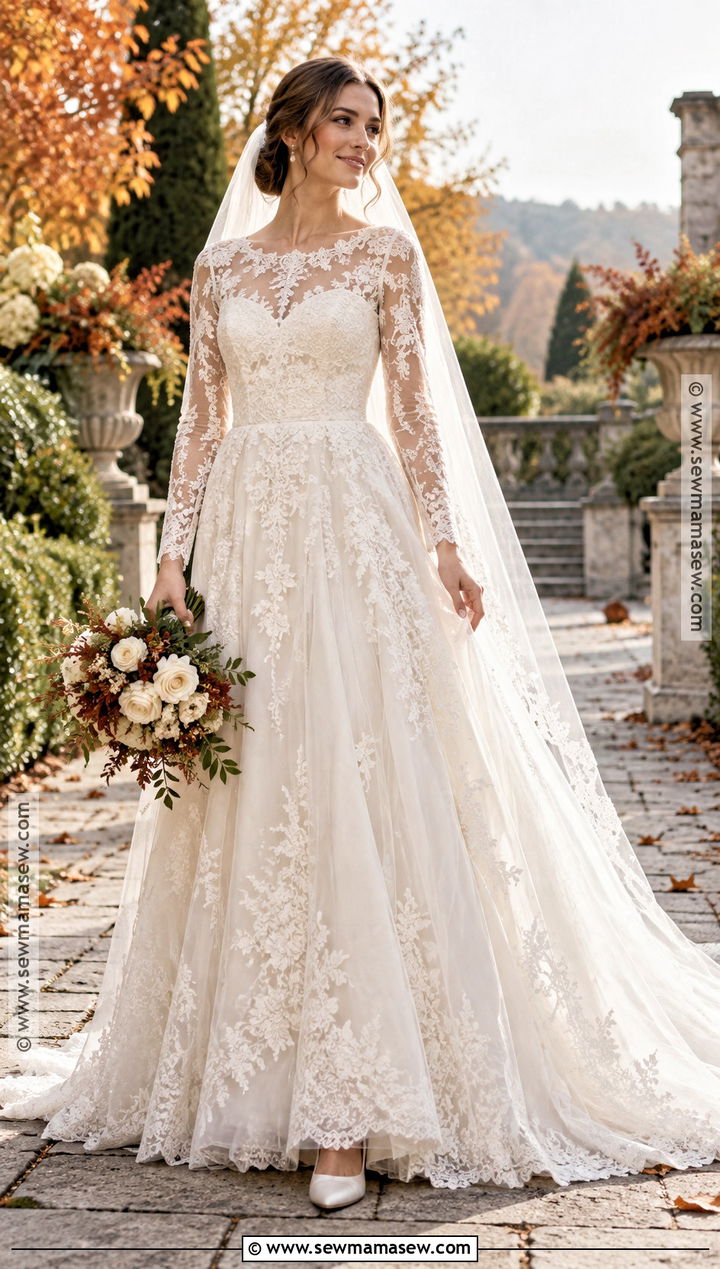
Long lace sleeves are the obvious fall choice, and they earn it. I look for floral or botanical lace over a softly lined bodice that carries down into a tulle skirt, so the pattern doesn't stop abruptly at the waist. Illusion sleeves read delicate; lined lace sleeves look more modest. Pearl drops, an ivory fingertip veil and closed-toe satin pumps finish it, with a low bun to keep the lacework at the neck visible. One thing brides are often surprised by: sheer lace keeps you covered but not warm. For an outdoor ceremony, plan a fitted cape or faux-fur wrap you can take off once you're inside.
2. Satin Square Neck A Line Wedding Dress
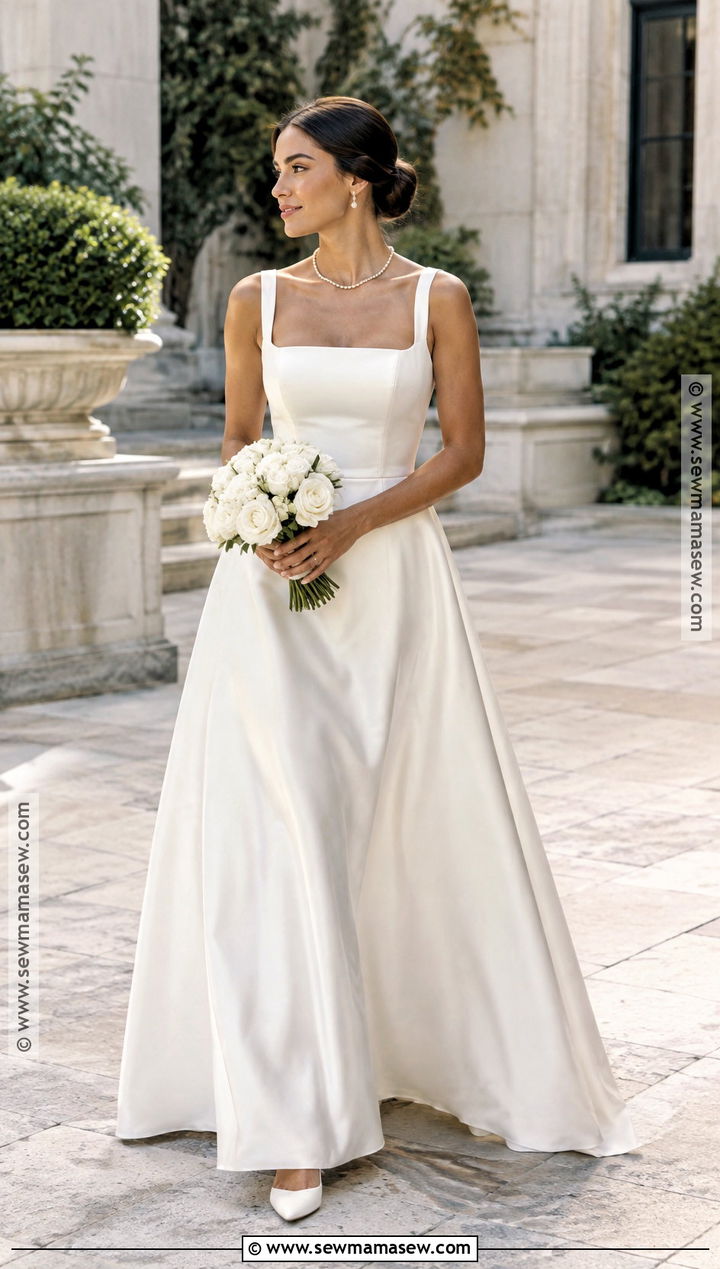
Satin with a square neck is the cleanest look on this list. What makes or breaks it is weight: thin satin collapses and wrinkles, while a heavier satin holds the skirt in a smooth sweep from the natural waist. Wide straps frame the shoulders and leave room for a short pearl strand or a single pendant. I pair it with pointed ivory heels, pearl studs and a small structured bag for the reception. A sleek chignon suits the minimal line. If you're outside, a cropped bridal jacket comes off for photographs. Deep satin sits especially well against stone walls and burgundy or rust florals.
3. Off Shoulder A Line Wedding Dress
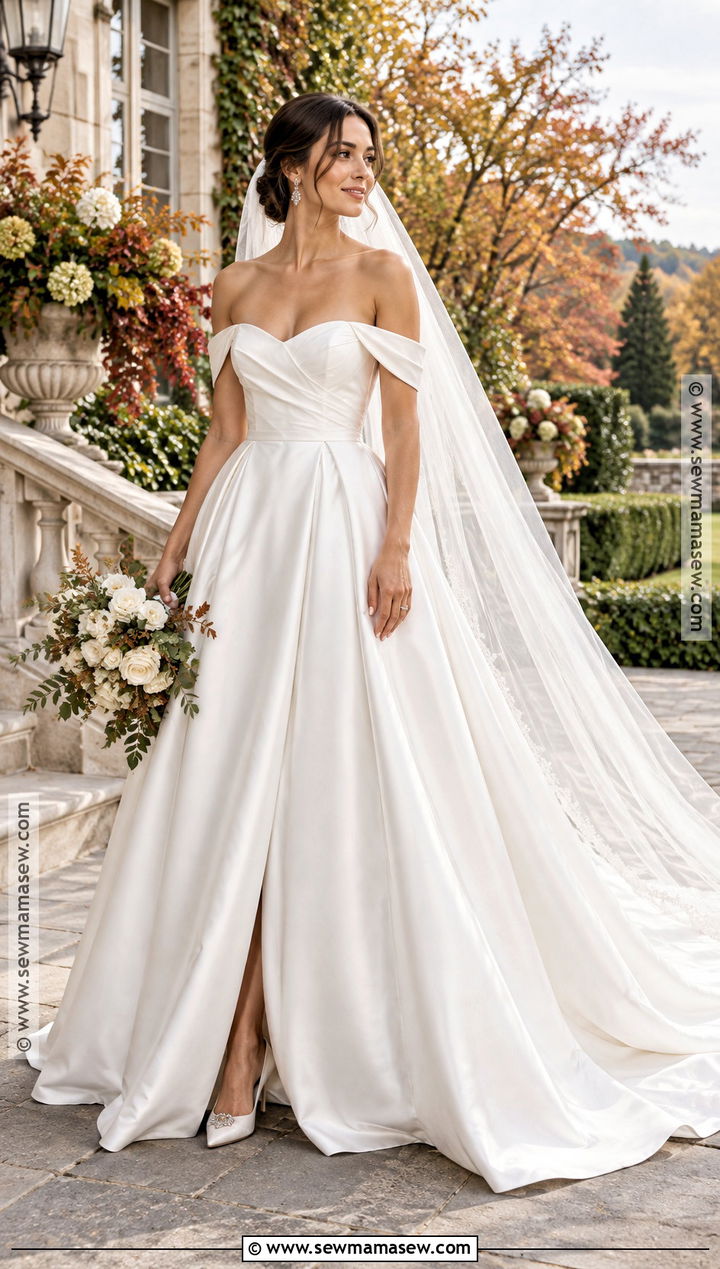
An off-shoulder neckline only works if the bodice is doing the holding. Before anything else I check the internal structure, because a low neckline with weak boning means you'll be tugging it up all night. A satin or Mikado skirt gives the dress fall weight and photographs richly against foliage. Crystal earrings, a fine bracelet and pointed closed-toe heels are plenty. A cathedral veil adds drama; a shorter one keeps it relaxed for a garden. Wear a loose updo to show the shoulders. For cool moments, choose a cape that sits above the sleeves rather than crushing them flat.
4. Basque Waist A Line Wedding Dress
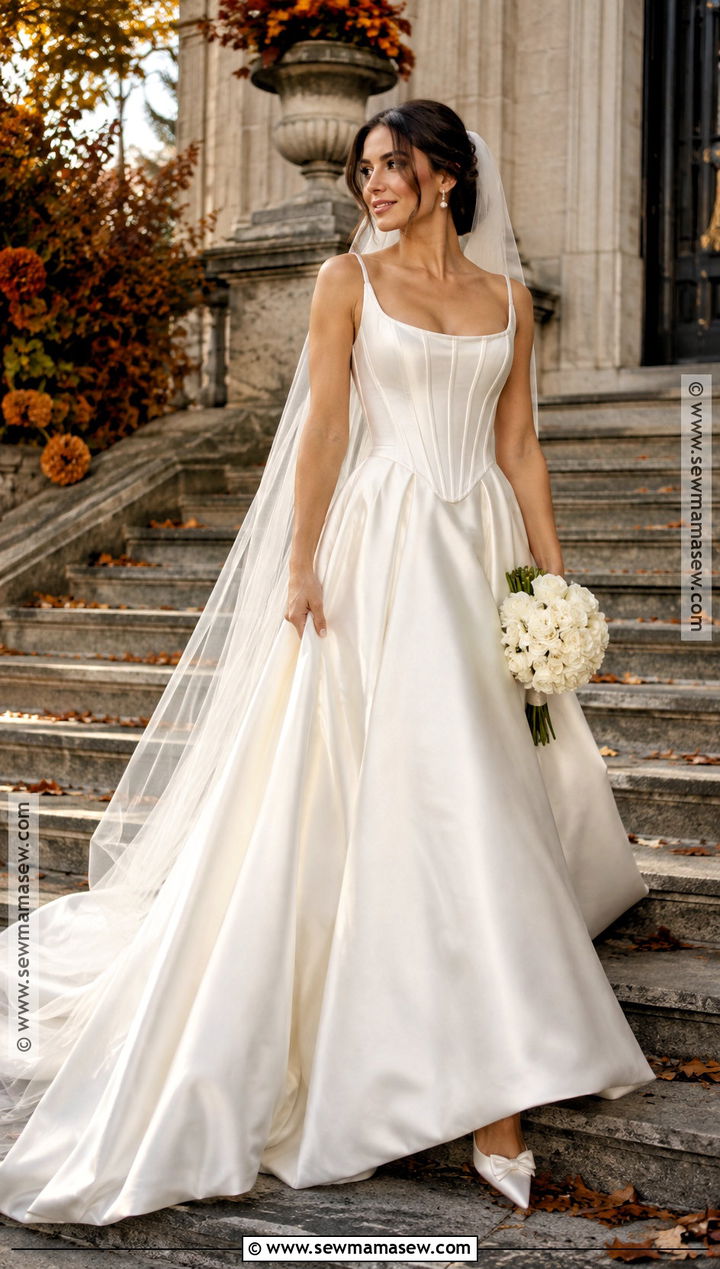
The basque waist dips into a V below the natural waistline before the skirt opens out, which makes the torso look longer and gives the dress a strong center. In structured satin, brocade or layered tulle it feels regal. Visible corsetry has been everywhere in bridal this year, so this is a good pick if you want traditional drama with modern construction. A chapel-length veil, delicate drops and satin block heels complete it. If the bodice already has boning lines or lace appliqué, I skip the necklace and let the construction show. A compact bouquet in ivory with a little autumn greenery keeps the waist visible.
5. Floral Applique A Line Wedding Dress
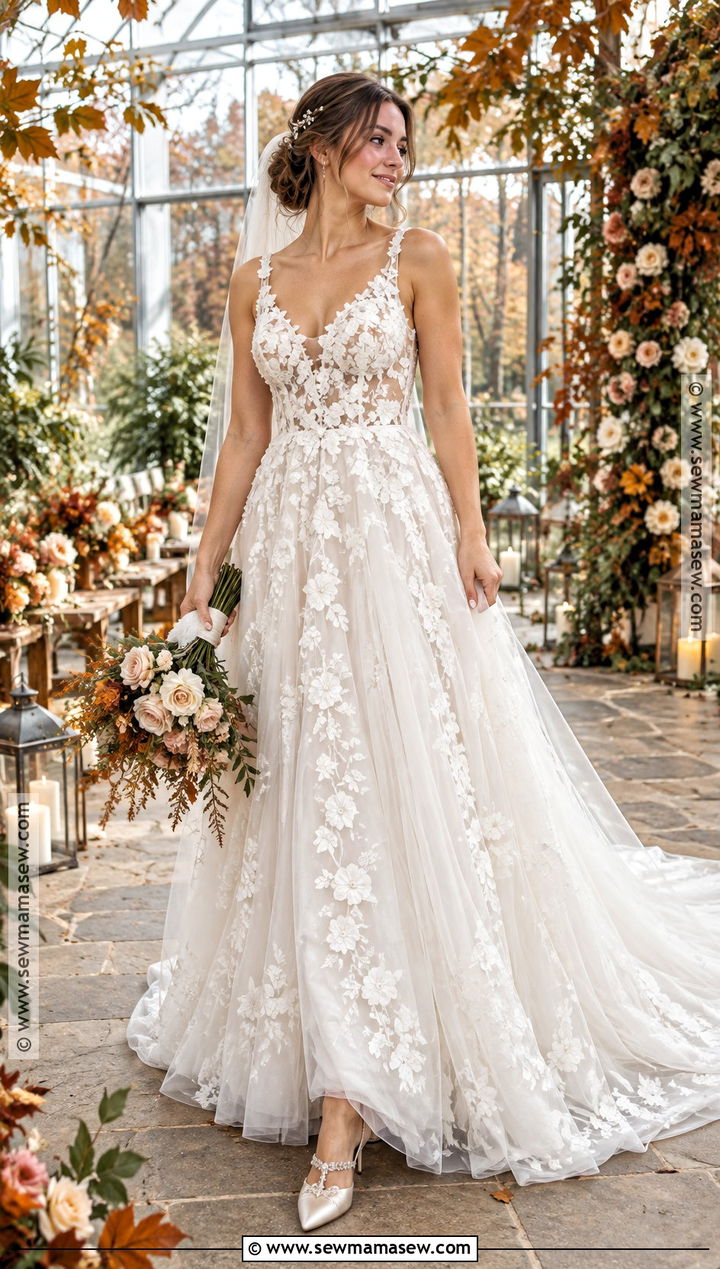
Appliqué flowers add the kind of texture that suits autumn. The placement I like best is dense across the bodice and gradually scattered down the skirt, which marks the waist and keeps the skirt light enough to move. The lining color changes everything here: ivory under ivory flowers is soft, while champagne or nude makes each motif stand out. Keep the veil plain tulle and the jewelry minimal so nothing fights the appliqués. A half-up style suits an orchard or vineyard. Echo the florals in cream roses and muted peach blooms, but don't try to match every motif.
6. High Neck A Line Wedding Dress
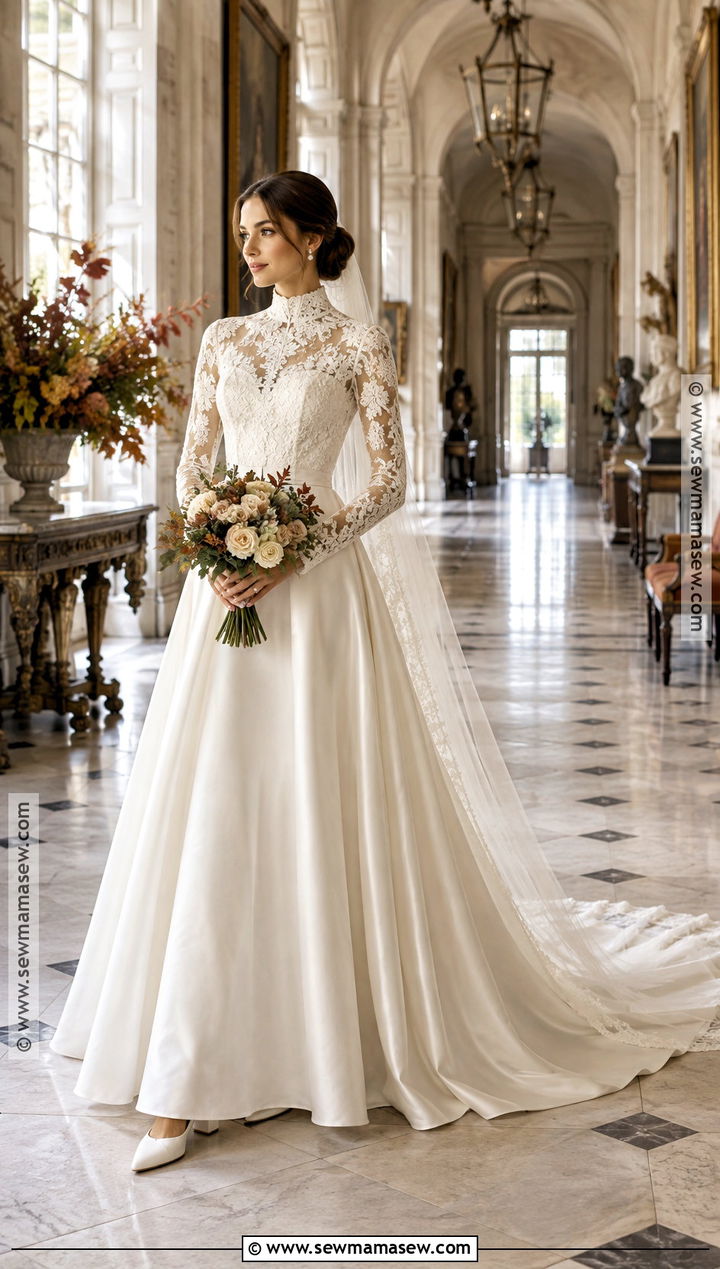
A high neck gives full coverage without feeling heavy if the rest of the dress opens up. A sheer lace neckline is the softer version; an opaque bateau or mock neck is more tailored. I like to balance it with a keyhole back or a clearly defined waist so the bodice doesn't read as one solid block. Small pearl earrings, a low bun and a narrow chapel veil anchored under the hair are all it needs, and a necklace is almost never necessary. Closed-toe block heels handle stone paths. A long ivory coat or plain cape covers travel and portraits at a historic estate or museum.
7. Strapless Mikado A Line Wedding Dress
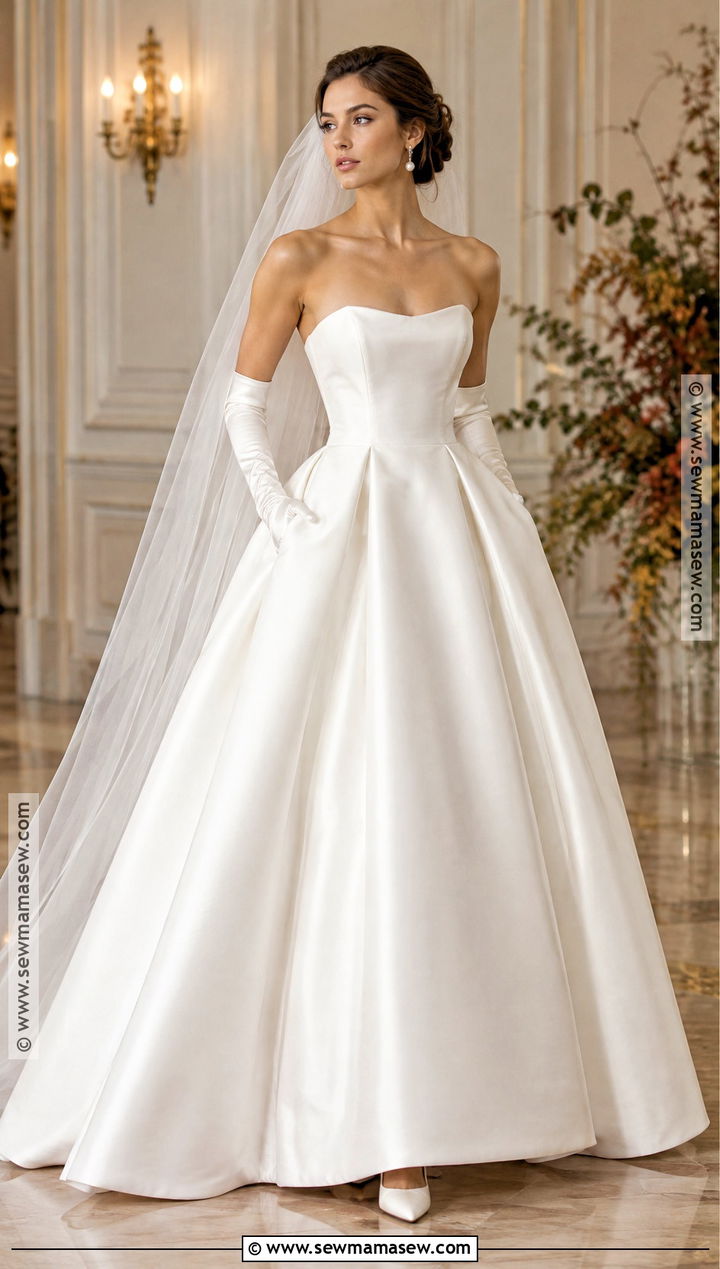
Mikado is a stiff silk or silk-blend weave with a slight sheen, and it's the fabric I'd choose for a strapless A-line that needs to hold its shape on its own. The fit test that matters is movement: walk, sit and lift your arms during fittings to be sure the bodice stays put without hiking it up. Elbow-length gloves for the ceremony, removed at the reception, give you a quiet second look. Studs, pointed pumps and a long plain veil keep it refined. If you want coverage outdoors, ask about detachable straps or a matching bolero. Mikado also takes pleats, covered buttons and pockets well.
8. Chiffon Sleeve A Line Wedding Dress
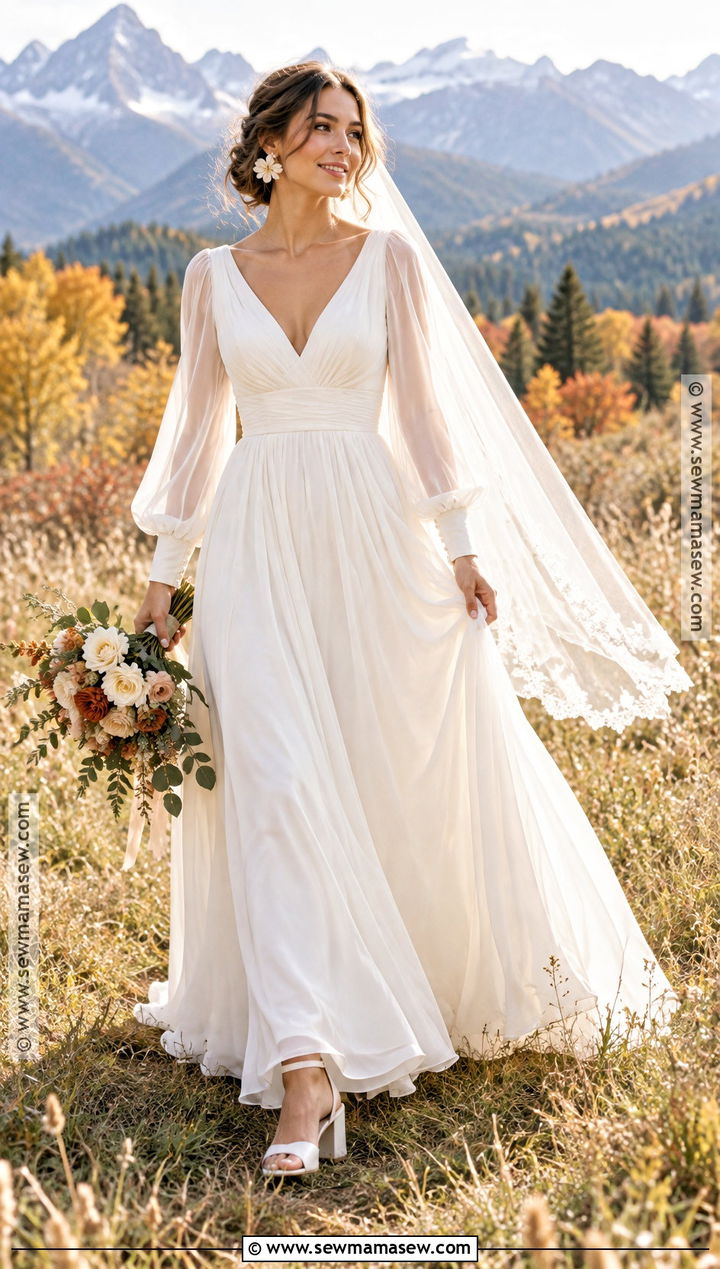
Chiffon sleeves move with you, which is lovely at a meadow or hillside ceremony and a nuisance in wind. Full bishop sleeves gathered at a narrow cuff suit later fall; loose flutter sleeves suit an early-season date. The bodice should be lined, with a soft chiffon skirt below. Floral earrings, a hair vine, ivory block heels and a light fingertip veil match the softness of the fabric. Outdoors, I sew small weights into the hem so the skirt doesn't lift in a gust. Bring a wool-blend wrap for the evening, since chiffon gives almost no warmth. Avoid heavy sparkle with this one.
9. Vintage Lace A Line Wedding Dress
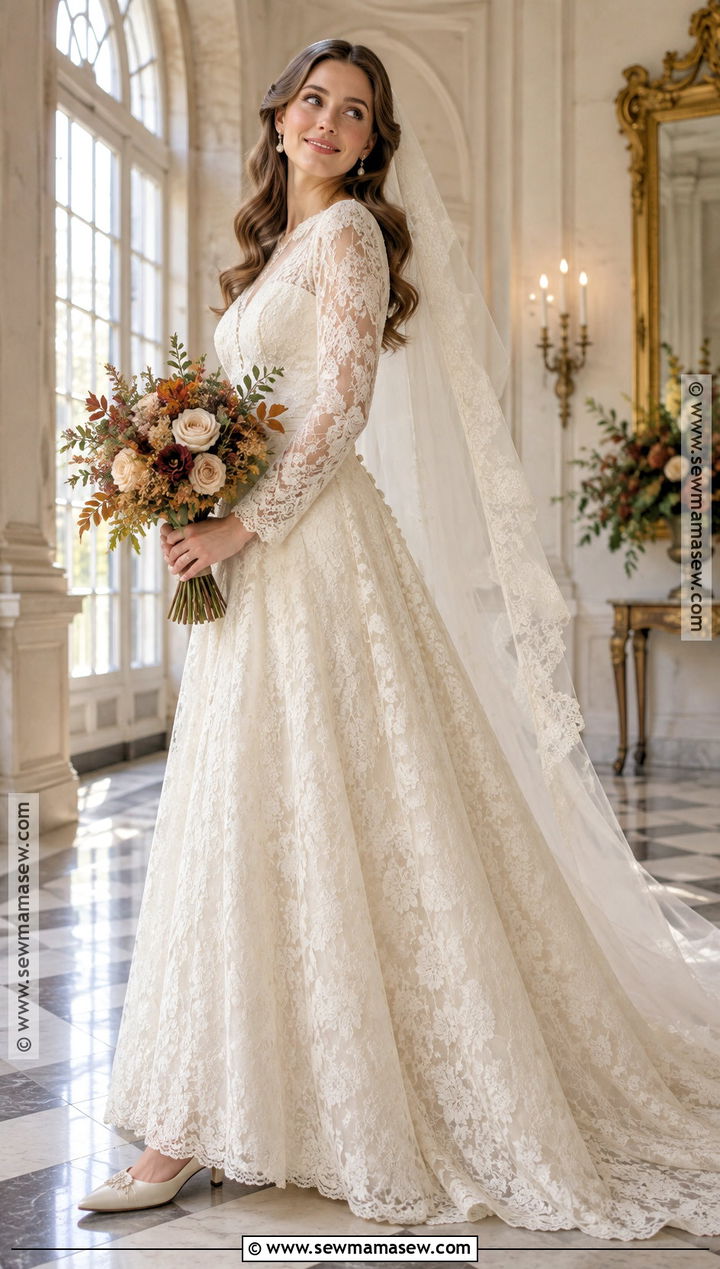
Vintage lace suits barns, old churches and historic houses, but it's easy to tip into costume. I steer toward matte lace, scalloped edges, covered buttons and a softly defined waist rather than anything bright. A sweetheart lining under a higher lace neckline gives depth with coverage. Pearl earrings, a lace-edged veil and modest-heeled ivory pumps fit the era without overdoing it. Finger waves, a low chignon or brushed-out curls all work. My rule is one period reference, not five: pick the hair or the gloves or the veil to carry the vintage note. An ivory cardigan or tailored cape adds warmth.
10. Minimalist Crepe A Line Wedding Dress
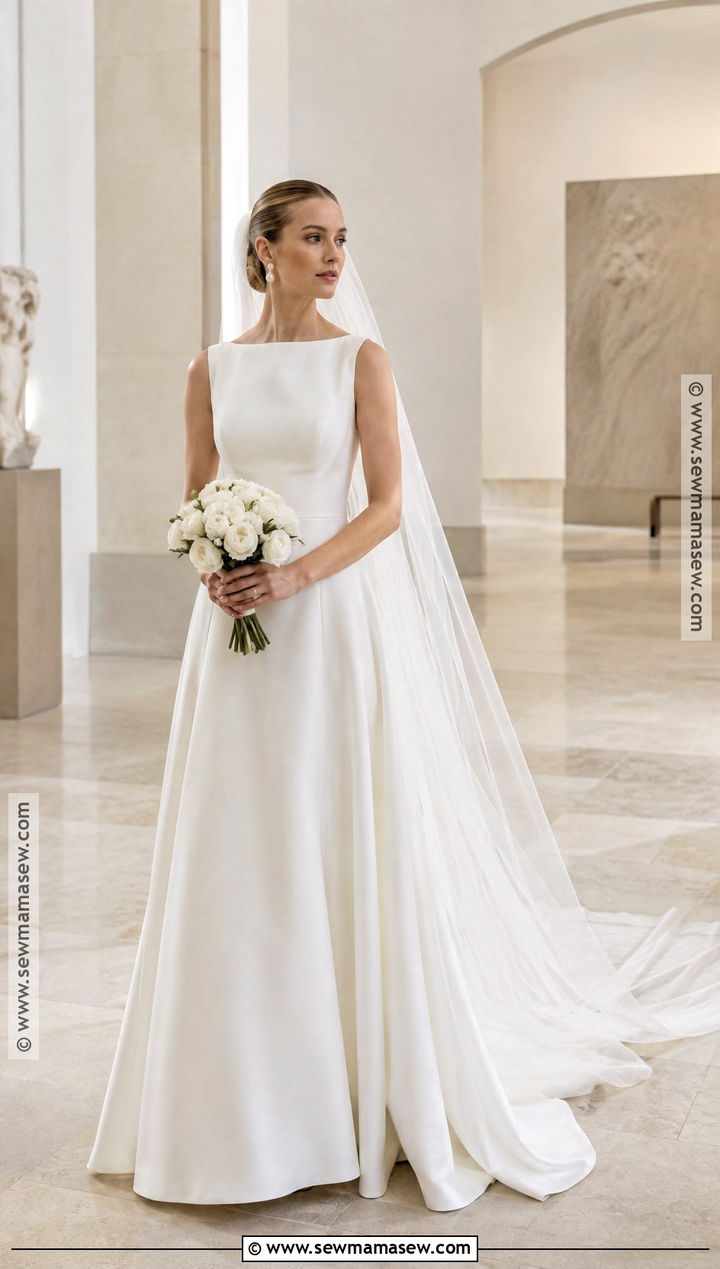
Crepe is unforgiving in the best way. With no lace or beading to hide behind, the seaming and fit have to be precise, so this is a dress where the alterations matter more than usual. Look for a softly structured bodice and a skirt that glides instead of billowing. A V, bateau or clean scoop neckline does all the defining. Sculptural gold or pearl earrings, sleek ivory pumps and a plain cathedral veil suit it, with a low polished bun. Add one deliberate detail, such as a square back or covered buttons. A simple fitted cape keeps it modern at a gallery or city restaurant.
11. Boho A Line Wedding Dress With Bell Sleeves
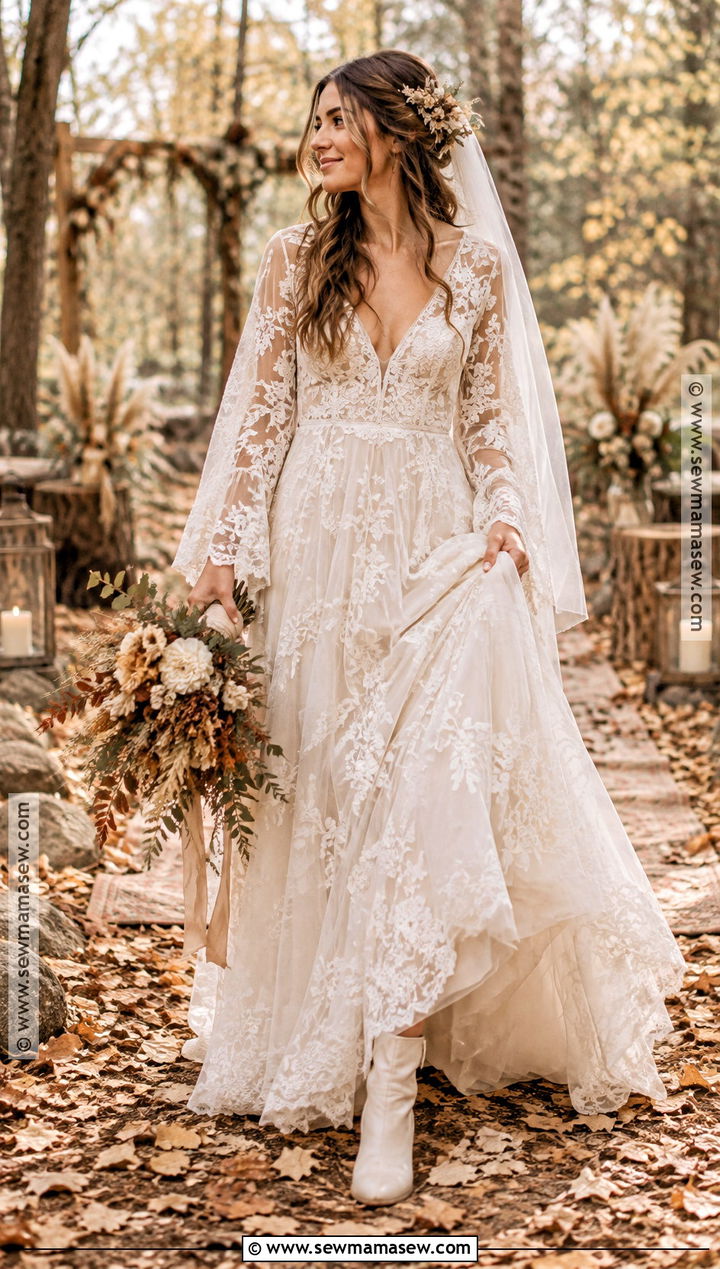
Bell sleeves and relaxed lace make this the dress for a woodland ceremony. I'd choose a soft geometric or botanical lace with a comfortable lining and sleeves that end above the hands, so you can hold a bouquet and sign papers without dragging lace through anything. The skirt should move over grass without a stiff underskirt. Ankle boots are honestly sensible here, with a floral comb and a fingertip or cape veil. Loose waves or a textured braid suit the mood, and a bouquet of dried grasses and muted rust adds color. Don't stack every boho detail at once; restrained jewelry keeps it polished.
12. Beaded A Line Wedding Dress
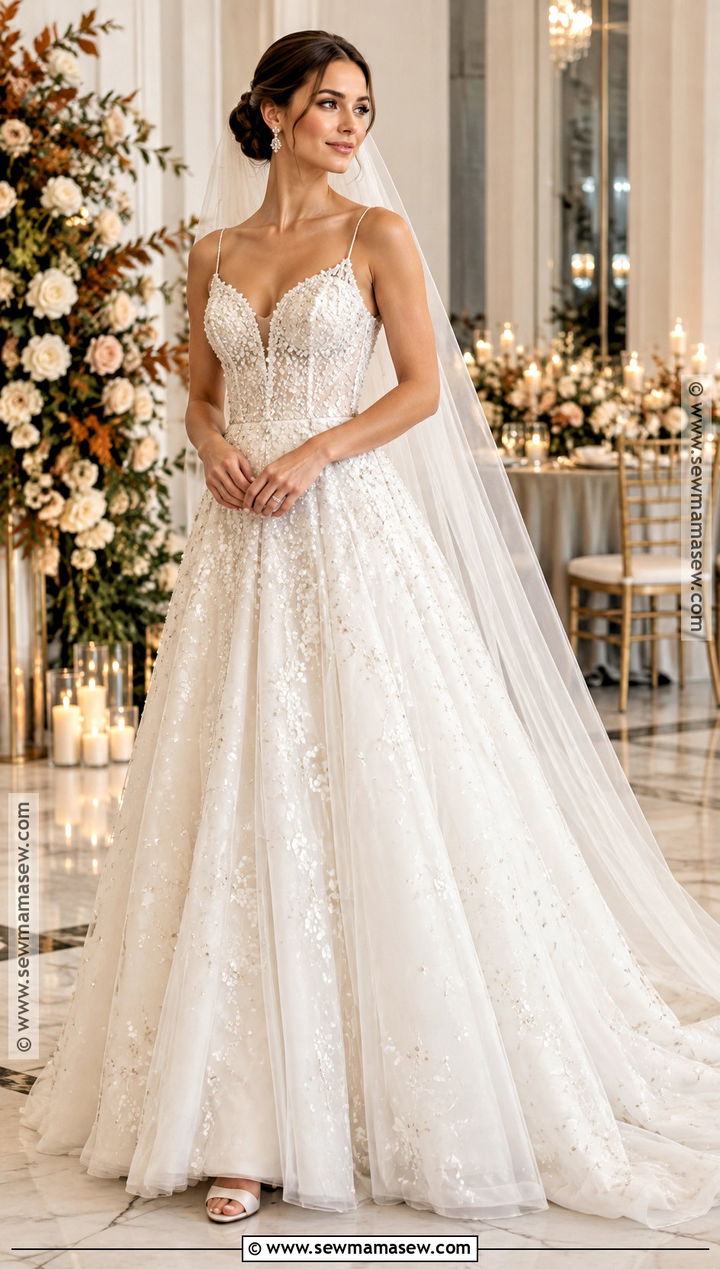
Beading catches low autumn light, which is why it's so good for a late-afternoon or evening ceremony. Tonal beads, pearls or sequins look refined; high-contrast embellishment reads busy. I like it concentrated on the bodice and fading into the skirt so the gown doesn't get heavy. Beaded gowns do weigh more than people expect, so try one on and walk around before committing. Simple satin heels, small crystal earrings and a plain-edged veil are enough. Wear the hair up so it doesn't snag on beaded straps. If the whole dress sparkles, skip the ornate necklace and headpiece.
13. Tea Length A Line Wedding Dress
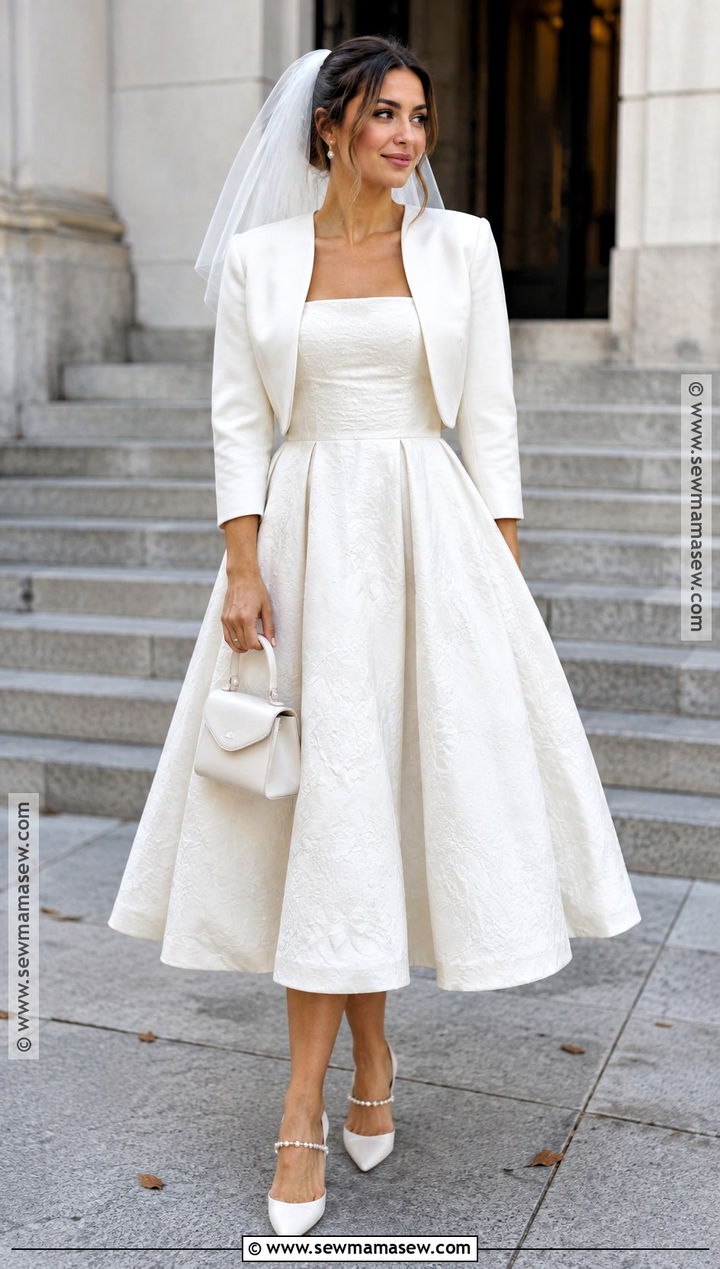
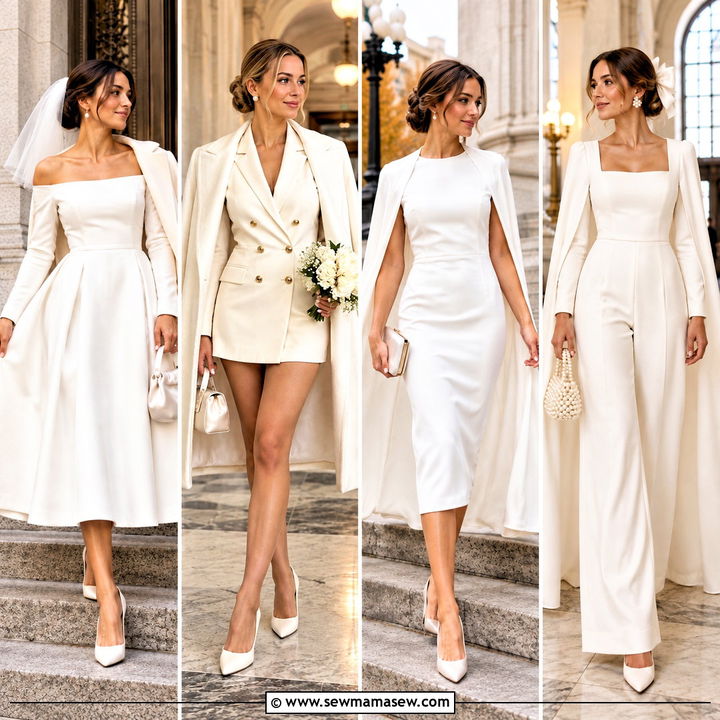
Tea length lands between the knee and ankle, and it's my favorite for courthouse ceremonies, brunch receptions and small gatherings. The shorter hem puts your shoes on display, so pick a pair you love: ivory pumps, pearl-trimmed heels or even sleek ankle boots. A fitted bodice with a bateau, scoop or square neck keeps the shape classic. A cropped jacket, short veil and structured bag complete the outfit. Short gloves add a vintage touch if the dress has no sleeves. For cool weather, choose heavier satin, jacquard or Mikado, because a light fabric at this length can look like a summer dress.
14. Cathedral Train A Line Wedding Dress
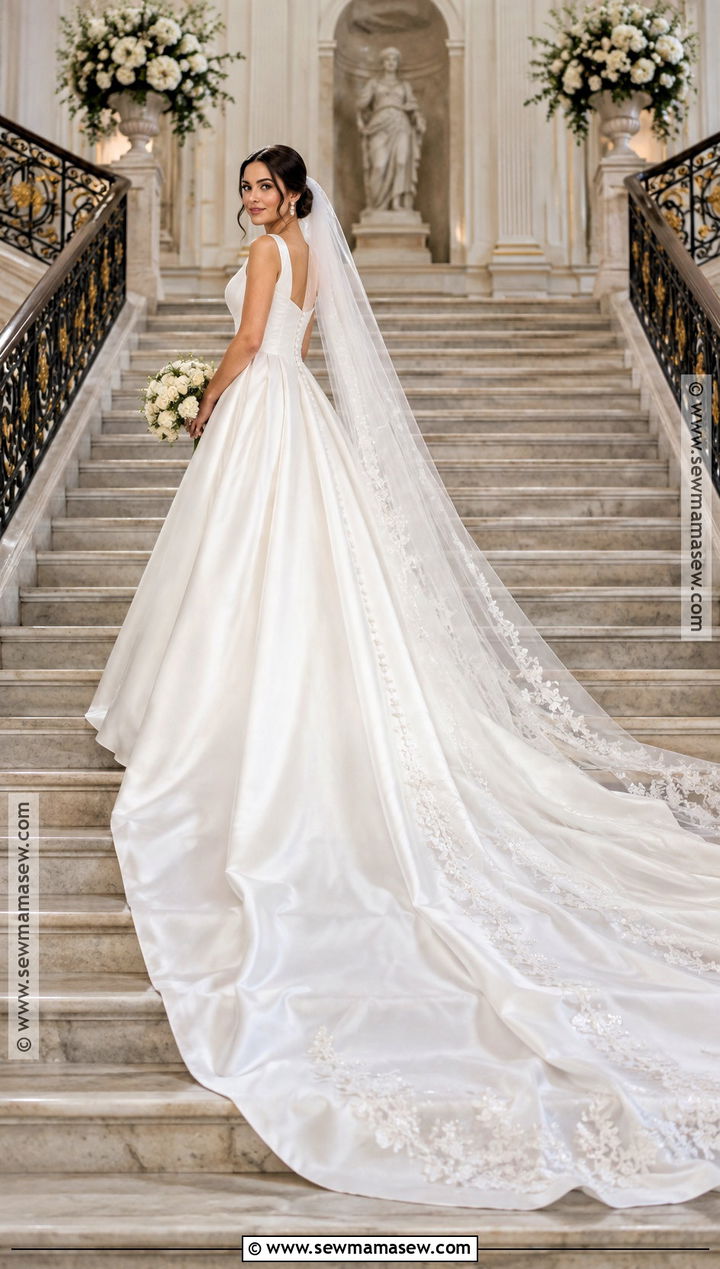
A cathedral train gives you the drama of a grand gown while keeping the easier A-line body. Satin makes a smooth, sculptural train; lace appliqué gives a softer edge. The cathedral veil should reach slightly past the train, with delicate earrings and supportive closed-toe heels. The practical part is the bustle. Ask your seamstress for a secure one and practice it with whoever will be doing it on the day, because a train this long is impossible to dance in. A sleek updo keeps the veil from fighting the hair. It needs a wide aisle or staircase to be seen properly.
15. Plus Size Corset A Line Wedding Dress
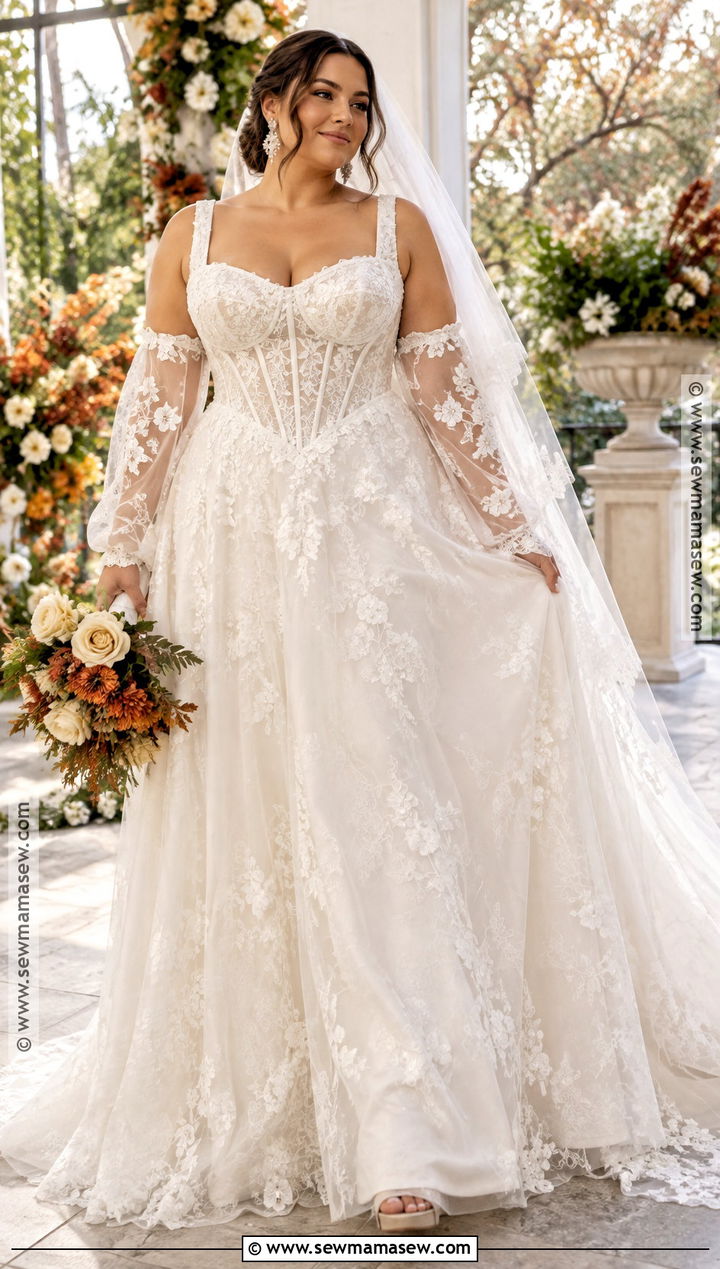
For plus-size brides, a corset A-line can give shape and support with real comfort, but only when it's fitted properly. I look for adjustable lacing, built-in cups, wide straps or internal boning that feels secure without stopping you from taking a full breath. A softly dropped or basque waist lengthens the bodice before the skirt falls over the hips. A chapel veil, comfortable block heels and statement earrings that suit the neckline complete it. Detachable sleeves or a lace bolero handle changing temperatures. At every fitting, sit, walk, raise your arms and practice the bustle. A dress that only looks right standing still isn't finished.
How Each Fabric Copes With Cold, Wind and Wet Grass
Fall weather tests a gown in ways a bridal shop fitting room never will. Here's how I think about the fabrics on this list for an autumn date.
- Satin and Mikado: the warmest and most structured, and they hold shape in wind. Satin shows water spots, so keep it off damp ground for portraits.
- Crepe: drapes closely and resists wrinkling well, but it's lighter than satin and you'll want a wrap outside.
- Lace over tulle: pretty in any light, but cold, and the tulle hem picks up leaves and burrs at outdoor venues.
- Chiffon: the lightest and most wind-catching option; it suits early fall rather than late October.
On grass or gravel, ask your seamstress to hem the dress for the exact shoes you'll wear, with the front just clearing the floor. A floor-length hem that drags will be grey by the time you reach the reception.
Fittings and Bustles Need More Lead Time Than Brides Expect
Many made-to-order gowns take several months to arrive, and alterations come after that, so start shopping well ahead of a fall date. Lead times vary a lot by designer and shop, so ask for an honest delivery estimate before you order.
Most brides need two or three fittings. The first deals with the big changes like taking in the bodice or shortening the hem, and the last one should be close enough to the wedding that the fit won't drift. Bring your actual shoes and undergarments to every appointment, because a different heel height changes where the hem falls.
At the final fitting, have the person who will bustle your train come along and practice it. Bustles use hooks, buttons or ribbon ties under the skirt, and it's much easier to learn in a quiet fitting room than in a crowded hallway between the ceremony and dinner.
A Fall A-Line Should Feel Easy at Hour Six
Lace sleeves, heavy satin, appliqué, basque waists, chiffon and crepe all change how an A-line looks, but the silhouette itself is what makes it wearable from the aisle through the last dance. Before you fall for a fabric, think about your venue, the likely temperature, what you'll be walking on and how long the reception runs. Build the accessories around one or two details instead of everything at once, and plan a cape, jacket or wrap so you aren't cold between portraits. Then trust the dress you can move in.
Related posts: