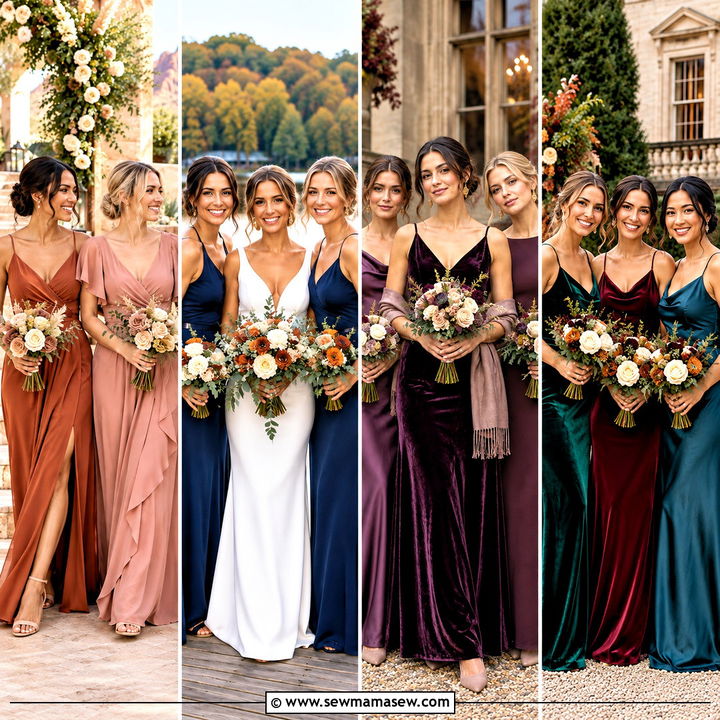
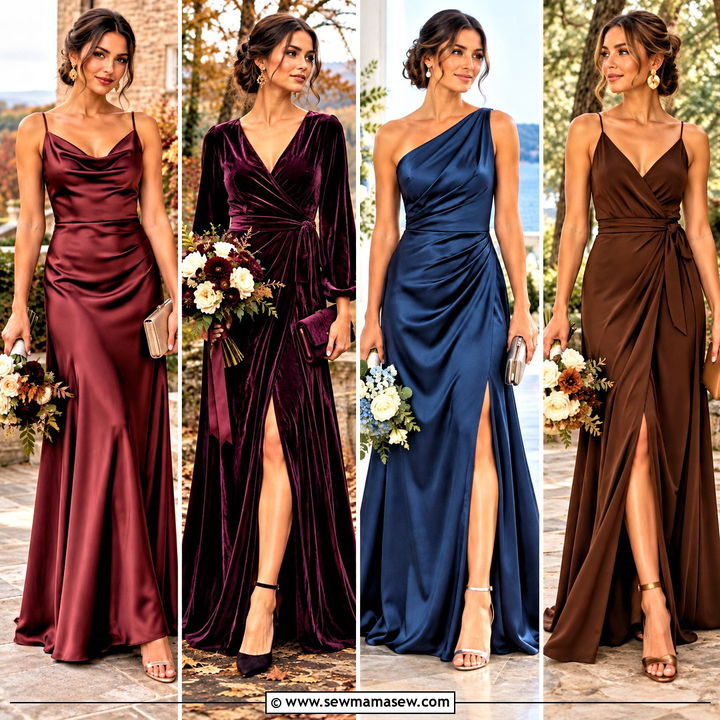
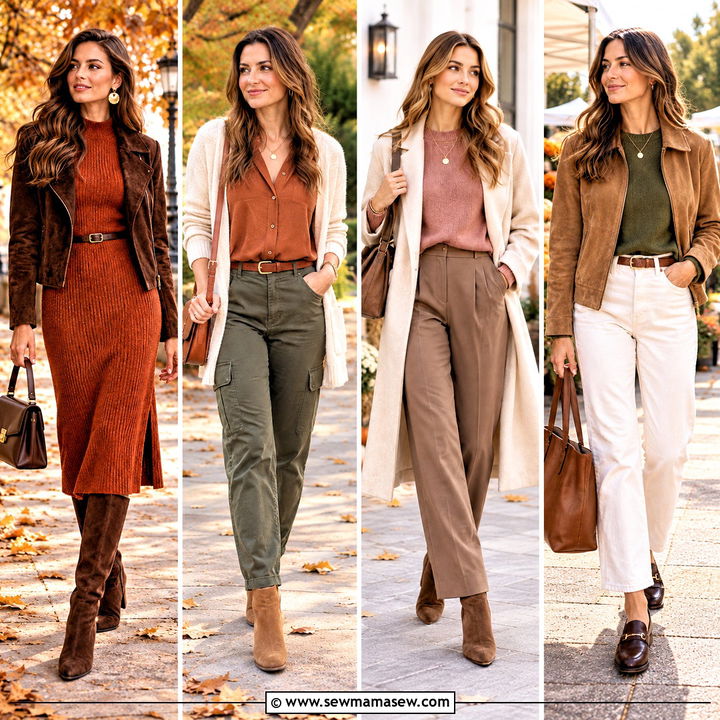
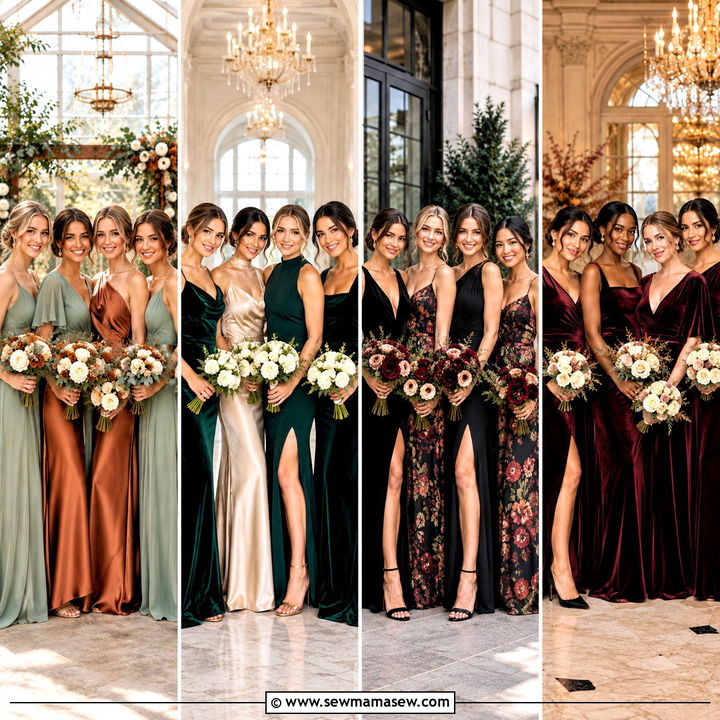
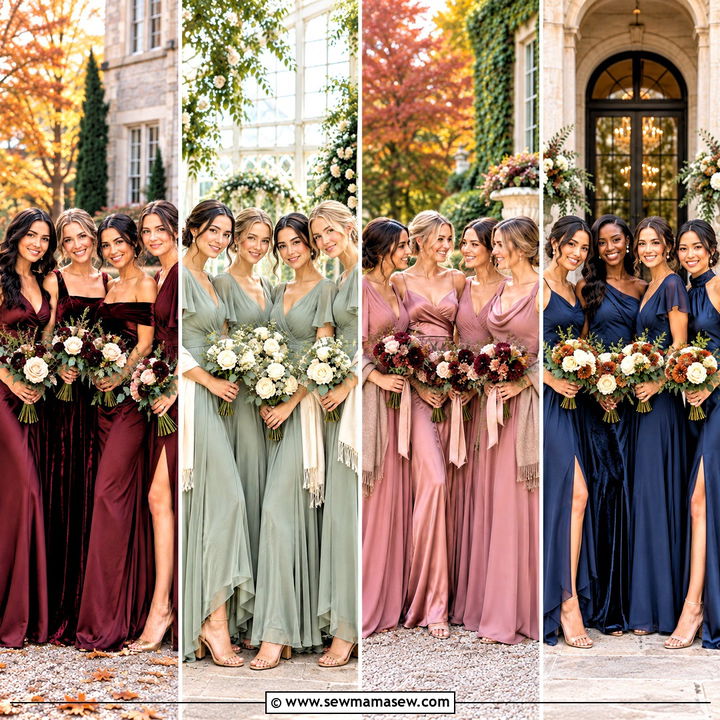
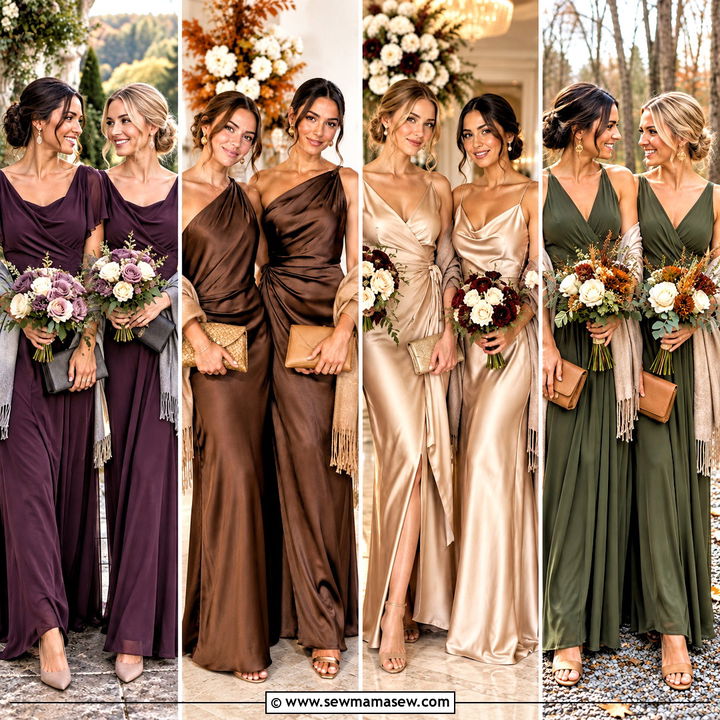
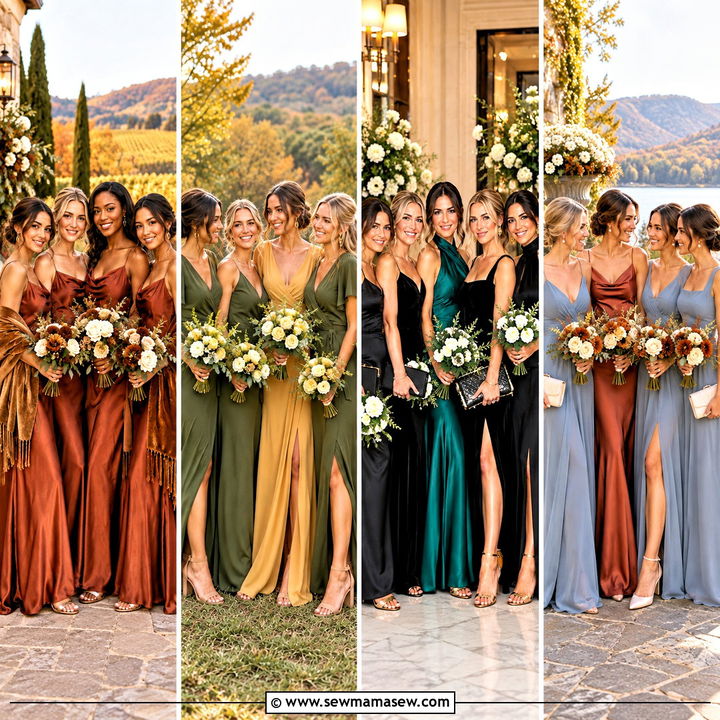
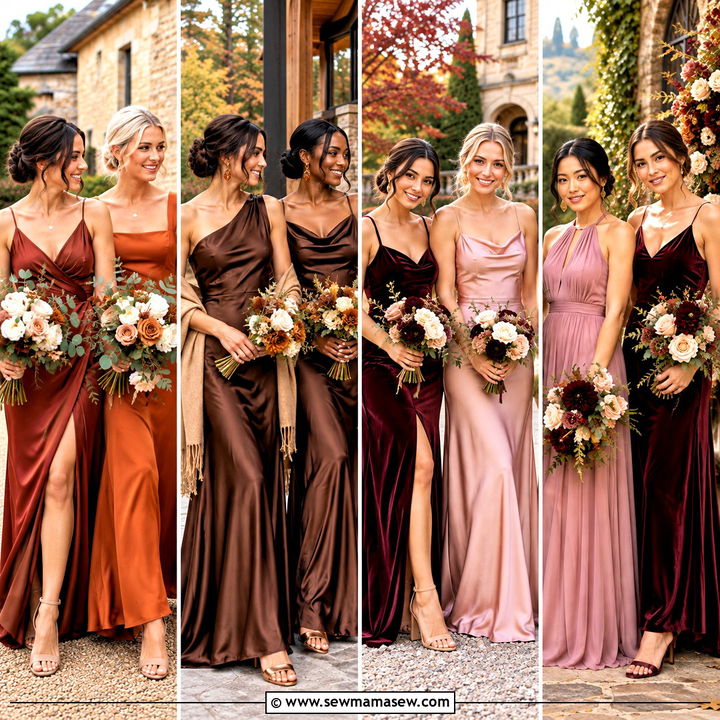
Autumn gives a bridal party the widest color range of the year: berries, spice tones, deep greens, browns and soft neutrals that would look heavy in June and feel right in October. The trick is making a group of different people look coordinated without looking costumed. Fabric does a lot of that work. Satin moves and catches light for formal evenings, chiffon stays airy for an early-fall ceremony, and velvet or a structured crepe earns its place once the air turns cold. I usually suggest either one color in several silhouettes or a few neighboring shades in one fabric, so each bridesmaid can choose a neckline and fit she's comfortable in. Below are fifteen colors, each styled from dress to shoes, jewelry, layer and bouquet.
Ordering Timelines and Bridal Sizing for a Fall Date
Color is the fun part, but timing is where bridesmaid dresses go wrong. Most formal bridesmaid styles are made to order rather than pulled off a shelf, and production often takes several months, so for an October wedding I'd want the group ordering by late spring or early summer.
- Order swatches first and approve the color in daylight against the flowers or linens.
- Have every bridesmaid measured properly at bust, waist and hips rather than ordering by her usual size. Bridal sizing often runs smaller than everyday clothing, and the size chart, not the label, is what counts.
- Order for the largest of the three measurements. A tailor can take a dress in far more easily than let it out.
- Book alterations for roughly four to six weeks before the wedding, and bring the shoes each bridesmaid will actually wear so hems are set to the right height.
- Steam every dress a day or two before, especially chiffon and satin, which crease in transit.
If one bridesmaid joins late or the timeline is tight, a neighboring shade in the same fabric from a ready-to-ship line is a sensible fallback. Mixed palettes forgive that far more easily than a single exact color does.
1. Burgundy Satin Bridesmaid Dress
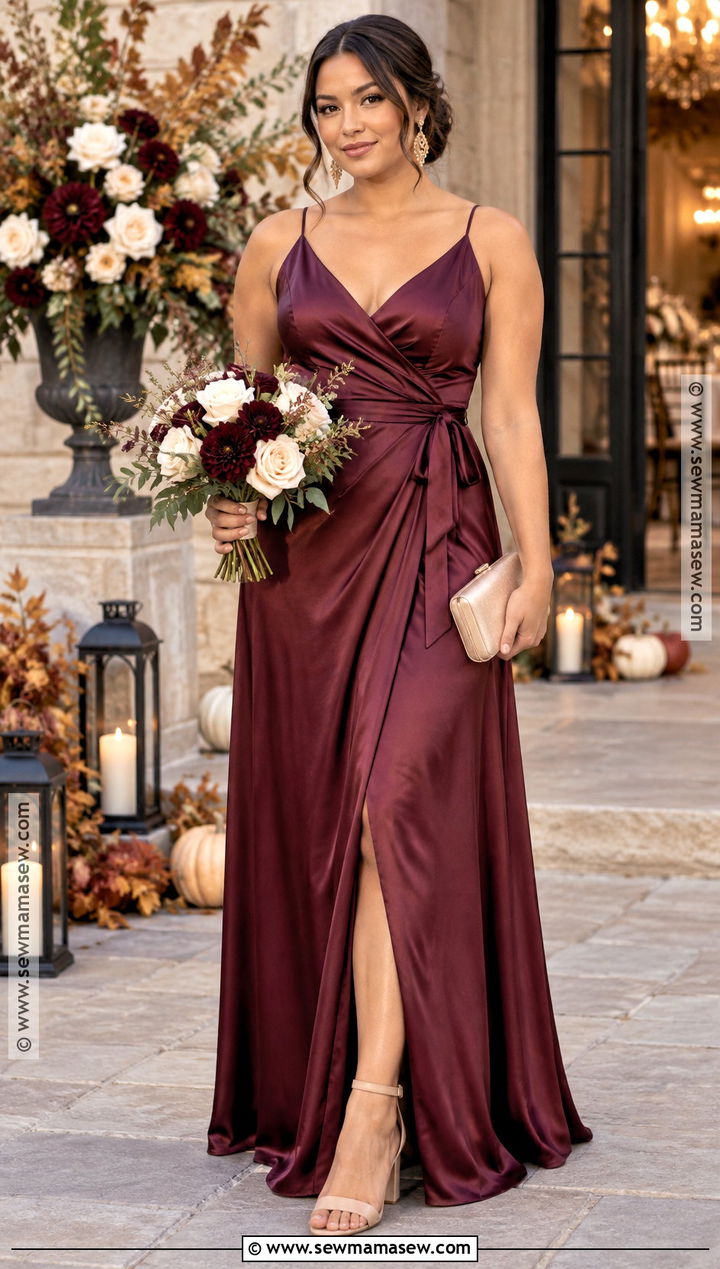
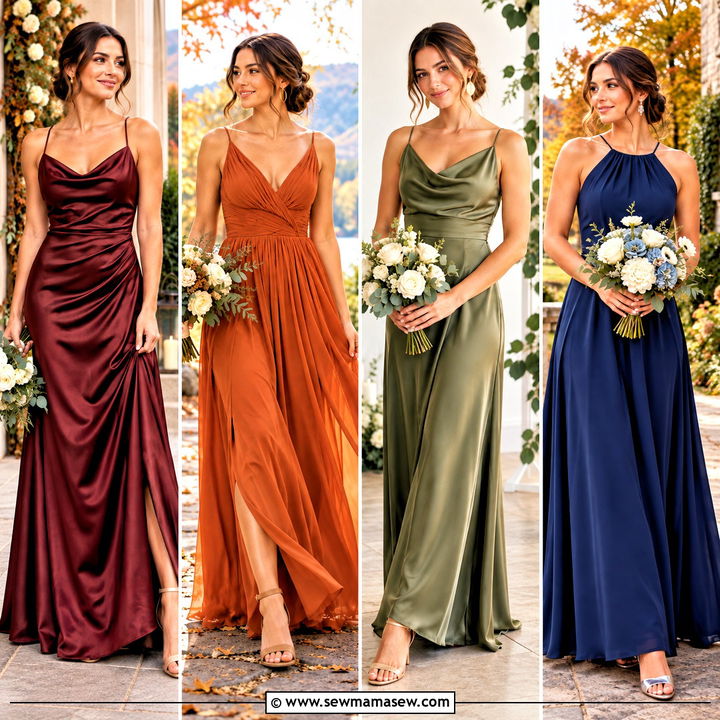
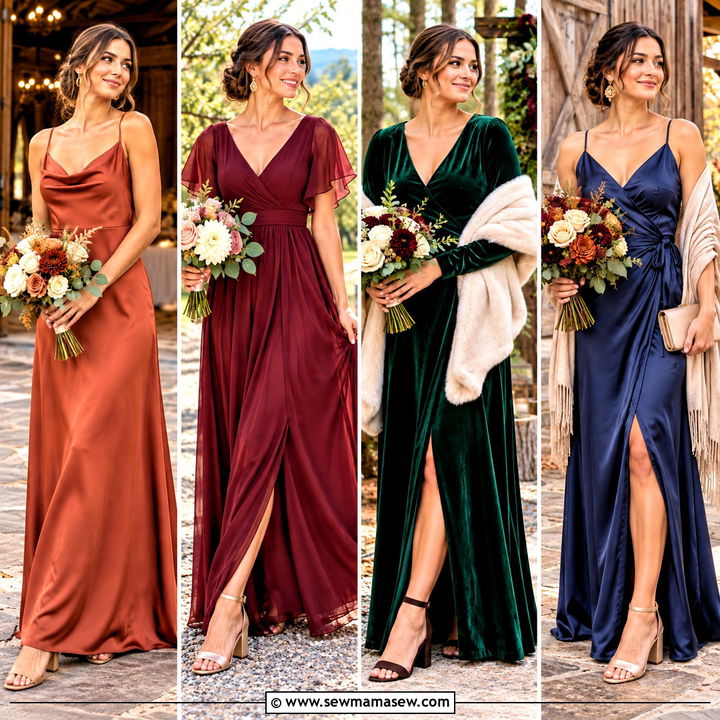
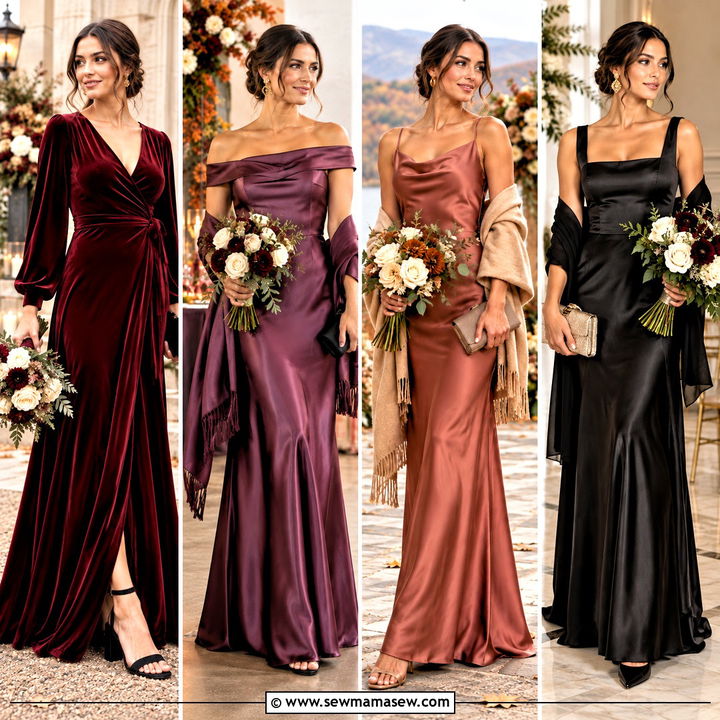
Burgundy satin is the color I'd suggest to a bride who wants something unmistakably autumn and still formal. A floor-length slip suits a sleek evening; a draped wrap gives more adjustable coverage. Champagne-gold earrings, a fine bracelet and a small neutral clutch keep it polished, with nude, black or metallic block heels depending on the venue. A burgundy pashmina for an outdoor ceremony adds warmth without breaking the color. Cream roses, eucalyptus and muted berries brighten the dark red in photos. Satin is unforgiving of a tight fit, so I tell bridesmaids to size for their fullest measurement and tailor the rest; same fabric, different necklines, and the group still reads as one.
2. Terracotta Chiffon Bridesmaid Dress
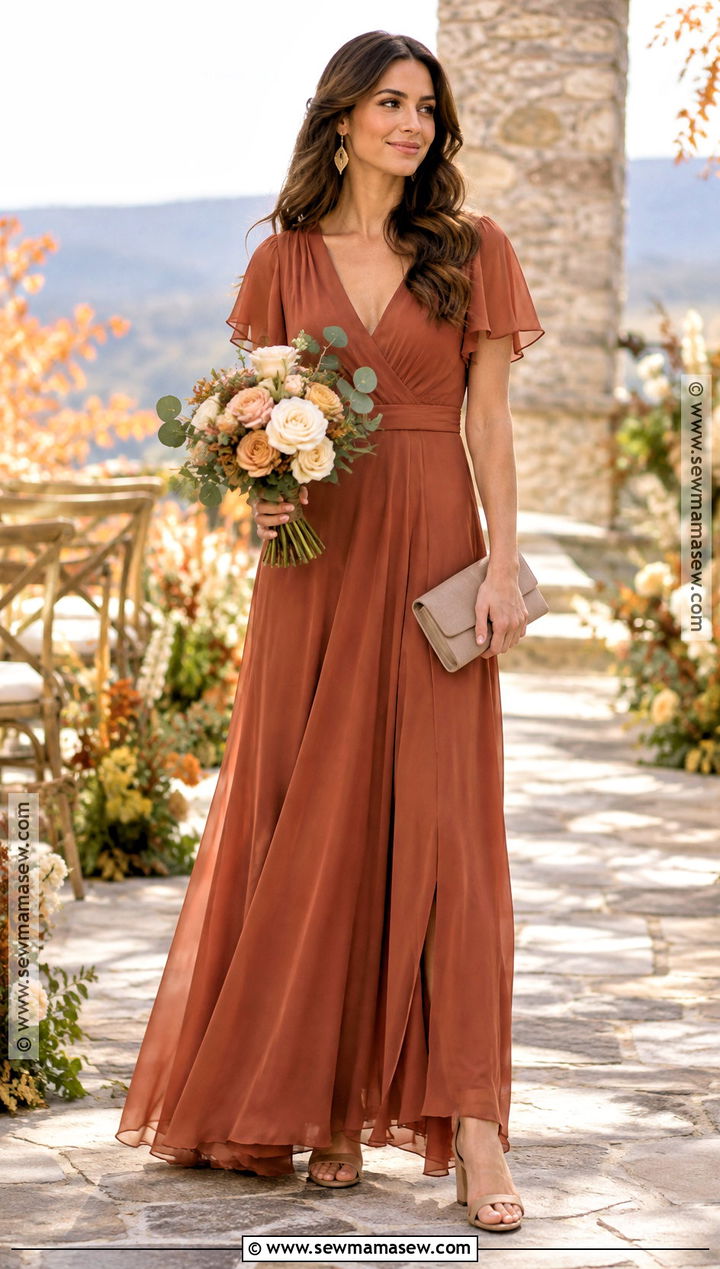
Terracotta chiffon is lovely in early autumn, when it's still warm enough for something that floats. The earthy orange-red sits well against stone, gardens and barns without shouting. A flowing A-line with flutter sleeves gives easy coverage and moves well in processional photos. Tan block-heel sandals, brushed-gold drops and a camel or taupe clutch suit it, with a loose low bun or textured ponytail. Ivory, peach, olive foliage and a few burgundy accents in the bouquet add depth. Terracotta varies more than most colors, from muted clay to a strong orange depending on the dye and the light, so I always order swatches and hold them against each bridesmaid's face before anything is bought.
3. Rust Velvet Bridesmaid Dress
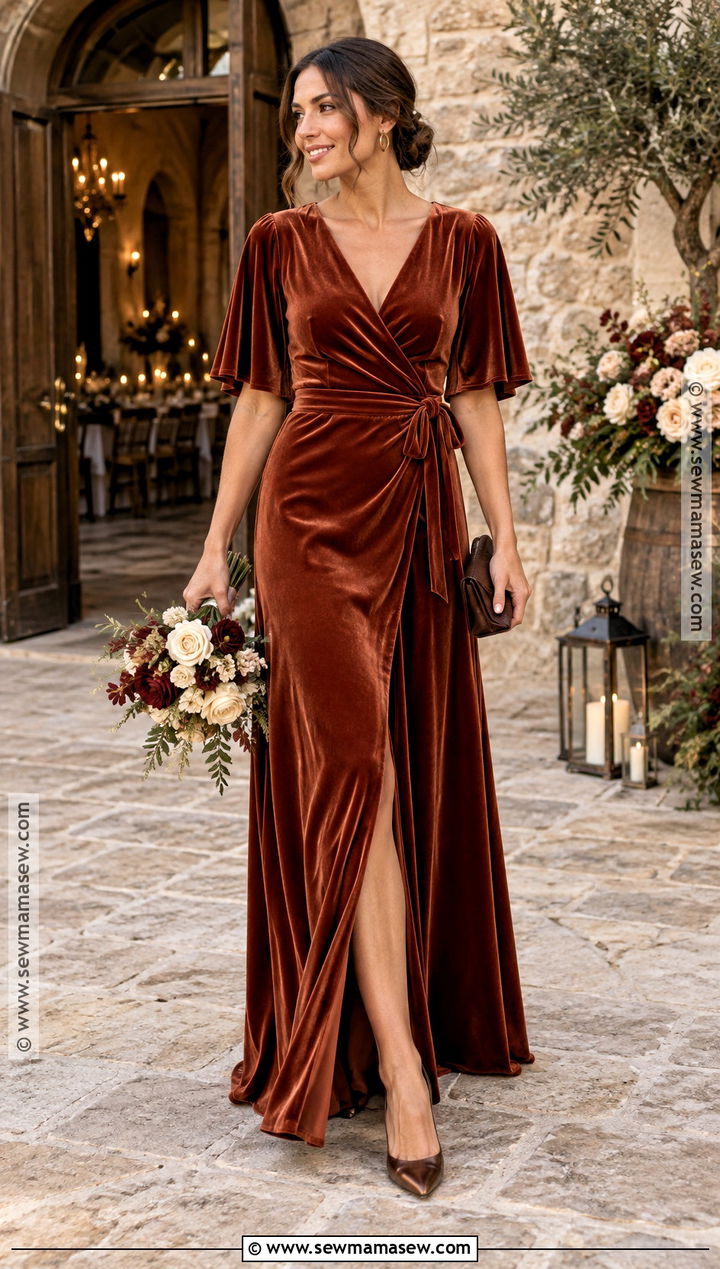
If the evening will be cold, rust velvet gives texture and warmth in one. A floor-length gown with a V-neck, softly gathered waist and long or elbow sleeves is balanced and formal. On grass or uneven ground, dark brown block heels or bronze closed-toe pumps are far safer than stilettos. Gold hoops, a fine pendant and a chocolate clutch are plenty against the velvet, and cream, burnt orange and deep red flowers draw out its copper tones. Velvet has a nap that reflects light differently depending on which way the pile runs, so two dresses in the same color can look like two shades in photos. I keep accessories identical across the group and, where possible, order every dress from the same dye lot.
4. Cinnamon Crepe Bridesmaid Dress
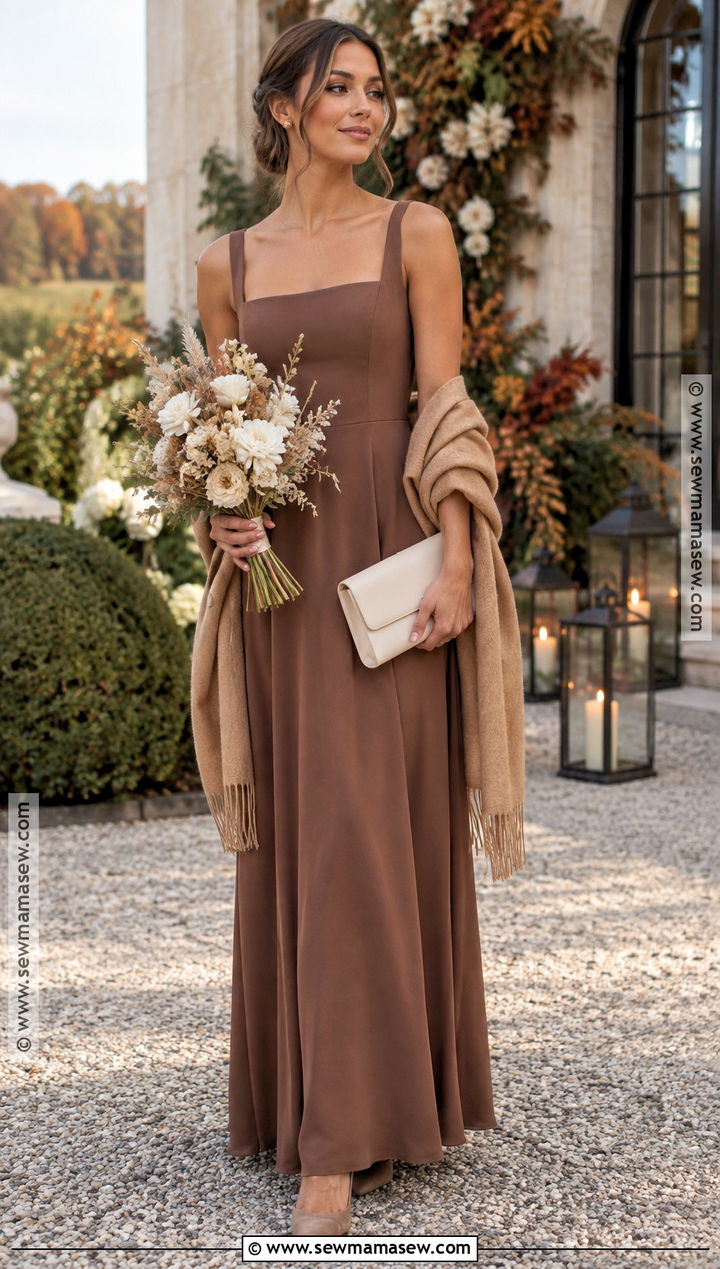
Cinnamon sits between red and orange, warmer than one and calmer than the other, which makes it unusually easy to wear across a group. In crepe, a column, wrap or softly tailored A-line looks polished, and a square neckline with wide straps gives it a modern line and room for a regular bra. Gold studs, a slim bracelet and taupe suede or caramel heels keep the warm palette going; a small cream clutch stops it getting too dark. Camel wraps for outdoor photos, and ivory roses, dried grasses and bronze foliage in the bouquets. Crepe's matte surface hides creases from sitting better than satin, which I appreciate on a long day.
5. Burnt Orange Satin Bridesmaid Dress
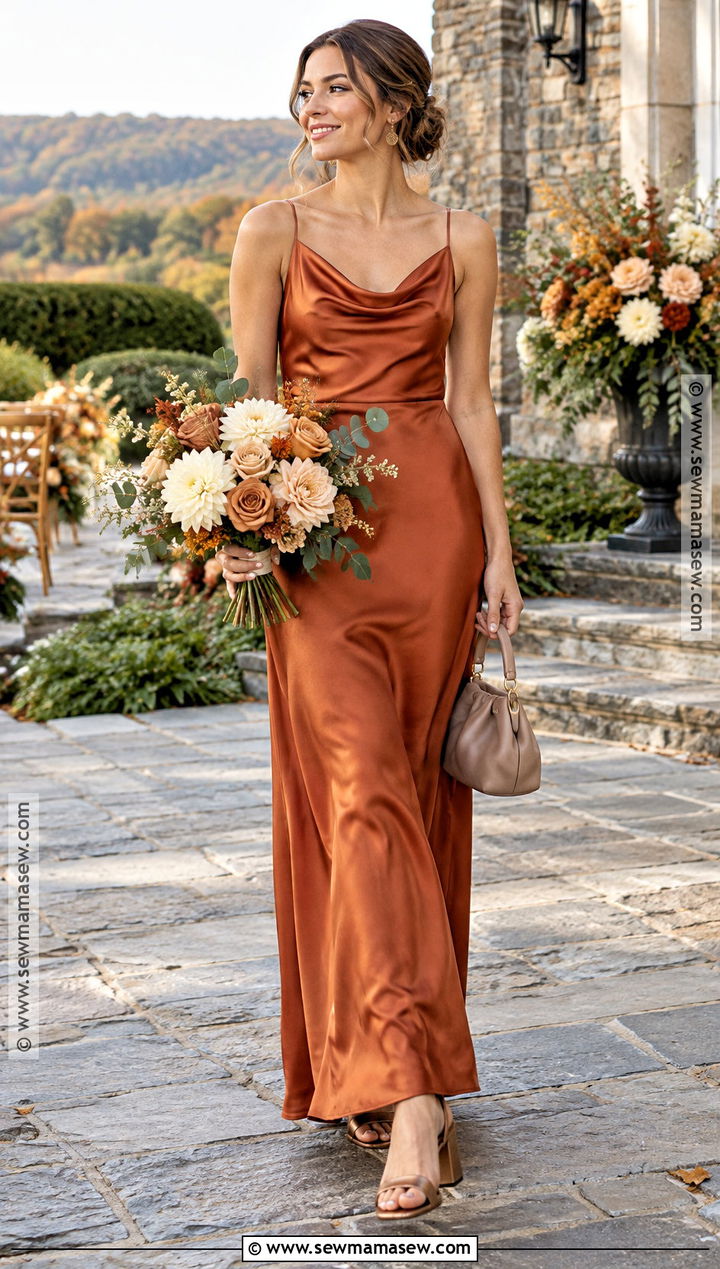
Burnt orange satin is so lively it barely needs accessories. A midi suits a relaxed daytime wedding; a floor-length cowl neck suits an evening. Bronze sandals, gold earrings and a compact taupe bag pair naturally, with an oatmeal, camel or beige shawl for outdoor ceremonies. Keep makeup fresh with warm blush, defined lashes and a muted rose lip; matching orange makeup to an orange dress is the fastest route to looking themed. Cream dahlias, peach roses, eucalyptus and touches of burgundy give the bouquet contrast. With mismatched cuts, I'd buy all the satin from one supplier, because sheen and shade vary noticeably between makers even when the color names match.
6. Olive Green Satin Bridesmaid Dress
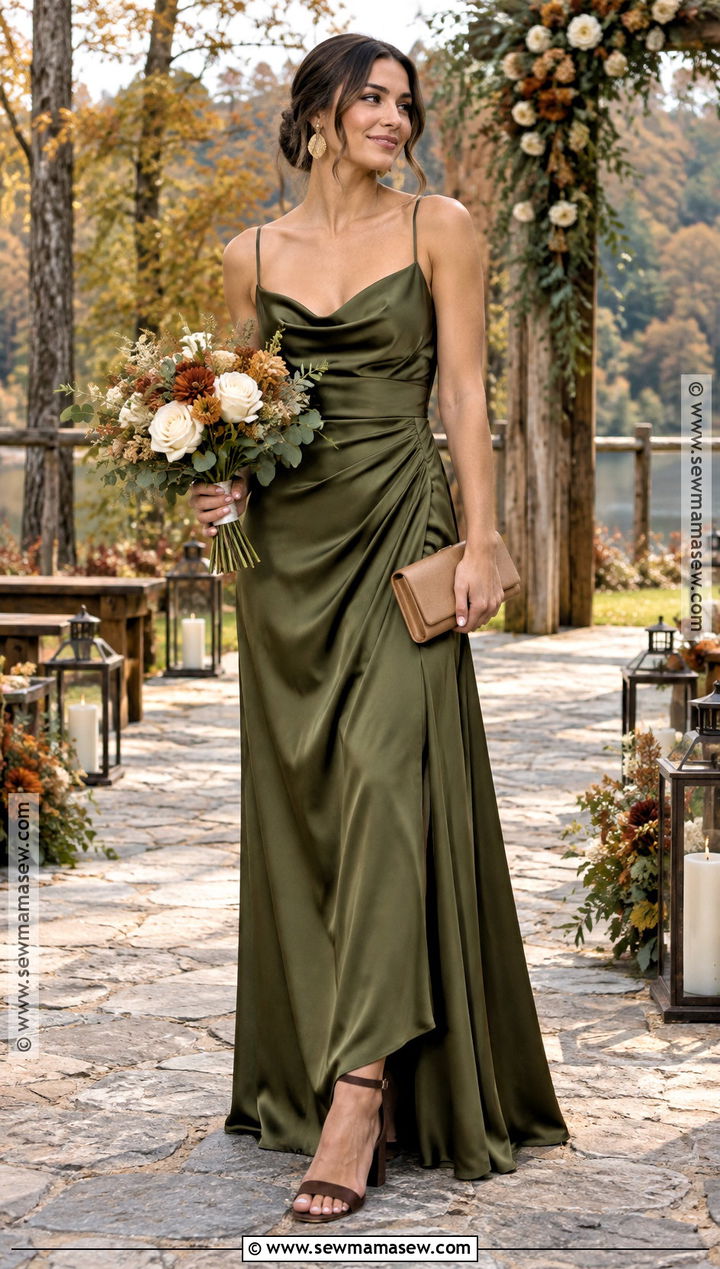
Olive satin is an earthy alternative to brighter greens, and it sits comfortably with wood, vineyards and neutral decor. A floor-length dress with a softly draped bodice and defined waist is formal but easy to accessorize: brushed-gold earrings, nude or dark brown heels and a tan clutch. A cream wrap adds warmth without changing the palette, and ivory, rust, golden yellow and deep red flowers stand out clearly against it. Olive is a tricky color to pin down. Some lean yellow, some lean brown, and the difference only shows next to your flowers and linens, so compare swatches there. Halter, one-shoulder and sleeved versions let each bridesmaid choose her support and coverage.
7. Forest Green Velvet Bridesmaid Dress
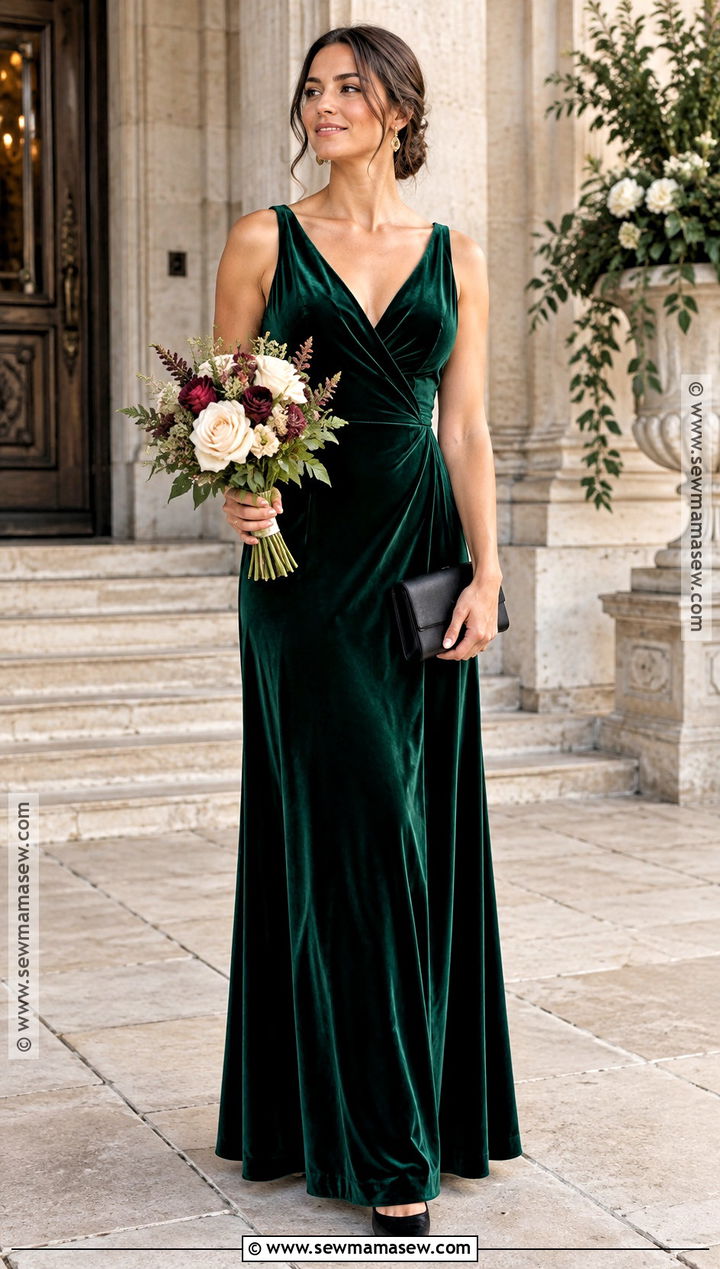
Forest green velvet is the most luxurious option here and suits a formal late-autumn wedding in a historic building, hotel, woodland setting or candlelit room. Clean necklines let the fabric do the work. Black pointed pumps, gold drops and small black clutches finish it, with matching green wraps or black tailored coats for arrival photos. Ivory roses, burgundy dahlias, eucalyptus and trailing greenery give contrast without adding too many colors. As with any velvet, ordering from one fabric collection keeps the nap and shade consistent. Velvet is also warm, so I'd only suggest it where the reception room won't be overheated, and I'd offer a few silhouettes for different heights, mobility needs and bra requirements.
8. Sage Green Chiffon Bridesmaid Dress
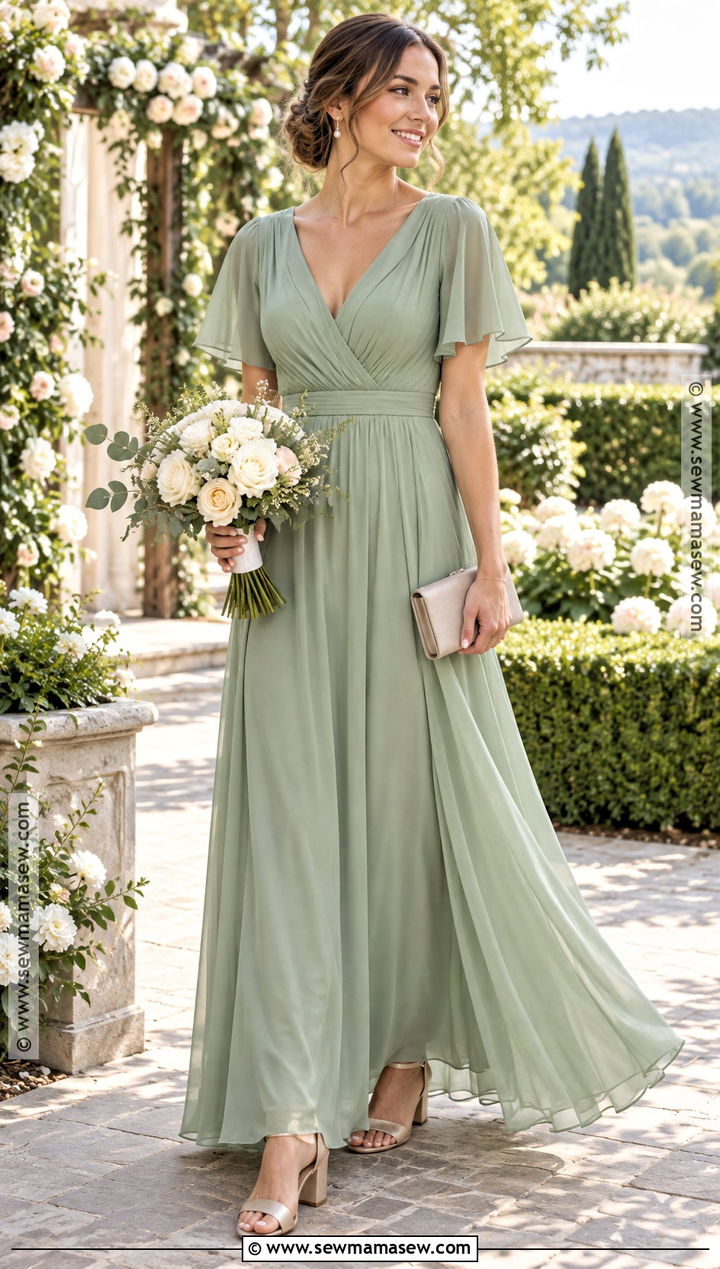
Sage chiffon is the lightest color here and right for September, when the leaves have barely turned. It connects to foliage without leaning into the darker autumn shades. A floor-length A-line with flutter sleeves, a wrap bodice or a high neck over a flowing skirt all suit it. Champagne block heels, pearl or gold earrings and a pale taupe clutch keep it soft, and a beige pashmina covers a cool evening. Cream and blush flowers with eucalyptus, olive branches and a little rust bring in the season. Sage ranges from blue-green to yellow-green between brands, so I pick one approved swatch and one fabric, and every bridesmaid orders from that, even with different cuts.
9. Emerald Green Satin Bridesmaid Dress
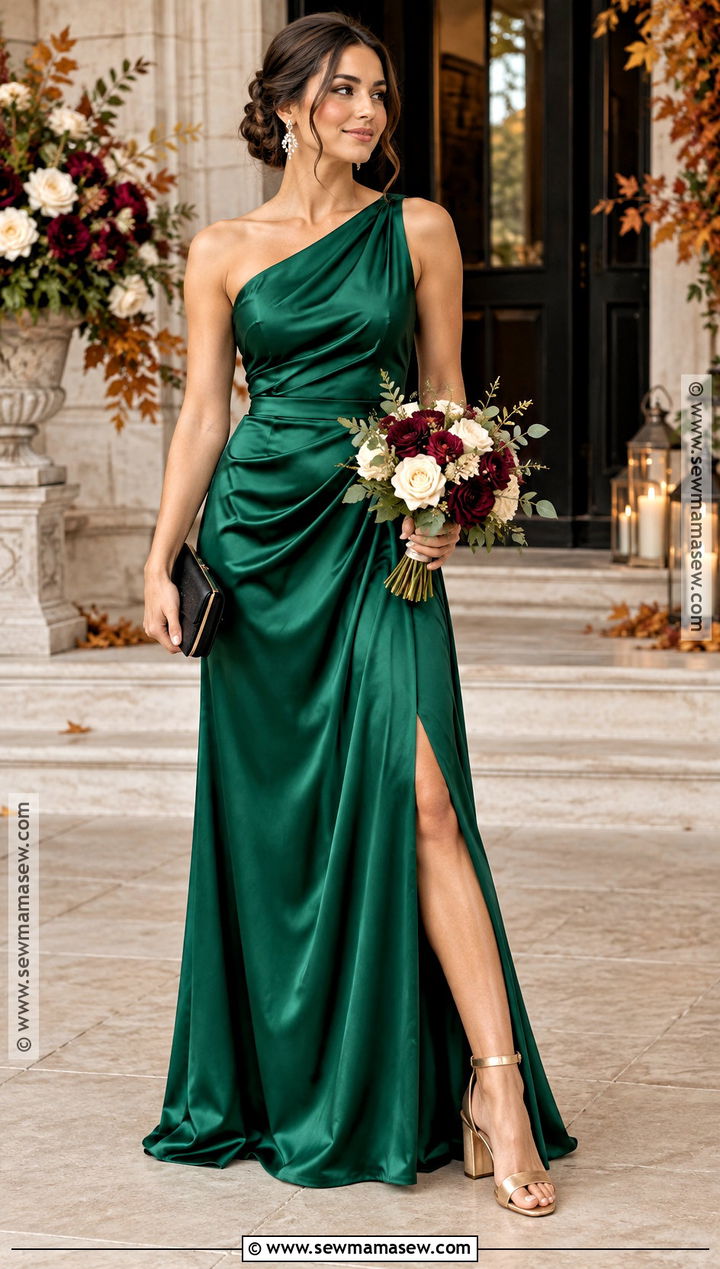
Emerald satin is the boldest jewel tone in the list and comes alive at formal evening weddings, where the sheen picks up warm venue lighting. A floor-length one-shoulder gown looks confident; wrap and V-neck versions give the rest of the group adjustable options. Gold heels, crystal or gold earrings and compact black clutches finish it. If the venue involves lawns or cobbles, swap stilettos for metallic block heels. Ivory flowers, dark greenery, burgundy blooms and a little plum balance the saturated green. With detailed necklines, skip necklaces. For a mismatched party, I'd limit it to two or three silhouettes from one collection, because more than that starts to look accidental rather than mixed on purpose.
10. Espresso Brown Satin Bridesmaid Dress
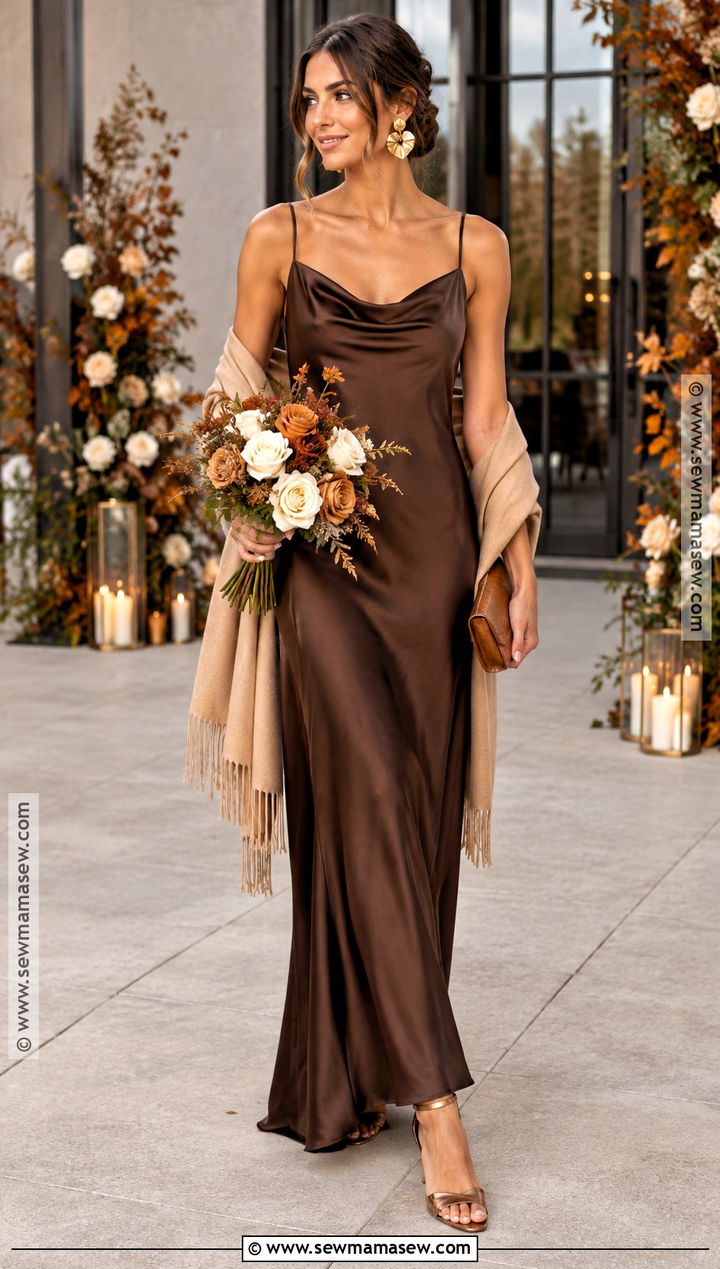
Espresso brown is a modern neutral that still says autumn. A bias-cut satin maxi shows off the depth of the color, while A-line or wrap shapes give more room at the hips and waist, which matters because bias cuts cling to everything. Bronze heels, sculptural gold earrings and a small caramel clutch lift it so it doesn't feel heavy. Cream or camel wraps cover outdoor portraits. Ivory roses, tan grasses, copper foliage and muted blush flowers add contrast. Espresso also works as the darkest note in a tonal party with mocha, bronze and champagne. If everyone wears the one color, offer several necklines and sleeves so each bridesmaid gets the coverage and support she needs.
11. Champagne Satin Bridesmaid Dress
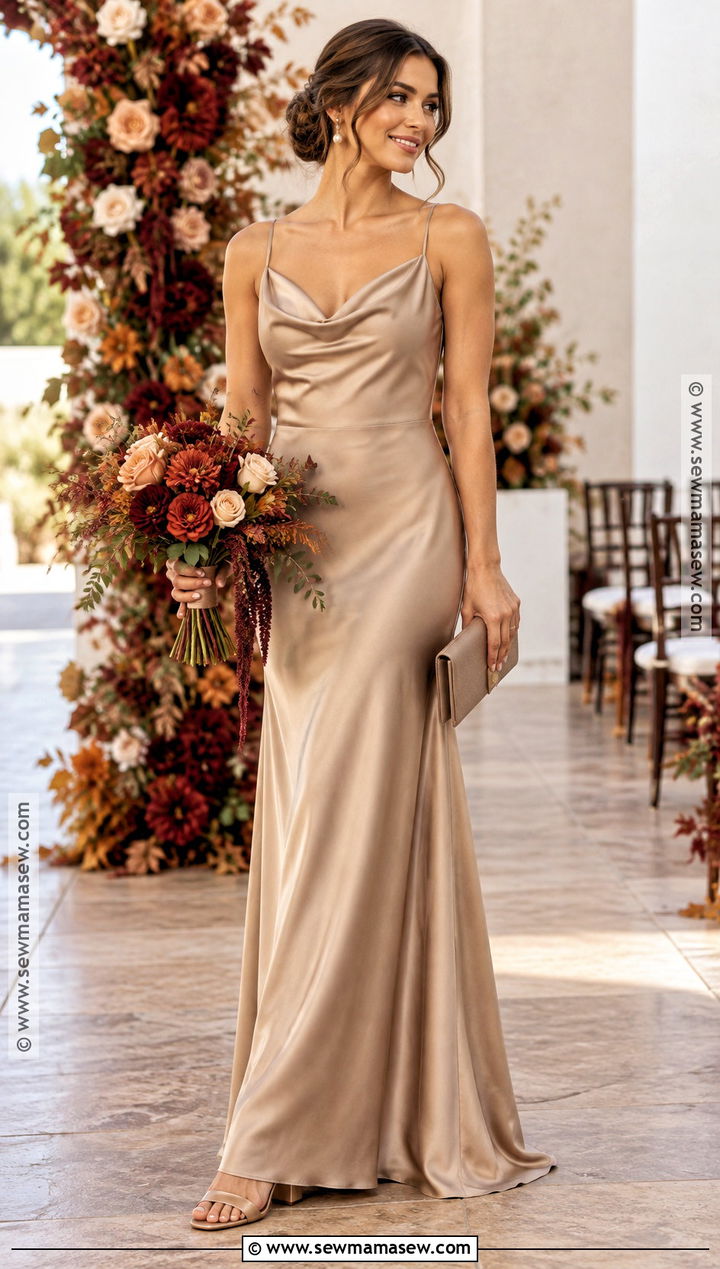
Champagne satin suits couples who want a lighter autumn palette, but it carries one real risk: it can look too close to the bride. I'd choose a shade clearly deeper than the gown, a warm beige, antique gold or soft caramel champagne. A floor-length dress with a draped neckline and fluid skirt is elegant without fuss. Nude or metallic block heels, pearl drops and a taupe clutch finish it, and light camel wraps cover a cool ceremony. Rust, burgundy, blush and cream flowers bring autumn in and help separate the bridesmaids from the bride in photos. Before ordering, photograph the swatch next to the gown in daylight and indoor light; cameras flatten small differences more than the eye does.
12. Copper Satin Bridesmaid Dress
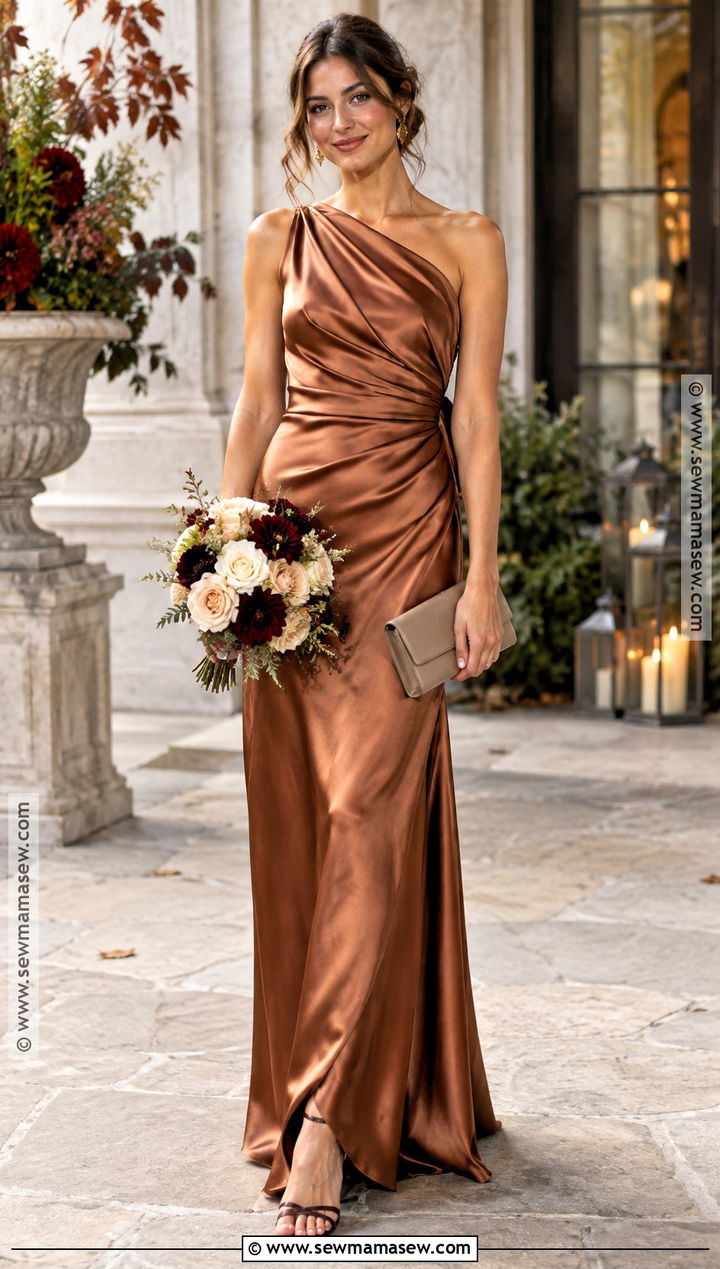
Copper satin has a quiet metallic glow without any beading. The color sits between bronze, orange and brown, and it suits both afternoon and evening ceremonies. A floor-length dress with a softly pleated skirt, wrap bodice or one-shoulder neckline works well, with dark brown heels, understated gold earrings and a taupe or chocolate clutch. Sparkly accessories compete with fabric that's already reflective, so I keep jewelry matte or brushed. Cream roses, rust dahlias, burgundy accents and dark foliage balance the bouquet. If you're mixing several copper shades, line the bridesmaids up from light to dark before the ceremony, so the gradient looks planned in group photos.
13. Dusty Rose Chiffon Bridesmaid Dress
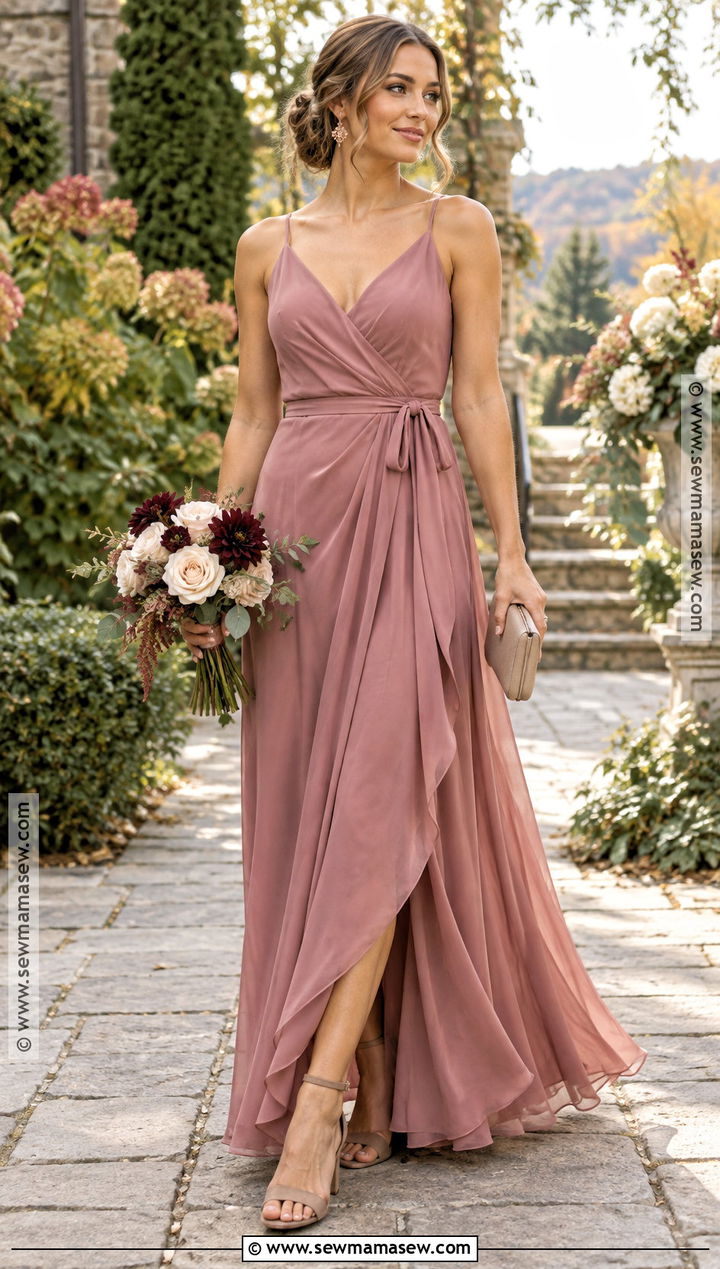
Dusty rose chiffon is for the bride who wants autumn color without a dark bridal party. The muted pink sits easily with cream, mauve, burgundy, sage and warm brown. A flowing floor-length gown with a wrap front or gathered bodice suits most body types. Taupe block heels, rose-gold earrings and a small beige clutch keep the finish soft, while berry-toned flowers, eucalyptus and a little rust in the bouquet pull it into the season. For cool ceremonies, choose mauve or oatmeal wraps rather than bright white. Pale pinks wash out under overcast skies and on fair skin, so I lean toward a moderately saturated rose and check swatches against each bridesmaid before the final order.
14. Deep Mauve Crepe Bridesmaid Dress
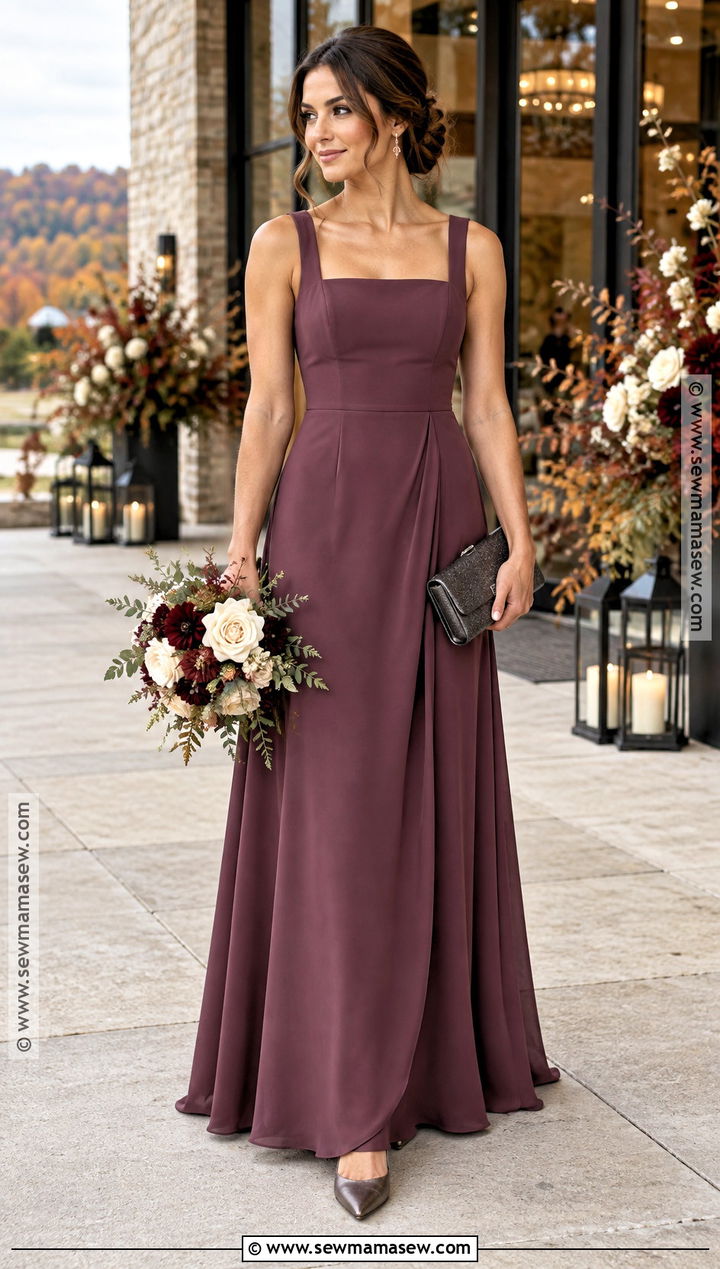
Deep mauve sits between dusty pink and plum, and it bridges romantic and modern weddings. A crepe maxi with a square neck, fitted waist and softly flared skirt looks clean and structured, and long-sleeve or wrap-front versions in the same fabric give more coverage. Pewter or taupe pumps, fine silver or rose-gold earrings and a charcoal clutch suit it; a light gray wrap covers a cold evening. Ivory, burgundy, faded pink and eucalyptus give a layered tonal bouquet. When dresses are mismatched, I set three firm rules for the group, the same hem length, fabric and color, and leave necklines and sleeves to each bridesmaid. That's usually enough to look cohesive.
15. Plum Velvet Bridesmaid Dress
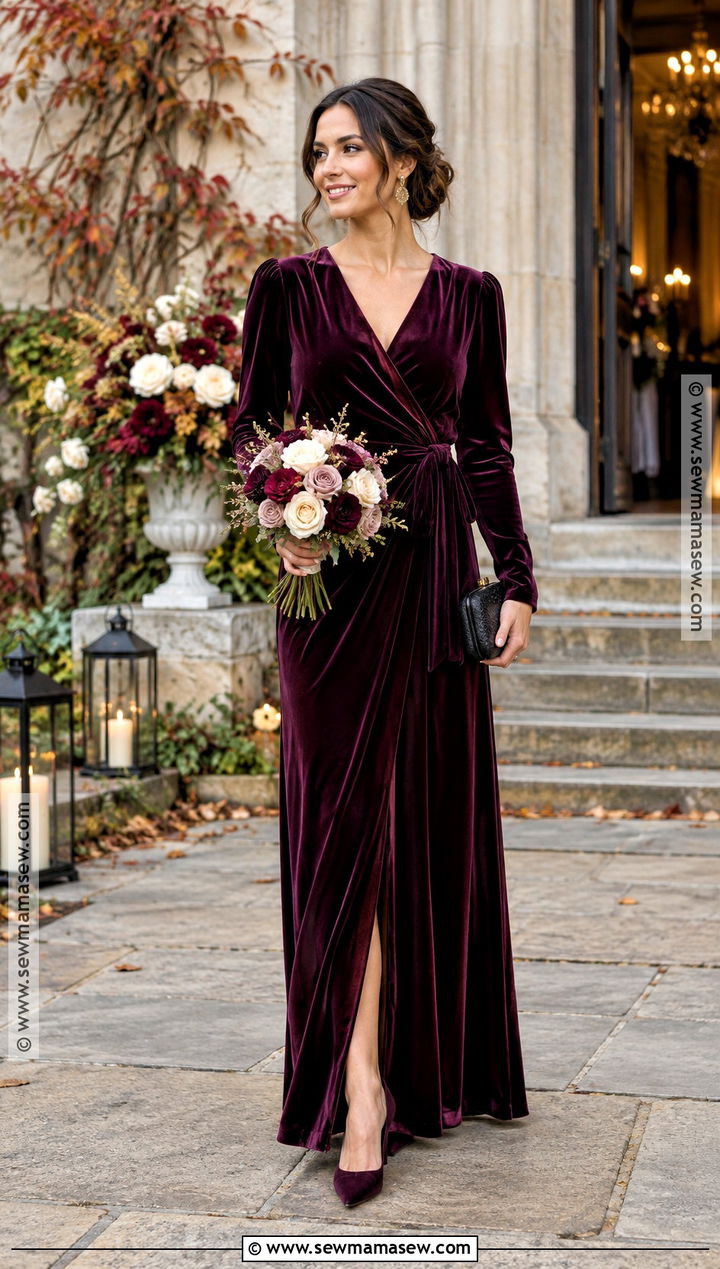
Plum velvet closes the list on a moody note for a late-autumn wedding. The deep purple is softer than black but formal enough for evening ceremonies and elegant indoor venues. A floor-length gown with a wrap bodice, long sleeves or a clean off-the-shoulder neckline suits it, with black or dark plum pumps, antique-gold earrings and a small black clutch. Cream roses, burgundy flowers, mauve accents and dark greenery stop the look going monochrome. Plum mixes well with deep mauve crepe or burgundy satin if you want a blended party, as long as accessories match. Check velvet in natural daylight, because some plums read red and others nearly black depending on the light.
Lining Up Mixed Shades So the Group Looks Planned
Several of the colors above are designed to be combined, and when it's done well, a blended party looks richer than a single shade. When it isn't, it looks like everyone bought her own dress. These are the rules I use.
- Pick one anchor color for the maid of honor or the center of the lineup, and choose the others as its lighter and darker neighbors.
- Stay within one temperature. Rust, cinnamon and copper mix happily; rust next to a cool sage needs a bridging shade such as olive.
- Keep the fabric consistent, or at least the finish. A matte crepe next to a shiny satin in the same color looks like two different colors.
- Arrange the lineup as a gradient, or alternate light and dark symmetrically from the center, so the camera reads a pattern.
- Unify everything else: one shoe color, one metal for jewelry, matching wraps and bouquets from the same flower mix.
Before the order goes in, I lay all the swatches out in the planned order and photograph them on a phone in daylight. If one shade jumps out in the photo, it will jump out in the album too.
Your Venue's Light Should Pick the Shade
Every color above can work, so the real decision comes from the setting and the people wearing it. Burgundy, rust, cinnamon and terracotta give classic warmth; forest green, emerald and olive bring natural depth; champagne, espresso, copper and dusty rose are softer routes into the season. Once you've narrowed it down, look at swatches in the light of the actual venue, make sure every bridesmaid has a silhouette that supports her, and keep shoes, wraps, jewelry and bouquets consistent so different cuts look intentional. Autumn color rules are a starting point, not a requirement.
Related posts: