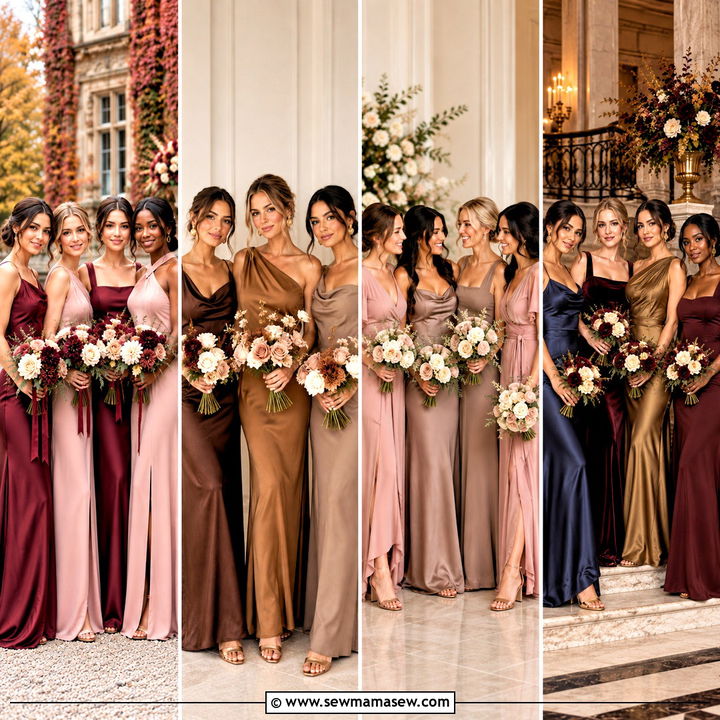
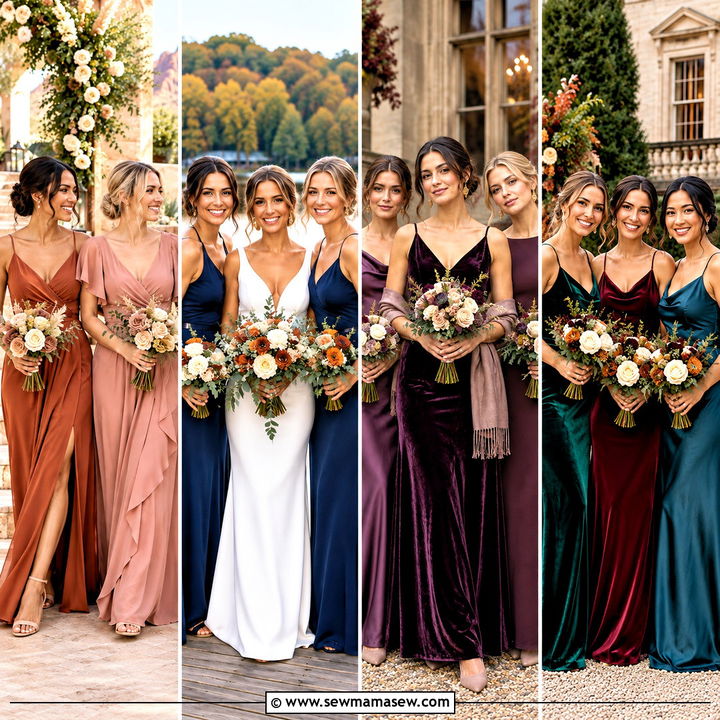
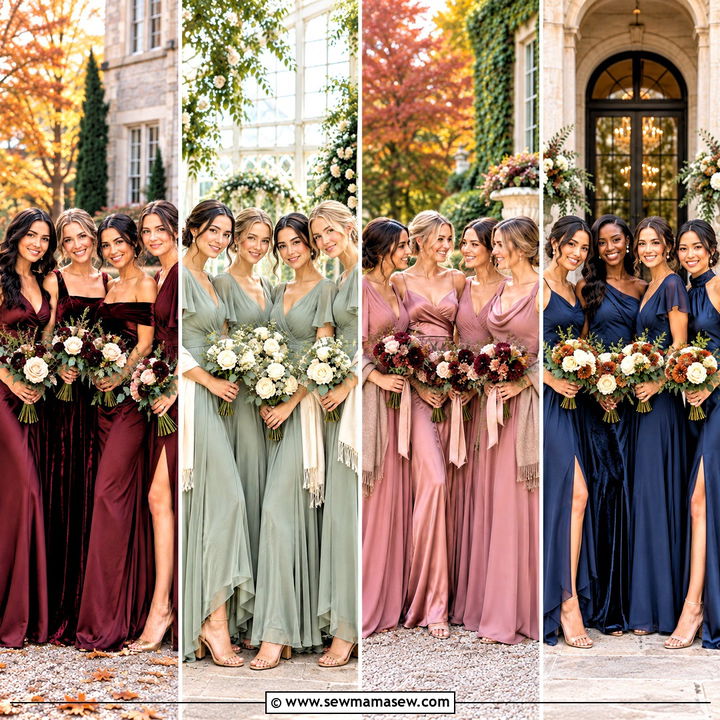
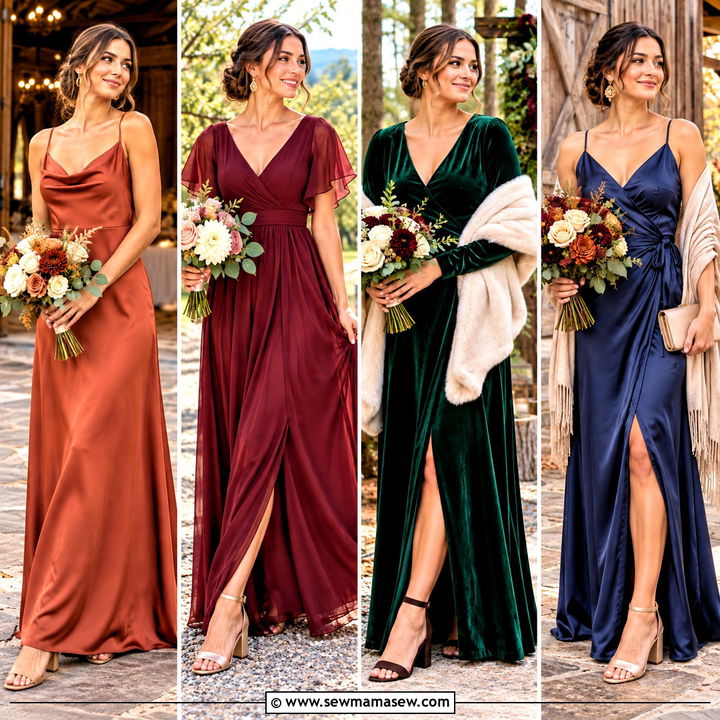
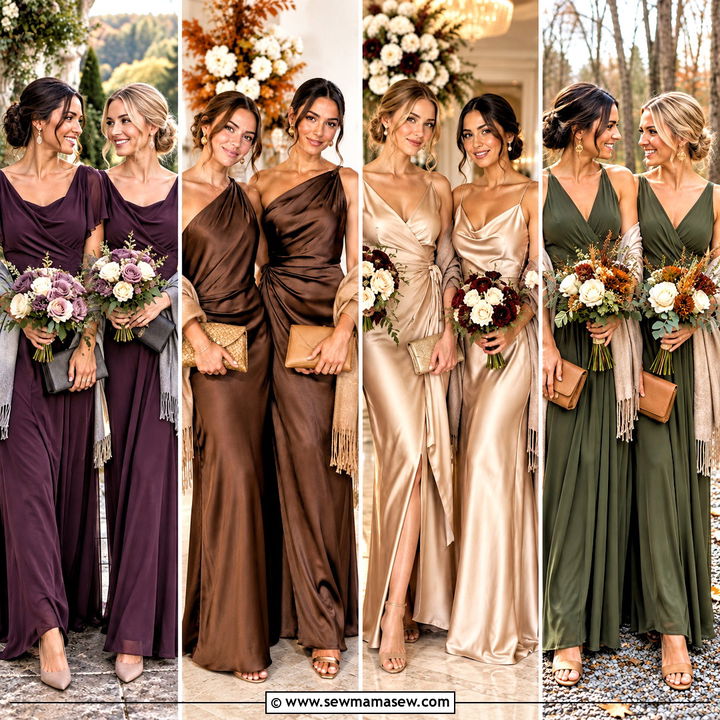
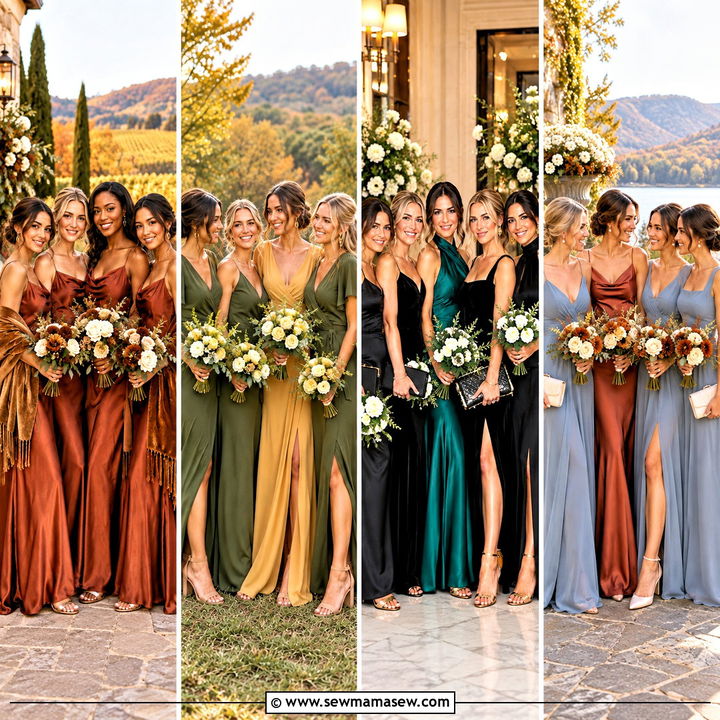
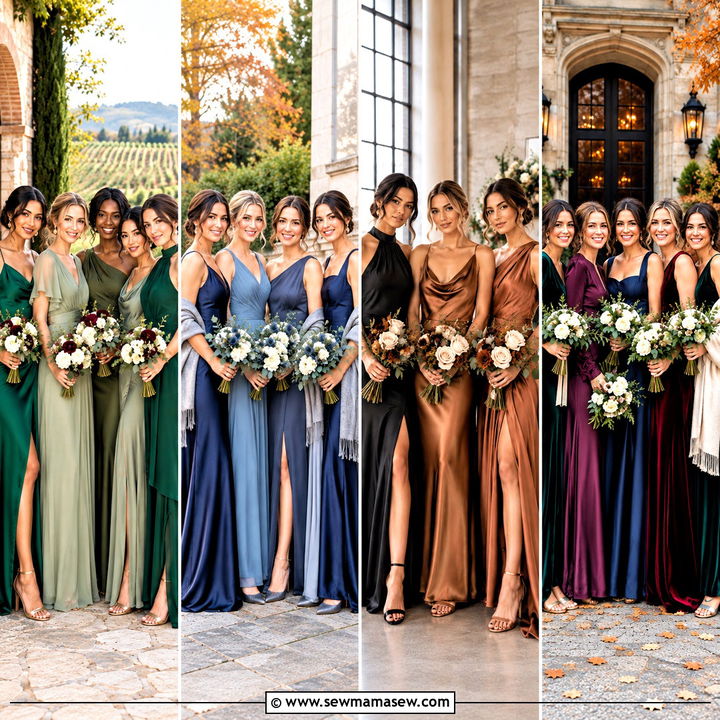
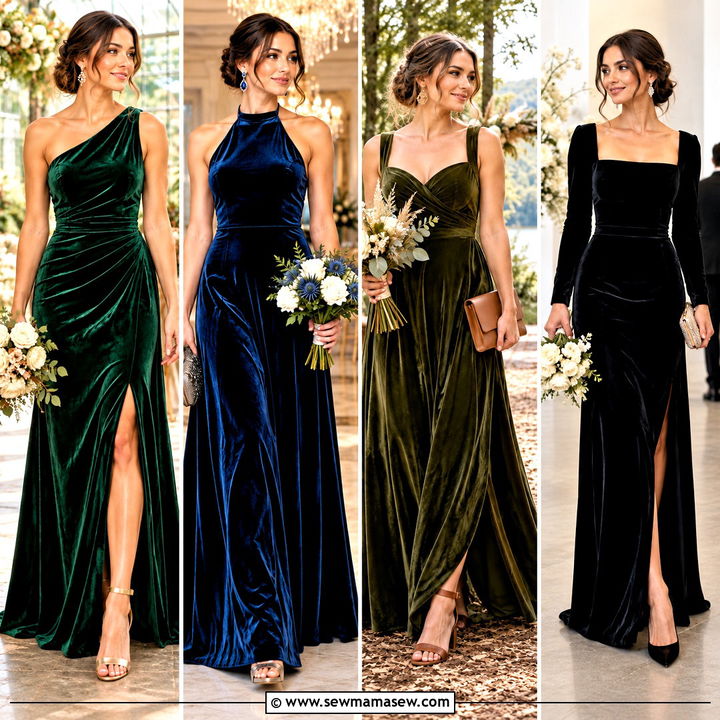
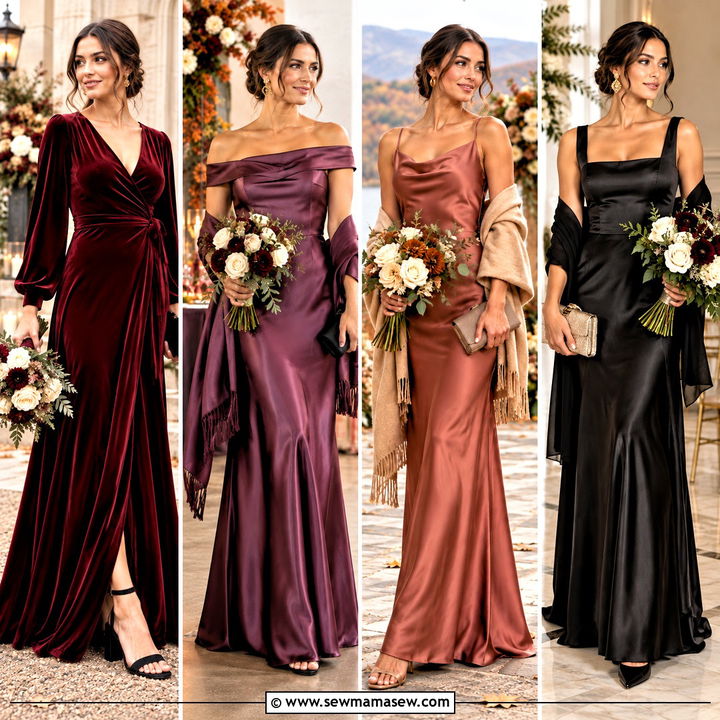
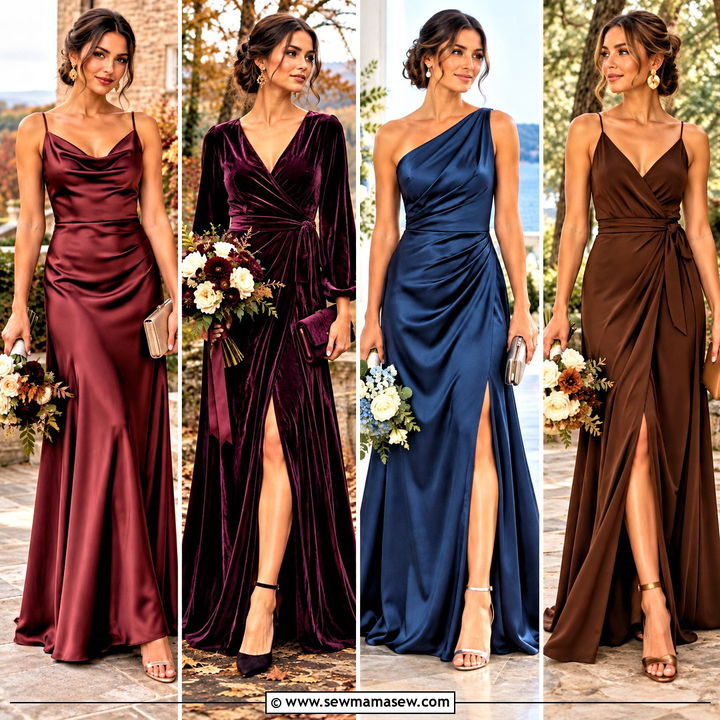
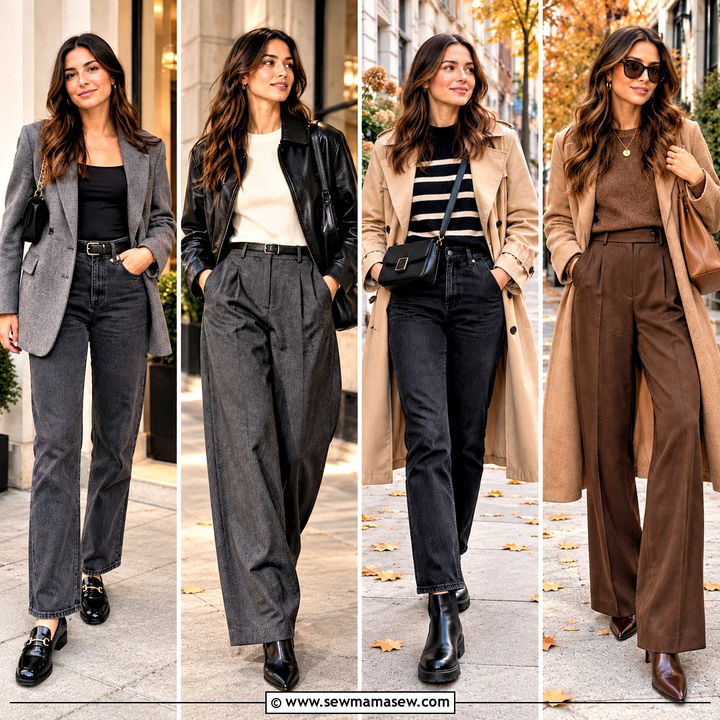
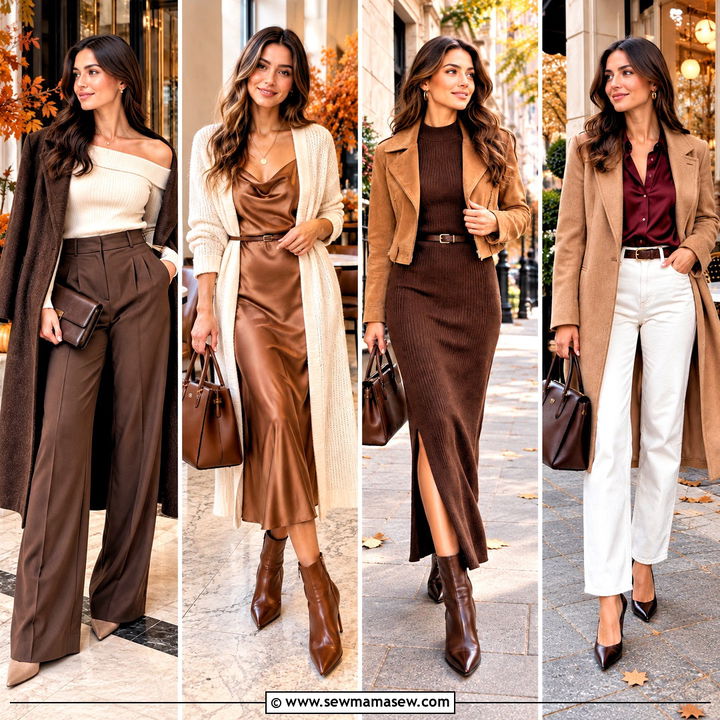
I never choose a bridesmaid color from a single swatch. I picture the whole person on the day: the dress, the shoes on that particular ground, the bouquet in her hands, the wrap she'll want at 6 p.m. An autumn palette can run from soft champagne and dusty rose through to burgundy, espresso, forest green and plum, and the fabrics run from light chiffon to heavy velvet. The right pick suits the venue, the flowers, the formality and the forecast, and still lets each bridesmaid choose a neckline she's comfortable in. Below are fifteen fall colors, each styled as a complete look, with what I'd watch for in each.
A Bridesmaid Brief That Heads Off Surprises
Most bridal-party mix-ups come from vague instructions. "Wear burgundy" produces six different burgundies. Once the color is chosen, I send everyone one short written brief so nobody has to guess.
- The exact fabric and color name from one maker, plus a link to the approved styles.
- Length: floor-length, cocktail or midi, stated plainly.
- Shoe color and heel type, such as nude block heel or closed-toe black.
- Jewelry metal, gold or silver, and how much: studs only, or drops allowed.
- The shared layer for cold weather, if there is one.
- An ordering deadline that leaves room for alterations.
I also ask each bridesmaid to send a photo of herself in the dress before the hem is taken up. It catches the wrong shade, a mistaken length or a strap that won't stay put while there's still time to exchange.
1. Burgundy Satin Bridesmaid Dress
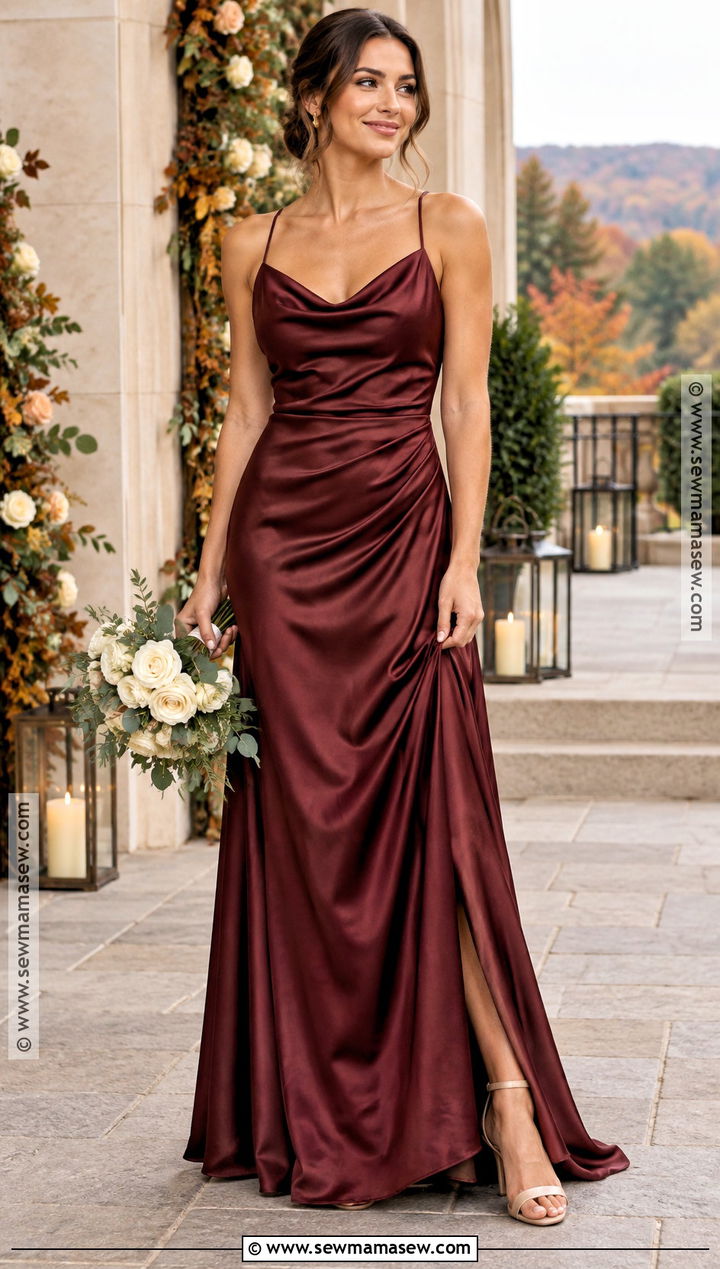
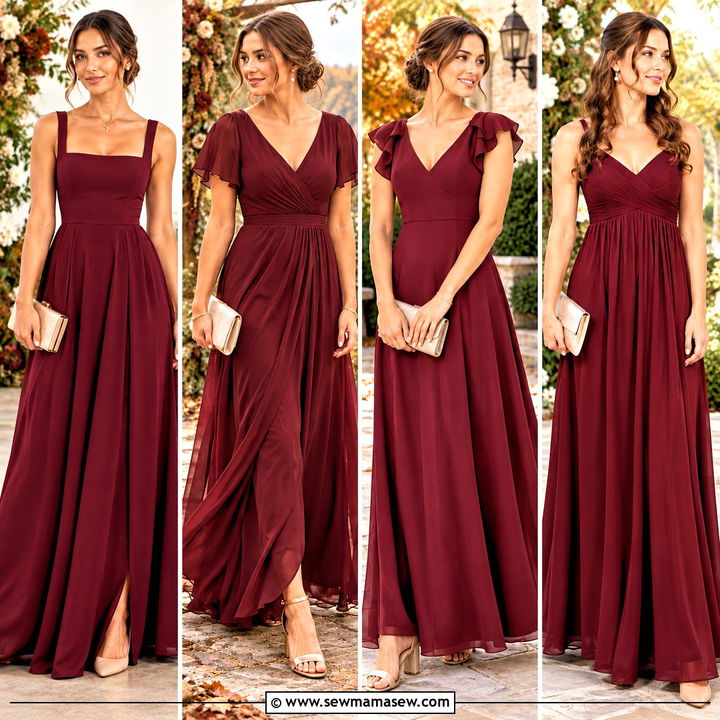
Burgundy satin is my default for a formal fall wedding because it suits nearly every complexion and looks expensive without any embellishment. Draped necklines, wrap bodices and gathered waists all come in this fabric, so each bridesmaid can find a shape she likes. Satin's shine is the main decoration, which means jewelry stays small. Champagne heels, little gold earrings and a compact bouquet of cream, eucalyptus and deep red finish it. A neutral wrap handles an outdoor service. I'd give hair a loose brief, something like low and polished, rather than dictating one style to everyone.
2. Terracotta Crepe Bridesmaid Dress
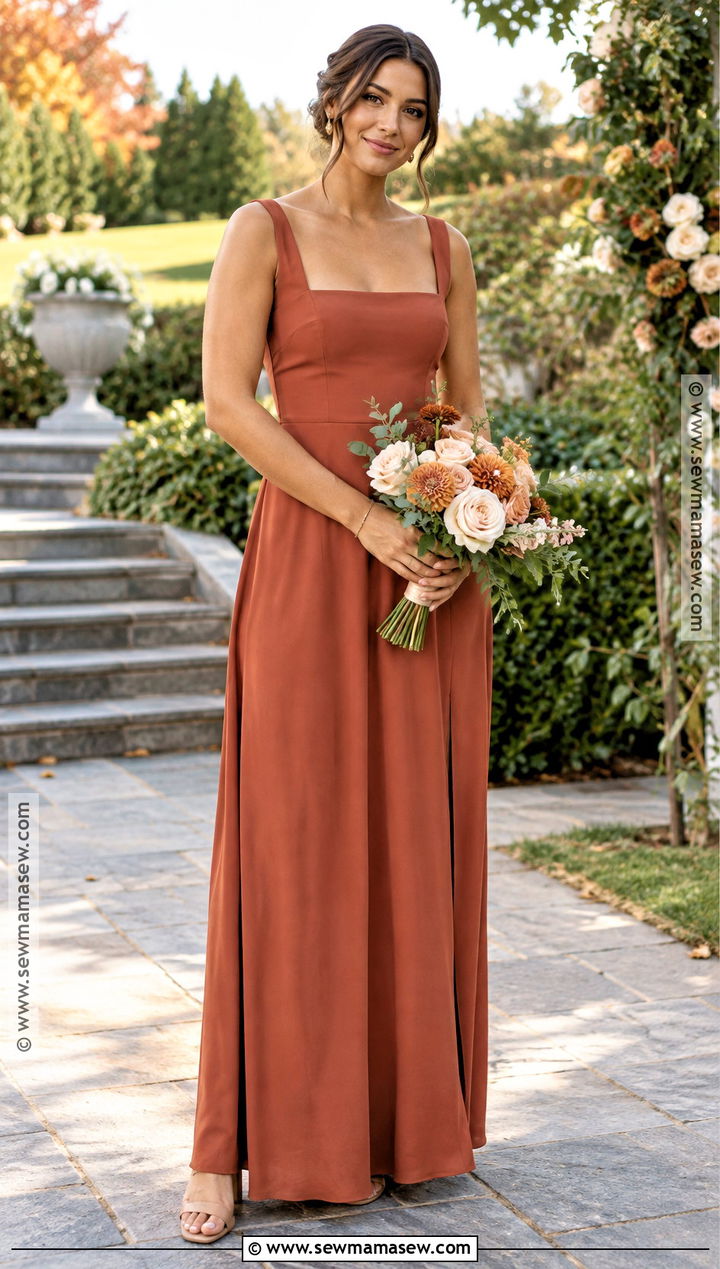
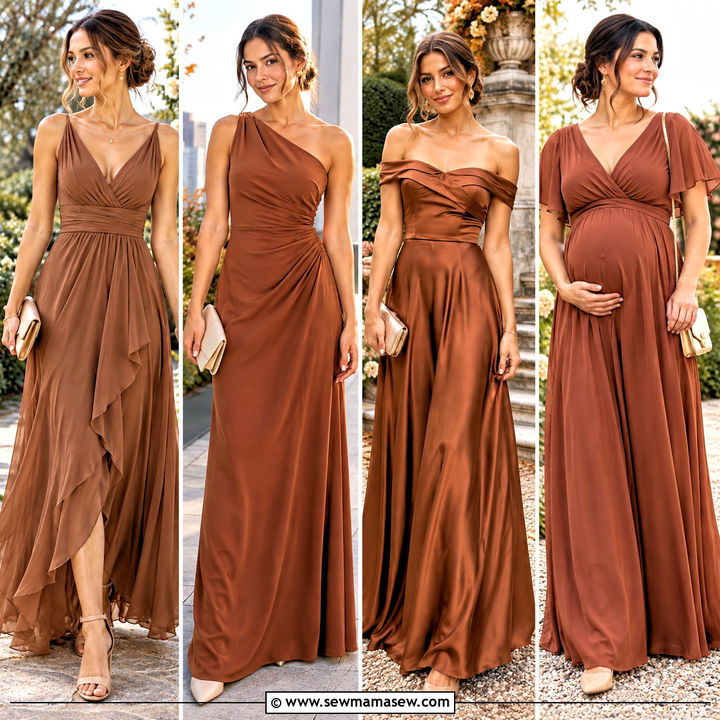
Terracotta crepe is relaxed enough for a ranch or garden but still reads as a proper wedding dress. Crepe is the reason. It has a matte, slightly pebbled surface that keeps the earthy color from looking like a sundress. A square neck, adjustable straps or flutter sleeves give a clean base. Nude block heels and brushed gold jewelry suit it, with ivory and soft peach in the bouquet. Keep the fabric and hem identical and let necklines vary. One honest note: crepe wrinkles less than satin but more than people expect after a long car ride, so hang it as soon as you arrive. A camel shawl covers a cold evening.
3. Rust Velvet Bridesmaid Dress
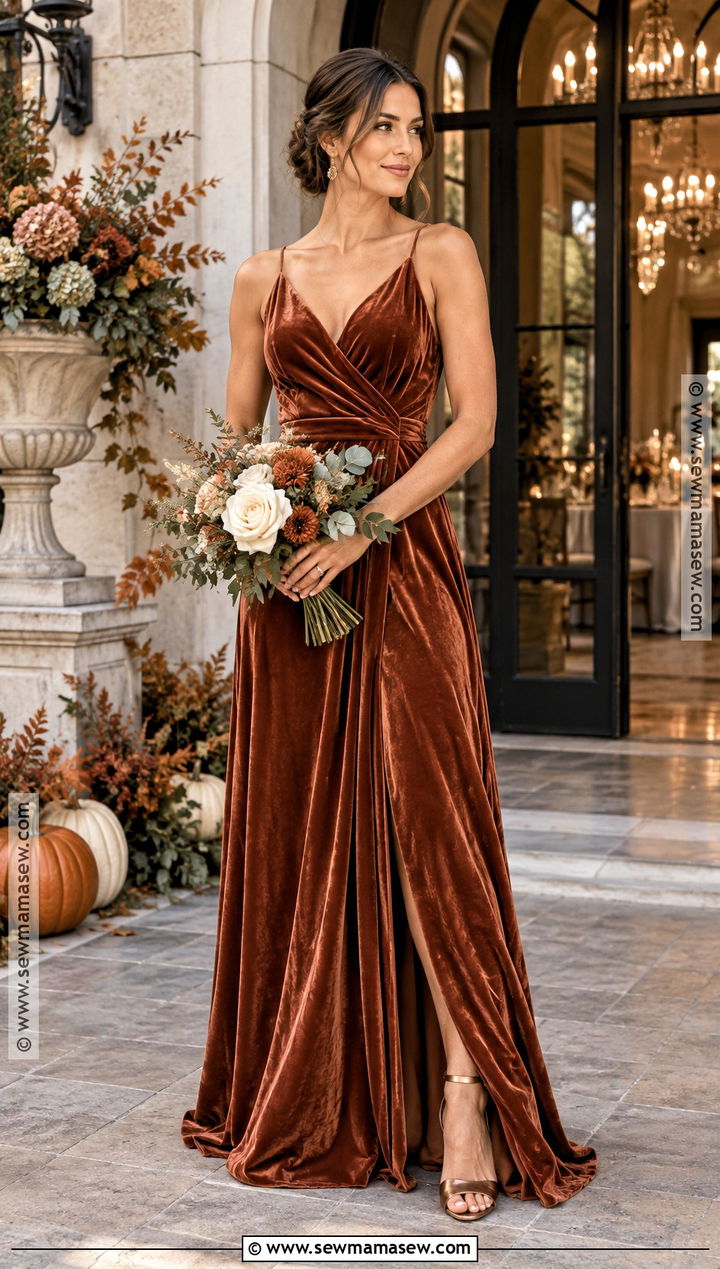
Rust velvet is for the weeks when the air has a real bite. Velvet is plush and visually heavy, so I balance it with a V-neck, wrap waist or gentle cowl that opens up the upper body. Bronze heels, fine gold jewelry and a structured bouquet of cream and copper are enough; anything bigger competes with the fabric. Hair can be loose waves, low twists or a neat bun depending on formality. Velvet is warm, which is lovely in a stone church in November and less so on a crowded dance floor. A taupe wrap keeps the earth-tone palette intact outdoors.
4. Burnt Orange Chiffon Bridesmaid Dress
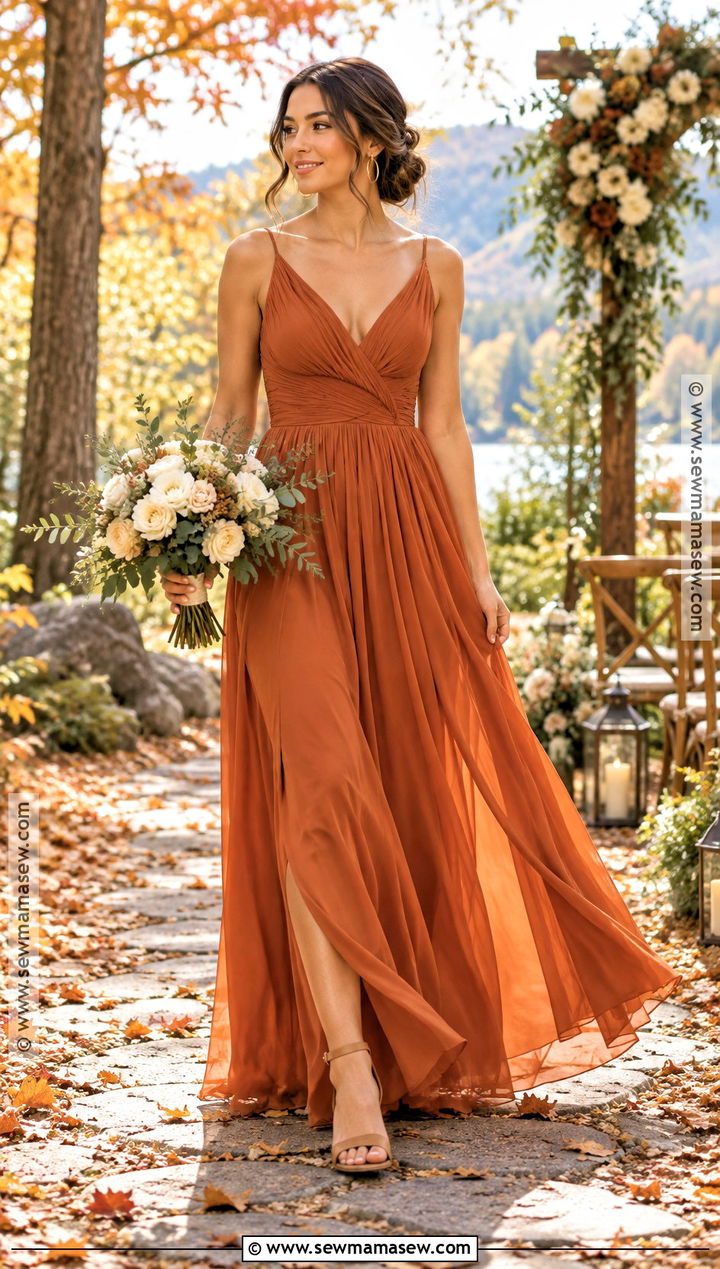
Burnt orange chiffon is the brightest color here, and chiffon is what makes it wearable. Layers of sheer fabric soften a strong orange so it glows rather than shouts. A pleated maxi skirt with a lightly defined waist moves nicely when the group walks. Tan block-heel sandals, small gold hoops and a bouquet of ivory with muted orange finish it. I'd save this for a warm September afternoon, since chiffon gives little warmth, and I'd have beige pashminas ready for after sunset. Varied bodices keep everyone comfortable. Against stone walls and open fields full of yellow leaves, the color comes alive in pictures.
5. Olive Green Satin Bridesmaid Dress
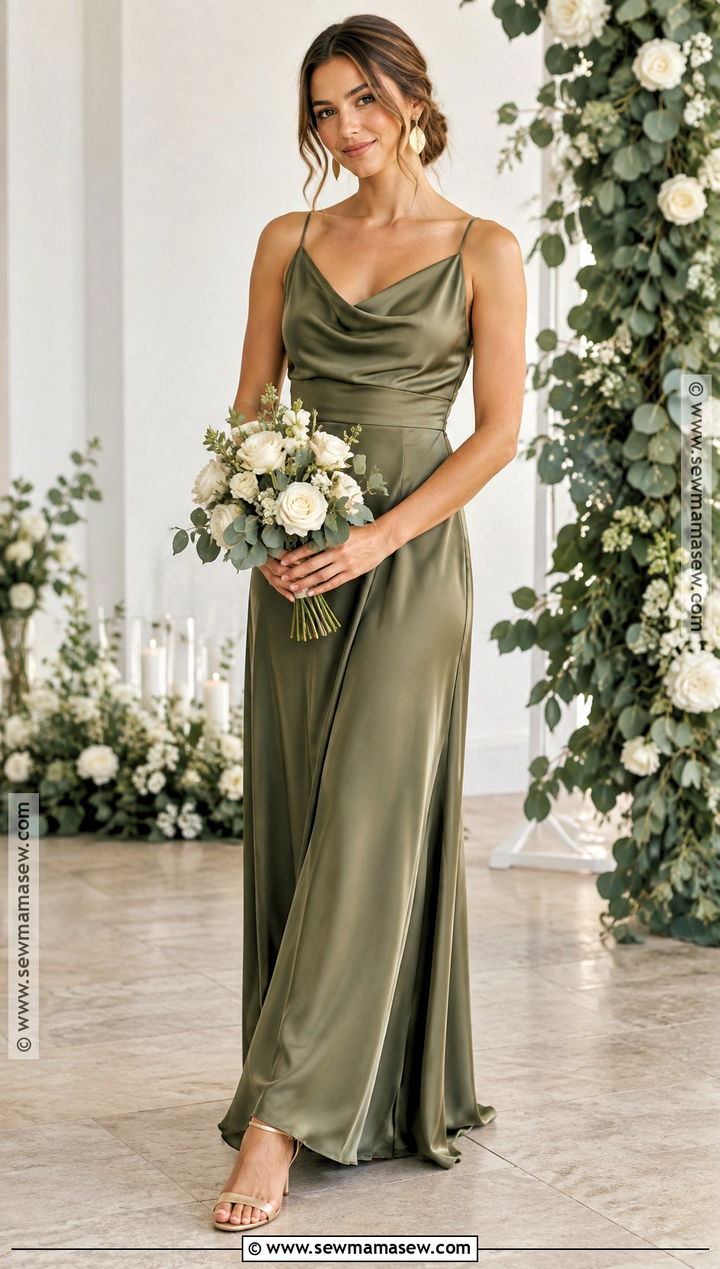
Olive satin is the understated green, the one that sits back and lets the setting do the talking. A softly draped bodice, fitted waist and easy skirt suit most figures. Champagne or nude heels, brushed gold earrings and ivory flowers with eucalyptus keep it light. Olive pairs with wood, stone and linen without effort, and it combines neatly with sage and forest green if you want a graduated green lineup. Watch satin in direct midday sun; the shine can turn olive slightly gray, so portraits in open shade suit it better. Warm, neutral makeup suits it, and a camel coat covers the walk between venues.
6. Forest Green Velvet Bridesmaid Dress
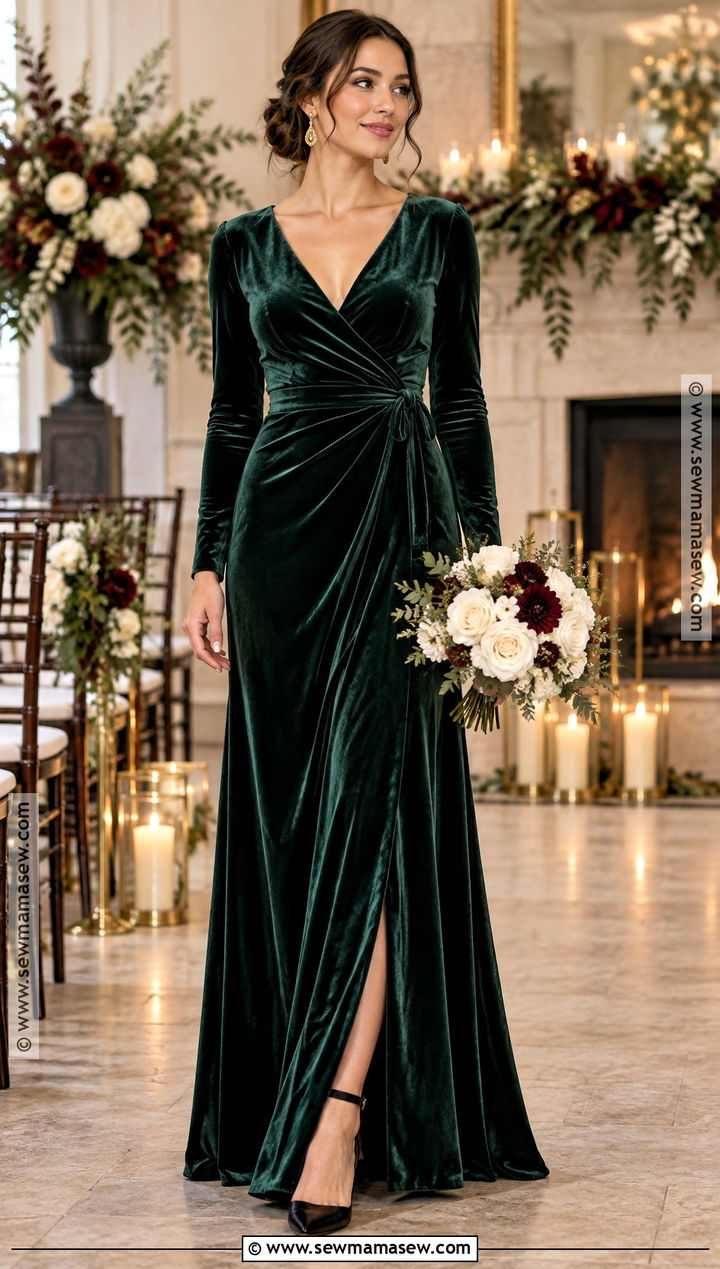
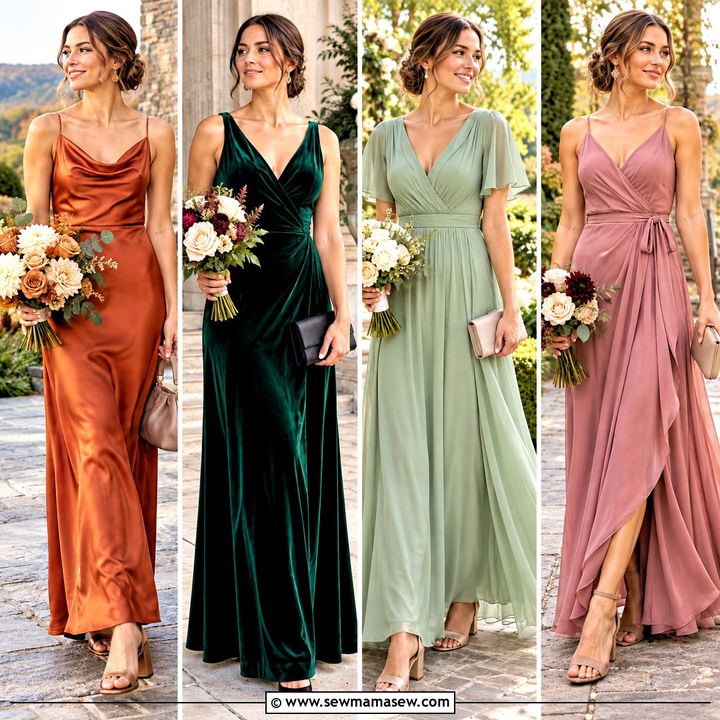
Forest green velvet is about as formal as a fall bridesmaid color gets. Long gowns with sleeves, wrap fronts or off-the-shoulder necklines suit the colder end of the season. Black or champagne heels, gold drops and white flowers with a little burgundy are all it needs. Velvet comes in different weights, and a heavier velvet hangs very differently from a stretch one, so if bridesmaids choose different cuts, I make sure they're all from the same fabric line. Otherwise the green looks two shades apart. It sits well in a lodge or a candlelit room. Neutral wraps keep shoulders warm outdoors without hiding the color.
7. Emerald Green Satin Bridesmaid Dress
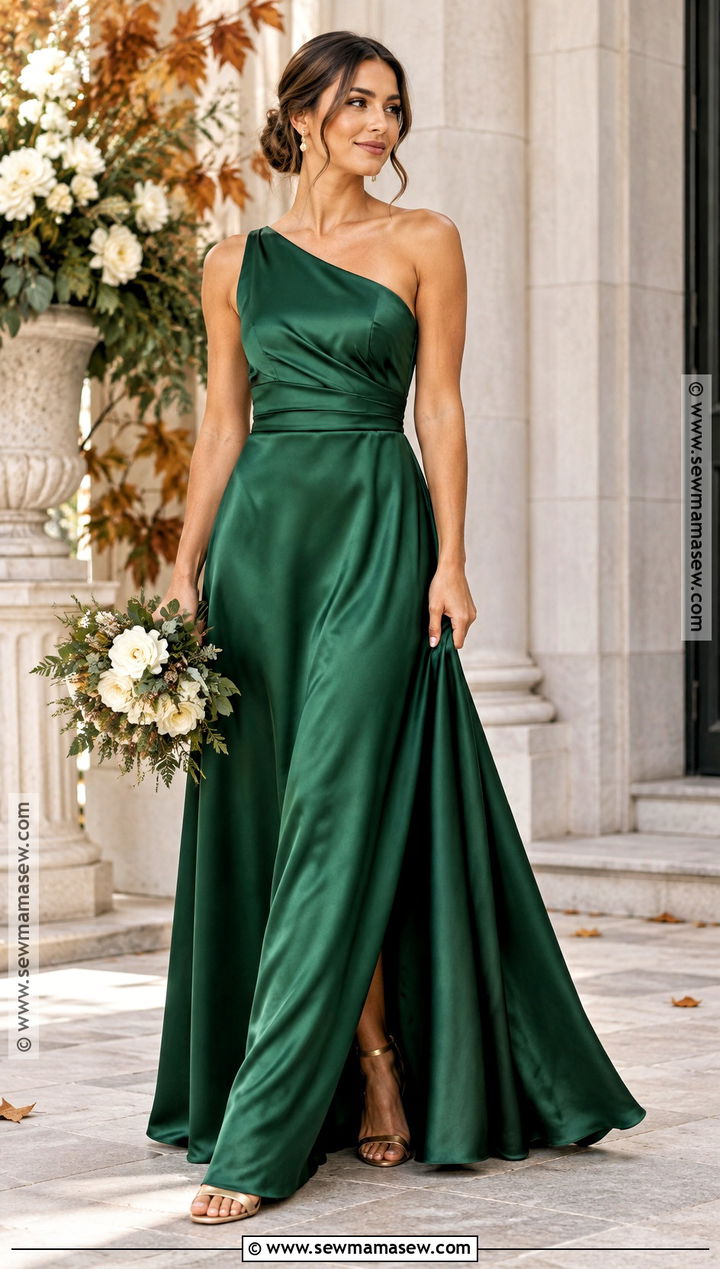
Emerald satin is the jewel-bright green, and it holds its own at a black-tie reception. A column, wrap or flowing A-line all suit the color. Metallic gold heels, delicate earrings and white flowers against dark foliage finish it cleanly. Satin in a saturated color shows every seam and pull, so these gowns need careful fitting across the bust and hips. Anyone wanting more coverage can take long sleeves or a higher neck and still match. Keep makeup balanced with defined lashes and a natural lip; strong lipstick fights the green. A black wrap or cream stole covers a cold evening.
8. Espresso Brown Bridesmaid Dress
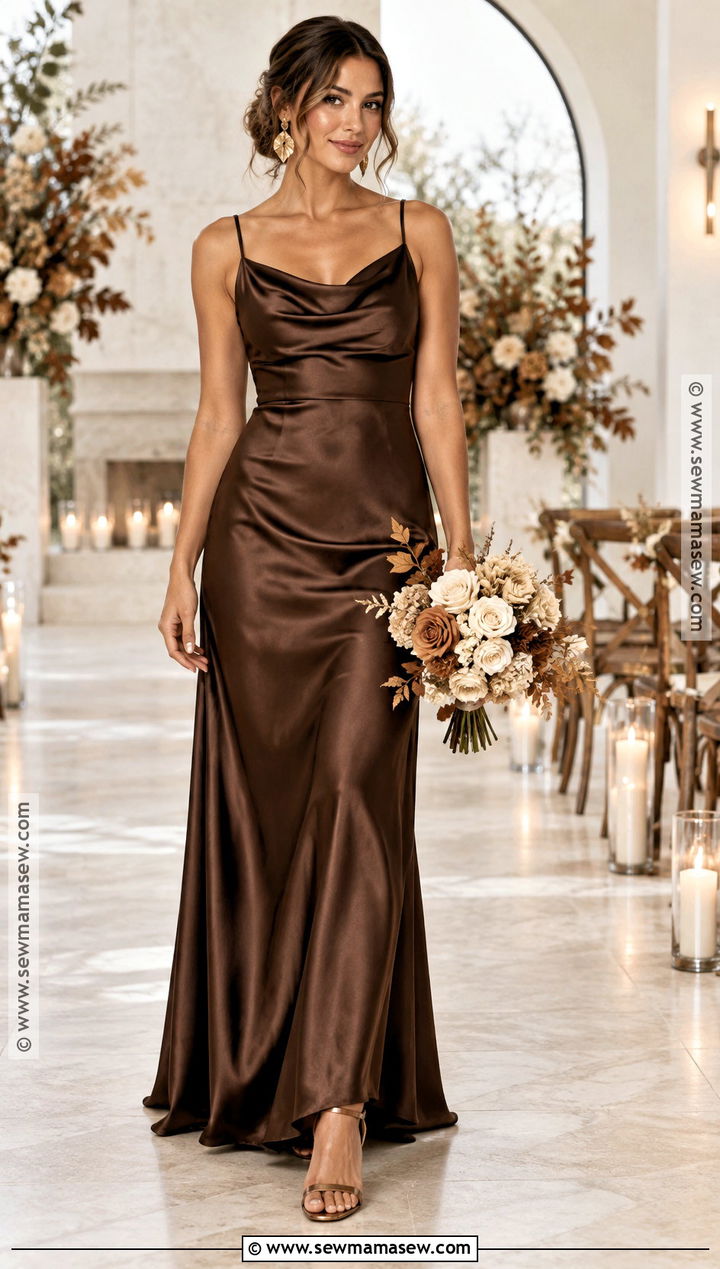
Espresso brown has the formality of black with a lot more warmth. A satin or structured crepe gown with a draped neckline, defined waist and fluid skirt keeps it clean. Bronze heels, sculptural gold earrings and caramel-toned flowers suit it. I like espresso for mismatched groups because one deep, consistent shade holds very different silhouettes together. The thing to check is the undertone, since some espresso dyes lean red and others lean green, so get all the swatches in one room. Warm makeup and polished hair keep the look sharp. It contrasts nicely with pale stone and bright leaves.
9. Champagne Satin Bridesmaid Dress
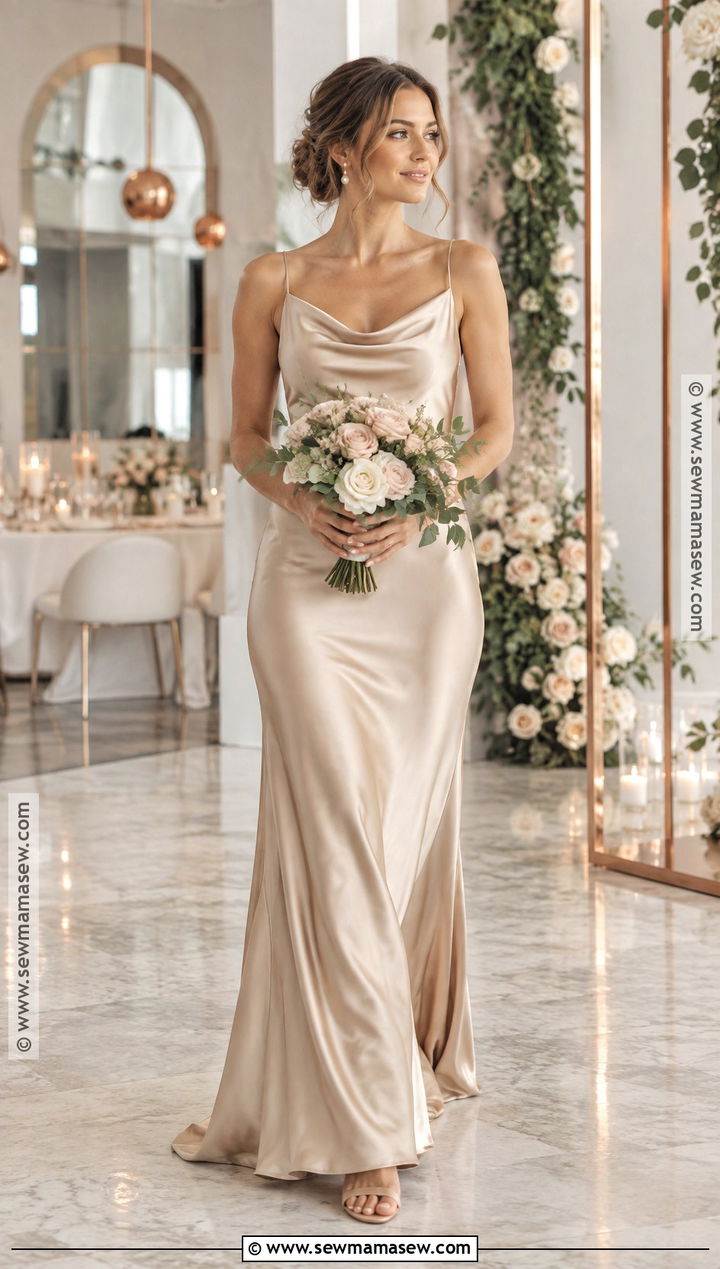
Champagne satin lightens a dark palette, but I treat it carefully. It has to stay distinct from the bride, so I hold the swatch against her gown under both daylight and indoor light before anything is ordered. Bias-cut maxis, soft pleats or simple A-lines suit it. Satin in a pale color shows sweat and water marks more than dark shades do, which is worth knowing for a warm venue. Nude heels, pearl or crystal earrings and blush-and-cream bouquets finish it. Taupe wraps suit an outdoor ceremony. It looks best where the decor brings copper, brown or green to warm it up.
10. Copper Satin Bridesmaid Dress
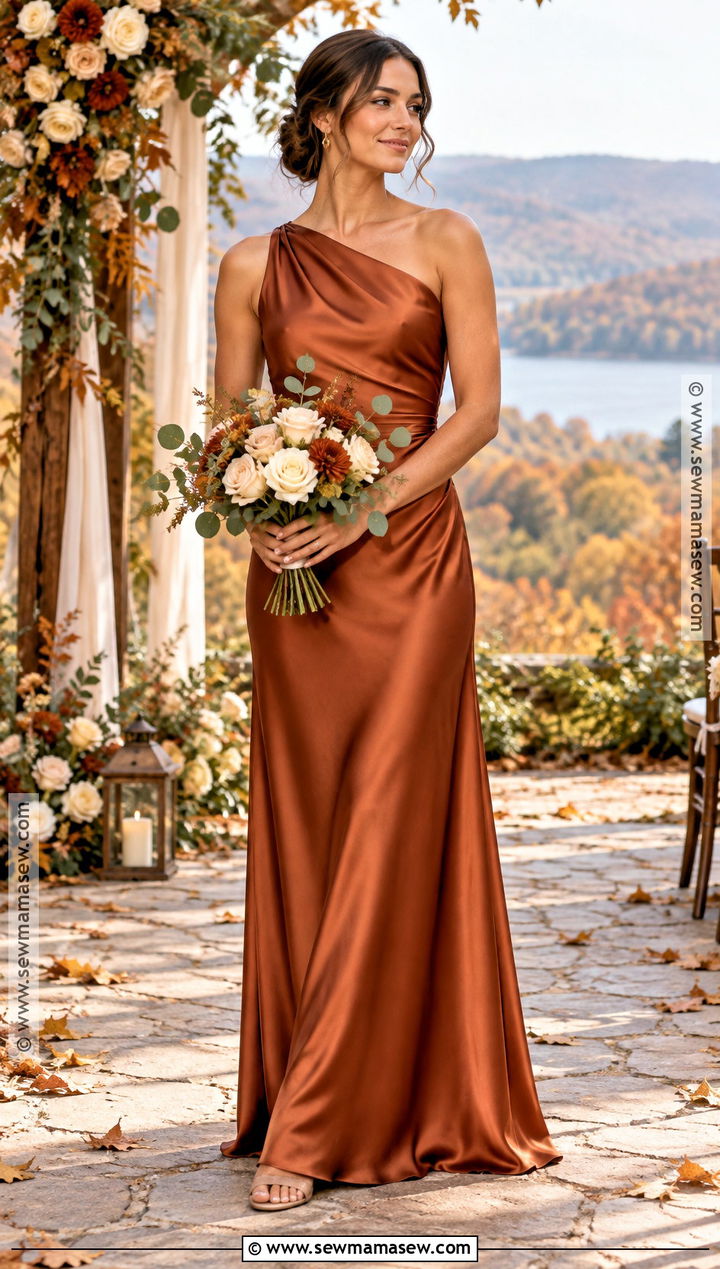
Copper satin glows by itself, so the job is mostly to stay out of its way. A cowl neck, gathered waist or one-shoulder bodice lets the fabric lead. Neutral heels, small gold earrings and ivory flowers with rust details are enough; matching copper bags or hair clips push it toward costume. Daytime and early-evening light flatter the metallic tone most. If the group wears different silhouettes, order every dress from the same fabric collection. Copper varies more between makers than almost any other color, from pinkish to brassy, and the difference is obvious once the women stand side by side.
11. Dusty Rose Chiffon Bridesmaid Dress
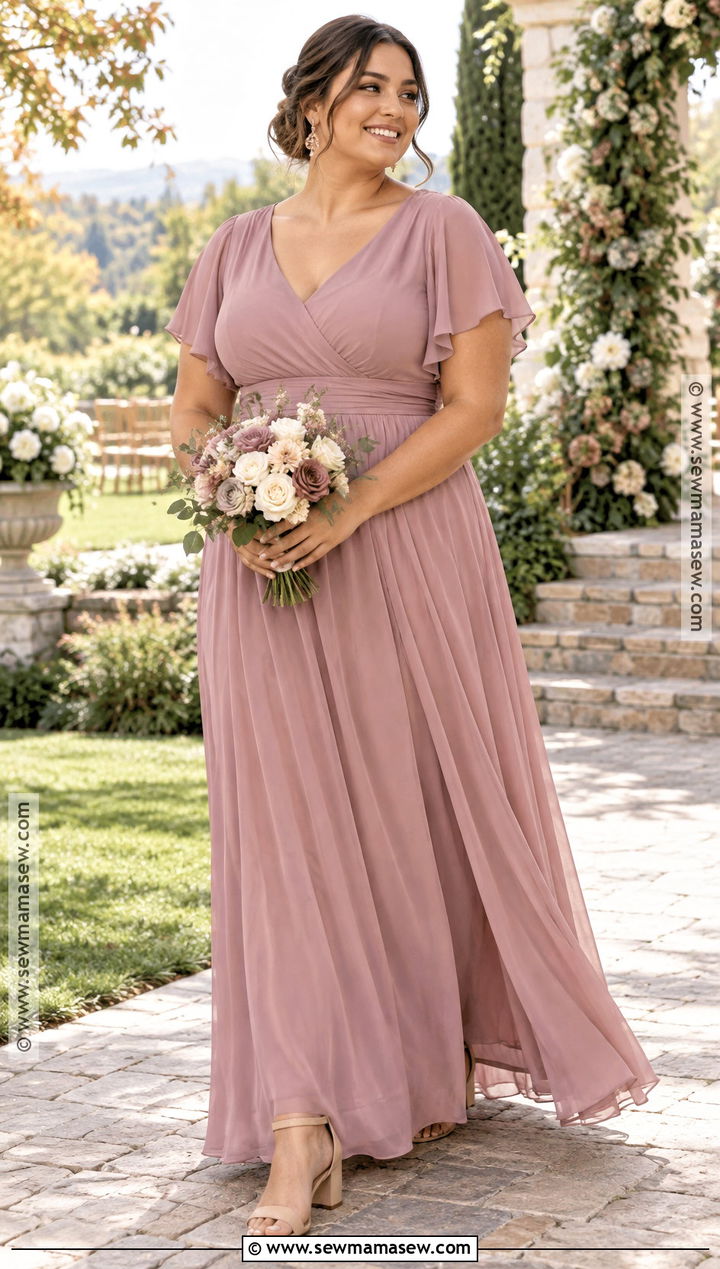
Dusty rose eases a September wedding from summer into fall. Chiffon maxis with flutter sleeves, pleated skirts or wrap bodices keep it light and comfortable. Nude block heels, small rose-gold earrings and blush, mauve and cream flowers finish the look. On its own, dusty rose can feel too springlike for autumn, so I give it a seasonal push through the flowers or the suits: burgundy or caramel accents, deep green foliage, medium gray tailoring. Beige wraps cover a cool evening. The color forgives a lot of silhouettes, so supportive straps or sleeves can be offered freely.
12. Mauve Crepe Bridesmaid Dress
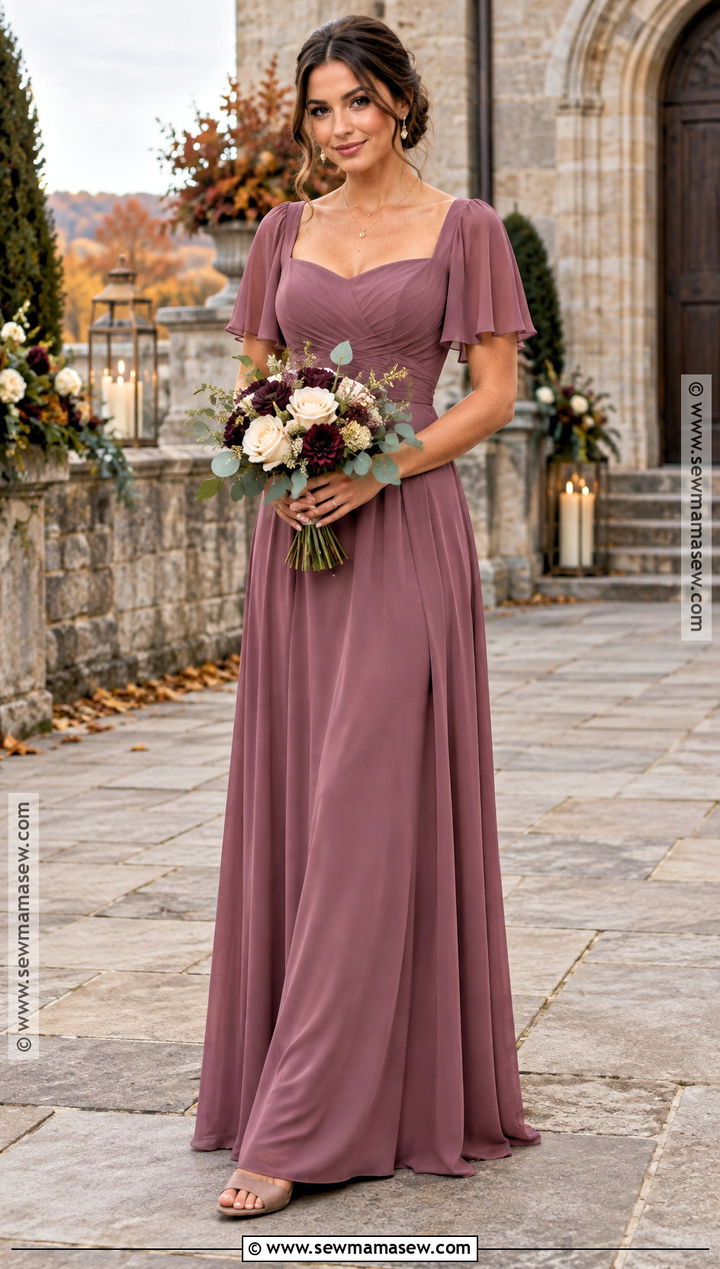
Mauve crepe has softness and some autumn depth at once. Wrap bodices, bateau necklines or draped sleeves suit a range of preferences. Taupe heels, silver or muted gold jewelry and ivory, dusty pink and plum flowers suit it. Matte crepe keeps mauve smooth and calm, which is why I prefer it for daytime ceremonies. In shiny fabric the color can tip toward lilac. Hold the material, color and floor-length hem steady if the cuts vary. A gray or mushroom shawl suits the cool-leaning palette better than camel, which can make mauve look muddy. Garden and historic venues suit it.
13. Plum Velvet Bridesmaid Dress
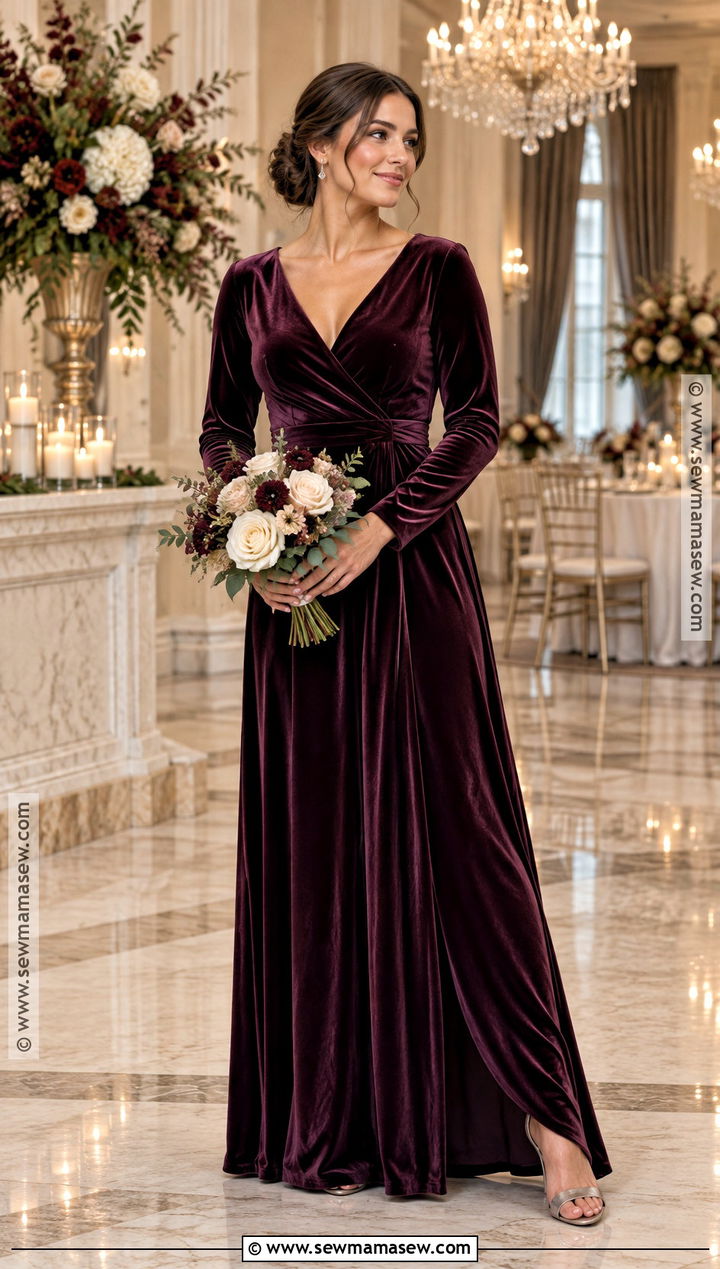
Plum velvet is the dramatic choice for late October and November. A wrap waist, modest V-neck or long sleeves keep it comfortable while the fabric supplies texture. Black or pewter heels, small silver earrings and cream flowers with berry accents finish it. Plum already carries a lot of color, so skip big statement jewelry. Low buns, side-swept curls or sleek ponytails suit the formality. Velvet marks where it's sat on, so bridesmaids should smooth the skirt with a hand before standing for photos. Charcoal wraps or tailored coats come off right before the ceremony.
14. Navy Blue Crepe Bridesmaid Dress
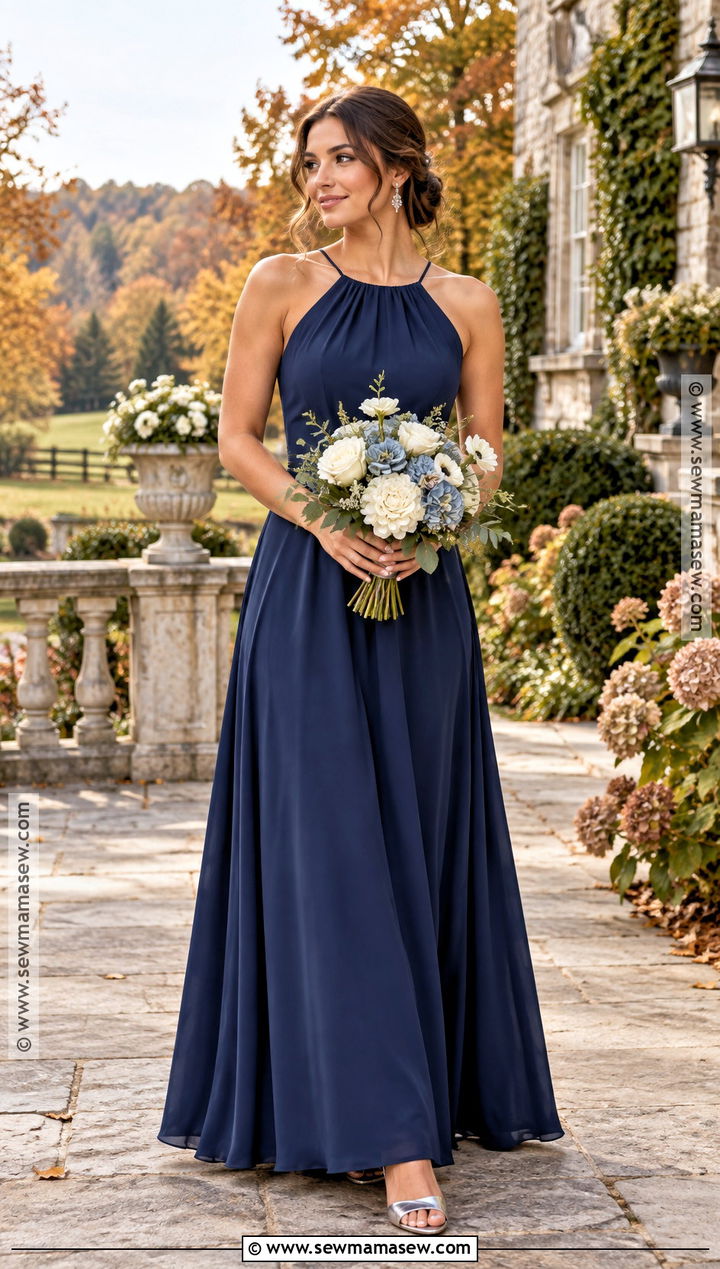
Navy crepe is my suggestion for couples who don't want earth tones at all. Clean A-line skirts, fitted waists and varied necklines let each person choose. Silver or champagne heels, crystal earrings and white flowers with dusty blue accents keep it crisp. Navy contrasts sharply with red, orange and yellow leaves, so outdoor portraits pop, and it moves into an indoor reception without looking out of place. Matte crepe keeps navy from going purple under artificial light, which some shiny navy satins do. Light gray wraps and small neutral bags finish it.
15. Slate Blue Satin Bridesmaid Dress
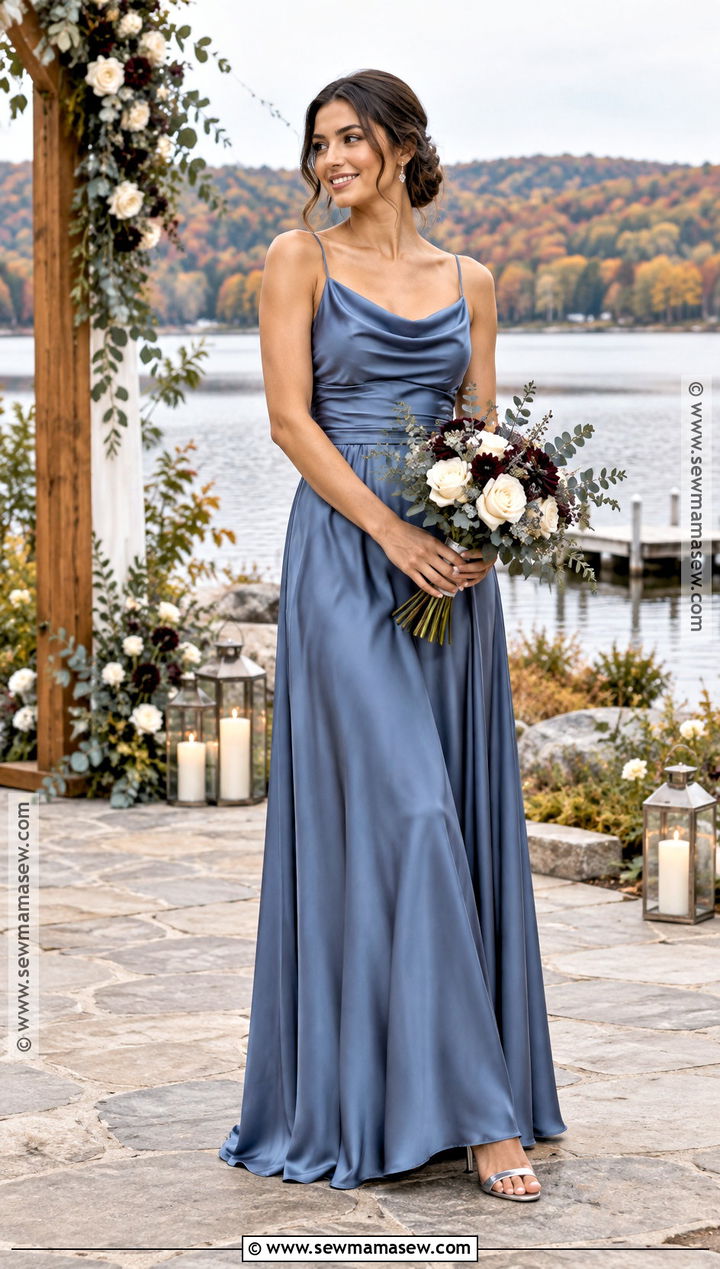
Slate blue is a cool, grayed blue that sits between navy and pastel. It suits mountain, lakeside and modern weddings where the surroundings are cool rather than golden. Satin with gathered bodices, cowl necks or soft sleeves keeps it graceful. Silver heels and ivory flowers with blue-gray foliage suit it, and a little burgundy in the bouquet is what ties it to autumn. Without that warm accent, slate can look like a spring wedding. Charcoal or soft gray wraps coordinate without harsh contrast. It pairs easily with light gray suits or dark navy tailoring.
Makeup and Hair Beside Deep Autumn Colors
Dark, saturated dresses change what makeup needs to do. A very bare face next to burgundy, forest green or plum can look washed out in photos, because the dress pulls the eye and the face recedes. A touch more definition helps: groomed brows, some warmth on the cheeks and a lip a shade or two deeper than everyday. It doesn't need to be heavy, just enough to hold its own.
Pale dresses go the other way. Champagne and dusty rose can make strong makeup look harsh, so softer color suits them. With satin, I'd skip shimmery highlighter, since shiny fabric plus a shiny face reads as greasy in flash photos.
For hair, the neckline decides. Off-the-shoulder, one-shoulder and square necks look best with hair up or swept to one side, while high necks and long sleeves suit loose waves that frame the face.
Can a Bridesmaid Wear It Again?
Bridesmaids pay for their dresses more often than not, so rewear matters. Navy, black, espresso and emerald come back for formal events most easily. Burnt orange, copper and mustard are harder to restyle. A floor-length crepe or chiffon dress can often be shortened to midi afterward by a seamstress, while velvet and pleated skirts are trickier to alter. If cost is a worry for the group, a rewearable color is a kind choice.
Send the Swatch, Then the Rules
A fall palette works when the dresses, venue, flowers, weather and formality all agree, and when the bridesmaids are comfortable in what they're wearing. The colors here run from earthy oranges and rich greens to jewel tones, warm neutrals and the softer in-between shades. Check every swatch in daylight and indoor light, since texture changes color. Then give the group a clear brief on fabric, length, shoes, jewelry and layers, while leaving necklines and silhouettes open where you can. That mix of firm rules and personal choice is what makes a group look unified without anyone feeling uncomfortable.
Related posts: