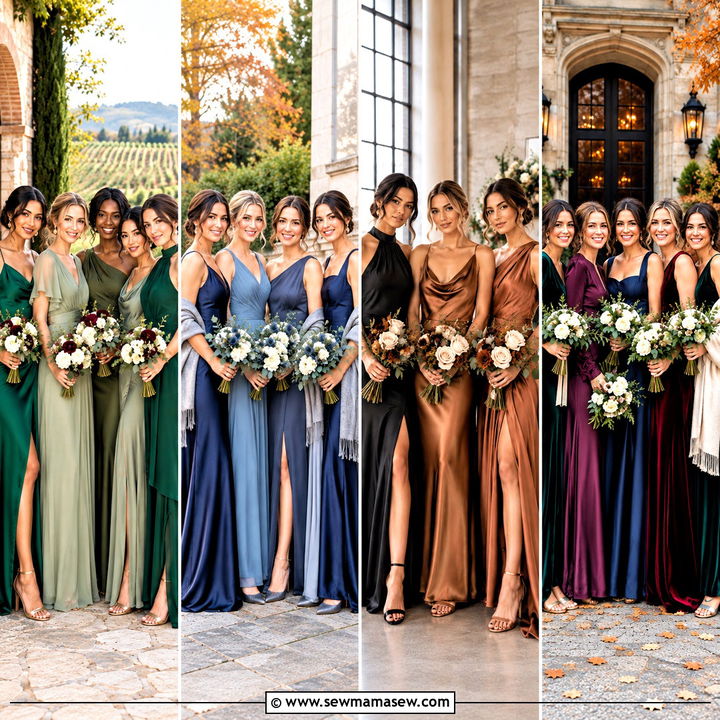
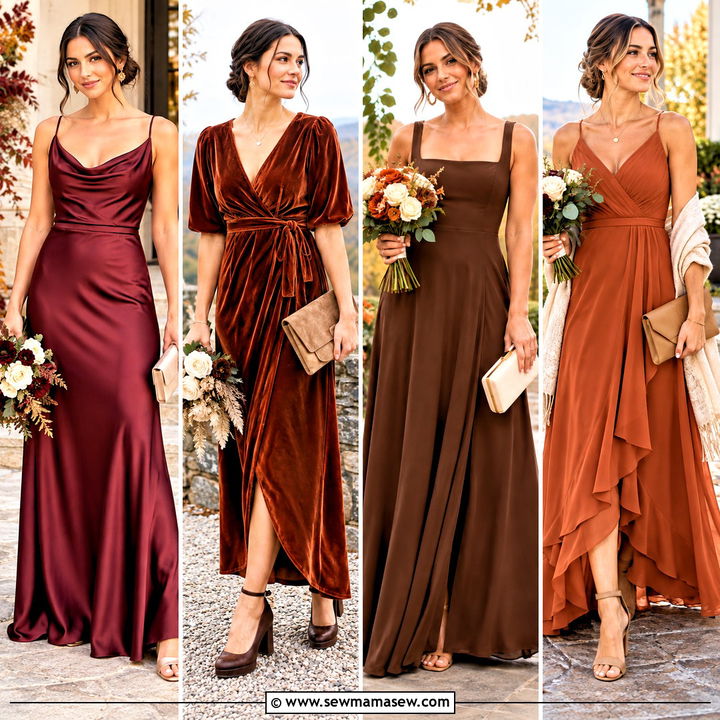
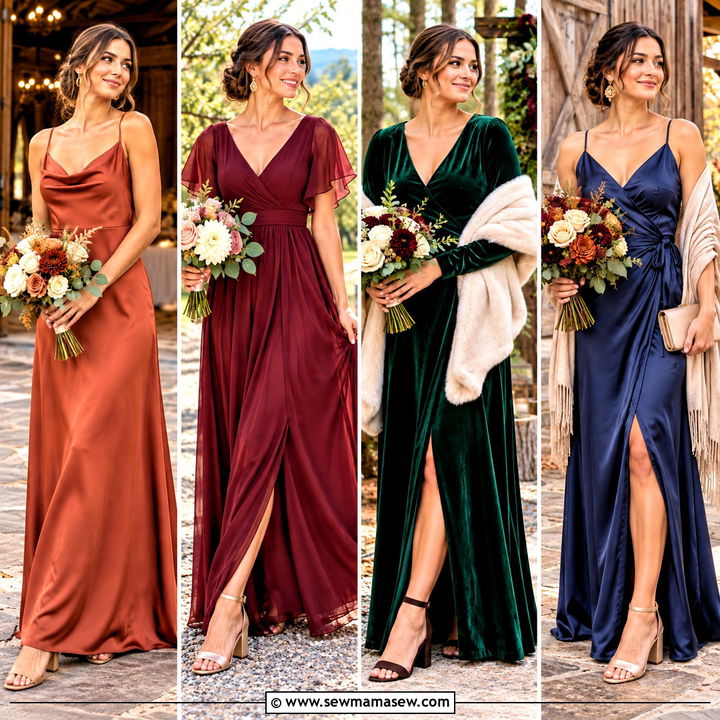
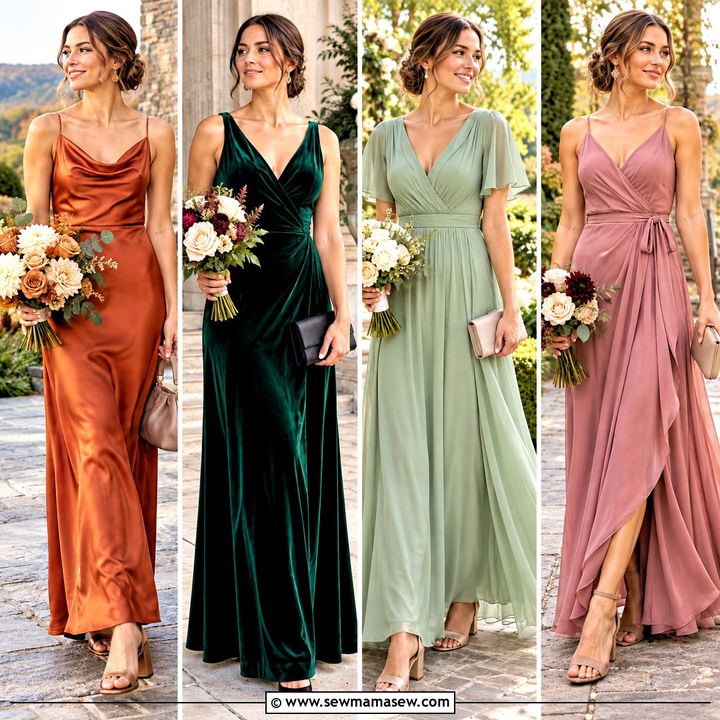
Picking a fall bridesmaid color is less about the shade you love in a swatch book and more about how it behaves on real skin, in real light, beside the bride. The venue, the formality, the flowers and the temperature all narrow the field. Then fabric changes the color again: satin throws light back and brightens a shade, velvet soaks it up and deepens it, chiffon softens everything, and crepe shows color the most honestly. Below are fifteen colors I'd recommend for an autumn wedding, from earthy rust and espresso to jewel-toned plum and navy, with notes on who each one flatters, where it struggles, and what to pair it with.

Undertones Decide Who Can Wear Rust or Olive
Every skin tone has an undertone, and it matters more than how light or dark the skin is. Warm undertones lean golden or peachy, cool ones lean pink or blue, and neutral skin sits in between. Most fall colors are warm, which is great for some bridesmaids and hard on others.
I run a quick check with each person in daylight, no makeup needed. Hold a pure white sheet and a cream sheet under the chin. If the face looks brighter with cream, she's likely warm; if white wins, she's likely cool. Gold versus silver jewelry tells you much the same thing.
- Safe across almost everyone: burgundy, navy, plum, chocolate, dusty rose.
- Best on warm and olive skin: rust, terracotta, mustard, copper, olive.
- Best on cool and neutral skin: forest green, plum, navy.
- Mixed group? Pick a muted, mid-depth version of the shade. Muted colors forgive undertone far more than bright ones.
If one bridesmaid struggles with the chosen color, give her a higher neckline or let her wear her hair down. Fabric farther from the face matters less, and that small change is often enough.
1. Terracotta Bridesmaid Dresses
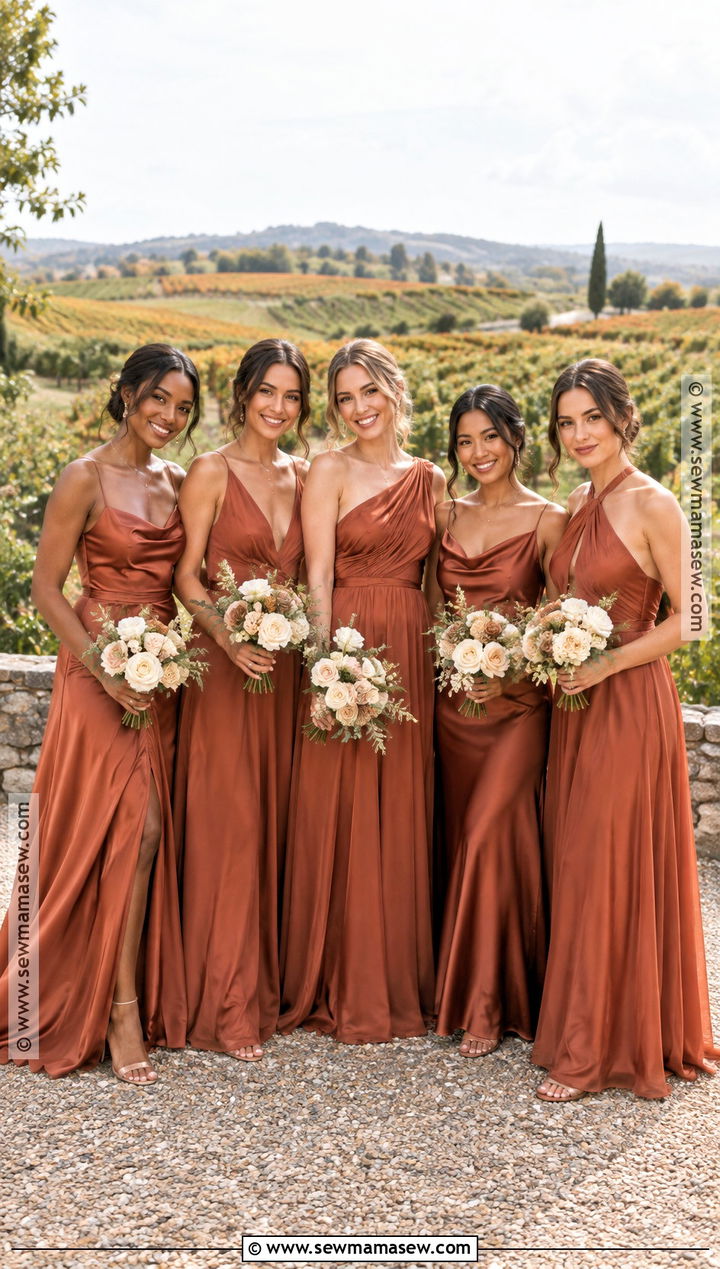
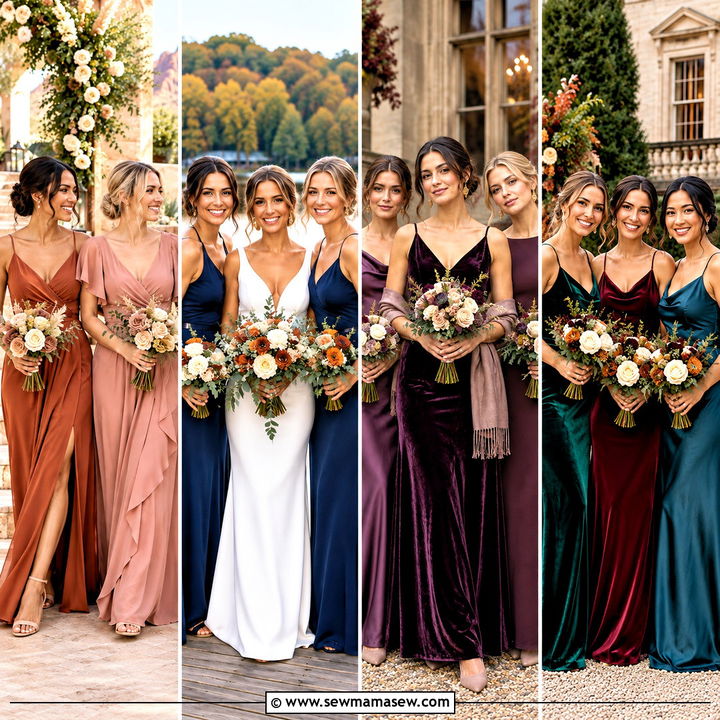
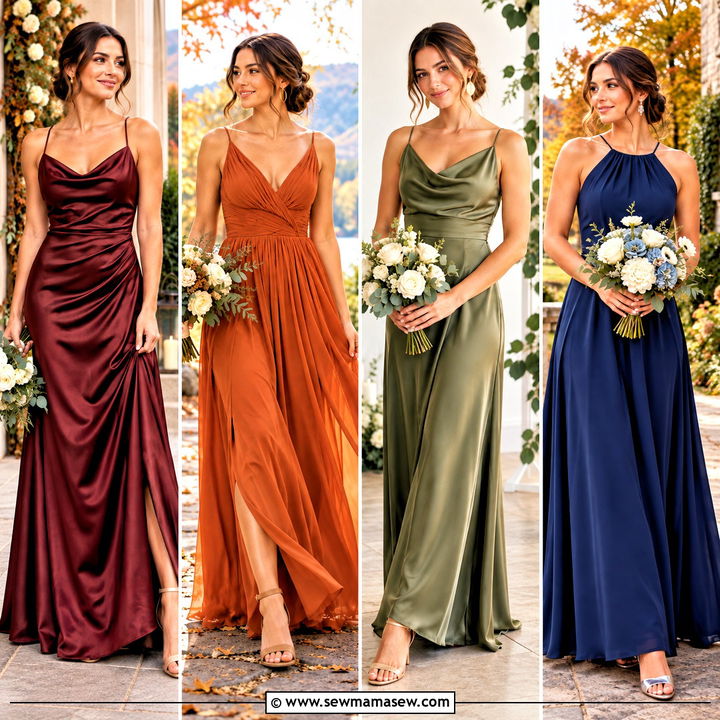
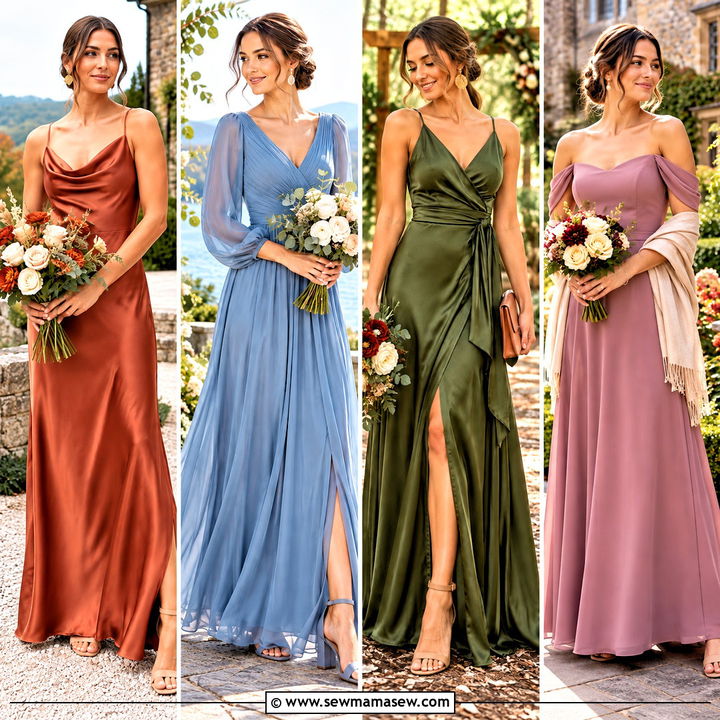
Terracotta is the earthy shade I suggest first for September and early October. It's a warm color, so it flatters golden, olive and deeper skin most, and it can make very fair, pink-toned skin look a little ruddy. If that's half your group, lean toward a slightly browner terracotta rather than a brighter one. Satin, chiffon or crepe all work, and varied necklines keep each bridesmaid comfortable. Nude, bronze or tan heels and fine gold jewelry stay in the warm family. Cream roses, peach ranunculus and dried grasses add contrast. Camel wraps handle a cool evening, and the color sits naturally beside stone and wood.
2. Burgundy Bridesmaid Dresses
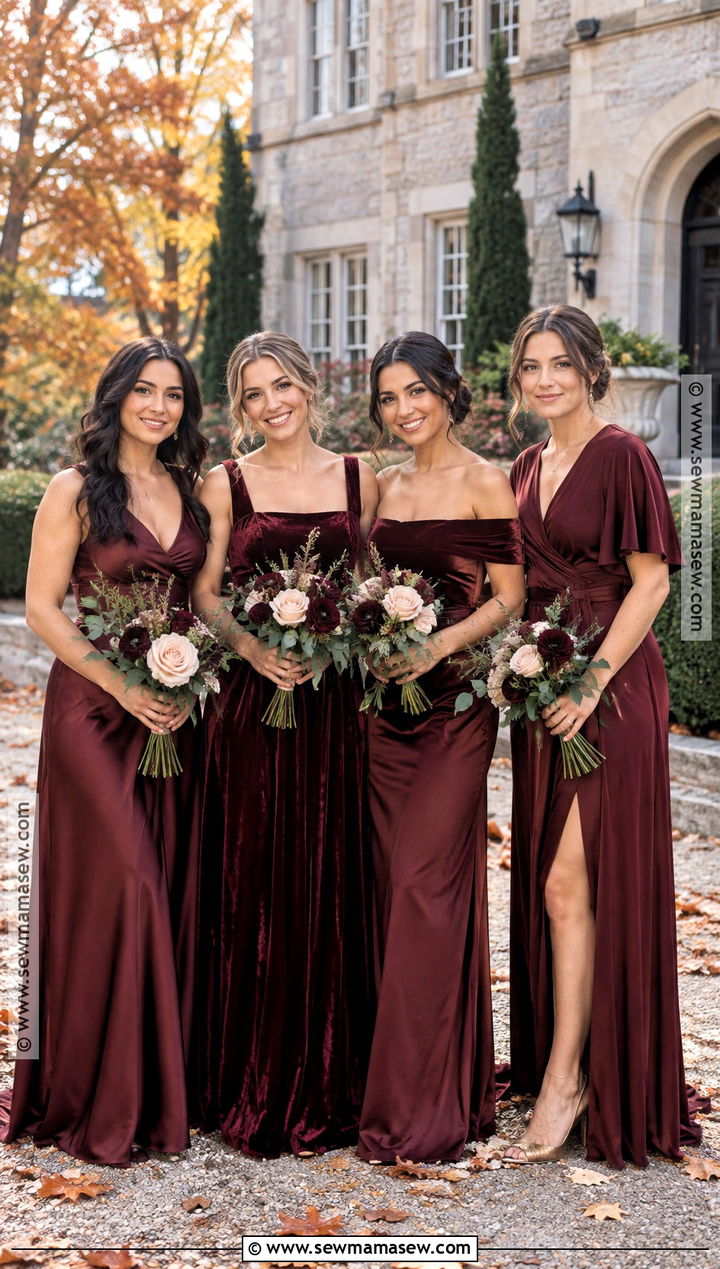
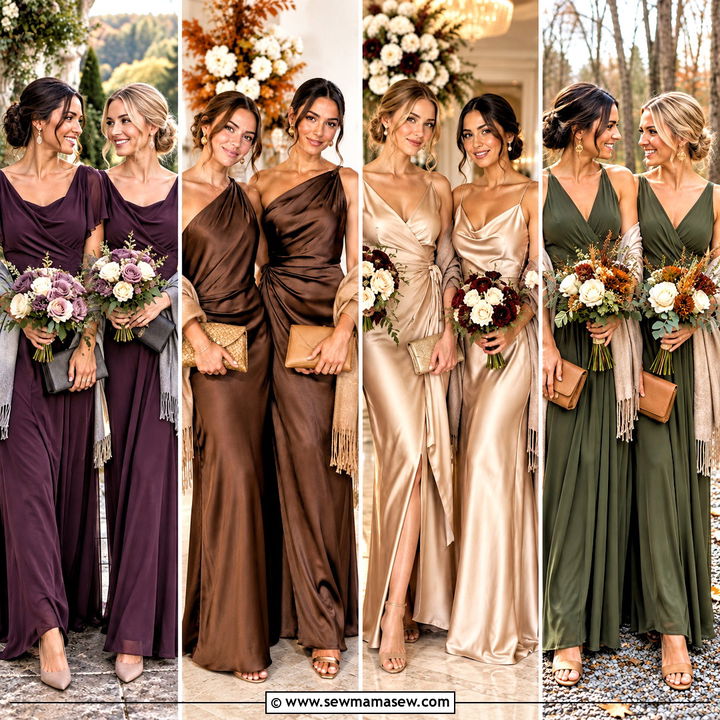
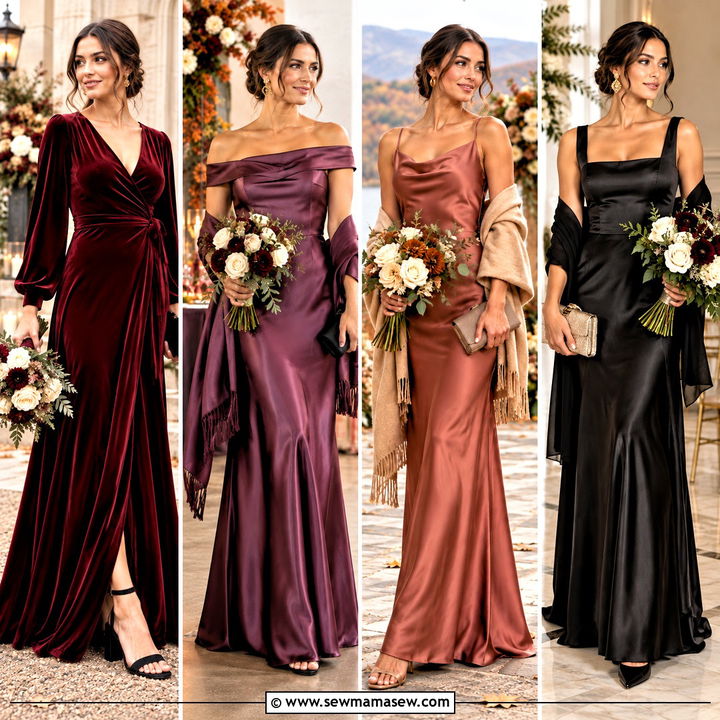
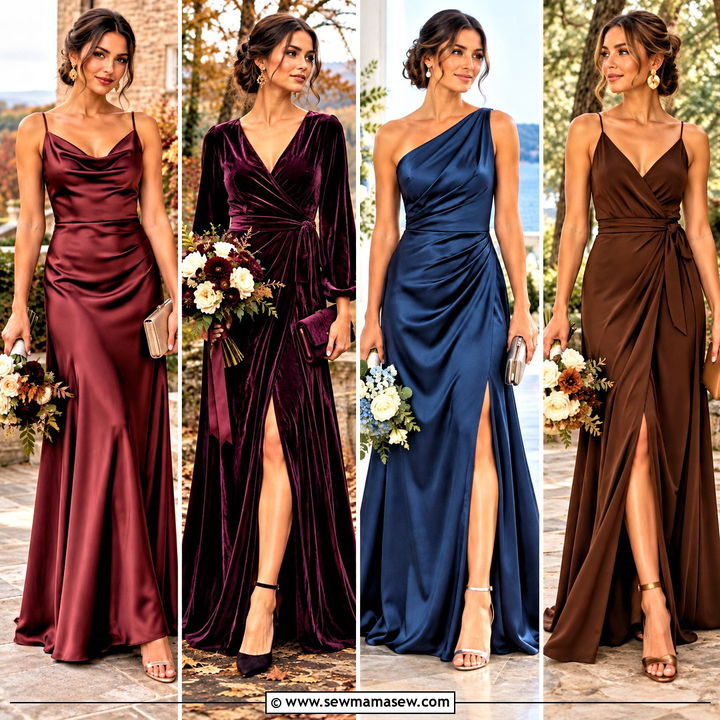
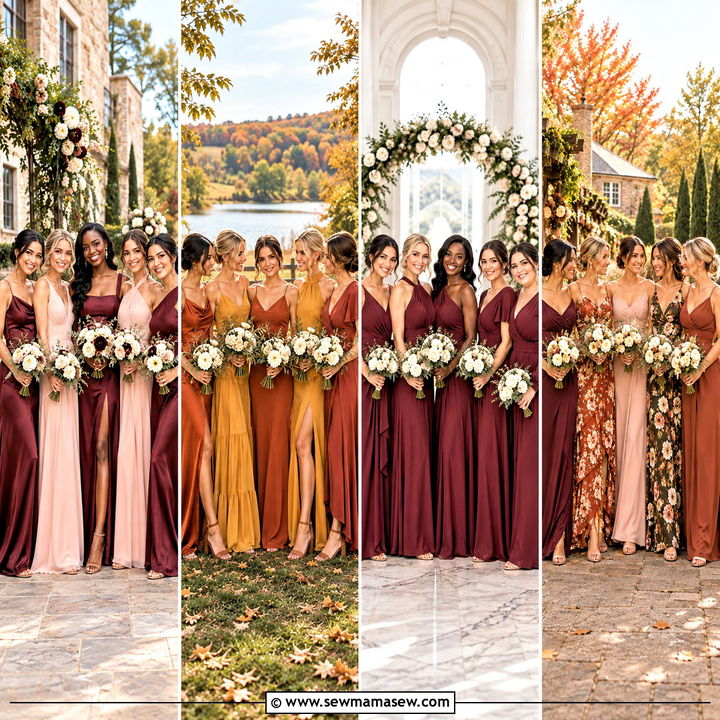
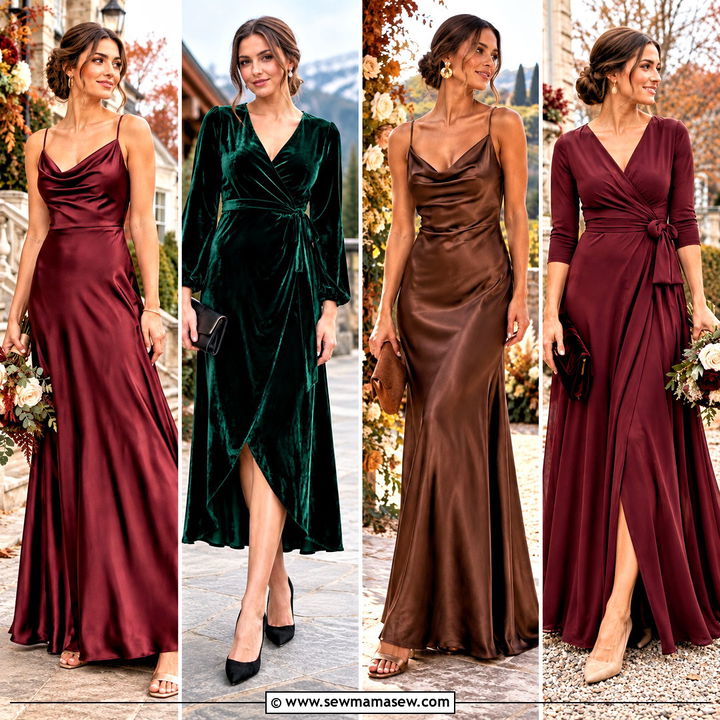
Burgundy is the safest rich color I know. It has enough blue in it to flatter cool skin and enough brown to suit warm skin, which is why it rarely fails a whole group. Velvet for November, satin or structured crepe for earlier dates. Let each bridesmaid pick a wrap, square neck, halter or off-the-shoulder in the same fabric. Black, nude or gold heels all work, and garnet earrings repeat the color quietly. Blush and ivory flowers soften it. For black tie, I'd keep everyone in matching floor-length gowns; for a relaxed party, mix silhouettes but hold the hem.
3. Rust Bridesmaid Dresses
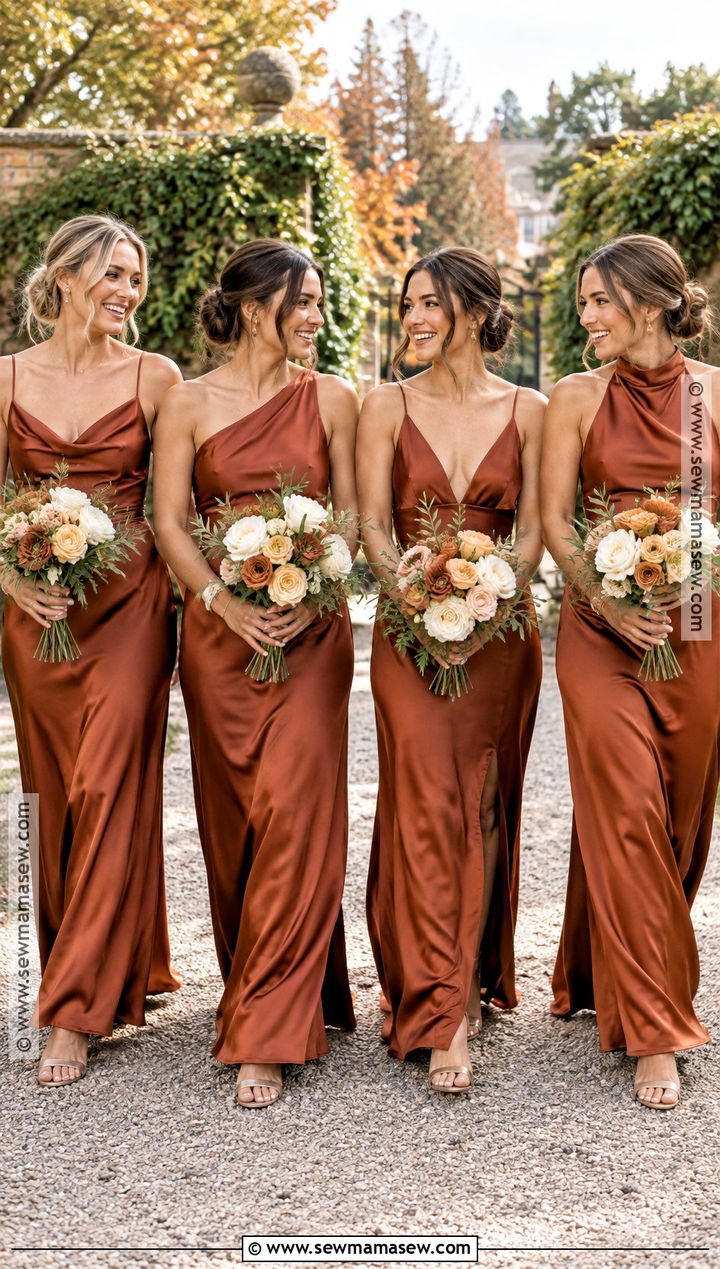
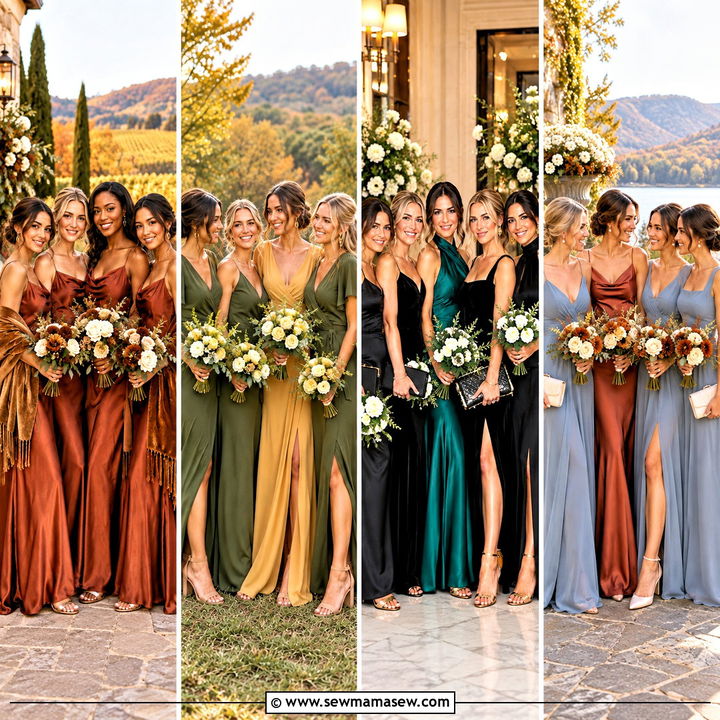
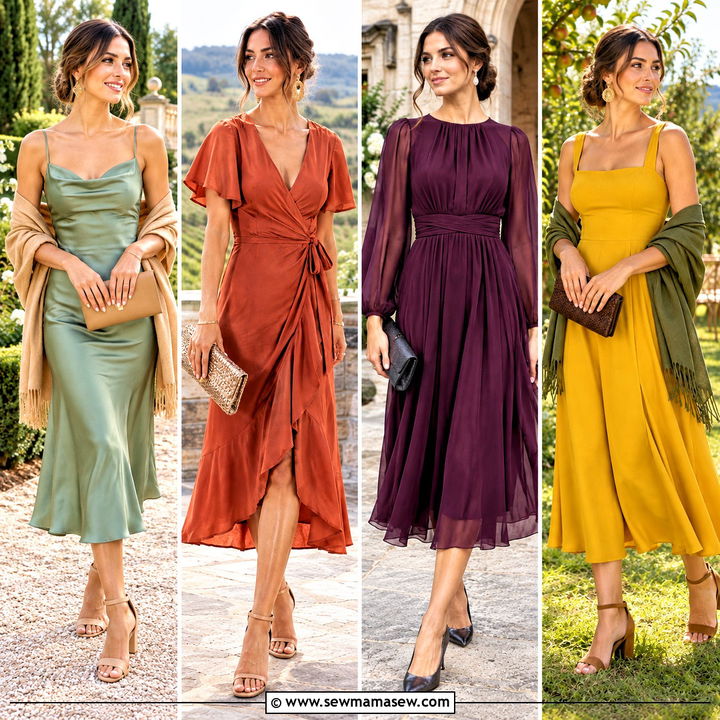
Rust is deeper and browner than orange, which makes it far easier to live with. Bright orange fights most complexions, but rust's muddied warmth looks good on a wide range of warm and neutral skin. Bias-cut satin gives a sleek finish; flutter-sleeve chiffon suits an outdoor service. Keep the metals warm, with bronze sandals or tan block heels and brushed gold. Cream dahlias, apricot roses and olive greenery give visible contrast. Have ivory shawls or cropped camel jackets ready in case the weather turns. In golden-hour portraits, rust practically lights up, since low sun pushes everything toward amber.
4. Cinnamon Bridesmaid Dresses
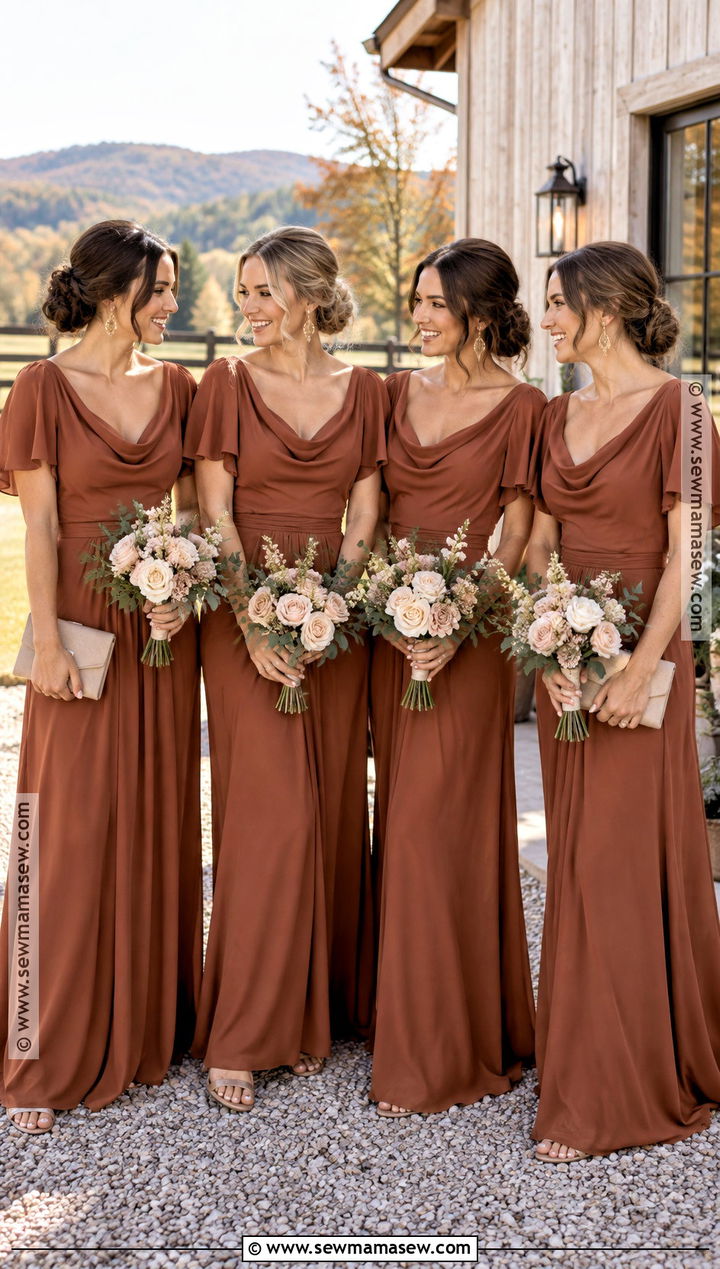
Cinnamon sits between rust and dusty rose: warm, but with a pink note that keeps it from feeling rustic. It gives an earthy palette a romantic edge. Matte crepe is the right fabric here, because it shows the color evenly across different dress styles, where a shiny satin would make some cuts look lighter than others. Gathered waists, flutter sleeves or cowl necks all suit it. Champagne heels, gold drops and neutral clutches finish the look. Ivory roses and dusty pink blooms pull out its softer side. Beige wraps layer over it without any clash.
5. Olive Green Bridesmaid Dresses
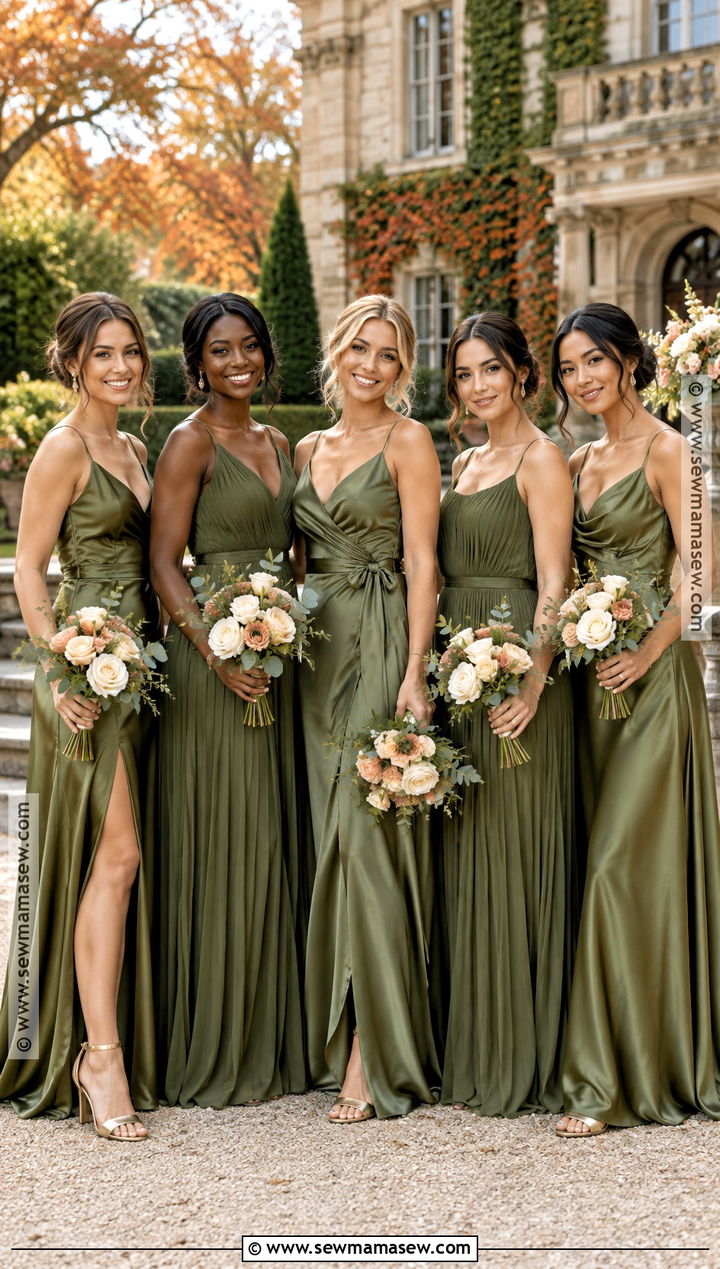
Olive is a tricky green, and I say that as someone who likes it. On warm and olive-toned skin it's wonderful. On very fair, cool skin it can pull the face toward sallow, especially under gray skies. The fix is a neckline that puts some distance between the color and the face, or a slightly lighter olive. Satin maxis, wrap gowns and pleated chiffon all move well. Gold heels and pearl or brushed-metal jewelry warm it up. Cream and peach flowers with a touch of burgundy suit it. For a mismatched group, use several olive cuts in one fabric rather than mixing unrelated greens.
6. Forest Green Bridesmaid Dresses
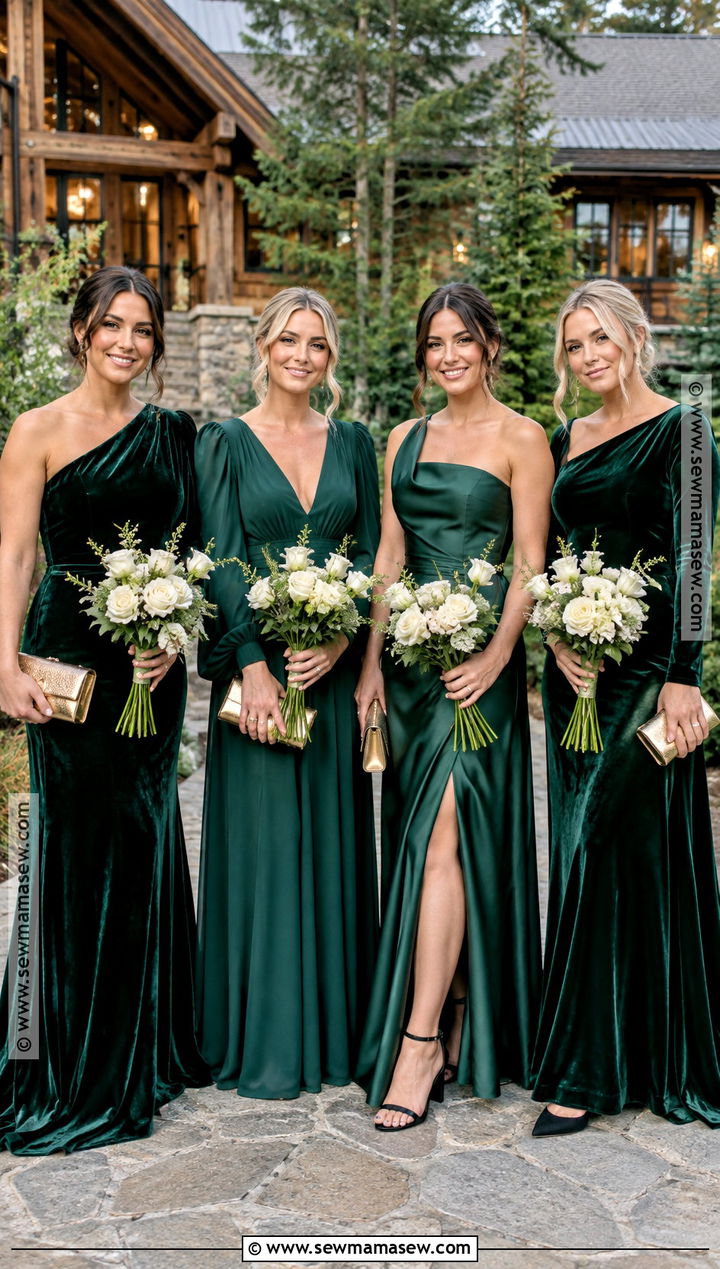
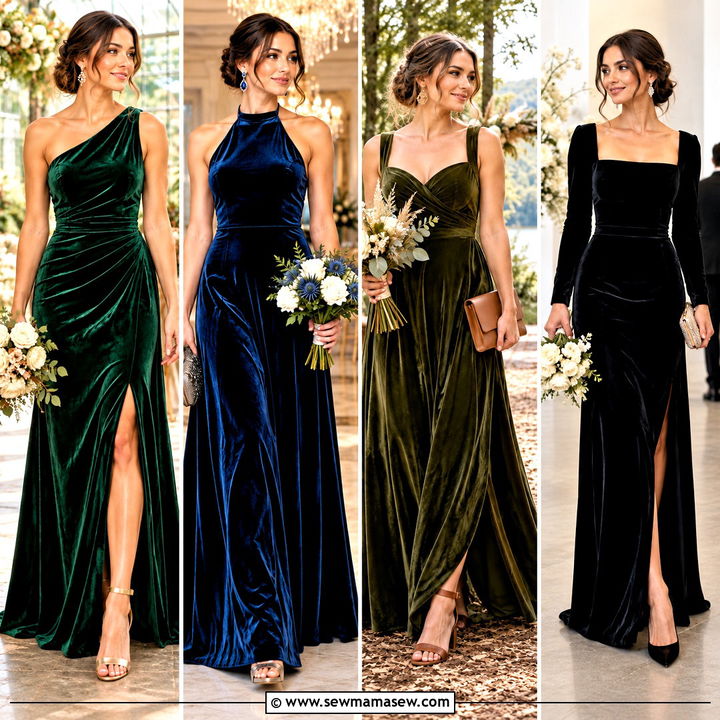
Forest green is the dark, dramatic option when you want to skip red and orange entirely. Its blue base flatters cool and neutral skin especially, and the depth suits almost every hair color. Velvet makes it feel lush for late fall; satin gives it shine for an evening reception. Long sleeves, one-shoulder necklines and fitted bodices suit the colder months. Black or gold heels, emerald-toned earrings and metallic clutches finish it. White flowers stand out sharply against it, and burgundy blooms add warmth. Keep the color and fabric fixed and offer a short menu of necklines and sleeve lengths.
7. Dusty Sage Bridesmaid Dresses
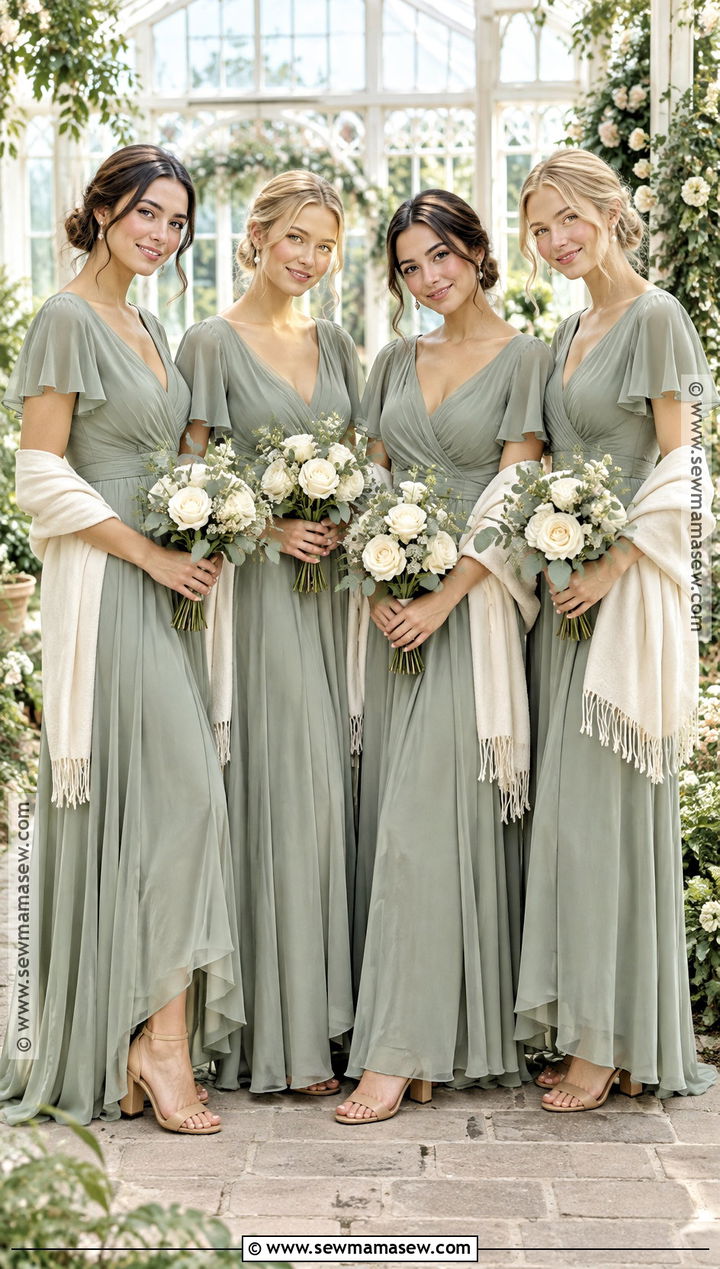
Dusty sage is for the first weeks of fall, when the garden is still green and afternoons stay warm. Because it's so muted, it's kind to most skin tones, though it can look flat on very deep or very pale skin unless the bouquet adds contrast. Airy chiffon with a pleated skirt or wrap bodice keeps it comfortable. Nude block heels handle a lawn, and pearls and fine gold bracelets suit the softness. Pale peach flowers and eucalyptus give dimension without washing it out. Provide taupe or cream wraps for the evening. Past mid-October I'd move to a deeper green.
8. Espresso Bridesmaid Dresses
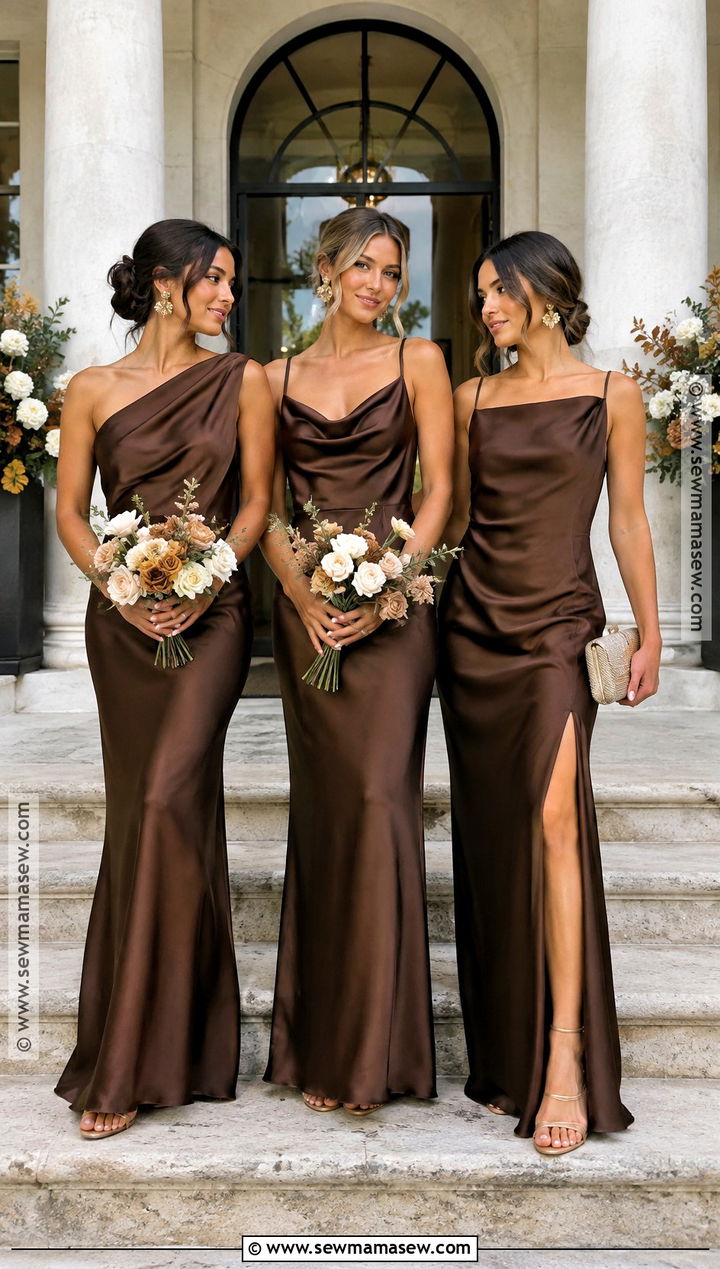
Espresso is the darkest brown here and the most modern-feeling. It flatters deep skin especially well, and it frames pearl jewelry like nothing else on this list. Each fabric changes its formality: satin looks evening, velvet looks wintry, crepe looks tailored. Column gowns, cowl necks and one-shoulder cuts keep the line clean. Chocolate, black or bronze heels and sculptural gold jewelry finish it, and caramel and blush flowers stop the group looking heavy. Here's my warning: brown varies wildly between makers, from reddish to greenish. Order every swatch together and compare them side by side in daylight before anyone commits.
9. Chocolate Brown Bridesmaid Dresses
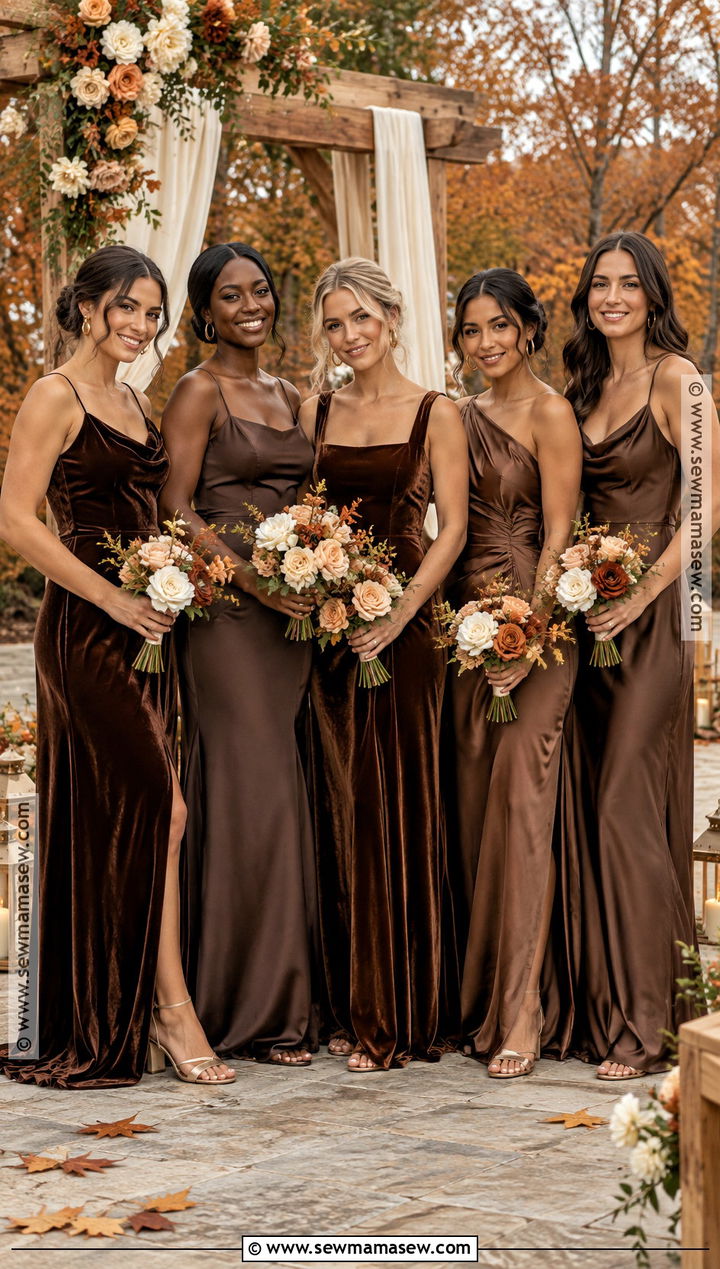
Chocolate brown does the job black does, but warmer. It's flexible across fabrics, from satin slips to long-sleeve velvet, so it handles a wedding where the temperature is anyone's guess. I'd give the group a short list of approved necklines and hold the chocolate tone and floor-length hem steady. Champagne sandals or bronze pumps, gold hoops and neutral clutches finish it. Peach roses, rust accents and eucalyptus brighten the dark dresses. If you want the maid of honor to stand out, a mocha one step lighter works, as long as both browns share the same red or yellow undertone.
10. Champagne Bridesmaid Dresses
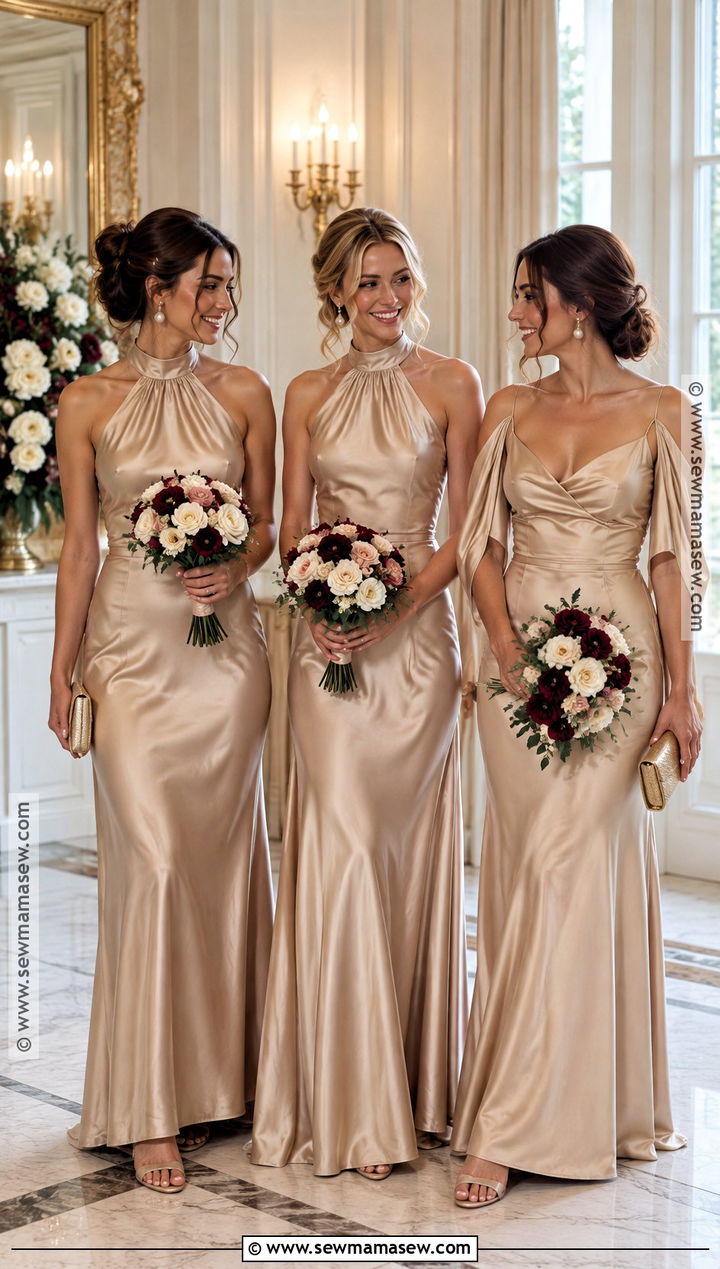
Champagne lightens a dark fall palette, but it has to read as clearly darker than the bride. I recommend a deeper champagne, antique gold or warm beige, and I always ask the bride to photograph the swatch next to her gown. Cameras flatten small differences, so two near-whites that look distinct in person can merge in pictures. Satin maxis with gathered bodices, halters or sleeves give it glow. Nude heels, pearl earrings and gold clutches suit it. Burgundy dahlias and rust flowers bring in the season. Candlelit indoor venues flatter it most, because satin picks up the warm light.
11. Copper Bridesmaid Dresses
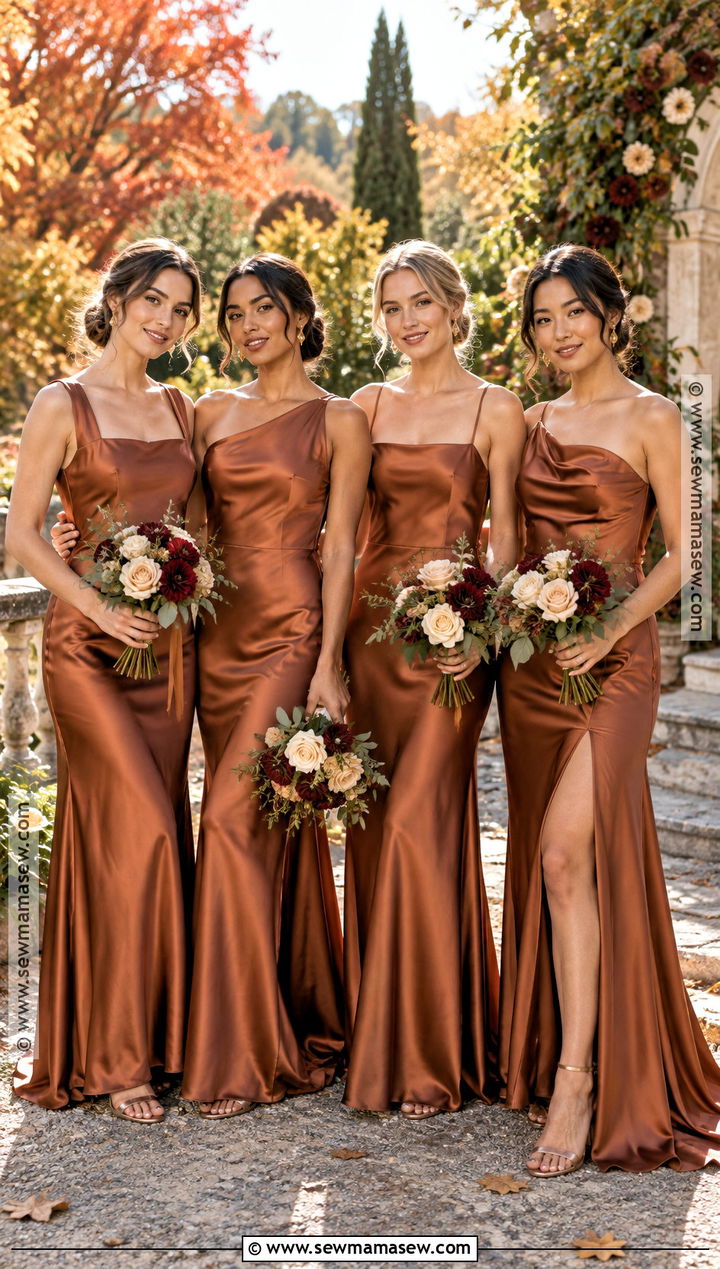
Copper is a color that depends on its fabric more than most. In satin or charmeuse it shows red, bronze and gold all at once; in matte crepe it can look like a flat orange-brown. That's why I always order it in something with sheen. Bias-cut maxis, draped one-shoulder gowns and square necks suit it. Keep accessories very simple, with bronze sandals and slim gold earrings. Deep red dahlias and olive foliage balance the shine. The catch with reflective fabric is that it shows every wrinkle and every fit problem, so book alterations early and steam each gown right before portraits.
12. Mustard Yellow Bridesmaid Dresses
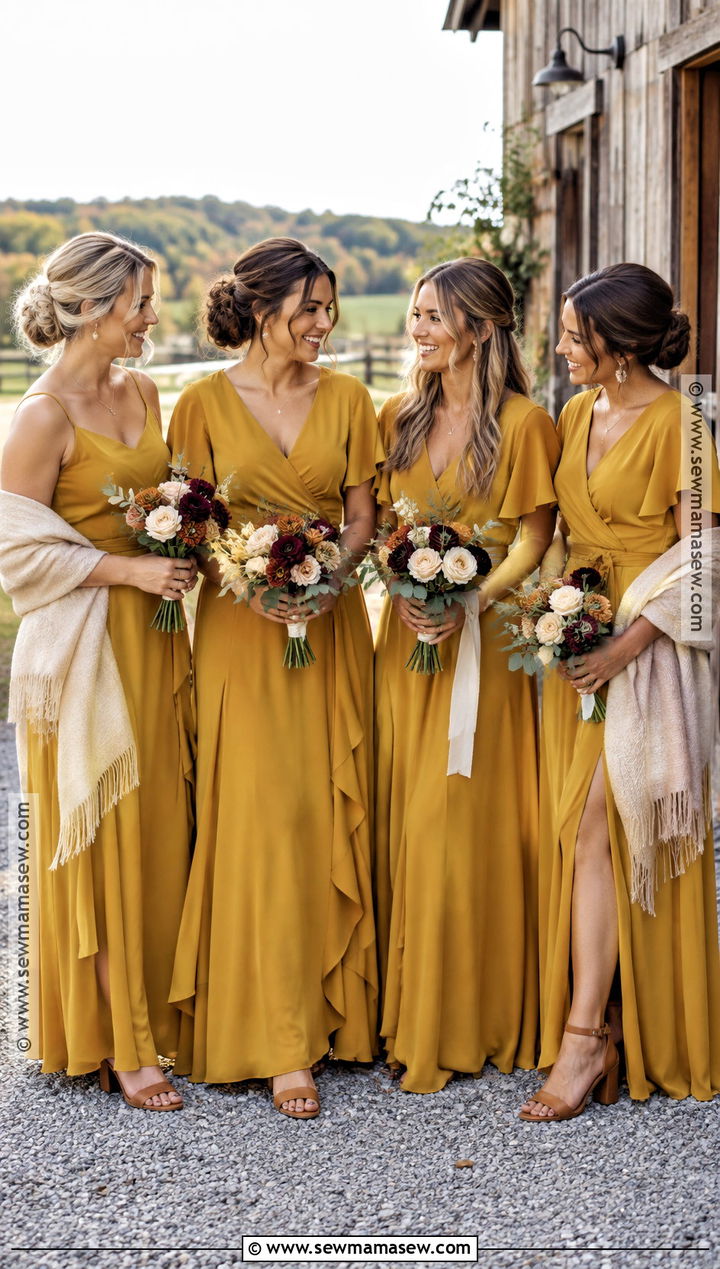
Mustard is the boldest color here and the one I'd test hardest. It flatters warm, golden and deep skin, but it can make fair, cool-toned skin look tired or slightly yellow. Matte chiffon, crepe or velvet tames it; shiny satin pushes it toward bright yellow. Gathered waists, flutter sleeves or wrap fronts suit it. Cognac block heels, gold jewelry and beige wraps keep the palette warm. Rust and burgundy flowers stop the dresses from vanishing into yellow leaves. If mustard won't suit everyone, put just the maid of honor in it and dress the rest in rust or olive.
13. Dusty Rose Bridesmaid Dresses
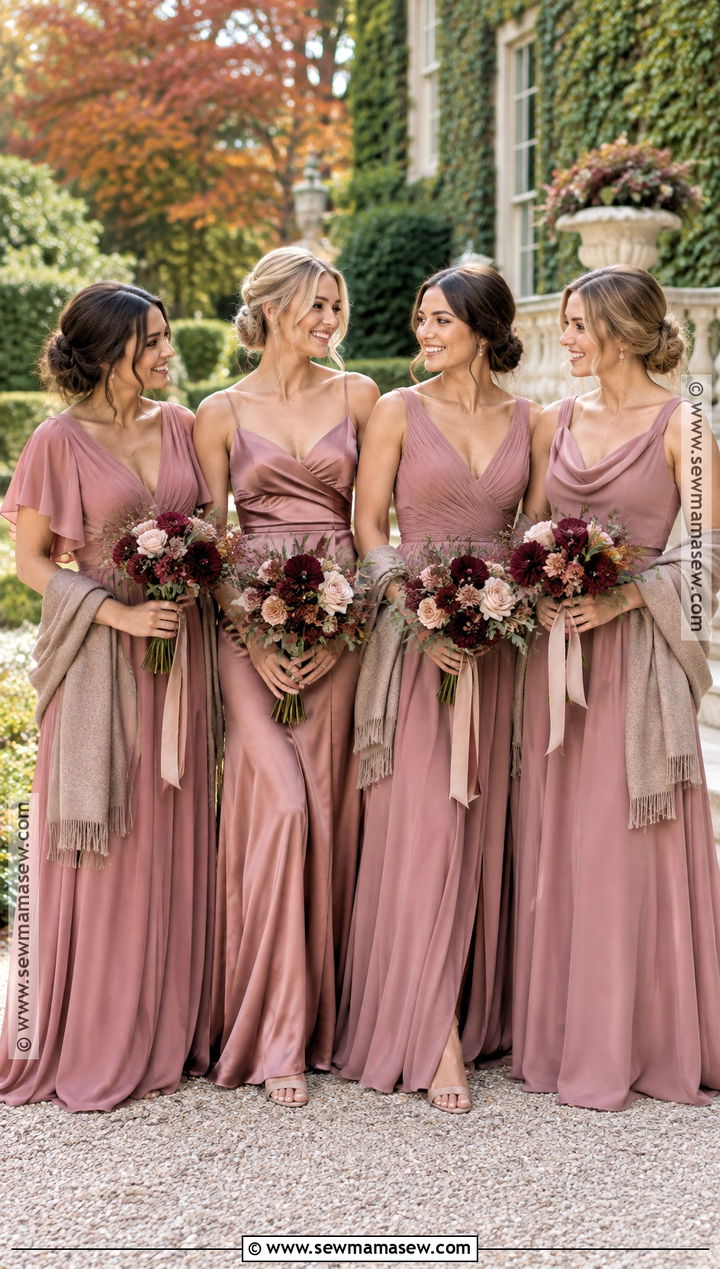
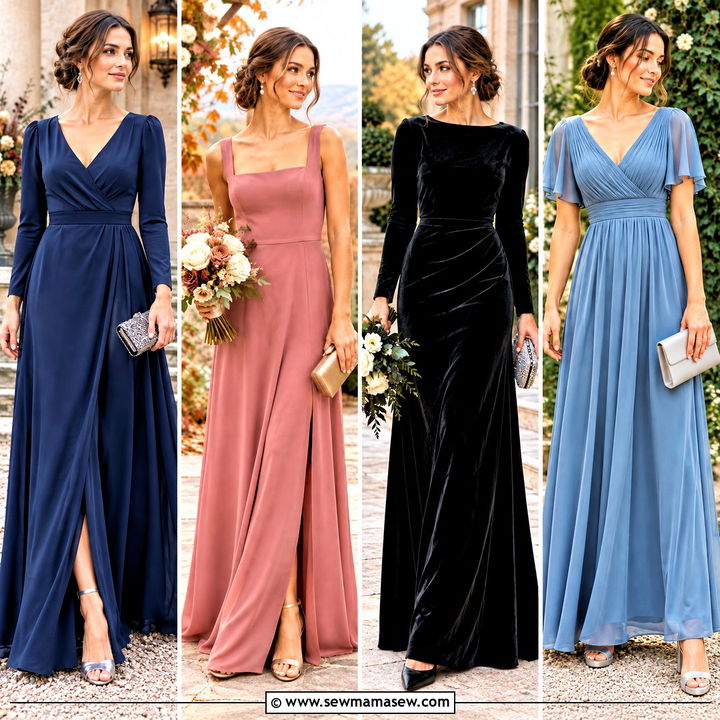
Dusty rose is softer than the usual dark autumn shades, and its gray or brown undertone keeps it from looking sugary next to fall flowers. Muted pinks flatter most complexions, which is why they're so popular for mixed groups. Choose chiffon for early fall, satin or velvet once it cools. Wrap bodices, pleated skirts and draped sleeves give movement and fit a range of figures. Nude heels, rose-gold earrings and taupe wraps finish it. Burgundy dahlias add depth. The one thing to watch is how widely this name stretches; one maker's dusty rose is pink, another's is beige or lilac.
14. Plum Bridesmaid Dresses
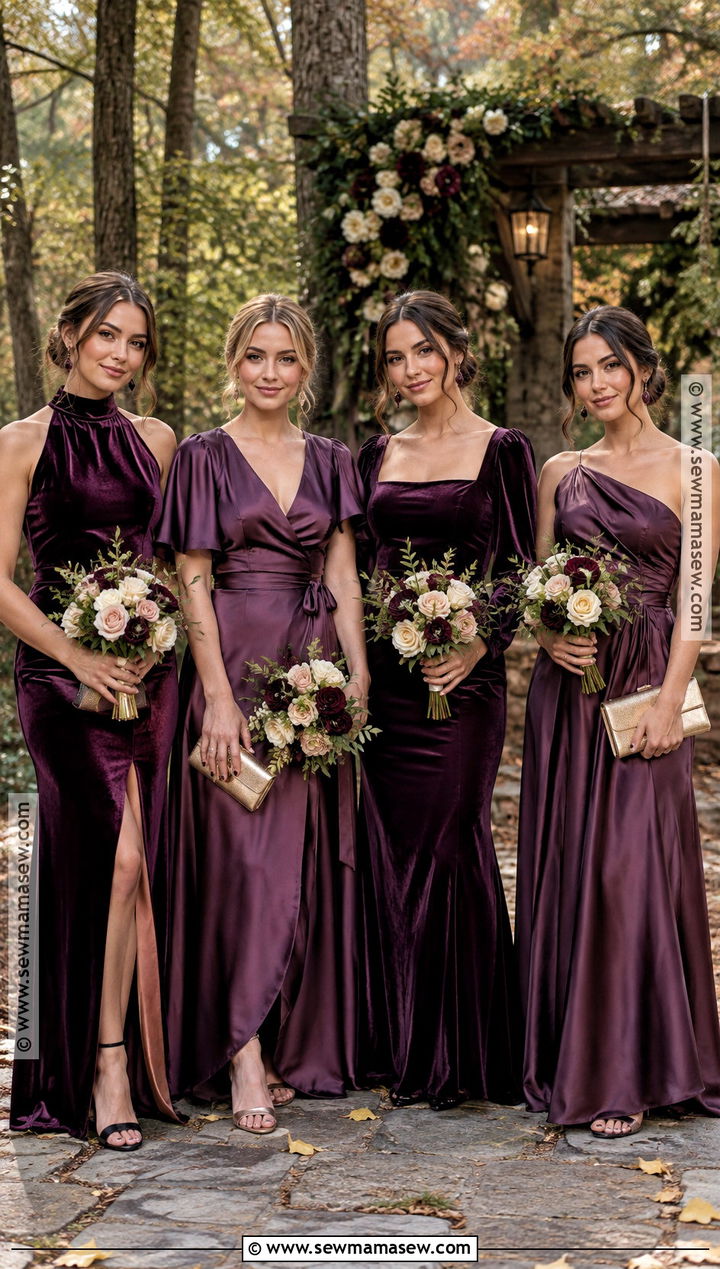
Plum is the jewel tone I suggest when burgundy feels too expected. It's softer than black and flatters cool and neutral skin especially, with a richness that suits late October and November. Velvet columns give warmth; satin wraps give movement. Black pumps or metallic sandals, amethyst earrings and gold clutches suit an evening wedding. Ivory roses and berry flowers keep it from disappearing into the bouquet. Plum does need light. In a dim room or on a phone camera at night, it tends to go almost black, so warm, plentiful lighting at the reception helps. Mix necklines, but keep the fabric and hem the same.
15. Navy Blue Bridesmaid Dresses
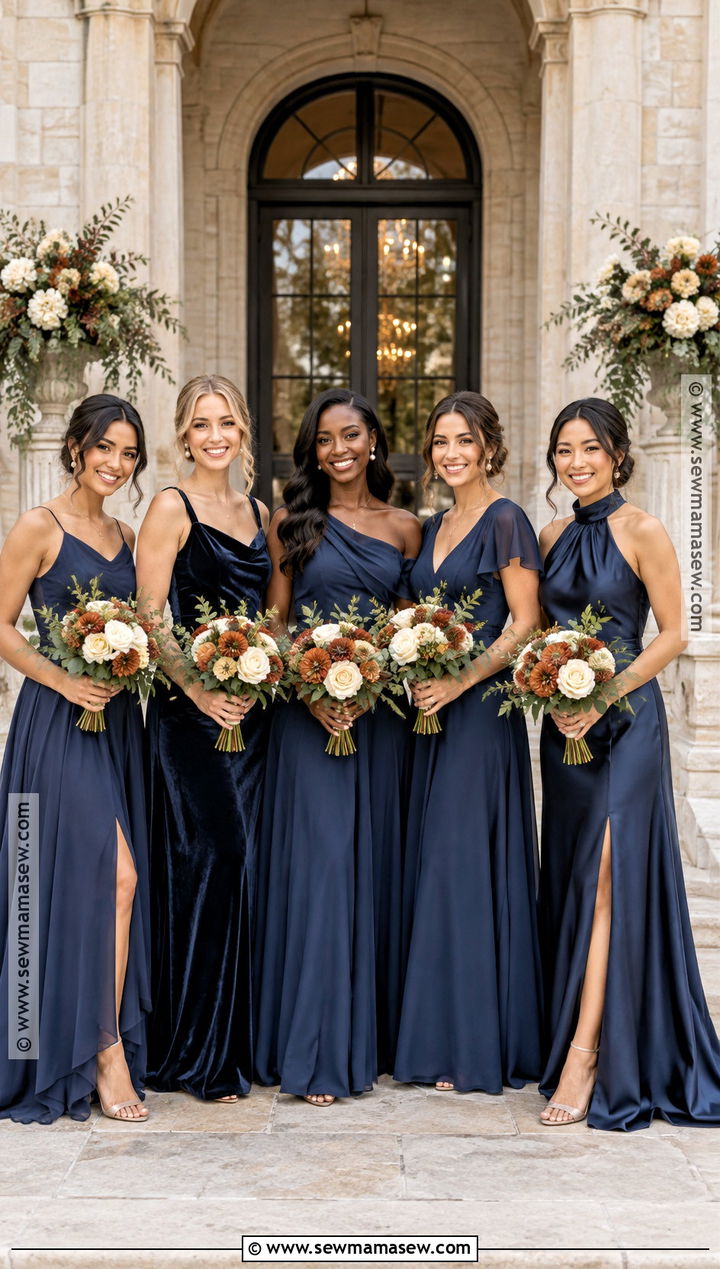
Navy is for couples who'd rather skip obvious autumn colors. It's one of the most universally flattering darks I know; nearly every skin tone wears it well, and it photographs consistently in daylight, shade and indoor light. Chiffon keeps it light for early fall, while satin or velvet suits cooler evenings. Navy, nude, silver or gold heels all work, with understated pearls. Rust dahlias and berry accents give the bouquets a clear seasonal link. It sits comfortably beside copper, burgundy, blush and cream. Offer a few approved silhouettes, and the shared color will hold the group together.
Testing a Shade Under Ceremony and Reception Light
A color can look right in the shop and wrong in the photos, because light changes it. Low autumn sun is very warm, so it pushes rust, copper and mustard brighter and can make champagne look yellow. Overcast skies cool everything down, which mutes sage and can make olive go gray. Indoor lamps add yellow, while dim rooms turn plum and navy nearly black.
My test is simple. Take the swatch outside at roughly the time of the ceremony, then into a lamp-lit room in the evening, and photograph it both times with a phone, beside a bridesmaid's face if you can. Look at the photos, not the fabric. If the shade survives both, it'll survive the day.
Pairing groomsmen suits with each color
Charcoal and navy suits go with almost every color here. Brown and tan suits suit the earthy group, from terracotta and rust to olive and cinnamon. Black suits look sharpest beside burgundy, plum, forest green and champagne. I'd avoid putting a navy suit right next to navy dresses, since two slightly different navies side by side look like a mistake.
Which Shade Suits Your Venue and Your Bridesmaids?
The right fall color has to suit the setting, the dress code, the flowers and, above all, the faces wearing it. Terracotta, cinnamon, rust and the browns bring warmth; burgundy, plum, navy and forest green bring formality; sage, dusty rose and champagne keep things soft. Before anyone orders, check the swatches in daylight, photograph them beside the bride's gown, hold them up to each bridesmaid's face, and confirm the fabric is available in every size and silhouette you've approved. Shoes, jewelry, bouquets and wraps can finish the job once the color itself is right.
Related posts: