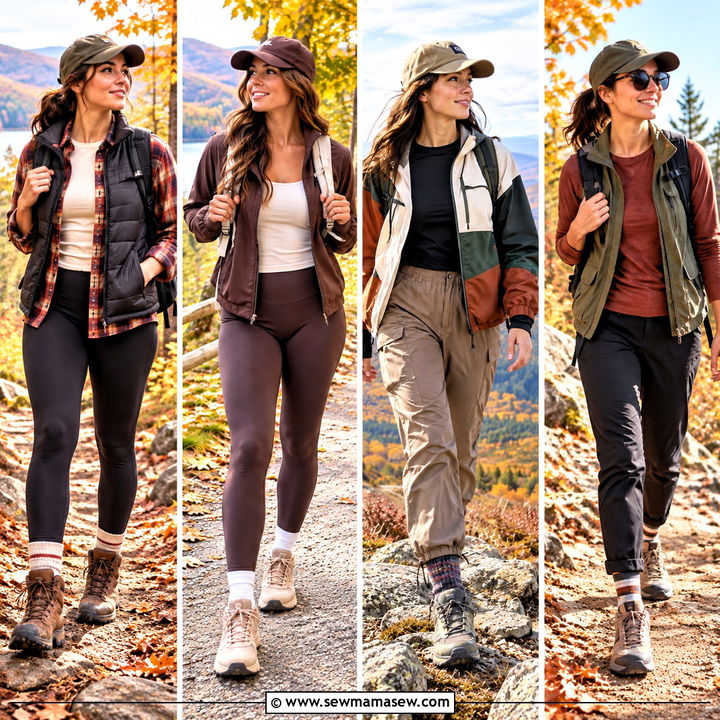
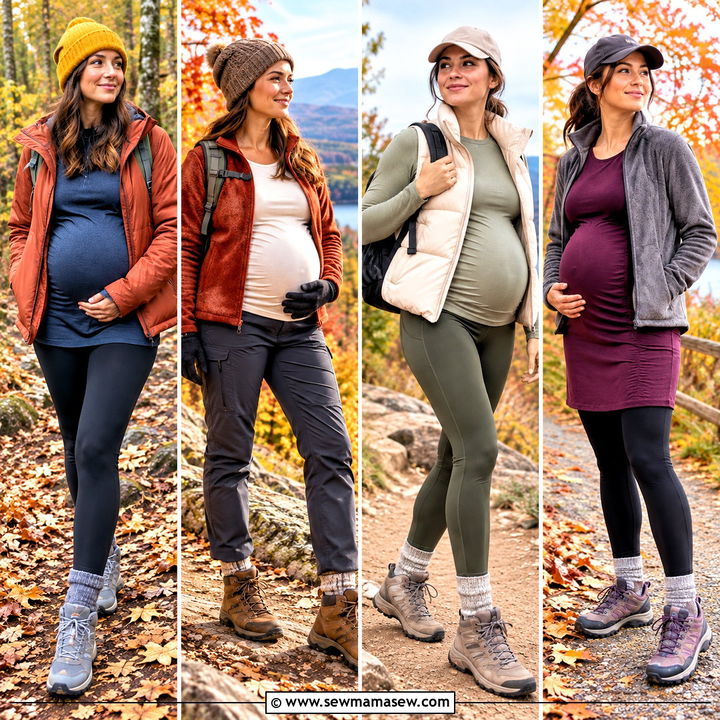
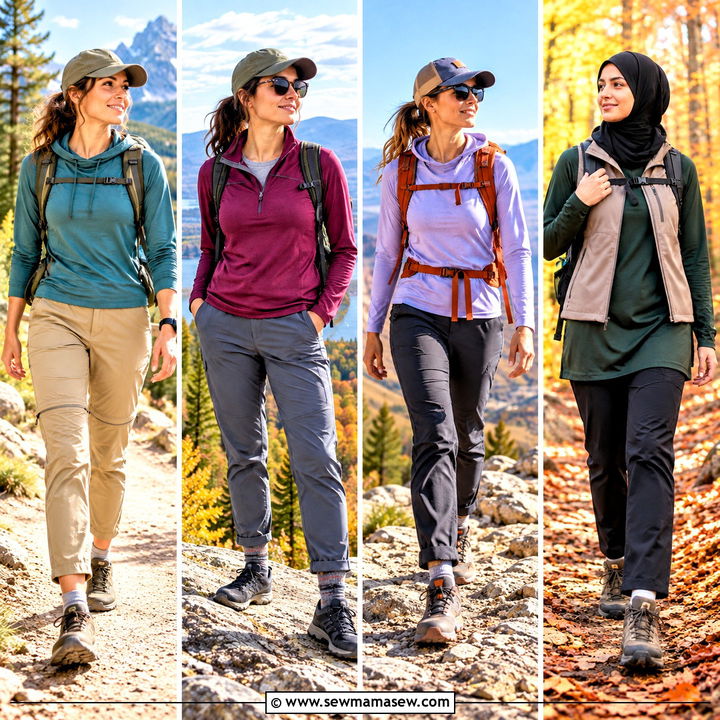
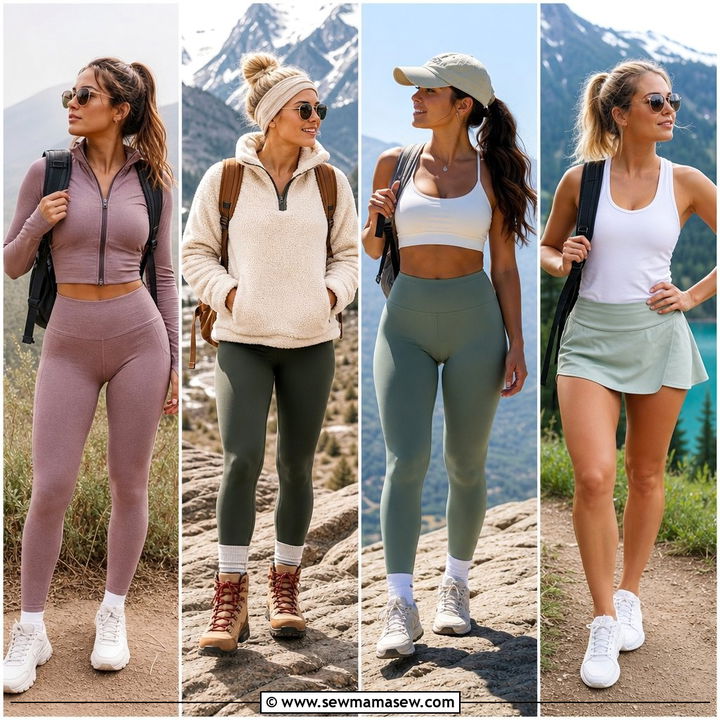
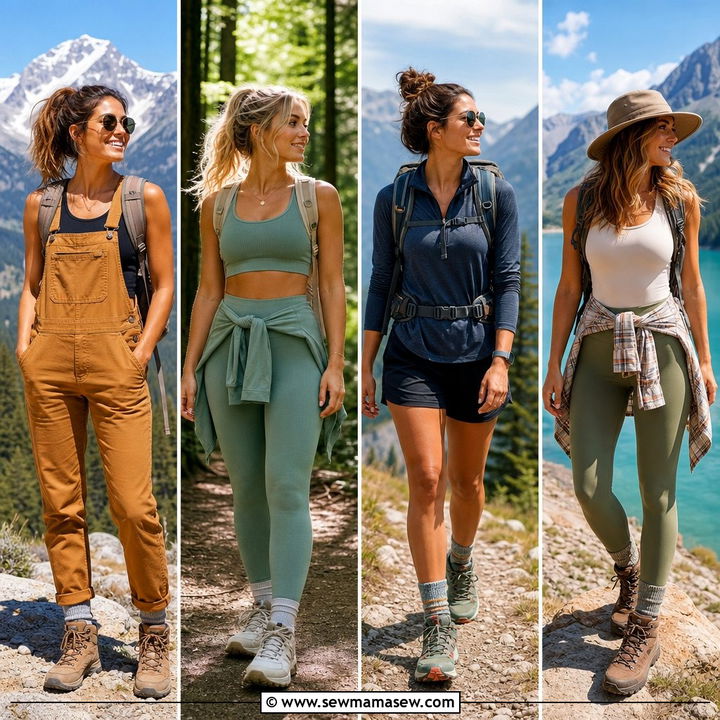
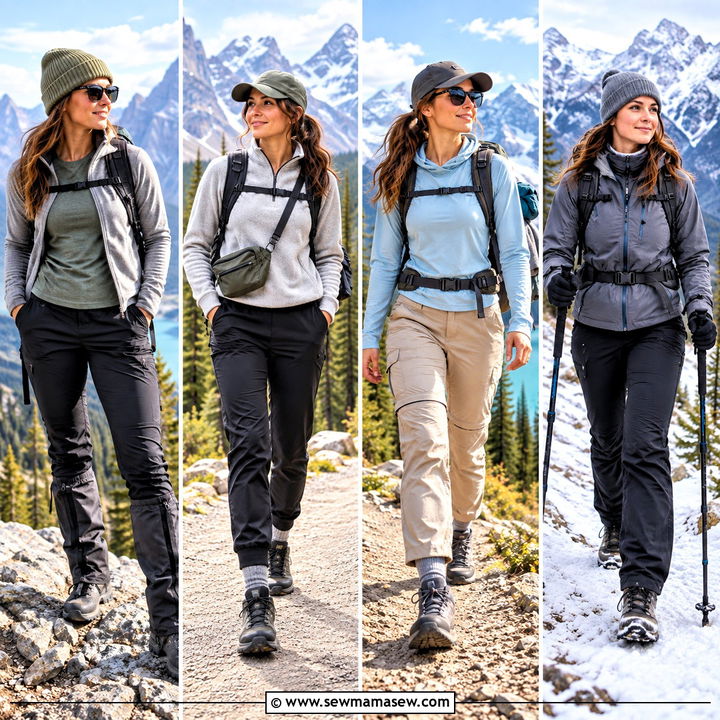
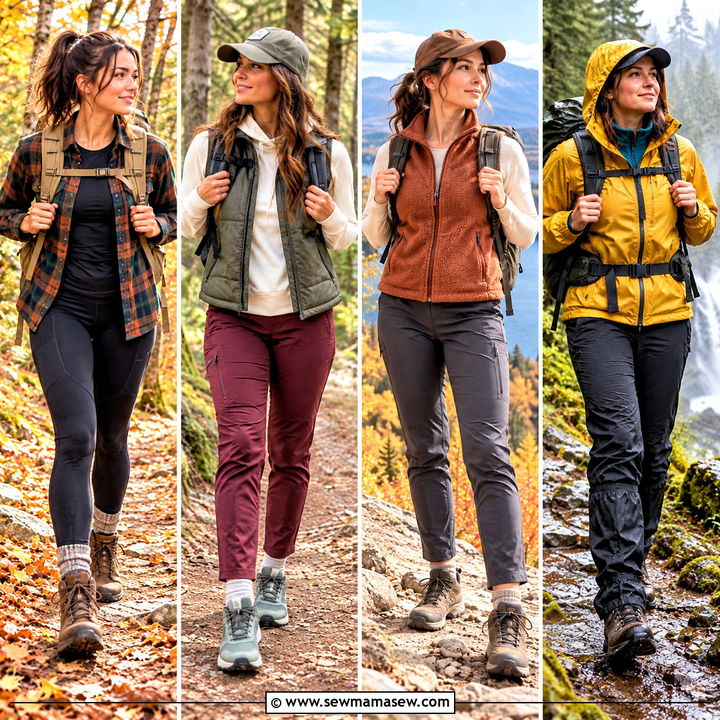
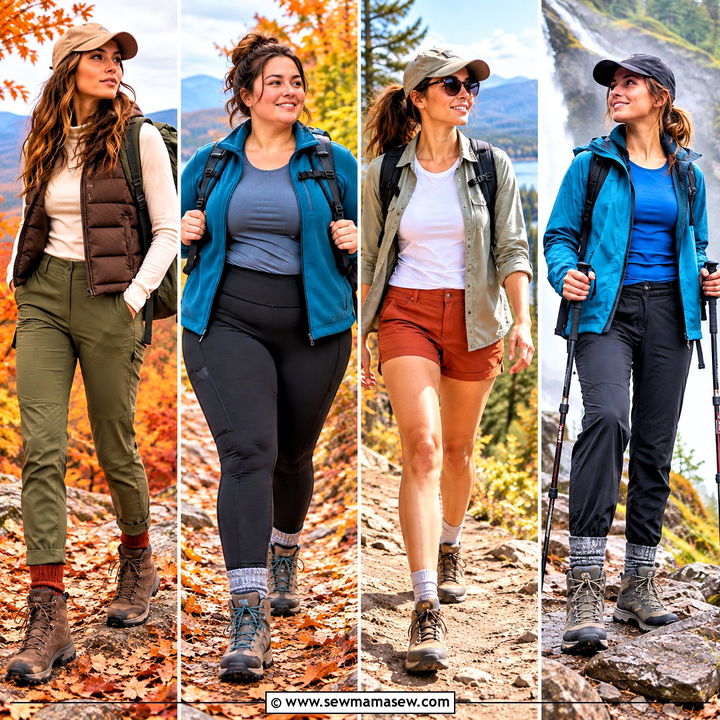
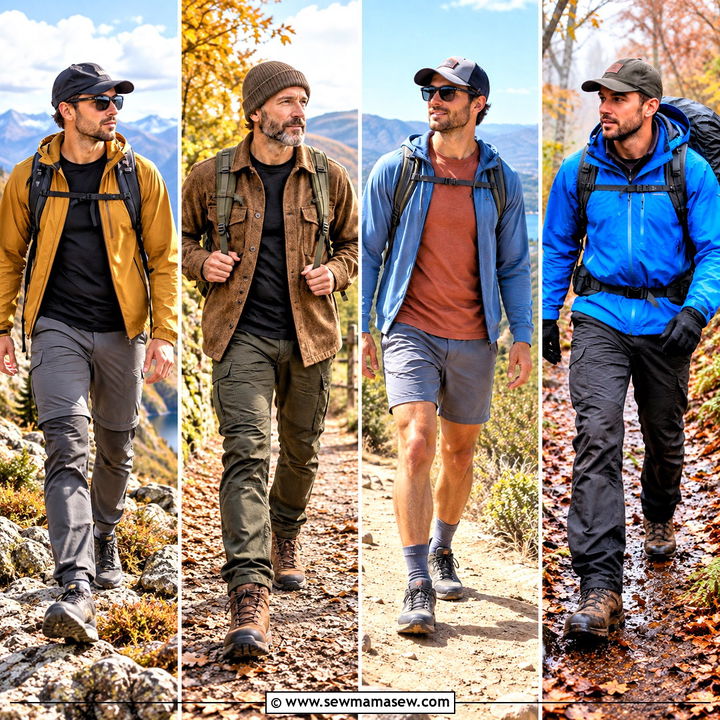
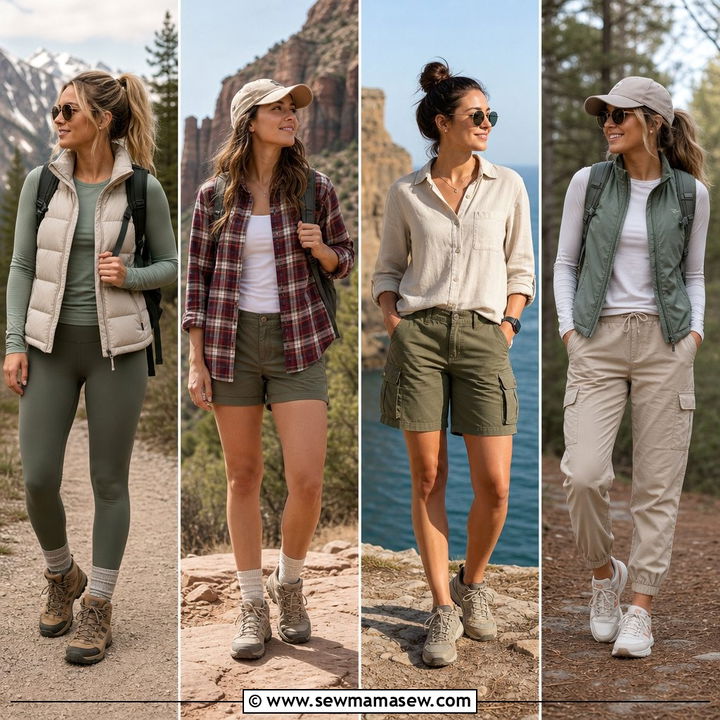
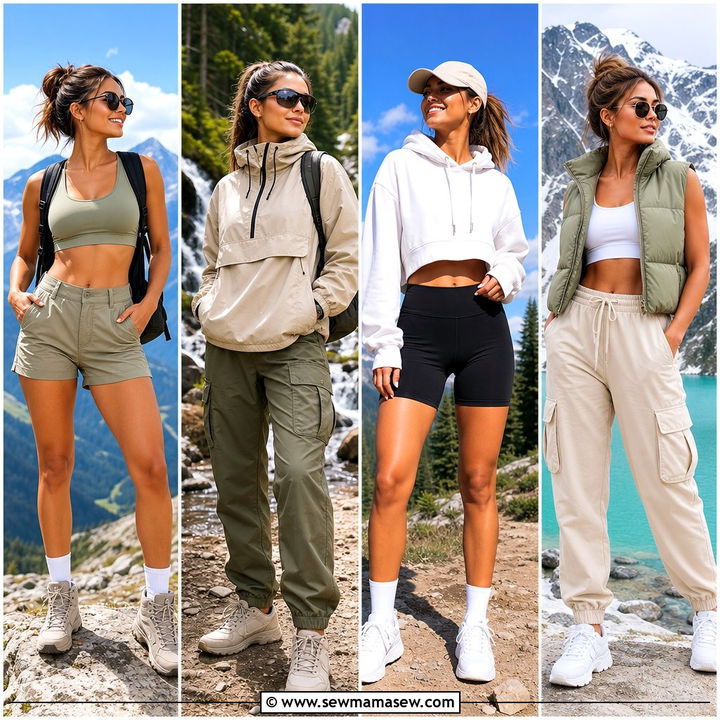
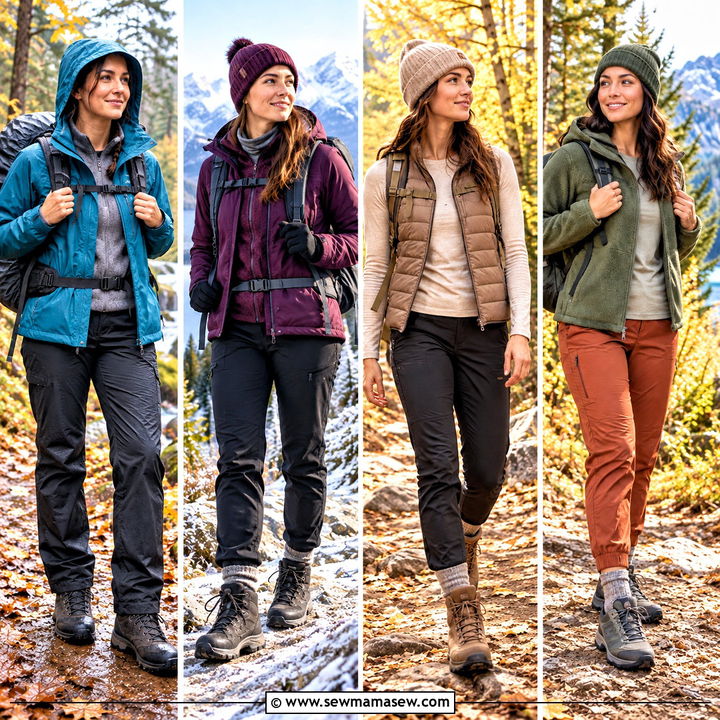
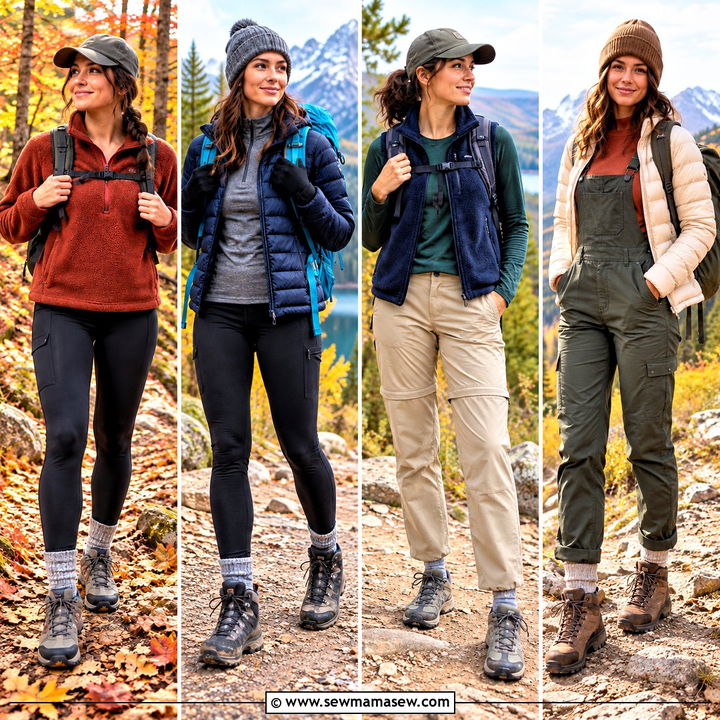
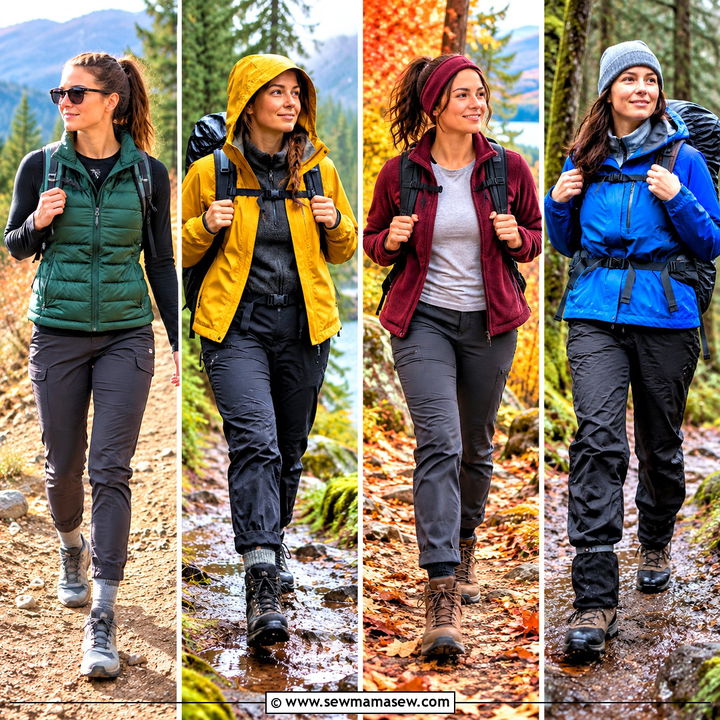
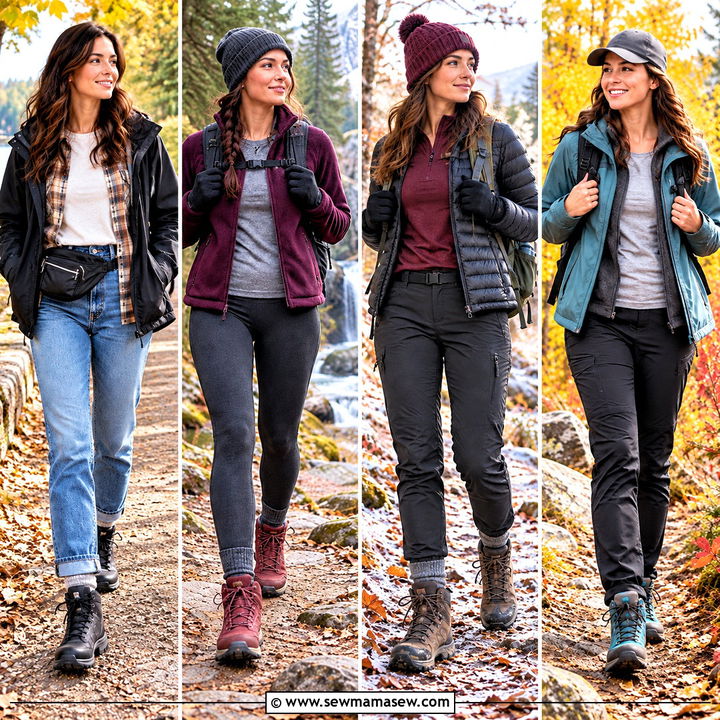
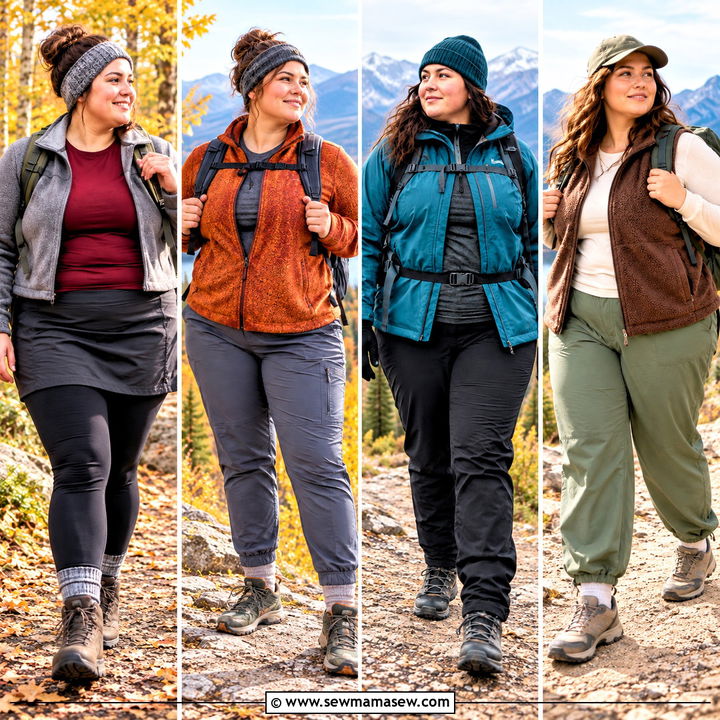
Fall trail days are the hardest to dress for. You leave the car in a hat and gloves, you're sweating by the first climb, and the shade at the bottom of the valley is cold again by four. The outfits below are built around that swing: a light base that handles sweat, a warm middle layer that comes off easily, and shoes that grip on wet leaves. Cotton sweats and fashion sneakers don't make the cut, because a damp cotton shirt is miserable once you stop moving. Each look keeps some autumn color and a cute detail, and each tells you which kind of trail it suits, from a paved nature loop to a rocky climb.
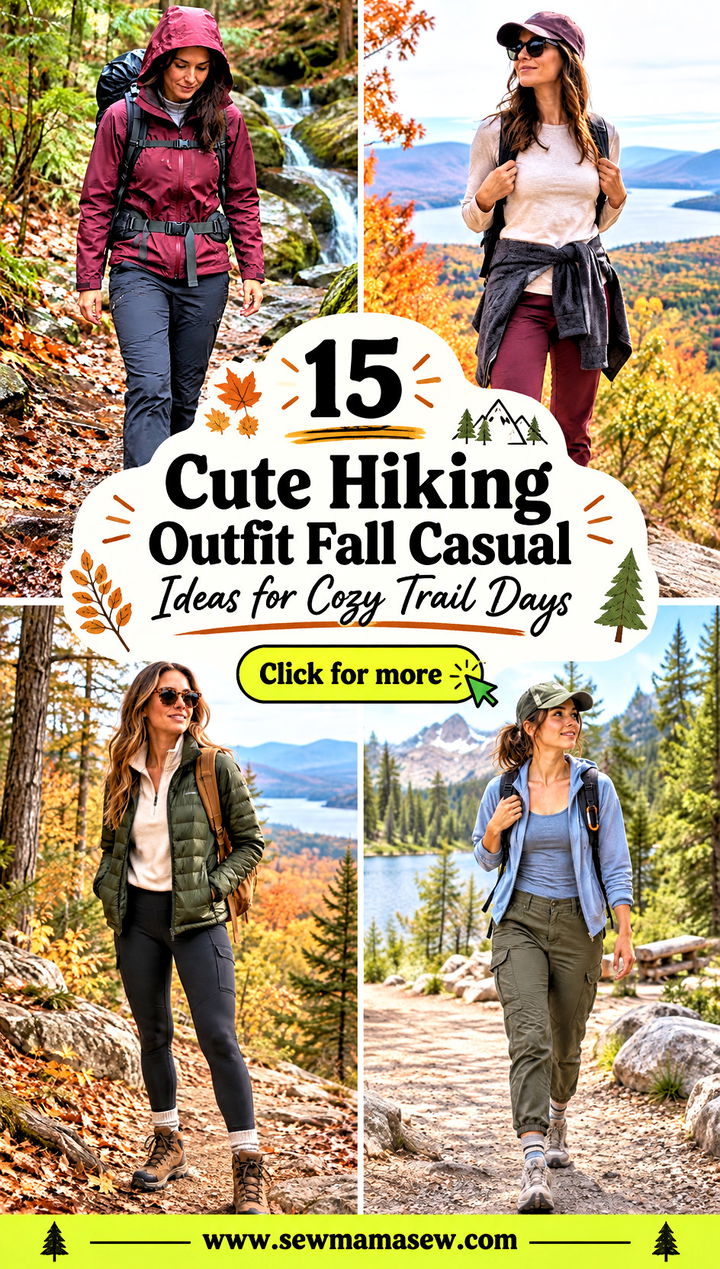
Base, Warm Layer and Shell in That Order
Almost every look below follows the same three-layer logic, and once you understand it you can build your own from whatever you own.
- Base: a fitted top in merino or synthetic fabric that pulls sweat off your skin. Snug is better than loose, because fabric only wicks when it touches you.
- Warm layer: fleece, a light puffer, a quilted jacket or a vest. This is the piece you'll take on and off most, so it should pack small.
- Shell: a windbreaker or rain jacket. It adds little warmth on its own but blocks wind and water, which is what really chills you on a ridge or in drizzle.
The common mistake is starting the hike warm. If you're comfortable standing at the trailhead, you'll be overheated ten minutes in, and then soaked when you stop for a break. Start slightly cool, with the warm layer reachable at the top of your pack.
1. Fleece Jacket And Black Hiking Leggings
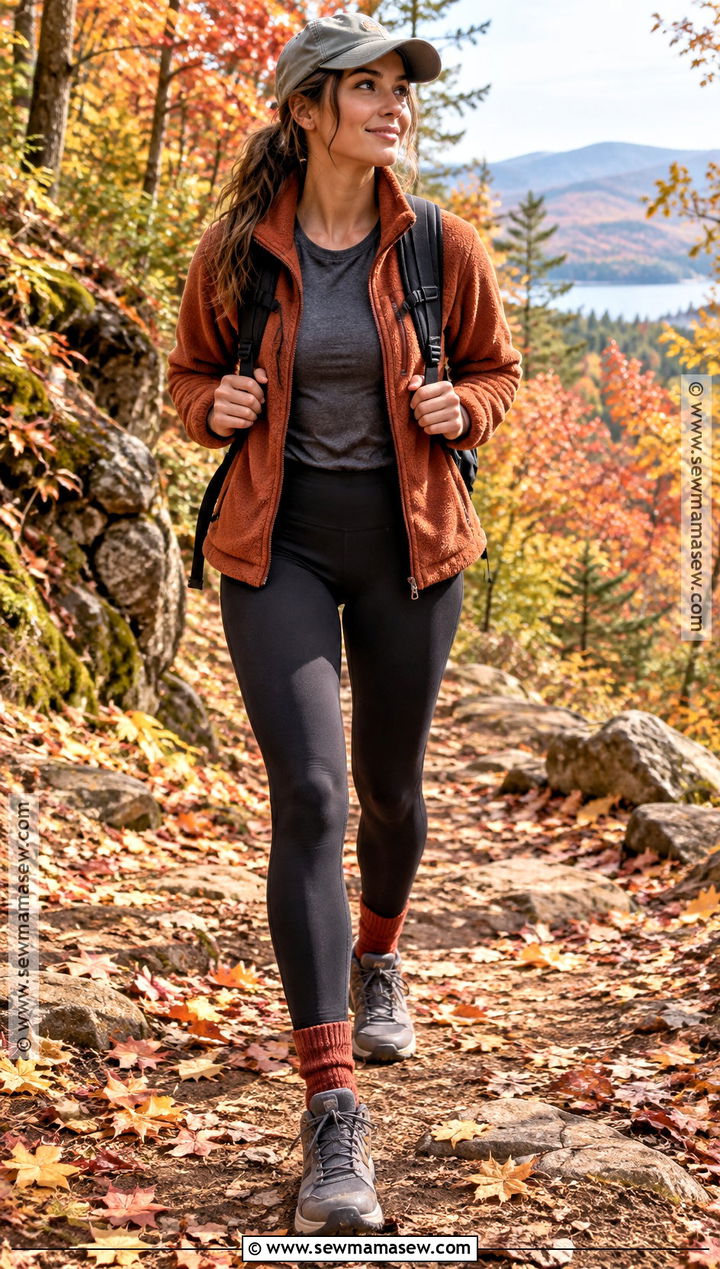
Rust fleece over black leggings is the easiest starting point for a cool woodland walk. Under the fleece I put a fitted synthetic or merino tee, so when the afternoon warms up you can strip down without being left in something soggy. Leggings for the trail need a wide waistband that won't roll when you bend, flat seams, and a zip pocket on the thigh, because phones fall out of open side pockets on the first scramble. Gray trail sneakers and rust crew socks tie the colors together. A small black daypack, sunglasses and a cap finish it. Save this one for short, easy hikes; a fleece does nothing in rain.
2. Olive Hiking Pants And Long-Sleeve Shirt
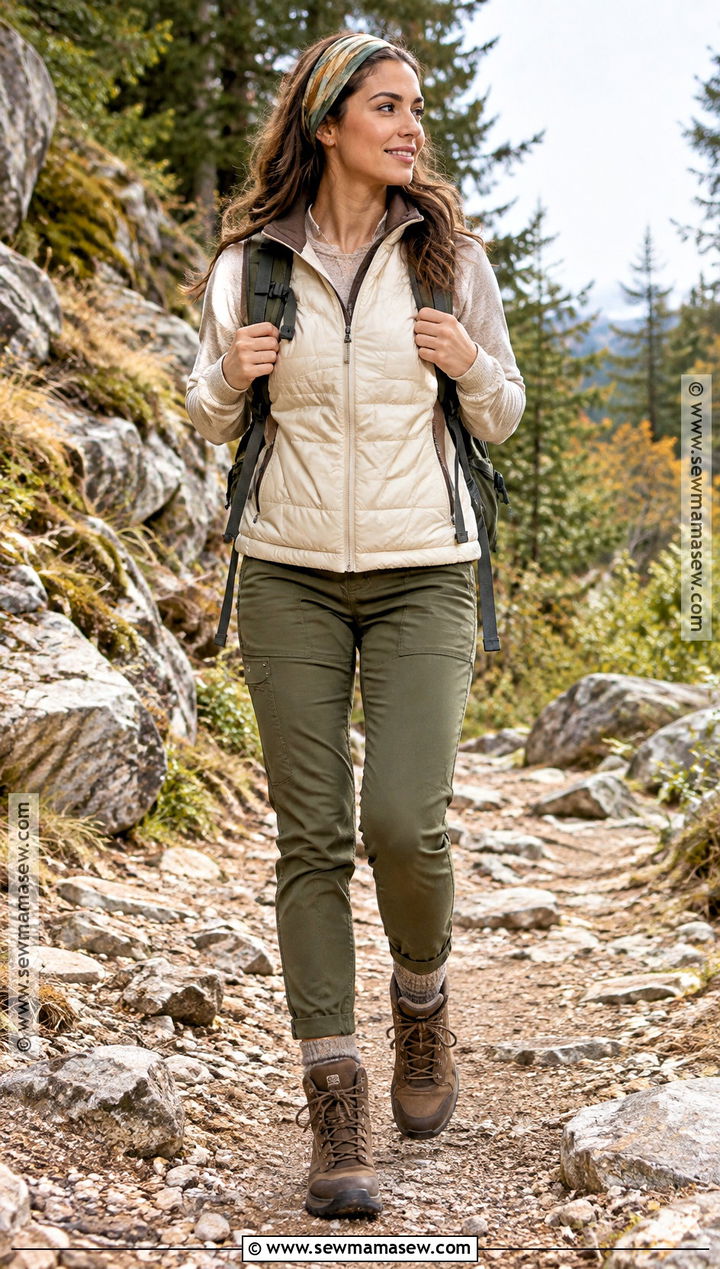
Olive pants and a beige long-sleeve disappear into a fall landscape in the nicest way. Look for stretch hiking pants with shaped knees and a cinch at the hem, not stiff cotton cargos, which bind when you step up and stay wet for hours. A lightweight performance shirt covers your arms without trapping heat. A quilted cream vest handles the chilly start and packs into the bag by mid-morning. Brown boots, wool-blend socks and a dark green pack keep the palette together, and a patterned bandana at the neck or around a ponytail is the cute part. Pants protect your shins from brambles, so this is my pick for brushy or rocky routes.
3. Plaid Shirt And Brown Hiking Leggings
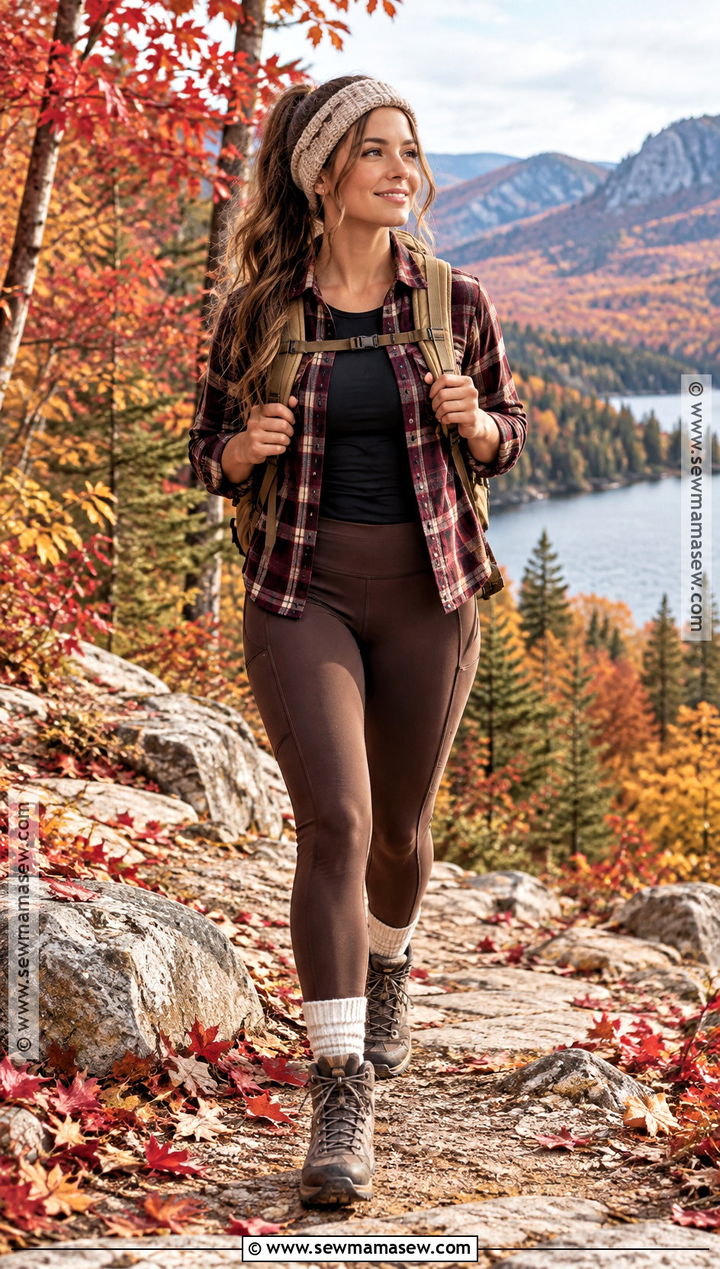
A plaid shirt is the most autumnal layer you can wear on a trail, but the fabric matters. A technical plaid in polyester or a wool blend dries quickly; a thick cotton flannel looks the same in photos and turns heavy and cold once you sweat into it. Wear a burgundy one open over a fitted black base for ventilation. Chocolate leggings soften the contrast, and if your route has rock or overgrown sections, look for leggings with tougher panels on the seat and knees, where ordinary leggings scuff first. Waterproof ankle boots for damp ground, cream socks to brighten things up, a tan pack and a knit headband.
4. Puffer Vest And Thermal Hiking Outfit
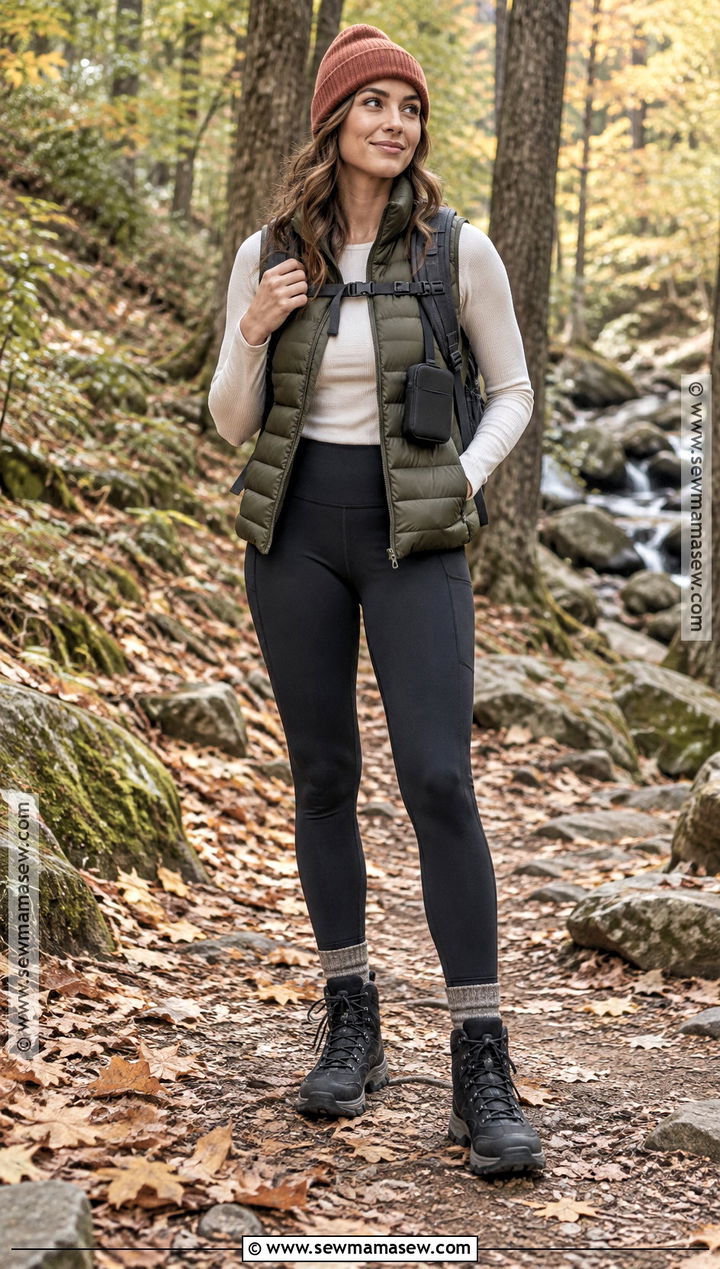
A vest is the layer I'd add when your arms are fine but your core is cold, which describes most fall mornings. Olive over a fitted cream thermal, with high-waisted black tights underneath. Arms free means no overheating on climbs, and a thin synthetic-fill vest squashes into a fist-sized bundle when you're done with it. Black boots, marled gray socks peeking above the collar, a rust beanie and a small chest pouch for your phone. I like this one for routes that start in shaded forest and come out onto sunny open ground, where the temperature can feel ten degrees different in a few minutes.
5. Half-Zip Pullover And Trail Joggers
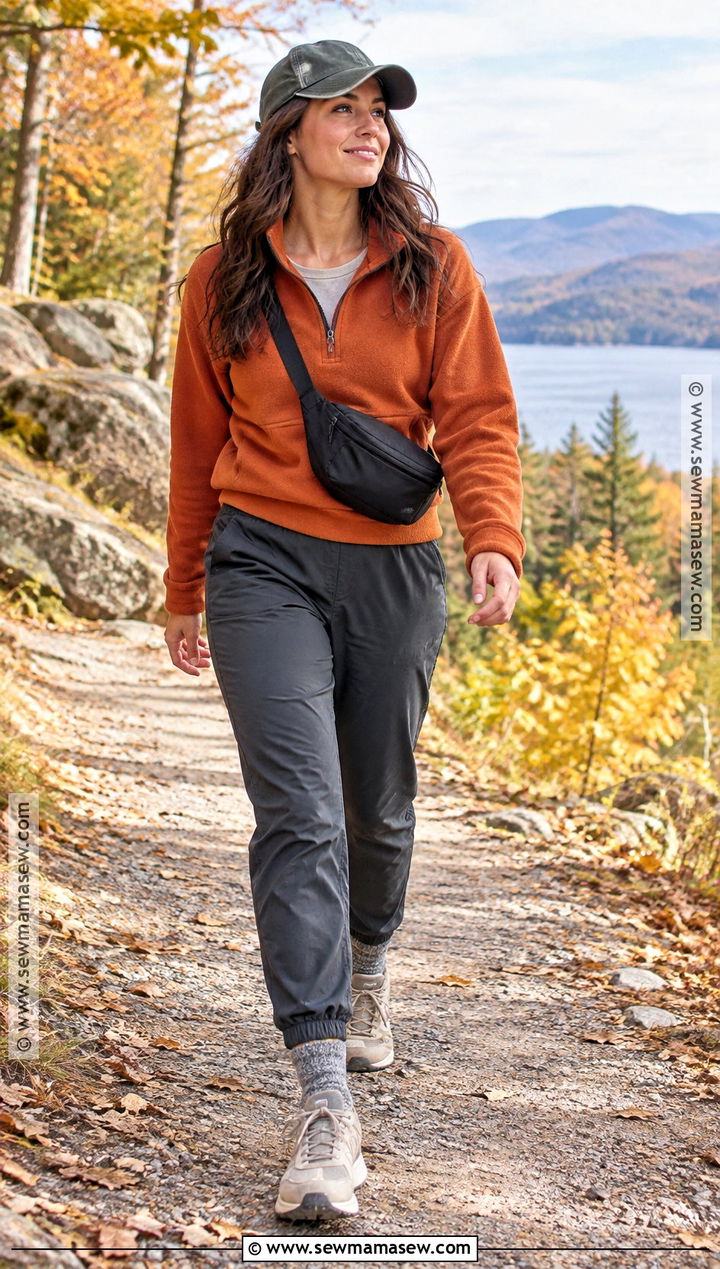
The half-zip earns its spot because the zip is a thermostat. Open it on the climb, close it at the top, and you never have to take the whole thing off. Teal, burgundy or burnt orange fleece over a light tank or tee, with tapered black or charcoal joggers in a stretch fabric. The taper matters: a wide jogger hem catches on roots and flaps around your ankles. Cushioned trail runners suit maintained paths, along with ribbed socks, a belt bag and a cap. It's also comfortable enough for the drive home. Leave it for easy rolling trails; it's not built for scrambling or bad weather.
6. Rain Jacket And Waterproof Hiking Pants
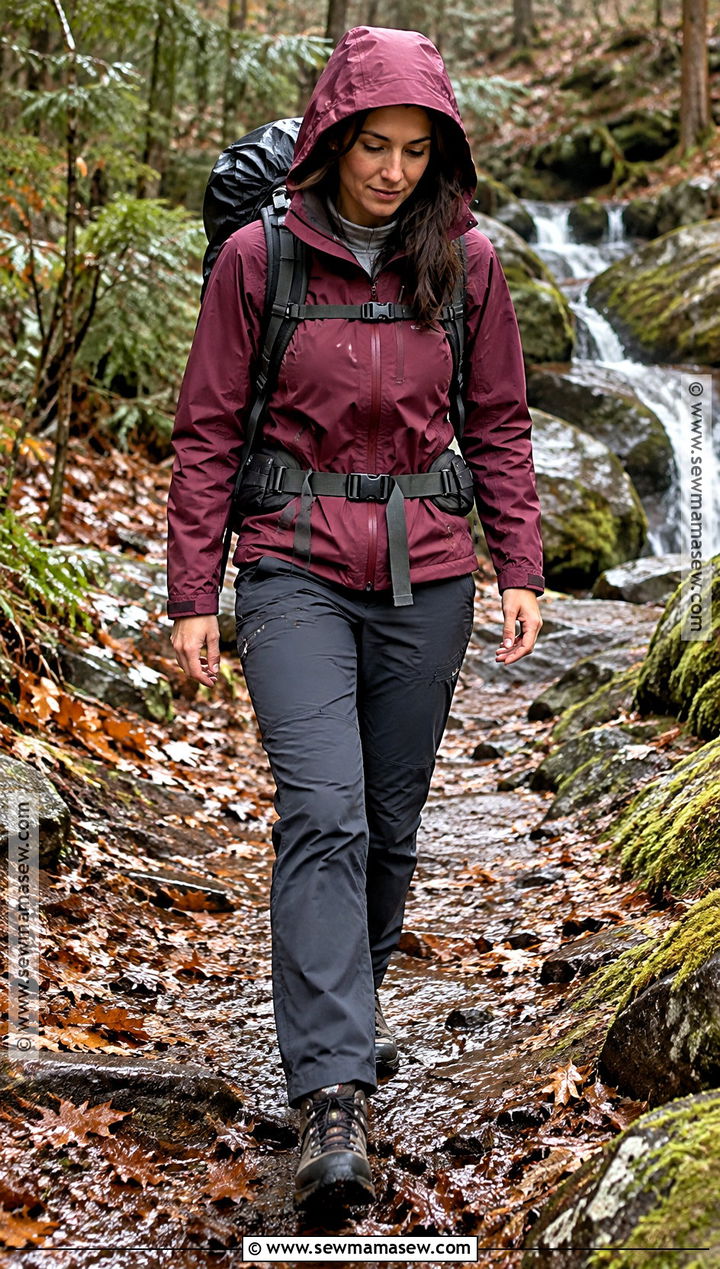
Rain is when fall trails are prettiest and when clothing choices matter most. A lightweight berry shell with an adjustable hood, covered pockets and enough room in the shoulders for a thin fleece. Under it, a synthetic or merino base, never cotton. Dark gray waterproof pants hide mud splashes. Wet leaves over rock are some of the slipperiest ground you'll walk, so boots with deep lugs aren't optional here. Wool socks stay warm even when damp. A rain cover on the pack, a braid that tucks into the hood, and leave the umbrella at home, since it ties up a hand and turns inside out in the first gust.
7. Merino Top And Burgundy Hiking Pants
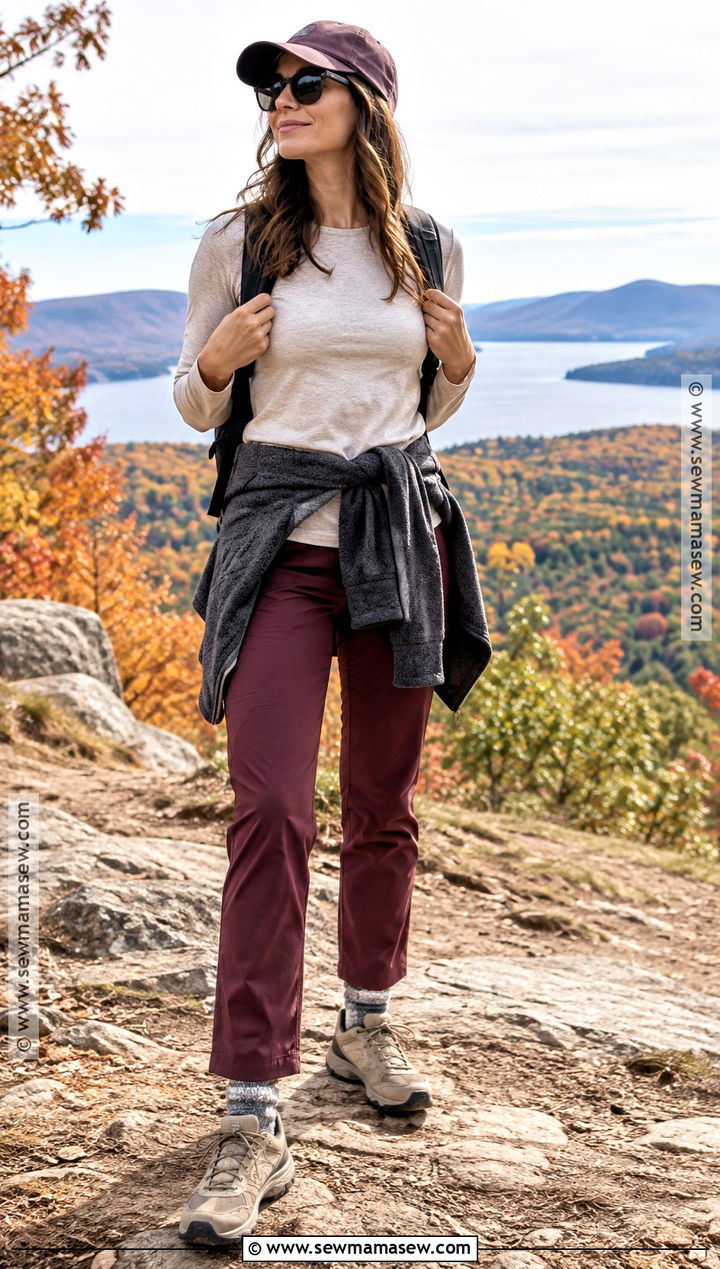
This is the outfit for a hike that ends at a café. A fitted merino-blend long-sleeve in heather gray or oatmeal with straight-leg burgundy hiking pants, which bring fall color without looking like activewear head to toe. Merino is my favorite base for this kind of day because it regulates temperature well and doesn't hold odor the way synthetics do after a few hours. Tie a charcoal fleece around your waist or keep it in the pack. Neutral hiking shoes, gray crew socks, a black backpack and a light cap. Nothing here looks out of place sitting down for lunch.
8. Quilted Jacket And Hiking Tights
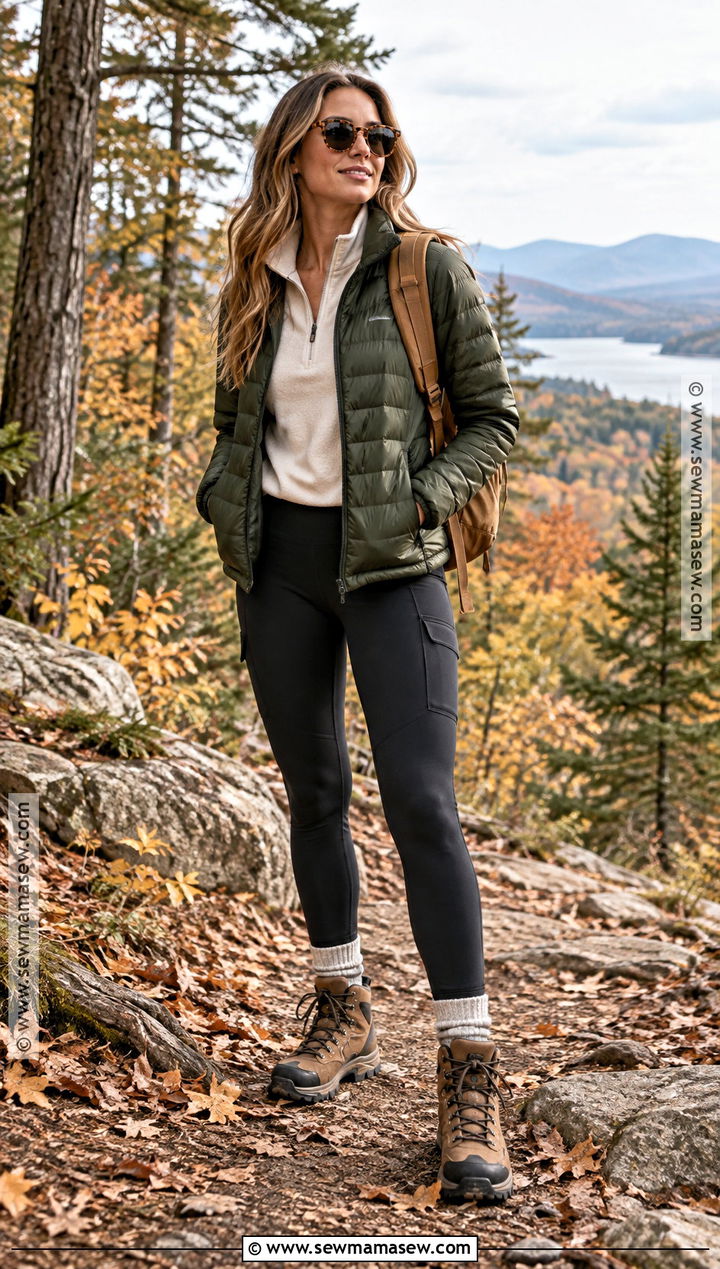
A slim quilted jacket gives real warmth while still showing the shape of what's underneath. Forest green over a cream quarter-zip, with matte black tights that have thigh pockets. Before buying one, reach both arms overhead and swing them forward as if grabbing a handhold; jackets without stretch side panels ride up at the back and pull across the shoulders. Brown-and-black boots link the green to the leggings. Oatmeal socks above the boot add a cozy note, and a camel pack with tortoiseshell sunglasses keeps it soft. Wear it on cold, dry days. Most quilted jackets aren't waterproof and lose warmth when the fill gets wet.
9. Hoodie And Cargo Hiking Pants
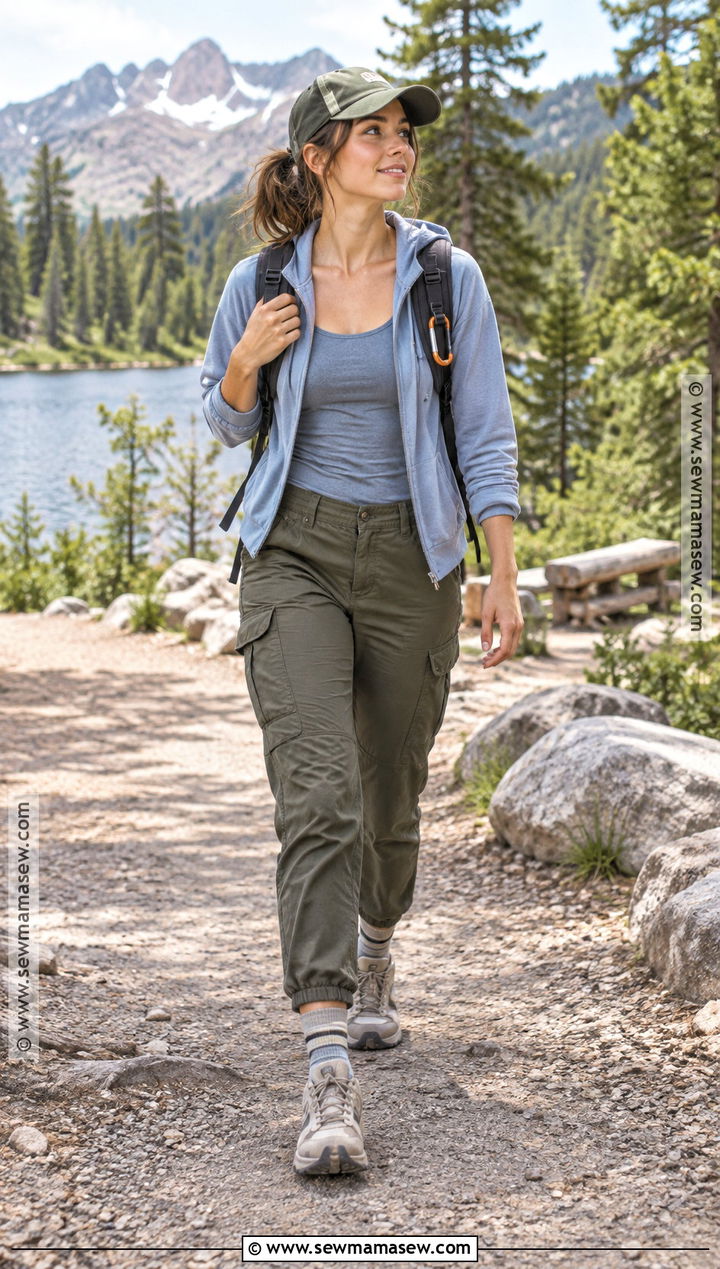
Hoodie and cargos is the relaxed weekend option, and it works fine on short, easy trails if you pick the hoodie carefully. A lightweight synthetic or blended hoodie in mauve or dusty blue is the one to bring. A heavy cotton fleece hoodie is better left for flat walks near the parking lot, because once it's sweaty it stays sweaty. Khaki or dark olive pants with flat cargo pockets, not bellowed ones that swing against your thighs. A fitted tank under the hoodie lets you strip down on a steep stretch. Neutral sneakers, striped socks, a nylon pack and a small carabiner for clipping on a water bottle.
10. Sherpa Vest And Flared Hiking Leggings
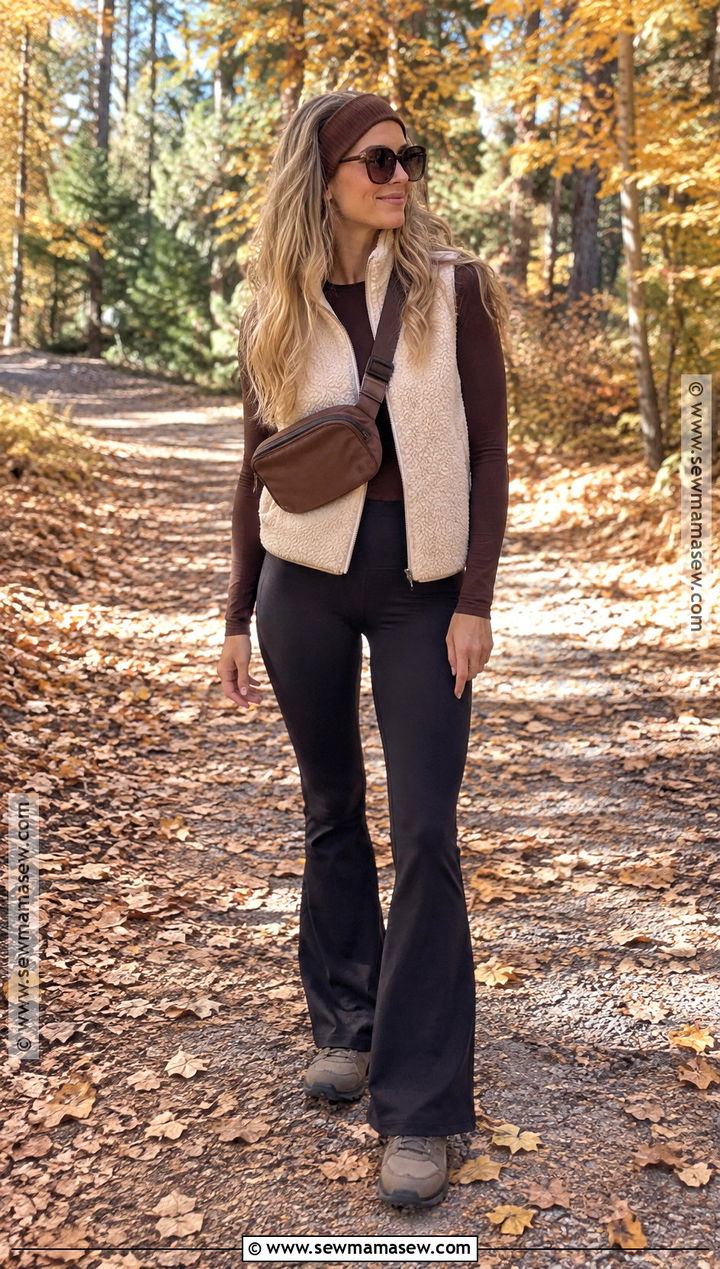
Flared leggings bring a retro touch, and a cream sherpa vest makes it cozier. Under the vest, a fitted rust or chocolate performance top. The flare has to be modest; technical bootcut leggings with a narrow kick will clear the ground, while full fashion flares drag through mud, get stepped on and come home soaked to the knee. Low trail shoes sit under the hem better than tall boots. A brown belt bag worn across the chest, sunglasses and a ribbed headband. This is strictly a wide-path outfit: paved nature trails and gentle woodland tracks. Sherpa also picks up burrs and leaf bits like nothing else.
11. Windbreaker And Matching Hiking Set
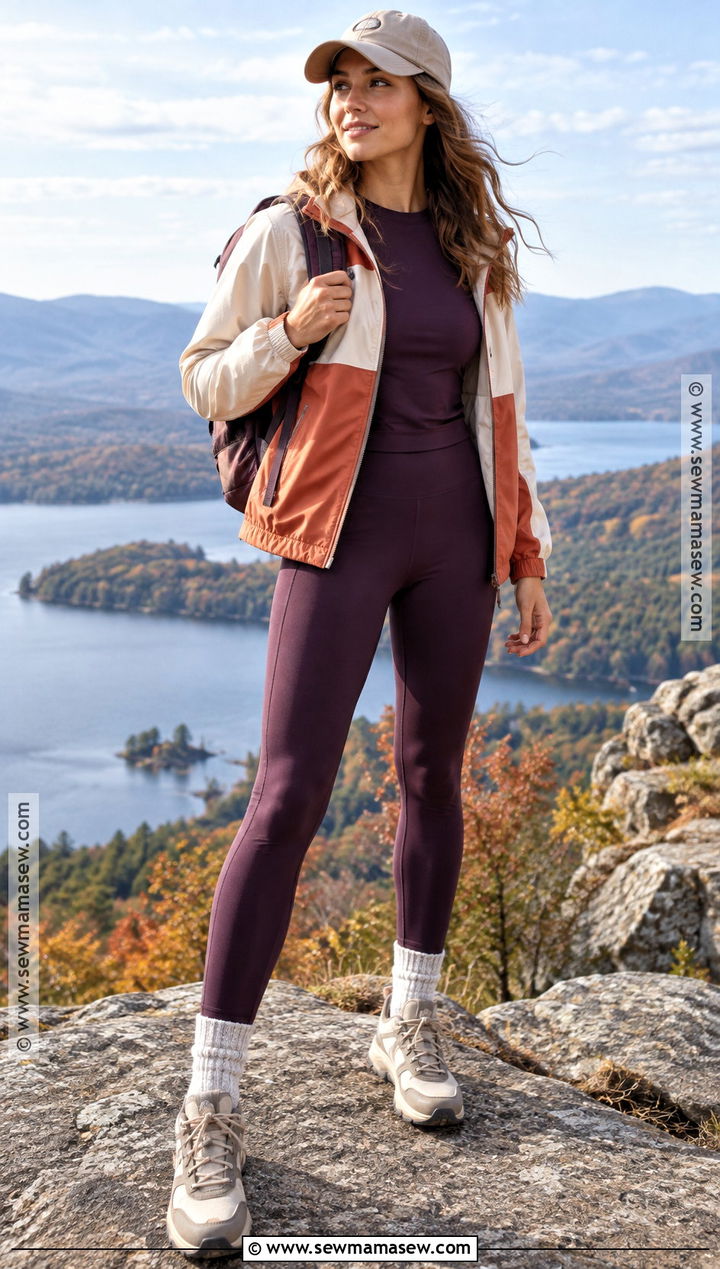
A matching set is the fastest way to look put together at 7 a.m. Navy or deep plum leggings and a fitted top, then a color-block windbreaker over the top with cream, tan or muted orange panels to bring in fall color. A windbreaker weighs almost nothing and cuts the chill on an exposed ridge far better than a fleece, which lets wind straight through. Sturdy neutral trail sneakers, cushioned socks and a pack with adjustable straps. A sleek ponytail and a cap keep hair out of your face in the wind. I'd wear this on open overlooks and breezy park trails rather than on a cold, still morning.
12. Shacket And Straight-Leg Hiking Pants
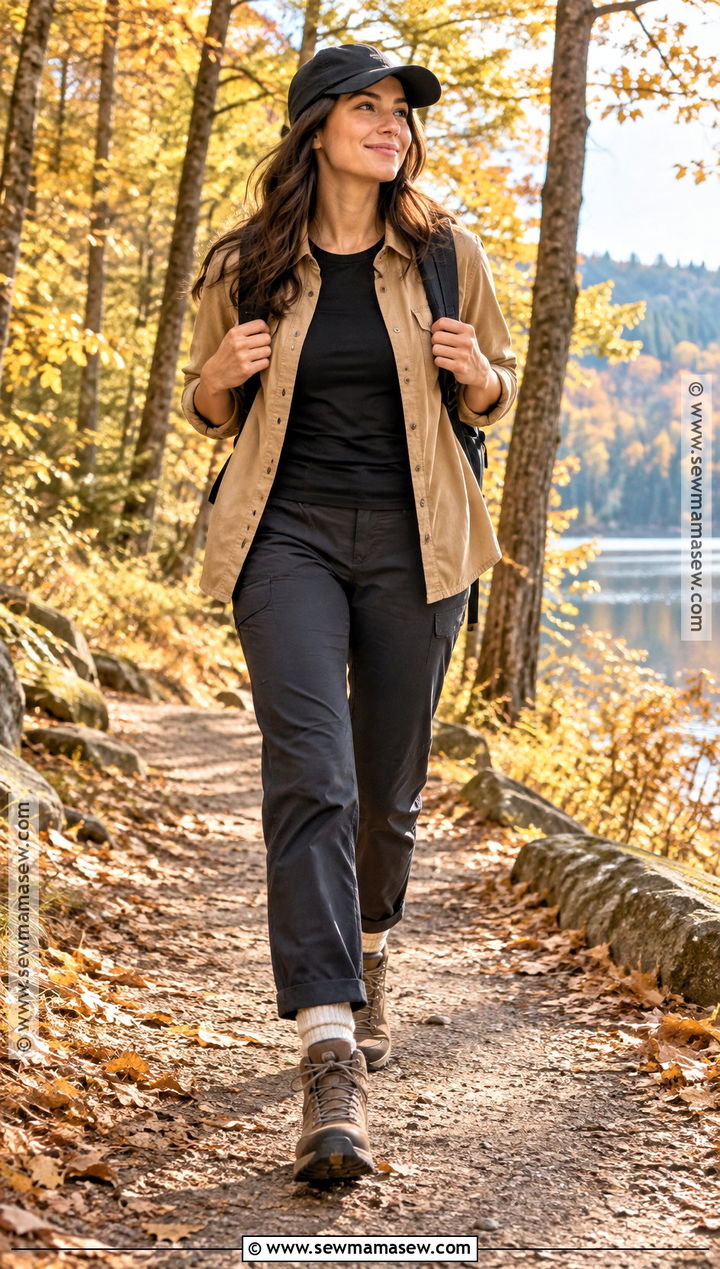
A shacket looks great at the trailhead, but only some shackets belong on a trail. Choose a thin synthetic or wool-blend one; a heavy cotton overshirt is a burden once it's damp and slow to dry. Tan or brown over a fitted black tech tee, with dark straight-leg stretch pants. Brown boots, cream socks, a black daypack and a brimmed cap. Wear it open on the climb or tie it firmly around your waist, sleeves knotted twice, or it slides down on your first big step. Keep this for dry days and low-effort outings like orchard paths and easy nature preserve loops.
13. Fleece-Lined Leggings And Puffer Jacket
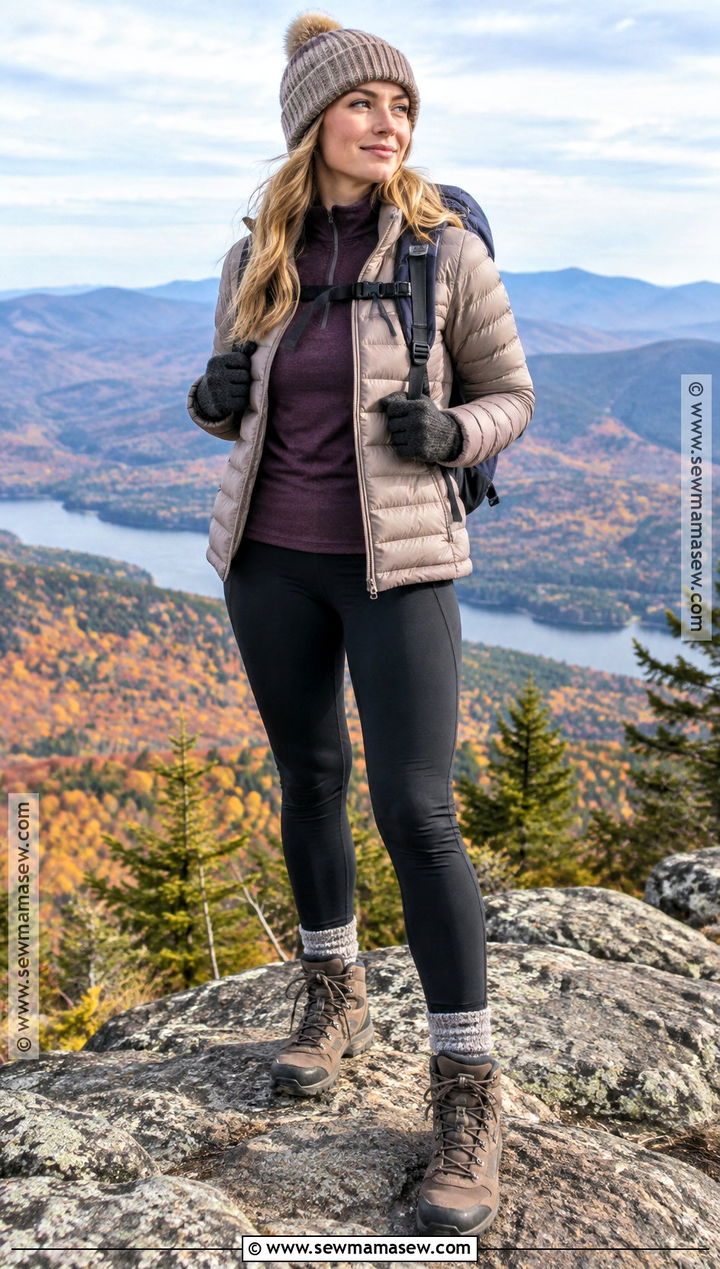
Late fall mornings need real insulation. Fleece-lined black leggings, a fitted plum thermal and a light taupe puffer. Buy lined leggings made for activity; lounge leggings feel warm on the couch but they're thicker, stretch less and hold sweat on a climb. Mid-height waterproof boots and wool-blend socks keep feet warm without cramming toes. A beanie, gloves and a pack with room to swallow the puffer when the sun comes out. Let the plum be the one color and keep the rest neutral. On viewpoints at elevation or days with wind and freezing temperatures in the forecast, you'll need a shell over all of this.
14. Hiking Skirt And Long-Sleeve Base Layer
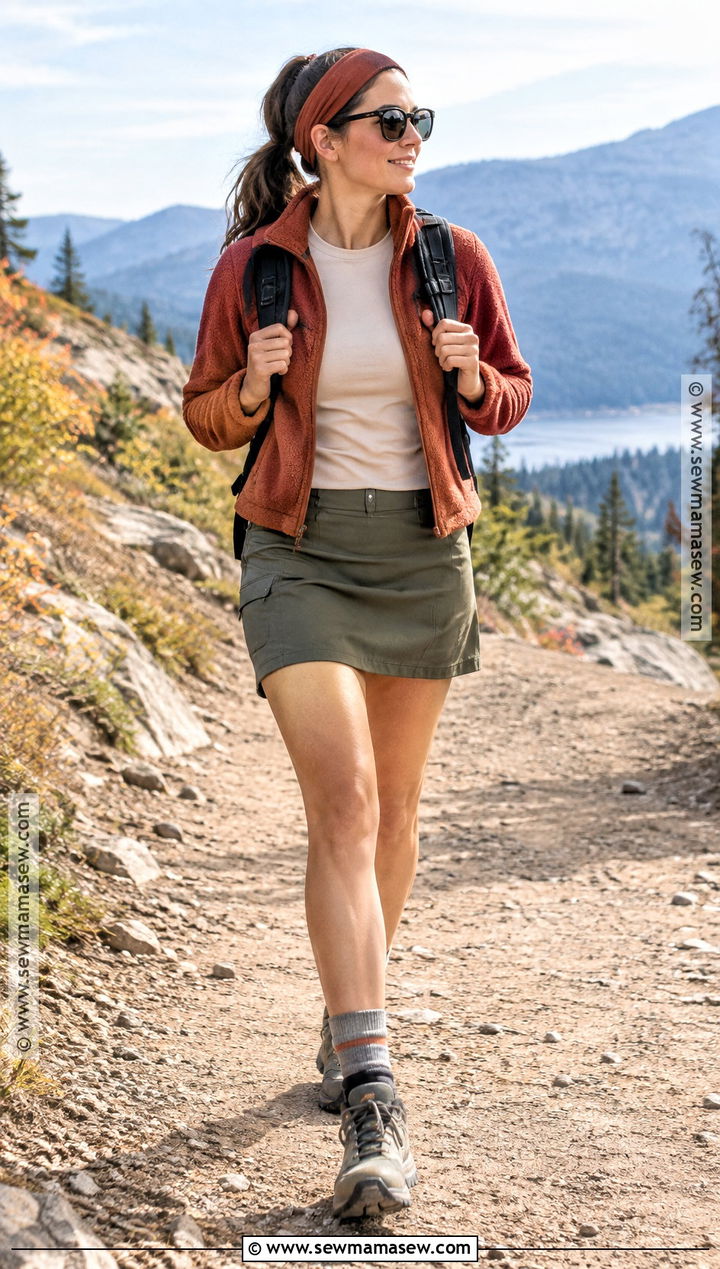
A hiking skirt with built-in shorts is cooler than leggings on a mild day and, honestly, more comfortable on long climbs. Dark olive with a fitted cream long-sleeve top, plus a cropped rust or burgundy fleece you can wear, tie on or stash. Mid-height socks and supportive trail shoes. Before the hike, do a few high steps and a lunge at home. A liner that rides up or a skirt that limits your stride will bother you for every mile. A small pack, sunglasses and a headband finish it. Bare shins and brush don't mix, so stick to maintained paths and mild temperatures with this one.
15. Monochrome Brown Hiking Outfit
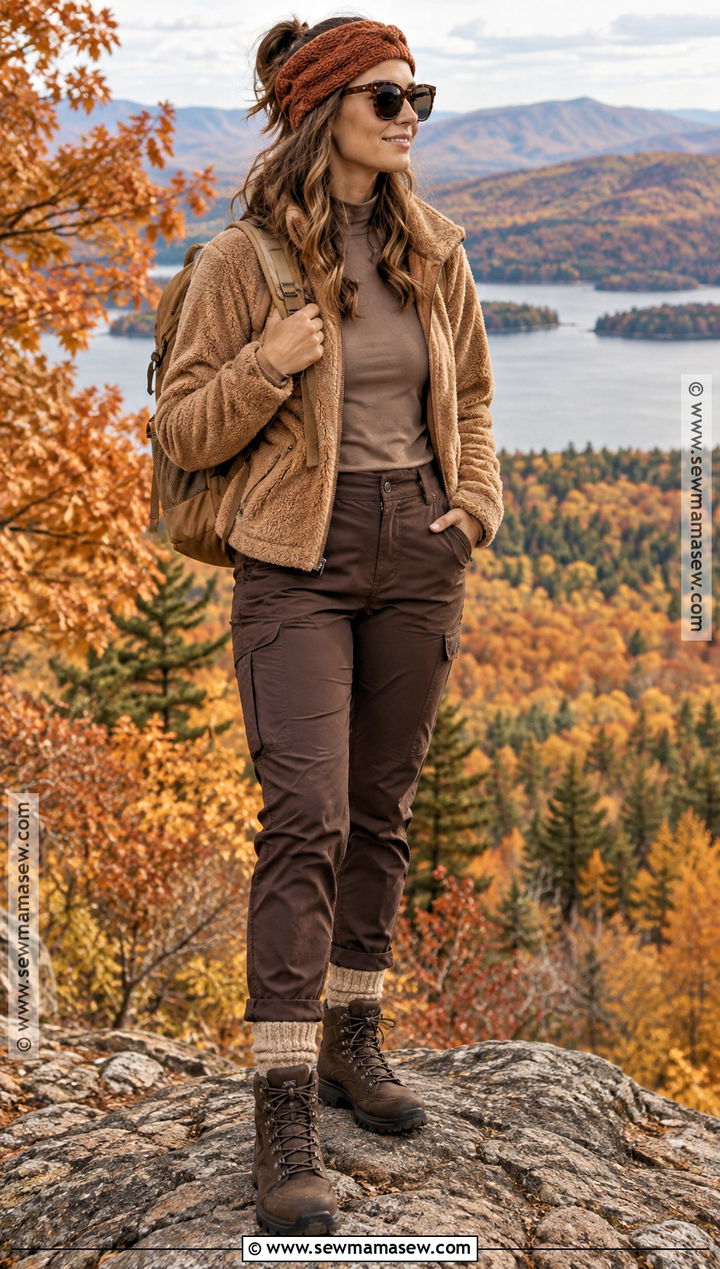
All-brown is the outfit that photographs best against fall foliage, because nothing fights the leaves. Chocolate leggings or tapered tech pants, a lighter mocha top and a camel fleece. The trick with monochrome is varying the shade and the texture so it doesn't look flat: matte leggings, smooth top, fuzzy fleece, a rust knit headband. Dark brown waterproof boots anchor it, oatmeal socks lighten the ankle, and a tan pack with tortoiseshell sunglasses complete it. Pretty as it is, every piece still has to function on the trail, especially the boots and the outer layer. Best on cool, dry days.
Socks and Boots Decide How the Day Goes
A cute outfit with the wrong feet is a bad day. Wool or wool-blend hiking socks are worth it because they stay warm when damp and cushion better than cotton, which bunches and causes blisters once it's wet. Wear them for any boot try-on, since a hiking sock changes the fit noticeably.
Trail runners are lighter and fine for dry, maintained paths. Waterproof boots with ankle height earn their weight on muddy, leafy or rocky ground. New boots need a few short walks before a long hike, and the leaf-covered rock of fall is exactly where worn-smooth soles fail you.
Bright Colors and an Early Sunset
Two fall realities rarely show up in outfit roundups. In many areas, hiking trails overlap hunting land during autumn seasons, and wearing something bright, like a blaze orange hat or vest, makes you easy to see. Brown, tan and olive head to toe, as pretty as it is, blends into the woods. A rust beanie or orange windbreaker from these outfits covers it without ruining the look.
The other is daylight. Afternoons are short, and temperatures can fall quickly after sunset. Keep a small headlamp, gloves and a warm hat in the pack even if you plan to be back early. They weigh almost nothing, and they're what makes a late finish uncomfortable instead of risky.
Dress for the Coldest Point of the Hike
Every outfit here starts the same way: a base layer that handles sweat, a warm layer you can take off without stopping for long, and shoes with grip. From there, the trail decides the rest. Pants and boots for rough or brushy routes, leggings or a skirt for maintained paths, a shell whenever rain or wind is in the forecast. Check how long the hike is against when the sun sets, since fall evenings come early and the temperature drops fast once it goes. The cute parts, a colorful fleece, coordinated socks, a bandana, cost nothing in function, so wear them.
Related posts: