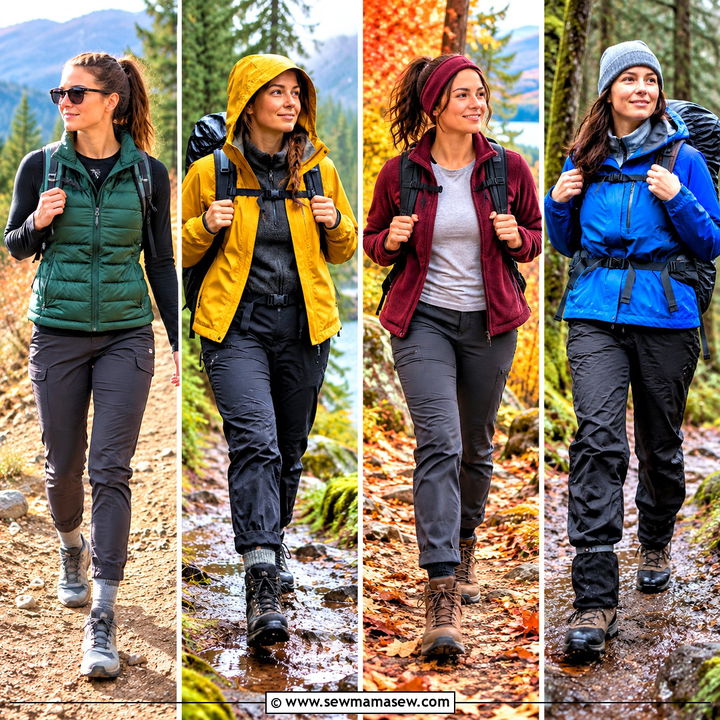
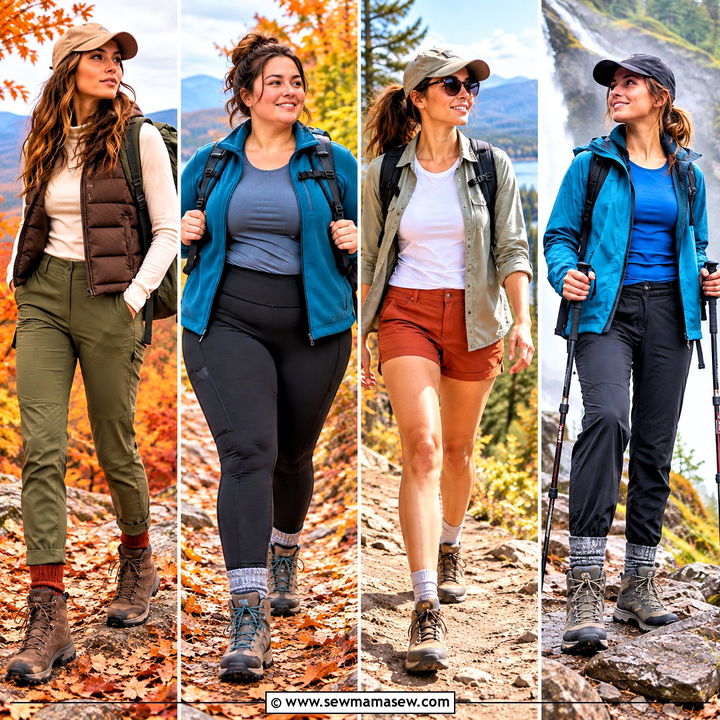
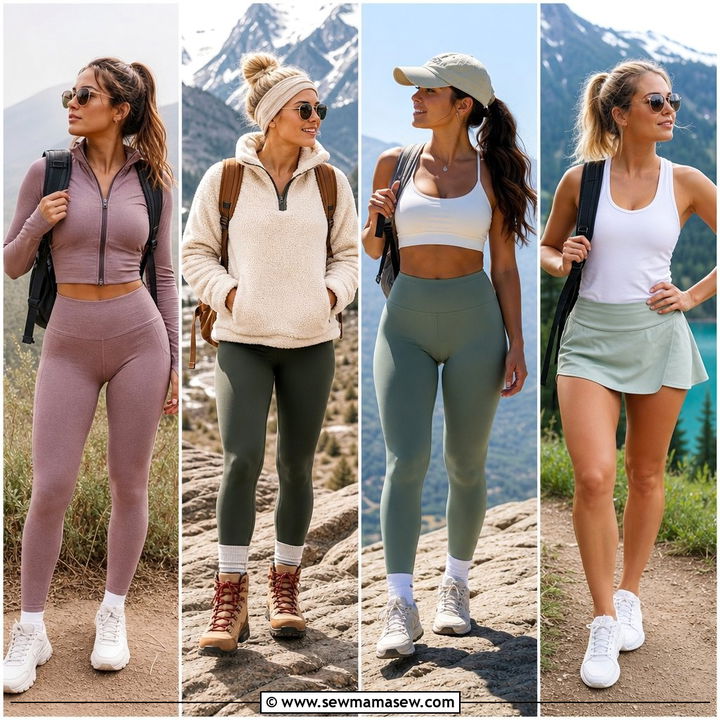
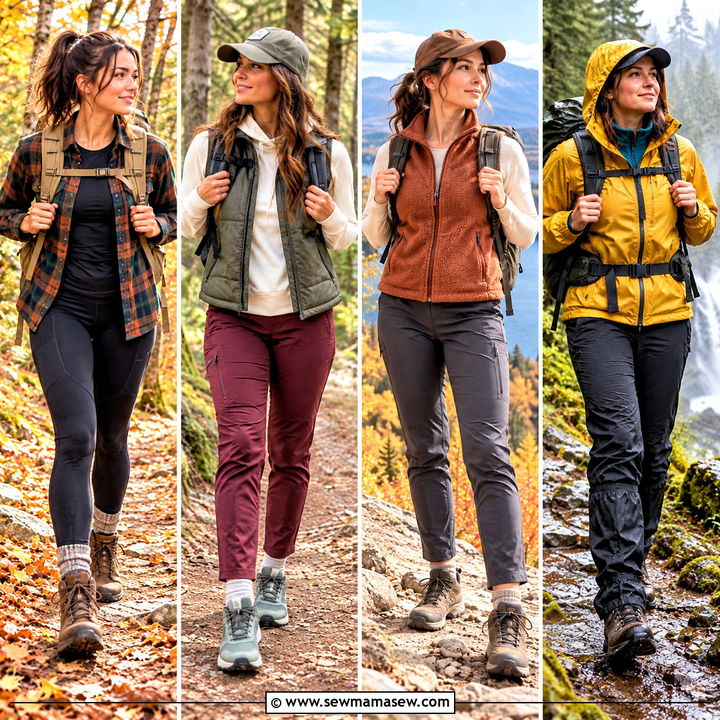
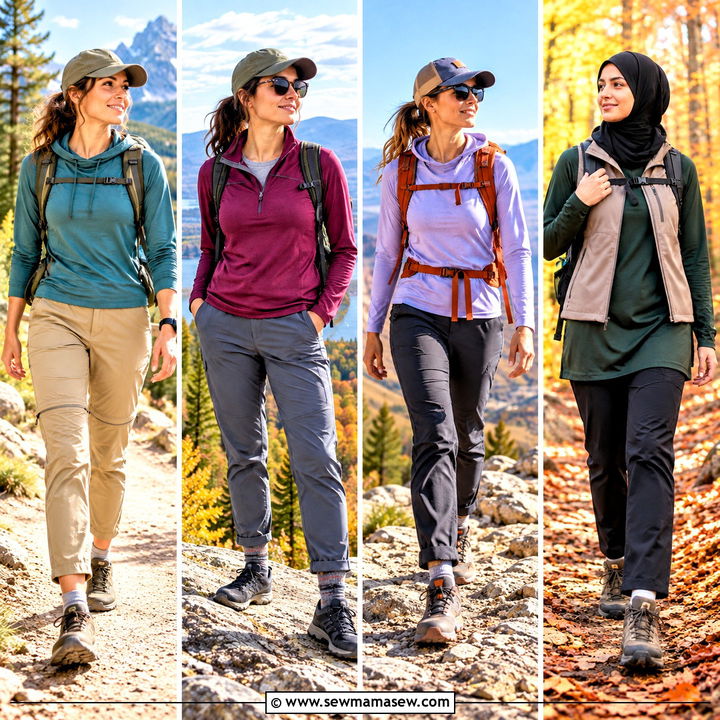
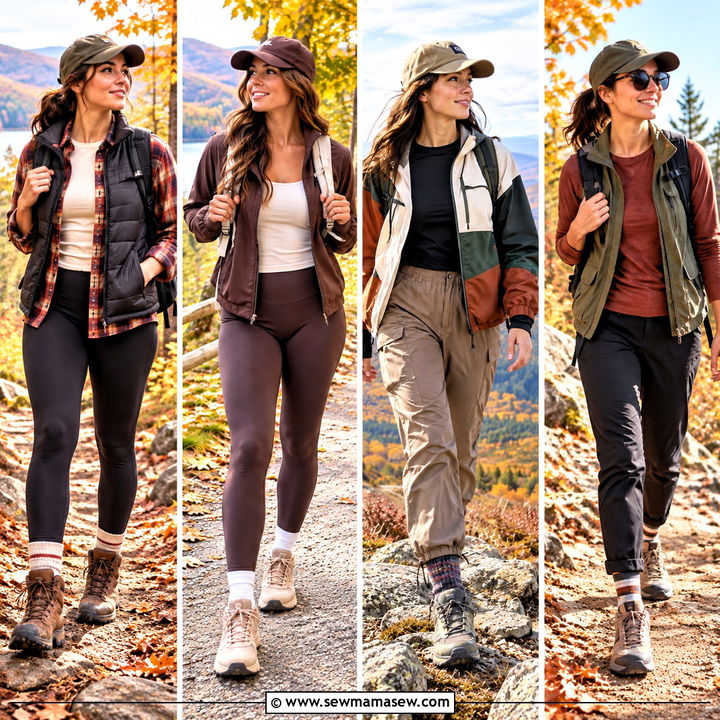
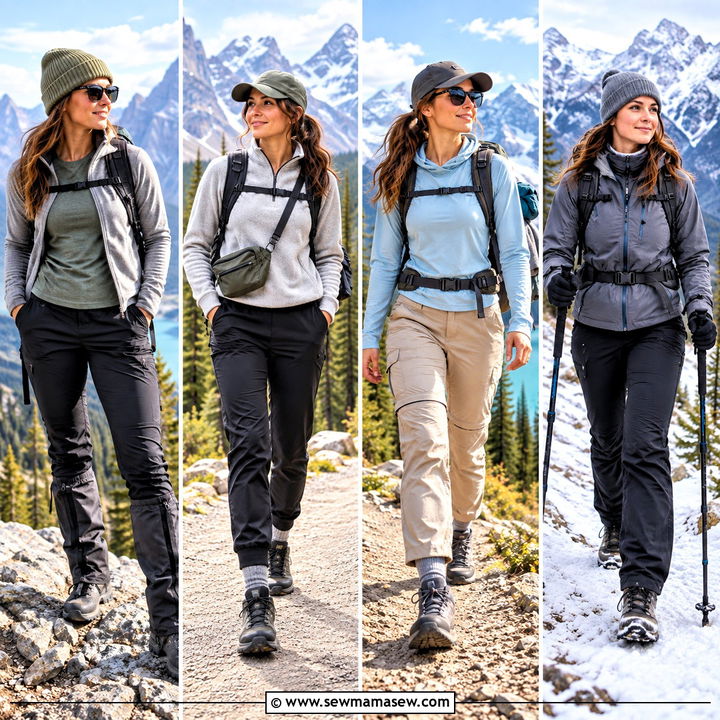
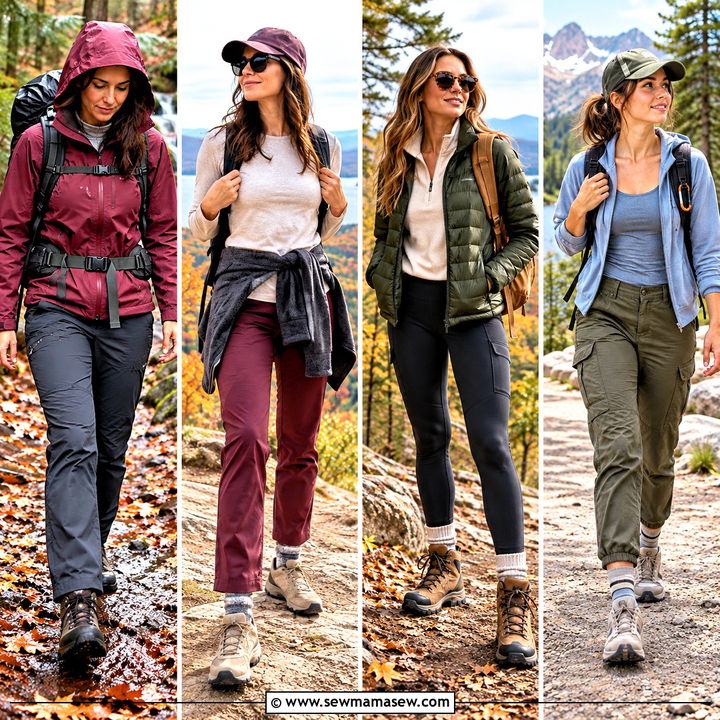
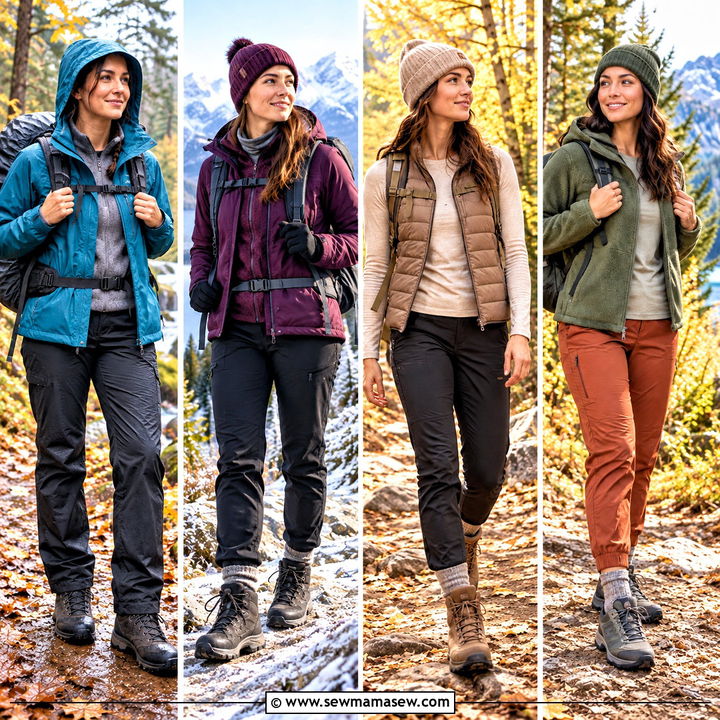
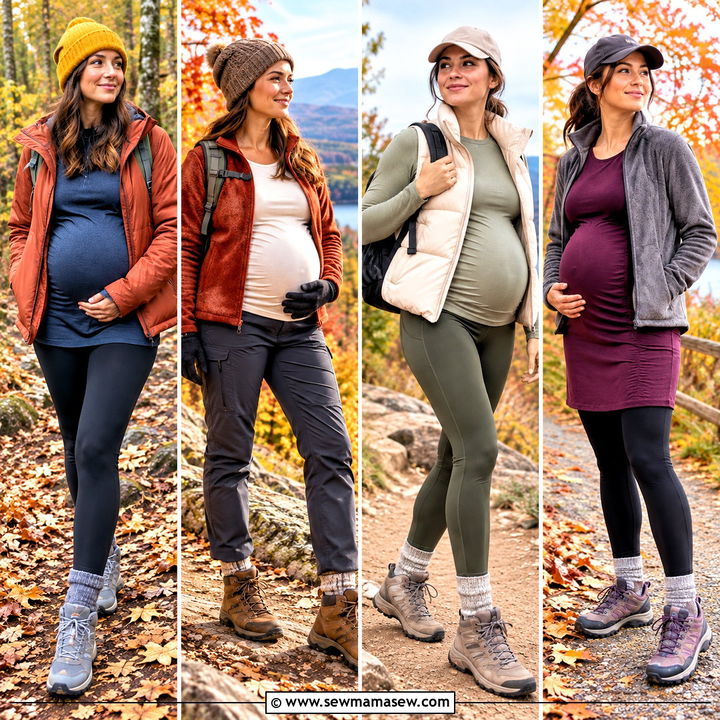
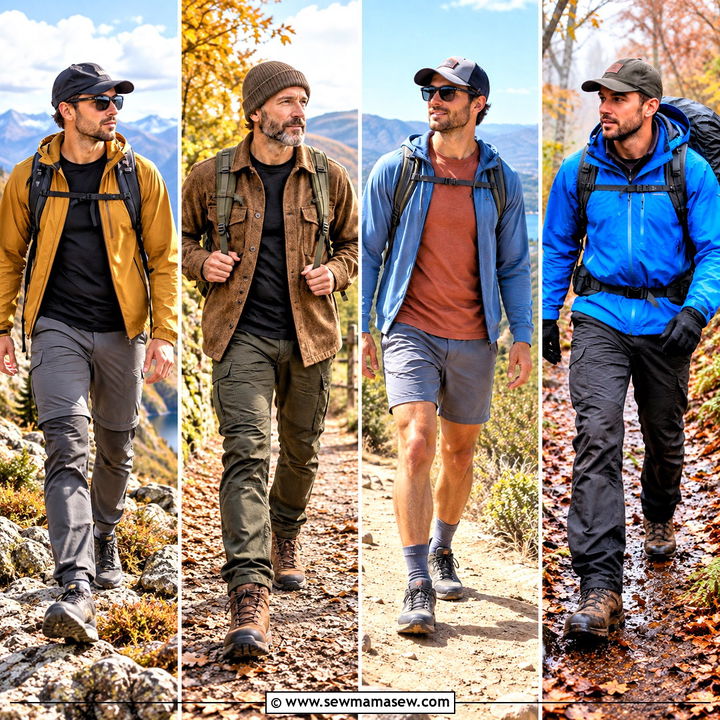
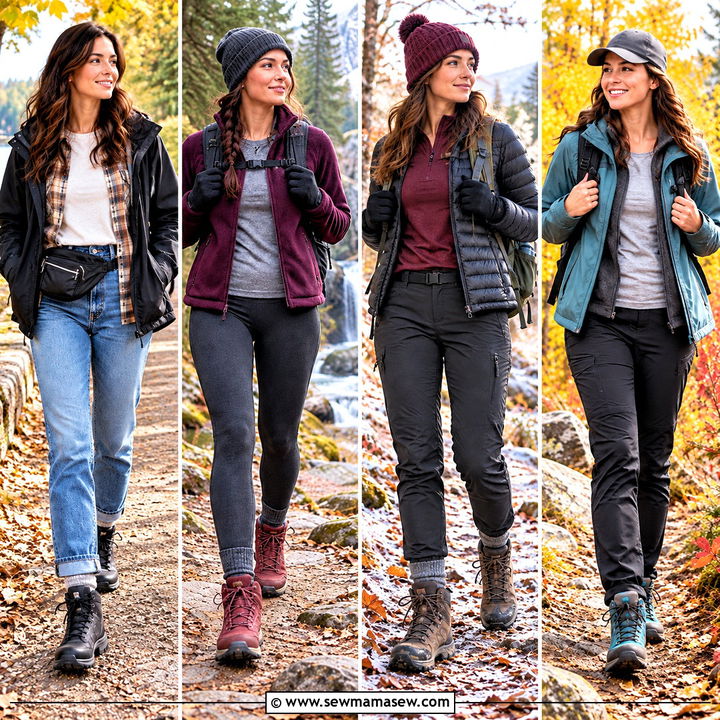
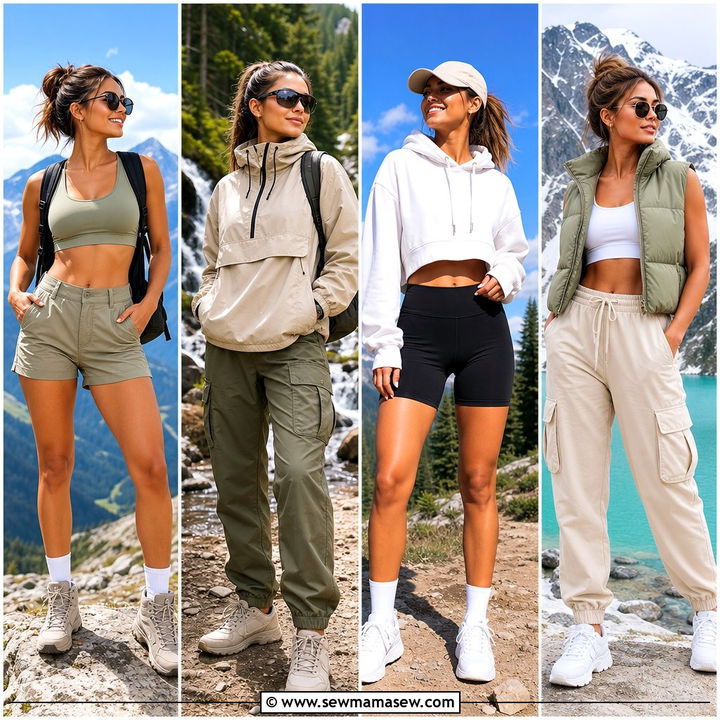
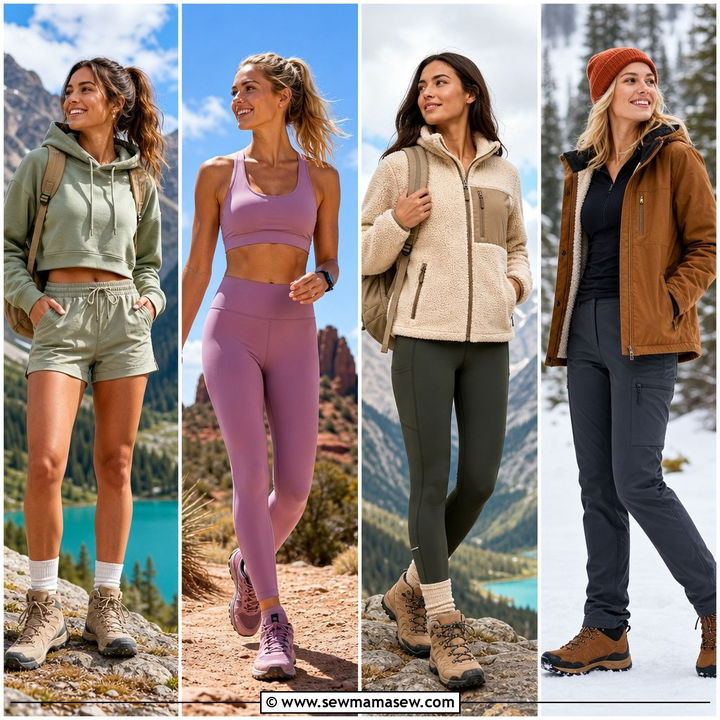
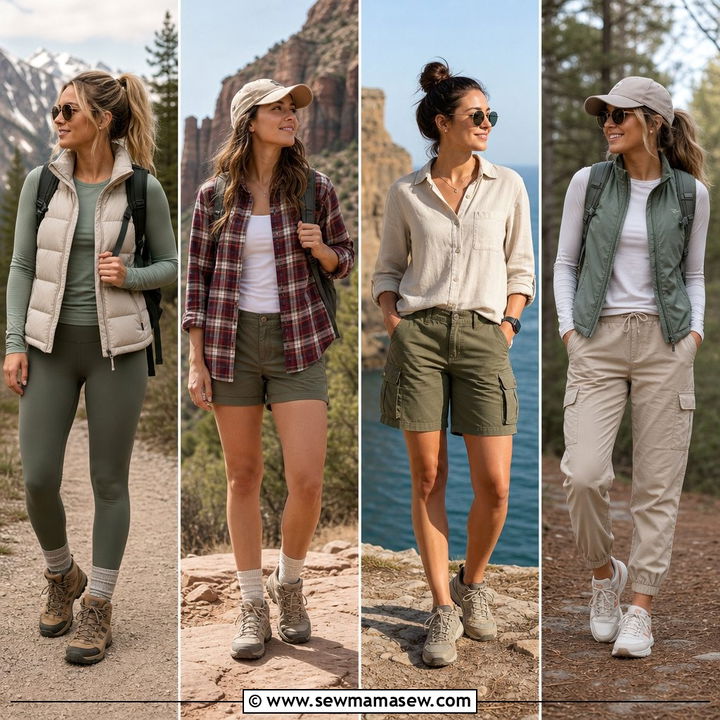
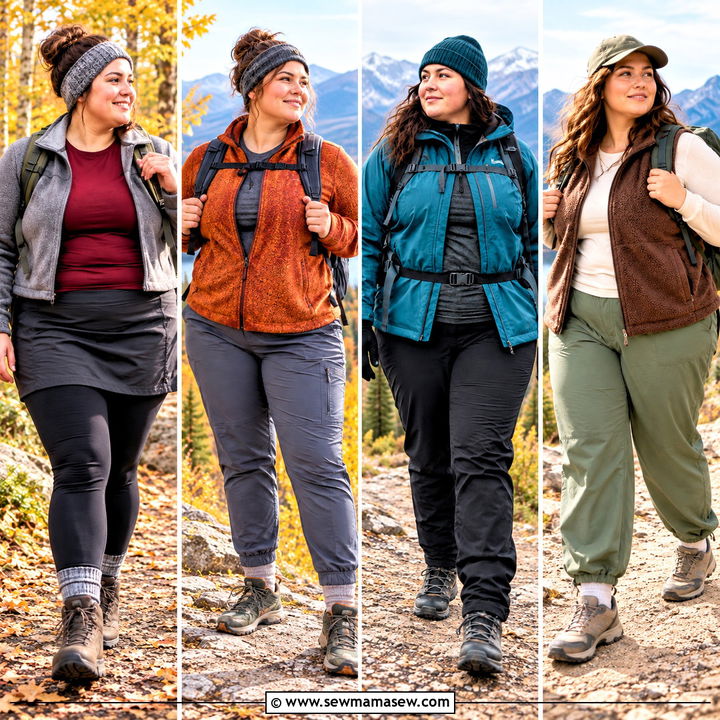
A fall hike can start at freezing in the parking lot and end in sunshine on a ridge, with wet leaves and a gust of wind somewhere in between. That's why I dress for it in layers rather than in one warm jacket. Almost every good trail outfit has the same skeleton: a base layer that moves sweat away from your skin, insulation you can take off, something that blocks wind or rain, bottoms that bend at the knee, and shoes made for the ground you'll cover. The outfits below build on that with hiking leggings, sturdy trail pants, fleece, packable jackets and full rain gear. Each one can be adjusted for your climate, how fast you walk and how much coverage you prefer.
Why Cotton Stays Home on a Fall Hike
The single change that makes the biggest difference on an autumn trail is taking cotton out of the layers that touch your skin. Cotton soaks up sweat and rain, holds onto it and dries slowly. On a warm summer walk that's fine. In fall, a damp cotton tee under a jacket feels icy the moment you stop at a viewpoint or the sun drops behind a hill.
- Merino wool stays warm when it's damp and resists odor, so it's my first choice for a base layer on a long day.
- Polyester and nylon performance fabrics dry faster than merino and cost less, though they can hold smells after a few hours.
- Fleece is warm for its weight and still insulates when wet, but wind blows straight through it without a shell.
- Jeans are the worst choice of all on a wet trail: heavy, cold and slow to dry.
Cotton isn't banned from the car. A dry cotton tee and sweatshirt waiting for you at the end of the trail are one of the best parts of the day.
1. Fleece Pullover And Hiking Leggings Outfit
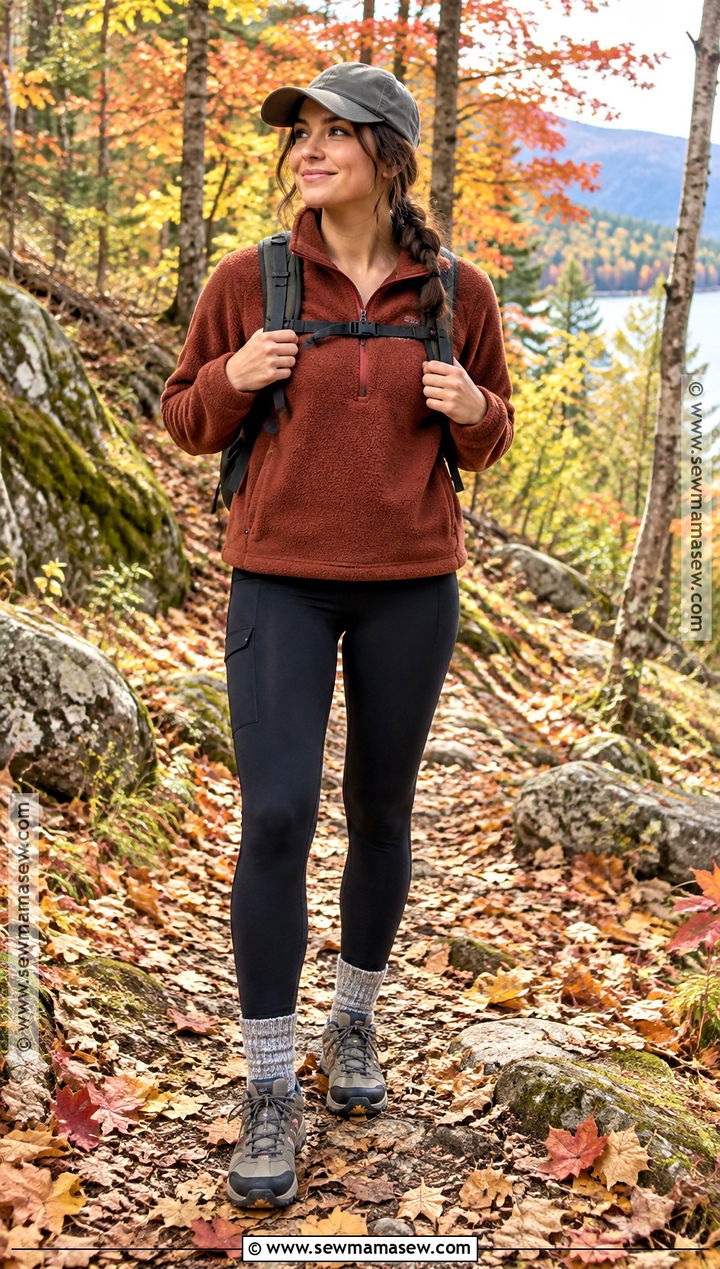
For an easy woodland trail, this is the outfit I'd pack first. The fleece is the warm part, but the tee underneath matters more: a fitted moisture-wicking tee or tank keeps sweat off your skin, so the fleece doesn't turn clammy halfway up a hill. A half-zip in rust, forest green or cream gives you a vent you can open without stopping. Black or deep brown hiking leggings with secure pockets and reinforced panels handle scrambles better than gym leggings, which snag on bark and rock. Cushioned wool-blend socks and low trail shoes keep it light. Add a small daypack, a cap and a rain shell folded at the bottom of the bag. When the afternoon warms up, open the zip first; tie the fleece around your waist only once you're too warm with it open.
2. Puffer Vest And Hiking Pants Outfit
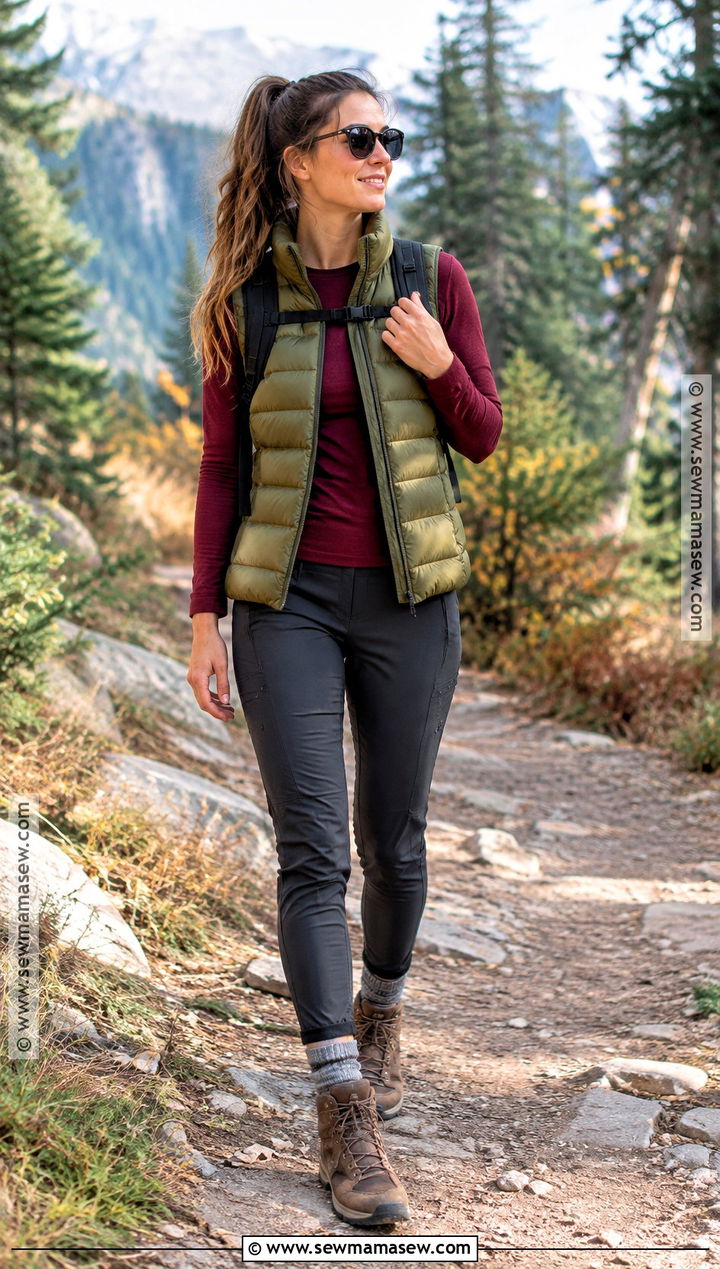
A puffer vest keeps your core warm and leaves your arms free to swing poles or grab a handhold. Under it, I'd wear a long-sleeve performance top in beige, burgundy or muted blue. Olive, black or tan vests are easy to match, and the armholes should be loose enough that your shoulders move freely with a pack on. Straight or tapered hiking pants balance the padding on top and protect your legs from brush far better than thin leggings. Mid-cut boots, crew socks, sunglasses and a small backpack finish it, with a knit headband for an early start. Keep a waterproof shell in the pack. A vest does nothing for wet sleeves, and a steady wind finds its way through the arm openings fast.
3. Rain Jacket And Trail Pants Outfit
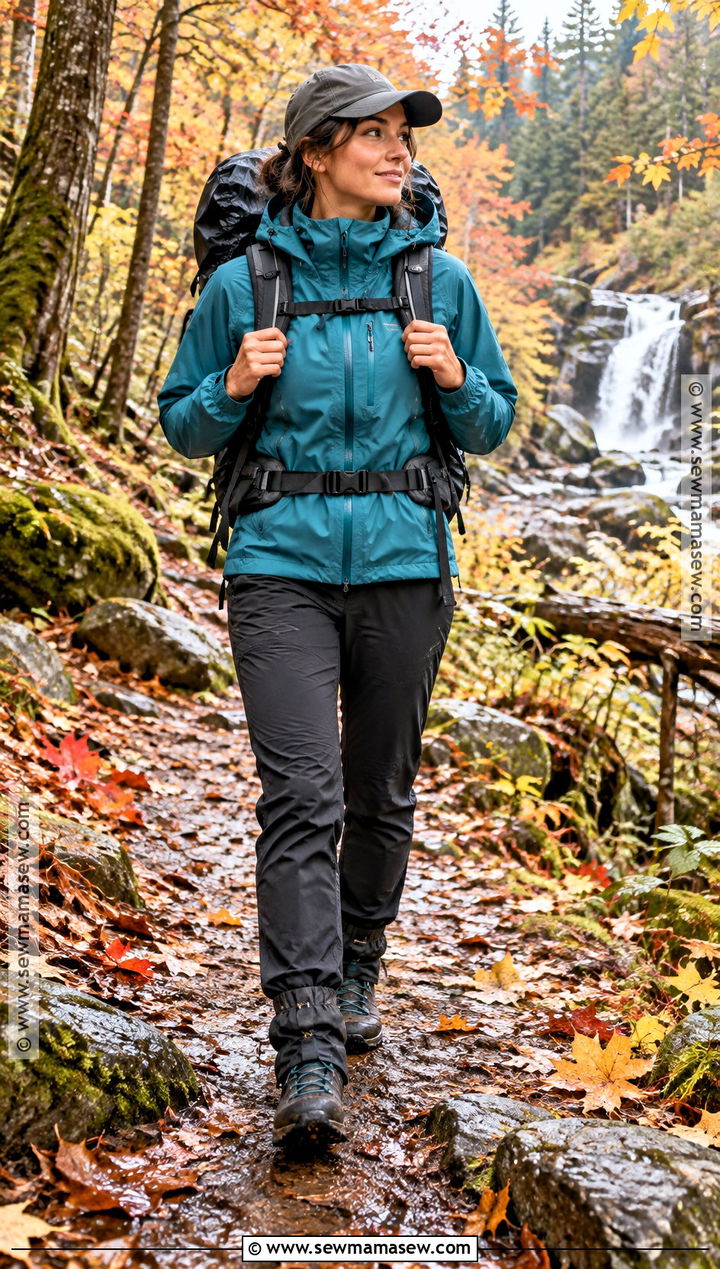
Wet leaves are slippery, and mud gets everywhere, so this outfit is about coverage first. A breathable long-sleeve base layer goes under a hooded waterproof rain jacket. I steer people toward red, teal or mustard here, since a bright jacket is easier to spot in gray woods. Dark quick-drying trail pants in a straight or slightly tapered cut hide splashes. Waterproof boots, wool-blend socks and short gaiters keep water from running into your boots. Use a water-resistant pack or a fitted cover so your spare layers stay dry. A brimmed cap under the hood keeps rain off your face and stops the hood from drooping over your eyes. Skip very wide pants, which brush through wet plants and collect mud at the hem.
4. Merino Top And Softshell Pants Outfit
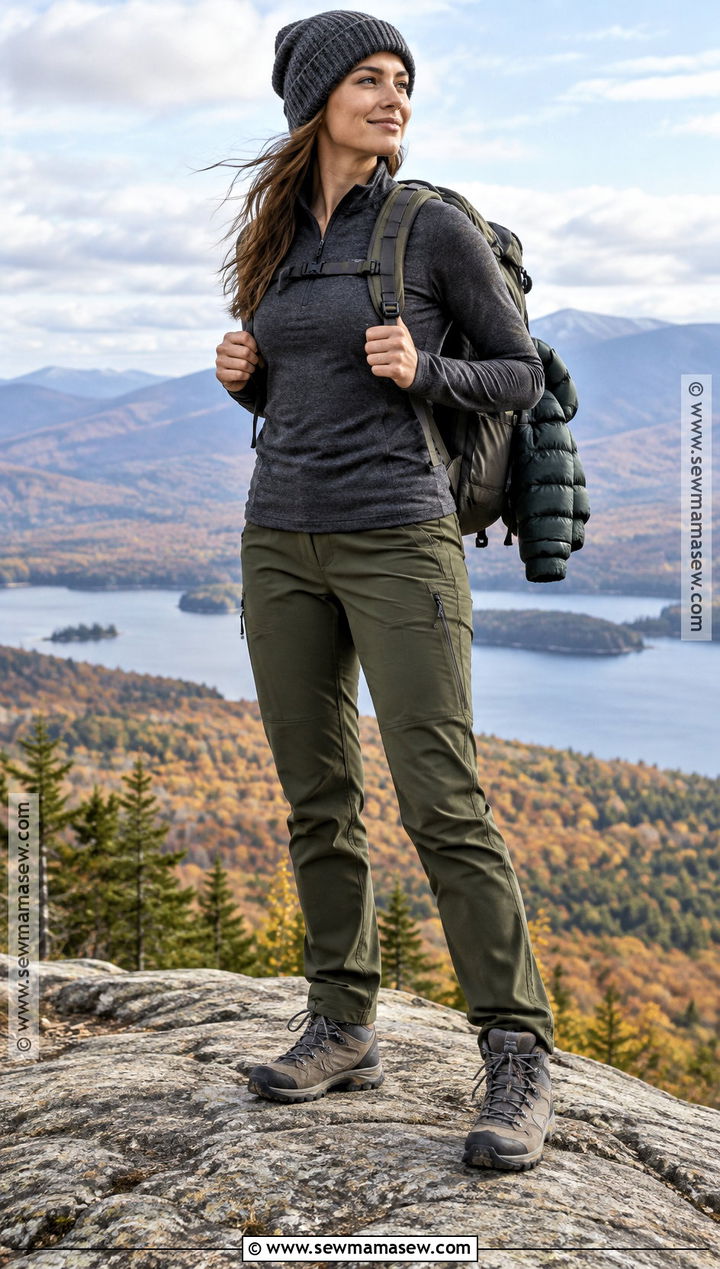
Merino is the fiber I recommend most for fall base layers, because it stays warm when damp and doesn't hold odor the way synthetics do on a long day. A fitted merino-blend crewneck or quarter-zip in charcoal, oatmeal, plum or dark green goes with flexible softshell pants. Look for articulated knees, zippered pockets and an adjustable waist. The slim top slides under a packable insulated jacket when you stop for lunch. Supportive boots, cushioned crew socks, a low-profile daypack and a light beanie finish it. It looks neat enough for a café afterward and still handles steep, exposed routes. Softshell sheds a light shower but isn't waterproof, so a real shell still goes in the pack. Thin gloves help on cold overlooks and shaded sections.
5. Flannel Shirt And Puffer Vest Outfit
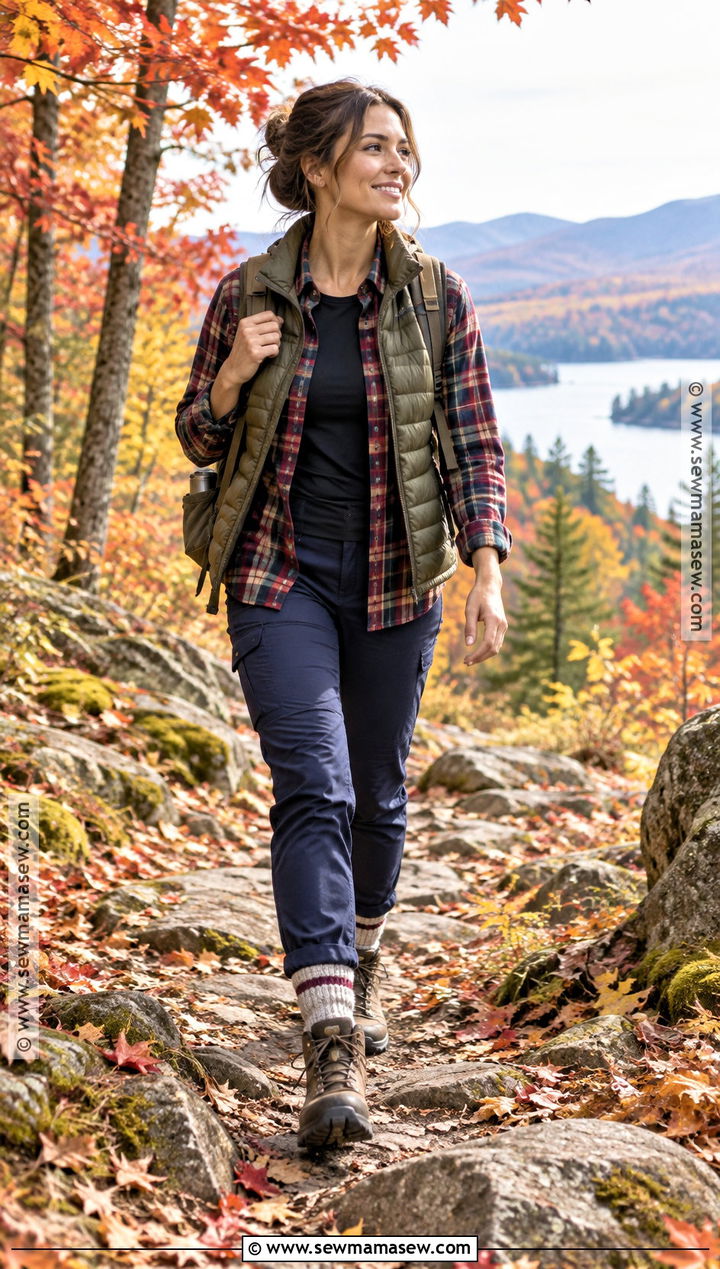
A flannel shirt is the classic fall hiking look, but the fabric decides whether it's a good idea. Thick cotton flannel soaks up sweat and drizzle and stays cold and heavy, so I only suggest a lightweight performance flannel made from synthetic or wool blends. Wear it open over a fitted base tee on mild days, or buttoned under a slim puffer vest on a chilly morning. Olive, navy or charcoal trail pants ground a burgundy, brown or green plaid. Leather-trimmed boots, wool-blend socks, a technical backpack and a simple cap finish it. Roll the sleeves as you warm up. It has a relaxed autumn look, and every piece still moves and layers the way trail clothes should.
6. Quarter-Zip Top And Cargo Hiking Pants Outfit
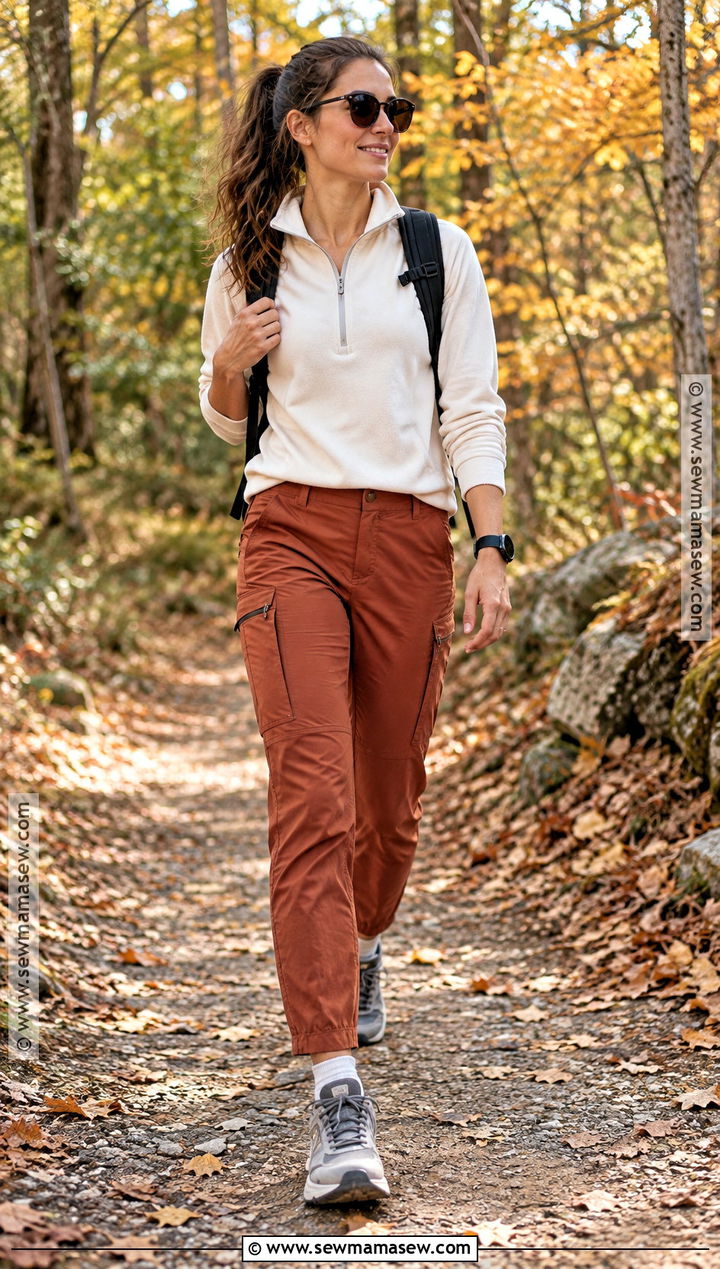
Cargo hiking pants are useful only if the pockets stay flat. I look for zippered thigh pockets set close to the leg rather than big bellows pockets, which bounce with every step and catch on branches. On top, a fitted performance quarter-zip in cream, berry, blue or burnt orange vents quickly on a climb, with a light tank underneath for warmer stretches. Trail-running shoes suit maintained paths; mid-cut boots are better on rough or muddy ground. A compact backpack, sports watch, sunglasses and neutral crew socks finish it, with a windbreaker packed for exposed sections. I like this setup for anyone who wants lip balm, a phone or a trail map within reach without taking the pack off.
7. Fleece Jacket And Hiking Joggers Outfit
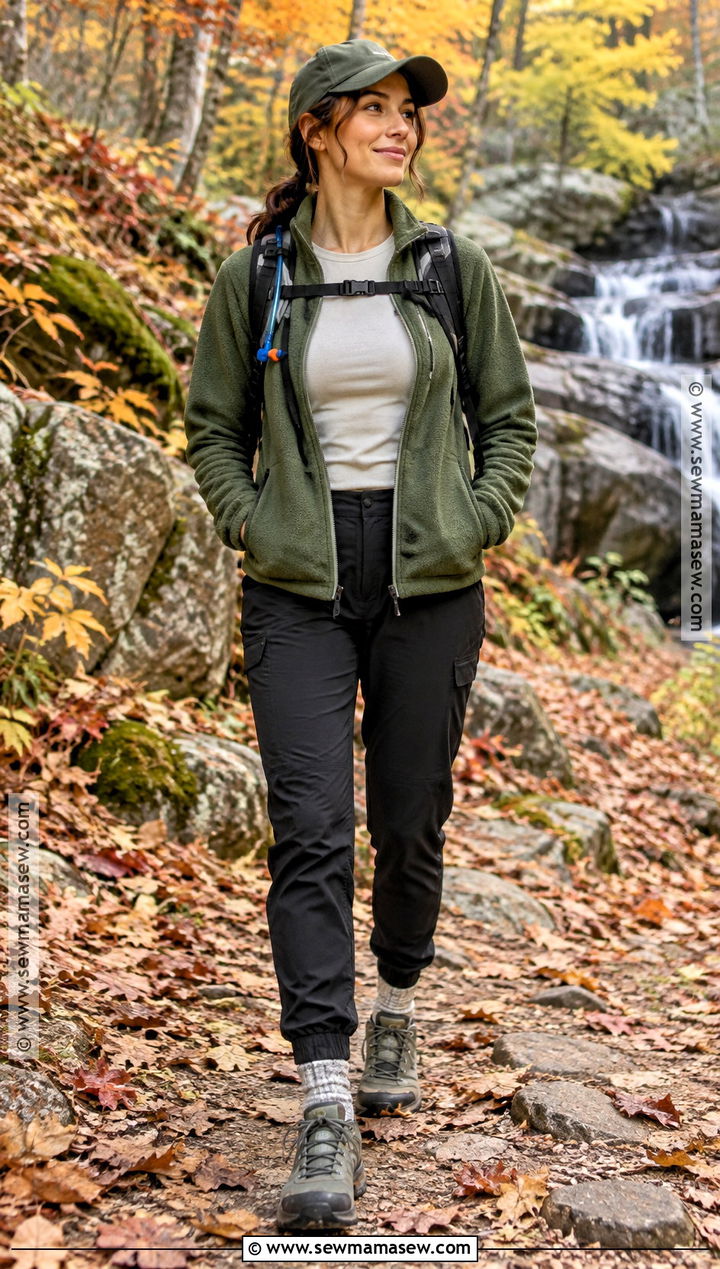
Hiking joggers and a full-zip fleece are comfortable without looking like you left the house in loungewear, provided the joggers are technical ones. Stretch fabric, secure pockets, a smooth waistband and cuffs that sit above the shoe are what I check. Add a fitted performance tee and a light fleece in an autumn shade. Black joggers look sharp with camel, moss or burgundy, and dark olive bottoms suit cream or navy. Low trail shoes, wool-blend socks, a hydration pack or small backpack and a cap complete it. The full zip lets you adjust temperature in seconds. For damp grass and drizzle, carry a thin rain shell and choose joggers with a water-resistant finish.
8. Insulated Jacket And Fleece-Lined Leggings Outfit
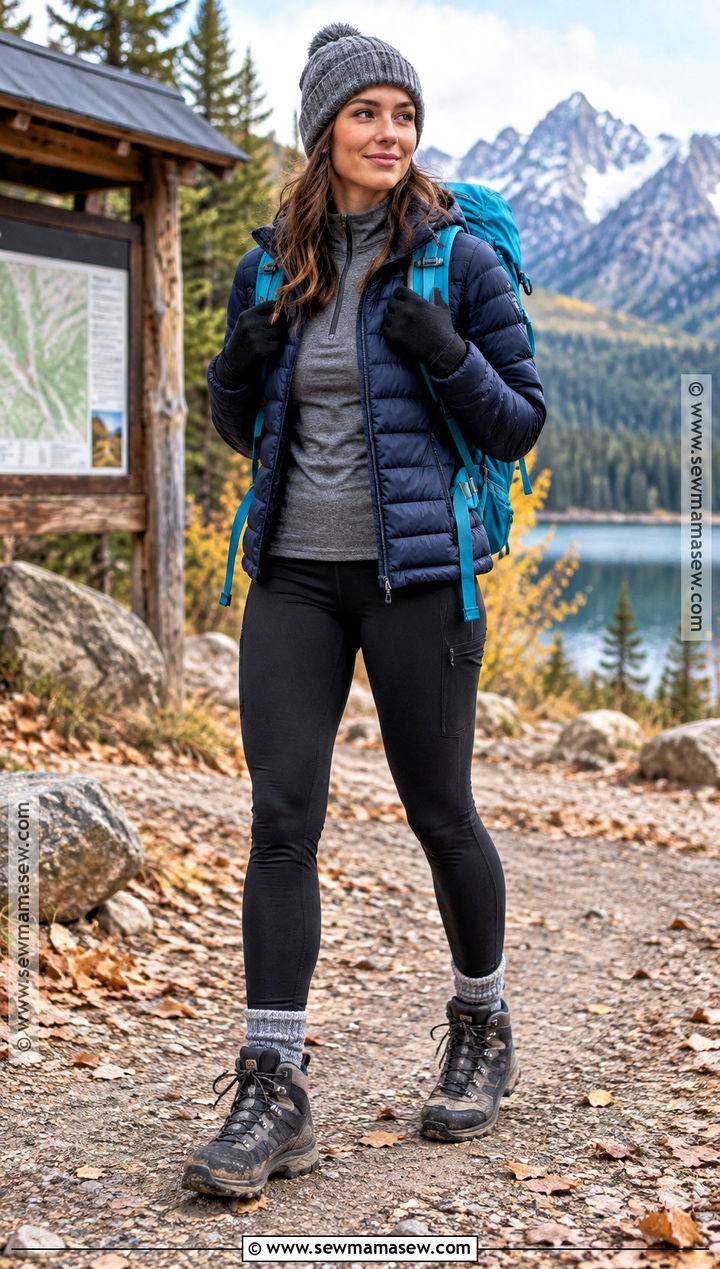
Cold trailheads are where people overdress, then spend the first mile sweating into every layer. My rule is to start slightly cool. A light long-sleeve base goes under a slim synthetic or down jacket that compresses into the pack once you warm up. Down is warmer for its weight, but it loses much of its loft when soaked, so on a damp day I'd lean synthetic. Fleece-lined leggings built for the outdoors, with a wide waistband, secure pockets and reinforced panels, handle rocks and brush. Waterproof mid-cut boots and thicker wool-blend socks suit late-fall ground. A beanie, light gloves and a bright backpack finish it. Open the jacket before a steep climb, and carry a waterproof shell whenever rain is possible.
9. Sun Hoodie And Trekking Pants Outfit
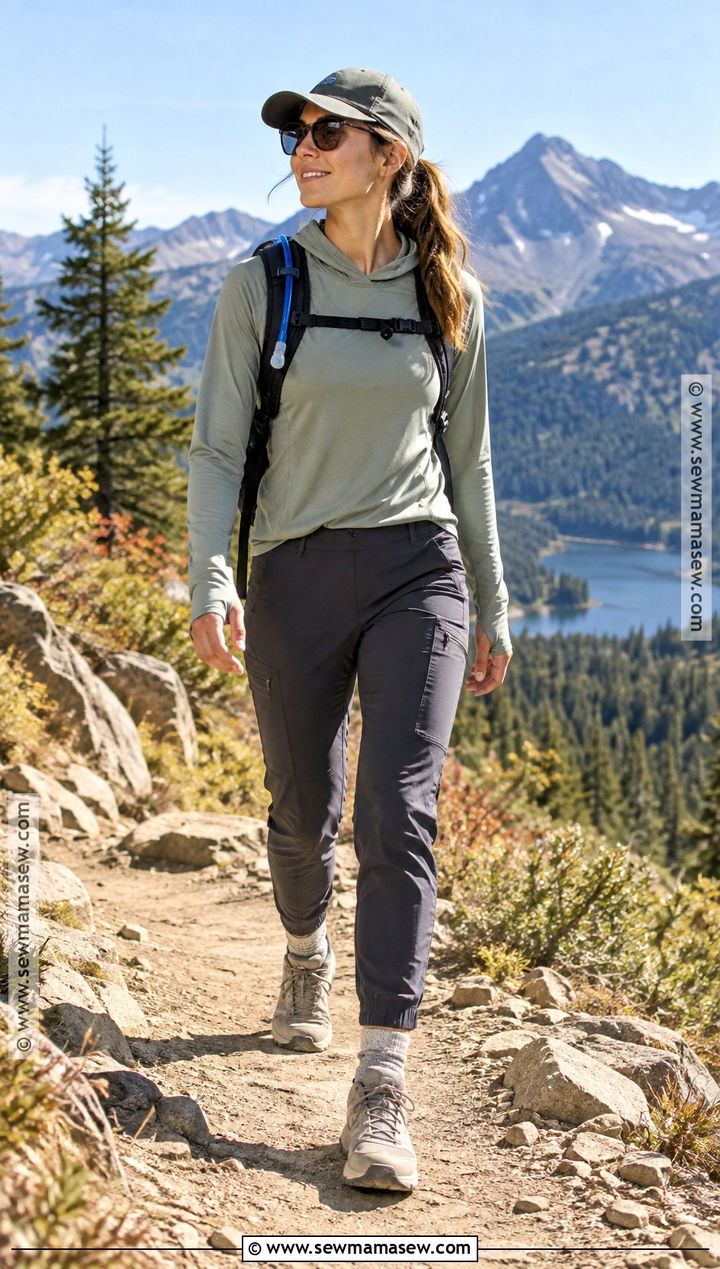
Clear autumn afternoons can be surprisingly bright, and a sun hoodie covers your neck and arms without trapping heat. I'd pick a breathable hooded top in sage, light gray, dusty blue or soft lavender, with stretch nylon trekking pants in charcoal, tan or dark olive. The loose top gives sun cover; the sturdier pants protect your legs on brushy, uneven ground. Trail runners are fine on dry, maintained paths, and boots give more support where you need it. Sunglasses, a cap under the hood, crew socks and a light hydration pack finish it. Pack a fleece or a vest, because shaded sections and rest stops cool you down quickly. It suits early fall best, when mornings are cool and afternoons stay mild.
10. Windbreaker And Black Leggings Outfit
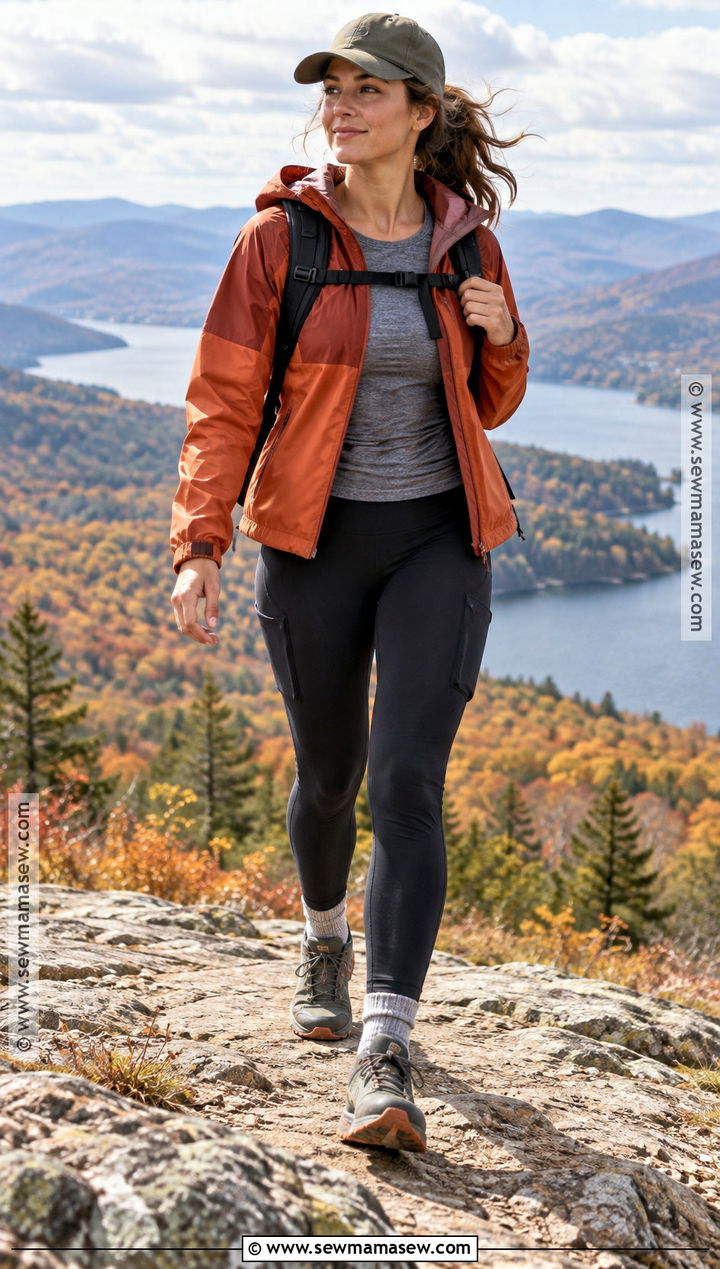
Black leggings on their own are forgettable; a colorful windbreaker over them makes the outfit and blocks the breeze on open trails. Start with a fitted short or long-sleeve performance top, then a light jacket in cobalt, rust, sage or color-blocked neutrals. The leggings should be opaque with side pockets, a supportive waistband and enough stretch for high steps. Grippy trail shoes, cushioned socks, a cap and a slim backpack complete it. I size the windbreaker a little loose so a thin fleece fits underneath and your arms swing freely. A windbreaker stops gusts, not a downpour, so pack a waterproof shell if showers are forecast. It's the outfit I'd suggest for fast hikes and exposed ridges on mild days.
11. Fleece Vest And Thermal Top Outfit
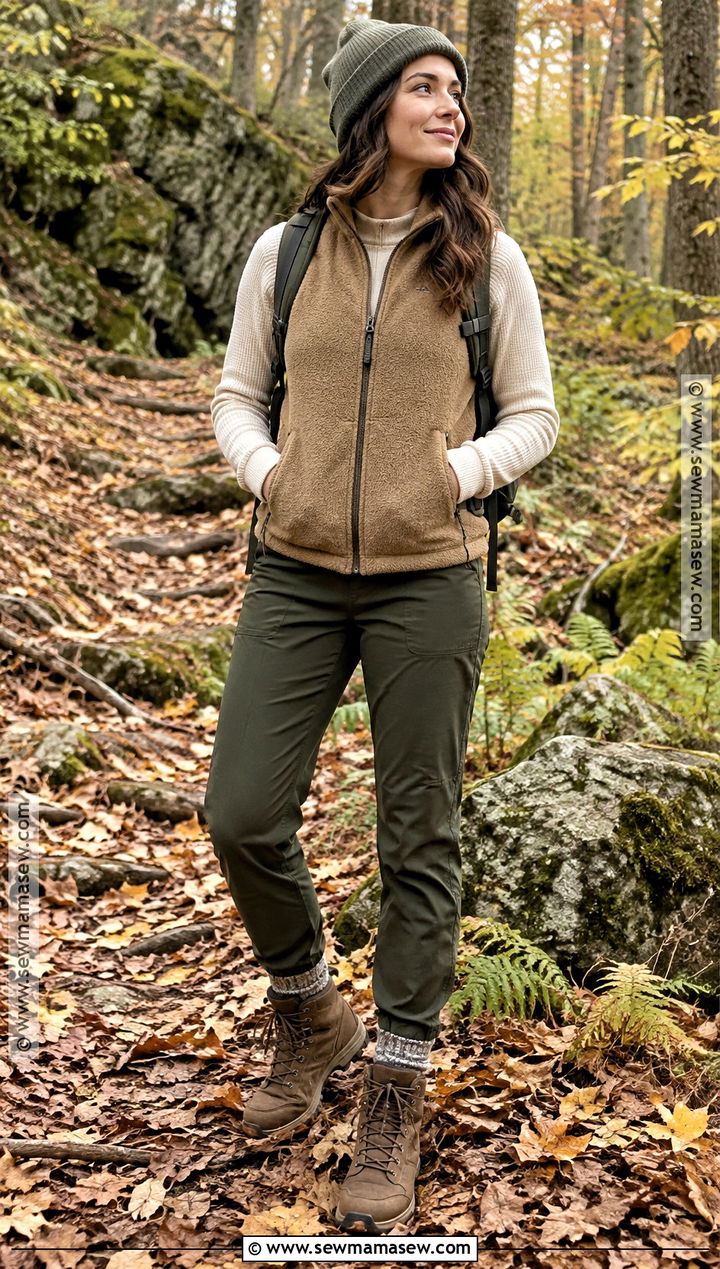
A fleece vest over a thermal top is warm without the bulk of a jacket, and it's one of the outfits I'd pack for mixed sun and forest shade. Choose a fitted waffle-knit or technical long-sleeve in cream, rust or charcoal, then a zip-front fleece vest in olive, camel, navy or burgundy with room through the shoulders. Waffle knit traps warm air in its pockets, which is why it feels warmer than its weight suggests. Tapered hiking pants that resist light abrasion and have secure pockets go below. Mid-cut boots, wool-blend socks, a light beanie and a daypack finish it. Wear the vest open on climbs and zipped at windy viewpoints, and carry a packable insulated jacket that fits over both layers if it's getting colder.
12. Waterproof Shell And Rain Pants Outfit
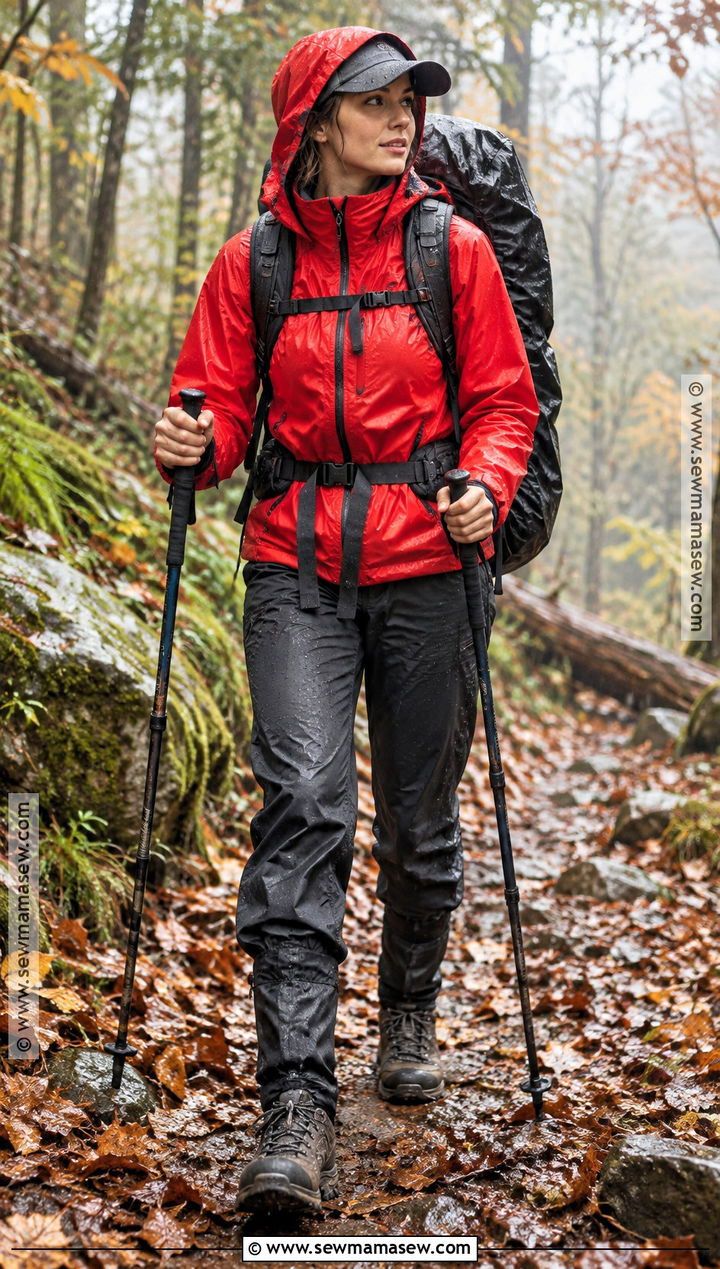
Steady rain needs proper waterproofs, not a water-resistant jacket that soaks through in an hour. I build this from the skin out: a light base layer, a thin grid fleece, a waterproof hooded shell and breathable rain pants. The rain pants should fit over leggings or slim trousers without shortening your stride; side zips at the ankle make them far easier to pull on over boots. A bright shell helps you stay visible. Waterproof boots, gaiters and wool-blend socks handle the ground, and a brimmed cap keeps the hood off your face. Line the pack with a waterproof bag even if it has a rain cover, since covers leak at the back panel. Snug the cuffs, zips and hood just enough to keep water out.
13. Long-Sleeve Tee And Convertible Hiking Pants Outfit
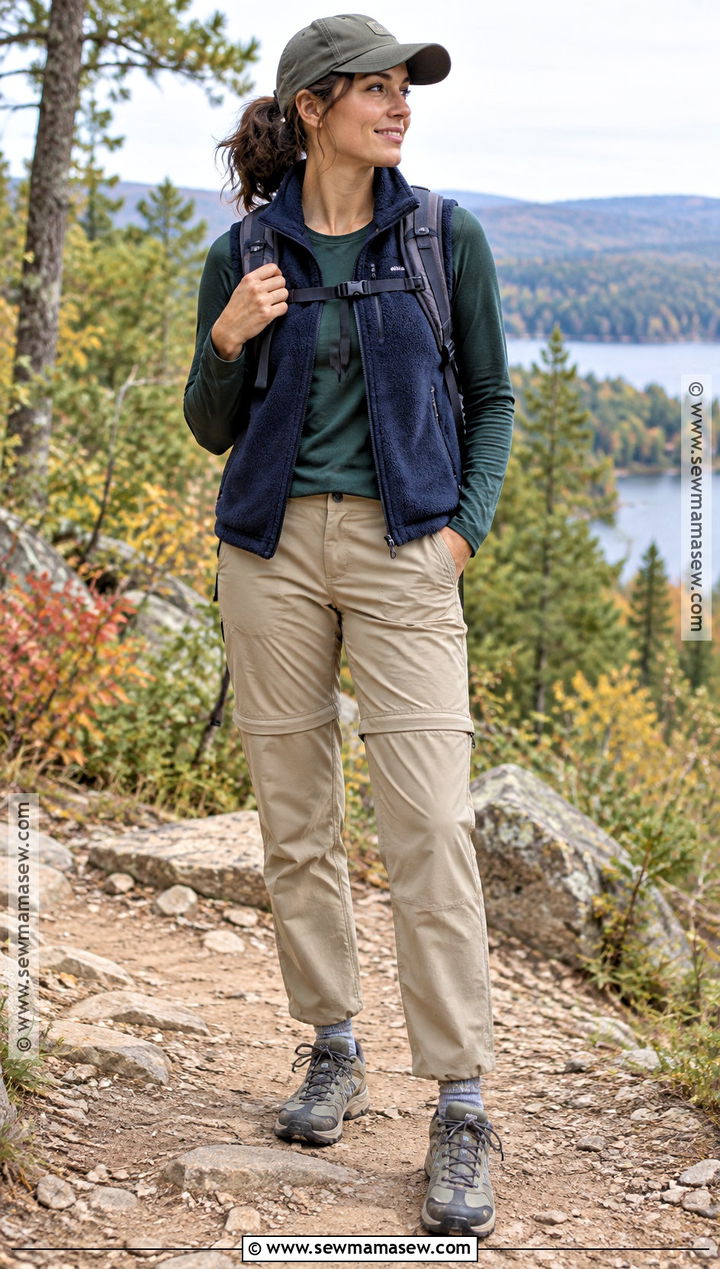
Convertible pants make sense on a dry, moderate trail where the morning is cool and the afternoon isn't. Wear them with a breathable long-sleeve tee in rust, plum or forest green. I check two things on the pants: the zip-off seam should sit flat against the leg, and the cut should be tapered so both the full and short versions look balanced. A light fleece vest packs away easily. Low hiking shoes, crew socks, a cap and a compact backpack complete it. When you take the legs off, put them in a zipped pocket or stuff sack; loose in the main compartment they get lost under everything. Carry a windproof or waterproof jacket for exposed sections or uncertain weather.
14. Hiking Shacket And Trail Leggings Outfit
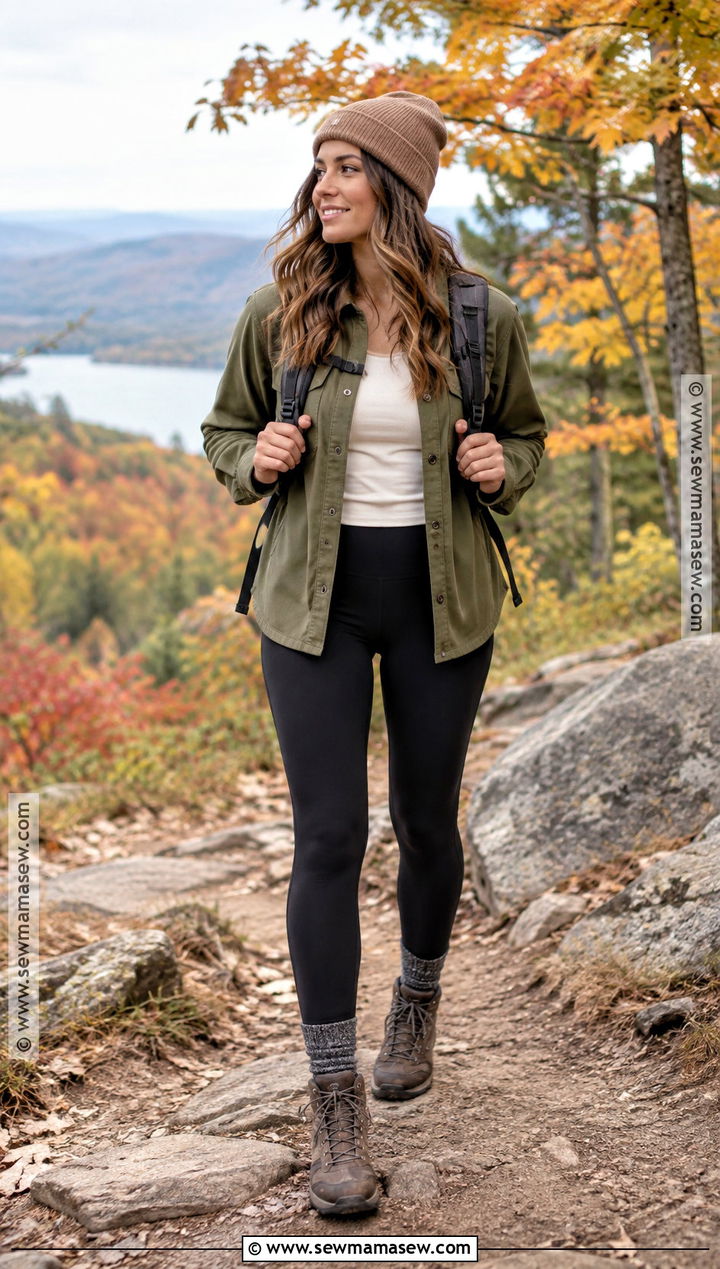
A hiking shacket looks like a casual overshirt but is cut from a technical fabric that dries faster and stretches. Layer it over a fitted moisture-wicking tank or long-sleeve tee, depending on the morning. I like snap fronts here, because they open with one pull when you're warm. Olive, tan, burgundy or a muted plaid all suit the season. Black, brown or deep green trail leggings with sturdy pockets keep the bottom half streamlined. Low hiking boots, wool-blend socks, a beanie or cap and a medium daypack finish it. It moves from a nature walk to a café afterward without looking like trail gear. It's still not a rain layer, so a real shell goes in the bag.
15. Packable Puffer And Hiking Overalls Outfit
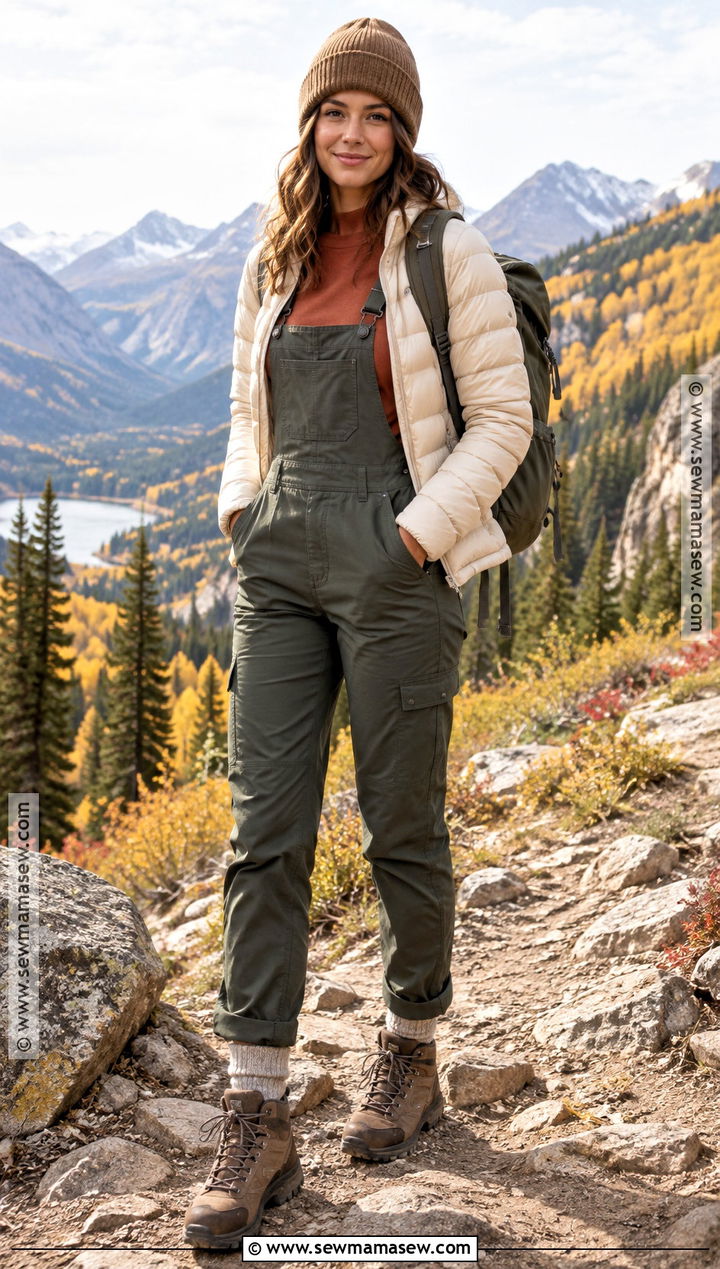
Hiking overalls are a fun change from leggings, but only in a light stretch fabric; stiff canvas overalls restrict your knees on a climb. Wear a fitted merino-blend or synthetic long-sleeve top underneath. The thing I'd check with a pack on is where the straps and side buttons sit, because hardware under a hip belt rubs a sore spot within a mile. Choose a tapered leg, an adjustable waist and secure chest or hip pockets. A packable puffer goes over the top at a cold start and into the bag once you warm up. Rugged boots, wool-blend socks, a knit beanie and a neutral backpack finish it. Try it at home first, including how easily you can get out of it for a bathroom stop.
Fitting Boots With the Socks You'll Actually Hike In
Most blisters I hear about come from boots that were tried on with thin everyday socks. Fall hiking socks are thicker, and that changes the fit completely.
- Bring your hiking socks when you try boots on, and shop later in the day, when feet are slightly swollen the way they will be on a trail.
- Before lacing, push your foot forward until your toes touch the front. There should be roughly a finger's width behind your heel, so your toes don't hit the front on a long descent.
- Lace up and walk on a slope or stairs if you can. Your heel should barely lift. If it slides, try a different lacing pattern or a different last before you buy.
- Wear new boots around the house and on short walks before a long hike. Leather especially needs time to soften at the flex point.
Pack a spare pair of socks in a zipped bag. Changing into dry socks at lunch does more for wet, cold feet than any boot can.
Base Layer, Then Warmth, Then a Shell in the Pack
Fall trail outfits get much simpler once you stop looking for one perfect jacket and start thinking in removable layers. A comfortable base, warmth you can take off and weather protection close at hand cover most days. Leggings move freely, while trail pants give more protection around rocks, mud and brush. Match your shoes to the route and the support your feet need. Small things like wool-blend socks, gloves, hats and gaiters add comfort without much weight. Use these outfits as starting points and adjust the colors, insulation and coverage to your local weather, and you'll spend the hike looking at the view instead of fussing with your clothes.
Related posts: