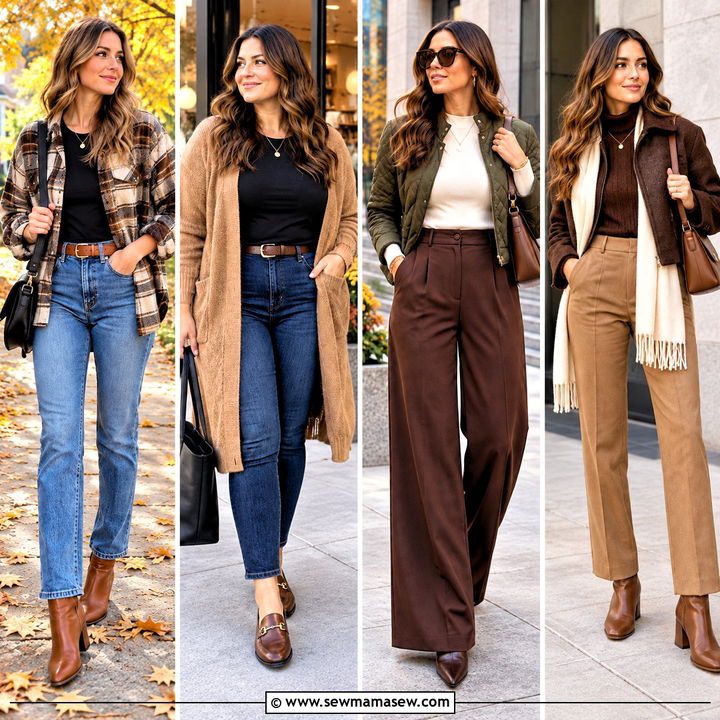
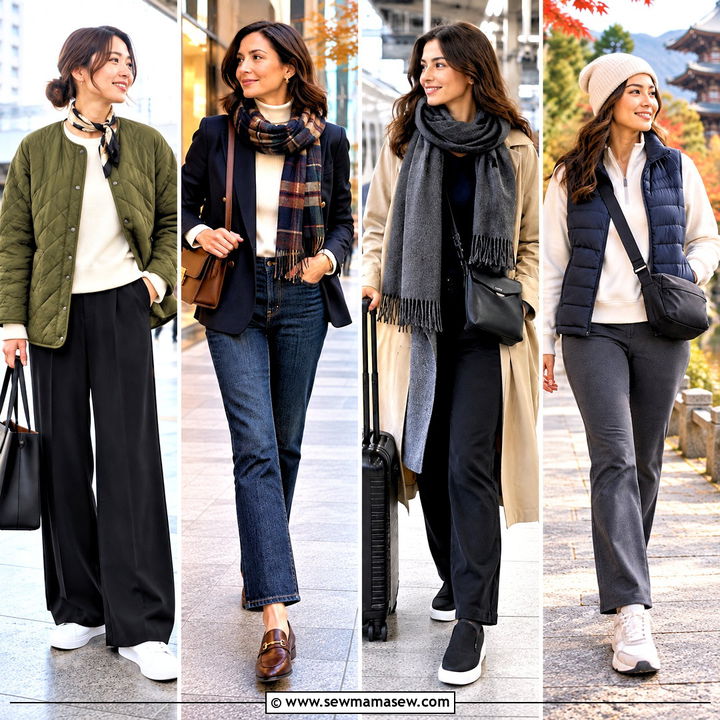
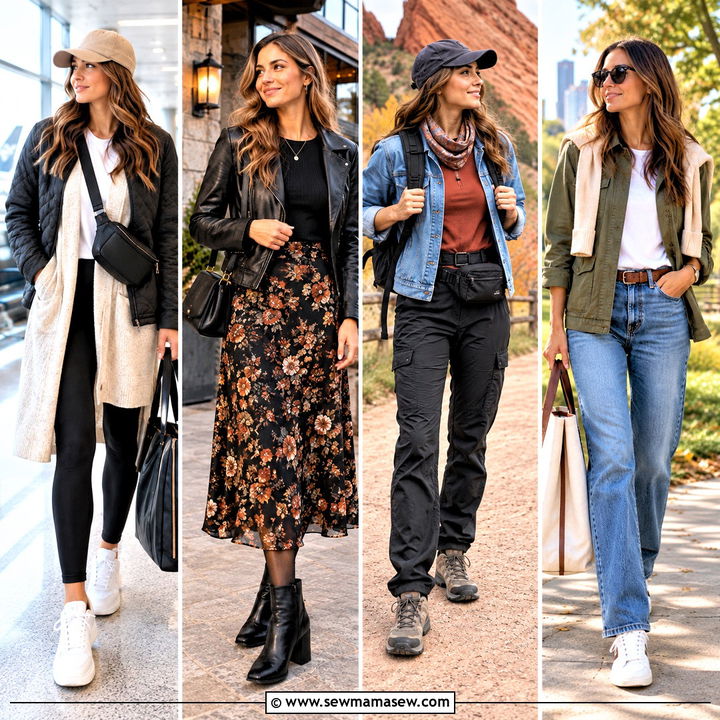
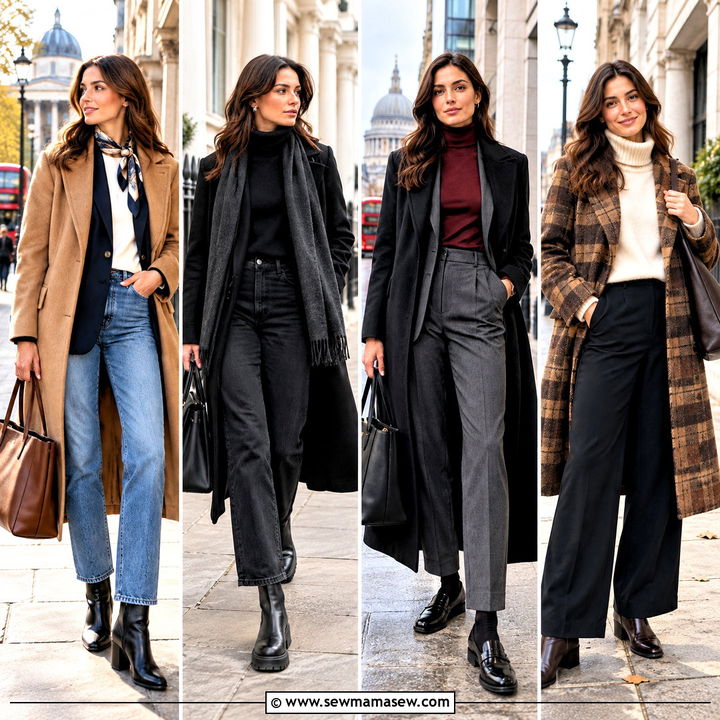
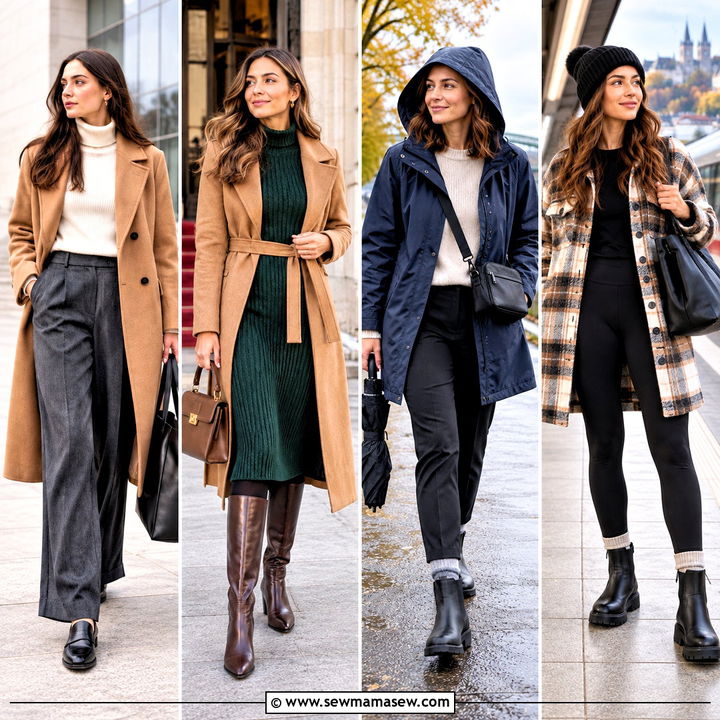
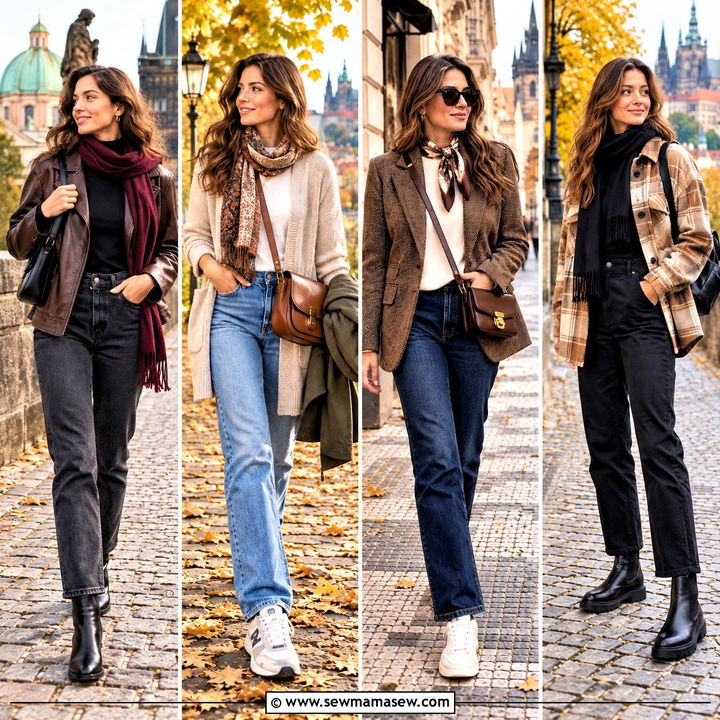
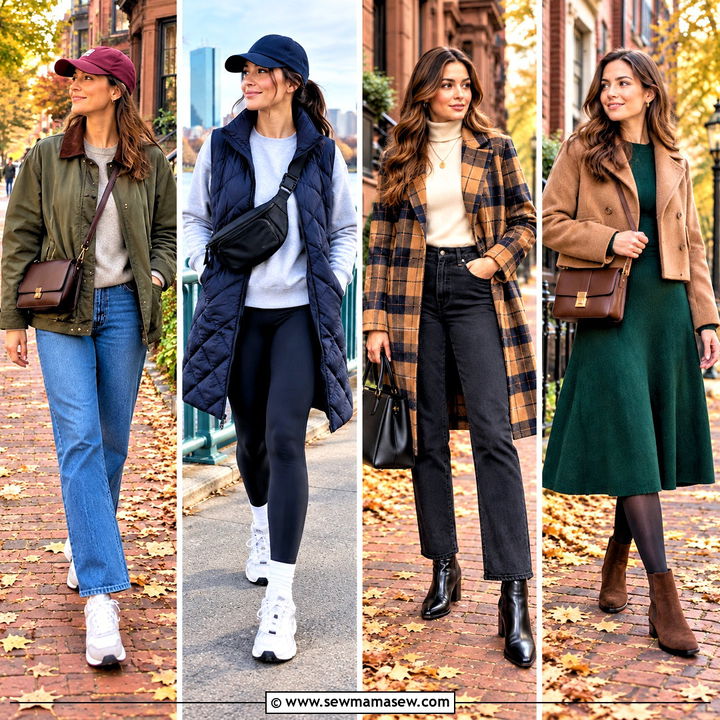
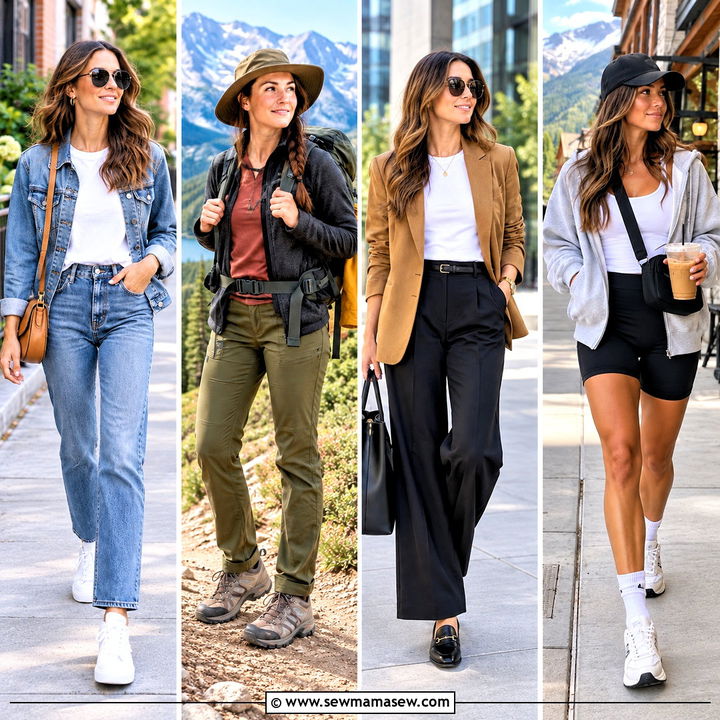
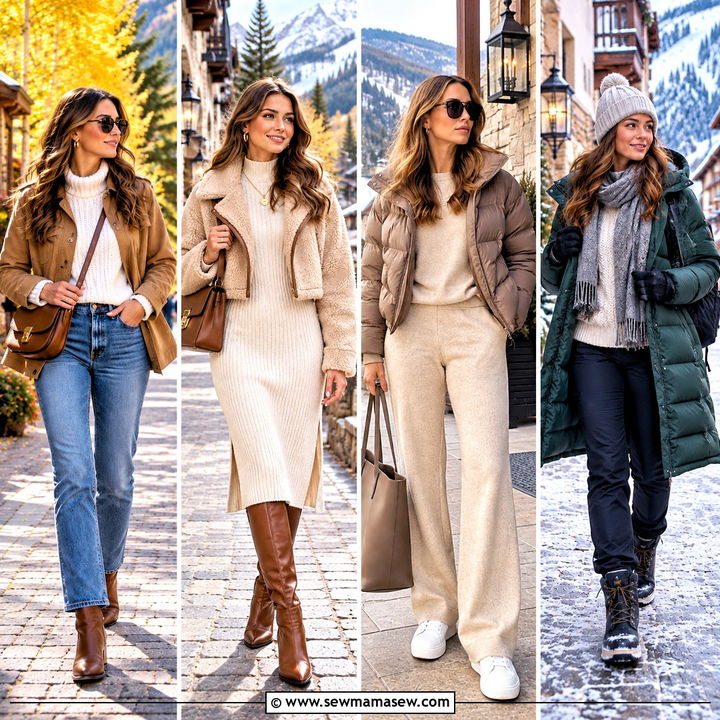
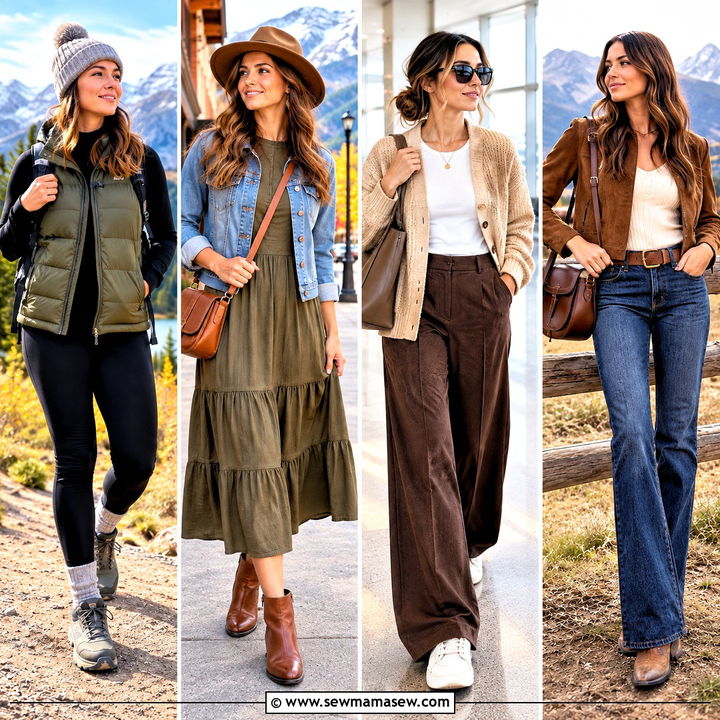
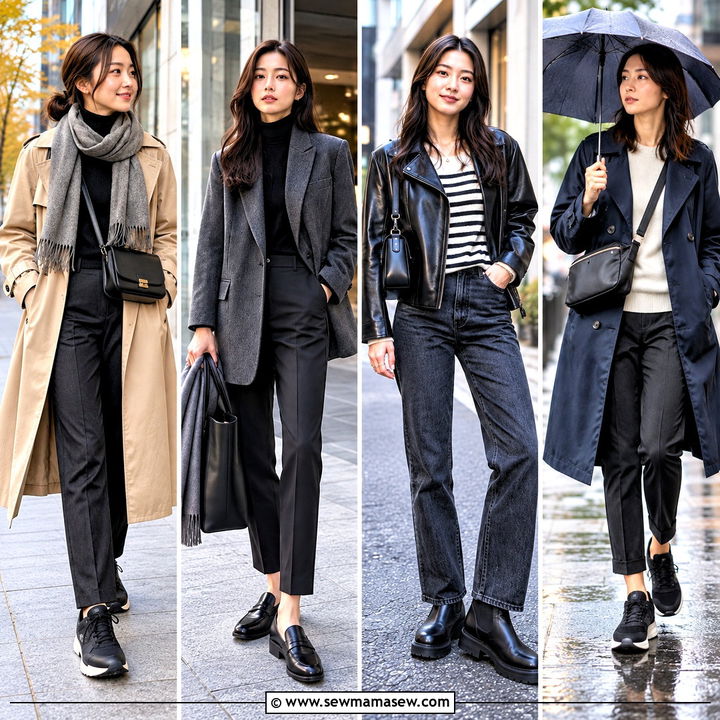
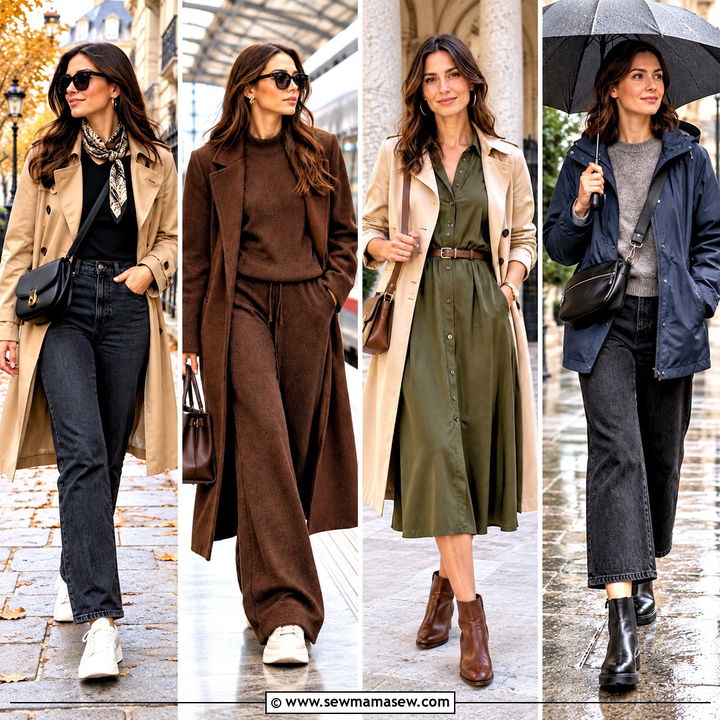
Denver in November is the trip where I see people overpack the most. They bring a deep-winter coat, then spend a bright afternoon carrying it over one arm. The city sits a mile up, the air is dry, and the sun is strong enough to make a 45-degree day feel warm while you stand in it, then the temperature drops fast once it sets. An early snow can arrive and melt off the sidewalks within a day. So I plan this trip around thin layers that come off easily, one coat that does real work, shoes that handle slush, and sunglasses. The city dresses relaxed, which helps: denim, knitwear, puffers and good boots fit in almost everywhere, from a museum morning to a casual dinner. Below are fifteen looks I'd build from that kind of suitcase.

Dressing for a Day That Starts Near Freezing and Ends in the Fifties
The thing that catches visitors out in Denver is the swing within a single day. A November morning can sit in the twenties, and by early afternoon the sun has pushed it close to fifty. Then it drops again the moment the light goes. So I build every outfit from three thin layers rather than one thick one, which lets you subtract as the day warms and add back at dusk.
- Base: a thin merino or synthetic long-sleeve top. Merino stays warm when you sweat walking uphill and doesn't hold odor, so you can wear it twice.
- Middle: a sweater, fleece or flannel that you can take off and carry without it filling a whole bag.
- Outer: one coat that blocks wind. In dry air, wind is what makes it feel colder than the number says.
- Small things: gloves, a beanie and a scarf weigh almost nothing and do more for an evening walk than a heavier coat would.
I tell people to dress for the coldest hour they'll be outside, then make sure everything above the base layer can come off and fit in a tote. If a layer can't be carried comfortably, it's the wrong layer for this trip.
1. Puffer Jacket With Sweater And Straight-Leg Jeans
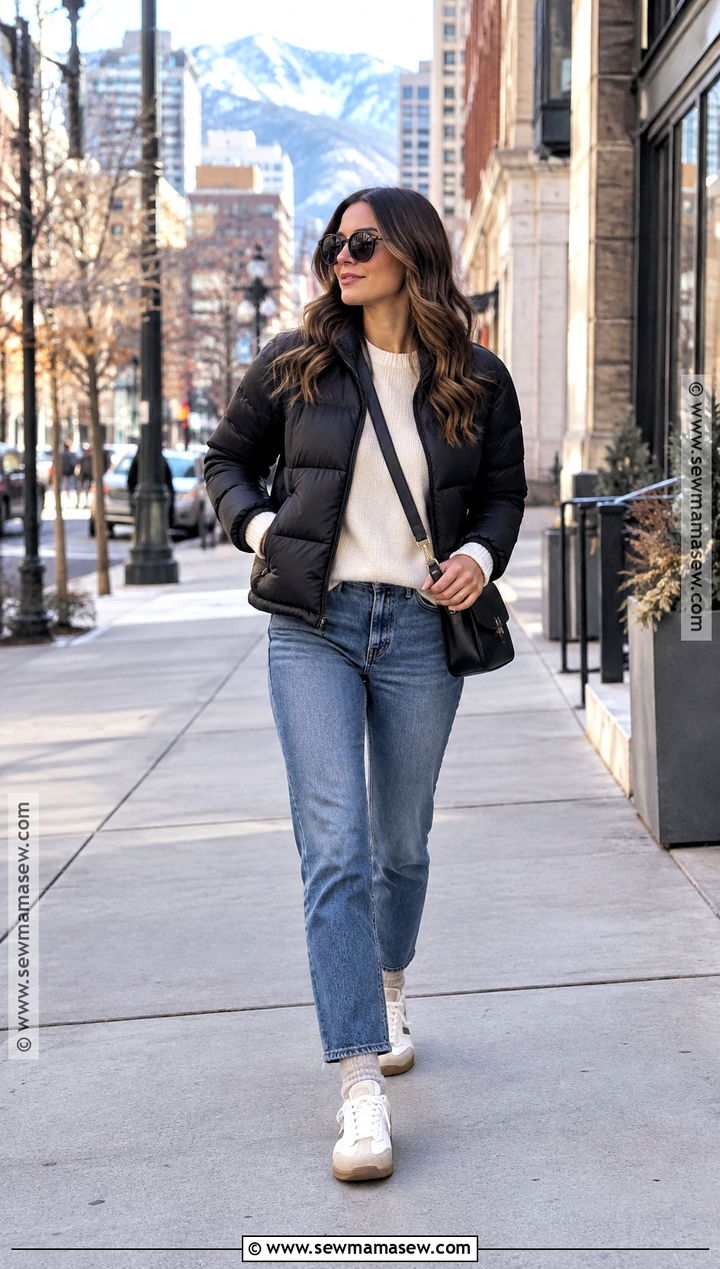
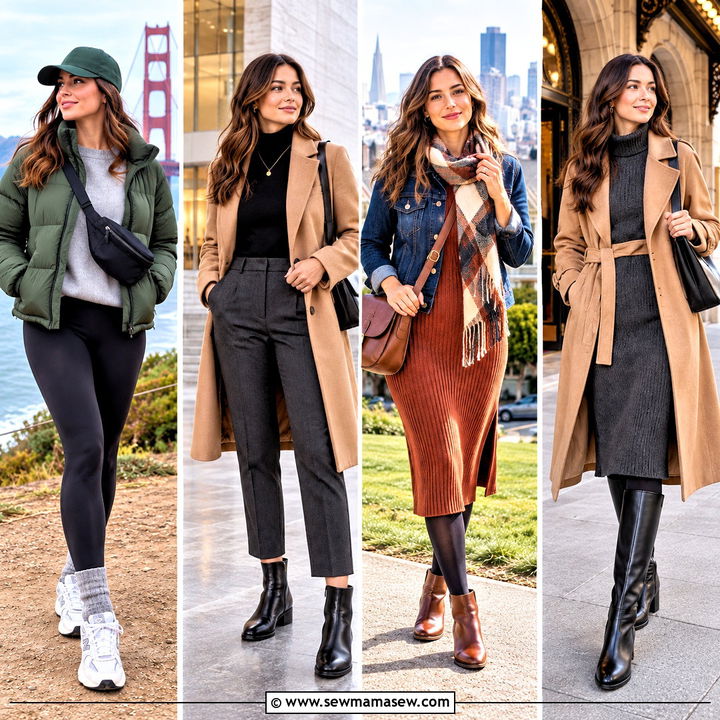
This is the outfit I'd pack first, because almost every other look on the list can borrow its puffer. A lightweight, hip-length puffer goes over a crewneck sweater and a breathable long-sleeve base, with straight-leg jeans that leave room for thin thermal leggings on a cold morning. Check that before you go: if the leggings make the jeans pull at the knee when you sit, size up the denim or skip the thermals. Cushioned leather sneakers, warm ankle socks, sunglasses and a medium crossbody bag finish it. I stick to a dark puffer, navy or black, because it hides the grime of a travel day. When the afternoon warms up, unzip it or stuff it into a tote; a good packable puffer squashes down to the size of a water bottle.
2. Wool Coat With Turtleneck And Tailored Trousers
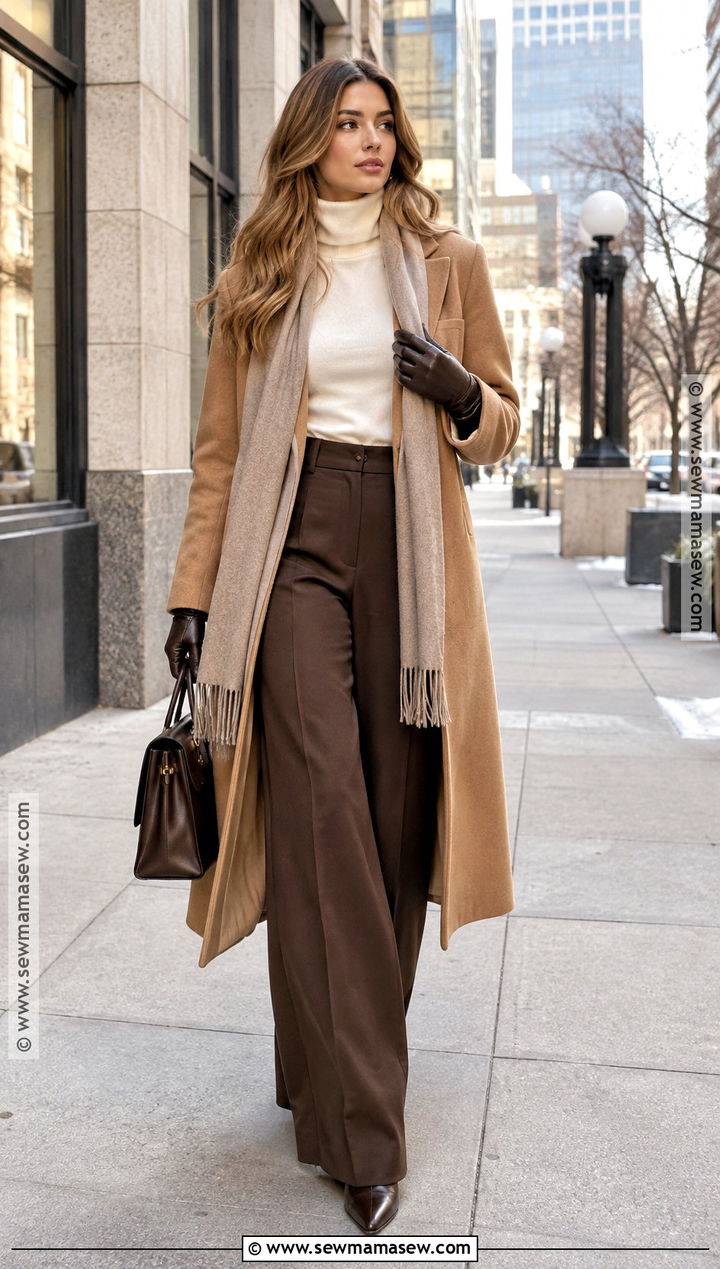
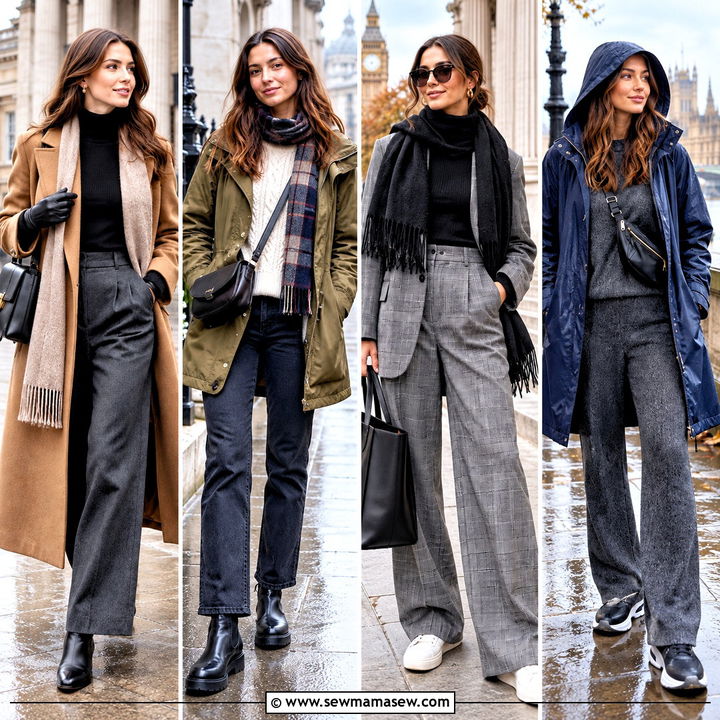
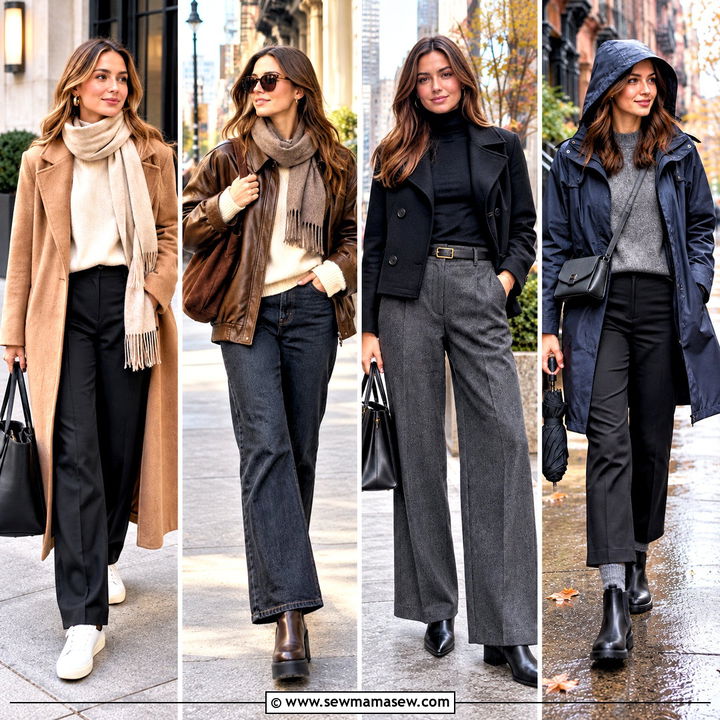
For museums, a business lunch or an evening performance, I swap the puffer for a structured wool coat over a fitted turtleneck and tailored trousers. The trouser fabric matters more than the cut here. Thin dress pants let the wind straight through, so I look for a wool blend with some weight to it. Pointed ankle boots with a low block heel keep you comfortable across a few blocks of walking, and leather gloves plus a soft scarf handle the evening drop. If you're petite, an ankle-length trouser keeps the coat from swallowing you. Taller or curvier frames tend to look better in a high-rise wide leg with a defined waistband. I keep this one tonal, camel into cream into brown, so the coat does the talking.
3. Long Puffer With Thermal Leggings And Snow Boots
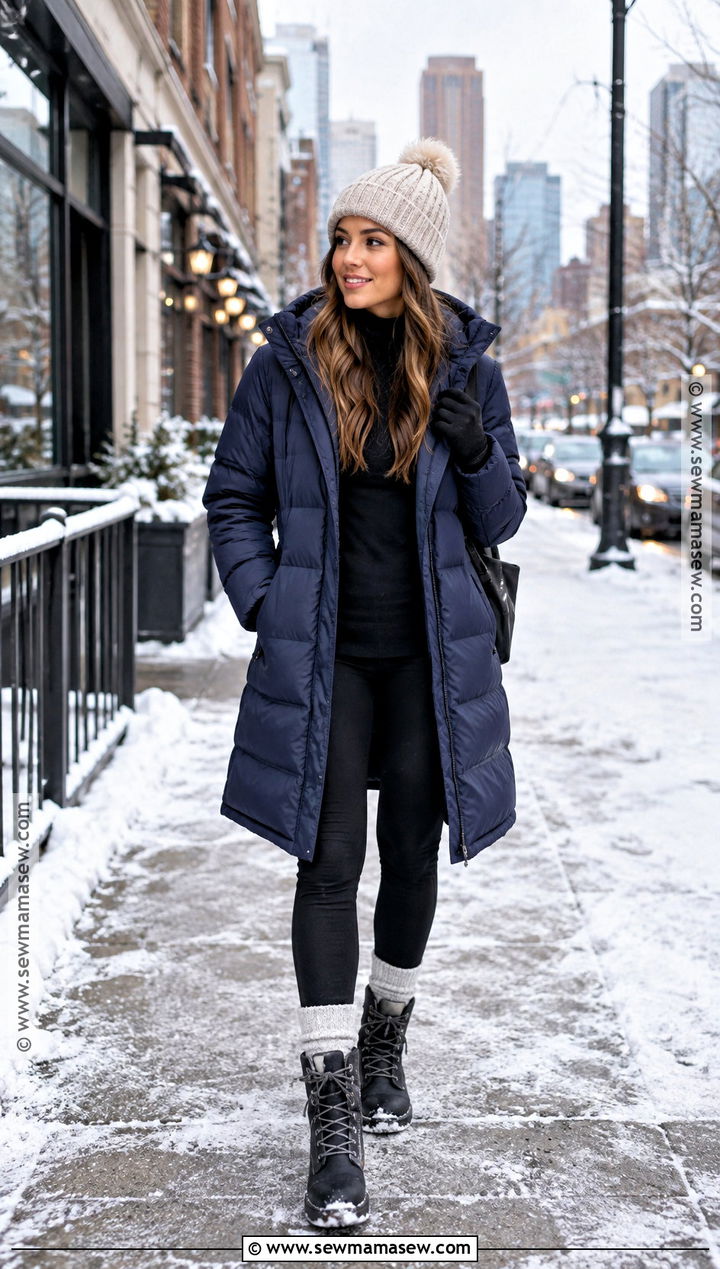
Snow in the forecast changes the brief: now the job is keeping every part of you dry. I start with a moisture-managing thermal top and fleece-lined leggings, then a knee-length puffer and insulated waterproof boots with deep lugs. Traction is the detail people skip, and it's the one that matters on a packed-snow crosswalk. Thick wool-blend socks, a beanie and gloves come next, and the crossbody goes under the coat so it doesn't bang against a wet hem. Before buying leggings for this, I bend over in the fitting room; if the fabric goes sheer at the seat, it won't hold up to a full day outside. A lightly belted puffer gives you a waist without pinning your arms. Keep the base layers black or charcoal and let the coat carry the color.
4. Quilted Jacket With Flannel Shirt And Black Jeans
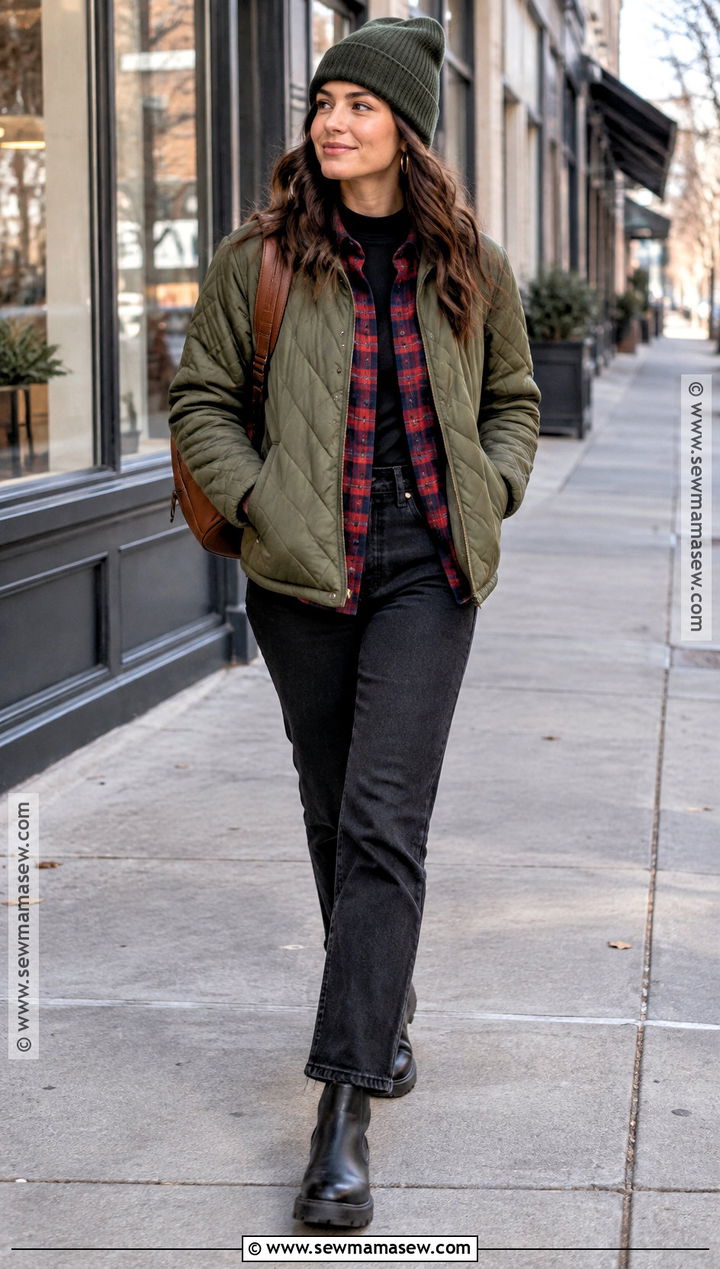
A quilted jacket over a plaid flannel and black jeans is the Colorado look most visitors picture, and it earns its place because it handles dry, crisp days without any technical gear. I always put a fitted cotton or merino top under the flannel so there's a layer to drop when a restaurant runs warm. Size the quilted jacket with a little room in the shoulders; a snug one pulls across the back once the flannel is underneath. Waterproof Chelsea boots cope with damp pavement, and a leather backpack keeps both hands free. A ribbed beanie and small hoops finish it. If you want more shape, leave the jacket open and tuck the flannel into high-rise jeans, which shows a waistline the quilting otherwise hides.
5. Hoodie With Cargo Pants And Waterproof Sneakers
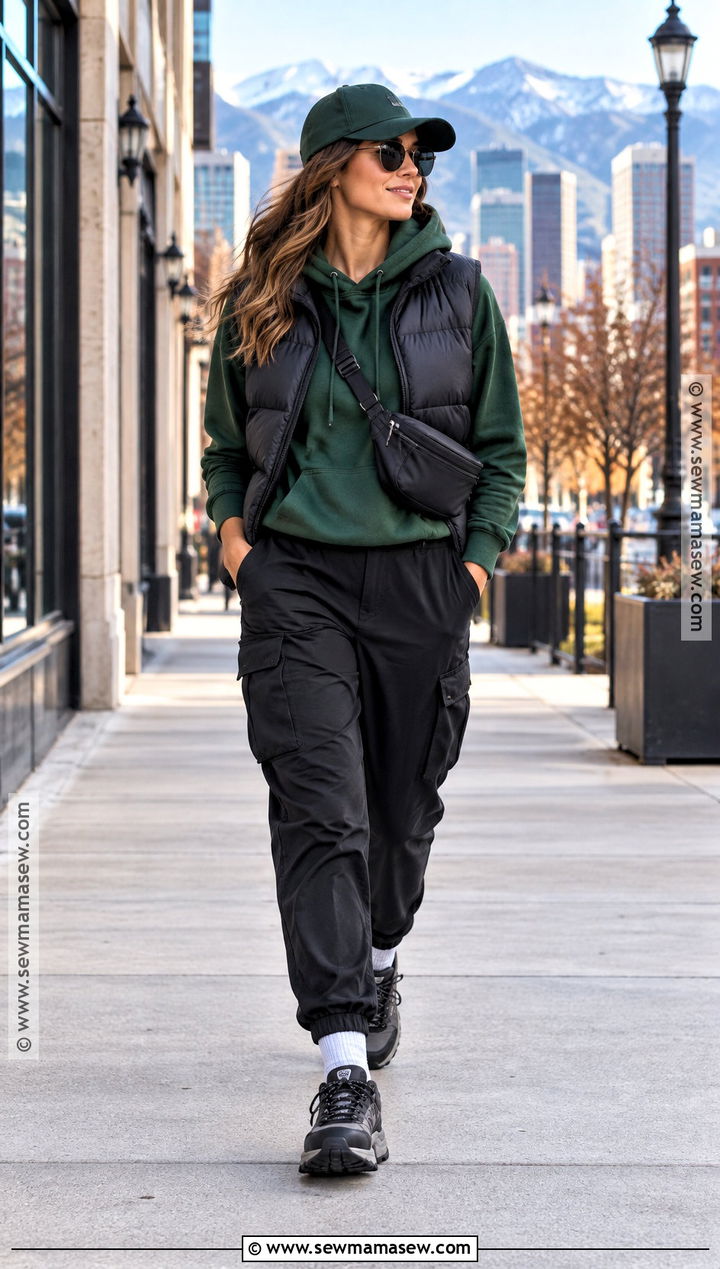
On a heavy walking day I'd rather be in this than anything else here. A fitted long-sleeve tee goes under a heavyweight hoodie, then water-resistant cargo pants, which shrug off a splash from a slushy curb far better than cotton joggers. Pick a straight or slightly tapered leg so the pockets don't add width at the thigh. Waterproof sneakers, cushioned socks and a belt bag cover the essentials. The compact puffer vest is the clever part: it warms your core and leaves your arms free, so when the sun comes out at two o'clock you can open it without taking anything off. A baseball cap is worth packing too, because the midday glare at this altitude is stronger than most visitors expect.
6. Sweater Dress With Tights And Knee-High Boots
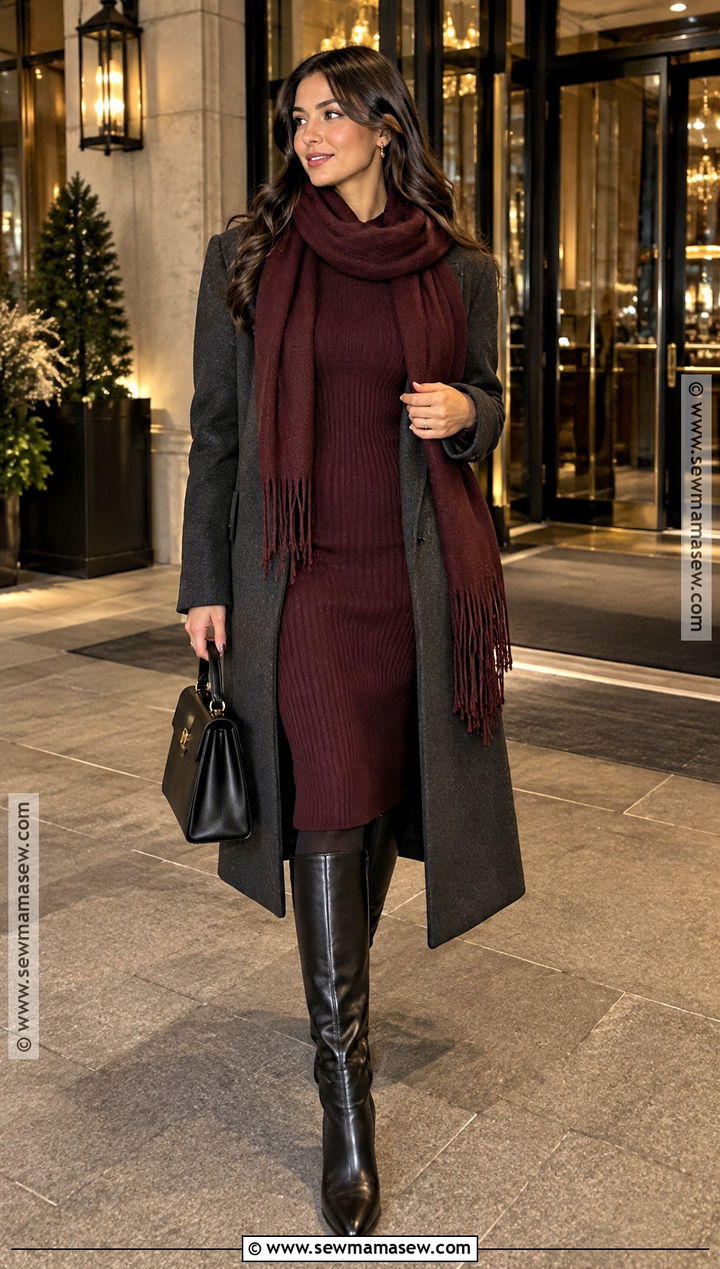
A sweater dress handles a Denver November fine, as long as what's under it does the warming. I choose a midi-length ribbed dress with enough ease for a thin thermal camisole or long-sleeve base, then add opaque fleece-lined tights and knee-high leather boots with a low heel. The boot and the dress hem should overlap by a few inches when you sit; a gap of bare tights at the knee is where the cold gets in. A knee-length wool coat covers the dress without overwhelming it, and a wide scarf comes off easily indoors. Belted versions give you a waist, straight-cut ones read more relaxed. If you run cold, slip tall socks over the tights inside the boots. This is my pick for a dinner or a night at the theater.
7. Shacket With Knit Top And Relaxed Jeans
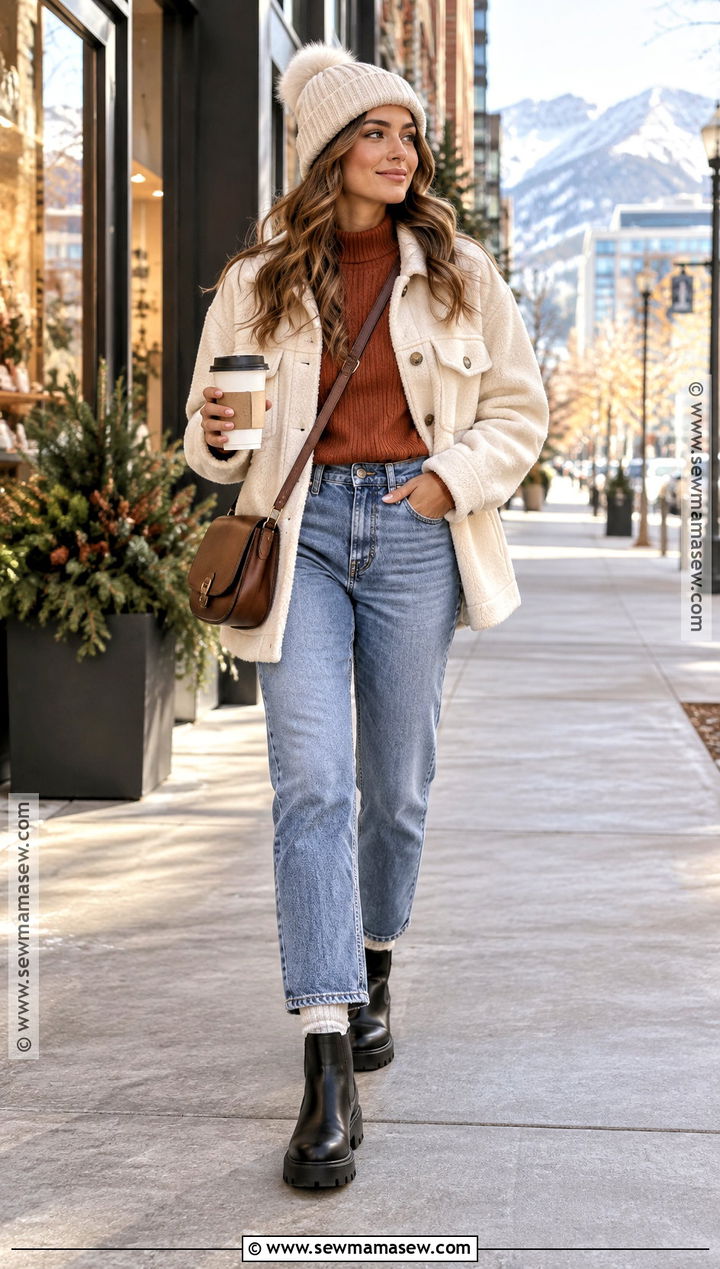
A lined shacket is for the days when a coat is overkill, usually a sunny afternoon in the high 40s. I layer it over a close-fitting knit top or a thin mock-neck sweater, because anything chunky underneath makes the shacket strain at the buttons. Relaxed straight-leg jeans and lug-sole Chelsea boots keep it practical, and a crossbody bag, knit hat and warm socks round it out. Length decides the shape: a longer shacket covers the hip and suits most bodies, while a cropped one only works with high-rise denim. If you dislike volume, skip the oversized fits and look for one that's softly tailored. Oatmeal, rust, brown and olive all sit well against the dry, tawny landscape around the city this time of year.
8. Fleece Vest With Long-Sleeve Top And Trail Leggings
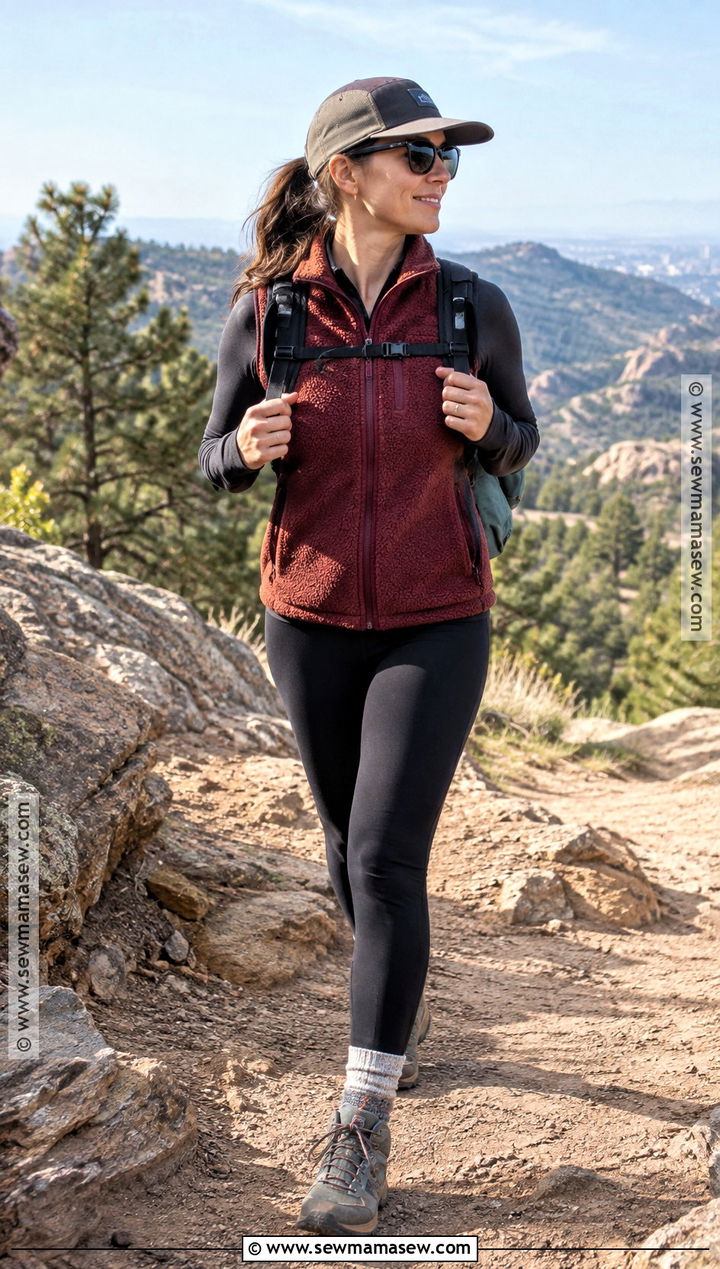
For a day outdoors, I dress in layers I can take off on the move without stopping. A moisture-wicking long-sleeve top goes under a zippered fleece vest, with thick trail leggings that have a secure pocket for a phone. I always carry a lightweight waterproof shell in the daypack, because foothill weather turns quickly. Supportive trail sneakers or low hiking boots, wool-blend socks, sunglasses and a brimmed cap finish it. Brushed-interior leggings are worth it if you run cold. One honest caveat: this is for city parks and easy foothill walks. Higher elevations and real trails need proper technical gear and a close eye on the mountain forecast, which is a different packing list entirely.
9. Leather Jacket With Sweater And Dark-Wash Jeans
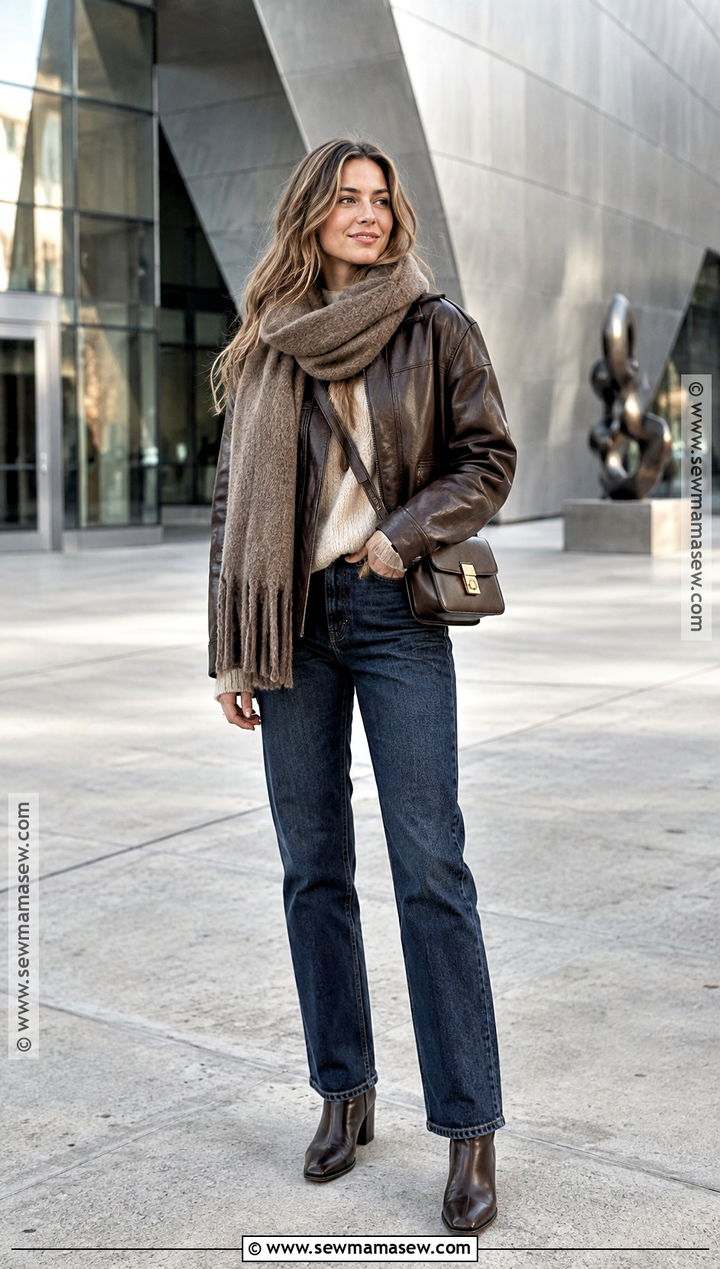
I only bring a leather jacket to Denver for the dry, milder days, and I plan around the fact that it won't keep up after sunset. Under it goes a fine-knit sweater over a lightweight thermal top; a thick knit makes a fitted moto jacket bind at the elbows. Dark-wash straight-leg jeans and leather ankle boots keep it sharp, a large scarf adds warmth at the neck, and a structured crossbody sits close to the body. If you'd like something softer than black, a brown or taupe faux-leather jacket works with the same pieces. Real leather and faux both dislike wet snow, so check the forecast. I tuck a packable puffer in the tote when plans run late.
10. Blazer With Mock-Neck Top And Wide-Leg Pants
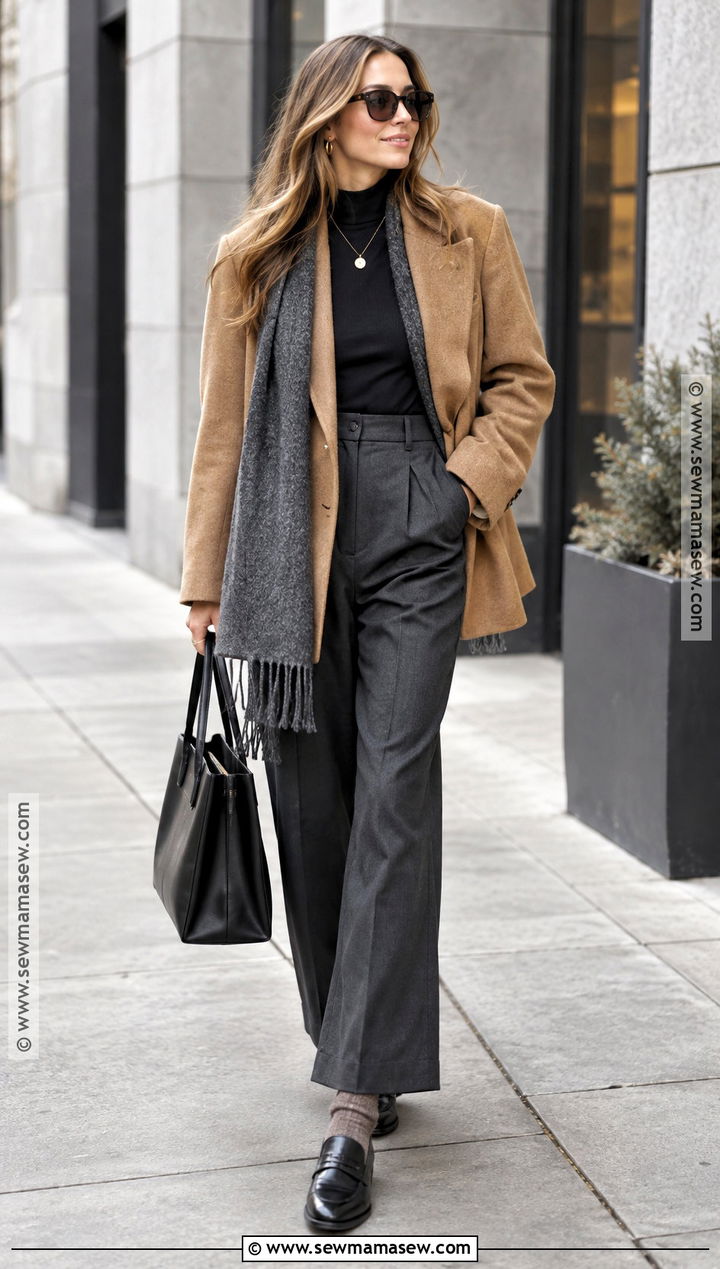
Could a blazer work for Denver in November? Yes, on a mild day with indoor plans, and with something warm hidden underneath. I choose an oversized wool-blend blazer over a fitted mock-neck top, with high-rise wide-leg pants that balance the boxier shoulder. Leather loafers with warm socks are fine on dry pavement; switch to ankle boots the minute the sidewalks look wet or icy, because loafer soles slide. A long scarf, a structured tote and small gold jewelry pull it together. My favorite trick for anyone who runs cold is a thin quilted vest under the blazer. Nobody sees it, and it buys you a lot of warmth. Charcoal, camel, black or cream keep the palette quiet for a gallery or a creative office.
11. Parka With Sweatshirt And Straight-Leg Joggers
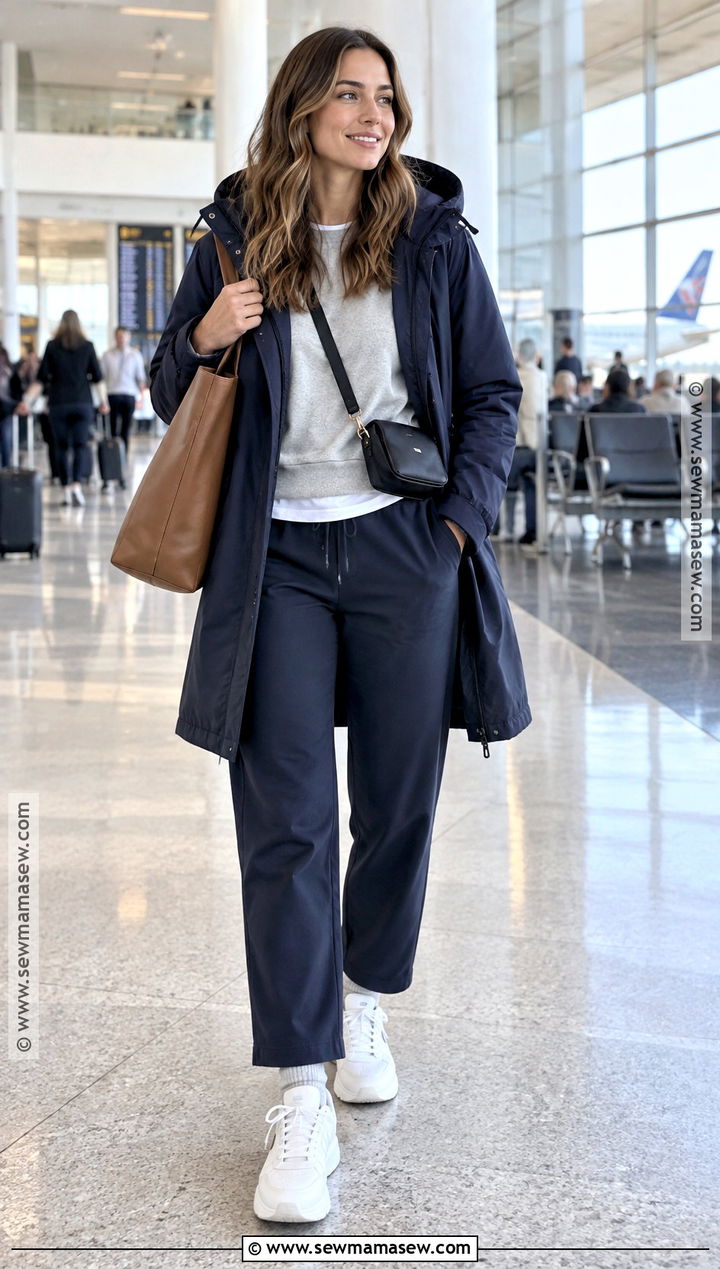
Travel days are where I want comfort that still looks put together at the arrivals curb. A soft sweatshirt goes over a breathable T-shirt, then straight-leg joggers in a thick ponte or technical fabric, which hold their shape through hours of sitting far better than fleece. A hooded parka takes care of wind and light snow. Supportive sneakers, crew socks, a roomy tote and a small crossbody for documents keep everything within reach. I look for joggers with a smooth waistband and very little hardware, which reads cleaner than gym pants. Matching the sweatshirt and jogger color gives you a calm base under the coat. Pack gloves in the tote, not the checked bag; arriving after dark in November is cold.
12. Denim Shirt With Corduroy Pants And Western Boots
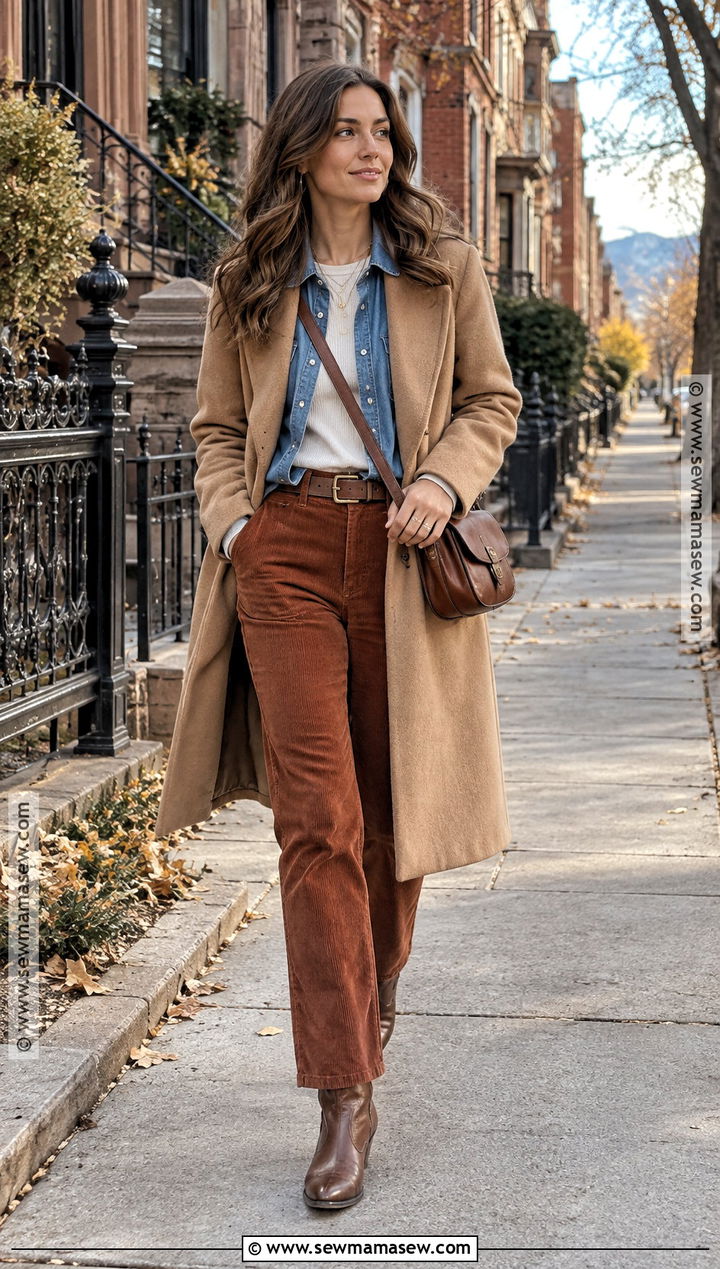
Denver's Western streak is fun to nod to, but I keep it to one or two references so it doesn't tip into costume. Start with a fitted thermal tee and wear a denim shirt over it, buttoned or open. High-rise corduroy pants add warmth and texture, and earthy shades like rust, olive or deep brown suit the cord's wale. Choose ankle-height Western boots with a low heel and little decoration; a plain boot with a slight toe shape reads current. A wool coat or cropped puffer covers you when it cools. A leather belt, crossbody bag and understated silver jewelry finish it. If you add a hat, drop something else. It's a good outfit for live music, local shopping or an afternoon in the historic neighborhoods.
13. Knit Set With Puffer Vest And Sneakers
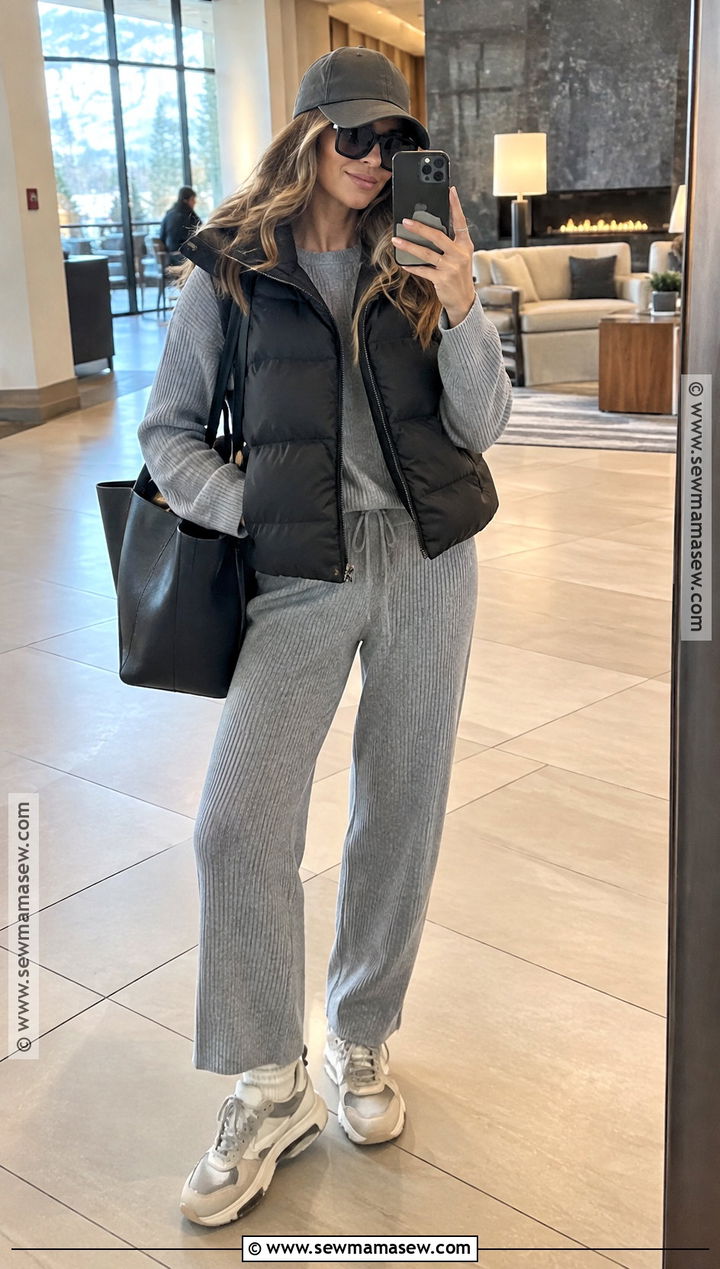
A matching knit set looks deliberate in a way loungewear never does, as long as the fabric has some body. I go for ribbed pants and a long-sleeve knit top in black, navy, chocolate or heather gray, then add a puffer vest for core warmth without breaking the clean column of color. White leather sneakers brighten it, and thick socks keep the ankle gap covered. A baseball cap, sunglasses and a structured tote finish it. Straight or slightly flared knit pants look far more polished than very loose ones, and a top that reaches the hip covers the waistband when you raise your arms. When it gets colder, put a long coat over the vest. It's my go-to for a lazy sightseeing day that still needs to pass at a café.
14. Midi Skirt With Sweater And Ankle Boots
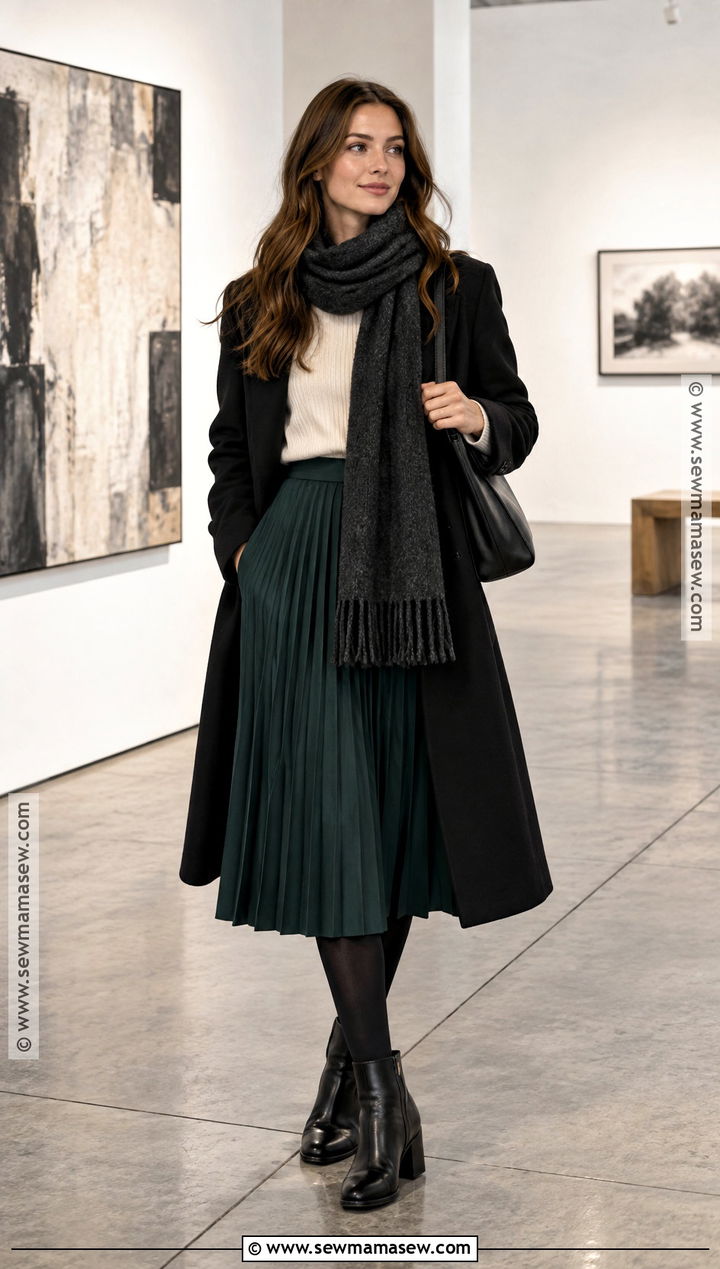
When someone tells me they're tired of jeans on a trip, I hand them a midi skirt. A satin, pleated or substantial knit skirt goes with a softly fitted sweater, fleece-lined tights underneath, and block-heel ankle boots with slip-resistant soles. Watch the satin in wind: it lifts more than a knit or a heavy pleat, so I save it for evenings with short walks. A tailored wool coat keeps it refined, and a wide scarf plus a leather shoulder bag add the last layers. Tuck the sweater fully into a high-rise skirt, or do a small front tuck to mark the waist. Petite women usually look best with the hem just below the knee, and a sweater that skims rather than clings gives plus-size bodies a smooth line.
15. Faux Shearling Jacket With Mock-Neck Sweater And Jeans
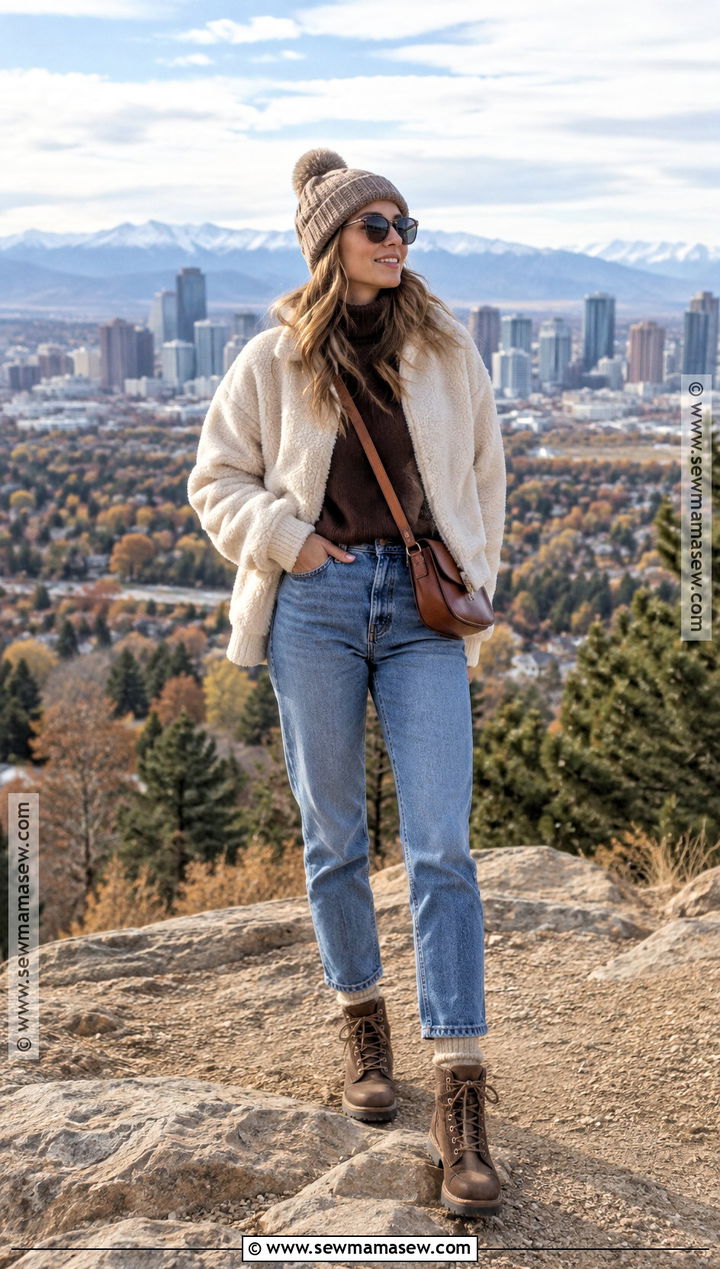
Faux shearling has the right weight and texture for late fall, and it handles cold, dry days well. I wear it over a fitted mock-neck sweater with medium-wash straight-leg jeans. Length is the thing to check: a jacket that ends around the hip leaves room for knitwear and keeps your legs looking long, while a longer one can make you look shorter. Weather-resistant lace-up boots give you grip, and warm socks, a beanie, sunglasses and a crossbody finish the look. Cream shearling looks fresh against blue denim; brown or black is darker and more streamlined. If the collar is big, skip the scarf entirely or go very thin, or the bulk pushes up around your jaw in photos. Keep this one for dry days, since wet snow mats the pile.
Altitude Sun and Dry Air Belong on the Packing List
At a mile up, there's less atmosphere filtering the sun, so you burn faster than you would at sea level, even on a cold day and even when snow is on the ground reflecting light back at you. Sunglasses aren't an accessory here; I treat them as part of every outfit. A cap or brimmed hat helps on walking days, and sunscreen goes on your face and the backs of your hands.
The dry air affects clothes as much as skin. Static builds up in synthetic knits and makes skirts cling to tights, so I lean on wool and cotton blends and pack a small travel-size anti-static spray if I'm bringing a dress. Lip balm and a rich hand cream belong in the crossbody, because the dry air leaves your skin rough within a day.
Shoes for Slush, Ice and Long Museum Floors
Snow in Denver often melts by afternoon, which sounds easy until you're stepping through a slushy gutter at every crosswalk. I'd pack two pairs at most: one waterproof boot with a lugged rubber sole, and one cushioned sneaker or low leather boot for dry days. Smooth leather soles and fashion boots with thin, slick bottoms are the ones that slip on refrozen patches in the morning.
Wear new boots for a week at home before the trip, with the socks you plan to bring. Thick wool socks can take up half a size, and finding that out on your first day of sightseeing is miserable. If suede is your favorite, spray it with a protector before you leave and keep it for the clear days.
Pack Thin Layers and Watch the Afternoon Sun
Every look here starts from the same idea: a comfortable base, then a sweater, jacket or coat you can add or shed as the day swings. Jeans, tailored trousers, leggings, cords, knit sets and midi skirts all work once the shoes match the weather, waterproof boots for snow and slush, cushioned sneakers for dry sightseeing. Warm socks, gloves, sunglasses and a scarf do more work on this trip than any single coat. Check the forecast a day or two out, because a November week in Denver can include both a sunny 60 and a snowy morning. Pack for both, keep it light, and you'll be comfortable wherever the day takes you.
Related posts: