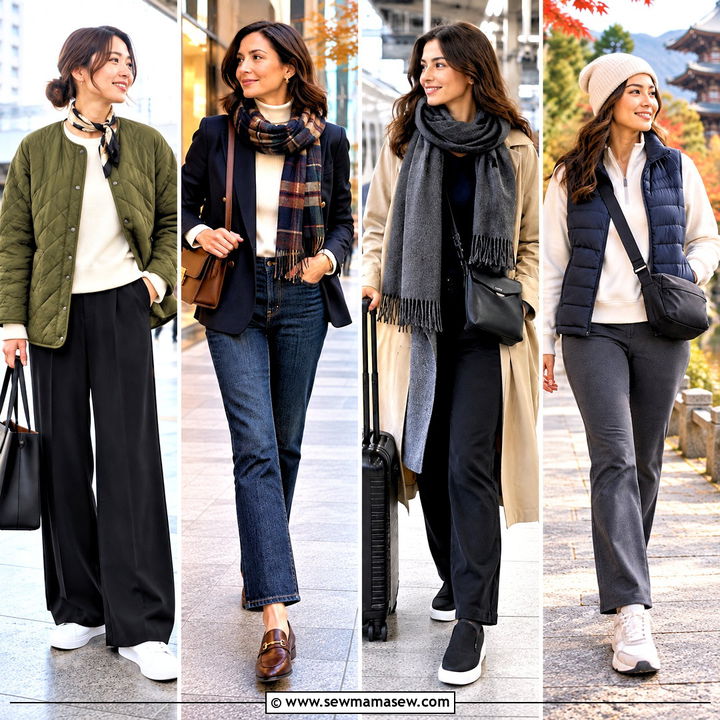
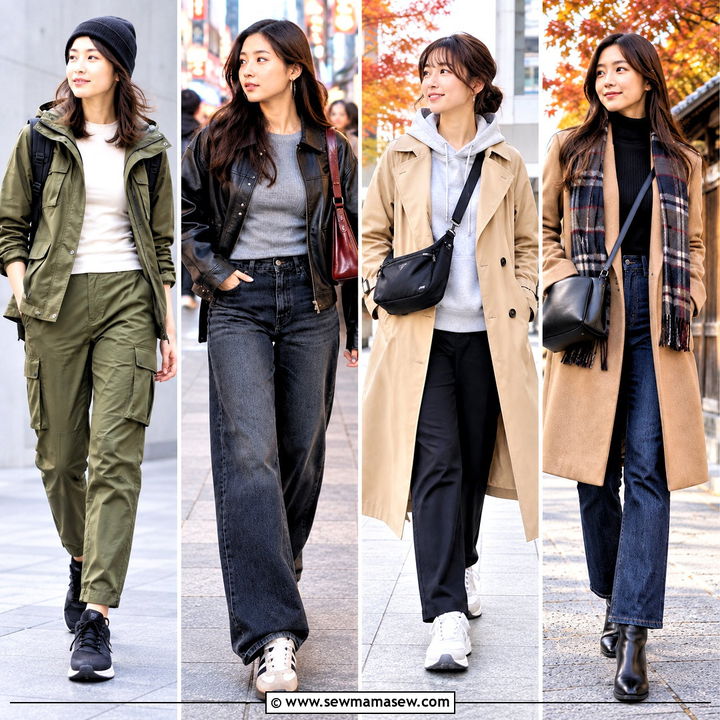
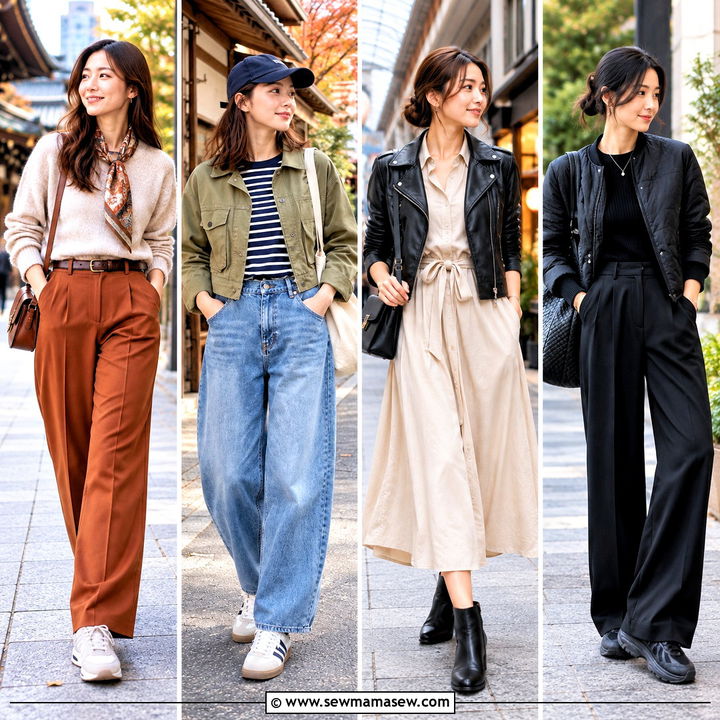
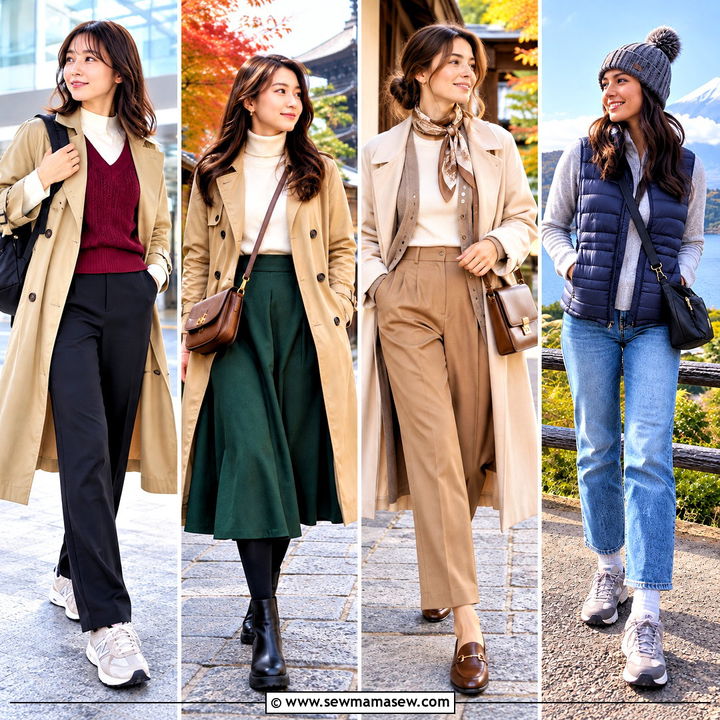
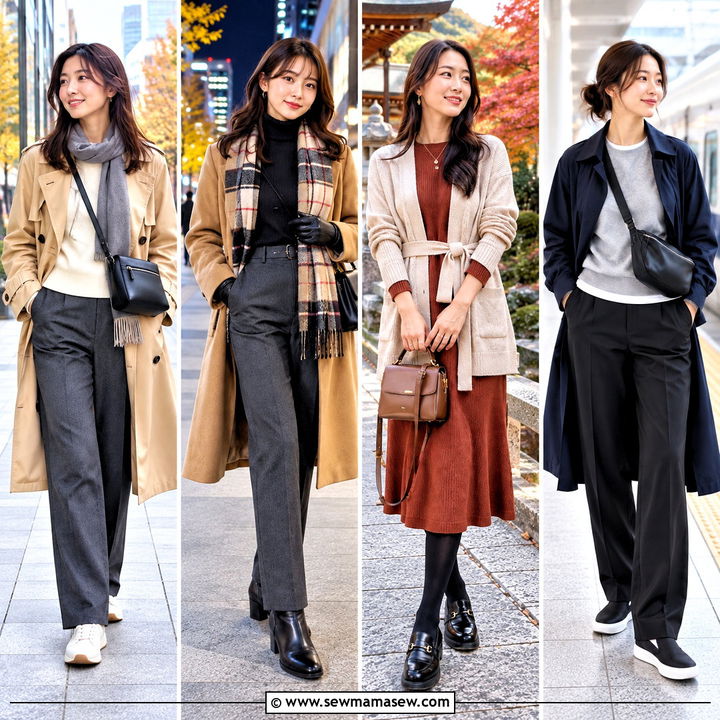
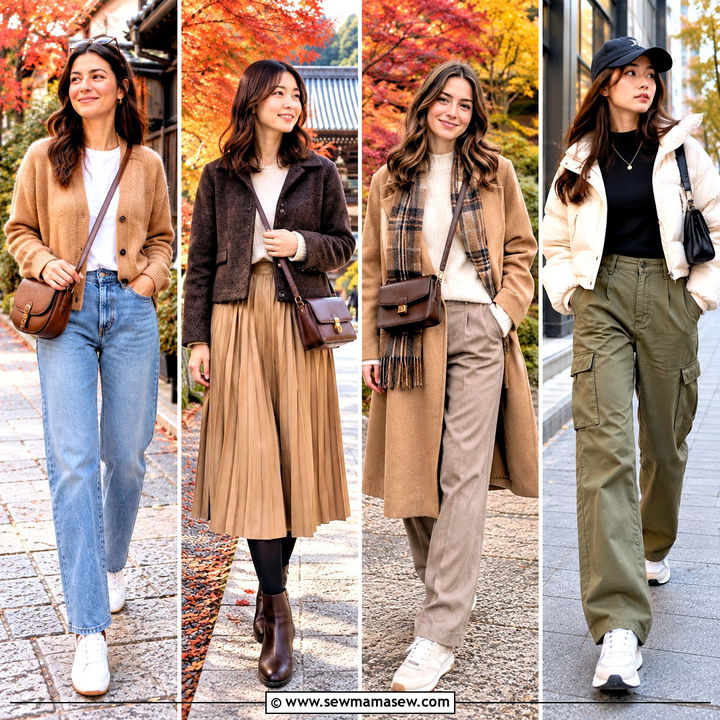
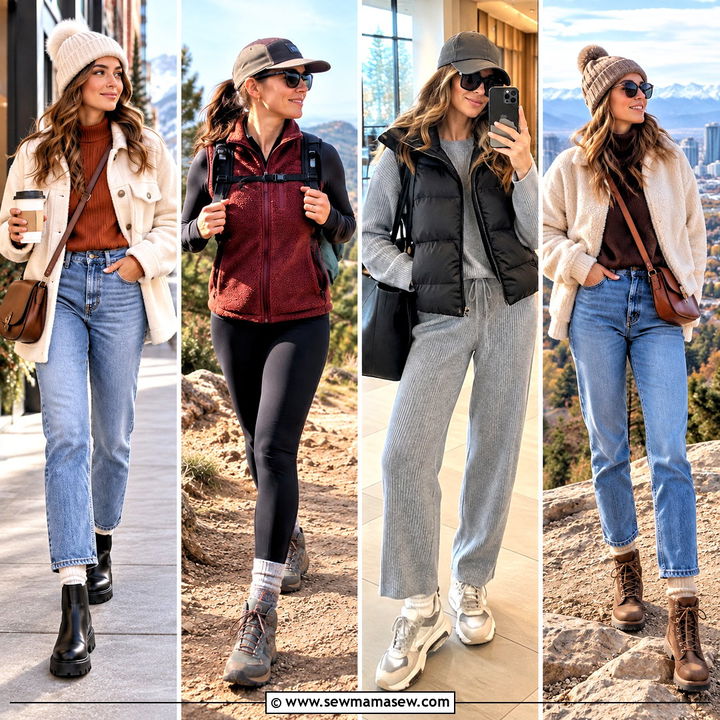
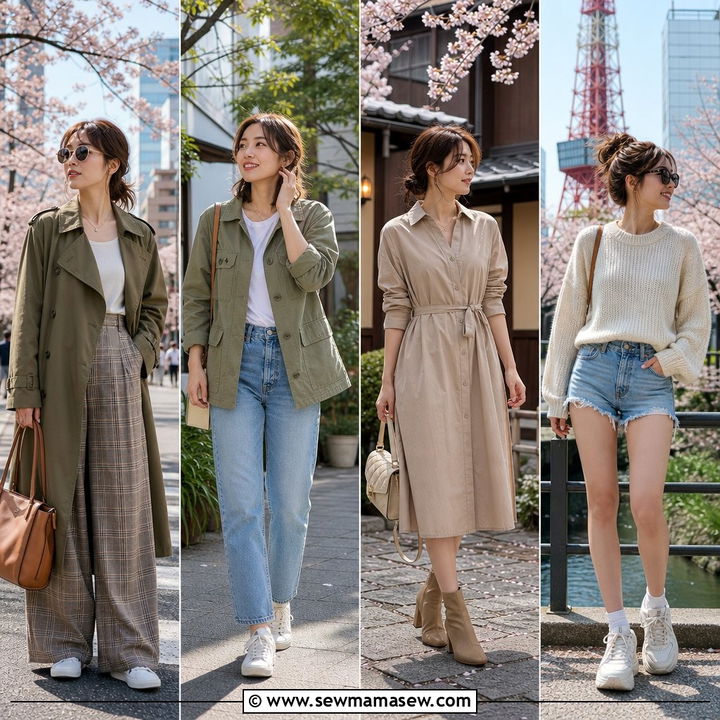
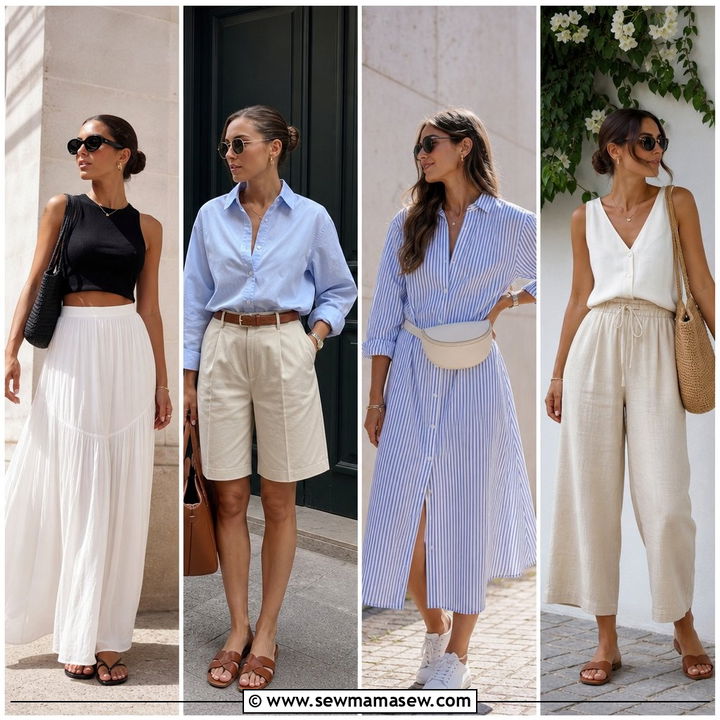
November in Japan is a layering month. Mornings in Tokyo, Kyoto and Osaka are crisp, afternoons can feel like early autumn back home, and then you step into a department store or a train carriage that's heated well past what your coat was built for. That's why I plan these trips around pieces that come off and go back on, not one heavy winter coat. Hokkaido is a different trip entirely and needs real cold-weather gear, while Okinawa stays mild enough for light layers. Shoes matter more than anything else on the list: you'll walk a lot, climb station stairs, and take your shoes off at temples, inns and some restaurants. The 20 outfits below cover city days, temple days, rain, travel days and the regional extremes.
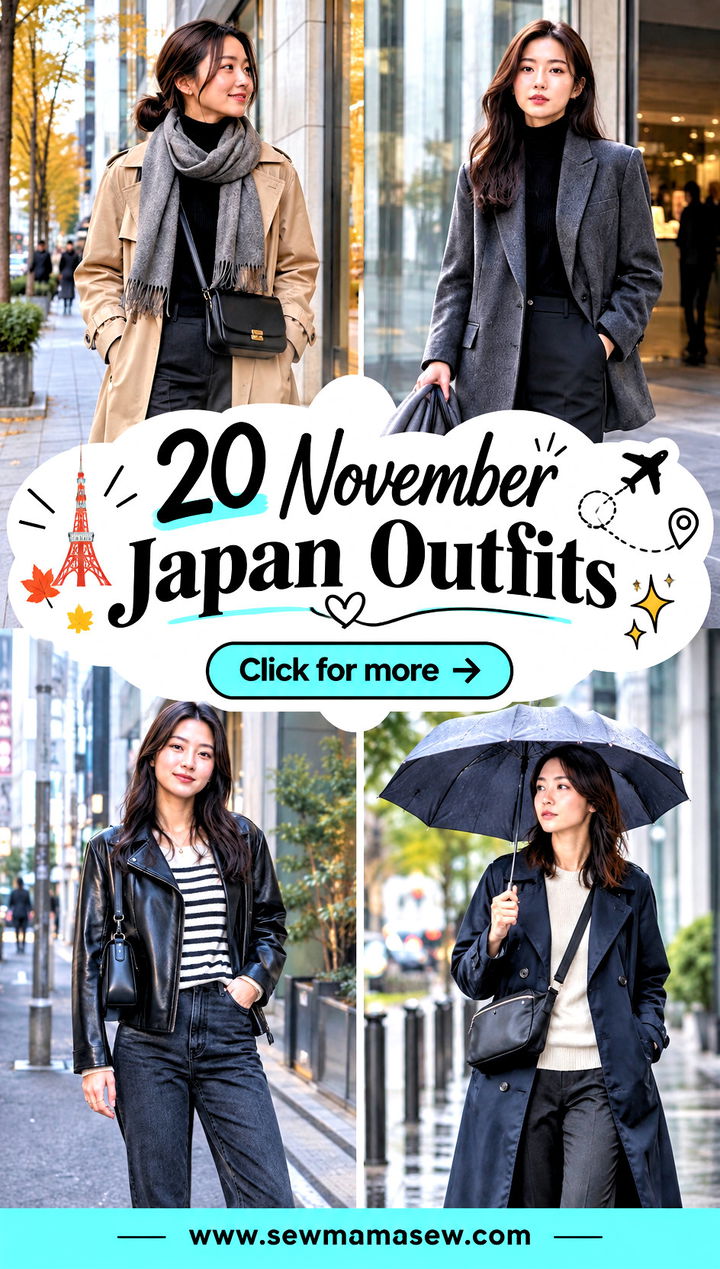
Packing One Suitcase for Tokyo Mild, Hakone Cold and Okinawa Warm
The hard part of a November Japan trip isn't any one outfit. It's that a two-week route can take you from roughly 15 to 18°C afternoons in Tokyo and Kyoto, down to near freezing in Sapporo, and back up to the low twenties in Naha. Typical averages shift from year to year, so treat those as rough guides rather than promises. I plan the bag as a base capsule plus small regional add-ons, so I'm never hauling a winter parka through Okinawa.
- The base, for every stop: two pairs of trousers, one pair of jeans, four or five tops, two sweaters, one thin thermal set and one coat that suits the mainland cities.
- The cold add-on, only if Hokkaido or the mountains are on the route: a long puffer, thicker socks, a hat, gloves and waterproof boots with grip.
- The warm add-on, only for Okinawa: two breathable tops, one linen-blend pair of trousers and sandals if you'll wear them.
- Wear the bulkiest pieces on travel days so they don't take up suitcase space.
Station stairs are the reason I keep the bag small. Many stations have long staircases and crowded escalators, and dragging a large case through rush hour is miserable. If your route allows it, luggage forwarding between hotels is common in Japan and lets you ride the train with just a day bag.
1. Tokyo November Trench Coat Outfit
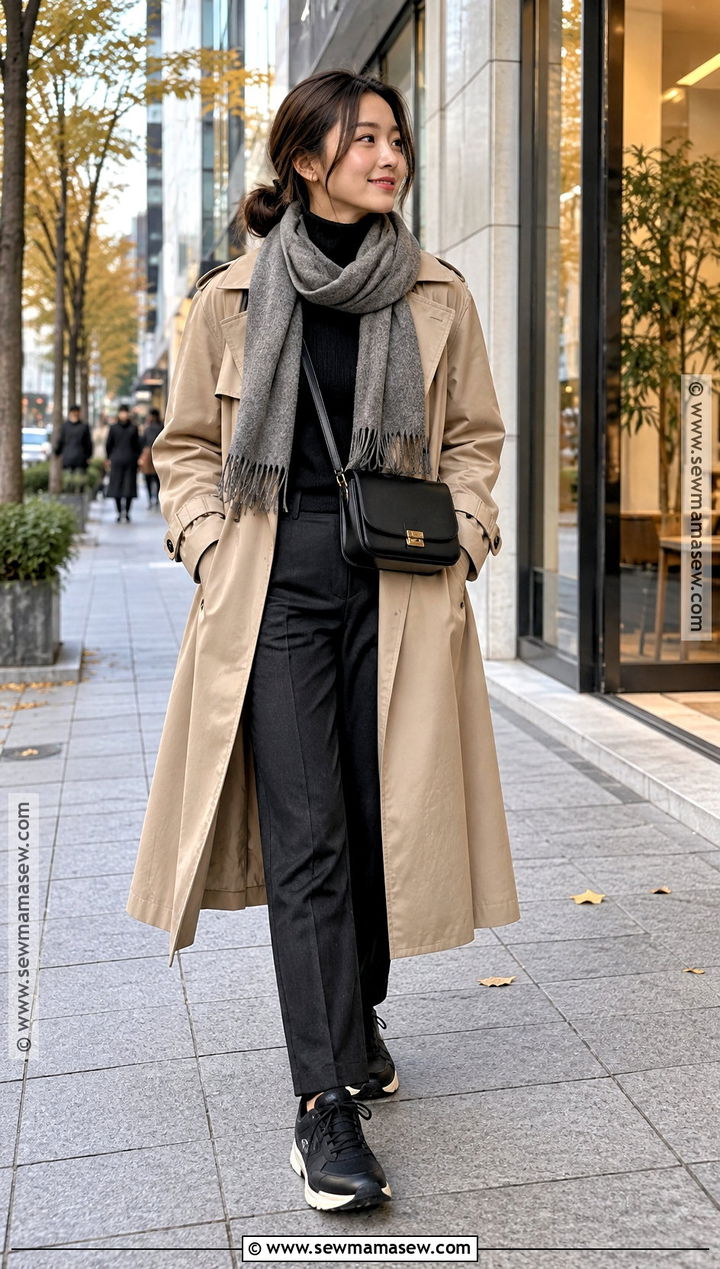
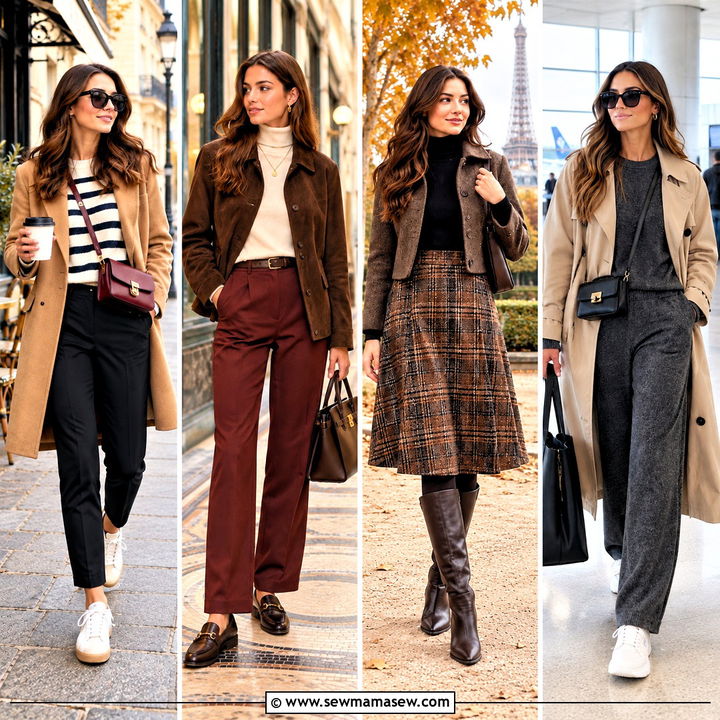
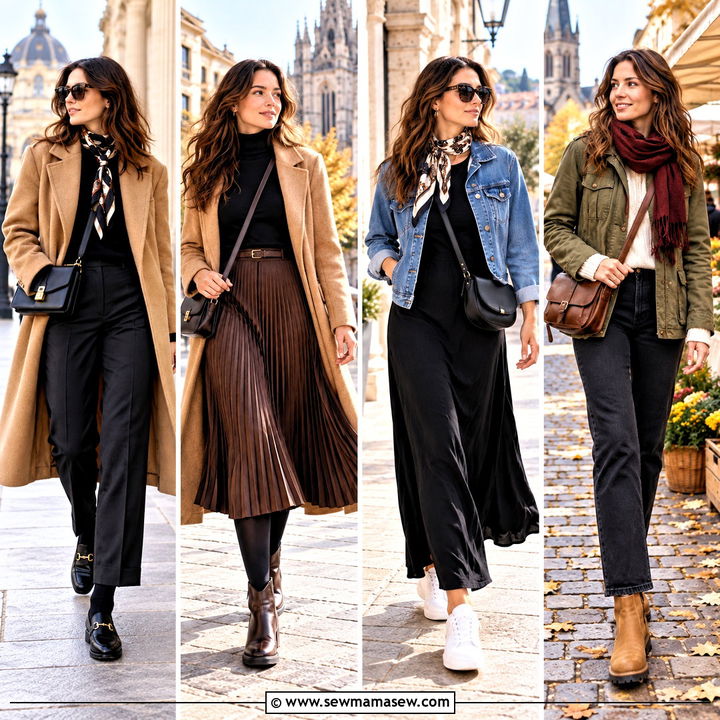
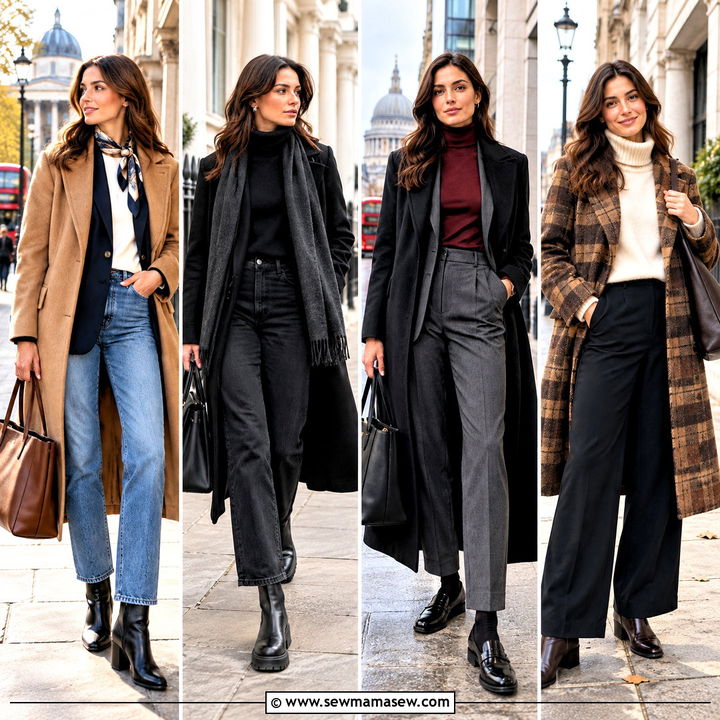
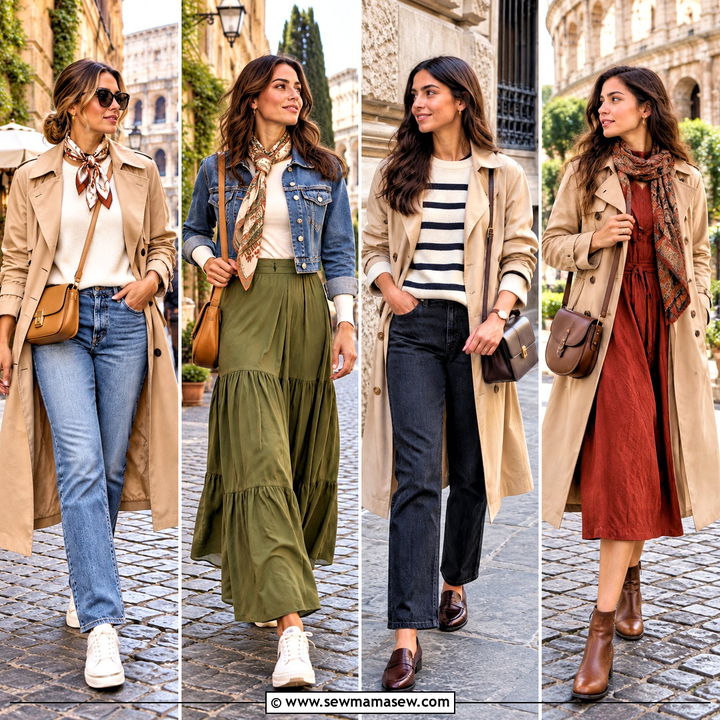
I pack a trench for Tokyo before almost anything else, because it handles the in-between temperatures that a wool coat overshoots. Put a beige, stone or olive trench over a fitted black turtleneck and straight-leg trousers, then add leather sneakers or low loafers with a cushioned insole. A structured crossbody keeps your hands free on station escalators and at busy crossings. The detail I check first is the trouser fabric: a little stretch and a wrinkle-resistant weave means you still look pressed after six hours of sitting, standing and walking. Keep the scarf light enough to stuff in the bag once you're inside a warm café.
2. Kyoto November Wool Coat Outfit
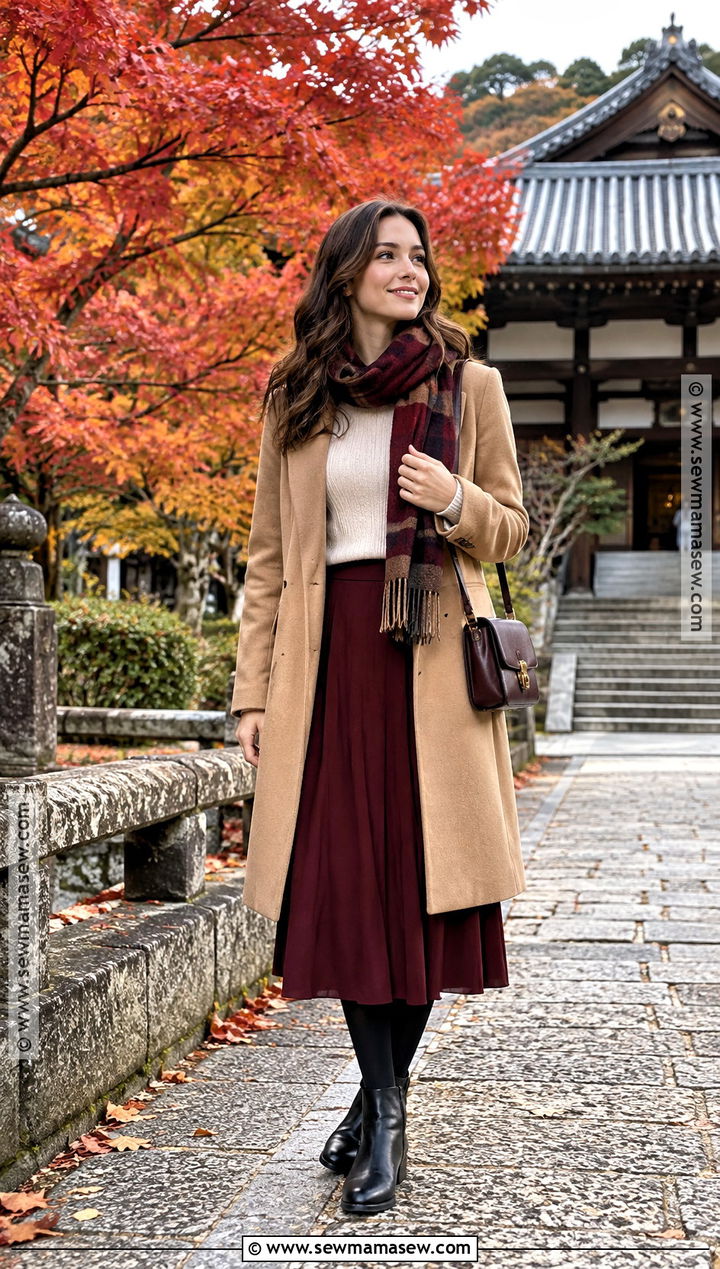
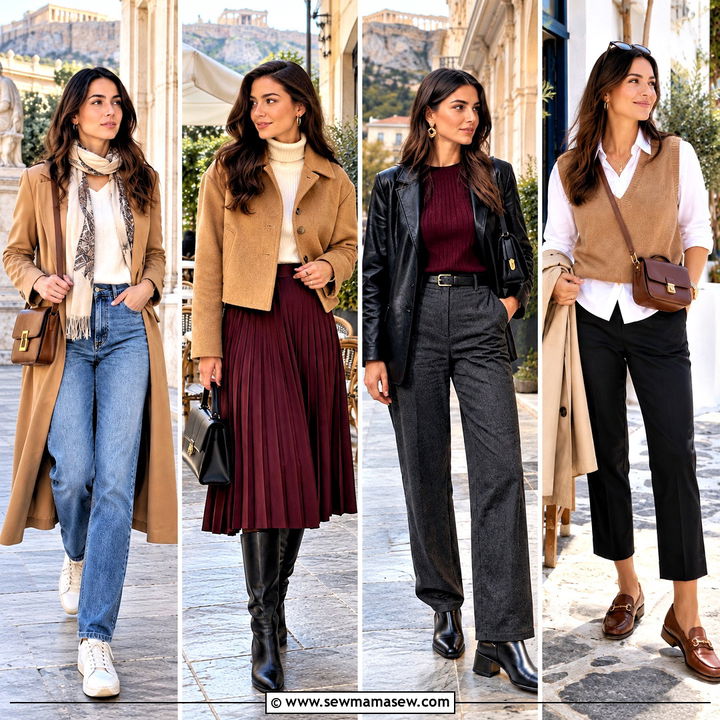
A knee-length wool coat in camel or charcoal is the piece I'd build a Kyoto day around, worn over a fine-knit sweater and a midi skirt that moves when you walk. Opaque tights do more for warmth than people expect, and ankle boots with a side zip save you real time at every temple entrance where shoes come off. Watch the hem: a midi that sits just below the knee clears damp gravel paths, while one that grazes the ankle picks up mud by lunch. Brown, burgundy, cream and forest green all hold their own against red maples in photos. Bring clean socks without thin heels, since they'll be on view more often than you think.
3. Osaka November Puffer Jacket Outfit
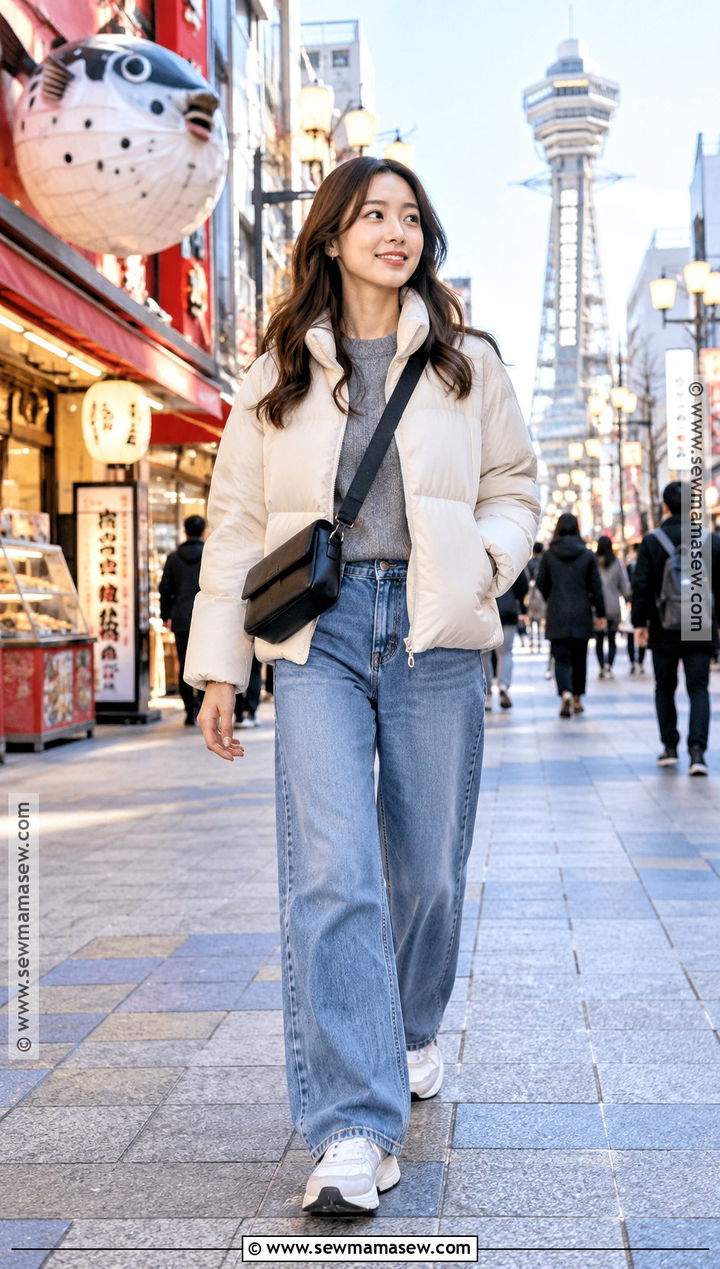
Osaka is a street-food, on-your-feet city, so I dress it more casually. A lightweight puffer in black, navy or cream goes over a long-sleeve cotton tee and a thin crewneck, with wide-leg jeans or relaxed trousers below. The puffer has one job here: to be light enough to carry once you're inside a crowded restaurant or a warm train. Choose hip length. A long expedition-style coat is too much for Osaka in November and gets in the way at a standing counter. Finish with white sneakers, a zipped crossbody and a folding umbrella.
4. Tokyo Blazer And Turtleneck Outfit
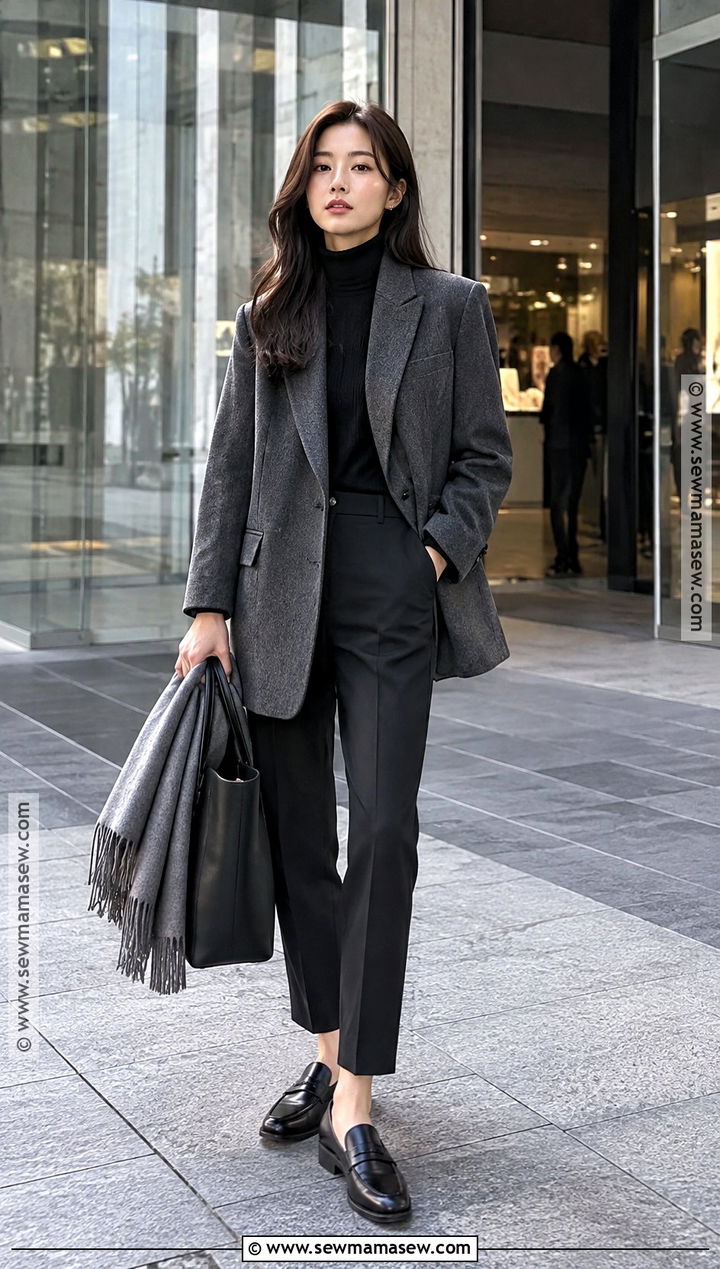
This is the outfit for galleries and Tokyo's more style-conscious neighborhoods. An oversized wool-blend blazer in gray, brown or a quiet plaid sits over a fitted cream or black turtleneck, with ankle-length tailored trousers and leather sneakers, loafers or a low block-heel boot. Size the blazer so a thin thermal top fits under the turtleneck on cold mornings without pulling at the buttons. The shoulder seam should land at or just past your own shoulder; much further and it reads borrowed rather than intentional. Pick a tote that zips, because an open tote on a packed train is an invitation to lose things.
5. Kyoto Cardigan And Maxi Skirt Outfit
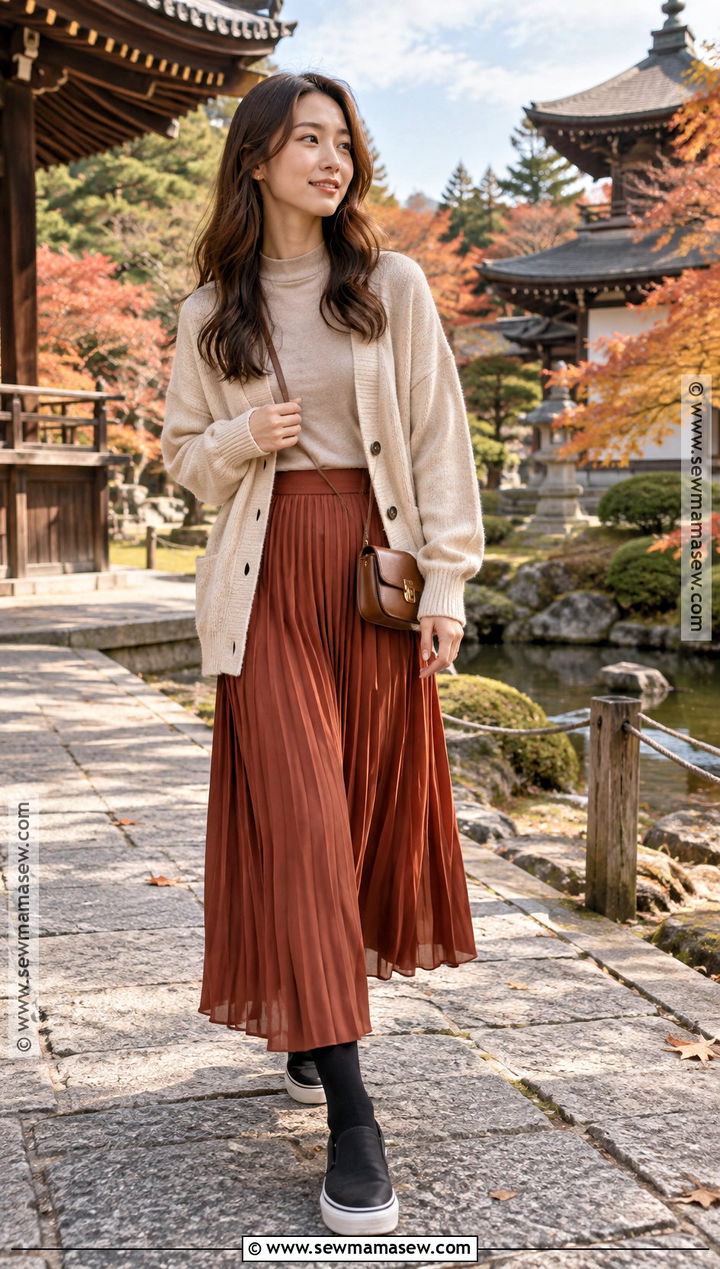
Temple and garden days in Kyoto suit a slower, softer outfit: a medium-weight cardigan in oatmeal, rust, burgundy or moss over a fitted long-sleeve top, with a pleated or gently flared maxi skirt and opaque tights. Slip-on sneakers or flat ankle boots make the shoes-off routine easy. I'd skip anything with a sweeping hem or delicate chiffon edge, because temple approaches mean stone steps, gravel and the odd puddle. Fold a thin rain shell into your crossbody if showers are forecast. Every piece here also works with jeans on another day, which is what earns it the suitcase space.
6. Tokyo Leather Jacket And Jeans Outfit
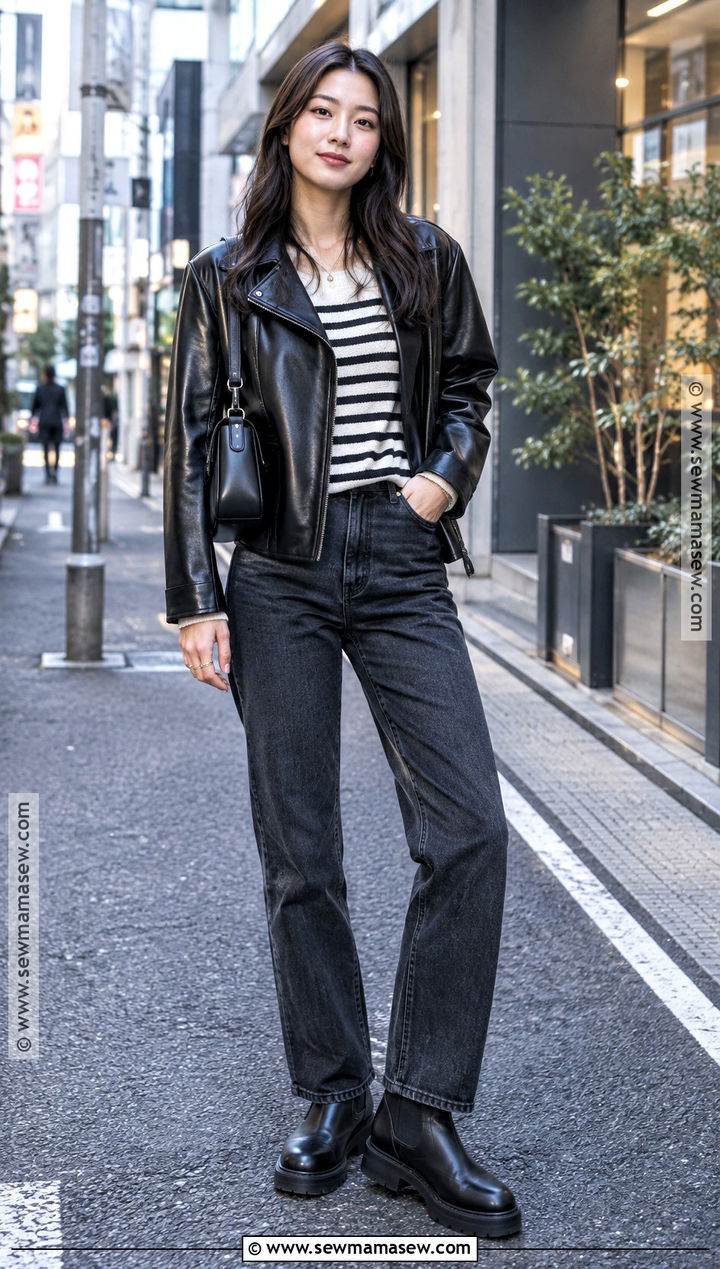
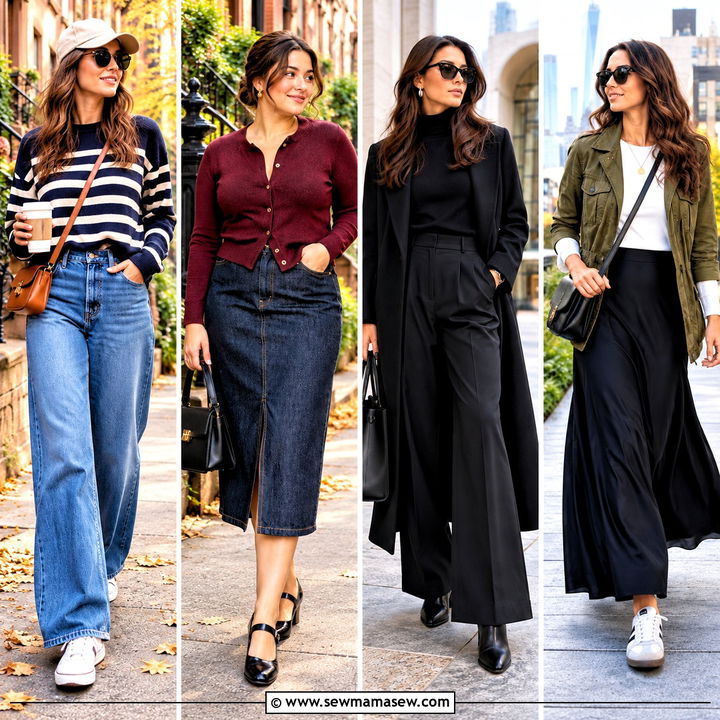
A leather or faux-leather jacket with dark straight-leg jeans gives Tokyo a sharper edge, and it's the easiest outfit on this list to repeat. Under it, a lightweight knit or a striped long-sleeve keeps the bulk down. Try the jacket on over a thermal before you pack it, because a close-cut leather jacket that can't take a base layer becomes useless on a 7°C morning. Black walking sneakers or cushioned Chelsea boots keep the line clean. New leather boots need breaking in at home first; Shibuya, Harajuku and Shimokitazawa are too much walking to learn that the heel rubs.
7. Early November Denim Jacket Outfit
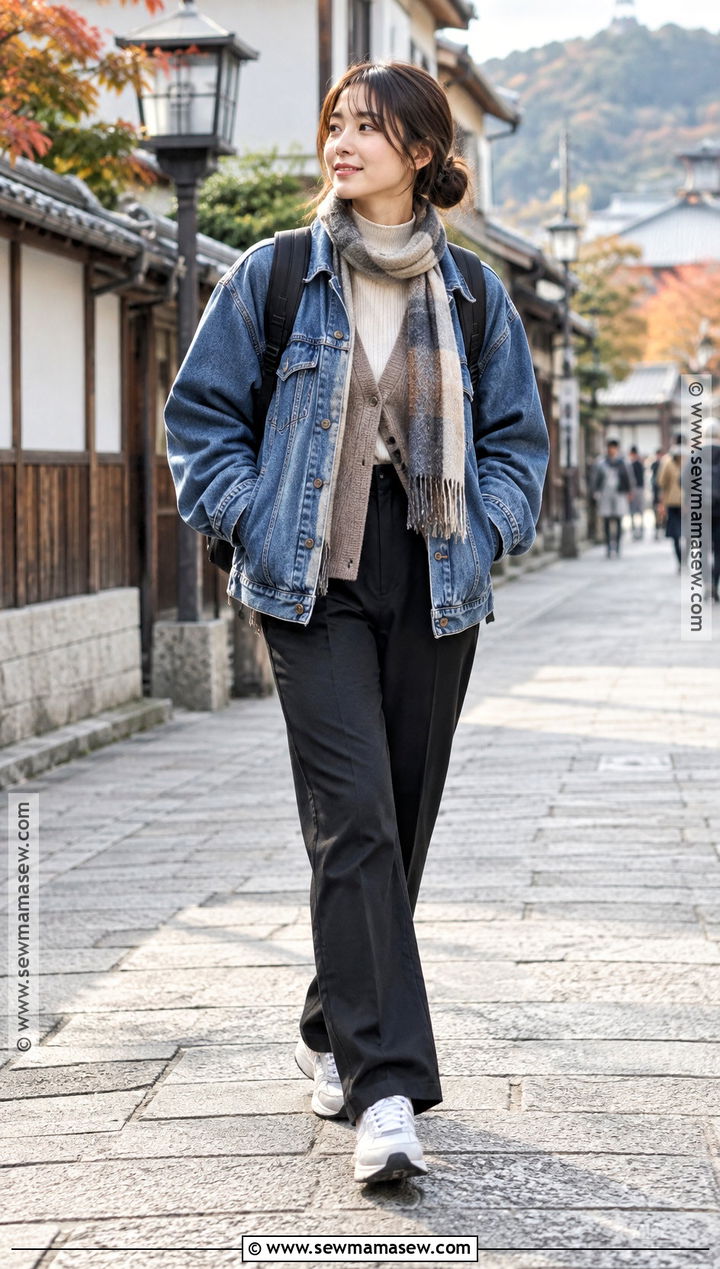
Early November in central Japan can still bring mild afternoons, and that's when a denim jacket earns its place. Wear a relaxed blue or black jacket over a ribbed long-sleeve top and a thin knit vest, with black trousers or dark jeans. Size up slightly so the shoulders aren't strained once the vest is underneath. If the day turns, a packable insulated vest slips under the denim and buys you a few more degrees. I'd keep this one for daytime in Tokyo, Osaka or Fukuoka. Denim doesn't block wind, so it isn't the jacket for mountain areas or late-November evenings.
8. Japan November Rainy Day Outfit
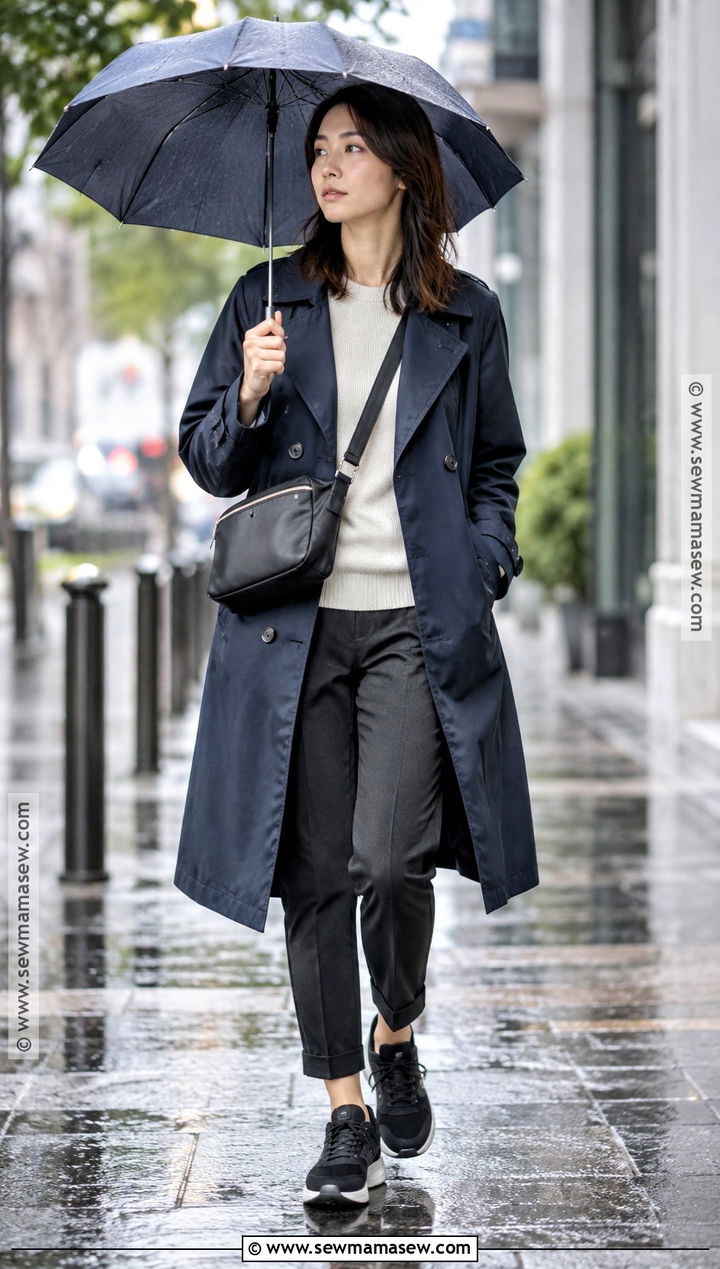
Rain in Japan in November tends to be steady rather than tropical, and the real problem is wet feet, not a wet coat. Start with a lightweight waterproof trench or hooded raincoat in beige, navy, olive or black, with a breathable sweater and tapered ankle pants that won't wick water up from the pavement. Waterproof walking sneakers or short rain boots are worth the space; canvas shoes soak through in minutes and stay damp overnight in a hotel room. Wear moisture-wicking socks and keep a dry pair in your bag. A coat with zipped pockets protects your transit card and phone when you're juggling an umbrella at the ticket gate.
9. Kyoto Temple Visit Outfit
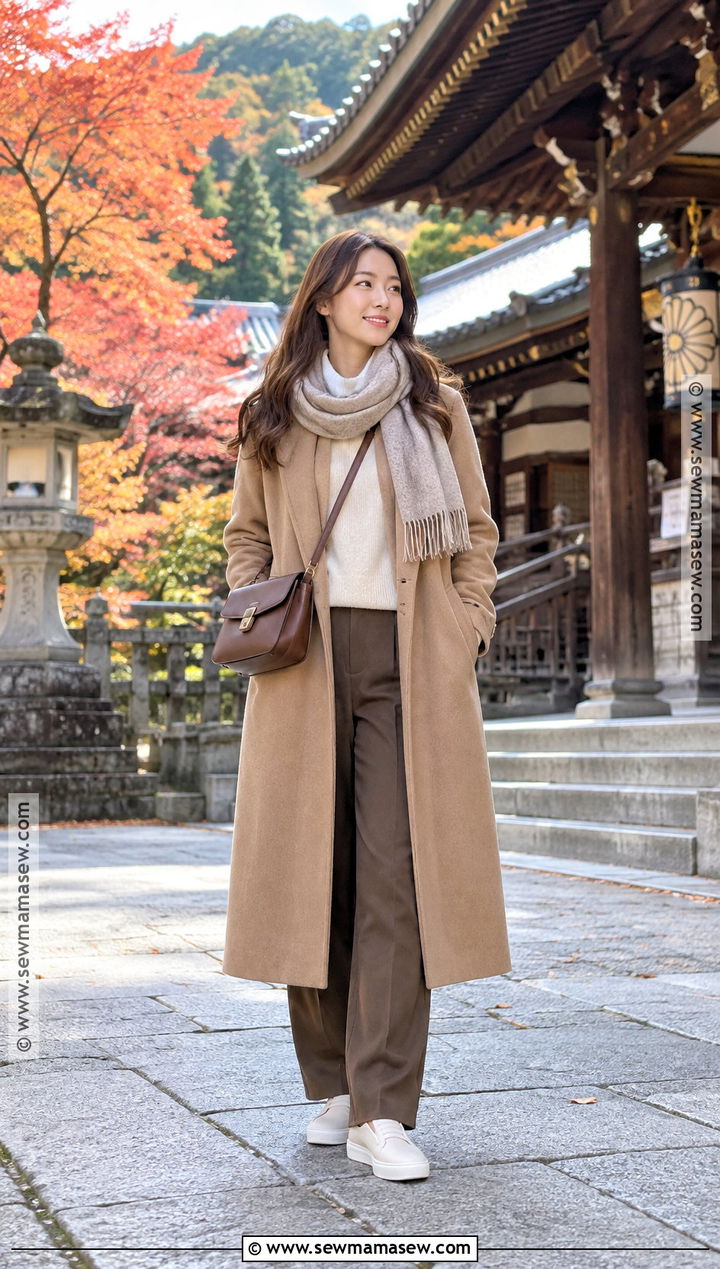
On temple days you'll walk, climb stairs and take your shoes off several times, so I plan the outfit from the feet up. Clean slip-on sneakers or easy-zip ankle boots come first, along with socks that are in good shape. Then a long wool-blend coat over a crewneck sweater and relaxed straight-leg trousers, with a medium crossbody that stays put while you bow or kneel. Camel, gray, cream and chocolate sit quietly beside wooden halls and moss gardens. Avoid laces that take a minute to undo, hems that drag, and bags that bump into people in narrow corridors. A thin thermal under the sweater handles the early-morning chill before the crowds arrive.
10. Tokyo Shopping Day Outfit
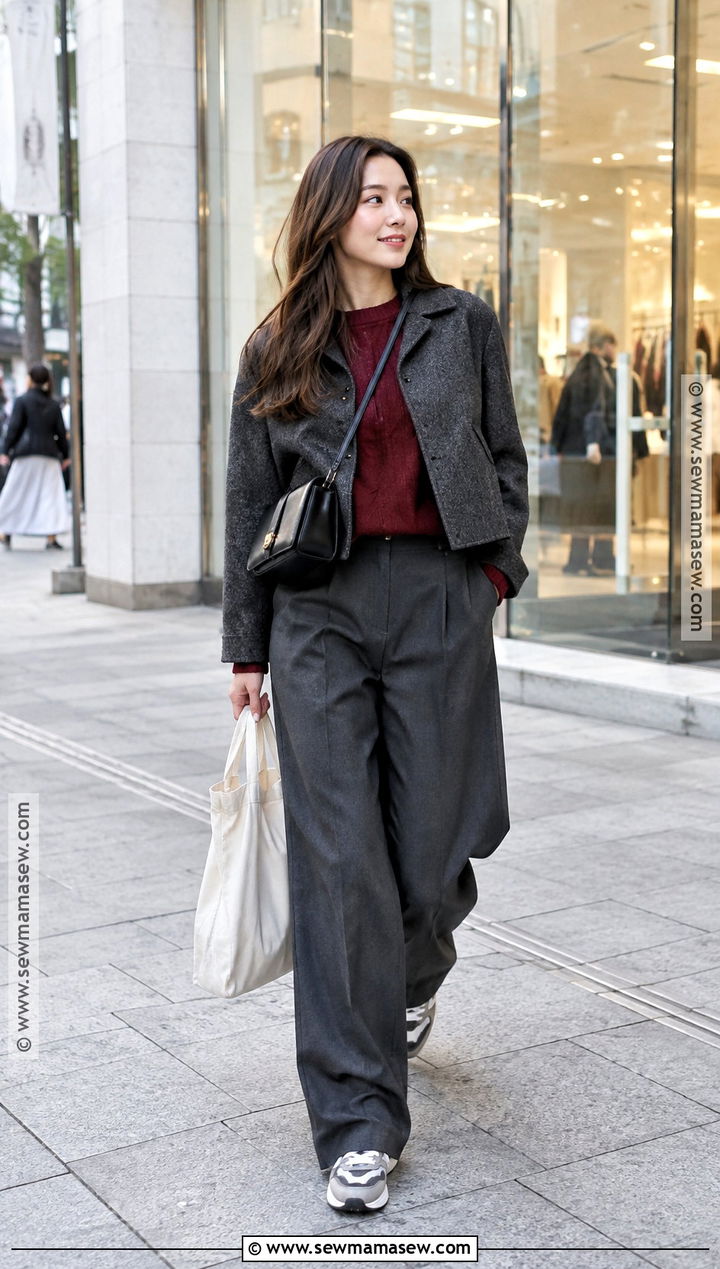
Shopping days are really fitting-room days, so dress for getting changed quickly. A cropped wool jacket over a fine-knit sweater and high-waisted wide-leg trousers is warm enough outside and easy to strip down to inside. I'd wear a smooth, close-fitting base layer rather than a chunky knit, because pulling a heavy sweater over your head ten times gets old fast and leaves your hair full of static. Retro sneakers, simple hoops and a compact scarf finish it. Leave room in your crossbody for a folding tote, since department stores, covered arcades and vintage shops add up quickly.
11. Osaka Sweater And Wide-Leg Pants Outfit
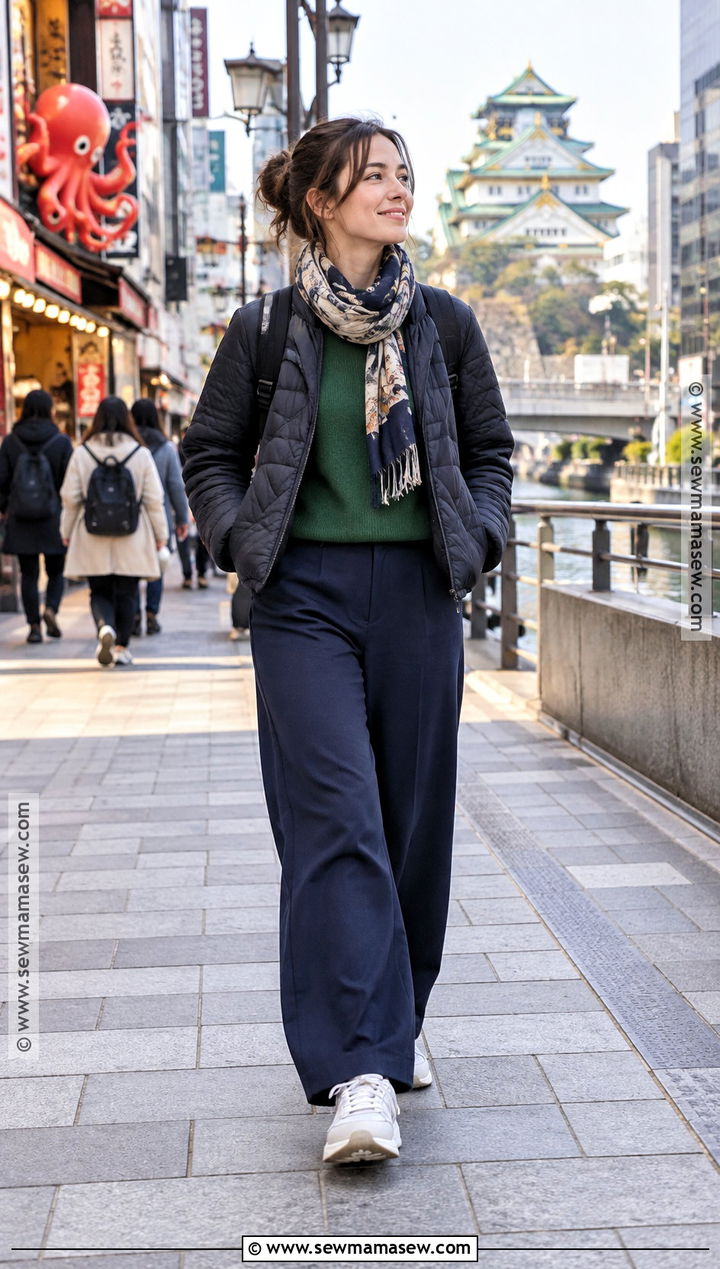
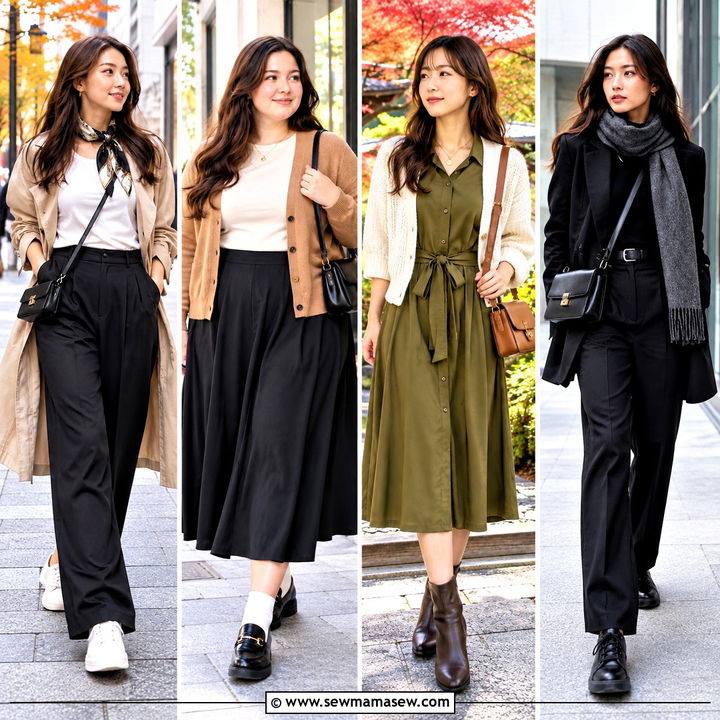
Wide-leg pants are the most forgiving trousers for a long Osaka day, from morning markets to the neon streets after dark. Pair black, navy or taupe with a crewneck sweater half-tucked at the front, in cream, red, green or a stripe, and add a short utility jacket or light quilted coat for the cooler hours. The half-tuck matters with wide legs: it shows where your waist is so the trousers don't swallow your whole frame. Check the hem sits just above the floor in your walking shoes, not your socks; on wet, busy pavements a dragging hem is ruined within a day. Cushioned sneakers and a small backpack complete it.
12. Japan November Dress And Boots Outfit
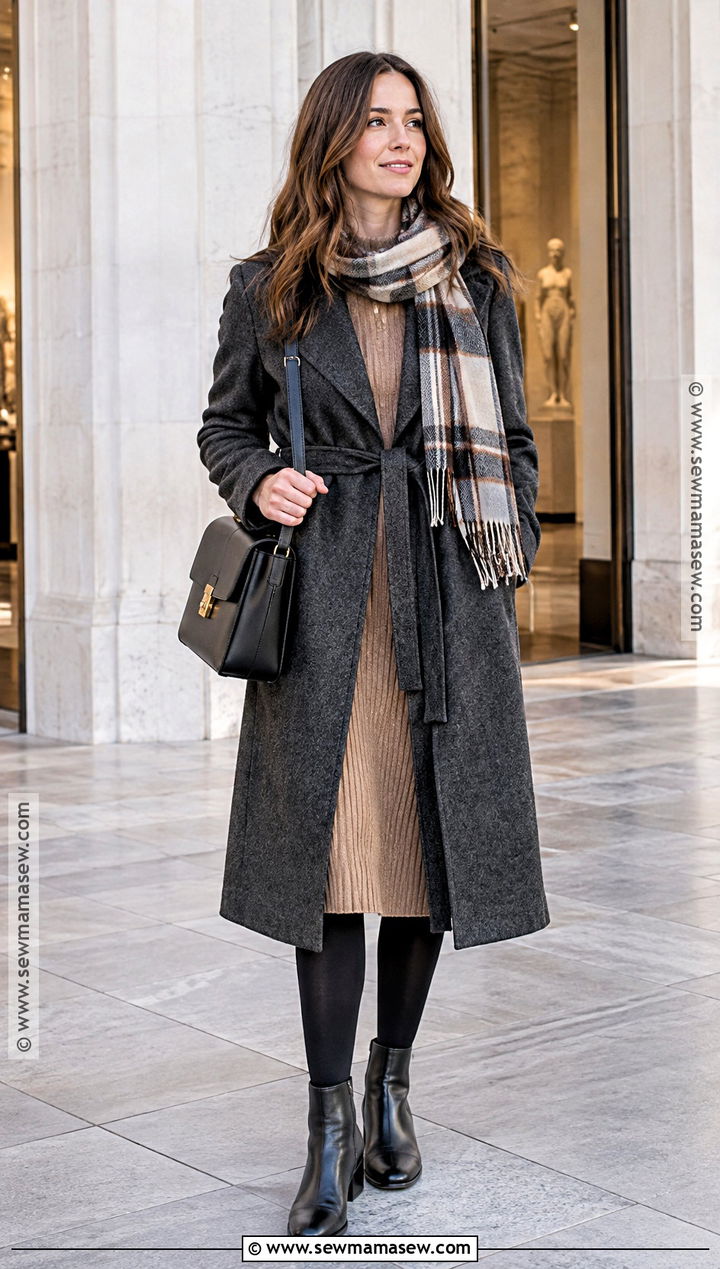
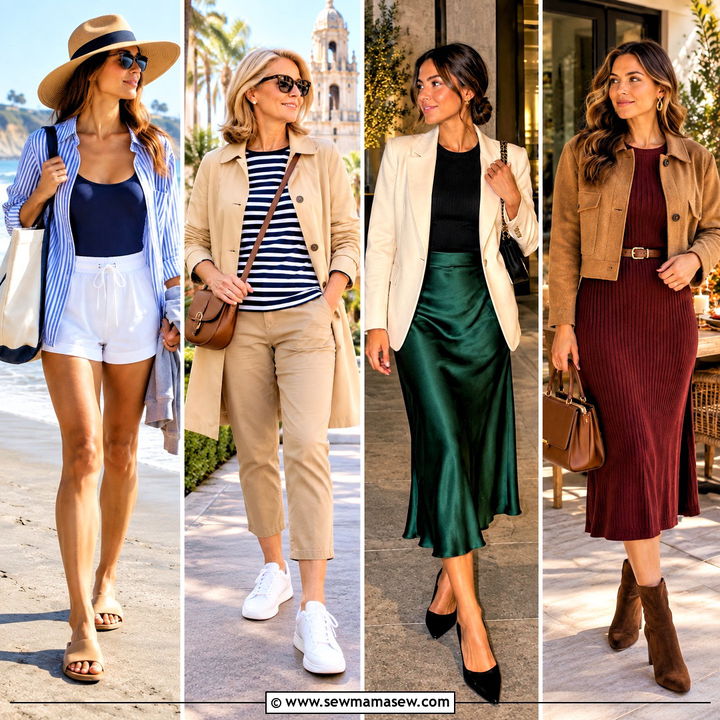
Dresses work fine in Japan in November as long as you treat the layers underneath as the real outfit. Choose a long-sleeve knitted midi in a relaxed cut, then add opaque thermal tights, flat ankle boots and a belted wool coat. The belt gives the silhouette some shape back after all that knit. Pick boots with a cushioned sole and a side zip over narrow heels or fiddly buckles. On colder days a thin thermal camisole under the dress does more than an extra cardigan on top. A neutral dress is the most useful version, since a patterned scarf or a different bag changes it enough to wear twice on one trip.
13. Japan Autumn Foliage Outfit
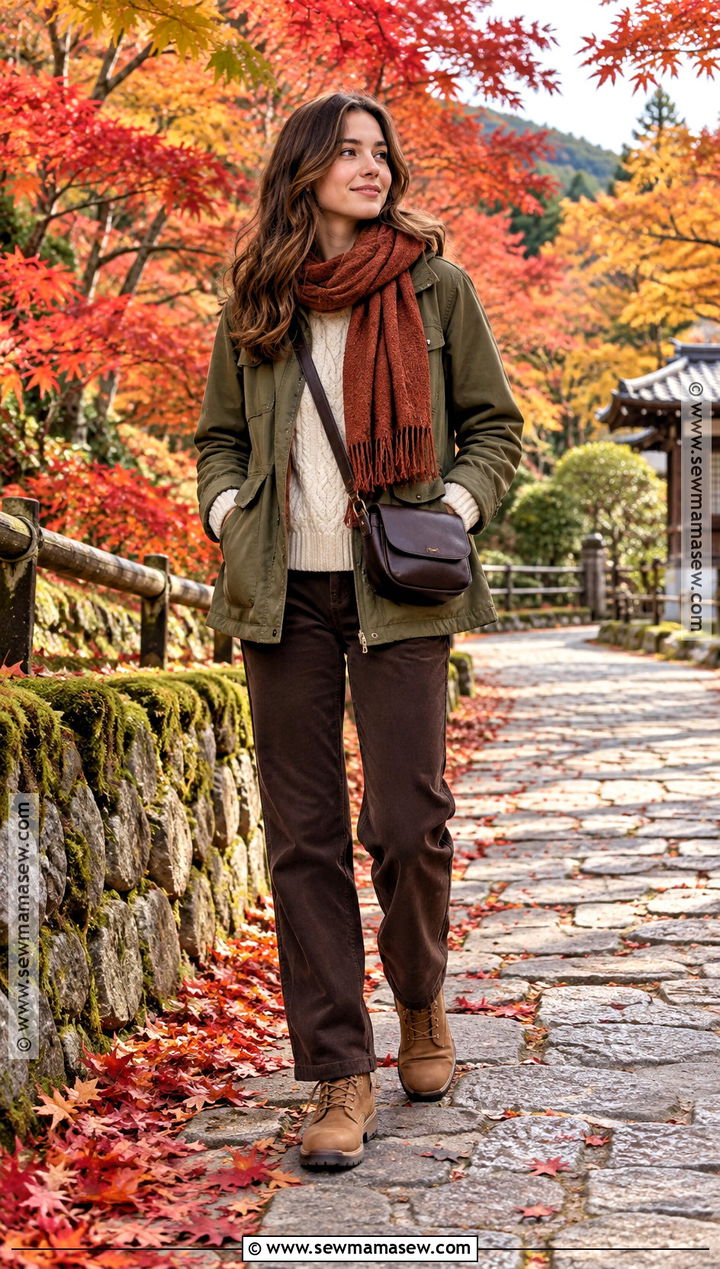
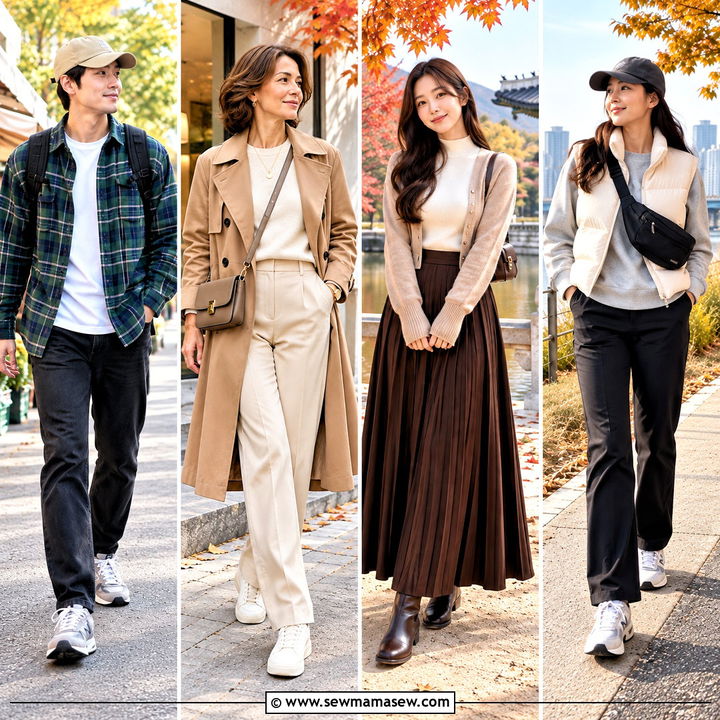
Autumn leaves are the reason many people book a November trip, and the trick is to dress so the trees stay the main event. An olive utility jacket over a cream cable-knit, dark brown or black straight-leg pants, burgundy sneakers or tan ankle boots, a rust scarf and a chocolate crossbody gives you color without competing with red and gold maples. Shaded gardens can feel several degrees cooler than the sunny street outside, so keep every layer removable. I'd leave prints at home for this outfit. Against a busy canopy, a busy pattern turns both into noise in photos.
14. Japan Evening Illumination Outfit
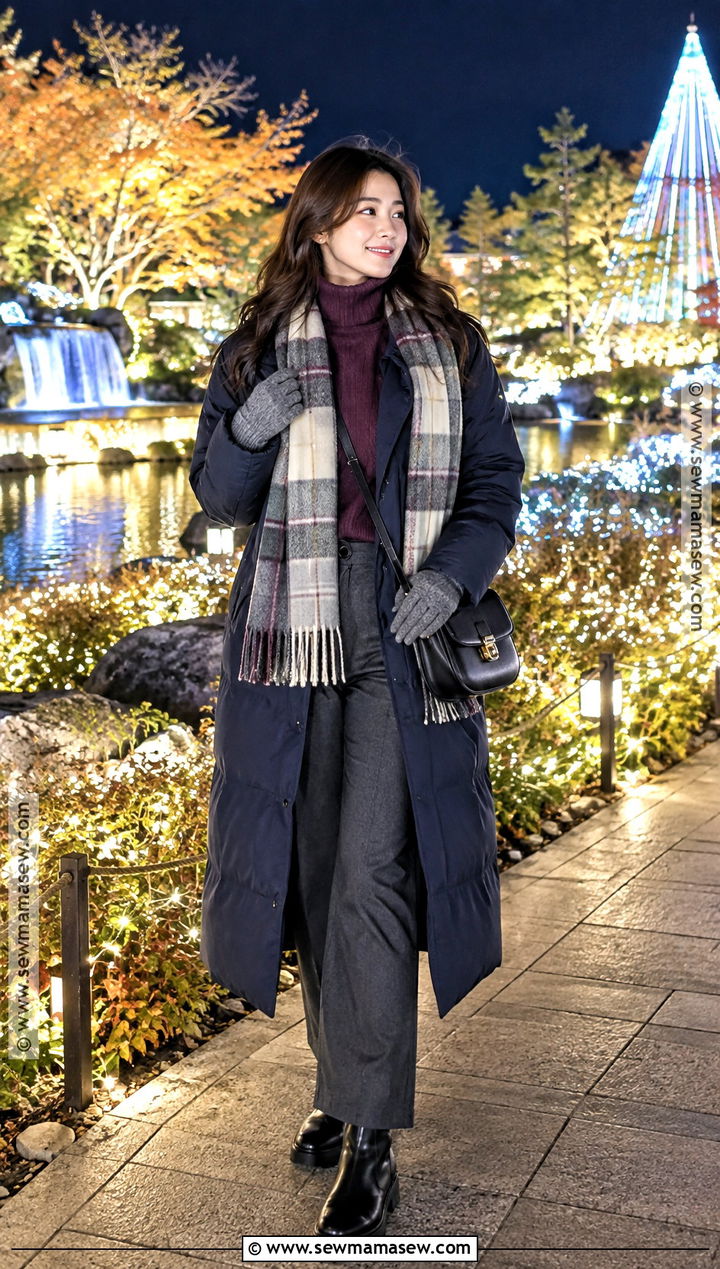
Evening illuminations at gardens and temples mean standing still or shuffling slowly in the cold, which feels much colder than walking at midday. Layer a thermal top under a fitted turtleneck, then a long insulated coat or wool-blend overcoat that closes right up to the neck. Straight-leg trousers, warm socks and cushioned ankle boots keep your lower half covered. Lined gloves and a large scarf aren't optional here. Navy, plum, charcoal and forest green look rich under the lights. If you feel the cold easily, a disposable hand warmer from any convenience store is the cheapest upgrade you'll make all trip.
15. Hakone November Coat Outfit
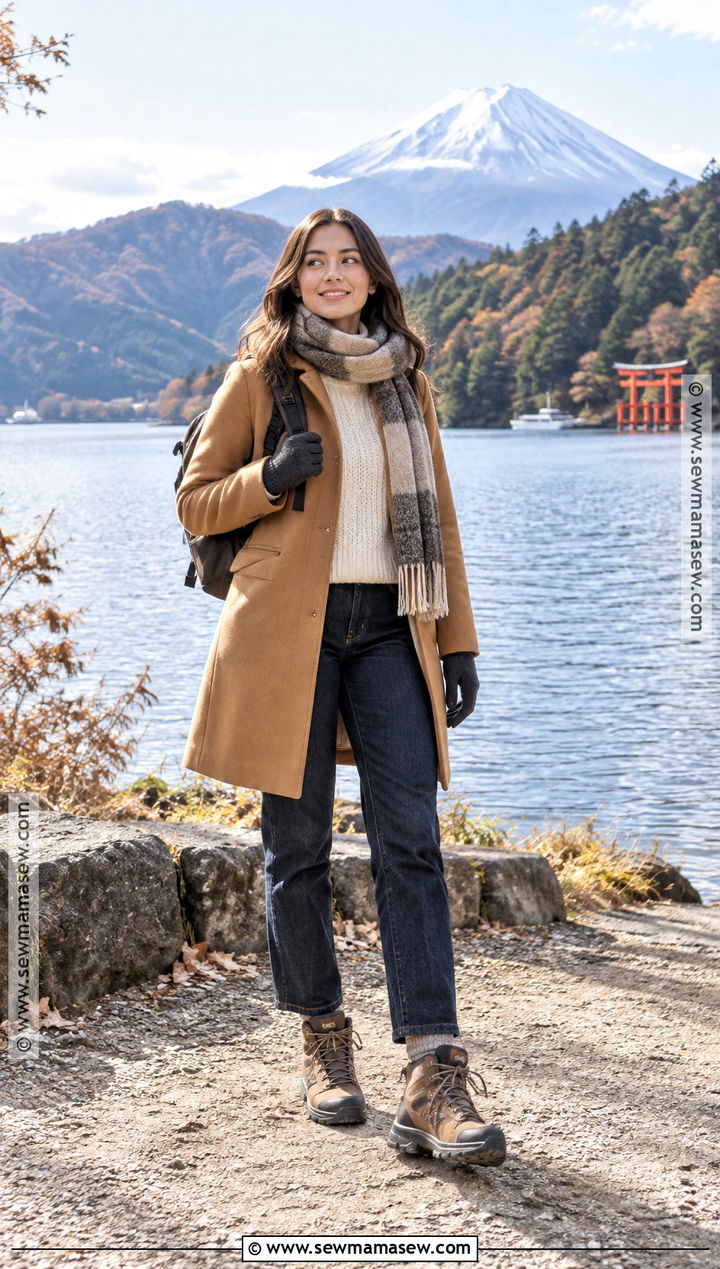
Hakone sits in the mountains, and near the lake, on the ropeway and at the exposed viewpoints it's noticeably colder and windier than Tokyo. I'd dress closer to winter here: a mid-length coat that blocks wind, a merino sweater over a thermal long-sleeve, fleece-lined trousers or dark jeans, thick socks and water-resistant walking boots. Traction matters more than looks, because paths can be steep and damp. Merino is my pick for the middle layer since it stays warm when you sweat on a climb and doesn't hold odor over a long day. Camel, cream, pine green and dark brown suit the scenery, and the same outfit covers other higher-altitude day trips.
16. Hokkaido November Puffer Outfit
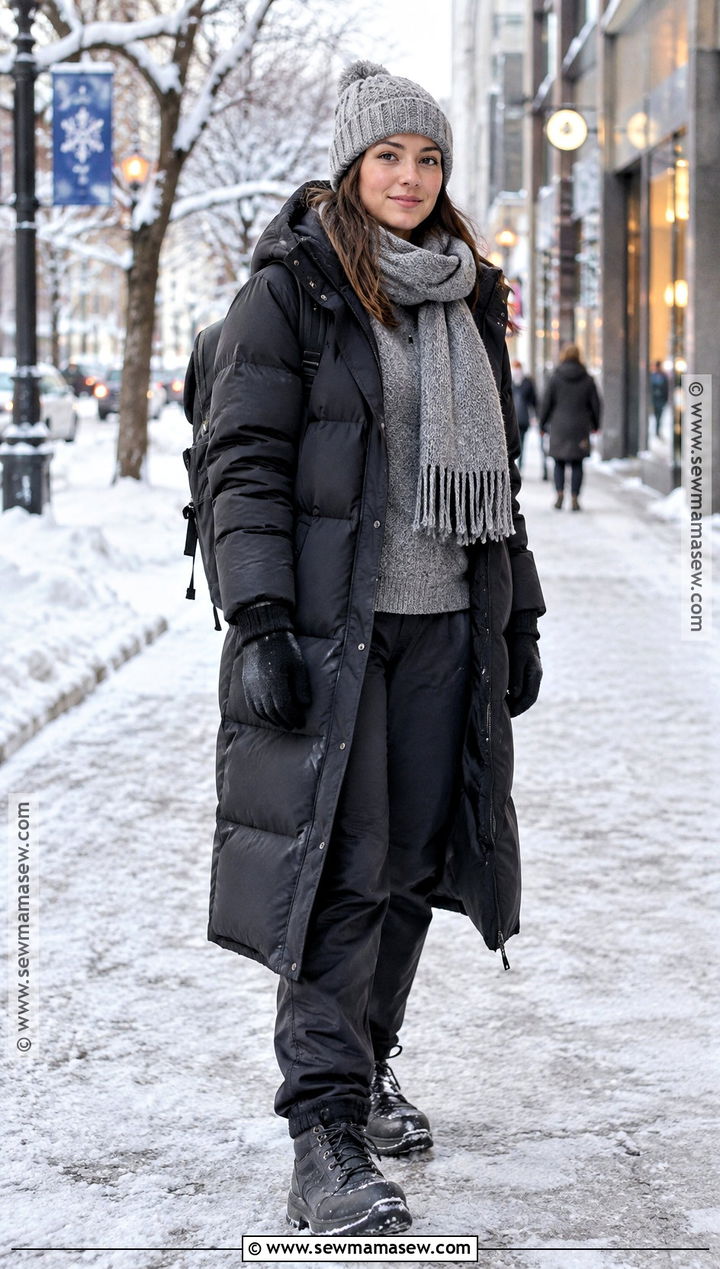
Hokkaido in November is a different climate from Tokyo, Kyoto or Osaka. Temperatures hover around freezing, especially in the evenings, and early snow is possible. Pack a long insulated puffer over a thermal base and a wool or fleece sweater, lined trousers, thick socks and waterproof boots with a slip-resistant sole. Add gloves, a warm scarf and a knit hat that covers your ears. A light trench or thin fashion jacket simply isn't enough for long outdoor stretches. The coat should cover the tops of your thighs and block wind; that length makes more difference than a thicker sweater. Dark neutrals hide slush, and a bright scarf keeps photos from looking flat.
17. Okinawa November Light Layer Outfit
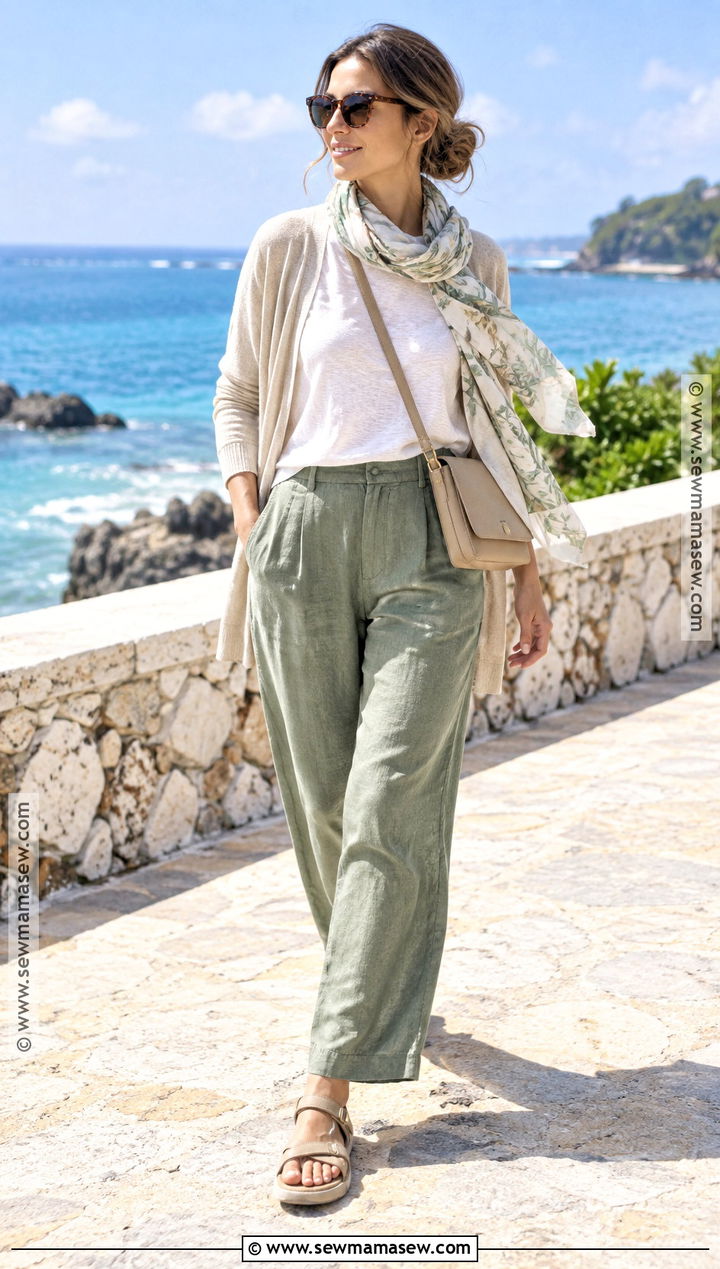
Okinawa stays warm in November, so leave the coats and thermal leggings on the mainland. A breathable short-sleeve or light long-sleeve top with linen-blend trousers covers most days, plus a thin cardigan or packable windbreaker for breezy coastlines and evenings. Sneakers or supportive walking sandals both work, depending on your plans. A light scarf doubles as sun cover on the shoulders. Choose fabrics that dry fast, because humidity is still noticeable. If Okinawa is one stop on a longer trip, I pack these pieces in a separate cube so they don't get buried under the cold-weather layers.
18. Japan Airport Travel Outfit
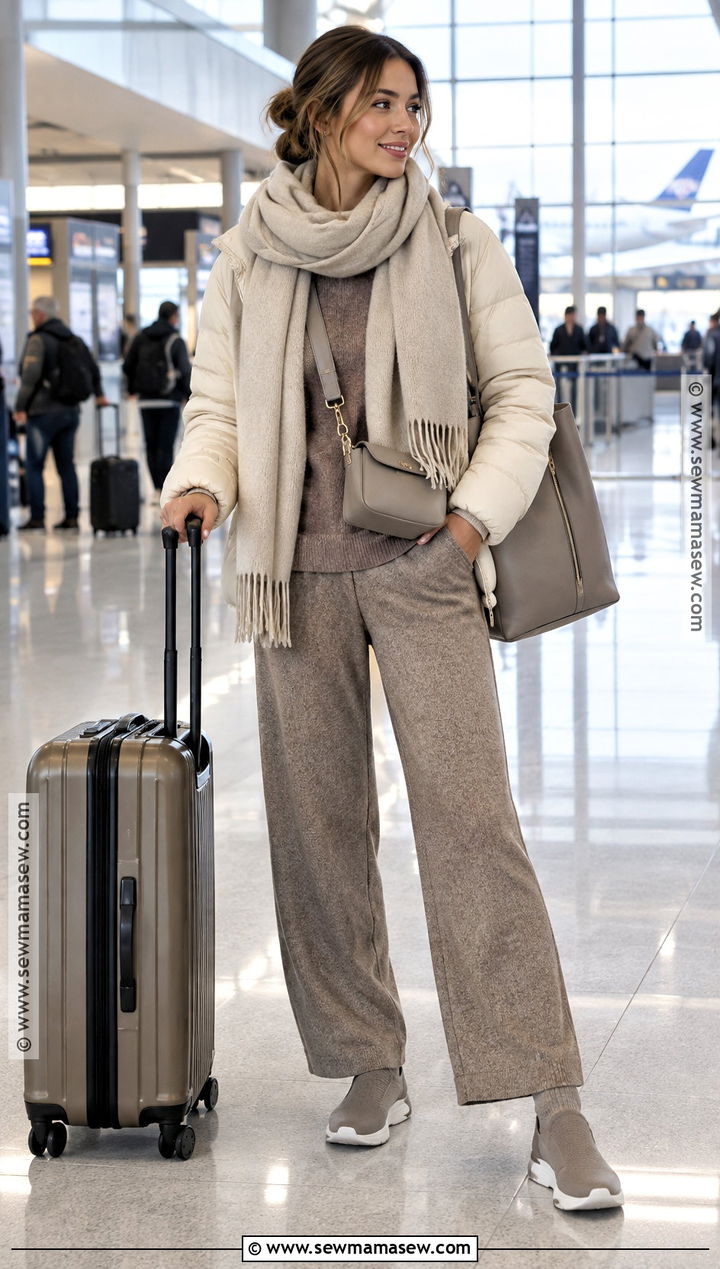
The airport outfit has to survive a long flight, luggage and a cooler November evening when you land. I like a matching knit set, relaxed trousers and a long-sleeve top, under a lightweight puffer or an oversized wool coat. Slip-on sneakers make security quicker and stay comfortable through the airport train and station transfers. Compression socks are worth it on a long-haul flight. Check that the knit set holds its shape: thin jersey bags at the knees after ten hours seated, while a denser knit still looks neat at hotel check-in. A large scarf works as a blanket on the plane and a layer outside.
19. Japan Bullet Train Outfit
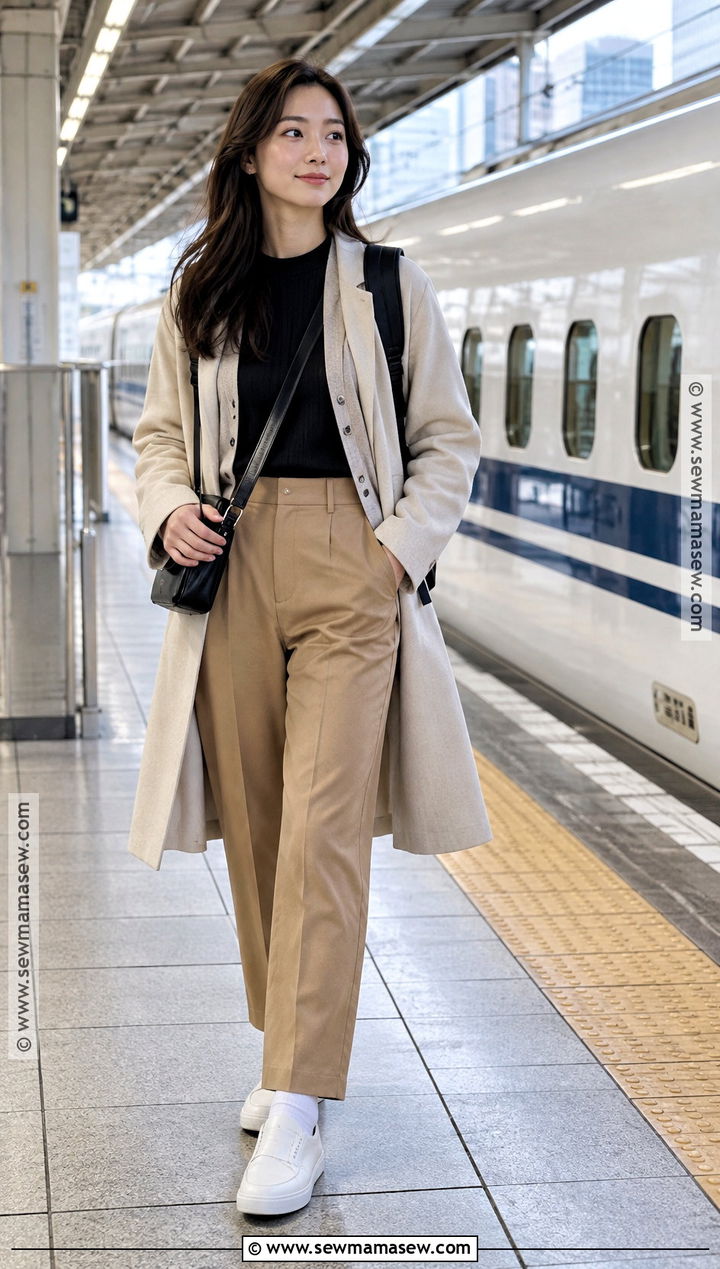
A Shinkansen day is mostly sitting, so I build it around trousers with an elastic back and a fitted long-sleeve top under a relaxed cardigan. The coat should fold small enough to rest on your lap or sit on the overhead rack with your luggage. Slip-on sneakers and clean socks help if you like to take your shoes off on a long ride. Keep your ticket, transit card and phone in one zipped pocket so you're not digging at the gate. Skip very wide sleeves and puffy outerwear; seats are comfortable but the space around them isn't generous. A compact backpack holds a scarf, water and a charger.
20. Japan Onsen Town Outfit
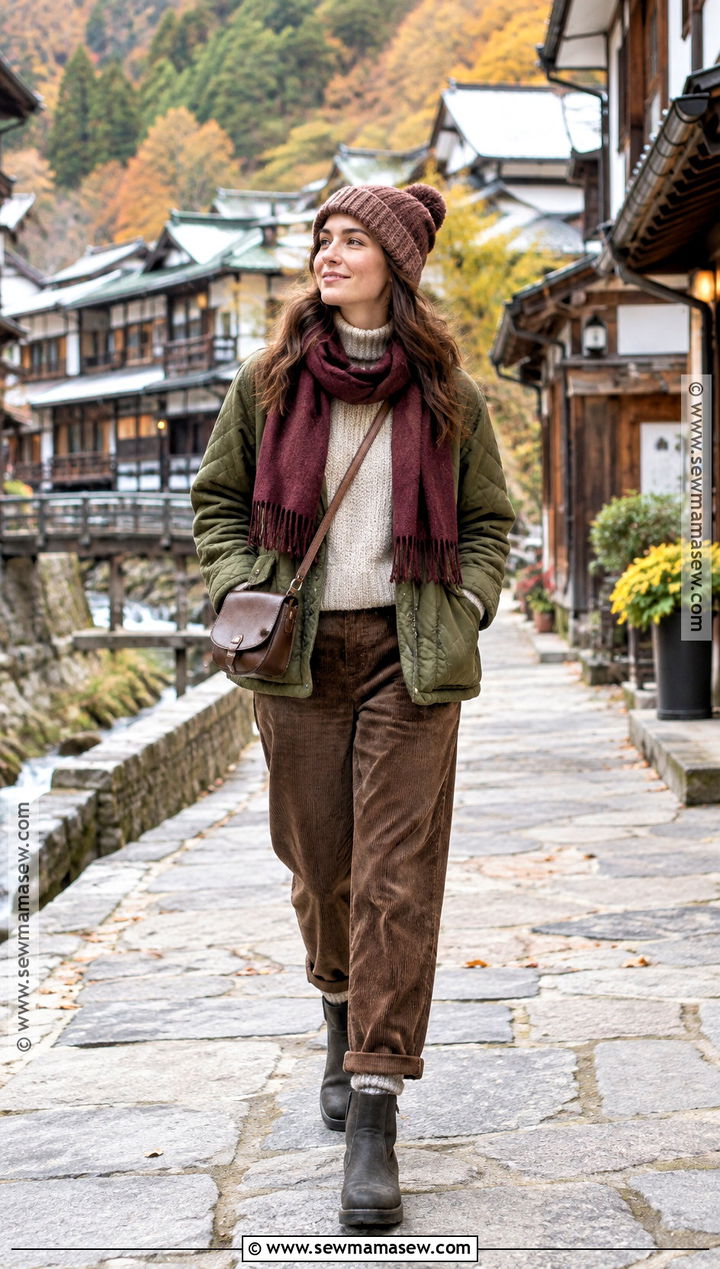
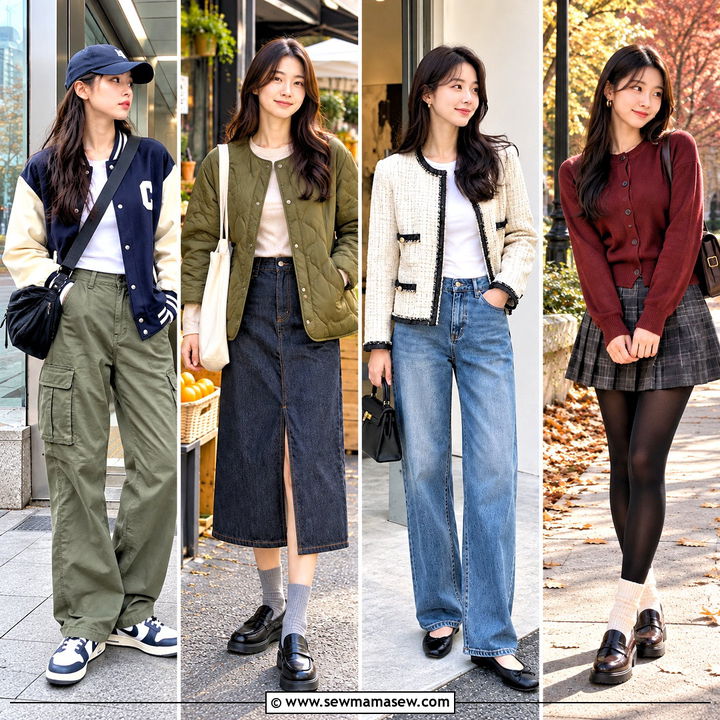
In an onsen town you'll be in and out of the bath, up and down sloped lanes, and changing clothes more than on any other day. I'd go with a soft turtleneck, corduroy or warm straight-leg trousers, a quilted jacket or short wool coat, thick socks and flat water-resistant boots. Everything should be easy to pull back on while your skin is still warm and a little damp; tight jeans and fiddly fastenings are the worst choice here. Carry a small crossbody rather than a tote in narrow streets. Add a knit hat if the town is up in the mountains. Oatmeal, brown, burgundy and forest green feel at home beside old wooden inns.
Shoes Off at Temples, Inns and Fitting Rooms
You'll take your shoes off far more often in Japan than at home: at many temple halls, traditional inns, some restaurants with raised tatami seating, and in fitting rooms. It sounds minor until you're at the back of a queue struggling with double-knotted laces.
What I look for in a travel shoe
- A side zip, elastic gussets or a slip-on design you can get off and on standing up, with no bench to sit on.
- A cushioned sole you have already walked at least a full day in. New shoes rub on the second day, and you'll be covering serious distance.
- A water-resistant upper for November rain. Untreated suede marks easily in the wet, so spray it before you leave or save it for dry days.
Socks are part of the outfit
Bring more socks than you think, and pack plain ones without worn heels or holes, because they'll be seen. Thicker wool-blend socks help on cold wooden floors, which can be chilly in old halls even when the day is mild. With tights, I usually add a pair of thin socks over them if I expect to be in shoes-off spaces for a long time; it keeps the feet from slipping on polished boards.
Layers, Shoes and Three Different Climates
For most November trips to Tokyo, Kyoto and Osaka, a removable sweater, one coat that suits the forecast, long trousers and well-tested walking shoes will cover you. Add proper insulation for Hokkaido, the mountains and any evening you'll spend standing outdoors, and swap to light, breathable pieces for Okinawa. I'd build the whole suitcase around two or three neutrals with a couple of autumn accents, so every top works with every bottom. Know your own cold tolerance before you trust any packing list, mine included, and check the forecast for each city a few days before you fly.
Related posts: